Research on Carbon Emission Accounting and Reduction Measures for Bridges in Africa Throughout Its Life Cycle: A Case Study of the Jangwani Bridge in Tanzania

Abstract
1. Introduction
2. Scope of Carbon Emissions Calculation for the Life Cycle of Bridges
2.1. Life Cycle Stage Classification
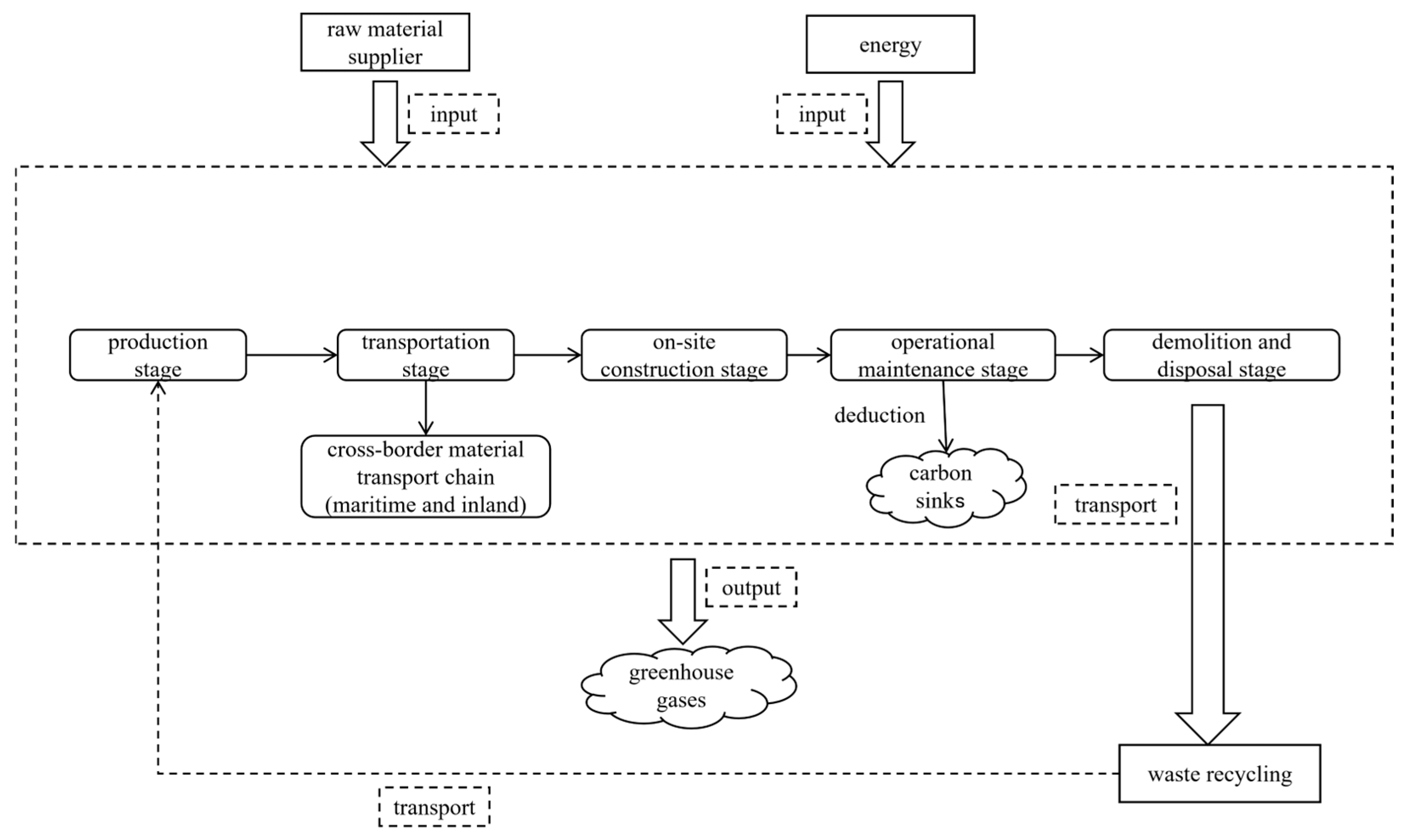
2.2. System Boundary Definition
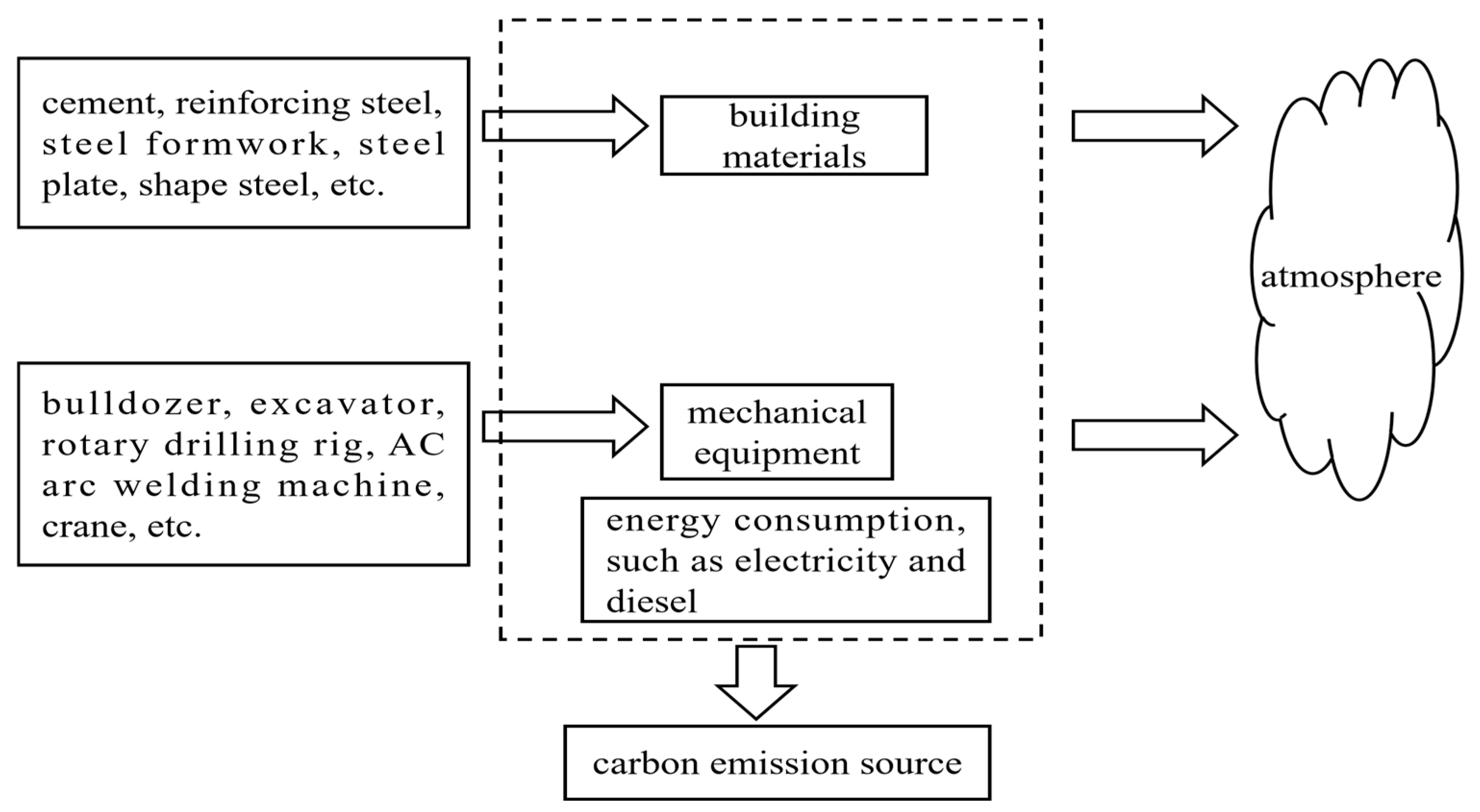
2.3. Carbon Emission Source Classification
2.4. Calculation Method
3. Life Cycle Carbon Emissions Calculation Model
3.1. Production Stage
3.2. Transportation Stage
3.3. On-Site Construction Stage
3.4. Operational Maintenance Stage
3.4.1. Operation-Stage Carbon Emissions Model
3.4.2. Maintenance-Stage Carbon Emissions Model
3.4.3. Green Plant Carbon Sink Model
3.5. Demolition and Disposal Stage
3.5.1. Demolition-Stage Carbon Emissions Model
3.5.2. Disposal-Stage Carbon Emissions Model
4. Carbon Emissions Calculation Example
4.1. Project Overview
4.2. Carbon Emissions Accounting
- (1)
- Carbon emissions during the production stage
- (2)
- Carbon emissions during the transportation stage
- (3)
- Carbon emissions during the on-site construction stage
- (4)
- Carbon emissions during the operational maintenance stage
- (5)
- Carbon emissions during the demolition and disposal stage
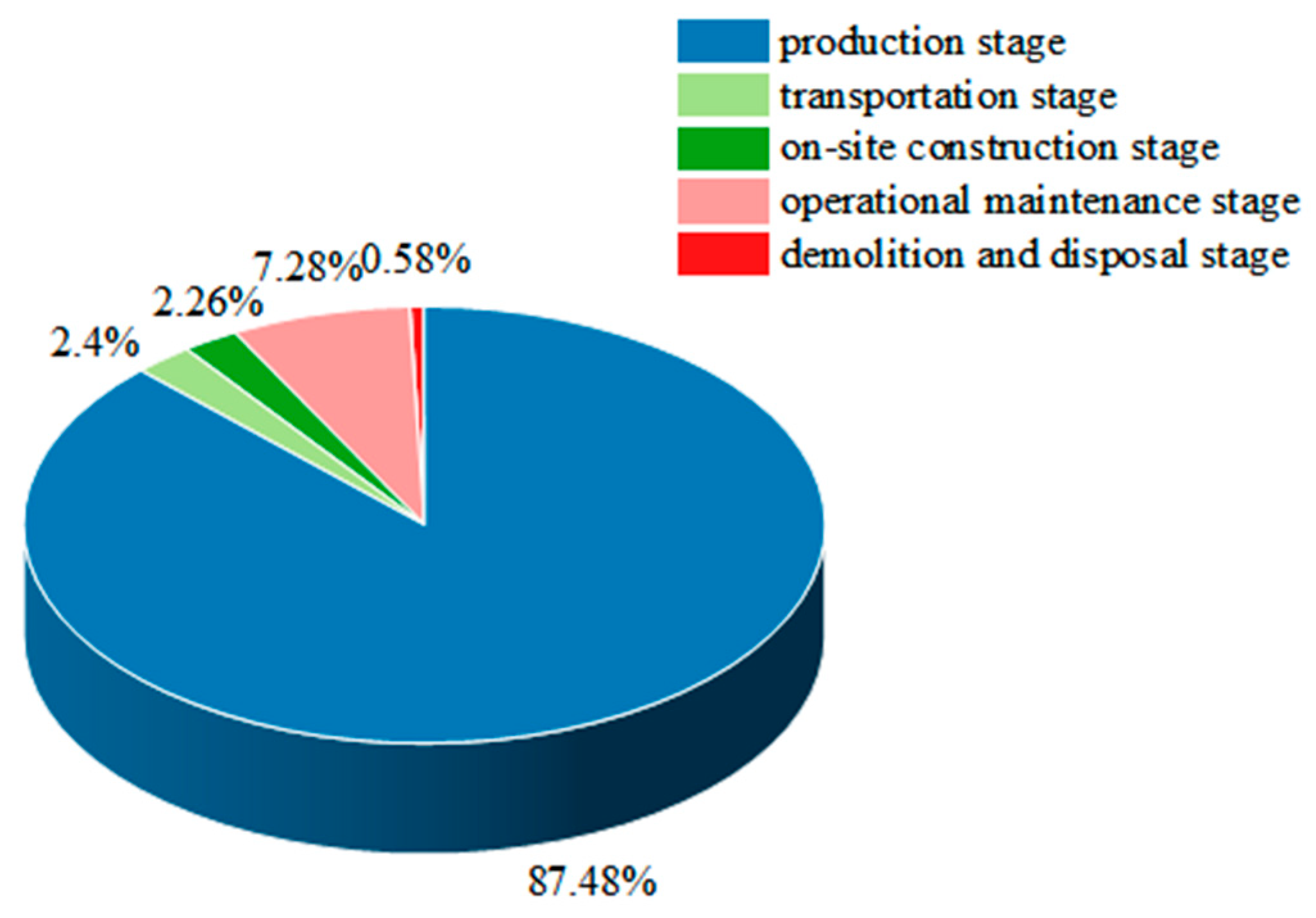
4.3. Carbon Emissions Contributions by Life Cycle Stage
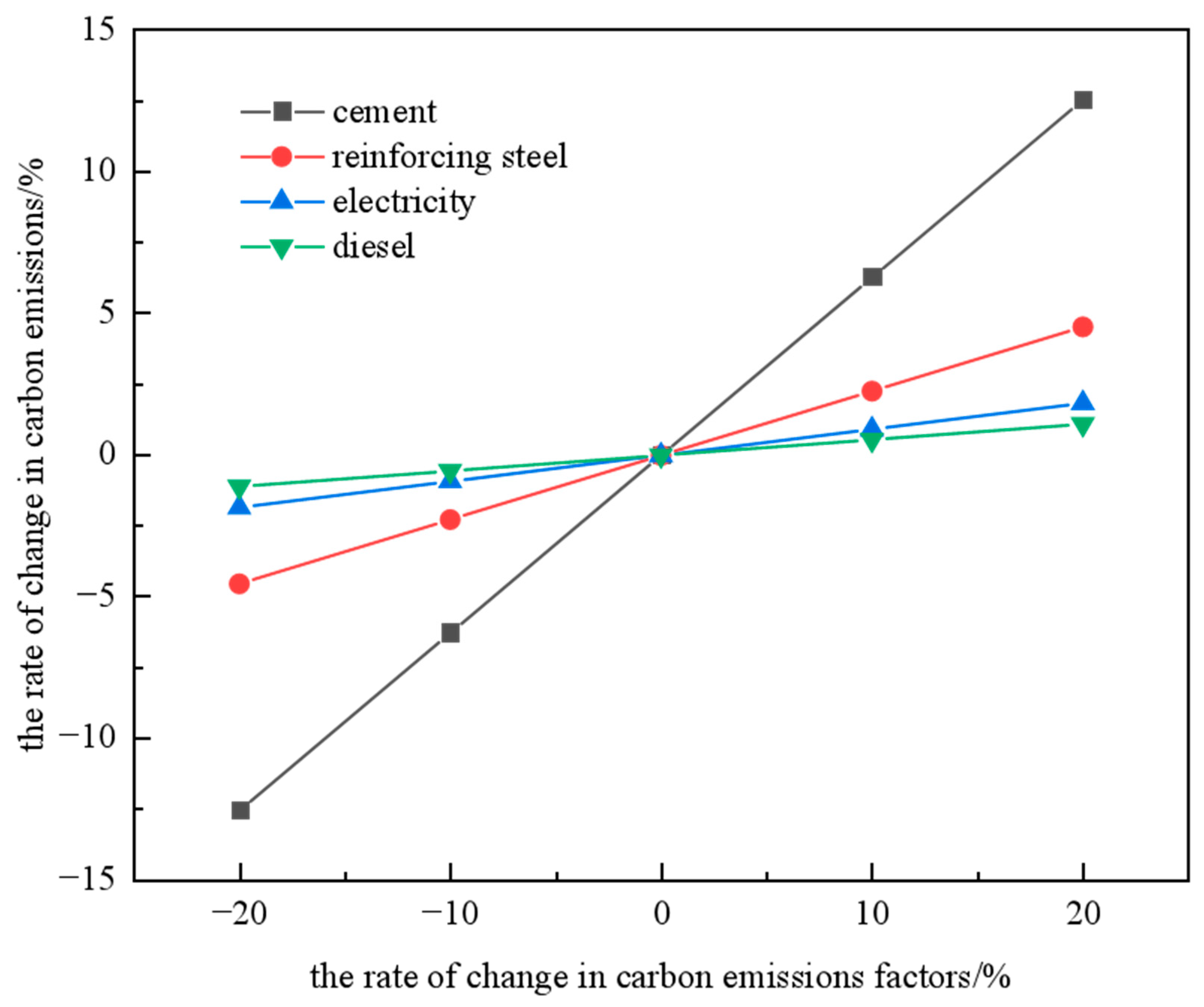
4.4. Sensitivity Analysis
4.5. Emission Reduction Measures
- (1)
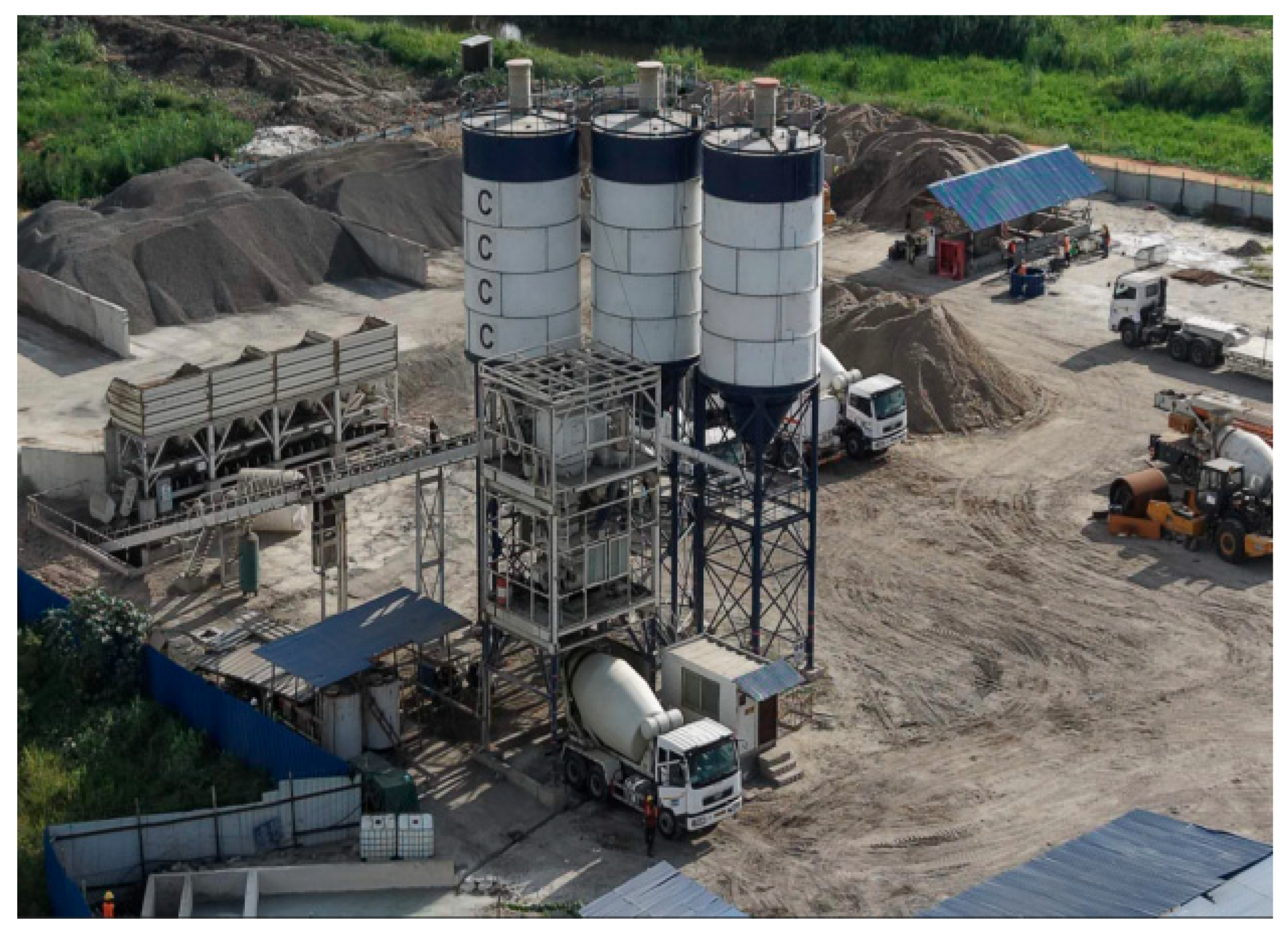
- Low-carbon production of concrete materials. Unlike conventional emission reduction strategies in the domestic engineering sector, which typically emphasize the direct substitution of traditional materials with low-carbon alternatives, the present project takes full account of the actual characteristics of the African context. During the early construction preparation stage, a technical route centered on optimizing the concrete mix proportion was established through laboratory mix proportion optimization tests (Figure 8). In the concrete cementitious system, industrial solid wastes such as fly ash and slag powder are incorporated; high-efficiency water-reducing agents are employed to effectively reduce the water-binder ratio, significantly enhancing concrete density and strength while minimizing mixing water consumption. Optimizing the aggregate system by employing continuously graded rubble and scientifically adjusting particle gradation ensures excellent workability for concrete placement. Based on the experimental results, it is possible to reduce the cement consumption by approximately 8%, saving approximately 2105.45 tons of cement and cutting carbon emissions by 2,090,711.85 kgCO2e.
- (2)
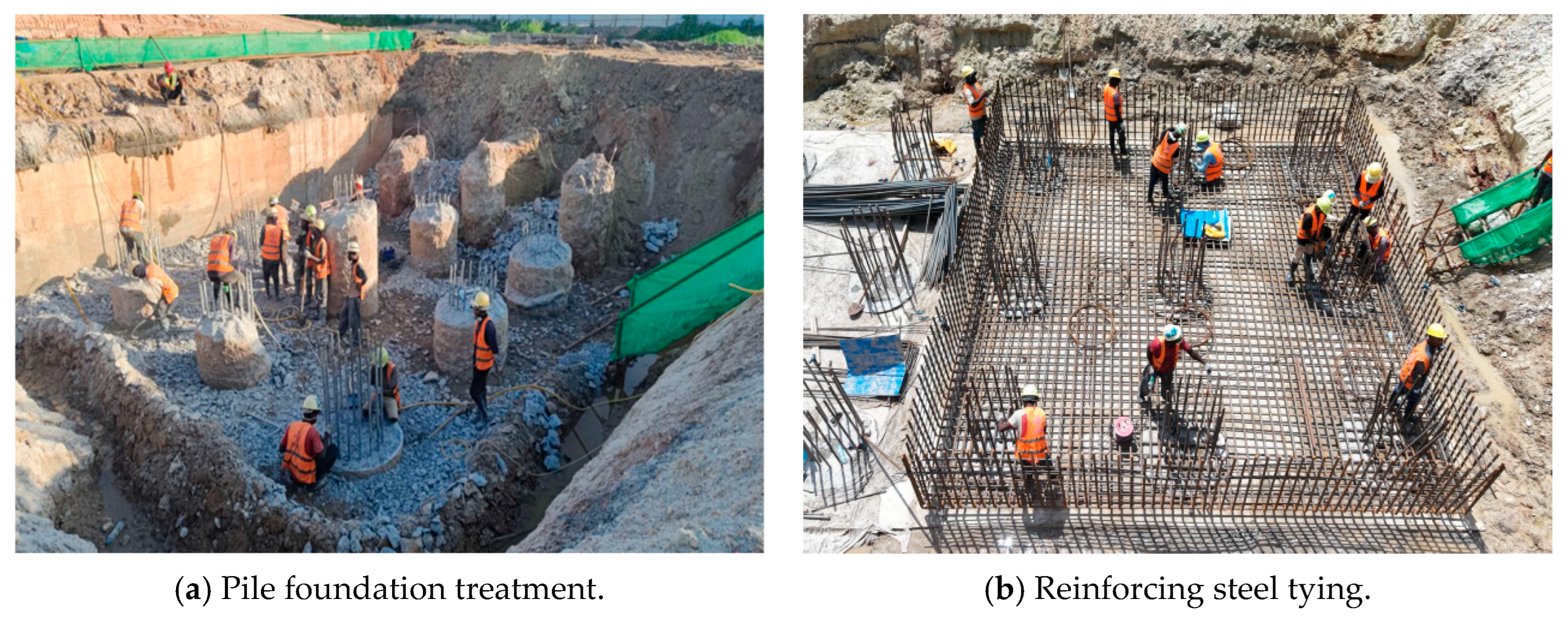
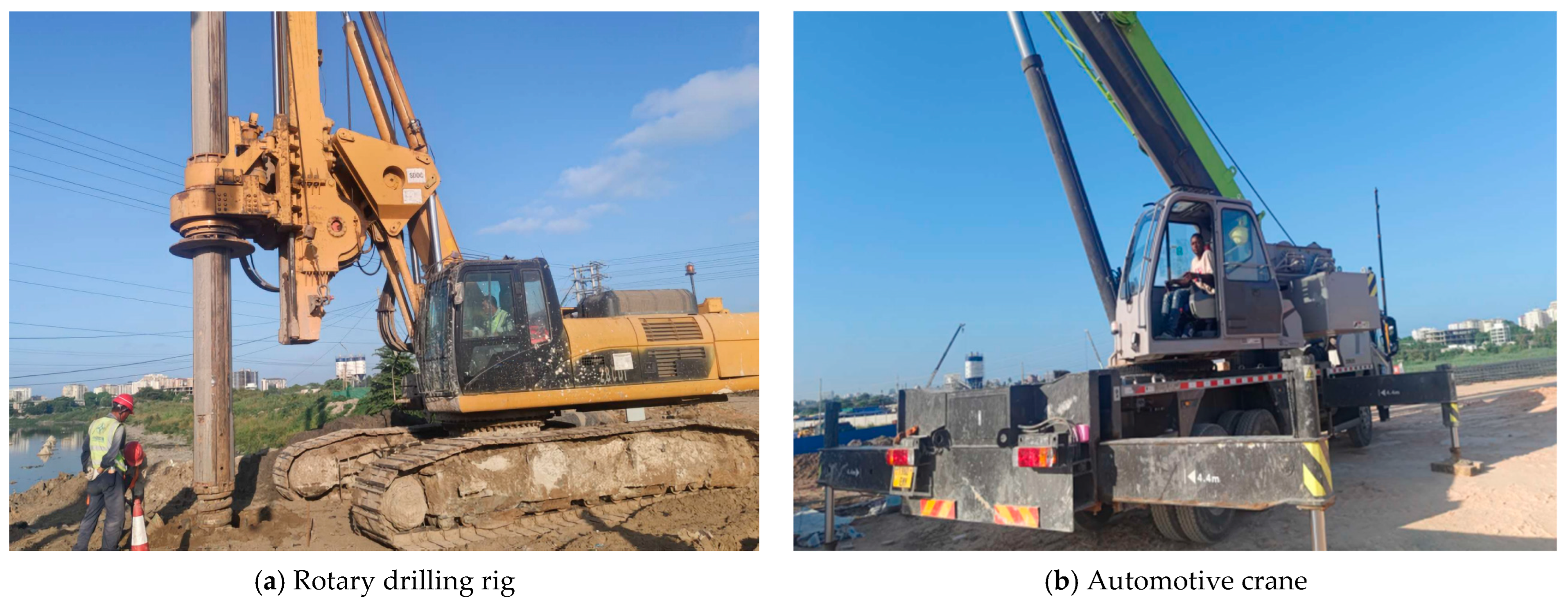
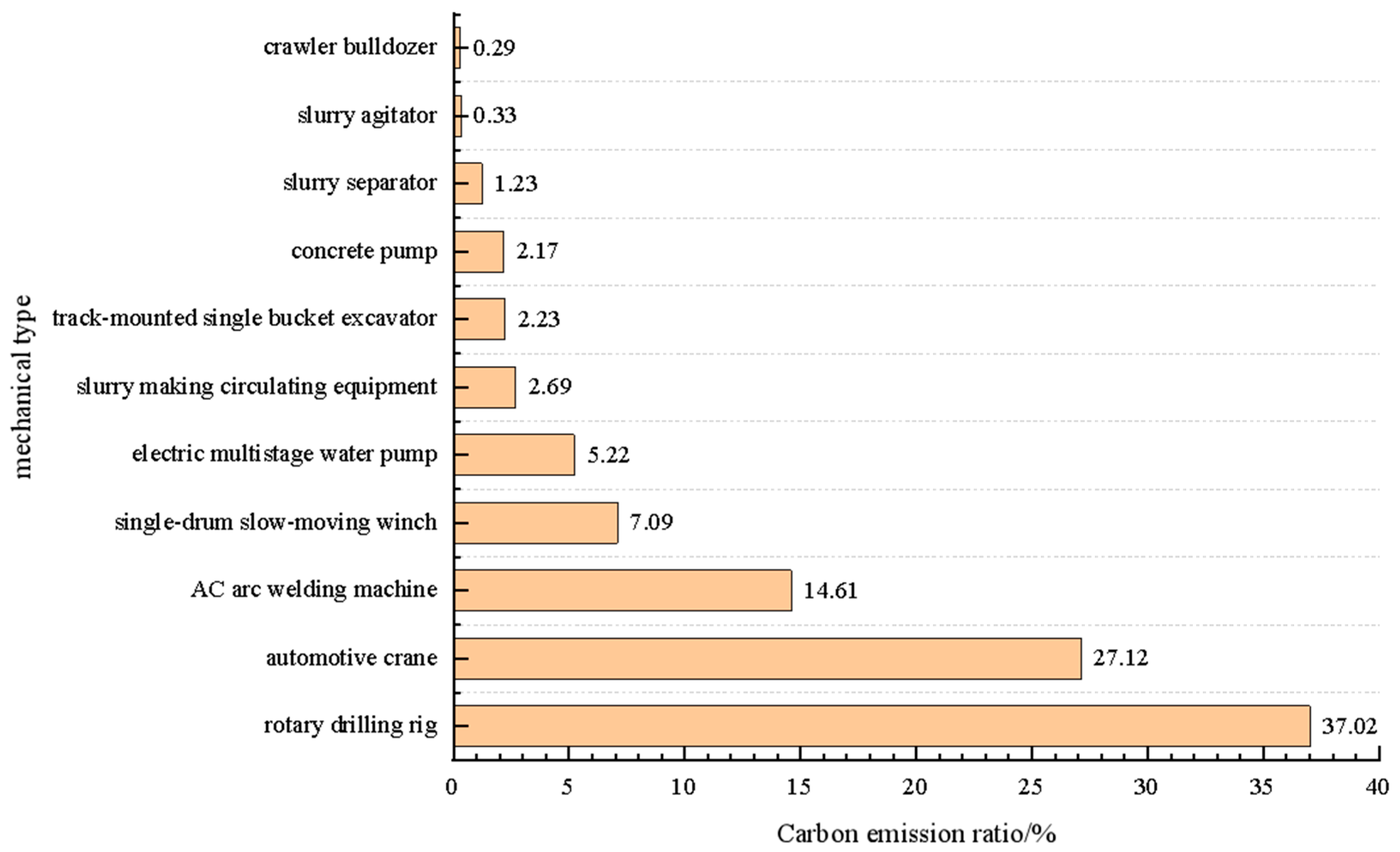
- Green management and energy efficiency enhancement of construction machinery. It is recommended to adopt technologically advanced, environmentally friendly new machinery for operations. By establishing detailed maintenance protocols, promptly repair and maintain equipment in suboptimal operating conditions to ensure all machinery remains in peak working condition long-term. This approach safeguards construction efficiency while effectively preventing additional energy consumption caused by equipment failures or performance degradation. It is clearly stipulated that mechanical equipment in standby, dispatch and other non-operational states must be forcibly shut down to fundamentally reduce the fuel consumption caused by ineffective idling (Figure 9). Based on the monitoring data of idle time during the pile foundation construction stage of the project, the ineffective fuel consumption was reduced from approximately 5.2% of the total consumption to 2.8% by the implementation of the “shutdown and flameout” system. 3% is conservatively set as the target for fuel reduction throughout the entire construction period, resulting in a total carbon emissions reduction of 18,847.71 kgCO2e from construction machinery.
- (3)
- Enhance energy-saving management of lighting and other equipment. Given the unstable power grid and high electricity emission factors in Africa, a dual-control intelligent lighting system combining a “photosensitive sensor” with “vehicle flow monitoring” has been implemented to manage bridge deck and landscape lighting. This system monitors traffic flow and ambient illuminance in real time, allowing for automatic adjustments in light brightness or zoned-off control. It not only facilitates “lighting on demand” but also adapts to the current local power grid conditions, prioritizing energy conservation and operational stability. Based on research on actual engineering cases and technical reports, a 10% to 15% energy saving can typically be achieved by such intelligent control strategies. Considering local power grids and maintenance conditions, a 10% energy saving target is conservatively set as the expected outcome and is expected to decrease carbon emissions by 322,598.69 kgCO2e.
5. Conclusions
- (1)
- The application of the cross-border infrastructure LCA framework is advanced from three aspects. First, with respect to the boundary extension of cross-border supply chains: traditional bridge LCA implies a single-stage transportation assumption of “local or regional procurement”. In contrast, the entire cross-border transportation chain of “international maritime transport–inland Africa” is officially incorporated into the system boundary, thereby addressing the limitation in the applicability of the traditional model’s “local procurement” assumption to cross-border engineering. Second, regarding the principle of stratified selection of emission factors: for data-scarce regions such as Africa, a “local priority, graded supplementation” emission factor strategy is established and implemented. This strategy prioritizes the use of country-specific measured data, selects alternative values with similar technical backgrounds, and transparently labels the sources and applicability of each factor, thus providing replicable solutions for regions lacking local databases. Third, concerning the adaptation of Chinese construction standards to local conditions in Africa: the Chinese quota system is integrated with African construction practices into a unified analytical framework, the applicability of the LCA method under the “technology export + localized operation” model is verified, and the application of LCA in cross-border infrastructure scenarios is enriched.
- (2)
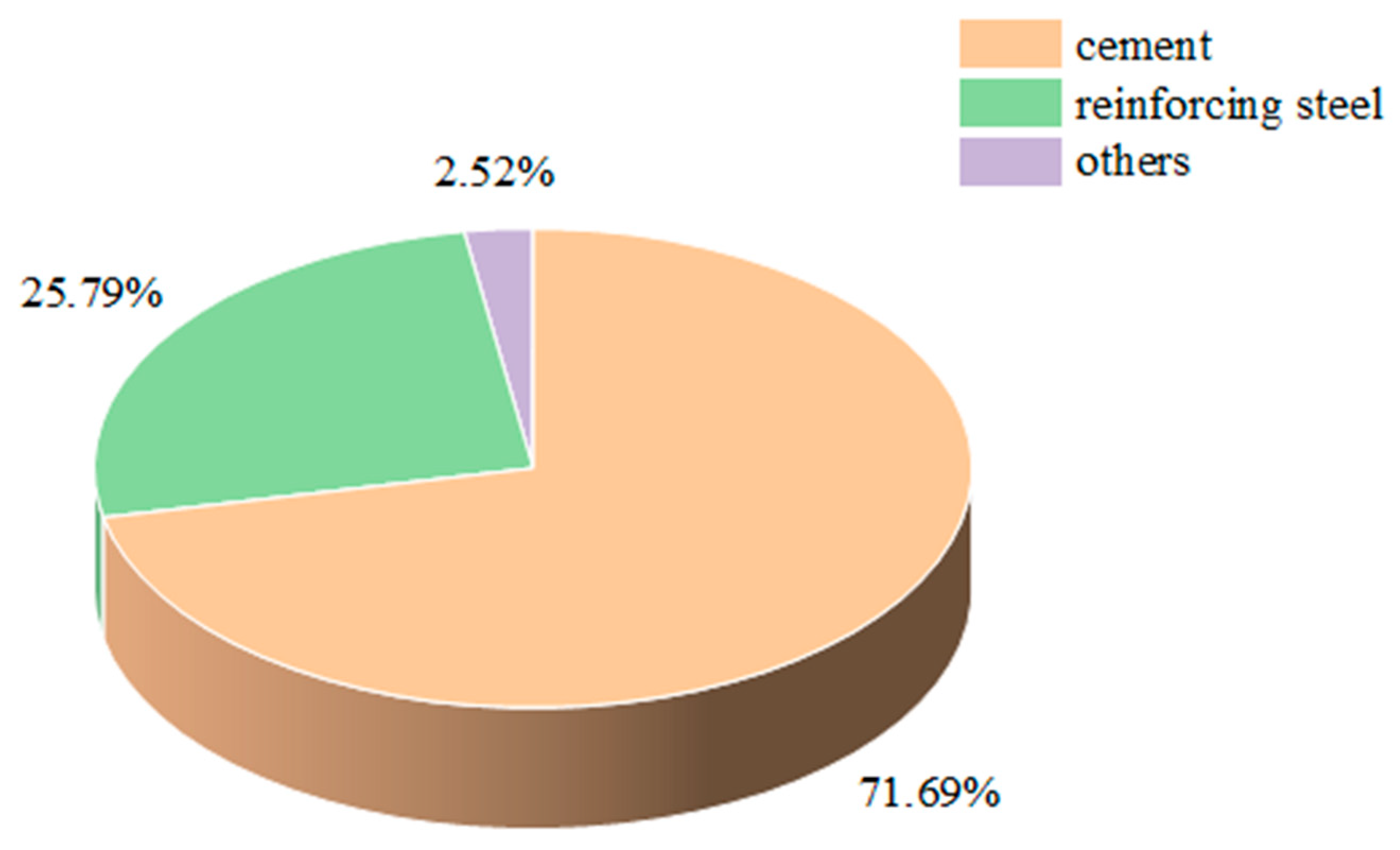
- The total carbon emissions of the Jangwani Bridge throughout its life cycle are quantified 41,668,548.20 kgCO2e. When converted into normalized strength indicators, approximately 106.84 tCO2e per linear meter and 2.54 tCO2e per square meter of bridge deck are emitted, by which a reference benchmark for carbon emissions of similar bridges is provided. Of the dominant emission sources, 87.48% is accounted for by the production stage of building materials, with cement and reinforcing steel identified as the core emission sources in this stage. This proportion is found to be close to the range from existing research based on Chinese cases (80% to 90%), and it is indicated that the dominant position of carbon emissions at the material end possesses cross-regional commonalities. For the operational maintenance stage, 7.28% is accounted for, a value that is significantly higher than the observed level of less than 5% for similar bridges in China. The fundamental driving factor is not the intensity of lighting demand itself, but the systematic amplification of carbon emission factors caused by the high transmission and distribution losses in Tanzania’s power grid dominated by fossil fuels. Although the proportion of the transportation stage is only 2.40%, as a direct mapping of cross-border maritime and inland transportation chains that is often overlooked within the domestic LCA framework, its methodological significance cannot be ignored. The proportions of carbon emissions during the on-site construction stage (2.26%) and the demolition and disposal stage (0.58%) are not found to be significantly different from those reported in similar studies in China.
- (3)
- Based on a sensitivity analysis in which the key factors are ranked as cement > steel bars > electricity > diesel, and with full consideration given to the practical constraints in Africa—namely the insufficient supply of low-carbon materials and the instability of local power grids—a three-level emission reduction strategy is proposed, which possesses engineering feasibility and practical guidance value. At the building materials level, an 8% reduction in cement can be achieved through the substitution of mineral admixtures and mix proportion optimization, corresponding to an emission reduction of approximately 2090.71 tCO2e. At the construction level, refined equipment maintenance and shutdown management can be promoted, leading to a 3% reduction in ineffective fuel consumption and an emission reduction of about 18.85 tCO2e. At the operation level, a photosensitive and traffic-controlled dual intelligent lighting system can be adopted, which reduces lighting power consumption by 10% and achieves an emission reduction of approximately 322.6 tCO2e. Multi-scenario evaluations indicate that the joint implementation of the three measures yields a total emission reduction of approximately 2432.16 tCO2e, and the combined strategy—with building material optimization as the core and construction and operation measures as supplementary—demonstrates the best overall benefits.
- (4)
- The following suggestions are proposed for engineering practice and infrastructure planning. At the design level, given that the operational maintenance stage constitutes the second largest source of emissions and is primarily driven by lighting electricity, priority should be given to the integration of energy-efficient lighting systems (e.g., LED luminaires with intelligent dimming functionality) into bridge design. At the procurement and supply chain level, emphasis should be placed on the localized procurement of building materials. The carbon footprint associated with the cross-border shipping of specialized components should be clearly accounted for, and a balance analysis between local production emissions and international shipping emissions should be conducted when equivalent products are available locally or regionally. At the material selection level, given that cement and reinforcing steels represent the absolute majority of emissions during the building materials stage, procurement standards should prioritize the use of low-carbon cement and high-strength steel bars to reduce material consumption. At the level of low-carbon infrastructure planning, policy makers and development banks should recognize that infrastructure investment planning should promote the combination of bridge construction and decarbonization measures for the power grid, such as the large-scale deployment of renewable energy for public utilities.
6. Research Limitations
- (1)
- Dependence on emission factors. Owing to the absence of local emission factor data in Africa, some materials (e.g., steel bars and steel sections) have been assigned IPCC default values or Ecoinvent international averages. Although these sources are widely accepted in life cycle assessment studies, the actual production processes of local materials may deviate from the global average levels represented by these factors. The differences in data accuracy across sources may introduce uncertainty. As local LCA databases in Africa are gradually established, the accuracy of the accounting is expected to be further improved.
- (2)
- Simplified assumptions are employed. Owing to data limitations, certain strong simplifications are necessitated. First, based on a reference study conducted in China, the carbon emissions during the demolition stage are assumed to correspond to 90% of the energy consumption during the on-site construction stage. Although it has been discussed that the impact of this assumption on total emissions is not limited, direct measurement of the number of shifts in dismantling machinery would provide higher accuracy. Single-factor sensitivity analysis is methodologically limited, as it fails to evaluate the joint disturbance effects of multiple factors. In future work, the conduct of a comprehensive probabilistic uncertainty analysis is recommended to fully characterize the global robustness of the model.
- (3)
- Uncertainty associated with future maintenance. The emissions during the maintenance phase are estimated under the assumption that a fixed number of components are replaced based on the design service life. In reality, the maintenance plan is contingent upon actual traffic load, environmental conditions, and initial construction quality. Consequently, deviations in the actual carbon emissions from maintenance may occur, which should be corrected based on monitoring data obtained during the operation period.
- (4)
- Limitations in generalizing to other bridges in Africa. The Jangwani Bridge in Tanzania is taken as a single case in this study, and it is concluded that caution should be exercised when extending the findings to other regions in Africa. Differences in energy structure, building materials supply chain, and climatic conditions among countries may significantly affect the distribution of carbon emission characteristics.
Author Contributions
Funding
Institutional Review Board Statement
Informed Consent Statement
Data Availability Statement
Acknowledgments
Conflicts of Interest
References
- Maurer, R.; Kossioris, T.; Hausberger, S.; Toenges-Schuller, N.; Sterlepper, S.; Günther, M.; Pischinger, S. How to Define and Achieve Zero-Impact Emissions in Road Transport? Transp. Res. Part D Transp. Environ. 2023, 116, 103619. [Google Scholar] [CrossRef]
- Liu, M.; Wang, J.; Wen, J.; He, G.; Wu, J.; Chen, H.; Yang, X. Carbon Emission and Structure Analysis of Transport Industry Based on Input-Output Method: China as an Example. Sustain. Prod. Consum. 2022, 33, 168–188. [Google Scholar] [CrossRef]
- Wang, J.; Shan, Y.; Cui, C.; Zhao, C.; Meng, J.; Wang, S. Investigating the fast energy-related carbon emissions growth in African countries and its drivers. Appl. Energy 2024, 357, 122494. [Google Scholar] [CrossRef]
- Karimova, A.; Abdurasulova, M. Methodology for Assessing Embodied Carbon in Bridge Structures. In Proceedings of the International Scientific-Practical Conference “Transport Inserts: Modern Technologies, Seismic Stability” Dedicated to the 85th Anniversary of Abduraxmon Asimovich Ishanxodjayev, Tashkent, Uzbekistan, 16 February 2026; pp. 94–97. [Google Scholar]
- Xia, B.; Xiao, J.; Ding, T.; Guan, X.; Chen, J. Life cycle assessment of carbon emissions for bridge renewal decision and its application for Maogang Bridge in Shanghai. J. Clean. Prod. 2024, 448, 141724. [Google Scholar] [CrossRef]
- Kaewunruen, S.; Sresakoolchai, J.; Zhou, Z. Sustainability-Based Lifecycle Management for Bridge Infrastructure Using 6D BIM. Sustainability 2020, 12, 2436. [Google Scholar] [CrossRef]
- Kim, H.; Roh, S.; Kim, J. Embodied carbon of BIM bridge models according to the application of off-site prefabrication: Precast concrete applied to superstructure and substructure. Dev. Built Environ. 2024, 20, 100550. [Google Scholar] [CrossRef]
- Yang, Y.; Yue, X.; Luo, Y.; Jin, L.; Jia, B. Building Information Modeling-Life Cycle Assessment: A Novel Technology for Rapid Calculation and Analysis System for Life Cycle Carbon Emissions of Bridges. Sustainability 2024, 16, 10574. [Google Scholar] [CrossRef]
- Srivastava, H.K.; Vimonsatit, V.; Clark, S.M. A Systematic Approach for Selection of Fit-for-Purpose Low-Carbon Concrete for Various Bridge Elements to Reduce the Net Embodied Carbon of a Bridge Project. Infrastructures 2025, 10, 274. [Google Scholar] [CrossRef]
- Zhao, B.; Guo, B.; Ye, D.; Xiu, M.; Wang, J. Research on and Application of a Low-Carbon Assessment Model for Railway Bridges During the Construction Phase Based on the ANP-Fuzzy Method. Infrastructures 2026, 11, 32. [Google Scholar] [CrossRef]
- Xu, R.; Yin, Y.; Miao, Y.; Yang, W.; Sun, J.; Li, H. Carbon emission calculation method of steel-concrete composite girder Bridge based on LCA: A case study of Yanchong Expressway (Hebei Section). E3S Web Conf. 2024, 561, 02015. [Google Scholar] [CrossRef]
- Xie, K.; Gong, M.; Xiao, J.; Guan, X.; Liu, Z. Process-based carbon emission assessment of the cable-stayed anchored cantilever construction method: A case study of a 600-meter-scale arch bridge. Case Stud. Constr. Mater. 2025, 24, e05742. [Google Scholar] [CrossRef]
- Hartono, W.; Naufal, M.R.; Firmanda, Y.A. Greenhouse Gas (GHG) emission analysis study using LCA method on foam mortar application to reduce carbon footprint of bridge construction project. IOP Conf. Ser. Earth Environ. Sci. 2026, 1586, 012010. [Google Scholar] [CrossRef]
- Muhammad, H.H.; Imran, S.; Humza, K.H.; Zhang, L.; Qin, J.; Pan, Y. Probabilistic Carbon Analysis of Pakistan’s Bridges Unveils the Urgent Needs of Overdesign Optimization and Policy Transformation. Research 2026, 7, 1175. [Google Scholar] [CrossRef] [PubMed]
- Cao, J.; Wang, D.; Han, Z.; Li, S.; Zhao, H.; Liu, X. Carbon footprint of expressway bridges based on LCA. Int. J. Low-Carbon Technol. 2024, 19, 2218–2224. [Google Scholar] [CrossRef]
- Wu, H.; Zhou, W.; Bao, Z.; Long, W.; Chen, K.; Liu, K. Life cycle assessment of carbon emissions for cross-sea tunnel: A case study of Shenzhen-Zhongshan Bridge and Tunnel in China. Case Stud. Constr. Mater. 2024, 21, e03502. [Google Scholar] [CrossRef]
- Zhou, Z.; Alcalá, J.; Yepes, V. Bridge carbon emissions and driving factors based on a life-cycle assessment case study: Cable-stayed bridge over Hun He river in Liaoning, China. Int. J. Environ. Res. Public Health 2020, 17, 5953. [Google Scholar] [CrossRef]
- Zhang, Z.H.; Huang, W.; Lu, G.Y.; Luo, S. A holistic life cycle assessment of steel bridge deck pavement. Renew. Sustain. Energy Rev. 2024, 200, 114575. [Google Scholar] [CrossRef]
- Hou, W.; Liang, S.; Zhang, T.; Ma, T.; Han, Y. Low-Carbon Emission Demolition of an Existing Urban Bridge Based on SPMT Technology and Full Procedure Monitoring. Buildings 2023, 13, 1379. [Google Scholar] [CrossRef]
- Qian, F.; Ding, Y.; Shi, X.; Shu, C.; Zhang, X. A comparative study of life cycle carbon emissions of two commonly used simple-supported beam bridges. Sci. Rep. 2025, 15, 14873. [Google Scholar] [CrossRef]
- Suwondo, R.; Keintjem, M.; Suangga, M.; Cunningham, L. Assessing embodied carbon and financial implications in concrete T-girder bridge design for cost-effective sustainability. Innov. Infrastruct. Solut. 2024, 9, 136. [Google Scholar] [CrossRef]
- Wang, J.; Pan, K.; Wang, C.; Liu, W.; Wei, J.; Guo, K.; Liu, Z. Integrated Carbon Emissions and Carbon Costs for Bridge Construction Projects Using Carbon Trading and Tax Systems—Taking Beijing as an Example. Appl. Sci. 2022, 12, 10589. [Google Scholar] [CrossRef]
- Zerin, A.; Kasuga, A. LCA of a challenging low carbon ultra-high durability non-metallic bridge. In Proceedings of the Fib Oslo Congress, Oslo, Norway, 12–16 June 2022. [Google Scholar]
- Praseeda, P.K.; Kamde, D.K.; Basavaraj, A.S.; Sankar, V.; Pillai, R.G. Effect of slag in concrete to enhance service life and reduce carbon footprint of a coastal highway bridge. Constr. Build. Mater. 2025, 489, 142313. [Google Scholar] [CrossRef]
- Khorgade, P.; Rettinger, M.; Burghartz, A.; Schlaich, M. A comparative cradle-to-gate life cycle assessment of carbon fiber-reinforced polymer and steel-reinforced bridges. Struct. Concr. 2023, 24, 1737–1750. [Google Scholar] [CrossRef]
- Li, X.; Xiao, J.; Zhu, L.; Zhu, D.; Song, X.; Liu, Y.; Hua, W. Assessing carbon emissions of the innovative renovation project of Yihe Bridge on Beijing Road. Low-Carbon Mater. Green Constr. 2025, 3, 9. [Google Scholar] [CrossRef]
- Ma, Z.; Zhang, S.; Jia, H.; Liu, K.; Xie, X.; Qu, Y. A Knowledge Graph-Based Approach to Recommending Low-Carbon Construction Schemes of Bridges. Buildings 2023, 13, 1352. [Google Scholar] [CrossRef]
- Qin, X.; Wangari, V.W.; Weiwei, G.; Qili, L.; Jie, L. Quantifying and scenario modelling carbon emissions in cable-stayed bridge construction: Analysing materials production, transportation, and machinery use with openLCA and LEAP. Clean Technol. Environ. Policy 2025, 27, 6887–6911. [Google Scholar] [CrossRef]
- Liu, T.-Y.; Lin, J.-J.; Ho, S.-P.; Chou, N.N.S.; Lee, C.-C. Quantifying and Mitigating Carbon Emissions in Long-Span Steel Bridge Construction: Lessons from the Anhsin Bridge in the Ankeng MRT System. Constr. Mater. 2026, 6, 20. [Google Scholar] [CrossRef]
- Karkour, S.; Rachid, S.; Maaoui, M.; Lin, C.-C.; Itsubo, N. Status of Life Cycle Assessment (LCA) in Africa. Environments 2021, 8, 10. [Google Scholar] [CrossRef]
- Isah, M.E.; Wasah, A.; Matsubae, K. Life cycle assessment research and application in Nigeria. Int. J. Life Cycle Assess. 2025, 30, 880–895. [Google Scholar] [CrossRef]
- Kwofie, T.E.; Aigbavboa, C.O.; Thwala, W.D. Clusters of key barriers to life cycle assessment adoption in the South African construction industry: Perspectives of stakeholders. J. Eng. Des. Technol. 2021, 19, 888–903. [Google Scholar] [CrossRef]
- Turrini, N.; Bajeneza, F.; Graham, M.; Cryer, L.; Murphy, C. Analysing Embodied Carbon for Rural Trail Bridges in East Africa. In Proceedings of the IABSE Conference, Manchester, UK, 10–12 April 2024. [Google Scholar] [CrossRef]
- Chen, J.; Gao, G.; Wang, X.; Wang, X. Calculation method of whole life-cycle energy consumption for urban rail transit. J. Traffic Transp. Eng. 2014, 14, 89–97. [Google Scholar]
- IPCC National Greenhouse Gas Inventories Programme, Technical Support Unit. 2006 IPCC Guidelines for National Greenhouse Gas Inventories: Third Authors/Experts Meeting on Industrial Processes and Product Use. In Proceedings of the Third Authors/Experts Meeting, Washington, DC, USA, 27–29 July 2004. [Google Scholar]
- Luo, Z. Study on Calculation Method of Building Life Cycle CO2 Emission and Emission Reduction Strategies. Ph.D. Thesis, Xi’an University of Architecture and Technology, Xi’an, China, 2016. [Google Scholar]
- GB/T 51366-2019; Standard for Calculation of Carbon Emissions from Buildings. Ministry of Housing and Urban-Rural Development of the People’s Republic of China: Beijing, China; China Architecture & Building Press: Beijing, China, 2019.
- Akintayo, B.D.; Olanrewaju, O.A.; Olanrewaju, O.I. Life cycle assessment of ordinary Portland cement production in South Africa: Mid-point and end-point approaches. Sustainability 2024, 16, 3001. [Google Scholar] [CrossRef]
- European Commission. Greenhouse Gas (GHG) Emissions Avoided (Tonnes CO2 eq) with EU Support. 2019. Available online: https://ec.europa.eu/ (accessed on 2 May 2026).
- Bao, X.; Ren, H.; Liu, B.; Li, H.; Li, Z. Research on carbon emission calculation and influencing factors of railway track-laying base. J. Chongqing Univ. 2024. online first. [Google Scholar] [CrossRef]
- JTG/T 3832-2018; Highway Engineering Budget Quotas. Ministry of Transport of the People’s Republic of China: Beijing, China; People’s Communications Press Co., Ltd.: Beijing, China, 2018.
- JTG/T 3833-2018; Quotation Standards for Machine-Hour Costs in Highway Engineering. Ministry of Transport of the People’s Republic of China: Beijing, China; People’s Communications Press Co., Ltd.: Beijing, China, 2018.
- CJJ45-2015; Standard for Urban Road Lighting Design. Ministry of Housing and Urban-Rural Development of the People’s Republic of China: Beijing, China; China Architecture & Building Press: Beijing, China, 2015.
- Chen, A.; Wang, Y.; Wu, H.; Ruan, X. Design Service Life Determination for Bridge Structural Elements. J. Tongji Univ. (Nat. Sci.) 2010, 38, 317–322. [Google Scholar]
- Tessema, B.; Sommer, R.; Piikki, K.; Söderström, M.; Namirembe, S.; Notenbaert, A.; Paul, B. Potential for soil organic carbon sequestration in grasslands in East African countries: A review. Grassl. Sci. 2020, 66, 135–144. [Google Scholar] [CrossRef]






| Material Types | Consumption | Unit | Material Types | Consumption | Unit |
|---|---|---|---|---|---|
| Rubble | 37,675.27 | m3 | Shape steel | 23.19 | t |
| Water | 37,247.22 | t | Iron parts | 17,516.44 | kg |
| Medium (coarse) sand | 18,708.91 | m3 | Iron wire | 8367.69 | kg |
| Cement | 26,318.11 | t | Converted timber | 12.78 | m3 |
| Clay | 16,894.74 | t | Cast iron pipe | 4956 | kg |
| Reinforcing steel | 4017.32 | t | Steel pipe | 4.10 | t |
| Steel formwork | 169.21 | t | Wire line | 3.04 | t |
| Petroleum asphalt | 104.75 | t | Safety ladder | 2.13 | t |
| Steel bearing | 61.23 | t | PVC plastic pipe | 1335.89 | kg |
| Steel plate | 41.82 | t | Bolt | 0.58 | t |
| Welding electrode | 23,816.76 | kg |
| Material Types | Quantity | Unit | Data Source | Material Types | Quantity | Unit | Data Source |
|---|---|---|---|---|---|---|---|
| Rubble | 3.87 | kgCO2e/m3 | Ecoinvent | Converted timber | 73.9 | kgCO2e/m3 | Ecoinvent |
| Water | 0.168 | kgCO2e/t | [37] | Cast iron pipe | 1.81 | kgCO2e/kg | Ecoinvent |
| Medium (coarse) sand | 3.64 | kgCO2e/m3 | Ecoinvent | Steel pipe | 1282.8 | kgCO2e/t | Ecoinvent |
| Cement | 993 | kgCO2e/t | [38] | Wire line | 2151.43 | kgCO2e/t | Ecoinvent |
| Clay | 2.69 | kgCO2e/t | Ecoinvent | Safety ladder | 1282.8 | kgCO2e/t | Ecoinvent |
| Reinforcing steel | 2340 | kgCO2e/t | [35] | PVC plastic pipe | 7.39 | kgCO2e/kg | Ecoinvent |
| Steel formwork | 1282.8 | kgCO2e/t | Ecoinvent | Bolt | 2050 | kgCO2e/t | Ecoinvent |
| Petroleum asphalt | 172.4 | kgCO2e/t | Ecoinvent | Diesel | 3.1 | kgCO2e/kg | [35] |
| Steel bearing | 2050 | kgCO2e/t | Ecoinvent | Electricity | 0.529 | kgCO2e/kw·h | [39] |
| Steel plate | 1282.8 | kgCO2e/t | Ecoinvent | Diesel truck | 0.10013 | kgCO2e/(km·t) | [35] |
| Welding electrode | 3.59 | kgCO2e/kg | Ecoinvent | Container shipping | 0.012 | kgCO2e/(km·t) | [37] |
| Shape steel | 2365 | kgCO2e/t | Ecoinvent | Concrete landfill | 44 | kgCO2e/t | [40] |
| Iron parts | 2.5 | kgCO2e/kg | Ecoinvent | Steel landfill | 39 | kgCO2e/t | [40] |
| Iron wire | 2.192 | kgCO2e/kg | Ecoinvent | Steel recovery | −1970 | kgCO2e/t | [40] |
| Mechanical Type | Consumption | Unit | Mechanical Type | Consumption | Unit |
|---|---|---|---|---|---|
| Track-mounted single bucket excavator | 6773.72 | kg | 50 kN single-drum slow-moving winch | 124,497.62 | kw·h |
| Air compressor | 43.71 | kw·h | Concrete pump | 38,578.11 | kw·h |
| Crawler bulldozer | 889.19 | kg | 30 kN single-drum slow-moving winch | 1718.04 | kw·h |
| Slurry separator | 21,996.48 | kw·h | Electric multistage water pump | 93,034.42 | kw·h |
| Slurry agitator | 5974.38 | kw·h | 30 t Automotive crane | 15,691.10 | kg |
| 25 t Automotive crane | 19,603.26 | kg | Rotary drilling rig | 112,540.89 | kg |
| AC arc welding machine | 260,196.90 | kw·h | Slurry making circulating equipment | 47,847.46 | kw·h |
| 12 t Automotive crane | 47,165.34 | kg |
| Component Name | Design Service Life (a) |
|---|---|
| Bridge deck pavement | 15 |
| Crash barrier | 50 |
| Expansion joint | 15 |
| Bridge bearing | 15 |
| Item | Cement | Reinforcing Steel | Electricity | Diesel |
|---|---|---|---|---|
| Factor increased by 20% | 46,895,338.38 kgCO2e | 43,557,256.07 kgCO2e | 42,436,790.46 kgCO2e | 42,128,297.19 kgCO2e |
| Factor increased by 10% | 44,281,943.30 kgCO2e | 42,612,902.14 kgCO2e | 42,052,669.33 kgCO2e | 41,898,422.70 kgCO2e |
| Base-period value | 41,668,548.21 kgCO2e | 41,668,548.21 kgCO2e | 41,668,548.21 kgCO2e | 41,668,548.21 kgCO2e |
| Factor reduction by 10% | 39,055,153.12 kgCO2e | 40,724,194.27 kgCO2e | 41,284,427.08 kgCO2e | 41,438,673.71 kgCO2e |
| Factor reduction by 20% | 36,441,758.03 kgCO2e | 39,779,840.34 kgCO2e | 40,900,305.95 kgCO2e | 41,208,799.22 kgCO2e |
Disclaimer/Publisher’s Note: The statements, opinions and data contained in all publications are solely those of the individual author(s) and contributor(s) and not of MDPI and/or the editor(s). MDPI and/or the editor(s) disclaim responsibility for any injury to people or property resulting from any ideas, methods, instructions or products referred to in the content. |
© 2026 by the authors. Licensee MDPI, Basel, Switzerland. This article is an open access article distributed under the terms and conditions of the Creative Commons Attribution (CC BY) license.
Share and Cite
Deng, H.; Zhang, R.; Hu, Q.; Guo, W.; Yu, Y.; Li, W. Research on Carbon Emission Accounting and Reduction Measures for Bridges in Africa Throughout Its Life Cycle: A Case Study of the Jangwani Bridge in Tanzania. Sustainability 2026, 18, 5149. https://doi.org/10.3390/su18105149
Deng H, Zhang R, Hu Q, Guo W, Yu Y, Li W. Research on Carbon Emission Accounting and Reduction Measures for Bridges in Africa Throughout Its Life Cycle: A Case Study of the Jangwani Bridge in Tanzania. Sustainability. 2026; 18(10):5149. https://doi.org/10.3390/su18105149
Chicago/Turabian StyleDeng, Honglong, Ru Zhang, Qichao Hu, Wenguang Guo, Yingxia Yu, and Wenjie Li. 2026. "Research on Carbon Emission Accounting and Reduction Measures for Bridges in Africa Throughout Its Life Cycle: A Case Study of the Jangwani Bridge in Tanzania" Sustainability 18, no. 10: 5149. https://doi.org/10.3390/su18105149
APA StyleDeng, H., Zhang, R., Hu, Q., Guo, W., Yu, Y., & Li, W. (2026). Research on Carbon Emission Accounting and Reduction Measures for Bridges in Africa Throughout Its Life Cycle: A Case Study of the Jangwani Bridge in Tanzania. Sustainability, 18(10), 5149. https://doi.org/10.3390/su18105149