Article

Emotional Reliance on Generative AI Among Vocational High School Students: An AEDTAM-Based Analysis

Department of Electrical and Mechanical Technology, National Changhua University of Education, Changhua City 50007, Taiwan
*
Author to whom correspondence should be addressed.
Sustainability 2026, 18(10), 5148; https://doi.org/10.3390/su18105148 (registering DOI)
Submission received: 5 April 2026 / Revised: 6 May 2026 / Accepted: 12 May 2026 / Published: 20 May 2026

Abstract

This study examines emotional dependency on generative artificial intelligence among vocational high school (VHS) students. Guided by Taiwan’s 108 Curriculum Guidelines, an interactive “Health and Nursing” course on AI reliance was implemented. The sample included 1000 students from five VHSs in central Taiwan (January–February 2026). Data were collected through questionnaires and classroom feedback to assess AI interaction frequency, emotional projection, and perceived effects on relationships and psychological needs. Research data were analyzed using SPSS 22.0 and SmartPLS 4. Findings show that some students displayed moderate to high emotional attachment to AI, particularly for support and stress relief, with blurred ethical boundaries. After the intervention, students reported greater awareness of risks and increased self-reflection. This study concludes that integrating AI literacy with emotional education into curricula is crucial for responsible technology use and healthy relational development. Overall, emotional reliance on AI among VHS students appears statistically significant but bounded, reflecting a balanced pattern of engagement that supports sustainable psychological well-being.

1. Introduction

1.1. Research Background and Motivation

In the context of Education for Sustainable Development (ESD), sustainability extends beyond environmental concerns to include the responsible and psychologically sustainable integration of emerging technologies in education. With the rapid adoption of Generative Artificial Intelligence (GenAI), sustainability must also address students’ long-term cognitive autonomy and emotional well-being [1]. While GenAI enhances accessibility and efficiency, its highly responsive and human-like interaction may unintentionally foster emotional reliance, raising concerns about the sustainability of AI-assisted learning behaviors.
Vocational High School (VHS) students represent a particularly relevant population for this investigation. Compared to general academic-track students, VHS learners often experience higher levels of career uncertainty, performance pressure, and skill-based evaluation demands. At the same time, they are frequently exposed to applied technologies and digital tools in their training environments. Prior studies suggest that such conditions may increase reliance on external support systems, including AI-based tools, especially when students experience limited academic self-efficacy or social support. These characteristics make VHS students potentially more vulnerable to emotional dependency on AI systems, thereby justifying their inclusion as the target group in this study.
For VHS students, AI appears to evolve from an information tool into a learning aid and medium for emotional communication, raising key academic questions. While past studies have emphasized learning outcomes or ethics, actual practice shows that student–AI interaction extends beyond instrumental rationality to encompass emotion regulation and psychological support [2]. Researchers have examined AI acceptance through the Technology Acceptance Model (TAM) and Social Presence Theory (SPT), extending to emotional attachment and dependency behavior intentions [3]. Within TAM, “Perceived Usefulness” (PU) and “Perceived Ease of Use” (PE) are key factors influencing VHS students’ continued use of AI. When students find AI effective for homework, instant answers, and learning efficiency, usage increases. Likewise, intuitive interfaces, simple operation, and smooth responses reduce cognitive load and strengthen willingness to continue [4]. At the psychological level, these interactions generate “Perceived Social Presence” (PSP).
When AI simulates being “understood” and “listened to” through an empathetic tone and contextual memory, students may feel a connection that resembles human interaction. This anthropomorphic experience fosters a “Emotional Support Needs” (ESN), especially among adolescents facing rejection, stress, or difficulty expressing themselves in real-life interactions. In such cases, AI provides a low-risk, non-judgmental outlet [5]. Consequently, “Perceived Responsiveness” (PR) emerges as immediate and coherent replies create an impression of stable companionship, enhancing trust and dependence. Together, these factors shape “Emotional Dependence Behavioral Intention” (EDBI), meaning students may increasingly confide in or seek support from AI during stressful or lonely situations [6]. This study aligns with the principles of Education for Sustainable Development (ESD), emphasizing responsible, ethical, and psychologically balanced use of emerging technologies.
The TAM has been widely used to explain technology adoption through cognitive factors such as perceived usefulness and perceived ease of use. However, TAM was originally designed to model rational and utility-driven behaviors, assuming users interact with technology as functional tools. In contrast, Generative AI systems increasingly exhibit characteristics of social actors, including conversational responsiveness and emotional simulation. As a result, user interaction with GenAI is no longer purely instrumental but may involve affective attachment and emotional projection. This limitation creates a theoretical gap: traditional TAM cannot adequately explain emotion-driven AI engagement, particularly among adolescents. Therefore, this study proposes an extended framework—AEDTAM—which integrates emotional and social dimensions to reconceptualize AI not merely as a tool, but as a potential emotional surrogate in the learning process. Unlike traditional TAM extensions that primarily add external variables, AEDTAM introduces emotion-centered mediators, positioning emotional reliance as a core outcome of AI interaction rather than a peripheral effect. This study investigates the level of emotional dependence on GenAI among vocational high school students by developing and testing the Extended Technology Acceptance Model (AEDTAM). GenAI literacy is an important educational goal, and this study utilizes indirect measurement results to explore its specific impact on vocational high school students.

1.2. Research Purposes

1. To examine how VHS students’ perceived usefulness (PU) and perceived ease of use (PE) influence AI usage behavior.
2. To analyze perceived social presence (PSP) and perceived responsiveness (PR) during AI interaction.
3. To assess whether emotional support needs (ESN) affect PSP and PR.
4. To explore the relationship among PU, PE, PSP, and PR in shaping emotionally dependent behavioral intention (EDBI).
5. To construct and validate a structural model (AEDTAM) clarifying mechanisms of emotional projection and attachment to AI.
Unlike traditional TAM extensions, the proposed AEDTAM introduces emotional dependency as a behavioral intention outcome and integrates psychological constructs such as emotional support needs and perceived social presence. This shifts the focus from purely cognitive acceptance to affective human–AI interaction, offering a novel perspective on technology acceptance in the era of generative AI.

2. Literature Review

This study integrates the Technology Acceptance Model, Social Presence Theory, and Attachment Theory with adolescent psychological development to construct the AI Emotional Dependence Technology Acceptance Model (AEDTAM) framework. It incorporates six latent variables—PU, PE, PSP, ESN, PR, and EDBI—to explore VHS students’ psychological mechanisms and behavioral tendencies in AI use. This section reviews previous studies related to these latent variables and examines relevant journal articles to construct the theoretical foundation for this study.
Adolescents are particularly sensitive to the psychological and social effects of digital technologies, as their identity formation and emotional regulation are still developing. Recent research on adolescent digital well-being has highlighted increasing concerns regarding excessive reliance on digital platforms for emotional support, validation, and social interaction. Emotional reliance, in this context, refers to a tendency to seek comfort, companionship, or affirmation from digital systems rather than human relationships. While such reliance may provide short-term psychological relief, it may also reduce real-world social engagement and increase vulnerability to social isolation. With the emergence of Generative AI, which can simulate human-like dialog and responsiveness, the boundary between tool usage and emotional interaction becomes increasingly blurred. This raises important questions regarding how adolescents engage with AI not only as a functional resource but also as a quasi-social entity.

2.1. Adolescent Digital Well-Being and Emotional Reliance

Emotional reliance refers to a psychological state in which individuals develop affective dependency on an external agent to fulfill emotional needs such as comfort, validation, or companionship. Generative AI is increasingly shaping education and mental health [1,2]. Studies show that chatbots provide low-risk emotional support through empathetic language, immediate responses, and non-judgmental interaction. For adolescents, AI functions not only as an academic aid but also as an outlet for emotional regulation and psychological comfort. This dual role underscores the need to explore attachment formation mechanisms in educational and counseling contexts [5]. Adolescents are particularly sensitive to the psychological and social effects of digital technologies, as their identity formation and emotional regulation are still developing. Recent research on adolescent digital well-being has highlighted increasing concerns regarding excessive reliance on digital platforms for emotional support, validation, and social interaction [7]. Emotional reliance, in this context, refers to a tendency to seek comfort, companionship, or affirmation from digital systems rather than human relationships. While such reliance may provide short-term psychological relief, it may also reduce real-world social engagement and increase vulnerability to social isolation [8].
With the emergence of Generative AI, which can simulate human-like dialog and responsiveness, the boundary between tool usage and emotional interaction becomes increasingly blurred. This raises important questions regarding how adolescents engage with AI not only as a functional resource but also as a quasi-social entity.

2.2. Chatbot Companionship and Parasocial Interaction

The concept of chatbot companionship has gained increasing attention in recent years, particularly with the advancement of conversational AI systems. These systems are capable of providing personalized, context-aware, and emotionally responsive interactions, which can foster a sense of companionship among users [9].
This phenomenon is closely related to parasocial interaction, originally developed in media studies to describe one-sided emotional relationships between individuals and media figures. In the context of AI, users may develop similar attachments to conversational agents, perceiving them as responsive and socially present entities [10].
Such interactions may lead to emotional projection, where users attribute human-like qualities to AI systems, and in turn, develop emotional reliance. This process is especially salient among adolescents, who may be more susceptible to forming affective bonds with interactive technologies [11].

2.3. Evolution of the TAM and the Addition of Latent Variables

Davis (1989) [3] proposed the Technology Acceptance Model (TAM), identifying “Perceived Usefulness” (PU) and “Perceived Ease of Use” (PE) as key factors in technology adoption. With the rise in generative AI, TAM has been extended to education, mental health, and human–computer interaction, incorporating social and emotional dimensions to explain user behavior [12]. This study integrates TAM, Social Presence Theory, and Attachment Theory to construct the AEDTAM, which combines adolescent psychological development with six latent variables: PU, PE, PSP, ESN, PR, and EDBI. However, TAM does not account for emotional attachment or affective dependency. Perceived usefulness (PU) refers to the extent to which users believe a system can enhance their work or learning performance [13]. The rapid spread of AI in education highlights its effectiveness in homework assistance, knowledge supplementation, and problem-solving. When students perceive that AI improves efficiency, supports comprehension, and offers diverse solutions, their PU significantly increases, motivating continued use [14].
Perceived ease of use (PE) refers to the effort required for a user to operate a system. AI’s natural language interface lowers technical barriers and reduces cognitive load. Research shows that ease of use directly increases usage intention and indirectly enhances PU [15]. For VHS students, intuitive operation and smooth responses boost confidence and may gradually foster dependency
The Social Presence Theory [16] suggests that users are more likely to form emotional connections when they perceive a “real presence” or “social response” in digital interactions. Through empathic language, contextual memory, and sustained dialog, AI enables students to feel understood and listened to. Studies indicate that some VHS students even regard AI as an interactive partner with emotional responses, showing that it has moved beyond simple information exchange to approximate interpersonal communication [17,18].
Attachment theory [19] posits that individuals seek security in stressful or lonely situations. Adolescents, facing self-identity struggles, academic pressure, and interpersonal conflicts, have heightened needs for emotional support. When real-life interactions risk rejection or neglect, the AI Chatbot provides unconditional listening and non-judgmental responses as alternative outlets. Studies show that VHS students confide in AI when distressed, suggesting emotional support needs directly drive usage and indirectly strengthen dependence by enhancing social presence and perceived responsiveness [20]. In addition, the Attachment theory [21] posits that attachment relationships reflect behavioral tendencies to seek support in stressful or lonely situations. Adolescents may gradually form such relationships after repeatedly receiving stable support and positive feedback from AI. Although most students still view real-person interaction as irreplaceable, AI’s companionship shows potential influence on emotional attachment.
Interaction theory [22] suggests that immediate and coherent responses enhance immersion and trust. AI’s rapid replies and semantic coherence create an impression of “stable companionship” for VHS students. Research shows that quick, appropriate responses increase trust and satisfaction, thereby strengthening emotional comfort [23]. This study infers that perceived responsiveness further influences emotional dependence by enhancing social presence.
The Technology Acceptance Model has been widely applied to explain users’ adoption of technology based on cognitive evaluations. While prior studies have extensively examined technology adoption from a functional perspective, limited attention has been given to the emotional mechanisms underlying human–AI interaction, particularly among adolescent users [24]. However, with the emergence of Generative AI, user interaction increasingly involves social and emotional dimensions, which are not fully captured by traditional TAM. As a result, recent studies have attempted to extend TAM by incorporating additional constructs such as social presence, trust, and perceived interactivity. Despite these extensions, existing models still predominantly emphasize functional acceptance, leaving the mechanisms of emotional reliance and affective engagement underexplored. Therefore, AEDTAM differs from prior models in three key aspects: (1) it conceptualizes AI as a social-emotional entity rather than a passive tool, (2) it introduces emotional projection and emotional reliance as central constructs, and (3) it establishes a pathway from technology acceptance to psychological and behavioral outcomes, thereby extending the scope of traditional acceptance research.

2.4. Sustainable AI Literacy and Responsible Technology Use

Sustainable AI literacy extends beyond functional competence to encompass ethical awareness, psychological balance, and responsible interaction with intelligent systems. In this study, sustainable AI literacy is theoretically anchored in SDG 4 (Quality Education) and SDG 3 (Good Health and Well-being), integrating educational and psychological dimensions of sustainability.
From an SDG 4 perspective, AI literacy should enable students to critically evaluate and appropriately utilize AI technologies rather than passively relying on them. This includes the ability to maintain cognitive autonomy and avoid overdependence on automated systems. From an SDG 3 perspective, sustainable interaction with AI requires the preservation of psychological well-being, particularly in avoiding excessive emotional reliance that may substitute real-world interpersonal relationships.
Within this framework, emotional dependency on AI becomes a critical indicator of sustainability. A low-intensity and bounded level of emotional engagement reflects a balanced state, whereas excessive dependency may indicate risks to psychological sustainability. Therefore, this study positions emotional dependency not merely as a behavioral outcome, but as a sustainability-relevant construct that reflects the quality of human–AI interaction in educational settings.

3. Research Methods

This study adopts a cross-sectional explanatory research design to examine the relationships among cognitive, social, and emotional factors associated with Generative AI use among Vocational High School (VHS) students. Rather than evaluating the effectiveness of a controlled intervention, this study aims to model the structural relationships among key variables using survey data collected after a structured learning exposure.
This study applied quantitative methods using SPSS 22.0 and SmartPLS 4 for statistical analysis. PLS, a structural equation modeling technique, is particularly effective for causal analysis among latent variables. It outperforms general linear models and has been cited in over 2500 academic journals, earning recognition from experts [25].

3.1. Research Sample

This study recruited 1000 students from five vocational high schools (VHSs) in central Taiwan to participate in an “AI Emotional Dependence Survey” course within the Health and Nursing curriculum (January–February 2026). The schools were selected to represent diverse vocational programs, ensuring variability in students’ academic backgrounds and technical exposure. Each participant completed a 60 min teaching experiment, after which questionnaires were distributed. The return rate was 100%. Among the respondents, 56% were male and 44% were female. Informed consent was obtained from both teachers and guardians prior to the questionnaire survey.

3.2. Curriculum Design

The interactive course implemented in this study should be understood as a contextual exposure condition, designed to ensure that all participants had a comparable level of experience with Generative AI before completing the questionnaire. The purpose of this course was not to function as an experimental treatment, but rather to provide a shared experiential baseline for students’ perceptions and responses to AI interaction.
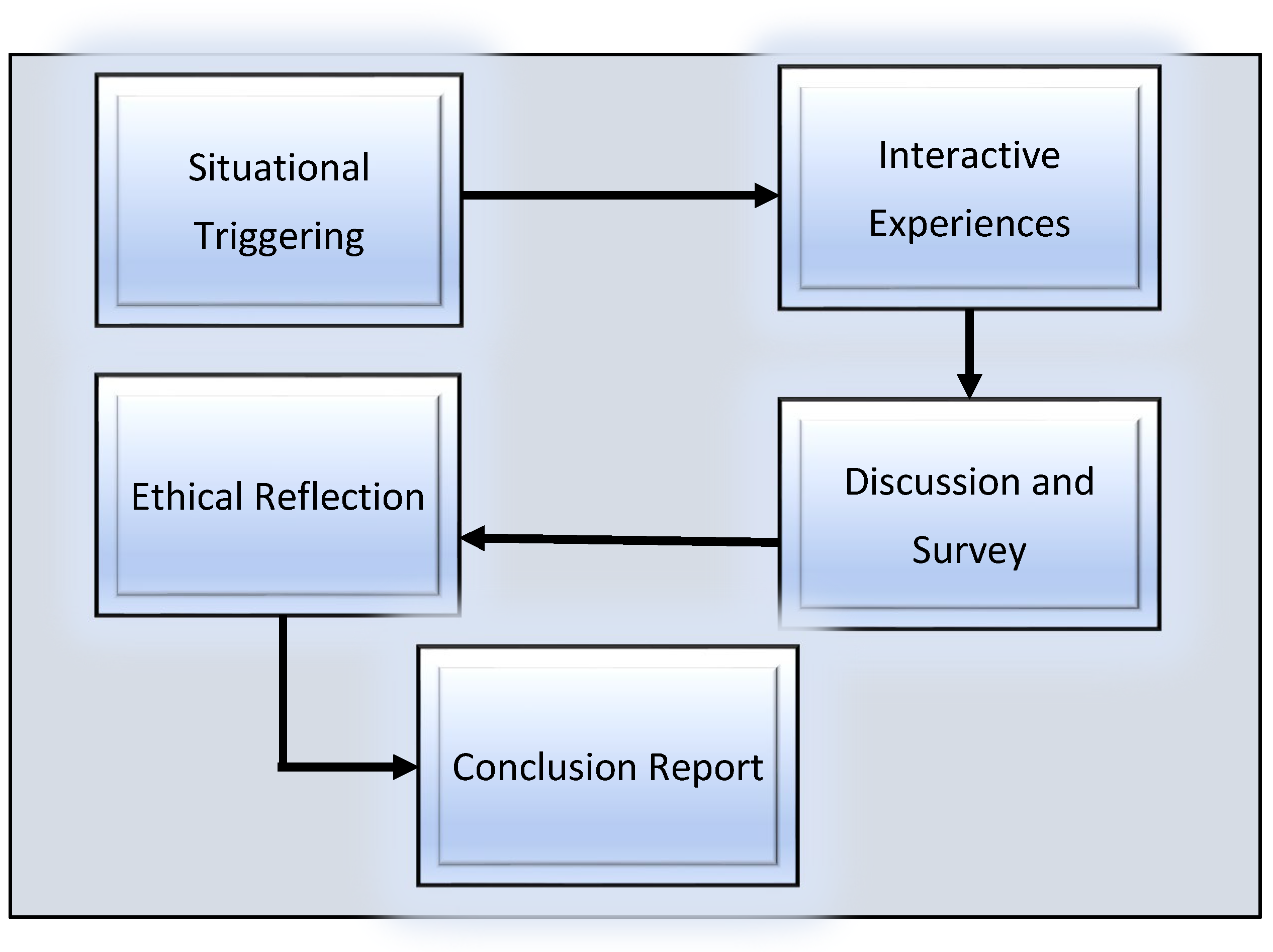
This study constructed and designed an interactive course on “AI Emotional Dependence Survey” within the “Health and Nursing” curriculum, based on the Taiwan 108 Curriculum Guidelines. The course content consists of “situational triggering”, “interactive experiences”, “discussion and survey”, “ethical reflection”, and “conclusion report” related to AI emotional dependence. The course flow is shown in Figure 1.

3.3. Null Research Hypotheses

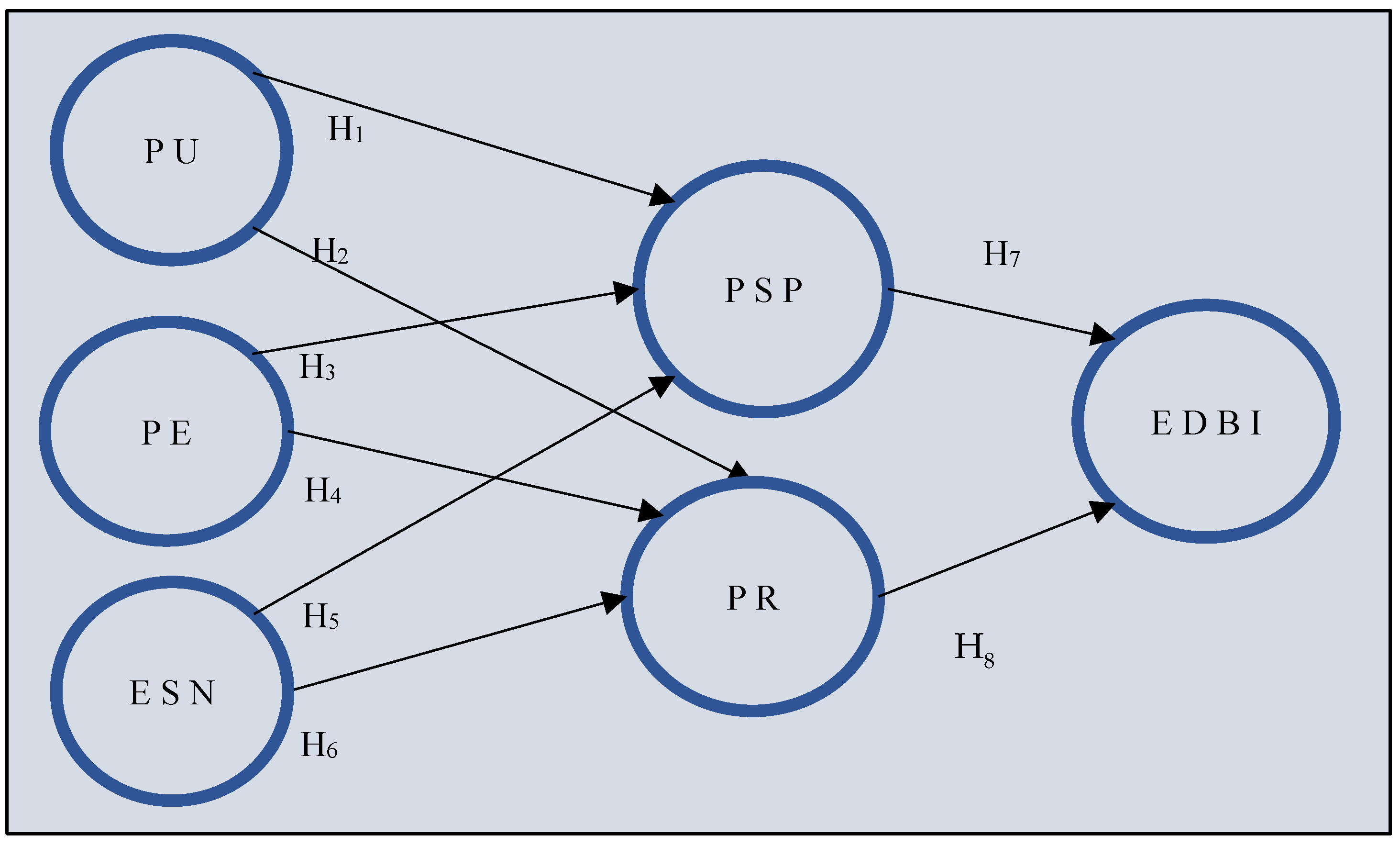
To achieve the research objectives, this study implemented an interactive “AI Emotional Dependence Survey” course within the Health and Nursing curriculum of a vocational high school (VHS). Based on the characteristics of Generative AI as an interactive and socially responsive system, this study reconceptualized traditional TAM relationships. Instead of focusing on the indirect effect of perceived ease of use on perceived usefulness, the model emphasized how both perceived ease of use and perceived usefulness directly contributed to perceived social presence and perceived responsiveness, which in turn influenced emotional reliance-related constructs. Drawing on prior literature, we integrated the TAM, Social Presence Theory, and Attachment Theory with adolescent psychological development to construct the AEDTAM. This model centered on six latent variables: Perceived Usefulness (PU), Perceived Ease of Use (PE), Perceived Social Presence (PSP), Emotional Support Needs (ESN), Perceived Responsiveness (PR), and Emotionally Dependent Behavioral Intention (EDBI). Following the course experiment, we validated the structural relationships among these latent variables to clarify the mechanisms underlying VHS students’ emotional projection and attachment tendencies toward AI. The proposed AEDTAM framework was illustrated in Figure 2.
Therefore, this study restructures the traditional TAM framework to better capture the social-interactive and affective nature of Generative AI, leading to a model in which cognitive evaluations (PE and PU) influence perceived social interaction (PSP and PR), which subsequently shape emotional reliance and behavioral outcomes. Based on AEDTAM, this study applies an interactive teaching approach in the Health and Nursing course on “AI Emotional Dependence Survey” to validate the structural model of six latent variables. It clarifies the mechanisms of students’ emotional projection and attachment to AI and proposes the following null hypotheses.
H1: 
VHS students’ perceived usefulness (PU) of AI for emotional dependence does not positively influence their perceived social presence (PSP) [13].
H2: 
PU of AI for emotional dependence does not positively influence perceived responsiveness (PR) [15].
H3: 
Perceived ease of use (PE) of AI for emotional dependence does not positively influence PSP [17].
H4: 
PE of AI for emotional dependence does not positively influence perceived responsiveness (PR) [18].
H5: 
Emotional support needs (ESN) in AI use for emotional dependence do not positively influence perceived social presence (PSP) [23].
H6: 
ESN in AI use for emotional dependence does not positively influence perceived responsiveness (PR) [12].
H7: 
PSP in AI use for emotional dependence does not positively influence emotional dependency behavioral intention (EDBI) [20].
H8: 
PR in AI use for emotional dependence does not positively influence emotional dependency behavioral intention (EDBI) [23].

3.4. Questionnaire Development, Reliability, and Validity

To achieve the research objectives, a questionnaire was designed to collect participant feedback on the interactive AI Emotional Dependence Survey course, drawing on prior studies of technology acceptance, social presence, and emotional interaction [3,13,15]. It contained two sections: (1) basic information such as gender and age, and (2) content covering six research dimensions—Perceived Usefulness (PU), Perceived Ease of Use (PE), Perceived Social Presence (PSP), Emotional Support Needs (ESN), Perceived Responsiveness (PR), and Emotionally Dependent Behavioral Intentions (EDBI). Items were measured using a 7-point Likert scale ranging from “Strongly disagree” to “Strongly agree.” A pilot test with 30 VHS students yielded Cronbach’s α = 0.92. Three professors from domestic educational institutions reviewed and revised the questionnaire, confirming strong expert validity. The contents of the questionnaire are presented in Table 1.
To further ensure methodological rigor, non-response bias was assessed by comparing early and late respondents, and no significant differences were found, suggesting minimal bias. Additionally, the large sample size and inclusion of multiple schools enhance the external validity and generalizability of the findings within vocational education contexts.

4. Analysis and Discussion of Research Results

Confirmatory factor analysis (CFA) was conducted to test the convergent and discriminant validity of the six latent variables in the AEDTAM. SmartPLS 4 was employed, executing the bootstrap algorithm 5000 times, with statistical significance achieved at p < 0.05. CFA, average variance extracted (AVE), and other indicators were also applied to validate the hypothesized model and analyze path coefficients and causal relationships among latent variables. Before testing the structural relationships, the reliability and validity of the measurement model were evaluated.

4.1. Confirmatory Factor Analysis (CFA)

In the preliminary analysis stage, convergent validity was examined. Item loadings, average variance extracted (AVE), and composite reliability (CR) were analyzed to validate the hypothesized model. The model included six variables—three exogenous variables (PU, PE, ESN), two mediating variables (PSP, PR), and one dependent variable (EDBI). The latent variables (Perceived Usefulness, Perceived Social Presence, Perceived Responsiveness, and Emotionally Dependent Behavioral Intention) each had three indicators, while Emotional Support Needs and Perceived Ease of Use had four and two indicators, respectively.
Preliminary analysis of the AEDTAM fit showed AVE values above 0.5 and factor loadings above 0.6, meeting recommended thresholds for latent structures. Hair Jr et al. (2009) [26] noted that AVE must exceed 0.5 to be acceptable. Indicators with lower loadings were modified or removed to optimize the model. After adjustment, AVE values ranged from 0.61 to 0.81, confirming validity.
The overall CR values of latent variables ranged from 0.72 to 0.92, consistent with recommended standards [26]. Thus, the hypothesized model was validated. Results are presented in Table 2.

4.2. Correlation Between Construction and Extraction of Average Variance Extracted (AVE)

In this study, all latent variables exhibited satisfactory discriminant validity [27]. To determine whether the hypothetical theoretical model proposed in this study has good discriminant validity, the criterion is that the square root of the mean variance extracted (AVE) for each latent variable must be higher than the correlation coefficient between all other variables [25]. Table 3 shows that this study validated that the square root of the AVE for each latent variable in the theoretical model is higher than the correlation coefficient between all other variables and that latent variable. The test results are sufficient to demonstrate that the hypothetical theoretical model proposed in this study has good discriminant validity. The analysis results are shown in Table 3.
All constructs demonstrate satisfactory internal consistency, with composite reliability (CR) values exceeding the recommended threshold of 0.70. Convergent validity is also supported, as all factor loadings are above 0.70 and average variance extracted (AVE) values exceed 0.50. Discriminant validity was assessed using both the Fornell–Larcker criterion and the Heterotrait–Monotrait ratio (HTMT). While the correlation between perceived usefulness (PU) and perceived responsiveness (PR) approached the threshold in the Fornell–Larcker assessment, the HTMT values remained below the recommended cutoff (0.85), indicating that discriminant validity is acceptable.

4.3. Structural Equation Model Evaluation

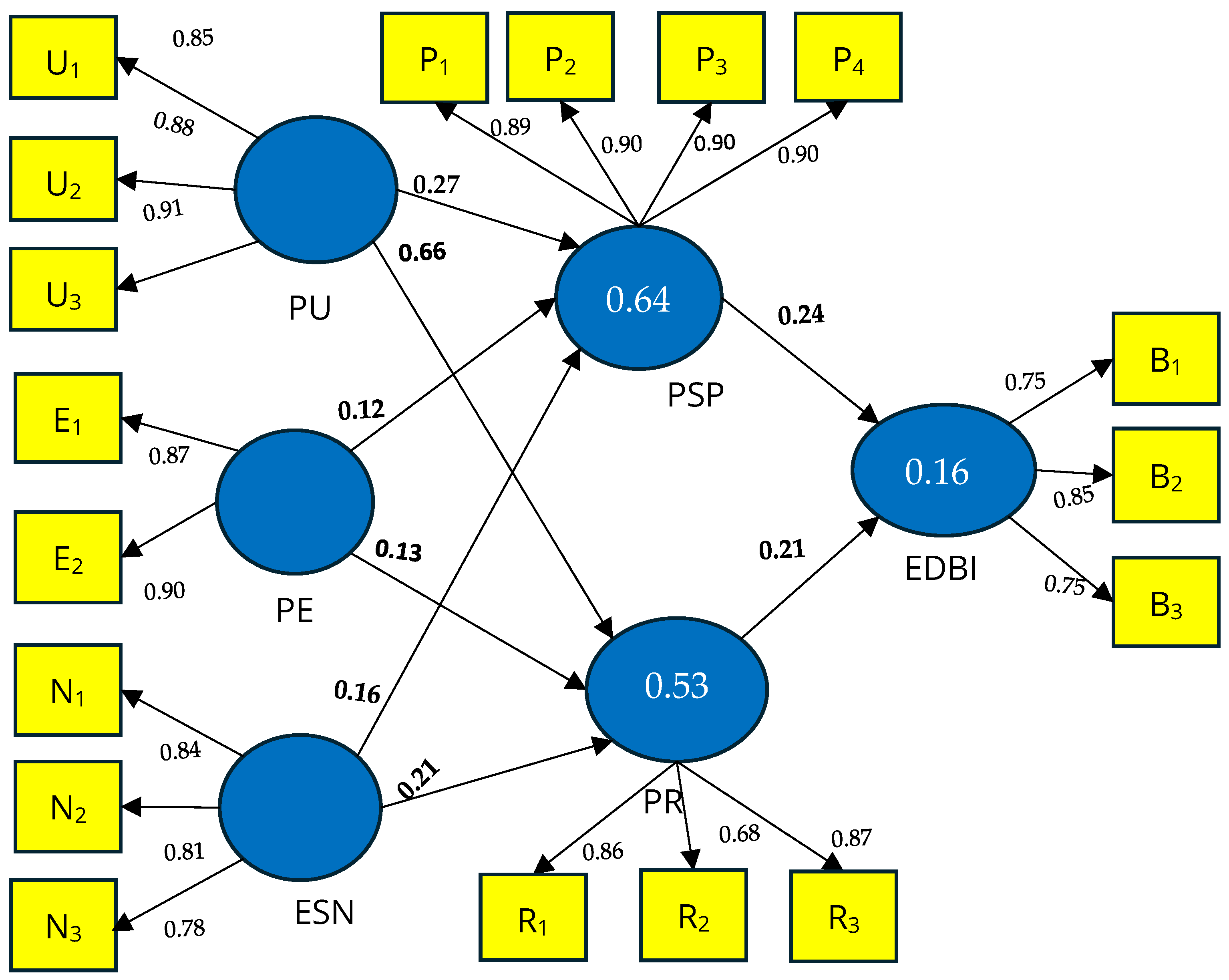
This study employed Partial Least Squares Structural Equation Modeling (PLS−SEM) using SmartPLS 4 to examine the hypothesized relationships in the AEDTAM. Bootstrapping with 5000 resamples was conducted to evaluate the significance of path coefficients. Table 4 shows the path coefficients, t-value, and R2 of the AEDTAM, and the SEM PLS Algorithm is shown in Figure 3.
H1: 
Perceived usefulness (PU) does not positively influence perceived social presence (PSP).
Empirical results: Path coefficient β = 0.27; t = 7.08 ***, p < 0.001; R2 = 0.64. This indicates that PU contributes to explaining 64% of the variance in PSP. The statistical results show that PU has a significant positive effect on PSP; therefore, the null hypothesis H1 is rejected. This suggests that when students perceive AI as useful, they are more likely to experience a sense of social presence during interaction.
H2: 
Perceived usefulness (PU) does not positively influence perceived responsiveness (PR).
Empirical results: Path coefficient β = 0.66; t = 24.48 ***, p < 0.001; R2 = 0.53. The results indicate that PU explains 53% of the variance in PR and has a highly significant positive effect. Therefore, the null hypothesis H2 is rejected. This finding implies that students who perceive AI as useful are more likely to evaluate it as responsive and reliable.
H3: 
Perceived ease of use (PE) does not positively influence perceived social presence (PSP).
Empirical results: Path coefficient β = 0.12; t = 2.54 **, p < 0.01; R2 = 0.64. The results show that PE has a statistically significant positive effect on PSP, although the effect size is relatively small. Therefore, the null hypothesis H3 is rejected. This suggests that ease of use slightly enhances users’ perception of social presence in AI interaction.
H4: 
Perceived ease of use (PE) does not positively influence perceived responsiveness (PR).
Empirical results: Path coefficient β = 0.13; t = 4.89 ***, p < 0.001; R2 = 0.53. The statistical results indicate that PE significantly influences PR; thus, the null hypothesis H4 is rejected. This implies that systems perceived as easy to use enhance users’ perception of responsiveness.
H5: 
Emotional support needs (ESN) do not positively influence perceived social presence (PSP).
Empirical results: Path coefficient β = 0.16; t = 3.31 **, p < 0.01; R2 = 0.64. The results indicate that ESN has a statistically significant positive effect on PSP; therefore, the null hypothesis H5 is rejected. This finding suggests that students with higher emotional support needs are more likely to perceive AI as socially present.
H6: 
Emotional support needs (ESN) do not positively influence perceived responsiveness (PR).
Empirical results: Path coefficient β = 0.21; t = 6.92 ***, p < 0.001; R2 = 0.53. The results show that ESN significantly affects PR, leading to the rejection of the null hypothesis H6. This indicates that students with stronger emotional needs tend to perceive AI responses as more supportive and responsive.
H7: 
Perceived social presence (PSP) does not positively influence emotional dependency behavioral intention (EDBI).
Empirical results: Path coefficient β = 0.24; t = 6.41 ***, p < 0.001; R2 = 0.16. The results indicate that PSP significantly influences EDBI; therefore, null hypothesis H7 is rejected. This suggests that when students perceive AI as socially present, they are more likely to develop emotional dependency tendencies.
H8: 
Perceived responsiveness (PR) does not positively influence emotional dependency behavioral intention (EDBI).
Empirical results: Path coefficient β = 0.21; t = 5.74 ***, p < 0.001; R2 = 0.16. The results indicate that PR has a statistically significant positive effect on EDBI; thus, null hypothesis H8 is rejected. This finding suggests that perceived responsiveness plays an important role in shaping emotional dependency behavior.
In summary, all null hypotheses (H1–H8) were rejected, indicating that all proposed structural relationships in the AEDTAM are statistically significant. These findings support the validity of the proposed theoretical framework. The results further indicate that perceived usefulness, perceived ease of use, and emotional support needs significantly influence perceived social presence and perceived responsiveness. In turn, these perceptual factors significantly predict emotional dependency and behavioral intention. However, although all paths are statistically significant, the explanatory power of the emotional dependency-behavioral intention relationship (R2 = 0.16) remains relatively low. This suggests that emotional dependence on AI among vocational high school students is present but limited in strength. From a sustainability perspective, this reflects a balanced and controlled pattern of human–AI interaction rather than excessive dependency.

4.4. Verification of Mediation

To examine whether perceived social presence (PSP) and perceived responsiveness (PR) mediate the relationships between the three exogenous variables (PU, PE, ESN) and emotional dependency behavioral intention (EDBI), indirect effects were calculated using the bootstrapping procedure with 5000 resamples.

4.4.1. Indirect Effect of Perceived Usefulness (PU) on EDBI

The total indirect effect of PU on EDBI was calculated as: (1) PU → PSP → EDBI (0.27 × 0.24) = 0.065; (2) PU → PR → EDBI (0.66 × 0.21) = 0.139. Total indirect effect = 0.203. Bootstrapping results indicate that the indirect effect is statistically significant (p < 0.001). Because no direct path from PU to EDBI was specified, this pattern reflects only indirect mediation. The results suggest that perceived usefulness influences emotional dependency intention through perceptual mechanisms, particularly via perceived responsiveness. However, although the indirect coefficient (0.203) is the largest among the three antecedents, the ultimate explanatory power of EDBI remains weak (R2 = 0.16), and the effect sizes of PSP → EDBI and PR → EDBI are very small (ƒ2 < 0.02). Therefore, the mediation should be interpreted as statistically supported but substantively modest.

4.4.2. Indirect Effect of Perceived Ease of Use (PE) on EDBI

The total indirect effect of PE on EDBI was calculated as: (1) PE → PSP → EDBI (0.12 × 0.24) = 0.029; (2) PE → PR → EDBI (0.13 × 0.21) = 0.028.
Total indirect effect = 0.056. The indirect effect is statistically significant (p < 0.01). Because no direct PE → EDBI path was specified, the mediation pattern is also categorized as indirect-only mediation. Compared with PU, the magnitude of the indirect effect is relatively small, indicating that ease of use functions primarily as a supportive condition rather than a central driver of emotional dependency intention.

4.4.3. Indirect Effect of Emotional Support Needs (ESN) on EDBI

The total indirect effect of ESN on EDBI was calculated as: (1) ESN → PSP → EDBI (0.16 × 0.24) = 0.038; (2) ESN → PR → EDBI (0.21 × 0.21) = 0.044. Total indirect effect = 0.083. Bootstrapping confirmed statistical significance (p < 0.01). As with the previous constructs, the absence of a direct ESN → EDBI path indicates indirect-only mediation. Although emotional support needs significantly influence perceptual mechanisms (PSP and PR), their translation into emotional dependency intention is limited in magnitude. This suggests that emotional support needs may facilitate perceptual sensitivity toward AI interaction but do not independently generate strong dependency tendencies.

4.4.4. Summary of Mediation Findings

The mediation analysis reveals three consistent indirect pathways: (1) functional cognition/emotional needs → perceptual responses (PSP, PR), and (2) functional cognition/emotional needs → emotional dependency intention. All mediation patterns represent indirect-only mediation, not full mediation. The magnitude of effects is modest, particularly given the weak explanatory power of EDBI (R2 = 0.16). Perceived responsiveness contributes most to the indirect effect in the PU pathway, yet its ultimate impact on emotional dependency intention remains small. Thus, the mediation structure should be interpreted as a statistically identifiable but low-intensity psychological transmission process rather than a strong dependency mechanism.
The research findings suggest that functional cognition and emotional needs shape perceptual interpretations of AI interaction, while emotional dependency intention emerges gradually, multifactorially, and with limited strength. In summary: (1) all three exogenous variables exhibit indirect-only mediation for EDBI; (2) PR is the key mediator, highlighting accuracy and immediacy of AI responses as core mechanisms of attachment; (3) PU shows the largest total effect (0.203), exceeding ESN (0.083) and PE (0.056), confirming functional value as the foundation of emotional attachment. The AEDTAM thus reveals a stable structural chain: functional cognition/emotional needs → response and presence perception → emotional attachment intention, strengthening its theoretical validity.
Mediation analysis reveals that the influence of cognitive factors on emotion-dependent behavioral intentions (EDBI) is transmitted through mediating variables, indicating an indirect effect rather than a direct relationship. Therefore, the interpretation of the mediation effect in this study should be limited to indirect relationships, rather than distinguishing between complete and partial mediation.

4.4.5. Assessment of the Contribution of Exogenous Variables to Endogenous Variables

In addition to testing the significance of the pathway and the mediating effect, this study further calculated the Effect Size (ƒ2) to assess the substantial contribution of each exogenous variable to the endogenous variable. Based on the recommendations of Cohen (1988) [28] and Hair et al. (2019) [26]:
f 2 = R i n c l u d e d 2 R e x c l u d e d 2 1 R i n c l u d e d 2
The results indicate that the path PU → PR (ƒ2 = 1.270) demonstrates an exceptionally large effect size, far exceeding the threshold for a large effect. This finding confirms that perceived usefulness is the dominant substantive predictor of perceived responsiveness. In contrast, PE and ESN show only small effects on PR (ƒ2 = 0.079; 0.069).
For PSP, all three predictors (PU, PE, ESN) show small effect sizes (0.034–0.055), suggesting that social presence perception is jointly influenced but not strongly driven by any single antecedent. More importantly, although PSP and PR significantly predict EDBI, their effect sizes are very small (ƒ2 = 0.014; 0.008), both below the 0.02 threshold. This indicates that emotional dependency behavioral intention is weakly explained by these perceptual constructs, despite statistical significance. Therefore, while the structural paths are significant, the formation of emotional dependency intention appears to be multifactorial and weak in effect, as shown in Table 5.

4.5. Model Fit Assessment: SRMR

To further assess the overall fit of the AEDTAM, this study adopted the Standardized Root Mean Square Residual (SRMR) recommended by PLS−SEM as the fit index. SRMR reflects the difference between the correlation matrix predicted by the theoretical model and the observed matrix; smaller values indicate a better fit. According to Henseler et al. (2015) [29] and Hair et al. (2019) [26]: (1) SRMR < 0.08 → good fit, (2) SRMR < 0.10 → acceptable fit, (3) NFI > 0.90 → good fit, NFI > 0.80 → acceptable fit, and (4) d_ULS and d_G below the 95% bootstrap confidence limit → model rationality. The SRMR results of this study are presented in Table 6.
The SRMR of the AEDTAM structural model in this study is 0.08, indicating: (1) moderate residuals between predicted latent correlations and actual data, (2) good overall fit between the theoretical framework and observed data, and (3) no obvious misspecification. Therefore, the AEDTAM demonstrates strong overall validity. The SRMR results further confirm that the model is significant not only in local paths but also interpretable and predictive at the structural level. In short, the AEDTAM is supported in terms of statistical significance, effect size, and overall fit.

4.6. Harman’s Single-Factor Test

To further ensure the robustness of the AEDTAM, Harman’s single-factor test was conducted to assess potential common method bias (CMB). All measurement items from the six latent constructs (PU, PE, PSP, ESN, PR, EDBI) were subjected to an unrotated exploratory factor analysis. Results showed that the first factor accounted for 28.7% of the total variance, which is well below the critical threshold of 50% (Podsakoff et al., 2024) [30]. This indicates that no single factor dominated the variance structure and that common method bias was not a serious concern in this study.
Combined with the confirmatory factor analysis (CFA) and discriminant validity checks, these findings reinforce the distinctiveness of the latent constructs and enhance confidence in the structural relationships identified. Thus, the validity of the AEDTAM is supported not only by convergent and discriminant validity but also by the absence of significant method bias.

4.7. Discussion

The findings of this study reveal that AI acceptance is not solely a functional process but also involves significant psychological and emotional mechanisms. The present study proposed and empirically tested the AEDTAM by integrating the Technology Acceptance Model, Social Presence Theory, and Attachment Theory. Although all structural paths were statistically significant, the explanatory power for emotional dependency behavioral intention (R2 = 0.16) was relatively weak. Rather than treating this as a limitation alone, the findings provide important theoretical insights into the early-stage psychological structure of AI-related emotional orientation among adolescents. This study redefines the concept of “acceptance” in the context of Generative AI as a psychologically mediated process, rather than a purely functional evaluation. The findings support the necessity of extending traditional acceptance models, as emotional reliance cannot be explained solely by functional perceptions. This validates the theoretical contribution of AEDTAM in capturing the affective dynamics of human–AI interaction.

4.7.1. Emotional Dependency as a Low-Intensity Construct

One of the most theoretically significant findings of this study is that emotional dependency on generative AI should be understood as a low-intensity but structurally meaningful construct. While all hypothesized relationships are statistically significant, the explanatory power for emotional dependency behavioral intention remains limited (R2 = 0.16). Rather than treating this as a methodological weakness, this study interprets it as evidence of a bounded and constrained form of human–AI attachment.
This finding challenges dominant narratives suggesting that generative AI may rapidly replace human emotional relationships. Instead, adolescents appear to engage with AI as a supplementary and situational emotional resource, rather than as a primary attachment figure. Emotional dependency in this context is not deeply internalized nor behaviorally dominant, but instead, reflects a proto-attachment or early-stage psychological alignment.
From a sustainability perspective, this bounded dependency is particularly important. It indicates that students retain stable psychological and social structures, maintaining a healthy equilibrium between digital interaction and real-world relationships. Therefore, emotional engagement with AI should not be interpreted as a risk of immediate dependency, but rather as a controlled and adaptive interaction pattern within the broader framework of sustainable human–technology coexistence.

4.7.2. Functional Trust as the Cognitive Foundation

Perceived usefulness demonstrated a strong effect on perceived responsiveness (β = 0.66; ƒ2 = 1.270), indicating that adolescents’ perception of AI responsiveness is fundamentally grounded in functional evaluation. Emotional interpretation does not emerge independently of instrumental trust; students first assess AI’s utility and problem-solving effectiveness, then perceive responsiveness and presence.
Thus, affective interpretation appears cognitively scaffolded rather than emotionally driven. However, the strong explanatory power of perceived responsiveness (PR, R2 = 0.53) does not proportionally extend to emotional dependency behavioral intention (EDBI, R2 = 0.16). This asymmetry suggests responsiveness is central to perceptual processing but limited in behavioral internalization. Emotional dependency behavioral intention (EDBI) remains weakly structured despite strong responsiveness perception, highlighting that adolescents may cognitively trust AI without fully integrating it into their emotional support hierarchy. This further reinforces the argument that emotional reliance on Generative AI is not an independent or dominant psychological outcome, but a secondary and constrained response built upon functional trust, consistent with the notion of bounded dependency identified in this study.
Given the relatively modest explanatory power (R2 = 0.16), the findings should be interpreted as indicative rather than determinative, suggesting that additional factors beyond the current model may influence emotional reliance on Generative AI.

4.7.3. Revisiting Attachment Theory in Human–AI Contexts

Traditional attachment theory [14,19] defines attachment as a stable emotional bond formed under security-seeking conditions. However, findings show that emotional support needs (ESN) influence emotional dependency behavioral intention (EDBI) only indirectly through perceptual constructs (PSP, PR), with weak behavioral tendencies. This suggests AI is not automatically positioned as a primary attachment figure, even when emotional support needs are high. Instead, AI functions as a supplementary coping resource under situational conditions.
Attachment toward AI in adolescence may thus be context-dependent, cognitively mediated, and low in behavioral consolidation. This modifies attachment theory in human–computer interaction by highlighting that technological attachment requires reinforcement and broader psychosocial alignment before achieving stronger structural status.

4.7.4. Social Presence Versus Responsiveness

Both perceived social presence (PSP) and perceived responsiveness (PR) significantly predicted EDBI, though effect sizes were small. PR was more strongly explained by antecedent variables than PSP, suggesting that “being effectively responded to” is more psychologically salient than anthropomorphic warmth in generative AI interaction. Yet, even this salient perceptual experience does not automatically produce dependency.
Emotional alignment with AI may rely more on functional stability than anthropomorphism, but translation into attachment-like behavioral intention (EDBI) remains gradual and weak. This finding refines social presence theory, showing that presence perception alone is insufficient without broader psychosocial reinforcement. The significant relationship between Perceived Ease of Use and Perceived Responsiveness suggests that frictionless interaction may enhance the perception of AI as a socially responsive entity. This may reduce users’ critical distance and increase the risk of emotional reliance.

4.7.5. A Developmental Interpretation

Given the low R2 of emotional dependency intention, AEDTAM is best interpreted as an early-stage developmental configuration rather than a mature dependency structure. Adolescents: (1) recognize AI’s functional value, (2) perceive responsiveness and presence, and (3) show limited but statistically detectable emotional orientation. However, EDBI is neither dominant nor strongly explained within the current model.
AI-related emotional dependency among VHS students may represent a transitional psychological state, a low-risk exploratory orientation, or a situational coping mechanism. This aligns with developmental theories emphasizing identity experimentation during adolescence rather than stable relational replacement.

4.7.6. Theoretical Contribution

This study contributes theoretically in three ways: (1) emotional dependency toward AI is statistically observable but modest; (2) functional cognition serves as the primary scaffold for responsiveness perception; and (3) AI attachment is reframed as low-intensity, cognitively mediated, and context-dependent. Rather than supporting alarmist views of technological dependency, AEDTAM highlights a constrained psychological alignment process. Weak effect sizes indicate adolescent AI attachment remains emergent, not entrenched.
Emotional dependency is operationalized at the behavioral intention level, not as a full attachment structure; thus, the findings should not be interpreted as evidence of stable bond formation.

4.7.7. Implications for Sustainable AI Literacy and Education

The findings of this study provide important implications for sustainable AI literacy within the framework of SDG 4 (Quality Education) and SDG 3 (Good Health and Well-being). First, the results suggest that AI education should not be limited to technical proficiency, but should also incorporate emotional awareness and critical reflection, enabling students to engage with AI in a responsible and self-regulated manner. This directly supports SDG 4 by promoting higher-quality, future-oriented education. Second, the identification of emotional dependency as a low-intensity and bounded construct indicates that students are generally able to maintain psychological balance when interacting with AI. This aligns with SDG 3 by suggesting that current patterns of AI use do not inherently undermine mental well-being but instead reflect a controlled and adaptive form of engagement. Finally, the concept of bounded dependency proposed in this study highlights the importance of maintaining a sustainable equilibrium between human relationships and AI interaction. Educational interventions should therefore focus on reinforcing this balance, preventing potential overdependence while supporting the beneficial aspects of AI as a supplementary emotional resource.
The findings of this study provide data-informed insights into how students interact with Generative AI, particularly in relation to emotional reliance. While the study does not directly measure psychological well-being or sustainability outcomes, the results may inform educational strategies aimed at promoting responsible AI use and enhancing students’ emotional awareness.

5. Conclusions, Limitations, and Suggestions

5.1. Conclusions

This study integrates the TAM, Social Presence Theory, and Attachment Theory. Building on Davis’ (1989) [3] TAM, we constructed the AI Emotional Dependence Technology Acceptance Model (AEDTAM) and examined VHS students’ emotional attachment to generative AI. PLS−SEM analysis yielded four conclusions as follows:
(1) Emotional attachment is weak but significant.
Emotional dependency on AI is not a dominant behavioral outcome but a low-intensity and bounded psychological tendency. This finding suggests that adolescents maintain sustainable boundaries between AI interaction and human relationships, supporting a model of balanced and responsible human–AI coexistence rather than technological substitution.
(2) Response quality is central.
Immediacy, accuracy, and appropriateness of AI responses are critical conditions for triggering attachment.
(3) Emotional support needs act indirectly.
The findings revise the assumption that emotional deprivation directly produces attachment, showing instead that attachment emerges through interaction processes.
(4) Attachment remains multifactorial.
Emotional attachment is also influenced by factors not included in the model, such as personality traits, loneliness, family support, and peer relationships.
This study contributes to the literature by extending TAM into an affective domain, proposing AEDTAM as a hybrid cognitive–emotional framework. It advances prior models by demonstrating that emotional dependency toward AI is not a dominant outcome but a low-intensity psychological tendency, thereby refining theoretical assumptions about human–AI attachment. These results highlight AEDTAM’s theoretical validity while emphasizing that adolescent attachment to AI is modest, context-dependent, and shaped by multiple psychological and social variables.
From a sustainability perspective, this study contributes to the understanding of how AI integration in education intersects with global development goals. By demonstrating that emotional dependency on AI remains bound and low in intensity, the findings support the alignment of AI use with SDG 4 and SDG 3, indicating that educational AI adoption can coexist with the preservation of psychological well-being. This reinforces the notion that sustainable AI literacy involves not only technological competence but also the capacity to maintain healthy human–technology boundaries. Although this study does not directly assess Sustainable Development Goals (SDGs), the findings may have indirect relevance to educational practices aligned with SDG 4 (Quality Education), particularly in fostering responsible and reflective use of AI technologies.

5.2. Research Limitations and Future Research Directions

This study has several research limitations, as outlined below.
(1) This research was conducted within the context of Taiwan’s educational system, which is often characterized by high academic pressure and competitive learning environments. Such conditions may intensify students’ reliance on external support systems, including Generative AI. Therefore, the findings of this study may reflect context-specific dynamics and may not be fully generalizable to educational settings in Western or less exam-oriented systems. Future research is encouraged to conduct cross-cultural comparisons to examine whether similar patterns of emotional reliance emerge in different educational contexts.
(2) This study adopts a cross-sectional research design, which limits the ability to establish causal relationships among variables. While the results indicate a significant association between emotional reliance and social isolation, it remains unclear whether AI usage leads to increased isolation or whether socially isolated students are more likely to seek emotional engagement through AI systems. Future studies should employ longitudinal or experimental designs to better capture the directionality and causality of these relationships.
(3) This study relies on self-reported questionnaire data, which may be subject to response bias, including social desirability and subjective interpretation of AI interactions. Future research could incorporate behavioral data, system logs, or physiological measures to provide a more objective assessment of AI usage patterns and emotional engagement. (4) Although this study proposes the AEDTAM framework to explain emotional reliance on Generative AI, the model could be further extended by incorporating additional psychological constructs, such as self-efficacy, loneliness, or digital resilience, to enhance its explanatory power. Future research is encouraged to refine and validate the model across diverse populations and technological contexts.

5.3. Suggestions to the VHS Leadership

Based on the empirical results of this study, practical implications can be derived by directly linking the findings of the AEDTAM to educational interventions.
(1)
Perceived Ease of Use significantly increases Emotional Reliance.
Overly seamless AI interaction may lower students’ cognitive resistance and facilitate affective dependency. Therefore, educators are encouraged to introduce structured interaction constraints, such as reflective prompts, delayed AI responses, or task-based verification steps, to maintain students’ critical engagement.
(2)
A significant relationship exists between Perceived Responsiveness and Emotional Projection.
This study suggests that human-like AI feedback enhances the perception of AI as a social entity. To mitigate this effect, schools should emphasize AI literacy education, helping students recognize the artificial nature of AI responses and avoid anthropomorphism.
(3)
Emotional Reliance is Positively Associated with Social Isolation.
VHS institutions must implement peer-based collaborative learning mechanisms, particularly after AI-assisted tasks. For example, structured peer-review sessions or group discussions can help re-socialize the learning process and reduce overdependence on AI systems.
(4)
Institutional guidelines for AI usage in VHSs are necessary.
Educational administrators should consider developing institutional guidelines for AI usage. These guidelines should include time limits, task boundaries, and reflective reporting requirements to ensure that AI adoption remains aligned with the principles of sustainable education.

Author Contributions

Conceptualization, J.-W.L. and S.C.; data curation, J.-W.L. and S.C.; investigation, J.-W.L. and S.C.; methodology, S.C., S.-H.C. and K.-C.Y.; project administration, K.-C.Y.; software, S.C. and S.-H.C.; validation, S.C.; writing—original draft, J.-W.L. and S.C.; writing—review and editing, K.-C.Y. All authors have read and agreed to the published version of the manuscript.

Funding

The authors appreciate the financial support that came from the National Science Council, Taiwan, under the Grant NSTC 112-2410-H-018-030-MY3.

Institutional Review Board Statement

Ethical review and approval were waived for this study by Institution Committee as per Ministry of Education Taiwan Academic Ethics Education Resource Center.

Informed Consent Statement

Informed consent was obtained from all subjects involved in the study.

Data Availability Statement

The data presented in this study are available on request from the corresponding author. The data are not publicly available due to privacy or ethical restrictions.

Conflicts of Interest

The authors declare no conflicts of interest.

References

  1. Giannakos, M.; Azevedo, R.; Brusilovsky, P.; Cukurova, M.; Dimitriadis, Y.; Hernandez-Leo, D.; Järvelä, S.; Mavrikis, M.; Rienties, B. The promise and challenges of generative AI in education. Behav. Inf. Technol. 2025, 44, 2518–2544. [Google Scholar] [CrossRef]
  2. Vieriu, A.M.; Petrea, G. The impact of artificial intelligence (AI) on students’ academic development. Educ. Sci. 2025, 15, 343. [Google Scholar] [CrossRef]
  3. Davis, F.D. Perceived usefulness, perceived ease of use, and user acceptance of information technology. MIS Q. 1989, 13, 319–340. [Google Scholar] [CrossRef] [PubMed]
  4. Gerling, C.; Teubner, T.; Braesemann, F. Who uses general-purpose AI? A typology of ChatGPT early adopters. Electron. Mark. 2026, 36, 15. [Google Scholar] [CrossRef]
  5. Nayyar, A.; Maqsood, A. From human bonds to artificial support: Perceived AI empathy, dependence on AI chatbots, and social disconnection among emerging adults. Qlantic J. Soc. Sci. Humanit. 2026, 7, 70–82. [Google Scholar] [CrossRef]
  6. Nguyen, T.D.X.; Nguyen, K.M. Demystifying how emotional and cognitive resonance to AI-driven content consistency sparks customer engagement and impulse buying in short-video E-commerce. J. Retail. Consum. Serv. 2025, 89, 104312. [Google Scholar] [CrossRef]
  7. Masri-Zada, T.; Martirosyan, S.; Abdou, A.; Barbar, R.; Kades, S.; Makki, H.; Haley, G.; Agrawal, D.K. The impact of social media & technology on child and adolescent mental health. J. Psychiatry Psychiatr. Disord. 2025, 9, 111–130. [Google Scholar] [CrossRef] [PubMed]
  8. Marano, G.; Lisci, F.M.; Rossi, S.; Marzo, E.M.; Boggio, G.; Brisi, C.; Traversi, G.; Mazza, O.; Pola, R.; Gaetani, E.; et al. Connected but at Risk: Social media exposure and psychiatric and psychological outcomes in youth. Children 2025, 12, 1322. [Google Scholar] [CrossRef]
  9. Smith, M.G.; Bradbury, T.N.; Karney, B.R. Can generative AI chatbots emulate human connection? A relationship science perspective. Perspect. Psychol. Sci. 2025, 20, 1081–1099. [Google Scholar] [CrossRef]
  10. Marjerison, R.K.; Dong, H.; Kim, J.-M.; Zheng, H.; Zhang, Y.; Kuan, G. Understanding user acceptance of AI-driven chatbots in China’s E-commerce: The roles of perceived authenticity, usefulness, and risk. Systems 2025, 13, 71. [Google Scholar] [CrossRef]
  11. Łukasik, A.; Gut, A. From robots to chatbots: Unveiling the dynamics of human-AI interaction. Front. Psychol. 2025, 16, 169277. [Google Scholar] [CrossRef]
  12. Wang, Y.; Guan, X.; Sun, Y.; Wang, H.; Chen, D. The cognitive acceptance of generative AI image tools based on TPB-TAM model and multi-theory integration. Adv. Des. Res. 2025, 3, 38–54. [Google Scholar] [CrossRef]
  13. Chiang, S.; Chang, S.H.; Yao, K.C.; Kuo, M.C. Vocational high school weave hair learning in virtual reality: An application of extended technology acceptance model with flow theory. Interact. Learn. Environ. 2025, 33, 1–16. [Google Scholar] [CrossRef]
  14. Yang, F.; Oshio, A. Using attachment theory to conceptualize and measure the experiences in human–AI relationships. Curr. Psychol. 2025, 44, 10658–10669. [Google Scholar] [CrossRef]
  15. Yao, K.C.; Chiang, S. Mathematical modeling and structural equation analysis of acceptance behavior intention to AI medical diagnosis systems. Mathematics 2025, 13, 2390. [Google Scholar] [CrossRef]
  16. Short, J.; Williams, E.; Christie, B. The Social Psychology of Telecommunications; John Wiley & Sons: Hoboken, NJ, USA, 1976. [Google Scholar]
  17. Suriá-Martínez, R.; García-Castillo, F.; López-Sánchez, C.; García del Castillo, J.A. Artificial intelligence and emotional support: A comparative study of university students with and without disabilities. Healthcare 2026, 14, 75. [Google Scholar] [CrossRef] [PubMed]
  18. Chan, C.K.Y. AI as the therapist: Student insights on the challenges of using generative AI for school mental health frameworks. Behav. Sci. 2025, 15, 287. [Google Scholar] [CrossRef]
  19. Bowlby, J. Attachment and Loss: Vol. 1. Attachment; Basic Books: New York, NY, USA, 1969. [Google Scholar]
  20. Shen, J.; DiPaola, D.; Ali, S.; Sap, M.; Park, H.W.; Breazeal, C. Empathy toward artificial intelligence versus human experiences and the role of transparency in mental health and social support Chatbot design: Comparative study. JMIR Ment. Health 2024, 11, e62679. [Google Scholar] [CrossRef]
  21. Yang, T.C.; Hsu, Y.C.; Wu, J.Y. The effectiveness of ChatGPT in assisting high school students in programming learning: Evidence from a quasi-experimental research. Interact. Learn. Environ. 2025, 33, 3726–3743. [Google Scholar] [CrossRef]
  22. Vygotsky, L.S. Mind in Society: The Development of Higher Psychological Processes; Harvard University Press: Cambridge, MA, USA, 1978. [Google Scholar]
  23. Volpato, R.; DeBruine, L.; Stumpf, S. Trusting emotional support from generative artificial intelligence: A conceptual review. Comput. Hum. Behav. Artif. Hum. 2025, 5, 100195. [Google Scholar] [CrossRef]
  24. Song, Y.; Qiu, X.; Liu, J. The impact of artificial intelligence adoption on organizational decision-making: An empirical study based on the technology acceptance model in business management. Systems 2025, 13, 683. [Google Scholar] [CrossRef]
  25. Chang, S.H. Structural Equation Modeling by Partial Least Squares Method (PLS−SEM): Application of SmartPLS; Wunan Books: Taipei, Taiwan, 2021. [Google Scholar]
  26. Hair, J.F., Jr.; Black, W.C.; Babin, B.J.; Anderson, R.E. Multivariate Data Analysis, 7th ed.; Prentice Hall: Upper Saddle River, NJ, USA, 2009. [Google Scholar]
  27. Fornell, C.; Larcker, D.F. Evaluating structural equation models with unobservable variables and measurement error. J. Mark. Res. 1981, 18, 39–50. [Google Scholar] [CrossRef]
  28. Cohen, J. Statistical Power Analysis for the Behavioral Sciences, 2nd ed.; Lawrence Erlbaum Associates: Hillsdale, NJ, USA, 1988. [Google Scholar]
  29. Henseler, J.; Ringle, C.M.; Sarstedt, M. A new criterion for assessing discriminant validity in variance-based structural equation modeling. J. Acad. Mark. Sci. 2015, 43, 115–135. [Google Scholar] [CrossRef]
  30. Podsakoff, P.M.; Podsakoff, N.P.; Williams, L.J.; Huang, C.; Yang, J. Common method bias: It’s bad, it’s complex, it’s widespread, and it’s not easy to fix. Annu. Rev. Organ. Psychol. Organ. Behav. 2024, 11, 17–61. [Google Scholar] [CrossRef]
Figure 1. Flowchart of the Interactive Course “AI Emotional Dependence Survey” in “Health and Nursing”. Source: This study was compiled.
Sustainability 18 05148 g001
Figure 2. The Hypothetical Theoretical Framework of AEDTAM. Source: This study was compiled.
Sustainability 18 05148 g002
Figure 3. The Hypothetic Theoretical Model (AEDTAM) Verification Results. Source: This study was compiled.
Sustainability 18 05148 g003
Table 1. Questionnaire Contents of the AEDTAM Among VHS Students.
FacetsQuestionnaire Items
PUDefinition: The degree to which users believe AI can improve their learning or life efficiency.
U1. AI can improve my learning efficiency.
U2. The information provided by the AI helped solve my problem.
U3. Using AI makes me more expressive in my coursework.
PEDefinition: The degree to which users find AI simple to operate and easy to use.
E1. I think AI is very easy to operate.
E2. I can easily understand the AI’s responses.
ESNDefinition: The degree to which an individual desires to be understood and supported in emotional or stressful situations.
N1. When I’m in a bad mood, I hope someone will listen to me.
N2. When I feel stressed, I need emotional support.
N3. I sometimes feel lonely because of a lack of support.
PSPDefinition: The degree to which users perceive AI as having “understanding,” “companionship,” or “emotional presence” when interacting with it.
P1. I feel like the AI is having a real conversation with me.
P2. I felt understood when chatting with AI.
P3. AI makes me feel like I’m being listened to.
P4. I think AI’s responses have emotional warmth.
PRDefinition: User’s subjective evaluation of the speed, appropriateness, and continuity of AI response.
R1. AI can accurately understand my question.
R2. AI’s suggestions usually meet my needs.
R3. AI’s response reassured me.
EDBIDefinition: The tendency to prioritize AI as a source of emotional support in emotional distress or stressful situations.
B1. Without AI, I would feel like I’ve lost someone to listen to.
B2. I may continue to rely on AI for companionship.
B3. In the future, I will still regard AI as a source of emotional support.
Source: compiled by this study.
Table 2. Confirmatory Factor Analysis (CFA).
VariablesFactor LoadingsCronbach’s αCRAVE
PE
E1 0.870.710.720.70
E20.90
PU
U10.850.850.860.77
U20.88
U30.87
ESN
N10.840.730.730.65
N20.81
N30.78
PSP
P10.890.920.920.81
P20.90
P30.90
P40.90
PR
R10.860.730.730.66
R20.70
R30.87
EDBI
B10.750.700.830.61
B20.85
B30.75
Source: This study was compiled.
Table 3. Correlation Between Constructs and Square Roots of Average Variance Extracted (AVE).
ItemEDBIESNPEPRPSPPU
EDBI0.79
ESN0.310.81
PE0.280.700.88
PR0.310.630.550.81
PSP0.320.370.340.410.90
PU0.240.490.410.820.390.88
Source: This study was compiled.
Table 4. Path Coefficients, β, t-value, and Standard Error of the Hypothetical Theoretical Model.
Relationship Between
Variables
βStandard Errort-ValueDecision Making
H1PU → PSP0.270.047.08 ***PASS
H2PU → PR0.660.0324.48 ***PASS
H3PE → PSP0.120.052.54 **PASS
H4PE → PR0.130.034.89 ***PASS
H5ESN → PSP0.160.053.31 **PASS
H6ESN → PR0.210.036.92 ***PASS
H7PSP → EDBI0.240.046.41 ***PASS
H8PR → EDBI0.210.045.74 ***PASS
Note: *** p < 0.001; ** p < 0.01, → Influences on path direction. Source: This study was compiled.
Table 5. Assessment of the Contribution of Exogenous Variables to Endogenous Variables.
Exogenous VariablesEndogenous Variablesƒ2Determination
PUPSP0.043Small
PEPSP0.034Small
ESNPSP0.055Small
PUPR1.270Large
PEPR0.079Small
ESNPR0.069Small
PSPEDBI0.014Very Small
PREDBI0.008Very Small
Source: compiled by this study.
Table 6. Model Fit Analysis of the Hypothetical Theoretical Model.
IndexSaturated ModelEstimated Model
SRMR0.080.08
d_ULS1.161.21
d_G0.470.47
Chi-Square2674.952690.68
NFI0.80.8
Source: compiled by this study.
Disclaimer/Publisher’s Note: The statements, opinions and data contained in all publications are solely those of the individual author(s) and contributor(s) and not of MDPI and/or the editor(s). MDPI and/or the editor(s) disclaim responsibility for any injury to people or property resulting from any ideas, methods, instructions or products referred to in the content.