1. Introduction
Destinations around the world are under increasing pressure to embrace more sustainable and resource-efficient development strategies in light of the accelerated effects of climate change, environmental degradation, and rising tourism demand. The idea of “green destination management” has arisen as a strategy framework for directing tourist development toward increased environmental responsibility, socio-economic balance, and long-term resilience in response to these difficulties [
1]. When it comes to implementing green and sustainable destination management techniques, protected areas are very crucial. These regions combine prospects for tourism growth with biodiversity conservation, particularly in the form of ecotourism and nature-based activities [
2]. However, residents’ active participation and support are just as important to the success of green destination management as environmental preservation. It is commonly acknowledged that a key element of sustainable tourism planning and governance is stakeholder engagement, especially at the local level [
3]. Residents’ perceptions and satisfaction have become crucial markers of tourism sustainability in this context, indicating the degree to which tourism development enhances local well-being while reducing potential negative effects [
4]. Despite the increasing attention given to green destination management, there remains a need for empirical research that examines the relationship between sustainable tourism development and local community perceptions, particularly in protected natural areas characterized by sensitive ecosystems. Based on the structural gaps in the green destination management literature, this study addresses the following central research question: To what extent do the interconnected ecological, economic, socio-cultural, and institutional dimensions of the Prism of Sustainability model collectively determine and predict the level of resident satisfaction in a protected river-adjacent destination? In order to close this gap, the current study examines how various aspects of sustainable tourism affect locals’ contentment in a Danube-region protected forest–wetland habitat. This study advances knowledge on the practical application of green destination management principles by concentrating on the relationship between ecological values, tourism development, and community viewpoints.
Green destination management serves as the structural and operational framework required to operationalize sustainable tourism within ecologically sensitive protected areas. However, the long-term viability of green management protocols fundamentally relies on the active engagement and psychological buy-in of the local community. By evaluating resident participation and satisfaction through localized governance indicators, destination managers can establish a continuous feedback loop that ensures conservation policies align with local socio-economic realities, thereby transforming theoretical sustainability goals into resilient local practices.
Natural and social destination elements of the ICS can influence the development of nature-based tourism, ecotourism, wellness and SPA, health tourism, swimming, cultural tourism, trips, education, sports and others [
5]. By combining the elements of the destination, a quality tourist product can be created [
6].
Managers of the ICS must know that the inclusion of locals in the development of tourism is important [
7,
8]. Proper tourism development within the destination includes planning, promotion, management and control of tourism [
9]. The basic principles of SUTO include the provision of ecological, economic and socio-cultural benefits for the natural assets and inhabitants [
10,
11]. The role of the conservation area in SUTO can be examined through four dimensions of SUTO: ecological, economic, socio-cultural and institutional [
12,
13,
14]. The results of research on dimensions of sustainability may indicate insufficient activities in planning and management. By determining each dimension, it is possible to identify certain resources that, with proper use, can affect the quality of the tourist product [
15].
The objective of this study is to examine the impact of SUTO from the ICS on residents’ satisfaction with tourism development. In addition, in this study, the authors examined the current state of tourism in the ICS by measuring the individual values of factors of ecological, socio-cultural, economic and institutional dimensions of sustainability. The results of measuring the degree of satisfaction of locals with SUTO can indicate the necessary management activities that must be implemented to identify, valorization and activate SUTO potentials and activities aimed at protecting the landscape [
16,
17,
18].
The research aimed to investigate whether SUTO affects residents’ satisfaction, which is the main research question in this study. Furthermore, it was crucial to determine the state of SUTO in the ICS and to identify potential that can contribute to providing benefits for all subjects within the framework of SUTO. The research results show that residents are satisfied with sustainable tourism, that is, four dimensions of sustainability contribute to residents’ satisfaction. In the ICS, tourism must be in coalition with nature because nature protection is imperative [
19,
20]. Also, by analyzing the answers received from the group of respondents, it is possible to determine the individual influences of natural and social factors of the ICS on the average values of the statistically examined dimensions [
21].
The results of this research can serve managers of natural areas in the phase of determining protection priorities and planning certain activities, which include the tourist use of resources. Since the improvement of natural values is important, the use of space for tourist purposes must include nature-based forms of tourism to reduce the impact on the environment. Promotion of such management styles is important for the ICS.
To address these gaps, this study establishes a logically closed framework guided by the following central research hypothesis: H1: the four core dimensions of the Prism of Sustainability (PoS) model—economic, environmental, socio-cultural, and institutional—exhibit a significant, positive predictive influence on local residents’ overall satisfaction with tourism development.
The primary theoretical innovation of this research lies in shifting the application of the PoS model from general tourist destinations to a highly specialized, river-adjacent protected area within the Danube region. Practically, the insights generated offer actionable data for environmental policy-makers to design targeted, micro-local community strategies rather than standardized, top-down regional programs.
2. Literature Review
The concept of tourism development refers to a balanced integration of economic, social, and environmental objectives, ensuring that current needs are met without compromising future opportunities [
22,
23]. In this context, tourism is increasingly understood as a complex system that must simultaneously generate economic benefits, preserve natural resources, and support local communities [
24,
25,
26,
27]. Sustainable tourism in conservation areas is often linked to local development initiatives that seek to balance environmental protection with economic opportunities. These processes involve multiple stakeholders with different interests, making coordination and long-term planning essential [
28,
29].
The planning of sustainable tourism within conservation areas necessitates the optimization of diverse outcomes, among which ecological and environmental preservation remain paramount [
30]. In addition to natural, economic and social elements, which have an important role in a sustainable system [
31]. The analysis of sustainable tourism increasingly relies on multi-dimensional frameworks, such as the Prism of Sustainability (PoS), which integrates ecological, economic, socio-cultural, and institutional aspects [
32,
33]. These dimensions are essential for understanding how tourism can contribute to long-term development while minimizing negative impacts [
34].
Today, many areas see tourism as a means of economic development, especially in regions with significant natural assets [
35]. In many countries, the authorities responsible for conservation areas have become interested in tourism not only for economic benefits but because they see it as a chance for the sustainability of both the ecosystem and the local population, which requires very careful management and development [
36,
37].
Tourism, which is carefully regulated and in small groups that are interested in scientific and ecological education, can not only be important for the protection of nature but also for its popularization [
38]. Tourism is mainly developed in destinations with well-preserved nature, which exists in natural assets. It contributes to a better understanding of natural environments and their transformation over time, including the effects of industrialization. Tourism in conservation areas helps individuals develop an appropriate attitude toward nature and the environment [
39]. Tourism generates revenues that can support conservation efforts. These revenues are primarily generated by ticket fees, tourist guide services, rental of various recreational equipment, production and sale of souvenirs, and provision of other tourist and catering services to visitors [
40].
The results of individual research on tourism in conservation areas highlight the importance of specific forms of tourism for sustainably used resources. Such forms of tourism include adventure, educational, ecotourism, nature-based, birdwatching and scientific research tourism [
41,
42]. The development of these forms of tourism can be directly supported by natural and social factors, which can also have individual influences [
43,
44]. Responsible tourism and adequate control can create a destination in which natural, social and economic benefits are provided [
45,
46,
47,
48,
49].
A critical synthesis of the current literature reveals that while the theoretical framework of sustainable tourism in protected areas is well-established, prior empirical studies suffer from noticeable geographic and operational fragmentation. Most existing models focus primarily on high-profile national parks with substantial institutional funding, largely overlooking smaller, river-adjacent protected zones or regional nature reserves. Furthermore, contemporary research frequently treats sustainability as a static compliance check rather than a dynamic process heavily reliant on local ecological specificities. This leaves a significant gap in understanding how localized environmental stressors and community livelihood dependencies affect the overall success of regional green management initiatives.
In this context, recent studies have highlighted the growing importance of green destinations as an operational extension of sustainable tourism, particularly in protected and nature-based destinations. This approach focuses on integrating environmental protection with governance mechanisms, stakeholder participation, and long-term planning processes. As noted in previous studies, green destination management reflects a shift toward more systemic and performance-oriented models of destination governance [
1]. At the same time, the use of sustainability indicators and monitoring frameworks has become essential for evaluating progress and aligning tourism development with broader sustainability objectives, including the sustainable development goals [
19]. Furthermore, recent discussions on responsible tourism underline the importance of integrated governance approaches that connect environmental, socio-economic, and institutional dimensions of sustainability, reinforcing the role of destination management in achieving long-term sustainability outcomes [
36]. This perspective is particularly relevant for protected areas, where the integration of environmental conservation and community well-being requires coordinated and adaptive management approaches.
The studies that contributed to the conception of the research model in this study basically examined the impact of SUTO on the users of conservation areas. It referred to the determination of the value of the state of factors of SUTO through ecological, economic, socio-cultural and institutional sustainability. The research results of these studies mainly highlight the importance of managing these areas through the promotion of sustainability by institutions that have direct or indirect links with the destination. All management processes are aimed at nature protection and providing benefits for locals.
The results of the research by Huayhuaca et al. [
26] point to the importance of ecological sustainability as part of the planning of important tourist activities. Residents’ opinions on the dimensions of sustainability within Frankenwald Park in Germany were collected through a survey. The study concept contains the Prism of Sustainability model. In order to determine the state of SUTO in the best way, sustainability factors are grouped into four variables in this model. The research results highlight socio-cultural and economic sustainability as important links between tourism and nature [
50,
51,
52,
53].
Nguyen et al. [
54] investigated SUTO in two conservation areas using the PoS model. Residents expressed their views on sustainability factors grouped into four dimensions. The research model was conceived on the application of SEM statistical analysis to determine the validity of four research hypotheses about the state and prospects of SUTO in relation to the subjects. Residents’ satisfaction with SUTO is highlighted as the main research result in this study. The role of locals in the development of tourism is very important, so this data must be taken into account when including conservation areas in the tourist product [
55,
56,
57].
When analyzing resident satisfaction within protected destinations, the literature frequently exhibits a methodological bias by treating local communities as homogeneous groups. Existing studies often present list-like summaries of general perceptions without critically evaluating how internal demographic rifts—such as gender-based economic roles or settlement-specific historical backgrounds—heterogenize these attitudes. In the context of developing tourism economies, resident satisfaction cannot be measured solely through macroeconomic indicators. Instead, it must be critically linked to the preservation of traditional resource access, meaning that low community satisfaction often signals institutional failures to integrate local inhabitants into the governance loop [
58,
59,
60,
61].
A study by Gong et al. [
62] analyzed the factors of support of the local population to the development of tourism in the conservation area, applying the extended PoS model. The results show that resident satisfaction fully mediates between the economic dimension and tourism support, highlighting that inclusive management and resident satisfaction are key to the long-term success of SUTO.
These studies highlight the relevance of analyzing sustainability through multiple interconnected dimensions, supporting the use of the PoS model in the present research.
The Prism of Sustainability (PoS) model is applied in this study as a comprehensive framework for analyzing sustainable tourism. Unlike the traditional three-pillar approach, this model incorporates four interdependent dimensions, allowing for a more integrated understanding of tourism development processes. The ecological dimension addresses the preservation of natural resources and biodiversity within conservation areas. The economic dimension focuses on financial viability, local entrepreneurship, and tourism-generated income. The socio-cultural dimension examines the effects of tourism on local communities, including cultural identity and quality of life. In addition to these components, the model includes an institutional dimension, which represents a key extension of the traditional framework. This dimension captures governance structures, regulatory mechanisms, management practices, and stakeholder participation, all of which are essential for the effective functioning of conservation areas. The application of the PoS model offers several advantages.
The application of the Prism of Sustainability (PoS) model in the tourism literature has historically been restricted to broad macroeconomic assessments of urban or highly commercialized coastal destinations. Scholars have routinely neglected its analytical power in micro-local contexts, particularly within fragile ecosystems where the institutional and socio-cultural dimensions are under severe pressure. By failing to integrate the four dimensions of the PoS (economic, environmental, socio-cultural, and institutional) into a singular causal chain that predicts community buy-in, previous studies have left the model theoretically isolated. This research addresses this exact deficiency by operationalizing the PoS as an empirical predictor of resident satisfaction within a highly specific, demographically aging protected area.
First, it provides a holistic perspective by integrating multiple dimensions of sustainability into a single analytical framework. Second, it facilitates the identification of potential tensions between tourism expansion, community interests, and nature conservation. Finally, it supports long-term planning by enabling the formulation of strategies that are environmentally responsible, economically viable, and institutionally feasible.
In this study, specific indicators were used to measure the actual state of sustainable tourism in the ICS. These indicators support the transition from conceptual frameworks to practical decision-making, providing a structured basis for evaluating and improving sustainable tourism expansion in protected areas.
Although sustainable tourism and green destination management have been widely discussed in the literature [
1,
19], there is still limited empirical evidence on how these approaches are reflected in the everyday experiences of local communities, especially in complex forest–wetland protected areas [
3,
4]. However, existing studies tend to analyze these dimensions either separately or within simplified frameworks, with limited attention to their combined effects on inhabitants’ satisfaction, particularly in complex forest–wetland ecosystems. Few studies bring together all key dimensions of sustainability—ecological, economic, socio-cultural, and institutional—and examine how they influence inhabitants’ satisfaction [
63,
64,
65]. Consequently, the Prism of Sustainability serves as an optimal analytical framework for operationalizing green destination management at the local level. This study explicitly bridges the existing gap in the literature by applying the PoS framework to a specialized protected landscape within the Danube region, firmly anchoring the empirical analysis in grassroots community perspectives. In doing so, it offers a more integrated understanding of how sustainable tourism can be effectively developed and managed in sensitive natural environments. Based on these considerations, this study develops a conceptual model to assess the impact of sustainability dimensions on inhabitants’ satisfaction.
3. Materials and Methods
3.1. Study Area
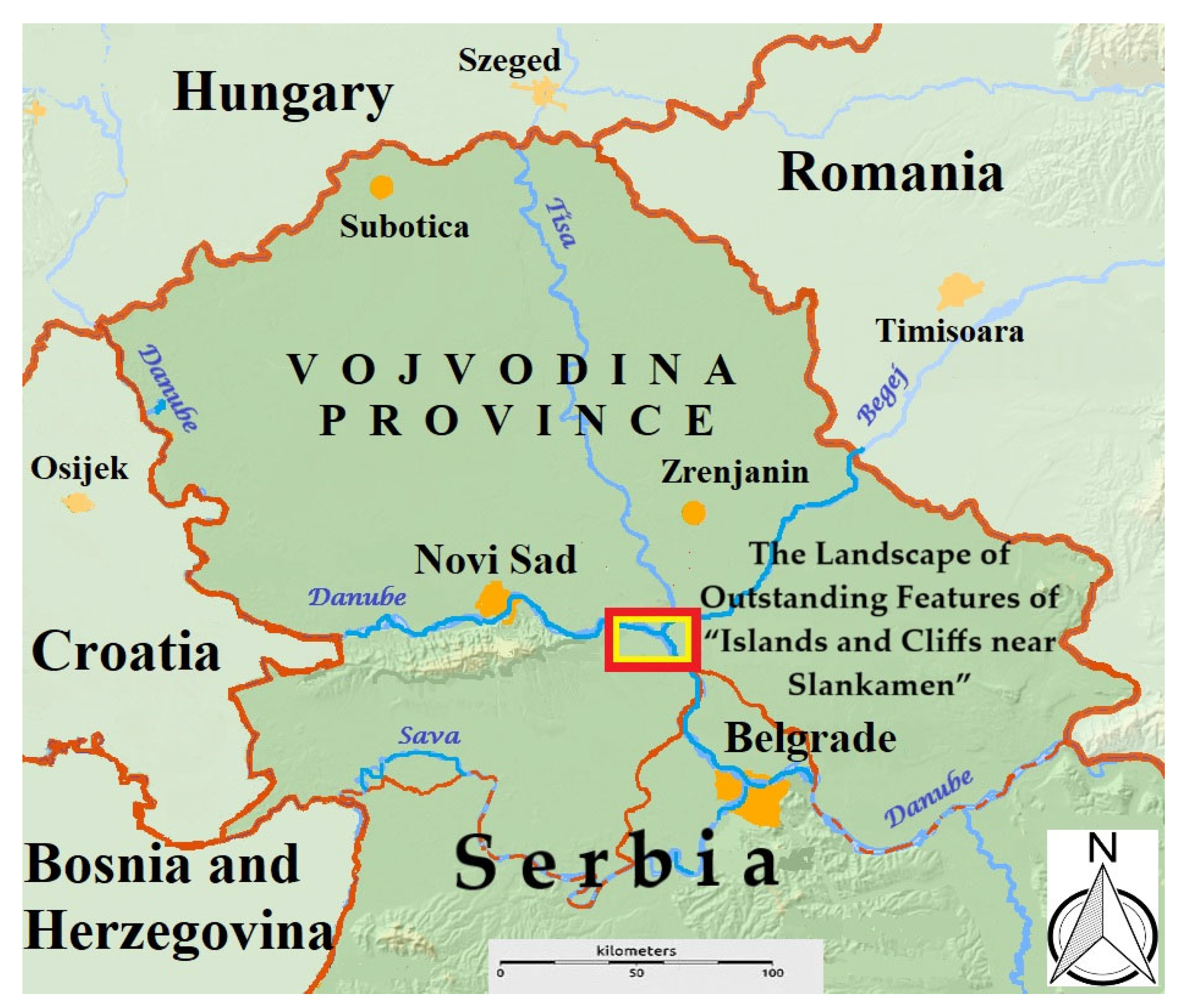
The ICS is located in AP Vojvodina, on the right bank of the Danube, in the northeastern part of Srem, on the territory of the municipality of Inđija, and it covers parts of the settlements of Stari Slankamen and Novi Slankamen. In the vicinity of the ICS, there are larger cities such as Novi Sad and Belgrade. Through the Danube, the ICS is connected to the confluence of the Tisa River with the Danube, the city of Titel in the Banat district, and further through this district, it is connected to Romania. The total area of the ICS is 407.83 hectares. The ICS covers the area of Danube islands and loess cliffs, upstream from Stari Slankamen, on the right bank of the Danube, then Uroš’s Sandbank, a wide belt of forests on the left bank of the Danube, and several smaller islands and a large island on the left bank [
5]. In this part of the course, the Danube is shallow and creates many river islands, which creates a unique landscape. The ICS is an area of recognizable appearance with significant natural, biological–ecological, aesthetic and cultural–historical values, which developed over time as a result of the interaction of nature, the natural potential of the area and the traditional way of life of the local population. The position of the ICS can be seen in
Figure 1.
According to the IUCN, the ICS is classified as Category V—Protected Landscape. One of the reasons for protecting it is the existence of wetland habitats, which are inhabited by rare flora and fauna. There are 13 nationally and internationally significant plant species, among which the most important are
Marsilea quadrifolia, Salix alba,
Populus nigra L.,
Crataegus nigra and
Stratiotes aloides. A total of 19 priority habitat types have been identified for protection, which include natural or semi-natural habitats in danger of disappearing from the territory of the Republic of Serbia, as well as habitats that represent an exceptional example of representative habitat types of the continental and Pannonian regions [
5].
On the territory of the ICS, there is a diverse fauna of invertebrates, especially insects, whose most important representatives are Gomphus flavipes, Liometopum microcephalum and Lycaena dispar.
A large number of wetlands and bays represent very important local spawning grounds for many fish species that inhabit this part of the Danube. A total of 38 species of fish were recorded, among which
Misgurnus fossilis and
Cobitis elongata stand out, which are strictly protected species. There is also the presence of 11 species of amphibians and 9 species of reptiles, the most important of which are
Triturus dobrogicus and
Emys orbicularis [
5].
The area of the ICS is inhabited by a rich and diverse fauna of birds, including 162 species. Among the nesting birds,
Charadrius dubius and
Hippolais pallida stand out, and among the species that feed in this area are
Ardeidae,
Ciconia nigra and
Haliaeetus albicilla. Among the representatives of mammals, in addition to
Felis silvestris and
Martes martes, the presence of
Lutra lutra, which is a resident of the ponds and banks of the Danube, is significant [
5,
6].
3.2. The Conceptual Model and Data Collection
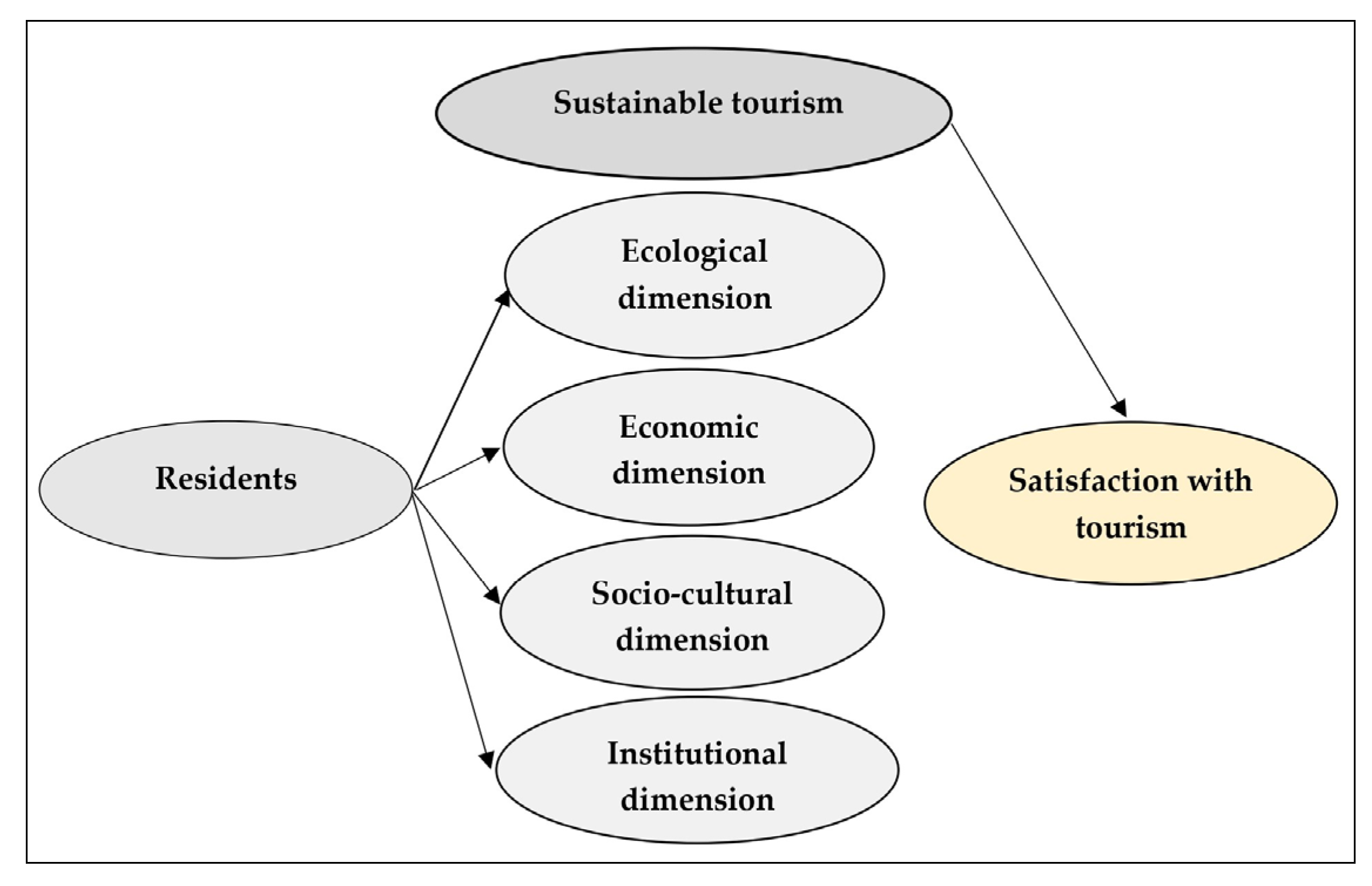
The authors included this study in a continuation of the study of SUTO, which constitutes a wider area in Vojvodina, which includes a larger number of different conservation areas in terms of structure and protection status. This makes it possible to obtain the most significant data related to the state of SUTO and the possibility of developing specific forms of tourism. Previous studies have influenced the creation of the research model in this study. It is a PoS model, designed to examine the impact of SUTO on the satisfaction of respondents through four sustainability dimensions. The research model was created according to the models of Cottrell et al. [
15], Lata et al. [
63], Cottrell and Raadik [
64], and Spangenberg [
65].
The authors used a quantitative methodology in this study. The methodology basically contains an examination of the dimensions of sustainability on the state of SUTO and the impact of SUTO on the satisfaction of respondents. The state of SUTO was examined using the following key indicators divided by model dimensions in this study [
66,
67]:
Ecological indicators that focus on the physical health of ecosystems and the impact of visitors on nature:
Carrying capacity: The maximum number of visitors that the area can accommodate without damaging nature;
Integrity of key species: Number and condition of protected or indicator species of plants and animals;
Degree of habitat degradation: Percentage of damaged paths, soil erosion or water pollution due to anthropogenic activities;
Waste and energy management: Amount of recycled waste and percentage of use of renewable energy sources.
Economic indicators that examine whether tourism brings profit that remains in the local community [
68,
69]:
Local employment: Percentage of employees in tourism;
Income from tickets and services: Total funds that are directly invested in nature protection;
Tourist spending: Money that visitors spend on local products and services;
Economic diversification: Number of small businesses (e.g., businesses from rural households) that complement the basic tourist product.
Socio-cultural indicators that measure inhabitants’ satisfaction in preserving local identity:
Satisfaction of residents: Inhabitants’ views on the impact of tourism on their daily life;
Preservation of cultural heritage: Number of cultural objects or events that promote local traditions;
Visitor satisfaction: Quality of experience and level of education of visitors about the importance of nature protection;
Social inclusion: Involvement of all subjects in tourist activities.
Institutional indicators, which are specific management indicators that form the “fourth pillar” of the PoS model [
70,
71]:
Participation in decision-making: Existence of mechanisms where the local community and stakeholders directly influence management plans;
Legal regulation: Applicability of local regulations and penal policy for violation of environmental norms;
Quality of the management plan: Existence of strategic documents for the advancement of SUTO;
Partnerships: Number of collaborations with scientific institutions, the national sector and international organizations.
The survey was conducted from June 2025 to April 2026. The instrument for collecting answers from respondents was a questionnaire. Their answers were ranked on a five-point scale. The questionnaire was composed of questions related to the sociodemographic characteristics of the respondents (in the first part of the questionnaire), followed by a total of 17 items that were divided into four variables (dimensions), and 4 items were used to examine the respondents’ satisfaction with SUTO (the third part of the questionnaire). The items within the four dimensions of the Prism of Sustainability (PoS) were specifically selected to operationalize the core principles of green destination management. In this context, community-led environmental actions, facility compliance, local economic integration, and institutional governance structures serve as direct indicators of how resource-efficient management practices are implemented and perceived at the grassroots level.
The survey was originally conceptualized and administered in the Serbian language to ensure clear understanding and high responsiveness among the local inhabitants. Following data collection, the questionnaire items, scales, and responses were translated into English using a back-translation method by two independent bilingual researchers to maintain conceptual equivalence and linguistic validity. The survey of visitors was carried out using a random sample method, by visiting neighborhoods where locals live, and through thematic social networks, whose members were residents (online survey). The settlements where the survey was conducted were Stari Slankamen and Novi Slankamen. Respondents expressed their views regarding the claims (indicators of SUTO). The research model can be seen in
Figure 2.
The procedure for determining the correctness of the completed questionnaire included a personal review of all elements. The reliability of the scales was assessed using statistical methods. The authors chose Cronbach’s alpha coefficient, according to the models of previous studies. The validity of the scales was checked using standardized factor loading (AVE) statistical analysis. From the same sources, values of α ≥ 0.60 can be accepted for statistical analysis as reliable data [
72,
73]. In examining and measuring the impact of SUTO on the satisfaction of respondents, the statistical method of linear regression was used.
3.3. Data Analysis Procedures
The collected quantitative data were processed using statistical software in a predefined, systematic order to ensure logical alignment with the reported results. First, descriptive statistics were computed to analyze the sociodemographic profile of the respondents (gender, age, and education level). Second, scale reliability and internal consistency were evaluated using Cronbach’s alpha coefficient, while scale validity was verified through standardized factor loading and average variance extracted (AVE) analyses. Finally, linear regression analysis was executed to determine the individual and collective predictive impact of the four sustainability dimensions (independent variables) on residents’ overall satisfaction with sustainable tourism development (dependent variable).
4. Results
A total of 1057 questionnaires were filled out. A total of 68% were surveyed with an online questionnaire via social networks. By checking the validity of the completed questionnaires, it was established that a total of 24 questionnaires were not filled out validly. A total of 1030 questionnaires were valid for statistical analysis. A total of 64% of respondents were surveyed from the settlement of Novi Slankamen. The sample distribution within the study area (64% from Novi Slankamen and 36% from Stari Slankamen) strictly mirrors the actual demographic proportions of the overall population. According to official census data, Novi Slankamen is a significantly larger agrarian settlement with a higher population density, representing approximately 63.5% of the total municipality zone registry, whereas Stari Slankamen accounts for the remaining 36.5%. Therefore, the sample ratio achieved in this research provides an accurate and representative cross-section of the entire community’s demographic profile.
The majority of respondents were women (58%). The average age of the respondents was 39 (from 18 to 80). The majority of respondents had secondary education, 64%, a total of 7% had primary education, 27% had higher or higher education, while 2% of respondents had a master’s or doctorate.
Table 1 shows the obtained average values of the dimensions of sustainability (mean) and values of the α coefficient, obtained by statistical analysis of the answers collected from the respondents.
The overall mean value (mean) of satisfaction with the advancement of SUTO can be seen in
Table 2.
By applying regression analysis, the individual impact of each of the dimensions of sustainability on SUTO and respondents’ satisfaction can be determined [
15,
63,
64,
65,
74,
75]. The independent variables (dimensions) explained the dependent variable (satisfaction) by 17.7% (R
2) (
Table 3).
A closer examination of the descriptive data reveals nuanced differences based on the respondents’ gender and specific place of residence. Regarding gender, male respondents consistently demonstrated higher average scores within the ecological and economic dimensions of the Prism of Sustainability (PoS). This trend is closely tied to the traditional livelihood activities in Stari Slankamen, where men are predominantly engaged in Danube-based occupations, such as commercial and recreational fishing, boat piloting, and river tourism. Consequently, their economic dependence on the Danube River directly translates into a heightened valuation of both the ecological preservation of the aquatic ecosystem and the financial returns generated by water-based tourism activities.
Conversely, when comparing the two settlements, distinct spatial variations emerged. In Novi Slankamen, where the primary economic drivers are agriculture and intensive fruit growing, respondents assigned significantly higher scores to the institutional and socio-cultural dimensions. In contrast, residents of Stari Slankamen—a settlement historically defined by spa tourism and river-oriented hospitality—focused more on infrastructure and ecological stability. This highlights how divergent local economic profiles shape community expectations toward tourism governance.
5. Discussion
Based on the results presented, it can be concluded that the respondents expressed the greatest agreement with the given statements and rated socio-cultural sustainability (4.07), environmental sustainability (3.90), and institutional sustainability (2.77) the highest and the latter the lowest. This indicates the importance of ecological principles in the conservation area for locals, which should be an important principle of tourism planning and development. The preservation of nature must be linked to tourism. To benefit the conservation area, locals, tourists, and managers, all elements that contribute to ecological sustainability should be enhanced. Without being well maintained, a conservation area cannot attract tourists. The relatively high value of socio-cultural sustainability indicates the importance of the role of the local population in planning, development, control of tourism, and tourism promotion. Ethno-social values of conservation areas are an important tourist motive. In addition, creating an atmosphere in which a positive relationship between locals and visitors comes to the fore is important for the sustainable boosting of tourism. Both the local population and the conservation area benefit from the promotion of local culture. In terms of institutional sustainability, the respondents gave the lowest average value. This data may indicate that there is not a strong institutional foundation for the growth and oversight of increasing tourism in this conservation area. This data indicates that citizens’ and stakeholders’ roles need to be reinforced. For other responders, the strengthening of the local economy and employment is not greatly impacted by this protected area. Economic sustainability was rated with an average score of 3.33. Numerous tourist activities can result in different ecological impacts on the geographical and biological characteristics of the ICS [
76,
77]. Unplanned construction of tourist facilities, which usually consist of accommodation facilities, tourist educational centers and trails, hospitality, roads and others, can create various risks in the conservation area. The aforementioned factors can result in the devastation of resources, energy consumption, destruction of habitats, extinction of flora and fauna and other geological changes. Because of the above, it is very important to properly plan the boosting of tourism in the ICS. Also, the type of habitat and the degree of its sensitivity to disturbance can have a share in the total extent of ecological impact from tourism activities [
78,
79,
80].
It is clear from examining the displayed values that there should be a link between this conservation area’s appeal, tourism, and the local economy and community. Tourism expansion can influence the number of visits to conservation areas [
81,
82,
83]. Boosting tourism can directly affect the increase in jobs for the local community. A wide range of local products can be available to visitors in the ICS because the answers indicate the importance of this claim and the fact that visitors are interested and ready to pay an appropriate price for them [
84,
85,
86,
87]. When planning to boost tourism in the ICS, special attention should be directed towards strengthening the role of inhabitants in the promotion of local products and local culture.
The case-specific outcomes of this study are deeply intertwined with the unique socio-economic, cultural, and historical peculiarities of the Slankamen area. The high environmental awareness and varying dimensional priorities cannot be analyzed in isolation from the local landscape. For instance, the long-standing tradition of spa tourism in Stari Slankamen has historically accustomed the local population to the presence of visitors, fostering a naturally positive socio-cultural attitude toward tourism. However, the contemporary divergence in community perceptions between Stari and Novi Slankamen reflects their distinct economic realities. The agrarian and fruit-producing focus of Novi Slankamen explains the community’s demand for stronger institutional support and socio-cultural cohesion, as these residents view tourism as a complementary, rather than primary, source of income that requires structured structural organization.
Furthermore, the gender-based polarization of scores—where men heavily favor ecological and economic aspects due to their direct involvement in fishing and Danube navigation—demonstrates that sustainability is perceived through the lens of immediate resource utilization. This finding underscores the importance of the local educational and cultural background. In regions where informal, generationally transmitted knowledge about the river ecosystem is strong, environmental protection is not viewed merely as an abstract concept but as a practical necessity for securing daily livelihoods. Therefore, green destination management strategies in protected areas along the Danube must abandon one-size-fits-all approaches and instead design targeted sub-interpretations that respect the micro-local economic identity of each individual settlement.
The reliability of the obtained values as part of the statistical verification was tested with Cronbach’s alpha. After the statistical analysis, the results of the measured variables for the ecological dimension (three items) have values of α = 0.798; for the economic dimension (five items), they have a value of α = 0.811; for the socio-cultural dimension (five items), they have values of α = 0.786; and for the institutional dimension (four items), they have a value of α = 0.821. According to Cortina [
72] and Nunnally and Bernstein [
73], values of α ≥ 0.60 are considered reliable for analysis. In this case, all α values are greater than 0.7, which can be considered extremely reliable results.
The regression analysis yielded an (R2) value of 0.177. While mathematically low, an (R2) between 0.10 and 0.20 is highly typical and structurally sound in behavioral sciences and community perception studies. Human satisfaction is inherently volatile and influenced by an array of unmeasured exogenous variables, such as personal political views, individual household income variations, and historical micro-conflicts. Rather than aiming for high variance explanation, the primary objective of this model specification was to evaluate the mathematical significance and directional trend of the structural predictors. To confirm the stability of these findings, a collinearity robustness check was conducted, revealing variance inflation factor (VIF) values well below the critical threshold of 2.5, thereby validating the statistical feasibility of the linear model.
If the average values of satisfaction with SUTO, from locals, are analyzed, it can be concluded that the respondents largely agreed with the statements related to the state of SUTO in the ICS (3.81). The α value for satisfaction statements is high, α = 0.813, which can be considered an extremely reliable result. Using the regression analysis, it can be concluded that all four dimensions of sustainability have a significant impact on respondents’ satisfaction with SUTO (p < 0.01). Analyzing the respondents’ satisfaction with SUTO, relatively high values can be identified. Inhabitants pointed out that it is important to develop tourism in the ICS. They also noted that tourism provides numerous advantages and influences the appeal of the location. To enhance tourism, it is essential to engage inhabitants more deeply, aligning with the findings presented in earlier research. Locals anticipate support from organizations in different tourism-related events.
In this way, the connection between the dimensions of sustainability is directly built, which can represent a link in boosting tourism in the ICS. When comparing the findings of this study to earlier research that employed a similar research model, it can be concluded that there is a notable resemblance to the results achieved. In the previously mentioned study, the participants emphasized the significance of the environmental and socio-cultural aspects of sustainability. What sets this study apart from earlier ones is that in this analysis, the respondents emphasized a strong level of satisfaction with SUTO, despite tourism not being fully developed across all examined aspects of sustainability. The respondents in this study indicated that the economic and institutional aspects received the lowest ratings. The effect of tourism on demographics, jobs, and the local economy is the least assessed aspect.
Analyzing the results, it can be concluded that there is significant satisfaction among the respondents with SUTO, although the dimensions of sustainability were not evaluated with equal marks. This information may point to the fact that there is untapped tourist potential in the ICS and that tourism should be developed in accordance with the priorities of nature protection. Such forms of tourism can include nature-based forms or ecotourism, birdwatching, sports, trips, rural tourism, events, and other forms.
By shifting the focus from passive sustainability to active regenerative tourism frameworks, the findings of this study demonstrate how local community empowerment can foster long-term crisis resilience. Regenerative tourism demands that destinations do not merely minimize damage but actively improve the ecological and socio-cultural fabric of the area. In protected landscapes like the Danube region, establishing high community satisfaction across the institutional and environmental dimensions serves as a socio-ecological buffer against external shocks, such as economic downturns or environmental crises. When local inhabitants are actively embedded within green governance systems, the destination develops an organic adaptive capacity, allowing it to maintain resource stability and structural resilience during times of operational crisis.
The empirical output of this research introduces a localized community-driven green destination governance model. Unlike traditional top-down conservation frameworks, this novel development model maps out how micro-local economic dependencies (such as river navigation and agriculture) directly feed into distinct sustainability dimensions, providing market planners with a predictive tool to map out zoning and transformative tourism strategies globally.
6. Conclusions
Based on the analysis of the results of this research, which concerns the role of dimensions of sustainability in tourism growth, it is concluded that the Landscape of Outstanding Features of “Islands and Cliffs near Slankamen” has significant potential for SUTO development and that the research results highlight the importance of ecological and socio-cultural sustainability in tourism growth. This data can be used when organizing and creating particular types of tourism, including educational tourism, ecotourism, adventure tourism, scientific research, rural tourism, health tourism, sports, and other tourism forms reliant on natural resources. To maintain conservation areas, the most important type of tourism would be ecotourism, featuring ecological and sustainable practices. Indeed, ecotourism and rural tourism can scarcely advance without conserving nature and collaboration with the local community. Locations where the local community actively participates in safeguarding nature and encouraging SUTO practices are especially significant for sustainable tourism. In the ICS, properly developed tourism can provide benefits for all subjects, while the effects of tourism growth interact with each other in different ways.
The study outcomes emphasize how crucial green destination management is to coordinating tourism growth with ecological conservation and the welfare of local communities in protected areas. Residents’ strong recognition of the significance of protecting natural resources and upholding local cultural values as essential elements of sustainable tourist development is confirmed by the high appraisal of environmental and socio-cultural sustainability. However, the comparatively poor evaluation of institutional sustainability indicates serious governance deficiencies, implying that current management structures and policy frameworks are insufficiently advanced to meet the expanding demands of sustainable tourism.
These findings emphasize the necessity of improved institutional coordination, open decision-making procedures, and the active participation of stakeholders, especially local communities, in tourism planning and management from the standpoint of green destination management. To ensure the destination’s resilience and long-term sustainability, it is imperative to strengthen governance systems and promote participatory approaches. The outcomes also show that residents’ satisfaction is statistically significantly impacted by all aspects of sustainable tourism, indicating the need for an integrated and balanced strategy. However, the comparatively smaller impression of economic advantages suggests that tourism’s potential to support local livelihoods is still untapped. In this sense, marketing local goods and services as part of the tourism experience, fostering small-scale business, and strengthening local economic ties should all be priorities for green destination management.
Overall, the study highlights that the Landscape of Outstanding Features of “Islands and Cliffs near Slankamen” has substantial yet untapped potential for the growth of sustainable tourism, and despite unequal development across sustainability dimensions, the comparatively high level of resident satisfaction indicates that there is a strong basis for promoting tourism in accordance with green destination principles. Integrated management strategies that concurrently address environmental preservation, socio-cultural vitality, economic viability, and institutional strengthening should be given top priority in future planning.
The practical contribution of this study lies in evaluating how localized protected destinations impact sustainable tourism development. By benchmarked empirical findings against global datasets, this research establishes actionable recommendations for expanding tourism governance. Ultimately, these measures provide a flexible framework that can be integrated into strategic management plans for protected natural resources at both local and international levels.
The scientific and practical contribution is based on the fact that the obtained results can serve locals, visitors, legislative institutions, managers of conservation areas and experts for the improvement of protection and tourism growth. Additionally, the outcomes may be beneficial in formulating studies and strategies for SUTO development, aiming to attain the most substantial accomplishments regarding ecological attributes, economic outcomes, and socio-cultural values of these locations, thus leading to greater success in overall sustainable tourism expansion.
The main limitation in this study is the lack of written research on SUTO in this conservation area. There are certain professional written materials, which concern studies of the protection and planning of certain activities with the aim of protecting flora and fauna. The absence of data on tourism development and the attitude of locals and visitors towards the natural and social values of the ICS made it impossible to compare the results of this study with earlier data. Therefore, a single picture of how tourism growth has affected ICS in the near or distant past cannot be created.
The authors should focus future research on expanding the research area in order to provide more reliable data on SUTO in conservation areas that are far from main city zones and urban centers. The data obtained in this way can influence the creation of a unique picture of the state of natural and social potential for tourism development, because people are increasingly turning to satisfying their needs in nature. Tourism in natural assets can represent a significant motive for the journey of the modern traveler.


_Li.png)