


Abstract
The accelerated development of Israel’s construction and infrastructure sectors, driven by rapid demographic growth, has led to significant increases in construction waste and surplus soil. Despite formal policy commitments to sustainability and circular economy principles, waste management in Israel remains characterized by fragmented governance, infrastructure gaps, and insufficient enforcement. This study analyzes Israel’s public policy for regulating surplus soil and construction waste through a mixed-methods approach combining policy document analysis and quantitative data from government reports. Findings reveal a persistent gap between policy goals and implementation outcomes, reflected in rising waste volumes, limited treatment capacity, and ongoing illegal dumping. Although recent years show improvement in waste delivery to authorized facilities and recycling rates, treatment infrastructure remains insufficiently distributed, enforcement resources limited, and institutional coordination weak. A national economic assessment demonstrates that full adoption of circular economy practices could yield significant annual savings primarily by reducing reliance on landfilling and decreasing natural resource extraction. Using a multilevel governance, adaptive policy, and circular economy lens, the study identifies systemic barriers and highlights the need for integrated planning, strengthened cross-agency cooperation, digital monitoring, and economic incentives. The findings contribute to the literature on environmental policy and sustainable planning, offering actionable recommendations for enhancing regulatory capacity and transitioning from reactive waste management to a proactive, resource-efficient model aligned with long-term national sustainability goals.
1. Introduction
Israel’s accelerated demographic expansion carries far-reaching implications across key public policy domains [1], most notably housing [2,3], transportation systems [4,5], labor markets [6], healthcare provision [7], and long-term care services [8,9]. With one of the highest annual population growth rates among OECD member states [10], Israel faces mounting pressure on land resources and physical infrastructure. This demographic trajectory necessitates rapid expansion of the construction sector, urban development, and transportation networks. Consequently, these dynamics produce substantial volumes of surplus soil and construction waste, one of the most significant and challenging waste streams in the country, estimated at several million tons annually [11,12].
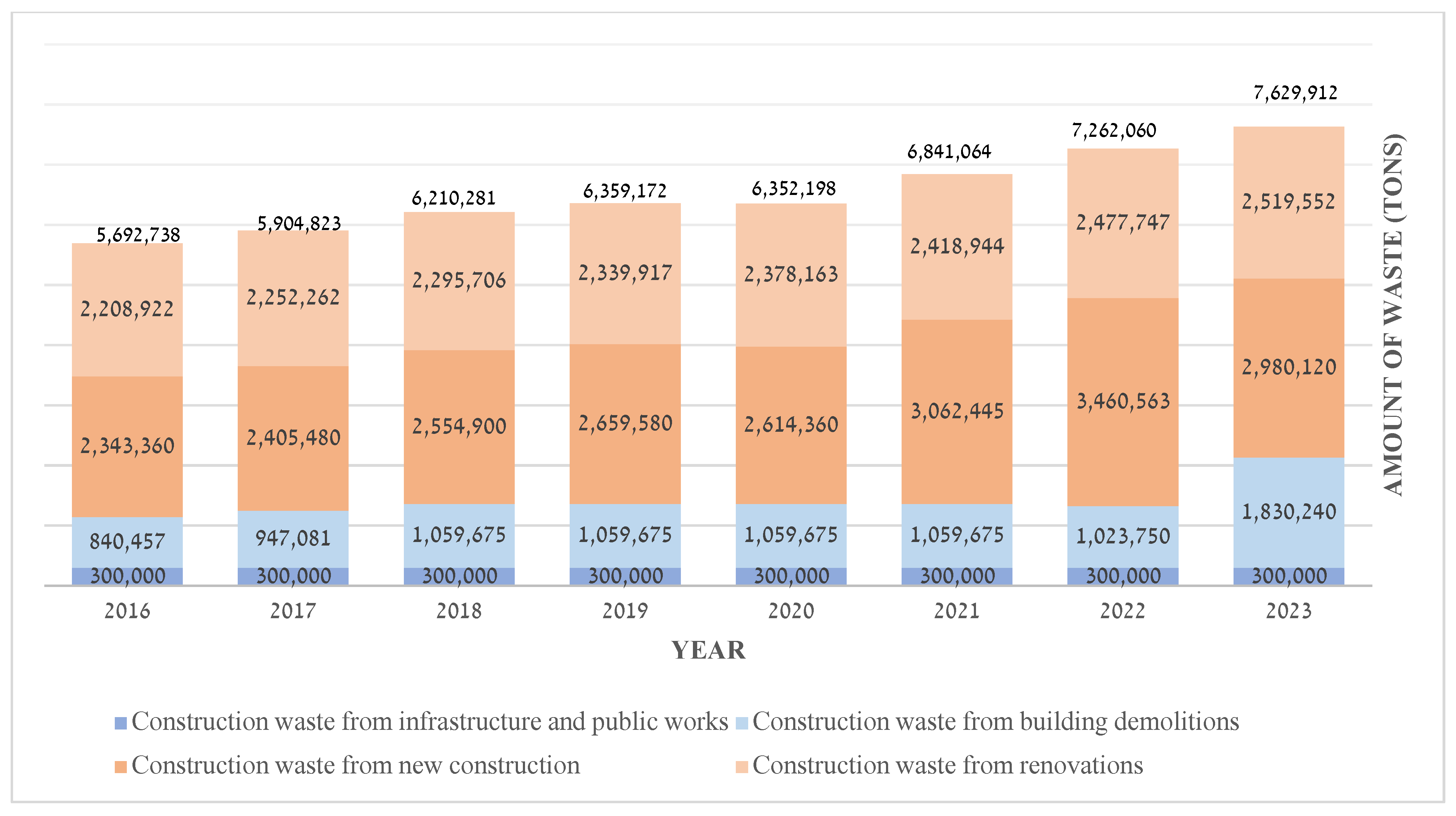
Over the past decade, construction and demolition waste (CDW) generation in Israel has increased substantially, reaching several million tons annually and showing a persistent upward trend. According to official data from the Ministry of Environmental Protection, total CDW volumes rose from approximately 5.69 million tons in 2016 to about 7.63 million tons in 2023—an increase of roughly 34% over seven years. This growth is primarily driven by the new-construction sector, alongside a steady rise in waste from renovations and existing buildings, while demolition waste shows more volatility over time. At the same time, the State Comptroller’s report on construction waste management highlights significant systemic barriers, including shortages of authorized disposal and treatment sites, delays in facility planning and approval, and enforcement gaps that contribute to the diversion of substantial quantities of waste to unauthorized dumping sites. These developments indicate a widening gap between rapidly increasing waste generation and the limited absorption and treatment capacity of the public system, underscoring the need for improved infrastructure, planning, and enforcement mechanisms.
Despite the persistent environmental and planning challenges posed by this issue, public policy in Israel has remained fragmented, partial, and largely reactive [13,14]. The absence of an integrated policy framework, inadequate inter-agency coordination, and insufficient treatment infrastructure have resulted in substantial portions of waste being improperly disposed of, often in unauthorized dumping sites. These sites contribute to environmental degradation through soil contamination, damage to natural landscapes and open spaces, disruption of local ecosystems, and visual blight, and may also create localized public health risks due to uncontrolled accumulation of CDW [15].
This reality underscores the need for a renewed conceptual and practical understanding of how public policy governing surplus soil and construction waste is formulated and implemented in Israel, particularly in light of ongoing institutional fragmentation, limited coordination among authorities, and the environmental consequences of ineffective waste management [16]. Addressing these challenges requires the development of a comprehensive multi-level governance approach that integrates national, regional, and local authorities while incorporating long-term resource management and environmental sustainability principles.
Accordingly, this study examines Israel’s public policy for regulating surplus soil and construction waste through the analytical lenses of multi-level governance, adaptive governance, and circular economy planning. The study analyzes the institutional structure, implementation gaps, and regulatory challenges characterizing this policy domain, while also comparing the Israeli case with selected international policy models.
1.1. Environmental, Economic, and Planning Implications of Inefficient Management of Construction Waste and Surplus Soil
Improper management of construction and excavation waste constitutes a significant global challenge, with far-reaching implications for the environment, the economy, and urban planning. Construction and excavation waste accounts for approximately 30–40% of global municipal waste, and its disposal in uncontrolled sites causes soil, water, and air pollution and reduces biodiversity. Research by Mhretu et al. indicates that poor management of construction waste adversely affects urban ecological systems, particularly in areas experiencing rapid urban growth [17]. In addition, this waste stream contains toxic substances such as heavy metals, plastics, and paints, which can contaminate soil and water and negatively impact public health. Research by Petrović et al. points out that the anaerobic decomposition of construction waste generates CO2 and methane, contributing to soil, water, and air pollution and potentially harming human health [18,19].
In addition, poor waste management increases indirect economic losses, such as regulatory fines, lost opportunities for material recycling, and rising project costs due to delays. From a planning perspective, inefficient waste management hinders sustainable urban development, disrupts future land-use planning, and limits the ability to develop effective recycling policies [20].
1.2. Policy and Planning Significance of Surplus Soil and Construction Waste Management
The management of surplus soil and construction waste exemplifies the intersection between public policy, regulation, and environmental planning. This field serves as a key test of the state’s ability to balance rapid development needs with the preservation of limited natural resources. This challenge underscores the necessity of an integrated policy approach that combines inter-agency coordination, effective regulation, and the implementation of sustainability and long-term resource-management principles [21].
From a regulatory perspective, this issue represents a dual challenge: preventing illegal dumping on the one hand, while promoting sustainable solutions such as recycling, reuse, and land rehabilitation on the other. Studies indicate that the strength of construction-waste policy directly influences environmental efficiency, and that there is a U-shaped relationship between policy stringency and environmental outcomes in waste management [22]. Accordingly, the role of the state extends beyond enforcement alone, encompassing the design of incentives, legislation, and coordination among key stakeholders, including developers, local authorities, contractors, and waste-site operators [23].
From a planning perspective, efficient management of construction waste is a key component of sustainable urban and regional development. Studies in Europe indicate that integrating waste management as an inherent part of the building life cycle is a necessary condition for implementing circular economy principles, which require a comprehensive regulatory and planning framework [24,25,26]. Accordingly, public policy in Israel regulating surplus soil and construction waste is not merely a technical or environmental issue, but also a broader test of governance capacity, environmental justice, and the commitment of state institutions to long-term planning grounded in sustainability principles.
1.3. Balancing Intensive Development with Environmental and Public Health Considerations
Israel’s accelerated demographic growth and the increasing demand for housing and transportation infrastructure necessitate a high rate of construction. However, such development can lead to severe environmental consequences, including soil and water contamination, air pollutant emissions, biodiversity loss, and negative impacts on public health. Studies indicate that poor management of construction and excavation waste contributes to environmental pollution and increases the risk of chronic diseases among exposed populations, thereby necessitating an integrated waste management approach that includes recycling and material reuse [27,28]. The central dilemma lies in balancing the need for accelerated infrastructure development with the protection of the environment and public health. A comprehensive construction waste management strategy, incorporating strict legislation, inter-agency coordination, and the implementation of circular economy principles, is essential to mitigate negative environmental and health impacts.
1.4. The Evolution of Israel’s Public Policy for Managing Surplus Soil and Construction Waste: Regulation, Institutional Actors, and Implementation Challenges
The policy regulating surplus soil and construction waste in Israel has gradually developed since the early 2000s, yet it has remained largely fragmented and event-driven. In the initial years, the 2007 waste management reform led to the establishment of the first regulations governing landfilling, while the Ministry of Environmental Protection began to develop a licensing and oversight system for authorized waste sites [14]. Simultaneously, the Israel Land Authority (ILA) assumed responsibility for allocating land for treatment facilities and rehabilitation sites, while also attempting to promote the reuse of excavation soil in national infrastructure development projects [12].
In the second decade of the twenty-first century, a government program promoting a circular economy was launched, setting a target of reducing landfilling and encouraging the recycling of construction waste at a rate of 70% by 2030 [16]. Nevertheless, data from the Ministry of Environmental Protection indicate that approximately half of the waste continues to be disposed of in uncontrolled sites or on the outskirts of settlements, primarily due to a lack of treatment infrastructure and effective oversight mechanisms [14].
At the core of decision-making regarding waste management in Israel, several institutional actors play key roles: the Ministry of Environmental Protection, responsible for regulation, site licensing, oversight, and enforcement; the Israel Land Authority, which manages designated land for rehabilitation and recycling and promotes the reuse of excavation soil in national projects; the Ministry of Transportation, which collaborates with developers on large-scale infrastructure projects involving substantial volumes of surplus soil; and local authorities, which are responsible for local-level oversight and the management of construction waste at urban sites, but often lack sufficient resources and personnel.
2. Literature Review
2.1. International Policy Models in Construction Waste Management
This section examines international policy models in CDW management in order to identify the institutional and regulatory conditions that enable effective circular construction systems. Rather than providing a descriptive comparison of countries, the analysis focuses on extracting policy-relevant lessons from leading and contrasting cases—particularly the Netherlands, Singapore, and Denmark—regarding the design and implementation of circular-economy instruments in the construction sector. These cases were selected because they represent different stages of policy maturity, ranging from highly institutionalized and technologically integrated systems to emerging or partially implemented frameworks. The comparative analysis is used to inform the evaluation of Israel’s current policy approach, with particular attention to the governance mechanisms, regulatory tools, and implementation gaps that shape performance outcomes in this field.
Comparative studies from advanced circular-economy countries such as the Netherlands and Singapore have found that integrated regulation, mandatory recycling targets, and digital systems for tracking construction material flows significantly contribute to the effectiveness of circular construction policies. For example, a study conducted in the Netherlands indicated that more than 95% of CDW is recycled and reused within the local construction industry [29]. Another study in the Netherlands found that reuse activities of construction waste are spatially concentrated in “clusters,” with constant distances between operational hubs that optimize the logistical flow of materials. This study emphasized that digital infrastructure and material-tracking systems are key components for ensuring the efficiency and connectivity of recycling operations [30]. Similarly, Singapore has reported near-total recycling as part of its circular-economy pathway under its Zero Waste Masterplan policy [31,32].
In addition to these countries, Denmark has in recent years been actively exploring a transition toward circular construction models in the building sector [33]. However, its progress so far has focused mainly on acknowledging the problem and establishing a policy vision, while full implementation remains limited. For example, a report by the Ministry of Environment of Denmark published in 2021 estimated that approximately 5 million tons of CDW are generated in the country each year, representing over 40% of total national waste. Yet only 36% of this waste is reported as recycled, while around 52% is used for other purposes that do not constitute high-quality recycling. Legislation and regulatory frameworks in Denmark include recommendations for recycling and reuse requirements for construction materials, as well as building practices aligned with the “Keep or Explain” principle. namely, demolishing only when justified by health or safety concerns [34]. Nevertheless, as of 2025, significant barriers remain, including the absence of mandatory circular-construction requirements, a lack of mechanisms to incentivize reuse of existing components, and regulatory ambiguity in the area of selective demolition [35].
In conclusion, Denmark can serve as an interesting comparative case: on one hand, it is considered a highly resource-conscious and sustainability-oriented country; on the other hand, the full implementation of circular construction policy continues to face challenges in execution, incentives, and enforcement. Integrating the Danish case into this review completes the international picture and underscores that high achievements in leading countries cannot be taken for granted, even in advanced regulatory environments.
These international cases suggest that a successful transition to circular construction systems depends on strong institutional coordination between government ministries, planning authorities, and industry stakeholders; early-stage planning requirements that embed recycling, reuse, and material tracking; alignment of economic incentives with environmental objectives; as well as robust enforcement capacity, recycling infrastructure, and long-term strategic planning. Although the models differ in institutional structure and regulatory design, they collectively underscore that these dimensions are critical for effective implementation. In this context, Israel’s current policy approach could benefit significantly from strengthening mechanisms in these areas, particularly given ongoing policy fragmentation and implementation gaps.
2.2. Theoretical Framework
The management and regulation of surplus soil and construction waste in Israel can be analyzed through three central theoretical lenses, which together enable a deeper understanding of the challenge: multi-level governance, adaptive governance and policy implementation, and circular economy and sustainable planning, as presented below:
2.2.1. Multi Level Governance and Policy Networks
The multi-level governance (MLG) approach emphasizes that public policy authority is not concentrated solely at the state level, but is instead distributed across different tiers of government (national, regional, and local) as well as among public, private, and non-governmental actors. Recent studies show how the MLG model helps achieve local impact within global processes and explains the distribution of authority and coordination gaps between institutional bodies [36]. In Israel, the policy framework for managing surplus soil and construction waste involves multiple actors (the Ministry of Environmental Protection, the Israel Land Authority, local authorities, developers, and contractors), illustrating this institutional dispersion and highlighting the need for effective multi-level coordination.
2.2.2. Policy Implementation, Adaptive Governance and Regulatory Capacity
The implementation of public policy in complex domains requires not only regulatory design but also execution capacity, learning, and flexibility. The adaptive governance approach emphasizes the need for collaboration, social learning, multi-layered structures, and the ability to respond to changing circumstances. Recent studies highlight the importance of monitoring mechanisms, learning processes, and dynamic adjustment to enhance policy effectiveness [37,38]. In Israel, gaps between official policy declarations and actual implementation are explained by a lack of coordination among authorities, insufficient infrastructure, and budgetary constraints. Therefore, analysis through the lens of adaptive governance provides a useful framework for understanding these challenges.
2.2.3. Circular Economy and Sustainable Urban Planning
Principles of circular economy and sustainable planning enable efficient management of material flows, reuse, and recycling of construction waste. Recent studies indicate that integrating waste management as an inherent part of the building life cycle is essential for realizing circular economy principles and achieving sustainable planning [39,40]. In Israel, this approach can be applied to surplus soil and construction waste to examine whether mechanisms exist to promote the reuse of excavation soil, how building materials are recycled, and whether urban and regional planning incorporates these material flows as an integral part of policy.
Therefore, the integration of these three approaches—multi-level governance, policy implementation and adaptive governance, and circular economy and sustainable planning—enables a comprehensive analysis of surplus soil and construction waste management policy in Israel. The MLG approach focuses on institutional arrangements, coordination across government levels, and the modes of interaction between actors. The adaptive governance perspective highlights enforcement capacity, implementation, learning, and responsiveness to emergencies or change. Meanwhile, the circular economy and sustainable planning framework provides a lens for understanding material-policy dynamics and their impact on environmental sustainability. Together, this combined approach allows for the examination not only of what occurs within Israeli policy, but also why and how, as well as the identification of obstacles and opportunities for improving the institutional, practical, and sustainable management of surplus soil and construction waste.
In summary, the central research questions can be formulated as follows: First, how is surplus soil and construction waste management policy coordinated among the various institutional actors across different levels of government? Second, which factors hinder or facilitate the effective implementation of this policy in practice? Third, how are mechanisms for reuse, recycling, and sustainable planning integrated into Israeli policy? Finally, what gaps exist between policy principles and on-the-ground implementation, and what lessons can be drawn to improve the governmental framework?
Answering these questions will enhance understanding of environmental policy in Israel regarding construction waste, combining planning analysis with a multi-level governance perspective and clarifying the links between regulation, policy implementation, and coordination among institutional actors. Additionally, the research can provide practical recommendations for improving regulation, strengthening inter-agency coordination, and establishing efficient treatment infrastructure for surplus soil and construction waste, with the aim of reducing negative environmental impacts and promoting sustainable urban planning.
This study contributes a novel analytical perspective by integrating circular economy planning, multi-level governance theory, and the assessment of enforcement capacities—an approach that has been rarely applied in previous research on construction-waste policy. This integration allows for an in-depth analysis of the relationship between planning mechanisms, enforcement authority, and policy effectiveness, providing unique insights for improving circular construction policy processes in Israel and beyond.
3. Methodology
This study employs a mixed-methods research design, integrating qualitative content analysis with quantitative data analysis in order to examine public policy in Israel regarding the management of surplus soil and CDW. The rationale for this design is to enable both an in-depth institutional and regulatory analysis and an empirical assessment of policy performance and implementation outcomes.
The qualitative component is based on a structured content analysis of primary policy and regulatory documents. These include government reports, legislation and regulatory frameworks, and official policy papers issued by the Ministry of Environmental Protection, the Ministry of Economy and Industry, and the Israel Land Authority, as well as professional publications by research institutes such as the Taub Center. The qualitative analysis followed a predefined analytical framework focusing on three main dimensions: (1) policy objectives and stated regulatory goals; (2) policy instruments and implementation tools; and (3) institutional arrangements and inter-agency coordination mechanisms. Documents were selected based on relevance to construction waste and surplus soil governance and their direct involvement in policy formulation or implementation. The analysis sought to identify recurring themes, policy gaps, and implementation constraints through systematic coding of the textual material.
Documents were selected according to three main criteria: (1) direct relevance to the governance and regulation of construction waste and surplus soil in Israel; (2) publication by official governmental or recognized professional institutions; and (3) contribution to understanding policy formulation, implementation, enforcement, or infrastructure planning processes. The qualitative analysis applied a thematic coding approach aimed at identifying recurring policy patterns, implementation gaps, regulatory barriers, and institutional coordination challenges.
The quantitative component draws on official datasets published by the Ministry of Environmental Protection, the Central Bureau of Statistics, and other governmental and professional sources. These datasets include time-series data on CDW generation, recycling rates, landfill volumes, and trends in waste treatment capacity. In addition, a structured financial assessment was conducted to evaluate the economic implications of alternative policy scenarios, particularly variations in recycling rates for construction waste and surplus soil. This analysis provides an evidence-based comparison between policy targets and actual outcomes over time.
The integration of these findings follows a triangulation strategy, where institutional insights are systematically compared with empirical trends to identify gaps between policy design and actual implementation. The overall research architecture, including the integration of qualitative and quantitative components through this triangulation strategy, is illustrated in Table 1.
Table 1.
Mixed-Methods Research Design Flowchart.
Overall, this combined analytical framework is used to assess the coherence between policy intentions and actual outcomes, and to identify the institutional, coordination, and infrastructural barriers to effective waste management policy in Israel.
4. Findings
Analysis of the construction waste management system in Israel reveals significant challenges stemming from large-scale sector activities and acute infrastructural limitations. The following sections detail the current state of infrastructure, regulatory implementation, and the economic potential of a circular economy.
4.1. Infrastructure and Scope of Activity
In recent years, the construction waste management system in Israel has faced increasing challenges arising from the sector’s large-scale activities and infrastructural limitations. The volume of construction waste generated in Israel reflects the intensity of activity in the sector, which includes national projects, urban renewal, expansion of transportation and residential infrastructure, and large-scale infrastructure initiatives. At the same time, the surplus soil sector (which includes soil, sand, and material excavated during earthworks, digging, and development), represents a distinct environmental and operational challenge. While surplus soil can sometimes be reused in other projects, in practice a large portion is dumped in open areas or landfilled without oversight, due to a severe shortage of designated sites for its reception. The research findings presented below describe the recent trend of increasing construction waste and surplus soil volumes in Israel.
4.2. Construction Waste
As noted in the introduction, the Israeli construction sector has seen a continuous increase in waste generation, reaching approximately 7.63 million tons in 2023. Beyond this general trend, data analysis reveals specific structural and implementation gaps. Specifically, the State Comptroller’s assessment indicates that fewer than one-third of existing waste sites operate under valid licenses, and compliance with environmental licensing requirements remains limited.
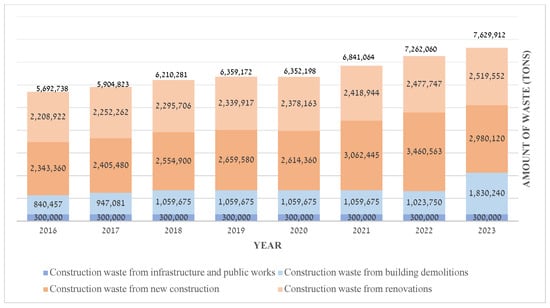
The distribution of treatment facilities is heavily concentrated in the central region, which creates operational bottlenecks and overburdens existing infrastructure. According to the Ministry of Environmental Protection, delays in land allocation and planning processes—particularly by the Israel Land Authority—impede the establishment of regulated facilities in peripheral regions. Furthermore, monitoring systems for waste transport and final disposal destinations are only partially integrated, contributing to the diversion of CDW to unauthorized sites. Figure 1 illustrates these dynamics by presenting the total volume of CDW generated between 2016 and 2023.
Figure 1.
Amount of Construction Waste and Excess Soil between the years 2016–2023 (In Tons) [41].
Data presented in Figure 1 indicate a persistent upward trend in construction-waste volumes in Israel between 2016 and 2023. While approximately 5.69 million tons of waste were recorded in 2016, the total amount reached about 7.63 million tons in 2023 (an increase of roughly 34% over seven years). A breakdown by waste source shows that the main driver of this growth is the new-construction sector, whose contribution rose from approximately 2.34 million tons in 2016 to about 2.98 million tons in 2023. Waste generated from renovations and existing buildings also exhibits a consistent upward trend, increasing from 2.21 million tons to approximately 2.52 million tons during the same period. By contrast, demolition waste volumes remain more volatile, showing a sharp increase between 2021 and 2023 following a temporary decline in 2017–2018.
4.3. Construction Surplus
Beyond the CDW generated from building residues and renovations, Israel’s construction sector produces substantial quantities of excess soil from excavation and infrastructure development. Because official statistics from the Ministry of Environmental Protection do not monitor excess soil from excavation works, this study developed a dedicated calculation model to estimate the scale of this waste stream.
The analysis generated these estimates by applying a conversion model to the total CDW data published by the Central Bureau of Statistics for 2014–2023. Based on findings from the State Comptroller and the Ministry of Environmental Protection, which indicate that excess soil constitutes approximately 40–60% of total waste mass, a conservative average value of 50% was applied to the dataset. To determine the volume, an average soil density of 1.5 tons per cubic meter was assumed, using the following formula:
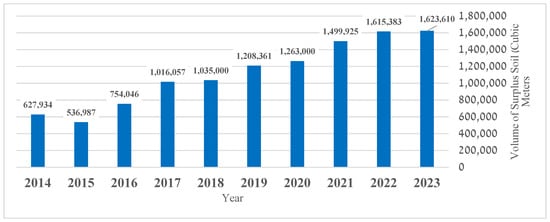
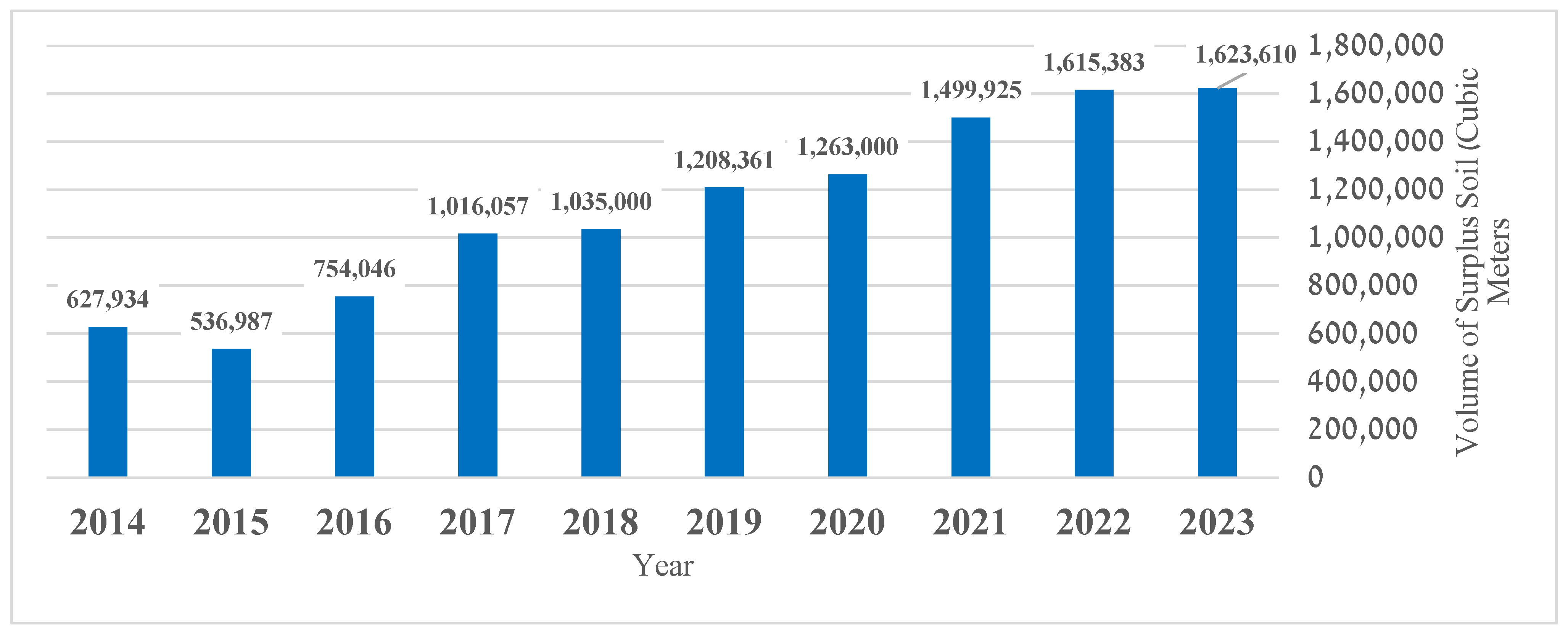
Using this approach, the estimates presented in Figure 2 were calculated. These estimates illustrate the growth trends in excess-soil volumes in Israel over the past decade and highlight the need for dedicated environmental planning and management mechanisms for this waste stream.
Figure 2.
Amounts of Surplus soil that Accumulate from Construction Waste, 2014–2023 (Cubic Meters) [41].
Figure 2 above presents the volumes of excess soil in Israel between 2014 and 2023, measured in cubic meters, showing an increase from approximately 628,000 m3 in 2014 to 1.62 million m3 in 2023. The most rapid growth is observed between 2015 and 2021, with relative stabilization in 2022–2023. These figures reflect the expansion of construction and infrastructure projects in Israel.
While construction waste is formally recognized as a policy challenge requiring dedicated intervention, excess soil represents a distinct policy issue, given its high potential for reuse (e.g., landfilling and grading works, quarry rehabilitation, or infrastructure stabilization). However, the large production volume, the absence of structured spatial planning for reuse, and the risks of soil contamination or transportation-related burdens make excess-soil management a major environmental and planning challenge.
In conclusion, the data presented in Figure 1 and Figure 2 reflect the accelerated pace of development in Israel’s construction and infrastructure sectors, driven by large-scale national projects and widespread urban renewal initiatives. However, the sharp increase in construction-waste volumes and excess soil generation indicates mounting pressure on collection and treatment systems. This trend underscores the need to expand sorting, recycling, and material-recovery infrastructure in order to reduce dependence on landfills and support the implementation of circular-economy principles in this sector.
4.4. Regulatory and Enforcement Framework
The need to expand sorting and recycling infrastructure, emphasized at the end of the previous section, highlights the dependence of Israel’s waste-management system on effective regulation and consistent enforcement. Although the Ministry of Environmental Protection’s official policy sets clear targets for reducing landfilling and promoting construction-waste recycling, in practice the gap between waste generation and the public system’s capacity to manage it remains substantial. Weak enforcement, shortages of personnel and oversight resources, and a lack of coordination between state agencies and local authorities result in a significant portion of waste continuing to be dumped in open areas or left without regulated treatment. Reports by the State Comptroller and the Ministry of Environmental Protection consistently indicate that partial regulatory achievements have been insufficient to address the scale of the problem effectively.
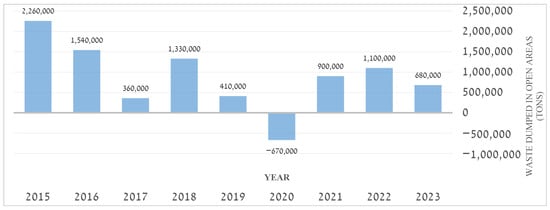
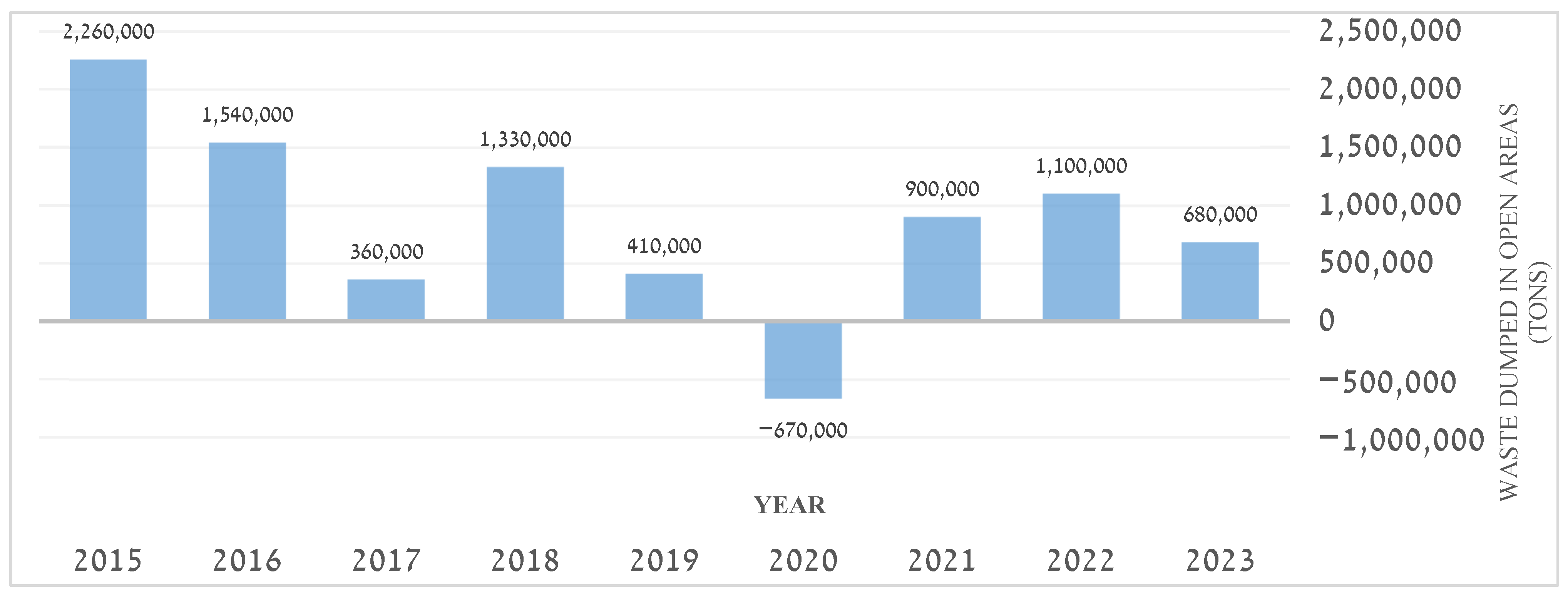
To illustrate the gap between policy declarations and on-the-ground implementation, Figure 3 presents the volume of construction waste that was either improperly managed or dumped in open areas between 2015 and 2023. Data, based on estimates from the Ministry of Environmental Protection, indicate a moderate but fluctuating downward trend: in 2015, approximately 2.26 million tons of waste were estimated to have been improperly managed, whereas particularly high values were recorded in 2016 and 2018 (about 1.54 and 1.33 million tons, respectively). In 2020, a notable positive deviation occurred, a near-zero or even negative balance (approximately −670,000 tons), possibly due to a temporary slowdown in construction activity or intensified monitoring during that period. However, in recent years (2021–2023), there has been a renewed increase in illegal disposal, with estimates of approximately 900,000 tons in 2021, 1.1 million tons in 2022, and around 680,000 tons in 2023.
Figure 3.
Rate of Waste Dumped in Open Areas, 2015–2023, (In Tons) [41].
The data presented in the figure indicate that, despite regulatory efforts in recent years, the gap between construction-waste generation in Israel and the public system’s capacity to receive, sort, and process it remains substantial. While isolated improvements can be observed (mainly in years characterized by increased government investment and stricter monitoring), the volume of waste that does not undergo regulated treatment remains high and significant. These findings highlight that the problem lies not only in reception infrastructure but also in oversight, enforcement, and deterrence mechanisms, which have thus far failed to sufficiently reduce illegal disposal. In light of this, a comprehensive reform of enforcement and monitoring policies is required, alongside the design of economic incentives, strengthening of inter-institutional cooperation, and the implementation of circular-economy models, with the aim of making construction-waste management in Israel an efficient, sustainable process that delivers both environmental and economic value.
4.5. Illegal Dumping and the Potential of a Circular Economy
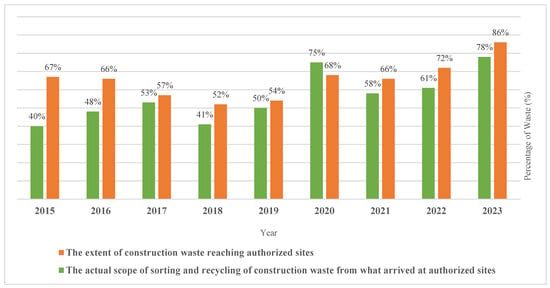
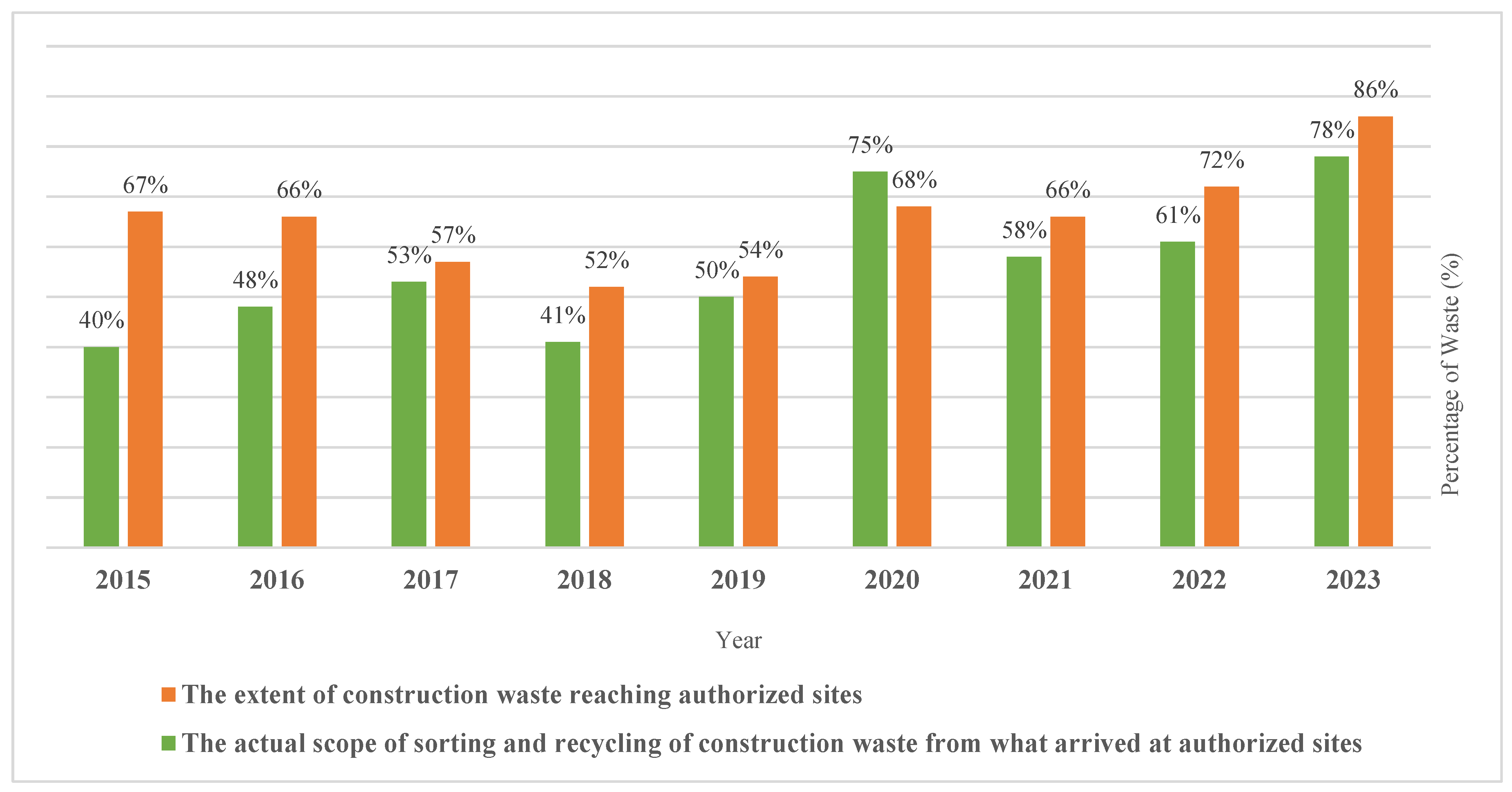
Analysis of the treatment system shows that while large quantities of construction and demolition waste (averaging approximately one million tons per year) remain improperly managed or dumped in unauthorized areas, there is a measurable improvement in regulated treatment volumes. These trends are presented in Figure 4, which illustrates the rates of CDW that were properly treated or sorted between 2015 and 2023.
Figure 4.
Rate of Waste Properly Treated or Sorted, 2015–2023 [41].
Comparative analysis of transport and recycling data between 2015 and 2023 identifies a divergence between facility intake and actual processing efficiency. While the intake at authorized sites reached a peak of 86% in 2023, the generated results show that recycling capacity is more volatile, dropping to 41% during infrastructure overloads.
The data indicates that the proportion of CDW reaching authorized facilities rose to 86% in 2023, up from 67% in 2015. Within these facilities, the actual recycling rate improved significantly, reaching 78% in 2023 compared to only 40% at the beginning of the period. Despite these gains, the gap between total generation and actual recycling persists, with notable declines in efficiency recorded during 2018–2019, likely due to infrastructure overloads. These findings suggest that while infrastructure reception has improved, the full implementation of circular-economy models remains dependent on addressing existing capacity gaps and strengthening regulatory oversight.
The figure presents two complementary data series, displayed as paired bars for each year. The orange bar represents the proportion of construction waste that reached authorized sites for treatment and recycling out of the total waste generated nationwide, reflecting the level of compliance with legal transport and disposal guidelines. The green bar indicates the proportion of waste that actually underwent sorting and recycling processes out of the total waste received at those sites, representing the operational effectiveness of the treatment facilities. The side-by-side presentation of these two bars allows for the identification of the gap between waste reaching the facilities and the actual recycling carried out within them.
The data reveal a gradual improvement trend, particularly during the second half of the examined period. In 2015, the proportion of waste reaching authorized sites was 67%, yet only 40% of the received waste was actually recycled. Over the following years, both indicators showed moderate increases, reaching a peak in 2023 (86% of waste arrived at authorized sites, and 78% of it underwent sorting and recycling processes). However, a temporary decline in recycling rates occurred in 2018–2019 (to 41% and 50%, respectively), likely due to a shortage of regional sorting infrastructure and overloads at active facilities. The year 2020 represents a positive deviation, with a significant increase in the recycling rate (75%), possibly resulting from a slowdown in construction activity during the COVID-19 period and the allocation of resources to upgrade existing facilities.
The findings indicate a general improvement in the efficiency of Israel’s construction-waste treatment system, but also reveal a persistent gap between legal waste transport and actual recycling. While the significant increase in the proportion of waste reaching authorized sites reflects some strengthening of enforcement and public awareness, the lower recycling rates suggest that sorting infrastructure remains limited in both capacity and geographic distribution. These trends underscore the need to expand recycling facilities, promote technological innovation, and implement regulatory incentives to maximize the potential of the circular economy, aiming ultimately to recycle up to 95% of construction waste as reusable raw materials.
Furthermore, the findings presented in Figure 3 and Figure 4 illustrate the complex challenge of construction-waste management in Israel. On one hand, there is evidence of some improvement in the transport of waste to authorized sites and in actual recycling rates. On the other hand, a consistent gap remains between the volume of waste generated and the public system’s capacity to manage it fully. Enforcement, oversight, and reporting mechanisms remain limited, and sorting and recycling infrastructure is unevenly distributed across the country. These data reflect a fragmented, circumstance-dependent policy system that relies on partial regulatory measures and reactive responses, rather than on systematic, multi-year planning.
Nevertheless, the positive trends observed in recent years indicate significant potential for improvement, particularly through the implementation of circular-economy principles and the expansion of cooperation across governance levels (national, regional, and local). A combination of smart regulation, economic incentives, technological innovation, and advanced monitoring mechanisms could not only reduce the volumes of illegal disposal but also transform construction-waste management into a driver of environmental and economic growth. Shifting from a reactive policy approach to a preventive, integrated, and sustainability-based strategy is essential for establishing an efficient, coordinated, and sustainable waste-management system in Israel.
4.6. Quantifying the Benefits of Implementing a Circular Economy in the Construction Sector
The transition to a circular economy in the construction sector yields measurable economic impacts. Analysis of the current cost structure identifies the specific unit costs associated with waste management and resource extraction in Israel. Table 2 details these unit costs, including direct economic expenses, normative costs for landfilling and recycling, and the environmental externalities related to natural resource extraction. These established values indicate that the external costs of mining and illegal dumping significantly contribute to the overall economic burden of the current waste management model [42,43].
Table 2.
Summary of Unit Costs for Construction Waste (NIS/ton) [44].
Based on the unit costs in Table 2, the comparative analysis of implementation scenarios reveals a direct correlation between recycling rates and national savings. The data shows that transitioning from a “business as usual” model to a full recycling scenario (Scenario B) reduces total national economy costs from approximately 183 million NIS to 57.7 million NIS per year. As shown in Table 3, these savings are primarily driven by a 124 million NIS reduction in combined resource extraction costs and environmental externalities. These results demonstrate that maximizing the reuse of CDW provides a more cost-effective alternative to traditional landfilling and natural aggregate quarrying.
Table 3.
Detailed National Economy Costs by Parameter and Scenario (NIS/ton, thousand tons, thousand NIS).
As can be seen from the data presented in the table above, full implementation of a circular economy in the construction sector (Scenario B) is expected to generate a total economic benefit of approximately 125 million NIS per year (including about 1 million NIS in savings from waste-treatment costs and approximately 124 million NIS in savings from quarrying and extraction costs). Partial implementation, in turn, is expected to yield an annual benefit of approximately 104 million NIS (including roughly 32 million NIS in savings from waste-treatment costs and 72 million NIS in savings from quarrying and extraction costs).
In addition, the total cost to the national economy varies significantly according to the level of circular-economy implementation in the construction sector. In the baseline “business as usual” scenario, total costs are the highest, amounting to approximately 183 million NIS per year. In the partial scenario, in which roughly 75% of waste is recycled, total costs to the economy are reduced substantially to approximately 78 million NIS per year, primarily due to savings in quarrying and extraction costs. In the full scenario, which assumes 100% recycling with no landfilling, the total cost to the economy is the lowest, standing at approximately 57.7 million NIS per year, as a result of combined savings in waste-treatment costs, reduced quarrying and extraction, and decreased environmental externalities. These data illustrate that implementing a circular-economy model in the construction sector may generate major savings in both direct and external costs, thereby making the national economy more efficient and cost-effective.
5. Discussion
The findings of the study indicate that Israel’s policy for managing surplus soil and construction waste stands at the intersection of accelerated development needs and environmental and strategic sustainability goals. Although recent years have shown an improvement in waste collection and sorting indicators, a substantial gap remains between the stated policy principles and their actual implementation. These findings align with the components of the theoretical analytical framework and offer several key insights.
First, analyzing the findings through the lens of multi-level governance highlights that the distribution of authority among government ministries, local authorities, and private actors creates coordination gaps and operational ambiguity. In this reality, effective policy advancement requires mandatory institutional coordination mechanisms, information-sharing, and clear allocation of responsibility. Second, in the context of policy implementation and adaptive governance, the findings demonstrate limited capacity for consistent implementation and effective enforcement. Official reports point to shortages in manpower, digital gaps in waste documentation, and weak deterrence (phenomena characteristic of governance systems that do not adapt at the pace of environmental and economic challenges). Third, the quantitative component underscores that transitioning to a circular economy is not merely an environmental consideration but a clear economic opportunity. The scenarios presented confirm that investment in sorting infrastructure, incentives for recycling, and curbing illegal landfilling practices may yield substantial fiscal benefits for the national economy.
Accordingly, the overall picture points to the need for a paradigm shift—from a reactive, fragmented, landfill-dependent policy to a preventive, coordinated, incentive-based, and infrastructure-supported approach aligned with modern governance principles and circular-economy practices. In addition, the adoption of technological tools for monitoring, transparency, and enforcement, together with investment in establishing regional recycling facilities, constitutes a necessary condition for closing the gap between policy and implementation and for transforming construction waste into a strategic resource.
The implementation of public policy in the construction and recycling sector often encounters political and regulatory challenges. These barriers may arise from limitations in authority between different ministries and agencies, economic pressures from industry stakeholders, or even ambiguities in existing regulations. Understanding these barriers is essential for assessing policy effectiveness, as policies that are not adapted to the political and regulatory structure may struggle to be implemented and to achieve recycling and resource-recovery goals. In this context, the study highlights the need for strong coordination among the relevant ministries, the definition of economic incentives, and the establishment of clear enforcement mechanisms, while maintaining a balance between environmental objectives and political and regulatory constraints. Careful consideration of political barriers allows for a reliable assessment of the potential and challenges of circular construction policy in Israel.
5.1. Limitations of the Study
While the findings provide a robust empirical baseline, they are subject to certain methodological limitations. The reliance on official government reports and state audits may result in an underestimation of illegal dumping volumes, as these figures typically reflect only detected or estimated infractions.
Furthermore, the conversion model used to estimate excess soil assumes a constant density and mass-to-waste ratio; however, in practice, these variables can fluctuate based on specific geological conditions and excavation techniques. By identifying these gaps, this study emphasizes that while policy goals align with circular economy principles, the measurement and enforcement tools currently in place remain reactive rather than predictive.
In addition, the economic scenarios presented in this study are based on several simplifying assumptions regarding recycling efficiency, transportation costs, and material recovery rates, which may vary under changing market and regulatory conditions. Furthermore, regional disparities between central and peripheral areas in Israel, including differences in infrastructure availability and enforcement capacity, may influence policy implementation outcomes.
5.2. International Perspective and Policy Implications
The Israeli case study offers critical insights for other rapidly developing nations facing high demographic growth and land resource constraints. The persistent gap between policy goals and implementation outcomes observed in Israel reflects a global challenge: the “implementation lag” where environmental regulation struggles to keep pace with the construction sector’s momentum.
Countries with similar multi-level governance structures can learn from Israel’s institutional fragmentation, where a lack of coordination between national land authorities and environmental regulators creates systemic bottlenecks. Furthermore, this study warns against the risk of “legislative anchoring”—the tendency to assess future capacity based on historical laws and infrastructure rather than adaptive, technology-driven monitoring. For international policy-makers, the Israeli experience underscores that a transition to circular construction requires not only environmental legislation but also the active integration of digital tracking systems and economic incentives that outpace the rate of urban expansion.
5.3. Policy Recommendations
Based on the findings of this study, the following policy measures are proposed. To ensure effective implementation, these recommendations are categorized by their urgency and the level of institutional coordination required:
5.3.1. Urgent Actions (Short-Term)
Decentralization of Infrastructure: Immediate land allocation for regional sorting and treatment facilities is required, particularly in the periphery. Addressing the geographic bottlenecks identified in the data is critical to reducing illegal dumping incentives.
Mandatory Digital Tracking: An immediate transition to a unified digital reporting system for all licensed facilities is necessary to enhance transparency and close the 14% gap in waste reporting identified in the 2023 data.
5.3.2. Structural Adjustments (Medium-Term)
Integration of Surplus Soil: The regulatory framework for construction and demolition waste must be formally expanded to include excavation soil. This requires updating current monitoring protocols to ensure that surplus soil is managed as a strategic resource rather than an unmonitored byproduct.
Economic Incentive Mechanisms: Implementing government subsidies or tax incentives for the use of recycled aggregates in public projects will stabilize market demand and support the financial viability of circular models.
5.3.3. Strategic and Institutional Coordination (Long-Term)
Inter-Agency Governance: Establishing a permanent joint task force between the Israel Land Authority, the Ministry of Environmental Protection, and the Ministry of Interior is essential. This body should be responsible for synchronizing urban development rates with infrastructure capacity to prevent future “implementation lags.”
Adaptive Policy Monitoring: Shifting from historical, reactive monitoring to predictive, technology-driven oversight to ensure that infrastructure development outpaces the rate of urban expansion.
6. Conclusions
The findings of this study demonstrate a persistent implementation gap in Israel’s construction and demolition waste policy. While demographic growth necessitates rapid development, the legislative goals of environmental sustainability are currently hindered by fragmented governance and critical infrastructure shortages. Based on the integrated analysis of policy documents and quantitative data, the study reaches the following three concrete conclusions:
Systemic Infrastructure Bottlenecks: The empirical analysis identifies a severe geographic imbalance in waste treatment capacity. The concentration of facilities in the central region, coupled with the fact that fewer than one-third of sites operate under valid licenses, remains a primary driver of illegal dumping in open spaces. Therefore, achieving the national target of a 70% recycling rate by 2030 requires immediate land allocation for regional sorting centers to decentralize the treatment network and reduce operational overloads.
Regulatory Gaps in Surplus Soil Management: This study highlights that surplus soil, which constitutes 40–60% of total excavation mass, represents a significant and largely unmonitored environmental burden. The current exclusion of this stream from official monitoring systems masks its potential as a strategic resource. Integrating surplus soil into digital tracking systems is essential not only for accurate oversight but also for realizing the planning potential of soil reuse in national infrastructure and quarry rehabilitation projects.
National Economic Viability of the Circular Economy: The comparative scenario assessment confirms that a transition to a full circular economy is economically superior to the current “business as usual” model. The results quantify a potential annual saving of 125 million NIS for the national economy. These savings, derived from reduced landfilling externalities and lower natural resource extraction costs, provide a robust fiscal justification for the implementation of economic incentives and government subsidies for recycled aggregates.
Ultimately, shifting Israel’s construction sector from a reactive “waste as a problem” model to a proactive “waste as a resource” strategy depends on bridging the gap between national policy declarations and regional execution. This transition requires a combination of adaptive governance, enhanced institutional coordination, and the integration of digital monitoring technologies to ensure long-term environmental and economic resilience.
Funding
This research received no external funding.
Institutional Review Board Statement
Not applicable.
Informed Consent Statement
Not applicable.
Data Availability Statement
Data used in this study are derived from publicly available governmental and institutional sources. These include official reports and datasets accessible through open platforms, such as the Ministry of Environmental Protection—Construction Waste Treatment in Israel (https://www.gov.il/he/pages/construction-waste-treatment (accessed on 20 March 2026)), and the Ministry of Economy and Industry (2021) Quantifying the Benefits of Implementing a Circular Economy in the Construction Sector (https://www.gov.il/he/pages/benefits-circular-economy-construction-2021 (accessed on 20 March 2026)). Additional publicly available reports and open-access materials are cited throughout the manuscript. No proprietary or restricted datasets were used in this study.
Conflicts of Interest
The author declares no conflicts of interest.
References
- INSS. Demographics and Economy in Israel; INSS: Seoul, Republic of Korea, 2024; Available online: https://www.inss.org.il/strategic_assessment/demographics-and-economy/ (accessed on 22 October 2025).
- Ben-Moshe, D.; Genesove, D. Regulation and Frontier Housing Supply. arXiv 2024, arXiv:2208.01969. [Google Scholar] [CrossRef] [Scilit]
- Cohen, E. The rise in Israel’s real estate prices: Sociodemographic aspects. Isr. Aff. 2018, 24, 108–127. [Google Scholar] [CrossRef] [Scilit]
- Cohen, E. Traffic congestion on Israeli roads: Faulty public policy or preordained? Isr. Aff. 2019, 25, 350–365. [Google Scholar] [CrossRef] [Scilit]
- Nahmias-Biran, B.H.; Dadashev, G.; Levi, Y. Sustainable Automated Mobility-On-Demand Strategies in Dense Urban Areas: A Case Study of the Tel Aviv Metropolis in 2040. Sustainability 2023, 15, 16037. [Google Scholar] [CrossRef] [Scilit]
- OECD. Addressing Labour Market Challenges for Sustainable and Inclusive Growth in Israel; OECD: Paris, France, 2023; Available online: https://www.oecd.org/en/publications/addressing-labour-market-challenges-for-sustainable-and-inclusive-growth-in-israel_dcdb1283-en.html (accessed on 22 October 2025).
- Weinreb, A. Israel’s Demography 2023: Declining Fertility, Migration, and Mortality; Taub Center for Social Policy Studies in Israel: Jerusalem, Israel, 2023; Available online: https://www.taubcenter.org.il/en/pr/israel-demography-2023/ (accessed on 20 March 2026).
- Nirel, N.; Grinstien-Cohen, O.; Eyal, Y.; Samuel, H.; Ben-Shoham, A. Models for projecting supply and demand for nurses in Israel. Isr. J. Health Policy Res. 2015, 4, 46. [Google Scholar] [CrossRef] [Scilit] [PubMed]
- Savitsky, B.; Shvartsur, R.; Findling, Y.; Ereli, A.; Hendel, T. Components of professional satisfaction among novice nurses. Isr. J. Health Policy Res. 2023, 12, 35. [Google Scholar] [CrossRef] [Scilit] [PubMed]
- OECD. OECD Economic Surveys: Israel 2023; OECD: Paris, France, 2023; Available online: https://www.oecd.org/en/publications/oecd-economic-surveys-israel-2023_901365a6-en.html (accessed on 22 October 2025).
- Katz, A.; Baum, H. A novel methodology to estimate the evolution of construction waste in construction sites. Waste Manag. 2011, 31, 353–358. [Google Scholar] [CrossRef] [Scilit] [PubMed]
- Ministry of Environmental Protection. Building Waste. 2024. Available online: https://www.gov.il/en/pages/construction-waste?utm_source=chatgpt.com (accessed on 22 October 2025).
- Cohen, E. The Waste Landfill Policy in Israel: Economic and Political Perspectives. Sustainability 2024, 16, 2791. [Google Scholar] [CrossRef] [Scilit]
- Daskal, S.; Ayalon, O.; Shechter, M. The state of municipal solid waste management in Israel. Waste Manag. Res. 2018, 36, 527–534. [Google Scholar] [CrossRef] [Scilit]
- Becker, N.; Kimhi, A.; Argaman, E. Costs and benefits of waste soils removal. Land Use Policy 2020, 99, 104877. [Google Scholar] [CrossRef] [Scilit]
- Taub Center. Between Environment and Demography: The Waste Crisis and the Loss of Open Spaces. 2024. Available online: https://www.taubcenter.org.il/en/research/environment-2024/ (accessed on 22 October 2025).
- Mhretu, A.; Abadi, H.T.; Gebrehiwot, W.; Asresie, T. Challenges and opportunities in construction waste management in Shire Town, Northern Ethiopia. Discov. Sustain. 2025, 6, 599. [Google Scholar] [CrossRef] [Scilit]
- Petrović, E.K.; Thomas, C.A. Global Patterns in CDW(C&DW) Research: A Bibliometric Analysis Using VOSviewer. Sustainability 2024, 16, 1561. [Google Scholar]
- UN. Global Waste Management Outlook 2024|UNEP—UN Environment Programme. 2024. Available online: https://www.unep.org/resources/global-waste-management-outlook-2024 (accessed on 22 October 2025).
- Sagan, J.; Mach, A. Construction waste management: Impact on society and strategies for reduction. J. Clean. Prod. 2025, 486, 144363. [Google Scholar] [CrossRef] [Scilit]
- Soharu, A.; Naveen, B.P.; Sil, A. An Approach Towards Zero-Waste Building Construction. In Advances in Construction Materials and Sustainable Environment; Gupta, A.K., Shukla, S.K., Azamathulla, H., Eds.; Springer: Singapore, 2022; pp. 239–257. [Google Scholar]
- Wu, Z.; Gao, M.; Xie, P.; Li, H.; Jiang, M. Impact assessment of construction waste policy intensity on environmental efficiency based on system generalized method of moments. Environ. Sci. Pollut. Res. Int. 2024, 31, 23522–23534. [Google Scholar] [CrossRef] [Scilit] [PubMed]
- Karunaratne, S.; Kariapper, A. CDWManagement: Bottlenecks, Regulations, and Policy Framework in Environmental Engineering and Waste Management. In Environmental Engineering and Waste Management: Recent Trends and Perspectives; Springer Nature: Berlin/Heidelberg, Germany, 2024; Available online: https://www.researchgate.net/publication/381227320_Construction_and_Demolition_Waste_Management_Bottlenecks_Regulations_and_Policy_Framework_in_Environmental_Engineering_and_Waste_Management (accessed on 27 October 2025).
- European Environment Agency. Construction and Demolition Waste: Challenges and Opportunities in a Circular Economy. 2020. Available online: https://www.eea.europa.eu/en/analysis/publications/construction-and-demolition-waste-challenges (accessed on 27 October 2025).
- Idir, R.; Djerbi, A.; Tazi, N. Optimising the Circular Economy for CDWManagement in Europe: Best Practices, Innovations and Regulatory Avenues. Sustainability 2025, 17, 3586. [Google Scholar] [CrossRef] [Scilit]
- Yi, Y.; Fei, X.; Lavagnolo, M.C.; Manzardo, A. An integrated model of life cycle assessment and system dynamics for CDWmanagement and reduction in Italy. J. Clean. Prod. 2025, 486, 144469. [Google Scholar] [CrossRef] [Scilit]
- Bonifazi, G.; Grosso, C.; Palmieri, R.; Serranti, S. Current trends and challenges in CDWrecycling. Curr. Opin. Green Sustain. Chem. 2025, 53, 101032. [Google Scholar] [CrossRef] [Scilit]
- Siddiqua, A.; Hahladakis, J.N.; Al-Attiya, W.A.K.A. An overview of the environmental pollution and health effects associated with waste landfilling and open dumping. Environ. Sci. Pollut. Res. Int. 2022, 29, 58514–58536. [Google Scholar] [CrossRef] [Scilit]
- Schuttelaar & Partners. ‘Circular Netherlands in 2050’—An Impetus for Secondary Raw Materials in the Construction Industry. 2018. Available online: https://vb.nweurope.eu/projects/project-search/seramco-secondary-raw-materials-for-concrete-precast-products/news/circular-netherlands-in-2050-an-impetus-for-secondary-raw-materials-in-the-construction-industry/ (accessed on 5 November 2025).
- Tsui, T.; Derumigny, A.; Peck, D.; van Timmeren, A.; Wandl, A. Spatial clustering of waste reuse in a circular economy: A spatial autocorrelation analysis on locations of waste reuse in the Netherlands using global and local Moran’s I. Front. Built Environ. 2022, 8, 954642. [Google Scholar] [CrossRef] [Scilit]
- Trivedi, G.; Tripathi, S.; Barot, P.; Modhia, Y. Zero waste manufacturing: A case study of circular and sustainable economy practices. J. Inform. Educ. Res. 2025, 5, 3364–3386. [Google Scholar] [CrossRef] [Scilit]
- Wong, C.; Wood, J.; Paturi, S. Managing Waste in the Smart City of Singapore. In Tropical Constrained Environments and Sustainable Adaptations: Businesses and Communities; Azzali, S., Thirumaran, K., Eds.; Springer: Singapore, 2021; pp. 225–241. [Google Scholar] [CrossRef] [Scilit]
- Ottosen, L.M.; Jensen, L.B.; Astrup, T.F.; McAloone, T.C.; Ryberg, M.; Thuesen, C.; Christiansen, S.; Pedersen, A.J.; Odgaard, M.H. Implementation stage for circular economy in the danish building and construction sector. Detritus 2021, 16, 26–30. [Google Scholar] [CrossRef] [Scilit]
- Abrahams, J. Preserve More Buildings and Make Construction More Circular—Green Transition Denmark; Rådet for Grøn Omstilling: Copenhagen, Denmark, 2024; Available online: https://rgo.dk/en/preserve-more-buildings-and-make-construction-more-circular/ (accessed on 5 November 2025).
- Scherfig, R. Circular Transition in the Construction Industry Is Crucial, but Will Only Succeed with Political Support for New Requirements—Green Transition Denmark; Rådet for Grøn Omstilling: Copenhagen, Denmark, 2025; Available online: https://rgo.dk/en/Circular-transformation-in-the-construction-industry-is-crucial-but-will-only-succeed-with-political-support-for-new-requirements/ (accessed on 5 November 2025).
- Chaney, P.; Jones, I.R.; Narayan, N. Beyond the Unitary State: Multi-Level Governance, Politics, and Cross-Cultural Perspectives on Animal Welfare. Animals 2024, 14, 79. [Google Scholar] [CrossRef] [Scilit]
- Herizal, H.; Rassanjani, S.; Afrijal, A.; Muhkrijal, M.; Wance, M. Systematic Literature Review: The Evolution of Adaptive Governance and Practice in the Context of the Environmental Crisis. J. Ilmu Lingkung. 2024, 22, 1326–1337. [Google Scholar] [CrossRef] [Scilit]
- Roux, D.J.; Taplin, M.; Smit, I.P.J.; Novellie, P.; Russell, I.; Nel, J.L.; Freitag, S.; Rosenberg, E. Co-Producing Narratives and Indicators as Catalysts for Adaptive Governance of a Common-Pool Resource within a Protected Area. Environ. Manag. 2023, 72, 1111–1127. [Google Scholar] [CrossRef] [Scilit] [PubMed]
- Islam, N.; Sandanayake, M.; Muthukumaran, S.; Navaratna, D. Review on Sustainable CDWManagement—Challenges and Research Prospects. Sustainability 2024, 16, 3289. [Google Scholar] [CrossRef] [Scilit]
- Shajidha, H.; Mortula, M.M. Sustainable waste management in the construction industry. Front. Sustain. Cities 2025, 7, 1582239. Available online: https://www.frontiersin.org/journals/sustainable-cities/articles/10.3389/frsc.2025.1582239/full (accessed on 29 October 2025). [CrossRef] [Scilit]
- Tal, U.; Azriel, A. Status Report: Construction Waste Treatment in Israel 2023; Central Bureau of Statistics (Israel): Jerusalem, Israel, 2023. Available online: https://www.cbs.gov.il/he/publications/Pages/2023/סביבה-שנתון-סטטיסטי-לישראל-2023-מספר-74.aspx (accessed on 9 May 2026).
- Bao, Z. Developing circularity of construction waste for a sustainable built environment in emerging economies: New insights from China. Dev. Built Environ. 2023, 13, 100107. [Google Scholar] [CrossRef] [Scilit]
- Krajewska, A.; Siewczyńska, M. Circular Economy in the Construction Sector in Materials, Processes, and Case Studies: Research Review. Sustainability 2025, 17, 7029. [Google Scholar] [CrossRef] [Scilit]
- Ministry of Economy and Industry. Quantifying the Benefits of Implementing a Circular Economy in the Construction Sector; Ministry of Economy and Industry: Jerusalem, Israel, 2021. Available online: https://www.gov.il/he/pages/benefits-circular-economy-construction-2021 (accessed on 20 March 2026).

Disclaimer/Publisher’s Note: The statements, opinions and data contained in all publications are solely those of the individual author(s) and contributor(s) and not of MDPI and/or the editor(s). MDPI and/or the editor(s) disclaim responsibility for any injury to people or property resulting from any ideas, methods, instructions or products referred to in the content. |
© 2026 by the author. Licensee MDPI, Basel, Switzerland. This article is an open access article distributed under the terms and conditions of the Creative Commons Attribution (CC BY) license.