Article

Strengthening Energy Security for Food and Beverage Manufacturers: Evaluating the Small Modular Reactor for Power Islanding


by
Joe Parcell
1,*,
Melanie Derby
2,
Arsen S. Iskhakov
2,
Gennifer Riley
2 and
Alice Roach
1
1
Department of Agricultural Economics, Kansas State University, Manhattan, KS 66506, USA
2
Department of Mechanical and Nuclear Engineering, Kansas State University, Manhattan, KS 66506, USA
*
Author to whom correspondence should be addressed.
Sustainability 2026, 18(10), 5134; https://doi.org/10.3390/su18105134
Submission received: 3 April 2026 / Revised: 13 May 2026 / Accepted: 15 May 2026 / Published: 20 May 2026
(This article belongs to the Section Energy Sustainability)

Abstract

Utility disruptions may stem from insufficient power generation, inferior infrastructure, or secondary weather perils (e.g., tornadoes, floods, snowstorms) that take energy infrastructure offline. The latter present a unique risk that not all existing power options can mitigate. Regardless of their origin, power disruptions have the potential to cripple food supply chains and undermine food system sustainability. To prepare for managing future disruptions, food and beverage manufacturers may couple electrical microgrid and thermal district heating infrastructure with small modular reactors (SMRs) or smaller microreactor systems to form low-carbon power islands. Although SMR technology is a somewhat new source of energy and has not yet achieved commercial viability, it provides the potential to make food and beverage manufacturing more resilient and sustainable when it becomes broadly available. To assess the potential cost–benefit of activating such technology as a sustainability-oriented resilience investment, we conducted a technoeconomic downtime threshold analysis. The case assumes that the technology is the full-time power source and the SMR yields stronger returns as facility downtime or downtime costs rise. The analysis found the breakeven point to range from 12.3 h down to 613.2 h down annually for a 5 MW system, depending on facility scale and assumed downtime costs. At a representative downtime opportunity cost of $10,000/h, SMR adoption requires approximately 61.3 h (5 MW) of annual outages to break even, highlighting scale effects on feasibility. Incorporating a 20% thermal energy credit reduces required outage thresholds by roughly 20%, lowering the breakeven level to 49.1 h. These results highlight the potential role of SMR-enabled power islanding in supporting sustainable food manufacturing through improved energy resilience, low-carbon power, and thermal energy recovery.

1. Introduction

Downtime for a food manufacturer can have significant ripple effects. Consumers may encounter out-of-stock products or price spikes, and producers may be forced to dispose of commodities if they spoil before manufacturers buy and use them. Resilience enables supply chain participants such as food manufacturers to withstand disruptive forces, keep operating, and maintain a product’s availability, quality, or cost. For food supply chains, some common disruptions have related to COVID-19, infrastructure, distribution, and climate [1].
Industries, firms, and people can adapt to improve their resiliency to disruptive shocks. Within the food system, such adaptation is paramount not only for food producers but also other food system stakeholders, including those involved in manufacturing, distribution, and sales [2]. Research has suggested strategies for adaptation. For example, trade may blunt the effect climate-related disruption has on an area’s food and beverage ingredient supply over longer periods of time [3]. That said, the low-cost food systems on which economies rely are increasingly built on just-in-time manufacturing, which requires resiliency at any time for inputs such as commodities, labor, and power.
Infrastructure vulnerabilities can jeopardize power generation, and an increasingly common type of climate event called secondary weather perils (e.g., tornadoes, floods, snowstorms, fires) pose risks [4] as they may damage grid infrastructure and pause business operations. For food and beverage manufacturers with significant electrical or thermal power needs, sustaining operations suffers if weather or other factors cause an outage. A recent industry survey of mid- to large-scale food processing firms reported that estimated facility-level downtime costs due to power outages most commonly fell between $1000/h and $50,000/h, though the report cautioned that these values should be interpreted as directional because downtime costs vary by facility size, type, and throughput [5]. In total, power disruptions cause up to $150 billion in lost business activity annually [6]. Therefore, developing technology and practices to minimize instances of power losses has value. The Center for Climate and Energy Solutions has presented several strategies to improve resiliency as weather events test energy infrastructure. Among them are introducing smart grid technologies and installing distributed energy systems such as microgrids, combined heat and power units, and batteries [7]. Further, Bachmann et al. (2024) and Amakrane and Biesbroek (2024) discuss climate-related adaptations [8,9].
Islanding represents a type of distributed energy system that would offer resiliency in a way that uses resources efficiently. With it, a manufacturer would generate its own electrical and thermal power using a microgrid and district heating, respectively. An “island” would be sustained by various energy generation systems such as those that use diesel, natural gas, solar, or wind or systems that store energy in batteries. A future technology that may be an additional option for islanding is a small modular reactor (SMR) or microreactor—a smaller counterpart of SMR technology. Sustainable nuclear power generated by SMRs and microreactors would insulate microgrids and thermal district heating from grid, energy generation, and weather-related disruptions and keep food and beverage manufacturing facilities operational during periods that otherwise would be forced downtime.
SMRs and microreactors differ in their low-carbon electricity production potential and physical footprints [10]. A SMR could produce 60 MW or more of electricity. A smaller microreactor could produce 20 MW or less electricity. Both generate heat, which can be converted to electricity or used to supply steam or process heat depending on the reactor and power-conversion system [11]. These electrical and thermal attributes would be attractive to food manufacturers. SMRs are proposed as low-carbon energy sources with potential economic and resilience benefits, and some microreactor designs are transportable and could be dispatched to areas where power is needed [12,13]. SMRs are often designed with enhanced passive safety features and simplified systems that may improve certain safety performance aspects (e.g., reduced reliance on active systems) relative to conventional large reactors [14].
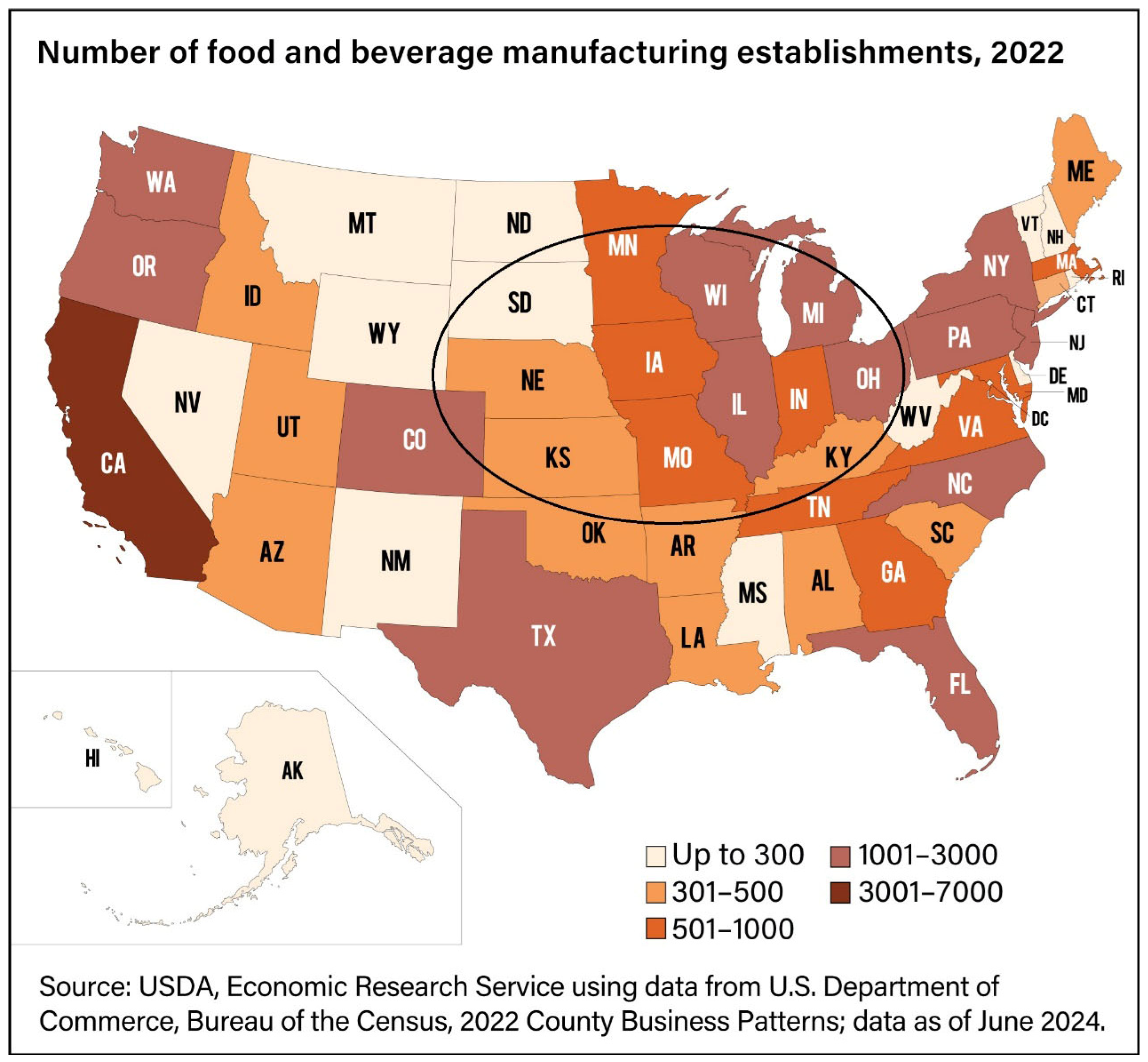
Based on a case study of the American Heartland, this paper presents a conceptual model that suggests potential applications for food manufacturers to integrate SMRs into plans for islanding electrical and thermal power. Figure 1 circles the approximate area of interest—here, food and beverage manufacturing activity tends to concentrate—and it shows the number of food and beverage manufacturers by state [15]. Where food and beverage manufacturing activity, grid infrastructure and generation vulnerability, and secondary weather peril risk overlap, activating electrical microgrids, district heating infrastructure, and the SMR technology could ensure the continuity and sustainability of business operations if the broader utility system fails.
The next sections offer background on food and beverage manufacturing, secondary weather perils, electrical microgrids and district heating, and the SMR technology as a new source of energy. Then, the paper describes the application of SMR technology to power islanding for food and beverage manufacturers, and it presents a technoeconomic framework capable of evaluating the feasibility of food and beverage manufacturers deploying SMR technology for power islanding purposes. It concludes by discussing the importance SMRs can play in the built society and limitations for why SMR technology may be slowly adopted.

2. Materials and Methods

2.1. Food and Beverage Manufacturing

The U.S. agricultural marketing system moves and transforms commodity production from 2 million farmers—though 200,000 farm businesses produce almost 80% of the U.S. value of agricultural production—to 320 million people domestically who consume three meals per day 365 days a year [16]. Additionally, the U.S. exports more than 20% of domestically raised pork meat and more than 40% of domestically grown soy and wheat.
Within the continental U.S., food and beverage manufacturing activity tends to concentrate among relatively few firms. For a particular food product, the four largest manufacturers commonly make up 50% of all volume consumed. Economies of scale drive the concentration, but they also contribute to U.S. consumers spending a low percentage of their income on food [16]. Depending on the food supply chain, geographical concentration can also be high. As an example, for meat, the first level of manufacturing must be close to locations that feed animals [17]. Site proximity reduces the hauling distance for animals prior to processing. Depending on the transportation conditions, animals could experience injury, weight loss, and stress [18]. Thus, most large meat processing plants operate within the American Heartland near the farms raising animals.
Energy access in manufacturing communities ranks as a highly important criterion for sustaining manufacturing activity. The U.S. Department of Energy (2025) reports that some 30,000 food and beverage manufacturing facilities [19] account for as much as 6% of total domestic industrial energy use—an estimated 41.5 GWe of power consumed annually [20]. Table 1 summarizes research into the power requirements of different types of food and beverage manufacturing.
An example of the scale of power demand in food manufacturing is a beef packing plant. Li et al. (2018) estimated that beef packing plants use 106.8 ± 13.8 kWh per metric ton of live cattle weight [21]. Assuming an average live cattle weight of 1400 lb per head, a plant processing 5500 head per day would handle approximately 3493 metric tons of live cattle per day. At 106.8 kWh per metric ton, this implies electricity use of approximately 373 MWh per day. If the plant operates continuously over 24 h, this corresponds to an average power demand of approximately 15.5 MW, with a range of about 13.5 MW to 17.5 MW. This level of demand is within the power output range of a single SMR.
Given that portions of the food and beverage manufacturing industry are geographically concentrated, and few but large manufacturers exist, the risk of perils affecting energy and other infrastructure—and ultimately, food product availability—is great.
Table 1. Electrical and thermal requirements for food and beverage manufacturing drive the choices facilities make about energy generation.
ReferenceKey Findings
Corigliano and Algieri (2024) [22] Of all energy used by the U.S. food sector, 59% goes toward heating. Other energy uses are cooling (16%), mechanical (12%), infrastructure (8%), and other (5%). Animal slaughtering and processing use more electricity than other processing activities. Natural gas use tends to be relatively high for grain and oilseed milling and animal slaughtering and processing, and it primarily supports combined heat and power [22].
Bajan et al. (2020) [23]Measured as MJ/dollar in GDP (2010 dollars), the U.S. food industry’s energy intensity changed from 6.5 in 2000 to 7.0 in 2007 to 5.7 in 2014 [23].
Rodriguez-Gonzalez et al. (2015) [24]Compared with heat pasteurization, microfiltration and ultraviolet light consume considerably less energy when controlling food pathogens [24].
Chinnaket et al. (2025) [25]Seasonality affects electrical energy use in the food industry, and a decomposition model best forecasts electrical energy use [25].
Ladha-Sabur et al. (2019) [26]Products that tend to have high energy intensity include milk powder, French fries, and instant coffee. Their thermal energy needs increase total processing energy consumption [26].
Grossman et al. (2023) [27]The thermal-energy-intensive food processing industry tends to consume a lot of petroleum to support transportation and logistics and natural gas to provide heat. Novel heating methods (e.g., electric boiler, heat pump, geothermal heat) and novel electricity generation methods (e.g., solar, wind, hydropower, biomass) have the potential to make improvements (e.g., reduce costs, decrease emissions, increase efficiency) [27].
Xu, Flatter, and Kramer (2009) [28]Based on a survey of 12 U.S. cheese plants, electricity usage ranged between 0.5 MJ/kg and 2.3 MJ/kg for cheese produced and 1.4 MJ/kg and 1.9 MJ/kg for raw milk processed [28].
Canning (2010) [29]Energy used by food processors increased from 1.89 EJ in 1997 to 2.817 EJ in 2002. Increases in food-related energy consumption were driven by adoption of energy-intensive technologies [29].

2.2. Secondary Weather Perils and Power Disruptions

Known as natural hazards, weather has been a significant source of food supply chain disruptions [1,30]. To communicate the extent of a natural hazard’s impacts, an event is categorized as a primary peril or secondary peril. Primary perils, such as hurricanes and earthquakes, occur relatively infrequently but may trigger significant losses. As events are prone to occurring more frequently but causing less significant losses, secondary perils stem from two origins. One type emerges because of a primary peril; it represents a secondary effect of the main event. For example, hurricanes damage areas close to their landfall locations, but areas miles away also may contend with heavy rain and flooding—secondary effects of a primary storm. Other secondary perils arise independently. Examples include tornadoes and snowstorms [31].
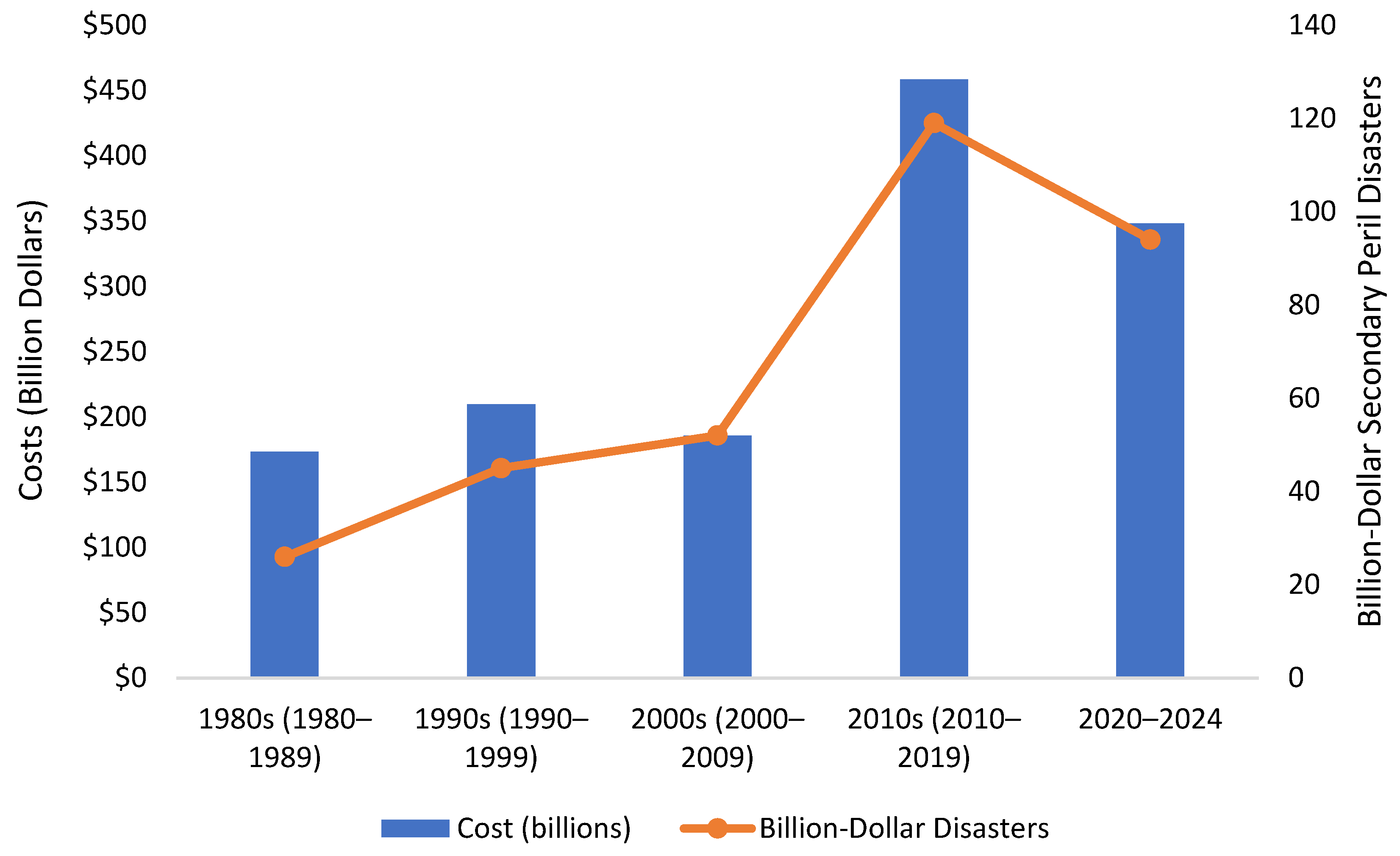
Despite the name suggesting they are less momentous than primary perils, secondary perils expose communities and industries to consequential risk and carry great costs. Such weather hazards have also become more common. The U.S. National Oceanic and Atmospheric Administration (NOAA) reports that the U.S. observed a noticeable uptick in billion-dollar secondary peril weather events in the 2010s relative to the three decades earlier. Figure 2 shows that 119 billion-dollar secondary perils occurred during the 2010s and caused more than $458.4 billion in damage. The following half decade—from 2020 to 2024—is on track to exceed these totals. It had already recorded 94 billion-dollar secondary perils and $348 billion in total costs associated with these events through 2024 [32].
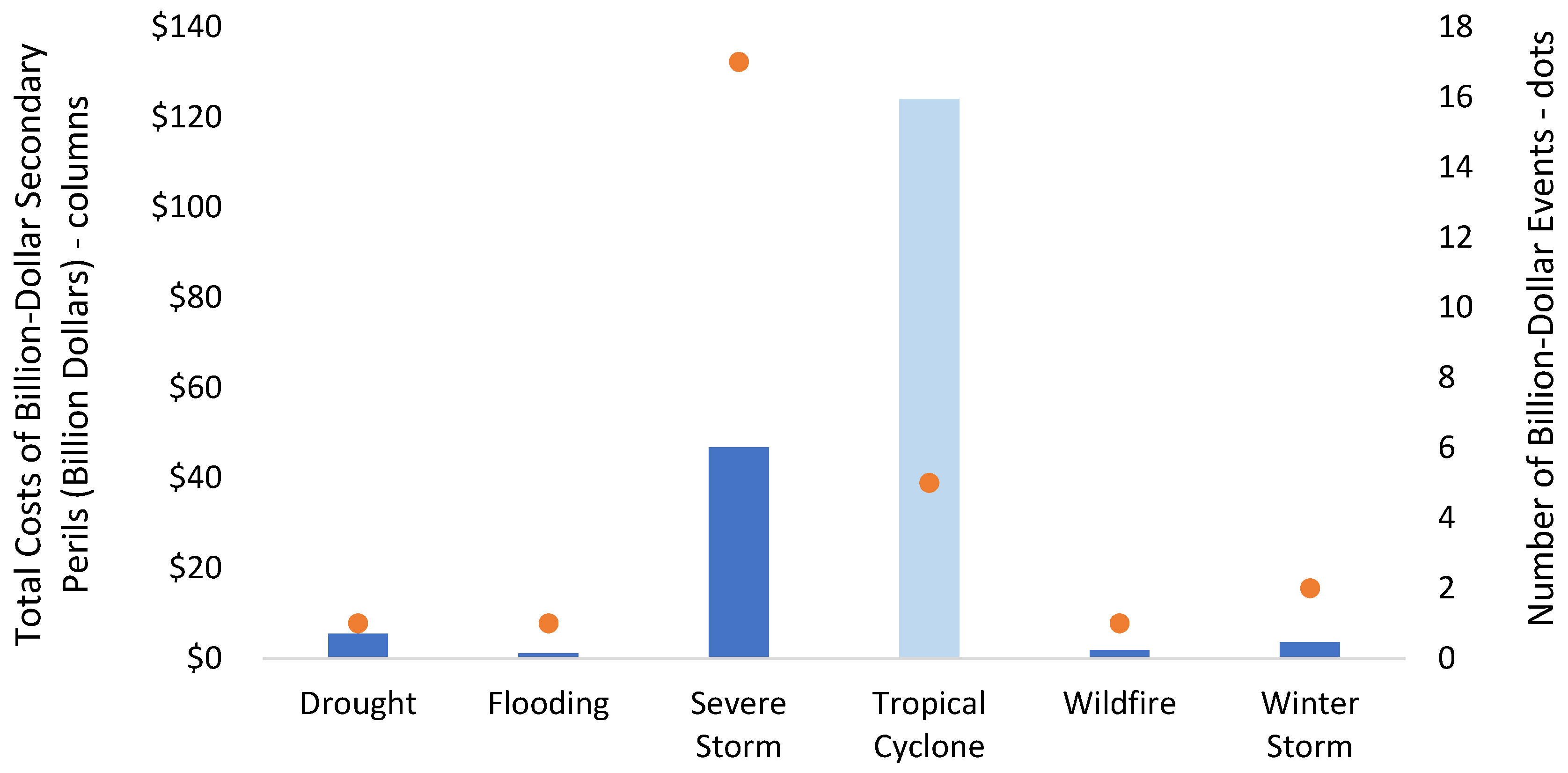
Of the 27 billion-dollar disasters recorded by NOAA during 2024, more than 80% were traced to secondary perils. Figure 3 shows severe storms were the predominant billion-dollar secondary peril to affect the U.S. in terms of incidence and total costs to bear [32].
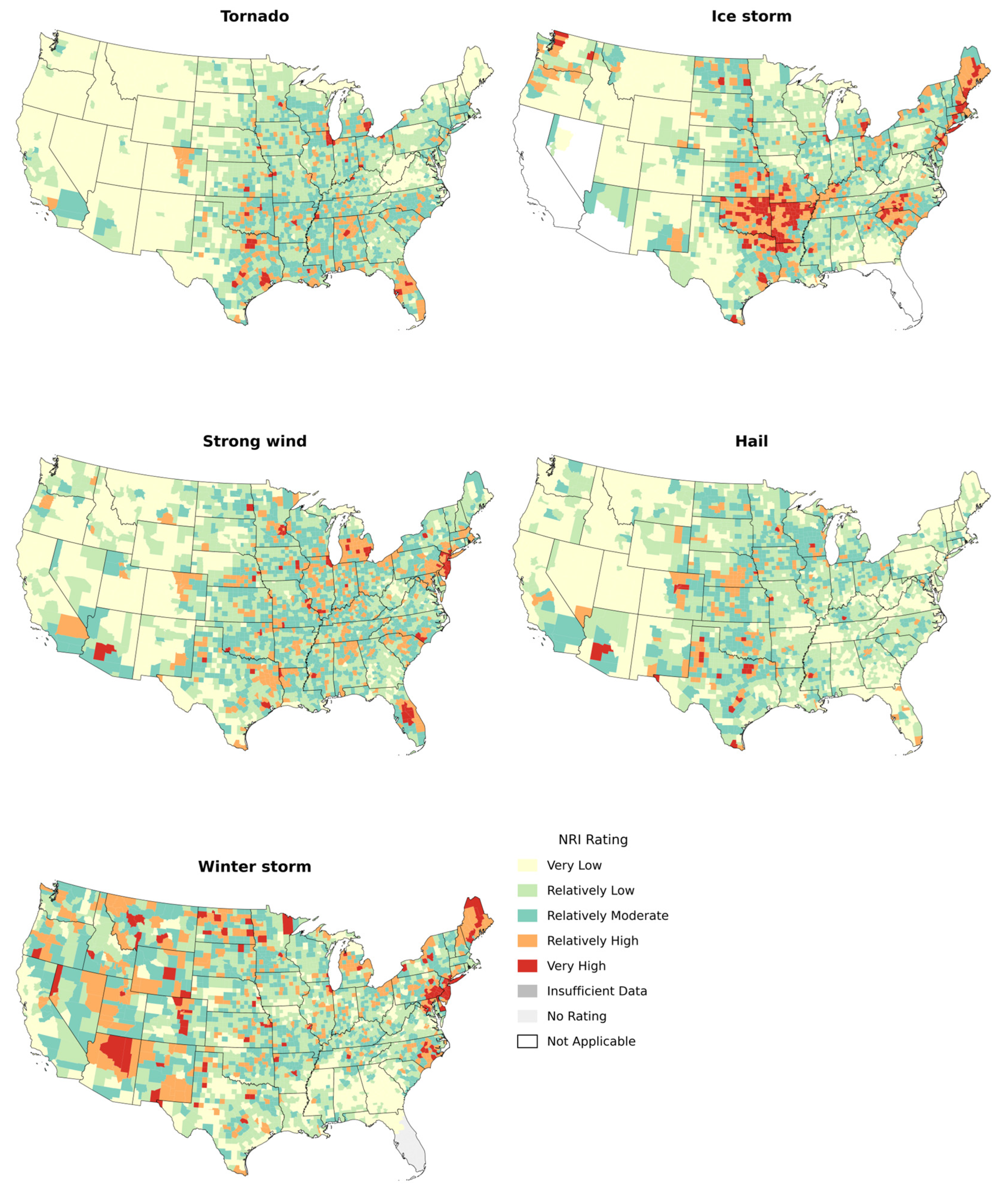
Where disastrous weather events take place dictate the people and industries most vulnerable. To approximate natural hazard risk, the U.S. Federal Emergency Management Agency (FEMA) produces a National Risk Index. By county or census tract, the index communicates the composite vulnerability to 18 natural hazards, including cold waves, droughts, hail events, heat waves, ice storms, lightning incidences, and tornadoes. The risk assessment accounts for the economic value of natural hazard-induced losses, social group exposure to natural hazard impacts, and the extent to which an area can show resiliency to natural hazards [33]. The FEMA uses risk value scores to create risk index percentiles and ratings. Figure 4 presents National Risk Index maps meant to communicate the risk U.S. counties and cities face from five weather hazards that could negatively affect critical infrastructure, including the electric grid. These five do expose Heartland communities to risk—as noted by the red, orange, and blue shading.
In some cases, high-risk counties are population centers, which may contribute workforce and infrastructure resources for firms in food supply chains. As much as 10.4% of U.S. employment and 5.6% of U.S. gross domestic product are tied to the food marketing system [35]. Figure 1 shows the geographic dispersion of food and beverage manufacturing in the Heartland.
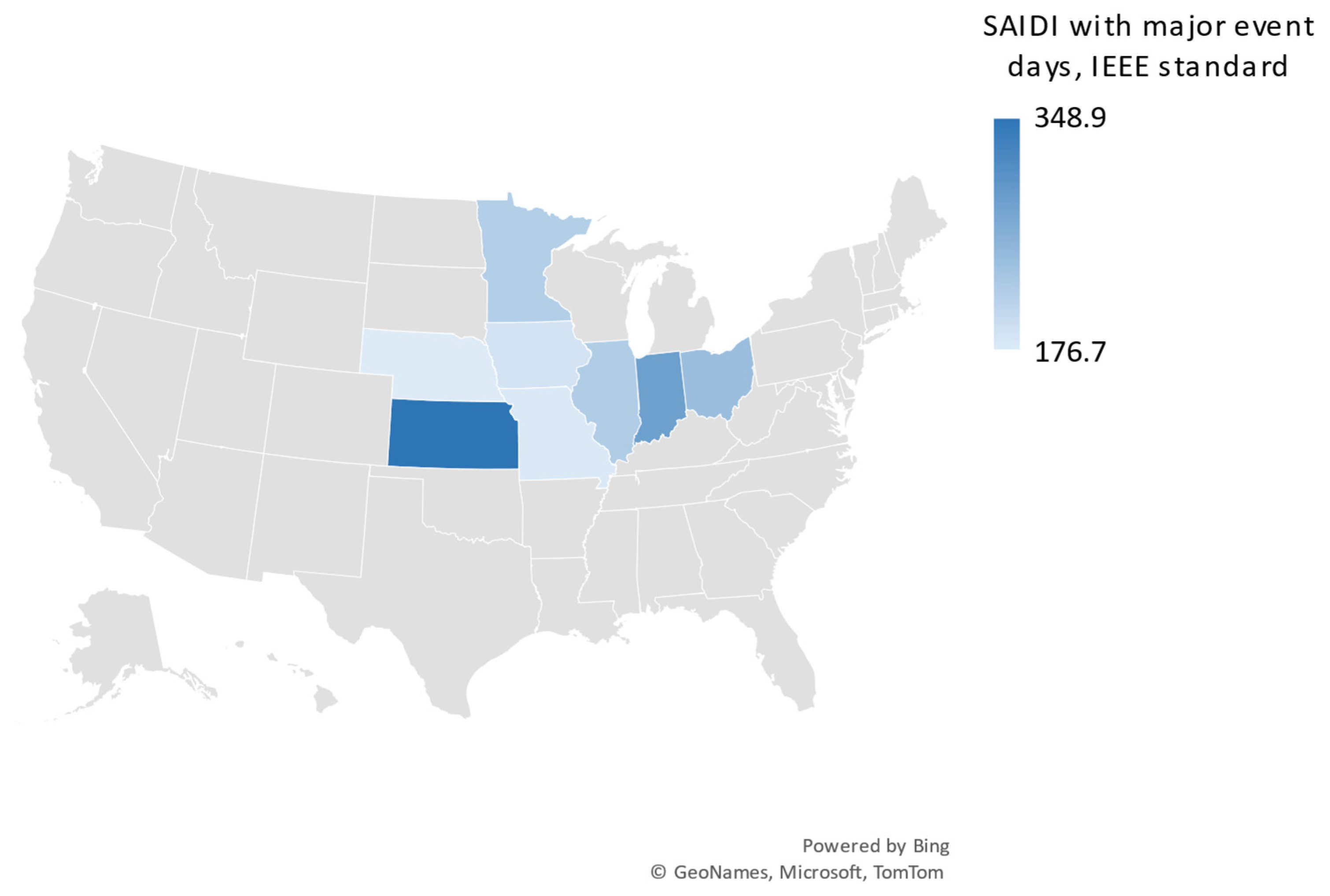
With respect to total power disruptions, including those disruptions caused by grid infrastructure, power generation, and weather, the U.S. Energy Information Administration publishes electric system reliability data in its annual electric power industry report. The system average interruption duration index (SAIDI) communicates an annual outage length for an average customer. Using data from 2013 to 2022, Figure 5 presents an average SAIDI value by state. Counting major event days, Kansas and Indiana had the highest TSAIDI scores—and thus, the least reliability—on average from 2013 to 2022. Some Heartland states did have noticeable year-over-year variability in annual average SAIDI [36].

2.3. Electrical Microgrids and Thermal Districts

Characterized by their ability to integrate various power sources, decentralize power generation, and offer sustainability benefits, electric microgrids and thermal districts support energy resiliency. In normal conditions, microgrids connect to the larger grid, but they also can “island” or disconnect during a disruption and function autonomously. This enhances grid resilience, particularly in areas prone to outages from natural disasters or technical failures [37]. SMRs may power critical infrastructure as part of a microgrid. Examples include defense operations and facilities used during emergencies [38,39].
A key advantage of microgrids is their flexibility in integrating diverse energy sources, especially renewables. Maghami et al. (2023) write about using renewables (e.g., solar photovoltaic power) to preserve energy availability in urban and rural communities through smart grids [40]. As energy systems move toward decarbonization, microgrids can manage the variability and intermittency of renewable energy sources, and thus stabilize the grid [41].
A synergistic concept, a thermal district refers to an area having an interconnected heat transfer system to make thermal heat available from a centralized location. A district heating example is a large food and beverage manufacturing plant that requires heat for sterilization and cleaning. Thermal energies could be generated centrally and across an area exceeding 100 hectares. Because some advanced SMR and microreactor concepts (e.g., high-temperature gas-cooled or molten salt designs) can deliver high-temperature heat, potentially up to 850°C, any capture and use of thermal energy contributes to a SMR being more energy-efficient and realizing a better return on investment.

2.4. Small Modular Reactors and Microreactors

Advanced nuclear deployment strategies increasingly emphasize SMRs and microreactors. SMRs fit demands for power islanding in high-need applications. For perspective, assuming continuous full-power operation of a SMR, 1 MWe of generation could power roughly 832 homes in a year [42], manufacture about 1 ton of anhydrous ammonia per hour [43], or support the processing of 9.4 metric tons of live cattle weight [44].
SMRs are modular, enabling independent reactor units such that maintenance or shutdown of one module does not necessarily interrupt the operation of others, and a specific location’s needs can dictate the number of SMRs and their layout [21,45]. Modularity allows for scalability, enabling incremental capacity additions that align with microgrids’ growing energy demands [46]. Some microreactor designs are transportable (e.g., truck, rail, or containerized systems), whereas most SMRs are factory-fabricated modular units requiring on-site installation. Refueling intervals vary widely by design, ranging from a few years for light-water SMRs to up to 10 or 20 years for some microreactors [21,45,47,48]. Microreactors, as smaller advanced reactor systems, also offer greater mobility than larger SMRs. At present, regulatory, security, and site constraints make co-location of nuclear systems with industrial facilities non-trivial, and such configurations should be viewed as long-term possibilities rather than near-term deployment options.
From a safety and siting perspective, some advanced SMR and microreactor designs aim to reduce emergency planning zone requirements relative to conventional reactors, potentially to the site boundary, subject to regulatory approval [11]. In comparison, conventional large nuclear power plants in the U.S. typically define emergency planning zones of approximately 10 miles for plume exposure and 50 miles for ingestion pathway considerations [49]. With smaller-scale configurations, reduced core inventory and lower decay heat can contribute to lower source terms and potentially reduced accident consequences, depending on the specific design. Many designs incorporate passive safety systems and simplified architectures intended to maintain core cooling and safety functions during off-normal conditions without active intervention. Furthermore, factory fabrication and modular deployment are intended to improve manufacturing quality, standardization, and quality assurance while reducing risks associated with large, complex, on-site nuclear construction.
Table 2 summarizes features of SMR technologies currently under development. Industries looking toward integrating SMRs into power islanding plans will need to match reactor characteristics (e.g., thermal and electric output) with their particular needs. Some SMR designs may not reach the high-temperature process heat requirements needed for certain applications (e.g., primary steelmaking), depending on reactor outlet temperature. However, many products, such as fuels, pulp and paper goods, foods, and beverages, have process heat requirements low enough for a SMR to be a viable heat source [50,51]. Pakkebier et al. (2024) indicate that low-temperature processes such as pasteurization could be supplied using low-grade or waste heat from a SMR [52]. Given these features and potential uses, the technology has gained the attention of governments [53,54,55].
Although Table 2 summarizes representative SMR and microreactor designs, these technologies are not at the same stage of maturity. Some designs are in licensing, demonstration, or pilot-project phases. Others remain conceptual or pre-commercial. In the U.S., near-term activity is increasingly focused on testing and demonstration rather than broad commercial deployment. For example, the DOE Reactor Pilot Program, launched in 2025, seeks to expedite testing of selected advanced reactor designs outside national laboratories and has an ambitious goal of achieving criticality for test reactors by 2026 [56]. DOE also notes that advanced SMRs are under NRC licensing review and are expected, if successful, to be deployed in the late 2020s to early 2030s [57]. However, such pilot and licensing activities do not imply immediate commercial availability for food and beverage manufacturers. Deployment for industrial power islanding will depend on successful demonstration, licensing, fuel availability, manufacturing scale-up, cost reduction, site approval, and community acceptance. Therefore, the present analysis should be interpreted as a prospective resilience framework for evaluating future SMR-enabled power islanding rather than as an assessment of currently deployable commercial systems [56,57].
Table 2. Selected U.S.-associated SMR and microreactor designs and representative specifications relevant to industrial heat and power applications [58]. 1
ReactorDesignerThermal Power (MWth)Electric Output, Net (MWe)Inlet Temp (°C)Outlet Temp (°C)Fuel Cycle Length
AP300 Westinghouse Electric Company (Cranberry Township, PA, USA)99033030232536–48 months
ARC-100ARC Clean Technology (Washington, DC, USA)28610035551010–20 years
BWRX-300GE Vernova Hitachi Nuclear Energy (Wilmington, NC, USA)87030027028812–24 months
EM2General Atomics (San Diego, CA, USA) 500265550850360 months
FMRGeneral Atomics (San Diego, CA, USA)10042506800180 months
G4MGen4 Energy Inc. (Denver, CO, USA) 7025-500120 months
IMSR400Terrestrial Energy (Charlotte, NC, USA)442195610700Continuous
LFTRFlibe Energy (Huntsville, AL, USA)600250500650Continuous
Natrium TerraPower (Bellevue, WA, USA)840345350–400500–55018–24 months
NuScale Power ModuleNuScale Power (Corvallis, OR, USA)2507724931618 months
PRISMGE Vernova Hitachi Nuclear Energy (Wilmington, NC, USA)840311-48518 months
Prismatic HTRGeneral Atomics (San Diego, CA, USA)350-32275018 months
PWR-20Last Energy (Austin, TX, USA)802027033172 months
Thorcon 500Thorcon International (Stevenson, WA, USA)557250565704Up to 48 months
Aurora Oklo (Santa Clara, CA, USA)5015.5--120–240 months
eVinciWestinghouse Electric Company (Cranberry Township, PA, USA)155--96+ months
HOLOS-MONOHolosGen (Manassas Park, VA, USA)221059085596+ months
HOLOS-QUADHolosGen (Manassas Park, VA, USA)221059085596+ months
MMRUltra Safe Nuclear Corporation (Seattle, WA, USA)15530066020 years
1 Blue shading indicates SMR design, and gray shading indicates microreactor design.

3. Results

Given the increasing prevalence of power disruptions, some food and beverage manufacturers have introduced resilience safeguards. Diesel generators, natural gas generators, and battery systems have been the most adopted resilience assets, according to 145 senior energy management professionals from mid- to large-scale U.S. and Canadian food processors who participated in a 2024–2025 survey. Of those professionals, just 13% indicated their energy infrastructure could protect facilities from outages for more than 24 h [5].
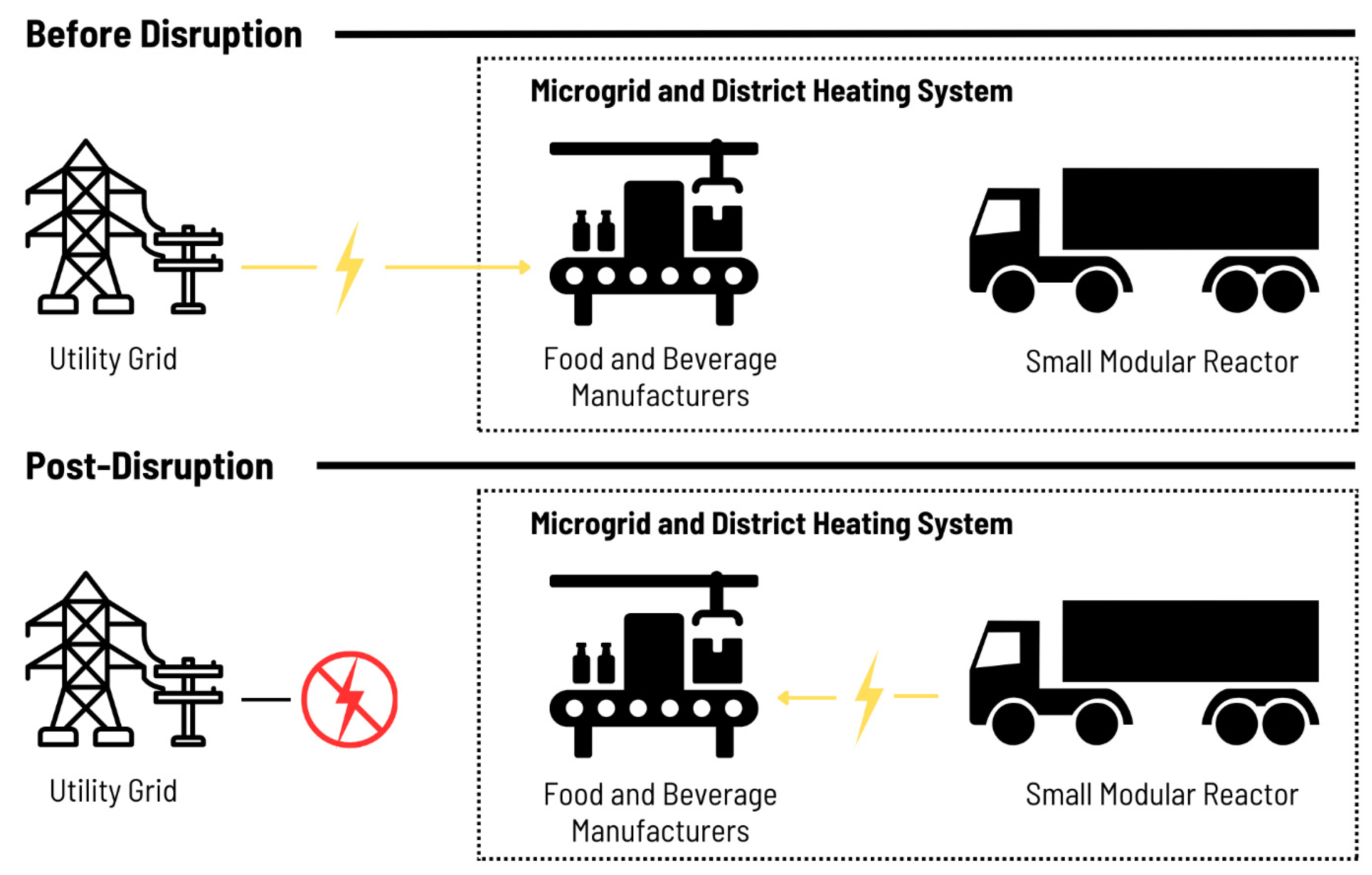
Microgrids and district heating infrastructure configured in communities where food and beverage manufacturing concentrates can “island” during outages and generate electricity and thermal heat needed to accomplish manufacturing functions. Building this infrastructure would introduce a layer of resiliency. For 9% of the surveyed senior energy management professionals from mid- to large-scale U.S. and Canadian food processors, their facilities had already invested in microgrids [5]. Figure 6 outlines how SMRs may be employed within a microgrid and district heating network to supply sustained power and process heat to critical infrastructure and support the continuation of food and beverage manufacturing—effectively improving resilience. Note that De Bruijn et al. (2017) [59] highlight differences in how the concept of resilience is defined as well as differing views on how to create resilient systems. Their article provides further discussion on building resilience to extreme weather events [59].
Meat processing and milk processing offer two likely examples of when the SMR technology could be important in a microgrid and district heating configuration to serve consistent heat and power needs without concern of a short- or long-term power disruption. Highly perishable meat and milk are flow commodities, which must be converted into food products every hour of the day. Although large-scale meat and milk processing facilities often have supplemental and temporary power sources available, access to large and sustained quantities of power may be needed for power resiliency. Li et al. (2018) [21] reported that meat processing facilities primarily use electricity for refrigeration (24.5% of plant-wide total) to mitigate spoilage. Then, 18.4% and 17.6% of plant-wide energy use supports fabrication/packaging and the engine room, respectively. In cases when the grid cannot provide sufficient heat, a facility could disconnect from the utility and island—leaning on the SMR to offer needed process heat. Heat used for food safety purposes (e.g., sterilization, cleaning) represents 81% of summer thermal energy use and 49.7% of winter thermal energy use [21]. Durga et al. (2024) reported other food processing functions that use electricity include grinding, mixing, and lighting, and additional process heat applications for a food processor include drying, baking, and evaporation [60].
Other than food, areas of agricultural processing where electricity and heat from the SMR could be applicable include wood processing and drying, which have extensive power needs, and effluent digesters, which co-produce value-added products from animal waste [61,62,63].
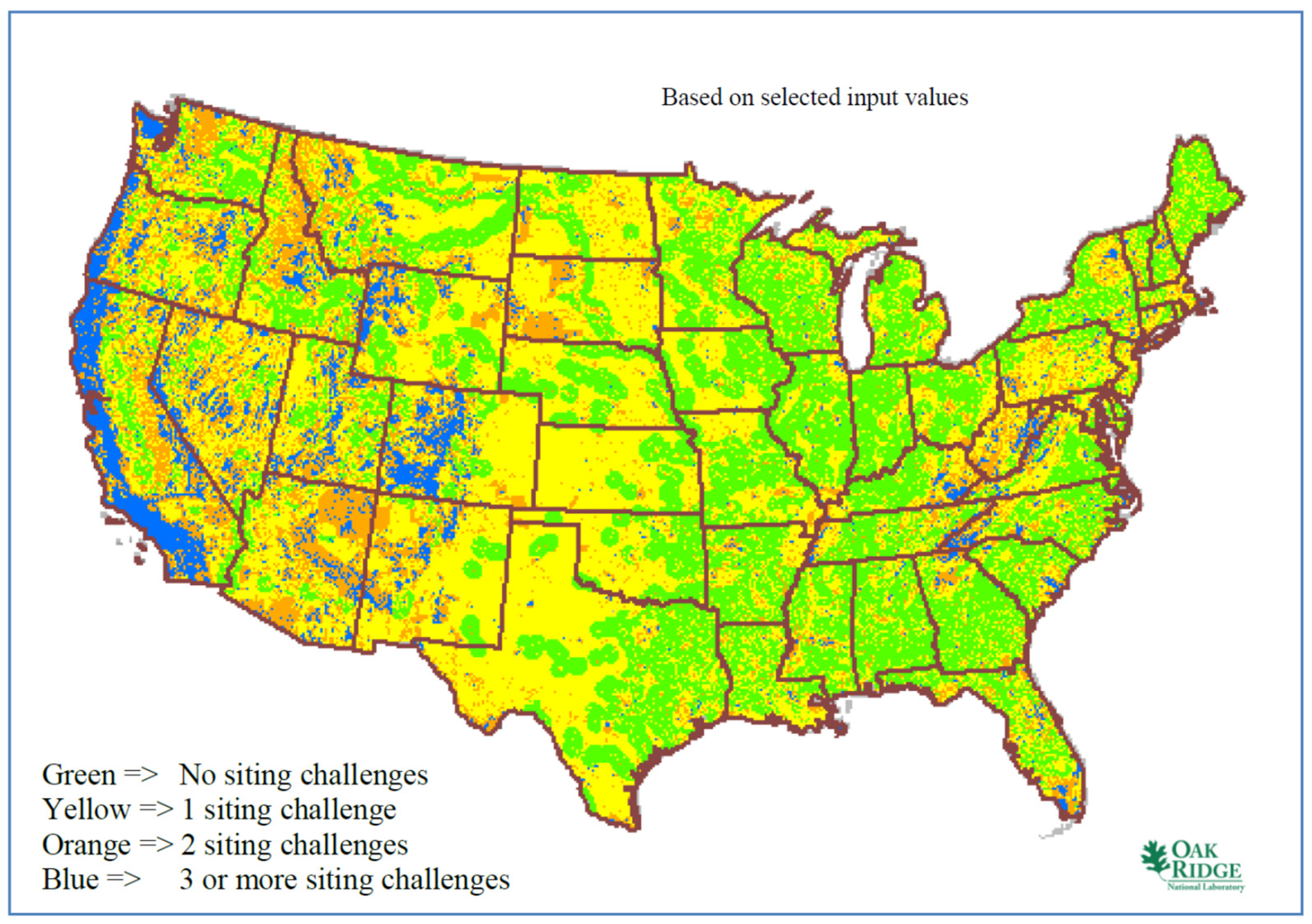
Beyond demand for electricity and thermal heat, many factors affect SMR siting. Figure 7 originates from a SMR study completed by Belles et al. (2012) [64] who evaluated potential U.S. locations for SMRs. The figure indicates better and worse locations [64]. The main factors challenging a SMR’s suitability in an area were population density, evacuation routes, and possible external hazards. For America’s Heartland—the western portions in particular—a relevant siting challenge for nuclear facilities is access to cooling water [65]. However, this challenge may be less constraining for some SMR designs, particularly those with lower power output or alternative cooling strategies (e.g., air cooling), compared to full-scale nuclear reactors. Portugal-Pereira et al. (2024) [66] note that current nuclear energy infrastructure faces challenges due to a changing climate. The potential for smaller, site-specific emergency planning zones may also improve siting flexibility, subject to regulatory approval.
Despite the opportunity for SMRs and distributed energy systems to fill energy gaps, people living in communities with such energy systems—including those where food and beverage manufacturing occurs—may have concerns about nuclear power generation and other aspects associated with nuclear reactors. Tuler and Webler (2024) confirmed that community support for newer forms of sustainable energy is not always easily achieved, and Kiviluoma, Savela, and Kojo (2025) concluded that SMR acceptance varies by demographic and socioeconomic factors [67,68]. A consent-based approach that focuses on building relationships, carefully selecting suitable sites, and proceeding with accepting communities could be considered for enhancing siting work. Borrelli et al. (2024) [69] highlighted this approach’s use to choosing locations for spent nuclear fuel.
The most likely food and beverage manufacturers to adopt SMRs early are those isolated from communities or located on the outskirts of a community. Communities will not likely show unanimous community support for SMR technology. Companies, communities, and technology providers must collaborate to educate community members and take steps to minimize potential safety risks. The International Atomic Energy Agency has begun investing in SMR education for key stakeholders through its Platform on Small Modular Reactors and their Applications [70].
Importantly, regulation and economics will affect SMR adoption. The yearslong regulatory approval process has multiple steps. For example, the Nuclear Regulatory Commission (NRC) must certify reactor design and its safety and approve a reactor site’s construction and operating details before extending a combined operating license [71]. SMR and microreactor developers may pursue technology-inclusive, risk-informed licensing approaches. Exemptions or alternative requirements are evaluated case-by-case by the NRC. Industry also anticipates a new Part 53 regulatory pathway that will become an option in 2027. It evolves the risk assessment involved in approval decisions, creates more milestones along the regulatory pathway, and includes other provisions formed with SMRs and microreactors in mind [72].
From an economics perspective, SMRs will need to generate power at a cost like the cost associated with carbon power generation or large-scale nuclear power generation. Asuega et al. (2023) [73] found that SMRs can compete on cost with large reactors due to their shorter construction time, modularization, and technological simplification. Employing Monte Carlo simulation to a financial operating model, they concluded that the mean levelized cost of energy for various SMR configurations averaged about $84/MWh compared to a $62/MWh to $88.50/MWh cost for natural gas power [73]. That said, a potential carbon tax would push up the natural gas cost per MWh to levels at or above the cost of SMR energy. An economic factor not considered in the Asuega et al. study stems from SMRs integrating into power islands to improve power resiliency and reduce downtime caused by poor grid infrastructure or disaster-related power outages. The high cost of power outages would add to the average levelized cost of carbon-based power.
Due to the economics and time needed for technology commercialization, SMRs may only acquire a 4.5% share of electrical capacity by 2050, but total SMR capacity by 2040 could reach 633 MWe—the most optimistic scenario suggesting 1.2 GWe of capacity [14]. Assuming one SMR installation generates 20 MWe, the projection suggests that the SMR count across the continental U.S. could range between 32 and 64.

4. Discussion and Technoeconomic Adoption Threshold

SMR and microreactor nuclear technologies do have some substantial differences compared with traditional large-scale nuclear facilities. Considering their size alone, a large reactor may generate roughly 1000 MWe—equivalent to the electric output of 30 to 40 microreactors. The smaller size of SMRs and microreactors uniquely positions them for generating energy for industry, including food and beverage manufacturing, during times when other power infrastructure goes offline.
As noted, weather perils affect power resiliency, but poor infrastructure and deficient grid capacity can also lead to power outages. Do et al. (2023) [74] document U.S. county-level annual averages of customers without power and the sources of the outages. Of the nearly 1.8 million county days of power outages documented, less than half could be attributed to weather events [74]. Additionally, outage risk compounds other challenges with energy access. By 2050, Yao et al. (2025) [75] found that the U.S. could fall 34% short of its cumulative clean energy goals due to supply chain bottlenecks. Nuclear was not identified as a clean energy source in this study [75]. The increased strain on the electrical grid due to growing demand is likely to strain the grid, with more power outages that cover larger footprints expected by as much as a factor of 100 [76]. Further, the U.S. Energy Information Administration projections to 2050 indicate that industrial electricity consumption increases 1.4% annually and nominal prices increase 1.8% annually [77]. Shehabi et al. (2024) associate much of the increased electrical demand with the growth of data centers [78].
For manufacturers that have installed microgrid and district heating infrastructure, SMRs would thereby address intermittency challenges associated with other distributed energy sources such as solar and wind [79], particularly in applications requiring sustained, high-reliability power. Mature distributed energy resources, including solar and wind generation coupled with battery energy storage systems (BESSs) and natural gas combined heat and power (CHP), represent viable and near-term solutions for improving resilience in food and beverage manufacturing. However, these systems have inherent limitations when applied to sustained power islanding for energy-intensive industrial processes. Renewable-based systems are subject to intermittency, and though BESSs can mitigate short-term disruptions, their cost and scale requirements increase substantially for multiday outages and large continuous loads [80,81]. Natural gas CHP systems can provide both electricity and process heat but depend on fuel supply continuity and involve direct carbon emissions [82,83]. In this context, SMRs and microreactors are not positioned as replacements for existing distributed energy resources but as complementary technologies with potential advantages in specific applications. They offer continuous, dispatchable, low-carbon electricity combined with usable process heat, which may be economically beneficial for facilities requiring long-duration island operation and high reliability.
The following technoeconomic framework evaluates the reduced downtime feasibility of food and beverage manufacturers deploying SMR technology for full-time power islanding. The analysis compares the incremental cost of SMR-based energy generation with the avoided cost of production downtime caused by grid disruptions. The framework treats SMRs as both an energy generation asset and as a resilience investment.
The annual net value in dollars per year (NAV) of SMR adoption to mitigate downtime is defined as avoided downtime (Bdowntime) minus the net incremental cost of operating SMRs (ΔCnet) for power generation:
NAV = Bdowntime − ΔCnet.
The avoided downtime (Bdowntime) cost is defined as:
Bdowntime = Cd × H × α,
where Cd is the cost of downtime in dollars per hour, H is the annual outage duration in hours per year, and α represents the proportion of outage losses avoided by SMR-enabled power islanding (bounded between 0 and 1).
The incremental energy cost is defined as:
ΔCE = (LCOESMRLCOEalt) × E,
where LCOESMR is the levelized cost of electricity from the SMR in dollars per megawatt-hour, LCOEalt is the benchmark cost of alternative energy generation, and E is the annual energy supplied by the SMR in megawatt-hours per year (MWh/year). To account for thermal energy recovery, the net cost is adjusted as follows:
ΔCnet = ΔCEVth,
where Vth represents the annual economic value of recovered thermal energy. This adjustment is particularly relevant for some food processing facilities, which demand substantial thermal energy.
The breakeven condition occurs when NAV is greater than or equal to zero. Solving for outage duration yields:
H* = ΔCnet/(Cd × α),
where H* represents the minimum annual outage duration required for SMR adoption to break even. Note, without accounting for the reduced power disruptions enabled by the SMR technology, the model would suggest that the best result is never adopting the SMR. Outage duration can be linked to reliability metrics such as SAIDI:
H = SAIDI/60,
where SAIDI is measured in minutes per year and converted into hours. This value is not directly used in the analysis but is for conversion between economic and regional reliability risk.
We create an analysis of the cost of adopting SMR technology and operating it full-time and removing all existing downtime. For simplicity, we assume power islanding infrastructure is already in place. The analysis evaluates representative facility loads of 5 MW and 20 MW, which is the general range of SMR, and mobile SMR, technology. We assume α = 1 here, implying that SMR power islanding will replace 100% of the downtime incurred without SMR power islanding. Downtime costs are assumed to range from $1000/h to $50,000/h [5]. The SMR-levelized cost of electricity is set at $84/MWh, and the benchmark alternative energy cost is set at $70/MWh, or a level $5/MWh below the average of natural gas power generation [69]. Annual operating time is assumed to be 8760 h.
The breakeven analysis in Table 3 demonstrates that the economic viability of SMR adoption is highly sensitive to the cost of production downtime. Incremental cost information is derived from Equation (3), and breakeven hours are derived from Equation (5). Facilities with high-value, continuous production processes reach breakeven at relatively low outage durations, whereas facilities with lower downtime costs require unrealistically high outage exposure. This finding highlights that SMRs function primarily as resilience investments rather than purely cost-competitive energy sources.
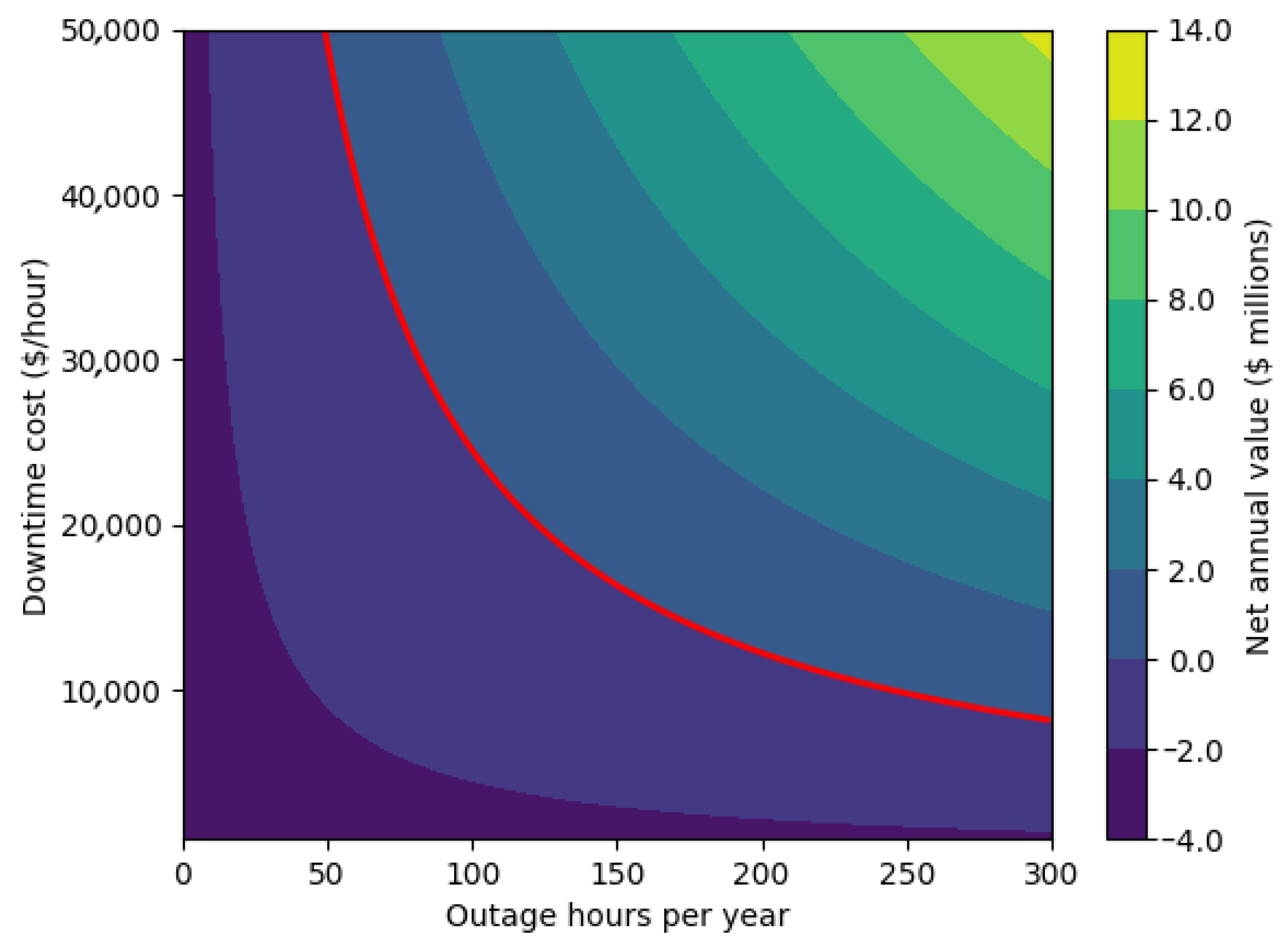
The results—pictured in Figure 8—demonstrate that economic viability is highly sensitive to outage duration and downtime cost. Facilities with high-value, continuous production processes reach breakeven at relatively low outage durations because they incur higher downtime costs. Conversely, facilities with lower downtime costs require substantially higher outage exposure before a SMR investment would break even. Including thermal energy recovery improves the economic case by reducing a SMR operation’s effective cost. Manufacturers with a higher downtime cost are more likely to have alternative power options, e.g., natural gas generators, to manage during power outages. Therefore, we would expect the net annual value to adopt SMRs to be lower than reported here.
Accounting for the value of co-generated thermal energy—Table 4—reduces the effective cost of SMR operation and lowers the breakeven outage threshold. This represents the cost of adopting SMR technology and operating it full-time and removing all downtime. This effect is particularly relevant for food and beverage manufacturing, where thermal energy demand represents a substantial share of total energy use. As a result, incorporating thermal recovery strengthens the economic justification for SMR adoption in thermally intensive processing facilities.

5. Conclusions

This paper’s objective has been to outline the present and future feasibility of using SMRs to support energy resiliency within food and beverage manufacturing, which faces a growing risk of disrupted power supplies due to weather perils, insufficient power generation, or inferior energy infrastructure. An energy-related disruption within the food system could jeopardize food access. Our proposed solution would position SMRs toward preparing food manufacturers to build power islands. The SMR technology would add system resiliency by providing energy in microgrids and thermal districts—used full-time or activated when the energy grid has been compromised—to sustain critical infrastructure in areas linked to food product flows.
Using the best available approximate financial data on the cost of operating SMR technology, we conducted a technoeconomic threshold analysis to find the breakeven point where manufacturing downtime using conventional power generation and the existing utility grid is comparable to the cost incurred to implement SMR and power islanding technology. The cost of downtime (i.e., economic opportunity cost of not operating) is varied as it reflects the different potentials of food and agricultural manufacturers to generate revenues. To justify the adoption of SMR power islanding, a firm will need to incur significant annual downtime at a low opportunity cost of downtime, or a lower threshold of downtime at a high opportunity cost of downtime. Food and agricultural firms that capture thermal energy while operating the SMR can reduce the annual downtime threshold.
Energy resilience in food and beverage manufacturing would ensure companies can offer the lowest cost of food products. Islanding using a SMR is one resiliency opportunity for these businesses. That said, SMRs have many technological, regulatory, and perception obstacles to overcome before adoption occurs on a large scale. For the food and beverage manufacturing sector, the key driver of SMR adoption will be the investment cost and the offsetting of opportunity costs (e.g., facility downtime) enabled by having consistent full-time access to power. Economic feasibility is of little importance without social acceptance. More research is needed to understand the social acceptance and risk perceptions of SMR technologies.
Government investment in further developing the technology would refine SMR capabilities to meet emergency heat and power needs and enhance resiliency. It also would improve a SMR’s economic accessibility and facilitate the technology’s adoption in key industries such as food and beverage manufacturing.
Extensions of the present research are numerous. One area of extension would be conducting a levelized cost of energy analysis between SMRs and alternative backup power sources. Another extension of the Heartland region case study presented here would be a broader geographic analysis to find U.S. or global locations where the SMR technology would have the greatest economic feasibility to help sustain critical food and beverage processing in the future. Additionally, food and beverage manufacturers represent one potential industry to apply SMR technology, and it alone is not sufficiently large to incentivize the continued exploration of advanced SMR technologies. Future work may identify other industries to benefit from the energy security provided by SMRs.

Author Contributions

Conceptualization, M.D., A.S.I. and J.P.; Methodology, M.D., A.S.I. and J.P.; Formal Analysis, J.P. and A.R.; Investigation, M.D., A.S.I., J.P., G.R. and A.R.; Resources, M.D.; Data Curation, A.S.I., J.P. and A.R.; Writing—Original Draft Preparation, J.P., G.R. and A.R.; Writing—Review and Editing, M.D., A.S.I. and A.R.; Visualization, A.R.; Supervision, J.P.; Project Administration, M.D. and J.P.; Funding Acquisition, M.D. All authors have read and agreed to the published version of the manuscript.

Funding

This work was supported by the Department of Energy Nuclear Energy University Programs under grant no. DE-NE0009152.

Institutional Review Board Statement

Not applicable.

Informed Consent Statement

Not applicable.

Data Availability Statement

Data are contained within the article.

Acknowledgments

We would like to thank Jack Pakkebier for his initial research on micro small modular reactors.

Conflicts of Interest

The authors declare no conflicts of interest.

Abbreviations

The following abbreviations are used in this manuscript:
SMRSmall modular reactor
NOAAU.S. National Oceanic and Atmospheric Administration
FEMAU.S. Federal Emergency Management Agency
SAIDISystem average interruption duration index
NRCNuclear Regulatory Commission
BESSBattery energy storage system
CHPNatural gas combined heat and power

References

  1. Rojas-Reyes, J.J.; Rivera-Cadavid, L.; Pena-Orozxo, D.L. Disruptions in the food supply chain: A literature review. Heliyon 2024, 10, e34730. [Google Scholar] [CrossRef] [PubMed]
  2. Ziervogel, G.; Ericksen, P.J. Adapting to climate change to sustain food security. WIREs Clim. Change 2010, 1, 525–540. [Google Scholar] [CrossRef]
  3. Tack, J.B.; Ala-Kokko, K.; Gardner, G.E.; Breneman, V.; Arita, S.; Cooper, J. Climate-based measures of supply chain resilience. Agric. Financ. Rev. 2025, 86, 3–24. [Google Scholar] [CrossRef]
  4. Araujo, K.; Shropshire, D. A meta-level framework for evaluating resilience in net-zero carbon power systems with extreme weather events in the United States. Energies 2021, 14, 4243. [Google Scholar] [CrossRef]
  5. AlphaStruxure; Schneider Electric; Food Processing. Kilowatts into Calories: Surveying Food Processors on Energy Challenges; AlphaStruxure: Boston, MA, USA, 2025; Available online: https://alphastruxure.com/white-paper/survey-top-energy-challenges-faced-by-fb-and-cpg-companies/ (accessed on 13 May 2026).
  6. U.S. Department of Energy, Office of Nuclear Energy. Department of Energy Report Explores U.S. Advanced Small Modular Reactors to Boost Grid Resiliency; U.S. Department of Energy, Office of Nuclear Energy: Washington, DC, USA, 2018. Available online: https://www.energy.gov/ne/articles/department-energy-report-explores-us-advanced-small-modular-reactors-boost-grid (accessed on 2 April 2026).
  7. Center for Climate and Energy Solutions. Resilience Strategies for Power Outages; Center for Climate and Energy Solutions: Washington, DC, USA, 2018; Available online: https://www.c2es.org/wp-content/uploads/2018/08/resilience-strategies-power-outages.pdf (accessed on 2 April 2026).
  8. Bachmann, L.; Lex, R.; Regli, F.; Vogeli, S.; Muhlhofer, E.; McCaughey, J.W.; Hanger-Kopp, S.; Bresch, D.N.; Kropf, C.M. Climate-resilient strategy planning using the SWOT methodology: A case study of the Japanese wind energy sector. Clim. Risk Manag. 2024, 46, 100665. [Google Scholar] [CrossRef]
  9. Amakrane, Y.; Biesbroek, R. How is the military and defence sector of EU member states adapting to climate risks? Clim. Risk Manag. 2024, 44, 100609. [Google Scholar] [CrossRef]
  10. International Atomic Energy Agency. What Are Small Modular Reactors (SMRs)? IAEA: Vienna, Austria, 2023; Available online: https://www.iaea.org/newscenter/news/what-are-small-modular-reactors-smrs (accessed on 1 March 2026).
  11. Idaho National Laboratory. Four Types of Reactors to Power the Nuclear Future. Available online: https://inl.gov/content/uploads/2023/06/18-50529_Reactor_types.pdf (accessed on 1 March 2026).
  12. Hinov, N. Hybrid Small Modular Reactor-Renewable Systems for Smart Cities: A Simulation-Based Assessment for Clean and Resilient Urban Energy Transitions. Energies 2025, 18, 3993. [Google Scholar] [CrossRef]
  13. Gill, A. Nuclear Plants Have Always Weathered the Storm. Future Reactors Will Do Even More; Nuclear Energy Institute: Washington, DC, USA, 2020; Available online: https://www.nei.org/news/2020/nuclear-plants-weather-storm-future-reactors-more (accessed on 1 October 2025).
  14. Josephs, R.E.; Yap, T.; Alamooti, M.; Omojiba, T.; Benarbia, A.; Tomomewo, O.; Ouadi, H. Regulation of small modular reactors (SMRs): Innovative strategies and economic insights. Eng 2025, 6, 61. [Google Scholar] [CrossRef]
  15. Zachary, J.C. Number of Food and Beverage Manufacturing Establishments, 2022; USDA Economic Research Service: Kansas City, MI, USA, 2024. Available online: https://www.ers.usda.gov/data-products/chart-gallery/gallery/chart-detail/?chartId=54667 (accessed on 2 April 2026).
  16. Rhodes, V.J.; Dauve, J.; Parcell, J.L. The Agricultural Marketing System; Mizzou Publishing: Columbia, MO, USA, 2015. [Google Scholar]
  17. Broadway, M. Planning for change in small towns or trying to avoid the slaughterhouse blues. J. Rural Stud. 2000, 16, 37–46. [Google Scholar] [CrossRef]
  18. Schwartzkopf-Genswein, K.S.; Faucitano, L.; Dadgar, S.; Shand, P.; Gonzalez, L.A.; Crowe, T.G. Road transport of cattle, swine and poultry in North America and its impact on animal welfare, carcass and meat quality: A review. Meat Sci. 2012, 92, 227–243. [Google Scholar] [CrossRef]
  19. U.S. Department of Energy. Food and Beverage Products; Office of Energy Efficiency & Renewable Energy: Washington, DC, USA, 2025. Available online: https://www.energy.gov/cmei/ito/food-and-beverage-products (accessed on 2 April 2026).
  20. U.S. Energy Information Administration. Manufacturing Energy Consumption Survey (MECS); 2018 MECS Survey Data; U.S. Energy Information Administration: Washington, DC, USA, 2021. Available online: https://www.eia.gov/consumption/manufacturing/data/2018/ (accessed on 2 April 2026).
  21. Li, S.; Ziara, R.M.M.; Dvorak, B.; Subbiah, J. Assessment of water and energy use at process level in the U.S. beef packing industry: Case study in a typical U.S. large-size plant. J. Food Process Eng. 2018, 48, e12919. [Google Scholar] [CrossRef]
  22. Corigliano, O.; Algieri, A. A comprehensive investigation on energy consumptions in the food industry. Energy Convers. Manag. 2024, 23, 100661. [Google Scholar] [CrossRef]
  23. Bajan, B.; Mrowczynska-Kaminska, A.; Poczta, W. Economic energy efficiency of food production systems. Energies 2020, 13, 5826. [Google Scholar] [CrossRef]
  24. Rodriguez-Gonzalez, O.; Buckow, R.; Koutchma, T.; Balasubramaniam, V.M. Energy requirements for alternative food processing technologies-principles, assumptions, and evaluation of efficiency. Compr. Rev. Food Sci. Food Saf. 2015, 14, 536–554. [Google Scholar] [CrossRef]
  25. Chinnaket, S.; Chujai Michel, P.; Chansri, P. Forecasting trends in electrical energy efficiency in the food industry. Energies 2025, 18, 5667. [Google Scholar] [CrossRef]
  26. Ladha-Sabur, A.; Bakalis, S.; Fryer, P.J.; Lopez-Quiroga, E. Mapping energy consumption in food manufacturing. Trends Food Sci. Technol. 2019, 86, 270–280. [Google Scholar] [CrossRef]
  27. Grossman, L.; Smetana, S.; Bakalis, S. Strategies to reduce fossil fuel use in food manufacturing. Annu. Rev. Food Sci. Technol. 2023, 15, 329–353. [Google Scholar] [CrossRef] [PubMed]
  28. Xu, T.; Flatter, J.; Kramer, K.J. Characterization of energy use and performance of global cheese processing. Energy 2009, 34, 1993–2000. [Google Scholar] [CrossRef]
  29. Canning, P. Fuel for Food: Energy Use in the U.S. Food System; Amber Waves: Washington, DC, USA, 2010. Available online: https://www.ers.usda.gov/amber-waves/2010/september/fuel-for-food-energy-use-in-the-u-s-food-system (accessed on 2 April 2026).
  30. Federal Emergency Management Agency. Natural Hazards. Available online: https://www.fema.gov/flood-maps/products-tools/national-risk-index (accessed on 14 May 2026).
  31. Swiss Re Institute. Natural Catastrophes in 2020: Secondary Perils in the Spotlight; Swiss Re Institute: Zurich, Switzerland, 2021; Available online: https://www.swissre.com/dam/jcr:ebd39a3b-dc55-4b34-9246-6dd8e5715c8b/sigma-1-2021-en.pdf (accessed on 2 April 2026).
  32. NOAA National Centers for Environmental Information. Billion-Dollar Weather and Climate Disasters: Summary Statistics; National Oceanic and Atmospheric Administration: Washington, DC, USA, 2024. Available online: https://www.ncei.noaa.gov/access/billions/summary-stats (accessed on 2 April 2026).
  33. Federal Emergency Management Agency. National Risk Index. Available online: https://www.fema.gov/about/openfema/data-sets/national-risk-index-data (accessed on 14 May 2026).
  34. Federal Emergency Management Agency. National Risk Index Technical Documentation; Federal Emergency Management Agency: Washington, DC, USA, 2023. Available online: https://www.fema.gov/sites/default/files/documents/fema_national-risk-index_technical-documentation.pdf (accessed on 14 May 2026).
  35. Economic Research Service, U.S. Department of Agriculture. Ag and Food Sectors and the Economy; Economic Research Service, U.S. Department of Agriculture: Washington, DC, USA, 2024. Available online: https://www.ers.usda.gov/data-products/ag-and-food-statistics-charting-the-essentials/ag-and-food-sectors-and-the-economy/ (accessed on 2 April 2026).
  36. U.S. Energy Information Administration. Form EIA-861 Detailed Data Files; U.S. Energy Information Administration: Washington, DC, USA, 2026. Available online: https://www.eia.gov/electricity/data/eia861/ (accessed on 2 April 2026).
  37. U.S. Department of Energy. Grid Systems. Available online: https://www.energy.gov/oe/grid-systems (accessed on 2 April 2026).
  38. Poudel, B.; McJunkin, T.; Kang, N.; Reilly, J.T. Net-Zero Microgrid Program Project Report: Small Reactors in Microgrids; Idaho National Laboratory: Idaho Falls, ID, USA, 2021. Available online: https://inldigitallibrary.inl.gov/sites/sti/sti/Sort_53291.pdf (accessed on 2 April 2026).
  39. Fotopoulou, M.; Rakopoulos, D.; Petridis, S. Decision Support System for Emergencies in Microgrids. Sensors 2022, 22, 9457. [Google Scholar] [CrossRef]
  40. Maghami, M.R.; Pasupuleti, J.; Ling, C.M. Comparative analysis of smart grid integration in urban and rural networks. Smart Cities 2023, 6, 2593–2618. [Google Scholar] [CrossRef]
  41. Colson, C.M.; Nehrir, M.H. Comprehensive Real-Time Microgrid Power Management and Control with Distributed Agents. IEEE Trans. Smart Grid 2013, 4, 617–627. [Google Scholar] [CrossRef]
  42. U.S. Nuclear Regulatory Commission. What Is a Megawatt? U.S. Nuclear Regulatory Commission: Washington, DC, USA, 2012. Available online: https://www.nrc.gov/docs/ML1209/ML120960701.pdf (accessed on 2 April 2026).
  43. Yuzbasioglu, A.E.; Tatarhan, A.H.; Gezerman, A.O. Decarbonization in ammonia production, new technological methods in industrial scale ammonia production and critical evaluations. Heliyon 2021, 7, e08257. [Google Scholar] [CrossRef]
  44. Gabbar, H.A.; Abdussami, M.R.; Adham, M.I. Micro nuclear reactors: Potential replacements for diesel gensets within micro energy grids. Energies 2020, 13, 5172. [Google Scholar] [CrossRef]
  45. Black, G.; Shropshire, D.; Araujo, K.; van Heek, A. Prospects for nuclear microreactors: A review of the technology, economics, and regulatory considerations. Nucl. Technol. 2022, 209, S1–S20. [Google Scholar] [CrossRef]
  46. Locatelli, G.; Bingham, C.; Mancini, M. Small modular reactors: A comprehensive overview of their economics and strategic aspects. Prog. Nucl. Energy 2014, 73, 75–85. [Google Scholar] [CrossRef]
  47. Morones-Garcia, E.; Francois, J.-L. Nuclear microreactors: Status review and potential applications; the Mexican case. Nucl. Eng. Des. 2024, 420, 113021. [Google Scholar] [CrossRef]
  48. Lovering, J.R. A techno-economic evaluation of microreactors for off-grid and microgrid applications. Sustain. Cities Soc. 2023, 95, 104620. [Google Scholar] [CrossRef]
  49. U.S. Nuclear Regulatory Commission. Emergency Planning Zones; U.S. Nuclear Regulatory Commission: Rockville, MD, USA, 2024. Available online: https://www.nrc.gov/about-nrc/emerg-preparedness/about-emerg-preparedness/planning-zones.html (accessed on 2 April 2026).
  50. Peakman, A.; Merk, B. The role of nuclear power in meeting current and future industrial process heat demands. Energies 2019, 12, 3664. [Google Scholar] [CrossRef]
  51. Kurup, P.; Turchi, C. Potential for solar industrial process heat in the United States: A look at California. AIP Conf. Proc. 2016, 1734, 110001. [Google Scholar] [CrossRef]
  52. Pakkebier, J.; Skangos, C.; Derby, M.M. Feasibility of using nuclear microreactor process heat for bioconversion and agricultural processes. Front. Energy Res. 2024, 12, 1476974. [Google Scholar] [CrossRef]
  53. World Nuclear Association. Small Nuclear Power Reactors; World Nuclear Association: London, UK, 2025; Available online: https://world-nuclear.org/information-library/nuclear-fuel-cycle/nuclear-power-reactors/small-nuclear-power-reactors (accessed on 1 October 2025).
  54. Derr, E. Energy Studies and Models Show Advanced Nuclear as the Backbone of Our Carbon-Free Future; Nuclear Energy Institute: Washington, DC, USA, 2022; Available online: https://www.nei.org/news/2022/studies-and-models-show-demand-for-adv-nuclear (accessed on 1 October 2025).
  55. Muir, M. US and investors gambling on unproven nuclear technology, warn experts. Financial Times, 4 October 2025. Available online: https://www.ft.com/content/8a18e722-3efa-404e-9f2a-709eed877f18?syn-25a6b1a6=1 (accessed on 1 October 2025).
  56. U.S. Department of Energy, Office of Nuclear Energy. U.S. Department of Energy Reactor Pilot Program; U.S. Department of Energy, Office of Nuclear Energy: Washington, DC, USA, 2025. Available online: https://www.energy.gov/ne/us-department-energy-reactor-pilot-program (accessed on 2 April 2026).
  57. U.S. Department of Energy; Office of Nuclear Energy. Advanced Small Modular Reactors (SMRs). Available online: https://www.energy.gov/ne/advanced-small-modular-reactors-smrs (accessed on 13 May 2026).
  58. International Atomic Energy Agency. Advanced Reactor Information System. Available online: https://aris.iaea.org/TechnicalData/ (accessed on 1 March 2026).
  59. De Bruijn, K.; Buurman, J.; Mens, M.; Dahm, R.; Klijn, F. Resilience in practice: Five principles to enable societies to cope with extreme weather events. Environ. Sci. Policy 2017, 70, 21–30. [Google Scholar] [CrossRef]
  60. Durga, S.; Speizer, S.; Zhao, X.; Waldoff, S.; Edmonds, J. Pathways for US food processing sector under economy-wide net zero in a multisector dynamic framework. Energy Clim. Change 2024, 5, 100150. [Google Scholar] [CrossRef]
  61. Lamrani, B.; Kuznik, F.; Ajbar, A.; Boumaza, M. Energy analysis and economic feasibility of wood dryers integrated with heat recovery unit and solar air heaters in cold and hot climates. Energy 2021, 228, 120598. [Google Scholar] [CrossRef]
  62. Alengebawy, A.; Ran, Y.; Osman, A.I.; Jin, K.; Samer, M.; Ai, P. Anaerobic digestion of agricultural waste for biogas production and sustainable bioenergy recovery: A review. Environ. Chem. Lett. 2024, 22, 2641–2668. [Google Scholar] [CrossRef]
  63. Lim, T.; Massey, R.; McCann, L.; Canter, T.; Omura, S.; Willett, C.; Roach, A.; Key, N.; Dodson, L. Increasing the Value of Animal Manure for Farmers; AP-109; U.S. Department of Agriculture, Economic Research Service: Washington, DC, USA, 2023. Available online: https://www.ers.usda.gov/publications/pub-details/?pubid=106088 (accessed on 13 May 2026).
  64. Belles, R.J.; May, G.T.; Omitaomu, O.A.; Poore, W.P. Updated Application of Spatial Data Modeling and Geographical Information Systems (GIS) for Identification of Potential Siting Options for Small Modular Reactors; Oak Ridge National Laboratory: Oak Ridge, TN, USA, 2012. Available online: https://info.ornl.gov/sites/publications/Files/Pub39008.pdf (accessed on 2 April 2026).
  65. USGS. Do We Have Enough Water? Yes, and No. USGS. Available online: https://water.usgs.gov/vizlab/water-availability/01-water-limitation (accessed on 1 March 2026).
  66. Portugal-Pereira, J.; Esteban, M.; Araujo, K. Exposure of future nuclear energy infrastructure to climate change hazards: A review assessment. Energy Strategy Rev. 2024, 47, 101365. [Google Scholar] [CrossRef]
  67. Tuler, S.P.; Webler, T. The challenge of community acceptance of small nuclear reactors. Energy Res. Soc. Sci. 2024, 118, 103831. [Google Scholar] [CrossRef]
  68. Kiviluoma, N.; Savela, N.; Kojo, M. Exploring gender insights on the perceived safety and acceptability of small modular reactors. Energy Strategy Rev. 2025, 62, 101882. [Google Scholar] [CrossRef]
  69. Borrelli, R.A.; Araujo, K.; Koerner, C.; Djokic, D. Consent based siting for spent nuclear fuel—The Common Ground Consortium focus on research and public conversations. In Proceedings of the 2024 ANS Annual Conference, Las Vegas, NV, USA, 16–19 June 2024; Available online: https://www.ans.org/pubs/transactions/article-55946/ (accessed on 2 April 2026).
  70. International Atomic Energy Agency. The Platform on Small Modular Reactors and their Applications. Available online: https://nucleus.iaea.org/sites/smr (accessed on 1 April 2026).
  71. NuScale. How SMRs Gain Design Approval in the U.S. NuScale. Available online: https://www.nuscalepower.com/exploring-smrs/smr-101/how-smrs-gain-design-approval-in-the-u.s (accessed on 1 March 2026).
  72. Gaster, R. Small Modular Reactors: A Realist Approach to the Future of Nuclear Power; Information Technology and Innovation Foundation: Washington, DC, USA, 2025; Available online: https://itif.org/publications/2025/04/14/small-modular-reactors-a-realist-approach-to-the-future-of-nuclear-power/ (accessed on 2 April 2026).
  73. Asuega, A.; Limb, B.J.; Quinn, J.C. Techno-economic analysis of advanced small modular nuclear reactors. Appl. Energy 2023, 334, 120669. [Google Scholar] [CrossRef]
  74. Do, V.; McBrien, H.; Flores, N.M.; Northrop, A.J.; Schlegelmilch, J.; Kiang, M.V.; Casey, J.A. Spatiotemporal distribution of power outages with climate events and social vulnerability in the USA. Nat. Commun. 2023, 14, 2470. [Google Scholar] [CrossRef]
  75. Yao, B.; Jeong, H.; Mehrtash, M.; Allan, B.; Ockerman, D.; Dvorkin, Y. Understanding supply chain constraints for the US clean energy transition. npj Clean Energy 2025, 1, 9. [Google Scholar] [CrossRef]
  76. U.S. Department of Energy. Resource Adequacy Report: Evaluating the Reliability and Security of the United States Electric Grid; U.S. Department of Energy: Washington, DC, USA, 2025. Available online: https://www.energy.gov/sites/default/files/2025-07/DOE%20Final%20EO%20Report%20%28FINAL%20JULY%207%29.pdf (accessed on 2 April 2026).
  77. U.S. Energy Information Administration. Annual Energy Outlook; U.S. Energy Information Administration: Washington, DC, USA, 2025. Available online: https://www.eia.gov/outlooks/aeo/ (accessed on 2 April 2026).
  78. Shehabi, A.; Smith, S.J.; Hubbard, A.; Newkirk, A.; Lei, N.; Siddik, M.A.B.; Holecek, B.; Koomey, J.; Masanet, E.; Sartor, D. 2024 United States Data Center Energy Usage Report (LBNL-2001637); Lawrence Berkeley National Laboratory: Berkeley, CA, USA, 2024. [CrossRef]
  79. Ingersoll, D.T. Deliberately small reactors and the second nuclear era. Prog. Nucl. Energy 2009, 51, 589–603. [Google Scholar] [CrossRef]
  80. Booth, S.S.; Reilly, J.; Butt, R.S.; Wasco, M.; Monohan, R. Microgrids for Energy Resilience: A Guide to Conceptual Design and Lessons from Defense Projects; National Renewable Energy Laboratory: Golden, CO, USA, 2019. Available online: https://www.nrel.gov/docs/fy19osti/72586.pdf (accessed on 2 April 2026).
  81. Rickerson, W.; Gillis, J.; Bulkeley, M. The Value of Resilience for Distributed Energy Resources: An Overview of Current Analytical Practices; National Renewable Energy Laboratory: Golden, CO, USA, 2024. Available online: https://www.nrel.gov/docs/fy24osti/90139.pdf (accessed on 2 April 2026).
  82. U.S. Environmental Protection Agency. CHP Benefits; U.S. Environmental Protection Agency: Washington, DC, USA, 2025. Available online: https://www.epa.gov/chp/chp-benefits (accessed on 2 April 2026).
  83. U.S. Department of Energy. Combined Heat and Power (CHP) and District Energy. Available online: https://www.energy.gov/cmei/ito/combined-heat-and-power-chp-and-district-energy (accessed on 2 April 2026).
Figure 1. Food and beverage manufacturers concentrate their operations in the U.S. Heartland, which the authors noted using the drawn black circle. Adapted with permission from the USDA Economic Research Service [15].
Sustainability 18 05134 g001
Figure 2. By decade, the number of billion-dollar secondary weather peril events and the total costs—on a Consumer Price Index-adjusted basis—have evolved. Billion-dollar secondary weather peril events noticeably spiked from 2010 to 2019 relative to previous decades. The pace has continued into the 2020s. Author-created visual using data from NOAA National Centers for Environmental Information [32].
Sustainability 18 05134 g002
Figure 3. Data for the count and total costs—on a Consumer Price Index-adjusted basis—of U.S. billion-dollar weather peril events in 2024 suggests primary perils (i.e., tropical cyclones) caused extensive damage. However, the number of billion-dollar secondary weather perils suggests the widespread effects these events can cause. Notes: The light blue bar indicates that the event is categorized as a primary peril. Dark blue bars indicate an event is categorized as a secondary peril. Author-created visual using data from NOAA National Centers for Environmental Information [32].
Sustainability 18 05134 g003
Figure 4. The National Risk Index shows that U.S. Heartland communities tend to rank high for risk from some secondary perils, including tornadoes, strong winds, winter weather, ice storms, and hail [31]. The period of record for which data were referenced to develop the National Risk Index scoring varied by hazard: tornadoes, 1 January 1950 to 31 December 2023 for EF-scale 2, 3, 4 and 5 tornadoes, and 1 January 1986 to 31 December 2023 for EF-scale 0 and 1 tornadoes; strong winds, 1 January 1996 to 31 December 2023; winter storms, 12 November 2005 to 12 November 2024; ice storms, 31 December 1946 to 12 February 2014; hail, 1 January 1986 to 31 December 2023. Maps copied from Federal Emergency Management Agency [34].
Sustainability 18 05134 g004
Figure 5. Computed as the sum of total number of customers interrupted over the year divided by total number of customers, the system average interruption duration index is a measure of energy reliability. Here, the SAIDI with major event days finds Kansas and Indiana to be two Heartland states ranked particularly high for energy reliability challenges between 2013 and 2022. Author-created visual using data from the U.S. Energy Information Administration [36].
Sustainability 18 05134 g005
Figure 6. Before disruption affects a utility grid, a food or beverage manufacturer with a microgrid and district heating system may use energy provided by the grid or use the microgrid only. Through power islanding supported by a SMR, manufacturing operations can continue, even after a grid disruption.
Sustainability 18 05134 g006
Figure 7. Heartland region communities tend to have few site challenges that would affect a SMR’s placement and operation. Map reused with permission from Oak Ridge National Laboratory [64].
Sustainability 18 05134 g007
Figure 8. Net annual operating breakeven of SMR adoption across outage duration and downtime cost (excluding thermal energy credit and for α =1).
Sustainability 18 05134 g008
Table 3. Breakeven without thermal energy credit outage duration for SMR adoption (α =1).
Load (MW)Downtime Cost ($/h)Incremental Cost of Adopting SMR ($/yr)Breakeven Hours
5$1000$613,200613.2
5$10,000$613,20061.3
5$50,000$613,20012.3
20$1000$2,452,8002452.8
20$10,000$2,452,800245.3
20$50,000$2,452,80049.1
Table 4. Breakeven SMR adoption analysis with thermal energy credit (20 percent reduction; α =1).
Load (MW)Adjusted Incremental Cost of Adopting SMR ($/yr)Breakeven Hours at $10,000/h
5$490,56049.1
20$1,962,240196.2
Disclaimer/Publisher’s Note: The statements, opinions and data contained in all publications are solely those of the individual author(s) and contributor(s) and not of MDPI and/or the editor(s). MDPI and/or the editor(s) disclaim responsibility for any injury to people or property resulting from any ideas, methods, instructions or products referred to in the content.