1. Introduction
The hospitality sector is at the heart of the global tourism industry, but it also bears a significant responsibility in terms of environmental sustainability [
1]. Although tourism activities inherently require pristine environmental conditions, hotel businesses use large amounts of energy, water, and perishable consumer goods due to the services they offer and their operational characteristics [
2]. Accommodation facilities are responsible for a significant portion of the solid waste produced worldwide; for example, it is estimated that an average hotel guest produces one kilogram of waste per day [
3]. This leads to millions of tons of waste damaging the ecosystem every year and increases the ecological footprint of the sector day by day. Also, beyond operational implications, sustainability practices are increasingly shaped not only by what organizations do, but also by how they are interpreted and discussed in digital environments. The global hospitality and food service sector is estimated to generate approximately 87 million tons of food waste annually [
4].
In the digitalized world, the increasing awareness and expectations of environmentally conscious consumers have led hotel businesses to share their environmental commitments through communication channels [
3,
5]. Social media platforms have become important digital spaces where tourists share their travel experiences and perceptions of destinations are shaped [
6,
7]. In this context, microblogging platforms such as X (formerly Twitter) offer a dynamic digital public space where users share their opinions on accommodation experiences and businesses make their sustainability discourses visible. Such platforms have been considered an important digital discourse environment where environmental and sustainability discussions are generated and disseminated [
8]. In this sense, social media does not merely reflect sustainability practices but actively contributes to their interpretation, legitimation, and contestation within a broader digital public sphere.
The literature contains numerous studies focusing on environmental sustainability practices in hotel businesses, managers’ environmental attitudes, and physical waste management processes [
5,
9]. While previous studies have examined sustainability practices in hospitality, most have focused on operational efficiency, waste management, or platform-based customer reviews. In contrast, limited attention has been paid to how zero-waste practices are constructed, interpreted, and contested within large-scale digital public discourse. This study addresses this gap by adopting a data-driven perspective based on user-generated content from social media platforms. Therefore, the gap addressed in this study lies not in the absence of zero-waste research but in the limited understanding of its discursive construction in digital environments.
Building on this gap, the study addresses the following research questions:
RQ1: How is zero-waste hospitality represented in digital public discourse?
RQ2: What are the dominant emotional and thematic patterns in online discussions?
RQ3: How are sustainability narratives legitimized or contested in digital environments?
In this context, the present study aims not only to analyze the digital discourse on zero-waste practices in hotels through the X platform but also to conceptualize how zero-waste hospitality is constructed within digital public discourse based on large-scale social media data. Approximately 11,000 tweets obtained using the keywords “zero waste hotel”, “zero-waste resort”, and “zero waste resort” were examined through text mining, sentiment analysis, and topic modeling techniques. The study contributes to both environmental communication strategies and the sustainable tourism literature at an analytical and conceptual level by revealing the digital reflections of sustainability practices in the hospitality sector. This study contributes to the literature by combining social media analytics with a discursive perspective on sustainability. It demonstrates that zero-waste practices are not only operational but also socially constructed through digital interactions. Furthermore, it proposes a three-layer conceptual framework—informational, normative, and critical—to interpret how sustainability narratives are formed and evaluated in online environments.
Previous studies using social media analytics in tourism have demonstrated the importance of digital data in understanding destination perception. This study extends this approach to zero-waste hospitality discourse.
3. Materials and Methods
This study is based on data collected from the X platform to examine how zero-waste practices in hotels are discussed within digital public discourse. A total of 13,273 tweets were collected between 1 January and 15 February 2026, and subsequently pre-processed. This process resulted in a final dataset of 10,944 tweets for analysis. An integrated workflow incorporating text mining, sentiment analysis, topic modeling, and data visualization techniques was employed.
Figure 1 illustrates the methodological workflow of the study. The process began with data collection, followed by text preprocessing and preparation for analysis. After preprocessing, the dataset was used for sentiment analysis, word frequency and TF-IDF analysis, and topic modeling. In the last step, the results were visualized with a word cloud, a density map, and a network of keywords that appeared together. This systematic workflow enables a thorough evaluation of both the quantitative and thematic aspects of digital discourse.
All data used in this study were publicly available tweets. No personal or sensitive information was collected, and user anonymity was preserved. Therefore, formal ethical approval was not required.
3.1. Data Set
This study utilized data from the X platform to examine digital discourse surrounding zero-waste practices in hotels. The X platform was selected due to its role as a highly interactive digital public space where users actively share opinions on sustainability and business practices [
47]. Unlike platform-specific review sites such as TripAdvisor or Booking.com, which primarily reflect post-consumption evaluations, X provides a broader and more dynamic digital public sphere where users, organizations, policymakers, and media actors simultaneously contribute to ongoing discussions. This allows for the analysis of real-time, multi-actor discourse rather than structured review-based feedback, making it particularly suitable for examining how sustainability narratives are socially constructed and contested. Individuals and businesses both actively create content about travel, the environment, and sustainability [
48]. This enables the analysis of user-generated opinions in a natural and unfiltered context. The X API was used to collect the data, and the process was systematic and repeatable for extracting it [
49].
The research period from 1 January to 15 February was chosen because the tourism industry has a lot of communication going on during the New Year period about sustainability goals, company news, and planning for the new season. This was thought to be a time when businesses usually talk about their new environmental goals and share their sustainability projects. Also, the preference for a specific and limited time frame ensures that the discussion is looked at in its current context and that the data stays the same.
The data collection process used keywords like “zero waste hotel”, “zero waste resort”, and “zero-waste resort”, which combine the ideas of zero waste and hotels. It was found that these combinations of keywords directly cover both the environmental concept and the accommodation sector. So, the goal was to get rid of content that was not relevant to the topic and capture digital conversations about the topic. To reduce keyword bias, multiple keyword variations were tested. However, keyword-based sampling remains a limitation, as some relevant discourse may not be captured. In addition, variations such as “zero-waste hotel,” hashtag-based expressions (e.g., #zerowastehotel), and alternative formulations were considered during preliminary searches. However, due to data relevance and noise filtering, the final dataset focused on the most contextually consistent keyword combinations. The dataset primarily consists of English-language tweets, which may limit cross-linguistic generalizability.
The dataset is not restricted to a single country, as X data inherently reflects global user-generated content. Therefore, the study captures a transnational perspective on zero-waste discourse. However, this also implies that findings represent global digital discourse rather than country-specific practices.
There were 13,273 tweets collected over the time that was set. After the text pre-processing stage, 10,944 tweets were retained for analysis. The removed tweets included duplicates, retweets, non-relevant content, and posts containing excessive noise such as advertisements or unrelated hashtags. The dataset, which has more than ten thousand entries, is diverse enough to be statistically reliable and shows differences in themes for both sentiment analysis and topic modeling [
50]. This structure enhances the generalizability and analytical rigor of the study’s results.
3.2. Text Mining
Text mining is a method that uses both natural language processing (NLP) and statistics to find useful patterns, trends, and relationships in unstructured text data [
51]. This study employed a text mining methodology to ascertain the conceptual framework and thematic densities of digital discourse concerning zero waste in hotels.
One of the most important parts of the analysis process is the text processing stage. The text was converted to lowercase, and numbers, punctuation marks, URLs, and non-informative characters were removed [
52]. Tokenization was applied to segment the text into individual word units, followed by the removal of stop words (like “and”, “the”, and “is”) [
53]. Lemmatization or stemming was used when needed to make the different forms of words the same. This preprocessing ensured a cleaner and more consistent dataset for subsequent analysis [
54].
To identify the most prominent and distinctive terms within the dataset, word frequency analysis and the TF-IDF (Term Frequency–Inverse Document Frequency) method were applied [
55,
56]. TF-IDF enables the identification of words that are not only frequently used but also relatively unique within the corpus, thereby highlighting conceptually significant elements of the zero-waste discourse.
Additionally, emojis, hashtags, and mentions were removed during preprocessing. Basic filtering techniques were applied to eliminate spam and duplicate content. The dataset includes both individual and organizational users.
3.2.1. Sentiment Analysis
Sentiment analysis is a method of analyzing natural language that aims to determine whether the words in a text convey a positive, negative, or neutral orientation [
57]. In user-generated content like social media data, it enables the quantitative measurement of people’s attitudes and opinions toward a given topic [
58]. This study utilized sentiment analysis to elucidate the overall tone of digital discourse surrounding zero-waste practices in hotels and to identify how these practices are represented in online public discussions.
Sentiment analysis was conducted using the Python-based TextBlob library. Text Blob v0.19.0. uses patterns of words and phrases in texts to give them sentiment scores [
59]. The basic idea is to get two important measurements for each text: polarity (the direction of the sentiment) and subjectivity (the level of subjectivity). The polarity value can be anywhere from −1 to +1 [
41]. Negative values mean negative feelings, positive values mean positive feelings, and values close to zero mean that the person is feeling neutral. On the other hand, subjectivity is measured on a scale from 0 to 1, and it shows how much of the text contains a subjective evaluation.
This study categorized tweets as positive, negative, or neutral according to polarity scores. TextBlob v0.19.0. was selected due to its computational efficiency and its demonstrated suitability for large-scale social media data analysis [
60]. So, digital sentiment trends about the zero-waste conversation have been looked at in a way that is both systematic and measurable.
While TextBlob v0.19.0. has limitations in detecting sarcasm and contextual nuances, it is widely used in large-scale studies due to its efficiency. Therefore, results are interpreted at an aggregate level.
To assess the reliability of sentiment classification, a random subsample of 250 tweets was manually coded by two independent researchers. The inter-rater agreement (Cohen’s Kappa = 0.81) indicates a high level of consistency. Minor discrepancies were discussed and resolved, suggesting that the automated sentiment classification provides a reasonably reliable approximation at the aggregate level.
3.2.2. Topic Modeling
Topic modeling is a probabilistic text mining method aimed at uncovering latent thematic structures in large collections of text [
61]. This approach aims to discover latent topics within the data based on the patterns of co-occurrence of words, rather than categorizing texts into predefined categories [
62]. In data sets composed of unstructured and heterogeneous content, such as social media, topic modeling provides an important analytical tool for determining the thematic axes on which the discourse is concentrated [
63]. In this study, topic modeling has been applied to systematically determine the thematic dimensions of digital discourse regarding zero-waste practices in hotels.
In the analysis, the Latent Dirichlet Allocation (LDA) method was used. LDA is a generative model that assumes each document (in this study, each tweet) consists of a probabilistic mixture of multiple topics, and each topic is represented by a probability distribution of specific words [
64]. The working principle of the model is based on the following assumptions: (i) each document contains topics in certain proportions, (ii) each topic generates specific words with certain probabilities. In this framework, LDA groups words that frequently co-occur in documents to form thematic clusters and identify the words with the highest probability for each topic [
65]. The Dirichlet distribution used in the model regulates the probabilistic structure of topic-document and word-topic distributions [
66].
Within the scope of this study, the LDA analysis revealed that the zero-waste discourse is concentrated on different thematic axes such as destination-based practices, waste management, and economic aspects, as well as carbon reduction and sectoral responsibility. Thus, topic modeling has contributed to the evaluation of the analysis in a multi-layered framework by revealing not only the emotional aspect of digital public discourse but also its content and structural dimensions.
Model validity was assessed using coherence scores and interpretability criteria. The selected model demonstrated strong semantic consistency, ensuring reliability. The coherence scores for different topic numbers were as follows: k = 2 (0.41), k = 3 (0.52), k = 4 (0.47), and k = 5 (0.43). The three-topic model achieved the highest coherence score, supporting its selection as the optimal solution.
4. Results
This section presents the findings derived from text mining, sentiment analysis, topic modeling, and data visualization. The tweets were included in the analysis following preprocessing. The results aim to show both the emotional and thematic sides of digital public discourse about hotels that have a zero-waste policy. First, general trends were examined based on sentiment analysis results. Then, word frequency analysis and word clouds were used to look at important conceptual patterns. After that, topic modeling results were used to figure out the discourse’s thematic structure, and a density map and a co-occurrence network of keywords were used to look at the relationships between concepts. This multi-layered analytical approach shows how people see zero-waste practices in the digital world.
Table 1 shows how people generally feel about the digital conversation about zero waste in hotels.
Table 1 shows that 36.6% (4002) of the 10,944 tweets were positive, 14.1% (1548) were negative, and 49.3% (5394) were neutral. The results indicate that the digital discourse surrounding zero waste in hotels predominantly comprises informative and explanatory material. The large amount of neutral content suggests that a lot of users use the practices to report, announce, or share procedural information. The fact that there were many more positive posts than negative ones shows that zero-waste practices in hotels are generally seen as a helpful and legitimate way to be environmentally friendly online. This finding suggests that online discussions tend to associate eco-friendly practices with positive brand value and service-related benefits. When the conversation about sustainability lines up with the user experience, positive feelings are strengthened, and social acceptance is created.
The negative rate of 14%, while quantitatively lower, suggests that critical discourse is not completely peripheral. Most of the negative content is about problems with the application and the discourse, the price–performance balance, or the way things work. This finding suggests that consumers are more aware and skeptical, and they are questioning claims about sustainability. The results indicate that zero-waste practices are broadly accepted; however, sustainability discourse must be executed in a transparent, consistent, and comprehensive manner to foster enduring trust. However, neutral sentiment may also reflect automated content, news sharing, or low-engagement posts rather than purely informational discourse.
4.1. Sample Tweets Based on Emotional State
Sample tweets were selected using purposive sampling to represent typical expressions within each sentiment category. These examples are illustrative rather than exhaustive and aim to support the interpretation of quantitative findings. This section presents sample tweets categorized by sentiment. The aim is to complement quantitative findings by illustrating representative examples of each sentiment category. The chosen tweets are a sample of typical phrases that fit into the relevant category. Sample tweets presented in
Table 2 illustrate representative examples of positive, negative, and neutral discourse.
4.2. Word Frequency Analysis
In this part, the conceptual structure of discourse was looked at by finding the words that were used the most in tweets about zero waste in hotels. We used simple word frequency analysis to find the most important terms in the first step. Then, we used the TF-IDF (Term Frequency–Inverse Document Frequency) method to find concepts that were not only used often but also unique [
67]. This method makes sure that the most important themes and unique conceptual densities in digital discourse are shown more accurately.
Table 3 shows how the most used words are spread across different sentiment categories.
The findings presented in
Table 3 indicate that digital discourse surrounding zero-waste hotels is primarily shaped by themes related to environmental sustainability, responsible tourism, and waste management practices. Positive discourse mainly emphasizes sustainability-oriented experiences, eco-friendly accommodation practices, and recycling-based environmental awareness, suggesting that users generally associate zero-waste hotels with responsible and innovative tourism practices. In contrast, negative discourse is more strongly linked to concerns regarding carbon footprint, environmental performance, operational responsibility, and economic implications, reflecting a more critical evaluation of the authenticity and effectiveness of sustainability practices. Neutral discourse predominantly focuses on informational and operational aspects such as recycling systems, waste management, facilities, and environmental practices, indicating that a considerable portion of online discussions revolve around sharing information and sustainability-related updates rather than expressing direct emotional evaluations. Overall, the findings demonstrate that zero-waste hospitality is represented in digital environments not only as an environmental initiative but also as a broader sustainability and tourism management discourse.
4.3. Topic Modeling Analysis
This section utilized topic modeling analysis to elucidate the thematic framework of digital discourse concerning zero waste in hotels. The Latent Dirichlet Allocation (LDA) method was used to find hidden semantic patterns among tweets and group them into themes based on words that were likely to appear together [
64].
During the topic modeling process, three topics were selected based on both statistical and semantic criteria. We tested the LDA application with different numbers of topics (k = 2, k = 3, k = 4, k = 5) and compared how well the models worked. People often use measures like the coherence score (topic coherence) and perplexity to figure out how many topics there are. The coherence value looks at how well words that are about the same thing fit together, and the perplexity value looks at how well the model explains things [
68]. In this study, the three topic options exhibited superior semantic consistency and a more balanced topic distribution.
When two topics were employed, thematic differentiation was insufficiently granular, resulting in the merging of distinct themes into a single broad cluster [
69]. However, when there were four or more topics, it was clear that some themes were broken up and that the content had some semantic overlap. The three-topic solution was found to be the best model because it had a favorable balance of topic prevalence rates and because each topic had its own unique thematic framework.
So, choosing three topics is not just a technical choice: it is the result of scientific optimization based on criteria like model fit, level of semantic differentiation, and academic interpretability. This method makes it possible to look at the overall structure of digital discourse without going too far by generalizing or breaking it up into too many pieces.
Table 4 shows the thematic clusters that came out of the topic modeling analysis, as well as the average probability value, prevalence ratio, and the most common co-occurring words for each topic.
4.3.1. Topic 1: Destination-Based Zero-Waste Practices and Local Ecological Experience
This topic cluster has a lot of words like recycling, plastic, beach, town, eco, Sorrento, and Kamikatsu. This shows that zero-waste practices are being talked about in relation to certain places and local environmental practices. References to places like Kamikatsu, which are known around the world for their zero-waste models, show that the digital conversation is shaped by examples of best practice. Words like “travel” and “resort” show that sustainability is a part of the tourism experience. This topic shows how the zero-waste approach works in both space and experience.
4.3.2. Topic 2: Waste Management, Economic Considerations, and Community Engagement
This topic cluster focuses on words like “money”, “food”, “landfill”, “management”, “community”, and “sustainability”. The conversation shows that zero-waste practices affect not only the environment but also the economy and management. The words “food” and “landfill,” in particular, make it clear that the focus is on real waste management problems, like food waste and regular landfill sites. The focus on community also shows that sustainability is judged based on a sense of shared responsibility. This subject embodies the operational and fiscal sustainability dimension of zero-waste methodologies.
4.3.3. Topic 3: Carbon Footprint Reduction and Sectoral Responsibility in Sustainable Tourism
This subject emphasizes words like “carbon,” “footprint,” “reduce,” “industry,” “efforts,” and “travelers.” The conversation is about zero-waste practices in the context of sustainability and lowering carbon emissions. The terms “industry” and “travelers” highlight the need for stakeholders to take responsibility and change their behavior in the tourism industry. This list of topics shows that the zero-waste approach is looked at not only at the hotel level but also in the context of the sector and policy. This topic is more of a big-picture discussion about ways to reduce environmental damage and make tourism more sustainable. While Topic 3 includes general sustainability-related terms, the co-occurrence of “carbon,” “footprint,” and “industry” indicates a broader framing of environmental responsibility rather than a narrow focus on carbon alone. Therefore, the label reflects an interpretive synthesis rather than a strictly exclusive categorization.
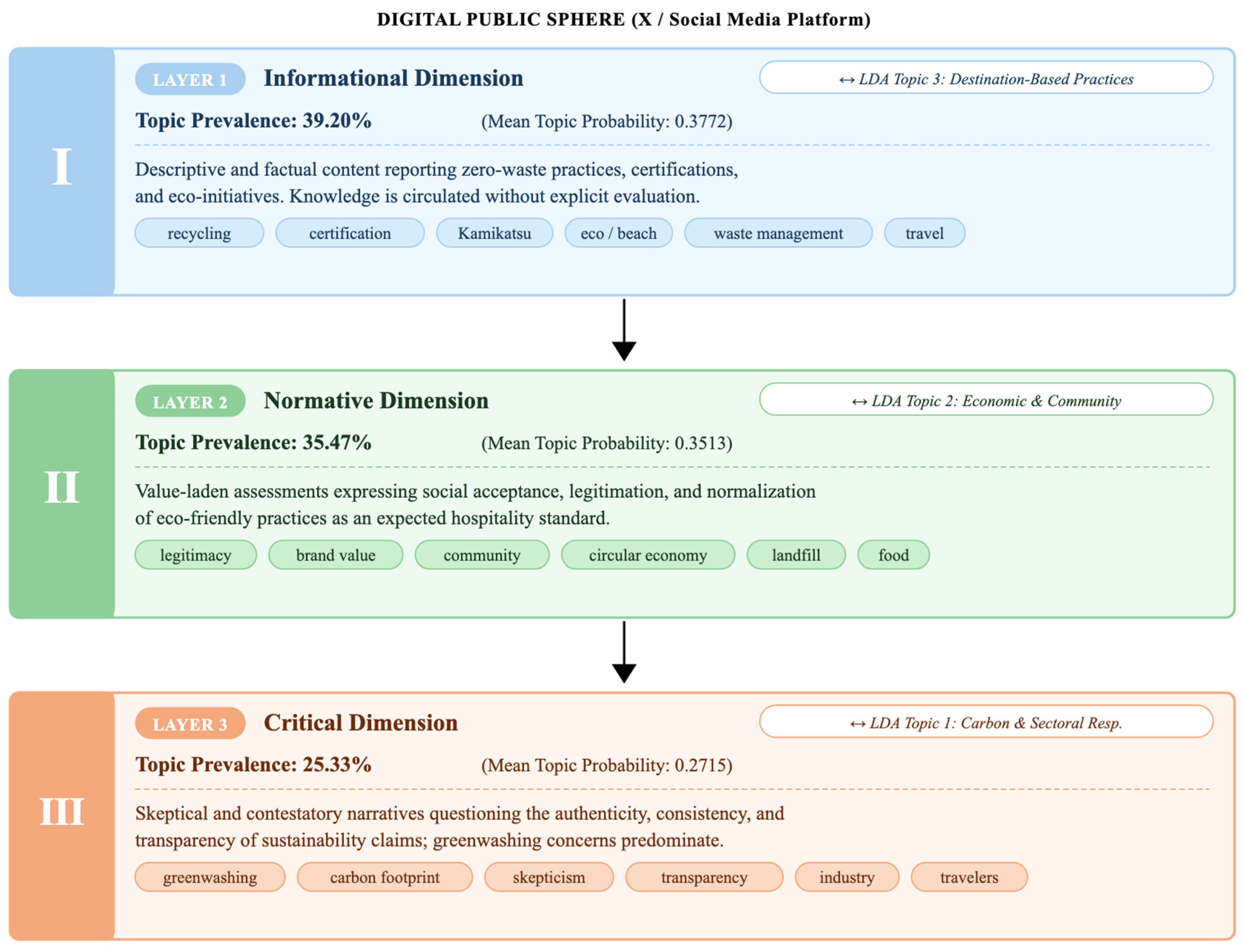
To explicitly link the empirical findings with the proposed conceptual framework, each identified topic can be interpreted within the three-layer structure of digital sustainability discourse. Topic 1 primarily reflects the informational dimension, as it focuses on descriptive content related to destinations, practices, and environmental initiatives. Topic 2 corresponds to the normative dimension, where discussions involve value judgments regarding economic implications, community engagement, and operational sustainability. Topic 3 aligns with the critical dimension, highlighting concerns about environmental impact, sectoral responsibility, and the adequacy of sustainability efforts.
Figure 2 demonstrates that the three-layer conceptualization is grounded in empirical patterns derived from topic modeling results rather than being purely theoretical.
4.4. Data Visualization
This part shows a visual analysis of online conversations about hotels that practice zero waste. Word clouds, density maps, and co-occurrence networks of keywords illustrate the distribution of concepts and the relationships between words [
70,
71]. These visualization methods complement the text mining and topic modeling results, facilitating a more comprehensive understanding of the principal concepts in the discourse and their thematic interrelationships.
4.4.1. Word Cloud Analysis
Word cloud analysis helps find the main ideas in a conversation by showing the most common words in texts. This study examined positive, negative, and neutral sentiment categories individually, generating word clouds for each to illustrate the prevailing concepts [
72]. The Python programming language was used to make the word clouds. We picked the Word Cloud library to help us see things better.
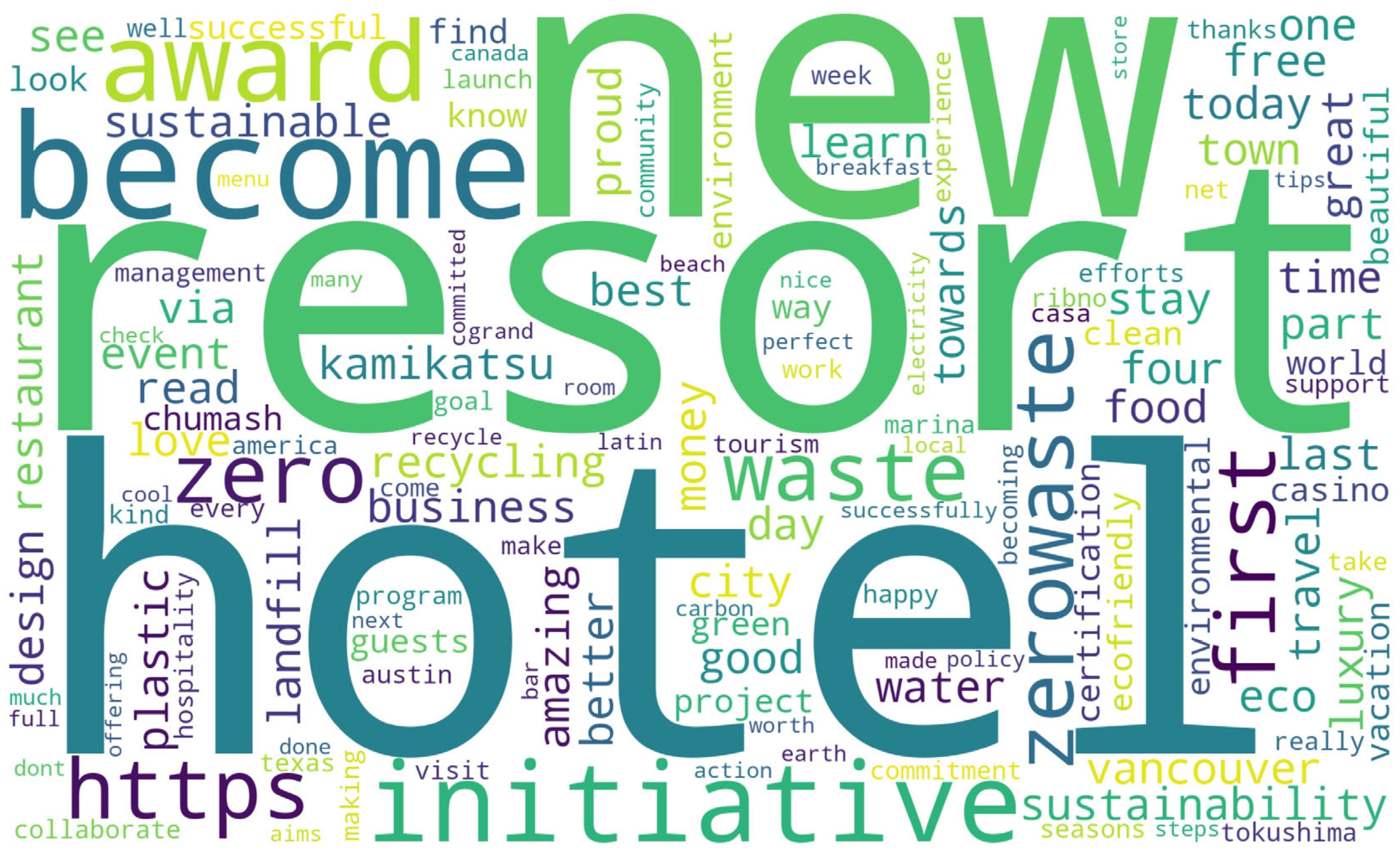
Figure 3 shows that the most important ideas are at the center of the conversation. These include “resort”, “hotel”, “zero”, “initiative”, “sustainability”, “recycling”, and “new”. The fact that the words “initiative” and “sustainability” are so prominent shows that users see zero-waste practices as new and focused on corporate responsibility. Words like “recycling”, “plastic”, “water”, and “eco” make people think about the practical and concrete parts of environmental practices. In addition, the visibility of positive emotional expressions like love, gratitude, pride, best, and success shows that sustainable practices are judged not only by their effect on the environment but also by how satisfying they are to experience. The mention of places like Vancouver and Kamikatsu shows that great destinations can have a symbolic effect on how people see things. The word cloud shows that zero-waste practices are seen in a positive light, with a focus on innovation, caring for the environment, and having a good stay in a hotel.
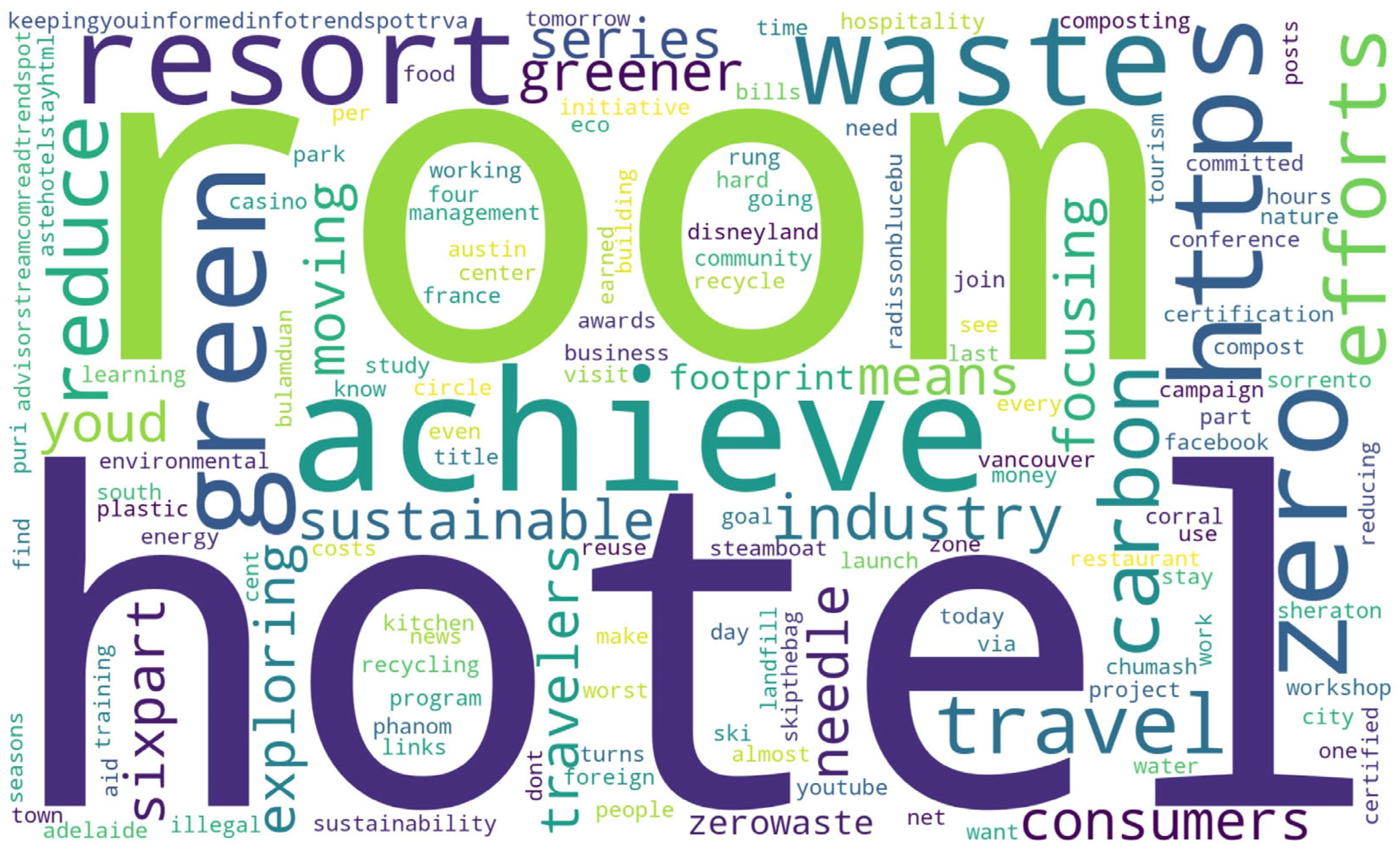
When you look at the negative word cloud in
Figure 4, you can see that words like “room,” “hotel,” “zero,” “waste,” and “reduce” are at the center of the conversation. The fact that the word “room” stands out so much suggests that the criticism is aimed directly at the physical and operational parts of the accommodation experience, but words like “reduce”, “efforts”, “carbon”, and “footprint” suggest that there is a questioning framework for the adequacy of sustainability performance.
The use of words like “industry”, “consumers”, and “travelers” shows that the criticism is not only aimed at hotels but also at the tourism sector in terms of responsibility and the ability to change. Additionally, words like “green” and “greener” show a tone that makes people question how honest and useful the environmental discourse is. The negative word cloud is not a completely dismissive attitude towards zero-waste practices. Instead, it is a critical and performance-oriented evaluation framework for the application’s scope, consistency, and actual environmental impact.
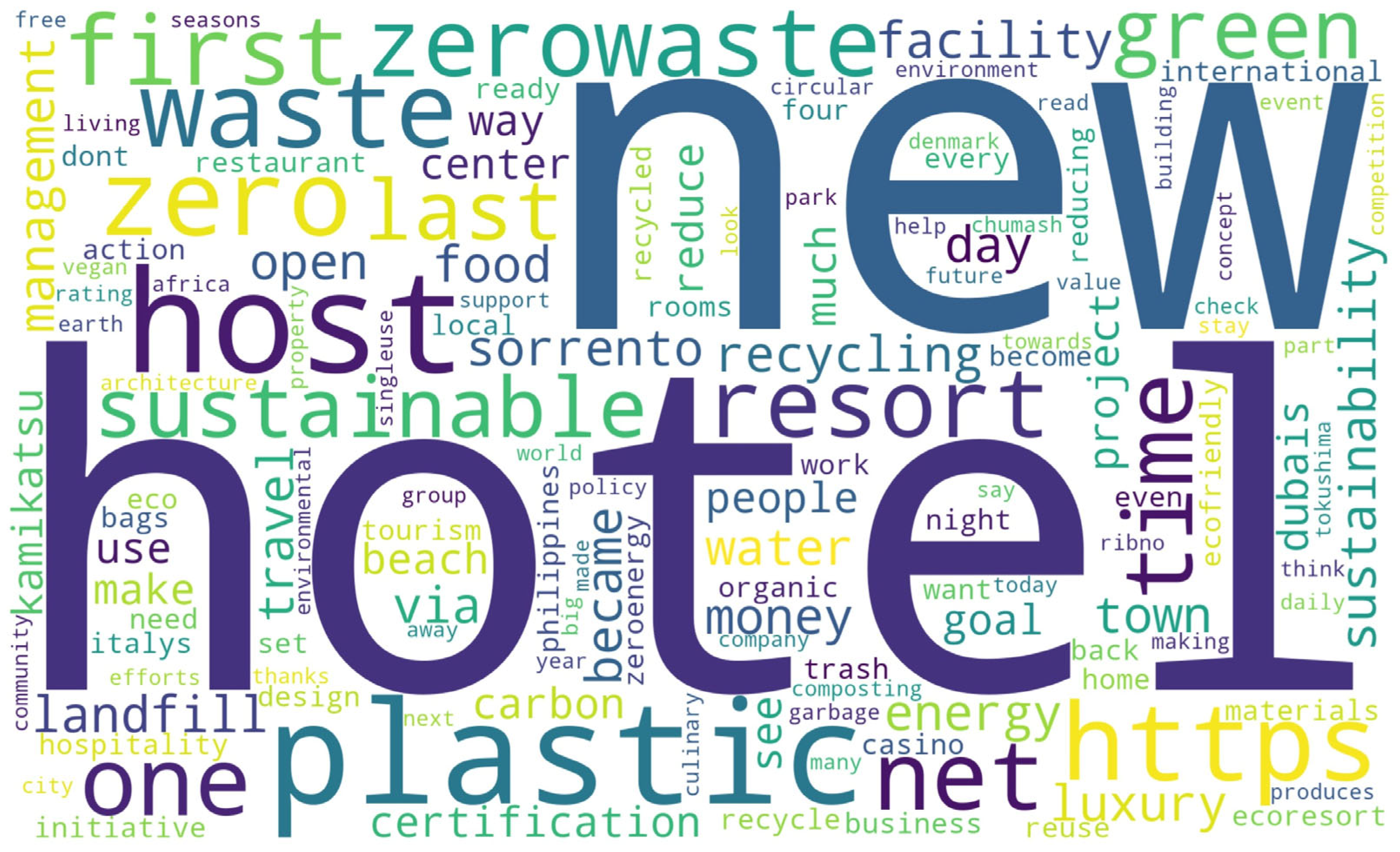
Figure 5 shows a neutral word cloud; it is clear that the conversation is about important ideas like “hotel”, “new”, “zero”, “waste”, “plastic”, and “resort”. These words show that the content is mostly about news and information. Words like “new”, “open”, “project”, and “certification” make it clear that they are talking about announcing zero waste practices and sharing news about the company. Words like “net zero”, “carbon”, “sustainability”, “management”, and “facility” show the technical and managerial sides of sustainability policies. Also, words like “local”, “tourism”, and “community” show that the practices are looked at in terms of how they affect local development and the tourism ecosystem. The neutral word cloud shows that the zero-waste conversation is more about sharing information, making policy announcements, and sharing how things are done than about judging things based on feelings.
4.4.2. Density Visualization
Density visualization is a method of analysis that puts words that often appear together in texts to determine how close they are in meaning [
73]. This study employed density visualization to discern conceptual clusters and pivotal terms within the zero-waste discourse.
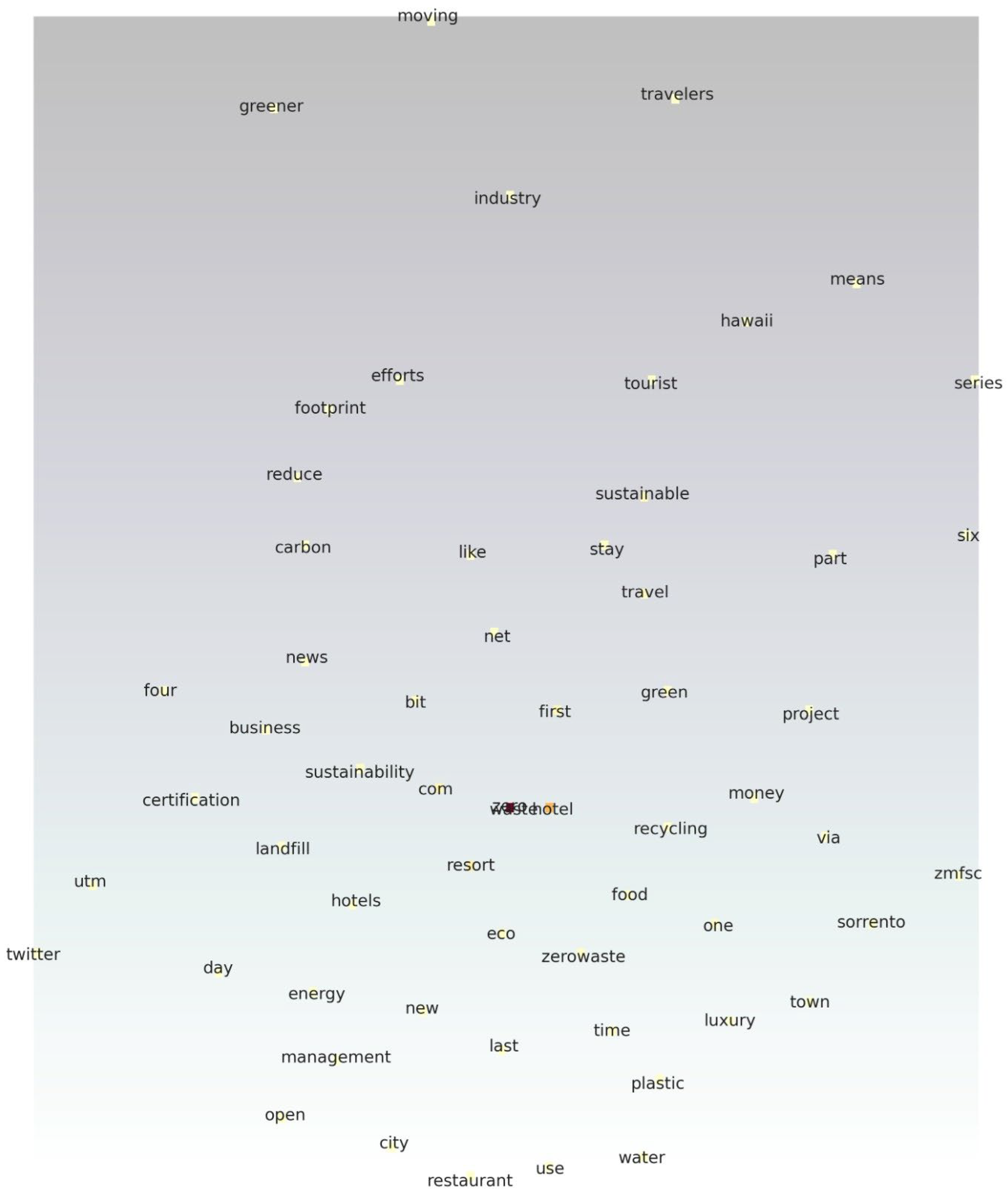
Figure 6 shows how closely related and grouped key concepts are in terms of meaning.
Figure 6’s density visualization shows that ideas that are often linked to the “zero-waste hotel” discourse are placed based on how close they are to meaning. The words “hotel” and “waste” are at the center of the map and make up the main axis of digital discourse. Words that are grouped around these words, like “carbon”, “footprint”, “reduce”, “sustainability”, “recycling”, and “landfill”, show that zero-waste practices are linked to reducing environmental impact and managing waste. At the same time, the fact that words like “travel”, “tourist”, “industry”, and “business” are all close to the center shows that the topic is not just about hotel operations; it is also part of a bigger conversation about sustainability in the tourism industry and the responsibilities of different stakeholders. Overall, the density map shows that the zero-waste conversation in hotels is shaped by a multi-layered structure that focuses on environmental performance, cutting carbon emissions, and changing the industry.
4.4.3. Keyword Co-Occurrence Network
The keyword co-occurrence network analysis shows how concepts are related to each other by looking at how often certain words co-occur within texts [
74]. The analysis was done in Python 3.14.5 and shows how concepts relate to each other and to the main nodes of discourse.
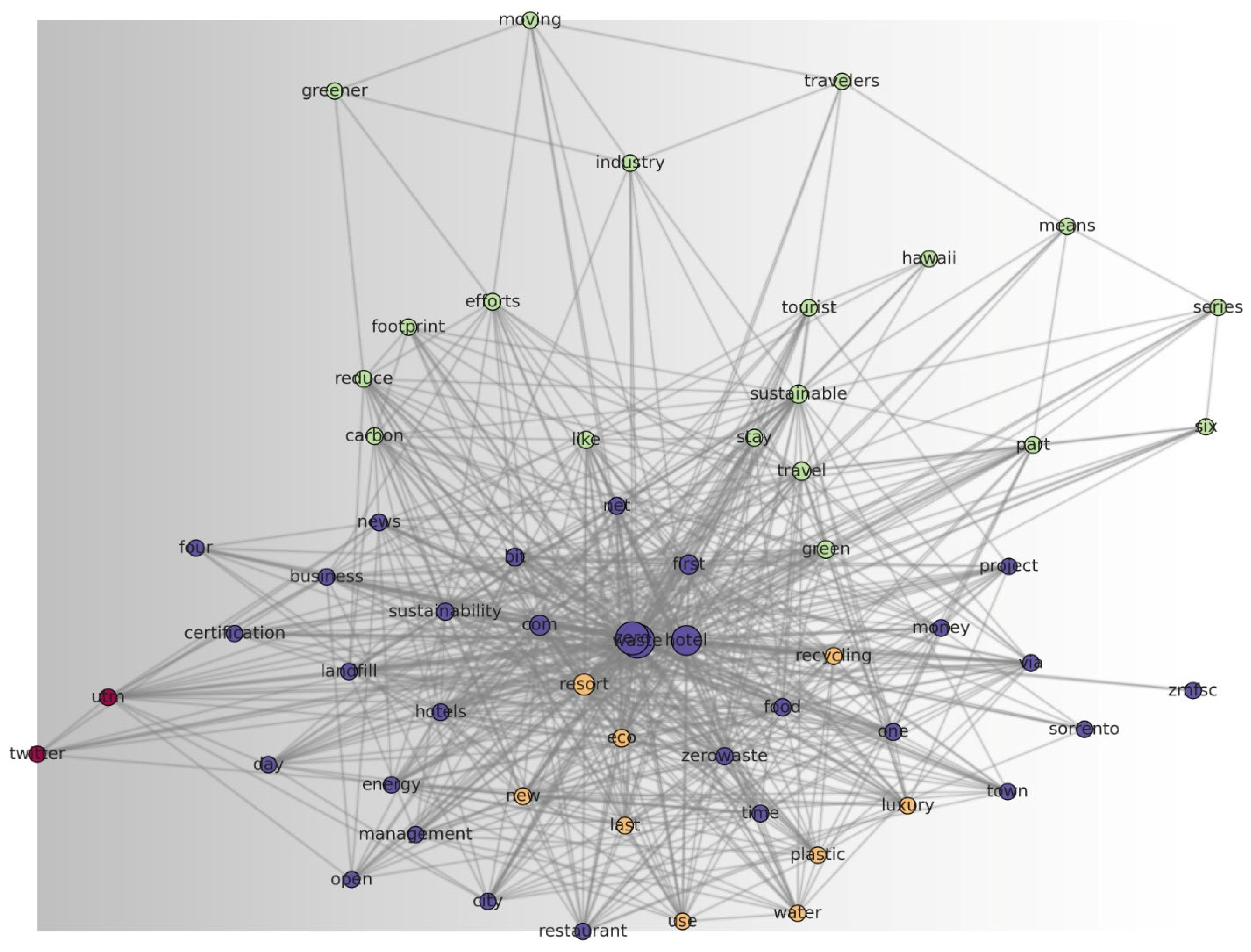
Figure 7 shows how the key terms are related to each other and how often they happen together.
Figure 7 shows the co-occurrence network of keywords. The middle of the network reveals a close relationship between the concepts of “hotel” and “waste”. This shows that these two ideas are the main ideas behind the digital discourse. Terms like “zero”, “recycling”, “sustainable”, “carbon”, “reduce”, and “sustainability” that are close to the center show that zero-waste practices are closely related to policies that protect the environment, lower carbon footprints, and promote sustainability. Ideas like travel, tourism, industry, and business, which are spread out across the network, show that the conversation includes the tourism industry and the responsibilities of stakeholders. Also, the strong link between operational things like food, plastic, water, and landfills and the center shows that zero-waste practices are talked about through real-world waste management methods. In general, the network structure shows that the zero-waste conversation in hotels creates a digital discussion space with many layers and connections that focuses on both reducing environmental impact and changing the way the industry works.
These findings can be interpreted through legitimacy theory, where positive discourse supports legitimacy, while negative discourse reflects challenges such as perceived greenwashing.
5. Discussion
The findings of this study provide a nuanced understanding of how zero-waste practices in the hospitality sector are not only implemented but also socially constructed within digital public discourse. Rather than reflecting a purely operational discussion of waste management, the results suggest that zero-waste hotels are increasingly positioned within a broader and more layered sustainability narrative shaped through online interactions.
One of the most notable findings concerns the overall sentiment structure of the discourse. The predominance of neutral and positive content indicates that zero-waste practices are generally approached in a favorable or at least non-contested manner within digital environments. This observation is broadly in line with earlier studies suggesting that sustainability-oriented initiatives in hospitality tend to generate supportive consumer responses and contribute to positive brand perceptions [
11,
26]. At the same time, the relatively high proportion of neutral content deserves particular attention. A considerable share of the discourse appears to be informational, focusing on announcements, certifications, and descriptions of practices rather than explicit evaluations. This may indicate that social media platforms function not only as arenas for opinion expression but also as spaces where sustainability-related knowledge is circulated and normalized over time [
29,
37].
However, the presence of negative sentiment, although quantitatively more limited, introduces an important layer of complexity. Critical tweets frequently point to inconsistencies between sustainability claims and actual practices, as well as concerns related to pricing and perceived value. These observations resonate with existing discussions in the literature on greenwashing and consumer skepticism [
28,
29]. In this sense, the findings suggest that digital audiences do not simply reproduce sustainability narratives but engage with them in a more evaluative manner. The credibility of zero-waste claims appears to be contingent upon their perceived consistency and transparency, reinforcing arguments that emphasize the importance of verifiable sustainability communication [
31]. Taken together, these findings suggest that digital sustainability discourse in hospitality can be understood as a multi-layered structure consisting of informational, normative, and critical dimensions. While neutral content reflects the informational layer where practices are communicated, positive discourse contributes to their normalization and legitimation, and negative narratives introduce a critical layer that questions their credibility and implementation.
Beyond sentiment, the topic modeling results point to a broader conceptual expansion of zero-waste discourse. The identified themes indicate that discussions are not confined to waste management practices at the hotel level but are instead linked to wider concerns such as carbon footprint reduction, circular economy principles, and sectoral responsibility. This finding aligns with the growing body of literature that conceptualizes sustainability in tourism as a systemic transformation rather than a set of isolated operational practices [
14,
15]. In this context, zero-waste hotels appear to function as symbolic entry points through which broader environmental concerns are articulated.
Another noteworthy aspect of the findings is the role of place-based references in shaping digital discourse. Mentions of specific destinations, particularly well-known examples such as Kamikatsu, suggest that certain locations operate as cognitive anchors within sustainability narratives. These examples seem to provide tangible reference points that make abstract sustainability concepts more concrete and relatable. This observation is consistent with previous research highlighting the diffusion of sustainability practices through exemplary cases [
75,
76]. In this sense, digital discourse does not emerge in isolation but is informed by existing success stories that circulate across different contexts.
The results also indicate that digital discussions around zero-waste hotels are inherently multi-dimensional. Environmental concerns are frequently intertwined with economic considerations and issues of operational feasibility. The co-occurrence of terms related to waste management, cost, and community engagement suggests that users evaluate sustainability practices through a broader lens that goes beyond environmental impact alone. This is in line with earlier studies emphasizing that sustainability in hospitality is often interpreted through a combination of environmental, economic, and social dimensions [
77]. Consequently, zero-waste practices are not perceived solely as ecological initiatives but as part of a more complex value proposition.
From a theoretical standpoint, this study contributes to the sustainable tourism literature by shifting the focus from operational sustainability practices to their discursive construction within digital environments. By identifying the layered nature of digital sustainability discourse, the study provides a conceptual framework that helps explain how sustainability initiatives are legitimized, normalized, and contested in hospitality contexts.
These findings have broader implications for how sustainability is understood in hospitality contexts. Rather than being perceived solely as a set of operational practices, zero-waste initiatives appear to function as symbolic elements within a wider sustainability narrative that is continuously shaped through digital interactions. This suggests that the success of sustainability strategies depends not only on their implementation but also on how they are interpreted, circulated, and negotiated within digital environments.
Methodologically, the study demonstrates the value of integrating text mining, sentiment analysis, and topic modeling to capture large-scale discursive patterns that are difficult to observe through traditional survey-based approaches. While these methods enable the analysis of large-scale user-generated content, it should be acknowledged that they also entail certain limitations. Social media data may reflect platform-specific dynamics and user biases and therefore may not fully represent broader societal attitudes. This suggests that the findings should be interpreted as indicative of digital discourse rather than as a comprehensive reflection of consumer perceptions.
The study underscores that the success of zero-waste initiatives depends not only on their implementation but also on how they are interpreted and negotiated within the digital public sphere. Overall, the findings underline that sustainability in hospitality is not only a matter of operational performance but also a socially negotiated construct shaped through digital discourse.
6. Conclusions
This study examined how zero-waste practices in the hospitality sector are represented, interpreted, and evaluated within digital public discourse. Drawing on 10,944 posts collected from the X platform, the study employed text mining, sentiment analysis, topic modeling, and data visualization techniques to capture both the emotional tone and thematic structure of online discussions. The findings indicate that digital discourse on zero-waste hotels is predominantly neutral and positive. Neutral content mainly reflects informational posts, institutional announcements, certification-related messages, and descriptions of operational practices. Positive discourse, on the other hand, shows that zero-waste practices are often associated with environmental responsibility, innovation, customer satisfaction, and sustainable brand value.
At the same time, the presence of negative discourse demonstrates that digital publics do not passively accept sustainability claims. Critical narratives reveal concerns about greenwashing, higher prices, food waste, plastic use, and inconsistencies between environmental claims and actual hotel practices. Therefore, zero-waste hospitality should not be understood solely as an operational waste management strategy. Rather, it is also a communicative and reputational issue that is continuously interpreted, legitimized, and contested in digital environments.
The topic modeling results further show that zero-waste discourse is structured around three main thematic dimensions: destination-based zero-waste practices and local ecological experience; waste management, economic considerations, and community engagement; and carbon footprint reduction and sectoral responsibility in sustainable tourism. These themes suggest that online discussions extend beyond individual hotel operations and connect zero-waste practices with broader issues such as circular economy, local community participation, carbon reduction, and responsible tourism governance.
6.1. Theoretical Implications
Theoretically, this study contributes to sustainable tourism and hospitality literature by integrating legitimacy theory with digital discourse analysis. Previous studies have largely examined zero-waste practices from operational, managerial, or customer satisfaction perspectives. In contrast, this study demonstrates that sustainability practices are also socially constructed through digital interactions among multiple stakeholders, including consumers, organizations, media actors, and institutions.
From the perspective of legitimacy theory, positive and neutral discourse can be interpreted as indicators of the normalization and acceptance of zero-waste practices, while negative discourse reflects legitimacy challenges. References to greenwashing, inconsistent implementation, and price-related concerns show that stakeholders evaluate whether hotels’ sustainability claims are credible and aligned with actual practices. Thus, digital discourse becomes a space where organizational legitimacy is produced, reinforced, or challenged.
The study also offers a conceptual contribution by proposing that digital sustainability discourse can be understood through three interrelated dimensions: informational, normative, and critical. Informational discourse reflects the dissemination of sustainability-related news, certifications, and operational practices. Normative discourse reflects approval, support, and value-based endorsement of zero-waste hospitality. Critical discourse reflects skepticism, perceived inconsistency, and legitimacy concerns. This framework provides a useful lens for future studies examining sustainability communication in tourism and hospitality.
6.2. Practical Implications
From a practical perspective, the findings provide important insights for hotel managers, destination managers, and policymakers. First, the predominance of neutral and positive discourse suggests that zero-waste practices can strengthen brand image and support the perceived legitimacy of hospitality businesses when they communicate clearly and consistently. Hotels should therefore use digital platforms not only for promotion but also for transparent sustainability communication. To activate this informational layer, hotels should supplement static announcements with real-time content such as waste tracking dashboards, staff-led waste separation videos, or monthly sustainability progress reports shared across digital channels.
Second, the negative discourse identified in this study shows that consumers are increasingly sensitive to the gap between sustainability claims and actual practices. Claims such as “zero waste,” “eco-friendly,” or “sustainable” should be supported by visible, measurable, and verifiable actions. For example, hotels should provide clear information about waste separation, food waste reduction, plastic elimination, recycling systems, carbon reduction initiatives, and certification processes. Otherwise, sustainability communication may be interpreted as greenwashing and may harm trust. To address this directly, hotels should establish a publicly accessible sustainability accountability record—including monthly food waste reduction rates, plastic elimination milestones, and third-party audit results—so that critical discourse can be countered with verifiable evidence rather than general assurances.
Third, the results show that social media analytics can serve as an early-warning tool for reputation management. By monitoring online discussions, hotel managers can identify recurring complaints, stakeholder expectations, and emerging legitimacy risks. This can help businesses improve their sustainability practices and adjust their communication strategies before criticism becomes widespread. Beyond reactive monitoring, hotels should implement proactive guest-facing sustainability programs—such as in-room contribution trackers or opt-in zero-waste participation schemes—to convert passive positive sentiment into active engagement.
Finally, policymakers and tourism authorities can benefit from these findings by developing clearer standards for zero-waste certification and sustainability reporting. Standardized and transparent frameworks may reduce ambiguity in sustainability claims and increase public trust in zero-waste initiatives within the hospitality sector. Additionally, sector-wide digital communication campaigns that connect property-level zero-waste actions to macro-level themes such as carbon reduction and circular economy—as identified in the topic modeling results—would help consumers understand how individual hotel choices contribute to systemic environmental goals.
For example, hotels should prioritize visible actions such as eliminating single-use plastics, implementing transparent waste tracking systems, and clearly communicating certification processes to reduce skepticism and strengthen credibility.
6.3. Limitations and Future Research
This study has several limitations. First, the dataset was collected from the X platform only. Although X provides a dynamic and open digital public sphere, future studies could compare findings with review-based platforms such as TripAdvisor, Booking.com, Google Reviews, or hotel-specific social media channels. Second, the study used keyword-based data collection, which may not capture all relevant discussions on zero-waste hospitality. Future research could expand the keyword set and include multilingual search terms.
Third, sentiment analysis was conducted using TextBlob v0.19.0, a lexicon-based tool. Although suitable for large-scale analysis, it may have limitations in detecting sarcasm, irony, and context-dependent meanings. Future studies could employ transformer-based models such as BERT or RoBERTa to improve classification accuracy. Finally, future research may conduct country-specific or destination-specific comparisons to examine how cultural, regulatory, and institutional contexts shape digital sustainability discourse.
Another limitation relates to the relatively short data collection period (1 January to 15 February 2026). Although this period captures a highly active phase of sustainability communication, the findings may reflect temporal dynamics such as seasonal trends or short-term campaigns. Therefore, results should be interpreted as a snapshot of digital discourse rather than a fully stable long-term pattern.