1. Introduction
The circular economy is an economic model that aims to keep resources in use for as long as possible, minimize waste and pollution, and repurpose products at the end of their life cycles [
1]. It relies on strategies, practices, policies, and technologies to reuse, recycle, redesign, remanufacture, renew, and recover water, waste materials, and food to conserve natural resources [
2]. In this context, circular economy practices have become increasingly important for improving resource efficiency, reducing environmental impact, and supporting sustainable production systems.
Waste-to-resource conversion networks are integrated supply systems that connect waste-producing businesses, recycling companies, and businesses that use waste as raw materials, thereby promoting the reuse and recycling of waste [
3]. These systems are closely associated with industrial symbiosis, in which waste generated by one enterprise can be used as a resource by another. Industrial symbiosis has gained growing attention as a strategic approach for transforming waste into economic value while strengthening collaboration among businesses.
From a theoretical perspective, industrial symbiosis is closely associated with circular economy theory, sustainable supply chain management, and inter-organizational collaboration frameworks. The concept emphasizes the creation of mutually beneficial relationships among firms through the exchange of resources, by-products, energy, and information flows. In recent years, digital transformation and data-driven coordination mechanisms have also become increasingly important components of industrial symbiosis systems, particularly for SMEs that often face limitations in terms of technological capacity, information access, and network development. Therefore, integrating digital platforms into industrial symbiosis processes is a critical factor for improving coordination efficiency, resource optimization, and sustainability performance in circular production systems.
The dissemination of industrial symbiosis practices across countries and the evaluation of their implementation potential constitute an important research area for international collaboration networks involving academia, industry, and policymakers. In this respect, the COST Action CA22110 LIAISE [
4], supported by the European Union, aims to promote interdisciplinary knowledge production in the field of industrial symbiosis, compare practices across countries and strengthen collaboration between industrial and research ecosystems.
Within this framework, this study proposes a digital waste-to-resource conversion network model that supports the reuse of waste through a circular economy perspective. The proposed model aims to enable businesses that generate waste to reintegrate these materials into the economy while facilitating lower-cost raw material procurement for businesses that use secondary materials in their production processes. For this purpose, a digital platform is proposed that enables businesses to communicate directly with each other or through recycling companies.
The study introduces the Digital Recycling and Material Network (DREAM) model within the framework of a digital supply network approach. The model specifically focuses on SMEs, which constitute nearly 99% of businesses in many economies. Through digital integration, the proposed network is expected to support real-time sharing of waste and raw material needs, improve coordination between stakeholders, increase efficiency in waste management, and contribute to the transition toward greener production systems.
In addition to the model proposal, the study evaluates the readiness of SMEs in Türkiye, Jordan, Portugal, and Croatia for industrial symbiosis practices through a literature-based comparative analysis. These countries were selected because they represent diverse institutional, economic, and technological contexts and reflect the research collaboration structure established within the LIAISE network. The comparative evaluation examines institutional structures, technological capacities, sectoral characteristics, collaboration mechanisms, and information-sharing infrastructures related to industrial symbiosis practices.
This study contributes to the literature in several ways. First, it provides a comparative assessment of industrial symbiosis readiness among SMEs in Türkiye, Jordan, Portugal, and Croatia by integrating institutional, technological, sectoral, and digital infrastructure dimensions within a unified analytical framework. Second, unlike many existing studies that primarily focus on policy or environmental aspects of industrial symbiosis, this study emphasizes the strategic role of digital coordination mechanisms and sustainability-oriented matching systems in supporting circular production processes. Third, the study proposes the AI-supported Digital Recycling and Material Network (DREAM) model as a conceptual digital platform connecting waste-generating firms, recycling companies, and secondary raw material users within a sustainability-focused ecosystem. Finally, the study contributes to the emerging literature linking industrial symbiosis, digital transformation, and sustainable operations management by highlighting how digital platforms can facilitate SMEs’ transition toward circular economy practices.
Based on the literature review and the identified research gap, this study addresses the following research questions:
RQ1: What is the current level of industrial symbiosis readiness among SMEs in Türkiye, Jordan, Portugal, and Croatia?
RQ2: What institutional, technological, sectoral, and digital infrastructure factors influence the implementation of industrial symbiosis practices among SMEs in these countries?
RQ3: How can a digitally integrated and sustainability-oriented platform model support industrial symbiosis processes and waste-to-resource matching mechanisms among SMEs?
2. Literature Review
Literature on industrial symbiosis and circular economy can generally be categorized into conceptual and theoretical studies, governance- and policy-oriented studies, digitalization and platform-based studies, and implementation-focused sectoral or country-specific studies. In recent years, sustainable operations management research has increasingly emphasized the role of platform-based coordination mechanisms, recycling strategies, and closed-loop supply chain systems in improving sustainability performance. For example, Cui et al. [
5] examined the interaction between manufacturers’ recycling strategies and e-commerce platform services within a closed-loop supply chain structure. They highlighted the importance of operational coordination and digital service mechanisms in recycling processes. These studies demonstrate that digital platforms and coordinated recycling systems can play an important role in improving resource efficiency and supporting circular production systems.
Considered one of the core tenets of circular economy methods, industrial symbiosis research demonstrates that it is a multidimensional system that extends beyond a strictly technological paradigm centered on the exchange of resources and energy. In their methodical analysis of the literature, Oughton et al. [
6] moved beyond conventional industrial symbiosis practices. They examined the infrastructural, social, and managerial elements that contribute to success in complicated industrial settings. Using the Kwinana Industrial Area in Australia as a model, the “KIC4” model examines the factors influencing the success of industrial symbiosis through four main dimensions: the workforce, infrastructure and service access, the governance system, and the degree of collaboration. This method emphasizes that the success of circular economy practices in industrial locations depends not only on physical symbiotic relationships but also on institutional and societal frameworks. Rentería Núñez and Perez-Castillo’s [
7] study offers a thorough analysis of sustainable business models in the field of information systems. This study used bibliometric and content analysis methodologies to examine 84 publications from 2014 to 2023 and to assess the link between industrial symbiosis and business model elements across various dimensions. The literature emphasizes the importance of material flow management, digital information infrastructures and collaborative methods, while neglecting the significance of cultural change, information-sharing methods and corporate incentive systems. From this perspective, the study argues that strategic management and organizational change should also be considered alongside environmental sustainability when evaluating industrial symbiosis.
In a similar approach, Sgambaro et al. [
8] conducted a multiple-case study in Italy to examine the structural factors influencing the development of industrial symbiosis applications within the circular economy. The study looked at how five “anatomical variables” sectoral diversity, public institution participation, government support, facilitating actors, and geographical proximity affected “top-down” and “bottom-up” strategies. Using content analysis of 50 industrial symbiosis cases, a research team concluded that institutional frameworks and regional context are crucial factors in the creation of collaborations. This study offers a multi-layered examination of the evolution of industrial symbiosis, making crucial contributions to strategic planning and policymaking.
With a comprehensive approach, Sellitto et al. [
9] categorize the obstacles, prospects, and lessons learned throughout the establishment and deployment of industrial symbiotic networks (ISNs). The study of 79 scientific works identified 23 problems and 20 prospects, grouped into four categories: technical, economic, legal/regulatory, and social. The report also offered 13 strategic recommendations to help future applications, highlighting their significance for both policymakers and implementers. To successfully construct ISNs in accordance with sustainability objectives, it is advised to strengthen governance structures, integrate digital platforms, and promote multi-stakeholder partnerships.
The literature was also reviewed based on the countries represented by the researchers included in the study, and this summary is provided below.
There are a limited number of studies evaluating the potential of industrial symbiosis in Jordan. In this context, an analytical study published by Ecomena [
10] assessed the potential of industrial symbiosis applications in Jordan’s industrial zones for waste management, resource efficiency, and energy savings. The country’s limited natural resources, reliance on energy imports, and environmental pressures are presented as strong justifications for adopting industrial symbiosis. The study specifically noted that industrial clusters such as Amman, Zarqa, and Aqaba are well-suited for developing symbiotic relationships due to their geographical proximity and sectoral diversity. Furthermore, it emphasized that the main obstacles to implementation are the lack of legal infrastructure, insufficient financial incentives, and low awareness levels. The Jordanian example is important because it demonstrates that the applicability of industrial symbiosis in developing countries depends not only on technical capabilities but also on institutional and political capacity.
One of the studies conducted in the Portuguese context, the article titled “Governance-Centred Industrial Symbiosis for Circular Economy Transitions: A Rural Forest Biomass Hub Framework Proposal [
11]” addresses the application of forest biomass-based industrial symbiosis in rural areas within a governance-focused framework. This study examines the role of local governance mechanisms in the transition to a circular economy. It proposes collaborative models that can be developed in rural areas, particularly those in northern Portugal with bio-energy potential. Methodologically grounded in conceptual modeling and case studies, the study states that decentralized governance, multi-stakeholder participation, knowledge sharing, and public–private partnerships are critical components for the success of industrial symbiosis. The contribution of symbiotic approaches to achieving environmental and socio-economic goals, such as reducing forest fires, supporting rural development, and converting waste into economic value, is particularly emphasized. In this context, the Portuguese example demonstrates that industrial symbiosis can be a strategic tool for the transition to a circular economy, not only in urban but also in rural areas [
11].
Although there are no classic eco-industrial parks where industrial symbiosis is implemented, there are examples of industrial symbiosis in Croatia (e.g., Nexe, Žito Group, Cemex) [
12]. Authors further state that there is no comprehensive research on industrial symbiosis in Croatia, but in recent years, the academic and industrial sectors have begun exploring the concept. Unukić [
13], in her study that focuses on the functionality of industrial symbiosis applications in Croatia within the context of digitalization and the circular economy, comparatively examines three key countries (Croatia, Slovenia, and several others). The study shows that traditional, material-oriented symbiosis models are dominant in Croatia, while in neighboring Slovenia, digitally supported symbiosis platforms (such as “e-Simbioza”) are more prevalent [
13]. As an example within the Croatian context, a real-world collaboration model involving the transfer of wood biomass ash from the energy sector to the concrete production sector is analyzed. This symbiotic exchange reduces waste-disposal costs and reduces the need for natural raw materials. Using qualitative methodology, secondary data, case studies, and literature, the analysis found that digital tools are increasingly becoming a complementary element to traditional industrial symbiosis models. The findings reveal that the symbiosis in Croatia still faces infrastructure and regulatory shortcomings but offers significant opportunities for the development of digitalization and multi-stakeholder models [
12,
13]. In this context, the Croatian example shows that the transition to a circular economy should be supported not only in material flows but also in digitalization and governance capacity.
Balbay et al. [
14] evaluated the concept of the circular economy within the framework of developments in Türkiye and worldwide and comprehensively addressed industrial sustainability approaches in this process. In the study, which used a literature review method, it was emphasized that the circular economy is positioned as a strategic solution to the pressures posed by rising environmental risks, climate change, and resource consumption. The authors state that, especially after 2019, circular economy applications in Türkiye began to be evaluated within the framework of sustainability policies, and that as of 2021, this concept gained even more importance with the European Union’s Green Deal process. In the study, the current situation in Türkiye was revealed using SWOT and PEST analyses, and the implementation challenges and potential opportunities were evaluated. In conclusion, it is emphasized that circular economy practices need to be adopted more widely at the corporate level and that industrial symbiosis should be expanded.
Yeşilkaya et al. [
15] examined the applicability of industrial symbiosis in the Turkish forest products sector and its contributions to the circular economy. Based on successful practices worldwide, the current state of the sector in Türkiye is evaluated using a SWOT analysis. The study first analyzes best-practice examples from the international literature and then identifies potential material and waste flows in Türkiye based on these practices. The SWOT analysis reveals significant opportunities for industrial symbiosis applications in the Turkish forest products sector but raising awareness among businesses and developing incentive mechanisms are necessary to implement them. The study fills a gap in the literature by focusing on a sector and contributes to the policy-making process.
3. Methods
This section includes chapters on research design, a literature-based cross-country comparison framework, and the DREAM’s development approach.
3.1. Research Design
The qualitative research technique is used in this study’s exploratory research design. The research comprises two primary elements: (i) a literature-based review and comparison of the status of industrial symbiosis practices among SMEs in chosen nations, and (ii) the creation of a digital supply network model based on the results gathered from these evaluations.
The status of industrial symbiosis procedures among SMEs in Türkiye, Jordan, Portugal, and Croatia, the nations represented by the study’s authors, was evaluated in the first phase of the research. A literature-based evaluation was conducted for each nation in this context, analyzing scholarly publications, policy papers, industry reports, national statistics, and research from international organizations. These assessments examined the current state of industrial symbiosis practices, potential symbiotic sectors, institutional and regulatory framework, elements that promote implementation, and structural impediments faced. The results were compiled to provide a comparative assessment of the countries, highlighting commonalities and disparities in SME preparedness for industrial symbiosis procedures.
The selection of Türkiye, Jordan, Portugal, and Croatia was based on both practical and analytical considerations. From a practical perspective, these countries are represented within the research collaboration structure of the COST Action CA22110 LIAISE network, which facilitated access to country-specific literature, institutional knowledge, and contextual evaluations. From an analytical perspective, the selected countries represent different levels of institutional development, regulatory capacity, digital infrastructure, and maturity of industrial symbiosis. While Portugal and Croatia operate within the European Union circular economy policy framework, Türkiye represents a candidate country undergoing regulatory alignment with the European Green Deal, and Jordan reflects the challenges faced by resource-constrained developing economies. This diversity enabled a comparative assessment of industrial symbiosis readiness across different economic and institutional contexts.
The second stage of the study, based on results from a literature review and national assessments, led to the development of a digital supply network model called DREAM. The DREAM model is intended to serve as a digital hub connecting recycling firms, waste-producing enterprises, and businesses that utilize waste as feedstock. The model proposes a digital infrastructure to facilitate the matching of waste and resource flows between enterprises, improve information sharing, and incorporate sustainability indicators into decision-making.
The DREAM model proposes a theoretical framework that has not yet been put into practice or subjected to empirical investigation. As a result, the study focuses on outlining the architecture of a possible digital system that can foster the growth of industrial symbiosis networks among SMEs, rather than on evaluating the model’s effectiveness. The study takes a literature-based country analysis and conceptual model development strategy, providing a comparative perspective on the current state of industrial symbiosis applications and developing a unique digital supply network plan to facilitate these operations.
3.1.1. The Concept of Literature-Based Comparison Between Countries
This study conducts worldwide comparisons using a comparative literature-based analysis methodology [
16]. The goal of this methodology is to analyze the current state, level of development, and structural factors influencing industrial symbiosis practices across nations. The comparative analysis examined the current state of industrial symbiosis methods among SMEs in Türkiye, Jordan, Portugal, and Croatia, highlighting similarities and differences across these nations.
The key elements impacting industrial symbiosis activities were identified for each nation by reviewing relevant academic research, policy papers, industry reports, and government data throughout the comparison process. Specifically, the institutional, economic, and technological factors influencing SME involvement in resource-sharing and circular-economy operations were examined. The lack of information on waste flows and the restricted data sharing between businesses in some nations, for instance, are mentioned as major barriers to the growth of symbiotic partnerships (e.g., [
12,
13,
14,
15,
16,
17]). The regulatory environment, infrastructural capacity, and degree of inter-firm network development similarly influence the applicability of industrial symbiosis.
In the comparative analysis, countries were evaluated within the framework of the following key dimensions:
Institutional and regulatory framework: Policy and legislation structure supporting industrial symbiosis and circular economy practices.
Technological and infrastructural capacity: Technical infrastructure for waste recovery, resource efficiency, and data sharing.
SME structure and sectoral distribution: The role of SMEs in the economic structure and sectors with symbiosis potential.
Network structure and level of cooperation: Cooperation mechanisms between businesses, public institutions, and research organizations.
Information and data access: Information sharing and the existence of digital platforms regarding waste and byproduct flows.
Using these dimensions, each country’s readiness for industrial symbiosis practices was assessed, and the findings were compared across countries.
3.1.2. Development Approach of the Digital Supply Network Model
Studies on waste–raw material matching platforms, the circular economy, and industrial symbiosis were reviewed during the model’s development, and conclusions from country-specific assessments were integrated. These analyses revealed that the scarcity of digital infrastructure to support resource matching between companies is a major impediment to the growth of industrial symbiosis. As a result, the DREAM model suggests a digital supply network strategy that makes it easier for companies to match waste and resource flows. Recycling firms, waste-producing enterprises, and manufacturing companies that use waste as raw materials comprise the three primary elements of the suggested digital network. Waste-producing firms document the quantity of waste produced at frequent intervals within the model and make it available to potential consumers. This data is available in the system for recycling firms and enterprises that can utilize waste as an input in their production processes to evaluate and make offers. Simultaneously, recycling firms and manufacturing companies that utilize waste as raw materials can input their own raw material needs into the system, effectively reversing the supply chain.
The suggested digital model considers enterprises’ sustainability indicators and price competition in the matching process. The AI-driven evaluation system analyzes data from all elements of the digital network, including waste quantities, raw material requirements, and sustainability indicators, to identify possible symbiotic matches. The DREAM model is intended to function as a conceptual procurement and communication platform in this regard, facilitating the re-evaluation of waste as financially valuable resources and bringing together data sharing and bidding procedures among companies in a digital setting.
4. Country-Specific Assessments of Industrial Symbiosis in SMEs
4.1. Industrial Symbiosis in Jordan
The concept of symbiosis has gained importance in resource-constrained economies like Jordan as they move toward a circular economy and sustainable industrial development. Jordan has been facing serious issues, including scarce natural resources, water scarcity, and increasing environmental waste. These issues have prompted Jordanian policymakers and researchers to investigate circular-economy strategies, such as reuse, recycling, and increased resource productivity in industries. Recent research has shown that circular economy strategies have significant potential to improve sustainability in industries in Jordan [
18]. The integration of circular economy strategies with innovation management and sustainable industrial development has been identified as an important strategy for improving environmental sustainability in Jordan’s industries.
Despite this, Jordan’s current waste management system remains linear, with most waste sent to landfills for disposal. Research on municipal solid waste management practices indicates that currently over 90% of waste is still sent to landfills for disposal, underscoring the need to implement circular economy strategies focused on recycling, composting, and reuse [
19,
20]. The implementation of circular material flows within industries can therefore provide opportunities for industrial symbiosis, especially in construction, food processing, and agriculture.
The Jordanian SME sector has characteristics relevant to the development of industrial symbiosis. These include:
Sectoral composition: SMEs in Jordan are largely concentrated in trade, services, and manufacturing. According to studies, commercial establishments account for approximately one-third, service providers account for one-fourth, and industrial production accounts for one-fifth of the total number of SMEs in the country, with the remaining sectors contributing less to the overall number of SMEs in Jordan [
21,
22,
23]. Some of the main manufacturing sectors in Jordan include chemicals, plastics, pharmaceuticals, food, construction materials, and textiles.
Geographic composition: Industrial activities have been concentrated in several governorates, particularly Amman, Zarqa, Irbid, and Aqaba, which host the majority of the country’s industrial enterprises and zones [
24,
25].
Capacity: SMEs in Jordan have been characterized by the lack of financial, technological, and technical capacities, which may affect the adoption of environmental management systems and the circular economy [
23,
24,
25,
26]. Opportunities for implementing industrial symbiosis in Jordan can be realized through wastewater reuse, especially in the manufacturing sector, where research indicates that wastewater reuse can significantly contribute to implementing circular economy strategies [
26]. Water reuse can be implemented in industries to reduce environmental impacts, especially in a water-scarce country such as Jordan.
Another industry with vast opportunities for developing industrial symbiosis is the construction industry, including the management of construction and demolition waste. The construction sector has been identified as a major contributor to the Jordanian economy; however, it has also been identified as a contributor to concrete waste in the country. Studies have shown that recycling concrete waste can reduce landfill disposal and enable its use in the production of other products, thereby promoting the circular economy in the construction sector [
27]. The activity can be identified as one that applies to the concept of symbiosis to develop other industries that use waste from a single sector.
The management of municipal waste also forms a vital role in the development of industrial symbiosis in Jordan. Studies on municipal waste management in the city of Amman have shown that increasing waste recycling is vital to reducing landfill disposal in the country. Studies have also shown that waste source separation levels could be improved to reduce landfill use.
However, there are still impediments to implementing industrial symbiosis in SMEs in Jordan. The major impediment to implementing industrial symbiosis in Jordan’s SMEs is the lack of infrastructure and technology to process waste and recover resources. Moreover, SMEs lack information regarding resource exchange with other industries, which may limit the development of symbiosis networks. The study on circular economy adoption in Jordan found that limited technological capacity, infrastructure, and financial constraints prevent companies from investing in resource recovery technologies [
28].
The second important impediment to implementing industrial symbiosis in SMEs in Jordan is the regulatory framework for waste management and resource recovery. Although Jordan has introduced regulations to encourage sustainable resource management in industries, the administrative procedures for recycling and reusing waste are complex. It may be necessary to streamline administrative procedures to foster symbiosis among SMEs in Jordan.
Research into circular economy development in Jordan has highlighted the need to build synergies among industries, government institutions, and research institutions. Universities and research institutions have a major role to play in testing emerging technologies to valorize waste and identify symbiotic opportunities across industries. Moreover, online platforms that can identify resource demand and waste in industries could be used to connect industries in symbiotic exchange.
Industrial symbiosis, therefore, offers Jordan an opportunity to increase the sustainability and competitiveness of its SME base. By recognizing waste as a resource rather than something to be disposed of, industries in Jordan can reduce costs and environmental impact while making a significant contribution to the circular economy. Future research should focus on identifying industries with symbiotic exchange opportunities and the benefits of engaging in industrial symbiosis.
4.2. Industrial Symbiosis in Croatia
In the EU context, studies such as Kalundborg show that industrial symbiosis generates savings of up to 30% in raw materials [
29], but in transition economies such as Croatia, adaptation to local conditions is necessary [
12]. In Croatia, where SMEs account for 77% of the economy [
30], industrial symbiosis represents a key mechanism for implementing a circular economy. However, the current situation shows limited applications due to regulatory barriers and a lack of infrastructure [
31]. At the macro level, EU-level estimates indicate that achieving circular economy goals in Croatia could generate economic benefits of €1–2 billion by 2030, mainly through reductions in waste disposal costs and the development of the recycled materials market [
32]. Additionally, implementing digital waste-stream tracking could enhance information-system efficiency by integrating traditional methods with technological solutions, as confirmed by comparative analyses of Croatia and Slovenia [
13].
The implementation of industrial symbiosis in Croatia is closely linked to the Waste Management Plan of the Republic of Croatia [
33] and EU strategic documents on the circular economy. Verkic et al. [
34] highlight that SMEs often lack the capacity of large systems to establish symbiotic networks independently and instead depend on intermediaries and regional clusters. Research indicates [
12,
13,
14,
15,
16,
17,
18,
19,
20,
21,
22,
23,
24,
25,
26,
27,
28,
29,
30,
31] that industrial symbiosis in Croatia is still in its infancy, with only a few isolated examples in the food and wood-processing industries.
In Croatia, industrial symbiosis is still not widely used among SMEs, despite strategic documents such as the National Development Strategy until 2030 [
35] and the industrial transition plans of the regions (Pannonian, Northern, and Adriatic). According to analyses of secondary data on waste management, waste streams (e.g., sludge, tires) have the potential for symbiosis. However, the lack of flexible by-product regulations and bureaucratic procedures makes cooperation difficult [
12,
13,
14,
15,
16,
17,
18,
19,
20,
21,
22,
23,
24,
25,
26,
27,
28,
29,
30,
31].
There are several key technical and non-technical barriers to industrial symbiosis implementation in SMEs in Croatia. Key barriers include regulatory rigidity (e.g., waste permits), a lack of financial incentives for green investments, and weak networking among SMEs. Studies [
13,
14,
15,
16,
17,
18,
19,
20,
21,
22,
23,
24,
25,
26,
27,
28,
29,
30,
31] point to a lack of data on waste streams and to resistance to changing business models, which limit the scaling of industrial symbiosis in Croatia compared to Slovenia, where digital tools support symbiosis. In addition, SMEs often lack the capacity to make initial technology investments. The greatest potential for symbiosis has been observed in the following sectors [
13,
14,
15,
16,
17,
18,
19,
20,
21,
22,
23,
24,
25,
26,
27,
28,
29,
30,
31,
32,
33,
34,
35,
36]:
Agriculture and food industry: Use of organic waste for biogas production.
Construction sector: Use of ash from power plants or quarry waste in the production of construction materials.
Wood industry: Utilization of wood biomass for thermal energy in local communities.
Andabaka et al. [
31] stated that barriers for implementing industrial symbiosis in Croatia can be found in the lack of information, as companies are often unaware that their waste has a market value; regulations that are seen in long-term processes for obtaining permits for by-products (end-of-waste status); and logistics, which are shown in high costs of transporting resources between dispersed small companies. Additional problems include fragmentation and dispersion, as Croatian SMEs are geographically dispersed, unlike large industrial complexes. This increases logistics costs, underscoring the need to strengthen local industrial zones as hubs of symbiotic exchange. Next is the information gap: there is a clear correlation between digitalization and the success of industrial symbiosis. Without a centralized digital platform (such as a “Waste Exchange” with advanced analytical tools), resources remain underutilized because companies lack insight into the needs of neighboring entities [
12,
13]. Finally, administrative barriers are probably the biggest problem, as the “by-product” status and the “end-of-waste” procedure are still perceived as too complex for small companies with limited legal and technical capacities. Recent studies [
31,
32,
33,
34,
35,
36] analyzing the Croatian market emphasize the importance of industrial zones. SMEs located in zones (e.g., Bakar, Kukuljanovo, or business zones around Zagreb) have a natural advantage due to their geographic proximity, a basic prerequisite for reducing transaction costs. Potential drivers for implementing industrial symbiosis in Croatia [
12,
13,
14,
15,
16,
17,
18,
19,
20,
21,
22,
23,
24,
25,
26,
27,
28,
29,
30,
31,
32,
33,
34,
35,
36] include high waste-disposal costs, EU funds and incentives, and lower raw-material costs. To improve industrial symbiosis among SMEs, it is necessary to strengthen platforms such as the European industrial symbiosis Network, align regulations with EU guidelines, and encourage regional value chains. Pilot projects supported by EU funds (e.g., Interreg) and training through workshops could identify new symbioses, especially in the waste and energy sectors [
37]. Also, integrating industrial symbiosis into SMEs’ ESG objectives could attract investors and support the transition towards a circular economy by 2030.
The following are two examples of industrial symbiosis implementation in SMEs. First is the company Livit d.o.o. from Belišće, which illustrates an attempt at industrial symbiosis in which industrial sludge from wastewater treatment is processed into raw materials [
38]. Second is Gumiimpex-GRP d.o.o. from Varaždin, which has been successfully recycling waste tires into granulate and technical products since 2005, participating in EU projects such as ANAGENNISI, thereby reducing waste by over 90% and fostering green entrepreneurship [
39,
40]. These cases show that industrial symbiosis in SMEs brings economic benefits (savings, new markets) but requires institutional support. The establishment of symbiotic relationships in Croatia depends mostly on recognizing by-products that, in the current linear model, end up as costs (waste). In contrast, in the circular model, they would represent income or savings [
12].
Different studies [
13,
14,
15,
16,
17,
18,
19,
20,
21,
22,
23,
24,
25,
26,
27,
28,
29,
30,
31] point out that the success of such exchanges in Croatia depends on three key factors: (1) Critical mass: Small businesses in the Republic of Croatia (e.g., small cheese factories or sawmills) often do not produce enough by-products to make the process economically viable for long-distance transport. The solution lies in aggregation centers within business zones. (2) Technical compliance: Materials such as ash or sludge must undergo strict laboratory analysis to meet quality standards in construction or agriculture. (3) Waste law: A key moment for SMEs is the end-of-waste criteria. When a material legally becomes a “product,” the administrative burden on businesses drops sharply, encouraging trade in these resources.
Industrial symbiosis in Croatia must not be left solely to the market. For SMEs, state intervention is necessary through tax breaks and simplification of administrative procedures for by-products. The integration of symbiotic principles will enable Croatian companies not only to be environmentally sustainable but also to be more resilient to fluctuations in global energy prices. The implementation of industrial symbiosis in Croatia’s SME sector is a strategic imperative, not just an ecological choice. Sverko Grdić et al. [
41], Unukić [
13] and Erceg et al. [
12] state that to increase the industrial symbiosis development among SMEs in Croatia it is necessary to increase the institutional support to facilitate legal procedures and introducing tax breaks for companies using secondary raw materials; encourage cooperation between the scientific community (universities and institutes) and SMEs to test the technical feasibility of new material flows and to promote a “resource-sharing mentality” through sectoral clusters, thereby reducing initial mistrust among competing companies. The modern scientific approach advocates the use of IT platforms for resource mapping. In Croatia, there is a need for a centralized system that would connect waste supply and raw material demand in real time. Currently, there is a Croatian Chamber of Commerce waste exchange [
42], a specialized site for waste and secondary raw materials, where various types of waste and secondary raw materials can be offered or sought. Ultimately, industrial symbiosis is not only a tool for reducing the ecological footprint but also a mechanism for strengthening the competitiveness of the Croatian economy. In a world of volatile primary raw material prices, the ability of SMEs to recognize value in what has so far been considered waste will become a key determinant of their long-term sustainability and market resilience. Future research should focus on quantifying economic benefits in specific micro-regions of Croatia to create “blueprint” models applicable to a wider range of companies.
4.3. Industrial Symbiosis in Portugal
Industrial symbiosis in Portugal has emerged as a strategic approach within the broader transition from a linear to a circular economic model, aiming to optimize resource efficiency and reduce environmental externalities. Conceptually, it involves the exchange of materials, energy, water, and by-products between traditionally separate industrial actors, thereby creating mutually beneficial relationships. Despite its recognized environmental, economic, and social advantages, the development of industrial symbiosis networks in Portugal remains limited in scope and maturity. Empirical evidence indicates that most existing networks are small-scale, frequently involving only two or three firms, and are often the result of self-organized initiatives rather than coordinated national programs. Nevertheless, the diversity of industrial activities and waste streams suggests significant untapped potential for expanding symbiotic interactions across sectors [
43].
The Portuguese industrial structure, characterized by a strong presence of SMEs and a diverse sectoral composition, provides both opportunities and constraints for industrial symbiosis. Manufacturing industries, particularly cork [
44], pulp and paper [
45,
46], textile [
47], cement [
48,
49], and chemical sectors [
50], play a dominant role in existing symbiosis cases, often interacting with agriculture and waste management activities through the exchange of biomass, sludge, and other by-products. However, the prevalence of micro and small enterprises, combined with limited technical capacity and resource constraints, restricts the scalability of such initiatives. Additionally, waste generation patterns and relatively low resource productivity compared to the European average highlight the need for more efficient material use, reinforcing the relevance of industrial symbiosis as a tool for improving national sustainability performance.
Industrial symbiosis development in Portugal faces structural limitations compared to countries like the Netherlands and Denmark, due to centralized governance, less mature policy instruments, and stricter waste management requirements, which constrain flexibility and market-driven exchanges. However, the case of Chamusca [
51] demonstrates that a “middle-out” approach, which combines coordinated actions from government, industry, and academia, can successfully foster symbiotic networks by shaping supportive policy, social, and economic conditions at both national and local levels. However, Chamusca’s case was documented in 2010, and since then, only potential industrial symbiosis cases have been published.
Several recent examples of potential industrial symbiosis in Portugal can be found. The authors in [
46] demonstrate how the Portuguese pulp and paper industry can implement industrial symbiosis by reclassifying fluidized bed sands (FBSs) as a by-product, enabling their valorization as secondary raw materials in other sectors, such as construction and agriculture. Another study highlights [
52], from an industrial symbiosis perspective, how cotton waste from the textile industry can be valorized as a secondary resource for thermal energy production, creating synergies between waste-generating and energy-consuming sectors while reducing reliance on fossil fuels. The results demonstrate that cotton briquettes offer competitive heating performance and significantly lower energy costs compared to conventional fuels. In [
11], the authors proposed a scalable rural model of industrial symbiosis that converts biomass waste into renewable energy and green hydrogen, driving decarbonization, economic growth, and the implementation of a circular economy despite existing regulatory and infrastructural challenges. In [
50], an optimization framework that integrates carbon capture and utilization (CCU) technologies into industrial symbiosis networks using a mixed-integer linear programming model, enabling the identification of 21 viable exchange pathways and the reutilization of 1.87 million tons of materials annually in a major Portuguese industrial park and achieving up to 644 kton CO
2-equivalent emission reductions per year.
From a governance perspective, Portugal’s legislative and policy framework has progressively incorporated principles aligned with industrial symbiosis, particularly under European Union directives on waste and the circular economy. A key milestone is the Council of Ministers Resolution No. 190-A/2017 [
53], which established the Action Plan for the Circular Economy and explicitly identified industrial symbiosis as a regional priority. This resolution promotes actions such as mapping potential synergies, removing regulatory barriers, and fostering awareness among firms. Complementary legal instruments, including waste management regimes and by-product classification mechanisms, further support symbiosis practices, although administrative complexity and costs remain barriers to implementation. The absence of quantitative targets and coordinated national programs limits the effectiveness of these measures.
A detailed assessment of these gaps reveals structural weaknesses across several domains, particularly in strategic, fiscal, social, and technical areas. The most critical shortcomings include the lack of clear, quantifiable targets, limited coordination among stakeholders, insufficient fiscal incentives, and persistent bureaucratic barriers, particularly in processes such as waste reclassification and licensing. To enable large-scale adoption of industrial symbiosis, Portugal must prioritize the development of more effective and targeted incentives, simplify and clarify its national strategy, and streamline administrative procedures. Drawing on the best international practices, recommended improvements include strengthening green taxation, enhancing investment and financing mechanisms, promoting awareness and networking, and defining measurable objectives. Addressing these issues is essential to advancing Portugal’s transition toward a more efficient, fully integrated circular economy. The Portuguese cement industry can reduce its environmental impact by integrating alternative resources and circular business models, enabling resource exchanges with other sectors and decreasing dependence on virgin materials, as shown in [
48]. The results indicate that such symbiotic strategies can achieve a 6–12% reduction in greenhouse gas emissions. However, their overall effectiveness depends significantly on how biogenic carbon is accounted for in meeting 2030 decarbonization targets.
The authors in [
54] argue that the analysis of circular economy policies and industrial symbiosis in Portugal indicates that the country has established a coherent strategic framework, supported by a range of policy instruments, including plans, roadmaps, and financial incentives. These instruments broadly address multiple stages of the value chain and aim to facilitate CE implementation through investment support, training, and the mitigation of social barriers. However, despite this structured approach, important deficiencies persist [
54]. The distribution and effectiveness of incentives remain uneven, and some measures are not well aligned with the industry’s practical needs. Consequently, although the strategic vision is clearly defined—reinforced by initiatives such as Council of Ministers Resolution No. 190-A/2017—there are still significant gaps that hinder the effective operationalization of circular economy principles and industrial symbiosis in the Portuguese context.
Looking forward, the expansion of industrial symbiosis in Portugal depends on overcoming structural, institutional, and cultural barriers [
43]. Key challenges include limited inter-firm trust, insufficient information sharing, regulatory hurdles, and the lack of facilitating entities to coordinate symbiotic exchanges. Strategic opportunities lie in strengthening public policy instruments, increasing landfill taxes, creating dedicated funding mechanisms, and leveraging large firms as “anchor tenants” to stimulate network formation. Furthermore, initiatives that integrate infrastructure sharing and service co-provision, alongside waste exchange, may enhance the depth and resilience of symbiosis networks. In this context, industrial symbiosis represents a critical pathway for Portugal to advance toward resource efficiency, decarbonization, and sustainable industrial development, provided that more coherent and targeted policy interventions are implemented.
4.4. Industrial Symbiosis in Türkiye
Due to the establishment of the circular economy and green transformation policies in recent years, the industrial symbiosis model has become even more significant in Türkiye. The European Union’s implementation of the policies outlined in the European Green Deal has also spurred the development of new strategies to mitigate environmental damage from industrial production processes in Türkiye. The Green Deal is a far-reaching transformation plan that spans climate (environmental) policy, energy, trade, industry, and finance. The three main goals of the Green Deal’s program are to reduce GHG emissions, increase resource efficiency and develop sustainable production mechanisms within the context of a circular economy and industrial symbiosis applications that will increase resource efficiency and support sustainable production [
14]. Additionally, Türkiye’s policy alignment in the area of waste management and recycling/resource efficiency was accelerated by the EU’s circular economy policies, which are Türkiye’s major trading partner [
55].
Türkiye views the circular economy as a means to fight climate change and sustain its economic competitiveness. Türkiye’s position in a region vulnerable to climate change, such as the Mediterranean Basin, makes resource efficiency and waste management even more critical. For these reasons, Türkiye also sees the implementation of circular economy strategies as an opportunity to achieve not only environmental sustainability but also economic transformation.
The regulations/legislation and institutional frameworks surrounding industrial symbiosis in Türkiye are still in the early stages of development; however, there have been many policy and project initiatives over the last few years that have gained considerable attention. Green organized industrial zones are prime examples of sustainable production systems, driven by project initiatives and primarily located within them. These projects support energy efficiency, renewable energy sources, and environmentally friendly production processes; therefore, financing mechanisms are also being developed to improve the resource efficiency of industrial companies [
56].
Nonetheless, scholarly works are consistent in asserting that a key requirement for strengthening Türkiye’s transition towards a circular economy is improving the legal and institutional framework, increasing financial incentives, and strengthening environmental regulations [
55]. Following the implementation of the European Green Deal, carbon regulation mechanisms, sustainable supply chains and resource-efficiency policies have triggered a reevaluation of industrial manufacturing processes in Türkiye. As a result of this development, industrial symbiosis practices have been viewed not just as an environmental strategy, but also as a critical element of industrial policy.
The advancement and effectiveness of organizations utilizing industrial symbiosis depend heavily on the technical sophistication of recycling technologies, waste retrieval methods, recycling systems, and data sharing networks. There are many types of technology used for recycling and waste management throughout Türkiye; however, there appears to be considerable disparity in their use nationally and across industries. Nevertheless, the establishment of extensive waste-recovery systems and clean manufacturing technologies, particularly in heavily industrialized areas, is seen as a major driver of industrial symbiosis [
57].
The technical feasibility of industrial symbiosis has been demonstrated through several pilot studies conducted in Türkiye. For example, the use of waste foundry sands produced in the metal casting industry as an alternative to traditional raw materials for producing ready-mixed concrete demonstrates how industrial symbiosis can be both economically and environmentally beneficial [
58]. Another example of an application of industrial symbiosis is the use of biological waste from agricultural and livestock production in different production processes [
59].
SMEs play a key role in Türkiye’s economy, accounting for a large share of business enterprises and generating the majority of employment opportunities [
60]; therefore, the success of industrial symbiotic initiatives in Türkiye largely depends on SME involvement. There are significant industrial symbiotic opportunities in manufacturing, forestry, textiles, food, and agriculture. Industrial waste and by-products generated from these activities can potentially be used as alternative sources of raw materials for other businesses [
15]; however, the current literature suggests that there are insufficient levels of awareness regarding the concept of industrial symbiosis and insufficient coordination between businesses limits the potential for these types of collaborations [
15].
To facilitate industrial symbiosis applications at the local level, it is imperative to establish robust collaborative networks that include businesses, public institutions, and research organizations. In Türkiye, these collaborative networks have begun to emerge but are not yet as structurally established as eco-industrial parks in developed countries. Collaborative projects, particularly those involving regional development agencies, universities, and industrial organizations, are significant contributors to establishing these networks.
Researchers have found opportunities to apply Industrial Symbiosis amongst Industry in Regional Studies for the Industrial Zones of Industrial Regions. Studies conducted on the TR81 region found significant potential for symbiosis through waste exchanges or resource sharing within the Industrial Zone’s Industrial Facilities [
61].
To enable effective industrial symbiosis networks, sharing information about waste and byproduct flow between businesses is essential, yet sharing systems and digital platforms are lacking in Türkiye. A significant amount of the circular economy literature highlights the importance of digital technologies for monitoring waste flows and supporting the matching process between businesses [
62]. In this context, developing digital data-sharing platforms has become a key policy instrument to help industrial symbiosis networks function more effectively. By providing a mechanism for connecting waste producers with potential users of their waste, digital platforms facilitate greater resource efficiency and the broader adoption of symbiotic business partnerships. Digital matching systems, waste-to-raw-material platforms, and data-driven resource management models are new tools that enhance the scalability of industrial symbiosis applications and implementation.
In conclusion, while industrial symbiosis (the exchange of resources among multiple companies) is still new and developing in Türkiye, it offers tremendous potential. To realize this potential, a stronger institutional/regulatory framework, robust technology infrastructure, greater awareness among SMEs, and cooperative networks among businesses will be needed. Additionally, developing digital data-sharing platforms that enable businesses to access data on their waste streams and efficient means for businesses to adopt eco-park models would also help promote the growth of industrial symbiosis (sharing of waste resources) applications in Türkiye.
5. A Cross-Country Comparison of Industrial Symbiosis
The following provides a comparison of Türkiye, Jordan, Portugal, and Croatia with respect to industrial symbiosis, based on the dimensions defined in 3.1.1 of this study: Institutional and regulatory framework; technological and infrastructure capabilities; SME structure and sectoral distribution; co-operative networks and access to information.
Portugal and Croatia, as EU Member States, have established a more robust framework because of their relationship with EU Policies. However, there are still substantial problems related to bureaucracy and the lack of incentives that hamper implementation in both countries. Türkiye has made considerable progress in implementing the Green Deal, but many of its institutional and implementation instruments are still under development. The regulatory framework in Jordan is also not well developed; there are few financial incentives for implementation, and the administrative processes that support symbiotic tendencies are inefficient and do not align with policies that support successful implementation. These facts dictate that all four countries are somewhat at odds due to a disparity between their policies and their implementations.
Countries’ technological and infrastructure capabilities vary widely. Portugal is an expert at leveraging advanced technologies and applications to build an outstanding digital infrastructure. Croatia has a medium-level capacity and is continuing to develop its digitalization processes. Türkiye is well-known for its recycling and waste management capabilities in certain industries; however, these resources are unevenly allotted throughout the country. Jordan is the least developed country in terms of technological capabilities and has several significant gaps, including in waste processing technologies. All the countries mentioned here face similar challenges due to a lack of digital infrastructure and deficient data-driven systems.
The four countries share commonalities in SME structures and sectoral distributions. There is a predominance of SMEs in production sectors in Türkiye and Croatia, which provides a good potential source of businesses to join in a symbiosis. In Portugal, there is a wide variety of sectors, including cement, paper, textiles and chemicals. In Jordan, a high proportion of SMEs are located in the trading and services sectors, which limits opportunities for symbiosis. Normally, as sector diversity increases, there is greater potential for symbiosis, yet this potential has not yet been actively utilized.
The level of cooperation networks across developed countries will develop fairly far afield, as there are many examples of cooperation between the public, private, and academic sectors in Portugal. However, this type of cooperation is not very widespread. Industrial zones offer advantages for symbiosis in Croatia, but there are limited instances of inter-business cooperation. Network structures are beginning to develop in Türkiye, primarily through university–industry collaborations and other regional actors; however, these structures are not yet systematic. Cooperation mechanisms are weak in Jordan, and coordination at the institutional level is lacking. Lack of trust, as well as an insufficient culture of cooperation, are major barriers to effective cooperation at this time across all nations.
Similar issues related to access to information and data sharing are evident in all nations. Various initiatives exist in both Portugal and Croatia; however, they are limited in scope. In Türkiye, mechanisms for businesses to share data on their waste or byproducts are not yet sufficiently developed. In Jordan, this is further complicated by manufacturers having insufficient knowledge of one another’s requirements and by waste. Therefore, businesses are unable to foster symbiotic relationships through information sharing. Moreover, these facts strongly indicate a need for digital platforms.
In general terms, Croatia and Portugal’s institutional environments are most developed; Türkiye’s potential is great, but currently only moderately developed, while Jordan is the least developed. However, these four countries face the same types of structural challenges. Digital infrastructure is limited; there are few means to collect and share data; most SMEs have limited capacity to grow; and there are few collaboration networks to promote innovation and improve product development. Therefore, the development of digital platforms, the expansion of incentive systems, and the establishment of multi-stakeholder collaboration systems will be critical to advancing the concept of industrial symbiosis.
The available international waste management indicators also support the qualitative findings of this study regarding the differing levels of industrial symbiosis readiness among the selected countries. According to the Global Waste Index-2025 published by Sensoneo [
63], Portugal generates approximately 505 kg of waste per capita annually, with a recycling rate of 13%. In comparison, Türkiye generates approximately 380 kg of waste per capita annually with a similar recycling-to-waste generation ratio. Croatia, according to the European Environment Agency (2025), generated approximately 478 kg of municipal waste per capita in 2022, with a recycling rate of 34% and a landfill rate of 56%, while municipal waste incineration capacity remains absent [
64]. In Jordan, approximately 2.7 million tons of municipal solid waste are generated annually, and a substantial proportion of waste continues to be landfilled due to limited recycling infrastructure, insufficient monitoring systems, and the absence of systematic waste management practices [
65]. These contextual indicators further support the argument that industrial symbiosis readiness depends not only on waste-generation capacity but also on governance structures, technological integration, digital infrastructure, and coordination mechanisms that facilitate circular resource flows.
To provide a clearer, more structured overview of the comparative findings discussed above,
Table 1 summarizes the industrial symbiosis readiness levels of Türkiye, Jordan, Portugal, and Croatia across the main analytical dimensions examined in this study: institutional structure, technological infrastructure, SME capacity, collaboration mechanisms, and data-sharing systems.
6. Digital Recycling and Material Network Model
6.1. Conceptual Model and Design
The DREAM model is built upon the fundamental principles of the circular economy: waste recycling as a resource, energy and cost savings, and sustainable production and consumption processes. The model is based on the interaction of three main groups of actors: (1) Waste-Generating Businesses: SMEs that produce recyclable waste because of their production activities. (2) Recycling Companies: Organizations that separate, process, and reuse waste. (3) Businesses Using Waste as Raw Material: Manufacturers that use secondary raw materials (recycled materials) in their business processes.
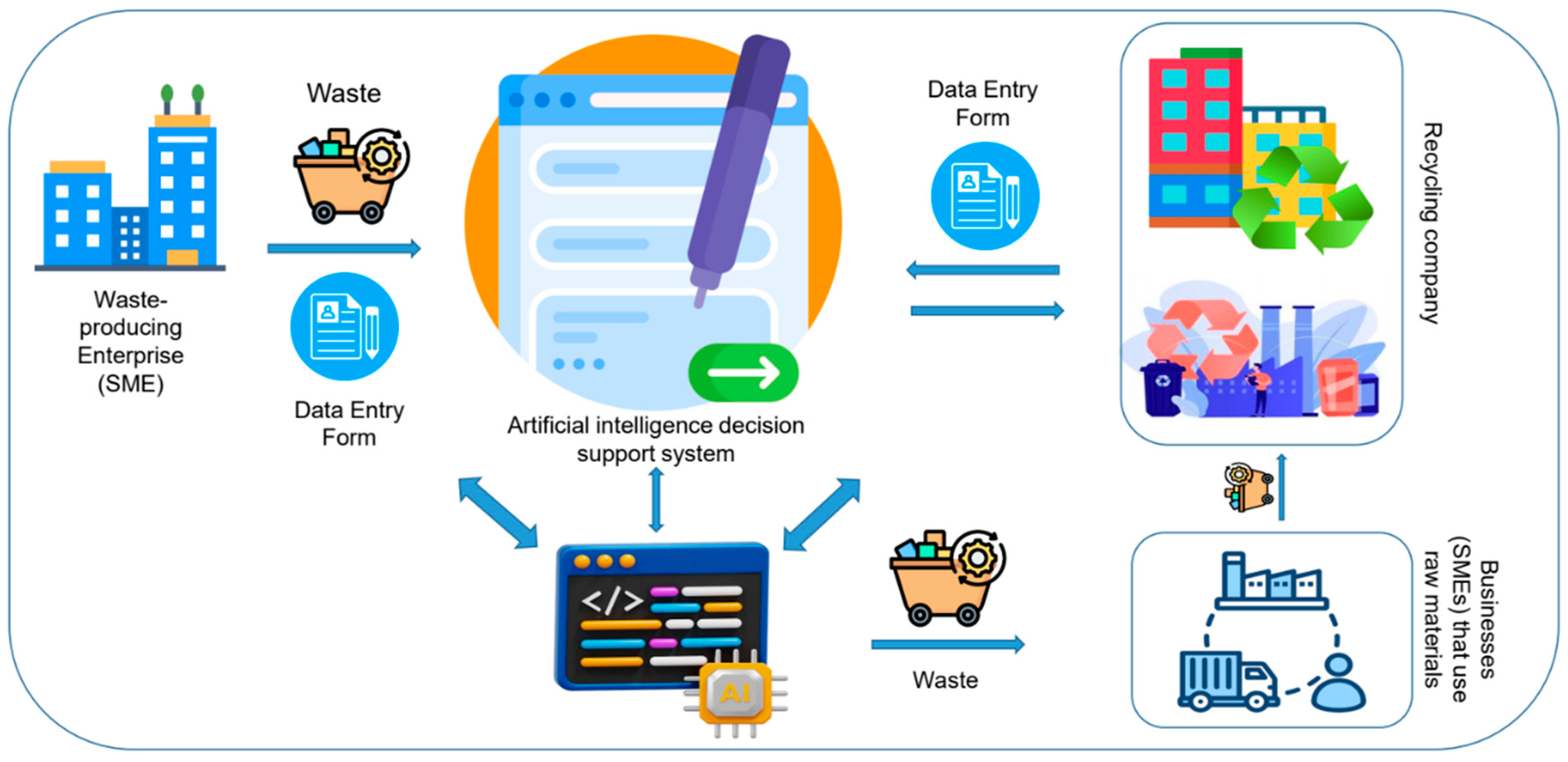
The digital platform at the heart of the model brings these three groups of actors together to create a transparent, fast, and sustainable supply chain. Data such as waste quantities, types, raw material needs, logistics conditions, and sustainability performance are shared through the platform, and optimized collaborations are established using AI-powered matching algorithms. The digital network proposed in the model has a decentralized structure that allows for simultaneous data sharing. After each actor registers on the platform, they enter their daily waste quantities or the raw materials they need into the system. A visual representation of the entire DREAM model is shown in
Figure 1.
The AI-powered software analyzes the data entered into the system by the actors and suggests potential matches, taking into account the actors’ sustainability performance. This process consists of the following stages:
Data Entry: Businesses enter information such as the type and quantity of waste and raw materials needed, estimated delivery time, and logistics details. Businesses that generate waste (WPBs) define their data on the AI-powered digital platform, including waste type, quantity, location, date of waste generation, timeframe for recycling, and the company’s sustainability indicators. Similarly, on the digital platform, recycling companies define the types of recyclable materials, capacity, and quality classes; businesses that will use waste as raw materials define the types and quantities of raw materials requested, as well as indicator data related to their sustainability goals.
Sustainability Indicators: Each actor defines indicators related to their environmental performance within the system (e.g., carbon footprint, energy efficiency, water use, etc.).
Matching and Bidding Process: The system ranks suitable matches. Businesses can make mutually beneficial pricing and logistics offers. The AI decision support system evaluates the data entered by businesses into the digital platform in terms of suitability, considering features such as material type and technical specifications; in terms of geographical proximity, considering logistics costs; in terms of timeliness, considering waste generation and the timing of need; in terms of environmental and social performance indicators; and in terms of price offers with alternatives such as auction or fixed price models, and makes matches.
Contract and Monitoring: When the parties reach an agreement, a digital contract is generated in the system, ensuring transaction traceability.
This structure aims to maximize both economic and environmental benefits. It also increases digitalization and sustainability awareness among SMEs.
One of the most innovative elements of the model is the integration of artificial intelligence in decision-making processes. This system, supported by multi-criteria decision-making (MCDM) methods, offers optimal matching suggestions to businesses based on factors such as sustainability scores, past transaction histories, logistical suitability, and regional balance. Thus, collaborations with high environmental performance are prioritized over price-driven partnerships.
Artificial intelligence algorithms improve the recommendation systems over time through learning. For example, the continuous exchange of a specific type of waste between firms in a given region can signal the need for a new recycling facility in that area. The model thus generates strategic information for local planning and sustainable infrastructure investments.
The model provides multifaceted contributions not only at the economic level but also to environmental and social sustainability. Waste recovery reduces pressure on natural resources, lowers carbon emissions, and saves energy. Furthermore, waste utilization supports regional development, creates new jobs, and contributes to the spread of sustainable business models.
The DREAM model reduces production costs by providing direct access to secondary raw materials, enabling SMEs to participate in the sustainable transformation process actively and thereby creating a cost advantage. It facilitates compliance with environmental regulations by ensuring the traceable, documentable disposal of waste; it also provides advantages in green certification processes and public tenders. It increases the digital maturity of SMEs through data management and the integration of artificial intelligence.
6.2. Examples of Scenarios Regarding the Operation of the Model
The DREAM model is a three-actor model that begins with the prior entry of descriptive information about the actors. The model’s operation can show a two-way flow based on waste supply or raw material demand. In other words, two separate scenarios can emerge during the operation.
6.2.1. Waste Supply-Based Operation Scenario
The waste supply process begins when Waste Generating Enterprises (WGEs) enter information about waste generated by their production activities into the system. The information requested from companies for this data entry process is summarized in
Table 2. In addition to basic waste classification, technical material properties such as purity levels and known contaminants are important for ensuring technical compatibility and operational feasibility in industrial symbiosis processes, particularly in recycling-intensive sectors.
The Waste - Raw Material Matching System (WRM) must first register by defining its “contact and company information” in the system. All actors must define this information to register with the system. The process begins when all the information in
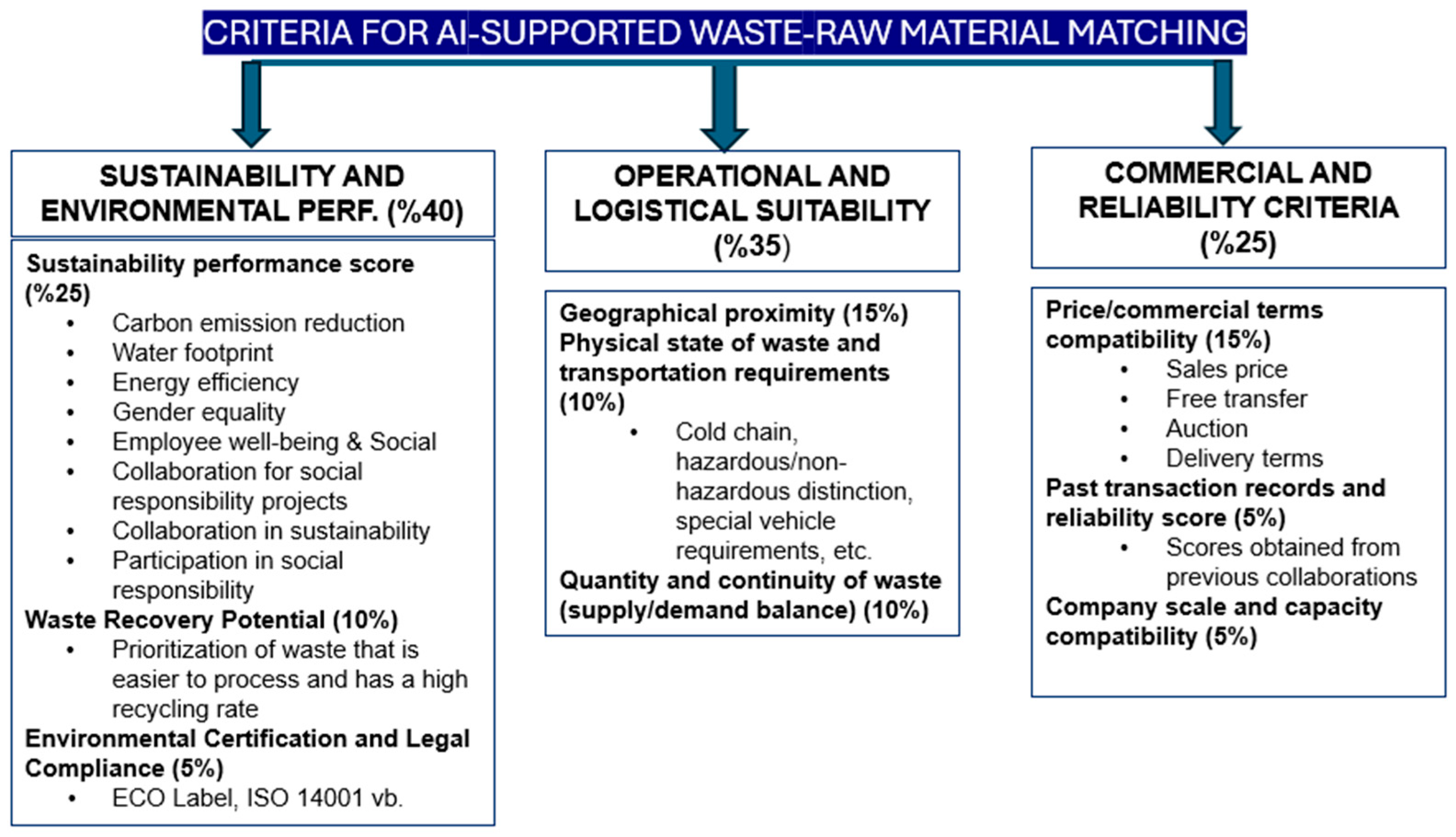
Table 2 is entered into the AI-Supported Waste–Raw Material Matching System. The AI engine lists the companies in the region that need this type of raw material. The Raw Material User Company (RWC) or Recycling Company (RTC) enters a request into the system and submits a bid. The AI-supported waste–raw material matching system prioritizes the bid with the highest sustainability score. Matching considers not only the sustainability score but also operational and logistical suitability (geographical proximity, physical state of the waste and transportation requirements, quantity and continuity of the waste) and commercial/reliability criteria (price/compatibility of commercial conditions, past transaction records and reliability score, company scale and capacity compatibility (SME, large, etc.). All these aspects are combined with a certain percentage weighting as shown in
Figure 2, and the matching is performed. The process is initiated with digital approval.
The weighting structure presented in
Figure 2 is intended as a conceptual example to demonstrate the operational logic of the AI-supported matching system, rather than as a fixed or universal scoring mechanism. In practical applications, weighting coefficients may vary depending on sectoral characteristics, regulatory priorities, environmental risk levels, and sustainability objectives. Sustainability-related indicators such as carbon reduction, resource efficiency, environmental compliance, and circularity performance may receive significantly greater weight in sectors with more pronounced environmental sensitivity and regulatory pressures. The proposed AI-supported structure is therefore designed as a flexible, adaptive decision-support mechanism that can be calibrated to different industrial contexts and sustainability priorities.
6.2.2. Raw Material Demand-Based Processing Scenario
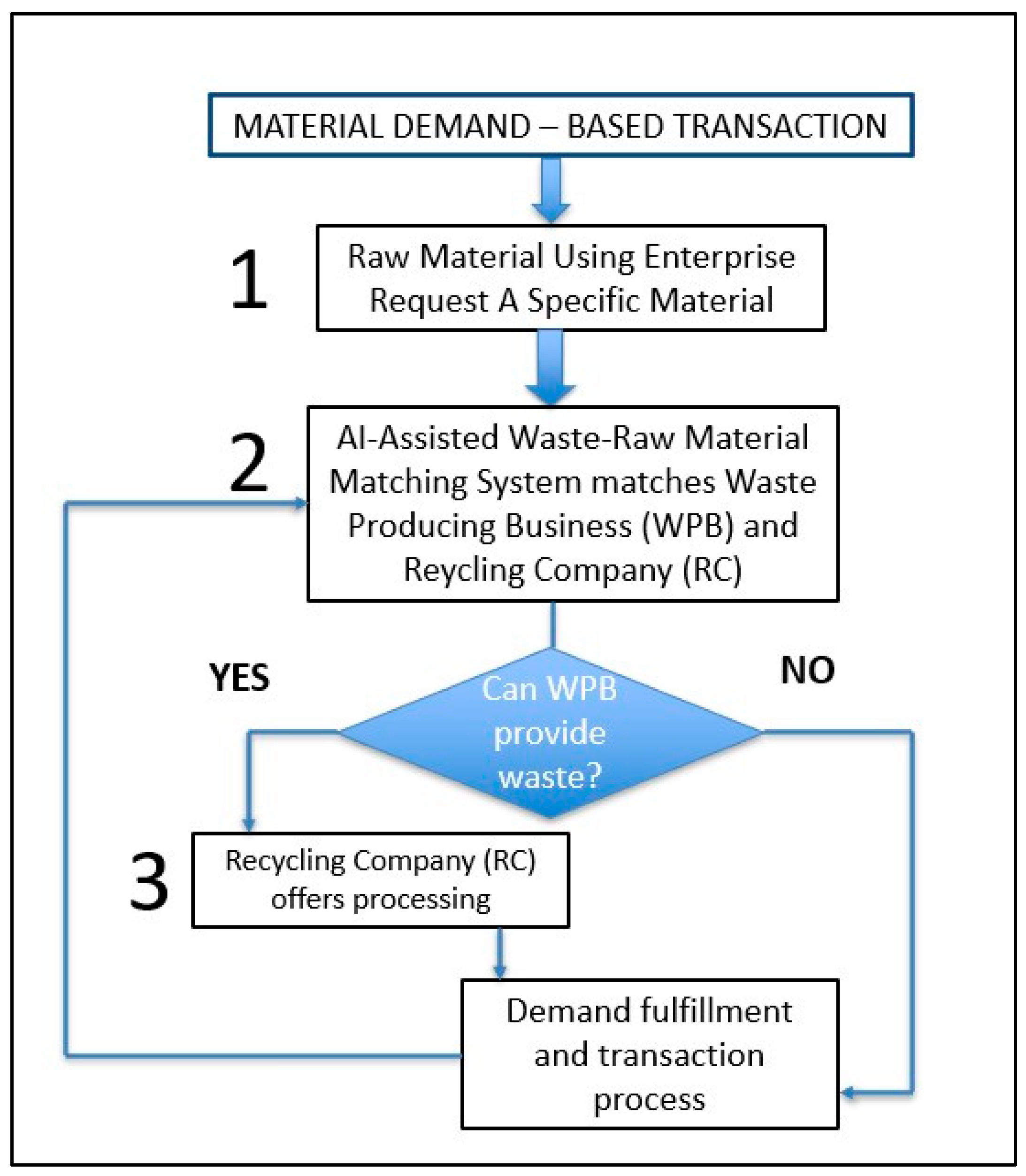
In this scenario, Raw Material User Companies (RWCs) request specific materials (e.g., recycled aluminum). The AI-powered waste–raw material matching algorithm matches RWCs and RTCs based on historical data, current stock levels, and other criteria. RWCs indicate they can supply waste in response to demand, and RTCs offer processing.
Figure 3 shows the flow for the raw-material-demand-based processing scenario.
7. Discussion
This study presents the DREAM model, which will contribute to waste recycling in line with the fundamental principles of the circular economy. Literature-based country analyses conducted within the scope of the study show that, even in countries with distinct economic and institutional contexts, such as Türkiye, Jordan, Portugal, and Croatia, common structural problems limit the development of industrial symbiosis practices among SMEs. In particular, the lack of data on waste flows, limited information sharing between businesses, and the inadequacy of digital coordination mechanisms to facilitate symbiotic collaborations are among the significant obstacles in these countries. In this context, the proposed DREAM model aims to support circular economy practices through an AI-powered digital platform that brings together waste-generating businesses, recycling companies, and businesses that use waste as raw materials. The model designs a digital ecosystem that not only delivers economic benefits but also centers environmental and social sustainability in decision-making. In this respect, the model offers a multidimensional collaboration mechanism that also considers sustainability indicators, unlike traditional linear supply chain structures. From an operational perspective, the DREAM model offers several advantages, particularly for SMEs. Easier access to secondary raw materials through the platform can reduce production costs and increase resource efficiency.
Furthermore, data sharing enabled by the digital platform allows for real-time sharing of waste quantities and raw material needs, thus enabling more effective coordination in supply chains. In addition, considering sustainability indicators in matching processes enables collaboration between businesses that are not only price-focused but also consider environmental performance. The impact of the proposed digital ecosystem extends beyond the business level. Recording and analyzing waste–raw material flows digitally can significantly contribute to regional planning and policy development processes. This data can strengthen recycling infrastructures and enable more balanced resource management.
The findings of this study are consistent with previous literature, which emphasizes that industrial symbiosis implementation depends not only on technical infrastructure but also on institutional coordination, collaboration networks, and information-sharing mechanisms. Similar barriers related to coordination and implementation complexity were also highlighted by Oughton et al. [
6] and Sellitto et al. [
9].
In addition, the comparative findings support the argument that digital coordination systems and platform-based collaboration mechanisms can play a critical role in improving industrial symbiosis processes among SMEs. This perspective is also aligned with the literature on industrial symbiosis business models and circular economy transition processes discussed by Rentería Núñez and Pérez-Castillo [
7].
Furthermore, the findings demonstrate that the mere existence of circular economy policies may not guarantee effective implementation of industrial symbiosis. Similar implementation issues related to institutional context, facilitating actors, and development strategies were also discussed by Sgambaro et al. [
8].
Moreover, AI-powered matching mechanisms can learn and evolve, providing decision-makers with strategic insights into sustainable resource management. For the effective implementation of the DREAM model, taking certain strategic steps is crucial. Firstly, local governments and institutions, such as chambers of commerce and industry, need to take an active role in disseminating these digital platforms and encourage businesses to participate. Secondly, standardizing sustainability indicators at national and international levels can increase the reliability of decision-making processes and enable comparability among businesses. Thirdly, expanding digital capacity-building training and technical support programs, especially for SMEs, can accelerate businesses’ digital transformation. However, the study has some limitations. The research is based on a literature review and does not include empirical data. Therefore, the practical applicability and performance of the proposed DREAM model have not yet been tested. In addition, country analyses are limited to existing literature and secondary data. Future research that includes pilot applications of the model and empirical analysis of its economic, environmental, and operational impacts will make significant contributions to literature. In addition, integrating technologies such as big data analytics and blockchain-based smart contracts into the model can further strengthen the platform’s transparency, reliability, and traceability.
8. Conclusions
This study examined the readiness of SMEs for industrial symbiosis practices in Türkiye, Jordan, Portugal, and Croatia. It proposed the DREAM model as a digital platform concept to support circular economy practices. The comparative country analyses demonstrated that, despite differences in institutional and economic structures, the four countries face similar barriers, including limited digital infrastructure, insufficient information sharing, weak cooperation mechanisms, and restricted institutional support for industrial symbiosis practices.
The findings indicate that EU member states such as Portugal and Croatia have relatively more developed regulatory and policy frameworks for implementing the circular economy; however, significant implementation gaps remain. Türkiye demonstrates significant potential in industrial capacity and recycling infrastructure but still requires stronger institutional coordination and digital integration mechanisms. Jordan, on the other hand, faces more substantial structural and technological limitations due to resource constraints and limited infrastructure capacity.
Based on these findings, the DREAM model was proposed as an AI-supported digital supply network connecting waste-generating businesses, recycling companies, and firms that use secondary raw materials. The model contributes to the literature by integrating sustainability-oriented matching mechanisms, digital data sharing, and industrial symbiosis processes within a unified conceptual framework. Unlike traditional waste exchange systems, the proposed model incorporates environmental and social sustainability indicators into decision-making and matching processes, alongside economic considerations.
From a practical perspective, the model may help SMEs reduce production costs, improve resource efficiency, increase waste recovery, and facilitate compliance with environmental regulations. Furthermore, the digital monitoring and matching mechanisms proposed in the model can help develop more transparent and traceable circular economy ecosystems.
The study also has several limitations. The research is based on a literature-driven comparative analysis and does not include empirical testing or pilot implementation of the proposed model. Therefore, the operational effectiveness and real-world applicability of the DREAM model remain to be tested in future studies. In addition, the country assessments relied solely on available secondary data and literature.
Future research may focus on pilot applications of the model in industrial zones, empirical evaluation of economic and environmental impacts, and the integration of advanced technologies such as blockchain, big data analytics, and smart contracts into industrial symbiosis platforms. Comparative quantitative studies examining industrial symbiosis readiness across larger country groups may also contribute to the development of more scalable and policy-oriented circular economy strategies.




 ,
,