Article

Linking Urban Transport and Livability: A GIS-Integrated Multicriteria Decision-Making Evaluation in Kanarya İstanbul


by
Berna Aksoy
* and
Mustafa Gursoy
Department of Civil Engineering, Yildiz Technical University, Istanbul 34220, Türkiye
*
Author to whom correspondence should be addressed.
Sustainability 2026, 18(10), 5058; https://doi.org/10.3390/su18105058 (registering DOI)
Submission received: 4 April 2026 / Revised: 10 May 2026 / Accepted: 12 May 2026 / Published: 18 May 2026

Abstract

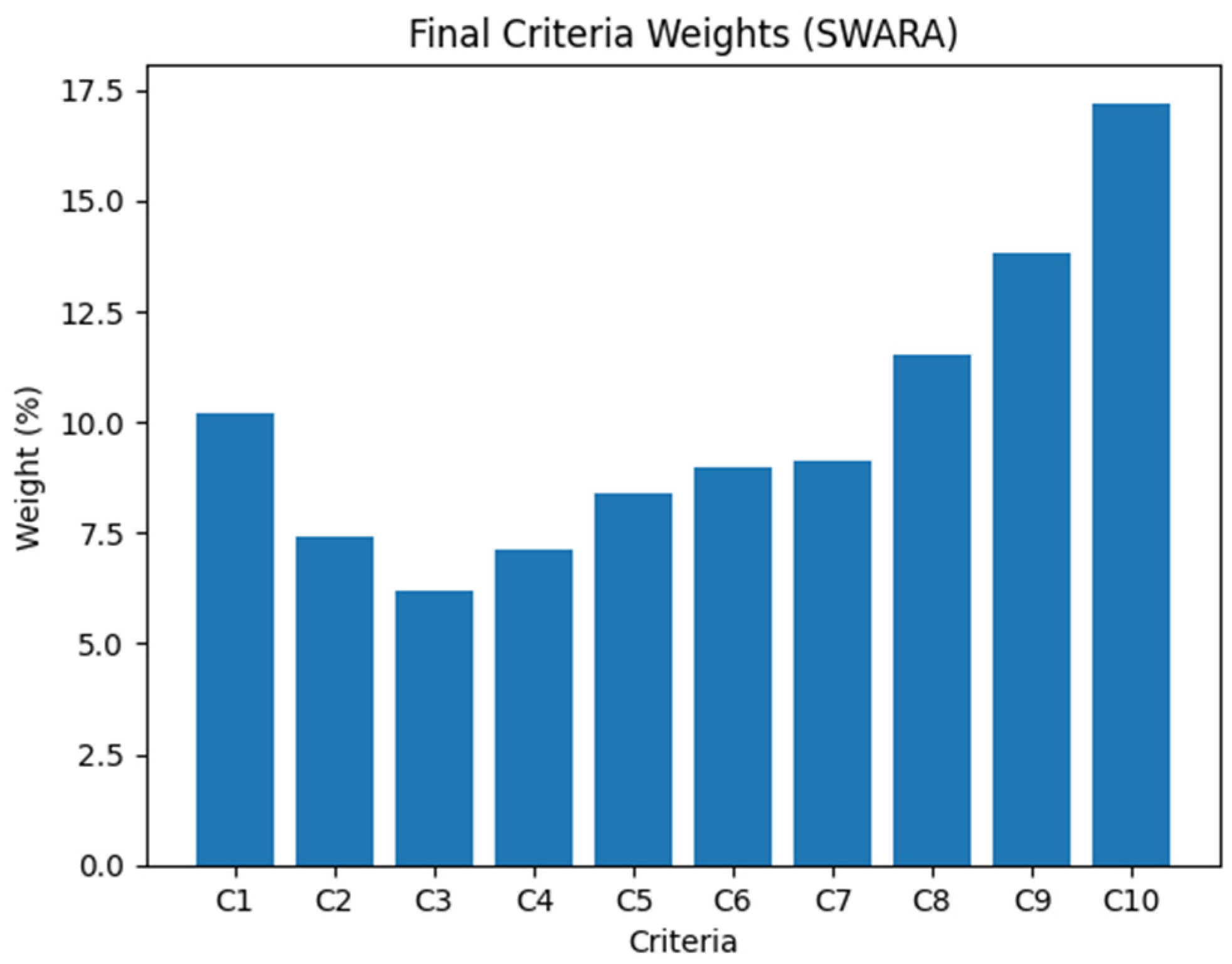
The Copenhagen 10-step method is a set of policies that originated in the 1950s to reduce vehicle traffic in Copenhagen, which was heavily impacted by traffic. These policies are incorporated into a different dynamic on a global scale every day and are adopted while maintaining relevance. These policies, advocated in the context of climate change and carbon emission targets, as well as livability and health-focused urbanization, justice, and accessibility in transportation, are criticized for potentially negatively affecting low-income groups and commercializing urban transformation. Furthermore, they require adaptation because their applicability is seen as limited in terms of localization. In this context, the adaptability of the method to different social and spatial contexts has become a critical research topic, particularly in local studies, where application is more important and the order of implementation becomes of great importance. Within the scope of this study, a Copenhagen 10-step prioritization study was conducted specifically for the Küçükçekmece Kanarya Neighborhood, where low-to-middle socioeconomic groups live, and which has been declared a risky area in terms of building stock. Accordingly, a two-phase study was conducted. In the first phase, transportation and planning experts were asked to prioritize the 10 steps, and the timing of each implementation was determined based on the resulting ranking. In the second phase, accessibility analyses for the region were conducted using GIS (Geographical Information Systems)-based spatial data, such as accessibility, slope, and the distribution of urban facilities. Subsequently, these two phases were combined to create a simple prioritization framework for the areas of greatest concern in Kanarya, as well as for urban renewal, transportation, and government investment plans. According to the SWARA results, increasing bicycle use (C10) was the most important criterion at 17.2%, followed by making the bicycle the primary mode of transportation (C9) at 13.8% and adapting the city to seasonal changes (C8) at 11.5%. This study, which is significant for its focus on a specific region at the local implementation level, presents a straightforward model—based on concrete findings—for prioritizing sustainable transportation and urbanization policies in socioeconomically vulnerable areas. In doing so, it contributes to aligning theoretical approaches with practical field applications.:

1. Introduction

Metropolises are areas that can attract migration due to the equal opportunities they offer individuals. In cities such as Istanbul, which continue to expand towards their outer peripheries, socioeconomic inequalities have led to the emergence of many vulnerable neighborhoods throughout the city’s growth process. These vulnerable neighborhoods have taken shape based on relationships arising from migration, such as neighborly relations, cultural segregation, and proximity to employment, but they are fundamentally caused by income inequality. Low-income groups strive to acquire housing in areas that are close to employment opportunities but have lower land prices and are close to the city center. If there is a political authority where the tradition of urban planning has not yet taken root, the housing produced by the state for low-income groups is insufficient, and informal settlements are ignored. Over time, this situation is the main reason for the formation of vulnerable neighborhoods with low socioeconomic characteristics pushed to the periphery of the city. Due to the relatively weaker infrastructure, transportation, and health services, these neighborhoods, which are close to the center but on the periphery, gradually become completely vulnerable. Their proximity to the center brings another disadvantage over the years. The dynamics of the housing market in increasingly valuable land, the age of buildings in the area, and the state’s well-developed planning tradition force this vulnerable group into the urban transformation process. Consequently, these neighborhoods are under dual pressure, both in terms of spatial vulnerability and social vulnerability. Liveability, health-focused urbanization, transportation, and accessibility policies observed worldwide can sometimes commercialize urban transformation and negatively affect low socioeconomic groups. Furthermore, the localization of these policies -or more precisely, their full adaptation to the local context- requires various adaptations, particularly in vulnerable neighborhoods, where the application is more important and the order of implementation becomes crucial.
The Copenhagen example, which is of considerable importance in urban planning, offers a comprehensive approach that aligns well with human-centered components and sustainable transportation policies. The applicability of the criteria implemented in Copenhagen not only for metropolitan areas but also for vulnerable neighborhoods will contribute to an inclusive planning approach. Such an approach also carries strategic value in terms of reducing urban inequalities and strengthening the participation of vulnerable groups in urban life.
In this study, SWARA (Step-wise Weight Assessment Ratio Analysis), one of the multi-criteria decision-making methods that is critical for correctly determining priorities in complex planning problems, was used. Thus, how transportation-focused planning decisions are systematically addressed by experts in vulnerable neighborhoods was examined. This study aims to assess the applicability of the Copenhagen 10-step model in a socio-economically vulnerable neighborhood, identify priority interventions using the SWARA method, and support planning decisions through spatial accessibility analysis. The remainder of the article is organized as follows: Section 2 presents a literature review; Section 3 describes the methodology used; Section 4 and Section 5 present the results and discussion; and Section 6 summarizes the findings of the study.

2. Literature Review

When examining the urban planning literature, it is evident that the Copenhagen experience, which began in the 1950s, is studied as a precursor model in the context of reducing vehicle traffic and strengthening bicycle- and pedestrian-focused transportation. The Danish Copenhagen example has addressed issues such as pedestrians, public spaces, human scale, social life, and traffic in a holistic approach. It has established them as common principles known as the ten steps [1]. These principles, which have come to the fore in Melbourne and Tokyo with the restoration of street life to the city center, in New York and Venice with the long-term experience of car-free urban living, in London, Barcelona, and Stockholm with square arrangements, and in Curitiba with planned urbanization and public transportation systems, have shaped the tradition of urbanization in large cities [2]. Although reducing vehicle traffic and strengthening mobility-focused transportation are often described and perceived as problems mainly affecting large cities, small-scale cities are also areas that need to be carefully examined in the context of sustainability, as they are home to at least a quarter of the world’s population [3]. Again, from a contextual perspective, the Copenhagen model serves as an example not only in reducing traffic but also in improving the quality of life in urban areas, reducing carbon emissions, and achieving healthy urbanization, and similar approaches have been demonstrated in San Francisco, where pedestrian environment factors have been integrated into travel demand modeling to support livability-focused urban projects [4]. In many European cities, practices such as pedestrianization, reduction in parking areas, and expansion of bicycle networks [5] are addressed in conjunction with sustainable transportation strategies. It is stated that the transition to sustainable transportation will be achieved with public trust and acceptance [6]. For all of these strategies, the solution must be spatially adapted in local applications. Geographical location, social diversity, and public acceptance are key factors in the implementation of sustainable transportation. [7]. Adapting sustainable transportation policies to specific locations is particularly important in developing countries. This is because a solution that works in a developed country may not be suitable for another location; factors such as cultural norms, economic resources, and spatial structure directly affect adaptation [8]. Therefore, a separate application is required for each location. For example, vulnerable neighborhoods that have emerged on the outskirts of cities are frequently discussed in the literature due to income inequality, the wild dynamics of the housing market, and planning deficiencies. For example, a study conducted in 1985 [9] links gentrification, abandonment, and displacement phenomena within New York City’s urban transformation and displacement processes. It is an analytical study explaining why vulnerable neighborhoods are left to decay on one hand, while being forced into urban transformation on the other, and it is a frequently referenced fundamental work on urban inequalities. Another study [10], which introduced the concept of “advanced marginality” to the literature to describe the situation of groups that are excluded, unable to access resources at the center of society and left on the periphery, explains the concentration of poverty in certain neighborhoods, the labeling of these areas as problematic, and the weakening of education, health, and employment in these areas, leading to the economic and sociological fragility of the neighborhood [10]. Studies conducted within the framework of sustainable transportation emphasize that transportation and urbanization policies may increase the risk of commercialization in low-income neighborhoods, but that equitable solutions can be produced with the right prioritization and integration of social policies. In essence, it emphasizes the necessity of integrating transport with housing, health, land use, and social policies [11,12]. Recent empirical work also highlights how equity in public transport accessibility should be considered as a core dimension of sustainable mobility [13]. Some recent studies also support this argument. A 2022 study [14] emphasizes that accessibility research should not be limited to measuring inequalities, but rather should be grounded in a framework based on a clear standard of justice. Another study [15] showed that transportation poverty directly translates into social exclusion. According to this study, transportation costs, equivalent to 7.6–27.4% of daily wages, deepen social inequality and require urgent transportation, urban planning, and social policy interventions. Durand and colleagues [16] revealed that digital inequalities exclude vulnerable groups by limiting public transport use. In other words, mere access to technology is not sufficient; factors such as algorithm-based processes, the individuality of people’s digital skills, and user-friendly design can create a new disadvantage in transport. Another study conducted in 2024 [17] proved that the cost of accessing public transport is directly linked to socioeconomic structure. It examines the variability in the relationship between employment access and housing prices for neighborhoods at different socioeconomic levels. A study conducted in the same year [18] examined how physical and social barriers limit access to public transportation, leading to transportation-related social exclusion in the case of Dhaka. According to the findings of the study, more inclusive transportation policies are essential to improve the well-being of older adults, particularly in low- and middle-income countries. Finally, Bruno and colleagues [19] examined the issue of transportation-related social exclusion for inclusive transportation planning and proposed a methodological roadmap that could be applied in vulnerable neighborhoods in Amsterdam. Theoretical discussions in urban planning and transportation literature do not clearly indicate which interventions should be prioritized in vulnerable neighborhoods. Therefore, decision-makers also need analytical tools that allow them to evaluate multi-dimensional criteria together. Recent studies indicate that the integration of multi-criteria decision-making methods with spatial justice is becoming increasingly important, particularly in vulnerable urban areas [20]. Furthermore, decision models developed in the context of urban regeneration demonstrate that these methods can be directly applied to the formulation of inclusive transportation strategies and the establishment of investment priorities [21]. In this context, research shows that spatial equity assessments focused on accessibility, inclusive transportation approaches, stakeholder-centered decision-making processes, and the quality of bicycle infrastructure play a significant role in shaping sustainable urban transportation policies [22,23,24,25,26,27]. At this point, multi-criteria decision-making methods, particularly Step-wise Weight Assessment Ratio Analysis (SWARA), have become one of the most frequently used methods in recent years [28]. SWARA enables the systematic determination of criterion weights based on expert opinions [29] and facilitates the identification of policy priorities in different contexts [30]. Thus, it provides a robust framework for determining which steps of urban transportation strategies and spatial transformation policies should be implemented first and which should follow. The main reason for choosing the SWARA method in this study is that it allows the importance levels of the criteria to be weighted step by step based on expert opinions. While traditional MCDM (Multi-Criteria Decision Making) methods (e.g., AHP (Analytical Hierarchy Process), ANP (Analytic Network Process)) proceed through pairwise comparisons, the direct ranking and relative importance assessments obtained from experts in SWARA make the process faster, more flexible, and more understandable [28]. Furthermore, SWARA allows for the gradual reflection of differences in the relative importance of criteria [31], making it a more suitable method for contextual and sensitive decision areas such as transportation prioritization in vulnerable neighborhoods. The literature also demonstrates that SWARA is preferred in a wide range of areas, including energy technologies, transportation planning, human resources, and sustainability assessments [29,32]. Thanks to these features, SWARA both facilitates experts’ assessments and provides decision-makers with an applicable and transparent prioritization framework. Research on sustainable transportation and urban transformation policies in Turkey has mostly focused on the metropolitan level [33,34]. However, there is a significant gap in the literature regarding prioritization, particularly of transportation-related criteria, at the scale of vulnerable neighborhoods. In low-income and high-risk areas such as Küçükçekmece Kanarya Neighborhood, the systematic consideration of planning decisions using MCDM methods constitutes an original contribution to the literature. The Copenhagen example, which is of considerable importance in urban planning, offers a comprehensive approach that aligns well with human-centered components and sustainable transportation policies. The applicability of the criteria implemented in Copenhagen not only for metropolitan areas but also for vulnerable neighborhoods will contribute to an inclusive planning approach. Such an approach also carries strategic value in terms of reducing urban inequalities and strengthening the participation of vulnerable groups in urban life.
Existing studies largely focus on metropolitan-scale strategies or evaluate accessibility and equity dimensions separately; in contrast, there are only a limited number of studies that offer an integrated framework to prioritize “neighborhood”-level transportation interventions, particularly in socioeconomically vulnerable areas. By shedding light on similar processes in practice, this study aims to fill this gap at the local level, particularly in vulnerable neighborhoods. In this context, the study contributes to the literature by combining SWARA with GIS-based spatial analysis to develop a context-sensitive and functional prioritization framework.

3. Methodology

The SWARA method, briefly introduced in the literature review, forms the core methodological framework of this study. Within the scope of this study, a problem definition was first established. The problem is to determine the applicability and order of implementation of the Copenhagen 10 criteria at the neighborhood level, which is highly vulnerable. For this purpose, a two-stage methodology was proposed. First, interviews were conducted with 11 experts for the 10 criteria, and a SWARA was performed to determine the weight of the criteria. Accordingly, it was determined which criterion should be implemented first.
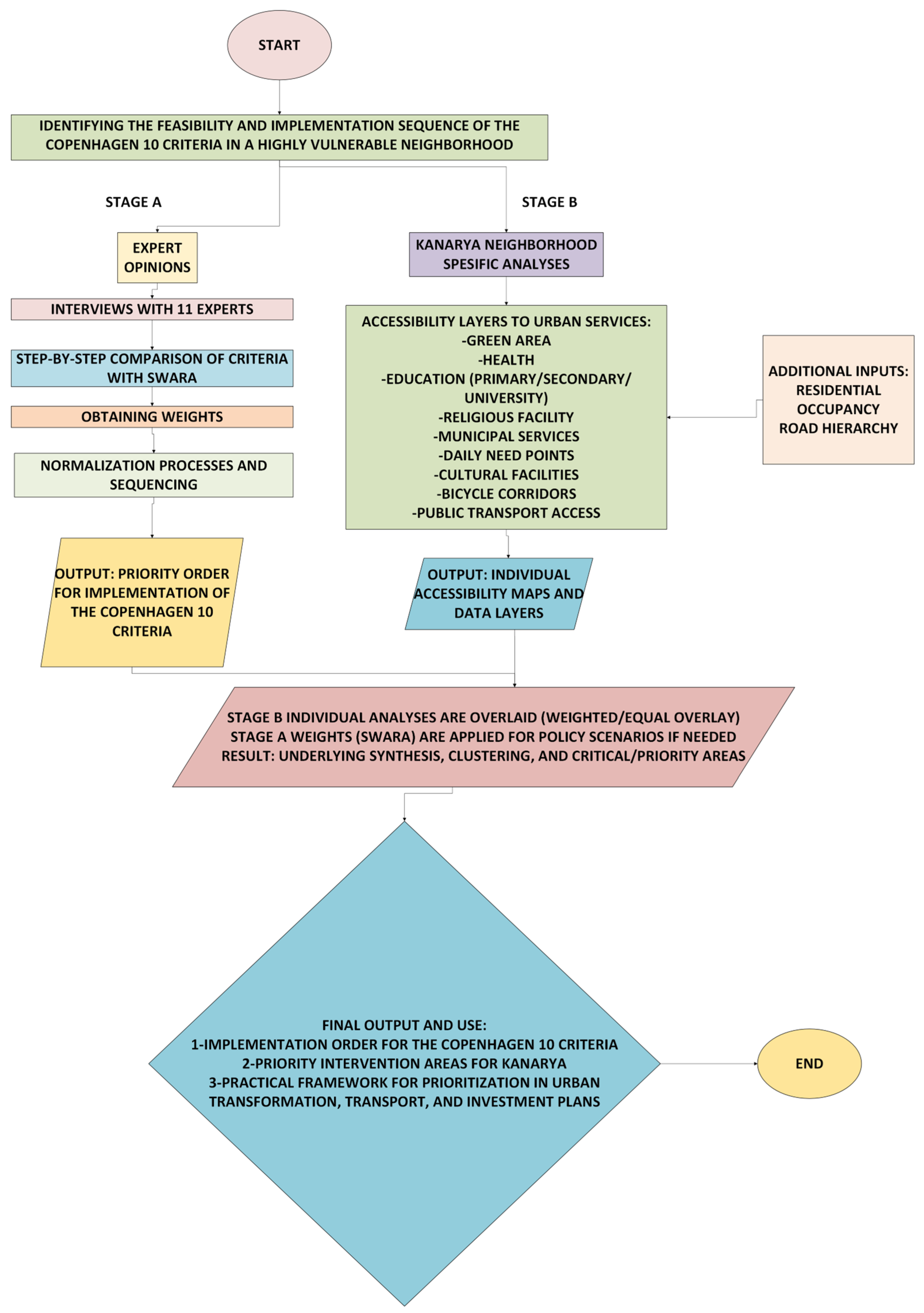
On the other hand, individual analyses were conducted for the Kanarya Neighborhood to evaluate accessibility to urban services within a multi-criteria framework. These individual analyses were integrated to prepare a synthesis basis. Green space, health, education, religious facilities, municipal services, daily needs areas, cultural facilities, bicycle corridors, and public transportation access were analyzed separately, with settlement density and road hierarchy layers also used as additional inputs. In this context, the study provides a practical framework for prioritization in urban transformation, transportation, and investment planning. Accordingly, the weights obtained using the SWARA method were used to interpret and prioritize the findings from GIS-based accessibility analyses, thereby integrating the results of spatial analysis with an expert-based assessment. The flowchart related to the study is provided in Figure 1.

3.1. Study Area and Conceptual Framework

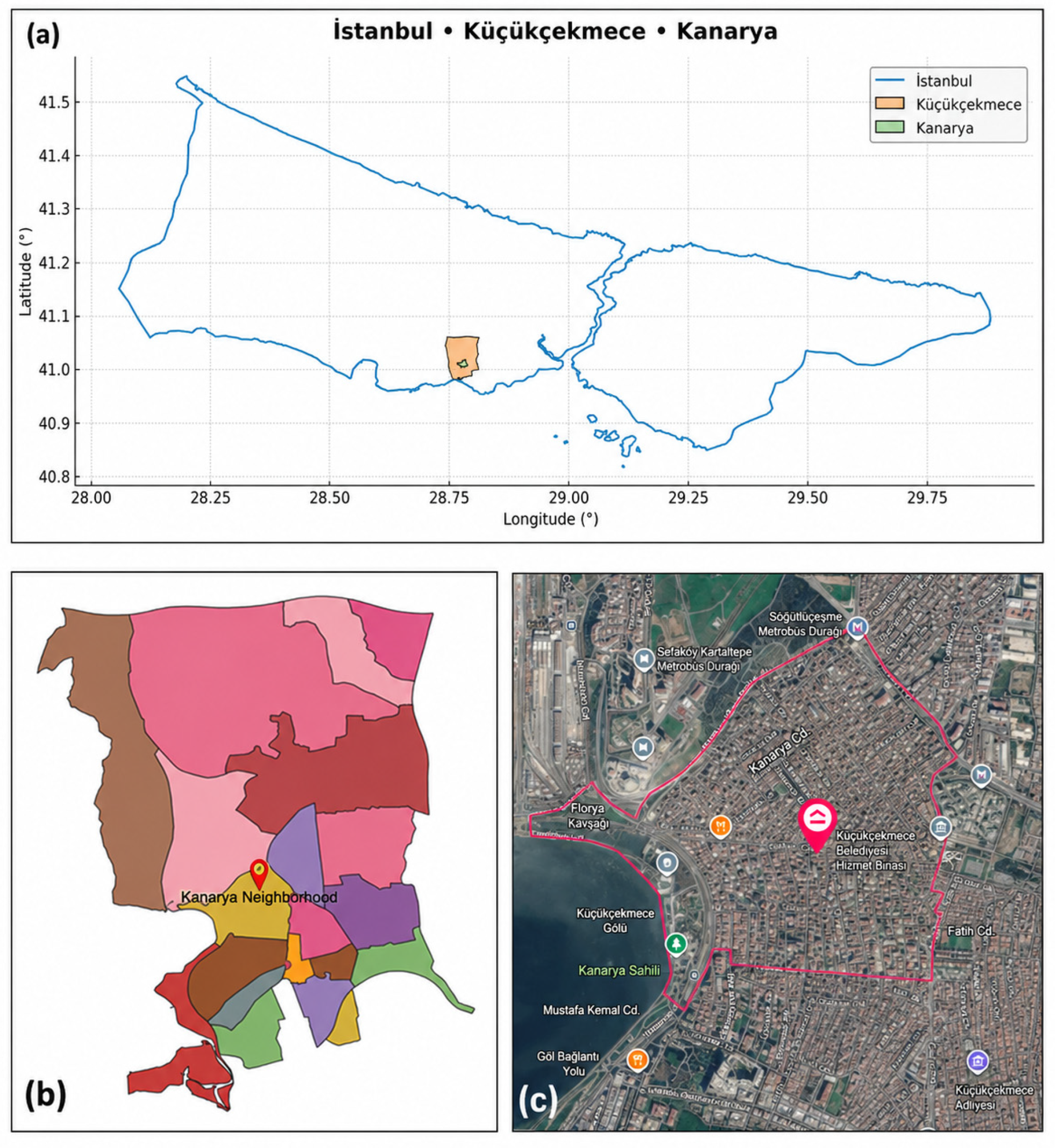
The study area is defined as the Kanarya Neighborhood in the Küçükçekmece District, Istanbul. According to the address-based population registration system data [35], 69,146 people live in the neighborhood in 2024. The Küçükçekmece Marmaray Station forms the backbone of transportation in the neighborhood. In addition, numerous bus and minibus lines serve the neighborhood. Considering the population registry records of people living in the neighborhood, it is clear that the neighborhood has a cosmopolitan structure [35,36]. In 1966, the neighborhood had a population of approximately 1000 to 1200. In the early 1990s, it received a large influx of immigrants, particularly from the former Yugoslavia and southeastern Turkey, due to the presence of many industries in the Küçükçekmece district and the availability of relatively inexpensive housing. Following housing problems in 1993, local authorities decided to increase the number of floors, and buildings that had been three stories high until then, as well as houses with gardens, were converted into four- to five-story buildings. This situation, which laid the foundation for the problem of irregular urbanization, remains on the agenda due to the high proportion of earthquake-prone buildings in the neighborhood [36]. The main reason for selecting this neighborhood as the study area is its original characteristics. The conceptual framework of this study is to combine sustainable transportation and urban planning approaches with multi-criteria decision-making methods and to adapt the 10-step transformation principles of Copenhagen to the social and spatial problems of Kanarya Neighborhood. In this study, Copenhagen’s 10-step approach was not applied directly but was adapted to take into account the local characteristics of the Kanarya Neighborhood, such as topography, green spaces, and areas for daily needs. For example, the principle of “preserving the low-rise building fabric (C4)” was not interpreted as preserving existing buildings as-is—particularly in this area where the existing building stock is problematic—but rather as re-evaluating them through transformation processes that create a safe and human-scale urban form. In this context, rather than applying each criterion as a fixed standard, they have been evaluated in relation to local socioeconomic conditions, spatial constraints, and existing urban dynamics. Thus, the aim is to integrate the theoretical infrastructure and analytical methods and systematize locally applicable strategies. This is the study’s contribution. Location visuals and satellite imagery of the Kanarya Neighborhood are provided in Figure 2.

3.2. Application of the SWARA Method

The SWARA Method distinguishes itself from other existing multi-criteria decision-making approaches by its ability to account for situations in which the weight of one criterion carries relatively greater or lesser importance compared to others. Accordingly, the way in which questions are formulated in the method is shaped by this logic. This feature allows the integration of expert and individual opinions into the process of making rational decisions in a much more practical and systematic manner [28,31].
The SWARA method consists of the following stages [28,31].
Ranking of criteria:
Experts are asked to rank the given criteria. The relative importance scores W i   given by the experts are ranked from highest to lowest.
W ( 1 ) W ( 2 ) W ( i )
Determination of Comparative Importance ( s j ):
The percentage decrease is calculated for each criterion relative to the previous criterion.
s j = W ( j 1 ) W ( j ) W ( j 1 )                                                               j = 2,3 , n .
Calculation of the Coefficient ( k j ):
k j = 1 + s j                                                                                   j = 2,3 , n .
For first criterion k 1 = 1
Computation of the Recalculated Weight ( q j ):
For first criterion; q 1 = 1
For the next ones;
q = q j 1 k j   ,                   j = 2,3 , n .
Normalization of Final Weights ( w j ):
w j = q j i = 1 n q i
Within the scope of the study, SWARA questions were posed to 11 experts. Information regarding the age, professional experience, gender, and field of work of the 11 experts is provided in Table 1. Given the sample size, the method’s expert-based structure, and the participants’ field experience, this was deemed sufficient for the evaluation process.
The questions asked of the experts require a ranking for the following 10 criteria. The criteria were prepared in accordance with the scope of the 10 criteria applied in Copenhagen [1,2]. The ten criteria and the ultimate objectives in determining these criteria are given in Table 2.

3.3. Preparation of Analysis Maps

3.3.1. Establishment of Administrative Boundaries

The administrative boundary map was drawn using DWG format map data obtained from the municipality and OpenStreetMap [37] data in KML format. The WGS 1984 UTM Zone 35N coordinate system was used for the study area, and all data sets were converted to this coordinate system and combined in a common projection. The DWG data was imported into the ArcGIS 10.8.2 software and converted to geodatabase format. SHP format data was obtained from the relevant data sets, the resulting administrative boundary polygons were compared with the neighborhood KML data, and integrated with cadastral information. As a result, a parcel-based base layer was produced.

3.3.2. Transportation Map

Using CAD data obtained from the municipality [38] and BBBike data [39], files converted from Netcad to DWG were imported into ArcGIS, converted to SHP format, and classified according to road widths. As a result, a road classification and transportation network map was obtained.

3.3.3. DEM (Digital Elevation Model) and Elevation Analysis

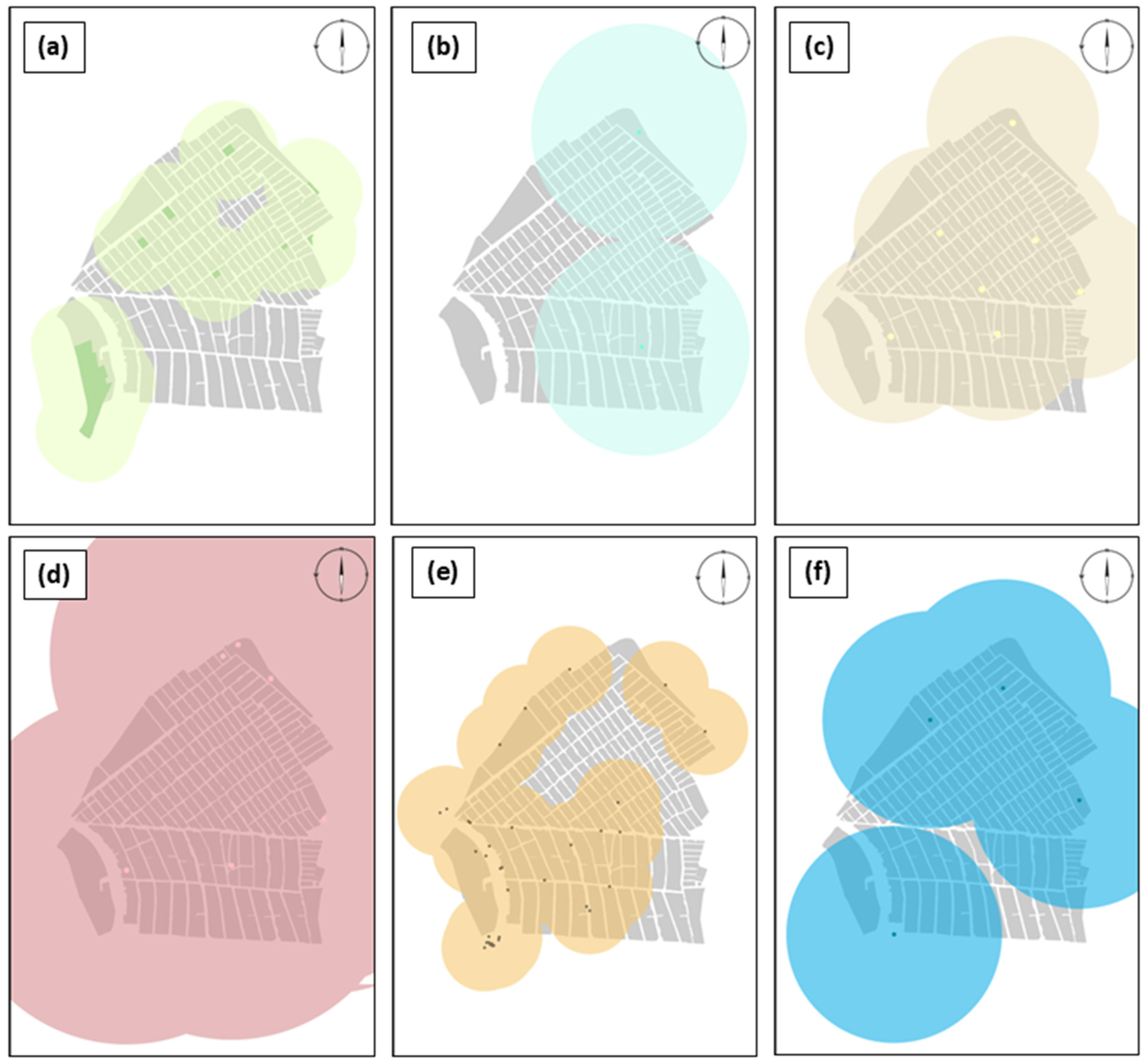
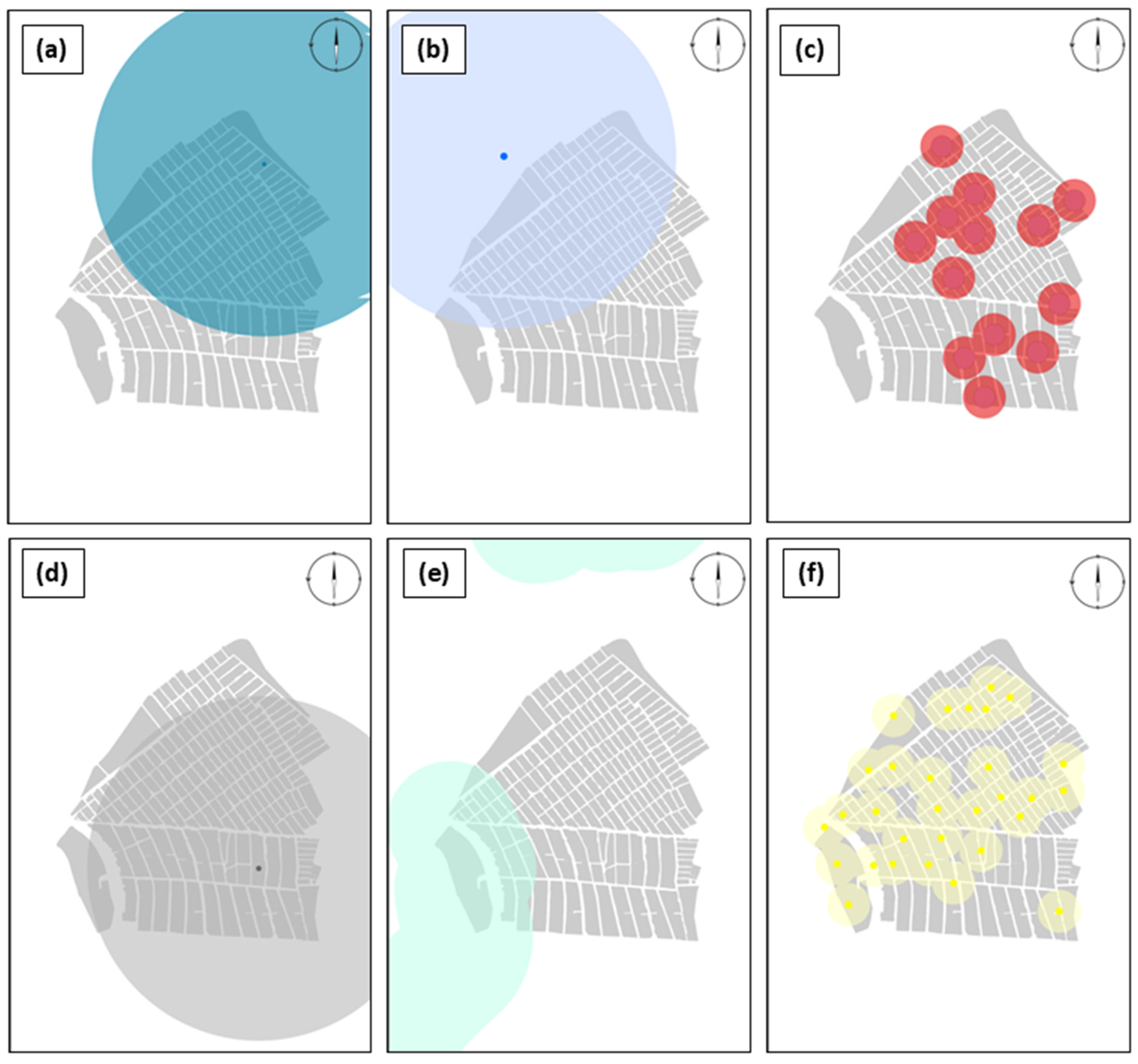
Using USGS EarthExplorer data [40], DEM files were obtained. Elevation and aspect analyses were performed using the data obtained from these files. Following these analyses, buffer analyses were conducted. During the study, ArcGIS 10.8.2, Adobe Photoshop 2021, Netcad 8.5.5, and Autocad 2018 software were used. Maps related to buffer analyses are provided in Figure 3 and Figure 4. While performing buffer analyses, the average values of facility distances specified in the regulations [41] and transportation master plans [42] were used. The related data are provided in Table 3. The buffer distances used in this study are based on the standard ranges recommended in zoning regulations and transportation master plans. However, when determining the final distance values, the high population density, topographic structure, and accessibility requirements of Kanarya Neighborhood were taken into account. To obtain a more comprehensive and realistic accessibility assessment, the average or upper limit values of the recommended intervals were selected.
Analyses reveal significant imbalances in access to urban facilities in Kanarya Neighborhood. The number of green spaces is quite limited, and their locations are unevenly distributed, leaving a significant portion of the neighborhood’s residents outside the standards for daily access. Similarly, health facilities are concentrated in only a few focal points, and access to health services is particularly weak for those living in the southern and peripheral areas. Municipal services and religious facilities exhibit a relatively homogeneous distribution. Small-scale amenities that meet daily needs are concentrated in certain areas but are not evenly spread throughout the neighborhood. Although elementary schools appear to have wide coverage areas, this actually masks marginal access problems in some surrounding areas. Overall, while certain types of services are relatively accessible in the neighborhood, spatial injustice is clearly evident in the areas of health, green spaces, and, to some extent, education. This picture points to a decline in urban quality of life, increased social inequality, and fundamental deficiencies in spatial planning. The fact that only one center covers the entire area for middle school access clearly demonstrates the inadequacy of secondary education opportunities in the neighborhood. Such a structure leads to the majority of students being dependent on a single focal point and an increase in the burden of transportation.
Although regulations do not recommend an access distance for the university building, which is still under construction, a 1000 m buffer has been assigned. The current situation reveals a picture of dependence on external factors in terms of higher education and deepens access inequalities among the young population. Slope analysis shows that there are quite a lot of areas with slopes of over 15%, concentrated particularly in the central and southern sections. This creates serious obstacles in terms of both construction quality and pedestrian access, while also increasing the risk of disasters such as surface runoff and landslides after rainfall. Furthermore, these areas are designated as risk zones in the master development plan. In other words, physical conditions directly negatively impact quality of life. Access to cultural facilities is almost non-existent; there is only one cultural facility in the neighborhood, and its accessibility is minimal. This is a critical deficiency that weakens social life, areas of social interaction, and neighborhood identity.
When examining bicycle corridor access, it is evident that there is only limited coverage along the northern and coastal routes, while bicycle infrastructure has been largely neglected throughout the neighborhood. This situation illustrates that sustainable transportation goals have been overlooked, rendering bicycles largely unusable as a means of transportation in daily life. Finally, although the potential for sun exposure indicates an advantage in certain areas, this is only a natural condition; it cannot compensate for the existing shortcomings in urban planning. Overall, these analyses reveal that the Kanarya Neighborhood has serious deficiencies in many areas, from education to culture, transportation infrastructure to physical environmental conditions. The public amenities necessary for creating a healthy and equitable living environment are largely lacking or unevenly distributed. In particular, weaknesses in educational and cultural infrastructure, access barriers due to slopes, and the lack of bicycle corridors exacerbate spatial injustices and quality of life issues in the neighborhood. The spatial inequalities observed in Kanarya Neighborhood are largely linked to unplanned development and topographical constraints. Construction on steeply sloped terrain resulting from unplanned population growth has made it difficult to distribute public services evenly and has further exacerbated transportation problems, particularly in the outer areas—that is, the periphery—of the neighborhood.

3.4. Synthesis Map Creation and Findings

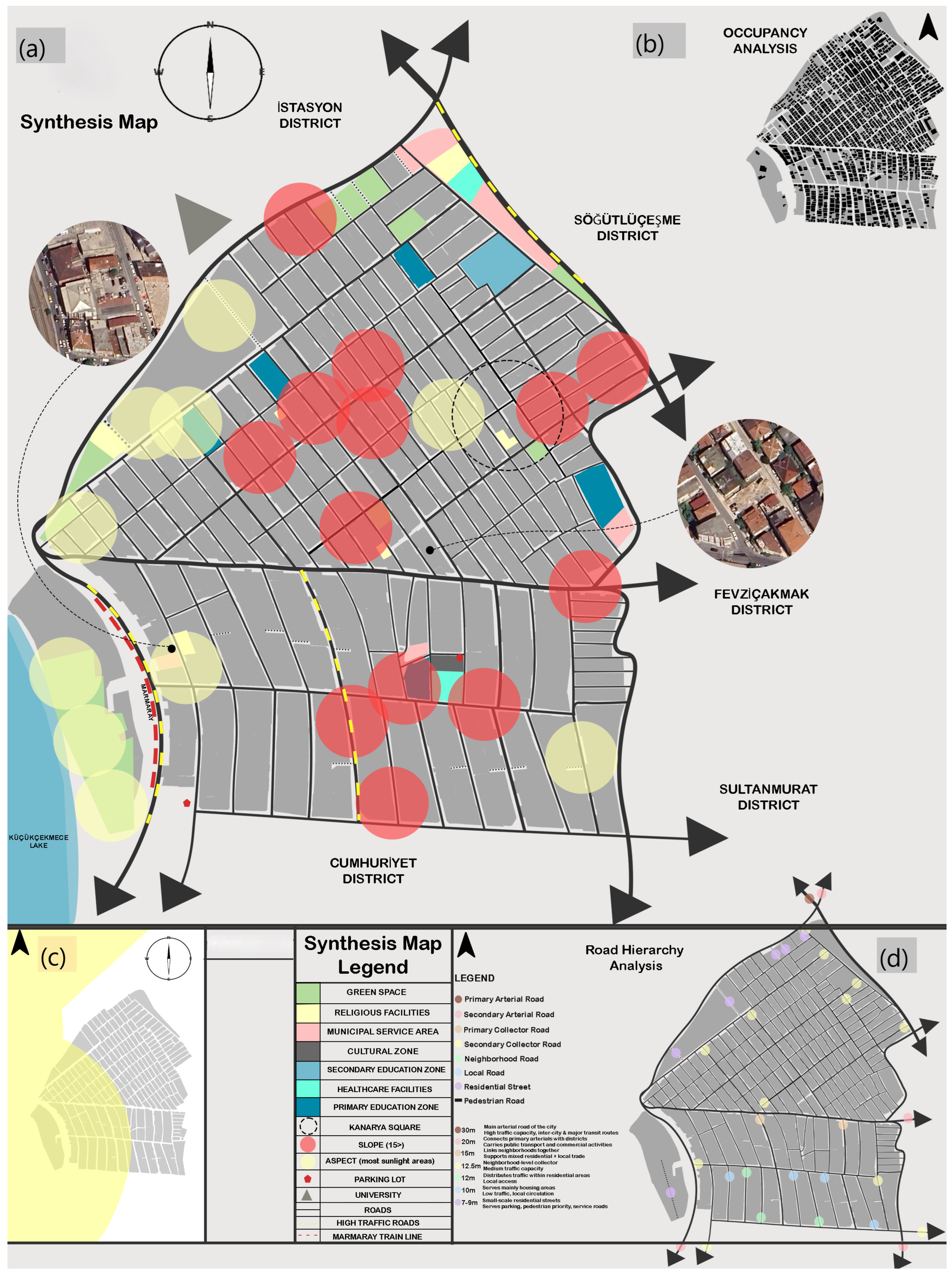
After the analysis, the synthesis phase was initiated. The results obtained in the synthesis phase are combined in Figure 5.
The synthesis map provides a spatially integrated view of accessibility, slope, and infrastructure analyses in Kanarya Neighborhood, clearly exposing the critical deficiencies and inequalities of the current planning context. A closer look reveals that the occupancy analysis highlights the uneven distribution of the building stock; while some areas are densely populated, others have a weaker residential fabric. This pattern further intensifies inequalities in access, as over-concentrated zones often coincide with areas lacking green and cultural facilities. In contrast, peripheral areas remain underserved in terms of education and healthcare. The public transportation accessibility analysis supports this picture, revealing that although partial concentrations exist around the Marmaray line and minibus routes, overall transit-oriented accessibility remains weak across the neighborhood. The minimal supply of green and cultural spaces lowers the quality of urban life and highlights the shortage of places for social interaction. The fact that bicycle corridors are confined to the coastal strip disrupts the continuity of active transportation and conflicts with the principles of sustainable mobility. In addition, the widespread use of vacant lots as informal parking areas and the occasional occurrence of fires in these spaces increase spatial disorder in the neighborhood and reduce safety, particularly for pedestrians.
Furthermore, slope analysis identifies extensive areas with gradients exceeding 15%, which not only hinder pedestrian and bicycle access but also deepen spatial vulnerabilities due to the presence of zones designated as risky in the master development plan. The road hierarchy shows that wide vehicle arteries interrupt continuity within the neighborhood, while pedestrian- and transit-focused connections remain inadequate. In this context, the synthesis, occupancy, and public transportation accessibility analyses together demonstrate that spatial justice has not been achieved in Kanarya Neighborhood, that accessibility standards have been seriously violated, and that the comprehensive infrastructure required for sustainable transportation has not been established.

4. Results

The criterion weights and average values obtained from 11 experts for 10 principles as a result of the SWARA method are presented in Table 4. These results were obtained through the sequential steps of the SWARA method: expert-based ranking, comparative importance assessment, coefficient calculation, and normalization of weights.
These weights, together with those obtained from analysis and synthesis, will be used for a simple ranking approach. Accordingly, the rankings obtained for the 10 principles are given in Table 5.
A chart visualizing the criterion weights is provided in Figure 6.

5. Discussion

Spatial analyses in the Kanarya Neighborhood reveal clear imbalances and shortcomings across several areas, including green spaces, healthcare, education, and cultural amenities. Against this background, the ranking produced through the SWARA method—using ten criteria to set priority measures for strengthening sustainable transportation and improving overall quality of life—offers a practical framework for deciding which actions should come first [43]. This prioritization includes policies and planning decisions that need to be implemented across a wide range, from increasing the usability of bicycles to converting parking lots into public spaces. The aim here is to ensure spatial justice in the neighborhood while developing a people-centered, sustainable urban lifestyle, especially since recent studies indicate that the concepts of equity and spatial justice are often defined vaguely, whereas accessibility emerges as the fundamental criterion linking both concepts to transportation [44]. The highest priority is to increase the usability of bicycles. Analyses clearly show that the bicycle infrastructure in Kanarya Neighborhood is minimal. Therefore, bicycle parking areas, sharing systems, and appropriate pricing models should be developed first. Integrating the existing narrow connections along the current coastal route into neighborhood streets and main arteries is an important step toward improving bicycle accessibility and making cycling a more feasible daily option. Recent studies emphasize that equity-focused planning and inclusive design are key to enabling wider bicycle use [45]. Furthermore, the appeal of bicycle use should be increased by ensuring last-mile integration with public transportation systems such as the Marmaray line and minibus routes. These steps will yield effective results in a short time and create a visible transformation.
The second priority is to strengthen the role of bicycles as a central mode of travel. Achieving this goal requires not only infrastructure improvements but also a broader socio-cultural shift that supports sustainable mobility practices. Previous research highlights that equity-oriented bicycle planning and infrastructure allocation can significantly influence daily mobility choices and foster a cycling culture in cities [46]. Third on the list is adapting the city to seasonal changes. The abundance of sloped and open areas makes the effects of climatic conditions even more pronounced. It is necessary to establish shaded pedestrian and bicycle infrastructure in summer and covered shelters in winter, and to develop technical solutions such as non-slip surfaces and rainwater drainage systems on sloping streets. Such interventions will not only increase comfort but also safety. These measures are also essential to ensure that cycling and walking remain usable modes of transport throughout the year. Furthermore, as these arrangements are directly related to disaster risks, they will reduce vulnerability in the neighborhood. Fourth on the list is the conversion of streets into pedestrian corridors. Vehicle traffic dominates the neighborhood, negatively impacting pedestrian mobility. Car-free streets in the Cumhuriyet and İstasyon areas will ensure the continuity of public spaces at the neighborhood level and create pedestrian-priority routes. Pedestrian corridors should also be integrated with bicycle infrastructure to ensure that the two modes of transport support each other. Such a transformation would not only help to reinvigorate social life but also play an important role in reducing reliance on private cars. The fifth priority is to encourage bicycle-focused student life. Access to secondary education and university in the neighborhood is limited. Therefore, bicycle access should be prioritized for students, and bicycle sharing systems should be integrated with public transportation cards. Once the university construction is complete, the campus should be integrated with the neighborhood, and cycling should be supported as students’ daily transportation choice. This step will both improve the quality of life for the young population and contribute to establishing a cycling culture in the neighborhood. Sixth on the list is making the city center more attractive. Strengthening social and cultural hubs around the Cumhuriyet Neighborhood, reducing vehicle traffic, and integrating pedestrian and bicycle routes into the center are important. Addressing the lack of cultural facilities, combined with increasing public living spaces, will increase social interaction among neighborhood residents and strengthen neighborhood identity. This step strengthens the social dimension of spatial justice. Seventh, within the scope of respect for the human scale, the preservation of grid street systems is essential. The continuity of the existing grid street structure must be maintained, blocked axes should be opened, and new connections should be planned in sloped areas. Additionally, shortcuts for pedestrians and cyclists should be designed to facilitate easy access. This step will both strengthen integration with public transport and reduce access times in daily mobility. Eighth on the list is reducing vehicle traffic and parking. On-street parking capacity should be gradually reduced, and these areas should be opened for public use. Fares and regulations that encourage the use of public transportation should be implemented. Although this transformation may encounter resistance in the short term, in the long term, it will support sustainable transportation by reducing vehicle dependency.
The ninth priority is the preservation of low-rise residential areas. A large portion of the existing building stock in Kanarya Neighborhood—particularly older, low-rise houses constructed without adequate engineering oversight—is highly vulnerable to earthquakes. For this reason, the priority is not only to preserve “human-scale, low-rise development” but also to establish a safe, disaster-resilient, and livable urban fabric. Urban transformation policies should be designed in close integration with transportation infrastructure, ensuring that new housing areas are connected to public transit, cycling networks, and pedestrian routes. In this way, a housing fabric prepared for disasters can be created while simultaneously facilitating the daily mobility of residents. This approach contributes not only to achieving spatial justice and sustainable transportation but also to strengthening the neighborhood’s capacity for post-disaster response. Tenth and last on the list is the conversion of parking lots into public spaces. Although it may seem low priority, this step provides strategic benefits. Converted parking areas can be repurposed as small parks, squares, or social spaces. In this way, areas freed from vehicle dominance are restored to public life. In addition, the synthesis map provides concrete evidence for the need to propose a second neighborhood square. As can be understood from daily access distances and the distribution of cultural areas, the neighborhood is highly dependent on external areas. Establishing a second square in the northwest would help reduce this external dependency. Another conclusion that can be drawn from the synthesis map is the necessity of implementing parking regulations in the southern part of the neighborhood. In such a case, residents would be able to access the square in the northwest without relying on private vehicles. Moreover, by increasing compact commercial areas in the south, it would be possible for people to spend more time in public squares.

6. Conclusions

The proposed roadmap for Kanarya Neighborhood includes short-, medium-, and long-term interventions based on the priority order obtained through SWARA. In the first phase, i.e., the short term, the focus should be on increasing bicycle usability; bicycle parking areas, sharing systems, and appropriate pricing models should be developed, and existing coastal connections should be integrated into inner streets. In the medium term, bicycles should be connected to arteries and integrated with schools and public transportation to become the city’s primary mode of transportation. At the same time, pedestrian corridors should be created and car-free streets should be opened in the Cumhuriyet and İstasyon areas to ensure the continuity of public spaces. Safety and comfort should be increased by developing infrastructure adapted to climatic conditions (shade structures, covered stops, non-slip surfaces), and bicycle-focused transportation should be encouraged for students upon their completion of the university. In the medium and long term, the attractiveness of the city center should be increased, cultural facility deficiencies should be addressed, and pedestrian- and bicycle-focused revitalization should be carried out around Cumhuriyet Neighborhood; grid street systems should be preserved to ensure continuity of access. In the long term, vehicle traffic and parking areas should be gradually reduced, and parking areas should be converted into parks, which are public use areas. Demand for public transportation should be increased, and dependence on private vehicles should be reduced. Horizontal architecture and low-rise residential structures should be supported to preserve and support the human scale, and high-density residential development should be prevented.
Finally, converting parking areas into public squares and parks can improve residents’ quality of life. This roadmap provides a practical basis for promoting spatial justice at the neighborhood level and for implementing sustainable transportation strategies. In particular, improving pedestrian and bicycle infrastructure to address topographical barriers and focusing public services in disadvantaged areas should be treated as priority interventions to reduce spatial inequalities.
However, due to topographical constraints, bicycle-oriented measures should be concentrated in low-slope corridors and supported by multimodal connections. SWARA weights can be used as a reference for setting local investment priorities. Accordingly, high-weight criteria—such as bicycle infrastructure and accessibility—can be prioritized in the short term, while more gradual and location-specific solutions should be developed for areas with significant topographic and socio-economic constraints.
Although this study focuses on the Kanarya Neighborhood, the combined use of multi-criteria decision-making methods and spatial analysis offers a transferable framework that can support decision-making processes and help identify local priorities in other urban contexts.
This study offers concrete recommendations for prioritizing transportation policies, particularly in socioeconomically vulnerable neighborhoods. Addressing accessibility at the local level and prioritizing bicycle infrastructure establishes a feasible policy framework for local governments. The combined use of spatial analyses at the neighborhood scale through the SWARA method contributes to decision-making processes by introducing a “specific and systematic” approach. However, the limited number of experts and the fact that the findings were developed within a specific field are among the study’s limitations. Future studies testing this approach in different urban contexts and with broader expert participation will enhance the generalizability of the results.

Author Contributions

Conceptualization, B.A. and M.G.; methodology, B.A. and M.G.; software, B.A.; validation, B.A. and M.G.; formal analysis, B.A. and M.G.; investigation, B.A. and M.G.; resources, B.A. and M.G.; data curation, B.A. and M.G.; writing—original draft preparation, B.A. and M.G.; writing—review and editing, B.A. and M.G.; visualization, B.A. and M.G.; supervision, M.G. All authors have read and agreed to the published version of the manuscript.

Funding

This research received no external funding.

Institutional Review Board Statement

Ethical review and approval were waived for this study in accordance with national regulations and institutional research ethics policies in Türkiye, as the study was non-interventional and based on anonymous expert evaluations and survey responses, without the collection of personal or sensitive data. The study was conducted in accordance with the ethical principles of the Declaration of Helsinki and the Turkish Personal Data Protection Law No. 6698 (KVKK).

Informed Consent Statement

Informed consent for participation was obtained from all subjects involved in the study. All participants were informed about the purpose of the research, and participation was voluntary.

Data Availability Statement

The data presented in this study are available on request from the corresponding author.

Acknowledgments

The authors would like to thank Canan Eroğlu, for her valuable support in the visualization of the study. Grammarly Pro was used for English language editing and proofreading.

Conflicts of Interest

The authors declare no conflicts of interest.

Abbreviations

The following abbreviations are used in this manuscript:
SWARAStep-wise Weight Assessment Ratio Analysis
MCDMMulti-Criteria Decision Making
DEMDigital Elevation Model
TODTransit-Oriented Development
GISGeographical Information Systems
AHPAnalytical Hierarchy Process
ANPAnalytical Network Process

References

  1. Buldurur, M.A. Sürdürülebilir Kentsel Ulaşım; Birsen Yayınevi: İstanbul, Turkey, 2018; Available online: https://www.birsenyayinevi.com/surdurulebilir-kentsel-ulasim-aysan-buldurur (accessed on 3 April 2026).
  2. Gehl, J. Cities for People; Island Press: Washington, DC, USA, 2010. [Google Scholar]
  3. Pojani, D.; Stead, D. Sustainable Urban Transport in the Developing World: Beyond Megacities. Sustainability 2015, 7, 7784–7805. [Google Scholar] [CrossRef]
  4. Bomberg, M.; Zorn, L.; Sall, E. Incorporating user based perspective of livability projects in SF-CHAMP mode choice models. Transp. Lett. 2013, 5, 83–95. [Google Scholar] [CrossRef]
  5. Gavin, K.; Bennett, A.; Auchincloss, A.H.; Katenta, A. A brief study exploring social equity within bicycle share programs. Transp. Lett. 2016, 8, 177–180. [Google Scholar] [CrossRef]
  6. Banister, D. The sustainable mobility paradigm. Transp. Policy 2008, 15, 73–80. [Google Scholar] [CrossRef]
  7. Sobczuk, S.; Borucka, A. Recent Advances for the Development of Sustainable Transport and Their Importance in Case of Global Crises: A Literature Review. Appl. Sci. 2024, 14, 10653. [Google Scholar] [CrossRef]
  8. Ashraf, A.; Idrisi, M.J. Smart and Sustainable Public Transportation—A Need of Developing Countries. Int. J. Networked Distrib. Comput. 2024, 12, 144–152. [Google Scholar] [CrossRef]
  9. Marcuse, P. Gentrification, abandonment, and displacement: Connections, causes, and policy responses in New York City. J. Urban Contemp. Law 1985, 28, 195–240. [Google Scholar]
  10. Wacquant, L. Urban Outcasts: A Comparative Sociology of Advanced Marginality, 1st ed.; Polity Press: Cambridge, UK, 2007. [Google Scholar]
  11. Lucas, K. Transport and social exclusion: Where are we now? Transp. Policy 2012, 20, 105–113. [Google Scholar] [CrossRef]
  12. Martens, K. Transport Justice: Designing Fair Transportation Systems; Routledge: New York, NY, USA; London, UK, 2017. [Google Scholar] [CrossRef]
  13. Faghihinejad, F.; Zoghifard, M.; Amiri, A.M.; Monajem, S. Evaluating Social and Spatial Equity in Public Transport: A Case Study. Transp. Lett. 2023, 15, 1420–1429. [Google Scholar] [CrossRef]
  14. Martens, K.; Singer, M.E.; Cohen-Zada, A.L. Equity in Accessibility: Moving From Disparity to Insufficiency Analyses. J. Am. Plan. Assoc. 2022, 88, 479–494. [Google Scholar] [CrossRef]
  15. Castro, R.B.; Ortega Sandoval, A.D.; Odamtten, G. Up around the bend? How transport poverty can lead to social exclusion in a low-income community in Lagos, Nigeria. J. Transp. Geogr. 2022, 102, 103388. [Google Scholar] [CrossRef]
  16. Durand, A.; Zijlstra, T.; Van Oort, N.; Hoogendoorn-Lanser, S.; Hoogendoorn, S. Access denied? Digital inequality in transport services. Transp. Rev. 2022, 42, 32–57. [Google Scholar] [CrossRef]
  17. Arku, R.N.; Higgins, C.D.; Fischer, J.; Farber, S. Do affluent neighbourhoods pay more for transit access? Exploring the capitalization of employment accessibility within different housing submarkets in Vancouver. J. Transp. Geogr. 2024, 121, 104038. [Google Scholar] [CrossRef]
  18. Jahangir, S.; Bailey, A.; Hasan, M.U.; Hossain, S. “We do not go outside, though We want to”: Unequal Access to Public Transport and Transport-Related Social Exclusion of Older Adults in Dhaka, Bangladesh. J. Appl. Gerontol. 2024, 43, 1165–1176. [Google Scholar] [CrossRef]
  19. Bruno, M.; Kouwenberg, M.; Van Oort, N. Addressing transport related social exclusion through transportation policy: A novel evaluation method applied to the Amsterdam Transport Region. Transp. Res. Interdiscip. Perspect. 2024, 26, 101177. [Google Scholar] [CrossRef]
  20. Zhalehdoost, A.; Taleai, M. Enhancing urban quality of life evaluation using spatial multi criteria analysis. Sci. Rep. 2025, 15, 22048. [Google Scholar] [CrossRef]
  21. Ayyildiz, E.; Yildirim, B. Evaluating urban mobility strategies to foster inclusive urban regeneration for vulnerable groups. Cities 2026, 173, 106932. [Google Scholar] [CrossRef]
  22. Giuffrida, N.; Binetti, M.; Viscio, S.; Ottomanelli, M. A Simplified Framework for the Equity-Based Spatial Assessment of Alternative Public Transport Networks. Sustainability 2022, 14, 16606. [Google Scholar] [CrossRef]
  23. Grande-Ayala, C.E. An Assessment of Accessibility from a Socially Sustainable Urban Mobility Approach in Mass Transit Projects: Contributions from the Northern Central American Triangle. Sustainability 2024, 16, 3766. [Google Scholar] [CrossRef]
  24. Duleba, S.; Moslem, S. Sustainable Urban Transport Development with Stakeholder Participation, an AHP-Kendall Model: A Case Study for Mersin. Sustainability 2018, 10, 3647. [Google Scholar] [CrossRef]
  25. Ahmed, T.; Pirdavani, A.; Wets, G.; Janssens, D. Bicycle Infrastructure Design Principles in Urban Bikeability Indices: A Systematic Review. Sustainability 2024, 16, 2545. [Google Scholar] [CrossRef]
  26. Chondrogianni, D.; Stephanedes, Y.J.; Fatourou, P. Assessing Cycling Accessibility in Urban Areas through the Implementation of a New Cycling Scheme. Sustainability 2023, 15, 14472. [Google Scholar] [CrossRef]
  27. Naseri, H.; Laviolette, J.; Waygood, E.O.D.; Manaugh, K. Cycling and GHG Emissions: How Infrastructure Makes All the Difference. Sustainability 2025, 17, 7577. [Google Scholar] [CrossRef]
  28. Zolfani, S.H.; Saparauskas, J. New Application of SWARA Method in Prioritizing Sustainability Assessment Indicators of Energy System. Eng. Econ. 2014, 24, 408–414. [Google Scholar] [CrossRef]
  29. Karabasevic, D.; Stanujkic, D.; Urosevic, S. The MCDM Model for Personnel Selection Based on SWARA and ARAS Methods. Manag.-J. Theory Pract. Manag. 2015, 20, 43–52. [Google Scholar] [CrossRef]
  30. Dinçer, H.; Yüksel, S.; Aksoy, T.; Hacıoğlu, Ü. Application of M-SWARA and TOPSIS Methods in the Evaluation of Investment Alternatives of Microgeneration Energy Technologies. Sustainability 2022, 14, 6271. [Google Scholar] [CrossRef]
  31. Keršulienė, V.; Zavadskas, E.K.; Turskis, Z. SELECTION OF RATIONAL DISPUTE RESOLUTION METHOD BY APPLYING NEW STEP-WISE WEIGHT ASSESSMENT RATIO ANALYSIS (SWARA). J. Bus. Econ. Manag. 2010, 11, 243–258. [Google Scholar] [CrossRef]
  32. Moslem, S.; Stević, Ž.; Tanackov, I.; Pilla, F. Sustainable development solutions of public transportation:An integrated IMF SWARA and Fuzzy Bonferroni operator. Sustain. Cities Soc. 2023, 93, 104530. [Google Scholar] [CrossRef]
  33. Canitez, F.; Alpkokin, P.; Kiremitci, S.T. Sustainable urban mobility in Istanbul: Challenges and prospects. Case Stud. Transp. Policy 2020, 8, 1148–1157. [Google Scholar] [CrossRef]
  34. Yılmaz, Y.E.; Gürsoy, M. Pedestrian Traffic Stress Levels (PTSL) in School Zones: A Pedestrian Safety Assessment for Sustainable School Environments—Evidence from the Caferağa Case Study. Sustainability 2026, 18, 1042. [Google Scholar] [CrossRef]
  35. Endeksa Data. 2025. Available online: https://www.endeksa.com/tr/analiz/turkiye/istanbul/kucukcekmece/kanarya/demografi (accessed on 3 April 2026).
  36. Şen, B.; Tunç, A. Kanarya mahallesi: Zorunlu göç, enformellik ve siyaset. Toplumbilim 2011, 26, 117–128. [Google Scholar]
  37. Overpass Turbo, 2025. Available online: https://overpass-turbo.eu/ (accessed on 7 April 2026).
  38. Küçükçekmece Belediyesi. Küçükçekmece Municipality, Kanarya Neighborhood, 1/8000 Scale Master Development Plan; Küçükçekmece Belediyesi: Küçükçekmece, Turkey, 2025. [Google Scholar]
  39. BBBike Data. 2025. Available online: https://extract.bbbike.org/ (accessed on 3 April 2026).
  40. USGS. 2025. Available online: https://earthexplorer.usgs.gov/ (accessed on 3 April 2026).
  41. Regulation on the Preparation of Spatial Plans. 2014. Available online: https://www.mevzuat.gov.tr/mevzuat?MevzuatNo=19788&MevzuatTur=7&MevzuatTertip=5 (accessed on 3 April 2026).
  42. National Transport and Logistics Master Plan 2053. 2022. Available online: https://www.uab.gov.tr/media/v3ifp3wn/20221025-2053-ulastirma-ve-lojistik-ana-plani-tr.pdf (accessed on 10 May 2026).
  43. Lowe, K.; Jones, P. Participation and Equity in Municipal Transportation Decisions: A Chicago Case Study and a Politicized Capacity-Building Alternative. Public Work. Manag. Policy 2024, 29, 276–295. [Google Scholar] [CrossRef]
  44. Amorim, J.D.M.; De Silva, A.E.; Gonçalves, J.M. Equity and Spatial Justice Perspectives in Transportation. Urban Sci. 2025, 9, 163. [Google Scholar] [CrossRef]
  45. Lemon, S.C.; Neptune, A.; Goulding, M.; Pendharkar, J.A.; Dugger, R.; Chriqui, J.F. Integrating Equity Into Bicycle Infrastructure, Planning, and Programming: A Mixed Methods Exploration of Implementation Among Participants in the Bicycle Friendly Community Program. Prev. Chronic Dis. 2023, 20, 230119. [Google Scholar] [CrossRef] [PubMed]
  46. Cunha, I.; Silva, C. Assessing the equity impact of cycling infrastructure allocation: Implications for planning practice. Transp. Policy 2023, 133, 15–26. [Google Scholar] [CrossRef]
Figure 1. Flowchart of the Study.
Sustainability 18 05058 g001
Figure 2. Location Maps. (a) Geographical Location of Kanarya Neighborhood. (b) Location of Kanarya Neighborhood within the District [37]. (c) Satellite Image of Kanarya Neighborhood [35].
Sustainability 18 05058 g002
Figure 3. Analysis Maps. (a) Green Space Accessibility Analysis. (b) Health Services Accessibility Analysis. (c) Religious Facilities Accessibility Analysis. (d) Municipal Services Accessibility Analysis. (e) Daily Needs Accessibility Analysis. (f) Primary Schools Accessibility Analysis.
Sustainability 18 05058 g003
Figure 4. Analysis Maps (continuation). (a) Secondary School Accessibility Analysis. (b) University Accessibility Analysis. (c) Slope analysis (>15%). (d) Cultural Facility Accessibility Analysis. (e) Bicycle Corridor Accessibility Analysis. (f) Aspect Analysis (Most Sunlight Areas).
Sustainability 18 05058 g004
Figure 5. Other Maps. (a) Synthesis Map. (b) Occupancy Analysis. (c) Public Transportation Accessibility Analysis. (d) Road Hierarchy Analysis.
Sustainability 18 05058 g005
Figure 6. Chart for Criterion Weights.
Sustainability 18 05058 g006
Table 1. Data on Experts’ Age, Gender, Field of Work, and Professional Experience.
Field of ExpertiseProfessional Experience (Years)AgeGender
Urban Planner325Female
Civil Engineer1036Male
Urban Planner1335Female
Academic1036Female
Architect1741Female
Architect3253Male
Real Estate Management Expert1341Male
Urban and Regional Planner1442Female
Transportation Engineer3355Male
Urban Planner1841Female
Architect2557Female
Source: Based on expert interviews.
Table 2. The Ten Copenhagen Principles and Final Objectives.
CriterionTitleDescription
C1Transformation of streets into pedestrian corridorsEncourages pedestrian mobility and reduces car traffic; directly associated with “walkability” and pedestrian-oriented development.
C2Reduction in car traffic and parking areasLimits private car use while strengthening public transport and active mobility (walking and cycling).
C3Conversion of parking areas into public spacesPrioritizes access based on public transport rather than car dominance; part of the “reducing automobile dependency” approach.
C4Preservation of low-rise housing fabricSupports a built environment suitable for walking and cycling without increasing density; connected to human-scale transportation.
C5Respect for human scale (grid street systems)Grid street structures facilitate pedestrian and bicycle access and reinforce integration with public transport.
C6Making the city center attractiveA livable urban core should primarily be accessible by public transport and walking, aligned with the “TOD (transit-oriented development)” approach.
C7Promoting student life (cycling)Affordable access through cycling and public transport is essential for students; it is directly related to accessibility and active mobility.
C8Adapting the city to seasonal changesInfrastructure supporting year-round walking and cycling (e.g., sheltered stops in winter, shaded areas in summer) strengthens sustainable mobility.
C9Making the bicycle the main mode of transportPositions the bicycle as the primary mode of mobility, a cornerstone of sustainable and active transport policy.
C10Improving bicycle usabilityEnhances bicycle infrastructure and accessibility; linked to bike-sharing, parking facilities, and last-mile connectivity.
Table 3. Average Buffer Distances of Urban Facilities (m).
Facility TypeRegulatory Distance (m)Applied Distance and Explanation
Municipal Service Area400–750 m600 m
Cultural Facility Area400–1000 m800 m (wider access)
Health Facility Area400–600 m500 m (neighborhood and regional function combined)
Primary Education Area300–500 m500 m
Secondary Education Area600–1000 m800 m (regional scale access)
Religious Facility Area300 m (neighborhood mosque) 500 m (regional mosque)400 m (median)
Neighborhood Square250–350 m300 m (pedestrian-oriented access standard)
Green Space/Park200–300 m250 m (daily access distance)
Public Transport Line300–500 m400 m (walkability distance)
Bicycle Path250–300 m275 m (student-oriented, green network integration)
Slope and Aspect50 m intervals, slopes greater than 15%
Table 4. Average Weights Obtained for the 10 Principles.
Criterionc1c2c3c4c5c6c7c8c9c10
Expert 10.0770.0700.0700.0580.1060.1060.0890.1550.1400.128
Expert 20.2260.1030.0360.0530.0780.0850.0940.1030.1030.119
Expert 30.0930.0980.1030.1130.1030.1030.0980.1030.0980.089
Expert 40.0120.0180.0270.0360.0540.0810.1090.1590.2140.289
Expert 50.0120.0180.0250.0380.0550.0800.1110.1560.2100.295
Expert 60.0090.0140.0200.0310.0460.0690.1000.1500.2250.337
Expert 70.0750.0630.0480.0790.1340.1220.1110.1110.1410.116
Expert 80.0990.0820.0950.1040.1270.1150.0900.1100.0780.099
Expert 90.0510.0800.1010.1660.1270.1270.0800.0660.0920.111
Expert 100.0170.0190.0240.0370.0530.0770.1080.1460.2120.307
Expert 110.4530.2520.1320.0700.0370.0220.0170.0090.0060.003
Average0.1020.0740.0620.0710.0840.0900.0910.1150.1380.172
Table 5. Criterion Weights and Ranking.
RankCriterionWeight
4C110.2%
8C27.4%
10C36.2%
9C47.1%
7C58.4%
6C69.0%
5C79.1%
3C811.5%
2C913.8%
1C1017.2%
Disclaimer/Publisher’s Note: The statements, opinions and data contained in all publications are solely those of the individual author(s) and contributor(s) and not of MDPI and/or the editor(s). MDPI and/or the editor(s) disclaim responsibility for any injury to people or property resulting from any ideas, methods, instructions or products referred to in the content.