1. Introduction
Higher education institutions play a crucial role in the transition toward sustainable development by fostering the skills required to address complex environmental, social, and technological challenges. In this context, Education for Sustainable Development (ESD) promotes the systematic integration of sustainability principles into university curricula.
The United Nations 2030 Agenda reinforces this perspective through the framework of the Sustainable Development Goals (SDGs). It recognizes education both as a standalone objective (SDG 4—Quality Education) and as a cross-cutting enabler for achieving other goals. These include SDG 3 (Good Health and Well-being), SDG 9 (Industry, Innovation and Infrastructure), SDG 10 (Reduced Inequalities), and SDG 11 (Sustainable Cities and Communities [
1]. Integrating these goals into higher education requires pedagogical models capable of addressing complexity through systemic and interdisciplinary approaches.
Within this framework, sustainability extends beyond environmental and energy-related concerns to encompass the social and experiential dimensions of the built environment. Open and green spaces are increasingly recognized as essential infrastructures for quality of life, influencing health, social interaction, and spatial perception [
2]. This dimension is particularly relevant in university campuses, which can be understood as micro-cities characterized by diverse users and patterns of use [
3]. In such contexts, courtyards and open spaces play a key role in supporting well-being and social interaction. However, they often result from functional stratifications that fail to adequately address different conditions of vulnerability—whether physical, cognitive, emotional, or social. This highlights the need for design approaches capable of integrating sustainability, inclusion, and perceptual quality, moving beyond standardized solutions that overlook user diversity.
At the same time, the education of future designers must respond to the increasing complexity of these challenges. Designing inclusive and sustainable environments requires not only technical expertise but also the ability to understand user experiences and adopt a human-centered perspective. Traditional teaching and representation tools are typically based on two-dimensional drawings and a conception of design as a final product. As a result, they often struggle to convey the spatial, environmental, and emotional implications of design decisions, particularly in relation to vulnerability and well-being.
In this context, the ongoing digital transformation of higher education offers new opportunities to integrate immersive technologies, such as Extended Reality (XR) and Virtual Reality (VR), as pedagogical tools. These technologies support experiential and human-centered learning approaches [
4,
5,
6]. Immersive and interactive environments can bridge the gap between theoretical knowledge and spatial configuration, enabling situated and space-centered learning processes. These environments facilitate empathy and a deeper understanding of users’ needs, transforming the design process into an iterative cycle of exploration, testing, and refinement [
7,
8].
From this perspective, technology can be seen as a tool for improving well-being and reducing inequalities, in line with the Society 5.0 paradigm. Digital innovation therefore helps us to understand and manage conditions of fragility. These are considered to be both specific disorders and situational vulnerabilities of a physical, cognitive, or emotional nature. Immersive technologies also enable the translation of these conditions into design criteria, fostering an approach that emphasizes the experiential and relational qualities of space. Within this framework, natural elements such as vegetation, light, and other biophilic components are no longer treated as passive environmental features but as active design devices. In accordance with biophilic design principles, they contribute to improving psychological and physical well-being, reducing stress, and enhancing spatial orientation and connection [
9].
This study builds on the interdisciplinary course “Virtual Reality and Frailty”, in which university students redesign open campus spaces in response to specific conditions of frailty using VR. The paper is structured as follows.
Section 2 reviews the State of the Art, focusing on the intersections between sustainability, frailty, green spaces as care infrastructures, and digital transformation.
Section 3 outlines the objectives of the study.
Section 4 outlines the methodological framework.
Section 5 presents the case study, detailing the phases of analysis and the implementation of immersive environments.
Section 6 reports the results of the assessment rubric, while
Section 7 discusses these findings, including limitations and future research directions.
Section 8 concludes the paper by summarizing the main implications for integrating immersive technologies into sustainability-oriented higher education.
2. State of the Art
2.1. Sustainability and Immersive Learning in Higher Education
In order to integrate the principles of sustainability into higher education, the literature emphasizes that incorporating the SDGs into university curricula requires a structural transformation of educational models. This transformation aims to move beyond fragmented disciplinary approaches and promote systemic and interdisciplinary perspectives [
10,
11].
From this viewpoint, sustainability is not merely an additional subject but an educational paradigm that integrates technical and scientific knowledge, transversal skills and ethical responsibility [
11].
This transformation is closely linked to the need to prepare students to tackle so-called “complex problems”. These are complex, interrelated challenges characterized by uncertainty and the absence of clear-cut, definitive solutions [
12]. This requires the development of skills such as critical thinking, interdisciplinary collaboration and problem-framing abilities.
This calls for teaching models and learning environments that encourage experimentation, simulation and the analysis of complex scenarios. In doing so, they promote the development of design approaches that take social, environmental and experiential implications into account [
13].
On this basis, the theoretical framework of the research is structured into four interrelated areas: (i) sustainability education in higher education; (ii) immersive technologies for teaching and design; (iii) vulnerability and human-centered approaches; and (iv) green spaces as infrastructure for well-being.
2.2. Immersive Technologies in Design and Education
The growing digitalization of higher education has fostered the development of immersive learning environments based on XR technologies, including VR, Augmented Reality (AR) and Mixed Reality (MR) [
7,
14]. In particular, VR allows users to immerse themselves in interactive three-dimensional environments, fostering a strong sense of presence and perceptual engagement [
15]. Systematic reviews highlight the growing use of VR in university settings to support experiential learning, three-dimensional visualization and skills development [
4,
5,
16].
In the fields of engineering and architecture, VR enables the exploration of complex spatial configurations, the simulation of design scenarios, and the assessment of the impact of design choices on users’ perception and interaction [
17,
18]. Integration with tools based on building information modeling (BIM) supports iterative design and review processes, reinforcing project-based learning and the understanding of the relationships between technical data and spatial configurations.
At the same time, there is growing interest in multi-user collaborative virtual environments, in which users interact via avatars within shared spaces. These contexts, often associated with the metaverse, support co-design, critical discussion, and collective simulation, and are particularly relevant in sustainability-oriented training programs [
19,
20].
Despite this potential, the literature highlights that the pedagogical effectiveness of immersive technologies does not depend on the technology itself, but on how it is integrated into structured teaching models [
4,
6]. VR supports learning only when embedded in contexts that include clear objectives, collaborative activities, and processes of critical reflection [
16]. In particular, studies analyzing VR as a systemic pedagogical infrastructure for integrating SDGs into university curricula remain limited [
6].
In this context, the paradigms of design-based research (DBR) and research-through-design (RtD) offer relevant methodological frameworks for the analysis of innovative educational experiences. Both approaches interpret the design process as a research tool, enabling an integrated analysis of learning outcomes, collaborative dynamics, and methodological implications [
21,
22].
2.3. Frailty, Inclusion and Human-Centered Design
The Society 5.0 paradigm promotes a vision in which digital technologies are geared towards improving the quality of life and reducing inequalities [
23]. In this context, technological innovation is seen as a tool for supporting more inclusive societies centered on people’s needs [
24,
25].
Inclusive design has progressively broadened the concept of frailty. It is no longer interpreted as a static condition associated with specific user groups, but as a dynamic and situational condition that can affect individuals throughout their lives [
26,
27]. From this perspective, frailty arises not only from physical, cognitive, or emotional limitations but also from contextual factors that influence the accessibility and usability of spaces. Designing frailty therefore involves considering the multiplicity of human experience, integrating technical, perceptual, and relational dimensions [
27].
In this context, immersive technologies offer new opportunities to explore and understand conditions of vulnerability through controlled simulations. In the fields of healthcare and psychology, VR is used both as a therapeutic tool and as a research environment for analyzing behaviors, perceptions, and emotional responses [
28,
29]. Similarly, in the fields of education and design, these technologies facilitate processes of perspective-taking. They enable designers to experience different perceptual conditions and to develop greater awareness of users’ needs [
15,
30].
Despite this potential, within the context of educational design and the training of spatial designers, the systemic integration of vulnerability, built environment design, and immersive technologies remains limited. In particular, there is a lack of studies analyzing the use of immersive technologies as a pedagogical infrastructure to support the understanding of vulnerability and the development of inclusive design strategies in urban and university environments.
2.4. Green Spaces as Infrastructure for Health and Well-Being
In the current debate on urban sustainability, green spaces have gradually moved beyond a purely decorative or environmental role to become an infrastructure for health and well-being. Numerous studies demonstrate that the presence and quality of green spaces have a positive impact on physical and mental health, helping to reduce stress, improve attention span, and promote social interaction [
31,
32]. These effects are extensively documented in the literature on the relationship between nature and health, which highlights the role of natural environments in promoting psychophysiological recovery and perceived well-being [
33,
34,
35].
This perspective has contributed to the spread of the concept of green infrastructure, which interprets urban green spaces as strategic systems capable of generating ecosystemic, social, and health benefits [
36,
37]. In complex urban contexts, green spaces perform a compensatory function in relation to conditions of sensory overstimulation and spatial fragmentation. On university campuses, open spaces can be seen as informal learning environments, where environmental, relational and educational dimensions intertwine, contributing to well-being and the quality of the university experience [
38,
39].
The literature on therapeutic landscapes also highlights how the design of green spaces that cater for vulnerable individuals requires the integration of environmental and experiential dimensions [
40]. Elements such as the legibility of pathways, the presence of sheltered micro-environments, and the modulation of sensory stimuli are crucial for ensuring accessibility, safety and comfort [
41]. In this sense, the configuration of green spaces directly influences how the space is used and users’ perceptions.
Despite the extensive scientific literature on the role of green spaces in urban well-being, there are still few studies that explore in an integrated manner the design of university green spaces, sustainability-oriented teaching and the use of immersive technologies. In fact, the literature tends to treat these dimensions separately, highlighting the need for educational models capable of connecting space, well-being, and inclusion through the use of immersive environments.
2.5. Comparison with Existing Models and Positioning of the Framework
Within the literature on immersive learning and assessment in digital educational contexts, various models have helped to structure the analysis of learning processes and outcomes, although they have limitations when it comes to integrating design, spatial and experiential dimensions. The models considered in this study are summarized in
Table 1.
In the field of VR, the Cognitive Affective Model of Immersive Learning (CAMIL) [
16] highlights how the effectiveness of immersive learning stems from the interaction between cognitive and affective factors, but focuses predominantly on individual psychological processes, without explicitly addressing the design dimension of space or the implications related to sustainability and inclusion. On the other hand, systematic reviews on the use of VR in higher education [
7,
20] offer classification frameworks useful for analyzing applications and learning outcomes, but remain descriptive rather than operational tools.
From a methodological perspective, approaches such as DBR [
21] and RtD [
22] provide robust frameworks for analyzing educational experiments, but do not define explicit criteria for assessing the quality and degree of integration of design artifacts. Similarly, frameworks related to ESD [
12] outline competencies and objectives for sustainability, without offering tools for their operational translation into immersive environments.
In this context, the proposed model is not intended as a substitute alternative, but as an integrative tool operating at a different level of analysis. It combines an evaluation structure based on explicit criteria and maturity indicators with a configurational reading of projects, making the degree of integration between theoretical, spatial, technological, and environmental dimensions observable.
The proposed framework complements existing models: it engages with CAMIL in its consideration of the experiential processes activated by VR, aligns with the iterative logic of DBR and RtD, and helps to operationalize the principles of ESD by translating them into verifiable design criteria.
The specific contribution lies in addressing the limited integration of VR as a systemic pedagogical infrastructure by connecting these perspectives within a single analytical framework, geared not only towards understanding learning, but also towards evaluating the design quality of human-centered, sustainability-oriented immersive environments.
3. Research Aim
The aim of this contribution is to explore how an educational experience based on immersive technologies can serve as a model for a sustainability-oriented digital curriculum in higher education.
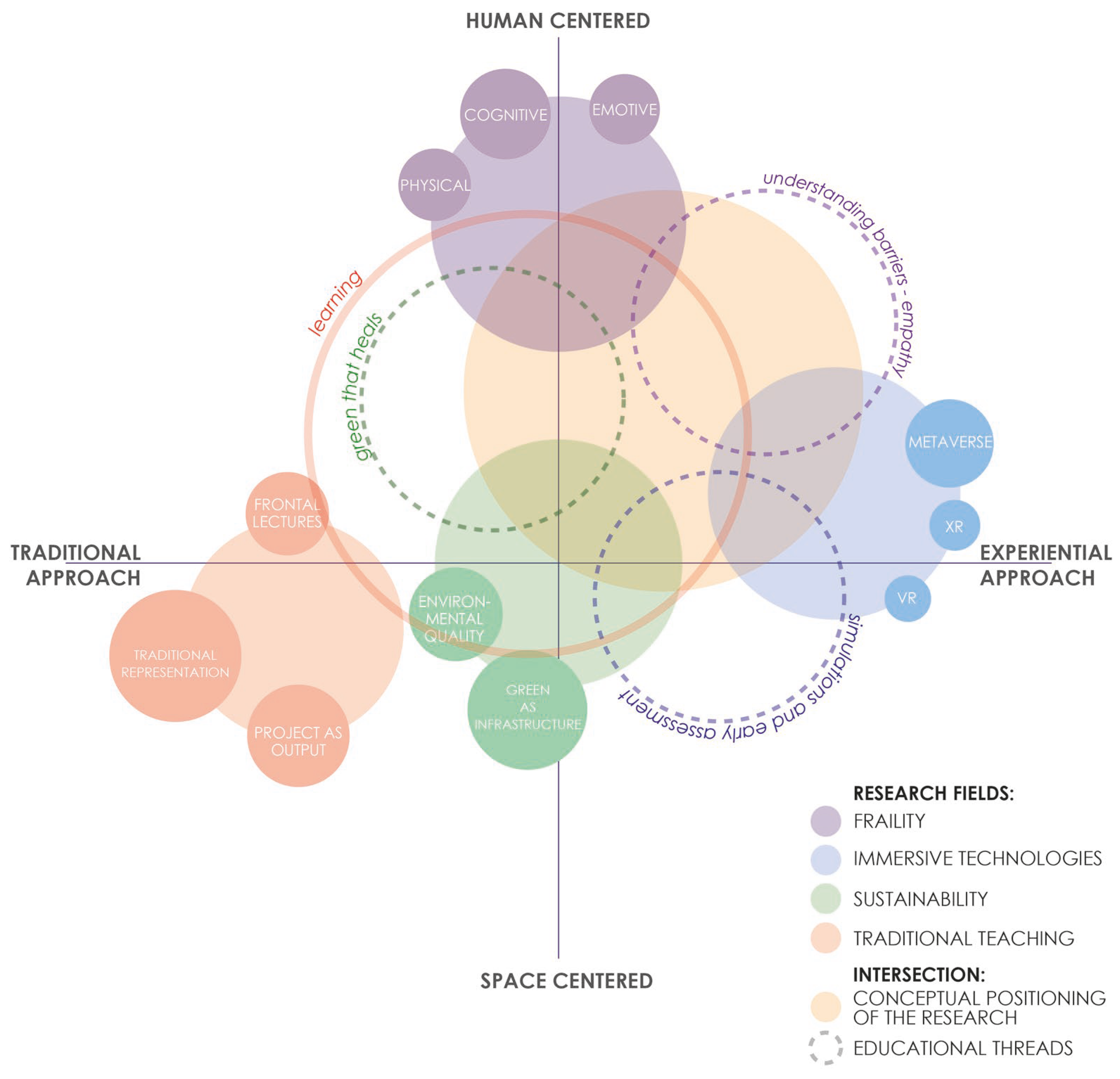
Figure 1 illustrates the conceptual positioning of this study, highlighting the shift from a traditional knowledge base to the integration of immersive technologies, conditions of frailty and dimensions of social sustainability.
This paper proposes a model for sustainability-oriented higher education, developed and explored through an experimental case study that integrates immersive technologies, a design approach centered on frailty, and green infrastructure to support human-centered learning processes.
The research is driven by the following research questions:
RQ1: How can VR function as a pedagogical infrastructure supporting collaborative and reflective learning in sustainability-oriented education?
RQ2: How does a frailty-oriented design approach support the development of human-centered and interdisciplinary competencies?
RQ3: How does green infrastructure contribute to mediating frailty and enhancing spatial experience in VR-based design processes?
This study examines the role of immersive technologies in higher education as tools capable of supporting the training of socially conscious designers, who are able to integrate social, inclusive and sustainable dimensions into their design processes, in line with the objectives of the 2030 Agenda and, in particular, with the principles promoted by SDGs 3—Good Health and Well-being, 10—Reduced Inequalities—and 11—Sustainable Cities and Communities.
4. Methodology
4.1. Research Structure
The research adopts an integrated approach that combines research-through-design and Design-Based Research (DBR), framing the university course as an educational experiment. In this context, design practice, immersive technologies, and pedagogical dynamics act as investigative devices. Within this framework, the educational context is not merely an application setting, but an active component of the research itself.
From this perspective, a framework that integrates theoretical reflection, design experimentation, and immersive environments has been developed. It is conceived as a replicable model for the integration of XR into university curricula aligned with the SDGs.
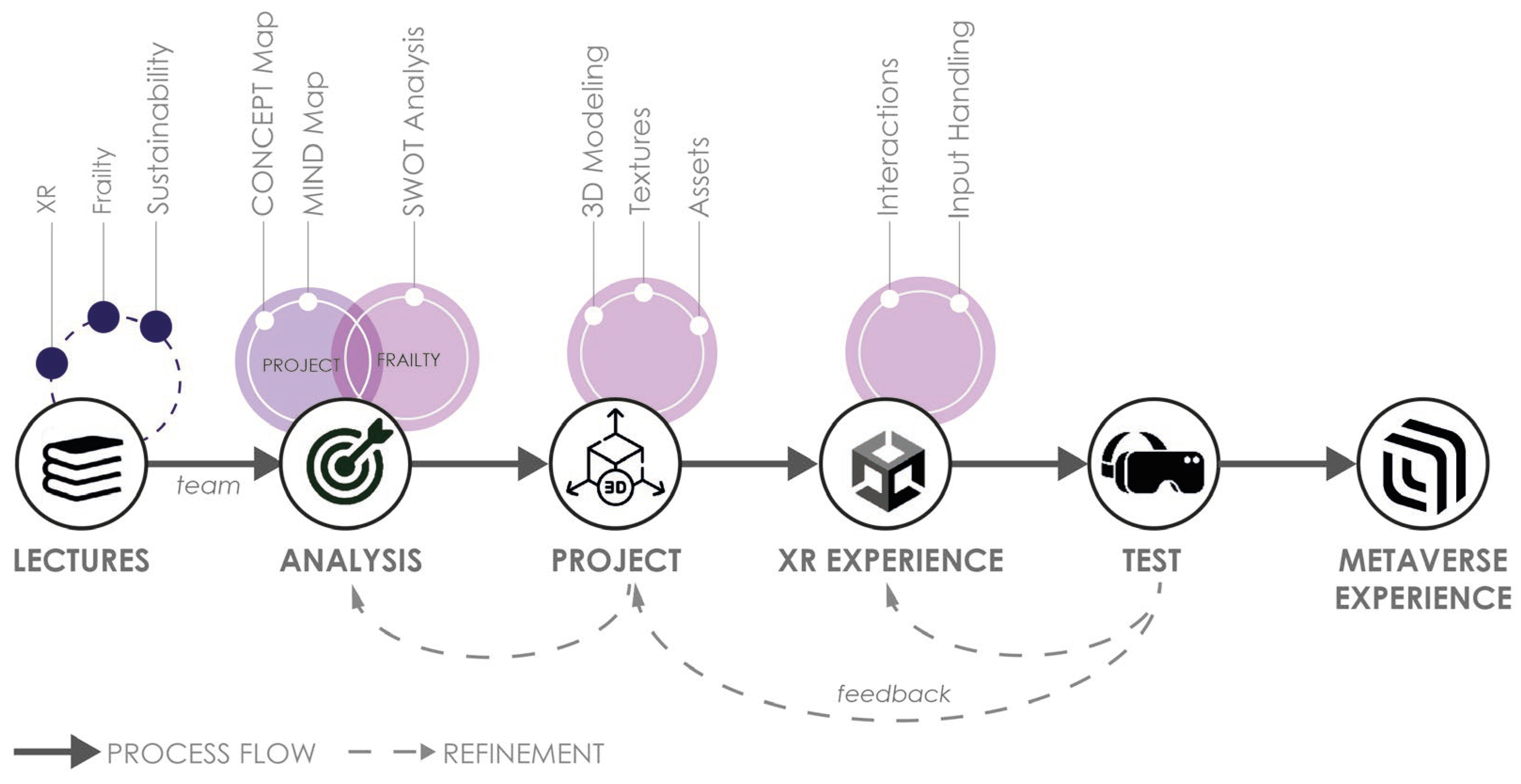
The process is structured into six stages, illustrated in
Figure 2: conceptual alignment, frailty analysis, design development, immersive review, iterative testing, and metaverse-based sharing. These stages are organized as an iterative and interdependent sequence and are implemented across all student working groups.
The initial phase focuses on conceptual alignment through theoretical lectures addressing the themes of Society 5.0, with particular attention to the role of immersive technologies—especially VR—and natural elements as supportive devices for well-being. This phase establishes a shared interpretative framework linking technological transformation, social sustainability, and the quality of the built environment.
The process then shifts to the analysis of frailty as a generative design principle. The selection of a specific condition guides the definition of coherent design criteria, translating needs and vulnerabilities into spatial, environmental, and relational requirements, supported by structured analytical tools.
The design development phase takes place within a virtual environment conceived as a space for experimentation. Environments are progressively configured through the integration of spatial elements, vegetation components, and interaction logics, allowing verification of the consistency between design criteria and proposed solutions. The immersive experience supports the design review by activating iterative cycles of testing, critical discussion, and structured feedback, enabling the progressive refinement of proposals.
Finally, the outcomes are integrated into a shared metaverse environment, conceived as a space for comparison, exchange, and peer learning. This final phase extends beyond a simple exhibition moment, representing a continuation of the learning process in which collaborative and reflective dimensions are further consolidated [
42].
4.2. Technology Pipeline for the Design Phase
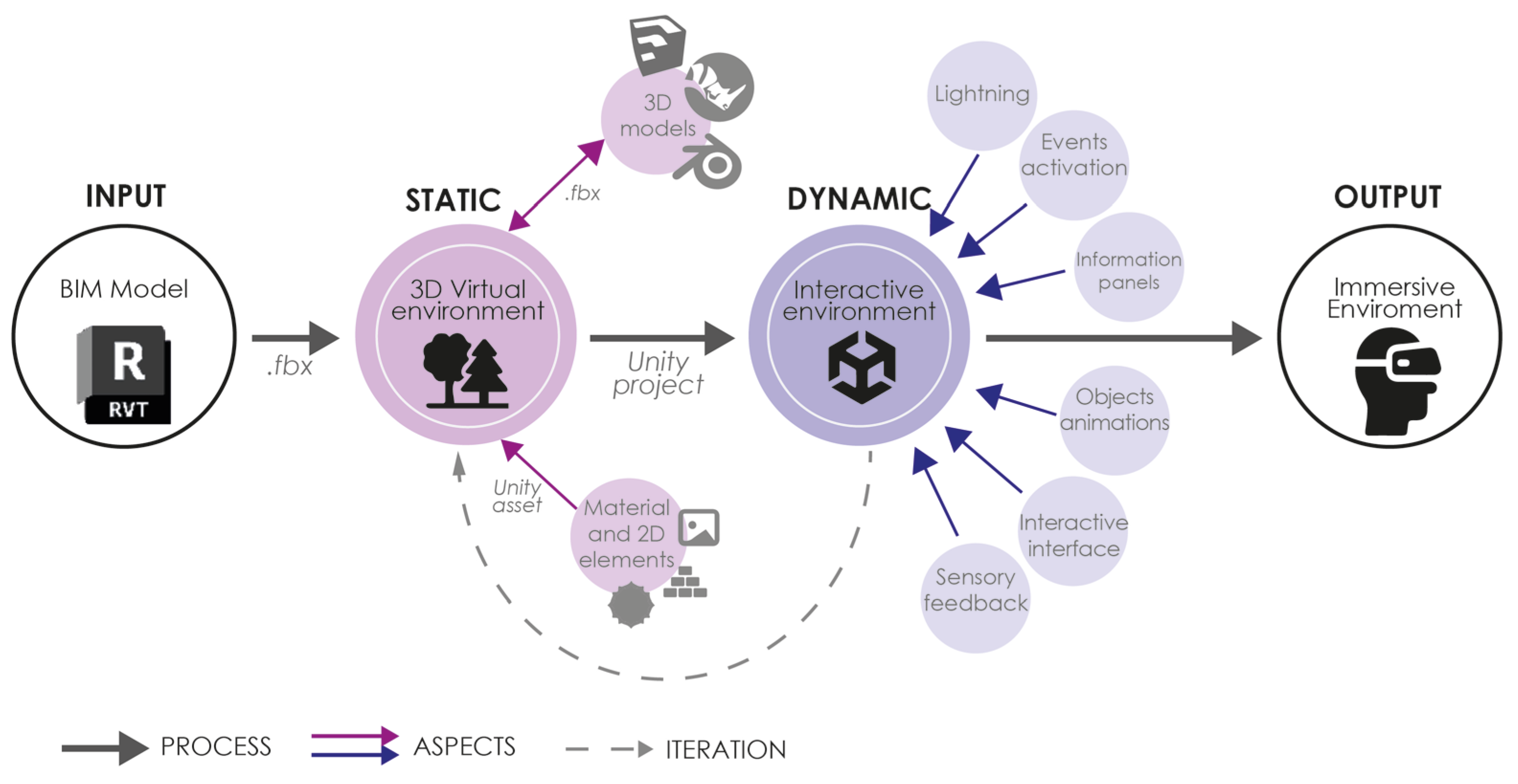
The design phase is supported by a technological pipeline oriented toward interoperability and continuity between technical representation and experiential simulation. As illustrated in
Figure 3, the process is structured into two macro-phases—static and dynamic—corresponding to the transition from a descriptive model to an interactive system.
The static phase focuses on the construction and enhancement of the three-dimensional model. The process originates from modeling in a BIM environment (Autodesk Revit 2024), where a base model is generated and subsequently exported into interoperable formats (e.g., .fbx). The model is then optimized and reworked in 3D modeling software (e.g., Blender 5.1, Rhinoceros 8, SketchUp 2025) through operations of geometric simplification, as well as morphological and material refinement, including the integration of furniture, vegetation, and textures consistent with the analyzed frailty. The phase concludes with asset preparation and export into compatible formats (e.g., .fbx, .obj). At this stage, the data retains a static and configurational nature.
The dynamic phase involves the transformation of the model into an interactive experiential environment. The assets are imported into a game engine (Unity 2021.3), where they are organized and configured through environmental parameters, interaction logics, and navigation systems. Interactivity is enabled through scripting (e.g., C#), animations, and sensory feedback, and the environment is subsequently optimized for use on XR devices and for deployment on immersive and multi-user metaverse platforms. At this stage, the data acquires a dynamic and performative nature.
Within the pipeline, the input consists of three-dimensional geometry derived from BIM models, while the output is an interactive, multi-user immersive environment, accessible via XR devices such as Meta Quest (Meta Platforms Inc., Menlo Park, CA, USA) and experienced in a shared mode. In the case study, the adopted platform is Spatial, which serves as a metaverse environment for accessing, exploring, and interacting with different projects.
4.3. The Metaverse Hub as an Educational Infrastructure
The metaverse hub constitutes the central element of the methodological framework, configuring itself as an operational space for exchange rather than a mere final showcase.
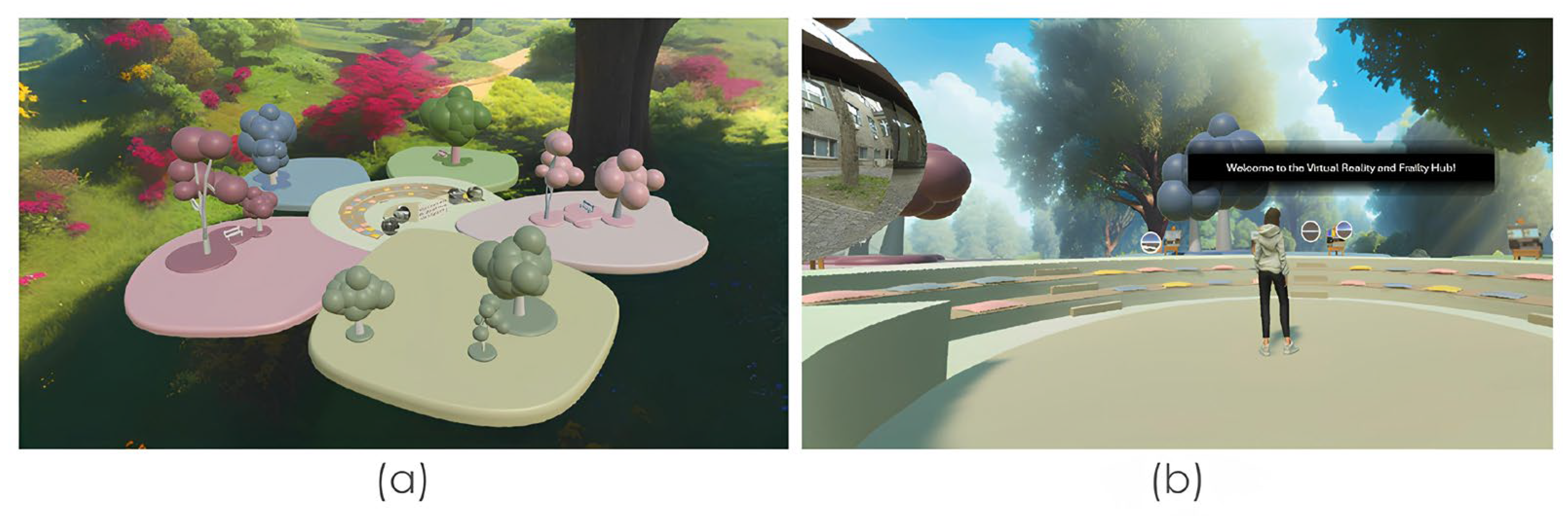
Its spatial configuration, characterized by an abstract and organic form, reflects the themes of nature and biophilia explored throughout the course, as illustrated in
Figure 4. The rejection of conventional typologies—such as the virtual classroom or laboratory—responds to the intention of constructing a symbolic and immersive space consistent with the design content developed by students.
This configuration enables the integration of different experiences within a single digital ecosystem, accessible through avatars and experienced synchronously [
20]. The possibility to explore projects, interact in real time, and discuss adopted solutions transforms the final phase into a structured moment of peer learning.
In this sense, the environment developed on the Spatial platform operates as a digital extension of the classroom, integrating relational, spatial, and immersive dimensions within a shared context. The hub thus suggests the role of VR not only as a design tool, but as a fully fledged collaborative and pedagogical infrastructure.
4.4. Evaluation Strategy
The project evaluation strategy integrates both formative and summative components. The objective is not to measure performance in absolute terms, but to provide a comparable interpretation of design outcomes in relation to the research objectives.
The evaluation was conducted by a multidisciplinary panel of six experts, including two neurobiologists (one senior academic and one junior researcher), two engineers (one senior academic and one junior researcher) specialized in digital modeling and VR, and one architect and one senior researcher specialized in XR.
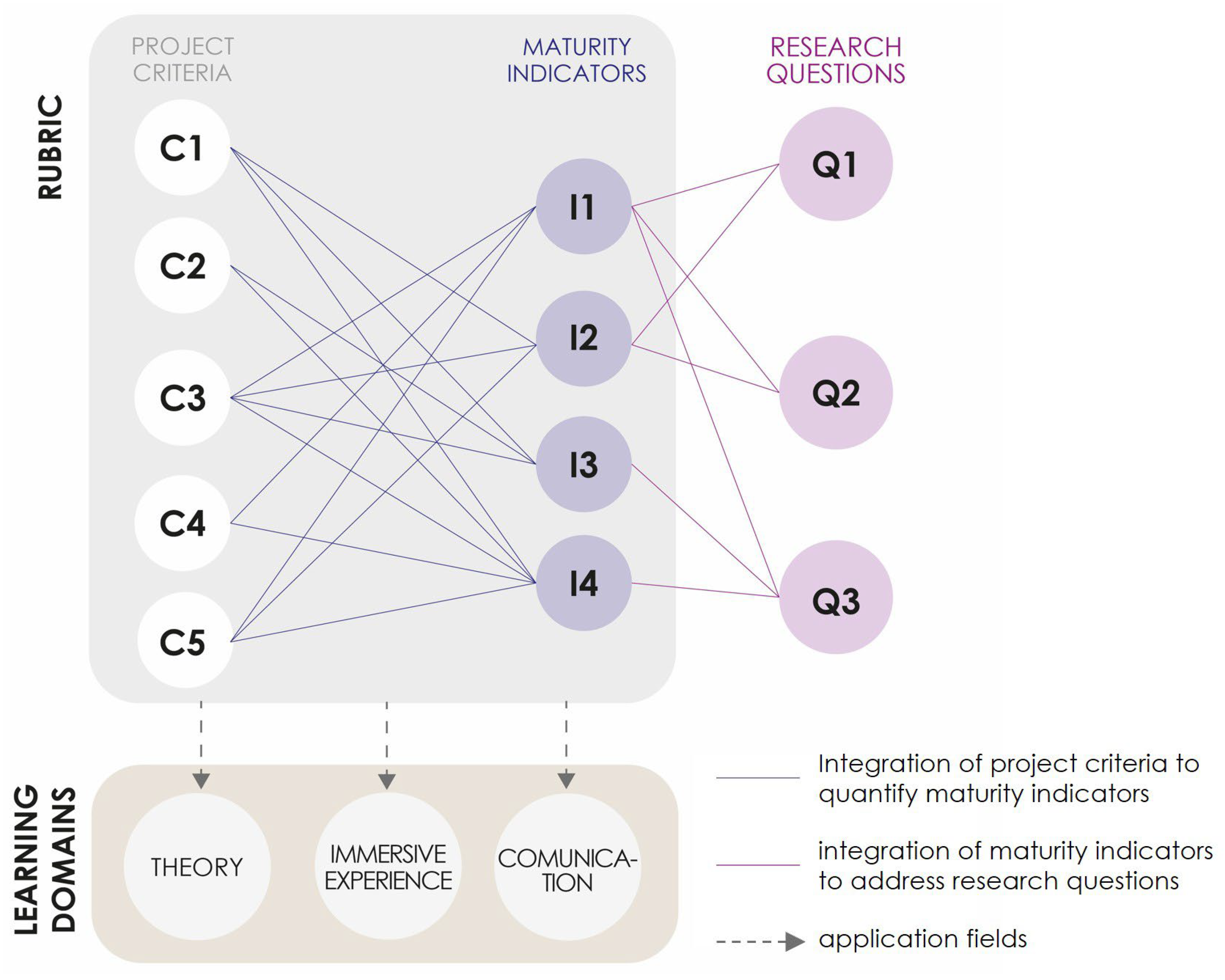
To this end, a project rubric was adopted (
Figure 5), explicitly outlining the criteria of coherence between frailty analysis, spatial configuration, integration of greenery, perceptual quality, and the use of immersive technologies. The evaluation framework is structured into two analytical components—project criteria and maturity indicators—and is applied across three learning domains: (i) understanding of theoretical foundations, (ii) quality of the developed immersive experience, and (iii) ability to communicate and argue the project.
The project criteria (C1–C5) define the observable dimensions of the projects and were developed based on established references in the literature on immersive learning, biophilic design, and human-centered approaches [
43]. These references provide the conceptual framework for interpreting, in an integrated manner, the environmental, social, spatial, and technological dimensions of the project, and are further discussed in
Section 6.2.
The design criteria, however, focus on the attributes of individual projects without taking their integration into account. To answer the research questions formulated, more comprehensive indices are required, capable of capturing the interactions between the various disciplinary dimensions involved in the projects. For this reason, four maturity indicators (I1–I4) are introduced, derived from an interpretative reading of the design criteria, as discussed in
Section 6.3.
The evaluation procedure was structured in four phases. Firstly, each evaluator independently assessed all projects using a five-level ordinal scale (C1–C5) across the three learning domains. Secondly, the scores relating to theoretical understanding were aggregated using the arithmetic mean, whilst the other domains were discussed collectively in order to compare interpretations. Thirdly, a consensus phase was implemented.
Disagreements were resolved by majority vote, with domain-specific weighting: evaluators with relevant expertise (e.g., neurobiology for aspects relating to frailty, XR/BIM for technological and design aspects) had greater influence in the event of divergences. Finally, a fourth phase involved the calculation of the final student score, defined as the arithmetic mean of the individual score in the theoretical domain and the group-level scores in the immersive experience and communication domains. Further details on the evaluation protocol, the composition of the panel, and an example of the scoring matrix are provided in
Appendix A.
5. Case Study and Applications
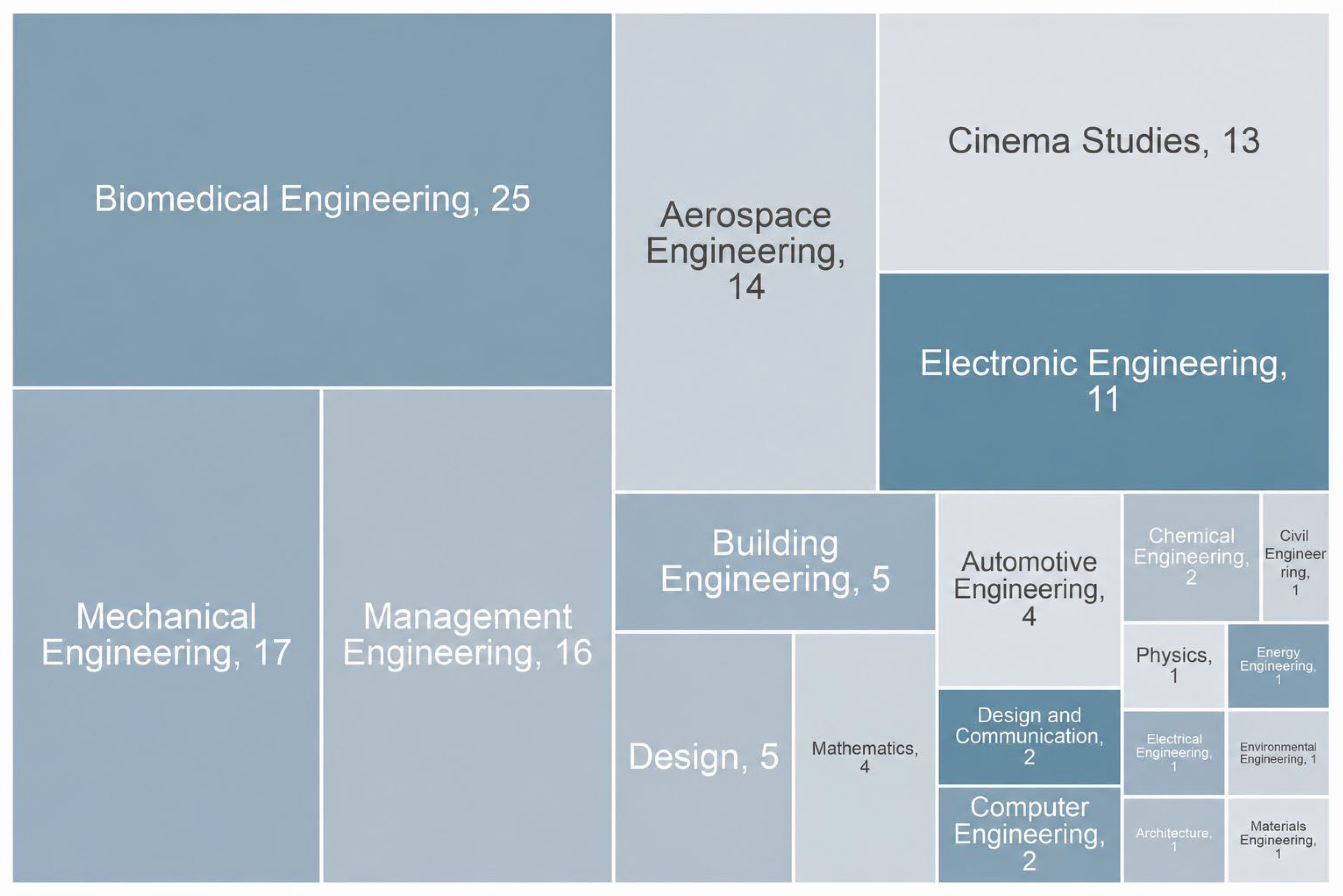
This chapter describes how the methodology outlined above was applied and tested within the interdisciplinary university course “Virtual Reality and Frailty”. The experience involved a total of 160 students from diverse educational backgrounds, primarily in the fields of engineering, architecture, and design. The students were organized into 16 working groups, heterogeneous in terms of disciplinary background, with the aim of fostering the integration of technical, spatial, and social competences.
The heterogeneity of the sample, highlighted in
Figure 6, was not considered a contingent factor, but a structural component of the methodological framework, consistent with the interdisciplinary nature of the issues addressed and with the systemic perspective required by the themes of sustainability and frailty.
The educational experiment was conducted over 150 h throughout the academic semester and was structured into two weekly sessions: one dedicated to the theoretical framing of key topics (social sustainability, frailty, natural elements as care infrastructure, XR), and a second focused on design development and review activities in a workshop-based format.
The technological setup included one XR headset for every two working groups, with each group consisting of approximately eight students. Device usage was organized through rotation during laboratory sessions, ensuring that all groups had structured opportunities for immersive exploration. This configuration fostered intra-group collaborative dynamics, transforming the XR experience into an opportunity for shared discussion and reflection rather than an isolated individual interaction.
For the purposes of the study, the Meta Quest 3 headset was selected due to its versatility in enabling access to metaverse environments, also in standalone mode, without requiring connection to an external computational unit.
5.1. Project Context: University Courtyards
The experience focused on the redesign of university open spaces, identifying courtyards as a particularly suitable context for experimenting with strategies oriented toward well-being and inclusion. Courtyards function as spaces of transition and permanence, where movement, pauses, and informal interactions intersect. Their hybrid nature and high variability of use make them well-suited for targeted interventions on the integration of greenery and perceptual quality, with potential impacts on usability and user comfort.
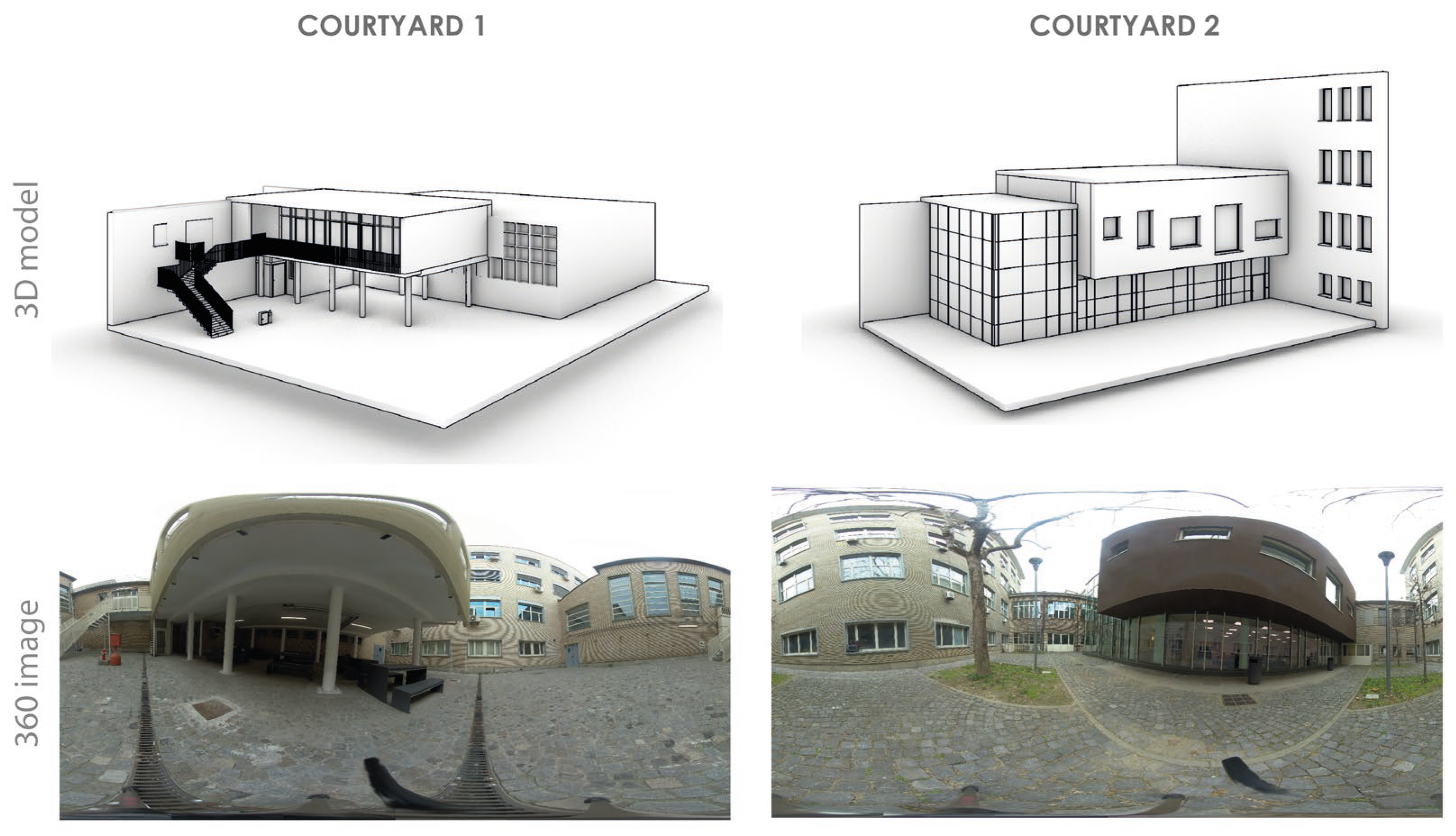
Students were assigned two real courtyards within the main campus of the Politecnico di Torino, selected for their differences in spatial configuration, patterns of use, and opportunities for the integration of vegetation. The presence of two contexts with distinct morphological and relational characteristics allowed the groups to engage with different constraints and potentials, guiding site selection according to the chosen frailty condition and the corresponding design strategies.
Figure 7 shows the design basis provided to each student group, consisting of 3D digital models of the courtyards in .fbx format, previously developed by the instructors in a BIM environment (Revit), along with 360° images. These materials enabled each group to conduct a preliminary site analysis, exploring the tridimensional extension of the context and independently assessing visual relationships, circulation patterns, environmental criticalities, and intervention opportunities prior to the final site selection.
5.2. Analytical Phase
Once the project context was selected, each group identified a specific condition of frailty as the starting point of the design process. This choice was supported by a preliminary literature review phase, conducted through selected scientific contributions and guided in-depth discussions during lectures. This step enabled the definition of the characteristics of frailty, the associated spatial criticalities, and the needs related to user experience.
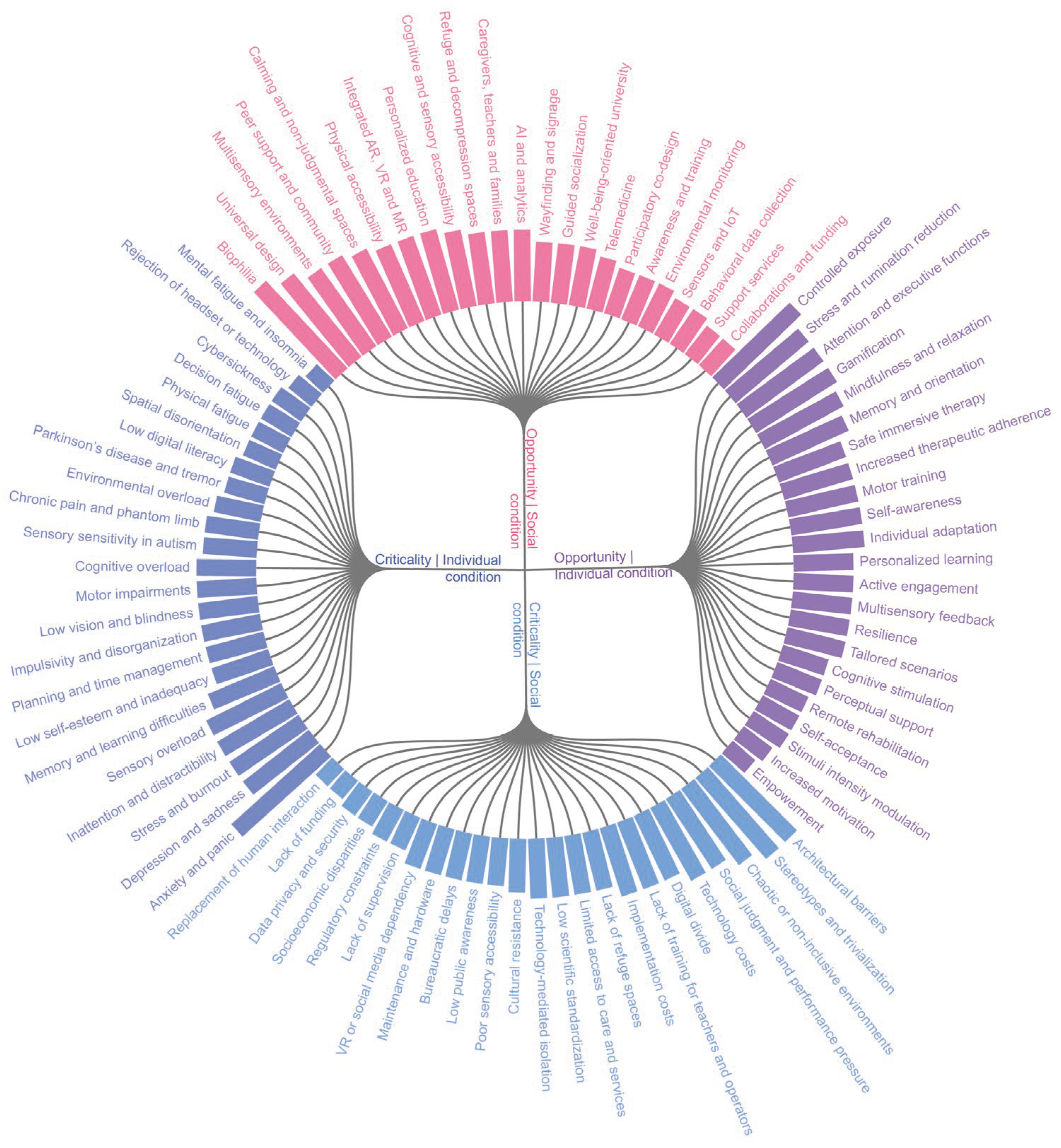
To structure the analysis, students employed analytical and reflective tools (Strengths, Weaknesses, Opportunities, and Threats (SWOT) analysis) applied to the relationship between frailty and the specific courtyard context. The resulting matrices were then comparatively analyzed, enabling the identification of different ways of interpreting frailty. The analyses were grouped into four main strands, as highlighted in
Figure 8:
- (i)
vulnerability diagnosis, focused on criticalities and limitations;
- (ii)
empowerment strategies, oriented toward design opportunities and individual support;
- (iii)
social barriers, interpreting frailty as the outcome of relational dynamics;
- (iv)
inclusive opportunities, highlighting the inclusive potential of design.
This classification made it possible to identify recurring interpretative patterns, showing how frailty is understood not only as an individual condition, but also as a relational and contextual phenomenon.
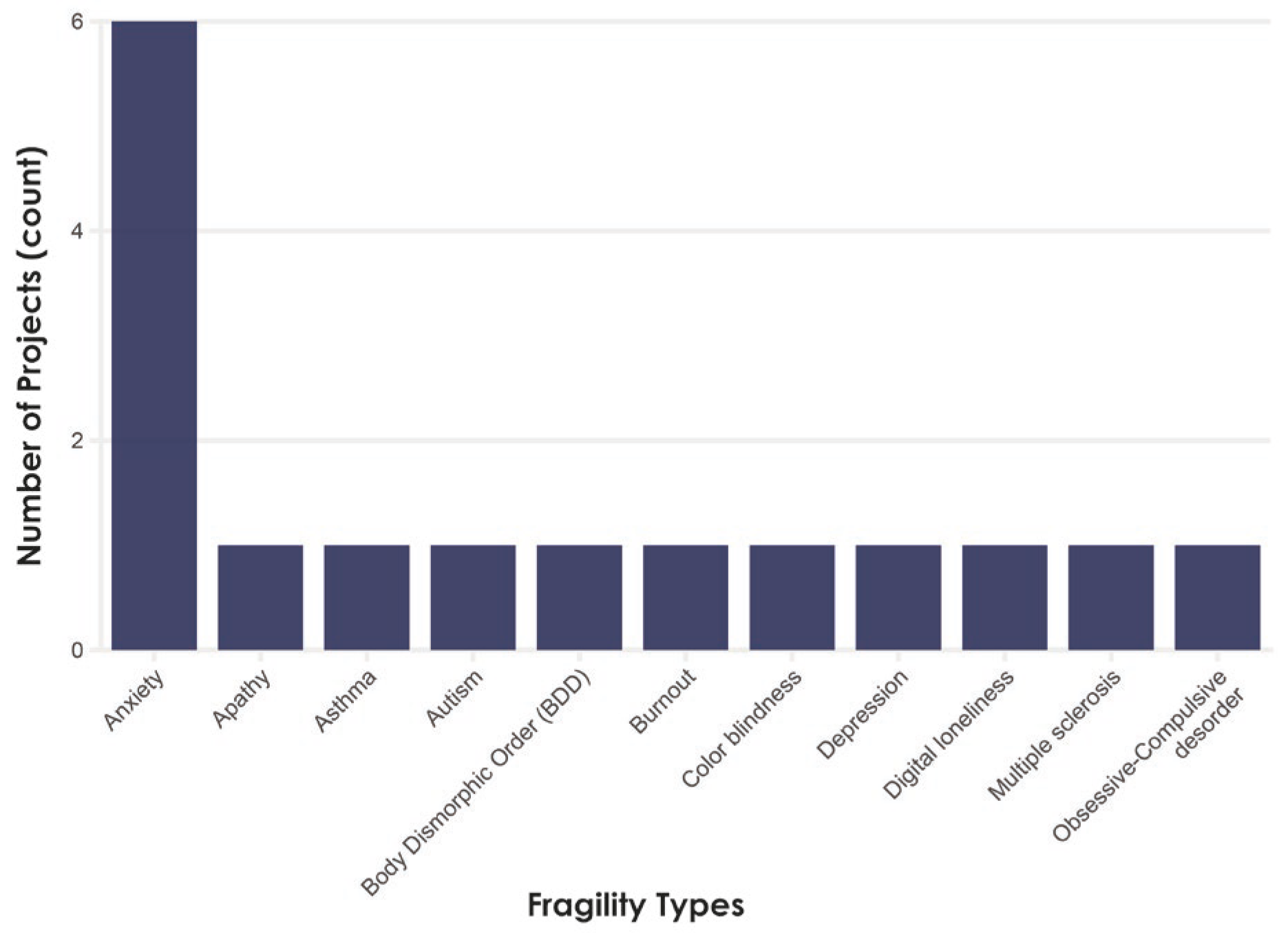
In parallel, a quantitative survey of the frailties selected by the groups was conducted, with
Figure 9 presenting the selected conditions. Based on the set of matrices produced, a synthesis chart was developed to represent the distribution of the frailty conditions addressed throughout the workshop, highlighting which conditions were explored more frequently than others.
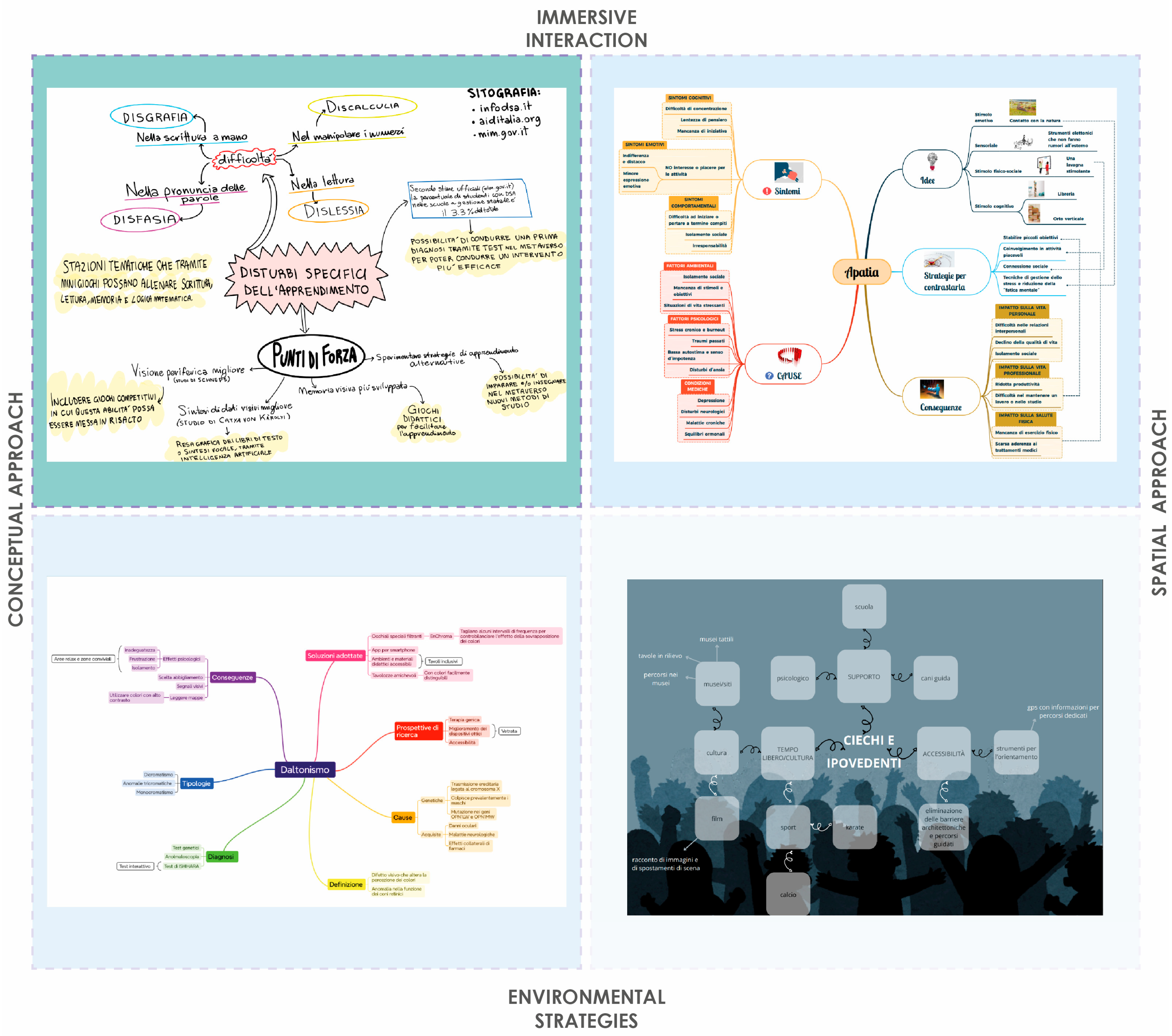
Alongside the SWOT analysis, the groups developed mind maps and concept maps as supporting tools for the design process, as illustrated by the examples shown in
Figure 10. These maps served to organize and synthesize the information emerging from the research, identifying relationships between frailty, spatial requirements, the role of greenery, and the potential of immersive technologies.
Through this process, the conditions of frailty were progressively related to the spatial configuration of the university courtyards and possible strategies for intervention through greenery. This step enabled the translation of an initially abstract condition into a coherent set of shared design criteria, capable of guiding subsequent decisions.
5.3. Digital Development
Based on the criteria emerging from the analytical phase, the students initiated the construction of the virtual environment, starting from the provided model. The model was progressively enriched through the integration of new spatial elements, furniture, and vegetation components selected in relation to the addressed frailty and the references discussed during the lectures.
Particular attention was devoted to the definition of materials, textures, and color schemes. These elements were not treated as mere aesthetic components, but as design devices capable of influencing spatial perception, environmental comfort, and the overall quality of user experience. The integration of greenery was interpreted as a mediating element between the built environment and well-being, in line with the theoretical framework of the course.
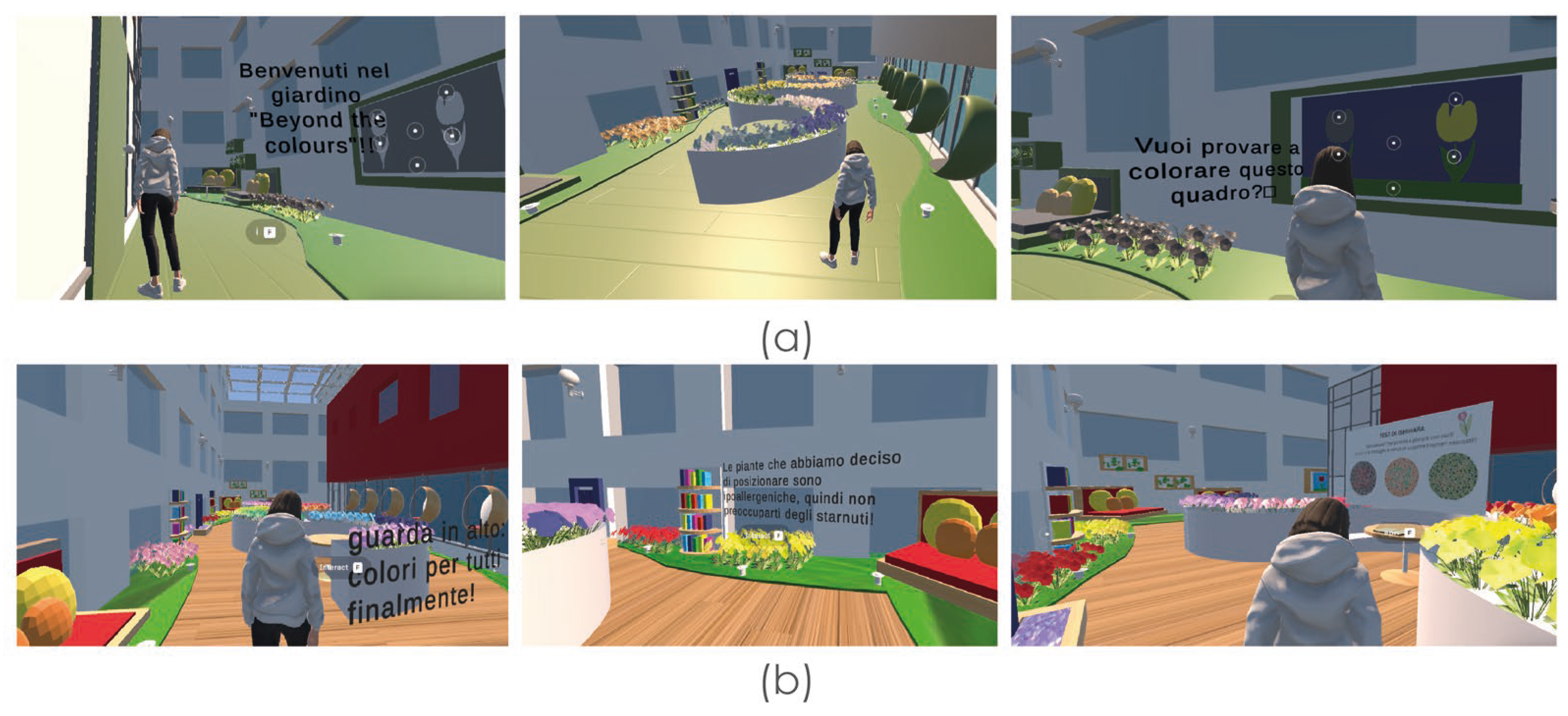
Some projects used the immersive environment to directly explore perceptual experiences associated with specific conditions of frailty. One of the most exemplary cases concerned with an experience focused on color blindness, in which a visual simulation allows users to perceive the virtual environment through different modes of chromatic alteration, as shown in
Figure 11. Through immersive interactions, users can activate filters that reproduce the main forms of color blindness and compare them with standard color perception. At the same time, the project integrated spatial and vegetation-based strategies designed to improve environmental legibility for color-blind users, employing material contrasts, variations in brightness, and a selection of plant species characterized by perceptual differences not solely based on color.
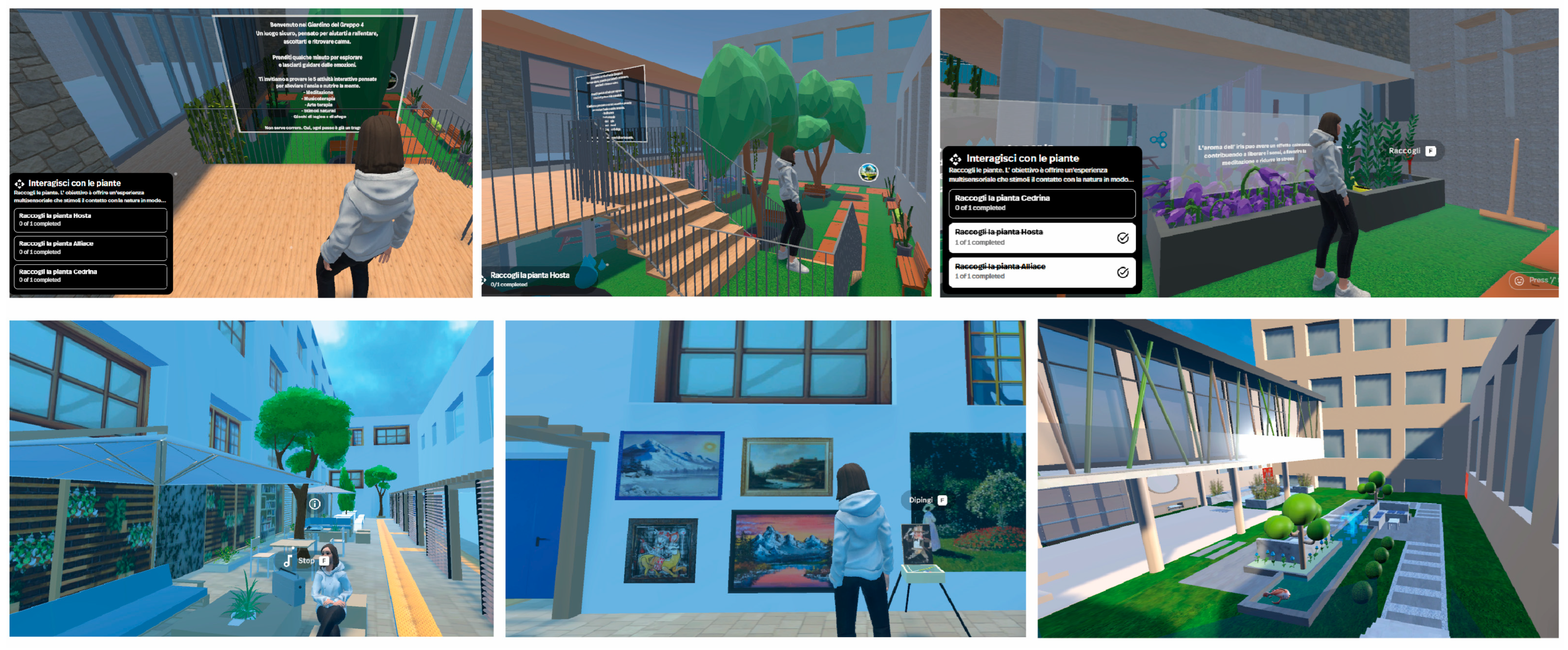
A second example addressed the theme of anxiety, focusing on the role of vegetation and immersive interactions as tools for perceptual regulation (
Figure 12). In this case, the project developed an environment characterized by gradual pathways, micro-spaces for pause, and vegetation configurations designed to reduce stimuli and enhance a sense of protection. Immersive interactions allow users to activate different modes of spatial experience, modulating vegetation density, natural sounds, and lighting conditions to generate more calming scenarios and support processes of emotional decompression.
Only at a later stage, once the spatial and perceptual configuration of the virtual environment had been defined, were the concept maps reactivated to guide the development of immersive interactions. These interactions were conceived as tools capable of supporting spatial use and contributing to the mitigation or compensation of the identified conditions of frailty, etc.
In this sense, the maps did not represent a tool limited to the initial analytical phase, but accompanied the entire design process, acting as a mediating device between theoretical analysis, spatial configuration, and the development of interactive dynamics within the metaverse environment.
The development of interactions enabled the integration of spatial and relational dimensions, strengthening the coherence between the selected frailty, design strategies, and modes of immersive experience.
The combination of these phases—context exploration, frailty analysis, definition of design criteria, spatial development, and implementation of interactions—resulted in 16 distinct immersive experiences, subsequently integrated into the shared metaverse hub described in the methodological chapter.
6. Results
6.1. Analysis Logic
The results are presented according to a multilevel analytical structure consistent with the adopted evaluation framework. The robustness of the analysis is ensured through a triangulation process integrating: (i) the scores assigned to individual criteria across the three learning domains discussed in
Section 4.4, (ii) the relationships among them included in the maturity indicators, and (iii) the interpretative comparison within the multidisciplinary evaluation panel.
6.2. Project Criteria
The assessment of the project criteria (C1–C5) was conducted using a five-level ordinal scale (1–5), designed to make explicit the degree of integration of each criterion within the project. For each criterion, the scale was defined through progressive qualitative descriptors, enabling the distinction of increasing levels of coherence and design maturity. In particular, the minimum value (1) corresponds to a marginal or unstructured presence of the criterion, while the maximum value (5) indicates full systemic integration, where the criterion explicitly and coherently guides the entire project.
Table 2 provides a detailed description of each adopted criterion.
The score assigned to each criterion across the three domains is based on an integrated reading of the project, considering the relationships among its key dimensions. Rather than providing an absolute measure of quality, the scale enables a comparative analysis of differences and recurring patterns across cases, offering an initial understanding of group performance before examining relationships between variables.
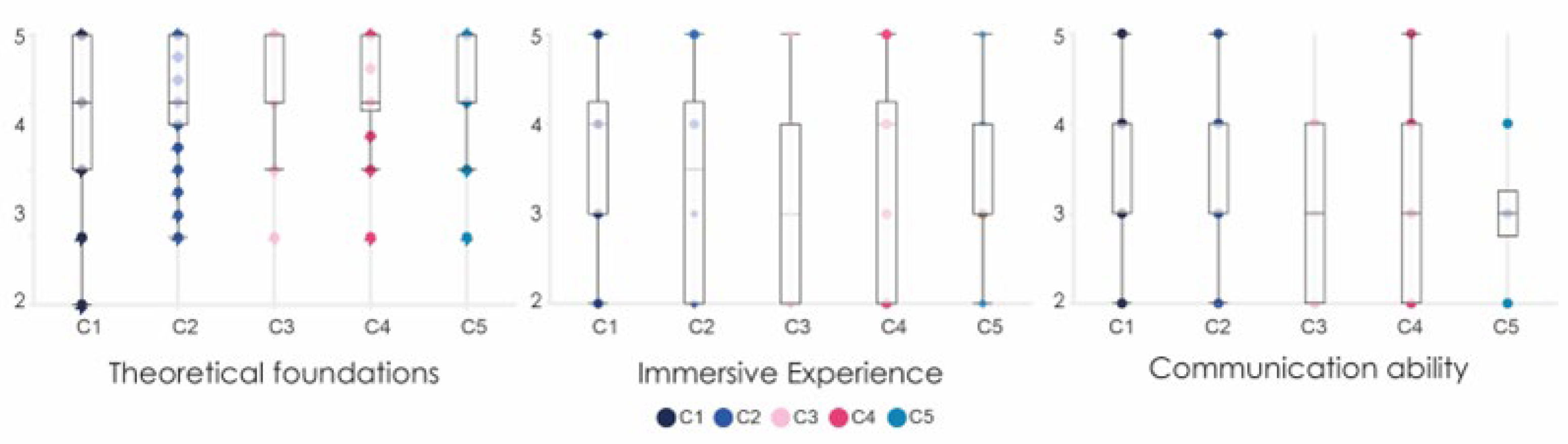
Table 3 presents the main descriptive statistical indicators of the analyzed dataset, while the boxplots in
Figure 13 provide a graphical representation of these results. The extended table is presented in
Appendix B.
While project criteria provide relevant insights into specific project characteristics, they remain limited to the analysis of individual dimensions. For this reason, it becomes necessary to examine their interaction through the lens of maturity indicators, as discussed in the following section.
6.3. Maturity Indicators
Maturity indicators (I1–I4) were introduced to capture the combined effect of design criteria, going beyond their individual assessment. As shown in
Table 4, each indicator is structured around a primary design criterion and examined in relation to complementary ones, enabling the evaluation of interactions across project dimensions.
Unlike individual criteria scores, maturity indicators are not derived through direct numerical aggregation. Instead, they are assigned through a structured interpretative process carried out by the evaluation panel, based on the configuration of criteria within each project. In particular, evaluators assess how the primary criterion is expressed and supported by the complementary criteria across the three domains, considering both their relative values and their coherence.
The score of each indicator is defined through a consensus-based discussion among evaluators, rather than a predefined computational rule. A five-level scale (1–5) is adopted as an ordinal interpretative framework, where increasing values reflect higher levels of integration among project dimensions. A detailed description of the scale is provided in
Appendix A.4.
6.3.1. I1—VR as Infrastructure
In projects where this configuration is present, interactions are embedded within the spatial logic, for instance, through experiential activities that guide users in exploration. In several cases, the experience is structured through interactive devices such as game stations (e.g., chess or tic-tac-toe), creative workshops, or immersive artistic environments, where users can engage with artworks or enter spaces inspired by three-dimensionally reconstructed paintings, accompanied by sound or musical stimuli. These configurations demonstrate how interaction is not an accessory element, but an active device in shaping the experience.
6.3.2. I2—Human-Centered Translation: Frailty
In cases where frailty assumes a generative role, it translates into explicit and recognizable spatial choices. For example, some projects develop environments with differentiated color schemes to simulate the visual perception of users with color blindness or introduce guided paths and orientation devices for conditions of low vision. In other cases, space is designed as initially chaotic and progressively ordered to represent and mitigate conditions related to obsessive–compulsive disorder (OCD). These solutions show how frailty is translated into operational spatial configurations rather than merely declarative statements.
6.3.3. I3—Greenery as a Device for Care and Design Mediation
In projects where these criteria are jointly developed, vegetation is intentionally used to influence user perception and behavior. In particular, the use of specific plant species can be observed—such as hypoallergenic, evergreen, or highly color-recognizable vegetation—selected in relation to specific frailty conditions, such as low vision or sensory disorders. In some cases, greenery is also associated with additional sensory components, such as olfactory stimuli or variations in vegetation density, contributing to emotional regulation and improved perceptual comfort. These configurations illustrate the shift from a decorative use of greenery to its integration as an active care infrastructure.
6.3.4. I4—Systemic Coherence
In such cases, projects exhibit strong integration between concept, space, immersive technologies, and the design process, with limited dispersion across the analyzed dimensions. Operationally, this results in environments where spatial organization, interactions, natural elements, and design narrative are coherent and mutually reinforcing. For instance, some projects present fully integrated experiences in which each element—from spatial configuration to interactions and the use of greenery—contributes in a coordinated manner to the construction of a unified experiential logic.
6.4. Indicators Overview
Overall, the maturity indicators show that project quality depends less on performance in isolated criteria than on their integration into coherent and interrelated configurations. High scores in individual criteria do not necessarily translate into high maturity, which instead relies on the balance and interaction among dimensions; conversely, low scores tend to produce low maturity outcomes, as the underlying components remain underdeveloped.
The indicators further highlight a progressive shift from descriptive approaches to operational design configurations, in which frailty is translated into spatial, interactive, and perceptual devices. From this perspective, design maturity emerges as a systemic property, arising from the alignment of theoretical, spatial, technological, and narrative dimensions. Building on these findings, the following section discusses the results in relation to the Research Questions, interpreting the maturity indicators as analytical lenses through which the role of VR within the design process can be examined, particularly in relation to the integration of different project dimensions.
7. Discussion
Based on the results presented in the previous section, the following discussion interprets the findings in relation to the research questions, moving from a descriptive analysis of performance to a more analytical understanding of how the various dimensions of the project contribute to the creation of immersive learning environments.
The maturity indicators (I1–I4) provide a systemic framework for interpreting these dynamics, as they identify not only the presence of specific design criteria, but also their interaction and alignment.
7.1. Interpretation of Findings
7.1.1. Integrating VR into Learning
In relation to RQ1, results suggest that the effectiveness of immersive environments is closely related to the degree of integration between immersive technologies and interactions (C4), spatial structure (C3), and the design process (C5). Indicator I1 shows that, in cases where these dimensions are integrated, the experience moves beyond mere visualization, taking the form of a relational system in which the user is engaged through interactive sequences, contextual feedback, and experiential activities. Conversely, in projects where interactions are not aligned with the spatial logic or are introduced in an unstructured manner, VR tends to be used as a representational tool, without significantly affecting the perceptual quality of the experience (C3). This suggests that the role of VR within the design process does not depend on the mere presence of interactive elements, but on their systemic integration within the designed environment.
This result is consistent with the CAMIL model, which emphasizes the importance of alignment between cognitive, affective, and design components, and with studies highlighting how the most effective applications of VR in higher education are those oriented toward active and interactive learning [
44]. Moreover, the presence of interactive environments that support shared exploration and the construction of experience confirms the potential of VR to support collaborative and situated forms of learning [
27,
45].
In this sense, VR is proposed not merely as a technology, but as a designed environment that may support active processes of learning, reflection, and collaboration.
7.1.2. Designing for Frailty
Addressing RQ2, the analysis shows that a frailty-centered design approach supports the development of human-centered competences when frailty is used as a generative principle of the project rather than as a merely declarative theme. Indicator I2 demonstrates that, in projects where frailty (C1) is effectively integrated into the concept, greater spatial (C3) and methodological (C5) coherence can be observed, indicating alignment between analysis, development, and implementation.
In cases where frailty remains at a descriptive level, there is no corresponding translation into spatial or perceptual design choices, and projects tend to appear fragmented. Conversely, in more mature projects, frailty directly informs the spatial configuration, for example, through perceptual simulations (such as in the case of color blindness or low vision), orientation devices, or spatial sequences responding to specific cognitive or behavioral conditions. This shift from thematic framing to operationalization represents a key element in the development of user-oriented design competencies.
This interpretation is consistent with the literature, highlighting that the role of immersive technologies is associated with project configurations that reflect a human-centered design approach through situated experiences [
46,
47,
48].
In this sense, the frailty-oriented approach extends beyond a design theme, emerging as a framework that may support the integration of theoretical, design, and social dimensions.
However, it should be noted that the distribution of frailty conditions across the projects is not uniform, with a stronger representation of anxiety-related cases. As a result, several of the design strategies discussed—particularly those related to perceptual regulation, such as the use of micro-spaces, controlled stimuli, and calming spatial configurations—are more directly associated with anxiety-oriented approaches. This prevalence should be taken into account when interpreting the results, as it may influence the observed relationships between frailty, spatial configuration, and the role of environmental elements, which are further explored in the following section.
7.1.3. Green Spaces as Infrastructures for Care and Learning
The findings clarify how green spaces can operate as mediating infrastructures between frailty and spatial experience (RQ3) when they are designed as active devices rather than as decorative elements. Indicator I3 shows that, in projects where greenery (C2) is integrated with frailty (C1) and spatial quality (C3), it assumes a significant role in shaping the experience, influencing user perception and behavior.
In cases where greenery is not connected to the design concept, it does not significantly affect the quality of the experience and remains marginal. Conversely, in more mature projects, vegetation is selected and configured in response to the specific frailty condition addressed, for example, through the use of recognizable species, chromatic variations, vegetation density, or sensory stimuli, contributing to the regulation of experience and the enhancement of perceptual comfort.
This interpretation is consistent with the principles of biophilic design, which highlight the role of natural elements in supporting well-being and spatial quality [
49]. In immersive contexts, this contribution is amplified, as greenery can be designed as a dynamic experiential device capable of actively modulating perceptual conditions.
In this sense, greenery can be understood as a mediating infrastructure that enables the translation of frailty into perceivable spatial configurations, reinforcing the inclusive and human-centered dimension of the project.
7.2. Results Overview
Overall, the results suggest that the quality of the project outcomes may be influenced by the extent to which VR, frailty, and green spaces are integrated within a unified design system, rather than operating as independent dimensions.
From this perspective, VR can be understood not simply as a neutral enabling technology, but as a complex design environment whose effectiveness appears to be closely linked to its pedagogical integration, rather than to its mere technological presence [
50]. Within this framework, immersive technologies can support the development of critical, interdisciplinary, and human-centered skills, in line with the sustainability goals and principles of the 2030 Agenda.
In addition to the most mature configurations, the analysis reveals intermediate conditions in which certain criteria are well developed while others remain less integrated. Considering that anxiety is the most frequently addressed condition, some projects exhibit strong spatial and perceptual qualities (C3), achieved through ordered environments, progressive sequences, and controlled color palettes, but a more limited use of immersive interaction (C4). In these cases, the experience remains predominantly observational. By contrast, other projects addressing the same condition show a higher level of integration between spatial and interactive components, indicating that such configurations depend on specific design choices.
A further intermediate condition can be observed in the project addressing digital loneliness, where a strong spatial quality (C3) is not matched by an adequate development of interaction (C4), limiting the activation of relational dynamics. Similarly, in projects related to perceptual conditions such as color blindness, the condition of frailty (C1) is clearly represented but not always translated into integrated spatial or environmental strategies, with greenery (C2) often playing a marginal role.
In light of the results discussed, it is relevant to position the proposed framework in relation to existing models in the literature. To this end,
Table 5 presents a comparative overview, highlighting for each reference the type of relationship—extension, completion, integration, or gap-filling—through which the proposed model contributes to expanding the existing framework. This comparison clarifies how the contribution is not intended as a replacement, but as an integrative device through which connections between pedagogical, design, and environmental dimensions can be explored.
7.3. Research Limitations
The present research has several limitations that should be considered when interpreting the results. First, the study is based on a single case applied within a specific educational context, which may limit its generalizability. However, the aim of the work is not to provide statistically generalizable results, but to identify recurring patterns and interpretative configurations capable of informing analogous contexts of design education, in line with case study approaches and analytical generalization [
51,
52].
Further limitations concern the distribution of selected frailty conditions, with a significant number of student groups focusing on anxiety. This tendency may be influenced by the specific case study context—university courtyards—leading students to address issues closely related to their own experiences.
Second, the evaluation does not rely on student self-reported data, such as questionnaires or interviews, but on an outcome-oriented analysis of design outputs. While this approach helps to avoid biases related to subjective perception and focuses on the quality of results, it does not allow for the direct capture of the cognitive and emotional dimensions of the learning experience, which the literature identifies as central in immersive contexts [
53].
Moreover, although the evaluation process was conducted by a multidisciplinary group and based on an explicit and shared rubric, it inevitably includes an interpretative component, typical of expert judgment-based assessment processes. This aspect was mitigated through a triangulation process involving evaluators, criteria, and learning domains, as well as through the use of a transparent and replicable evaluation structure. However, future studies could strengthen reliability through inter-rater agreement measures or external validation processes.
Finally, the maturity indicators derive from a configurational and pattern-based analysis rather than from statistical correlations. This approach, consistent with the design research framework, prioritizes the interpretation of emerging design configurations over causal modeling [
54,
55]. Future research could integrate quantitative methods to test the robustness of the identified relationships and verify their applicability in different contexts.
Despite these limitations, the study proposes a structured and replicable framework for analyzing design learning processes in immersive environments, offering useful insights for both research and practice in higher education.
8. Conclusions and Future Development
The contribution of this research unfolds across multiple levels. From a theoretical perspective, the study proposes an interpretation of VR as a complex design environment, whose effectiveness may be associated with its integration within pedagogical frameworks, in line with studies that interpret VR as an experiential space with the potential to support situated and embodied learning [
56]. At the methodological level, it introduces a multilevel evaluation framework based on project criteria and maturity indicators, enabling the interpretation of projects as integrated systems through a configurational and pattern-based approach, consistent with reflective and practice-based design research [
54]. Finally, from an educational perspective, the study highlights how the integration of VR, frailty, and greenery may support the development of interdisciplinary and human-centered competences. While no direct measurement of learning outcomes, collaboration, or competence development was conducted, the results suggest a potential pedagogical value of this approach, in line with the objectives of the 2030 Agenda and, in particular, SDGs 3, 10, and 11, as well as with studies emphasizing the role of immersive technologies in promoting active and inclusive learning [
27,
57].
Looking ahead, the research opens several avenues for further development. First, it will be necessary to extend the analysis to different educational contexts in order to verify the transferability of the proposed framework. Second, the integration of qualitative and quantitative methods—such as interviews, questionnaires, and statistical analyses—may strengthen the validity of the results and deepen the understanding of the cognitive and emotional dimensions of immersive experience, also in light of studies highlighting the complexity of learning processes in technologically mediated environments [
58,
59]. Further developments may include longitudinal studies aimed at assessing the long-term impact on students’ competencies.
Finally, a particularly relevant area concerns the evolution of these experiences toward broader and more structured metaverse ecosystems. In this perspective, the integration of immersive environments, digital infrastructures, and data management systems (Common Data Environment) may expand the role of VR from a teaching tool to a comprehensive platform for learning, research, and interdisciplinary collaboration, in line with the transformations introduced by digitalization in architectural, engineering, and construction processes and integrated information environments [
60].