Article

Ambient Air Pollution and Non-Communicable Diseases Among Older Adults in China: The Mediating Role of Social Participation


1
School of Public Affairs, Zhejiang University, Hangzhou 310058, China
2
School of Geography and Planning, Sun Yat-sen University, Guangzhou 510006, China
3
Guangdong Key Laboratory for Urbanization and Geo-Simulation, Sun Yat-sen University, Guangzhou 510275, China
4
Guangdong Provincial Engineering Research Center for Public Security and Disaster, Guangzhou 510050, China
5
Global Health Research Center, Duke Kunshan University, Suzhou 215316, China
*
Author to whom correspondence should be addressed.
Sustainability 2026, 18(10), 4967; https://doi.org/10.3390/su18104967 (registering DOI)
Submission received: 12 February 2026 / Revised: 8 May 2026 / Accepted: 13 May 2026 / Published: 15 May 2026

Abstract

Amid rapid industrialization and urbanization, air pollution has emerged as a major public health concern linked to non-communicable diseases (NCDs), with older adults particularly vulnerable. Beyond its direct physiological effects, social participation could buffer environmental health risks by enhancing resilience, encouraging healthy behaviors, and reducing stress. Using data from the 2020 China Longitudinal Aging Social Survey (CLASS; 11,398 respondents aged 60 and above), linked with county-level air pollution indicators (PM2.5, O3, SO2, NO2, and CO), this study applied multilevel models to examine the association between air pollution and NCD prevalence among older adults, as well as the mediating role of social participation. Results show that higher NO2 concentrations significantly increased NCD risk (OR = 1.27, 95% CI: 0.87–1.73), whereas higher SO2 concentrations (mean = 9.96 µg/m3, ranged from 5.69 to 19.99 µg/m3) were unexpectedly associated with reduced risk (OR = 0.68, 95% CI: 0.58–0.8). This finding should be interpreted with caution and warrants further investigation; notably, the observed SO2 levels were well below the World Health Organization air quality guideline values. CO exhibited an inverted U-shaped relationship with disease prevalence. Social participation functioned as a protective factor, lowering NCD risk (OR = 0.75, 95% CI: 0.66–0.84) and may partly explain the association between NO2 exposure and NCDs. These findings highlight the complex and sometimes counterintuitive pathways through which air pollution and social participation jointly shape NCDs in later life. Policy interventions should integrate air quality improvements with initiatives that promote social participation to enhance resilience, reduce disparities, and foster healthy aging in polluted urban environments. For example, establishing well-ventilated indoor community centers equipped with air filtration systems in high-pollution areas could provide safer spaces for older adults to participate in social activities while minimizing exposure to harmful pollutants. Such interventions could simultaneously reduce environmental health risks and strengthen social participation, thereby offering a practical pathway for promoting healthy aging.

1. Introduction

With rapid economic development and accelerating urbanization, air pollution has become a serious threat to public health and the ecological environment in China. Although efforts to improve air quality have been made, regional and seasonal pollution issues remain unresolved. The health risks posed by air pollution continue to be substantial and cannot be ignored. Meanwhile, China’s population is aging rapidly: by 2024, the number of people aged 60 and above exceeded 300 million, accounting for 22.0% of the total population [1]. As people age, their risk of non-communicable diseases (NCDs)—including hypertension, diabetes, cardiovascular and cerebrovascular diseases, and chronic respiratory illnesses—significantly increases. The China Chronic Disease and Nutrition Monitoring Report (2020) indicates a continuous rise in NCD prevalence and an increasing proportion of deaths attributable to NCDs [2]. NCDs diminish quality of life and well-being. Among older adults, the number of chronic conditions is negatively associated with health-related quality of life (B = −0.014, p < 0.01), an effect partially mediated by sleep quality (57.14%) and amplified by low levels of social participation (B = 0.647 and −0.026, respectively, p < 0.01) [3]. Older adults with multiple chronic conditions experience substantially poorer quality of life [4]. Beyond individual-level consequences, NCDs impose significant economic burdens on healthcare systems and households (e.g., studies on the household economic burden of NCDs across countries and in low- and middle-income settings). Furthermore, their long-term impacts can adversely affect mental health, increasing susceptibility to depression, anxiety, and loneliness [5,6,7].
Older adults thus face a dual challenge: heightened vulnerability to both NCDs and air pollution exposure. Beyond direct physiological damage, air pollution may also influence health indirectly by limiting opportunities for protective behaviors and social engagement. Social participation—through involvement in social, recreational, or community activities—provides opportunities for communication, expands social networks, promotes positive psychological experiences, and enhances overall quality of life [8]. It can mitigate psychological stress, encourage healthy behaviors such as regular physical activity and balanced diets, and ultimately reduce the risk of developing NCDs.
However, air pollution, as a persistent environmental stressor, may undermine these health-protective effects. On the one hand, high levels of pollution may restrict outdoor mobility, reducing older adults’ willingness and opportunities to participate in social activities. On the other hand, pollution-related health risks may increase psychological distress, thereby heightening the need for social support. This dual impact highlights the importance of considering social participation when examining the relationship between air pollution and NCDs among older adults.
This study examines the association between air pollution and the prevalence of chronic diseases among older adults, with a particular focus on the role of social participation. Using data from the 2020 China Longitudinal Aging Social Survey (CLASS) linked with county-level air pollution indicators, this study applies multilevel models to empirically assess these relationships. Specifically, we propose the following hypotheses:
H1. 
Higher levels of air pollution are associated with a higher prevalence of NCDs among older adults.
H2. 
Air pollution is associated with reduced levels of social participation.
H3. 
Social participation is associated with a lower risk of NCDs and may partly explain the association between air pollution and health outcomes.
By clarifying these pathways, this study provides empirical evidence to inform integrated strategies for chronic disease prevention, healthy aging, and environmental health governance.

2. Literature Review

2.1. Air Pollution, Health, and Non-Communicable Diseases (NCDs)

Air pollution and its health impacts on older adults have become a key focus in public health research. As a vulnerable population, older adults—due to weakened immune systems and declining physiological function—are particularly susceptible to environmental stressors such as air pollution, which can severely impair both physical and mental health [9,10]. Empirical evidence shows that air pollution significantly degrades health. For example, PM10 exposure reduces self-rated health by 2.46 units [11], while increases in SO2 contribute to a 4.6–4.74% decline in mental health scores [12]. Moreover, short-term ozone exposure is associated with a 0.12% increase in non-accidental mortality, particularly among vulnerable populations such as women and older adults [13]. Long-term exposure to high pollution levels has also been shown to significantly harm health, with effects varying by age, gender, region, and socioeconomic status [14]. Importantly, individuals with lower socioeconomic status often face greater exposure risks while lacking adequate healthcare resources, exacerbating vulnerability and leading to poorer health outcomes [15].
Beyond general health effects, air pollution is closely linked to the onset and progression of NCDs in older adults [16,17]. Due to its cumulative nature, long-term exposure increases the risk of chronic disease, accelerates disease progression, and intensifies the burden of NCDs among aging populations [18,19,20]. Short-term exposure to high pollutant concentrations can trigger acute health events, such as cardiovascular episodes [21], while long-term exposure contributes to chronic deterioration and functional decline [10,14].
Different air pollutants exert distinct effects on NCDs. Fine particulate matter (PM2.5) has been strongly associated with cardiovascular and respiratory diseases as well as diabetes [22,23]. Evidence from a cohort study of 500,000 Chinese adults shows that prolonged PM2.5 exposure significantly increases cardiovascular disease incidence, with cumulative effects over time and no clear threshold [24]. Additional studies indicate that black carbon, organic matter, and sulfate were strongly associated with chronic lung disease risk among middle-aged and older populations [25]. Moreover, a nationwide cohort study identified that anthropogenic PM2.5 derived from traffic, industry, and agricultural sources exhibited the strongest associations with mortality risk in China, providing critical evidence for source-specific mitigation strategies [26]. Higher blood glucose and insulin levels linked to PM2.5 exposure have been shown to increase diabetes risk, particularly among individuals under 50 and those who are overweight or obese [23]. Exposure to ozone (O3) has been associated with reduced lung function [27] and increased short-term mortality from circulatory, respiratory, neurological, and urinary diseases, with older adults being particularly vulnerable [13]. Nitrogen dioxide (NO2) has also been associated with an elevated risk of diabetes, independent of PM2.5 and O3 [28]. Furthermore, pollutants such as SO2 and PM2.5 have been found to negatively affect mental health, increasing depressive symptoms and psychological burden [6,12]. Overall, previous studies consistently indicate that air pollution is associated with increased risks of multiple NCDs, although the magnitude and mechanisms of these associations vary across pollutants and populations.

2.2. Active Aging: The Role of Social Participation in Preventing NCDs

The concept of “active aging” was introduced in the 1990s, and in 2002 the World Health Organization (WHO) formally defined it as “the process of optimizing opportunities for health, participation and security in order to enhance quality of life as people age” [29]. This framework emphasizes three core pillars: health, participation, and security. Within this framework, social participation and social support are key pathways through which older adults engage in society and achieve a sense of self-worth.
Empirical research consistently shows that higher levels of social participation benefit both the physical and mental health of older adults, significantly reducing their risk of NCDs [28,30,31,32]. From a physical health perspective, active engagement in social activities helps reduce sedentary behavior. For example, participation in community choir programs has been shown to improve pulmonary function and physical fitness [31]. From a mental health perspective, social interaction fosters a sense of belonging and reduces negative emotions such as loneliness and depression. Xiao et al. found that participation in productive social activities enhances mental health, strengthens self-worth, and provides emotional satisfaction through contributions to family and society [30]. In addition, engagement in interest-based activities enables older adults to acquire health-related knowledge, improve self-protection awareness, and develop healthier lifestyles, thereby promoting overall well-being [33]. However, most existing studies focus on the direct health benefits of social participation, with relatively limited attention to how it interacts with environmental risk factors such as air pollution.

2.3. Air Pollution, Social Participation, and Non-Communicable Diseases (NCDs)

Air pollution not only directly contributes to the prevalence of NCDs among older adults but may also indirectly influence health by shaping lifestyle and activity patterns. Elevated pollution levels often discourage outdoor activities, thereby limiting opportunities for physical exercise and social interaction [34]. In contrast, social participation mitigates NCD risk and reduces health burdens by fostering a sense of belonging, lowering psychological stress, and strengthening resilience to environmental hazards [35]. Active engagement in social activities can also buffer pollution-related mental health risks in later life, helping to mitigate its adverse effects on depression [36]. These findings reveal a complex pathway underscoring the need to integrate social participation into strategies designed to reduce the health impacts of air pollution on aging populations.
To date, most studies on air pollution and NCDs have primarily focused on the direct effects of individual pollutants on chronic disease incidence or on the broader associations between air pollution and physical health. Research on social participation, meanwhile, has largely examined its benefits for older adults’ health outcomes, such as self-rated health, mental well-being, and cognitive function, or its associations with demographic and socioeconomic factors shaping participation. However, few studies have investigated the indirect effects of air pollution on chronic disease incidence through its potential influence on social participation. Grounded in the WHO’s active aging framework, which emphasizes health, participation, and security as its core pillars, this study adopts social participation as a mediating variable to examine both the direct and indirect effects of air pollution on NCD prevalence. In doing so, it addresses key gaps in the literature, provides deeper insights into the mechanisms linking environmental exposures and older adults’ health, and offers theoretical support for building environmentally sustainable aging societies and strengthening community-level social engagement initiatives.
These considerations suggest the existence of a potential pathway linking air pollution, social participation, and health outcomes. However, current evidence remains fragmented. Most studies have either examined the direct associations between air pollution and NCDs or focused on the independent health benefits of social participation. Empirical research explicitly investigating whether social participation helps explain the relationship between air pollution and NCDs remains limited, particularly in aging populations. Against this backdrop, this study seeks to bridge this gap by examining both the direct association between air pollution and NCD prevalence and the potential role of social participation as an explanatory pathway. By integrating environmental and social dimensions, it contributes to a more comprehensive understanding of how air pollution shapes health outcomes among older adults.

3. Materials and Methods

3.1. Data

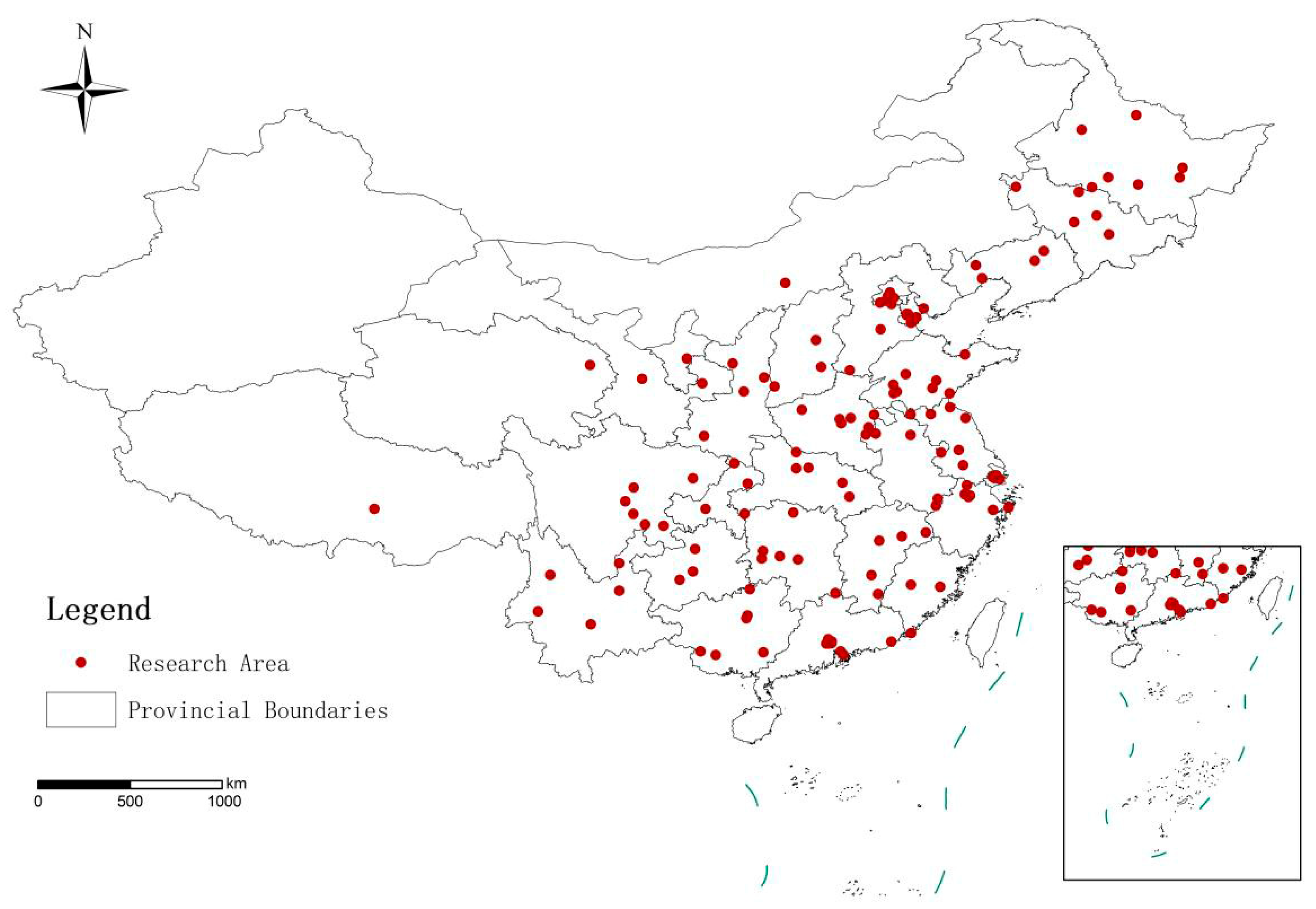
This study used data from the 2020 China Longitudinal Aging Social Survey (CLASS), a nationally representative survey. CLASS employs a stratified, multistage probability sampling design, using county-level units (counties, county-level cities, and districts) as the primary sampling units. The 2020 wave covered 137 districts and counties across 28 provinces, targeting individuals aged 60 and above and their households. Figure 1 presents the study areas, which span 28 provinces, prefecture-level cities, and autonomous regions across China. Survey sites were concentrated mainly in the eastern and central regions, with a more dispersed distribution in the western regions. CLASS collected rich demographic and health-related information, including age, gender, place of residence, and chronic disease status, providing a comprehensive picture of older adults’ health and living conditions nationwide. In total, 11,398 respondents provided valid data for analysis.
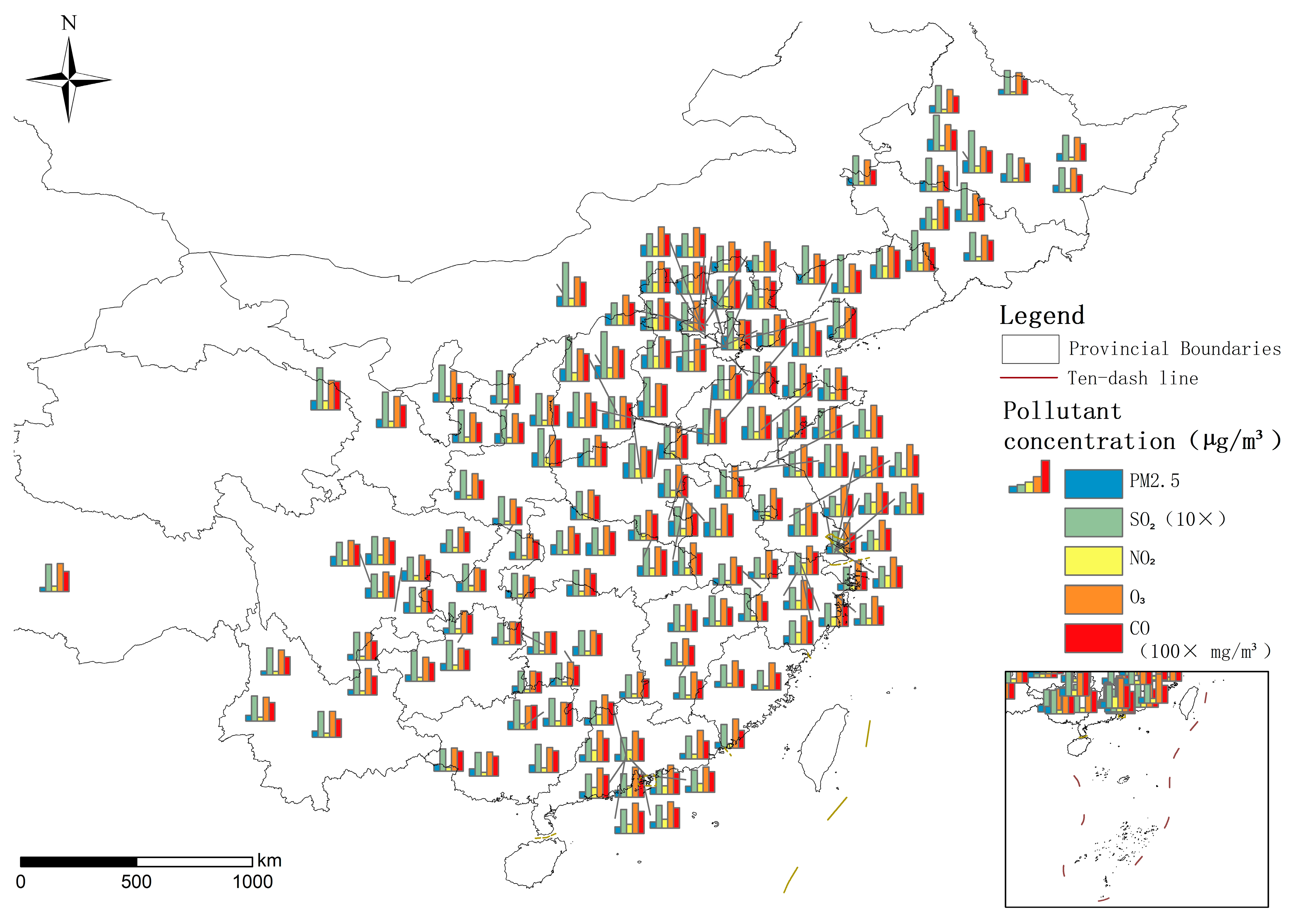
County-level air pollution data were obtained from the China High-Resolution High-Quality Near-Surface Air Pollutants Dataset (CHAP), available through the National Qinghai–Tibet Plateau Science Data Center (http://data.tpdc.ac.cn). CHAP applies artificial intelligence techniques to integrate large-scale environmental data across mainland China. For 2020, the dataset provides pollutant measures at a spatial resolution of 1 km and temporal resolutions at daily, monthly, and annual scales. Five pollutants were included in this study: PM2.5, SO2, NO2, O3, and CO [37,38,39,40,41,42,43,44]. These indicators represent air pollution levels across counties and districts. Figure 2 illustrates the spatial distribution of these pollutants. Substantial regional variation is observed. Counties and districts in Beijing–Tianjin–Hebei, Shanxi, Shandong, and Henan generally exhibit high concentrations of multiple pollutants, whereas regions such as Tibet, Yunnan, and northeastern Heilongjiang show comparatively low concentrations, indicating better air quality. The distribution of PM2.5 appears influenced by shared emission sources and spatial spillover effects, with concentrations in northern regions markedly higher than in the south. Distinct high-concentration clusters are evident in Beijing–Tianjin–Hebei, Shanxi, Shandong, and Henan. SO2 shows relatively limited variation, with only localized high-concentration areas. NO2 displays pronounced regional disparities, with elevated levels in the Pearl River Delta, Yangtze River Delta, and Beijing–Tianjin–Hebei regions. O3 concentrations are high in Beijing–Tianjin–Hebei, Shanxi, Shandong, and Henan, and are also notable in Guangdong, Zhejiang, and Jiangsu. Elevated CO concentrations are observed mainly in Shanxi, Henan, and Qinghai, whereas Fujian, Yunnan, and Heilongjiang exhibit relatively low levels.

3.2. Dependent Variable

Non-communicable diseases (NCDs) served as the dependent variable. A binary variable was constructed to indicate whether a respondent had been diagnosed with at least one of the 22 NCDs recorded in CLASS (e.g., hypertension, heart disease, and diabetes). Respondents reporting no NCDs were coded as 0, and those reporting one or more NCDs were coded as 1.
The key independent variables were the five air pollution indicators (PM2.5, SO2, NO2, O3, and CO). To ensure comparability, all pollutant variables were standardized prior to analysis.
Social participation was included as a mediating variable. It was constructed from CLASS questionnaire items capturing participation in 13 types of activities, including community security patrols; caregiving for older adults or children (e.g., shopping assistance or daily support); environmental sanitation activities; mediating neighborhood disputes; providing companionship; volunteer services requiring specialized skills (e.g., medical consultations or technical support); supporting education (excluding one’s own grandchildren); religious activities; attending senior universities or training courses; media-related leisure (e.g., watching TV, reading); artistic activities (e.g., singing or playing instruments); playing mahjong, chess, or cards; and square dancing. For each activity, respondents reported participation frequency (almost daily, at least once a week, at least once a month, a few times a year, or never). Due to the low frequency of responses in the categories “almost daily,” “at least once a week,” and “at least once a month,” all responses other than “never” were coded as 1, while “never” was coded as 0. Scores were summed across all activities. Respondents engaging in 0–3 activities were classified as inactive (coded 0), while those participating in more than three activities were classified as active (coded 1).
Finally, to reduce potential confounding bias, the analysis controlled for a range of demographic, socioeconomic, and lifestyle characteristics associated with both health and social participation. These included age, gender, place of residence, ethnicity, marital status, educational attainment, employment status, sleep quality, physical activity, body mass index (BMI), smoking status, and income [45]. Descriptive statistics for all variables were presented in Table 1.

3.3. Methods

Given the hierarchical structure of the dataset, with individuals nested within districts and counties, and the binary nature of the dependent variable, this study employed multilevel logistic regression models. This approach appropriately accounts for clustering effects and yields more reliable estimates at both the individual and contextual levels [46].
The modeling strategy proceeded in several steps. First, the associations between air pollutants and social participation were examined (Models 1 and 2). Second, the direct effects of air pollutants on NCD prevalence were assessed (Models 3 and 4). Finally, Model 5 incorporated social participation to test its mediating role in the relationship between air pollution and NCDs. All models were estimated using MLwiN version 3.13 (Centre for Multilevel Modelling at the University of Bristol, Bristol, UK) [47]. Prior to model fitting, potential multi-collinearity among air pollutants was assessed using variance inflation factors (VIF). All VIF values were below 10, indicating that multicollinearity is unlikely to bias the estimates (see Supplementary Materials, Table S1).
Sensitivity analyses were conducted to assess robustness by (i) using a continuous measure of social participation and (ii) replacing the binary NCD outcome with a count of chronic conditions (all results were presented in the Supplementary Materials, Tables S2–S6 and S8).

4. Results

4.1. Descriptive Results

Table 1 shows that only 21.45% of older adults reported being free of NCDs, while more than three-quarters (76%) were classified as inactive in terms of social participation. The average age of respondents was 71.6 years, with males accounting for 50.43% of the sample. The vast majority were of Han ethnicity (94.02%), and most were married (75.37%). Just over half (53.79%) resided in rural areas. Educational attainment was generally low: 27.65% had no formal education, and the largest group (36.78%) had completed primary school or below, while only 2.38% had attained a junior college degree or higher. In terms of economic activity, approximately one-quarter of older adults (25.86%) remained economically active, although the majority were inactive.

4.2. Results of the Multilevel Regression Models

4.2.1. Association Between Air Pollution and Social Participation

The results of Model 1 showed that PM2.5 had a nonlinear association with older adults’ social participation, promoting activity at lower concentrations but inhibiting it at higher levels, with an inflection point at approximately 43 μg/m3. SO2 consistently exerted a negative effect, with each one-unit increase associated with a 0.19-point reduction in participation. CO also showed a negative association at the 90% confidence level, with a one-unit increase corresponding to a 0.22-point decline. In contrast, NO2 was positively associated with social participation, with each one-unit increase linked to a 0.62-point increase in activity involvement (Table 2).
After adjusting for all control variables (Model 2), the associations of PM2.5, SO2, and NO2 with social participation remained broadly consistent with those observed in Model 1, although the effect of NO2 was only marginally significant (p < 0.1). At the individual level, social participation decreased with age, while married individuals were more engaged than their unmarried counterparts. Older adults who were overweight or obese were less likely to engage in social participation than those who were underweight. In contrast, higher income, economic activity, and greater educational attainment were positively associated with social engagement. Lifestyle factors also played a role: smokers were less likely to participate, whereas physically active individuals, particularly those exercising regularly, demonstrated substantially higher levels of participation.

4.2.2. The Association Between Air Pollution and NCDs Among Older Adults

Model 3 examined the effects of five pollutants (PM2.5, SO2, NO2, O3, and CO) on NCD prevalence. The results indicated that SO2, NO2, and CO were significantly associated with NCDs. Specifically, higher SO2 concentrations were associated with a lower observed likelihood of NCDs, an unexpected finding that should be interpreted with caution. In contrast, NO2 was positively associated with disease prevalence. CO exhibited a nonlinear relationship: at lower concentrations, increases in CO significantly raised the probability of NCDs, whereas at higher concentrations, further increases were associated with a reduction in prevalence.
After adjusting for demographic, socioeconomic, and lifestyle characteristics (Model 4), the associations of SO2 and NO2 with NCD prevalence remained robust, and the nonlinear pattern for CO persisted. Stratified analyses further showed that the inverted U-shaped relationship between CO and NCD prevalence was primarily driven by the urban population (CO OR = 1.59, CO2 OR = 0.82) and individuals in Northern China (CO OR = 1.16, CO2 OR = 0.87). This quadratic association was not statistically significant in rural areas, and a different pattern was observed in Southern China (see Tables S2 and S3 in the Supplementary Materials). This could reflect differences in CO concentration levels and exposure contexts between Northern and Southern China. CO concentrations are generally higher in Northern China than in Southern China, partly due to coal-based heating, heavy industry, and wintertime temperature inversions, which may contribute to a nonlinear exposure–response relationship, potentially reflecting saturation or behavioral adaptation at higher exposure levels. In contrast, relatively lower CO levels in Southern China may remain within a range where health risks increase monotonically with exposure, without reaching a threshold at which the relationship begins to plateau or reverse. Among individual characteristics, age was positively associated with NCD risk, with prevalence increasing steadily with age (OR = 1.06). Overweight and obesity were also significant risk factors, increasing the odds of NCDs relative to normal weight (ORs = 1.17 and 1.53, respectively). Gender differences were evident, with men exhibiting a lower prevalence of NCDs than women (OR = 0.74). Educational attainment showed a protective effect: individuals with middle school or higher education had significantly lower odds of NCDs compared to those with no formal education (ORs = 0.74 and 0.48, respectively). By contrast, place of residence, ethnicity, income, and economic activity were not statistically significant predictors. Lifestyle behaviors showed mixed associations: smoking was associated with increased risk (OR = 1.09), and poor sleep quality was strongly associated with higher NCD prevalence (OR = 1.33 for occasional problems; OR = 1.48 for frequent problems). Interestingly, frequent physical exercise was also positively associated with NCD risk (OR = 1.19), which could reflect reverse causality, as individuals with existing conditions may increase physical activity following diagnosis or medical advice (Table 3).

4.2.3. The Potential Pathway of Social Participation Between Air Pollutant and NCDs

Model 5 incorporated social participation as a potential mediating variable to assess its role in the association between air pollution and NCD prevalence (Table 4). Results indicated that older adults with higher levels of social participation had a significantly lower likelihood of NCDs compared with those with lower participation (OR = 0.75). After including social participation, the associations between SO2 and NO2 and NCDs remained significant, with patterns consistent with Model 4. The Sobel test suggested that social participation could partly explain the SO2-NCDs association (z = 1.828, p = 0.039). In contrast, the mediation effect for NO2 was not statistically significant at the 5% level (z = 1.077, p = 0.057), suggesting only marginal evidence of an indirect pathway. The associations of control variables remained stable compared with Model 4. Sensitivity analyses yielded results broadly consistent with the main findings, indicating robustness when using continuous measures of social participation and counts of chronic conditions instead of binary indicators (see Tables S4–S6 in the Supplementary Materials).
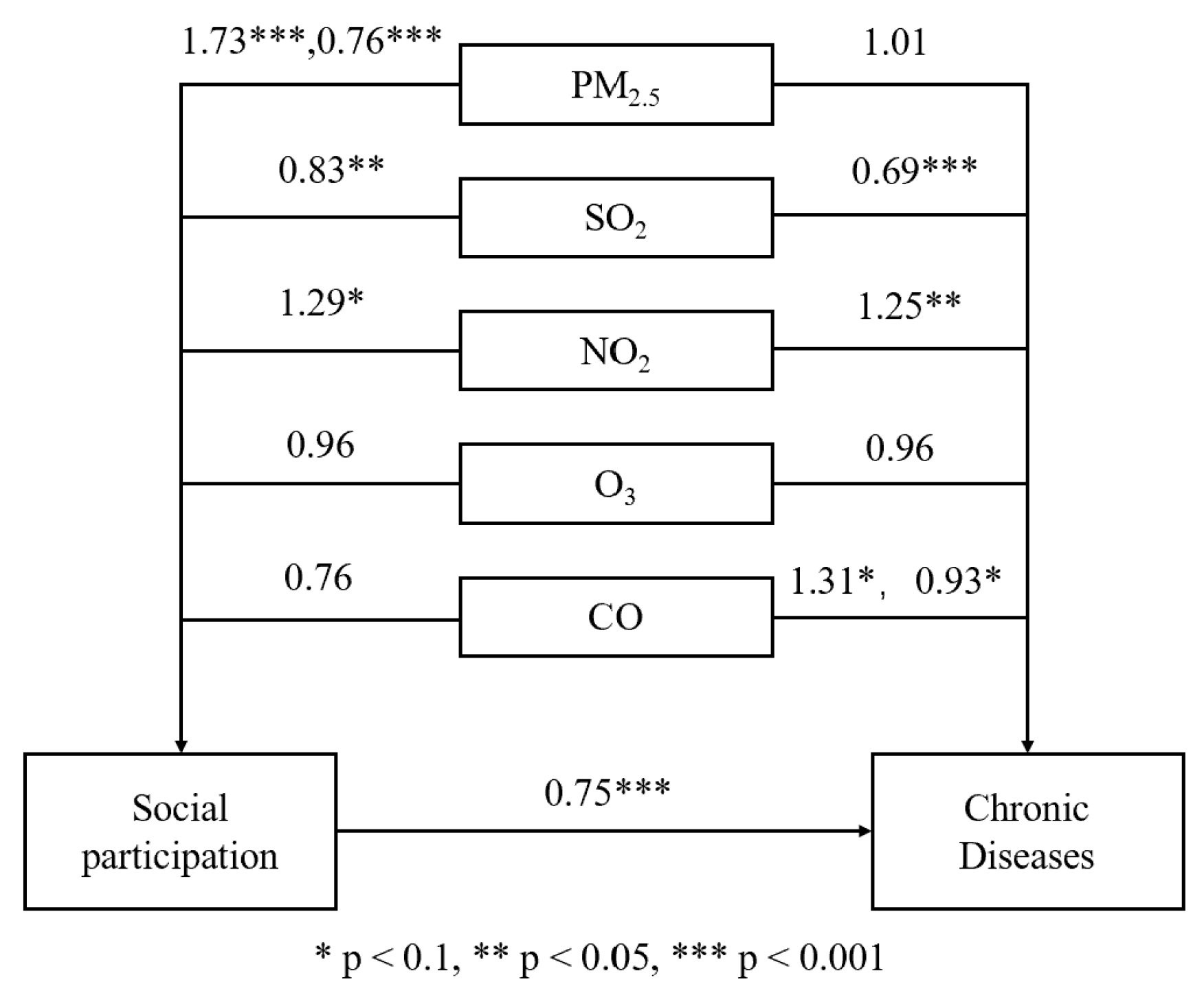
Figure 3 illustrates the hypothesized pathways linking air pollution, social participation, and NCDs. CO maintained a significant direct nonlinear association with NCD prevalence, whereas SO2 and NO2 were associated with NCDs both directly and indirectly through pathways involving social participation. PM2.5 demonstrated a significant association with social participation, which in turn was significantly related to NCD prevalence; however, PM2.5 did not exhibit a significant direct association with NCDs. Given the absence of a statistically confirmed mediation effect, this pathway should be interpreted as suggestive rather than conclusive.

5. Discussion

This study investigated the association between air pollution and the prevalence of non-communicable diseases (NCDs) among older adults, while exploring the potential role of social participation in this relationship. Associations between air pollutants and social participation varied across pollutants. PM2.5 exhibited a nonlinear relationship, promoting participation at lower concentrations but inhibiting it at higher levels. SO2 was consistently associated with lower levels of social participation, likely reflecting environmental constraints and reduced comfort in outdoor settings. In contrast, NO2 showed a modest positive association.
Regarding the associations between air pollutants and NCDs, the results indicated that O3, SO2, NO2, and CO were significantly associated with NCD prevalence among older adults, whereas PM2.5 showed no significant association. O3 exposure was associated with an increased risk of NCDs in Model 3, consistent with prior evidence linking long-term exposure to elevated risks of cardiovascular and respiratory mortality, lung function decline, and emphysema progression [48]. At ground level, distinct from the protective ozone layer in the upper atmosphere, O3 is a key component of photochemical smog formed through sunlight-driven chemical reactions of precursor gases, which helps explain its adverse health effects [49]. However, this association became non-significant after adjusting for individual characteristics in Model 4. This suggests a more complex interplay in which individual-level factors and co-existing environmental exposures may modify or obscure the independent effect of O3.
NO2 was significantly associated with higher NCD prevalence, consistent with previous research demonstrating that long-term exposure adversely affects respiratory, cardiovascular, and cognitive health, and increases the risk of diabetes and other metabolic disorders [50,51,52]. In contrast, SO2 was inversely associated with NCD prevalence, an unexpected finding that should be interpreted with caution and not as evidence of a protective effect. One possible explanation is that SO2 concentrations in the study regions were generally low (<20 µg/m3), falling below the harmful threshold defined by the World Health Organization ambient air quality guideline (40 µg/m3) [53]. The observed association may reflect regional heterogeneity, unobserved confounding factors (e.g., industrial structure or healthcare access), or measurement limitations. Sensitivity analyses excluding the lowest 5% of SO2 concentrations yielded consistent results, suggesting that this pattern was not driven solely by extreme low-exposure observations (see Supplementary Materials, Table S8).
CO exhibited an inverted U-shaped relationship with NCD prevalence: lower concentrations were associated with increased risk, whereas higher concentrations showed a declining trend. Carbon monoxide is a colorless, odorless, and toxic gas produced by incomplete combustion of carbon-based fuels such as wood, gasoline, charcoal, natural gas, and kerosene [50]. This unusual pattern may reflect a combination of biological responses, behavioral adaptations, and structural factors, including uneven urbanization, industrialization, and variation in household energy use across China. Stratified analyses supported this interpretation: the nonlinear association was observed primarily in urban and northern regions but not in rural areas, whereas southern regions exhibited a monotonic increasing relationship rather than an inverted U-shaped pattern. These findings underscore the importance of ensuring equitable access to clean household energy, although such interpretations remain speculative and require further investigation (see Supplementary Materials, Tables S2 and S3).
Regarding demographic and lifestyle factors, age was positively associated with NCD prevalence, consistent with cumulative life-course risk [54]. Women exhibited higher prevalence than men, possibly reflecting menopausal transitions and greater caregiving burdens [55]. Higher educational attainment was associated with lower NCD prevalence, likely due to better health literacy and healthier behaviors [56,57]. Overweight and obesity were significant risk factors. Lifestyle behaviors, including smoking and poor sleep quality, were associated with higher NCD prevalence [58,59,60,61,62]. The observed positive association between frequent physical activity and NCD prevalence could reflect reverse or bidirectional causality, as individuals diagnosed with chronic conditions may increase exercise as part of disease management.
This study also examined the mediating role of social participation in the association between air pollution and NCDs. In the model incorporating both social participation and air pollution, higher NO2 concentrations remained positively associated with NCD prevalence [51,52,63]. In contrast, SO2 retained a negative association and CO maintained a nonlinear association. These findings suggest that pollutant-specific effects depend on ambient concentrations, regional context, and socioeconomic and behavioral factors [54,64]. PM2.5 appeared to influence NCD risk primarily through its association with social participation, indicating a potential indirect pathway. However, the indirect effect was not statistically significant and therefore does not provide conclusive evidence of mediation.
Social participation emerged as a protective factor, reducing the odds of NCDs by approximately 25%, and may partly explain the association between SO2 exposure and NCD prevalence. Engagement in social activities may slow cognitive decline and enhance mental stimulation, thereby reducing the risk of certain NCDs [60,65,66,67]. It also strengthens social ties, reduces loneliness, and provides psychosocial support, all of which contribute to improved health in later life [68]. A bidirectional relationship is plausible: healthier individuals are more able to engage socially, while greater participation further reduces NCD risk [69,70]. The Sobel test provided statistical support for mediation in the case of SO2 but not NO2, implying that social participation may buffer certain environmental risks, whereas the direct physiological effects of NO2 may dominate. However, given the limitations of the Sobel test, including its reliance on normality assumptions, these findings should be interpreted cautiously.
Several limitations should be acknowledged. First, the cross-sectional design and the lack of residential history data limit our ability to capture long-term exposure and establish causal relationships. NCDs are long-term, cumulative health outcomes, whereas the air pollution data used in this study were measured for a single year (2020). Consequently, these measures may not reflect individuals’ long-term exposure histories or duration of residence and should be interpreted as proxies for contextual environmental exposure. Although regional pollution levels may exhibit some temporal stability, this temporal mismatch remains an important limitation. Because all variables were measured contemporaneously, the observed associations, particularly the role of social participation, should be interpreted as suggestive of potential pathways rather than evidence of causal mediation. Second, although the multilevel modeling approach accounts for clustering at the county/district level by incorporating random parts, it does not fully address spatial autocorrelation across neighboring regions or explicitly model spatial dependence (e.g., through spatial weights or region fixed effects). Given the geographically clustered nature of air pollution, this may lead to residual spatial dependence in the estimates and thus represents an additional limitation of the study. Third, the mediation analysis relied on the Sobel test, which assumes normality of the indirect effect and may be less robust than resampling-based approaches such as bootstrapping. As a result, the mediation findings should be interpreted with caution and regarded as exploratory rather than definitive evidence of indirect effects. Fourth, disentangling pollutant-specific effects in observational data remains challenging. Fifth, because multiple pollutants were analyzed without formal adjustment for multiple comparisons, there is an increased risk of Type I error. Although sensitivity analyses yielded consistent results, these findings should be interpreted as exploratory. Future research should incorporate longitudinal designs, objective health measures, more rigorous causal inference approaches, and bootstrap or other simulation-based methods to strengthen mediation analysis.

6. Conclusions

This study found that exposure to air pollution was associated with NCD risk among older adults, with NO2 showing a positive association, SO2 exhibiting an unexpected negative association that warrants cautious interpretation, and CO displaying an inverted U-shaped relationship. Social participation emerged as a protective factor and may partly explain the association between NO2 exposure and NCD prevalence. Despite improvements in air quality following China’s Air Pollution Prevention and Control Action Plan, older adults remain vulnerable to pollution-related health risks. Integrating community-based social participation initiatives with air quality improvement strategies may yield synergistic benefits for healthy aging. Although the findings suggest that social participation is associated with both air pollution exposure and NCD outcomes, policy efforts should prioritize reducing pollution, improving living environments, strengthening community support systems, and providing tailored chronic disease management and psychosocial interventions. For example, piloting well-ventilated, air-filtered indoor community centers in high-pollution areas could provide safer environments for social engagement while reducing exposure risks. Such initiatives could also serve as practical platforms for evaluating the long-term effects of social participation on NCD outcomes.
Future research should extend this work in several directions. Longitudinal studies are needed to establish temporal relationships and better assess potential mediation pathways. Incorporating objective health measures, such as clinical diagnoses or medical records, would improve measurement accuracy. Additionally, examining specific categories of NCDs (e.g., cardiovascular versus respiratory diseases) may reveal heterogeneous effects that are not captured by aggregate measures. These approaches would provide more robust evidence on the complex relationships among air pollution, social participation, and health outcomes in aging populations.

Supplementary Materials

The following supporting information can be downloaded at: https://www.mdpi.com/article/10.3390/su18104967/s1, Table S1. Multilevel logistic regression estimates of social participation as a mediator in the association between air pollution and non-communicable diseases among older adults (model 5 with VIFs reported); Table S2. Multilevel logistic regression estimates of the association between air pollution and non-communicable diseases among older adults and mediation analysis by urban and rural subsamples (sensitivity analysis for Models 3–5); Table S3. Multilevel logistic regression estimates of the association between air pollution and non-communicable diseases among older adults and mediation analysis by northern and southern subsamples (sensitivity analysis for Models 3–5); Table S4. Multilevel linear regression estimates of the association between air pollution and social participation using a continuous measure of social participation (sensitivity analysis for Models 1 and 2); Table S5. Multilevel logistic regression estimates of social participation as a mediator in the association between air pollution and non-communicable diseases among older adults using a continuous measure of social participation (sensitivity analysis for Model 5); Table S6. Multilevel linear regression estimates of the association between air pollution and non-communicable diseases among older adults and mediation analysis using a continuous ncds measure (sensitivity analysis for Models 3–5); Table S7. Multilevel logistic regression estimates of the association between each air pollutants and non-communicable diseases among older adults; Table S8. Multilevel logistic regression estimates of social participation as a mediator in the association between air pollution and non-communicable diseases among older adults, excluding regions in the lowest 5% of SO2 concentration (sensitivity analysis for Model 3–5) (N = 10,897).

Author Contributions

Conceptualization, X.L., J.Z., Z.F. and C.W.; methodology, J.Z., Z.F. and Z.L.; software, Z.F.; validation, J.Z., Z.F. and Z.L.; formal analysis, X.L., J.Z. and Z.F.; investigation, X.L., J.Z. and Z.F.; resources, X.L. and Z.F.; data curation, X.L. and Z.F.; writing—original draft preparation, J.Z. and Z.F.; writing—review and editing, X.L., J.Z., Z.F. and C.W.; visualization, J.Z. and Z.L.; supervision, X.L., Z.F. and C.W.; project administration, X.L., Z.F. and C.W.; funding acquisition, X.L. and Z.F. All authors have read and agreed to the published version of the manuscript.

Funding

This research was funded by the Major Project of the National Social Science Foundation of China (Grant No. 24ZDA092) and the National Natural Science Foundation of China (Grant No. W2432053).

Institutional Review Board Statement

Ethical review and approval were waived for this study due to secondary data analysis of the China Longitudinal Aging Social Survey.

Informed Consent Statement

Informed consent was obtained from all subjects involved in the study.

Data Availability Statement

Data can be obtained from http://class.ruc.edu.cn/English/Home.htm (accessed on 4 June 2025).

Acknowledgments

We gratefully acknowledge all entities that provided data in support of this work. During the preparation of this work, the authors used ChatGPT-5.5 to check the English language. After using this fool, the authors reviewed and edited the content as heeded and take full responsibility for the content of the published article.

Conflicts of Interest

The authors declare no conflicts of interest.

References

  1. National Bureau of Statistics. 2024, the Economy Operated with Stability and Progress, and the Main Development Goals Were Successfully Achieved. 2025. Available online: https://www.stats.gov.cn/sj/zxfb/202501/t20250117_1958332.html (accessed on 21 April 2025).
  2. National Health Commission. Report on Nutrition and Chronic Disease Status of Chinese Residents; People’s Medical Publishing House: Beijing, China, 2020; Volume 42, p. 521. [Google Scholar]
  3. Zhang, J.C.; Xiao, S.J.; Xue, Y.Q.; Zheng, X.; Xue, B.L.; Li, X.R.; Chen, Y.M.; Zhang, C.C. Impact of Chronic Diseases on Quality of Life in Older Adults: The Mediating Role of Sleep Quality and the Moderating Role of Social Participation. Chin. J. Prev. Med. 2023, 24, 1145–1150. [Google Scholar]
  4. Liu, X.J.; Chen, Y.T.; Meng, L.L.; Lin, Z.; Ruan, W.Q.; Qu, S.M. The Relationship between the Number of Chronic Diseases and Health-Related Quality of Life among Older Adults in China. Med. Soc. 2022, 35, 73–77, 83. [Google Scholar]
  5. Borroni, E.; Pesatori, A.C.; Bollati, V.; Buoli, M.; Carugno, M. Air Pollution Exposure and Depression: A Comprehensive Updated Systematic Review and Meta-Analysis. Environ. Pollut. 2022, 292, 118245. [Google Scholar] [CrossRef]
  6. Wang, R.; Liu, Y.; Xue, D.; Yao, Y.; Liu, P.; Helbich, M. Cross-Sectional Associations between Long-Term Exposure to Particulate Matter and Depression in China: The Mediating Effects of Sunlight, Physical Activity, and Neighborly Reciprocity. J. Affect. Disord. 2019, 249, 8–14. [Google Scholar] [CrossRef] [PubMed]
  7. Zhao, T.; Tesch, F.; Markevych, I.; Baumbach, C.; Janßen, C.; Schmitt, J.; Romanos, M.; Nowak, D.; Heinrich, J. Depression and Anxiety with Exposure to Ozone and Particulate Matter: An Epidemiological Claims Data Analysis. Int. J. Hyg. Environ. Health 2020, 228, 113562. [Google Scholar] [CrossRef]
  8. Wang, R.; Feng, Z.; Liu, Y.; Lu, Y. Relationship between Neighbourhood Social Participation and Depression among Older Adults: A Longitudinal Study in China. Health Soc. Care Community 2020, 28, 247–259. [Google Scholar] [CrossRef]
  9. Tran, H.M.; Tsai, F.-J.; Lee, Y.-L.; Chang, J.-H.; Chang, L.-T.; Chang, T.-Y.; Chung, K.F.; Kuo, H.-P.; Lee, K.-Y.; Chuang, K.-J.; et al. The Impact of Air Pollution on Respiratory Diseases in an Era of Climate Change: A Review of the Current Evidence. Sci. Total Environ. 2023, 898, 166340. [Google Scholar] [CrossRef] [PubMed]
  10. Jiang, S.; Tian, J.; Ma, Y.; Chen, G.M.; Ji, J.J.; Guo, Y.S.; Zhu, H.P.; Lu, J.H. Impact of Air Pollutant Exposure on the Physical Health of Older Chronic Disease Patients in Shenzhen. J. Toxicol. 2024, 38, 30–35. [Google Scholar]
  11. Li, M.J.; Du, W.J. Effects of Air Pollution on Residents’ Health and Group Differences: An Empirical Analysis Based on CFPS (2012) Micro-Survey Data. Econ. Rev. 2018, 3, 142–154. [Google Scholar] [CrossRef]
  12. Li, W.B.; Zou, P. Air Pollution and Residents’ Mental Health: Estimation Based on Regression Discontinuity Design. J. Beijing Inst. Technol. (Soc. Sci. Ed.) 2019, 21, 10–21. [Google Scholar]
  13. Chen, C.; Li, T.; Sun, Q.; Shi, W.; He, M.Z.; Wang, J.; Liu, J.; Zhang, M.; Jiang, Q.; Wang, M.; et al. Short-Term Exposure to Ozone and Cause-Specific Mortality Risks and Thresholds in China: Evidence from Nationally Representative Data, 2013–2018. Environ. Int. 2023, 171, 107666. [Google Scholar] [CrossRef] [PubMed]
  14. Ye, J.Q.; Huang, Z.J. A Study on the Long-Term Health Effects of Air Pollution on Middle-Aged and Older Adults. J. Huazhong Univ. Sci. Technol. (Soc. Sci. Ed.) 2022, 36, 121–135. [Google Scholar]
  15. Hajat, A.; Hsia, C.; O’Neill, M.S. Socioeconomic Disparities and Air Pollution Exposure: A Global Review. Curr. Environ. Health Rep. 2015, 2, 440–450. [Google Scholar] [CrossRef]
  16. Jin, T.; Di, Q.; Réquia, W.J.; Danesh Yazdi, M.; Castro, E.; Ma, T.; Wang, Y.; Zhang, H.; Shi, L.; Schwartz, J. Associations between Long-Term Air Pollution Exposure and the Incidence of Cardiovascular Diseases among American Older Adults. Environ. Int. 2022, 170, 107594. [Google Scholar] [CrossRef]
  17. Fan, T.; Cao, Q.; Jiang, L.L.; Xu, Z.Z. Explanation of Influencing Factors of Chronic Diseases in the Elderly Using a Health Ecological Model. Chin. Gen. Pract. 2012, 15, 33–36, 40. [Google Scholar]
  18. Chen, J.; Hoek, G. Long-Term Exposure to PM and All-Cause and Cause-Specific Mortality: A Systematic Review and Meta-Analysis. Environ. Int. 2020, 143, 105974. [Google Scholar] [CrossRef]
  19. Ostro, B.; Lipsett, M.; Reynolds, P.; Goldberg, D.; Hertz, A.; Garcia, C.; Henderson, K.D.; Bernstein, L. Long-Term Exposure to Constituents of Fine Particulate Air Pollution and Mortality: Results from the California Teachers Study. Environ. Health Perspect. 2010, 118, 363–369. [Google Scholar] [CrossRef]
  20. Brook, R.D.; Franklin, B.; Cascio, W.; Hong, Y.; Howard, G.; Lipsett, M.; Luepker, R.; Mittleman, M.; Samet, J.; Smith, S.C.; et al. Air Pollution and Cardiovascular Disease: A Statement for Healthcare Professionals from the Expert Panel on Population and Prevention Science of the American Heart Association. Circulation 2004, 109, 2655–2671. [Google Scholar] [CrossRef] [PubMed]
  21. Franchini, M.; Mannucci, P.M. Short-Term Effects of Air Pollution on Cardiovascular Diseases: Outcomes and Mechanisms. J. Thromb. Haemost. 2007, 5, 2169–2174. [Google Scholar] [CrossRef]
  22. Liu, C.; Chan, K.H.; Lv, J.; Lam, H.; Newell, K.; Meng, X.; Liu, Y.; Chen, R.; Kartsonaki, C.; Wright, N.; et al. Long-Term Exposure to Ambient Fine Particulate Matter and Incidence of Major Cardiovascular Diseases: A Prospective Study of 0.5 Million Adults in China. Environ. Sci. Technol. 2022, 56, 13200–13211. [Google Scholar] [CrossRef]
  23. Yang, B.Y.; Qian, Z.M.; Li, S.; Chen, G.; Bloom, M.S.; Elliott, M.; Syberg, K.W.; Heinrich, J.; Markevych, I.; Wang, S.Q.; et al. Ambient Air Pollution in Relation to Diabetes and Glucose-Homoeostasis Markers in China: A Cross-Sectional Study with Findings from the 33 Communities Chinese Health Study. Lancet Planet. Health 2018, 2, e64–e73. [Google Scholar] [CrossRef]
  24. Liu, L.C.; Cheng, H.Y.; Peng, X.Z. The Impact of Social Participation Patterns on Cognitive Decline among Older Adults in China. Chin. J. Popul. Sci. 2022, 103–114, 128. [Google Scholar]
  25. Shi, Y.; Wu, D.; Yilihamu, Y.; Zheng, Y.L.; Zhang, L.P. Impact of Long-Term Exposure to PM2.5 and Its Components on the Risk of Chronic Lung Disease in Middle-Aged and Elderly Chinese: Evidence from a Large Chinese Population-Based Cohort. BMC Public Health 2025, 25, 3301. [Google Scholar] [CrossRef]
  26. Aggarwal, S.; Hu, J.K.; Sullivan, J.A.; Parks, R.M.; Nethery, R.C. Severe Flooding and Cause-Specific Hospitalisation among Older Adults in the USA: A Retrospective Matched Cohort Analysis. Lancet Planet. Health 2025, 9, 101268. [Google Scholar] [CrossRef] [PubMed]
  27. Zhang, J.; Sun, H.; Chen, Q.; Gu, J.; Ding, Z.; Xu, Y. Effects of Individual Ozone Exposure on Lung Function in the Elderly: A Cross-Sectional Study in China. Environ. Sci. Pollut. Res. Int. 2019, 26, 11690–11695. [Google Scholar] [CrossRef] [PubMed]
  28. Oshio, T.; Kan, M. Preventive Impact of Social Participation on the Onset of Non-Communicable Diseases among Middle-Aged Adults: A 10-Wave Hazards-Model Analysis in Japan. Prev. Med. 2019, 118, 272–278. [Google Scholar] [CrossRef] [PubMed]
  29. World Health Organization. Active Ageing: A Policy Framework; World Health Organization: Geneva, Switzerland, 2002; Available online: https://extranet.who.int/agefriendlyworld/wp-content/uploads/2014/06/WHO-Active-Ageing-Framework.pdf (accessed on 18 August 2025).
  30. Xiao, Y.; Wang, Y.M. The Impact of Social Participation on the Mental Health of the Elderly: An Empirical Analysis Based on CLASS Tracking Survey Data. Soc. Welf. (Theor. Ed.) 2020, 8, 24–31. [Google Scholar]
  31. Zhong, Q.L.; Yu, S.S. Research Progress on the Level of Social Participation and Its Influencing Factors among Community-Dwelling Older Adults. Chin. Nurs. Manag. 2018, 18, 1293–1296. [Google Scholar]
  32. Holmes, W.R.; Joseph, J. Social Participation and Healthy Ageing: A Neglected, Significant Protective Factor for Chronic Non-Communicable Conditions. Glob. Health 2011, 7, 43. [Google Scholar] [CrossRef]
  33. Chen, L.; Li, W.; Bai, L.D.; Luo, Y.; Zeng, X.J.; Liu, B. Correlation Study between Chronic Diseases and Lifestyle among Community-Dwelling Older Adults. Chin. Nurs. Res. 2013, 27, 796–798. [Google Scholar]
  34. Yuan, S.; Zhao, Y.; Gao, W.; Zhao, S.; Liu, R.; Ahmad, B.; Li, H.; Shi, Y.; Wang, L.; Han, C. Interaction Effects of Exposure to Air Pollution and Social Activities on Cognitive Function in Middle-Aged and Older Chinese Adults Based on a Nationwide Cohort Study. BMC Public Health 2024, 24, 3564. [Google Scholar] [CrossRef]
  35. Frndak, S.; Cudjoe, T.; Thorpe, R.J.; Deng, Z.; Ward-Caviness, C.K.; Clarke, K.A.; Dickerson, A.S. Social Cohesion as a Modifier of Joint Air Pollution Exposure and Incident Dementia. Sci. Total Environ. 2024, 949, 175149. [Google Scholar] [CrossRef]
  36. Wu, J.; Grande, G.; Triolo, F.; Pyko, A.; Sjöberg, L.; Ljungman, P.; Eneroth, K.; Bellander, T.; Rizzuto, D. Air Pollution, Social Engagement, and Depression in Older Adults: Results from a Swedish Population-Based Cohort Study. Environ. Pollut. 2023, 336, 122394. [Google Scholar] [CrossRef] [PubMed]
  37. Wei, J.; Li, Z. ChinaHighPM2.5: Big Data Seamless 1 km Ground-Level PM2.5 Dataset for China (2000–Present). 2019. Available online: https://zenodo.org/records/6398971 (accessed on 11 February 2026).
  38. Wei, J.; Li, Z.; Cribb, M.; Huang, W.; Xue, W.; Sun, L.; Guo, J.; Peng, Y.; Li, J.; Lyapustin, A.; et al. Improved 1 km Resolution PM2.5 Estimates across China Using Enhanced Space–Time Extremely Randomized Trees. Atmos. Chem. Phys. 2020, 20, 3273–3289. [Google Scholar] [CrossRef]
  39. Wei, J.; Li, Z. ChinaHighSO2: Big Data Seamless 10 km Ground-Level SO2 Dataset for China (2013–2018). 2021. Available online: https://zenodo.org/records/7574171 (accessed on 11 February 2026).
  40. Wei, J.; Li, Z.; Wang, J.; Li, C.; Gupta, P.; Cribb, M. Ground-Level Gaseous Pollutants (NO2, SO2, and CO) in China: Daily Seamless Mapping and Spatiotemporal Variations. Atmos. Chem. Phys. 2023, 23, 1511–1532. [Google Scholar] [CrossRef]
  41. Wei, J.; Li, Z. ChinaHighNO2: Big Data Seamless 1 km Ground-Level NO2 Dataset for China (2019–Present). 2021. Available online: https://zenodo.org/records/13340370 (accessed on 11 February 2026).
  42. Wei, J.; Li, Z.; Li, K.; Dickerson, R.R.; Pinker, R.T.; Wang, J.; Liu, X.; Sun, L.; Xue, W.; Cribb, M. Full-Coverage Mapping and Spatiotemporal Variations of Ground-Level Ozone (O3) Pollution from 2013 to 2020 across China. Remote Sens. Environ. 2022, 270, 112775. [Google Scholar] [CrossRef]
  43. Wei, J.; Li, Z. ChinaHighO3: Big Data Seamless 1 km Ground-Level MDA8 O3 Dataset for China (2000–Present). 2024. Available online: https://zenodo.org/records/13342827 (accessed on 11 February 2026).
  44. Wei, J.; Li, Z. ChinaHighCO: Big Data Seamless 10 km Ground-Level CO Dataset for China (2013–2018). 2021. Available online: https://zenodo.org/records/10477050 (accessed on 11 February 2026).
  45. Feng, Z.; Liu, X.; Yang, W.; Phillips, D.R. Public Expenditure on Health Care and the Incidence of Non-Communicable Diseases (NCDs) in China from 2008 to 2018. Maturitas 2024, 183, 107963. [Google Scholar] [CrossRef]
  46. Hox, J. Multilevel Analysis: Techniques and Applications, 2nd ed.; Quantitative Methodology Series; Lawrence Erlbaum Associates Publishers: Mahwah, NJ, USA, 2002. [Google Scholar]
  47. Rasbash, J.; Steele, F.; Browne, W.J.; Goldstein, H. A User’s Guide to MLwiN, Version 3.13; University of Bristol: Bristol, UK, 2023. [Google Scholar]
  48. Kim, S.-Y.; Kim, E.; Kim, W.J. Health Effects of Ozone on Respiratory Diseases. Tuberc. Respir. Dis. 2020, 83, S6–S11. [Google Scholar] [CrossRef]
  49. World Health Organization. Ambient (Outdoor) Air Pollution. 2025. Available online: https://www.who.int/news-room/fact-sheets/detail/ambient-(outdoor)-air-quality-and-health (accessed on 11 February 2026).
  50. Zhang, Q.; Liu, C.; Wang, Y.; Gong, J.; Wang, G.; Ge, W.; Chen, R.; Meng, X.; Zhao, Y.; Kan, H. Associations of Long-Term Exposure to Ambient Nitrogen Dioxide with Indicators of Diabetes and Dyslipidemia in China: A Nationwide Analysis. Chemosphere 2021, 269, 128724. [Google Scholar] [CrossRef]
  51. Chen, T.-M.; Kuschner, W.G.; Gokhale, J.; Shofer, S. Outdoor Air Pollution: Nitrogen Dioxide, Sulfur Dioxide, and Carbon Monoxide Health Effects. Am. J. Med. Sci. 2007, 333, 249–256. [Google Scholar] [CrossRef]
  52. Luo, K.; Li, R.; Li, W.; Wang, Z.; Ma, X.; Zhang, R.; Fang, X.; Wu, Z.; Cao, Y.; Xu, Q. Acute Effects of Nitrogen Dioxide on Cardiovascular Mortality in Beijing: An Exploration of Spatial Heterogeneity and the District-Specific Predictors. Sci. Rep. 2016, 6, 38328. [Google Scholar] [CrossRef]
  53. World Health Organization. WHO Global Air Quality Guidelines: Particulate Matter (PM2.5 and PM10), Ozone, Nitrogen Dioxide, Sulfur Dioxide and Carbon Monoxide. 2021. Available online: https://www.who.int/publications/i/item/9789240034228 (accessed on 24 April 2026).
  54. Song, Y.Z.; Zhang, Q.; Zhou, X.Z. Analysis of Chronic Disease Prevalence and Healthy Lifestyle of the Elderly in China: Empirical Analysis Based on CLHLS 2018 Data. Oper. Res. Fuzziology 2023, 13, 4041–4051. [Google Scholar] [CrossRef]
  55. Xu, X.B.; Li, D.; Sun, Y.; Shu, Q.; Xiao, L.; Xu, S.R.; Fan, Y.Z. A Study on the Differences in Comorbidity and Influencing Factors of Chronic Diseases among Urban and Rural Older Adults in China. Chin. J. Prev. Control Chronic Dis. 2023, 31, 427–432. [Google Scholar]
  56. Cheng, L.G.; Zhang, Y.; Shen, K. How Does Education Affect People’s Health? Evidence from the Chinese Elderly. China Econ. Q. 2015, 14, 305–330. [Google Scholar]
  57. Zajacova, A.; Lawrence, E.M. The Relationship between Education and Health: Reducing Disparities through a Contextual Approach. Annu. Rev. Public Health 2018, 39, 273–289. [Google Scholar] [CrossRef]
  58. Thun, M.J.; Carter, B.D.; Feskanich, D.; Freedman, N.D.; Prentice, R.; Lopez, A.D.; Hartge, P.; Gapstur, S.M. 50-Year Trends in Smoking-Related Mortality in the United States. N. Engl. J. Med. 2013, 368, 351–364. [Google Scholar] [CrossRef]
  59. Wang, B.; Xiao, D.; Wang, C. Smoking and Chronic Obstructive Pulmonary Disease in Chinese Population: A Meta-Analysis. Clin. Respir. J. 2015, 9, 165–175. [Google Scholar] [CrossRef]
  60. Liu, Y.; Wheaton, A.G.; Chapman, D.P.; Cunningham, T.J.; Lu, H.; Croft, J.B. Prevalence of Healthy Sleep Duration among Adults–United States, 2014. MMWR Morb. Mortal. Wkly. Rep. 2016, 65, 137–141. [Google Scholar] [CrossRef] [PubMed]
  61. Nicholson, K.; Rodrigues, R.; Anderson, K.K.; Wilk, P.; Guaiana, G.; Stranges, S. Sleep Behaviours and Multimorbidity Occurrence in Middle-Aged and Older Adults: Findings from the Canadian Longitudinal Study on Aging (CLSA). Sleep Med. 2020, 75, 156–162. [Google Scholar] [CrossRef] [PubMed]
  62. Sun, X.; Yon, D.K.; Nguyen, T.T.; Tanisawa, K.; Son, K.; Zhang, L.; Shu, J.; Peng, W.; Yang, Y.; Branca, F.; et al. Dietary and Other Lifestyle Factors and Their Influence on Non-Communicable Diseases in the Western Pacific Region. Lancet Reg. Health-West. Pac. 2024, 43, 100842. [Google Scholar] [CrossRef] [PubMed]
  63. Huang, Y.; Tang, C.; Du, J.; Jin, H. Endogenous Sulfur Dioxide: A New Member of Gasotransmitter Family in the Cardiovascular System. Oxidative Med. Cell. Longev. 2016, 2016, 8961951. [Google Scholar] [CrossRef] [PubMed]
  64. Wang, R.Y. Analysis of the Impact of Air Pollution on National Public Health during Economic Development: Based on the Panel Smooth Transition (PSTR) Model. Master’s Thesis, Dongbei University of Finance and Economics, Dalian, China, 2017. [Google Scholar]
  65. Li, H.; Li, C.; Wang, A.; Qi, Y.; Feng, W.; Hou, C.; Tao, L.; Liu, X.; Li, X.; Wang, W.; et al. Associations between Social and Intellectual Activities with Cognitive Trajectories in Chinese Middle-Aged and Older Adults: A Nationally Representative Cohort Study. Alzheimer’s Res. Ther. 2020, 12, 115. [Google Scholar] [CrossRef]
  66. Bao, R.; Mao, H.J.; Song, H.L.; Xie, G.Q.; Chen, X.F. The Impact of Social Activity Participation on Cognitive Function among Older Adults in China: Based on Data from the China Health and Retirement Longitudinal Study. J. Math. Med. 2024, 37, 41–51. [Google Scholar]
  67. Hsu, H.C. Does Social Participation by the Elderly Reduce Mortality and Cognitive Impairment? Aging Ment. Health 2007, 11, 699–707. [Google Scholar] [CrossRef]
  68. Hu, Y.L.; Yao, J.Y.; Hu, Z.D. The Impact of Social Participation on the Mental Health of Chinese Older Adults. Northwest Popul. J. 2025, 46, 1–14. [Google Scholar]
  69. Yuan, T.; Zhou, J.G.; Li, G.X.; Liu, A.Q.; Jia, H.B.; Zhang, H.; Li, R.X.; Zhang, H.J. Analysis of Social Participation Level and Influencing Factors among Community-Dwelling Older Adults with Multimorbidity. J. Zhengzhou Univ. (Med. Sci.) 2024, 59, 475–479. [Google Scholar]
  70. Lu, J.H.; Li, Y.; Zheng, B. An Empirical Analysis of the Reciprocal Relationship between Social Participation and Self-Rated Health among Older Adults in Mainland China: Test Based on CLHLS Data. Popul. Res. 2017, 41, 15–26. [Google Scholar]
Figure 1. Geographic distribution of the study areas in China.
Sustainability 18 04967 g001
Figure 2. Spatial distribution of air pollutant concentrations across the study area.
Sustainability 18 04967 g002
Figure 3. Potential path diagram of social participation in the associations between air pollutants and non-communicable diseases (NCDs) among older adults.
Sustainability 18 04967 g003
Table 1. Descriptive statistics of study variables (N = 11,398).
VariablesCategories/DescriptionsMean/Percentage
Dependent variable
Presence of NCDsNo26.23%
Yes73.77%
Independent variables
PM2.5PM2.5 concentration (µg/m3)33.18
Sulfur dioxide (SO2)SO2 concentration (9.96 µg/m3)9.96
Nitrogen dioxide (NO2)NO2 concentration (µg/m3)24.15
Ozone (O3)O3 concentration (µg/m3)99.2
Carbon monoxide (CO)CO concentration (mg/m3)0.77
Mediating variable
Social participationInactive Social Participants76.97%
Active Social Participants23.03%
Control variables
AgeAge in years71.59
GenderFemale49.57%
Male50.43%
Place of residenceRural53.79%
Urban46.21%
Ethnic groupNon-Han Chinese5.98%
Han Chinese94.02%
Marital statusOther statues24.63%
Married75.37%
Educational attainmentNo formal education27.65%
Elementary school or below36.78%
Middle school33.19%
College and above2.38%
Economic activityInactivity74.14%
Active25.86%
Sleep qualityNo sleep problems35.01%
Occasional sleep problems49.61%
Frequent sleep problems12.72%
Missing2.66%
Physical exerciseNever60.08%
Sometimes6.53%
Often33.39%
BMIUnderweight5.23%
Normal63.91%
Overweight27.35%
Obesity3.51%
Smoking statusNon-smoker71.79%
Smoker28.21%
IncomeLowest quintile11.00%
2nd9.55%
3rd8.76%
Highest quintile9.74%
Missing (Due to a high proportion of retirees, many respondents reported “don’t know” or missing values. We therefore used a missing-indicator approach to retain the full sample and avoid bias from listwise deletion.)60.96%
Table 2. Multilevel logistic regression estimates of the association between air pollution and social participation.
Model 1Model 2
ORs
(95%CI)
ORs
(95%CI)
Fixed part
PM2.51.54 (1.1–2.34) ***1.73 (1.12–2.59) ***
PM2.520.77 (0.62–0.92) ***0.76 (0.61–0.93) ***
SO20.81 (0.68–0.96) ***0.83 (0.68–1.01) **
NO21.62 (1.1–2.11) ***1.29 (0.93–1.71) *
O30.93 (0.65–1.26)0.96 (0.64–1.36)
CO0.78 (0.54–1.14) *0.76 (0.51–1.22)
Age 0.94 (0.94–0.95) ***
Male (Ref. Female) 0.93 (0.83–1.05)
Urban (Ref. Rural) 1.03 (0.89–1.21)
Han Chinese (Ref. Non-Han Chinese) 1.13 (0.85–1.49)
Married (Ref. Others) 1.19 (1.05–1.36) ***
Educational attainment (Ref. No):
Elementary school or below 1.09 (0.94–1.29)
Middle school 1.32 (1.12–1.55) ***
College and above 2.38 (1.73–3.27) ***
Economic activity (Ref. Inactivity) 0.68 (0.59–0.78) ***
Income (Ref. Lowest quintile):
2nd 0.81 (0.65–1) **
3rd 1.32 (1.06–1.67) ***
Highest quintile 1.98 (1.6–2.5) ***
Missing 1.13 (0.96–1.34) *
BMI (Ref. Underweight)
Normal 1.18 (0.96–1.5) *
Overweight 0.94 (0.73–1.19)
Obesity 0.67 (0.47–0.96) **
Smoker (Ref. Non-smoker) 0.7 (0.61–0.81) ***
Sleep quality (Ref. No sleep problems)
Occasional sleep problems 1.02 (0.91–1.15)
Frequent sleep problems 1.11 (0.93–1.32)
Missing 0.96 (0.66–1.35)
Physical activity frequency (Ref. Never)
Sometimes 1.73 (1.42–2.08) ***
Often 1.11 (0.97–1.26) *
Random part
County level5.33 (3.45–9.5)4.29 (2.85–7.21)
DIC10,515.02910,135.909
* p < 0.1, ** p < 0.05, *** p < 0.001, PM2.52 denotes the squared term of PM2.5.
Table 3. Multilevel logistic regression estimates of the association between air pollution and non-communicable diseases among older adults.
Model 3Model 4
ORs
(95%CI)
ORs
(95%CI)
Fixed part
PM2.50.98 (0.72–1.31)1.01 (0.7–1.34)
SO20.7 (0.61–0.8) ***0.69 (0.58–0.8) ***
NO21.22 (0.91–1.66) *1.25 (0.98–1.66) **
O30.97 (0.75–1.24)0.96 (0.62–1.29)
CO1.41 (1.07–2.16) ***1.31 (0.95–1.79) *
CO20.91 (0.79–1.04) *0.93 (0.83–1.03) *
Age 1.06 (1.05–1.07) ***
Male (Ref. Female) 0.74 (0.67–0.83) ***
Urban (Ref. Rural) 0.97 (0.85–1.11)
Han Chinese (Ref. Non-Han Chinese) 0.96 (0.73–1.23)
Married (Ref. Others) 0.97 (0.87–1.09)
Educational attainment (Ref. No):
Elementary school or below 0.93 (0.82–1.07)
Middle school 0.74 (0.63–0.86) ***
College and above 0.48 (0.34–0.67) ***
Economic activity (Ref. Inactivity) 0.94 (0.83–1.08)
Income (Ref. Lowest quintile):
2nd 1.14 (0.9–1.46)
3rd 0.88 (0.67–1.13)
Highest quintile 0.97 (0.76–1.23)
Missing 0.7 (0.58–0.88) ***
BMI (Ref. Underweight)
Normal 1.1 (0.89–1.32)
Overweight 1.17 (0.94–1.44) *
Obesity 1.53 (1.08–2.13) ***
Smoker (Ref. Non-smoker) 1.09 (0.97–1.23) *
Sleep quality (Ref. No sleep problems)
Occasional sleep problems 1.33 (1.19–1.48) ***
Frequent sleep problems 1.48 (1.25–1.77) ***
Missing 1.48 (1.1–1.98) ***
Physical activity frequency (Ref. Never)
Sometimes 0.96 (0.79–1.18)
Often 1.19 (1.07–1.34) ***
Random part
County level3.2 (2.36–4.71)3.03 (2.24–4.45)
DIC11,24910,908.552
* p < 0.1, ** p < 0.05, *** p < 0.001, CO2 denotes the squared term of CO.
Table 4. Multilevel logistic regression estimates of social participation as a mediator in the association between air pollution and non-communicable diseases among older adults.
Model 5
ORs (95%CI)
Fixed part
Active social participation (Ref. Inactive)0.75 (0.66–0.84) ***
PM2.51.05 (0.62–1.57)
SO20.68 (0.58–0.8) ***
NO21.27 (0.87–1.73) **
O30.95 (0.65–1.23)
CO1.27 (0.87–2.05)
CO20.93 (0.83–1.05)
Age1.06 (1.05–1.07) ***
Male (Ref. Female)0.74 (0.66–0.83) ***
Urban (Ref. Rural)0.98 (0.85–1.14)
Han Chinese (Ref. Non-Han Chinese)0.99 (0.71–1.34)
Married (Ref. Others)0.97 (0.88–1.09)
Educational attainment (Ref. No):
Elementary school or below0.93 (0.82–1.06)
Middle school0.75 (0.65–0.87) ***
College and above0.50 (0.36–0.68) ***
Economic activity (Ref. Inactivity)0.93 (0.81–1.06)
Income (Ref. Lowest quintile):
2nd1.14 (0.90–1.47)
3rd0.90 (0.68–1.17)
Highest quintile1.02 (0.80–1.31)
Missing0.72 (0.60–0.87) ***
BMI (Ref. Underweight)
Normal1.15 (0.92–1.4)
Overweight1.21 (0.95–1.51) *
Obesity1.55 (1.10–2.21) ***
Smoker (Ref. Non-smoker)1.07 (0.94–1.2)
Sleep quality (Ref. No sleep problems)
Occasional sleep problems1.33 (1.21–1.48) ***
Frequent sleep problems1.49 (1.24–1.79) ***
Missing1.49 (1.00.1–2) ***
Physical activity frequency (Ref. Never)
Sometimes0.98 (0.8–1.2)
Often1.19 (1.05–1.34) ***
Random part
County level3.09 (2.28–4.59)
DIC10,889.311
* p < 0.1, ** p < 0.05, *** p < 0.001, CO2 denotes the squared term of CO.
Disclaimer/Publisher’s Note: The statements, opinions and data contained in all publications are solely those of the individual author(s) and contributor(s) and not of MDPI and/or the editor(s). MDPI and/or the editor(s) disclaim responsibility for any injury to people or property resulting from any ideas, methods, instructions or products referred to in the content.