Article

A Sustainable Green Oxidative Desizing Process for Alginate/Cotton Fiber Blended Fabrics

1
School of Textiles and Clothing, Qingdao University, Qingdao 266071, China
2
Jiangsu Lianfa Textile Co., Ltd., Nantong 226600, China
*
Author to whom correspondence should be addressed.
Sustainability 2026, 18(10), 4968; https://doi.org/10.3390/su18104968
Submission received: 9 April 2026 / Revised: 1 May 2026 / Accepted: 12 May 2026 / Published: 15 May 2026

Abstract

Alginate fiber has been widely recognized in the field of sustainable development due to its environmental friendliness, non toxicity, flame retardancy, biodegradability, good biocompatibility, abundant raw material sources, and the fact that its production process is not limited by arable land resources. However, in the application of textile and apparel, desizing efficiency and economic performance have constrained the application and development of alginate/cotton fiber shuttle-woven fabrics. To resolve the desizing problem of alginate/cotton blended fabrics in a green and effective manner, this study focuses on the catalytic decomposition of hydrogen peroxide by aluminates and their crosslinking modification effect in enhancing the chemical corrosion resistance of alginate fibers; the catalytic effect of aluminates on hydrogen peroxide was investigated and applied to the oxidative decomposition of textile sizing agents, followed by a study of the oxidative desizing process. The results indicate that aluminum salts have excellent catalytic activity towards hydrogen peroxide; after adding aluminate and hydrogen peroxide to the simulated desizing starch slurry, the decomposition rate of starch reached 44.20%. Compared to traditional oxidation desizing processes, this treatment causes slight damage to the strength of alginate fibers, alginate fiber blended yarns, and pure cotton fabrics, with a loss rate of only 3.55 ± 0.08% for alginate fibers in the fabric. The application of this technology can provide important theoretical and practical support for the sustainable development of textiles and the green dyeing and finishing of alginate fibers.

1. Introduction

Scarcity of arable land and freshwater resources have become key limiting factors constraining the green transformation of global agricultural and industrial systems, and the resource consumption and negative environmental impact of the traditional fiber materials industry are becoming increasingly prominent [1,2]. Research data indicate that the freshwater consumption per unit output of conventional cotton fiber is as high as 1.5 × 10⁴ L/t [3], and its large-scale cultivation requires vast amounts of high-quality arable land, further intensifying the “food–cotton land competition” conflict; In refs. [4,5] the production of petroleum-based chemical fibers is accompanied by prominent environmental issues such as high energy consumption, high carbon emissions, and poor biodegradability. Against this backdrop, the development of green bio-based fiber materials from marine renewable resources has become an important research direction for breaking through the constraints of terrestrial resources and driving the transformation of the industrial system toward a low-carbon circular model [6].
Alginate fiber, derived primarily from marine algae such as brown algae, possesses natural resource advantages including no occupation of arable land, no freshwater consumption, and rapid growth, making it a typical environmentally friendly material [7,8]. Compared with terrestrial fiber crops, the biomass growth efficiency of alginate can be five to 10 times higher per hectare [9,10]; relying on the natural circulation mechanism of the marine ecosystem, large-scale cultivation can be achieved without occupying agricultural land or freshwater resources [11]. From a full life-cycle production perspective, the alginate fiber processing adopts a clean water system [12]; its water consumption per unit fiber is 60–80% lower than that of cotton fiber, and its carbon emission is more than 40% lower than that of chemical fiber [13], thus significantly reducing the ecological burden of industrial development. Moreover, after disposal, alginate fiber can completely degrade in the natural environment within 180 days with no risk of microplastic residue [14,15], which aligns with the core connotation of green sustainable development.
Alginate fibers have excellent advantages such as environmental friendliness, non toxicity, flame retardancy, biodegradability, good biocompatibility, and abundant raw material sources [16]. The “egg-box” structure inherent in alginate fiber determines its poor resistance to chemical corrosion in acidic and alkaline solutions [17,18], as well as its susceptibility to dissolution when monovalent metal cations displace the multivalent cations within the “egg-box” structure [19,20], and these challenges make it difficult to apply conventional dyeing and finishing processes to alginate fibers [21,22].
Currently, alginate fiber is often blended with other fibers for textile and apparel applications [23,24]; in the treatment of knitted fabrics containing alginate fibers, there are currently relatively mature cooking and bleaching processes. However, when faced with woven fabrics containing alginate fiber components, there is a lack of research on the desizing process for fabrics containing alginate fiber. At present, the desizing of alginate fiber blended fabrics usually involves enzyme desizing or a desizing, washing, and bleaching combination single-bath process. In the implementation of the enzyme desizing process, in order to maintain the activity of enzyme preparations and extend the shelf life of enzyme preparations [25], manufacturers often add monovalent metal salts and metal chelating agents to enzyme preparations, which can cause the loss of calcium ions in alginate fibers, damage the egg box structure of alginate fibers, and cause serious economic losses. In a one-bath process and other processes [26], elements such as the alkaline environment, stabilizer and oxidant will cause serious damage to the alginate fiber, which will lead to significant loss and strength reduction of the alginate fiber, even gel [27], thus affecting the feel, wear resistance and economic value of the fabric. Therefore, studying the desizing process of alginate fiber blended fabrics is of great significance [28].
As early as 1969, D.A. Rees studied the structure, conformation, and mechanism of polysaccharide gel and network formation, and found that aluminum ions have a significant modification effect on the molecular chain structure of alginate fiber [29], and can optimize the mechanical properties, moisture absorption, and thermal stability of the fiber through coordination crosslinking [30,31,32]. Liu Hailong [33] have found that aluminum ions exhibit highly efficient catalytic activity toward hydrogen peroxide, and can significantly reduce the activation energy for hydrogen peroxide decomposition [34,35]. Based on this dual functionality, a feasible approach to the oxidative desizing process for alginate fiber blended fabrics is provided [36]. This study focuses on the catalytic effect of aluminates on hydrogen peroxide [37], and simultaneously investigates their catalytic oxidation effect on commonly used textile sizing agents, as well as their protective modification effect on alginate fibers and their application in the oxidative desizing of blended fabrics.

2. Materials and Methods

2.1. Materials

Alginate fiber was produced by Qingdao Yuanhai New Material Technology Co., Ltd. (Qingdao, China). Alginate fiber blended yarn (70% cotton, 30% alginate fiber) was produced by Jiangsu Lianfa Textile Co., Ltd. (Nantong, China). Alginate fiber blended fabric (90% cotton, 10% alginate fiber) was produced by Jiangsu Lianfa Textile Co., Ltd. Pure cotton sized grey fabric (137 g/m2) and pure cotton bleached fabric (115 g/m2) were both commercially purchased. The 30% hydrogen peroxide (H2O2, AR), sodium hydroxide (NaOH, AR), soluble starch ((C6H10O5)n, AR), hydrochloric acid (HCl, AR), and sodium chloride (NaCl, AR) were all purchased from Sinopharm Chemical Reagent Co., Ltd. (Shanghai, China). Aluminum hydroxide (Al(OH)3, Reagent Grade), potassium iodate (KIO3, 99.8%), potassium iodide (KI, ≥99.0%), phenolphthalein (C20H14O4, Indicator), and ethanol (C2H6O, spectroscopic grade) were all purchased from Shanghai Macklin Biochemical Technology Co., Ltd. (Shanghai, China). Glacial acetic acid (CH3CO2H, ≥99.8%) was purchased from Aladdin Reagent (Shanghai) Co., Ltd. (Shanghai, China). Perchloric acid (HClO4, 70.0–72.0%) was purchased from Tianjin Zhengcheng Chemical Products Co., Ltd. (Tianjin, China). High-efficiency penetrating agent JFC was purchased from Xusheng Chemical Factory Store (Zhengzhou, China).

2.2. Methods

2.2.1. Preparation of Aluminate

Aluminum hydroxide and sodium hydroxide were added to deionized water at a molar ratio of 1:1 and mixed with continuous stirring until completely dissolved to form a homogeneous solution. The solution was then heated to 80 °C in a constant-temperature water bath and allowed to react for 2 h to produce a stable aluminate product. After cooling to room temperature, the solvent was removed by vacuum filtration and the product was dried to obtain a solid aluminate sample.

2.2.2. Preparation of Gas-Generating Solutions

Aluminate-catalyzed gas-generating solution: Accurately weigh 0.2 mol NaOH and 0.1 mol aluminate, dissolve completely in deionized water, and dilute to 100 mL with deionized water to prepare the aluminate solution. Take 25 mL of H2O2 solution at c(H2O2) = 2 mol/L, slowly add 5 mL of the aluminate solution, and gently stir for two minutes to form a homogeneous suspension. Add c(NaOH) = 2 mol/L solution dropwise to the suspension while stirring until the solution becomes clear, then dilute to 50 mL with water.
Alkali-catalyzed gas-generating solution: Take 25 mL of H2O2 solution at c(H2O2) = 2 mol/L, add 25 mL of NaOH solution at c(NaOH) = 2 mol/L, and dilute to 50 mL with water.

2.2.3. Simulation of Oxidative Decomposition of Fabric Sizing Agents

Starch slurry is one of the commonly used slurries in the textile industry, and it almost covers the application in alginate/cotton fiber blended fabrics.
A solution with a starch concentration of 0.5% was used to simulate a fabric with a sizing rate of 10%; oxidative desizing treatment was carried out at a liquor ratio of 1:20 to investigate the decomposition of sizing agents.
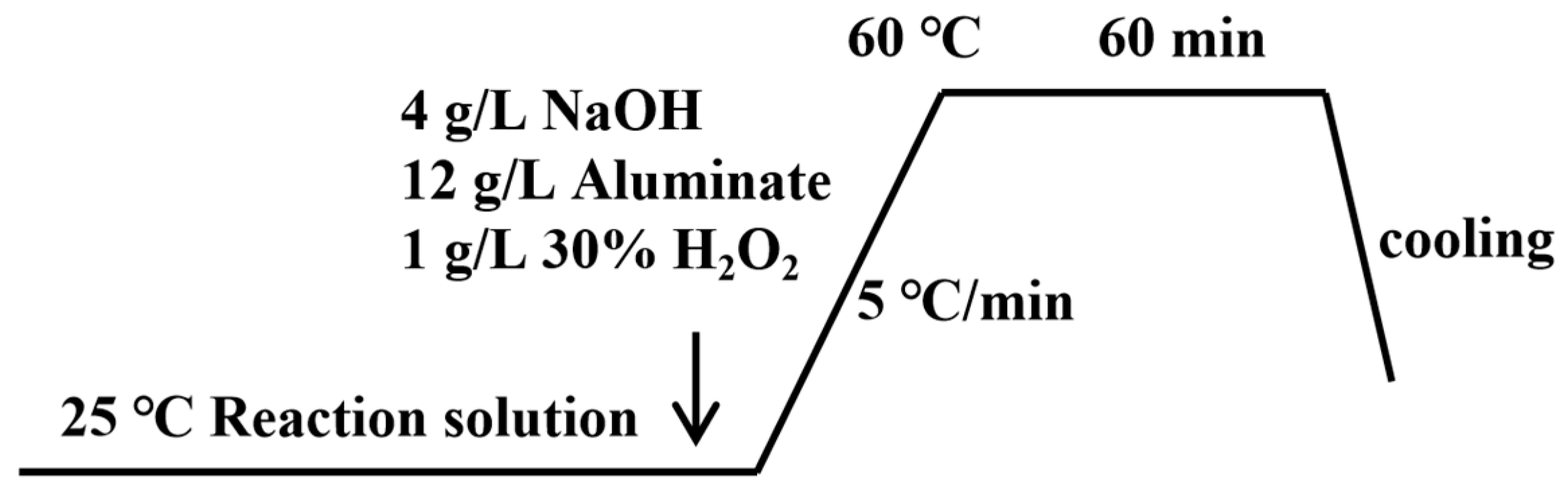
The process flow for starch sizing agent oxidation is shown in Figure 1; the test solution was collected after cooling. A control group was set up simultaneously for comparison.

2.2.4. Oxidative Desizing Process for Alginate/Cotton Blended Fabrics

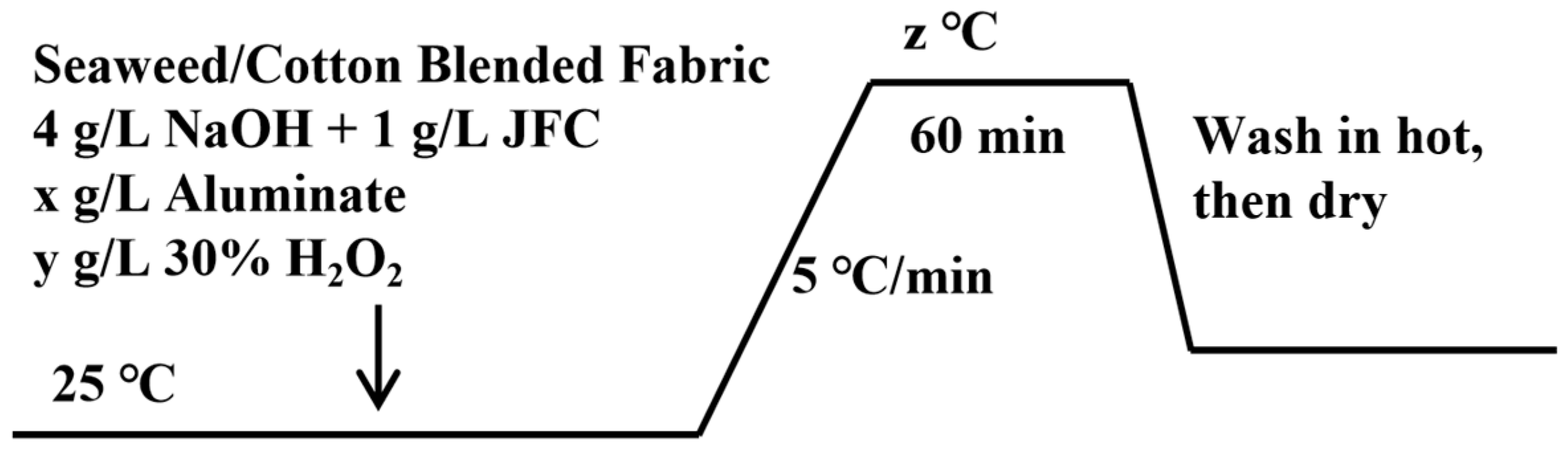
The oxidative desizing process is shown in Figure 2, consisting of two steps: desizing and hot water washing, with a liquor ratio of 1:20.
The concentration of aluminate, oxidant, and process temperature in the process are variables used to explore the optimal process. Use x value to represent the concentration of aluminate, use y value to indicate the concentration of oxidant, and use z value to represent the temperature of the process.

2.3. Measurement Methods

2.3.1. Characterization of Catalytic Effect

In the catalytic effect study, gas collection was carried out separately for the gas-generating solution containing c(Aluminate) = 0.1 mol/L and c(H2O2) = 1 mol/L, and for the solution containing c(NaOH) = 1 mol/L and c(H2O2) = 1 mol/L; the water displacement method was used to accurately determine the gas generation rate and generation time.

2.3.2. Determination of Starch Standard Curve and Starch Content

Take 5 mL of 0.5% starch solution and measure the absorbance using a UV-visible spectrophotometer (UV-2600i, Shimadzu Enterprise Management (China) Co., Ltd.) (Shanghai, China) to plot the standard curve. Transfer 5 mL (V1) of the reaction solution into a 250 mL (V2) volumetric flask, add 100 mL of deionized water, then add two drops of phenolphthalein solution, and add c(HCl) = 5 mol/L solution until the red color fades; if a white precipitate appears, add c(CH3CO2H) = 2 mol/L solution until the solution clears, and then dilute to the mark with deionized water. Pipette 10 mL (V3) of the diluted solution into a 50 mL volumetric flask, sequentially add 25 mL of c(CH3CO2H) = 2 mol/L solution, 0.5 mL of 10% KI solution, and 2 mL of c(KIO3) = 0.01 mol/L solution; allow color development in the dark for 5 min, then measure the absorbance using a starch-free color-developing solution as the reference. The corresponding concentration c is read from the working curve, and the starch content ct in the test solution is calculated according to the following formula.
c t = c × 50 V 3 × V 2 V 1 ,

2.3.3. Single-Fiber Tenacity Measurement

In accordance with GB/T 14337-2022, ref. [38] the mechanical properties of alginate fibers were tested using an electronic tensile tester (YG004, Changzhou Shuanggudonda Electromechanical Technology Co., Ltd.) (Changzhou, China). The test conditions were temperature 25 °C, humidity 65%, tensile speed 20 mm/min, and gauge length 20 mm. Each sample was tested 10 times, and the final result was the average of the corresponding values.

2.3.4. Salt Resistance Test of Alginate Fiber

Alginate fibers were immersed in physiological saline at 37 °C with a liquor ratio of 1:100 for 10 min; the fibers were then removed, the surface moisture was blotted dry, and the swelling effect was observed under a microscope (SMD5500, Mingzi Precision Instruments (Shanghai) Co., Ltd.) (Shanghai, China).
The alginate fibers after saline immersion were washed and dried; the dried alginate fibers were weighed to obtain the dry weight W0, then immersed in deionized water for 10 min, removed, blotted dry, and reweighed as W1; the liquid absorption rate of the alginate fibers was calculated according to the following formula.
L = W 1 W 0 W 0 ,

2.3.5. Strength Test of Alginate Blended Yarn

An electronic fabric tensile tester (YG(B)026SH, Darong Textile Instruments) (Wenzhou, China) was used to determine the breaking strength and elongation at break of the alginate fiber blended yarn in accordance with GBT 3916-2013 [39].

2.3.6. SEM Observation of Fabric Surface Morphology

A scanning electron microscope (Phenom Pro, Funa Scientific Instruments (Shanghai) Co., Ltd.) (Shanghai, China) was used to observe the fabric surface and to detect the effects of the desizing process on desizing efficiency and fabric damage.

2.3.7. Determination of Fabric Desizing Rate

The desizing rate of the fabric was determined by the perchloric acid method [28].

2.3.8. Alginate Fiber Loss Rate of Blended Fabric

With reference to GB/T 35443—2024 [40] “Textiles—Quantitative Chemical Analysis—Mixtures of Alginate Fiber and Certain Other Fibers”, the alginate content of the alginate fiber blended fabric was determined and the alginate fiber loss rate was calculated.

2.3.9. Fabric Strength Measurement

An electronic fabric tensile tester (YG(B)026SH, Darong Textile Instruments) (Wenzhou, China) was used to determine the breaking strength and elongation at break of the fabric in accordance with GB/T 3923.1-2013 [41].

2.3.10. Fabric Whiteness Measurement

A color measurement and matching instrument (Datacolor 800, Datacolor Trading (Shanghai) Co., Ltd.) (Shanghai, China) was used to measure the whiteness of the fabric.

3. Results and Discussion

3.1. Catalytic Action of Aluminate and Oxidation Simulation of Slurry

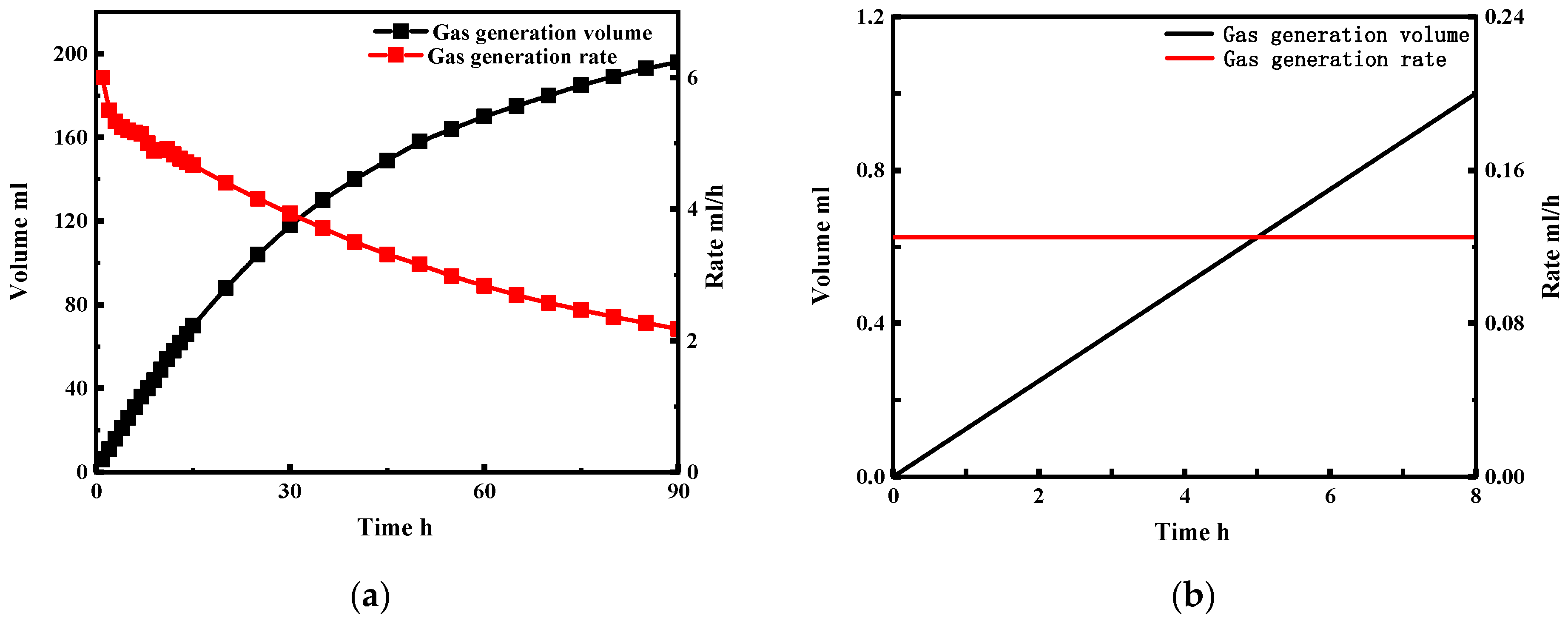
Figure 3 shows the effects of two catalytic systems on the decomposition reaction of hydrogen peroxide. As shown in Figure 3a, in the mixed solution system of hydrogen peroxide and aluminate, when sodium hydroxide is added dropwise to dissolve aluminum hydroxide, the solution releases a large amount of gas within a short period, with the maximum gas generation rate reaching 6 mL/min. Thereafter, as the reaction time extended, the decomposition of hydrogen peroxide led to a decrease in its concentration in the solution, while the pH value of the solution also changed, causing the gas generation rate to gradually decrease. After 90 min of reaction, the total gas yield was 196 mL.
Figure 3b presents the effect of sodium hydroxide as a catalyst on the decomposition of hydrogen peroxide. After mixing hydrogen peroxide with sodium hydroxide, almost no gas was generated in the solution. After collecting the generated gas for 8 h, the gas yield was 1 mL, and the gas generation rate was 0.125 mL/h. The results demonstrate that aluminates possess a highly efficient catalytic decomposition effect on hydrogen peroxide.
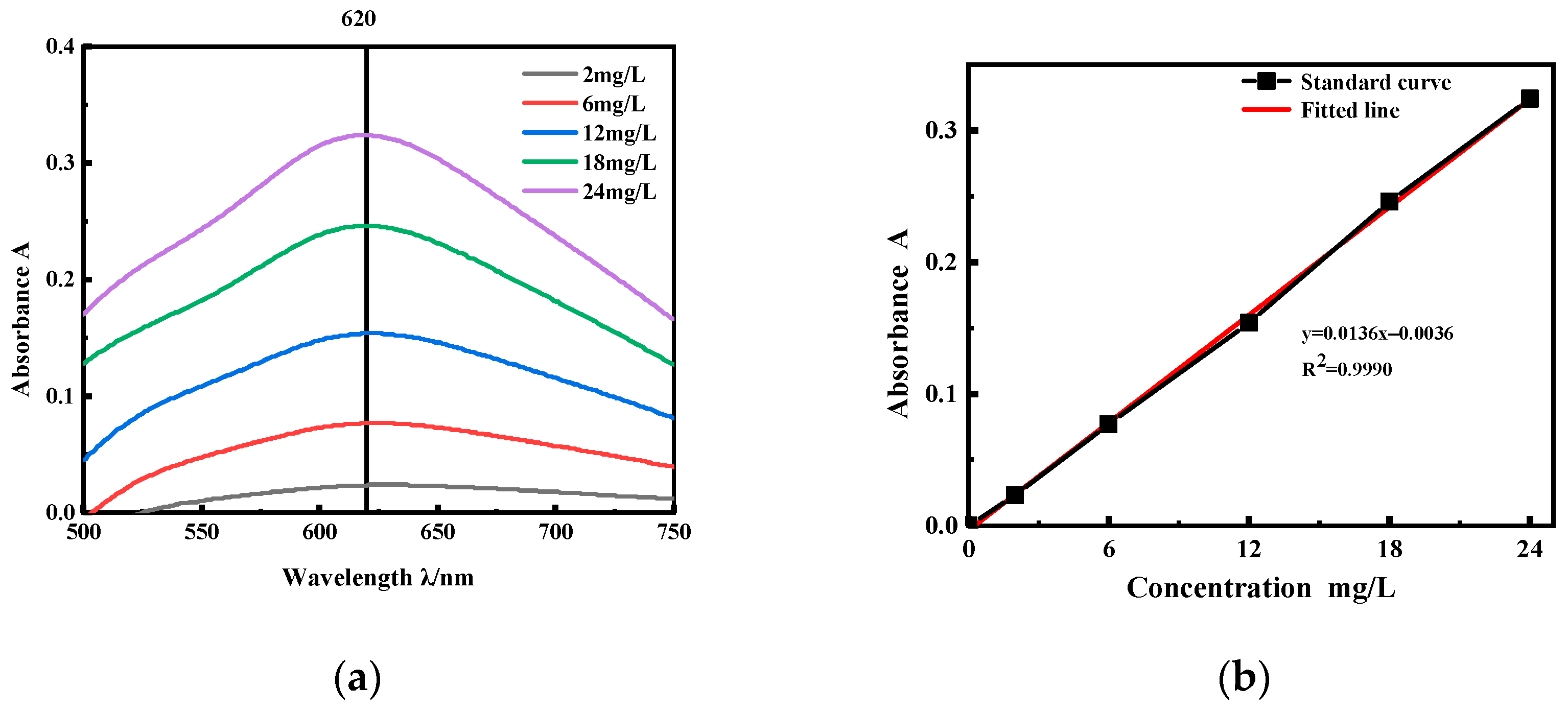
Figure 4 shows the construction of the starch standard curve. Figure 4a indicates that within the range of 500–750 nm, the absorbance of the color-developing solution forms a maximum absorption peak at 620 nm. Figure 4b shows the starch concentration standard curve plotted according to the relationship between starch concentration and the maximum absorption peak at 620 nm; the regression equation of the standard curve obtained by linear fitting is y = 0.0136x − 0.0036, with a correlation coefficient of R2 = 0.9990, indicating a good linear relationship between concentration and absorbance.
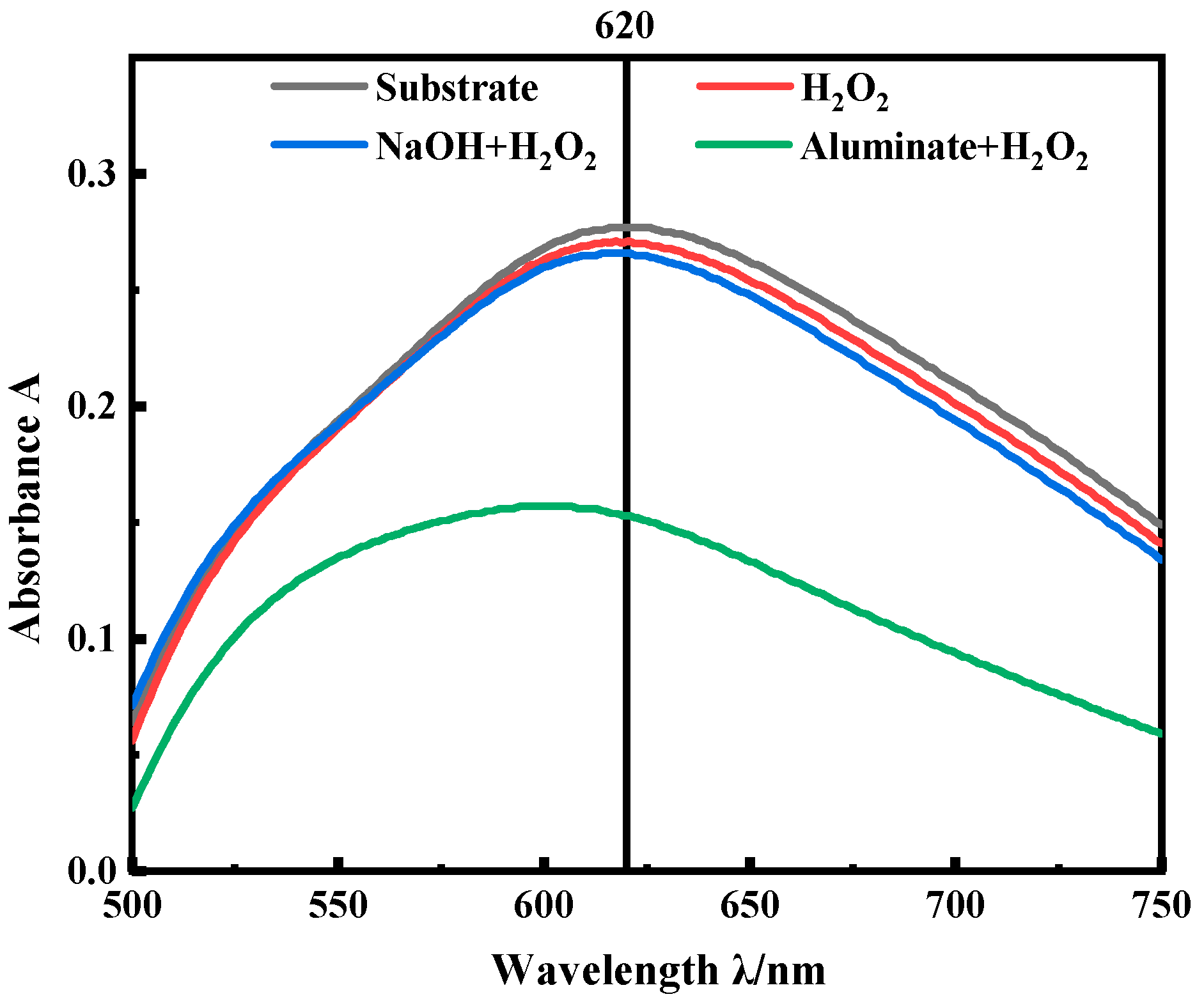
Figure 5 shows the oxidation study of starch slurries commonly used in the textile industry. Figure 5 shows the absorption wavelength of the colorimetric solution obtained by treating a 0.5% starch solution with an oxidant and catalyst using the method shown in Figure 1 at 500–750 nm. The results indicate that the addition of aluminate and oxidant to the experimental solution effectively decomposes the starch in the solution.
The data in Table 1 show that when low-concentration hydrogen peroxide was added to the starch solution, or when sodium hydroxide was used as a catalyst to catalyze hydrogen peroxide for starch oxidation, the starch content decreased by 2.13% and 3.94%, respectively. When aluminate was used as the catalyst, the starch content in the solution decreased by 44.20%. The results indicate that the addition of aluminate can effectively enhance the oxidative decomposition of sizing agents by the oxidizing agent.
These results not only indicate that aluminate has a good catalytic decomposition effect on hydrogen peroxide, but also compared to the oxidation desizing process commonly used in the textile industry with sodium hydroxide as a catalyst. The use of aluminum salts results in better and faster decomposition efficiency of the slurry. Compared to traditional oxidation desizing processes, this process has the characteristics of low energy consumption, high efficiency, and low pollution, which is in line with the concept of environmentally friendly development.

3.2. Performance of Alginate Fiber and Alginate Fiber Blended Yarn

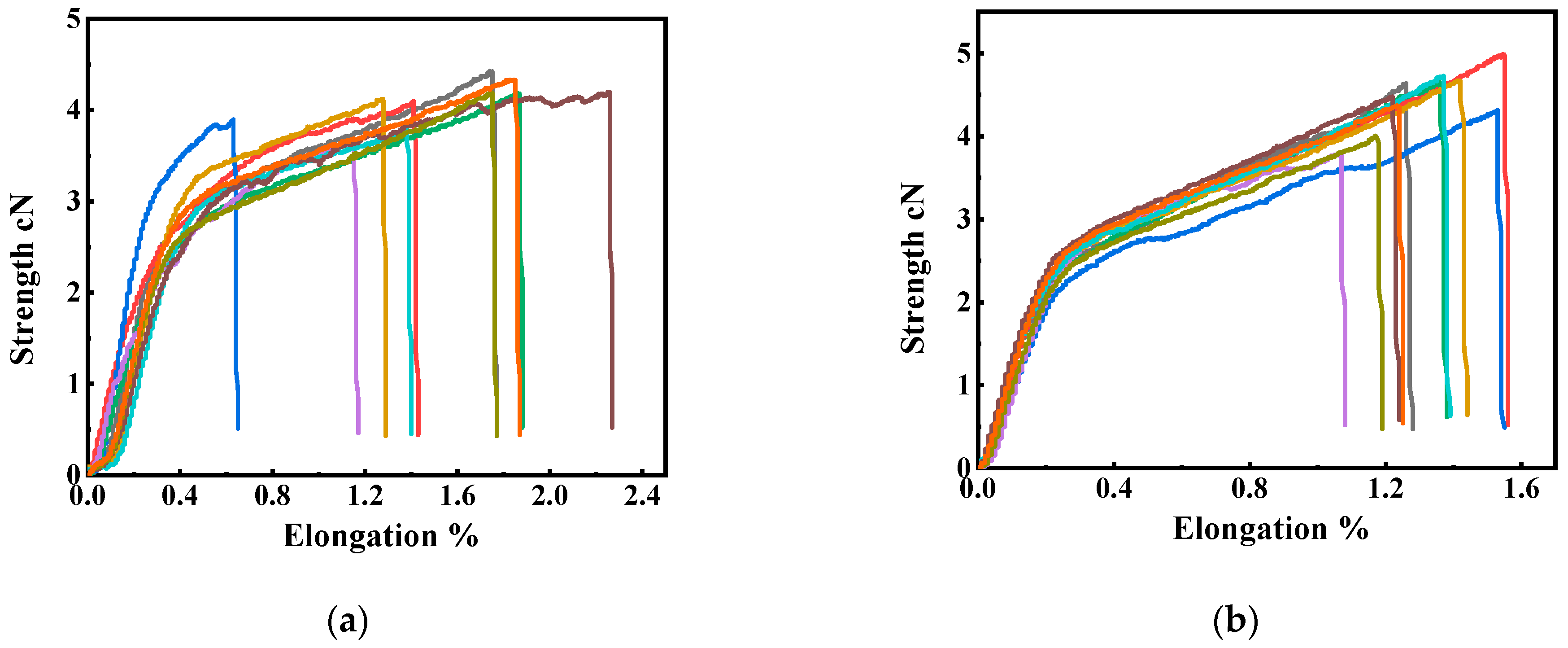
Using the oxidative desizing process shown in Figure 2 with a liquor ratio of 1:100 to treat alginate fibers, Figure 6 shows the changes in the tenacity of alginate fibers. Figure 6a shows that the single-fiber breaking tenacity of the original alginate fiber is concentrated between 3.80 cN and 4.99 cN. Figure 6b shows that after the alginate fiber is treated with the desizing process shown in Figure 2 at x = 12 and y = 1, the single-fiber breaking tenacity is concentrated between 3.64 cN and 4.43 cN. This is attributed to the chemical corrosion of alginate fibers by OH in the desizing bath and the replacement of Ca2+ within the alginate fibers by Na+, which leads to a reduction in fiber tenacity. After the desizing process, the single-fiber breaking tenacity of alginate fiber decreased from 4.466 ± 0.355 cN to 4.091 ± 0.243 cN, a reduction of 8.40%, indicating that this process has a relatively minor effect on the tenacity of alginate fibers.
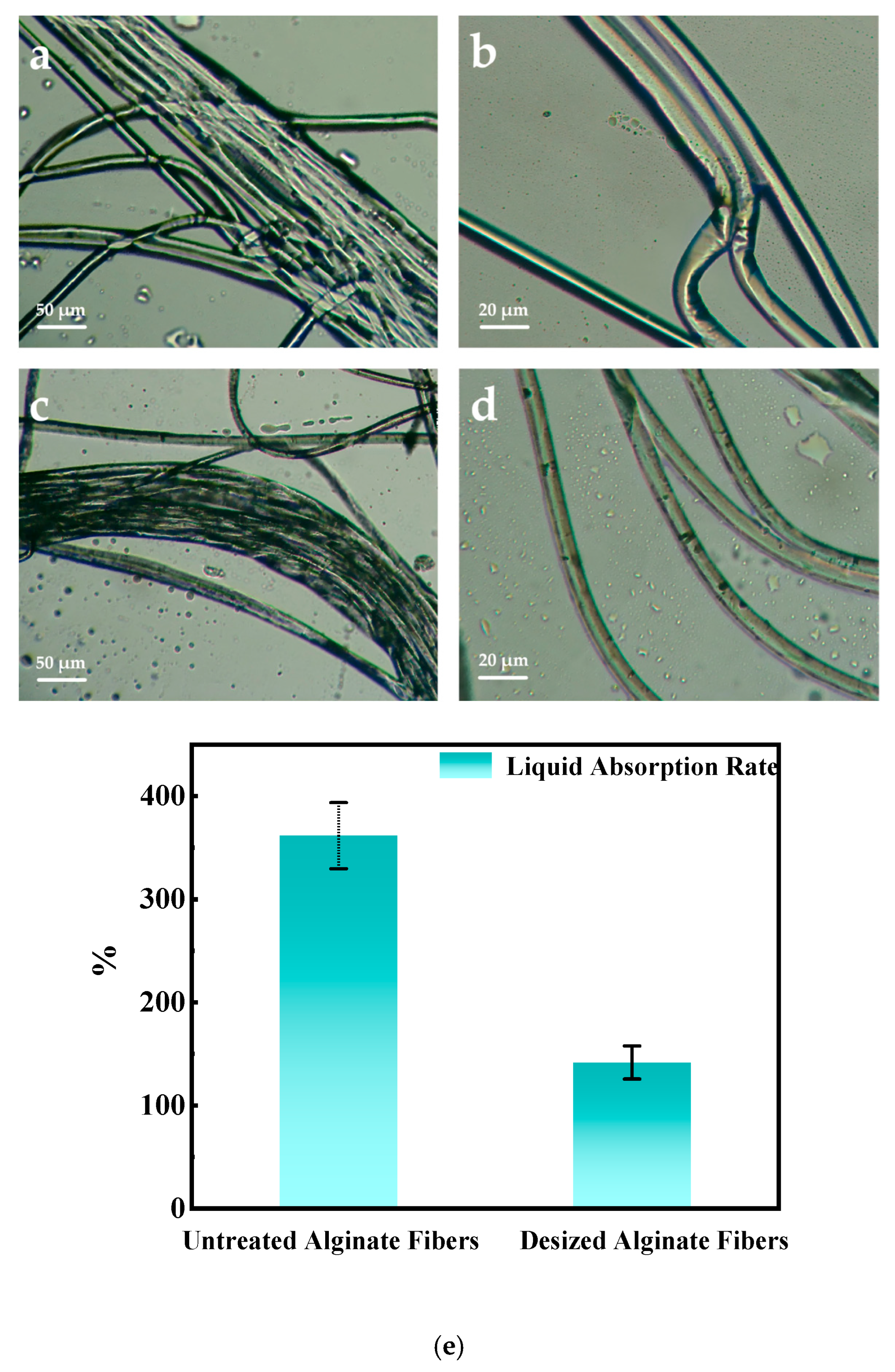
Figure 7 presents the salt resistance test of alginate fibers. Figure 7a–d characterize the swelling behavior of alginate fibers in saline solution before and after treatment, where the liquor ratio for immersing the treated alginate fibers in saline is 1:100, while that for the original alginate fibers is 1:20. The results show that the swelling of the treated alginate fibers in saline solution is far lower than that of the original alginate fibers. Figure 7e shows that the liquid absorption rate of alginate fibers decreased from 361.74% to 141.78% before and after treatment, demonstrating that the addition of aluminates in the desizing process modified the alginate fibers and greatly enhanced their tolerance to physiological saline.
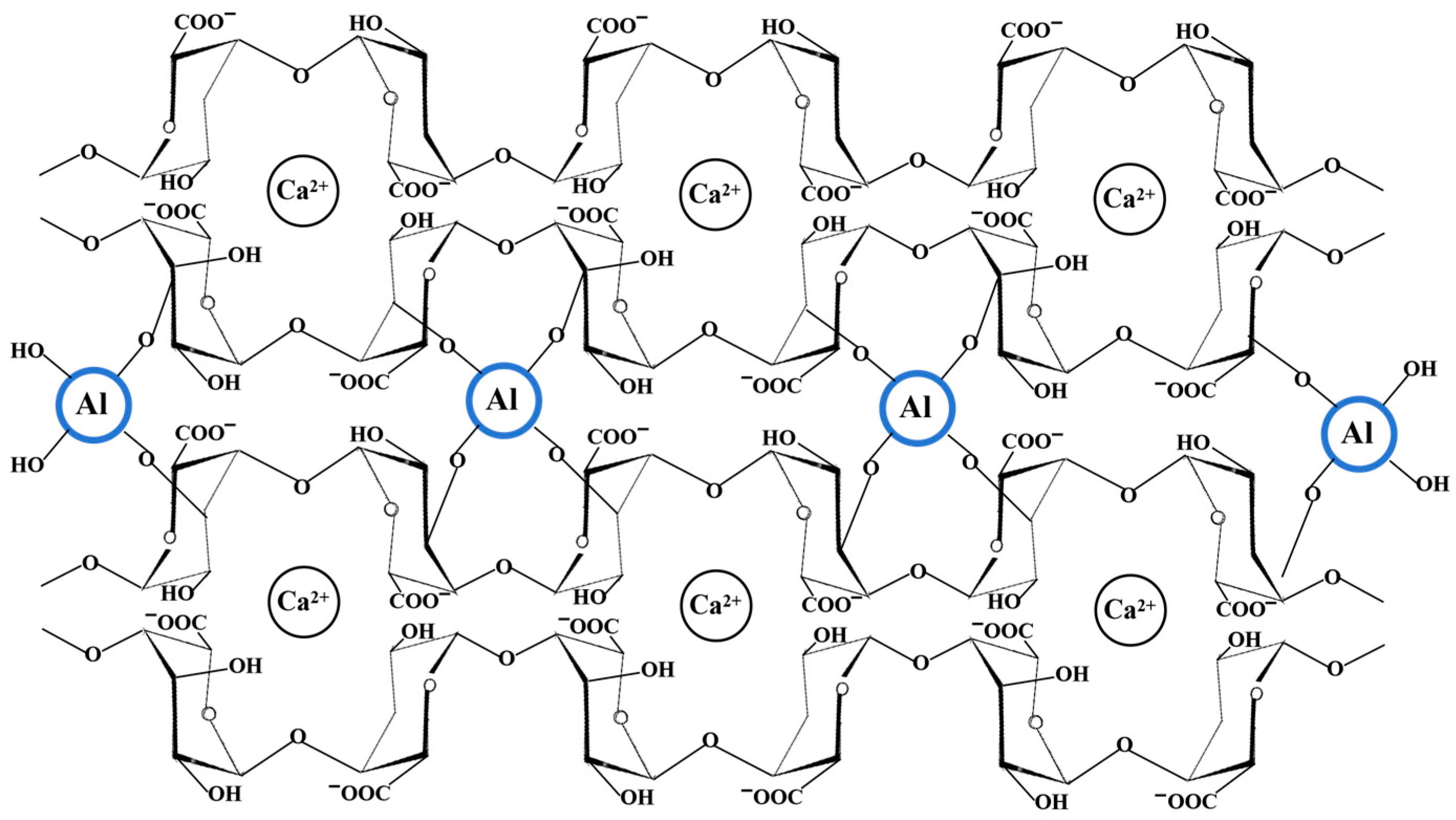
The modification mechanism of aluminate on alginate fiber is shown in Figure 8. After aluminate treatment, the alginate fiber forms a new tetrahydroxy cross-linking structure in the original “egg box” structure, which enhances the mechanical properties of the fiber [42]. At the same time, this structure is conducive to shielding the Ca2+ ions in the alginate fiber, thus preventing the fiber gel caused by ion exchange.
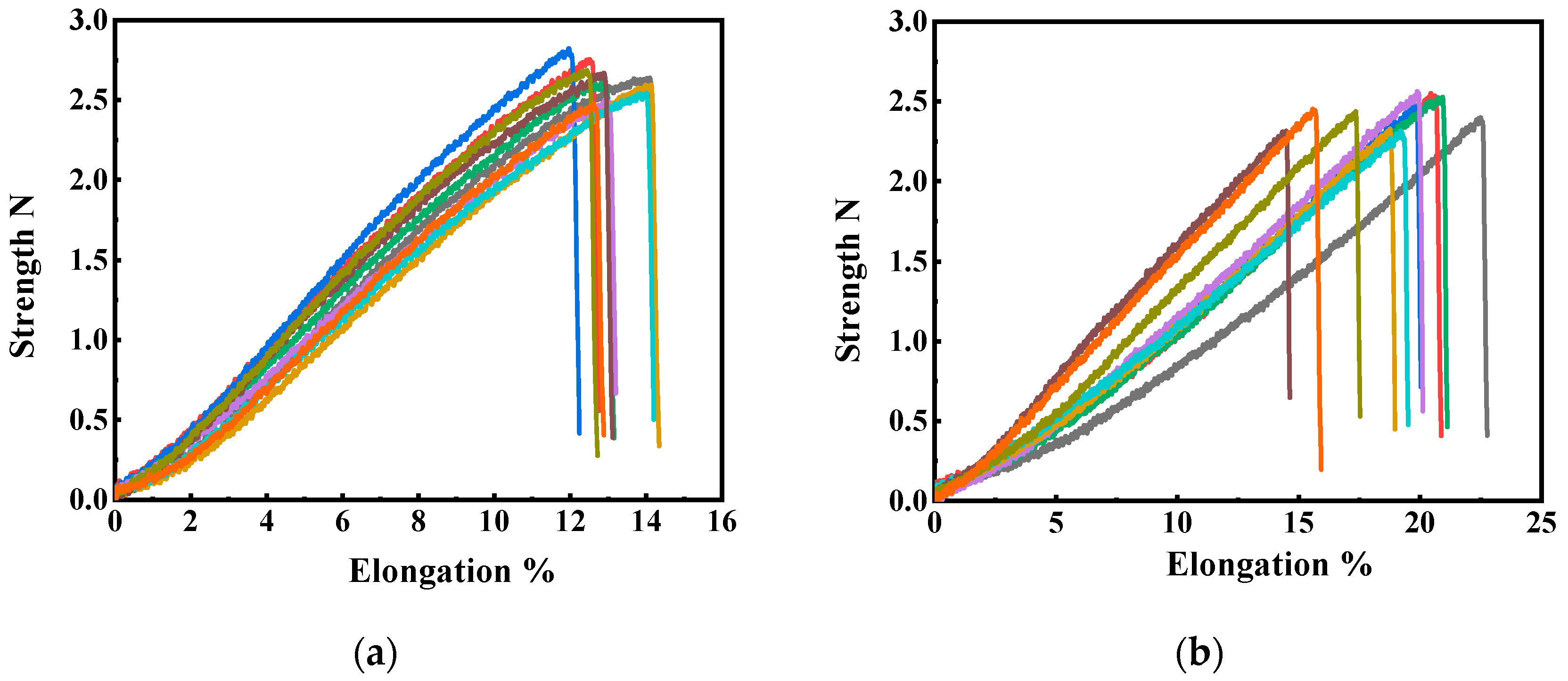
In current alginate fiber blended fabrics, blended yarns containing alginate fibers are commonly used as weft yarns; the strength analysis of alginate blended yarns can laterally characterize the weft tensile performance of alginate blended fabrics. Figure 9a shows the single-yarn breaking tenacity of the original alginate blended yarn, which is concentrated between 2.48 N and 2.83 N. Figure 9b shows that the single-yarn breaking tenacity of the alginate fiber blended yarn after the desizing treatment is concentrated between 2.32 N and 2.57 N. The results indicate that after the desizing process shown in Figure 2, the single-yarn breaking tenacity of the alginate fiber blended yarn decreased from 2.637 ± 0.107 N to 2.444 ± 0.094 N, a reduction of 7.32%, indicating low strength damage to the alginate blended yarn; the elongation at break of the yarn increased from 12.977 ± 0.777% to 18.880 ± 2.455%, a rise of 45.49%, indicating a significant improvement in the softness and elasticity of the yarn compared with the traditional oxidation desizing process, as shown in Figure 9.
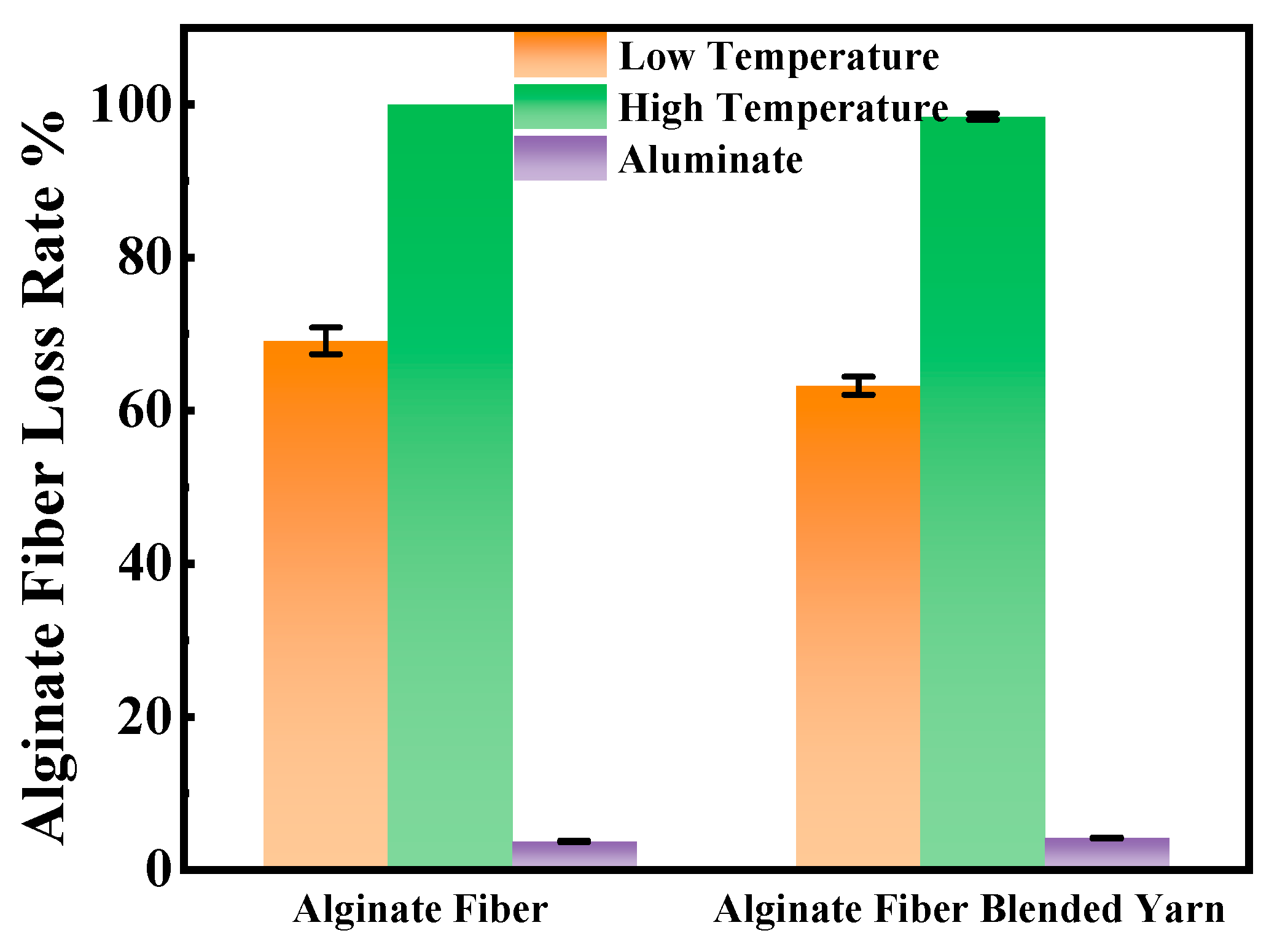
The components of the high-temperature oxidation slurry and low-temperature oxidation slurry are both 6 g/L NaOH, 10 g/L H2O2, 2 g/L JFC, 3 g/L stabilizer (sodium silicate), bath ratio 1:100. The treatment temperature for high-temperature oxidation desizing is 100 °C and the treatment time is 10 min, while the treatment temperature for low-temperature oxidation desizing is 25 °C and the treatment time is 24 h. After low-temperature oxidation and desizing, the quality loss of alginate fibers was 69.11 ± 1.76%. The treated alginate fibers were completely swollen and severely damaged, completely losing their textile ability; The alginate loss rate of alginate fiber blended yarn is 63.28 ± 1.19%, which is lower than the loss caused by treating alginate fiber alone. This is because in the blended yarn, some alginate fibers exist inside the blended yarn, and the presence of cotton fibers reduces the loss of alginate fibers during oxidation and desizing, thereby reducing the loss rate of alginate fibers. After high-temperature oxidation desizing, the alginate fibers were completely dissolved in the desizing solution, and the alginate fiber loss rate of the blended yarn was 98.42 ± 0.39%. This is because the high-temperature desizing process caused certain damage to the cotton fibers in the blended yarn, resulting in the loss of some hairiness in the alginate fiber content test. After the desizing process with added aluminum salts, the quality loss of alginate fiber was 3.73 ± 0.12%, and the alginate loss rate of alginate fiber blended yarn was 4.17 ± 0.04%. The experimental results were similar, proving that the new process has a low quality loss rate of alginate fiber. At the same time, it also indicates that the numerical value of alginate content in the blended fabric does not affect the alginate loss rate caused by the desizing process (Figure 10).
Compared with the traditional oxidation desizing process, the desizing process with added aluminum salts has a lower impact on the mechanical properties of alginate fibers. After treatment, the salt resistance of alginate fibers is significantly enhanced, indicating that this process has a positive effect on the textile properties of alginate fibers. The alginate loss rate of the blended yarn of alginate fiber and alginate fiber after the new process treatment is within the range of 3.61–4.21%, which is much lower than the economic loss caused by traditional oxidation desizing on alginate fiber. In summary, the new process has no significant negative impact on the treatment of alginate fibers, which is extremely beneficial for expanding the application of alginate fibers and thus presents a positive impact on the development of marine resources.

3.3. Performance of Pure Cotton Fabric and Alginate/Cotton Fiber Blended Fabric

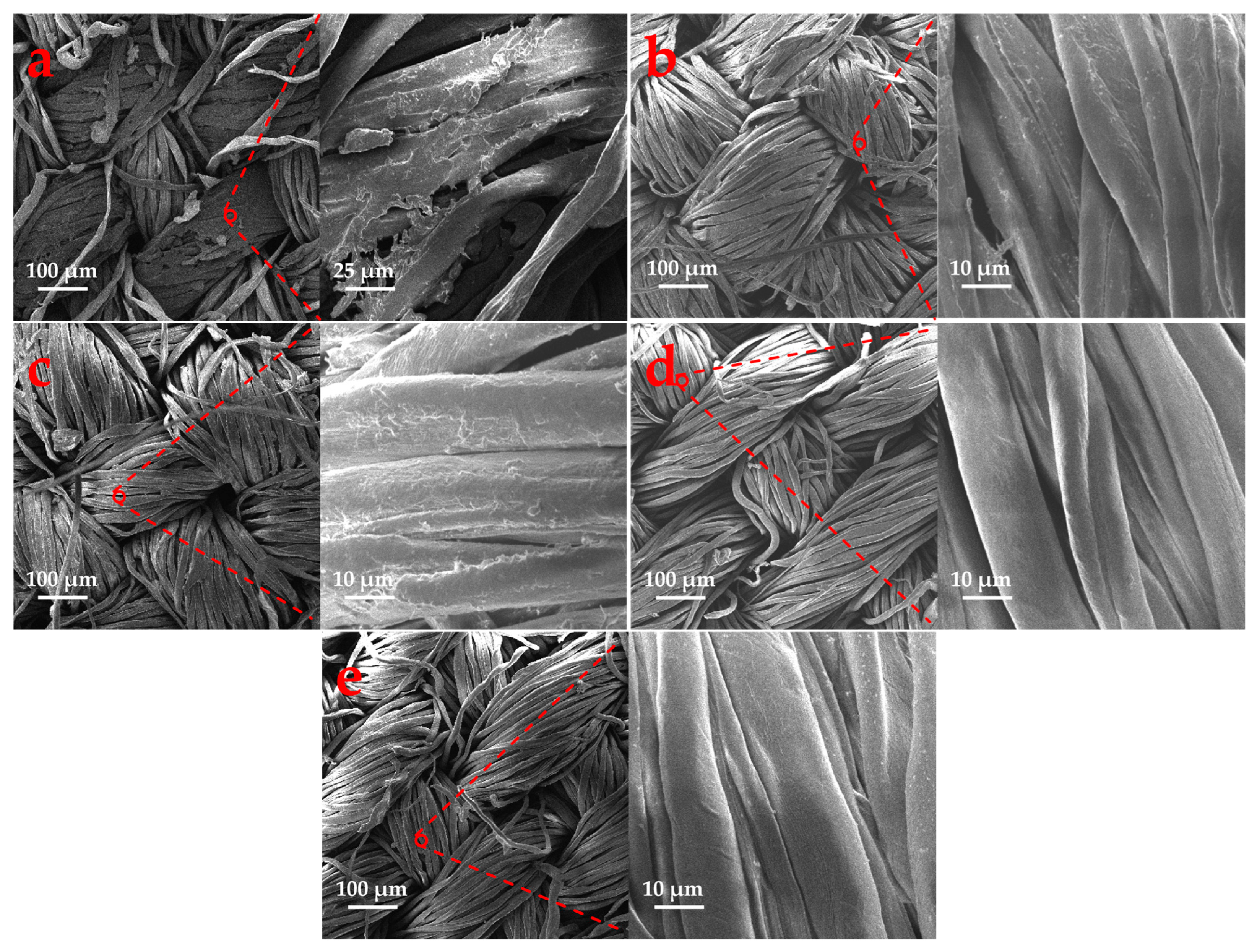
Figure 11 presents the surface micro-morphology of the fabrics after different processing treatments. In the figure, Figure 11a,c are the untreated pure cotton sized grey fabric and pure cotton bleached fabric, respectively; Figure 11b,e both employed the oxidative desizing process at x = 12, y = 1 in Figure 2. Figure 11d corresponds to an increased y value of 16 compared with Figure 11b. Figure 11a shows that under the effect of the sizing agent, the warp yarn surface has fewer hairiness, and the yarns are more regular and compact.
Inside the yarn, a large amount of sizing agent can be clearly observed bonding the fibers together. In Figure 11b, after the desizing treatment, the compact form of the warp yarn is loosened, and its appearance is close to that of the weft yarn without sizing. Inside the yarn, a small amount of sizing agent can still be seen adhering to the fiber surfaces, while the fibers no longer show the bonded state seen in the grey fabric. The fabric surface in Figure 11c is similar to that in Figure 11b; the fibers inside the yarn show no adhesion, but the surface is clearly covered with a large amount of residual sizing agent. Figure 11d shows the surface micro-morphology of the finished fabric after bleaching; after conventional pretreatment, there are essentially no signs of sizing agent residue on the fiber surfaces. In Figure 11e, the fiber surfaces show slight damage, indicating that the oxidative desizing process causes a certain degree of damage to the fabric.
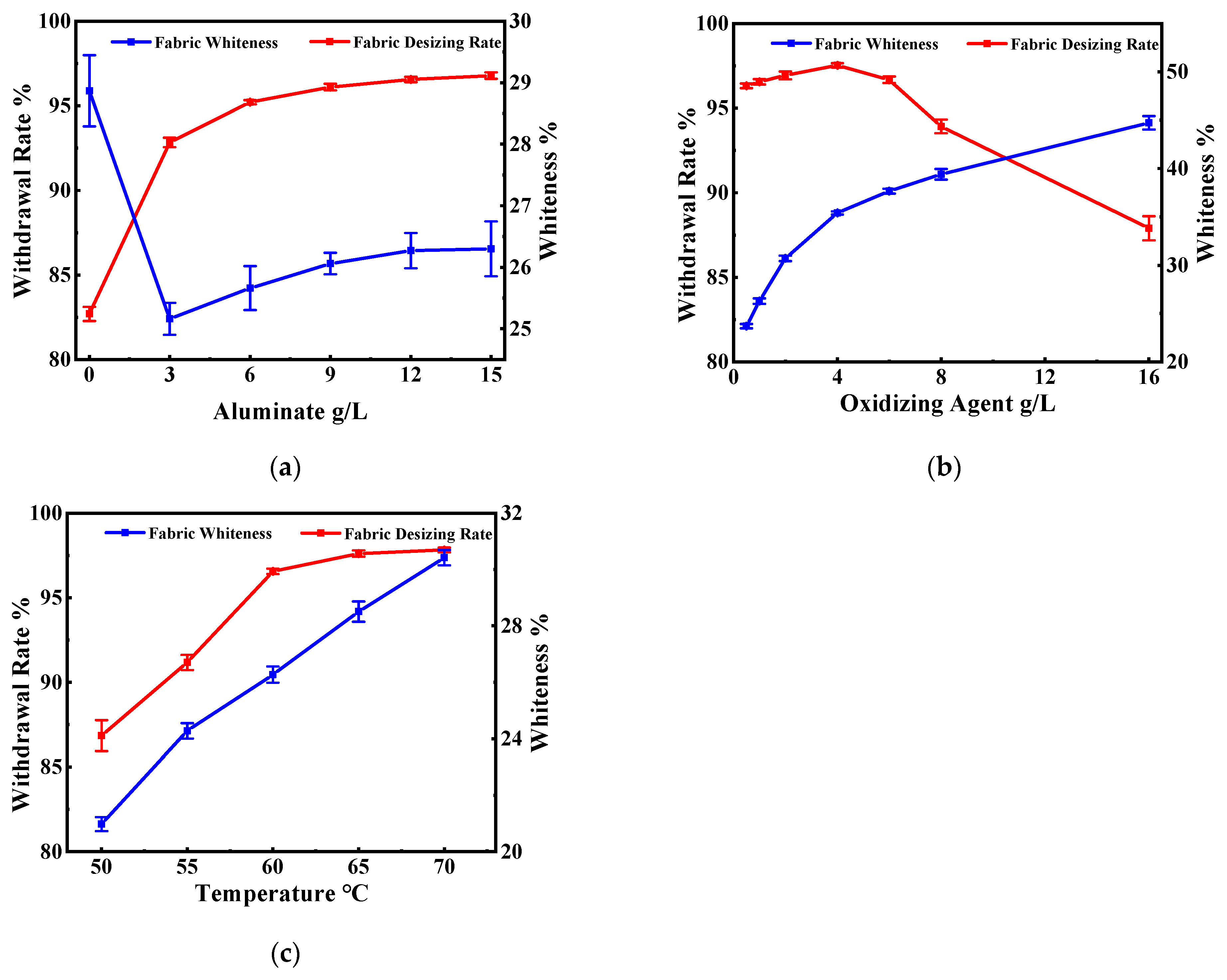
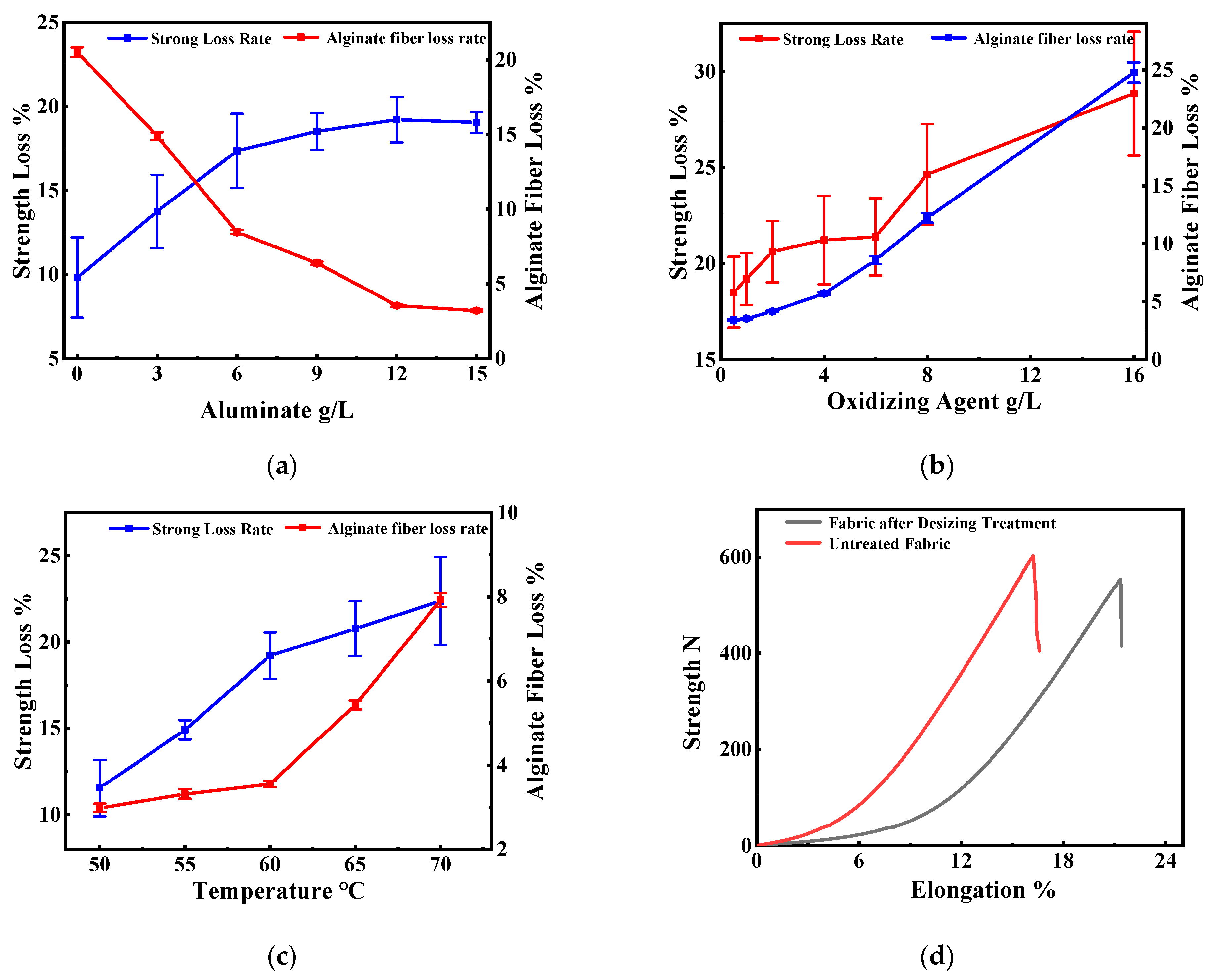
Figure 12 shows the effects of catalyst and oxidizing agent on the desizing rate and whiteness of the fabric in the oxidative desizing process; as shown in the oxidative desizing process in Figure 2, fixing y = 1 and varying x from 0 to 15 yields Figure 12a; fixing x = 12 and varying y from 0.5 to 16 yields Figure 12b. The perchloric acid method was used to determine the sizing content of the sized grey fabric, and the original fabric had a sizing rate of 5.985%. As shown in Figure 11a, when x = 0 and y = 1, the oxidative desizing process relying solely on sodium hydroxide as the catalyst reduced the sizing content of the fabric to 1.036%, yielding a desizing rate of 82.69%; the removed sizing consisted mainly of fiber-bonding sizing agents, causing relatively low damage to the size film on the fiber surface, and the residual sizing at this stage would affect subsequent dyeing. When x = 3, the desizing rate of the fabric was 92.83 ± 0.28%, showing a significant increase compared with the case without aluminate addition. The overall desizing rate showed an increasing trend with a continually decreasing growth rate, because as the catalyst concentration increased, on one hand, the reduction in total sizing on the fabric surface made the residual sizing more difficult to remove, and on the other hand, the relatively low amount of hydrogen peroxide added led to a trend of catalyst excess.
Regarding the change in whiteness, the whiteness of the fabric at x = 0 was 28.87 ± 0.58, which is clearly higher than subsequent values, indicating that the catalysis of hydrogen peroxide by sodium hydroxide is more oriented toward bleaching compared with aluminate; the subsequent increase in whiteness values is because the vast majority of hydrogen peroxide was consumed to oxidize the starch sizing, and the improvement in whiteness was achieved through the increase in desizing rate. As can be observed in the figure, the desizing rate increase slows as x rises from 9 to 15; x = 12 was selected as the optimal value in the experiment. Figure 12c shows the effect of temperature on the desizing effect and fabric whiteness. It can be seen that when the temperature is increased from 55 °C to 60 °C, the desizing rate of the fabric increases from 91.17 ± 0.44% to 96.56 ± 0.16%, and the improvement effect is significant; when the temperature is raised from 60 °C to 65 °C, the desizing rate of the fabric increases to 97.61 ± 0.19%, with a slight improvement effect. So 60 °C is the optimal temperature for the desizing process.
In Figure 11b, the desizing rate of the fabric first increases and then decreases with the change in oxidizing agent concentration; when y = 4, the desizing rate reaches a peak of 97.53 ± 0.13%; when y = 16, the desizing rate drops to 87.90 ± 0.71%. This indicates that an increase in the amount of hydrogen peroxide caused a decrease in the pH of the desizing bath, which impaired the catalytic activity of aluminate, resulting in a decrease in the desizing rate. The whiteness of the fabric showed an increasing trend with the increase in oxidizing agent concentration, indicating that when the catalytic activity of aluminate decreases, sodium hydroxide in the solution still catalyzes hydrogen peroxide to bleach the fabric.
Figure 13 shows the effects of the desizing process on fabric strength and the alginate fiber damage rate. In Figure 13a, the breaking strength loss rate of the fabric increases rapidly as x increases from 0 to 6; combined with Figure 12a, it can be seen that the main factor affecting the breaking strength of the fabric at this stage is the desizing process removing the sizing agent from the surface of the warp yarns, leading to a decrease in fabric strength. As x increases from 9 to 15, the growth of the fabric breaking strength loss rate slows down; combined with Figure 13a, it can be seen that as the hydrogen peroxide in the desizing bath is nearly exhausted, the desizing bath no longer has a significant effect on the desizing rate and strength loss of the fabric.
During the process of x increasing from 0 to 12, the alginate fiber loss rate in the fabric decreased from 20.51 ± 0.32% to 3.55 ± 0.08% because the increase in aluminum content in the solution chemically modified the alginate fibers for improved salt and alkali resistance, demonstrating that the addition of aluminate provides exceptionally high protection for alginate fibers in the desizing bath. As x increases from 12 to 15, the alginate fiber loss rate decreases only slightly from 3.55 ± 0.08% to 3.21 ± 0.07%, remaining almost unchanged, indicating that further increases in aluminate at this stage do not produce a significant effect on the dissolution caused by the replacement of high-valence metal ions within the alginate fibers by monovalent metal cations.
In Figure 13b, as y increases from 0.5 to 4, the desizing rate of the fabric remains essentially unchanged as shown in Figure 13b; as y increases from 4 to 8, the rate of increase in the strength loss rate of the fabric slows down due to the decrease in desizing rate. At y = 16, although the desizing rate of the fabric decreases significantly at this point, the strength loss rate of the fabric still shows a substantial increase. As y increases from 0.5 to 4, the alginate loss rate increases from 3.42 ± 0.06% to 5.72 ± 0.11%; as y increases from 4 to 16, the alginate loss rate rises from 5.72 ± 0.11% to 24.77 ± 0.88%, because in the first half, as the oxidizing agent concentration increases, the catalyst enhances the oxidation effect, causing progressively greater damage to the alginate fibers. In the second half, the increasing oxidizing agent concentration causes aluminate to precipitate as aluminum hydroxide, leading to a sharp increase in the alginate fiber loss rate.
Figure 13c shows the effect of desizing temperature on fabric fracture strength and alginate loss rate. As shown in the figure, when the desizing temperature increases from 60 °C to 65 °C, the alginate loss rate of the fabric increases significantly from 3.55 ± 0.08% to 5.42 ± 0.10%, indicating that the process temperature should not exceed 60 °C.
Figure 13d shows the changes in the breaking strength and elongation at break of the pure cotton bleached fabric treated at x = 12 and y = 1 according to the process in Figure 2 along the fabric warp direction. The breaking strength of the fabric decreased from 603.56 N to 553.43 N, with a strength loss rate of 8.31%; the elongation at break increased from 16.21% to 21.33%, representing an increase of 31.59%. This indicates that the process causes relatively low strength damage to the fabric.
The research results indicate that the optimal oxidation desizing process after adding aluminum salts has a low impact on the mechanical properties of pure cotton pulp free fabrics, and causes a alginate loss rate of 3.55 ± 0.08% for blended fabrics. This is similar to the results of treating alginate fiber and alginate fiber blended yarn separately. This not only indicates that the process causes low losses to alginate fiber, but also shows that the blending ratio of alginate fiber and cotton fiber in the fabric has almost no effect on the experimental results. Compared to traditional alkali desizing and oxidation desizing, the new process requires lower energy and oxidant usage in fabric treatment, which is in line with the development concept of green dyeing and finishing.

4. Conclusions

This study employed aluminate as both a catalyst and a protective agent for alginate fibers, enabling hydrogen peroxide to rapidly oxidize sizing agents at low temperature, while simultaneously reducing the damage to alginate fibers caused by conventional processes and improving the salt resistance of alginate fibers, with the amount of oxidizing agent used far lower than in conventional oxidative desizing processes.
Compared with conventional hydrogen peroxide catalysts, this study confirms that aluminate exhibits stable catalytic decomposition of hydrogen peroxide. At the same time, this study also simulated the oxidative decomposition of sizing agents commonly used in the textile industry; the results show that after treatment for 1 h in an oxidizing solution of 12 g/L aluminate and 1 g/L oxidizing agent at 60 °C, 0.5% starch solution decomposed by 44.20%. After this process, the desizing rate of the fabric reached 96.56 ± 0.16%, the single-fiber breaking tenacity of the alginate fiber decreased by only 8.40%, the strength of the alginate fiber blended yarn decreased by only 7.58%, and the elongation at break increased by 45.45%, indicating that this process has a low effect on the strength of alginate fibers and that the softness of the treated fabric is greatly improved. The liquid absorption rate of the alginate fiber after treatment decreased from 361.74% to 141.78%, significantly improving the salt resistance of the alginate fiber. This process can improve the whiteness of the fabric, with an alginate fiber content damage rate of only 3.55% and relatively low fabric damage.
In actual production, this process can be perfectly compatible with production lines that can perform wet processing pretreatment under normal circumstances, since the pH value, temperature, and oxidizing agent concentration of the desizing bath are significantly lower than those of conventional processes; this approach aligns with the concept of green dyeing and finishing. Furthermore, the decomposition of sizing agents relies primarily on the oxidation process, which can be completed by the catalyst under conditions of low hydrogen peroxide concentration, this enables the control of hydrogen peroxide concentration in the desizing bath to remain within a lower range during production, thereby effectively avoiding the issues of fabric damage and environmental pollution caused by excess oxidizing agents in conventional processes, and contributing to the sustainable development of the textile industry.
At present, there are also some shortcomings and limitations. Firstly, this process selects alginate fibers and cotton fibers as fabrics, and the process is carried out under alkaline conditions. This means that this process can only handle fiber fabrics with alkali resistance, and cannot handle fiber fabrics such as wool and silk that are acid resistant but not alkali resistant. Secondly, during the testing process, there was no optimization of the feather loss that occurred on the fabric, which can result in certain errors in the test results.

Author Contributions

Conceptualization, Z.D. and D.M.; methodology, Z.D.; software, C.X.; validation, C.X., J.D. and S.C.; formal analysis, C.X.; investigation, S.C.; resources, D.M., C.X. and J.D.; data curation, Z.D.; writing—original draft preparation, Z.D.; writing—review and editing, D.M. and J.D.; visualization, C.X.; supervision, Z.D.; project administration, Z.D. and D.M.; funding acquisition, Z.D. All authors have read and agreed to the published version of the manuscript.

Funding

This research is funded by the Natural Science Foundation of Jiangsu Province’s Basic Research Plan—Key Project of Basic Research Plan (BK20243052).

Institutional Review Board Statement

Not applicable.

Informed Consent Statement

Not applicable.

Data Availability Statement

The data are available from the corresponding author upon reasonable request.

Conflicts of Interest

Author S.C. was employed by the company Jiangsu Lianfa Textile Co., Ltd. The remaining authors declare that the research was conducted in the absence of any commercial or financial relationships that could be construed as a potential conflict of interest.

References

  1. Foley, J.A.; Ramankutty, N.; Brauman, K.A.; Cassidy, E.S.; Gerber, J.S.; Johnston, M.; Mueller, N.D.; O’Connell, C.; Ray, D.K.; West, P.C.; et al. Solutions for a cultivated planet. Nature 2011, 478, 337–342. [Google Scholar] [CrossRef]
  2. Rockström, J.; Steffen, W.; Noone, K.; Persson, Å.; Chapin, F.S.; Lambin, E.F.; Lenton, T.M.; Scheffer, M.; Folke, C.; Schellnhuber, H.J.; et al. A safe operating space for humanity. Nature 2009, 461, 472–475. [Google Scholar] [CrossRef]
  3. Mekonnen, M.M.; Hoekstra, A.Y. The green, blue and grey water footprint of crops and derived crop products. Hydrol. Earth Syst. Sci. 2011, 15, 1577–1600. [Google Scholar] [CrossRef]
  4. Godfray, H.C.J.; Beddington, J.R.; Crute, I.R.; Haddad, L.; Lawrence, D.; Muir, J.F.; Pretty, J.; Robinson, S.; Thomas, S.M.; Toulmin, C. Food Security: The Challenge of Feeding 9 Billion People. Science 2010, 327, 812–818. [Google Scholar] [CrossRef] [PubMed]
  5. Tilman, D.; Balzer, C.; Hill, J.; Befort, B.L. Global food demand and the sustainable intensification of agriculture. Proc. Natl. Acad. Sci. USA 2011, 108, 20260–20264. [Google Scholar] [CrossRef]
  6. Mohan, D.; Pittman, C.U.; Steele, P.H. Pyrolysis of Wood/Biomass for Bio-Oil: A Critical Review. Energy Fuels 2006, 20, 848–889. [Google Scholar] [CrossRef]
  7. Hay, I.D.; Ur Rehman, Z.; Ghafoor, A.; Rehm, B.H.A. Bacterial biosynthesis of alginates. J. Chem. Technol. Biotechnol. 2010, 85, 752–759. [Google Scholar] [CrossRef]
  8. Smidsrød, O.; Skjåk-Braek, G. Alginate as immobilization matrix for cells. Trends Biotechnol. 1990, 8, 71–78. [Google Scholar] [CrossRef] [PubMed]
  9. Buschmann, A.H.; Camus, C.; Infante, J.; Neori, A.; Israel, Á.; Hernández-González, M.C.; Pereda, S.V.; Gomez-Pinchetti, J.L.; Golberg, A.; Tadmor-Shalev, N.; et al. Seaweed production: Overview of the global state of exploitation, farming and emerging research activity. Eur. J. Phycol. 2017, 52, 391–406. [Google Scholar] [CrossRef]
  10. Duarte, C.M.; Wu, J.; Xiao, X.; Bruhn, A.; Krause-Jensen, D. Can Seaweed Farming Play a Role in Climate Change Mitigation and Adaptation? Front. Mar. Sci. 2017, 4, 100. [Google Scholar] [CrossRef]
  11. Gentry, R.R.; Froehlich, H.E.; Grimm, D.; Kareiva, P.; Parke, M.; Rust, M.; Gaines, S.D.; Halpern, B.S. Mapping the global potential for marine aquaculture. Nat. Ecol. Evol. 2017, 1, 1317–1324. [Google Scholar] [CrossRef]
  12. Yabur, R.; Bashan, Y.; Hernández-Carmona, G. Alginate from the macroalgae Sargassum sinicola as a novel source for microbial immobilization material in wastewater treatment and plant growth promotion. J. Appl. Phycol. 2007, 19, 43–53. [Google Scholar] [CrossRef]
  13. Shen, L.; Worrell, E.; Patel, M. Present and future development in plastics from biomass. Biofuels Bioprod. Biorefin. 2010, 4, 25–40. [Google Scholar] [CrossRef]
  14. Stenton-dozey, J.M.E.; Jackson, L.F.; Busby, A.J. Impact of Mussel Culture on Macrobenthic Community Structure in Saldanha Bay, South Africa. Mar. Pollut. Bull. 1999, 39, 357–366. [Google Scholar] [CrossRef]
  15. Siracusa, V.; Rocculi, P.; Romani, S.; Rosa, M.D. Biodegradable polymers for food packaging: A review. Trends Food Sci. Technol. 2008, 19, 634–643. [Google Scholar] [CrossRef]
  16. He, H.; Jiang, Q.; Wan, Y.; Mia, M.H.; Qu, X.; Zhou, M.; He, X.; Li, X.; Hong, M.; Yu, Z.; et al. Biological skin-inspired damage warning and self-healing thermoelectric aerogel fiber via coaxial wet spinning for wearable temperature sensing. J. Mater. Sci. Technol. 2026, 250, 257–271. [Google Scholar] [CrossRef]
  17. Abka-Khajouei, R.; Tounsi, L.; Shahabi, N.; Patel, A.K.; Abdelkafi, S.; Michaud, P. Structures, Properties and Applications of Alginates. Mar. Drugs 2022, 20, 364. [Google Scholar] [CrossRef] [PubMed]
  18. Grasdalen, H. High-field, 1H-n.m.r. spectroscopy of alginate: Sequential structure and linkage conformations. Carbohydr. Res. 1983, 118, 255–260. [Google Scholar] [CrossRef]
  19. Grant, G.T.; Morris, E.R.; Rees, D.A.; Smith, P.J.C.; Thom, D. Biological interactions between polysaccharides and divalent cations: The egg-box model. FEBS Lett. 1973, 32, 195–198. [Google Scholar] [CrossRef]
  20. Braccini, I.; Pérez, S. Molecular Basis of Ca2+-Induced Gelation in Alginates and Pectins: The Egg-Box Model Revisited. Biomacromolecules 2001, 2, 1089–1096. [Google Scholar] [CrossRef]
  21. Steginsky, C.A.; Beale, J.M.; Floss, H.G.; Mayer, R.M. Structural determination of alginic acid and the effects of calcium binding as determined by high-field n.m.r. Carbohydr. Res. 1992, 225, 11–26. [Google Scholar] [CrossRef]
  22. Rhim, J.-W. Physical and mechanical properties of water resistant sodium alginate films. LWT—Food Sci. Technol. 2004, 37, 323–330. [Google Scholar] [CrossRef]
  23. Abasalizadeh, F.; Moghaddam, S.V.; Alizadeh, E.; Akbari, E.; Kashani, E.; Fazljou, S.M.B.; Torbati, M.; Akbarzadeh, A. Alginate-based hydrogels as drug delivery vehicles in cancer treatment and their applications in wound dressing and 3D bioprinting. J. Biol. Eng. 2020, 14, 8. [Google Scholar] [CrossRef] [PubMed]
  24. Lee, K.Y.; Mooney, D.J. Alginate: Properties and biomedical applications. Prog. Polym. Sci. 2012, 37, 106–126. [Google Scholar] [CrossRef]
  25. Fu, K.-L.; Wang, D.-B.; Li, Y.; Lu, D.-N. Effect of additives on mesophilic α-amylase and its application in the desizing of cotton fabrics. J. Text. Inst. 2015, 106, 1322–1327. [Google Scholar] [CrossRef]
  26. Toprak, T.; Anis, P. Combined one-bath desizing–scouring–depilling enzymatic process and effect of some process parameters. Cellulose 2017, 24, 383–394. [Google Scholar] [CrossRef]
  27. Ibrahim, N.A.; Amin, H.A.; Abdel-Aziz, M.S.; Eid, B.M. A green approach for modification and functionalization of wool fabric using bio- and nano-technologies. Clean Technol. Environ. Policy 2022, 24, 3287–3302. [Google Scholar] [CrossRef]
  28. Hao, L.; Wang, R.; Fang, K.; Liu, J. Ultrasonic effect on the desizing efficiency of α-amylase on starch-sized cotton fabrics. Carbohydr. Polym. 2013, 96, 474–480. [Google Scholar] [CrossRef]
  29. Rees, D.A. Structure, Conformation, and Mechanism in the Formation of Polysaccharide Gels and Networks. Adv. Carbohydr. Chem. Biochem. 1969, 24, 267–332. [Google Scholar] [CrossRef] [PubMed]
  30. Sun, J.; Tan, H. Alginate-Based Biomaterials for Regenerative Medicine Applications. Materials 2013, 6, 1285–1309. [Google Scholar] [CrossRef] [PubMed]
  31. Bajpai, S.K.; Sharma, S. Investigation of swelling/degradation behaviour of alginate beads crosslinked with Ca2+ and Ba2+ ions. React. Funct. Polym. 2004, 59, 129–140. [Google Scholar] [CrossRef]
  32. Ouwerx, C.; Velings, N.; Mestdagh, M.M.; Axelos, M.A.V. Physico-chemical properties and rheology of alginate gel beads formed with various divalent cations. Polym. Gels Netw. 1998, 6, 393–408. [Google Scholar] [CrossRef]
  33. Hailong, L.; Li, J.; Zhongmin, Z. Characteristics of organic matters during hydrogenperoxide oxidation catalyzed by iron or aluminum. Environ. Chem. 2018, 37, 1940–1949. [Google Scholar] [CrossRef]
  34. Neyens, E.; Baeyens, J. A review of classic Fenton’s peroxidation as an advanced oxidation technique. J. Hazard. Mater. 2003, 98, 33–50. [Google Scholar] [CrossRef]
  35. Pignatello, J.J.; Oliveros, E.; Mackay, A. Advanced Oxidation Processes for Organic Contaminant Destruction Based on the Fenton Reaction and Related Chemistry. Crit. Rev. Environ. Sci. Technol. 2006, 36, 1–84. [Google Scholar] [CrossRef]
  36. Lim, S.; Shi, J.L.; von Gunten, U.; McCurry, D.L. Ozonation of organic compounds in water and wastewater: A critical review. Water Res. 2022, 213, 118053. [Google Scholar] [CrossRef]
  37. Kitis, M.; Adams, C.D.; Daigger, G.T. The effects of Fenton’s reagent pretreatment on the biodegradability of nonionic surfactants. Water Res. 1999, 33, 2561–2568. [Google Scholar] [CrossRef]
  38. GB/T 14337-2022; Man-Made Fibre-Test Method for Tensile Properties of Staple Fibre. China Standards Press: Beijing, China, 2022.
  39. GB/T 3916-2013; Textiles-Yarns from Packages-Determination of Single-End Breaking Force Andelongation at Break Using Constant Rate of Extension (CRE) Tester. China Standards Press: Beijing, China, 2013.
  40. GB/T 35443-2024; Textiles-Quantitative Chemical Analysis Mixtures of Alginate Fiber with Certain Other Fibers. China Standards Press: Beijing, China, 2024.
  41. GB/T 3923.1-2013; Textiles-Tensile Properties of Fabrics-Part 1: Determination of Maximum Force and Elongation at Maximum Forceusing the Strip Method. China Standards Press: Beijing, China, 2013.
  42. Jiang, Y.; Zhao, H.; Zhao, H.; Du, J.; Jiang, Y.; Xiao, G.; Xu, C.; Miao, D. Anti-dissolution and dyeing properties of Al-modified alginate fibers. Cellulose 2024, 31, 8881–8899. [Google Scholar] [CrossRef]
Figure 1. Slurry oxidation process.
Sustainability 18 04968 g001
Figure 2. Oxidation desizing process.
Sustainability 18 04968 g002
Figure 3. Gas generation rate and quantity. (a) Gas is generated by catalyzing 1 mol/L hydrogen peroxide with 0.1 mol/L aluminate in the gas generation solution. (b) Gas is generated by catalyzing 1 mol/L hydrogen peroxide with 1 mol/L sodium hydroxide in the gas generation solution.
Sustainability 18 04968 g003
Figure 4. Starch standard curve drawing. (a) The corresponding absorbance values for starch concentrations of 2 mg/L, 6 mg/L, 12 mg/L, 18 mg/L, and 24 mg/L. (b) The correspondence between starch concentration and absorbance and the fitting of the standard curve.
Sustainability 18 04968 g004
Figure 5. Study on simulated oxidation of starch slurry by oxidants, sodium hydroxide catalytic oxidants, and aluminate catalytic oxidants.
Sustainability 18 04968 g005
Figure 6. Breaking strength of single alginate fiber, the bath ratio for process treatment is 1:100. (a) Single fiber breaking strength of alginate fiber fibrils. (b) The single fiber breaking strength of alginate fiber after desizing process treatment.
Sustainability 18 04968 g006
Figure 7. Salt tolerance test of alginate fiber. (ad) Observation results of alginate fibers under an optical microscope after absorbing physiological saline. (a) Raw fiber magnified 200 times. (b) Raw fiber magnified 500 times. (c) Fibers after desizing process magnified 200 times. (d) Fibers after desizing process magnified 500 times (e) Change in liquid absorption rate of alginate fiber before and after desizing process treatment.
Sustainability 18 04968 g007
Figure 8. Mechanism diagram of aluminum salt modification on alginate fibers.
Sustainability 18 04968 g008
Figure 9. Strength test of alginate fiber blended yarn. (a) The breaking strength of the alginate fiber/cotton fiber blended yarn. (b) The breaking strength of the alginate fiber/cotton fiber blended yarn after desizing process.
Sustainability 18 04968 g009
Figure 10. The impact of traditional low-temperature oxidation desizing, high-temperature oxidation desizing, and oxidation desizing processes with added aluminum salts on the loss of alginate fibers in alginate fibers and blended yarns containing alginate fibers.
Sustainability 18 04968 g010
Figure 11. SEM image of the fabric surface. (ac) Surface morphology of raw cotton with pulp and fabric treated with y = 1 or 16 desizing. The influence of desizing process on the surface morphology of bleached fabrics (c,d). (e) Surface morphology of pure cotton fabric without pulp after desizing process treatment.
Sustainability 18 04968 g011
Figure 12. (a) The effect of different concentrations of catalysts on fabric desizing rate and whiteness. (b) The effect of different concentrations of oxidants on fabric desizing rate and whiteness. (c) The influence of different process temperatures on fabric desizing rate and whiteness.
Sustainability 18 04968 g012
Figure 13. Fabric strength and alginate fiber loss rate changes. (a) The influence of aluminate concentration on the radial strength loss rate of alginate fiber/cotton fiber blended fabric and the loss rate of alginate fiber. (b) The influence of oxidant concentration on the radial strength loss rate of alginate fiber/cotton fiber blended fabric and the loss rate of alginate fiber. (c) The influence of process temperature on the radial strength loss rate of alginate fiber/cotton fiber blended fabric and the loss rate of alginate fiber. (d) The impact of optimal desizing process on the strength of pure cotton fabric.
Sustainability 18 04968 g013
Table 1. Research on starch oxidation.
Sample DesignationAbsorbancec mg/Lct mg/LDegradation Rate
Starting material0.27720.6351580
H2O20.27120.1950482.13%
NaOH+H2O20.26619.8249553.94%
Aluminate-+H2O20.15311.51287844.20%
Disclaimer/Publisher’s Note: The statements, opinions and data contained in all publications are solely those of the individual author(s) and contributor(s) and not of MDPI and/or the editor(s). MDPI and/or the editor(s) disclaim responsibility for any injury to people or property resulting from any ideas, methods, instructions or products referred to in the content.