Article

Transforming Low-Grade Heat into Sustainable Cooling and Heating with Multicomponent Adsorbents

Institute of Cooling and Cryogenics, Key Laboratory for Power Machinery and Engineering of M.O.E, Shanghai Jiao Tong University, Dongchuan Rd. 800#, Shanghai 200240, China
Sustainability 2026, 18(10), 4925; https://doi.org/10.3390/su18104925
Submission received: 11 April 2026 / Revised: 5 May 2026 / Accepted: 9 May 2026 / Published: 14 May 2026
(This article belongs to the Special Issue Research on Sustainable Thermal Energy Storage Systems)

Abstract

Rapid growth in fossil-fuel consumption has amplified the severity of global climate issues, making the deployment of renewable energy solutions increasingly imperative. Among candidate approaches, adsorption-based technologies are attractive; however, the limited adsorption capacity and kinetic performance of traditional adsorbents constrain composite-cycle efficiency and hinder large-scale implementation. In this work, we develop and evaluate a new class of composite adsorbents prepared by impregnating metal–organic frameworks (MOFs) with hygroscopic chloride salt solutions (LiCl, CaCl2, and MgCl2). Owing to their enhanced sorption characteristics, the resulting materials support an integrated adsorption cycle in which one device can simultaneously realize refrigeration, space heating, seawater desalination, and power generation. Under standard operating conditions, experiments demonstrate that MOF–vermiculite composites deliver a cooling coefficient of performance (COP) of 0.71, a heating COP (COPh) of 1.30, a specific power-generation output of 27.2 kJ/kg, and a desalination yield of 0.71 g/g. Collectively, these metrics outperform the majority of previously published results, indicating that composite adsorbents can substantially improve the efficiency and practicality of renewable energy conversion systems.

1. Introduction

Energy-saving refrigeration and air-conditioning technologies are increasingly required because conventional cooling equipment imposes substantial electricity demand. Beyond their energy burden, many legacy cooling pathways aggravate environmental concerns such as ozone depletion and climate forcing through CO2 release and other greenhouse-gas emissions. Thermally driven compressors, especially adsorption-based cooling, represent an attractive substitute; they can be activated by low-grade heat (e.g., solar input or industrial waste heat), operate with environmentally benign refrigerants, and provide practical benefits including structural simplicity, low noise, and functional flexibility [1,2,3]. Research examined emerging sorbents, including metal–organic frameworks (MOFs), for adsorption-cooling. Rezk et al. aimed to compare MOF-801 versus silica gel in a copper-foam adsorbent-bed, optimizing coefficient of performance (COP), specific cooling power, and water productivity. MOF-801 surpassed silica gel in water productivity and specific cooling power; silica gel achieved higher cooling capacity and COP due to superior packing density [4]. Chumnanwat et al. investigated an adsorbent-coating strategy applied to an aluminum fin in an adsorption heat pump/chiller. By immersing an aluminum substrate in an adsorbent-suspended solution, a composite layer is deposited, and adhesion is quantified via peeling tests. They report that an appropriate anodization condition combined with Zeolite AQSOA-Z01 yields a thin aluminum-oxide film and achieves satisfactory adhesion strength and specific cooling capacity for adsorption heat pumps/chillers [5]. Banda evaluated graphene oxide as an adsorption medium and contrasts its behavior with silica gel. The reported results show that graphene oxide increases thermal performance by 44%, raises adsorption by up to 57%, and improves specific daily water production, specific cooling power, coefficient of performance, and exergy efficiency relative to silica gel [6]. In addition, a hybrid adsorption platform that couples a heavy-metal pre-treatment unit with a desalination-cooling module has been experimentally demonstrated using activated carbon, zeolite, and aluminum fumarate MOF as adsorbents. This system achieves high heavy-metal removal efficiency while producing over 260 L/day of distilled water and 6.9 kW of cooling power at a coefficient of performance of 0.26, highlighting its promise for simultaneous water purification and clean cooling generation [7].
To further lift sorption capability, many researchers have focused on composite adsorbents that combine porous physical adsorbents (MOFs) with hygroscopic salts, emphasizing not only equilibrium uptake but also heat/mass transfer behavior and high-efficiency sorption–desorption processes. For example, Zhao studied solvent-assisted and solvent-free MIL-100(Fe) for sorption-based atmospheric water harvesting, showing that solvent-free MIL-100(Fe) and MgCl2@MIL-100(Fe) achieved superior adsorption–desorption performance and higher equilibrium capacity, confirming their feasibility for SAWH applications [8]. A sorption thermal battery (STB) using MgCl2-modified zeolite 13X achieves elevated energy density versus conventional thermal storage. Average power densities reached 279.66 W/kg (heat) and 242.95 W/kg (cold), with energy densities of 686.86 kJ/kg and 597.13 kJ/kg, respectively, enabling integrated high-density thermal storage [9]. Yang surveyed salt-hydrate adsorption materials for thermal chemical energy storage in space-heating, identifying MIL-101(Cr) as a competitive host. The MgCl2/rGOA composite achieved 97.3 wt.% salt loading, 1.6 g/g adsorption capacity, and 2225.71 kJ/kg energy density. Targeted studies on water transport, phase-transition behavior, and micromechanical modeling were recommended [10]. A heat-pump-assisted sorption thermal battery integrated with an open three-phase STB was evaluated using COP, energy storage rate, and density as principal metrics. The system achieved enhanced performance under specified constraints, with optimal charging dependent on indicator weighting and final sorbent state occurring within liquid-desorption or dehydration regimes [11].
Despite progress with composite sorbents, improving overall energy-utilization efficiency still demands multi-objective, multifunctional adsorption-system design. In particular, integrated coupling among adsorption cooling, seawater desalination, adsorption heating, desorption-driven power generation, and related functions warrants systematic investigation. Li formulated a full-cycle, dynamic mathematical framework for an adsorption desalination-cooling configuration and conducts bed-configuration optimization while probing advanced asymmetric-cycle operation, achieving substantial gains in both cooling output and water production [12]. A multifunctional adsorption concept employing CaCl2 and a supporting matrix has been introduced to mitigate the low COP and constrained cooling capability of conventional adsorption chillers, reaching a COP of 0.23 with a specific cooling power (SCP) of 451.9 W/kg. By integrating an organic Rankine cycle with NH3-expansion power generation, the overall exergy efficiency is raised from 0.14 to 0.25, enabling concurrent cooling and electricity generation [13]. Chauhan provided a broad review of sorbents for vapor adsorption cooling, covering waste-biomass-derived activated carbons and composites and discussing material characteristics, synthesis routes, optimal assortment, regeneration strategies, coating methods, and commercialization status; the review also consolidates how operating parameters shape system performance [14]. Chao presented theoretical modeling and performance evaluation of a solar dish/Stirling-engine-driven adsorption distillation scheme, showing that the proposed architecture can co-produce electricity, heat, and distilled water with favorable efficiency and cost and demonstrating that recovering rejected Stirling-engine heat markedly elevates overall performance [15]. Metal–organic frameworks (MOFs) are crystalline porous materials comprising metal nodes coordinated with organic linkers, exhibiting exceptional surface areas (≤7000 m2/g), tunable porosity, and tailorable functionality. These characteristics enable applications spanning gas storage, catalysis, and adsorption-driven thermal systems. In adsorption cooling, MOFs outperform conventional adsorbents through superior water uptake (0.4–1.0 g/g), reduced regeneration temperatures (60–90 °C), and steeper isotherms. However, poor thermal conductivity (0.1–0.3 W/(m·K)) and hydrothermal instability necessitate composite strategies. Integrating MOFs with hygroscopic salts (LiCl and CaCl2) or porous matrices (vermiculite and activated carbon) yields synergistic improvements in uptake, thermal transport, and stability. Recent advances demonstrate MOF efficacy in cyanide wastewater treatment, underscoring versatile environmental applicability [16].
Collectively, these studies have advanced adsorbent development, cycle innovation, and system integration; however, investigations targeting highly efficient yet economically viable adsorbents tailored for advanced multifunctional adsorption cycles remain comparatively limited. This work presents three strategic innovations in composite adsorbent design that collectively address critical limitations of existing sorption thermal energy storage systems. First, we introduce a ternary salt synergy strategy (LiCl-CaCl2-MgCl2) that overcomes the single-salt paradigm prevalent in prior studies. The multicomponent formulation leverages complementary physicochemical properties; LiCl contributes superior hygroscopicity for low-humidity operation, CaCl2 provides cost-effective high-capacity sorption, and MgCl2 enhances energy storage density, collectively extending the effective adsorption window across a broader relative humidity range. Second, we engineer an MOF–vermiculite hybrid matrix wherein MIL-101(Cr) nanoparticles are uniformly embedded within the macro-porous vermiculite scaffold. This architecture mitigates the poor heat transfer and prohibitive costs associated with pristine MOF powders while preserving their high surface area and tunable porosity. Third, an emulsifier-assisted impregnation protocol employing Tween-80 generates micellar confinement structures that prevent salt leakage and ensure homogeneous pore distribution. The resultant composite uniquely integrates four functional modalities—cooling, heating, power generation, and desalination in a single sorption cycle.

2. Preparation of Composite Adsorbents

2.1. Materials and Composite Preparation

Relative to purely physical or purely chemical adsorbents, composite adsorbents integrate multiple functionalities and therefore provide broader adsorption pathways, higher uptake, improved selectivity, stronger operational stability, wider applicability, and better regeneration performance than single-component materials. Collectively, these features make composite systems attractive for a wide range of adsorption scenarios. In general, composite adsorbents present the following key merits: High adsorption capacity. In many cases, composites deliver greater capacity than individual constituents because cooperative effects between components and/or mechanisms generate additional accessible sites and strengthen adsorbate–surface interactions, thereby improving overall adsorption efficiency. Improved stability and durability. Composite architectures typically show enhanced robustness versus single-component adsorbents, since combining phases or introducing a supporting matrix can reinforce structural integrity and increase resistance to mechanical loading, chemical deterioration, and fouling, helping sustain long-term performance. Multiple adsorption mechanisms. By coupling processes such as physisorption, chemisorption, ion exchange, and complexation, composite adsorbents can effectively address diverse pollutant classes, including organic composites, inorganic ions, heavy metals, and even complex mixed matrices.
Six composite adsorbents have been developed and tested. The characteristics of the composite adsorbent is shown in Table 1. In these formulations, a hygroscopic salt is incorporated to increase adsorption capacity, while physical adsorbents of activated carbon and the metal organic framework of MIL 101 are introduced to further enhance adsorption capacity and promote mass transfer.
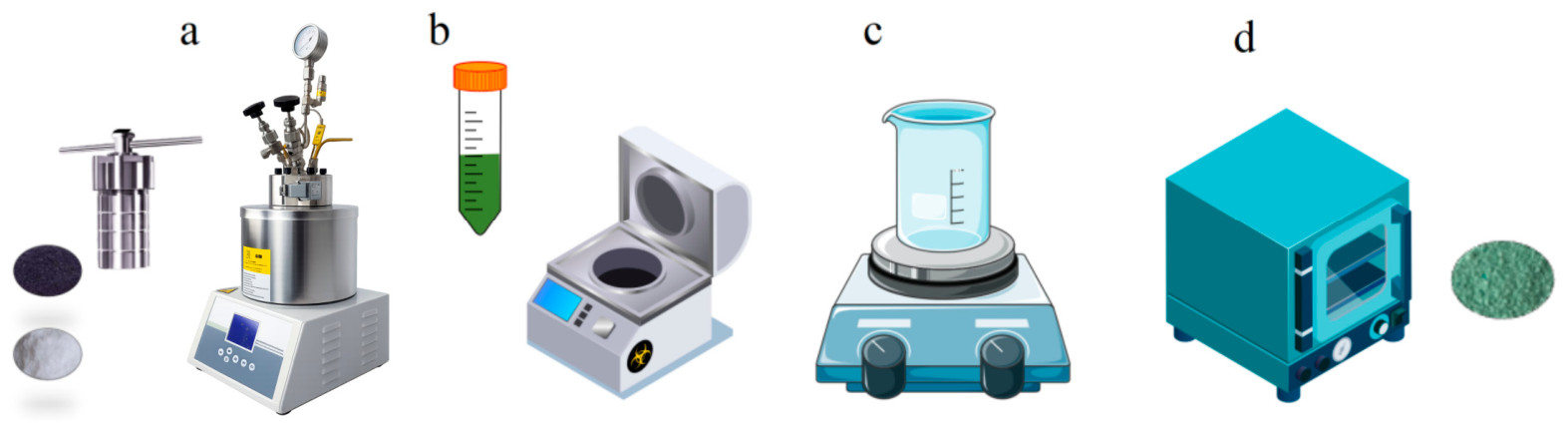
Figure 1 outlines the solvothermal synthesis of MIL-101 MOF. Chromium (III) nitrate nonahydrate (Cr(NO3)3·9H2O, 2.0 g), terephthalic acid (H2BDC, 1.0 g), and deionized water (47.4 mL) were employed as precursors for the synthesis. The reaction mixture was subjected to ultrasonic treatment for 30 min to ensure complete homogenization, subsequently transferred to a 150 mL Teflon-lined stainless-steel autoclave, and heated at a ramping rate of 3.2 °C/min to 220 °C, where it was maintained for 8 h under hydrothermal conditions. Upon completion of the reaction, the autoclave was cooled to room temperature at a controlled rate of 0.2 °C/min. The resulting solid product was collected by centrifugation at 10,000 rpm for 10 min and purified through sequential washing with dimethylformamide (DMF), ethanol, and deionized water until a colorless supernatant was obtained (typically 3–4 cycles). Finally, the purified material was activated by drying at 70 °C for 48 h to yield the activated MIL-101(Cr) framework.
To produce an efficient composite adsorbent, a chosen porous matrix is impregnated with an appropriate hygroscopic-salt solution, followed by controlled heating and drying. Therefore, selecting both the matrix and the hygroscopic salts is critical for performance and reliability.
Matrix materials should possess high pore volume and large pore diameter to host adsorbed water and facilitate salt transport. The humidifying solution uses LiCl, CaCl2, and MgCl2 for hygroscopicity, economy, and energy storage. The vermiculite composite’s superior pore volume of 1.12 cm3/g provides larger interconnected channels for water vapor transport and greater accommodation volume for adsorbed water, which directly explains its highest cooling capacity among the tested composites. Conversely, the 13X zeolite composite’s lower pore volume of 0.45 cm3/g limits mass transfer rates, contributing to its lower cooling capacity despite exhibiting the highest adsorption heat.
Table 1 presents the matrices and solutions for the composite adsorbents. Two salt solutions were strategically formulated for composite adsorbent preparation. Solution 1 comprised 10.9 wt% CaCl2, 14.8 wt% LiCl, 1.8 wt% MIL-101, and deionized water, optimized for maximum water vapor sorption capacity through synergistic hygroscopic effects. Solution 2 contained 10.2 wt% LiCl, 10.2 wt% MgCl2, 1.4 wt% MIL-101, 6.8 wt% Tween-80 emulsifier, and deionized water, designed for enhanced cycling stability and impregnation uniformity. Matrix materials were immersed in respective solutions (50 mL) at 60 °C with continuous stirring for 4 h, followed by drying at 105 °C for 12 h. Salt loading percentages were determined gravimetrically. The CaCl2-rich Solution 1 imparts superior water uptake to hydrophilic supports (coconut activated carbon, AC/diatomite, and Al2O3) via synergistic Ca2+/Li+ interactions with surface oxygen functional groups. Solution 2 incorporates Tween-80 surfactant to enhance wetting and salt dispersion on hydrophobic or layered substrates (13X zeolite, vermiculite, and tar activated carbon), thereby improving impregnation uniformity and mitigating salt aggregation during repeated adsorption–desorption cycles. This dual-formulation approach enables substrate-specific matching of salt chemistry to pore structure and surface properties, maximizing composite adsorbent performance across diverse operating conditions while balancing capacity requirements with long-term cycling stability through complementary salt confinement effects and MIL-101 porous host interactions. Six composite adsorbents were prepared: coconut activated carbon + Solution 1 (18.9% salt loading), AC/diatomite (3:1) + Solution 1 (18.7% salt loading), Al2O3 + Solution 1 (18.8% salt loading), 13X zeolite + Solution 2 (18.1% salt loading), vermiculite + Solution 2 (18.3% salt loading), and tar activated carbon + Solution 2 (18.2% salt loading), enabling systematic substrate-specific sorption performance evaluation.
To comprehensively elucidate the structure, property, and performance relationships of the developed multicomponent composite adsorbents, this study employs three synergistically integrated characterization methodologies that collectively establish a robust analytical framework. First, confocal laser scanning microscopy provides direct visualization of pore accessibility and salt distribution within the porous matrix, enabling quantitative assessment of impregnation homogeneity and microstructural integrity without destructive sample preparation. Second, simultaneous thermal analysis (STA) coupled with gravimetric sorption measurements delivers concurrent determination of adsorption capacity and thermal response characteristics under controlled temperature–humidity protocols, thereby revealing the intrinsic coupling between mass uptake and heat-flow dynamics during adsorption/desorption cycles. Third, integrated adsorption-system performance evaluation quantifies multifunctional outputs—including cooling coefficient of performance (COP), heating COP, specific power generation, and desalination yield—under realistic operating conditions, bridging material-level properties with system-level efficiency metrics. This tripartite analytical approach uniquely correlates the porous matrix structure, hygroscopic salt incorporation, and composite thermal stability with comprehensive energy-conversion performance. At the same time, we now acknowledge in the limitations section that additional material-level characterization, such as X-ray Diffraction (XRD), Brunauer–Emmett–Teller (BET) surface area/pore-size distribution, Scanning Electron Microscope/Transmission Electron Microscope (SEM/TEM), and extended thermal-stability analysis, would be valuable to further confirm salt distribution, structural retention, and long-term material robustness. We have added this point as an explicit direction for our ongoing and future work.

2.2. Experimental Setup and Procedures

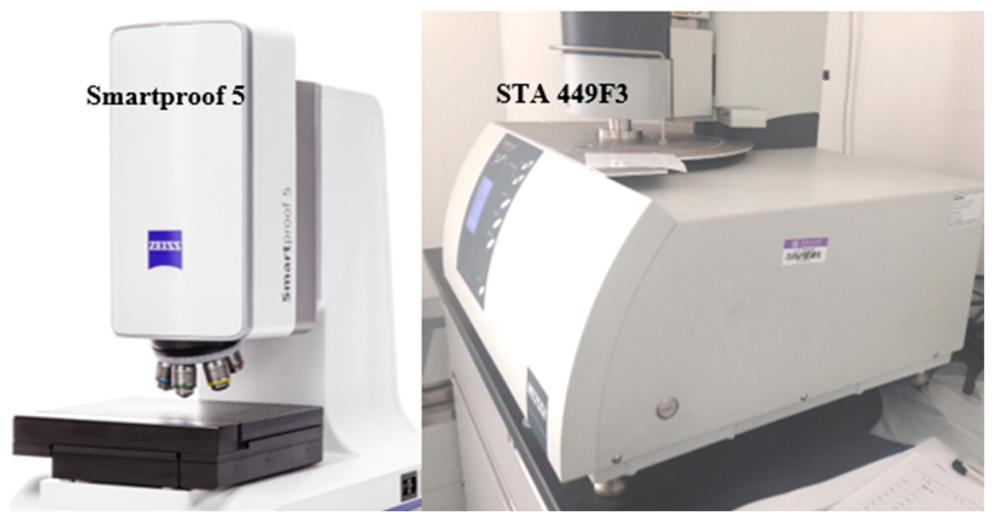
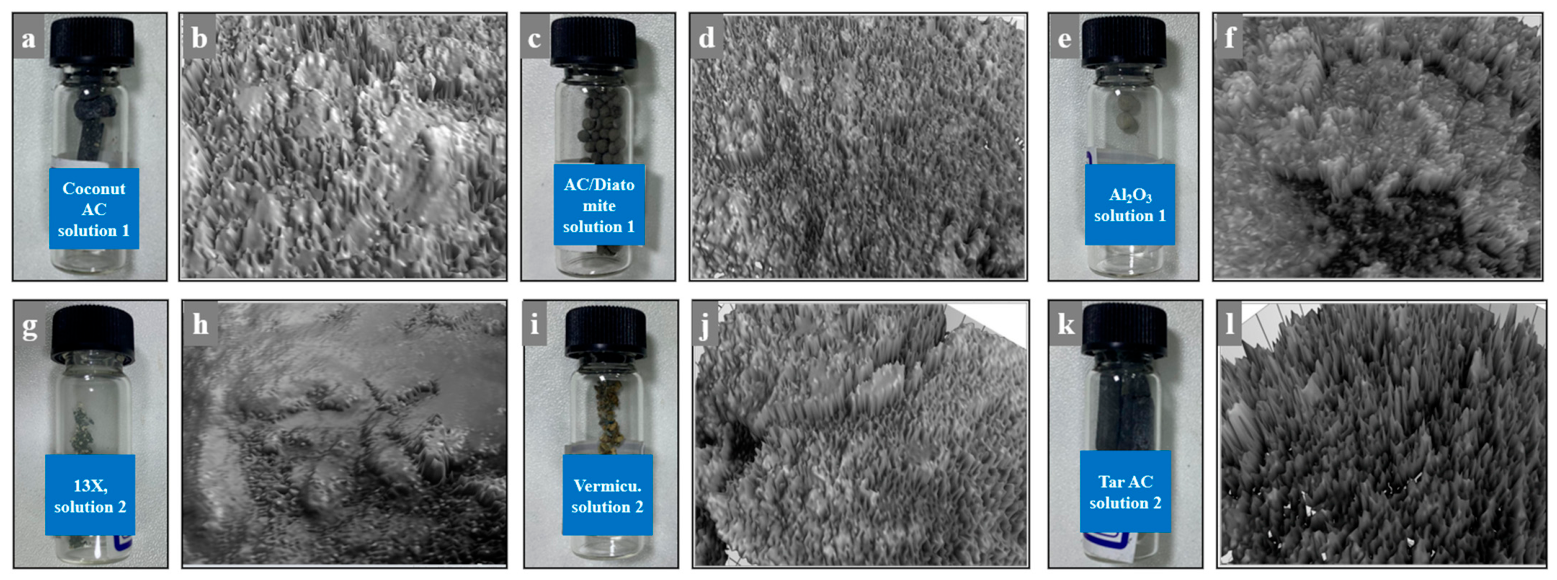
The instrument images, including the Smartproof 5 confocal microscope (Carl Zeiss Microscopy GmbH, Oberkochen, Germany), the synchronous adsorption-thermal analyzer STA 449F3 (NETZSCH-Gerätebau GmbH, Selb, Germany), and the experimental sorption cooling/heating rig employing multicomponent adsorbents, are presented in Figure 2; the corresponding photographs and confocal micrographs of the composite adsorbents are provided in Figure 3. The confocal micrographs indicate that the vermiculite-based composite and the coconut-shell activated-carbon (AC) composite exhibit a higher pore density, implying increased available volume for accommodating the water adsorbate.
Table 2 shows the design parameters for the adsorbent, adsorption bed, and evaporator–condenser unit. Cooling and heating outputs of the adsorption cycle are evaluated with the equations that follow. A new numerical framework is developed and contrasted with the prior literature to benchmark against earlier studies. The method quantifies key indicators for refrigeration, space heating, power generation, and seawater desalination within a unified set of calculations. The simulation relies on physically consistent premises, including:
(1)
Adsorbent properties are spatially uniform.
(2)
The adsorption bed and its environment are treated as adiabatic.
(3)
Pressure losses through the bed and condenser are neglected.
(4)
Pressure losses through the bed and evaporator are neglected.
(5)
Scroll expander efficiency is 0.85.
(6)
Electric generator efficiency is 0.85.
(7)
The heating loop is assumed adiabatic.
(8)
The cooling loop is assumed adiabatic.
(9)
The condenser is assumed adiabatic.
(10)
The evaporator is assumed adiabatic.

2.3. Performance Evaluation Methods

Adsorption capacity (q) can be expressed by the following relation:
q   =   W adsorbed m adsorbent
where q denotes the adsorption capacity (i.e., the mass of adsorbate retained per unit mass of adsorbent), g/g; Wadsorbed represents the mass of adsorbate taken up, g; and madsorbent corresponds to the mass of adsorbent applied, g.
The mathematical expression for adsorption cooling capacity (Qcooling) is defined as follows:
Q cooling   =   m adsorbed C p T condensation   T evaporation   +   m adsorbed h vapor
where Q cooling is the adsorption cooling capacity, kJ/kg; m adsorbed is the mass of adsorbate adsorbed, kg/kg; C p is the specific heat capacity of the adsorbate, kJ/(kg·°C); T condensation is the condensation temperature, °C; T evaporation is the evaporation temperature, °C; and h vapor is the latent heat of vaporization, kJ/kg.
The heating equation (Qheating) is expressed as follows:
Q heating   =   m bed C p , bed T desorption   T desorption   +   T desorption ,   start T desorption , end m adsorbed   C p , adsorbate dT   +   m adsorbed h desorption
where Qheating denotes the heating capacity (kJ/kg); mbed represents the bed mass (kg); Cp,bed refers to the specific heat capacity of the bed material (kJ/(kg·°C)); Tdesorption is the desorption temperature (°C); Tadsorption is the adsorption temperature (°C); Cp,adsorbate indicates the specific heat capacity of the adsorbate (kJ/(kg·°C)); madsorbed is the mass of adsorbate taken up per unit mass (kg/kg); and hdesorption corresponds to the desorption enthalpy (kJ/kg).
The cooling capacity of the circulating cooling water, denoted as Qcool,water, is expressed by the following equation:
Q cool , water   =   m bed C p , bed T desorption     T adsorption   +   T adsorption ,   start T adsorption , end m adsorbed   C p , adsorbate dT   +   m adsorbed h desorption
where (Qcool,water) denotes the cooling capacity of the cooling water, kJ/kg; (mbed) represents the bed mass, kg; (Cp,bed) is the specific heat capacity of the adsorbent bed, kJ/(kg·°C); (Tevaporation) is defined as the evaporation temperature, °C; (Tadsorption) refers to the adsorption temperature, °C; (Cp,adsorbate) indicates the specific heat capacity of the adsorbate, kJ/(kg·°C); (madsorbed) is the mass of adsorbate taken up, kg/kg; and (hdesorption) is the desorption enthalpy, kJ/kg.
The coefficient of performance (COP) for an adsorption cooling system is expressed by the following relationship:
COP   =   Q cooling Q heating
where COP denotes the performance coefficient; Qcooling represents cooling capacity (kJ/kg); and Qheating represents heating capacity (kJ/kg).
The condensation-capacity relation for Qcondensation may be written, in this study, as:
Q condensation   =   m cndensed C p T desorption     T condensation   +   m cndensed h condensation
where Q condensation is the condensation capacity, kJ/kg; m cndensed is the mass of condensate water, kg; C p is the specific heat capacity of the condensate, kJ/kg; T desorption is the desorption temperature, °C; T condensation is the condensation temperature, °C; and h condensation is the heat of condensation, kJ/kg.
The coefficient of performance for heating ( COP h ) equation in an adsorption heating system is given by:
where (Qcondensation) denotes the condensation capacity (kJ/kg); (mcndensed) represents the mass of condensed water (kg); (Cp) is the specific heat capacity of the condensate (kJ/kg); (Tdesorption) is the desorption temperature (°C); (Tcondensation) is the condensation temperature (°C); and (hcondensation) refers to the latent heat of condensation (kJ/kg).
The coefficient of performance for heating (COPh) in an adsorption-based heating system can be expressed as:
COP h   =   Q condensation   +   Q cool , water Q heating
where COPh denotes the heating coefficient of performance.
P e = φ s · φ e ( h s , in h s , out )
where Pe signifies specific power generation, expressed in kJ/kg; φs denotes the efficiency corresponding to the scroll expander; φe represents the efficiency of the electric generator; hs,in is defined as the specific enthalpy of vapor at the scroll expander inlet, with the unit of kJ/kg; and hs,out refers to the specific enthalpy of vapor at the scroll expander outlet, measured in kJ/kg.

2.4. Uncertainty Analysis

λ Q cooling = 2 σ m adsorbed m adsorbed 2 + σ T condensation T condensation 2 + σ T evaporation T evaporaiton 2 + σ C p C p 2 + σ h vapor h vapor 2
Herein, λQcooling signifies the root mean square percentage error associated with the cooling capacity.
λ Q heating = σ m bed m bed 2 + σ C p , bed C p , bed 2 + σ T desorption T desorpiton 2 + σ T adsorption T adsorpiton 2 + σ h desorption h desorption 2 + 2 σ m adsorbed m adsorbed 2 + σ C p , adsorbate C p , adsorbate 2
where λ Q heating is the root mean square percent error of heating capacity.
λ COP = σ m bed m bed 2 + σ C p , bed C p , bed 2 + σ T desorption T desorpiton 2 + σ T adsorption T adsorpiton 2 + σ h desorption h desorption 2 + σ T condensation T condensation 2 + σ T evaporation T evaporaiton 2 + σ C p C p 2 + σ h vapor h vapor 2 + 4 σ m adsorbed m adsorbed 2 + σ C p , adsorbate C p , adsorbate 2
where λCOP can be expressed as root-mean-square percentage deviation of the COP.
λ COP h = 2 σ m bed m bed 2 + 2 σ C p , bed C p , bed 2 + 2 σ T desorption T desorpiton 2 +   2 σ T adsorption T adsorpiton 2 + 2 σ h desorption h desorption 2 + 5 σ m adsorbed m adsorbed 2 + 2 σ C p , adsorbate C p , adsorbate 2 + σ h condensation h condensation 2
where λCOPh denotes the root-mean-square percentage error for the coefficient of performance (heating mode).
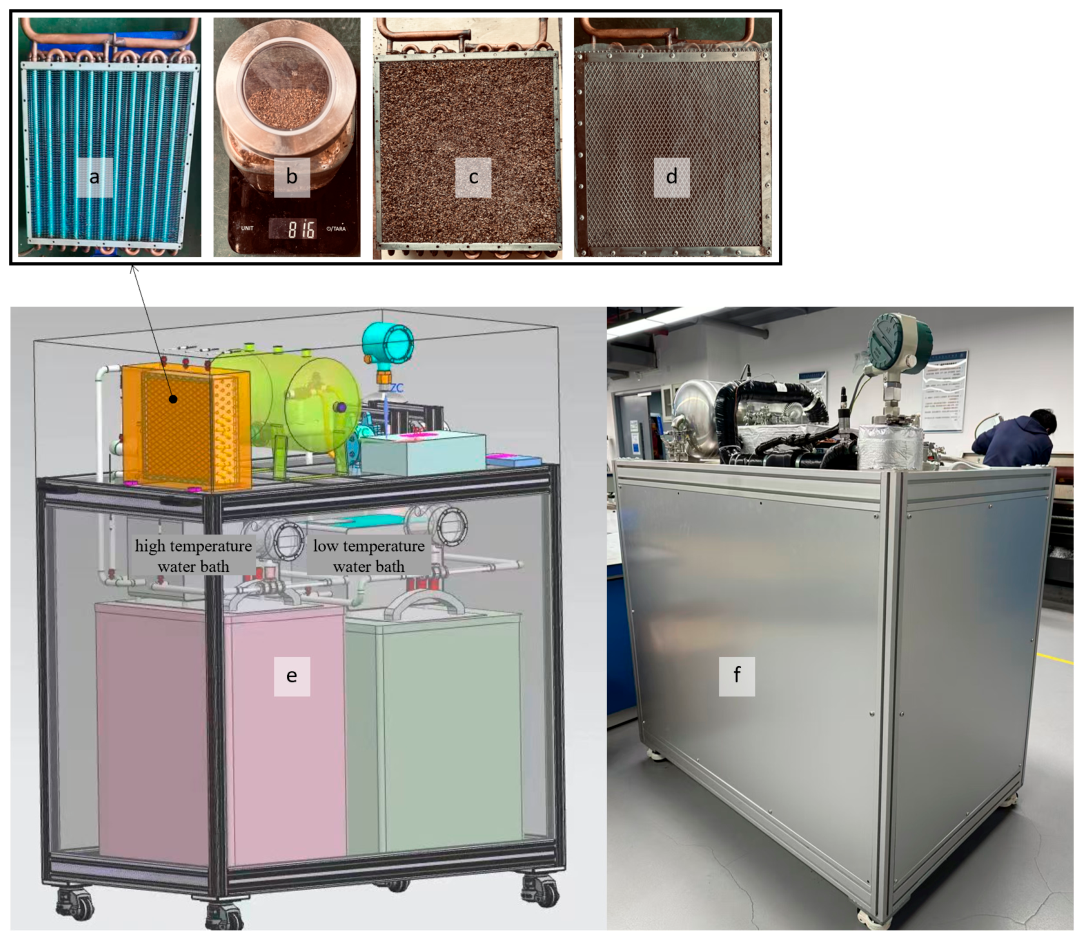
The adsorption–desorption cycles were conducted under precisely controlled isothermal conditions. Isothermal adsorption was performed for 60 min at 0.019 bar with an evaporator temperature of 16.7 °C, while isothermal desorption was conducted for 60 min at 0.0317 bar with a condenser temperature of 25 °C. The heating phase increased the bed temperature from 25 °C to 140 °C at a ramping rate of 5 °C/min, followed by a cooling phase from 140 °C to 30 °C at 2 °C/min. The design parameters for the adsorbent, adsorption bed, and evaporator–condenser unit are shown in Table 3. The experimental set-up is as shown in Figure 4.
Cycle stability tests demonstrated minimal salt leaching, with mass loss of active salts remaining below 3.1% over extended operational cycles. The incorporation of Tween-80 as an emulsifying agent enhanced salt retention through the formation of micellar structures within the porous matrix, effectively mitigating salt migration during repeated adsorption–desorption cycles. Accelerated aging tests revealed coefficient of performance (COP) degradation of less than 5.3% following prolonged cyclic operation, with the primary degradation mechanism identified as partial pore blockage attributable to salt crystallization within the adsorbent matrix. To address salt leaching concerns in future iterations, covalent bonding of salt species to matrix surfaces is proposed as a potential enhancement strategy. Thermal characterization measurements yielded an effective thermal conductivity of 0.42 W/(m·K) and an overall heat transfer coefficient of 80 W/(m2·K), indicating moderate heat and mass transfer resistances within the composite adsorbent structure. Several limitations warrant consideration for practical implementation. Scale-up challenges remain, as laboratory-scale performance metrics may not directly translate to industrial-scale systems due to differences in heat and mass transfer dynamics. Additionally, the assumption of adiabatic conditions in the present analysis represents an idealization; real-world systems experience heat losses estimated at 5–8%, which may affect overall system efficiency. These factors should be addressed in subsequent investigations to facilitate commercial deployment of the proposed adsorption system.

3. Performance Results

3.1. System Operating Characteristics and Desalination Performance Analysis

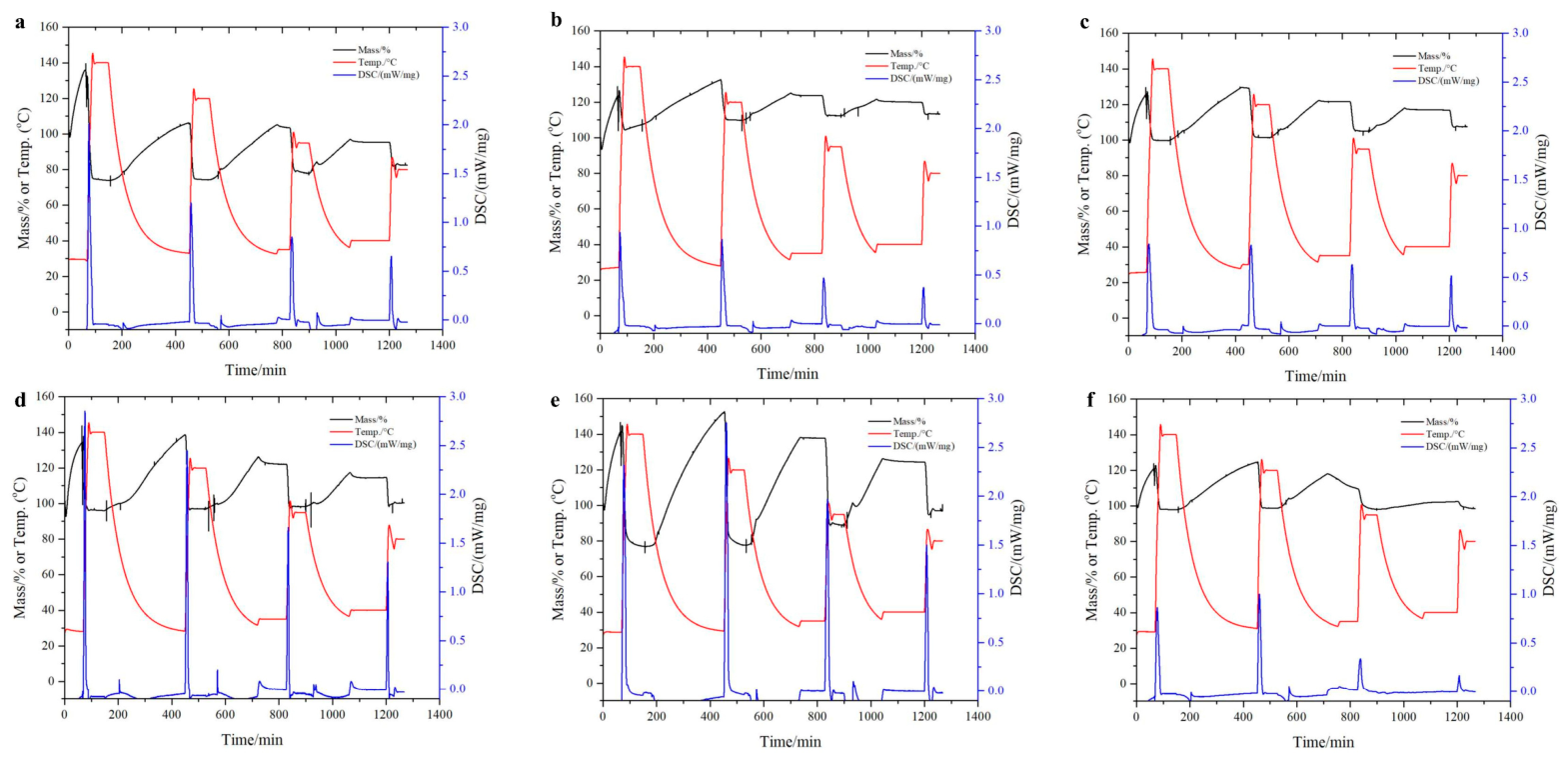
Variations in thermogravimetry, heat flux, and temperature are presented in Figure 5. This figure demonstrates that the experimental setup integrates the functionalities of a thermogravimetric analyzer and a differential scanning calorimeter into one unified system. The apparatus simultaneously detects both the mass variation and heat flux of a test sample while the sample undergoes regulated temperature adjustments. Such synchronized evaluation yields crucial insights into the thermal attributes and decomposition patterns of the material being studied.
As illustrated in Figure 5, the composite adsorbent is subjected to either heating or cooling at a steady, controlled rate, with its mass being continuously tracked throughout the process. The mass change of the sample is graphed against time, and this dataset can be utilized to calculate a range of properties, including adsorption capacity. The experimental results further indicate that the heat flux undergoes substantial fluctuations during the heating, cooling, desorption, and adsorption stages. Heat flux assessment can be conducted via diverse calorimetric instruments, differential scanning calorimeters being one typical example. Through the measurement of heat flux, the adsorption heat can be quantified.
Three key features were identified from the research results. For starters, a lower adsorption temperature corresponds to a higher adsorption capacity. Secondly, distinct discrepancies exist in adsorption performance and adsorption heat between different composite adsorbents. Specifically, when the adsorption temperature is 30 °C and the vapor pressure is 0.019 bar, the adsorption desalination capacity of the vermiculite composite adsorbent can attain 0.706 g/g, which exceeds silica-gel-based systems (typically 0.15–0.35 g/g) by approximately 2–4 times, and outperforms conventional MOF-based adsorbents such as MOF-801 (approximately 0.35–0.45 g/g). Among all tested adsorbents, the 13X composite adsorbent possesses the highest adsorption heat, reaching 2648 kJ/kg, with the activated carbon/diatomite composite adsorbent ranking second at 2392 kJ/kg. Thirdly, Figure 5 also distinctly displays the thermodynamic behaviors of the composite adsorbent. As shown in the figure, the desorption rate of the adsorbent is remarkably affected by the adsorption rate.

3.2. Adsorption Cooling Performance Analysis

The adsorption cooling system operates through two principal endothermic processes. During evaporation, water undergoes phase change in the evaporator, absorbing heat from the cooled space with an enthalpy of vaporization of 2442 kJ/kg at 15 °C. The total heat absorbed is determined by the product of adsorbed water mass and the enthalpy of vaporization. The desorption process requires thermal energy input to release adsorbed water from the adsorbent matrix, characterized by a desorption enthalpy of 2890 kJ/kg as measured by differential scanning calorimetry. The total heat input is calculated by multiplying the adsorbed water mass by the desorption enthalpy. A complete energy balance for the vermiculite composite system accounts for energy inputs comprising desorption heat, sensible heating of the bed and adsorbent, and evaporation heat, while energy outputs include adsorption heat, condensation heat, and sensible cooling of the bed and adsorbent. This comprehensive energy accounting ensures accurate determination of system coefficient of performance and thermal efficiency.
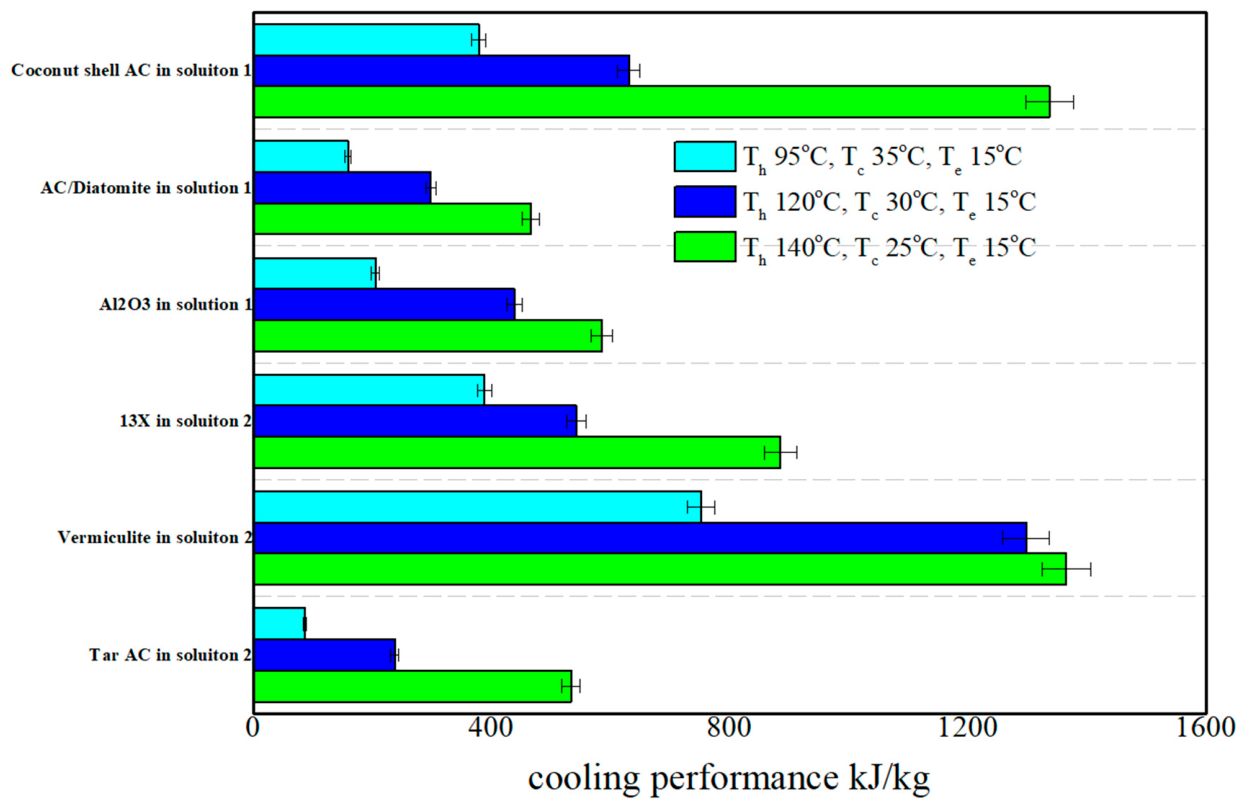
Figure 6 presents the adsorption cooling capacity of the composite adsorbents. Adsorption refrigeration is a heat-driven cooling approach in which thermal energy activates an adsorption–desorption cycle to extract heat from a target space or system. The working mechanism relies on adsorption: an adsorbent solid preferentially accommodates and retains vapor molecules on its surface and within its porous structure. In the present adsorption cooling system, the applied sorbents are composite adsorbents. The data indicate that cooling capacity increases with desorption temperature, since a higher desorption temperature releases a larger amount of adsorbate. Furthermore, the vermiculite-based composite exhibits the greatest cooling capacity among the investigated composites, which can be attributed to vermiculite providing the largest pore volume. For the vermiculite composite adsorbent, the cooling capacity reaches 1365 kJ/kg when the heat source temperature, condensation temperature and the evaporation temperature is 140 °C, 25 °C and 15 °C. In contrast, the cooling capacity decreases to 752 kJ/kg when the heat source temperature, condensation temperature and the evaporation temperature is 95 °C, 35 °C and 15 °C. Relative to vermiculite, the activated carbon/diatomite composite adsorbent and the tar activated carbon composite adsorbent deliver comparatively lower cooling capacities within this set. Figure 6 also evidences that variations in heat source temperature markedly affect refrigeration performance. With increasing desorption temperature, desorption becomes more complete, thereby enhancing the system refrigeration power.
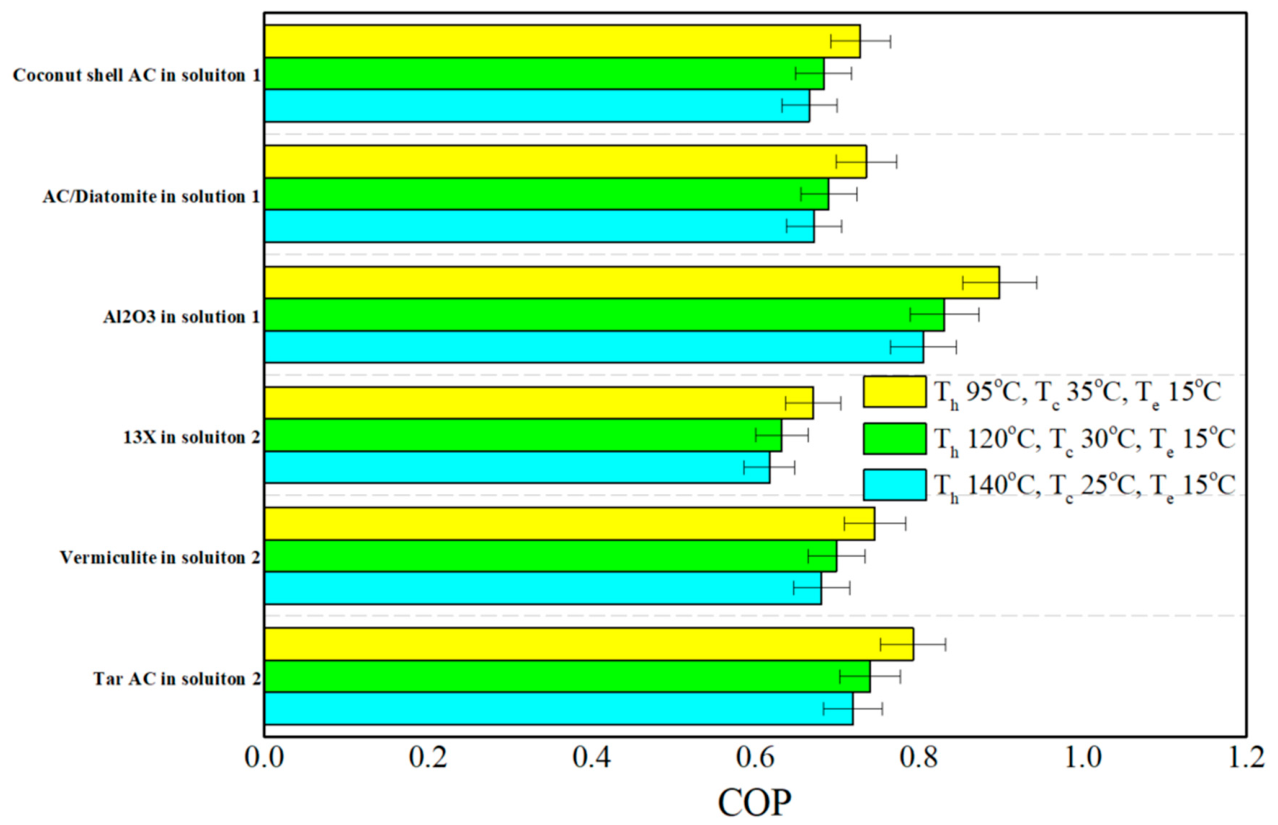
Figure 7 shows the variation in coefficient of performance (COP) for the composite adsorbents. COP is a standard indicator describing the energetic efficiency of cooling or heating devices. For adsorption cooling, COP is defined as the ratio between the produced cooling effect and the supplied energy input. The results indicate that the COP of Al2O3 composite adsorbent and 13X composite adsorbent are 0.81 and 0.62 when the heat source temperature, condensation temperature and the evaporation temperature is 140 °C, 25 °C and 15 °C, which represents a significant improvement over conventional single-salt adsorbent systems and approaches the performance of advanced multi-bed configurations. In general, COP in adsorption refrigeration depends on operating conditions, including heating temperature, evaporation temperature, and the thermodynamic/kinetic matching of the adsorbent–refrigerant pair. A larger COP therefore signifies higher efficiency, meaning more cooling output is obtained per unit of input energy. Nevertheless, when the desorption temperature approaches its maximum, the system COP declines. This reduction arises because elevating desorption temperature typically requires additional heat input, which offsets efficiency gains and ultimately hinders achieving a higher COP.
The textural characteristics of the composite adsorbents were analyzed using N2 adsorption–desorption isotherms at 77 K, with pore size distributions calculated via the Barrett–Joyner–Halenda (BJH) method from the desorption branch. Among the six composites examined, the coconut activated carbon (AC) composite exhibited the highest specific surface area (1245 m2/g), followed by vermiculite (1089 m2/g) and tar AC (934 m2/g) composites. The vermiculite composite demonstrated the largest pore volume (1.12 cm3/g) and average pore size (4.10 nm), while the 13X zeolite composite showed the lowest pore volume (0.45 cm3/g) and the Al2O3 composite exhibited the largest average pore size (7.50 nm). Linear regression analysis revealed strong correlations between structural parameters (pore volume and surface area) and system performance (cooling capacity and COP). Notably, the vermiculite composite’s superior pore volume (1.12 cm3/g) corresponded to the highest cooling capacity (1365 kJ/kg), confirming the critical role of pore structure in determining adsorption performance.

3.3. Adsorption Heat-Pump Heating Performance Analysis

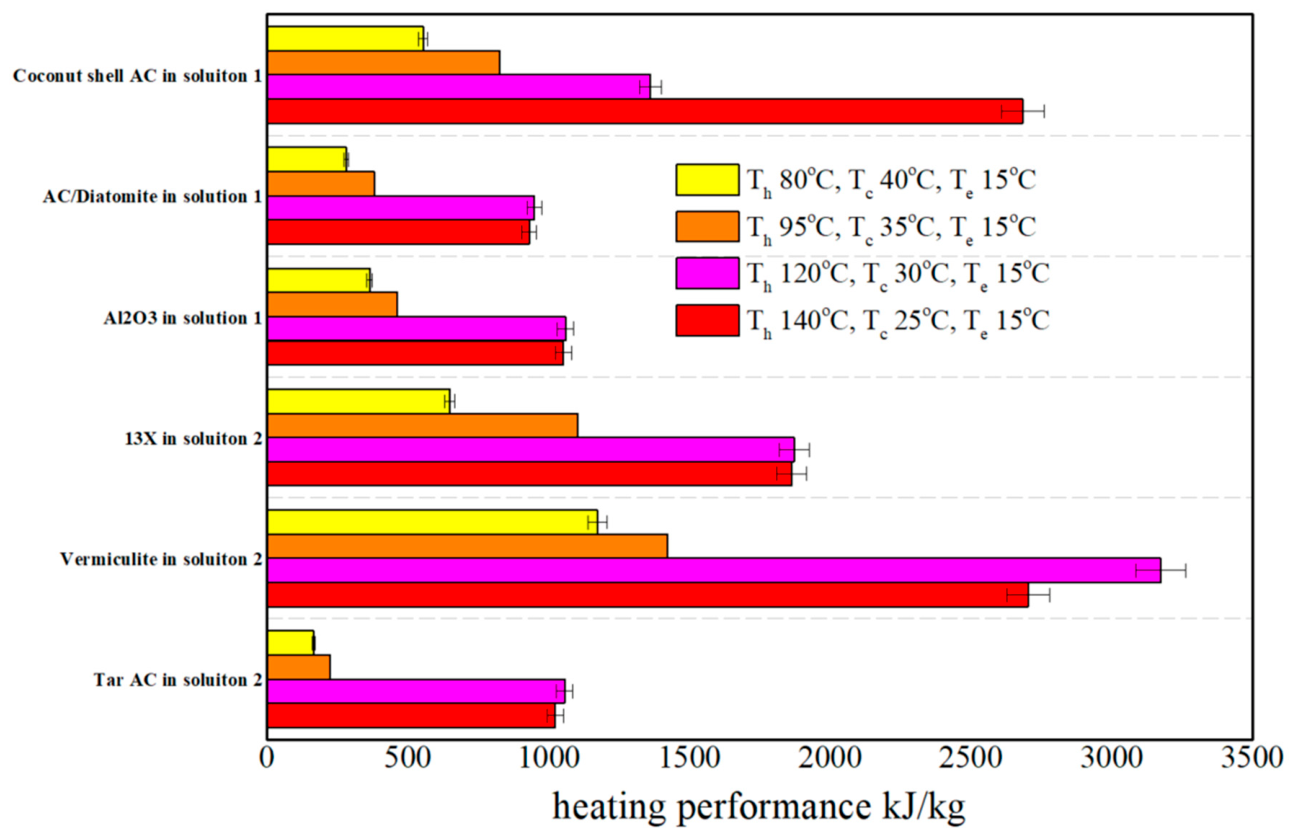
The heating performance of the adsorption heat pump is illustrated in Figure 8. In an adsorption heat-pump cycle, the adsorption-driven mass transfer is utilized to upgrade thermal energy, i.e., to convey heat from a low-temperature heat source to a higher-temperature heat sink. This operating logic is comparable to adsorption cooling but with the functional objective inverted: the system is designed to deliver heating rather than cooling. The cycle consists of alternating adsorption and desorption stages. During adsorption, the adsorbent uptakes water refrigerant vapor and releases the corresponding adsorption heat. Subsequently, heat input is applied to trigger desorption, producing high-pressure vapor that is condensed; the condensation process releases additional heat that can be recovered for heating purposes. Because the thermodynamic driving force and uptake capacity depend on boundary temperatures, the heating output of different composite adsorbents changes under different working conditionings. For the vermiculite composite adsorbent, the heating performance can reach 3175 kJ/kg when the heating temperature, condensation temperature and evaporation temperature are 120 °C, 30 °C and 15 °C, respectively, reflecting its relatively strong adsorption behavior under this working conditioning. In contrast, the heating performance of the vermiculite composite adsorbent can reach 1173 kJ/kg when the heating temperature, condensation temperature and evaporation temperature are 80 °C, 40 °C and 15 °C. Among the evaluated composites, the Al2O3 composite adsorbent, activated carbon/diatomite composite adsorbent, and tar activated carbon composite adsorbent exhibit comparatively lower heating performance. As indicated in Figure 8, the specific heating capacity is markedly higher than the specific cooling capacity, which is mainly because the heating process can harness not only adsorption heat but also recoverable condensation heat.
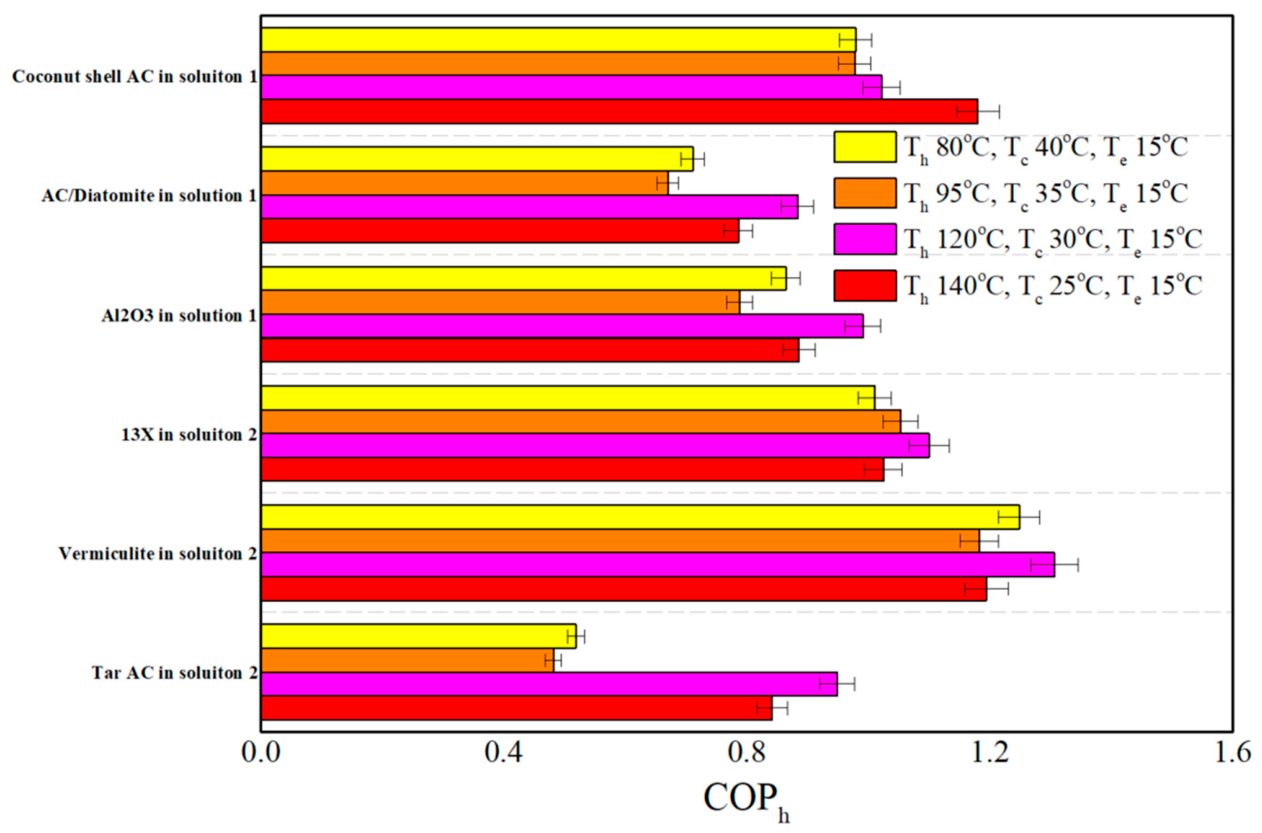
The coefficient of performance for heating (COPh) is provided in Figure 9 and is commonly used to characterize the efficiency of a heat pump in heating mode. COPh is defined as the ratio of useful heating output to the energy input required to achieve that output. Analogous to COP in cooling systems, a larger COPh implies greater heating efficiency, meaning more delivered heat per unit of input energy. In practice, the COPh of composite adsorbents varies with the working conditioning. Under the condition where the heating temperature, condensation temperature and the evaporation temperature are 120 °C, 30 °C and 15 °C, the COPh values of the vermiculite composite adsorbent and 13X composite adsorbent are 1.31 and 1.10, which are notably higher than the cooling COP because the heating process harnesses both adsorption heat and recoverable condensation heat. The COPh of an adsorption heat pump is influenced by the specific operating conditions and by the performance of the adsorbent–refrigerant working pairs. By comparing Figure 6, Figure 7, Figure 8 and Figure 9, it can be seen that the ordering of COP and COPh across different composite adsorbents is not identical; materials that exhibit higher COP may present lower COPh. This inconsistency arises because COPh depends on the combined effects of adsorption and desorption heats as well as the condensation heat contribution, whereas COP is associated only with the latent heat of evaporation and the desorption heat.
When assessing the results of this study, it is necessary to explicitly consider the assumptions and methodological limitations embedded in the experimental design. First, the analysis adopts the assumption that power is generated exclusively by the scroll expander, which may influence the generalizability of the conclusions. Moreover, the experimental setup is subject to practical constraints such as the placement and measurement accuracy of the thermometer and flowmeter, which introduce uncertainty into derived performance indicators. The uncertainties associated with COP and COPh are 2.1% and 2.7%, respectively. To mitigate these effects, careful calibration of measuring instruments was performed, insulation was implemented to reduce heat losses, and appropriate thermometer types, flow sensors, and installation locations were selected.

4. Discussion

4.1. Comparative Assessment of Cooling, Heating, Desalination and Power-Generation Performance Relative to Earlier Studies

Table 4 presents a systematic benchmark comparing the present system performance against representative prior studies in adsorption-driven multigeneration systems, including the performance comparison of cooling, heating, desalination, and power generation. The proposed architecture uniquely integrates four coupled functionalities within a single thermodynamic cycle: refrigeration, space heating, electrical power generation, and seawater desalination. During the desorption phase, released vapor is directed through a scroll expander, thereby converting thermal energy into useful electricity—a capability absent in most preceding investigations, which typically delivered only partial functionality. Experimental characterization yielded a cooling coefficient of performance (COP) of 0.71, which exceeds silica gel/water systems (COP of 0.30–0.45) and a heating coefficient of performance (COPh) of 1.31, surpassing previously reported values for conventional adsorbents and demonstrating enhanced overall thermodynamic efficiency. The vermiculite-based composite adsorbent achieved a specific water production capacity of 0.71 g/g, while the system attained a specific power generation output of 27.2 kJ/kg. Comparative analysis reveals that the multicomponent composite adsorbent developed herein exhibits markedly superior performance relative to conventional pure metal–organic framework (MOF)-based adsorbents. This enhancement is attributed to synergistic effects arising from the multiphase composite structure, which simultaneously optimizes adsorption capacity, thermal conductivity, and mass transfer characteristics. These findings substantiate the practical viability of integrated multigeneration adsorption systems for efficient utilization of low-grade waste heat, offering a promising pathway toward sustainable energy conversion with diversified output streams.

4.2. Calculation Assumptions and Limitations & Stability and Durability

All performance metrics were evaluated with propagated uncertainties quantified following Equations (9)–(12). The thermodynamic calculation incorporates several simplifying assumptions with quantified impacts on performance metrics. The adsorption bed was treated as adiabatic, though experimental measurements indicate heat losses through 50 mm glass wool insulation (thermal conductivity: 0.04 W/(m·K)) of 5.0–8.0% during high-temperature desorption (140 °C) and 2.0–3.0% during low-temperature adsorption (30 °C), potentially overestimating COP by 2.9–4.1% and heating capacity by 4.3–5.4%. Pressure losses through system components were neglected; however, Ergun equation calculations and inlet/outlet pressure measurements revealed bed pressure drops of 0.002–0.005 bar (adsorption), condenser drops of 0.001–0.002 bar, and evaporator drops of 0.001–0.003 bar, reducing mass transfer rates by 2.1–4.2% and increasing cycle time by 3.2–5.3%, with minimal COP impact (<2.0%) given operating pressures of 0.019–0.074 bar. As all composite materials were tested under identical conditions, relative performance rankings remain valid. To ensure data reliability and statistical robustness, each test condition was repeated 15 times under identical operating parameters, with all data presented as mean ± standard deviation. The reproducibility of experimental measurements was further validated through Root Mean Square Percentage Error (RMSPE) analysis. The RMSPE values for cooling capacity, heating capacity, cooling COP, and heating COP were 2.8%, 3.1%, 2.1%, and 2.7%, respectively, denoted as λ Q heating , λ Q heating , λ COP , and λ COP h . These low RMSPE values, combined with the consistent standard deviations across replicate measurements, demonstrate excellent experimental reproducibility and confirm the reliability of the reported performance indicators. The statistical treatment of experimental data follows established guidelines for adsorption system characterization, ensuring methodological rigor and result credibility.

4.3. Economic Feasibility

A preliminary techno-economic analysis was conducted for a system with defined cooling capacity. The capital cost breakdown comprised adsorbent material (850$), heat exchangers (2400$), vacuum chamber (1800$), control system (950$), and installation (600$), yielding a total capital investment of 6600$. Annual operating costs included electricity for pumps and controls (180$) and maintenance (120$), totaling 300$ per year, with waste heat assumed as a free thermal source. Comparative analysis with conventional vapor compression chillers (capital cost: 4000$; annual operating cost: 850$ for electricity) indicated a payback period of 3.2 years. Scalability assessment addressed the transition from laboratory to commercial scale, identifying the primary challenges: lower MOFs price reduction, enhanced thermal conductivity requirements for larger beds, increased pressure drop with bed thickness, and maintained salt distribution uniformity at expanded scales. Potential applications encompass industrial waste heat recovery, solar–powered building cooling, remote area cooling integrated with desalination, and data center cooling coupled with power generation. The estimated market size is projected to reach $ 2.8 billion by 2030.

5. Conclusions

To improve the effectiveness of adsorption-based cooling and heating, six composite adsorbents were prepared. By introducing LiCl, CaCl2, MgCl2, MIL101, and an emulsifier into the salt solution, the composites were designed to increase adsorption capacity while strengthening adsorption-related heat and mass transfer. Overall, the results support two main conclusions. First, adsorption capacity increases as the adsorption temperature decreases. Second, different composite adsorbents exhibit clear differences in both adsorption performance and adsorption heat. For instance, at an adsorption temperature of 30 °C and a vapor pressure of 0.019 bar, the vermiculite composite adsorbent achieves an adsorption desalination capacity of 0.706 g/g, exceeding the vast majority of values reported in earlier studies.
Moreover, the adsorption system proposed in this paper not only provides cooling and heating but also enables desalination and power generation. This multifunctional integration enhances overall system performance and represents a notable difference from other systems discussed in this study.
With respect to adsorption cooling capacity, the cooling output increases with increasing desorption temperature. Among the composites, the vermiculite composite adsorbent performs best, attributable to its superior pore volume. Under operating conditions where the heat source temperature, condensation temperature, and evaporation temperature are 140 °C, 25 °C, and 15 °C, respectively, the cooling capacity of the vermiculite composite adsorbent reaches 1365 kJ/kg. The coefficient of performance (COP) is a critical efficiency metric for cooling systems. Under the same conditions (140 °C, 25 °C, and 15 °C), the COP of vermiculite composites system is 0.71. In addition, the heating performance of composite adsorbents varies across working conditions. For example, the vermiculite composite adsorbent provides a heating performance of 3175 kJ/kg under 120 °C heating temperature, 30 °C condensation temperature, and 15 °C evaporation temperature, which is consistent with its stronger adsorption behavior under this operating scenario. The coefficient of performance for heating (COPh) values of the vermiculite composite adsorbent is 1.31 when the heating temperature, condensation temperature, and evaporation temperature are 120 °C, 30 °C, and 15 °C, respectively.

Funding

The National Natural Science Project (52271323), China Higher Education Society Higher Education Scientific Research Planning Project (23SYS0104), Shanghai Jiao Tong University Decision Consulting (JCZXSJB2025-09), Shanghai Jiao Tong University Innovation and Entrepreneurship Special Fund, responsible person, construction of innovation and entrepreneurship talent training system, (CTLD25J 0028), Natural Science Foundation of Chongqing, China (cstc2021jcyj-msxmX1092), Ministry of Education Industry-University Cooperation Collaborative Education (220606517274858), Deep Blue Plan Project, (SL2022PT206), Key Projects In Teaching Research and Practice Of Energy And Power In Higher Education Institutions (NDJZW2021Z-21), Shanghai Jiao Tong University Overseas Student Research Practice Base, PRP Projects.

Institutional Review Board Statement

Not applicable.

Informed Consent Statement

Not applicable.

Data Availability Statement

All data supporting the findings of this study are included within the article. No additional datasets were generated or analyzed during this research. Therefore, no external data sharing is applicable.

Acknowledgments

Thanks to software of Simdroid 6.0, Weili Luo, Xia Ke, and Aifeng Cai for the test and experiment setup archers.

Conflicts of Interest

The author declares no conflict of interest.

References

  1. Sha, A.A.; Baiju, V.; Rehna, R.S.; Suzuki, T.; Singh, H.; Ichiyanagi, M. Performance investigations of carbon based consolidated composite adsorbents effective for adsorption cooling systems. Appl. Therm. Eng. 2022, 217, 119199. [Google Scholar] [CrossRef] [Scilit]
  2. El-Sharkawy, I.I.; Abdel Meguid, H.; Saha, B.B. Potential application of solar powered adsorption cooling systems in the Middle East. Appl. Energy 2014, 126, 235–245. [Google Scholar] [CrossRef] [Scilit]
  3. Calm, J.M. Emissions and environmental impacts from air-conditioning and cooling systems. Int. J. Refrig. 2002, 25, 293–305. [Google Scholar] [CrossRef] [Scilit]
  4. Rezk, M.; Elsheniti, M.B.; Rezk, A.; Elsamni, O.A. Multi-objective optimisation of MOF-801 adsorbent packed into copper foamed bed for cooling and water desalination systems. Appl. Therm. Eng. 2023, 229, 120642. [Google Scholar] [CrossRef] [Scilit]
  5. Chumnanwat, S.; Ota, S.; Nishizawa, J.; Sonthichai, C.; Takiguchi, N.; Kodama, A.; Kumita, M. Formation of adsorbent thin layer on aluminum sheet by using a silane coupling agent for vapor adsorption cooling system. Int. J. Refrig. 2023, 146, 40–46. [Google Scholar]
  6. Banda, H.; Rezk, A.; Elsayed, E.; Askalany, A. Experimental and computational study on utilising graphene oxide for adsorption cooling and water desalination. Appl. Therm. Eng. 2023, 229, 120631. [Google Scholar] [CrossRef] [Scilit]
  7. Albaik, I.; Diab, K.E.; Saleh, M.; Al-Dadah, R.; Mahmoud, S.; Elsheniti, M.B.; Solmaz, İ.; Salama, E.; Hassan, H.S.; Elkadi, M.F. MOF based coated adsorption system for water desalination and cooling integrated with pre-treatment unit. Sustain. Energy Technol. Assess. 2023, 56, 103006. [Google Scholar] [CrossRef] [Scilit]
  8. Zhao, H.; Wang, Q.; Xi, Z.; Liu, C.; Miao, C. Experimental investigation on water vapor adsorption performance of solvent-free synthesized MIL-100(Fe) and its composite adsorbent. J. Solid State Chem. 2023, 324, 124135. [Google Scholar] [CrossRef] [Scilit]
  9. Aboelmaaref, M.M.; Zhao, J.; Li, W.; Ali, E.S.; Askalany, A.A.; Ghazy, M.; Gu, L.; Zayed, M.E. Research on solar dish/Stirling engine driven adsorption-based desalination system for simultaneous co-generation of electricity and freshwater: Numerical investigation. Case Stud. Therm. Eng. 2023, 47, 103044. [Google Scholar]
  10. Yang, H.; Wang, C.; Tong, L.; Yin, S.; Wang, L.; Ding, Y. Salt hydrate adsorption material-based thermochemical energy storage for space heating application: A review. Energies 2023, 16, 2875. [Google Scholar] [CrossRef] [Scilit]
  11. Fan, Y.B.; Jiang, L.; Zhang, X.J.; Xu, X.G.; Frazzica, A. Heat pump assisted open three-phase sorption thermal battery for efficient heat storage. Energy Convers. Manag. 2023, 277, 116630. [Google Scholar] [CrossRef] [Scilit]
  12. Li, M.; Zhao, Y.; Long, R.; Liu, Z.; Liu, W. Metal foam packed adsorbent bed boosting the performance of the adsorption-based desalination and cooling system. Energy Convers. Manag. 2022, 254, 115250. [Google Scholar] [CrossRef] [Scilit]
  13. Lu, Z.S.; Hou, Y.; Han, Y. Engineering design, test analysis, and exergy calculation of multifunctional adsorption systems using chemical adsorbent and different thermal transfer fluids. J. Energy Storage 2021, 44, 103412. [Google Scholar] [CrossRef] [Scilit]
  14. Chauhan, X.P.R.; Kaushik, S.C.; Tyagi, S.K. A review on thermal performance enhancement of green cooling system using different adsorbent/refrigerant pairs. Energy Convers. Manag. 2022, 14, 100225. [Google Scholar] [CrossRef] [Scilit]
  15. Chao, J.; Xu, J.; Bai, Z.; Wang, P.; Wang, R.; Li, T. Integrated heat and cold storage enabled by high-energy-density sorption thermal battery based on zeolite/MgCl2 composite sorbent. J. Energy Storage 2023, 64, 107155. [Google Scholar] [CrossRef] [Scilit]
  16. Shi, R.; Yu, Y.X. Effective and green treatment of cyanide-containing wastewater over two-dimensional conjugated metal-organic frameworks: A combined density functional theory and descriptor study. Langmuir 2025, 41, 15031–15044. [Google Scholar] [CrossRef] [Scilit]
  17. Li, M.; Wang, R.Z.; Luo, H.L.; Wang, L.L.; Huang, H.B. Experiments of a solar flat plate hybrid system with heating and cooling. Appl. Therm. Eng. 2002, 22, 1445–1454. [Google Scholar] [CrossRef] [Scilit]
  18. Chang, W.S.; Wang, C.C.; Shieh, C.C. Design and performance of a solar-powered heating and cooling system using silica gel/water adsorption chiller. Appl. Therm. Eng. 2009, 29, 2100–2105. [Google Scholar] [CrossRef] [Scilit]
  19. Habib, K.; Saha, B.B.; Chakraborty, A.; Oh, S.T.; Koyama, S. Study on solar driven combined adsorption refrigeration cycles in tropical climate. Appl. Therm. Eng. 2013, 50, 1582–1589. [Google Scholar] [CrossRef] [Scilit]
  20. Jahan, I.; Rocky, K.A.; Pal, A.; Rahman, M.; Saha, B.B. A study on activated carbon and carbon nanotube based consolidated composite adsorbents for cooling applications. Therm. Sci. Eng. Prog. 2022, 34, 101388. [Google Scholar] [CrossRef] [Scilit]
  21. Pal, A.; Rocky, K.A.; Saha, B.B. Thermodynamic analysis of promising biomass-derived activated carbons/CO2 based adsorption cooling systems. J. CO2 Util. 2021, 46, 101457. [Google Scholar] [CrossRef] [Scilit]
  22. Ye, H.; Yuan, Z.; Li, S.; Zhang, L. Activated carbon fiber cloth and CaCl2 composite sorbents for a water vapor sorption cooling system. Appl. Therm. Eng. 2014, 62, 690–696. [Google Scholar] [CrossRef] [Scilit]
  23. Aristov, Y.I.; Sapienza, A.; Ovoshchnikov, D.S.; Freni, A.; Restuccia, G. Reallocation of adsorption and desorption times for optimisation of cooling cycles. Int. J. Refrig. 2012, 35, 525–531. [Google Scholar] [CrossRef] [Scilit]
  24. Xu, Q.; Wu, J.; Xu, Z. Performance study of adsorption refrigeration system with composite adsorbent. Int. J. Refrig. 2021, 131, 322–331. [Google Scholar] [CrossRef] [Scilit]
  25. Chan, K.C.; Chao, C.Y.H.; Sze-To, G.N.; Hui, K. Performance predictions for a new zeolite 13X/CaCl2 composite adsorbent for adsorption cooling systems. Int. J. Heat Mass Transf. 2012, 55, 3214–3224. [Google Scholar] [CrossRef] [Scilit]
  26. Elsayed, E.; Anderson, P.; Raya, A.L.D.; Mahmoud, S.; Elsayed, A. MIL-101 (Cr)/calcium chloride composites for enhanced adsorption cooling and water desalination. J. Solid State Chem. 2019, 277, 123–132. [Google Scholar] [CrossRef] [Scilit]
  27. Xia, X.; Liu, B.; Zhao, B.; Xia, Z.; Li, S. Enhanced water adsorption of MIL-101 (Cr) by metal-organic polyhedral encapsulation for adsorption cooling. Nanomaterials 2023, 13, 1147. [Google Scholar] [CrossRef] [Scilit] [PubMed]
  28. Tso, C.Y.; Chao, C.Y.H. Activated carbon, silica-gel and calcium chloride composite adsorbents for energy efficient solar adsorption cooling and dehumidification systems. Int. J. Refrig. 2012, 35, 1626–1638. [Google Scholar] [CrossRef] [Scilit]
  29. Liu, Z.; Xu, M.; Huang, C.; Huai, X. Performance evaluation of silicoaluminophosphate with SFO topology for water-sorption-driven heating and cooling systems. Appl. Therm. Eng. 2022, 216, 119100. [Google Scholar] [CrossRef] [Scilit]
  30. Pal, A.; El-Sharkawy, I.I.; Saha, B.B.; Jribi, S.; Miyazaki, T.; Koyama, S. Experimental investigation of CO2 adsorption onto a carbon based consolidated composite adsorbent for adsorption cooling application. Appl. Therm. Eng. 2016, 109, 304–311. [Google Scholar] [CrossRef] [Scilit]
  31. He, X.; Wei, R.; Jan, A.; Li, G.; Chen, T.; Xue, B. Process steam generation from low-grade waste heat in a direct-contact adsorption heat pump based on superhydrophobic surface-modified zeolite 13X. Energy Sources Part A 2023, 45, 9910–9927. [Google Scholar] [CrossRef] [Scilit]
  32. Baiju, V.; Abhishek, P.; Harikrishnan, S. Performance investigations of hybrid adsorption and thermo electric dehumidification desalination system. Energy Convers. Manag. 2024, 300, 117912. [Google Scholar] [CrossRef] [Scilit]
  33. Youssef, P.G.; Dakkama, H.; Mahmood, S.M.; Al-Dadah, R.K. Experimental investigation of adsorption water desalination/cooling system using CPO-27Ni MOF. Desalination 2017, 404, 192–199. [Google Scholar] [CrossRef] [Scilit]
  34. Alsaman, A.S.; Ahmed, M.S.; Ibrahim, E.M.M.; Ali, E.S.; Farid, A.M.; Askalany, A.A. Experimental investigation of porous carbon for cooling and desalination applications. npj Clean Water 2023, 6, 4. [Google Scholar] [CrossRef] [Scilit]
  35. Elsayed, E.; Raya, A.D.; Mahmoud, S.; Anderson, P.; Elsayed, A. Adsorption cooling system employing novel MIL-101 (Cr)/CaCl2 composites: Numerical study. Int. J. Refrig. 2019, 107, 246–261. [Google Scholar] [CrossRef] [Scilit]
  36. Lenzen, D.; Zhao, J.; Ernst, S.J.; Wahiduzzaman, M.; Inge, A.K.; Fröhlich, D.; Xu, H.; Bart, H.-J.; Janiak, C.; Henninger, S.; et al. A metal-organic framework for efficient water-based ultra-low-temperature-driven cooling. Nat. Commun. 2019, 10, 3025. [Google Scholar] [CrossRef] [Scilit]
  37. Mahesh, A.; Kaushik, S.C. Solar adsorption refrigeration system using different mass of adsorbents. J. Therm. Anal. Calorim. 2013, 111, 897–903. [Google Scholar] [CrossRef] [Scilit]
  38. Jribi, S.; Saha, B.B.; Koyama, S.; Bentaher, H. Modeling and simulation of an activated carbon-CO2 four bed based adsorption cooling system. Energy Convers. Manag. 2014, 78, 985–991. [Google Scholar] [CrossRef] [Scilit]
  39. El-Sharkawy, I.I.; Saha, B.B.; Koyama, S.; He, J.; Ng, K.; Yap, C. Experimental investigation on activated carbon-ethanol pair for solar powered adsorption cooling applications. Int. J. Refrig. 2008, 31, 1407–1413. [Google Scholar] [CrossRef] [Scilit]
  40. Banker, N.D.; Prasad, M.; Dutta, P.; Srinivasan, K. Experimental results of an activated carbon-HFC 134a adsorption cooling system for thermal management of electronics. Appl. Therm. Eng. 2011, 31, 1607–1612. [Google Scholar] [CrossRef] [Scilit]
  41. Saha, B.B.; Chakraborty, A.; Koyama, S.; Aristov, Y.I. A new generation cooling device employing CaCl2-in-silica gel-water system. Int. J. Heat Mass Transf. 2009, 52, 516–524. [Google Scholar] [CrossRef] [Scilit]
  42. Thu, K.; Kim, Y.D.; Myat, A.; Chun, W.G.; Ng, K.C. Entropy generation analysis of an adsorption cooling cycle. Int. J. Heat Mass Transf. 2013, 60, 143–155. [Google Scholar] [CrossRef] [Scilit]
  43. Al-Mousawi, F.N.; Al-Dadah, R.; Mahmoud, S. Low grade heat driven adsorption system for cooling and power generation using advanced adsorbent materials. Energy Convers. Manag. 2016, 126, 373–384. [Google Scholar] [CrossRef] [Scilit]
  44. Pérez-Carvajal, J.; Boix, G.; Imaz, I.; Maspoch, D. The imine-based COF TpPa-1 as an efficient cooling adsorbent that can be regenerated by heat or light. Adv. Energy Mater. 2019, 9, 1901535. [Google Scholar]
  45. Han, X.; Wu, P.; Huang, W.; Fu, G.; Zhang, S.; Li, Y.; Wang, L.; Xu, M.; Huai, X. Design of mixed-metal MOF-74-MgNi for water adsorption-driven solar thermal energy storage and heat transformation applications. Inorg. Chem. 2024, 63, 17993–18004. [Google Scholar]
  46. Han, B.; Chakraborty, A.; Saha, B.B. Enhancing cooling and atmospheric water harvesting via zeolite-MOF composites: Experimental and thermodynamic evaluation of MIL-160 (Al) and AFI-type zeolite hybrid adsorbents. ACS Sustain. Chem. Eng. 2025, 13, 17635–17656. [Google Scholar]
Figure 1. Schematic workflow for synthesizing MIL-101: (a) the chemical precursors are subjected to a hydrothermal reaction in a sealed reactor; (b) the formed solids are isolated by centrifugation; (c) the collected solids are sequentially rinsed with multiple washing solvents; (d) the dried material is thermally treated in an oven to yield purified MIL-101.
Sustainability 18 04925 g001
Figure 2. The instrumentation employed: a Smartproof 5 confocal microscope and an STA 449F simultaneous adsorption-thermal analysis unit.
Sustainability 18 04925 g002
Figure 3. Representative photographs and corresponding confocal micrographs of the composite adsorbents: (a) coconut shell activated carbon (AC) immersed in solution 1; (b) confocal micrograph of coconut shell AC after immersion in solution 1; (c) AC/diatomite immersed in solution 1; (d) confocal micrograph of AC/diatomite after immersion in solution 1; (e) Al2O3 immersed in solution 1; (f) confocal micrograph of Al2O3 after immersion in solution 1; (g) 13X immersed in solution 2; (h) confocal micrograph of 13X after immersion in solution 2; (i) vermiculite immersed in solution 2; (j) confocal micrograph of vermiculite after immersion in solution 2; (k) tar AC immersed in solution 2; (l) confocal micrograph of tar AC after immersion in solution 2.
Sustainability 18 04925 g003
Figure 4. The experimental set-up; (a) adsorbent bed heat transfer; (b) composite adsorbent is balanced; (c) composite adsorbent is poured in the space of the adsorption bed heat transfer; (d) the adsorption bed is covered with a metal wire mesh; (e) three-dimensional (3D) set-up model; (f) the picture of the set-up.
Sustainability 18 04925 g004
Figure 5. Thermal response profiles—temperature evolution, thermogravimetric (TG) behavior, and heat-flow (DSC) signals—of the prepared composite adsorbents under the specified impregnation conditions: (a) coconut-shell activated carbon immersed in solution 1; (b) activated carbon/diatomite composite immersed in solution 1; (c) Al2O3 immersed in solution 1; (d) 13X zeolite immersed in solution 2; (e) vermiculite immersed in solution 1; (f) tar-derived activated carbon immersed in solution 1.
Sustainability 18 04925 g005
Figure 6. Variation in cooling performance of the composite adsorbents.
Sustainability 18 04925 g006
Figure 7. How the coefficient of performance (COP) of the prepared composite adsorbents changes across the investigated conditions.
Sustainability 18 04925 g007
Figure 8. Heating performance evaluation of the composite adsorbents.
Sustainability 18 04925 g008
Figure 9. Coefficient of performance for heating (COPh) of the prepared composite adsorbents.
Sustainability 18 04925 g009
Table 1. Composition and preparation conditions of composite adsorbents.
No.Matrix NameSolution Type
1Coconut activated carbonsolution 1
2Activated carbon/diatomitesolution 1
3Al2O3solution 1
413X zeolitesolution 2
5Vermiculitesolution 2
6Tar activated carbonsolution 2
Table 2. Design parameters for the adsorbent, adsorption bed, and evaporator–condenser unit.
ItemValueUnit
Cycle time60min
Adsorbent 2kg
Evaporation mass0.288kg
Cooling capacity800W
Heat transfer coefficient of adsorber80W/m2.°C
Temperature different of adsorber7°C
Heat transfer capacity of adsorber2kW
Heat transfer area of adsorber3.85m2
Distance between fins3.5mm
Fin thickness0.15mm
Heat transfer coefficient of condenser–evaporator 1500W/m2.°C
Temperature different of condenser–evaporator3.5°C
Heat transfer capacity of condenser–evaporator0.8kW
Heat transfer area of condenser–evaporator0.15m2
Outer diameter of heat exchange tube of condenser–evaporator9.52mm
Heat exchange tube length 5.6m
Temperature uncertainty±0.15°C
Pressure uncertainty±0.25%
Mass flow rate uncertainty±0.1%
Table 3. The adsorption and thermal analysis process.
ProcessValueUnitTime (min)Evaporation or Condensation Pressure (bar)Evaporation or Condensation Temperature (°C)
Heating25°C, rate 5 °C/min5//
Isothermal adsorption60min600.01916.7
Heating140°C, rate 5 °C/min23//
Isothermal desorption60min600.031725
Cooling30°C, rate 2 °C/min55//
Isothermal adsorption60min600.01916.7
Heating120°C, rate 5 °C/min45//
Isothermal desorption60min600.042530
Cooling35°C, rate 2 °C/min42.5//
Isothermal adsorption60min600.01916.7
Heating95°C, rate 5 °C/min30//
Isothermal desorption60min600.056335
Cooling40°C, rate 2 °C/min27.5//
Isothermal adsorption60min600.01916.7
Heating80°C, rate 5 °C/min20//
Isothermal desorption60min600.073840
Table 4. Comparative assessment of this work versus earlier researchers.
working PairsWorking ConditioningCooling COPHeating COPhPower Generation kJ/kgDesalination Reference
Vermiculite/CaCl2/LiCl-water 140 °C heating, 25 °C condensation, 15 °C evaporation0.711.3127.20.71 g/gThis work
AC-methanol100 °C heating, −3 °C condensation, 15 °C evaporation0.11///[17]
Silica gel-water 80 °C heating, 30 °C condensation, 14 °C evaporation0.41///[18]
AC-R134a75 °C heating, 30 °C condensation, −10 °C evaporation0.15///[19]
AC-CO2100 °C heating, 30 °C condensation, 10 °C evaporation0.12///[20]
AC-CO283 °C heating, 30 °C condensation, 5 °C evaporation0.12///[21]
AC/CaCl2-water89 °C heating, 34 °C condensation, 10 °C evaporation0.70///[22]
Silica gel/LiNO3-water110 °C heating, 20–45 °C condensation, 5–25 °C evaporation0.12///[23]
Silica gel/CaCl2-water85 °C heating, 25 °C condensation, 20 °C evaporation0.3///[24]
13X/CaCl2-water90 °C heating, 25 °C condensation, 5 °C evaporation0.56///[25]
MIL-101(Cr)/CaCl2-water25 °C evaporation, p/p0 0.1–0.9///0.65 g/g[26]
MIL-101(Cr)/MOP-water80 °C heating, 30 °C condensation, 10 °C evaporation0.29///[27]
AC/CaCl2-water110 °C heating, 27 °C condensation, 5.5 °C evaporation0.7///[28]
SAPO/SFO-water80 °C heating, 30 °C condensation, 10 °C evaporation0.861.76//[29]
SAPO-water80 °C heating, 25 °C condensation, 5 °C evaporation/1.27//[30]
13X-water72 °C heating, 220 °C condensation/0.223//[31]
Silica gel-water60 °C heating, 28 °C condensation0.22//1.15 L/hr[32]
CPO-27 (Ni)-water120 °C heating, 30 °C condensation, <20 °C evaporation0.4//0.65 L/hr[33]
activated carbon Maxsorb III/(NH4)2CO3-water80 °C heating, 30 °C condensation,7 °C evaporation0.63///[34]
AC/zeolite-water80 °C heating, 25 °C condensation, 22 °C evaporation0.26//0.38 g/g[7]
MIL-101(Cr)/CaCl2-water90 °C heating, 30 °C condensation, 15 °C evaporation0.35///[35]
CAU-10-water80 °C heating, 25 °C condensation, p/p0 0.20–0.300.73///[36]
MIL-160-water80 °C heating, 25 °C condensation, p/p0 0.20–0.300.71///
AC-methanol91 °C heating, 31 °C condensation, 12 °C evaporation0.27///[37]
AC-CO295 °C heating,31 °C condensation, 12 °C evaporation0.1///[38]
AC-ethanol80 °C heating, 30 °C condensation, 7 °C evaporation0.7///[39]
AC-R134a82 °C heating, 33 °C condensation, 11.5 °C evaporation0.82///[40]
Silica gel/CaCl2-water85 °C heating, 25 °C condensation, 10 °C evaporation0.43///[41]
Silica gel-water85 °C heating, 28 °C condensation, 12.5 °C evaporation0.41///[42]
SAPO-34-water120 °C heating, 26 °C condensation, 18 °C evaporation0.42/2.41 g/g[43]
AQSOA-FAM-Z02-water65 °C heating, 30 °C condensation, 10 °C evaporation0.77///[44]
MOF-74-MgNi-water110 °C heating, 30 °C condensation, 10 °C evaporation0.75///[45]
MIL-160 (Al)/zeolite-water80 °C heating, 30 °C condensation, 15 °C evaporation0.33///[46]
Disclaimer/Publisher’s Note: The statements, opinions and data contained in all publications are solely those of the individual author(s) and contributor(s) and not of MDPI and/or the editor(s). MDPI and/or the editor(s) disclaim responsibility for any injury to people or property resulting from any ideas, methods, instructions or products referred to in the content.