Systematic Review

Organic and Conventional Dairy Farming in Europe: A Cross-Study Systematic Review of Life Cycle Assessment Outcomes


1
UCD School of Biosystems and Food Engineering, University College Dublin, Belfield, D04 N2E5 Dublin, Ireland
2
BiOrbic Bioeconomy SFI Research Centre, University College Dublin, Belfield, D04 N2E5 Dublin, Ireland
*
Author to whom correspondence should be addressed.
Sustainability 2026, 18(10), 4903; https://doi.org/10.3390/su18104903
Submission received: 13 March 2026 / Revised: 17 April 2026 / Accepted: 23 April 2026 / Published: 13 May 2026
(This article belongs to the Special Issue Sustainable Agricultural and Rural Development)

Abstract

Environmental impacts vary largely among different dairy production systems, and there is a lack of consensus on the sustainability of organic systems compared to conventional dairy systems internationally. This study aims to compare the two dairy systems to determine whether there is a difference in environmental sustainability and to synthesize life cycle assessment (LCA) findings in the context of Europe’s sustainability targets. A search was conducted using various databases and search terms, based on established criteria, to identify LCA studies comparing organic and conventional dairy farming in Europe. Information on LCA impact categories (global warming potential, GWP; acidification potential, AP; eutrophication potential, EP; land use, LU and energy use, EU) in addition to non-LCA parameters was retrieved. Methodological differences in LCA studies prevent direct comparisons; therefore, response ratios (Rr) were used to compare the different indicators, with a one-sample t-test assessing significance. Data from 18 papers from 10 European countries were analyzed. Farm characteristics showed that organic systems had significantly (p < 0.05) lower milk yield, stocking rate, concentrate input, diesel, and pesticide use compared to conventional systems. The results showed a non-significant lower mean Rrs for the GWP, AP, and EP impacts of the organic systems relative to the conventional system per unit product. Organic systems showed lower energy requirements (Rr = −0.29, p < 0.05), with a higher land use percentage (41%, p < 0.05) per unit product. When impacts were related to one hectare of occupied area, all impact categories (GWP, AP, EP, and EU) were significantly lower (p < 0.05) in organic systems. It remains challenging to draw conclusions about the best sustainable dairy management systems when both productivity and environmental impacts are considered. Land-based functional units focus on extensive, low-impact land-farming systems while largely overlooking productivity, thereby often indicating more favourable environmental performance than product-based metrics. Overall, this study highlights substantial differences in farm management practices between organic and conventional systems and demonstrates that variability in LCA methodological choices is a key driver shaping the magnitude and robustness of comparative environmental results.

1. Introduction

In 2006, the Food and Agriculture Organization (FAO) published a report that provided the first comprehensive global assessment of the contribution of animal agriculture to climate change. The report suggested that animal agriculture accounts for roughly 7.1 gigatons of CO2-equivalent per year, representing around 18% of global greenhouse gas (GHG) emissions [1]. Although there has been a significant reduction in global livestock GHG emissions, estimated to be corresponding to about 14.5% of total anthropogenic GHG according to the FAO study in 2013 [2], other peer-reviewed studies suggest higher figures. For instance, research by Xiaoming Xu and colleagues estimated that livestock accounted for approximately 19.6% of global GHG emissions, which is roughly twice the emissions of plant-based food systems [3].
Owing to the significant impact of livestock production on climate change [2], consumers in many high-income countries increasingly demand food that is high-quality, safe, and produced with reduced environmental impacts, while also observing animal welfare and promoting animal and human health [4]. In response to these growing concerns, the European Commission presented the Farm to Fork Strategy in May 2020 as one of the key actions under the European Green Deal launched in 2019. Aiming to contribute to climate neutrality by 2050, the strategy seeks to shift the current European food system towards a more sustainable model. Its goals include halving the use of pesticides and chemical fertilizers, reducing sales of antimicrobials, increasing the amount of land devoted to organic farming, promoting healthier and more sustainable diets, and improving animal welfare by 2030 [5]. In line with these objectives and the wider transition towards an environmentally friendly food system, organic agriculture is widely viewed as a potential approach to help meet both policy targets and public demands [6]. This method prohibits the application of most external inputs (such as mineral fertilizers, synthetic herbicides, and pesticides). It integrates several practices that are considered more environmentally friendly, such as conservation tillage, biodiversity stewardship, biological pest control, and disease control [7]. Moreover, by restricting the use of chemicals associated with harmful residues, organic agriculture supports soil, plant, animal, and human health [6].
Given the common perception that organic farming is environmentally superior to conventional farming [6], much research has been conducted to support this claim. The sustainability of these systems has been mainly assessed using the life cycle assessment (LCA) LCA methodology [8]. Looking at the LCA studies of the two dairy production systems, studies in Germany by Gross et al. [9] and Sweden by Cederberg and Mattsson [10] showed lower greenhouse emissions in organic dairy systems compared to conventional dairy systems. In Denmark, Thomassen et al. [11] and Kristensen et al. [12] and in the Netherlands, Bronts et al. [13] reported a higher global warming potential per unit product in organic farming systems than in conventional dairy farming systems. Other studies have found no significant difference in environmental impacts between the two production systems; for instance, Pirlo and Lolli [14] in their study in Italy.
Consequently, there is a knowledge gap characterized by a lack of international consensus on the sustainability of organic systems compared to conventional dairy systems. To resolve this discussion, this study aimed to compare the environmental sustainability of organic and conventional dairy systems through a systematic literature review with quantitative synthesis. This study evaluated and compared farm characteristics (non-LCA indicators) and different environmental impact categories, that is, global warming potential (GWP), acidification potential (AP), eutrophication potential (EP), land use (LU), and energy use (EU) in organic and conventional dairy farming systems in Europe. In addition, this study evaluated the LCA methodology aspects in the reviewed dairy LCA studies. Finally, the findings were interpreted in the context of the European Union sustainability targets and key emerging issues and priority topics for future agricultural LCA research were highlighted.

2. Methods

2.1. Literature Search and Selection Strategy

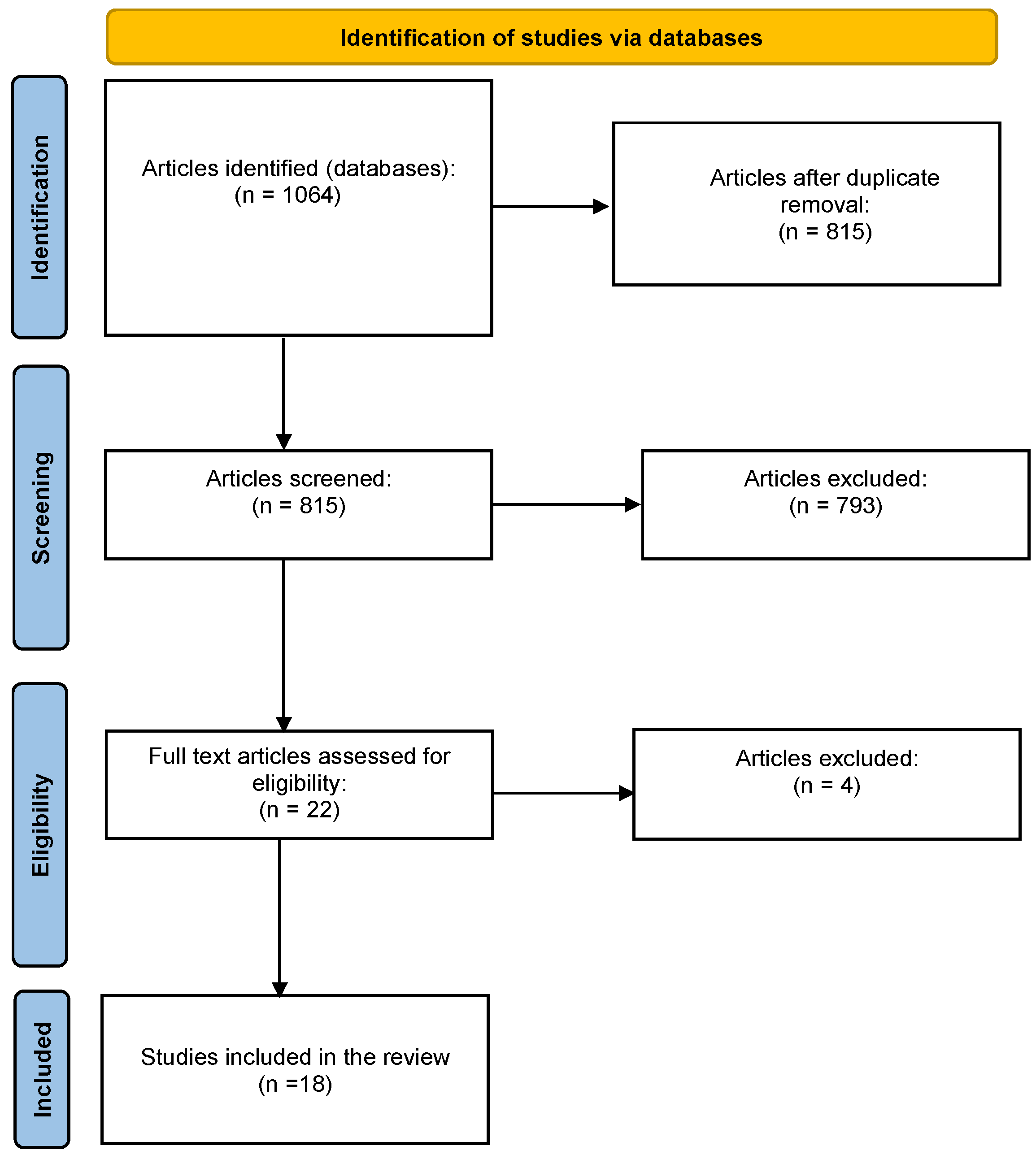
A literature search of scientific papers published in English was performed to retrieve studies that compare the environmental impacts of organic and conventional farming systems in Europe. Articles were selected from relevant sources in accordance with the STARR life cycle assessment (LCA) methodology [15], and the process flow is summarized in Figure 1. The main databases used were Web of Science, Science Direct and Scopus. Whereas Google Scholar was used to retrieve other articles that were seen from references of articles from the major databases. To reduce the risk of selection bias, the search string was defined prior to conducting the literature search: (“life cycle assessment” OR LCA) AND (organic OR conventional) AND (“dairy production” OR milk OR cattle). The time frame considered was 1996–2024, corresponding to the period in which modern LCA methodology became established and standardized in the scientific literature.
All studies found in the different databases were screened for relevance based on the title. Relevant titles were screened by abstract, and the full text was reviewed. For the eligibility selection, publications were required to have defined system boundaries from cradle-to-farm-gate, conduct a comparative analysis of organic and conventional systems, report midpoint indicators, and employ LCA for cow milk production. The studies also had to focus on European farming systems. This criterion was included because European dairy systems often share similar production and management practices, making comparisons more valid and reliable. In addition, eligible publications were required to provide quantitative results on different environmental impacts and other non-LCA parameters; an overview is illustrated in Figure 1.
Twenty-two studies met the inclusion criteria. Four fully assessed articles were excluded for different reasons, including geographical relevance and system boundary [16,17,18,19].
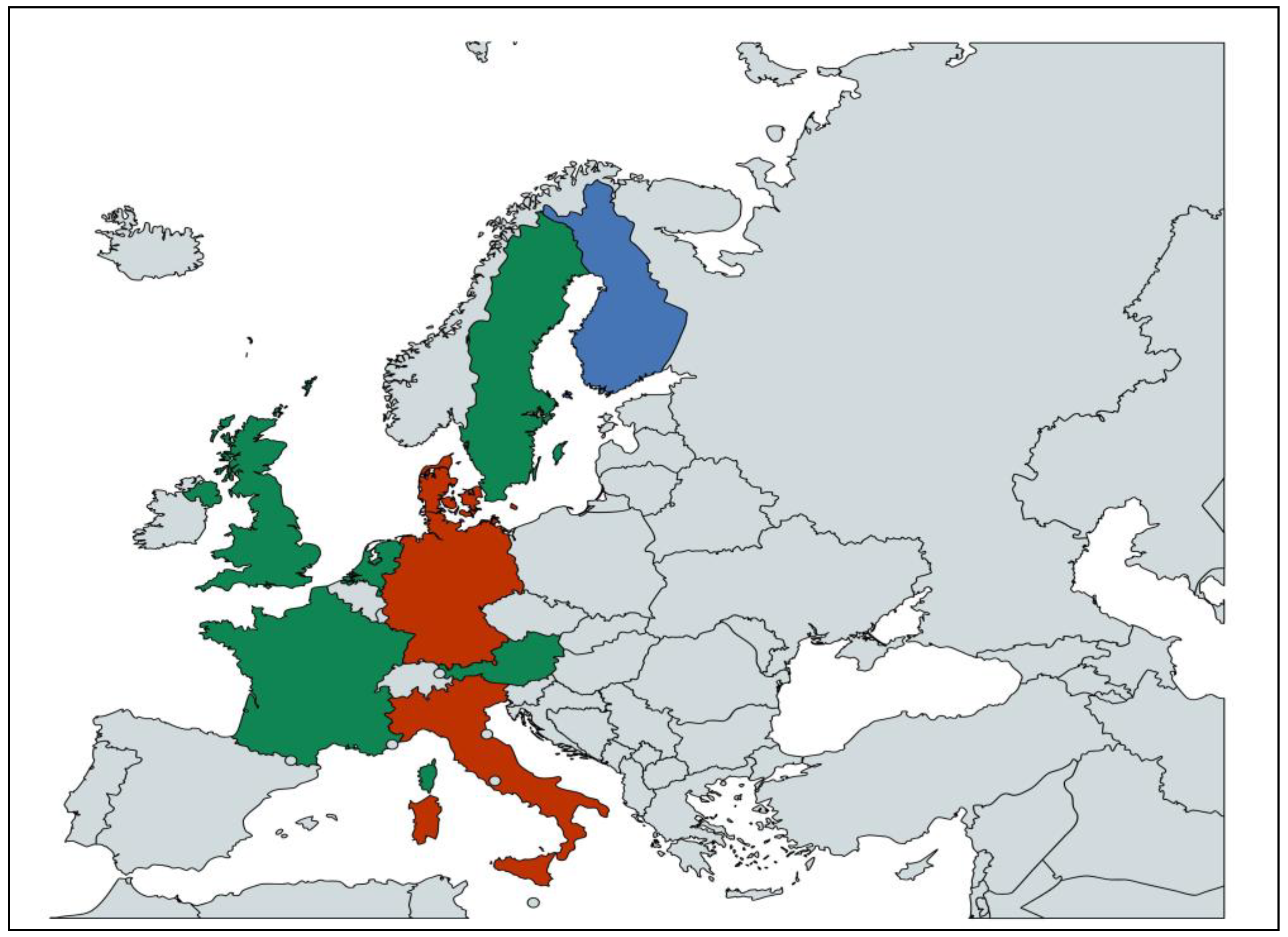
This filtering resulted in 18 studies from 10 European countries (Figure 2 and Table 1) that were used in this quantitative synthesis. These studies were from the following countries: three studies were conducted in Italy and Denmark; two studies from the Netherlands, France, Sweden and Austria; and one from Finland. The study by Williams et al. [20] was a report from England and Wales. Knudsen et al. [21] also examined grassland-based systems in the UK. The reviewed studies mostly represented central or northern European agriculture (see Figure 2 and Table 1).

2.2. Data Extraction

Non-LCA parameters (i.e., farm characteristics) and LCA impacts per unit product were retrieved from the studies. We also estimated the environmental impacts per unit area/land occupied if they were not directly reported in the studies. Each study was recorded in a Microsoft 365 Excel file, noting the author, year of publication, country, data source, and respective indicators/results. Additionally, the type of LCA, objectives, and other relevant information were recorded.

2.3. Analysis of Studies

The absolute results of an LCA can vary significantly across studies that evaluate similar types of production systems. For example, Pirlo and Lolli [14], Salvador et al. [24] reported 1.37 and 1.19 kg CO2-equ/FPCM (fat and protein-corrected milk) of organic farms in Italy respectively. This shows a percentage difference of 15%. Such variations in absolute GWP values among studies evaluating similar systems may arise from methodological differences in LCA, particularly in the scope of the study, such as differences in the system boundaries, functional units (FUs), allocation methods, or the approach used to estimate emissions (e.g., IPCC Tier 1, 2, 3, or country-specific methodologies). A direct comparison of absolute results across different systems in LCA studies is currently not feasible and highlights the need for further international standardization of LCA methodologies [32]. Therefore, the non-LCA parameters (farm characteristics) and environmental impacts of contrasting dairy production systems were compared using the response ratios (relative differences) [33], thus removing the need for functional unit harmonization [34]. Response ratios (Rrs) are essential as they standardize comparisons by expressing the relative change between systems, enabling robust synthesis and comparison of results [33]. This study assumed that the relative comparison of systems remains valid despite the differences in methodological choices.
The response ratio (Rr) for each indicator was calculated using Equation (1), where negative values denote lower impacts and positive values denote higher impacts for organic farming relative to conventional farming [33].
R r = I o r g a n i c I c o n v e n t i o n a l 1
where Rr is the Response ratio, and I denote the indicator value.
The normality of the data was tested by using the Shapiro–Wilk test, given the small sample sizes of some analyzed parameters. A one-sample t-test was used to determine whether the mean response ratios were significantly different from zero, with a significance level of p < 0.05 for the normally distributed values, and a one-sample Wilcoxon signed rank test was used for the not normally distributed values (pesticide use). Statistical analyses were performed using Python (version 3.14). The normality test statistics are attached as a Supplementary Table (Table S1).

3. Results and Discussion

3.1. LCA Methodology

In this section, we focus on assessing the life cycle assessment (LCA) methodological choices seen in the different studies.

3.1.1. Standardization

The LCA is guided by International Organization for Standardization (ISO) standards, mainly ISO 14044:2006 [35] and ISO 14040:2006 [36]. Of the 18 studies reviewed, only eight explicitly cited these standards, while others did not mention them at all (Table S2). However, not citing these standards does not necessarily indicate a lack of understanding or unreliable results, although considering them is crucial when designing an LCA study. LCA supports two modelling approaches, attributional and consequential, with nearly all reviewed studies using attributional LCA because of its simplicity and broad applicability across sectors [37].
In addition to ISO standards, LCA studies in the dairy sector are supported by specific guidelines, such as those from the International Dairy Federation (IDF) [32,38], the Food and Agriculture Organization (FAO) guide for the environmental footprint for larger ruminants [39], and the EU’s Product Environmental Footprint (PEF) guide [40]. Although Romano et al. [22] and Knudsen et al. [21] adhered to the IDF and PEF guidelines, respectively, it is unclear whether other studies followed them. The limited adoption of these guidelines may be due to their publication timing and lack of consensus on their use.

3.1.2. Goal

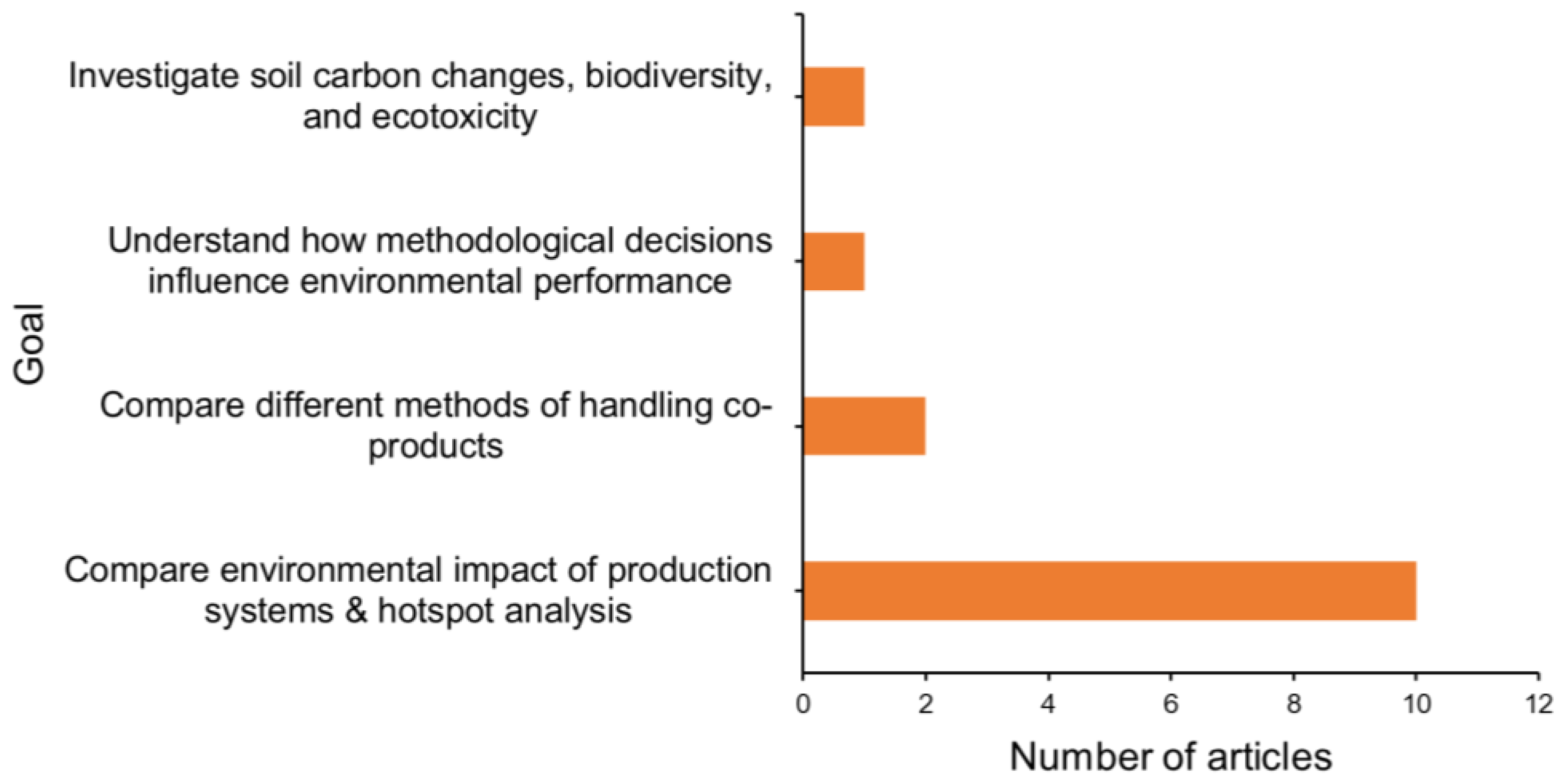
The frequently stated goal of the studies reviewed was the comparison of the environmental impacts of different production systems, as shown in Figure 3. Milk was the main product that was compared in these reports, except for the report by Williams et al. [20], which looked at different agricultural and horticultural commodities, and Grönroos et al. [29], who evaluated milk and rye bread production.

3.1.3. Functional Unit (FU)

This term still raises some ambiguity in agri-food systems [41]. The IDF and FAO LEAP guidelines [42] recommend using one kilogram of fat- and protein-corrected milk (FPCM) at the farm gate as the FU. This FU is based on the adjustment of milk production to its energy content and enables a fair comparison across farms characterized by different breeds or feeding regimes [32,43]. However, two equations can be found in different studies related to the correction of milk to its energy content, as follows:
E C M   ( k g ) = m i l k   ( k g ) × [ 0.25 + 0.122 × f a t % + 0.077 × p r o t e i n % ]
FPCM (kg) = milk (kg) × [0.1226 × fat% + 0.0776 × protein% + 0.2534]
where ECM is the Energy-Corrected Milk, and FPCM is the Fat and Protein-Corrected Milk.
Quality-corrected FUs (Equations (2) and (3)) assign equal weighting to a standardized litre of milk containing 4% fat and 3.3% protein, using different coefficients, which results in slight differences in the final outcome [44].
Among the 18 studies reviewed, nine used Equation (3) and six used Equation (2) to adjust milk production (Table 1). The rationale behind the choice of equation is generally unclear. Yan et al. [45] noted that Swedish and Irish studies tended to use ECM, whereas Dutch studies used FPCM. The geographical region may not strongly justify the choice of equations, as the Dutch studies in this review used both ECM and FPCM equations (Table 1). Conversely, FPCM has been applied more consistently in Irish studies [17,46]. Considering this, it is essential for studies to clearly report and define the FU formula used, specifying factors such as milk fat and protein content to allow recalculations for meaningful comparisons. However, only three of the reviewed studies explicitly reported the FU formula used [9,24,26]. Other authors have used other FUs related to mass (kg and tons) and the volume of raw milk (litres). Hrtenhuber et al. [27] and Haas et al. [31] used mass, kg, and ton as FU respectively, whereas Grönroos et al. [29] opted for a volumetric FU (litre) (Table 1).
Agriculture has several functions, including food production and sustainable land use [23], making it important to express the environmental impacts per hectare (ha) for land sustainability assessments. In this review, five studies used dual functional units per hectare and per unit of milk mass (Table 1). Van der Werf et al. [28] and Salou et al. [23] expressed the impacts per hectare of the total on- and off-farm occupied land. However, other studies that used this FU (per ha) did not specify whether impacts were expressed by on- or off-farm occupied areas [14,27,31]. Expressing the impacts solely per hectare of on-farm area can be misleading, as relevant off-farm land (e.g., used for purchased feed production) in other parts of the world also contributes to the total environmental impact of farm milk production [23].
Therefore, based on this review, it is evident that the lack of standardization, coupled with the limited consideration of different FUs, significantly hinders the comparison of alternative livestock production systems. This affects the ability to make informed decisions and develop effective policies aimed at improving livestock production in the European Union.

3.1.4. Allocation Rules

Milk production is a multipurpose system that generates not only milk but also profits from co-products such as male calves, cull cows, manure, and biogas [42]. To address such multifunctional processes, ISO [36] outlined a hierarchical allocation approach. Common allocation methods in milk LCA studies include biological allocation (BA), no allocation (NA), economic allocation (EA), system expansion (SE), protein allocation (PA), mass allocation (MA), and energy allocation (EGA) [47,48].
The BA method has been recommended for allocating impacts between milk and meat in dairy production [8,42,49]. In the reviewed papers, this allocation approach was used in eight studies, as shown in Table 1. Despite its endorsement by various dairy standards, it has faced criticism. First, it prioritizes milk and is not relevant to large-scale production systems with a high beef-to-milk ratio (BMR), as it results in a very low or even negative allocation ratio for milk [50]. Nemecek and Thoma [50] recommended using the BA method if the BMR is less than 3%. Another criticism of this method is that it considers only animals sold specifically for beef, excluding heifers sold, and does not account for manure, which is treated as waste [50]. To address these issues, the IDF [32] proposed a new allocation approach based on physical principles. This method is based on the net energy needed to produce milk and to build up body mass. This approach also recommends including heifers leaving the farm instead of excluding them [32,50]. Future studies should consider adopting this updated IDF approach, and further development of new allocation approaches is required.
In our study, the SE method of allocation appeared in four studies (Table 1). The MA method was used by Romano et al. [22], and the allocation based on the proportions of milk and meat protein produced was used by Kristensen et al. [12]. EA was the most commonly used method in the reviewed studies (Table 1). This aligns with the findings of Kyttä et al. [48], who identified EA as one of the most frequently applied approaches for milk and beef LCAs. The popularity of EA stems from its simplicity and ability to effectively reflect complex systems [51]. ISO [35,36] recommends the use of physical allocation (BA) over EA because the latter is based on prices that are always unstable and vary across countries, regions, and contexts [13].
Four studies applied more than one allocation method (Table 1), and one study [20] used a custom approach. The rationale behind allocation choices varied widely. Seven studies using biological allocation (BA) justified this by referencing recommendations from the IDF or PEF guidelines [40]. Some studies offered no explanation for their methodological choices [20,22,28], whereas others gave weak justifications by stating that it was employed by another study or studies [10,29]. In contrast, Gross et al. [9] explained that they used system expansion because it is useful for capturing system-specific differences that influence the relationship between milk and beef emissions.
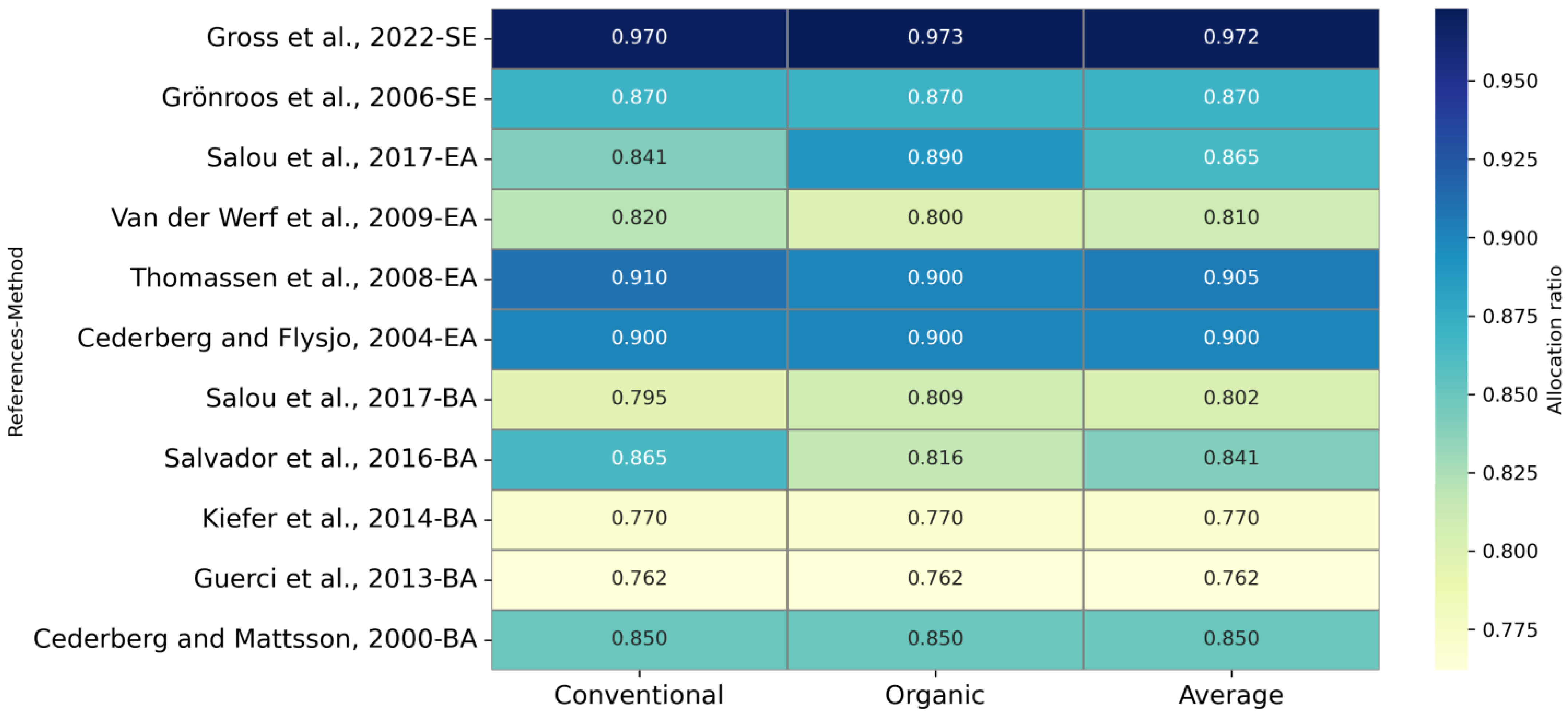
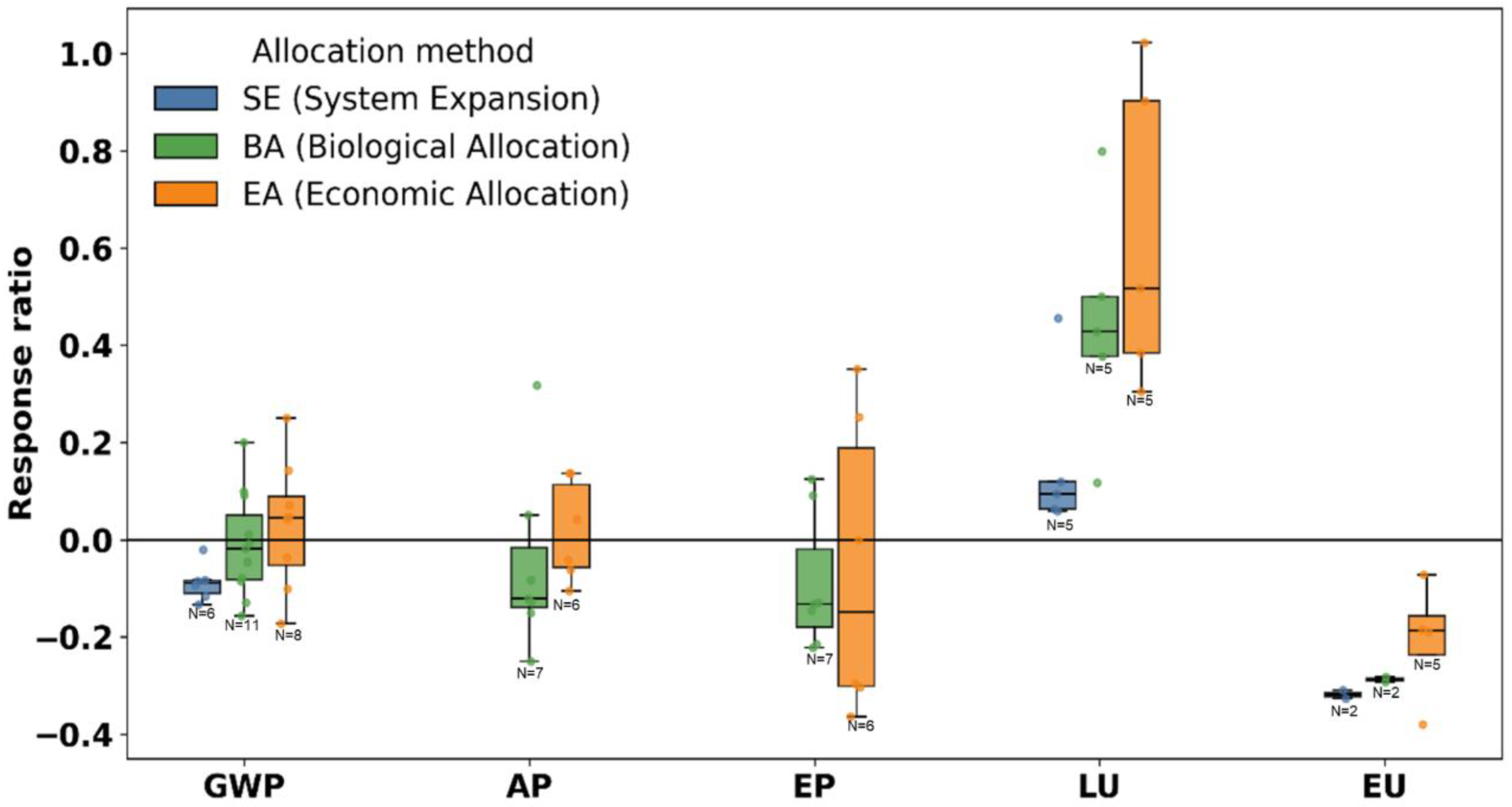
Different allocation methods result in different allocation ratios between products, which affects the LCA results (Figure 4). The allocation ratios ranged from approximately 0.82 to 0.97 for EA, 0.76 to 0.87 for BA, and 0.87 to 0.97 for SE (Figure 4). The highest allocation ratio allocated to milk was observed with the SE method (Av. 0.97), followed by the EA (Av. 0.91). While BA shows the lowest allocation ratios, according to Guerci et al. [26], the environmental burden allocated to milk production reduced to an average of 76% (Figure 4). The higher allocation ratios in some of these studies may reflect more specializations on the dairy farms. In the reviewed papers, some studies used already established allocation ratios from the literature, whereas others carried out independent calculations depending on the collected data (Table S2). Notably, most studies did not clarify whether allocation to meat referred to the entire animal (live weight) or only to the meat portion. According to IDF [32], the term “meat” in allocation formulas should represent live weight.
It is important to note that various allocation methods are used across the reviewed studies to address multifunctionality. However, the absence of a universally accepted approach makes it difficult to compare results across studies and regions. Moreover, relying on the literature-based allocation ratios may be inappropriate because production systems differ significantly in their output levels, underscoring the need for context-specific allocation strategies.

3.1.5. System Boundary

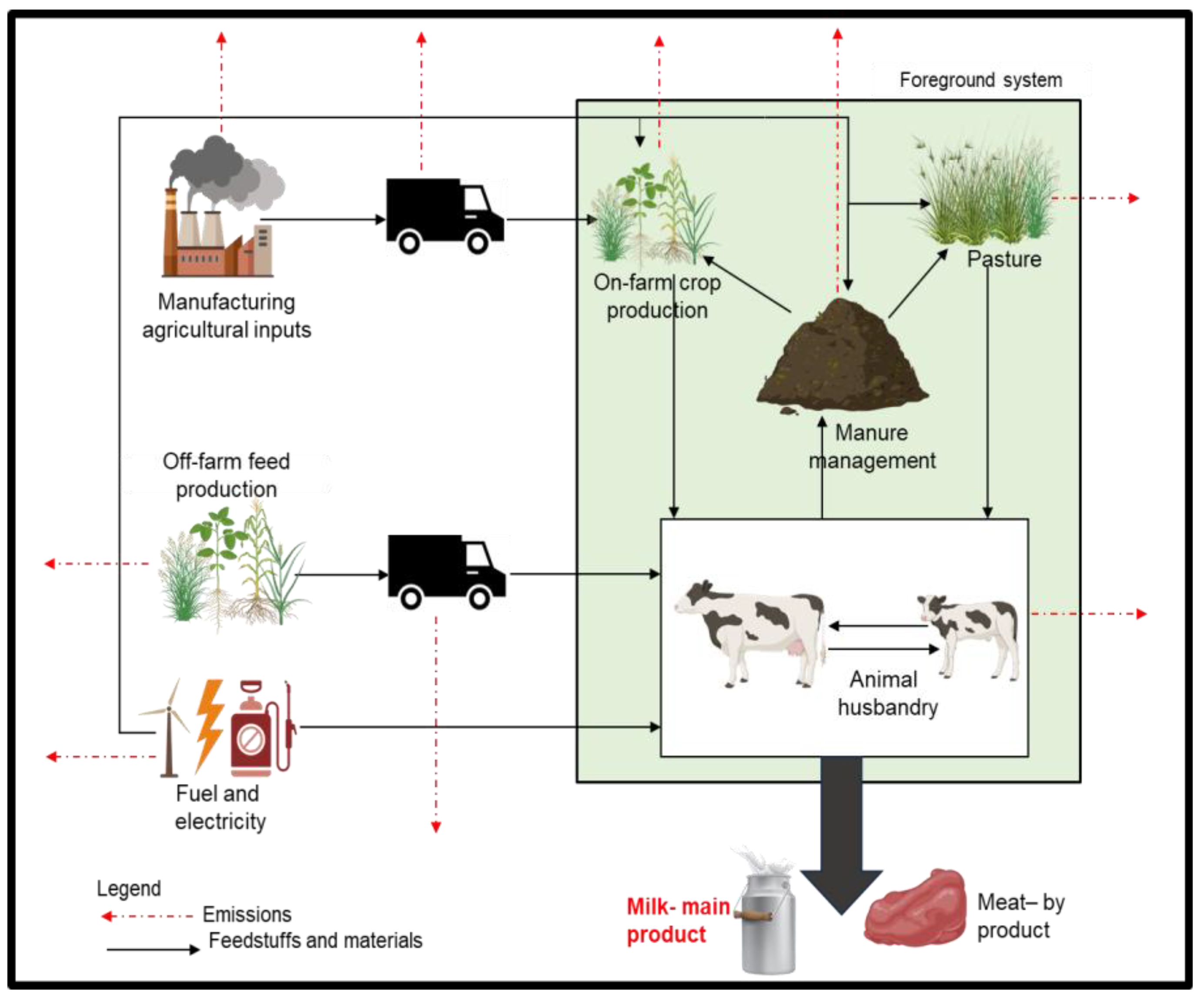
The system boundary defines the unit processes that are included in an LCA and should align with the goals of the study [35]. ISO [36] recommends producing a process flow diagram showing the unit processes and their interrelationships to account for all flows. A well-constructed diagram enhances the reader’s understanding of the system under study [37]. However, seven of the reviewed studies did not include such diagrams (Table S2). Salvador et al. [24] and Salou et al. [23] reported an example of a detailed, clear flow diagram that outlines the dairy system’s boundaries (cradle-to-farm-gate), where inputs and outputs are presented in a well-organized manner. Figure 5 summarizes processes for a cradle-to-farm-gate system boundary.
In the reviewed European milk comparative LCA studies, the common processes included on-farm feed production, purchased feed, mineral fertilizers, transport, fossil fuels, and other energy carriers (Table S2). However, capital goods, such as buildings, equipment, and machinery, were largely excluded, with only a few studies [20,22,23] accounting for them. Their exclusion is typically justified by their minor contribution (often <1%) to the overall environmental impacts [20] and lack of reliable datasets [32]. Similar reasons are cited for omitting ancillary inputs, such as medications, veterinary services, and employee commutes [32].
In this study, we found that the articles by Haas et al. [31], Grönroos et al. [29] and Salvador et al. [24] did not include emissions from replacement animals, and it was unclear whether Guerci et al. [26] included them. Sometimes, this aspect is not considered, which may result in a relative reduction in emissions accountable for milk production [27]. It is important to note that during the modelling of emissions, a full account of breeding animals, including spent and replacement animals, should always be considered [42].
Soil carbon stock changes are frequently excluded from agricultural LCAs due to the substantial uncertainties involved in estimating SOC dynamics, particularly under constant land use [32]. Among the reviewed studies, land-use change (LUC) carbon emissions were included by Hrtenhuber et al. [27], Kiefer et al. [25], Salou et al. [23], and Pirlo and Lolli [14]. In most cases, the focus was on indirect land-use change (iLUC) linked to imported feed inputs (such as deforestation associated with soybean production). In contrast, only four studies accounted for carbon sequestration (soil carbon sinks) [14,21,22,26]. Overall, these findings highlight limited harmonization in the treatment of land-related carbon dynamics across dairy LCA studies.
There is currently no consensus on how to include carbon sequestration in LCA studies, despite its relevance, especially in organic farming systems [21]. The EC Product Environmental Footprint Initiative previously recommended that carbon sequestration should be excluded from LCA studies because there are no sufficiently developed methodologies [52]. Similarly, the IPCC 2006 [53] guidelines assume that soil carbon reaches equilibrium after a set period (e.g., 20 years), leading many studies to omit it. However, research has shown that managed grasslands can sequester carbon for over 100 years [54], highlighting the limitations of the current assumptions.
Despite these challenges, excluding carbon sequestration and other key impact categories, such as biodiversity and ecotoxicological effects, undermines the comprehensiveness and reliability of comparative food LCAs. More research and improved data are essential to accurately integrate carbon sequestration into LCA and assess its influence on the carbon footprints of different dairy management systems [55].

3.1.6. Life Cycle Inventory (LCI)

In this section, data related to the input and output of each process are collected depending on the goals and scope, that is, foreground and background data [37]. Of the 18 studies, 15 based their comparison on production data from a sample of real farm case studies. Williams et al. [20], Hrtenhuber et al. [27] and Knudsen et al. [21] used average national statistical data, the literature data, and existing databases (Table 1).
Different databases, inventories, and the literature were used as sources of background information in most reviewed studies. The Ecoinvent database was the most used database (seen in nine of the included papers) for background data (Table S2). Other databases, such as the European Reference Life Cycle Database [14], ProBas database [25], LCA Food Database [12], Patyk and Reinhardt (1997) database [24,31], are some of the databases used in the reviewed studies as a source for background information. Additionally, some of the reviewed studies did not provide a clear explanation of the source of the background information used in their studies (Table S2).
Concerning the calculation model used for the estimation of emissions, the Intergovernmental Panel on Climate Change (IPCC) models were the most frequently used methods for estimating methane (n = 9) and nitrous oxide (n = 12) emissions (Table S2). An equation established by Kirchgeßner et al. [56] was one of the equations used in the estimation of methane from enteric fermentation [27,30,31]. Ammonia emissions in different studies were mostly estimated using different emission factors (EF). Though details about the EF were incomplete, it was not clear whether country or site-specific EF was used in different studies. Most information about the LCI was often incomplete; therefore, it is important to provide comprehensive details of any calculation models used in each LCA study for better understanding by the readers. An example of good practice in reporting LCI data was found in Knudsen et al. [21].
LUCs were accounted for using LUC emission factors [14,23,25,27]. Hrtenhuber et al. [27], Guerci et al. [26], and Kristensen et al. [12] relied on emission-factor or fixed stock-change approaches to account for the SOC changes (sequestration) in their studies. In contrast, Knudsen et al. [21] applied the Petersen et al. [57] methodology, which uses a dynamic SOC modelling approach based on carbon inputs and time-dependent soil carbon responses. Romano et al. [22] and Pirlo and Lolli [14] accounted for carbon sequestration using the literature-based factor approach following Dollé et al. [58] methodology. According to the IDF guidelines for calculating SOC in cattle production systems, higher-tier models, that is, process-based models (e.g., RothC, Century, C-TOOL) that are combined with soil samples, offer the most accurate estimate of SOC changes [32]. None of these studies conducted direct SOC measurements on farms; therefore, it is important to note that such estimates might not represent actual on-farm changes in SOC [59]. If resources are available to measure the SOC, this method is preferable for modelling. However, owing to variability in data, these measurements may only be meaningful over longer timeframes, which might not be practical for conducting an LCA in a given year [22].

3.1.7. Life Cycle Impact Assessment (LCIA)

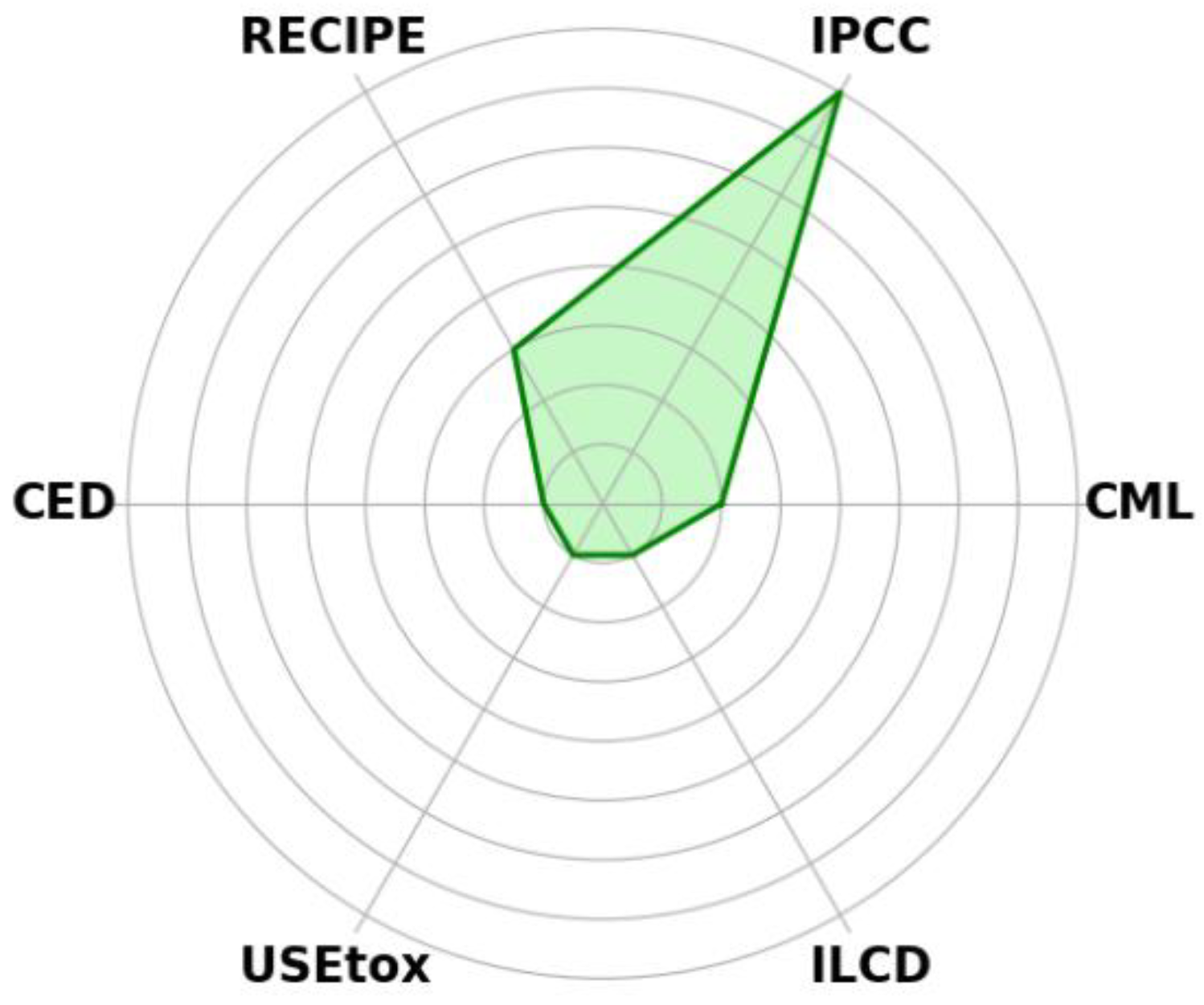
The choice of the LCIA method depends on the goals of the study and the author’s preferences [23]. The IPCC LCIA method was the most frequently used method in the reviewed comparative milk LCA studies (Figure 6), primarily because of its focus on GWP, which is the most frequently assessed impact. The RECIPE LCIA method has been applied recently in different LCA studies focused on agri-food industries and was the second most frequently used method [12,22,23], as shown in Figure 6. However, Williams et al. [20] and Bronts et al. [13] did not specify the LCIA method applied.
Table 1 lists the impact categories addressed in the revised comparative LCA. Of the 18 studies, 17 analyzed the GWP, except for Grönroos et al. [29], which focused only on energy use. Acidification and eutrophication were assessed in 12 studies (Table 1). Land use was a priority category in 12 studies, and energy use impact was evaluated in nine studies (Table 1). The least-studied impact categories observed in the selected studies were ecotoxicity, water use, biodiversity, ozone depletion, and photo-oxidant formation (Table 1).
Although biodiversity and carbon sequestration are recognized as particularly important in organic farming [60], current LCA methodologies have not yet been sufficiently developed to confidently incorporate these factors into assessments [52]. The IDF [32] recommends following ISO 14067 [61] guidelines when reporting soil carbon changes in LCAs, which states that GHG emissions and removals from land use should be included but shall be documented separately and applied as an offset. Similarly, biodiversity impacts, if included in a study, should be reported as supplementary information outside the LCA impact categories [49]. None of the reviewed comparative LCA studies reported carbon sequestration separately, and it was included as part of the climate change impact. The assessment of livestock impacts on biodiversity and carbon sequestration remains an emerging field that requires further research, particularly in the context of organic farming systems [62].
Optional normalization and weighting within life cycle impact assessment can assist decision makers in identifying and prioritizing key environmental impacts [63]. Among the reviewed comparative LCA studies, only two studies applied normalization [22,26].
Only a small number of studies (28%) examined more than six impact categories (Table 1), highlighting the need for more comprehensive evaluations to fully capture the complexity of dairy systems in LCA. This is important because of the significant potential for trade-offs between different environmental impacts [63]. As seen in the use of the different LCIA methods, which differ significantly from each other, for instance, the difference in characterization factors makes comparison between regional studies difficult and, if done, should be executed with care. To improve the consistency and comparability, it is essential to establish recommended LCIA methods for agricultural LCAs.

3.1.8. Interpretation

Life cycle interpretation follows a systematic process to identify, evaluate, verify, and communicate conclusions derived from LCA results [36]. Result reliability can be evaluated through uncertainty or sensitivity analyses that examine the influence of variability in input data, emission factors, and calculation procedures on environmental impact outcomes [32]. The methods proposed for assessing uncertainty include error-propagation calculations, Monte Carlo simulations (MCS), and a combination of these weighting approaches. The MCS is a widely used and preferred method for managing uncertainty in LCA models. The MCS creates thousands of random input data samples, yielding probability distributions of estimated impacts [64]. Among the reviewed comparative LCA studies, only a few carried out a sensitivity (n = 2) or uncertainty analysis (n = 5) (see Table 1). Gross et al. [9] used an error-propagation approach to determine uncertainty. Other studies only explained the uncertainties associated with some of their specific calculations, whereas the MCS approach was not used in any of the revised LCA studies. It is worth highlighting that when performing an LCA, uncertainty and sensitivity analyses should be performed and recommended [37].

3.2. Data Synthesis Results

As seen from the previous sections, it is impossible to carry out a direct analysis of the impact results owing to methodological differences [32]. Therefore, the environmental impacts and non-LCA parameters of contrasting dairy production systems were compared using the response ratios (relative differences). For a relative comparative evaluation of the LCA results of organic vs. conventional dairy production systems, the impact categories most widely studied (GWP, AP, EP, EU, and LU) were selected (see Table 1).

3.2.1. Farm Characteristics

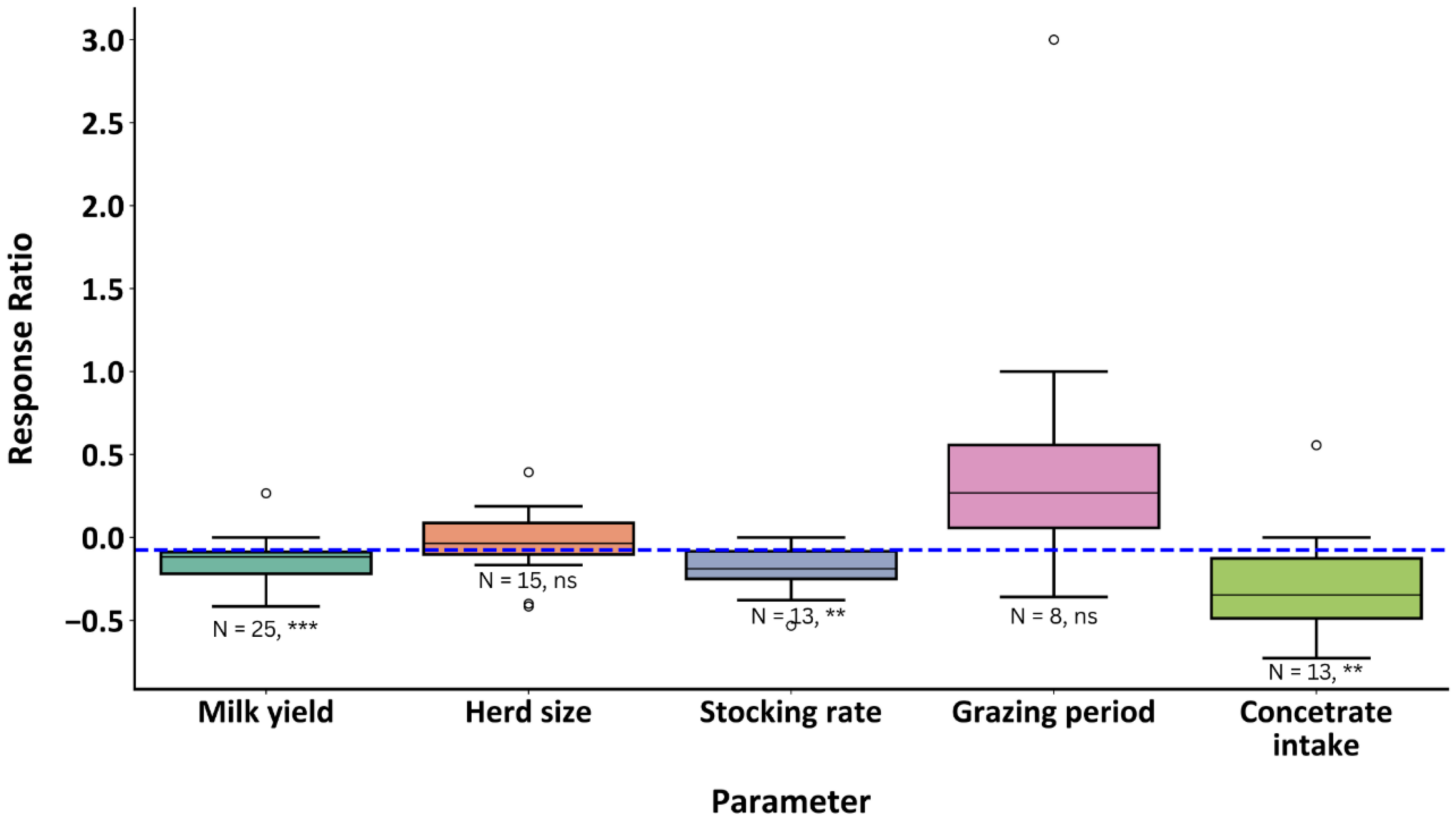
Table 2 shows the RD ranges of the different farm indicators, showing different variations. For example, the RD between the milk yield of organic and conventional dairy systems was found to vary from −42% to 27%; in other words, the Rr of milk production in organic farms relative to conventional farms ranged from −0.42 to 0.27. Despite this variation, milk production was significantly lower in the organic farms than in the conventional farms (Rr = −0.13, p < 0.05, Figure 7). This is corroborated by the extensive literature showing that cows on organic farms are less productive than those on conventional farms [14,22,24]. One of the reasons for this low milk production could be due to the fact that most of these farms are mainly pasture-based systems with strict regulations associated with lower input intensity, such as reduced concentrates in the diet of their cattle [65]. The reduced concentrate use (Figure 7) limits energy intake, which constrains partitioning nutrients towards milk synthesis, which has high energy demands [66]. As a result, organic systems relying more heavily on forage-based diets may prioritize maintenance, reproduction, and body condition over maximal milk output, leading to systematically lower yields per cow. These nutritional constraints are further reinforced by breeding strategies in organic systems, where organic breeders search for traits other than milk productivity during genetic selection [67]. Disease resistance, longevity, fertility, strong feet and legs, high milk fat and protein yields, feed intake, and feed conversion are some of the important parameters considered by organic farmers [68].
Since most of the organic farms are mainly pasture-based [65] and rely mostly on grazing activity, this could explain the longer grazing period observed in this study (Rr = 0.57, Figure 7), although this indicator was non-significant (p > 0.05), it often reflects a deliberate strategy to substitute grazing for purchased feed. Organic standards often mandate that a minimum percentage of the cows’ diet, typically 60% or more, must come from forage, which necessitates a longer, more intensive grazing season [69]. Herd sizes did not differ between conventional and organic farms, and these results are consistent with the findings of Pirlo and Lolli [14], although the stocking rate was significantly lower (Rr = −0.18, p < 0.05, Figure 7) in organic farms than in conventional farms.
As shown in Figure 7, the feed concentrate use was 30% lower in organic systems than in the conventional systems (p < 0.01). This pattern reflects both regulatory constraints and strategic choices in organic dairy systems that favour forage-based feeding and lower external input dependency [21,24,65].
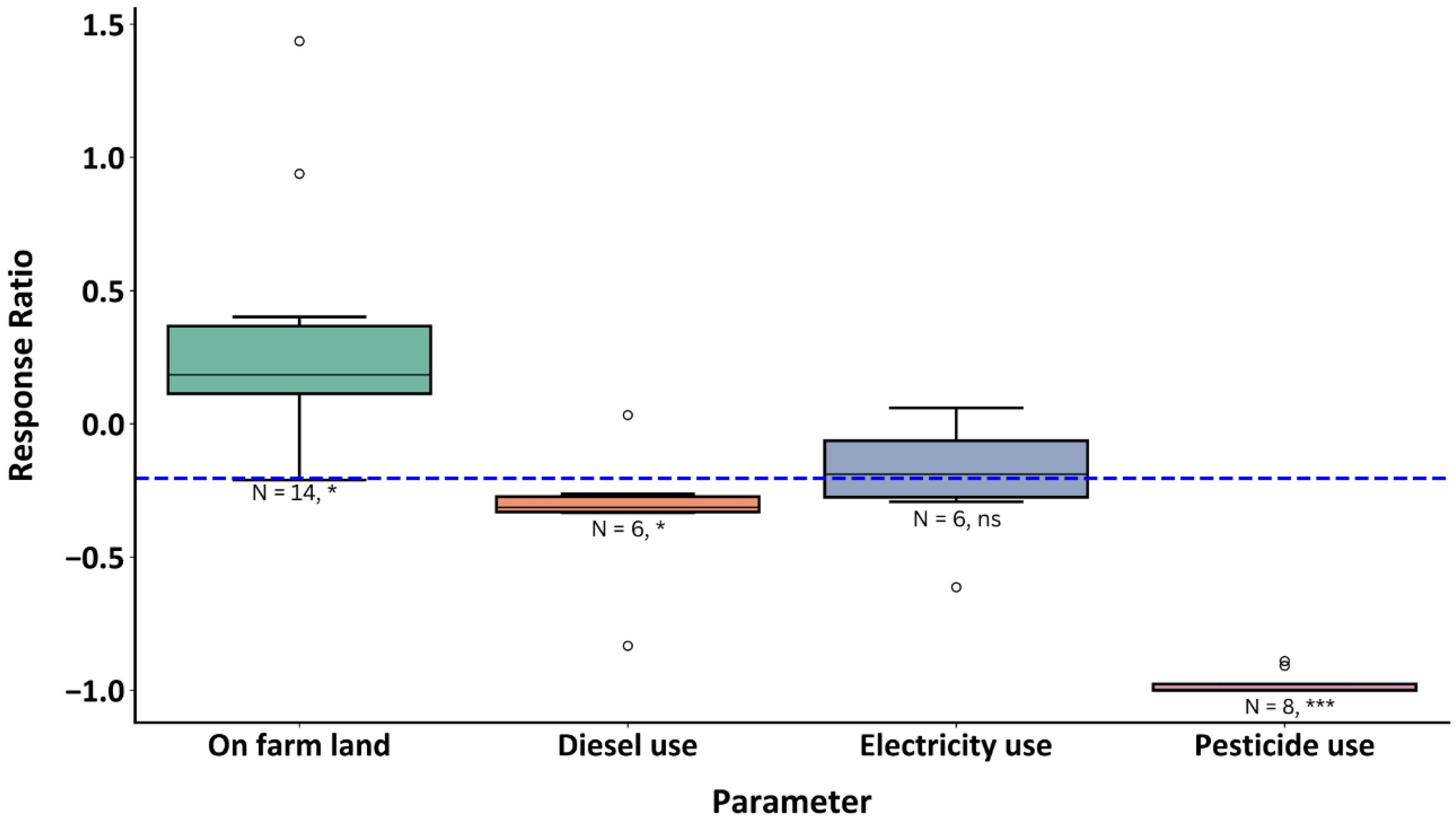
The mean response ratio of the occupied on-farm area of organic farms was significantly greater (Rr = 0.43, p < 0.05) than that of conventional farms (Figure 8). Organic farms generally occupy larger areas than conventional farms. This higher land use is mainly because organic systems are pasture-based and require more area to meet livestock feed demands [14,36]; the organic systems typically include a greater proportion of grassland (Rr = 0.54). In this study, we found that organic farms had less arable land (Rr = −0.18); hence, minimum tillage could explain the significantly lower diesel (Figure 8) used in this study. Reduced arable land use in organic systems (Rr = −0.18) limits the need for energy-intensive field operations such as ploughing, seedbed preparation, and crop establishment, which are major contributors to diesel consumption in dairy systems dominated by forage crop production.
No study reported mineral fertilizer use (Table 2, RD = −100%) in organic systems, and an Rr of −1 (p < 0.05) has been reported with pesticide use in these systems (Figure 8). This is reflective of organic agricultural principles, as mineral fertilizers and synthetic pesticides are not used in these systems of farming [6].

3.2.2. Environmental Impacts

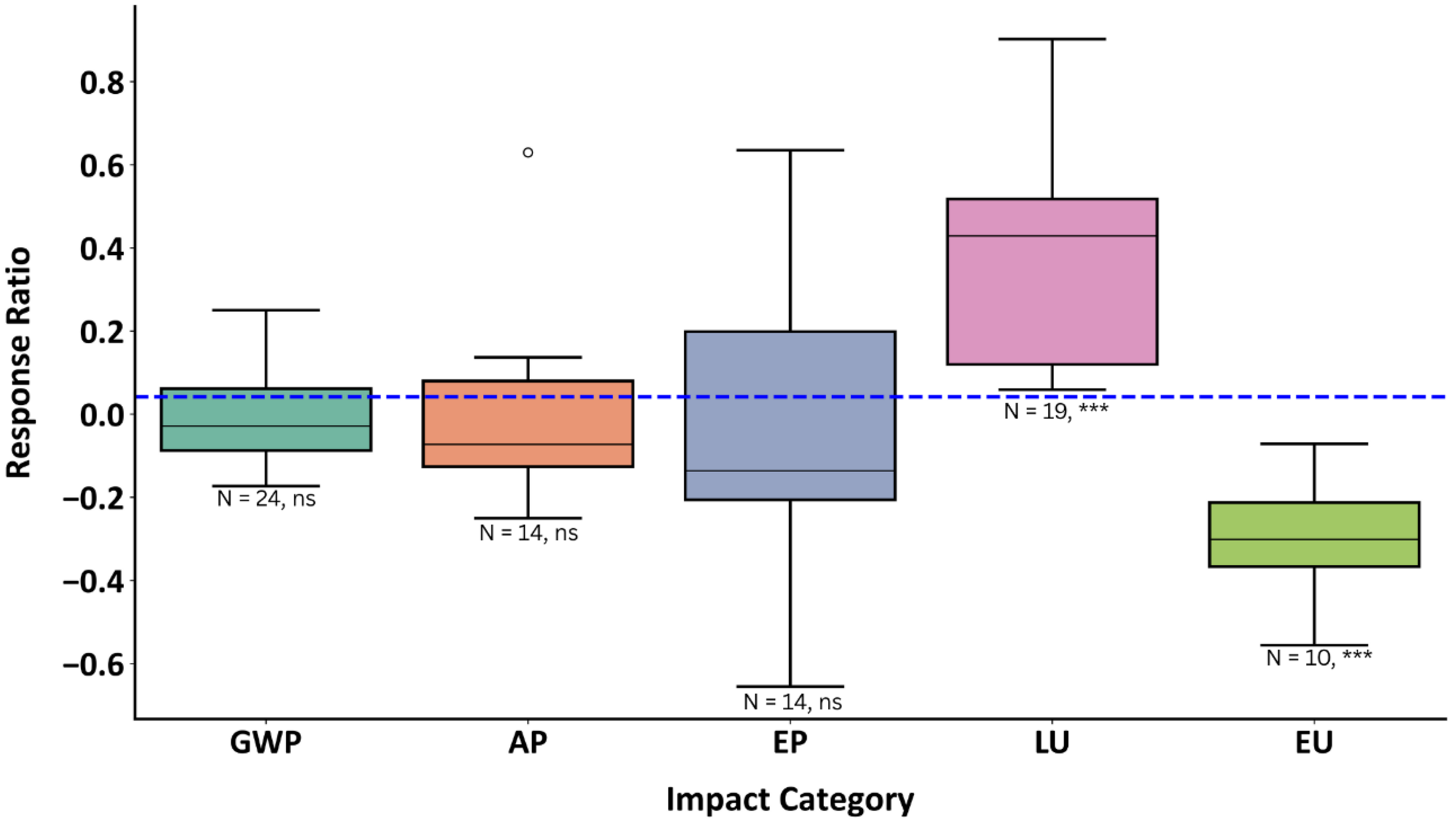
Table 3 shows the variation in impact categories. For example, the relative difference between the GWP of organically and conventionally produced milk was found to vary from −17% to 25% per product unit and from −13% to −59% per unit area. Regardless of the wide variation in the different impacts between the two systems, no differences (p > 0.05) were found in GWP (Rr = −0.01), AP (Rr = −0.0031), and EP (Rr = −0.0294) associated with a unit product produced in organic or conventional farms (Figure 9). These observations concur with those of Pirlo and Lolli [14], who compared organic and conventional farms in Lombardy, Italy. The results of Knudsen et al. [21] indicated similar or slightly lower differences for GWP, EP, and AP in organic systems than in conventional systems. Additionally, Salvador et al. [24] also found no difference in GWP per unit product between organic and conventional farms when no allocation or physical or economic allocation was applied.
The land-use impact mean difference per unit product between the systems was statistically significant (p < 0.001, Figure 9). In this study, the mean Rr showed that organic dairy production required 41% more land than conventional dairy production for the production of one unit of product. The main explanation for this is that organic farming mostly relies on grazing activity, and a high proportion of feed is generally from pasture and roughage; thus, pasture constitutes a much greater proportion of land use [21,22,65]. In this study, we found that the proportion of on-farm land under grasslands was 54% higher in organic systems than in conventional systems. Additionally, the higher land use observed in organic systems may be explained by several factors: lower crop yields due to reduced external inputs such as the absence of artificial fertilizers (Table 2), lower animal productivity [64], and reduced stocking densities. Taken together, these factors ultimately result in greater land requirements per kilogram of milk produced [11,70]. Land use for organic milk production was approximately 50% higher in organic systems than in conventional and mountainous systems in a study by Knudsen et al. [21]. In another study, 1 kg energy-corrected milk required a total area that was 35% higher in the organic system than in the conventional system [12]. Importantly, despite heterogeneity among studies, the direction of the land-use impact was consistent, indicating that higher land occupation per unit of milk in organic systems is a robust structural outcome rather than a context-specific artefact.
The energy use per unit product was significantly lower in organic systems than in conventional systems (p < 0.001, Figure 9). This impact category is strictly related to the amount of resources, such as fuel and electricity consumption, which are mainly associated with imported feed, transport, and chemical fertilizer production [21,23], that are absent or limited in organic systems. As shown in Figure 8, the amount of diesel and electricity used was lower in the organic systems. This could explain the lower energy use impact per unit product in the organic systems observed in this study.
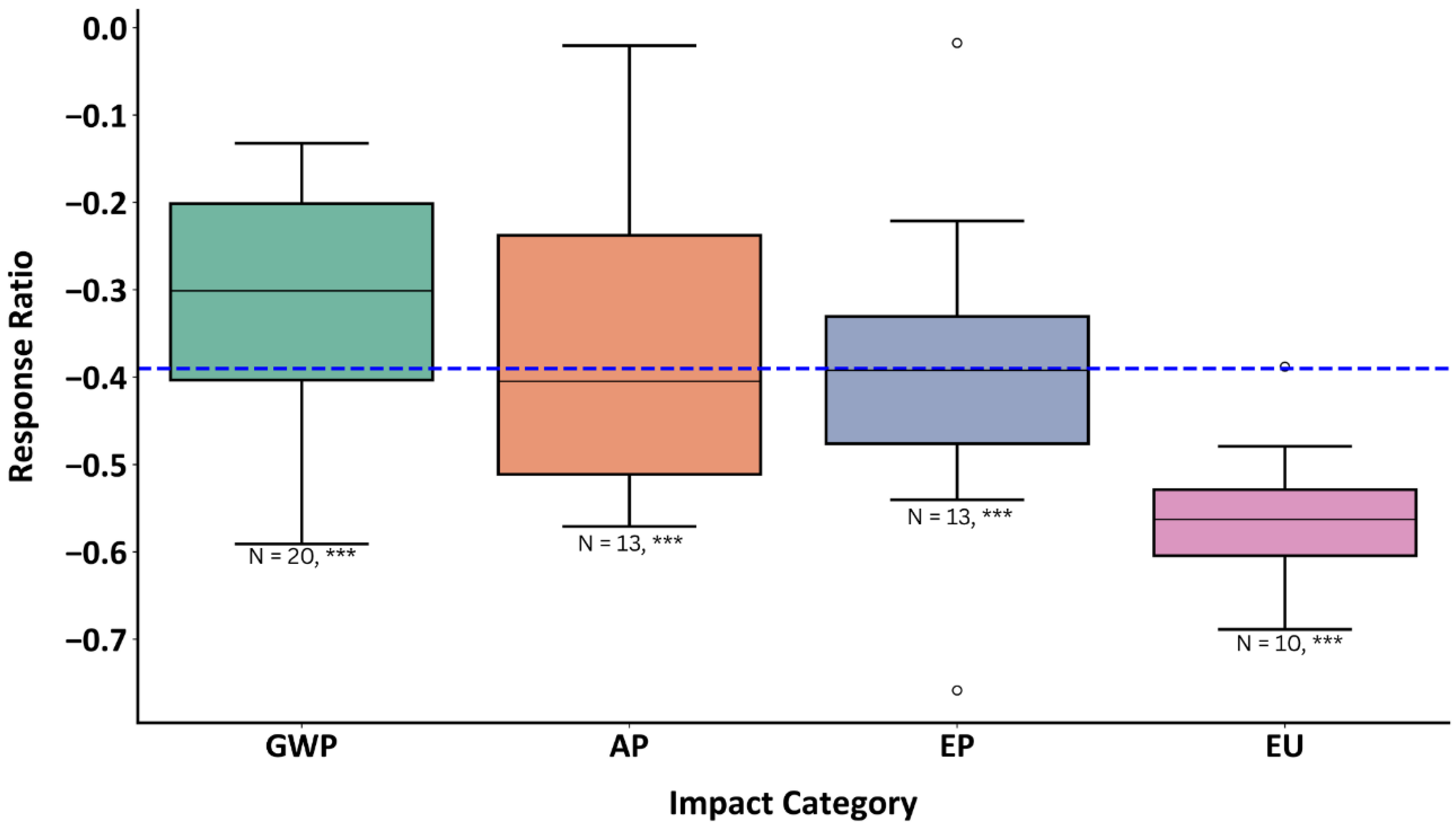
When considering the impacts per unit area occupied, all the impacts GWP, AP, EP and EU were significantly lower (p < 0.001) in organic farms compared to the conventional farms (Figure 10). Despite the methodological variability in studies included in this study, these results are consistent with the literature: organic milk production is always associated with a reduction in GHG and pollutants per hectare [14,23,24,28,71]. Generally, the lower GWP, AP, EP, and EU in organic systems could be mainly due to lower farm inputs per hectare in organic systems. Commercial feed production is seen as a major contributor to GWP [24,72] because there are lower concentrate feed inputs in organic systems that could explain the lower GWP per unit area observed in this study. Other inputs that could be associated with high GWP during production are fertilizers, seeds, pesticides, and plastics, which are always lower per unit area in organic systems [14,65]. According to a study by Tuomisto et al. [70], lower AP and EP impacts were mainly due to lower nitrogen and phosphate inputs per hectare in organic systems. Therefore, due to lower nitrogen and phosphate inputs, there is less on-farm leaching of nutrients, such as nitrates and phosphates, which are mainly associated with these impacts [11] due to a greater coupling effect. Additionally, the longer grazing periods in organic systems mean that animals spend most of their time outdoors, resulting in less ammonia emissions from manure, which could be one of the explanations for the lower AP and EP impacts. For instance, lower AP and EP in organic systems were ascribed to almost 50% lower ammonia emissions per hectare from manure because of greater outdoor access, as indicated by Knudsen et al. [21] The lower energy use per hectare (Rr = –0.55, p < 0.001, Figure 10) observed in organic farms relative to conventional farms can be attributed to a greater reliance on on-farm feed production, reduced concentrate use, and the avoidance of pesticides and synthetic fertilizers, all of which collectively contribute to reduced overall energy demand per hectare [73].

3.2.3. Relating the Impacts (Per Unit Product) and Farm Characteristics Based on Response Ratios

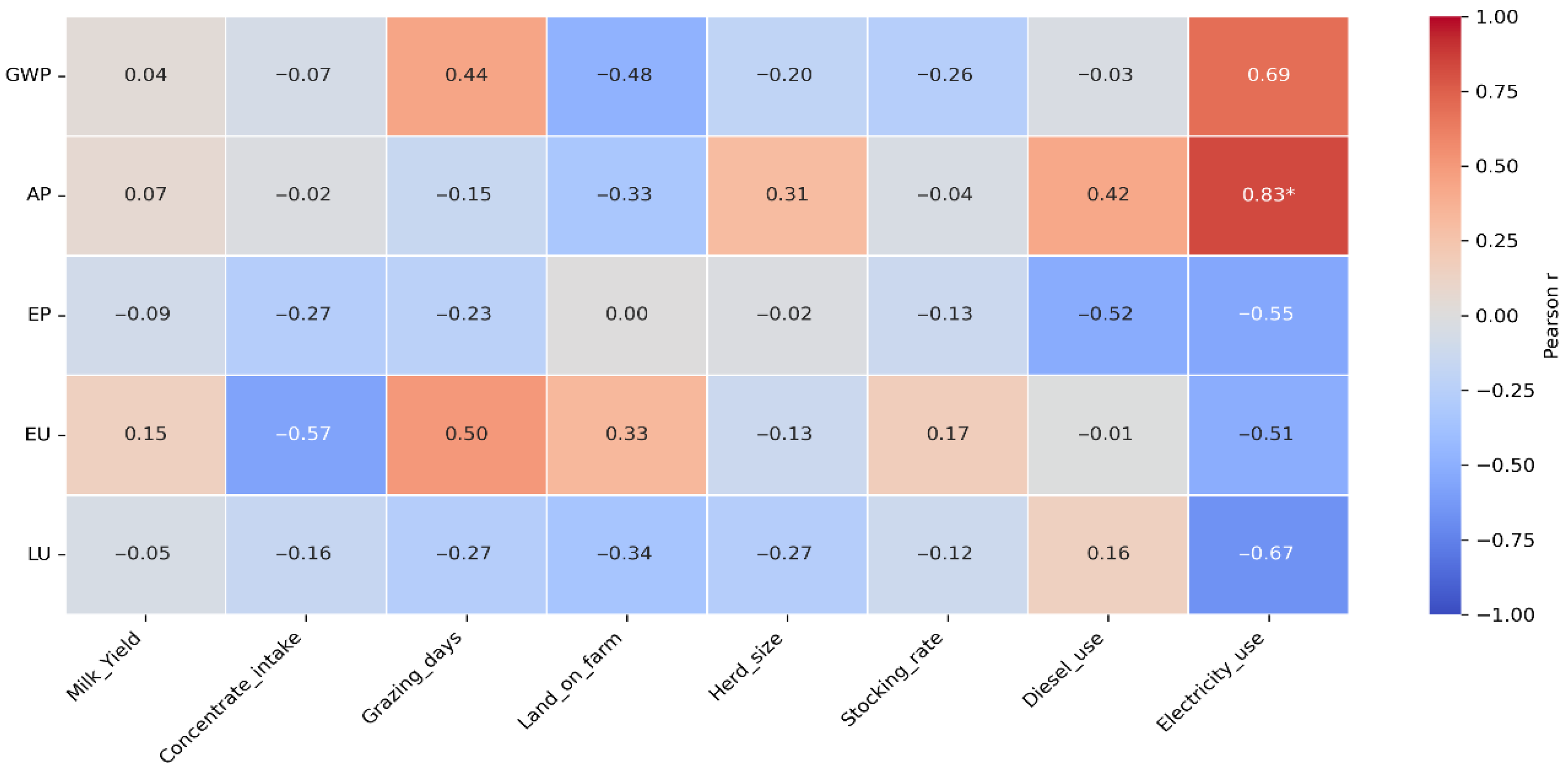
The correlation heatmap of response ratios highlights the relationships between farm characteristics and environmental impacts (Figure 11). Positive correlations mean that when organic performs relatively higher on a given characteristic, it also tends to perform relatively higher on the impact. Most coefficients were weak to moderate and not statistically significant (p > 0.05). As Tuomisto et al. [70] emphasized, the lack of widespread significant results likely reflects both limited sample sizes and substantial heterogeneity among production systems, which weakens the statistical detectability of relationships and indicates that trade-offs between production and environmental performance are highly context specific. Therefore, the results highlight that environmental performance in dairy systems is influenced by multiple interacting factors rather than single farm characteristics.

3.2.4. Comparing the Product Functional Units (FU)

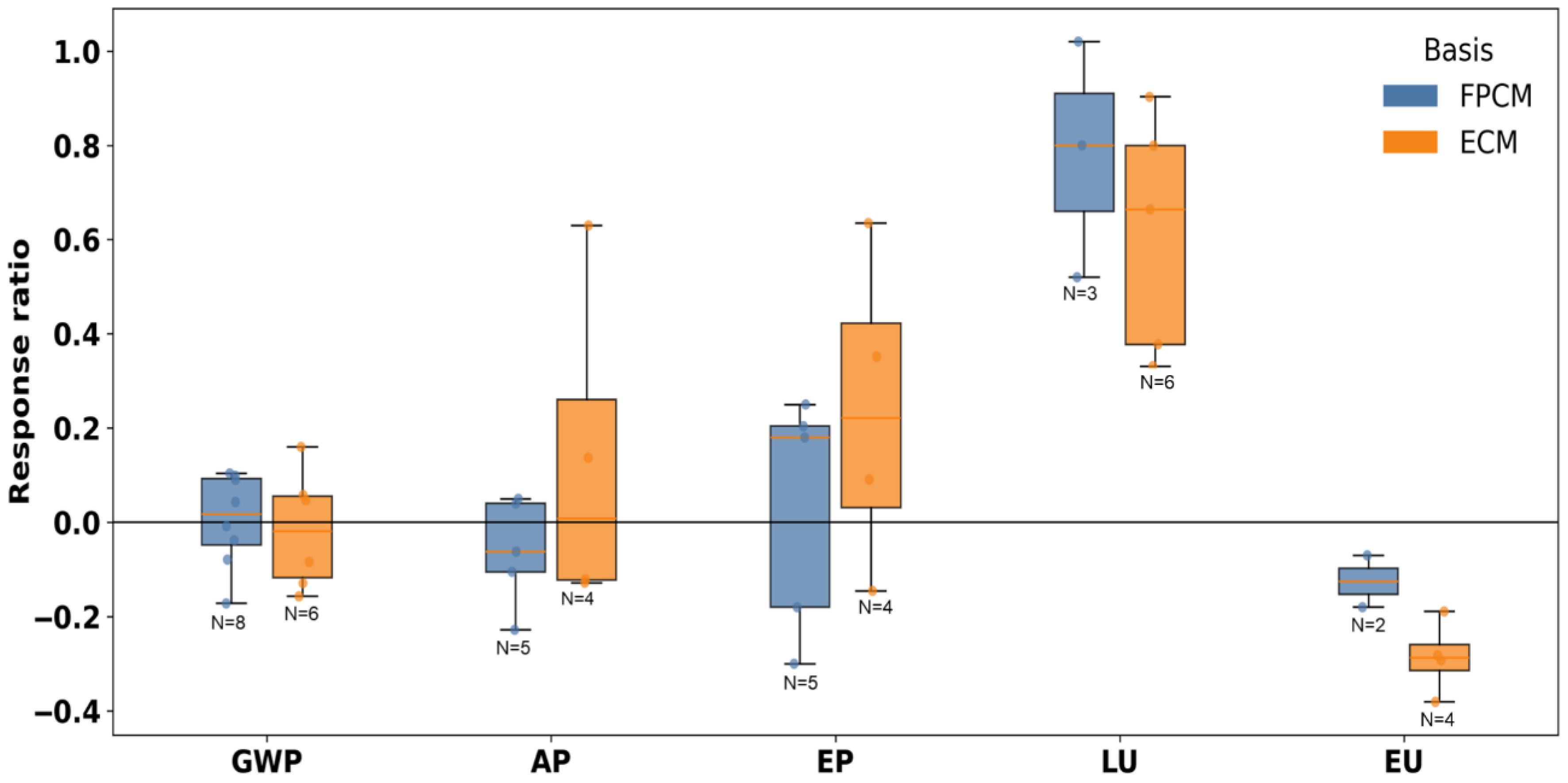
The comparison of functional units (FU) highlights how methodological choices can shape the interpretation of environmental impacts in dairy systems LCA. The box plots show that while the overall pattern of Rrs for GWP impact is broadly consistent across FPCM and ECM, notable differences emerge for other impact categories (Figure 12). For example, LU, EP, AP, and EU display shifts in both central tendency and variability depending on the FU applied, with ECM often producing more variable outcomes, though the significance was not tested due to small sample size. As noted by O’Brien et al. [17], FPCM is generally preferred because it normalizes milk to standardized protein and fat contents, thus better reflecting its nutritional value and ensuring comparability across systems. In contrast, ECM emphasizes energy content, which can favour systems producing higher-fat or protein-rich milk, such as organic herds, but may obscure efficiency losses linked to lower overall yields. Berton et al. [74] further stressed that different functional units can lead to changes not only in magnitude but also in the ranking of systems, underlining the need for multifunctional unit reporting to capture synergies and trade-offs across impact categories. These differences demonstrate that variability in methodological choices directly affects both the magnitude and variability of results, reinforcing that conclusions drawn from single-FU assessments should be interpreted with caution.

3.2.5. Effect of the Different Allocation Methods

Figure 13 illustrates how different allocation methods affect the relative environmental impacts of organic versus conventional dairy production systems. When using system expansion (SE), variability is reduced since it expands the system boundary rather than redistributing impacts between co-products, thereby reducing sensitivity to allocation assumptions. In contrast, economic allocation (EA) assigns impacts according to relative market values, often amplifying differences where milk yields are lower, such as in organic farms, and thus showing higher land use or eutrophication per unit of milk (Figure 13). Biological allocation (BA) lies between these extremes, distributing impacts according to biological functions, which has been argued to better reflect herd dynamics but still introduces subjectivity. As Pirlo and Lolli [14] observed, different allocation approaches rarely changed the direction of results for GWP, AP or EUP, but economic allocation increased the spread of results. Herron et al. [46] similarly emphasized that milk’s share of environmental burdens can range from 86% under physical causality to over 90% under economic allocation, highlighting the sensitivity of conclusions to the chosen method. Kristensen et al. [12] further stressed that allocation interacts with productivity: lower yields in organic systems make results more sensitive to allocation, particularly for land-related burdens. Overall, while SE is recommended by ISO standards to avoid subjective partitioning, its use may underestimate variability, whereas BA and EA reveal the methodological dependence of results. This underscores the importance of reporting sensitivity to allocation to ensure transparency and comparability across LCA studies.

3.3. Overview of These Results in the Context of the European Union Food Systems Sustainability Goals

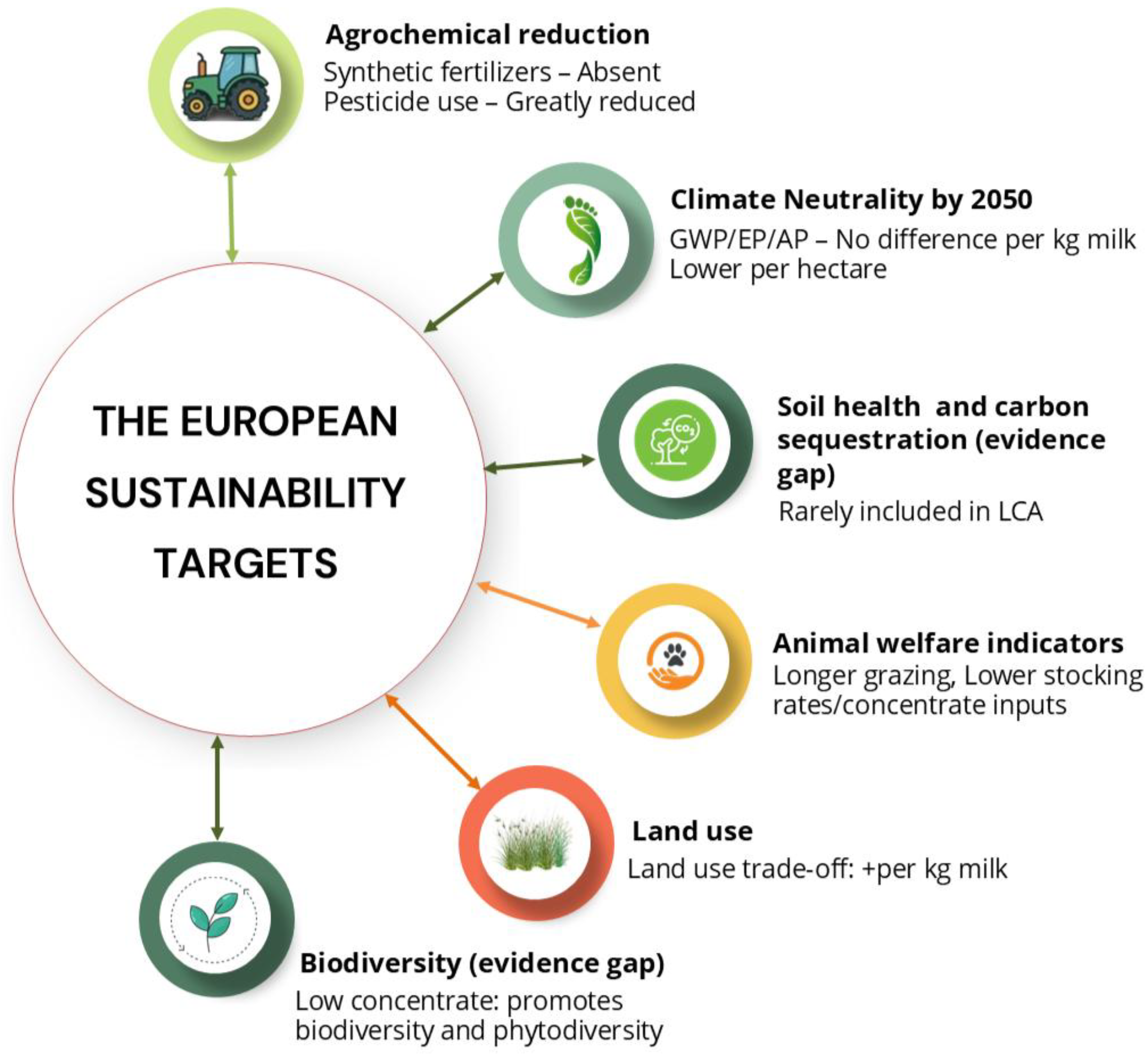
Under the European Green Deal, the Farm to Fork Strategy outlines a set of quantitative targets to be achieved by 2030 to accelerate the transition towards a more sustainable European food system [5]. These targets aim to reduce environmental pollution and pressures across agricultural systems, particularly impacts on air, water, and soil (Figure 14). They include a 50% reduction in the use and risk of chemical pesticides, as well as more hazardous pesticides, to limit their contribution to environmental pollution. In addition, nutrient losses are to be reduced by at least 50% to mitigate their effects on air, soil, and water quality, biodiversity, and climate, alongside a 20% decrease in fertilizer use, while ensuring no deterioration of soil fertility. The strategy also targets a 50% reduction in antimicrobial sales for farmed animals and aquaculture to combat antimicrobial resistance and aims to expand organic farming to 25% of total EU agricultural land by 2030 [5]. These policy framework targets are considered for interpreting the comparative LCA results of organic and conventional dairy systems, while also revealing key trade-offs and evidence gaps.
The key Farm to Fork objective of reducing synthetic pesticides and fertilizers inputs aligns strongly with organic principles. Results confirm this relationship for pesticide use, that almost entirely avoided (RD = −89% to −100%, Table 2) compared with conventional systems, and mineral fertilizer is not used in organic dairy systems (RD = −100%, Table 2). The reliance on organic nutrient sources in these systems promotes carbon and nitrogen coupling, enhancing soil organic matter formation and nutrient cycling efficiency [75]. These findings determine the potential contribution of organic dairy production directly towards Farm to Fork ambitions related to reducing chemical inputs and improving the environmental sustainability of crop and forage production within livestock supply chains [5].
The European Green Deal aims to reduce GHG emissions by at least 55% by 2030 (vs. 2018 levels) [5]. In this study, when impacts were assessed per unit of milk (Figure 8), no statistically significant differences were found between organic and conventional systems for GWP (Rr = −0.01), AP (Rr = −0.0031), or EP (Rr = −0.0294). This indicates that the climate mitigation potential of organic dairy systems is not consistently detectable when performance is expressed per kilogram of milk, likely due to lower milk yield. However, when assessed per hectare (Figure 10), all impacts (GWP, AP, EP, and EU) were significantly lower in organic systems, indicating reduced environmental burdens per unit land area, largely reflecting the lower external input intensity of organic systems. These results highlight that the contribution of organic dairy to climate neutrality depends strongly on the functional unit used, and that land-based environmental performance may be more favourable in organic systems than product-based performance. This should be considered in setting targets for key performance indicators of the national climate action plan for organic farming within the agriculture sector.
Improved animal welfare through reducing antibiotic use in livestock [5] aligns with better housing, feeding and transport hygiene standards. European Union legislation prohibits the routine use of antibiotics to compensate for poor hygiene or inadequate husbandry, thereby encouraging improvements in housing, nutrition, and biosecurity practices [76]. In this study, the organic systems showed management patterns consistent with welfare-oriented farming, including longer grazing periods (Figure 7), lower stocking rates (Rr = −0.18, Figure 7), and lower concentrate inputs (~30% lower, Figure 7), but antimicrobial usage was not reported. Extended grazing time improves multiple welfare measures, such as reduced integument damage, fewer lame cows, and better lying comfort scores [77], and lower stocking rates have shown mitigation of stress from regrouping [78]. These welfare indicators suggest potential alignment with the Farm to Fork Strategy, but more harmonized data are required for a more robust comparison of the dairy systems.
Farm to Fork is also linked to soil health and climate mitigation through the promotion of agro-ecological practices and carbon farming [5]. However, soil carbon sequestration and soil quality indicators are rarely included in dairy LCA studies [32], as noted in this study, despite their relevance to organic and pasture-based systems. This limits the ability of conventional impact categories (e.g., GWP) to fully capture potential long-term climate benefits from sustainable soil management practices [20]. Consequently, the sustainability contribution of organic dairy systems towards European climate ambitions may be underestimated when soil carbon dynamics are excluded from LCA modelling. The implementation of the EU Carbon Removals and Carbon Farming Regulation will drive soil data acquisition for LCA development in this area.
The European Green Deal is linked to the European Union Biodiversity Strategy [79], highlighting biodiversity restoration as a key sustainability priority. Low concentrate feeding (~30% lower, Figure 7) that is seen in organic dairy systems promotes grassland biodiversity and phytodiversity preservation [80]. Although biodiversity is expected to differ between systems [21], it was rarely included as a quantified impact category in the reviewed studies, preventing robust statistical comparison. This highlights a key limitation of current dairy LCA evidence in capturing important ecological benefits often attributed to organic farming.
One of the core objectives of the European Commission’s Farm to Fork Strategy is to expand organic farming areas, aiming for at least 25% of Europe’s agricultural land to be under organic management by 2030. In 2022, organic farming covered 16.9 million ha, representing 10.5% of total European agricultural land, up from 5.9% in 2012 [81]. In parallel, organic grassland is increasing, and in eleven EU countries, more than half of their total organic area consists of organic pastures and meadows [81]. Organic livestock production is also expanding, with one million cows reared organically in 2023, representing a 30% increase since 2015 [81]. These results indicate that such expansion in the dairy sector may involve land-use trade-offs, as organic systems require significantly more land per unit milk produced (Figure 9) and they are associated with a lower stocking rate (Figure 7). This reflects structural characteristics of organic dairy farming, including greater reliance on grassland-based feeding. While these characteristics are consistent with lower input intensity and potentially improved ecosystem outcomes, they may increase land demand if milk production levels remain unchanged, highlighting a key challenge for scaling organic dairy systems within a land-constrained [82] European context.
Overall, the results indicate that organic dairy systems align strongly with Farm to Fork ambitions related to reducing synthetic pesticide and fertilizer inputs, and they demonstrate consistently lower environmental burdens per hectare of agricultural land. However, trade-offs emerge when impacts are expressed per unit product, particularly for land use, and climate mitigation benefits per kilogram of milk are not consistently demonstrated. These findings suggest that organic dairy farming can contribute meaningfully to European Union sustainability targets, but its effectiveness depends on how environmental performance is measured and how land-use and productivity trade-offs are managed within broader food-system transitions.

3.4. Limitations of This Study

A thorough literature review, as described in our methodology, was conducted by reviewing all publications published. The extracted data were critically synthesized to determine the difference between the two production systems; however, some limitations have been identified regarding the relevance and applicability of the results.
This study only statistically evaluated the dominant environmental impacts of dairy production systems in relation to the boundary. This is primarily due to insufficient data on other potentially significant impacts, such as biodiversity. Further comparative studies are needed to achieve a more comprehensive statistical evaluation of these two production systems. In this context, because of the small sample size for certain evaluated parameters, such as diesel and electricity usage, the results for these parameters should be interpreted with caution. However, the sample size obtained for certain parameters was comparable to those reported in previous analytical reviews [44,83] and was considered satisfactory in terms of statistical power.
Methodological differences in LCA studies can create challenges in identifying, summarizing, and comparing them [32]. Response ratios (Rr) are used in studies to compare relative differences, but heterogeneity among studies can affect the robustness of the findings [84]. Additionally, Rr assumes a linear relationship, which may not always hold, particularly in complex environmental interactions [85]. Heterogeneity precluded the use of a conventional meta-analysis approach. In many of the reviewed studies, essential statistical data, such as standard deviations, means, and standard errors of the mean, were not provided. The absence of these data prevents the assessment of within- and between-study heterogeneity and the consequent weighting of individual comparisons [86]. Consequently, a classical meta-analysis approach cannot be applied. Generally, while we acknowledge that heterogeneity reduces the precision of the results, synthesizing the available evidence still provides value. As highlighted in the discussion section, most of our findings and the interpretations are fundamentally theory-driven.
A key limitation of this study relates to the geographical coverage and the number of available studies included in the synthesis. Although 18 studies from 10 European countries were identified, the evidence base remains unevenly distributed, with a strong concentration in Central and Northern Europe (Figure 2), regions that are largely characterized by large-scale, intensive operations. By contrast, dairy farming in Eastern and Southern Europe is more heterogeneous and often less intensive [87]. Therefore, caution must be exercised when extrapolating results beyond these regions, particularly to parts of the world where farming systems may differ substantially from those in Europe.

4. Conclusions

Life cycle assessment is an effective tool for evaluating the environmental impact of a product, process, or activity throughout its lifecycle. This tool has enabled the evaluation of different environmental impacts of dairy production systems. This analysis revealed that while organic dairy systems demonstrate certain strengths in environmental sustainability, such as lower energy use per unit of product and reduced impacts per unit area, it remains challenging to determine the most sustainable production system. When impacts are assessed per unit area, the focus is on low-impact land-use systems, often overlooking their productivity. Thus, there is a clear need to create a more precise functional unit that accurately reflects the true functions of milk.
Indicators relevant to agriculture, such as biodiversity and soil carbon changes (carbon sequestration), should be rigorously and consistently integrated into the LCA of these systems for a comprehensive assessment. Incorporating factors such as soil carbon changes in impact assessments could significantly reduce the carbon footprint and other indicators of organic farms compared with conventional farms. This study recommends that LCA studies incorporate multiple environmental impacts to better identify potential burden shifts among impact categories.
In the context of the European Union’s food-system sustainability goals, which include expanding organic farming and increasing the share of land under organic management, this highlights a key challenge for the dairy sector. Organic dairy systems generally require significantly more land per unit of milk produced. While these structural characteristics may support lower external input intensity and potentially improved ecosystem outcomes, they also suggest that large-scale expansion of organic dairy production could increase overall land demand if production levels remain unchanged, raising concerns in a land-constrained European context.
Despite decades of LCA development and frequent calls for a standardized livestock LCA methodology, methodological variations persist, making direct comparisons across studies from different countries challenging and hindering consistent production improvement efforts. This study recommends that dairy LCA practitioners adhere to the FIL-IDF [32] guidelines whenever possible. This data synthesis indicates consistent tendencies in the environmental performance of organic and conventional dairy systems; however, the magnitude and, in some cases, the direction of differences depend strongly on methodological choices and system context. Sensitivity to functional units, allocation methods, and underlying production characteristics detracts from precise quantitative comparisons.

Supplementary Materials

The following supporting information can be downloaded at: https://www.mdpi.com/article/10.3390/su18104903/s1, Table S1: Test results of the normality test; Table S2: Showing the different LCA methodological choices considered in the revised papers; Table S3: Comparison of Background Databases Used in Agricultural LCA in the reviewed papers; Table S4: Articles identified in the different databases after Duplicate removal; File S1: STARR-LCA -checklist.

Author Contributions

Conceptualization, J.M., F.M. and S.O.; methodology, J.M.; software, J.M.; validation, J.M., F.M. and S.O.; formal analysis, J.M.; investigation, J.M., F.M. and S.O.; data curation, J.M.; writing—original draft preparation, J.M.; writing—review and editing, F.M. and S.O.; visualization, J.M.; supervision, F.M. and S.O.; project administration, F.M. and S.O.; funding acquisition, F.M. and S.O. All authors have read and agreed to the published version of the manuscript.

Funding

This project was funded by the Science Foundation of Ireland through the BiOrbic Bioeconomy Research Centre (21/RC/10307_P2) and Glenisk Ltd.

Institutional Review Board Statement

Not applicable.

Informed Consent Statement

Not applicable.

Data Availability Statement

All relevant data are within the paper and Supplementary Materials. The extracted and analyzed data are available from the corresponding author upon request.

Conflicts of Interest

All authors (Jacob Matovu, Sharon O’Rourke, Fionnuala Murphy) have received research grants from Glenisk Ltd. No other conflicts of interest exist.

References

  1. Steinfeld, H.; Gerber, P.; Wassenaar, T.; Castel, V.; Rosales, M.; de Haan, C. Livestock’s Long Shadow: Environmental Issues and Options; Food and Agriculture Organization of the United Nations: Rome, Italy, 2006; pp. 1–390. [Google Scholar]
  2. Gerber, P.J.; Steinfeld, H.; Henderson, B.; Mottet, A.; Opio, C.; Dijkman, J.; Falcucci, A.; Tempio, G. Tackling Climate Change Through Livestock—A Global Assessment of Emissions and Mitigation Opportunities; Food and Agriculture Organization of the United Nations (FAO): Rome, Italy, 2013; pp. xxi+–115. [Google Scholar]
  3. Xu, X.; Sharma, P.; Shu, S.; Lin, T.S.; Ciais, P.; Tubiello, F.N.; Smith, P.; Campbell, N.; Jain, A.K. Global Greenhouse Gas Emissions from Animal-Based Foods Are Twice Those of Plant-Based Foods. Nat. Food 2021, 2, 724–732. [Google Scholar] [CrossRef]
  4. McClements, D.J. Novel Animal Product Substitutes: A New Category of Plant-Based Alternatives to Meat, Seafood, Egg, and Dairy Products. Compr. Rev. Food Sci. Food Saf. 2024, 23, e313330. [Google Scholar] [CrossRef]
  5. European Commission. Farm to Fork Strategy: For a Fair, Healthy and Environmentally-Friendly Food System; Communication from the Commission to the European Parliament, the Council, the European Economic and Social Committee and the Committee of the Regions: Brussels, Belgium, 2020. [Google Scholar]
  6. IFOAM. Principles of Organic Agriculture; Ifoam: Bonn, Germany, 2005. [Google Scholar]
  7. Lorenz, K.; Lal, R. Chapter Three—Environmental Impact of Organic Agriculture. Adv. Agron. 2016, 139, 99–152. [Google Scholar]
  8. FAO. Greenhouse Gas Emissions from the Dairy Sector—A Life Cycle Assessment; FAO: Rome, Italy, 2010. [Google Scholar]
  9. Gross, A.; Bromm, T.; Polifka, S.; Schierhorn, F. The Carbon Footprint of Milk during the Conversion from Conventional to Organic Production on a Dairy Farm in Central Germany. Agron. Sustain. Dev. 2022, 42, 37. [Google Scholar] [CrossRef]
  10. Cederberg, C.; Mattsson, B. Life Cycle Assessment of Milk Production—A Comparison of Conventional and Organic Farming. J. Clean. Prod. 2000, 8, 49–60. [Google Scholar] [CrossRef]
  11. Thomassen, M.A.; van Calker, K.J.; Smits, M.C.J.; Iepema, G.L.; de Boer, I.J.M. Life Cycle Assessment of Conventional and Organic Milk Production in the Netherlands. Agric. Syst. 2008, 96, 95–107. [Google Scholar] [CrossRef]
  12. Kristensen, T.; Mogensen, L.; Knudsen, M.T.; Hermansen, J.E. Effect of Production System and Farming Strategy on Greenhouse Gas Emissions from Commercial Dairy Farms in a Life Cycle Approach. Livest. Sci. 2011, 140, 136–148. [Google Scholar] [CrossRef]
  13. Bronts, S.; Gerbens-Leenes, P.W.; Guzmán-Luna, P. The Water, Land and Carbon Footprint of Conventional and Organic Dairy Systems in the Netherlands and Spain. A Case Study into the Consequences of Ecological Indicator Selection and Methodological Choices. Energy Nexus 2023, 11, 100217. [Google Scholar] [CrossRef]
  14. Pirlo, G.; Lolli, S. Environmental Impact of Milk Production from Samples of Organic and Conventional Farms in Lombardy (Italy). J. Clean. Prod. 2019, 211, 962–971. [Google Scholar] [CrossRef]
  15. Zumsteg, J.M.; Cooper, J.S.; Noon, M.S. Systematic Review Checklist A Standardized Technique for Assessing and Reporting Reviews of Life Cycle Assessment Data. J. Ind. Ecol. 2012, 16, S12–S21. [Google Scholar] [CrossRef]
  16. Rotz, A.; Stout, R.; Leytem, A.; Feyereisen, G.; Waldrip, H.; Thoma, G.; Holly, M.; Bjorneberg, D.; Baker, J.; Vadas, P.; et al. Environmental Assessment of United States Dairy Farms. J. Clean. Prod. 2021, 315, 128153. [Google Scholar] [CrossRef]
  17. O’Brien, D.; Markiewicz-Keszycka, M.; Herron, J. Environmental Impact of Grass-Based Cattle Farms: A Life Cycle Assessment of Nature-Based Diversification Scenarios. Resour. Environ. Sustain. 2023, 14, 100126. [Google Scholar] [CrossRef]
  18. Aggestam, V.; Buick, J. A Comparative Analysis of Vehicle-Related Greenhouse Gas Emissions between Organic and Conventional Dairy Production. J. Dairy Res. 2017, 84, 360–369. [Google Scholar] [CrossRef] [PubMed]
  19. Palmieri, N.; Forleo, M.B.; Zurlo, N.; Salimei, E. Life Cycle Assessment (LCA) of Conventional and Organic Milk Production. In Sustainability of the Agri-Food System: Strategies and Performances, Proceedings of the 50th SIDEA Conference, Lecce, Italy, 26–28 September 2013; Maruotti Editore: Foggia, Italy, 2014; pp. 26–28. [Google Scholar]
  20. Williams, A.G.; Audsley, E.; Sandars, D.L. Determining the Environmental Burdens and Resource Use in the Production of Agricultural and Horticultural Commoditites; Main Report; Defra Research Projects IS0205; Cranfield University: Bedford, UK, 2006; p. 97. Available online: www.defra.gov.uk (accessed on 5 May 2025).
  21. Knudsen, M.T.; Dorca-Preda, T.; Djomo, S.N.; Peña, N.; Padel, S.; Smith, L.G.; Zollitsch, W.; Hörtenhuber, S.; Hermansen, J.E. The Importance of Including Soil Carbon Changes, Ecotoxicity and Biodiversity Impacts in Environmental Life Cycle Assessments of Organic and Conventional Milk in Western Europe. J. Clean. Prod. 2019, 215, 433–443. [Google Scholar] [CrossRef]
  22. Romano, E.; Roma, R.; Tidona, F.; Giraffa, G.; Bragaglio, A. Dairy Farms and Life Cycle Assessment (Lca): The Allocation Criterion Useful to Estimate Undesirable Products. Sustainability 2021, 13, 4354. [Google Scholar] [CrossRef]
  23. Salou, T.; Le Mouël, C.; van der Werf, H.M.G. Environmental Impacts of Dairy System Intensification: The Functional Unit Matters! J. Clean. Prod. 2017, 140, 445–454. [Google Scholar] [CrossRef]
  24. Salvador, S.; Corazzin, M.; Piasentier, E.; Bovolenta, S. Environmental Assessment of Small-Scale Dairy Farms with Multifunctionality in Mountain Areas. J. Clean. Prod. 2016, 124, 94–102. [Google Scholar] [CrossRef]
  25. Kiefer, L.; Menzel, F.; Bahrs, E. The Effect of Feed Demand on Greenhouse Gas Emissions and Farm Profitability for Organic and Conventional Dairy Farms. J. Dairy Sci. 2014, 97, 7564–7574. [Google Scholar] [CrossRef] [PubMed]
  26. Guerci, M.; Knudsen, M.T.; Bava, L.; Zucali, M.; Schönbach, P.; Kristensen, T. Parameters Affecting the Environmental Impact of a Range of Dairy Farming Systems in Denmark, Germany and Italy. J. Clean. Prod. 2013, 54, 133–141. [Google Scholar] [CrossRef]
  27. Hrtenhuber, S.; Lindenthal, T.; Amon, B.; Markut, T.; Kirner, L.; Zollitsch, W. Greenhouse Gas Emissions from Selected Austrian Dairy Production Systems—Model Calculations Considering the Effects of Land Use Change. Renew. Agric. Food Syst. 2010, 25, 316–329. [Google Scholar] [CrossRef]
  28. Van der Werf, H.M.G.; Kanyarushoki, C.; Corson, M.S. An Operational Method for the Evaluation of Resource Use and Environmental Impacts of Dairy Farms by Life Cycle Assessment. J. Environ. Manag. 2009, 90, 3643–3652. [Google Scholar] [CrossRef]
  29. Grönroos, J.; Seppälä, J.; Voutilainen, P.; Seuri, P.; Koikkalainen, K. Energy Use in Conventional and Organic Milk and Rye Bread Production in Finland. Agric. Ecosyst. Environ. 2006, 117, 109–118. [Google Scholar] [CrossRef]
  30. Cederberg, C.; Flysjo, A. Life Cycle Inventory of 23 Dairy Farms in South-Western Sweden; SIK Institutet för Livsmedel Och Bioteknik: Göteborg, Sweden, 2004; ISBN 917290237X. [Google Scholar]
  31. Haas, G.; Wetterich, F.; Köpke, U. Comparing Intensive, Extensified and Organic Grassland Farming in Southern Germany by Process Life Cycle Assessment. Agric. Ecosyst. Environ. 2001, 83, 43–53. [Google Scholar] [CrossRef]
  32. FIL-IDF. The IDF Global Carbon Footprint Standard for the Dairy Sector. In Bulletin of the IDF No. 520/2022; International Dairy Federation: Brussels, Belgium, 2022. [Google Scholar]
  33. Rey Benayas, J.M.; Newton, A.C.; Diaz, A.; Bullock, J.M. Enhancement of Biodiversity and Ecosystem Services by Ecological Restoration: A Meta-Analysis. Science 2009, 325, 1121–1124. [Google Scholar] [CrossRef]
  34. de Vries, M.; van Middelaar, C.E.; de Boer, I.J.M. Comparing Environmental Impacts of Beef Production Systems: A Review of Life Cycle Assessments. Livest. Sci. 2015, 178, 279–288. [Google Scholar] [CrossRef]
  35. EN ISO 14044:2006; ISO Environmental Management—Life Cycle Assessment-Requirements and Guidelines. International Organization for Standardization: Geneva, Switzerland, 2006.
  36. EN ISO 14040; ISO Environment Management—Life Cycle Assessment—Principles and Framework. International Organization for Standardization: Geneva, Switzerland, 2006.
  37. IES European Commission—Joint Research Center. International Reference Life Cycle Data System (ILCD) Handbook—General Guide for Life Cycle Assessment—Detailed Guidance, 1st ed.; IES European Commission—Joint Research Center: Ispra, Italy, 2010. [Google Scholar]
  38. FIL-IDF. A Common Carbon Footprint Approach for Dairy: The IDF Guide to Standard Lifecycle Assessment Methodology for the Dairy Sector; Bulletin of the International Dairy Federation 445/2010: Brussels, Belgium, 2010. [Google Scholar]
  39. FAO LEAP. Environmental Performance of Animal Feeds Supply Chains: Guidelines for Assessment. In Livestock Environmental Assessment and Performance Partnership; FAO: Rome, Italy, 2016. [Google Scholar]
  40. EC. Product Environmental Footprint Category Rules for Dairy Products; European Dairy Association: Brussels, Belgium, 2018. [Google Scholar]
  41. McAuliffe, G.A.; Takahashi, T.; Lee, M.R.F. Applications of Nutritional Functional Units in Commodity-Level Life Cycle Assessment (LCA) of Agri-Food Systems. Int. J. Life Cycle Assess. 2020, 25, 208–221. [Google Scholar] [CrossRef]
  42. FAO LEAP. Environmental Performance of Large Ruminant Supply Chains: Guidelines for Assessment. In Livestock Environmental Assessment and Performance Partnership; FAO: Rome, Italy, 2016. [Google Scholar]
  43. Sjaunja, L.; Baevre, L.; Junkkarinen, L.; Pedersen, J.; Setala, J. A Nordic Proposal for an Energy Corrected Milk (ECM) Formula. In 27th Session of the International Commission for Breeding and Productivity of Milk Animals; CABI: Paris, France, 1990. [Google Scholar]
  44. Baldini, C.; Gardoni, D.; Guarino, M. A Critical Review of the Recent Evolution of Life Cycle Assessment Applied to Milk Production. J. Clean. Prod. 2017, 140, 421–435. [Google Scholar] [CrossRef]
  45. Yan, M.J.; Humphreys, J.; Holden, N.M. An Evaluation of Life Cycle Assessment of European Milk Production. J. Environ. Manag. 2011, 92, 372–379. [Google Scholar] [CrossRef]
  46. Herron, J.; O’Brien, D.; Shalloo, L. Life Cycle Assessment of Pasture-Based Dairy Production Systems: Current and Future Performance. J. Dairy Sci. 2022, 105, 5849–5869. [Google Scholar] [CrossRef] [PubMed]
  47. Cederberg, C.; Stadig, M. System Expansion and Allocation in Life Cycle Assessment of Milk and Beef Production. Int. J. Life Cycle Assess. 2003, 8, 350–356. [Google Scholar] [CrossRef]
  48. Kyttä, V.; Roitto, M.; Astaptsev, A.; Saarinen, M.; Tuomisto, H.L. Review and Expert Survey of Allocation Methods Used in Life Cycle Assessment of Milk and Beef. Int. J. Life Cycle Assess. 2022, 27, 191–204. [Google Scholar] [CrossRef]
  49. FIL-IDF International Dairy Federation (IDF). A Common Carbon Footprint Approach for Dairy. In The IDF Guide to Standard Life Cycle Assessment Methodology for the Dairy Sector; IDF: Brussels, Belgium, 2015. [Google Scholar]
  50. Nemecek, T.; Thoma, G. Allocation between Milk and Meat in Dairy LCA: Critical Discussion of the IDF’s Standard Methodology. In Proceedings of the 12th International Conference on Life Cycle Assessment of Food LCA Food, Berlin, Germany, 13–16 October 2020. [Google Scholar]
  51. Ardente, F.; Cellura, M. Economic Allocation in Life Cycle Assessment: The State of the Art and Discussion of Examples. J. Ind. Ecol. 2012, 16, 387–398. [Google Scholar] [CrossRef]
  52. EC. Product Environmental Footprint Category Rules Guidance. In PEFCR Guidance Document; European Dairy Association: Brussels, Belgium, 2018. [Google Scholar]
  53. IPCC. Chapter 6 Grassland: IPCC Guidelines for National Greenhouse Gas Inventories. In Institute for Global Environmental Strategies (IGES) for the Intergovernmental Panel on Climate Change; The Intergovernmental Panel on Climate Change (IPCC): Geneva, Switzerland, 2006. [Google Scholar]
  54. Soussana, J.F.; Tallec, T.; Blanfort, V. Mitigating the Greenhouse Gas Balance of Ruminant Production Systems through Carbon Sequestration in Grasslands. Animal 2010, 4, 334–350. [Google Scholar] [CrossRef]
  55. Goglio, P.; Smith, W.N.; Grant, B.B.; Desjardins, R.L.; McConkey, B.G.; Campbell, C.A.; Nemecek, T. Accounting for Soil Carbon Changes in Agricultural Life Cycle Assessment (LCA): A Review. J. Clean. Prod. 2015, 104, 23–39. [Google Scholar] [CrossRef]
  56. Kirchgeßner, M.; Windisch, W.; Müller, H.L. Nutritional Factors for the Quantification of Methane Production. In Ruminant Physiology: Digestion, Metabolism, Growth and Reproduction, Proceedings of the VIII International Symposium on Ruminant Physiology, Willingen, Germany, 25–30 September 1994; Engelhardt, W.V., Leonhard-Marek, S., Breves, G., Giesecke, D., Eds.; Delmar Publishers: Albany, NY, USA, 1995. [Google Scholar]
  57. Petersen, B.M.; Knudsen, M.T.; Hermansen, J.E.; Halberg, N. An Approach to Include Soil Carbon Changes in Life Cycle Assessments. J. Clean. Prod. 2013, 52, 217–224. [Google Scholar] [CrossRef]
  58. Dollé, J.; Moreau, S.; Brocas, C.; Gac, A.; Raynal, J.; Duclos, A. Élevage de Ruminants et Changement Climatique; Institut de l’Élevage: Paris, France, 2015. [Google Scholar]
  59. Stanley, P.L.; Rowntree, J.E.; Beede, D.K.; Delonge, M.S.; Hamm, M.W. Impacts of Soil Carbon Sequestration on Life Cycle Greenhouse Gas Emissions in Midwestern USA Beef Fi Nishing Systems. Agric. Syst. 2018, 162, 249–258. [Google Scholar] [CrossRef]
  60. Knudsen, M.T.; Hermansen, J.E.; Cederberg, C.; Herzog, F.; Vale, J.; Jeanneret, P.; Sarthou, J.P.; Friedel, J.K.; Balázs, K.; Fjellstad, W.; et al. Characterization Factors for Land Use Impacts on Biodiversity in Life Cycle Assessment Based on Direct Measures of Plant Species Richness in European Farmland in the ‘Temperate Broadleaf and Mixed Forest’ Biome. Sci. Total Environ. 2017, 580, 358–366. [Google Scholar] [CrossRef]
  61. EN ISO 14067; ISO International Standard Greenhouse Gases Carbon Footprint of Products Requirements and Guidelines for Quantification. International Organisation for Standardization: Geneva, Switzerland, 2018.
  62. IDF. The IDF Guide on Biodiversity for the Dairy Sector; IDF: Brussels, Belgium, 2017. [Google Scholar]
  63. Mcclelland, S.C.; Arndt, C.; Gordon, D.R.; Thoma, G. Type and Number of Environmental Impact Categories Used in Livestock Life Cycle Assessment: A Systematic Review. Livest. Sci. 2018, 209, 39–45. [Google Scholar] [CrossRef]
  64. Chen, X.; Corson, M.S. Influence of Emission-Factor Uncertainty and Farm-Characteristic Variability in LCA Estimates of Environmental Impacts of French Dairy Farms. J. Clean. Prod. 2014, 81, 150–157. [Google Scholar] [CrossRef]
  65. Flaten, O.; Koesling, M.; Hansen, S.; Veidal, A. Links between Profitability, Nitrogen Surplus, Greenhouse Gas Emissions, and Energy Intensity on Organic and Conventional Dairy Farms. Agroecol. Sustain. Food Syst. 2019, 43, 957–983. [Google Scholar] [CrossRef]
  66. Ormston, S.; Qin, N.; Faludi, G.; Pitt, J.; Gordon, A.W.; Theodoridou, K.; Yan, T.; Huws, S.A.; Stergiadis, S. Implications of Organic Dairy Management on Herd Performance and Milk Fatty Acid Profiles and Interactions with Season. Foods 2023, 12, 1589. [Google Scholar] [CrossRef] [PubMed]
  67. Pirlo, G. Cradle-to-Farmgate Analysis of Milk Carbon Footprint: A Descriptive Review. Ital. J. Anim. Sci. 2012, 11, 109–118. [Google Scholar] [CrossRef]
  68. Rodríguez-bermúdez, R.; Miranda, M.; Baudracco, J.; Fouz, R.; Pereira, V.; López-alonso, M. Breeding for Organic Dairy Farming: What Types of Cows Are Needed? J. Dairy Res. 2019, 86, 3–12. [Google Scholar] [CrossRef] [PubMed]
  69. Schwendel, B.H.; Wester, T.J.; Morel, P.C.H.; Tavendale, M.H.; Deadman, C.; Shadbolt, N.M.; Otter, D.E. Invited Review: Organic and Conventionally Produced Milk-An Evaluation of Factors Influencing Milk Composition. J. Dairy Sci. 2015, 98, 721–746. [Google Scholar] [CrossRef]
  70. Tuomisto, H.L.; Hodge, I.D.; Riordan, P.; Macdonald, D.W. Does Organic Farming Reduce Environmental Impacts?—A Meta-Analysis of European Research. J. Environ. Manag. 2012, 112, 309–320. [Google Scholar] [CrossRef] [PubMed]
  71. Meier, M.S.; Stoessel, F.; Jungbluth, N.; Juraske, R.; Schader, C.; Stolze, M. Environmental Impacts of Organic and Conventional Agricultural Products—Are the Differences Captured by Life Cycle Assessment? J. Environ. Manag. 2015, 149, 193–208. [Google Scholar] [CrossRef]
  72. Flysjö, A. Greenhouse Gas Emissions in Milk and Dairy Product Chains: Improving the Carbon Footprint of Dairy Products. PhD Thesis, Aarhus University, Aarhus, Denmark, 2012. [Google Scholar]
  73. IFOAM. Organic Agriculture and Its Benefits for Climate and Biodiversity; IFOAM Organics Europe: Brussels, Belgium, 2022. [Google Scholar]
  74. Berton, M.; Raniolo, S.; Sturaro, E.; Ramanzin, M. Life Cycle Assessment in Cattle Farming Systems: A Review of Approaches, Goals and Scopes. Ital. J. Anim. Sci. 2025, 24, 1075–1091. [Google Scholar] [CrossRef]
  75. Bowles, T.M.; Hollander, A.D.; Steenwerth, K.; Jackson, L.E. Tightly-Coupled Plant-Soil Nitrogen Cycling: Comparison of Organic Farms across an Agricultural Landscape. PLoS ONE 2015, 10, e0131888. [Google Scholar] [CrossRef]
  76. Simjee, S.; Ippolito, G.; Health, E.A.; Health, E.A. European Regulations on Prevention Use of Antimicrobials from January 2022 Regulamentos Europeus Sobre o Uso Preventivo de Antimicrobianos a Partir de Janeiro de 2022. Braz. J. Vet. Med. 2022, 44, e000822. [Google Scholar] [CrossRef]
  77. Crossley, R.E.; Driscoll, K.O.; Kennedy, E. Effects of Increased Grazing Intensity during the Early and Late Grazing Periods on the Welfare of Spring-Calving, Pasture-Based Dairy Cows. J. Dairy Sci. 2023, 106, 6427–6443. [Google Scholar] [CrossRef]
  78. Talebi, A.; Von Keyserlingk, M.A.G.; Telezhenko, E.; Weary, D.M. Reduced Stocking Density Mitigates the Negative Effects of Regrouping in Dairy Cattle. J. Dairy Sci. 2014, 97, 1358–1363. [Google Scholar] [CrossRef]
  79. European Commission. EU Biodiversity Strategy for 2030, Bringing Nature Back into Our Lives; European Commission: Brussels, Belgium, 2020. [Google Scholar]
  80. Bettin, K.; Komainda, M.; Tonn, B.; Isselstein, J. Relationship between Concentrate Feeding Strategy and Grassland Phytodiversity on Dairy Farms. Agric. Ecosyst. Environ. 2023, 344, 108293. [Google Scholar] [CrossRef]
  81. Eurostat. Developments in Organic Farming; European Commission: Brussels, Belgium, 2024. [Google Scholar]
  82. Searchinger, T.; James, O.; Dumas, P. Europe’s Land Future? Opportunities to Use Europe’s Land to Fight Climate Change and Improve Biodiversity and Why Proposed Policies Could Undermine Both; C-PREE: London, UK, 2022. [Google Scholar]
  83. Seufert, V.; Ramankutty, N.; Foley, J.A. Comparing the Yields of Organic and Conventional Agriculture. Nature 2012, 485, 229–232. [Google Scholar] [CrossRef]
  84. Bakbergenuly, I.; Hoaglin, C.; Kulinskaya, E. Estimation in Meta-Analyses of Response Ratios. BMC Med. Res. Methodol. 2020, 20, 263. [Google Scholar] [CrossRef] [PubMed]
  85. Lajeunesse, M.J. On the Meta-Analysis of Response Ratios for Studies with Correlatedand Multi-Group Designs. Ecology 2011, 92, 2049–2055. [Google Scholar] [CrossRef]
  86. Esterhuizen, M.; Thabane, L. Con: Meta-Analysis: Some Key Limitations and Potential Solutions. Nephrol. Dial. Transplant. 2016, 31, 882–885. [Google Scholar] [CrossRef]
  87. EPRS. European Parliament the EU Dairy Sector: Main Features, Challenges and Prospects; EPRS|European Parliamentary Research Service: Brussels, Belgium, 2024. [Google Scholar]
Figure 1. Flow diagram showing paper selection process.
Sustainability 18 04903 g001
Figure 2. Map of the countries selected. Countries highlighted in red had three studies, green had two studies, whereas countries in blue had one study.
Sustainability 18 04903 g002
Figure 3. Goals of the studies reviewed.
Sustainability 18 04903 g003
Figure 4. Allocation ratios to milk used by the different allocation methods (EA—economic allocation, SE—system expansion, BA—biological allocation, Gross et al. [9], Grönroos et al. [29], Salou et al. [23], Van der Werf et al. [28], Thomassen et al. [11], Cederberg and Flysjo [30], Salvador et al. [24], Kiefer et al. [25], Guerci et al. [26], Cederberg and Mattsson [10]).
Sustainability 18 04903 g004
Figure 5. System boundaries for cradle-to-farm-gate.
Sustainability 18 04903 g005
Figure 6. LCIA methods used in the selected studies.
Sustainability 18 04903 g006
Figure 7. Response ratios for the different farm characteristics (positive values: parameters from organic dairy systems are higher, negative values: parameters from organic dairy systems are lower; Dashed blue line: zero-response ratio where the farm characteristics of organic and conventional products are equal; o: outliers; N: number of cases in the sample; ns: not significantly different from zero; *** p < 0.001; ** p < 0.01).
Sustainability 18 04903 g007
Figure 8. Response ratios for the different farm characteristics (positive values: parameters from organic dairy systems are higher, negative values: parameters from organic dairy systems are lower; Dashed blue line: zero-response ratio where the farm characteristics of organic and conventional products are equal; o: outliers; N: number of cases in the sample; ns: not significantly different from zero; *** p < 0.001; * p < 0.05).
Sustainability 18 04903 g008
Figure 9. LCA impacts per unit of product (acidification potential (AP), eutrophication potential (EP), energy use (EU), global warming potential (GWP), land use (LU). Positive values: impacts from organic dairy systems are higher; negative values: impacts from organic dairy systems are lower; Dashed blue line: zero-response ratio where the impacts of organic and conventional products are equal; o: outliers; N: number of cases analyzed; ns: not significantly different from zero; *** p < 0.001).
Sustainability 18 04903 g009
Figure 10. LCA impacts per unit of land (acidification potential (AP), eutrophication potential (EP), energy use (EU), global warming potential (GWP). Positive values: impacts from organic dairy systems are higher; Negative values: impacts from organic dairy systems are lower; Dashed blue line: zero-response ratio where the impacts of organic and conventional products are equal; o: outliers; N: number of cases analyzed; *** p < 0.001).
Sustainability 18 04903 g010
Figure 11. Person correlation heatmap of the impacts and farm characteristics (* p < 0.05). Acidification potential (AP), eutrophication potential (EP), energy use (EU), global warming potential (GWP), and land use (LU).
Sustainability 18 04903 g011
Figure 12. Sensitivity on the LCA impacts per unit product (FPCM vs. ECM). Fat- and protein-corrected milk (FPCM) and energy-corrected milk (ECM), global warming potential (GWP), acidification potential (AP), eutrophication potential (EP), land use (LU), energy use (EU). Black line: zero-response ratio where the impacts of organic and conventional products are equal; N: number of cases analyzed.
Sustainability 18 04903 g012
Figure 13. Effect of allocation methods on the different impacts. Acidification potential (AP), eutrophication potential (EP), energy use (EU), global warming potential (GWP), and land use (LU); Black line: zero-response ratio where the impacts of organic and conventional products are equal; N: number of cases analyzed.
Sustainability 18 04903 g013
Figure 14. Conceptual framework: Organic dairy farming alignment with European sustainability targets. Acidification potential (AP), eutrophication potential (EP), and global warming potential (GWP). This conceptual framework links the findings of this analysis to the key sustainability goals of the European Green Deal/Farm to Fork Strategy. It highlights where organic dairy systems show clear alignment with EU targets (particularly reduced pesticide and fertilizer use), where benefits depend on how impacts are measured (per kg milk vs. per hectare), and where important sustainability dimensions remain underrepresented in current LCA evidence (e.g., biodiversity and soil carbon).
Sustainability 18 04903 g014
Table 1. Comparative LCA studies reviewed.
StudyFUData SourceAllocationImpacts AnalyzedSensitivityUncertaintyHotspot
Bronts et al. [13] 11 kg FPCM1 organic/2 conventional farmsEAGWP, WD, LUNoYesYes
Gross et al. [9] 21 kg ECM1 farm conversion from conventional to organicSEGWPNoYesYes
Romano et al. [22] 31 kg FPCM1 organic/2 conventional farmsNone, EA, MAGWP, AP, EP, LU, FD, MD, WDNoNoYes
Knudsen et al. [21] 4,5,61 kg FPCMNational statistics, the literature, expert evaluationsBAGWP, AP, EP, LU, BD, EC, RDNoNoYes
Pirlo and Lolli [14] 3Tonne of FPCM and per ha6 organic/8 conventional farmsNone, EA, BAGWP, AP, EPNoNoYes
Salou et al. [23] 7Tonne of FPCM and per ha69 farms and databaseEA, BAGWP, AP, EP, LU, EU, ECNoNoYes
Salvador et al. [24] 31 kg FPCM8 organic/8 conventional farmsNone, BA, EAGWP, AP, EPYesNoYes
Kiefer et al. [25] 21 kg FPCM36 organic/45 conventional farmsBAGWPNoNoYes
Guerci et al. [26] 41 kg ECM2 organic/3 conventional farmsBAGWP, AP, EP, LU, EU, BDYesNoYes
Kristensen et al. [12] 11 kg ECM32 organic/35 conventional farmNone, BA, EA, Protein mass, SEGWP, LUNoNoYes
Hrtenhuber et al. [27] 5kg milk and per haAustrian farm statistical databaseSEGWPNoNoYes
Van der Werf et al. [28] 71000 kg FPCM and per ha6 organic/41 conventional farmsEAGWP, AP, EP, LU, EU, TTNoYesYes
Thomassen et al. [11] 41 kg FPCM11 organic/10 conventional farmsEAGWP, AP, EP, LU, EUNoNoYes
Grönroos et al. [29] 81000 L of milk1 organic/1 conventional farmSEEUNoNoYes
Williams et al. [20] 9,101 kg ECMFarm statistical data (official UK and private company data), literature, expert judgement, existing inventories, including ecoinventWeight adjusted for the lower economic valueGWP, AP, EP, LU, EU, RD, PUNoNoYes
Cederberg and Flysjo [30] 111 kg ECM6 organic/9 conventional farmsEAGWP, AP, EP, LU, EU, RD, PUNoYesYes
Haas et al. [31] 2tonne milk and per ha6 organic/6 conventionalNoneGWP, AP, EP, LU, EU, BDNoNoYes
Cederberg and Mattsson [10] 111000 kg ECM1 organic/1 conventional farmBAGWP, AP, EP, LU, EU, RD, OD, PF, PUNoYesYes
GWP—global warming potential, AP—acidification potential, EP—eutrophication potential, LU—land use, EU—energy use, BD—biodiversity, EC—ecotoxicity, RD—resource depletion, FD—fossil depletion, MD—metal depletion, WD—water depletion, TT—terrestrial toxicity, OD—ozone depletion, PF—photo-oxidant formation, PU—pesticide use. 1 Netherlands, 2 Germany, 3 Italy, 4 Denmark, 5 Austria, 6 UK, 7 France, 8 Finland, 9 England, 10 Wales, 11 Sweeden. EA—economic allocation, SE—system expansion, MA—mass allocation, BA—biological allocation.
Table 2. The relative difference ranges between farm characteristics of organic vs. conventional dairy systems.
Farm CharacteristicRD a# of Studies
Milk yield−42% to 27%25
Herd size−42% to 39%15
Stocking rate−53% to 0%13
Grazing period−36% to 300%8
Concentrate intake−73% to 56%14
Diesel use−83% to 3%6
On farmland−21% to 144%14
Grassland−21% to 229%16
Arable land−85% to 67%10
Electricity use−61% to 6%6
Pesticide use−89% to −100%8
Mineral fertilizer−100%10
RD: Relative difference, a Organic vs. Conventional, #: Number.
Table 3. Overview of categories analyzed per product unit, per area unit, and per year.
Impact CategoryRD a Per Product Unit# of StudiesRD a Per Area Unit and Year# of Studies
Global warming potential−17% to 25%24−13% to −59%20
Eutrophication potential−66% to 63%14−2% to −76%13
Acidification potential−25% to 63%14−2% to −57%13
Energy use−7% to −5%10−39% to −68%10
Land use6% to 103%19−13% to −59%20
RD: Relative difference. a Organic vs. Conventional. #: Number.
Disclaimer/Publisher’s Note: The statements, opinions and data contained in all publications are solely those of the individual author(s) and contributor(s) and not of MDPI and/or the editor(s). MDPI and/or the editor(s) disclaim responsibility for any injury to people or property resulting from any ideas, methods, instructions or products referred to in the content.