Article

Sustainable Design and Consumer Acceptance in Eco-Printed Womenswear: The Role of Perceived Value and Implications for Design Governance

1
College of Creative Arts, Universiti Teknologi MARA (UiTM), Shah Alam 40450, Malaysia
2
Faculty of Science in Statistics, Universiti Malaya, Kuala Lumpur 50603, Malaysia
3
The Design School, Faculty of Innovation & Technology, Taylor’s University, Subang Jaya 47500, Malaysia
*
Authors to whom correspondence should be addressed.
Sustainability 2026, 18(10), 4880; https://doi.org/10.3390/su18104880
Submission received: 3 April 2026 / Revised: 28 April 2026 / Accepted: 6 May 2026 / Published: 13 May 2026

Abstract

This study investigates how externally designable attributes of eco-printed womenswear shape consumer acceptance. Existing research has paid more attention to sustainability attitudes in general than to how product-specific design cues influence acceptance in this context. Using an exploratory sequential mixed-methods design, the study combines qualitative interviews with a survey of 992 female consumers in mainland China. The results show that consumer acceptance develops through an attribute–value–attitude–intention pathway rather than from abstract environmental concern alone. Fabric Perception, Colour Preference, and Structure and Craft Awareness influence functional value, emotional value, and environmental value, which subsequently shape consumer attitude and purchase intention. Among these attributes, Structure and Craft Awareness exerts the strongest effect on environmental value and consumer attitude. The study further develops a data-calibrated analytic hierarchy process (DC-AHP) to translate behavioural evidence into design priorities. The findings extend sustainable fashion research by clarifying the product-based mechanism of consumer acceptance and provide evidence to support design-priority setting in eco-printed womenswear.

1. Introduction

The global fashion industry is being reshaped by climate governance, circular economy regulation, and rising demands for transparency across textile supply chains. In both the European Union and China, sustainability policies have increased pressure for greener transformation in textile and apparel manufacturing, particularly in dyeing and finishing processes, which are often associated with high water consumption, chemical inputs, and pollution burdens [1,2,3,4]. In this context, the environmental performance of textile colouration is no longer only a technical issue, but also a matter of regulatory relevance, market access, and industrial competitiveness.
Against this background, eco-printing has attracted increasing attention because it combines lower environmental impact with distinctive aesthetic value. By transferring pigments and textures from botanical materials directly onto textiles, it reduces reliance on conventional synthetic dye systems while producing natural and visually distinctive surface effects [5]. Therefore, the discussion is not only about a cleaner textile technique but also a design practice aligned with sustainability goals.
However, the existing literature remains divided into two relatively separate streams. Technical studies mainly examine process optimisation, material performance, colour fastness, and environmental improvement, whereas studies on sustainable apparel tend to focus on broad constructs such as perceived value, environmental concern, attitude, and purchase intention. As a result, limited attention has been paid to how consumers interpret the visible, tactile, and craft cues of eco-printed womenswear. Although recent studies suggest that sustainable fashion acceptance is shaped by product-level attributes as well as multiple value dimensions [6,7,8], the acceptance mechanism of eco-printed womenswear within this specific product setting remains insufficiently explained [9].
Accordingly, three research gaps remain. First, it is unclear how externally designable attributes of eco-printed womenswear are translated into functional, emotional, and environmental value. Second, empirical evidence is still limited regarding how these value perceptions shape consumer attitude and purchase intention in this context. Third, existing studies have not sufficiently explained how consumer evidence can be translated into actionable design decisions. These gaps are important because sustainability-related product attributes must become behaviourally meaningful in consumer evaluation before they can support more effective design governance.
To address these gaps, this study examines how three core attribute dimensions, Fabric Perception, Colour Preference, and Structure and Craft Awareness, influence consumer attitude and purchase intention through functional, emotional, and environmental value. It further explores how this empirical evidence can support design decision-making in practice. The study integrates the Triple Bottom Line, the Technology Acceptance Model, and a consumption-value perspective to examine sustainability logic, value formation, and behavioural intention within one framework.
This study makes two main contributions. First, it extends eco-printing research beyond its predominantly technical and environmental focus by explaining how sustainability-related design attributes in eco-printed womenswear become meaningful through multidimensional consumer evaluation. Second, it provides an evidence-based basis for connecting consumer acceptance research with more structured design governance in the transition toward a more circular fashion future.

2. Literature Review and Hypothesis Development

2.1. Eco-Printing Attributes in Sustainable Womenswear

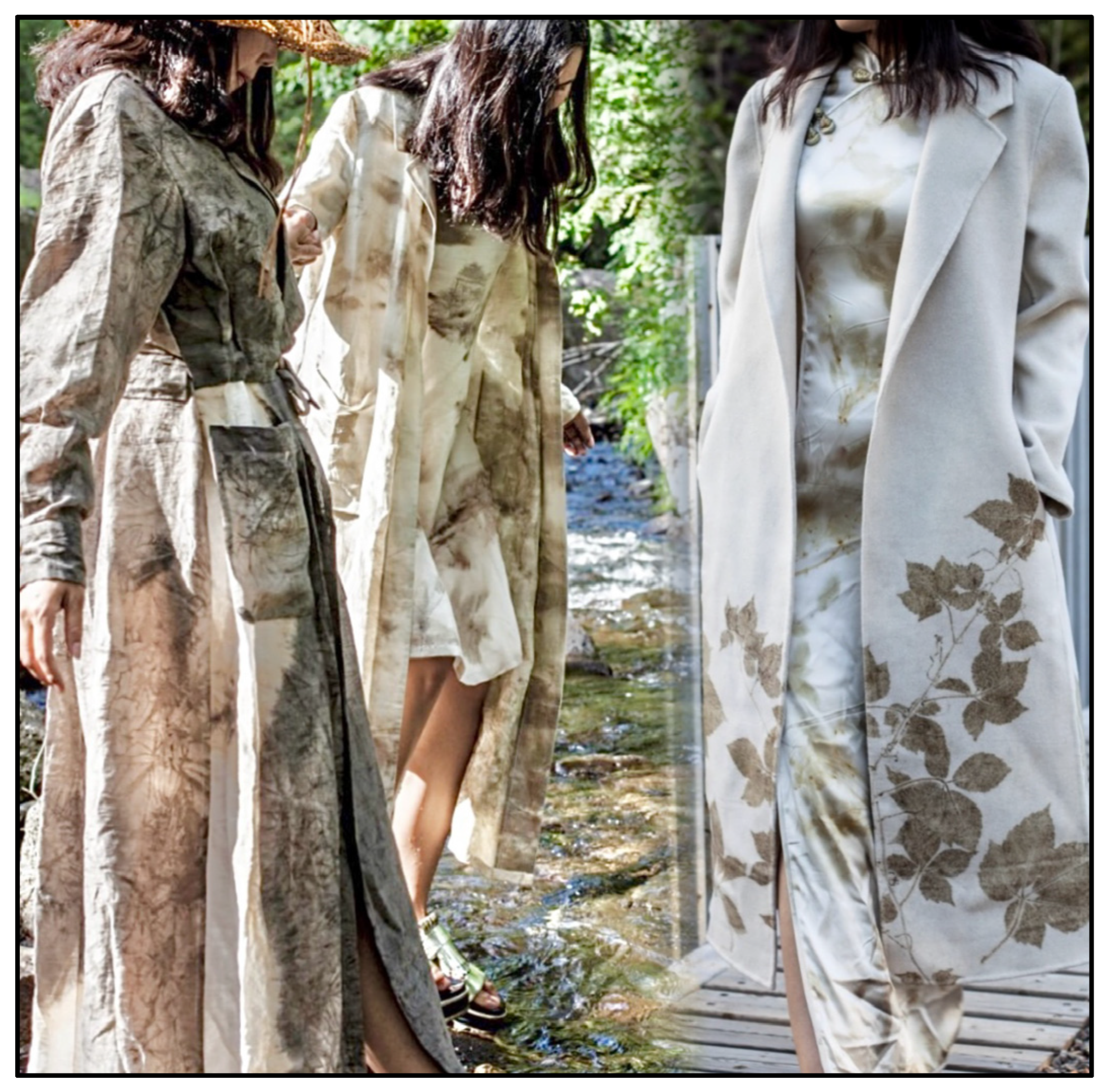
Eco-printing, also called plant transfer printing, has attracted growing attention in textile and apparel research as sustainable fashion turns to lower impact technologies. Earlier studies have shown that the fashion industry creates substantial environmental pressure through resource consumption, chemical use, and pollution discharge [10,11]. This has increased interest in plant-based and lower impact alternatives. Eco-printing is notable because plant materials act as both pigment sources and pattern carriers. Through steaming, bundling, pounding, and related processes, botanical colours and forms can be transferred directly onto textile surfaces. As shown in Figure 1, eco-printing is discussed not only as a cleaner colouring method but also as a design approach that combines material sustainability, process experimentation, and nature-based aesthetic expression.
Research on eco-printing and related natural colouring techniques has developed along three main lines. The first focuses on material and environmental attributes. These studies emphasise the potential of plant-based dyes, biobased mordants, and milder processing conditions to reduce chemical intensity and wastewater burden. The second focuses on process and technical attributes. This work examines how plant species, mordanting methods, pH, temperature, fibre type, and printing procedures influence hue, pattern clarity, colour fastness, and reproducibility. It also points out that natural colouring still faces clear problems in standardisation and scalability [11]. The third focuses on aesthetic and design attributes. These studies highlight the ability of eco-printing to produce irregular textures, layered colours, and nonrepeatable visual outcomes, which can enhance product uniqueness, narrative quality, and emotional appeal. Taken together, these studies show that eco-printing should be understood not only as a colouring technique, but also as a set of product attributes with material, technical, and aesthetic meanings.
Once attention shifts from production and process improvement to consumer acceptance in sustainable womenswear, several limitations become clear. Much of the literature remains production-oriented. It says little about how consumers perceive the external attributes of eco-printed products or how these perceptions shape evaluation. Research on sustainable fashion has shown that consumer response is influenced not only by environmental concern, but also by functional, emotional, aesthetic, and symbolic considerations [6,7,8,12]. More recent evidence suggests that consumer evaluation of sustainable garments is shaped by product-level cues such as material type, garment visibility, and skin contact, rather than by abstract sustainability claims alone. This suggests that the market acceptance of eco-printed womenswear is unlikely to depend only on environmental promise. It is more likely to depend on how consumers interpret visible and tangible design cues.
From this perspective, eco-printed womenswear can be understood as a system of externally perceivable product attributes. Three dimensions are especially important. Fabric Perception refers to consumers’ judgments of textile touch, comfort, naturalness, and material quality. Colour Preference refers to consumers’ responses to hue, saturation, natural appearance, and overall visual preference. Structure and Craft Awareness refers to consumers’ perceptions of silhouette, workmanship, durability, and the extent to which a garment appears to embody thoughtful sustainable design. Earlier process-oriented studies often treated these characteristics as production variables. In this study, they are treated as external design cues that are visible, tangible, and interpretable from the consumer’s point of view. These cues provide the product-level foundation for the evaluative processes discussed in the following sections.

2.2. Perceived Value in Eco-Printed Womenswear

In sustainable apparel research, consumer response is rarely determined by environmental attributes alone. Consumers usually encounter concrete product cues, translate them into evaluative judgments, and then form broader perceptions of product worth. Consumption value theory suggests that product choice is shaped by multiple value dimensions rather than by a single utilitarian consideration [13]. Later work also developed perceived value as a multidimensional construct and showed that performance-related value and emotional value are especially important in explaining attitudes and behaviour [14]. In sustainable fashion, this means that sustainability is unlikely to generate favourable responses unless consumers see it as practically relevant, aesthetically appealing, and environmentally meaningful [8,15,16,17].
Three perceived value dimensions are especially relevant in eco-printed womenswear. The first is functional value, which refers to judgments of practicality, comfort, quality, consistency, and everyday wearability. Apparel is a highly embodied product category. Textile properties, tactile sensations, and fit-related experiences often directly affect whether a garment is judged as worth purchasing. Research on sustainable garments shows that material type, garment visibility, and skin contact shape consumer evaluation, which means that materiality and use experience are central to sustainable apparel acceptance. Related studies also suggest that if a product does not meet expectations of quality, comfort, and daily functionality, sustainability claims alone are unlikely to support a favourable evaluation [18,19].
The second dimension is emotional value which is particularly important in eco-printed womenswear as this approach relies heavily on visual, tactile, and symbolic expressions to create meaningful user experiences. Its naturally generated colour layers, the non-repeatability of botanical motifs, and the distinctiveness associated with handcraft can evoke aesthetic pleasure, emotional resonance, and self-expression. Earlier studies have shown that apparel does more than protect the body or serve utilitarian needs. It also participates in identity construction and value expression, and self-narrative-based research similarly shows that emotional value is not secondary. It is a key part of purchase-related attitudes and behaviour.
The third is environmental value, which refers to consumers’ subjective judgements of ecological benefit, environmental responsibility, and sustainability significance. Environmental value is not the same as objective environmental performance. It depends on how consumers interpret that performance. Sustainability has become visible through recognisable product cues before environmental value can form. Recent studies in sustainable fashion show that consumer judgments depend on how materials, production methods, and sustainability narratives are interpreted and translated into the perception that a product is more environmentally responsible [16,17]. More recent evidence also suggests that when consumers perceive apparel as more sustainable, their evaluations of quality and value tend to improve at the same time. This indicates that environmental judgment is embedded in a broader process of product understanding rather than standing apart from other value dimensions.
Together, these three perceived value dimensions provide the evaluative basis through which eco-printed womenswear is judged by consumers. In this study, they function as the key value dimensions linking external product attributes to later consumer responses.

2.3. Consumer Response in Sustainable Fashion Consumption

In consumer behaviour research, consumer attitude and purchase intention are usually treated as two key outcome variables that connect product evaluation with prospective behavioural response. Classic behavioural theory suggests that individuals first form beliefs about salient object attributes. They then integrate these beliefs into an overall evaluative attitude. Finally, they translate that attitude into behavioural intention [20,21]. These theories were not originally developed for apparel or sustainable consumption, but they still provide a useful basis for understanding the acceptance of eco-printed womenswear.
This mechanism is especially relevant in sustainable fashion because favourable purchase intention does not arise automatically from sustainability recognition. Existing studies show that a favourable attitude toward sustainable clothing usually increases purchase intention. However, this relationship can be weakened by concerns about greenwashing, perceived aesthetic risk, and uncertainty about product performance [18,19,22]. In other words, consumers do not move directly from sustainability recognition to purchase intention. They first form an overall evaluative attitude toward the product. That attitude then becomes an important condition for purchase-related response.
This issue matters particularly in eco-printed womenswear because favourable purchase intention is unlikely to arise directly from sustainability recognition alone. Consumer attitude should therefore not be understood simply as liking or disliking. It is better understood as a more integrated evaluative orientation. That orientation develops after consumers consider whether a garment appears worthwhile, attractive, and credible as a sustainable fashion product. A stable positive attitude is more likely to emerge when eco-printed womenswear is judged as practically useful, visually appealing, and sustainably meaningful [18,19].
Purchase intention refers to the consumer’s subjective likelihood of engaging in future purchasing behaviour, such as trying, purchasing, recommending, or continuing to consider a product category [20,21]. Although purchase intention is not the same as actual behaviour, it is usually treated as one of the closest antecedents of behaviour in consumer research [20,21,22]. In the context of eco-printed womenswear, purchase intention does not refer to abstract support for sustainability. It refers to whether such support can be translated into a concrete consumption tendency toward a specific fashion product category.
Sustainable fashion research has also repeatedly highlighted the gap between attitude and behaviour. Consumers may support sustainability or report positive attitudes toward sustainable fashion without making corresponding purchasing choices in practice [18,19,22]. Related studies further suggest that even when a favourable attitude has formed, concerns about greenwashing and aesthetic uncertainty may still weaken the translation from attitude into behavioural intention [19]. These findings are directly relevant to eco-printed womenswear. Simply claiming environmental superiority is not enough to guarantee market acceptance yet the product must also reduce aesthetic uncertainty, quality-related concern, and interpretive ambiguity at the design level. Only then can value judgments be converted more securely into positive attitudes and purchase intention.
For this reason, consumer attitude and purchase intention are treated here as two key outcome variables. Consumer attitude reflects the overall evaluative response formed after value judgments accumulate. Purchase intention reflects the further translation of that evaluation into prospective consumption tendency.

2.4. Theoretical Basis and Development of Research Hypotheses

2.4.1. Theoretical Foundations

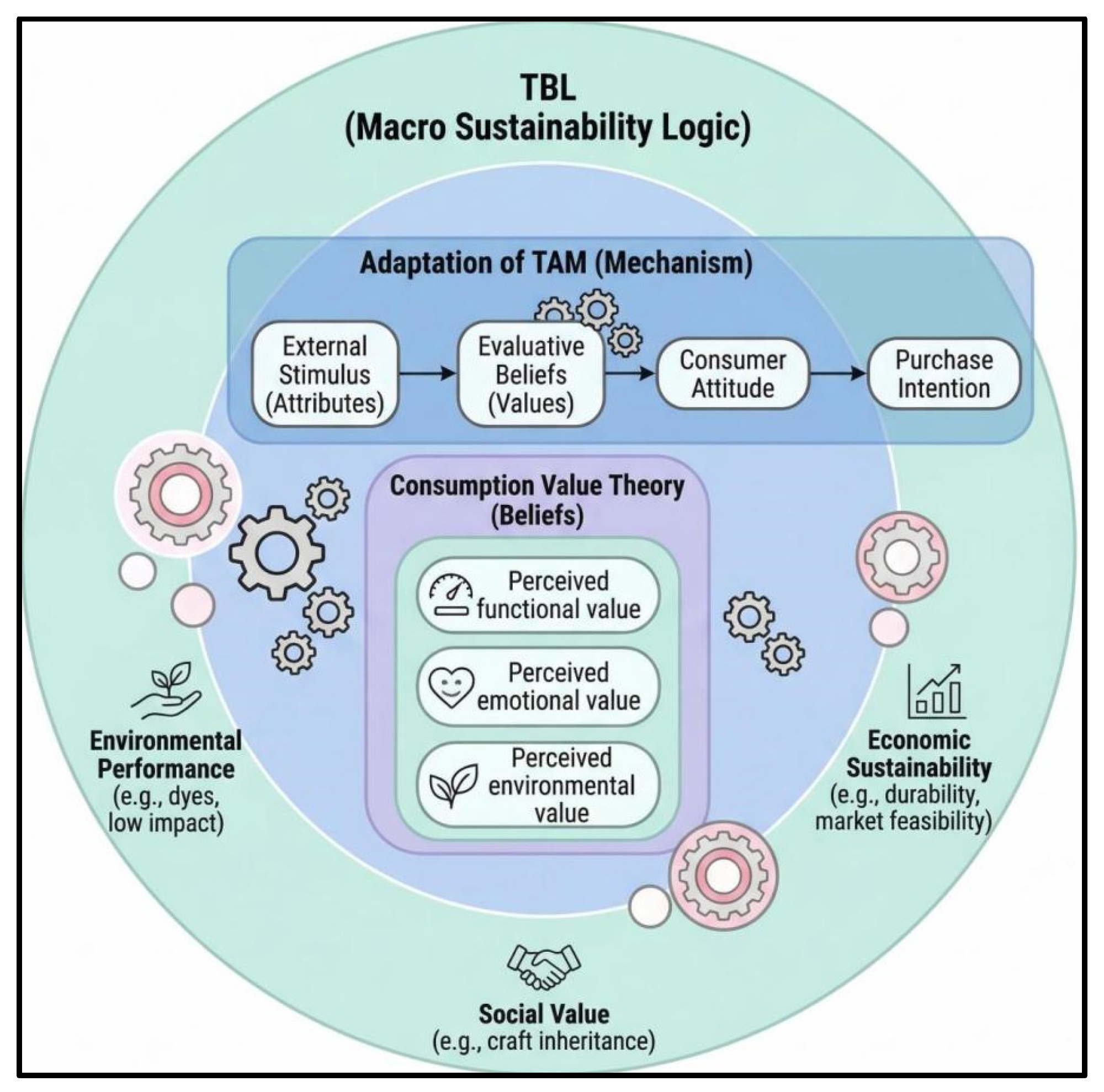
Existing consumer acceptance studies commonly explain purchase-related responses through a belief, attitude, and intention logic. This logic provides the main theoretical basis for the analysis because eco-printed womenswear is examined here as a product category whose external attributes may shape consumer beliefs, consumer attitude, and purchase intention [20,21,22]. In this sense, the Technology Acceptance Model, or TAM, is adopted as the core explanatory mechanism. It is not used here as a technology adoption model in the strict sense. Instead, it is used as a parsimonious behavioural framework for explaining how externally perceivable design cues may be translated into purchase related responses.
Eco-printed womenswear also differs from ordinary fashion products because its value is not limited to functional use or visual appeal. It carries sustainability-related meanings through plant-based colouration, material expression, visible craft traces, and environmental claims. For this reason, the Triple Bottom Line perspective and consumption value theory are introduced in supporting roles. The use of TBL is appropriate because eco-printed womenswear involves not only environmental issues such as lower impact colouration and reduced chemical intensity, but also social and cultural meanings related to craft visibility and responsible production, as well as economic considerations related to usability, durability, and market viability [23,24]. TBL therefore helps define the sustainability context in which the product is positioned. It does not explain the consumer acceptance process itself.
Consumption value theory is introduced for a different reason. Product choice is commonly understood to be driven by multiple value dimensions rather than by a single utilitarian standard. Later perceived value research further operationalized these judgments in multidimensional form and showed that performance-related value and emotional value are especially important in shaping attitudes and behaviour [14]. In the context of eco-printed womenswear, this perspective helps specify the evaluative belief layer through which external design attributes are interpreted, especially in terms of functional value, emotional value, and environmental value.
Accordingly, TAM serves as the core explanatory mechanism, while TBL defines the sustainability context and consumption value theory specifies the multidimensional value layer through which eco-printed womenswear is evaluated, as shown in Figure 2.

2.4.2. Conceptual Path of Consumer Acceptance

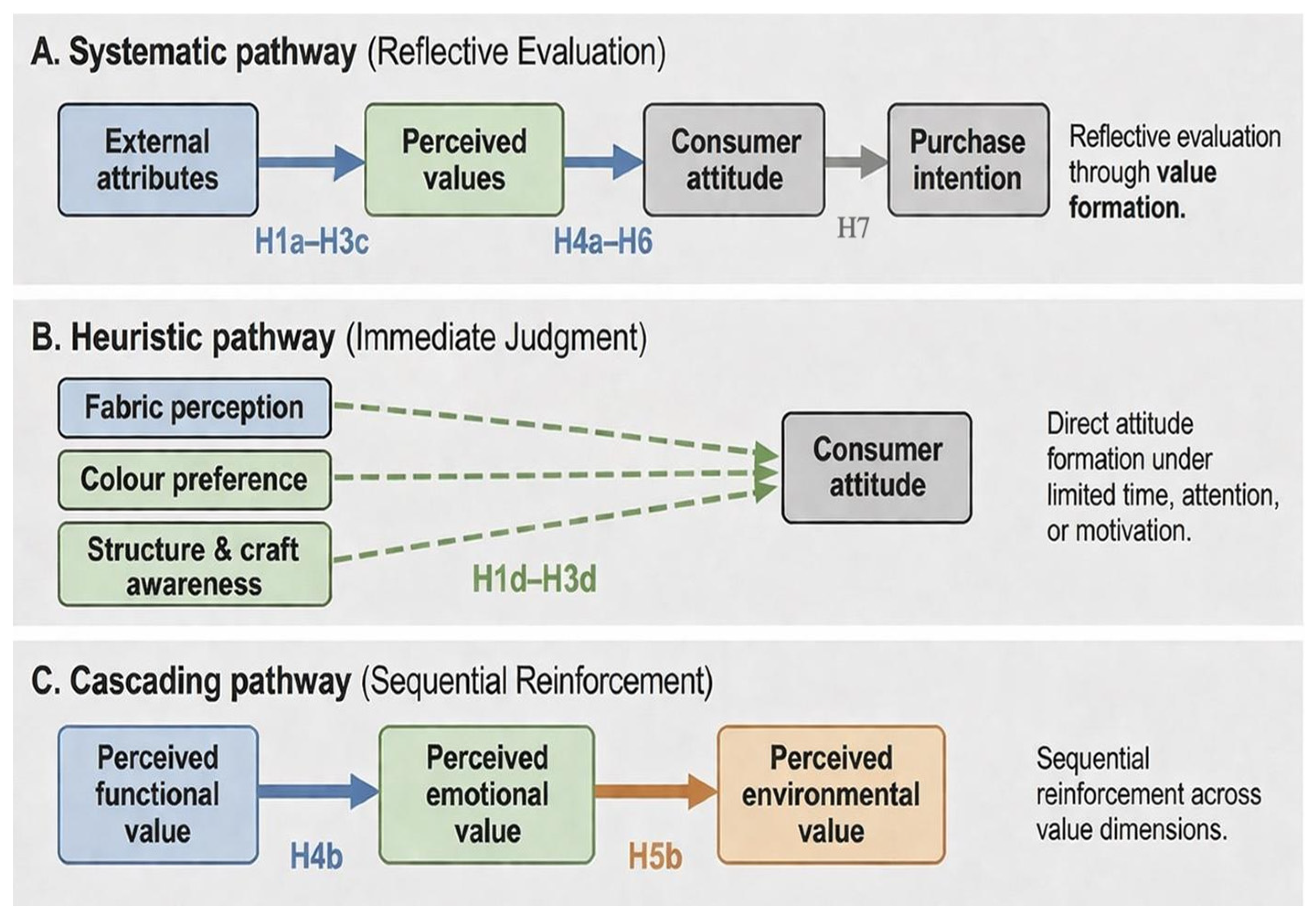
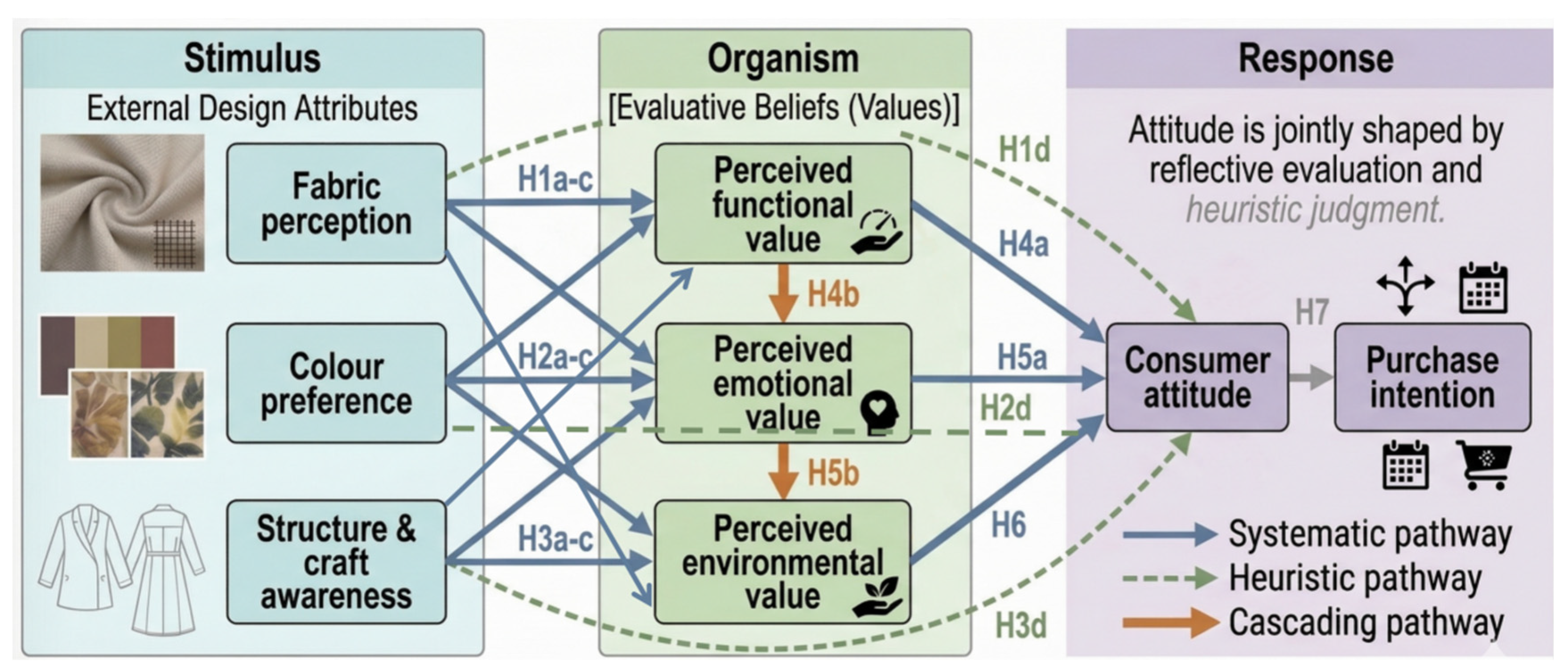
Based on this theoretical structure, the conceptual framework specifies three complementary pathways of consumer acceptance. As shown in Figure 3, first is a systematic pathway, reflecting a reflective evaluation process in which external design attributes influence functional value, emotional value, and environmental value, and these value dimensions subsequently shape consumer attitude and purchase intention. This is consistent with value-based research in sustainable fashion [8,14,16,20].
The second is a heuristic pathway, reflecting immediate judgement through the direct effect of salient external cues on consumer attitude. Under conditions of limited attention, cues such as fabric feel, colour impressions, and visible craft traces may influence consumer attitude more directly [25,26,27]. This pathway is especially relevant in fashion consumption, where first impressions and sensory cues often play a strong role in evaluation [28].
The third is a cascading pathway, reflecting sequential reinforcement among value dimensions. Functional value may strengthen emotional value, and emotional value may further support environmental value. This suggests that value judgements may reinforce one another in a progressive way [14,16,19].

2.5. Hypothesis Development

2.5.1. Fabric Perception and Perceived Value

Fabric constitutes the most immediate material interface between apparel and the human body. It therefore plays a foundational role in sustainable apparel evaluation. Prior studies indicate that positive evaluations of softness, breathability, elastic recovery, drape, and durability contribute to stronger perceptions of product performance and wearing comfort, thereby enhancing functional value [29]. Fabric may also influence emotional response through tactile sensation, warmth, natural texture, and sensory comfort, which suggests that touch is an important route through which material attributes acquire emotional meaning [30]. In addition, consumers often interpret fabric as an environmental cue because fibre origin, biodegradability, chemical intensity, and certification information may signal ecological responsibility.
In the context of eco-printed womenswear, fabric-related cues are especially salient because botanical colouration is often associated with natural texture, low intervention material expression, and a closer connection between the garment surface and the underlying textile base. Consumers may therefore infer not only comfort and usability from fabric-related cues, but also emotional warmth and environmental significance.
Accordingly, the following hypotheses are proposed:
H1a. 
Fabric Perception has a significant positive effect on functional value.
H1b. 
Fabric Perception has a significant positive effect on emotional value.
H1c. 
Fabric Perception has a significant positive effect on environmental value.

2.5.2. Colour Preference and Perceived Value

Colour is typically among the first cues processed in visual perception. It is central to aesthetic judgement, style recognition, and immediate product appeal. In eco-printed womenswear, colour also carries additional interpretive meaning because botanical colouration may be read by consumers as natural, handcrafted, or indicative of lower chemical intervention. Although colour is often treated as a primarily aesthetic element, consumers may also associate it with product performance expectations. In apparel contexts, colour fastness, ease of care, and wearing compatibility are often inferred from colour presentation. Research in colour psychology further indicates that visual cues influence not only emotional response, but also broader product evaluation [31,32]. Preferred hues may also evoke pleasure, confidence, and congruence with self-identity, thereby strengthening emotional value [33].
For eco-printed womenswear, Colour Preference is therefore likely to influence more than visual attractiveness alone. Consumers may associate preferred botanical hues with aesthetic pleasure, product appropriateness, and environmental authenticity, especially when colour is interpreted together with natural materials and handcrafted expression.
Accordingly, the following hypotheses are proposed:
H2a. 
Colour Preference has a significant positive effect on functional value.
H2b. 
Colour Preference has a significant positive effect on emotional value.
H2c. 
Colour Preference has a significant positive effect on environmental value.

2.5.3. Structure and Craft Awareness and Perceived Value

Structure and Craft Awareness reflects consumers’ perceptions of garment construction quality, durability, repairability, and the extent to which a design appears to embody thoughtful sustainable practice. In sustainable womenswear, visible structural logic and craft integrity may signal not only product quality and fit, but also longer use value and environmental responsibility. These cues are particularly important in eco-printed womenswear because they connect eco-printing to the garment as a whole rather than reducing it to surface decoration alone. Consumers may therefore infer practical value from construction quality, emotional value from crafted distinctiveness, and environmental value from durability and perceived design responsibility.
Accordingly, the following hypotheses are proposed:
H3a. 
Structure and Craft Awareness has a significant positive effect on functional value.
H3b. 
Structure and Craft Awareness has a significant positive effect on emotional value.
H3c. 
Structure and Craft Awareness has a significant positive effect on environmental value.

2.5.4. Heuristic Effects of External Attributes on Consumer Attitude

In addition to the main value-based pathway, sustainable fashion evaluation may also involve more immediate judgement based on salient external cues. In fashion consumption, fabric feel, colour impressions, and visible craft details may influence overall attitudes before consumers fully articulate their value judgments [27,28]. This is particularly relevant in eco-printed womenswear, where sensory and visual impressions are central to early evaluation. Accordingly, Fabric Perception, Colour Preference, and Structure and Craft Awareness are also expected to exert direct positive effects on consumer attitude.
Accordingly, the following hypotheses are proposed:
H1d. 
Fabric Perception has a significant positive effect on consumer attitude.
H2d. 
Colour Preference has a significant positive effect on consumer attitude.
H3d. 
Structure and Craft Awareness has a significant positive effect on consumer attitude.

2.5.5. Cascading Relationships Among Perceived Value Dimensions

Functional value may strengthen emotional value by increasing reassurance and satisfaction, while emotional value may further strengthen environmental value by making the product more meaningful and worthy of support. In eco-printed womenswear, this suggests that consumers may first form functional reassurance, then emotional resonance, and finally stronger environmental meaning.
Accordingly, the following hypotheses are proposed:
H4b. 
Functional value has a significant positive effect on emotional value.
H5b. 
Emotional value has a significant positive effect on environmental value.

2.5.6. Perceived Value and Consumer Attitude

The model assumes that functional value, emotional value, and environmental value jointly shape consumer attitude toward eco-printed womenswear. When these value judgments are positive, a more favourable overall attitude is expected to emerge.
Accordingly, the following hypotheses are proposed:
H4a. 
Functional value has a significant positive effect on consumer attitude.
H5a. 
Emotional value has a significant positive effect on consumer attitude.
H6. 
Environmental value has a significant positive effect on consumer attitude.

2.5.7. Consumer Attitude and Purchase Intention

Finally, consumer attitude is treated as the most immediate antecedent of purchase intention in the present model. Once consumers form a favourable overall evaluation of eco-printed womenswear, their willingness to purchase is expected to increase accordingly [20,22]. In this context, purchase intention reflects not only general support for sustainability, but also the likelihood that such support is translated into concrete interest in an identifiable fashion product.
Accordingly, the following hypothesis is proposed:
H7. 
Consumer attitude has a significant positive effect on purchase intention. Figure 4 presents all the proposed hypotheses.

3. Methodology

3.1. Research Design

This study adopted an exploratory sequential mixed-methods design grounded in a pragmatic research orientation. The overall research process followed a three-stage logic of qualitative exploration, quantitative validation, and integrated translation. This design was selected because consumer acceptance of eco-printed womenswear involves not only the contextual identification of design-relevant product attributes but also the empirical verification of the mechanisms through which consumers evaluate such attributes. In addition, the study included a later translation stage in order to connect empirical findings with governance-oriented design interpretation. Accordingly, the study goes beyond asking whether consumers accept eco-printed womenswear. It further examines which externally designable attributes drive acceptance, how this mechanism is formed, and how the resulting evidence can be translated into sustainable design decision support.
In the qualitative phase, the study first identified the external product attributes of eco-printed womenswear that are meaningful for design intervention and clarified how these attributes are understood by design practitioners, industry actors, and relevant experts. In the quantitative phase, a cross-sectional questionnaire survey and structural equation modelling were used to test the conceptual pathway linking external attributes, perceived value, consumer attitude, and purchase intention. In the final integrative phase, the findings from the qualitative and quantitative stages were further translated into an analytical framework for design governance, with the aim of supporting design-priority setting, resource allocation, and staged decision-making. In this way, the methodological process moved from attribute identification to mechanism validation and then to decision translation, thereby forming a complete methodological chain from consumer acceptance research to sustainable design governance.

3.2. Qualitative Phase

The qualitative phase aimed to identify the key external attributes of eco-printed womenswear and to explore how these attributes are understood and applied in design, production, and market practice. A combination of purposive sampling and snowball sampling was used to recruit 12 participants, including fashion designers, industry experts or scholars, and business or manufacturing representatives, with four participants in each group. This composition enabled the study to capture perspectives from design conception, technical implementation, and commercial application, thereby providing a multi-stakeholder view of the product context.
Semi-structured interviews were conducted either online or face to face. With informed consent, all interviews were audio-recorded and transcribed verbatim. The interviews focused on several interrelated areas, including fabric-related perception, colour expression, structure and craft, perceived value, consumer response, and sustainability-oriented design practice. The data were analysed using Braun and Clarke’s six-step thematic analysis approach.
The qualitative analysis identified three core external attribute dimensions of eco-printed womenswear: Fabric Perception, Colour Preference, and Structure and Craft Awareness. These findings supported the contextual refinement of the quantitative instrument by confirming the suitability of the adopted constructs in the eco-printed womenswear setting. The qualitative phase was not used to develop an entirely new measurement scale, but to support the refinement of selected questionnaire wording before the structured measurement and path-testing stage. A concise mapping between qualitative themes and the quantitative instrument is provided in Appendix A.1, while a shortened code-to-theme matrix is presented in Appendix A.2.
Table 1 presents the profile of the interview participants. The qualitative sample included participants with relevant experience in sustainable fashion design, eco-printing, market operation, and brand development.

3.3. Quantitative Phase

The quantitative phase aimed to test the consumer acceptance mechanism of eco-printed womenswear using a large-sample survey. The questionnaire was adapted from Liu’s sustainable clothing needs scale [33] and revised for the context of eco-printed womenswear, while retaining its core constructs of product attributes, perceived value, consumer attitude, and purchase intention. The final questionnaire contained 30 measurement items corresponding to 8 latent variables: Fabric Perception, Colour Preference, Structure and Craft Awareness, functional value, emotional value, environmental value, consumer attitude, and purchase intention. All the items were measured using a seven-point Likert scale.
Before the formal survey, the instrument was first reviewed by experts and then pretested with 60 female consumers who had prior experience with, or interest in, sustainable apparel. During the pretest stage, exploratory factor analysis, reliability analysis, and multiple rounds of item revision and deletion were conducted to optimise and finalise the scale.
The formal survey adopted a cross-sectional questionnaire design targeting female consumers aged 18–45 in mainland China. Data were collected online through the Wenjuanxing platform. A total of 1100 questionnaires were returned. After screening for purchase experience, removing duplicate IP responses, checking response duration, and applying attention-check criteria, 992 valid questionnaires were retained, yielding an effective response rate of 90.18%. This final sample size was sufficient for subsequent confirmatory factor analysis (CFA) and structural equation modelling (SEM).

3.4. Data Analysis

Quantitative data analysis was conducted using SPSS 27.0 and AMOS 27.0. SPSS was used for data cleaning, descriptive statistics, reliability testing, common method bias assessment, and correlation analysis. AMOS was used for confirmatory factor analysis and structural equation modelling.
The reliability and validity of the measurement model were assessed using Cronbach’s α, composite reliability (CR), average variance extracted (AVE), and discriminant validity indicators. The structural model was evaluated using standard fit indices, including χ2/df, RMSEA, CFI, and TLI, and path coefficients were estimated using the maximum likelihood method.
The purpose of the quantitative phase was not limited to identifying statistically significant relationships among variables. More importantly, it was intended to reveal the relative strength of different attribute-based pathways to provide an empirical basis for subsequent design-priority ranking and governance-oriented translation. In this sense, the quantitative stage served a dual function: it validated the consumer acceptance mechanism and, at the same time, generated quantifiable, comparable, and traceable evidence for the later design governance framework.

3.5. Methodological Innovation and Design Governance Translation

After the consumer acceptance mechanism was validated, the study further advanced the mixed-methods design through a process of methodological translation. More specifically, the design attribute dimensions identified in the qualitative phase and the consumer behavioural mechanism validated in the quantitative phase were not treated as endpoints of theoretical explanation alone but were further integrated into an analytical framework oriented towards design governance. The underlying logic was straightforward: the qualitative phase identified the relevant design attributes, the quantitative phase verified their behavioural effects, and the subsequent weighting and prioritisation procedure integrated what consumers explicitly stated as important with what empirically drove purchase intention. In this way, design decision-making moved beyond intuition-based judgement or single aesthetic criteria toward an evidence-based logic of priority governance.
From the perspective of sustainable design governance, this integrative step has two implications. First, it advances sustainable design in eco-printed womenswear beyond surface-level ecological aesthetics or generic green claims by reframing it as a structured design system that can be systematically analysed and prioritised. Second, it allows the research findings to directly inform stage-gate decision-making, resource allocation, internal design review, and product development rules, thereby transforming the AHP from a simple ranking tool into a governance-oriented instrument with practical decision rules and action logic. In this sense, the methodological contribution of the present study lies not only in explaining how consumers accept eco-printed womenswear but also in clarifying how design teams can use such evidence to make sustainable design decisions.

3.6. Ethical Considerations

Both the qualitative interview phase and the quantitative survey phase followed the principles of informed consent, voluntary participation, anonymity, confidentiality, and risk minimization. Before data collection, all participants were informed of the purpose of the study, the form of participation, the intended use of the data, and the relevant privacy protection measures. Participants were free to withdraw from study at any stage without any adverse consequences. Any personal identifying information involved in the interviews or questionnaires was anonymized during subsequent data processing and reporting to ensure procedural compliance and protect participants’ rights and interests.

4. Data and Results Analysis

4.1. Qualitative Data Analysis

Thematic Structure of Eco-Printed Womenswear Attributes

The qualitative phase identified how key stakeholders in the eco-printing context understood eco-printed womenswear in terms of functional performance, aesthetic and emotional experience, environmental responsibility, and behavioural outcomes. Following the procedures of data familiarisation, initial coding, theme searching, theme reviewing, and theme naming, the interview data yielded 36 initial categories, which were subsequently consolidated into 12 core themes. These themes were then further grouped into four higher-order categories: material–functional attributes, colour–emotional attributes, environmental–structural attributes, and integrated value perception. The final thematic framework was established through repeated coding, thematic clustering, theme review, and category refinement. This thematic structure provided the interpretive basis for subsequent variable specification and quantitative model development.
Among the first three higher-order categories, nine design-relevant themes were particularly prominent. With respect to material–functional attributes, the interview data emphasised primarily material ecology, tactile experience, and functional value added. Within colour–emotional attributes, the core themes were natural aesthetics, psychological perception, and technical challenges. With respect to environmental–structural attributes, stakeholders consistently highlighted structural innovation, sustainability, and user experience. In the subsequent stage of the study, these themes formed an important basis for the sub-criteria system of the analytic hierarchy process (AHP) and helped establish semantic continuity and consistency between the qualitative phase and the quantitative model.
As shown in Table 2, the first three higher-order categories capture the externally designable attributes of eco-printed womenswear, whereas the fourth category reflects how these attributes are further integrated into higher-level value perceptions and behavioural interpretations. This structure provided the qualitative foundation for subsequent variable specification, structural equation modelling (SEM) validation, and the construction of evaluation criteria based on the analytic hierarchy process (AHP).
From the perspective of design decision-making, stakeholders consistently regarded material–functional attributes as the basic conditions for the viability of eco-printed apparel rather than as optional or supplementary advantages. Material ecology, tactile comfort, and functional value added were repeatedly described as prerequisites for the market feasibility of eco-printed garments. This suggests that when a product fails to meet basic expectations in terms of comfort, durability, or safety, sustainability claims alone are insufficient to secure market acceptance. In contrast, colour–emotional attributes were viewed as the primary mediators through which aesthetic differentiation and emotional resonance are achieved. Stakeholders emphasise that natural aesthetics and psychological perception are central to the distinctiveness of a product, while technical constraints such as limited colour fastness and batch variation remain persistent practical challenges.
The third category, namely, environmental–structural attributes, was not understood by stakeholders as merely decorative or stylistic. Rather, it was interpreted as a system-level design logic. Structural innovation, recyclability, life-cycle extension, modular design, and ease of use were repeatedly described as important mechanisms for reconciling sustainability with commercial viability. Finally, the interview results also indicated that consumers’ behavioural responses often arise from a more integrated sense of overall value, in which functional, emotional, and environmental dimensions are not evaluated in isolation but instead jointly inform consumer judgement.
Taken together, the qualitative findings support the identification of Fabric Perception, Colour Preference, and Structure and Craft Awareness as the core externally designable product attributes of eco-printed womenswear. They also support the treatment of perceived value as the key mediating psychological mechanism linking design attributes to consumer response.

4.2. Quantitative Data Analysis

4.2.1. Sample Source and Data Quality

Quantitative analysis was conducted using a sample of female consumers aged 18 to 45 in mainland China. Data were collected through a questionnaire survey. A total of 1100 questionnaires were distributed. After screening for invalid responses, duplicate submissions, and response quality, 992 valid questionnaires were retained, giving an effective response rate of 90.18%. According to commonly accepted standards in social science research, this sample size was sufficient to support the subsequent multivariate analysis and structural equation modelling.
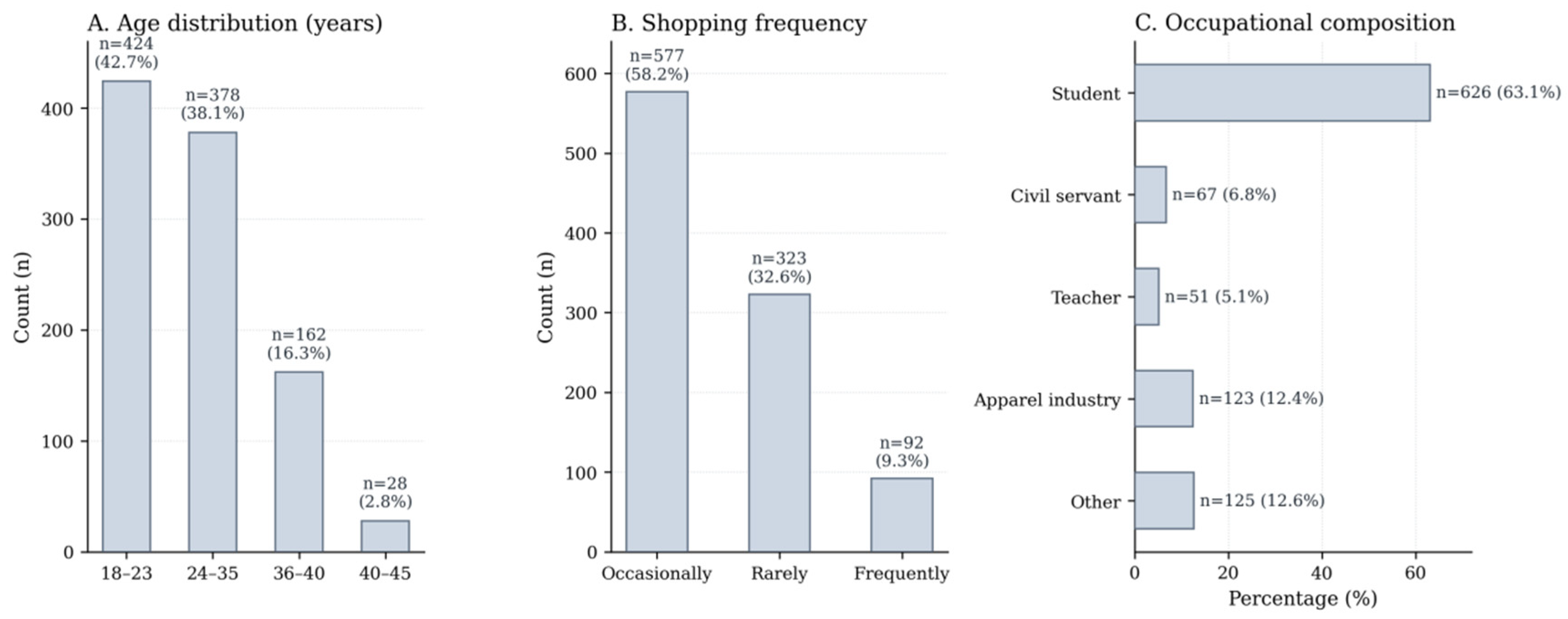
As shown in Figure 5 and Table 3, the sample was concentrated mainly among younger female consumers. Respondents aged 18 to 23 accounted for 42.742% of the sample, while those aged 24 to 35 accounted for 38.105%. Together, these two groups represented 80.847% of all respondents. In terms of shopping frequency, 58.165% reported purchasing clothing occasionally, 32.560% reported purchasing clothing infrequently, and 9.274% reported purchasing clothing frequently. Overall, the sample consisted mainly of consumers with low or moderate clothing purchase frequency. In terms of occupation, students represented the largest group at 63.105%, followed by respondents in other occupations at 12.601% and respondents working in the apparel industry at 12.399%.
This sample profile was closely aligned with the target consumption context of eco-printed womenswear. Because women’s apparel consumption is closely associated with perceptions of fabric touch, colour expression, and visible design cues, a sample centred on younger female consumers provided a more focused basis for examining how the product attributes of eco-printed womenswear entered the evaluation process. The sample was therefore suitable for explaining how younger female consumers in mainland China evaluated eco-printed womenswear.

4.2.2. Descriptive Statistics and Common Method Bias

To examine the overall distribution of the study variables, descriptive statistical analysis was conducted for Fabric Perception, Colour Preference, Structure and Craft Awareness, functional value, emotional value, environmental value, consumer attitude, and purchase intention. The results showed that the mean scores of all variables were generally at a moderate to high level, indicating that respondents held relatively positive evaluations of eco-printed womenswear overall. Among these variables, environmental value recorded the highest mean score (M = 5.815, SD = 0.582), whereas Fabric Perception showed the largest standard deviation (SD = 1.640), indicating greater variation in respondents’ evaluations of specific product attributes.
Appendix B.1 reports the descriptive statistics for all variables, including the minimum, maximum, mean, standard deviation, skewness, and kurtosis values. In terms of distributional characteristics, the skewness and kurtosis values for all variables fell within acceptable ranges, and no substantial deviations from normality were observed. For example, Fabric Perception showed a skewness of −0.237 and a kurtosis of −1.026; environmental value showed a skewness of 0.288 and a kurtosis of −1.101; and consumer attitude showed a skewness of 0.112 and a kurtosis of −1.305. These findings indicate that the data were broadly suitable for subsequent parametric testing and structural equation modelling.
Because the data were collected mainly through a self-reported questionnaire at a single point in time, Harman’s single factor test was used to assess the potential risk of common method bias. The results showed that unrotated exploratory factor analysis extracted five factors with eigenvalues greater than 1, and the first factor accounted for 33.164% of the total variance, which was below the commonly used threshold of 40%. As reported in Appendix B.2, common method bias was therefore not considered a serious threat in the present analysis.

4.2.3. Reliability and Validity

To assess the measurement quality of the formal questionnaire, reliability and validity analyses were conducted for all the constructs. The results showed that the overall scale had a Cronbach’s α of 0.927, a KMO value of 0.927, and a significant Bartlett’s test of sphericity (p < 0.001), indicating high internal consistency and adequate suitability of the data for factor analysis. Appendix B.3 further reports the reliability and validity test results for each variable on a formal scale.
At the construct level, all the variables had Cronbach’s α values above 0.70, KMO values above 0.60, and significant Bartlett’s test results. In addition, all the measurement items exhibited factor loadings above 0.50, suggesting satisfactory correspondence between the items and their respective constructs. These results indicate that the formal scale met the requirements for both reliability and structural validity and was suitable for subsequent empirical analysis.

4.2.4. Correlation Analysis

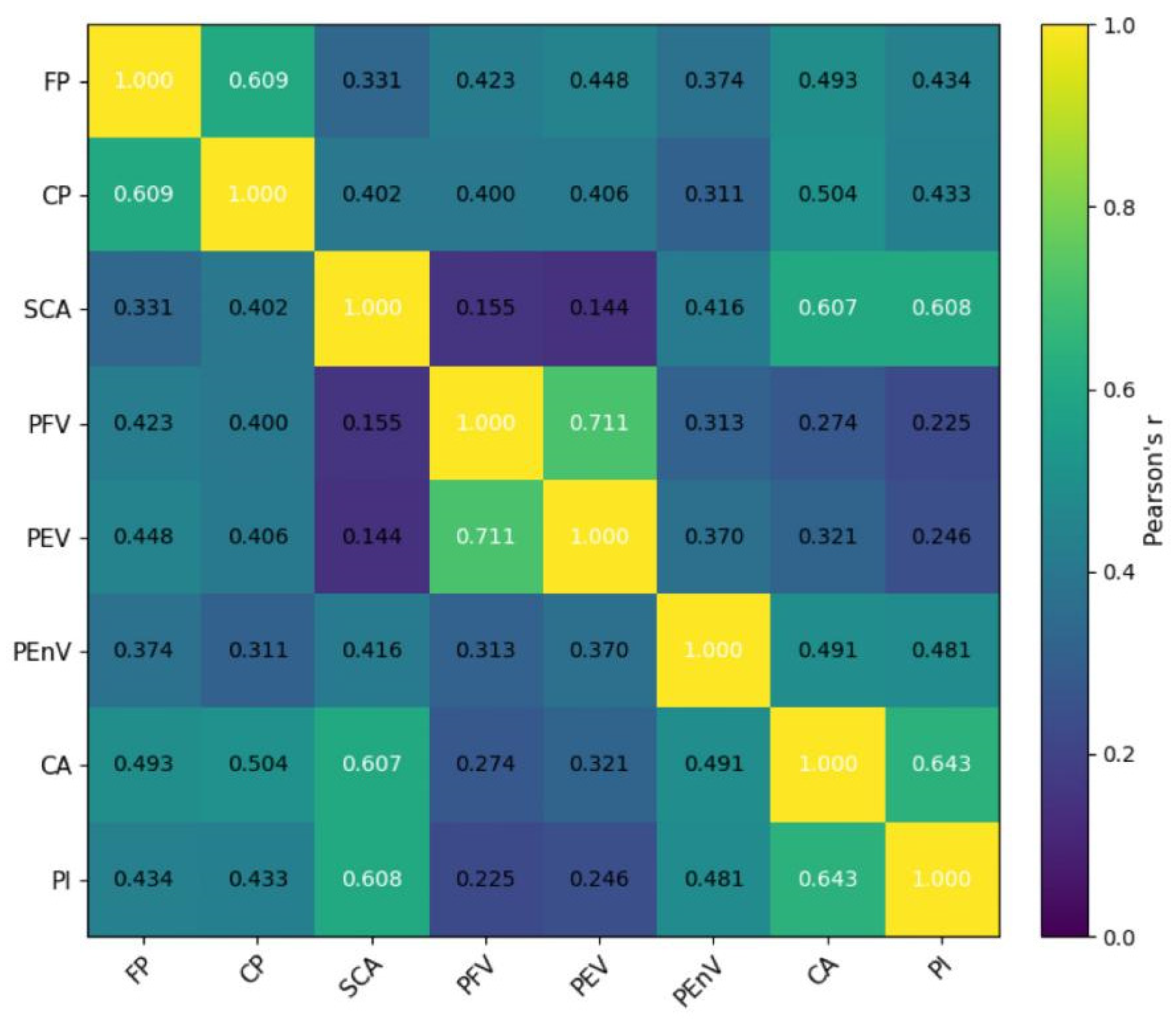
Pearson correlation analysis showed that all core variables were significantly and positively correlated, and the directions of these relationships were consistent with theoretical expectations. As shown in Figure 6, the external design attributes associated with eco-printed womenswear, multidimensional perceived value, consumer attitude, and purchase intention were not isolated from one another. Rather, they formed an interrelated system of consumer evaluation.
Among these relationships, the strongest correlation was observed between functional value and emotional value (r = 0.711, p < 0.01), indicating a close connection between utilitarian judgement and emotional response in consumers’ evaluations of eco-printed womenswear. At the same time, consumer attitude was also significantly and positively correlated with purchase intention (r = 0.643, p < 0.01), suggesting that a more favourable attitude was closely associated with a stronger intention to purchase. In addition, Structure and Craft Awareness showed relatively strong correlations with both consumer attitude (r = 0.607, p < 0.01) and purchase intention (r = 0.608, p < 0.01), indicating that it may play a more important role in overall consumer evaluation.
Overall, these findings provide preliminary support for the subsequent structural equation modelling of the proposed attribute–value–attitude–intention pathway. At the same time, none of the correlation coefficients exceeded 0.80, indicating that severe multicollinearity was not present among the variables.

4.2.5. Structural Equation Model Testing

Model Fit Assessment
Building on the correlation analysis, this study further employed AMOS 27.0 to test the research hypotheses using structural equation modelling (SEM). The model fit results indicated that the overall model reached an acceptable level: χ2 = 1811.603, df = 384, χ2/df = 4.718, GFI = 0.897, RMSEA = 0.061, NFI = 0.916, and CFI = 0.917. The major fit indices met commonly accepted criteria, suggesting that the proposed structural model adequately captured the relationships among the external design attributes, multidimensional perceived value, consumer attitude, and purchase intention associated with eco-printed womenswear. The model was therefore considered suitable for subsequent path testing and mechanism analysis. Table 4 reports the SEM fit results. In terms of overall model fit, although a certain degree of misfit remained, the model fit was still within an acceptable range. Taken together, these results provided a reliable basis for the subsequent interpretation of the structural path coefficients.
Path Coefficients, Hypothesis Testing, and Mechanism Summary
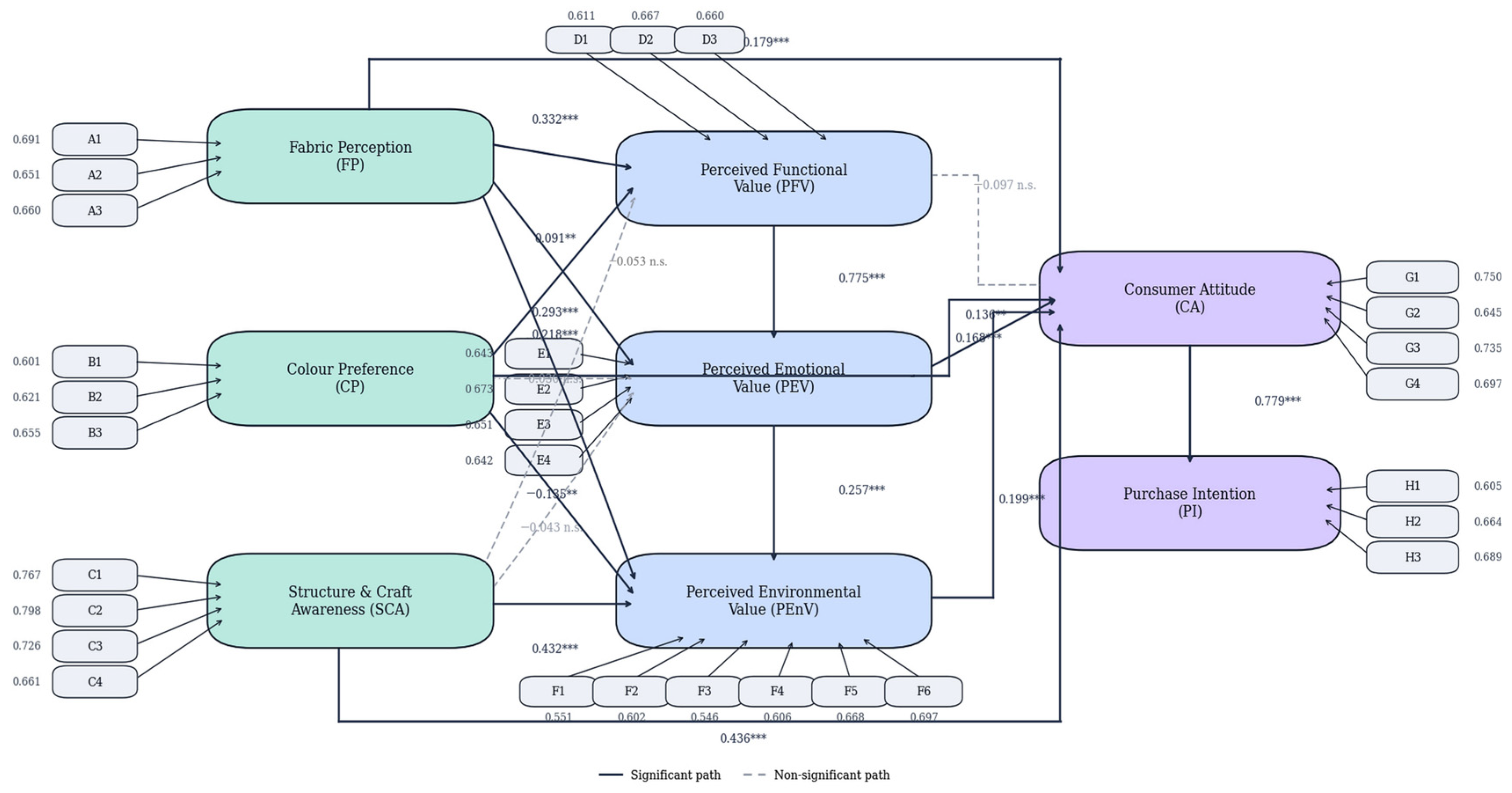
After establishing that the structural model achieved an acceptable fit, the hypothesised paths were further examined. Overall, most hypotheses were supported, although several paths did not reach statistical significance, and one path was statistically significant but opposite to the hypothesised direction. Taken together, these findings provide general support for the proposed framework linking external design attributes, multidimensional perceived value, consumer attitude, and purchase intention. To facilitate interpretation, Table 5 summarises the structural path estimates, significance levels, and hypothesis-testing results, while Figure 7 presents the integrated structural model.
Among the three external design attributes, Fabric Perception showed the most stable pattern of effects (H1a–H1d). It had significant positive effects on perceived functional value, perceived emotional value, perceived environmental value, and consumer attitude, indicating that fabric-related cues constituted the most direct and reliable basis through which consumers evaluated eco-printed womenswear. By contrast, Colour Preference displayed a more complex pattern of effects (H2a–H2d). Its effects on perceived functional value and consumer attitude were supported, whereas its effect on perceived emotional value was not significant, and its effect on perceived environmental value was statistically significant but negative. This suggests that, although visual attractiveness may enhance initial appeal and overall attitude, it does not necessarily strengthen consumers’ positive interpretation of environmental meaning.
Structure and Craft Awareness showed a pattern distinct from the other two attributes (H3a–H3d). It had comparatively strong and significant positive effects on perceived environmental value and consumer attitude, whereas its direct effects on perceived functional value and perceived emotional value were not significant. This indicates that consumers were more likely to interpret structure- and craft-related cues as signals of credibility and sustainability rather than as direct sources of functional or emotional experience. Compared with Fabric Perception and Colour Preference, Structure and Craft Awareness was more strongly associated with perceived environmental value and consumer attitude.
Across the value dimensions, perceived functional value significantly enhanced perceived emotional value, and perceived emotional value in turn significantly strengthened perceived environmental value (H4b, H5b), supporting the proposed cascading relationship among value dimensions. This suggests that consumers’ evaluations of utility, emotional response, and environmental meaning were not formed in isolation, but developed through a progressive process. In terms of attitude formation, the direct effect of perceived functional value on consumer attitude was not supported (H4a), whereas both perceived emotional value and perceived environmental value exerted significant positive effects on consumer attitude (H5a, H6). Finally, consumer attitude had the strongest effect on purchase intention (H7), confirming its role as the most immediate antecedent of behavioural intention in the model.
Overall, the results indicate that consumer acceptance of eco-printed womenswear was not shaped by a single path, but by the combined influence of differentiated attribute effects, progressive value transmission, and the mediating role of consumer attitude. These empirically validated structural relationships not only support the conceptual framework proposed in this study but also provide an empirical basis for the subsequent translation of key structural effects into design decision priorities.

5. Design Decision Translation

5.1. Key Path Coefficients for Decision Translation

Building on the empirically validated structural equation model (SEM), several key structural effects were further translated into decision-relevant evidence for the subsequent weighting procedure. Among the three external design attributes, the standardised path coefficients for consumer attitude were 0.179 for Fabric Perception, 0.168 for Colour Preference, and 0.436 for Structure and Craft Awareness. This finding indicates that in the context of eco-printed womenswear, compared with more immediate surface-level impressions alone, consumers are more likely to form their overall evaluations through cues related to structural rationality and craft credibility. In addition, consumer attitude exerted a strong and significant positive effect on purchase intention (β = 0.779, p < 0.001), further confirming its role as the key behavioural interface linking design attributes to purchase intention.
Moreover, several significant value transmission paths were identified, including Fabric Perception → environmental value (β = 0.218), Structure and Craft Awareness → environmental value (β = 0.432), functional value → emotional value (β = 0.775), emotional value → environmental value (β = 0.257), environmental value → consumer attitude (β = 0.199), and emotional value → consumer attitude (β = 0.136). Taken together, these paths indicate that the consumer evaluation of eco-printed womenswear is not formed within a single value dimension. Rather, it develops progressively through the transmission among functional, emotional, and environmental meanings, which ultimately converge in terms of consumer attitude and purchase intention. These empirically validated effects therefore provide an objective basis for translating behavioural mechanism evidence into a subsequent design-priority setting. In this sense, the logic of translation moves from theory to empirical evidence and from empirical evidence to actionable design governance.

5.2. Construction of the Evaluation Criteria System

To further translate empirical evidence on consumer acceptance into actionable design priorities, this study constructed a three-level data-calibrated analytic hierarchy process (DC-AHP) framework. Unlike conventional AHP, which relies primarily on subjective pairwise comparisons, the criteria system in this study was established through a controlled mapping of two sources of information: qualitative themes and semantic codes extracted from the NVivo 12 analysis, and the validated measurement structure derived from factor analysis and structural equation modelling (SEM). In this way, the framework connects experiential design meanings with measurable decision structures, thereby providing design decision-making with both empirical grounding and operational clarity.
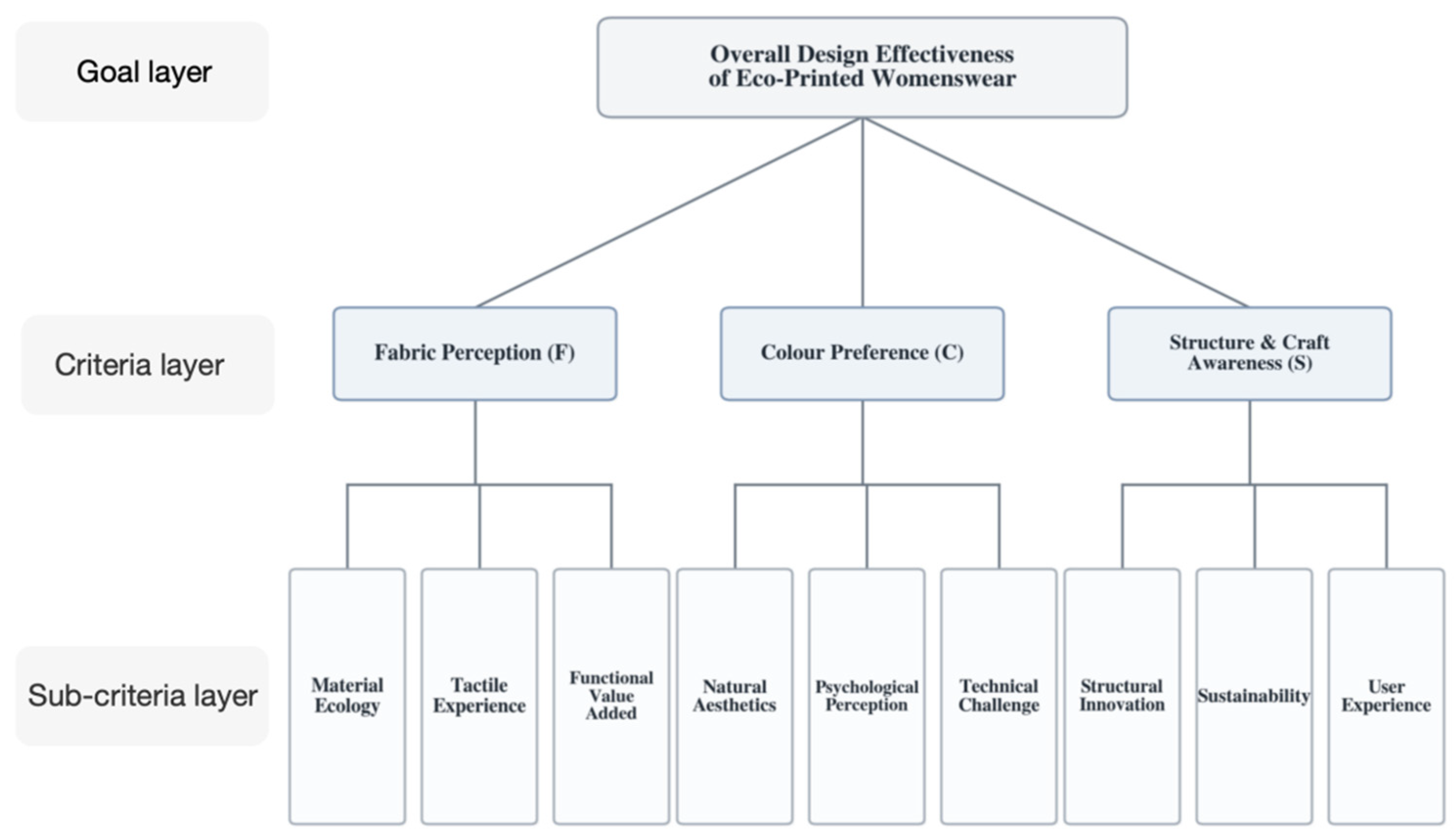
Hierarchically, the framework consists of three levels. The goal level (Level 0) is defined as the overall evaluation of design effectiveness in eco-printed womenswear. The first-level criteria correspond to three external design attribute domains: fabric-oriented functional attributes, colour-oriented emotional attributes, and structure- and craft-oriented sustainability attributes. Each first-level criterion is further divided into three second-level sub-criteria, resulting in a total of nine design dimensions. Specifically, the Fabric domain includes material ecology, tactile experience, and functional value added; the Colour domain includes natural aesthetics, psychological perception, and technical challenges; and the Structure and Craft domain includes structural innovation, sustainability, and user experience. The hierarchical structure of the DC-AHP design decision framework is presented in Figure 8.

5.3. Weighting Logic of the Data-Calibrated AHP (DC-AHP)

After the criteria hierarchy was established, this study further introduced a data-calibrated analytic hierarchy process (DC-AHP) to translate the behavioural mechanism revealed by the SEM into design priorities. The core logic is that the weights of the first-level criteria should no longer represent what consumers subjectively state as important but rather the relative contribution of a given design attribute to purchase intention through the empirically validated value attitude purchase intention pathway. Formally, let k { F , C , S } , denote a first-level attribute, and let T E k denote the total effect of attribute k on consumer attitude. Its behavioural transmission effect can then be written as follows:
I m p a c t k = T E k × β C A P I
Since β C A P I is constant across the three first-level attributes, it cancels out during normalisation. Therefore, the first-level weights can be further simplified as follows:
w k = T E k m { F , C , S } T E m
At the level of the second-level sub-criteria, the nine design dimensions are not original latent variables in the questionnaire-based measurement model. Rather, they were further translated from the qualitative thematic analysis into design governance criteria. Accordingly, the local weights of the second-level criteria were not derived from a direct statistical estimation based on an independent nine-factor measurement model but were approximated through semantic mapping between the qualitative themes and the validated questionnaire items. More specifically, the study first established a mapping relationship between each second-level design dimension and the relevant measurement items according to their semantic consistency. The squared standardised factor loadings of these mapped items were then used as approximate indicators of the explanatory strength of each dimension within its corresponding first-level attribute. The local weights were obtained by normalising these values within the same first-level domain. The calculation can be expressed as follows:
v k , j = λ k , j 2 t J k λ k , t 2 ,   j J k
where v k , j denotes the local weight of the j -th second-level design dimension under the first-level criterion k , λ k , j 2 denotes the aggregated value of the squared standardised factor loadings of the measurement items semantically mapped to that design dimension, and J k denotes the set of all second-level design dimensions belonging to the first-level criterion k . Accordingly, the local weights of the second-level criteria reflect the relative explanatory distribution of design meanings within each first-level attribute rather than a direct estimate of the true psychometric strength of the second-level design dimensions themselves.
After the first-level weights and the local second-level weights are obtained, the global weight of each second-level design dimension can be calculated as the product of the two:
W k , j = W k × v k , j
where W k , j denotes the global weight of the j -th second-level design dimension under the k -th first-level criterion. In this way, the DC-AHP framework integrates two forms of evidence simultaneously: the first-level weights capture the behavioural contribution validated by the SEM, reflecting the behavioural leverage of each design entry point, whereas the local second-level weights capture the explanatory distribution of the design dimensions within their respective attribute domains. Their combination not only preserves the hierarchical aggregation logic of the AHP but also avoids the arbitrariness of conventional subjective judgement matrices, thereby grounding design-priority estimation in the empirical mechanism of consumer acceptance.

5.4. Weight Results and Design-Priority Ranking

In the DC-AHP analysis, the Level 1 weights were calculated directly from the total effects in the empirically validated SEM. The results revealed that the weight of Fabric Perception was 0.275, that of Colour Preference was 0.173, and that of Structure and Craft Awareness was 0.551. This finding indicates that when the behavioural contribution of each attribute is estimated on the basis of the validated value attitude intention chain, Structure and Craft Awareness emerges as the most influential externally designable attribute, followed by Fabric Perception, whereas Colour Preference shows the weakest overall behavioural leverage.
At Level 2, the local weights were calculated from the squared standardised factor loadings. Within the Fabric domain, the local weights of material ecology, tactile experience, and functional value added were 0.357, 0.317, and 0.326, respectively, indicating a relatively balanced contribution of ecological quality, sensory experience, and practical utility within this domain. Within the Colour domain, the local weights of natural aesthetics, psychological perception, and technical challenge were 0.307, 0.328, and 0.365, respectively, suggesting that technical feasibility carried slightly greater importance than purely aesthetic or psychological responses did. Within the Structure and Craft domain, the local weights of structural innovation, sustainability, and user experience were 0.560, 0.241, and 0.200, respectively, with structural innovation clearly dominating this domain.
After combining the Level 1 and Level 2 weights, the global priority rankings of the sub-criteria were obtained as follows: structural innovation (0.309), sustainability (0.133), user experience (0.110), material ecology (0.098), functional value added (0.090), tactile experience (0.087), technical challenge (0.063), psychological perception (0.057), and natural aesthetics (0.053). These results indicate that when design decisions are evaluated according to what genuinely drives consumer attitude and purchase intention, structure- and craft-related dimensions are substantially more important than the subjective preferences that consumers express explicitly. Table 6 reports the Level 1 weights, the Level 2 local weights, and the resulting global weights.
From a design perspective, these results have several important implications. First, structure-related attributes clearly dominate the overall priority structure, suggesting that innovation in garment construction, modularity, and connection logic has the strongest combined effect on consumer attitude and purchase intention. Second, although sustainability ranks highly, its effect does not operate primarily through standalone green claims but is instead embedded in structural and technical design decisions. Third, the fabric-related dimensions occupy an intermediate tier, indicating that they play a more foundational and supportive role in sustainable apparel decision-making. Finally, although colour-related dimensions remain visually important, they are not the strongest drivers of purchase in the present model context.
However, practical design decisions must still take consumers’ stated preferences into account. To complement the weighting logic derived from the behavioural mechanism, a subjective AHP based on consumers’ pairwise comparisons was further introduced to capture which attributes the consumers themselves considered most important. Table 7 reports the weight results and consistency test results of the subjective AHP.
The results revealed that the ranking derived from the subjective AHP was Fabric Perception (58.009%) > Colour Preference (34.957%) > Structure and Craft Awareness (7.034%), and the consistency test met the acceptable standard ( λ m a x = 3.032, CI = 0.016, RI = 0.525, and CR = 0.031). This comparison clearly reveals a mismatch between stated preference and behavioural contribution. Although structure- and craft-related cues were the most effective at enhancing consumer attitudes and purchase intentions, they were systematically underestimated in consumers’ direct subjective judgments. This suggests that, in their explicit expressions, consumers are more likely to emphasise attributes that are more immediately visible, tangible, and verbally accessible, especially fabric and colour.
To reconcile the difference between what consumers say is important and what actually drives purchase intention, a combined weighting strategy was further adopted.
w f u s e d = α w A H P + 1 α w DC ,   α 0 , 1 .
The parameter was set at α = 0.25 so that the empirical contribution of the DC-AHP remained dominant, while subjective preference was retained as a secondary reference.
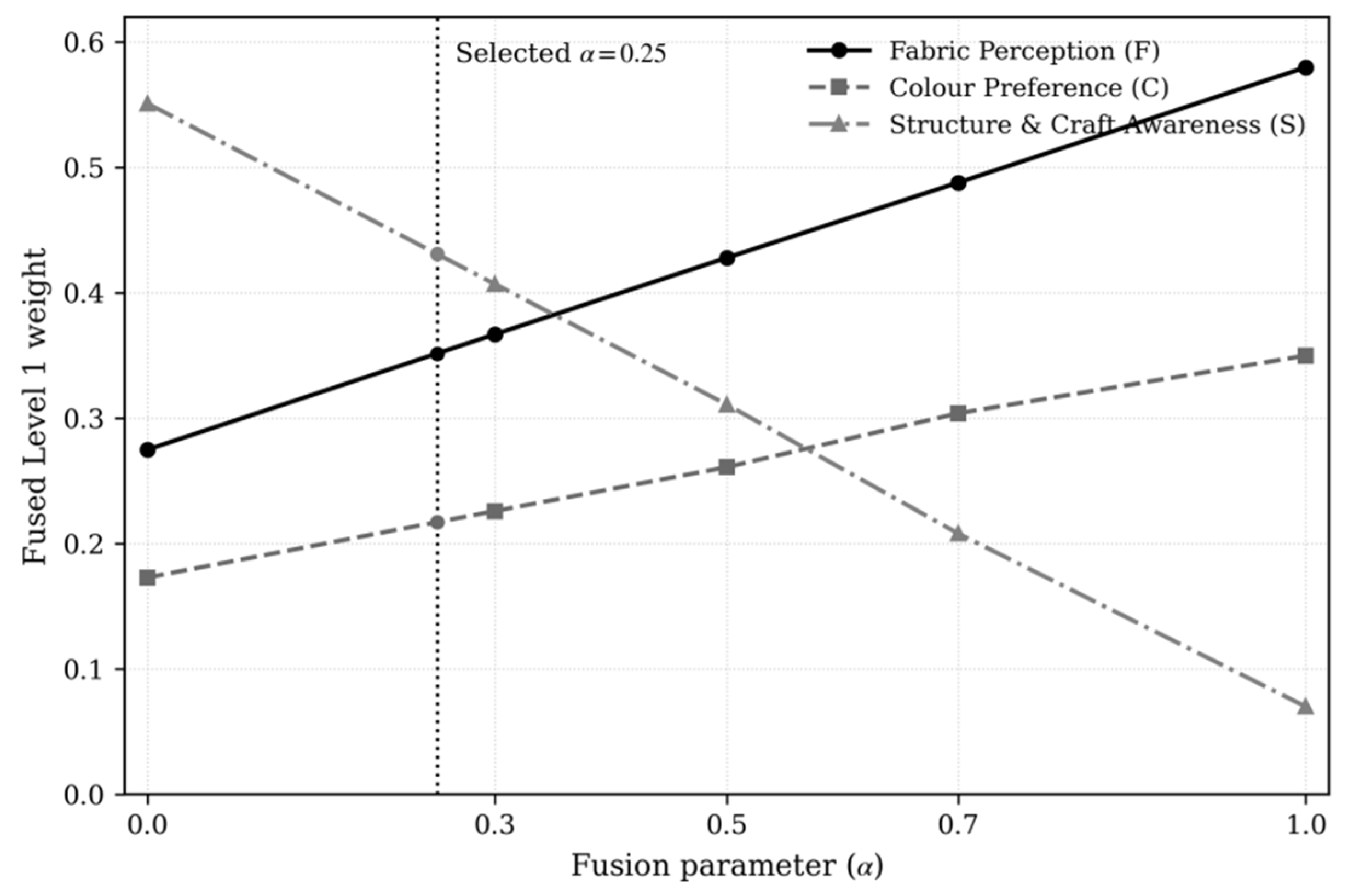
Under this setting, the fused first-level weights were 0.431 for Structure and Craft, 0.351 for Fabric, and 0.217 for Colour. This means that under a balanced scenario that considers both market communication and internal design optimisation, structure and craft remain the design dimension most worthy of priority investment, while the market-perceived value of the fabric and colour is also retained to an appropriate extent.
To examine the robustness of this combined weighting scheme, a sensitivity analysis of the fusion parameter was further conducted by varying α from 0 to 1. The changes in the fused weights of the three first-level criteria—Fabric Perception, Colour Preference, and Structure and Craft Awareness—under different values of α are shown in Figure 9.
As shown in Figure 9, the fused first-level weights exhibited a stable and clear pattern of change as α increased: the weights of Fabric Perception and Colour Preference gradually increased, whereas the weight of Structure and Craft Awareness continuously decreased. When α = 0, the weights were determined entirely by the data-calibrated results, yielding the ranking Structure and Craft Awareness > Fabric Perception > Colour Preference. When α = 1, the weights were determined entirely by the subjective AHP results, and the ranking shifted to Fabric Perception > Colour Preference > Structure and Craft Awareness. These results further indicate a systematic mismatch between consumers’ stated preferences and their actual behavioural contributions. On the basis of this trend, the study ultimately selected α = 0.25, allowing the empirical behavioural contribution to remain dominant while retaining a moderate degree of market preference information, thereby providing a relatively balanced weighting basis for the subsequent priority ranking.
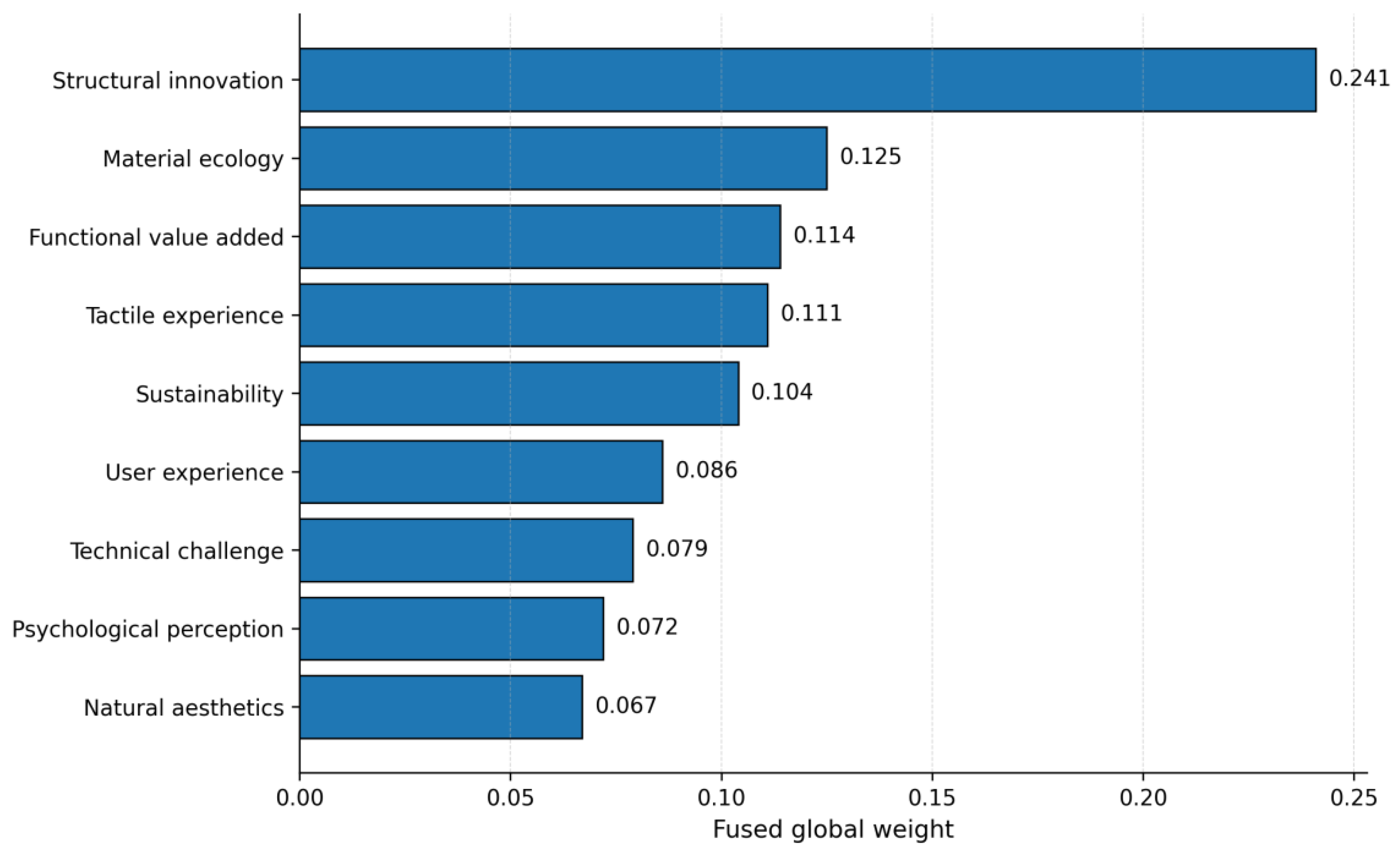
After the fused first-level weights were combined with the local weights, the final global priority ranking was obtained as follows: structural innovation (0.241) > material ecology (0.125) > functional value added (0.114) > tactile experience (0.111) > sustainability (0.104) > user experience (0.086) > technical challenge (0.079) > psychological perception (0.072) > natural aesthetics (0.067). Table 8 reports the fused global weights and the resulting priority rankings.
As shown in Table 8, after consumers’ stated preferences and empirically observed behavioural contributions were considered, structural innovation remained the top-ranked criterion. Material ecology, functional value added, and tactile experience formed the second tier, indicating that the importance of the Fabric domain increased after explicit preference was incorporated, although this did not alter the overall structure-dominant pattern. The fused global priority structure is further presented in Figure 10.
As shown in Figure 10, structural innovation retained the highest priority even after consumers’ stated preferences were incorporated; material ecology, functional value added, and tactile experience constituted the second tier, suggesting that the relative importance of the fabric domain increased once market-expressed preferences were considered. In contrast, natural aesthetics and psychological perception remained relatively low, indicating that although colour-related dimensions are salient in visual expression, they are not the strongest drivers of behavioural conversion in the present model context.
Overall, the comparison between the subjective AHP and the DC-AHP indicates a systematic mismatch between stated preference and behavioural contribution. Accordingly, design decisions for eco-printed womenswear should not rely solely on the preferences that consumers explicitly report but should instead be calibrated between stated preference and the empirically validated acceptance mechanism. In this sense, the combined weighting results provide a more actionable basis for subsequent design governance, stage-gate decision-making, and resource allocation.

5.5. Design Decision Translation Based on the Fused Weights

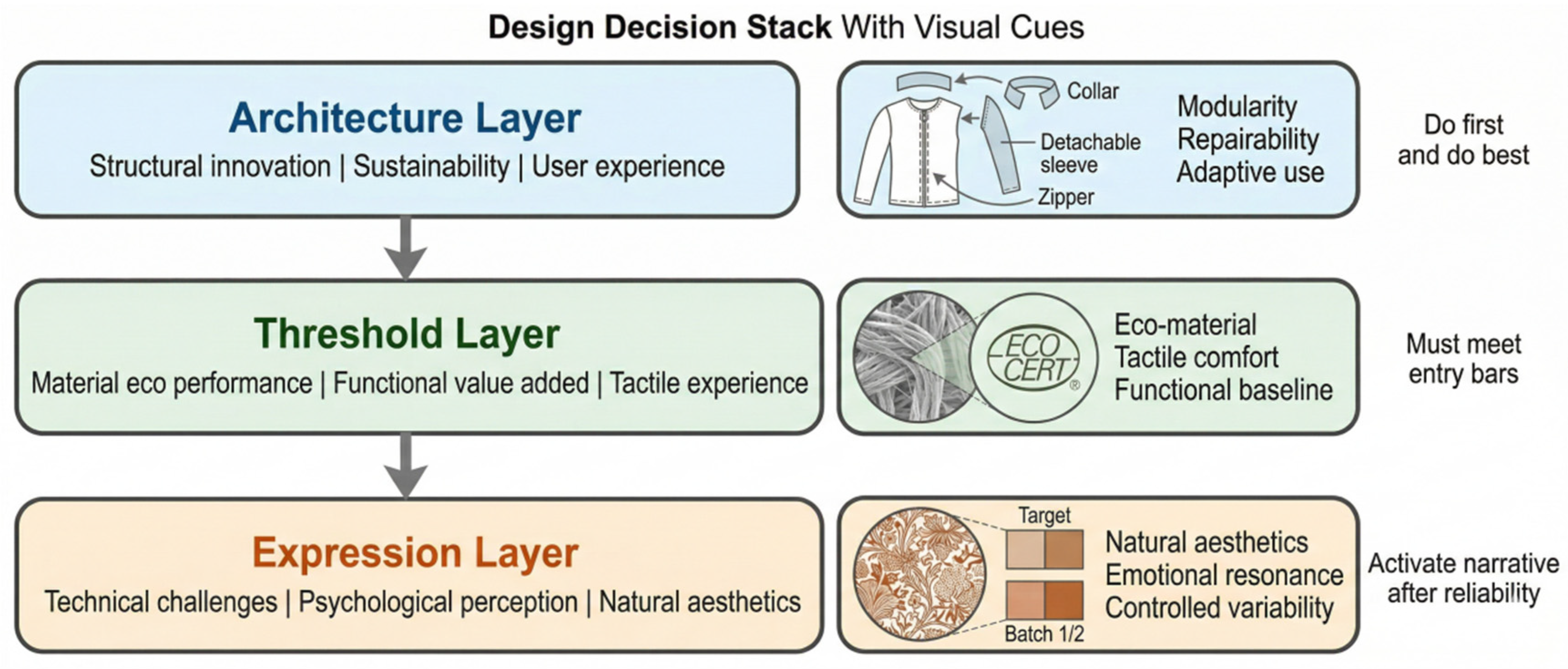
On this basis, the combined weighting results were further translated into decision-oriented language for design governance rather than remaining at the level of numerical ranking alone. More specifically, the nine sub-criteria can be organised into a three-layer decision stack.
The first is the architecture layer, which includes structural innovation, sustainability, and user experience. This layer represents the aspects that should be addressed first and optimised to the greatest extent possible.
The second is the threshold layer, which includes material ecology, functional value added, and tactile experience. This layer represents the basic conditions that must be met before the product can proceed to the next stage of development.
The third is the expression layer, which includes technical challenges, psychological perceptions, and natural aesthetics. This layer mainly serves emotional resonance and brand storytelling but presupposes that technical reliability has already been established.
Under this logic, structure is no longer treated as a back-end technical correction issue but is elevated to a front-end design skeleton variable. Designers should therefore prioritise structural logic in the early stages of concept development and pattern engineering and use modular systems, detachable connection methods, and structural maturity thresholds to reduce later conflicts between manufacturability and aesthetic expression. Fabric, by contrast, functions as a threshold layer that provides foundational assurance, ensuring that ecological credibility, tactile comfort, and functional performance are coordinated. Colour ultimately enters as an expression layer and, once technical feasibility and material credibility have been secured, serves to activate the brand narrative, emotional resonance, and market differentiation.
In this sense, the dual-perspective DC-AHP is not only a ranking tool but also a design governance system with explicit priorities, thresholds, and stage-gate logic. It allows firms to accommodate consumers’ intuitive preferences for the fabric and colour in external communication while maintaining priority investment in structure, sustainability, and the user experience in internal R&D and resource allocation. In doing so, sustainable fashion design decision-making moves from experience-based judgement toward rule-based governance grounded in behavioural evidence. This three-layer design decision stack is further visualised in Figure 11.

6. Discussion

This study examined how externally designable attributes of eco-printed womenswear shape consumer attitudes and purchase intentions through multidimensional perceived value, and how these relationships can inform subsequent design decision support. The findings indicated that market acceptance of eco-printed womenswear is not driven directly by abstract pro-environmental attitudes. Rather, it develops through a connected process in which product attributes shape perceived value, perceived value influences consumer attitude, and attitude in turn supports purchase intention. Within this process, Fabric Perception, Colour Preference, and Structure and Craft Awareness function as the principal external attributes through which consumers recognise and evaluate eco-printed womenswear, although their effects are not symmetrical. For Structure and Craft Awareness, it showed stronger associations with environmental value and consumer attitude, whereas Fabric Perception and Colour Preference were more closely related to initial preference formation and early product evaluation.
These findings address the central question of which external design attributes genuinely contribute to consumer acceptance in eco-printed womenswear. Existing research has often explained sustainable fashion consumption through environmental concern, green attitudes, or broad value orientation. The present findings suggest a more product-based explanation. Consumers do not respond behaviourally to sustainability in the abstract; instead, they interpret concrete design cues and translate them into functional, emotional, and environmental value. In this sense, perceived value operates as the key mediating mechanism linking product attributes with consumer response. Sustainability becomes relevant to decision-making only when it is expressed through attributes that consumers can understand as useful, appealing, and meaningful.
Another important finding is that visible attributes and effective attributes are not necessarily the same. Fabric and colour are more immediately perceived and are therefore more likely to be articulated at the level of stated preference. However, Structure and Craft Awareness was more strongly associated with the formation of stable consumer attitudes and environmental value. This suggests that the acceptance of eco-printed womenswear cannot be understood solely in terms of the immediate appeal of botanical patterns, composite colours, or nature-related imagery. It depends more fundamentally on whether consumers perceive the product as credible, coherent, and sustainable through deeper design cues.
In addition, the results show that the multidimensional values associated with eco-printed womenswear do not operate independently but instead form a progressive structure. Functional value provides an initial basis for evaluation, emotional value further strengthens attachment and desirability, and environmental value adds a broader layer of sustainability-related meaning. The acceptance of eco-printed womenswear is therefore better understood as a process of integrated value formation than as a direct response to a single environmental claim or isolated product feature.

6.1. Theoretical Implications

This study contributes to sustainable fashion research in three ways. First, it operationalizes the linkage between the TBL and the TAM at the product level by showing that sustainable attributes do not directly generate purchase intention but operate through functional value, emotional value, and environmental value. This extends the explanatory depth of the attribute value intention pathway in sustainable fashion research.
Second, the study highlights the role of Structure and Craft Awareness in the construction of sustainable meaning. Existing studies have emphasised mainly materials, ecolabels, and production modes, whereas the present results show that consumers also infer sustainability from structural innovation, craft credibility, and overall workmanship. This broadens the understanding of sustainability cues in fashion products.
Third, the study introduces the perspective of a visibility–effectiveness gap. The attributes that consumers most easily notice are not necessarily those that most strongly drive consumer attitude and purchase intention. This helps explain why visible green cues alone often fail to produce strong market acceptance when they are not supported by deeper product credibility. Methodologically, the study also links an explanatory model with a decision-oriented model by translating SEM findings into design-priority logic.

6.2. Practical Implications

The findings show that different design attributes in eco-printed womenswear do not perform the same function. Fabric Perception serves more as a basic threshold through which consumers enter product evaluation, Colour Preference mainly shapes initial attractiveness and the way product meaning is communicated, whereas Structure and Craft Awareness more deeply influences judgements of product credibility, responsibility, and overall sustainability. This suggests that the relative importance of design attributes should not be judged solely by visibility or immediate appeal, but by their actual role in value formation, attitude development, and purchase conversion. Accordingly, the design development of eco-printed womenswear should move beyond the parallel optimisation of attributes and instead adopt a clearer logic of priority based on the role each attribute plays in the consumer acceptance process.
On this basis, the findings offer three practical implications for designers, brands, and product development teams. First, when the structural paths are considered together with the integrated weighting results, structure and craft should be treated as the primary area for strategic investment, because these attributes are more directly linked to the formation of product credibility, sustainability judgement, and overall evaluation. By contrast, fabric-related criteria perform more as foundational conditions that must be met before entering the evaluation process, whereas colour-related attributes are better suited to product differentiation and brand communication. This layered understanding helps translate the importance of design attributes from an abstract judgement into a more operational basis for development prioritisation.
Second, the results support a dual-track strategy that combines design development with communication strategy. In external communication, brands may give greater emphasis to visible attributes such as fabric and colour, as these are more easily recognised by consumers and can strengthen initial attractiveness and perceived accessibility. In internal development and resource allocation, however, greater priority should be given to structural sustainability, reparability, craft stability, and user experience, because these factors are more closely associated with the formation of consumer attitude and purchase intention. In other words, external communication may focus on the advantages that are easiest to perceive, whereas internal decision-making should focus more strongly on the attributes that most effectively drive evaluative conversion.
Third, the findings provide empirical support for evidence-based design governance tools. The architecture, threshold, and expression logic proposed in this study does not simply classify attributes into categories. Rather, it identifies structure and craft as the core layer requiring priority optimisation, treats fabric-related indicators as basic conditions that must be satisfied, and positions colour-related attributes as the outer layer serving expression, recognition, and differentiation. Organised in this way, design governance can improve development efficiency, reduce costly trial and error, and strengthen coordination across design, production, and marketing functions. In this sense, design decision-making no longer depends solely on experience-based attribute selection, but can move towards a more structured system of priority setting supported by behavioural evidence.

6.3. Limitations and Future Research

Although the sample profile was closely aligned with the target consumption context of eco-printed womenswear, its applicability remains subject to certain boundaries. First, the empirical sample was drawn mainly from female consumers aged 18 to 45 in mainland China, and relatively large proportions of the respondents were young adults and students. Accordingly, the findings are more suitable for explaining how younger female consumers in the Chinese context evaluate eco-printed womenswear, while their applicability to other age groups, male consumers, and different cultural settings still requires further examination. Future research may broaden the sampling base and strengthen cross-cultural comparison in order to assess the stability and external applicability of the present findings.
Several limitations should be acknowledged. First, the empirical context was limited to eco-printed womenswear in the Chinese market, and the external validity of the findings across other product categories, consumer groups, and cultural contexts remains to be tested. Second, the study used cross-sectional survey data, which limits the ability to capture dynamic changes in consumer evaluation over time. Future research may adopt longitudinal or experimental designs to examine how sustainable meaning and purchase intention evolve through repeated exposure or product experience. Third, although the study integrated behavioural evidence with design weighting, it did not incorporate cost, life-cycle assessment, or manufacturing complexity into the same framework. Future studies may develop a more comprehensive multi-objective sustainable design decision model by integrating these factors.

7. Conclusions

(1) The sustainable design of eco-printed womenswear should not remain at the level of broad descriptions of environmental friendliness, naturalness, or ecological aesthetics. Instead, it should be translated into a system of externally designable attributes that are identifiable, measurable, and optimizable. The attribute framework developed around fabric, colour, and structure and craft provides a more operational analytical basis for eco-printing design research and enables the field to move from conceptual discussion towards structured modelling.
(2) Market acceptance of eco-printed womenswear is not directly driven by a single form of green cognition. Rather, it depends on whether design attributes can be effectively translated into functional value, emotional value, and environmental value and subsequently into positive consumer attitudes and purchase intentions. This finding indicates that the key to sustainable fashion design lies not in strengthening environmental labels alone but in establishing an effective connection between design attributes and consumers’ value perceptions.
(3) Structure and craft represent the most decisive deep-level design variables in eco-printed womenswear. Consumers’ understanding of sustainability does not depend primarily on surface materials or visual style but is more strongly shaped by deeper cues such as durability, repairability, structural logic, and design integrity. This means that in eco-friendly womenswear design, structure and craft should not be treated as back-end technical details but should instead be elevated to include core variables for organising product value, consumer trust, and design effectiveness.
(4) Design decision-making should move from subjective preference judgement towards evidence-based priority governance. Because systematic differences exist between consumers’ stated preferences and data-calibrated behavioural contributions, design decisions should not rely solely on what consumers most easily notice but should further identify what actually drives the formation of purchase intention. By integrating subjective preference with objective contribution, this study develops a dual-perspective weighting framework for design-priority evaluation, demonstrating that sustainable fashion design can shift from experience-based judgement to evidence-based structured governance.

Author Contributions

Conceptualisation, P.Z.; Methodology, P.Z.; Software, P.Z. and N.Z.; Validation, P.Z.; Formal analysis, P.Z.; Investigation, P.Z. and N.Z.; Resources, P.Z.; Data curation, P.Z. and N.Z.; Writing—original draft, P.Z.; Writing—review and editing, P.Z.; Supervision, A.A. and M.H.A. All authors have read and agreed to the published version of the manuscript.

Funding

This study was funded by the Ministry of Higher Education Malaysia and Universiti Teknologi MARA under the Journal Support Fund (JSF). The authors would like to express their thanks for their financial support.

Institutional Review Board Statement

The study was conducted in accordance with the Declaration of Helsinki and approved by the UiTM Research Ethics Committee (REC/02/2025 (PG/MR/132), approved on 27 February 2025).

Informed Consent Statement

Informed consent was obtained from all subjects involved in the study.

Data Availability Statement

The original contributions presented in this study are included in the article. Further inquiries can be directed to the corresponding authors.

Conflicts of Interest

The authors state no conflicts of interest.

Appendix A

Appendix A.1

The qualitative phase was not used to develop an entirely new measurement scale. Instead, it was used to confirm the contextual relevance of the focal constructs in eco-printed womenswear, clarify how key design cues were understood by participants, and support the organisation of the quantitative instrument. Table A1 shows how the higher-order qualitative themes informed the selection and structuring of the quantitative constructs.
Table A1. Mapping of qualitative themes to the quantitative constructs.
Higher-Order Qualitative ThemeSub-Theme/Qualitative FocusInterpretation in the Eco-Printed Womenswear ContextCorresponding Quantitative Construct (s)Role in Quantitative Instrument Development
Material–Functional AttributesMaterial Ecology; Tactile Experience; Functional Added ValueParticipants consistently emphasised natural fibres, tactile comfort, breathability, durability, skin friendliness, and material-based functional benefits as central to eco-printed garments.Fabric Perception; Functional ValueConfirmed the relevance of material-based product cues in this context and supported the inclusion of Fabric Perception as a distinct external attribute and functional value as a key evaluative dimension.
Colour–Emotional AttributesNatural Aesthetics; Psychological Perception; Technical ChallengesParticipants linked botanical colours, gradual colour transitions, uniqueness, emotional warmth, healing feelings, and visual distinctiveness to aesthetic appeal and affective response.Colour Preference; Emotional ValueSupported the inclusion of Colour Preference as a distinct external attribute and confirmed the role of emotional value in explaining consumer response to eco-printed colour expression.
Environmental–Structural AttributesStructural Innovation; Sustainability Design; User ExperienceParticipants highlighted modularity, detachable components, life-cycle extension, recyclability, zero-waste strategies, usability, and adaptability as important features of sustainable garment design.Structure and Craft Awareness; Environmental ValueConfirmed the importance of structure- and craft-related cues in eco-printed womenswear and supported their interpretation as an external design attribute linked to sustainability-oriented evaluation.
Integrated Value OrientationIntegrated Value PerceptionParticipants described product value as being formed through the combined perception of functional, emotional, and sustainability-related qualities rather than through a single criterion.Functional Value; Emotional Value; Environmental ValueSupported the multidimensional structure of perceived value in the quantitative framework and reinforced the organisation of the questionnaire around three perceived value dimensions.

Appendix A.2

This appendix provides a shortened version of the qualitative coding pathway. Its purpose is to show how representative initial codes were clustered into sub-themes and then into higher-order themes, thereby supporting the analytical link between the qualitative phase and the quantitative framework.
Table A2. Shortened code-to-theme matrix.
Initial CodesSub-ThemeHigher-Order Theme
Natural fibre preference; environmental certificationMaterial EcologyMaterial–Functional Attributes
Breathability and comfort; skin-friendly textureTactile ExperienceMaterial–Functional Attributes
Antibacterial protection; UV resistance; durabilityFunctional Added ValueMaterial–Functional Attributes
Colour uniqueness; gradual colour transitionNatural AestheticsColour–Emotional Attributes
Emotional resonance; healing experiencePsychological PerceptionColour–Emotional Attributes
Colour stability issues; batch colour control; oxidationTechnical ChallengesColour–Emotional Attributes
Modular design; detachable componentsStructural InnovationEnvironmental–Structural Attributes
Extended product life-cycle; zero-waste cuttingSustainability DesignEnvironmental–Structural Attributes
User adaptability; customization demandUser ExperienceEnvironmental–Structural Attributes
Value integration; behavioural influenceIntegrated Value PerceptionIntegrated Value Orientation

Appendix B

Appendix B.1

This appendix presents the descriptive statistics of the core variables included in the quantitative analysis. It reports the sample size, minimum and maximum values, means, standard deviations, skewness, and kurtosis for each construct, thereby providing a concise overview of the distributional characteristics of the data.
Table A3. Descriptive statistics of the core variables.
VariableNMinMaxMeanSDKurtosisSkewness
Fabric Perception992174.9231.640−1.026−0.237
Colour Preference992175.1831.124−0.549−0.017
Structure and Craft Awareness992275.2830.955−0.5160.149
Perceived Functional Value992475.3840.755−0.455−0.007
Perceived Emotional Value992475.4550.734−0.579−0.410
Perceived Environmental Value992575.8150.582−1.1010.288
Consumer Attitude992375.2391.127−1.3050.112
Purchase Intention992375.3241.052−1.0830.050
Note: N = 992. SD = standard deviation. Kurtosis and skewness are reported to assess the distributional characteristics of the variables.

Appendix B.2

This appendix reports the results of Harman’s single-factor test used to assess the potential risk of common method bias. Its purpose is to show whether variance attributable to a single general factor posed a serious threat to the validity of the quantitative analysis.
Table A4. Results of Harman’s single-factor test.
TestNumber of Factors with Eigenvalue > 1Variance Explained by First FactorThresholdConclusion
Harman’s single-factor test533.164%<40%No serious common method bias was detected
Note: Harman’s single-factor test was conducted using unrotated exploratory factor analysis. A first-factor variance below 40% suggests that common method bias is unlikely to pose a serious threat.

Appendix B.3

This appendix presents a summary of the reliability and validity results for the measurement scales used in the quantitative analysis. It reports the factor loadings, Cronbach’s alpha coefficients, KMO values, and Bartlett’s test results, thereby providing supporting evidence for the internal consistency and structural adequacy of the measurement model.
Table A5. Reliability and validity test results of the questionnaire scales.
VariableItem CodeFactor LoadingOverall Cronbach’s αKMOBartlett’s Test of Sphericity (p Value)
Fabric PerceptionA10.6910.8920.7470.000
A20.651
A30.660
Colour PreferenceB10.6010.8440.7280.000
B20.621
B30.655
Structure and Craft AwarenessC10.7670.7890.7700.000
C20.798
C30.726
C40.661
Perceived Functional ValueD10.6110.7280.6010.000
D20.667
D30.660
Perceived Emotional ValueE10.6430.8780.8310.000
E20.673
E30.651
E40.642
Perceived Environmental ValueF10.5510.8010.8010.000
F20.602
F30.546
F40.606
F50.668
F60.697
Consumer AttitudeG10.7500.8920.8150.000
G20.645
G30.735
G40.697
Purchase IntentionH10.6050.7470.6400.000
H20.664
H30.689
Note: Overall Cronbach’s α = 0.927; overall KMO = 0.927; Bartlett’s test of sphericity was significant at p < 0.001. All factor loadings exceeded 0.50.

References

  1. European Commission. EU Strategy for Sustainable and Circular Textiles; European Commission: Brussels, Belgium, 2022; Available online: https://environment.ec.europa.eu/strategy/textiles-strategy_en (accessed on 28 April 2026).
  2. UNFCCC. Fashion Industry Charter for Climate Action. Available online: https://unfccc.int/climate-action/sectoral-engagement-for-climate-action/fashion-charter (accessed on 28 April 2026).
  3. Ministry of Ecology and Environment of the People’s Republic of China. Reply to Proposal No. 02330 of the First Session of the 14th CPPCC National Committee: Promoting the Healthy Development of the Printing and Dyeing Industry; Ministry of Ecology and Environment of the People’s Republic of China: Beijing, China, 2023. Available online: https://www.mee.gov.cn/xxgk2018/xxgk/xxgk13/202310/t20231031_1044440.html (accessed on 28 April 2026).
  4. National Development and Reform Commission of the People’s Republic of China. Guidance Catalogue for Green and Low-Carbon Transformation Industries, 2024 ed; National Development and Reform Commission of the People’s Republic of China: Beijing, China, 2024.
  5. Šabarić, I.; Sutlović, A.; Filipčić, J.; Karin, F. Contribution of Plant Transfer Printing to Sustainable Fashion. Sustainability 2024, 16, 4361. [Google Scholar] [CrossRef]
  6. Suneja, A.; Aastha. Sustainable Fashion Purchase Intention: A Systematic Literature Review Approach. SN Bus. Econ. 2025, 5, 212. [Google Scholar] [CrossRef]
  7. Schiaroli, V.; Dangelico, R.M.; Fraccascia, L. Consumer Behavioral Intention for Sustainable Garments: Do Materials Used and the Level of Garment’s Visibility and Skin Contact Matter? J. Innov. Knowl. 2025, 10, 100764. [Google Scholar] [CrossRef]
  8. Wu, Y.; Lee, Y.-S. A Study on the Impact of the Consumption Value of Sustainable Fashion Products on Purchase Intention Based on the Theory of Planned Behavior. Sustainability 2025, 17, 4278. [Google Scholar] [CrossRef]
  9. Bari, M.S.; Jin, B.E.; Kim, J. Unveiling Sustainability, Traceability, and Transparency in the Textile and Apparel Industry: Exploring Distinctive Concepts and Varied Motivations for Adoption. Int. J. Fash. Des. Technol. Educ. 2025, 1–18. [Google Scholar] [CrossRef]
  10. Flint, I. Eco Colour: Botanical Dyes for Beautiful Textiles; Murdoch Books: Millers Point, Australia, 2008. [Google Scholar]
  11. Pizzicato, B.; Pacifico, S.; Cayuela, D.; Mijas, G.; Riba-Moliner, M. Advancements in Sustainable Natural Dyes for Textile Applications: A Review. Molecules 2023, 28, 5954. [Google Scholar] [CrossRef] [PubMed]
  12. Pandey, M.; Yadav, P.S. Understanding the Role of Individual Concerns, Attitude, and Perceived Value in Green Apparel Purchase Intention: The Mediating Effect of Consumer Involvement and Moderating Role of Generation Z&Y. Clean. Respons. Consum. 2023, 9, 100120. [Google Scholar] [CrossRef]
  13. Sheth, J.N.; Newman, B.I.; Gross, B.L. Why We Buy What We Buy: A Theory of Consumption Values. J. Bus. Res. 1991, 22, 159–170. [Google Scholar] [CrossRef]
  14. Sweeney, J.C.; Soutar, G.N. Consumer Perceived Value: The Development of a Multiple Item Scale. J. Retail. 2001, 77, 203–220. [Google Scholar] [CrossRef]
  15. Li, M.; Choe, Y.H.; Gu, C. How Perceived Sustainability Influences Consumers’ Clothing Preferences. Sci. Rep. 2024, 14, 28672. [Google Scholar] [CrossRef]
  16. Arora, N.; Manchanda, P. Green Perceived Value and Intention to Purchase Sustainable Apparel among Gen Z: The Moderated Mediation of Attitudes. J. Glob. Fash. Mark. 2022, 13, 168–185. [Google Scholar] [CrossRef]
  17. Niinimäki, K. Eco-Clothing, Consumer Identity and Ideology. Sustain. Dev. 2010, 18, 150–162. [Google Scholar] [CrossRef]
  18. Rausch, T.M.; Kopplin, C.S. Bridge the Gap: Consumers’ Purchase Intention and Behavior Regarding Sustainable Clothing. J. Clean. Prod. 2021, 278, 123882. [Google Scholar] [CrossRef]
  19. Dangelico, R.M.; Alvino, L.; Fraccascia, L. Investigating the Antecedents of Consumer Behavioral Intention for Sustainable Fashion Products: Evidence from a Large Survey of Italian Consumers. Technol. Forecast. Soc. Change 2022, 185, 122010. [Google Scholar] [CrossRef]
  20. Fishbein, M.; Ajzen, I. Belief, Attitude, Intention, and Behavior: An Introduction to Theory and Research; Addison-Wesley: Reading, MA, USA, 1975. [Google Scholar]
  21. Ajzen, I. The Theory of Planned Behavior. Organ. Behav. Hum. Decis. Process. 1991, 50, 179–211. [Google Scholar] [CrossRef]
  22. Park, H.J.; Lin, L.M. Exploring Attitude–Behavior Gap in Sustainable Consumption: Comparison of Recycled and Upcycled Fashion Products. J. Bus. Res. 2020, 117, 623–628. [Google Scholar] [CrossRef]
  23. Elkington, J. Cannibals with Forks: The Triple Bottom Line of 21st Century Business; Capstone: Oxford, UK, 1997. [Google Scholar]
  24. Park, H.; Kim, Y.K. An Empirical Test of the Triple Bottom Line of Customer-Centric Sustainability: The Case of Fast Fashion. Fash. Text. 2016, 3, 25. [Google Scholar] [CrossRef]
  25. Hogh, N.; Braun, J.; Watermann, L.; Kubowitsch, S. I Don’t Buy It! A Critical Review of the Research on Factors Influencing Sustainable Fashion Buying Behavior. Sustainability 2025, 17, 4015. [Google Scholar] [CrossRef]
  26. Chaiken, S. Heuristic versus Systematic Information Processing and the Use of Source versus Message Cues in Persuasion. J. Pers. Soc. Psychol. 1980, 39, 752–766. [Google Scholar] [CrossRef]
  27. Petty, R.E.; Cacioppo, J.T. The Elaboration Likelihood Model of Persuasion. In Advances in Experimental Social Psychology; Berkowitz, L., Ed.; Academic Press: New York, NY, USA, 1986; Volume 19, pp. 123–205. [Google Scholar] [CrossRef]
  28. Shen, B.; Wang, Y.; Lo, C.K.Y.; Shum, M. The Impact of Ethical Fashion on Consumer Purchase Behavior. J. Fash. Mark. Manag. 2012, 16, 234–245. [Google Scholar] [CrossRef]
  29. Schifferstein, H.N.J.; Desmet, P.M.A. Tools Facilitating Multi-Sensory Product Design. Des. J. 2008, 11, 137–158. [Google Scholar] [CrossRef]
  30. Testa, F.; Gusmerottia, N.M.; Corsini, F.; Passetti, E.; Iraldo, F. Factors Affecting Environmental Management by Small and Micro Firms: The Importance of Entrepreneurs’ Attitudes and Environmental Investment. Corp. Soc. Responsib. Environ. Manag. 2016, 23, 373–385. [Google Scholar] [CrossRef]
  31. Elliot, A.J.; Maier, M.A. Color Psychology: Effects of Perceiving Color on Psychological Functioning in Humans. Annu. Rev. Psychol. 2014, 65, 95–120. [Google Scholar] [CrossRef] [PubMed]
  32. Labrecque, L.I.; Milne, G.R. Exciting Red and Competent Blue: The Importance of Color in Marketing. J. Acad. Mark. Sci. 2012, 40, 711–727. [Google Scholar] [CrossRef]
  33. Liu, T. Research on the Strategy of Mass Customization of Clothing Based on the Concept of Sustainable. Master’s Thesis, Beijing Institute of Fashion Technology, Beijing, China, 2021. [Google Scholar]
Figure 1. Existing eco-printed womenswear works created by the authors and research team.
Sustainability 18 04880 g001
Figure 2. Integrated conceptual framework linking TBL, TAM adaptation, and consumption value theory in eco-printed womenswear.
Sustainability 18 04880 g002
Figure 3. Three complementary pathways of consumer acceptance.
Sustainability 18 04880 g003
Figure 4. Integrated conceptual framework of consumer acceptance for eco-printed womenswear.
Sustainability 18 04880 g004
Figure 5. Sample profile of the respondents.
Sustainability 18 04880 g005
Figure 6. Correlation heatmaps of the core variables.
Sustainability 18 04880 g006
Figure 7. Integrated structural model of consumer acceptance of eco-printed womenswear. Note: The values shown on the arrows are standardised structural path coefficients from the final SEM results, and the values shown next to the observed indicators are factor loadings from the validity assessment of the formal scale. Solid lines indicate paths that were statistically significant in the expected direction, whereas dashed lines indicate paths that were not statistically significant. If a path was statistically significant but opposite to the hypothesised direction, it is presented with a negative coefficient. FP = Fabric Perception; CP = Colour Preference; SCA = Structure and Craft Awareness; PFV = perceived functional value; PEV = perceived emotional value; PEnV = perceived environmental value; CA = consumer attitude; PI = purchase intention. Significance levels are denoted as *** p < 0.001, ** p < 0.05, and n.s. = not significant.
Sustainability 18 04880 g007
Figure 8. Hierarchical structure of the data-calibrated AHP framework for eco-printed womenswear.
Sustainability 18 04880 g008
Figure 9. Sensitivity of the fused Level 1 weights under different values of the fusion parameter α . Note: The fused first-level weights were calculated using w f u s e d = α w A H P + 1 α w DC ,   α = 0.25 . The fused global weights were obtained by multiplying the fused first-level weights by the corresponding local weights of the Level 2 design criteria.
Sustainability 18 04880 g009
Figure 10. Fused global weights and priority rankings of the Level 2 design criteria.
Sustainability 18 04880 g010
Figure 11. Design decision stack.
Sustainability 18 04880 g011
Table 1. Profile of the interview participants.
Respondent CodeStakeholder GroupProfessional RoleRelevant Experience/Qualifications
D1Fashion DesignerSenior fashion designer specialising in sustainable fashion and eco-print fabric functionality and aestheticsOver three years of experience in sustainable fashion design
D2Fashion DesignerExpert in modular garment structures and development of eco-friendly materialsOver three years of experience in sustainable design projects
D3Fashion DesignerCreative director of an eco-friendly women’s wear brand, skilled in brand creativity and market positioningExtensive practical experience in eco-printed womenswear
D4Fashion DesignerChief designer in plant dyeing methods and eco-aestheticsProven experience in sustainable design commercialization
E1Industry Expert/AcademicTextile research expert specialising in sustainable dyeing technologiesPeer-reviewed publications in eco-printing and sustainable textiles
E2Industry Expert/AcademicProfessor of textile science in eco dyeing and printing processesExtensive experience in textile academia and consultancy
E3Industry Expert/AcademicHead of project management and implementation for eco-printing engineeringProject leadership experience in eco-printing implementation
E4Industry Expert/AcademicResearch scholar in sustainable fashion and consumer behaviourAcademic expertise in sustainable fashion and consumer behaviour
M1Business Owner/Brand RepresentativeFounder & CEO of a sustainable fashion enterprise, skilled in brand operations and data driven marketingOver three years of experience in sustainable fashion brand management
M2Business Owner/Brand RepresentativeOwner of an eco-print garment manufacturing company, proficient in commercial process implementationExtensive experience in commercial eco-printing processes
M3Business Owner/Brand RepresentativeProduct manager of an eco-friendly women’s wear line, skilled in sustainable apparel market operationsPractical experience in sustainable apparel market operations
M4Business Owner/Brand RepresentativeDirector of Sustainable Development at a large-scale eco-print manufacturing enterprise, proficient in supply chain and strategy managementExtensive experience in large-scale eco-print project management
Table 2. Final thematic framework of eco-printed womenswear attributes and value interpretation.
Overarching
Category
Core ThemeDescriptionDesign Implication
Material–functional attributesMaterial ecologyEco-friendly, degradable, and certified material qualities.Renewable, certified, and skin-safe fibre selection.
Tactile experienceComfort-related sensory properties of the fabric.Softness, breathability, and skin comfort as baseline cues.
Functional value addedAdditional practical functions enabled by textile innovation.UV protection, antibacterial performance, and durability enhancement.
Chromatic–affective attributesNatural aestheticsOrganic beauty created by plant-derived colours and gradients.Visual uniqueness and eco-aesthetic differentiation.
Psychological perceptionEmotional and symbolic responses evoked by colour.Emotional resonance, healing expression, and identity communication.
Technical challengesColour-related stability and production-control limitations.Early control of fading, batch inconsistency, and oxidation risk.
Environmental–
structural attributes
Structural innovationModular and detachable design concepts that support adaptability.Modularity, adaptability, and waste-reduction through structure.
SustainabilityStructural contribution to recyclability and life-cycle extension.Longevity, recyclability, and carbon-reduction logic in garment architecture.
User experienceUsability of sustainable structural design in practice.Convenience, multi-scenario adaptability, and personalised use.
Comprehensive value perceptionComplex value constructionIntegration of functional, emotional, and environmental value.Coordinated multi-value generation rather than isolated attribute optimisation.
Value transferCommunication of product value through trust and transparency.Storytelling, transparency, and trust-based value communication.
Behavioural influenceTranslation of value perception into behavioural outcomes.Purchase, repurchase, and environmental awareness activation.
Note: The final framework was derived through iterative coding, theme clustering, thematic review, and category refinement. Detailed examples of concept extraction, topic summarization, and theme naming are available from the authors upon reasonable request. The first three overarching categories represent externally designable product attributes, while the fourth captures higher-order value interpretation. These qualitative themes informed the contextual refinement of the three focal attribute dimensions.
Table 3. Demographic profile and shopping frequency of the respondents.
NameOptionFrequencyPercentage (%)Cumulative
Percentage (%)
Age18–2342442.74242.742
24–3537838.10580.847
36–4016216.33197.177
40–45282.823100
Total992100.000100.000
Shopping
Frequency
Occasionally57758.16558.165
Rarely32332.56090.726
Frequently929.274100
Total992100.000100.000
OccupationStudent62663.10563.105
Civil Servant676.75469.859
Teacher515.14175
Apparel Industry
Personnel
12312.39987.399
Other12512.601100
Total992100.000100.000
Note: N = 992 valid responses.
Table 4. Model fit indices of the structural equation model.
CategoryObserved
Value
Recommended
Value
Goodness
of Fit
Chi Squareχ21811.603
Degrees of Freedomdf384
Chi Square/Degrees
of Freedom
χ2/df4.718<5
Goodness-of-Fit IndexGFI0.897>0.8
Model
Adequacy
Root Mean Square Error of ApproximationRMSEA0.061<0.08
Normed Fit IndexNFI0.916>0.9
Comparative Fit IndexCFI0.917>0.9
Note: The model fit results indicated that χ2 = 1811.603, df = 384, χ2/df = 4.718, GFI = 0.897, RMSEA = 0.061, NFI = 0.916, and CFI = 0.917. All major fit indices met commonly accepted criteria, indicating that the overall model achieved an acceptable fit.
Table 5. Structural path estimates and summary of hypothesis-testing results.
Dependent
Variable
HypothesisPathStandardised Estimate (β)p ValueValidation Result
Perceived
Functional Value
H1aFP → PFV0.332p < 0.001Supported
H2aCP → PFV0.293p < 0.001Supported
H3aSCA → PFV−0.0530.198Not supported
Perceived
Emotional Value
H1bFP → PEV0.0910.033Supported
H2bCP → PEV0.0300.527Not supported
H3bSCA → PEV−0.0430.180Not supported
H4bPFV → PEV0.775p < 0.001Supported
Perceived Environmental ValueH1cFP → PEnV0.218p < 0.001Supported
H2cCP → PEnV−0.1350.014Not supported (significant negative effect)
H3cSCA → PEnV0.432p < 0.001Supported
H5bPEV → PEnV0.257p < 0.001Supported
Consumer AttitudeH4aPFV → CA−0.0970.122Not supported
H5aPEV → CA0.1360.022Supported
H6PEnV → CA0.199p < 0.001Supported
H1dFP → CA0.179p < 0.001Supported
H2dCP → CA0.168p < 0.001Supported
H3dSCA → CA0.436p < 0.001Supported
Purchase
Intention
H7CA → PI0.779p < 0.001Supported
Note: FP = Fabric Perception; CP = Colour Preference; SCA = Structure and Craft Awareness; PFV = perceived functional value; PEV = perceived emotional value; PEnV = perceived environmental value; CA = consumer attitude; PI = purchase intention. “Supported” indicates that the hypothesised relationship was statistically significant in the expected direction. “Not supported” indicates that the hypothesised relationship did not reach statistical significance. “Not supported (significant negative effect)” indicates that the relationship was statistically significant but opposite to the hypothesised positive direction.
Table 6. Data-calibrated weights of the design criteria under the DC-AHP framework.
Fabric Perception (F)F 0.275Material ecology0.3570.098
Tactile experience0.3170.087
Functional value added0.3260.090
Colour Preference (C)C 0.173Natural aesthetics0.3070.053
Psychological perception0.3280.057
Technical challenge0.3650.063
Structure and Craft
Awareness (S)
S 0.551Structural innovation0.5600.309
Sustainability0.2410.133
User experience0.2000.110
Total1.000 1.000
Table 7. Subjective AHP weights and consistency test results for the first-level design criteria.
CriterionWeight
Value (%)
λ m a x CIRICRConsistency Result
Fabric Perception (F)58.0093.0320.0160.5250.031Passed
Colour Preference (C)34.957
Structure and Craft
Awareness (S)
7.034
Note: The subjective AHP weights were derived from consumers’ pairwise judgements regarding the relative importance of the three first-level design criteria. The consistency test indicated that the judgement matrix met the acceptable criterion (CR < 0.10). λmax, CI, RI, CR, and the consistency result are reported for the overall judgment matrix rather than for each individual criterion.
Table 8. Fused weights and final priority rankings of the Level 2 design criteria.
Level 1 Criterion
W fused
Level 2 Sub-CriterionLocal WeightGlobal WeightPriority Rank
(S) 0.431Structural innovation0.5600.2411
Sustainability0.2410.1045
User experience0.2000.0866
(F) 0.351Material ecology0.3570.1252
Functional value added0.3260.1143
Tactile experience0.3170.1114
(C) 0.217Technical challenge0.3650.0797
Psychological perception0.3280.0728
Natural aesthetics0.3070.0679
Note: The fused first-level weights were calculated using w f u s e d = α w A H P + 1 α w DC ,   w i t h   α = 0.25 . The fused global weights were obtained by multiplying the fused first-level weights by the corresponding local weights of the sub-criteria.
Disclaimer/Publisher’s Note: The statements, opinions and data contained in all publications are solely those of the individual author(s) and contributor(s) and not of MDPI and/or the editor(s). MDPI and/or the editor(s) disclaim responsibility for any injury to people or property resulting from any ideas, methods, instructions or products referred to in the content.