Article

Turning Uncertainty into Opportunity: Climate Policy Uncertainty and Firms’ Green Innovation Boundaries

School of Economics and Management, Lanzhou University of Technology, Lanzhou 730050, China
*
Author to whom correspondence should be addressed.
Sustainability 2026, 18(10), 4814; https://doi.org/10.3390/su18104814
Submission received: 24 March 2026 / Revised: 23 April 2026 / Accepted: 7 May 2026 / Published: 12 May 2026
(This article belongs to the Special Issue Sustainable Strategies for Monitoring and Mitigating Climate Extremes)

Abstract

With the intensification of climate change and the acceleration of the low-carbon transition, climate policy uncertainty (CPU) has become a critical external shock shaping firms’ green innovation behavior. Using a panel of Chinese A-share listed firms from 2011 to 2023, this study constructs a firm-level measure of CPU and examines its impact on firms’ green innovation boundaries and the underlying mechanisms. The results show that CPU significantly expands firms’ green innovation boundaries, and this effect is notably obvious in areas with stronger green innovation ecosystems and robust intellectual property protection. Mechanism analyses indicate that green strategic orientation and digital–green technology integration capability play significant partial mediating roles. Moreover, green finance and peer effects significantly strengthen the positive relationship between CPU and green innovation boundaries. Further analyses reveal that expanding green innovation boundaries not only enhances firms’ sustainable green innovation capability but also increases market share, thereby transforming CPU into long-term technological and competitive advantages.

1. Introduction

In recent years, the increasing frequency of extreme weather events, rising sea levels, and ecosystem degradation have made climate change a central challenge threatening human survival and sustainable economic development. In response, governments worldwide have introduced a series of climate policies aimed at reducing greenhouse gas emissions and promoting green and low-carbon development. However, due to the complexity and long-term nature of climate governance, as well as the dynamic interplay of political and economic interests across countries, climate policies are often characterized by substantial uncertainty. This climate policy uncertainty (CPU) manifests in the timing, intensity, and implementation pathways of policies and has gradually become a key macro-level factor influencing corporate decision-making and long-term strategic planning [1,2].
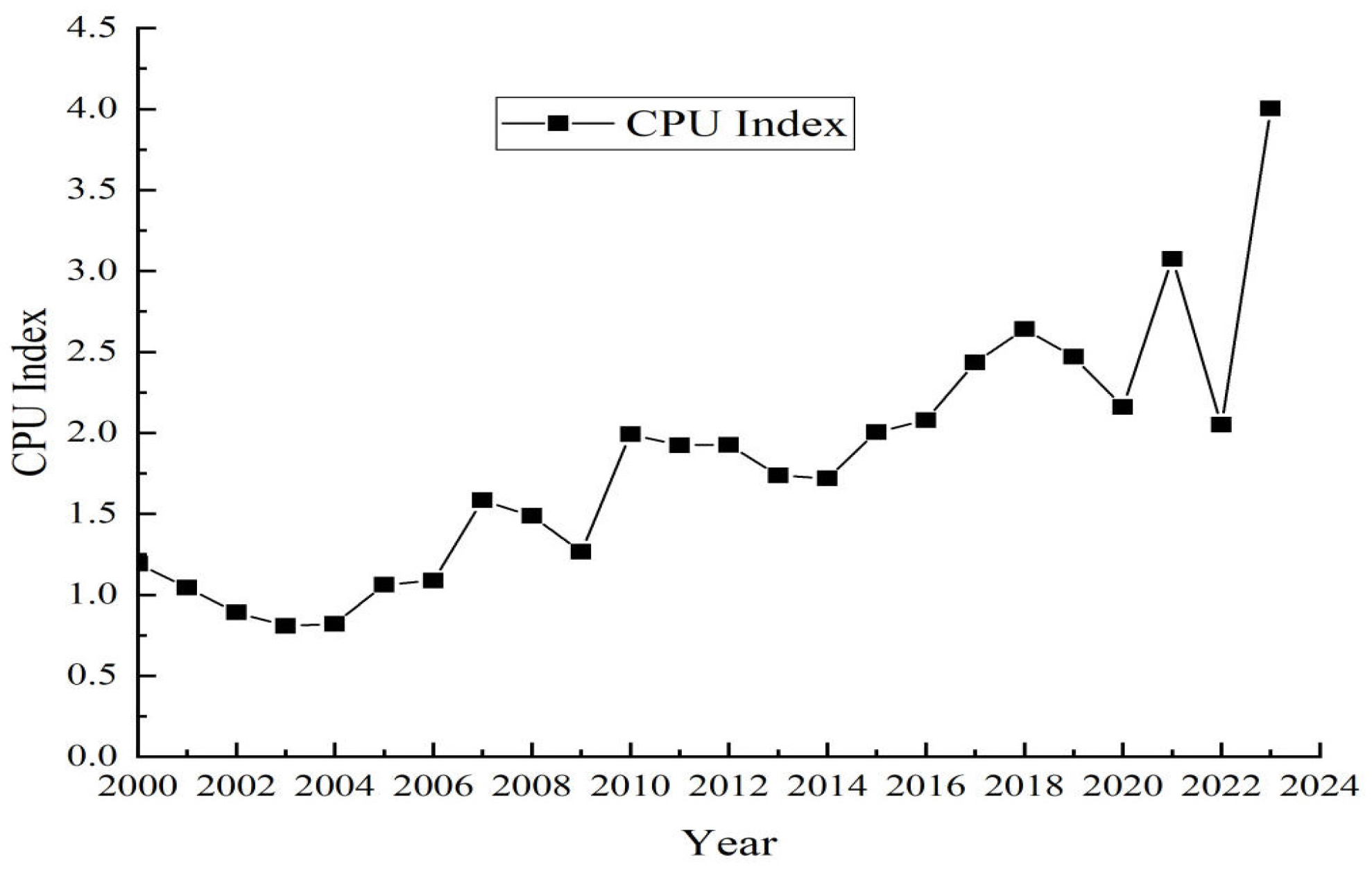
As the world’s largest developing country and carbon emitter, China is currently undergoing a critical phase of economic restructuring and green transformation. Its CPU arises not only from changes in international climate agreements but also from domestic structural adjustments and evolving environmental regulations. As illustrated in Figure 1, China’s CPU exhibits an overall upward and volatile trend, with significantly amplified fluctuations following the announcement of the “dual carbon” goals. This pattern suggests that, alongside the acceleration of green transition, the frequency of policy adjustments and the degree of uncertainty have simultaneously increased. Meanwhile, climate policy serves as a key instrument of government environmental governance, playing a crucial role in guiding firms’ green innovation and technological transformation [3].
In the field of corporate innovation, scholarly attention has gradually shifted from the scale or intensity of innovation activities toward firms’ exploration of new technological domains, commonly referred to as innovation boundaries [4]. Unlike traditional innovation measures, innovation boundaries emphasize firms’ ability to enter technological fields beyond their existing knowledge base. Extending this concept, green innovation boundary expansion can be understood as firms’ entry into new green technological domains beyond their current capabilities (breadth expansion), as well as deepening innovation within existing green domains (depth expansion) [5]. Compared with exploratory innovation or technological diversification, green innovation boundary expansion reflects a more strategic, boundary-spanning behavior that involves crossing technological trajectories and entering previously unoccupied domains, thereby exhibiting stronger implications for uncertainty management and long-term competitiveness.
In light of increasing CPU expenses, green innovation is essential for companies to adhere to environmental regulations and acts as a strategic resource for risk management and sustainable growth [6]. In particular, expanding green innovation boundaries enables firms to overcome technological bottlenecks, identify emerging market opportunities, and build dynamic competitive advantages in complex environments. Therefore, understanding how firms adjust their innovation boundaries under CPU is of significant importance for both corporate risk management and the broader process of green economic transformation.
Existing literature has extensively examined the economic consequences of CPU. On the one hand, increased uncertainty tends to delay firms’ investment and hiring decisions, leading to short-term contraction effects [7]. In the context of climate policy, uncertainty may also inhibit innovation by increasing compliance costs and crowding out R&D investment [8,9]. On the other hand, some studies suggest that uncertainty can reshape incentive structures and market expectations, thereby encouraging firms to undertake strategic adjustments and increase innovation efforts [10,11,12]. Moreover, competition and external pressure have been shown to stimulate more active technological search [13], while institutional incentives may further reshape firms’ investment behavior under uncertainty [14]. In this process, firms identify and evaluate climate-related risks and opportunities, expand into new products and markets, and increase green R&D investment to cope with policy fluctuations and enhance long-term competitiveness [15,16]. Despite these insights, existing studies predominantly focus on the “quantity” or “intensity” of green innovation, with limited attention to whether firms adjust their innovation scope by entering new technological domains. Prior research largely examines firms’ responses within existing technological trajectories, while overlooking the possibility that firms may strategically expand their innovation boundaries as a response to uncertainty.
From a behavioral perspective, under persistent policy uncertainty, firms face not only short-term shocks but also long-term uncertainty regarding technological pathways and competitive dynamics. In such contexts, incremental innovation within existing trajectories may be insufficient to effectively mitigate risks or capture emerging opportunities. Instead, firms may reconfigure resources and adjust strategic directions to expand their exploration in green technological domains, thereby transforming external uncertainty into a source of competitive advantage. While this behavior reflects a strategic adaptation mechanism, systematic empirical evidence on its underlying processes remains limited.
Thus, this study examines a panel of Chinese A-share listed firms from 2011 to 2023. Building on the macro-level CPU index developed by Ma et al. [17], we construct a firm-level measure of CPU and investigate its impact on firms’ green innovation boundaries, along with the underlying mechanisms and economic consequences.
The contributions of this study are threefold.
First, from a research perspective, this study moves beyond the dominant focus on the quantity of green innovation and re-examines the impact of CPU from the perspective of innovation boundaries. By adopting a risk reconfiguration perspective, it highlights how firms respond to uncertainty by crossing existing technological trajectories and entering new green domains, thereby enriching the literature on uncertainty and corporate innovation behavior.
Second, at the theoretical level, this study develops an integrated framework that incorporates strategic adjustment and technological resource integration. It examines the mediating roles of green strategic orientation and the integration of digital and green technologies, providing a systematic explanation of how firms transform external uncertainty into innovation-driven internal capability reconfiguration and subsequently expand their technological search scope.
Third, in terms of the analytical framework, this study further introduces green finance development and peer effects as moderating factors, emphasizing the synergistic roles of multiple stakeholders in uncertain environments. This not only complements the literature on institutional incentives and firm behavior but also provides new empirical evidence for designing green innovation policy systems centered on financial support and collaborative learning.
This paper is structured as follows. Section 2 formulates the theoretical framework and research hypotheses. Section 3 delineates the methodology, variable formulation, and data sources. Section 4 delineates the foundational empirical findings accompanied by a set of robustness and endogeneity assessments. Section 5 analyzes the fundamental processes by which CPU influences the boundaries of enterprises’ green innovation. Section 6 presents additional analysis, encompassing dynamic effects and market reallocation effects. Section 7 ultimately summarizes the principal conclusions and examines their policy and management ramifications.

2. Theoretical Analysis and Research Hypotheses

2.1. Climate Policy Uncertainty and Firms’ Green Innovation Boundaries

Al-Thaqeb et al. [1] argue that policy uncertainty fundamentally arises from ambiguity in government policies and regulatory arrangements, generating fluctuating risks that influence market expectations and risk perceptions, thereby exerting persistent impacts on firm decision-making. In the context of climate change, CPU is not only reflected in the timing, intensity, and implementation pathways of policies but is also compounded by systemic uncertainties stemming from physical climate risks and economic structural transformation. As a result, firms face not merely compliance-related risks, but a set of multidimensional risks encompassing technological path dependence, market access expectations, and institutional adaptability.
According to Enterprise Risk Management (ERM) theory, firms are not passive recipients of uncertainty shocks; rather, they can transform uncertainty into opportunities for strategic adjustment and value creation through forward-looking decision-making and resource reconfiguration [18]. Meanwhile, external pressure and market competition have been shown to significantly stimulate firms’ technological search activities [13]. CPU can be conceptualized as a “risk reconfiguration” mechanism: by intensifying regulatory pressure and competition in green markets, it prompts firms to reallocate resources and adjust innovation trajectories in order to hedge against long-term risks, thereby encouraging them to break through existing technological paths and explore new green technological domains to maintain or enhance competitiveness.
From the perspective of external pressure, rising CPU may induce firms to adopt proactive strategies by creating “growth options” and “switching options”, enabling them to preemptively position themselves along potential green technological pathways. This process reflects an “innovation compensation effect”, whereby firms not only engage in incremental improvements for passive adaptation but also actively expand their green innovation boundaries to diversify policy and technological risks [19,20].
From the perspective of internal resources, CPU encourages firms to shift away from short-term-oriented investments and reallocate resources toward green technological domains with greater strategic flexibility and growth potential. Through the reconfiguration of financial, human, and organizational resources, firms can leverage their existing knowledge base to conduct cross-domain exploration, overcome path dependence, and extend their technological capabilities into new green fields [21].
From a cognitive perspective, CPU heightens managerial attention to the external climate policy environment, thereby strengthening firms’ environmental awareness and fostering green development values. This cognitive shift facilitates the transformation of corporate strategies and operational practices toward greener orientations, ultimately driving the expansion of green innovation boundaries.
In summary, under the “risk reconstruction” logic, CPU, through external pressures, resource restructuring, and cognitive shifts, prompts companies to adopt green innovation as a core strategic tool to address uncertainty, thereby driving them to transcend existing technological boundaries and expand the boundaries of green innovation. Accordingly, this study proposes the following hypothesis:
H1. 
CPU significantly promotes the expansion of firms’ green innovation boundaries.

2.2. Mechanism Analysis of CPU on Green Innovation Boundaries

Green strategic orientation refers to firms’ behavioral preferences and value systems regarding environmental issues. It reflects firms’ long-term strategic commitment to energy conservation, emission reduction, and resource recycling, and serves as an important intangible resource guiding green practices. Under rising CPU, firms face stronger institutional pressures and heightened expectations from stakeholders, which intensify their perception of environmental risks. Such uncertainty not only alters expectations regarding future returns and risks but also prompts firms to reassess their long-term development paths. In this process, firms are more likely to strengthen their green strategic orientation by systematically embedding environmental objectives into their strategic frameworks, thereby enhancing legitimacy and long-term adaptability [22,23].
The Resource-Based View (RBV) posits that firms achieve sustained competitive advantage through the integration of internal resources and strategic capabilities [24]. Guided by a green strategic orientation, firms incorporate environmental objectives into resource allocation and decision-making processes, thereby increasing investment in green R&D and facilitating the extension of innovation activities from existing technological domains into new green fields [25]. Such strategic adjustments help firms overcome path dependence, expand their technological search scope, and ultimately extend their green innovation boundaries.
Accordingly, green strategic orientation serves as an important mediating mechanism through which CPU influences the expansion of firms’ green innovation boundaries. Therefore, this study proposes:
H2. 
Green strategic orientation mediates the positive relationship between CPU and firms’ green innovation boundaries.
Technological convergence refers to the integration and interaction of distinct technological domains, resulting in new technological forms through functional and application-level recombination [26]. Expanding upon this concept, the integration of digital and green technologies (“digital–green integration”) emphasizes the systematic combination of digital technologies (e.g., big data, digital systems and artificial intelligence) with green low-carbon technologies (e.g., renewable energy and pollution reduction technologies), thereby enhancing the efficiency and innovative potential of green technologies [27].
As CPU increases, firms face multidimensional risks and more complex decision environments, making it difficult for a single technological trajectory to effectively address uncertainty. Consequently, firms are more inclined to integrate heterogeneous technological resources to enhance adaptability [28,29].
Resource orchestration theory suggests that firms achieve dynamic integration of heterogeneous resources through processes of structuring, bundling, and leveraging [30]. Specifically, in the structuring stage, firms allocate key resources toward green development and digital technologies; in the bundling stage, managers integrate green and digital technologies to develop solutions such as digital energy-saving systems, green intelligent manufacturing processes, and data-driven environmental management systems; and in the leveraging stage, firms apply these integrated capabilities to production, innovation, and market expansion, thereby enabling entry into new green technological domains [24,31].
Through this process, digital–green integration not only improves resource efficiency but also enhances firms’ systemic innovation capacity and cross-domain exploration ability under uncertainty [27,32], thereby facilitating the expansion of green innovation boundaries.
Therefore, digital–green technology integration constitutes an important internal mechanism through which CPU promotes the expansion of firms’ green innovation boundaries. Accordingly, this study proposes:
H3. 
Digital–green technology integration mediates the positive relationship between CPU and firms’ green innovation boundaries.

2.3. Moderating Effects of CPU on Green Innovation Boundaries

Green innovation initiatives are generally marked by massive initial investments, extended payback durations, and considerable technological uncertainty, which exacerbate firm financing constraints under CPU [33]. Green finance, oriented toward environmental governance, channels financial resources into green industries through instruments such as green credit, green bonds, and green insurance, thereby playing a crucial role in alleviating financing constraints and enhancing firms’ risk-bearing ability [34].
Furthermore, green financial institutions are progressively integrating environmental risk evaluations into their investment and financing strategies, helping firms identify, manage, and diversify risks arising from CPU [35,36,37]. By providing institutional support for coping with policy volatility, the development of green finance enables firms to intensify exploration into new green technological domains, thereby strengthening the positive effect of CPU on the expansion of green innovation boundaries. Accordingly, this study proposes:
H4. 
Green finance positively moderates the relationship between CPU and firms’ green innovation boundaries.
In highly uncertain external environments, firms often reduce decision-making costs and risks by observing and learning from peer firms. According to information learning theory, rising uncertainty makes peer behavior a highly credible source of information, leading firms to rely more heavily on peer experiences to guide their own decisions [38,39].
Under intensified CPU, firms not only monitor whether peers engage in green innovation but also pay close attention to whether peers successfully break through existing technological boundaries and enter new green technological domains. Peer firms’ expansion of green innovation boundaries provides valuable reference information regarding technological feasibility, policy compatibility, and market prospects [40]. On the one hand, imitative learning reduces uncertainty associated with entering new green technological fields; on the other hand, relative competitive pressure motivates firms to cross existing technological boundaries to maintain or achieve differentiated competitive advantages [41]. In this context, green innovation boundary peer effects shape firms’ external information environments and competitive constraints, thereby amplifying the positive impact of CPU on green innovation boundary expansion. Accordingly, this study proposes:
H5. 
Peer effects positively moderate the relationship between CPU and firms’ green innovation boundaries.

3. Research Design

3.1. Sample and Data Sources

This study uses Chinese A-share listed firms from 2011 to 2023 as the initial sample. To construct a firm-level CPU index, we integrate a macro-level CPU index with firm-level climate risk data. Specifically, the macro CPU measure is based on the China CPU Index developed by Ma et al. [7], while firm-level climate risk is obtained through textual analysis of listed firms’ annual reports. Green patent data are sourced from the China Research Data Services Platform (CNRDS). Regional control variables are obtained from the China Statistical Yearbook, and other firm-level financial data are collected from the CSMAR database.
The raw sample is processed as follows. Financial and insurance firms are excluded. Firms under special treatment (ST and *ST) are removed. Observations with missing key variables are excluded. Green patent variables are winsorized at the top 1%, while other continuous variables are winsorized at both the upper and lower 1% levels. The final sample consists of 4054 listed firms and 20,213 firm-year observations.

3.2. Model Construction and Variable Definitions

3.2.1. Model Construction

To examine the relationship between CPU and firms’ green innovation boundary, we estimate the following baseline regression model:
G I B _ I i , t   =   θ 0   +   θ 1 CP U i , t   +   θ 2 Controls i , t   +   Year   +   Industry   +   μ i , t
where i denotes the firm and t denotes the year. GIB_Ii,t is the dependent variable measuring the firm’s green innovation boundary. CPUi,t is the core explanatory variable capturing the degree of CPU faced by firm i in year t. Controlsi,t represents a vector of control variables. Year and industry fixed effects are included, and μ i,t is the error term. Firm-clustered standard errors are employed to mitigate potential heteroskedasticity and serial correlation.

3.2.2. Variable Definition

(1)
Dependent Variable
Green Innovation Boundary (GIB_I). Following prior studies [5,42], we construct the green innovation boundary indicator as follows. First, we collect firms’ green patent applications and their corresponding International Patent Classification (IPC) codes. Second, we identify firms’ green technological domains by accumulating all four-digit IPC codes associated with green patents applied for up to year t, which constitute the firm’s existing “green technology pool”. If the green patents applied for in year t + 1 belong to IPC codes not included in this pool, they are classified as green patents in new technological domains, indicating a breakthrough in the breadth of the green innovation boundary. By dynamically updating the technology pool each year, we take the logarithm of the number of green patents in new technological domains plus one to obtain GIB_I.
(2)
Independent Variable
Because the macro CPU index is time-series data that does not vary across firms, directly using it would imply homogeneous exposure to CPU across heterogeneous firms. To address this issue, we follow Qian [43] and construct a firm-level CPU measure by interacting the macro CPU index (China provincial CPU index proposed by Ma et al. [7]) with firm-level climate risk.
The logic is that firms with lower climate risk are better positioned to cope with CPU and undertake transformation, whereas firms with higher climate risk face greater challenges. Thus, firms’ exposure to CPU depends not only on external policy conditions but also on firm-specific climate risk.
Specifically, following Nagar and Schoenfeld [44] and Du et al. [45], we first construct seed and extended keyword dictionaries related to climate risk. We then extract climate-risk-related text from the “Management Discussion and Analysis” and “Outlook” sections of firms’ annual reports. Using natural language processing (NLP) techniques implemented in Python 3.10 within Jupyter Notebook 6.5.4, we measure firm-level climate risk as the ratio of the total frequency of climate risk keywords to the total length of the annual report text. A higher value indicates greater climate risk exposure, greater transformation difficulty, and stronger sensitivity to CPU. Accordingly, a higher CPU value indicates higher firm-level CPU.
(3)
Mechanism Variables
Green Strategic Orientation (GSO). This variable is measured using seven indicators derived from firms’ annual and CSR reports, capturing environmental philosophy, environmental objectives, management systems, environmental certifications, employee training, environmental initiatives, and compliance with the “Three Simultaneities” policy.
Digital–Green Technology Integration (DGTI). This variable is measured by the proportion of digital–green crossover patents, defined as the ratio of patents that simultaneously involve green technologies and digital technologies to total patents [46,47].
(4)
Moderating Variables
Green Finance (GreenFin). Following Wang and Fan [48], we construct a city-level green finance index with five components: green credit, green investment, green securities, green insurance, and government environmental expenditure. Factor analysis is applied, and one common factor with an eigenvalue greater than one is retained as the green finance indicator.
Peer Effect (Industry GIB). Peer pressure is measured by the average green innovation boundary of industry peers, excluding the focal firm.
(5)
Control Variables
Following existing studies, we include a comprehensive set of control variables related to firm characteristics, corporate governance, and financial conditions [42]. Firm age (FirmAge) is defined as the logarithm of one plus the difference between the sample year and the firm’s establishment year. Firm size (Size) is measured as the logarithm of total assets. Growth (Growth) is measured by revenue growth. Leverage (Lev) is the ratio of total liabilities to total assets. Return on equity (ROE) is net profit divided by shareholders’ equity. Cash holdings (Cash) are measured as cash and cash equivalents scaled by total assets. Corporate governance variables include board independence (Indep), defined as the proportion of independent directors; ownership balance (Balance), defined as the ratio of the combined shareholdings of the second- to tenth-largest shareholders to that of the largest shareholder; managerial ownership (Mshare); and institutional ownership (Inst). Regional economic growth (GDP) is measured by the annual GDP growth rate of the firm’s city. Including these variables helps control for firm heterogeneity and enhances the robustness of the empirical results.

3.3. Descriptive Statistics

Table 1 presents descriptive statistics for the primary variables. The average value of green innovation boundary (GIB_I) is 1.0430, with a standard deviation of 1.2770, signifying considerable variability and dispersion among firms. The extensive range of CPU, with a maximum of 6.1440 and a minimum of 0, indicates considerable disparity in enterprises’ exposure to CPU. The distributions of control variables align well with those documented in previous studies.

4. Empirical Analysis

4.1. Baseline Regression Analysis

Table 2 displays the baseline regression results based on Equation (1). Column (1) reports estimates without control variables, while Column (2) includes firm-level controls together with industry and year fixed effects. The coefficient on CPU remains positive and statistically significant at the 1% level, supporting H1.
The results indicate that a 1% increase in CPU is associated with an approximately 5.4% expansion in firms’ green innovation boundaries. This indicates that firms are more likely to explore new green technological areas instead of simply enhancing their innovation efforts within existing domains.
These findings are consistent with Bai et al. [15], which find that CPU positively affects firms’ green innovation output, primarily through increased R&D investment and regulatory pressure. Similarly, recent studies based on nonlinear frameworks suggest that CPU can stimulate green innovation under certain conditions, although the effect may weaken at higher levels of uncertainty [49].
Our study differs in that it captures the expansion of innovation scope rather than innovation intensity. This distinction suggests that CPU not only stimulates green innovation activity but also encourages firms to broaden their technological search and explore new domains, thereby promoting more boundary-spanning innovation.

4.2. Endogeneity Tests

4.2.1. Two-Stage Least Squares (2SLS)

To address potential endogeneity concerns, including reverse causality and omitted variable bias, this study employs an instrumental variable (IV) approach. Following prior literature, two sources of exogenous shocks are used to construct the instruments.
First, based on data from the National Climate Reports issued by the China Meteorological Administration, an extreme high-temperature indicator (Crisk) is employed as an exogenous climate shock. Extreme climate events are closely associated with the introduction of climate policies, while being largely exogenous to firm behavior, thereby satisfying the exogeneity requirement [50]. Considering that climate policies are often industry-specific, this study further adopts the industry-level average climate risk (excluding the focal firm), denoted as Indscore, as an exposure weight. Following the Bartik IV design proposed by Goldsmith et al. [51], the interaction term (Crisk-Indscore) is constructed as an instrumental variable.
Second, to further strengthen identification and mitigate potential endogeneity concerns, the U.S. CPU index [52] is introduced as an additional source of external shocks. Given the global interdependence of climate policies between China and the United States, while U.S. CPU is unlikely to directly affect individual Chinese firms, this variable satisfies both relevance and exclusion restrictions. To avoid the time-series variation being absorbed by fixed effects, this study similarly interacts the U.S. CPU index with the industry-level climate risk (Indscore) to construct a second instrumental variable (CUS).
Table 3 reports the results from the two-stage least squares (2SLS) estimations. The first-stage regressions (Columns (1) and (3)) show that both instrumental variables are significantly and positively correlated with firm-level CPU. Moreover, the Cragg–Donald Wald F-statistics exceed 16.83, and the Kleibergen–Paap rk Wald F-statistics reject the null hypothesis of underidentification, indicating strong explanatory power and no weak instrument concerns. The second-stage results (Columns (2) and (4)) demonstrate that, after accounting for potential endogeneity, CPU remains significantly positively associated with firms’ green innovation boundaries, confirming the robustness of the baseline findings.

4.2.2. Propensity Score Matching (PSM)

To mitigate sample self-selection bias, we further apply propensity score matching. Companies with CPU values exceeding the industry-year median are designated as the treatment group, while all control variables serve as covariates for 1:1 nearest-neighbor matching. The results remain robust post-matching, as indicated in Table 3, column (5).

4.3. Robustness Checks

4.3.1. Alternative Variable Measures

(1)
Alternative GIB Measure. We construct a green knowledge breadth index (GIB_P) to capture the dispersion of firms’ green patent technologies. A higher value indicates a more diversified distribution of green invention patents and a greater expansion of green innovation boundaries. The specific calculation formula is:
Ipc 4 hhi = 1 ϕ 2
where Φ denotes the ratio of green patents of a specific IPC to the total patent applications of the firm. The findings in Table 4, column (1) indicate that CPU greatly enhances the breadth of green innovation boundaries at the 1% significance level.
(2)
Alternative Climate Risk Measure. Climate risk is alternatively measured as the ratio of climate-related keywords in the MD&A section of annual reports. Table 4, column (2) reports a significantly positive coefficient, consistent with the baseline results.

4.3.2. Additional Robustness Tests

We further conduct robustness checks by (1) clustering standard errors at the industry–year level, (2) using one-period lagged CPU, and (3) controlling for climate-adaptive city pilot policies. The results, reported in Table 4, columns (3)–(5), remain robust.

4.4. Heterogeneity Analysis

4.4.1. Regional Green Innovation Ecosystem

Cities with more vibrant green innovation ecosystems intensify competition in factor and product markets, motivating firms to increase green innovation investment. We measure regional green innovation activity by the number of green patents granted per 10,000 people and split the sample at the median. As shown in Table 5, columns (1)–(2), CPU significantly promotes green innovation boundaries only in regions with more active green innovation ecosystems.

4.4.2. Regional Intellectual Property Protection

Effective climate governance relies not only on firms’ green responsibility but also on strong legal enforcement. Using the non-infringement rate of patents as a proxy for intellectual property protection, we split the sample at the median. Results in Table 5, columns (3)–(4), show that while CPU is positive in both subsamples, the effect is significantly stronger in regions with stronger IP protection, indicating that institutional safeguards enhance firms’ ability to transform CPU into technological breakthroughs.

5. Mechanism Analysis

5.1. Examination of the Mechanisms

To examine the mediating mechanisms through which CPU affects firms’ green innovation boundaries, we estimate mediation models conditional on the baseline regression in Equation (1) yielding a statistically significant coefficient for CPU. Following standard mediation analysis procedures, we estimate Equation (2) and conduct both Sobel tests and Bootstrap tests to assess the significance and robustness of the mediating effects. The mediation model is specified as follows:
Med i , t   =   θ 0   +   θ 1 CP U i , t   +   θ 2 Controls i , t   +   Year   +   Industry   +   μ i , t
In Equation (2), Mediatori,t denotes the mediator variables, including green strategic orientation (GSO) and digital–green technology integration (DGTI). All other variables are defined consistently with the baseline regression model.
Column (1) of Table 6 reports the regression results of CPU on firms’ green strategic orientation. The coefficient on CPU is positive and statistically significant, indicating that rising CPU significantly strengthens firms’ strategic orientation toward green development. Increased policy uncertainty compels corporations to systematically integrate environmental objectives into their business strategy frameworks, thereby stimulating the intrinsic motivation for green innovation and laying a strategic foundation for the expansion of green innovation boundaries. These findings provide strong support for H2.
As CPU intensifies, firms’ awareness of environmental risks and sensitivity to policy changes increase markedly [19,36], prompting greater emphasis on long-term sustainability objectives. Consequently, firms tend to embed environmental values into their core strategies and corporate philosophies, gradually cultivating organizational cultures and institutional environments oriented toward green development. This strategic reorientation guides resource allocation and managerial decision-making toward green innovation activities, thereby facilitating continuous exploration of new green technological domains.
Column (2) of Table 6 presents the regression results of CPU on firms’ digital–green technology integration. The coefficient on CPU remains positive and statistically significant, indicating that CPU significantly promotes the deep integration of digital and green technological elements. This integration serves a vital technological function in advancing the boundaries of green innovation, hence facilitating H3.
In response to heightened CPU, firms increasingly concentrate on green innovation trajectories and systematically integrate digital and green technology resources across strategic, technological, and organizational dimensions. By leveraging data-driven approaches, intelligent control systems, and digital management tools, firms are able to break away from dependence on single technological pathways and accelerate the deployment of intelligent technologies in applications such as energy conservation, clean production, and environmental governance [23,53]. This process converts the advantages of technological integration into ongoing research of new green technology sectors, ultimately facilitating the effective extension of enterprises’ green innovation boundaries.
Furthermore, both mediating effects successfully pass the Sobel test, and the confidence intervals derived from the Bootstrap tests exclude zero, so reinforcing the robustness and reliability of the suggested mediation mechanisms.

5.2. Moderating Effect Analysis

To investigate the moderating influences of green finance and peer effects on the link between CPU and enterprises’ green innovation boundaries, we develop the following moderation model:
GIB _ I i , t =   β 0   +   β 1 CPU i , t   +   β 2 CPU i , t   ×   Moderate i , t   +   β 3 Moderate i , t +   β 4 Controls i , t   +   Year   +   Industry   +   μ i , t
In Equation (4), Moderatei,t represents the moderating variables, namely green finance and peer effects. The coefficient on the interaction term CPUi,t × Moderatei,t, denoted by β2, illustrates the moderating influence of these variables on the association between CPU and the green innovation boundaries of enterprises. A notably positive β2 hints that the moderator enhances the effect of CPU on the extension of green innovation boundaries. The definitions of the other variables align with those in Equation (1).
The findings presented in Table 7 reveal the coefficient for the interaction term CPUi,t × Moderatei,t, in column (1) is considerably positive, illustrating that green finance enhances the positive impact with CPU on businesses’ green innovation limits. This finding supports H4. Column (2) of Table 7 further shows that peer effects also significantly strengthen the positive impact of CPU on green innovation boundary expansion. Specifically, when firms face stronger peer pressure, they are more likely to expand their green innovation boundaries in response to rising CPU. This evidence supports the peer effect mechanism and confirms H5.

6. Further Analysis

6.1. Dynamic Sustainability Effects

In the presence of CPU, firms must enhance strategic foresight, risk management capability, and decision-making efficiency. By continuously accumulating green technological knowledge, optimizing innovation processes, and embedding sustainability principles into their innovation systems [21], firms are able to broaden their technological search scope and knowledge acquisition channels.
Following Triguero and Córcoles [54], we measure firms’ sustained green innovation performance by constructing an indicator based on the product of the growth rate of green patent applications across adjacent periods and the contemporaneous number of green patent applications. This measure jointly captures both the scale of green innovation and its dynamic growth trend. The specific formula is as follows:
OIP i , t   =   OIN i , t   +   OIN i , t 1 OIN i , t 1   +   OIN i , t 2 ( OIN i , t   +   OIN i , t 1 )
where OINi,t denotes the number of green patent applications filed by firm iii in years t, t − 1, and t − 2. To mitigate scale effects, we take the natural logarithm of the sustained green innovation (OIP).
The results in column (1) of Table 8 show that the coefficient on green innovation boundary expansion is positive and statistically significant at the 1% level. This finding suggests that CPU, by imposing external regulatory pressure and increasing environmental compliance costs, compels firms to engage in sustained green innovation in order to mitigate potential policy risks, achieve low-carbon transformation, and build long-term competitive advantages. Moreover, the expansion of green innovation boundaries facilitates the recombination of heterogeneous innovation elements by weakening firms’ dependence on existing technological trajectories, thereby fostering sustainable innovation capabilities.

6.2. Market Reallocation Effects

During periods of technological change, market competition exhibits a dual effect. On the one hand, competitive pressure stimulates firms to upgrade technologies and engage in innovation; on the other hand, it drives the reallocation of market shares from low-technology firms to high-technology firms, thereby reshaping the allocation of innovation resources at the industry level. In response to CPU, enterprises broaden their green innovation parameters, refine production processes, and raise effectiveness in resource utilization to alleviate policy concerns and bolster competitiveness, while allowing them to seize increased market opportunities [55].
We measure technological market share (Marketshare) as a firm’s sales revenue divided by total industry sales revenue at the four-digit industry classification level. This indicator is used to assess the short-term market value generated by green innovation boundary expansion.
The findings in column (2) of Table 8 indicate that the regression coefficient of GIB_I is considerably positive at the 5% level, suggesting that there are notable disparities in the types of green innovation among firms, competitive advantages will be formed and transformed into market choices oriented by obtaining innovation profits. As CPU intensifies, firms continuously expand their green innovation boundaries and promote the reallocation of market shares, thereby weakening the market positions of non-innovative firms and increasing their own short-term technological market shares at the aggregate level.

7. Conclusions and Recommendations

Based on a sample of Chinese A-share listed firms from 2011 to 2023, this study constructs a firm-level CPU index using text analysis and examines its impact on firms’ green innovation boundaries and underlying mechanisms. The findings suggest that CPU is not merely an external constraint; under certain conditions, it can act as a catalyst for strategic adaptation and technological exploration.
Specifically, CPU significantly promotes the expansion of firms’ green innovation boundaries, and this result remains robust across multiple endogeneity treatments and robustness checks. This indicates that, when facing policy uncertainty, firms tend to respond by entering new green technological domains to mitigate risks and enhance long-term adaptability. The effect is more pronounced in regions with stronger innovation ecosystems and intellectual property protection, highlighting the importance of institutional quality in amplifying innovation incentives.
Mechanism analyses further show that green strategic orientation and digital–green technology integration serve as important transmission channels, through which firms transform external policy shocks into internal capability upgrading. In addition, the development of green finance and peer effects strengthens the positive impact of CPU, underscoring the complementary roles of financial support and external learning environments. Further analysis reveals that the expansion of green innovation boundaries not only enhances firms’ sustainable innovation capacity but also contributes to the reallocation of market shares toward more innovative firms, thereby converting uncertainty into long-term competitive advantages.
These findings suggest that policy uncertainty in sustainability transitions can drive firms to broaden their technological search beyond just incremental innovation. Similar dynamics may be observed in other institutional contexts where regulatory complexity is increasing and innovation systems are well-developed enough to enable firms’ adaptive responses. This is particularly relevant in industries facing strict environmental regulations or in regions experiencing significant policy shifts aimed at promoting sustainability.
Based on these findings, this study derives the following implications.
First, while continuously strengthening CPU, policymakers should place greater emphasis on policy continuity, transparency, and expectation management. By delivering clear policy signals and long-term transition roadmaps, governments can reduce firms’ institutional uncertainty and guide forward-looking investments in green technologies. At the same time, further efforts should be made to improve regional innovation ecosystems and strengthen intellectual property protection, thereby fostering a stable, fair, and supportive innovation and business environment that enables firms to achieve breakthroughs in green technological domains.
Second, firms should incorporate green development and digital transformation into their core strategic frameworks and regard green innovation as a key strategic instrument for coping with CPU. By enhancing digital–green technology integration capabilities and deeply embedding intelligence and sustainability into decision-making, production, and management processes, firms can strengthen their continuous innovation capacity and competitive resilience in highly uncertain environments. In parallel, policymakers may prioritize support for the intersection of intelligent and green technologies through fiscal incentives, industrial guidance, and demonstration projects, encouraging firms to increase investments in smart manufacturing, energy conservation, emissions reduction, and resource recycling.
Third, greater synergy should be fostered between the green financial system and firms’ resource allocation adjustments. Through financial instruments such as green credit and green bonds, green finance can help alleviate financing constraints faced by firms under CPU and channel capital toward green technological R&D and cross-domain innovation. Moreover, the demonstration and learning functions of green innovation peer effects should be fully leveraged by cultivating benchmark green innovators and promoting replicable transformation projects. By activating peer learning mechanisms, the pioneering advantages of leading firms can be transformed into industry-wide green transformation momentum, thereby facilitating coordinated upgrading and high-quality development at the industry level.
This study possesses multiple limitations that provide potential directions for future research.
First, this research exclusively examines CPU as a factor of the boundaries of green innovation. However, uncertainties related to energy policy, economic policy, and carbon emission regulations may also exert important influences on firms’ innovation decisions. Future studies could extend the analysis by incorporating multiple dimensions of policy uncertainty.
Second, the formation of green innovation boundaries is inherently multidimensional. Factors such as government guidance, fiscal and tax policies, and market competition structures may also play critical roles. Future research may further explore the diverse drivers of green innovation boundary expansion to develop a more comprehensive theoretical framework.
Finally, the development of the CPU index in this research is predominantly based upon conventional media sources and does not fully consider the increasing significance of social media platforms (e.g., Weibo and WeChat public accounts) in disseminating policy information. Future research could integrate data from both traditional and social media to develop a more comprehensive and refined measure of CPU.


Author Contributions

Conceptualization, J.F. and J.Z.; methodology, J.F.; software, J.F. and J.Z.; validation, J.F. and J.Z.; formal analysis, J.F.; resources, J.F.; data curation, J.F.; writing—original draft preparation, J.F.; writing—review and editing, J.F. and J.Z.; visualization, J.Z.; supervision, J.F.; project administration, J.F. and J.Z.; funding acquisition, J.Z. All authors have read and agreed to the published version of the manuscript.

Funding

This research was financially supported by the 2024 Gansu Provincial Social Science Planning Youth Project, China (2024QN020); Gansu Provincial Science and Technology Plan—Soft Science Special Project (26JRZA130); and The 2025 Humanities and Social Sciences Cultivation Fund Project of Lanzhou University of Technology: “Research on the Mechanism and Countermeasures of Element Flow on the Integration of Urban and Rural Areas in Counties of Northwest China from the Perspective of Multi-layer Networks”.

Institutional Review Board Statement

Not applicable.

Informed Consent Statement

Not applicable.

Data Availability Statement

The original contributions presented in this study are included in the article. Further inquiries can be directed to the corresponding author.

Conflicts of Interest

The authors declare no conflicts of interest.

References

  1. Al-Thaqeb, S.A.; Algharabali, B.G. Economic policy uncertainty: A literature review. J. Econ. Asymmetries 2019, 20, e00133. [Google Scholar] [CrossRef]
  2. Khalfaoui, R.; Jabeur, S.B.; Dogan, B. The spillover efects and connectedness among green commodities, bitcoins, and US stock markets: Evidence from the quantile VAR network. J. Environ. Manag. 2022, 306, 114493. [Google Scholar] [CrossRef]
  3. Li, X.; Xu, Q.; Wang, H.C. Environmental effects of the establishment of pilot free trade zones: Evidence from Chinese resource-based enterprises. Environ. Sci. Pollut. Res. 2023, 30, 21384–21403. [Google Scholar] [CrossRef]
  4. Gruber, M.; Harhoff, D.; Hoisl, K. Knowledge recombination across technological boundaries: Scientists vs. engineers. Manag. Sci. 2013, 59, 837–851. [Google Scholar] [CrossRef]
  5. Byun, S.K.; Oh, J.M.; Xia, H. Incremental vs. breakthrough innovation: The role of technology spillovers. Manag. Sci. 2021, 67, 1779–1802. [Google Scholar] [CrossRef]
  6. Zhou, W.; Huang, X.; Dai, H.; Xi, Y.; Wang, Z.; Chen, L. Research on the impact of economic policy uncertainty on enterprises’ green innovation—Based on the perspective of corporate investment and financing decisions. Sustainability 2022, 14, 2627. [Google Scholar] [CrossRef]
  7. Bloom, N. The impact of uncertainty shocks. Econometrica 2009, 77, 623–685. [Google Scholar] [CrossRef]
  8. Dai, Z.F.; Zhang, X.T. Climate policy uncertainty and risks taken by the bank: Evidence from China. Int. Rev. Financ. Anal. 2023, 87, 102579. [Google Scholar] [CrossRef]
  9. Sendstad, L.H.; Chronopoulos, M. Sequential investment in renewable energy technologies under policy uncertainty. Energy Policy 2020, 137, 111152. [Google Scholar] [CrossRef]
  10. Huang, J.; Wang, Z.; Jiang, Z.; Zhong, Q. Environmental policy uncertainty and corporate green innovation: Evidence from China. Eur. J. Innov. Manag. 2023, 26, 1675–1696. [Google Scholar] [CrossRef]
  11. Kyaw, K. Effect of policy uncertainty on environmental innovation. J. Clean. Prod. 2022, 363, 132645. [Google Scholar] [CrossRef]
  12. Dreyer, C.; Schulz, O. Policy uncertainty and corporate investment: Public versus private firms. Rev. Manag. Sci. 2023, 17, 1863–1898. [Google Scholar] [CrossRef]
  13. Aghion, P.; Bloom, N.; Blundell, R.; Griffith, R.; Howitt, P. Competition and innovation: An inverted-U relationship. Q. J. Econ. 2005, 120, 701–728. [Google Scholar]
  14. Solodoha, E.; Rosenzweig, S.; Harel, S. Incentivizing angels to invest in start-ups: Evidence from a natural experiment. Res. Policy 2023, 52, 104634. [Google Scholar] [CrossRef]
  15. Bai, D.; Du, L.; Xu, Y.; Abbas, S. Climate policy uncertainty and corporate green innovation: Evidence from Chinese A-share listed industrial corporations. Energy Econ. 2023, 127, 107020. [Google Scholar] [CrossRef]
  16. Ling, S.; Xia, H.; Liu, Z.F.; Treepongkaruna, S.; Haroon, S. Navigating climate policy uncertainty: Impacts on continuous innovation in corporations. Financ. Res. Lett. 2025, 71, 106436. [Google Scholar] [CrossRef]
  17. Ma, Y.R.; Liu, Z.; Ma, D.; Zhai, P.; Guo, K.; Zhang, D.; Ji, Q. A news-based climate policy uncertainty index for China. Sci. Data 2023, 10, 881. [Google Scholar] [CrossRef] [PubMed]
  18. Hoyt, R.E.; Liebenberg, A.P. The value of enterprise risk management. J. Risk Insur. 2011, 78, 795–822. [Google Scholar] [CrossRef]
  19. Chen, Y.; Ren, Y.S.; Narayan, S.; Huynh, N.Q.A. Does climate risk impact firms’ ESG performance? Evidence from China. Econ. Anal. Policy 2024, 81, 683–695. [Google Scholar] [CrossRef]
  20. Wu, J.; Xia, Q.; Li, Z. Green innovation and enterprise green total factor productivity at a micro level: A perspective of technical distance. J. Clean. Prod. 2022, 344, 131070. [Google Scholar] [CrossRef]
  21. Ren, X.; Qin, J.; Dong, K. How does climate policy uncertainty affect excessive corporate debt? The case of China. J. Environ. Assess. Policy Manag. 2022, 24, 2250025. [Google Scholar] [CrossRef]
  22. Javeed, S.A.; Teh, B.H.; Ong, T.S.; Chong, L.L.; Abd Rahim, M.F.B.; Latief, R. How does green innovation strategy influence corporate financing? Corporate social responsibility and gender diversity play a moderating role. Int. J. Environ. Res. Public Health 2022, 19, 8724. [Google Scholar] [CrossRef]
  23. Chen, W.; Zhu, C.; Cheung, Q.; Wu, S.; Zhang, J.; Cao, J. How does digitization enable green innovation? Evidence from Chinese listed companies. Bus. Strategy Environ. 2024, 33, 3832–3854. [Google Scholar] [CrossRef]
  24. Mahoney, J.T.; Pandian, J.R. The resource-based view within the conversation of strategic management. Strateg. Manag. J. 1992, 13, 363–380. [Google Scholar] [CrossRef]
  25. Schiederig, T.; Tietze, F.; Herstatt, C. Green innovation in technology and innovation management–an exploratory literature review. RD Manag. 2012, 42, 180–192. [Google Scholar] [CrossRef]
  26. Hacklin, F.; Marxt, C.; Fahrni, F. An evolutionary perspective on convergence: Inducing a stage model of inter-industry innovation. Int. J. Technol. Manag. 2010, 49, 220–249. [Google Scholar] [CrossRef]
  27. Zhong, Q.; Zhang, Q.; Yang, J. Can artificial intelligence empower energy enterprises to cope with climate policy uncertainty? Energy Econ. 2025, 141, 108088. [Google Scholar] [CrossRef]
  28. Du, L.; Wei, M.; Zhang, S.; Pan, J. Unveiling the policy intervention effects of natural resource regulation on firm-level pollution emissions: Evidence from China’s restrained land supply. Resour. Policy 2023, 86, 104081. [Google Scholar] [CrossRef]
  29. Chowdhury, R.H.; Maung, M. Financial market development and the effectiveness of R&D investment: Evidence from developed and emerging countries. Res. Int. Bus. Financ. 2012, 26, 258–272. [Google Scholar] [CrossRef]
  30. Sirmon, D.G.; Hitt, M.A.; Ireland, R.D.; Gilbert, B.A. Resource orchestration to create competitive advantage: Breadth, depth, and life cycle effects. J. Manag. 2011, 37, 1390–1412. [Google Scholar] [CrossRef]
  31. Kraus, S.; Palmer, C.; Kailer, N.; Kallinger, F.L.; Spitzer, J. Digital entrepreneurship: A research agenda on new business models for the twenty-first century. Int. J. Entrep. Behav. Res. 2019, 25, 353–375. [Google Scholar] [CrossRef]
  32. Takeuchi, H.; Husen, J.H.; Tun, H.T.; Washizaki, H.; Yoshioka, N. Enterprise architecture-based metamodel for machine learning projects and its management. Future Gener. Comput. Syst. 2024, 161, 135–145. [Google Scholar] [CrossRef]
  33. Huang, J.W.; Li, Y.H. Green innovation and performance: The view of organizational capability and social reciprocity. J. Bus. Ethics 2017, 145, 309–324. [Google Scholar] [CrossRef]
  34. Ma, Y.; Lu, L.; Cui, J.; Shi, X. Can green credit policy stimulate firms’ green investments? Int. Rev. Econ. Financ. 2024, 91, 123–137. [Google Scholar] [CrossRef]
  35. Bui, A.T.; Pham, T.P. Financial and labour obstacles and firm employment: Evidence from europe and central asia firms. Sustainability 2021, 13, 8650. [Google Scholar] [CrossRef]
  36. Pankratz, N.; Bauer, R.; Derwall, J. Climate change, firm performance, and investor surprises. Manag. Sci. 2023, 69, 7352–7398. [Google Scholar] [CrossRef]
  37. Dong, X.; Yu, M. Green bond issuance and green innovation: Evidence from China’s energy industry. Int. Rev. Financ. Anal. 2024, 94, 103281. [Google Scholar] [CrossRef]
  38. Argote, L.; Lee, S.; Park, J. Organizational learning processes and outcomes: Major findings and future research directions. Manag. Sci. 2021, 67, 5399–5429. [Google Scholar] [CrossRef]
  39. Wang, Z.; Wang, C.; Fang, Z. Learning from Failures of Co-owned Firms: Common Ownership and Information Disclosure Fraud. J. Bus. Ethics 2024, 195, 95–119. [Google Scholar] [CrossRef]
  40. Liao, Z.; Zheng, P.; Bao, P. Does environmental innovation have peer effects? The moderating role of slack resources and avoidance goal orientation. Environ. Res. 2024, 252, 119019. [Google Scholar] [CrossRef]
  41. Xu, R.; He, C.; Li, Y.; Kong, L. Peer effects of corporate green innovation: Evidence from China’s listed firms. Financ. Res. Lett. 2024, 61, 105025. [Google Scholar] [CrossRef]
  42. Yan, K.; Liu, N.; Shi, L.; Yang, L.; Lu, M. How does FinTech enable the expansion of green innovation boundaries: Evidence from the interventions of China’s environmental protection tax law. Energy Econ. 2025, 144, 108367. [Google Scholar] [CrossRef]
  43. Qian, N. Missing women and the price of tea in China: The effect of sex-specific earnings on sex imbalance. Q. J. Econ. 2008, 123, 1251–1285. [Google Scholar] [CrossRef]
  44. Nagar, V.; Schoenfeld, J. Measuring weather exposure with annual reports. Rev. Account. Stud. 2024, 29, 1–32. [Google Scholar] [CrossRef]
  45. Du, J.; Xu, X.; Yang, Y. Does corporate climate risk affect the cost of equity? Evidence from textual analysis with machine learning. Financ. C Comments 2023, 15, 19–46+125. (In Chinese) [Google Scholar]
  46. Feng, Y.; Nie, C. Digital technology innovation and corporate environmental, social, and governance performance: Evidence from a sample of listed firms in China. Corp. Soc. Responsib. Environ. Manag. 2024, 31, 3836–3854. [Google Scholar] [CrossRef]
  47. Li, S.; Xing, K.; Meng, J.; Yang, X. How does the innovation of digital and green technology integration promote corporate environmental performance. Int. Rev. Econ. Financ. 2025, 99, 104035. [Google Scholar] [CrossRef]
  48. Wang, Q.; Fan, Z. Green finance and investment behavior of renewable energy enterprises: A case study of China. Int. Rev. Financ. Anal. 2023, 87, 102564. [Google Scholar] [CrossRef]
  49. Cui, T.; Wei, W.; Huangfu, J. Climate Policy Uncertainty and Green Technology Innovation: An Inverted U Relationship? Sustainability 2025, 17, 7986. [Google Scholar] [CrossRef]
  50. Li, S.; Fan, H.; Wang, Z.; Zhao, Q. Exploring the relationship between climate policy uncertainty perception and green technology innovation in Chinese enterprises. Econ. Anal. Policy 2025, 86, 880–892. [Google Scholar] [CrossRef]
  51. Goldsmith-Pinkham, P.; Sorkin, I.; Swift, H. Bartik instruments: What, when, why, and how. Am. Econ. Rev. 2020, 110, 2586–2624. [Google Scholar] [CrossRef]
  52. Gavriilidis, K. Measuring Climate Policy Uncertainty. Preprint 2021. [Google Scholar] [CrossRef]
  53. Frank, B.; Herbas-Torrico, B.; Schvaneveldt, S.J. The AI-extended consumer: Technology, consumer, country differences in the formation of demand for AI-empowered consumer products. Technol. Forecast. Soc. Change 2021, 172, 121018. [Google Scholar] [CrossRef]
  54. Triguero, A.; Córcoles, D. Understanding innovation: An analysis of persistence for Spanish manufacturing firms. Res. Policy 2013, 42, 340–352. [Google Scholar] [CrossRef]
  55. Xu, A.; Zhu, Y.; Wang, W. Micro green technology innovation effects of green finance pilot policy—From the perspectives of action points and green value. J. Bus. Res. 2023, 159, 113724. [Google Scholar] [CrossRef]
Figure 1. China CPU index.
Sustainability 18 04814 g001
Table 1. Descriptive statistics of variables.
VariablesNMeanSDMinMax
CPU20,2130.98201.00300.09626.1440
GIB_I20,2131.04301.27700.00006.000
Size20,21322.23001.279020.070026.2000
FirmAge20,2132.91400.31901.94603.5260
Lev20,2130.39800.19200.05890.8590
ROE20,2130.07440.1060−0.40400.3360
Growth20,2130.14900.2970−0.45101.4960
Cash20,2130.19300.13200.02190.6460
Indep20,21337.71005.371033.33057.1400
Balance20,2130.38500.286000.01480.9950
Mshare20,21317.780020.86000.000068.3400
Inst20,2130.41300.25500.00480.9100
GDP20,2130.07380.03860.00610.2010
Table 2. Analysis of the impact of CPU on green innovation boundary.
Variables(1)(2)
GIB_IGIB_I
CPU0.1384 ***0.0541 ***
(6.8656)(2.9814)
Size 0.2309 ***
(13.0268)
FirmAge −0.0522
(−1.1946)
Growth −0.0667 *
(−1.9250)
Lev 0.0984
(1.2012)
ROE 0.4494 ***
(3.6604)
Cash 0.2688 ***
(2.8120)
Indep 0.0013
(0.6309)
Mshare 0.0028 ***
(3.8755)
Balance −0.0421
(−1.0079)
Inst 0.4209 ***
(6.4973)
GDP_growth 1.8163 ***
(3.5497)
Constant0.9066 ***−4.4975 ***
(42.7834)(−10.7951)
N20,21320,213
Adj.R20.07720.1303
Industry FEYESYES
Year FEYESYES
Note: Robust t-statistics in parentheses *** p < 0.01, * p < 0.1.
Table 3. Endogenous analysis.
Variables(1)(2)(3)(4)(5)
2SLS-Crisk2SLS-CUSPSM
CPUGIB_ICPUGIB_IGIB_I
CPU 0.055 *** 0.043 ***0.140 ***
(3.351) (2.757)(0.020)
Crisk-Indscore2.208 **
(2.030)
CUS 0.475 ***
(10.474)
ControlsYESYESYESYESYES
_cons−1.796 ***−4.384 ***−2.544 ***−4.279 ***0.967 ***
(−5.720)(−10.440)(−7.669)(−10.678)(0.113)
N17,98017,98019,99619,99620,093
Adj.R20.4590.0940.4690.0900.079
Industry FEYESYESYESYESYES
Year FEYESYESYESYESYES
Cragg-Donald Wald F-Value 1092.276 885.931
Kleibergen-Paap Wald rk F statistic 84.443 503.130
Note: Robust t-statistics in parentheses *** p < 0.01, ** p < 0.05.
Table 4. Robustness test.
Variables(1)(2)(3)(4)(5)
GIB_PGIB_IGIB_IGIB_IGIB_I
CPU0.0931 ***0.0554 ***0.0542 ***0.0511 **0.0456 **
(3.1360)(2.9824)(4.0271)(1.9832)(2.5162)
ControlsYESYESYESYESYES
Constant−0.0462−7.1551 ***−11.053 ***−5.5305 ***−4.5417 ***
(−0.4460)(−9.6443)(0.412)(−10.9527)(−10.2663)
N20,21320,21320,21313,77918,062
Adj.R20.06420.10540.13030.14830.1336
Industry FEYESYESYESYESYES
Year FEYESYESYESYESYES
Note: Robust t-statistics in parentheses *** p < 0.01, ** p < 0.05.
Table 5. Heterogeneity Tests.
Variables(1)(2)(3)(4)
High Green Innovation ActivityLow Green Innovation ActivityRegions with Strong Intellectual Property ProtectionRegions with Weak Intellectual Property Protection
CPU0.0741 ***0.02620.0622 ***0.0413 *
(3.0223)(1.0305)(2.7895)(1.6577)
ControlsYESYESYESYES
Constant−4.4108 ***−4.5923 ***−4.6335 ***−4.3640 ***
(−8.2868)(−7.1106)(−9.0649)(−8.2500)
N11,238896811,6548546
Adj.R20.14010.12290.13230.1272
Industry FEYESYESYESYES
Year FEYESYESYESYES
Note: Robust t-statistics in parentheses *** p < 0.01, * p < 0.1.
Table 6. Mediation Tests.
Variables(1)(2)
GSODGTI
CPU0.1549 ***0.0338 ***
(5.7572)(6.7044)
ControlsYESYES
Constant−10.6514 ***−0.3460 ***
(−20.3582)(−4.6516)
N20,21320,213
Adj.R20.32390.0975
Industry FEYESYES
Year FEYESYES
SobelZ = 3.3576Z = 3.5284
p = 0.0007p = 0.0004
Bootstrap[0.0011, 0.0050][0.0018, 0.0065]
Note: Robust t-statistics in parentheses *** p < 0.01.
Table 7. Moderation Tests.
Variables(1)(2)
GIB_IGIB_I
CPU0.045 ***0.036 **
(2.605)(2.079)
GreenFin0.035
(0.322)
CPU × GreenFin0.197 **
(2.143)
Industry GIB 0.005
(0.073)
CPU × Industry GIB 0.063 **
(2.076)
ControlsYESYES
Constant−4.351 ***−4.469 ***
(−9.970)(−10.701)
N20,21320,213
Adj.R20.09750.3239
Industry FEYESYES
Year FEYESYES
Note: Robust t-statistics in parentheses *** p < 0.01, ** p < 0.05.
Table 8. Further Analysis.
Variables(1)(2)
OIPMarketshare
GIB_I0.2118 ***0.0006 **
(19.1553)(2.0981)
ControlsYESYES
Constant−13.0352 ***−0.3059 ***
(−25.7730)(−15.2081)
N20,21320,213
Adj.R20.45850.4585
Industry FEYESYES
Year FEYESYES
Note: Robust t-statistics in parentheses *** p < 0.01, ** p < 0.05.
Disclaimer/Publisher’s Note: The statements, opinions and data contained in all publications are solely those of the individual author(s) and contributor(s) and not of MDPI and/or the editor(s). MDPI and/or the editor(s) disclaim responsibility for any injury to people or property resulting from any ideas, methods, instructions or products referred to in the content.