1. Introduction
The hospitality and tourism industry has entered a phase in which consumer decision making is increasingly organized by digital interfaces. In accommodation markets, online platforms now function not merely as transactional channels but as environments in which consumers search, compare, interpret, and evaluate information before making booking decisions. Earlier work consistently showed that website quality is an important antecedent of online adoption and platform usage [
1,
2], that online reviews are central sources of judgment in hotel booking contexts [
3,
4], that perceived value is a key psychological determinant of online travel and hotel purchase intentions [
5,
6], that brand image and price shape online booking decisions [
7,
8], and that trust remains indispensable in reducing uncertainty in online environments [
9,
10]. Subsequent studies further refined this line of work by examining the roles of review readability and reviewer characteristics [
11], review polarity and hotel category [
12], managerial responses to reviews [
13], and the social media trustworthiness of tourism information [
14]. At the same time, sustainability has become one of the defining themes of contemporary hospitality and tourism research. A growing body of work has examined environmental sustainability in hospitality and tourism consumer behavior more broadly [
15], the drivers of sustainable consumption behavior in sharing-economy settings [
16,
17], sustainable choices in peer-to-peer accommodation [
18], and tourists’ evaluations of sustainable accommodation attributes [
19]. Other studies have emphasized the importance of hotels’ green practices in shaping consumer citizenship behavior [
20], the adoption of environmental technologies and pro-environmental behavior in the hotel industry [
21], eco-label credibility in generating green word-of-mouth [
22], the damaging effects of greenwashing on trust and behavioral intentions [
23], and the mediating role of green trust in the relationship between hotels’ environmental efforts and guests’ sustainable behaviors [
24]. More recent work has extended this discussion to Gen Z’s sustainable stay choices [
25], the antecedents of green hotel consumer behavior [
26], and consumers’ perceptions of sustainability-certified hotels on global online travel platforms [
27].
Yet these two streams of research have not been fully integrated. Digital platform studies have generally provided sophisticated accounts of information quality, review effects, and trust formation, but they have often treated sustainability as peripheral or as one attribute among many. Conversely, sustainable hospitality studies have offered rich explanations of green attitudes, eco-labels, green trust, and pro-environmental behavior, but they have rarely theorized how consumers’ sustainable choices are shaped within digital platform environments where information is ranked, framed, filtered, signaled, and visually prioritized. Accordingly, the key gap is the absence of a process-oriented model explaining how sustainability-related information in platform environments is interpreted, valued, trusted, and associated with sustainable consumption behavior.
This gap is especially consequential because sustainable consumption research continues to wrestle with the persistent attitude–behavior gap. Consumers frequently express positive attitudes toward environmentally responsible options, yet do not act on those attitudes in actual purchase situations [
28]. This problem has also been discussed in hospitality and tourism, including green hotel choice research grounded in the Theory of Planned Behavior [
29], broader reviews of sustainable consumer behavior in hospitality [
15], integrative sustainable behavior frameworks [
30], and extended TPB applications to luxury-hotel guests’ sustainable consumption [
31]. Taken together, this literature implies that internal orientations alone are insufficient; the architecture of the decision environment also matters. This is where Nudge Theory and digital choice architecture become theoretically relevant. The foundational premise of libertarian paternalism is that behavior can be influenced without eliminating freedom of choice [
32]. Nudge was then formalized as an approach to improving decisions by altering the structure of choice environments rather than by coercion or economic prohibition [
33]. The classic demonstration that defaults can alter life-and-death choices illustrates the power of seemingly minor design features in shaping actual behavior [
34]. Later work argued that nudging deserves greater policy attention [
35], while the MINDSPACE framework elaborated specific channels through which behavior may be influenced [
36]. In digital contexts, this logic has been translated into digital nudging, that is, the use of interface design, information ordering, cues, defaults, and recommendations to shape user decisions in online environments [
37,
38]. Research on recommender systems has reinforced this position by showing how digital choice environments guide user behavior through structured presentation and suggestion mechanisms [
39]. Recent tourism studies suggest that the digitalization–sustainability nexus is no longer speculative. Digital innovation has been discussed as a driver of sustainable tourism development [
40]. Digital tourism platforms have been linked to the advancement of sustainable development goals in the Industry 4.0 era [
41]. Platform-based approaches have also been proposed as tools for promoting sustainable and authentic tourism in low-density territories [
42], while eco-travel applications have been shown to matter for Gen Z’s eco-friendly travel behavior [
43]. Other work has examined digital empowerment and sustainable tourism at destination level [
44], the use of decoy effects in sustainable tourism recommender systems [
45], sustainability nudges on OTA websites [
46], virtual technologies supporting sustainable consumption [
47], augmented reality as a pathway to sustainable tourism [
48], and the impact of digital technology on travel intentions [
49].
However, much of this literature remains either macro-level or technology-centric, with limited attention to the consumer-level process through which sustainability-related information on accommodation platforms is associated with sustainable consumption behavior. Against this background, the present study conceptualizes sustainable informativeness in digital accommodation platforms as a distinct construct and interprets it through the lens of digital choice architecture. Rather than treating sustainability information as neutral background content, this study argues that it can operate as a structured decision cue that is associated with consumers’ value perceptions, trust, and sustainable consumption tendencies. More specifically, the study proposes that sustainable informativeness is linked to sustainable consumption behavior through two forms of perceived value—sustainable functional value and ethical–emotional value—and through trust.
To clarify the theoretical positioning of the study, this research does not seek to test the full scope of digital choice architecture, value theory, or trust theory. Rather, it applies and extends these perspectives to the specific context of sustainability-related information in digital accommodation booking platforms. Given the cross-sectional survey design, the study examines theoretically proposed structural associations among sustainable informativeness, value formation, trust, and sustainable consumption behavior, rather than establishing definitive causal mechanisms.
Accordingly, this study addresses the following research questions. First, how is sustainable informativeness associated with sustainable functional value and ethical–emotional value in digital accommodation booking platforms? Second, how are these two value dimensions associated with trust and sustainable consumption behavior? Third, do sustainable functional value, ethical–emotional value, and trust mediate the relationship between sustainable informativeness and sustainable consumption behavior? These research questions directly guide the development of the hypotheses and the SEM-based analytical strategy. In doing so, this study aims to integrate digital platform research with sustainable hospitality research and to offer a more precise, process-oriented account of the structural associations through which sustainability-related information becomes behaviorally meaningful in platform-mediated accommodation decisions.
2. Theoretical Background
2.1. Digitized Hospitality and Tourism Environments and the Expansion of Sustainable Consumption Research
Research on digitized hospitality and tourism environments has primarily developed through an information-processing perspective. Early studies in online commerce established that consumers’ willingness to transact online depends heavily on trust in the digital environment [
1,
50]. In tourism contexts, online relational exchange has likewise been shown to depend on consumers’ confidence in both the medium and the service provider [
9]. Subsequent studies demonstrated that online reviews influence hotel booking intentions and trust perceptions [
3], that eWOM affects website perceptions and booking-related attitudes [
4], and that trust, brand image, price, and perceived value jointly explain online hotel purchase intentions [
7]. This stream of research later moved beyond simple exposure effects to examine how review information is processed, including the roles of readability, reviewer characteristics, helpfulness perceptions, and managerial responses [
11,
12,
13,
51]. Related work on website quality, review quality, and e-trust further reinforced the view that booking behavior in digital hospitality settings is strongly shaped by information environments [
2,
10].
In parallel, sustainable consumption research in hospitality and tourism has broadened substantially. Earlier studies relied heavily on attitude-based frameworks, particularly the Theory of Planned Behavior, to explain green hotel choice and other pro-environmental intentions [
29]. More recent work has extended this focus from intention to a broader range of outcomes, including sustainable consumption behavior, green revisit intentions, green WOM, green customer citizenship behavior, and sustainable stay choice [
15,
16,
18,
20,
22,
25]. At the same time, hospitality scholars have investigated tourists’ perceptions of sustainable accommodation attributes [
19], the effects of eco-label credibility [
22], the role of green trust and gratitude in sustainable behavior adoption [
24], and the mediating role of information-seeking behavior in green hotel preferences [
26]. Reviews and bibliometric studies similarly suggest that sustainability has become a central axis of hospitality scholarship rather than a peripheral niche [
52,
53,
54].
Nevertheless, a conceptual imbalance remains. Research on digitized platforms has been strong in explaining online evaluation and booking mechanisms, whereas sustainable hospitality research has been strong in explaining pro-environmental intentions and green evaluations. What remains underdeveloped is a framework that explains how sustainability-related information on digital accommodation platforms becomes psychologically meaningful and behaviorally effective. This gap is particularly important because sustainable consumer behavior cannot be fully understood through internal dispositions alone. The persistent attitude–behavior gap suggests that favorable environmental attitudes do not automatically translate into actual marketplace choices [
28]. Frameworks such as SHIFT further imply that context, convenience, and decision architecture matter alongside values and norms [
30]. To understand sustainable accommodation choices in digital contexts, the literature must therefore move beyond internal orientation models and more directly examine the role of platform-based information environments.
2.2. Sustainable Informativeness
The central construct of this study, sustainable informativeness, builds on but also extends several established lines of research. Existing work on information-related constructs in online consumption can be broadly organized into three perspectives: information quality and usefulness, signaling, and choice architecture.
The first perspective emphasizes the functional properties of information. Within this tradition, information is treated as a resource that helps consumers evaluate alternatives more accurately and efficiently. Studies in hospitality and tourism have shown that review readability and reviewer characteristics shape perceived value [
11], that review helpfulness influences purchase intention in service settings [
51], and that website quality and online review quality significantly affect online hotel booking intention and platform usage [
2]. Research on online hotel booking intentions has also linked tourists’ hope, knowledge, and perceived value to booking decisions, suggesting that informative environments help consumers form evaluative judgments in digital accommodation contexts [
55]. In a related vein, work from banking and digital-service contexts has shown that website usability and satisfaction contribute to loyalty and positive word-of-mouth, underscoring the broader relevance of functional digital experience quality [
56,
57].
The second perspective treats information as a signal. From this viewpoint, information matters not only because it is useful, but also because it conveys hidden qualities such as responsibility, reliability, authenticity, or competence. In the sustainability literature, customer behavior in sharing and platform economies has been shown to respond to multiple interacting signals, including those sent by platforms, service providers, and other customers [
16]. Eco-labels, sustainability certifications, green marketing claims, and user-generated cues all function as signals that reduce uncertainty regarding whether a hospitality service is genuinely sustainable [
22,
27]. The significance of such signals is also reflected in studies of green image, green trust, green brand equity, and greenwashing, all of which indicate that sustainability-related information affects consumer response insofar as it is interpreted as credible and meaningful [
23,
58,
59].
The third perspective focuses on choice architecture. From this standpoint, information is not behaviorally neutral. What matters is not only what is communicated, but also how it is ordered, framed, compared, highlighted, and filtered. Digital environments make such structuring particularly influential because online platforms can shape attention and comparison processes in real time [
37,
38,
39]. Tourism applications of this perspective increasingly demonstrate that decision framing and interface structures affect consumers’ preferences. For example, online review evaluation modes can nudge preferences [
60], sustainability nudges can influence OTA booking decisions [
46], eco-labels can become especially persuasive when made easier to evaluate [
61], and decoy effects may influence sustainable tourism recommendations [
45].
Taken together, these three perspectives suggest that sustainability-related information on digital accommodation platforms should not be understood only as factual content. From the information-quality perspective, such information helps consumers evaluate accommodation options more clearly and efficiently. From the signaling perspective, it communicates responsibility, credibility, and authenticity. From the choice-architecture perspective, it shapes how sustainability-related attributes are noticed, compared, and interpreted in platform-based decision environments. Together, these perspectives provide the conceptual basis for defining sustainable informativeness as a platform-specific construct that combines sustainability-related content quality, signaling value, and decision-structuring functions.
This study integrates these three perspectives and defines sustainable informativeness as the degree to which sustainability-related information on a digital accommodation platform is sufficiently visible, interpretable, relevant, comparable, and decision-facilitating to support consumers’ platform-based accommodation choices. In this study, sustainable informativeness is positioned as a higher-order, sustainability-specific platform information construct that integrates three related but distinct dimensions: the informational quality of sustainability-related content, its signaling function, and its role within digital choice architecture. It is therefore not intended to replace existing concepts such as information quality, eco-label credibility, sustainability signaling, or digital nudging. Rather, it extends these concepts by focusing specifically on how sustainability-related information is perceived by consumers as useful, credible, interpretable, comparable, and decision-supportive within digital accommodation booking platforms.
This concept therefore differs from generic information quality because it is anchored specifically in sustainability content. It differs from eco-label credibility and sustainability signaling because it is not limited to whether a specific label, claim, or certification is perceived as credible, but also captures whether sustainability-related information is interpretable, comparable, and useful for platform-based decision making. It also differs from a narrow digital nudging concept because it includes substantive sustainability information rather than interface manipulations alone. Most importantly, sustainable informativeness is conceptually distinct from sustainable functional value, ethical–emotional value, and trust. Sustainable informativeness refers to consumers’ perception of the informational environment itself, whereas sustainable functional value refers to the practical benefits derived from that information, ethical–emotional value refers to the moral and affective meaning attached to using it, and trust refers to confidence in its credibility, reliability, and integrity. Thus, sustainable informativeness is treated as an antecedent information-environment construct rather than as an evaluative outcome or a relational response.
Accordingly, sustainable informativeness is best understood as a sustainability-specific and platform-contextual extension of information quality, perceived usefulness, signaling, and information-based choice architecture. This conceptual positioning clarifies what the construct adds to the literature: it captures how sustainability-related information functions as a decision-relevant platform resource before consumers form value perceptions and trust judgments. This distinction helps establish its conceptual independence from perceived value and trust and strengthens its role as the central antecedent in the proposed model.
This conceptualization is consistent with recent research on digitally enabled sustainability in tourism. Digital tourism platforms have been framed as vehicles for sustainable development and industry transformation [
41], while digital platforms have also been discussed as tools for promoting sustainable and authentic tourism in peripheral areas [
42]. Eco-travel applications have been shown to influence eco-friendly travel behavior among younger consumers [
43], and destination-level work has highlighted the role of digital empowerment in sustainable tourism development [
44]. Further, technologies such as virtual environments and augmented reality have been linked to more sustainable consumption and tourism experiences [
47,
48]. Taken together, these studies suggest that sustainability information in digital tourism contexts is becoming more visible, more structured, and more behaviorally relevant.
2.3. Digital Choice Architecture and Nudging
The theoretical foundation for linking sustainable informativeness to behavior lies in Nudge Theory and digital choice architecture. Libertarian paternalism argues that people’s decisions can be guided through the design of choice environments without removing freedom of choice [
32]. The publication of
Nudge formalized this argument and made it influential across behavioral policy and consumer research [
33]. A classic demonstration of this logic is the finding that default options can substantially alter socially consequential choices [
34]. Later work extended the discussion by examining whether public institutions should invest more heavily in nudging and by specifying the psychological channels through which behavioral interventions operate [
35,
36].
In digital settings, these ideas evolved into the concept of digital nudging. Rather than relying on physical environments or policy rules, digital nudging operates through interface elements, recommendation systems, information placement, salience cues, and the structuring of online choice spaces [
37,
38,
62]. In recommender-system environments, these mechanisms can shape what users notice, compare, and eventually choose [
39]. This is particularly important in accommodation booking platforms, where users face multiple alternatives, limited attention, and high information density.
The tourism and hospitality literature has increasingly applied this perspective more directly. Online review presentation can influence consumer preferences through evaluative framing [
60]. Sustainability-oriented nudges have been observed in OTA booking interfaces [
46]. Sustainable tourism recommender systems can exploit decoy effects to steer choices [
45]. Eco-labels can serve as powerful nudges when their evaluability is increased [
61]. Moreover, studies on digital innovation suggest that platforms are becoming key infrastructures through which sustainability can be communicated and normalized in tourism decision making [
40,
41].
However, existing nudging studies in tourism remain limited in at least three respects. First, many focus on specific design manipulations rather than broader platform-level informational structures. Second, they often emphasize direct behavioral influence while underdeveloping the psychological mechanisms through which nudges work. Third, they rarely integrate sustainability-related content with information, value, trust, and behavior in a single coherent model. The present study addresses this gap by treating sustainable informativeness as a form of digital choice architecture that is associated with consumers’ value perceptions and trust, which in turn are linked to sustainable consumption behavior.
In this study, digital choice architecture is used as a theoretical lens rather than as an experimentally manipulated design condition. The focus is therefore not on testing the isolated effect of a specific nudge, such as a default, ranking, label, salience cue, or recommendation format. Instead, the study examines users’ perceived sustainable informativeness as a consumer-level manifestation of sustainability-related information architecture in digital accommodation platforms. This positioning clarifies how digital choice architecture informs the proposed relationships among sustainable informativeness, perceived value, trust, and sustainable consumption behavior.
2.4. Sustainable Informativeness and Perceived Value
Value has long been one of the most influential concepts in consumer research. Consumption values theory proposed that consumer choices are shaped by multiple value dimensions, including functional, social, emotional, epistemic, and conditional values [
63]. Perceived value was later framed as a broad consumer assessment of the trade-off between what is received and what is given [
64]. Subsequent research distinguished between utilitarian and hedonic value [
65] and developed multidimensional scales for empirical analysis [
66]. In digital hospitality contexts, value has repeatedly been linked to travel purchase intentions, booking decisions, and customer engagement [
5,
6,
7].
Yet the value literature in hospitality has often treated value either as a global construct or as a simple functional–hedonic distinction, without fully reconsidering value in relation to sustainability information. This is a limitation because sustainability-related information can plausibly generate at least two distinct evaluative pathways.
The first is sustainable functional value. Sustainability-related platform information may help consumers make more informed, efficient, and rational decisions. Eco-labels, sustainability certifications, descriptions of green practices, information about environmental technologies, and transparent service attributes can reduce search costs and improve perceived decision quality. This argument is consistent with studies showing that review readability, review helpfulness, website quality, and information quality support more confident and useful decision making [
2,
11,
51,
55]. It also aligns with recent work arguing that sustainability may add value in destination-related decision contexts [
67].
The second is ethical–emotional value. Sustainability information can also trigger feelings that one’s choice is responsible, appropriate, morally satisfying, or aligned with personal values. This is especially relevant in hospitality, where sustainable choices are often associated with environmental concern, social responsibility, and identity-congruent consumption. Research on green customer citizenship behavior, moral elevation, pride, and sustainable hospitality consumption value indicates that sustainability-related evaluations are not purely instrumental but are also emotionally and ethically charged [
20,
58,
68]. Studies of stakeholder-valued green practices likewise suggest that what counts as “valuable” in sustainability contexts cannot be reduced to efficiency alone [
69].
Accordingly, this study proposes that sustainable informativeness is positively associated with both sustainable functional value and ethical–emotional value. In doing so, it moves beyond one-dimensional treatments of value and recognizes that sustainability-related platform information may be associated with both perceived usefulness and moral desirability.
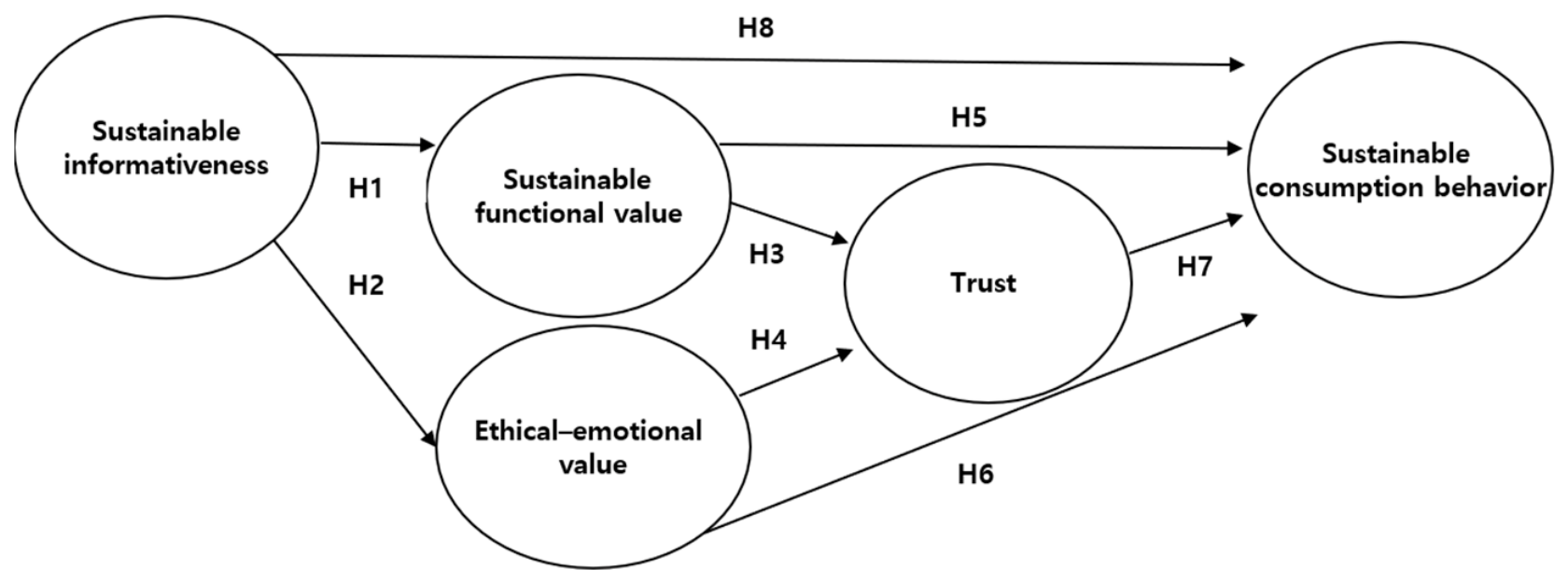
H1. Sustainable informativeness is positively associated with sustainable functional value.
H2. Sustainable informativeness is positively associated with ethical–emotional value.
2.5. Perceived Value and Trust
Trust is a foundational construct in digital commerce and online decision making. In information systems research, trust has been conceptualized as a central response to uncertainty, risk, and lack of direct control in online exchanges [
1,
50]. In relationship marketing, trust is a key mechanism sustaining long-term exchange relationships [
70]. In hospitality and tourism, trust has been examined in relation to platforms, websites, reviews, brands, managerial responses, and sustainability claims [
3,
4,
9,
13,
14].
Recent sustainable hospitality studies have expanded this discussion by introducing green trust. Hotels’ green practices have been linked to green image and green trust [
58], green marketing has been associated with green brand trust and tourism purchase intentions [
71], and greenwashing has been shown to undermine trust and behavioral intentions [
23]. Eco-label credibility has also been shown to influence green WOM partly through trust-related mechanisms [
22].
Although the literature makes clear that trust matters, it is less clear how trust is associated with consumers’ value-based interpretations of sustainability-related information in digital accommodation settings. Much existing research implies a relatively direct path from information quality or platform characteristics to trust. The present study proposes a more nuanced view: consumers may first interpret sustainability-related information in value terms, and these value interpretations may then be associated with trust perceptions. When consumers perceive sustainability-related information as useful, decision-enhancing, and practically beneficial, they may infer platform competence and reliability. When they perceive such information as morally meaningful and emotionally satisfying, they may infer sincerity, authenticity, and integrity. In this sense, functional and ethical–emotional values are proposed as interpretive pathways through which sustainable informativeness is associated with trust.
This argument is consistent with research showing that value and trust are deeply interconnected in online travel purchase settings [
5], that perceived value is associated with engagement and booking intention [
6], and that sustainability-related meanings can be linked to consumer confidence in the provider or platform [
58,
71]. Therefore, the study posits that both sustainable functional value and ethical–emotional value are positively associated with trust.
H3. Sustainable functional value is positively associated with trust.
H4. Ethical–emotional value is positively associated with trust.
2.6. Trust and Sustainable Consumption Behavior
Sustainable consumption behavior in hospitality and tourism encompasses more than mere purchase intention. It includes the selection of sustainable accommodation options, the endorsement of green practices, the sharing of positive sustainability-related word-of-mouth, and broader forms of consumer citizenship behavior. Recent research has examined sustainable stays among younger generations [
25], antecedents of green hotel consumer behavior [
26], sustainable consumption behavior among luxury-hotel guests [
31], and consumers’ perceptions of sustainability-certified hotels on global online travel platforms [
27].
The challenge, however, is that sustainable consumer behavior often fails to follow directly from favorable attitudes. This is the essence of the attitude–behavior gap [
28], which continues to be relevant in tourism and hospitality [
15,
29,
30]. Trust helps explain why some favorable evaluations are more closely associated with behavioral outcomes while others are not. If sustainability-related claims are not trusted, consumers may dismiss them as superficial, opportunistic, or greenwashing-oriented. If they are trusted, consumers are more likely to incorporate them into actual booking and consumption decisions.
Empirical studies support this logic. Hotels’ green practices have been associated with consumer citizenship behavior [
20]. Eco-label credibility has been linked to green WOM [
22]. Green efforts have been associated with guests’ sustainable behaviors through mediators including green trust [
24]. Green image and green trust have been linked to revisit intentions [
58], while green brand trust has been associated with tourism purchase intentions [
71]. In addition, research on perceived sustainable accommodation value and green brand equity suggests that value itself is associated with behavioral outcomes not only through trust, but also directly [
58].
Based on this literature, the present study expects that both dimensions of value are positively associated with sustainable consumption behavior and that trust is also positively associated with sustainable consumption behavior. Functional value should matter because sustainable options are more likely to be chosen when they are perceived as practical, useful, and decision-enhancing. Ethical–emotional value should matter because sustainable choices are more likely to be enacted when they evoke moral satisfaction and emotional reward. Trust should matter because it reduces skepticism and helps link sustainability-related evaluations to consumer action.
H5. Sustainable functional value is positively associated with sustainable consumption behavior.
H6. Ethical–emotional value is positively associated with sustainable consumption behavior.
H7. Trust is positively associated with sustainable consumption behavior.
2.7. Integrated Model and Hypothesis Development
The foregoing discussion suggests that prior research has generated substantial insights into online booking behavior, digital trust, sustainability signaling, eco-labels, green hospitality, and digital nudging. However, these strands have rarely been integrated into a single process-oriented structural model for digital accommodation platforms. Specifically, existing studies have not adequately explained how sustainability-related platform information is associated with sustainable consumption behavior through value interpretation and trust formation.
The integrated model proposed here addresses that gap. It conceptualizes sustainable informativeness as a form of digitally embedded sustainability-related choice architecture. It further argues that the relationships associated with this construct unfold through two distinct evaluative pathways—sustainable functional value and ethical–emotional value—and through trust. This model is particularly appropriate for accommodation platforms, where information does not merely describe alternatives but structures attention, comparison, and inference.
The proposed model is process-oriented, but its empirical interpretation is bounded by the cross-sectional survey design. Therefore, the hypothesized paths are specified as theoretically grounded structural associations rather than as definitive evidence of temporal or causal ordering. The sequence from sustainable informativeness to perceived value, trust, and sustainable consumption behavior is based on the logic that consumers first interpret sustainability-related platform information in value terms, then evaluate its credibility and trustworthiness, and subsequently report sustainable consumption tendencies. Nevertheless, alternative orderings cannot be fully ruled out with cross-sectional data, and this issue is acknowledged in the interpretation of the results and limitations.
The model also allows for both direct and indirect associations. Prior digital-nudging research implies that structured information may be associated with consumer choices [
45,
46,
60,
61]. At the same time, value and trust research suggests that the relationships between sustainability-related information and behavior are more likely to unfold through psychological interpretation and relational evaluation before being reflected in actual behavior [
5,
6,
20,
22,
24]. Accordingly, the present study includes a direct path from sustainable informativeness to sustainable consumption behavior, while primarily focusing on indirect paths through value and sequential indirect paths through value and trust. Although the main theoretical emphasis of the model is on indirect pathways through value and trust, a direct path from sustainable informativeness to sustainable consumption behavior was included for both theoretical and empirical reasons. Theoretically, digital nudging and choice-architecture research suggests that structured information environments may be directly associated with consumer choices by increasing the salience, visibility, and evaluability of specific attributes [
45,
46,
60,
61]. In digital accommodation platforms, sustainability-related information may therefore be expected to have some direct association with sustainable consumption tendencies when it makes sustainable options easier to notice, compare, and evaluate. Empirically, including this direct path also allows the study to examine whether the relationship between sustainable informativeness and sustainable consumption behavior is direct, primarily mediated, or fully mediated through value and trust. Thus, H8 was included not as a purely exploratory path, but as a conservative test of whether sustainable informativeness retains a direct association with sustainable consumption behavior after accounting for the proposed mediating pathways.
H8. Sustainable informativeness is positively associated with sustainable consumption behavior.
H9. Sustainable functional value mediates the relationship between sustainable informativeness and sustainable consumption behavior.
H10. Ethical–emotional value mediates the relationship between sustainable informativeness and sustainable consumption behavior.
H11a. The relationship between sustainable informativeness and sustainable consumption behavior is sequentially mediated by sustainable functional value and trust.
H11b. The relationship between sustainable informativeness and sustainable consumption behavior is sequentially mediated by ethical–emotional value and trust.
Based on the theoretical framework discussed above, the research model illustrated in
Figure 1 was developed. Structural equation modeling (SEM) was employed to examine the proposed structural associations among sustainable informativeness in digital accommodation platforms, sustainable functional value, ethical–emotional value, trust, and sustainable consumption behavior. Specifically, the model tests both the direct association between sustainable informativeness and sustainable consumption behavior and the indirect pathways through which sustainable informativeness is associated with behavioral tendencies via value formation and trust (H1–H11b). In addition, the model assesses the mediating roles of sustainable functional value and ethical–emotional value, as well as the sequential mediating role of trust in combination with these value dimensions, in explaining the theoretically proposed association between sustainability-related information and sustainable consumption behavior.
5. Discussion
This study examined how sustainability-related information embedded in digital accommodation booking platforms is structurally associated with sustainable consumption behavior through value formation and trust. By integrating the perspectives of digital choice architecture, perceived value, and trust, the findings provide a more refined association-based account of how sustainability-related information in platform environments is linked to sustainable consumption tendencies. Rather than treating sustainability-related information as a passive informational attribute or assuming that it directly stimulates sustainable behavior, the present study conceptualized such information as a structured decision cue whose relationship with behavior appears to operate through distinct evaluative and relational pathways. It should also be noted that the outcome variable reflects self-reported sustainable consumption tendencies rather than directly observed booking behavior. Therefore, the findings should be interpreted as explaining consumers’ reported sustainable accommodation-related tendencies, not actual platform behavior.
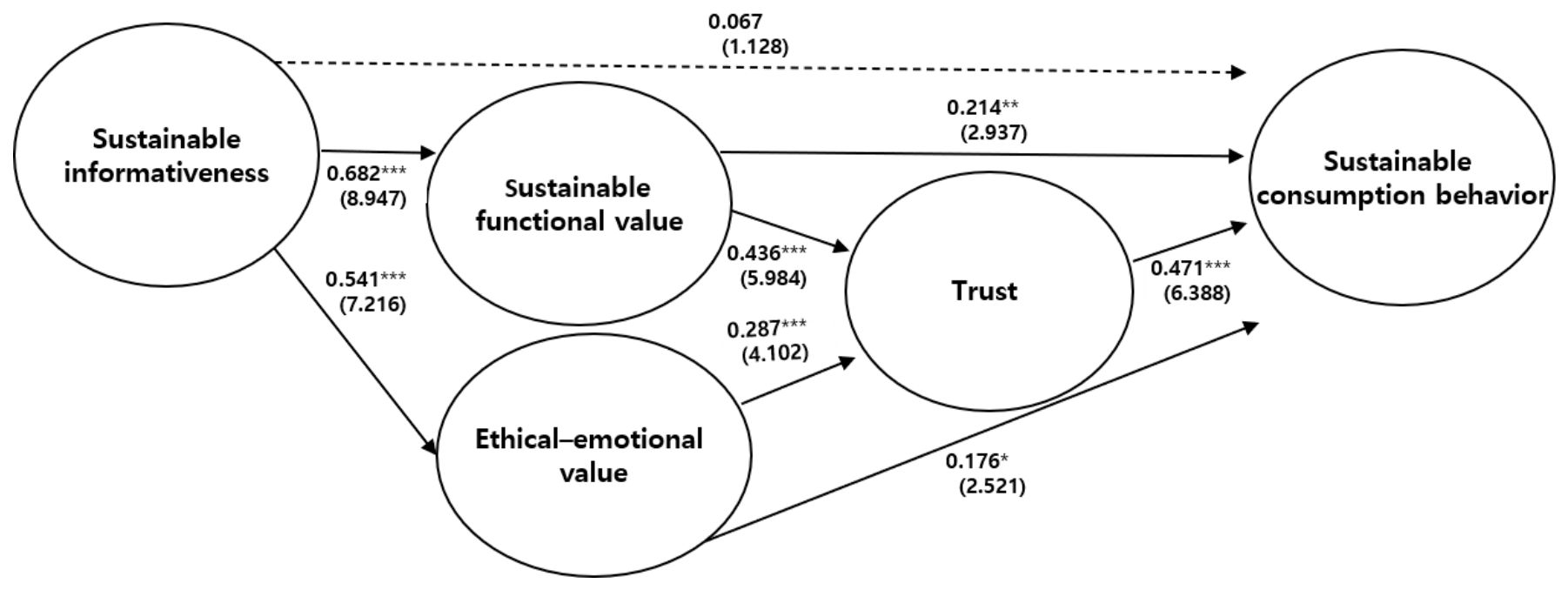
First, the significant positive relationships between sustainable informativeness and both sustainable functional value and ethical–emotional value suggest that sustainability-related information on digital accommodation platforms is not processed through a single evaluative route. Existing research on online booking has emphasized the importance of website quality, information helpfulness, review usefulness, and online trustworthiness in shaping booking decisions [
1,
2,
11,
51]. However, the present findings suggest that sustainability-related information does more than increase informational utility. It is also associated with ethical and emotional meaning. This finding is theoretically important because it suggests that consumers do not interpret sustainability-related information merely as a functional decision aid; they also interpret it as a cue associated with responsibility, meaningfulness, and moral appropriateness. In this sense, the study extends prior hospitality and tourism research by suggesting that sustainability-related information simultaneously activates practical evaluation and ethical–emotional appraisal.
Second, the findings confirm that value formation functions as a crucial interpretive layer between sustainable informativeness and trust. Prior studies often examined trust as a direct consequence of website quality, review credibility, or platform reliability [
3,
4,
12]. By contrast, the present results suggest that trust is associated not simply with the presence of sustainability information, but with consumers’ interpretation of that information as useful and meaningful. Sustainable functional value was positively associated with trust, and ethical–emotional value also showed a significant association with trust. These results imply that trust in digital accommodation platforms may be jointly shaped by rational evaluation and value-based resonance. In other words, consumers appear to trust sustainability-related platform information when they perceive it as both decision-helping and normatively meaningful.
Third, the relative pattern of coefficients provides useful theoretical nuance regarding how trust is associated with value perceptions in sustainability-oriented platform environments. The association of sustainable functional value with trust was stronger than that of ethical–emotional value, suggesting that in digital booking contexts the practical utility of sustainability-related information remains a central basis for trust perceptions. This does not mean that ethical or emotional meaning is unimportant. Rather, it suggests that, within accommodation booking decisions, where uncertainty, comparability, and perceived decision quality remain highly salient, functional usefulness may be especially influential in strengthening trust. This pattern adds specificity to prior sustainability-oriented consumption research, which has often highlighted moral resonance, emotional identification, or value congruence without clearly distinguishing their relative strength from more instrumental evaluation processes.
Fourth, the results show that sustainable functional value, ethical–emotional value, and trust were all positively associated with sustainable consumption behavior, but that trust was the strongest direct predictor of behavior. This finding aligns with earlier hospitality studies emphasizing the role of green trust, eco-label credibility, and perceived authenticity in linking sustainability-related evaluations with actual behavior [
22,
23,
24]. It also helps explain why sustainability information may not be strongly related to behavioral tendencies on its own. The results suggest that information alone may be insufficient. Rather, sustainable consumption tendencies appear to be stronger when consumers perceive the information as useful and meaningful and when they trust it. This pattern helps address the long-standing attitude–behavior gap in sustainable consumption research by suggesting that information-based interventions may be more closely associated with behavior when they are accompanied by interpretive and relational mediation.
Fifth, the non-significant direct effect of sustainable informativeness on sustainable consumption behavior provides one of the important insights of the study. At first glance, one might expect sustainability-related information on digital accommodation platforms to be directly associated with sustainable choices. However, the findings suggest that such information is not automatically associated with sustainable behavior. Instead, its relationship with behavior appears to be indirect, operating through value formation and trust. This pattern is consistent with the theoretical argument of the study. It indicates that sustainability-related information embedded in digital accommodation platforms functions less as an immediate behavioral trigger and more as an interpretive stimulus whose meaning appears to be cognitively and relationally processed before it is associated with behavior. In practical terms, simply increasing the visibility of sustainability-related cues may not be sufficient unless those cues are also perceived as useful, ethically or emotionally meaningful, and trustworthy.
Finally, the significant indirect effects observed through sustainable functional value, ethical–emotional value, and trust support the interpretation that the relationship between sustainable informativeness and sustainable consumption behavior is more consistent with an indirect association pattern than with a simple direct relationship. In particular, the total indirect effect was substantial, while the direct path was not significant. This pattern suggests that digital accommodation platforms may be associated with sustainable behavior not by directly “pushing” consumers toward sustainable choice, but by being linked to how consumers interpret, value, and trust sustainability-related information during the decision-making process. Accordingly, the findings support a process-based view of sustainable digital consumption in hospitality, one that emphasizes cognitive interpretation, value differentiation, and trust-based behavioral association rather than simple exposure effects.
At the same time, the findings should be interpreted in light of the study design. Because the data were cross-sectional and self-reported, the observed relationships should not be interpreted as definitive evidence of causal mechanisms or temporal ordering. The proposed sequence from sustainable informativeness to value, trust, and sustainable consumption behavior is theoretically grounded, but alternative orderings and omitted variables cannot be fully ruled out. In addition, the relatively high explained variance in sustainable consumption behavior may partly reflect the use of perceptual measures collected from the same respondents. Therefore, the findings are best understood as evidence of theoretically proposed structural associations rather than as conclusive proof of causal behavioral processes.
These findings can be further interpreted in relation to three theoretical streams. First, from the perspective of the Theory of Planned Behavior, the results suggest that sustainable consumption behavior in digital accommodation platforms cannot be fully understood through favorable attitudes or sustainability intentions alone. Instead, platform-based information environments may provide contextual cues that help consumers evaluate whether sustainable choices are useful, meaningful, and trustworthy. Second, the findings extend value- and trust-based models by showing that value perceptions and trust are not isolated predictors, but are linked in an indirect association pattern. Sustainable functional value reflects the practical usefulness of sustainability-related information, while ethical–emotional value reflects its moral and affective meaning; both are associated with trust, which shows the strongest direct association with sustainable consumption behavior. Third, the findings contribute to digital nudging and choice-architecture literature by suggesting that sustainability-related platform cues may not operate as simple behavioral triggers. Rather, they appear to be associated with sustainable consumption tendencies through consumers’ interpretation, valuation, and trust in the information. This theoretical integration helps explain why the direct path from sustainable informativeness to sustainable consumption behavior was not significant, while the indirect paths through value and trust were significant.
5.1. Theoretical Implications
This study provides several theoretical implications for the literature on digital hospitality, sustainable consumption, value and trust formation, and digital choice architecture, although these implications should be interpreted in light of the cross-sectional and self-reported research design.
First, the study contributes to hospitality and tourism sustainability research by further conceptualizing sustainable informativeness as a distinct construct in digital accommodation platform contexts. Previous studies have examined website quality, review helpfulness, information credibility, green trust, eco-label credibility, and sustainable platform cues, but these variables have generally been treated separately. The present study integrates these strands and conceptualizes sustainable informativeness as a broader construct that captures not only the presence of sustainability-related information but also its visibility, usefulness, interpretability, and decision-supporting role. In doing so, the study moves beyond generic information-quality approaches and offers a more sustainability-specific and platform-relevant conceptualization.
Second, the study advances value theory by providing evidence consistent with the view that sustainability-related information in digital platform environments is associated with dual-path value formation. Existing perceived value research has often treated value as either a general construct or as a basic functional–emotional distinction. The present findings suggest that, in sustainable digital hospitality settings, value formation can be understood as occurring through sustainable functional value and ethical–emotional value, each of which plays a distinct role in subsequent trust and behavior formation. This helps refine the value literature by suggesting that sustainability-related meaning is not processed through a single undifferentiated value route.
Third, the study contributes to trust theory in digital hospitality contexts by suggesting that trust is not merely a direct consequence of information credibility or platform quality. Instead, trust appears to be associated with consumers’ interpretations of sustainability-related information as practically useful and morally or emotionally meaningful. This finding provides a more layered understanding of trust formation and suggests that trust in sustainability-oriented platform environments is simultaneously cognitive, evaluative, and affective in nature. By showing significant associations between sustainable functional value, ethical–emotional value, and trust, the study helps clarify how trust is relationally constructed in digital accommodation contexts. At the same time, the relationship between sustainable functional value and trust should be interpreted with conceptual caution. Although their empirical distinctiveness was supported by the Fornell–Larcker assessment, HTMT analysis, and competing-model CFA, the two constructs remain conceptually adjacent. Sustainable functional value reflects consumers’ perceived practical usefulness of sustainability-related platform information, whereas trust reflects confidence in the credibility, reliability, and integrity of such information. Future research should therefore re-examine their separability and ordering using experimental or longitudinal data.
Fourth, the study contributes to sustainable consumption research by offering a more process-oriented account of how sustainability-related information is associated with behavior. A great deal of prior work has documented sustainable attitudes, preferences, intentions, and green trust. However, less attention has been given to how sustainability-related information embedded in digital booking platforms is linked to behavior. The finding that the direct path from sustainable informativeness to sustainable consumption behavior was not significant, while indirect effects through value and trust were significant, provides a theoretically important refinement. It suggests that sustainability-related platform information may be associated with behavior not through direct persuasion, but through a chain of interpretation, valuation, and relational assurance.
Fifth, the study enriches digital choice architecture and digital nudging research by suggesting that sustainability-related information on digital accommodation platforms can function as a structured decision cue without necessarily showing a direct behavioral association. Much digital nudging research emphasizes direct changes in user choice. The present findings suggest a more nuanced pathway in which sustainability-oriented cues operate through users’ perceived value and trust. This extends nudging-related thinking beyond interface effects and supports a richer interpretation of how digital information design may be linked to sustainable platform-mediated consumption.
Taken together, these implications deepen understanding of how sustainability-related cues in digital hospitality platforms are psychologically interpreted and relationally associated with sustainable consumption behavior. The study therefore provides a theoretical bridge between digital platform research and sustainable hospitality research, while recognizing that further longitudinal or experimental research is needed to verify the causal ordering of the proposed relationships.
5.2. Practical Implications
The findings also provide several practical implications for platform operators, accommodation providers, and marketing managers in the hospitality industry, although these implications should be interpreted cautiously given the cross-sectional and self-reported nature of the data.
First, digital accommodation platforms may need to recognize that merely displaying sustainability-related labels or badges is not enough. Since sustainable informativeness was not directly associated with sustainable consumption behavior, the practical implication is that sustainability-related information may need to be made not only visible but also useful, understandable, and decision-relevant. However, this non-significant direct association should be interpreted cautiously because the data are also consistent with a small direct effect that the present sample may have been underpowered to detect after accounting for the two value mediators and trust; therefore, stronger claims about the absence of a direct effect should depend on future larger-sample replications. Platforms should therefore avoid treating sustainability cues as decorative or symbolic additions. Instead, they may benefit from presenting such information in formats that facilitate comparison, interpretation, and concrete decision making. For example, sustainability-related information could be organized through clearer labels, filter functions, side-by-side comparisons, concise explanatory text, or standardized sustainability indicators.
Second, platform managers should recognize that sustainability-related information is associated with value through two distinct pathways. One pathway is practical and utilitarian; the other is ethical and emotional. Platform communication should therefore be designed to satisfy both. On the one hand, consumers need concrete information about eco-friendly practices, green certifications, energy-saving systems, waste reduction efforts, or other sustainability-related accommodation attributes. On the other hand, consumers also respond to messages that make sustainable choice feel meaningful, responsible, and worthwhile. This implies that sustainability communication should combine factual clarity with emotionally resonant and normatively relevant framing.
Third, trust should be treated as an important managerial consideration linking sustainability-related platform information to sustainable consumption tendencies. Since trust had the strongest direct association with sustainable consumption behavior, sustainable platform strategies should not focus solely on information volume, but also on information credibility and interpretability. Platforms and accommodation providers should present sustainability claims in a consistent and verifiable manner, ideally supported by recognized certifications, transparent descriptions, or evidence-based indicators. This is especially important in light of previous findings that greenwashing can undermine trust and behavioral outcomes. Building trust is therefore not merely a communication issue but a strategic requirement for sustainable consumer engagement.
Fourth, accommodation providers should understand that sustainability-related information may be more effective when it is integrated into the consumer’s overall decision experience. Sustainability should not be communicated as a detached moral appeal or as a promotional afterthought. Instead, it should be embedded in the ordinary logic of booking decisions. This includes integrating sustainability information into price–value comparisons, room descriptions, amenity details, and service quality cues. When sustainability is presented as part of the practical and meaningful value of the accommodation option, it may be more likely to be associated with sustainable consumption tendencies.
Fifth, the findings suggest that digital hospitality platforms may help reduce the sustainable consumption attitude–behavior gap by designing better information environments. Because consumers do not automatically act on positive sustainability attitudes, platforms can help bridge this gap by improving how sustainability-related information is structured, framed, and communicated. In this sense, digital accommodation platforms are not merely passive intermediaries; they can serve as potential facilitators of sustainable choice through the ways in which they structure, frame, and communicate sustainability-related information.
Overall, the study suggests that managers should shift attention from simply “adding” sustainability cues to strategically designing sustainability-related information environments that are associated with stronger value formation and trust. In digital hospitality settings, sustainable consumer behavior may be more closely linked to meaningful and trusted information structures than to information exposure alone. Because the outcome variable reflects self-reported sustainable consumption tendencies rather than observed booking behavior, these practical implications should be interpreted as guidance for improving consumers’ sustainability-related evaluations and intentions, rather than as direct evidence of actual booking conversion.
5.3. Limitations and Future Research Directions
Despite its theoretical and practical contributions, this study has several limitations that should be acknowledged.
First, the data were collected from Korean consumers with prior experience using digital accommodation booking platforms. Although this context is appropriate for the present study, the findings may not be fully generalizable to other countries or institutional settings. In addition, although the sample size of 304 respondents was sufficient for the SEM analysis conducted in this study, it remains relatively modest for drawing broad generalizations across diverse consumer populations. Digital platform usage patterns, consumer responses to sustainability-related information, and trust formation processes may vary depending on cultural norms, platform ecosystems, and market conditions. Future research should therefore test the proposed model in other national and cultural contexts to examine its broader applicability. Future studies could also use larger and more diverse samples to improve the stability and generalizability of the findings. In addition, although respondents were screened based on their recent experience with digital accommodation booking platforms, this study did not separately measure detailed platform-use characteristics, such as platform-use frequency, the most frequently used platform, whether respondents had only searched for accommodation or completed actual bookings, or the extent to which they had directly encountered sustainability-related information during a specific booking episode. Future research should collect these more fine-grained platform-use variables to better assess respondents’ familiarity with the phenomenon and to examine whether the proposed relationships differ across user segments and platform-use patterns.
Second, this study employed a cross-sectional survey design. While the proposed relationships were theoretically grounded and empirically supported, causal interpretation should still be made with caution. The results indicate structured associations among sustainable informativeness, value, trust, and behavior, but they do not provide definitive evidence of temporal causality. Future studies could employ longitudinal or experimental designs to strengthen causal inference. For example, experiments manipulating the visibility, format, or type of sustainability-related information on mock accommodation platforms could help clarify how different informational configurations affect value formation and trust. Such designs would be especially useful for testing whether the proposed sequence from sustainable informativeness to value, trust, and sustainable consumption behavior reflects a causal process.
Third, the study relied on self-reported survey data. Although common method variance was assessed through both procedural and statistical approaches, self-reported responses may still involve perceptual bias or socially desirable responding. Relatedly, the outcome variable was labeled sustainable consumption behavior, but the measurement items captured self-reported willingness, preference, and behavioral tendency rather than actual observed booking behavior. Because the data were collected from a single source at a single point in time, common method bias cannot be completely ruled out. In addition, although responses were screened for completeness and obvious invalidity, no separate attention-check item was included. This remains a residual data-quality concern, particularly because the survey addressed a relatively abstract topic involving sustainability-related information on digital accommodation platforms. Future replications should include attention-check items and, where possible, use panel-verified screening procedures to further improve data quality and respondent eligibility verification. Future research could improve methodological robustness by combining perceptual data with behavioral indicators, such as actual booking choices, clickstream data, platform interaction logs, or observed engagement with sustainability-related filters and labels. Future studies could also use temporal separation or multiple data sources to reduce common method bias more effectively.
Fourth, the present study focused on a specific mediation structure centered on value and trust. While this was theoretically appropriate, additional mechanisms may also be relevant. Future studies could examine whether other variables, such as platform familiarity, environmental concern, skepticism toward green claims, perceived greenwashing risk, or digital literacy, shape the relationship between sustainable informativeness and sustainable consumption behavior. Such extensions would allow for a more nuanced understanding of boundary conditions and heterogeneous consumer responses. In addition, although preliminary checks and robustness analyses were added in the revised manuscript, further robustness testing would strengthen future research. Future studies could compare additional alternative structural models and examine whether the proposed relationships differ across consumer segments or platform types.
Fifth, the study treated sustainable consumption behavior as a broad outcome variable. While this approach was useful for capturing overall sustainable behavioral tendencies, future research could differentiate more clearly among specific forms of behavior, such as sustainable accommodation choice, green WOM, green revisit intention, willingness to pay a premium, or active support for sustainability-certified providers. Such differentiation may reveal whether sustainable informativeness is associated with some forms of sustainable behavior more strongly than others.
Finally, the present model conceptualized sustainable informativeness as a platform-level consumer perception. Future research could examine the construct at a more disaggregated level by distinguishing among different types of sustainability-related information, such as certification-based information, user-generated sustainability reviews, green practice descriptions, or technology-related sustainability cues. Doing so would help identify which types of sustainability-related information are most effective in producing functional value, ethical–emotional value, and trust. Relatedly, although the present study clarified the theoretical distinction between sustainable informativeness and adjacent constructs such as information quality and perceived usefulness, some degree of conceptual overlap may remain. Future research should further validate the sustainable informativeness construct by comparing it with established information-quality and usefulness measures, testing its incremental validity, and refining its measurement items across different digital platform contexts.
In addition, this study used digital choice architecture as a theoretical lens but did not experimentally manipulate specific platform design elements, such as labels, rankings, defaults, salience cues, filters, or recommendation formats. Therefore, the findings do not provide direct experimental evidence of the causal effects of digital nudges. Future studies should use experimental or field-experimental designs to test how specific sustainability-related interface features are associated with value perceptions, trust, and sustainable accommodation choices.
Despite these limitations, the study provides a theoretically grounded and empirically supported framework that advances understanding of how sustainability-related information embedded in digital accommodation platforms is associated with sustainable consumption behavior through value and trust.