1. Introduction
Global agricultural systems face mounting pressure from compounding geopolitical and economic crises. The COVID-19 pandemic, the Russia–Ukraine war, and most recently the escalating Middle East conflict following U.S.–Israeli strikes on Iran in early 2026 have collectively exposed the fragility of energy and food supply chains [
1,
2,
3]. For irrigated agriculture in semi-arid regions, where energy costs directly determine pumping viability, such shocks translate immediately into farm level distress and highlight the strategic value of renewable-powered irrigation systems. In semi-arid regions, agricultural productivity is highly dependent on irrigation, which in turn requires reliable and affordable energy for water pumping [
4]. This dependence makes irrigation one of the clearest operational links between water security, farm economics, and rural energy systems. Among renewable energy alternatives, photovoltaic (PV)-powered irrigation systems have emerged as a promising option for reducing operating costs, lowering greenhouse gas emissions, and improving energy access in agriculture [
5,
6]. By directly converting solar radiation into electricity, PV systems can supply daytime irrigation loads without relying entirely on conventional grid electricity or diesel generators. In climates where irrigation demand is concentrated in spring and summer, this temporal coincidence between crop water demand and solar availability further strengthens the case for solar water pumping. The performance and economic feasibility of PV powered irrigation systems are significantly influenced by local climatic conditions, the specific water requirements of the crops, and the choice of irrigation methods such as drip or sprinkler systems [
7]. Furthermore, the viability of these systems is contingent upon local electricity tariff structures and the overall operational framework of the energy grid.
Solar water pumping systems are generally implemented in two main forms: off-grid and grid-connected configurations. In remote areas where grid access is limited or unreliable, farmers traditionally rely on diesel-powered pumps; however, these systems are subject to high fuel costs, logistical challenges, and environmental emissions. Off-grid systems are designed to operate independently of the electricity network and are particularly attractive in remote areas or locations with unreliable grid access. Nevertheless, these systems may lead to underutilization of solar electricity when irrigation demand is lower than PV generation, since excess energy cannot be exported and is often wasted unless additional storage, load-shifting, or water management measures are adopted [
8]. This limitation is especially important in seasonal irrigation systems, where the PV array may produce substantial surplus energy outside irrigation hours or outside the crop season. In contrast, grid-connected systems offer the possibility of injecting surplus electricity into the grid, thereby increasing solar energy utilization and potentially creating an additional income stream or net metering mechanism for farmers under favorable regulatory conditions [
9]. As a result, grid interaction can fundamentally change the economics of solar irrigation by increasing PV utilization and reducing the need for large on-site storage capacity. For this reason, comparing grid-connected and off-grid solar water pumping systems is important for identifying the most suitable irrigation-energy solution for specific agricultural and regional conditions.
The irrigation method itself can affect both water demand and pumping energy. Comparative literature on irrigation performance indicates that drip irrigation applies water directly to the crop root zone and generally operates at lower distribution pressure, which can reduce both pumped water volume and electricity demand. Sprinkler irrigation, by contrast, provides broader field coverage and operational flexibility but is typically more exposed to evaporation and runoff losses and often requires higher operating pressure. For solar-powered irrigation, this distinction is important because the choice between drip and sprinkler systems can alter PV sizing requirements, hourly load matching, and long-term lifecycle economics [
10]. Accordingly, irrigation methods should be treated not only as an agronomic management choice but also as a core design variable in techno-economic assessments of solar water pumping. Recent research across the world indicates that solar PV water pumping systems can be both technically effective and economically preferable to diesel-based or conventional grid-supplied alternatives. The study of [
11] demonstrates that a 24 kW solar PV system is a more cost-effective and sustainable long-term alternative to diesel-powered pumps for agricultural irrigation, effectively meeting a daily energy demand of 60.29 kWh. In Egypt, multi-objective optimization is applied together with a vibration-avoidance control strategy to reduce supply interruptions and system cost, while reporting water savings of approximately 45% by avoiding inefficient operation at low flow rates [
12]. Experimental evidence reported by [
13] in India showed that 1 HP DC pumps provide a longer daily operating window than comparable AC pumps under low irradiance conditions and exhibit a substantially lower carbon footprint (0.009 kg CO
2-eq ha-mm
−1) than grid-electric (1.214 kg CO
2-eq ha-mm
−1) or diesel-powered (0.382 kg CO
2-eq ha-mm
−1) irrigation systems. Likewise, ref. [
14] found that the levelized cost of energy was lower for solar PV systems (461.2 Fcfa kWh
−1) than for diesel-based systems (557.8 Fcfa kWh
−1), with solar becoming more economical after five years and avoiding approximately 164,000 tonnes of CO
2 emissions over a 25-year project horizon.
A considerable body of literature has examined photovoltaic water pumping systems for agricultural applications, mostly focusing on off-grid solar pumping as an alternative to diesel- or grid-powered irrigation [
15,
16,
17]. More recent studies have also highlighted the potential advantages of grid-connected solar irrigation systems, especially in contexts where surplus electricity can be exported to the grid and monetized [
18,
19]. Comparative work has increasingly shown that the choice between off-grid and grid-connected designs cannot be generalized across locations, because outcomes depend on local solar resources, irrigation demand patterns, groundwater depth, crop type, financing conditions, and policy incentives.
In Türkiye, pressure on agricultural water and energy resources has increased significantly over recent decades. Agricultural water withdrawal rose from 28.27 km
3 yr
−1 in the 1993–1997 period to 50.05 km
3 yr
−1 in 2013–2017, reflecting an increase of approximately 77% over two decades, while agriculture continued to account for most of the total national water withdrawal [
20]. This trend highlights the growing importance of efficient and sustainable irrigation practices in the context of intensifying climatic stress, rising input prices, and increasing pressure on groundwater reserves. At the same time, policy support for on-farm renewable energy deployment has expanded through mechanisms such as the IPARD (Instrument for Pre-Accession Assistance on Rural Development) Programme implemented by TKDK (Agriculture and Rural Development Support Institution), which supports renewable energy investments in agricultural enterprises. In addition, the Regulation on Unlicensed Electricity Generation in the Electricity Market has created a framework through which agricultural producers can meet part of their electricity demand through self-generation and, under certain conditions, benefit from grid interaction [
21]. These developments strengthen the relevance of evaluating solar-powered irrigation alternatives in the Turkish agricultural sector, not only as technical options but also as policy-relevant farm investments.
The need for such evaluation is especially evident in the Konya Basin, one of the most important agricultural production regions of Türkiye and a major center for irrigated crop production. The basin combines semi-arid climatic conditions, high irrigation dependence, and strong solar energy potential, making it a particularly suitable setting for the assessment of solar-powered irrigation. At the same time, it is one of the country’s most water-stressed agricultural regions. Due to declining groundwater levels, farmers in the region increasingly pump water from greater depths, which results in higher electricity consumption and rising irrigation costs [
22,
23]. In addition to economic pressures, excessive groundwater abstraction has caused serious environmental consequences, including the widespread formation of sinkholes across the Konya Plain [
24,
25]. These sinkholes are associated with rapid aquifer depletion and pose substantial risks to agricultural land, rural infrastructure, and long-term production sustainability. Therefore, the Konya Basin represents a critical case for investigating irrigation technologies that can reduce dependence on conventional electricity, improve energy efficiency, and support more sustainable use of groundwater resources.
Sugar beet is a strategic crop in the Konya region due to its economic value, industrial importance, and relatively high water requirement [
26]. As a major industrial crop linked to the sugar processing sector, it plays a significant role in farm income, agroindustrial value chains, and regional employment. Because irrigation demand for sugar beet is substantial during the growing season, the selection of an appropriate solar water pumping configuration becomes particularly important in determining both technical performance and long-term economic viability. A system that is not properly sized or matched to crop water demand may either fail to meet irrigation needs or generate excess electricity that cannot be effectively utilized. Moreover, the crop’s pronounced seasonal water demand makes it an appropriate case for assessing the interaction between hourly PV generation, seasonal irrigation schedules, and export or storage options. Thus, site-specific analysis is necessary to determine whether off-grid or grid-connected solar pumping systems offer greater benefits for sugar beet farming under the climatic and hydrological conditions of Konya.
These studies generally show that solar irrigation can be technically feasible and economically attractive; however, the relative performance of grid-connected and off-grid systems depends strongly on local solar resources, irrigation demand patterns, groundwater depth, crop type, and policy incentives. Despite these advances, there remains a limited number of site-specific comparative studies that focus on major agricultural regions in Türkiye. There is a lack of research addressing sugar beet irrigation in the Konya Basin through a direct techno-economic comparison of grid-connected and off-grid solar water pumping systems. This gap is important for three reasons. First, much of the existing international literature is based on crop systems, tariff regimes, and regulatory conditions that differ substantially from those in Türkiye. Second, most studies do not explicitly integrate the water-cost dimension of irrigation alongside the energy-cost dimension, even though groundwater abstraction costs are highly relevant in regions such as Konya. Third, the interaction between irrigation method, pumping depth, and solar system architecture remains underexplored for sugar beet production, despite its direct importance for system sizing and economic feasibility.
To address this gap, the present study compares the technical and economic performance of grid-connected and off-grid solar water pumping systems for sugar beet irrigation in Konya, Türkiye. The analysis is structured around crop water requirements, photovoltaic system sizing, hourly energy generation and utilization, and long-term cost performance. Beyond a simple cost comparison, the study evaluates how hydraulic setting and irrigation demand shape PV sizing outcomes and lifecycle economics under two distinct regional conditions represented by lower-head surface-water irrigation and higher-head groundwater pumping. In addition to evaluating whether grid-connected systems can provide greater economic benefits through the utilization of surplus electricity, the study also considers the implications of system choice for irrigation efficiency and groundwater sustainability. By focusing on a representative semi-arid agricultural region and a strategically important irrigated crop, this study seeks to provide a practical decision-support framework for farmers, planners, and policymakers interested in promoting sustainable solar-powered irrigation in Türkiye.
The remainder of this paper is organized as follows:
Section 2 describes the study area, irrigation water demand estimation, solar resource characterization, system sizing procedure, and techno-economic assessment framework.
Section 3 presents the comparative performance of grid-connected and off-grid systems, together with the implications of farm scale and irrigation configuration.
Section 4 interprets the findings in relation to the broader literature and the specific resource and policy context of the Konya Basin.
Section 5 summarizes the principal conclusions and outlines directions for future research.
2. Materials and Methods
The overall methodological framework of this study consists of four main stages. First, input data are collected, including crop water demand, solar radiation, and economic parameters. Second, water and energy requirements are calculated based on irrigation scheduling and pump characteristics. Third, alternative system configurations, including grid-connected, diesel-powered, and PV-battery systems, are evaluated. Finally, a comprehensive sensitivity analysis is performed, considering irrigation methods (drip vs. sprinkler), hydraulic conditions (LH-45 m and HH-80 m), and energy supply options.
2.1. Study Area
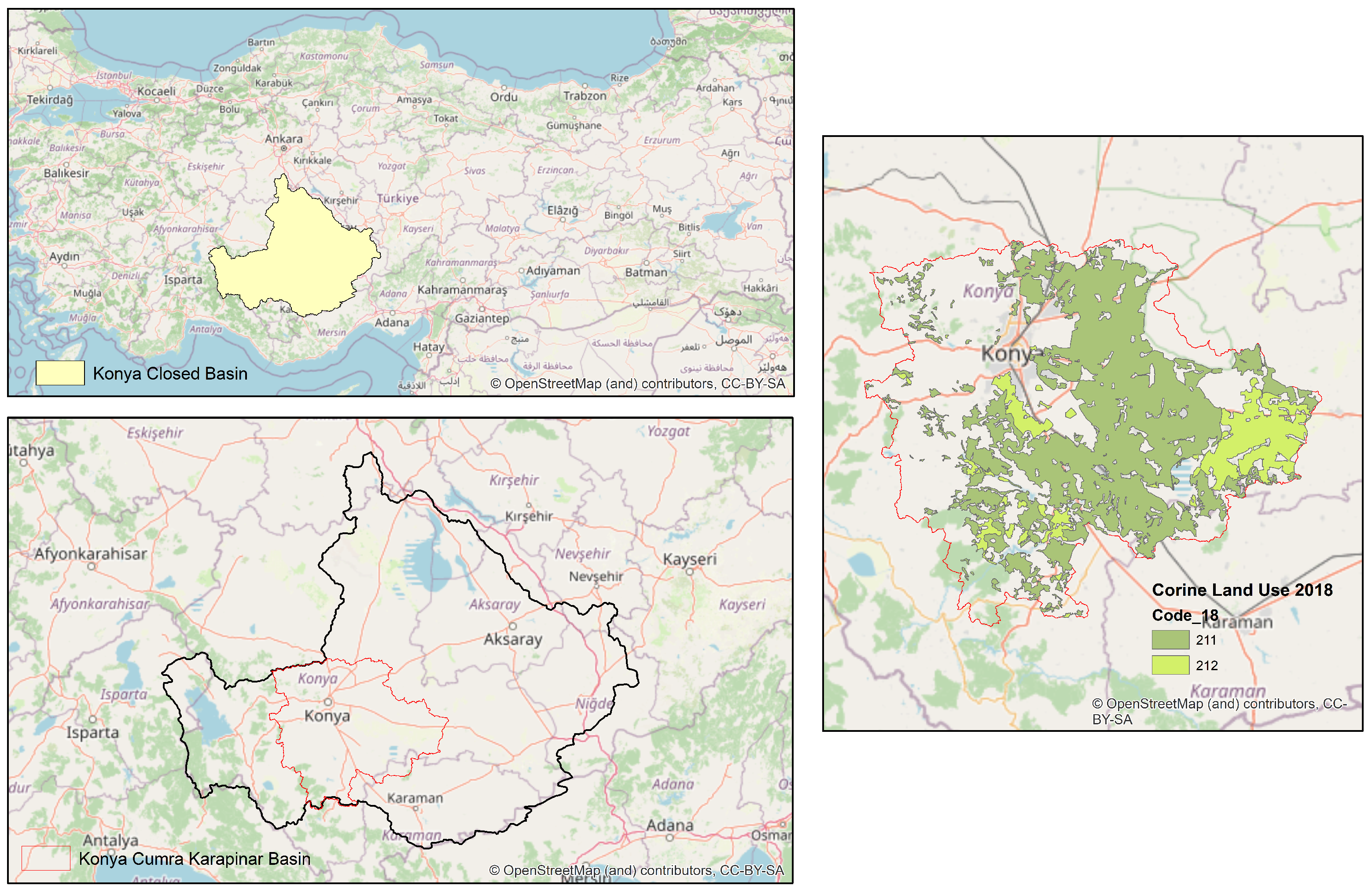
The Konya–Çumra–Karapınar Basin is located in the Central Anatolia Region of Türkiye and represents a critical sub-basin of the larger Konya Closed Basin (
Figure 1). Characterized by a semi-arid climate, the region receives an average annual precipitation of approximately 327.6 mm [
27]. The basin is a vital agricultural hub, predominantly utilized for the cultivation of water-intensive crops such as sugar beet and maize, alongside traditional cereals. Due to the lack of natural surface outlets, the basin relies heavily on groundwater extraction and inter-basin water transfers. This study focuses on this region due to its vulnerability to water scarcity and the environmental risks associated with intensive agricultural runoff, which collectively threaten long-term water availability and agricultural sustainability.
2.2. Solar Resource Data and Pre-Processing
The hourly solar generation data for the year 2025 were retrieved from the Turkish Electricity Market Operator (EPİAŞ) Transparency Platform. Specifically, the balance-node data for the Alibey region in Konya was utilized [
28]. Since this node aggregates multiple Solar Power Plant (SPP) licenses, a crucial normalization step was performed to ensure the accuracy of the Capacity Factor (
) calculations. To maintain physical consistency, a comprehensive data cleaning process was executed to construct a continuous 8760 h time series; short-term gaps (≤2 h) were addressed via linear temporal interpolation, while remaining missing values during nighttime were set to zero.
The nominal capacity was adjusted to an effective capacity (
) of 7600 kWp to avoid overstating the generation potential due to the node’s aggregate nature. This adjustment resulted in an annual specific yield of approximately 1607 kWh/kWp, which aligns closely with established regional benchmarks for fixed-tilt systems in Konya (1550–1700 kWh/kWp). The hourly
was calculated as follows:
where
represents the hourly generation in MWh and
is the effective capacity in kWp. Furthermore, an hourly irradiance proxy (
) was derived from this
to facilitate the sizing of various agrivoltaic configurations in subsequent modeling steps. For cross-validation, a secondary real-time dataset from a neighboring farm was also processed, confirming the reliability of the Alibey node profiles.
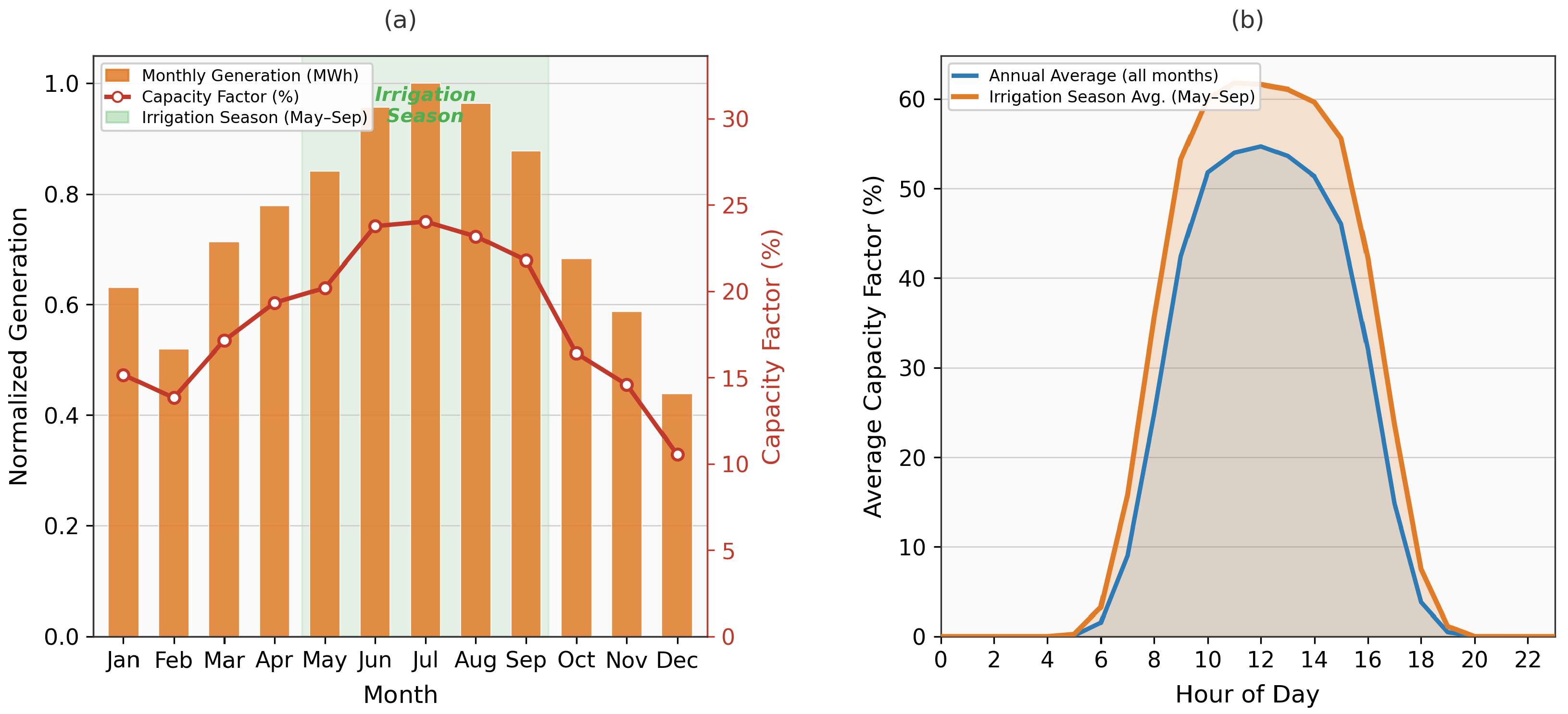
As illustrated in
Figure 2, the solar generation profiles exhibit pronounced seasonal and diurnal variability. The first panel shows that monthly capacity factors reach their peak (approximately 24%) during June and July, corresponding to periods of maximum solar irradiance. The second panel further reveals that the average capacity factor during the irrigation season (May–September) consistently exceeds the annual average. This indicates a strong temporal alignment between solar energy availability and irrigation demand. Such synchronization highlights the potential of agrivoltaic systems to efficiently support water pumping requirements during peak agricultural activity periods.
2.3. Irrigation Demand and Pump Energy Modeling
The energy demand for irrigation is modeled based on the specific water requirements of sugar beet, a prevalent crop in the Konya closed basin. Two distinct locations with contrasting hydrogeological characteristics are considered: Çumra and Karapınar. Çumra represents a surface water-dominated irrigation system, where the availability of canal-based water supply reduces reliance on deep groundwater abstraction. Therefore, a lower Total Dynamic Head (TDH) of 45 m is adopted, reflecting combined canal lift and operating pressure requirements. In contrast, Karapınar is characterized by a high dependence on groundwater resources due to limited surface water availability and long-term depletion of aquifers. As a result, irrigation in this region typically requires deeper pumping conditions, and a higher TDH of 80 m is assumed to represent groundwater extraction from deep wells. These values are used as representative engineering assumptions to capture the structural differences between surface water and groundwater irrigation systems in the region.
Irrigation schedules were obtained from the TAGEM-SUET database, utilizing the Penman-Monteith method for Evapotranspiration (
) calculations. The seasonal irrigation water requirement was determined as 891.3 mm for Çumra (9 events) and 999.2 mm for Karapınar (10 events). To convert these volumetric requirements into electrical load, an empirical specific energy consumption (
) was adopted from local studies [
24], where:
is the total energy required for an irrigation event (kWh), and
is the gross water volume (m
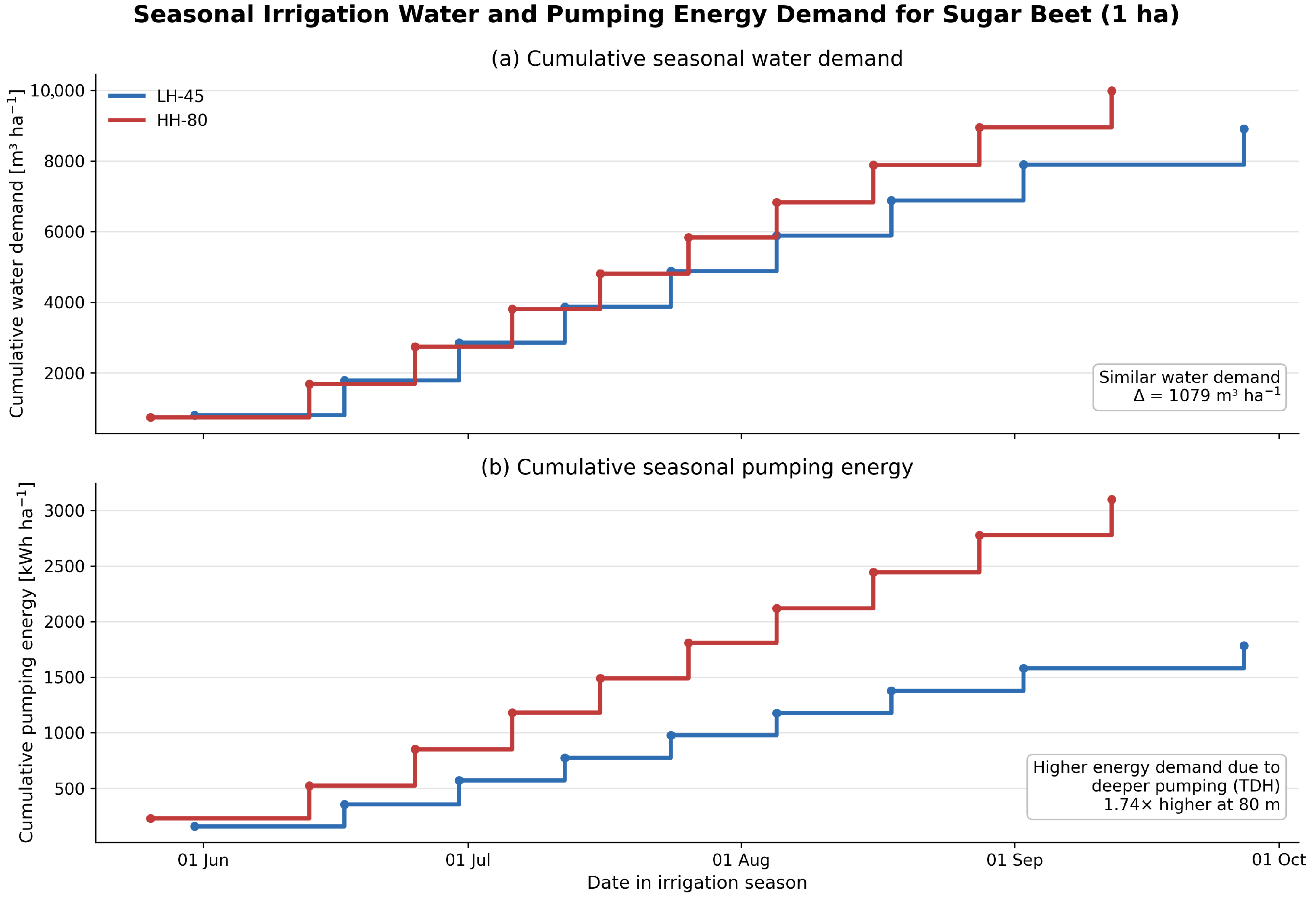
3), e is the energy consumption. Pumping operations were restricted to daylight hours (07:00–18:00) to simulate a realistic operational scenario for a grid-connected or standalone agrivoltaic system (
Figure 3). The resulting hourly demand profile provides a baseline for evaluating the self-sufficiency of the proposed solar energy infrastructure.
The specific energy consumption (
e, kWh m
−3) represents the electrical energy required to pump one cubic metre of irrigation water. It is estimated from first principles as follows:
where
is the water density (1000 kg m
−3),
g is the gravitational acceleration (9.81 m s
−2),
H is the total dynamic head (m), and
is the overall pump-motor efficiency. Using this formulation, the theoretical specific energy values are approximately 0.175 kWh m
−3 for
m and 0.311 kWh m
−3 for
m, assuming an overall efficiency of 70%. In practice, however, irrigation systems operate under field conditions that introduce additional losses, including distribution inefficiencies, irrigation method characteristics, and operational constraints. In this study, intra-day variations in DC pump efficiency due to fluctuating solar irradiance were not explicitly modeled; instead, a simplified constant-efficiency, energy-based approach was adopted, as the analysis focuses on system-level performance rather than short-term operational dynamics.
Therefore, system-level specific energy values were adopted as 0.20 kWh m−3 for LH-45 m and 0.31 kWh m−3 for HH-80 m, reflecting realistic performance under field conditions.
The key irrigation and system parameters used in the analysis are summarized in
Table 1.
2.4. Techno-Economic Feasibility and Sensitivity Analysis
The financial viability of the proposed solar water pumping systems (SWPS) was evaluated using region-specific energy and water tariffs together with technology cost assumptions, as summarized in
Table 2.
Solar and energy data: Hourly PV generation profiles were derived from measurements at the Alibey Solar Farm in 2025 [
28] and normalized to represent regional performance conditions. Electricity prices were based on the agricultural electricity tariff schedules approved by the Energy Market Regulatory Authority (EPDK) [
29] and further cross-validated using regional retail tariff tables [
30]. The effective electricity price used in the analysis (0.135 USD/kWh) represents the total end-user cost, including energy charges, distribution fees, taxes, and other applicable surcharges.
For the grid-connected SWPS, the PV system was operated under a net-metering framework in which on-farm PV generation first offset irrigation electricity demand, while any surplus generation was exported to the grid at the applicable feed-in tariff. Thus, the annual economic benefit consisted of two components: (i) avoided electricity purchases, corresponding to the portion of PV generation that directly met irrigation demand and valued at the agricultural retail tariff, and (ii) export revenue, corresponding to excess PV generation delivered to the grid and valued at the feed-in tariff.
The hourly energy allocation was defined as follows:
where
is the PV electricity generation at time step
t (kWh),
is the irrigation electricity demand (kWh),
is the self-consumed PV electricity used to meet on-site demand (kWh), and
is the surplus PV electricity exported to the grid (kWh).
denotes the retail electricity tariff (USD kWh
−1),
is the feed-in tariff (USD kWh
−1), and
represents the economic benefit at time step
t (USD).
In the discounted cash-flow model, annual avoided-cost benefits were calculated based on the lesser of annual PV generation and annual irrigation electricity demand, while any annual surplus generation was credited at the feed-in tariff. The feed-in tariff was treated as a fixed policy parameter over the project lifetime.
Water and pumping parameters: The irrigation system in both LH-45 m and HH-80 m cases is modeled as pumped irrigation, with different total dynamic head (TDH) levels representing hydraulic conditions. Specific energy requirements were derived from regional field data for the Konya Plain [
24].
Water tariffs were obtained from the tariff schedule and converted to USD using the 2025 average exchange rate. A 50% tariff reduction was applied for pressurized irrigation systems (sprinkler and drip), in accordance with the Presidential Decree on irrigation subsidies [
31]. The irrigation water cost was assumed as 0.07 USD/m
3 based on field-derived estimates obtained from local irrigation operators [
32].
Technology cost assumptions: The installed PV system cost and battery investment cost were adopted from recent techno-economic benchmarks and market data, consistent with current deployment conditions [
33,
34].
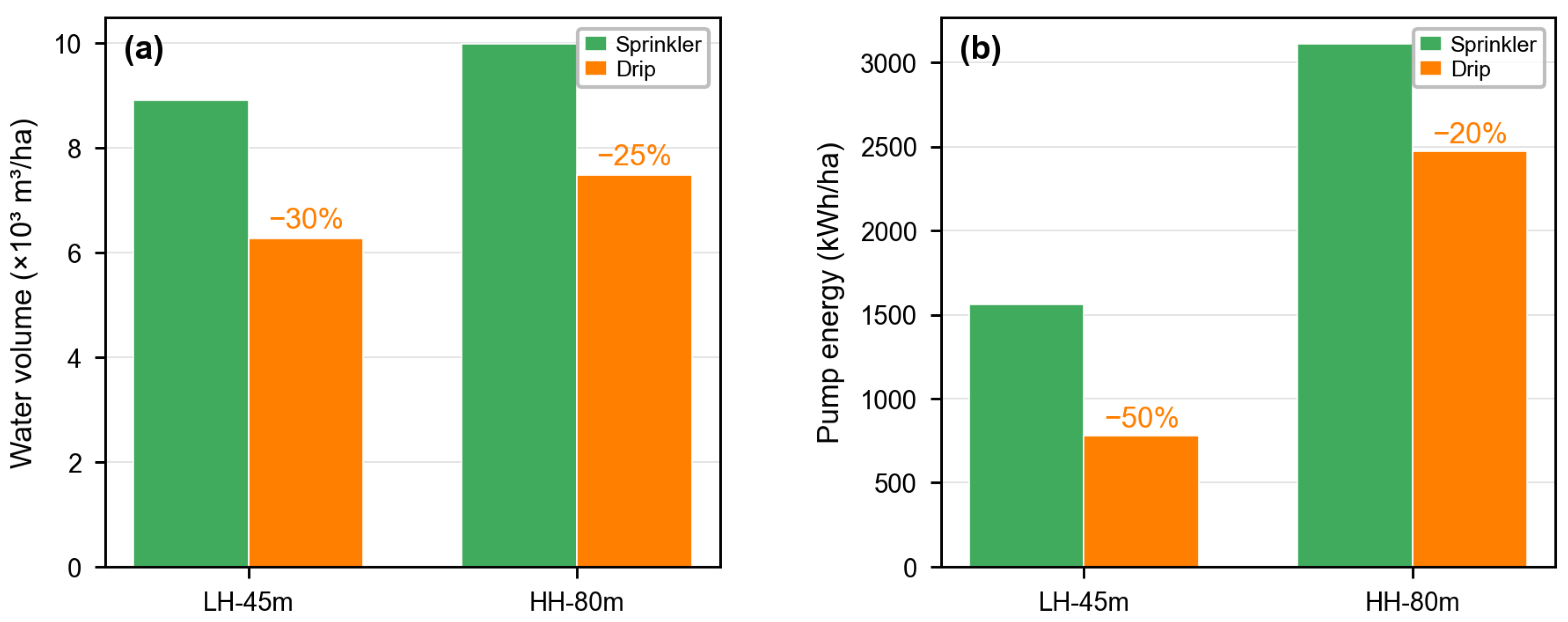
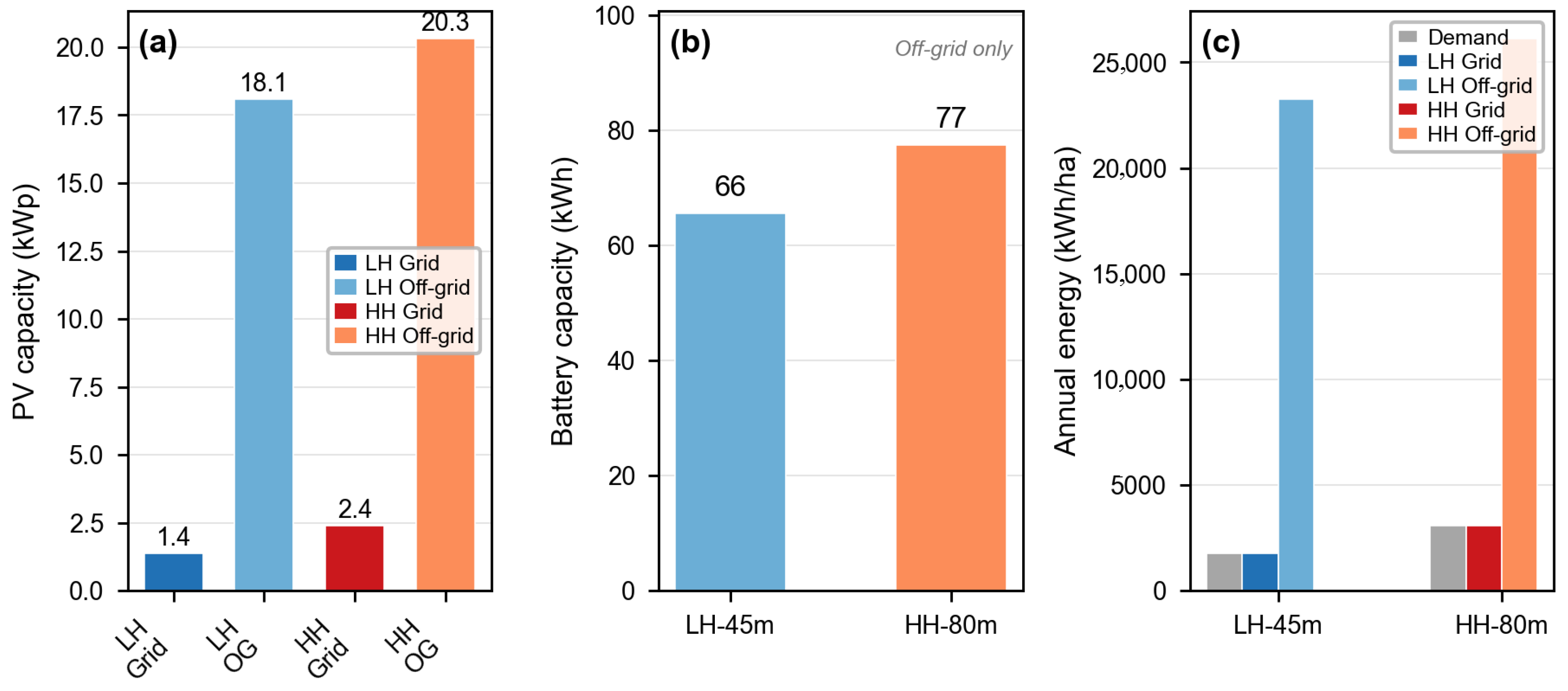
Battery capacity was determined using an hourly dispatch-based simulation under a simplified autonomy criterion. The off-grid battery was sized based on the energy requirement of an average active irrigation day, with charging restricted to daylight hours. This approach ensures that energy demand during non-generating periods (e.g., evening and early morning) can be met under typical operating conditions. Direct PV-to-load coupling reduced the battery-dependent share of daily demand to 71% in the LH-45 m case and 46% in the HH-80 m case. Accordingly, the required battery capacities were calculated 66 kWh and 77 kWh, respectively, reflecting the storage requirement under representative daily conditions as shown
Figure 4b.
A diesel pumping baseline was modeled using an equivalent pump capacity derived from the hydraulic requirements of the system rather than directly adopting typical field-installed motor ratings. Although agricultural irrigation systems commonly employ pumps in the range of 30–70 HP depending on instantaneous flow requirements, this study utilizes a normalized, per-hectare representation. The required pump power was calculated based on flow rate and total dynamic head (TDH) using hydraulic principles, ensuring consistency with the modeled irrigation demand. This approach reflects the average operational requirement under scheduled irrigation conditions, where a single pump serves the field sequentially rather than simultaneously. As a result, the equivalent pump capacity was estimated at approximately 5.5 kW for the reference case.
Economic performance was evaluated over a 25-year project lifetime using a real discount rate of 8%.
Key performance indicators include Net Present Value (NPV), Levelized Cost of Energy (LCOE). The LCOE formulation is given by:
where
is the initial capital investment,
is the annual operation and maintenance cost in year
t,
is the battery replacement cost applied once at year 15,
is the annual electricity generation in year
t,
r is the real discount rate, and
T is the project lifetime. A real discount rate of 8% was applied in this study.
Table 3 consolidates the principal techno-economic and hydraulic parameters used throughout the analysis.
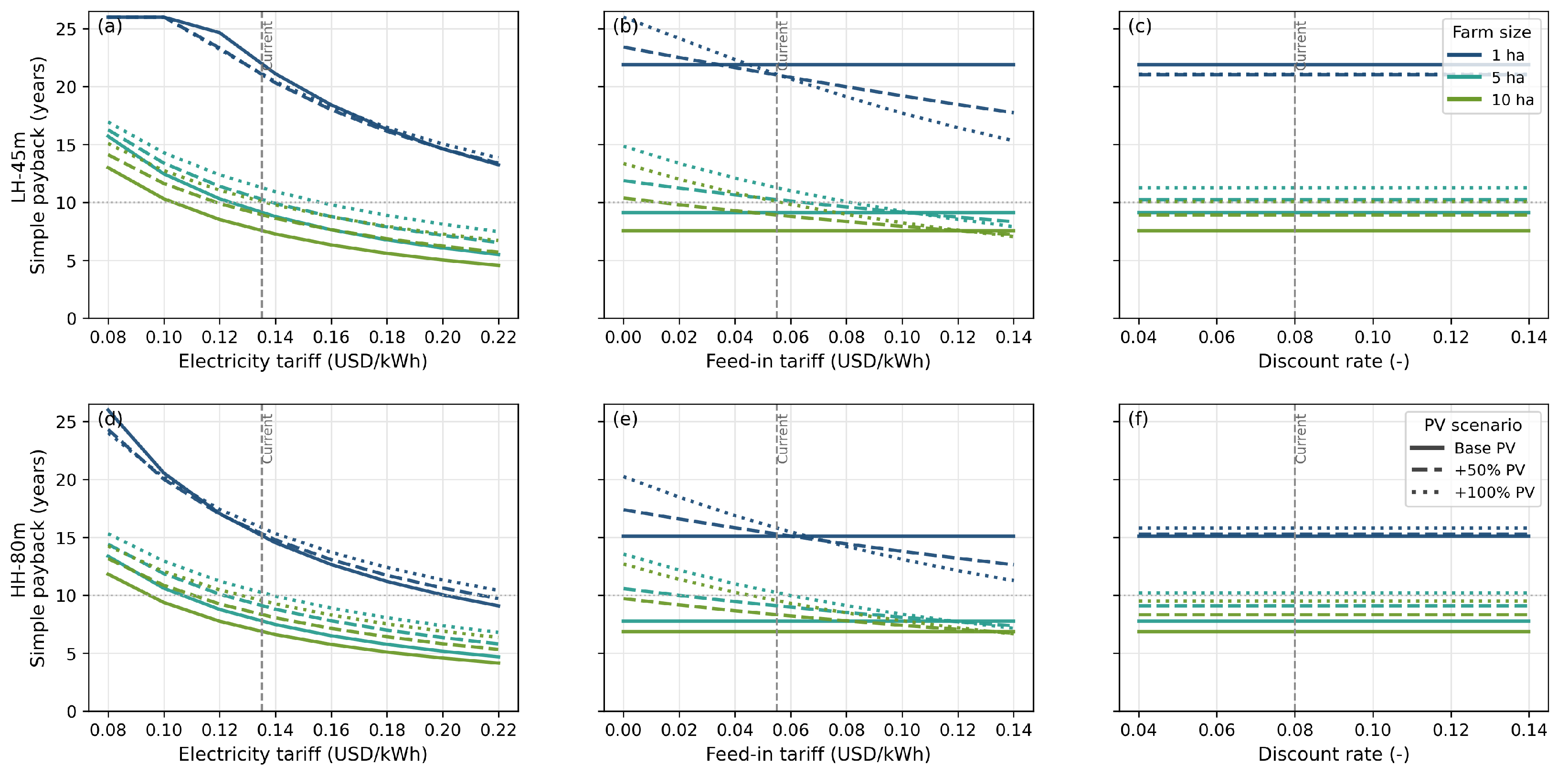
A one-way sensitivity analysis was conducted to evaluate the influence of key economic parameters on system performance. The analysis focused on electricity tariff, feed-in tariff, and discount rate. Each parameter was varied within a representative range around its baseline value while keeping all other parameters constant. Specifically, the electricity tariff (baseline: 0.135 USD kWh
−1) was varied between 0.08 and 0.20 USD kWh
−1 (approximately −40% to +50%), the feed-in tariff (baseline: 0.055 USD kWh
−1) between 0.03 and 0.08 USD kWh
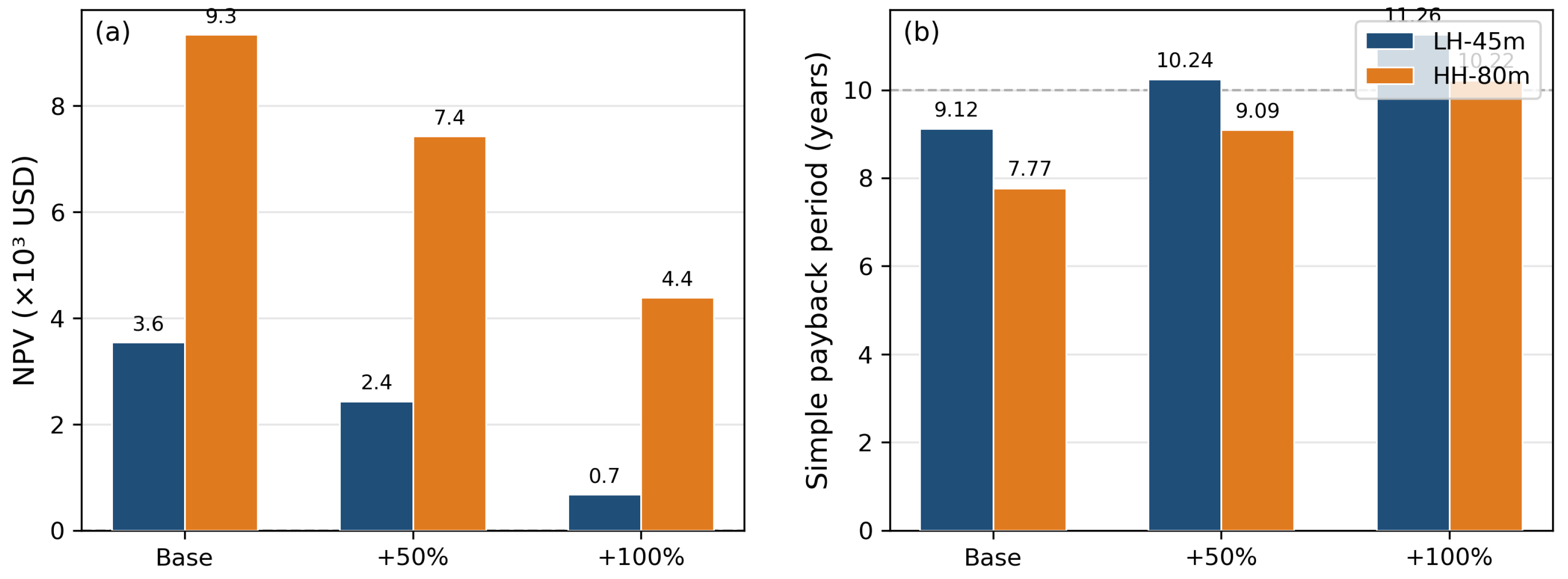
−1 (approximately −45% to +45%), and the discount rate (baseline: 8%) between 4% and 12% (i.e., ±50% variation). In addition, scenario-based analysis was performed by introducing PV oversizing cases (+50% and +100%) to evaluate the impact of increased surplus electricity generation and export on economic performance. The resulting changes in system payback period are presented in the
Section 3. These ranges were selected to reflect plausible variations in policy, market conditions, and financial assumptions relevant to the study region.
2.5. AI-Assisted Technical Editing and Verification
AI-assisted tools, including Gemini 3.1 Pro and NotebookLM (2026), were used during manuscript preparation to support technical editing tasks, including LaTeX equation formatting, terminology consistency checking, cross-referencing between methodological formulations and reported results, and linguistic refinement. All AI-assisted outputs were critically reviewed, verified, and manually revised by the authors before inclusion in the final manuscript.
4. Discussion
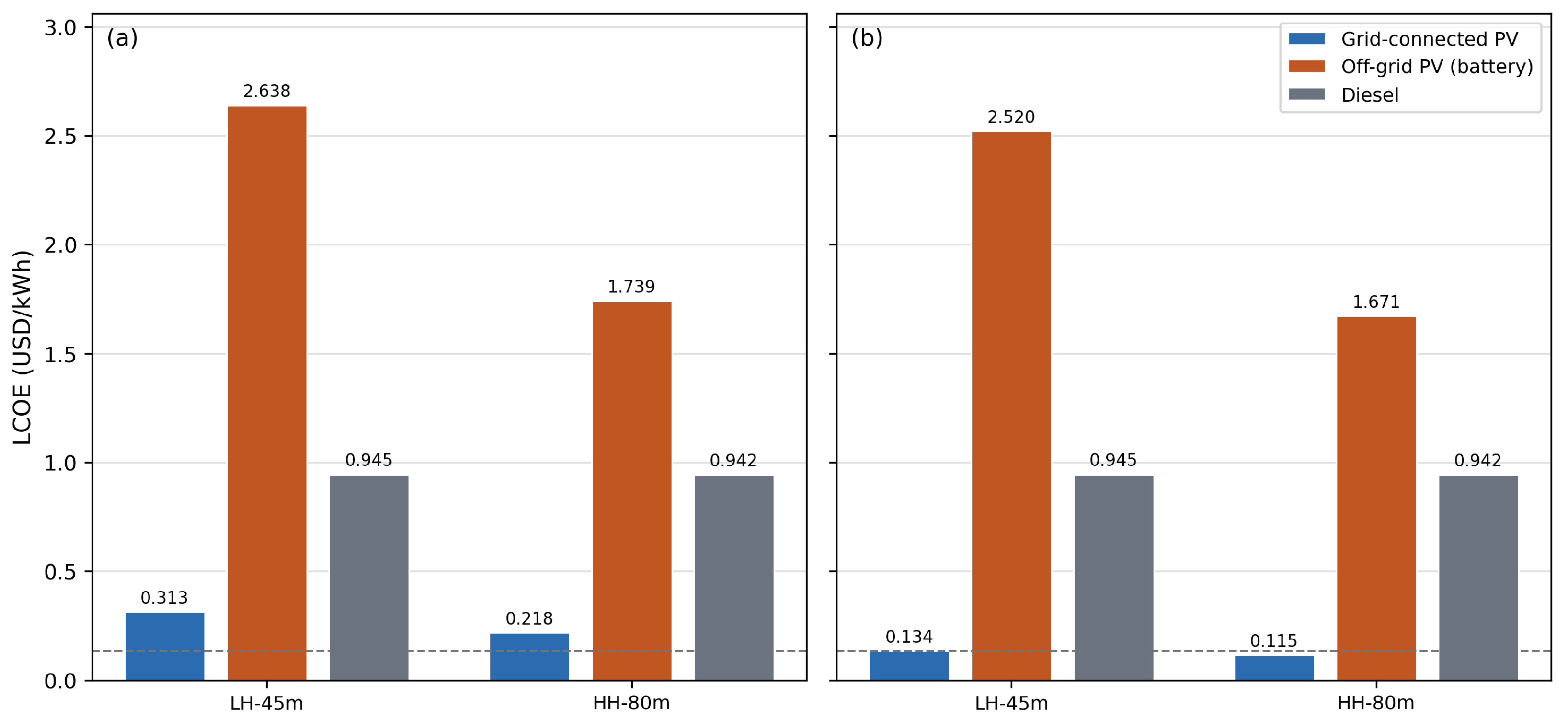
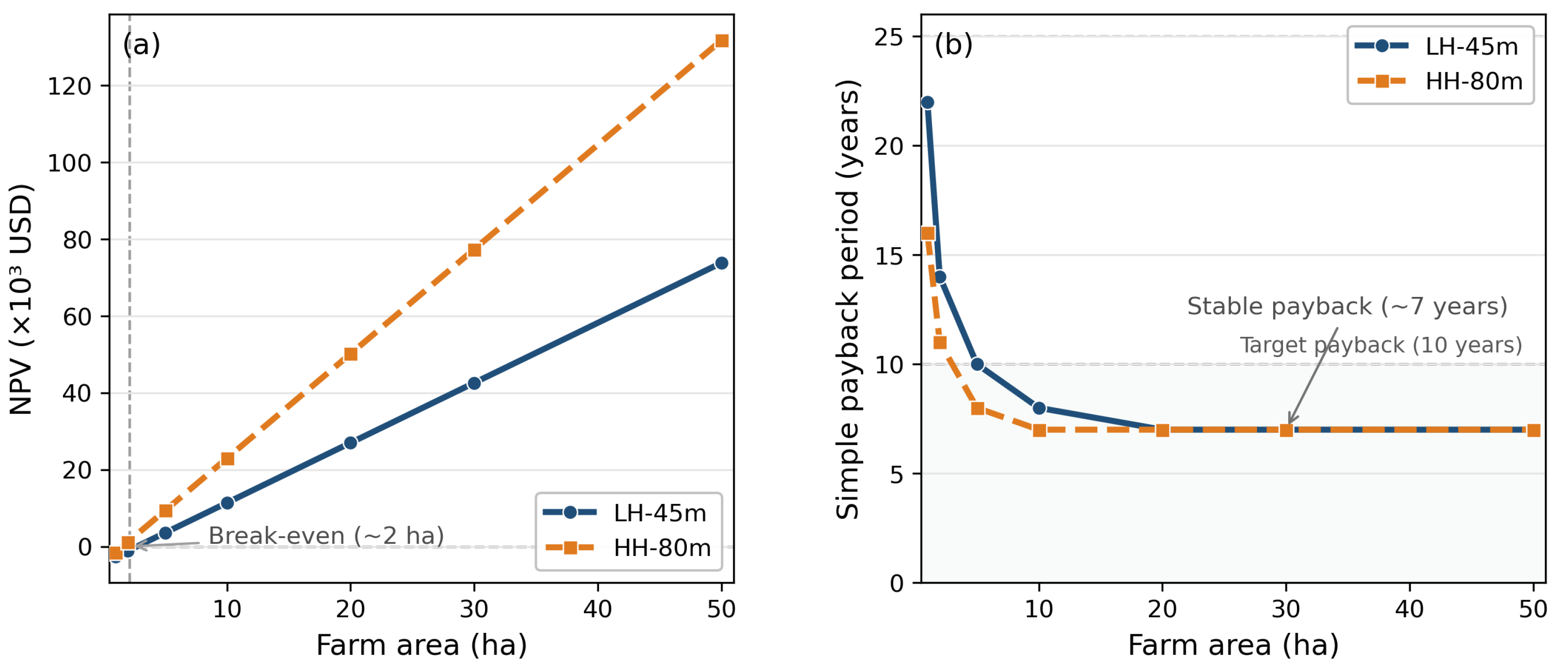
Our analysis shows that grid-connected solar water pumping systems (GC-SWPS) provide the most economically robust configuration for sugar beet irrigation compared to off-grid alternatives under varying hydraulic conditions. While small-scale (1 ha) GC-SWPS implementations yield marginally negative net present values (NPVs) of −USD 2697 for low-head (LH-45 m) and −USD 1538 for high-head (HH-80 m) conditions, with corresponding levelized costs of energy (LCOE) of 0.313 and 0.218 USD/kWh, the economic profile improves rapidly with scale. Fixed-cost dilution, rather than solar resource limitations, acts as the primary constraint at the 1 ha scale. At a 5 ha operational scale, GC-SWPS achieves clear economic viability, generating positive NPVs of USD 3551 (LH-45 m) and USD 9346 (HH-80 m), alongside payback periods of 10 and 8 years, respectively.
Notably, systems operating under higher hydraulic heads (HH-80 m) demonstrate more favorable economic performance under grid-connected conditions compared to low-head configurations. By 50 ha, the HH-80 m system achieves an NPV of USD 131,791 and an LCOE of 0.0919 USD/kWh, compared to an NPV of USD 73,841 and an LCOE of 0.0940 USD/kWh for LH-45 m. This counterintuitive finding can be explained by the higher baseline electricity demand associated with deeper groundwater pumping. Since the economic value of grid-connected PV systems is primarily derived from avoided electricity consumption at retail tariff rates, higher energy demand results in greater avoided costs per unit of installed PV capacity. Consequently, a larger share of PV generation is utilized for self-consumption rather than export, thereby improving overall system economics.
The present analysis does not explicitly account for potential increases in evapotranspiration (ET) due to long-term climate change. Irrigation water demand was estimated based on representative current conditions and assumed to remain constant over the project lifetime. However, rising temperatures in the Konya basin may lead to higher ET rates and increased crop water requirements over time. This would result in higher pumping energy demand and could negatively affect economic performance indicators such as NPV and payback period. While the analysis assumes a fixed feed-in tariff under current net-metering conditions, its influence on economic performance remains limited in the present model. This is mainly due to the fact that PV systems are sized to closely match irrigation energy demand, resulting in minimal surplus electricity exported to the grid. Consequently, the primary economic benefit is derived from self-consumption through avoided electricity costs, rather than export revenues. Therefore, potential changes in feed-in tariff policies in Türkiye are unlikely to significantly alter the 7–8-year payback period under this sizing approach. However, in alternative scenarios involving PV oversizing and higher export shares, policy shifts could have a more pronounced impact on system economics. Incorporating climate-driven ET projections into techno-economic models would provide a more realistic long-term assessment and is recommended for future research. For off-grid configurations, battery sizing was based on a one-day storage criterion rather than a strict multi-day autonomy approach. While larger storage capacities could further reduce the risk of supply shortfalls, they would significantly increase investment costs and reduce economic feasibility, particularly for small-scale farmers. In addition, irrigation demand is event-based (typically 8–10 day intervals), allowing for limited flexibility in scheduling irrigation. Moreover, reduced solar radiation during cloudy periods is generally associated with lower evapotranspiration, which decreases crop water demand. These factors collectively mitigate the practical risk of unmet irrigation requirements despite the absence of a formal LLP-based reliability analysis [
35,
36]. Soiling losses were not treated as a separate sensitivity parameter in this study. In dust-prone environments such as the Konya plain, reduced cleaning frequency may lower PV output and adversely affect economic performance indicators. Future studies should incorporate site-specific soiling rates and cleaning cost scenarios into techno-economic models to improve the robustness of long-term projections.
Conversely, the capital intensity of lithium iron phosphate (LiFePO
4) batteries renders pure PV-battery autonomous architectures (OG-SWPS) financially addition to operational CO
2 reductions, the life-cycle environmental impacts of battery systems should also be considered. Lithium-ion batteries involve material extraction, manufacturing, and end-of-life disposal processes that contribute to environmental burdens. In off-grid configurations, these impacts are more pronounced due to the reliance on battery storage. While recycling technologies for lithium-ion batteries are improving, disposal and resource use remain important sustainability concerns. In this context, grid-connected systems offer an additional environmental advantage by avoiding or minimizing battery use, thereby reducing life-cycle impacts beyond operational emissions. This limitation contrasts sharply with broader techno-economic assessments of centralized pumping stations. Therefore, future autonomous solar irrigation development must prioritize hybrid architectures, alternative dispatch strategies, and projected battery cost reductions. For instance, the recent study reported highly competitive cost of energy (COE) values (0.28 to 0.50 USD/kWh) for large-scale hybrid renewable configurations (PV/wind/diesel/battery) [
37]. This divergence highlights that while off-grid irrigation can become economically competitive through hybridization and dispatch flexibility, relying on a single-source PV-battery design for per-hectare autonomy remains cost-prohibitive. The observed advantage of grid-connected systems can also be interpreted from a demand-side flexibility and load-matching perspective. In off-grid configurations, irrigation demand must be directly matched with instantaneous PV generation or supported by battery storage, leading to significant system inefficiencies and higher costs. In contrast, grid-connected systems effectively decouple supply and demand by using the electrical grid as a buffer, allowing temporal mismatches between PV generation and irrigation demand to be absorbed. This flexibility improves the utilization of generated electricity and reduces reliance on costly storage solutions. From a seasonal perspective, this load-matching capability becomes particularly important, as irrigation demand profiles do not always align with solar generation patterns.
Beyond pure economics, our findings challenge conventional off-grid paradigms by demonstrating that GC-SWPS provides superior outcomes through net-metering mechanisms. By eliminating the need for expensive battery storage and monetizing surplus electricity exports, grid-connected systems achieve highly favorable payback periods.
This advantage can also be interpreted from a demand-side flexibility perspective. In off-grid configurations, irrigation demand must be directly matched with instantaneous PV generation or supported by battery storage, leading to significant system inefficiencies and higher costs. In contrast, grid-connected systems decouple supply and demand by using the electrical grid as a buffer, allowing temporal mismatches between PV generation and irrigation demand to be absorbed. This flexibility improves the utilization of generated electricity and reduces reliance on costly storage solutions.
From a seasonal perspective, this capability becomes particularly important, as irrigation demand profiles do not always align with solar generation patterns. Similar temporal mismatches between energy demand and renewable supply have been extensively analyzed in demand-side flexibility studies [
38]. Furthermore, exporting excess energy reduces life-cycle environmental impacts by up to a factor of six compared to off-grid systems reliant on battery storage [
39]. This aligns with recent comparative studies in other solar-intensive agricultural regions, such as India, which have shown that utilizing excess energy from grid-connected pumps reduces levelized energy costs and improves the financial resilience of farming operations [
40,
41].
However, beyond these economic and efficiency gains, practical operation factors must also be considered. Drip irrigation systems may involve additional costs related to filtration, particularly in regions where solar-pumped groundwater contains sediments. These conditions can increase the risk of emitter clogging, affecting system performance and longevity, and should therefore be included in long-term techno-economic evaluations [
42,
43]. Ultimately, the techno-economic viability of solar irrigation in high-tariff environments is not solely determined by electricity savings; it is heavily driven by avoided groundwater abstraction costs. From a water-energy nexus perspective, pairing solar pumping with high efficiency drip irrigation provides a critical operational advantage by significantly reducing both pumped water volumes and required energy. This efficiency is particularly urgent for the Konya-Çumra-Karapınar sub-basin, where unregulated deep well extraction for water-intensive crops has led to severe ecological degradation. Recent macro-level studies warn that this rapid aquifer depletion is driving the hazardous formation of sinkholes and threatening long-term agricultural sustainability [
24,
27]. The sensitivity and oversizing analyses provide additional insight into system design implications. The results demonstrate that increasing PV capacity beyond the irrigation demand does not improve economic performance under the current tariff structure. As shown in
Figure 9, oversizing leads to lower NPV, higher LCOE, and longer payback periods, indicating that surplus electricity export at feed-in tariff rates is economically less attractive than on-site self-consumption.
This finding highlights the importance of demand supply matching in the design of grid-connected solar irrigation systems. Rather than maximizing total energy production, optimal system performance is achieved by aligning PV generation with irrigation demand. These results also suggest that alternative uses of surplus energy, such as on-farm processing or storage applications, could provide greater economic value compared to grid export. Consequently, the environmental value of integrating drip irrigation with solar pumping far exceeds its immediate financial valuation. To secure agricultural resilience and align farmer incentives with aquifer conservation, policy frameworks must urgently transition from area-based water fee discounts to strict volumetric pricing.
5. Conclusions
This study provides a comprehensive techno-economic assessment of solar-powered irrigation systems under different groundwater depths and farm scales. The results indicate that grid-connected PV systems tend to offer the most favorable economic performance under the considered conditions. While small-scale applications (1 ha) remain marginally unprofitable, system performance improves with increasing farm size, reaching break-even at approximately 2.7 ha for LH-45 m and 1.6 ha for HH-80 m. Beyond these thresholds, grid-connected systems achieve positive NPV, LCOE values approaching the agricultural tariff, and payback periods below 10 years.
The analysis also suggests that higher groundwater depth (HH-80 m) is associated with increased annual energy throughput, which can improve economic indicators such as NPV and IRR despite higher pumping requirements. This highlights the importance of jointly considering system utilization and hydraulic conditions when evaluating techno-economic performance.
In contrast, off-grid PV systems with battery storage appear economically challenging under current cost assumptions, primarily due to high battery investment costs, resulting in LCOE values exceeding 1.7–2.6 USD kWh−1. Diesel-based systems, while more competitive than off-grid PV, still exhibit relatively high lifecycle costs (0.94 USD kWh−1) and are generally less attractive compared to grid-connected PV systems. Although drip irrigation improves water and energy efficiency compared to sprinkler systems, the results indicate that system scale and configuration play a more dominant role in determining overall economic feasibility under the assumptions considered.
Future research could explore alternative storage solutions to improve the viability of off-grid systems. In particular, second-life batteries from electric vehicles may offer a potential pathway to reduce capital costs, although their performance and long-term reliability require further investigation. Additionally, integrating dynamic pricing mechanisms and optimized system sizing could influence economic outcomes and merits further study.
From a policy perspective, the results suggest that pricing structures and access conditions may influence the adoption of efficient irrigation technologies. For example, volumetric water pricing could potentially strengthen incentives for water-efficient systems such as drip irrigation, while reduced grid-connection barriers may improve accessibility for small-scale farmers. However, these implications should be interpreted with caution, as they are not explicitly modeled in this study and would require dedicated policy analysis.