Article

Can Artificial Intelligence Narrow the Urban–Rural Income Inequality? Evidence from a Quasi-Natural Experiment in China

1
School of Public Administration, Guangxi University, No. 100, Da Xue Road, Nanning 530004, China
2
Scientific and Technological Strategy Consulting Institute, University of Chinese Academy of Sciences, Beijing 100190, China
*
Author to whom correspondence should be addressed.
Sustainability 2026, 18(10), 4785; https://doi.org/10.3390/su18104785 (registering DOI)
Submission received: 25 March 2026 / Revised: 1 May 2026 / Accepted: 7 May 2026 / Published: 11 May 2026
(This article belongs to the Special Issue Achieving Sustainability Goals Through Artificial Intelligence)

Abstract

The accelerated advancement of artificial intelligence has triggered new discussions concerning the link between technological progress and the distribution of income. This study frames China’s National New Generation Artificial Intelligence Innovation and Development Pilot Zone (AIIDPZ) policy as a quasi-natural experiment, enabling us to identify the causal effect of AI promotion strategies on the urban–rural income inequality. Drawing on panel data from 257 Chinese cities over the period 2012–2023, we estimate the impacts using a multi-period difference-in-differences (DID) approach. The results demonstrate that the pilot zone policy significantly lowers the urban–rural income inequality index, by roughly 8.41%. The mechanism analysis reveals two primary pathways. First, the policy stimulates innovation in agricultural science and technology, which in turn boosts rural productivity. Second, it deepens the attention that the government directs toward artificial intelligence, contributing to a more balanced allocation of technological dividends between urban and rural areas. Heterogeneity tests further indicate that the inequality-reducing effects are especially notable in eastern regions, as well as in cities characterized by well-developed digital infrastructure and relatively weaker endowments of human capital. By offering empirical insight into how developing countries can reconcile distributional equity with the application of artificial intelligence, this study contributes to advancing the Sustainable Development Goals (SDGs).

1. Introduction

The pursuit of sustainable development demands that economic growth proceed hand-in-hand with social equity and inclusive growth. At the heart of this challenge lies a fundamental tension—while technological progress is widely regarded as the primary engine of long-term economic growth, historically it has produced uneven distributional effects that may undermine social sustainability [1,2,3,4]. Currently, a new generation of artificial intelligence technologies, characterized by automation and big data, is penetrating various industries with unprecedented speed and breadth, exhibiting distinct skill-biased and capital-biased characteristics [5,6,7]. Beyond increasing the skill premium for highly educated workers, AI may trigger widespread displacement of low-skilled positions via automation, thereby fueling employment polarization and exacerbating functional income inequality between capital and labor [8]. Such inequality is manifested not only at the individual level but also across regional and urban–rural dimensions. This concern is particularly urgent in developing countries. If technological dividends fail to be shared inclusively, they are highly likely to interact with and reinforce existing social inequalities [9,10,11]. This could amplify inherent structural disparities and hinder the achievement of critical SDGs, specifically reducing inequality within countries and promoting inclusive economic growth.
While rapidly advancing AI development, China faces persistent challenges regarding the urban–rural income inequality. This provides a highly representative research sample for exploring how technology can foster inclusive growth and reduce intra-national inequality [12]. According to data from the National Bureau of Statistics of China, although per capita disposable income of residents has increased more than 200-fold over the past four decades, urban–rural income inequality remains significantly above the international warning level [13,14]. Among the various drivers, technological advancement is considered a key determinant influencing this inequality [15].
Existing scholarship on the distributional consequences of AI has largely coalesced around individual-level or firm-level labor-market outcomes [8,16,17,18,19]. While this body of work has yielded valuable insights, three critical lacunae remain unaddressed. First, despite extensive theoretical conjecture regarding whether AI widens or narrows inequality [5,20,21,22,23,24], rigorous causal evidence at the subnational level is conspicuously scarce [25,26]. Much of the extant research relies on correlational analyses or simulation-based projections that cannot credibly disentangle policy effects from confounding secular trends or unobserved regional heterogeneity. Second, the spatial dimension of AI’s distributional consequences, particularly the urban–rural income divide, has received remarkably little systematic attention relative to analyses centered on inter-firm or inter-occupational wage differentials [27]. Third, even where policy interventions are acknowledged, the mechanisms through which AI-oriented place-based policies translate into income distributional outcomes remain theoretically underspecified and empirically untested [28]. These gaps are not merely academic; they impede the formulation of evidence-based policies capable of aligning technological advancement with the equity objectives enshrined in SDG 10.
Against this backdrop, the present study addresses the following questions: (1) Does the designation of AI pilot zones exert a causal narrowing effect on the urban–rural income inequality? (2) Through what channels does this policy effect materialize? (3) Does the magnitude of the effect vary systematically across cities with differing geographic, infrastructural, and human capital characteristics?
To explore these issues, we treat the staggered rollout of China’s AIIDPZ initiative as a quasi-experimental policy shock. Rather than conceptualizing AI as a broad technological wave, this paper regards it as a bundle of concrete, policy-driven applications. These include machine learning techniques and data-driven analytics for precision farming, smart advisory platforms, and big data systems that incorporate blockchain-based traceability. By creating an exogenous disruption, the AIIDPZ policy accelerated the adoption of these tools within the designated pilot areas. We therefore implement a multi-period difference-in-differences design, drawing on a panel dataset of 257 cities covering the years 2012–2023; all estimations are performed using Stata MP18. Our estimates indicate that the pilot policy narrowed the urban–rural income inequality index by roughly 8.41%. The mechanism investigation points to two mutually reinforcing channels. The first channel is that the policy environment spurs innovation in agricultural science and technology, which lifts productivity in the countryside. The second channel is that it heightens the government’s focus on artificial intelligence, promoting a more balanced spatial allocation of benefits arising from technological progress. Additional heterogeneity checks show that the equalizing effect is especially strong in eastern regions, in cities with advanced digital infrastructure, and in localities with comparatively weak initial endowments of human capital.
This paper advances the literature in three main ways. First, it presents some of the earliest quasi-experimental evidence on the distributional effects of place-based policies that promote artificial intelligence. By moving the conversation on technology and inequality beyond individual labor-market outcomes and toward the spatially patterned urban–rural divide, the study supplies empirically grounded insights relevant to ongoing policy discussions about the capacity of innovation-oriented place-based initiatives to further the equity aims of SDG 10. Second, the paper brings together market-driven innovation responses and government-led governance reorientation within a single analytical lens, thereby clarifying the mechanisms through which policy-induced AI expansion reshapes income distribution. This type of mechanistic account is largely absent from earlier contributions. Third, the analysis goes beyond average effects to document systematic heterogeneity across varied urban settings, identifying the boundary conditions under which AI-focused policy interventions yield the strongest results. Taken together, these contributions indicate that place-based AI promotion strategies, when embedded in supportive institutional environments, can work as effective tools for narrowing spatially structured inequality. For policymakers in developing economies who wish to steer technological advances toward inclusive growth, the findings serve as a useful reference, while also stressing that turning such policies into practice calls for careful alignment with local governance capabilities and absorptive conditions.
The rest of the article is organized as follows. The Section 2 reviews the relevant policy context and sets out the research hypotheses. The Section 3 gives a thorough account of the research design, which covers the data sources, the econometric specification, and the definitions of variables. The Section 4 and Section 5 separately report the core empirical findings, the outcomes of the mechanism tests, and the results of the heterogeneity analysis. The Section 6 widens the discussion to encompass the study’s conclusions and avenues for future work, while also synthesizing the key findings and extracting the corresponding policy lessons.

2. Policy Context and Research Hypotheses

2.1. Policy Context

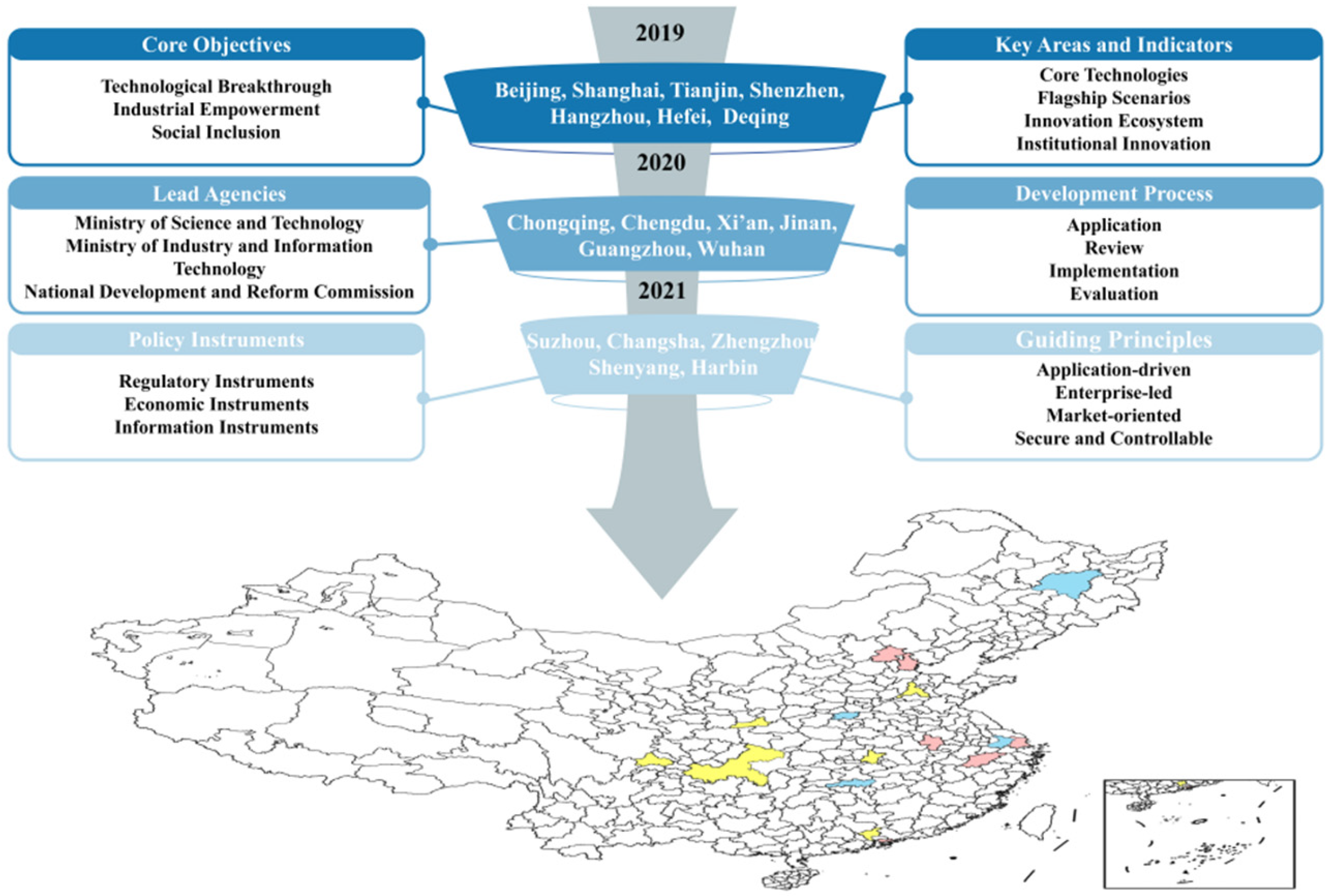
Since the launch of the Guidelines for Establishing AIIDPZs in 2019, China has implemented the policy through a phased pilot-first, demonstration-led, replication-promotion framework. This initiative encourages the integration of local characteristics with national strategic goals, empowering designated pilot regions to experiment with policies in critical domains such as technology commercialization, real-world application scenarios, and social governance mechanisms. The program is designed to fulfill three core functions: demonstrating technological feasibility, advancing governance models, and assessing societal impacts. Through localized trials across diverse regions, the policy seeks to generate transferable governance insights that foster the inclusive development of artificial intelligence.
The AIIDPZ policy is co-managed by the Ministry of Science and Technology, the Ministry of Industry and Information Technology, and the National Development and Reform Commission. It relies on a blend of regulatory measures, economic levers, and information-based instruments to meet its objectives. Pilot cities were chosen in three distinct waves. The 2019 wave comprised Beijing, together with Shanghai, Tianjin, Shenzhen, Hangzhou, Hefei, and Deqing. The 2020 wave added Chongqing, along with Chengdu, Xi’an, Jinan, Guangzhou, and Wuhan. In 2021, the third wave arrived in Suzhou, as well as in Changsha, Zhengzhou, Shenyang, and Harbin. By the close of 2024, the three batches had yielded a total of 18 designated pilot cities across the country. The timeline of policy implementation is presented in Figure 1. A comprehensive account of the evolution of China’s AI policies is presented in Table A1 (Appendix A.1).
The selection of cities for the pilot program, when compared with those not included, approximates a quasi-natural experimental setting. This approach offers a valuable opportunity to assess the genuine effectiveness of the policy.

2.2. Research Hypotheses

2.2.1. Direct Effects of the AIIDPZ Policy on Urban–Rural Income Inequality

We argue that the AIIDPZ policy narrows the urban–rural income inequality through three theoretically grounded channels: increasing total factor productivity in agriculture, reducing skill premium differentials, and lowering transaction costs. Although these mechanisms benefit from artificial intelligence technology, their implementation is primarily driven by policy instruments embedded within the AIIDPZ framework, including infrastructure investment, fiscal support for technology adoption, and targeted human capital programs.
First, the AIIDPZ policy helps boost total factor productivity (TFP) in agriculture. Agricultural TFP reflects output growth that cannot be explained by traditional input factors such as labor and capital [29]. According to Schultz’s theory of agricultural transformation, traditional agriculture can only become a dynamic sector driving economic growth when new factors of production are introduced, particularly those embodying modern technology. AIIDPZ policies accelerate the adoption of AI technology, which serves as precisely such a factor of production. Through precision agriculture, machine-learning-based crop monitoring, and smart irrigation systems, policy-supported AI applications enable data-driven decision-making and real-time process control across the entire production chain [30,31]. These applications reduce input waste, optimize resource allocation, and increase output per unit of land and labor. Unlike general technological progress, artificial intelligence possesses the ability to efficiently process agricultural data such as soil conditions, weather patterns, and pest dynamics, leading to an increase in TFP that benefits rural producers more significantly. Consequently, AIIDPZ-driven TFP growth lowers unit production costs, increases agricultural net income, and narrows the urban–rural income inequality.
Second, AIIDPZ policies help narrow the urban–rural skill premium gap. The skill premium refers to wage differences arising from variations in workers’ skill endowments [32]. The Skill-Biased Technological Change theory posits that new technologies often favor highly skilled labor [33], which may exacerbate inequality. However, artificial intelligence possesses a dual nature: it can both replace routine tasks and assist human decision-making. In a rural context, agricultural AI applications, such as voice consultation systems and automated crop disease diagnosis, lower the cognitive and technical barriers to adopting advanced production methods. Furthermore, as seen in China’s AI pilot zones, dedicated funding mechanisms provide fiscal subsidies and preferential credit for AI skills training programs targeting rural residents. These initiatives enhance rural workers’ AI literacy and operational capabilities, narrowing the urban–rural inequality in technology adoption. Empirical evidence indicates that when rural workers acquire basic AI skills, the wage premium previously enjoyed exclusively by urban skilled workers begins to converge. Thus, the AIIDPZ policy promotes the gradual convergence of urban–rural income disparities through the aforementioned transmission mechanisms.
Third, the AIIDPZ policy reduces transaction costs. Transaction cost economics [34,35] highlights that information search, contract negotiation, and monitoring are the primary frictional barriers to market participation, a challenge particularly acute for smallholder farmers. As a new type of information infrastructure, the deployment of artificial intelligence has been accelerated by the AIIDPZ policy, demonstrating exceptional capabilities in efficient, low-cost data collection, processing, and analysis [36]. Its development can significantly reduce various transaction costs. Specifically, AI-based big data platforms enable farmers to overcome the temporal and spatial constraints of traditional information gathering. They can access price information, policy updates, and technological innovations in real time without relying on intermediaries. Furthermore, blockchain-based traceability systems allow consumers to track products from source to market, thereby alleviating information asymmetry and strengthening trust between producers and buyers [37]. This reduces the need for costly third-party verification and contract enforcement. This combined effect not only lowers farmers’ search and transaction costs but also boosts consumer confidence and demand, thereby improving cost-effectiveness, increasing total agricultural income, and helping narrow the income inequality.
Based on the theoretical reasoning above, we propose the following hypothesis:
H1. 
The implementation of the AIIDPZ policy reduces urban–rural income inequality.

2.2.2. Mechanistic Effects of the AIIDPZ Policy on Urban–Rural Income Inequality

The literature on AI and inequality suggests multiple potential channels through which technological change may influence income distribution, including employment displacement and job creation [16,17,18,19], skill-biased wage effects [8,32], structural transformation across sectors [15], and differential access to digital services [34,35,36]. While acknowledging the relevance of these alternative pathways, this study focuses on two specific mechanisms—agricultural science and technology innovation and government attention to artificial intelligence—for both theoretical and empirical reasons. First, these two channels are targeted by the AIIDPZ policy instruments: the policy explicitly supports agricultural technology adoption through infrastructure investment and fiscal subsidies, and it mandates enhanced local government engagement with AI governance. Second, the urban–rural income divide, as distinct from general wage inequality, is fundamentally rooted in sectoral productivity differentials and spatially uneven policy attention. Agricultural science and technology innovation addresses the productivity gap in the rural sector, while government AI attention captures the spatial reallocation of policy resources toward rural development. These two channels thus represent theoretically salient and policy-relevant mechanisms in the specific context of urban–rural inequality reduction. Therefore, this study selects the two aforementioned channels as mechanism variables to test for mechanism effects.
Endogenous growth theory emphasizes that technological progress is central to sustained economic expansion [38]. In rural economies, agricultural science and technology innovation is the key mechanism for improving production efficiency, increasing output value, and ultimately raising farmers’ incomes [39,40,41,42]. We argue that the AIIDPZ policy promotes such innovation primarily through two interrelated channels: enhancing agricultural labor productivity and overcoming long-standing technological constraints.
First, the application of AI driven by the AIIDPZ policy enhances labor efficiency by leveraging machine learning algorithms and advanced computing power to process large-scale agricultural datasets. This enables agricultural machinery to achieve real-time coordination across tasks and automate repetitive operations. By reducing the burden of physical labor, policy-supported AI tools allow a new generation of technically skilled agricultural professionals to devote more time and resources toward innovation, thereby accelerating technological progress in the sector.
Second, the AIIDPZ policy helps address two key bottlenecks that have long hindered agricultural mechanization in China: complex terrain and weak product competitiveness [43]. In hilly and mountainous regions, irregular terrain often interferes with wireless communications, thereby limiting the effectiveness of compact machinery such as drones. Leveraging the policy’s investment in digital infrastructure, enhanced AI neural network models have been deployed to improve signal stability and data transmission accuracy under such conditions [44]. Combined with the expanding digital infrastructure supported by the policy, this enables distributed node networks to achieve interconnected data collection and sharing [45]. These advancements have facilitated the clustered application of agricultural drones and the adoption of precision agriculture technologies, enhancing the competitiveness of smart agricultural equipment [46] and further driving technological innovation.
In summary, the agricultural science and technology innovations spurred by the AIIDPZ policy generate positive externalities characterized by higher production efficiency and stronger product competitiveness. These spillover effects support related fields such as agricultural science and technology talent development and the modernization of rural infrastructure. The growing pool of agricultural innovators accelerates the translation of research findings into practical applications, opening new avenues for raising farm income. At the same time, infrastructure improvements enhance the resilience of the agricultural economy, laying a more solid foundation for income growth [47,48].
The synergistic effects between AIIDPZ-driven technological innovation and agricultural development provide fundamental support and sustained momentum for increasing rural incomes, thereby helping to narrow the urban–rural income inequality. Based on this, we propose the following hypothesis:
H2. 
The AIIDPZ policy narrows the urban–rural income inequality by promoting agricultural science and technology innovation.
Government attention reflects the degree of priority public authorities assign to specific issues during policy formulation and implementation [49]. According to attention allocation theory [50], how local governments allocate their cognitive and material resources shapes the distribution of limited policy inputs and ultimately determines the extent to which policy objectives are achieved. Given that the AIIDPZ policy calls for accelerating the development and application of artificial intelligence technologies, decision-makers in pilot regions are increasingly shifting their focus toward AI governance and its impact on development.
First, the AI tools deployed under this policy framework have enhanced governance capabilities. By enabling intelligent analysis and predictive modeling, these tools help shift decision-making from empiricism to evidence-based approaches, thereby improving the foresight and effectiveness of policies [51]. Second, the policy’s emphasis on digital infrastructure has strengthened interdepartmental coordination. The expansion of integrated digital government platforms has facilitated data sharing across administrative levels, laying the foundation for smarter and more coordinated public governance. As these positive governance effects become increasingly evident, government artificial intelligence attention deepens, prompting the proactive allocation of more policy resources to rural development.
As local governments in AIIDPZ pilot zones maintain a sustained focus toward AI-related challenges and solutions, the resulting public signals begin to reshape behavioral logic at multiple levels [52]. On the one hand, market actors are responding to policy directions: enterprises are aligning their strategies with government priorities, increasing investment in AI R&D, and driving the diffusion of AI technologies into local and rural markets. This can unlock new growth opportunities in rural areas. For example, AI-based recommendation algorithms can analyze tourist preferences and behavioral data to design personalized rural tourism itineraries, connecting urban visitors with distinctive agricultural and recreational experiences that might otherwise be overlooked. At the operational level, AI-driven dynamic pricing systems and occupancy forecasting tools help rural accommodation providers optimize resource allocation and maximize revenue during peak seasons. These policy-driven AI applications empower rural communities to capture a larger share of the tourism value chain, thereby raising farmers’ incomes through diversified, technology-enhanced service offerings.
On the other hand, farmers themselves are influenced by social and normative channels. According to the Theory of Planned Behavior [53], individual behavior is shaped by perceived behavioral control and social norms. As policy-driven AI applications become increasingly widespread and receive open government support, a normative environment encouraging farmers to adopt advanced technologies is gradually taking shape. This lowers the barriers to adoption, enabling farmers to modernize traditional practices, increase high-value-added production, and diversify into non-agricultural income sources.
Based on the above analysis, we propose the following hypothesis:
H3. 
The AIIDPZ policy narrows the urban–rural income inequality by increasing government attention to artificial intelligence.

3. Model Construction

3.1. Baseline Regression Model: Multi-Period DID Model

Given that pilot zones were rolled out in batches starting in 2019, this study employs a multi-period DID design to assess changes in urban–rural income inequality before and after policy implementation. When treatment assignment is non-random and varies across both units and time periods, the DID framework becomes the primary approach for estimating the causal effects of place-based policies. This empirical strategy is particularly well-suited to the context of this study. Although the AIIDPZ policy was implemented as a nationwide initiative, the timing of designation for each city’s pilot zone varied due to factors such as administrative approval cycles, local project readiness, and the policy’s phased rollout. This staggered implementation created significant variation in policy exposure across cities between 2019 and 2021, allowing us to exploit within-city changes in treatment status before and after designation. This pattern of staggered adoption is precisely the scenario for which multi-period DID is designed.
Because Shenzhen lacks rural administrative divisions, it was excluded from the analysis. Consequently, the treatment group consists of the 17 designated prefecture-level cities (excluding Shenzhen), while the control group comprises 240 non-designated prefecture-level cities. Data from Xinjiang, Tibet, Hong Kong, Macao, Taiwan, and other regions with significant data gaps were also excluded. Based on this, the following econometric model was constructed:
URII it = α + β d i d it + λ c o n t r o l s it + ν i + μ t + ε it  
Here, i represents the pilot zone, and t denotes the year; URII it is the dependent variable, indicating the urban–rural income inequality in pilot zone i during year t ; did it is the core explanatory variable; controls it comprises other potential control variables affecting the urban–rural income inequality; α ,   β , λ are the coefficients to be estimated; ν i represents the individual fixed effect; μ t denotes the time fixed effect; ε it is the random disturbance term. Coefficient β measures the actual policy effect of the AIIDPZ policy on the urban–rural income inequality.

3.2. Variable Descriptions

3.2.1. Explained Variable

Urban–Rural Income Inequality (URII). Consistent with Song et al. [54], this variable is measured as the ratio of urban to rural per capita disposable income. It offers two practical advantages in the present context: first, data are consistently available at the prefecture-level across the entire sample period; second, the ratio captures relative income inequality between urban and rural residents, which aligns conceptually with our focus on spatially structured inequality [55]. Nevertheless, we acknowledge that this is a limited, single-dimensional measure. To mitigate concerns about indicator-specific bias, we re-estimate all specifications using the absolute difference between urban and rural per capita disposable income as an alternative measure.

3.2.2. Core Explanatory Variable

AI ( did it ). This paper constructs a key treatment indicator, did it , to capture the AIIDPZ policy’s effect. The AIIDPZ initiative is taken as a quasi-experimental shock. Specifically, did it is defined as the multiplicative term of a policy adoption dummy and a post-treatment time dummy, serving as our primary explanatory variable. If city i becomes one of the AIIDPZs during year t, then did it takes the value 1 for that city in year t and in all years that follow; otherwise, it takes the value 0.

3.2.3. Mechanism Variables

Agricultural Science and Technology Innovation (ASTI). Drawing on Moscona & Sastry [56], ASTI is measured by the aggregate count of agricultural invention, utility model, and design patents. Patents capture codified innovation output and are geographically attributable to the city level, aligning with the spatial nature of the policy treatment. Limitations include underrepresentation of tacit knowledge and non-patented adoption; we mitigate this by aggregating three patent types and controlling for R&D expenditure.
Government Artificial Intelligence Attention (GAIA). Drawing on the study by Du et al. [57], GAIA is measured as the ratio of AI-related keyword frequency to total word count in government work reports. Detailed procedures are in Appendix A.2. Government work reports serve as authoritative policy blueprints; keyword frequency reflects agenda priority and signals resource commitment. While textual attention may diverge from implementation intensity, this measure offers systematic, objective, and comparable data. We further address concerns about measurement bias by including year-fixed effects to absorb temporal shifts in document composition.

3.2.4. Control Variables

Drawing on existing literature [58,59,60,61], the analysis incorporates the following control variables: (1) Education expenditure level: Education expenditure as a share of total government fiscal expenditure. (2) Financial depth: Year-end balance of deposits and loans in financial institutions. (3) Tertiary sector development: Value added of the tertiary industry. (4) Industrial structure: Share of secondary industry value added in GDP (Gross Domestic Product). (5) Population density: Registered population divided by administrative land area (log-transformed). (6) Mobile phone penetration: Number of year-end mobile phone subscribers. (7) Healthcare capacity: Number of licensed physicians. (8) Economic size: Gross Regional Product. (9) Government spending: Local government general expenditure. (10) Innovation input: Internal expenditure on R&D funding.

3.3. Data Sources

Multiple sources were employed in this study. The list of AIIDPZs was acquired from the Ministry of Science and Technology of China. Regarding income measures, we manually gathered statistics on per capita disposable income for both urban and rural sectors across cities for the period 2012–2023. These figures were extracted and organized from each municipality’s annual Statistical Yearbook and Statistical Bulletin. Agricultural patent data—covering invention, utility model, and design patents—were obtained by hand from the China Patent Information Center (CNPAT) website, also for cities from 2012 to 2023. Additionally, we manually assembled the Government Work Reports of prefecture-level cities for the same period. These reports were sourced from official city government portals and annual statistical yearbooks. As for the other variables, they came from a variety of authoritative references, such as the statistical yearbooks of each prefecture-level city, the China City Statistical Yearbook, and databases including CEI Data. Finally, to reduce the impact of outliers, all continuous variables underwent winsorization.
The descriptive statistics results are presented in Table A2 of Appendix A.1.

4. Empirical Analysis

4.1. Benchmark Regression

Table 1 presents the baseline estimation results based on Equation (1), with standard errors clustered at the individual level. The findings show that, after accounting for covariates as well as individual and year fixed effects, the development of artificial intelligence exerts a significant and negative effect on urban–rural income inequality. Specifically, compared with non-pilot regions, AI development in designated pilot zones meaningfully reduces the urban–rural income inequality. Quantitatively, the expansion of AI is associated with an 8.41% reduction in the urban–rural income inequality in pilot areas.
The results in column (2) further strengthen these conclusions. Even after substituting the dependent variable with the absolute difference between urban and rural per capita disposable income, AI development continues to show a statistically significant mitigating effect on income inequality. This robustness check enhances confidence in the baseline estimates and provides preliminary support for Hypothesis H1.

4.2. Parallel Trends Test

The validity of a multi-period DID design depends on whether the parallel trends assumption holds [62]. This assumption requires that there be no statistically significant differences between the treatment and control groups prior to policy implementation, and that the two groups exhibit parallel trends. To test this assumption and verify the reliability of the baseline results, while accounting for the staggered timing of policy implementation across pilot regions, we estimated the following dynamic specification:
URII it = α + β 1 B e f o r e 7 i t + β 2 B e f o r e 6 i t + β 3 B e f o r e 5 i t + β 4 B e f o r e 4 i t + β 5 B e f o r e 3 i t + β 6 B e f o r e 2 i t + β 7 C u r r e n t i t + β 8 A f t e r 1 i t + β 9 A f t e r 2 i t + λ c o n t r o l s i t + ν i + μ t + ε i t
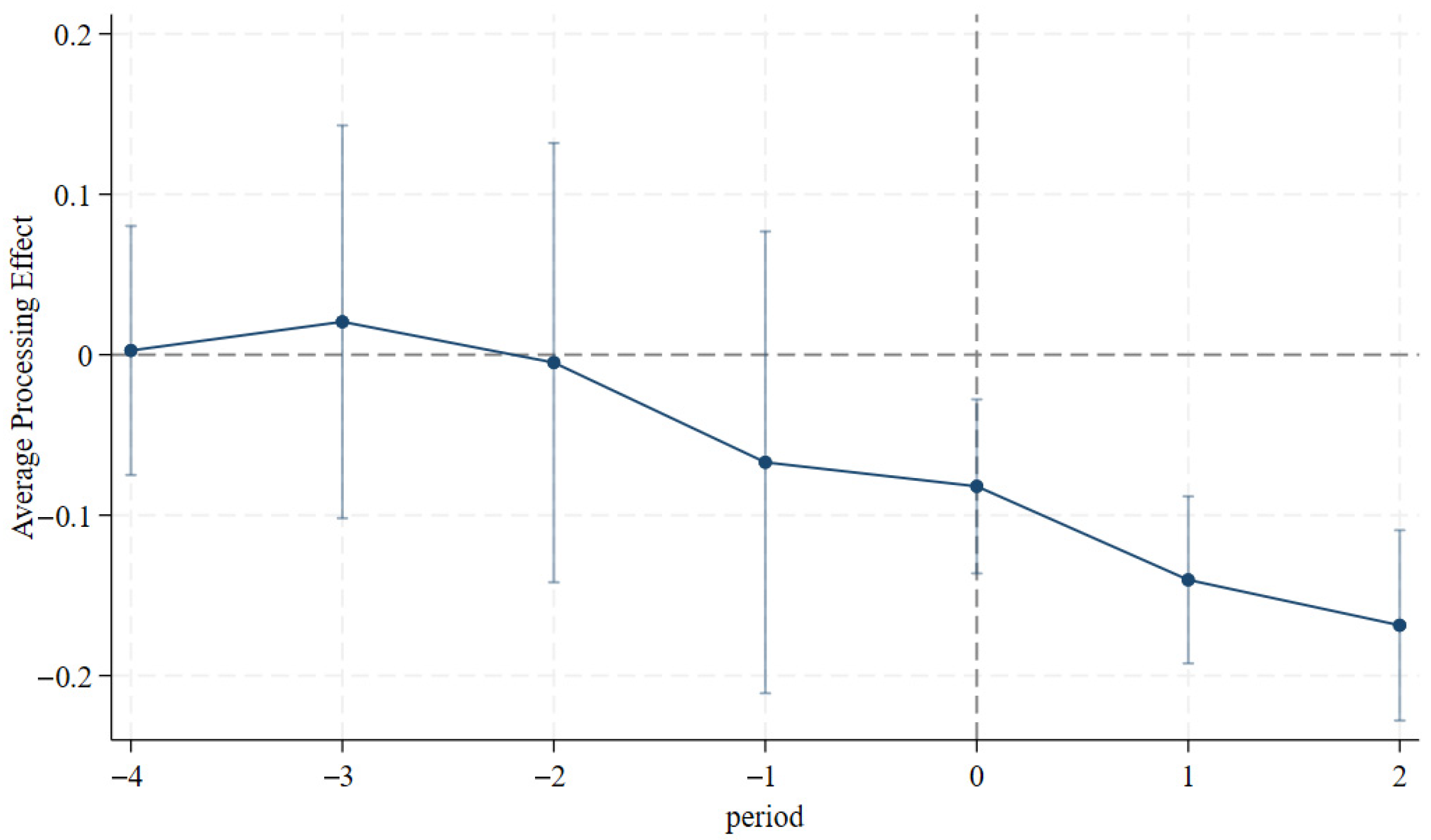
In Equation (2), the variable BeforeNᵢₜ is a dummy variable indicating the N years prior to a region being approved as a pilot zone. Currentᵢₜ is a dummy variable indicating the year a region was approved as a pilot zone. AfterNᵢₜ is a dummy variable indicating the N years following a region’s approval as a pilot zone. Furthermore, this study selects the year prior to the implementation of the AIIDPZ policy as the baseline period and sets the dummy variable for all regions not designated as pilot zones to 0. The sample includes 257 prefecture-level cities, covering the period from 2012 to 2023. The model reports the regression coefficients and confidence intervals for the difference in urban–rural income inequality between treatment group cities and control group cities in the year of AIIDPZ designation. The analysis covers six pre-implementation periods and two post-implementation periods. The coefficients β 1 through β 6 correspond to the dummy variables B e f o r e 7 i t to B e f o r e 2 i t , capturing the differential trends between treated and control cities from seven to two years prior to policy adoption. The year immediately preceding implementation is used as the baseline reference period to avoid severe multicollinearity. The coefficients β 8 and β 9 on A f t e r 1 i t and A f t e r 2 i t capture the dynamic policy effects one and two years following implementation, respectively.
As shown in Figure 2, the estimated coefficients prior to the 2019 policy implementation were small and statistically insignificant, with their 95% confidence intervals consistently including zero. This indicates that, prior to the establishment of the AIIDPZs, the development trends of the experimental and control groups were parallel, with no evidence of systematic prior differences. Therefore, these results satisfy the parallel trends assumption required for causal identification. Regarding the dynamic effects of the policy, the coefficients of the core explanatory variables turned significantly negative after 2019 and continued to decline over time. This pattern indicates that the implementation of the AIIDPZ policy significantly narrowed the urban–rural income inequality, and its mitigating effect gradually strengthened in the years following policy implementation.

4.3. Robustness Tests

4.3.1. Placebo Test Using Shifted Policy Timing

One concern regarding the baseline DID estimates is that the observed narrowing of urban–rural income inequality may reflect pre-existing differential time trends between urban cities in the treatment group and those in the control group, rather than the causal effect of the AIIDPZ policy itself. To further confirm that our baseline results are not confounded by unobserved systematic trends over time or expectation effects, we conducted a placebo test by artificially moving the policy implementation date forward by one year. The underlying logic is as follows: if the estimated treatment effect merely reflects pre-existing divergent trends between the treatment and control groups rather than the causal impact of the policy, then reassigning a fictitious policy implementation date to an earlier period should yield a statistically significant and similar coefficient.
The empirical results are shown in column (1) of Table 2. The coefficient for the artificially adjusted policy indicator is economically insignificant (−0.0500) and not statistically different from zero. The non-significant result of this placebo test indicates that there is no evidence of systematic differences in the outcomes prior to the actual policy intervention. Therefore, the placebo test reinforces the causal interpretation of the baseline estimates and supports the robustness of our findings.

4.3.2. Placebo Test Results

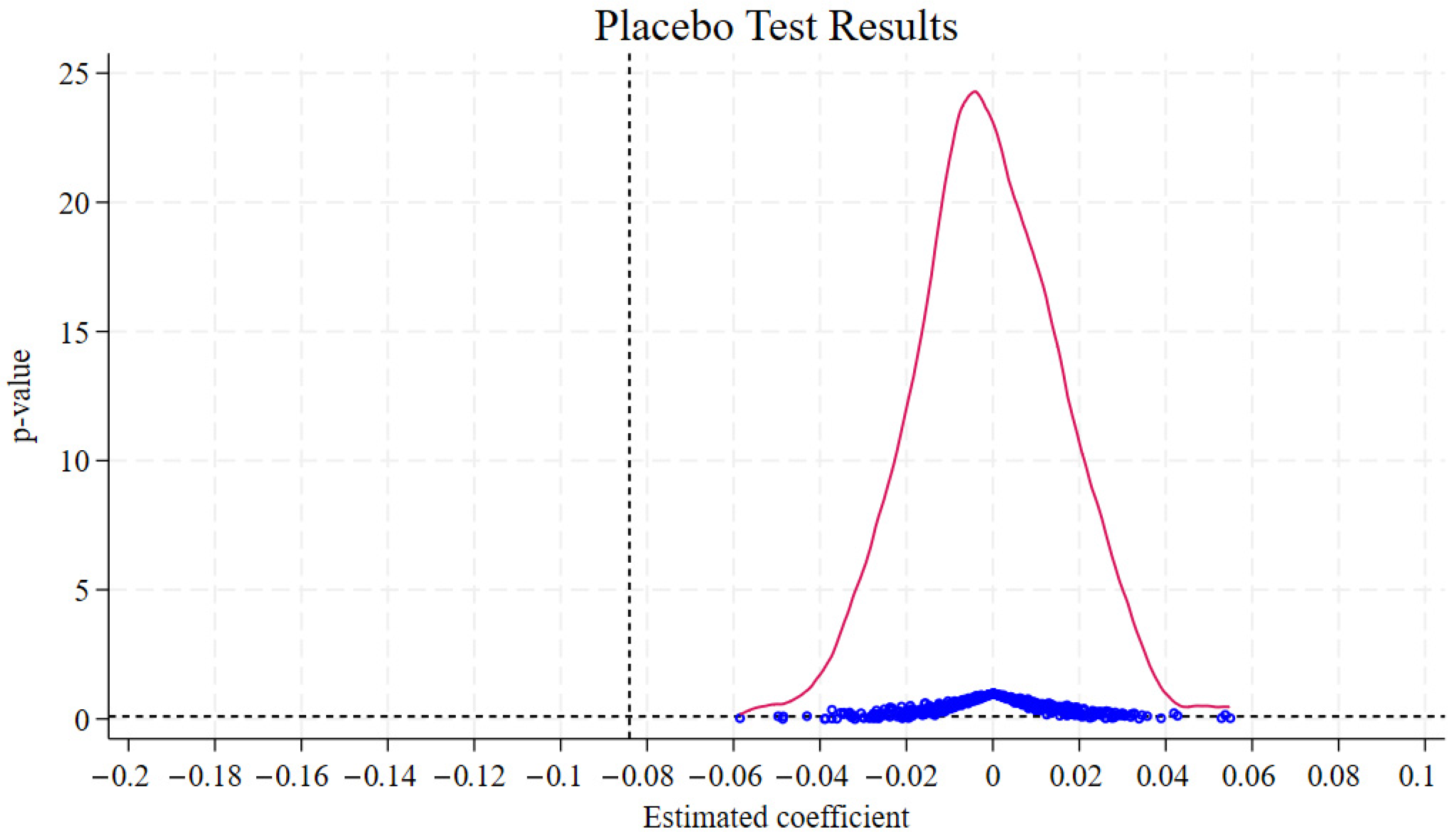
To further exclude other random factors, policy endogeneity, or other unobserved omitted variables that may interfere with the benchmark regression results, this study adopts the approach referenced in Song et al. [63]. A pseudo-treatment group was randomly drawn from the full sample, with the number of pseudo-treated cities matching that of the true treatment group (17 cities). This process was repeated 500 times, and the model specified in Equation (1) was re-estimated for each iteration. Figure 3 presents the distribution of the 500 estimated pseudo-coefficients. In the figure, each blue dot represents the estimated coefficient from one of the 500 random simulations. The solid red curve traces the kernel density of these placebo estimates, peaking near zero and indicating that randomly assigned pseudo-policies overwhelmingly produce estimates close to zero. The vertical dashed line marks the actual baseline estimate (−0.0841) obtained under the true policy assignment. As shown, the true coefficient lies far outside the main cluster of pseudo-coefficients, positioned in the extreme left tail of the distribution. The probability of obtaining an estimate as large in magnitude as −0.0841 purely by random chance is less than 1%. The evidence indicates that the core estimates cannot plausibly be attributed to unobserved confounding factors, thus reaffirming their robustness.

4.3.3. PSM-DID

Given that the selection of pilot cities was not random but based on their economic and technical readiness, this may introduce selection bias. To mitigate this effect, we controlled for fixed effects at the city and year levels and employed Propensity Score Matching (PSM) to rebalance the control group, mitigating potential selection issues. PSM helps reduce selection bias by matching cities in the treatment group with those in the control group based on observable characteristics prior to the intervention. Using nearest neighbor (1:1) matching with a caliper and then re-estimating the multi-period DID model, the results in columns (2) and (3) of Table 2 show that the coefficients on the core explanatory variable remain significantly negative. This supports the robustness of the conclusion that AI development reduces the urban–rural income inequality.

4.3.4. Instrumental Variables Approach

Endogeneity may arise from reverse causality between AI adoption and the urban–rural income inequality. Regions with smaller income inequality tend to exhibit greater urban–rural integration, facilitating factor mobility, attracting investment, and improving data connectivity—all of which could promote AI development [64,65,66]. In addition, unobserved factors may jointly influence both AI growth and income inequality. To address these concerns, we construct an instrumental variable and estimate a Two-Stage Least Squares (2SLS) model.
Following the logic of Nunn and Qian [67], we construct the instrument as the interaction between the number of post offices per million people in 1984 and the lagged policy variable (DID). Historically, post offices served as key communication nodes, and areas with denser postal networks likely possessed stronger foundations in connectivity, which may have later supported digital infrastructure and technological adoption [68,69]. This satisfies the relevance condition. Moreover, historical postal data from 1984 are unlikely to directly affect urban–rural income inequality between 2012 and 2023, supporting the exclusion restriction.
Columns (1) and (2) of Table 3 report first-stage estimates that are positive and statistically significant. This suggests that the number of post offices per million residents in 1984 is correlated with AI development: regions with higher postal density tend to be more supportive of AI growth. The second-stage estimate on the key explanatory variable is negative and significant, aligning with the baseline regression results. The underidentification LM test gives a p-value of 0.0000, clearly rejecting the null of underidentification. The Kleibergen–Paap rk Wald F-statistic equals 26.459, which surpasses the Stock–Yogo [70,71] critical value for weak instruments at the 10% level (16.38), confirming that weak instruments are not a concern. Overall, after using the instrumental variable approach to address possible endogeneity, the paper’s main findings continue to hold.

4.3.5. Change the Sample Period

The COVID-19 pandemic, which emerged in late 2019, caused substantial disruptions to economic activity and could potentially confound the estimated relationship between AI development and the urban–rural income inequality. To address this concern, we exclude the year 2020 and re-estimate the model. The results in column (4) of Table 2 show that the coefficient on the policy variable remains negative and statistically significant at the 1% level, confirming the robustness of the baseline findings.

4.3.6. Heterogeneous Treatment Effects

In multi-period DID designs, two-way fixed effects estimates may be biased if treatment effects vary across units or over time [72]. We therefore assess the robustness of our estimates to such heterogeneity.
First, we apply the diagnostic decomposition proposed by de Chaisemartin and D’Haultfœuille [73]. As reported in Table A3 of Appendix A.1, only 3 out of 67 treatment weights are negative, accounting for 4.48% of the total—well below the 5% threshold commonly used to indicate severe bias. This suggests that heterogeneity is unlikely to meaningfully distort our estimates.
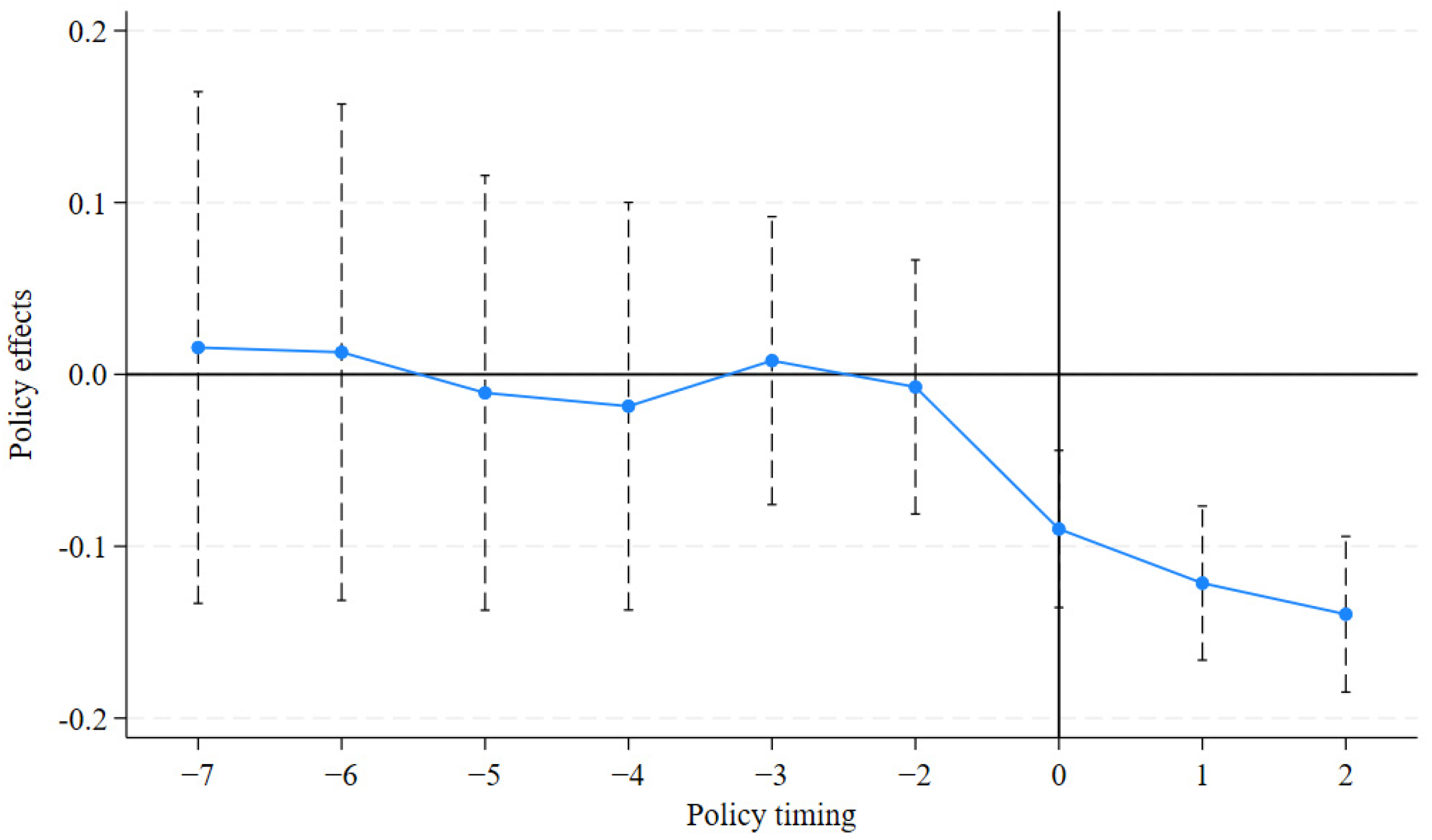
Second, we implement the imputation-based estimator of Borusyak et al. [74] which is robust to heterogeneous treatment effects. The event study plot for the heterogeneous robust estimator is shown in Figure 4. As can be seen from the figure, there were no significant differences between the treatment group and the control group prior to the implementation of the AIIDPZ policy; however, in the years following the policy’s implementation, significant differences emerged between the two groups. This clearly demonstrates that the AIIDPZ policy has a significant impact on reducing urban–rural income inequality and further confirms the robustness of the findings in this study.

4.4. Mechanism Analysis

As mentioned earlier, the AIIDPZ policy may narrow urban–rural income inequality through two main channels: promoting agricultural science and technology innovation and increasing government artificial intelligence attention. To empirically test these mechanisms and examine Hypotheses 2 and 3, we adopt a two-step approach to mitigate the endogeneity issues inherent in traditional three-step mediation tests [75]. The two-step mediation model for the mechanism test is shown in Equations (3) and (4):
M e d i a t o r i t = α + φ d i d i t + λ c o n t r o l s i t + ν i + μ t + ε i t
U R I I i t = α + θ d i d i t + δ M e d i a t o r i t + λ c o n t r o l s i t + ν i + μ t + ε i t
Equation (3) is designed to capture the effect of the AIIDPZ policy on each mediating variable. In this setup, the term Mediatorit stands for the mechanism variable, which includes both agricultural science and technology innovation and government artificial intelligence attention; the definitions of all other covariates follow those already provided. The parameter φ measures how strongly the policy influences the mechanism variable. Equation (4) then evaluates the policy’s effect on urban–rural income inequality, this time while also controlling for the mediating variables.

4.4.1. Agricultural Science and Technology Innovation Effect

Table 4 presents the regression results in columns (1) and (2). In column (1), the coefficient for the DID variable is negative and statistically significant, indicating that the implementation of the AIIDPZ policy significantly reduces urban–rural income inequality. Column (2) shows that the coefficient for the DID variable is significantly positive when predicting agricultural science and technology innovation (ASTI), suggesting that the policy also promotes agricultural science and technology innovation. Within the AI-focused policy framework of the pilot zones, local governments have substantially increased investments to support agricultural science and technology innovation. Moreover, the policy-driven diffusion of AI technologies facilitates knowledge spillovers, allowing broader and more cost-effective access to advanced expertise. This, in turn, enlarges and enhances the talent base for agricultural science and technology innovation, further driving progress in the field. Additionally, agricultural science and technology innovation raises farmers’ income through several channels: improving the conversion rate of scientific achievements, innovating agricultural management models, and cultivating a new generation of skilled farmers—all of which help narrow the urban–rural income inequality [76,77,78]. In summary, these results support Hypothesis 2.

4.4.2. Government Artificial Intelligence Attention Effect

Table 4 presents the remaining regression results in columns (3) and (4). The estimates in column (3) show a significant negative relationship between the core explanatory variables and the urban–rural income inequality, confirming that artificial intelligence development significantly reduces this disparity. Meanwhile, the results in column (4) indicate that the coefficients for both the DID and government artificial intelligence attention (GAIA) variables are significantly positive, suggesting that AI development elevates the level of government attention devoted to it. Heightened government focus, in turn, leads to greater resource allocation and stronger policy support for the sector [79]. This creates a favorable institutional environment for rural development, opens up more channels for increasing farmers’ incomes, and ultimately contributes to narrowing the urban–rural income inequality. In summary, the findings provide support for Hypothesis 3.

5. Heterogeneity Analysis

5.1. Heterogeneity in Geographic Location

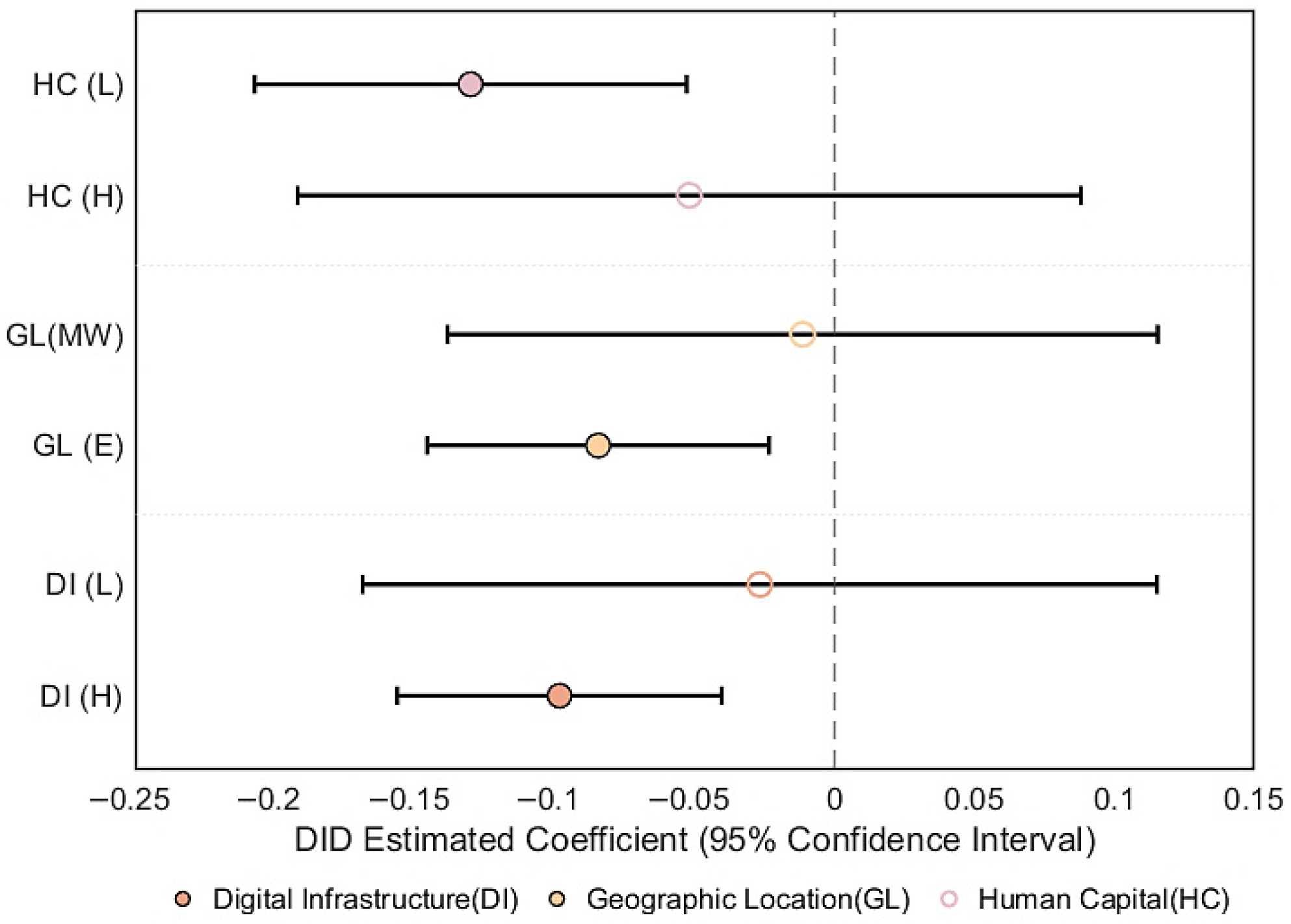
Regions diverge substantially in their developmental bases, resource endowments, and fiscal resources. To examine whether the income-inequality impact of AI varies by location, we divide the sample into two geographic groups: Eastern China and Midwestern China. The estimates reported in columns (1) and (2) of Table 5 reveal that the dampening effect of AI on the urban–rural income inequality is more pronounced in the Eastern region than in the Midwestern part of the country. The results are visualized in Figure 5.
This regional disparity likely reflects the Eastern region’s more advanced economic structure, earlier adoption of digital technologies, stronger industrial foundations, and more integrated supply chains. As AI develops in eastern cities, rural areas benefit from spillover effects—attracting complementary industries, generating new employment, and fostering income growth—thereby promoting urban–rural integration. In contrast, midwestern regions often concentrate resources in a few urban centers. In these contexts, rural areas may experience a siphoning of capital and other resources, which could limit the local benefits of AI policies and weaken their equalizing effect on incomes.

5.2. Heterogeneity in Digital Infrastructure Development

A well-functioning digital infrastructure serves as the backbone for the uptake and spread of artificial intelligence. Following the approach of Qin et al. [80], we classify regions by their level of digital infrastructure development. This is done using a dummy indicator that equals 1 if a locality was included in China’s Broadband Pilot Program and 0 otherwise. The estimates in columns (3) and (4) of Table 5 reveal that AI’s equalizing effect on the urban–rural income divide is stronger in areas endowed with advanced digital networks. The results are visualized in Figure 5. In these regions, widespread network coverage and high-speed data connections quicken the movement of production factors between cities and the countryside. They also promote the transfer of technological advances to rural areas, upgrade rural industrial chains, and make it easier to keep or draw in workers. By contrast, localities with poorly developed digital systems lack these complementary conditions, which raises the expense of installing and sustaining AI solutions. In the short run, such expenditures are unlikely to generate rapid gains in rural incomes, producing a less pronounced observable effect.

5.3. Heterogeneity in Human Capital Levels

Human capital gaps are an important source of income divergence between urban and rural areas. We construct a regional human capital indicator by dividing the number of full-time students enrolled in regular higher education institutions by the year-end total population. Regions above the sample median are classified as high-human-capital locations (dummy equals 1). Results in columns (5) and (6) of Table 5 indicate that AI substantially reduces urban–rural income inequality in regions with less human capital, whereas the coefficient is not statistically different from zero in high-human-capital areas. The results are visualized in Figure 5. A plausible explanation is that automation and AI deployment tend to directly displace positions occupied by higher-skilled, higher-earning workers, and industries where AI is more deeply embedded often experience greater churn in employment [81,82]. As a result, in regions endowed with a strong skill base, further advances in AI may generate only limited additional narrowing of the urban–rural income inequality. Conversely, in settings where human capital is relatively low, AI can handle mundane, low-value-added farming activities, freeing agricultural workers to shift into more productive off-farm employment. This process lifts rural incomes and thus reduces inequality.

6. Discussion and Conclusions

6.1. Discussion

By analyzing the AIIDPZ policy, this study examines how digital technologies drive the sustainable development transition in developing economies. The research provides empirical evidence supporting a shift away from high-growth models characterized by high inequality toward a transition centered on inclusive growth. Baseline estimates indicate that the policy reduces the URII by approximately 8.41%, a finding that holds up across multiple robustness tests. This discovery offers a new analytical perspective for understanding the dynamic interactions among technology, institutions, and inequality in sustainable development.
These results stand in sharp contrast to the expectation in developed economies that technological change primarily benefits highly skilled workers [83]. Our heterogeneity analysis indicates that the equalizing effects of this policy are more pronounced in regions with lower initial human capital. This pattern aligns with the view that the distributional consequences of technology are not predetermined by its technical attributes but are mediated by specific stages of development and institutional environments [84]. In the Chinese context, the diffusion of AI technologies supported by the AIIDPZ policy is rooted in large-scale digital infrastructure, strategic industrial policies, and proactive government guidance. This institutional configuration may help explain why the policy produced equalizing rather than stratifying effects.
Adopting a meso-level analytical perspective, this study finds that the impact of the AIIDPZ policy permeates the entire urban–rural economic structure and provides preliminary evidence for two transmission channels. First, the AIIDPZ policy stimulated agricultural science and technology innovation, thereby boosting rural productivity. Second, the policy prompted the government to pay greater attention to artificial intelligence, which may have driven the reallocation of policy resources toward rural development.
These findings also provide counter-evidence to the urban-centric bias prevalent in the digital transformation literature [85] and suggest that, under specific institutional conditions, location-based AI policies may help reduce spatial structural inequalities.

6.2. Conclusions and Policy Implications

At this critical juncture, characterized by the global pursuit of the sustainable development agenda and the rapid advancement of artificial intelligence [86], re-evaluating technological progress by embedding it within the overarching framework of social development is of paramount importance. Such a perspective is vital for steering technological transformation toward fostering inclusive growth, narrowing intra-country inequality, and ultimately realizing the SDGs. We frame China’s AIIDPZ initiative as a quasi-experiment to identify the causal impact of regionally targeted AI deployment on the urban–rural income inequality. Drawing on a panel of 257 cities spanning the years 2012 through 2023, our estimates indicate that the pilot policy lowers the urban–rural income inequality index by roughly 8.41 percent. The mechanism analysis reveals that two factors partially drive this result: innovation in agricultural science and technology, and a heightened governmental focus on artificial intelligence. The equalizing effect is stronger in the eastern parts of the country, in cities that possess advanced digital infrastructure, and in localities where initial human capital endowments were comparatively weak. The Chinese case suggests that carefully designed institutional arrangements for AI can act as a new engine, propelling society toward a fairer and more sustainable trajectory. This offers practical lessons for other developing economies grappling with similar structural challenges in an era shaped by artificial intelligence.
Drawing on the empirical results presented above, we advance several policy recommendations.
To begin with, our core estimate shows that the AIIDPZ initiative lowers urban–rural income inequality by close to 8.41%. This finding implies that the government should actively push forward next-generation artificial intelligence. Localities endowed with a robust industrial foundation ought to be encouraged to apply for the AIIDPZ designation. The state should provide a favorable institutional climate, stimulate close collaboration among industry, academia, and research institutions, and speed up the flow of technological results. Valuable lessons drawn from the pilot programs should be codified into institutional practice, allowing them to be rolled out on a broader scale.
Moving on, the mechanism checks reveal that innovations in agricultural science and technology, together with government attention directed toward AI, act as the primary conduits through which the AIIDPZ policy shapes urban–rural inequality. Accordingly, local authorities must draw on the signaling function of governmental focus to steer individual behaviors. Doing so would help construct an agricultural S&T innovation system and widen the channels whereby artificial intelligence can narrow the urban–rural income divide. Local governments are also advised to devote greater resources to AI-related fields, build regional platforms for AI cooperation, lower the institutional expenses that constrain innovation in agricultural technology, and cultivate a more attractive environment for talent clustering. These steps would accelerate the process of closing the urban–rural income inequality.
Lastly, the observed heterogeneity, linked to geographic location, digital infrastructure, and human capital, underscores the need for policymakers to design pilot zone arrangements that fit local circumstances, avoiding a one-size-fits-all blueprint. Subnational governments should foster collaborative ties between eastern and central–western regions while undertaking forward-looking investment in digital facilities within less-developed areas. Equally important is the imperative to harness AI’s strengths to bridge the skills gap among traditional farm workers. By energetically organizing AI-related skill training programs, the government can raise the digital competence of rural households and, in parallel, further reduce urban–rural income inequality.

6.3. Limitations and Future Directions

While this research offers a detailed analysis of the AIIDPZ policy’s impact on urban–rural income inequality, a number of limitations warrant explicit acknowledgment. First, it should be noted that the urban–rural income ratio selected in this study is a unidimensional indicator; future research should integrate a broader range of indicators to provide a more comprehensive portrayal of urban–rural income inequality. Second, regarding the mechanism analysis, these two channels do not exhaust all possible mechanisms. Other factors, such as changes in labor mobility across rural sectors and differential access to digital services, may also contribute to the observed effects and cannot be ruled out, given the current design of the urban panel data. Furthermore, patent-based innovation indicators may underestimate the diffusion of tacit knowledge, while keyword-based attention metrics reflect prominence in discourse rather than the intensity of actual application. Therefore, more advanced causal identification tools, such as dual machine learning and more granular data, will be needed in the future to identify policy effects with greater precision. Third, the generalizability of this conclusion remains limited by the specificities of China’s policy environment. Future research should employ cross-national comparative designs to assess whether the mechanisms identified in this study are equally effective in other contexts. Moreover, whether similar institutional synergies can be replicated in environments with weaker state governance capacity or underdeveloped digital infrastructure is a research direction that deserves future attention.

Author Contributions

Conceptualization, H.H.; methodology, H.H. and Q.W.; software, H.H.; validation, H.H. and H.P.; formal analysis, H.H. and H.M.; investigation, H.H., Q.W. and W.H.; resources, H.P.; data curation, W.H. and Q.W.; writing—original draft preparation, H.H.; writing—review and editing, H.H., Q.W., W.H., M.Y., H.M. and H.P.; visualization, H.H. and M.Y.; supervision, H.P.; project administration, H.P.; funding acquisition, H.H., and H.P. All authors have read and agreed to the published version of the manuscript.

Funding

This research was funded by the National Natural Science Foundation of China Key Program (No. 72433001); National Natural Science Foundation of China (Nos. 72473033 and 72363002); Guangxi Key R&D Program (AB24010046); and Guangxi University Undergraduate Innovation and Entrepreneurship Training Program (No. 202410593344).

Institutional Review Board Statement

Not applicable.

Informed Consent Statement

Not applicable.

Data Availability Statement

The original contributions presented in this study are included in the article. Further inquiries can be directed to the corresponding author.

Conflicts of Interest

The authors declare no conflicts of interest.

Appendix A

Appendix A.1. Additional Tables

Table A1. Chronology of policy rollout and pilot-zone designation.
YearDecision-Making BodyPolicy Content
2015China‘s State CouncilThe “Made in China 2025” initiative was launched. It provided a base for the growth of the AI sector.
2016China’s State CouncilThe 13th Five-Year Plan’s science and technology innovation plan was issued. It classified AI as a disruptive technology set to steer industrial transformation.
2017China‘s State CouncilA plan for developing the new generation of artificial intelligence was published. This marked the first comprehensive, national strategic deployment of AI.
2019China’s Ministry of Science and TechnologyIt was announced that a national pilot zone for new-generation AI innovation and development would be established to foster regional application demonstration.
2020National Standardization Administration of China, among othersThe “National Guidelines for Establishing a Standards System for the New Generation of AI” were released.
2021China‘s State CouncilArtificial intelligence was embedded into the 14th Five-Year Plan.
2022China’s Ministry of Science and Technology et al.The “Guidelines on Accelerating Scenario Innovation for High-Quality Economic Development via Advanced AI Applications” were promulgated. This pushed forward the deployment of AI.
2023Cyberspace Administration of China et al.The “Provisional Measures for the Administration of Generative AI Services” were adopted.
2025China‘s State CouncilThe “Opinions on Deepening the Implementation of the AI Plus Initiative” were issued. They identified six key domains for AI applications.
Table A2. Descriptive statistics of variables.
VariableNMeanSdMinMax
URII30832.2750.4540.2174.559
did30840.02240.14801
Agricultural science and technology innovation3084156.1331.706412
Government AI attention30790.002040.0014500.0211
Degree of population aging308412.022.8806.98221.06
Level of education expenditure (ten thousand yuan)3048175.7190.625.071012
Year-end financial institutions’ deposit and loan balances
(ten thousand yuan)
30849.608 × 1071.680 × 1087.022 × 1061.124 × 109
Value added of the tertiary industry (ten thousand yuan)30841.587 × 1072.919 × 107451,8963.713 × 108
Secondary industry value-added as a percentage of GDP (Gross domestic product) (%)308444.4910.5311.5981.82
Population density30835.8941.2421.62818.84
Mobile phone subscribers at year-end (households)30845.076 × 1065.349 × 106514,3203.651 × 107
Medical standards30841411806.212787
Regional gross domestic product (ten thousand yuan)30843.148 × 1074.346 × 1071.534 × 1064.722 × 108
General expenditures of local finance (ten thousand yuan)30774.778 × 1065.368 × 106756,1474.002 × 107
Internal R&D expenditures
(in billions of yuan)
3084658,9741.214 × 10630348.071 × 106
Table A3. De Chaisemartin and D’Haultfoeuille (2020)’s [73] decomposition results.
Total Weight CountPositive Weight NumberNegative Weight NumberPositive Weight ProportionNegative Weight Percentage
6764395.52%4.48%

Appendix A.2. Measuring Government Artificial Intelligence Attention

The research adopts a four-step methodological framework to analyze local government artificial intelligence attention.
First, key policy documents issued by the State Council—including the New Generation Artificial Intelligence Development Plan and the State Council’s Opinions on Deepening the “AI+” Initiative—served as primary references. Keywords reflecting the conceptual scope of AI were extracted from these texts to construct a preliminary lexicon representing local governments’ AI-related priorities.
Second, the initial lexicon was refined and expanded by incorporating AI-related terms from the academic literature in the Web of Science database and the Sogou AI keyword repository. This process yielded a more comprehensive and contextually grounded dictionary of government artificial intelligence attention.
Third, the analysis draws on a corpus of 3084 government work reports issued between 2012 and 2023 across 257 prefecture-level cities, including Deqing County. These texts were processed using the Jieba library for word segmentation, followed by data cleaning steps such as noise reduction, deduplication, and removal of stop words to ensure textual consistency and reliability.
Finally, an AI-related seed word list was compiled from the refined lexicon after excluding irrelevant terms. Using the cleaned government work reports as the textual corpus, Word2Vec was employed to perform seed word expansion, resulting in a final dictionary of 221 terms indicative of government artificial intelligence attention. The dictionary was then matched against each government work report to calculate the frequency of AI-related terms, providing a quantifiable measure of government artificial intelligence attention over the study period.

References

  1. Hubmer, J. The Race between Preferences and Technology. Econometrica 2023, 91, 227–261. [Google Scholar] [CrossRef]
  2. Katz, L.F.; Murphy, K.M. Changes in Relative Wages, 1963–1987: Supply and Demand Factors. Q. J. Econ. 1992, 107, 35–78. [Google Scholar] [CrossRef]
  3. Moll, B.; Rachel, L.; Restrepo, P. Uneven Growth: Automation’s Impact on Income and Wealth Inequality. Econometrica 2022, 90, 2645–2683. [Google Scholar] [CrossRef]
  4. Lobonț, O.-R.; Criste, C.; Mistrean, L.; Spulbăr, L.F.; Stanciu, F. From Digital Policies to Sustainable Futures: How Far Has the EU Progressed? Sustainability 2026, 18, 2727. [Google Scholar] [CrossRef]
  5. Acemoglu, D.; Restrepo, P. The Race between Man and Machine: Implications of Technology for Growth, Factor Shares, and Employment. Am. Econ. Rev. 2018, 108, 1488–1542. [Google Scholar] [CrossRef]
  6. Babina, T.; Fedyk, A.; He, A.; Hodson, J. Artificial Intelligence, Firm Growth, and Product Innovation. J. Financ. Econ. 2024, 151, 103745. [Google Scholar] [CrossRef]
  7. Demirci, O.; Hannane, J.; Zhu, X. Who Is AI Replacing? The Impact of Generative AI on Online Freelancing Platforms. Manag. Sci. 2025, 71, 8097–8108. [Google Scholar] [CrossRef]
  8. Autor, D.H.; Dorn, D. The Growth of Low-Skill Service Jobs and the Polarization of the US Labor Market. Am. Econ. Rev. 2013, 103, 1553–1597. [Google Scholar] [CrossRef]
  9. Huang, T.; Quan, Y. Narrowing the Digital Divide: The Growth and Distributional Effect of Internet Use on Income in Rural China. China Econ. Rev. 2025, 91, 102387. [Google Scholar] [CrossRef]
  10. Wang, D.; Zhou, T.; Wang, M. Information and Communication Technology (ICT), Digital Divide and Urbanization: Evidence from Chinese Cities. Technol. Soc. 2021, 64, 101516. [Google Scholar] [CrossRef]
  11. Liu, Y.; Zhang, H.; Ning, M.; Wang, L. Has Digital Village Construction Narrowed the Urban–Rural Income Gap: Evidence from Chinese Counties. Sustainability 2024, 16, 5330. [Google Scholar] [CrossRef]
  12. Xiaobo, W.; Dong, W. Innovation-Driven Development in China: Catch-up and Beyond. China Econ. 2023, 18, 86–114. [Google Scholar]
  13. Wang, L.; Sun, Y. Digital Dividends? Rural E-Commerce Policy and Urban-Rural Income Disparity in China. Telecommun. Policy 2025, 49, 103058. [Google Scholar] [CrossRef]
  14. Zhang, M.; Wang, L.; Ma, P.; Wang, W. Urban-Rural Income Gap and Air Pollution: A Stumbling Block or Stepping Stone. Environ. Impact Assess. Rev. 2022, 94, 106758. [Google Scholar] [CrossRef]
  15. Xia, H.; Yu, H.; Wang, S.; Yang, H. Digital Economy and the Urban–Rural Income Gap: Impact, Mechanisms, and Spatial Heterogeneity. J. Innov. Knowl. 2024, 9, 100505. [Google Scholar] [CrossRef]
  16. Acemoglu, D.; Koster, H.R.A.; Ozgen, C. Robots and Workers: Evidence from the Netherlands; National Bureau of Economic Research: Cambridge, MA, USA, 2023. [Google Scholar]
  17. Janssen, M.; Brous, P.; Estevez, E.; Barbosa, L.S.; Janowski, T. Data Governance: Organizing Data for Trustworthy Artificial Intelligence. Gov. Inf. Q. 2020, 37, 101493. [Google Scholar] [CrossRef]
  18. Bresnahan, T.F.; Trajtenberg, M. General Purpose Technologies ‘Engines of Growth’? J. Econom. 1995, 65, 83–108. [Google Scholar] [CrossRef]
  19. Trajtenberg, M. AI as the Next GPT: A Political-Economy Perspective; University of Chicago Press: Chicago, IL, USA, 2019. [Google Scholar]
  20. Chen, K.; Chen, X.; Wang, Z.; Zvarych, R. Does Artificial Intelligence Promote Common Prosperity within Enterprises? —Evidence from Chinese-Listed Companies in the Service Industry. Technol. Forecast. Soc. 2024, 200, 123180. [Google Scholar] [CrossRef]
  21. Chin, T.; Ghouri, M.W.A.; Jin, J.; Deveci, M. AI Technologies Affording the Orchestration of Ecosystem-Based Business Models: The Moderating Role of AI Knowledge Spillover. Humanit. Soc. Sci. Commun. 2024, 11, 496. [Google Scholar] [CrossRef]
  22. Leng, J.; Zhu, X.; Huang, Z.; Li, X.; Zheng, P.; Zhou, X.; Mourtzis, D.; Wang, B.; Qi, Q.; Shao, H.; et al. Unlocking the Power of Industrial Artificial Intelligence towards Industry 5.0: Insights, Pathways, and Challenges. J. Manuf. Syst. 2024, 73, 349–363. [Google Scholar] [CrossRef]
  23. Graetz, G.; Michaels, G. Robots at Work. Rev. Econ. Stat. 2018, 100, 753–768. [Google Scholar] [CrossRef]
  24. Leal Filho, W.; Mbah, M.F.; Dinis, M.A.P.; Trevisan, L.V.; de Lange, D.; Mishra, A.; Rebelatto, B.; Ben Hassen, T.; Aina, Y.A. The Role of Artificial Intelligence in the Implementation of the UN Sustainable Development Goal 11: Fostering Sustainable Cities and Communities. Cities 2024, 150, 105021. [Google Scholar] [CrossRef]
  25. Frank, M.R.; Autor, D.; Bessen, J.E.; Brynjolfsson, E.; Cebrian, M.; Deming, D.J.; Feldman, M.; Groh, M.; Lobo, J.; Moro, E.; et al. Toward Understanding the Impact of Artificial Intelligence on Labor. Proc. Natl. Acad. Sci. USA 2019, 116, 6531–6539. [Google Scholar] [CrossRef] [PubMed]
  26. Li, B.; Zhou, C. Robot Adoption and Urban Total Factor Productivity: Evidence from China. Technol. Econ. Dev. Econ. 2024, 30, 1330–1351. [Google Scholar] [CrossRef]
  27. Autor, D. Work of the Past, Work of the Future. AEA Pap. Proc. 2019, 109, 1–32. [Google Scholar] [CrossRef]
  28. Wang, X.; Xie, F.; Liu, B. Governance Efficiency and Upgrade Pathways of International Generative AI Policies and Regulations. Technol. Soc. 2026, 84, 103082. [Google Scholar] [CrossRef]
  29. Chen, Y.; Miao, J.; Zhu, Z. Measuring Green Total Factor Productivity of China’s Agricultural Sector: A Three-Stage SBM-DEA Model with Non-Point Source Pollution and CO2 Emissions. J. Clean. Prod. 2021, 318, 128543. [Google Scholar] [CrossRef]
  30. Nath, P.C.; Mishra, A.K.; Sharma, R.; Bhunia, B.; Mishra, B.; Tiwari, A.; Nayak, P.K.; Sharma, M.; Bhuyan, T.; Kaushal, S.; et al. Recent Advances in Artificial Intelligence towards the Sustainable Future of Agri-Food Industry. Food Chem. 2024, 447, 138945. [Google Scholar] [CrossRef]
  31. Rejeb, A.; Rejeb, K.; Zailani, S.; Keogh, J.G.; Appolloni, A. Examining the Interplay between Artificial Intelligence and the Agri-Food Industry. Artif. Intell. Agric. 2022, 6, 111–128. [Google Scholar] [CrossRef]
  32. Feenstra, R.C.; Hanson, G.H. Globalization, Outsourcing, and Wage Inequality. Am. Econ. Rev. 1996, 86, 240–245. [Google Scholar]
  33. Acemoglu, D.; Autor, D. Skills, Tasks and Technologies: Implications for Employment and Earnings. In Handbook of Labor Economics; Elsevier: Amsterdam, The Netherlands, 2011; Volume 4, pp. 1043–1171. ISBN 978-0-444-53452-1. [Google Scholar]
  34. Cuypers, I.R.P.; Hennart, J.-F.; Silverman, B.S.; Ertug, G. Transaction Cost Theory: Past Progress, Current Challenges, and Suggestions for the Future. Acad. Manag. Ann. 2021, 15, 111–150. [Google Scholar] [CrossRef]
  35. Williamson, O.E. Transaction Cost Economics: The Natural Progression. J. Retail. 2010, 86, 215–226. [Google Scholar] [CrossRef]
  36. Cao, J.; Tang, H.; Zhou, Y. Pathways of Artificial Intelligence Applications, Financial Resilience, and Rural Revitalization. Financ. Res. Lett. 2025, 85, 108017. [Google Scholar] [CrossRef]
  37. Wang, X.; Wu, Q.; Zeng, H.; Yang, X.; Cui, H.; Yi, X.; Piran, M.J.; Luo, M.; Que, Y. Blockchain-Empowered H-CPS Architecture for Smart Agriculture. Adv. Sci. 2025, 12, 2503102. [Google Scholar] [CrossRef] [PubMed]
  38. Aghion, P.; Howitt, P. A Model of Growth through Creative Destruction. Econometrica 1992, 60, 323–351. [Google Scholar] [CrossRef]
  39. Carrer, M.J.; de Souza Filho, H.M.; Vinholis, M.D.M.B.; Mozambani, C.I. Precision Agriculture Adoption and Technical Efficiency: An Analysis of Sugarcane Farms in Brazil. Technol. Forecast. Soc. 2022, 177, 121510. [Google Scholar] [CrossRef]
  40. Jordan, C.; Donoso, G.; Speelman, S. Measuring the Effect of Improved Irrigation Technologies on Irrigated Agriculture. A Study Case in Central Chile. Agric. Water Manag. 2021, 257, 107160. [Google Scholar] [CrossRef]
  41. Rotz, S.; Gravely, E.; Mosby, I.; Duncan, E.; Finnis, E.; Horgan, M.; LeBlanc, J.; Martin, R.; Neufeld, H.T.; Nixon, A.; et al. Automated Pastures and the Digital Divide: How Agricultural Technologies Are Shaping Labour and Rural Communities. J. Rural Stud. 2019, 68, 112–122. [Google Scholar] [CrossRef]
  42. Zhang, Y.; Mao, Y.; Jiao, L.; Shuai, C.; Zhang, H. Eco-Efficiency, Eco-Technology Innovation and Eco-Well-Being Performance to Improve Global Sustainable Development. Environ. Impact Asses 2021, 89, 106580. [Google Scholar] [CrossRef]
  43. Wang, X.; Yamauchi, F.; Huang, J. Rising Wages, Mechanization, and the Substitution between Capital and Labor: Evidence from Small Scale Farm System in China. Agric. Econ. 2016, 47, 309–317. [Google Scholar] [CrossRef]
  44. Adel, A.; Pullanagari, R.; Alani, N.H.S.; Al-Rawi, M.; Fouzia, S.; Berger, B. Drones-of-the-Future in Agriculture 5.0—Automation, Integration, and Optimisation. Agric. Syst. 2026, 231, 104543. [Google Scholar] [CrossRef]
  45. Kibinda, N.; Shao, D.; Mwogosi, A.; Mambile, C. Broadband Infrastructure Sharing as a Catalyst for Rural Digital Economy: A Systematic Review for Developing Countries. Telecommun. Policy 2025, 49, 103028. [Google Scholar] [CrossRef]
  46. Legun, K.; Burch, K. Robot-Ready: How Apple Producers Are Assembling in Anticipation of New AI Robotics. J. Rural Stud. 2021, 82, 380–390. [Google Scholar] [CrossRef]
  47. Li, T.; Xue, L.; Liu, P.; Zhang, S.; Huang, J.; Sun, J. The Impact of Cold Storage Facilities Implemented at the Production Site on Mitigating Fruit and Vegetable Losses in China. J. Clean. Prod. 2025, 524, 146420. [Google Scholar] [CrossRef]
  48. Xia, F.; Gao, X.; Fan, S.; Song, F. The Impact of Reliable Electricity Access on Agricultural Income and Land Utilization in China. Energy Econ. 2025, 150, 108812. [Google Scholar] [CrossRef]
  49. Ocasio, W. Attention to Attention. Organ. Sci. 2011, 22, 1286–1296. [Google Scholar] [CrossRef]
  50. Peng, L.; Xiong, W. Investor Attention, Overconfidence and Category Learning. J. Financ. Econ. 2006, 80, 563–602. [Google Scholar] [CrossRef]
  51. Huang, J.; Xu, Y.; Wang, Q.; Wang, Q.C.; Liang, X.; Wang, F.; Zhang, Z.; Wei, W.; Zhang, B.; Huang, L.; et al. Foundation Models and Intelligent Decision-Making: Progress, Challenges, and Perspectives. Innovation 2025, 6, 100948. [Google Scholar] [CrossRef]
  52. Dai, J. Is Policy Pilot a Viable Path to Sustainable Development? Attention Allocation Perspective. Int. Rev. Financ. Anal. 2025, 98, 103923. [Google Scholar] [CrossRef]
  53. Ajzen, I. The Theory of Planned Behavior. Organ. Behav. Hum. Decis. Process. 1991, 50, 179–211. [Google Scholar] [CrossRef]
  54. Song, Z.; Zhang, S. Regional Cooperation and the Urban–Rural Income Inequality: Evidence from China’s East–West Cooperation Program. Sustainability 2025, 17, 9084. [Google Scholar] [CrossRef]
  55. Wu, B.; Huang, X.; Liang, Y. Does Time-of-Use Electricity Pricing Narrow Urban–Rural Income Inequality? Evidence from China. Econ. Anal. Policy 2026, 91, 15–29. [Google Scholar] [CrossRef]
  56. Moscona, J.; Sastry, K.A. Does Directed Innovation Mitigate Climate Damage? Evidence from US Agriculture. Q. J. Econ. 2023, 138, 637–701. [Google Scholar] [CrossRef]
  57. Du, J.; Zhong, Z.; Shi, Q.; Wang, L.; Liu, Y.; Ying, N. Does Government Environmental Attention Drive Green Total Factor Productivity? Evidence from China. J. Environ. Manag. 2024, 366, 121766. [Google Scholar] [CrossRef]
  58. Gao, L.; Li, B. Development of Inclusive Finance, Digital Infrastructure, and the Urban–Rural Education Gap. Financ. Res. Lett. 2025, 86, 108814. [Google Scholar] [CrossRef]
  59. Peng, Z.; Dan, T. Digital Dividend or Digital Divide? Digital Economy and Urban-Rural Income Inequality in China. Telecommun. Policy 2023, 47, 102616. [Google Scholar] [CrossRef]
  60. Tang, J.; Gong, J.; Ma, W.; Rahut, D.B. Narrowing Urban–Rural Income Gap in China: The Role of the Targeted Poverty Alleviation Program. Econ. Anal. Policy 2022, 75, 74–90. [Google Scholar] [CrossRef]
  61. Wang, A.; Ma, J.; He, K. Citizenization and Urban–Rural Income Inequality: Evidence from the Reform of Hukou System in China. World Dev. 2026, 199, 107238. [Google Scholar] [CrossRef]
  62. Kahn, M.E.; Li, P.; Zhao, D. Water Pollution Progress at Borders: The Role of Changes in China’s Political Promotion Incentives. Am. Econ. J. Econ. Policy 2015, 7, 223–242. [Google Scholar] [CrossRef]
  63. Song, W.; Liu, Y.; Zhang, Y.; Feng, L.; Meng, F. The Impact of China’s Climate-Adaptive City Pilot Policy on Urban Ecological Resilience. Sustainability 2026, 18, 3004. [Google Scholar] [CrossRef]
  64. Fang, C.; Chen, Z.; Liao, X.; Sun, B.; Meng, L. Urban-Rural Digitalization Evolves from Divide to Inclusion: Empirical Evidence from China. npj Urban Sustain. 2024, 4, 51. [Google Scholar] [CrossRef]
  65. Ren, Y.-S.; Kuang, X.; Klein, T. Does the Urban–Rural Income Gap Matter for Rural Energy Poverty? Energy Policy 2024, 186, 113977. [Google Scholar] [CrossRef]
  66. Wang, W.; Shen, Y.; Qiao, J.; Wang, Y.; Batala, L.K.; Xiao, J. The Impact of Urban-Rural Residents’ Life Quality Gap on the Cultivated Land Transfer. Land Use Policy 2025, 148, 107402. [Google Scholar] [CrossRef]
  67. Nunn, N.; Qian, N. US Food Aid and Civil Conflict. Am. Econ. Rev. 2014, 104, 1630–1666. [Google Scholar] [CrossRef]
  68. Li, M.; Du, W. Can Internet Development Improve the Energy Efficiency of Firms: Empirical Evidence from China. Energy 2021, 237, 121590. [Google Scholar] [CrossRef]
  69. Wang, Y.; Wang, Y.; Yang, P. Does Artificial Intelligence Impact Corporate ESG Performance? Evidence from a Quasi-Natural Experiment in China. Energy Econ. 2025, 151, 108963. [Google Scholar] [CrossRef]
  70. Kleibergen, F.; Paap, R. Generalized Reduced Rank Tests Using the Singular Value Decomposition. J. Econom. 2006, 133, 97–126. [Google Scholar] [CrossRef]
  71. Stock, J.H.; Yogo, M. Testing for Weak Instruments in Linear IV Regression; National Bureau of Economic Research: Cambridge, MA, USA, 2002. [Google Scholar]
  72. Athey, S.; Imbens, G.W. Design-Based Analysis in Difference-in-Differences Settings with Staggered Adoption. J. Econom. 2022, 226, 62–79. [Google Scholar] [CrossRef]
  73. De Chaisemartin, C.; D’Haultfœuille, X. Two-Way Fixed Effects Estimators with Heterogeneous Treatment Effects. Am. Econ. Rev. 2020, 110, 2964–2996. [Google Scholar] [CrossRef]
  74. Borusyak, K.; Jaravel, X.; Spiess, J. Revisiting Event Study Designs: Robust and Efficient Estimation. Rev. Econ. Stud. 2024, 91, 3253–3285. [Google Scholar] [CrossRef]
  75. Feng, Y.; Mou, R.; Jin, L.; Na, X.; Wang, Y. Impacts of Polycentric Spatial Structure of Chinese Megacity Clusters on Their Carbon Emission Intensity. Sustainability 2026, 18, 1146. [Google Scholar] [CrossRef]
  76. Chandio, A.A.; Ozdemir, D.; Gokmenoglu, K.K.; Usman, M.; Jiang, Y. Digital Agriculture for Sustainable Development in China: The Promise of Computerization. Technol. Soc. 2024, 76, 102479. [Google Scholar] [CrossRef]
  77. Johnson, D. Food Security, the Agriculture Value Chain, and Digital Transformation: The Case of Jamaica’s Agricultural Business Information System (ABIS). Technol. Soc. 2024, 77, 102523. [Google Scholar] [CrossRef]
  78. Wu, P.; Zhong, Y. Artificial Intelligence in Sustainable Agriculture: Towards a Socio-Technical Roadmap. Smart Agric. Technol. 2025, 12, 101578. [Google Scholar] [CrossRef]
  79. Hou, Y.; Liu, C.; Wu, Y.; He, S. Diverging Priorities in Multi-Level Governance: Empirical Evidence from China’s Electricity Market Reforms (1985–2023). Sustainability 2026, 18, 2286. [Google Scholar] [CrossRef]
  80. Qin, B.; Yu, Y.; Ge, L.; Liu, Y.; Zheng, Y.; Liu, Z. The Role of Digital Infrastructure Construction on Green City Transformation: Does Government Governance Matters? Cities 2024, 155, 105462. [Google Scholar] [CrossRef]
  81. Eloundou, T.; Manning, S.; Mishkin, P.; Rock, D. GPTs Are GPTs: Labor Market Impact Potential of LLMs. Science 2024, 384, 1306–1308. [Google Scholar] [CrossRef]
  82. Ozkan, S.; Sullivan, N. Is AI Contributing to Rising Unemployment? Evidence from Occupational Variation; Federal Reserve Bank of St. Louis: St. Louis, MO, USA, 2025. [Google Scholar]
  83. Tambe, P.B. Reskilling the Workforce for AI: Domain Expertise and Algorithmic Literacy. Manag. Sci. 2025, 72, 515–537. [Google Scholar] [CrossRef]
  84. Mannuru, N.R.; Shahriar, S.; Teel, Z.A.; Wang, T.; Lund, B.D.; Tijani, S.; Pohboon, C.O.; Agbaji, D.; Alhassan, J.; Galley, J.; et al. Artificial Intelligence in Developing Countries: The Impact of Generative Artificial Intelligence (AI) Technologies for Development. Inf. Dev. 2025, 41, 1036–1054. [Google Scholar] [CrossRef]
  85. Wu, J. Bluer Rural Skies through Digital Government Transformation: Evidence from a Mixed Methods Study. J. Rural Stud. 2026, 122, 103999. [Google Scholar] [CrossRef]
  86. Gafsi, N.; Hamdouni, A.; Smaoui, A. Digital Technologies and Sustainable Development: Evidence from FinTech, AI, and Blockchain Adoption in G20 Economies. Sustainability 2026, 18, 2484. [Google Scholar] [CrossRef]
Figure 1. Policy evolution and pilot zone establishment timeline.
Sustainability 18 04785 g001
Figure 2. Parallel trend test results. Note: The coefficient estimates from Equation (2) are plotted as blue dots; the 95% confidence bands are shown by the vertical bars. The horizontal axis tracks event time, measured in years relative to the date on which the policy was implemented. The solid vertical line marks the starting year of the policy chosen for this analysis. Section 4.2 contains a more detailed account.
Sustainability 18 04785 g002
Figure 3. Placebo test results. Note: Each blue dot corresponds to a coefficient estimate drawn from 500 random assignments of a placebo treatment. The solid red line plots the kernel density of these placebo-based coefficients; the distribution peaks near zero. A dashed vertical line locates the baseline estimate of −0.0841, which is obtained from the actual policy assignment.
Sustainability 18 04785 g003
Figure 4. Counterfactual test diagram for interpolation estimators.
Sustainability 18 04785 g004
Figure 5. Heterogeneity analysis results.
Sustainability 18 04785 g005
Table 1. Benchmark regression results.
Variables(1)(2)
URIIURII (Absolute Difference)
did−0.0841 ***−0.191 ***
(0.0318)(0.0580)
Control variablesYesYes
Individual FEYesYes
Time FEYesYes
N30393040
R20.9110.927
Notes: Significance: *** p < 0.01. Cluster-robust standard errors are in parentheses.
Table 2. Results of robustness checks.
VariablesURII
(1)(2)(3)(4)
Placebo Test Using Shifted Policy TimingNearest Neighbor 1:1Calipers MatchingChange the Sample Period
did −0.1481 ***−0.1459 **−0.0930 ***
(−2.8560)(−2.7787)(0.0326)
did_1
(one year in advance)
−0.0500
(0.0344)
Control variablesYesYesYesYes
Individual FEYesYesYesYes
Time FEYesYesYesYes
N1961321272786
R20.8880.8820.8760.910
Notes: Significance: ** p < 0.05, *** p < 0.01. Cluster-robust standard errors are in parentheses.
Table 3. Instrumental variable (2SLS) regression results.
Variables(1)(2)
Phase OnePhase Two
IV0.0112 ***
(5.1429)
did −0.1186 **
(−2.1246)
Control variablesYesYes
Individual FEYesYes
Time FEYesYes
N27872786
R20.7860.036
Kleibergen–Paap rk Wald F statistic26.459 [16.38]
Kleibergen–Paap rk LM statistic23.233 ***
Notes: ** p < 0.05, *** p < 0.01. Parentheses contain cluster-robust standard errors; square brackets give the 10% critical values of the Stock–Yogo weak IV identification F-test.
Table 4. Mechanism analysis results.
Variables(1)(2)(3)(4)
URIIASTIURIIGAIA
did−0.0841 ***0.178 ***−0.0841 ***0.729 ***
(0.0318)(0.0247)(0.0318)(0.189)
Control variablesYesYesYesYes
Individual FEYesYesYesYes
Time FEYesYesYesYes
N3039304030393036
R20.9110.7670.9110.381
Notes: Significance: *** p < 0.01. Cluster-robust standard errors are in parentheses.
Table 5. Heterogeneity analysis results.
Variables(1)(2)(3)(4)(5)(6)
EastMidwestDI (H)DI (L)HC (H)HC (L)
URIIURIIURIIURIIURIIURII
did−0.0845 ***−0.0114−0.0983 ***−0.0267−0.0522−0.130 ***
(0.0307)(0.0642)(0.0292)(0.0719)(0.0709)(0.0390)
Control variablesYesYesYesYesYesYes
Individual FEYesYesYesYesYesYes
Time FEYesYesYesYesYesYes
N98818241127191215151507
R20.9210.9030.8750.9300.9160.920
Notes: Significance: *** p < 0.01. Cluster-robust standard errors are in parentheses.
Disclaimer/Publisher’s Note: The statements, opinions and data contained in all publications are solely those of the individual author(s) and contributor(s) and not of MDPI and/or the editor(s). MDPI and/or the editor(s) disclaim responsibility for any injury to people or property resulting from any ideas, methods, instructions or products referred to in the content.