2. Materials and Methods
2.1. Infrastructure and Operational Framework of the Maritime Open Lab
The Open Lab was founded as a key initiative of the national regional innovation cluster project to serve as a strategic R&D infrastructure within the Busan regional innovation cluster. Managed by the Korea Institute of Ocean Science and Technology (KIOST), a national research institute specializing in ocean science and maritime technology, this innovation hub functions as a specialized unit providing a “one-stop innovation environment.” While it leverages KIOST’s institutional expertise, its dedicated infrastructure—including state-of-the-art equipment and a pool of specialized technical personnel—was established and is currently operated under the framework of the cluster project.
Its primary mission is to support local firms struggling amidst the structural decline of traditional regional core industries, such as conventional shipbuilding and maritime manufacturing. By providing access to high-cost hardware and expert knowledge, the center helps these firms overcome financial and personnel constraints that have intensified as regional industrial vitality diminishes [
9]. Such a framework positions this collaborative platform as a critical open innovation network that mitigates the inherent risks of R&D for resource-limited SMEs [
10]. To operationalize this comprehensive support model, the platform is structured around two core pillars: specialized physical infrastructure for advanced technical testing and a versatile corporate support framework for knowledge transfer and consulting [
11]. This dual-structure ensures that technological resources are effectively translated into commercial value for SMEs. The following sub-sections delineate these core components, detailing the integrated research assets—comprising both high-precision equipment and specialized human capital (
Section 2.1.1)—and the strategic support activities (
Section 2.1.2) designed to facilitate the digital transformation and sustainable growth of regional enterprises.
2.1.1. Integrated Research Assets: Specialized Equipment and Human Capital
To support the end-to-end lifecycle of maritime digital twin development—spanning from high-precision field data acquisition to immersive visualization—the Open Lab, a duplex facility spanning the 7th and 8th floors with a total area of approximately 400
, houses an extensive suite of state-of-the-art research infrastructure [
12].
The spatial configuration and operational workflow of these integrated assets are illustrated in
Figure 1. This includes a comprehensive main facility for large-scale visualization (
Figure 1a) and a specialized workspace explicitly designed to support regional enterprises in their immersive content creation (
Figure 1b). To facilitate high-fidelity user interaction within the virtual space, the lab utilizes advanced HTC VIVE Pro (Head-mounted display, HMD, HTC Corporation, Taoyuan City, Taiwan) and precision tracking systems (
Figure 1c), enabling firms to seamlessly develop and conduct technical demonstrations of their customized VR/AR content (
Figure 1d).
Furthermore, to provide readers with an interactive exploration of the actual facility—which features a 300-inch display system optimized for the development and demonstration of high-fidelity 2D/3D VR/AR immersive content—a comprehensive virtual tour generated via Matterport is accessible online (
https://www.vrstory.co.kr/panos//o-1, accessed on 21 March 2026).
While the lab maintains a vast array of facilities, the specific assets utilized in this study are categorized into the following four functional domains to ensure technical precision:
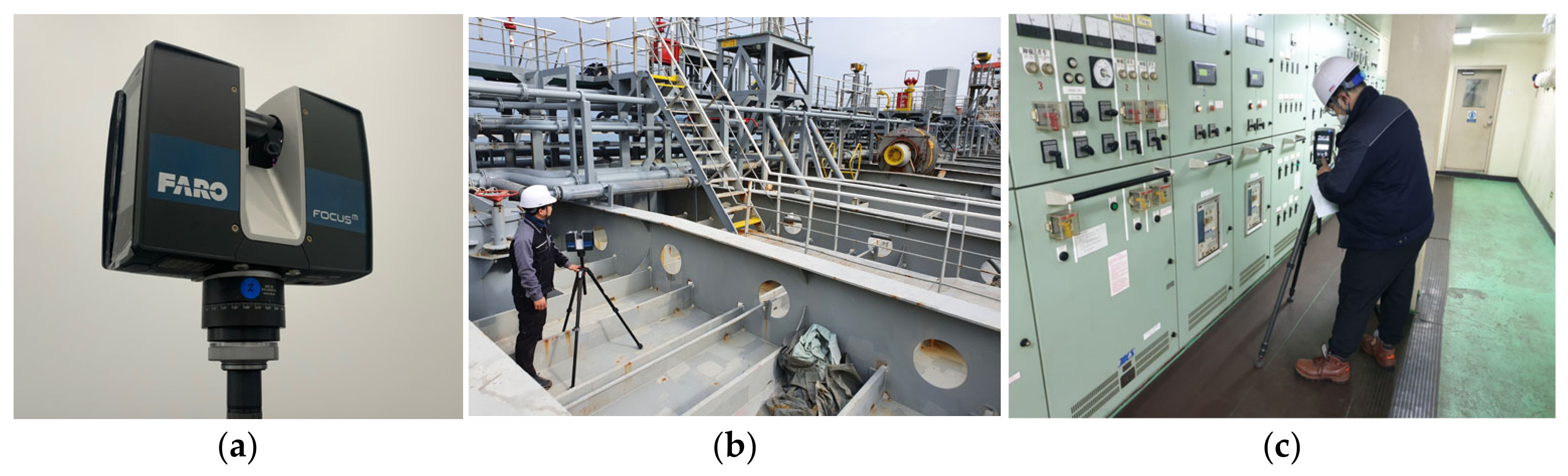
Precision Spatial Measurement and Surveying: For high-fidelity reverse engineering and retrofitting, the lab utilizes terrestrial laser scanning (TLS) systems, primarily the FARO Focus M70 (FARO Technologies, Lake Mary, FL, USA) (
Figure 2a). This system not only captures precise 3D spatial coordinates (x, y, z) of complex maritime structures with millimetric accuracy but also simultaneously acquires high-resolution photographic images. By mapping this RGB color data onto the spatial coordinates, it generates photorealistic 3D point clouds. This integration significantly enhances the visual clarity and precision of the subsequent modeling process, as demonstrated in various on-site surveying applications (
Figure 2b,c). The utilization of high-precision 3D spatial coordinates in the modeling process enables the seamless integration of complex structural data into a unified virtual environment. This methodology facilitates high-fidelity reverse engineering by providing a verified spatial framework that minimizes the margin of error in subsequent retrofitting simulations [
13].
Figure 2.
High-precision 3D laser scanning infrastructure and its on-site application: (a) FARO Focus M70 terrestrial laser scanner; (b,c) data acquisition and spatial surveying within complex maritime structures.
Figure 2.
High-precision 3D laser scanning infrastructure and its on-site application: (a) FARO Focus M70 terrestrial laser scanner; (b,c) data acquisition and spatial surveying within complex maritime structures.
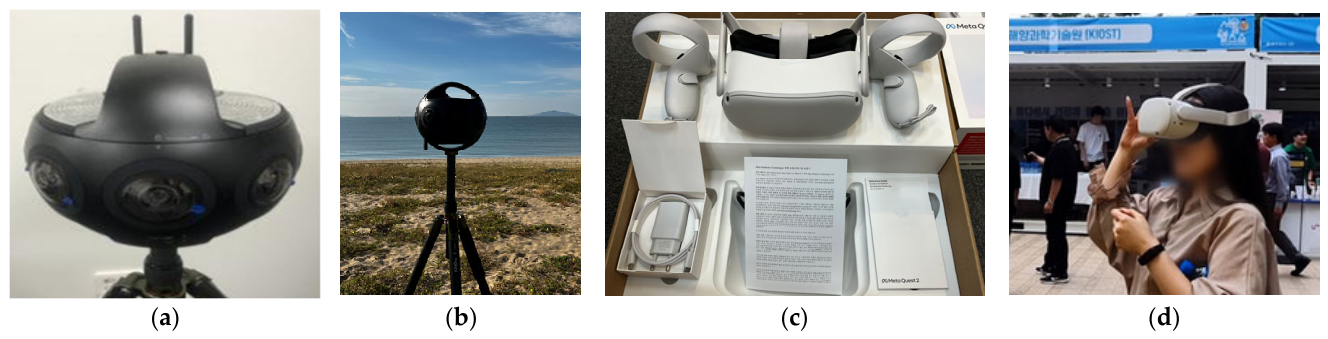
Immersive Content Creation and Visualization: The Open Lab supports the full spectrum of extended reality (XR). For virtual reality (VR) workflows, the Insta360 Titan 11K (Insta360, Shenzhen, China) enables ultra-high-definition 360-degree environment capture. By applying established methodologies of multi-directional image acquisition and omnidirectional video stitching—previously validated in marine environmental VR modeling [
14]—this system provides highly accurate immersive content. The raw environmental data captured by this 8-lens specialized camera (
Figure 3a,b) is seamlessly stitched and optimized for high-end simulations and interactive experiences via advanced HMDs, such as the Meta Quest 2 (Meta Platforms, Inc., Menlo Park, CA, USA) (
Figure 3c,d).
Figure 3.
Infrastructure for immersive virtual reality (VR) content creation and experiential visualization: (a,b) Insta360 Titan 11K camera for 8-lens omnidirectional data acquisition; (c,d) Meta Quest 2 HMD and its on-site application for immersive VR experiences.
Figure 3.
Infrastructure for immersive virtual reality (VR) content creation and experiential visualization: (a,b) Insta360 Titan 11K camera for 8-lens omnidirectional data acquisition; (c,d) Meta Quest 2 HMD and its on-site application for immersive VR experiences.
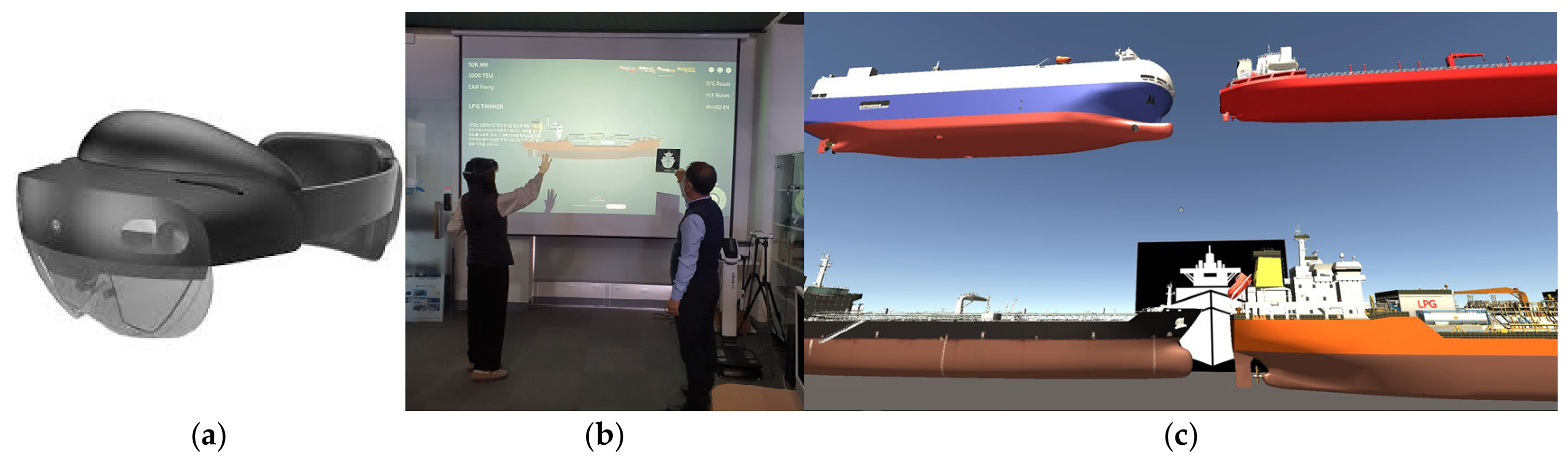
For sophisticated mixed reality (MR) applications, Microsoft HoloLens 2 (Microsoft Corporation, Redmond, WA, USA) (
Figure 4a) is utilized, enabling the real-time overlay of high-fidelity digital twin data directly onto physical maritime assets (
Figure 4b), facilitating precise spatial alignment and interactive technical support. The effectiveness of this MR-based spatial alignment has been extensively validated in recent maritime studies, demonstrating its capability to significantly enhance on-site training and assembly assistance in modern shipyards [
15,
16] as well as triggering specific visual data through holographic markers (
Figure 4c).
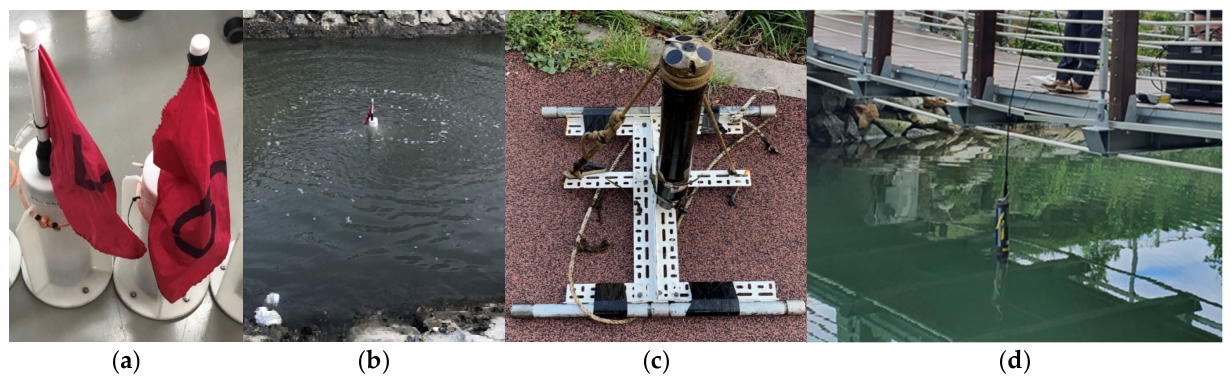
Coastal and Environmental Monitoring: To support the specific technical needs of participating regional enterprises, the Open Lab utilizes a diverse array of specialized empirical monitoring equipment. This includes the GPS-based Aquadrift (Otronix Co., Ltd., Seoul, Republic of Korea) for tracking surface flow velocities and drift patterns (
Figure 5a,b) [
17]. Additionally, the Aquadopp profiler (Nortek AS, Rud, Norway) is deployed for long-term flow velocity measurements (
Figure 5c) [
18]. Specialized observation equipment, such as the YSI 650 MDS (YSI Inc., Yellow Springs, OH, USA) (
Figure 5d), is also utilized for high-precision, real-time measurement of water quality parameters. These tools, supported by dedicated marine research teams, are instrumental in gathering the high-fidelity empirical data required to address the practical engineering challenges and technical validation needs of engineering firms specializing in the design and construction of hydraulic structures.
Beyond this physical infrastructure, the Open Lab’s capacity for high-level R&D and continuous corporate support is driven by a robust human capital framework. To effectively execute technology development and provide multidisciplinary corporate assistance across fields such as marine science, policy trends, ship design, ICT, IoT technologies, immersive content development (VR/AR), and digital twins, the lab operates a comprehensive expert pool structured into three core categories.
The first category consists of internal KIOST researchers, a core group of 23 master’s and doctoral-level experts who provide foundational scientific knowledge and R&D oversight in various marine, environmental, and spatial engineering disciplines. This internal expertise is complemented by a dedicated on-site team of resident support staff, comprising four resident researchers and one administrative member. Stationed directly at the Open Lab, they manage daily facility operations, facilitate continuous R&D, and provide immediate, hands-on technical troubleshooting for participating firms. Finally, the framework incorporates an external expert network, a collaborative pool of 22 subject matter experts from academia and the maritime industry. This network actively engages with the lab to ensure comprehensive multidisciplinary consulting, specialized system validation, and strategic policy guidance, thereby ensuring a holistic support ecosystem for regional SMEs.
2.1.2. Multidisciplinary Corporate Support and Engagement Activities
To maximize the utility of the integrated assets described in
Section 2.1.1, the Open Lab operates a multifaceted support framework tailored to the specific needs of regional enterprises. To ensure operational efficiency and clarity, these activities are structured into three key areas, addressing the entire lifecycle of industrial digital transformation.
The first area focuses on technical and digital infrastructure support, which involves providing hands-on engineering and technical advisory for 3D modeling, reverse engineering, and complex maritime simulations. This includes granting streamlined access to high-precision hardware—such as TLS scanners and XR devices—for independent R&D, while simultaneously assisting in the development of high-fidelity digital assets like AR-based maintenance guides and digital twin visualizations.
The second area centers on knowledge sharing and R&D capacity building by organizing specialized training programs and seminars on emerging industrial trends including AR, VR, and digital twins. To secure the long-term sustainability of participating firms, the lab matches SMEs with experts for national R&D project planning and provides flexible, ad hoc technical assistance to resolve unforeseen administrative or technical hurdles encountered during the digital transition.
Finally, the third area facilitates ecosystem networking and market expansion by acting as a collaborative hub that connects regional SMEs with academia and large-scale stakeholders within the Busan regional innovation cluster. This support extends to enhancing market visibility through strategic marketing and branding, as well as providing global outreach assistance by supporting corporate participation in international maritime exhibitions to showcase empirical research outcomes. This comprehensive suite of services ensures that the Open Lab does not merely act as a passive equipment repository but as an active catalyst for industrial resilience, enabling regional firms to navigate the structural transition from traditional manufacturing to high-value-added digital engineering.
2.2. Definition of Technological Efficiency and Improvement Metrics
To evaluate the impact of the Open Lab infrastructure on SME performance, this study defines a comprehensive set of quantitative and qualitative metrics. These indicators measure both the optimization of internal technical processes and the strategic expansion of the firms’ market presence.
2.2.1. Quantitative and Qualitative Metrics for Performance Evaluation
The performance of supported technologies is validated through a combination of field-captured data, simulation results, and expert-led evaluations, following established verification and validation (V&V) frameworks [
19]. In alignment with the official outcome evaluation framework established by the KIAT, performance is assessed using multi-dimensional metrics—encompassing technical attainment, economic contribution, and social impact—rather than a single indicator to ensure a comprehensive evaluation across strategic dimensions [
20,
21].
Process Time Reduction Rate (, %): This metric quantifies technical efficiency by measuring the time saved in modeling, assembly, and maintenance lead times. It evaluates the productivity gained by replacing manual measurements or paper-based protocols with digital ICT tools (e.g., 3D scanning or AR guides).
Data Precision (Error Margin, mm): This metric assesses precision and reliability by defining the spatial deviation between the scanned digital data and the actual physical dimensions of the ship or components.
Rework Cost and Rate Reduction (USD, %): This evaluates the economic aspect of technical efficiency. It quantifies the reduction in frequency (%) and financial loss (USD) associated with re-performing tasks due to enhanced design and procedural accuracy.
Maintenance Training Error Metrics (%): Specifically applied to XR-based training, these include:
- -
Tool Selection Error Rate (%): Frequency of selecting incorrect tools during maintenance tasks.
- -
AR Spatial Mapping Error (mm): The precision of holographic overlays on physical equipment.
- -
Procedure Deviation Rate (%): The frequency of trainees diverging from standardized emergency or maintenance protocols.
- -
Evaluation Processing Time (s): The time required to assess a trainee’s performance (instantaneous in automated XR systems).
R&D Portfolio Expansion: A qualitative and quantitative measure of strategic growth, evaluating the increase in academic and professional outputs, such as joint research publications and technical certifications acquired through the Lab’s support.
Technology Readiness Level (TRL, Scale 1–9): This metric tracks strategic growth by assessing the maturity of a technology as it progresses from conceptual prototypes to full commercialization, based on the standardized assessment framework established by NASA and further adopted by international innovation programs [
22,
23]. To provide a consistent assessment of technical maturity across various supported projects, the specific definitions and key milestones for each level are detailed in
Table 1.
2.2.2. Qualitative Metrics for Strategic and Market Expansion
Beyond numerical efficiency, the study monitors qualitative milestones that signify the long-term sustainability and market competitiveness of the SMEs. These milestones are evaluated across several key categories, beginning with the recognition of technical quality and corporate excellence through international certifications—such as KOLAS, KR, and LR—alongside various government honors. The assessment also tracks customer and portfolio diversification, focusing on the expansion of the client base from regional to global or public sectors and the broadening of business areas, such as the transition from traditional ship repair to high-value digital twin services. Furthermore, qualitative growth is signified by enhanced intellectual property and R&D engagement, specifically through an increase in patent applications and the successful acquisition of national and local government R&D projects for immersive content development. Finally, the framework accounts for overseas market entry, measured by the successful export or supply of digital maritime products and services to international shipping companies and global shipowners.
2.3. Methodology for Evaluating Economic Impacts: Revenue and Employment
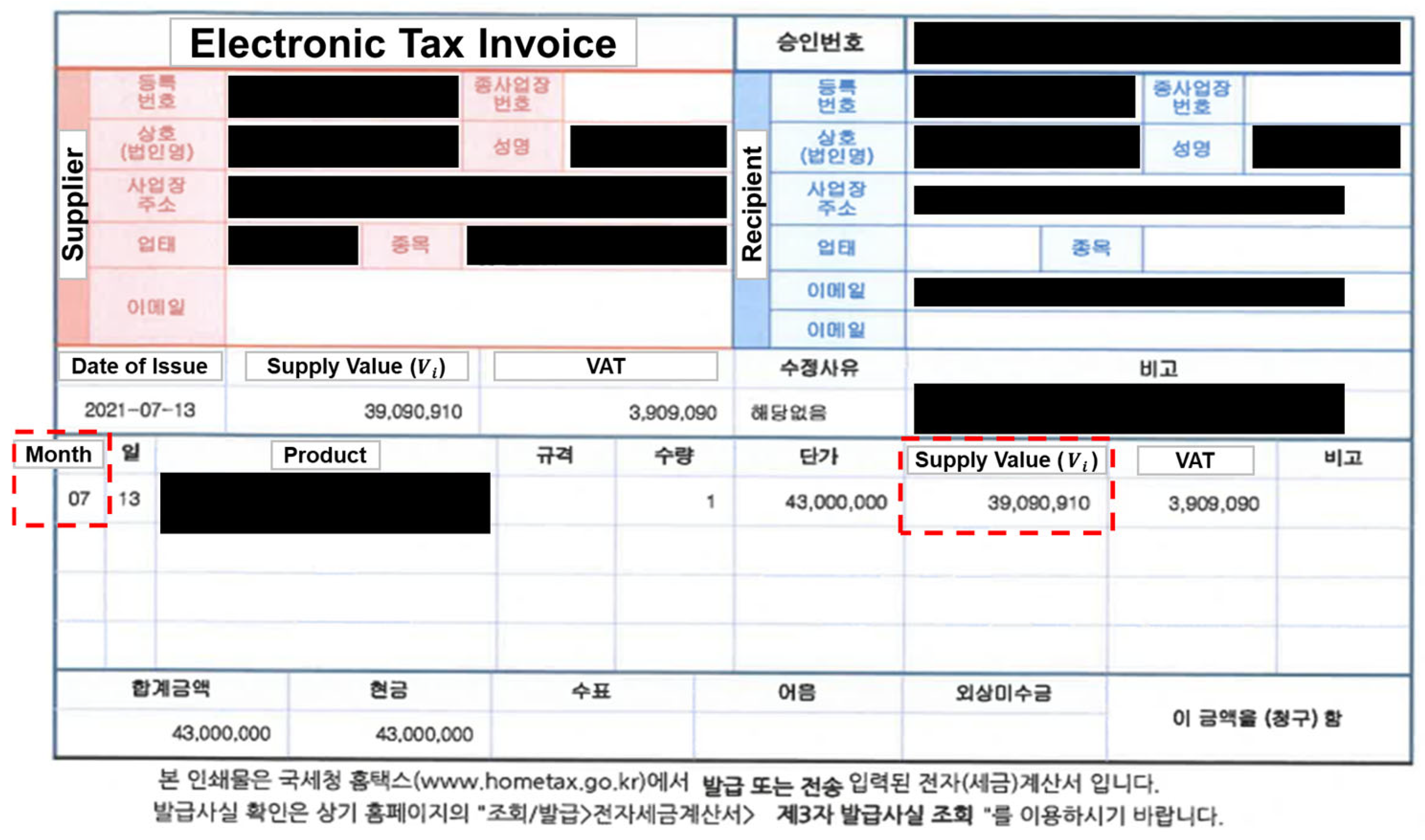
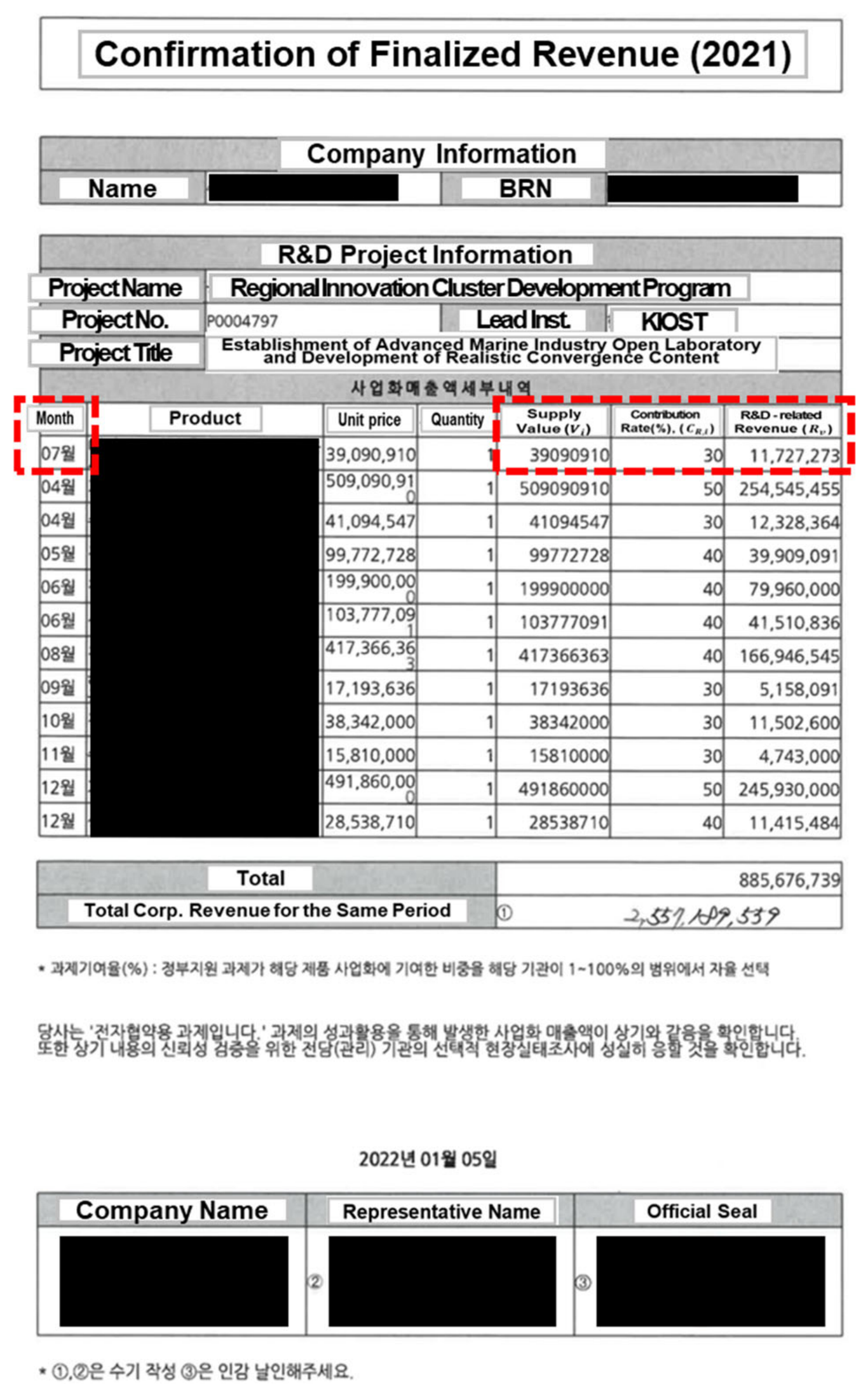
To ensure the objectivity and transparency of the reported results, this study defines economic impacts through two primary indicators: verified revenue and employment performance. These data points were assessed and reported in strict accordance with the R&D performance guidelines established by the Ministry of Trade, Industry and Resources (MOTIR). The analytical scope of this research is specifically focused on the outcomes achieved in 2021 and 2022, a period reflecting the stage of “full-scale performance generation.” While the initial years (2018–2020) were dedicated to the foundational establishment of the Open Lab—including infrastructure procurement, operating system formalization, and personnel recruitment—the subsequent 2021–2022 period represents the phase where active corporate support began to yield tangible and measurable results. These outcomes were formally evaluated and verified by an expert evaluation committee upon the successful completion of the project’s first phase. To ensure methodological transparency, it is necessary to clarify how the economic and social performances were operationalized in practice. As the governing authorities (MOTIR and KIAT) do not mandate a uniform quantitative evaluation criterion for Open Lab contributions, this study adopted a rigorous cross-validation approach. The financial contribution rate is determined through the SME’s self-assessment, which is then multiplied by the exact “Supply value” verified via official “Electronic tax invoices” to calculate the finalized revenue performance (as detailed in
Figure A1 and
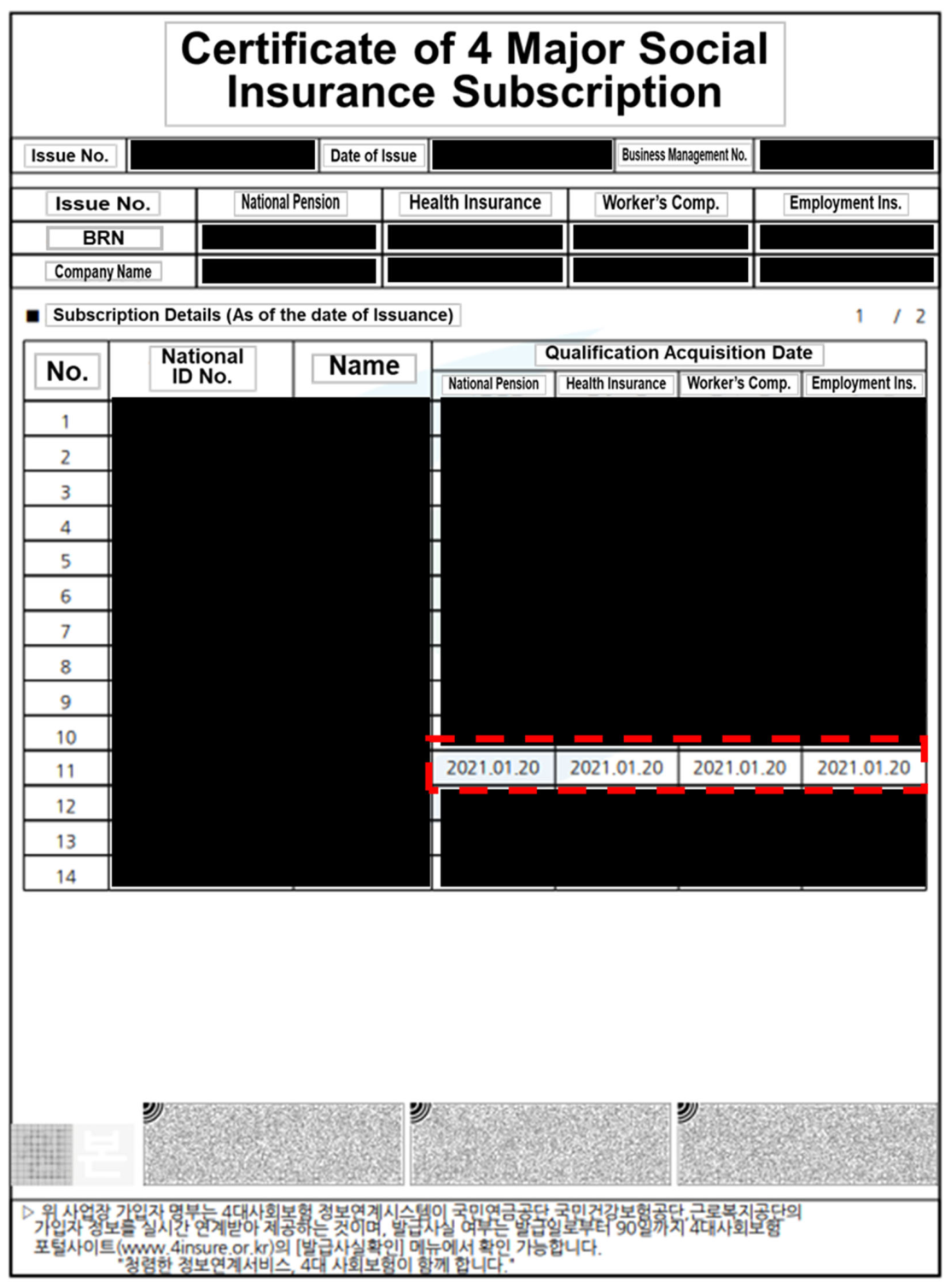
Figure A2). Similarly, the operationalization of employment metrics is not based on mere estimates; it is calculated by multiplying the SME-reported contribution rate by the actual number of new hires officially registered in the “Certificate of 4 major social insurance subscription” (as illustrated in
Figure A3). This mechanism ensures that all performance claims are strictly grounded in verifiable, legally binding documentation.
2.3.1. Calculation of Verified Revenue
The economic contribution to a firm’s revenue is determined by applying the infrastructure attribution rate (IAR)—or contribution rate—to the actual supply value of the projects supported by the Open Lab. For objective proof and data integrity, every reported revenue item required the submission of corresponding electronic tax invoices. The contribution rate was initially assessed by the participating firms based on the degree of infrastructure utilization and subsequently validated by the expert evaluation committee. During this official evaluation process, all reported performance metrics were rigorously cross-verified using original, unmasked administrative documents, including tax invoices for revenue validation and workplace subscriber lists for employment tracking.
Regarding corporate confidentiality and manuscript conciseness, this study refrains from disclosing the granular details of every individual commercial project. Instead, the revenue achievements presented in
Section 3.3.1 represent the final consolidated figures for each firm, as officially audited and confirmed by the expert evaluation committee under the KIAT. Furthermore, while original documents were used for the internal verification, representative masked versions are provided in
Appendix A for methodological reference to protect sensitive corporate and personal information.
For economic accuracy and to reflect specific market conditions during the data collection period, all financial outcomes were converted from Korean Won (KRW) to United States Dollars (USD) using the respective annual average exchange rates. Specifically, an exchange rate of 1144.4 KRW/USD for 2021 and 1292.0 KRW/USD for 2022 was applied, as sourced from the Bank of Korea (BOK). All financial outcomes in this paper are presented exclusively in USD based on these defined rates, facilitating international comparison and ensuring clarity for a global audience.
The verified revenue () is calculated as follows:
: Supply value for -th project (, excluding value added tax (VAT);
: Verified revenue contribution rate of the Open Lab for -th project;
2.3.2. Calculation of Employment Performance
The impact on regional job creation was quantified by multiplying the number of newly hired employees by the Open Lab’s contribution rate. In accordance with official employment performance regulations, only personnel who maintained their employment for a minimum of seven months post-hiring were included in this calculation; those employed for less than six months were strictly excluded. This metric reflects the extent to which the public infrastructure support facilitated the expansion of the firm’s specialized workforce. The verified employment (
) is defined as:
where
is the number of new personnel officially registered during the support period, and
is the employment contribution rate assigned based on the following criteria:
Direct employment ( = 1.0): If the firm is an official participating company in the KIAT regional innovation cluster project and the new personnel are registered as participating researchers, the employment is categorized as “Direct employment.” In this case, a maximum weight of 1.0 (100%) is applied to the verified employment calculation.
Indirect employment ( < 1.0): For general enterprises not officially participating in the cluster project, new hiring is considered “Indirect employment” resulting from overall business expansion facilitated by the Open Lab’s infrastructure and technical support. For these cases, is assigned a value of less than 1.0, representing the specific and proportional contribution of the Open Lab to the hiring decision as audited by national authorities.
2.4. Survey Methodology for Assessing SME Satisfaction and Support Effectiveness
To comprehensively evaluate the qualitative impact of the Open Lab, a structured, self-administered satisfaction and demand analysis survey was conducted over a 10-day period from 18 April to 27 April 2023. A purposive sampling method was employed, specifically targeting all regional SMEs that had actively utilized the Open Lab’s facilities and services during the Phase I project period. Accounting for the final audited results, the survey successfully collected responses from 19 key stakeholders across 17 distinct participating enterprises. The respondents encompassed a diverse range of organizational roles, from company CEOs to working-level researchers and engineers, ensuring a multi-faceted assessment of the model’s practical effectiveness.
To support future research and practical applications, the comprehensive survey instrument used in this study is provided in
Appendix B. By sharing this standardized questionnaire, this study aims to assist practitioners and researchers in similar innovation ecosystems in evaluating SME satisfaction and identifying critical areas for operational improvement, thereby fostering more effective open innovation environments. The questionnaire was meticulously designed using a 9-point semantic differential scale (subsequently converted to a 100-point scoring system) to ensure high discriminative power in the responses.
The evaluation metrics were structured into two core dimensions. Firstly, satisfaction by support type assessed the perceived value of specific interventions, including immersive content creation, marketing support, technical consulting and engineering, facility and equipment utilization, and national project planning assistance. Secondly, service quality attributes evaluated the operational excellence of the Open Lab across four specific criteria: promptness, which measures the speed of processing support requests and providing feedback; reliability, reflecting the technical expertise and administrative transparency; convenience, encompassing accessibility and cost-effectiveness; and staff attitude, focusing on the professionalism and proactiveness of the support personnel. Additionally, subjective open-ended questions were included to capture qualitative feedback on operational bottlenecks and future R&D requirements.
It is important to note that because the sampling frame was strictly confined to actual beneficiaries of the Open Lab to ensure high data integrity and empirical validity, the sample size (
N = 17 firms) is naturally constrained. Consequently, rather than seeking macroscopic statistical generalization, this survey data serves as a focused empirical foundation for our multiple-case evaluation framework. Furthermore, while the full English translated survey questions are openly provided in
Appendix B for methodological transparency, the actual raw data cannot be published due to the strict data confidentiality clauses of the Korean statistics act (Articles 8 and 9).
2.5. 3D Laser Scanning: Point-Cloud-Based Virtualization and Engineering Optimization (VR)
This section explores 3D laser scanning technology through the operations of Company A, a specialized maritime engineering service provider. The company delivers comprehensive shipbuilding and ship repair engineering services by utilizing advanced laser scanners that simultaneously acquire high-precision 3D spatial coordinates and high-resolution imaging data.
By leveraging Company A’s core expertise in modeling critical vessel spaces, the 3D laser scanning methodology implemented in the Open Lab focuses on translating complex physical maritime structures into high-precision digital assets. This approach is particularly essential given the intricate and non-standardized nature of ship interiors—such as engine rooms and ballast systems—where traditional manual measurement methods often result in significant cumulative errors and rework costs. To mitigate these issues, this study utilizes a terrestrial laser scanning (TLS) workflow to facilitate accurate reverse engineering and interference checking (clash detection).
The technical support process provided by the Open Lab and Company A is executed through the following three-phase operational framework. The first phase focuses on field data acquisition, utilizing the FARO Focus M70 to capture high-precision 3D point clouds in complex environments. This stage effectively eliminates the inaccuracies of manual measurement by documenting the exact “as-built” condition of the vessel. Following this, the second phase involves data processing and registration, where raw scan data are processed and aligned using high-performance Dell workstations to integrate individual scans into a unified, coordinate-accurate digital environment. Finally, the third phase centers on engineering optimization and modeling. Based on the registered point cloud data, detailed 3D modeling and clash detection are performed, allowing for the precise verification of new equipment installation or structural retrofitting before physical execution.
To evaluate the practical impact of the technical support provided by the Open Lab, this study examines several key technical indicators for Company A. Primarily, the modeling time reduction rate (%) is assessed to determine the decrease in time required for modeling critical interior spaces of vessels during retrofitting and repair processes compared to traditional methods. Furthermore, the study evaluates spatial accuracy and error metrics (mm, %), which quantify the error range and rate between the 3D scanned data and actual physical dimensions, specifically for chemical tankers and bulk carriers. Ultimately, these metrics contribute to calculating the reduction in rework and error costs, representing the quantified financial savings achieved by minimizing design errors and reducing the frequency of re-performing tasks due to enhanced spatial precision.
2.6. Augmented Reality and Digital Twin (AR & DT)
This section analyzes the integration of augmented reality (AR) and digital twin (DT) technologies within the Open Lab framework. The technical implementation was supported by the expertise of Company B, a specialist in ship repair training and vessel procurement support.
Company B develops sophisticated DT models that visualize both the exterior and critical interior features of vessels. These models incorporate advanced functionalities, such as transparency control, to enhance the intuitive understanding of complex structural layouts. These capabilities assist decision-makers in the vessel ordering process by providing clear and interactive visual data, thereby supporting shipyards and client representatives in finalizing construction specifications. Within the Open Lab, this expertise is further utilized to synchronize physical operational data with virtual models to provide real-time maintenance guidelines.
The technical support provided by the Open Lab for Company B’s R&D process followed a systematic workflow. Initially, high-fidelity DT modeling was conducted utilizing the Lab’s high-performance workstations to digitize complex vessel and engine structures. During this phase, a “transparency control” feature was implemented to allow users to inspect internal components without physical disassembly. Following this, the focus shifted to AR maintenance protocol development. Using Microsoft HoloLens 2, AR-based instructional overlays were created for core maritime components, specifically focusing on the Caterpillar 3512 (high-speed, Caterpillar Inc., Irving, TX, USA) and Wärtsilä RT-flex50DF (low-speed, Wärtsilä Corporation, Helsinki, Finland) engines. Finally, to ensure high operational reliability, expert personnel from the Open Lab provided technical consulting on spatial synchronization and optimization. This critical step involved refining spatial registration to minimize the drift between digital overlays and physical engine parts.
To evaluate the practical impact of the technical support provided by the Open Lab, this study examines several key technical indicators for Company B. Primarily, process efficiency (%) is assessed by measuring the reduction rate of the assembly and disassembly process time for three core components of the Caterpillar 3512 engine when utilizing AR technology. Additionally, the study evaluates spatial registration accuracy (mm), which defines the spatial registration error range between the AR system display and actual physical dimensions for both the high-speed (Caterpillar 3512) and low-speed (Wärtsilä RT-flex50DF) engines. Furthermore, operational reliability (%) is analyzed to determine the reduction rate of procedural deviations (error rates) and rework costs resulting from enhanced design and procedural precision. To capture strategic growth, the study also monitors technological maturity, tracking the shift in TRL across technical domains before and after the Open Lab support. Ultimately, technical standardization is evaluated based on the successful acquisition of official technical certifications as a result of implementing these standardized digital workflows.
2.7. Hydraulic Structure Design and Engineering Support
This section examines the technological advancement and business expansion of Company C, an engineering firm specializing in the design and construction of hydraulic structures for maritime and riverine environments. Through the technical consulting and analysis provided by the Open Lab, Company C has significantly expanded its technical capabilities, aligning with the strategic objectives of the “New maritime industry” sector.
A representative case involved an artificial coastal waterway, spanning 2.1 km, which faced critical water quality issues due to stagnant flow and sedimentation. To address these challenges, the Open Lab provided a comprehensive support framework consisting of three operation phases.
The first phase focused on CFD-based design optimization, utilizing the Lab’s computational infrastructure to perform specialized computational fluid dynamics (CFD) analysis supporting the structural design of water quality improvement gates. This phase determined the optimal operation strategies and gate configurations to maximize flow circulation and minimize stagnant zones within the 2.1 km waterway. Following the physical installation of the gates, the second phase involved field performance verification. The Open Lab utilized its professional coastal monitoring equipment—such as the Aquadopp profiler and GPS-based Aquadrift—alongside a collaborative research team from KIOST, consisting of the Coastal Disaster & Safety Research Department for flow velocity validation and the Environment Research Department for water quality assessment, to conduct high-precision measurements. This provided empirical evidence of the practical improvements in both hydraulic performance and environmental indicators. Finally, the third phase extended the collaboration into joint R&D and academic expansion, facilitating the company’s R&D growth and enhancing its academic presence in the hydraulic infrastructure sector. This partnership allowed the firm to transition from a construction-focused entity to a technology-driven engineering provider.
Furthermore, to evaluate the practical impact of the technical support provided by the Open Lab, this study examines several key technical indicators for Company C. Initially, design support efficiency is evaluated based on the successful development and structural design of water quality improvement gates for the waterway. Additionally, performance verification reliability is assessed through the scientific validation of hydraulic and environmental improvements via cross-departmental field analysis, ensuring the empirical reliability and high data fidelity of the project outcomes. The study also measures R&D and academic output by tracking the number of joint research publications and the resulting academic contributions to the maritime infrastructure field. Ultimately, technological maturity is monitored to capture the shift in TRL across technical domains before and after the Open Lab support.
2.8. Immersive VR Content Development
This section evaluates the development of immersive VR content utilizing the technical resources of Company D, a specialized content development firm and a direct participant in the regional innovation cluster project. To strengthen its production capabilities, Company D leveraged the cutting-edge technical infrastructure and expert consulting framework provided by the Open Lab. Initially, to create realistic virtual representations of industrial sites, the company utilized the Lab’s professional video hardware—specifically the Insta360 Titan 11K—to acquire ultra-high-definition 360-degree environment data, providing the visual foundation for high-fidelity immersion. Following this data acquisition, the Open Lab supported immersive visualization and user-testing by providing access to a large-scale 300-inch screen equipped with high-performance 2D and 3D projectors. Additionally, technical support was provided to enable seamless user-to-content interaction using the HTC Vive Pro HMD, allowing for the rigorous evaluation of interactive features within the developed platforms.
Throughout this development process, the Open Lab provided extensive strategic and infrastructural support. The Lab’s expert pool offered intensive consulting on core content concepts, spatial layout optimization, and practical utilization strategies, while providing critical feedback for the iterative improvement of prototypes. Beyond technical assistance, the Open Lab acted as a strategic intermediary, connecting Company D with external organizations to identify high-value projects and align development goals with market demands. A defining characteristic of this support framework was the free-of-charge provision of specialized KIOST research infrastructures as field testbeds, effectively removing significant financial barriers. For instance, the Lab arranged access to an actual KIOST research vessel for developing a VR-based shipboard fire response training program. Furthermore, for creating marine-based psychological healing VR content, the Lab provided the KIOST Korea South Pacific Ocean Research Center (KSPORC) in Micronesia as a cost-free testbed, enabling the acquisition of pristine terrestrial and underwater landscapes while substantially reducing international field research expenditures.
To evaluate the practical impact of this comprehensive support, this study examines the content development capability of Company D as a key technical indicator. This metric is assessed based on the number of immersive VR content projects successfully developed and the subsequent expansion of the firm’s project portfolio, which was directly facilitated through the Lab’s strategic networking and unique testbed provisions.
3. Results and Discussion
Based on the diverse technical and strategic supports provided by the Open Lab to foster corporate growth and self-sustainability, this chapter presents the tangible technical advancements and economic outcomes achieved by the participating firms. By analyzing the performance of four representative enterprises—Companies A, B, C, and D—this study evaluates the extent to which the integrated physical and human assets described in
Section 2 facilitated operational excellence and long-term autonomy. The discussion focuses on the achievement of specific key performance indicators (KPIs) and analyzes how these individual outcomes collectively contribute to the resilience and sustainability of the regional maritime industry amidst its structural transition.
Before detailing the specific outcomes, it is important to clarify the underlying mechanisms connecting the various support drivers (e.g., equipment access vs. technical advisory), technical performance, and subsequent business outcomes. The Open Lab model provided dynamically tailored interventions based on each SME’s internal capacity. For some firms, standalone access to high-cost equipment was sufficient to drastically reduce their capital expenditure (CAPEX) and accelerate independent commercialization. For others, an integrated approach combining equipment with expert advisory was necessary to resolve complex technical bottlenecks. Regardless of the specific support mix, the resulting enhancement in technical performance (e.g., improved technical indicators, scientific publications, and official commendations) consistently functioned as a sequential prerequisite for entering new markets. Consequently, the economic impacts (revenue and employment growth) evaluated in this section should be understood as the direct, organic extension of these technical milestones. Furthermore, to ensure these achievements are strictly attributed to the intervention rather than broader market demand, all financial outcomes have been isolated from macroeconomic volatility using constant exchange rate (CER) analysis.
3.1. Framework for Performance Evaluation and Data Verification
To ensure a rigorous and objective assessment of the Open Lab’s impact, this study employs a multi-tiered evaluation framework that strictly adheres to the R&D performance assessment guidelines established by the MOTIR. This framework aligns the technical outputs of each participating firm with the strategic objectives of the regional innovation cluster, focusing on the transition from immediate technical support to long-term corporate self-sustainability.
The primary focus of this assessment integrates the technical KPIs established in
Section 2—such as operational efficiency, data precision, and strategic growth—with broader socio-economic outcomes, specifically verified revenue and job creation. Regarding the technical performance metrics and supporting visual evidence (figures), the quantitative outcomes and representative images were evaluated and provided by the technical experts of the participating enterprises based on their internal assessment protocols. This approach ensures that both the reported engineering improvements and the demonstrated technological implementations reflect the professional evaluation and actual field-work of on-site specialists rather than speculative or unilateral estimations. Crucially, to mitigate subjective bias and ensure data integrity, all economic outcomes reported in this chapter were finalized through a multi-stage auditing process. The values presented were initially calculated based on the Open Lab contribution rate (%) and administrative evidence (e.g., tax invoices and official employment records), then subsequently audited by expert evaluation committees under the KIAT.
The following sections are structured to provide a comprehensive analysis of these validated results.
Section 3.2 presents a detailed technical performance analysis for the four representative case studies, highlighting the specific engineering advancements facilitated by the Open Lab.
Section 3.3 evaluates the consolidated socio-economic impacts, focusing on audited revenue generation and regional job creation during the 2021–2022 performance generation phase. To consolidate these findings,
Section 3.4 provides an integrated summary of the technical and socio-economic outcomes. Subsequently,
Section 3.5 offers a qualitative validation of the support model through user satisfaction and needs analysis. Finally,
Section 3.6 derives strategic implications for regional industrial resilience and propose a customized Open Lab construction model for other declining industrial hubs.
3.2. Technical Performance Analysis by Case Study
3.2.1. Company A: 3D Laser Scanning for Reverse Engineering
This section analyzes the performance of Company A, which utilized the Open Lab’s high-precision 3D scanning infrastructure (FARO FOCUS M70) to innovate its reverse engineering and ship modification workflows. The assessment follows the quantitative and qualitative metrics defined in
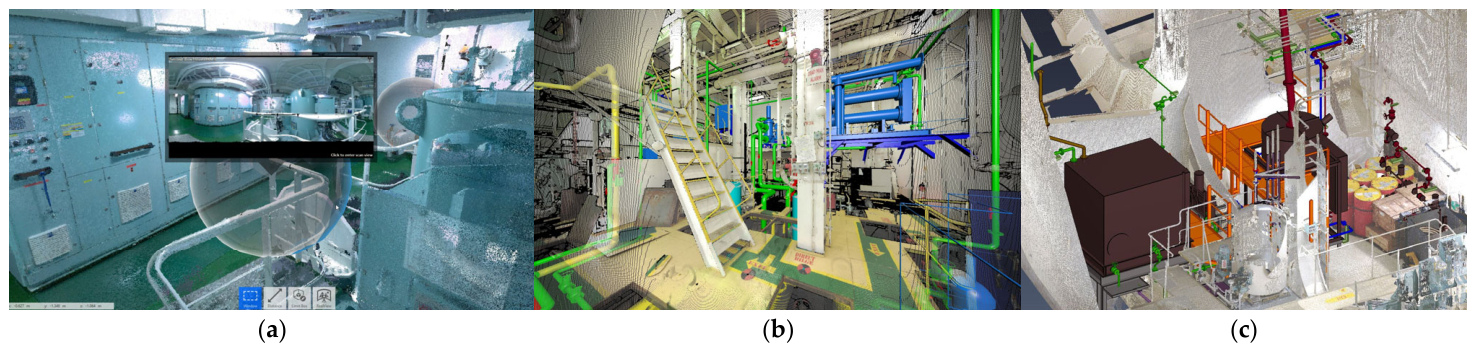
Section 2.2.1. The sequential workflow—transitioning from high-precision spatial data acquisition to virtual design validation and clash detection—is illustrated in
Figure 6.
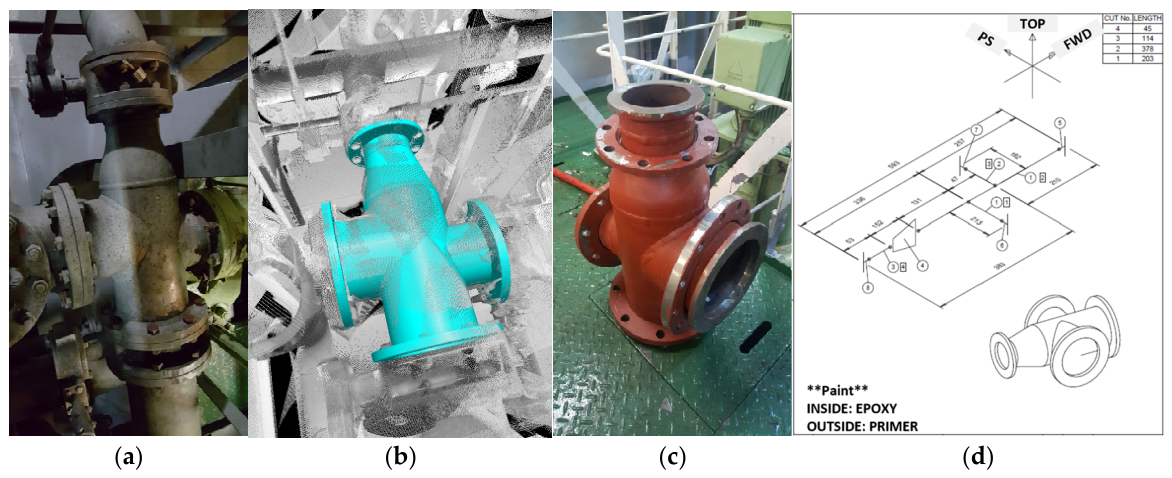
The primary technical gain for Company A was the drastic reduction in data acquisition and design lead times, a result fundamentally driven by the elimination of the conventional “physical templating” process and its associated logistical loop. In traditional ship repair processes—such as replacing corroded seawater pipes—workers are typically required to physically dismantle the target pipe, transport it to an onshore facility to create a physical mold, and temporarily reinstall the old pipe to allow the vessel to continue its immediate voyage. This physical “mock-up” cycle not only incurs massive logistical costs and excessive manpower but also leads to severe operational downtime. Conversely, the integration of 3D scanning technology completely bypasses this physical bottleneck by capturing precise spatial coordinates of the target area within a mere one to four hours on-site. This enables the vessel to depart immediately without any preliminary structural dismantling, as the acquired point-cloud data serves as a highly accurate “virtual template” for generating detailed fabrication drawings (
Figure 7d). Consequently, this allows for off-site manufacturing while the ship is in transit, ensuring that the new component can be seamlessly retrofitted during the vessel’s subsequent port call, as empirically demonstrated in the sequential workflow in
Figure 7.
This paradigm shift from “physical templating” to “digital replication” is the core mechanism behind the efficiency gains, particularly in congested compartments like the engine room, pump room, and individual cabins where precise spatial data is critical for complex piping networks and interior outfitting. To empirically validate these gains, a comparative analysis of design time was conducted for a 13,000 DWT chemical tanker (LOA
128 m). As shown in
Table 2, the integration of 3D laser scanning resulted in significant time savings across all major compartments, achieving an average reduction of 50 h (55.6%) compared to conventional manual methods.
The precision and reliability of the generated digital twins were further validated through a rigorous data error analysis. To evaluate the technical fidelity of the models, the spatial deviation between the acquired scan data and actual physical dimensions was analyzed for two representative vessels: a 13,000 DWT chemical tanker with a length of 128 m and a 250,000 DWT bulk carrier spanning 329 m. To quantify these deviations, the relative error rate () was calculated as follows:
Using this formula, the spatial accuracy and measurement reliability of the 3D scan data were evaluated across various compartments for two sample vessels. The resulting error metrics for the 13,000 DWT chemical tanker and the 250,000 DWT bulk carrier are summarized in
Table 3 and
Table 4, respectively.
As presented in
Table 3 and
Table 4, the precision of the 3D scanning-based digital twin was rigorously validated. Across both the chemical tanker and bulk carrier, the relative error rates remained significantly low, ranging from 0.009% to 0.500%. This level of accuracy ensures that the digital models can be reliably used for off-site pre-fabrication without the risk of on-site installation failures. The results show that absolute errors were maintained below 30 mm even for massive structures. Notably, the relative error rate remained below 0.1% for most compartments. In the 260 m cargo holds of the bulk carrier, an exceptional precision of 0.009% was achieved. Field practitioners reported that the perceived on-site error was consistently managed within 10 mm, ensuring a seamless fit during the pre-fabrication and assembly stages.
This high technical precision translated directly into economic optimization by significantly reducing the frequency and cost of rework caused by design-induced errors. For a standard modification project with a total construction cost of 77,400 USD (approximately 100 million KRW), the associated rework costs—including labor and materials—were limited to under 1160 USD (approximately 1.5 million KRW). This establishes a rework cost rate of only 1.5%, validating the technology’s impact on minimizing financial risks in maritime engineering.
Beyond these immediate operational and economic gains, the Open Lab’s support facilitated long-term strategic growth and portfolio diversification. While Company A had already reached TRL 9, their growth was previously constrained by the high cost of equipment rental. The provision of FARO scanners enabled the company to scale its operations both quantitatively and qualitatively. Specifically, the firm successfully executed approximately 240 projects, including BWTS/Scrubber retrofits for roughly 60 vessels, general repairs for 100 vessels, and eco-friendly modifications for another 80 vessels. Furthermore, this enhanced capacity allowed the company to leverage its accumulated spatial data to expand into non-maritime sectors, such as camper van modifications and reverse engineering for aging terrestrial industrial factories. Ultimately, this trajectory demonstrates that the Open Lab’s support served as a vital catalyst for transitioning from technological maturity to autonomous industrial scalability, empowering the firm to secure new project contracts with major shipowners and industrial partners.
3.2.2. Company B: Advanced XR-Based Maintenance Training and Environment-Friendly Ship Simulators
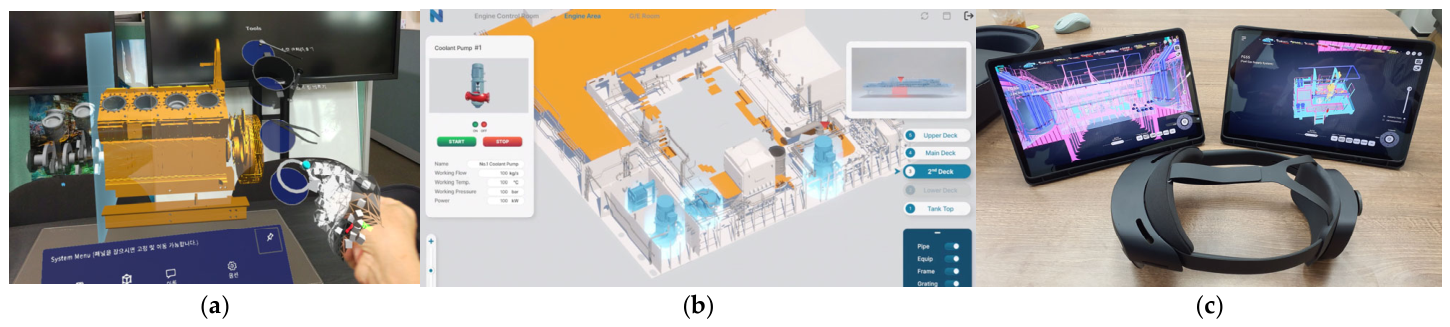
This section evaluates the performance of Company B, an engineering firm specializing in maritime XR content. A critical differentiator in its success was the Lab’s hybrid support model, which combined the provision of high-end physical infrastructure (tangible support) with specialized technical advisory and R&D planning (intangible support). By leveraging these comprehensive resources, Company B successfully developed a distinct portfolio of industrial XR and simulation applications. Specifically, AR-based content for maritime engine (e.g., Caterpillar 3512) repair education and training was created (
Figure 8a), alongside a technical simulation platform for hydrogen fuel cell ships (
Figure 8b). Furthermore, the initiative facilitated the practical implementation of a digital twin system across multiple devices (
Figure 8c).
For Company B, independently acquiring high-end industrial 3D scanners—the cost of which was previously identified as a major industry barrier—or constructing specialized validation environments for XR devices presented prohibitive capital requirements. The initiative effectively removed these barriers by providing seamless access to these high-value assets alongside the necessary expert guidance, enabling the firm to focus its resources on core technology development and commercialization of next-generation green ship technology.
By leveraging the Open Lab’s spatial computing devices, such as the Microsoft HoloLens 2, Company B successfully transitioned from conventional paper-based training to immersive AR-guided engine maintenance systems. This transition resulted in substantial technical efficiency through process time reduction. As detailed in
Table 5, which compares the process times for a high-speed marine engine (Caterpillar 3512), the AR integration yielded an average time reduction of 60% for core tasks and up to 80% for preparatory procedures, thereby drastically reducing the cognitive load on trainees.
Achieving industrial-grade precision in these XR environments requires more than just high-end hardware; therefore, the Open Lab’s technical experts directly intervened to optimize Company B’s data processing pipelines. This support included comprehensive technical advisory on point-cloud to Unity conversion, polygon optimization (lightweighting), and spatial mapping error calibration. Driven by the Open Lab’s guidance on measurement reproducibility and error threshold management, the AR spatial mapping error was tightly constrained to
2.0
3.0 mm. The quantitative outcomes of these precision enhancements, categorized by engine type and specific target components, are summarized in
Table 6.
Furthermore, this combined hardware and advisory support directly translated into significant operational optimizations during training sessions. By providing step-by-step visual constraints and automated pass/fail assessment algorithms, the system preemptively blocked tool mis-selection and protocol deviations. A comparative analysis of these operational improvements against traditional training methods is summarized in
Table 7. Notably, these enhancements reduced instructor dependency by 83% and enabled highly scalable training operations.
Beyond these immediate technical and operational gains, the most profound impact of the initiative was its role in strategic R&D planning and the formal validation of the firm’s technological excellence. Through the Lab’s structured support, Company B achieved several critical milestones that solidified its market position. The rigorous validation environment provided by the infrastructure enabled the firm to secure KOLAS testing certifications (December 2023) for its digital content, alongside the LR Statement of Compliance and KR approval. In recognition of its pioneering contribution to the digital transformation of the maritime industry, Company B was formally honored with the Minister of Oceans and Fisheries (MOF) award. This ministerial commendation has served as a pivotal credential, significantly enhancing the firm’s corporate credibility and facilitating its entry into high-barrier public sector markets.
Additionally, the Lab acted as a strategic partner in R&D planning, successfully linking Company B to major national initiatives. These included the development of LNG bunkering vessel digital twin contents for KIOST, 3D Metaverse scenarios for the Ministry of Science and ICT (MSIT), and domestic market revitalization projects for the MOF. Supported by these achievements, the technological maturity of Company B’s core products progressed from a functional prototype (TRL 5) to a fully commercialized system (TRL 9), ultimately enabling the firm to secure long-term service contracts with major domestic shipping lines and offshore plant operators. Ultimately, the Open Lab functioned not merely as an equipment rental facility, but as a strategic incubator that provided the technological methodologies and commercial pipelines necessary for an SME to achieve self-sustainability and market leadership.
3.2.3. Company C: Scientific Validation for Hydraulic Structures and Environmental Engineering
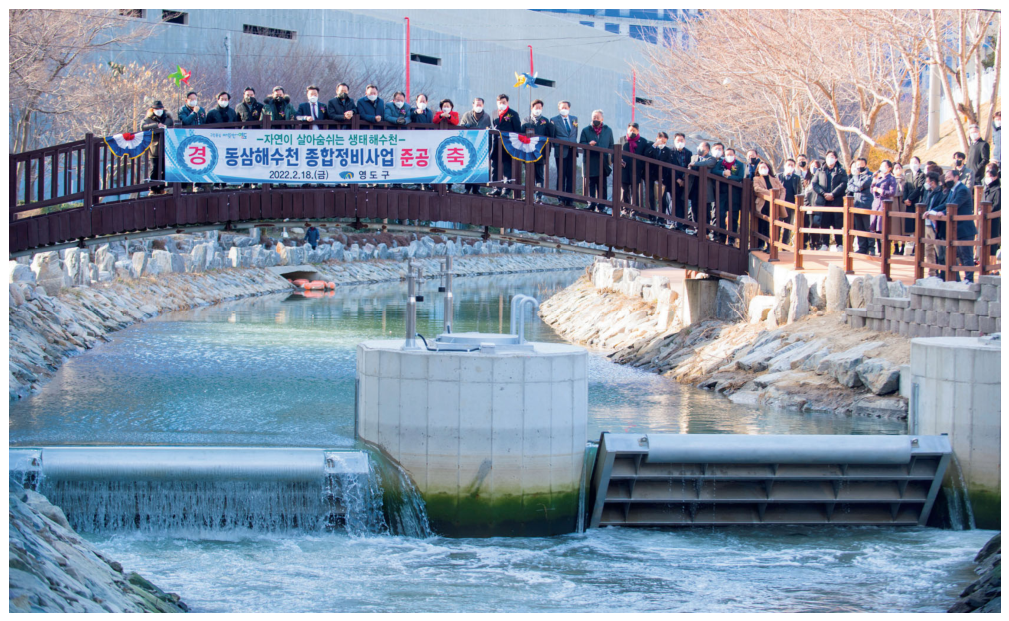
This section evaluates the performance of Company C, an engineering firm specializing in hydraulic structures. The firm developed and successfully installed bi-directional electric swing sluice gates to resolve severe water stagnation and pollution in the Dongsam Seawater Stream (
Figure 9). Unlike previous cases focused primarily on equipment provision, the Open Lab supported Company C through rigorous scientific validation—combining computational fluid dynamics (CFD) modeling with the empirical field monitoring infrastructure described in
Section 2.1.1 (e.g., Aquadrift and YSI 650 MDS).
The collaboration regarding the Dongsam Seawater Stream project exemplifies how the synergy between public research expertise and private sector engineering can effectively address critical regional environmental challenges. Prior to the actual construction, Company C required rigorous technical justification for the gate design and operational strategy. To provide this, the Open Lab conducted 3D CFD simulations using the element-based finite volume method to analyze varying outflow scenarios. The analytical models verified that operating two sluice gates simultaneously, while leveraging the maximum tidal range, would optimize the flow velocity across the entire 2.1 km stream. This simulation provided the crucial analytical and experimental proof of concept (TRL 3), ensuring that the structural design would meet environmental objectives before manufacturing and installation commenced. Following the physical implementation, the Open Lab deployed high-precision measurement equipment to conduct a system prototype demonstration in an operational environment, effectively advancing the technology to TRL 8. Empirical data revealed massive hydrodynamic improvements, demonstrating that bi-directional gate operation during maximum tidal ranges exponentially accelerated the previously stagnant flow. This amplified seawater exchange directly achieved the primary goal of environmental restoration, with continuous monitoring confirming that the increased velocity substantially enriched dissolved oxygen (DO) levels and enhanced the stream’s overall resilience. Furthermore, the Open Lab’s digital twin-based IoT sensors and subsequent water quality analysis played a decisive role in proactive risk mitigation. When an external pollution event caused a mass fish kill in the stream, the Lab’s scientific intervention swiftly identified the cause as an external influx of pollutants and temperature spikes, rather than any structural defect of the gates. This evidence proactively protected Company C from potential liability claims, proving the overarching robustness and reliability of the installed infrastructure.
Ultimately, the Open Lab’s support fundamentally transformed Company C’s technological credibility and facilitated significant strategic growth. By co-authoring and publishing the validation results in peer-reviewed academic journals [
24,
25], including a recently established strategic engineering framework for water quality resilience, the Open Lab provided the firm with objective, third-party verification of its specialized engineering capabilities. Armed with these scientific outputs, Company C successfully executed technical promotions that led to tangible market expansion, including new domestic and international contracts for hydraulic structures and a memorandum of understanding (MOU) with a foreign specialized engineering company. This successful progression from TRL 3 to TRL 8—and the subsequent commercial expansion—demonstrates how integrated technical assurance and high-fidelity data can drive the autonomous growth and global market entry of a regional SME.
3.2.4. Company D: Immersive Content Development for Marine Safety Training
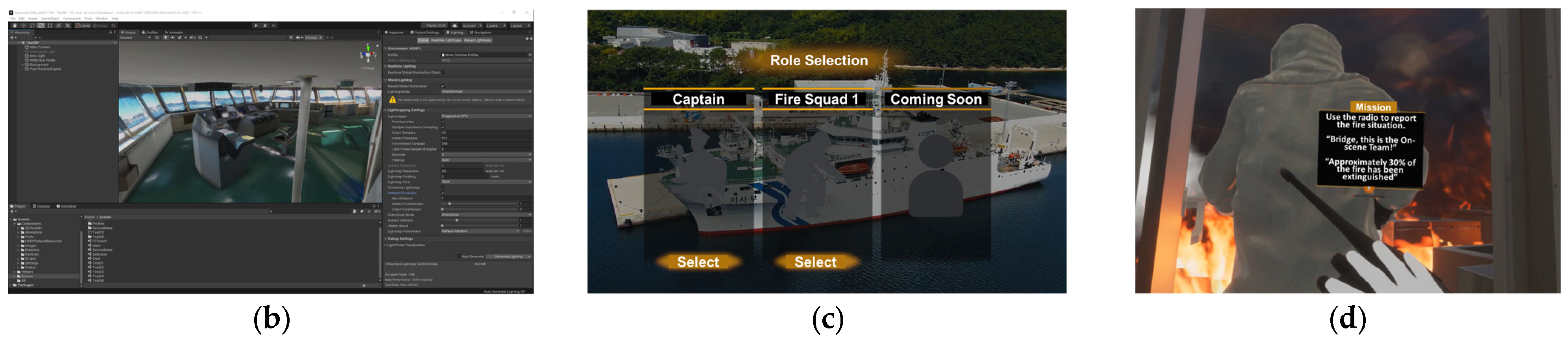
Among various instances of immersive VR content development, this assessment focuses on the “Marine VR edu-entertainment and practical safety training immersive content platform (v1.0)”—previously introduced in
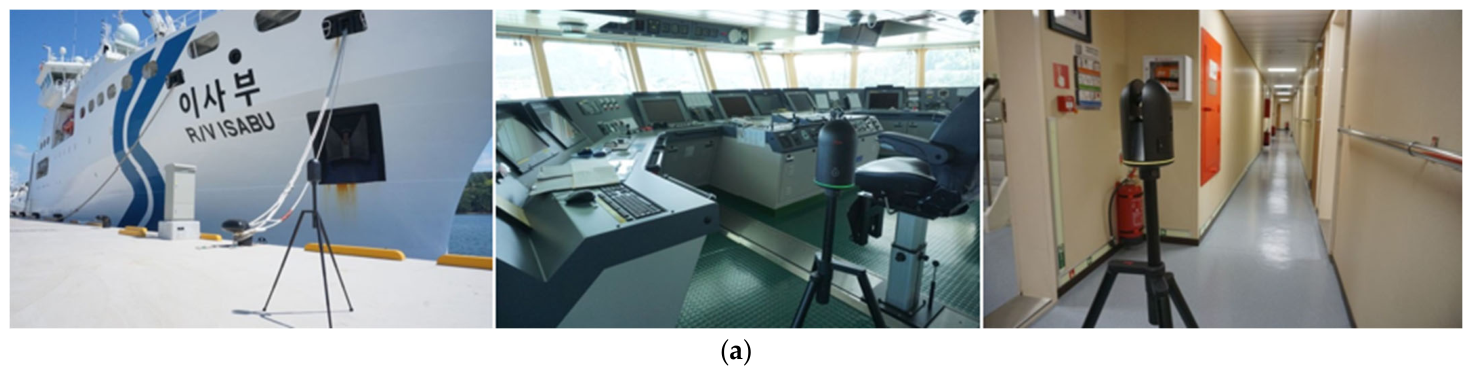
Section 2.7—as a representative case. Notably, the platform incorporates high-fidelity immersive content specifically designed for crisis response training during ship fire emergencies. To facilitate high-precision 3D modeling of an actual vessel, the Open Lab provided KIOST’s research vessel,
Isabu, as a dedicated testbed for Company D.
As illustrated in
Figure 10, the project encompasses an end-to-end workflow: from on-site spatial data acquisition and engine optimization to a role-based interactive simulation where trainees execute step-by-step fire suppression procedures. Developed using the Unity engine based on precise 3D modeling, this platform was successfully realized through intensive collaboration with the Open Lab, utilizing its high-end development infrastructure and expert feedback. To ensure immersive realism and operational stability, the platform was developed to meet rigorous technical requirements. The technological achievements were officially verified through an accredited third-party testing agency.
The key validated performance outcomes for Company D highlight exceptional advancements in both spatial fidelity and system stability. In terms of precision and reliability, the platform successfully virtualized five distinct maritime compartments—including the bridge, engine control room, engine room, hallway, and steering gear room—based on point-cloud data. The spatial deviation (dimensional error) between the virtualized 3D models and the actual physical spaces was strictly constrained to a remarkable average of 0.027%. This ultra-high precision was achieved alongside extensive graphical optimization, maintaining an average of 701,067 faces (polygons) and high-resolution texture details averaging 7372 pixels per space, thereby ensuring industrial-grade visual realism without compromising system load. Furthermore, to address technical efficiency, the system effectively mitigated cyber-sickness and provided seamless user interaction, which are critical factors in VR-based safety training. Official tests confirmed an average real-time rendering speed of 91 frames per second (FPS) during rapid viewpoint changes. The system also demonstrated near-instantaneous interactivity, with UI menu button response times averaging 0.015 ms and movement button response times at 5.549 ms, while the overall platform loading speed was highly optimized to an average of 0.33 s.
These empirical results confirm that the Open Lab’s infrastructure and technical advisory directly enabled Company D to overcome the traditional trade-off between high-fidelity 3D graphics and real-time system performance. By securing this officially certified technical reliability, the firm established a robust foundation for commercializing its interactive crisis response and VR training platforms in the highly demanding maritime education and safety sectors. Building upon these technological experiences—which included the precise digital twin modeling of the KIOST research vessel Isabu—and continuous technical collaboration with the Open Lab, Company D successfully translated its certified capabilities into tangible market performance. Ultimately, this led to a substantial quantitative track record, with the firm developing and delivering 42 immersive content projects in 2021 and 19 projects in 2022.
3.3. Socio-Economic Impact Assessment: Verified Revenue and Employment
3.3.1. Verification of Revenue Generation
To provide a high-fidelity assessment of the Open Lab’s economic impact, this study presents annual revenue figures and growth rates using two distinct valuation methods. Annual revenues for 2021 and 2022 are presented based on the actual exchange rate (AER) of each respective year to reflect the real-world purchasing power and the actual foreign exchange value earned by the firms during those periods. Conversely, the growth rates are calculated using a constant exchange rate (CER) based on the 2021 average. This dual approach is strategically employed to isolate the “growth rate” of the firms from external macroeconomic “noise”—specifically the significant depreciation of the Korean Won in 2022—thereby ensuring that the reported growth reflects true business performance rather than currency fluctuations. Crucially, it must be noted that the figures presented in
Table 8 do not represent the total gross revenues of the participating firms. Rather, they reflect the specific revenue generated directly through the Open Lab’s technical support, calculated by applying a strictly audited contribution rate (%). Therefore, the resulting growth rates signify the increased utilization and direct effectiveness of the Open Lab’s infrastructure for each firm.
The financial verification of the participating firms reveals substantial economic leaps directly tied to their technical advancements. Company A achieved an explosive growth rate of +492.8%. This economic expansion is directly attributed to the technical efficiencies established in
Section 3.2.1, where the firm achieved a 50–60% reduction in design lead times for complex ship modifications. The ability to rapidly acquire high-precision spatial data through the Open Lab’s infrastructure enabled the firm to secure high-volume contracts in the ship repair and eco-friendly modification markets, effectively translating technical time-savings into market share expansion. Similarly, the most dramatic relative growth was observed in Company B, which recorded an unprecedented attributed growth rate of +1775.0%. It is important to contextualize that this “J-curve” does not imply a sudden 17-fold expansion of the entire company within a single year; rather, it reflects a massive surge in the firm’s reliance on and benefit from the Open Lab’s infrastructure in 2022 compared to 2021. As detailed in
Section 3.2.2, Company B utilized the Open Lab to advance its technology from a laboratory prototype (TRL 5) to a certified commercial system (TRL 9). The significant reduction in training process times and the attainment of prestigious international certifications (KOLAS, LR, KR) served as the primary catalysts for this “J-curve” growth, showcasing how public infrastructure can successfully bridge the “Death Valley” for software-oriented SMEs.
Alongside these rapid project-specific expansions, other participating firms demonstrated robust economic resilience and steady market scaling. Company C maintained the highest cumulative revenue of over 1.4 million USD. While the AER-based figures suggested a 13.5% decline, the CER-based analysis reveals a highly stable performance with only a −2.4% marginal fluctuation. This stability was deeply underpinned by the scientific rigor discussed in
Section 3.2.3, where the Open Lab’s CFD simulations verified the technical feasibility of the hydraulic gates. Crucially, when a mass fish kill incident occurred, the Open Lab utilized digital twin-based IoT sensors to scientifically prove that the event was caused by external environmental factors rather than structural defects. This proactive scientific defense protected the firm from liability claims, ensuring long-term project continuity and market trust. Furthermore, Company D realized a steady growth of +44.0%, surpassing a cumulative revenue of nearly 1 million USD. This solid financial performance was driven by the successful delivery of 61 immersive content projects over two years. As analyzed in
Section 3.2.4, the platform’s 0.027% spatial precision and high-performance 91 FPS rendering stability were critical factors for its widespread adoption in the maritime safety sector. The transformation of high-end technical validation into a high-volume delivery model clearly highlights the Open Lab’s instrumental role in scaling domestic technology for industrial-grade application.
In summary, the consolidated revenue of 3,335,148 USD and an overall growth rate of +66.4% validate the Open Lab as a high-performance economic engine. By mitigating external currency risks through CER analysis, this study proves that the synergy between public infrastructure and private enterprise leads to robust, self-sustaining industrial revitalization.
3.3.2. Social Impact: Regional Job Creation and Employment
Beyond direct economic revenue, the Open Lab model has functioned as a significant catalyst for regional job creation, contributing to the revitalization of the local maritime labor market. This social impact is quantified through verified employment (
), which adjusts the number of new hires by the Open Lab contribution rate (
), as summarized in
Table 9. While Companies A and B focused on lean operational excellence and technical breakthroughs without immediate headcount expansion during the 2021–2022 period, Companies C and D demonstrated substantial employment growth driven by their respective scaling and R&D activities.
Company C’s employment performance represents an indirect “spillover effect” of the Open Lab, as the firm was a non-participant in the direct Regional Innovation Cluster project. Nevertheless, the firm achieved a cumulative verified employment of 3.5 persons. This growth was fundamentally driven by the revenue stability and enhanced market trust established through the scientific validation of its hydraulic structures, as discussed in
Section 3.2.3. As Company C secured large-scale infrastructure projects and maintained a robust consolidated revenue exceeding 1.4 million USD, the demand for professional personnel in hydraulic design, construction management, and on-site technical support increased. The Open Lab’s contribution to these hires reflects its role in strengthening the firm’s project execution capacity, thereby enabling the firm to confidently expand its workforce to manage increasingly complex and high-value engineering contracts.
In contrast, Company D’s employment performance, which totaled 8.0 persons, reflects a direct R&D-driven expansion as a core participant in the Regional Innovation Cluster project. The high volume of delivery—comprising 61 immersive content projects—was inherently labor-intensive, requiring a specialized workforce for 3D modeling, rendering optimization, and the operation of high-end Open Lab equipment. As analyzed in
Section 3.2.4, maintaining ultra-high spatial precision (0.027% error) and high-performance rendering (91 FPS) necessitated the continuous involvement of dedicated research personnel. Consequently, Company D utilized the Open Lab’s infrastructure as a platform for practical content development, leading to the recruitment of specialized developers and researchers to meet the rigorous technical standards of the maritime safety and education sectors.
Ultimately, the total verified employment of 11.5 persons within two years illustrates the diverse pathways through which public R&D infrastructure supports regional labor markets. While Company C represents stabilization-led employment through market expansion, Company D exemplifies innovation-led employment through technical scaling. This collective impact proves that the Open Lab model does not merely provide temporary equipment access but acts as a foundational support system that allows regional SMEs to build sustainable human capital, ultimately contributing to the long-term resilience of the maritime industrial ecosystem.
3.4. Integrated Summary of Technical and Socio-Economic Outcomes
To provide a comprehensive overview of the multi-dimensional impacts discussed in
Section 3.2 and
Section 3.3,
Table 10 consolidates the core technological achievements and verified socio-economic outcomes for the four representative SMEs. This integrated summary highlights the effectiveness of the Open Lab as an “innovation intermediary” that facilitates both rapid technical scaling and economic growth across diverse maritime sub-sectors. As demonstrated in the table, the Open Lab’s interventions directly addressed the prohibitive capital and technical barriers identified in
Section 1.1. By transforming high-end public research infrastructure into accessible corporate assets, the model enabled regional SMEs to achieve industrial-grade reliability and significant market expansion during the Phase I project period.
3.5. Qualitative Validation: User Satisfaction and Needs Analysis of Regional Enterprises
To complement the quantitative technical and economic achievements discussed in the previous sections, a qualitative survey was conducted among 17 regional enterprises that actively utilized the Open Lab. The objective was to evaluate user satisfaction and analyze future operational needs. The survey results provided critical insights into why the Open Lab model was highly effective in generating the performance metrics outlined in
Section 3.2 and
Section 3.3.
The survey results revealed an exceptionally high level of overall satisfaction among the participating regional firms, scoring a normalized 100 out of 100 points. Notably, while satisfaction with physical equipment utilization scored 98.2 points, satisfaction with expert-led “technical advisory services” attained a perfect score of 100. When asked about the most significant contributions of the Open Lab (multiple responses allowed), 85.7% of the firms cited the “resolution of technical difficulties,” followed by the “reduction in R&D costs” (57.1%) and “shortened product development periods” (28.6%). These results reaffirm the core hypothesis of this study: the Open Lab’s true value lies not merely in functioning as an equipment rental facility, but in acting as an “innovation intermediary” that actively bridges the “Death Valley” of commercialization through specialized technical expertise. Regarding future operational directions, the participating firms expressed strong demands for the “continuation of existing Open Lab support programs” (71.4%), “support for prototype production and commercialization” (71.4%), and the “introduction of new and advanced equipment” (64.3%).
These demands highlight a critical structural vulnerability of regional industries, where enterprises frequently struggle with limited project budgets and chronic shortages of skilled professional manpower. For these regional SMEs to overcome such inherent limitations, scale up, and ultimately achieve self-sustainability (technological and economic independence), the provision of public-led infrastructure coupled with expert technical services—such as the Open Lab model—is essential. The survey results clearly demonstrate that these firms strongly desire the continuous and sustained support of the Open Lab to bridge the gap between initial R&D success and full-scale market dominance.
3.6. Strategic Expansion: Extrapolating the Open Lab Model to Other Declining Regions
The successful revitalization of Busan’s maritime sector—driven by the synergy of high-end physical infrastructure and expert brainware—demonstrates that the Open Lab model can serve as a fundamental blueprint for reversing regional industrial decline. Building upon the qualitative validation from regional enterprises, this study proposes tailored Open Lab expansion strategies for three representative South Korean industrial hubs currently undergoing structural transitions.
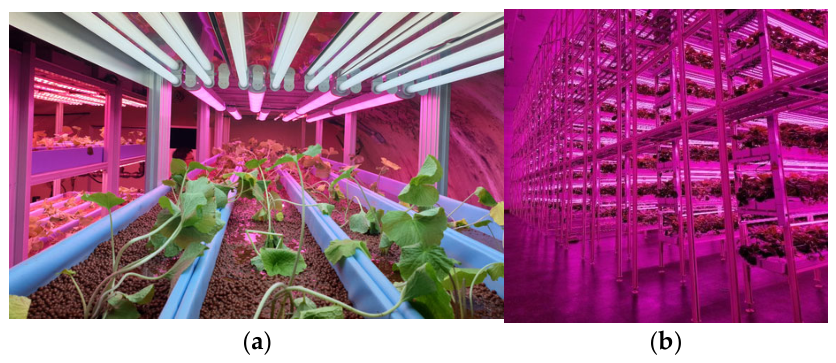
To mitigate the geographic isolation and economic stagnation of abandoned mine regions, the Open Lab model proposes a strategic pivot toward high-tech agriculture utilizing both subterranean spaces and underground thermal resources. By repurposing the natural constant-temperature (10–15 °C) environments and abundant subterranean mine water of these facilities, the region can foster high-value smart vertical farms. The significant cross-sectional dimensions of existing mine tunnels—such as those in the Hamtae mine (averaging 6.0 m in width and 2.4 m in height)—provide superior spatial scalability for multi-tier vertical rack installations and the seamless deployment of autonomous logistics systems [
26]. Building upon these inherent environmental advantages—particularly by harnessing the underground mine water and geothermal energy—the region recently established a world-class surface-level indoor smart farm at the abandoned Jangseong mine site, successfully validating the commercial viability and scalability of repurposing mine resources [
27] (see
Figure 11). The proposed Open Lab infrastructure focuses on unmanned ground vehicles (UGVs) equipped with LiDAR simultaneous localization and mapping (SLAM) for underground spatial digitalization, alongside IoT sensor networks for real-time environmental monitoring. By establishing a digital twin of the underground farm, the Open Lab has the potential to facilitate data-driven, remote cultivation strategies. Crucially, the “Digital proxy support” model—where experts operate advanced systems on behalf of SMEs lacking specialized technical personnel—in collaboration with regional flagship universities and Technoparks (commonly referred to as Science and Technology Parks, or STPs, internationally), could establish a robust R&D talent pipeline and a sustainable commercialization framework. This integrated support holds the potential to transform a regional liability into a high-tech testbed for the future of agriculture.
Once a hub for mass electronics, Gumi is strategically transitioning toward K-defense and secondary batteries. This structural shift was significantly accelerated by the region’s recent official designation as a ‘Defense innovation cluster’ by the national government [
28], coupled with large-scale investments in the ‘Secondary battery material industry hub center’ and major battery cathode facilities [
29]. To support this shift for local SMEs, the regional Open Lab should function as a “Security-cleared joint R&D hub” designed to meet the high-precision requirements of defense manufacturing and battery safety. Key infrastructure must include ultra-high-resolution 3D computed tomography (CT) scanners for the non-destructive testing of legacy components, thermal runaway evaluation systems for battery cells, and electromagnetic interference (EMI) and electromagnetic compatibility (EMC) testing chambers for ensuring electronic reliability. By deploying experts in artificial intelligence (AI) vision inspection and military standard (MIL-STD) compliance, the Open Lab can facilitate the entry of regional SMEs into high-barrier defense procurement and battery supply chains without the burden of excessive upfront capital expenditure.
Following the severe economic impacts of major automotive and shipbuilding plant closures, Gunsan is aggressively restructuring its industrial ecosystem around renewable energy and electric vehicles (EVs). This structural transition is strongly supported by the recent national designation of the Saemangeum area as a ‘Secondary battery specialized complex’ [
30] and the official selection of Gunsan port (Pier 7) as a strategic support base for the offshore wind power batch rear complex [
31]. To accelerate this shift, the regional Open Lab strategy centers on a “Prototyping-to-Certification” model. Necessary infrastructure must include advanced structural and material testing facilities for massive offshore wind components, alongside environmental reliability chambers for EV battery safety. By providing preemptive scientific validation for stringent international certifications (e.g., KOLAS, DNV), the Open Lab can effectively bridge the “Death Valley” for regional suppliers transitioning from traditional internal combustion engines and heavy manufacturing to the smart mobility and green energy sectors.
The expansion of the Open Lab model to these regions is expected to yield significant socio-economic dividends, grounded in the empirical evidence observed in the Busan case. First, by lowering the entry barriers to high-tech sectors through shared public infrastructure, regions can anticipate a surge in growth similar to the +66.4% revenue increase achieved in this study. Second, the integration of regional universities into the Open Lab framework will create a stable “human capital anchor,” preventing local brain drain and fostering Innovation-led employment. Finally, this tailored approach ensures that regional industrial resurrection is not a generic R&D effort but a highly customized strategic intervention. Ultimately, the Open Lab functions as a “Regional economic engine,” enabling declining hubs to transition into self-sustaining innovation ecosystems through the efficient deployment of public-led technological assets.
4. Conclusions
4.1. Key Findings and Regional Scaling
This study has empirically verified the efficacy of the Open Lab model as a high-performance engine for regional industrial resurrection (RIR). By analyzing the performance of participating SMEs in Busan’s maritime sector between 2021 and 2022, several key findings were established.
First, the technical intervention of the Open Lab enabled firms to bridge the critical “Death Valley” of innovation, facilitating TRL 9-level commercialization and the acquisition of international certifications through high-end infrastructure and specialized technical expertise. Second, the economic impact was substantial; the four representative firms achieved a consolidated revenue exceeding 3.3 million USD. By applying the constant exchange rate based on a CER to isolate macroeconomic volatility, this study revealed a robust +66.4% growth rate, demonstrating that the Open Lab directly enhances the market competitiveness and financial resilience of regional SMEs. Third, the social impact was evidenced by 11.5 verified new employees resulting from the Open Lab’s contribution, illustrating a dual pathway of employment: “Innovation-led” growth through technical scaling and “Stabilization-led” growth through market expansion. Finally, qualitative analysis confirmed that regional enterprises prioritize expert-led technical advisory over simple equipment rental, underscoring the Open Lab’s pivotal role as an essential “Innovation intermediary”.
Beyond the maritime sector of Busan, the Open Lab model offers a versatile blueprint for other declining industrial hubs in South Korea. While this replication roadmap currently serves as a policy vision requiring future empirical validation in these specific regions, it is strongly grounded in the evidence-tested success of the Busan case.
Whether it is the digital twin-based underground clusters in Taebaek/Samcheok, the advanced defense hub in Gumi, or the renewable energy transition in Gunsan, the core principle remains the same: tailoring high-end public assets to the specific technological needs of the region. By transforming local liabilities—such as abandoned mines or aging manufacturing sites—into specialized high-tech testbeds, the Open Lab can catalyze a self-sustaining innovation cycle across diverse geographic contexts. Such a tailored, cluster-based approach aligns with the European differentiation frameworks for maritime clusters, which emphasize that targeted institutional support is crucial for regional sustainability and global competitiveness [
32].
4.2. Policy Implications and Global Applicability
The results of this study offer several critical implications for regional development policy. Primarily, policy-makers must shift the focus from merely constructing physical facilities to providing “expert-infused infrastructure.” As evidenced by the 100% satisfaction rate for technical advisory services, the success of regional SMEs heavily depends on the availability of specialized human capital capable of translating complex data into commercial value. Furthermore, this study highlights the necessity of public-led sustainability. The Open Lab model demonstrates that true technological and economic independence—or self-sustainability—is achieved through a long-term, stable support ecosystem rather than fragmented, short-term grants. Finally, the framework emphasizes the critical role of regional innovation anchors, specifically regional universities and specialized corporate support institutions such as Technoparks. While universities serve as a “human capital anchor” by providing a steady pipeline of R&D talent, Technoparks provide the essential structural support for technology commercialization and SME incubation.
To thoroughly evaluate the optimization paths and global adaptability of this model, it is imperative to conduct a cross-border comparative analysis with internationally recognized innovation intermediary models, most notably the Fraunhofer-Gesellschaft in Germany and the Catapult Network in the United Kingdom. As summarized in
Table 11, globally established models like Fraunhofer and Catapult function primarily as national-level strategic engines, bridging the gap between academic research and commercialization for capability-proven enterprises. In contrast, the Maritime Open Lab model is uniquely designed as a “regional crisis intervention” mechanism for traditional SMEs in declining industrial regions.
Compared to conventional top-down, national-scale approaches, the Open Lab offers distinct comparative advantages by prioritizing tailored, comprehensive support for regional SMEs. Recognizing that these enterprises often grapple with shortages in both capital and specialized personnel, the model provides a holistic intervention package—combining expert technical consulting with access to high-cost advanced equipment and on-site troubleshooting—that catalyzes immediate business outcomes such as KOLAS-accredited performance certificates without requiring a massive internal technical workforce.
Beyond its immediate regional impact, this model serves as an adaptable framework for revitalizing global ‘rust belts’ facing structural decline. By seamlessly integrating localized policy execution through Technoparks with university-led talent pipelines, the Open Lab effectively transforms regional liabilities into dynamic innovation testbeds, offering a highly replicable strategy for industrial hubs worldwide.
The ultimate trajectory for optimizing this framework lies in establishing collaborative networks with global intermediaries. By bridging these locally upgraded SMEs with international commercialization channels, the Open Lab paves the way for a truly end-to-end innovation ecosystem that links regional growth to global markets.
4.3. Limitations and Future Research
While this study provides robust empirical evidence over a two-year performance generation phase, it is limited by its relatively small sample size of representative firms.
This limitation fundamentally arises from the one-way nature of the current public support framework. While the Open Lab can request data regarding quantitative and qualitative improvements—such as technological advancements, revenue increases, and employment growth—it lacks the institutional authority to mandate the submission of post-support performance metrics from the beneficiary firms. Consequently, securing a comprehensive sample size remains practically challenging. To address this, future policy frameworks must be amended to make post-support performance reporting a mandatory obligation, rather than an optional request, for all participating enterprises.
Furthermore, while the performance metrics in this study were strictly cross-validated using legally binding documents and audited by an expert committee, the underlying contribution rate method inherently relies on self-assessed attribution, which may leave some room for subjective allocation. Therefore, future research should aim to employ quasi-experimental methodologies, such as difference-in-differences (DiD) or propensity score matching (PSM), utilizing non-participating control groups to more objectively isolate the pure causal impact of public intermediary interventions.
Future research should involve a longitudinal study over a five-to-ten-year period to assess the long-term survival rates and global market entry of Open Lab-supported enterprises. A comprehensive, long-term analysis documenting both the quantitative and qualitative growth trajectories of these enterprises will provide invaluable insights. Ultimately, such longitudinal data will significantly contribute to establishing highly effective strategies for the construction and operation of future Open Labs, which are essential for sustainable regional industrial revitalization. Moreover, as digital transformation in the shipping industry increasingly relies on complex, networked ecosystems, future studies must evaluate how regional Open Labs can integrate into global digital maritime networks [
33].