Article

Closing Material and Water Loops in Lithium-Ion Battery Recycling: Integrated Nanofiltration–Membrane Distillation for Sustainable Metal Recovery

by
Thiago Vinícius Barros
1,
Franciele Pereira Camacho
1,
Leandro Vitor Pavão
1,
José Augusto de Oliveira
2,
Ana Caroline Raimundini Aranha
1,
Abhijit Data
3,
Biplob Pramanik
3,
Linhua Fan
3,
Veeriah Jegatheesan
3 and
Lucio Cardozo-Filho
1,*
1
Department of Chemical Engineering, State University of Maringá (UEM), Maringá 87020-900, Paraná, Brazil
2
School of Engineering, Sao Paulo State University (UNESP), Campus of Sao Joao da Boa Vista, Sao Joao da Boa Vista 13876-750, Sao Paulo, Brazil
3
School of Engineering, Royal Melbourne Institute of Technology (RMIT), Melbourne, VIC 3000, Australia
*
Author to whom correspondence should be addressed.
Sustainability 2026, 18(10), 4759; https://doi.org/10.3390/su18104759
Submission received: 16 March 2026 / Revised: 17 April 2026 / Accepted: 28 April 2026 / Published: 11 May 2026
(This article belongs to the Section Sustainable Chemical Engineering and Technology)

Abstract

This study investigates the integration of nanofiltration (NF) and membrane distillation (MD) for the selective separation and recovery of critical metals from effluents generated by supercritical water oxidation (SCWO) of lithium-ion batteries. Beyond resource recovery, the proposed hybrid system addresses the urgent environmental challenge associated with highly contaminated battery recycling effluents, which pose severe risks to aquatic ecosystems if improperly managed. NF90 and NF270 membranes exhibited complementary behavior: NF90 achieved high rejection of Co, Ni, and Mn (>70%) with a minimum lithium rejection of 30%, whereas NF270 showed lower rejection of divalent metals (40%) and lower lithium rejection (<20% at pH = 7), along with a higher permeability. Subsequent MD enabled water recovery while concentrating lithium in the MD concentrate (brine), maintaining near-complete rejection of transition metals (>90%) and reducing the effluent conductivity by more than 85%. Surface characterization (SEM–EDS, AFM, BET, and contact angle) revealed fouling mechanisms and wettability loss, highlighting operational stability limitations. In this hybrid approach, nanofiltration enables the selective separation of lithium from transition metals, while membrane distillation promotes water recovery and concentrates lithium into a recoverable brine, with fouling and wetting defining the operational boundaries of the process. Overall, the results demonstrate that coupling SCWO with NF–MD represents a viable and scalable pathway for simultaneous effluent detoxification and lithium recovery, contributing to circular economy strategies and the sustainable management of battery-recycling wastewater.

1. Introduction

Membrane-based processes are being increasingly applied in water treatments and resource recovery owing to their low chemical demand, reduced environmental footprint, and high selectivity compared with conventional methods [1,2,3,4,5,6]. Among the most pressing challenges, the effluents generated from lithium-ion battery (LIB) recycling have emerged as critical environmental concerns. These waste streams contain high concentrations of transition metals (Co, Ni, and Mn), lithium, and organic by-products from decomposition reactions, which may pose severe risks to aquatic ecosystems. Furthermore, the rapidly increasing global demand for LIB materials reinforces the urgent need for technologies that effectively combine environmental protection with resource valorization [7,8,9].
Although membrane-based separations have been explored for specific applications—such as Co and Ni recovery [10] or Li–Mg separation from natural brines [11]—comprehensive evaluations of lithium separation from multiple divalent metals in realistic effluent matrices remain limited [12,13]. The membrane rejection performance is strongly influenced by the solution chemistry, particularly the feed concentration and pH [14,15]; however, these effects are not yet well established for complex LIB-derived effluents. Alternative recovery routes, including hydrometallurgy [16], adsorption [17], and ionic liquids [18], often face challenges related to selectivity and secondary waste generation. Moreover, although advanced oxidation processes such as supercritical water oxidation (SCWO) are effective in degrading organic compounds and solubilizing metals [19,20], the resulting effluents still require downstream treatment before safe discharge.
Recent advances have demonstrated that coupling nanofiltration (NF) and membrane distillation (MD) can significantly enhance lithium selectivity while maintaining an efficient desalination performance [21,22,23]. This hybrid configuration synergistically combines the charge- and size-dependent separation mechanisms of NF with the vapor-driven selectivity of MD, enabling a high lithium recovery alongside near-complete rejection of transition metals. In addition, the approach offers an improved energy efficiency and compatibility with renewable heat sources, aligning with circular economy principles and sustainable wastewater treatment strategies.
Integrated membrane approaches thus represent a promising pathway for LIB effluent valorization. NF can selectively separate monovalent and divalent ions, while MD further concentrates lithium in a retentate/brine stream and removes residual contaminants [24,25]. Therefore, coupling NF and MD addresses two critical needs simultaneously—detoxification of hazardous effluents and recovery of valuable metals—contributing to the sustainable management of electronic waste and industrial water resources. In this hybrid approach, nanofiltration enables the selective separation of lithium from transition metals, while membrane distillation promotes water recovery and concentrates lithium into a recoverable brine, with fouling and wetting defining the operational boundaries of the process.
In this study, the performance of NF90 and NF270 membranes, followed by direct contact membrane distillation, was evaluated for the treatment of SCWO-derived effluents from LCO and NMC cathode materials. To the best of the authors’ knowledge, no previous studies have reported the application of NF–MD systems to e-waste-derived effluents or complex multi-ion systems. Emphasis is placed on the influence of solution chemistry on permeate flux and metal rejection, as well as on fouling behavior and surface modifications. Within this framework, the integration of membrane-based separations with supercritical water oxidation represents a promising strategy to close material and water loops, combining organic destruction, metal solubilization, and selective downstream recovery within a single environmentally oriented process platform.

2. Materials and Methods

2.1. Nanofiltration Experiments

Nanofiltration (NF) experiments were conducted using a bench-scale cross-flow system equipped with a high-pressure diaphragm pump, a stainless-steel membrane module, and independent feed, permeate, and retentate streams. Permeate flux was monitored gravimetrically, and the operating temperature was observed using an analytical thermometer. Flux measurements were performed under steady-state conditions, and the reported values were reproducible within experimental uncertainty. Commercial NF membranes (NF90 and NF270, DuPont®, Wilmington, DE, USA) were preconditioned in Milli-Q water prior to use. The effective membrane area was 0.018 m2. All experiments were conducted at a fixed transmembrane pressure of 5 bar. Steady-state conditions were assumed when no fluctuations in the transmembrane pressure were observed and a stable permeate flux was maintained over a defined period.
Model feed solutions were prepared to replicate realistic, multi-metal effluents obtained after supercritical water oxidation (SCWO) of cathode materials, rather than simplified single-salt systems. The NMC effluent contained Ni (150.2 mg·L−1), Co (541.1 mg·L−1), and Li (88.7 mg·L−1), and the LCO effluent contained Co (145.0 mg·L−1), Ni (24.6 mg·L−1), Li (48.9 mg·L−1), and Mn (2.2 mg·L−1), as detailed in Table 1. The effect of the metal concentration, pH (3.0, 5.0, and 7.0), and phenol addition (200 mg·L−1, representing organic by-products) on rejection and flux was investigated. Metal concentrations were quantified by MP-AES (Agilent 4210, Agilent Technologies, Santa Clara, CA, USA), and the TOC was determined using a Shimadzu TOC-L analyzer (Shimadzu Corporation, Kyoto, Japan).
NF experiments were conducted with synthetic feed solutions representative of SCWO-treated LCO and NMC cathodes. The use of synthetic effluents allowed precise control over system composition, enabling a systematic evaluation of the metal separation performance under well-defined conditions. In addition, this approach ensures reproducibility and minimizes the variability associated with complex and heterogeneous real waste streams. Importantly, the selected compositions and metal concentrations were based on values reported in the literature for SCWO-treated lithium-ion battery effluents, according to [26], ensuring that the experimental conditions remained representative of realistic scenarios. As such, the results capture both the potential and the limitations of the NF–MD process when applied to complex multi-component systems. Thus, NF90 and NF270 (DuPont®) were evaluated under the same set of conditions using both types of model effluents, allowing for a direct comparison of Li transport and transition-metal rejection.

2.2. Membrane Distillation Experiments

Direct contact membrane distillation (DCMD) was performed using a flat-plate module equipped with thermocouples and independent recirculation pumps for the hot and cold streams. Counter-current flow was employed with a temperature gradient of 30 °C (feed: 50 °C; permeate: 20 °C), and flow rates ranging from of 1.0 to1.5 L·min−1. Two hydrophobic PTFE membranes with pore sizes of 0.22 and 0.45 µm (Membrane Solutions®, Auburn WA, USA) were evaluated. The feed solutions for DCMD corresponded to NF permeates obtained under optimal transition-metal removal conditions.
In this configuration, DCMD acted as a polishing and concentration step, producing a low-salinity distillate (water recovery) while increasing the lithium concentration in the recirculating hot stream (brine) and maintaining near-complete rejection of residual transition metals. The occurrence of non-volatile leakage (i.e., partial wetting) was monitored and is discussed as an operational boundary for long-term stability. Images of the NF and MD modules are provided in the Supplementary Information (Figures S1–S3). A schematic of a DCMD module has been described in a previous study [27].
A schematic representation of the hybrid NF–MD process is shown in Figure 1. SCWO-derived LCO and NMC effluents were initially treated by nanofiltration (NF90 and NF270), generating a lithium-enriched permeate and a concentrate stream containing transition metals. The NF permeates were subsequently treated by MD (0.22 and 0.45 µm PTFE), highlighting the complementary roles of NF and MD in effluent detoxification and critical metal recovery.

2.3. Surface and Physicochemical Characterization

The membrane morphology before and after operation were analyzed by scanning electron microscopy coupled with energy-dispersive spectroscopy (SEM–EDS, JEOL JSM series, JEOL Ltd., Tokyo, Japan). The surface roughness was evaluated using atomic force microscopy (AFM, Bruker Dimension Icon, Bruker Corporation, Billerica, MA, USA), and the surface area was determined by a BET analysis (Micromeritics ASAP 2020, Micromeritics Instrument Corporation, Norcross, GA, USA). Wettability was assessed by static water contact angle measurements using a Krüss DSA100 goniometer (Krüss GmbH, Hamburg, Germany) with values reported as the mean ± standard deviation (n = 5).

2.4. Data Analysis

Metal rejection (R) and permeate flux (J) were calculated according to Equations (1) and (2), respectively:
R % = 1 C p C f × 100
J = V A × t
where Cp and Cf are the permeate and feed concentrations, respectively; V is the permeate volume collected over time t; and A is the effective membrane area. To evaluate the overall NF–MD system performance, mass balance calculations were conducted. The recovery, retention, rejection and selectivity factors were calculated using Equations (3)–(5):
R e c o v e r y % = M p M f × 100
R e t e n t i o n % = M c M f × 100
S e l e c t i v i t y   f a c t o r A / B = 100 R e j e c t i o n   ( B ) 100 R e j e c t i o n ( A ) × 100
where Mf, Mp and Mc correspond to the total mass of a given element in the feed, permeate respectively. Uncertainties were estimated by error propagation, assuming independent measurement errors.

2.5. SCWO Process Simulation and Energy Recovery Analysis

Supercritical water oxidation (SCWO) is an inherently energy-intensive process due to the elevated temperatures and pressures required for operation. Consequently, evaluating energy recovery and integration strategies is essential for assessing its potential feasibility at larger scales. In this study, a simulation-based framework was employed to analyze the energy recovery potential of a continuous SCWO process integrated with a downstream membrane treatment.
The process was modeled using Aspen Plus® V15, based on the experimental configuration employed on a laboratory scale and adapted for conceptual industrial operation. The simulated system consisted of a water stream (2500 kg·h−1) compressed to 240 bar and heated to 600 °C, which was mixed with a slurry containing battery materials (100 kg·h−1) and a PVC stream (150 kg·h−1). Due to modeling limitations, polymeric materials and crystalline battery components were represented by proxy compounds, with PVC and polypropylene substituted by their monomers and LiCoO2 represented by Li2O and CoO. The thermodynamic properties were calculated using the Peng–Robinson–Boston–Mathias equation of state.
Energy integration was optimized through a two-stage approach combining a pinch analysis, super targeting, and mathematical programming to minimize the total annual costs. The heat recovery was evaluated between the SCWO effluent cooling stages and the membrane distillation streams, enabling a systematic assessment of the energy efficiency improvements relative to non-integrated configurations. This framework serves as a decision-support tool for evaluating sustainable process integration without implying direct industrial deployment.

3. Results and Discussion

3.1. Nanofiltration Performance

As shown in Figure S5, the permeate flux varied among individual salts. LiOH exhibited the highest flux (approximately 14 L m−2 h−1), attributed to the small, hydrated radius of Li ions, which enhances their transport through NF membranes [28]. Among divalent species, Mn displayed the highest flux, consistent with its smaller hydrated radius compared to Co and Ni [29]. Co and Ni showed similar behaviors, with fluxes of around 10 L m−2 h−1 at low concentrations, decreasing by approximately 20% when the concentrations were increased.
A two-fold increase in the Li concentration reduced its flux by approximately 14%; however, Li still exhibited the highest transport, confirming the ability of NF to discriminate between monovalent and divalent ions. For Co and Ni, even four- and six-fold concentration increases caused minimal flux variations, indicating stable transport behavior, which is advantageous for a predictable rejection performance.
As shown in Figure S4 (Supplementary Information), the rejection rates of Co and Ni remained nearly unchanged across concentration levels, reaching approximately 80% and 90%, respectively. In contrast, Li and Mn exhibited significantly higher rejection rates at higher concentrations, both exceeding 90%. These findings are consistent with other studies reporting that metal rejection is strongly influenced by the ionic radius and solution chemistry [23,24,25]. Furthermore, concentration polarization, characterized by the accumulation of solutes at the membrane–solution interface, contributes to the increased rejection of lithium and manganese at higher salt concentrations [30].

3.2. Effect of pH

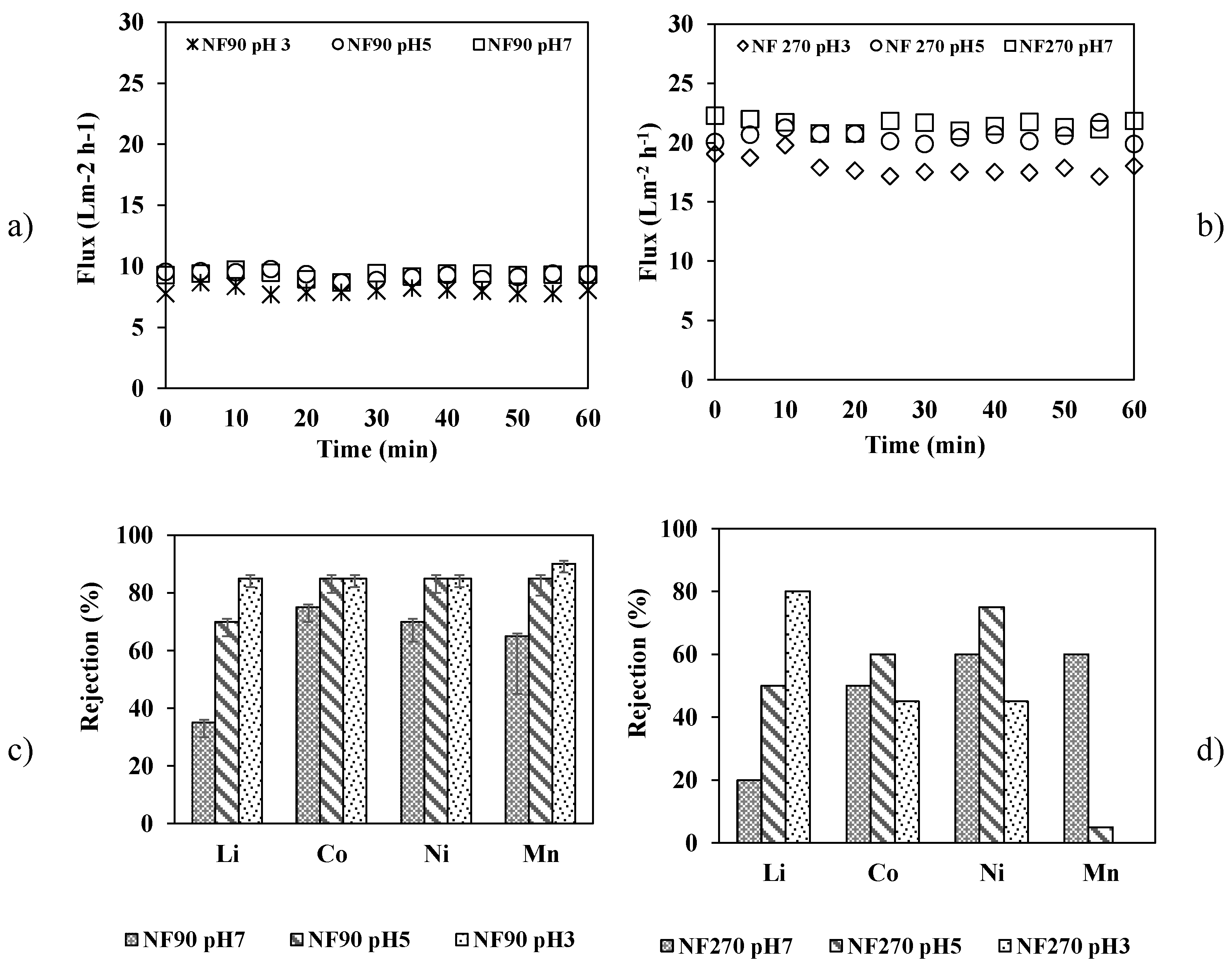
Figure 2 compares the NF90 and NF270 performance under different pH conditions. NF270 consistently provided higher fluxes, reflecting its larger mean pore size [31]. For both membranes, the flux increased with an increasing pH, indicating that separation was governed by not only size exclusion, but also electrostatic interactions between solutes and the membrane surface [31].
NF membranes are typically negatively charged, which favors the rejection of divalent cations [31]. As expected, the rejection rates improved at lower pH values (Figure S5). However, Li rejection remained consistently lower than that of divalent metals, confirming the potential of NF to selectively separate Li from Co, Ni, and Mn [32].
It was expected that, at a pH of 3, NF270 would exhibit a higher rejection of cobalt and nickel. This behavior can be explained by the fact that, at this pH, the membrane surface is positively charged, resulting in electrostatic repulsion between the membrane and cationic species, which enhances metal rejection. The zeta potentials of NF90 and NF270 membranes are approximately 4.0 and 3.0, respectively [33]. Lithium and manganese remain predominantly in their cationic forms across the entire pH range investigated. In contrast, cobalt and nickel undergo pH-dependent speciation. At a pH of 3.0, cobalt and nickel mainly present as cationic species, whereas at pH values above 5, they can form negatively charged chloride complexes [34], which significantly influences their interaction with the membrane and, consequently, its rejection behavior.
For Li recovery applications, NF270 at a pH of 7 offered the best compromise: a high flux, low Li rejection (approximately 20%), and divalent rejections above 50%. However, given the high market value of Co and its relevance in LCO batteries, NF90 was selected for further evaluation. At a pH of 7, NF90 achieved Co rejection above 70% and Ni and Mn rejection above 60% while maintaining Li rejection below 40%. Within the studied pH range, lithium remains predominantly as Li+. This behavior contributes to an increase in lithium rejection with increasing pH. At pH values above 4.0, the membrane surface becomes negatively charged due to the deprotonation of carboxylic groups (–COOH) in the polyamide layer, which enhances electrostatic interactions and influences ion transport, thereby affecting lithium permeation through the membrane.
Table S5 shows the selectivity (in terms of each divalent metal in comparison to lithium). The highest separation factors were observed at a pH of 7.0 for the LCO effluents using both membranes. The highest Co/Li selectivity was 2.60 and 1.60, respectively, for NF90 and NF270. The decrease in selectivity at lower pH values can be attributed to the combined effects of increased electrostatic repulsion between ions and the positively charged membrane surface, as well as enhanced ion–ion repulsion. The speciation of cobalt and nickel directly influenced the separation factors of the NMC effluents. Because these metals are present at higher concentrations, their speciation at an elevated pH (around 7.0) into negatively charged chloride complexes significantly affected the separation behavior, resulting in lower separation factor values at a pH of 7.0.
The presence of organics was also considered. Addition of phenol to the feed increased the rejection rates for all metals (Figure S6, Supplementary Information), likely owing to the formation of an organic fouling layer [35,36]. The TOC decreased from 4.07 to 0.64 mg L−1 in the permeate, corresponding to an approximately 84% removal efficiency.
For NMC-type model solutions, the permeate fluxes were approximately 60% lower than those of LCO (Figure S7, Supplementary Information), owing to a higher ionic strength and molality effects. A higher molality increases the osmotic pressure and ion–ion interactions, reducing transport through NF membranes [14]. Even under these conditions, all metals exhibited rejections above 70%, confirming the robustness of NF for concentrated effluents.

BET and AFM Analysis

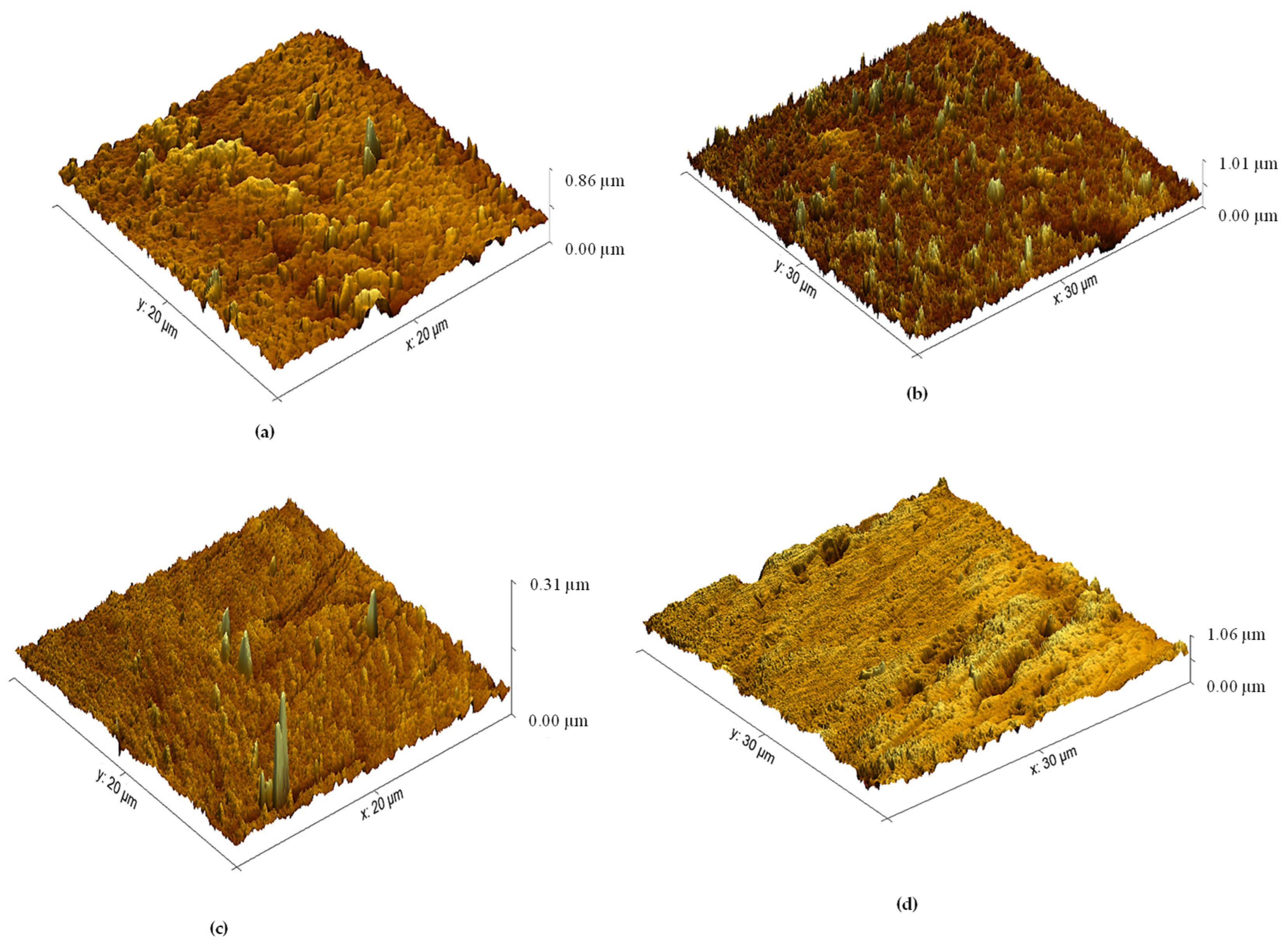
Surface characterization reinforced these findings. The BET analysis revealed a slightly higher surface area for NF90 (6.9 m2 g−1) compared to NF270 (5.8 m2 g−1). AFM showed an increased roughness after filtration—from 57.7 to 86.6 nm for NF90 and from 11.0 to 81.6 nm for NF270. These structural modifications are consistent with fouling and deposition phenomena (Figure 3), which may reduce flux and affect the long-term stability.
The SEM analysis confirmed the presence of inorganic deposits on the surface (Figure S8, Supplementary Information), supporting the hypothesis that morphological changes directly contribute to rejection behavior and the fouling propensity [10].

3.3. Membrane Distillation

3.3.1. Conductivity and pH

Table S1 summarizes the conductivity reductions (Table S1, Supplementary Information), which exceeded 85% under all conditions, independent of the membrane pore size or effluent type. This demonstrates that MD effectively decreases salinity and ionic content of battery-derived effluents [11].
As shown in Figure S9 (Supplementary Information), the pH decreased in the permeate for all the tested conditions, likely owing to partial transfer of Li and Mn through wet pores [37]. As reported in the literature, wetting is often not homogeneously distributed at the macro- and meso-scale, making its theoretical classification challenging [38]. In addition, the crystalline deposits observed in SEM–EDS images suggest that pore blockages and subsequent liquid intrusion into adjacent pores may have occurred [38]. Partial-wetting phenomena in MD systems treating high-salinity and metal-rich solutions have also been widely reported [39].
Because LiOH dominated both feed solutions, water loss to the permeate increased the Li concentration in the feed, leading to a higher pH in the concentrate.
Ultimately, Figure S10 (Supplementary Information) shows the rejection behavior of each metal. Lithium consistently exhibited the lowest rejection in the LCO model solution across both membrane pore sizes. Among all species, lithium and manganese demonstrated the weakest retention, with the lowest values observed for the 0.45 µm membrane.

3.3.2. SEM–EDS Analysis

The SEM–EDS analyses revealed crystalline deposits rich in Co, Ni, and Mn, with the deposition patterns strongly dependent on the feed composition (Figures S11 and S12, Supplementary Information). NMC effluents promoted higher Mn deposition, whereas LCO effluents showed mixed Co–Ni–Fe deposits. The quantitative results are summarized in Table S2 (Supplementary Information).
For the 0.45 µm NMC membrane, the dominant signals corresponded to Co = 9.8 ± 9.7 wt%, Ni = 5.7 ± 5.2 wt%, and Mn = 9.9 ± 6.8 wt%, together with high oxygen contents (27.7 ± 3.9 wt%). A significant chlorine peak was also observed (Cl ≈ 16.8 wt% in one spectrum), indicating the presence of chloride-rich deposits. The elemental composition suggests the precipitation of mixed hydroxide/oxyhydroxide phases, consistent with fouling mechanisms previously described in the literature [18,40,41].
For the 0.22 µm NMC membrane, the elemental composition was more heterogeneous. Mn = 42.2 ± 3.1 wt% exhibited the widest variability, whereas Co = 0.9 ± 0.5 wt%, Ni = 1.2 ± 1.1 wt%, and Fe = 10.0 ± 9.6 wt% appeared in smaller amounts. Oxygen averaged 22.5 ± 15.1 wt%. This high dispersion of Mn contents indicates localized precipitation and heterogeneous nucleation on the membrane surface, in line with the Mn-rich fouling phenomena reported in previous studies [18,36].
For the 0.45 µm LCO membrane, the main metals were Co = 8.8 ± 3.1 wt%, Ni = 7.4 ± 2.6 wt%, Mn = 3.8 ± 4.3 wt%, and Fe = 14.0 ± 6.3 wt%, together with oxygen (13.0 ± 5.2 wt%). Zn appeared in highly variable amounts (4.3 ± 3.8 wt%, with maxima up to 76.9 wt%), suggesting that these anomalies may be associated with system corrosion, interactions with lithium-containing effluents, or a combination of both, rather than intrinsic membrane deposition. Similar Zn anomalies have been observed in long-term EDS analyses of polymeric modules, highlighting the susceptibility of MD membranes to contamination from operational processes [36,41,42].
For the 0.22 µm LCO membrane, intermediate deposition was observed, with Co = 3.3 ± 2.2 wt%, Ni = 7.8 ± 7.6 wt%, Mn = 13.4 ± 8.3 wt%, Fe = 6.7 ± 3.2 wt%, and oxygen (14.7 ± 9.1 wt%). Zn appeared again in trace, but consistent, amounts (1.7 ± 1.1 wt%). These findings point to moderate, but stable, deposition patterns, suggesting that a smaller pore size favors localized nucleation of transition metals, even at lower bulk concentrations.
For the NF membranes, lower absolute deposition was detected compared to MD. NF90 exhibited Fe = 11.5 ± 4.1 wt%, Co = 4.6 ± 1.1 wt%, and Ni = 9.9 ± 1.0 wt%, with traces of Mn ≈ 2.3 ± 0.9 wt% and Zn ≈ 0.7 ± 0.4 wt%. In contrast, NF270 showed lower deposition, dominated by Mn = 4.6 ± 4.8 wt%, Fe = 3.2 ± 4.4 wt%, and Co/Ni ≈ 2.0 ± 0.8 wt% each. Both NF membranes displayed trace levels of Cu, Zn, Sn, Pb, Ag, and Pd (<2 wt%), most likely associated with background contamination [10,32,33,40,41]. The stronger deposition on NF90 is consistent with its denser polyamide selective layer and higher divalent rejection, whereas NF270 accumulated fewer species owing to its higher permeability and weaker rejection. These differences highlight the trade-off between selectivity and the fouling propensity.
Overall, the SEM–EDS results corroborate the rejection data: NF90 accumulates more divalent species due to its tighter structure, whereas NF270 shows lower, but more stable, deposition. MD membranes, although highly effective in conductivity removal, are more prone to heterogeneous fouling and contamination, particularly from Zn and Fe, which may originate from multiple sources, including system piping, equipment corrosion, or chemical interactions with lithium-containing effluents.

3.4. Mass Balance

The mass balance analysis provided further insights into the NF–MD system performance (Table S3, Supplementary Information). The detailed mass balance results are provided in the Supplementary Information and should be interpreted while considering analytical uncertainty and concentration levels close to the detection limits. For NMC-derived effluents treated with the 0.22 µm MD membrane, lithium was distributed between the distillate and the brine, with ~29% quantified in the distillate and ~55% remaining in the concentrate. From a resource-recovery standpoint, the concentrate represents the recoverable Li-bearing stream for downstream crystallization/precipitation, whereas the presence of Li in the distillate indicates partial wetting (non-volatile leakage) under a high ionic strength and fouling conditions. In contrast, Co, Ni, and Mn were predominantly retained in the concentrate (>90%), enabling confinement of transition metals into a dedicated recovery stream. For LCO effluents, the Li quantified in the distillate was lower (~19%), consistent with a reduced wetting propensity for this matrix. Overall, the mass balance supports the NF–MD approach as a dual-purpose platform for transition-metal confinement and lithium stream concentration, while defining wetting as the key stability constraint for MD operation.
However, membrane wetting emerges as the key operational limitation affecting long-term MD stability under complex feed compositions. The concentration factor (Cconc/Cfeed) was included to evaluate solute enrichment in the concentrate stream, where values above unity indicate preferential accumulation in the concentrate phase. Deviations from complete mass balance closure (100%) are attributed to analytical uncertainties inherent to multicomponent systems and measurements near the detection limits. Additional techniques would be required to investigate membrane-wetting phenomena, such as surface tension measurements, contact angle analyses, liquid entry pressure (LEP) determination, and a membrane autopsy combined with microscopic characterization (e.g., SEM).

3.5. Contact Angle Measurements

The contact angle analysis provided important insights into the surface wettability (Table S4, Supplementary Information). For the MD membranes, the initial contact angles ranged from 86.8° to 98.7°, indicating predominantly hydrophobic surfaces required for stable vapor transport. The lowest initial contact angle (86.8°), observed for the NMC effluent treated with the 0.45 µm membrane, suggests a narrower operational margin against wetting under high-ionic-strength conditions. In contrast, higher initial contact angles were measured for NMC (92.2°) and for LCO effluents (98.7°) using the 0.22 µm membrane.
After the MD operation, the contact angles shifted to values within the range of 93.8–95.7°, evidencing surface modification by fouling/scaling and changes in the wetting propensity. These changes, together with SEM–EDS, support the idea that the pore size and foulant composition govern the wetting risk under battery-effluent conditions [34,35].
The NF membranes exhibited much lower contact angles, reflecting their hydrophilic character. NF90 presented 53.5°, whereas NF270 was more hydrophilic at 31.9°. The stronger hydrophilicity of NF270 explains its higher permeability, but lower rejection, compared with NF90 [10,30,36].

3.6. Environmental and Practical Implications

Although demonstrated on a laboratory scale, the NF–MD system can be directly integrated into industrial battery-recycling plants. NF modules are already available on a commercial scale with energy demands of 0.5–1.0 kWh·m−3, whereas MD requires low-grade heat that can be supplied by waste heat or renewable solar sources. The primary bottlenecks, such as fouling and wetting, may be mitigated by pretreatments and surface modifications.
Secondly, the hybrid NF–MD approach is less energy-intensive than other methods, potentially reducing the operational costs, with further efficiency gains possible through process integration and utilization of gaseous by-products. Importantly, it enables primary separation of metals into two phases—a solid phase containing recovered metals and a liquid phase—facilitating prior concentration and subsequent recovery. Although promising, industrial implementation still faces challenges, particularly regarding pressurization and heating/cooling of the system. Similar e-waste treatment approaches using supercritical water have shown that energy integration can reduce the operating costs by up to 60% compared to a direct scale-up [19]. Considering the growing global demand for lithium recovery, the NF–MD system represents a sustainable and scalable alternative to conventional hydrometallurgical treatments.
Table S6 shows a comparison between previous works with NF and MD membranes for lithium/cobalt/nickel/manganese separation. The authors of [43] reported that lithium exhibited low rejection (~18–19%) in NF270 membranes, while multivalent ions such as Co2+, Ni2+, and Mn2+ showed rejection values exceeding 90%, which is consistent with the results obtained in this study. The higher rejection of divalent ions compared to lithium is consistent with the literature, as shown by [44], where the Mg2+ rejection reached 95.4% while Li+ showed a significantly lower rejection (34.8%). Overall, membrane distillation processes enable the recovery and concentration of lithium, even though the authors of [11] reported that the presence of divalent ions at high concentrations affects the performance of the membrane due to wetting phenomena.
From a circular-economy perspective, the hybrid layout intentionally produces two recovery-oriented streams: a transition-metal-rich NF concentrate suitable for conventional downstream hydrometallurgical recovery, and a lithium-bearing MD concentrate that can be further processed via concentration-driven routes (e.g., carbonate precipitation or crystallization). The distillate constitutes a water-reuse stream, while the wetting propensity defines the operational window and motivates antifouling strategies.

3.7. Energy Recovery Insights for the Scaled-Up Process

SCW treatment is an energy-intensive process. Industrial implementation remains challenging due to the high pressure and temperature conditions involved. Therefore, it is fundamental that energy-related expenditures are evaluated and mitigated in a systematic form in the design stages. This work proposes a simulation-based optimization approach for designing energy integration systems in a continuous process for battery treatment with SCW.
The design takes original inspiration on a laboratory apparatus. However, the simulation framework acts strictly as a conceptual energy-targeting tool to evaluate thermodynamic synergies, rather than a final industrial design. It was simulated in Aspen Plus V15 and comprises a stream with 2500 kg/h water, compressed to 240 bar and heated in a furnace up to 600 °C. This stream is mixed into a slurry containing the battery material at 100 kg/h and a PVC stream of 150 kg/h. Given the inherent difficulties in rigorously modeling polymers and the lack of parameters in the simulator for battery components such as LiCoO2 crystal structures, a modeling approach based on proxy components was employed in a manner such that the material and energy balances would present minimal error and introduce minimal numerical instabilities to the method.
Some examples are PVC and PP, whose mass was replaced by their monomers, and the cathode material, LiCoO2, which was represented through its fundamental stable binary oxides (Li2O and CoO). These decompositions enable the use of standard physical property models within the simulator (PR-BM was used here). To accurately reflect experimental realities rather than an idealized equilibrium, the SCWO degradation was modeled using an RYield block. This allowed for the direct input of known experimental yields, resulting in a reactor effluent composed of chlorides such as AlCl3 and LiCl, oxides such as Al2O3 and CoO, and inerts such as solid copper, as well as solid carbon (char), phenol, light hydrocarbons, hydrogen and residual water. Because the total scaled-up feed is composed of 2500 kg/h of water and only 250 kg/h of waste material, the system is over 90% water by mass. Consequently, the macroscopic enthalpy profile and specific heat capacity of this reactor effluent are governed almost entirely by the supercritical aqueous phase. While exact kinetic speciation of trace metals is crucial for evaluating membrane fouling experimentally, it has a mathematically negligible impact on the overall thermal balances. Thus, combining the experimentally mapped R-Yield outputs with the dominant water phase provides a robust foundation for the specific purpose of energy targeting and integration.
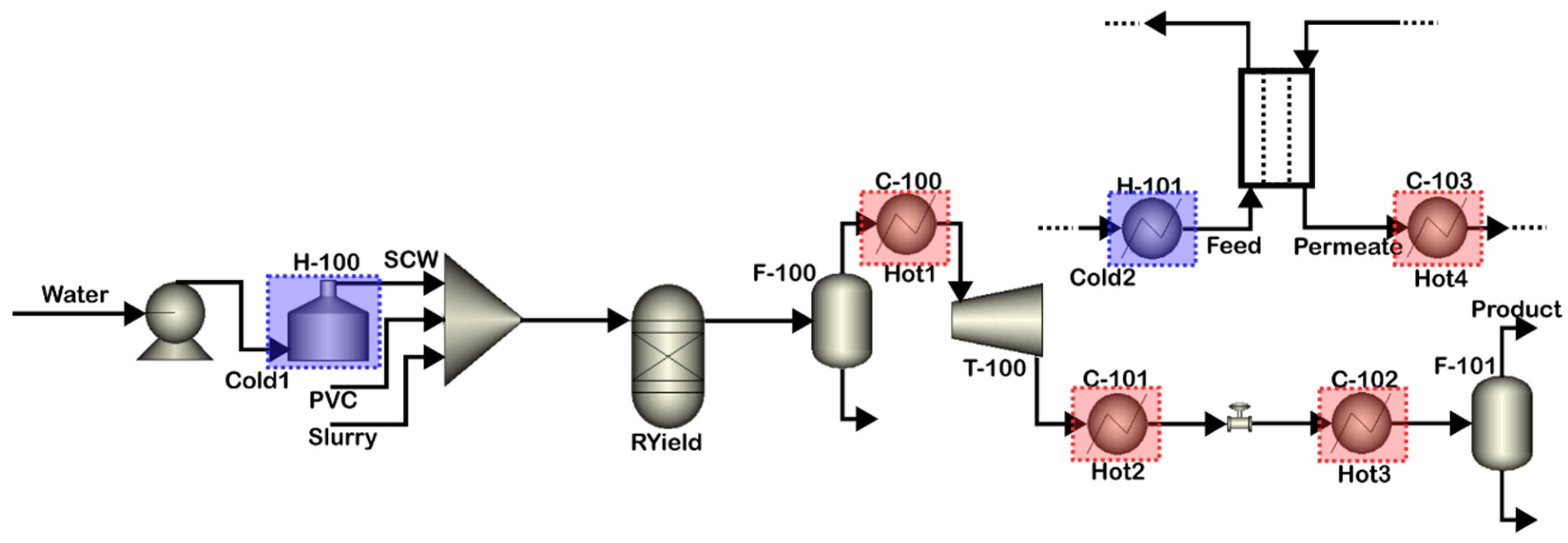
Downstream from the reactor, design modifications were implemented relative to the original experimental setup to enable industrial scale-up. First, an adiabatic gas–solid separator (simulated as a flash block, F-100) was introduced to remove the solid slurry containing char and inorganic salts from the supercritical fluid phase (mainly H2O, H2, and CO2). This clean stream undergoes the following energy recovery sequence: initial cooling (C-100), expansion in a turbine (T-100) for power generation, secondary cooling (C-101), throttling via a valve (V-100), and final cooling (C-102) to reach the flash separation temperature and pressure of 30 °C and 10 bar (F-101). Note that the referred cooling stages are not fixed; the heat loads are the decision variables. Given the highly non-linear enthalpy profiles inherent to supercritical water streams near the critical point, a multi-stage heat exchange is deemed a more cost-efficient strategy. The heat loads in these stages can be optimized by assessing the trade-offs between the capital costs (associated with the heat exchange surface) and the operating costs (related to external utility requirements). For heat integration purposes, the membrane distillation unit was not modeled as a physical separation block, avoiding the introduction of complex mass-transfer correlations that fall outside this energy-targeting analysis. Instead, it was abstracted purely as thermal sinks and sources, simulating only the temperature change steps: distillate cooling and concentrate heating, which were assumed as simplified 3000 kg/h and 2000 kg/h water streams.
Even with the considerations leading to a slightly different design from what would be a straightforward scale-up from the experimental apparatus, the gas stream from F-101 achieved around 90% purity for the hydrogen, which could be enriched further with the use, for instance, of a pressure swing adsorption unit.
The heat integration procedure employed here consists of two steps. The first one is a targeting step that is coupled to the simulator through a Python-coded (version 3.11) algorithm. Namely, the simulation is optimized simultaneously to an energy-targeting method (pinch analysis and super targeting) that can provide the minimum external utility requirement along with the minimum heat exchange surface prediction, and therefore, both the capital and operating costs can be estimated in an implicit manner (i.e., no heat exchanger allocation is needed at this stage). In the following stage, a mathematical programming method [45] coded in C++ is used to design the detailed heat exchange network. The simulation variables that are optimized are (i) the turbine work generation (if null, no turbine is included); (ii) the C-101 outlet temperature; and (iii) the C-102 outlet temperature. Streams that are assumed as heat sources are those associated with C-100, C-101, C-102, and C-103, which is the membrane distillate cooler. Heat sinks are the streams associated with H-100, which represents the furnace, and H-101, which represents the concentrate heater in the membrane distillation process. As the main goal here is to perform an analysis for the energy recovery potential in this SCW treatment process, only the capital and operating costs related to the heaters, coolers, heat exchangers and turbine were considered. The capital cost relations used were obtained from [46] and corrected with the Chemical Engineering Plant Cost Index® (CEPCI) value for 2024, with a project horizon of 10 years with a 15% interest rate. Values for heating/cooling and electricity were obtained from [45] as well. These economic metrics constitute preliminary, order-of-magnitude estimates intended solely to evaluate the comparative advantages of energy integration, rather than to serve as a definitive financial budget for immediate industrial deployment.
Figure 4 shows the simulation and highlights the streams that are considered as possible heat sources or sinks. It highlights two cold streams (Cold1 and Cold2), which are the high-pressure feed water to be led to the supercritical temperature and the membrane feed stream. Hot streams (Hot1, Hot2, Hot3 and Hot4) are those associated with gases from the reaction at different stages, and the membrane permeate stream.
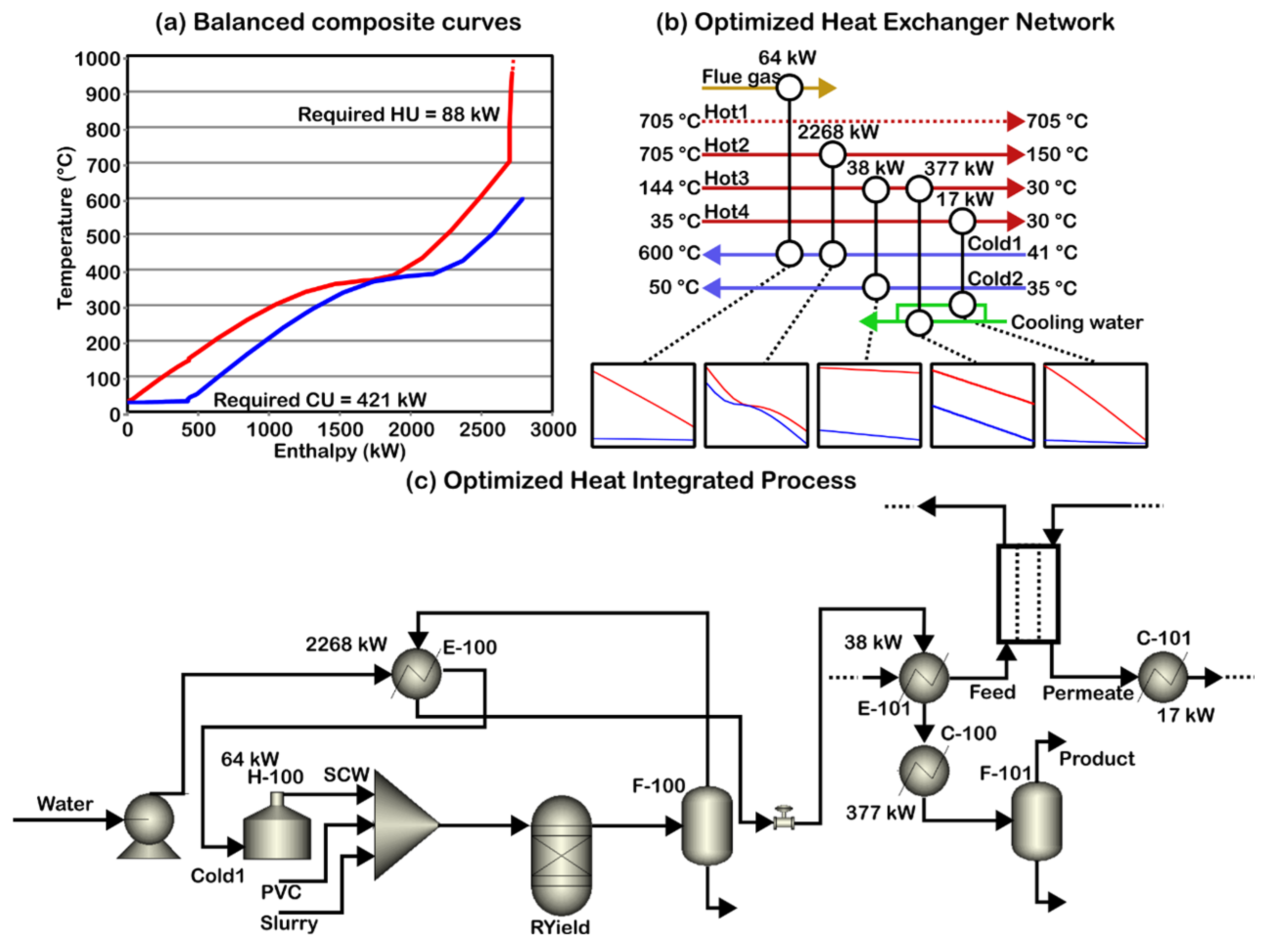
Figure 5 shows the optimized composite curves for the process, along with the grid diagram heat exchanger network with temperatures, head loads and areas. Temperature profiles associated with each unit are included in the figure as well. The scaled-up process representation (Figure 4) and the associated heat integration analysis (Figure 5) demonstrate that low-grade thermal energy available in SCWO-derived streams can be effectively reused to supply the MD unit, reinforcing the feasibility of the proposed hybrid process. The composite curves (Figure 5a) clearly show a clear close temperature approach for this energy system. Even though the exothermal reaction slightly eases this effect, it still bottlenecks the heat exchange process by reducing the driving force and increasing the necessary heat exchange surface, which is why optimization is important in this scenario. The simultaneous energy targeting and simulation optimization led to the requirements of 88 kW in hot utilities (flue gas in the furnace) and 421 kW in cold utilities (cooling water). The estimated total annual costs (TAC) for the predicted heat integrated system would be $ 87,267/y. This is a substantial reduction, given that, without integration, the needs were of 2370 kW in heating and 2700 kW in cooling utilities, with a TAC of $ 516,945/y. The second optimization step regards the detailed design of the HEN, i.e., defining the heat exchanger placement and sizes. As seen in Figure 5b, two heat exchangers are present for energy recovery, and three others are for heating/cooling from external utilities. The temperature profiles in the exchangers are illustrated in the figure as well. The optimized HEN led to 62 kW and 396 kW of hot and cold utilities, and a TAC of $ 70,682/y.
In Figure 5c, the optimized heat exchanger network demonstrates how the thermal energy from the SCWO effluent can be efficiently cascaded. The bulk of the high-grade heat recovery is performed by E-100 (recovering 2268 kW) to preheat the incoming feed prior to a pressure reduction in the valve (a turbine was deemed too expensive for this process by the optimizer). The remaining low-grade heat is sent to the membrane system through E-101. By abstracting the MD unit as a thermal sink, the simulation accurately targets the operational demand observed experimentally without the need for complex separation models. Specifically, heating the simplified 2000 kg/h MD feed stream from 35 °C to the bench-scale operating temperature of 50 °C requires 37.6 kW. The heat exchanger E-101 (38 kW) successfully fulfills this exact demand, establishing a coherent thermodynamic connection between the primary thermochemical degradation and downstream membrane separation.

4. Conclusions

This study demonstrates that coupling nanofiltration (NF) and membrane distillation (MD) provides a robust and sustainable strategy for lithium-ion battery recycling, enabling simultaneous effluent detoxification and selective lithium recovery. NF90 exhibited superior rejection of Co, Ni, and Mn, whereas NF270 allowed enhanced lithium passage, confirming the complementary roles of these membranes within the hybrid separation scheme. A subsequent MD treatment further reduced the salinity and enabled water recovery while concentrating lithium in the MD concentrate (brine); partial wetting, as evidenced by trace Li in the distillate, highlights the need for fouling mitigation strategies to ensure long-term stability. When combined with supercritical water oxidation (SCWO), the proposed system enables simultaneous organic destruction, metal solubilization, and selective downstream recovery, addressing key environmental and technological bottlenecks associated with battery-recycling effluents. This integrated approach prevents the transfer of pollution from solid residues to aqueous streams, a limitation often overlooked in conventional hydrometallurgical routes. Beyond resource recovery, the NF–MD–SCWO framework contributes directly to environmental protection by mitigating the discharge of metal-rich and saline wastewaters that pose risks to aquatic ecosystems. By integrating advanced membrane separation with thermochemical treatment, the proposed process offers a scalable and energy-efficient pathway aligned with circular-economy principles, industrial wastewater management, and global water quality goals. Future works should focus on pilot-scale validation, studies including real effluents to include the additional complexity of organic fouling alongside the membrane, the long-term membrane performance, and the development of antifouling strategies to accelerate the implementation of this technology in real-world lithium-ion battery-recycling facilities.

Supplementary Materials

The following supporting information can be downloaded at: https://www.mdpi.com/article/10.3390/su18104759/s1, Figure S1: Bench-scale nanofiltration (NF) unit used in this study; Figure S2: NF module setup and flow configuration; Figure S3: Direct contact membrane distillation (DCMD) module used for polishing NF permeates (adapted from [26]); Figure S4: Metal rejection for individual metallic salts at low and high concentrations; Figure S5: Permeate flux of individual metallic salt solutions through NF90 membranes at low and high concentrations (mg·L−1). Fluxes are expressed in L·m−2·h−1 using identical scales across panels; Figure S6: Rejection for the LCO-type model solution in the presence of phenol; Figure S7: Flux and rejection for the NMC-type model solution using NF90 at different pH values; Figure S8: SEM analysis (30,000×) of NF90 (a) and NF270 (b) membranes after nanofiltration; Figure S9: Reduction in permeate pH for NMC (a) and LCO (b) type solutions under different pore sizes; Figure S10: Rejection of metals in DCMD experiments with different pore sizes and model solutions; Figure S11: SEM images of MD membranes after operation with LCO effluents, showing crystalline deposits. Images were taken at magnifications of 5000× (a) and 8000× (b), using a membrane with a pore size of 0.45 µm; (c) EDS mapping of MD membranes; Figure S12: SEM images of MD membranes before and (b) after operation with NMC effluents and (c) EDS mapping, showing fouling structures. Images were taken at magnifications of 2000× using a membrane with a pore size of 0.22 µm; Table S1: Conductivity reduction (%) in DCMD experiments; Table S2: Elemental composition of crystalline deposits on NF and MD membranes determined by SEM–EDS (wt%, mean ± SD, n = 5); Table S3: Mass balance of Li, Co, Ni, and Mn during NF–MD operation (Vf = 1.0 L; mean ± SD, n = 3); Table S4: Static water contact angle of NF and MD membranes before and after operation (mean ± SD, n = 5); Table S5: Selectivity for NF operating conditions; Table S6: Removal of Co, Ni, Li and Mn by nanofiltration (NF) and membrane distillation (MD).

Author Contributions

T.V.B.: Investigation, Methodology, Writing—Original Draft; F.P.C.: Investigation, Visualization, Writing—Review and Editing; L.V.P.: Formal Analysis, Validation; J.A.d.O.: Formal Analysis, Validation, Writing—Review and Editing; A.C.R.A.: Investigation, Methodology, Supervision; A.D.: Supervision; B.P.: Supervision; L.F.: Supervision; V.J.: Supervision; L.C.-F.: Conceptualization, Supervision, Funding Acquisition. All authors have read and agreed to the published version of the manuscript.

Funding

This research received no external funding.

Institutional Review Board Statement

Not applicable.

Informed Consent Statement

Not applicable.

Data Availability Statement

The original contributions presented in this study are included in the article/Supplementary Material. Further inquiries can be directed to the corresponding author.

Acknowledgments

The authors thank MCTI/CNPq under call n° 16/2025, FAPESP (nº 2020/11874-5), FINEP, CAPES (PIPD Agreement nº 40004015), Fundação Araucária (PDI Agreement nº 347/2023) and the Australian Government Research Training Program Scholarship. They also acknowledge the Central Facilities for Research Support (Complexo de Centrais de Apoio à Pesquisa—COMCAP) at the State University of Maringá (UEM) for the analytical infrastructure.

Conflicts of Interest

The authors declare no conflicts of interest.

References

  1. Song, X.; Luo, W.; Hai, F.I.; Price, W.E.; Guo, W.; Ngo, H.H.; Nghiem, L.D. Resource recovery from wastewater by anaerobic membrane bioreactors: Opportunities and challenges. Bioresour. Technol. 2018, 270, 669–677. [Google Scholar] [CrossRef] [PubMed]
  2. Gao, L.; Wang, H.; Zhang, Y.; Wang, M. Nanofiltration membrane characterization and application: Extracting lithium in lepidolite leaching solution. Membranes 2020, 10, 178. [Google Scholar] [CrossRef] [PubMed]
  3. Lee, J.; Yu, S.-H.; Kim, C.; Sung, Y.-E.; Yoon, J. Highly selective lithium recovery from brine using a λ-MnO2–Ag battery. Phys. Chem. Chem. Phys. 2013, 15, 7690. [Google Scholar] [CrossRef]
  4. Botelho Junior, A.B.; Tenório, J.A.S.; Espinosa, D.C.R. Separation of critical metals by membrane technology under a circular economy framework: A review of the state-of-the-art. Processes 2023, 11, 1256. [Google Scholar] [CrossRef]
  5. Kanagasundaram, T.; Murphy, O.; Haji, M.N.; Wilson, J.J. The recovery and separation of lithium using solvent extraction methods. Coord. Chem. Rev. 2024, 509, 215727. [Google Scholar] [CrossRef]
  6. Sim, G.; Pishnamazi, M.; Seo, D.; Kong, S.R.; Lee, J.; Park, Y.; Chae, S.R. Recent advances in electrodialysis technologies for recovering critical minerals from unconventional sources. Chem. Eng. J. 2024, 497, 154640. [Google Scholar] [CrossRef]
  7. Larouche, F.; Tedjar, F.; Amouzegar, K.; Houlachi, G.; Bouchard, P.; Demopoulos, G.P.; Zaghib, K. Progress and status of hydrometallurgical and direct recycling of Li-ion batteries and beyond. Materials 2020, 13, 801. [Google Scholar] [CrossRef]
  8. Kumar, R.; Chakrabortty, S.; Chakrabortty, P.; Nayak, J.; Liu, C.; Khan, M.A.; Ha, G.S.; Kim, K.H.; Son, M.; Roh, H.S.; et al. Sustainable recovery of high-valued resources from spent lithium-ion batteries: A review of the membrane-integrated hybrid approach. Chem. Eng. J. 2023, 470, 144169. [Google Scholar] [CrossRef]
  9. Dunlap, A.; Riquito, M. Social warfare for lithium extraction? Open-pit lithium mining, counterinsurgency tactics and enforcing green extractivism in northern Portugal. Energy Res. Soc. Sci. 2023, 95, 102912. [Google Scholar] [CrossRef]
  10. Gherasim, C.V.; Hancková, K.; Pararcik, J.; Mikulásek, P. Investigation of cobalt (II) retention from aqueous solutions by a polyamide nanofiltration membrane. J. Membr. Sci. 2015, 490, 46–56. [Google Scholar] [CrossRef]
  11. Yun, T.; Kim, J.; Lee, S.; Hong, S. Application of vacuum membrane distillation process for lithium recovery in spent lithium ion batteries (LIBs) recycling process. Desalination 2023, 565, 116874. [Google Scholar] [CrossRef]
  12. Park, S.H.; Kim, J.H.; Moon, S.J.; Jung, J.T.; Wang, H.H.; Ali, A.; Quist-Jensen, C.A.; Macedonio, F.; Drioli, E.; Lee, Y.M. Lithium recovery from artificial brine using energy-efficient membrane distillation and nanofiltration. J. Membr. Sci. 2020, 598, 117683. [Google Scholar] [CrossRef]
  13. Koli, M.; Ranjan, R.; Singh, S.P. Functionalized graphene-based ultrafiltration and thin-film composite nanofiltration membranes for arsenic, chromium, and fluoride removal from simulated groundwater: Mechanism and effect of pH. Process Saf. Environ. Prot. 2023, 179, 603–617. [Google Scholar] [CrossRef]
  14. Bandini, S.; Drei, J.; Vezzani, D. The role of pH and concentration on ion rejection in polyamide nanofiltration membranes. J. Membr. Sci. 2005, 264, 65–74. [Google Scholar] [CrossRef]
  15. Muthukrishnan, M.; Guha, B.K. Effect of pH on rejection of hexavalent chromium by nanofiltration. Desalination 2008, 219, 171–178. [Google Scholar] [CrossRef]
  16. Choi, J.W.; Kim, J.; Kim, S.K.; Yun, Y.S. Simple, green organic acid-based hydrometallurgy for waste-to-energy storage devices: Recovery of NiMnCoC2C4 as electrode material for pseudocapacitors from spent LiNiMnCoO2 batteries. J. Hazard. Mater. 2022, 424, 127481. [Google Scholar] [CrossRef] [PubMed]
  17. Cao, J.; Cao, H.; Zhu, Y.; Wang, S.; Qian, D.; Chen, G.; Sun, M.; Huang, W. Rapid and effective removal of Cu2+ from aqueous solution using novel chitosan and laponite-based nanocomposite as adsorbent. Polymers 2017, 9, 5. [Google Scholar] [CrossRef] [PubMed]
  18. Schaeffer, N.; Passos, H.; Gras, M.; Vargas, S.J.R.; Neves, M.C.; Svecova, L.; Papaiconomou, N.; Coutinho, J.A.P. Selective separation of manganese, cobalt, and nickel in a fully aqueous system. ACS Sustain. Chem. Eng. 2020, 8, 12260–12269. [Google Scholar] [CrossRef]
  19. Pereira, M.B.; Souza, G.B.M.; Espinosa, D.C.R.; Pavão, L.V.; Alonso, C.G.; Cabral, V.F.; Cardozo-Filho, L. Simultaneous recycling of waste solar panels and treatment of persistent organic compounds via supercritical water technology. Environ. Pollut. 2023, 335, 122331. [Google Scholar] [CrossRef]
  20. Souza, G.B.M.; Pereira, M.B.; Mourão, L.C.; Alonso, C.G.; Jegatheesan, V.; Cardozo-Filho, L. Valorization of e-waste via supercritical water technology: An approach for obsolete mobile phones. Chemosphere 2023, 337, 139343. [Google Scholar] [CrossRef]
  21. Yong, M.; Yang, Y.; Sun, L.; Tang, M.; Wang, Z.; Xing, C.; Hou, J.; Zheng, M.; Chui, T.F.M.; Li, Z.; et al. Nanofiltration Membranes for Efficient Lithium Extraction from Salt-Lake Brine: A Critical Review. ACS Environ. Au. 2025, 5, 12. [Google Scholar] [CrossRef]
  22. Wen, H.; Liu, Z.; Xu, J.; Chen, J.P. Nanofiltration membrane for enhancement in lithium recovery from salt-lake brine: A review. Desalination 2024, 22 591, 117967. [Google Scholar] [CrossRef]
  23. Jeong, S.; Jeong, H.; Park, C.; Gu, B.; Jeong, S. Effective lithium recovery from battery wastewater via nanofiltration and membrane distillation crystallization with carbon nanotube spacer. Chem. Eng. J. 2025, 503, 158315. [Google Scholar] [CrossRef]
  24. Pramanik, B.K.; Asif, M.B.; Roychand, R.; Shu, L.; Jegatheesan, V.; Bhuiyan, M.; Hai, F.I. Lithium recovery from salt-lake brine: Impact of competing cations, pretreatment and preconcentration. Chemosphere 2020, 260, 127623. [Google Scholar] [CrossRef]
  25. Morgante, C.; Lopez, J.; Cortina, J.L.; Tamburini, A. New generation of commercial nanofiltration membranes for seawater/brine mining: Experimental evaluation and modelling of membranes selectivity for major and trace elements. Sep. Purif. Technol. 2024, 340, 126758. [Google Scholar] [CrossRef]
  26. Barros, T.V.; Oliveira, J.A.; Santos, M.P.; Bispo, D.F.; Freitas, L.S.; Jegatheesan, V.; Cardozo-Filho, L. Assessment of an eco-efficient process for the optimization of metal recovery in lithium cobalt oxide and lithium nickel manganese cobalt oxide batteries. Chemosphere 2024, 364, 143209. [Google Scholar] [CrossRef]
  27. Kebria, M.R.S.; Rahimpour, A. Membrane Distillation: Basics, Advances, and Applications. In Advances in Membrane Technologies; Abdelrasoul, A., Ed.; InteChopen: Rijeka, Croatia, 2020. [Google Scholar]
  28. Li, Y.; Zhao, Y.; Wang, H.; Wang, M. The application of nanofiltration membrane for recovering lithium from salt lake brine. Desalination 2019, 28 468, 114081. [Google Scholar] [CrossRef]
  29. Shannon, R.D. Revised effective ionic radii and systematic studies of interatomic distances in halides and chalcogenides. Acta Crystallogr. 1976, 32, 751–767. [Google Scholar] [CrossRef]
  30. Peer-Haim, O.; Shefer, I.; Singh, P.; Nir, O.; Epsztein, R. The Adverse Effect of Concentration Polarization on Ion–Ion Selectivity in Nanofiltration. ACS Environ. Sci. Technol. Lett. 2023, 10, 363–371. [Google Scholar] [CrossRef]
  31. Aguiar, A.O.; Andrade, L.H.; Ricci, B.C.; Pires, W.L.; Miranda, G.A.; Amaral, M.C.S. Gold acid mine drainage treatment by membrane separation processes: An evaluation of the main operational conditions. Sep. Purif. Technol. 2016, 170, 360–369. [Google Scholar] [CrossRef]
  32. Guo, S.; Yan, X.; Luo, Z.; Zhang, J.; Yuan, C. Preparation of positively charged nanofiltration membranes: Manipulation of the positive charge. Desalination 2024, 586, 117780. [Google Scholar] [CrossRef]
  33. Dillmann, S.; Kaushik, S.A.; Stumme, J.; Ernst, M. Characterization and Performance of LbL-Coated Multibore Membranes: Zeta Potential, MWCO, Permeability and Sulfate Rejection. Membranes 2020, 10, 412. [Google Scholar] [CrossRef]
  34. Aberdeen, S.; Foster, R.I.; Choi, S. Nickel and cobalt separation via speciation using deep eutectic solvent-based ion exchange. Sep. Purif. Technol. 2025, 375, 133833. [Google Scholar] [CrossRef]
  35. Luo, J.; Wan, Y. Effects of pH and salt on nanofiltration—A critical review. J. Membr. Sci. 2013, 438, 18–28. [Google Scholar] [CrossRef]
  36. Jarusutthirak, C.; Mattaraj, S.; Jiraratananon, R. Factors affecting nanofiltration performances in natural organic matter rejection and flux decline. Sep. Purif. Technol. 2007, 58, 68–75. [Google Scholar] [CrossRef]
  37. Himma, N.F.; Horn, H.; Saravia, F.; Wagner, M. Novel Approaches for Quantitative Assessments of Wetting Development in Membrane Distillation Based on Optical Coherence Tomography. Desalination 2026, 625, 119913. [Google Scholar] [CrossRef]
  38. Gryta, M. Long-Term Performance of Membrane Distillation Process. J. Membr. Sci. 2005, 265, 153–159. [Google Scholar] [CrossRef]
  39. Lebea, N.N.; Aftab, A.K.; Libing, Z.; Mookgo, M.; Qiyang, W.; Timothy, O.A.; Subhendu, D.; Mantoa, S.; Mosotho, J.G.; Saima, F.; et al. Membrane Distillation Crystallization: From Mechanisms and Process Control to Sustainable Production of Tailored Crystalline Materials. J. Water Process Eng. 2026, 86, 109935. [Google Scholar]
  40. Saeidiharzand, S.; Sadaghiani, A.K.; Yürüm, A.; Kosar, A. Multiscale superhydrophobic zeolitic imidazolate framework coating for static and dynamic anti-icing purposes. Adv. Mater. Interfaces 2023, 10, 2202510. [Google Scholar] [CrossRef]
  41. Ge, J.; Peng, Y.; Li, Z.; Chen, P.; Wang, S. Membrane fouling and wetting in a DCMD process for RO brine concentration. Desalination 2014, 334, 97–107. [Google Scholar] [CrossRef]
  42. Abdullah, N.; Yusof, N.; Lau, W.J.; Jaafar, J.; Ismail, A.F. Recent trends of heavy metal removal from waste/wastewater by membrane technologies. J. Ind. Eng. Chem. 2019, 76, 17–38. [Google Scholar] [CrossRef]
  43. Alam, M.; Van der Bruggen, B.; Khan, M.A.; Jin, P.; Bin-Jumah, M.; Ibrahim, M. High purity lithium recovery from spent lithium-ion batteries using commercial nanofiltration membranes: A comparative performance assessment. Sci. Rep. 2026, 16, 6129. [Google Scholar] [CrossRef] [PubMed]
  44. Koukoufilippou, D.; Liakos, I.L.; Pilatos, G.I.; Plakantonaki, N.; Banis, A.; Kanellopoulos, N.K. Separation of magnesium and lithium ions utilizing layer-by-layer polyelectrolyte modification of polyacrylonitrile hollow fiber porous membranes. Materials 2024, 17, 5878. [Google Scholar] [CrossRef]
  45. Pavão, L.V.; Costa, C.B.B.; Ravagnani, M.A.S.S.; Jiménez, L. Large-scale heat exchanger networks synthesis using simulated annealing and the novel rocket fireworks optimization. AIChE J. 2017, 63, 1582–1601. [Google Scholar] [CrossRef]
  46. Towler, G.; Sinnott, R. Chemical Engineering Design: Principles, Practice and Economics of Plant and Process Design; Butterworth-Heineman: Oxford, UK, 2013; Volume 2. [Google Scholar]
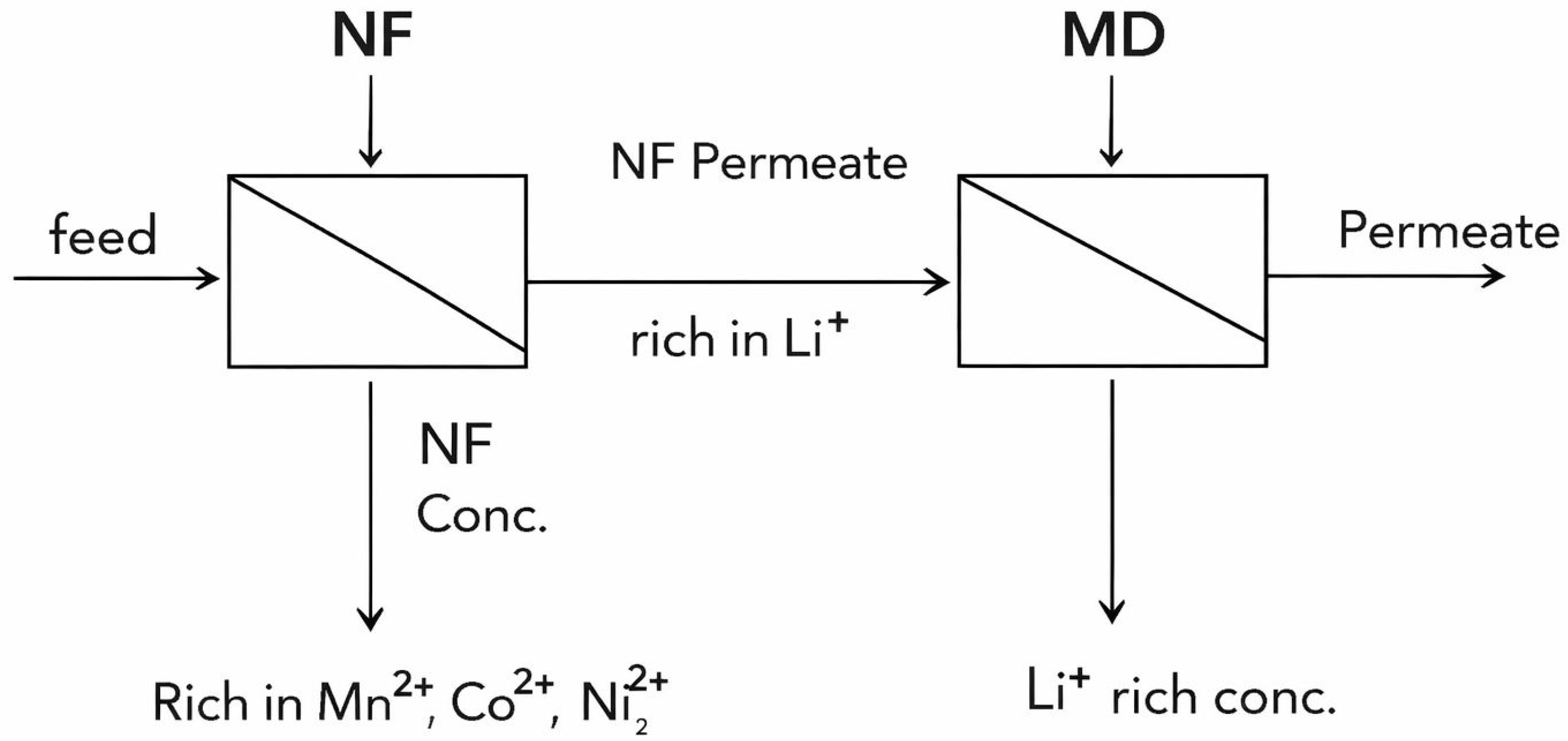
Figure 1. Schematic representation of the hybrid nanofiltration–membrane distillation (NF–MD) process.
Sustainability 18 04759 g001
Figure 2. Flux and rejection comparison between NF90 (a,c) and NF270 (b,d) for the LCO-type model solution at different pH values.
Sustainability 18 04759 g002
Figure 3. AFM images of NF90 (a,b) and NF270 (c,d) membranes before (a,c) and after (b,d) nanofiltration, illustrating fouling-induced surface topographical changes and differences between membrane types.
Sustainability 18 04759 g003
Figure 4. Scaled-up process proposal highlighting hot and cold streams used for heat integration. Hot streams (Hot1–Hot4) and cold streams (Cold1–Cold2) are identified according to their thermal role in the process; stream temperatures (°C) and heat duties (kW) are indicated to support the subsequent pinch and heat exchanger network analyses.
Sustainability 18 04759 g004
Figure 5. (a) Composite curves from pinch analysis (HU, CU, ΔTmin); (b) heat exchanger network obtained by simultaneous optimization; (c) integrated process flow diagram showing low-grade heat recovery for membrane distillation (MD).
Sustainability 18 04759 g005
Table 1. Metal concentrations in synthetic effluent solutions representative of SCWO-treated LCO and NMC cathodes (mean values, n = 3).
Feed SolutionsMetal Concentrations (mg·L−1)
Ni CoLiMn
NMC150.25541.1088.690.05
LCO24.65144.9748.922.19
Disclaimer/Publisher’s Note: The statements, opinions and data contained in all publications are solely those of the individual author(s) and contributor(s) and not of MDPI and/or the editor(s). MDPI and/or the editor(s) disclaim responsibility for any injury to people or property resulting from any ideas, methods, instructions or products referred to in the content.