Application of Psyllium Gum in Sustainable Packaging: A Comprehensive Review


Abstract
1. Introduction
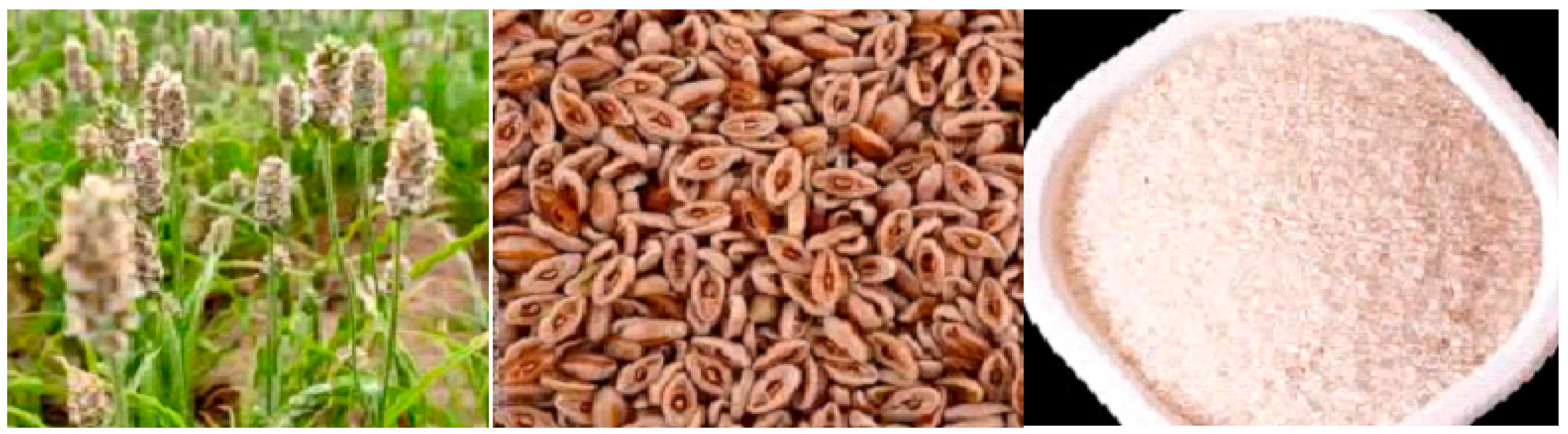
2. Production and Extraction of Psyllium Gum
3. Physicochemical Properties of Psyllium Gum for Packaging Applications
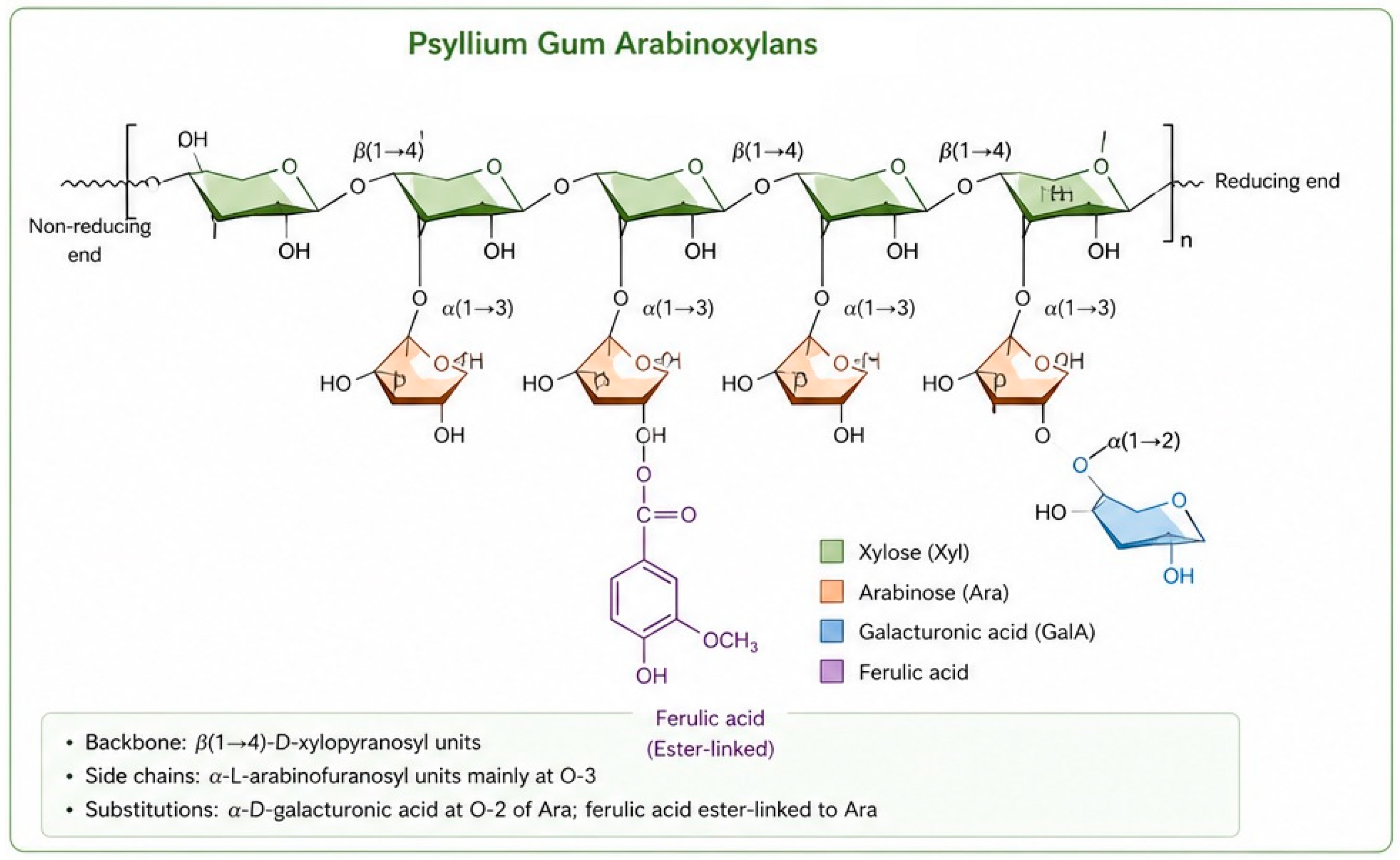
3.1. Chemical Characteristics
3.2. Physical Characteristics
3.3. Barrier Properties and Shelf-Life Extension
3.4. Rheological Tunability and Processing Advantages
3.5. Biodegradability and Environmental Performance
3.6. Comparison with Synthetic Hydrocolloids and Other Polysaccharide Films
4. Performance Enhancement Strategies for Psyllium-Based Films
4.1. Plasticization and Cross-Linking
4.2. Blending with Complementary Biopolymers
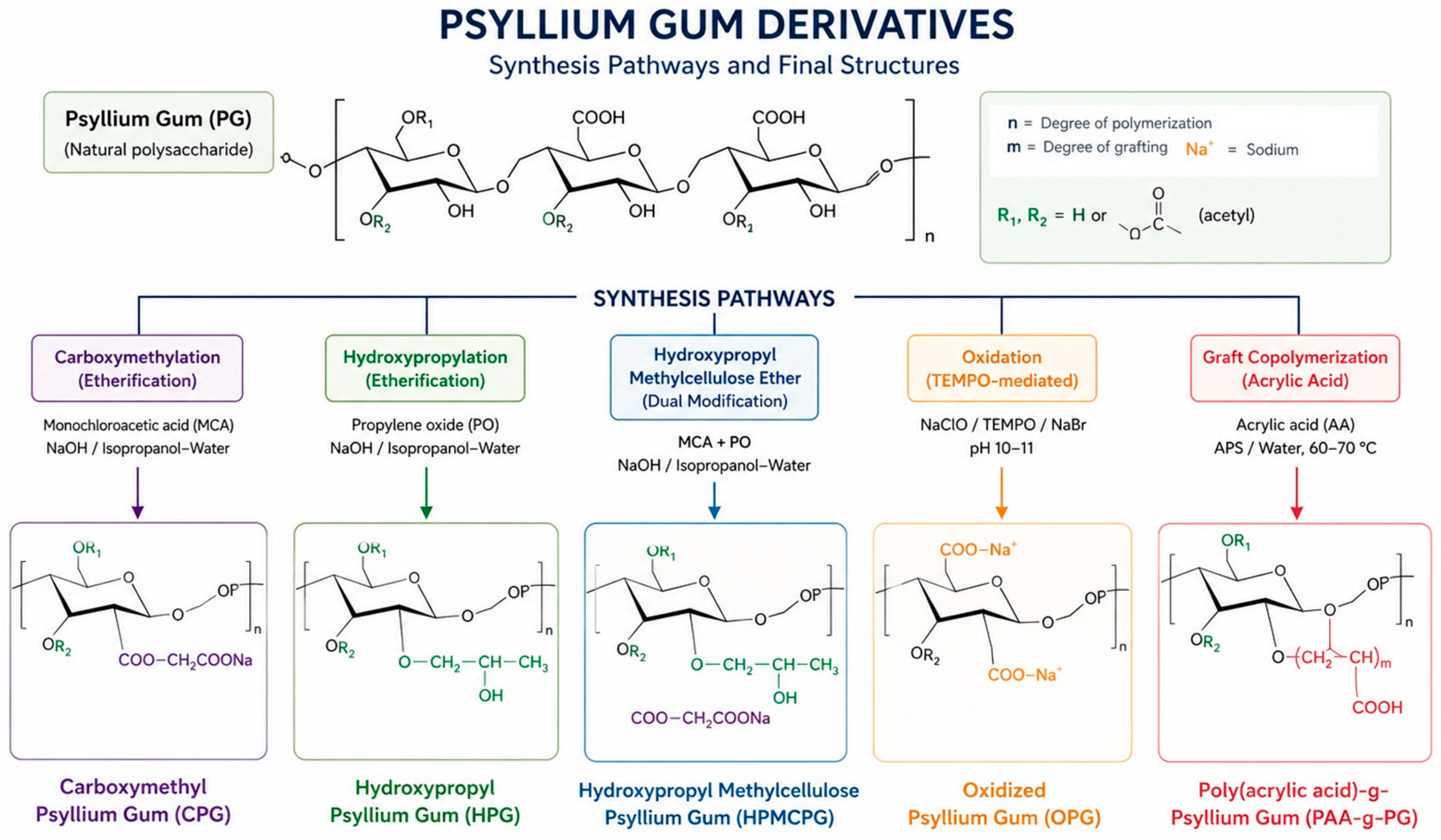
4.3. Chemical Modification
4.4. Nanocomposite Reinforcement
5. Processing into Films, Coatings, and Composites
6. Applications in Sustainable Packaging Systems
6.1. Edible Films and Coatings for Food Preservation
6.2. Active Packaging with Controlled Antimicrobial Release
6.3. Safety, Regulatory Aspects, and Microbiological Studies
7. Environmental Sustainability and Life Cycle Assessment (LCA)
7.1. Renewability and Agricultural Footprint
- Rapid regeneration without fossil feedstocks
- CO2 sequestration during biomass growth
- Utilization of husk byproducts (≈25–30% of seed weight)
- Limited land-use competition due to short seasonal cycles
7.2. Carbon Footprint and Energy Demand
7.3. Biodegradability and End-of-Life Performance
7.4. Contribution to Food Waste Reduction
7.5. Industrial Substitution Potential
7.6. Comparative Sustainability Overview
7.7. Broader Sustainability Impact
- Reduction in petroleum dependency
- Compostability and microplastic avoidance
- Edible and bio-integrated packaging options
- Food waste minimization through barrier and antimicrobial functions
- Compatibility with circular economy models
7.8. Performance Radar Comparison
8. Current Challenges and Limitations
9. Future Research Directions
10. Conclusions
Author Contributions
Funding
Institutional Review Board Statement
Informed Consent Statement
Data Availability Statement
Conflicts of Interest
References
- Scaria, S.S.; Kurian, J.T.; Dandin, V.S.; Joseph, K.S. Production of Blond Plantain (Plantago). In Biodiversity and Genetic Improvement of Medicinal and Aromatic Plants I; Springer: Berlin/Heidelberg, Germany, 2025; p. 93. [Google Scholar]
- Strkalj, L.; Yakubov, G.E.; Burton, R.A.; Cowley, J.M. Structural and Functional Properties of Fiber from Psyllium (Plantago ovata) Husk: Current Knowledge and Strategies to Expand Its Application in Food and Beyond. Compr. Rev. Food Sci. Food Saf. 2025, 24, e70297. [Google Scholar] [CrossRef] [Scilit]
- Rao, G.S.; Araia, W.; Brima, F.I. Principles and Practices of Seed Production Technology; Clever Fox Publishing: London, UK, 2024. [Google Scholar]
- Kaczmarczyk, K.; Kruk, J.; Ptaszek, P.; Ptaszek, A. Plantago ovata Husk: An Investigation of Raw Aqueous Extracts—Osmotic, Hydrodynamic and Complex Rheological Characterisation. Molecules 2023, 28, 1660. [Google Scholar] [CrossRef] [Scilit]
- Yu, L.; Yakubov, G.E.; Zeng, W.; Xing, X.; Stenson, J.; Bulone, V.; Stokes, J.R. Multi-layer mucilage of Plantago ovata seeds: Rheological differences arise from variations in arabinoxylan side chains. Carbohydr. Polym. 2017, 165, 132–141. [Google Scholar] [CrossRef] [Scilit]
- Guo, Q.; Cui, S.W.; Wang, Q.; Young, J.C. Fractionation and Physicochemical Characterization of Psyllium Gum. Carbohydr. Polym. 2008, 73, 35–43. [Google Scholar] [CrossRef] [Scilit]
- Belorio, M.; Gómez, M. Psyllium: A Useful Functional Ingredient in Food Systems. Crit. Rev. Food Sci. Nutr. 2021, 62, 527–538. [Google Scholar] [CrossRef] [Scilit] [PubMed]
- Husain, M.; Mahmood, H.S.; Md-Tahir, H.; Mirani, A.A.; Nawaz, Q.; Niazi, B.M.; Islam, M.A.; Khan, A.A.; Saad, A. Design Development and Performance Evaluation of Psyllium (Ispaghol) Husk Separator Cum Grader. Pak. J. Sci. 2024, 76, 389. [Google Scholar] [CrossRef] [Scilit]
- Xie, D.; Ma, H.; Xie, Q.; Guo, J.; Liu, G.; Zhang, B.; Li, X.; Zhang, Q.; Cao, Q.; Li, X.; et al. Developing Active and Intelligent Biodegradable Packaging from Food Waste and Byproducts: A Review. Compr. Rev. Food Sci. Food Saf. 2024, 23, e13334. [Google Scholar] [CrossRef] [Scilit] [PubMed]
- Vela-Albarran, M.; Santos, J.; Calero, N.; Carrillo, F.; Trujillo-Cayado, L.A. Phycocyanin–Psyllium Gel Systems: Rheological Insights and Functional Applications in Algae Oil Emulgels. Food Bioprocess Technol. 2025, 18, 6365–6377. [Google Scholar] [CrossRef] [Scilit]
- Zhang, Y.; Luo, Y.; Gao, B.; Yu, L. Psyllium: A Nutraceutical and Functional Ingredient in Foods. Annu. Rev. Food Sci. Technol. 2025, 16, 355–377. [Google Scholar] [CrossRef] [Scilit] [PubMed]
- Niazi, M.K.; Hassan, F.; Ismail, M.A. Food Hydrocolloids: Functional Properties, Nutritional Benefits and Future Trends. Int. J. Nat. Med. Health Sci. 2024, 3, 26–33. [Google Scholar]
- Geremew Kassa, M.; Alemu Teferi, D.; Asemu, A.M.; Belachew, M.T.; Satheesh, N.; Abera, B.D.; Erku, E.G. Review on Psyllium Husk: Nutritional, Functional, Health Benefits, Food Industry Applications, Waste Treatment and Potential Negative Effects. CyTA—J. Food 2024, 22, 2409174. [Google Scholar] [CrossRef] [Scilit]
- Sánchez-Sánchez, R.; Rodríguez-Rego, J.M.; Macías-García, A.; Mendoza-Cerezo, L.; Díaz-Parralejo, A. Relationship between Shear-Thinning Rheological Properties of Bioinks and Bioprinting Parameters. Int. J. Bioprint. 2023, 9, 687. [Google Scholar] [CrossRef] [Scilit]
- Beer-Lech, K.; Skic, A.; Skic, K.; Stropek, Z.; Arczewska, M. Effect of Psyllium Husk Addition on Biodegradable Thermoplastic Starch Film Properties. Materials 2022, 15, 4459. [Google Scholar] [CrossRef] [Scilit]
- Zhang, X.; Zhao, Y.; Li, Y.; Zhu, L.; Fang, Z.; Shi, Q. Physicochemical, Mechanical and Structural Properties of Composite Edible Films Based on Whey Protein Isolate/Psyllium Seed Gum. Int. J. Biol. Macromol. 2020, 153, 892–901. [Google Scholar] [CrossRef] [Scilit]
- Salehi, F. Edible Coating of Fruits and Vegetables Using Natural Gums: A Review. Int. J. Fruit Sci. 2020, 20, S570–S589. [Google Scholar] [CrossRef] [Scilit]
- Tewari, K.; Thapliyal, D.; Bhargava, C.K.; Verma, S.; Mehra, A.; Rana, S.; Gautam, A.K.; Verros, G.D.; Arya, R.K. Innovative Coating Methods for Industrial Applications. In Functional Coatings: Innovations and Challenges; Arya, R.K., Verros, G.D., Davim, J.P., Eds.; John Wiley & Sons, Inc.: Hoboken, NJ, USA, 2024; pp. 23–50. [Google Scholar] [CrossRef] [Scilit]
- ASTM D6400-23; Standard Specification for Labeling of Plastics Designed to be Aerobically Composted in Municipal or Industrial Facilities. ASTM International: West Conshohocken, PA, USA, 2023.
- Khezerlou, A.; Zolfaghari, H.; Banihashemi, S.A.; Forghani, S.; Ehsani, A. Plant Gums as Functional Compounds for Edible Films and Coatings. Polym. Adv. Technol. 2021, 32, 2306–2326. [Google Scholar] [CrossRef] [Scilit]
- Bourtoom, T. Edible Films and Coatings: Characteristics and Properties. Int. Food Res. J. 2008, 15, 237–248. [Google Scholar]
- Bagul, V.S.; Mutha, R.E.; Bari, S.B. Mucilage and Gums: Natural Polymers, Biodegradability, and Sustainable Development; Walter de Gruyter: Berlin, Germany, 2026. [Google Scholar]
- Ballesteros-Mártinez, L.; Pérez-Cervera, C.; Andrade-Pizarro, R. Effect of glycerol and sorbitol concentrations on mechanical, optical, and barrier properties of sweet potato starch film. NFS J. 2020, 20, 1–9. [Google Scholar] [CrossRef] [Scilit]
- Vieira, M.G.A.; Da Silva, M.A.; Dos Santos, L.O.; Beppu, M.M. Natural-Based Plasticizers and Biopolymer Films: A Review. Eur. Polym. J. 2011, 47, 254–263. [Google Scholar] [CrossRef] [Scilit]
- Nielsen, L.E. Cross-Linking—Effect on Physical Properties of Polymers. J. Macromol. Sci. Part C 1969, 3, 69–103. [Google Scholar] [CrossRef] [Scilit]
- Ajitha, A.R.; Thomas, S. Polymer Blends and Compatibilization. In Compatibilization of Polymer Blends; Elsevier: Amsterdam, The Netherlands, 2020; pp. 1–29. [Google Scholar]
- Ahmadi, R.; Kalbasi-Ashtari, A.; Oromiehie, A.; Yarmand, M.S.; Jahandideh, F. Development of Biodegradable Psyllium Seed Edible Film. J. Food Eng. 2012, 109, 745–751. [Google Scholar] [CrossRef] [Scilit]
- Eslami, Z.; Elkoun, S.; Robert, M.; Adjallé, K. Effect of Plasticizers on the Physical and Mechanical Properties of Alginate-Based Films: A Review. Molecules 2023, 28, 6637. [Google Scholar] [CrossRef] [Scilit]
- Wurm, F.; Rietzler, B.; Pham, T.; Bechtold, T. Multivalent Ions as Reactive Crosslinkers for Biopolymers—A Review. Molecules 2020, 25, 1840. [Google Scholar] [CrossRef] [Scilit]
- Yammine, P.; El Safadi, A.; Kassab, R.; El-Nakat, H.; Obeid, P.J.; Nasr, Z.; Tannous, T.; Sari-Chmayssem, N.; Mansour, A.; Chmayssem, A. Types of Crosslinkers and Their Applications in Biomaterials and Biomembranes. Chemistry 2025, 7, 61. [Google Scholar] [CrossRef] [Scilit]
- Mohamed, S.A.; Mekkey, S.D.; Othman, A.M.; El-Sakhawy, M. Novel Antimicrobial Biodegradable Composite Films as Packaging Materials Based on Shellac/Chitosan and ZnAl2O4 or CuAl2O4 Spinel Nanoparticles. Sci. Rep. 2024, 14, 27824. [Google Scholar] [CrossRef] [Scilit]
- Mohamed, S.A.; El-Sakhawy, M.; Fahmy, H.M. Preparation of Antibacterial Cellulose of Non-Woven Cotton Fabric Treated with Curcumin/Shellac Based on Polyvinyl Alcohol/Sodium Caseinate Blends for Potential Packaging Purposes. Sci. Rep. 2025, 15, 15335. [Google Scholar] [CrossRef] [Scilit] [PubMed]
- Fakhrara, S.; Ganjloo, A.; Bimakr, M. Preparation and Characterization of Blend Film Based on Psyllium Seed Mucilage and Polyvinyl Alcohol as a New Eco-Friendly Packaging Material. J. Food Process. Preserv. 2025, 2025, 4664613. [Google Scholar] [CrossRef] [Scilit]
- Sankaranarayanan, R.V.; Menon, S.H.; Maniyeri, S.C.; Periya, V.K.; Naveenchandra Prabhu, S. Gas Barrier Polymer Nanocomposites: Materials, Characterization, Synthesis, Applications and Modelling Approaches. ChemistrySelect 2025, 10, e04165. [Google Scholar] [CrossRef] [Scilit]
- Askari, F.; Sadeghi, E.; Mohammadi, R.; Rouhi, M.; Taghizadeh, M.; Shirgardoun, M.H.; Kariminejad, M. Physicochemical and Structural Properties of Psyllium Gum/Modified Starch Composite Edible Film. J. Food Process. Preserv. 2018, 42, e13715. [Google Scholar] [CrossRef] [Scilit]
- Krystyjan, M.; Khachatryan, G.; Ciesielski, W.; Buksa, K.; Sikora, M. Preparation and characteristics of mechanical and functional properties of starch/Plantago psyllium seeds mucilage films. Starch-Stärke 2017, 69, 1700014. [Google Scholar] [CrossRef] [Scilit]
- Beheshti, F.; Ahangar, H.A.; Poorazizi, E. Fabrication and Characterization of Plantago psyllium Mucilage/Chitosan Composite Scaffold: Physico-Mechanical and Antibacterial Properties. J. Mater. Res. 2022, 37, 1440–1450. [Google Scholar] [CrossRef] [Scilit]
- Das, S.; Bera, D.; De, D.; Mondal, D.; Karmakar, P.; Das, S.; Dey, A. Thymoquinone Incorporated Chitosan–Sodium Alginate/Psyllium Husk Derived Biopolymeric Composite Films: Comparative Antibacterial and Anticancer Profile. Eur. Polym. J. 2022, 180, 111608. [Google Scholar] [CrossRef] [Scilit]
- Gunwant, D. Moisture Resistance Treatments of Natural Fiber-Reinforced Composites: A Review. Compos. Interfaces 2024, 31, 979–1047. [Google Scholar] [CrossRef] [Scilit]
- Kumar, K.; Chauhan, G.S.; Chauhan, S.; Sharma, S. Epichlorohydrin/Triethylamine Modified Psyllium as a Highly Efficient Adsorbent for Selective Adsorption of Anionic Dyes. Int. J. Biol. Macromol. 2025, 294, 139386. [Google Scholar]
- Al-Maharma, A.Y.; Al-Huniti, N. Critical Review of the Parameters Affecting the Effectiveness of Moisture Absorption Treatments Used for Natural Composites. J. Compos. Sci. 2019, 3, 27. [Google Scholar] [CrossRef] [Scilit]
- Strachota, B.; Strachota, A.; Barbosa, S.M.; Pavlova, E.; Tohamy, H.A.; El-Sakhawy, M.; Kamel, S. Potential Environmental Application of a Tough and Temperature-Responsive Nanocomposite Hydrogel Based on Poly(N-Isopropylacrylamide-co-Sodium Methacrylate) and Clay. Int. J. Environ. Res. 2025, 19, 7. [Google Scholar] [CrossRef] [Scilit]
- Wang, J.; Gardner, D.J.; Stark, N.M.; Bousfield, D.W.; Tajvidi, M.; Cai, Z. Moisture and Oxygen Barrier Properties of Cellulose Nanomaterial-Based Films. ACS Sustain. Chem. Eng. 2018, 6, 49–70. [Google Scholar] [CrossRef] [Scilit]
- Singha, S.; Hedenqvist, M.S. Barrier Properties of Poly(Lactic Acid)/Clay Nanocomposites: A Review. Polymers 2020, 12, 1095. [Google Scholar] [CrossRef] [Scilit]
- El-Shafai, N.; El-Khouly, M.E.; El-Kemary, M.; Ramadan, M.; Eldesoukey, I.; Masoud, M. Graphene Oxide Decorated with Zinc Oxide Nanoflower, Silver and Titanium Dioxide Nanoparticles: Fabrication, Characterization, DNA Interaction and Antibacterial Activity. RSC Adv. 2019, 9, 3704–3714. [Google Scholar] [CrossRef] [Scilit]
- Beer-Lech, K.; Kołodziej, P.; Skic, A.; Branco, R. Strength Analysis Aspects of Psyllium/Thermoplastic Starch Films under Impact Loading Conditions. Adv. Sci. Technol. Res. J. 2024, 18, 385–393. [Google Scholar] [CrossRef] [Scilit]
- Hajivand, P.; Aryanejad, S.; Akbari, I.; Hemmati, A. Fabrication and Characterization of Oregano-Extract/Psyllium-Seed Mucilage Edible Film for Food Packaging. J. Food Sci. 2020, 85, 2481–2490. [Google Scholar] [CrossRef] [Scilit]
- Callister, W.D.; Rethwisch, D.G. Materials Science and Engineering: An Introduction; John Wiley & Sons: Hoboken, NJ, USA, 2020. [Google Scholar]
- Osswald, T.A.; Menges, G. Materials Science of Polymers for Engineers; Carl Hanser Verlag: Munich, Germany, 2012. [Google Scholar]
- Kunam, P.K.; Ramakanth, D.; Akhila, K.; Gaikwad, K.K. Bio-Based Materials for Barrier Coatings on Paper Packaging. Biomass Convers. Biorefin. 2024, 14, 12637–12652. [Google Scholar] [CrossRef] [Scilit]
- Jam, S.; Ashfaq, M.; Ghorbanpour, M.; Ehtesabi, H. Synthesis of Multifunctional Bilayer Wound Dressing Using Alyssum homalocarpum Seed Mucilage, Sambucus ebulus Plant Extract and Zinc Oxide Nanoparticles. Ind. Crops Prod. 2025, 226, 120678. [Google Scholar] [CrossRef] [Scilit]
- Saini, P.; Patel, P.; Chatterjee, H.; Biswas, S.; Bhati, S.S.; Dutt, D. Polymer-Based Composites for Future Packaging Materials. In Polymers and Composite Materials for Packaging: Smart Food Packaging and Solutions; Springer Nature: Singapore, 2025; pp. 197–227. [Google Scholar]
- Gonçalves, M.L.; Maximo, G.J. Circular Economy in the Food Chain: Production, Processing and Waste Management. Circ. Econ. Sustain. 2023, 3, 1405–1423. [Google Scholar] [CrossRef] [Scilit]
- Pham, T.T.; Nguyen, L.L.; Dam, M.S.; Baranyai, L. Application of Edible Coating in Extension of Fruit Shelf Life. AgriEngineering 2023, 5, 520–536. [Google Scholar] [CrossRef] [Scilit]
- Ramos, M.; Beltran, A.; Fortunati, E.; Peltzer, M.; Cristofaro, F.; Visai, L.; Valente, A.J.; Jiménez, A.; Kenny, J.M.; Garrigós, M.C. Controlled Release of Thymol from Poly(Lactic Acid)-Based Silver Nanocomposite Films with Antibacterial and Antioxidant Activity. Antioxidants 2020, 9, 395. [Google Scholar] [CrossRef] [Scilit] [PubMed]
- Lima, N.P.; Maciel, G.M.; Pinheiro, D.F.; Lima, N.F.; Ribeiro, I.S.; Pedro, A.C.; Haminiuk, C.W.I. Polysaccharide-Based Psyllium Dressings: Sustainable and Bioactive Solutions for Healing and Biomedical Innovation. Next Mater. 2026, 10, 101378. [Google Scholar] [CrossRef] [Scilit]
- Seile, A.; Spurina, E.; Sinka, M. Reducing Global Warming Potential Impact of Bio-Based Composites Based on Life Cycle Assessment. Fibers 2022, 10, 79. [Google Scholar] [CrossRef] [Scilit]
- ISO 14855-1:2012(E); Determination of the Ultimate Aerobic Biodegradability of Plastic Materials Under Controlled Composting Conditions—Method by Analysis of Evolved Carbon Dioxide—Part 1: General Method. International Organization for Standardization: Geneva, Switzerland, 2012.
- Wadhera, P.; Jindal, R.; Dogra, R. Evaluation of Flocculation Characteristics and Biodegradation Studies of Reduced Gum Rosin and Psyllium-Based Hydrogel. Polym. Eng. Sci. 2020, 60, 1231–1243. [Google Scholar] [CrossRef] [Scilit]
- Adak, B.; Baidya, S.; Teramoto, Y. Biopolymers and Their Nanocomposites Coated Paper-Based High Barrier and Sustainable Food Packaging Materials. Carbohydr. Polym. 2025, 367, 123966. [Google Scholar] [CrossRef] [Scilit] [PubMed]
- Chauhan, V.; Kärki, T.; Varis, J. Natural Fiber-Reinforced Engineering Plastic Composites and Their Applications in the Transportation Sector: A Review. J. Thermoplast. Compos. Mater. 2022, 35, 1169–1209. [Google Scholar] [CrossRef] [Scilit]
- Mohamed, S.A.A.; El-Sakhawy, M.; Diab, M.A. Enhancement of Bagasse Paper Properties for Sustainable Packaging via Bentonite and Alginate Loading in Shellac coatings. Sci. Rep. 2025, 15, 39412. [Google Scholar] [CrossRef] [Scilit] [PubMed]
- Qiu, C.; Hu, H.; Chen, B.; Lin, Q.; Ji, H.; Jin, Z. Research Progress on the Physicochemical Properties of Starch-Based Foods by Extrusion Processing. Foods 2024, 13, 3677. [Google Scholar] [CrossRef] [Scilit] [PubMed]
- Jamwal, V.; Mittal, A. Recent Progress in Nanocomposite Films for Food Packaging Applications: Synthesis Strategies, Technological Advancements, Potential Risks and Challenges. Food Rev. Int. 2024, 40, 3634–3665. [Google Scholar] [CrossRef] [Scilit]
- Gong, X.; Li, J.; Liu, Z.; Xu, X.; Li, Y.; Zhang, Y.; Wang, F.; Tong, L.T. Effects of Psyllium Polysaccharide with Different Molecular Weights on the Digestibility and Physicochemical Properties of Rice Starch and Their Interaction Forces. Int. J. Biol. Macromol. 2025, 309, 142911. [Google Scholar] [CrossRef] [Scilit]
- Aslan Kaya, D.; Ceylan, H.G.; Atasoy, A.F. Probiotic Edible Films Supplemented with Psyllium (Plantago ovata) Mucilage Containing Lacticaseibacillus rhamnosus GG as Coating for Fresh Apple Slices. Food Bioprocess Technol. 2025, 18, 1692–1706. [Google Scholar] [CrossRef] [Scilit]
- ISO 14040:2006; Environmental Management—Life Cycle Assessment—Principles and Framework. International Organization for Standardization: Geneva, Switzerland, 2006.


| Material | Tensile Strength (MPa) | Elongation (%) | Young’s Modulus (GPa) | Ref |
|---|---|---|---|---|
| Native Psyllium | 10 | 30 | 1.1 | [27] |
| Psyllium–Starch (60:40 wt%) | 28 | 45 | 1.8 | [35] |
| Psyllium–thermoplastic starch | 48 | -- | -- | [46] |
| Psyllium–PVA (70:30) | 22 | 120 | 1.5 | [33] |
| Psyllium-oregano extract | 19 | 32 | -- | [47] |
| Psyllium-WPI | 10 | 13 | 0.2 | [16] |
| LDPE | 8–25 | 100–600 | 0.2–0.4 | [48] |
| PET | 50–75 | 50–150 | 2–2.7 | [49] |
| Factor | Psyllium Materials | PET (Fossil-Based) |
|---|---|---|
| Feedstock | Renewable annual crop | Non-renewable fossil |
| GWP (kg CO2-eq/kg) | ~1.2 | ~3.0 |
| Energy Demand (MJ/kg) | ~2.5 | 70–80 |
| Biodegradation | 95–98% in 180 days | <5% over centuries |
| Renewability | Annual crop, 800–1200 kg/ha | Finite fossil |
| Plastic Reduction | 60–85% replacement | 100% fossil-based |
| End-of-Life | Compost/soil reintegration | Landfill/marine persistence |
| Property | Psyllium | Psyllium–CNC | LDPE | PET |
|---|---|---|---|---|
| Renewability | 5 | 5 | 0 | 0 |
| Biodegradability | 5 | 5 | 0 | 0 |
| Mechanical Strength | 2 | 4 | 3 | 5 |
| Oxygen Barrier | 3 | 4 | 2 | 5 |
| Moisture Resistance | 2 | 3 | 4 | 4 |
| Carbon Footprint | 5 | 4 | 1 | 1 |
Disclaimer/Publisher’s Note: The statements, opinions and data contained in all publications are solely those of the individual author(s) and contributor(s) and not of MDPI and/or the editor(s). MDPI and/or the editor(s) disclaim responsibility for any injury to people or property resulting from any ideas, methods, instructions or products referred to in the content. |
© 2026 by the authors. Licensee MDPI, Basel, Switzerland. This article is an open access article distributed under the terms and conditions of the Creative Commons Attribution (CC BY) license.
Share and Cite
El-Sakhawy, M.; Mohamed, S.A.A. Application of Psyllium Gum in Sustainable Packaging: A Comprehensive Review. Sustainability 2026, 18, 4641. https://doi.org/10.3390/su18104641
El-Sakhawy M, Mohamed SAA. Application of Psyllium Gum in Sustainable Packaging: A Comprehensive Review. Sustainability. 2026; 18(10):4641. https://doi.org/10.3390/su18104641
Chicago/Turabian StyleEl-Sakhawy, Mohamed, and Salah A. A. Mohamed. 2026. "Application of Psyllium Gum in Sustainable Packaging: A Comprehensive Review" Sustainability 18, no. 10: 4641. https://doi.org/10.3390/su18104641
APA StyleEl-Sakhawy, M., & Mohamed, S. A. A. (2026). Application of Psyllium Gum in Sustainable Packaging: A Comprehensive Review. Sustainability, 18(10), 4641. https://doi.org/10.3390/su18104641