Review

Regenerative Supply Chain: An Analytical Model for Balancing Capital, Ecosystem and Social Community in Coffee and Sugar Cane


by
María del Sol Muñoz-Mortera
1,*,
Juan Valente Hidalgo-Contreras
1,*,
Roselia Servín-Juárez
1,
Paulino Pérez-Rodríguez
2 and
Juan Cristóbal Hernández-Arzaba
1
1
Graduate Program in Sustainable Agri-Food Innovation Sciences, Colegio de Postgraduados, Córdoba Campus, Carretera Federal Córdoba-Veracruz Km. 348, Amatlán de los Reyes 94953, Veracruz, Mexico
2
Graduate Program in Socioeconomics, Statistics, and Informatics, Colegio de Postgraduados, Montecillo Campus, Carretera México-Texcoco Km. 36.5, Montecillo, Texcoco 56264, Estado, Mexico
*
Authors to whom correspondence should be addressed.
Sustainability 2026, 18(10), 4626; https://doi.org/10.3390/su18104626
Submission received: 31 March 2026 / Revised: 27 April 2026 / Accepted: 30 April 2026 / Published: 7 May 2026
(This article belongs to the Section Sustainable Management)

Abstract

The agricultural sector in Mexico, specifically the coffee and sugarcane supply chains, faces the critical challenge of reconciling economic profitability with environmental sustainability and rural social progress. This study presents a critical literature review and conceptual framework that evaluates existing analytical models and proposes methodological integration pathways to simultaneously optimize Triple bottom line (TBL) dimensions in vulnerable smallholder systems. Unlike prior reviews that focus on generic Sustainable Supply chain management (SSCM) practices, this work explicitly addresses the suitability and limitations of multi-objective optimization (MOO) and Life cycle assessment (LCA) for regenerative supply chain objectives in the Mexican coffee and sugarcane context. A critical review of 76 core articles published between 2020 and 2025 was conducted, employing comparative evaluation criteria and narrative synthesis to assess trade-offs, data requirements, and scalability constraints. The review reveals that while agricultural intensification often exacerbates environmental degradation, the adoption of sustainable practices can impose significant financial burdens on vulnerable smallholders. However, analytical models like MOO and LCA serve as robust decision-support systems that effectively evaluate trade-offs and balance competing economic, environmental, and social objectives by identifying optimal production scenarios. The contribution of this work is threefold: (1) a critical synthesis distinguishing regenerative from sustainable supply chain paradigms, (2) a comparative assessment of analytical model applicability to smallholder contexts, and (3) a conceptual framework integrating local socioeconomic realities, traditional knowledge, and modern technological approaches. Fostering resilient supply chains in Mexico requires customized analytical frameworks that explicitly operationalize social indicators, address data limitations, and enable cross-sector collaboration. Ultimately, localized models are essential to simultaneously enhance rural livelihoods, reduce carbon footprints, and maintain economic viability.

1. Introduction

Sustainability in supply chains has become a strategic priority for organizations seeking to mitigate environmental impacts, enhance economic viability, and promote social responsibility. Within Sustainable Supply Chain Management (SSCM), the literature commonly frames these efforts through the Triple Bottom Line (TBL) environmental, economic, and social dimensions with particular emphasis on reducing greenhouse gas emissions, improving waste management, and conserving resources [1]. In response, leading firms have adopted comprehensive strategies that combine green technologies, ethical sourcing, and stakeholder engagement, underscoring the roles of leadership and collaboration in achieving sustainability targets [2]. Sustainable supply chain planning further requires embedding these dimensions into core organizational strategy and evaluating the entire lifecycle of the supply chain, from raw material procurement to product end of life management [3]. As globalization increases the complexity and interdependence of supply networks, organizations must also comply with increasingly stringent environmental and social regulations, reinforcing the need for systematic and transparent approaches to sustainability [4].
The transition toward SSCM typically begins with evaluating and selecting materials and suppliers based on environmental performance [5] and has been advanced through the adoption of “green” practices and inter-institutional collaboration across multiple regions [6,7,8]. Nevertheless, persistent implementation barriers indicate that continuous innovation and structured decision support are necessary to meet rising expectations from regulators and environmentally conscious consumers [6,8]. In the agricultural sector, these challenges are particularly acute. Global food systems must operate within planetary boundaries while feeding a growing population, requiring transformative changes in production practices, dietary patterns, and waste reduction [9].
In Mexico, the agricultural sector especially the coffee and sugarcane value chains faces the challenge of reconciling profitability with environmental sustainability and social welfare. Coffee production in Mexico has a deep historical roots and significant economic importance, directly supporting thousands of smallholders families across diverse agroecological zones [10,11,12]. Similarly, sugarcane production is a critical rural economic driver, directly employing more than 400,000 workers and contributing substantially to the agricultural “Gross Domestic Product” (GDP) [11]. However, both sector face mounting pressures from climate change, market, volatility, reduce state support, and the environmental impacts of intensive agriculture practices [13,14,15]. Empirical evidence suggest that “win-win” outcomes are not always achievable without compensatory measures [16] and the carbon development paradox highlights the tension between human well-being and carbon emissions [17,18]. Therefore, analytical frameworks that explicitly model trade-offs and identify optimal intervention points are essential [19,20].
The objective of this review is to critically analyze and evaluate existing analytical models applied to the sustainable management of coffee and sugarcane supply chains in Mexico, with particular attention to their suitability for regenerative supply chain objectives. To achieve this objective, a methodological approach is adopted based on the integration of quantitative and qualitative tools, including multi-objective optimization (MOO) and Life Cycle Assessment (LCA). Unlike prior reviews that focus on generic SSCM practices across diverse industries [1,21,22], this work explicitly addresses the unique socioeconomic and agroecological context of Mexican smallholder agriculture.
The primary contribution of this study is threefold: (1) a critical synthesis distinguishing regenerative from sustainable supply chain paradigms and assessing the applicability of reviewed analytical models to regenerative objectives, (2) a comparative evaluation of MOO and LCA in terms of data intensity, scalability, and suitability for smallholder contexts, and (3) a conceptual framework that integrates local socioeconomic realities, traditional knowledge, and modern technological approaches, including Industry 4.0 tools such as artificial intelligence (AI), Internet of Things (IoT), and data analytics. This framework is designed to guide future research and practice in developing localized models that simultaneously enhance rural livelihoods, reduce carbon footprints, and maintain economic viability.

1.1. Theoretical Foundations

1.1.1. Sustainability and the Triple Bottom Line (Triple Bottom Line)

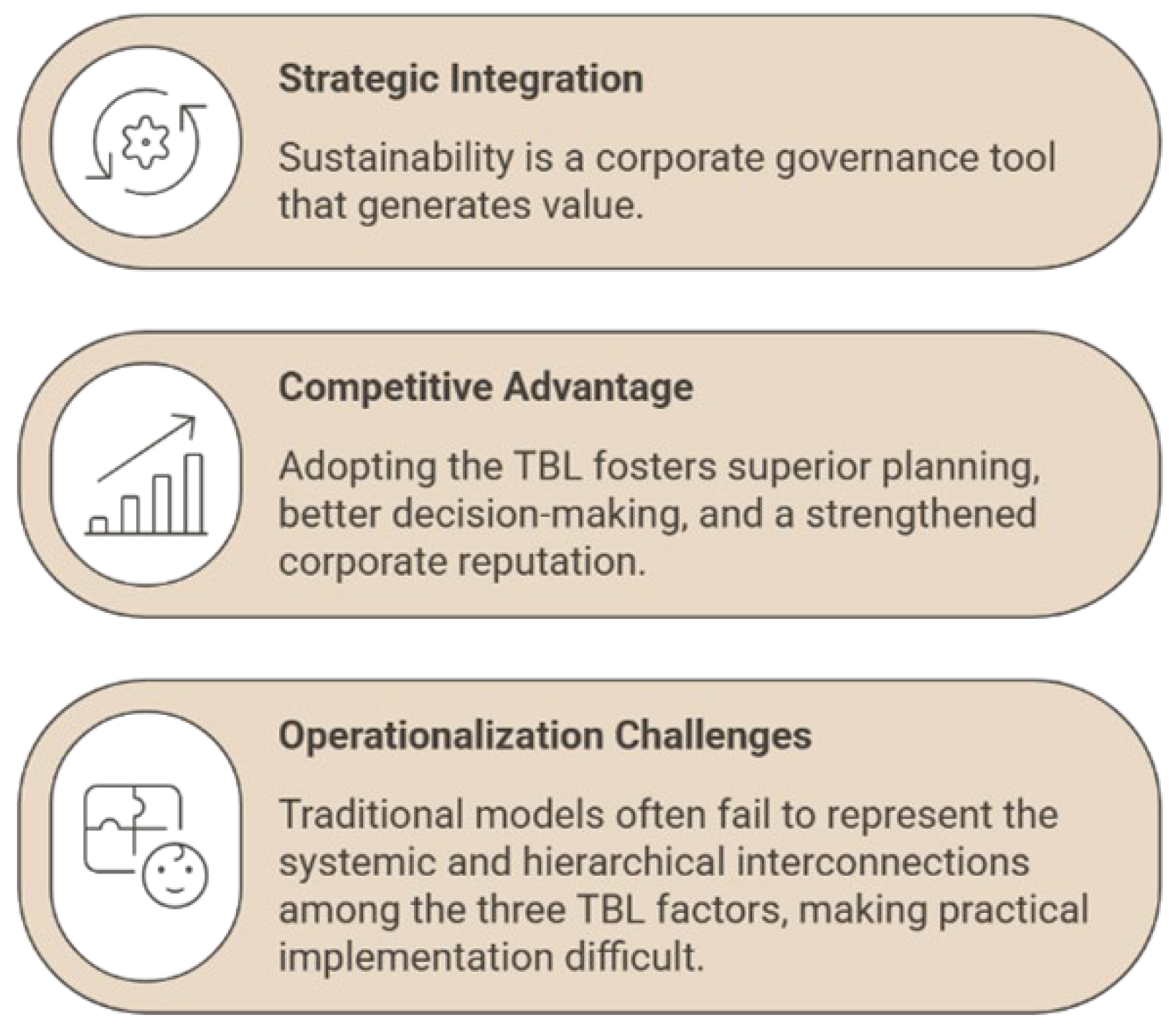
The implementation of the Triple Bottom Line (TBL) strategy is significantly influenced by theoretical foundations and sustainability frameworks, as they provide a comprehensive approach for understanding and addressing the multifaceted challenges of sustainable development [23]. The TBL framework, which integrates economic, environmental, and social dimensions, has become a cornerstone of corporate sustainability strategies [24,25,26]. However, the operationalization of TBL continues to pose challenges, as it requires a systemic and hierarchical understanding of the interconnections between these dimensions [27,28,29]. Recent studies emphasize that TBL is not merely a reporting tool but a strategic framework that can drive sustainable economic development when properly integrated into organizational decision-making processes [29]. The systemic nature of sustainability demands that organizations recognize the interdependencies among TBL dimensions and avoid siloed approaches [30,31]. Figure 1 illustrates the theoretical basis of corporate sustainability, showing the interconnections among economic viability, environmental stewardship, and social equity.

1.1.2. Sustainable Supply Chains Management (SSCM)

The theoretical foundations of sustainable supply chain management (SSCM) are multifaceted and draw on various disciplines to address the complex interplay of economic, environmental, and social factors. SSCM extends traditional supply chain management by integrating sustainability principles throughout the entire value chain, from raw material extraction to end-of-life product management [32].
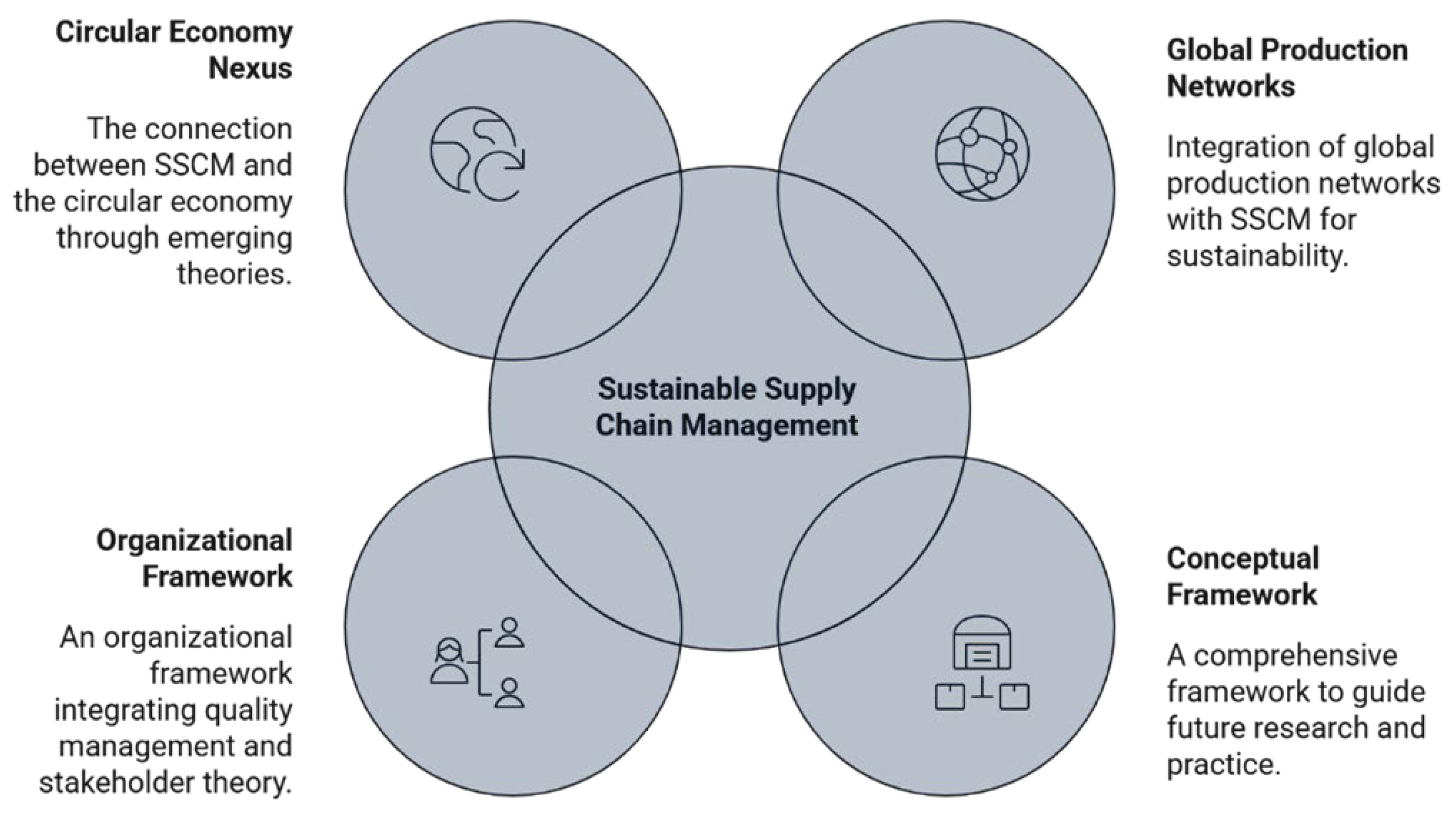
The need for a robust theoretical framework is echoed by Brandenburg and colleagues, who propose a comprehensive conceptual framework to guide future research and practice in SSCM [21,33]. This framework emphasizes the importance of stakeholder engagement, transparency, and continuous improvement in achieving sustainability goals. In specific sectors such as the medical industry, SSCM is crucial to balance environmental stewardship, social responsibility, and economic viability [34]. The evolution of SSCM has seen a shift from a narrow environmental focus to a broader Triple Bottom Line perspective, recognizing that true sustainability requires simultaneous attention to all three dimensions [22,35]. Recent theoretical developments also highlight the importance of institutional perspectives and the role of global production networks in shaping SSCM practices [32,36]. Figure 2 presents the determinants of sustainability in the supply chain, illustrating the key factors that influence SSCM implementation in agricultural contexts.

1.1.3. Analytical Models in Supply Chain Sustainability

The theoretical foundations and analytical constructs of supply chain sustainability present a rich tapestry of diversity and complexity. Analytical models serve as essential tools for assessing, optimizing, and improving sustainability performance across supply chains [37,38,39]. These models range from qualitative frameworks to sophisticated quantitative techniques, each with distinct strengths and limitations. Kim highlights the theoretical foundations of supply chain management (SCM), focusing on elements such as customer service and interrelationships, which remain relevant in the sustainability context [37]. The transition towards circular supply chains (CSCs) is also of utmost importance, as it represents a paradigm shift from linear “take-make-dispose” models to closed-loop systems that minimize waste and maximize resource efficiency [35,40].
Recent systematic reviews have explored the diversity of models for implementing sustainable supply chains, identifying key categories such as optimization models, simulation models, life cycle assessment (LCA), and multi-criteria decision-making (MCDM) frameworks [40,41,42]. Table 1 presents analytical models commonly used in supply chains according to their purpose, including optimization models (e.g., linear programming, multi-objective optimization), simulation models (e.g., discrete-event simulation, agent-based modeling), and multi-criteria decision-making (MCDM) frameworks. The table specifies the purpose, data requirements, and typical applications of each model type in agricultural supply chain contexts.

1.1.4. Multi-Objective Optimization and Trade-Off Analysis

The theoretical foundations of multi-objective optimization (MOO) and trade-off analysis are intricately linked to a variety of methodologies and frameworks that enable decision-makers to balance competing objectives [43,44,45]. Unlike single-objective optimization, which seeks to maximize or minimize a single criterion, MOO explicitly recognizes that real-world problems often involve multiple, conflicting objectives that cannot be simultaneously optimized [46,47]. The theoretical results of MOO include the non-existence of a single optimal solution (i.e., no vacuum), the concept of Pareto optimality (external stability), and resilience against perturbations [47,48,49]. Pareto-optimal solutions represent trade-offs where improving one objective necessarily degrades at least one other objective, making them particularly relevant for sustainability problems where economic, environmental, and social goals often conflict [50,51]. The integration of econometrics and MOO establishes a framework to achieve optimal solutions within socioeconomic contexts, enabling the incorporation of empirical data and statistical relationships into optimization models [43,52,53]. In the context of agricultural supply chains, MOO has been applied to balance productivity, profitability, environmental impact, and social welfare, providing decision-makers with a set of Pareto-optimal solutions from which to choose based on their preferences and constraints [19,20].

1.1.5. Regenerative vs. Sustainable Supply Chains

While sustainability and regenerative approaches share common goals of reducing environmental harm and promoting social equity, they differ fundamentally in their underlying philosophies and operational objectives. Sustainable supply chains aim to minimize negative impacts and maintain current ecological and social systems, often framed through the TBL lens of “doing less harm” [24,29]. In contrast, regenerative supply chains seek to actively restore and enhance ecological and social systems, moving beyond harm reduction to create net-positive outcomes [16,54,55]. This distinction is particularly relevant in agricultural contexts, where regenerative practices such as agroforestry, soil restoration, and biodiversity enhancement can simultaneously improve ecosystem health, sequester carbon, and enhance farmer livelihoods [54,56,57].
The regenerative paradigm challenges the conventional assumption that economic growth and environmental health are inherently in conflict, instead proposing that well-designed agricultural systems can generate synergies across TBL dimensions [16,54,55]. However, the operationalization of regenerative principles in supply chain management remains nascent, and existing analytical models such as MOO and LCA were primarily developed for sustainability (harm reduction) rather than regeneration (net-positive impact) objectives. MOO can be adapted to regenerative contexts by reframing objective functions to prioritize restoration and enhancement rather than mere efficiency or impact minimization [19,20]. For example, instead of minimizing carbon emissions, a regenerative MOO model might maximize carbon sequestration while simultaneously optimizing farmer income and biodiversity indices. Similarly, LCA can be extended to account for regenerative outcomes by incorporating positive environmental credits for practices such as soil carbon accumulation, watershed restoration, and habitat creation [15,54].
Nevertheless, significant limitations remain. Current MOO and LCA frameworks often lack the data granularity and ecological indicators necessary to fully capture regenerative outcomes, particularly in smallholder contexts where traditional knowledge and localized practices play a critical role [56,57,58]. Furthermore, the social dimension of regeneration—encompassing community empowerment, cultural preservation, and equitable benefit distribution—is frequently underrepresented in existing models [59,60]. Therefore, while MOO and LCA provide valuable starting points, their application to regenerative supply chains in Mexican coffee and sugarcane systems requires substantial adaptation, including the integration of participatory approaches, indigenous knowledge systems, and context-specific indicators that reflect both ecological restoration and social well-being [54,55,56,58].

2. Materials and Methods

The proposed methodology responds to the central question: How can profitability, carbon footprint, and social well-being be optimized simultaneously in highly vulnerable agricultural systems such as coffee and sugarcane in Mexico? This study is designed as a critical and analytical literature review focused on coffee and sugarcane supply chains, and on identifying the management models underpinning them. Unlike PRISMA-style systematic reviews that prioritize exhaustive coverage and standardized quality assessment, this critical review employs comparative evaluation criteria, weighting of evidence based on methodological rigor and contextual relevance, and narrative synthesis to assess the applicability of analytical models to Mexican smallholder agriculture [38,39,40].
For the previous search, the official platforms of each academic portal were used, and the information was organized using Zotero software (v.9.0, 2026). Subsequently, PowerPoint software and the open-source software Draw.io (v29.7.9) were used for the images.

2.1. Data Collection and Systematization Procedures

Information was collected through thematic searches in academic databases (Web of Science, Scopus, Google Scholar) and critical reading of identified articles. The search strategy employed keywords such as “sustainable supply chain,” “multi-objective optimization,” “life cycle assessment,” “coffee supply chain,” “sugarcane supply chain,” “Mexico agriculture,” “Triple Bottom Line,” and “regenerative agriculture.” Articles were subsequently organized into an extraction matrix that captured key variables including study objectives, methodologies, analytical models employed, geographic context, TBL dimensions addressed, and main findings.
Inclusion criteria: Relevant works based on citation count and impact factor; Methodological advances in MOO, LCA, or related analytical techniques; Empirical studies focused on coffee or sugarcane supply chains, particularly in Latin America and Mexico; Newer articles (2020–2025) that cited each core article, ensuring temporal relevance and incorporation of recent technological advances such as Industry 4.0 tools (AI, IoT, data analytics).
Exclusion criteria: Emerging works with insufficient peer review or validation; Replications of existing studies without novel contributions.
The exclusion of emerging and replication studies was justified by the need to focus on methodologically robust and validated approaches that can inform practical decision-making in vulnerable smallholder contexts. However, this decision introduces potential limitations, particularly regarding the temporal relevance of cutting-edge digital agriculture and analytics innovations. To mitigate this bias, the review explicitly incorporated recent studies (2020–2025) that discuss Industry 4.0 technologies and their applications in agricultural supply chains, ensuring that the analysis reflects current technological capabilities and future trends [3,45,59].
This process yielded a pool of n=76 core articles for review and critical analysis, supplemented by gray literature sources (government reports, FAO publications, national statistics) to contextualize the Mexican coffee and sugarcane sectors.

2.2. Experimental Design and Analysis Strategy

The analysis consisted of a methodological comparison of approaches reported in the literature, employing a four-stage analytical strategy:
  • Problem delimitation: Identification of critical sustainability variables (economic profitability, carbon footprint, social well-being) and their operationalization in coffee and sugarcane supply chains. This stage also included mapping the key challenges and trade-offs specific to Mexican smallholder agriculture.
  • Study classification: Categorization by model type (MOO, LCA, simulation, MCDM, hybrid approaches) and by thematic focus (technology adoption, Industry 4.0 tools, sustainability outcomes, productivity improvement, regional capacity, innovation support mechanisms). This classification enabled systematic comparison of model characteristics, data requirements, scalability, and suitability for smallholder contexts.
  • Trade-off analysis: Assessment of the balance among TBL dimensions, including explicit identification of social indicators used in reviewed studies, comparison of how different analytical models operationalize or omit social variables, and discussion of data and proxy limitations. This stage employed narrative synthesis to integrate findings across studies and identify patterns, gaps, and contradictions.
  • Synthesis of guidelines: Formulation of an analytical model adapted to Mexican agro-industrial conditions, integrating local socioeconomic realities, traditional knowledge, and modern technological approaches. This synthesis draws on the comparative evaluation of existing models to propose a conceptual framework for regenerative supply chain management in coffee and sugarcane systems.
The analysis applied triangulation among theoretical, empirical, and technical sources to enhance validity and reliability. Theoretical sources provided the conceptual foundations (TBL, SSCM, MOO, LCA, regenerative paradigms), empirical sources offered evidence from case studies and field experiments, and technical sources detailed the mathematical formulations and computational implementations of analytical models. An integrative methodological framework is proposed to evaluate regenerative supply chains, emphasizing the need for localized adaptation, participatory approaches, and cross-sector collaboration.

3. Results

3.1. General Analysis of the Core Articles

The n=76 core articles encompass a variety of methodologies, including bibliometric analyses, case studies, experimental frameworks, systematic reviews, and modeling studies. The analysis revealed six major thematic categories that structure the current state of knowledge on sustainable and regenerative supply chains in agriculture:
Technology adoption rate: Eighteen studies examined the adoption rates of sustainable practices and digital technologies in agricultural supply chains, finding that uptake varies widely across regions and farm sizes. In Mexico’s sugar and coffee sectors, adoption rates are moderate to low, particularly among smallholders who face financial, technical, and informational barriers [10,13,56,61]. Various studies highlight the emerging use of AI, IoT, and Industry 4.0 tools for precision agriculture, supply chain traceability, and decision support [3,45,59]. However, adoption tends to be regionally concentrated in areas with better infrastructure, extension services, and access to credit, exacerbating existing inequalities [55,59].
Impact on sustainability: Fifteen studies report positive sustainability outcomes from the adoption of analytical models and sustainable practices, including environmental benefits such as reduced greenhouse gas (GHG) emissions, improved water use efficiency, and enhanced biodiversity [9,15,20,54]. However, these benefits are often contingent on context-specific factors such as farm size, agroecological conditions, and market access. Several studies also note that environmental improvements can come at the cost of short-term economic losses, particularly for smallholders who lack the capital to invest in new technologies or practices [13,17,60].
Productivity improvement: Seventeen studies demonstrate productivity improvements through data-driven interventions, including optimized input use, improved crop management, and enhanced supply chain coordination [20,54,62,63]. These improvements are particularly pronounced when analytical models such as MOO are used to identify optimal production scenarios that balance yield, cost, and environmental impact [19], [20,54]. However, productivity gains are not uniformly distributed, and smallholders often face barriers to accessing the information, technologies, and markets necessary to realize these benefits [13,56,59].
Regional technological capacity: Twelve studies identify significant regional disparities in technological capacity, infrastructure, and institutional support for sustainable agriculture [55,59]. In Mexico, these disparities are evident between northern and southern regions, between irrigated and rainfed systems, and between export-oriented and domestic-market-oriented producers [10,11,56,61]. Addressing these disparities requires targeted investments in infrastructure, extension services, and capacity-building programs that are tailored to local contexts and needs [55,59].
Innovation support mechanisms: Fourteen studies highlight the importance of knowledge management, training programs, and institutional support in facilitating the adoption of sustainable practices and analytical models [21,22,38,39]. Effective innovation support mechanisms include farmer field schools, participatory research, public–private partnerships, and digital platforms for information sharing [3,56,59]. These mechanisms are particularly critical in smallholder contexts, where farmers often lack access to formal education and technical expertise [56,58,59].
Industry 4.0 and digital technologies: A growing subset of studies (n = 18) explicitly addresses the role of Industry 4.0 technologies—including AI, IoT, big data analytics, and blockchain—in enhancing supply chain sustainability and traceability [3,45,59]. These technologies offer promising tools for real-time monitoring, predictive analytics, and decision support, but their adoption in Mexican coffee and sugarcane sectors remains limited due to high costs, technical complexity, and lack of digital infrastructure [59]. Future research should prioritize the development of low-cost, user-friendly digital tools that are accessible to smallholders and compatible with existing farming practices [3,59].
The next section will present the proposed methodology together with the critical analysis carried out, in line with the results obtained.

3.2. Coffee and Sugar Cane Supply Chains in Mexico

The coffee sector in Mexico is characterized by its historical and economic importance, but is plagued by challenges such as market volatility, reduced state support, and climate change [10,12,61,64]. Coffee production is predominantly carried out by smallholders (farms <5 hectares) who cultivate traditional varieties under shade-grown agroforestry systems, which provide important ecosystem services such as biodiversity conservation and carbon sequestration [56]. However, these systems are increasingly threatened by climate change, pests and diseases (e.g., coffee leaf rust), and economic pressures that incentivize conversion to more intensive or alternative land uses [10,56,61]. The industry is also exploring diversification strategies, including organic certification, specialty coffee markets, and value-added processing, to enhance farmer incomes and resilience [56,61,65].
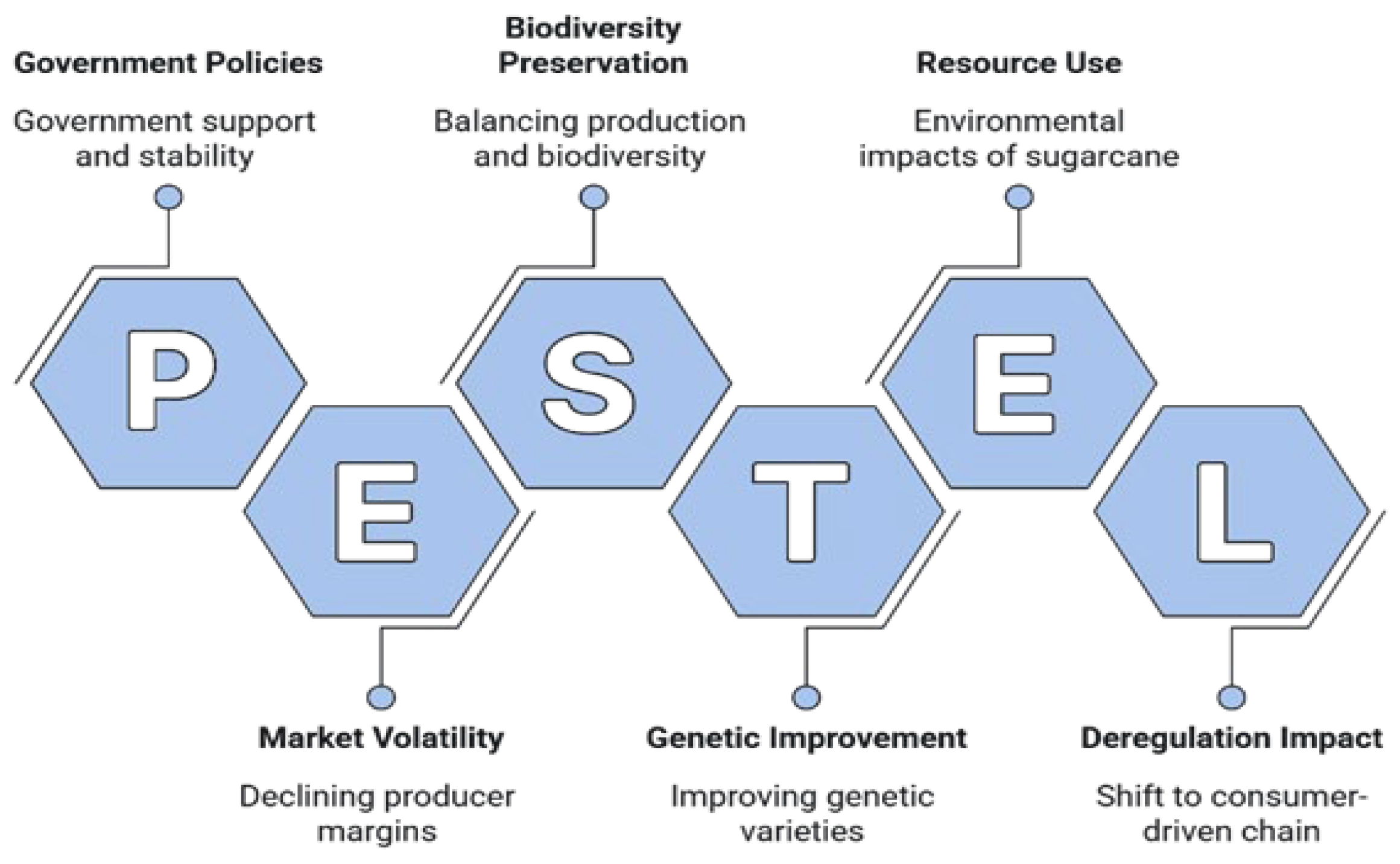
The sugarcane sector, in contrast, is characterized by larger farm sizes, higher levels of mechanization, and closer integration with industrial processing facilities (sugar mills) [11,66,67]. Sugarcane production is concentrated in tropical and subtropical regions, where it serves as a critical source of employment and income for rural communities [11]. However, the sector faces significant sustainability challenges, including high water consumption, soil degradation, GHG emissions from burning and processing, and social issues related to labor conditions and land tenure [14,15,66,67]. Recent initiatives have focused on improving energy efficiency, reducing emissions through cogeneration and bioethanol production, and adopting more sustainable agronomic practices such as green harvesting (no burning) and precision agriculture [15,66,67]. Figure 3 presents a PESTEL analysis visualization of challenges integrating sustainability into Mexican agriculture, highlighting the political, economic, social, technological, environmental, and legal factors that shape the operating environment for coffee and sugarcane supply chains.

3.3. Analytical Models Applied to Agricultural Sustainability

Analytical models play a crucial role in advancing agricultural sustainability by providing frameworks to assess and improve productivity while addressing environmental and social concerns [40,41,62,68]. The reviewed literature identifies several major categories of analytical models, each with distinct strengths and limitations:
Multi-objective optimization (MOO): MOO models are widely used to balance competing objectives such as profit maximization, emission reduction, and social welfare improvement [19,20,43,44]. These models generate Pareto-optimal solutions that represent trade-offs among objectives, enabling decision-makers to select solutions that align with their priorities and constraints [46,47,50]. MOO is particularly well-suited to agricultural contexts where multiple stakeholders (farmers, processors, consumers, policymakers) have divergent interests and where win-win outcomes are not always feasible [17,19,20]. However, MOO models require substantial data on production systems, costs, environmental impacts, and social indicators, which can be challenging to obtain in smallholder contexts [54,58].
Life Cycle Assessment (LCA): LCA is a comprehensive methodology for evaluating the environmental impacts of a product or process across its entire life cycle, from raw material extraction to end-of-life disposal [15,20,41]. LCA is particularly valuable for identifying hotspots of environmental impact and comparing the sustainability performance of alternative production systems or technologies [15,54]. In the context of Mexican sugarcane, LCA studies have quantified GHG emissions, water consumption, and energy use, providing a basis for targeted interventions to reduce environmental footprints [15]. However, LCA typically focuses on environmental dimensions and may underrepresent social and economic considerations [41,60]. Furthermore, LCA requires detailed inventory data that may not be readily available for smallholder systems [15,58].
Simulation models: Simulation models, including discrete-event simulation and agent-based modeling, are used to explore the dynamic behavior of complex supply chain systems under different scenarios [44,68]. These models can capture temporal dynamics, feedback loops, and emergent properties that are difficult to represent in static optimization models [68]. Simulation is particularly useful for assessing the long-term sustainability of supply chains and for evaluating the impacts of policy interventions or technological innovation [44,68]. However, simulation models can be computationally intensive and require extensive calibration and validation [68].
Multi-criteria decision-making (MCDM): MCDM frameworks, such as the Analytic Hierarchy Process (AHP) and TOPSIS, are used to evaluate and rank alternatives based on multiple criteria [41,69]. However, MCDM methods can be subjective and sensitive to the choice of criteria and weighting schemes [41].
Case studies in Mexico emphasize the need to integrate indigenous and modern technologies, recognizing that traditional agroecological knowledge can complement analytical models and enhance the sustainability and resilience of agricultural systems [54,56,57,58]. Participatory approaches that involve farmers in model development and validation are particularly important for ensuring that analytical tools are relevant, accessible, and trusted by end-users [54,56,58].

3.4. Analysis of Trade-Offs Between Economic, Environmental and Social Results

Analyzing trade-offs is a complex but crucial aspect of sustainable development, as it reveals the inherent tensions among TBL dimensions and informs strategies for balancing competing objectives [17,60,70,71,72]. In agriculture, environmentally sustainable practices such as organic farming, agroforestry, and conservation tillage can reduce technical efficiency and short-term profitability, particularly when farmers lack access to premium markets or compensatory payments [60,73]. Similarly, optimizing renewable energy systems in sugarcane processing involves trade-offs between capital investment, operational costs, and environmental benefits [15,66]. In corporate sustainability more broadly, recognizing trade-offs rather than assuming a win-win scenario is essential for developing realistic and effective strategies [17].
The reviewed literature identifies several key trade-offs in coffee and sugarcane supply chains:
Economic vs. environmental trade-offs: Intensive agricultural practices that maximize short-term yields and profits often degrade soil health, deplete water resources, and increase GHG emissions [9,14,15,72]. Conversely, sustainable practices such as organic farming and agroforestry can enhance environmental outcomes but may require higher labor inputs, longer transition periods, and access to niche markets to be economically viable [54,56,60,65]. MOO models can help identify production scenarios that achieve acceptable levels of profitability while minimizing environmental harm, but these scenarios often require external support such as subsidies, technical assistance, or market access programs [19,20,54].
Mechanization and intensification can improve productivity and reduce labor costs, but may also displace rural workers and exacerbate social inequalities [11,63,74]. Conversely, labor-intensive sustainable practices can create employment opportunities and enhance rural livelihoods, but may increase production costs and reduce competitiveness in global markets [56,60,65]. Balancing these trade-offs requires policies that support fair labor practices, social safety nets, and inclusive value chain development [16,73].
Environmental vs. social trade-offs: Conservation initiatives such as protected areas and reforestation programs can enhance ecosystem services and biodiversity, but may restrict access to land and resources for local communities, particularly indigenous and smallholder populations [73,74]. Effective management of these trade-offs requires participatory approaches that recognize community rights, incorporate traditional knowledge, and ensure equitable benefit distribution [73,74].
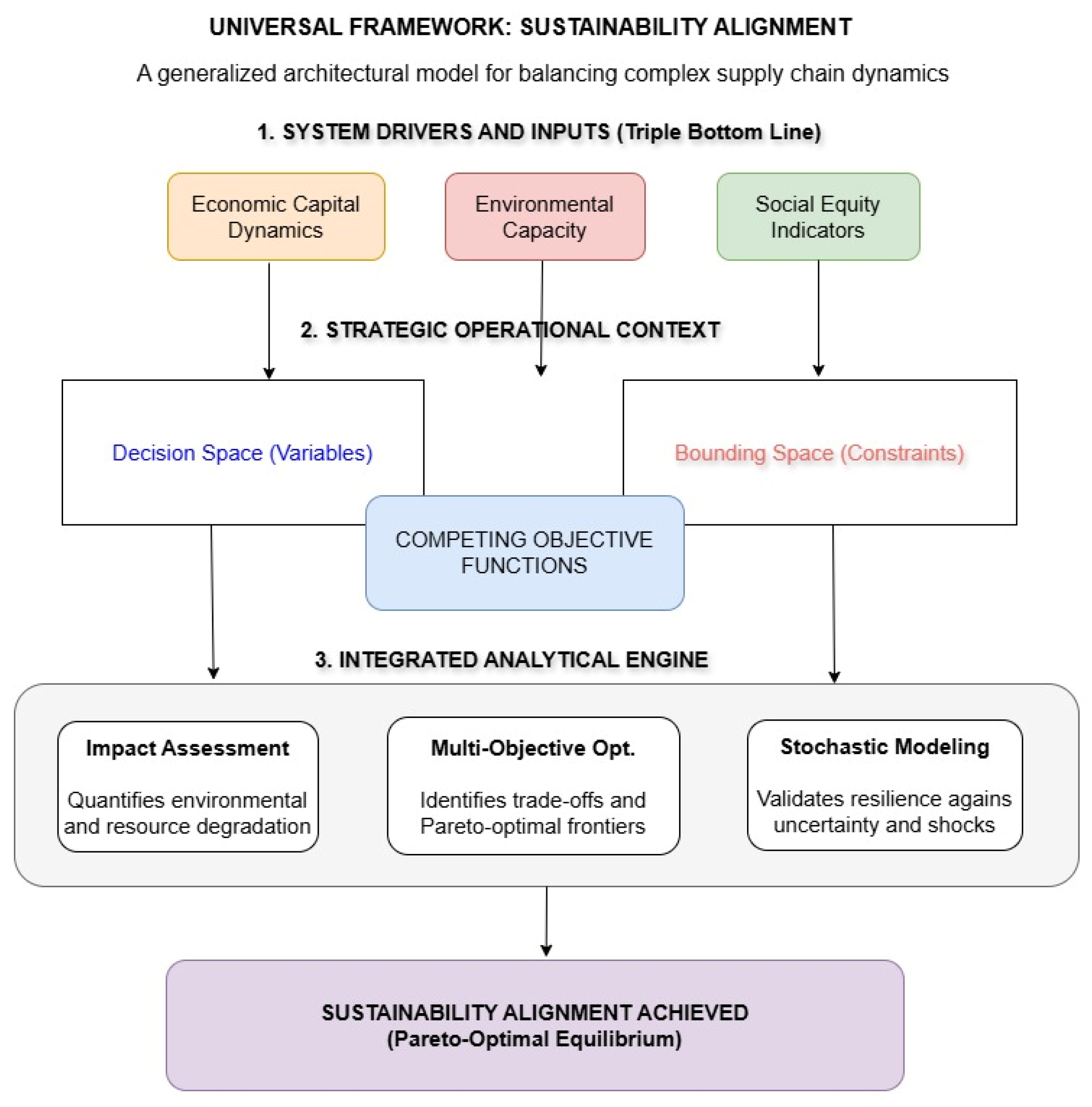
Social dimension operationalization: A critical gap identified in the review is the limited and inconsistent operationalization of social indicators in analytical models. While economic indicators (e.g., profit, cost, revenue) and environmental indicators (e.g., GHG emissions, water use, biodiversity) are relatively well-defined and measurable, social indicators are often vague, context-dependent, and difficult to quantify [60,75]. Common social indicators in the reviewed studies include employment generation, income distribution, working conditions, food security, and community well-being [16,60,74,75]. However, many MOO and LCA studies either omit social dimensions entirely or rely on crude proxies such as total employment or average income, which fail to capture distributional equity, gender dynamics, or cultural values [60,75]. Addressing this gap requires the development of context-specific social indicators, participatory methods for eliciting stakeholder preferences, and data collection systems that capture social outcomes at appropriate scales [60,74,75]. Figure 4 illustrates sustainability alignment in supply chains, showing the interactions among economic, environmental, and social objectives and the role of analytical models in identifying trade-offs and Pareto-optimal solutions. Decision variables include production levels, input allocations, technology choices, and supply chain configurations. Objective functions include profit maximization, emission minimization, and social welfare improvement. Constraints include resource availability, regulatory requirements, and market demand. Uncertainty sources include climate variability, price fluctuations, and policy changes.]
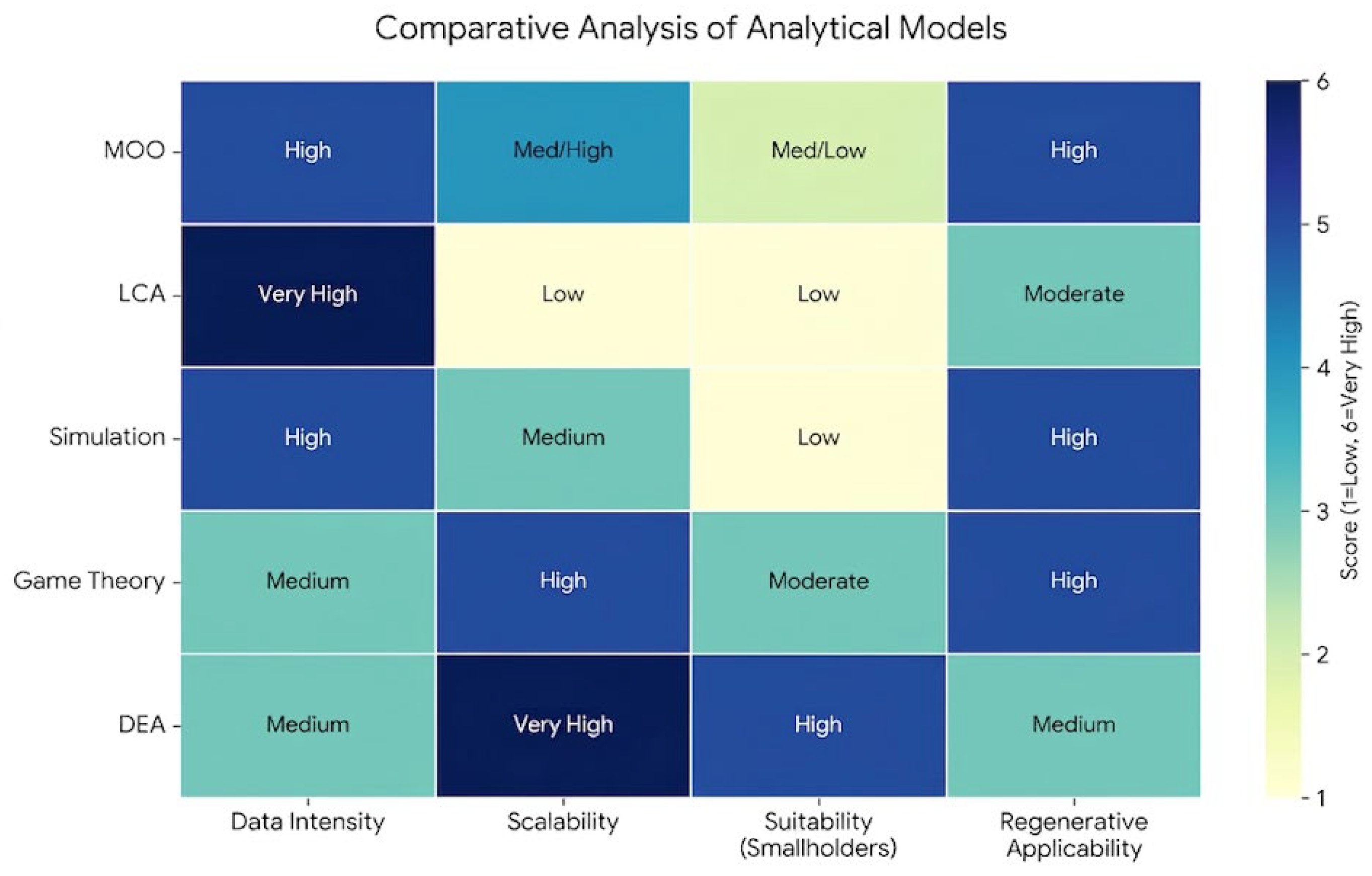
While theoretical discussions frequently highlight the potential of analytical models to optimize supply chains, their practical implementation in emerging economies often encounters significant structural barriers. To move beyond a purely descriptive overview of the literature, it is imperative to critically evaluate the operational viability of these tools within the specific socioeconomic constraints of Mexican agriculture. Accordingly, Table 2 presents a structured comparative analysis of the primary analytical models identified in the review (MOO, LCA, Simulation, Game Theory [76], and DEA). This evaluation assesses each framework across critical practical dimensions, such as data intensity, scalability, and its realistic suitability for vulnerable smallholders. Furthermore, the analysis explicitly weighs the capacity of each model to support genuinely regenerative objectives shifting the focus from mere environmental harm reduction to active ecosystem restoration and social equity there by exposing the critical limitations that currently restrict their seamless application in the local coffee and sugarcane sectors.
To visually Figure 5 reinforce the comparative insights presented in Table 2, the following heatmap provides a multi-dimensional assessment of the five core analytical models: MOO, LCA, Simulation, Game Theory, and DEA. These models are evaluated across four critical criteria: Data Intensity, Scalability, Suitability for Smallholders, and Regenerative Applicability. By employing a chromatic scale ranging from dark blue (Very High) to light yellow (Low), the figure enables a rapid and intuitive identification of each model’s operational strengths and inherent limitations within practical evaluation contexts.
The main findings of the review are listed below.

3.5. Main Findings of the Review

The review highlights important findings that guide the creation of local analytical models for Mexican coffee and sugarcane supply chains. The key results are listed below:
Trade-offs are pervasive: Achieving a balance between economic profitability, environmental sustainability, and rural social development constitutes a significant challenge. Win-win outcomes are possible in some contexts, but often require external support, technological innovation, or access to premium markets [17,19,20,54,60].
Analytical models are essential: Multi-objective optimization techniques and life cycle analyses are proven instruments for addressing sustainability trade-offs, providing decision-makers with quantitative insights into the consequences of alternative strategies [19,20,44,68]. However, these models must be adapted to local contexts, incorporating region-specific data, stakeholder preferences, and traditional knowledge [54,56,58].
Social dimension is underrepresented: The social dimension of sustainability is frequently underrepresented in analytical models, with many studies relying on crude proxies or omitting social indicators entirely [60,75]. Addressing this gap requires the development of context-specific social indicators, participatory methods, and data collection systems that capture distributional equity, gender dynamics, and cultural values [60,74,75].
Smallholder contexts require tailored approaches: Smallholder farmers face unique challenges, including limited access to capital, information, and markets, as well as high vulnerability to climate and market shocks [10,13,56,61]. Analytical models must be tailored to these contexts, emphasizing low-cost, low-data approaches, participatory methods, and integration with traditional knowledge systems [54,56,58].
Industry 4.0 offers opportunities but faces barriers: Digital technologies such as AI, IoT, and big data analytics offer promising tools for enhancing supply chain sustainability and traceability, but their adoption in Mexican coffee and sugarcane sectors remains limited due to high costs, technical complexity, and lack of digital infrastructure [3,45,59]. Future research should prioritize the development of accessible, user-friendly digital tools that are compatible with existing farming practices [3,59].
Regenerative paradigm requires model adaptation: Existing analytical models such as MOO and LCA were primarily developed for sustainability (harm reduction) rather than regeneration (net-positive impact) objectives. Adapting these models to regenerative contexts requires reframing objective functions to prioritize restoration and enhancement, incorporating positive environmental credits, and integrating participatory approaches and indigenous knowledge systems [16,54,55,56].
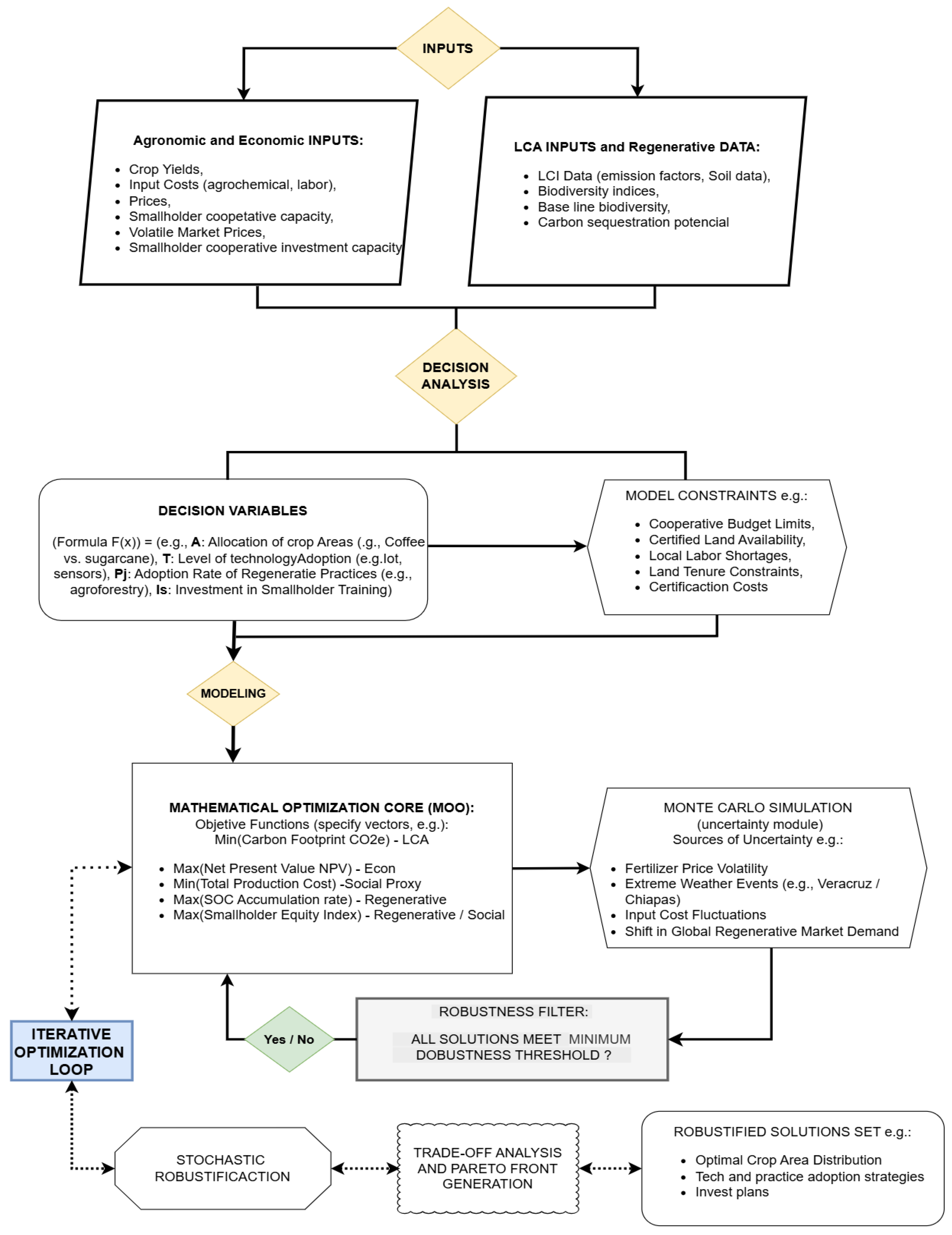
Figure 6 presents a methodological framework combining advanced analytics with Triple Bottom Line principles, designed for Mexico’s coffee and sugarcane industries. The model operates like synchronized gears, integrating key data on production costs, environmental factors such as CO2 emissions, and relevant social metrics from rural areas.
The system processes these inputs using advanced mathematical optimization methods like MOO, LCA, simulation, and MCDM. It assesses complex decisions—such as technology selection and resource allocation—while considering limits like regulations and available resources. This approach balances competing priorities for economic, environmental, and social goals by generating Pareto-optimal solutions and clear trade-off analyses. The strategy helps supply chains remain economically viable and meet international environmental standards, while also supporting rural community well-being. Importantly, the model highlights the value of adapting to local conditions, involving stakeholders, and including traditional knowledge to guide the shift toward regenerative supply chain management.

3.6. Implications for Future Research

Future research should prioritize the development and validation of localized models that are tailored to the unique socioeconomic and agroecological contexts of Mexican coffee and sugarcane supply chains. Key research priorities include:
Adaptation of existing methodologies: Given the distinctive characteristics of smallholders in Mexico—including limited access to capital, information, and markets, as well as high vulnerability to climate and market shocks—future research should adapt existing MOO and LCA methodologies to emphasize low-cost, low-data approaches, participatory methods, and integration with traditional knowledge systems [54,56,58].
Development of context-specific social indicators: The social dimension of sustainability is frequently underrepresented in analytical models. Future research should develop context-specific social indicators that capture distributional equity, gender dynamics, cultural values, and community well-being, and should employ participatory methods to elicit stakeholder preferences and validate model outputs [60,74,75].
Integration of Industry 4.0 technologies: Digital technologies such as AI, IoT, and big data analytics offer promising tools for enhancing supply chain sustainability and traceability. Future research should prioritize the development of accessible, user-friendly digital tools that are compatible with existing farming practices and that address the specific needs and constraints of smallholder farmers [3,45,59].
Cross-sector collaboration: The potential benefits of improving collaboration between stakeholders including farmers, processors, retailers, policymakers, researchers, and civil society organizations should be investigated. Effective collaboration mechanisms include multi-stakeholder platforms, public–private partnerships, and participatory research approaches that ensure that all voices are heard and that benefits are equitably distributed [21,22,56,59].
Incorporation of emerging technologies and data analytics: Incorporating emerging technologies and data analytics into conventional modeling offers a valuable area for research. This includes the use of remote sensing, machine learning, and blockchain for real-time monitoring, predictive analytics, and supply chain traceability, as well as the integration of these technologies with traditional MOO and LCA frameworks [3,45,59].
Regenerative supply chain frameworks: Future research should develop and validate analytical frameworks specifically designed for regenerative supply chain objectives, including the reframing of objective functions to prioritize restoration and enhancement, the incorporation of positive environmental credits, and the integration of participatory approaches and indigenous knowledge systems [16,54,55,56].

3.7. Relevance of Developing Models Adapted to Mexican Coffee and Sugarcane Chains

Developing models specifically adapted to Mexican coffee and sugarcane chains is essential for several reasons. The coffee and sugarcane sectors present contrasting sustainability challenges: coffee is predominantly produced by smallholders under agroforestry systems that provide important ecosystem services but face economic and climate pressures, while sugarcane is characterized by larger farm sizes, higher mechanization, and closer integration with industrial processing, but faces significant environmental and social challenges [10,11,56,61,66,67].
Adapting modeling approaches to the Mexican context involves leveraging locally relevant indicators, incorporating traditional knowledge, and addressing the specific barriers and opportunities faced by Mexican farmers, including policy instability, market volatility, credit access, and regional disparities in technological capacity [10,11,55,56,59,61].
These adapted models have the potential to close gaps between global sustainability frameworks and local practices, ensuring that analytical tools are relevant, accessible, and trusted by end-users, and that they support the development of policies and interventions that are tailored to local contexts and needs [54,55,56,58,59].

4. Discussion

Sustainable management in the Mexican countryside faces a constant tension between profitability and socio-environmental responsibility. As Hahn and colleagues point out, although the “win-win” paradigm is frequently cited in corporate sustainability discourse, empirical evidence reveals persistent trade-offs between economic and environmental objectives, and between short-term profitability and long-term resilience [17]. This tension is particularly acute in agricultural supply chains, where smallholder farmers must balance immediate income needs with the long-term sustainability of their land and livelihoods [13,56,60,61]. In the specific context of Mexican coffee and sugarcane supply chains, the challenge is compounded by structural factors such as market volatility, reduced state support, climate change, and regional disparities in technological capacity and institutional support [10,11,55,56,59,61].
The coffee sector urgently requires waste management strategies, certifications, and access to premium markets to improve its sustainability profile and enhance farmer incomes [56,65]. Peixoto and colleagues highlight that sustainability issues along the coffee chain include environmental impacts (deforestation, water pollution, GHG emissions), social issues (labor conditions, gender equity, food security), and economic challenges (price volatility, market access, value capture) [65]. Addressing these issues requires integrated approaches that combine technical interventions (e.g., improved agronomic practices, waste valorization, renewable energy) with institutional support (e.g., certification programs, farmer cooperatives, extension services) and market mechanisms (e.g., fair trade, organic premiums, direct trade relationships) [56,65].
The sugarcane sector faces similar challenges, with additional complexities related to industrial processing, energy use, and land use change [15,66,67]. Life cycle assessment studies of cane sugar production in Mexico have identified key hotspots of environmental impact, including GHG emissions from burning and processing, water consumption for irrigation and processing, and soil degradation from intensive cultivation [15]. Addressing these hotspots requires a combination of technological innovations (e.g., green harvesting, cogeneration, precision agriculture), policy interventions (e.g., emissions regulations, water pricing, land use planning), and market incentives (e.g., renewable energy credits, sustainability certifications [15,66,67].
To resolve these conflicts and identify pathways toward sustainability and regeneration, the literature highlights advanced technical tools. Martin and colleagues position multi-objective optimization and life cycle assessment (LCA) as fundamental instruments for sustainability assessment and optimization in agri-food supply chains [20]. MOO enables decision-makers to explore trade-offs among competing objectives and to identify Pareto-optimal solutions that represent the best achievable balance given available resources and constraints [19,20,43,44]. LCA provides a comprehensive framework for quantifying environmental impacts across the entire life cycle of a product or process, enabling the identification of hotspots and the comparison of alternative production systems or technologies [15,19,41]. However, both MOO and LCA have limitations, particularly in smallholder contexts where data availability, technical capacity, and institutional support are limited [15,54,58].
A critical gap identified in this review is the limited and inconsistent operationalization of social indicators in analytical models. While economic indicators (e.g., profit, cost, revenue) and environmental indicators (e.g., GHG emissions, water use, biodiversity) are relatively well-defined and measurable, social indicators are often vague, context-dependent, and difficult to quantify [60,75]. Common social indicators in the reviewed studies include employment generation, income distribution, working conditions, food security, and community well-being [16,60,74,75]. However, many MOO and LCA studies either omit social dimensions entirely or rely on crude proxies such as total employment or average income, which fail to capture distributional equity, gender dynamics, or cultural values [60,75]. Addressing this gap requires the development of context-specific social indicators, participatory methods for eliciting stakeholder preferences, and data collection systems that capture social outcomes at appropriate scales [60,74,75].
The distinction between win-win narratives and trade-off-based findings is central to understanding the challenges and opportunities for sustainable and regenerative supply chain management in Mexican coffee and sugarcane systems. Win-win narratives, which assume that economic, environmental, and social objectives can be simultaneously optimized without significant trade-offs, are appealing but often unrealistic, particularly in resource-constrained smallholder contexts [17,60]. Trade-off-based findings, in contrast, recognize that improving one dimension of sustainability often requires sacrifices in another, and that effective sustainability strategies must explicitly manage these trade-offs through compensatory mechanisms, targeted interventions, and stakeholder negotiation [17,60,71,72]. Mexican coffee and sugarcane supply chains exemplify this tension: while some interventions (e.g., agroforestry, organic certification, cogeneration) can generate synergies across TBL dimensions, others (e.g., mechanization, intensification, conservation restrictions) involve clear trade-offs that must be carefully managed [10,11,15,54,56,60,61,65,66,67].
The regenerative paradigm offers a promising alternative to conventional sustainability approaches by reframing the goal from harm reduction to net-positive impact [16,54,55]. Regenerative agricultural practices such as agroforestry, soil restoration, and biodiversity enhancement can simultaneously improve ecosystem health, sequester carbon, and enhance farmer livelihoods, creating synergies across TBL dimensions [54,56,57]. However, the operationalization of regenerative principles in supply chain management remains nascent, and existing analytical models such as MOO and LCA were primarily developed for sustainability (harm reduction) rather than regeneration (net-positive impact) objectives [16,54,55]. Adapting these models to regenerative contexts requires reframing objective functions to prioritize restoration and enhancement, incorporating positive environmental credits, and integrating participatory approaches and indigenous knowledge systems [16,54,55]. Adapting these models to regenerative contexts requires reframing objective functions to prioritize restoration and enhancement, incorporating positive environmental credits, and integrating participatory approaches and indigenous knowledge systems [16,54,55,56].
Industry 4.0 technologies including AI, IoT, big data analytics, and blockchain offer promising tools for enhancing supply chain sustainability and traceability, but their adoption in Mexican coffee and sugarcane sectors remains limited due to high costs, technical complexity, and lack of digital infrastructure [3,45,59]. Future research should prioritize the development of accessible, user-friendly digital tools that are compatible with existing farming practices and that address the specific needs and constraints of smallholder farmers [3,59]. Furthermore, the integration of digital technologies with traditional MOO and LCA frameworks can enhance the accuracy, timeliness, and scalability of analytical models, enabling real-time monitoring, predictive analytics, and adaptive management [3,45,59].
Cross-sector collaboration is essential for achieving sustainable and regenerative supply chain management in Mexican coffee and sugarcane systems. Effective collaboration mechanisms include multi-stakeholder platforms, public–private partnerships, and participatory research approaches that ensure that all voices are heard and that benefits are equitably distributed [21,22,56,59]. Such collaboration can facilitate knowledge sharing, resource pooling, and collective action, enabling stakeholders to overcome barriers and to co-create solutions that are tailored to local contexts and needs [21,22,56,59].

5. Conclusions

In conclusion, the sustainability of coffee and sugarcane supply chains in Mexico requires an integrated approach that simultaneously articulates economic profitability, environmental management, and rural social development. Balancing these dimensions is not merely a theoretical ideal but a practical necessity for sectors that sustain local economies and the well-being of thousands of communities. The reviewed evidence shows that, despite market volatility, environmental degradation, and other structural pressures, it is possible to move toward more coherent decision-making through the use of analytical models (e.g., multi-objective optimization and life cycle assessment) that allow for transparent trade-offs, reduce impacts such as emissions, and guide adaptation strategies. Looking ahead to future research, it is necessary to further adapt these approaches to the Mexican agricultural context and promote holistic frameworks such as the Triple Bottom Line, prioritizing customized models that incorporate local socioeconomic, climatic, and productive variables, and that integrate quantitative and qualitative information. This will enable the development of decision support tools that not only improve the accuracy of planning but also propose viable routes to strengthen rural resilience through practices such as productive diversification, integrated livestock farming, and more effective environmental management.

Author Contributions

Conceptualization: M.d.S.M.-M.; Methodology: M.d.S.M.-M. and J.V.H.-C.; Validation: R.S.-J., P.P.-R. and J.C.H.-A.; Formal Analysis: M.d.S.M.-M., J.V.H.-C. and P.P.-R.; Drafting of the original manuscript: M.d.S.M.-M., J.V.H.-C. and P.P.-R.; Revision and Editing: R.S.-J., P.P.-R. and J.C.H.-A.; Supervision: J.V.H.-C.; Funding: J.V.H.-C. All authors have read and agreed to the published version of the manuscript.

Funding

This work was supported by the SECIHTI Doctoral Scholarship (CVU: 425760) at the Colegio de Postgraduados, Campus Córdoba, and the support of the LGAC3-CP: Agri-Food Marketing and Competitiveness with Social and Environmental Responsibility (CARSA).

Institutional Review Board Statement

Not applicable.

Informed Consent Statement

Not applicable.

Data Availability Statement

The data presented in this study are available on request from the corresponding author due to confidentiality and privacy restrictions associated with qualitative human-subject research.

Conflicts of Interest

The authors declare no conflict of interest.

References

  1. Barugahare, I.; Ombok, B. Advancing Sustainability: A Systematic Review of Supply Chain Management Practices. Int. J. Bus. Manag. 2024, 12. [Google Scholar] [CrossRef]
  2. Reynolds, S. Sustainability Practices in Supply Chain Management: Insights from Leading Global Firms. Preprints 2024. [Google Scholar] [CrossRef]
  3. Agrawal, S.; Gangu, K.; Gopalakrishna, P.K. Sustainability in Supply Chain Planning. Mod. Dyn. Math. Progress. 2024, 1, 23. [Google Scholar] [CrossRef]
  4. Dathe, T.; Helmold, M.; Dathe, R.; Dathe, I. Sustainable Supply Chain. In Implementing Environmental, Social and Governance (ESG) Principles for Sustainable Businesses: A Practical Guide in Sustainability Management; Springer International Publishing: Cham, Switzerland, 2023. [Google Scholar]
  5. Fung, R.Y.K.; Morton, B.; Chong, S. Environmental Sustainability in Supply Chain Management. In Proceedings of the En Proceedings of the 33rd International MATADOR Conference; Springer: London, UK, 1999. [Google Scholar]
  6. Barbosa-Póvoa, A.P. Sustainable Supply Chains: Key Challenges; University of Lisbon: Lisboa, Portugal, 2008. [Google Scholar]
  7. Kuo, T.C.; Chiu, M.C.; Dang, H.T.H. The Analysis of Sustainable Supply Chain Management. In Re-Engineering Manufacturing for Sustainability; Nee, E.A., Song, B., Ong, S.K., Eds.; Springer: Singapore, 2013. [Google Scholar]
  8. Sundarakani, B.; Souza, R.; Goh, M.; Over, D.; Manikandan, S.; Koh, S.C.L. A Sustainable Green Supply Chain for Globally Integrated Networks. In En Enterprise Networks and Logistics for Agile Manufacturing; Springer: Berlin/Heidelberg, Germany, 2009; pp. 191–206. [Google Scholar]
  9. Springmann, M.; Clark, M.; Mason-D’Croz, D.; Wiebe, K.; Bodirsky, B.L.; Lassaletta, L.; Willett, W. Options for Keeping the Food System within Environmental Limits. Nature 2018, 562, 519–525. [Google Scholar] [CrossRef]
  10. Servicio de Información Agroalimentaria y Pesquera. Geografía Anuario Estadístico del Café en México; Servicio de información agroalimentaria y pesquera (SIAP): Ciudad de Mexico, Mexico, 2023. [Google Scholar]
  11. CONADESUCA (Comité Nacional para el Desarrollo Sustentable de la Caña de Azúcar). 2022. Available online: https://www.gob.mx/conadesuca (accessed on 25 November 2025).
  12. Martínez Morales, A.C. El Proceso Cafetalero Mexicano. Universidad Nacional Autónoma de México, Instituto de Investigaciones Económicas; Consejo Latinoamericano de Ciencias Sociales; Universidad Central de Venezuela: Municipio Libertador Caracas, Venezuela, 1996. [Google Scholar]
  13. Ramírez Valverde, B.; Juárez Sánchez, J.P. Opciones económicas y productivas de reestructuración de las unidades indígenas de producción de café ante la crisis agrícola: Estudio en la Sierra Nororiental de Puebla, México. Perspect. Soc. 2008, 10, 115–138. [Google Scholar]
  14. Instituto Nacional de Ecología y Cambio Climático. Inventario Nacional de Emisiones de Gases y Compuestos de Efecto Invernadero 2019. 2019. Available online: https://www.inegi.org.mx/siscon/ (accessed on 30 November 2025).
  15. Meza-Palacios, R.; Aguilar-Lasserre, A.A.; Morales-Mendoza, L.F.; Pérez-Gallardo, J.R.; Rico-Contreras, J.O.; Avarado-Lassman, A. Life Cycle Assessment of Cane Sugar Production: The Environmental Contribution to Human Health, Climate Change, Ecosystem Quality and Resources in México. J. Environ. Sci. Health Part A 2019, 54, 668–678. [Google Scholar] [CrossRef]
  16. FAO. The State of Food and Agriculture 2021. In Making Agrifood Systems More Resilient to Shocks and Stresses; FAO: Roma, Italy, 2021. [Google Scholar]
  17. Hahn, T.; Figge, F.; Pinkse, J.; Preuss, L. Trade-Offs in Corporate Sustainability: You Can’t Have Your Cake and Eat It. Bus. Strategy Environ. 2010, 19, 217–229. [Google Scholar] [CrossRef]
  18. Steinberger, J.K.; Roberts, J.T.; Lamb, W.F.; Wiedmann, T. Carbon Development Paradox: Linking Human Well-Being with Carbon Emissions. Glob. Sustain. 2020, 3, 18. [Google Scholar] [CrossRef]
  19. He, X.; Bai, X.; Zhang, Z.; Yin, K. Optimization Framework for Balancing Environmental Stewardship and Social Progress: A Systems Approach. J. Clean. Prod. 2020, 256, 120392. [Google Scholar] [CrossRef]
  20. Martin, J.; Sánchez, E.; Ramírez, D. Sustainability Assessment and Optimization in Agri-Food Supply Chains: A Review. J. Clean. Prod. 2021, 278, 123944. [Google Scholar] [CrossRef]
  21. Brandenburg, M.; Gruchmann, T.; Oelze, N. Sustainable Supply Chain Management-A Conceptual Framework and Future Research Perspectives. Sustainability 2019, 11, 7239. [Google Scholar] [CrossRef]
  22. Bentalha, B. The Evolution of Sustainability in Supply Chain Management: A literature review. Glob. Chall. Environ. Clim. Change 2024, 332–356. [Google Scholar] [CrossRef]
  23. Naciones Unidas. Objetivos de Desarrollo Sostenible 2015. Available online: https://unstats.un.org/sdgs/indicators/indicators-list/ (accessed on 25 November 2025).
  24. Coşkun Arslan, M.; Kisacik, H. The Corporate Sustainability Solution: Triple Bottom Line. Muhasebe Finans. Derg. 2017, 18, 18–34. [Google Scholar] [CrossRef]
  25. Hammer, J.; Pivo, G. The Triple Bottom Line and Sustainable Economic Development Theory and Practice. Econ. Dev. Q. 2017, 31, 25–36. [Google Scholar] [CrossRef]
  26. Caraiani, C.; Lungu, C.I.; Dascălu, C.; Colceag, F. The Triple Bottom Line (TBL) Approach from the Accounting and Performance Measurement Perspective. In En Handbook of Research on Organizational Sustainability in Turbulent Economies; IGI Global: Hershey, PA, USA, 2017; pp. 637–654. [Google Scholar]
  27. Bado, S.R.d.L.; Vione, C.I.B. Triple Botton Line: Pilares da sustentabilidade empresarial/Triple Botton Line: Pillars of corporate sustainability. Braz. J. Dev. 2022, 8, 17507–17513. [Google Scholar] [CrossRef]
  28. Benites, L.L.L.; Polo, E.F. A sustentabilidade como ferramenta estratégica empresarial: Governança corporativa e aplicação do Triple Bottom Line na Masisa. Rev. Adm. Univ. Fed. Santa Maria 2013, 6, 827–841. [Google Scholar] [CrossRef][Green Version]
  29. Nogueira, E.C.; Gomes, S.; Lopes, J.C. Triple Bottom Line, Sustainability, and Economic Development: What Binds Them Together? A Bibliometric Approach. Sustainability 2023, 15, 6706. [Google Scholar] [CrossRef]
  30. Godoi, M.H.; Pacheco, J. Sustentabilidade e Abordagem Sistêmica: Reconsiderando o Triple Bottom Line 2016. Available online: https://www.researchgate.net/publication/309351508_SUSTENTABILIDADE_E_ABORDAGEM_SISTEMICA_RECONSIDERANDO_O_TRIPLE_BOTTOM_LINE (accessed on 25 November 2025).
  31. Meireles, Y.S.D.S.; Fernandes, T.D.J.L.; Reis, T.B.D.; Castro, L.N.P.D.O. Apuração dos custos de produção para estudo da sustentabilidade econômica com base na triple bottom line em uma fábrica de vassouras ecológicas. Humanas Sociais Apl. 2018, 8. [Google Scholar] [CrossRef]
  32. Yawar, S.A.; Seuring, S. Inside the World of Stepsiblings: Linking Global Production Networks to Sustainable Supply Chain Management. Bus. Strategy Environ. 2023, 33, 788–805. [Google Scholar] [CrossRef]
  33. Peng, X. An Organizational Framework for Sustainable Supply Chain Management: An Integrated Theoretical Perspective. Qual. Manag. J. 2022, 29, 267–288. [Google Scholar] [CrossRef]
  34. Abaku, E.A.; Odimarha, A.C. Sustainable Supply Chain Management in the Medical Industry: Theoretical and Practical Examination. Int. Med. Sci. Res. J. 2024, 4. [Google Scholar] [CrossRef]
  35. Allen, S.D.; Zhu, Q.; Sarkis, J.; Sarkis, J. Expanding Conceptual Boundaries of the Sustainable Supply Chain Management and Circular Economy Nexus. Clean. Logist. Supply Chain. 2021, 2, 100011. [Google Scholar] [CrossRef]
  36. Girisaballa, S.; Bhattacharya, S. Sustainable Supply Chain: An Institutional Perspective. In Strategic Management of Sustainable Manufacturing Operations; IGI Global Scientific Publishing: Hershey, PA, USA, 2016; pp. 272–302. [Google Scholar]
  37. Kim, J.J. Theoretical Foundations Underpinning Supply Chain Management and Supply Chain Level Sustainable Performance. Int. J. Tour. Sci. 2017, 17, 213–229. [Google Scholar] [CrossRef]
  38. Strieter, R.M. Reflecting on Theory Development in Sustainable Supply Chain Management. Clean. Logist. Supply Chain 2022, 3, 100016. [Google Scholar] [CrossRef]
  39. Touboulic, A.; Walker, H.; Barlow, J.; Pettigrew, M. Theoretical Perspectives on Sustainable Supply Chain Management: A Review of the Literature. In Proceedings of the 20th Annual IPSERA Conference 2011, Maastricht, The Netherlands, 10–13 April 2011. [Google Scholar]
  40. Correa, M.Y.B.; Silva, M.L.; Cassanego, P.; Cappellari, G. Exploring Sustainability: Systematic Review of Models and Approaches for Implementing Sustainable Supply Chains. RGSA Rev. Gestão Soc. Ambient. 2025, 19, 010975. [Google Scholar] [CrossRef]
  41. Ahi, P. Sustainability Analysis and Assessment in the Supply Chain. Ph.D. Thesis, Ryerson University, Toronto, ON, Canada, 2021. [Google Scholar]
  42. Leszczynska, A.; Maryniak, A. Sustainable Supply Chain—A Review of Research Fields and a Proposition of Future Exploration. Int. J. Sustain. Econ. 2017, 9, 159–179. [Google Scholar] [CrossRef]
  43. Luque, M.; Marcenaro-Gutierrez, O.D.; González-Gallardo, S.; Ruiz, A.B. Towards a Framework to Combine Multiobjective Optimization and Econometrics and an Application in Economics of Education. RAIRO-Oper. Res. 2022, 56, 2015–2035. [Google Scholar] [CrossRef]
  44. Fiala, P.; Majovská, R. Modeling the Design Phase of Sustainable Supply Chains. In Global Perspectives on Green Business Administration and Sustainable Supply Chain Management; IGI Global Scientific Publishing: Hershey, PA, USA, 2020; pp. 16–44. [Google Scholar]
  45. Zhang, K.; He, M.; Yan, S.; Hou, H. Supply Chain Sustainability: Influencing Factors and Empirical Study from a Marxist Political Economy Perspective. Systems 2024, 12, 379. [Google Scholar] [CrossRef]
  46. Kounhinir, S.; Ulungu, B.E.-L.; Sawadogo, W.O.; Blaise, S. A Theoretical Fundation Metaheuristic Method to Solve Some Multiobjective Optimization Problems. Int. J. Appl. Math. Res. 2013, 2, 464–475. [Google Scholar] [CrossRef][Green Version]
  47. Tanino, T. Some Basic Theoretical Results in Multiobjective Optimization; Springer: Berlin/Heidelberg, Germany, 1985; pp. 144–152. [Google Scholar]
  48. Rafiei, S.M.R.; Kordi, M.H.; Griva, G.B.; Yassami, H. Multi-Objective Optimization Based Optimal Compensation Strategies Study for Power Quality Enhancement under Distorted Voltages. In Proceedings of the International Symposium on Industrial Electronics, Bari, Italy, 4–7 July 2010; pp. 3284–3291. [Google Scholar]
  49. Chen, C.; Wang, Y.; Liang, Y.; Li, J.; Sun, J.; Huang, M.; Zha, X.; Ding, Y.; Zhang, S.; Lu, G. Multi-Objective Reactive Power Optimization Configuration Method of Considering Compensation Benefits. CN 110233484 A1, 13 September 2019. [Google Scholar]
  50. Rosenthal, R.E. Concepts, Theory, and Techniques Principles of Multiobjective Optimization. Decis. Sci. 1985, 16, 133–152. [Google Scholar] [CrossRef]
  51. Han, H.; Zhou, H. Robust Multiobjective Particle Swarm Optimization with Feedback Compensation Strategy. IEEE Trans. Cybern. 2023, 54, 1062–1074. [Google Scholar] [CrossRef]
  52. Riediger, M.; Li, S.-C.; Lindenberger, U. Selection, Optimization, and Compensation as Developmental Mechanisms of Adaptive Resource Allocation: Review and Preview. In Handbook of the Psychology of Aging; Academic Press: Cambridge, MA, USA, 2006; pp. 289–313. [Google Scholar]
  53. Lin, C.; Lin, C.; Huang, J.; Chen, Y.; Cui, L. Thinking and Methodology of Multi-Objective Optimization. Int. J. Mach. Learn. Cybern. 2018, 9, 2117–2127. [Google Scholar] [CrossRef]
  54. Monjardino, M.; Lopez-Ridaura, S.; Loon, J.; Mottaleb, K.A.; Kruseman, G.; Zepeda, A.; Hernández, E.O.; Burgueño, J.; Singh, R.; Govaerts, B.; et al. Disaggregating the Value of Conservation Agriculture to Inform Smallholder Transition to Sustainable Farming: A Mexican Case Study. Agronomy 2021, 11, 1214. [Google Scholar] [CrossRef]
  55. González-Abraham, C.E.; Flores-Santana, C.; Rodríguez-Ramírez, S.; Olguin-Alvarez, M.I.; Flores-Martínez, A.; Torres Rojo, J.M.; Bocco Verdinelli, G.; Fernández Calleros, C.A.; McCord, G.C. Long-Term Pathways Analysis to Assess the Feasibility of Sustainable Land-Use and Food Systems in Mexico. Sustain. Sci. 2022, 18, 469–484. [Google Scholar] [CrossRef]
  56. Pérez-Fernández, Y.; Ramírez-Valverde, B.; Cruz-León, A. Producción de café biodiverso en México: Calidad, beneficios y controversia sobre el cambio de variedades por la roya. Rev. Geogr. Agrícola 2024, 73, 1–16. [Google Scholar] [CrossRef]
  57. Flores-Escamilla, R.E.; Torres, P. Sustentabilidad de sistemas agrícolas de mercados de productores. Evaluación de casos en la Ciudad de México. Rev. Mex. Cienc. Agrícolas 2024, 15, 3308. [Google Scholar] [CrossRef]
  58. Gutiérrez Cedillo, J.G. Evaluación de la sustentabilidad en agroecosistemas. Espac. Desarro. 2006, 18, 6–27. [Google Scholar]
  59. Domínguez-Soberanes, J.; Mendoza-Moreno, M.; Feis, G.; Peralta-Contreras, M. Sustainability of the Agricultural Sector in Mexico—Compliance or Not—With Key United Nations’ 17 Sustainable Development Goals: Aguascalientes as a Case Study. Afr. J. Food Agric. Nutr. Dev. 2024, 24, 26877–26884. [Google Scholar] [CrossRef]
  60. Ait Sidhoum, A.; Dakpo, K.H.; Latruffe, L. Trade-Offs between Economic, Environmental and Social Sustainability on Farms Using a Latent Class Frontier Efficiency Model: Evidence for Spanish Crop Farms. PLoS ONE 2022, 17, 0261190. [Google Scholar] [CrossRef]
  61. Pérez Akaki, P.; Echánove Huacuja, F. Cadenas globales y café en México. Cuad. Geográficos Univ. Granada 2006, 38, 69–86. [Google Scholar]
  62. Ahmed, M.; Asif, M.; Hirani, A.H.; Akram, M.N.; Goyal, A. Chapter 7—Modeling for Agricultural Sustainability: A Review; Elsevier: London, UK, 2013; pp. 127–147. [Google Scholar]
  63. Waggoner, P.E. Agricultural Technology and Its Societal Implications. Technol. Soc. 2004, 26, 123–136. [Google Scholar] [CrossRef]
  64. Renard, M.-C. Mercado mundial y economía regional. El café en el soconusco, México. Int. J. Sociol. Agric. Food 2021, 2, 74–87. [Google Scholar] [CrossRef]
  65. Peixoto, J.A.; Silva, J.F.; Oliveira, M.B.P.P.; Alves, R.C. Sustainability Issues along the Coffee Chain: From the Field to the Cup. Compr. Rev. Food Sci. Food Saf. 2022, 22, 287–332. [Google Scholar] [CrossRef]
  66. Aguilar-Rivera, N.; Galindo, G.M.; Fortanelli, J.M.; Contreras, C.S. ¿Por qué diversificar la agroindustria azucarera en México? J. Glob. Compet. Governability 2009, 3, 62–75. [Google Scholar]
  67. Ferreira, M.C.; Paiva, E.L. Green Supply Chain Management Na Agroindústria Canavieira: O Caso Jalles Machado Green Supply Chain Management in the Sugar Cane Industry: The Jalles Machado Case. BASE-Rev. Adm. Contab. Unisinos 2012, 9, 2–12. [Google Scholar]
  68. Gumzej, R.; Rakovska, M. Simulation Modeling and Analysis for Sustainable Supply Chains; Springer: Cham, Switzerland, 2020; pp. 145–160. [Google Scholar]
  69. Yüksel, İ. Developing a Multi-Criteria Decision Making Model for PESTEL Analysis. Int. J. Bus. Manag. 2012, 7, 52. [Google Scholar] [CrossRef]
  70. Charpentier, A. Insights from Life History Theory for an Explicit Treatment of Trade-Offs in Conservation Biology. Conserv. Biol. 2015, 29, 738–747. [Google Scholar] [CrossRef] [PubMed]
  71. Sayyad Noveiri, M.J.; Kordrostami, S. Trade-Offs Analysis of Sustainability Dimensions Using Integer-Valued Data Envelopment Analysis. Croat. Oper. Res. Rev. 2020, 11, 275–289. [Google Scholar] [CrossRef]
  72. Marsiglio, S.; Privileggi, F. On the Economic Growth and Environmental Trade-off: A Multi-Objective Analysis. Ann. Oper. Res. 2021, 296, 263–289. [Google Scholar] [CrossRef]
  73. Balaine, L.; Gallai, N.; Del Corso, J.-P.; Kephaliacos, C. Trading off Environmental Goods for Compensations: Insights from Traditional and Deliberative Valuation Methods in the Ecuadorian Amazon. Ecosyst. Serv. 2020, 43, 101110. [Google Scholar] [CrossRef]
  74. Muchapondwa, E.; Ntuli, H. Managing Trade-Offs between Communities’ Welfare and Nature Conservation: The Case of Wildlife Management Systems in and Outside Protected Areas in Africa. Annu. Rev. Resour. Econ. 2024, 16, 143–166. [Google Scholar] [CrossRef]
  75. Liechty, J.C.; Mabey, C.; Mattson, C.A.; Salmon, J.L.; Weaver, J.M. Trade-off Characterization between Social and Environmental Impacts Using Agent-Based Models and Life-Cycle Assessment. J. Mech. Des. 2022, 145, 032001. [Google Scholar] [CrossRef]
  76. Babu, S.; Mohan, U. Evaluating Long-Term Sustainability of Supply Chains Using an Evolutionary Game Theory Framework; Springer: Cham, Switzerland, 2020; pp. 185–222. [Google Scholar]
Figure 1. Theoretical basis of corporate sustainability, showing the interconnections among economic viability, environmental stewardship, and social equity within the Triple Bottom Line framework.
Sustainability 18 04626 g001
Figure 2. Determinants of sustainability in the supply chain, illustrating key factors such as stakeholder engagement, regulatory compliance, technological innovation, and organizational culture that influence SSCM implementation in agricultural contexts.
Sustainability 18 04626 g002
Figure 3. PESTEL analysis visualization of challenges integrating sustainability into Mexican agriculture. The figure illustrates political factors (e.g., policy instability, subsidy reductions), economic factors (e.g., market volatility, credit access), social factors (e.g., smallholder vulnerability, migration), technological factors (e.g., low adoption of Industry 4.0 tools), environmental factors (e.g., climate change, resource degradation), and legal factors (e.g., regulatory compliance, land tenure issues) that influence the sustainability of coffee and sugarcane supply chains.
Sustainability 18 04626 g003
Figure 4. Sustainability alignment in supply chains, illustrating the interactions among economic, environmental, and social objectives. This generalized model balances complex supply chain dynamics through color-coded elements of the Triple Bottom Line: Economic Capital Dynamics (yellow), Environmental Capacity (pink), and Social Equity Indicators (green). These inputs feed into the Decision Space (blue) and Bounding Space (red), which together with the Competing Objective Functions (light blue) drive the Integrated Analytical Engine toward a Pareto-optimal equilibrium (purple).
Sustainability 18 04626 g004
Figure 5. Multi-dimensional heatmap assessment of core analytical models for regenerative supply chains.
Sustainability 18 04626 g005
Figure 6. Advanced analytics optimization model for integrated sustainability in Mexican coffee and sugar cane agro-industrial chains: Conceptual and methodological framework. The yellow diamonds indicate key decision or processing stages of the model. The solid black arrows represent the main information flow, while the dotted arrows denote iterative loops and feedback processes. The blue rectangle highlights the Iterative Optimization Loop. The green diamond corresponds to the binary (Yes/No) decision node of the robustness filter. The rectangles with wavy edges indicate trade-off analysis and Pareto front generation processes. The final set of robust solutions is shown in the box on the right.
Sustainability 18 04626 g006
Table 1. Analytical models commonly used in supply chains according to their purpose, providing a structured overview of their applications in agricultural sustainability contexts.
MethodologyApplication and Purpose
Stochastic ModelsEvaluate sustainability performance under conditions of uncertainty.
Systems SimulationFacilitates the analysis and regulation of complex systems for sustainable goals.
Game Theory (Biform/Evolutionary)Models relationship equilibrium, information exchange, and the mitigation of inefficiencies.
Multi-Objective Optimization (MOO) Resolves conflicts between multiple objectives (e.g., cost vs. environmental impact).
DEMATEL AnalysisIdentifies key influencing factors through a political economy lens.
Source: Created by the authors.
Table 2. Comparative analysis of analytical models for regenerative supply chains.
Analytical ModelData
Intensity
ScalabilitySuitability for SmallholdersApplicability to Regenerative ObjectivesCritical Limitation in the Mexican Context
Multi-objective Optimization (MOO)High: Requires conflicting objective functions (e.g., cost vs. environment).Medium/High: Can be adapted from plot levels to entire regions.Medium/Low: Requires external technical assistance for data collection and modeling.High: Allows the integration of restorative variables (e.g., soil carbon) as primary objective functions.Lack of traceability and power imbalances that skew social objectives.
Life Cycle Assessment (LCA)Very High: Demands detailed inventories of inputs and emissions (cradle-to-grave).Low: Results are typically specific to a single product or cropping system.Low: High measurement and certification costs are prohibitive without subsidies.Moderate: Historically focused on damage reduction; requires adjustments to measure positive/net impacts.Scarcity of local inventory data, forcing the use of generic emission factors.
Simulation Modeling (ABM/System Dynamics)High: Requires calibration of actor behaviors and feedback loops.Medium: Complex to replicate without deep knowledge of local behavior.Low: Technical complexity hinders producers’ direct access to the tool.High: Excellent for capturing temporal regeneration and resilience against climate shocks.Producer heterogeneity, which complicates the validation of stochastic models.
Game Theory (Evolutionary)Medium: Based on modeling relationship equilibrium and information exchange.High: Useful for predicting the adoption of practices in global production networks.Moderate: Helps to understand cooperative governance and bargaining power.High: Crucial for modeling the equitable distribution of benefits in regenerative transitions.Incomplete data to validate strategic behaviors in informal markets.
Data Envelopment Analysis (DEA)Medium: Uses input and output variables to calculate technical and environmental efficiency.Very High: Effective for comparing performance across multiple farms or industrial units.High: Can utilize existing administrative data to provide efficiency feedback.Medium: Focused on resource efficiency rather than active ecosystem restoration.Extreme difficulty in measuring social factors with the same rigor as economic ones.
Disclaimer/Publisher’s Note: The statements, opinions and data contained in all publications are solely those of the individual author(s) and contributor(s) and not of MDPI and/or the editor(s). MDPI and/or the editor(s) disclaim responsibility for any injury to people or property resulting from any ideas, methods, instructions or products referred to in the content.