Article

Sustainable and Eco-Friendly Remediation of Heavy Metal-Contaminated Soils Using Malic Acid Washing


1
Department of Environment Engineering and Entrepreneurship of Sustainable Development, Faculty of Materials and Environmental Engineering, Technical University of Cluj-Napoca, 103-105 Muncii Boulevard, 400641 Cluj-Napoca, Romania
2
Department of Automotive Engineering and Transports, Faculty of Automotive, Mechatronics and Mechanical Engineering, Technical University of Cluj-Napoca, 103-105 Muncii Boulevard, 400641 Cluj-Napoca, Romania
3
NIRD URBAN-INCERC Cluj-Napoca Branch, 117 Calea Florești, 400524 Cluj-Napoca, Romania
4
Centre for Superconductivity, Spintronics and Surface Science, Physics and Chemistry Department, Technical University of Cluj-Napoca, Str. Memorandumului No. 28, 400028 Cluj-Napoca, Romania
5
EUT+ Institute of Nanomaterials and Nanotechnologies—EUTINN, European University of Technology, European Union, Str. Memorandumului No. 28, 400114 Cluj-Napoca, Romania
6
Department of Microbiology, Faculty of Agriculture, University of Agricultural Sciences and Veterinary Medicine Cluj-Napoca, 3-5 Calea Manastur, 400372 Cluj-Napoca, Romania
*
Authors to whom correspondence should be addressed.
Sustainability 2026, 18(10), 4627; https://doi.org/10.3390/su18104627
Submission received: 30 March 2026 / Revised: 22 April 2026 / Accepted: 3 May 2026 / Published: 7 May 2026

Abstract

Soil contamination by heavy metals is a significant sustainability and ecological issue, impacting on the health of ecosystems and groundwater. This study assessed the efficacy of malic acid as a biodegradable and environmentally benign agent for the remediation of soils contaminated with cadmium, chromium, copper, and zinc. Two soils with contrasting textures were treated with a 10% malic acid solution at solid/liquid ratios of 1:5 and 1:10 for contact times of 2, 4, 6, and 8 h. The extraction efficiency varied depending on metal type, soil texture, and washing conditions. Cadmium removal ranged from 26% to 55%, zinc removal ranged from 10% to 25%, while copper showed variable extraction (5–45%) depending on initial soil concentration. Chromium exhibited the highest removal efficiency (30–90%), quantified as total chromium; however, the absence of speciation analysis (Cr(III)/Cr(VI)) represents a key limitation and may affect the interpretation of the removal performance. FTIR and UV–Vis analyses confirmed the formation of metal–carboxylate complexes and changes in soil functional groups during the washing process. In addition, significant mobilization of nitrogen and potassium was observed, whereas phosphorus remained relatively stable. The results highlight the influence of soil texture and multi-metal interactions on malic acid washing efficiency and provide a laboratory-scale environmental assessment of malic acid as a sustainable remediation alternative for soil remediation, while emphasizing the need for further evaluation regarding chromium speciation and post-treatment soil quality and sustainability impacts.

1. Introduction

Soil contamination by potentially toxic metals (PTMs), predominantly resulting from mining, industrial, and agricultural practices, such as cadmium, chromium, copper, and zinc, represents a significant and long impact on environmental degradation [1,2,3]. These elements are progressively accumulated, resist natural degradation in the soil, and have an adverse impact on ecosystem health and groundwater quality, which has an indirect impact on human health [4,5,6,7,8].
Over the past twenty years, many remediation procedures have been devised to diminish the amounts of these metals. In this context, soil washing is recognized as one of the most efficacious physicochemical methods for the removal of potentially toxic elements (PTEs). However, its effectiveness is heavily contingent upon the nature of the extractant agent [9,10,11,12]. Synthetic complexing agents, such as EDTA, while effective, provide considerable environmental hazards, including persistence and the production of hazardous residues [13,14].
Malic acid (MA), together with other low-molecular-weight organic acids (LMWOAs) such as citric and oxalic acids, serves as a promising biodegradable alternative owing to its lower toxicity, swift environmental degradation, and minimal ecological impact. These acids facilitate the mobilization of metals through synergistic processes of chelation and acidification, with their efficacy contingent upon the specific metal involved and soil characteristics such as texture, pH, and organic matter content [7,15,16,17,18]. Malic acid demonstrates a significant ability to selectively coordinate metal ions owing to its two carboxyl groups and the α-hydroxy group, enabling the formation of stable mono- and bidentate complexes, thereby promoting the mobilization and solubilization of heavy metals from the soil matrix [19,20]. The interaction mechanism involves ligand-to-metal coordination through carboxylate groups, forming inner-sphere complexes [19]. Metals with higher charge density and smaller ionic radius (e.g., Fe3+, Cr3+), typically characterized by higher charge-to-radius ratios and specific d-electron configurations, tend to form stronger complexes. In contrast, divalent metals (Cd2+, Zn2+), with lower charge density and filled or more stable d-orbitals, exhibit weaker binding, influencing extraction efficiency [20]. Owing to these environmental benefits, research has increasingly focused on biodegradable agents such as citric, oxalic, and malic acids, which demonstrate effective metal mobilization, biodegradability, low toxicity, and a reduced risk of environmental accumulation in comparison to synthetic complexing agents.
Comparative analyses reveal differing efficacies, typically ranked as citric > oxalic > malic, with cadmium being the most readily mobilized metal (30–75%), succeeded by zinc and copper, whilst chromium (III) proves challenging to extract (<20–30%) [4,21,22]. While malic acid exhibits a milder corrosiveness compared to citric acid, it is favored due to its enhanced biodegradability, minimal toxicity, and capacity to alter metal speciation as well as the bioavailability of deleterious elements [4,19,23,24,25,26,27].
Despite the increasing interest in biodegradable low-molecular-weight organic acids for soil washing, important knowledge gaps remain regarding the behavior of malic acid in soils with contrasting physical and chemical properties. Most previous studies have focused on single soil types or individual metals, while systematic evaluations under multi-metal contamination scenarios are still limited. In particular, the combined influence of soil texture, solid-to-liquid ratio, and contact time on metal extraction efficiency, nutrient mobilization, and metal–organic interactions has not been sufficiently addressed [28,29,30].
This study addresses these gaps by providing an integrated evaluation of multi-metal extraction behavior in soils with contrasting textures, while simultaneously assessing nutrient mobilization and spectroscopic evidence of metal–organic interactions.
It aims to evaluate the performance of malic acid as a biodegradable washing agent for the removal of Cd, Cr, Cu, and Zn from contaminated soils (sandy versus clayey). In addition, this work investigates competitive metal extraction behavior, changes in soil chemical properties, nutrient mobilization, and the formation of metal–carboxylate complexes using FTIR and UV–Vis analyses.

2. Materials and Methods

2.1. Soil Samples

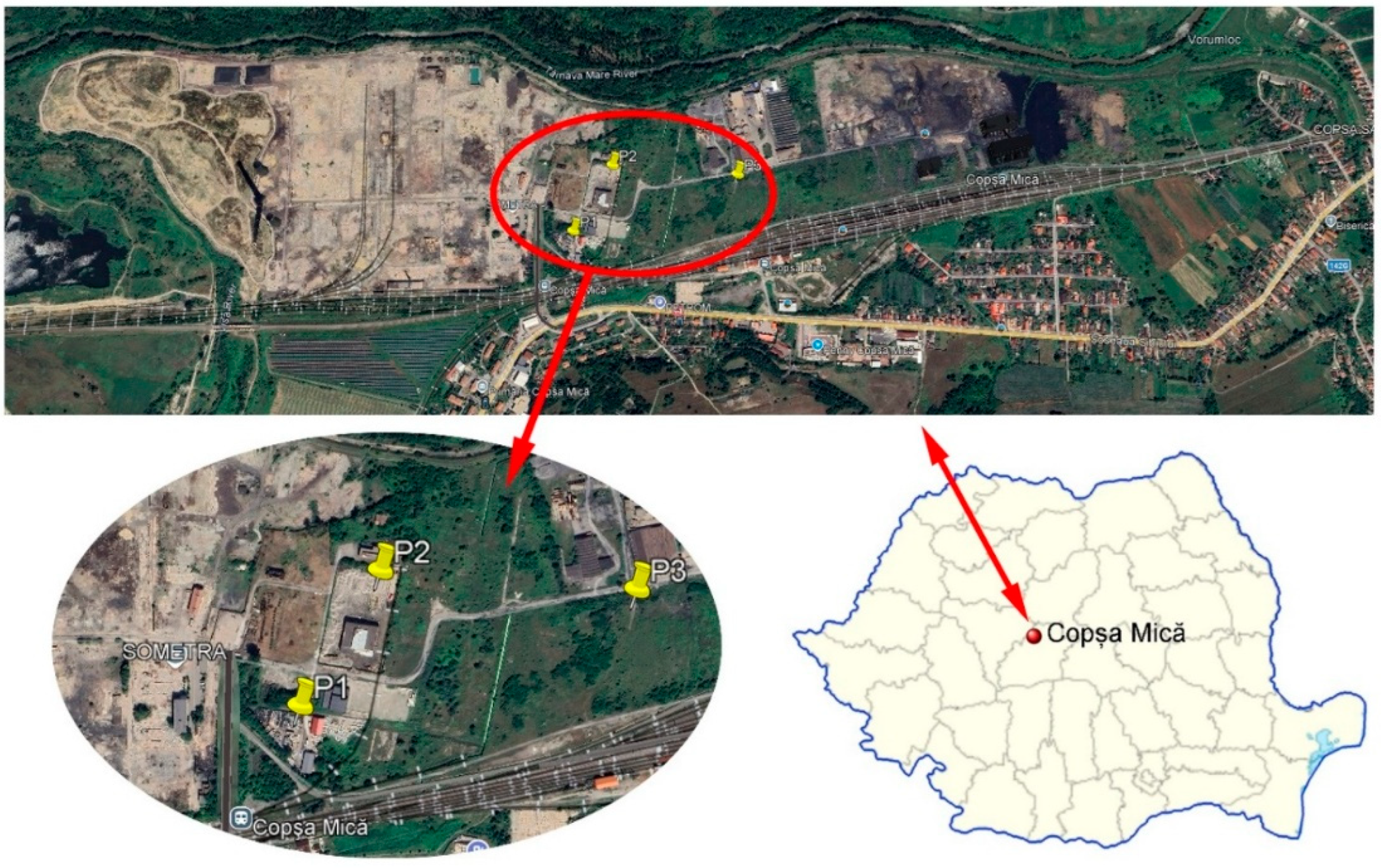
Soil samples were collected in accordance with the Romanian standard STAS 7184/1-1984 [31] and the international standard ISO 18400-102-2017 [32] from the Copșa Mică area, which is acknowledged nationally for its significant pollution levels [33,34]. The region features a hilly landscape, characterized by broad interfluves and valleys shaped by the hydrological processes of various watercourses [35]. Three sampling points were identified, designated as P1, P2, and P3, with the respective geographical coordinates: P1—24°13′50″ E; 46°56′39″ N; P2—24°13′54.42″ E; 46°07′1.86″ N; P3—24°14′8.51″ E; 46°07′1.30″ N (Figure 1). The samples were processed in accordance with the international standard ISO 11464:1998, followed by physicochemical investigations [36].

2.2. Physicochemical Analysis of Soil Samples

The pH, structure, nutrient content, and metal ion concentrations (Cd, Cr, Cu, Zn) of soil samples were all determined through analysis. Soil pH was determined potentiometrically, in accordance with ISO 10390:2022 [38], utilizing a 1:10 (g/v) soil/water suspension. Measurements were obtained using a HANNA portable pH meter (Hanna Instruments, Woonsocket, RI, USA).
The texture was ascertained by segregating the grain size fractions using sifting and sedimentation. Macroscopic sieving was conducted utilizing a RETSCH AS 200 (Retsch GmbH, Haan, Germany) with sieve sizes of 4, 2, 1, 0.5, and 0.2 mm [39]. Sedimentation of particles smaller than 0.02 mm was conducted utilizing the Kubiena/Kacinski [40,41,42,43]. The assessment of soil nutritional parameters (nitrogen—N, phosphorus—P, potassium—K) was conducted via colorimetric analysis utilizing the Biobase BK-YW-6A analyzer (Biobase Biodustry Co., Ltd., Jinan, China; repeatability precision ≤ 0.05%, deviation < 0.1%), following drying at 105 °C and grinding with a porcelain mortar. Light absorption was quantified at wavelengths of λ = 620 nm (N), 440 nm (P), and 540 nm (K). The analysis was conducted before and after washing the soil with malic acid. The assessment of heavy metal contents in the soil was conducted using flame atomic absorption spectrometry (FAAS) with a Shimadzu AA-6800 spectrometer (Shimadzu, Tokyo, Japan).
By digesting 3 g of soil with 7 mL of HCl (35–38% p.a., Merck, Darmstadt, Germany) and 21 mL of HNO3 (65% p.a., Merck, Darmstadt, Germany) for 3 h, homogenized, dried, ground soil samples that had passed through a 100 μm screen were mineralized. The supernatant obtained was filtered using 0.45 μm pore membranes (Roth, Karlsruhe, Germany), diluted with distilled water to achieve a final volume of 100 mL, and then analyzed using AAS. The analyses were conducted in the laboratory under regulated temperature and humidity conditions (T = 26 ± 1 °C, RH = 63 ± 2%) to guarantee consistency in results. The results presented are the means of three separate determinations. The concentrations measured for Cd, Cr, Cu, and Zn were compared to the permissible limits specified in Order Approving the Regulation on Environmental Pollution Assessment No. 756/1997 of the Romanian Ministry of Waters, Forests, and Environmental Protection (Table 1) [44].
For the analysis of the leachate Fourier transform infrared spectra (ATR-FTIR, 4000–350 cm−1), measurements were conducted using a Bruker Tensor 27 spectrophotometer equipped with a Platinum ATR single-reflection diamond accessory. Each spectrum was captured at a resolution of 4 cm−1 and averaged across 32 scans. Complementary UV–Vis measurements were performed using a Jenway 7305 spectrophotometer (Bibby Scientific Ltd., Stone, UK), a single-beam benchtop instrument operating over the 198–1000 nm range, with a spectral bandwidth of 5 nm, a resolution of 1 nm, and a wavelength precision of ±2 nm.

2.3. Methodology for Soil Remediation Utilizing Malic Acid

2.3.1. Soil Sample Preparation

The soil specimens were conditioned by desiccation to a stable weight at 105 °C employing a Binder oven (Binder GmbH, Tuttlingen, Germany) and subsequently pulverized utilizing a porcelain mortar and pestle. Five grams of soil were extracted from each sample, to which a malic acid-based extraction solution was administered.

2.3.2. Preparing the Washing Solution

The washing solution was formulated using malic acid (MA) provided by Penta Chemicals (Prague, Czech Republic). Ten grams of malic acid were measured using a precision electronic balance (Kern, Balingen, Germany) and diluted in 100 mL of distilled water, yielding a 10% (m/v) concentration solution. The malic acid concentration (10%) was selected based on preliminary tests and literature data, which indicated that lower concentrations (1–3%) resulted in significantly reduced extraction efficiencies [45]. This solution was subsequently employed as an extraction agent in the remediation of soil polluted with heavy metals.

2.3.3. Washing Experiment

To ensure repeatability, experiments on the potential for heavy metal extraction were carried out at the laboratory scale under constant temperature, actual air humidity, and ventilation conditions: T = (25 ± 1) °C, RH = (65 ± 2)%. The reported results represent the average of three measurements.
The soil and malic acid solution were combined within 250 mL Erlenmeyer flasks at S/L ratios of 1:5 and 1:10 and agitated using a continuous orbital rotation–oscillation shaker, VDRL 711 CT (ASAL S.R.L., Cernusco sul Naviglio, Milan, Italy), operating at 200 oscillations per minute for durations of 2 h, 4 h, 6 h, or 8 h.
Following washing, the leachate was isolated using filtration and tested with FAAS to ascertain the amounts of Cd, Cr, Cu, and Zn, in accordance with the information provided in Section 2.2. These metal concentrations, measured in the leachate, reflect the extractive ability of the solution employed under the specific conditions of concentration and contact duration for each case, from the total metal content present in the soil sample subjected to treatment. To guarantee repeatability and reproducibility, the outcomes were documented as the means of three successive measurements.
The laboratory-scale extraction yield of heavy metals was assessed based on the solid-to-liquid ratios of 1:5 and 1:10, as well as the duration of agitation. The extraction effectiveness of heavy metals at the laboratory scale was assessed based on the soil: solution ratios employed (1:5; 1:10) and the stirring durations (2 h, 4 h, 6 h, 8 h), utilizing the subsequent equation [46]:
Extraction   efficiency   ( % ) = C extracted C initial × 100
where:
Cextracted is the metal concentration measured in the extraction solution (mg/L);
Cinitial is the initial metal concentration of soil (mg/L).
The leachate collected from the experiment was subjected to additional analysis to assess potential alterations in the parameters of interest. Soil samples underwent an agitation/washing procedure with malic acid at specified time intervals (2, 4, 6, and 8 h) and varying solid-to-liquid ratios (S/L = 1:5 and 1:10). Additionally, the polishing was examined to assess alterations in pH and nutritional composition, and using UV-Vis and FTIR spectroscopy (as detailed in Section 2.2).

2.3.4. Data Analysis

The data analysis was performed with RStudio v4.0.5 [47], with the package “agricolae” [48]. ANOVA and Least Significant Difference (LSD) tests were applied to score multiple comparisons between sampling areas, the mixtures of soil, and the time. This approach enables the detection of the optimum extractant and time combination for each of the targeted elements, and to achieve the maximum extraction efficiency.

3. Results and Discussion

3.1. Physical and Chemical Characterization of the Soil

The results of the physical–chemical characteristics of the solution are shown in Table 2. The pH values for soil samples P1, P2, and P3 remained consistent, all registering 7.5, which indicates a slightly alkaline soil and similar alkalinity conditions across all analyzed locations.
The granulometric analysis indicated substantial textural disparities among the examined samples. Sample P2 displays elevated levels in the coarse fractions (4 mm and 2 mm), followed by a steady decline towards the finer fractions, signifying a mostly sandy texture situated between the loamy sand and sandy loam categories, as per the USDA classification [49]. The particle size distribution reveals a significant presence of sand particles (exceeding 70%), coupled with a limited concentration of fine fractions (silt and clay). This composition yields elevated permeability and a diminished cation exchange capacity (CEC). Consequently, the soil demonstrates an enhanced mobility of soluble and mobile contaminants due to its reduced adsorption capacity [50]. Consequently, porous soil, such as P2, can promote the swift movement of pollutants toward the groundwater table, thereby potentially endangering groundwater resources [51].
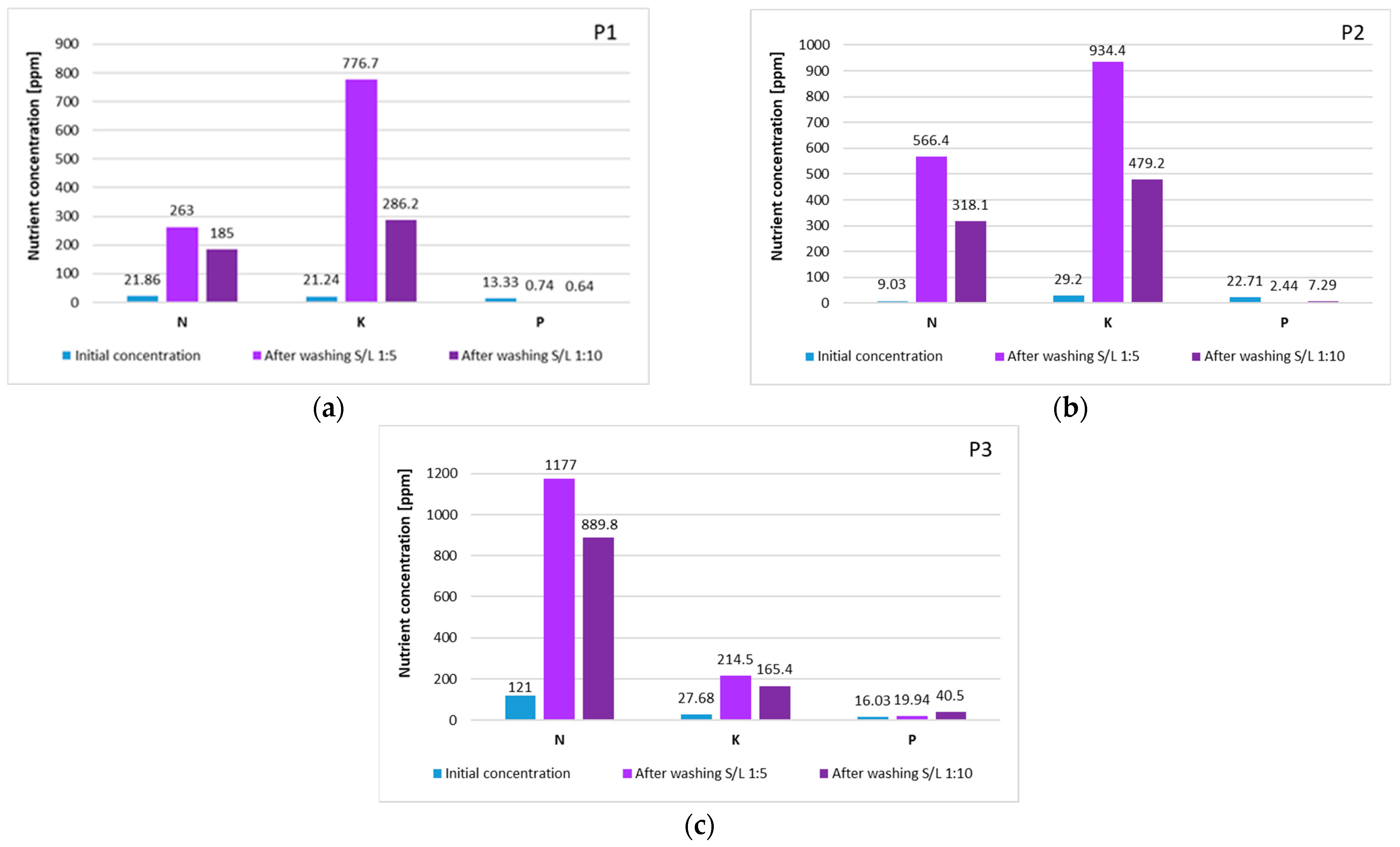
Conversely, samples P1 and P3 exhibit a greater proportion of tiny particles, indicative of loamy or loamy-clay textures (loam–clay loam). The differences in soil texture suggest variations in cation exchange capacity, which directly influence contaminant mobility. The sandy texture of P2 indicates lower retention potential and higher permeability, facilitating faster migration of dissolved contaminants. In contrast, the finer textures of P1 and P3 are associated with higher retention capacity, which limits metal mobility and enhances adsorption onto soil particles. This explains the lower contaminant mobility expected in P1 and P3 compared to P2 [51,52]. The findings indicate that soil texture is a crucial determinant of pollutant mobility and should be considered when selecting remediation strategies. The nitrogen (N) concentration fluctuated from 9.03 ppm (P2) to 121 ppm (P3), with samples P1 and P2 exhibiting comparatively lower levels in contrast to P3, which demonstrated a markedly elevated nitrogen content. This disparity may indicate differences in organic matter or fertilization in particular regions. Potassium (K) concentrations were similar across the samples, varying from 21.24 ppm (P1) to 29.2 ppm (P2), signifying a moderate availability of this nutrient in the examined soils. The phosphorus (P) concentration ranged from 13.33 ppm (P1) to 22.71 ppm (P2), potentially indicating local variations in phosphate availability or the soil’s capacity to retain this nutrient.
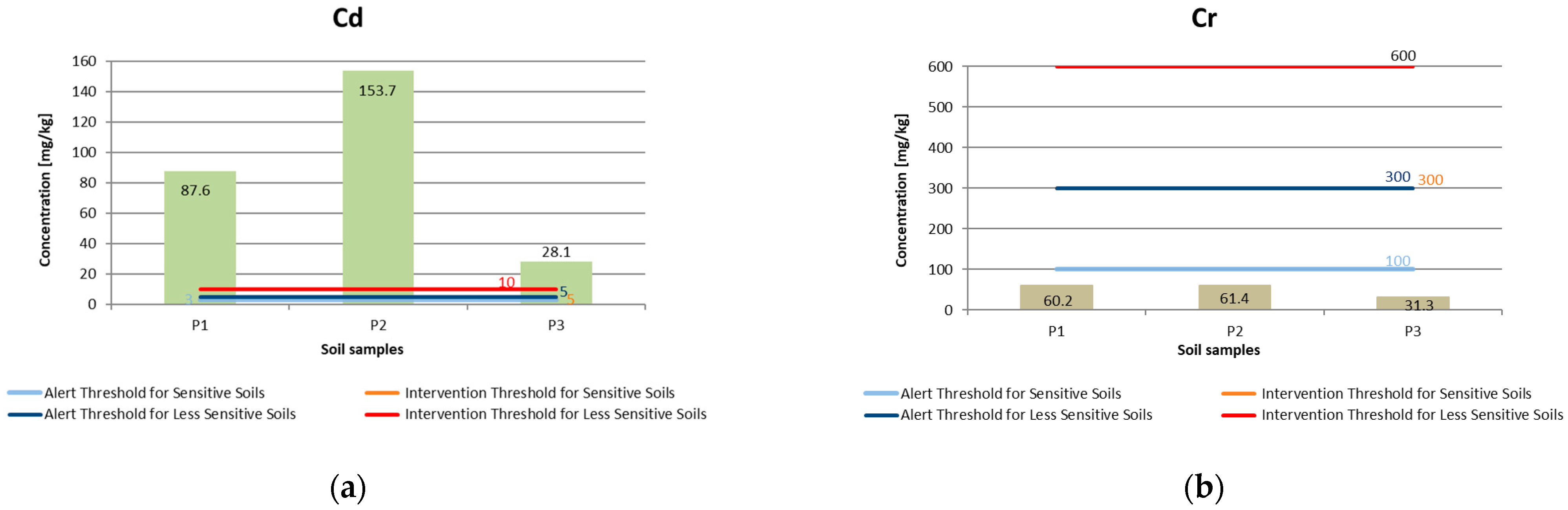
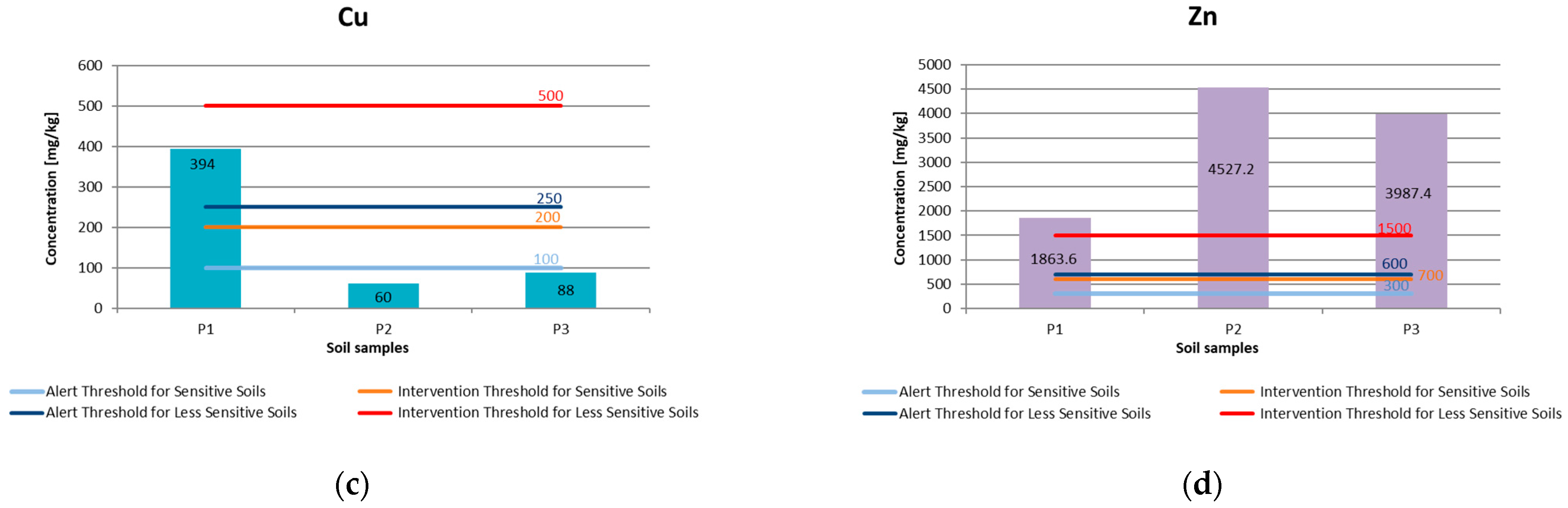
When the amounts of heavy metals in soil samples P1, P2, and P3 are compared to the quality limits set by the local ministry order, a complex and varied contamination gradient in the area under study is revealed (Figure 2). P2 is the most polluted of the three samples, with amounts of Cd and Zn significantly beyond normal and intervention levels. P1 exhibits a moderate level of impact, marked by considerable contamination with Cu, Cd, and Zn, whilst P3 is the least impacted, although it still demonstrates exceedances of normative values and warning levels for Zn and Cd.
Cadmium concentrations are markedly elevated in all samples, substantially beyond the standard threshold of 1 mg/kg. Sample P1 (87.6 mg/kg) surpasses the permissible thresholds for both sensitive and less sensitive soils, signifying a critically elevated level of contamination. Sample P2 exhibits the highest concentration at 153.7 mg/kg, surpassing the intervention threshold for less sensitive soils (20 mg/kg) by more than sevenfold, thus indicating exceptionally severe pollution linked to a substantial source. Sample P3 (28.1 mg/kg) is above all alert thresholds and the intervention limit for sensitive soils, signifying moderate to high levels of pollution. The data reveal significant soil pollution with cadmium (Cd), with samples P1 and particularly P2 indicating substantial ecological danger that necessitates further evaluation and the execution of remediation measures. The region is significantly impacted by cadmium, presenting substantial ecotoxicological hazards.
The concentrations of Cr in samples P1, P2, and P3 (31.3–61.4 mg/kg) are below the warning threshold for sensitive soils (100 mg/kg) established in a local ministry order. The readings, while marginally over the normal range of 30 mg/kg, are nevertheless significantly below risk thresholds. Among the three samples, P2 exhibits the highest chromium concentration at 61.4 mg/kg, followed by P1 at 60.2 mg/kg and P3 at 31.3 mg/kg; however, these variations lack ecotoxicological significance, as none of the samples exceed the established intervention thresholds. Consequently, chromium is not a contaminant in the area examined, and all samples may be regarded as untainted with respect to this metal. Copper concentrations exhibit considerable disparities among the three samples. Compared to the natural copper concentration in soil (20 mg/kg), sample P1 exhibits significant accumulation, reaching 394 mg/kg. This value is above the alarm level for sensitive soils (100 mg/kg) and less sensitive soils (250 mg/kg), in addition to exceeding the intervention threshold for sensitive soils (200 mg/kg). Despite being below the intervention threshold for less sensitive soils (500 mg/kg), the concentration in P1 signifies a substantial degree of contamination that requires risk evaluation and possible remedial actions. Conversely, samples P2 (60 mg/kg) and P3 (88 mg/kg) are below all legal thresholds, signifying no significant contamination. Therefore, among all the samples examined, P1 is the sole area notably impacted by copper accumulation, whereas P2 and P3 correspond to the natural baseline levels of the soil. The Zn concentrations (Figure 2) measured in samples P1, P2, and P3 (1863.6–4527.2 mg/kg) are above the intervention thresholds established by a local Ministry Order by a factor of 3 to 7 and significantly exceed the normative value of 100 mg/kg, signifying acute contamination and substantial ecological concern. Of the three samples, P2 has the highest zinc concentration (4527.2 mg/kg), indicating exposure to a more severe and prolonged source of pollution. P1 and P3, albeit lower than P2, nonetheless substantially surpass the legal thresholds, indicating that all samples are severely impacted and necessitating the enforcement of control and remediation strategies at the site.
While certain elements, such as Cr and Cu in samples P2 and P3, do not pose a significant concern, the cumulative analysis shows that the site is severely contaminated with Cd and Zn. All samples substantially surpass the intervention thresholds for Zn, while P1 and P2 are categorized inside the extreme danger zone due to elevated levels of Cd. According to Order 756/1997, this situation requires the application of remedial measures, the analysis of pollution sources, and the implementation of risk management strategies. The contamination gradient indicates a complex harm scenario, with major implications for soil quality, ecosystem health, and prospective land use.

3.2. Results of the Malic Acid Washing Experiment

3.2.1. pH Evolution

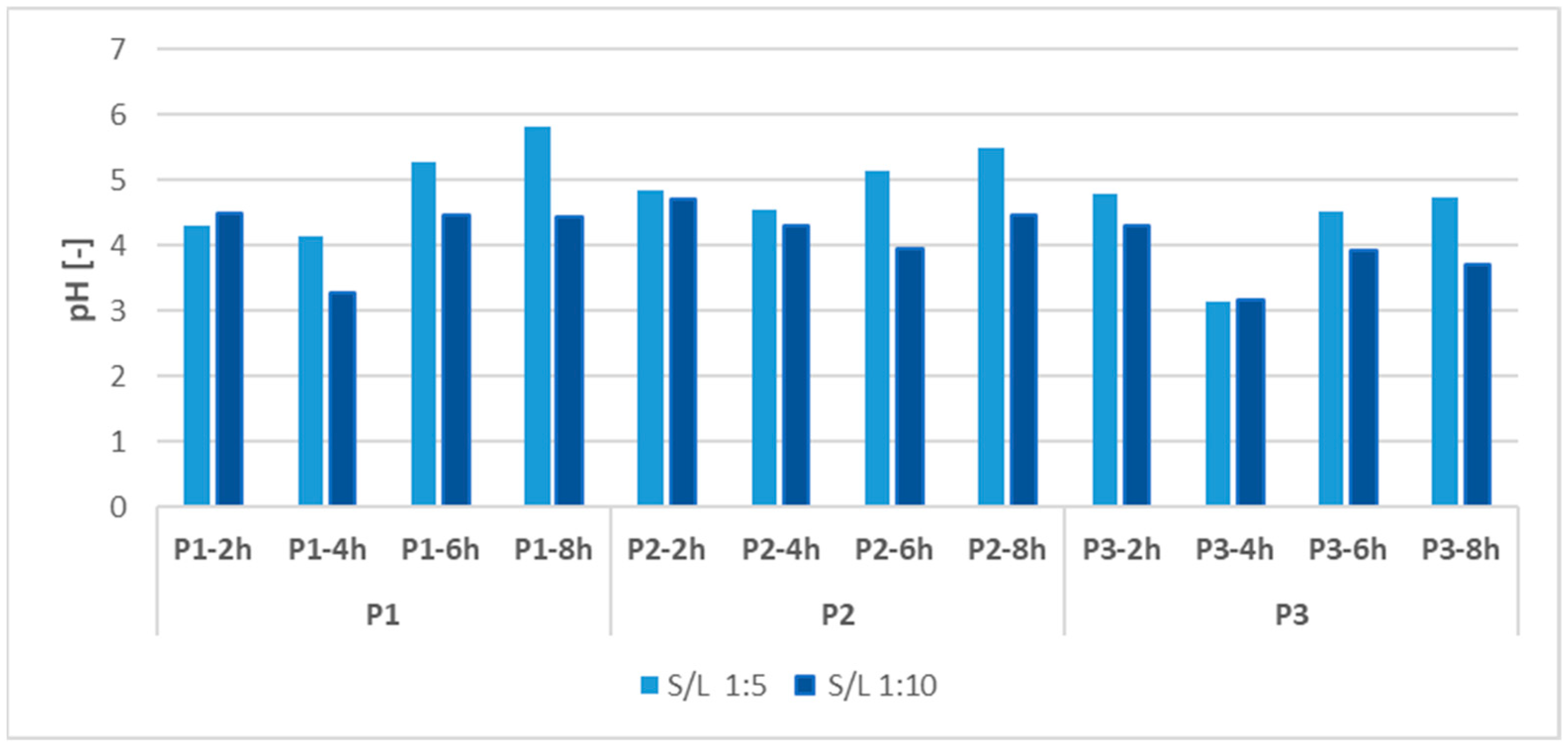
Figure 3 presents the pH changes of samples P1, P2, and P3 recorded at four extraction intervals (2 h, 4 h, 6 h, and 8 h) for two solid-to-liquid (S/L) ratios: 1:5 and 1:10. The results demonstrate consistent variations in pH behavior based on material type and extraction conditions. Although the pH levels for all three sample types stay within an acidic range, there are discernible differences in the S/L ratios. The 1:5 S/L ratio generally demonstrates marginally elevated pH values relative to the 1:10 ratio, indicating that more concentrated suspensions may buffer acidity more efficiently. Samples P1 and P2 exhibit this pattern most clearly, with the pH under the 1:5 ratio continuously exceeding that of the 1:10 ratio at almost all extraction times. Samples P1 and P2 exhibit a moderate increase in pH from 2 h to 6 h, followed by stabilization or a slight decline at 8 h. This pattern suggests the initial dissolution of alkaline species, succeeded by equilibrium or partial re-acidification during extended extraction. P3 exhibits a variable pattern: early extraction times (2–4 h) result in lower pH values, followed by an increase at 6 h, and a slight decrease again at 8 h. This indicates a unique interaction between solid constituents and the extraction medium, in contrast to P1 and P2.
In the comparison of the three materials, P1 and P2 demonstrate comparable overall pH ranges and temporal trends, while P3 consistently presents lower initial pH values and increased fluctuations. This suggests a possibly distinct chemical composition or buffering capacity for P3.

3.2.2. Nutrient Mobilization (N, K, P) During Washing

Figure 4 illustrates the amounts of nitrogen, potassium, and phosphorus in samples P1, P2, and P3 before and after washing at two solid-to-liquid ratios (S/L 1:5 and S/L 1:10). The findings demonstrate significant nutrient liberation during the cleaning process, exhibiting notable variations across different materials and varying washing intensities.
For sample P1 (Figure 4a), rinsing caused a notable increase in N and K concentrations within the liquid phase, indicating effective leaching of these nutrients. Nitrogen elevated from an initial 21.86 ppm to 263 ppm (S/L 1:5) and 185 ppm (S/L 1:10), whereas potassium ascended from 21.24 ppm to 776.7 ppm and 286.2 ppm, respectively. Phosphorus release, however, remained minimal, exhibiting a modest decrease at higher dilution (1:10), indicating reduced solubility or enhanced binding of phosphorus within this material. In sample P2 (Figure 4b), nutrient release exhibited the same trend, albeit with more dramatic values. Nitrogen concentrations increased from 9.03 ppm to 566.4 ppm (1:5) and 318.1 ppm (1:10). Potassium leaching was notably elevated, attaining 934.4 ppm at a 1:5 ratio and 479.2 ppm at a 1:10 ratio, thus establishing P2 as the most abundant source of soluble K among the evaluated materials. Phosphorus levels remained modest, with only minor increases at the more diluted ratio, indicating restricted mobilization under the examined conditions. Sample P3 (Figure 4c) had the largest overall nutrient release, particularly for nitrogen. N significantly rose from 121 ppm to 1177 ppm (1:5) and 889.8 ppm (1:10), suggesting a very soluble nitrogen pool. Potassium exhibited significant extraction, increasing from 27.68 ppm to 214.5 ppm and 165.4 ppm. Phosphorus mobilization, albeit more than in P1 and P2, remained relatively modest (maximum 40.5 ppm), underscoring the trend of restricted P solubility.
Across all samples, the S/L 1:5 ratio consistently yielded higher nutrient concentrations than the 1:10 ratio, indicating that a more concentrated washing environment improves nutrient extraction efficacy. The distinctions among P1, P2, and P3 indicate unique chemical compositions and nutrient-binding properties, with P3 demonstrating the greatest overall solubility, especially for nitrogen. In conclusion, the washing procedure efficiently extracted nitrogen and potassium from all materials, whereas phosphorus exhibited minimal release. The significant release of nitrogen and potassium indicates that these elements are present in more labile forms, easily mobilized during washing. In contrast, the limited phosphorus release suggests its stronger association with mineral phases, particularly under slightly alkaline conditions, which restricts its solubility.

3.2.3. Impact of Malic Acid Concentration and Washing Duration Assessed via FTIR and UV–Vis Analysis

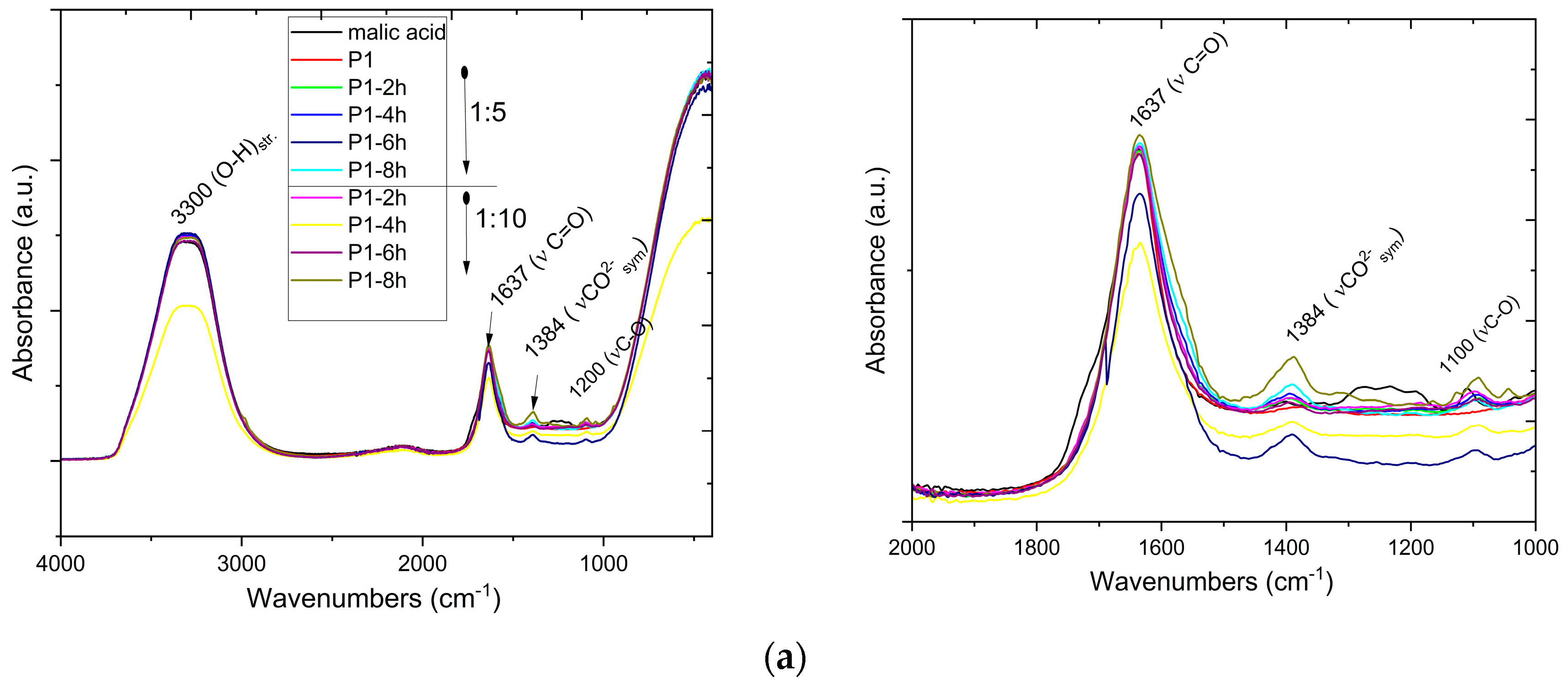
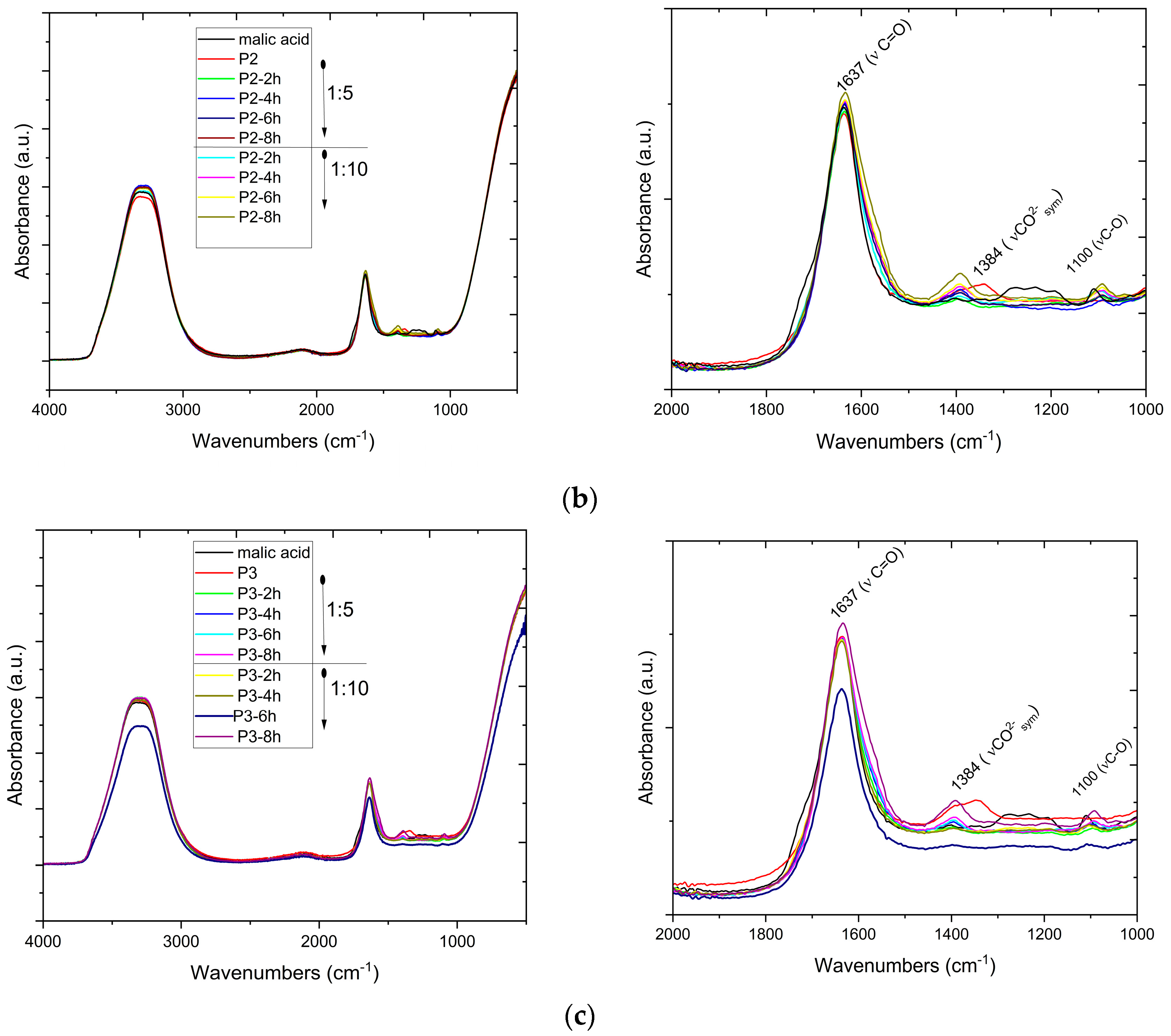
This study used FTIR and UV–Vis analysis to illustrate how malic acid concentration and washing duration influence the absorbance characteristics and chemical interactions of the soil samples. The FTIR spectra (Figure 5) demonstrates that treatment with malic acid results in distinct alterations in the soil washing duration, especially within the hydroxyl and carboxyl functional groups. The extensive O–H stretching band at around 3300 cm−1 intensifies with increasing malic acid content, signifying enhanced hydrogen bonding and the adsorption of hydroxyl-rich organic ligands onto mineral surfaces.
The carbonyl and carboxylate area (1700–1200 cm–1) is where the most noticeable alterations take place. The treated samples show greater absorptions at 1637 cm−1 (ν C–O), 1384 cm−1 (νCO2 sym), and 1200 cm−1 (ν C–O). These spectral alterations corroborate the presence of malic acid residues and imply the formation of metal-carboxylate complexes with soil minerals. Elevated malic acid concentrations consistently produce enhanced peak intensities, indicating augmented organic ligand loading and intensified organic–mineral interactions. In contrast, prolonged washing diminishes the intensity of these distinctive bands, signifying the elimination of weakly adsorbed malic acid while retaining only more strongly bound complexes. Overall, the spectral alterations indicate that malic acid markedly modifies soil surface functional groups via adsorption and complexation mechanisms, with both concentration and rinsing duration determining the degree of these interactions. Although the spectral differences between treated samples are subtle, systematic concentration- and time-dependent trends are evident in the 1700–1200 cm−1 region, with progressive increases in absorbance at 1637, 1384, and 1200 cm−1 at higher malic acid loadings and gradual attenuation of these bands upon prolonged washing, confirming concentration-dependent carboxylate adsorption and the preferential retention of strongly bound metal-carboxylate complexes over weakly adsorbed species.
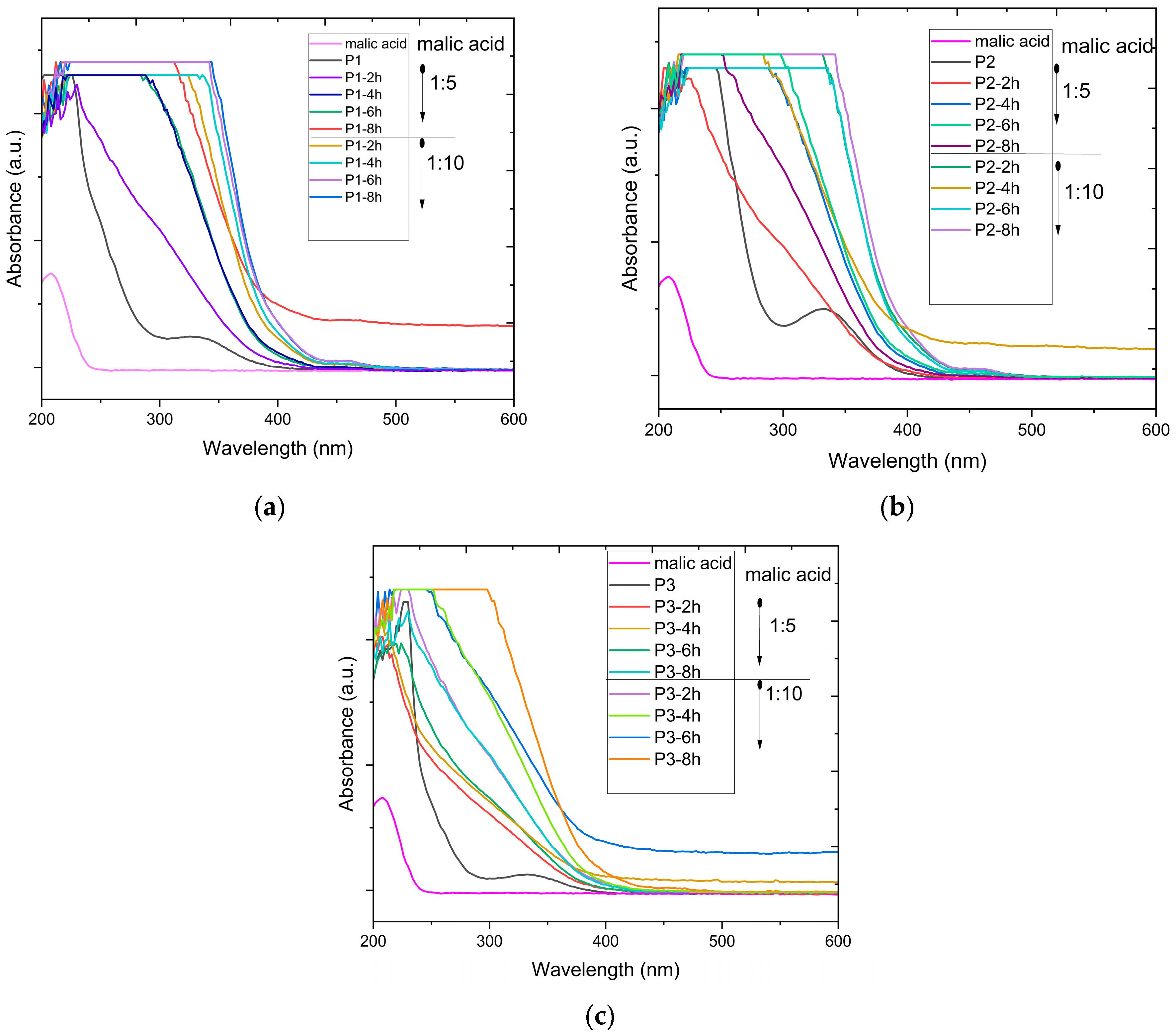
Utilizing UV-Vis spectroscopy (Figure 6), absorbance spectra were obtained over a wavelength range of 200–800 nm for samples subjected to two malic acid ratios (1:5 and 1:10) and washed for durations of 2, 4, 6, and 8 h. The resultant data demonstrates different spectrum patterns that correlate with the treatment factors. Samples subjected to a higher quantity of malic acid (1:5) demonstrated markedly elevated absorbance values, especially within the UV spectrum (200–300 nm). This indicates a more robust interaction between the acid and soil constituents, probably resulting from enhanced solubilization of organic materials or metal ions. Conversely, samples with a 1:10 ratio exhibited reduced absorbance, signifying a dilution effect and less pronounced chemical alteration of the soil matrix. The duration of washing significantly influenced absorbance modulation. Reduced washing durations (2 h) preserved a greater quantity of soluble chemicals, leading to elevated absorbance peaks. A slight decrease in absorbance was seen as the washing duration was extended to eight hours, suggesting that excess acid and related solutes were effectively removed.
This tendency was uniform across both concentration groups, underscoring the significance of washing in regulating residual chemical levels. The absorbance profiles indicate that malic acid content and washing period substantially influence the chemical makeup of treated soil. These findings offer significant insights for enhancing soil remediation techniques and comprehending the behavior of organic acids in environmental contexts. The UV absorbance envelope (200–300 nm) integrates contributions from free and complexed malic acid chromophores [53], solubilized soil organic matter fractions, and mobilized metal species, with the systematic attenuation observed at lower acid concentrations and extended washing durations reflecting the progressive depletion of these UV-active solutes from the soil matrix.

3.2.4. Metal Extraction Efficiency

Before discussing the effect of malic acid, it is important to consider the baseline metal mobility in the absence of any leaching agent. In our previous study, extraction with deionized water (reflecting the natural soil pH of 6.5) resulted in very limited metal mobilization, with Pb and Cu showing negligible extraction (<1%), Zn and Cr exhibiting low mobility (~1.5% and <3%, respectively), and Cd showing slightly higher mobility (~11%), although still significantly lower than the extraction efficiencies achieved using organic acids [24].
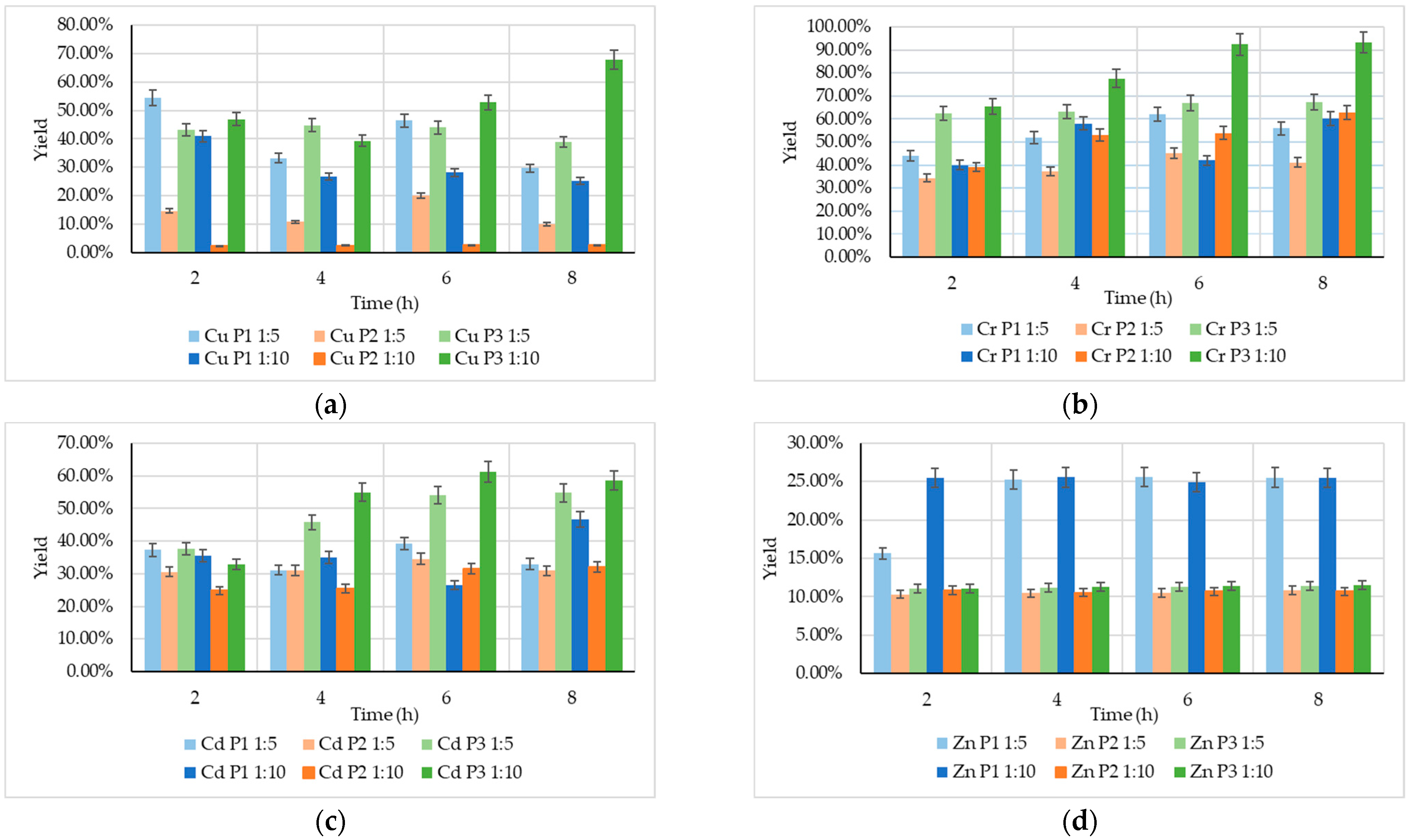
The efficiency of the soil remediation process (Figure 7), particularly regarding metal extraction (Cu, Cr, Cd, Zn), is affected by several factors: the type of metal, the duration of exposure to the washing solution, the ratio of soil to washing solution, and the initial level of soil contamination, specifically the concentration of metals in the soil sample.
The observed differences in extraction efficiency among metals can be explained by their distinct chemical behavior and affinity for complexation with malic acid. Metals such as Cr and Cd, which exhibit higher mobility or weaker binding to soil components, are more readily solubilized. In contrast, Zn shows lower extraction efficiency, likely due to its stronger association with stable mineral fractions and its lower tendency to form soluble complexes with malic acid. Similarly, Cu extraction is influenced by its strong binding to organic matter and soil particles, which limits its mobilization under the studied conditions.
The efficacy of soil washing with malic acid is noted for solid: liquid ratios of 1:5 and 1:10 (Figure 7). Zn (Figure 7d) consistently exhibits the lowest extraction efficiency (10–25%), indicating its stronger association with stable soil fractions and lower affinity for complexation with malic acid. The process demonstrates higher efficiency in sample P1, which is characterized by a lower initial metal concentration, whereas the efficiency decreases with increasing initial concentration (P1 < P3 < P2), reaching a minimum of approximately 10% in sample P2. This trend highlights the influence of metal loading on the effectiveness of the washing process. The length of treatment exerts no substantial effect on the laundry yield. Favorable results (exceeding 30%) and highly favorable results (surpassing 90% in the case of Cr) are observed for Cr. The high chromium extraction efficiencies observed in this study (up to 90%) should be interpreted with caution. Chromium was quantified as total Cr, without differentiation between Cr(III) and Cr(VI), which exhibit markedly different mobility and complexation behavior. Therefore, the presence of more mobile Cr(VI) species may partly explain the elevated extraction yields. The lack of chromium speciation represents a limitation of the present study and should be addressed in future investigations. The solid-to-solution ratio was 1:10, the process duration was 6 h and 8 h, and sample P3 exhibited the lowest starting concentration. Soil washing with malic acid (Figure 7b) is most effective at low initial Cr concentrations, and removal efficiency decreases as metal loading increases (P3 > P1 > P2). A correlation exists between prolonged soil exposure to the washing solution and improved results; nevertheless, an optimal length remains undetermined. A comparable behavior is noted for Cd (Figure 7c), where a lower initial concentration enhances process yield, varying from 30.58% to 54.81% for a solid: liquid ratio of 1:5, and from 24.81% to 61.25% for a solid: liquid ratio of 1:10.
An increase is observed with the procedure duration surpassing 4 h; nonetheless, an optimal exposure time remains undetermined. The influence of the solid-to-liquid ratio highlights the importance of reagent availability and mass transfer processes. A lower S/L ratio (1:5) provides a higher concentration of malic acid relative to the soil mass, enhancing metal solubilization. However, the limited influence of washing duration suggests that equilibrium is reached relatively quickly, and prolonged treatment does not significantly improve extraction efficiency. For Cu (Figure 7a), the overarching trend is analogous; a reduced initial metal concentration enhances the process, with a solid-to-solution ratio of 1:5 yielding superior results, but the time of the process affects this metric without a discernible pattern. In the case of soil sample P2, which has an initial Cu concentration 3.1 times higher than that of sample P1, the yield is drastically reduced by 2.3–3.7 times when using a solid: liquid ratio of 1:5, and even more, by 9.9–17.1 times when using a solid: liquid ratio of 1:10. Nevertheless, it is certain that a high initial concentration of Cu in the soil is clearly unfavorable to the process yield. The process yield values are similar to those obtained for sample P1 (the lowest initial Cu concentration), falling within the range of 39.92–44.81% for a solid: liquid ratio of 1:5 and slightly higher, 39.24–67.85% for a solid: liquid ratio of 1:10. Cu removal efficiency is higher in soils with low initial Cu concentration (<35 mg/kg), but further validation across different soils is required. Nevertheless, additional investigation across a broader spectrum of soils is required to confirm or refute this idea.
Overall, the results demonstrate that malic acid is effective for mobilizing certain heavy metals, particularly Cr and Cd, while showing limited efficiency for Zn. The process performance is strongly controlled by soil characteristics, metal speciation, and operational parameters, highlighting the need for site-specific optimization in practical applications.

3.2.5. Statistical Evaluation of Extraction Outcomes

Table 3 illustrates the progression of average heavy metal concentrations in relation to the greatest value (a) and the minimum value (k) observed experimentally. Means denoted by distinct letters signify significant differences at p < 0.05. Each targeted heavy metal had a distinct preference for extraction efficiency. According to ANOVA, both the sampling area and mixture report significantly influenced the extraction of elements; the exposure duration was significant solely for Cr and Zn. The multifactorial method offers a distinct framework for notable pairings. Only chromium extraction is affected by the synergistic impact of the mixture report and exposure duration, whereas for copper and zinc, any combination of parameters significantly influences the removal efficiency.
Cadmium washing demonstrated superior removal efficacy in all P3 combinations and in P1 at 1:5 concentrations. For this element, a 1:10 concentration is ineffective in P1 and P2 samples, irrespective of the exposure duration. Cr removal exhibited a highly variable pattern of final concentrations, with a 1:5 dilution serving as an effective extractant for P2 and P3. An intriguing aspect is that, for this element, prolonged exposure does not enhance extraction (P1 and P2, 6–8 h). Cu performed better when administered at 1:10 doses to P1 and P2 samples; this concentration is ineffective on P3 samples. Zn was the sole element that exhibited clustered and diminished extraction potential. Overall, P1 and P2 samples subjected to the washing process were ineffective in eliminating this element, whereas P3 samples demonstrated superior performance over this duration. An exception was the exposure of sample P1 to a 1:5 concentration for 2 h, which markedly reduced the final concentration.
Organic acids, including malic acid, effectively solubilize heavy metals, supporting their use in soil washing applications [29,54]. The examination of final element levels, alongside the interplay of sample origin, washing concentration, and exposure duration, suggests that these parameters exert a synergistic effect unique to each sample [21,55,56]. The specific heavy metal target determines the choice of washing concentration and the duration of the procedure.
The obtained extraction efficiencies are consistent with literature reports on biodegradable organic acids, although metal-specific differences are observed. Concurrently, they elucidate distinctions among metals, which are contingent upon complexation processes and the binding arrangements within the soil matrix.
The maximum copper extraction of 45% attained with malic acid falls short of the 80–86% range documented with citric and tartaric acids under optimal conditions [57]. Nevertheless, it mirrors the diminished yield of 14.2% documented with citric acid [58]. The Cd extractions obtained in this work (26–55%) are lower than those reported (89.1%) [58], although comparable to the results (50–69.6%) [29]. The results demonstrate the variability of the washing process concerning soil type and acid content. The extraction rate for Zn, varying from 10% to 25%, is much inferior to the yields of up to 95% documented [57] and over 80% attained using mixed EDTA systems [59].
Lower malic acid concentrations (1–3%) have been previously shown to result in variable and generally lower or inconsistent extraction efficiencies, depending on the metal. For example, in our previous study [45], removal efficiencies were approximately 1.5% for Pb, 2–2.5% for Cu, around 25% for Zn, and 40–50% for Cr, with slightly higher values at 3% concentration. In contrast, Cd exhibited a different behavior, with higher removal at 1% (≈80%) compared to 3% (≈50%). These results highlight the variability and lack of consistent efficiency at lower concentrations, supporting the use of a higher malic acid concentration (10%) in the present study to ensure effective metal mobilization. The efficiencies attained in the current study for Cr, reaching as high as 90%, are equivalent to or exceed those reported for oxalic and citric acids, which range from 60% to 80% [60]. Comparable results are observed with yields achieved through washing with HCl, H2SO4, or EDTA [21,61], whereas the use of malic acid provides a milder and environmentally sustainable alternative. The moderate yields recorded for Cu, Cd, and Zn suggest that malic acid has a restricted complexation capacity compared to polycarboxylic acids. Nonetheless, this also highlights the efficacy of the strategy for sustainable remediation practices [4,19,22,24].
The novelty of this study lies in the integrated evaluation of multi-metal extraction across soils with contrasting textures. In addition, coupling extraction efficiency with nutrient mobilization and spectroscopic analysis provides a comprehensive assessment of malic acid performance. Although malic acid demonstrated effective metal mobilization at laboratory scale, field-scale validation is still required. In addition, the absence of an acid-free control limits the ability to distinguish between natural metal release and acid-induced extraction, which may influence the interpretation of the observed removal efficiencies. The washing solutions confirmed the transfer of metals from the soil to the liquid phase; however, the management and treatment of these metal-rich leachates, as well as the fate of residual organic matter, were beyond the scope of this study. These include reagent consumption, management and treatment of metal-rich leachates, and potential impacts on soil fertility resulting from the mobilization of essential nutrients such as nitrogen and potassium. Therefore, malic acid washing should be considered a controlled remediation or pre-treatment approach rather than a stand-alone large-scale solution.

4. Conclusions

The analysis of the physical–chemical parameters of the soils revealed a uniform pH (~7.5) with larger variations in nitrogen and phosphorus, and potassium remained relatively constant, relevant for sustainability assessment. The pH profiles indicate that both extraction time and S/L ratio significantly influence the acidity of the suspensions, with the 1:5 ratio generally yielding higher pH values and samples P1 and P2 showing more stable behavior than P3. These differences are likely attributable to compositional variations and extraction kinetics of the respective materials. Sample P2, with a sandy texture, presents high permeability and increased risk of contaminant migration, while P1 and P3, with finer textures, favor pollutant retention. The washing process efficiently mobilized nitrogen and potassium, while phosphorus remained limitedly mobilized, an aspect relevant for post-remediation fertility. The efficiency of metal extraction depended on the nature of the element and the soil texture (Cd: 26–55%, Zn: 10–25%, Cu: 5–45%, and Cr: 30–90%). The S/L ratio of 1:5 provided the best results, and the optimal treatment duration was 6 h, with extension to 8 h generating minor variations. FTIR and UV-Vis analyses confirmed the formation of metal–carboxylate complexes and modifications of soil functional groups. The results indicate that malic acid is an effective biodegradable washing agent for the removal of Cd and Cr, particularly in sandy soils, under controlled laboratory conditions. However, the process is accompanied by partial mobilization of essential nutrients, which may influence post-treatment soil fertility and soil sustainability. The findings highlight the potential of malic acid as an environmentally benign remediation option, while emphasizing that the lack of chromium speciation (Cr(III)/Cr(VI)) represents a limitation of the present study and may affect the interpretation of the reported removal efficiencies. Further research should also address leachate management and scale-up considerations.

Author Contributions

Conceptualization, I.M.S., V.C.P., A.H. and M.N.; methodology, I.M.S., V.C.P., A.H. and R.S.; formal analysis, I.M.S. and T.G.; investigation, I.M.S., V.C.P., M.N., V.S., I.-L.S., A.-R.P., T.G. and R.S.; resources, V.M., M.N., T.G. and V.S.; data curation, I.M.S. and A.H.; writing—original draft preparation, I.M.S., V.C.P., A.H., M.N., V.S., A.-R.P. and R.S.; writing—review and editing, I.M.S., V.M. and I.-L.S.; visualization, I.M.S. and A.H.; supervision, I.M.S., A.H., V.M. and T.G.; project administration, I.M.S. and V.C.P.; funding acquisition, V.C.P. All authors have read and agreed to the published version of the manuscript.

Funding

This work was supported by the “Research on the treatment by washing of soils polluted with heavy metals and their valorization” grant funded by the National Grant Competition—GNaC ARUT 2023, No. 24/01-07-2024.

Institutional Review Board Statement

Not applicable.

Informed Consent Statement

Not applicable.

Data Availability Statement

The data resulting from this study can be made available to interested researchers upon justified request from the corresponding authors.

Conflicts of Interest

The authors declare that there is no conflict of interest regarding the conduct and publication of this article.

References

  1. Awofolu, O.; Mbolekwa, Z.; Mtshemla, V.; Fatoki, O. Levels of trace metals in water and sediment from Tyume River and its effects on an irrigated farmland. Water SA 2005, 31, 87–94. [Google Scholar] [CrossRef]
  2. Haroon, B.; Ping, A.; Pervez, A.; Faridullah Irshad, M. Characterization of heavy metal in soils as affected by long-term irrigation with industrial wastewater. J. Water Reuse Desalination 2019, 9, 47–56. [Google Scholar] [CrossRef]
  3. Anyanwu, E.D.; Nwachukwu, E.D. Heavy metal content and health risk assessment of a South-eastern Nigeria River. Appl. Water Sci. 2020, 10, 210. [Google Scholar] [CrossRef]
  4. Zheng, X.-J.; Li, Q.; Peng, H.; Zhang, J.-X.; Chen, W.-J.; Zhou, B.-C.; Chen, M. Remediation of Heavy Metal-Contaminated Soils with Soil Washing: A Review. Sustainability 2022, 14, 13058. [Google Scholar] [CrossRef]
  5. Chirila-Babau, A.M.; Micle, V.; Damian, G.E.; Sur, I.M. Preliminary investigations regarding the potential of Robinia pseudoacacia L. (leguminosae) in the phytoremediation of sterile dumps. J. Environ. Prot. Ecol. 2020, 21, 46–55. [Google Scholar]
  6. Guo, Z.J.; Zhou, Y.L.; Wang, Q.L. Characteristics and health risks of heavy metal contamination in soils of Xiongan New Area. China Environ. 2021, 41, 431–441. [Google Scholar]
  7. Li, Z.C.; Zhang, J.; Yang, H.B. Evaluation of heavy metal Cr, Ni pollution in geological sediments and ecological risk. World Nonferrous Met. 2020, 45, 259–260. [Google Scholar] [CrossRef]
  8. Sur, I.M.; Micle, V.; Gabor, T. Heavy metals removal by bioleaching using Thiobacillus ferrooxidans. Rom. Biotechnol. Lett. 2018, 23, 13409–13416. [Google Scholar]
  9. Yuan, G. Nanomaterials to the rescue. Nano Today 2008, 3, 61. [Google Scholar] [CrossRef]
  10. Wei, M.; Chen, J.; Wang, X. Removal of arsenic and cadmium with sequential soil washing techniques using Na 2 EDTA, oxalic and phosphoric acid: Optimization conditions, removal effectiveness and ecological risks. Chemosphere 2016, 156, 252–261. [Google Scholar] [CrossRef]
  11. Meng, F.; Yuan, G.; Wei, J.; Bi, D.; Ok, Y.S.; Wang, H. Humic substances as a washing agent for Cd-contaminated soils. Chemosphere 2017, 181, 461–467. [Google Scholar] [CrossRef]
  12. Bi, D.; Yuan, G.; Wei, J.; Xiao, L.; Feng, L.; Meng, F.; Wang, J. A Soluble Humic Substance for the Simultaneous Removal of Cadmium and Arsenic from Contaminated Soils. Int. J. Environ. Res. Public Health 2019, 16, 4999. [Google Scholar] [CrossRef] [PubMed]
  13. Tandy, S.; Ammann, A.; Schulin, R.; Nowack, B. Biodegradation and speciation of residual SS-ethylenediaminedisuccinic acid (EDDS) in soil solution left after soil washing. Environ. Pollut. 2006, 142, 191–199. [Google Scholar] [CrossRef] [PubMed]
  14. Sun, Y.; Zhou, Q.; An, J.; Liu, W.; Liu, R. Chelator-enhanced phytoextraction of heavy metals from contaminated soil irrigated by industrial wastewater with the hyperaccumulator plant (Sedum alfredii Hance). Geoderma 2009, 150, 106–112. [Google Scholar] [CrossRef]
  15. Li, S.; Pan, W.; Tong, L.; Hu, Y.; Zou, Y.; Huang, X. Remediation of Sb-Contaminated Soil by Low Molecular Weight Organic Acids Washing: Efficiencies and Mechanisms. Sustainability 2023, 15, 4147. [Google Scholar] [CrossRef]
  16. Onireti, O.O.; Lin, C.; Qin, J. Combined effects of low-molecular-weight organic acids on mobilization of arsenic and lead from multi-contaminated soils. Chemosphere 2017, 170, 161–168. [Google Scholar] [CrossRef] [PubMed]
  17. Qin, F.; Shan, X.; Wei, B. Effects of low-molecular-weight organic acids and residence time on desorption of Cu, Cd, and Pb from soils. Chemosphere 2004, 57, 253–263. [Google Scholar] [CrossRef]
  18. van Hees, P.; Vinogradoff, S.; Edwards, A.; Godbold, D.; Jones, D. Low molecular weight organic acid adsorption in forest soils: Effects on soil solution concentrations and biodegradation rates. Soil Biol. Biochem. 2003, 35, 1015–1026. [Google Scholar] [CrossRef]
  19. Zheng, Y.; Lu, J.; Zhang, Z.; Li, Y.; Tan, Y.; Cai, W.; Ma, C.; Chen, F. Effect of Low-Molecular Organic Acids on the Migration Characteristics of Nickel in Reclaimed Soil from The Panyi Mine Area in China. Toxics 2022, 10, 798. [Google Scholar] [CrossRef]
  20. Zabiszak, M.; Frymark, J.; Grajewski, J.; Jastrzab, R. Spectroscopic Studies of Lanthanide (III) Complexes with L-Malic Acid in Binary Systems. Int. J. Mol. Sci. 2024, 25, 9210. [Google Scholar] [CrossRef]
  21. Zhang, H.; Xu, Y.; Kanyerere, T.; Wang, Y.; Sun, M. Washing Reagents for Remediating Heavy-Metal-Contaminated Soil: A Review. Front. Earth Sci. 2022, 10, 901570. [Google Scholar] [CrossRef]
  22. Jalali, M.; Jalali, M.; Antoniadis, V. The release of Cd, Cu, Fe, Mn, Ni, Pb, and Zn from clay loam and sandy loam soils under the influence of various organic amendments and low-molecular-weight organic acids. J. Hazard. Mater. 2023, 459, 132111. [Google Scholar] [CrossRef] [PubMed]
  23. Ma, H.; Li, X.; Wei, M.; Zeng, G.; Hou, S.; Li, D.; Xu, H. Elucidation of the mechanisms into effects of organic acids on soil fertility, cadmium speciation and ecotoxicity in contaminated soil. Chemosphere 2020, 239, 124706. [Google Scholar] [CrossRef] [PubMed]
  24. Sur, I.M.; Hegyi, A.; Micle, V.; Gabor, T.; Lăzărescu, A.-V. Influence of the Extraction Solution on the Removal of Heavy Metals from Polluted Soils. Materials 2023, 16, 6189. [Google Scholar] [CrossRef]
  25. Huang, Q.; Chen, W.; Gao, J.; Meng, F.; Cai, Y.; Wang, Y.; Yuan, G. Impact of low molecular weight organic acids on heavy metal(loid) desorption in biochar-amended paddy soil. Environ. Geochem. Health 2024, 46, 289. [Google Scholar] [CrossRef]
  26. Huang, Z.P.; Ma, X.; Chen, X. Analysis and Application of Colorful Guizhou Tourism Data Based on Linear Regression Algorithm. Soft Eng. 2024, 27, 63–66. [Google Scholar]
  27. Thalassinos, G.; Levizou, E.; Rinklebe, J.; Shaheen, S.M.; Vasileios, A. Enhancing the Phytoextraction of Cd, Cu, Pb, and Zn by Portulaca oleracea in a Heavily Contaminated Soil Using Low Molecular Weight Organic Substances: Is Phytoremediation Viable? Earth Syst. Environ. 2024, 8, 923–936. [Google Scholar] [CrossRef]
  28. Gusiatin, Z.M. Novel and Eco-Friendly Washing Agents to Remove Heavy Metals from Soil by Soil Washing. Environ. Anal. Ecol. Stud. 2018, 2, 1–4. [Google Scholar] [CrossRef]
  29. Ren, X.; Chen, Y.; Zhang, M.; Xu, Y.; Jia, H.; Wei, T.; Guo, J. Effect of organic acids and soil particle size on heavy metal removal from bulk soil with washing. Environ. Geochem. Health 2023, 45, 3187–3198. [Google Scholar] [CrossRef]
  30. He, Z.; Long, L.; Yuan, H.; Pang, H.; Wang, Y.; Ye, L.; Xu, M.; Chen, C.; Liu, Y.; Xiao, Y.; et al. Remediation of heavy-metal-contaminated soil with two organic acids: Washing efficiency, recovery performance, and benefit analysis. J. Clean. Prod. 2023, 393, 136235. [Google Scholar] [CrossRef]
  31. STAS 7184/1-84; Soils. Sample Collection for Soil and Agrochemical Studies. ASRO: Bucharest, Romania, 1984.
  32. ISO 18400-102:2017; Soil Quality—Sampling Part 102: Selection and Application of Sampling Techniques. ISO: Geneva, Switzerland, 2017.
  33. Nedelescu, M.; Baconi, D.; Neagoe, A.; Iordache, V.; Stan, M.; Constantinescu, P.; Ciobanu, A.-M.; Vardavas, A.I.; Vinceti, M.; Tsatsakis, A.M. Environmental metal contamination and health impact assessment in two industrial regions of Romania. Sci. Total Environ. 2017, 580, 984–995. [Google Scholar] [CrossRef]
  34. Vrînceanu, N.O.; Motelică, D.M.; Dumitru, M.; Calciu, I.; Tănase, V.; Preda, M. Assessment of using bentonite, dolomite, natural zeolite and manure for the immobilization of heavy metals in a contaminated soil: The Copșa Mică case study (Romania). Catena 2019, 176, 336–342. [Google Scholar] [CrossRef]
  35. Roșian, G. Relieful în Depresiunea Transilvaniei; Presa Universitară Clujeană: Cluj-Napoca, Romania, 2020. [Google Scholar]
  36. ISO 11464:1998; Soil Quality. Pretreatment of Samples for Psysico-Chemical Analysis. ISO: Geneva, Switzerland, 1998.
  37. Google Earth Pro. 2024. Maps. Google LLC. Available online: https://earth.google.com/web/ (accessed on 25 March 2026).
  38. SR EN ISO 10390; Soil, Treated Biowaste and Sludge—Determination of pH. ISO: Geneva, Switzerland, 2022.
  39. Vandecasteele, B.; De Vos, B. Relationship Between Soil Textural Fractions Determined by the Sieve-Pipette Method and Laser Diffractometryl. 2001. Available online: https://www.researchgate.net/publication/273948901_Relationship_between_soil_textural_fractions_determined_by_the_sieve-pipette_method_and_laser_diffractometry (accessed on 2 May 2026).
  40. Kettler, T.A.; Doran, J.W.; Gilbert, T.L. Simplified Method for Soil Particle-Size Determination to Accompany Soil-Quality Analyses. Soil Sci. Soc. Am. J. 2001, 65, 849–852. [Google Scholar] [CrossRef]
  41. Bumbu, I.; Bumbu, I.; Vîrlan, L. Environmental Control and Monitoring; Laboratory and Practical Course; Universitatea Tehnică a Moldovei: Chișinău, Moldova, 2006. [Google Scholar]
  42. Makó, A.; Szabó, B.; Rajkai, K.; Szabó, J.; Bakacsi, Z.; Labancz, V.; Hernádi, H.; Barna, G. Evaluation of soil texture determination using soil fraction data resulting from laser diffraction method. Int. Agrophys. 2019, 33, 445–454. [Google Scholar] [CrossRef]
  43. Igaz, D.; Aydin, E.; Šinkovičová, M.; Šimanský, V.; Tall, A.; Horák, J. Laser Diffraction as An Innovative Alternative to Standard Pipette Method for Determination of Soil Texture Classes in Central Europe. Water 2020, 12, 1232. [Google Scholar] [CrossRef]
  44. Order No. 756 of 3 November 1997 for the Approval of the Regulation on Environmental Pollution Assessment. Eminent: Ministry of Waters, Forests and Environmental Protection. (Published in: Official Gazette no 303 bis of 6 November 1997). 1997. Available online: http://legislatie.just.ro/Public/DetaliiDocumentAfis/151788 (accessed on 10 March 2026). (In Romanian)
  45. Sur, I.M.; Prodan, V.C.; Micle, V.; Nasui, M.; Hegyi, A.; Pop, V.S.; Scurtu, L.I. Washing Procedure with Several Reagents for Ecological Rehabilitation of Soil Polluted with Heavy Metals. Soil Syst. 2025, 9, 130. [Google Scholar] [CrossRef]
  46. Bahemmat, M.; Farahbakhsh, M.; Kianirad, M. Humic substances-enhanced electroremediation of heavy metals contaminated soil. J. Hazard. Mater. 2016, 312, 307–318. [Google Scholar] [CrossRef] [PubMed]
  47. R Core Team. R: A Language and Environment for Statistical Computing; R Foundation for Statistical Computing: Vienna, Austria, 2024; Available online: https://cran.r-project.org/doc/manuals/r-release/fullrefman.pdf (accessed on 10 March 2026).
  48. de Mendiburu, F. Statistical Procedures for Agricultural Research, R Package Version 1.3-7. 2023. Available online: https://cran.r-project.org/web/packages/agricolae/index.html (accessed on 10 March 2026).
  49. USDA. Soil Survey Manual. Soil Science Division Staff. Agriculture Handbook No. 18; USDA: Washington, DC, USA, 2017.
  50. Gee, G.W.; Bauder, J.W. Particle-Size Analysis. In Methods of Soil Analysis: Part 1 Physical and Mineralogical Methods, 2nd ed.; Klute, A., Ed.; SSSA Book Series; American Society of Agronomy and Soil Science Society of America: Madison, WI, USA, 1986; pp. 383–411. [Google Scholar] [CrossRef]
  51. Alloway, B.J. Heavy Metals in Soils: Trace Metals and Metalloids in Soils and Their Bioavailability; Springer: Dordrecht, The Netherlands, 2013; Volume 22. [Google Scholar] [CrossRef]
  52. FAO. Guidelines for Soil Description, 4th ed.; Food and Agriculture Organization of the United Nations: Rome, Italy, 2006. [Google Scholar]
  53. Weishaar, J.L.; Aiken, G.R.; Bergamaschi, B.A.; Fram, M.S.; Fujii, R.; Mopper, K. Evaluation of Specific Ultraviolet Absorbance as an Indicator of the Chemical Composition and Reactivity of Dissolved Organic Carbon. Environ. Sci. Technol. 2023, 37, 4702–4708. [Google Scholar] [CrossRef]
  54. Yang, T.; Hodson, M.E. Investigating the use of synthetic humic-like acid as a soil washing treatment for metal contaminated soil. Sci. Total Environ. 2019, 647, 290–300. [Google Scholar] [CrossRef]
  55. Liu, J.; Zhao, L.; Liu, Q.; Li, J.; Qiao, Z.; Sun, P.; Yang, Y. A critical review on soil washing during soil remediation for heavy metals and organic pollutants. Int. J. Environ. Sci. Technol. 2022, 19, 601–624. [Google Scholar] [CrossRef]
  56. Liu, H.; Chen, P.; Wang, H.; Yang, Y.; Wu, Y. Remediation of Cu-, Zn-, and Pb-Contaminated Soil Using Different Soil Washing Agents: Removal Efficiencies and Mechanisms. Water Air Soil Pollut. 2023, 234, 476. [Google Scholar] [CrossRef]
  57. Paliulis, D. Extraction of zinc and copper from a contaminated soil by using organic acids. Bulg. Chem. Commun. 2019, 51, 38–47. [Google Scholar]
  58. Ke, X.; Zhang, F.J.; Zhou, Y.; Zhang, H.J.; Guo, G.L.; Tian, Y. Removal of Cd, Pb, Zn, Cu in smelter soil by citric acid leaching. Chemosphere 2020, 255, 126690. [Google Scholar] [CrossRef] [PubMed]
  59. Cheng, S.; Lin, Q.; Wang, Y.; Luo, H.; Huang, Z.; Fu, H.; Chen, H.; Xiao, R. The removal of Cu, Ni, and Zn in industrial soil by washing with EDTA-organic acids. Arab. J. Chem. 2020, 13, 5160–5170. [Google Scholar] [CrossRef]
  60. Sun, Y.; Guan, F.; Yang, W.; Wang, F. Removal of Chromium from a Contaminated Soil Using Oxalic Acid, Citric Acid, and Hydrochloric Acid: Dynamics, Mechanisms, and Concomitant Removal of Non-Targeted Metals. Int. J. Environ. Res. Public Health 2019, 16, 2771. [Google Scholar] [CrossRef]
  61. Sampanpanish, P.; Thetthotsaporn, N. Efficiency of EDTA and TWEEN 80 for the Removal of Chromium using Soil Washing Technologies. Am. J. Appl. Sci. 2018, 15, 43–50. [Google Scholar] [CrossRef][Green Version]
Figure 1. Location of sampling points [37].
Sustainability 18 04627 g001
Figure 2. Heavy metal concentrations in soil samples relative to the quality thresholds provided in Order 756/1997: (a) Cd; (b) Cr; (c) Cu; (d) Zn.
Sustainability 18 04627 g002aSustainability 18 04627 g002b
Figure 3. pH evolution of soil samples P1, P2, and P3 under two solid-to-liquid ratios (1:5 and 1:10) measured at 2 h, 4 h, 6 h, and 8 h.
Sustainability 18 04627 g003
Figure 4. Concentration of N, P, and K nutrients in the samples analyzed before and after washing with malic acid, depending on the ratio (1:5 and 1:10) for (a) P1; (b) P2, (c) P3.
Sustainability 18 04627 g004
Figure 5. FTIR analysis of malic acid in samples: (a) P1; (b) P2; (c) P3.
Sustainability 18 04627 g005aSustainability 18 04627 g005b
Figure 6. UV-VIS analysis of sample of malic acid: (a) P1; (b) P2; (c) P3.
Sustainability 18 04627 g006
Figure 7. Effect of solid-to-liquid ratio (1:5 and 1:10) using malic acid solution on metal extraction: (a) Cu; (b) Cr; (c) Cd; (d) Zn.
Sustainability 18 04627 g007
Table 1. Values for permitted concentrations according to Order No. 756/1997 [mg/kg] [44].
Heavy MetalsNormal ValueSoil Type
Sensitive SoilsLess Sensitive Soils
Alert ThresholdIntervention ThresholdAlert ThresholdIntervention Threshold
Cd135510
Cr30100300300600
Cu20100200250500
Zn1003006007001500
Table 2. Physicochemical characteristics of soil samples.
ParameterP1P2P3
pH [-]7.57.57.5
TextureLoam/Clay LoamLoamy Sand/Sandy LoamLoam/Clay Loam
N [ppm]21.869.03121
K [ppm]21.2429.227.68
P [ppm]13.3322.7116.03
Cd [mg/kg]87.6153.728.1
Cr [mg/kg]60.261.431.3
Cu [mg/kg]3946088
Zn [mg/kg]1863.64527.23987.4
Table 3. Statistical analysis of experimental results for soil washing with malic acid.
Sample/Washing Duration/ConcentrationCdSignificanceCrSignificanceCuSignificanceZnSignificance
P1-2h/1:50.979d0.794fghi6.425ef8.738d
P1-4h/1:50.818d0.939cdef3.930ghi14.126abc
P1-6h/1:51.032d1.119ab5.497efg14.321abc
P1-8h/1:50.868d1.011abcd3.505hi14.277abc
P1-2h/1:106.534abc0.722hijk4.846fghi14.255abc
P1-4h/1:106.493abc1.047abc3.162i14.283abc
P1-6h/1:104.882bcd0.758ghij3.326i13.960abc
P1-8h/1:108.959ab1.083abc2.982i14.240abc
P2-2h/1:51.410cd0.632jk5.384efgh13.997abc
P2-4h/1:51.427cd0.686ijk3.963ghi14.201abc
P2-6h/1:51.592cd0.830efghi7.354e14.266abc
P2-8h/1:51.426cd0.758ghij3.664ghi14.727a
P2-2h/1:107.878ab0.722hijk0.880j14.732a
P2-4h/1:108.306ab0.975bcde0.911j14.321abc
P2-6h/1:1010.260a0.993bcd0.969j14.522ab
P2-8h/1:1010.213a1.155a0.939j14.499ab
P3-2h/1:50.317d0.586k14.096cd13.252c
P3-4h/1:50.387d0.593k14.648cd13.316c
P3-6h/1:50.456d0.628jk14.380cd13.467bc
P3-8h/1:50.463d0.632jk12.724d13.599bc
P3-2h/1:100.946d0.614jk15.335bc13.263c
P3-4h/1:101.132d0.728ghijk12.828d13.536bc
P3-6h/1:101.183d0.866defgh17.274b13.678abc
P3-8h/1:101.161d0.875defg22.182a13.768abc
ANOVAF testp.valF testp.valF testp.valF testp.val
Sample12.740.00042.110.000770.680.00014.820.000
AM39.600.00025.570.0008.440.00512.990.001
Time0.620.43359.920.0000.710.40325.130.000
Sample:AM7.730.00116.670.00052.400.0005.830.005
Smple:Time0.120.8901.290.28314.670.00011.390.000
AM:Time0.530.4686.530.01318.780.00021.500.000
Sample:AM:Time0.140.8701.880.16112.910.00015.020.000
Distinct letters indicate significant differences between treatments at p < 0.05 based on the LSD test.
Disclaimer/Publisher’s Note: The statements, opinions and data contained in all publications are solely those of the individual author(s) and contributor(s) and not of MDPI and/or the editor(s). MDPI and/or the editor(s) disclaim responsibility for any injury to people or property resulting from any ideas, methods, instructions or products referred to in the content.