Article

An Integrative Assessment of a Mangrove Ecosystem: Sustainability and Management in Muara Angke, Jakarta


by
Nyoto Santoso
1,*,
Oktovianus
2,
Adam Rachmatullah
1,
Reno Catelya Dira Oktavia
2,
Dina Sri Suprajanti
2 and
Ricky Avenzora
1
1
Department of Forest Conservation and Ecotourism, Faculty of Forestry and Environment, IPB University, Bogor 16680, Indonesia
2
Department of Tourism, Trisakti Institute of Tourism, South Jakarta 12330, Indonesia
*
Author to whom correspondence should be addressed.
Sustainability 2026, 18(1), 464; https://doi.org/10.3390/su18010464
Submission received: 6 November 2025 / Revised: 13 December 2025 / Accepted: 23 December 2025 / Published: 2 January 2026
(This article belongs to the Section Sustainability, Biodiversity and Conservation)

Abstract

The mangrove ecosystems in Muara Angke, Jakarta, serve as a national benchmark for sustainable mangrove management in Indonesia, yet face significant urban pressures threatening their long-term viability. This study evaluates the ecological integrity and governance effectiveness of this critical ecosystem, covering Wildlife Reserve, Nature Park, Protected Forest, and Production Forest areas totaling 327.7 hectares. An exploratory mixed-methods approach was employed over four months (June–September 2025), integrating vegetation diversity assessments through plot sampling, avifauna surveys via point count methods, herpetofauna identification using Visual Encounter Surveys, water quality assessments through systematic literature review, geospatial analysis of mangrove dynamics using Sentinel-2A imagery (2015–2025), and social-governance evaluation using close-ended questionnaires and One Score One Criteria Scoring System. Results revealed moderate to severe water pollution with phosphate and nitrate exceeding standards, moderate vegetation diversity (13 species; Shannon-Wiener H′ = 1.466–1.728), high avifaunal diversity (55 species; H′ = 3.54) confirming significance along the East Asian-Australasian Flyway, and significant sediment accretion (32 hectares) attributed to coastal reclamation. Management evaluation identified critical conservation compliance deficiencies (score 1.43/7). The findings indicate urgent need for integrated interventions including pollution control, ecosystem-based restoration, enhanced monitoring, and cross-sector policy integration to prevent rapid mangrove degradation and ensure sustainability of this ecologically significant urban mangrove ecosystem.

1. Introduction

The mangrove ecosystem in the Muara Angke area has a very strategic and crucial position in various dimensions for the Jakarta Megacity, covering ecological, socio-economic, and socio-political aspects that are integrated in supporting coastal urban sustainability. Ecologically, the mangrove ecosystem in the Muara Angke area is a small remaining area of natural ecological protection for Jakarta as a megacity in facing various ecological dynamics that commonly occur in coastal and estuarine areas. Yuniarti et al. [1] and Fuady et al. [2] stated that the mangrove ecosystem in the Muara Angke area serves as a critical habitat for coastal biodiversity, including migratory and endemic bird species that have high conservation value, and plays a role in regulating water quality and mitigating climate change through superior carbon sequestration compared to terrestrial ecosystems.
In the context of coastal resilience, the mangrove ecosystem in the Muara Angke area serves as the first natural protection system against abrasion, tidal flooding, and the increasingly threatening impacts of climate change on Jakarta [3,4]. Meanwhile, from a socio-political perspective, the mangrove area in Muara Angke, Jakarta, can be categorized as an integral part of the “face of Jakarta” in demonstrating its commitment to the importance of conservation in sustainable urban development. The implementation of the target of planting one kilometer of mangroves per year set by the DKI Jakarta Provincial Government in 2025 reflects a political commitment to strengthening coastal resilience through a nature-based solutions approach [4].
The development of Taman Impian Jaya Ancol in the early New Order period (c. 1970) marked the initial large-scale conversion of North Jakarta’s mangrove ecosystem, authorized under Government Regulation No. 51/1960 regarding the designation of Ancol for development. Although the Jakarta Spatial Plan 1985–2005 initially designated the Angke Kapuk area as a green belt, policy shifts in 1996 facilitated its conversion for residential use, notably the Pantai Indah Kapuk (PIK) development. Multi-temporal remote sensing analyses at Pantai Indah Kapuk show that mangrove cover increased between 2013–2020 by approximately 3–5 ha per year in reclaimed coastal zones, driven by sedimentation and rehabilitation efforts [5].
The mangrove ecosystem area in Muara Angke is one of the last remaining coastal wetland ecosystems in North Jakarta that still survives amid the pressures of urbanization. In addition to its high ecological value, this area serves a variety of important functions, ranging from conservation, protection, and limited production to education and environmental services in urban areas. Institutionally, this area consists of several integrated management blocks, such as the Muara Angke Wildlife Reserve (covering 25.02 hectares) and the Angke Kapuk Nature Park (covering 99.82 hectares), which are managed by the Jakarta Natural Resources Conservation Agency (BKSDA). In addition, there are also the Angke Kapuk Protected Forest (covering approximately 44.76 hectares) and the Angke Kapuk Production Forest (covering more than 100 hectares), which are under the authority of the DKI Jakarta Provincial Parks and Urban Forestry Agency [6,7]. All these blocks are spatially connected through the Jakarta Bay tidal system and the Angke River flow, so the hydrological dynamics and environmental quality in the surrounding area have a direct impact on the quality of the mangrove ecosystem.
This ecosystem plays a vital role in maintaining the balance of the coastal environment, physically, chemically, and biologically. However, the sustainability and optimal functioning of mangrove ecosystems are highly dependent on the integrity of their zoning structure, namely the existence of front, middle, and back mangrove zones. This zoning not only reflects the ecological adaptation of mangrove vegetation but also determines the stability and sustainability of the ecosystem’s overall function. Bengen [8], Hastuti et al. [9] and Tomlinson [10] reported that mangroves are a group of plants that have special morphological and physiological adaptations, such as pneumatophores, prop roots, and salt excretion capabilities, enabling them to survive in environments with high salinity, low oxygen, and tidal fluctuations.
Mangrove ecosystems consist not only of primary vegetation such as Rhizophora, Avicennia, and Sonneratia, but also include fauna (e.g., crabs, fish, birds), microorganisms, and abiotic components (water, soil, air) that interact with each other to a complex life networks [11,12]. This ecosystem is also known as a “nursery ground” for various species of fish and shrimp, as well as a natural barrier that protects the coastline from erosion and abrasion [13]. Mangrove ecosystems are complex ecological systems formed through distinctive spatial zoning, consisting of three main sub-ecosystems: the seaward zone, the middle zone, and the landward zone. Each zone has different environmental characteristics, species composition, and ecological functions, but they are integrally related [10,14]. According to the concept proposed by Duke et al. [15], mangrove zoning is an adaptive response to environmental gradients, particularly salinity, tidal inundation duration, and nutrient availability. This zoning reflects the tolerance of different species to varying environmental conditions along the intertidal gradient, where each species occupies an ecological niche that is optimal for its physiological capabilities. The results of the study by Wulandari et al. [16] show that the Angke Kapuk Protected Forest and Angke Kapuk Nature Park have relatively high biodiversity, with 15 mangrove species from 11 families and 12 genera found.
The Avicennia marina species dominates at the seedling to sapling level. The diversity index (H′) value is around 1.6, which indicates a medium-level community and suggests pressure from urban activities. On the other hand, in terms of birds, a number of local studies have confirmed the presence of various types of water birds and migratory birds that utilize important habitat patches in the Angke-Kapuk area. This is closely related to its geographical position close to the East Asian–Australasian Flyway (EAAF), making the habitat mosaic in this area ecologically very important [17]. In terms of ecosystem services, Utama et al. [18] reported that the Angke-Kapuk mangroves show a significant contribution to carbon storage, flood/wave attenuation, environmental quality improvement, and recreational-educational value, thus underscoring the urgency of protecting urban mangroves in climate-resilient urban planning.
Despite its important role, the Muara Angke mangrove area also faces serious pressure from its surrounding environment, mainly due to pollution. A study conducted by Cordova et al. [19] identified the presence of microplastics in sediments in the Muara Angke Wildlife Reserve. These findings indicate an abundance of plastic particles of various polymer types; the distribution is greatly influenced by tidal patterns and proximity to sources of pollution from human activities. In addition, Andriani et al. [20] found the presence of heavy metal pollution, especially lead (Pb), in the water and sediments in the Angke Kapuk area. This pollution is associated with marine tourism and coastal development activities, and if not managed immediately, it could pose ecological and health risks. Land cover change and vegetation degradation in this area can also be monitored through remote sensing technology, where vegetation index (NDVI) monitoring in Angke Kapuk Nature Tourism Park shows the high sensitivity of mangrove vegetation to anthropogenic pressures and changes in water management [21].
The management of mangrove ecosystems in recent studies is no longer viewed as a unilateral effort by the government, but rather as a collaborative process involving various stakeholders, ranging from local communities, the private sector, government agencies, to international organizations. Effective mangrove ecosystem management requires an adaptive management approach that involves multiple stakeholders [22]. The concept of ecosystem-based management (EBM) emphasizes holistic management that considers the interactions between ecosystem components and human activities [23]. This approach is in line with the principles outlined in the IUCN Global Standard for Nature-based Solutions, which emphasizes the importance of inclusive governance, tenure clarity, tangible benefits for biodiversity, and sustainable financing support [24].
In Indonesia, the policy framework for mangrove management is regulated in various laws and regulations, from the national to the regional level. Institutional fragmentation and overlapping authorities often hinder policy implementation. However, the establishment of the Peat and Mangrove Restoration Agency (BRGM) in 2021 was an important step in clarifying the mandate for ecosystem rehabilitation and encouraging crossactor collaboration. In fact, private sector involvement through blue carbon partnerships is beginning to show positive results in supporting restoration financing [25]. Field studies in several coastal areas also show that the participatory management approach, in which local communities are actively involved in the decision-making process and implementation of conservation programs, increases significantly when accompanied by adequate technical support, good water management, and economic incentives such as the development of ecotourism and ecosystem service payment schemes [3].
Given the history of urban spatial planning and land use changes that have occurred, it is not impossible that the mangrove ecosystem in the Muara Angke area will one day be increasingly threatened by the pressure of urban land use. The existing dynamics of fragmentation can also be strongly suspected to lead to the emergence of island biogeography [26], which will drastically reduce the quality of the mangrove ecosystem; then it will lose its ecological function and at some point will also be used as an argument by many parties to change its land use function. In a global context, the dynamics of the existence and management of mangroves in Muara Angke, Jakarta, can serve as a lesson learned for the development of mangrove ecosystems in other coastal cities globally.
Despite a growing body of research on mangrove degradation, biodiversity dynamics, and land-use change in the Angke–Kapuk region, existing studies generally examine ecological conditions [16], pollution dynamics [19], or governance structures [3] in isolation. To date, no research has provided an integrative assessment that simultaneously combines vegetation structure, faunal community composition, multitemporal geomorphological change detection, and water quality dynamics within a unified analytical framework. This separation leaves a significant gap in understanding how biophysical processes, pollution inputs, sediment accretion, and governance pressures interact to shape the sustainability of this highly urbanized mangrove ecosystem.
This study addresses that gap by providing the first multi-dimensional and multi-temporal evaluation of the Muara Angke mangroves. The novelty of this research lies in: (1) the simultaneous quantification of ecological integrity, sedimentation dynamics, and governance effectiveness within a fragmented urban landscape; (2) the application of the One Score One Criteria system to objectively benchmark tourism–conservation trade-offs; and (3) the identification of critical ecological and governance thresholds (accretion rates, pollution loads, compliance scores) that distinguish sustainable from degrading ecosystem trajectories in urban mangrove contexts. This holistic framework offers a replicable model for integrated urban wetland management and provides a comprehensive basis for evidence-based decision-making.
In light of the aforementioned challenges, a comprehensive evaluation of the mangrove ecosystem in the Muara Angke Region, Jakarta, is critical. This study aims not only to analyze the determinants of ecosystem sustainability but specifically to: (1) assess the ecological integrity of the area, encompassing water quality profiles, vegetation structure, and faunal diversity; and (2) evaluate the effectiveness of existing governance frameworks and local community perceptions. Through this integrative approach, the study seeks to formulate optimal management strategies to ensure the long-term viability and conservation of the mangrove ecosystem.

2. Materials and Methods

The research was conducted in the Muara Angke mangrove area, North Jakarta Administrative City, DKI Jakarta Province, which includes the Muara Angke Wildlife Reserve, Angke Kapuk Nature Tourism Park, Angke Kapuk Protected Forest, and Angke Kapuk Production Forest (Figure 1) for 4 months, from June 2025 to September 2025.
This study uses an exploratory mixed-method approach with a focus on flora and fauna, recreational benefits, as well as social aspects. The flora aspect is explored by examining the richness of vegetation species and land cover patterns. The fauna aspect is also explored with a focus on examining the richness and diversity of species. The social aspect aimed to find out the range of perceptions among the population regarding the importance of mangrove ecosystems in many ways for urban communities. The management and recreational aspects aimed to assess the effectiveness of mangrove ecosystem management carried out by area managers.
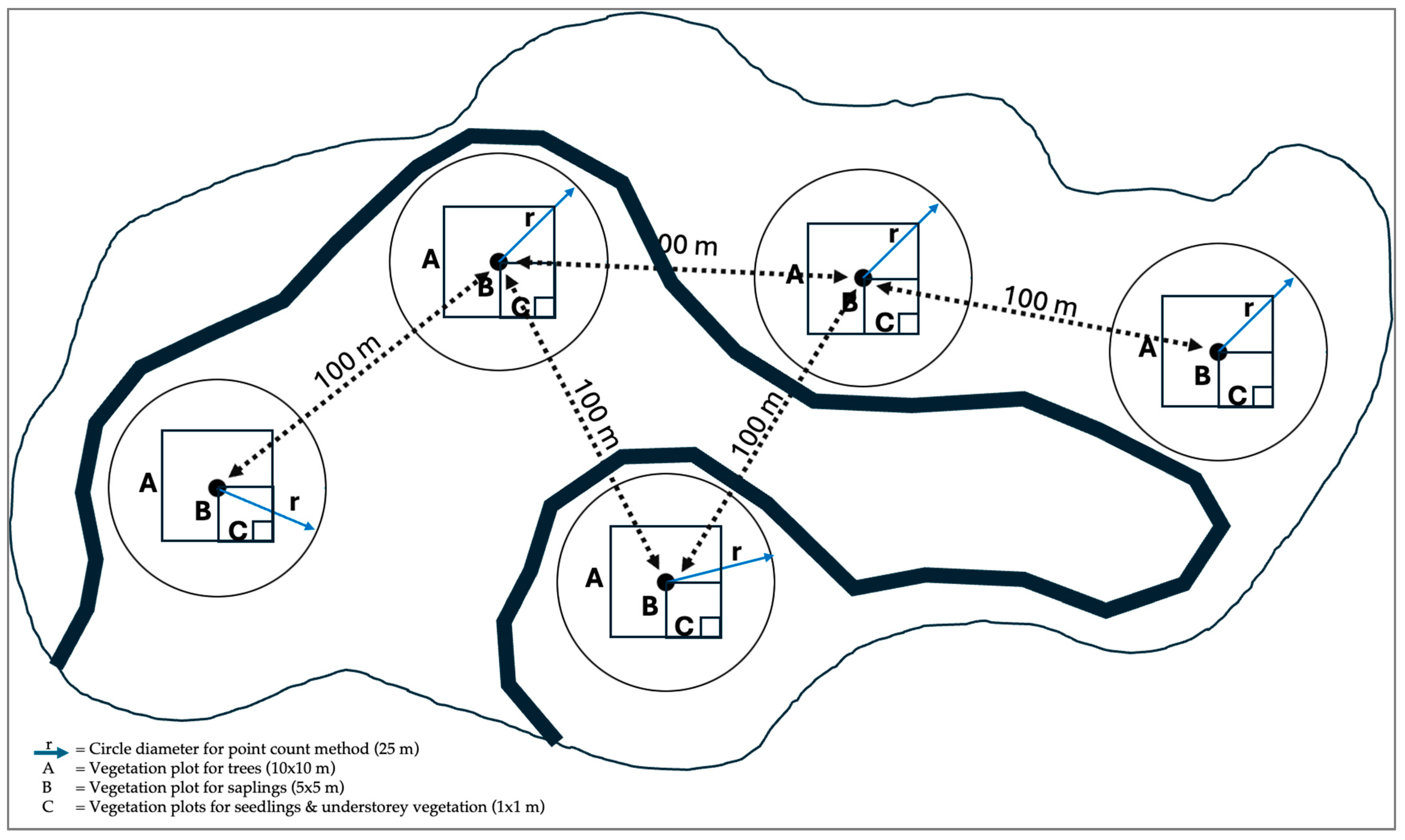
Primary data collection was conducted through an in situ survey. Vegetation data were collected using purposively placed plots of 10 × 10 m for trees, 5 × 5 m for saplings, and 1 × 1 m for seedlings and understorey vegetation along existing trails across four study sites (Muara Angke Wildlife Reserve, Angke Kapuk Nature Tourism Park, Angke Kapuk Protected Forest, and Angke Kapuk Production Forest), with five plots per site. Purposive locations were determined based on the visually observable extent of mangrove stands in the field. Plot placement within sparse or thin mangrove stands was considered not representative of a healthy mangrove ecosystem.
Faunal data were collected using the point count method for avifauna (25 m radius, two daily sessions at 06.00–11.00 and 14.00–18.00) and Visual Encounter Survey (VES) for reptiles and amphibians, with reptile surveys conducted during diurnal hours and amphibian surveys during nocturnal hours to account for the ectothermic activity patterns of each taxon. Avifauna observation points and herpetofaunal survey plots were located at vegetation sampling plots (Figure 2) to enable integrated assessment of vegetation and faunal community data.
In parallel, population perception range data was collected through a research instrument in the form of a closed-ended questionnaire. The questionnaire was addressed to 100 local community respondents using purposive sampling techniques, considering the following criteria: (1) local communities who have lived in the area for at least 5 years, (2) have a direct connection to the mangrove ecosystem through economic or social activities, and (3) are over 18 years of age. The questionnaire was designed to capture three primary dimensions of community perception: (1) Direct Benefits Derived from Mangrove Ecosystems; (2) Community Perception of Mangrove Ecological Functions (Including Associated Flora and Fauna); and (3) Land Use Conflicts within Mangrove Conservation Areas. The instrument consisted of 21 closed-ended questions using a 7-point scale ranging from 1 (Strongly Disagree) to 7 (Strongly Agree) to systematically measure respondents’ perceptions across these dimensions. To ensure the robustness of the data collected, the questionnaire underwent rigorous statistical testing before full-scale deployment. A validity test was conducted using the Pearson Product-Moment Correlation method, where each item’s score was correlated with the total score (see Table 1). The critical value for the correlation coefficient r t a b l e for d f = N 2 (with a pilot sample of n = 30) at a significance level of 5% is 0.361. Items were considered valid if r c o u n t > r t a b l e . The reliability of the instrument was assessed using Cronbach’s Alpha coefficient to measure internal consistency. A widely accepted threshold of 0.60 was used, where an Alpha value > 0.60 indicates reliable instrumentation suitable for social research.
In addition, questionnaires were also distributed to collect data on mangrove area management to the area managers, in this case the Jakarta BKSDA, which manages the Muara Angke Wildlife Reserve, and the DKI Jakarta Parks and Forestry Agency, which manages the Angke Kapuk Protection Forest and the Angke Kapuk Production Forest. This instrument was designed to evaluate the governance of the Muara Angke mangrove ecosystem across three primary dimensions: (1) Institutional Framework, encompassing institutional authority, accountability, and the implementation of documented management plans; (2) Participation and Actor Networks, focusing on the active engagement of local communities and stakeholders, as well as the efficacy of communication forums; and (3) Management Effectiveness, evaluating law enforcement regarding encroachment and pollution, budget allocation, human resource capacity, and the sustainability of rehabilitation programs.
Social and governance evaluation was conducted by assessing local community perceptions using a closed-ended questionnaire applying the One Score One Criteria Scoring System with an ascending score range from 1 to 7 [27]. The instrument comprised 56 closed-ended questions, designed to systematically quantify respondents’ perceptions across multiple governance dimensions. In addition, the management of the Angke Kapuk Nature Tourism Park was evaluated through direct on-site assessment using the same One Score One Criteria Scoring System. This assessment employed a checklist covering seven management aspects (see Table 2), which were further elaborated into 42 specific indicators, based on field observations and information obtained from the site managers. This approach enabled a consistent and standardized evaluation of governance performance. Each indicator was scored based on direct field observations and in-depth interviews conducted with the area managers, specifically PT. Murindra Karya Lestari as the holder of the Nature Tourism Environmental Service Business Permit (PBPSWA), to ensure data accuracy and reliability.
To characterize the water quality profile of the Muara Angke mangrove ecosystem in Jakarta Bay, a retrospective comparative study was conducted through a systematic review of indexed scientific literature and official environmental monitoring reports. Secondary data were retrieved from national and international peer-reviewed journals based on specific inclusion criteria: (1) study sites situated within Muara Angke and its associated hydrological zones (Pluit Reservoir, Muara Kamal, Pantai Indah Kapuk, Marina Ancol Beach, and Muara Cilincing); (2) the availability of quantitative water quality parameters, including physicochemical variables (temperature, pH, Dissolved Oxygen DO, Biochemical Oxygen Demand BOD, Chemical Oxygen Demand COD, Total Suspended Solids TSS), nutrients (nitrate, phosphate, ammonia), heavy metals, and other pollution indicators; and (3) publication within the last decade to capture current environmental conditions and cumulative anthropogenic impacts. Data from diverse sources were extracted and tabulated to facilitate cross-locational comparisons. A comparative descriptive analysis was performed to map pollution gradients, verify compliance with Indonesian Seawater Quality Standards (Government Regulation PP No. 22 of 2021; Decree of the Ministry of Environment Kepmen LH No. 51 of 2004), distinguish between localized and systemic pollution within Jakarta Bay, and determine the ecological suitability of the waters for mangrove biota and fisheries.
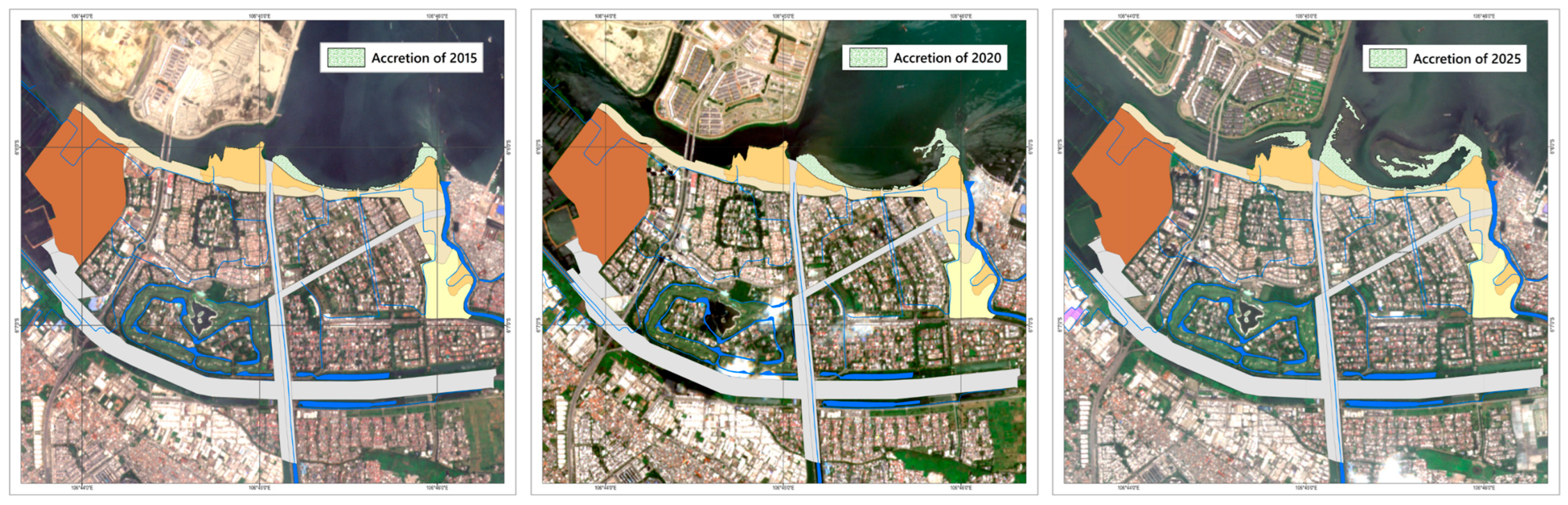
Furthermore, to quantify the spatial-temporal dynamics of the Muara Angke mangrove ecosystem resulting from accretion and sedimentation processes, a geospatial analysis was conducted by overlaying multi-temporal Sentinel-2A satellite imagery acquired in 2015, 2020, and 2025. The resulting spatial data were then benchmarked against baseline findings from Santoso [28] to calculate the net area change and identify morphological shifts over the last decade.
Data analysis for mangrove vegetation was conducted by calculating the Importance Value Index (IVI) and Shannon Wiener Diversity Index (H’). The Importance Value Index (IVI) was determined based on relative density (RD) and relative frequency (RF) for seedling and sapling levels, as well as relative dominance (RD) for tree levels. The Shannon-Wiener species diversity index was determined using Magurran’s equation. Furthermore, wildlife inventory data in the Muara Angke Mangrove Area, both from the Aves/Bird class and Reptiles and Amphibians, were analyzed using the Shannon-Wiener Species Diversity Index (H′), Species Evenness Index (E), Margalef Species Richness Index (DMg), and Conservation Status based on Government Regulation No. 7 of 1999 concerning the preservation of plant and animal species, the IUCN Red List, and CITES. Meanwhile, mammals, reptiles, amphibians, and invertebrates (arthropods and mollusks) were analyzed descriptively by identifying their species diversity.
Quantitative data on the population’s perception of the importance of mangrove ecosystems and data on the management of the Muara Angke mangrove ecosystem in the Angke Kapuk Protected Forest, Angke Kapuk Production Forest, and Wildlife Reserve were analyzed using descriptive statistics (frequency, percentage, mean, standard deviation) to describe patterns of perception and management. Data on the management of the Muara Angke mangrove ecosystem in the Nature Park area was analyzed using the One Score One Criteria Scoring System, whereby the aggregate of indicators fulfilled in the site planning would become the final values for the aspects assessed [27]. The results of the quantitative and qualitative analyses were then integrated to produce a comprehensive synthesis.

3. Results

The Muara Angke mangrove area in North Jakarta has strategic value as a habitat for water birds, a feeding ground for the Bluwok Stork (Mycteria cinerea) and a habitat for the Javanese Bubut (Centropus nigrorufus), so it has been included by BirdLife International as an Important Bird Area (IBA) [29].

3.1. Characteristic of Water Quality at Muara Angke Mangrove Area

A comparative evaluation of water quality in Jakarta Bay shows significant heterogeneity in pollution levels between locations, with pollution gradients influenced by the intensity of anthropogenic activities, proximity to pollution sources, and hydrodynamic modifications due to reclamation. The Muara Angke monitoring station [30] shows that, based on the Pollution Index (PI), the pollution status in Muara Angke is moderately polluted, while according to the Marine Water Quality Index (IKAL), it is classified as poor. The critical parameters used by the Jakarta Water Authority include (a). phosphate (PO4) concentration of 0.4 mg/L, which exceeds the quality standard (0.015 mg/L) by 27 times; (b). nitrate (NO3) reaching 0.8 mg/L, exceeding the standard (0.06 mg/L) by 13 times; (c). Extremely high BOD (65 mg/L), turbidity (78–99 NTU) exceeding the threshold (5 NTU) by 20 times; and (d). Microbiological contamination with fecal coliforms reached 9200 MPN/100 mL, nine times exceeding the permissible limit (1000 MPN/100 mL). The pollution originated from domestic waste from densely populated settlements in the Angke watershed, river runoff carrying TSS and nutrients from upstream, and industrial and agricultural activities contributing phosphate from detergents and nitrate from fertilizers [30,31]. A complete overview of the water conditions in Muara Angke and its surroundings can be seen in Table 3.
Compared to other locations in Jakarta Bay, Muara Angke is moderately polluted, but shows higher nutrient loads than several other coastal locations. Pluit Reservoir and Muara Kamal/Angke show more severe conditions with a highly polluted status, characterized by extreme temperatures (>37 °C) at the Muara Karang power plant thermal outfall and very high ammonia levels (1944 mg/L), making the waters unfit for fishing [40,41]. The Pantai Indah Kapuk (PIK) mangrove area shows heavy pollution with a marine debris pollution index (PI) of 13.96–15.27, dominated by plastic (77.7%) and microplastics trapped up to a depth of 30 cm in the sediment, with the Angke River as the main vector [32]. Meanwhile, Marina Ancol and Muara Ancol show moderate to heavy pollution with critical DO (0.07 mg/L), high phosphate (1.653 mg/L), and BOD and DO parameters that do not meet marine tourism standards, originating from recreational activities, Tanjung Priok Port, and dense settlements [36].
Muara Cilincing is categorized as moderately polluted (STORET-28) with BOD (35.47 mg/L) and COD (398.01 mg/L) reflecting the extreme organic load from the Cakung River and the Nusantara Free Trade Zone industry [39]. Overall, Jakarta Bay (including the post-reclamation area) shows moderate pollution with dissolved heavy metals (Cd, Pb, Cu, Zn) exceeding environmental quality standards, as well as GSW model predictions showing a decrease in DO (43%) and an increase in BOD (154%) in the polder area due to hydrodynamic disturbances from 13 river flows and coastal reclamation [33,34,35,37,38]. This comparison indicates that Muara Angke, although not the worst location, experiences chronic pollution pressure that requires integrated management intervention to restore the function of the mangrove ecosystem as a coastal buffer and habitat for biodiversity.

3.2. Mangrove Vegetation Structure and Faunal Diversity

Based on vegetation analysis conducted in the Muara Angke mangrove area, a diverse species composition was found at each growth level. This study identified 13 mangrove plant species spread across three growth level categories: trees, saplings, and seedlings. The identified species were divided into two main groups, namely true mangroves and associated mangroves. Based on research data conducted by Avenzora [42] and Santoso [28], the analysis of true mangrove vegetation conducted in the Muara Angke conservation area shows temporal dynamics in species composition during the 1988–2025 period. The presence of true mangroves in the Muara Angke Mangrove area has declined in terms of the number of species identified, from 8 species in 1987 to only 5 species in 2011, and only 7 species in 2025 (Table 4).
The mangrove community in the Muara Angke area is dominated by several true mangrove species that have specific morphological and physiological adaptations to tidal environmental conditions. At the tree level, there are seven identified true mangrove species, including Avicennia marina, Avicennia alba, Rhizophora mucronata, Rhizophora stylosa, Rhizophora apiculata, Sonneratia caseolaris, and Excoecaria agallocha. At the sapling level, the number of true mangrove species increases with the presence of Bruguiera gymnorrhiza, while the seedling level shows the presence of four true mangrove species, namely Avicennia marina, Rhizophora mucronata, Excoecaria agallocha, and Sonneratia caseolaris. The results of the mangrove vegetation analysis in the Muara Angke area are presented in Table 5, Table 6 and Table 7.
Avicennia marina shows consistent dominance across all growth levels with the highest Importance Value Index (IVI) at the tree level (88.76%) and saplings level (104.35%). This species belongs to the pioneer mangrove group that can grow optimally in open and exposed environmental conditions. Rhizophora mucronata acts as a codominant species with an IVI of 71.78% at the tree level, 79.91% at the saplings level, and dominates the seedling level with an IVI of 65.13%. The high adaptability of Rhizophora mucronata allows it to thrive in various substrate and salinity conditions.
Sonneratia caseolaris consistently ranks as the third codominant species across all growth stages, with IVI values of 67.06% (trees), 32.01% (saplings), and 22.78% (seedlings). This species exhibits rapid growth characteristics and can adapt to deep muddy soils with low salinity. The three species form a stable and mutually supportive community structure in the formation of the mangrove ecosystem in this area.
In addition to true mangroves, several associated mangrove species were also found that tolerate salinity but do not grow exclusively in mangrove ecosystems. The identified associated mangrove species include Terminalia catappa, Thespesia populnea, Ficus racemosa, Hibiscus tiliaceus, Morinda citrifolia, Calophyllum inophyllum, and Cerbera manghas. The presence of these associated species indicates the existence of vegetation zoning from the pure mangrove zone to the transition zone with terrestrial vegetation.
Terminalia catappa is the most consistently found associated species at all three growth levels, despite its relatively low IVI value. This species generally grows on the edge of mangrove ecosystems bordering land and plays a role in maintaining coastal stability. Cerbera manghas and Calophyllum inophyllum are only found at the sapling and seedling levels, indicating that these species play a greater role as undergrowth vegetation in the mangrove community structure.
The ecological index analysis (Table 8) shows that the mangrove community in the Muara Angke area has moderate diversity with a Shannon-Wiener index (H’) ranging from 1.466 to 1.728. Saplings showed the highest diversity (H′ = 1.728), followed by trees (H′ = 1.707) and seedlings (H′ = 1.466). The high species evenness index (E) at all three growth levels (0.712–0.753) indicates a relatively even distribution of individuals among species. The low dominance index (C) values (0.237–0.262) indicate that no single species dominates excessively, so the community structure tends to be stable and balanced. Meanwhile, the Margalef species richness index (R) of the three growth levels (Trees, Saplings, and Seedlings) shows a relatively low species richness value (R value < 3.5). This indicates that although a varying number of species were found, the level of species richness is still limited.
The species distribution pattern shows clear vertical stratification, where pioneer species such as Avicennia marina and Sonneratia caseolaris dominate the canopy stratum, while Rhizophora mucronata plays an important role in natural regeneration through its dominance at the seedling level. In addition to the diversity of mangrove species, both true mangroves and associated mangroves at the tree, sapling, and seedling levels, there are also several types of understory plants found in the Muara Angke Mangrove Area, including Brachiaria mutica, Acrostichum aureum, Commelina diffusa, and Typha angustifolia, as well as palms, namely Nypa fruticans. The diversity of true mangrove and associated species found reflects habitat conditions that still support the growth of various types of mangrove vegetation, despite facing anthropogenic pressures in the urban area of Jakarta.
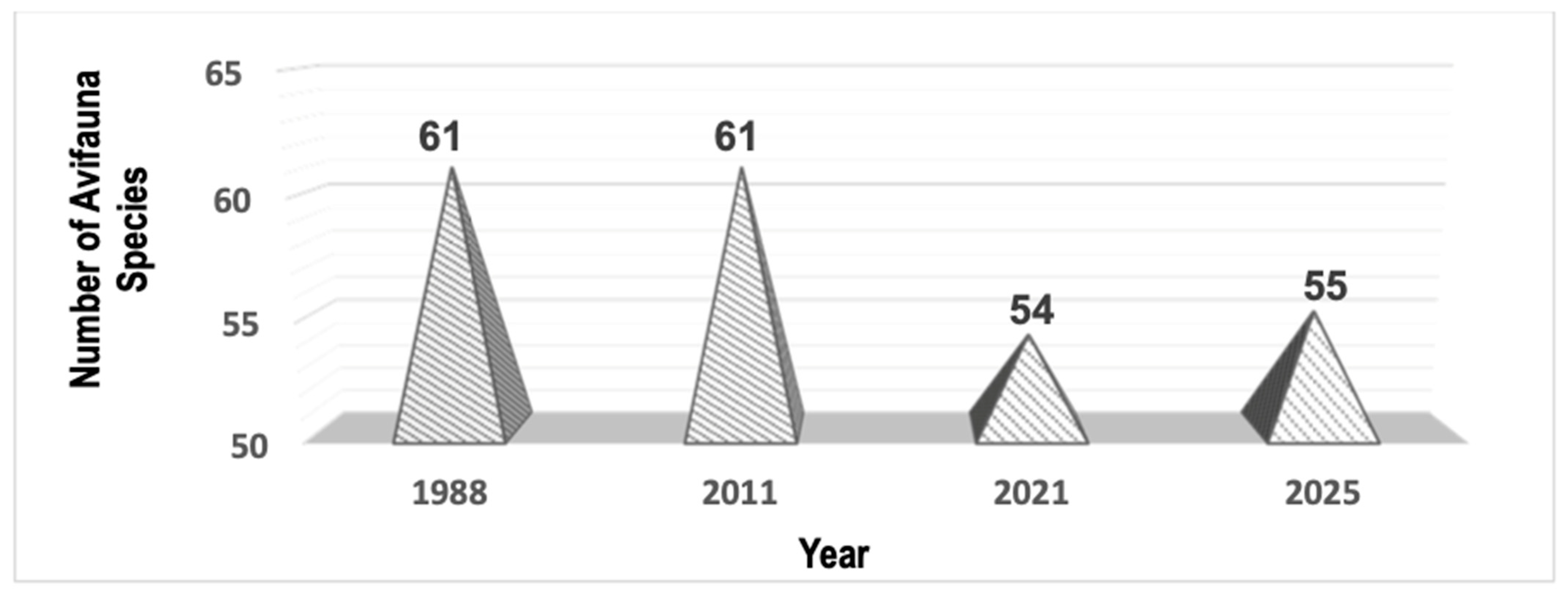
The dynamics of avifauna species numbers based on several studies from 1988 to 2025 (Figure 3) show temporal fluctuations that reflect changes in habitat conditions.
There are several bird species found in 1988 and 2011, but not found in the inventory in this study, especially migratory bird species. The absence of several migratory bird species during the 2025 inventory period is likely due to the observation period not coinciding with the annual species’ migration period, given that migratory birds have specific seasonal arrival patterns related to the global migration cycle along the East Asian-Australasian Flyway. From Table 9, the dominant avifauna species based on the Importance Value Index (IVI) is Passer montanus with a value of 11.87%, followed by the Lonchura punctulata at 11.50%, and the Ardeola speciosa with an IVI of 8.19%. The presence of waterbird species such as Egretta garzetta with an IVI of 6.99% and Bubulcus ibis with an IVI of 5.52% reflects the suitability of the mangrove habitat for supporting avifauna with aquatic ecological preferences.
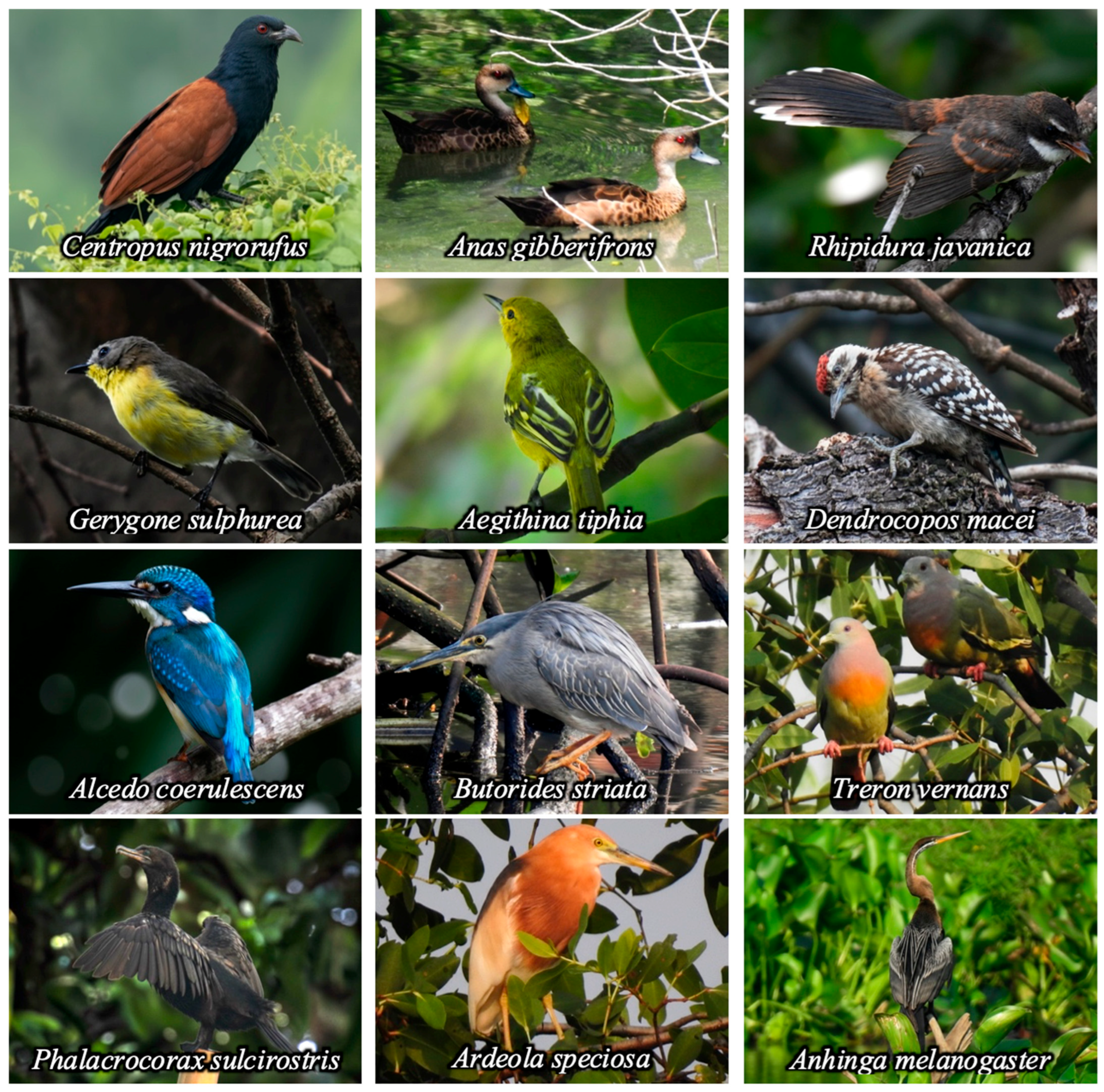
Ecological index analysis shows a Shannon-Wiener diversity index (H′) value of 3.54, indicating a high level of diversity based on the criterion H’ > 3. The Evenness index (E) reached 0.88, indicating a very even distribution of individuals between species with low dominance (C = 3.95). The Margalef richness index (Dmg) value of 7.81 confirms the substantial species richness in the bird community in this area. An evaluation of conservation status based on IUCN criteria, P.LHK No.106/2018, and CITES shows that many species (89.1%) are classified as Least Concern (LC). However, several species with conservation status requiring special attention were found, including the Centropus nigrorufus (see Figure 4) with Vulnerable (VU) status and national protection category Protected. Near Threatened (NT) species include the Anas gibberifrons, the Anhinga melanogaster, the Orthotomus sepium, and the Psittacula alexandri. The Betet Biasa (Psittacula alexandri), marked with an asterisk in Table 9, is listed under CITES, indicating that its international trade is strictly regulated.
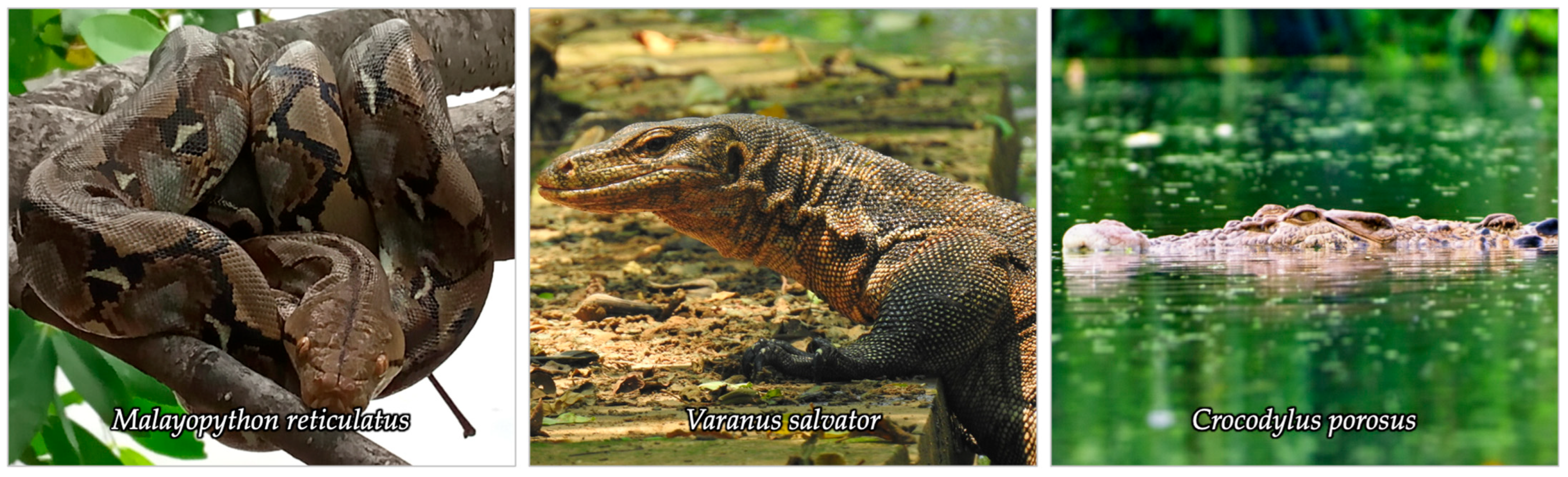
The herpetofauna inventory identified 14 species of reptiles and amphibians (Figure 5), dominated by the Varanus salvator with the highest IVI of 53.43%. The Fejervarya cancrivora ranked second with an IVI of 21.27%, followed by the Homalopsis buccete with an IVI of 16.06%. The presence of key species such as the Crocodylus porosus and the Malayopython reticulatus, despite their low frequency, indicates that this area is still capable of supporting the existence of peak predator megafauna.
Analysis of the ecological index of reptile and amphibian groups shows an H′ value of 2.06, which is classified as moderate diversity (1 < H′ < 3). The evenness index (E) reached 0.78 and the dominance index (C) was 19.65, indicating a relatively stable community structure despite a tendency for dominance by certain species. The Margalef richness index (R) value of 2.06 indicates a low level of species richness (R < 3.5) but is still within the tolerance limit for ecosystems experiencing anthropogenic pressure.
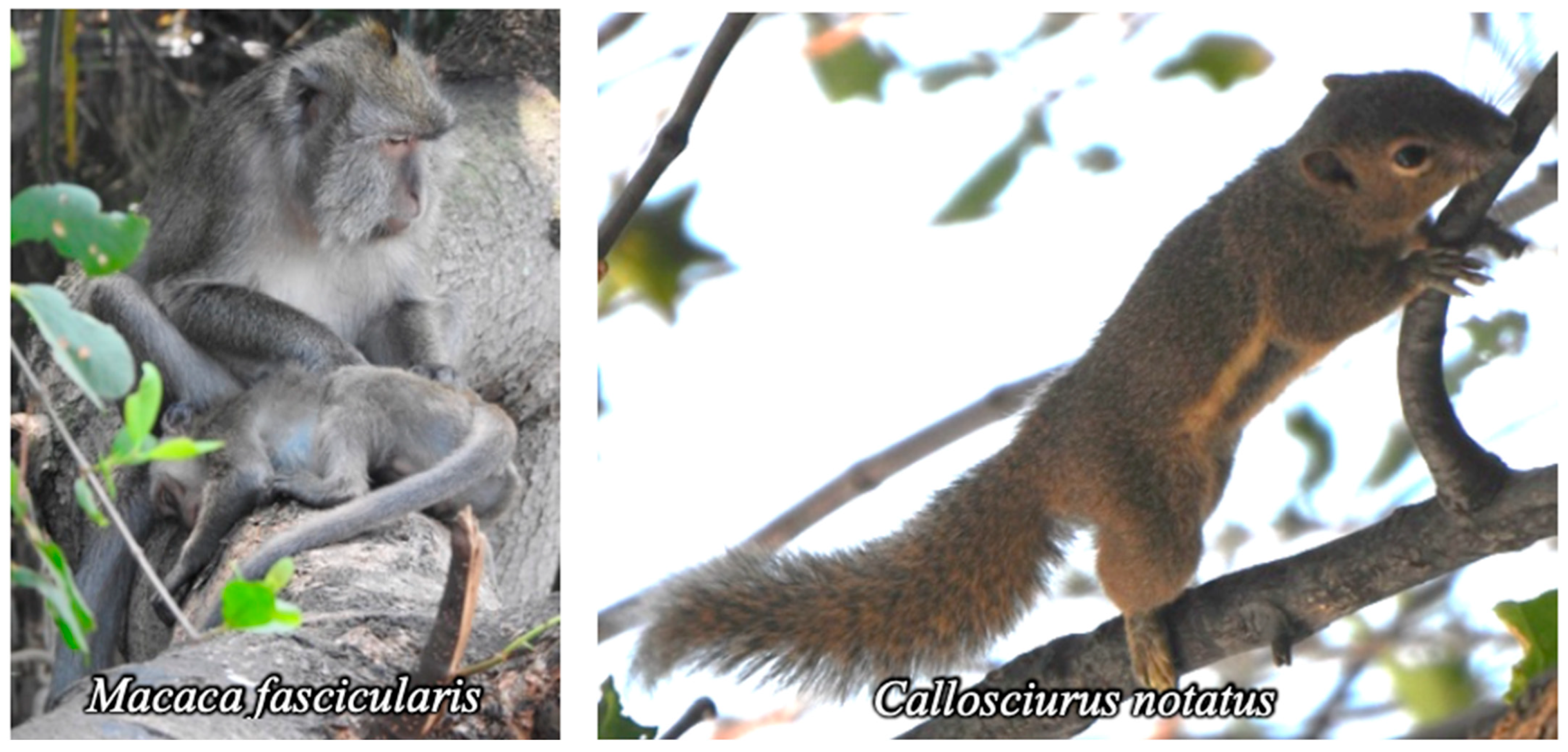
In addition to wild animals from the Bird class and the Reptile and Amphibian classes, several types of Mammals (Figure 6) have also been found in the Muara Angke Mangrove area, such as the Macaca fascicularis, the Callosciurus notatus, the Rattus rattus, and the Cynopterus brachyotis. Based on research data conducted by Avenzora [42] in the Muara Angke mangrove area, there are also other mammals from the primate class, namely Trachypithecus auratus, but from research conducted by Santoso [28], this animal has not been found again until now.
The inventory results confirm the important role of the Muara Angke mangrove area as a critical habitat for fauna diversity, particularly in supporting bird species with high levels of diversity. The presence of species with various conservation statuses emphasizes the urgency of implementing comprehensive management strategies to maintain ecosystem stability. The dominance of adaptive species such as Passer montanus and Lonchura punctulata indicates the presence of ecological selection processes influenced by urban environmental dynamics, while the persistence of sensitive species such as Centropus nigrorufus shows that this area still has significant conservation value.
The community structure, which shows high diversity in the avian class and moderate diversity in reptiles and amphibians, reflects the heterogeneity of habitats that can support various ecological guilds. These findings reinforce the scientific argument for prioritizing the conservation of the Muara Angke mangrove area as a refuge for biodiversity in an urban environment that continues to experience development pressure.

3.3. Changes in Mangrove Area in the Muara Angke Mangrove Area

Accretion or sedimentation in the Muara Angke mangrove area, especially in the Muara Angke protected forest area, showed a significant increase from 2010 to 2025 (Table 10).
The rate of sediment accretion in the Muara Angke mangrove ecosystem, particularly in protected forest areas, showed a progressive increase during the period 2010–2025. The area of accretion increased from 8.38 ha in 2010 [28] to 10 Ha in 2015, then reached 15 ha in 2020, with a substantial increase to 32 ha in 2025. This pattern of increase reflects an average sediment accumulation rate of 1.57 ha/year, with a significant acceleration occurring in the 2020–2025 period, reaching around 3.4 ha/year. This change is clearly visible in Sentinel-2A satellite imagery processed to identify sediment accumulation in the northern zone of the protected forest area, where new land has formed at the mouths of the Angke and Kapuk rivers (Figure 7).
The construction of a reclamation island in PIK (Pantai Indah Kapuk) in the northern part of the Angke Kapuk Wildlife Reserve and Angke Kapuk Protected Forest area began in 1992 by the developer Ciputra, but was halted from 1997 to 2002, then was resumed by different developers in 2003 (Agung Sedayu Group and Salim Group), resulting in the formation of Golf Island in 2013 and Ebony Island in 2014, showing a strong temporal correlation with the acceleration of the accretion process in the Muara Angke mangrove area. The rate of sediment accretion in the Muara Angke mangrove area shows a significantly different temporal increase pattern in the three observation periods. In the 2010–2015 period, the addition of accretion was relatively small (1.62 ha) because the two new reclamation islands had just been formed, increased to a moderate level (5 ha) in the 2015–2020 period, and accelerated substantially to 17 ha in the 2020–2025 period, reflecting a twofold increase from the accretion rate of the previous five years.
Spatially, accretion/sedimentation is concentrated in the northern part of the Protected Forest area or east of Golf Island reclamation, particularly in the Kapuk River estuary on the west side and the Angke River on the east side. To the west and east of the Kapuk River estuary, sediments carried by the Kapuk River flow cover shallow water areas, while in the Angke River flow, the delta formed to the west of the Angke River estuary expands the land to form a new basin connected to existing mangrove vegetation. The formation of this new land has changed the morphology of the coastline, expanded the mangrove zone, and has the potential to strengthen the ecosystem’s function as a carbon sink and wave barrier.

3.4. Community Perceptions of the Importance of the Muara Angke Mangrove Area

3.4.1. Local Community Perceptions of the Benefits of the Muara Angke Mangrove Area

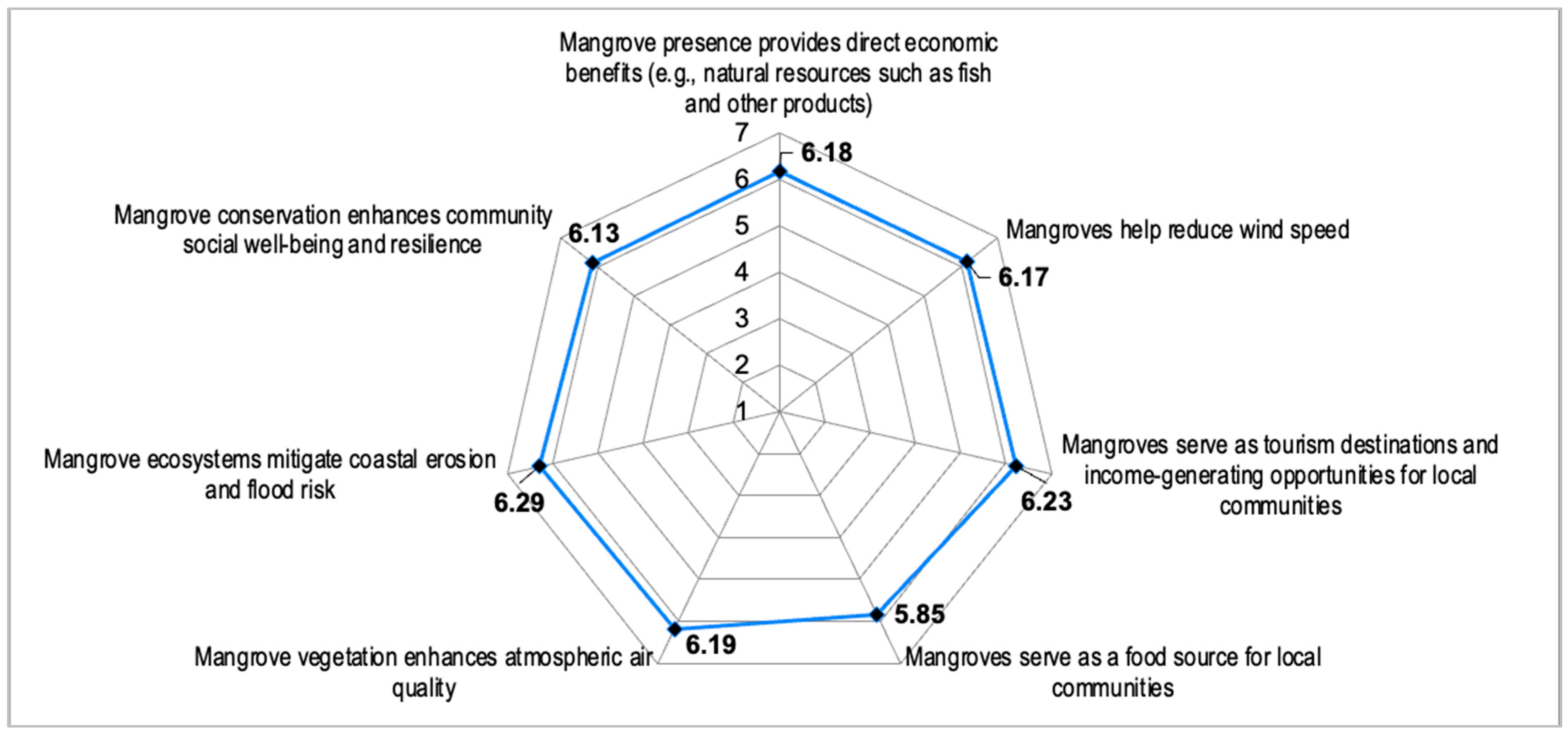
An analysis of local community perceptions regarding the benefits of the Muara Angke mangrove area reveals a high level of appreciation for the functions of this ecosystem. The evaluation results show that the community consistently gives positive assessments of various aspects of the benefits of mangroves, with average scores ranging from 5.85 to 6.29 (Figure 8).
Local communities demonstrate a high level of awareness of the protective role of mangroves, particularly in terms of protection from abrasion and flooding. The function of mangrove areas as protectors of land from abrasion or flooding received the highest score of 6.29, indicating strong community recognition of the role of this ecosystem in mitigating the risk of natural disasters. In addition, the community also appreciates the contribution of mangroves in improving air and water quality in the surrounding area with a score of 6.19, as well as their ability to reduce wind speed with a score of 6.17.
The economic dimension of mangrove areas has gained significant recognition from local communities. The potential of mangrove areas as natural tourist destinations that can create income opportunities through the provision of tourism and culinary services received a score of 6.23. This shows the community’s understanding of the potential economic value of mangrove ecotourism. Meanwhile, direct economic benefits in the form of natural products such as fish and other products were rated with a score of 6.18.
Social aspects also received attention, with the community assessing that mangroves play a role in improving social conditions through the creation of employment and education opportunities, with a score of 6.13. However, the benefits of mangroves as a food source for the surrounding community received a relatively lower score of 5.85, indicating a more moderate perception of food security. Rachmatullah et al. [43] underline that ecotourism not only plays a crucial role in securing economic benefits, including job creation and local revenue, but also has considerable potential to serve as a mechanism for funding environmental conservation.

3.4.2. Level of Community Understanding of the Ecological Functions of Mangroves

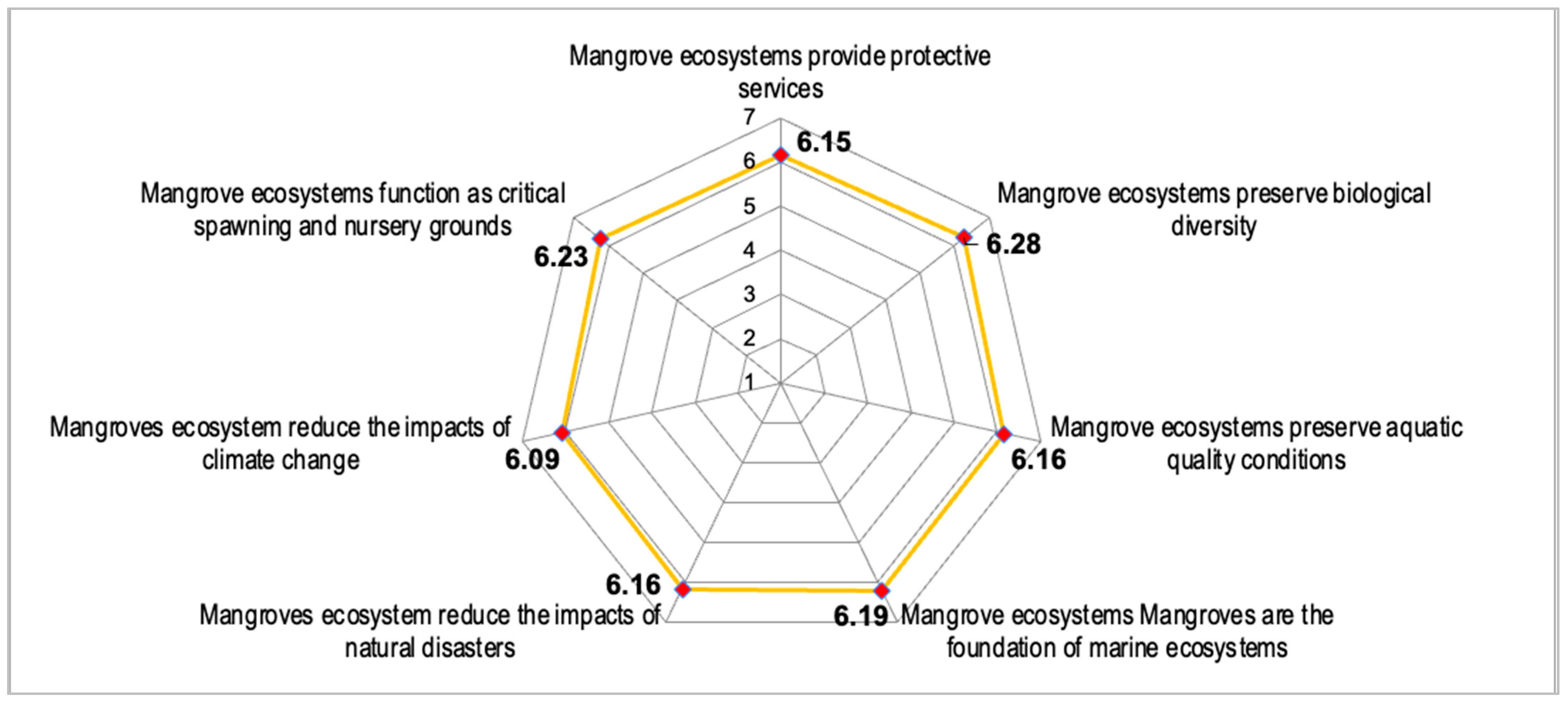
An evaluation of the local community’s understanding of the ecological function of the Muara Angke mangrove area shows a good level of environmental literacy. Understanding scores ranged from 5.19 to 6.28, reflecting a solid appreciation of the role of mangrove ecosystems in the wider environmental system (Figure 9).
The community demonstrated the highest level of understanding of the role of mangroves in maintaining biodiversity, including their support for local flora and fauna such as birds, fish, and plants, with a score of 6.28. This understanding indicates an awareness of the function of mangroves as a key habitat for various species. Similarly, the community also has a good understanding of the importance of mangroves as a breeding ground for fish, with a score of 6.23.
Public understanding of the protective functions of mangroves is relatively high, with an understanding of the role of mangroves in maintaining water and air quality scoring 6.16. The public also has a good understanding of the function of mangroves in protecting against coastal erosion (score of 6.15) and in reducing the impact of natural disasters such as tsunamis and floods (score of 6.16). Awareness of the role of mangroves in climate change mitigation is also quite good, with a score of 6.09.
Although overall understanding was good, one aspect received a relatively lower score, namely understanding of the role of mangroves as a buffer for marine ecosystems, with a score of 5.19. This indicates the need to strengthen education on the inter-connectivity of mangrove ecosystems with the wider marine ecological system.

3.4.3. The Dynamics of Land Use Conflict in Mangrove Areas

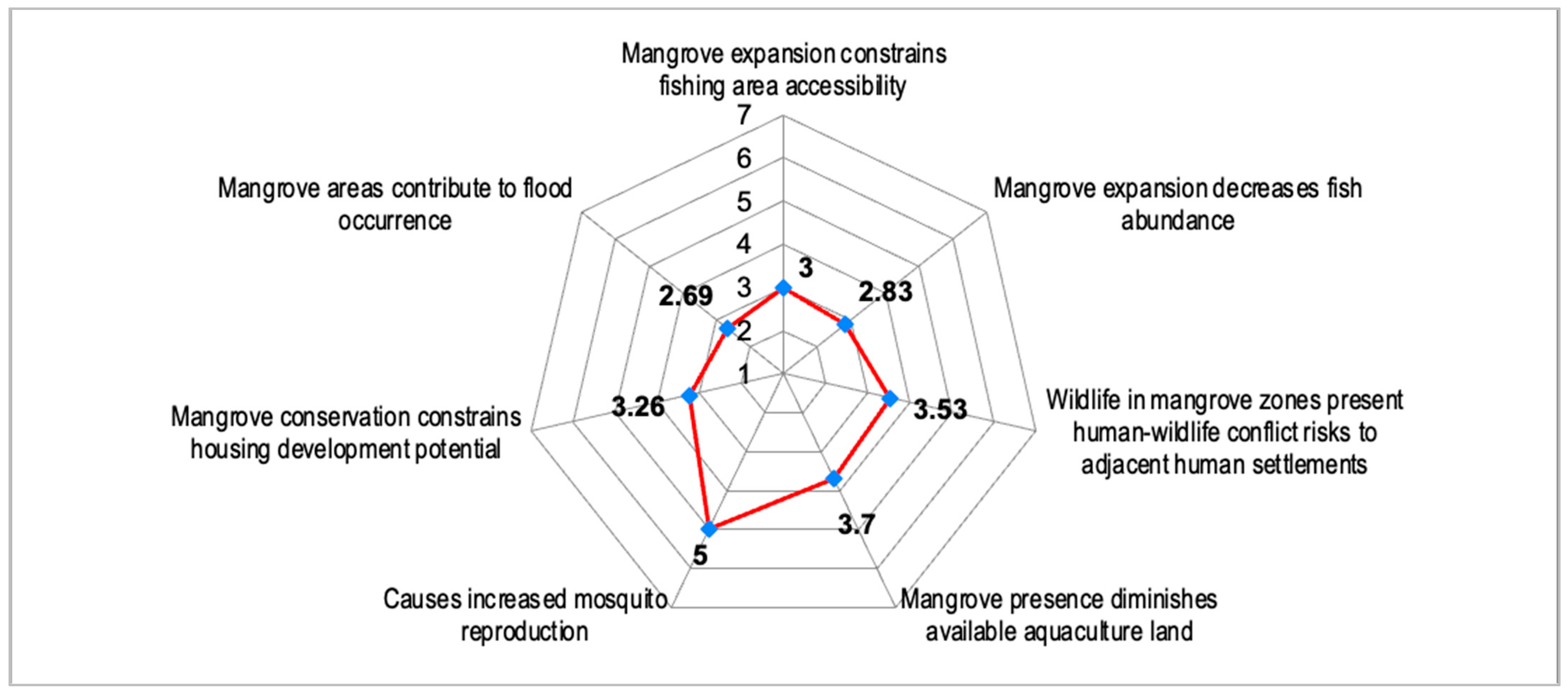
Analysis of the potential for land use conflicts in the Muara Angke mangrove area reveals complex dynamics between ecosystem conservation and the needs of local communities. Community assessments of various aspects of the conflict show significant variation, with scores ranging from 2.69 to 5.00 (Figure 10). The conflict most felt by the community is related to environmental health impacts, particularly the problem of mosquitoes in residential areas associated with the existence of mangrove areas. This aspect received the highest score of 5.00, indicating that the community experiences real disturbances related to the proliferation of disease vectors around mangrove areas.
Pressure on land for aquaculture business purposes scored 3.70, indicating a moderate level of conflict between the need for aquaculture expansion and mangrove conservation. Meanwhile, perceptions of wild animal attacks from mangrove areas on settlements scored 3.53, indicating security concerns, albeit not particularly high. The issue of reduced land for housing was assessed with a score of 3.26, indicating relatively moderate demographic pressure.
Interestingly, the community does not consider the existence of mangroves as a significant obstacle to fishing activities. The perception of increasingly limited fishing grounds only scored 3.00, while the issue of declining fish stocks in surrounding waters scored 2.83. This shows that the community does not see any serious competition between mangrove conservation and fishing activities.
Most interestingly, the community’s perception of mangroves as a cause of flooding only scored 2.69, indicating that the community does not consider mangroves to be a factor in flooding. This result is consistent with their good understanding of the protective functions of mangroves in disaster mitigation, as shown in the previous aspect of understanding.
Overall, the survey results show that the local community has a high appreciation of the benefits of the Muara Angke mangrove area, accompanied by a solid understanding of its ecological functions. Although there are several areas of conflict, particularly related to environmental health issues and competition for land use, the intensity of the conflict is generally moderate, with the community continuing to recognize the importance of mangrove ecosystem conservation for environmental sustainability and the local economy.

3.5. Management of the Muara Angke Mangrove Area

3.5.1. Management of the Muara Angke Wildlife Reserve (BKSDA Jakarta), Angke Kapuk Protected Forest Area, and Angke Kapuk Production Forest (DISTAMHUT DKI Jakarta Province)

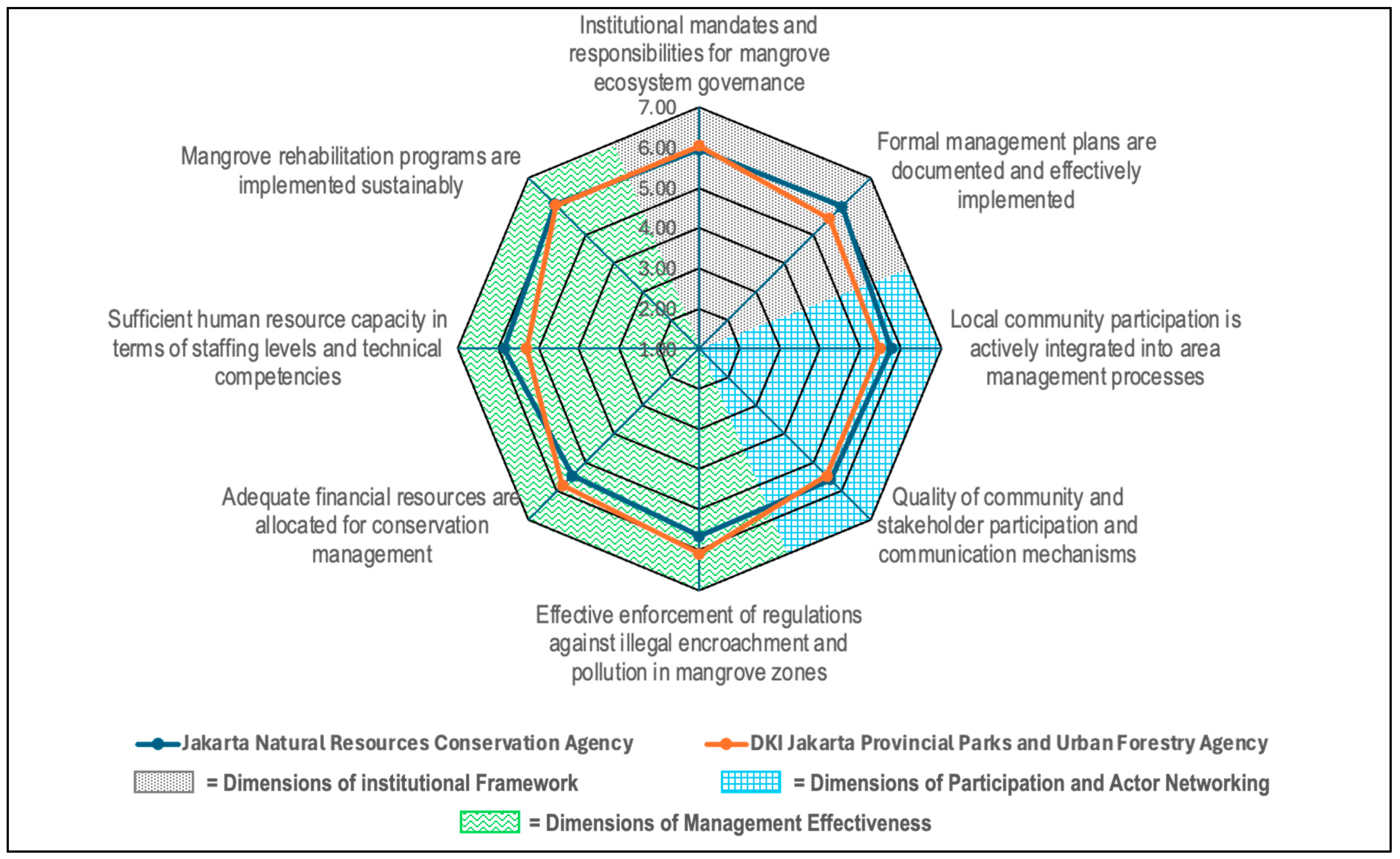
The evaluation of the governance of the Muara Angke mangrove area was conducted from the perspective of two main management institutions, namely the Jakarta Natural Resources Conservation Agency (BKSDA) and the DKI Jakarta Provincial Parks and Urban Forestry Agency (DISTAMHUT). The assessment covered three main dimensions of management: institutional framework, actor participation and networking, and management effectiveness. The results of the analysis show that both institutions gave generally positive assessments of the management of the area, with scores ranging from 5.29 to 6.10, indicating a management level that is in the fairly good to good category (Figure 11).
The institutional framework aspect shows solid performance from both managing institutions. In terms of institutional authority and responsibility in mangrove management, DISTAMHUT DKI Jakarta Province gave a slightly higher rating (6.05) than BKSDA Jakarta (5.95), indicating a good perception of clarity in the division of authority and institutional accountability. However, there is an interesting difference in views regarding the documentation and implementation of management plans. The Jakarta BKSDA assessed that the documented management plans had been implemented very well (6.00), while the DKI Jakarta Provincial DISTAMHUT gave a relatively lower score (5.57). This disparity indicates differences in interpretation or experience in the implementation of planning documents in the field, which may reflect differences in operational focus or coordination mechanisms between the two institutions.
The dimensions of participation and actor networking received more moderate assessments than other aspects, with scores ranging from 5.48 to 5.77. The Jakarta BKSDA gave a higher score (5.77) for the active involvement of local communities in the area management process, while the DKI Jakarta Provincial DISTAMHUT assessed this aspect with a score of 5.48. A similar pattern was also seen in the assessment of the quality of participation of local communities, stakeholders, and communication forums, where the Jakarta BKSDA gave a score of 5.60 and the DKI Jakarta Provincial DISTAMHUT gave a score of 5.48. The relatively lower consistency in assessment of this participatory aspect by both institutions indicates that although participation mechanisms are in place, there is still room for improvement in the quality of stakeholder involvement, particularly in terms of the depth of participation, sustainability of communication, and effectiveness of collaborative forums.
The evaluation of management effectiveness revealed complex dynamics in various operational aspects. The mangrove rehabilitation program received the highest scores from both institutions, with the Jakarta BKSDA giving a score of 6.08 and the DKI Jakarta Provincial DISTAMHUT giving a score of 6.05, demonstrating strong commitment and sustained implementation of ecosystem restoration efforts. The aspect of law enforcement against encroachment and pollution in mangrove areas shows a significant difference in perception, with the DKI Jakarta Provincial DISTAMHUT giving a higher rating (6.10) than the Jakarta BKSDA (5.66). This may reflect differences in the roles and experiences of the two institutions in enforcement, or differences in the standards for evaluating the effectiveness of law enforcement.
In terms of budget allocation, both institutions gave relatively low scores, with the Jakarta BKSDA rating budget adequacy at 5.47 and the DKI Jakarta Provincial DISTAMHUT giving a score of 5.81. Although the budget is considered adequate, there are still indications of a gap between ideal needs and actual financial availability. The aspect of human resources also shows an interesting pattern, with the Jakarta BKSDA assessing the adequacy of the number and competence of human resources with a score of 5.84, while the DKI Jakarta Provincial DISTAMHUT gave a lower assessment of 5.29. This disparity indicates that the DKI Jakarta Provincial DISTAMHUT may face greater challenges in terms of human resource capacity, both in terms of the quantity and technical qualifications of personnel involved in area management.

3.5.2. Management of Angke Kapuk Nature Tourism Park (PT. Murindra Karya Lestari)

A comprehensive evaluation of the management of Angke Kapuk Nature Tourism Park, managed by PT. Murindra Karya Lestari, was conducted by assessing seven key aspects of ecotourism area management. The results of the analysis using the One Score One Criteria Scoring System (Table 11) show significant variations in performance between management dimensions, with average scores ranging from 1.43 to 4.86, indicating substantial disparities between different operational aspects.
A comprehensive evaluation of the management of Angke Kapuk Nature Tourism Park, operated by PT. Murindra Karya Lestari, revealed significant variations in performance across seven dimensions of ecotourism area management. The results of the analysis show that the recreation aspect received the highest score with an average of 4.86, indicating that the recreational function of the area has been managed relatively well and is close to the good category. This is consistent with findings by Oktavia et al. [44] who reported that urban parks and urban forest parks provide high environmental service value and fulfill recreational needs, highlighting the importance of vegetation enrichment and ecosystem management. This achievement shows that the manager has succeeded in developing adequate tourist activities and attractions for visitors.
The infrastructure and facilities aspects also showed satisfactory performance with average scores of 4.29 and 4.43, respectively. Both aspects were in the neutral to good category, indicating that basic infrastructure development, such as access roads, tracking trails, and supporting facilities such as parking areas, toilets, and information centers, were adequately available to support the operation of the ecotourism area. The management aspect received a score of 4.00, indicating a neutral position, reflecting an administrative, financial, and operational management system that is already structured but still needs improvement to achieve optimal standards. Meanwhile, the site planning aspect scored 3.86 and the aesthetics aspect scored 3.29, both of which are in the somewhat poor to neutral category, indicating that the spatial planning of the area and visual aesthetics still require substantial improvement.
The most critical finding of this evaluation is the low score on conservation compliance, which only reached 1.43, placing it in the very poor category. The extreme disparity between conservation and other aspects reveals a fundamental imbalance in the orientation of area management. This low compliance with conservation principles indicates that although Angke Kapuk Nature Tourism Park has successfully developed recreational functions and supporting infrastructure, its main function as a mangrove ecosystem conservation area has not been effectively implemented. This condition shows that there is a management bias that emphasizes commercial and recreational aspects over ecosystem conservation objectives, which should be the top priority in protected area management. This imbalance has the potential to threaten the long-term sustainability of the mangrove ecosystem in the Muara Angke area and requires comprehensive corrective intervention to restore the management orientation to the principles of sustainable conservation.

4. Discussion

4.1. Water Quality in the Muara Angke Mangrove Area

The results of the study show that the waters of the Muara Angke mangrove area are experiencing moderate to severe pollution pressure with concentrations of nutrients, organic matter, and microbiological contaminants that exceed Indonesian marine environmental quality standards. This condition indicates high anthropogenic dynamics due to domestic, agricultural, and industrial waste runoff, as well as coastal hydrodynamic modifications triggered by reclamation activities. Similar phenomena have also been identified in other densely populated coastal estuaries such as Muara Kamal and Waduk Pluit, which show extreme ammonia concentrations and high water temperatures due to thermal runoff from power plant activities in Muara Karang.
Ecologically, elevated levels of phosphate (0.4 mg/L) and nitrate (0.8 mg/L) indicate chronic eutrophication that disrupts the stability of mangrove systems. Global studies consistently demonstrate that excessive nitrogen and phosphorus inputs contribute to the dominance of opportunistic species and reduce mangrove vegetation diversity [41,42,43,44,45,46,47,48,49]. The accumulation of these nutrients also increases microbial respiration and accelerates the depletion of dissolved oxygen (DO), which is reflected in the low DO concentrations measured at the study site (0.07–2.0 mg/L), well below ecological thresholds.
While our study relies on field-based community composition assessments and water quality measurements, the ecological patterns observed align conceptually with the findings of Lugendo & Kimirei [50]. Using stable nitrogen isotopes (δ15N), their study demonstrated that domestic wastewater inputs significantly elevate inorganic nitrogen loads in mangrove-estuarine systems. Although the analytical methods differ, both sets of findings highlight the strong influence of anthropogenic nutrient enrichment in shaping mangrove ecosystem condition and functioning.
High microbiological contamination with fecal coliforms at 9200 MPN/100 mL confirms the dominant influence of domestic waste from the densely populated Angke watershed. This biological indicator is often regarded as a proxy for coastal sanitation quality and is associated with the potential for zoonotic diseases in aquatic biota. In addition, increased turbidity (78–99 NTU) and total suspended solids (TSS) at the Angke Estuary indicate a significant contribution from alluvial sediments and anthropogenic particulates that inhibit light penetration and reduce mangrove primary productivity. Research by Mack et al. [45] and Toruan [41] confirms that increased sediment and nutrient loads accelerate mangrove mortality, especially during periods of extreme environmental stress such as heat waves or sudden changes in salinity.
Spatial analysis shows that pollution intensity in Muara Angke is still moderate compared to other estuaries in Jakarta Bay, but it has the highest nutrient load among all monitoring points. This indicates that the Angke subsystem is the main reservoir for river flows that carry organic matter, nitrogen, phosphorus, and microplastics from the mainland. Microplastics trapped in sediments up to a depth of 30 cm, as found in the Pantai Indah Kapuk area, have the potential to disrupt the natural regeneration process of mangrove pneumatophore roots and the anaerobic filtration process in the sediment layer. Flores [47] and Andriani et al. [20] in a study on heavy metal pollution in the Angke Kapuk mangrove forest, also found Pb concentrations exceeding ANZECC and CCME environmental standards, indicating complex pollutant pressures originating from tourism, marine transportation, and surrounding residential activities.
Biophysically, water quality degradation in the Muara Angke area affects the structure and function of mangrove communities. Research by Amalo et al. [51] and Fusi et al. [48] confirms that changes in physical-chemical water parameters (such as pH, salinity, and nutrient concentration) directly affect the composition of plankton and benthos, which act as primary bioindicators of mangrove ecosystem sustainability. The dominance of certain species such as Avicennia marina in the Jakarta Bay area was reported by Sari et al. [52] and Craig et al. [49] as an indication of ecological stress, as this species tends to be tolerant of eutrophic water conditions and high heavy metal content.
However, the ecosystem restoration initiative through the MERA (Mangrove Ecosystem Restoration Alliance) program under the coordination of the Jakarta BKSDA and YKAN has shown positive results for the rehabilitation of the Muara Angke area. The program focuses on improving water circulation, solid waste barriers, and invasive species control to restore the ecological function of mangroves. This restoration strategy is in line with the recommendations of Subambang et al. [53] and Lugendo [50], which emphasize the importance of inter-regional collaboration and an integrated management approach in managing mangrove ecosystems in Jakarta Bay.
From a sustainable management perspective, the data from this study provides an important scientific basis for coastal conservation planning in DKI Jakarta. Necessary interventions include integrated waste management up-stream of watersheds, control of nutrient inputs through regulation of detergents and phosphate fertilizers, and optimization of mangrove restoration based on hydro-ecological quality. The provincial government’s plan for annual reforestation of at least one kilometer along the Jakarta coastline is a positive first step, but its success will depend on cross-sector policy integration and continuous water quality monitoring [4].
Thus, the degradation of the environmental quality of Muara Angke waters reflects the general condition of ecological pressure in Jakarta Bay, where a combination of nutrient loads, organic pollution, and inorganic pollutants threatens the sustainability of the mangrove ecosystem. An effective recovery framework must emphasize controlling sources of pollution on land, restoring the physiological function of mangroves as natural filters, and revising management based on scientific data and multi-stakeholder collaboration towards a resilient and sustainable coastal ecosystem balance.

4.2. Vegetation Structure and Ecological Dynamics of Muara Angke Mangroves

The composition of true mangrove species in the Muara Angke conservation area shows complex temporal dynamics during the period 1988–2025, reflecting the ecosystem’s response to anthropogenic pressures and ecological succession processes in urban coastal areas. The decline in species numbers from eight species (1988) to five species (2011), followed by a partial recovery to seven species (2025), indicates ecosystem fluctuations influenced by a combination of environmental stress factors and conservation efforts. This pattern is in line with the findings of Arifanti et al. [54], who stated that the degradation of mangrove ecosystems in Indonesia is mainly caused by anthropogenic activities such as land conversion for aquaculture, agriculture, and urban expansion, resulting in a decline in species diversity and changes in community structure.
The disappearance of Avicennia officinalis and Bruguiera gymnorrhiza from the area after 1988 is an indication of local extinction, likely triggered by changes in habitat conditions that no longer support the survival of these species. Bruguiera gymnorrhiza is known to have lower tolerance to high salinity and physical disturbance compared to Avicennia spp. and Rhizophora spp., making it more vulnerable to habitat degradation in coastal areas undergoing intensive urbanization [55,56]. This pattern is also consistent with international studies from East Africa and Brazil, which show that anthropogenic pressures such as coastal industrial development, pollution, and hydrological alteration have led to the loss of less tolerant mangrove species, as documented in Guanabara Bay, Brazil, and coastal Kenya [57,58,59]. A study by Arifanti et al. [54] confirmed that anthropogenic disturbances such as pollution, hydrodynamic changes, and substrate modification can cause the loss of less adaptive mangrove species, especially in areas experiencing high development pressure. This pattern is also consistent with global findings showing that urban-driven hydrological alteration and pollution are major drivers of local mangrove species extinction, particularly in rapidly developing coastal regions such as China’s Pearl River Delta and Brazil’s Guanabara Bay [60,61,62].
Conversely, the reappearance of Avicennia alba in 2025 after not being recorded in 2011, as well as the presence of Rhizophora stylosa, which is a new species in this temporal record, indicates active colonization and ecological succession processes. According to Mulloy et al. [63], Rhizophora stylosa is a species with a viviparous reproductive strategy and the ability to disperse propagules over long distances, enabling colonization of new habitats formed by sediment accretion. The study by Mulloy et al. [63] shows that Rhi-zophora stylosa has a high recruitment success rate on newly formed substrates, especially in zones experiencing active sediment deposition, which is consistent with the conditions in the Muara Angke area due to the formation of new land from accretion. Similar long-distance propagule dispersal and colonization patterns of Rhizophora species have been widely documented in the Indo-Pacific region, including northern Australia and Fiji, where sediment-driven habitat expansion promotes natural recruitment on new mudflats [13,64].
The mangrove succession process in urban areas is generally dominated by pioneer species such as Avicennia spp., which can colonize open substrates, followed by climax species such as Rhizophora spp. in the next stage. Thampanya et al. [65] confirmed that Avicennia alba and Sonneratia caseolaris function as pioneer species with high survival rates in exposed mangrove front zones, while Rhizophora mucronata performs best in denser stands, in line with its successional role as a climax species. This pattern is evident in the Muara Angke area, where Avicennia marina dominates with the highest IVI value at all growth levels, reflecting an effective pioneer strategy in modified habitat conditions.
The rapid sediment accretion has created significant new colonization substrates, yet the success of natural succession is heavily dependent on the microtopography and hydrodynamic suitability for specific species. Field observations on the newly accreted surfaces (mudflats) indicate a seedling density averaging 2–5 seedlings/m2, predominantly colonized by Avicennia marina. This pioneering colonization pattern aligns with the ‘right tree in the right place’ principle, where pneumatophore-bearing species like Avicennia marina demonstrate higher resilience to wave-induced bed shear stress and prolonged inundation compared to Rhizophoraceae species [66,67]. Recent biophysical modeling confirms that Avicennia marina seedling establishment is critically governed by specific tolerance thresholds to tidal hydroperiods and bed level dynamics, with survival probabilities dropping significantly in lower-elevation zones lacking wave attenuation [68].
Furthermore, the survival rate of these recruits is spatially variable, strictly regulated by micro-topographical gradients. Areas with slightly higher elevation (providing ‘Windows of Opportunity’ (WoO) free from tidal inundation) show significantly higher seedling survival rates compared to lower depressions [68]. Research emphasizes that for pioneer zones, sediment accretion rates must be balanced; while sediment supply is crucial, excessive accretion can bury seedlings, whereas erosion dislodges them [68]. Thus, for effective restoration on these accreted lands, management interventions must respect these hydrodynamic thresholds. Planting strategies should avoid forcing mid-zone species (e.g., Rhizophora mucronata) into these pioneer mudflats, as their survival in high-energy, low-elevation environments is significantly lower than that of Avicennia spp. Instead, interventions should support the natural sediment-trapping function of Avicennia to gradually raise the elevation to a level suitable for subsequent successional stages [69].
The dominance of Avicennia marina with the highest IVI value at the tree level (88.76%), saplings level (104.35%), and codominance at the seedling level (62.45%) indicates that this species has a significant competitive advantage in the Muara Angke mangrove ecosystem. Dhawi [70]; Bajahmoum and Almaghamsi [71] state that the dominance of Avicennia marina in urban mangrove areas is consistent with global literature showing that this species has exceptional tolerance to high salinity, drought, and extreme environmental conditions often found in anthropogenically modified coastal areas. Dhawi [70] reports that Avicennia marina can survive at salinities of up to 45 ppt and has physiological mechanisms that allow it to adapt to high osmotic pressure, making it the dominant species in coastal areas experiencing seawater intrusion and hypersalinity.
Rhizophora mucronata plays a role as a codominant species with an IVI of 71.78% at the tree level and 79.91% at the saplings level, and dominates the seedling level with an IVI of 65.13%. The dominance of Rhizophora mucronata at the seedling level indicates strong natural regeneration potential, which is a key factor in the long-term sustainability of mangrove ecosystems. Wang’ondu et al. [72] stated that Rhizophora mucronata has an average growth rate of 0.8 m/year and high litter productivity, which contributes to the nutrient cycle and accumulation of organic carbon in mangrove sediments. Kairo et al. [73] also reported that rehabilitated stands of Rhizophora mucronata showed forest structure and productivity comparable to natural stands after 12 years, demonstrating the ecological resilience of this species in ecosystem recovery.
The presence of Sonneratia caseolaris as the third codominant species with an IVI of 67.06% (trees), 32.01% (saplings), and 22.78% (seedlings) strengthens the structure of a stable community of three dominant species. The Sonneratia spp. is known to have rapid growth characteristics and the ability to adapt to deep muddy soils with low to moderate salinity, often occupying the transition zone between mangrove ecosystems and open waters [74,75]. The vertical distribution pattern formed by the dominance of Avicennia marina and Sonneratia caseolaris in the canopy stratum, as well as Rhizophora mucronata in regeneration, creates ecological stratification that supports habitat diversity and ecosystem structural complexity.
Shannon-Wiener diversity index analysis shows that the Muara Angke mangrove area has a moderate level of diversity (H′ = 1.466–1.728), with the highest diversity level found in the stilt trees. The high evenness index (E = 0.712–0.753) and low dominance index (C = 0.237–0.262) indicate a relatively even distribution of individuals among species and the absence of excessive dominance by a single species, reflecting a relatively stable community structure. These values are comparable to the findings of Asadi et al. [76], who reported a Shannon-Wiener index of H′ = 1.31 in the primary mangrove forest of Baluran National Park, Indonesia, which is also dominated by Rhizophora stylosa. Sholiqin et al. [75] confirmed that the Shannon-Wiener diversity index ranged from low to moderate in most coastal mangrove areas of East Java, with high evenness values indicating stable ecosystem conditions despite limited species diversity.
However, the low Margalef index (R < 3.5) indicates that although species distribution is relatively even, the total number of species is still limited compared to undegraded mangrove ecosystems. This is in line with the general characteristics of mangrove ecosystems in urban areas experiencing anthropogenic pressure, where species diversity tends to be lower than in pristine areas, but ecological stability can be maintained through the dominance of tolerant species [77,78]. Singh [77] reported that mangrove areas experiencing anthropogenic disturbance tend to have a decline in species diversity, but the species that survive generally show high resilience and strong adaptive capacity to changing environmental conditions.
The presence of associated mangrove species such as Terminalia catappa, Cerbera manghas, and Calophyllum inophyllum, despite their low IVI values, indicates the existence of vegetation zoning from pure mangrove zones to transition zones with terrestrial vegetation. This zoning pattern is important in maintaining ecosystem connectivity and providing habitat for various fauna groups, including avifauna that depend on the habitat gradient from mangroves to land [79]. This diversity of vertical and horizontal structures contributes to habitat complexity that supports overall biodiversity, even though the richness of true mangrove species is limited [74,79].
The temporal dynamics of species composition and mangrove community structure in Muara Angke emphasize the importance of long-term monitoring and adaptive conservation strategies to maintain ecosystem resilience amid increasing urbanization pressures. The partial recovery of species diversity from 2011 to 2025, although not yet reaching the initial level of 1988, indicates that the ecosystem has an intrinsic recovery capacity that can be strengthened through appropriate conservation interventions [56]. Wei et al. [80] state that coastal urbanization can have indirect positive impacts on mangrove expansion through increased conservation awareness and availability of colonization space, which can facilitate the expansion and increase of mangrove carbon stocks. Comparable succession-driven restoration approaches have been recommended in global frameworks such as the IUCN Mangrove Restoration Guidelines and the Global Mangrove Alliance, with successful examples documented in Vietnam’s Mekong Delta and Kenya’s Gazi Bay [81,82,83].
The presence of Rhizophora stylosa as a new species indicates the potential for sustainable ecological succession, especially in new accretion zones formed by sediment deposition [64]. Restoration strategies that combine the planting of pioneer species such as Avicennia marina in the front zone with climax species such as Rhizophora mucronata in more protected zones can accelerate the recovery of ecosystem structure and function [64,66]. Mulloy et al. [63] recommend a direct seeding approach for Rhizophora stylosa as an effective restoration method, focusing on the initial establishment process and identifying recruitment factors that support successful colonization.
Conservation efforts must also consider the protection of locally endangered species such as Bruguiera gymnorrhiza and Avicennia officinalis, which can be restored through reintroduction programs and habitat quality improvement [55]. Arifanti et al. [54] emphasize the need for reform of coastal and marine management policies in Indonesia, improvement of information systems, and better coordination among stakeholders to achieve national mangrove conservation targets and support a sustainable blue economy.

4.3. Fauna Diversity and Conservation Significance

The avifaunal diversity in the Muara Angke mangrove area shows a high level of diversity with the identification of 55 bird species spread across various families with diverse ecological characteristics. The Shannon-Wiener index value (H′ = 3.54) indicates high diversity (H′ > 3), with an evenness index (E = 0.88) showing a very even distribution of individuals between species and low dominance (C = 3.95). These findings show that even though the Muara Angke mangrove area is in an urban environment in Jakarta that experiences intense anthropogenic pressure, this ecosystem is still able to maintain a stable and complex avifaunal community structure. The long term stability of the avifaunal community from 1988 to 2025 indicates significant ecological resilience, despite temporal fluctuations in species composition.
The paradox of high avifaunal diversity amidst severe pollution demands critical interpretation. It is posited that spatial heterogeneity in habitat quality creates refugia, enabling species persistence. This contradicts the assumption of uniform degradation across urban wetlands [84] and suggests that micro-scale habitat management can sustain biodiversity hotspots even within compromised landscapes. However, the low governance compliance scores (1.43/7) indicate that institutional capacity lags behind ecological potential. The causal mechanism appears to be resource allocation inefficiency: while infrastructure investment is adequate (tourism facilities score 5.2/7), conservation staffing remains critically deficient (1 ranger per 80 ha vs. the recommended 1 per 25 ha; [85]). Institutional capacity lags behind ecological potential, reflecting systemic governance weaknesses documented across Indonesian protected areas, where quantity of designation has overshadowed quality of management [86].
The dominance of the Passer montanus with the highest IVI (11.87%), followed by the Lonchura punctulata (11.50%), and the Ardeola speciosa (8.19%), reflects the adaptation patterns of species to habitat conditions modified by anthropogenic activities. Passer montanus is known as an urban exploiter species that has a high tolerance for human disturbance and can utilize resources available in urban environments. A study by Cho et al. [87] shows that Passer montanus has developed vocalization adaptations to increase the signal-to-noise ratio (SNR) in environments dominated by urban noise, enabling effective communication despite urban noise disturbance. The presence of waterbird species such as Egretta garzetta with an IVI of 6.99% and Bubulcus ibis with an IVI of 5.52% reflects the suitability of mangrove habitats for supporting avifauna with aquatic ecological preferences. Ramadhani et al. [88] reported that Egretta garzetta, Ardeola speciosa, and Ardea alba are the three most abundant waterbird species in Indonesia’s coastal mangrove ecosystems, consistent with findings in Muara Angke.
The absence of several migratory bird species during the 2025 inventory period that were previously recorded in 1988 and 2011 is likely due to the observation period not coinciding with the species’ annual migration period, given that migratory birds have specific seasonal arrival patterns related to the global migration cycle along the East Asian-Australasian Flyway (EAAF). The EAAF is one of nine major global flyways covering 22 countries and supporting more than 50 million migratory waterbirds from more than 210 species [89,90]. The Muara Angke mangrove area serves as a critical stopover site for migratory birds that need a resting area for foraging and energy recovery during long-distance migration between breeding grounds in East Asia and non-breeding grounds in Australia [91,92].
Habitat degradation of coastal wetlands along the EAAF has been shown to cause a global decline in migratory bird populations, with the loss of mangrove habitat in Indonesia contributing to threats to this migration route [90,93]. Similar pressures on migratory waterbird stopover and foraging habitat have been reported in other tropical deltas, including the Rufiji Delta (Tanzania), where mangrove cover has declined with the expansion of rice farming; and the Brazilian Amazon coast, where mangrove conversion to pasture/shrimp farms and associated coastal changes reduce the extent and quality of coastal wetlands used by migratory shorebirds [94,95,96,97]. The majority of avifauna species (89.1%) are classified as Least Concern (LC), but there are species with conservation statuses that require special attention. The presence of the Bubut Jawa (Centropus nigrorufus) with Vulnerable (VU) status and Protected category emphasizes the importance of this area as a critical habitat for endangered endemic species of Java. Based on a report by the Yayasan Konservasi Alam Nusantara (YKAN) [98], this area has been designated as an Important Bird Area (IBA) because it serves as a habitat for the Bubut Jawa (Centropus nigrorufus) and a feeding ground for the Bangau Bluwok (Mycteria cinerea). Prihatmoko et al. [99] reported that Centropus nigrorufus shows a preference for diverse habitats, including mangrove forests, with an altitude tolerance of up to 900 m above sea level. Species with Near Threatened (NT) status include the Itik Benjut (Anas gibberifrons), Pecuk Ular Asia (Anhinga melanogaster), Cinenen Jawa (Orthotomus sepium), and Betet Biasa (Psittacula alexandri), indicating that this area still has adequate habitat quality. Wiarta et al. [100] reported that fragmentation and degradation of mangrove habitats due to land conversion are major threats to bird diversity.
In terms of the herpetofauna inventory, the relatively low diversity of herpetofauna compared to avifauna reflects the characteristic features of mangrove ecosystems, which have limited spatial heterogeneity, so only certain reptiles and amphibians are able to adapt to specific habitat conditions [101]. The dominance of Varanus salvator is consistent with its role as a generalist predator capable of utilizing various resources in urban mangrove ecosystems. Trivalairat and Srikosamatara [102] reported that Varanus salvator exhibits high daily activity in mangrove habitats, especially on terrestrial substrates such as mud, soil, and tree branches, with activity patterns influenced by prey availability and environmental conditions. This species has broad ecological tolerance and can survive in habitats experiencing moderate anthropogenic pressure, making it an indicator of mangrove ecosystem resilience in urban environments [102,103].
The presence of key species such as the Buaya Muara (Crocodylus porosus) and Ular Piton (Malayopython reticulatus), albeit at low frequencies, indicates that this area is still capable of supporting the existence of apex predator megafauna. The Buaya Muara is the largest reptile in the world and functions as an apex predator that plays a crucial role in maintaining ecosystem balance [104,105]. Andriyono and Sukistyanawati [106] reported the presence of Crocodylus porosus in the mangrove ecosystem on the east coast of Surabaya as evidence of the importance of mangrove areas as wildlife habitats that must be properly protected, even though these habitats are only 10 km from the city center. Fukuda et al. [107] showed that the dispersion of Crocodylus porosus is influenced by environmental resistance and habitat quality, with a dispersion distance of up to 600–700 km, emphasizing the importance of habitat connectivity between populations for effective conservation management. Comparable concerns regarding habitat loss and fragmentation in mangrove-linked coastal wetlands affecting crocodilians have been reported in West Africa and northern Brazil, where field surveys identify habitat encroachment/loss as major pressures on crocodile populations, while remote-sensing studies document mangrove conversion and hydrological disruption driven by roads and aquaculture; broader evidence from Brazil also links crocodilian declines to land-use change and human pressure [108,109,110,111,112].
However, the ongoing degradation of mangrove habitats due to urban development threatens the existence of the estuarine crocodile population, which indirectly increases conflicts with humans. The YKAN’s study [104] reported that between 2010 and 2019, there were 665 cases of Crocodylus porosus attacks on humans in Indonesia, with 47% ending fatally, mainly occurring in the Bangka Belitung Islands Province, which recorded 67 cases with 27 deaths. One of the main causes of conflict is the degradation of crocodile habitats, which affects their breeding and hunting areas, driving crocodiles into human settlements in search of prey. This emphasizes the need for comprehensive mangrove habitat management to minimize human-wildlife conflict and maintain the ecological functions of the ecosystem.
The mammal inventory identified four species that still survive in the Muara Angke mangrove area, namely the Monyet Ekor Panjang (Macaca fascicularis), the Bajing Kelapa (Callosciurus notatus), the Tikus Rumah (Rattus rattus), and the Codot Krawar (Cynopterus brachyotis). However, a comparison with historical data from Avenzora [42] shows the disappearance of the Lutung Jawa (Trachypithecus auratus) from the area, which has not been found since [28] research. The local extinction of the Lutung Jawa from the Muara Angke mangrove area reflects the cumulative impact of habitat degradation, fragmentation, and increasing anthropogenic pressure over the past three decades.
The Lutung Jawa is an endemic primate of Java that is sensitive to habitat change and requires large areas of forest with good connectivity to maintain a viable population [113]. The disappearance of this species from the Muara Angke mangrove area is consistent with a global pattern that shows that primates are the taxonomic group most vulnerable to habitat fragmentation and population isolation in urban environments [114]. This trend is consistent with evidence from human-modified coastal forest mosaics in Guinea-Bissau and northeastern Brazil, where primate populations are increasingly constrained by habitat loss and fragmentation driven by agricultural expansion and associated landscape change; for example, protected coastal forests in Guinea-Bissau have been replaced by cashew monocultures, while in northeastern Brazil habitat destruction/fragmentation and land conversion are major threats to threatened primates and have removed large portions of suitable habitat for capuchins [115,116,117]. The continued presence of Macaca fascicularis to date is consistent with its behavioural and dietary flexibility in human-dominated settings, including increased use of anthropogenic foods and altered activity/ranging patterns in tourist and provisioned environments [118,119].
The persistence of species with various conservation statuses emphasizes the urgency of implementing comprehensive management strategies to maintain ecosystem stability. Conservation strategies must include the protection of critical habitats, restoration of ecosystem connectivity, mitigation of human-wildlife conflicts, and long-term monitoring to ensure the persistence of key species and ecosystem functions as stopover habitats for migratory birds along the EAAF.

4.4. Accretion/Sedimentation Dynamics and Geomorphological Implications

The rate of sediment accretion in the Muara Angke mangrove area, particularly in the protected forest area, shows a significant progressive increase during the period 2010–2025, with an acceleration in accumulation that reflects coastal morphological transformation induced by anthropogenic activities. The area of accretion increased from 8.38 ha in 2010 [28] to 10 ha in 2015, then reached 15 ha in 2020, and jumped dramatically to 32 ha in 2025, setting an overall average sediment accumulation rate of 1.57 ha/year, with a significant acceleration to 3.4 ha/year during the 2020–2025 period. This temporal change pattern is clearly related to land reclamation activities in the Pantai Indah Kapuk (PIK) area, which were initiated by the Ciputra developer in 1992, experienced obstacles in 1997–2002, and were continued by the Agung Sedayu Group and Salim Group in 2003, which eventually formed Golf Island in 2013 and Ebony Island in 2014. These two reclaimed islands function as natural flow dams that slow down the speed of the currents and strengthen sediment deposition from the Angke and Kapuk rivers, which carry materials such as mud, sand, and plastic waste from the Ciliwung watershed. This finding is in line with the mechanism described by Gerona-Daga et al. [120], in which modifications to the coastal landscape, such as reclamation, can inhibit flow patterns and create sediment deposition zones that accelerate the development of new land in nearby mangrove areas.
Spatially, accretion and sedimentation are concentrated in the northern part of the protected forest area, particularly east of Golf Island, following an edge-expansion pattern that dominates mangrove expansion in modified coastal areas [121]. Accretion occurs mainly in the estuary bends of the Kapuk River on the west side and the Angke River on the east side, where river flows carry sediments that accumulate in shallow water areas, forming deltas that are then colonized by mangrove propagules. This phenomenon supports the concept of ecological accommodation in mangrove ecosystems, where adequate sediment availability allows for horizontal expansion and vertical growth to compensate for sea level rise and local subsidence through negative feedback mechanisms that regulate the rate of sediment accretion and hydroperiod changes [122]. The progressive accumulation of sediment fills the accommodation space created by relative sea level rise, with subsurface processes such as root growth and auto-compaction (organic sediments in mangrove ecosystems naturally compact over time) playing an important role in surface elevation changes [122,123].
However, in the context of Jakarta, which experiences extreme subsidence due to groundwater exploitation, this accelerated accretion rate can be a crucial factor in coastal resilience. Research by Slamet et al. [124] shows that reclamation in Jakarta Bay has the potential to damage mangroves, but it can also lead to the formation of new land through sediment trapping, creating a complex ecological ambivalence between habitat degradation and expansion. In this case, the automatic formation of reclamation islands in PIK inadvertently creates abiotic structures that strengthen natural blue ecosystems, in line with the concept of green-grey infrastructure [125] which combines conventional techniques and ecosystems in coastal zone management.
The acceleration of accretion, which reached 17 ha in the 2020–2025 period, doubling from the previous period, shows a strong temporal relationship with the physical consolidation of the reclamation island. In the 2010–2015 period, when the structure of the reclamation island was not yet fully formed, the increase in accretion only reached 1.62 ha, indicating that the flow inhibition effect was not yet optimal. This increase was also reinforced by changes in land cover upstream of the Ciliwung River Basin, which increased erosion and sediment flow to downstream areas, as well as tidal dynamics that pushed sediment material further inland. Findings from a study by Zakiyah et al. [5] on the coast of North Jakarta show that the reclamation area has experienced an increase in mangrove area of 3–5 ha/year, confirming the role of reclamation as a driving factor for mangrove expansion in urban environments. In Ecosystem-based Disaster Risk Reduction (Eco-DRR), this expansion of mangroves has the potential to enhance the ecosystem’s function as a carbon sink and wave barrier, but it also poses management challenges given that this area is the result of interaction between natural systems and artificial infrastructure [126]. While the current accretion rates suggest positive land building, the long-term viability of these new mudflats against relative sea level rise remains unquantified. To strengthen adaptive management, future monitoring must move beyond areal extent mapping to include vertical elevation change tracking. We recommend the installation of Surface Elevation Tables-Marker Horizons (SET-MH) to precisely measure net surface elevation change (ΔE) relative to local sea-level rise (ΔRSLR) and shallow subsidence. Establishing a time series of minimum-plot elevation data is critical to determining whether the vertical accretion is sufficient to offset the combined effects of eustatic sea-level rise and the significant land subsidence characterizing the Jakarta basin. Without this vertical accretion deficit data, the apparent “green grey” synergy may obscure a long-term drowning risk for these newly formed habitats.

4.5. Public Perception and Socio-Ecological Dimensions

The evaluation of public perception reveals consistent appreciation for the functions of mangrove ecosystems, with assessment scores ranging from 5.85 to 6.29 for various ecosystem benefits. The highest recognition of the protective functions against abrasion and flooding (score of 6.29) reflects the community’s direct experience with coastal disaster threats, in line with research findings in urban mangrove areas in Asia where perceptions of benefits tend to be dominated by ecosystem services that contribute tangibly to community welfare [127,128].
The community’s understanding of the ecological functions of mangroves, with a score of 5.19–6.28, indicates a relatively good level of environmental literacy, but there is still a gap in specific understanding, especially regarding the interconnectivity of mangrove ecosystems with marine ecological systems (score of 5.19). Research in the São Tomé mangrove area shows that limited understanding of ecosystem services that do not provide direct benefits is a major obstacle to the implementation of community-based conservation strategies [129]. These findings emphasize the urgency of comprehensive environmental education programs to raise awareness of the intrinsic and extrinsic value of mangrove ecosystems.
The analysis of land use conflicts identified environmental health issues, particularly the proliferation of mosquito vectors (score of 5.00), as the most significant conflict felt by the community. Paradoxically, perceptions of the existence of mangrove areas as a cause of flooding showed the lowest score (2.69), indicating a good understanding of the protective function of mangroves. This pattern of perception differs from findings in several other mangrove areas where communities often have negative perceptions of the hydrological function of mangroves [3]. Moderate conflict related to pond expansion (score of 3.70) reflects the classic trade-off between ecosystem conservation and local economic needs, a dynamic that requires an adaptive management approach that integrates the multiple interests of stakeholders [130].

4.6. Effectiveness of Mangrove Management in Muara Angke

4.6.1. Effectiveness of Multi-Institutional Management

An evaluation of governance by the Jakarta Natural Resources Conservation Agency (BKSDA) and the DKI Jakarta Provincial Forestry and Plantation Agency (DISTAMHUT) revealed generally positive performance (scores of 5.29–6.10) but with significant disparities in several crucial aspects. The difference in perception between the two institutions regarding the implementation of the management plan (BKSDA: 6.00; DISTAMHUT: 5.57) indicates asynchrony in operational coordination and interpretation of planning documents. Research on the effectiveness of mangrove ecosystem governance shows that fragmentation of authority between institutions is often a major impediment to the implementation of integrated management strategies [131,132].
The aspects of participation and actor networking scored moderately (5.48–5.77), indicating that the implementation of the participatory approach was not yet optimal. Research in the Sine-Saloum Delta mangrove area in Senegal shows that the quality of community participation is a crucial determinant in the success of conservation programs, where genuine and empowering participation correlates positively with long-term conservation outcomes [127]. Limitations in this participatory aspect have the potential to hamper the sustainability of conservation programs, especially given the importance of local community support in monitoring and enforcing regulations [3].
Limited resources, both financial (score 5.47–5.81) and human resources (score 5.29–5.84), represent structural constraints that hinder management effectiveness. DISTAM-HUT shows a lower assessment of human resource adequacy (5.29), indicating a greater capacity gap compared to BKSDA. Research on mangrove governance in Cuba identifies human resource capacity, particularly in terms of technical conservation competencies and community engagement, as a critical limiting factor in the implementation of adaptive management strategies [133]. This disparity emphasizes the urgent need for structured and sustainable capacity building programs.

4.6.2. Effectiveness of Angke Kapuk Nature Tourism Park Management

A comprehensive evaluation of the management of Angke Kapuk Nature Park revealed fundamental discrepancies between its designated function as a nature tourism area and the implementation of biodiversity conservation principles. Conservation compliance showed critical deficiencies with scores of 1–2 on many indicators, including the availability of conservation human resources, water quality monitoring, and biodiversity monitoring. The absence of a structured ecological monitoring system contradicts the basic principles of protected area management, which require adaptive monitoring to identify ecological changes and respond proactively to threats [134]. This finding is consistent with the study by Arfan et al. [135] in Ampekale Mangrove Area, South Sulawesi, which emphasized the importance of regular ecological monitoring using remote sensing and biodiversity indicators (such as macrobenthos diversity) to assess ecosystem health and stability sustainability of mangrove ecosystems. Given the low conservation compliance scores (ranging from 1 to 2), the implementation of a “Priority Compliance Checklist” for Angke Kapuk Nature Park is necessary. This checklist should require the biannual submission of water quality and biodiversity reports, as well as the deployment of dedicated conservation staff.
Superior performance in basic utility aspects (water and electricity: score 6) and physical-cognitive recreation aspects (score 6) indicates a disproportionately tourism-oriented management focus that neglects conservation imperatives. Research on ecotourism effectiveness in Southeast Asian mangrove areas conducted by Blanton et al. [136] and Mashur et al. [137] shows that sustainable mangrove ecotourism must integrate conservation objectives with economic imperatives through the implementation of carrying capacity limits, environmental education programs, and community-based conservation initiatives. Similarly, Prihadi et al. [138] demonstrated that the sustainability of mangrove ecotourism depends on the integration of ecological information, carrying capacity assessment, and institutional management involving local communities to achieve a balance between economic growth, environmental preservation, and social well-being.
Limitations in the number of human resources (score 3) and the quality of conservation human resources (score 1) in terms of management, as well as the availability of conservation human resources (score 1) in terms of compliance with conservation aspects, represent structural bottlenecks that hinder the transition to a sustainable management model. Titisari et al. [139], who conducted research in Indonesia’s mangrove ecotourism areas, showed that training human resources in ecological interpretation, community engagement, and adaptive management is a crucial investment to improve management effectiveness. Weaknesses in the integration of area aesthetics (scores 3–4) also have the potential to reduce long-term tourism appeal, given that experiential quality is an important determinant of visitor satisfaction at ecotourism sites [140].

5. Conclusions

All dimensions of the evaluation indicate that the Muara Angke mangrove area is at a critical juncture between degradation pressures and conservation opportunities. The relatively high biotic diversity, especially in the avifauna community, shows that the area still retains significant conservation value. However, the limited wealth of vegetation species, deficiencies in the implementation of ecological monitoring, and institutional capacity constraints raise concerns about the long-term sustainability of the ecosystem. Accelerated sedimentation resulting in the formation of new land offers an opportunity window for mangrove habitat expansion through planned rehabilitation programs. However, the success of these efforts depends on the implementation of a science-based approach that considers local hydrogeomorphological characteristics, the selection of species suited to salinity gradients and inundation (extensive flooding), and the development of long-term monitoring systems to evaluate the direction and rate of recovery.
Governance reform is a prerequisite for improving the effectiveness of area management. Strategic recommendations include: strengthening inter-institutional coordination through the establishment of a collaborative governance platform involving all stakeholders; implementing comprehensive capacity building programs for management personnel with a focus on conservation competencies, ecological monitoring, and com-munity involvement; developing an integrated biodiversity monitoring system utilizing remote sensing and citizen science approaches; reformulating the Angke Kapuk Nature Tourism Park management model to integrate conservation mandates with ecotourism principles through the application of carrying capacity limits and strengthening the power of the program; strengthening community participation through community-based monitoring schemes and equitable benefit-sharing mechanisms; and establishing a sustainable financing system to support conservation program operations, including exploring payment for ecosystem services (PES) schemes and environmental certification initiatives. The implementation of these recommendations requires strong political will, adequate resource allocation, and long-term commitment across stakeholders. The success of Muara Angke mangrove conservation not only supports the preservation of local biodiversity, but also strengthens coastal resilience, mitigates climate change through blue carbon sequestration, and improves community welfare through inclusive ecotourism.

Author Contributions

Conceptualization, N.S.; Methodology, N.S., O., R.A.; Software, O., A.R.; Formal analysis, N.S.; Investigation, N.S., O.; Writing—original draft preparation, N.S., O., A.R.; Writing—review and editing, N.S., O., A.R.; Supervision, N.S., R.A.; Project administration, N.S., R.C.D.O., D.S.S.; Funding acquisition, N.S. All authors have read and agreed to the published version of the manuscript.

Funding

This research received no external funding.

Institutional Review Board Statement

The research has been duly authorized by the Dean of the Faculty of Forestry and Environment (IPB University). The authors also confirm that the research was conducted in accordance with the applicable research regulations and ethical standards in Indonesia, including Law No. 11 of 2019 on the National System of Science and Technology, LIPI Regulation No. 19 of 2019 on Research Ethics Clearance and BRIN Regulation No. 22 of 2022 on Research Ethics Clearance.

Informed Consent Statement

Informed consent for participation was obtained from all subjects involved in the study.

Data Availability Statement

The original contributions presented in this study are included in the article. Further inquiries can be directed to the corresponding author.

Acknowledgments

The authors gratefully acknowledge the communities surrounding the Muara Angke Mangrove Area for their valuable time in completing the research questionnaires. The authors further extend their appreciation to government agencies, including the Jakarta Natural Resources Conservation Center, Ministry of Forestry of the Republic of Indonesia; the Jakarta Provincial Parks and Forestry Office; and PT. Murindra Karya Lestari as the holder of the Nature Tourism Environmental Service Business Permit (PBPSWA) at Angke Kapuk Nature Park, for their participation in the survey and for providing essential data and information that supported this research. Lastly, the authors sincerely acknowledge the constructive feedback provided by the editor and anonymous reviewers, which substantially improved the quality of this manuscript.

Conflicts of Interest

The authors declare no conflicts of interest.

References

  1. Yuniarti, S.; Boer, M.; Hendrawan, I.G. Challenges and strategies for sustainable mangrove management in Indonesia: A systematic review. Forests 2022, 13, 695. [Google Scholar] [CrossRef]
  2. Fuady, M.R.; Prasetyo, L.B.; Rushayati, S.B. Mangrove forest conservation for disaster mitigation and sustainable development in Indonesia. SDGs Rev. 2025, 3, 45–62. [Google Scholar] [CrossRef]
  3. Damastuti, E.; van Wesenbeeck, B.K.; Leemans, R.; de Groot, R.S.; Silvius, M.J. Effectiveness of community-based mangrove management for coastal protection: A case study from Central Java, Indonesia. Ocean Coast. Manag. 2023, 238, 106498. [Google Scholar] [CrossRef]
  4. ANTARA News. Jakarta Aims to Plant One Km of Mangrove Within a Year. 2025. Available online: https://en.antaranews.com/news/369189/jakarta-aims-to-plant-one-km-of-mangrove-within-a-year (accessed on 13 September 2025).
  5. Zakiyah, U.; Ramadhanti, M.; Parwati, E. Analysis Of Changes in Mangrove Area And Sedimentation on the Indah Kapuk Beach Using Remote Sensing Data. J. Environ. Eng. Sustain. Technol. 2020, 7, 1–17. [Google Scholar] [CrossRef]
  6. BKSDA DKI Jakarta. Suaka Margasatwa Muara Angke. Balai KSDA DKI Jakarta. 2025. Available online: https://bksdadki.com/page/organisasi (accessed on 13 September 2025).
  7. DISTAMHUT Provinsi DKI Jakarta. The Role of Mangrove in Protecting the North Coast Ecosystem of Jakarta. Dinas Pertamanan & Hutan Kota DKI Jakarta. 2024. Available online: https://pertamananpemakaman.jakarta.go.id/v140/t602/f1009df3545367852c9e7f80b7654ffc (accessed on 13 September 2025).
  8. Bengen, D.G. Technical Guidelines for Introduction and Management of Mangrove Ecosystem; Center for Coastal and Marine Resources Studies Bogor Agricultural University: Bogor, Indonesia, 2001; ISBN 978-979-956-177-0. [Google Scholar]
  9. Hastuti, E.D.; Izzati, M.; Prihastanti, E. Water uptake and salt accumulation under Rhizophora stylosa seedling planted in controlled salinity and inundation levels. AACL Bioflux 2023, 16, 1069–1076. [Google Scholar]
  10. Tomlinson, P.B. The Botany of Mangroves, New York, 2nd ed.; Cambridge University Press: Cambridge, UK, 2016; ISBN 978-110-708-067-6. [Google Scholar]
  11. Duke, N.C. References. In Mangrove Floristics and Biogeography; Robertson, A.I., Alongi, D.M., Eds.; Tropical Mangrove Ecosystems, Coastal and Estuarine Studies; American Geophysical Union: Washington, DC, USA, 1992; Volume 41, pp. 63–100. ISBN 978-087-590-255-5. [Google Scholar]
  12. Kusmana, C. Management Of Mangrove Ecosystem In Indonesia. J. Nat. Resour. Environ. Manag. 2011, 1, 152. [Google Scholar] [CrossRef]
  13. Alongi, D.M. Mangrove Forest: Resilience, protection from tsunamis, and response to global climate change. Estuar. Coast. Shelf Sci. 2008, 76, 1–3. [Google Scholar] [CrossRef]
  14. Ellison, A.M.; Mukherjee, B.B.; Karim, A. Testing patterns of zonation in mangroves: Scale dependence and environmental correlates in the Sundarbans of Bangladesh. J. Ecol. 2000, 88, 813–824. [Google Scholar] [CrossRef]
  15. Duke, N.C.; Ball, M.C.; Ellison, J.C. Factors influencing biodiversity and distributional gradients in mangroves. Glob. Ecol. Biogeogr. Lett. 1998, 7, 27–47. [Google Scholar] [CrossRef]
  16. Wulandari, A.; Wibisono, M.A.; Kusumahadi, K.S.; Hamdani, M. Diversity Species and Structure of Mangrove Vegetation in Conservation Forest and Angke Nature Park North Jakaarta. J. Ilmu Dasar 2024, 25, 129–134. [Google Scholar] [CrossRef]
  17. Kusumahadi, K.S.; Huesein, H.Z.; Hamdani, M. Composition and Diversity of Avifauna Species in the Angke-Kapuk Mangrove Area, North Jakarta. J. Trop. Biodivers. 2024, 4, 112–123. [Google Scholar] [CrossRef]
  18. Utama, N.P.; Widodo, W.; Pratama, R. Quantification of ecosystem services from urban mangrove forest: A case study in Angke Kapuk, Jakarta. Forests 2024, 14, 1796. [Google Scholar] [CrossRef]
  19. Cordova, M.R.; Ulumuddin, Y.i.; Purbonegoro, T.; Shiomoto, A. Characterization of microplastics in mangrove sediment of Muara Angke Wildlife Reserve, Indonesia. Mar. Pollut. Bull. 2021, 163, 112012. [Google Scholar] [CrossRef]
  20. Andriani, Y.; Fitri, A.D.P.; Arief, M.C.W.; Zahidah, Z. Lead Pollution in the Angke Kapuk Mangrove Forest of the Jakarta Bay Area. Pol. J. Environ. Stud. 2025, 34, 13–20. [Google Scholar] [CrossRef]
  21. Suryana, T.R.; Purnamasari, S.; Ewaldo, K. Monitoring mangrove forest degradation in Mangrove Nature Tourism Park Angke Kapuk, North Jakarta, Indonesia using NDVI. Eur. J. For. Eng. 2024, 10, 29–42. [Google Scholar] [CrossRef]
  22. Walters, C.J. Adaptive Management of Renewable Resources, 1st ed.; McGraw-Hill: New York, NY, USA, 1986; ISBN 0-02-947970-3. [Google Scholar]
  23. Arkema, K.; Abramson, S.; Dewsbury, B. Marine ecosystem-based management: From characterization to implementation. Front. Ecol. Environ. 2006, 4, 525–532. [Google Scholar] [CrossRef]
  24. IUCN. Global Standard for Nature-Based Solutions. A User-Friendly Framework for the Verification, Design and Scaling Up of NbS, 1st ed.; IUCN: Gland, Switzerland, 2020; ISBN 978-283-172-058-6. [Google Scholar]
  25. Nainggolan, R.R.E.; Suroso, D.S.A.; Argo, T.A.; Sagala, S.A.H. Multilevel governance for climate-compatible development: A case study of mangrove governance in Indonesia. J. Infrastruct. Policy Dev. 2024, 8, 3740. [Google Scholar] [CrossRef]
  26. MacArthur, R.H.; Wilson, E.O. The Theory of Island Biogeography; Princeton University Press: Princeton, NJ, USA, 1967; ISBN 0691088365. [Google Scholar]
  27. Avenzora, R. Ekoturisme–Teori dan Praktek; BRR NAD-Nias: Aceh, Indonesia, 2008; ISBN 978-979-252-223-5. [Google Scholar]
  28. Santoso, N. Policy Framework and Sustainable Management Strategies for Mangrove Conservation in Muara Angke, DKI Jakarta Province. Ph.D. Thesis, IPB University, Bogor, Indonesia, 2012. [Google Scholar]
  29. Yayasan Konservasi Alam Nusantara (YKAN). Monitoring Report on Species Diversity and Population Dynamics of Birds in Muara Angke Wildlife Sanctuary; Monitoring Report; Yayasan Konservasi Alam Nusantara & Balai Konservasi Sumber Daya Alam Jakarta: South Jakarta City, Indonesia, 2021. [Google Scholar]
  30. Environmental Services DKI Jakarta Province. Final Report on Marine and Estuarine Water Quality Monitoring in Jakarta Bay, 2024; Monitoring Report; DLHK DKI Jakarta: East Jakarta, Indonesia, 2024. [Google Scholar]
  31. Suweni, I.; Widya, K.; Yuswantari, T.; Harsono, G. Studi Makrozoobentos sebagai Bioindikator Kualitas Perairan di Pesisir Teluk Jakarta pada Mei 2024. J. Hidrogr. Indones. 2025, 7, 1–8. [Google Scholar] [CrossRef]
  32. Hastuti, A.R.; Yulianda, F.; Wardiatno, Y. Spatial distribution of marine debris in mangrove ecosystem of Pantai Indah Kapuk, Jakarta. Int. J. Bonorowo Wetl. 2014, 4, 94–107. [Google Scholar] [CrossRef]
  33. Putri, M.R.A.; Hartati, S.T.; Satria, F. Mass Death of Fish and The Spread of Water Quality Paramaters in Jakarta Bay. BAWAL 2016, 8, 77–90. [Google Scholar] [CrossRef][Green Version]
  34. Kusuma, A.H. Spatial Distribution of Water Quality in North Jakarta Coastal Waters Following Reclamation Activities in Jakarta Bay. J. Teknol. Perikan. Dan Kelaut. 2019, 10, 149–160. [Google Scholar] [CrossRef]
  35. Permanawati, Y.; Zuraida, R.; Andrian, I. Heavy Metal Content (Cu, PB, Zn, Cd, and Cr) in Water and Sediment in Jakarta’s Gulf Waters. J. Geol. Kelaut. 2013, 11, 9–16. [Google Scholar] [CrossRef]
  36. Nastiti, A.S.; Putri, R.M.A.; Hartati, S.T. Relationship Between Abundance of Meroplankton and Water Quality in Jakarta Bay. BAWAL 2016, 8, 91–100. [Google Scholar] [CrossRef]
  37. Wibowo, M. Water Sea Quality at Jakarta Bay due to Reclamation and The Development of Giant Sea Wall (GSW). J. Lingkung. Dan Bencana Geol. 2018, 9, 31–43. [Google Scholar] [CrossRef]
  38. Prima, C.; Hartoko, A.; Muskananfola, M. Analysis Spatial Distribution of Water Quality Jakarta Bay. Diponegoro J. Maquares 2016, 5, 51–60. [Google Scholar] [CrossRef]
  39. Simbolon, A.R. Pollution Status in Cilincing Waters, Coastal Zone of DKI Jakarta. J. Pro-Life 2016, 3, 167–180. [Google Scholar] [CrossRef]
  40. Linne, E.R.; Suryanto, A.; Muskananfola, M.R. Tingkat Kelayakan Kualitas Air Untuk Kegiatan Perikanan Di Waduk Pluit, Jakarta Utara Feasibility. Manag. Aquat. Resour. J. (MAQUARES) 2015, 4, 35–45. [Google Scholar] [CrossRef]
  41. Toruan, L.N.L. Distribusi Parameter Fisika-Kimia Perairan di sekitar Pembangkit Listrik Tenaga Uap (PLTU) Muara Karang, Teluk Jakarta, Indonesia. Water Mar. Pollut. J. PoluSea 2025, 3, 35–44. [Google Scholar] [CrossRef]
  42. Avenzora, R. Evaluation of Muara Angke Nature Reserve, Jakarta. Undergraduate Thesis, Faculty of Forestry and Environment, IPB University, Bogor, Indonesia, 1988. [Google Scholar]
  43. Rachmatullah, A.; Avenzora, R.; Sunarminto, T. The Polarization of Orientation Amongst the Local on Cultural Land Utilization for Ecotourism Development in Ranah Minang Sumatera Barat. J. Reg. City Plan. 2023, 34, 1–15. [Google Scholar] [CrossRef]
  44. Oktavia, R.C.D.; Oktovianus; Siregar, H.; Sunarminto, T.; Hermawan, R. Green open space management strategy for recreation in DKI Jakarta. Media Konserv. 2023, 28, 235–243. [Google Scholar] [CrossRef]
  45. Mack, M.R.; Langley, J.A.; Feller, I.C.; Chapman, S.K. The ecological consequences of nutrient enrichment in mangroves. Estuar. Coast. Shelf Sci. 2024, 300, 108690. [Google Scholar] [CrossRef]
  46. Hsiao, V.; Erazo, N.G.; Reef, R.; Lovelock, C.; Bowman, J. Forest zone and root compartments outweigh long-term nutrient enrichment in structuring arid mangrove root microbiomes. Front. For. Glob. Change 2024, 7, 1336037. [Google Scholar] [CrossRef]
  47. Flores, E.A. Effects of Nutrient Enrichment on Mangrove and Saltmarsh Habitats. Master’s Thesis, The University of Texas Rio Grande Valley, 2022. [Google Scholar]
  48. Fusi, M.; Daffonchio, D.; Booth, J.; Giomi, F. Dissolved Oxygen in Heterogeneous Environments Dictates the Metabolic Rate and Thermal Sensitivity of a Tropical Aquatic Crab. Front. Mar. Sci 2021, 8, 767471. [Google Scholar] [CrossRef]
  49. Craig, H.; Antwis, R.E.; Cordero, I.; Ashworth, D.; Robinson, C.H.; Osborne, T.Z.; Bardgett, R.D.; Rowntree, J.K.; Simpson, L.T. Nitrogen addition alters composition, diversity, and functioning of microbial communities in mangrove soils: An incubation experiment. Soil Biol. Biochem. 2021, 153, 108076. [Google Scholar] [CrossRef]
  50. Lugendo, B.R.; Kimirei, I.A. Anthropogenic nitrogen pollution in mangrove ecosystems along Dar es Salaam and Bagamoyo coasts in Tanzania. Mar. Pollut. Bull. 2021, 168, 112415, vp. [Google Scholar] [CrossRef]
  51. Amalo, L.F.; Putra, M.D.; Handayani, L.D.W.; Sumpeno, S.; Luturmas, R.; Suryadi, S. The Determination of Mangrove Restoration Area using Water Quality and Substrate Parameters. Media Konservasi 2025, 30, 84. [Google Scholar] [CrossRef]
  52. Sari, N.; Patria, M.P.; Soesilo, T.E.B.; Tejakusuma, I.G. The structure of mangrove communities in response towater quality in Jakarta Bay, Indonesia. J. Biodiversitas 2019, 20, 1873–1879. [Google Scholar] [CrossRef]
  53. Subambang, R.B.; Damar, A.; Taryono; Kurnia, R.; Bengen, D.G. Inter-Regional Cooperation for Sustainable Mangrove Management in Jakarta Bay. J. Bina Praja 2024, 16, 471–488. [Google Scholar] [CrossRef]
  54. Arifanti, V.B.; Basyuni, M.; Suharti, S.; Slamet, B.; Karlina, E.; Sidik, F.; Helbert, H.; Yeny, I.; Yulianti, M.; Marwayana, O.N.; et al. Assessing the Environmental and Socioeconomic Impacts of Mangrove Loss in Indonesia: A Synthesis for Science-Based Policy. For. Sci. Technol. 2025, 21, 430–446. [Google Scholar] [CrossRef]
  55. Amakanga, D.; Okeyo, B.; Dharani, N. Assessment of Structure and Natural Regeneration Capacity of Avicennia Marina and Bruguiera Gymnorrhiza Species of Mangroves in Mida Creek Kilifi County, Kenya. Int. J. Plant Anim. Environ. Sci. 2021, 11, 262–294. [Google Scholar] [CrossRef]
  56. Putri, A.V.Y.; Sadono, R. Determinant socio factors to rehabilitate mangrove forests in Mangunharjo Village, Semarang City. For. Sci. Technol. 2025, 1–11. [Google Scholar] [CrossRef]
  57. Carugati, L.; Gatto, B.; Rastelli, E.; Martire, M.L.; Coral, C.; Danovaro, R. Impact of mangrove forests degradation on biodiversity and ecosystem functioning. Sci. Rep. 2018, 8, 13298. [Google Scholar] [CrossRef]
  58. Filho, F.T.; Paiva, R.F.D.D.; Poll, A.P.; Batista, A.P.; De Freitas, W.K. The effects of urban/industrial expansion in Guanabara Bay on fishing activities and ecosystem degradation. Ambiente Soc. 2020, 23, 1–22. [Google Scholar] [CrossRef]
  59. Dahdouh-Guebas, F.; Mathenge, C.; Kairo, J.G.; Koedam, N. Utilization of Mangrove Wood Products Around Mida Creek (Kenya) Amongst Subsistence and Commercial Users. Econ. Bot. 2000, 54, 513–527. [Google Scholar] [CrossRef]
  60. Wang, H.; Peng, Y.; Wang, C.; Wen, Q.; Xu, J.; Hu, Z.; Jia, X.; Zhao, X.; Lian, W.; Temmerman, S.; et al. Mangrove Loss and Gain in a Densely Populated Urban Estuary: Lessons From the Guangdong-Hong Kong-Macao Greater Bay Area. Front. Mar. Sci. 2021, 8, 693450. [Google Scholar] [CrossRef]
  61. Friess, D.A.; Rogers, K.; Lovelock, C.E.; Krauss, K.W.; Hamilton, S.E.; Lee, S.Y.; Lucas, R.; Primavera, J.; Rajkaran, A.; Shi, S. The State of the World’s Mangrove Forests: Past, Present, and Future. Annu. Rev. Environ. Resour. 2019, 44, 89–115. [Google Scholar] [CrossRef]
  62. Soares-Gomes, A.; da Gama, B.A.P.; Baptista Neto, J.A.; Freire, D.G.; Cordeiro, R.C.; Machado, W.; Bernardes, M.C.; Coutinho, R.; Thompson, F.L.; Pereira, R.C. An environmental overview of Guanabara Bay, Rio de Janeiro. Reg. Stud. Mar. Sci. 2016, 8, 319–330. [Google Scholar] [CrossRef]
  63. Mulloy, R.; Aiken, C.M.; Dwane, G.; Ellis, M.; Jackson, E.L. Scalable mangrove rehabilitation: Roots of success for Rhizophora stylosa establishment. Ecol. Eng. 2025, 212, 107521. [Google Scholar] [CrossRef]
  64. Swales, A.; Bentley, S.; Lovelock, C.; Bell, R. Sediment Processes and Mangrove-Habitat Expansion on a Rapidly-Prograding Muddy Coast, New Zealand. In Proceedings of the 6th International Symposium on Coastal Engineering and Science of Coastal Sediment Processes, New Orleans, LA, USA, 13–17 May 2007; pp. 1441–1454. [Google Scholar] [CrossRef]
  65. Thampanya, U.; Vermaat, J.E.; Sinsakul, S.; Panapitukkul, N. Colonization success of common Thai mangrove species as a function of shelter from water movement. Mar. Ecol. Prog. Ser. 2002, 237, 111–120. [Google Scholar] [CrossRef]
  66. Gijsman, R.; Horstman, E.M.; Swales, A.; Balke, T.; Willemsen, P.W.J.M.; van der Wal, D.; Wijnberg, K.M. Biophysical modeling of mangrove seedling establishment and survival across an elevation gradient with forest zones. J. Geophys. Res. Earth Surf. 2024, 129, e2024JF007664. [Google Scholar] [CrossRef]
  67. Albarico, F.P.J.B. Growth and Survival of Avicennia marina (Forssk.) Vierh. and Bruguiera cylindrica (L.) Blume in Different Substrates. Forestist 2023, 73, 241–246. [Google Scholar] [CrossRef]
  68. van Hespen, R.; Hu, Z.; Borsje, B.; De Dominicis, M.; Friess, D.A.; Jevrejeva, S.; Kleinhans, M.G.; Maza, M.; van Bijsterveldt, C.E.J.; Van der Stocken, T.; et al. Mangrove forests as a nature-based solution for coastal flood protection: Biophysical and ecological considerations. Water Sci. Eng. 2023, 16, 1–13. [Google Scholar] [CrossRef]
  69. Pérez-Ceballos, R.; Echeverría-Ávila, S.; Zaldívar-Jiménez, A.; Zaldívar-Jiménez, T.; Herrera-Silveira, J. Contribution of microtopography and hydroperiod to the natural regeneration of Avicennia germinans in a restored mangrove forest. Cienc. Mar. 2017, 43, 55–67. [Google Scholar] [CrossRef]
  70. Dhawi, F. Mastering resilience: Avicennia marina’s survival in hypersaline arid zones. Agroecol. Ecosyst. Serv. 2025, 9, 1598548. [Google Scholar] [CrossRef]
  71. Bajahmoum, E.A.; Almaghamsi, A. Physicochemical degradation of Avicennia marina mangrove soils in the Red Sea: Implications for coastal ecosystem services. Soil Biol. Ecosyst. Biodivers. 2025, 5, 1621591. [Google Scholar] [CrossRef]
  72. Wang’ondu, V.W.; Kairo, J.G.; Kinyamario, J.I.; Mwaura, F.B.; Bosire, J.O.; Dahdouh-Guebas, F.; Koedam, N. Litter fall dynamics of restored mangroves (Rhizophora mucronata Lamk.) in Kenya. Aquatic Conservation. Mar. Freshw. Ecosyst. 2014, 24, 52–64. [Google Scholar] [CrossRef]
  73. Kairo, J.G.; Dahdouh-Guebas, F.; Bosire, J.; Koedam, N. Structural development and productivity of replanted mangrove plantations in Kenya. For. Ecol. Manag. 2008, 255, 2670–2677. [Google Scholar] [CrossRef]
  74. Kadir, A.; Rukminasari, N.; Kudsiah, H.; Yunus, B. Comparison Of Structure And Composition Of Mangrove Types In Bonto Bahari And Ampekalle Area, Maros Regency. J. Ilmu Kelaut. Spermonde 2025, 11, 12–18. [Google Scholar] [CrossRef]
  75. Sholiqin, M.; Pramadaningtyas, P.S.; Solikah, I.; Febriyanti, S.; Pambudi, M.D.; Mahartika, S.B.; Umam, A.F.; Liza, N.; Setyawan, A.D. Analysis of the diversity and evenness of mangrove ecosystems in the Pacitan Coast, East Java, Indonesia. Int. J. Bonorowo Wetl. 2021, 11, 84–94. [Google Scholar] [CrossRef]
  76. Asadi, M.A.; Pambudi, G.S. Diversity and biomass of mangrove forest within Baluran National Park, Indonesia. AACL Bioflux 2020, 13, 19–27. [Google Scholar]
  77. Singh, J.K. Structural characteristics of mangrove forest in different coastal habitats of Gulf of Khambhat arid region of Gujarat, west coast of India. Heliyon 2020, 6, e04685. [Google Scholar] [CrossRef]
  78. Akhtar, N.; Tsuyuzaki, S. Effects of disturbances on the spatiotemporal patterns and dynamics of coastalwetland vegetation. Ecol. Indic. 2024, 166, 112430. [Google Scholar] [CrossRef]
  79. Jayadi, E.M.; Rahman, F.A.; Ihsan, M.S.; Fitriah, L.; Agustini, D. Structure and composition of mangrove vegetation in the coastal area of Mandalika International Street Circuit, Central Lombok, Indonesia. Biodiversitas 2024, 25, 2719–2728. [Google Scholar] [CrossRef]
  80. Wei, S.; Zhang, H.; Xu, Z.; Li, G.; Lin, Y.; Liang, X.; Ling, J.; Wee, A.K.S.; Lin, H.; Zhou, Y.; et al. Coastal urbanization may indirectly positively impact growth of mangrove forests. Commun. Earth Environ. 2024, 5, 608. [Google Scholar] [CrossRef]
  81. Bosire, J.O.; Dahdouh-Guebas, F.; Walton, M.; Crona, B.I.; Lewis, R.R., III; Field, C.; Kairo, J.G.; Koedam, N. Functionality of Restored mangroves—A Review. Aguatic Bot. 2008, 89, 251–259. [Google Scholar] [CrossRef]
  82. Tinh, P.H.; MacKenzie, R.A.; Hung, T.D.; Vinh, T.V.; Ha, H.T.; Lam, M.H.; Hanh, N.T.H.; Tung, N.X.; Hai, P.M.; Huyen, B.T. Mangrove restoration in Vietnamese Mekong Delta during 2015–2020: Achievements and challenges. Front. Mar. Sci. 2022, 9, 1043943. [Google Scholar] [CrossRef]
  83. Global Mangrove Alliance & Blue Carbon Initiative. 2023. Best Practice Guidelines for Mangrove Restoration. University of Queensland, Conservation International, Wetlands International, Blue Marine Foundation, and International Blue Carbon Institute. Available online: https://www.mangrovealliance.org/best-practice-guidelines-for-mangrove-restoration/ (accessed on 20 October 2025).
  84. Friess, D.A.; Krauss, K.W.; Horstman, E.M.; Balke, T.; Bouma, T.J.; Galli, D.; Webb, E.L. Are all intertidal wetlands naturally created equal? Bottlenecks, thresholds and knowledge gaps to mangrove and saltmarsh ecosystems. Biol. Rev. 2012, 87, 346–366. [Google Scholar] [CrossRef]
  85. Oppler, G.; Woodley, S.; Hilty, J.; Laur, A.; Tabor, G. Guidelines for Conserving Connectivity Through Ecological Networks and Corridors; IUCN WCPA Technical Note Series No. 3; IUCN WCPA: Gland, Switzerland, 2020; ISSN 2709-1376. [Google Scholar]
  86. Syukri, M.; Mawardi, M.S.; Amelia, L.; Asyah, A.N.; Iswara, M.A. Balancing Conservation and Community Welfare: Enhancing the Management of Marine Protected Areas in Indonesia; AFD Research Papers, No. 308; Agence Française de Développement & The SMERU Research Institute: Paris, France, 2024. [Google Scholar]
  87. Cho, D.H.; Lee, J.H.; Jang, J.U.; Son, J.J.; Sung, H.C. The adaptation and fitness costs to urban noise in the calls of the tree sparrow (Passer montanus). Sci. Rep. 2025, 15, 5359. [Google Scholar] [CrossRef] [PubMed]
  88. Ramadhani, M.; Prasetyo, L.B.; Rushayati, S.B. Diversity and abundance of water birds in the mangrove ecosystem of Teluk Benoa Bali. Biodivers. J. Biol. Divers. 2022, 23, 6416–6422. [Google Scholar] [CrossRef]
  89. East Asian-Australasian Flyway Partnership (EAAFP). 2023. East Asian-Australasian Flyway Partnership (EAAFP) Brochure 2023. EAAFP Secretariat. Available online: https://www.env.go.jp/nature/eaafp/pdf/EAAFP_brochure_2023_EN.pdf (accessed on 19 October 2025).
  90. Wetlands International. Report on the Conservation Status of Migratory Waterbirds in the East Asian-Australasian Flyway. Wetlands International. 2023. Available online: https://www.wetlands.org/publication/eaaf-conservation-status-review1/ (accessed on 19 October 2025).
  91. Department of Environment, Science and Innovation. 2023. East Asian—Australasian Flyway, Wetland. Available online: https://wetlandinfo.des.qld.gov.au/wetlands/ecology/components/biota/fauna/fauna-taxon/birds/eaa-flyway.html (accessed on 19 October 2025).
  92. Birdlife International. 2025. East Asian-Australasian Flyway. Available online: https://www.birdlife.org/east-asian-australasian-flyway/ (accessed on 19 October 2025).
  93. Karokaro, A.S. Mangrove Loss Threatens Migratory Shorebird Route in North Sumatra. 2017. Available online: https://news.mongabay.com/2017/06/mangrove-loss-threatens-migratory-shorebird-route-in-n-sumatra/ (accessed on 19 October 2025).
  94. Monga, E.; Mangora, M.M.; Manyunga, J.S. Mangrove cover change detection in the Rufiji Delta in Tanzania. West. Indian Ocean J. Mar. Sci. 2018, 17, 1–10. [Google Scholar] [CrossRef]
  95. Bernardino, A.F.; Mazzuco, A.C.A.; Costa, R.F.; Souza, F.; Owuor, M.A.; Nobrega, G.N.; Sanders, C.J.; Ferreira, T.O.; Kauffman, J.B. The inclusion of Amazon mangroves in Brazil’s REDD+ program. Nat. Commun. 2024, 15, 1549. [Google Scholar] [CrossRef]
  96. Tenório, G.S.; Souza-Filho, P.W.M.; Ramos, E.M.L.S.; Alves, P.J.O. Mangrove shrimp farm mapping and productivity on the Brazilian Amazon coast: Environmental and economic reasons for coastal conservation. Ocean Coast. Manag. 2015, 104, 65–77. [Google Scholar] [CrossRef]
  97. Santos, C.D.; Paludo, D.; Silvestro, P.; Monteiro, J.O.; Pachelle, P.P.G.; Oliveira, V.; Mobley, J.A. Sea-level rise causes feeding habitat loss for migratory shorebirds in remote coastal wetlands of Brazilian Amazon. Environ. Res. Lett. 2025, 20, 034038. [Google Scholar] [CrossRef]
  98. Yayasan Konservasi Alam Nusantara (YKAN). Impact of Ecosystem Restoration and Infrastructure Development on the Diversity of Birds and Reptiles in the Muara Angke Wildlife Reserve. YKAN Publications. 2023. Available online: https://www.ykan.or.id/en/publications/articles/perspectives/the-diversity-of-birds-and-reptiles-in-the-muara-angka-wildlife-reserve/ (accessed on 19 October 2025).
  99. Prihatmoko, I.M.; Sulistyadi, E.; Kusrini, M.D. New distribution records of Sunda Coucal Centropus nigrorufus (Cuvier, 1817) in East Java and Bali Islands, Indonesia. Zoo Indones. 2024, 33, 73–80. [Google Scholar] [CrossRef]
  100. Wiarta, R.; Silamon, R.F.; Arbab, M.I.; Badshah, M.T.; Hayat, U.; Meng, J. Assessing of driving factors and change detection of mangrove forest in Kubu Raya District, Indonesia. Front. For. Glob. Change 2025, 8, 1511361. [Google Scholar] [CrossRef]
  101. Putra, A.A.; Yoza, D.; Setyawatiningsih, S.C. The Diversity of Reptile Species in Mangrove Ecotourism of Kampung Rawa Mekar Jaya, Siak Regency. J. Pembelajaran Dan Biol. Nukl. 2023, 9, 462–473. [Google Scholar] [CrossRef]
  102. Trivalairat, P.; Srikosamatara, S. Daily activities of water monitors (Varanus salvator macromaculatus Deraniyagala, 1944) in urban wetland, Bangkok, Thailand. Herpetozoa 2023, 36, 189–201. [Google Scholar] [CrossRef]
  103. Kurniati, H.; Gonggoli, A.D.; Riyanto, A.; Anita, S.; Mumpuni; Herlambang, A.E.N.; Sidik, I.; Atikah, T.D.; Kadafi, A.M.; Kusrini, D.M.; et al. Non-Detrimental Findings (NDF) for Indonesian Common Water Monitor (Varanus salvator). Secretariat of Scientific Authority for Biodiversity, National Research and Innovation Agency & Directorate General of Nature Resources and Ecosystem Conservation, Ministry of Forestry, Indonesia. 2025. Available online: https://cites.org/sites/default/files/ndf_material/NDF%20Varanus%20salvator_Final.pdf (accessed on 19 October 2025).
  104. Yayasan Konservasi Alam Nusantara (YKAN). Habitat Damaged, Saltwater Crocodiles Threaten Humans. YKAN Publications. 2025. Available online: https://www.ykan.or.id/en/publications/articles/perspectives/saltwater-crocodiles-threaten-humans/ (accessed on 19 October 2025).
  105. Aziz, M.A.; Islam, M.A. Population status and spatial distribution of saltwater crocodile, Crocodylus porosus in the Sundarbans of Bangladesh. Bangladesh J. Zool. 2018, 46, 33–44. [Google Scholar] [CrossRef]
  106. Andriyono, S.; Sukistyanawati, A. New recorded of saltwater crocodile Crocodylus porosus Schneider, 1801 (Reptilia, Crocodylidae) from East Coast Mangrove Ecosystem in Surabaya, East Jawa, Indonesia. J. Aquac. Sci. 2021, 6, 110–114. [Google Scholar] [CrossRef]
  107. Fukuda, Y.; Moritz, C.; Jang, N.; Webb, G.; Campbell, H.; Christian, K.; Lindner, G.; Banks, S. Environmental resistance and habitat quality influence dispersal of the saltwater crocodile. Mol. Ecol. 2022, 31, 1076–1092. [Google Scholar] [CrossRef]
  108. Shirley, M.H.; Oduro, W.; Beibro, H.Y. Conservation status of crocodiles in Ghana and Côte d’Ivoire, West Africa. Oryx 2009, 43, 136–145. [Google Scholar] [CrossRef]
  109. Pizzigalli, C.; Regalla, A.; Palmeirim, A.F.; Palma, L.; Lopes-Lima, M.; Razgour, O.; Godinho, R.; Intipe, W.A.; Brito, J.C. Diversity, distribution and conservation of crocodiles (Order: Crocodylia) in Guinea-Bissau, West Africa. Sci. Rep. 2025, 15, 24703. [Google Scholar] [CrossRef] [PubMed]
  110. Bryan-Brown, D.N.; Connolly, R.M.; Richards, D.R.; Adame, M.F.; Friess, D.A.; Brown, C.J. Global trends in mangrove forest fragmentation. Sci. Rep. 2020, 10, 7117. [Google Scholar] [CrossRef]
  111. Hayashi, S.N.; Souza-Filho, P.W.M.; Nascimento, W.R., Jr.; Fernandes, M.E.B. The effect of anthropogenic drivers on spatial patterns of mangrove land use on the Amazon coast. PLoS ONE 2019, 14, e0217754. [Google Scholar] [CrossRef]
  112. Zucoloto, R.B.; Bomfim, G.C.; Fernandes, F.M.C.; Schnadelbach, A.S.; Piña, C.I.; Verdade, L.M. Effective population size of broad-snouted caiman (Caiman latirostris) in Brazil: A historical and spatial perspective. Glob. Ecol. Conserv. 2021, 28, e01673. [Google Scholar] [CrossRef]
  113. Fernández-du-Chaillu, D.; Arroyo-Rodríguez, V.; Nijman, V. The current status of the world’s primates: Assessing the principal threats and conservation priorities. Int. J. Primatol. 2021, 42, 719–750. [Google Scholar] [CrossRef]
  114. Hending, D.; Randrianarison, H.; Andriamavosoloarisoa, N.N.M.; Ranohatra-Hending, C.; Cotton, S.; Holderied, M.; McCabe, G. Effects of forest fragmentation on the dietary ecology and activity of a nocturnal lemur community in North West Madagascar. Am. J. Primatol. 2024, 86, e23569. [Google Scholar] [CrossRef]
  115. Carvalho, J.S.; Marques, T.A.; Vicente, L. Population Status of Pan troglodytes verus in Lagoas de Cufada Natural Park, Guinea-Bissau. PLoS ONE 2013, 8, e71527. [Google Scholar] [CrossRef][Green Version]
  116. Moraes, B.; Razgour, O.; Souza-Alves, J.P.; Boubli, J.P.; Bezerra, B. Habitat suitability for primate conservation in north-east Brazil. Oryx 2020, 54, 803–813. [Google Scholar] [CrossRef]
  117. Farias, A.T.; Hamilton, S.E.; Pires, L.B.M.; Canale, G.R.; Santos, R.R.; Presotto, A. The Impact of Land Conversion on Primate Habitats: Refining the Extent of Occurrence Data for Four Capuchin Species in North and Northeastern Brazil. Int. J. Primatol. 2024, 45, 1049–1063. [Google Scholar] [CrossRef]
  118. Entezami, M.; Mustaqqim, F.; Morris, E.; Lim, E.S.H.; Prada, J.M.; Paramasivam, S.J. Effect of Human Activity and Presence on the Behavior of Long-Tailed Macaques (Macaca fascicularis) in an Urban Tourism Site in Kuala Selangor, Malaysia. Animals 2024, 14, 1173. [Google Scholar] [CrossRef]
  119. Hasan, M.U.; Widayati, K.A.; Tsuji, Y.; Rianti, P. Feeding ecology of free-ranging long-tailed macaques in East Java, Indonesia: Relationship with human food availability. Primates 2023, 64, 429–438. [Google Scholar] [CrossRef]
  120. Gerona-Daga, M.E.B.; MacKenzie, R.A.; Salmo, S.G., III. Variations in litterfall dynamics, root biomass, and sediment accretion in restored and recolonized mangroves in Leyte, Philippines. Estuar. Coast. Shelf Sci. 2024, 309, 108963. [Google Scholar] [CrossRef]
  121. Forouzannia, M.; Chamani, A. Discovering spatio-temporal dependencies in mangrove forest change: Evidence from northwestern Asian communities. J. Water Clim. Change 2023, 14, 2531–2542. [Google Scholar] [CrossRef]
  122. Woodroffe, C.D.; Rogers, K.; McKee, K.L.; Lovelock, C.E.; Mendelssohn, I.A.; Saintilan, N. Mangrove sedimentation and response to relative sea-level rise. Annu. Rev. Mar. Sci. 2016, 8, 243–266. [Google Scholar] [CrossRef] [PubMed]
  123. McIvor, A.L.; Spencer, T.; Möller, I.; Spalding, M. The Response of Mangrove Soil Surface Elevation to Sea Level Rise. Natural Coastal Protection Series: Report 3. Cambridge Coastal Research Unit Working Paper 42. 2013. Available online: https://library.sprep.org/sites/default/files/2021-05/mangrove-surface-elevation-and-sea-level-rise.pdf (accessed on 19 October 2025).
  124. Slamet, N.S.; Dargusch, P.; Aziz, A.A.; Wadley, D. Mangrove vulnerability and potential carbon stock loss from land reclamation in Jakarta Bay, Indonesia. Ocean Coast. Manag. 2020, 195, 105283. [Google Scholar] [CrossRef]
  125. Stratigaki, V.; Lemey, E.; Evenepoel, J.; Wille, M.; Stols, I.; De Prins, D.; Chejin, A.S.R.; Ávila, J.P.; Kimpe, M.; Wigby, J.N.; et al. Re-Use of Dredged Sediments for Sustainable Mangrove Forests Development. 2023. Available online: https://sednet.org/wp-content/uploads/2023/08/2.4F-Re-use-of-dredged-sediments-for-sustainable-land-reclamation-and-reforestation-of-mangroves-forest.pdf (accessed on 19 October 2025).
  126. Setiacahyandari, H.K.; Hizbaron, D.R. Understanding Eco-DRR as a sustainability indicator for mangrove conservation in urbanized area of North Jakarta, Indonesia. Environ. Sustain. Indic. 2024, 24, 100494. [Google Scholar] [CrossRef]
  127. Arumugam, M.; Niyomugabo, R.; Dahdouh-Guebas, F.; Hugé, J. The perceptions of stakeholders on current management of mangroves in the Sine-Saloum delta, Senegal. Estuar. Coastaland Shelf Sci. 2021, 248, 106751. [Google Scholar] [CrossRef]
  128. Villanueva, A.J.; Vernaza-Quiñónez, L.; Granado-Díaz, R. Disentangling the heterogeneity of mangrove managers perception of ecosystem services. Ecol. Econ. 2023, 213, 107969. [Google Scholar] [CrossRef]
  129. Afonso, F.; Felix, P.M.; Chainho, P.; Heumüller, J.A.; de Lima, R.F.; Ribeiro, F.; Brito, A.C. Community perceptions about mangrove ecosystem services and threats. Reg. Stud. Mar. Sci. 2022, 49, 102114. [Google Scholar] [CrossRef]
  130. Lhosupasirirat, P.; Guebas, F.D.; Hugé, J.; Wodehouse, D.; Enright, J. Stakeholder perceptions on community-based ecological mangrove restoration (CBEMR), a case study in Thailand. Restor. Ecol. 2023, 31, 1–14. [Google Scholar] [CrossRef]
  131. Thompson, B.S.; Friess, D.A. Stakeholder preferences for payments for ecosystem services (PES) versus other environmental management approaches for mangrove forests. J. Environ. Manag. 2019, 233, 636–648. [Google Scholar] [CrossRef]
  132. Bodin, Ö. Collaborative environmental governance: Achieving collective action in social- ecological systems. Science 2017, 357, eaan1114. [Google Scholar] [CrossRef] [PubMed]
  133. Portorreal, C.; Beenaerts, Y.N.; Koedam, N.; Dominguez, O.J.R.; Milanes, C.B.; Dahdouh-Guebas, F.; Montero, O.P. Perception of mangrove social-ecological system governance in southeastern Cuba. Water 2024, 16, 2495. [Google Scholar] [CrossRef]
  134. Gann, G.D.; McDonald, T.; Walder, B.; Aronson, J.; Nelson, C.R.; Jonson, J.; Hallett, J.G.; Eisenberg, C.; Guariguata, M.R.; Liu, J.; et al. International principles and standards for the practice of ecological restoration. 2nd ed. Restor. Ecol. 2019, 27, S1–S46. [Google Scholar] [CrossRef]
  135. Arfan, A.; Maru, R.; Nyompa, S.; Sukri, I.; Juanda, M.F. Analysis of Mangrove Density Using NDVI and Macrobenthos Diversity in Ampekale Tourism Village, South Sulawesi, Indonesia. J. Sylva Lestari 2024, 12, 230–241. [Google Scholar] [CrossRef]
  136. Blanton, A.; Ewane, E.B.; McTavish, F.; Watt, M.S.; Rogers, K.; Daneil, R.; Vizcaino, I.; Gomez, A.N.; Arachchige, P.S.P.; King, S.A.L.; et al. Ecotourism and mangrove conservation in Southeast Asia: Current trends and perspectives. J. Environ. Manag. 2024, 365, 121529. [Google Scholar] [CrossRef]
  137. Mashur, D.; Ikhsan, M.; Ismandianto; Yuliani, F. Prospective analysis of sustainable mangrove ecotourism development policy. E3S Web Conf. 2024, 506, 06002. [Google Scholar] [CrossRef]
  138. Prihadi, D.J.; Zhang, G.; Lahbar, G.M.; Pasaribu, B. Integration of Community-Based Tourism (CBT) Index and Biophysical Assessment for Sustainable Ecotourism Mangrove: A Case Study of Karangsong, Indonesia. Sustainability 2024, 16, 2806. [Google Scholar] [CrossRef]
  139. Titisari, P.W.; Chahyana, I.; Janna, N.; Nurdila, H.; Widari, R.S. Management strategies of mangrove biodiversity and the role of sustainable ecotourism in achieving development goals. J. Trop. Biodivers. Biotechnol. 2022, 7, 72243. [Google Scholar] [CrossRef]
  140. Idajati, H.; Pamungkas, A.; Kukinul, S.V. The level of participation in mangrove ecotourism development, Wonorejo Surabaya. Procedia–Soc. Behav. Sci. 2016, 227, 515–520. [Google Scholar] [CrossRef]
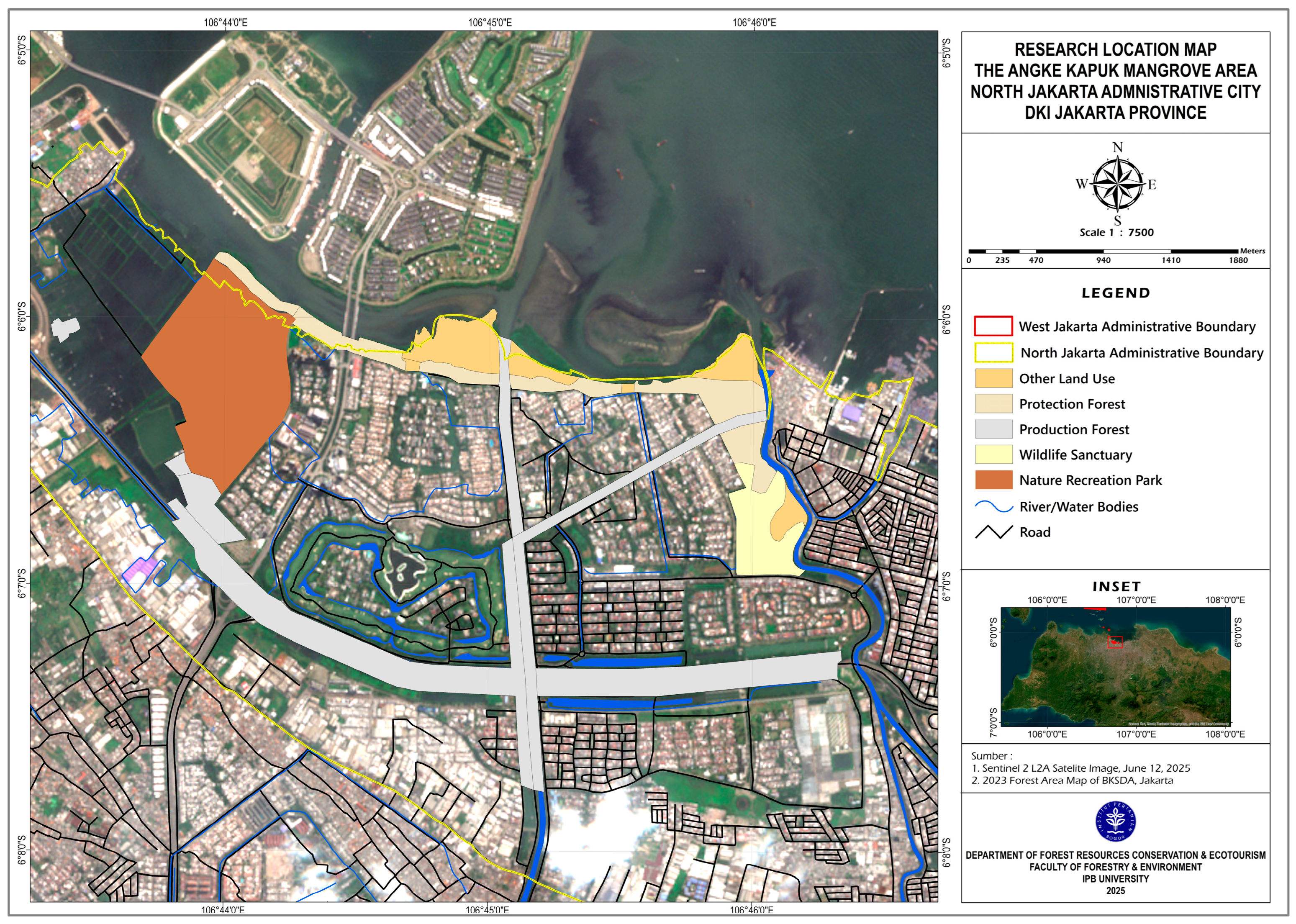
Figure 1. Research Location Map. Source: Drafted by authors.
Sustainability 18 00464 g001
Figure 2. Vegetation, avifauna observation points and herpetofauna survey plots. Source: Drafted by authors.
Sustainability 18 00464 g002
Figure 3. Dynamics of Avifauna Species Numbers based on several studies from 1988 to 2025.
Sustainability 18 00464 g003
Figure 4. Several types of birds found in the Muara Angke Mangrove Area. Source: Original pictures taken by the author (Oktovianus) during 2025.
Sustainability 18 00464 g004
Figure 5. Several types of reptiles found in the Muara Angke Mangrove Area. Source: Original pictures taken by the author (Oktovianus) during 2025.
Sustainability 18 00464 g005
Figure 6. Several Types of Mammals found in the Muara Angke Mangrove Area. Source: Original pictures taken by the author (Oktovianus) during 2025.
Sustainability 18 00464 g006
Figure 7. Changes in accretion or sedimentation in the Muara Angke mangrove area from 2015 to 2025. Source: Current study from satellite image analysis (2015–2025).
Sustainability 18 00464 g007
Figure 8. Local Community Perceptions of the Existence of the Muara Angke Mangrove Area. Assessment Score: 1 = Strongly Disagree, 2 = Disagree, 3 = Somewhat Disagree, 4 = Neutral/Fairly Neutral, 5 = Somewhat Agree, 6 = Agree, 7 = Strongly Agree.
Sustainability 18 00464 g008
Figure 9. Community Understanding of the Ecological Functions of the Muara Angke Mangrove Area. Assessment Score: 1 = Very Poor, 2 = Poor, 3 = Fairly Poor, 4 = Fair, 5 = Fairly Good, 6 = Good, 7 = Very Good.
Sustainability 18 00464 g009
Figure 10. Conflict Dynamics Regarding the Existence of the Muara Angke Mangrove Area. Assessment Scores: 1 = Strongly Disagree, 2 = Disagree, 3 = Somewhat Disagree, 4 = Neutral/Fair, 5 = Somewhat Agree, 6 = Agree, 7 = Strongly Agree.
Sustainability 18 00464 g010
Figure 11. Perceptions of Muara Angke Mangrove Area Managers. Assessment Scores: 1 = Strongly Disagree, 2 = Disagree, 3 = Somewhat Disagree, 4 = Neutral/Fair, 5 = Somewhat Agree, 6 = Agree, 7 = Strongly Agree.
Sustainability 18 00464 g011
Table 1. Results of Validity and Reliability Testing of the Questionnaire (N = 30).
DimensionCodeIndicator/Question Itemr-Valuer-Table (5%)StatusCronbach’s
Alpha
1. Local Community Perceptions of the Existence of the Muara Angke Mangrove AreaA1Mangrove presence provides direct economic benefits (e.g., natural resources such as fish and other products)0.5630.361Valid0.749
A2Mangroves help reduce wind speed0.6840.361Valid
A3Mangroves serve as tourism destinations and income-generating opportunities for local communities0.5020.361Valid
A4Mangroves serve as a food source for local communities0.6970.361Valid
A5Mangrove vegetation enhances atmospheric air quality0.7500.361Valid
A6Mangrove ecosystems mitigate coastal erosion and flood risk0.6100.361Valid
A7Mangrove conservation enhances community social well-being and resilience0.6780.361Valid
2. Community Understanding of the Ecological Functions of the Muara Angke Mangrove AreaB1Mangrove ecosystems provide protective services0.6520.361Valid0.801
B2Mangrove ecosystems preserve biological diversity0.7300.361Valid
B3Mangrove ecosystems preserve aquatic quality conditions0.7440.361Valid
B4Mangroves are the foundation of marine ecosystems0.6520.361Valid
B5Mangrove ecosystems reduce the impacts of natural disasters0.7650.361Valid
B6Mangrove ecosystems reduce the impacts of climate change0.6570.361Valid
B7Mangrove ecosystems function as critical spawning and nursery grounds0.5370.361Valid
3. Conflict Dynamics Regarding the Existence of the Muara Angke Mangrove AreaC1Mangrove expansion constrains fishing area accessibility0.8010.361Valid0.792
C2Mangrove expansion decreases fish abundance0.6810.361Valid
C3Wildlife in mangrove zones presents human–wildlife conflict risks to adjacent human settlements0.5990.361Valid
C4Mangrove presence diminishes available aquaculture land0.5830.361Valid
C5Causes increased mosquito reproduction0.6450.361Valid
C6Mangrove conservation constrains housing development potential0.8440.361Valid
C7Mangrove areas contribute to flood occurrence0.6570.361Valid
Table 2. Aspects and Indicators of Angke Kapuk Nature Tourism Park Area Management.
NoAspectIndicator
1Site Planning AspectSite Theme; Circulation; Facilities Grouping; Connectivity; Spatial Function; Security; and Safety
2Infrastructure AspectsRoads/Bridges; Water; Electricity; Security; Safety; Quantity; Telephone/WiFi
3Facility AspectsDesign; Function; Location; Security; Safety; Ergonomics; and Materials
4Recreational AspectsPhysical; Mental; Spiritual; Taste; Soul; Family; and Group
5Management AspectsAttitude toward visitors; Quality of human resources; Number of human resources; Cleanliness; Tidiness; Security; and Safety
6Compliance with Conservation AspectsAvailability of Conservation Human Resources; Water Quality Monitoring; Flora Monitoring; Wildlife Monitoring; Insect Monitoring; Aquatic Wildlife Monitoring; and Monitoring Reports
7Aesthetic AspectsOverall Aesthetics; Partial Aesthetics; Natural Component Aesthetics; Infrastructure Component Aesthetics; Facility Component Aesthetics; Interior Component Aesthetics; and Atmosphere created by all components
Table 3. Water Quality in the Muara Angke Mangrove Area and Surroundings.
Research
Location
Critical Parameters
(Key Values)
General
Quality Status
Main Sources
of Pollution
Pluit Reservoir
& Muara Kamal/Angke
Area
Feasibility: Not feasible for fisheries
Temperature: >37 °C at the PLTU outfall
Ammonia: High (1944 mg/L)
Heavily
Polluted/
Unsuitable
Domestic waste from Pluit Reservoir, thermal waste from Muara Karang power plant, Angke/Kamal River
estuary [32,33]
Mangrove at Pantai Indah Kapuk (PIK)Marine Debris Index: 13.96–15.27 (Heavily Polluted)
Macrodebris: Plastic (77.7%)
Microplastics: Trapped up to 30 cm
Heavily PollutedAngke River Flow [31,32,34]
Marina Ancol Beach & Muara AncolDO: Very Low (0.07 mg/L)
BOD/DO (Marine Tourism Tourism): Does not meet quality standards
Nutrients: High phosphate (1653 mg/L)
Moderate to
Heavy Pollution
Waste from tourism activities, Tanjung Priok Port, and residential areas
[35,36,37]
Cilincing EstuaryBOD: Very High (35.47 mg/L)
COD: Very High (398.01 mg/L)
Status: Moderately Polluted (STORET-28)
Moderately PollutedCakung River flow and industrial
activities in the Nusantara Free Trade Zone (KBN) [38,39]
Jakarta Bay (General & Post-Reclamation)Heavy Metals: Cd, Pb, Cu, Zn exceed BML
DO/BOD (GSW Model): Predicted decrease in DO (43%) and increase in BOD (154%) in the polder.
Moderately pollutedCumulative impact of 13 rivers and hydrodynamic disturbance due to
reclamation/GSW [32,35]
Muara Angke Monitoring PointNutrients (PO4 = 0.4 mg/L exceeding the quality standard of 0.015 mg/L; and NO3 = 0.8 mg/L exceeding the quality standard of 0.06 mg/L)
BOD: very high (65 mg/L)
Turbidity: well above the threshold (5 NTU) =
78–99 NTU
Coliforms: above quality standard (1000 MPN/100 mL) = 9200 MPN/100 mL)
Pollution Index (PI) = Moderately Polluted
Marine Water Quality Index (MWQI) = Poor
1. Domestic waste (dense settlements in the Angke watershed and surrounding areas) elevated ammonia, high BOD, coliform (fecal contamination)
2. River/watershed load (sedimentation & nutrients): flow from river estuaries (including the Angke River) carries TSS (Total Suspended Solids)/turbidity and nitrate-phosphate; estuaries such as Muara Angke are recorded as heavily polluted in the estuary area.
3. Other human activities (industry +
detergents/agriculture upstream) → contribution of phosphate (soap/detergent) & nitrate (fertilizer), as well as ammonia [30]
Source: Compiled from various sources.
Table 4. Dynamics of True Mangrove Existence in the Muara Angke Mangrove Area in 1987, 2011, and 2025.
NoType of True MangroveYear
1987 *2011 **2025 ***
1Avicennia alba🗸-🗸
2Avicennia marina🗸🗸🗸
3Avicennia officinalis🗸--
4Excoecaria agallocha🗸🗸🗸
5Rhizophora apiculata🗸🗸🗸
6Rhizophora mucronata🗸🗸🗸
7Sonneratia caseolaris🗸🗸🗸
8Bruguiera gymnorrhiza🗸--
9Rhizophora stylosa--🗸
Number of Species857
Source: * [42]; ** [28]; *** Current Study.
Table 5. Results of Mangrove Vegetation Analysis at the Tree Growth Level.
NoTypeDRD (%)FRF (%)DoRDo (%)IVI (%)
1Avicennia marina0.02650033.5470.022.220.00123832.9988.76
2Rhizopora mucronata0.02300029.1175.0023.810.00070818.8571.78
3Sonneratia caseolaris0.01450018.3550.0015.870.00123232.8367.06
4Excoecaria agallocha0.0040005.0640.0012.700.0001213.2220.99
5Avicennia alba0.0035004.4315.004.760.0000942.5011.70
6Terminalia catappa0.0020002.5320.006.350.0000932.4711.35
7Rhizopora Stylosa0.0020002.5310.003.170.0001313.499.20
8Rhizopora apiculata0.0015001.9015.004.760.0000240.637.29
9Thespesia populnea0.0010001.2710.003.170.0000661.766.20
10Ficus racemosa0.0005000.635.001.590.0000360.953.17
11Hibiscus tiliaceus0.0005000.635.001.590.0000120.312.53
Note: D = Density; RD = Relative Density; F = Frequency; RF = Relative Frequency; Do = Dominance; RDo = Relative Dominance; IVI = Importance Value Index. Source: Current Study.
Table 6. Analysis of Mangrove Vegetation at the Stake Growth Level.
NoTypeDRD (%)FRF (%)DoRDo (%)IVI (%)
1Avicennia marina0.02050038.3285.0026.980.00010639.05104.35
2Rhizopora mucronata0.01350025.2390.0028.570.00007126.1079.91
3Sonneratia caseolaris0.00600011.2135.0011.110.0000269.6932.01
4Rhizopora stylosa0.00550010.2835.0011.110.0000051.9723.37
5Bruguera gymnorrhiza0.0030005.6125.007.940.0000165.9119.45
6Excoecaria agallocha0.0020003.7420.006.350.0000124.5214.61
7Rhizopora apiculata0.0010001.875.001.590.0000259.3812.84
8Terminalia catappa0.0005000.935.001.590.0000031.173.70
9Morinda citrifolia0.0005000.935.001.590.0000020.823.34
10Calophyllum inophyllum0.0005000.935.01.590.0000020.793.32
11Cerbera manghas0.0005000.935.001.590.0000020.593.12
Note: D = Density; RD = Relative Density; F = Frequency; RF = Relative Frequency; Do = Dominance; RDo = Relative Dominance; IVI = Importance Value Index. Source: Current Study.
Table 7. Mangrove Vegetation Analysis at the Seedling Growth Stage.
NoTypeDRD (%)FRF (%)IVI (%)
1Rhizopora mucronata0.03150028.7780.0036.3665.13
2Avicennia marina0.04350039.7350.0022.7362.45
3Excocaeria agallocha0.01500013.7040.0018.1831.88
4Soneratia caseolaris0.01250011.4225.0011.3622.78
5Cerbera manghas0.0040003.6510.004.558.20
6Calophyllum inophyllum0.0025002.2810.004.556.83
7Terminalia catappa0.0005000.465.02.272.73
Note: D = Density; RD = Relative Density; F = Frequency; RF = Relative Frequency; IVI = Importance Value Index. Source: Current Study.
Table 8. Analysis of the Ecological Index of Vegetation in the Muara Angke Mangrove Area.
NoGrowth RateH′ECDmg
1Tree1.7070.7120.2371.975
2Pancang1.7280.7210.2392.140
3Seed1.4660.7530.2621.109
Source: Current Study.
Table 9. Analysis of Wildlife Inventory in the Aves Class in the Muara Angke Mangrove Area at the Seedling Growth Level.
NoScientific NameRF
(%)
RA
(%)
IVIConservation Category
IUCNP.LHK No. 106/2018
1Actitis hypoleucos1.552.193.74LCUnprotected
2Aeghitina tiphia3.101.404.50LCUnprotected
3Alcedo coerulescens3.101.104.20LCUnprotected
4Phoenicurus amaurornis3.103.296.39LCUnprotected
5Anas gibberifrons2.331.303.62NTUnprotected
6Anhinga melanogaster3.103.296.39NTProtected
7Great Egret0.781.692.47LCUnprotected
8Grey Heron2.331.003.32LCUnprotected
9Purple heron2.330.502.82LCUnprotected
10Ardeola speciosa3.15.088.19LCUnprotected
11Artamus leucorhynchus0.780.401.17LCUnprotected
12Bubulcus ibis2.333.195.52LCUnprotected
13Butorides striata3.101.794.90LCUnprotected
14Cacomantis merolinus2.331.203.52LCUnprotected
15Centropus nigrorufus0.780.100.87VUProtected
16Chilidonias hybridus1.553.895.44LCProtected
17Cisticola exilis1.550.401.95LCUnprotected
18Clamator coromandus0.780.100.87LCProtected
19Collocalia linchi2.335.688.01LCUnprotected
20Crypsirina temia1.550.802.35LCProtected
21Dendrocopos macei2.331.003.32LCUnprotected
22Dendrocopos moluccensis3.101.604.70LCUnprotected
23Dicaeum trigonostigma0.780.200.97LCUnprotected
24Dicaeum trochileum0.780.200.97LCUnprotected
25Egretta alba2.332.895.22LCUnprotected
26Egretta garzetta3.103.896.99LCUnprotected
27Common Moorhen0.780.100.87LCUnprotected
28Striped Ground Dove3.101.504.60LCUnprotected
29Gerygone sulphurea0.780.401.17LCUnprotected
30Himantopus leucocephalus0.780.501.27LCUnprotected
31Hirundo tahitica1.551.402.95LCUnprotected
32Ixobrychus sinensis2.330.803.12LCUnprotected
33Black cumin0.780.200.97LCUnprotected
34Lonchura leucogastroides1.554.195.74LCUnprotected
35Lonchura maja0.781.001.77LCUnprotected
36Lonchura punctulata2.339.1711.50LCUnprotected
37Microcarbo niger0.780.200.97LCUnprotected
38Nycticorax nycticorax2.330.803.12LCUnprotected
39Orthotomus sepium3.102.795.89NTUnprotected
40Mountain passer3.108.7711.87LCUnprotected
41Pericrocotus cinnamomeus0.780.501.27LCUnprotected
42Phalacrocorax sulcirostris2.333.796.11LCUnprotected
43Prinia familiaris1.550.802.35LCUnprotected
44Prinia flaviventris0.780.501.27LCUnprotected
45Prinia inornata0.780.200.97LCUnprotected
46Psittacula Alexandri *0.780.501.27NTProtected
47Ptilinopus melanospila0.780.601.37LCUnprotected
48Pycnonotus aurigaster3.103.896.99LCUnprotected
49Rhipidura javanica1.551.503.05LCProtected
50Spilopelia chinensis2.331.203.52LCUnprotected
51Streptopelia bitorquata1.551.102.65LCUnprotected
52Todiramphus chloris2.330.903.22LCUnprotected
53Vernans’s Treron1.553.495.04LCUnprotected
54Zosterops palpebrosus0.780.501.27LCUnprotected
55Pycnonotus goiavier0.780.601.37LCUnprotected
Note: * Appendix II of the Convention on International Trade in Endangered Species of Wild Fauna and Flora (CITES). LC = Least Concern, NT = Near Threatened, VU = Vulnerable.
Table 10. Area of Accretion/Sedimentation in the Muara Angke Mangrove Area caused by the Angke River (Krukut Sub-DAS) and Kapuk River (Angke Sub-DAS).
NoYearArea of Accretion/Sedimentation (Ha)
12010 *8.38
2201510
3202015
4202532
Source: * [28]; Current Study from satellite image analysis (2015–2025).
Table 11. Analysis of the Management of Angke Kapuk Nature Tourism Park.
NoAspectAverage Score
1.Site Planning Aspect3.86
2.Infrastructure Aspects4.29
3.Facilities Aspect4.43
4.Recreational Aspects4.86
5.Management Aspects4.00
6.Compliance with Conservation Aspects1.43
7.Aesthetic Aspects3.29
Assessment 1. = Very Poor/Low, 2 = Poor/Low, 3 = Somewhat Poor/Low, 4 = Neutral, 5 = Somewhat Good/High, 6 = Good/High, 7 = Very Good/High.
Disclaimer/Publisher’s Note: The statements, opinions and data contained in all publications are solely those of the individual author(s) and contributor(s) and not of MDPI and/or the editor(s). MDPI and/or the editor(s) disclaim responsibility for any injury to people or property resulting from any ideas, methods, instructions or products referred to in the content.