1. Introduction
Industrialization is a critical driver of socioeconomic development, job creation, infrastructure, and productivity [
1,
2]. Economic growth in countries such as South Africa depends on industrial activities [
3]. However, despite their significance, the growing amount of waste produced as a by-product of production processes has made these activities a serious environmental concern [
4]. Solids, liquids, and gases from a variety of industries, including manufacturing, chemical processing, and mining, are examples of industrial waste, which is undesired or leftover material created by industrial operations [
5]. In South Africa, excessive industrial waste from mining, power generation, and manufacturing causes significant environmental and economic problems, as it does in many developing nations [
6]. For instance, Eskom, South Africa’s power-generating company, which uses coal as its primary fuel, produced approximately 34 million tons of coal ash annually. This high volume of coal waste has been a crucial issue for the organisation, prompting significant investments in managing it to support more sustainable production [
7]. The situation is no different in the mining industry, where gold mine tailings have become a major contributor to environmental, health, and acid mine drainage problems facing the country currently [
8]. Recognizing the need for proper management of mining waste, Harmony, one of the largest gold reclamation operators in the country, introduced mine waste solutions in the Klerksdorp, Stilfontein, Orkney, and Vaal River areas of the Gauteng and North West provinces of South Africa. These were introduced to assist the Kareerend tailing storage facility, which was almost full, and to ensure effective management of gold mine tailings [
9]. Because industrial waste is produced in large quantities and often contains hazardous materials, its management is crucial to prevent environmental degradation, such as soil contamination, water pollution, and greenhouse gas emissions. By doing so, its impact on the global sustainability crisis and public health can be mitigated [
10,
11,
12]. One viable approach to addressing this issue is to apply circular economy principles of recycling, reusing, and repurposing this waste into more valuable products [
7,
13].
The circular economy addresses industrial waste by shifting from the traditional linear approach to production (i.e., take-make-dispose) to a more cyclical approach, in which waste is viewed as a valuable resource. This is achieved through strategies such as industrial symbiosis, where the waste from one industry becomes a raw material for another [
14]. As a result, by-products such as fly ash, silica fume, blast furnace slag, and construction and demolition debris are gradually gaining recognition as veritable alternatives to traditional construction materials [
15,
16]. Where these alternatives have been successfully adopted, there has been evidence of positive environmental impact while also consuming fewer virgin raw materials and minimizing waste that ends up in landfills [
17]. Using industrial waste also promotes the United Nations’ (UN) sustainable development goal (SDG), especially SDG 12 on responsible production and consumption [
18,
19]. For instance, concrete and road infrastructure are two areas where industrial by-products such as fly ash, blast furnace slag, mine tailings, and recycled aggregates have shown promise for application in construction [
20]. Moreover, recycling industrial waste provides a practical way to reduce reliance on virgin resources while minimizing environmental damage, particularly in rapidly developing economies like South Africa, where construction is in high demand and raw material use is surging [
17].
Despite these positive developments, the practical application of these industrial wastes, particularly in the delivery to developing countries such as South Africa, remains slow [
21]. Understanding the reasons behind the slow uptake of industrial waste in the South African industry is essential to suggest practical strategies for improvement. It is important to note that research in the country has examined the applicability of industrial waste, including mine tailings and coal ash, for geopolymer bricks [
22,
23]. Other studies have tested the feasibility of reusing foundry sand and slag in building concrete [
24,
25], fly ash as a partial replacement for concrete and brick construction [
26], sawdust as a partial replacement for sand in bricks [
27], and construction and demolition waste for the production of instrumented embankment trials [
28]. While these studies give insight into the possible application of these industrial wastes within the South African built environment, this current study strives to further this discussion by unearthing, through empirical evidence, industry participants’ perspectives on the extent of practical application of these explored wastes in the delivery of civil engineering projects, such as roads, bridges, and utilities in the country. The study further unearthed barriers to their use, including the lack of suitable standards for these new materials and the absence of lifecycle assessment of these materials, among others, which can hinder the use of industrial waste-generated materials in construction [
29,
30]. Understanding these barriers enabled the proposal of sustainable solutions to ensure material circularity in the South African engineering and construction industry. Subsequent parts of the paper explored related studies, the methodology adopted, the key findings, and the conclusions drawn from the results.
2. Application of Industrial Waste in the Built Environment
Byproducts from mining, manufacturing, power generation, and other industrial processes are referred to as industrial waste. Based on their composition and environmental effects, these wastes can be classified as either hazardous (e.g., chemical residues and heavy metals) or non-hazardous (e.g., fly ash, slag, and construction debris) [
31]. Air pollution, water pollution, and soil degradation are all consequences of improper industrial waste disposal. But thanks to developments in recycling and waste management, industrial by-products are now used in a variety of applications and sectors, including construction, where they can replace traditional raw materials to increase sustainability and cost-effectiveness [
32]. Industrial wastes used in construction include fly ash, silica fume, steel slag, ground-granulated blast furnace slag, and recycled materials such as tires, glass, and marble [
33]. These materials enhance building performance by partially replacing cement and aggregates [
34].
Steel slag, a by-product of steelmaking, can be classified as carbon or stainless-steel slag, depending on the steel type, furnace, pre-treatment methods, and grade. It typically has a density of 3.3–3.6 g/cm
3 and contains calcium oxide, silicon dioxide, iron oxides, magnesium oxide, aluminum oxide, phosphorus pentoxide, and manganese oxide. Its higher iron content makes it a hard, wear-resistant material [
35]. As a high-quality alternative to natural aggregates, steel slag is used as a fluxing agent in sinter ore, and as an aggregate in road construction and concrete production [
36]. It can serve as a synthetic aggregate in highway construction [
37]. Dubey et al. [
38] found that using ground granulated blast furnace slag and steel melting shop slag as partial substitutes for cement and coarse aggregates in green concrete reduced costs by 22.6% in residential projects. Rosales et al. [
39] also demonstrated that stainless steel slag can replace limestone filler in self-compacting concrete, thereby reducing waste and promoting sustainability in the circular economy.
Similarly, glass, an inorganic material made by melting raw materials and quickly cooling them into a rigid state without crystallization, also produces waste that can be reused in construction. Depending on its intended use, its primary constituents include silicon dioxide, aluminium oxide, iron (III) oxide, calcium oxide, sodium oxide, potassium oxide, manganese oxide, and other compounds [
40]. Recycled glass has proven to be a successful partial replacement for cement and aggregates in concrete due to its hardness, brittleness, transparency, density (1672 kg/m
3), and specific gravity [
40]. Given that concrete is used in large quantities, the pozzolanic behavior of waste glass powder can improve concrete, making it a desirable alternative for sustainable construction globally [
41]. Moreover, concrete with 20% glass powder substituted for some of the cement can have a higher 28-day compressive strength [
42]. Comparing glass powder with conventional concrete, Vijayakumar et al. [
43] found that it increased compressive strength at 28 and 60 days by up to 40%. Fahad and Ali [
44] also explored using sheet glass instead of natural gravel and found that glass concrete specimens had better properties and lower water absorption than gravel concrete.
In construction, clay is the primary raw material for brickmaking. Amsayazhi and Mohan [
45] suggest that water treatment sludge can effectively substitute for clay. Various sludges from sewage and water treatment, often combined with other waste materials like agricultural byproducts, can contribute to sustainable brick production. As such, Chiang et al. [
46] developed lightweight bricks by mixing rice husk ash and dried water treatment sludge, achieving notable strength with 40% rice husk. Świerczek et al. [
47] explored the possibility of using raw sewage sludge as a key construction component, while Cusido et al. [
48] used sewage sludge and forest debris to produce lighter bricks with improved thermal and acoustic insulation. Although sewage sludge meets material standards, Liew et al. [
49] recommend limiting its content to under 30% due to increased brittleness. Lin et al. [
50] produced pavement bricks using bottom ash and water treatment sludge, and Ahmadi et al. [
51] partially replaced clay with water treatment sludge in eco-friendly fired bricks. For concrete production, Ghannam [
52] found no significant loss in strength when using dry water treatment sludge as an additive in low-organic-content mixes. Similarly, Pizon et al. [
53] reported that recycled concrete aggregates and metallurgical sludge provided higher compressive strength, along with increased permeability and absorption in concrete.
Some environmental concerns arise from the large amounts of fly ash—a byproduct of burning coal in thermal power plants—that are frequently dumped in landfills [
54]. To repurpose this industrial waste, fly ash has become a viable choice for use in porous concrete due to its pozzolanic properties, which include silica and alumina [
55]. South Africa’s heavy reliance on coal for power generation results in large volumes of fly ash, with only about 8% reused [
56]. The situation is not restricted to South Africa, as Rodríguez De Sensale [
57] submitted that in India, 117 million tons of fly ash are produced yearly. The United States and Europe combined make 115 million tons, and China produces 100 million tons [
58]. As such, exploring the use of fly ash, especially as a partial replacement for cement, has become a popular area of research in recent times. Fly ash has been replaced with cement at up to 50% of the Portland cement [
59]. It has been noted that fly ash has a broader range of applications in building, and that a combination of 5% silica fumes and 20% fly ash can provide strength [
60]. Also, in South Africa, there is a large amount of mine tailings and coal ash (bottom ash), which is suitable for sand replacement and geopolymer brick production [
23,
24]. Other industrial waste that can be used in construction includes crumb rubber and copper slag as fine aggregates [
61].
3. Barriers to the Use of Industrial Waste in the Built Environment
Given the recent attention to industrial waste as a viable option for achieving circularity in construction, studies have continued to explore the issues that hinder its widespread application. Diverse issues cutting across technical, economic, supply-chain, regulatory, socio-cultural, environmental, and health concerns have been revealed in existing studies [
62,
63,
64].
The technical section typically addresses material-specific and system-level performance concerns that prevent the safe, reliable reuse of industrial wastes in construction. Key issues include variable quality, lack of standardized tests or acceptance criteria, and uncertain long-term performance, which raise design and liability risks. Unlike virgin materials, which have predictable properties, industrial wastes exhibit significant variability in composition and quality. For instance, recycled aggregates derived from construction and demolition waste display wide fluctuations in mechanical properties depending on their source, contamination levels, and processing methods. As a result, these recycled aggregates are primarily relegated to low-grade applications, such as road sub-bases, while their use in structural concrete remains limited despite technical feasibility [
63,
65]. Similarly, the durability of these materials developed from industrial waste presents a significant technical challenge to their widespread use. Charef et al. [
66] noted that many engineers and construction professionals worry about long-term performance issues, including alkali-silica reactions, freeze–thaw resistance, and compatibility with existing material systems. In cases where the lifespan of a building may extend fifty years or more, the absence of long-term performance data for waste-derived materials creates understandable hesitation [
67,
68]. Moreover, the lack of clear standards for these materials makes the technical issue of accepting these waste-generated materials more complex. Studies have noted that many secondary materials lack precise technical specifications, acceptance criteria, or standardized testing protocols [
62]. Without these clear standards, engineers are left to apply conservative safety margins that effectively price recycled materials out of consideration, even when their actual performance might prove adequate. This standards gap affects diverse materials, from fly ash blends to plastic-derived products, creating a dilemma in which materials cannot gain acceptance without standards. Yet, standards development requires widespread use to generate the necessary performance data [
63,
69]. Moreover, the rigidity of many national and international codes, especially in countries where material performance codification is strict and mandated, poses a significant problem for industrial waste applications [
70]. Although many industrial waste materials meet the performance requirements for strength, durability, and thermal properties, they are neither officially accepted nor used due to these rigid codes [
71,
72].
Issues related to the economy and supply have also become a source of concern. Even when technical barriers can be overcome, economic realities often create problems for the use of industrial waste in construction. Costs, demand dynamics, and logistical scale are key constraints. Processing industrial waste into construction-grade materials typically costs more than simply extracting virgin equivalents. Sorting, cleaning, testing, and upgrading waste streams require significant capital investment and operational expenditure [
64]. As long as virgin aggregates remain cheap and landfill disposal costs stay low, the business case for recycling and reusing waste materials becomes irrelevant [
73]. Similarly, market dynamics worsen these cost challenges. Demand for recycled construction materials remains inconsistent and geographically fragmented, preventing the economies of scale necessary to drive down unit costs [
74]—many organisations involved in recycling struggle to secure long-term contracts with stable volumes and prices. Investing in processing facilities is financially risky. The absence of mature marketplace infrastructure, including trusted trading platforms, quality-assured product streams, and transparent pricing mechanisms, further deters the use of these waste materials [
75]. Also, contractors cannot use specific waste streams as primary materials because suppliers cannot provide consistent volumes due to irregular generation and collection of these waste streams [
76]. Moreover, transportation economics adds another layer of difficulty. Construction materials are inherently bulky and low-value on a per-unit-weight basis. Therefore, transporting processed waste material over significant distances can be uneconomical. The geographic mismatch between waste generation and potential reuse sites forces waste materials into disposal rather than higher-value applications. For private investors, these combined uncertainties create unacceptable risk profiles, constraining the capital flows necessary to build recycling infrastructure and develop innovative products [
74,
77].
Studies have also emphasised that the regulatory environment surrounding industrial waste reuse remains underdeveloped in many countries, creating legal uncertainty that hinders adoption [
62]. Many countries lack clear frameworks that define when waste ceases to be waste and becomes a product. Without these precise definitions, materials exist in regulatory uncertainty, subject to waste management controls even when processed into construction-grade products. This uncertainty creates permitting issues and potential liability concerns that deter risk-averse developers and contractors [
78]. In cases where regulations exist, enforcement often proves weak and incentive structures misaligned. Banning the use of landfills or mandating recycling means little without monitoring and penalties for non-compliance. Moreover, procurement policies rarely prioritize recycled content. Public and private procurement often favour virgin materials or lack mandates for recycled content, limiting demand for secondary products such as waste-generated materials [
79]. Some regulatory frameworks even inadvertently discourage waste reuse by focusing narrowly on operational carbon emissions while ignoring embodied carbon and end-of-life recoverability. This ‘lazy view’ can favour designs that reduce energy consumption but increase material complexity, ultimately undermining circular economy goals [
66]. Again, the certification and standards gaps have regulatory dimensions. Policy development in many countries has been slow, and uniform standards are not being adopted for waste-derived construction materials. This has left the construction industry without clear compliance pathways [
74].
Technical feasibility and regulatory permission, while necessary, prove insufficient without social acceptance. Adoption depends on stakeholder trust, knowledge, and professional practices. Unfortunately, the construction industry remains deeply conservative, with strong preferences for proven materials and established practices. Clients and professionals often perceive recycled materials as risky, potentially compromising performance or warranties [
80]. This risk aversion intensifies high-value projects or safety-critical applications where the consequences of failure could be catastrophic, both physically and reputationally [
73]. Eberhardt et al. [
71] further argued that this resistance to change noticed towards the use of new materials could be attributed to the absence of comprehensive performance data and case studies that verify the long-term durability of materials. Also, knowledge gaps and limited training reinforce this resistance [
81]. Many construction professionals and contractors lack familiarity with appropriate applications for waste-derived materials, their performance characteristics, and proper specification approaches. Educational curricula have been slow to incorporate circular economy principles and secondary material options, leaving practitioners poorly equipped to innovate [
78,
82]. Moreover, the cultural perceptions of ‘waste’ itself present a significant challenge. Materials labelled as recycled or waste-derived can be seen as inferior, contaminated, or low quality. For visible applications such as finishes and façades, this image problem directly affects marketability. As such, overcoming these perceptions requires not just technical proof but also branding, demonstration projects, and a cultural shift toward viewing secondary materials as resources rather than refuse [
73].
Practical logistics and information gaps undermine the reliability of industrial waste supply chains. Waste generation, collection, processing, and potential reuse involve numerous dispersed parties with diverse incentives and poor coordination. These different parties operate in fragmented ecosystems with limited information exchange. This fragmentation results in inconsistent supply volumes and quality, complicating manufacturers’ efforts to secure a steady supply of waste-derived products [
75]. Moreover, digital infrastructure for waste tracking and trading remains primitive in most developing countries. Without reliable data on waste generation quantities, locations, compositions, and availability, potential users cannot plan procurement or justify investment in processing capacity. The absence of digital platforms for transparent waste exchange prevents efficient market formation, leaving valuable materials stranded while construction projects continue sourcing virgin inputs [
75]. Also, the extensive use of waste-derived materials in construction remains severely hampered by environmental and health concerns [
83]. The potential toxicity of industrial waste materials, which may contain hazardous chemicals or heavy metals, is a pressing concern. These pollutants have the potential to leak into the environment, posing health and quality risks [
84]. Because tailings and coal ash contain high levels of arsenic, cadmium, and lead, the disposal and reuse of industrial waste is especially controversial. Without appropriate treatment or containment measures, environmental liabilities may exceed potential sustainability benefits [
85]. Moreover, the lack of reliable data on the long-term environmental performance of recycled materials is another obstacle. There are insufficient empirical studies and field validation in many regions, including South Africa, to determine the behavior of industrial byproducts under various structural and climatic conditions. If waste is not treated correctly or contained, end users and construction workers may be exposed to airborne particles or chemical residues. In developing countries with inadequate occupational safety and health systems, the risk of exposure increases [
83].
To understand the application and issues associated with the use of industrial waste in the South African built environment, this study explored these barriers, along with the identified applications of industrial waste. To further provide viable solutions to improve usability, some possible strategies were introduced as mediating variables to improve the application.
4. Methodology
This study adopted a post-positivist philosophical stance using a quantitative research design and a questionnaire as the instrument for data collection. The need to provide an objective and quantifiable viewpoint on the use of industrial waste in the delivery of civil engineering projects in South Africa necessitated the adopted approach. The target population comprises built environment professionals engaged in civil engineering projects within Gauteng Province, South Africa, including architects, engineers (civil, structural, mechanical, and electrical), quantity surveyors, and construction and project managers. The premise for conducting the study in this province is that Gauteng hosts many construction organizations with the highest construction output/value compared to other provinces [
86]. Due to the difficulty in obtaining the exact number of professionals involved in civil engineering projects and registered with the diverse professional bodies, purposive and snowball sampling were adopted. Purposive sampling helped in identifying the first set of professionals working on civil engineering projects within the province. Afterwards, snowball sampling helped expand the sample for the study through referral. Using the snowball approach, 143 usable questionnaires were retrieved for the study and considered usable for analysis and drawing inferences.
The study adopted a self-administered closed-ended questionnaire designed in four sections.
Section 1 gathered demographic information on the respondents to ascertain their suitability for the study.
Section 2 assessed the application of industrial waste in civil engineering projects. This section was assessed using the usage scale proposed in Vagias [
87], where one is ‘never’, two is ‘almost never’, three is ‘sometimes’, four is ‘almost every time’, and five is ‘every time’.
Section 3 assessed the barriers to the use of these industrial wastes, while
Section 4 assessed the strategies for improving the use of industrial waste in civil engineering projects.
Section 3 and
Section 4 were assessed on a five-point agreement scale ranging from ‘strongly disagree’ to ‘strongly agree’. This questionnaire was distributed via Google Forms, with a cover letter describing the study’s intention, notifying the respondents of their voluntary participation, and assuring them of anonymity. Furthermore, ethics clearance was sought from the University of Johannesburg’s ethics committee before data collection was done. Before distribution, the instrument was piloted among five professionals to test the clarity of the questions and the time taken to complete the questionnaire, as suggested by Fellows and Liu [
88]. The final draft of the questionnaire was adjusted based on the input gathered from the pilot study.
The data gathered on the demographic information of the respondents were analysed using frequency (f), while the mean score (
) was used to rank the different variables assessed in
Section 2,
Section 3 and
Section 4 in descending order. Following Ghasemi and Zahediasl’s [
89] suggestion that the Shapiro–Wilk (S-W) normality test is most suitable for data gathered from a sample size less than 2000, the S-W test was conducted, and the result revealed that the data collected were not normally distributed, as a significant
p-value of 0.000 was derived for all variables in
Section 2,
Section 3 and
Section 4. Hence, only analyses that do not require normal distribution of data (i.e., parametric data) can be conducted. Therefore, since the respondents in the study were drawn from different professions, the Kruskal–Wallis H-test, the nonparametric alternative to ANOVA, was employed to determine significant differences in how the different groups ranked the assessed variables. The barriers and strategies were further analysed using exploratory factor analysis (EFA) due to the large number of variables and the need to achieve a simpler, more straightforward, and more interpretable factor structure. In conducting EFA, the factorability of the data gathered was first assessed using the Kaiser-Meyer-Olkin Measure of Sampling Adequacy (KMO) and Bartlett’s Test of Sphericity (BTS). Based on the acceptable values of the factorability test, EFA was conducted using principal component analysis (PCA) with varimax rotation. The choice of varimax rotation over other methods was based on its ability to produce factors that are easier to interpret through maximized variance. With varimax rotation, the loading patterns of variables make it simpler to understand which variables are related to which underlying concept or construct, leading to more straightforward interpretations and applications of factor analysis results [
90]. Furthermore, the relationship between the barriers identified through EFA and the level of industrial waste application was assessed using partial least squares structural equation modelling (PLS-SEM). This second-generation multivariate analysis was adopted due to its suitability for determining cause-and-effect relationships in nonparametric data with a small sample [
91,
92], as in the case of this current study. Furthermore, the grouped strategies from EFA were introduced as mediating factors to improve the use of industrial waste, and this was assessed using PLS-SEM.
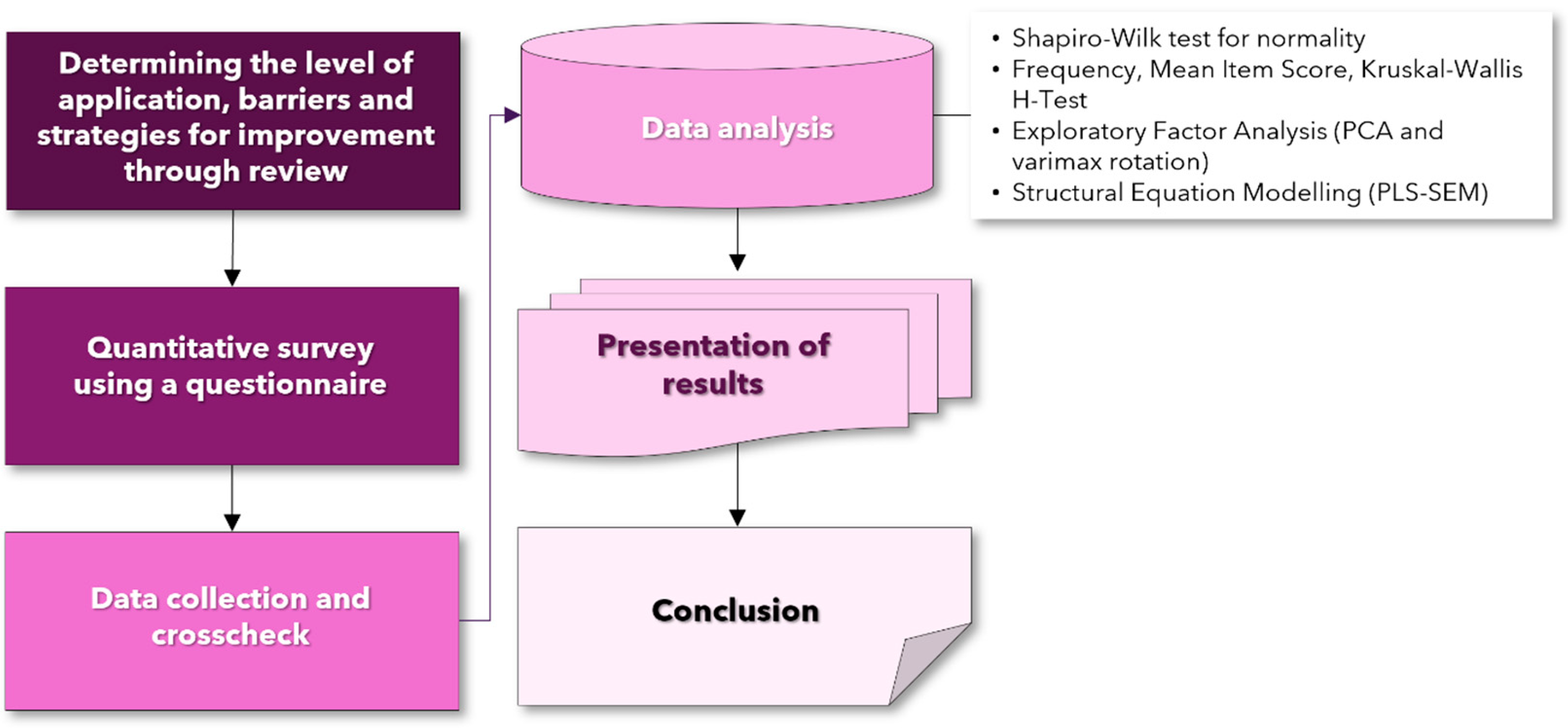
Figure 1 gives an overview of the research methodology adopted.
5. Findings and Discussion
5.1. Background Information
The results on the background information of the respondents revealed that more engineers (civil, structural, mechanical, and electrical) participated in the survey, representing 77% of respondents. This is expected given the study’s focus on civil engineering projects. Quantity surveyors, construction managers, and construction project managers were also part of the survey with 5.5%, 12.3% and 4.9% representation, respectively. The majority of these participants (62.6%) have bachelor’s degrees, while 27.6% have honors degrees, 5.5% have master’s degrees, and 4.3% have a diploma. Also, the majority of these respondents (55.8%) work for contracting organisations, 40.5% for consulting organisations, and only 3.7% for government organisations. In terms of years of experience, 49.7% have up to 5 years of experience in civil engineering projects in the country, while the remaining 50.3% have more than 5 years. The average years of working experience for the respondents was 6.4 years. The background information revealed that the respondents are academically and experientially equipped to answer the research questions.
5.2. Application of Industrial Waste in Civil Engineering Projects in South Africa
The respondents were asked to rate the overall level of industrial waste use in the delivery of civil engineering projects in South Africa on a five-point scale, with five being very high and one being very low. The result revealed that 34.4% believed the use of industrial waste is on average, while 30.7% and 17.2% believed it is low and very low, respectively. Only 16.6% and 1.2% noted that the use of industrial waste is high or very high, respectively. Further assessment of the usage of 13 identified industrial waste applications to civil engineering projects was carried out.
Table 1 shows the rating of the level of usage with the overall group
-value of 2.20 attained. Based on the 5-point scale used, it can be concluded that the use of the identified industrial waste application in civil engineering projects is low. The findings further revealed that only the use of recycled construction and demolition waste as aggregates for new construction had an average
-value of 3.09, with all others having
-values below average. The K-W test further revealed no significant difference in the ratings of these applications among respondents from different professions, as the
p-value exceeded the 0.05 threshold. This implies that there is no significant disparity in the respondents’ ratings of the application of industrial waste in civil engineering projects.
5.3. Barriers to the Application of Industrial Waste in Civil Engineering Projects in South Africa
The result of the barriers to the use of industrial waste in civil engineering projects in South Africa is presented in
Table 2. The result revealed that all 16 barriers assessed were deemed significant, as they all had
-values higher than the average of 3.0. Top of the list are environmental and health concerns, regulatory and standards limitations, and limited government support and enforcement with
-values of 4.52, 4.48, and 4.42. The least on the table is a lack of skilled personnel with a
-value of 3.55. The K-W test revealed a discrepancy in the ratings of two of the 16 barriers. These barriers include limited research and development and a lack of collaboration among industry professionals with
p-values below 0.05.
Given the large number of variables assessed and the assumption that some may share similar underlying significance, EFA was conducted to regroup the 16 barriers into manageable subscales. To conduct an EFA, the data was carefully assessed. The KMO measure of sampling adequacy was 0.874, which is above the 0.60 threshold [
90,
93]. Furthermore, BTS gave a significant
p-value of 0.000 with a χ
2-value of 1157.50, as seen in
Table 3. Furthermore, the derived communalities were assessed with values between 0.410 and 0.762 derived. These communalities are deemed acceptable following the suggestion of Pallant [
90]. This implies that the data gathered can be further analysed using EFA based on the sample size, KMO, BTS, and acceptable communalities derived. Based on these results, EFA was conducted using PCA with Varimax rotation.
Table 3 shows that three major groups were derived with eigenvalues above one and a total variance of 58.5%. This implies that about 59% of the issues facing the use of industrial waste in civil engineering projects in South Africa can be explained by these three groups of barriers. The remaining 41% can be explained by other factors not measured in this study.
Cluster 1—The first rotated component accounts for 40% of the variance explained and has six loading variables. These barriers are a lack of education and training, a lack of skilled personnel, a lack of sustainability awareness, limited research and development, a lack of stakeholder awareness, and a lack of customer recognition. Based on their latent similarities, this cluster was named knowledge, skills, and awareness barriers. Cluster 2—The second cluster accounts for only 11% of the variance explained and has six variables loading. These are high transportation and handling costs, storage and space constraints, regulatory and standards limitations, perceived complexities of industrial waste, environmental and health concerns, and market and industry resistance. This cluster was subsequently named operational and regulatory barriers. Cluster 3—The last cluster accounts for 8% of the variance explained and has four variables loading. These variables are limited government support and enforcement, inconsistent supply and quality of waste materials, lack of collaboration among industry professionals, and lack of lifecycle assessment practices. Based on their latent similarities, this cluster was named governance and industry collaboration barriers.
The relationship between the identified barriers and the use of the identified industrial waste was further assessed using PLS-SEM, since the data gathered were nonparametric, as revealed by the S-W test conducted earlier. In conducting this test, the reflective measurement model was first assessed through a critical evaluation of the outer loadings derived. These outer loadings are correlations between the constructs and their indicators, indicating each indicator’s absolute contribution to the constructs’ validity [
91].
Table 4 shows the derived factor loadings before and after eliminating variables with low loadings (i.e., outer loadings below 0.7). The elimination of variables with low outer loading was based on past submissions, which noted that this approach yields better fit indices and a more reliable model [
94]. However, factor loadings of as low as 0.4 have been deemed acceptable if they do not negatively influence the overall model reliability [
95]. The final iteration after elimination shows that 10 of the 16 identified barriers and 6 of the 13 uses of industrial waste in civil engineering projects were retained, as they had internal reliability above 0.5. This means they explain more than 50% of their variance [
91]. The internal consistency of each group was also assessed using Cronbach’s alpha (α), the Rho coefficient (
ρA), and composite reliability (
ρc), as these measures are more robust [
91,
96]. The threshold for the α,
ρA, and
ρc tests is 0.7 [
82]. The result of the final iteration revealed that all groups in the model met the accepted thresholds of 0.70 for the α,
ρA, and
ρc tests, except for ‘operational and regulatory barriers’, which had a slightly lower α and
ρA.
Furthermore, convergent validity was assessed using average variance extracted (AVE), with a threshold of 0.5, as in past submissions [
91,
92]. The final iteration showed good convergent validity across the groups, except for the use of industrial waste, which yielded an AVE of 0.408. While this suggests that, on average, more error variance exists in this construct than the variance explained by the construct itself, studies have suggested accepting low AVE as long as a
ρc above 0.6 and acceptable values for discriminant and convergent validity are achieved [
97]. Since the derived
ρc for this group is 0.801 and acceptable discriminant validity has been established, the group can be accepted as valid for the study. Furthermore, multicollinearity was assessed using the derived variance inflation factor (VIF), with a threshold of <5.0 [
91]. The result revealed that all retained variables had VIFs below 5.0, indicating no multicollinearity issues in the data.
Finally, discriminant validity, which indicates the extent to which a construct is empirically distinct from others in the model [
91], was assessed using the heterotrait-monotrait (HTMT) ratio. For the HTMT test, a value below 0.85 is required for apparent discriminant validity [
98].
Table 5 shows that all groups assessed met the set cut-off, indicating that they are distinct from one another.
The result in
Table 6 shows the structural relationship between the barriers and the use of industrial waste. Using the recommended bootstrap approach at 4999 samples [
92], the derived path coefficient (β) was examined along with its
t-value and
p-value. The value of
β was examined in terms of its sign, magnitude, and significance as suggested by Tabachnick and Fidell [
93]. The significance is determined by the
t-value with a threshold of at least 1.96 for a 95% confidence interval (
p-value < 0.05) [
99]. From the result, two out of the three groups identified through EFA were significantly impacting the use of industrial waste. Knowledge, skills, and awareness barriers had the highest impact with a significant
β of −0.218 (−22%). This implies that the current use of industrial waste is significantly affected negatively by the lack of education and training, sustainability awareness, stakeholder awareness, customer recognition, and limited research and development. As such, addressing these barriers through adequate interventions can significantly increase the use of industrial waste for civil engineering projects in South Africa. Also, operational barriers, particularly perceived complexities of industrial waste and regulatory and standards limitations, have a significant negative impact on the use of these technologies, as a
β-value of −0.102 and a significant
p-value of 0.037 was derived. Unlike other SEM, PLS-SEM does not require several model fit analyses. However, the use of standardized root mean square residual (SRMR) and Bentler-Bonett normed fit index (NFI) is common in many PLS studies [
92]. In this current study, 0.08 was set as the cut-off for SRMR [
91], while a range of between 0.6 and 0.9 was set for NFI [
100]. Although an SRMR of 0.084 was achieved, an NFI of 0.614 was derived, implying that the derived model was considered fit for adoption.
5.4. Strategies for Improving the Use of Industrial Waste in Civil Engineering Projects in South Africa
To understand the possible measures required to address the identified barriers and to improve the use of industrial waste in civil engineering activities in South Africa, the respondents ranked 16 strategies identified from the literature, and the result is presented in
Table 7. The result revealed that all 16 strategies assessed were deemed significant, as they all had
-values higher than the average of 3.0. At the top of the list are providing professional development and training, prioritizing sustainable infrastructure development, creating public awareness, and supporting the development of material testing laboratories with
-values of 4.80. 4.58. 4.56. and 4.56, respectively. The least on the table is fostering industry collaboration with a
-value of 4.17, and the K-W test revealed a disparity in the rating of this strategy, as a significant
p-value of 0.020 was derived, and this is below the 0.05 threshold set.
Considering the large number of variables assessed, EFA was also conducted to regroup the 16 strategies into manageable subscales further. The KMO of 0.800. and BTS gave a significant
p-value of 0.000 with a χ
2-value of 709.39, as seen in
Table 8. Furthermore, the communalities were assessed, and values of between 0.373 and 0.744 were derived. Aside from ‘providing professional development and training’ with a communality of 0.373, all other assessed strategies gave acceptable values. This implies that the data gathered can be further analysed using EFA based on the sample size, KMO, BTS, and acceptable communalities derived. Based on these results, EFA was conducted using PCA with Varimax rotation.
Table 8 shows that five major groups were derived with eigenvalues above one and a total variance of 61%. This implies that 61% of the strategies for improving the use of industrial waste in civil engineering projects in South Africa can be explained by these five groups of strategies. The remaining 39% can be explained by other factors not measured in this study.
Cluster 1—The first rotated component accounts for 31% of the variance explained and has five loading variables. These strategies are developing industry standards and protocols, creating public awareness, promoting knowledge-sharing platforms, investing in industrial waste research and development, and providing professional development and training. Based on their latent similarities. This cluster was named Standards, awareness, and capacity building strategy. Cluster 2—The second cluster accounts for only 8% of the variance explained and has four variables loading. These are prioritizing circular economy principles, market development, and stimulation, showcasing successful pilot projects and embracing sustainable procurement policies. This cluster was subsequently named the sustainable practices strategy. Cluster 3—The third cluster accounts for 7.7% of the variance explained. It has two variables loading, viz, creation of favourable supporting policies, and government support through demand for the use of industrial waste. This cluster was subsequently named policy and supportive framework strategy. Cluster 4—The fourth cluster also has two variables loading on it and accounts for 7.4% of the total variance explained. The two variables are offering financial incentives and support for the development of material testing laboratories. This cluster was subsequently named the Financial and infrastructure support strategy. Cluster 5—The last cluster accounts for 6.8% of the variance explained and has five loading variables. This cluster has three variables loading viz: promoting multidisciplinary cooperation, prioritizing sustainable infrastructure development, and fostering industry collaboration. Based on their latent similarities. This cluster was named the sustainable multidisciplinary collaboration strategy.
Further assessment of the impact of these strategies on improving the use of industrial waste for civil engineering projects in South Africa was conducted using PLS-SEM. The results in
Table 9 show that of the 16 strategies identified, only 10 were retained based on their factor loadings. Although the derived α and
ρA were below the threshold of 0.7 for the five groups of strategies, the derived
ρc met the given threshold of 0.7 [
91,
92]. Similarly, an AVE of above 0.5 was derived for five of the groups, with the use of industrial waste having an AVE of 0.407. Based on the acceptable
ρc and discriminant validity achieved, these groups of strategies were deemed adequate for further assessment. No multicollinearity issue was found, as the result revealed a VIF of less than 5.0.
Also, discriminant validity was established, as HTMT values were below 0.85 for all assessed constructs.
Table 10 shows that all groups assessed met the set cut-off, indicating that they are distinct from one another.
The results in
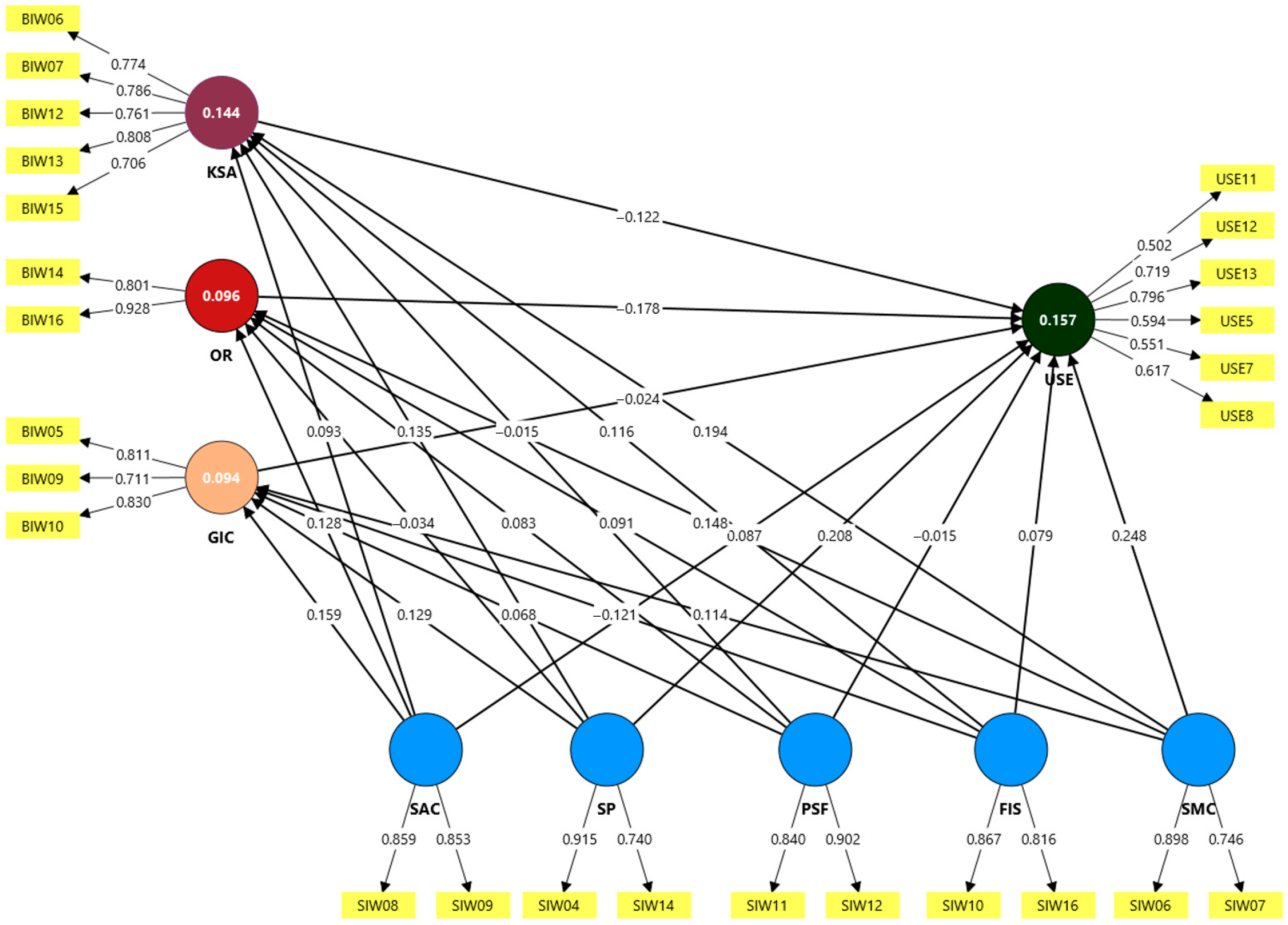
Table 11 and
Figure 2 show the structural relationship between the barriers and the use of industrial waste after the introduction of the strategies. The result revealed that introducing sustainable multidisciplinary collaboration (
β-value = 0.248;
p-value = 0.034) and sustainable practices (
β-value = 0.208;
p-value = 0.010) will have the highest significant impact on the use of industrial waste and further reduce the influence of the identified barriers. However, the relationship between the other three identified groups of strategies (i.e., financial and infrastructure support, policy and supportive framework, and standards, awareness, and capacity building) and the level of usage was not significant. However, they are worth exploring, as they had some impact on the barriers identified and, as such, might indirectly influence the level of usage.
Further assessment of the model’s fitness revealed SRMR of 0.081 and NFI of 0.648, indicating that the model was considered fit for adoption. Finally, the predictive accuracy of the overall model was assessed using the derived coefficient of determination (R
2). While many studies have advocated high R
2 values for acceptable predictive accuracy, particularly in pure science, Frost [
101] noted that a low R
2 does not imply an unfit or poor model. It was further stated that it is not uncommon to get low R
2 in social science studies, especially studies involving human perspectives. As such, Hair et al. [
91] suggested that acceptable R
2 depends on the field of application, and R
2 values as low as 0.1 have been considered satisfactory in some fields of research. However, R
2 of 0.26. 0.13. and 0.02 are deemed acceptable, moderate, and weak [
102]. The result revealed an R
2 of 0.157. This implies that the assessed barriers and introduction of the identified strategies will have a 16% impact on the current use of industrial waste for civil engineering projects in South Africa. Therefore, by addressing these barriers and adopting these strategies, the use of these industrial wastes is likely to increase.
5.5. Discussion and Implications of Findings
The study found that, despite growing awareness of diverse industrial waste, its practical application in the South African built environment, particularly in the delivery of civil engineering projects, remains limited. While recycled construction and demolition waste as aggregates for new construction, fly ash as a partial cement replacement, and foundry sand bricks, blocks, and road sub-base materials were the most used industrial waste, their use remains low. PLS-SEM revealed that this low application is due to the significant negative impact of two problem groups. These are (1) knowledge, skills, and awareness barriers, including a lack of education and training, sustainability awareness, stakeholder awareness, customer recognition, and limited research and development. (2) operational and regulatory barriers, particularly perceived complexities of industrial waste and regulatory and standards limitations.
These findings align with prior submissions on the issues hindering the successful use of waste-based materials in construction in the extant literature. Ayalp [
103] has earlier noted that a lack of research and development and technological innovation hampers the optimisation and wider use of waste-derived building materials. Moreover, studies show that professional training and skill development are essential for promoting the use of cutting-edge materials and environmentally friendly building techniques. Ongoing professional development improves practitioners’ technical proficiency and self-assurance in defining, creating, and using waste-based materials [
104]. Unfortunately, one of the biggest obstacles to sustainable material use in developing nations remains a lack of technical know-how and training [
105,
106], which aligns closely with the study’s top finding. Similarly, past studies have noted that the lack of specific guidance and practical national procedures for some recycled materials has been a crucial issue for the widespread use of industrial waste in the country, highlighting a need for standardized best practices [
107]. The lack of precise rules and guidelines is commonly mentioned as the primary institutional barrier that erodes market trust and reliable quality control [
108]. Shahid and Ali [
70] noted that many developing countries lack flexible frameworks for updating building codes as technology advances. Outdated international standards or a lack of localized technical requirements make it difficult for practitioners to use readily available industrial by-products.
To address these barriers, five groups of strategies were identified through EFA, viz, (1) standards, awareness, and capacity building, (2) sustainable practices, (3) policy and supportive framework, (4) financial and infrastructure support, and (5) sustainable multidisciplinary collaboration. However, introducing these strategies as a mediating variable to the barriers and application, PLS-SEM revealed that prioritizing sustainable practices (i.e., prioritize circular economy principles, and showcase successful pilot projects) as well as sustainable multidisciplinary collaboration (i.e., promote multidisciplinary cooperation and prioritize sustainable infrastructure development) are the most significant strategies that should be prioritised in the country for improved use of industrial waste and attainment of sustainable development and material circularity in the delivery of civil engineering projects. This finding aligns with past submissions, noting that by prioritizing pilot studies that showcase the potential of industrial wastes, the perceived risks can be alleviated among stakeholders and practitioners [
26,
27]. Moreover, these pilot studies can help generate locally relevant data to support the development of policy frameworks, standards, and specifications needed for scaling. They can also unlock funding, innovation, and social acceptance, while encouraging academic, public, and private collaboration [
109].
These findings imply that to improve knowledge and acceptance of industrial waste, it is necessary to promote the practicality and inherent benefits of industrial waste-based materials. This can be achieved through successful pilot projects and showcasing circular economy principles that serve as proof of concept to project stakeholders. By doing this, industry-wide adoption can be inspired, and the inherent advantages of using these waste-based materials can be showcased. In South Africa, initiatives such as the use of recycled aggregates in road pavements in Gauteng and the Western Cape, and coal bottom ash bricks in KwaZulu-Natal, have shown how effective providing working examples can be in encouraging broader acceptance [
110]. Similarly, enhancing knowledge and awareness is essential as this is a crucial barrier to the current level of application in the country. This can be achieved through increased education and training efforts to elevate industry understanding of the potential of industrial waste in civil engineering projects. By engaging stakeholders across the sector, the value of these waste-based materials can be recognized, thereby encouraging broader adoption.
Also, to ensure sustainable practices, simplifying regulatory processes and updating standards are crucial. By doing so, the complexities and perceived risks associated with industrial waste can be addressed, thus making it a more attractive option for project participants. The development of acceptable material qualities (such as compressive strength, durability, and leachate limitations), application processes, and testing procedures depends heavily on standards and protocols, such as those issued by the South African National Standards (SANS) and the International Organisation for Standardisation (ISO). This helps ensure that industrial waste is used consistently across project types and geographical areas [
111]. Because the performance will be consistent and verifiable, engineers and contractors can also confidently substitute recycled materials for conventional ones. Although there are some guidelines for recycled aggregates and additional cementitious materials in South Africa, a significant obstacle is the absence of widely accepted, current protocols [
112]. Therefore, creating standards in partnership with industry, academia, testing labs, and regulators will ensure that the procedures are workable and legally binding. These guidelines can then be incorporated into building codes, training curricula, and procurement regulations, creating a stable environment in which industrial waste is accepted as a standard building material.
Moreover, having supportive policies and infrastructure investments, such as incentives for using industrial waste, combined with investments in recycling and processing infrastructure, can significantly increase availability and reduce costs. By doing so, using waste-based materials can become more financially viable and logistically feasible to incorporate into projects. Small-scale demonstration projects, research and development, and the certification of new materials, all of which are frequently underfunded, can also benefit from financial incentives. Frameworks like the Carbon Tax Act of 2019 and Green Building Incentives implemented in municipalities such as eThekwini and the City of Cape Town in South Africa demonstrate the potential to incorporate financial mechanisms that reward circular construction approaches. However, these incentives are still in the early stages of development. Similar strategies, such as landfill fees, recycled content laws, and innovation incentives, have been used internationally to promote the use of industrial waste in construction [
113]. Evidently, financial incentives are essential to mainstreaming industrial waste in construction because they reduce market risk, reward early adopters, and shift the cost–benefit balance in favor of sustainability. Also, these supportive policies should promote sustainable practices within the South African construction industry with a view to driving progress toward material circularity. This can be achieved by encouraging and integrating recycling and reuse initiatives into standard practice to support a more sustainable construction environment.
Furthermore, it is essential to foster multidisciplinary collaboration within the South African built environment. Experts from academia, industry, government, and environmental organisations coming together can lead to innovative solutions, streamline processes, and create comprehensive standards. This multidisciplinary collaboration can also enable knowledge sharing and support the development of sustainable infrastructure tailored to community needs and delivered through material circularity. It is therefore essential to prioritize at the public and private levels the integration of industrial waste, as this will not only advance environmental objectives but also promote economic resilience through sustainable development practices.
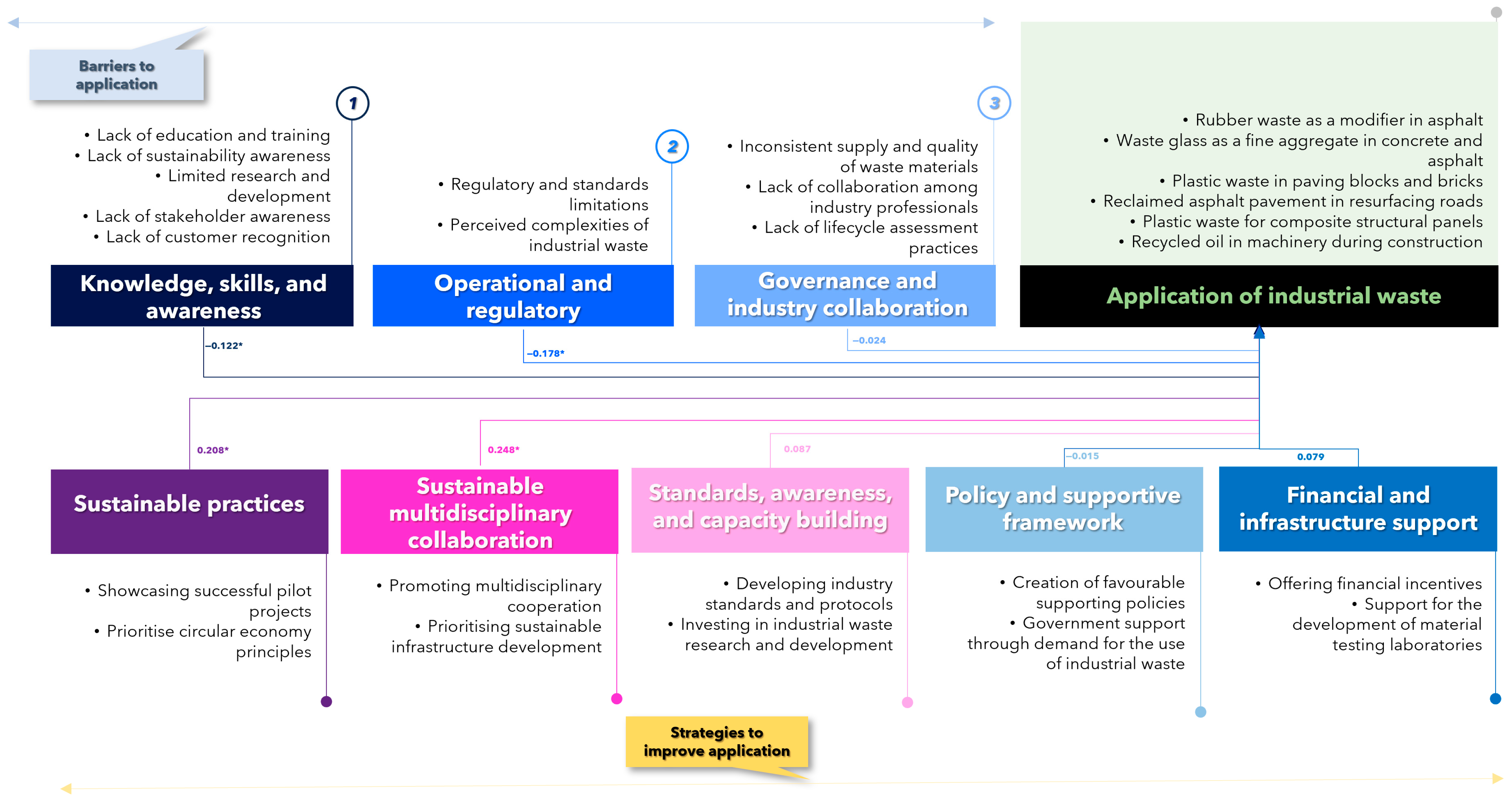
Figure 3 gives an overview of the developed model for the practical application of industrial waste in the South African built environment, particularly in the delivery of civil engineering projects.
6. Conclusions
The study, from the perspective of built environment professionals in South Africa, assessed the application of selected industrial waste in the delivery of civil engineering projects in the country. Based on diverse statistical analyses conducted, the study concludes that, although the increasing awareness of industrial waste’s potential, its practical application in the construction sector, particularly civil engineering projects, remains limited. While materials such as recycled construction waste, fly ash, and foundry sand are recognised, their use is still in its infancy. The reasons for this slow adoption are twofold, viz, knowledge and operational barriers. The knowledge barriers come from a lack of education and training, limited sustainability awareness, inadequate stakeholder engagement, and insufficient research and development. Many industry professionals, stakeholders, and end users are not fully informed about the benefits and methods for incorporating industrial waste into construction. This knowledge gap stifles innovation and acceptance of sustainable materials. Also, the perceptions of complexity in using industrial waste, along with restrictive regulations, deter its application. Current standards and regulatory frameworks fall short in adequately supporting the use of industrial waste, thereby creating obstacles for businesses and developers who might otherwise be willing to innovate.
The study further concluded that a comprehensive and strategic approach is needed to address these barriers. Prioritizing sustainable practices, such as demonstrating successful pilot projects and adopting circular economy principles, can serve as catalysts for industry-wide change. Moreover, fostering multidisciplinary collaboration among government, academia, industry, and environmental stakeholders can drive innovation, streamline standards, and develop tailored infrastructure that will support industrial waste integration. Practically, the study contributes to the use of industrial waste by highlighting the areas of application lagging and the issues driving low adoption rates, while providing solutions to improve adoption. By adopting the strategies proposed in this study, the South African construction industry can significantly increase its use of industrial waste. Doing this will subsequently promote environmental sustainability, contribute to a circular economy, and drive innovative, cost-effective construction practices. Theoretically, the findings offer valuable insights for future studies on the application of industrial waste in the delivery of built environment projects in developing countries, where such studies have not been explored. Despite these practical and theoretical contributions, the findings of this study are limited by geographical scope and the methodology adopted. While the sample size was deemed adequate for the data analysis adopted in the study, the findings may not be generalized to the entire country, as they were drawn from participants in a single province. Further studies in other provinces are therefore encouraged to compare findings. Also, a single method was used in this study. While the quantitative approach through a survey was deemed appropriate, the self-report nature of the questionnaire may limit the findings. This can include response bias, variability in interpretation, and limited insights. As such, future studies using other methods can be conducted to compare findings with those of this study.