
Article

Beyond Standards: Framework for Monitoring, Protection, and Conservation of Highly Vulnerable Cultural Heritage Sites in the Context of Anthropopressure and Climate Change

Faculty of Architecture, Cracow University of Technology, 31-155 Krakow, Poland
*
Author to whom correspondence should be addressed.
Sustainability 2026, 18(1), 409; https://doi.org/10.3390/su18010409 (registering DOI)
Submission received: 13 November 2025 / Revised: 23 December 2025 / Accepted: 25 December 2025 / Published: 1 January 2026

Abstract

The consequences of climate change and increasing anthropogenic pressure pose a growing threat to UNESCO World Heritage sites. Proper identification of environmental factors and their effective mitigation are crucial for preserving historic assets without unnecessary intervening in their material fabric. This article presents excerpts from a study conducted to develop the Master Plan for Preservation for the oldest part of the former Nazi extermination camp Auschwitz II—Birkenau, including non-standard, minimally invasive testing, and the successful implementation of the research findings. Drawing on experience from a multi-year, interdisciplinary research project carried out in close collaboration with the conservation team of the Auschwitz-Birkenau Museum and Memorial, as well as other research projects and surveys conducted in other UNESCO World Heritage sites, the authors critically engage with current standards for the monitoring, protection, and conservation of built cultural heritage. The role of comprehensive identification of different threats—including hydrogeological ones, exacerbated by anthropogenic pressure and climate change—points to the need for a broader approach, especially for the most valuable built-heritage sites that are either increasingly passive recipients of threats generated outside the protected area, or are vulnerable to the extent of standard methodologies for the conservation of cultural sites being no longer applicable.

1. Introduction

1.1. Built Heritage, Anthropopressure and Climate Change

Built cultural heritage constitutes a foundational element of tangible heritage and a medium for the transmission of intangible values. The notion of its resilience is frequently derived from its survival to the present. However, intensifying drivers—particularly climate change and anthropogenic stressors—are increasing the vulnerability of historic buildings and urban ensembles. Despite broad recognition of this challenge, there is a paucity of publications advancing operational frameworks for the monitoring, protection, and conservation of built heritage under conditions of cumulative pressures.
Early studies on climate-change impacts to built cultural heritage tended to narrow their scope to the triad warmer, wetter, windier [1], or to standard hazards such as flooding, coastal erosion, extreme weather, higher temperatures, limited water availability, and habitat change [2,3]. Echoing the Sendai Framework for Disaster Risk Reduction (2015–2030) [4], leading UNESCO documents similarly prioritise large-scale, water-related risks—baseline water stress, drought risk, river flood risk, and coastal flood risk [5]. These widely distributed hazards are monitored and researched globally by UNESCO and ICOMOS [6]. Guidance is gradually broadening to address persistent, dynamic, and complex threats generated or amplified both within and beyond protected areas. Nevertheless, the comprehensive, systematic application of holistic risk assessment to support adaptive, sustainable development remains limited, as noted by Nixon [7] and others [8,9]. Although progress has followed systematic reviews such as Fatorić and Seekamp [10], few studies highlight the dynamic impacts of both anthropopressure and climate change on built cultural heritage [11,12]. Notable among the exceptions is guidance on assessing hydrogeological risks to historic buildings and complexes, developed by Bogdanowska and Czop for the Polish National Institute of Cultural Heritage (NID) [13].
Research on anthropopressure at cultural heritage sites has typically focused on mass tourism [14] and on safeguarding indoor microclimates and displayed artefacts under high visitor numbers [15]. It corresponds with norms and standards formulated by the Technical Committee on the Conservation of Cultural Heritage, including the most recent regulations [16]. CEN/TC 346 and the CEN TC activity in the context of cultural heritage have been thoroughly analysed by Fassina [17,18].
Unless explicitly enumerated in legislation, norms and standards are not legally binding. Nonetheless, the harmonisation of standards within the European Union—together with CEN guidance—plays a significant role in aligning approaches to the monitoring, protection, and conservation of built cultural heritage. However, their current scope does not cover all issues, particularly those arising from anthropopressure and climate change. In this context, frameworks and recommendations become especially important as complements to mandatory standards. In the research presented below, a key integrative element linking anthropopressure and climate change was the assessment of the condition of heritage buildings and areas in relation to processes occurring in their surroundings, as well as to changes generated by interventions within the assets themselves. Studies of numerous historic sites located within UNESCO World Heritage Sites have further enabled us to distinguish two types of anthropopressure relevant to the monitoring, protection, and conservation of built cultural heritage: internal (centrifugal) and external (centripetal) anthropopressure [11,12].
Internal (centrifugal) anthropopressure is generated within the building, site, or area—for example, alterations to the structure, adaptation to new functions and regulatory requirements, or changes to indoor climatic conditions—and has direct impacts on the asset in question, potential direct impacts on adjacent buildings and areas, and, in cases of large-scale transformations (such as foundation deepening or enclosing formerly open courtyards), potential indirect impacts on buildings and areas at indeterminate distances; for this case, it is crucial to identify possible negative impacts—and their spatial extent—at the preparation stage of conservation works, especially architectural and construction interventions, including protective measures.
External (centripetal) anthropopressure comprises negative influences directed inward toward a building, site, or area but generated outside it (e.g., nearby construction, traffic-induced vibrations, groundwater drawdown, infrastructure works, or intensification of the urban heat island), where priority actions include locating the source of the problem in order to eliminate it or mitigate its adverse effects. These two processes can occur independently, amplifying the destructive forces acting on heritage assets. Monitoring anthropopressure, as understood here, is particularly important for the effective protection of UNESCO World Heritage sites and their buffer zones. At present, however, such monitoring is largely limited to aesthetic or landscape considerations, or simply to assessing the degree of transformation of a given area.

1.2. Anthropopressure, Climate Change and Hydrogeological Risk

As Bogdanowska and Czop point out, numerous examples from Poland indicate the occurrence of hydrogeological risks to historic buildings and sites located within historic urban areas [13]. As the example of Auschwitz-Birkenau presented below shows, correctly identifying the type and source of a hazard in order to eliminate or mitigate its effects is crucial to the effective protection of the most valuable—and often most vulnerable—World Heritage cultural sites. In the absence of appropriate norms and standards regarding these issues, interdisciplinary research that takes into account both the tangible and intangible dimensions of cultural heritage, together with the use of decision-support methods, is essential.
Firstly, the article first presents research conducted on the extremely vulnerable assets in sector B-I of the former Auschwitz II-Birkenau concentration and extermination camp, including non-standard and non-normative non-destructive and minimally destructive investigations conducted within the Auschwitz-Birkenau Master Plan for Preservation programme (MPP). Secondly—drawing on conclusions from the successful implementation of the above research, in which a broad, interdisciplinary approach, careful identification of diverse constraints, hazards, and destructive processes, and the development of tailored solutions that consider both tangible and intangible components played a key role—it discusses possible directions for shaping standards for monitoring, protection, and conservation of World Heritage sites. Finally, based on the results of both the above studies and other research carried out in heritage assets and in areas inscribed on the UNESCO World Heritage List, we propose an approach and a framework grounded in the Net Zero Vulnerability concept, aimed at integrating sustainable built cultural protection and climate change adaptation in the context of growing anthropopressure.

1.3. Beyond Standards: Auschwitz-Birkenau Master Plan for Preservation

Auschwitz-Birkenau Master Plan for Preservation is a long-term, multi-faceted programme funded by the Auschwitz-Birkenau Foundation to safeguard the historic remains of the former camp and its vast collection of artefacts [19]. It uses an interdisciplinary approach, focusing on urgent needs among which is stabilising the brick barracks and wooden structures at Birkenau.
Once the general aims and framework for the MPP were established, eight research institutions—Cracow University of Technology, the Jan Matejko Academy of Fine Arts in Kraków, AGH University of Science and Technology in Kraków, Gdańsk University of Technology, Łódź University of Technology, Adam Mickiewicz University in Poznań, and the Research and Education Centre for Historic Preservation in Nysa—joined forces in an interdisciplinary research project, the main phase of which was completed in 2014 [20,21,22,23,24,25,26,27]. The aim was to test whether, and to what extent, it was possible to fulfil the conservation objectives adopted in the MPP: minimal interference in the surviving fabric; preserving it in as intact a form as possible for decades to come; and, at the same time, making the most representative structures accessible to visitors—something that their technical condition had previously precluded [28].
Between 2019 and 2024, unprecedented conservation work was undertaken and completed, which made it possible to preserve authenticity and, for the first time, make accessible to visitors not only the oldest barracks of the so-called women’s camp but also the previously inaccessible kitchen and latrine buildings, providing an even more complete picture of the appalling conditions in the camp [28,29].
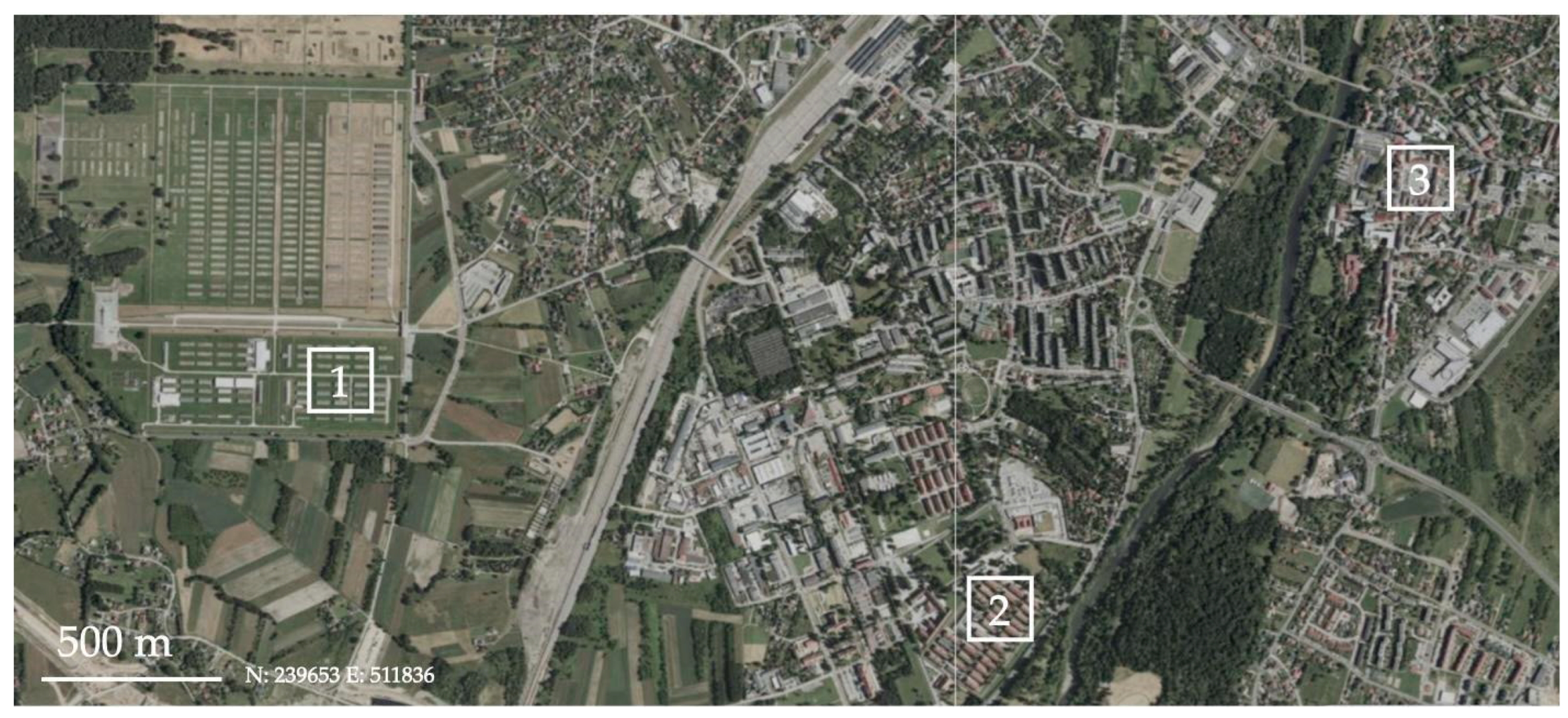
While Auschwitz I—the oldest part of the camp hosting the core of the Museum’s exposition—consisted of relatively solid brick barracks, the oldest part of Auschwitz II-Birkenau, built in the autumn and winter of 1941/1942 by Auschwitz prisoners and Soviet prisoners of war using mostly materials sourced from the demolition of nearby villages, was never intended to last. Most Birkenau barracks and crematoria survive today only as traces of their—often shallow—foundations. Those that were not dismantled, blown up, or set on fire before the arrival of the Soviet Army on 27 January 1945 deteriorated over the decades (Figure 1).
It was not until the 1990s when the questions about the future of Auschwitz-Birkenau began to be asked with growing concern [30]. The international debate preceding the development of the Master Plan for Preservation (hereinafter, MPP), launched in 2009 in cooperation between the Auschwitz-Birkenau State Museum and the Auschwitz-Birkenau Foundation, stressed the need to provide effective protection of its remains.
What is characteristic of Auschwitz-Birkenau, is the enormous scale, diversity, and exceptional meaning of the site. In many aspects, it defies the very concept of built heritage. As the surveys and research presented in this paper show, it often makes the standards, guidelines, and regulations typical for monitoring, and the protection and conservation of monuments, inefficient. As various authors, from Banaś-Maciaszczyk and Pióro [23] (p. 20) to Długosz [31] (p. 74), among others, have pointed out, in the case of the former KL Auschwitz-Birkenau, protection extends not only to material and architectural elements—blocks, barracks, several kilometres of barbed-wire fencing, the “Arbeit macht frei” gate at Auschwitz, and the so-called “Gate of Death” at Birkenau, etc.—but also to the open waste areas surrounding the Memorial, as they are particular proof of the scale of the genocide and, according to eyewitness accounts, the places where human ashes were scattered. While presenting the case study of the Oświęcim S1 ring-road development, Długosz [31] emphasised how crucial it is to fine-tune the provisions regarding the protection of the surroundings of World Heritage sites [32]. In Poland, although both the 1972 Paris UNESCO Convention [33,34] and the Operational Guidelines for its implementation [35] define the principles of protecting World Heritage sites, the protection of buffer zones has not been incorporated into the provisions of other critical national laws, among which are the Act on Heritage Protection [36], the Act on Spatial Planning and Management [37], the Construction Law [38], and flood-protection plans. As Nixon [7] and later, Crowley et al. [9] emphasise, cultural heritage value and vulnerability are largely missing from conventional risk assessment.
In the case of Auschwitz-Birkenau, the value is impossible to assess, and its original vulnerability is increased by external factors. Here, anthropopressure refers both to the urban development of the city of Oświęcim—which has already consumed the space around Auschwitz I (Figure 1)—and to the presence of nearly two million visitors each year (1.83 million in 2024) [29] (p. 26). Urbanisation and infrastructure development, combined with changes in hydrogeological conditions detected during the surveys and the passage of time, have brought these sensitive structures, which bear witness to a terrible legacy, to the brink of structural collapse [20]. Exposed for decades not only to the atmospheric conditions but also abovementioned negative factors as well as those resulting from the very circumstances of their erection, they required protective measures that went beyond the state of the art as well as any known case study in the field of conservation and cultural heritage [28]. At the same time, as pointed out by authors in previous publications, the development of appropriate methods for the conservation, protection, and reinforcement of the cubature objects was only possible by taking into account both tangible and intangible factors and a wide, not necessarily technical, research perspective [26] (p. 190).

2. Materials and Methods

The core scope of the specialist study conducted in the former KL Auschwitz II-Birkenau comprised a description and assessment of the condition of the existing structures, together with a classification of damages and an evaluation of their causes. The analysis of test results presented in the partial reports for specific structures within the BI sector of the camp, the technical inspections carried out on the buildings, and the structural–strength calculations for the majority of the structural elements covered by the study were used to develop a global programme of safeguarding works of a construction-structural nature. In the final report of the research project conducted by the Cracow University of Technology (hereinafter referred to as CUT), guidelines with recommendations for strengthening and safeguarding designs were presented both descriptively and in the form of drawing documentation [20]. The study also identified probable hazards to the fabric of the structures that may arise during safeguarding and conservation works. The recommended safeguarding methods were presented in variants. The final conclusions set out arguments confirming the appropriateness of applying the recommended methods of strengthening and safeguarding to the structures covered by the research project conducted by the CUT.
The overall research programme encompassed statistical results of the tests carried out on masonry, concrete and timber elements, as well as on mortars. The laboratory investigations, performed separately for each structure and described in detail in the partial reports, also included assessment of moisture content and salt contamination of the building walls (PN-EN 1996 [39], which, after the completion of the investigations, was supplemented in the field relating to historic structures by PN-EN 16455 [40]). Based on the results presented in the partial reports, computational analyses of the load-bearing capacity of the existing structural elements were performed using Autodesk Robot Structural Analysis (RSA 2013) [20]. The final report of the CUT research project summarised, in tabular form, the final results for the principal load-bearing elements, such as the timber roof truss, external enclosing walls, and foundations. The computational models included in the partial reports, by virtue of their material assumptions and static schemes, can serve as a basis for further analyses of the building structure related to recorded damage or deformations at the building- and execution-design stages.
For each structure, the CUT team prepared an individual report of the investigations and of the structural–strength analyses of the existing construction elements. Each structure under study was assessed with respect to the safety of its load-bearing system (PN-EN 1991, PN-EN 1992, PN-EN 1995, PN-EN 1996, PN-EN 1997 [41,42,43,44,45,46]); in addition, models of the load-bearing systems were developed to enable variant analyses at the design stage. The team proposed carrying out safeguarding works using methods developed individually and tailored to the specific conservation requirements of the camp structures.

2.1. Sampling and Laboratory Methods (Cores, Tests)

The initial scope and methodology of the investigations were based on the applicable national legal regulations, standards, and recommendations in force at the time. However, the nature and condition of the structures, as well as the guidelines of the Auschwitz-Birkenau State Museum, necessitated modifications to these assumptions, particularly with regard to sample sizes specified in the standard for testing masonry walls (PN-EN 1015 [47]).
  • Foundation cores were taken from pre-prepared test pits using a wet diamond drill (75 mm diameter), while cores from external walls were taken using a dry diamond drill with diameters of 100 mm and 50 mm (PN-EN 1015).
  • Given the nature of the structures, sampling was kept to an absolute minimum, targeted at the least visually exposed locations and carried out so as to avoid any damage to drawings or inscriptions.
  • Core diameters were intentionally smaller than the standard 150 mm recommended in normative testing methods (PN-EN 1015) in order to limit the impact on the historic fabric.
The few samples designated for destructive strength testing were prepared accordingly and, after testing, the remaining material was used for additional laboratory analyses, including moisture content and salt (salinity) determinations.
At present, sampling procedures for historic structures, including requirements concerning sample size, are standardised by PN-EN 16682 [48], which was introduced after the completion of the investigations described here.

2.2. Wall Deformations, Diagnostics, and Stability Assessment Methods

  • Extensive wall deformations in multiple directions were documented, alongside widespread cracking, fissuring, and spalling of brick masonry.
  • To optimise repair strategies, cracks were classified by aperture (dilation), with targeted measures assigned to each class.
  • Tests indicated high homogeneity in historic mortars but large variance in the compressive strength of historic bricks, and consequently in masonry core strength. The constrained sampling strategy (by necessity) also contributed to scatter in measured values.
  • Overall masonry strength was below standard reference values, consistent with initial assessments of long-term environmental exposure.
Per code guidance, wall straightening is required where vertical out-of-plumb exceeds 20 mm (PN-EN 1996, PN-EN 771 [49]). Measured deviations reached 100 mm in barracks walls and up to 373 mm in brick chimneys—indicative, in many cases, of a high probability of loss of stability.

2.3. Timber Roof Trusses: Condition Assessment and Reinforcement Trials

  • Normative sampling for destructive laboratory tests of timber (PN-EN 1995 [45]) was not feasible. Instead, a pioneering programme of drilling-resistance testing (RESI) was undertaken (IML-RESI, F series; IML Instrumenta Mechanik Labor GmbH, Wiesloch, Germany), combined with assessment of biological surface degradation, to inform assignment of timber “classes” for structural–strength analysis.
  • The requirements of PN-EN 1995-1-1 [45], PN-EN 338 [50], and PN-EN 1912 [51] could not be unambiguously applied to the in situ timber. A substantial proportion of members did not meet basic code criteria.
  • The only defensible approach was to correlate multiple characteristics from different non-destructive and minor-destructive tests to derive practicable design values.
The programme of investigations—including the determination of the mechanical and physical properties of materials and of the load-bearing elements of residential barracks and other structures—generated the input data for computational analyses defining safety levels and serviceability of the buildings studied.

2.4. Conservation and Safeguarding Methods

The set of special methods devised for the conservation and safeguarding needs of the Auschwitz-Birkenau Museum and Memorial includes, among others:
  • Principles, developed through research, for individual load-bearing criteria of timber roof-truss elements and for their strengthening using methods that do not alter their appearance;
  • Investigations recommended for implementation to verify in practice the technology for dealing with deformed and out-of-plumb gable and longitudinal walls, together with an execution manual for the practical implementation of such procedures;
  • Methods for strengthening the subsoil and the foundations of the buildings based on practices proven in the field but not covered in the literature, referred to as reinforced compaction grouting.
Against the backdrop of original construction defects and seven decades of accumulated damage, it was necessary to develop individually tailored methods of strengthening, conservation, and safeguarding that preserve the original structure and fittings. The most challenging tasks included:
  • Restoring the original geometry and characteristics of deformed and cracked external walls while ensuring visitor safety and preserving their original structure;
  • Ensuring the required safety and serviceability of roof load-bearing systems and coverings;
  • Protecting fittings such as window and door joinery, chimneys, the rudimentary heating system, internal partitions, and prisoners’ bunks;
  • Removing secondary safeguarding elements that have, in many cases, exacerbated damage to the original fabric;
  • Stabilising the foundations of residential barracks; protecting foundations and floors against frost heave; and protecting masonry and fittings (partition walls) against capillary rising damp and moisture generated by plant growth and micro-organisms.
Hydrogeological changes are significant for the durability of any building material, from foundation concrete through brick to wood. As part of the study, seven test points were established at each of the 25 structures, yielding a total of 175 local investigations. In 2024, the Museum, together with the Foundation, carried out site drainage works [29] (p. 68) in accordance with the research team’s recommendations and guidelines.
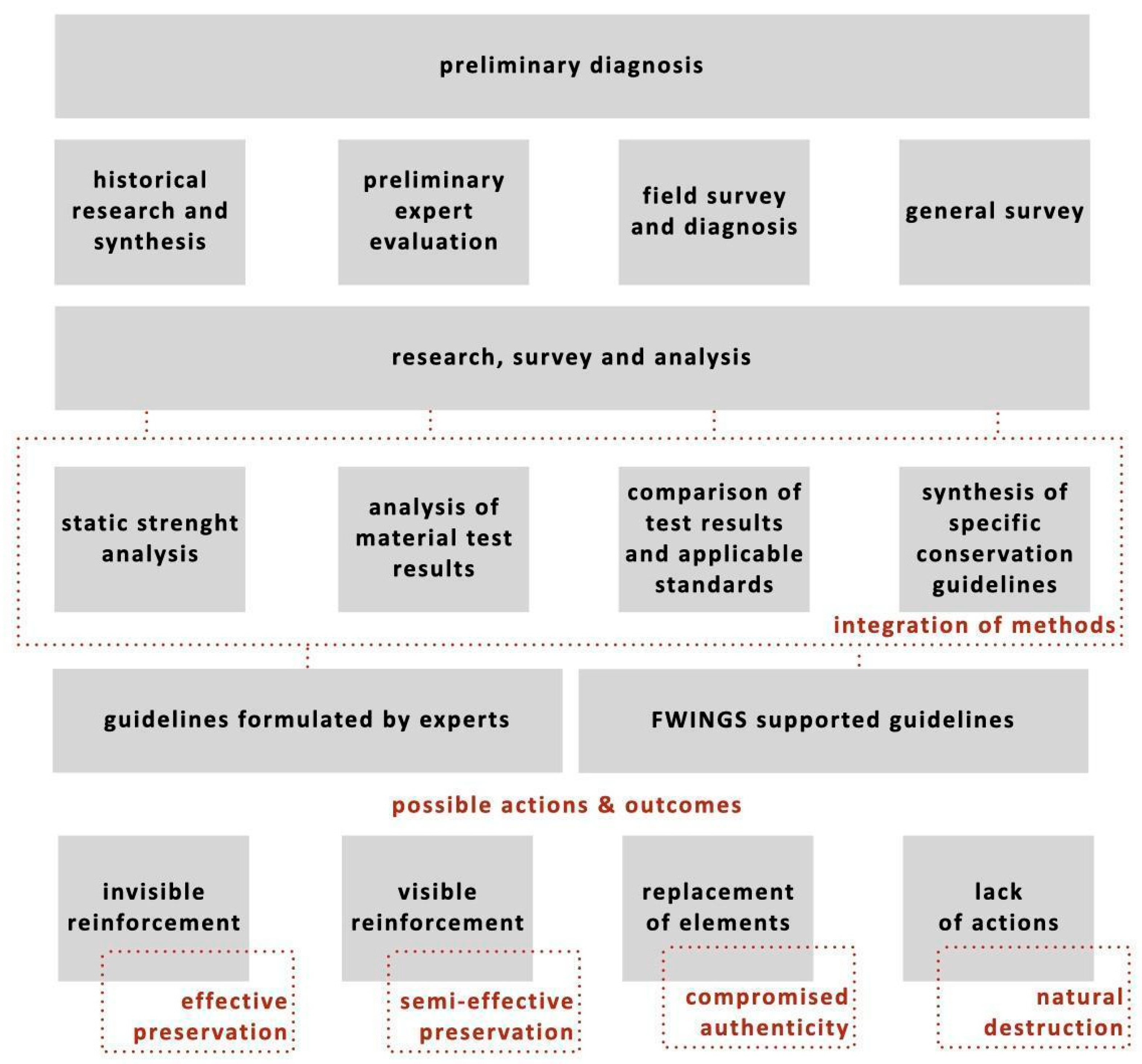
The general framework for this phase of the study is presented in Figure 2.

3. Results

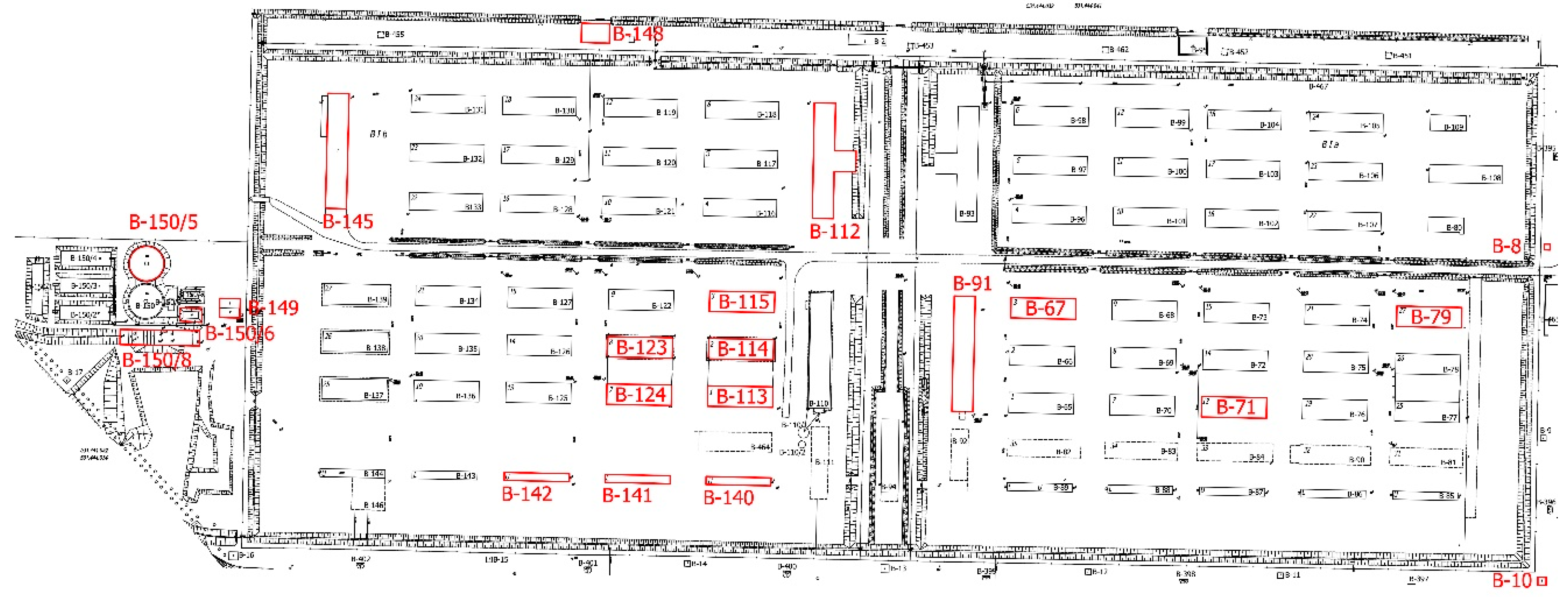
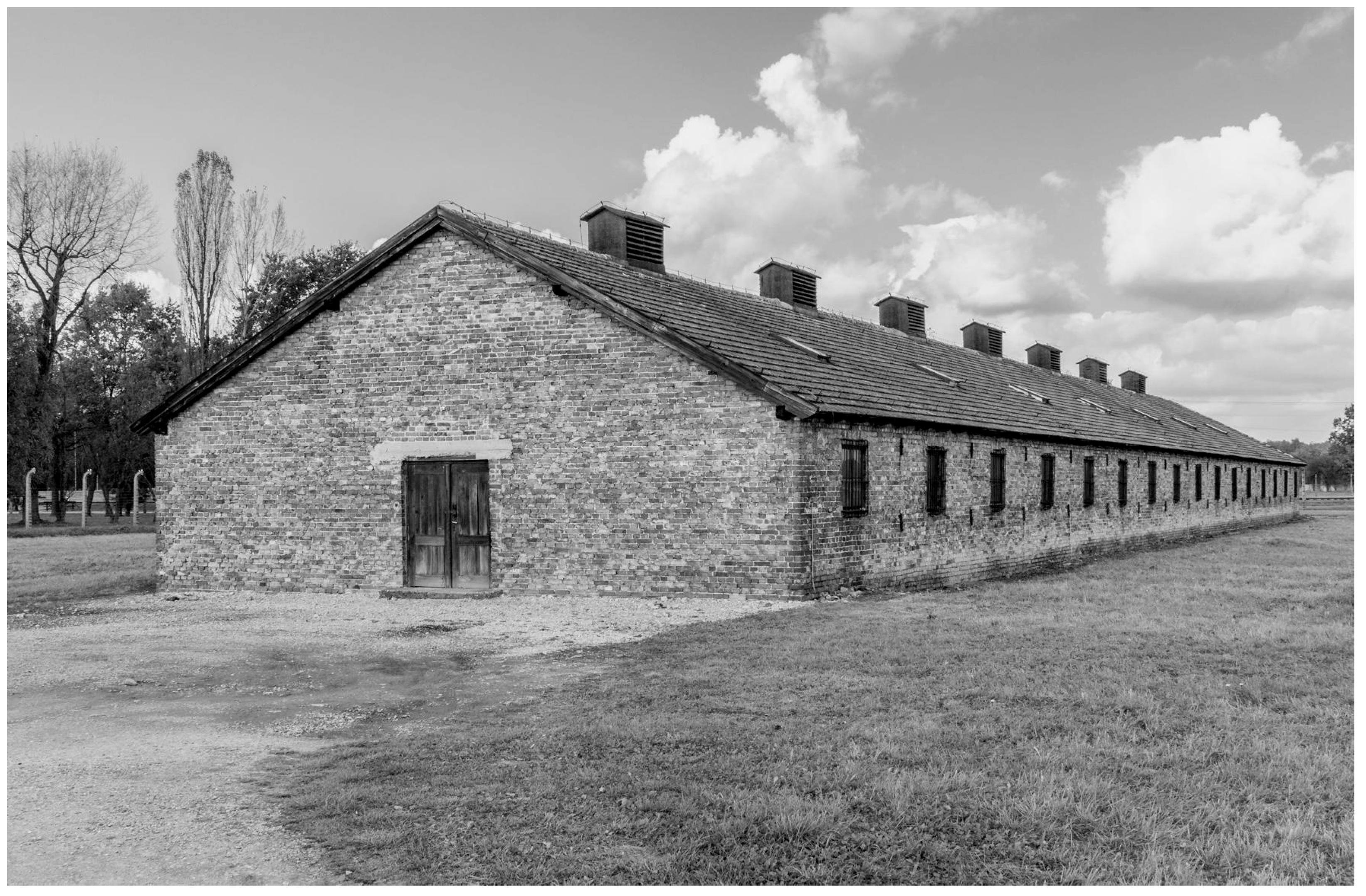
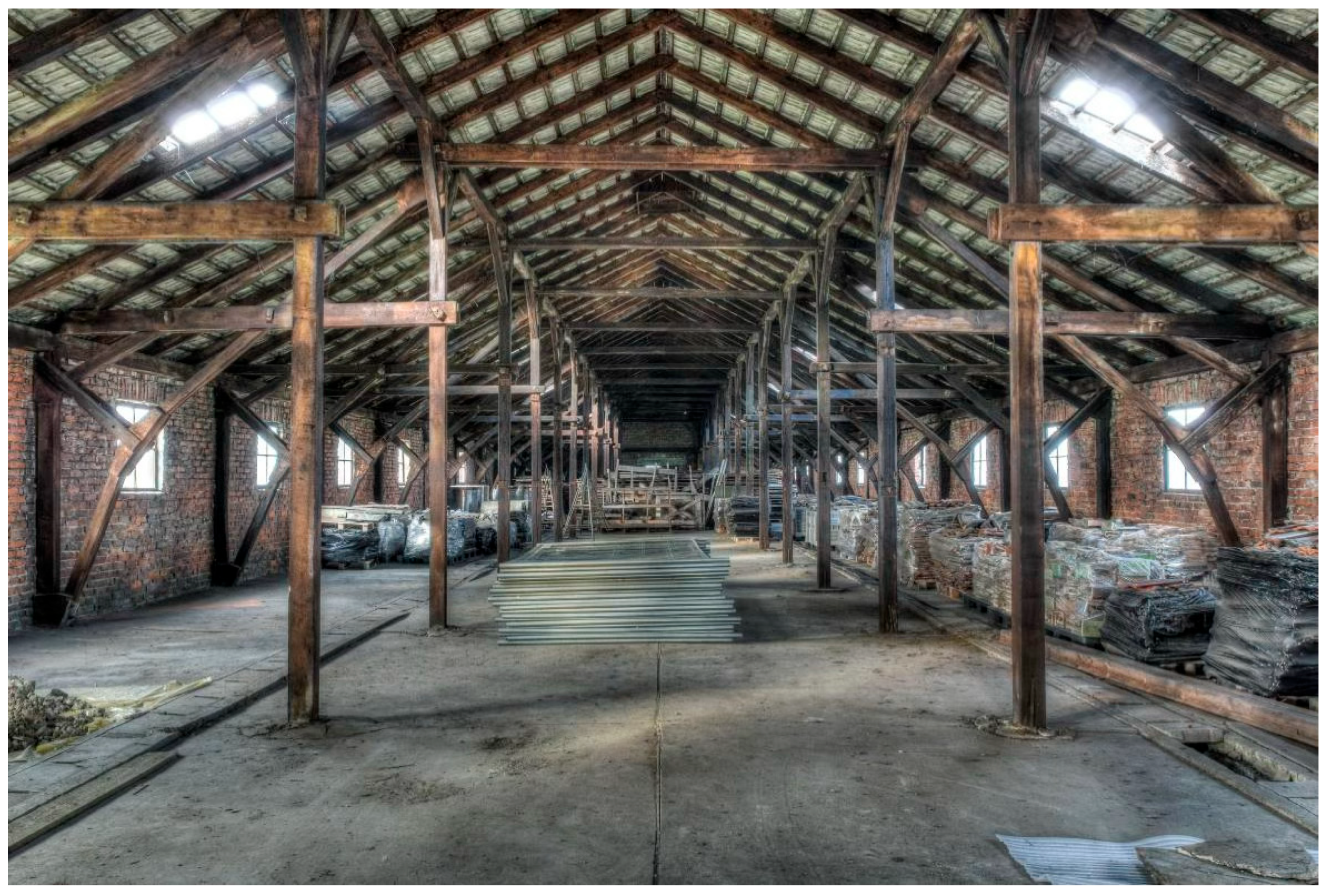
The three structures presented below provide a representative illustration of the issues outlined above; in particular, tailored solutions for strengthening and safeguarding the structures as well as eliminating hydrogeological risks. The first is the barrack with inventory number B-145, known as the Effektenkammer, which served as a storehouse for clothing and property plundered from the camp prisoners; the second is the camp kitchen (inventory number B-91); and the third is the bathhouse block (inventory number B-112). The location of these and other structures covered by the study is shown in Figure 3.

3.1. Auschwitz II-Birkenau Barrack (B-145)

3.1.1. Description

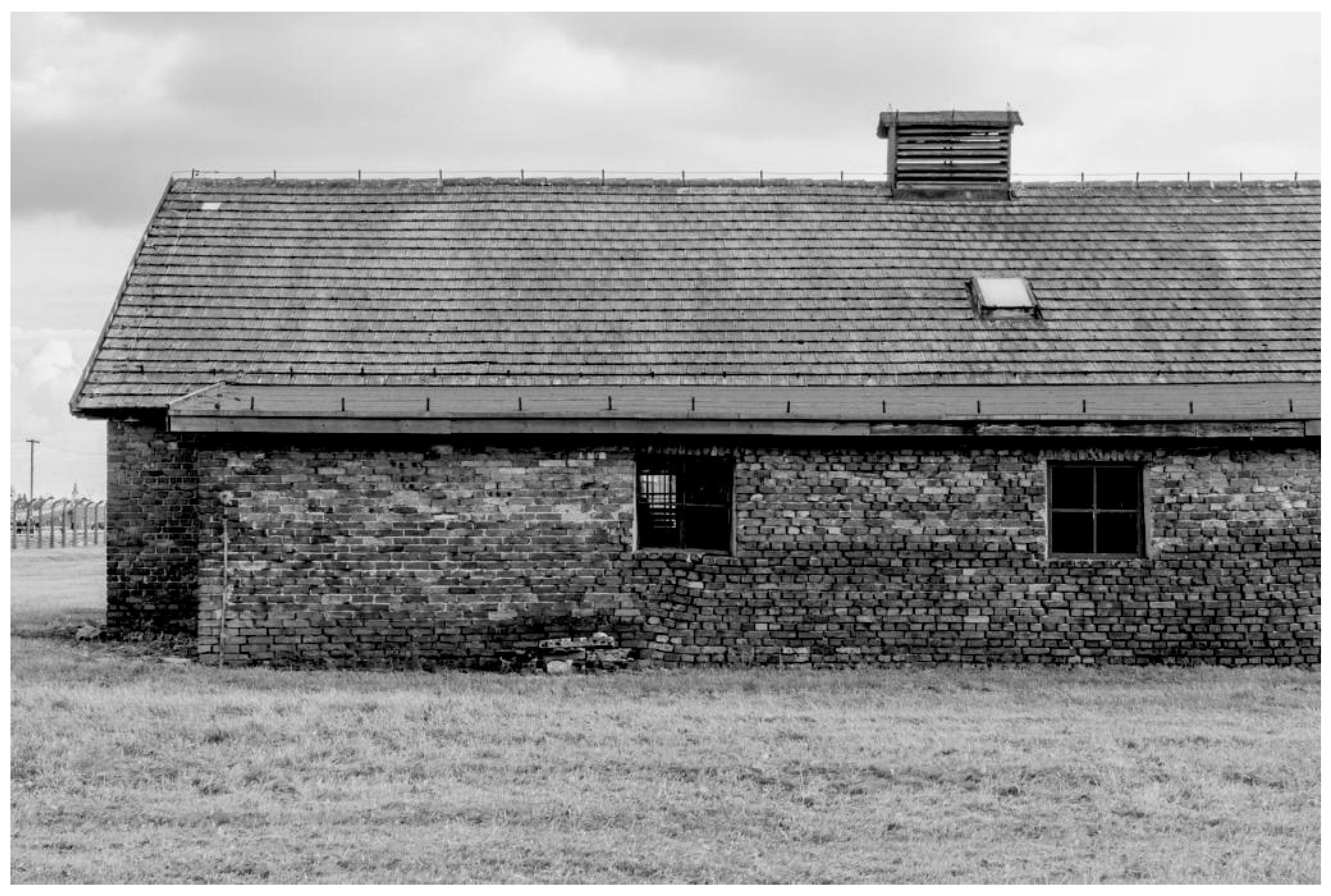
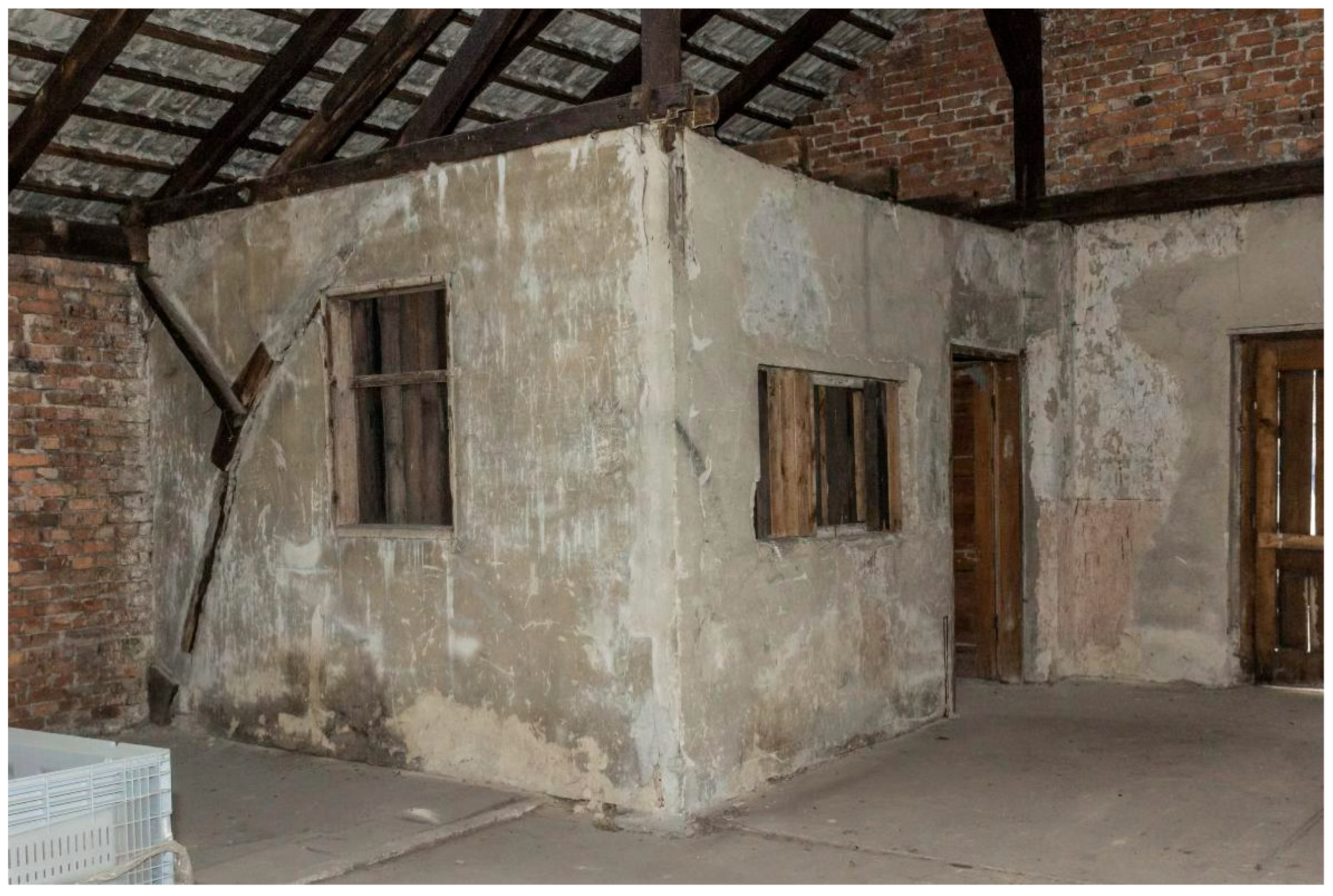
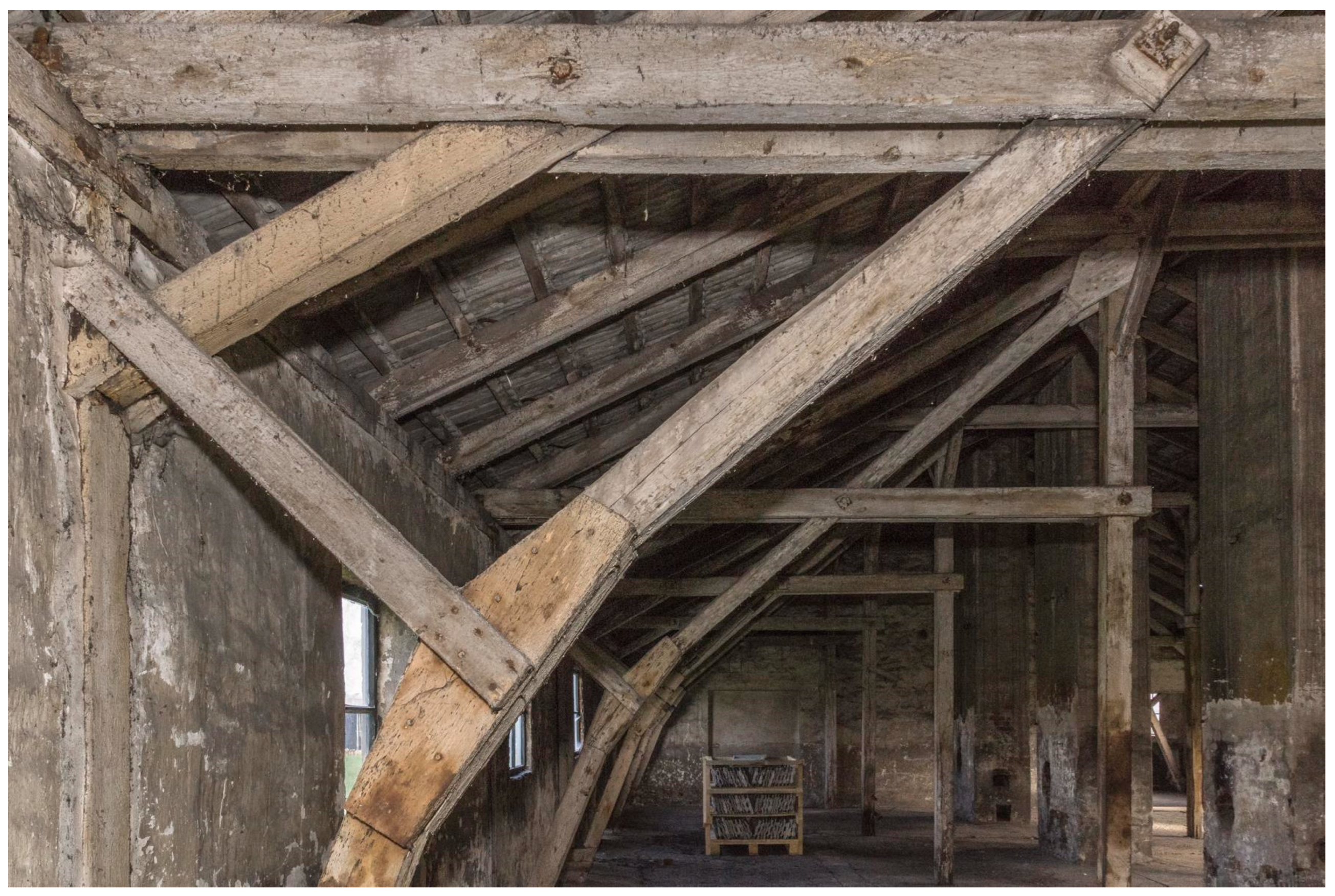
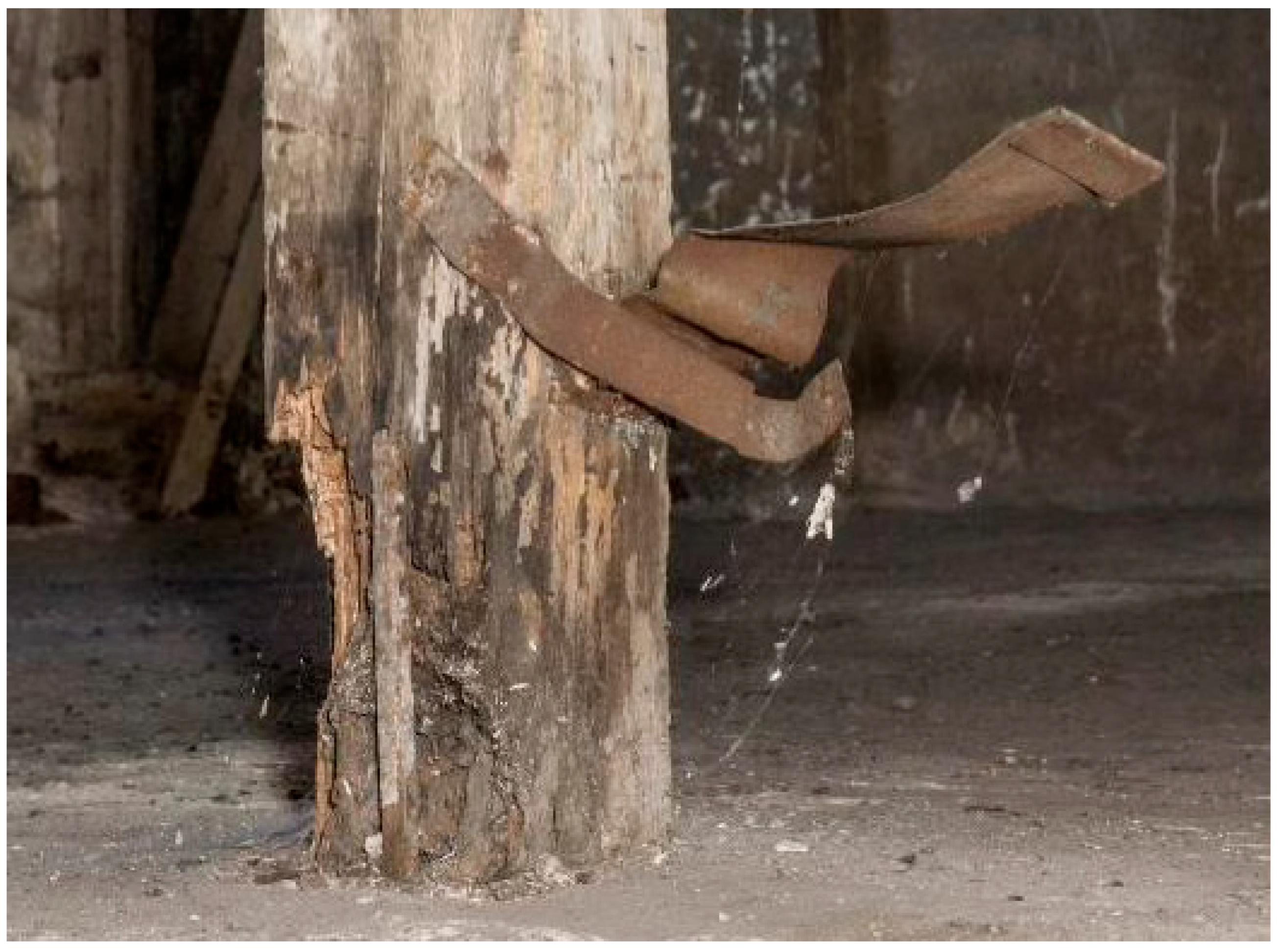
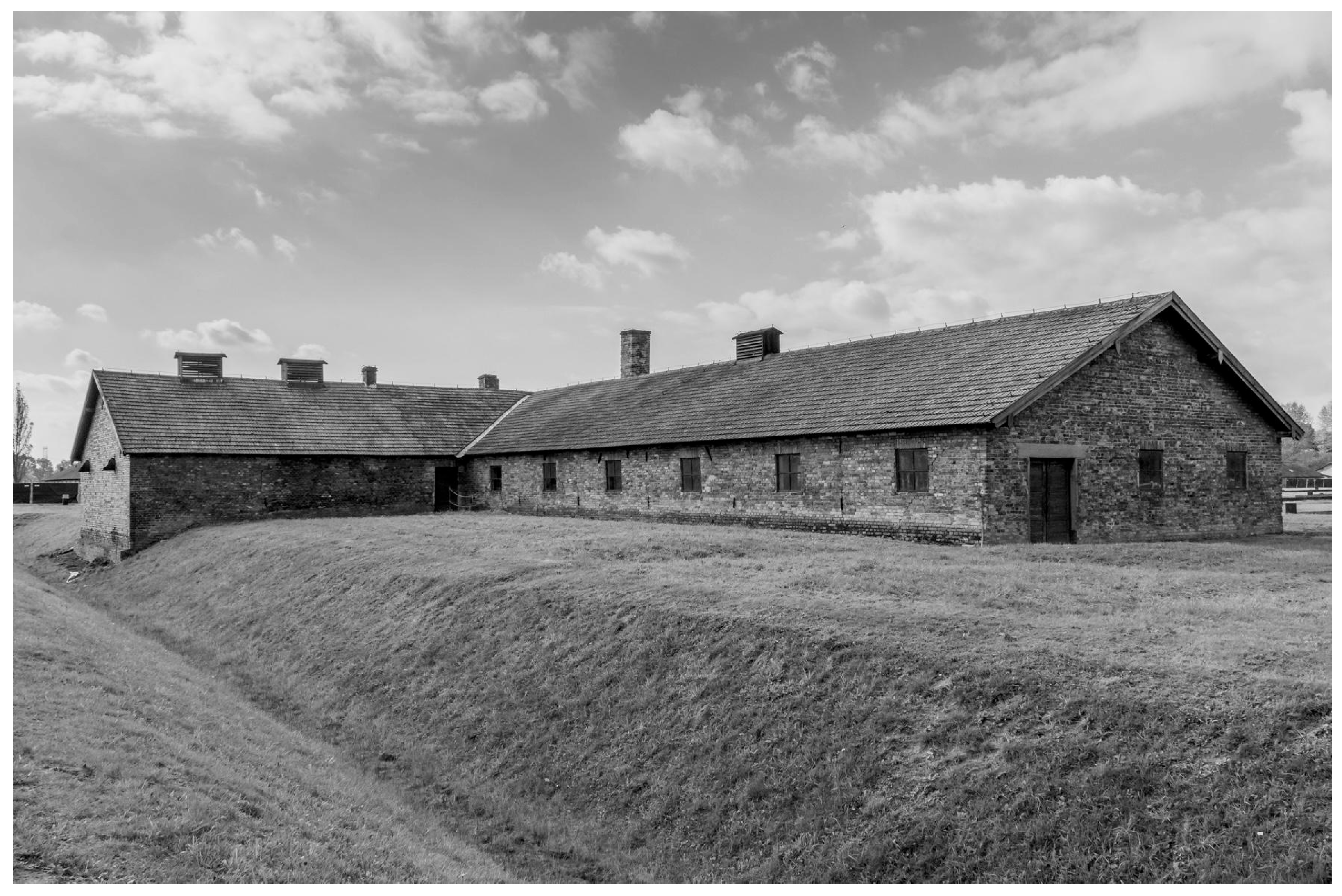
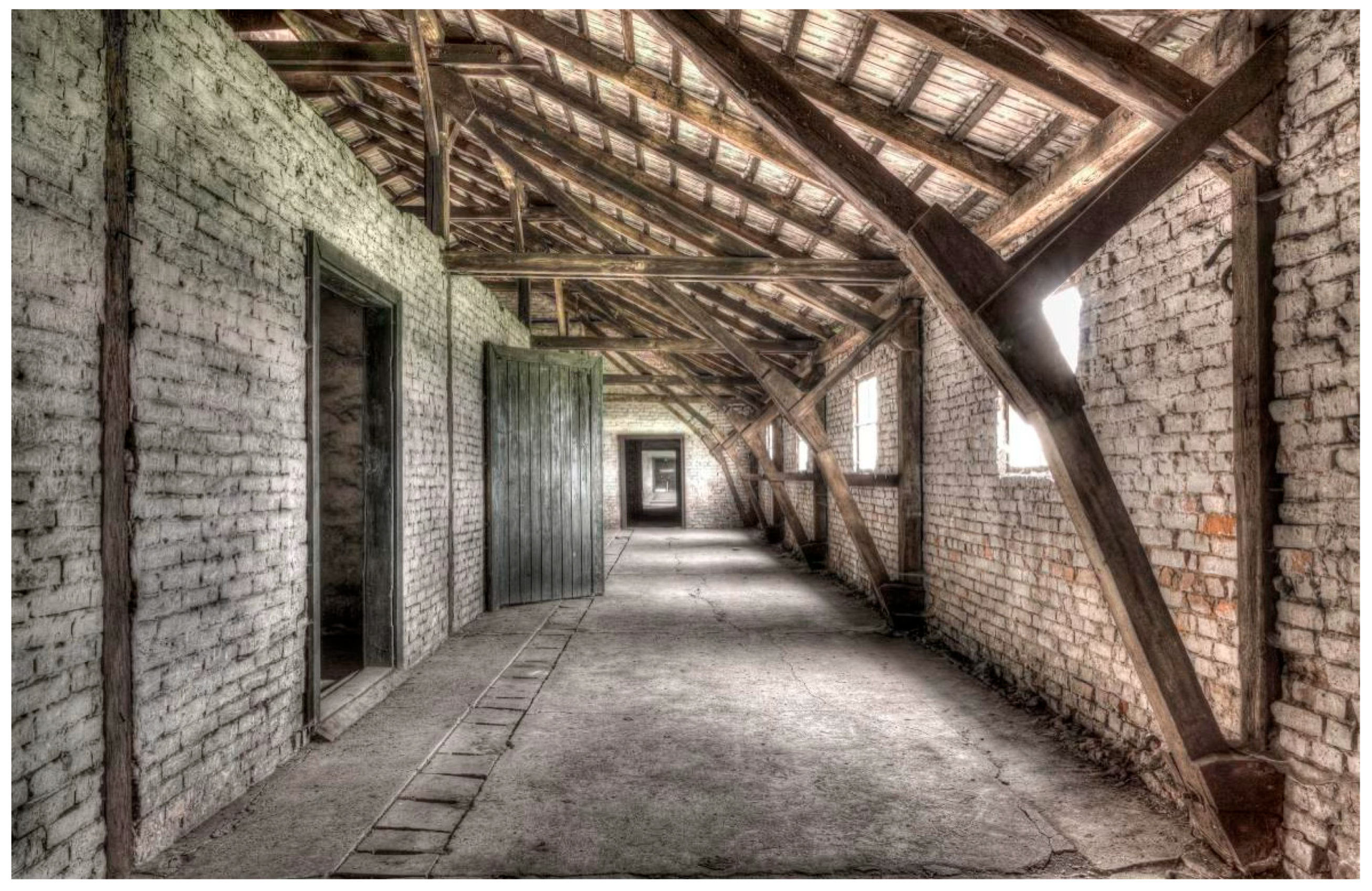
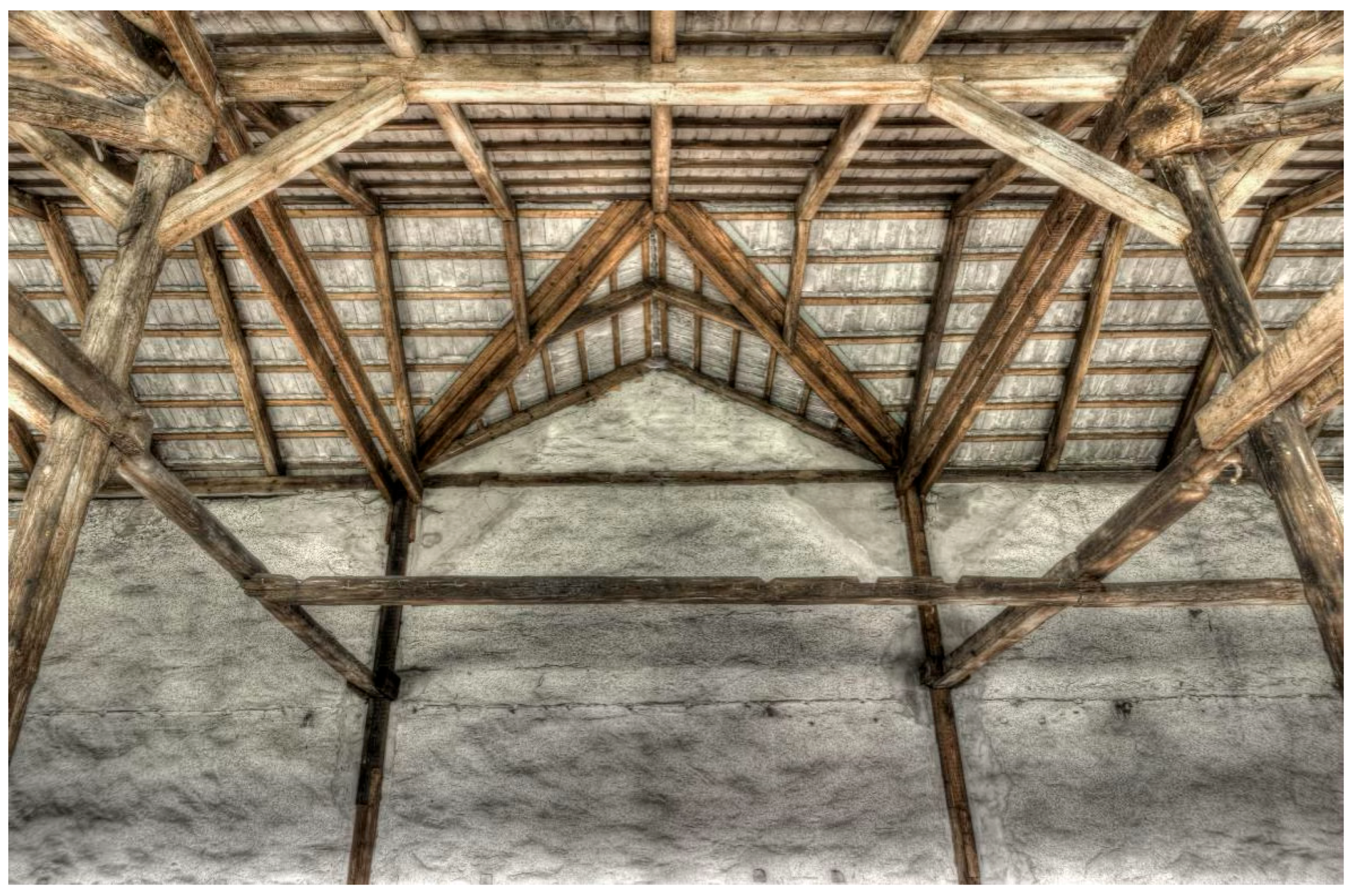
The B-145 depository barrack (Figure 4, Figure 5, Figure 6, Figure 7 and Figure 8) was built on a plan of two connected rectangles, with external dimensions of approximately 11.7 m × 64.3 m, plus an annex measuring 3.4 m × 22.70 m. In the gable and longitudinal walls, there are a total of 35 window openings and three door openings. The external enclosing walls were constructed of solid brick, 12 cm and approximately 25 cm thick, while the 25 cm-thick gable walls were braced with pilasters measuring about 50 × 37.5 cm up to the level of the wall plate. The barrack has a timber purlin-and-collar roof truss with two rows of posts and struts, with four posts in each structural axis. The truss arrangement divides the interior into three aisles. The timber frame posts are anchored to the external walls by steel anchors with bearing plates. The building is covered by a gable roof with interlocking cement tiles laid on new or re-laid timber battens. In barrack B-145, on the southern side, there are two symmetrically partitioned rooms. On the north-western side, a low annex adjoins the barrack; its roof structure is a mono-pitch (lean-to) roof covered with bituminous felt on close boarding.

3.1.2. Challenges

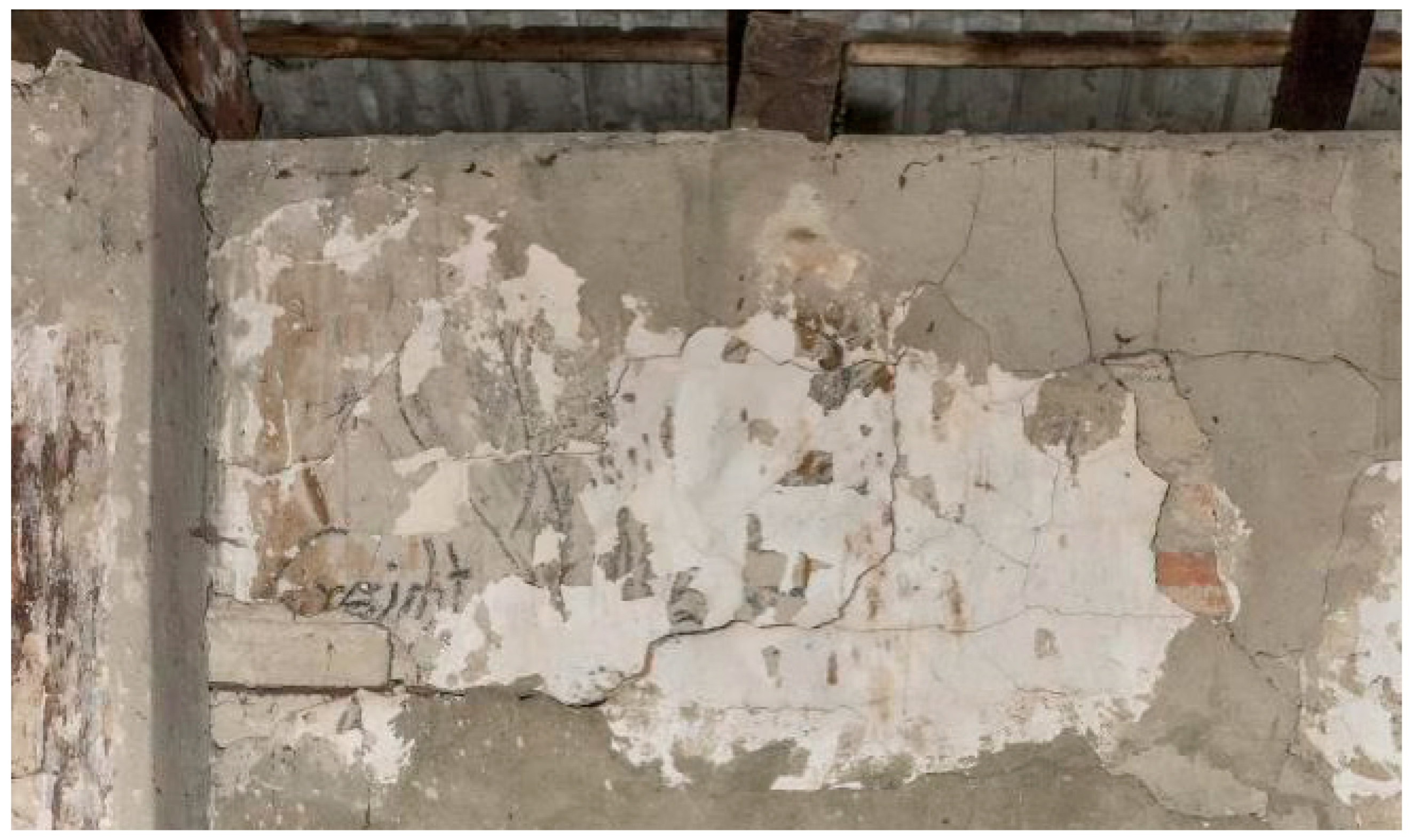
In barrack B-145 there is uneven settlement of the existing foundations, evidenced by numerous cracks in the brick masonry walls. This results primarily from the high groundwater level combined with prior damage to, and consequent weakening of, the barrack’s load-bearing system. The uneven settlement of the foundations has caused fissuring, cracking, and detachment in the brick walls. The resulting geometric deformation of the masonry, in turn, damages the timber roof truss, whose main supporting members (posts) are rigidly clamped to the external walls by steel anchors.

3.1.3. Results

As part of the field investigations, a series of exploratory openings were made and samples of concrete, brick, and mortar were taken for laboratory analysis. On-site tests were also carried out on the grounds of the Auschwitz-Birkenau State Museum (including RESI drilling-resistance testing, and verification of out-of-plumbness/geometric deviations of the principal walls and the roof truss). The results, together with their interpretation, were used to prepare guidelines for the design of strengthening and safeguarding measures for the building’s structural elements, organised into conventionally defined building components in line with the investigation findings.
For the foundations of barrack B-145, strengthening was envisaged in the form of reinforced cement injection (compaction grouting) to the concrete elements. Computational analysis confirmed adequate bearing capacity of the foundations; however, in order to stabilise future behaviour and to protect the elements in contact with the ground—i.e., floors and below-grade brickwork—it is recommended to carry out reinforced cement injection to improve the subsoil. This process will increase the bearing capacity indices of the soil directly beneath the foundation footing. Strengthening the subsoil and foundations by reinforced injection is not described in the literature. A densifying reinforced injection is recommended, executed using galvanised perforated steel tubes of 20 mm diameter with a wall thickness of 3.2 or 4 mm.
In the barrack under study, a considerable number of wall deformations in various directions were recorded, together with cracking, fissuring, and delamination of the brick masonry. Where there are losses in mortar joints between brick courses without associated cracking of the wall, these should be refilled by repointing with a material whose historic recipe was reconstructed by the research unit of the AGH University of Science and Technology in Kraków. Masonry elements exhibiting significant deformation should first be returned to correct geometry through construction procedures involving wall straightening. Gable walls, where the greatest detachments were observed and documented, were anchored to piers and to perpendicular brick walls using stainless-steel anchors.
Moisture protection for the structure was proposed as a multi-pronged package of safeguarding works applied to specific building elements of barrack B-145, including measures at the foundations and internal floors. In addition—and most importantly—a perimeter drainage system around the building is recommended. The aim of the drainage around barrack B-145 is to locally and permanently lower the groundwater level to a point that excludes even periodic contact of groundwater with the masonry of the foundation walls.
Based on the structural–strength analyses and on technical assessments of timber quality based on results of drill resistance measurements conducted with a resistograph, safeguarding works were recommended for selected elements of the timber roof truss by applying carbon-fibre strips or composite rods. Laboratory tests on original elements from barracks B-123 and B-124, as well as on comparative models, demonstrated high effectiveness of the proposed reinforcements.

3.2. Auschwitz II-Birkenau Kitchen (B-91)

3.2.1. Description

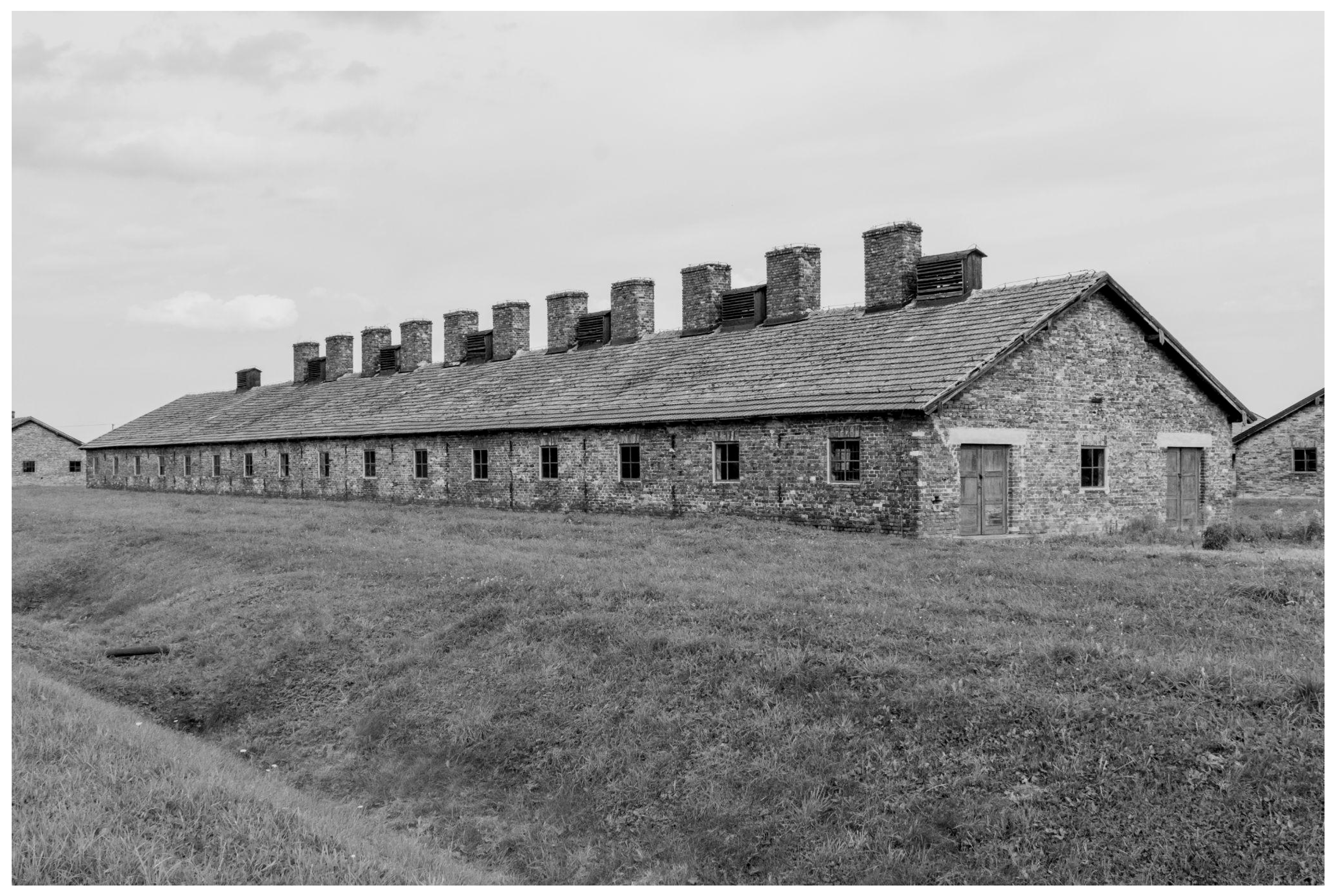
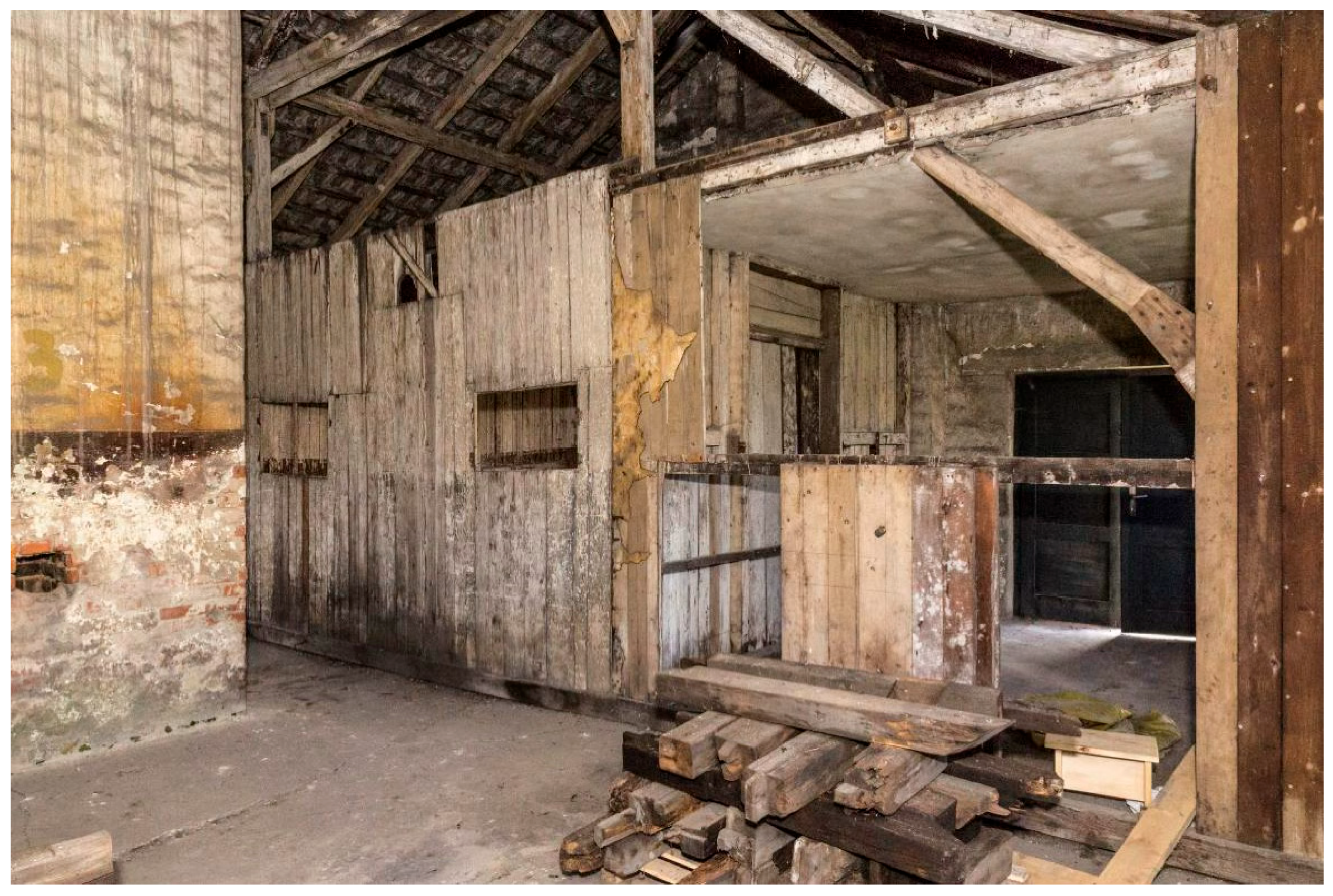
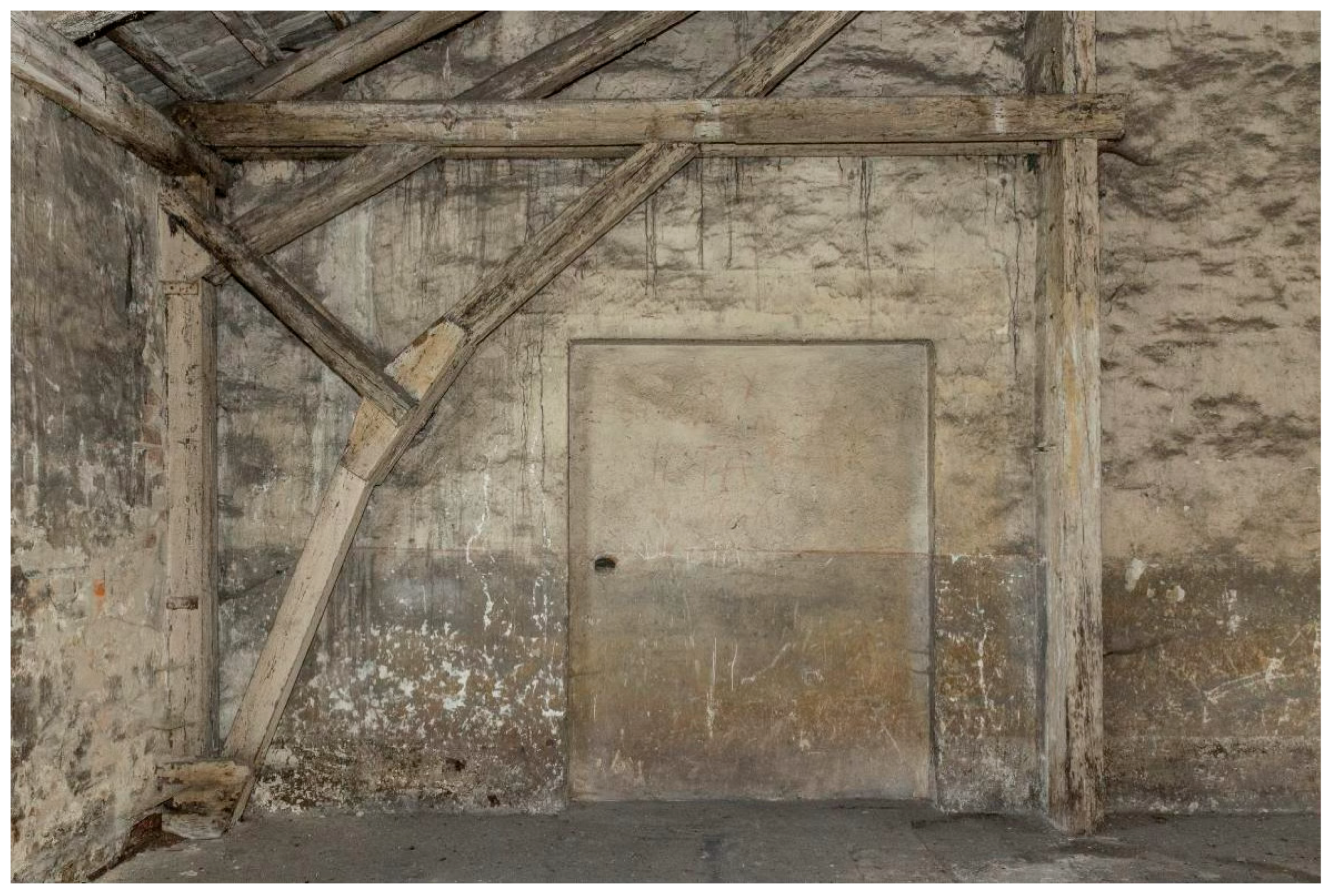
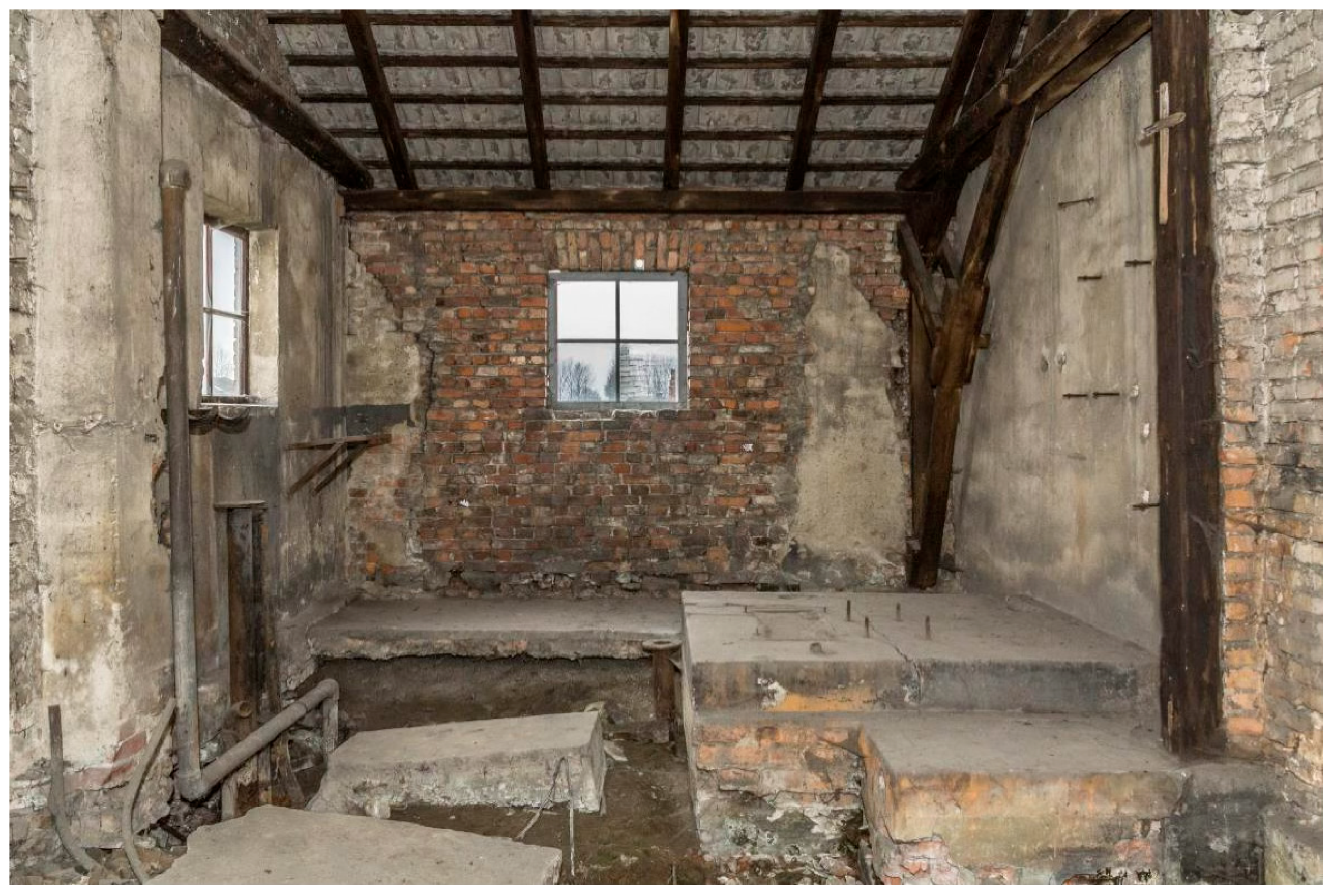
The kitchen in the BI sector (inventory number B-91) was built on a rectangular plan with external dimensions of approximately 11.7 m × 64.3 m and a ridge height of about 5.8 m. The gable and longitudinal walls contain a total of 33 window openings and five entrance doors. The external enclosing walls were constructed of solid brick, 12 cm and 26 cm thick (with local thickenings reaching approximately 40 cm). The kitchen has a timber purlin-and-collar roof truss arranged in timber frames, which gives the interior a three-aisled layout (Figure 9, Figure 10, Figure 11, Figure 12 and Figure 13).

3.2.2. Challenges

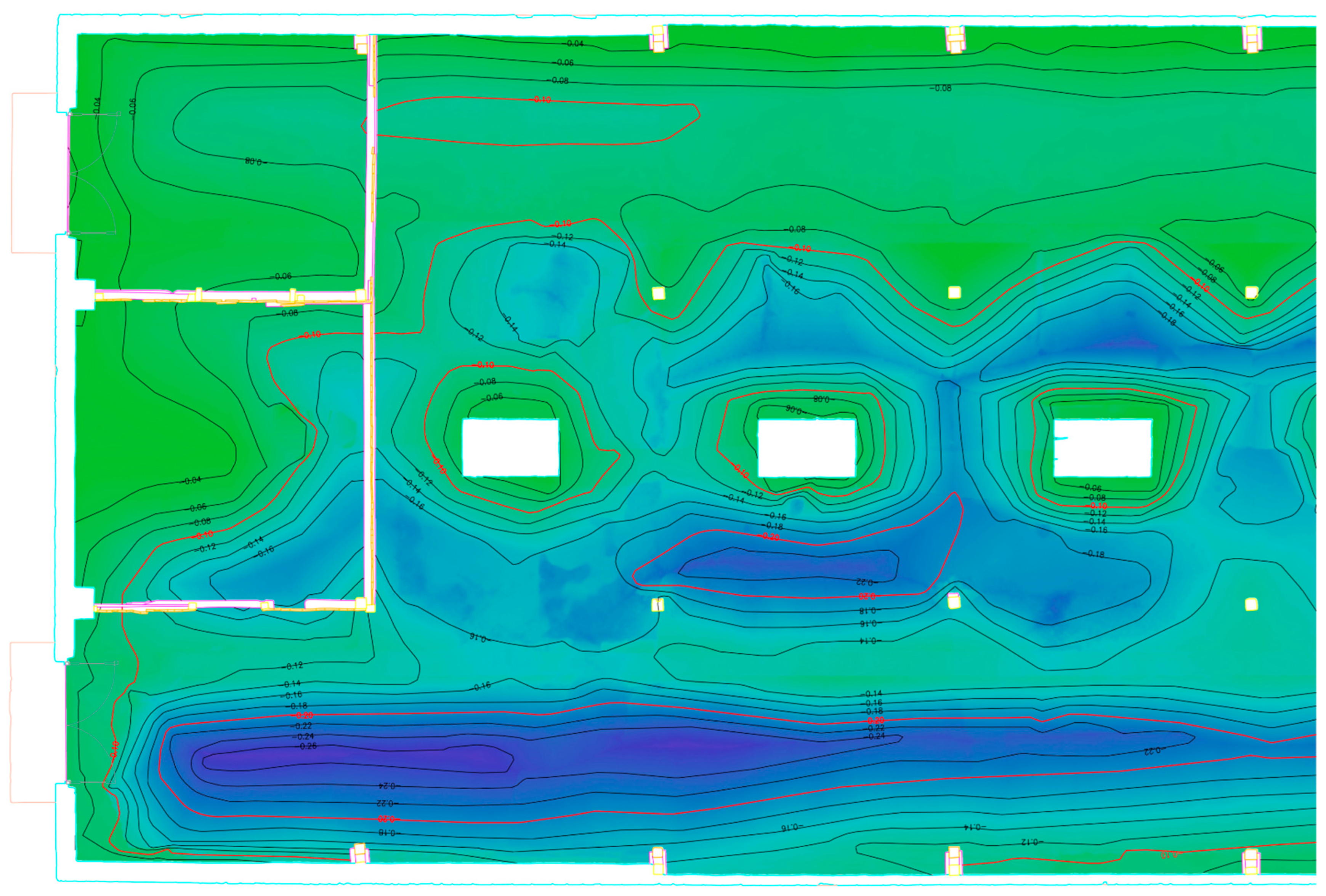
The damage and deformations observed in the load-bearing elements of building B-91 arise from several key causes, including deformations of external walls from 30 mm (north wall) to 100 mm (east wall) and the structural action of the timber roof-truss system on the internal and external walls (interconnection of timber and masonry elements; anchoring of timber posts to masonry walls with steel connectors; and defective bearing details of load-bearing members on masonry). A further principal cause is the uneven settlement of the foundations, resulting from low bearing-capacity indices associated with significant water content in successive soil layers (Figure 14). The condition of the structure has also been affected by the insufficient stiffness of the external enclosing walls, linked to original design defects, and by substantial damage to elements of the timber roof truss—namely the truss frames (bents), particularly the lower portions of the posts at the concrete floor. From a conservation perspective, the issues also encompassed deformation of the internal floor, chiefly due to frost-heave phenomena occurring in the soil.

3.2.3. Results

For barrack B-91, on the basis of the defects and damage identified during numerous site inspections, CUT experts proposed investigations comprising:
  • A geotechnical analysis of the ground conditions with comparison to archival geotechnical information;
  • On-site sampling and laboratory testing of concrete from the foundations;
  • Investigations of the masonry walls;
  • assessments of moisture content and salt contamination in the masonry and concrete; examinations of the timber elements;
  • A full analysis of the deformation-measurement results for barrack B-91 and its discrete structural components, considered in the context of the proposed construction-structural safeguarding and strengthening solutions.
Overall guidelines and recommendations were similar to those formulated for B-145.

3.3. Auschwitz II-Birkenau Lavatory (B-112)

3.3.1. Description

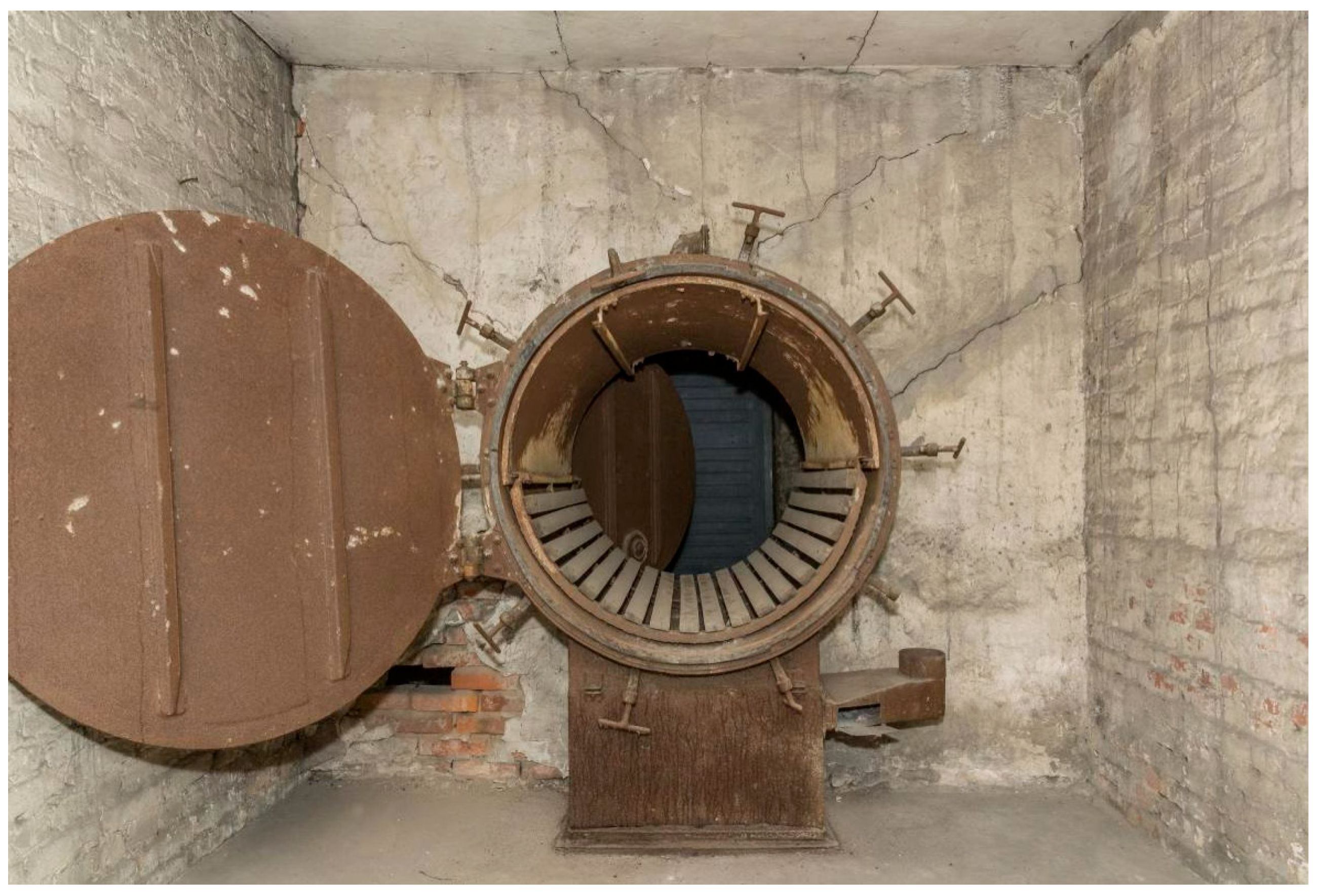
Barrack B-112 (Figure 15, Figure 16, Figure 17, Figure 18 and Figure 19), which served as a bathhouse and clothing disinfection block, was built on a plan combining a rectangle and a square, forming a two-wing arrangement (resembling the letter “T”) with external dimensions of approximately 11.7 m × 64.3 m, plus an annex measuring 12.0 m × 11.70 m. The gable and longitudinal walls contain a total of 27 window openings and eight entrance doors. The external enclosing walls were constructed of solid brick 12 cm thick and, locally, approximately 25 cm. The gable walls were braced with pilasters measuring about 52 × 40 cm up to the level of the wall plate. The barrack has a timber purlin-and-collar roof truss with two rows of posts and struts, with four posts in each structural axis. The truss arrangement divides the interior into three aisles.

3.3.2. Challenges

The pattern of defects and damage is similar to the other structures covered by the research project; however, for this structure, there were no reliable archival records of repairs or other interventions undertaken over the past 80 years that might affect its current technical condition.

3.3.3. Results

Analyses for barrack B-112 revealed substantial foundation deformations resulting from uneven settlement. The high slenderness of the separated and cracked masonry walls led to a loss of spatial stiffness and to persistent wall deformations. In this situation, it was necessary to plan for the elimination of deformations and for the strengthening of the brick walls and piers to restore the spatial stiffness of the wall support system.
An analysis of the permissible lengths and heights of the enclosing walls showed that, in geometric terms, the partitions meet the PN-EN code condition. However, when the recorded deformations were taken into account, calculations clearly demonstrated that, for sections in bending in planes both parallel and perpendicular to the bed joints, the load-bearing capacity criteria are not satisfied. The data unequivocally indicate the need to rectify the existing wall deformations in barrack B-112. The main load-bearing system of B-112 is a mixed system arising from the interaction of the roof-truss frames tied to the longitudinal walls and a series of brick piers in the gable walls. Verification of the bending capacity showed exceedance of allowable code values. For masonry elements subjected to tensile stresses from bending, ultimate failure will occur only after crushing of the compressed zone.
The computational analysis of the timber roof truss of B-112 showed that the capacity requirements are not met for the principal load-bearing members, i.e., the rafters and two purlins. The remaining members—posts, raking struts, collars, braces, and props—satisfy the relevant code requirements for capacity. The calculations did not model decay-related losses in the timber, which is one of the main difficulties in assessing the safety of a historic structure. The timber used for the truss exhibits a number of original defects whose random and highly variable distribution cannot be reliably captured in conventional structural strength calculations. Consequently, an individualised assessment was required, based on resistograph drilling-resistance tests and laboratory examinations of original timber elements.
One of the principal causes of progressive damage to the foundations, walls, and floors in barrack B-112 is the high groundwater level, coupled with frost-heave and soil-freezing phenomena. Accordingly, in formulating the team’s bespoke repair and safeguarding recommendations, a comprehensive programme of measures was adopted, addressing both the main load-bearing elements and interventions within the successive soil layers.

3.4. Summary of the Results

Whilst the primary aim of the research was to assemble baseline data for computational analyses defining the safety level and serviceability condition of the structures under study [20], owing to the manner of construction and the materials used at the time, conducting investigations and selecting solutions on the basis of the regulations, codes, and standards applicable to public-use buildings—in Poland, museum buildings fall into this category—was not possible. Nor were the norms and standards ordinarily used in the assessment of structures under conservation protection applicable in this case: for the Auschwitz-Birkenau Museum, the requirements governing assessment and the conditions for the preservation and protection of the existing structures mandate strict adherence to the condition that the original solutions and materials, and the original appearance together with characteristic fittings that underscore the inhuman conditions of life in the camp, be retained.
Results reported in the final study showed very large within-member and within-building variability across timber cross-sections, and generally low load-bearing capacity. Complementary reinforcement trials were therefore undertaken: for instance, rafters removed from the roofs of barracks B-123 and B-124 were experimentally strengthened with carbon-fibre strips and composite elements. Laboratory tests showed an approximately 5% increase in flexural strength. While modest in absolute terms, for large-section members, the realised effect in situ may exceed laboratory indications. Notably, these innovative trials employed composite systems at a time when they were still undergoing certification.
Static and strength analyses for the main structural elements of the wooden roof truss, vertical partitions in the form of thin masonry walls made of solid brick with a thickness of 12 cm, and concrete foundations were carried out using generally available analytical methods and computational programmes. The synthetic computational results obtained for the wooden roof truss clearly indicated significant deficiencies in the load-bearing capacity of the rafters. An additional factor included in the input data set for the expert analysis was a macroscopic material assessment.
The summary of deformations (Table 1) and load-bearing capacity exceedances (Table 2) of the structural elements is presented below.
Table 1. Maximum deformations in barracks B-91 (kitchen), B-112 (bathhouse), and B-145 (storehouse).
Deformations [mm]B-91B-112B-145
Longitudinal walls−20−40−20
+100+40+60
Δ120Δ80Δ80
Gable walls−0−20−40
+60+40+60
Δ60Δ60Δ100
Floors+60+80+40
−260−200−160
Δ320Δ280Δ200
Table 2. Summary of maximum load-bearing capacity exceedances for structural elements in barracks B-91 (kitchen), B-112 (bathhouse), and B-145 (storehouse).
Load-Bearing CapacityB-91B-112B-145
FoundationsNot exceeded 1Not exceeded 1125%
Longitudinal walls336% 2126% 2158% 2
Gable walls512% 2250% 2215% 2
Brick pillars345% 2338% 2379% 2
Rafters138%135%155%
1 Deemed not to meet the technical requirements for structural elements based on expert assessment of other parameters (technical, material, and construction defects). 2 Compressive strength requirement met; values refer to failure to meet bending strength requirement in selected material.
The static analysis determined that the calculated forces resulting from external influences acting on the examined structures (permanent, variable, and climatic loads) applied to the concrete foundations did not cause the permissible stress values in the soil to be exceeded. Theoretical static and strength analyses performed did not take into account any damage or poor technical and structural condition of the foundations, which had to be corrected at the next stage of the expert evaluation within the adopted methodology indicated in the diagram (Figure 2).

4. Discussion

The former KL Auschwitz-Birkenau, located in Nazi-occupied Poland, was the largest German Nazi concentration and extermination camp. Covering nearly 192 hectares, it is the last surviving major extermination centre and the only site of its kind on the UNESCO World Heritage List [52]. This exceptional context necessarily limits the repeatability and direct transferability of the specific research methods and remedial actions we propose, as they respond to complex, site-specific conditions. In less sensitive settings, highly non-standard measures—such as non-standard sampling strategies or strict prohibitions on intrusive interventions in the historic fabric—may be neither necessary nor economically justified.
Nonetheless, many scholars, including Romão et al. [53] and Carroll and Aarrevaara [54], emphasise the need for tailored solutions. Romão and colleagues argue that a risk-assessment framework adaptable to the built environment should, at minimum, ensure: reliable and sufficient data to construct appropriate hazard models; reliable and sufficient data describing the assets at risk; suitable procedures for modelling vulnerability; adequate models for predicting the multidimensional consequences of hazardous events; and sufficient human, temporal, and financial resources. Our project confirms that acquiring sufficient and reliable data can be a major challenge in its own right. It also shows that less visible hazards, together with persistent adverse factors in and around protected areas, can elevate vulnerability to levels at which effective protection becomes difficult—sometimes impossible—and certainly costly.
At the same time, the general approach distilled in Figure 2 has broader applicability. It begins with a rigorous initial problem diagnosis; integrates historical research with field investigations; relies on a multidisciplinary team to plan and execute the research; and supports expert judgement and decision-making with computational tools, as demonstrated by Śladowski et al. [55] and Fedorczak-Cisak [56]. In the case of this project, applicability of methods such as fuzzy modelling and structural analysis to support analysis of the cause-and-effect relationships between various factors that may affect the condition of a building was tested [55,56]. While the site-specific details of the research conducted in Auschwitz II-Birkenau may be unique, this structured approach has clear universal potential.

4.1. Beyond Categories and Standards

Cultural heritage is often categorised as tangible or intangible regardless of their often intrinsic bounding. However, the intangible heritage of Auschwitz does not meet the definition of the 2003 Convention for the safeguarding of intangible cultural heritage [57] or EU Policy for cultural heritage [58]. It is not a collection of practices, traditions, skills, and other intangible elements of culture that should be protected and passed on to subsequent generations. Nor is it a monument in the traditional sense of the word—an object whose age, form, location, integration into the landscape, etc., make it part of the built cultural heritage. What is subject to conservation protection at Auschwitz are the material traces of the Holocaust, but the aim of this protection is the safeguarding of memory, for which preserving the authenticity of these objects is indispensable [28].
Crowley et al. [9], while interpreting the 2019 ICOMOS Report [6], point out that identifying and developing interdisciplinary methods suitable for capturing the ‘invisible’ vulnerability, value, and capacity of cultural heritage is considered an urgent policy need. Compliance with norms and standards, as Fassina [18] emphasises when examining their potential integration with heritage-conservation procedures, is not mandatory unless explicitly required by legal instruments. The analysis of results from tests conducted on non-normative samples for the purpose of developing the MPP guidelines, and the selection of measures based on non-standard approaches, were made possible by the extensive experience of a large interdisciplinary research team—architects, structural and material engineers, geologists and hydrogeologists, archaeologists, art conservators, and historians–gained through investigations of other historic structures. At the same time, the dynamic changes in the surroundings of buildings subject to the highest levels of protection—including the occurrence of destructive factors that the authors have encountered in recent years—encourage a broader perspective on the standards and frameworks for the conservation of cultural heritage.
Given the manner of construction and the materials originally used, it was not feasible to analyse safety on the basis of standards for public-use buildings, nor to apply the usual methods for structures under conservation protection. The assessment, preservation, and protection of the former KL Auschwitz-Birkenau require the retention of original solutions, materials, and appearance—including characteristic fittings that attest to the inhuman conditions in the camp—while simultaneously providing the required level of safety and protecting the existing fabric. Beyond the very poor technical condition—often bordering on structural failure—the initial conservation challenge in the oldest part of Auschwitz II-Birkenau was the absence of a catalogue of good practices and precedents. As Łopuska observed, there are no comparable sites worldwide in a similar state of preservation that are subject to such strict protection [59] (p. 101).
The unprecedented works—undertaken for the first time at the former extermination camp inscribed on the UNESCO World Heritage List—effectively addressed the principal issues of wall deformation and mitigated risks arising from foundation defects and unfavourable hydrogeological conditions [28,29]. Innovative non-destructive investigations of the timber trusses, combined with digital structural models, enabled the selection of measures that preserved both structural integrity and authenticity. Dismantling truss members for conservation and reassembly would have disrupted the original historical stratigraphy; likewise, wholesale replacement with new elements was precluded by the adopted conservation doctrine, which requires retention of original fabric even where its load-bearing function has diminished. Accordingly, strengthening relied on minimally intrusive, reversible interventions.
For most historic buildings, the constituent elements cannot be classified exclusively according to PN-EN standards and assumptions. In this respect, the buildings within the former Auschwitz I and Auschwitz II–Birkenau camps present unprecedented research and implementation challenges. Assessing the appropriateness and effectiveness of any intervention on the basis of a single issue is impracticable; yet, as the authors have previously noted, even a holistic, multi-criteria strategy cannot be limited to permanence and accessibility alone—just as the intangible heritage of Auschwitz-Birkenau cannot be separated from the material traces of the martyrdom [26,28] as it cannot be separated from its surroundings.

4.2. Net Zero Vulnerability

According to Crowley et al. [9] and Adger [60], among others, heritage cannot be reduced to passive objects, sites, and landscapes merely threatened by climate impacts. They call for moving beyond conventional risk assessments focused on preservation decline to understand culture–climate change as a dynamic process. As we have argued elsewhere, built-heritage sites—including UNESCO properties of Outstanding Universal Value—are increasingly passive recipients of threats originating beyond protected boundaries, or are so vulnerable that standard conservation methodologies no longer suffice [11,12,61].
In historic areas, extensive transformations or large-scale infrastructure interventions are generally infeasible. At the same time, the harmful interaction of anthropogenic pressures and climate change is especially pronounced [13]. Consequently, a core element of the NZV strategy is to develop methods and tools to detect, monitor, and assess hazards, and to reduce, mitigate, or compensate for their effects both within and beyond the protected area. This calls for systems that capture large datasets in real or near-real time (e.g., sensor networks), aggregate and visualise them via digital twins, and make greater use of low-cost, widely accessible tools—such as surface runoff analysis—to generate alternative scenarios that lower flash-flood and inundation risks [61].
Rapid advances in 3D imaging—including diverse geoscanners—enable largely non-invasive identification of dynamic processes and risks. Yet even well-instrumented digital twins, which can integrate near-real-time data and potentially transform heritage monitoring, will not ensure effective protection on their own. To this end—as the case presented in this paper shows—rigorous problem diagnosis and source identification, careful solution selection, and interdisciplinary expertise will remain indispensable. While acknowledging the potential of AI-enabled, data-intensive tools, we propose a practice-tested framework that addresses the article’s key challenges:
  • Rising anthropopressure on heritage areas and assets, understood not only as a socio-economic phenomenon but also as prolonged physical action that affects the building fabric;
  • Multifaceted impacts of climate change;
  • Limited scope for mitigation measures within protected areas.
This framework provides a pathway for the sustainable monitoring, protection, and conservation of built heritage, even where vulnerabilities driven by climate change and anthropogenic pressures can be mitigated only beyond the protected site. It has been tested in practice at other UNESCO World Heritage sites among which Krakow Old Town, Wieliczka Salt Mine, and wooden churches of Małopolska.
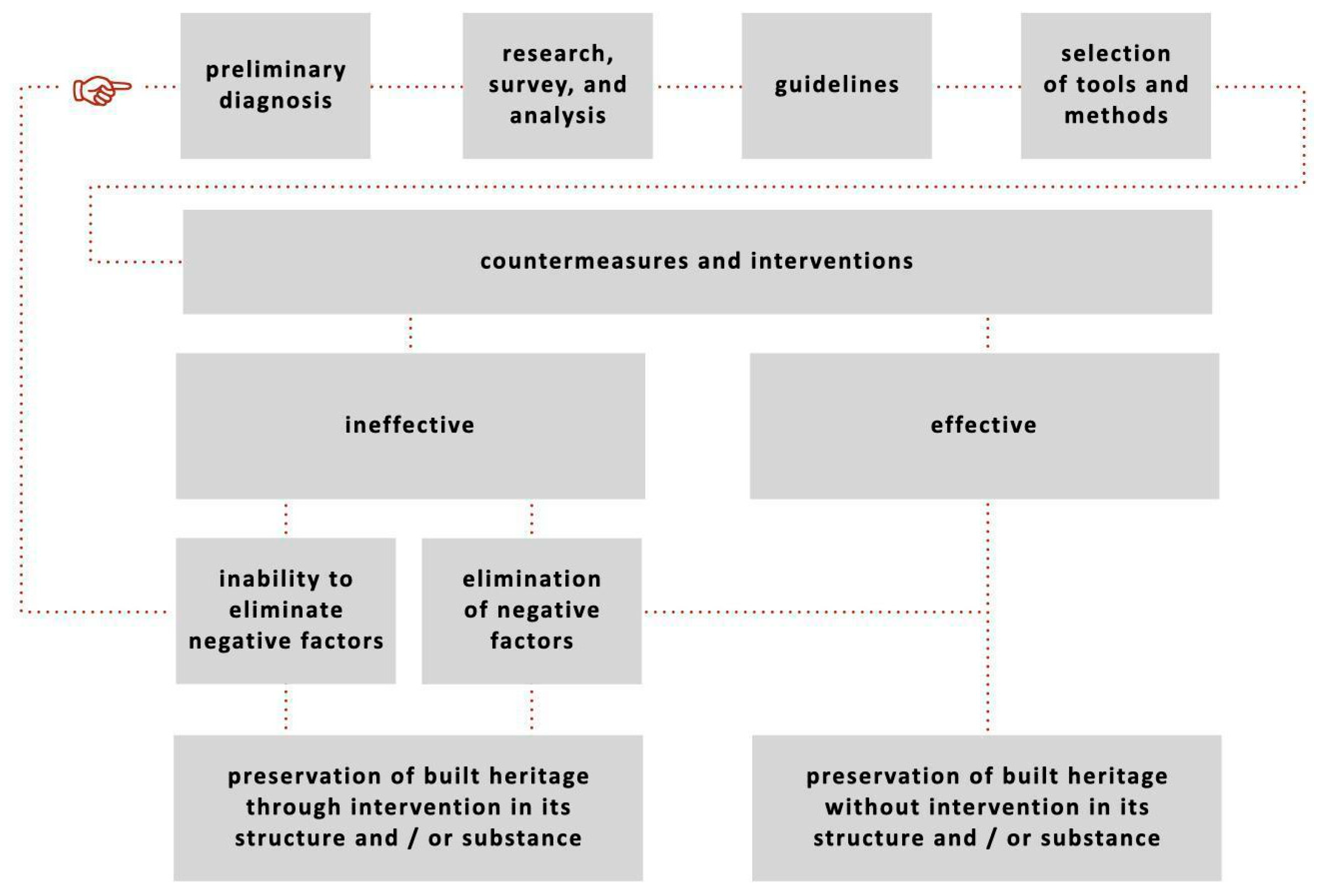
The first step in undertaking any actions to protect built cultural heritage in the context of anthropopressure and climate change—i.e., processes that create conditions significantly different from those under which a given site was constructed or thanks to which it has survived to the present—is an initial assessment and diagnosis of the state of conservation, together with correct identification of the causes of that condition, taking into account both destructive factors and those that have a beneficial effect on the condition of historic structures and materials. As the example of KL Auschwitz-Birkenau described in this article shows, this stage is just as important for effective protection as the specific conservation measures themselves. Next, on the basis of the broadest possible and interdisciplinary research, guidelines and recommendations are formulated and tailored to the individual needs and circumstances of each site. From this catalogue of solutions, conservation teams—in agreement with the institutions that have custody of the given heritage and the relevant supervisory bodies—select specific tools and methods. Effective implementation of appropriately chosen solutions that consider a wide spectrum of different factors should result in the preservation of built heritage without excessive and/or irreversible intervention in its structure and/or fabric. If the actions undertaken in a given area and/or at a given site do not bring the expected positive results, efforts must then be made to eliminate the destructive factors. Depending on the damage to the site or its current degree of vulnerability, its preservation may or may not require intervention in the structure and/or material [11,12]. As the authors’ long-standing experience shows, the inability to effectively eliminate destructive factors leads to the necessity of far-reaching intervention in the structure and substance of the historic site, or to repeating the entire process from the beginning (Figure 20).

5. Conclusions

Any design and execution work on historic buildings must be preceded by rigorous, evidence-based analysis of interrelated factors. Such structures cannot be assessed solely against contemporary design codes or technical guidelines intended for new constructions. Each component of a historic building demands particular sensitivity and broad interdisciplinary expertise to support decisions that are critical to the long-term sustainability of the historic fabric and, as a result, necessary to pass on cultural heritage to future generations.
In extreme cases, not only monuments protected under national law but also UNESCO World Heritage sites become passive recipients of the effects of adverse factors generated outside the protected area. In such situations, the effective elimination of destructive factors and/or their effects may not be possible within the building or building complex to which conservation activities are typically confined. This further underscores the need for future standards and guidelines for the protection of cultural World Cultural Heritage Sites of Outstanding Universal Value to:
  • Comprehensively recognise dynamic processes such as anthropopressure and climate change,
  • Correctly and realistically determine the scope and form of protection within buffer zones, and
  • Undertake remedial or compensatory measures at the source of the problem, or where mitigation of its effects is feasible—thereby achieving the condition that the authors term Net Zero Vulnerability.

Author Contributions

Conceptualization, R.P. and A.P.; methodology, R.P.; formal analysis, A.P.; investigation, R.P.; data curation, R.P.; writing—original draft preparation, A.P.; writing—review and editing, R.P. and A.P.; visualisation, R.P. and A.P.; supervision, R.P. All authors have read and agreed to the published version of the manuscript.

Funding

The original research completed in 2014 as well as the Master Plan for Preservation was funded by the Auschwitz-Birkenau Foundation and the Auschwitz-Birkenau State Museum: https://www.auschwitz.org/en/museum/preservation/master-plan-for-preservation (accessed on 10 October 2025).

Institutional Review Board Statement

Not applicable.

Informed Consent Statement

Not applicable.

Data Availability Statement

Detailed information and research reports are available at: https://www.auschwitz.org/en/museum/preservation/master-plan-for-preservation (accessed on 10 October 2025).

Acknowledgments

Previously unpublished photos presented in this article were taken during surveys conducted by the CUT team in 2014.

Conflicts of Interest

The authors declare no conflicts of interest.

Abbreviations

The following abbreviations are used in this manuscript:
CUTCracow University of Technology also known as Politechnika Krakowska, Poland
MPPMaster Plan for Preservation
PN-EN 338Structural timber: Strength classes
PN-EN 771Specification for masonry units. Part 6: Natural stone masonry units
PN-EN 1015Methods of testing mortar for masonry. Part 1: Determination of particle size distribution (by sieve analysis)
PN-EN 16455Conservation of cultural heritage: Extraction and determination of soluble salts in natural stone and related materials used in and from cultural heritage
PN-EN 16682Conservation of cultural heritage: Methods of measurement of moisture content, or water content, in materials constituting immovable cultural heritage
PN-EN 1912Structural Timber: Strength classes. Assignment of visual grades and species
PN-EN 1991Eurocode 1: Actions on structures. Part 1–1: General actions: Densities
PN-EN 1992Eurocode 2: Design of concrete structures. Part 1–1: General rules and rules for buildings, bridges and civil engineering structures
PN-EN 1995Eurocode 5: Design of timber structures. Part 1–1: General rules and rules for buildings
PN-EN 1996Eurocode 6: Design of masonry structures. Part 1–1: General rules for reinforced and unreinforced masonry structures
PN-EN 1997Eurocode 7: Geotechnical design. Part 1: General rules

References

  1. Brimblecombe, P. Refining climate change threats to heritage. J. Inst. Conserv. 2014, 37, 85–93. [Google Scholar] [CrossRef]
  2. Heathcote, J.; Fluck, H.; Wiggins, M. Predicting and adapting to climate change: Challenges for the historic environment. Hist. Environ. Policy Pract. 2017, 8, 89–100. [Google Scholar] [CrossRef]
  3. Bosher, L.; Kim, D.; Okubo, T.; Chmutina, K.; Jigyasu, R. Dealing with multiple hazards and threats on cultural heritage sites: An assessment of 80 case studies. Disaster Prev. Manag. 2019, 29, 109–128. [Google Scholar] [CrossRef]
  4. UNDRR Sendai Framework for Disaster Risk Reduction 2015–2030. Available online: https://www.undrr.org/publication/sendai-framework-disaster-risk-reduction-2015-2030 (accessed on 10 October 2025).
  5. Nearly Three-Quarters of World Heritage Sites Are at High Risk from Water-Related Hazards. UNESCO World Heritage Convention. 1 July 2025. Available online: https://whc.unesco.org/en/news/2788 (accessed on 5 December 2025).
  6. ICOMOS Climate Change and Heritage Working Group. The Future of Our Past: Engaging Cultural Heritage in Climate Action; ICOMOS: Paris, France, 2019; Available online: https://civvih.icomos.org/wp-content/uploads/Future-of-Our-Pasts-Report-min.pdf (accessed on 5 December 2025).
  7. Nixon, S. EU Overview of Methodologies Used in Preparation of Flood Hazard and Flood Risk Maps; European Commission: Luxembourg, 2016. [Google Scholar]
  8. Porębska, A.; Godyń, I.; Radzicki, K.; Nachlik, E.; Rizzi, P. Built heritage, sustainable development, and natural hazards: Flood protection and UNESCO world heritage site protection strategies in Krakow, Poland. Sustainability 2019, 11, 4886. [Google Scholar] [CrossRef]
  9. Crowley, K.; Jackson, R.; O’Connell, S.; Karunarthna, D.; Anantasari, E.; Retnowati, A.; Niemand, D. Cultural heritage and risk assessment: Gaps, challenges, and future research directions for the inclusion of heritage within climate change adaptation and disaster management. Clim. Resil. Sustain. 2021, 1, e45. [Google Scholar] [CrossRef]
  10. Fatorić, S.; Seekamp, E. Are cultural heritage and resources threatened by climate change? A systematic literature review. Clim. Change 2017, 142, 227–254. [Google Scholar] [CrossRef]
  11. Radzicki, K.; Porębska, A.; Paruch, R.; Godyń, I.; Muszyński, K. Net Zero Vulnerability: Zagrożenia związane z oddziaływaniem wód powierzchniowych i podziemnych na obszary i obiekty zabytkowe; Korelacja zagrożeń i minimalizacja ryzyka w kontekście antropopresji i zmian klimatu/Correlating hazards and minimising risk from surface- and groundwater impacts on built heritage in the context of anthropopressure and climate change. In Scientific Conference on Cultural Heritage and Hydrogeological Risk, Kraków, Poland, 14–15 November 2022; Narodowy Instytut Dziedzictwa/National Institute of Cultural Heritage: Warsaw, Poland, 2022. [Google Scholar]
  12. Porębska, A.; Paruch, R. Net Zero Vulnerability: Problematyka określania zakresu i obszarów negatywnych oddziaływań na szczególnie wrażliwe obiekty podlegające ochronie konserwatorskiej/Defining the scope and zones of adverse influence on highly vulnerable built heritage subject to statutory protection. In Scientific Conference on Cultural Heritage and Climate Change, Warsaw, Poland, 28–29 November 2023; Narodowy Instytut Dziedzictwa/National Institute of Cultural Heritage: Warsaw, Poland, 2023. [Google Scholar]
  13. Bogdanowska, M.; Czop, M. An Assessment of Hydrological Risks to Historic Buildings and Compounds with a View to Their Prevention and Limiting the Negative Impacts of Climate Change and Anthropopressure; Narodowy Instytut Dziedzictwa/National Institute of Cultural Heritage: Warsaw, Poland, 2023. Available online: https://ksiegarnia.nid.pl/wp-content/uploads/2024/01/Ocena-i-profilaktyka-zagrozn-hydrologicznych_EN.pdf (accessed on 24 December 2025).
  14. Del Blanco, C.; Montedoro, L. Cultural tourism pressure on historic centres: Its impact on public space and intervention strategies for its mitigation. Florence, Italy, as a case study. Hous. Environ. 2023, 42, 80–86. [Google Scholar]
  15. Sesana, E.; Gagnon, A.S.; Ciantelli, C.; Cassar, J.; Hughes, J. Climate change impacts on cultural heritage: A literature review. WIREs Clim. Change 2020, 12, e710. [Google Scholar] [CrossRef]
  16. EN 15999-1:2025; Standards Preserving Cultural Heritage: Conservation of Cultural Heritage: Guidelines for Design of Showcases for Exhibition and Preservation of Objects. Part 1: General Requirements. European Standards Institution: Brussels, Belgium, 2025. Available online: https://www.cencenelec.eu/news-events/news/2025/eninthespotlight/2025-08-04_culturalheritage/ (accessed on 10 October 2025).
  17. Fassina, V. CEN TC 346 Conservation of Cultural Heritage-Update of the Activity After a Height Year Period. In Engineering Geology for Society and Territory: Preservation of Cultural Heritage; Lollino, G., Giordan, D., Marunteanu, C., Christaras, B., Yoshinori, I., Margottini, C., Eds.; Springer International Publishing: Cham, Switzerland, 2015. [Google Scholar] [CrossRef]
  18. Fassina, V. The activity of the European Standardization Committee CEN/TC 346 Conservation of Cultural Heritage from 2004 to 2020. Sustainability 2025, 17, 1992. [Google Scholar] [CrossRef]
  19. Auschwitz-Birkenau Master Plan for Preservation. Available online: https://www.auschwitz.org/en/museum/preservation/master-plan-for-preservation (accessed on 10 December 2025).
  20. Karczmarczyk, S.; Bereza, W.; Paruch, R.; Šefčić, E.; Metych, W.; Celadyn, W. Raport Końcowy: Badania nad Opracowaniem Metod Konserwacji, Zabezpieczenia i Wzmocnienia Konstrukcji Obiektów, Elementów ich Wykończenia Oraz ich Podłoża Gruntowego z Uwzględnieniem Statyki i Fizyki Budowli Występujących na Terenie Państwowego Muzeum Auschwitz—Birkenau; Politechnika Krakowska: Kraków, Poland. 2015. Available online: https://auschwitz.org/gfx/auschwitz/userfiles/auschwitz/gpk/04_badania_wstep/konstrukcja_obiektow/04.02._wyniki_badan.pdf (accessed on 10 October 2025).
  21. Kańka, S.; Stryszewska, T.; Tracz, T. Methods of testing and assessing technical condition of chosen building structures located in the area of Auschwitz-Birkenau National Museum in Oświęcim. Civ. Environ. Eng. Rep. 2015, 19, 41–49. [Google Scholar] [CrossRef]
  22. Matysek, P.; Stryszewska, T.; Kańka, S. Experimental studies of brick masonry in the Auschwitz II-Birkenau former death camp buildings. Eng. Fail. Anal. 2016, 68, 263–274. [Google Scholar] [CrossRef]
  23. Banaś-Maciaszczyk, J.; Pióro, R. Conservation issues and assumptions for the protection of objects of the former KL Auschwitz-Birkenau. Prot. Cult. Herit 2017, 3, 19–28. [Google Scholar] [CrossRef]
  24. Stryszewska, T.; Kańka, S. Współczesne metody badania materiałów budowlanych pochodzących z zabytkowych obiektów murowanych. Mater. Bud. 2019, 559, 39–41. [Google Scholar] [CrossRef]
  25. Szociński, M.; Miszczyk, A.; Darowicki, K. Condition of reinforced concrete structures and their degradation mechanism at the former Auschwitz concentration and extermination camp. Stud. Conserv. 2019, 64, 174–186. [Google Scholar] [CrossRef]
  26. Celadyn, W.; Porębska, A.; Paruch, R.; Karczmarczyk, S. Methods for protecting, conserving, repairing and reinforcing highly vulnerable world heritage sites: Guidelines for the sector BI of the former KL Auschwitz II-Birkenau Master Plan for Preservation. J. Conserv. Sci. 2021, 68S, 183–192. [Google Scholar] [CrossRef]
  27. Gromysz, K.; Szoblik, Ł.; Drabczyk, Z.; Tanistra-Różanowska, A. Analysis of causes of damage to masonry walls in the historic barrack No. B-115 in the former KL Auschwitz II—Birkenau camp. MATEC Web Conf. 2024, 396, 05003. [Google Scholar] [CrossRef]
  28. Bartyzel, B. (Ed.) To Preserve Authenticity: The Conservation of Brick Barracks at the Former KL Auschwitz II-Birkenau; Państwowe Muzeum Auschwitz-Birkenau w Oświęcimiu: Oświęcim, Poland, 2019. [Google Scholar]
  29. Bartyzel, B.; Lipiński, Ł.; Sawicki, P. (Eds.) Education and Remembrance. Auschwitz-Birkenau Museum and Memorial 2024 Annual Report; Państwowe Muzeum Auschwitz-Birkenau w Oświęcimiu: Oświęcim, Poland, 2025; Available online: https://www.auschwitz.org/muzeum/aktualnosci/pamiec-zobowiazuje-sprawozdanie-muzeum-auschwitz-2024-,2573.html (accessed on 10 October 2025).
  30. Webber, J. The future of Auschwitz: Some personal reflections. Relig. State Soc. 1992, 20, 81–101. [Google Scholar] [CrossRef]
  31. Długosz, D. Oświęcim ring road development as UNESCO world cultural heritage site buffer zone protection case study. Architectus 2023, 75, 73–79. [Google Scholar] [CrossRef]
  32. United Nations Educational, Scientific, and Cultural Organization. World Heritage Resource Manual Preparing World Heritage Nominations, 2nd ed.; UNESCO: Paris, France, 2011; Available online: https://whc.unesco.org/en/preparing-world-heritage-nominations/ (accessed on 10 October 2025).
  33. Convention Concerning the Protection of the World Cultural Natural Heritage. The General Conference of UNESCO Adopted on 16 November 1972 the Recommendation Concerning the Protection at National Level of the Cultural Natural Heritage; UNESCO World Heritage Centre: Paris, France, 1972. Available online: https://whc.unesco.org/en/conventiontext/ (accessed on 10 October 2025).
  34. Konwencja w Sprawie Ochrony Światowego Dziedzictwa Kulturalnego i Naturalnego Przyjęta w Paryżu Dnia 16 Listopada 1972 r Przez Konferencję Generalną Organizacji Narodów Zjednoczonych dla Wychowania Nauki i Kultury na jej Siedemnastej sesji, D.z.U. 1976 nr 32 poz. 190. Available online: https://isap.sejm.gov.pl/isap.nsf/DocDetails.xsp?id=WDU19760320190 (accessed on 10 October 2025).
  35. 2025 Operational Guidelines for the Implementation of the World Heritage Convention. WHC.25/01. 16 July 2025. Available online: https://whc.unesco.org/en/guidelines/ (accessed on 10 October 2025).
  36. Ustawa z Dnia 23 Lipca 2003 o Ochronie Zabytków i Opiece nad Zabytkami. Dz.U.2003.162.1568 as Amended. Available online: https://isap.sejm.gov.pl/isap.nsf/download.xsp/WDU20031621568/U/D20031568Lj.pdf (accessed on 10 October 2025).
  37. Ustawa z Dnia 27 Marca 2003 r. o Planowaniu i Zagospodarowaniu Przestrzennym. Dz.U.80.717 as Amended. Available online: https://isap.sejm.gov.pl/isap.nsf/download.xsp/WDU20030800717/U/D20030717Lj.pdf (accessed on 10 October 2025).
  38. Ustawa z Dnia 7 Lipca 1994 Prawo Budowlane. Dz.U.2025.418. Available online: https://isap.sejm.gov.pl/isap.nsf/download.xsp/WDU20250000418/U/D20250418Lj.pdf (accessed on 10 October 2025).
  39. PN-EN-1996-1-1:2010; Eurocode 6: Projektowanie Konstrukcji Murowych; Część 1-1; Reguły Ogólne dla Zbrojonych i Niezbrojonych Konstrukcji Murowych/Design of Masonry Structures. Part 1–1: General Rules for Reinforced and Unreinforced Masonry Structures. Polski Komitet Normalizacyjny/Polish Standardization Committee: Warsaw, Poland, 2010.
  40. PN-EN 16455:2014; Conservation of Cultural Heritage—Determination of Soluble Salts in Natural Stone and Related Materials Used in Cultural Heritage. Polski Komitet Normalizacyjny/Polish Standardization Committee: Warsaw, Poland, 2014.
  41. PN-EN 1991-1-1:2004; Eurokod 1: Oddziaływania na Konstrukcje; Część 1-1; Oddziaływania Ogólne, Ciężar Objętościowy, Ciężar Własny, Obciążenia Użytkowe w Budynkach/Eurocode 1: Actions on Structures; Part 1-1; General Actions—Densities, Self-Weight, Imposed Loads for Buildings. Polski Komitet Normalizacyjny/Polish Standardization Committee: Warsaw, Poland, 2004.
  42. PN-EN 1991-1-3:2004; Eurokod 1: Oddziaływania na Konstrukcje; Część 1-3; Oddziaływania Ogólne–Obciążenie Śniegiem/Eurocode 1: Actions on Structures—Part 1-3: General Actions–Snow Loads. Polski Komitet Normalizacyjny/Polish Standardization Committee: Warsaw, Poland, 2004.
  43. PN-EN 1991-1-4:2004; Eurokod 1: Oddziaływania na Konstrukcje; Część 1-4; Oddziaływania ogólne–Obciążenie Wiatru/Eurocode 1: Actions on Structures–Part 1-4: General Actions–Wind Actions. Polski Komitet Normalizacyjny/Polish Standardization Committee: Warsaw, Poland, 2004.
  44. PN-EN 1992; Eurokod 2: Projektowanie Konstrukcji z Betonu. Część 1-1: Reguły Ogólne i Reguły dla Budynków, Mostów i Obiektów Inżynierii Budowlanej/Eurocode 2: Design of Concrete Structures. Part 1–1: General Rules and Rules for Buildings, Bridges and Civil Engineering Structures. Polski Komitet Normalizacyjny/Polish Standardization Committee: Warsaw, Poland, 2008.
  45. PN-EN 1995-1-1; Eurokod 5: Projektowanie Konstrukcji Drewnianych. Część 1-1: Zasady Ogólne/Eurocode 5: Design of Timber Structures. Part 1-1: General Rules and Rules for buildings. Polski Komitet Normalizacyjny/Polish Standardization Committee: Warsaw, Poland, 2010.
  46. PN-EN 1997-1-2008; Eurokod 7: Projektowanie Geotechniczne. Część 1: Zasady Ogólne./Eurocode 7: Geotechnical Design. Part 1: General Rules. Polski Komitet Normalizacyjny/Polish Standardization Committee: Warsaw, Poland, 2008.
  47. PN-EN 1015-1:2002; Metody Badań Zapraw do Murów—Część 1: Określenie Gęstości Objętościowej Suchej Mieszanki i Gęstości Objętościowej Stwardniałego Zaprawy/Methods of Testing Mortar for Masonry. Part 1: Determination of Particle Size Distribution (by Sieve Analysis). Polski Komitet Normalizacyjny/Polish Standardization Committee: Warsaw, Poland, 2002.
  48. PN-EN 16682:2017; Konserwacja Dziedzictwa Kulturowego–Metody Pomiaru Zawartości Wilgoci lub wody w Materiałach Dziedzictwa Kulturowego/Conservation of Cultural Heritage: Methods of Measurement of Moisture Content, or Water Content, in Materials Constituting Immovable Cultural Heritage. Polski Komitet Normalizacyjny/Polish Standardization Committee: Warsaw, Poland, 2017.
  49. PN-EN 771-6; Wymagania Dotyczące Elementów Murowych–Część 6: Elementy Murowe z Kamienia Naturalnego/Specification for Masonry Units. Part 6: Natural Stone Masonry Units. Polski Komitet Normalizacyjny/Polish Standardization Committee: Warsaw, Poland, 2005; (Amended in 2015).
  50. PN-EN 338:2009; Drewno Konstrukcyjne. Klasy Wytrzymałości/Structural Timber: Strength Classes. Polski Komitet Normalizacyjny/Polish Standardization Committee: Warsaw, Poland, 2009.
  51. PN-EN 1912:2012; Drewno Konstrukcyjne—Klasy Wytrzymałości—Przyporządkowanie klas Sortowania Wizualnego i Gatunków/Structural Timber: Strength Classes. Assignment of Visual Grades and Species. Polski Komitet Normalizacyjny/Polish Standardization: Committee: Warsaw, Poland, 2009; Amended in 2024.
  52. UNESCO WHC: Auschwitz Birkenau German Nazi Concentration and Extermination Camp (1940–1945). Available online: https://whc.unesco.org/en/list/31/ (accessed on 20 October 2025).
  53. Romão, X.; Paupério, E.; Pereira, N. A framework for the simplified risk analysis of cultural heritage assets. J. Cult. Herit. 2016, 20, 696–708. [Google Scholar] [CrossRef]
  54. Carroll, P.; Aarrevaara, E. Review of potential risk factors of cultural heritage sites and initial modelling for adaptation to climate change. Geosciences 2018, 8, 322. [Google Scholar] [CrossRef]
  55. Śladowski, G.; Paruch, R. Expert cause and effect analysis of the failure of historical structures taking into account factors that are difficult to measure. Arch. Civ. Eng. 2017, 63, 165–186. [Google Scholar] [CrossRef]
  56. Fedorczak-Cisak, M.; Kowalska-Koczwara, A.; Pachla, F.; Radziszewska-Zielina, E.; Szewczyk, B.; Śladowski, G.; Tatara, T. Fuzzy model for selecting a form of use alternative for a historic building to be subjected to adaptive reuse. Energies 2020, 13, 2809. [Google Scholar] [CrossRef]
  57. Convention for the Safeguarding of the Intangible Cultural Heritage Adopted by the UNESCO General Conference on 17 October 2003. Available online: https://ich.unesco.org/en/convention (accessed on 5 December 2025).
  58. EU Policy for Cultural Heritage. Available online: https://culture.ec.europa.eu/cultural-heritage/eu-policy-for-cultural-heritage (accessed on 10 December 2025).
  59. Łopuska, A. Autentyzm vs. udostępnienie. Granice kompromisów w konserwacji byłego obozu Auschwitz-Birkenau. Ochr. Dziedzictwa Kult. 2017, 3, 95–106. [Google Scholar] [CrossRef]
  60. Adger, W.; Barnett, J.; Brown, K.; Marshall, N.; O’Brien, K. Cultural dimensions of climate change impacts and adaptation. Nat. Clim. Change 2013, 3, 112–117. [Google Scholar] [CrossRef]
  61. Porębska, A.; Muszyński, K.; Godyń, I.; Racoń-Leja, K. City and water risk: Accumulated runoff mapping analysis as a tool for sustainable land use planning. Land 2023, 12, 1345. [Google Scholar] [CrossRef]
Figure 1. Aerial photograph showing the former KL Auschwitz II—Birkenau with the BI sector seen in the lower section (1), the former KL Auschwitz I (2), and the historical Oświęcim city centre (3) marked. Source: https://sip.gison.pl/oswiecimmiasto (accessed on 5 December 2025).
Sustainability 18 00409 g001
Figure 2. General framework for the methods adopted in the project with basic possible outcomes.
Sustainability 18 00409 g002
Figure 3. Map of the buildings of the BI sector subjected to the research project: prisoner barracks (B-67, B-71, B-79, B-113, B-114, B-115, B-123, B-124) and prisoner barrack relicts (B-146), kitchen (B-91), bath and disinfection barrack (B-112), latrines and washrooms (B-140, B-141, B-142), depository warehouse (B-145), sewage treatment plant (B-150/8), Imhoff tank (B-150/6), sprinkler system (B-150/5), fire tank (B-148), air raid shelter (B-398), sewage pumping station (B-149), guard towers (B-8 and B-10), and cesspit (B-467); by R. Paruch.
Sustainability 18 00409 g003
Figure 4. B-145 barrack: general view, 2014.
Sustainability 18 00409 g004
Figure 5. B-145 barrack: western wall, 2014.
Sustainability 18 00409 g005
Figure 6. B-145 barrack: interior, 2014.
Sustainability 18 00409 g006
Figure 7. B-145 barrack: wooden structure of the roof, 2014.
Sustainability 18 00409 g007
Figure 8. B-145 barrack: deformations and cracks, 2014.
Sustainability 18 00409 g008
Figure 9. B-91 barrack: general view, 2014.
Sustainability 18 00409 g009
Figure 10. B-91 barrack: interior, 2014.
Sustainability 18 00409 g010
Figure 11. B-91 barrack: interior, 2014.
Sustainability 18 00409 g011
Figure 12. B-91 barrack: wooden structure of the roof, 2014.
Sustainability 18 00409 g012
Figure 13. B-91 barrack: degradation of structural elements, 2014.
Sustainability 18 00409 g013
Figure 14. B-91 barrack: deformations of the floor equaling to Δ240 mm in this fragment alone with breaking line marked red. Each building was documented with a comprehensive 3D spatial scanning survey covering the entire structure as well as individual components, to enable detailed analysis of deformations—external walls, timber elements, and floors—especially in zones affected by frost-susceptible soils (see also the summary of the results in Table 1 and Table 2).
Sustainability 18 00409 g014
Figure 15. B-112 barrack: general view, 2014.
Sustainability 18 00409 g015
Figure 16. B-112 barrack: western wall, 2014.
Sustainability 18 00409 g016
Figure 17. B-112 barrack: interior, 2014.
Sustainability 18 00409 g017
Figure 18. B-112 barrack: wooden structure of the roof, 2014.
Sustainability 18 00409 g018
Figure 19. B-112 barrack: deformations, 2014.
Sustainability 18 00409 g019
Figure 20. Framework for monitoring, protection, and conservation of highly vulnerable cultural heritage sites in the context of anthropopressure and climate change.
Sustainability 18 00409 g020
Disclaimer/Publisher’s Note: The statements, opinions and data contained in all publications are solely those of the individual author(s) and contributor(s) and not of MDPI and/or the editor(s). MDPI and/or the editor(s) disclaim responsibility for any injury to people or property resulting from any ideas, methods, instructions or products referred to in the content.