
Article

One-Year Monitoring of Microclimatic Environmental Conditions in the Visitor Center of the Sirmium Imperial Palace and Physical, Chemical and Biological Processes in the M34 Mosaic

by
Aleksandra Ugrinović
1,
Budimir Sudimac
1 and
Željko Savković
2,*
1
Department of Architectural Technology, Faculty of Architecture, University of Belgrade, Bulevar kralja Aleksandra 73/2, 11000 Belgrade, Serbia
2
Faculty of Biology, University of Belgrade, Studentski Trg 16, 11000 Belgrade, Serbia
*
Author to whom correspondence should be addressed.
Sustainability 2026, 18(1), 54; https://doi.org/10.3390/su18010054 (registering DOI)
Submission received: 5 November 2025 / Revised: 16 December 2025 / Accepted: 17 December 2025 / Published: 19 December 2025

Abstract

The aim of the research was to detect the existing microclimatic conditions of the environment in the Visitor Center of the Sirmium Imperial Palace and to determine whether they pose any potential risks to the preservation of the mosaics in room 34 (M34). In order to estimate the microclimatic conditions of the environment and examine their effects on the deterioration processes of the mosaic, the following research methods were applied: one-year microclimatic monitoring of air temperature and relative humidity, monitoring of physical processes in the mosaic and on its surface, determining the presence of soluble salts, the potential biological contamination by aerobiological sampling, and the present biological contamination by using adhesive tape and sterile swabs. The results of microclimatic monitoring indicate that the relative humidity values during January, February, November and December were constantly above 80%. The annual range of temperature values ranged from 0.4 °C to 31.5 °C, while the relative humidity values ranged from 38.9% to 93.9%. The results of microbiological analysis showed high biological contamination of the M34 mosaic, which could be expected because the conditions were favorable for fungal growth throughout the year (aw > 0.6). Soluble salts, i.e., sulfates, nitrates and chlorides, were identified on the mentioned mosaic. It can be concluded that the existing conditions in the Visitor Center of the Sirmium Imperial Palace pose a risk to the preservation of the mosaic and that they need to be improved. Considering the interdependence of the microclimatic conditions of the environment and the physical, chemical and biological processes of mosaic deterioration, microclimatic monitoring must be introduced at archeological sites with mosaics as a mandatory procedure for the purpose of monitoring the microclimatic conditions of the environment and preventive protection.

1. Introduction

The topicality of the presentation of the findings of the ancient mosaics in situ confirms the great importance attached to the reexamination of existing and the creation of new approaches to the protection and management of heritage. This is a challenge for many professions involved in an interdisciplinary and comprehensive process, from archeological research to the presentation and opening of sites to the public, and thus for the architectural profession. Even though there are different approaches to the protection and presentation of mosaics at archeological sites, covering is often applied.
After considering the broader picture and the experience of other European countries through the analysis of protective structures at archeological sites, it can be concluded that inadequate microclimatic conditions present the main factor of mosaic deterioration and that controlled conditions can only be provided in closed protective structures [1,2,3,4,5,6]. At the beginning of the 21st century, thematic conferences were organized in Bologna, Arizona and Sicily on the influence of protective structures on the formation of unbalanced microclimatic environmental conditions that cause mosaic deterioration processes and pose a threat to their preservation in situ [7]. Nowadays, this topic is also relevant because microclimatic testing has not yet been introduced into a mandatory procedure when designing and using closed protective structures at archeological sites for the purpose of preserving and presenting ancient mosaics. In addition, there are no harmonized standards on microclimatic conditions that need to be provided so that mosaics can be presented to visitors without fear of their devastation in situ. There is a large number of published works in the literature that address the issue of optimal microclimatic conditions of the environment and the implementation of microclimatic monitoring in museum collections [8,9,10,11,12], historical buildings converted into museums [13,14,15], historical sacral buildings [16,17], depots [18], archives and libraries [19]. Monitoring of microclimatic conditions of the environment in closed protective structures or visitor centers at archeological sites is not represented to such an extent, although the problems of unbalanced microclimatic conditions for the preservation and presentation of the finds are evident [20,21,22,23].
In Serbia, since the beginning of the 21st century, there has been a trend of covering archeological sites with protective structures. Covering sites leads to a sudden change in the microclimatic conditions of the environment. Based on a review of the literature, but also on an insight into the condition of ancient mosaics at archeological sites in Serbia, changes have been observed in the morphological structure of the mosaics and their appearance. Due to this situation, and in order to prevent further devastation, the ancient mosaics have been covered with sand, and their presentation has not taken place. The microclimatic aspect was neglected during the design and implementation of this category of buildings. Consequently, it is necessary to proceed with detailed examinations of the impact of microclimatic conditions on ancient mosaics as well as to determine the mechanisms of the deterioration that they cause.
Since environmental conditions differ and are specific to each individual site, using the example of the Visitor Center of the Sirmium Imperial Palace, the microclimatic conditions of the environment and their effects on the mosaic in room 34—M34 were monitored through the examination of physical processes in the aforementioned mosaic. The aim of the research is to detect the existing microclimatic conditions of the environment in the visitor center and to establish whether they are in accordance with the recommended optimal values for the preservation and presentation of mosaics in line with current standards, as well as determining whether they represent a potential risk to the preservation of mosaics. Microclimatic monitoring and physical testing in mosaics should certainly be included in mandatory monitoring procedures at archeological sites with mosaics as a method of preventive protection.

1.1. Mosaic Deterioration Processes

Mosaic deterioration is the process of gradual breakdown of the materials that make up its structure, i.e., mortar and most often stone tesserae. This process results in a loss of quality of the mosaic’s constituent materials and the separation of its components. Mosaic deterioration processes can be mechanical, chemical and biological. Mechanical deterioration of mosaics is the process of decomposition of inorganic materials that make up the morphological structure of the mosaic without changing its mineral and chemical composition [24]. This kind of damage occurs as a result of loads, pressures and stresses that exceed their mechanical resistance and lead to structural decomposition, i.e., cracks and fissures [25]. Chemical processes of mosaic deterioration are based on a change in the chemical and mineral composition of building materials, i.e., their original characteristics [25]. Chemical decomposition of porous, inorganic building materials is possible only in the presence of water [26]. Biological deterioration of mosaics is initiated by biological agents, i.e., macroorganisms and/or microorganisms that cause chemical and/or mechanical processes of material degradation. Given that the physical and chemical processes of mosaic deterioration influence each other, it is difficult to consider them separately. Mechanical deterioration promotes chemical decomposition by creating a larger reactive surface for water access (e.g., in cracks), while chemical processes increase the porosity of building materials and reduce their strength, thereby promoting physical degradation [27].
Changes to the mosaic occur as a result of various influences to which the mosaic has been exposed from its creation until today. According to the experience of conservators, the greatest damage to the mosaic occurs during its use (mosaic wear and tear), due to mechanical influences during the demolition of the building on the site, the conditions in which it was located during the period when it was underground before excavation, and the influence of the external environment after discovery [28]. The degree of deterioration of the discovered and presented mosaic in situ depends on internal factors—the properties of the materials that make up its structure and external factors—the influence of the environment and human activity.
When talking about the deterioration of mosaics, and bearing in mind that mosaics are heterogeneous structures, the properties and quality of the materials that comprise their morphological structure are of great importance. Each material that makes up a mosaic (e.g., stone, ceramics, plaster) has its own characteristics of porosity, mineral composition and hardness. Another important property of building inorganic materials for their durability, which is determined by porosity, is hygroscopicity. Hygroscopicity is the ability of inorganic, porous materials to absorb water/moisture from the air [29].
Water, in any state (liquid, solid, or gaseous), is one of the most destructive factors for the morphological structure of mosaics. The presence of water on a site can be a consequence of atmospheric precipitation (rain, snow), high groundwater levels, capillary inflow and condensation. Condensation occurs when water vapor present in the air comes into contact with a colder surface, which in this case are the stone tesserae on the surface of the mosaic, and then turns into water [30]. Capillary inflow of water is the process of water moving from the inner layers of the mosaic to its surface, where it evaporates. The origin of water inside the building materials of the mosaic can be explained by atmospheric precipitation or high groundwater levels. The mechanisms of mosaic deterioration caused by the presence of water are cycles of shrinkage and expansion of the pores of the building materials, salt crystallization, or cycles of freezing and thawing [24,31].
Variations in temperature and relative humidity lead to permanent physical damage to hygroscopic materials. Since these parameters are mutually conditioned, i.e., with increasing temperature, relative humidity decreases and vice versa, their variation causes condensation and evaporation processes, which lead to changes in the moisture content of building materials such as mortar and stone, out of which mosaics are made. In order for the mosaic building materials to adapt to changing environmental conditions, and bearing in mind that the system constantly strives to be in balance, they absorb and release moisture. When the hygroscopic, inorganic, mosaic building materials, mortar and stone, absorb moisture from the air, cycles of pore expansion occur, while due to a sudden increase in temperature, drying processes occur and the pores shrink. Because of these mechanisms, the pore volume changes, which causes compression within the mosaic building materials themselves, and as a result of these processes, cracks appear in the mortar and the separation of stone tesserae from their base [24,31].
Freezing and thawing cycles of water in the pores of mosaic building materials occur when the temperature in the mosaic fluctuates around 0 °C. When the temperature drops below 0 °C, the water present in the pores of mosaic building materials freezes, increasing the pore volume, causing the destruction of the material structure itself and the formation of cracks. In addition, when the temperature rises and the frozen water in the pores melts, a sudden pore shrinkage occurs. The change in pore volume, both due to the contraction and expansion cycles and during the freeze–thaw cycles, is a destructive mechanism for the structure of the material itself and causes its disintegration [24,31].
Microclimatic factors, in addition to the physical and mechanical damage they cause, can also serve as indirect causes of mosaic damage by initiating biological processes of deterioration of mosaics and crystallization of soluble salts. High values of T and RH are significant factors for the growth and development of microorganisms on architectural remains of buildings from previous periods. Since fungi have the ability to colonize different types of substrates and have developed metabolic activity, they present significant contributors to the biodeterioration of remains of cultural heritage objects. However, whether or not micromycetes will grow on building materials depends mostly on the value of the fractional water activity (aw) [32]:
aw = p/p0.
This represents the quotient of the partial pressure of water in the air just above the substrate (p) and the partial pressure of water vapor in the air right above pure water (p0) under the same conditions [32].
From the aforementioned, a relationship can be established between the equilibrium moisture content in the material (EMC) and aw [32]:
EMC = aw × 100%;
The EMC of the material is directly related to the aw content of the substrate, i.e., they are numerically equivalent. Since RH oscillations affect the change in the moisture content of the material, the aw of the substrate also depends on the RH value of the air. Consequently, these three factors are mutually conditioned and depend on each other. However, only in a situation when the system is in equilibrium, i.e., when there is no evaporation process from the mosaic surface nor absorption of moisture from the air, is equilibrium relative humidity (ERH) achieved [33]:
ERH = aw × 100%;
where it follows that all three parameters are numerically equivalent, i.e., [32]:
ERH = EMC = aw × 100%
Each species of micromycete has its own EMC threshold, i.e., the minimum value of aw in the substrate below which microbial growth will not occur. For fungi, this value is 0.6, below which their growth is not possible [33].
Finally, due to the oscillation of T and RH, if soluble salts are present, crystallization and dissolution processes occur, resulting in permanent physical damage to the building materials of the mosaic [34]. Crystallization of soluble salts is a mechanism of mosaic deterioration that occurs if the water in the pores of the material contains soluble salts. When the air temperature rises, the relative humidity of the air decreases, which then leads to the drying process, that is, the evaporation of water contained in the pores of the mosaic’s building materials. During the drying process, water molecules will move towards the surface, and if the water contains soluble salts, when it evaporates, the soluble salts will transform into crystals. Salt crystallization can occur in the pores of the material (subflorescence) or on the surface of the tessellation (efflorescence).

1.2. Standards on Optimal Microclimatic Conditions for the Presentation of Ancient Mosaics

Following the development of thermohygrometric recommendations and guidelines for the preservation of tangible cultural heritage [35,36,37,38], it can be established that technological achievements and current trends in other disciplines have had an impact primarily on their definition and then on their transformation over time. The emergence and use of mechanical thermotechnical systems, heating, ventilation, and air conditioning at the beginning and duration of the 20th century influenced the formation of strict climate control specifications in museums and conservation rooms, i.e., these technological facilities enabled the realization of the concept of an ideal microclimate both for the preservation of collections and for the comfortable stay of visitors. However, with the new global aspirations of reducing energy consumption and CO2 emissions, environmental protection, climate change mitigation, etc., in the last decade of the 20th century, the real need for such strict control of thermohygrometric parameters has been put into question, and the concept of an ideal climate in spaces for the exhibition and storage of material finds from the past has been a topic for discussion. In accordance with the above-mentioned recommendations and standards for optimal microclimatic conditions in museums, the approach has transformed from one based on ideal, stable microclimatic conditions of the environment for the stability of artifacts/finds to appropriate, acceptable ones for their preservation. Models for optimizing existing environmental conditions have emerged from the aforementioned approaches: static and dynamic models.
According to the first approach, that is, the static model of optimization of microclimatic conditions of the environment for exhibiting and storing objects in museums, it is best to ensure constant, permanent conditions of the internal microclimate throughout the year in order to eliminate the risk of their degradation [39].
The dynamic model for optimizing microclimatic conditions in the environment is based on expanding thermohygrometric ranges, whereby the problem of internal microclimate control is viewed more broadly in relation to the characteristics of the local climate, i.e., external conditions and the performance of the building envelope [13]. In the dynamic control approach, larger annual ranges of temperature and relative humidity are allowed. However, the trendline must not be extreme, but recommended ranges (set range) or permitted daily fluctuations of T and RH around the annual mean or set point need to be given. The application of this system aims for a slow change in microclimatic conditions in the local environment, whereby the internal microclimate follows seasonal changes in the external microclimate [17]. The optimization of the microclimate of the indoor space according to the dynamic model is achieved by passive measures [40].
There are several standards and recommendations for modeling environmental microclimatic conditions that are based on a dynamic approach. All of them are characterized by a small difference in the recommended ranges and permissible fluctuations around the annual mean value or the set value of temperature and relative humidity (set point). Some of them are the Italian UNI norms, the standards of the European Committee for Standardization CEN [41], the British standard PAS 198, as well as the recommendations of organizations for the preservation and conservation of artifacts and finds and various societies.
The Italian standard UNI 10829:1999 defines the microclimate monitoring procedure and the data processing method in order to establish the existing environmental conditions in which the artifacts are exhibited [42]. This standard is also important because it provides optimal thermohygrometric parameters for the safe exhibition and conservation of different categories of artifacts depending on the materials they are made of. The annual tolerance range as well as the recommended maximum daily variations in T and RH values for the conservation of mosaics are shown in Table 1. A year later, MiBAC—the Ministry of Cultural Heritage and Activities—issued a regulation setting out recommended values for microclimatic parameters for the conservation of various categories of materials, with the aim to prevent chemical, physical, or microbiological deterioration [43]. Table 1 shows the thermohygrometric values for the conservation of mosaics.
An analysis of the thermohygrometric ranges and permissible daily oscillations for the preservation of mosaics in the UNI10829:1999 standard and the MiBAC:2000 regulation shows that they are not mutually consistent but rather differ. It was discovered that the recommended annual temperature range for the stability of mosaics is significantly lower in the UNI standard than in the MiBAC regulation because it was formed taking into account the comfort of visitors [44]. With this in mind, especially considering that in Serbia there are no standards on optimal microclimatic conditions for the preservation of ancient mosaics in situ, the recommended acceptable range for the preservation of mosaics according to the MiBAC:2000 regulation will be used as a reference value for the analysis of the microclimatic monitoring results.

1.3. Features of the Visitor Center of the Sirmium Imperial Palace

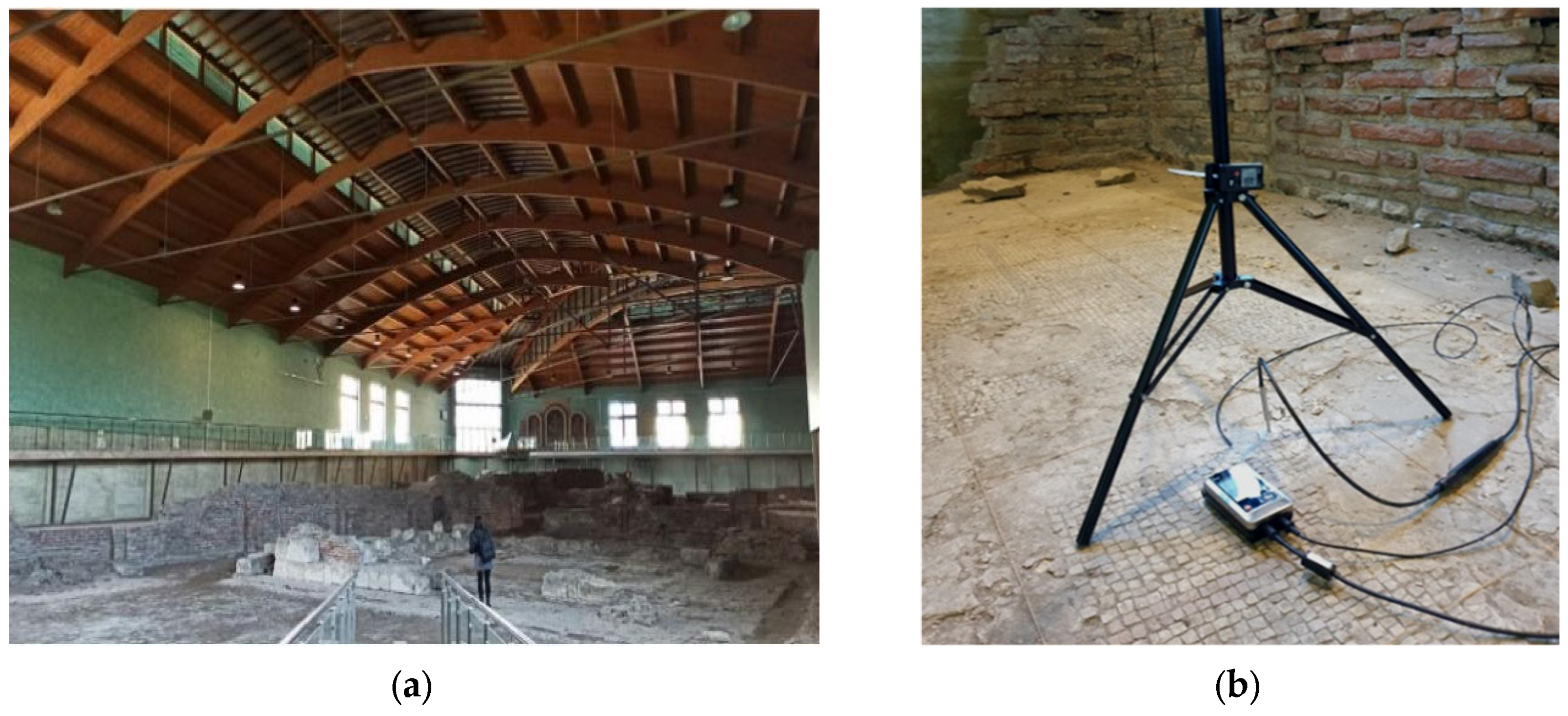
Cultural property of exceptional importance, archeological site 1a—the Sirmium Imperial Palace—is located in the southern part of Sremska Mitrovica, on the corner of the streets named Pivarska and Branko Radičević, and it represents a significant depression in relation to the surrounding terrain. After the research and conservation of the walls of the rooms and the floor mosaics carried out in several phases (1957–1960, 1971–1972 and 1974–1976), the remains of the imperial residence in Sirmium were left in the open, that is, “under the open sky”; only the floor mosaics were covered with a thin layer of sand, and their presentation to the public was not realized (Figure 1). In the period between 2006 and 2009, the Visitor Center of the Sirmium Imperial Palace was built with the aim of presenting the mosaics in situ (Figure 2).
The covering of the site and the formation of an enclosed space caused a change in the microclimatic conditions of the local environment. There was a sudden drying out of the architectural structures. The use of polycarbonate, a transparent material for the roof covering, enabled heat gains. The consequences that followed manifested themselves as a greenhouse effect, with conditions of increased temperature and humidity favoring the development of microorganisms and low vegetation [45]. In order to improve conditions, in 2016, a sheet metal roof was installed over the polycarbonate panels, which reduced the intrusion of sunlight and the illumination of the site. However, the aforementioned problems, such as overheating in the summer months, are still present because the building is not thermally insulated. As for ventilation in the Visitor Center of the Imperial Palace, the project originally envisaged a mechanical plant that was never activated due to technical reasons and the lack of appropriate infrastructure. Water drainage from the roof was planned and solved with horizontal and vertical gutters. However, in recent years, in several places where the roof joints were not properly installed, there has been leakage due to precipitation. In addition to water infiltration into the interior of the building due to roof leakage, there is a capillary inflow of water/moisture from the ground in the visitor center, considering that there is no waterproofed slab on the ground.

2. Materials and Methods

In order to establish the microclimatic conditions of the local environment and examine their effects on the deterioration processes of the ancient mosaics exhibited in the Visitor Center of the Sirmium Imperial Palace, the in situ experiment included a one-year microclimatic monitoring outside and inside the center, as well as physical, biological and chemical tests on the mosaic in Room 34 (Mosaic M34), which was conserved in the 1970s on a concrete base. The mosaic belongs to the latest construction phase of the Imperial Palace of Sirmium and is dated to the end of the 4th century. The meandering bands of swastikas form an alternating key motif. They are made of red and black marble stone tesserae on a background of white ones [46]. The first layer in the original ancient stratigraphy of mosaic 34 was a drainage layer formed on a loam soil. The drainage layer consists of compacted rubble and soil 15 cm thick on which 3 layers of mortar of different quality are placed. The first layer of mortar placed on the drainage layer is made of lime, gravel and broken bricks 10–12 cm thick. The second layer of mortar, 2–3 cm thick, has the same composition, except that the components of the mortar mixture are of a finer structure. The third layer of mortar, 1.5–2 cm thick, is a direct substrate for the stone tesserae. It is made of lime and sifted quartz sand without the addition of crushed brick [47].
The conservation work in 1968 included: lifting the mosaic from the site and taking it to the workshop, cleaning the back of the deteriorated plaster base and making a new one similar to the original, returning the mosaic to its original place on the site and placing it on a new reinforced concrete support over an extension plaster as an intermediate layer. The reinforced concrete slab, 8–10 cm thick, was cast on the original ancient layer of old plaster with coarse aggregate, which was determined to be stable and would not cause it to crack if it came to subsidence [47].
In addition to the basic microclimatic parameters (T and RH), the temperature on the surface of the mosaic Tp [°C], the temperature in the mosaic Tum [°C], the moisture content in the mosaic, as well as other derived values from known ones such as specific humidity SH [g/kg] and dew point temperature—condensation Td [°C] were monitored. Microclimatic monitoring was carried out in accordance with the conditions of the standards EN 15757:2010 [48] and UNI 10829:1999 [42], while the examination of physical processes in mosaics was monitored according to the standards EN 15758:2010 [49], EN 16242:2012 [50] and EN 16682:2017 [51]. While the monitoring was still ongoing, the results of the microclimatic monitoring from February to April 2021 and the biological sampling during the spring season were partially published [52].

2.1. Microclimate Monitoring

In the Visitor Center of the archeological site 1a, Sirmium Imperial Palace, measurements of internal and external values of microclimatic parameters of temperature (T) and relative humidity (RH) were carried out. Internal thermohygrometric values were monitored directly next to the M34 mosaic using the Testo 174h device (Titisee-Neustadt, Germany) [53], while the external values were read using the PCE-FWS-20 weather station (Manchester, UK) [54]. All monitoring instruments, data loggers and the weather station were programmed to read the values of the T and RH parameters every 30 min. The sensors were installed in accordance with technical protection measures and under the expert supervision of colleagues from the Republic Institute for the Protection of Cultural Monuments in Belgrade and the Institute for the Protection of Cultural Monuments in Sremska Mitrovica. Tracking was performed from 9 December 2020 to 28 January 2022, in order to collect a relevant data sample for statistical analysis covering the year 2021.

2.2. Monitoring the Equilibrium Moisture Content and Temperature in the M34 Mosaic

The equilibrium moisture content (%) and temperature (°C) in the M34 mosaic were measured using a Testo 176H1 data logger [55]. This device is a thermohygrometer with 4 channels and 2 external probe inputs. The Testo depth probe (catalog number 0572 6174) has a diameter of 4 mm and is 65 mm in length [56]. The probe measuring range for EMC ranges between 0 and 100% (accuracy ± 2% RH at +25 °C and 2% to 98% RH) and for temperatures between 0 and +40 °C (accuracy ± 2 °C). The probe is placed in the mortar layer of the mosaic. Monitoring of the equilibrium moisture content and temperature in the M34 mosaic was carried out during the same period as the microclimate monitoring in the outdoor and indoor areas. The reading interval was maintained at 30 min.

2.3. Monitoring the Temperature on the Mosaic Surface

The temperature on the mosaic surface M34 was monitored using a Testo contact surface probe (probe catalog number 0628 7507, Lenzkirch, Germany) [57] attached to a Testo 176H1 data logger. The temperature contact probe has a measuring range of −50 to +80 °C. The accuracy is ±2 °C for temperatures between −25 and +80 °C, and ±0.5 °C for temperatures between −40 and −25.1 °C. Monitoring the temperature on the mosaic surface Tp [°C] is deemed necessary so as to determine whether condensation occurs on the surface of the stone tesserae of the mosaic. The monitoring period and reading interval are the same as for monitoring microclimatic conditions in the outdoor and indoor spaces and measuring the equilibrium moisture content and temperature in the M34 mosaic.

2.4. Statistical Processing of Monitoring Data and Calculation of Derived Parameters

Data reading from the data logger was performed in the Testo Comfort Software Basic 5.0 program, while data from the weather station was read in the Easyweather program. Processing, analysis and graphical presentation of the read data were performed for the entire year of 2021 in the Microsoft Excel program package. Statistical processing and presentation of data were carried out in accordance with the EN 15757:2010 standard [48] and UNI 10829:1999 standards [42].
Based on the set of T and RH readings inside and outside the Visitor Center of the Imperial Palace, the average daily, monthly, seasonal and annual values were determined using a calculation method. The average values were calculated as the arithmetic mean of the T and RH readings, i.e., as the sum of all readings of the observed period divided by the number of readings recorded in the period for which the average value is calculated.
Moreover, the seasonal cycle was determined—a trend obtained by calculating the Moving Average (MA). This allows us to see the seasonal trend of T and RH so that, using this statistical method, short-term oscillations are mitigated, while long-term trends and cycles are emphasized [48].
Based on the measured values of T and RH, the specific humidity was calculated using the formula [58]:
SH [g/kg] = 0.03795 × RH × 10a × T/(b + T)
where a = 7.5 and b = 237.3 °C are the Magnus and Tetens coefficients.
Also, based on the measured values of T and RH of the air, the dew point temperature dT [°C] was calculated according to the formula [59]:
dT [°C] = B1 × [ln (RH/100) + ((A1 × T)/(B1 + T))]/A1 − ln (RH/100) − ((A1 × T)/(B1 + T))
where A1 = 17.625 and B1 = 243.04 °C are the Alduchov and Eskridge coefficients.

2.5. Qualitative Analysis of the Presence of Soluble Salts

For the preliminary analyses of the presence of soluble salts, the standard EN 16455:2014 was used [60]. These analyses were carried out on the M34 mosaic on the surface and in the mortar layer at the location of the crack or gap between the tesserae using Quantofix measuring strips (MACHEREY-NAGEL, Düren, Germany) for the detection of soluble salts of sulfate, nitrate and chloride (Quantofix sulfate sticks 6 × 95 mm; Quantofix nitrate sticks 6 × 95 mm; Quantofix chloride sticks 6 × 95 mm) [61]. Quantofix measuring strips are test strips made for the most common soluble salts on cultural heritage sites. The presence of certain groups of soluble salts is read by comparing the color on the strip with the marked values in key [62]. The presence of a particular soluble salt is expressed in mg/L. Sampling was carried out in November 2021. Samples were taken from three locations. The first two sampling positions were on the surface of the mosaic, while the third was in the mortar layer.

2.6. Sampling by Non-Invasive Methods with Adhesive Tape and Sterile Swab

Non-invasive methods were used for sampling biological material: sampling with adhesive tape and a sterile swab. Sampling was carried out during each season (spring, summer, autumn and winter), i.e., in April, August, November and February. The adhesive tape was glued to the surface of the stone tesserae of the M34 mosaic and then removed with a uniform hand movement, with constant force [63]. The samples were then placed on a microscope slide and stored in a sterile box for further microscopic analysis.
In order to sample viable fungal propagules, areas on the M34 mosaic with symptoms of biodeterioration (approximately 10 cm2 of surface area) were selected, to which a sterile swab was placed, and the surface of the stone tesserae was wiped with light hand movements. Upon arrival at the laboratory, inoculation was performed on malt extract agar (MEA) medium. After an incubation period (seven days in a thermostat at a temperature of 25 °C), colonies were counted, and their number per unit area (CFU/cm2) was determined, after which the colonies were reinoculated to obtain axenic cultures on the same medium and under the same incubation conditions.

2.7. Aerobiological Sampling and Determination of Spore Concentration in the Air

Aeromycological sampling was performed using an active, volumetric method based on the Feller index [64]. The air was sampled using an Air sampler, SAS Super DUO 360 (Rockville, MD, USA), during four seasons in 2021 (spring, summer, autumn and winter). Sampling was performed directly near the M34 mosaic. The colonies of both fungi and bacteria on MEA were enumerated after 7 days (25 °C) to determine their number per unit volume (CFU/cm3).

2.8. Identification of Micromycetes

In order to identify micromycetes from adhesive tape, microscopic slides were mounted in glycerol, preliminarily observed on a Nikon Eclipse E 200 optical microscope (Nikon, Tokyo, Japan), and then photographed on a Zeiss Axio Imager M1 microscope (Zeiss, Oberkochen, Germany) using AxioVision Release 4.6 software. Identification of fungal propagules was performed on the basis of micromorphological characteristics.
Isolates obtained by sterile swabs and aeromycological sampling were identified on the basis of macromorphology of 7-day-old colonies (color, texture and colony size) and micromorphology of reproductive structures (type, appearance and size of spores and spore-bearing structures), observed with an aforementioned optical microscope and software package. Fungal taxa were identified using identification keys [65,66,67].

3. Results

3.1. Microclimatic Environmental Conditions in the Visitor Center of the Sirmium Imperial Palace

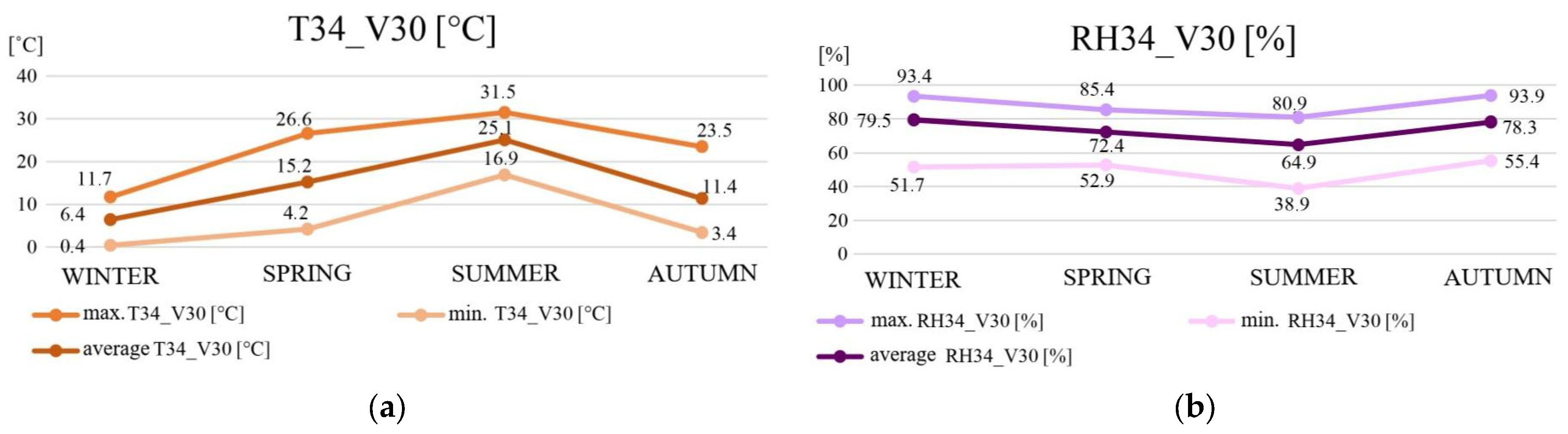
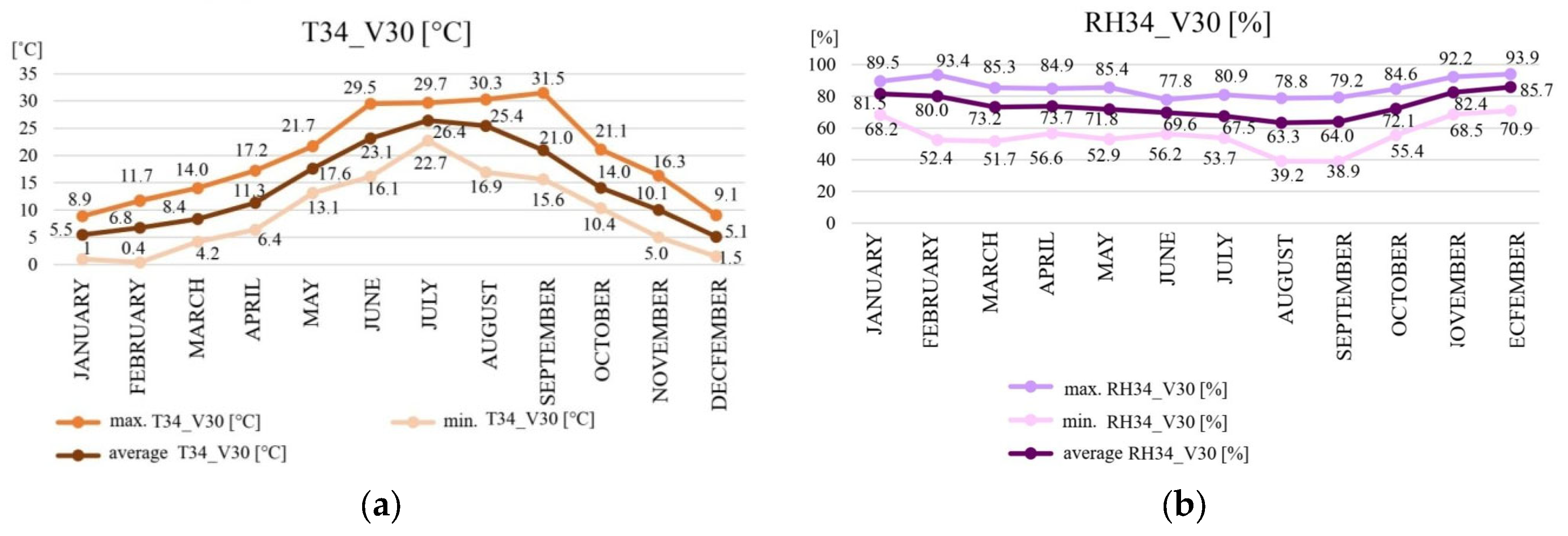
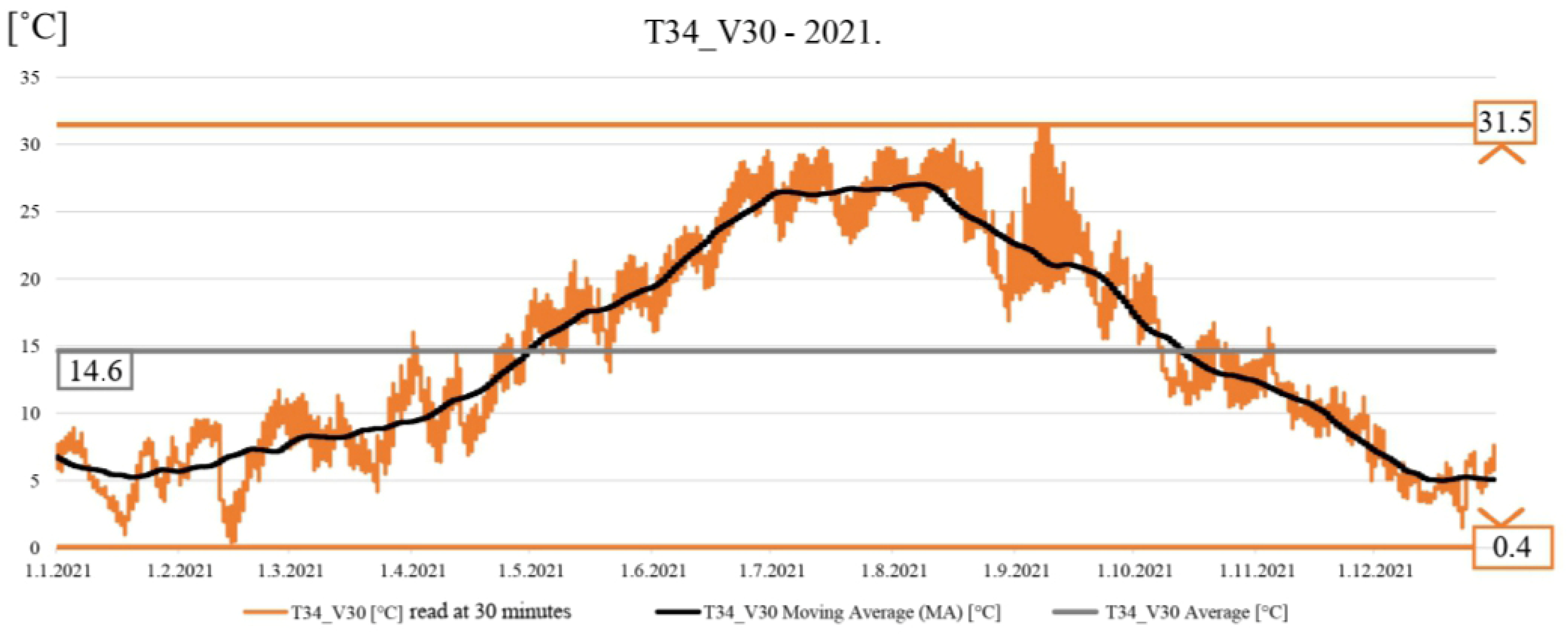
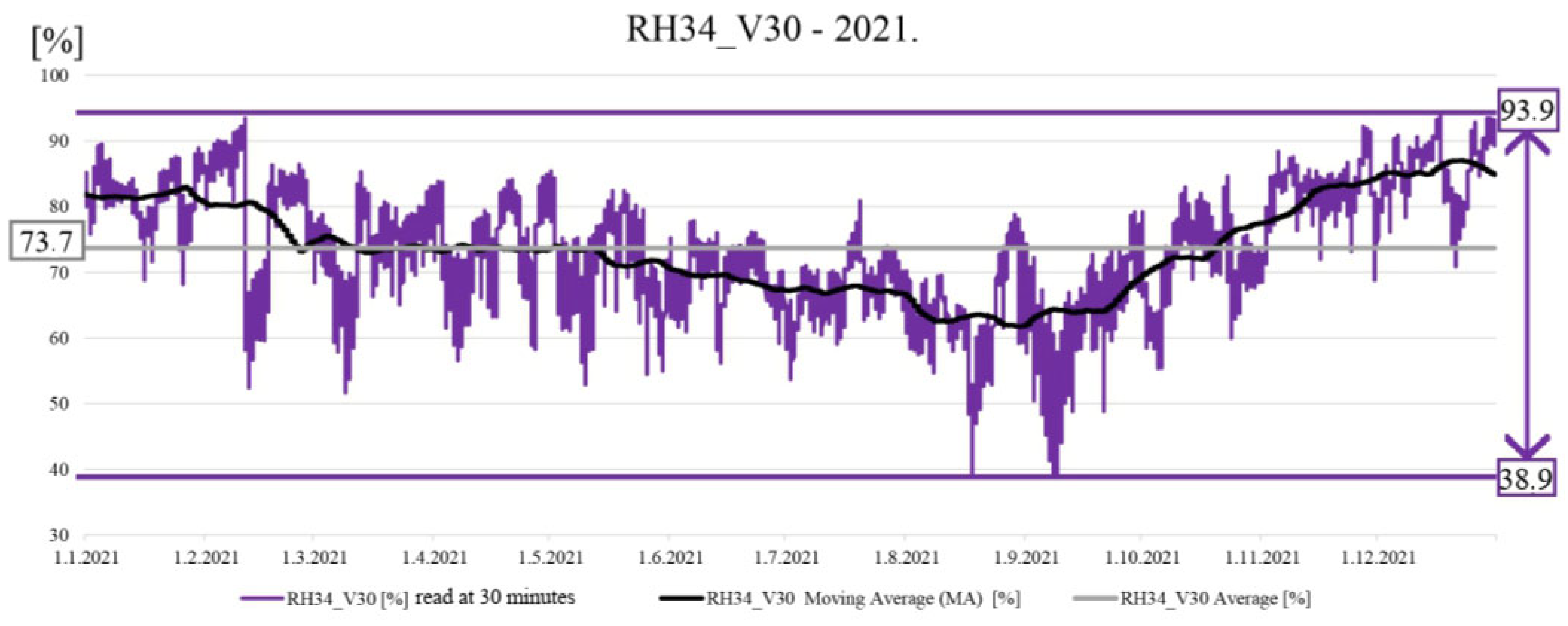
The results of readings of T34_V30 and RH34_V30 values from the data logger M34_V30 placed 30 cm from the floor mosaic in room 34 are shown in the graphs (Figure 3 and Figure 4). In addition to displaying readings of T34_V30 and RH34_V30 for 30 min, annual extremes were established, while data processing yielded a trend of the moving average value for the monitoring period of one year (Moving Average–MA) as well as the mean annual value of T34_V30, which was about 15 °C (14.6) and RH34_V30, which was about 74% (73.7%). The maximum value of T34_V30 was 31.5 °C and was recorded on 7 September 2021, while the lowest value of 0.4 °C was measured on 14 February 2021. The extreme maximum and minimum annual values of RH34_V30 were 93.9% (17 December 2021) and 38.9% (8 September 2021). The maximum annual oscillation of ΔT34_V30 was 31.1 °C, and ΔRH34_V30 was 55%.
By processing the data from the one-year microclimatic monitoring, the average daily values of T34_V30 and RH34_V30 were established. The highest average daily value of T34_V30 was 28.5 °C (16 August 2021), and the value of RH34_V30 was 91.8% (30 December 2021), while the lowest average daily value of T34_V30 was 1.8 °C (14 February 2021), and the value of RH34_V30 was 47.6% (18 August 2021).
Analysis of the average daily values revealed that T34_V30 was in the range of 6–25 °C for 256 days, with 51 days being >6 °C and 58 days being >25 °C. The average daily values of T34_V30 were not >30 °C. The average daily values of RH34_V30 were only in the recommended range according to the MiBAC decree of 45–60% for 15 days, while above 60% for 350 days.
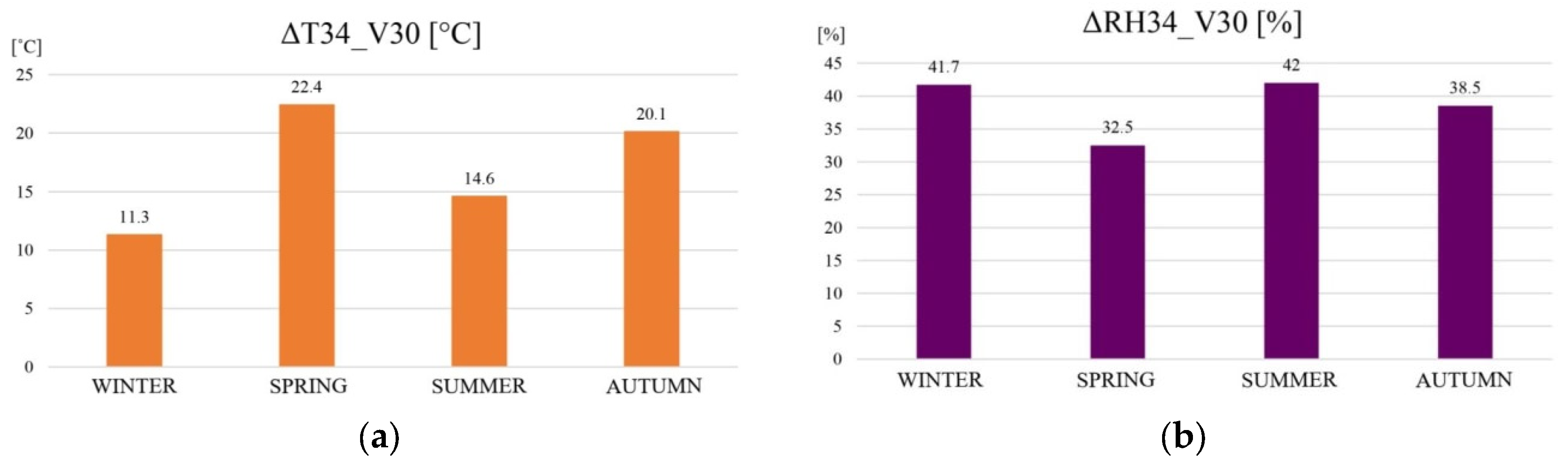
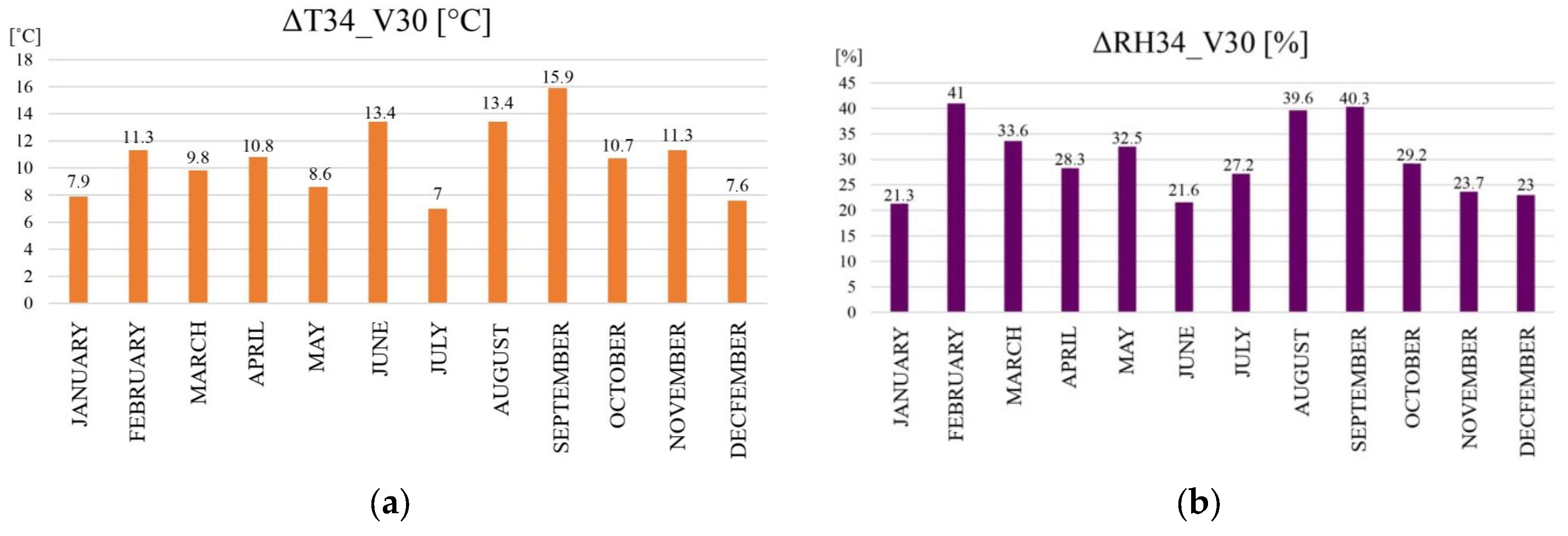
The largest daily oscillation of ΔT34_V30 was recorded on 8 September 2021, and was 12.3 °C, while the maximum daily oscillation of ΔRH34_V30 was 35.2% on 11 February 2021. For the monitoring period of one year, the average daily oscillation of ΔT34_V30 was 2.8 °C and ΔRH34_V30 was 8.3%.
According to the recommended values of short-term variations in the standards and recommendations of various organizations for the preservation of museums, collections, an analysis of daily oscillations of T34_V30 and RH34_V30 was performed. Daily oscillations of T34_V30 were >2 °C for 249 days, then >4 °C for 45 days, while they were >5 °C for 17 days. Daily oscillations of >10 °C were recorded for 5 days. As for daily oscillations of RH34_V30, out of a total of 365 days in the year, 279 days were measured to be >5%, while 96 days were >10%. Significant daily oscillations of RH34_V30 >20% were recorded for 7 days.
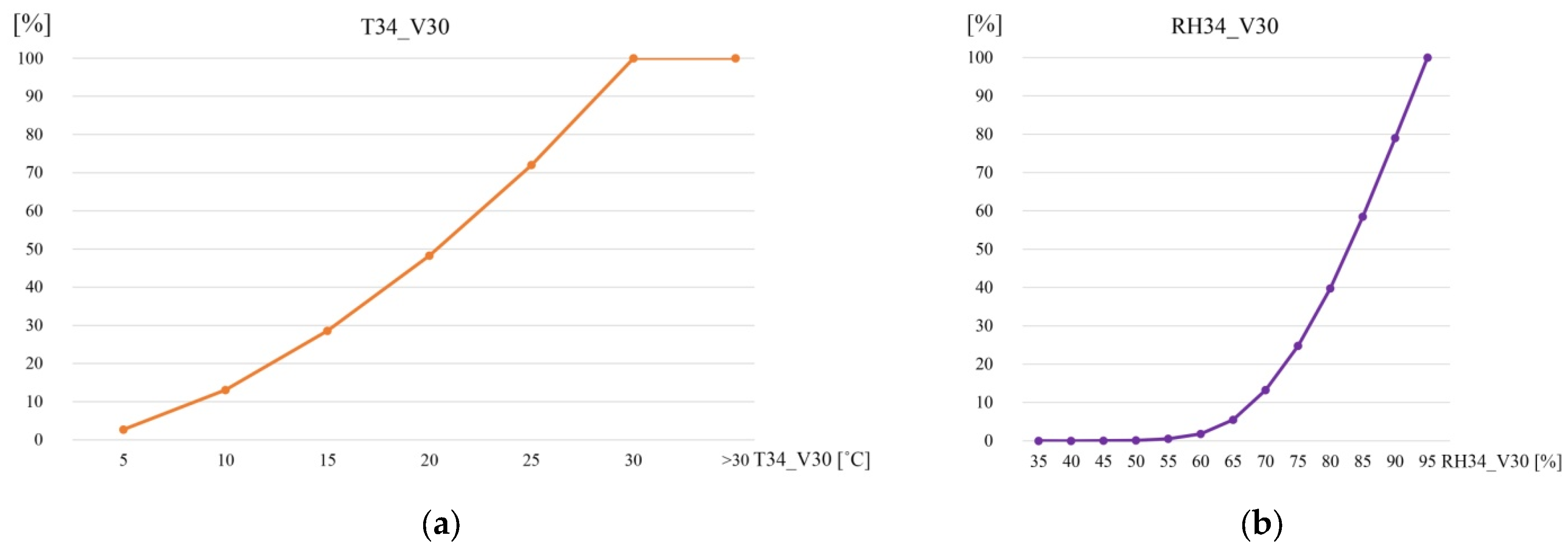
The graphs (Figure 5a,b) show the cumulative frequency of T34_V30 and RH34_V30 readings. Less than 3% of T34_V30 readings recorded values <5 °C, while 72% of total readings had values <25 °C. Less than 1% of readings had values T34_V30 > 30 °C. If we look at the cumulative prevalence of RH34_V30 readings, only 1% of readings had RH34_V30 < 60%. Of all RH34_V30 readings for a year, 94% of readings had values of RH34_V30 > 65%, 60% of readings had RH34_V30 > 80%, while 21% of RH34_V30 values were >90%.
Below are graphs showing the maximum, average, and minimum seasonal and monthly values of T34_V30 and RH34_V30 (Figure 6a,b and Figure 7a,b), as well as seasonal and monthly variations in the read parameters (Figure 8a,b and Figure 9a,b).
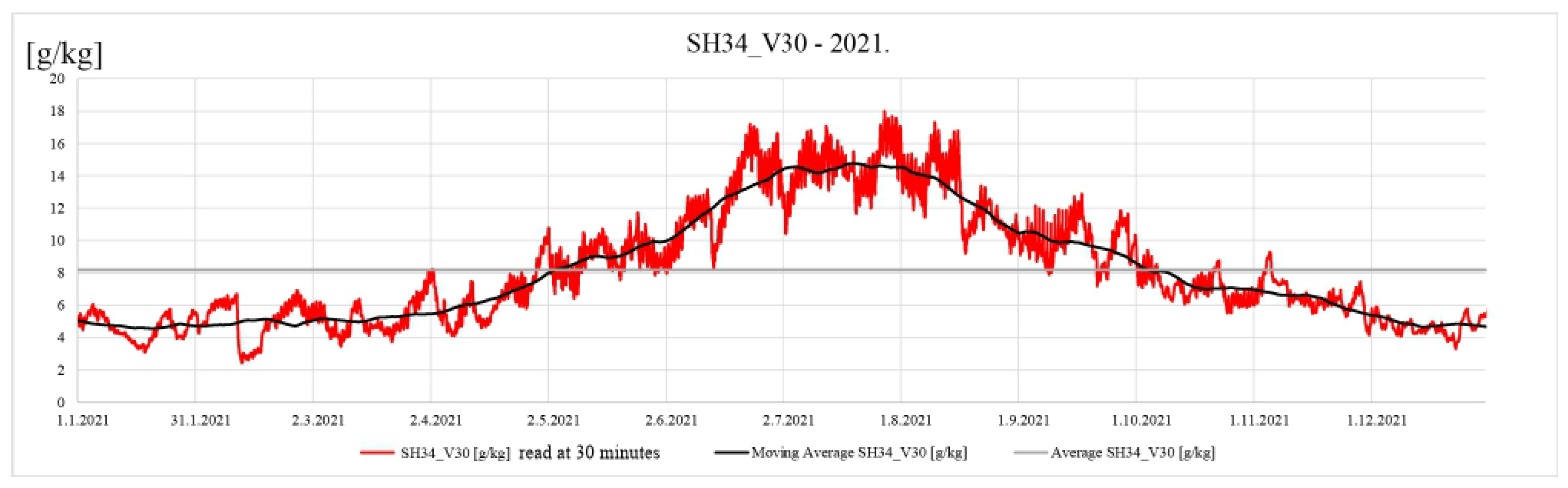
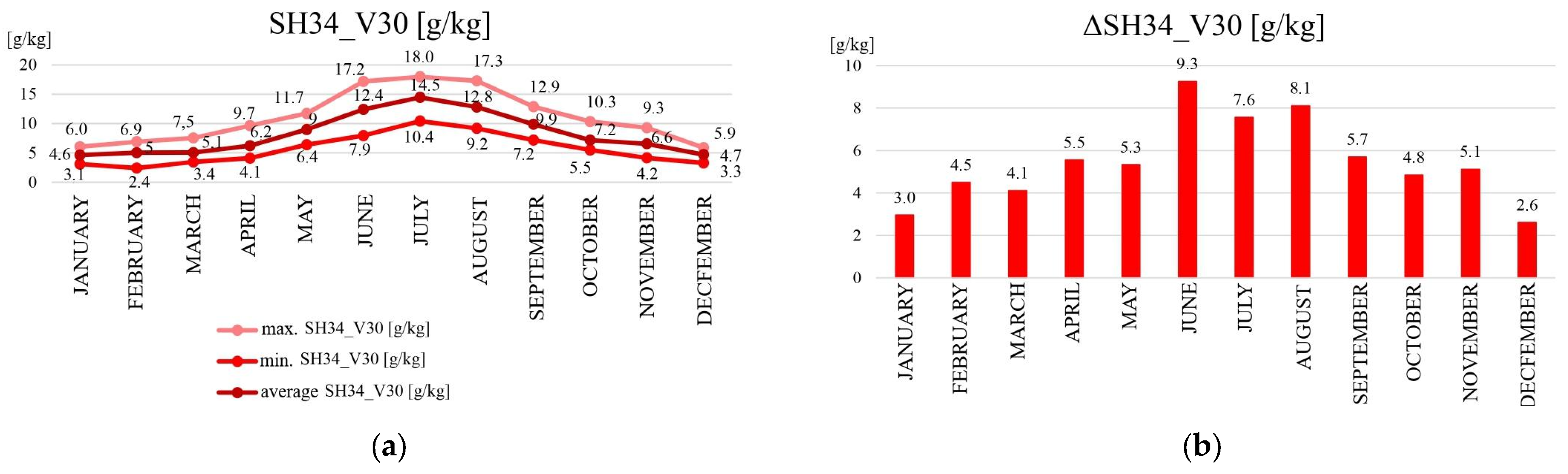
The graph (Figure 10) shows the SH34_V30 values every 30 min, as well as the moving average value and the annual mean value (8.2 g/kg). The maximum annual value of SH34_V30 was on 28 July 2021 and was 18 g/kg, and the minimum of 2.4 g/kg was on 12 February 2021. The average daily values were calculated by processing the data. The maximum average daily value of SH34_V30 was on 28 July 2021 and was 16.6 g/kg, while the minimum average daily value was 2.8 g/kg on 12 February 2021.
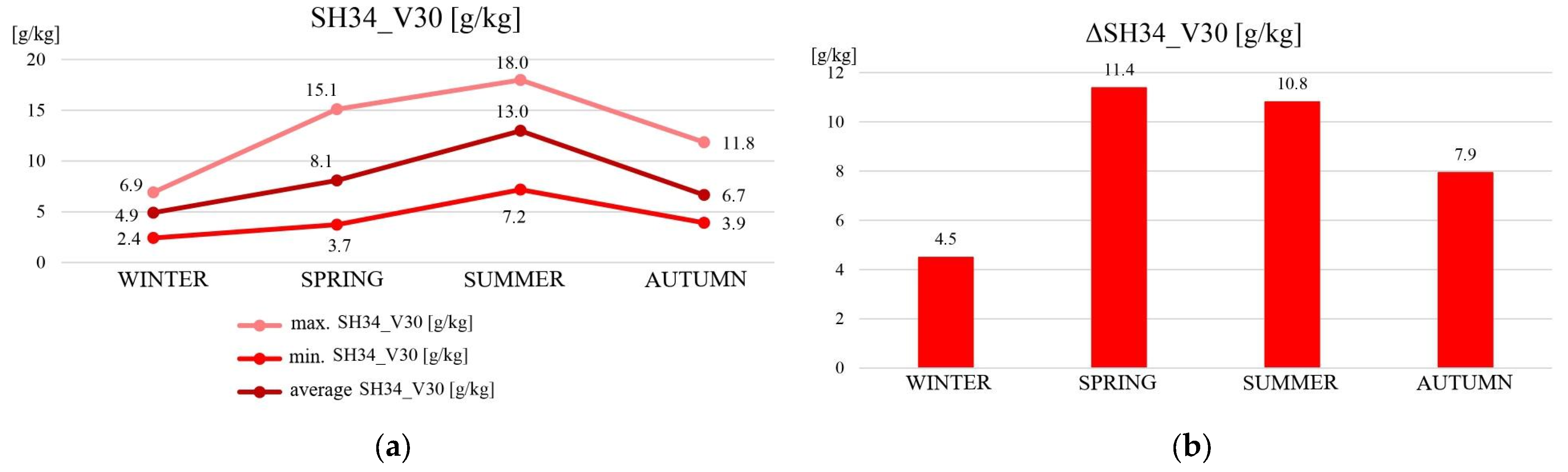
If we look at the seasonal and monthly values of SH34_V30, the highest value was recorded during the warmest season of the year, during the summer, in July and it was 18 g/kg (Figure 11a,b), and the lowest during the winter, in February, and it was 2.4 g/kg (Figure 12a,b). The largest oscillations of ΔSH34_V30 were in the spring, when they were 11.4 g/kg, or during the month of June when they were 9.3 g/kg.
The results of microclimatic monitoring in the outdoor area are important as a reference value for assessing microclimatic conditions in the Visitor Center of the Sirmium Imperial Palace. The outdoor temperature Tsp during the measurement period ranged from −12.20 °C to 41.5 °C, while the relative humidity in the outdoor area RHsp varied from 11% to 100%. In addition to the annual extremes, it is important to highlight the average annual temperature Tsp_av, which was obtained as the arithmetic mean of the average daily values, and it was 14.8 °C, and the average annual value of relative humidity was about 63.1%. The maximum annual outdoor value SHsp was 17.5 g/kg (17 July 2021), and the lowest was 0.8 g/kg (13 February 2021). The annual mean value of SHsp was 6.7 g/kg. The data processing resulted in the calculation of the mean daily values of SHsp. The maximum mean daily value of SHsp was 14.4 g/kg (17 July 2021), while the minimum mean daily value was 1.3 g/kg (13 February 2021).

3.2. Physical Processes in the M34 Mosaic

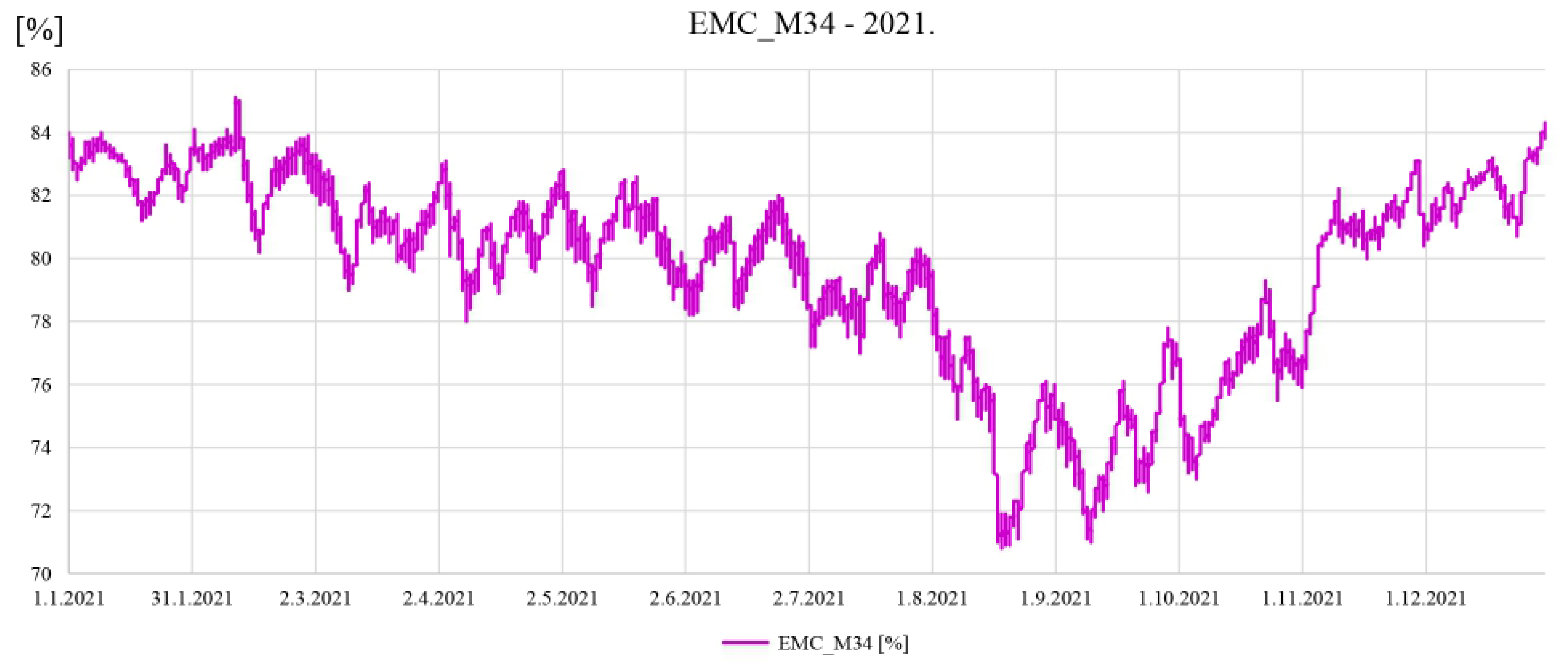
Figure 13 shows a graph of the equilibrium moisture content readings in the M34 mosaic (EMC_M34). The highest recorded EMC_M34 value during the monitoring period was 85.1%, while the lowest reading was 70.8%.
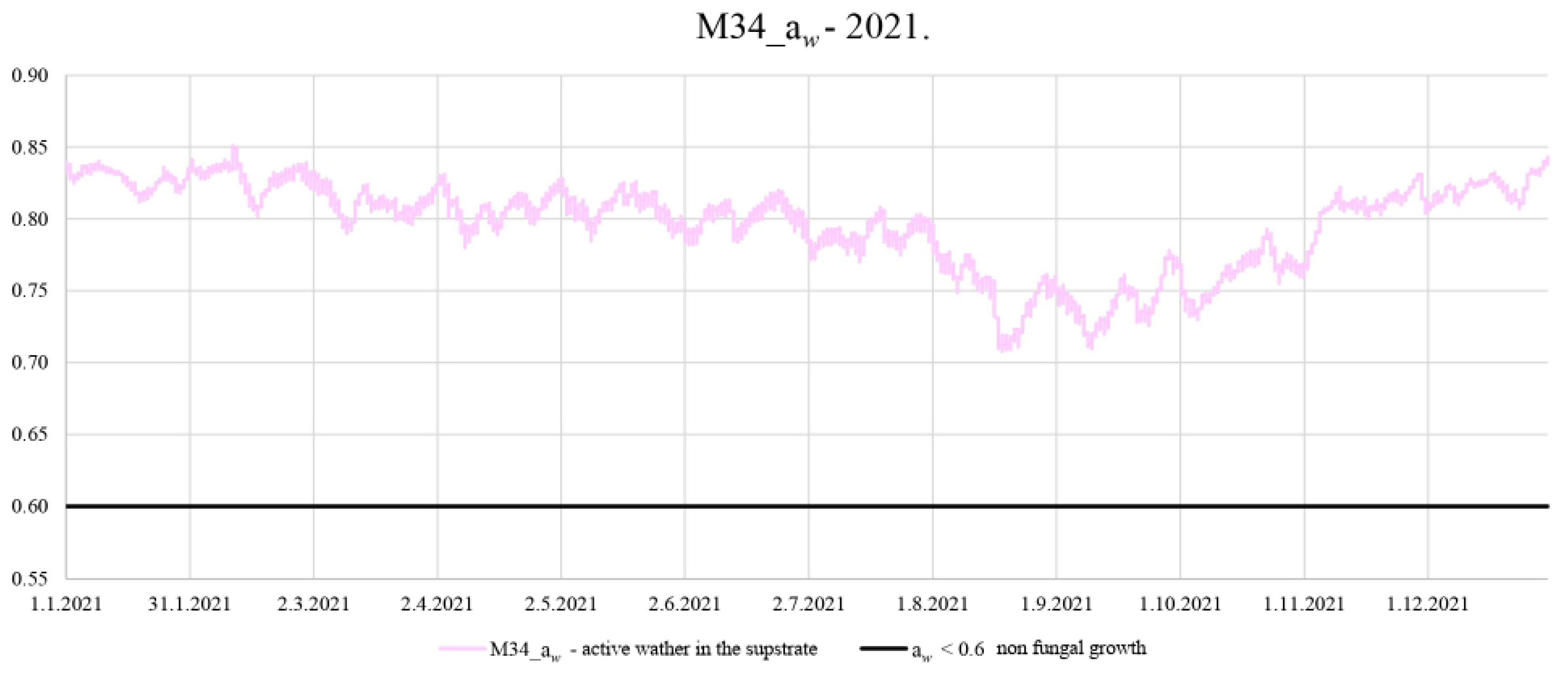
Based on the EMC_M34 readings and the condition EMC = aw × 100%, the aw value was calculated. The graph (Figure 14) shows, in addition to the trend of active water in the substrate aw, the limit value aw = 0.6 below which there is no fungal growth. Since the aw values are above 0.6 throughout the year, it can be established that the environmental conditions are favorable for the growth of micromycetes.
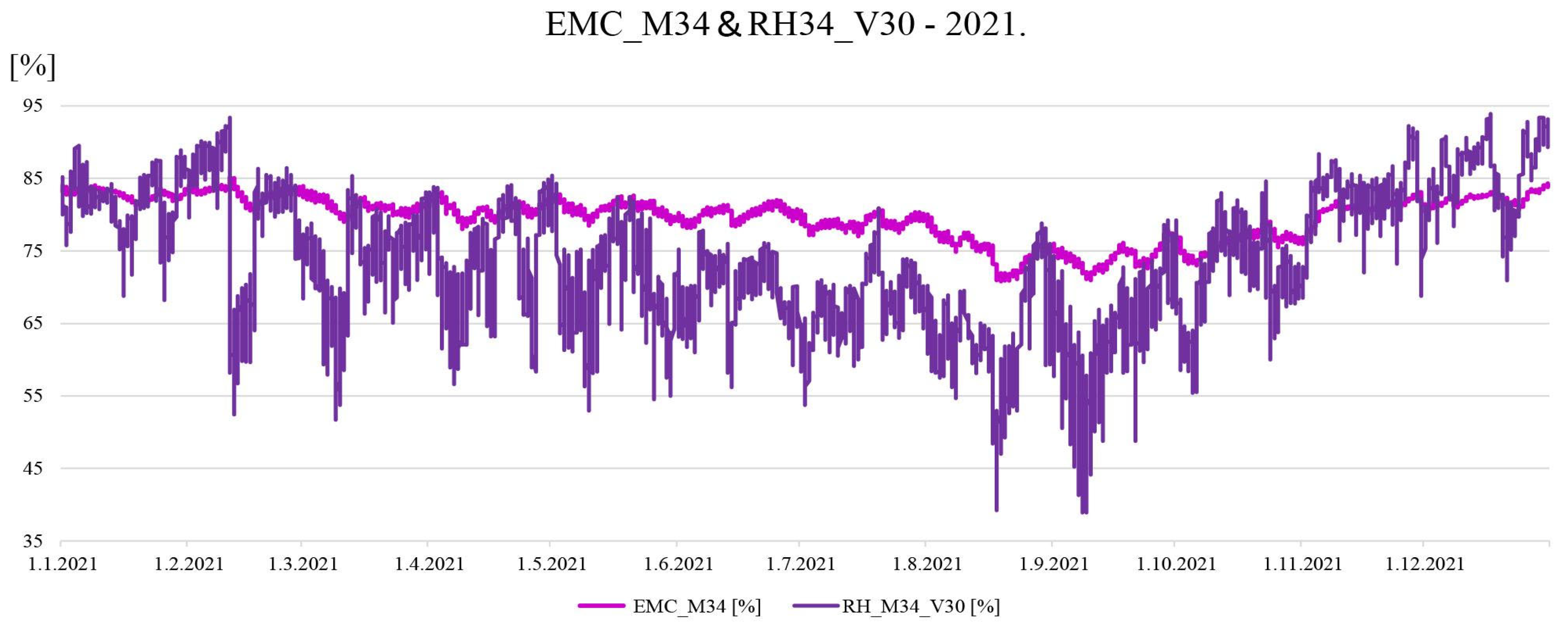
Figure 15 shows a graph of the equilibrium moisture content in the M34 mosaic (EMC_M34) and the relative humidity of the air measured at 30 cm from the M34 mosaic (RH34_V30) every half hour. This comparative display shows the processes occurring within the mosaic, i.e., the alternation of moisture absorption from the air and capillary moisture inflow, i.e., evaporation from the mosaic surface. Consequently, it can be established that the processes of moisture absorption from the air are present in the M34 mosaic from the beginning of the measurement to mid-February and from November to the end of the year. The drying process was present almost continuously between mid-June and the end of August, while during the rest of the months of the year the processes of absorption and drying alternate at smaller time intervals. Statistical analysis established that during the one-year monitoring period, the drying process was present in 75.79% of readings, moisture absorption from the air in 23.74%, and the equilibrium of both thermodynamic systems was achieved in 0.47% of all readings.
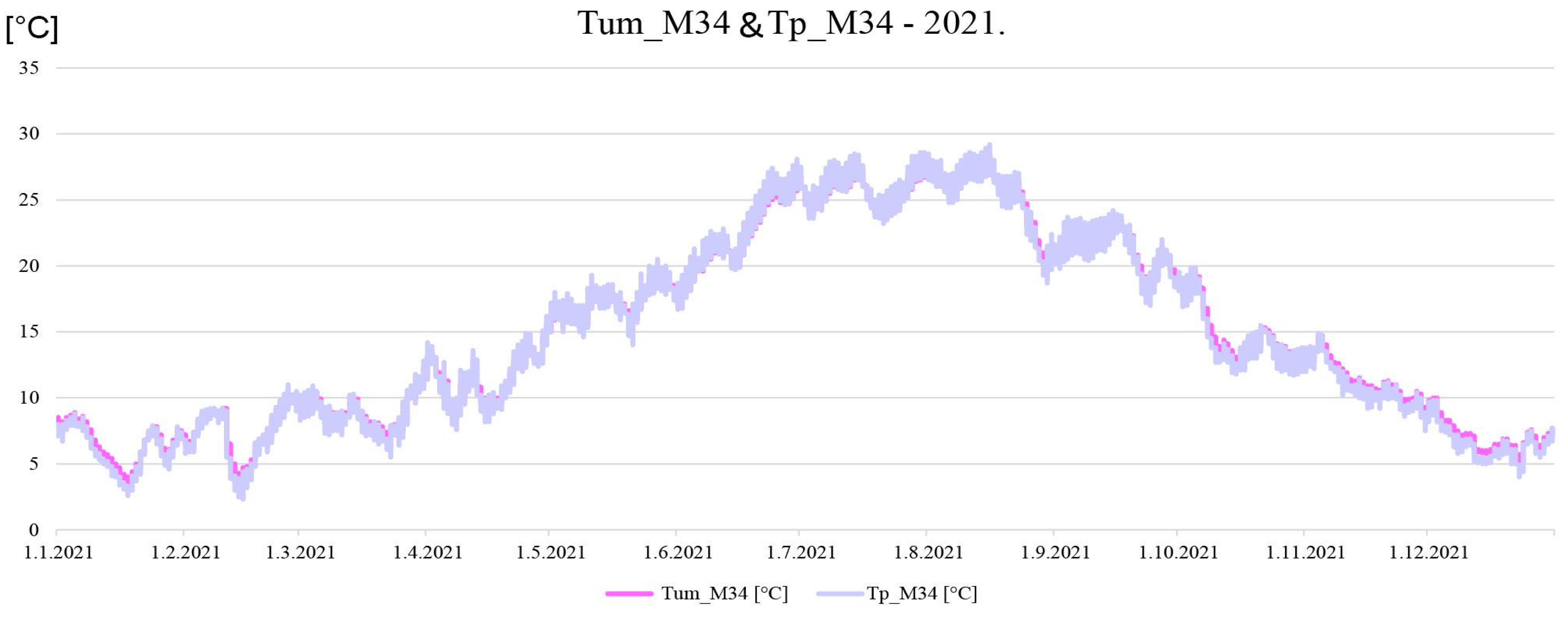
The results of temperature readings in the mosaic and on the surface of the mosaics Tp_M34 and Tum_M34 are given in Figure 16. Based on the display, it can be seen that Tum_M34 > Tp_M34 during January, November and December, while Tp_M34 > Tum_M34 was in the period from mid-April to the end of August. During the rest of the months, cycles alternate when Tum_M34 > Tp_M34 and vice versa when Tp_M34 > Tum_M34. Such results are conditioned by the air temperature. During the colder months, the temperature is higher in the mosaic, and during the warmer months on the surface. Statistical analysis found that Tum_M34 > Tp_M34 62.1%, Tp_M34 > Tum_M34 29.6%, and that Tum_M34 = Tp_M34 8.3% of the total number of readings.
Since the temperature on the surface of the mosaic, Tp_M34, is less than or equal to the Td_M34 dew point temperature, it can be established that there was no condensation on the surface of the mosaic M34. However, during certain months, the values of Tp_M34 and Td_M34 were very close, and there is a latent possibility that condensation may occur on the surface of the stone tesserae of the mosaic. For this reason, microclimatic conditions should be improved so as to avoid that the Td_M34 values are close to the Tp_M34 values, thus excluding the possibility of condensation on the surface of the mosaic.

3.3. Presence of Soluble Salts

When it comes to the M34 mosaic, nitrates were not detected on its surface, but only in the mosaic (25–50 mg/L). Sulfates were detected at all measurement positions, while the highest presence was recorded in the cement mortar layer in the mosaic. In this case, sulfates certainly exist because the mosaic was preserved in the 1970s using cement mortar, and sulfates are its products. Chlorides were identified on the surface of the mosaic (0–500 mg/L), while in the mosaic they were below the detection limit (Table 2).

3.4. Biological Colonization of the M34 Mosaic

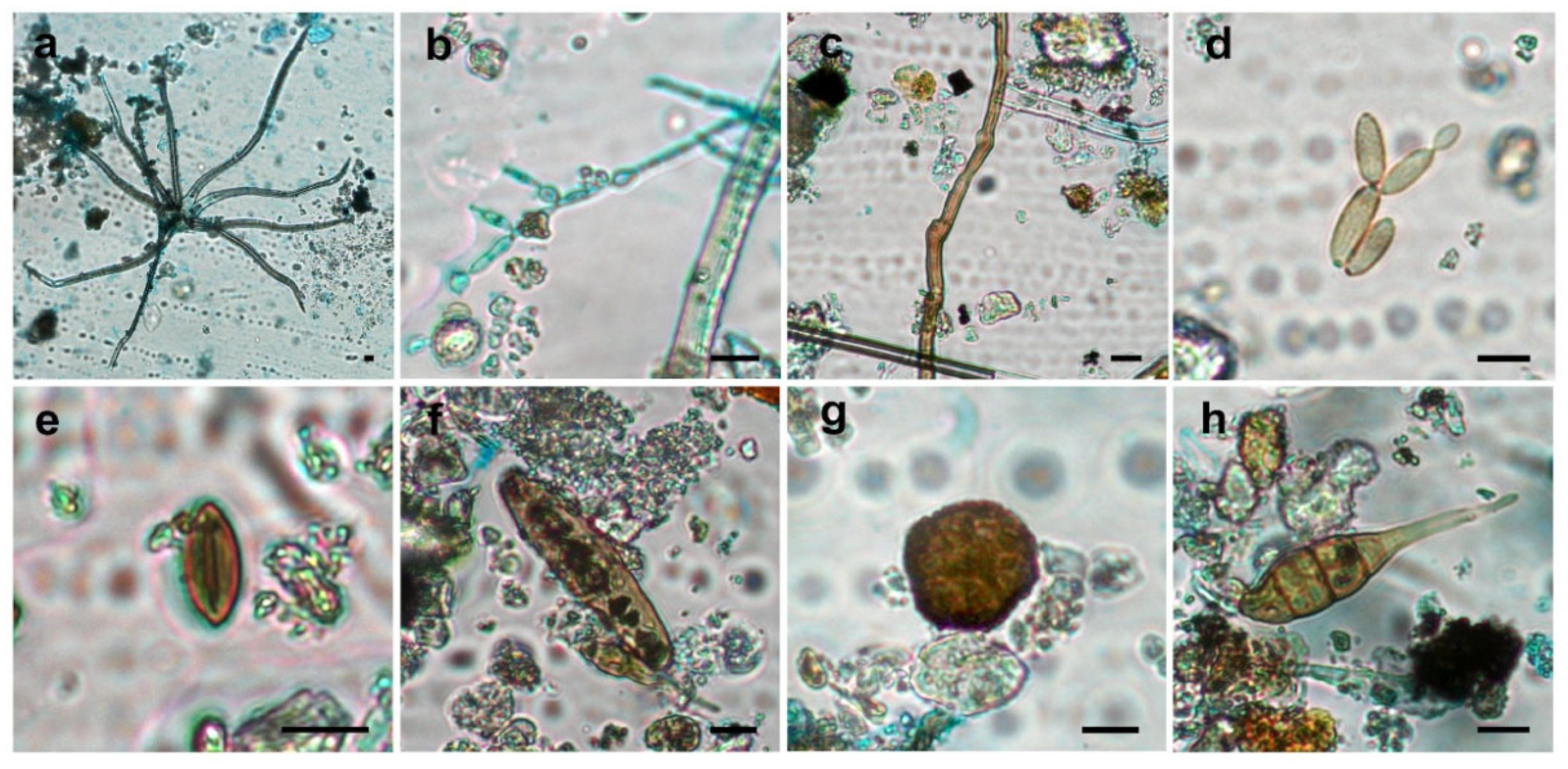
After reviewing the results of the identified fungal structures during four seasons of sampling with adhesive tape, it can be concluded that species of the genus Cladosporium, followed by Alternaria and Epicoccum, are most present on the surface of the M34 mosaic. The following table shows the diversity and abundance of genera by season (Table 3). Figure 17 shows the detected microbiological structures that indicate biological contamination of the mosaic M34.
During 4 seasons, species of 6 genera (Aspergillus, Cladosporium, Penicillium, Rhizopus, Trichoderma and Mucor) were identified by sampling with sterile swabs on the M34 mosaic. Quantitative analysis of identified fungal genera and isolates during the seasons is given in Table 4. Cladosporium species were the most frequently isolated.

3.5. Air Contamination by Fungal Propagules

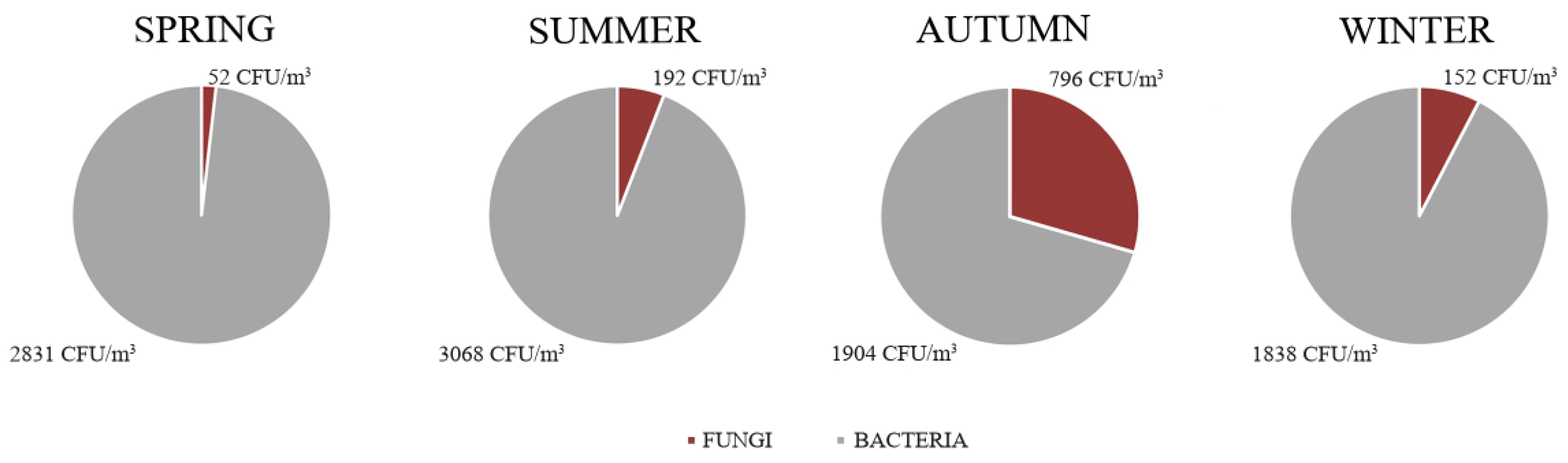
The results of quantitative studies of the presence of microorganisms in the air at mosaic M34 in the Visitor Center of the Sirmium Imperial Palace showed a high concentration of propagules in the air during all four seasons. These values were over 1500 CFU/m3 during all four seasons (Figure 18). Quantitative analysis of identified airborne fungal taxa during the seasons is shown in Table 5. The most common isolated fungal species in the air of the Imperial Palace were Penicillium spp. and Cladosporium spp.

4. Discussion

4.1. Comparative Analysis of Microclimatic Environmental Conditions in the Visitor Center of the Sirmium Imperial Palace and the Recommended Microclimatic Regime for the Presentation of Mosaics

According to the results of a one-year microclimatic monitoring, it has been established that the Visitor Center of the Sirmium Imperial Palace has unstable and unbalanced microclimatic conditions. The relative humidity values are extremely high almost throughout the year. They are constantly above 80% during January, February, November and December, while there are significant oscillations of this parameter during the rest of the months. In addition to this, lower external RH and SH values of air in comparison to the internal ones present almost throughout the year indicate that the system’s balance is disturbed, i.e., that there is a source of water/moisture inside the building. This phenomenon is not uncommon; it is present in buildings that do not have a reinforced concrete slab on the ground and are not waterproofed, as is the case with the visitor center. Identified phenomena such as the constant capillary inflow of water/moisture from the ground and walls, as well as the leakage of the roof structure and the infiltration of water into the building’s structures and structural elements, contribute to the formation of conditions identified by microclimatic monitoring. Insufficient air exchange in the center also contributes to the formation of conditions of increased humidity. The presence of green algae on the ground only confirms the results of microclimatic monitoring.
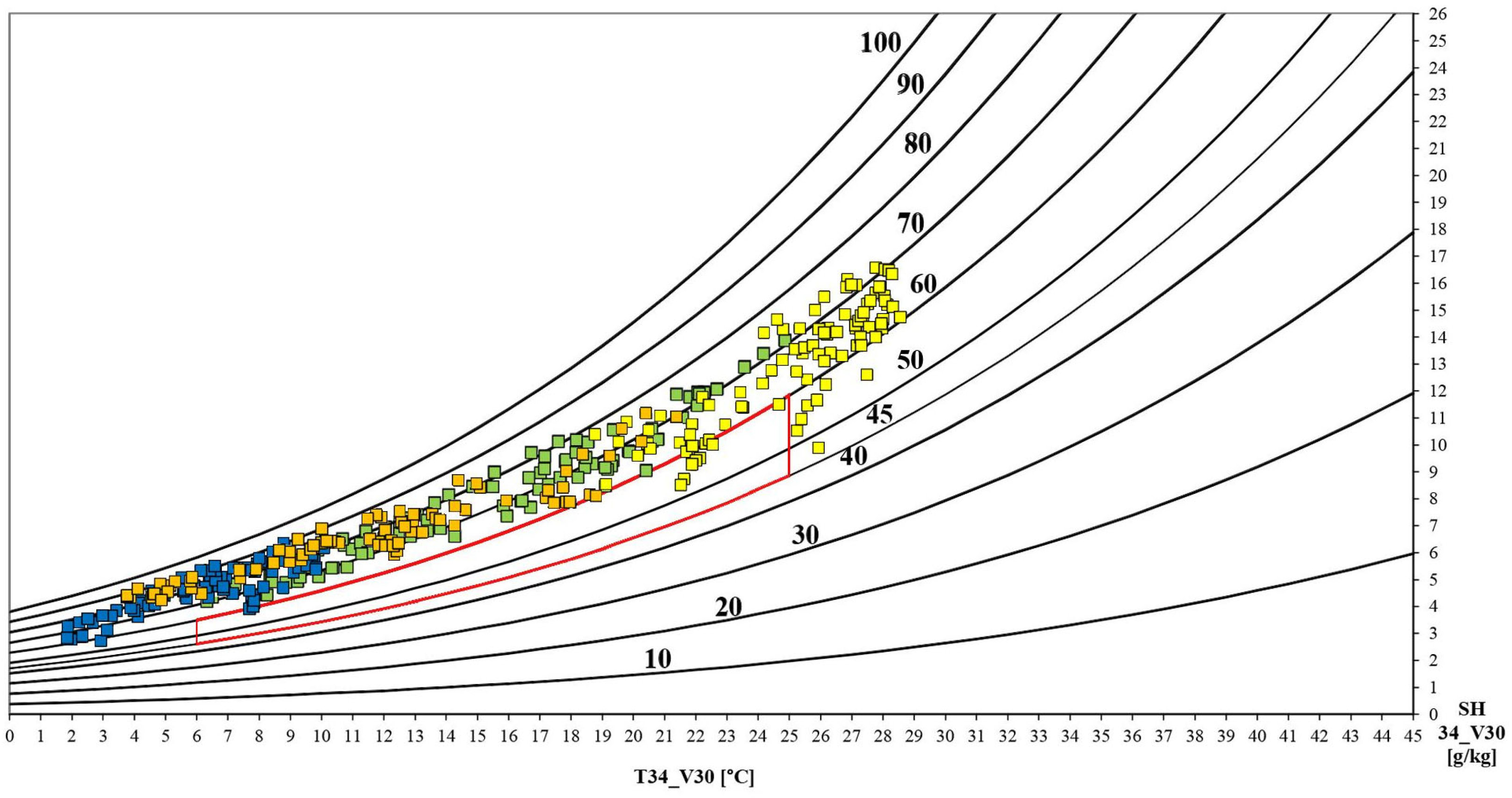
In order to observe and compare the current microclimatic regime in the visitor center with the recommended values for the preservation of mosaics in the MiBAC regulation, the Molière psychrometric diagram was used. The psychrometric diagram (Figure 19) shows a dispersive display of the average daily values of T and RH of the air during the year 2021 for the position M34 by the seasons, and the red closed line indicates the recommended annual range of T and RH of the air for the preservation of mosaics according to the MiBAC regulation (T = 6–25 °C and RH = 45–60%) [43]. The blue color marks winter values, green spring, yellow summer, and orange autumn. During the spring season, average daily values ranged from 60 to 82% (RH) and 5 to 25 °C (T); summer values ranged from 47 to 77% and 19 to 29 (30) °C; autumn values ranged from 60 to 91% and 4 to 21 °C; while winter values ranged from 60 to 91% and 1.8 to 10 °C.
If the microclimatic regime in the Visitor Center of the Imperial Palace is compared with the recommended range according to the MiBAC regulation for mosaics and wall paintings [43], it can be established that the average daily RH values were above the upper recommended range during all four seasons. Only the average daily RH values during the summer period were at the upper limit of the permitted range (around 60%). The lower limit of the permitted range of average daily RH values was not exceeded, so it is less significant. As for the air temperature, the upper recommended limit according to the MiBAC regulation was exceeded during the summer, while the average daily temperature values were below the recommended lower range during the winter period.

4.2. The Influence of Microclimatic Environmental Conditions in the Visitor Center of the Sirmium Imperial Palace on the Physical, Chemical and Biological Processes of Deterioration of the M34 Mosaic

High relative humidity values in the Visitor Center of the Imperial Palace, capillary inflow from the ground, and roof leakage negatively affect the durability of the mosaic, causing the deterioration of its structure due to absorption and drying processes, as shown by the results of physical tests. During the one-year monitoring, the annual EMC range in the M34 mosaic is only 15% (from 70 to 85%). This data indicates that the M34 mosaic has acclimatized to the existing microclimatic conditions of the environment. The decades-long adaptation of the M34 mosaic to microclimatic changes has resulted in its deterioration and structural degradation; therefore, this mosaic, in accordance with its current condition, requires urgent conservation.
The temperature on the surface of the mosaic’s stone tesserae, Tp, and within the mortar layer, Tum, does not drop below 0 °C, so the M34 mosaic is not subjected to stress caused by freeze–thaw cycles. Moreover, condensation on the mosaic surface during the monitoring period was not identified because the dew point temperature Td was always lower than the surface temperature Tp. However, although it was not established that the values Tp_M34 ≤ Td_M34, there is still a latent possibility of condensation occurring on the coldest surface, namely the stone tesserae of the mosaic, when the values Tp and Td are very close to being equal.
The existing microclimatic conditions of the environment in the Visitor Center of the Sirmium Imperial Palace, with frequent oscillations of RH air, capillary moisture inflow, and water infiltration, favor the cycles of crystallization and dissolution of the identified soluble salts of chloride, sulfate and nitrate. Due to the change in the equilibrium moisture/water content (EMC) in the stone and mortar, and then the salt’s dissolution or crystallization, the pore volume changes, increases, or decreases, which results in the structural degradation of the mosaic.
The biological contamination of the mosaic also depends on the environmental influences. Considering that lime plaster is a porous, hygroscopic material, it absorbs moisture from the air due to high RH values, which increases the EMC in it, i.e., the aw value of the substrate, which, in turn, determines whether the mosaic will be biologically contaminated. The physical monitoring’s results in the M34 mosaic showed that throughout the year the conditions are favorable for fungal growth (aw > 0.6). In accordance with this, the results of testing the degree of biological contamination of the M34 mosaic using the methods of sampling with adhesive tape and sterile swabs, which showed high biological colonization, were also expected. High biological contamination could be expected in the M34 mosaic, considering that it was preserved more than fifty years ago.
The presence of various viable fungal propagules on the surface of the stone and isolates obtained from sterile swabs suggests a potential biodeterioration effect. Namely, fungi are able to degrade stone by both mechanical and chemical processes. Mechanical deterioration is demonstrated by active growth and penetration of hyphae. On the other hand, chemical biodeterioration of stone involves the secretion of acidic metabolites and the production of pigments [68,69]. Some of these changes may lead to structural as well as aesthetic changes to the monument and may be irreversible [68,69,70]. According to biological contamination and visual inspection, mosaic M34 needs to be reconserved.
The concentration of fungal propagules in the air also depends on various environmental factors, primarily on the temperature and relative humidity, as well as the availability of nutrients [71,72]. Nowadays, there are still no generally accepted limit values for the concentration of bioaerosols in the air of indoor spaces according to their purpose. In quantitative standards and recommendations, the permissible values of fungal propagules in the air range from 100 to 1000 CFU/m3 [73]. In this dissertation, the Italian MiBAC regulation for conditions in museums and conservation areas was used as a reference for the purpose of preserving cultural heritage objects, where the limit value for fungal taxa is 150 CFU/m3 of air [41]. Having this in mind, the results of air sampling in the Imperial Palace during three out of four seasons exceed the limit defined in the aforementioned standard. Increased CFU/m3 values, i.e., exceeding safe limits of fungal propagules in the air, pose a threat to the preservation of cultural heritage, especially in enclosed and semi-enclosed spaces [74]. Therefore, systematic monitoring of air quality is essential for the preservation of architectural finds, in this case ancient mosaics, as they can indicate potential biological contamination, while more indicative sampling methods using adhesive tape and sterile swabs confirm biological contamination by identifying the presence and growth of fungi.
In accordance with all the above, cause-and-effect relationships have been established between the influence of microclimatic environmental conditions in the Visitor Center of the Sirmium Imperial Palace on the physical, chemical and biological processes of mosaic deterioration.

4.3. Recommendations for Improving the Microclimatic Conditions of the Environment in the Visitor Center of the Sirmium Imperial Palace and Preserving the Mosaics

By improving the existing microclimatic conditions of the environment, the detected processes that pose a potential threat to mosaic deterioration would be mitigated. If the RH values of the air were to be decreased, the equilibrium moisture content in the mosaic would be lowered, which, of course, implies a lowering of the aw value. When the aw value is below the minimum threshold for the growth of a certain type of fungus, no fungal growth can occur. Specifically, in the case of the Visitor Center of the Sirmium Imperial Palace, if the RH of the air were to be optimized so that the upper limit of the range was 60%, there would be no fungal growth because all identified species of the fungal genera on the M34 mosaic sampled with adhesive tape and sterile swabs grow at aw values greater than 0.77 (it is 0.77 for Aspergillus niger).
Considering that the tests have shown that the M34 mosaic needs to be reconserved, perhaps the problem could be solved to some extent by replacing the existing substrate with a new one that will be raised from the ground. Prevention of capillary inflow from below can be achieved by reconserving the M34 mosaic on a substrate consisting of alveolar honeycomb panels placed on a substructure in order to allow continuous air flow. This approach has already been applied during the reconservation of individual mosaics at the site.
Since the key problems at the Visitor Center of the Sirmium Imperial Palace are high relative humidity for most of the year and its oscillations, which have caused a number of mechanisms for the deterioration of the mosaics, it is necessary to apply certain corrective measures in order to create more stable microclimatic environmental conditions for the presentation of the mosaics in situ, thus mitigating the aforementioned present deterioration processes.
In accordance with current views in preventive conservation, the application of a dynamic model would optimize the internal microclimate with passive measures, which are increasingly used today when improving microclimatic conditions in historical buildings [12,40]. This approach allows for the improvement of existing microclimatic conditions of the environment by remediating identified problems and improving the characteristics of the building so that thermohygrometric values change slowly throughout the year, following seasonal changes in the external microclimate.
Drawing on the results of the in situ tests, as well as on the basis of learning from mistakes or based on the “lessons learned” model of the implemented protective structures and their impact on the formation of internal microclimatic conditions, recommendations were made for the improvement of the existing microclimatic regime in the Visitor Center of the Sirmium Imperial Palace.
The corrective measures that need to be implemented in order to improve the existing microclimatic regime in the visitor center in the interest of creating more optimal conditions for the presentation and preservation of ancient mosaics are
  • Suppression of water/moisture sources;
  • Replacement of existing and installation of new joinery (wooden);
  • Enable natural ventilation, airing of the space and controlled air exchange, which would contribute to the reduction in the air’s relative humidity as well as the faster elimination of suspended particles (provide window openings with an opening mechanism and/or ventilation by forming a chimney effect);
  • Thermally insulate the building in order to improve thermal characteristics, reduce heat gains in summer and losses in winter;
  • Limit the number of people when visiting the Visitor Center of the Sirmium Imperial Palace (with each exhalation, a person emits air with a temperature of 35 °C and a relative humidity of 95%).
Finally, without timely intervention, microbiological colonization can cause discoloration, loss of structural integrity, and accelerated weathering of stone cultural heritage objects [69]. In these cases, biocide treatment is therefore essential to effectively remove existing growth, prevent recurrence, and preserve the aesthetic and material value of the mosaics. Applying an appropriate, conservation-grade biocide ensures long-term protection while minimizing damage to the substrate.

5. Conclusions

Based on the research results, it can be concluded that the existing microclimatic conditions in the Visitor Center of the Sirmium Imperial Palace are not adequate for the presentation of mosaics in situ and that they need to be improved. With this in mind, the results of the experimental tests contributed to the achievement of the main goal of the research, which is to detect the existing microclimatic environmental conditions in the visitor center by implementing microclimatic monitoring and to determine whether they pose a potential risk to the preservation of the M34 mosaic. In accordance with the previous exception, the research results have direct practical application in the visitor center in order to remedy existing problems and improve the microclimatic environmental conditions for the preservation and presentation of mosaics. Considering the biological contamination of the mosaic, biocide treatments implementation would be preferable in the future. Considering that the research has established the interdependence of microclimatic environmental conditions and physical, chemical and biological processes of mosaic deterioration, microclimatic monitoring must be introduced at archeological sites with mosaics as a mandatory procedure for the purpose of monitoring microclimatic environmental conditions and preventive protection.

Author Contributions

Conceptualization, A.U., B.S. and Ž.S.; methodology, A.U. and Ž.S.; software, A.U. and B.S.; validation, A.U. and Ž.S.; formal analysis, A.U. and Ž.S.; investigation, A.U., B.S. and Ž.S.; resources, A.U., B.S. and Ž.S.; data curation, A.U. and Ž.S.; writing—original draft preparation, A.U.; writing—review and editing, Ž.S. and B.S.; visualization, A.U. and Ž.S.; supervision, B.S.; project administration, A.U.; funding acquisition, B.S. All authors have read and agreed to the published version of the manuscript.

Funding

This work was created within the framework of the research laboratory headed by Budimir Sudimac at the Faculty of Architecture, University of Belgrade, through the institutional model of funding researchers at the Ministry of Science, Technological Development and Innovation, which achieves general interest for the Republic of Serbia. The research published in the work was implemented through the project “Investigating the influence of microclimatic conditions of the environment on the persistence of finds in the Visitor Center of the archaeological site 1a Sirmium Imperial Palace,” funded by the Ministry of Culture of the Republic of Serbia in 2021. This work was published from funds received in the competition for financing or co-financing of projects in the field of discovery, collection, research, documentation, study, evaluation, protection, preservation, presentation, interpretation, use and management of IMMOVABLE CULTURAL HERITAGE in 2025, i.e., from the budget of the Republic of Serbia–Ministry of Culture. This research was also funded by the Ministry of Science, Technological Development and Innovation of the Republic of Serbia, grant number 451-03-136/2025-03/200178.

Institutional Review Board Statement

Not applicable.

Informed Consent Statement

Not applicable.

Data Availability Statement

The original contributions presented in this study are included in the article. Further inquiries can be directed to the corresponding author.

Acknowledgments

We wish to thank the Ministry of Culture of the Republic of Serbia for funding this work. We would like to express our gratitude to our colleagues from the Institute for the Protection of Cultural Monuments of Serbia—Belgrade, the chemist Aleksa Jelikić and conservator-restorer, MA Vladimir Bulajić, for their assistance in setting up the experiment and the data logger and implementing the monitoring, as well as our colleagues from the Institute for the Protection of Cultural Monuments of Sremska Mitrovica, the archeologist Biljana Lučić, the architect Ivan Filipović, and director Ljubiša Šulaja for recognizing the importance of microclimatic monitoring in the Visitor Center of the Archeological Site 1a of the Sirmium Imperial Palace and for their support in its implementation. Finally, the authors would like to express gratitude to Stavros Kolitsidakis for language revision.

Conflicts of Interest

The authors declare no conflicts of interest.

References

  1. Solar, G. Protective Shelters. In Mosaics Make a Site: The Conservation In Situ of Mosaics on Archaeological Sites; Michaelides, D., Ed.; ICCM: Rome, Italy, 2003; pp. 263–273. ISBN 92-9077-179-8. [Google Scholar]
  2. Aslan, Z. Protective Structures for the Conservation and Presentation of Archaeological Sites. J. Conserv. Mus. Stud. 1997, 3, 16–20. [Google Scholar] [CrossRef]
  3. Pensabene, P.; Gallocchio, E. The Villa del Cásale of Piazza Armerina. Expedition 2011, 53, 29–37. Available online: https://www.penn.museum/documents/publications/expedition/53-2/Pensabene.pdf (accessed on 12 June 2021).
  4. Nicholas, P.; Price, S.; Jokilehto, J. The Decision to Shelter Archaeological Sites: Three Case–Studies from Sicily. Conserv. Manag. Archaeol. Sites 2001, 5, 19–34. [Google Scholar]
  5. Rizzi, G. Sheltering the Mosaics of Piazza Armerina: Issues of Conservation and Presentation. In Heritage, Conservation, and Archaeology; AIA Site Preservation Program; Archaeological Institute of America: Boston, MA, USA, 2008; pp. 1–3. Available online: https://www.archaeological.org/pdfs/site_preservation_Oct_08.pdf (accessed on 12 June 2021).
  6. Vozikis, T.K. Protective Structures on Archaeological Sites in Greece. In Proceedings of the WSEAS International Conference on Environment, Ecosystems and Development, Venice, Italy, 2–4 November 2005; pp. 122–123. Available online: https://www.wseas.us/e-library/conferences/2005venice/papers/508-305.pdf (accessed on 12 June 2021).
  7. Stewart, D.J.; Neguer, J.; Demas, M. Assessing the Protective Function of Shelters over Mosaics. In Proceedings of the 9th Conference of the International Committee for the Conservation of Mosaics, Hammamet, Tunisia, 29 November–3 December 2005. [Google Scholar]
  8. D’Ambrosio Alfano, F.R.; Filippi, M.; Aghemo, C.; Bellia, L.; D’Agostino, V.; Dell’Isola, M.; Pellegrino, A.; Riccio, G.; Sirombo, E. La Misura della Qualità degli Ambienti Interni per la Conservazione dei Beni Museali; Editoriale Delfino: Milano, Italy, 2017; ISBN 978-88-97323-69-3. [Google Scholar]
  9. Schito, E.; Testi, D.; Grassi, W. A Proposal for New Microclimate Indexes for the Evaluation of Indoor Air Quality in Museums. Buildings 2016, 6, 41. [Google Scholar] [CrossRef]
  10. D’Agostino, V.; D’Ambrosio Alfano, F.R.; Palella, B.I.; Riccio, G. The Museum Environment: A Protocol for Evaluation of Microclimatic Conditions. Energy Build. 2015, 95, 124–129. [Google Scholar] [CrossRef]
  11. Poggi, F.; Pili, S.; Loria, E.; Frau, C. Analisi Microclimatica ai Fini della Conservazione dei Beni Culturali nei Musei Situati nelle Sedi della Grande Miniera di Serbariu; ENEA—Agenzia Nazionale per le Nuove Tecnologie, l’Energia e lo Sviluppo Economico Sostenibile: Rome, Italy, 2019. [Google Scholar]
  12. Živković, V.; Džikić, V. Return to Basics—Environmental Management for Museum Collections and Historic Houses. Energy Build. 2015, 95, 116–123. [Google Scholar] [CrossRef]
  13. Kotterer, M.; Großeschmidt, H. Klima in Museen und Historischen Gebäuden: Die Temperierung/Climate in Museums and Historical Buildings: Tempering; Schloss Schönbrunn: Vienna, Austria, 2004; ISBN 3-901568-51-4. [Google Scholar]
  14. Fabbri, K.; Pretelli, M.; Bonora, A. The Study of Historical Indoor Microclimate (HIM) to Contribute towards Heritage Buildings Preservation. Heritage 2019, 2, 2287–2297. [Google Scholar] [CrossRef]
  15. Fabbri, K.; Pretelli, M. Heritage Buildings and Historic Microclimate without HVAC Technology: Malatestiana Library in Cesena, Italy, UNESCO Memory of the World. Energy Build. 2014, 76, 15–31. [Google Scholar] [CrossRef]
  16. Camufo, D.; Bertolin, C.; Fassina, V. Microclimate Monitoring in a Church. In Basic Environmental Mechanisms Affecting Cultural Heritage—Understanding Deterioration Mechanisms for Conservation Purposes; Camuffo, D., Fassina, V., Havermans, J., Eds.; Nardini: Florence, Italy, 2010; pp. 43–47. [Google Scholar] [CrossRef]
  17. Јеликић, А. Прoблематика влаге у цркви Св. Трoјице у манастиру Сoпoћани. Гласник ДКС 2016, 40, 128–136. [Google Scholar]
  18. Живкoвић, В. Регулација климатских услoва у депoу мoзаика у Галерији фресака. Диана 2008, 12, 117–123. [Google Scholar]
  19. Kompatscher, K.; Kramer, R.; Ankersmit, B.; Schellen, H.L. Intermittent Conditioning of Library Archives: Microclimate Analysis and Energy Impact. Build. Environ. 2018, 147, 50–66. [Google Scholar] [CrossRef]
  20. Nicolini, E.; Germana’, M.L.; Alberghina, M.F.; Schiavone, S.; Prestileo, F. Microclimatic Monitoring for Archaeological Shelters Across Indoor Comfort and Conservation: The Case Study of the Villa del Casale in Piazza Armerina (Sicily, Italy). In Conservation of Architectural Heritage (CAH). Developing Sustainable Practices; Akagawa, N., Versaci, A., Cavalagli, N., Eds.; Springer: Cham, Switzerland, 2024; pp. 341–352. [Google Scholar] [CrossRef]
  21. Valero, M.Á.; Merello, P.; Navajas, Á.F.; García–Diego, F.J. Statistical Tools Applied in the Characterisation and Evaluation of a Thermo–Hygrometric Corrective Action Carried out at the Noheda Archaeological Site (Noheda, Spain). Sensors 2014, 14, 1665–1679. [Google Scholar] [CrossRef]
  22. Merello, P.; García–Diego, F.J.; Zarzo, M. Microclimate Monitoring of Ariadne’s House (Pompeii, Italy) for Preventive Conservation of Fresco Paintings. Chem. Cent. J. 2012, 6, 145. [Google Scholar] [CrossRef]
  23. Scatigno, C.; Gaudenzi, S.; Sammartino, M.P.; Visco, G. A Microclimate Study on Hypogea Environments of Ancient Roman Building. Sci. Total Environ. 2016, 566, 298–305. [Google Scholar] [CrossRef] [PubMed]
  24. Amoroso, G.G.; Fassina, V. Stone Decay and Conservation; Elsevier: Amsterdam, The Netherlands, 1983. [Google Scholar]
  25. Steiger, M.; Charola, E.A.; Sterflinger, K. Weathering and Deterioration. In Stone in Architecture: Properties, Durability, 5th ed.; Snethlage, R., Siegesmund, S., Eds.; Springer: Berlin/Heidelberg, Germany, 2014; p. 229. [Google Scholar]
  26. Torraca, G. Porous Building Materials: Materials Science for Architectural Conservation, 3rd ed.; ICCROM: Rome, Italy, 2005. [Google Scholar]
  27. Bell, F.G. Durability of Carbonate Rock as Building Stone with Comments on Its Preservation. Environ. Geol. 1993, 21, 189–195. [Google Scholar] [CrossRef]
  28. Franković, M.; Smićiklas, N.; Protić, M.; Franković, M.; Jeremić, G.; Ćosić, N.; Stamenković, A. Recommendations for the Conservation and Maintenance of Mosaics; Serbian Society of Conservators: Section of Conservators and Restorers: Belgrade, Serbia, 2018; p. 18. [Google Scholar]
  29. Charola, E.A. Salts in the Deterioration of Porous Materials: An Overview. J. Am. Inst. Conserv. 2000, 39, 328. [Google Scholar] [CrossRef]
  30. Džikić Nikolić, A. The relationship between relative humidity and temperature in museum collections. In Methods for Determining and Eliminating the Consequences of the Effects of Moisture on Cultural Property; Provincial Institute for the Protection of Cultural Monuments, Petrovaradin; Vapa, Z., Vujović, S., Radonjanin, V., Eds.; Serbian Society of Conservators: Novi Sad, Serbia, 2004; pp. 151–158. [Google Scholar]
  31. Alberti, L.; Bourguignon, E.; Roby, T. Technician Training for the Maintenance of In Situ Mosaics; The Getty Conservation Institute, Institut National du Patrimoine: Los Angeles, CA, USA; Tunis, Tunisia, 2013; pp. 78–80. [Google Scholar]
  32. Florian, M.L.E. Heritage Eaters: Insects and Fungi in Heritage Collections; James & James: London, UK, 1997; p. 125. [Google Scholar]
  33. Pitt, I.J.; Hocking, D.A. Fungi and Food Spoilage, 3rd ed.; Springer: London, UK; New York, NY, USA. Dordrecht, The Netherlands; Berlin/Heidelberg, Germany, 2009; p. 4. [Google Scholar]
  34. Steiger, M. Salts in Porous Materials: Thermodynamics of Phase Transitions, Modeling and Preventive Conservation/Salze in Porösen Materialien: Thermodynamische Analyse von Phasenübergängen, Modellierung und Passive Konservierung. Restor. Build. Monum. 2005, 11, 419–432. [Google Scholar] [CrossRef]
  35. Michalski, S. Climate Guidelines for Heritage Collections: Where We Are in 2014 and How We Got Here. In Proceedings of the Smithsonian Institution Summit on the Museum Preservation Environment; Smithsonian Institution Scholarly Press: Washington, DC, USA, 2016; pp. 9–32. [Google Scholar]
  36. Lucian, A. Historical Climates and Conservation Environments: Historical Perspectives on Climate Control Strategies within Museums and Heritage Buildings. Ph.D. Thesis, Politecnico di Milano, Milan, Italy, 2013; pp. 1–166. [Google Scholar]
  37. D’Agostino, V. Condizioni Microclimatiche e di Qualità dell’Aria negli Ambienti Museali. Ph.D. Thesis, Università degli Studi di Napoli Federico II, Napoli, Italy, 2005; pp. 1–232. [Google Scholar]
  38. Brown, J.P.; Rose, B.W. Humidity and Moisture in Historic Buildings: The Origins of Building and Object Conservation. APT Bull. 1996, 27, 12. [Google Scholar] [CrossRef]
  39. Thompson, G. The Museum Environment; Butterworths–Heinemann: London, UK, 1986; pp. 268–269. [Google Scholar]
  40. Christensen, J.E.; Kollias, C.G. Hygrothermal Evaluation of a Museum Storage Building Based on Actual Measurements and Simulations. Energy Procedia 2015, 78, 651–656. [Google Scholar] [CrossRef]
  41. Fassina, V. The Activity of the European Standardization Committee CEN/TC 346 Conservation of Cultural Heritage from 2004 to 2020. Sustainability 2025, 17. [Google Scholar] [CrossRef]
  42. UNI 10829; Beni di Interesse Storico e Artistico—Condizioni Ambientali di Conservazione: Measurement and Analysis. Ente Nazionale Italiano di Unificazione (UNI): Milano, Italy, 1999.
  43. MiBAC—Ministero per i Beni e le Attività Culturali. Atto di Indirizzo sui Criteri Tecnico–Scientifici e sugli Standard di Funzionamento e Sviluppo dei Musei (D. Lgs. n.112/98 Art. 150 Comma 6); Ministero per i Beni e le Attività Culturali: Rome, Italy, 2000; p. 128. Available online: https://www.gazzettaufficiale.it/atto/serie_generale/caricaDettaglioAtto/originario?atto.codiceRedazionale=001A8406&atto.dataPubblicazioneGazzetta=2001-10-19 (accessed on 1 December 2025).
  44. Camuffo, D. Clima e Microclima: La Normativa in Ambito Nazionale ed Europeo. Kermes 2008, 71, 51. [Google Scholar]
  45. Smičiklas, N.; Protić, M.; Jelikić, A. The Archaeological Site of Sirmium, Sremska Mitrovica, Serbia: Condition Survey and Development of a Conservation and Maintenance Program for the Mosaics. In Managing Archaeological Sites with Mosaics: From Real Problems to Practical Solutions: The 11th Conference of the International Committee for the Conservation of Mosaics, Meknes and Volubilis, 24–27 October 2011; Michaelides, D., Guimier Sorbets, A.M., Eds.; EDIFIR–Edizioni: Firenze, Italy, 2017; pp. 225–242. [Google Scholar]
  46. Веселинка, С. Антички мoзаици Сирмијума. In Магистарски рад, Универзитет у Беoграду; Филoзoфски факултет, 2006; pp. 36–38. [Google Scholar]
  47. Кoнзервација пoднoг мoзаика античкoг Сирмијума на лoкалитету 1а у прoстoрији 34 у Сремскoј Митрoвици 1968. гoдине—извештај и фoтoграфије, дoсије 1/Г Сирмијум—Сремска Митрoвица—Мoзаици 1а—14, 16, 23, 34, инв. бр. 12660 ПЗЗСКНС), Пoкрајински Завoд за заштиту спoменика културе: Нoвoм Саду.
  48. EN 15757; Conservation of Cultural Property—Specifications for Temperature and Relative Humidity to Limit Climate-Induced Mechanical Damage in Organic Hygroscopic Materials. CEN (European Committee for Standardization): Brussels, Belgium, 2010.
  49. EN 15758; Conservation of Cultural Property—Procedures and Instruments for Measuring Temperatures of the Air and the Surfaces of Objects. CEN (European Committee for Standardization): Brussels, Belgium, 2010.
  50. EN 16242; Conservation of Cultural Heritage—Procedures and Instruments for Measuring Humidity in the Air and Moisture Exchanges Between Air and Cultural Property. CEN (European Committee for Standardization): Brussels, Belgium, 2012.
  51. EN 16682:2017; Conservation of Cultural Heritage—Methods of measurement of moisture content, or water content, in materials constituting immovable cultural heritage. CEN (European Committee for Standardization): Brussels, Belgium, 2017.
  52. Ugrinović, A.; Sudimac, B.; Savković, Ž. Microclimatic Effects on the Preservation of Finds in the Visitor Centre of the Archaeological Site 1a Imperial Palace Sirmium. Sustainability 2021, 13, 11083. [Google Scholar] [CrossRef]
  53. Available online: https://testo.rs/etaloniranje/testo-174h-mini-temperature-and-humidity-data-logger/ (accessed on 29 October 2025).
  54. Available online: https://www.industrial-needs.com/manual/man-meteorological-station-pce-fws-20-en.pdf (accessed on 29 October 2025).
  55. Available online: https://testo.rs/etaloniranje/testo-176-h1-temperature-and-humidity-data-logger/ (accessed on 29 October 2025).
  56. Available online: https://www.testo.com/hr-HR/humidity/temperature-probe-4-mm/p/0572-6174 (accessed on 29 October 2025).
  57. Available online: https://www.testo.com/hr-HR/wall-surface-temperature-probe-ntc/p/0628-7507 (accessed on 29 October 2025).
  58. Camuffo, D. Microclimate for Cultural Heritage: Conservation, Restoration, and Maintenance of Indoor and Outdoor Monuments, 2nd ed.; Elsevier: Waltham, MA, USA; San Diego, CA, USA, 2014; p. 64. ISBN 978–0–444–63296–8. [Google Scholar]
  59. Lawrence, M. The Relationship between Relative Humidity and the Dewpoint Temperature in Moist Air: A Simple Conversion and Applications. Bull. Am. Meteorol. Soc. 2005, 86, 225–233. [Google Scholar] [CrossRef]
  60. EN 16455:2014; Conservation of Cultural Heritage—Extraction and Determination of Soluble Salts in Natural Stone and Related Materials Used in and from Cultural Heritage. European Committee for Standardization (CEN): Brussels, Belgium, 2014.
  61. Laboratorija za Ispitivanje Materijala u Kulturnom Nasleđu; Tehnološki Fakultet Novi Sad. Elaborat Laboratorijskih Ispitivanja: Ispitivanje Uticaja Mikroklimatskih Uslova Sredine na Postojanost Antičkih Mozaika u Vizitorskom Centru Lokalitet 1a Carska Palata Sirmijum; Univerzitet u Novom Sadu, Tehnološki Fakultet: Novi Sad, Serbia, 2021. [Google Scholar]
  62. Vučetić, S.; Ranogajac, J. Metodologija Ispitivanja Istorijskih Maltera; Univerzitet u Novom Sadu, Tehnološki Fakultet: Novi Sad, Serbia, 2022; p. 74. [Google Scholar]
  63. Urzi, C.; de Leo, F. Sampling with Adhesive Tape Strips: An Easy and Rapid Method to Monitor Microbial Colonization on Monument Surfaces. J. Microbiol. Methods 2001, 44, 1–11. [Google Scholar] [CrossRef] [PubMed]
  64. Feller, W. An Introduction to Probability Theory and Its Applications; John Wiley & Sons: New York, NY, USA, 1950. [Google Scholar]
  65. Ellis, B.M.; Ellis, J.P. Microfungi on Land Plants: An Identification Handbook, New Enlarged Edition; Macmillan Pub Co location: Slough, UK; Richmond, VA, USA, 1997; ISBN 0855462469. [Google Scholar]
  66. Watanabe, T. Soil and Seed Fungi: Morphologies of Cultured Fungi and Key to Species; CRC Press: London, UK, 2002; ISBN 978-1-4398-0419-3. [Google Scholar]
  67. Samson, A.R.; Houbraken, J.; Thrane, U.; Frisvad, J.C.; Andersen, B. Food and Indoor Fungi, 1st ed.; CBS–KNAW Fungal Biodiversity Centre: Utrecht, The Netherlands, 2010; pp. 168, 246. [Google Scholar]
  68. Caneva, G.; Maggi, O.; Nugari, M.P.; Pietrini, A.M.; Pervitori, R.; Ricci, S.; Rocardi, A. The Biological Aerosol as a Factor of Biodeterioration. In Cultural Heritage and Aerobiology: Methods and Measurement Techniques for Biodeterioration Monitoring; Mandrioli, P., Caneva, G., Sabbioni, C., Eds.; Springer Science + Business Media: Dordrecht, The Netherlands, 2003; pp. 3–29. ISBN 978–94–017–0185–3. [Google Scholar]
  69. Savković, Ž.; Stupar, M.; Unković, N.; Knežević, A.; Vukojević, J.; Ljaljević Grbić, M. Fungal Deterioration of Cultural Heritage Objects. In Biodegradation; IntechOpen: London, UK, 2021; Available online: https://cdn.intechopen.com/pdfs/77254.pdf (accessed on 12 July 2021).
  70. Garg, K.L.; Jain, K.K.; Mishra, A.K. Role of Fungi in the Deterioration of Wall Paintings. Sci. Total Environ. 1995, 167, 255–271. [Google Scholar] [CrossRef]
  71. Horner, W.E.; Helbling, A.; Salvaggio, J.E.; Lehrer, S.B. Fungal allergens. Clin. Microbiol. Rev. 1995, 8, 161–179. [Google Scholar] [CrossRef] [PubMed]
  72. Kasprzyk, I. Aeromycology—Main research fields of interest during the last 25 years. Ann. Agric. Environ. Med. 2008, 15, 1–7. [Google Scholar]
  73. Rao, C.Y.; Burge, H.A.; Chang, J.C. Review of quantitative standards and guidelines for fungi in indoor air. J. Air Waste Manag. Assoc. 1996, 46, 899–908. [Google Scholar] [CrossRef]
  74. Savković, Ž.; Stupar, M.; Unković, N.; Ivanović, Ž.; Blagojević, J.; Popović, S.; Vukojević, J.; Ljaljević Grbić, M. Diversity and Seasonal Dynamics of Culturable Airborne Fungi in a Cultural Heritage Conservation Facility. Int. Biodeterior. Biodegrad. 2021, 157, 105163. [Google Scholar] [CrossRef]
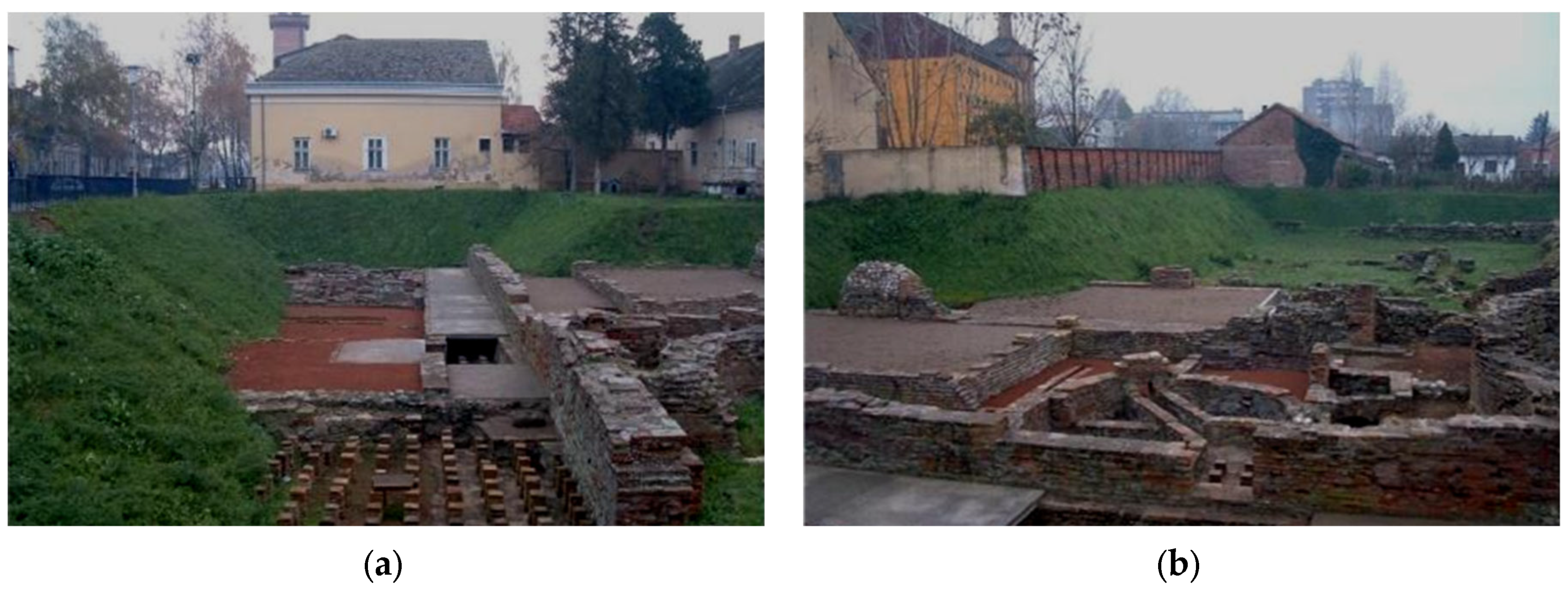
Figure 1. Archeological Site 1a of the Sirmium Imperial Palace before the construction of the Visitor Center: (a) View of the site towards the east in 2004; (b) View of the site towards the south in 2004 (Source: Ivan Filipović).
Sustainability 18 00054 g001
Figure 2. The site after the covering and construction of the Visitor Center of the Sirmium Imperial Palace: (a) Interior view of the site; (b) Monitoring physical processes in the mosaic in room 34 (M34) (Source: Ugrinović, A.).
Sustainability 18 00054 g002
Figure 3. Results of readings of T34_V30 values for 30 min throughout the year 2021 with a display of the moving average value and the annual mean value (Source: Ugrinović, A.).
Sustainability 18 00054 g003
Figure 4. Results of RH34_V30 readings for 30 min throughout the year 2021 with a display of the moving average value and the annual mean value (Source: Ugrinović, A.).
Sustainability 18 00054 g004
Figure 5. Cumulative frequency: (a) T34_V30 and (b) RH34_V30, (Source: Ugrinović, A.).
Sustainability 18 00054 g005
Figure 6. Maximum, average and minimum seasonal values: (a) T34_V30 and (b) RH34_V30 (Source: Ugrinović, A.).
Sustainability 18 00054 g006
Figure 7. Maximum, average and minimum monthly values of (a) T34_V30 and (b) RH34_V30 (Source: Ugrinović, A.).
Sustainability 18 00054 g007
Figure 8. Seasonal oscillations (a) ΔT34_V30 and (b) ΔRH34_V30 (Source: Ugrinović, A.).
Sustainability 18 00054 g008
Figure 9. Monthly oscillations (a) ΔT34_V30 and (b) ΔRH34_V30 (Source: Ugrinović, A.).
Sustainability 18 00054 g009
Figure 10. Graph of specific air humidity values of SH34_V30 every 30 min throughout the year 2021 with a display of the moving average value and the annual mean value (Source: Ugrinović, A.).
Sustainability 18 00054 g010
Figure 11. Seasonal values of SH34_V30: (a) Maximum, average and minimum seasonal values of SH34_V30; (b) Seasonal oscillations ΔSH34_V30 (Source: Ugrinović, A.).
Sustainability 18 00054 g011
Figure 12. Monthly values of SH34_V30: (a) Maximum, average and minimum monthly values of SH34_V30; (b) Monthly oscillations ΔSH34_V30, (Source: Ugrinović, A.).
Sustainability 18 00054 g012
Figure 13. A graph of equilibrium moisture content readings in the M34 mosaic (EMC_M34) every 30 min throughout the year 2021 is shown (Source: Ugrinović, A.).
Sustainability 18 00054 g013
Figure 14. Display of active water values in the substrate, in the M34 mosaic (M34_aw), every 30 min throughout the year 2021 with a limit of aw = 0.6 below which fungal growth does not occur (Source: Ugrinović, A.).
Sustainability 18 00054 g014
Figure 15. Comparative display of EMC_M34 and RH34 readings at 30 min throughout the year 2021 (Source: Ugrinović, A.).
Sustainability 18 00054 g015
Figure 16. Display of the readings of Tum_M34 and Tp_M34 for 30 min during the year 2021, (Source: Ugrinović, A.).
Sustainability 18 00054 g016
Figure 17. Biological contamination of mosaic M34 documented via adhesive tape sampling: (a) plant trichomes (b) hyaline mycelia (c) melanized hyphae of Cladosporium sp. (d) conidia of Cladosporium spp.; (e) ascospores of Chaetomium sp.; (f) conidia of Dreschlera sp.; (g) dictyospores of Epicoccum nigrum; (h) conidia of Alternaria spp. Scale bar = 10 μm (Source: Savković, Ž.).
Sustainability 18 00054 g017
Figure 18. Presentation of the proportion of fungal propagules in the air in the immediate vicinity of the M34 mosaic (Source: Savković, Ž.; Ugrinović, A.).
Sustainability 18 00054 g018
Figure 19. Molière, psychrometric diagram with a dispersion display of the average daily values of T34 and RH34 by the seasons (blue–winter, green–spring, yellow–summer, orange–autumn) during the year 2021 for the position M34. The red line frames the assumed and simulation-proven optimal annual range of T and RH for the preservation and presentation of the mosaic in situ (Source: Ugrinović, A.; diagram: Jelikić, A.).
Sustainability 18 00054 g019
Table 1. Recommended values for mosaics in the UNI10829:1999 standard [42] and in the MiBAC regulation 2000 [43], (Prepared by: Ugrinović, A.).
Source—The Authority or Organization That Issued the GuidelinesRH
[%]
ΔRHmax
[%]
T
[°C]
ΔTmax
[°C]
MiBAC, 2000.45–606–251.5/h
UNI, 1999.20–601015–25
Table 2. Presence of soluble salts on the M34 mosaic. Source: [61].
ZoneNitrates NO3− [mg/L]Sulfates SO42− [mg/L]Chlorides Cl [mg/L]
M34_104000–500
M34_20400–8000–500
M34_325–50400–1200below the detection limit
Table 3. Diversity and abundance of fungal genus detected with adhesive tape on the surface of the examined ancient mosaic throughout the seasons (Source: Savković, Ž.; Ugrinović, A.).
Sampling SeasonsAlternariaCladosporiumDrescheraEpicoccumFusariumPericonia
SpringXX X
SummerXXXXXX
Autumn X X
WinterXX
Table 4. Quantitative analysis of identified fungal taxa isolated by sterile swab on the surface of the examined ancient mosaic during the seasons (Source: Savković, Ž.).
Isolated Fungal Taxa
SpringSummerAutumnWinter
GenusNo. of IsolatesGenusNo. of IsolatesGenusNo. of IsolatesGenusNo. of Isolates
Aspergillus3Mucor1Penicillium26Rhizopus1
Penicillium3 Aspergillus2Aspergillus2
Cladosporium12 Trichoderma2
Rhizopus1
Cladosporium40023
Total:31811543123
Table 5. Quantitative analysis of identified fungal taxa isolated from the air in the immediate vicinity of the examined ancient mosaic during the seasons (Source: Savković, Ž.).
Isolated Fungal Taxa/Micromycetes
SpringSummerAutumnWinter
GenusNo. of IsolatesGenusNo. of IsolatesGenusNo. of IsolatesGenusNo. of Isolates
Cladosporium1Aspergillus2Penicillium5Aspergillus2
Fusarium1Aspergillus2Rhizopus1
Mucor1Alternaria2Penicillium2
Cladosporium3Rhizopus1
Penicillium2Cladosporium36
Total:111954635
Disclaimer/Publisher’s Note: The statements, opinions and data contained in all publications are solely those of the individual author(s) and contributor(s) and not of MDPI and/or the editor(s). MDPI and/or the editor(s) disclaim responsibility for any injury to people or property resulting from any ideas, methods, instructions or products referred to in the content.