Article

Digital Transformation in the Construction Industry: Lessons and Challenges from the Journey of Brazilian Construction Companies

by
Maria Gabriella Teixeira Lima
1,
Thaís de Melo Cunha
1,
Luis Felipe Cândido
2,* and
José de Paula Barros Neto
1
1
Graduate Program in Civil Engineering, Structures and Construction, Federal University of Ceará (PEC/UFC), Fortaleza 60455-760, Brazil
2
Graduate Program in Civil Engineering, Structures and Construction, Federal University of Ceará (PEC/UFC), Crateús 63700-000, Brazil
*
Author to whom correspondence should be addressed.
Sustainability 2026, 18(1), 407; https://doi.org/10.3390/su18010407
Submission received: 12 November 2025 / Revised: 10 December 2025 / Accepted: 29 December 2025 / Published: 31 December 2025

Abstract

Digital Transformation (DT) is a strategic challenge that reshapes the way companies operate. Nevertheless, its adoption in the construction industry remains slow. This paper analyzes the DT process in Brazilian construction companies through two phases. Initially, an exploratory study was conducted with 17 firms using semi-structured interviews with their Technical Directors. Second, three companies were selected for case studies involving 14 in-depth interviews, observation, and document analysis. Data underwent content analysis. In the exploratory phase, DT was found to be mainly pursued to improve construction efficiency. Barriers were strongly associated with individual aspects, especially limited knowledge about technologies and resistance to change, reinforced by difficulties in implementing organizational changes. Most problems that DT seeks to address are concentrated in the technical department and construction site. Companies adopted approaches such as technology investments, open innovation, organizational restructuring, and training, but the success of these strategies depends on top management engagement and employee acceptance. Besides cultural barriers, technological obstacles, system integration and digital delay were identified, along with process difficulties such as the complexity and costs of the DT journey. Indirect sustainability objectives also emerged, indicating that DT is perceived as both technological advancement and a means to transform the sector. Finally, based on the empirical findings, a multi-level framework comprising 12 strategies for DT in the construction industry was proposed. Overall, the empirical field investigated remains in the early stages of DT, with experimentation with technologies and a focus on efficiency, characteristics of digitization, a step prior to total transformation. The study provides a valuable diagnosis of DT to support the digital transition and informs policymakers in designing initiatives that foster DT, contributing to sector sustainability and SDG9.

1. Introduction

The Digital Transformation (DT) has emerged in recent years as an important phenomenon that reshapes business processes, operational routines, and organizational capabilities [1]. This transformation is based on digital technologies capable of reinventing how structures are designed and manufactured, determining who the main stakeholders will be, reshaping the way Architecture, Engineering, and Construction (AEC) professionals collaborate, and establishing new design performance criteria [2]. In other words, DT can improve the construction sector in multiple dimensions [3], ultimately leading the sector towards sustainability through its modernization, as suggested in SDG9 [4].
According to [2], companies have pursued DT based on three emerging visions: efficient construction, user-data-driven built environment, and value-driven computational design. All three visions align with the main sustainability dimensions represented in the Triple Bottom Line (People, Planet, and Profit) [5]. For instance, efficient construction can be associated with cost savings, on-time project delivery, increased productivity, waste reduction, and so on, which can promote higher profits, environmental protection (Planet), and income generation (People). Furthermore, user-data-driven built environments and value-driven computational design can foster the construction of resilient infrastructures.
However, compared to other economic sectors, the digital transformation of construction remains lagging, with only modest progress [6], reflecting its embryonic stage and evidencing the existence of barriers. These barriers encompass factors such as professional profile [7], organizational characteristics [8,9], the unattractive business environment for innovation [10], and the sociotechnical nature of DT [11]. These barriers are amplified by the construction sector’s nature, i.e., a project-based, cost-sensitive environment, often marked by fragmented project structures, low coordination efficiency, and stagnant productivity growth [12].
In this way, according to [11], digital innovation, which encompasses digital technologies comprised in the DT, challenges the established assumptions of innovation management. Such a nature demands profound transformations that go far beyond the technological dimension, extending to organizational, institutional, political, economic, and sociocultural dimensions [13]. This poses a challenge to understanding DT in the construction sector in order to support the digital transition, since the sector is dominated by incumbent firms that were founded before the digital era.
A recent review study revealed that the level of DT in the construction sector varies significantly across countries, reflecting a global digital divide [6]. Empirical cases conducted in Finland demonstrated a relatively high level of digitalization among three companies [14]. The study also shows that the degree of digitalization varies considerably, reflecting different organizational capabilities and digitalization strategies.
In Brazil, where the empirical study was carried out, Ref. [15] concluded that the sector remains at a stage of digitization, rather than at a stage of full digitalization. According to [16], digitization is the first phase of DT, corresponding to the conversion of physical data into digital form, whereas digitalization corresponds to the use of Digital Technologies or Information Technologies modifying the existing company’s business model, and resulting in incremental improvements. Therefore, in pursuit of DT, firms should be searching for and implementing business model innovation.
Similarly, Ref. [17] found that the digital maturity of the Brazilian construction industry is lower than that of other economic sectors. The authors highlight some initiatives of two construction companies, revealing a bet by companies on startups. Finally, Ref. [18] provides a comprehensive overview of the current use of digital technologies in Brazil and their determinants, suggesting an ongoing and progressive adoption within the sector. The study reveals that traditional barriers, such as implementation costs and government incentives, as well as some expected driving factors, including ease of use, do not appear to be perceived as significant by the respondents. In other words, there is a strong propensity to utilize digital technologies, despite the challenges associated with their implementation and use, highlighting a significant opportunity for initiatives to attain the most pervasive phase of DT.
Despite the growing body of literature, there remains a lack of studies exploring DT journeys [19]. Also, there is a need to study more varying cases geographically, longitudinally and methodologically to ensure a wider understanding of the DT journey around the world [14]. In particular, there is a lack of studies in Latin America and Africa [20]—a gap that this work aims to address. Ultimately, is necessary to understand how organizational changes in construction companies determine the sector’s DT [20] to reap all its benefits and build a more sustainable sector. Therefore, exploring the DT journey is particularly important to foster DT, since firms should align their digital strategies with internal governance to convert digital investment into tangible performance gains [12]. In other words, it is necessary to integrate technological changes with organizational changes [20].
Against this background, the following research questions arise:
(1)
What are the main objectives pursued by companies in their DT efforts?
(2)
What factors drive or hinder the DT process?
(3)
Which operational problems are targeted, and what digital technologies are used as solutions?
(4)
What strategies have been implemented to enable and sustain DT?
(5)
What benefits have been achieved through DT implementation?
Thus, this paper aims to more deeply understand how DT is implemented in the construction sector. The research was developed in two phases. In the first phase, an exploratory study was conducted with 17 companies through semi-structured interviews with their Technical Directors. This phase served as an initial diagnostic, identifying the companies’ objectives with DT, the implementation approaches (departments involved, priorities, problems addressed, and technologies adopted), and the barriers encountered. All companies participated in a Task Group on DT in the construction industry, coordinated by INOVACON, a local innovation network in building construction. Based on this diagnostic, three companies that were more advanced in DT were selected for case studies in the second phase. Data collection included 14 in-depth interviews, direct observation, and document analysis, which were subjected to content analysis. This phase provided a deeper understanding of the DT process and revealed the strategies, drivers, and challenges of the companies’ journeys. Finally, based on the empirical findings, a multi-level framework of strategies for DT in the construction industry was proposed.
The study provides a valuable diagnosis of DT to support the digital transition and offers insights for policymakers to design public policies that foster this transformation. It distinguishes itself from previous literature by emphasizing the challenges encountered in the DT journey. Consequently, the study indirectly contributes to the modernization of the construction sector.

2. Method

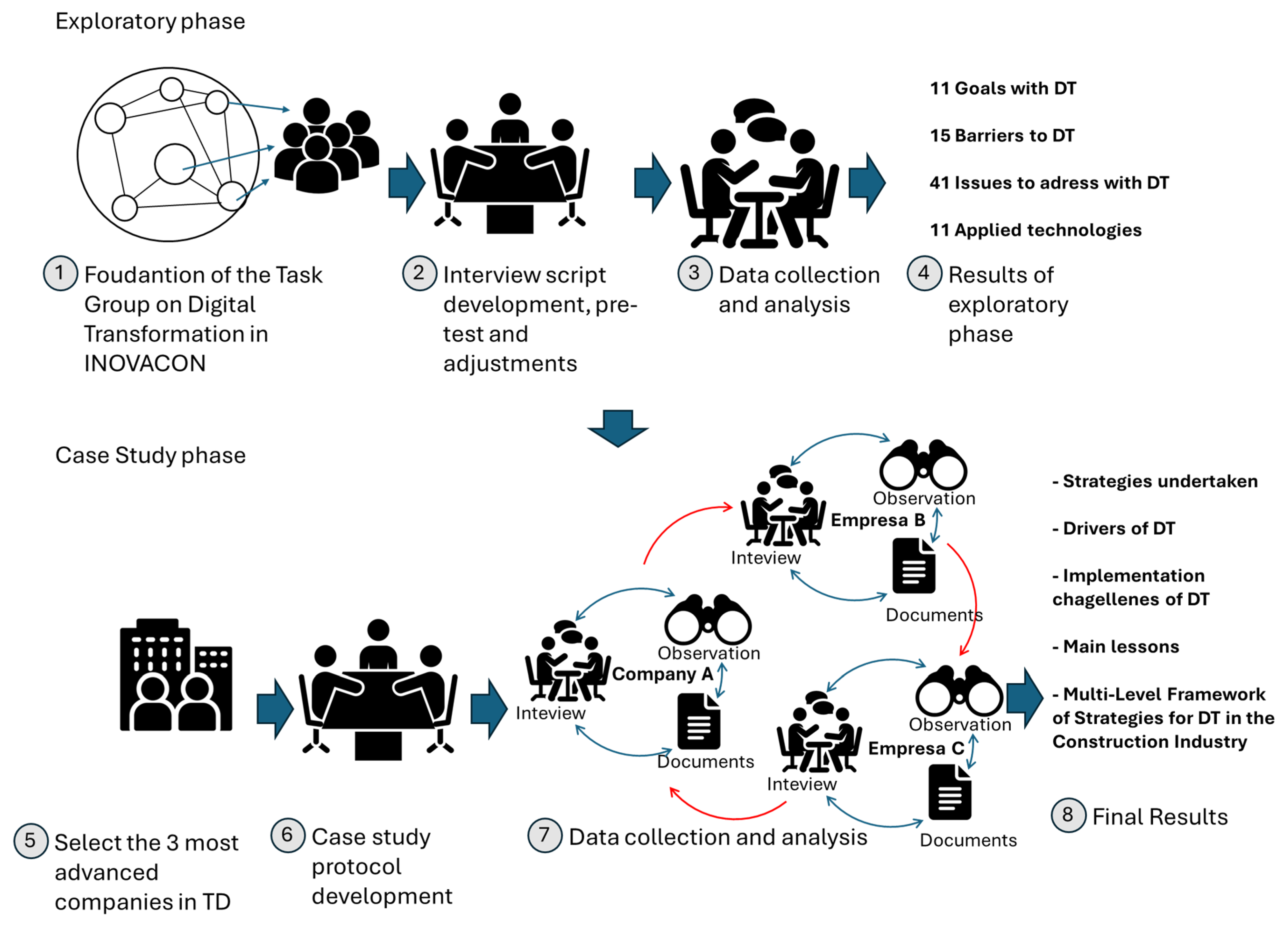
The research was conducted in two phases: an exploratory study involving 17 companies, followed by multiple case studies with three companies from the first phase that were more advanced in DT. The research steps are depicted in Figure 1 and are further detailed in the following subsections.

2.1. Exploratory Phase

All research was conducted within INOVACON, a local innovation network in building construction that brings together 40 construction companies from the Northeast and North of Brazil. INOVACON has been operating since 1998 to foster innovation in the local construction industry [21], and is recognized for its significant contribution to sector advancement, particularly in Lean Construction and the dissemination of BIM, among other initiatives.
In 2022, INOVACON founded the Task Group on DT in the construction industry, as a result of a vote by its members at the end of 2021. The choice of the Task Group on DT signaled the majority interest of the associated companies in implementing DT. The Task Group was composed of nine members: two technical directors of construction companies, a CEO of a construction company, an architecture firm owner, a manager of a construction company, and the INOVACON coordinator. They were supported by the authors of this article.
Based on the literature review and cycles of discussion, the Task Group developed a semi-structured interview script. The script covers a general perspective of DT in construction companies, initiatives, barriers, specific objectives for adopting DT, and issues related to the technical office, supplies, construction processes, and construction sites. The companies were selected for convenience. This approach was adopted to facilitate access to the participants’ true perspectives, given the pre-existing trust among INOVACON participants, and their interest in the subject. The 40 construction companies participating in INOVACON were invited to take part in the exploratory phase, which primarily aims to provide a diagnosis of current efforts in DT. Only 17 responded that they had implemented DT initiatives and agreed to participate in the study. Subsequently, 17 technical directors were interviewed. Each interview lasted approximately 45 min and was conducted and recorded via Zoom platform from April to August 2022.
The recordings were tabulated, forming the corpus of analysis. The data was analyzed using Microsoft Excel to profile the companies and Atlas.ti 7.5.7 to conduct content analysis. The procedure involved pre-analysis, coding, categorization, and interpretation [22]. The following concepts were initially used to guide the development of coding:
  • Goals with DT: Corresponding to what companies expected to achieve with DT;
  • Barriers: Corresponding to the factors that hinder DT implementation;
  • Problems: corresponding to the critical issues in companies that should be addressed by DT;
  • Technologies: Corresponding to the technological solutions adopted by companies to solve problems and achieve objectives.
A total of 11 goals, 15 barriers, 41 problems, and 11 technologies were identified, respectively. Based on this diagnostic, three companies that were more advanced in DT were selected for case studies in the second phase, as further detailed in the following subsection.

2.2. Case Studies Phase

In this phase, three case studies were conducted. A qualitative approach was adopted to investigate the DT journey of the three companies that were more advanced in DT. Data collection included 14 in-depth interviews, direct observation, and document analysis [23], which were subjected to content analysis and triangulated across these data sources [22]. This approach enhanced the understanding of the phenomena and enabled cross-case comparisons, thereby increasing the study’s validity and reliability [24].
The in-depth interview script consisted of 20 questions, divided into two parts. The first part included seven questions to characterize the companies, while the second part comprised 13 questions aimed at investigating how the DT journey occurs, the main motivations, and the implementation challenges. This approach provided an overview of the process and the advancements achieved by the companies.
Table 1 provides an overview of the main characteristics of companies examined in the case studies.
The three companies exhibit markedly distinct profiles. Company A stands out for its longevity, robustness, and commitment to quality and sustainability in the real estate sector, supported by a portfolio of residential projects and a comprehensive client service structure. The company is also noteworthy for its developments certified under the EDGE scheme. Company B, in turn, is positioned as a specialist in the high-end property segment—emphasizing luxury, sophisticated finishes, technological innovation, and bold architectural solutions—which makes it a reference for high-income clients and for ventures with higher added value. The company is also recognized for its excellence in Lean Construction. Finally, Company C is part of a large and highly diversified conglomerate, which grants it a broad operational scope and substantial national reach. The three companies exhibited the highest number of actions in the first phase of this study and were therefore selected for further in-depth investigation.
Table 2 summarizes the profiles of the 15 interviewees.
The interviews lasted a total of 14h04min, ranging from 26 to 102 min, with an average duration of 60 min. It is worth noting the codes C3A and C3B, which refer to a single interview conducted with two respondents simultaneously. The interviewees comprised civil engineers, an architect, and a business administrator, serving as Technical Directors, Supply Chain Managers, Production Planning and Control Managers, and Design Coordinators, with 12 to 15 years of professional experience. This group of participants brings more than just their involvement with the DT journey within their companies. Their years of experience position them as a select group with a broad understanding of the construction sector, enhancing their potential contribution to the discussion in this paper.
Two field visits were conducted to collect documents and to carry out direct observation of procedures mentioned by respondents during the interviews. Both data collection methods (documents and field observation) were essential for triangulation with the interviews, thereby strengthening the validity of the research [25]. Table 3 lists the collected documents.
Similarly to the exploratory phase, the data were subjected to content analysis using Atlas.ti 7.5.7. At this stage, a more fine-grained analysis was required due to the nature of the in-depth interviews conducted. The procedure involved pre-analysis, coding, categorization, and interpretation [22]. The results were presented in the form of semantic networks, diagrams, tables, and interview excerpts, providing a deeper understanding of the DT journey in the cases and generating valuable insights.
Finally, based on the empirical findings from both phases, a multi-level framework comprising 12 strategies for DT in the construction industry was proposed. Each strategy emerged from the analyses previously conducted and was developed along an evolutionary trajectory aligned with the phases of digital transformation (digitization, digitalization, and digital transformation).

3. Results

This section is divided into two subsections. First, the results of the exploratory phase are presented, comprising the profile of companies, their goals with digital transformation, barriers to DT, problems and technologies applied to solve them. Second, the results of case studies are presented, comprising the Journal of DT in each of the three construction companies.

3.1. Results of Exploratory Phase

In the exploratory phase, the Companies’ profiles and their perceptions of DT are initially presented. Subsequently, the Companies’ objectives with DT, the barriers, and the issues to be addressed with DT are explored.

3.1.1. Companies’ Profiles and Perceptions of Digital Transformation

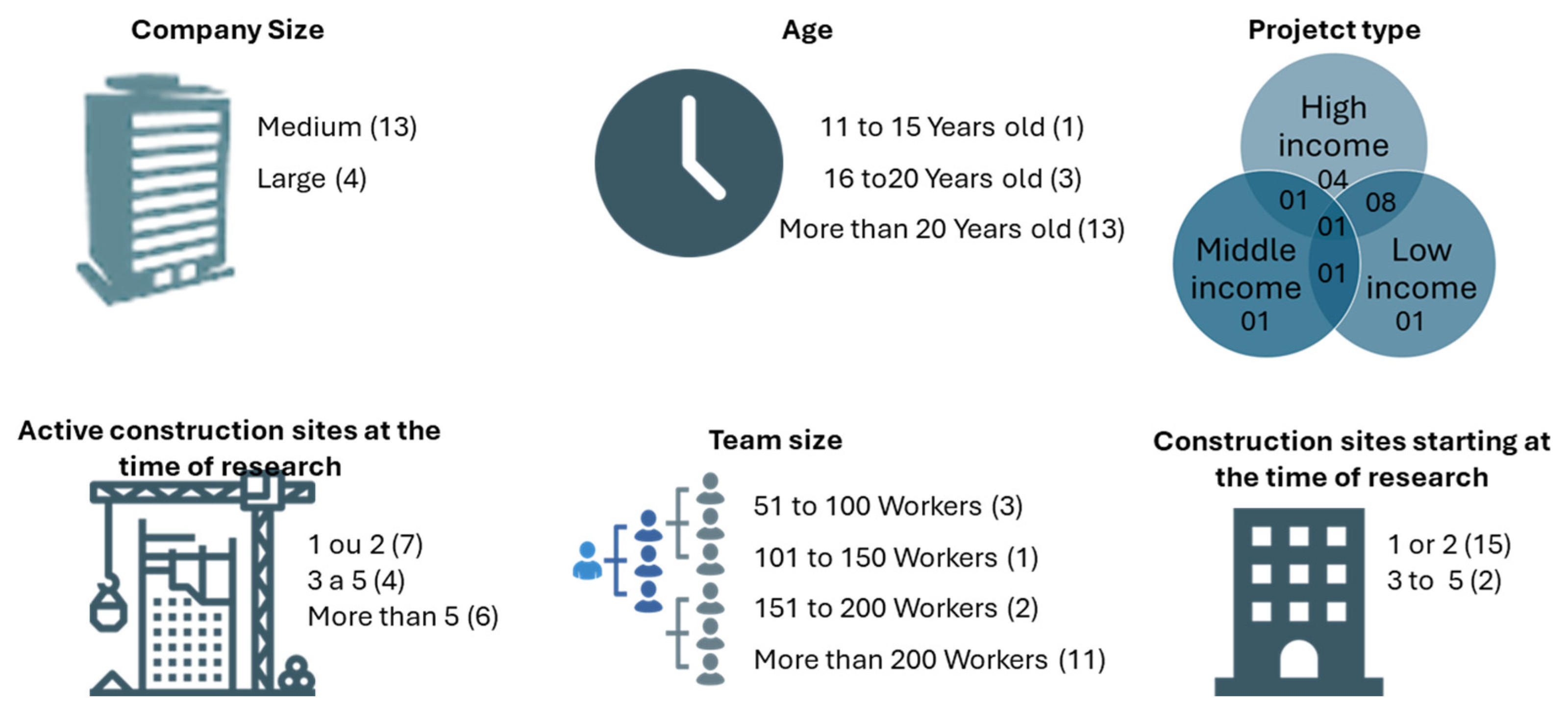
Sixteen companies operate in both construction and real estate development, while only one is engaged exclusively in construction. Fourteen companies are based in the state of Ceará, one in Pará, one in Pernambuco, and one in Rio Grande do Norte. The main characteristics of these companies’ projects are summarized in Figure 2.
Most of the companies focus on medium- and high-standard residential projects. Six of them had at least six projects under development in 2022. In that same year, 15 companies were still expected to start at least one new project. Team size is also considerable, with the vast majority employing more than 200 workers.
Regarding the perception of DT, thirteen respondents stated that they understood the concept, while four expressed uncertainties. However, in terms of importance, DT is currently considered indispensable by ten companies, and this number is projected to increase to sixteen in the future. This result reinforces the relevance of the topic in the daily operations of the participating companies, which may also indicate its significance for the sector.

3.1.2. Companies’ Goals with Digital Transformation

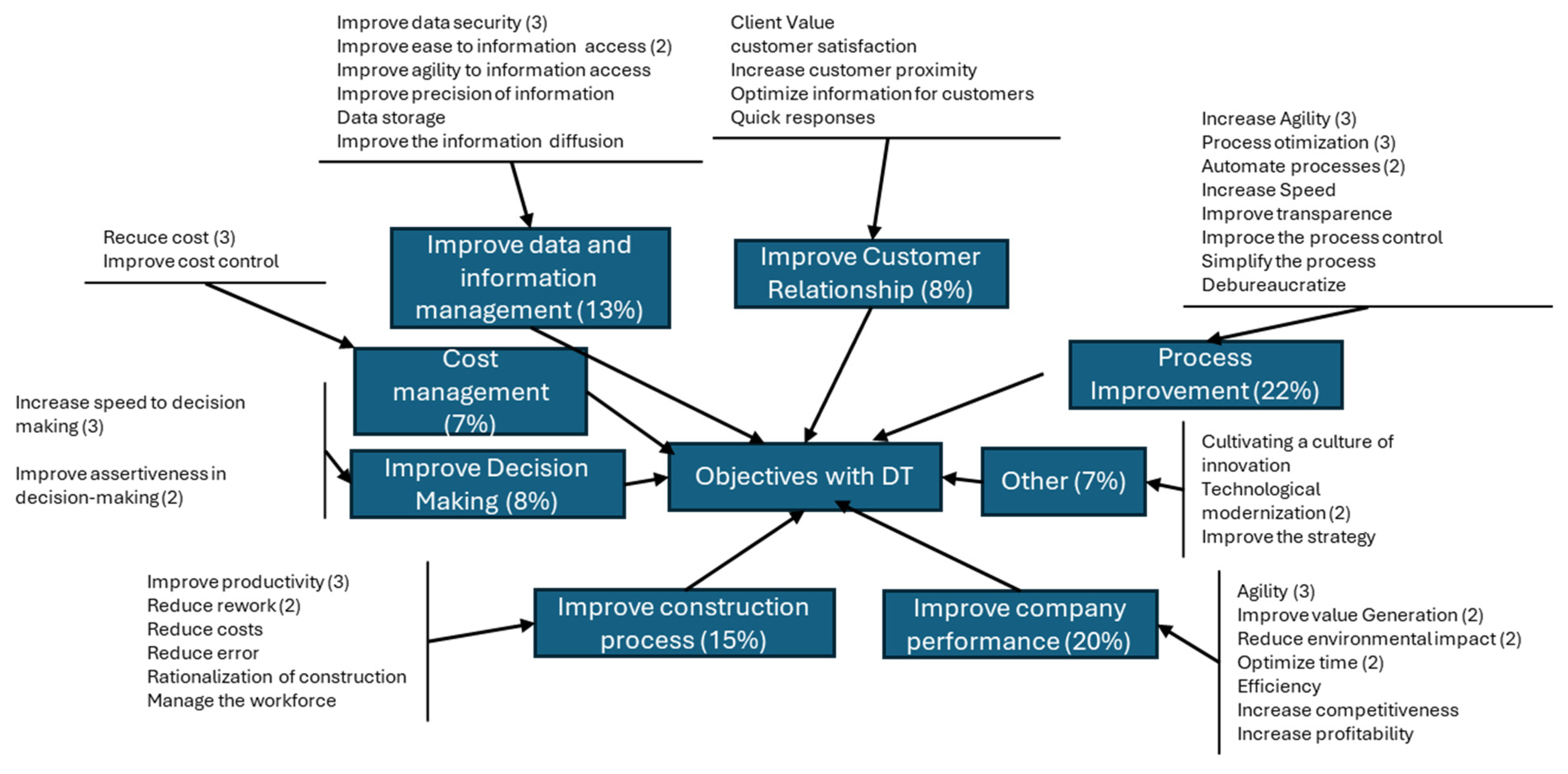
Figure 3 presents the semantic network, codified from interviews on objectives with DT.
A total of 39 goals were identified, which were freely mentioned 60 times by the interviewees and subsequently coded into eight categories. The analysis indicates that the primary goals of companies pursuing DT are related to process improvement, both in general operations (20%) and in construction-specific processes (15%). These objectives are closely associated with enhancing data and information management (13%), supporting more effective decision-making (8%), and strengthening cost management (7%). Collectively, these goals are expected to contribute to improved company performance (20%) and stronger customer relationships (10%). Additional goals reported include technological modernization, fostering an innovative-oriented culture, and enhancing strategic management capabilities.
To achieve these objectives, companies have invested in reshaping their organizational culture to ensure greater alignment with DT principles according to the respondents. Among the respondents, fifteen reported that their companies are currently implementing short-term actions, whereas two indicated a focus on long-term initiatives. Nevertheless, the implementation process faces several challenges, which are further examined in the following subsection.

3.1.3. Barriers to Digital Transformation

Table 4 shows the barriers to DT mentioned by the interviewees.
It is observed that the main barriers are related to individual aspects, especially education and knowledge about technologies, resistance to change, and lack of time. Difficulties at the organizational level are related to changes in company processes and the associated costs. Interestingly, the interviewees’ perception of the absence of DT guidelines at the sectoral level may reflect the still embryonic stage of its adoption in the sector.
In addition to these barriers, specific problems were also addressed (problems that the use of technologies seeks to solve), which are further examined in the following subsection.

3.1.4. Problems and Related Digital Technologies Used to Solve Them

Table 5 presents a quantitative summary of the problems that companies indicated digital transformation should solve and the technologies adopted for this purpose.
It can be noted that most of the problems are related to the technical office, followed by the construction site, procurement, and technical assistance. These problems are detailed in the following subsections.
Technical Office
Table 6 presents a summary of the problems of Technical Office.
It can be noted that most of the problems in the technical office are related to design. These are subdivided into traditional design and BIM design. The traditional design subcategory included problems such as “Low qualification of contracted designers,” “Project documentation management,” “Design changes,” “Failure to meet design delivery deadlines,” “Speed of design approval,” among others. As can be seen, these are widely recognized problems for which BIM emerges as a solution. Accordingly, companies that already use BIM in their technical offices also reported some problems related to third parties: difficulty for designers to adapt to BIM, lack of BIM use, and challenges in outsourcing.
Regarding control, the problems related to cost include “Labor cost control,” “Comparison between payroll and payment,” and aspects related to the systematization of project cost monitoring. With respect to schedule, difficulties were also mentioned regarding the systematization of schedule monitoring. Both are associated with problems in project measurement, the last subcategory, which also presented issues related to its systematization.
To deal with these problems, companies have been using integrated enterprise management systems (known as ERP systems), PowerBI, BIM software, as well as local solutions for construction management (e.g., Agilean, Mobuss Construção, Prevision) and quality management tools (e.g., QuizQuality).
Construction Site
Table 7 shows a summary of problems related to construction sites.
It can be verified that approximately 50% of the most frequent problems are related to project planning and control, as well as labor. Regarding planning and control, cost control, monitoring of service execution, and schedule compliance were identified as the most frequently mentioned issues. It is noteworthy that there is an apparent overlap among the problems, since control and monitoring were also mentioned in the technical office category. This occurs because, in some companies, planning and control are carried out by the technical office, while in others, these activities are the responsibility of the construction site. As for labor, “low productivity” and “lack of qualification” were mentioned.
To address these problems, companies have applied the same technologies identified for the technical office, as summarized in previous section.
Purchase Sector
Table 8 shows a summary of problems related to purchase sector.
It can be noted that the problems are mainly related to the company’s purchasing system, its connection with suppliers, and the internal purchasing process. The following problems were mentioned regarding the purchasing system: approval of requests through a mobile application; absence of a purchasing portal; lack of access to the purchase history within the ERP for quick and easy consultation; absence of an option to replicate identical requests and quotations within the ERP; and excessive time spent entering prices from different suppliers into the ERP system.
As for the connection with suppliers, the problems included the prospecting of new suppliers and supplier availability. Regarding the internal purchasing process, the reported problems were delays in quotations, lack of well-defined references (product specifications), and difficulty in extracting performance indicators. The technologies applied in this area include ERP systems, mainly Informakon (a local solution) and TOTVS, a Brazilian multinational recognized as a leading provider of management software (ERP) and operating in more than 40 countries.
Technical Assistance
Table 9 shows a summary of problems related to Technical Assistance.
It can be observed that the main problem is related to the absence of a Maintenance Management System that covers the entire process. Several applications have been developed for this purpose, such as Predialize, Fast Building, and Facilitat.

3.2. Results of Case Studies Phase

This section presents the results of the case studies. First, the DT journey for each company is described, highlighting the key drivers and barriers. Then, a cross-case analysis summarizes the findings.

3.2.1. Company A

With more than 50 years of operations in Ceará, Maranhão, and Piauí, and over 300 completed projects, Company A has specialized in medium- and high-end construction projects, with a strong focus on innovation. Since 2017, it has embarked on its Digital Transformation (DT) journey by structuring open innovation programs, creating an innovation department, and adopting ERP and BIM systems to optimize management and operational control.
Interviewee A2 stated that DT means “…using the benefits of technology in favor of the production line, in favor of the construction site; I think that’s the greatest digital transformation…”. A1 added, “DT today, in management, is more evident in enabling faster decision-making…”. A3 emphasized that DT “[…] involves all areas of the company in general, from controls to project management,” while A4 mentioned that “[…] DT in the supply sector has brought automation to some processes…”. Thus, the interviewees perceive DT as an improvement with use digital technologies in both strategic and operational decision-making, driven by indicators and encompassing the entire organization. However, none of the respondents indicated any more profound changes to the company’s business model.
The DT trajectory unfolded through learning cycles. The first cycle (2021) consisted of an Open Innovation Program supported by an external consultancy to address three challenges: construction site operations, production planning and control (PPC), and customer success. A total of 49 challenges were mapped, prioritizing those listed in Table 10. No solution was fully implemented; however, according to A3, the lessons learned supported future startup selections: “In the next experiences, we’ll divide it into two processes, which is already an upgrade compared to what we had before, since we used to approve a pitch often without a minimum viable product (MVP).”
In 2022, the second cycle, as part of an Innovation Hub, sought to accelerate open innovation in the construction sector. The goals were to: (1) disseminate an innovative culture; (2) establish relationships with startups; and (3) identify agile solutions. Twenty-eight employees were impacted through training and incentive programs. During pain-point mapping, it was identified that feasibility studies were not being updated throughout the project due to the large volume of dispersed data. Consequently, only one challenge was proposed: monitoring and reprojecting project feasibility, targeting the PPC area. This challenge was presented to startups but did not achieve the expected success.
Subsequently, the pain points mapped in 2021 were categorized to assess relevance and develop an Innovation Project Roadmap (H1, H2, H3), which evolved from 2023 onward into a strategic map with indicators and budget allocation. A5 explained: “When I joined, we had a mapping of pain points in all departments… I categorized them to understand what was most relevant… To promote digital transformation, I must be fully aligned with what the client wants.”
The open innovation flow allowed employees to develop ideas and define their scope together with the Innovation Coordinator. According to A5, “from this open innovation process, I designed a procedure to ensure transparency and governance over the improvements people wanted to implement…”. The current program involves five stages: ideation, scoping, prototyping (MVP), scaling and improvement, and operational maturity, often in partnership with external stakeholders. A5 reinforced: “It’s a process-oriented approach, since it can’t be 100% methodological… we created a hybrid by combining agile project management, given the uncertainty of the improvements.”
Internal monitoring, with periodic reports to the board, was viewed positively by the interviewees. A5 added: “The fact that we show the faces of the people involved… creates a sense of belonging…”. These cycles boosted DT, which received an average score of 7.7 (individual ratings: 8–7–8–8–7.5) in the self-assessment of digital maturity conducted by the interviewees. The main gains mentioned by the respondents included: an 18% reduction in strategic decision-making time, greater integration between departments, process traceability, and operational flexibility. For clients, the respondents reported that the benefits were more assertive communication and higher satisfaction levels. The company also invested in training, support materials, and ESG initiatives, earning certifications such as EDGE.
Reported challenges included: physical infrastructure (A1); cultural and digital resistance (A1, A2, A4); communication alignment (A2, A3, A5); and prioritization of routine over innovation (A2, A5). On this last point, A5 stated: “The routine processes sometimes swallow innovation…”. Highlighted opportunities for improvement included: productivity and information sharing (A1); BIM 4D/5D for cost estimation and planning (A2); greater BIM potential (A3); standardization of supplies (A4); and better data for decision-making (A5). Regarding sector perceptions, A2 and A3 view the construction industry as evolving, whereas A1, A4, and A5 perceive it as resistant. Concerning infrastructure, A2 and A3 acknowledge growth, but note that high costs hinder the adoption of technologies such as AI. Most participants considered the process complex (A1, A2, A3, A5), while the Procurement Coordinator remarked: “I don’t perceive the process as complex; what makes it complex is the lack of a clear theoretical foundation…”.
The main beneficiaries of DT in the value chain are construction companies (A1, A2, A4, A5) and, secondly, clients. A5 emphasized: “That’s where we have the highest cost volume and the greatest amount of human work that can still be improved.” Regarding agents that can foster DT, participants cited Higher Education Institutions (A3), Government, Unions, and innovation networks such as INOVACON.

3.2.2. Company B

With over 40 years of experience, Company B has consolidated Digital Transformation (DT) as a strategic pillar since 2019—a process accelerated by the pandemic. Since 2023, more than 25 processes have been redesigned, totaling 1400 h of review, involving 20 departments and impacting over 200 employees.
According to the interviewees, the success of DT resulted from ongoing training routines, the creation of the Operational Excellence Department, team collaboration, and strong support from top management. Market conditions were also decisive, as B1 stated: “Construction costs increased and purchasing power changed, so we must find ways to make projects viable; for that, we need to be more competitive and efficient.”
Table 11 presents the interviewees’ understanding of what DT means at Company B.
The interviewees recognize that DT drives process improvements, emphasizing that its success depends on applying digital tools to structured processes supported by an appropriate organizational culture.
The DT journey began in 2019 with the creation of an Engineering Working Group (WG) aimed at reducing costs and increasing competitiveness. The WG analyzed digital platforms for project planning and paper reduction, implementing solutions such as Construcode and the use of tablets on construction sites. Despite these advances, the lack of a robust IT structure limited the results. As B3 reported, “The WG was what gave traction to the digital transformation process, but the order of the stages was incorrect […] today, the importance of this approach is embedded in the company’s mindset, representing a major shift in thinking.”
In 2022, based on the experience of WG, company created a larger and more ambitious project called Sinergia 1.0 Project. They invest in automated materials management by integrating supplier, quotation, and inventory systems. According to interviewees, this led to a 110% increase in purchased items, a reduction in registration time from 12.3 to 2.6 min, and annual savings exceeding R$500,000. Results led to a new edition of the project: The Sinergia 2.0 (2023). In this edition, the company expanded automation to financial and accounting areas, enhancing regulatory compliance and operational efficiency. In the same year, the Operational Excellence Department was established, structured around five pillars: processes, quality management, strategy, innovation and technology, and organizational culture. Its development occurs across three stages—implementation, maturation, and stability—currently encompassing four fronts: quality, DT, innovation, and Lean Construction.
The Process Mapping and Improvement methodology was adapted to the DT and innovation journeys, comprising diagnosis of the current state, identification of pain points, definition of the future state, modeling, MVP validation, and documentation in the quality management system. Critical success factors included process prioritization, leadership support, and the principle of “not digitalizing inefficiency.” As the Sinergia 2.0 Project was still in progress during the research period, its results were not made available to the researchers.
In 2024, the Meta 2.0 Project, conducted by an external consultancy, began integrating Operational Excellence and BIM. The project mapped 492 pain points, of which 40% were related to processes, 34% to policies, 14% to people, and 12% to technologies, 74% being associated with management. Meta 2.0 expanded the use of BIM, improving traceability and predictability, and introduced artificial intelligence in cost analysis. In parallel, the Lean journey, launched in 2021, achieved 92% operational maturity by 2024, according to interviewees.
Productivity was identified as the main motivation for DT (B1, B2, B4, and B5). The technical room manager noted that “the incentive is to do more with less, to be more productive […] where technology supports and saves the company’s resources.” According to interviewees, additional gains included faster decision-making, greater competitiveness, and enhanced information security.
Benchmarking has reinforced team engagement through experience exchange and technical visits, as B1 explained: “The corporate budget includes trips for managers and directors to learn what competitors are doing.” According to B4, the critical success factors were “a board of directors that recognized the importance of this, followed by pain-point mapping and the structuring of all that—meaning investment, analysis, prioritization, and the creation of a dedicated area.” Leadership support was essential, as B5 emphasized: “We have a process called open space […] to talk about our pain points and how to solve them.”
The main challenges mentioned include communication and process integration (B4, B5), high implementation costs, and organizational resistance. B5 highlighted: “The greatest challenge was achieving deep communication and integration […] operational excellence has greatly helped convey a clear message to the companies supporting us in this transformation.”
According to interviewees, the advancements resulted in a 23% increase in productive efficiency and a 35% reduction in administrative process time. In a self-assessment, respondents gave an average digital maturity score of 7.7 (individual ratings: 8–8,5–7–7–8). The reported benefits by respondents included “overall productivity improvement,” “process agility,” “increased competitiveness,” and “faster information flow”. These gains were also perceived by clients, as B1 and B5 noted, linking process improvement to cost optimization and better communication through 3D resources (B1, B2, B3, and B4).
As improvement opportunities, B1 suggested “having a project manager within the company focused on this perspective […] within the excellence unit,” while B4 highlighted the potential of “artificial intelligence […] BIM with digital twins […] and linking technology to sustainability.”
Regarding DT in the construction industry, B1, B3, and B4 acknowledged progress but considered the sector still behind; B2 and B5 viewed it as resistant, mainly due to financial constraints and limited advances in construction methods. Concerning technological infrastructure, B1, B2, and B5 identified deficiencies in hardware and software, while B3 observed a gradual cost reduction. The engineering manager stated that “industrialization […] is still very expensive in Brazil […] because there are no incentives or a widespread industry effort.” B5 added that success depends more on motivation and training than on technical complexity.
The interviewees identified clients and construction companies as the main beneficiaries of DT, the former gaining greater transparency and quality (B1, B2, B3, and B4). According to B3, “Clients will be better served, with more information at hand […] and even lower prices.”
Among the agents considered most capable of contributing to DT, the interviewees mentioned Higher Education Institutions, to “help us prepare the workforce entering the market” (B3), as well as the Government, Unions, and innovations network such as INOVACON, which B1 considered decisive due to their influence on approvals and industry regulation.

3.2.3. Company C

Company C has operated for nearly 50 years, with a presence in seven Brazilian states (Amazonas, Bahia, Ceará, Paraíba, Rio Grande do Norte, Rondônia, and São Paulo), ranking among the 20 largest construction companies in the country. It has delivered over 286 projects and aims to ensure a high level of excellence in its products and services. The commitment to continuous improvement motivated investment in Digital Transformation (DT).
According to the interviewees, DT aims to reduce paper usage (C2, C3, and C4), ensure speed and quality of information (C1, C2, and C4), and integrate technologies across departments (C2 and C3). The Planning and Control Coordinator noted that, although the DT agenda was incorporated into strategic planning in 2021, “since 2013 some processes were already digitized to some extent, but the systems did not communicate with each other. The first action was the acquisition of ERP systems in 2016.”
The investment was motivated by “market needs” (C1) and by “…the restlessness of our shareholders…” (C4). For C2, “…it starts with a management board willing to innovate… the innovation department cannot emerge before the management is innovative. So, first there had to be innovative management, and later the innovation department, because of this mindset…”
Top management support was decisive for the creation of the Innovation Department in 2022, aiming to foster an innovation culture and support consultancy focused on product development and Lean Construction. The department was structured with a four-year roadmap (2022–2025), segmenting transformation by areas: project planning and control (2022); construction and supply (2023); development, client relations, and technical assistance (2024); finance, sales, and marketing (2025).
The project began with a diagnosis of the current scenario and process bottlenecks, proposing DT as a solution to maintain competitiveness and meet new client demands. Actions were organized in flows with challenges to advance the company from an adjacent stage to a transformational stage. In 2022, highlights included joining innovation hubs, implementing BIM process improvements, and launching challenges for startups.
According to interviewee C3, significant results were observed, such as “construction projects with interlocking floor cases, seeking cost savings and sustainability; improvements in internal processes for technical assistance; as well as small day-to-day actions”. In 2022, the company joined an Open Innovation Program, integrating into an Innovation Hub. During this period, the Planning and Control Coordinator noted that “the organization had a database of leads or qualified clients, but commercial relations ceased after key handover; therefore, the company sought to extend this relationship.”
The company pursued solutions focused on customer relations and technical assistance, but the final objective was not fully achieved due to limitations of available solutions. Technologies such as the Internet of Things and Digital Twins expanded operational control and predictability, while laser scanners and Augmented Reality are being tested for more precise and faster inspections.
The main challenges for DT included process and routine changes (C1, C2, and C3), cultural barriers (C1 and C4), and high complexity (C1 and C4). Although C1 and C3 cited resistance to change, C2 stated: “Not resistance, because we can show what will improve, but once a routine is established, it is somewhat difficult to change.”
Learning cycles drove DT, which the interviewees rated with an average score of 7.5 (individual scores: 7, 9, 8, and 6). According to interviewees, benefits included a 19% increase in response speed to clients, 12% savings on materials, and greater data traceability. Other reported gains were “reduced paper usage,” “improved team productivity,” “increased data reliability,” “process improvements,” “time optimization,” and “faster information processing”. Still on reporting from interviewees, the benefits for clients included “in technical assistance, DT improved customer satisfaction by 90%,” stated the Project Coordinator, although C2 recognized that “the advantages are still not fully perceived by them.” Improvement opportunities highlighted were: “…project measurement regarding payments… developing a production sheet…” (C2) and “…contract management would be more practical” (C4).
Interviewees C1 and C3 assessed that the construction sector evolves due to market demands, though it still retains artisanal characteristics. They emphasized the potential of BIM, whose data “are still not fully extracted to support activities.” Regarding infrastructure, C2 and C3 noted that small construction companies lack the technology to support DT, unlike medium and large companies. The Project Coordinator highlighted that “there are far more technologies on the market to explore than are actually utilized today,” which aligns with C4, who also perceives infrastructure deficiencies. Most interviewees (C1, C2, and C3) considered DT a complex process, involving culture, training, and significant financial investment, whereas C4 attributed the difficulty to “the lack of adaptation of people to the new scenario.”
Concerning the main beneficiaries, all identified construction companies. According to the Planning and Control Coordinator, “the company is the primary beneficiary because cost and time optimization benefits it directly. Consequently, this reflects on the client, who receives a higher-quality and more competitive product. However, in terms of the value chain, it is the developer/construction company.”
Higher Education Institutions and the Union were cited by C1 and C3 as the agents most capable of contributing to DT. C3 added: “Higher education institutions are the greatest force, because having young people thinking differently creates a gateway to foster the market. The union helps convince the older generation, since this group lacks the leverage to persuade those at the top.” C1 and C3 also mentioned INOVACON, as the technological arm of Sinduscon-CE (Construction Industry Union of Ceará, representative entity of builders in the State of CE), for promoting best practices and benchmarking, as well as Regional Council of Engineering and Agronomy (CREA, the council that regulates the practice of engineering in Brazil), for offering courses in the field.

3.2.4. Cross-Case Analysis

From a cross-case analysis, it was possible to identify and compare the main objectives of Digital Transformation (DT), as well as the perceived challenges, benefits, barriers and drivers, and the strategies undertaken.
Companies’ Goals
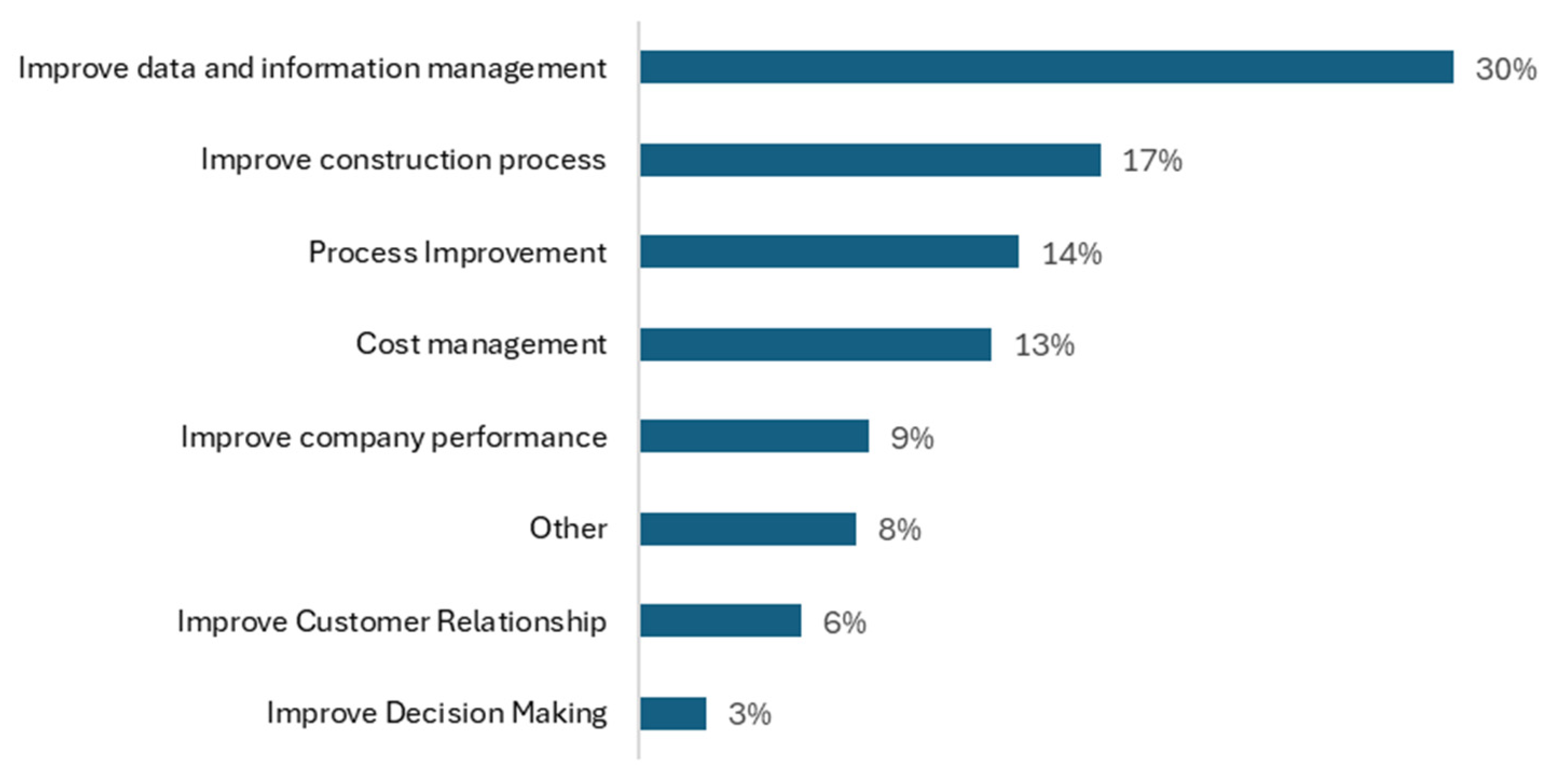
Figure 4 presents a categorization of the responses obtained from the interviews, highlighting the main focuses of the companies in implementing Digital Transformation (DT). Note that the term “process improvement” refers to enhancements in general operations, whereas “improving construction processes” refers specifically to improvements related to on-site construction activities.
It can be stated that professionals perceive DT as a means to optimize workloads, increase productivity, and generate value for the company. Furthermore, they recognize digital technologies as tools to improve quality, enhance result accuracy, and achieve strategic advantages. They also emphasize the importance of keeping up with technological trends to maintain competitiveness. These findings are consistent with those observed in the group of 17 companies presented in the exploratory study.
Strategies and Drivers to Implement DT
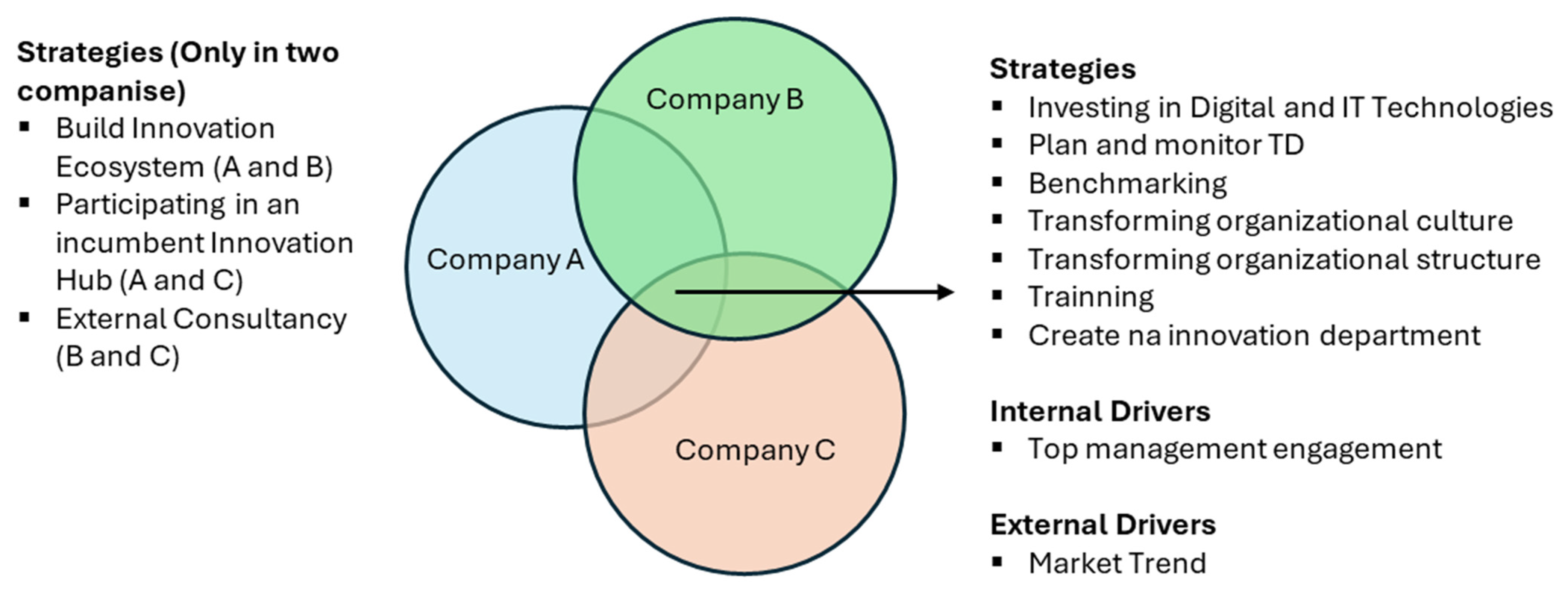
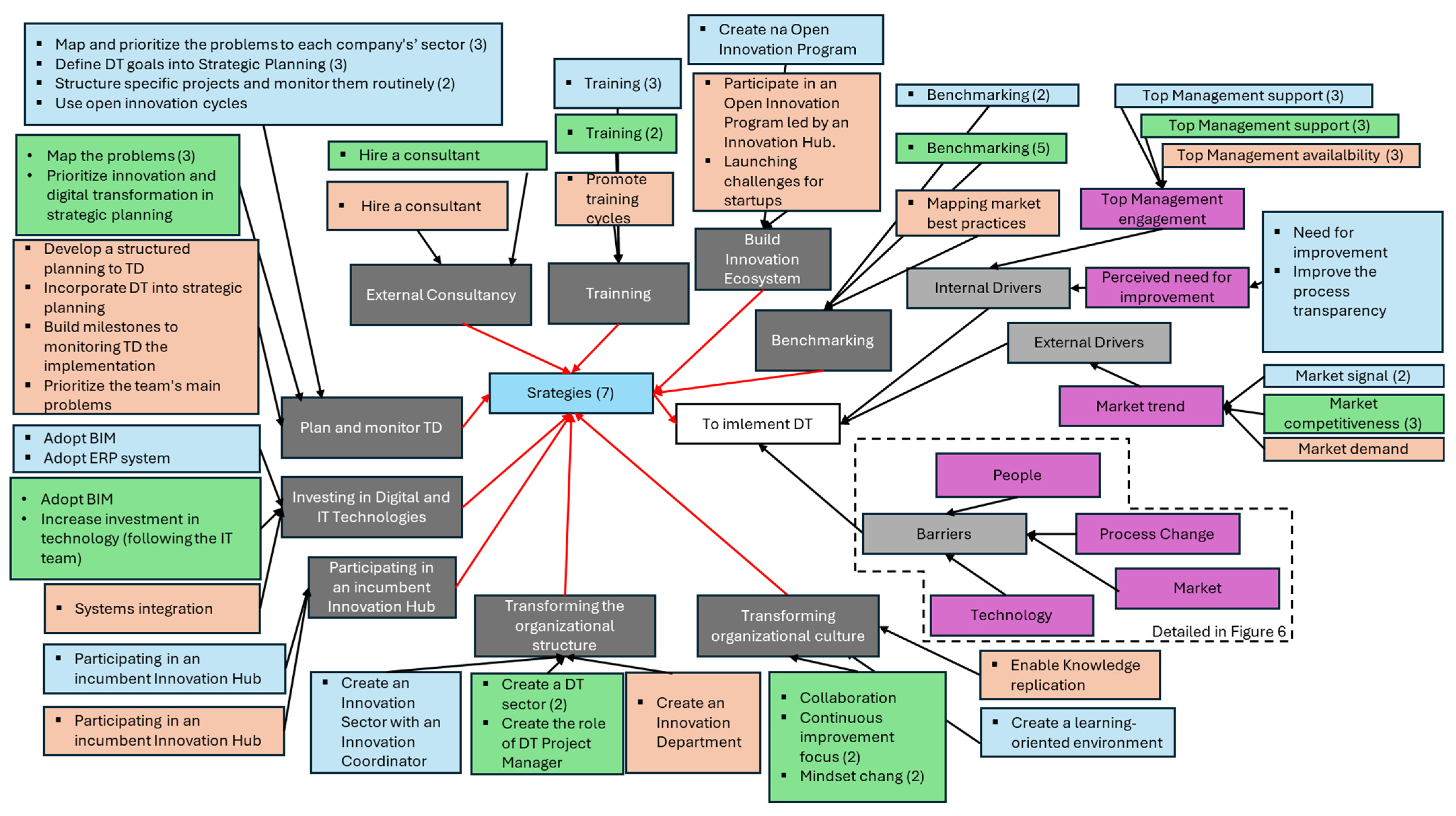
Strategies and drivers for DT implementation were analyzed based on the categorization of 38 codes extracted from the interviews, as presented in Figure 5. The strategies include investment in infrastructure and technology, open innovation, DT consulting, organizational changes, DT roadmap planning, benchmarking, organizational culture, and training. The internal drivers identified were top management engagement and the need for improvement, while market trends acted as an external driver.
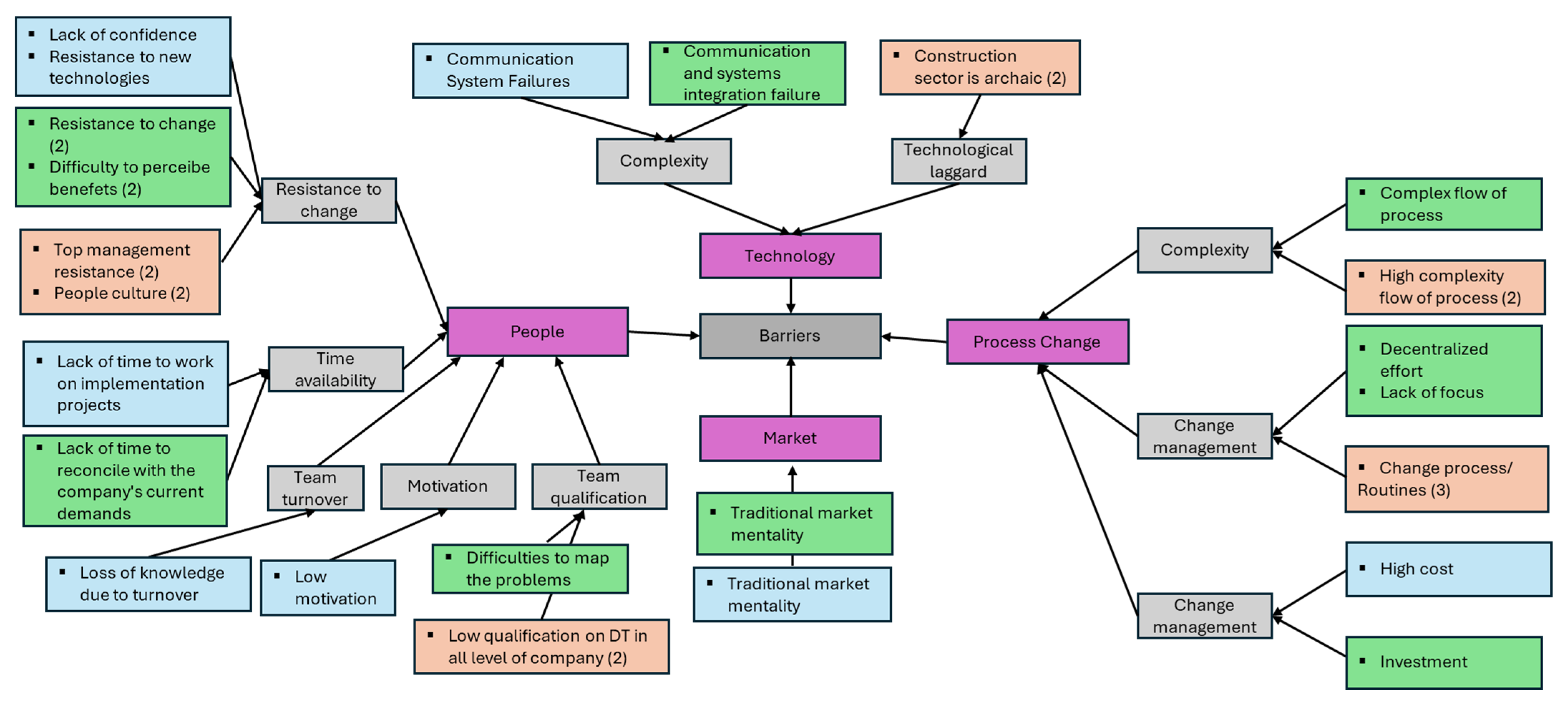
Figure 6 presents the detailed barriers to DT. They are related to people, process, technology and market.
The Venn diagram in Figure 7 highlights the convergence among companies’ strategies, although their application varies.
All companies emphasized the creation of an innovation department as a distinctive factor for DT, whereas companies B and C highlight consulting services and challenge mapping. The procurement department served as the starting point for companies A and B. Also, one of the first adopted technologies was BIM. Specific strategies were also adopted, such as building innovation ecosystems through open innovation projects conducted either internally (A) or via intermediaries (C), as well as participating in an established Innovation Hub (A and B). Additionally, hiring an external consultancy was a strategy adopted by companies B and C. Companies A and B began their transformation journey through implementing ERP systems for information integration and adopting BIM.
Company A followed a strong governance model, which facilitated the implementation of technologies pursuing the digital transformation. Company B, in turn, prioritized continuous improvement and created the Operational Excellence department to support this process. In company C, the approach was more incremental, with gradual actions developed over the years.
The use of technology was a key element, with cloud computing present in all companies and across all project phases. BIM and drone applications stood out in companies A and B, while artificial intelligence appeared in companies B and C.
Finally, regarding the agents that can foster DT, participants from all companies cited Higher Education Institutions, government, unions, and INOVACON. This highlights the key actors that should drive digital transformation by supporting companies’ efforts.
Despite these successful initiatives, several challenges to DT implementation were identified, which are presented in the next section of the study.
Challenges for Implementation of DT
The study identified 23 challenges mentioned 38 times by the companies, grouped into 11 categories distributed across people, processes, technology, and market. Among the challenges related to people, the most notable were resistance to change, top management availability and turnover, motivation, and qualification. In the technology domain, the challenges involve communication and technological delay. In the market dimension, organizational culture was an obstacle. As for processes, the challenges included change management, the complexity of the DT journey, and costs.
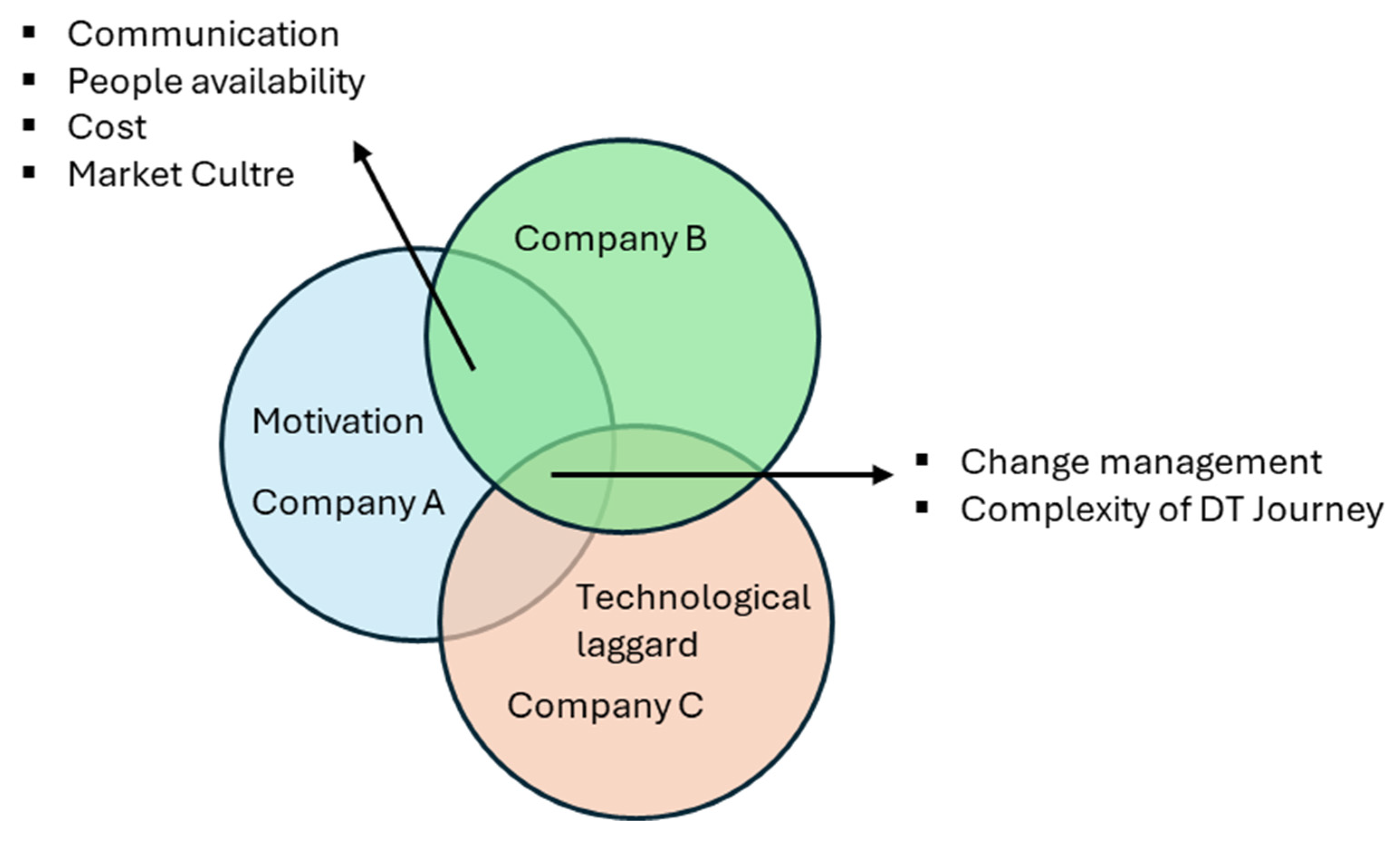
The challenges common to all three companies revolved around cultural and procedural resistance. Companies A and B faced difficulties with inter-team communication, costs, and the time required to reconcile demands, which delayed implementation. Company C encountered leadership resistance to engaging in projects, requiring meetings to demonstrate the expected benefits.
There was no consensus on the main barrier: for company A, it was resistance to cultural and technological change; for company B, the abundance of solutions without a clear direction, while company C did not highlight a predominant obstacle. The Venn diagram in Figure 8 shows that resistance to change was the only barrier common to all three companies, whereas motivation was a challenge exclusive to company A and technological delay to company C.
Benefits Achieved with DT
Despite the challenges, the benefits achieved through DT were diverse, with 38 codes mentioned in the interviews. The most frequently cited benefits included more robust processes, productivity improvements, increased competitiveness, faster information flow, and greater data reliability.
The benefits common to all three companies were the increased speed of information and productivity. Furthermore, companies A and B highlighted more assertive decision-making, stronger integration among initiatives, and cost reduction. Companies A and C valued the availability of real-time information, whereas companies B and C emphasized information security, more reliable data, and greater process agility.
Beyond internal gains, client-related benefits were analyzed based on 17 codes. The common point among the three companies was assertive communication, improving the customer experience through effective information exchange, especially in technical support. Companies A and B mentioned satisfactory experiences as a differentiating factor. Companies A and C highlighted increased customer satisfaction and faster information flow, while companies B and C emphasized improved project quality and reduced final costs due to better monitoring of execution stages.


4. Discussion

This study analyzed the Digital Transformation (DT) process in Brazilian construction companies in two phases. Initially, an exploration survey was conducted with 17 companies associated with INOVACON (Innovation Institute for the Construction Industry) regarding their Digital Transformation (DT) journeys. This phase provides an overview of the companies’ DT-related goals, the main barriers, and the problems to be addressed through digital technologies. Based on this initial diagnosis, three companies with more advanced DT processes were selected for the in-depth case studies. This second phase enabled the identification of strategies, drivers, and challenges associated with DT implementation in construction companies. Finally, based on the empirical findings from both phases, the lessons learned were synthesized, and a multi-level framework comprising 12 strategies for DT in the construction industry was proposed.
In following, the discussion was organized according to the research questions presented in the introduction of the paper and concludes with a synthesis and the presentation of the proposed framework.

4.1. What Are the Main Objectives Pursued by Companies in Their DT Efforts?

In this first phase, it was observed that DT is considered essential by ten companies. These companies are already using some technologies and, more importantly, investing in cultural change practices that promote DT in the short term. Promoting a learning-oriented environment is essential for successful digital transformation, as emphasized by [26,27].
The goals identified by the companies in both phases of the study were mainly related to construction efficiency, as discussed by [2]. The emphasis on data and information management aligns with the key capabilities of digital transformation identified by [28], namely, improving the acquisition, analysis, visualization, and communication. These findings are also consistent with [16], who argues that the pursuit of cost savings and the more efficient allocation of resources in existing activities characterize the digitalization phase.
Overall, these results indicate that the companies are in a digitalization phase, demonstrating progress compared with [15], who had previously classified the Brazilian Construction Industry as still being in the digitization phase.

4.2. What Factors Drive or Hinder the DT Process?

Regarding barriers, it was found that they are strongly associated with individual aspects, particularly knowledge about technologies and professionals’ resistance to change, which are reinforced by the difficulty of implementing organizational changes. These factors hinder the adoption of innovations and may prevent substantial progress in transforming the sector.
These findings align with [29], who reported that professionals in the sector tend to be conservative regarding the adoption of new technologies. However, the results contradict [27], who identified a good level of knowledge about digital technologies among professionals in the Brazilian construction sector. This discrepancy can be attributed to the fact that [29] refers to construction industries worldwide, whereas [27] empirically investigated Brazilian professionals. Therefore, it is necessary to expand efforts toward the continuous training of AEC professionals.
Regarding the difficulty of implementing organizational changes, the literature states that, in the context of DT, organizational changes are essential and involve modifications in culture, structure, roles, and employee competencies [1]. To address this challenge, it would be appropriate to promote the development of sector-level DT guidelines, responding directly to the interviewees’ perception of a lack of such support in the industry.
In contrast to the barriers, the case studies identify market trends as the primary external driving factor and top management engagement as the key internal driving factor. This is supported by literature that indicates that DT puts immense pressure on traditional firms and disrupts numerous markets [16], and that its success depends on strong top management involvement [30]. This implies that, although top management engagement is not a determinant for the use of digital technologies, as reported by [18], successful DT requires company-wide change that must be driven from the top, ultimately enabling the development of new business models. In other words, digitization and digitalization can be achieved in a bottom-up approach, while a full transformation requires a top-down approach.

4.3. Which Operational Problems Are Targeted, and What Digital Technologies Are Used as Solutions?

Most of the problems that DT should address are related to the technical department, followed by the construction site, procurement, and technical support. In the technical department, the main issue identified concerned design management. Some companies still operate under a traditional design approach, while others have adopted BIM. The problems observed in the former can be mitigated through the adoption of BIM. In the latter, the identified issues are consistent with those typically found in the early stages of BIM implementation, as reported by [31]. Therefore, fostering broader BIM adoption is recommended. Additionally, integrating BIM with Digital Twin is a trend that improves the flow of information and reduced the lack of integration of the value chain [20], which can be seen as a major objective to digital transition in the construction sector.
At the construction site, the main challenges identified were construction planning and control, along with workforce management. These aspects are among the main factors leading to cost [32] and schedule deviations, especially in smaller projects [33]. In the procurement sector, the problems were primarily related to the purchasing system, its connection with suppliers, and the internal purchasing process. The fragmentation of construction supply chain is an old challenge. Finally, in technical support, the absence of a Maintenance Management System encompassing the entire process was highlighted.
It is interesting to note that several local solutions capable of addressing these issues were identified, including Informakon, Agilean, Mobuss Construção, Prevision, and QuizQuality. This finding indicates the emergence of a growing startup ecosystem within the Brazilian construction industry. The case studies corroborate this observation, as the companies have invested in open innovation strategies, attracting startups into their ecosystems and acquiring established technologies available on the market. Therefore, the creation and development of startup ecosystems can be understood as a sector-level strategy to foster the digital transition in the construction industry.

4.4. What Strategies Have Been Implemented to Enable and Sustain DT?

The case study shows that the companies adopted different approaches, such as investments in technology, open innovation, organizational restructuring, and training. However, the success of these strategies depends on top management engagement and employee acceptance, with resistance to change remaining one of the main challenges. In addition to cultural barriers, technological obstacles—such as system integration and digital delay—were identified, as well as process-related difficulties, including the complexity of the DT journey and associated costs.

4.5. What Benefits Have Been Achieved Through DT Implementation?

Nevertheless, the benefits were significant, including productivity increases, process optimization, improvements in information quality, and enhanced decision-making support. The positive impact of DT on customer relations also stood out, providing greater agility in information exchange, improved data reliability, and enhanced customer experience, which directly contributed to satisfaction and loyalty. The benefits common to all three companies were the increased speed of information and productivity, aligning with studies such as [28].
Indirect sustainability objectives were also reported, suggesting that DT is viewed not only as a technological advancement but also as a way for transforming the construction sector. However, all the mentioned benefits are linked to sustainability across its economic, social, and environmental dimensions. Increased productivity, reduced costs, more informed decisions, and stronger processes directly support economic sustainability. DT fosters more controlled and efficient operations, indirectly reducing resource consumption and environmental impact. It also enhances customer experience, promotes effective communication, impacts positive trust, and strengthens transparency, thereby contributing to the social dimension. Overall, DR advances sustainability in a holistic manner, generating both internal and external, operational and strategic benefits.

4.6. Synthesis and Multi-Level Framework of Strategies for Digital Transformation in the Construction Industry

The study revealed that implementation varies according to digital maturity, challenges faced, and available resources, and that DT has become essential for companies’ competitiveness, requiring new strategies, technologies, and organizational changes. The digital transformation journey of the companies began before the pandemic and was bolstered by them. They started by investing in information and digital technologies, which characterizes the digitalization phase of digital transformation, according to [16], and pursuing enhancing construction efficiency aligns with [2].
Over time, the journey evolved and followed different strategies, shifting the focus from adopting already established technologies to developing specific solutions in partnership with external agents. However, the goal remains to emphasize efficiency by modifying organizational structures and routines, without altering the business model. The evolving journey also reveals the challenges, benefits, and key actors who should contribute to the success of digital transformation.
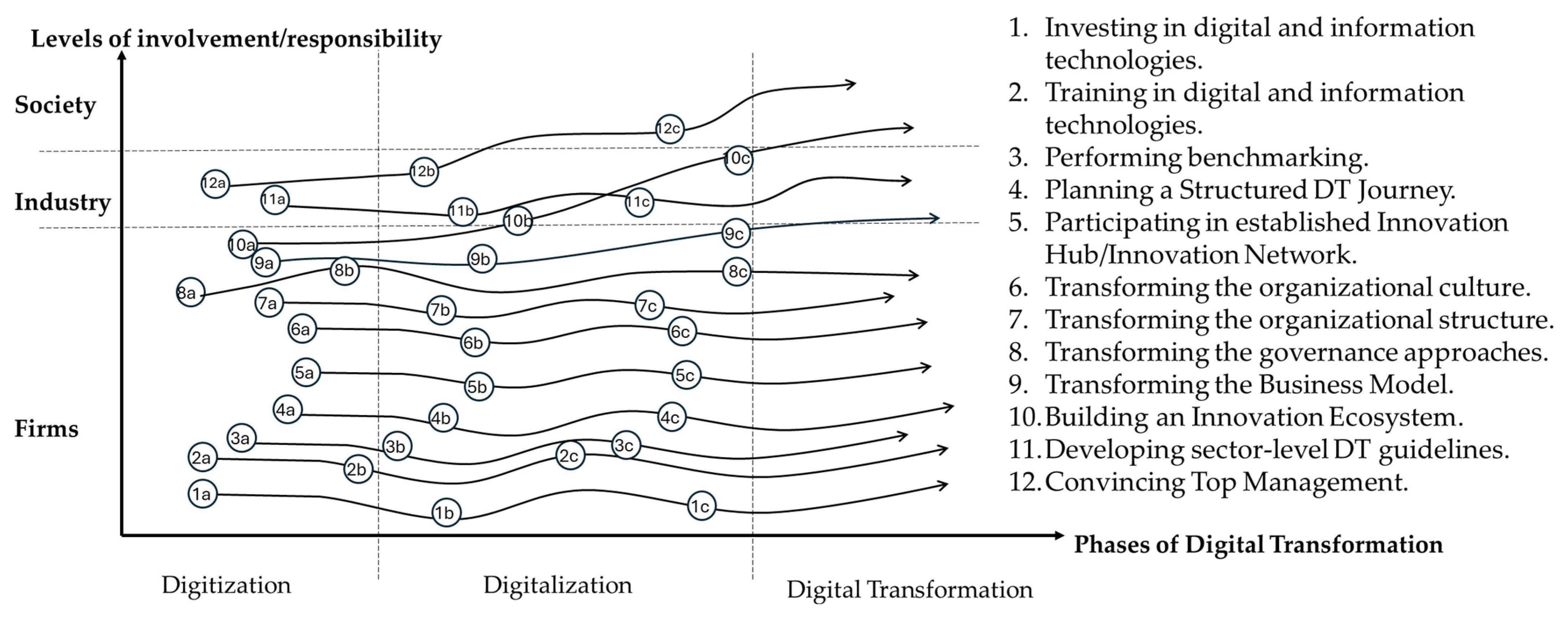
Overall, Figure 9 presents a framework that synthesizes the lessons from the journey of Brazilian construction companies from a multi-level perspective, involving different actors who should take action to foster Digital Transformation.
The multi-level framework, adopted from [33], distinguishes three levels on the y-axis: the firm level (firms, project teams, contractors, and industry bodies), the industry level (regulators, industry bodies, and firms), and the societal level (government, regulators, and policymakers). The x-axis represents the temporal and evolutionary perspective of DR phases. The numbered circles highlight the strategies for advancing in DT and are summarized on the right side of the figure. The curved lines associated with each strategy indicate that the process is not linear, as companies may encounter obstacles (barriers) at certain stages and gain momentum (drivers) at others. These strategies are subdivided into a, b, and c, corresponding to different levels of strategy development throughout the journey. No strategies were listed in the “DT phase”, indicating that strategies are adopted to enable advancement to the next phase. Therefore, an important question remains: what is the next step after DT?
In summary, the lessons can be outlined in 12 strategies:
  • Investing in digital and information technologies. This strategy can begin with (a) basic investments, such as ERP systems and AutoCAD; progress to (b) intermediary investments, including the initial implementation of BIM tools (for modeling and collaboration) and project management tools (e.g., PRIMAVERA, MS Project); and culminate in (c) advanced investments, such as integrated BIM tools, IoT, augmented reality, virtual reality, UAVs, artificial intelligence, and other emerging technologies.
  • Training in digital and information technologies. Investing in technologies requires training and the development of skills aligned with their use at basic (a), intermediate (b), and advanced levels (c).
  • Performing benchmarking. This strategy aims to (a) learn from and be inspired by other, more advanced economic sectors; (b) internally, among different projects within the company; and (c) externally, through interactions with other companies in the construction sector.
  • Planning a Structured DT Journey. Organizations must design a deliberate roadmap for transformation, integrating diverse strategies such as those outlined here. This trajectory should commence with (a) technological experimentation, (b) process redesign enabled by digital technologies, and ultimately (c) culminate in a radical reconfiguration of the business model.
  • Participating in established Innovation Hub/Innovation Network. This strategy enables (a) mimicking best practices, (b) adapting technologies to company processes, and (c) sharing solutions developed internally to enhance them.
  • Transforming the organizational culture. This strategy pursues organizational culture, starting with (a) awareness, progressing to (b) development, and achieving (c) mindfulness in DT.
  • Transforming the organizational structure. This strategy aims to create appropriate structures for digital transformation. It starts with (a) the establishment of an innovation department, progresses to (b) the formation of agile units, and culminates in moving toward (c) flexible organizational forms.
  • Transforming the governance approaches. Integrating (a) bottom-up, (b) middle-out, and (c) top-down perspectives. Initially, different technologies can be adopted by individuals within organizations, minimally modifying processes and following a bottom-up dynamic. Over time, top management may view the results of individual technology use favorably, endorse process redesign, and create a hybrid middle–out approach. However, to achieve complete transformation, a decision from top management (board) is necessary, as it requires a radical change in the business model.
  • Transforming the Business Model. This strategy entails transforming the business model along three trajectories: (a) minimal adjustments, (b) incremental changes, and (c) disruptive innovations. Ultimately, digital transformation should foster the emergence of an innovative business model, encompassing new ventures and novel marketing approaches.
  • Building an Innovation Ecosystem. DT journey necessitates innovation. Firms may begin with (a) closed innovation confined to internal initiatives, advance toward (b) open innovation through mechanisms such as startup challenges, and ultimately cultivate an (c) innovation ecosystem by fostering entrepreneurial ventures, engaging in calls for proposals, supporting industry events, and collaborating with universities, research centers, and the public sector.
  • Developing sector-level DT guidelines. The advancement of DT requires the development of a (a) technology catalog, (b) new contractual frameworks, and the promotion of (c) legal certainty for new business models. Such initiatives may be spearheaded by unions, professional associations, representative bodies, and other industry institutions, collectively strengthening the DT.
  • Convincing Top Management. Industry bodies play a pivotal role in (a) fostering sensitization, (b) raising awareness, and (c) legitimizing DT at the senior management level. Achieving this requires the establishment of high-level dialogue among directors to validate the transformation and instill a sense of urgency, ensuring its integration into the corporate agenda.
This new framework reads as a cohesive roadmap for DT, showing clear progression from basic to advanced strategies across technology, culture, structure, governance, and actors. This constitutes the main contribution of the paper.
Finally, beyond the traditional efficiency-oriented advancements targeted by the companies in this study, DT plays a critical role in advancing the SDGs. It enables green innovations, supports sustainable business models, and paves the way for a circular economy [34]. Ultimately, by modernizing the sector, DT contributes to building resilient infrastructure and promoting inclusive and sustainable industrialization, as emphasized in SDG 9 [4].

5. Conclusions

This study analyzed the Digital Transformation (DT) process in construction companies. To this end, the research was conducted in two stages. First, an exploratory study was carried out at INOVACON (Innovation Institute for the Construction Industry) in 2022, within the framework of a Working Group (WG) on Digital Transformation. Seventeen interviews were conducted with Technical Directors from companies involved in the DT process of their organizations. In the second stage, three companies from this group were selected for multiple case studies, detailing their transformation journeys. This phase included fifteen interviews with sixteen company representatives, as well as observation and document analysis.
As a result of the first stage, it was found that the topic is considered essential by ten companies. Barriers were also identified, as well as problems related to the technical department, construction site, procurement, and technical support sectors that DT should address. From the case studies, it was possible to detail each company’s DT journey, addressing objectives, strategies, drivers, barriers, and benefits.
The results collectively provide a valuable diagnosis of the actions undertaken by these companies, allowing the conclusion that the digital transformation process is still in its early stages, with some experimentation involving different technologies aimed at improving construction efficiency. This body of evidence suggests that companies are in the process of digitization.
The findings support the idea that DT should be regarded as a continuous and strategic process that goes beyond the mere adoption of new technologies. DT involves not only technological adoption but also organizational and cultural restructuring, with resistance to change being the greatest challenge—especially for traditional construction companies. To ensure sustainable competitive advantages, it is therefore essential that companies develop an innovative-oriented culture, promote capacity building, and establish structured planning aligned with their strategic goals.
In terms of implications, the study outlined the lessons into multi-level framework of strategies for digital transformation in the construction industry, which may guide company managers in planning and conducting their DT journeys. It may also assist policymakers in designing incentives for innovation and digitalization within the construction sector. This is the main contribution of the study.
Despite its contributions, the study has limitations. The qualitative approach may have introduced bias in participants’ responses, as they reported results based on their own experiences within their companies. Therefore, future research could focus on more objective aspects, and the development of a digital maturity model for construction companies could guide this effort. Moreover, the study was conducted in Brazil, specifically with companies from the state of Ceará, which may influence the results due to local economic and industrial factors. Broader studies employing quantitative approaches would be valuable to verify whether the strategies, drivers, and challenges to DT implementation identified in this research hold true in other contexts.
Additionally, exploring the influence of costs on DT implementation appears promising, especially since data on return on investment were neither found in the literature and nor provided by the participating companies. The Multi-level Framework of Strategies for Digital Transformation in the Construction Industry can serve as a reference for future empirical investigations, helping refine existing trajectories and complement them with new perspectives. Finally, the development of a maturity measurement model could play a pivotal role in fostering and advancing digital transformation.

Author Contributions

Conceptualization, M.G.T.L., L.F.C. and J.d.P.B.N.; Methodology, M.G.T.L., T.d.M.C., L.F.C. and J.d.P.B.N.; Software, M.G.T.L. and L.F.C.; validation L.F.C. and J.d.P.B.N.; formal analysis M.G.T.L., T.d.M.C. and L.F.C.; investigation M.G.T.L.; resources J.d.P.B.N.; data curation M.G.T.L., T.d.M.C. and L.F.C.; writing—original draft preparation M.G.T.L., T.d.M.C. and L.F.C.; writing—review and editing L.F.C. and J.d.P.B.N.; visualization M.G.T.L., T.d.M.C. and L.F.C.; supervision J.d.P.B.N. All authors have read and agreed to the published version of the manuscript.

Funding

The APC was funded by Fundação ASTEF, Federal University of Ceará.

Institutional Review Board Statement

Ethical review and approval were waived for this study in accordance with Resolution No. 510 of 7 April 2016, issued by the Brazilian National Health Council (Conselho Nacional de Saúde—CNS), as the data collection did not involve personal or sensitive information and posed no risks greater than those ordinarily encountered in daily social interactions.

Informed Consent Statement

Informed consent was obtained from all subjects involved in the study.

Data Availability Statement

The data presented in this study are available on request from the corresponding author due to privacy of participants.

Acknowledgments

We thank the companies and research participants for their valuable time. We also express our gratitude to INOVACON (Institute for Construction Innovation of Ceará) for supporting the development of this research. Finally, we would like to express our gratitude for the financial support provided through Fundação ASTEF.

Conflicts of Interest

The authors declare no conflicts of interest.

References

  1. Vial, G. Understanding digital transformation: A review and a research agenda. J. Strateg. Inf. Syst. 2019, 28, 118–144. [Google Scholar] [CrossRef]
  2. Ernstsen, S.N.; Whyte, J.; Thuesen, C.; Maier, A. How Innovation Champions Frame the Future: Three Visions for Digital Transformation of Construction. J. Constr. Eng. Manag. 2021, 147, 05020022. [Google Scholar] [CrossRef]
  3. Wang, K.; Guo, F.; Zhang, C.; Schaefer, D. From Industry 4.0 to Construction 4.0: Barriers to the digital transformation of engineering and construction sectors. Eng. Constr. Archit. Manag. 2024, 31, 136–158. [Google Scholar] [CrossRef]
  4. Nations, U. Transforming Our World: The 2030 Agenda for Sustainable Development; United Nations: Brussels, Belgium, 2015. [Google Scholar] [CrossRef]
  5. Elkington, J. Cannibals with Forks: Triple Bottom Line of 21st Century Business; John Wiley & Sons Ltd.: Chichester, UK, 1999. [Google Scholar]
  6. Adekunle, S.A.; Aigbavboa, C.O.; Ejohwomu, O.; Adekunle, E.A.; Thwala, W.D. Digital transformation in the construction industry: A bibliometric review. J. Eng. Des. Technol. 2024, 22, 130–158. [Google Scholar] [CrossRef]
  7. Vilar, M.A.d.S. Modelo de Aceitação da Tecnologia Adaptado às Compras Online. Master’s Thesis, Universidade Fernando Pessoa, Porto, Portugal, 2013. Available online: http://hdl.handle.net/10284/3942 (accessed on 4 June 2022).
  8. Aliu, J.; Oke, A.E. Construction in the digital age: Exploring the benefits of digital technologies. Built Environ. Proj. Asset Manag. 2023, 13, 412–429. [Google Scholar] [CrossRef]
  9. Dolla, T.; Jain, K.; Delhi, V.S.K. Strategies for digital transformation in construction projects: Stakeholders’ perceptions and actor dynamics for Industry 4.0. J. Inf. Technol. Constr. 2023, 28, 151–175. [Google Scholar] [CrossRef]
  10. Zhang, N.; Ye, J.; Zhong, Y.; Chen, Z. Digital Transformation in the Chinese Construction Industry: Status, Barriers, and Impact. Buildings 2023, 13, 1092. [Google Scholar] [CrossRef]
  11. Papadonikolaki, E.; Krystallis, I.; Morgan, B. Digital Technologies in Built Environment Projects: Review and Future Directions. Proj. Manag. J. 2022, 53, 501–519. [Google Scholar] [CrossRef]
  12. Ouyang, Y.; Liang, L. Digital Innovation in the Construction Industry: Overhyped or Truly Valuable? J. Manag. Eng. 2026, 42, 04025057. [Google Scholar] [CrossRef]
  13. Markard, J.; Raven, R.; Truffer, B. Sustainability transitions: An emerging field of research and its prospects. Res. Policy 2012, 41, 955–967. [Google Scholar] [CrossRef]
  14. Nyqvist, R.; Peltokorpi, A.; Lavikka, R.; Ainamo, A. Building the digital age: Management of digital transformation in the construction industry. Constr. Manag. Econ. 2025, 43, 262–283. [Google Scholar] [CrossRef]
  15. Fernandes, L.L.d.A.; Costa, D.B. Análise preliminar do processo de transformação digital no setor da construção civil sob as perspectivas social, técnica e operacional. Xix Encontro Nac. Tecnol. Do Ambient. Construído 2022, 19, 1–13. [Google Scholar] [CrossRef]
  16. Verhoef, P.C.; Broekhuizen, T.; Bart, Y.; Bhattacharya, A.; Dong, J.Q.; Fabian, N.; Haenlein, M. Digital transformation: A multidisciplinary reflection and research agenda. J. Bus. Res. 2021, 122, 889–901. [Google Scholar] [CrossRef]
  17. Tanaka, C.A.; Matsuda, P.M.; Maclennan, M.L.F. Transformação dital a construção civil no Brasil: Estratégias adotadas de desenvolvimento. Gestão Reg. 2024, 40, e20248242. [Google Scholar] [CrossRef]
  18. Rocha, L.d.M.; Cândido, L.F.; Neto, J.d.P.B. Determinants of the propensity to use of digital technologies in the Brazilian construction Industry. Ambient. Construído 2025, 25, e145530. [Google Scholar] [CrossRef]
  19. Tanoli, W.A. Assessing Drivers, Barriers and Policy Interventions for Implementing Digitalization in the Construction Industry of Pakistan. Buildings 2025, 15, 2798. [Google Scholar] [CrossRef]
  20. Gómez, C.C.O.; Herrera, R.; Pellicer, E.; Buitrago, A.A.; Torres, D.A. Construction 4.0: Cluster analysis and Research perspectives. Rev. Ing. Construcción 2023, 38, 493–506. [Google Scholar] [CrossRef]
  21. Instituto de Inovação da Indústria da Construção Civil. Quem Somos. Available online: https://inovaconce.com.br/sobre-nos/ (accessed on 4 June 2022).
  22. Bardin, L. Análise de Conteúdo; Edições: São Paulo, Brazil, 2011. [Google Scholar]
  23. Richardson, R.J. Pesquisa Social: Métodos e Técnicas, 3rd ed.; Atlas: São Paulo, Brazil, 2011. [Google Scholar]
  24. Stake, R.E. Qualitative case studies. In The SAGE Handbook of Qualitative Research, 3rd ed.; Denzin, N.K., Yvonna, S.L., Eds.; Sage Publications, Inc.: Thousand Oaks, CA, USA, 2005; Volume 7, pp. 443–466. [Google Scholar]
  25. Cellard, A. A análise documental. In A Pesquisa Qualitativa: Enfoques Epistemológicos e Metodológicos; Poupart, J., Deslauriers, J.-P., Gloulx, L.-H., Laperrière, A., Mayer, R., Pires, Á., Eds.; Vozes: Petrópolis, Brazil, 2010; pp. 295–316. [Google Scholar]
  26. Wong, C.F.; Lau, S.H.; Tan, O.K.; Boon, J.; Yap, H. Critical factors influencing the adoption of building information modelling (BIM) using technological adoption framework and structural equation modelling. Eng. Constr. Archit. Manag. 2025, 32, 967–986. [Google Scholar] [CrossRef]
  27. Rocha, L.d.M. Determinantes Da Propensão Ao Uso de Tecnologias Digitais No Setor de Construção Brasileiro. Master’s Thesis, Universidade Federal do Ceará, Fortaleza, Brazil, 2024. [Google Scholar]
  28. Chen, X.; Chang-Richards, A.Y.; Pelosi, A.; Jia, Y.; Shen, X.; Siddiqui, M.K.; Yang, N. Implementation of technologies in the construction industry: A systematic review. Eng. Constr. Archit. Manag. 2022, 29, 3181–3209. [Google Scholar] [CrossRef]
  29. Hofman, B.; de Vries, G.; van de Kaa, G. Keeping Things as They Are: How Status Quo Biases and Traditions along with a Lack of Information Transparency in the Building Industry Slow Down the Adoption of Innovative Sustainable Technologies. Sustainability 2022, 14, 8188. [Google Scholar] [CrossRef]
  30. Westerman, G.; Calméjane, C.; Bonnet, D.; Ferraris, P.; McAfee, A. Digital transformation: A roadmap for billion-dollar organizations. MIT Cent. Digit. Bus. Capgemini Consult. 2011, 1, 1–68. [Google Scholar]
  31. Cândido, L.F.; Lima, S.H.d.O.; Lázaro, J.C.; Pinho, A.P.M.; Barros Neto, J.d.P. Transição para sustentabilidade no setor da construção: O papel do Building Information Modeling. In Proceedings of the 23th Simpósio de Administração da Produção, Logística e Operações Internacionais (SIMPOI 2022), São Paulo, Brazil, 23–24 May 2022; pp. 1–18. [Google Scholar]
  32. Saldanha, R.C.; Oliveira, F.M.M.; Cândido, L.F.; Neto, J.d.P.B. Desvio de custo em obras de pequeno porte. In Encontro Nacional de Tecnologia do Ambiente Construído, 19; ANTAC: Canela, Brazil, 2022; pp. 1–11. [Google Scholar] [CrossRef]
  33. Cândido, L.F.; Lima, S.H.d.O.; Oliveira, F.M.M. Determinants of delay in small construction projects: Evidence from Brazil Determinants of delay in small construction projects: Evidence from Brazil. Int. J. Constr. Manag. 2025, 1–17. [Google Scholar] [CrossRef]
  34. Crisan, G.; Belciu, A. Digital Transformation—One Step Further to a Sustainable Economy: The Bibliometric Analysis. Sustainability 2025, 17, 1477. [Google Scholar] [CrossRef]
Figure 1. Research steps.
Sustainability 18 00407 g001
Figure 2. Companies’ profiles and their construction projects.
Sustainability 18 00407 g002
Figure 3. Semantic Network of Companies’ objectives with digital transformation.
Sustainability 18 00407 g003
Figure 4. Goals with DT to companies A, B, and C.
Sustainability 18 00407 g004
Figure 5. Strategies, Barriers and Drivers to implement DT. Color description: blue—Company A; Green—Company B; Light Orange—Company C.
Sustainability 18 00407 g005
Figure 6. Barriers for DT implementation in companies A, B, and C.
Sustainability 18 00407 g006
Figure 7. Venn diagram of strategies and drivers for DT implementation in companies A, B, and C.
Sustainability 18 00407 g007
Figure 8. Venn diagram of challenges for DT implementation in companies A, B, and C.
Sustainability 18 00407 g008
Figure 9. Multi-level Framework of Strategies for Digital Transformation in the Construction Industry.
Sustainability 18 00407 g009
Table 1. Characteristics of companies.
CompanyYears of OperationCompany SizeTypes of ProjectsCompleted ProjectsOperating AreaHighlights
A57MediumMedium- and high-end Residential Buildings300Northeast of BrazilEDGE-Certified projects
B44MediumHigh-end Residential Buildings200Northeast of BrazilAdvanced in Lean Construction
C50LargeHigh-end Residential Buildings286BrazilIt is considered one of the 20 largest construction companies in Brazil
Table 2. Profile of respondents.
CodeProfileCompanyTime (min)
A1Civil Engineer and Specialist in Construction Project Management, with more than 15 years of experience in the construction sector.A35
A2Civil Engineer and Production Planning and Control Manager, also working in Technical Assistance with more than 13 years of experience in the construction sector.A35
A3Civil Engineer and Specialist in Project and Business Management and has been the Technical Director of Company A for more than 12 years.A59
A4Bachelors in financial management and has been the Supply Coordinator of Company A for more than 18 years.A63
A5Civil Engineer with an MBA in Project Management. 15 years of experience, two of which as Innovation Coordinator at Company A.A47
B1Civil Engineer with an MBA in Project Management with 15 years of experience. Serves as Engineering Manager at Company B.B83
B2Building technician specializing in construction planning and supply engineering. Has worked as a Supply Coordinator for two years.B37
B3Civil Engineer with an MBA in Business Management. 40 years of experience, 14 of which as Technical Director at Company B.B102
B4Civil Engineer with an MBA in Supply Chain and Business Management. 10 years of experience, two of which as Innovation Coordinator at Company A.B79
B5Civil Engineer with an MBA in Business Management and Production Engineering. He has 10 years of experience, two of which as Operational Excellence Manager.B83
C1Civil Engineer, working as a construction and technical assistance coordinator with 16 years of experience.C43
C2Civil Engineer, working as an Innovation and Quality Engineer. He has 10 years of experience in the sector and 8 months at Company C.C68
C3ACivil engineer with an MBA in Business Management and Real Estate Development with 13 years of experience. Currently it serves as Planning and Control Coordinator.C84
C3BArchitect and Urban Planner with 8 years of experience. Working as Design Coordinator for 9 months at Company C.C
C4Bachelor’s in business administration with over 14 years of experience, currently working as a Supply Coordinator.C26
Table 3. Documents collected.
CodeTitle/YearDescriptionSourceFocus
D1Presentation of the challenges of the 1st Open Innovation CycleList of challenges in three strategic areas of the company, including their objectives.Mentioned by A3 and A5; detailed during OB1Construction site; Production Planning and Control (PPC); Stakeholder relations
D2Stages of the Open Innovation processPresentation of the 11 stages of the program.Mentioned by A3 and A5; detailed during OB1Solving bottlenecks (“pains”)
D3Presentation of the challenges of the 2nd Open Innovation CycleList of one company challenge, including its objective.Mentioned by A3 and A5; retrieved from institutional website on 25 July 2024Production Planning and Control (PPC)
D4Flowchart of the Open Innovation Program developed internallyPresentation of the 5 stages of the program and the necessary approvals.Mentioned by A3, A4, and A5; detailed during OB1Solving bottlenecks (“pains”)
D5Initial mapping of bottlenecksStudy carried out in 2022 identifying challenges in strategic sectors and focus points for each.Mentioned by B2, B3, and B5; detailed during OB2Engineering; Construction site; Supplies; Administrative; Accounting; IT
D6Objectives of the Synergy Project 2.0Description of objectives in order of priority.Mentioned by B2; detailed during OB2Controllership and Accounting; Finance; Technical Office
D7Decision milestones of the Meta Project 2.0Description of the project phases, following a timeline of scheduled activities.Mentioned by B2; detailed during OB2BIM
D8Areas covered by Operational ExcellencePresentation of the four areas under the responsibility of the sector.Mentioned by B5; retrieved from institutional presentation on 17 May 2024Operational Excellence
D9Cycle of the MMP (Process Mapping and Improvement)Chronology of the six stages.Mentioned by B5; retrieved from institutional presentation on 17 May 2024Operational Excellence
Table 4. Coded Barriers to Digital Transformation.
LevelBarrierQuotes%
Individual
(56%)
Lack of employee skills and knowledge1215
Resistance to cultural/technological change1114
Lack of time to engage with implementation1013
Lack of guidelines for choosing the “right technology solution” from an ocean of options available79
Concern about loss of financial data23
Concern about loss of digital data 23
Organizational (24%)Implementation cost (with consultant, software, and so on)911
Difficulties in adequacy with the current process in the company810
Misalignment of the DT’s vision in the company23
Sectorial
(20%)
Lack of support in the process68
Absence of DT guides45
Concern about data security and integrity68
Total79100
Table 5. Issues by company sector.
SectorProblems (Frequency of Mention)Categories (Subcategories)Applied Technologies
Technical Office 60 (69)13 (5)20
Construction Site 47 (63)9 (3)23
Purchasing Sector 22 (44)922
Technical Assistance 27 (37)105
Table 6. Technical Office.
CategorySubcategoryQuotes%
DesignTraditional design1522
BIM57
Control of construction projectCost710
Performance measurement34
Time23
Data and information management-710
Technical Office Integration and Management-710
Project Feasibility -46
Budgeting -46
Construction Planning-46
Supply-34
Decision Making-23
Quality Management-23
Organizational Culture-23
Services execution 11
IT support-11
Total69100
Table 7. Construction Site.
CategorySubcategoryQuotes%
Production Planning and ControlCost914
Execution711
Time711
Labor-813
Design-711
Data and information management-610
Materials-58
Quality Management-58
Site logistic-35
Sectors integration-35
Outros-35
Total 63100
Table 8. Purchase sector.
CategoryQuotes%
Purchase system
Supplier connection
Purchase processes
6 27
5 23
4 18
Planning 1 5
Stock Control 1 5
Unfeasible budget 1 5
Integration with construction planning 1 5
Material delivery 1 5
Integration with other sectors 1 5
Low priority of the sector in the company 1 5
Total 22 100
Table 9. Technical assistance.
CategoryQuotes%
Lack of a unified system to open and monitor service requests 5 29
Customer commitment to data entry and maintenance 2 12
Lack of feedback on the execution of preventive maintenance 2 12
Access to clients (costs of performing visits, lack of customer follow-up) 2 12
Real-time planning and control of maintenance team allocation 2 12
Knowledge dissemination regarding the technical assistance manual 2 12
Costs: in-house technical assistance team; lack of cost measurement per project 2 12
Total 17 100
Table 10. Proposed challenges to Digital transformation address (1st Open Innovation Round).
No.ChallengeObjectiveDepartment
1How to encourage preventive maintenance?Seek interactive solutions that provide sufficient information for decision-making, promoting preventive maintenance in order to reduce technical assistance requests.Construction Site
2How can we shorten the project and budget cycles?Develop technologies or tools capable of shortening the project and budgeting cycle within the company, minimizing gaps, increasing accuracy, and reducing the impact on the department’s routine.Production Planning and Control
3How to add new services and products for clients, generating additional revenue for the company?Expand the business model beyond property sales and identify different opportunities that can be explored within the ecosystem.Customer Success
Table 11. Understanding of what Digital Transformation means to Company B interviewees.
ParticipantMeaning
B1“Digital transformation is the ability to use technology to achieve greater process efficiency, consequently improving overall productivity… technology itself is not digital transformation… technology must be combined with productivity gains and innovation.”
B2“…it’s something that must operate on all fronts… it has to benefit those executing the work, the company itself, and the suppliers…”
B3“…it’s a revolution we are going through… important for all companies, for all people, and it will change the face of our business…”
B4“…I believe digital transformation must be embedded in the culture, in the mindset—not as a vertical pillar of the company, or a single department, but horizontally across the entire value chain. It must be a culture within the company. I don’t believe much in DT confined to an IT cell only…”
B5“…I think DT is truly a culture… the process must reach a certain maturity level before we think about applying technology, so that we can actually digitalize something efficiently and bring improvement, rather than creating two problems…”
Disclaimer/Publisher’s Note: The statements, opinions and data contained in all publications are solely those of the individual author(s) and contributor(s) and not of MDPI and/or the editor(s). MDPI and/or the editor(s) disclaim responsibility for any injury to people or property resulting from any ideas, methods, instructions or products referred to in the content.