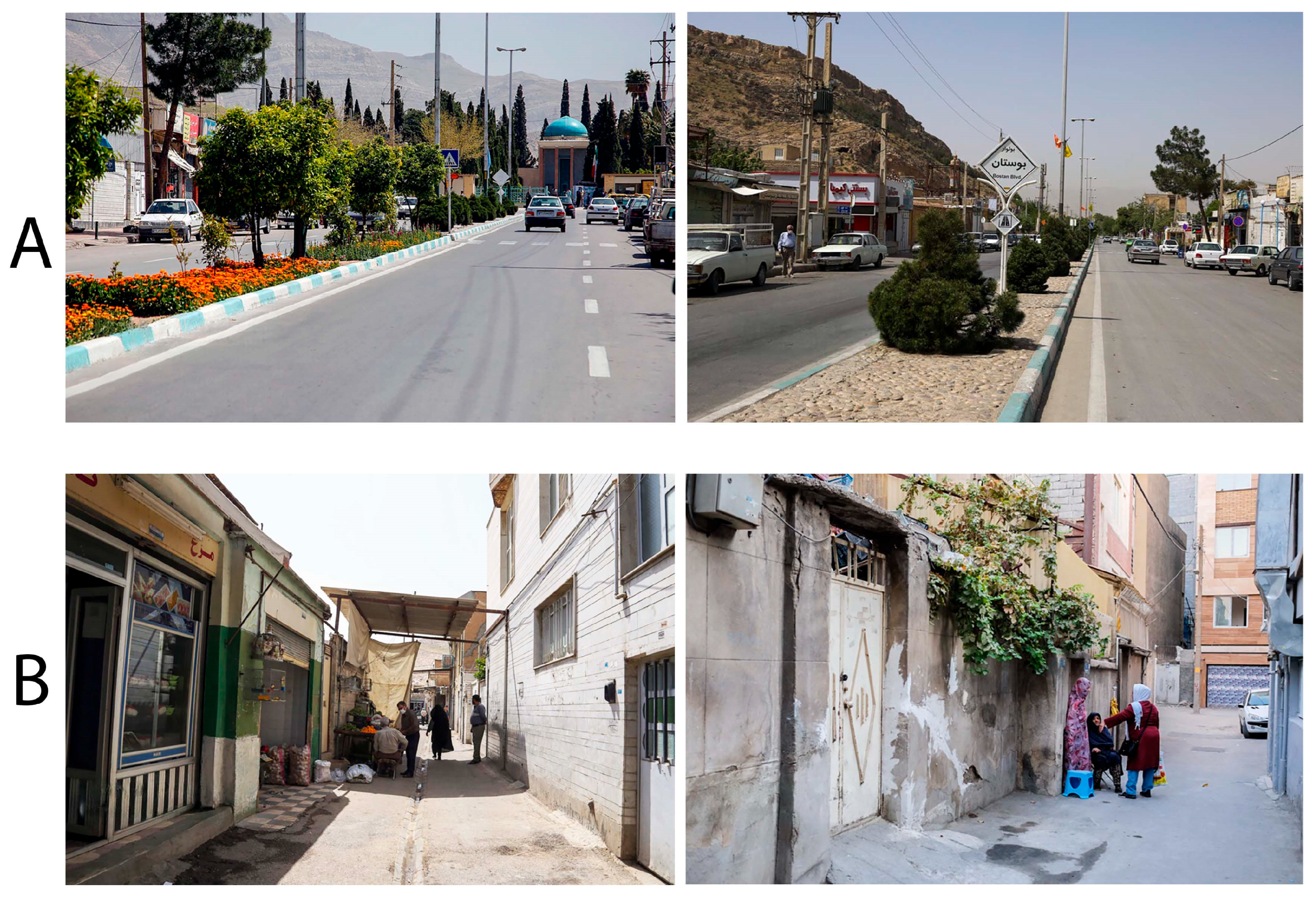
Urban Morphology and the Social Potential of Space: A Form-Based Reading of the Saadi Informal Settlement, Iran


Abstract
1. Introduction
2. Literature Review
2.1. Social Sustainability in the Context of Informal Settlements
2.2. Urban Morphology: The Physical Dimension of Social Potential
2.3. Space Syntax and Configurational Logic
3. Methodology
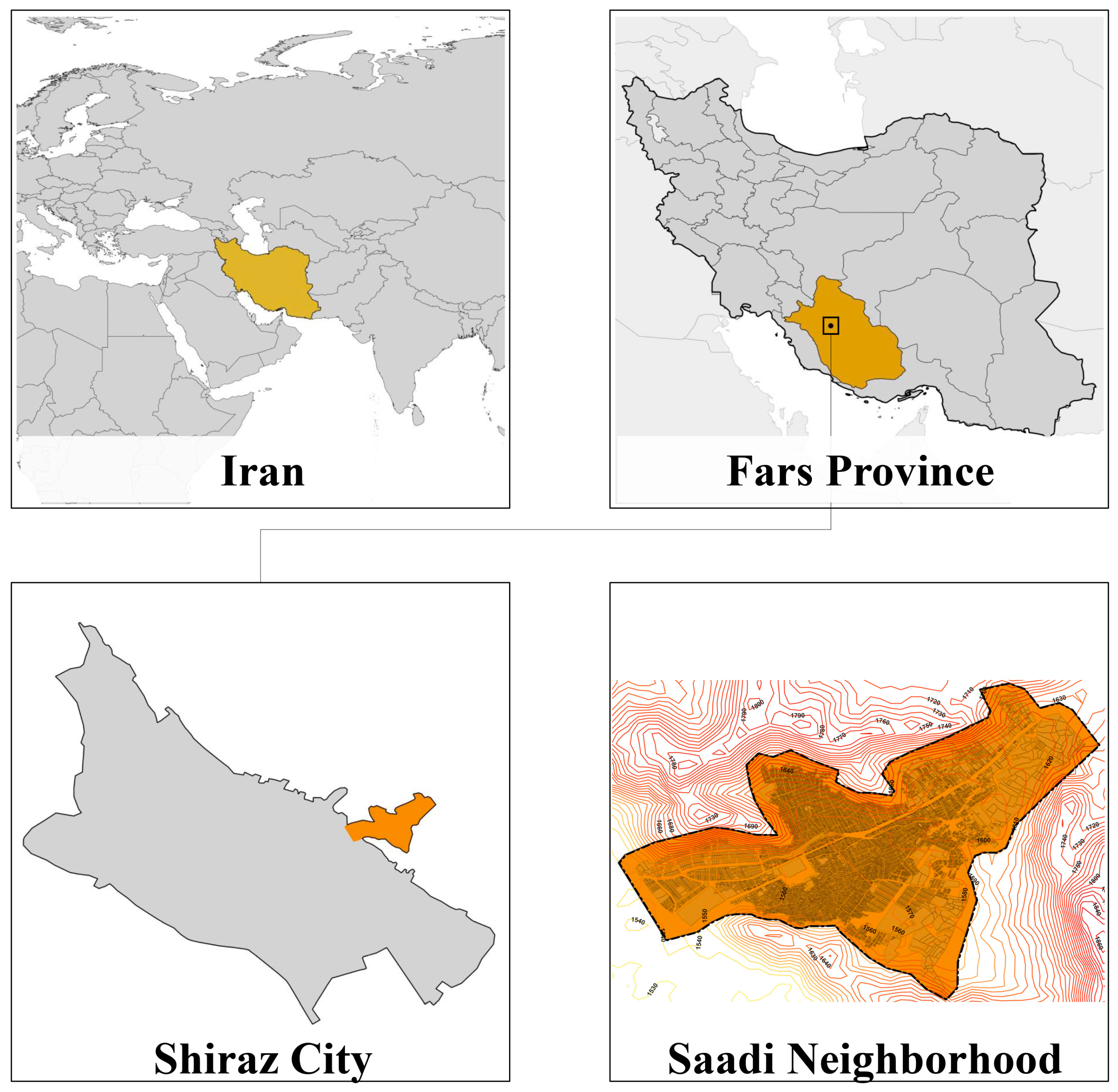
3.1. Case Study Context: Saadi Neighborhood
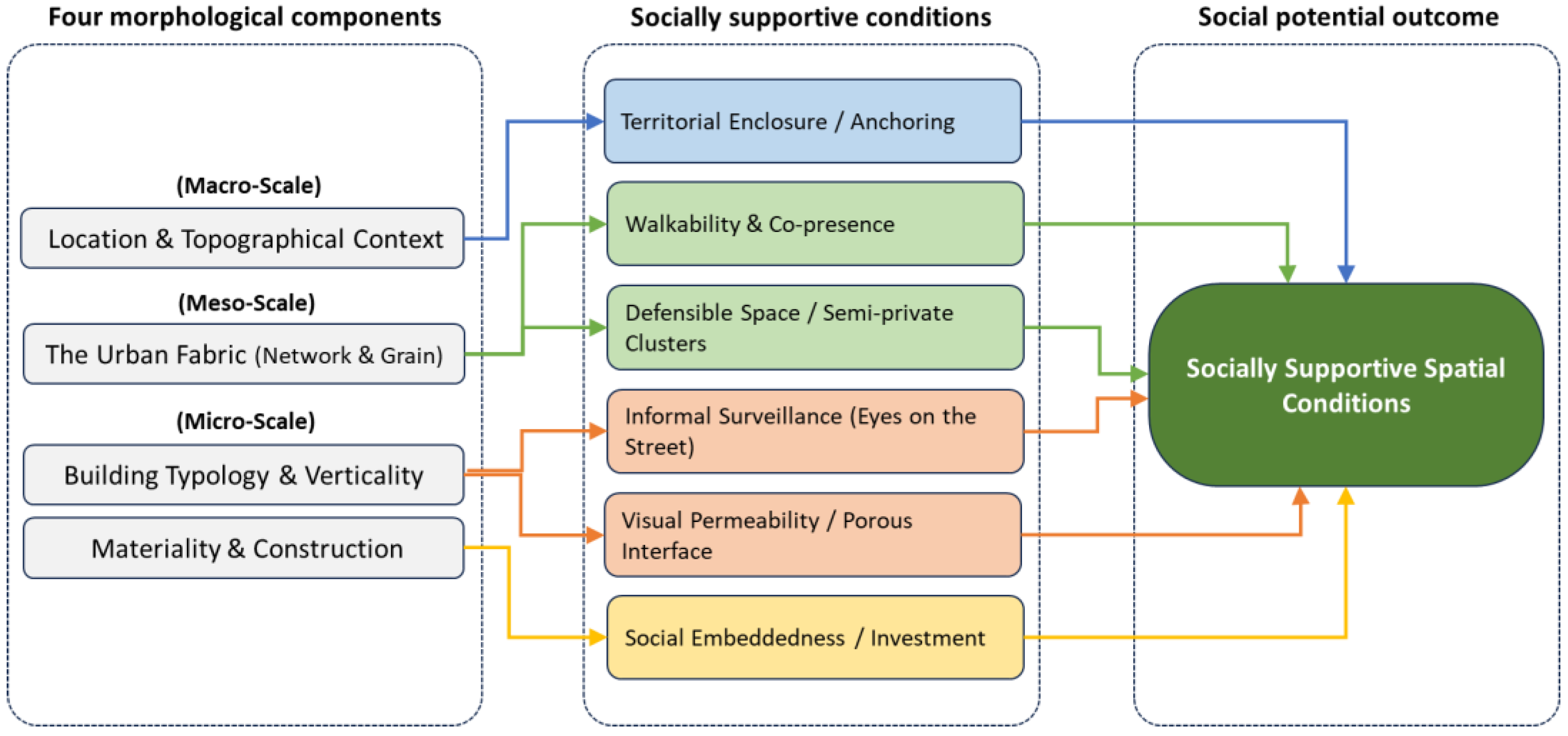
3.2. The Analytical Framework: Form as a Proxy for Social Logic
- Location & Topographical Context (Macro-Scale): This indicator analyzes the settlement’s natural boundaries and siting. It is evaluated for its capacity to create “territorial anchoring”—the degree to which physical enclosure fosters a distinct sense of place and community identity. This indicator draws on Newman’s [28] foundational concept of defined territories, which has been identified by Samper et al. [19] as a critical factor for social stability in informal settlements.
- The Urban Fabric & Network Configuration (Meso-Scale): This component analyzes the interaction between the street network and the urban grain. Drawing on Space Syntax principles, the analysis focuses on how the fine-grained texture and intersection density drive “walkability and co-presence.” As argued by Hillier and Hanson [21] and Askarizad and Safari [7], higher network integration directly correlates with increased potential for social interaction. Simultaneously, the analysis identifies semi-private clusters (cul-de-sacs) that function as “defensible space,” providing safe territories for vulnerable groups as observed by Kamalipour and Peimani [12]. Key metrics include movement hierarchy and intersection density, established predictors of social interaction [32].
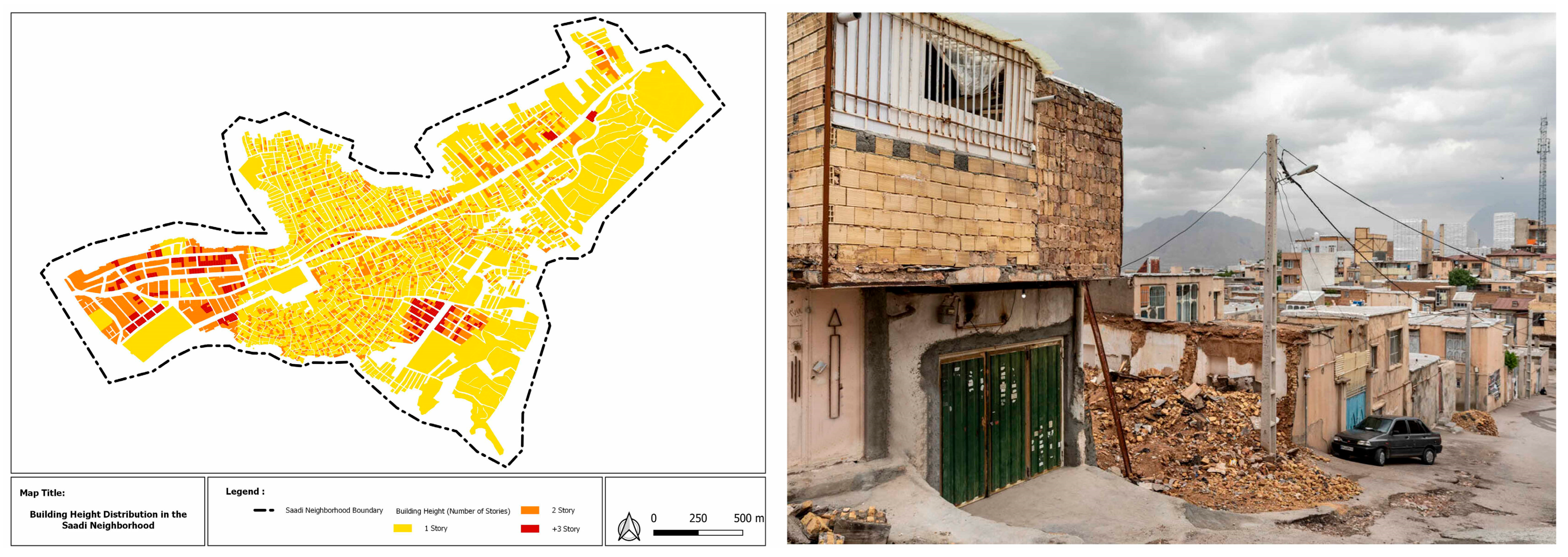
- Building Typology & Verticality (Micro-Scale): This indicator examines the interface between the private dwelling and the public street, as well as the height of structures. It assesses the “visual permeability” of frontages to evaluate the potential for “informal surveillance.” This aligns with Jacobs’ [29] theory of ‘eyes on the street,’ where low-rise, active frontages foster a self-regulating environment of safety, a relationship recently quantified in urban morphology by Mehaffy et al. [5].
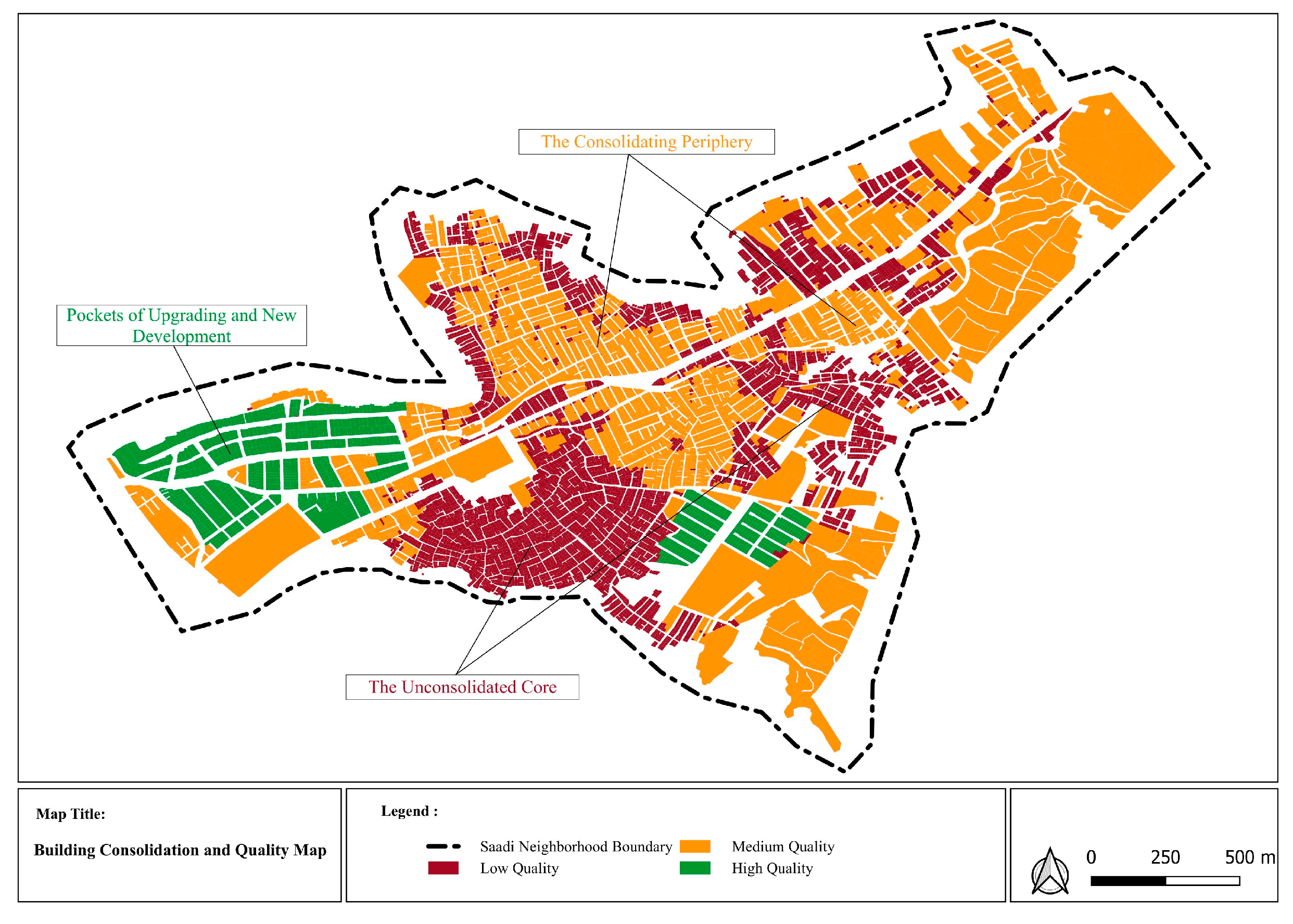
- Materiality & Construction (Micro-Scale): This indicator interprets the physical fabric as a semiotic system. The transition from temporary to permanent materials is analyzed as a marker of “social embeddedness” and territorial claim. This proxy is grounded in Turner’s [30] theory of incremental housing, where material consolidation serves as tangible evidence of a resident’s long-term investment and commitment to the community structure [33].
3.3. Data Collection and Procedural Steps
- Step 1: Geospatial and Network Analysis: High-resolution satellite imagery (0.5 m resolution) and municipal base maps were utilized within a GIS environment (ArcGIS 10.8) to digitize the urban fabric. A detailed network analysis was conducted to categorize circulation paths into a functional hierarchy. This categorization allowed for the evaluation of network integration and the identification of “deep” spaces versus “integrated” axes, interpreting the configurational logic of the settlement without relying on purely abstract simulations [13].
- Step 2: Morphological Mapping: Detailed figure-ground and urban grain maps were produced using CAD and GIS tools to quantify the density and texture of the fabric. These maps highlight the “fine grain” and high building coverage ratio that support pedestrian permeability and social intimacy.
- Step 3: Fieldwork and Ground-Truthing: Systematic field surveys were conducted to validate the spatial data. This involved photographic documentation of social behaviors in different spatial types to corroborate the link between the identified spatial configuration and observed social interaction patterns [5].
4. Results: The Social Potential of Saadi’s Morphology
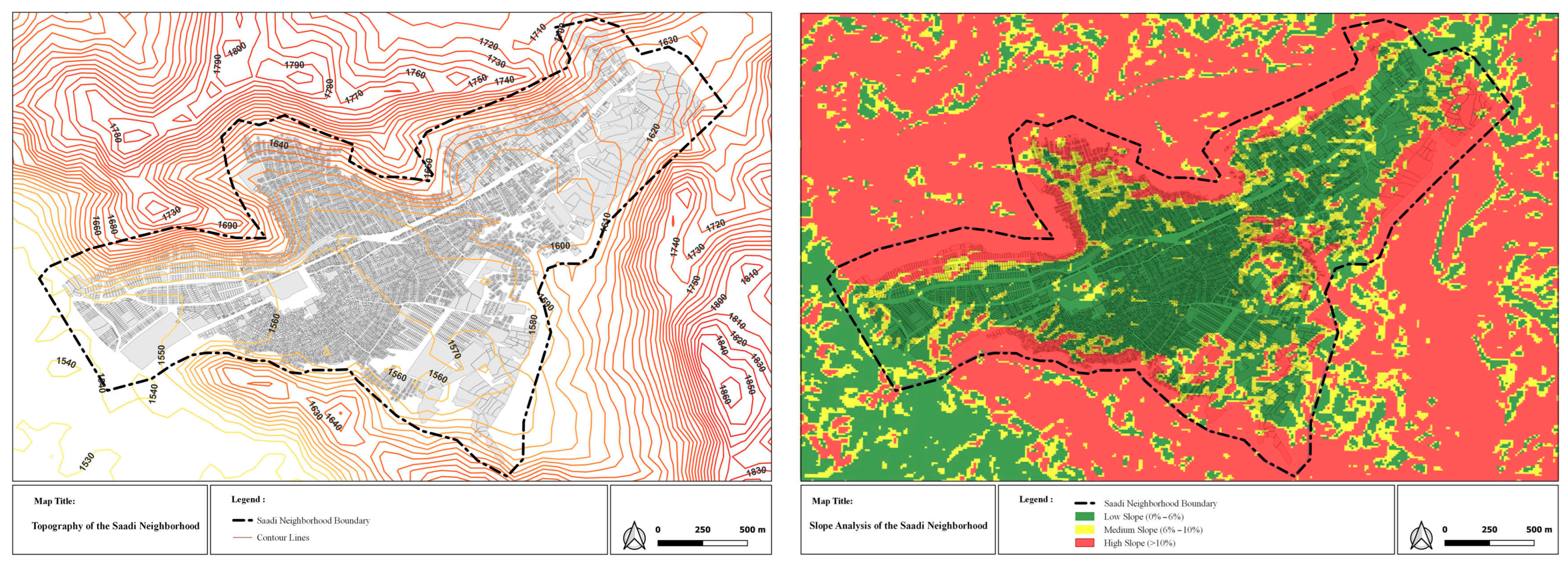
4.1. Macro-Scale: Topographical Enclosure and Territorial Anchoring
4.2. Meso-Scale: Urban Fabric Driving Walkability and Defensible Space
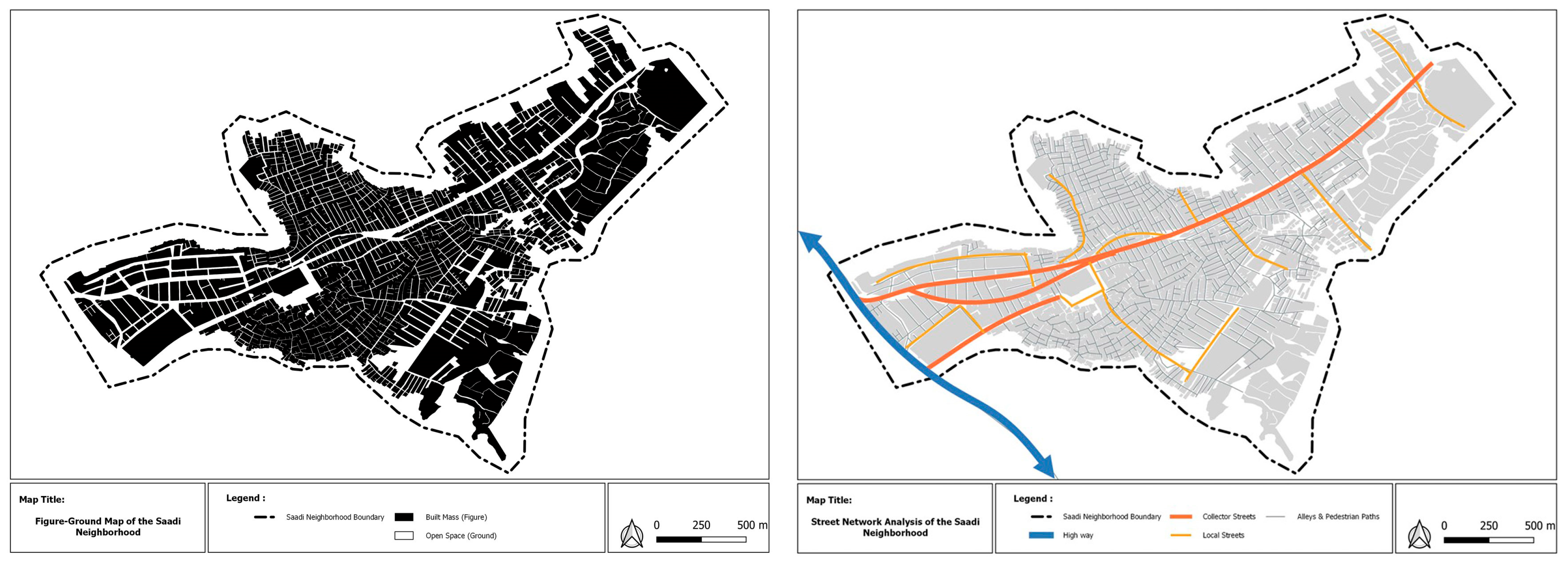
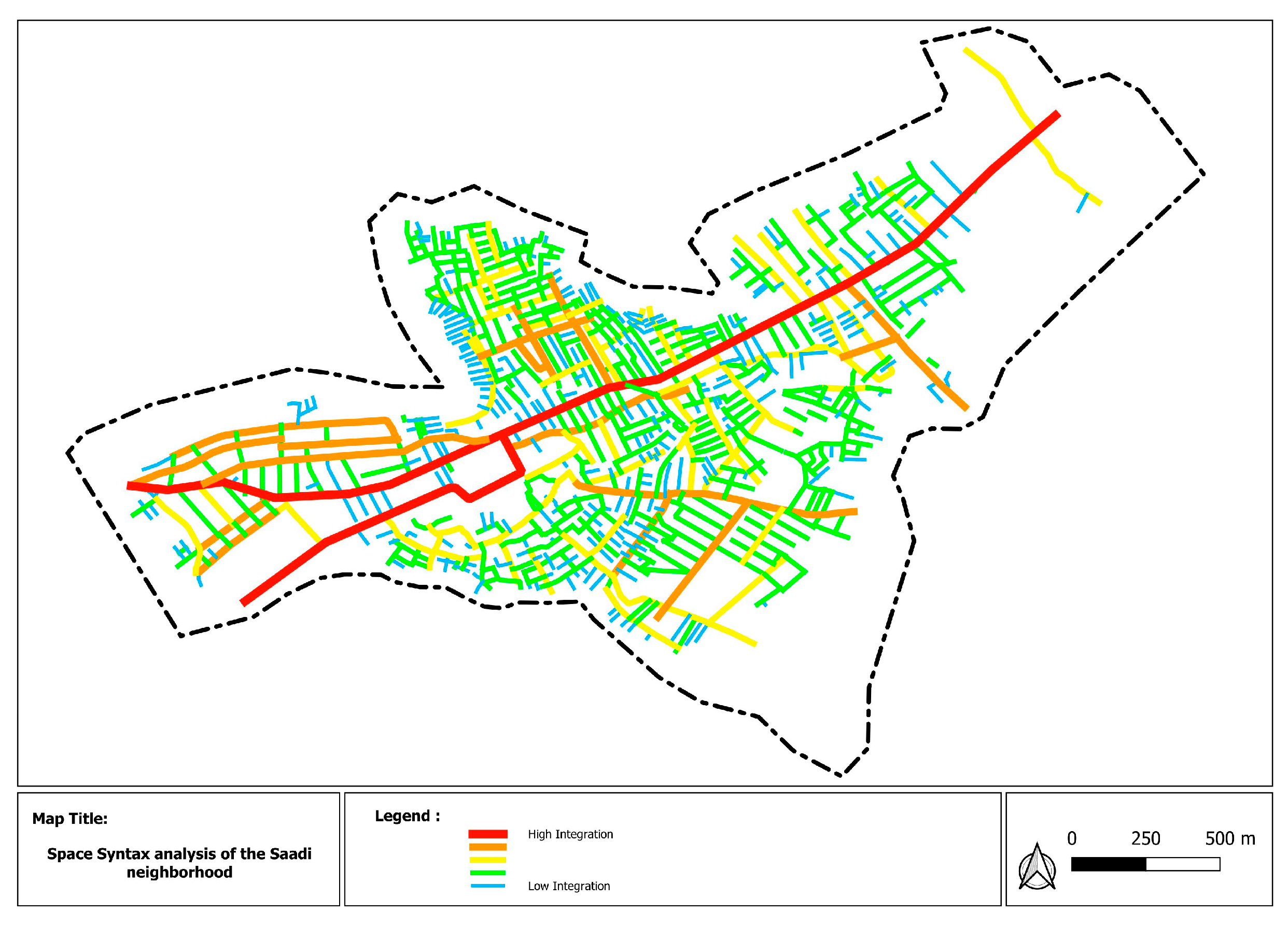
- Walkability and Co-presence: The street network is characterized by a “deformed grid” structure with a high density of intersections and short street segments. Combined with the fine-grained urban texture—identified in [14] as a key determinant of informal morphology—this creates a highly permeable network that naturally slows down traffic and prioritizes pedestrians. Albabely and Alobaydi [34] emphasize that such network properties, particularly connectivity, are the strongest insights for predicting urban pedestrian movement densities. In configurational terms, this morphology drives “walkability” and increases the probability of “co-presence” and casual social exchange (Figure 4). The analysis confirms that the integrated collector streets function as the social spine where public life converges. This reflects Mehta’s [35] taxonomy of sociability, where street characteristics directly invite staying and interaction.
- Defensible Space in Semi-private Clusters: A pervasive feature of the fabric is the abundance of cul-de-sacs (indicated by the blue lines in Figure 5) branching off the local streets. While conventional planning often criticizes these as “segregated,” the analysis reveals their vital social function as “defensible space.” This observation is consistent with Iranmanesh and Kamalipour [36], who describe the morphogenesis of access networks in informal settlements as a process that naturally creates hierarchical zones of privacy. These semi-private clusters create protected territories where 5–10 households share a common zone, supporting the formation of micro-communities.
4.3. Micro-Scale: Verticality and Visual Permeability
4.4. Micro-Scale: Materiality as Social Embeddedness
5. Discussion
5.1. The Social Logic of Organic Form: Synergy of Configuration and Activity
5.2. Morphology as a Buffer Against Socio-Spatial Inequality
5.3. Implications for Practice: From Regularization to Surgical Upgrading
5.4. Rethinking Informality Through Social Potential
6. Conclusions
6.1. Synthesis of Findings
6.2. Policy Implications: Towards Morphologically Sensitive Upgrading
- Recognizing Spatial Assets: Identifying and protecting the integrated pedestrian spines and semi-private clusters as essential social infrastructure.
- Surgical Intervention: Instead of generic infrastructure provision, interventions should be acupunctural and specific. For example, paving and lighting the “integrated” collector streets identified by Space Syntax can boost their function as economic spines. Conversely, in the deep cul-de-sacs, interventions should focus on stabilizing slopes and providing small-scale communal water points or pocket parks, reinforcing their role as safe play areas for children without disrupting the private social fabric [43].
- Enabling Incrementalism: Supporting the user-led process of consolidation through tenure security and technical assistance, acknowledging that the physical solidification of the fabric is a proxy for social stability [19].
6.3. Future Research Directions
Author Contributions
Funding
Institutional Review Board Statement
Informed Consent Statement
Data Availability Statement
Conflicts of Interest
References
- Alesaily, Z.; Albialy, A. Future Cities: A Bibliometric Review, 1875 to 2024. Sustain. Futures 2025, 7, 100801. [Google Scholar] [CrossRef]
- UN-Habitat. World Cities Report 2022: Envisaging the Future of Cities; UN-Habitat: Nairobi, Kenya, 2022; Available online: https://unhabitat.org/wcr/2022/ (accessed on 25 December 2025).
- Larimian, T.; Sadeghi, A. Measuring urban social sustainability: Scale development and validation. Environ. Plan. B Urban Anal. City Sci. 2021, 48, 621–637. [Google Scholar] [CrossRef]
- Wahab, B. Transforming Nigerian informal settlements into liveable communities: Strategies and challenges. In The 2017 Edition of Mandatory Continuing Professional Development Programme (MCPDP) of the Nigerian Institute of Town Planners; Nigerian Institute of Town Planners: Abuja, Nigeria, 2017. [Google Scholar] [CrossRef]
- Mehaffy, M.W.; Porta, S.; Rofè, Y.; Salingaros, N.A. Urban nuclei and the geometry of streets: The ‘emergent neighborhoods’ model. Urban Des. Int. 2020, 25, 22–35. [Google Scholar] [CrossRef]
- Sharifi, A.; Murayama, A. Changes in the traditional urban form and the social sustainability of contemporary cities: A case study of Iranian cities. Habitat Int. 2013, 38, 126–134. [Google Scholar] [CrossRef]
- Askarizad, R.; Safari, H. The influence of social interactions on the behavioral patterns of the people in urban spaces. Cities 2020, 101, 102687. [Google Scholar] [CrossRef]
- Ali, H.H.; Al-Betawi, Y.N.; Al-Qudah, H.S. Effects of urban form on social sustainability–a case study of Irbid, Jordan. Int. J. Urban Sustain. Dev. 2019, 11, 203–222. [Google Scholar] [CrossRef]
- Hillier, B. Centrality as a process: Accounting for attraction inequalities in deformed grids. Urban Des. Int. 1999, 3, 107–127. [Google Scholar] [CrossRef]
- Karimi, K. A configurational approach to analytical urban design: ‘Space syntax’ methodology. Urban Des. Int. 2012, 17, 297–318. [Google Scholar] [CrossRef]
- Hillier, B. (Ed.) Spatial Sustainability in Cities: Organic Patterns and Sustainable Forms; Royal Institute of Technology (KTH): Stockholm, Sweden, 2009. [Google Scholar]
- Kamalipour, H.; Peimani, N. Assemblage thinking and the city. Curr. Opin. Environ. Sustain. 2020, 46, 1–14. [Google Scholar] [CrossRef]
- Askarizad, R.; Daudén, P.J.; Garau, C. Exploring the role of configurational accessibility of alleyways on facilitating wayfinding transportation within the organic street network systems. Transp. Policy 2024, 157, 179–194. [Google Scholar] [CrossRef]
- Nezhadmasoum, S.; Vehbi, B.O. An Integrated Morphological Framework for Analyzing Informal Settlements: The Case of Saadi Neighborhood, Shiraz. Urban Sci. 2025, 9, 448. [Google Scholar] [CrossRef]
- Mohamed, A.A.; Ubarevičienė, R.; Van Ham, M. Morphological evaluation and regeneration of informal settlements: An experience-based urban design approach. Cities 2022, 128, 103798. [Google Scholar] [CrossRef]
- Imperiale, A.J.; Vanclay, F. Re-designing social impact assessment to enhance community resilience for disaster risk reduction, climate action and sustainable development. Sustain. Dev. 2024, 32, 1571–1587. [Google Scholar] [CrossRef]
- Rapoport, A. Human Aspects of Urban Form: Towards a Man—Environment Approach to Urban Form and Design; Pergamon Press: Oxford, UK, 1977. [Google Scholar] [CrossRef]
- Dovey, K. Informal urbanism and complex adaptive assemblage. Int. Dev. Plan. Rev. 2012, 34, 349–368. [Google Scholar] [CrossRef]
- Samper, J.; Shelby, J.A.; Behary, D. The paradox of informal settlements revealed in an ATLAS of informality: Findings from mapping growth in the most common yet unmapped forms of urbanization. Sustainability 2020, 12, 9510. [Google Scholar] [CrossRef]
- Dovey, K.; King, R. Forms of informality: Morphology and visibility of informal settlements. Built Environ. 2011, 37, 11–29. [Google Scholar] [CrossRef]
- Moudon, A.V. Built for Change: Neighborhood Architecture in San Francisco; MIT Press: Cambridge, MA, USA, 1986. [Google Scholar]
- Carrilho, J.; Trindade, J. Sustainability in Peri-Urban Informal Settlements: A Review. Sustainability 2022, 14, 7591. [Google Scholar] [CrossRef]
- Memarian, G.; Brown, F.E. Climate, culture, and religion: Aspects of the traditional courtyard house in Iran. J. Archit. Plan. Res. 2003, 20, 181–198. [Google Scholar]
- Hillier, B.; Hanson, J. The Social Logic of Space; Cambridge University Press: Cambridge, UK, 2009. [Google Scholar] [CrossRef]
- Karimi, K. The configurational structures of social spaces: Space syntax and urban morphology in the context of analytical, evidence-based design. Land 2023, 12, 2084. [Google Scholar] [CrossRef]
- Attia Ben Cherifa, Y.; Rejeb Bouzgarrou, A.; Claramunt, C.; Rejeb, H. Re-appropriation of public spaces in the Tunisian city of Sousse post COVID-19 pandemic. J. Urban. Int. Res. Placemaking Urban Sustain. 2025, 1–30. [Google Scholar] [CrossRef]
- Cutini, V.; Di Pinto, V.; Rinaldi, A.M.; Rossini, F. Informal settlements spatial analysis using space syntax and geographic information systems. In Computational Science and Its Applications—ICCSA 2019; Springer: Cham, Switzerland, 2019. [Google Scholar] [CrossRef]
- Newman, O. Defensible Space: Crime Prevention Through Urban Design; Macmillan: New York, NY, USA, 1973. [Google Scholar]
- Jacobs, J. The Death and Life of Great American Cities; Random House: New York, NY, USA, 1961. [Google Scholar]
- Turner, J.F.C. Housing by People: Towards Autonomy in Building Environments; Marion Boyars: London, UK, 1976. [Google Scholar]
- Statistical Center of Iran (SCI). Population Distribution of Informal Settlements in Iran; SCI: Tehran, Iran, 2022. [Google Scholar]
- Yamu, C.; van Nes, A.; Garau, C. Bill Hillier’s Legacy: Space Syntax—A Synopsis of Form and Social Function of the City. Sustainability 2021, 13, 3394. [Google Scholar] [CrossRef]
- Sheuya, S.A. Housing Transformations and Urban Livelihoods in Informal Settlements: The Case of Dar es Salaam, Tanzania; Spring Center: Berlin/Heidelberg, Germany; Dortmund University: Dortmund, Germany, 2004; Available online: https://sol.unibo.it/SebinaOpac/resource/UBO02676718 (accessed on 25 December 2025).
- Albabely, S.; Alobaydi, D. Impact of Street Network Properties on Urban Pedestrian Movement Densities: Insights from Iraq. Int. Soc. Study Vernac. Settl. 2024, 11, 136–151. [Google Scholar]
- Mehta, V. Streets and social life in cities: A taxonomy of sociability. Urban Des. Int. 2019, 24, 16–37. [Google Scholar] [CrossRef]
- Iranmanesh, A.; Kamalipour, H. A configurational morphogenesis of incremental urbanism: A comparative study of the access network transformations in informal settlements. Cities 2023, 140, 104444. [Google Scholar] [CrossRef]
- Shirazi, M.R. Compact urban form: Neighbouring and social activity. Sustainability 2020, 12, 1987. [Google Scholar] [CrossRef]
- Montgomery, J. Making a city: Urbanity, vitality and urban design. J. Urban Des. 1998, 3, 93–116. [Google Scholar] [CrossRef]
- Ansari, R.A.; Malhotra, R.; Buddhiraju, K.M. Identifying informal settlements using contourlet assisted deep learning. Sensors 2020, 20, 2733. [Google Scholar] [CrossRef]
- Barella, J. Strategic and acupunctural GIS implementation within community-oriented organizations: Evidence-based insights from a South African participatory action research for informal settlement upgrading. Cartographica 2020, 55, 266–280. [Google Scholar] [CrossRef]
- Kamalipour, H. Improvising places: The fluid ecology of informal urbanism. Sustainability 2020, 12, 2293. [Google Scholar] [CrossRef]
- Peimani, N.; Kamalipour, H. Assembling transit urban design in the global South: Urban morphology in relation to forms of urbanity and informality in the public space surrounding transit stations. Urban Sci. 2022, 6, 18. [Google Scholar] [CrossRef]
- Hin, L.L.; Xin, L. Redevelopment of urban villages in Shenzhen, China–An analysis of power relations and urban coalitions. Habitat Int. 2011, 35, 426–434. [Google Scholar] [CrossRef]

Disclaimer/Publisher’s Note: The statements, opinions and data contained in all publications are solely those of the individual author(s) and contributor(s) and not of MDPI and/or the editor(s). MDPI and/or the editor(s) disclaim responsibility for any injury to people or property resulting from any ideas, methods, instructions or products referred to in the content. |
© 2025 by the authors. Licensee MDPI, Basel, Switzerland. This article is an open access article distributed under the terms and conditions of the Creative Commons Attribution (CC BY) license.
Share and Cite
Nezhadmasoum, S.; Vehbi, B.O. Urban Morphology and the Social Potential of Space: A Form-Based Reading of the Saadi Informal Settlement, Iran. Sustainability 2026, 18, 314. https://doi.org/10.3390/su18010314
Nezhadmasoum S, Vehbi BO. Urban Morphology and the Social Potential of Space: A Form-Based Reading of the Saadi Informal Settlement, Iran. Sustainability. 2026; 18(1):314. https://doi.org/10.3390/su18010314
Chicago/Turabian StyleNezhadmasoum, Sanaz, and Beser Oktay Vehbi. 2026. "Urban Morphology and the Social Potential of Space: A Form-Based Reading of the Saadi Informal Settlement, Iran" Sustainability 18, no. 1: 314. https://doi.org/10.3390/su18010314
APA StyleNezhadmasoum, S., & Vehbi, B. O. (2026). Urban Morphology and the Social Potential of Space: A Form-Based Reading of the Saadi Informal Settlement, Iran. Sustainability, 18(1), 314. https://doi.org/10.3390/su18010314