


Abstract
Envisaging future metro operations requires a collective and collaborative approach to understand an operator’s requirements. This study aims to gain an understanding of the current status of metro operators, as well as to identify areas of future innovation and further development. A special emphasis was given to the organisational settings—an underexplored aspect of metro operators in existing research—in addressing the following three designated areas of interest: predictive maintenance, cyber-security, and energy consumption. Therefore, to achieve an insight into metro operator’s internal operations, the study sought to engage in dialogue with operators. A literature review was first conducted to provide a foundation for analysis, and based on it, an online self-completed questionnaire survey was designed and administered to gain responses and insights from an extensive range of real-world metro operators. Follow-up face-to-face and group-wide discussions were also undertaken to obtain further detail and more specific information relating to metro operations. Through a three-dimension analysis framework, current practices, areas of consensus, and future innovative strategies of metro operators’ internal operations and organisational settings are highlighted. These insights collectively underscore the importance of adaptable strategies and cross-sector collaboration for advancing resilient, efficient, and secure metro systems. The outcome of the paper aspires to provide a strong foundation for future research as well as for future metro projects, providing an overview of the existing status of metro operators across the world.
1. Introduction
The advancement of metro systems involves a complicated interaction among technological development, passenger expectations, and operational practicalities. Previous research indicates that organisational settings of metro operators, including their organisational structures (e.g., centralised vs. decentralised), the strategic management approach, operational flexibility and responsiveness, as well as cross-unit (e.g., departments or division) communications and collaborations, can have a significant influence on metro systems’ performances and energy consumption [1,2,3,4]. It has been identified that integrated train timetable and trajectory (or speed) optimisations are two primary areas that allow for more cohesive energy-saving strategies which could help reducing metro system energy consumption for up to 25% [1]. This obviously requires a more coordinated planning approach stemming from the organisational settings. On the other hand, more flexible planning approaches may struggle with inconsistent energy saving practices across different metro lines or geographical regions. As for system sustainability and energy efficiency, effective metro system management that considers technological integration, operational optimisation, data-driven decision-making, and stakeholder collaborations have been proved critical in enhancing sustainability, efficiency, and urban mobility in rapidly growing cities [2]. This is possibly linked to the operators’ sustainability organisational goals and is likely to have impacts on investment towards energy-efficient technologies and practices. At operational level, organisations that support adaptive scheduling and real-time decision-making can better respond to emergency and unexpected disturbances and thus improve energy efficiency. It has been shown that the reduction in traction energy consumption can be up to nearly 11% and at the same time it contributes to an increase in regenerative braking energy by over 40% [3]. To achieve this, a clear organisational structure that empowers operational units and integrates technical systems for real-time monitoring and control needs to be in place. The operational and communication practices and their interactions among organisational units (e.g., how well the operations, maintenance, and planning departments collaborate together) are key factors affecting metro energy efficiency [4].
Therefore, a good understanding of these key aspects helps shaping how future metro systems should be designed and operated to meet the needs of various stakeholders. Whilst there is plenty of research studying technological advancement and passenger needs for metro systems, operators’ dimension—an important perspective—is often overlooked and underexplored [5,6]. Understanding how operators organise their internal structures and processes is vital in ensuring that the technological advancement (e.g., adoption of AI-enabled technologies) could function effectively in real-world metro operational settings, thus enhancing energy efficiency as well as satisfying passengers’ growing expectations.
This study therefore aimed to address this rather overlooked and underexplored organisational perspective and to provide an insight into the day-to-day operations of a metro operator, focusing on the organisational structure, current practices, and future innovation. Through different engagement activities and collaborative dialogue with various metro operators globally, this study established as a form of dedicated “Community of Practices”, bringing together various stakeholders to collectively envisage the future of metro operations and identifying existing data gaps, highlighting areas of innovation and good practices. This was performed by engaging with operators through a questionnaire survey, at workshops, and having direct interactions. Operators were able to share and listen to other operators as to how the day-to-day metro operations function and how the respective operators are tackling challenges and looking for innovation to find solutions for the operational barriers facing their networks. In short, the contributions of the current study can be summarised as follows:
- Investigated the organisational settings—an underexplored dimension of metro operators in existing research.
- Established a “Community of Practice” among an extensive range of metro operators to identify useful insights into metro systems’ internal operations and organisational settings.
- Created a three-dimension framework for analysing metro operators’ organisational structures and internal operational practices.
- Generated evidence and insight for metro operators and governing authorities in terms of the current status of good practices, areas of consensus, and future innovative strategies of metro operations, which collectively underscore the importance of adaptable strategies and cross-sector collaboration for advancing resilient, efficient, and secure metro systems.
The rest of this paper is organised as follows. A literature review will first be given, following this introduction, on relevant past research. This would inform the development of the overall study methodology, survey design, and development of the data analysis framework in Section 3. Research findings synthesised from the survey and workshops are then elaborated and their implications are discussed in Section 4 and Section 5, respectively. Eventually, the paper is concluded in Section 6 by highlighting the key insights and good practices, and then extends to provide an outlook into future research directions in Section 7.
2. Literature Review
To provide a foundation for analysis, this literature review aims to achieve a greater understanding of the metro operators’ internal organisational settings, as well as to highlight key points for analysing data collected from the operators’ survey. The review starts by focusing on the organisational structures within a generic public transport operator (including metros), which is the static dimension of the organisational setting, to illustrate the many unique and diverse structures utilised by differing operators. The dynamic dimension would then be explored on how the organisational structures interact with operations, collaborating with stakeholders and future metro innovation.
2.1. Organisational Structures Within Metro Operators
The backbone of metro operators is the organisation itself—operators are organisationally structured in different ways, for example, functional, divisional, horizontal, or vertical. Multi-layered organisational structure and collaboration among various stakeholders have been found to be important for the implementation of driverless public transport services [7]. The multi-layered organisational structure—in this instance, in Stockholm—necessitates careful coordination between public and private actors, each of whom has unique goals and resources. This cooperative approach places a strong emphasis on shared governance, in which several stakeholders share accountability for operations, oversight, and technology implementation. It is illustrated that because autonomous vehicle technology is developing and rules must be flexible, this framework likewise needs to be flexible [7]. As such, it is suggested that this organisational design is necessary to handle the logistical, safety, and regulatory issues associated with incorporating driverless services into public transport. This governance structure facilitates a coordinated approach to urban mobility innovation by creating a common framework across many stakeholders. It was also revealed that the importance of collaboration between various stakeholders was stressed and existing formal and informal relations among the actors involved were influential for the governance arrangement taking shape.
Another case study of interest focuses on the organisational structure of Indian Railways (IR) which comprise six divisions structured through one organisation (which is known as a flat structure)—including freight services, passenger railways, parcel carrier, catering and tourism services, parking-lot operations, and ancillary services. It highlighted how a railway operation can be a vertically integrated travel, transport, and logistic organisation [8]. Emphasis had been placed on how compartmentalisation and operational silos brought about by these traditional IR structures restricted cross-functional cooperation and lowered the organisation’s overall flexibility. IR was thus aspired to restructure so as to achieve a more streamlined and integrated structure that speeds up decision-making, eliminates duplication, and better fits the needs of contemporary transportation across India [8].
Interestingly, these are two diverse forms of organisational structure, with the former highlighting the benefits of a flexible and fluid structure, whereas the latter illustrates the restrictive nature of a compartmentalised structure [7,8].
2.2. Inter-Organisational Collaboration and Governance
Investigating the dynamics of coordination and control in railway companies, particular attention has to be paid to the consequences of various organisational configurations that fall between total integration and vertical separation [9]. Operational effectiveness, efficiency, and service quality of railway companies may be impacted by these intermediary organisational structures. It has been found that the rail industry now appears to understand that complete vertical separation increases the number of actors involved, which means significant works are required to align them, and that government intervention does not seem to be significantly alleviated [10]. Similarly, operators have been progressively leaning towards inter-organisational collaboration as a means to adapt and effectively respond to increasingly complex risks and extreme disasters [11]. This portrays that clear communication channels and consistent decision-making procedures are made possible by a robust organisational structure, which are essential in emergency situations where prompt, well-coordinated responses are needed. In order to respond to crises in the face of ever-complex disaster threats, inter-organisational cooperation would be an essential strategy. The network of inter-organisational interaction will also change following the institutional reform and the emergency plan modification. This further reiterates that a well-structured framework will promote trust and cooperative connections between agencies in addition to operational efficiency [11].
To ensure safe and effective railway operations within the EU region, there are requirements for cross-border policy harmonisation, the power dynamics between central regulatory authorities and regional agencies, and the function of governance structures [12]. Regulatory bodies complying with EU regulations intended to liberalise and unite the railway industry while navigating various national regulations and standards. To facilitate effective decision-making and policy execution, clearly defined organisational structures are needed. However, the function of the governance structure could be hindered by obstacles that can make it more difficult to establish a smooth European railway network, including divided duties, red tape, and differing degrees of autonomy. To address these problems and ensure that railway regulation authorities can adjust to both local and EU-wide requirements, continuous changes to regulatory frameworks and governance practices are required. This will improve operational cohesion and safety across the European railway systems.
2.3. Hybrid and Collaborative Governance
When it comes to various organisational structures for public transport governance, previous research has been looking at contracting, collaboration, and hybrid organisational structures [13]. It is illustrated that flexible and adaptive governance frameworks, especially hybrid and collaborative models, may produce the best outcomes in public transport governance. By striking a balance between accountability and innovation, these frameworks can help transit systems adjust to changing urban mobility demands and ensure long-term viability. Focusing on collaboration at a local level, the development of organisational roles and policies in local area public transport service management is important. An Australian study highlighted that community involvement is becoming increasingly crucial and collaboration is needed to strike a balance between the technical aspects of public transport service management and more general social and environmental goals [14]. To ensure that management policies continue to support safe, sustainable, and liveable communities, effective local operational-level management necessitates adaptive organisational settings that can adapt to shifting urban demands, incorporate community feedback, and promote inter-organisational collaboration.
2.4. Governance of Railway Network
In recent years, many changes have been made to the organisational structure of China’s high-speed rail (HSR) sector, especially in reaction to competition from other transportation modes [15]. Historically, China’s HSR network had been operating under a centralised, state-owned structure. Consequently, the centralised model has resulted in inefficiencies and limited adaptation to the competitive pressures of other modes, such as road and air. However, the model has proved effective for rapid infrastructure building and expansion. It has been highlighted that organisational flexibility and responsiveness are important in a competitive transportation sector. Therefore, the HSR organisational structure was re-organised to create a more adaptable and efficient system that can more successfully compete with alternative modes of transportation. This could serve as a model for other countries with sizable state-operated rail networks.
2.5. Future Metro Systems and Risk Governance
To provide a glimpse into future metro operation, a study modelled organisational elements influencing risk control in autonomous metro systems using a system dynamics method [16]. Metro automation has advanced so rapidly that safety has become a top priority, and it is crucial to comprehend how organisational elements affect risks. Maintenance policies, staff training, management techniques, and communication protocols are identified as important organisational components. These components are essential for controlling safety hazards, particularly in automated settings with limited opportunities for human intervention. As metro automation is becoming more and more common across the world, it is important to understand the new risks posed by automation and the importance of solid cyber-security protocols. Additionally, controlling the growth of transport networks using mathematical and economic techniques has become increasingly more popular. To address certain project phases and maximise resource allocation, an organised architecture that blends specialised units with centralised decision-making is necessary [17]. A central governing body in charge of strategic planning, budgetary distribution, and supervision, as well as specialised operational divisions devoted to planning, building, and maintenance, is an important component of the system. To facilitate decision-making, improve efficiency, and handle intricate relationships between various divisions, the framework incorporates sophisticated mathematical modelling and economic analysis. Cross-functional teams are also employed to improve coordination and adjust to the demands of individual projects.
2.6. Comparative Framework of Organisational Models
There are studies providing a comparative perspective focusing on the organisational structures of public transport systems across metropolitan areas in Europe, Australia, and Canada, as well as evaluating how these structures impact system performance. Although organisational models differ greatly, the most of them are somewhere between centralised and decentralised [18]. A single public transport body frequently manages planning, regulation, and occasionally even operations in more centralised systems, like those seen in some parts of Europe. This enables centralised decision-making and coordination across various types of services. Decentralised arrangements, which are more prevalent in Australia and Canada, on the other hand, involve several agencies or private operators in charge of different services or regions. This promotes efficiency driven by the market, but it also necessitates strong coordination efforts to guarantee system integration. Some urban regions use hybrid models, in which day-to-day operations are run by commercial operators or distinct agencies, whilst strategic goals and service standards are determined by an overarching authority. According to the study, decentralised systems are typically more flexible and responsive to local demands, whereas centralised systems typically perform well in terms of coordination and integration. Hybrid models, on the other hand, are becoming more and more well-liked since they seek to strike a balance between flexibility and control, promoting efficiency and unity in the provision of public transport services. After all, the structure chosen for a given location is mostly determined by local governing customs, market dynamics, and policy agendas. Each structure has unique advantages and disadvantages that affect the overall effectiveness of public transportation systems.
2.7. Summary of Findings from the Literature
Overall speaking, a plethora of key points have been identified from the review. To illustrate the various types of organisational structure, Table 1 highlights some of the major structures analysed.
Table 1.
Summary of various types of organisational settings highlighted in the literature review.
An important insight from the review is that collaboration and flexibility are key for enhancing metro operations, and that there is no ideal structure for organisations to follow. Significant factors such as domestic and international policies, market dynamics and strategic planning, and priorities shape how an organisation should be structured.
Flexibility and collaboration are two important factors with some significant advantages, particularly when introducing new technologies or addressing inefficiencies [7,13]. On the other hand, compartmentalised and centralised models still have some advantages such as infrastructure expansion and regulatory control; however, these structures can also limit innovation and collaboration [8,15].
Throughout the literature, a recurring theme is the integration of stakeholders, which is illustrated as essential for strategic planning, crisis, and emergency responses, as well as effective risks management. Therefore, to successfully navigate complex and multi-actor environments, clear communication, policy alignment, and regulatory adaptability are important [11,12]. Furthermore, organisational reform initiatives (such as in China) reflect worldwide tendencies towards re-organising older systems to improve market responsiveness [15].
Finally, research on future metro automation emphasises the importance of integrated planning, advanced technology, and organisational agility in fulfilling the changing needs of urban mobility. Hybrid models may be an option to provide the best balance between efficiency, adaptability, and creativity in contemporary metro systems by fusing decentralised or collaborative operational roles with central strategic oversight [16,17].
As a final remark on the literature review, it is important to note that a majority of the scholarly academic literature found under the domain of “public transport organisational structures” has been mainly related to how public transport services are organised, from public monopoly to full privatisation with varied degrees of regulation and deregulation [19]. Whilst sometimes these would be known as “institutional arrangements” (or “transport market structures”), there are also studies classifying the organisation of public transport services (i) vertically by decision (or action) levels (i.e., strategic, tactical, and operational) and (ii) horizontally by functional components or transport modes. This eventually generated different transport service organisational structures varied according to the level of integration or separation vertically and horizontally [20]. However, most of these studies have been mainly focusing on the overall organisations of various public transport services in general. To the best knowledge of the authors, there is a very limited number of studies specifically dedicated to studying the “internal” organisational settings of a metro (or public transport) operator. This further affirms the research gap identified and thus substantiates the need for and uniqueness of the current study.
3. Method and Data
This research aims to gain an understanding on the internal structure and daily operations of metro operators, identifying areas of good practice and current data gaps as well as areas of development, bringing together various stakeholders to collectively envisage future metro operations, as well as looking at how inputs from the operators can be leveraged regarding system safety, predictive maintenance, energy consumption, cyber-security, and incident management.
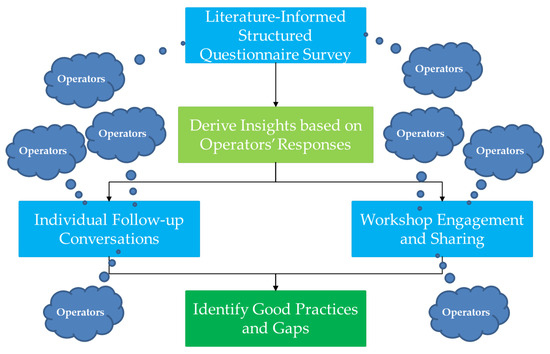
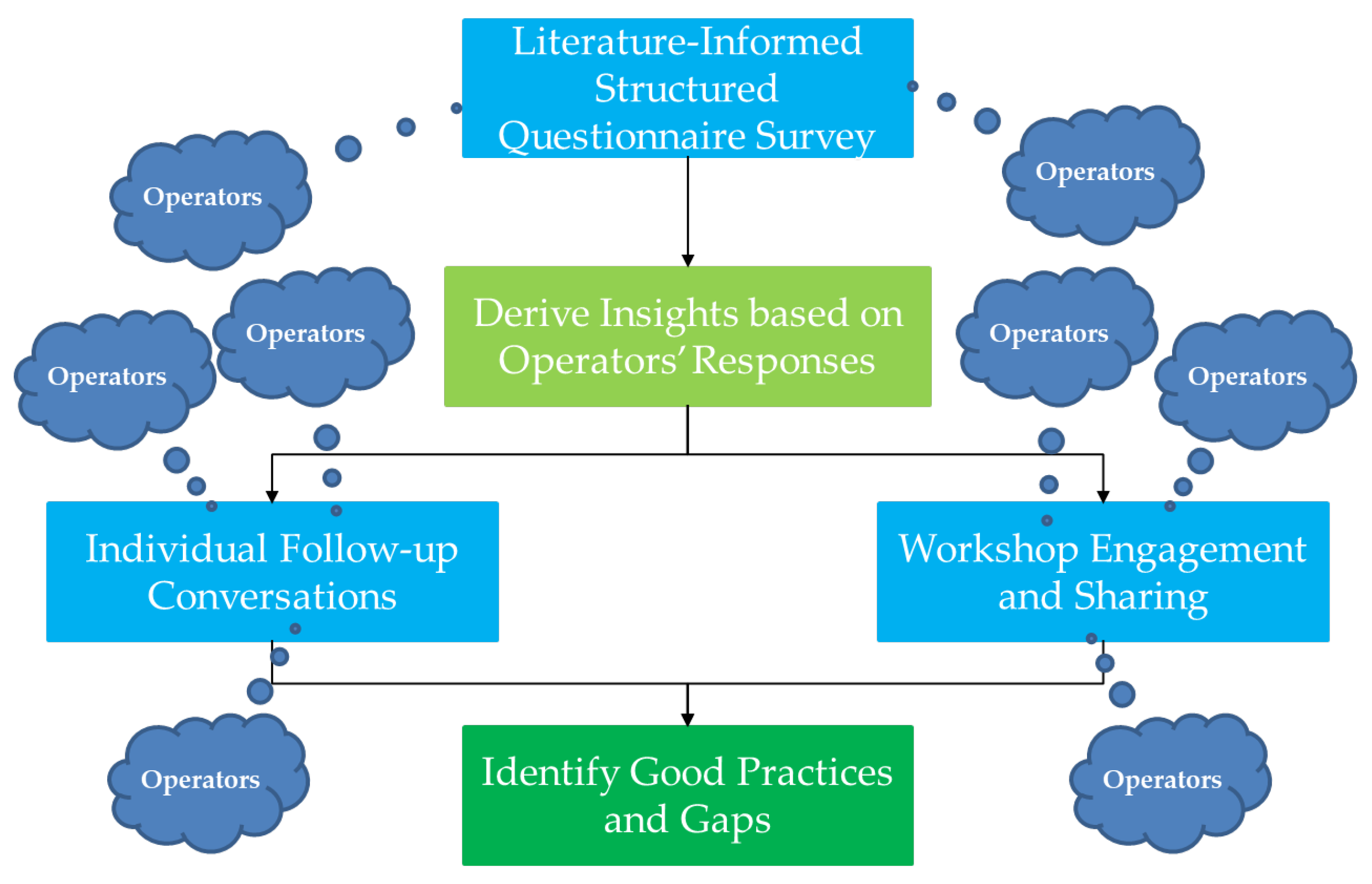
The overall study methodology is summarised in Figure 1. The primary aspiration is to create a “Community of Practices” (CoP) which has been frequently applied to enable groups of people who share a concern or a passion for something they do and learn how to do it better as they interact regularly [21]. In this study, it has been performed through a literature-informed structured questionnaire survey distributed to metro operators across the world. Received self-completed survey responses were then analysed to derive insights on organisational settings and daily operational practices. Individual conversations were also conducted with some respondents to clarify as well as to follow up with any unclear information in the self-completed responses. Initial insights were then presented in workshops which aimed to share good practices and gaps found among the responses. This also allowed more dynamic interactions and sharing of practices utilised by different metro operations. Metro operators can actively interact and learn from each other, observing and sharing how various metro operators manage and enhance their networks. It is expected that the results from this study could act as a foundation for the CoP, from the insights and data shared from the operators, both through the survey and workshop; additionally, the conclusions drawn from the research can facilitate innovation and learning at various levels within metro operators.
Figure 1.
The overall study methodology creating a “Community of Practices”.
3.1. Questionnaire Survey Design
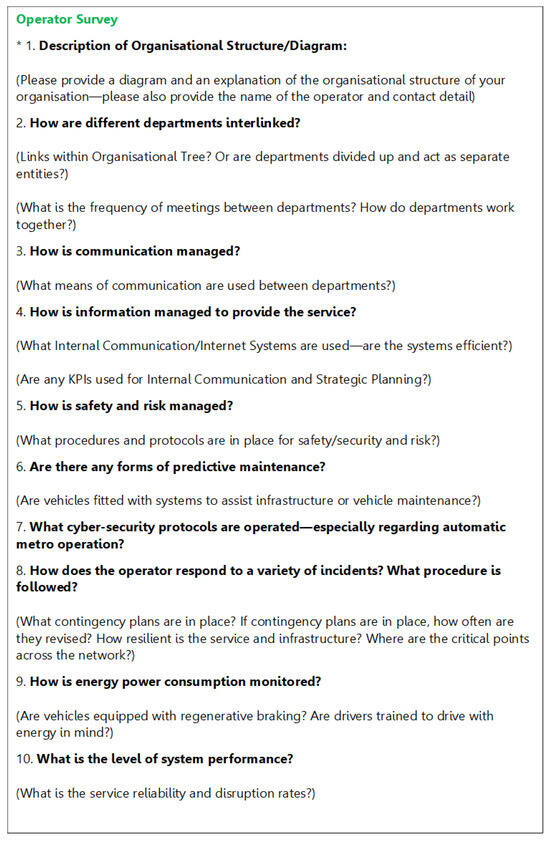
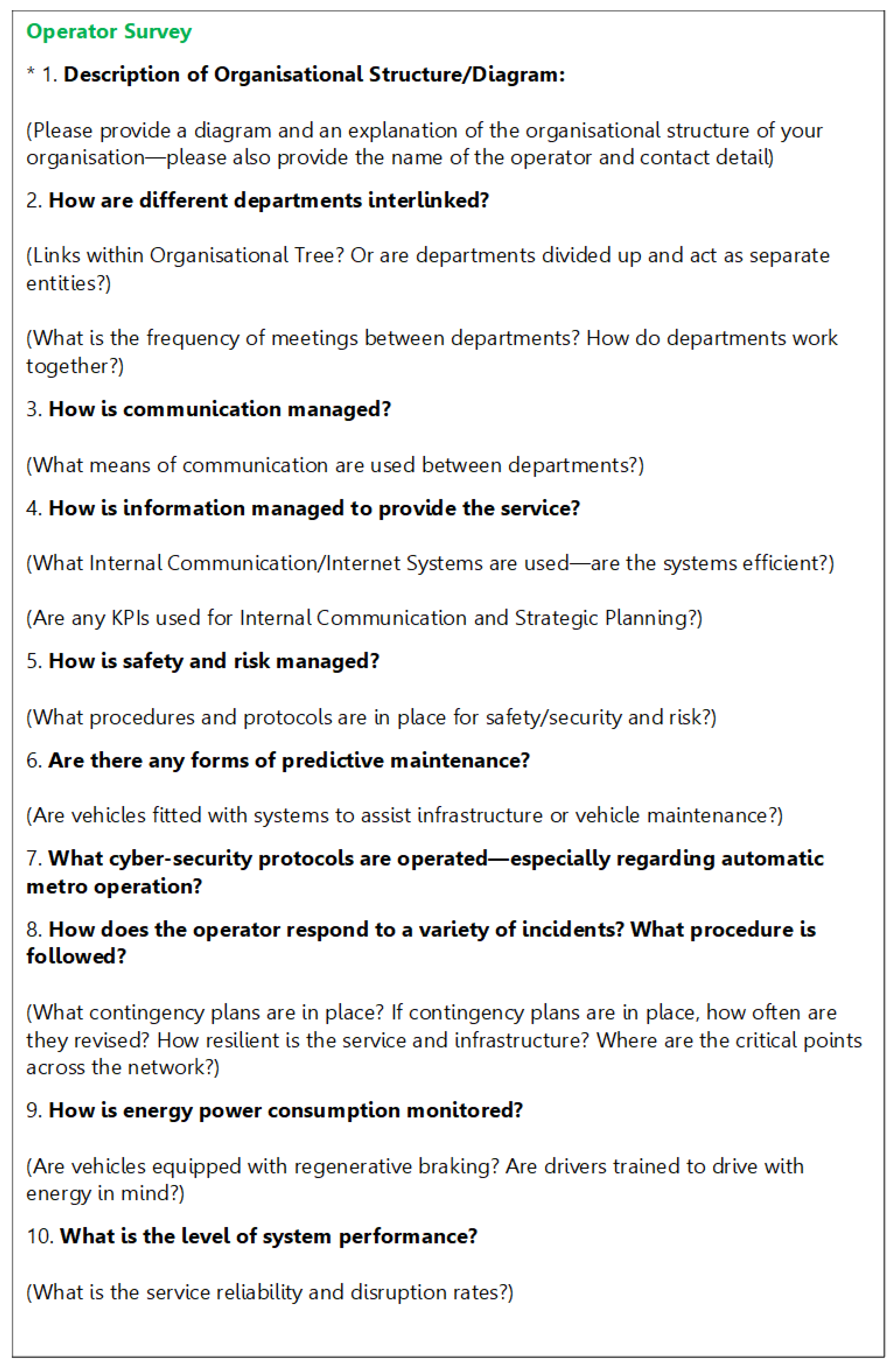
A structured questionnaire survey was designed to collect data on the internal organisational setting and their daily operational practices directly from real-world metro operators globally (Figure 2). To the best knowledge of the authors, this has been the first of this kind in collecting organisational data directly from an extensive range of metro operators across the world. As informed by the literature review, the questionnaire is designed with focuses at the following three dimensions: (i) the static internal organisational structure and governance of the operator; (ii) the dynamic interplay dictating the connections, interactions, communications, and collaborative practices between organisational units (or departments); and (iii) the fundamental aspects of metro operational practices tackling, for example, safety and incident management, as well as gaining an understanding of the strategies that are in place to monitor and advance the technologies.
Figure 2.
A preview of the structured questionnaire.
Feedback was obtained from a wider group of contributing partners to ensure that the questionnaire could be optimised to provide valuable insights from metro operators and that it was aligned with the objectives of the research. The finalised questionnaire, as illustrated in Figure 2, consists of 10 questions. The distribution of the questionnaire survey commenced in February 2025 and was further promoted and delivered to operators at a workshop. Alongside the survey, we held informal conversations and a question-and-answer session with various operators. A significant aspiration of the research was to obtain quality responses rather than basic feedback. Consequently, this would facilitate a greater level of detail in the analysis of the findings and would also allow for in-depth conversations and follow-up questions to be asked to a small pool of operators, providing a clear focus.
The survey closed in April 2025 and received 10 responses from operators in the East, Central and West Europe, North America, and East and Middle East Asia regions. The information illustrated in Table 2 provides some brief background information showing the range of operators who have engaged with the survey, consequently with varying grades of automation and network sizes. To the best knowledge of the authors, this has been one of the studies that covered the most extensive range of metro operators in surveys of this kind (i.e., across various parts of the 3 different continents, covered a total of 1673.8 km and 71 lines of metro operations, as well as all four grades of automations—GoAs). This has provided a strong foundation for analysis. The data compiled within Table 2 were gathered from survey responses as well as from various operators’ websites [22,23,24,25,26,27]. Consequently, this provides focus for the analysis and allows the drawing of comparisons between various operators at various grades of automation and scales. A significant benefit to this approach was that the survey received responses from operators across a wide coverage of geographical area, various scales of operations (from 75 km to 402 km, and 2 to 13 metro lines), and all grades of automation (GoAs 1 to 4).
Table 2.
Survey respondents’ background information.
3.2. Workshop
To gain further input from operators, a working session was conducted during a workshop, giving an opportunity to ask questions to operators as a collective, as well as face-to-face conversations. The questions asked to operators focused particularly on the three designated areas of interest for this study:
- Q1: Does the network have any forms of predictive maintenance?
- Q2: How are energy consumption levels monitored on each line(s)?
- Q3: If metro lines are automated, what cyber-security measures are in place?
Insights from a variety of European operators were obtained, including a total of eight metro operators across 6 different European countries. As the workshop responses involved individual operator representative’s personal opinions (though from operators’ perspective), details of the participating operators in the workshop were not provided for confidentiality and ethical research reasons. However, each participating operator provided a variety of information relating to the above-mentioned questions. Consequently, the combination of insights synthesised from the literature review, survey responses, and workshop discussions provided a strong dataset for analysis.
3.3. Data Analysis
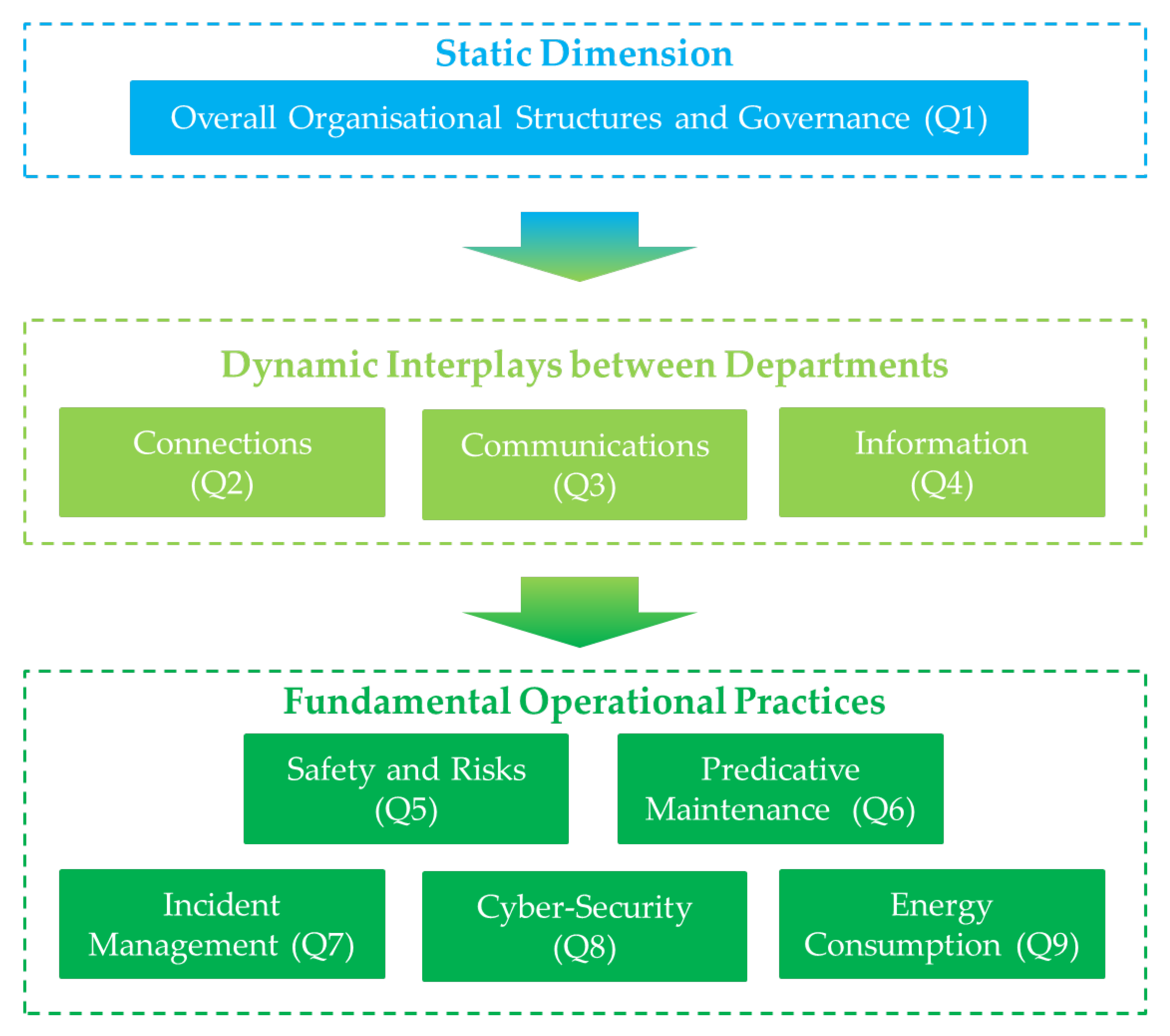
To derive useful insights, operators’ responses are analysed and assessed around three dimensions (as illustrated in Figure 3), which are consistent with the framework adopted to design the questionnaire, ensuring that the research objectives would be achieved.
- Static Dimension: The overall organisational and governance structure of the metro operators is analysed to understand which organisational models are adopted.
- Dynamic Interplays Dimension: The connections, means of communication, as well as information exchange and management between departments are analysed to explore how different departments collaborate to perform daily operations.
- Fundamental Operations Dimension: Practices related to some important daily metro operations are analysed and assessed to identify any good practices and potential gaps or areas of improvements.
Figure 3.
The three-dimension analysis framework.
4. Results and Findings
4.1. Static Dimension: Overall Organisational and Governance Structure
The first question in the survey aimed to gain an understanding of the organisational structure of the operator. Typically, metro operators are structured hierarchically, with an executive level and departments with respective managers. The size and scale of the organisational structure understandably varies depending on the size and scale of the operator. For example, many European metro operators not only operate metro systems but are also responsible for other modes of transport such as buses and trams. Therefore, the metro organisational structure is one division of many modes under an executive level. Despite this, however, operators were able to illustrate the division of departments in their respective hierarchical structures.
It is clear from the organisational structures that metro operators are divided into various departments, with hierarchical structures below each department (for example, civil works, rolling stock, wayside systems, and operations). These structures typically have respective managers at each level, with an executive board and CEO overseeing the organisation. It must be noted, however, that a significant influence on the organisational structure is the governance model; some of the operators who engaged with the survey are nationalised state-run organisations; alternatively, some are privatised companies, with some being contracted by governments on a concession basis. Consequently, the governance of the operator affects decision and policy making, accountability, and oversight, directly affecting and influencing the organisational structure of the metro operator.
4.2. Dynamic Interplays Dimension
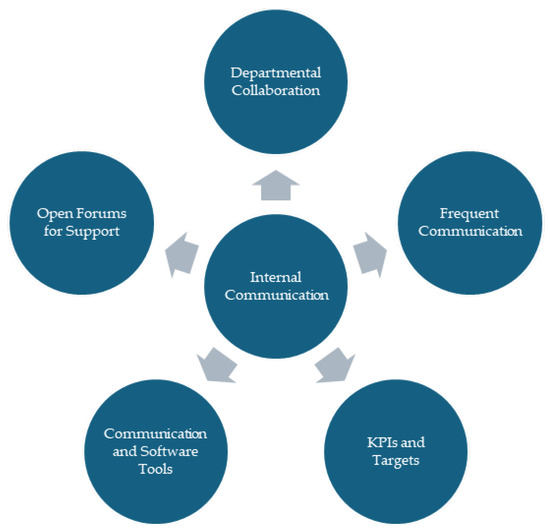
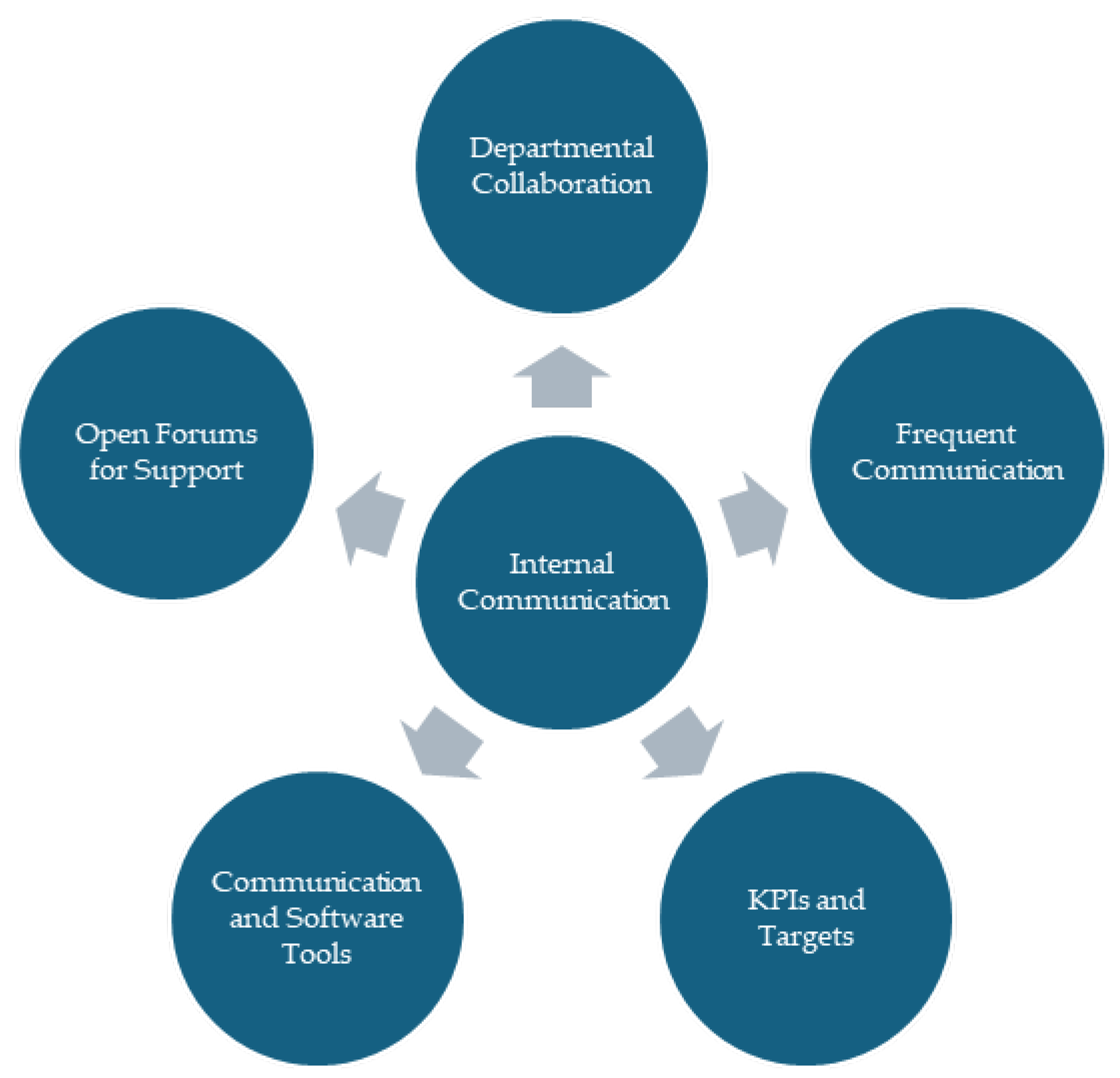
When it comes to the internal interplays dimension of the organisational setting, operators expressed a number of key aspects to consider, which could be summarised into the conceptual framework illustrated in Figure 4. These include departmental collaboration, channels, and frequency of communications, as well as setting KPIs and targets. Insights into the findings extracted from the operators’ responses will be further explained in the following sections.
Figure 4.
A summary of the key aspects of internal dynamics within a metro operator’s organisational setting.
4.2.1. Departmental Collaboration
To gain further insights into internal operations, the second question sought to gain a greater understanding of inter-departmental collaboration, looking at how frequently they collaborate and meet. As highlighted within the literature, an important factor was collaboration between departments [7,13]. Whilst most departments operate as separate units, collaboration is often necessary to ensure reliable and efficient operations. Operators illustrated that inter-departmental meetings occur at frequent intervals, although these intervals differ between each operator. For example, some operators meet weekly, whereas others noted that inter-departmental meetings occurred every 4–6 weeks; others, however, meet only periodically when necessary. It is important to note, however, that meetings can be additionally scheduled in case of emergencies, special events, or, simply, if required. Furthermore, it was highlighted that some small inter-departmental meetings frequently occur to discuss daily operations; also, there are infrequent meetings to discuss future and strategic planning, operational targets, and to analyse sources of delay. Additionally, some operators highlighted that several open forums are available for staff to raise concerns and to seek clarifications, as well as “Meet the Manager” sessions. To support metro operations, some operators guarantee that technical departments have support available 24/7, therefore ensuring that potential incidents can be immediately addressed and thus illustrating that cross-departmental collaboration can occur at any time when required.
4.2.2. Communication Management
To gain an understanding of communication, the third question aimed to illustrate the means of communication between departments and the wider organisation. Operators illustrated that communication between departments typically occurs on online applications such as Microsoft Teams, SAP, and PowerBI. In addition to this, to provide wider information to many employees across an internal network, internal staff intranet is typically utilised. To supplement this, operators noted that information is conveyed by email, meeting, phone conversations, and workshops. A key advantage for communication is having departments located within the same building or a compact area, as this facilitates quicker and more efficient interactions. To ensure the safety and security of internal data are protected, the internal networks are secured with robust cyber-security measures. An important issue that arose is that as operators typically have large IT networks, this means that major updates can be very complex and slow to implement. Consequently, large IT networks, whilst essential to operations, can be a barrier to efficient communication.
4.2.3. Information Management
The fourth question aimed to achieve an understanding of how information is monitored and regulated to facilitate reliable and efficient operations. Operators normally provide frequent reports to monitor communication performance. To ensure the required is being provided for necessary daily services, information is managed on internal systems. KPIs and targets, as well as daily notices and communication plans, are shared through internal systems to staff; in other cases, targets are available for reading in internal document systems. Alongside this, operators also utilise websites and mobile apps to distribute live information relating to journey planning and ticketing to passengers.
4.3. Fundamental Operations Dimension
4.3.1. Safety and Risk Management
The next area of analysis focuses on Safety and Risk Management. The paramount importance of safety in metro operations is crucial, as ensuring that both passengers and employees are safe within the network is vital. As seen in the organisational structure, safety departments are typically hierarchical and collaborate closely with operations and other departments. Operators illustrated that safety departments are typically reviewing preventative measures and regulating activities, to ensure that the network operates without accidents.
Across all operators, there are a plethora of procedures and regulations to ensure the safety and security of the network, aligned with national and international regulations and standards, such as ISO 9001 and ISO 31000. Potential hazards and emergency situations are managed and regulated with robust procedures, highlighting the actions that operators can take to minimise risk. To ensure safety, methods such as comprehensive risk assessments, RAMS (Risk Assessment Method Statement), system regulations, and formalised procedures are utilised. In addition to this, computerised safety management systems are often utilised, which regulate and monitor the activities of the operator. An example highlighted illustrates that risks are required to be mitigated under national regulations “As Low as Reasonably Practicable” (ALARP).” Typically, formalised procedures are also utilised when responding to incidents. For example, manuals and handbooks detailing instructions and responsibilities are defined for controllers and staff to deal with incidents. A plethora of contingency plans are revised periodically; some operators revise the plans annually, whereas others revise them when required. All potential incident types are covered by detailed operating procedures specifying operator actions, for example, trespassing incidents, emergency situations, obstructions on the railway, smoke, fire or flood, elimination of failures or damage to the railway, infrastructure facilities, power supply, electromechanics and other facilities, and in the event of an attempted or completed terrorist act.
The development, preparation, and revision of safety procedures is frequently reviewed by safety departments and is a significant aspect of ensuring safety across the network. Some operators have committee meetings to discuss safety, allowing for periodic verification of safety procedures to ensure that personnel retain their knowledge and competency when reacting to safety-related incidents. Furthermore, these committee meetings manage current safety and risk issues, deciding on strategies for the mitigation of the specific issues.
4.3.2. Predictive Maintenance
Predictive maintenance is an innovative strategy which uses data analytics to predict when equipment and infrastructure is likely to fail. Consequently, potential failures can be addressed prior to their occurrences; therefore, predictive maintenance aspires to minimise disruption to services, regulate maintenance frequency, and reduce costs from failures. Information was collected from both the survey and the workshop; it was interesting to note that operators are at varying stages of implementing predictive maintenance strategies. An overview of maintenance was highlighted, with some operators utilising an annual plan for scheduled repair and maintenance for rolling stock; furthermore, a similar plan is in place for the annual maintenance of infrastructure equipment, managed by the respective departments.
Looking at a rolling stock perspective, the level of which predictive maintenance is utilised varies, with some operators utilising “condition-based monitoring” to monitor rolling stock, identifying any potential faults with the vehicles. A significant factor relating to the predictive maintenance of rolling stock is the age of the vehicles. Typically, older vehicles have less or no equipment for predictive maintenance, whereas newer vehicles have more advanced technology fitted. For example, newer vehicles typically have a greater number of sensors fitted that can report more information, therefore being able to facilitate and advance predictive maintenance. On the other hand, however, many operators illustrated that vehicles are not fitted with any systems that assist in predictive maintenance.
Looking at an infrastructure perspective, operators have their own dedicated and specialised vehicles to assist with infrastructure monitoring. Vehicles are fitted with Automatic Track Monitoring Systems, with equipment such as cameras and sensors to predict rail wear and highlight where rails need to be replaced. Track is scanned to inspect railhead condition. Furthermore, some operators illustrated that junction boxes across the network are fitted with remote condition monitoring, focusing on the condition of the infrastructure, in particular, tunnels. Some operators are looking at introducing a LiDAR system to monitor the structure of the tunnels; however, this is currently still in proof-of-concept stage only. Alternatively, some other operators have equipped vehicles with technology that scans the tunnels as they travel. It was also noted that some rolling stocks have vibration sensors equipped on the bogies—if the vibrations reach a specific threshold, the system will flag this accordingly.
It is important to highlight, however, that there are operators who do not have any form of predictive maintenance, but expressed an interest in improving their predictive maintenance strategies. Factors such as rolling stock age, limited communication capacity, and cost are impeding operators’ innovation in this area. Some operators are currently in the process of conducting research into how they can implement predictive maintenance strategies into their operations. For example, some operators are currently testing and researching prototypes across many different trains to retrieve live real-time data from the infrastructure and rolling stock. Consequently, this retrieved information is sent to the respective departments to be processed and analysed. Whilst this operator is at an early stage of predictive maintenance, in the future, the system is planned to increase the efficiency of the network by facilitating predictive maintenance.
Further discussions during the workshop highlighted that, generally speaking, predictive maintenance is currently in the early stages and planning phases. Operators shared that predictive maintenance strategies are in planning, and the installation of sensors is underway to collect data, monitoring both infrastructure and rolling stock. It was noted that “sensorisation” is a very expensive process and the new rolling stock will be equipped with sensors when delivered. Furthermore, some operators illustrated that on existing lines, they are in the early stages of retrofitting sensors, innovating and reviewing prototypes. Additionally, groundwork has commenced to allow for predictive maintenance strategies. A problem identified was governance, as for some operators, the infrastructure is owned by a different organisation; they identified that the operator actively wants to reduce disruption across the network by using predictive maintenance strategies. It was noted that operations can run with alternative operating modes, for example, “working mode” during the day and “service mode” during the night, to operate services efficiently when depending on the requirements of the operator’s infrastructure. Additionally, it was noted that whilst there are many advantages to the implementation of predictive maintenance strategies, operators want to ensure that if faults are detected on trains incorrectly, there are concerns that they will be taken out of service unnecessarily. Some interesting innovations highlighted that operators are in the process of installing a trackside system to scan and monitor vehicles wheels. In addition to this, other operators are currently installing sensors, with general testing and data testing now underway.
Some of the most significant barriers to operators utilising predictive maintenance strategies were identified by the operators, both from the survey and at the workshop. Unsurprisingly, the most significant barrier is cost; this is exacerbated by older rolling stock, whereby the cost of modifications to trains ultimately does not make financial sense if new rolling stock is planned in the future. It was also echoed by operators that retrofitting sensors and technology to older rolling stock was not feasible. Moreover, existing operational centres may need significant investment in order to facilitate the implementation of predictive maintenance on the network, for example, some operators highlighted that they have limited capacity in their existing data systems. Despite this, however, there is a consensus from operators that predictive maintenance has many operational advantages.
From a manufacturing perspective, it was highlighted that customers ideally wanted to equip vehicles with sensors for existing systems, rather than the vehicles being equipped with sensors with a new standardised system. It was remarked that operators may want to use systems/sensors they already have and the data already collected.
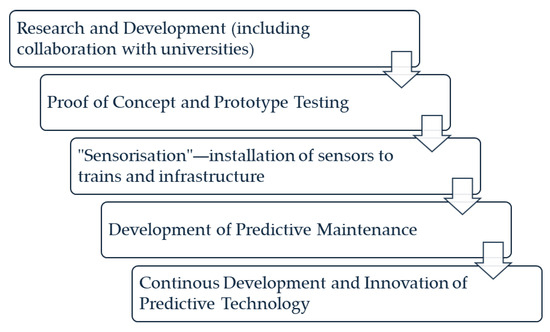
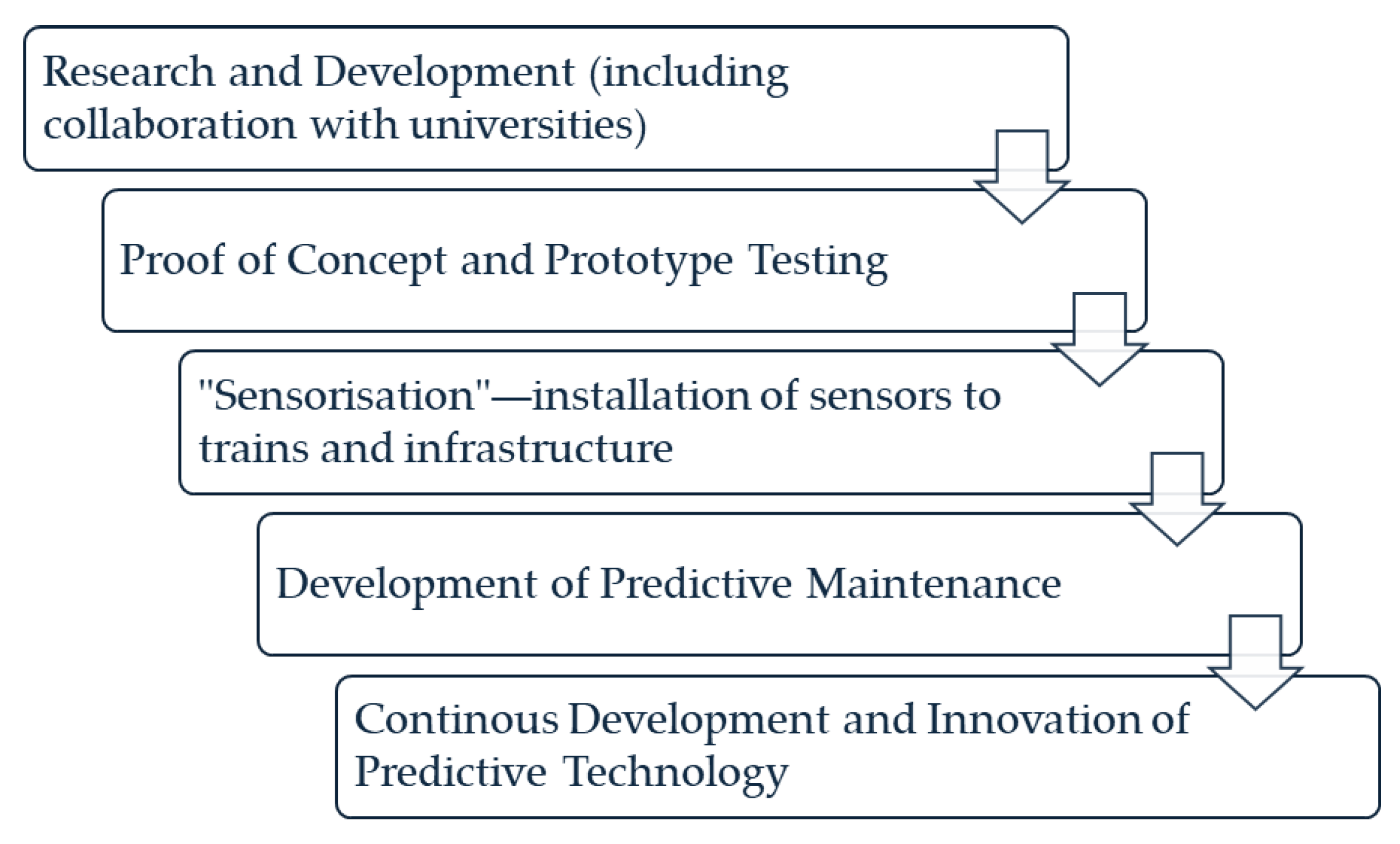
In summary, the exploration of predictive maintenance across various metro operators illustrates that this is a new and innovative strategy and consequently, it is important to highlight that operators are at varying stages of implementation of predictive maintenance. These are illustrated in Figure 5.
Figure 5.
Varying stages of development for predictive maintenance across different metro operators.
At the early stages, operators are focusing on research and development, prototype testing, and initial sensor installation; other operators, however, are at a further level of predictive maintenance and are integrating condition-based monitoring and using advanced sensor technologies to assess both rolling stock and infrastructure. The benefits of utilising predictive maintenance strategies are widely acknowledged across different operators with advantages such as optimised maintenance schedules, cost savings, as well as reducing service disruption. Despite this, there are several barriers to advancing an operator’s predictive maintenance, for example, the cost of technologies and installation, limited technical infrastructure, as well as the age of the rolling stock—all of which may mean that there is no financial incentive to upgrade and install new technologies. Despite these obstacles, however, there is a clear and growing commitment from operators to advance these technologies and evolve their existing maintenance strategies. It is clear, however, that predictive maintenance strategies will play a crucial role in future metro operations.
4.3.3. Cyber-Security
With automation becoming more common across metro systems globally, an important aspect of this is cyber-security. The operators’ survey will be looking particularly at cyber-security protocols relating to automatic metro operation. All respondents to our survey operate services at varying grades of automation; furthermore, some operators utilise varying levels of automation on their networks (as can be seen in Table 2), consequently providing alternative perspectives into cyber-security at varying levels of automation.
Discussions at the workshop highlighted that regarding cyber-security, there was a clear consensus across all operators; there are national regulations as metro systems are classified as critical infrastructure. This applies to both conventional and automated metro lines. There are publicly available documents that can be browsed to give some greater detail into this area. National directives and how metro operators conform to these are set out, for example, the EU Cyber-Security Act 2019. Some operators have a dedicated department to address cyber-security, both at an organisational level and addressing automation specifically.
Cyber-security protocols are aligned with many international standards such as ISO 27001, the recognised standard for Information Security Management Systems (ISMSs). Highlighting a framework to combat data protection threats, it provides organisations with a framework for creating, implementing, maintaining, and continuously enhancing their ISMSs, as well as assisting organisations’ cyber-security protocols and compliance with pertinent regulations. Another example is IEC 62443, a set of global standards providing guidance for securing Industrial Automation and Control Systems (IACSs), developed by the International Electrotechnical Commission (IEC). Furthermore, closed networks are typically employed by operators to ensure that networks are secure; by air-gapping the network, this means that it is separated from any external connections, therefore ensuring that the operator’s system is protected from any malicious threats. Whilst not related to automated metro operation, passenger information systems are also important to consider. Operators highlight that whilst automatic train control (ATC) systems are air-gapped, even so, when data are transferred to the ATC system they are first channelled through a “sanitisation station” to ensure there are no viruses or danger within the data. Interestingly, passenger information systems are equipped with firewalls to protect against external intrusion.
Operators planning to automate metro lines, for example, from GoA2 to GoA4, illustrate that cyber-security protocols are a significant element of the planning process for automation. On the other hand, however, operators that have been automated for a longer period illustrate that communication to and from trains occurs by loop, for example, despite its low capacity and outdated nature, and threats are reduced as they are less exposed than radio networks. An important note is that the dependency of security features fitted by the original equipment manufacturer (e.g., the cyber-security protection within rolling stock and infrastructure equipment, such as signalling and power).
To conclude, with a growing number of metro operators adopting automatic train operation, cyber-security has consequently become critical to ensure continued safety and resilience of the network. Across the operators who engaged with the survey, automation levels varied, with some at GoA1, GoA2, and GoA4; therefore, cyber-security levels relating to operations vary between operators. Consensus between operators was agreed, however, as metro networks are classified as critical infrastructure; therefore, they are required to adhere to national and international regulations regarding cyber-security. Standards highlighted such as ISO 27001 and IEC 62443 provide robust frameworks for managing cyber risks, as well as practices such as air-gapping networks, sanitation stations, and firewalls, which are commonly utilised to safeguard operational systems, as well as passenger information systems. To ensure that operator’s data remain safe and secure, close collaboration between the operator, rolling stock manufacturers, software manufacturers, and local government is crucial, to allow for transparency and cyber-security protocols to be aligned with regulations. Overall, whilst levels of automation differ between operators, there is a clear and shared understanding between operators that cyber-security is critical as metro operators evolve towards higher levels of automation.
4.3.4. Incident Management
An important aspect of operations is the resilience of the network, to ensure that operations are efficient and resilient when delays occur. Question eight of the survey aims to achieve an insight into operator’s incident response protocols and network resilience. A key perspective shared was the benefits of bi-directional operation and its utilisation for recovering from delays. Strategies such as short-turning trains and running partial services are also employed to take advantage of the infrastructure. Furthermore, some operators have specialised emergency timetables that can be employed to quickly restore a limited service. It was also illustrated that the importance of ensuring critical points across the network, such as key junctions, power substations, and interchange stations have specific procedures to ensure that when issues arise, they can be quickly resolved. Interestingly, some operators illustrate that operator incident response protocols mirror the incident response protocols of the local emergency services, therefore creating a standardised system that is easily understood by both the operator and the emergency services if required. Different levels of command (e.g., Bronze, Silver, or Gold Levels), depending on the severity of the incident, can be incorporated into incident response. Some operators illustrate that they coordinate its incident response centrally through its Operations Control Centre, which works closely with emergency services to ensure timely and appropriate actions.
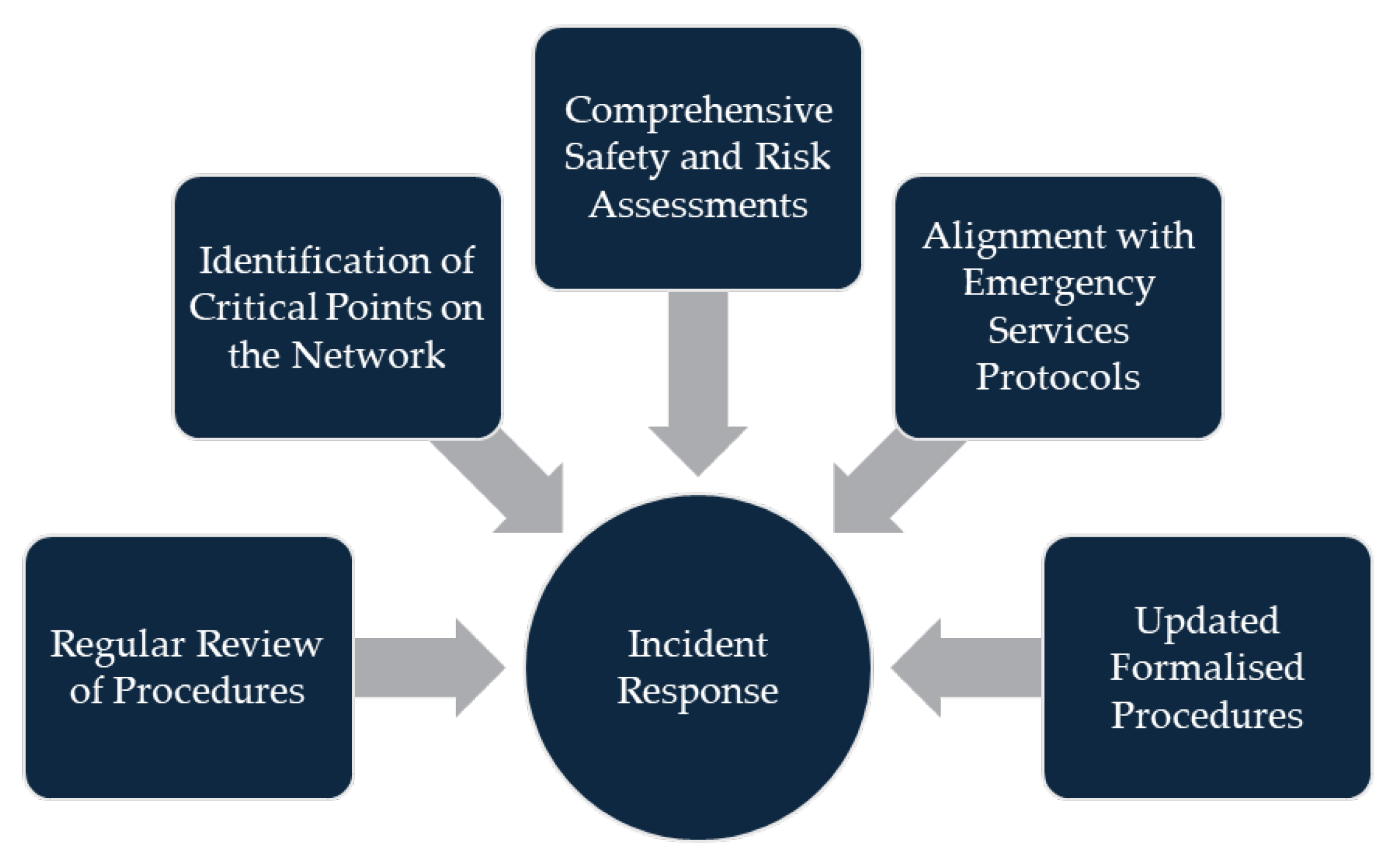
Overall, safety and risk management are a critical aspect of metro operations, and particular importance has been commonly given where metro operators normally establish with structured safety departments, overseeing safety across their respective networks. To support and facilitate its smooth operations, some foundations need to be in place, as summarised in Figure 6.
Figure 6.
Foundations of incident response within a metro operator.
Compliance with national and international regulations is a key feature of metro operator’s safety strategies. Typically, operators employ formalised procedures to respond to incidents, as well as comprehensive risk assessments and digital safety systems. An interesting strategy is to align operator incident protocols to the local emergency services’ protocols, therefore creating a common understanding of required procedures. To ensure that safety regulations are updated and reliable, regular reviews and meetings are conducted to ensure that staff are competent with their responsibilities. Finally, to ensure optimal service performance, ensuring the metro network is resilient when delays occur is vital. By utilising bi-directional running along double track, as well as short turning and emergency timetables, operators can quickly provide a limited service to help reduce disruption across the network, especially at critical points.
4.3.5. Energy Consumption
In terms of metro system’s energy consumption, operators typically prepare monthly reports regarding traction power and energy consumption. During the workshop, it was observed that operators have little information provided regarding energy consumption. It was noted that they have separate information between station and train consumption; however, the data are limited, and it is very complicated to obtain full information. The process that collects the data relating to energy consumption is automated and is unable to discern where the energy goes; consequently, it is very expensive to conduct further research.
Regarding vehicles, most operators illustrated the utilisation of regenerative braking. An example provided illustrates that, during braking, all trains recover energy via three-phase asynchronous motors and feed it back into the line. An interesting point is how energy consumption is managed depending on the Grade of Automation (GoA). For example, at GoA1, drivers have full control of the train with no automation; therefore, to preserve energy, drivers are encouraged to drive defensively. On the other hand, for GoA2+, drivers are encouraged to use ATO rather than manual driving. The vehicles are fitted and programmed with an ideal motion curve, to accelerate and brake in an economical and efficient manner. Furthermore, timetables are designed with energy consumption in mind, utilising an energy-saving mode, as well as the use of algorithms to determine the optimal headways between services, to operate trains in an energy conscious manner. This aligns well with the literature in which metro systems’ energy consumption could be minimised through optimising timetable and train speed controls [1,3].
An interesting perspective was shared whereby braking resistors rather than fitted to vehicles are at wayside substations. Consequently, the energy consumption per capacity/km may seem higher than other metro networks; however, the vehicles are relatively lightweight. A potential cause of this is inefficient linear induction motors, high acceleration, and deceleration performance, as well as a topologically varied network. The operator plans to conduct further research to achieve a greater understanding of these issues.
Energy can also be monitored in alternative ways by means of control electrometers and through information from the electricity supplier. Furthermore, an operator programmes automated services to operate in an economical mode; consequently, 22% energy savings have been noted because of this method of operation. Moreover, energy consumption is typically monitored centrally at Operation Control Centres (OCCs). Systems, such as the SCADA system, are in place to observe energy consumption, which is managed by a relevant department. Interestingly, across some of the networks, substations can feed energy back into the high-voltage grid.
Overall, the responses across the operators illustrate the challenge of monitoring energy consumption and efficiency across metro networks. Operators routinely prepare reports regarding energy consumption; however, the availability and detail of data remain limited, so in-depth analysis is complicated and expensive. Despite this, operators are employing energy-saving technologies such as regenerative braking, optimised driving profiles, and energy-efficient minded timetabling. This aligns well with previous research that optimises energy consumption for metro operations [1,3]. The level of automation is a significant factor which influences energy consumption, with GoA1 drivers instructed to drive defensively and GoA2 drivers instructed to use ATO mode rather than manual driving. With solutions such as wayside braking resistors, SCADA monitoring systems innovatively provide further support for energy efficiency. Notably, energy savings are occurring on automated metro lines, for example, a 22% reduction in energy usage with automatic train operation, running in an economical mode. Challenges do persist, however, with the cost of advanced data collection, as well as varying infrastructure and technology. In the future, greater analysis of energy consumption as well as investment in infrastructure is essential to advancing energy efficiency across metro networks.
4.4. Performance
Finally, service performance is a directly observable and user-perceivable key indicator of operational performance, which is the ultimate result of the collective efforts at various levels and aspects of the metro system. Operators noted that services are typically above 99% on schedule. Operational procedures in place to ensure resilience across the respective networks, bi-directional operational capabilities on double tracks, as well as crossovers for the provision of short-turning services are important factors that assist delay recovery. Furthermore, annual reports are prepared regarding performance and target areas of delay for the operator to address and analyse.
5. Discussions
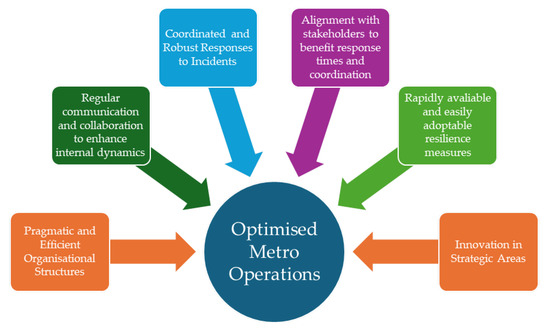
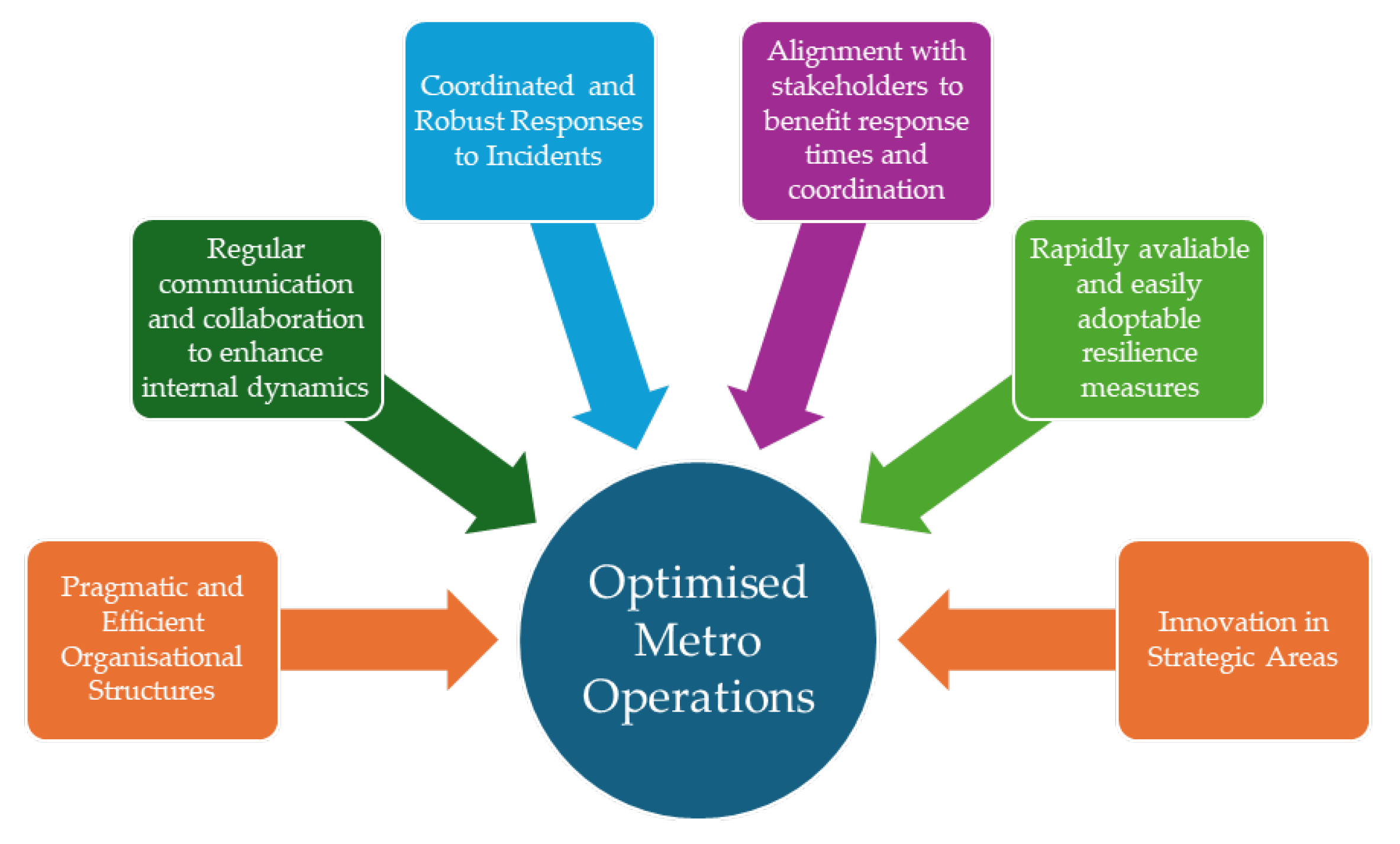
To summarise concepts and practices as reflected in the metro operators’ responses from the operators’ organisational setting perspective, the key areas highlighting the optimised metro operations can be seen in Figure 7.
Figure 7.
Key areas of organisational setting behind optimised metro operations.
Firstly, looking at organisational structures, as the responses from the operators have illustrated, the organisational structure and internal operations of the metro operators are influenced by a plethora of factors, for example, the scale of the operator, the governance model, as well as efficient inter-departmental collaboration. It is important to clarify that there is not a singular form of organisational structure that is optimal for metro operations, with a pragmatic approach, given the scale, governance, and structure of the operator. Despite this, however, there are key trends that occur across many operators; typically, operators have hierarchical structures, with defined departments, such as operations, engineering, and commercial. Therefore, a hierarchical structure is perhaps the most likely structure to be employed by metro operators; however, it must be recognised that operators can utilise any structure they wish, if it is efficient, providing reliable operations and facilitating innovation. Whilst hierarchical structures are commonplace amongst metro operators, differences appear regarding collaboration and the frequency of meetings at various departmental levels. Some operators meet far more regularly at various departmental levels than others. Governance plays a significant role in the internal operations of the metro operator, for example, accountability, policy making, and decision-making are impacted whether the operator is a public, private, or a concession-based operator. Finally, the importance of communication is clear, with effective communication essential for operational success, supported by strategies such as secure internal software networks. The continuous monitoring of performance using KPIs ensures that any inefficiencies are highlighted and rectified, ensuring that internal performance aligns with operational targets, ultimately facilitating the delivery of the metro service.
Furthermore, safety and risk management are an essential aspect of metro operations, with operators having dedicated safety departments to ensure compliance with local, national, and international regulations. The utilisation of formalised procedures, comprehensive risk assessments, as well as digitised systems facilitate the operator to manage and respond to incidents promptly and effectively. Moreover, by aligning with local emergency services protocols, coordinated responses to serious incidents are optimised. To ensure competency and effectiveness, regular reviews of safety procedures are conducted by operators. When disruption occurs, resilience is a significant factor for service recovery; by utilising bi-directional operations, short-turning, and emergency timetables, operators can restore limited service quickly, to mitigate wider disruption on the network.
Regarding the three designated areas of interest, predictive maintenance is an innovative strategy that is slowly being adopted by metro operators; consequently, operators are at various stages of development. Whilst newer rolling stock and infrastructure equipped with sensors provide great benefits, the barriers such as cost and ageing rolling stock and infrastructure are a significant obstacle to evolution. It is important to note that operators are interested in using predictive maintenance strategies, with some operators currently testing and refining prototypes to allow for further development. Furthermore, cyber-security, especially relating to metro automation, is critical to ensure safety and security across the network. Operators, regardless of automation level, comply with national regulations and adopt international standards. Mitigation strategies such as firewalls and air-gapping are commonly used across most operators to protect critical systems and infrastructure. Finally, energy consumption practices vary by operator, with regenerative braking being a widely used technique regarding rolling stock. Automated metro lines are programmed with economic driving modes to reduce energy consumption along various lines. It is clear, however, that further research into energy consumption is needed to truly optimise energy efficiency. Collaboration between operators, governance, and infrastructure partners is needed to highlight solutions for reducing energy consumption.
6. Conclusions
This study investigated an underexplored dimension of metro operations—the organisational settings of a metro operator, by establishing a Community of Practice. An extensive range of worldwide metro operators were engaged in this study to share their knowledge and good practices towards enhancing metro operations. Energy efficiency, predictive maintenance, and cyber-security were specifically explored for their importance in modern metro system operations. Some evidence and insights were generated from the valuable information shared by the operators in terms of the status of good practices and some consensuses were also observed. Overall, the following key findings and evidence, in terms of the current state of good practices, areas of consensus, and future innovative strategies, could be summarised across the literature review, survey responses, and workshop discussions.
- From the static organisational perspective, operators typically adopt a hierarchical structure with defined departments. However, the general consensus is that there is no ideal organisational structure for operators to follow; instead, a pragmatic and hybrid model may provide the best balance between efficiency, adaptability, and creativity in contemporary metro systems by fusing decentralised or collaborative operational roles with central strategic oversight.
- As for dynamic interplays between departments, current practices revealed that the way and frequency of communications varied across different operators. The general consensus is that collaboration and flexibility are key for enhancing metro operation, engaging with various stakeholders, to supplement metro service delivery.
- Safety is undoubtedly a crucial aspect of metro operations; operators address potential hazards and emergency situations, mitigating and responding to incidents with robust procedures, highlighting the actions that operators can take to minimise risk. A key theme across various operators was the compliance with national and international regulations as a key feature of metro operator’s safety protocols.
- A recurring theme in the literature is the integration of stakeholders, which is illustrated as essential for strategic planning, crisis and emergency responses, and effective risk management.
- Predictive maintenance is an innovative strategy, with widely acknowledged benefits across metro operators, such as optimised maintenance schedules, cost savings, as well as reducing service disruption. However, cost, age of existing rolling stocks, as well as capacity and scalability of the existing data system have been identified as key implementation barriers.
- With technology advancing, cyber-security protocols must be comprehensive and regularly updated; therefore, close collaboration between the operator, rolling stock manufacturers, software manufacturers, and local government is crucial for protecting data.
- Consensus was reached between operators as metro networks are classified as critical infrastructure; therefore, they are required to adhere to national and international regulations regarding cyber-security.
- Regarding energy consumption, the grade of automation is a significant factor which influences energy consumption, and energy savings have been noted on automated lines.
7. Avenues for Future Research
This paper aims to provide a solid foundation for further research focusing on the internal operations and organisational settings of metro operators. The key findings highlighted provide some interesting insights into the status of a variety of operators from across the globe, focusing on current practices and innovation for the future. As this paper has highlighted, there is no optimal and universal organisational structure for metro operators; instead, a pragmatic approach must be taken, based on the requirements of the respective operator. To further this research, in-depth analysis of specific operator organisational procedures could be performed, focusing on various approaches, analysing the differences between various operators, and highlighting areas of development and good practice. Moreover, the three designated areas of interest, predictive maintenance, energy consumption, and cyber-security, can be explored further. During this research, it was of particular interest to note that operators are at a variety of stages, with some having little to no elements of these areas; on the other hand, some operators are looking to the future and implementing innovative strategies to deal with the highlighted areas of interest. Therefore, it may be very valuable to propose further research to assist operators with predictive maintenance, energy consumption, and cyber-security to enhance their respective operations and resilience. Future research into the use-cases highlighted may primarily focus on the current barriers operators are facing, which potentially delay and defer the implementation and installation of new technology. Furthermore, working collaboratively with operators to focus on innovation could provide a further foundation for accelerating adoption of innovative strategies to enhance metro efficiency. As technology continues to advance, what continuous development strategies can be beneficial to metro operators? It is important to delve deeper into the use-cases, to see which technologies provide the optimal benefit to the operator. For example, when ordering new rolling stock, where are the optimal locations for sensors on trains? Which aspects of train monitoring are the most important to the operator? What lessons can be learnt from existing operators who use these innovative technologies such as predictive maintenance? These questions could provide a foundation for future research; as illustrated in this paper, operators are at varying stages of development and a shared understanding of mitigating any barriers and finding the optimal solution for innovation may be valuable for metro operators to enhance their networks.
Author Contributions
Conceptualisation, M.M., P.B. and H.Y.T.; methodology, M.M. and H.Y.T.; validation, P.B.; formal analysis, P.B.; investigation, P.B.; resources, M.M. and H.Y.T.; data curation, P.B.; writing—original draft preparation, P.B. and H.Y.T.; writing—review and editing, H.Y.T. and M.M.; visualisation, P.B. and H.Y.T.; supervision, H.Y.T. and M.M.; project administration, M.M.; funding acquisition, M.M. and H.Y.T. All authors have read and agreed to the published version of the manuscript.
Funding
This research was carried out as part of the EU-Rail co-funded NEXUS Project. The NEXUS project received funding from the European Union’s Horizon Europe research and innovation programme under Grant Agreement No. 101177985.
Institutional Review Board Statement
The study was conducted in compliance with EU requirements and approved by the Ethics Advisor of the NEXUS project.
Informed Consent Statement
Informed consent was obtained from all subjects involved in the study.
Data Availability Statement
Responses to the survey conducted in this study are confidential.
Acknowledgments
This research was carried out as part of the NEXUS project. The authors would like to thank consortium partners of the NEXUS project in distributing the survey questionnaire to relevant metro operators so as to obtain this level of responses.
Conflicts of Interest
The authors declare no conflict of interest.
Disclaimer
Co-funded by the European Union. Views and opinion expressed are, however, those of the author(s) only and do not necessarily reflect those of the European Union or the Europe’s Rail Joint Undertaking. Neither the European Union nor the granting authority can be held responsible for them. The project ‘NEXUS’ is supported by the Europe’s Rail Joint Undertaking and its members. UK participants in this project are funded by the UKRI [28].
References
- Zhao, N.; Roberts, C.; Hillmansen, S.; Tian, Z.; Weston, P.; Chen, L. An integrated metro operation optimization to minimize energy consumption. Transp. Res. Part C 2017, 75, 168–182. [Google Scholar] [CrossRef] [Scilit]
- Tiwari, A.K. Strategic management of metro systems: Enhancing sustainability and urban mobility. IOSR J. Electr. Electron. Eng. 2024, 19, 56–64. [Google Scholar]
- Xie, H.; Wang, C.; Li, S.; Zhang, Y.; Wang, S. Optimizing Energy Efficiency in Metro Systems Under Uncertainty Disturbances Using Reinforcement Learning. arXiv 2023, arXiv:2304.13443v3. [Google Scholar] [CrossRef] [Scilit]
- Zhang, C.C.; Xiao, X.M.; Wang, Y.H. Key factors identification for the energy efficiency of metro system based on DEMATEL-ISM. In Proceedings of the International Conference on Information Control, Electrical Engineering and Rail Transit; ICEERT 2022. Lecture Notes in Electrical Engineering; Springer: Singapore, 2023; Volume 1084. [Google Scholar] [CrossRef] [Scilit]
- Bakker, S.; Konings, R. The transition to zero-emission buses in public transport—The need for institutional innovation. Transp. Res. Part D 2018, 64, 204–215. [Google Scholar] [CrossRef] [Scilit]
- Gasparre, A.; Burlando, C.; Pavanini, T. The electrification of local public transport as a strategic wayfinding process: Policy implementation, path dependence, and organizational practices in Italy. Transp. Res. Part A 2025, 201, 104648. [Google Scholar] [CrossRef] [Scilit]
- Oldbury, K.; Isaksson, K. Governance arrangements shaping driverless shuttles in public transport: The case of Barkarbystaden, Stockholm. Cities 2021, 113, 103146. [Google Scholar] [CrossRef] [Scilit]
- Dutta, M. Organisational restructuring of Indian Railways. Case Stud. Transp. Policy 2022, 10, 66–80. [Google Scholar] [CrossRef] [Scilit]
- Nakamura, E.; Sakai, H. Control and coordination in railway business: Implications for intermediate organisational forms between vertical separation and integration. Res. Transp. Bus. Manag. 2022, 45, 100905. [Google Scholar] [CrossRef] [Scilit]
- Babalık-Sutcliffe, E. Urban rail operators in Turkey: Organisational reform in transit service provision and the impact on planning, operation and system performance. J. Transp. Geogr. 2016, 54, 464–475. [Google Scholar] [CrossRef] [Scilit]
- Zhang, X.; Wang, C.; Wang, W.; Zhang, H. Inter-organizational collaboration after institutional reform in China: A perspective based on the revision of the emergency plan. Int. J. Disaster Risk Reduct. 2023, 98, 104084. [Google Scholar] [CrossRef] [Scilit]
- Tomo, A.; Iacono, M.P.; Mercurio, L.; Mangia, G.; Todisco, L. Regulation, governance and organisational issues in European Railway Regulation Authorities. J. Rail Transp. Plan. Manag. 2024, 29, 100428. [Google Scholar]
- Dementiev, A.; Alexandersson, G. Workshop 2A report: Public transport governance via contracting, collaboration, and hybrid organisational arrangements. Res. Transp. Econ. 2024, 103, 101394. [Google Scholar] [CrossRef] [Scilit]
- Black, J. Transport institutions and organisations in the formulation of policies for Australian local area traffic management: A 50-year retrospective. J. Traffic Transp. Eng. (Engl. Ed.) 2023, 10, 866–877. [Google Scholar] [CrossRef] [Scilit]
- Wang, X.; Xu, H. China’s high-speed rail industrial organization structure reform under inter-modal competition. Res. Transp. Bus. Manag. 2024, 54, 101114. [Google Scholar] [CrossRef] [Scilit]
- Zhao, B.; Tang, T.; Ning, B. System dynamics approach for modelling the variation of organizational factors for risk control in automatic metro. Saf. Sci. 2017, 94, 128–142. [Google Scholar] [CrossRef] [Scilit]
- Doroshin, I.; Kazaryan, R. Organizational and technological solutions for managing the processes of building transport systems using economic and mathematical methods. Transp. Res. Procedia 2022, 63, 530–540. [Google Scholar] [CrossRef] [Scilit]
- Hirschhorn, F.; Veeneman, W.; van de Velde, D. Organisation and performance of public transport: A systematic cross-case comparison of metropolitan areas in Europe, Australia, and Canada. Transp. Res. Part A Policy Pract. 2019, 124, 419–432. [Google Scholar]
- Wang, Y.; Wang, K.; Pels, E.; Wu, J. Railway deregulation in the west and east: The impacts of organizational structure patterns on air-HSR competition. Transp. Res. Part B 2025, 200, 103304. [Google Scholar] [CrossRef] [Scilit]
- Takeru, S. Organisational structures of urban public transport—A diagrammatic comparison of typology. J. East. Soc. Transp. Stud. 2011, 9, 126–141. [Google Scholar]
- Wenger-Trayner, E.; Wenger-Trayner, B. An Introduction to Communities of Practice: A Brief Overview of the Concept and Its Uses. 2015. Available online: https://www.wenger-trayner.com/introduction-to-communities-of-practice (accessed on 28 March 2025).
- ATM Group. Company Overview. 2023. Available online: https://atminternational.com/sites/default/files/2023-02/ATM_Company%20Overview_ENG_link.pdf (accessed on 28 March 2025).
- Metro de Madrid (n.d.) Metro in Figures. Available online: https://www.metromadrid.es/en/who-we-are/metro-in-figures (accessed on 28 March 2025).
- Metropolitan Sofia (n.d.) General Information. Available online: https://www.metropolitan.bg/en/index/general-information (accessed on 28 March 2025).
- MTR Corporation. Business Overview. 2024. Available online: https://www.mtr.com.hk/archive/corporate/en/publications/images/business_overview_e.pdf (accessed on 28 March 2025).
- Münchner Verkehrsgesellschaft mbH (MVG). Mobility in Munich: Facts and Figures 2024. 2024. Available online: https://www.mvg.de/dam/jcr:b6c038df-5953-4406-81ce-abadc420b133/MVG_Flyer_MVG_in_Zahlen_2024_EN_webansicht.pdf (accessed on 28 March 2025).
- Tomov, S.; Dimitrova, E. Station Passenger Barrier Systems and Their Impact on Metro Transport Services. Eng. Proc. 2024, 70, 56. [Google Scholar]
- NEXUS: Next-Gen Technologies for Enhanced Metro Operations. 2025. Available online: https://nexus-heproject.eu/ (accessed on 1 October 2025).

Disclaimer/Publisher’s Note: The statements, opinions and data contained in all publications are solely those of the individual author(s) and contributor(s) and not of MDPI and/or the editor(s). MDPI and/or the editor(s) disclaim responsibility for any injury to people or property resulting from any ideas, methods, instructions or products referred to in the content. |
© 2025 by the authors. Licensee MDPI, Basel, Switzerland. This article is an open access article distributed under the terms and conditions of the Creative Commons Attribution (CC BY) license.