1. Introduction
The introduction of the Rural Revitalization Strategy represents a critical policy initiative aimed at accelerating the realization of China’s goal of building a modern socialist powerhouse. It constitutes a significant step toward narrowing the urban–rural income gap and promoting the realization of common prosperity. Although China currently maintains an adequate aggregate financial supply, persistent imbalances in urban–rural development have resulted in a pronounced concentration of financial resources in urban areas. Meanwhile, rural regions suffer from shortages of financial talent and face substantial barriers to accessing financial resources, giving rise to a distinctly dualistic urban–rural financial service system. As a result, the weakness of rural financial capacity has become a major bottleneck constraining rural revitalization [
1,
2]. Moreover, the lack of comparative advantages, high urbanization costs, and low economic efficiency in rural areas have emerged as prominent factors limiting rural development [
3,
4]. China’s rural financial reforms—from the early restoration of the Agricultural Bank of China and the separation of banks and cooperatives, through the establishment of a three-tier rural financial system, to the property rights reforms of rural credit cooperatives and the creation of new rural financial institutions—have yielded limited effectiveness. This outcome stems primarily from government-led reforms that emphasized exogenous finance while neglecting the development of endogenous rural financial mechanisms. Under an exogenous financial framework, financial exclusion and credit rationing have significantly reduced financing accessibility for farmers and rural enterprises. Therefore, at the current stage of financial support for rural revitalization, there is an urgent need to establish an efficient and inclusive rural financial market.
In the traditional financial system characterized by indirect financing, factors such as high capital costs, short-term investment preferences, low risk tolerance, and limited industry-specific knowledge have significantly diminished financing efficiency in rural areas. In this context, the 2023 Central Financial Work Conference formally articulated the objective of transforming China into a financial powerhouse and emphasized the advancement of five major financial initiatives: sci-tech finance, green finance, inclusive finance, pension finance, and digital finance. The Third Plenary Session of the 20th CPC Central Committee in 2024 further highlighted the necessity of actively promoting progress in these five critical areas. Among these initiatives, sci-tech finance and green finance are pivotal in fostering technological innovation and sustainable development. Sci-tech finance reallocates financial resources to innovative enterprises, thereby alleviating traditional financial exclusion associated with lengthy investment cycles and elevated technological risk. Green finance enhances investment in rural infrastructure through optimized resource allocation, facilitating the green transformation of rural production methods and lifestyles. Although sci-tech finance and green finance differ in their primary focuses, they share significant commonalities, especially in the realm of green sci-tech finance. Green sci-tech finance denotes a financial system that concurrently fosters technological innovation and supports green, low-carbon, and circular economic development.
As sci-tech finance and green finance continue to evolve, a critical question emerges regarding their influence on rural revitalization. It is essential to delineate the mechanisms through which these financial sectors exert their effects. Additionally, in the era of informatization and internet proliferation, the advent of digital finance has revolutionized traditional financial practices, significantly impacting rural revitalization. Simultaneously, the introduction of innovative financial models, such as sci-tech finance, has been accompanied by increasing systemic financial risks. Another pertinent inquiry involves whether green finance and sci-tech finance demonstrate heterogeneous effects on rural revitalization across regions characterized by varying levels of digital inclusive finance development and financial regulatory intensity. Addressing these questions holds substantial theoretical and practical implications for enhancing the role of China’s financial system in facilitating rural revitalization.
China’s economy is currently undergoing a critical phase of structural transformation and upgrading, necessitating a shift from traditional to new growth drivers. Technological innovation has increasingly emerged as the primary engine driving high-quality economic growth. Against this backdrop, sci-tech finance has developed as a financial mechanism to support technological innovation, thereby facilitating economic restructuring and upgrading. As early as the 20th century, international scholars recognized that technological revolutions serve as engines for new economic paradigms, and that the integration of technology and finance can provide sustained impetus for such transformations. In contrast to global trends, academic exploration of science and technology finance in China commenced at a later stage. Fang articulated the concept that science and technology finance embodies a profound fusion of technological innovation endeavors and financial innovation initiatives. This underscores the pivotal role of governmental intervention in harnessing the market-driven characteristics inherent in science and technology finance [
5]. Zhang et al. systematically interpreted the concept and characteristics of sci-tech finance, arguing that it is endogenous to economic development and constitutes an innovative financial-economic paradigm [
6]. In examining the relationship between sci-tech finance and rural revitalization, Li argues from a theoretical perspective that restructuring the operational mechanisms of rural financial cooperatives can effectively reduce financing costs for small and medium-sized enterprises (SMEs), while highlighting the role of technological innovation in enhancing their financing capacity [
7]. Further research by Li suggests that under conditions of advanced financial development, sci-tech finance promotes total factor productivity through nonlinear mechanisms [
8]. Adopting an institutional perspective and drawing on sci-tech finance pilot policies, Guo et al. demonstrate that sci-tech finance significantly advances rural revitalization through multiple channels, including agricultural mechanization, human capital accumulation, the development of modern rural industries, and productivity enhancement [
9]. A broad consensus has emerged across micro- and macro-level studies that sci-tech finance enhances corporate innovation efficiency, competitiveness, and regional technological innovation capacity. For instance, Su et al. find that sci-tech finance policies significantly improve corporate ESG performance through alleviating capital constraints, enhancing total factor productivity, and strengthening green technological innovation [
10]. Ma and Li show that sci-tech finance policies significantly raise innovation levels in pilot regions, with more pronounced effects in areas characterized by higher local government efficiency and stronger initial innovation foundations [
11]. Yang et al. further reveal that sci-tech finance policies significantly promote corporate green innovation, with digital transformation exerting a positive moderating effect [
12]. Enhanced technological innovation capacity can, in turn, stimulate rural industrial development and advance rural revitalization. Related studies indicate that agricultural technological investment under e-commerce models significantly promotes agricultural economic growth [
13], while technological innovation and equipment adoption improve production methods, optimize resource allocation, enhance decision-making efficiency, and reduce production costs and risks [
14].
The demand for sustainable development from the international community continues to escalate. Green finance serves as a crucial mechanism for addressing these challenges by directing capital toward environmentally friendly, energy-efficient, and clean energy sectors, thereby facilitating a green economic transition. Current domestic research on green finance and rural revitalization is limited and predominantly theoretical. Yi et al. assert that green finance can enhance sustainable development in rural regions [
15]. Ma et al. analyzed various green financial products, including green loans, green bonds, green funds, and green insurance [
16]. Their case studies on global green finance initiatives supporting green agriculture demonstrated that green finance has already achieved notable progress in promoting green agricultural development [
16]. Wen and He emphasized that green finance fosters rural green development through mechanisms driven by policy accumulation and commercial investment, evolving from ecological compensation to the promotion of green agriculture and rural revitalization [
17]. In addition to these findings, research on green finance often concentrates on macro-level factors such as industrial structure, ecological environment, and economic growth, while micro-level studies focus on corporate investment efficiency and the green transition. Liu et al. utilized inter-provincial panel data from China to confirm that green finance significantly enhances green total factor productivity through technological innovation and industrial upgrading [
18]. Zhan et al. assert that the synergy between green finance and sci-tech finance, bolstered by financial technology, can facilitate the upgrading of industrial structures [
19]. Gao and Zhang illustrate that green finance fosters ecological industrial restructuring by curtailing polluting enterprises and supporting environmentally sustainable businesses [
20]. Zhang et al. contend that green finance enhances green total factor productivity (TFP) by promoting green technological innovation [
21]. Xie and Hu show that green finance effectively improves green TFP [
22]; Xu notes from a green credit perspective that green lending has significantly increased ecological efficiency in recent years [
23]. Li and Huang conclude that green credit arrangements improve ecological outcomes by decreasing pollution emissions in secondary industries, with green finance demonstrating substantial marginal effects in advancing environmental upgrades and technological progress in these sectors [
24]. Wang et al. indicate that green credit policies enhance investment efficiency in micro-enterprises by optimizing the allocation of financial resources [
25]; Lu et al. reveal that green credit policies significantly heighten exit risks for high-polluting enterprises, thereby facilitating market share growth for incumbent firms [
26].
In recent years, as financial services have increasingly supported the real economy and sustainable development has been promoted through technological innovation, the linkage between green finance and sci-tech finance has grown stronger and attracted rising academic attention. Research focuses on the theoretical synergy between sci-tech finance and green finance. Wang suggests that integrating these can support green technology firms, speed up innovation, and increase market value [
27]. Zhang and Liu contend that strengthening the connection between sci-tech finance and green finance should be a core component of China’s future financial system, and propose pathways for promoting systemic synergy across sectors, products, and markets [
28]. Zou et al. further suggest that fostering the integrated development of sci-tech finance and green finance can reduce the institutional costs of technological innovation and incentivize green technological progress [
29]. However, this body of research remains at an early stage, with limited empirical evidence on coupling and coordination mechanisms, synergistic pathways, and their effects on rural revitalization. In particular, within the comprehensive framework of rural revitalization, how to leverage the synergy between sci-tech finance and green finance to establish a dual-support mechanism characterized by technology-driven and green-oriented development warrants further empirical investigation.
In summary, the existing literature has examined the positive roles of sci-tech finance and green finance in promoting rural revitalization, primarily from separate perspectives. However, this body of research is constrained by a single-perspective and fragmented analytical approach, failing to adequately capture the systemic effects of their coupled and coordinated development on rural revitalization. Moreover, at its core, rural revitalization depends on activating micro-level economic actors. Existing empirical studies rely predominantly on provincial-level data, with limited attention paid to county-, enterprise-, cooperative-, or household-level dynamics. Consequently, how the coupling of financial policies influences investment and financing decisions, technology adoption behavior, and green innovation performance among agricultural enterprises, family farms, and green agricultural cooperatives remains insufficiently explored. More importantly, whether and through what mechanisms interest-linkage arrangements between smallholder farmers and modern agriculture act as critical intermediaries enabling rural revitalization through coupled finance has yet to be systematically examined. Furthermore, although existing studies document regional disparities across eastern, central, and western China, they have not systematically examined whether the effects of coupling and synergy vary across rural areas characterized by different resource endowments, levels of digital inclusive finance development (internal financial environment), and government governance capacity (external financial environment). Therefore, examining how sci-tech finance and green finance jointly promote rural revitalization through coupling mechanisms and coordinated pathways holds not only theoretical significance but also substantial practical relevance. To address these gaps, this study seeks to construct a coupled coordination analytical framework to empirically examine the synergistic mechanisms and revitalization pathways of sci-tech finance and green finance, thereby offering new theoretical insights and policy-relevant evidence for strengthening financial support for rural revitalization. Based on this framework, the main contributions of this paper are threefold.
(1) This study highlights the coordinated advancement of various financial domains to collectively foster rural revitalization. Adopting a dual financial perspective, it examines the role of coupling coordination between science and technology finance and green finance in promoting rural revitalization, thereby broadening the range of financial support mechanisms. The proposed synergistic mechanism aids in establishing a more inclusive and targeted rural financial service system by utilizing digital technologies to lower access barriers and improve the availability of green financial products. This approach enables agricultural enterprises, cooperatives, and smallholder farmers to secure customized financial support, thereby stimulating endogenous growth dynamics within the rural economy.
(2) This research explores how merging sci-tech finance and green finance can enhance rural revitalization by improving financial supply, promoting green agricultural development, and strengthening the link between farmers and modern agriculture. It offers practical strategies for leveraging these financial approaches to support rural revitalization. Notably, in analyzing the mediating effect of the linkage mechanism between smallholder farmers and modern agriculture, this research substitutes the agricultural cooperatives employed in previous studies with green agricultural cooperatives. The “Green Agricultural Cooperative” serves as a comprehensive entity that integrates economic cooperation, technology diffusion, ecological practices, and social governance. Employing it as an intermediary suggests that the synergistic effect of finance extends beyond capital provision; it also involves activating and empowering a vital rural organization capable of endogenously absorbing technology, implementing green standards, and restructuring the value chain for smallholder farmers. The study emphasizes green agricultural cooperatives as crucial nodes in financial synergy, enhancing their role in technology adoption, ecological practices, and value chain restructuring. This strategy facilitates the allocation of capital toward green agricultural projects, thereby supporting energy conservation, emissions reduction, and circular agricultural practices. Consequently, it propels the transformation of agricultural production methods toward greener, low-carbon approaches, thus advancing the realization of the nation’s dual carbon goals in rural areas.
(3) This study evaluates the financial development environment from the perspectives of both internal financial development and external financial intervention. It investigates the heterogeneous characteristics of the integrated development of sci-tech finance and green finance in rural revitalization across different financial environments. By employing digital inclusive finance as a measure of the internal financial development environment, this research broadens the dimensions of financial support for rural revitalization. The study analyzes heterogeneous effects under varying resource endowments, financial environments, and governance levels, offering insights for local governments to devise differentiated, multi-tiered financial support policies for rural revitalization. Incorporating external financial interventions, such as government governance, into the analytical framework highlights the critical synergy between policy environments and internal financial development. This approach encourages local governments to adopt a more proactive role in guiding and regulating the establishment of rural financial ecosystems, thereby fostering effective integration between financial resources and rural governance systems and enhancing the overall resilience of rural development.
2. Theoretical Analysis and Research Hypotheses
The integration of sci-tech finance and green finance is not merely an external collaboration, but a systemic process in which three fundamental elements—institutions, technology, and data—mutually permeate, structurally interconnect, and co-evolve. Grounded in systems theory and synergy theory, this coupling mechanism generates a synergistic effect characterized by a “1 + 1 > 2” outcome in the context of rural revitalization by reorganizing key elements and integrating financial functions. At its core, the process combines two previously segmented financial subsystems into a higher-level “green tech-finance composite system” through institutional interconnection.
Institutional coupling constitutes the foundational framework underpinning synergistic development, ensuring consistency and complementarity in objectives, standards, and regulatory rules between sci-tech finance and green finance. It embodies rule interlocking and incentive compatibility between the two financial domains [
30]. The Rural Revitalization Strategy simultaneously pursues industrial prosperity and ecological livability, inherently integrating the dual dimensions of economic development and environmental sustainability. First, institutional coupling manifests in the strategic alignment and integration of policy objectives. The innovation-driven development strategy emphasizes self-reliance in science and technology, guiding agricultural development toward resource-efficient, environmentally friendly smart agriculture and biotechnology. Meanwhile, the “dual carbon” strategy establishes explicit benchmarks for green transition across all economic activities. The convergence of these national strategies across policy horizons generates strong external incentives, compelling previously relatively independent policy systems of sci-tech finance and green finance to coordinate objectives and innovate financial instruments. This alignment forms an effective financial supply system for implementing national development strategies. Second, the operational core of institutional coupling resides in the mutual recognition and interoperability of evaluation standards and access mechanisms. On the one hand, green standards are increasingly incorporating technological dimensions, with traditional green project certification criteria being refined to include indicators of technological advancement. For example, green credit assessments for livestock manure resource utilization projects now evaluate not only pollution treatment effectiveness but also the adoption of core technologies such as efficient bio-fermentation and IoT-based monitoring systems, thereby internalizing technological sophistication as a component of green evaluation. On the other hand, technological assessments are being “greened” through the introduction of green thresholds and green performance criteria for financial support. In addition to evaluating intellectual property and R&D investment, financial institutions must assess the environmental friendliness of technological pathways and the carbon intensity of production processes. This approach effectively prevents capital from flowing into high-energy-consuming and high-emission “gray technology” projects, promoting an ecological orientation in technological innovation.
Technology coupling functions as an enabling pathway for collaborative implementation by reshaping financial service processes through the cross-application of fintech and green technologies. Sci-tech finance leverages technologies such as blockchain, the Internet of Things, and artificial intelligence to enhance the precision, transparency, and coverage of financial services [
31], while green finance relies on technologies including environmental monitoring and carbon accounting to evaluate green performance. Through the joint development of integrated technological platforms—such as green tech-finance information platforms—both domains achieve shared technical tools and complementary functionalities. This integration reduces redundant system development costs, improves data interoperability, and substantially enhances overall service efficiency.
Data coupling serves as the foundation of collaborative intelligence, transforming fragmented information from isolated “data islands” into cohesive “knowledge graphs” and facilitating a shift in decision-making from experience-based judgment to intelligent, data-driven insights. The data generated by sci-tech finance—such as R&D intensity, patent citations, and technical team characteristics—varies significantly in format and measurement standards from that produced by green finance, which includes carbon emissions, pollutant discharges, and environmental compliance records. A crucial prerequisite for effective data coupling is the establishment of a unified green technology data standard framework that defines, quantifies, and aligns key indicators. This framework enables cross-domain comparison, correlation, and integrated analysis. Through data coupling, it becomes possible to conduct a multidimensional and dynamic assessment of enterprises or projects. For example, claims regarding clean technology adoption can be cross-validated by linking technical data, such as equipment energy efficiency test reports, with real-time environmental data, including electricity consumption and pollutant discharge monitoring. This deep integration of data effectively identifies instances of pseudo-green innovation and assesses insufficient innovation effectiveness, thereby significantly enhancing the precision of risk identification and financial decision-making [
32].
2.1. Synergistic Development of Green Finance and Sci-Tech Finance Promotes Rural Revitalization: Direct Effects
The synergistic development of sci-tech finance and green finance promotes rural revitalization primarily through two interrelated channels: capital accumulation and capital allocation. From the perspective of capital accumulation, the synergy between technological innovation, financial services, and environmentally conscious practices injects fresh vitality into rural financial ecosystems, empowering them to grow organically while amplifying the impact of funding initiatives aimed at breathing new life into the countryside. Classical endogenous financial development theory, rooted in the Arrow–Debreu framework, emphasizes the roles of information asymmetry, transaction costs, and risk management in shaping financial development outcomes.
First, the coordinated operation of sci-tech finance and green finance mitigates information asymmetry between financial institutions and rural industries. Financial institutions often face difficulties in accurately identifying heavily polluting enterprises that seek funding under the guise of technological innovation, while some enterprises may engage in greenwashing behaviors to obtain green financial support. Through jointly established and integrated information disclosure and sharing platforms, financial institutions can conduct multidimensional assessments of funding applicants and implement more effective screening mechanisms, thereby reducing information asymmetry between capital suppliers and demanders. Moreover, the integrated development of sci-tech finance and green finance enables the shared application of financial technologies such as blockchain and artificial intelligence, improving information transparency and accessibility and facilitating more efficient matching between investors and enterprises. Second, synergistic coordination reduces financial service costs. Given the relatively low financial literacy and information endowments of rural residents, specialized financial services provided through integrated platforms allow sci-tech finance and green finance to design more appropriate and comprehensive contractual arrangements for green and technology-oriented projects, thereby reducing post-contractual “menu costs.” Shared financial service platforms further avoid redundant service provision, lowering overall transaction costs. Third, coordinated development enhances the risk management capacity of financial institutions. Rural regions often face greater uncertainty due to capital constraints, technological gaps, and limited managerial capacity, complicating risk pricing for green and technology-intensive projects. Through integrated information and risk-sharing mechanisms, sci-tech finance and green finance improve risk identification, pricing, and control, while diversified financial products enhance loss-sharing capacity when risks materialize. Collectively, these mechanisms reduce risk asymmetry, lower service costs, and strengthen endogenous rural financial development, facilitating the formation of more efficient rural financial markets and providing sustained capital accumulation for rural revitalization.
From the perspective of capital allocation, rural revitalization encompasses five interrelated dimensions: thriving industries, ecological livability, prosperous livelihoods, effective governance, and civilized rural culture. The integrated development of sci-tech finance and green finance enables functional complementarity across these dimensions. First, their convergence jointly promotes industrial prosperity and ecological livability. Sci-tech finance drives agricultural technological innovation, mechanization, and modernization, significantly enhancing productivity and rural economic growth, but may also generate environmental pressures such as wastewater discharge, soil degradation, and increased carbon emissions. The Environmental Kuznets Curve (EKC) suggests that pollution tends to rise during early stages of economic growth before declining at higher income levels, often leaving irreversible ecological damage. Green finance mitigates this tension by reallocating capital toward environmentally friendly industries and internalizing environmental externalities. By flattening the inverted U-shaped EKC and reducing peak pollution levels below the threshold of irreversible ecological damage, green finance helps reconcile economic growth with environmental protection, thereby supporting the dual objectives of industrial ecologization and ecological industrialization in rural revitalization.
The integrated development of sci-tech finance and green finance can enhance the income levels of rural residents, facilitating the transition of green finance from ecological compensation for poverty alleviation to ecological prosperity. This transition is vital for achieving affluent living standards within rural communities. During the rural poverty alleviation phase, green finance can empower poverty reduction based on ecological compensation, wherein beneficiary regions provide financial and project-based compensation to areas that contribute ecological value. This approach expands income sources for impoverished populations and ultimately helps lift them out of poverty [
33]. However, reliance solely on ecological compensation is insufficient to achieve the goal of “prosperous living” in rural revitalization. Therefore, further development of financial pathways that support modern green agriculture is essential. Green industries are characterized by long production cycles and a high degree of technology intensity. Green finance alone often fails to overcome technological bottlenecks, whereas the integration of sci-tech finance can effectively address these challenges. Agricultural technological innovation demonstrates significant spatial dependence on agricultural ecological efficiency [
34], and pilot policies related to sci-tech finance can effectively reduce carbon dioxide emissions [
35]. These policies significantly promote green technological innovation, assisting green industries in overcoming technical barriers [
36,
37] and fostering agglomeration effects within the green industrial sector. This process facilitates the conversion of ecological product value into market value, thereby elevating the income levels of rural residents and contributing to their overall prosperity.
The integration of green finance and technology finance enhances rural cultural development and governance efficiency. Cialdini et al. categorize social normative effects into descriptive and prescriptive norms. Descriptive norms indicate that green finance and sci-tech finance education significantly improve financial literacy among rural residents and foster the development of multi-skilled financial professionals in these areas. The spread of financial culture enhances the financial ecosystem. Sci-tech finance propels technological innovation, enabling rural residents to improve their knowledge and innovation skills via the “learning by doing” effect. Green finance promotes the engagement of green enterprises in social responsibilities, resulting in beneficial externalities [
38]. The endogenous development of finance fosters a “contractual spirit” among rural residents, thereby decreasing the probability of financial fraud [
39]. The integration of green finance and technology finance enhances the attraction of external talent, thereby augmenting rural human capital levels. The legal frameworks for sci-tech finance and green finance serve as prescriptive social norms that enhance financial regulations, imposing effective constraints on relevant enterprises and farmers, thereby preserving rural financial order. Descriptive and prescriptive social norms together promote civilized rural customs and enhance governance in the context of rural revitalization. Fintech facilitates agricultural modernization and technological innovation, whereas green finance directs capital to environmentally sustainable industries. Together, they collaboratively enhance the environmental Kuznets curve, directly advancing the dual goals of “industrial ecologization and ecological industrialization.” Income growth and economic prosperity. Green finance facilitates ecological compensation and the advancement of green industries, whereas fintech addresses technological limitations. This combination enhances the incomes of rural residents, facilitating the shift from “ecological poverty alleviation” to “ecological prosperity.” In conclusion, technology finance facilitates agricultural modernization and technological innovation, whereas green finance directs capital to environmentally sustainable industries. They collaboratively enhance the environmental Kuznets curve, directly facilitating “industrial ecologization + ecological industrialization.” Green finance facilitates ecological compensation and the advancement of green industries, whereas tech finance addresses technological constraints. Their integration enhances rural incomes, facilitating the transition from “ecological poverty alleviation” to “eco-logical prosperity.” Descriptive and prescriptive social norms in tech finance and green finance enhance rural civility and governance effectiveness.
Moreover, the synergistic coordination between sci-tech finance and green finance does not promote rural revitalization in a linear manner but instead exhibits a pronounced threshold effect under specific conditions. This nonlinearity can be explained from the perspectives of economies of scale theory, co-evolutionary theory, and institutional complementarity. During the initial stage of integration, the coordinated development of sci-tech finance and green finance is characterized by high upfront investment costs, including the construction of information-sharing platforms, the deployment of fintech infrastructure, and the establishment of cross-departmental coordination mechanisms. At this stage, economies of scale have not yet been realized, resulting in high unit service costs and limited efficiency in information integration. Consequently, the contribution of integrated finance to rural revitalization remains relatively constrained, and the financial system operates under conditions of diseconomies of scale. As the collaborative system gradually matures and expands in scale, once a critical threshold—such as sufficient platform user coverage, data accumulation, or institutional coordination maturity—is surpassed, marginal costs decline significantly, thereby accelerating the realization of synergistic effects [
40]. This dynamic is consistent with the core logic of economies of scale theory: as system scale increases, fixed costs are diluted, and efficiencies in information sharing, risk pooling, and service coordination are enhanced, generating positive feedback loops. For example, fintech applications such as blockchain and artificial intelligence achieve substantial improvements in risk identification accuracy and matching efficiency once a critical mass of data is attained. In addition, sci-tech finance and green finance exhibit strong complementarities across institutional frameworks, technological capabilities, and market dynamics. During the early stages of integration, institutional misalignment, divergent technical standards, and market fragmentation may impede effective synergy. However, once the institutional threshold of regulatory coordination and resource integration is crossed, the two financial domains can form mutually reinforcing synergies through policy guidance, market incentives, and technological empowerment. This transition shifts the rural financial system from an exogenously driven model toward endogenous growth, enabling it to more effectively serve the multidimensional objectives of rural revitalization. Below the threshold, the effects of integration remain limited, and rural revitalization relies largely on traditional finance and policy support. Beyond the threshold, however, the synergistic advantages of sci-tech finance and green finance are fully realized, providing systemic support for industrial upgrading, ecological governance, and rural administration, and propelling rural revitalization into an accelerated development phase. This mechanism explains why sustained investment and patient institutional cultivation are essential during the early stages of integration, until the system breaks through this critical tipping point.
Based on the preceding analysis, this paper proposes the following hypothesis:
H1. The synergistic development of green finance and sci-tech finance can jointly promote rural revitalization, demonstrating a nonlinear relationship. Significant advancement in rural revitalization occurs only when the integration of green finance and sci-tech finance attains a specific threshold.
2.2. Synergistic Development of Green Finance and Sci-Tech Finance Promotes Rural Revitalization: Indirect Effects
The integrated development of sci-tech finance and green finance can significantly enhance agricultural green total factor productivity (green TFP) through technological progress and structural optimization. From the perspective of technological progress, sci-tech finance promotes agricultural mechanization and intelligent production, thereby facilitating large-scale and standardized agricultural operations. Financial capital inflow enhances agricultural production technologies, extends the agricultural industrial chain, and boosts total factor productivity. Green finance emphasizes integrating ecological efficiency for productivity enhancement and structural optimization. Under policy guidance, adjustments in the direction and structure of factor allocation guide agricultural supply systems toward ecologically sustainable development, thereby promoting green technological progress and improving technical efficiency in agricultural production.
Agricultural green TFP serves as a critical driver of high-quality rural economic development and rural revitalization. By integrating technological innovation efficiency with ecological performance, green TFP effectively addresses the limitations of traditional agricultural TFP, which typically neglects environmental constraints. Specifically, it considers both expected outputs from agricultural production and unintended by-products, including environmental pollution arising from technological progress and economic development. Accordingly, agricultural green TFP provides a comprehensive metric for evaluating the efficiency of agricultural resource inputs—including land, labor, and capital—while simultaneously incorporating environmental constraints into the assessment framework. This enables a more accurate evaluation of regional agricultural green development efficiency. Therefore, improvements in agricultural green TFP not only promote industrial prosperity but also reflect enhancements in rural living environments, thereby supporting the realization of ecological livability in the rural revitalization process.
Based on this, this paper proposes the following hypothesis:
H2. Agricultural green TFP plays a mediating role in the synergistic promotion of rural revitalization through sci-tech finance and green finance.
Access to capital significantly influences the advancement of technological innovation, whereas financing constraints hinder corporate development in this area. The integration of sci-tech finance and green finance mitigates these financing constraints for both farmers and enterprises. From a governmental perspective, the implementation of policies related to green finance and sci-tech finance bolsters rural industrial development through initiatives such as targeted agricultural loans, sector-specific subsidies, preferential interest rates, and reductions in taxes and fees. In the initial phases of integrating sci-tech finance with green finance, the government assumes a guiding role. Furthermore, as previously analyzed, this integration can catalyze endogenous growth within rural finance. Following initial government guidance, the expansion of rural financial institutions enhances transaction mechanisms on both the supply and demand sides of finance. As endogenous financial growth unfolds, trust between capital suppliers and demanders strengthens, thereby fostering efficient financial markets. This dynamic encourages financial institutions to redirect their focus from urban to rural areas, alleviating financial inefficiencies and exclusion in rural regions while promoting sustained growth in the overall financial supply.
The alleviation of financing constraints promotes rural revitalization from both enterprise and farmer perspectives. For enterprises, improved access to finance facilitates agribusiness SMEs’ progression through different stages of development, enhances operational efficiency and profitability along the agricultural value chain, and incentivizes large enterprises to adopt greener production practices while actively participating in rural revitalization initiatives. For individual farmers, improved capital accessibility stimulates entrepreneurial activity, enhances market vitality, strengthens investment willingness and efficiency, increases rural physical capital accumulation, and ultimately contributes to the development of thriving rural industries. Based on this, this paper proposes the following hypothesis:
H3. The integration of sci-tech finance and green finance supports rural revitalization through mitigating financial constraints on enterprises and agricultural producers.
The integrated development of sci-tech finance and green finance fosters the growth of green agricultural cooperatives. In the early stages of endogenous financial development, informal lending activities arise among private actors. During this period, such lending primarily occurs between smallholder farmers who are connected by kinship or geographical proximity. The economic relationship between lending and borrowing households in rural areas can be described as an infinite repeated game. If a borrowing household defaults, the lending household permanently severs economic ties with them. This mechanism retains creditworthy households within the informal lending market, gradually expanding lending relationships beyond kinship ties to establish socialized cooperative models. Farmers create horizontal credit through “mutual assistance and cooperation.” As endogenous finance continues to develop, endogenous financial organizations transform into credit cooperatives, rural cooperative foundations, microcredit institutions, and other forms. Their credit system evolves from a relational to a contractual framework. This credit system, originating from endogenous finance, solidified the foundation for farmers’ cooperatives to engage in mutual fund assistance [
41]. Consequently, green agricultural cooperatives emerged, aligned with green development principles.
The establishment and development of agricultural cooperatives play a crucial role in promoting rural revitalization. A fundamental distinction between rural and urban areas lies in agricultural production and management structures, with smallholder farmers constituting the dominant production entities in rural China. On the one hand, smallholder farmers typically operate at the household level, characterized by small-scale and fragmented landholdings, low production efficiency, and limited capacity to achieve economies of scale. On the other hand, smallholders generally exhibit limited capacity and incentives to adopt new technologies, as their production objectives are primarily oriented toward livelihood security, while technological innovation requires substantial upfront investment and involves uncertain returns. This uncertainty intensifies resistance to technological adoption and constrains agricultural modernization. Moreover, China’s large population size and complex urbanization process—particularly in remote and mountainous regions with fragile resource endowments—further limit the self-development capacity of smallholder farmers. This structural national condition of “a large country with small-scale farming” objectively necessitates the organic integration of smallholder farmers with modern agriculture in the rural revitalization process [
42]. Agricultural cooperatives function as a key intermediary institution in this integration. By improving benefit-sharing mechanisms between smallholder farmers and modern agricultural systems, cooperatives enable farmers to participate in appropriately scaled production and management while enhancing the efficiency of technology adoption and diffusion. The promotion of rural industrial clustering and integration through cooperatives contributes to the development of thriving rural industries, income growth, and shared prosperity. At the same time, cooperatives strengthen linkages among dispersed farmers and function as platforms for the diffusion of social norms, through which farmers gradually enhance their knowledge accumulation and ethical standards via demonstration and ratchet effects. In addition, government agencies can utilize cooperatives as organizational carriers for coordinated management, thereby facilitating rural cultural advancement and effective governance during the rural revitalization process.
Based on this, this paper proposes the following hypothesis:
H4. The integrated development of sci-tech finance and green finance can promote the establishment of linkage mechanisms between smallholder farmers and modern agriculture, thereby driving rural revitalization.
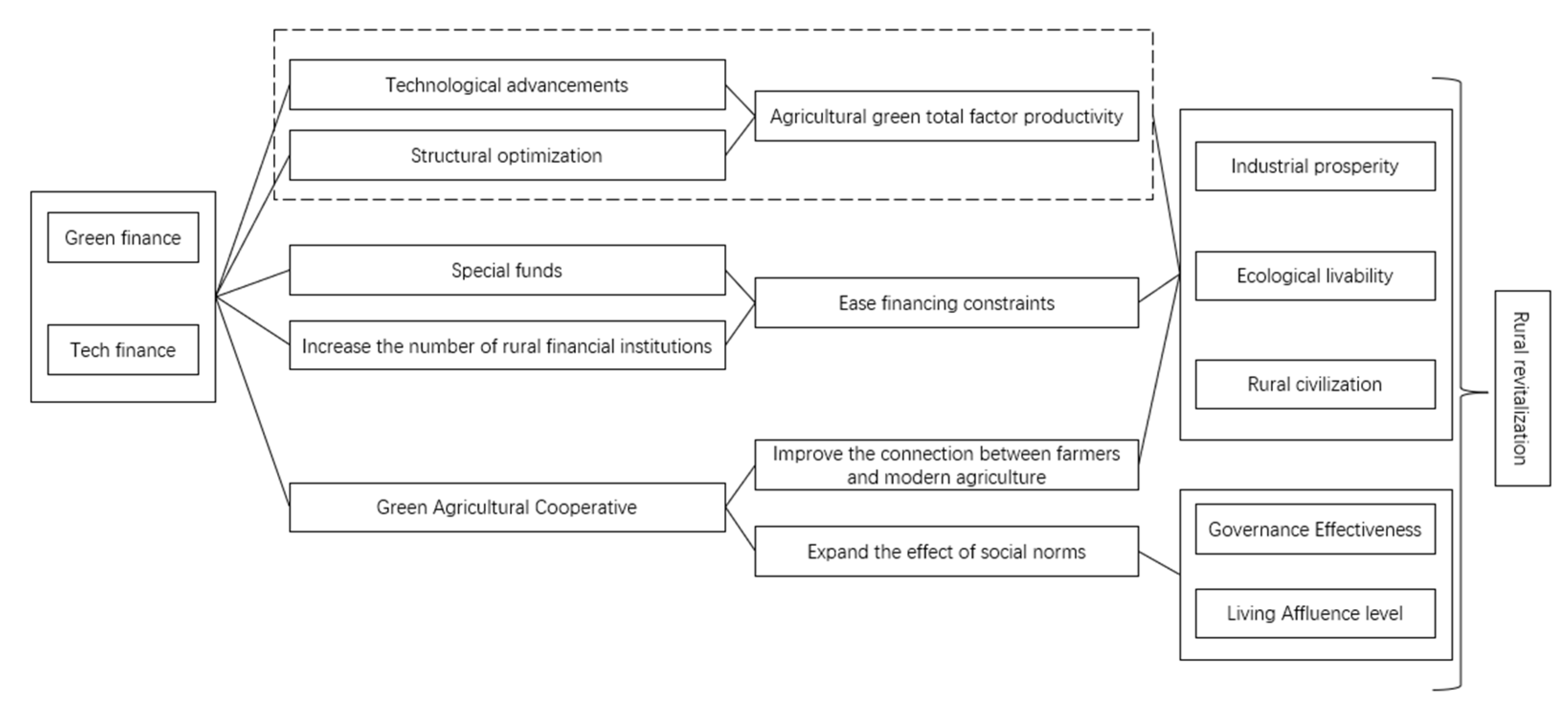
Figure 1 depicts the mediating pathways through which the synergistic coordination of technology finance and green finance influences rural revitalization. First, the integrated development of technology finance and green finance enhances agricultural green total factor productivity via technological advancements and structural optimization, thereby promoting rural revitalization. Second, this integration alleviates rural financing constraints by establishing additional financial outlets and providing dedicated funding, thus fostering rural revitalization. Third, the combined development of technology finance and green finance supports the formation of green agricultural cooperatives, which improves the connection between farmers and modern agriculture while expanding the social normative effect to further promote rural revitalization.
4. Empirical Analysis
4.1. Benchmark Regression Test
In the benchmark regression analysis, this paper simultaneously employs fixed-effects and random-effects models to examine the relationship between the coupling coordination degree of green finance and sci-tech finance and rural revitalization. According to the Hausman test results, the test statistic is 42.62 with a corresponding p-value of 0.000, indicating that the fixed-effects model provides more efficient estimates.
Column (1) in
Table 6 presents the results of the random effects test, which reveals that the synergistic effect of sci-tech finance and green finance significantly enhances rural revitalization levels, achieving significance at the 1% level. Following this, fixed effects models were developed for construction time and region, with the specific results displayed in columns (2) and (3). In the model presented in column (2), no control variables were included. The findings indicate that the synergistic effect of sci-tech finance and green finance on rural revitalization maintains the same positive sign and significance level observed in the random effects model. Column (3) shows that, after including all control variables, the coefficient for the synergistic effect remains positive and significant at the 1% level. Compared to the random effects model, the promotional effect increases by approximately 5 percentage points, and the model exhibits a higher goodness-of-fit.
4.2. Endogeneity Test
The integrated development of sci-tech finance and green finance promotes rural revitalization. However, rural revitalization itself may place higher demands on the level of coupling and coordination between sci-tech finance and green finance, which may give rise to potential endogeneity concerns. To address this issue, this study employs an instrumental variable (IV) approach. Internet development is used as a proxy for regional technological and financial development. Specifically, this study constructs an instrumental variable based on the interaction between each province’s lagged level of internet development and the lagged dependent variable—that is, the coupling coordination degree of sci-tech finance and green finance.
The rationale for this choice of instrumental variable (IV) is twofold. First, in terms of relevance, the internet serves as a foundational infrastructure for digital finance, and its penetration directly impacts the depth of technology applications, such as big data and cloud computing, within the financial sector. This relationship, in turn, affects the efficiency of integration between sci-tech finance and green finance. Additionally, the internet environment enhances and moderates existing financial coordination mechanisms, indicating a strong correlation between the constructed instrumental variable and the current degree of coupling coordination. Second, concerning the exclusion restriction, the impact of technological progress—specifically internet development—on economic growth is primarily realized through enhancements in capital allocation efficiency. In rural areas, capital allocation is predominantly mediated by the financial system. By facilitating financial activities, internet development modifies both the scale and efficiency of capital flows directed toward rural industries and ecological projects, with coupling coordination serving as a concentrated manifestation of this empowerment across both technological and green dimensions. Admittedly, the internet may also influence rural revitalization through non-financial channels, such as promoting e-commerce, enhancing digital governance, or facilitating online education. To mitigate this concern, the empirical model controls for a comprehensive set of regional socioeconomic characteristics, thereby absorbing, to the extent possible, the potential effects of internet development on rural revitalization through non-financial pathways. In addition, provincial-level internet penetration is primarily shaped by macro-level, slow-moving factors—such as national telecommunications network planning, historical infrastructure investment, and geographical terrain constraints—which are plausibly exogenous to short-term, unobserved shocks affecting rural revitalization at the county level in a given period. Consequently, internet development can be treated as a relatively exogenous regional technological environment variable.
Utilizing two-stage least squares (2SLS) estimation with clustered standard errors, the analysis reveals that the instrumental variable is significant in the first stage, while the coupling coordination degree remains significant in the second stage. Additionally, the weak instrument test demonstrates that the Kleibergen–Paap rk Wald F-statistic significantly exceeds the Stock–Yogo critical value at the 10% level, thereby confirming the strength of the instrument. The Kleibergen–Paap LM statistic further rejects the null hypothesis of under-identification at the 10% level, thereby fulfilling the requirement for instrument identifiability. Collectively, these findings indicate that the baseline regression results can be regarded as robust. The following table shows the test results of instrumental variables (
Table 7).
4.3. Robustness Test
4.3.1. Replacing the Dependent Variable
The dependent variable was the rural revitalization level, assessed with the entropy method in the previous section. To test the regression results’ reliability, principal component analysis was employed to reevaluate the rural revitalization level, as per Zhang et al. (2022) [
59]. The results indicate a notably positive regression coefficient for the coupling coordination degree between sci-tech finance and green finance, consistent with the earlier findings.
4.3.2. Sample Exclusion
Among the 31 provincial-level regions in China, municipalities directly under the central government demonstrate superior comprehensive economic development capabilities compared to other provinces. To mitigate potential bias from outlier samples, municipalities were excluded from the analysis. The specific results are presented in column (2) of the table. The regression findings indicate that the coupling coordination degree coefficient for sci-tech finance and green finance is both positive and statistically significant at the 1% level.
4.3.3. Incorporating Control Variables
Numerous factors influence rural revitalization levels during economic development. To mitigate model bias caused by omitted variables, this study further controlled for:
Industrial structure: Tertiary industry output value/Secondary industry output value.
Human capital level: Total higher education enrollment/Total population.
Industrialization level: Industrial added value/Gross domestic product.
Transportation infrastructure level: Natural logarithm of highway mileage The regression indicates that the aforementioned results remain valid after incorporating these control variables.
4.3.4. Truncation Treatment
To reduce outliers’ impact on regression estimates, the variables discussed earlier underwent a 1% truncation process. The results can be found in column (4) of the table. Test results indicate that the coupling coordination coefficient for sci-tech finance and green finance maintains its sign and significance in line with previous studies.
4.3.5. Clustered Standard Errors
Given the possibility of underestimating standard errors in panel data because of autocorrelation in disturbance terms across individuals and time dimensions, column (5) of the table employs dual clustered adjustments to standard errors at both the provincial and annual levels. Following estimation with clustered standard errors, the conclusions retain their validity. In essence, the study’s findings are robust.
The following table shows all the robustness test results (
Table 8).
4.4. Further Analysis: Threshold Test
The results of the threshold effect test for rural revitalization under the development of science and sci-tech finance-green finance coupling coordination degree, based on self-sampling (simulated 300 times), are shown in
Table 9:
As shown in
Table 9, the impact of the development of the coupling coordination degree between sci-tech finance and green finance on rural revitalization exhibits significantly different regression results on either side of a single threshold interval, indicating a nonlinear relationship between the two.
Based on the threshold estimation results in the
Table 10, the threshold value is 0.2824.The estimation results of the panel threshold model in
Table 11 reveal that maintaining consistent control variables, including time and regional fixed effects, was crucial during the testing phase. The findings suggest that if the coupling coordination degree drops below 0.2824, the impact coefficient on rural revitalization stands at 0.085, lacking statistical significance. This lack of significance may arise from the limited promotional effect of a low coupling coordination degree between sci-tech finance and green finance on rural revitalization. Conversely, when the coupling coordination level exceeds the threshold of 0.2824, the impact coefficient of coordinated development between sci-tech finance and green finance on rural revitalization increases to 0.229. In comparison to the first threshold interval, the promotional effect of coupling coordination significantly strengthens and achieves statistical significance at the 1% level. The positive impact of coordinated development between sci-tech finance and green finance on rural revitalization persists (
Table 10 and
Table 11).
According to the mainstream literature, coupling coordination levels between 0.0 and 0.3 are generally classified as severe imbalance or near imbalance. At this stage, system components evolve largely independently, with weak or even mutually inhibiting interactions. When the coupling coordination level falls between 0.3 and 0.5, the system is commonly referred to as being in a barely coordinated or initial coordination stage, in which positive interactions begin to emerge and preliminary synergistic mechanisms take shape. Once the coupling coordination level exceeds 0.5, the system gradually advances toward higher stages, such as intermediate coordination or good coordination.
The estimated threshold value of 0.2824 lies very close to the critical boundary between disharmony and coordination. This finding indicates that only when the coupling and synergy between sci-tech finance and green finance moves beyond the range of disharmony and enters the initial coordination stage—approximately around 0.3—can its promoting effect on rural revitalization begin to materialize. In this sense, the threshold of 0.2824 can be interpreted as a minimum effective threshold for financial synergy in supporting rural revitalization. Below this level, sci-tech finance and green finance tend to operate in relative isolation: technological finance may be directed toward projects with high pollution intensity, while green credit may support low-technology production capacity. Their interaction remains superficial and fails to generate a coherent force aligned with the objectives of rural revitalization. Once this threshold is crossed, the integration of the two financial systems reaches a minimum necessary level of coordination and complexity, enabling the financial system to preliminarily identify and support projects that are simultaneously technology-driven and environmentally sustainable. At this stage, synergistic effects begin to emerge in a systematic manner. In addition, the results reported in
Table 10 indicate that the multiple threshold effect is not statistically significant. This outcome may be attributable to diminishing marginal returns and the limited absorptive capacity of rural revitalization. As the recipient of financial support, rural revitalization may face an inherent ceiling in its ability to absorb and transform financial resources. After the initial threshold is crossed, the positive effects of financial synergy on rural industrial upgrading and ecological improvement can be largely realized. However, practical constraints—such as the organizational structure of rural societies, factor mobility, and market capacity—may prevent further increases in the level of financial synergy from generating qualitatively different or substantially stronger impact stages. As a result, higher-order thresholds do not emerge as statistically significant.
4.5. Mechanism Testing
The preceding theoretical analysis indicates that the coordinated development of sci-tech finance and green finance can enhance agricultural green total factor productivity, thus promoting rural revitalization. To examine whether agricultural green total factor productivity, financing constraints in rural areas, and green agricultural specialization serve as mediating factors, a stepwise regression testing method was employed in the model construction. The results of the tests are presented in
Table 12.
Table 12 presents test results for the three pathways illustrating how the coordination of sci-tech finance and green finance promotes rural revitalization. Results show that the coordination enhances agricultural green total factor productivity, raises agriculture-related loan amounts, increases rural financial institution outlets, and improves green agricultural cooperatives’ performance. This confirms the initial step of the two-step approach. The subsequent section discusses the literature on mediating variables’ substantial influence on rural revitalization.
With respect to the mediating role of agricultural green total factor productivity (TFP), total factor productivity is widely regarded as a core indicator for measuring technological progress and economic development. Improvements in TFP constitute a fundamental driver of high-quality development [
60]. In the context of building an agricultural powerhouse, improving agricultural TFP is of critical importance, as it plays a pivotal role in promoting rural economic growth [
61,
62]. Growth in agricultural green TFP also effectively captures the pace of advancement in green agricultural production technologies, with its dynamic changes providing a clear indication of regional progress in green technology adoption [
63]. Moreover, the realization of high-quality development fundamentally depends on the sustained improvement of green TFP, indicating a high degree of alignment between green productivity enhancement and development quality objectives [
64].
Regarding the mediating effect of financing constraints, the existence of such constraints significantly constrains production and operational activities in rural areas. Financial development expands credit funding sources in rural regions, reducing both the threshold and cost of accessing finance for rural residents [
65]. Alleviating financing constraints contributes to increases in rural residents’ income levels [
66]. Helping farmers reduce financing constraints and obtain adequate financial support is therefore essential for improving their entrepreneurial performance and for effectively implementing the rural revitalization strategy [
67,
68].
With respect to the mediating role of green agricultural cooperatives, Marx and Engels emphasized the importance of agricultural cooperatives in transforming production relations and facilitating the reallocation of surplus rural labor. As a key organizational vehicle for integrating smallholder farmers, agricultural cooperatives promote the development of modern agriculture by providing productive, operational, and financial services, thereby undertaking the critical function of linking smallholder farmers to modern agricultural systems [
69]. Innovation in agricultural production and management organizations constitutes a core foundation for advancing agricultural and rural modernization and serves as a crucial lever for implementing the rural revitalization strategy. Accordingly, the development of farmer cooperative organizations should be embedded within the broader framework of rural revitalization [
70].
In summary, the integrated advancement of sci-tech finance and green finance facilitates rural revitalization through three interconnected avenues: fostering agricultural green development, mitigating financing constraints, and enhancing the integration of smallholder farmers with green modern industries.
4.6. Heterogeneity Analysis
Given that heterogeneity in financial development environments conditions the effectiveness of sci-tech finance and green finance in supporting rural revitalization, this study measures disparities in financial development from two complementary perspectives. On the one hand, digital inclusive finance, driven by digital transformation, has fundamentally reshaped traditional financial service provision. Its advantages—such as low marginal costs, wide coverage, and high accessibility—lower financing barriers for enterprises and rural households, substantially improving the utilization efficiency of financial products. As a result, digital inclusive finance enhances the implementation efficiency of both sci-tech finance and green finance in supporting rural revitalization. On the other hand, the formation of sustainable public credit systems constitutes a critical institutional factor underlying divergent financial development trajectories across regions. The establishment of such systems necessitates active government intervention, as financial regulation plays a key role in curbing market irregularities, reducing systemic risk, and fostering credible and sustainable public credit frameworks. Consequently, regions with different levels of financial regulatory intensity are likely to exhibit systematic differences in how the coordinated development of sci-tech finance and green finance translates into rural revitalization outcomes. Within this analytical framework, examining whether the impact of coordinated sci-tech finance and green finance on rural revitalization remains consistent across regions with varying levels of digital inclusive finance and financial regulatory intensity is of considerable significance for understanding the mechanisms and policy orientations of financial empowerment in rural revitalization and for advancing the goal of building a financial powerhouse. This study employs the Digital Inclusive Finance Index developed by Peking University to measure the level of digital inclusive finance and further analyzes three sub-dimensions: coverage breadth, usage depth, and digitalization intensity. Financial regulatory intensity is measured as the ratio of local fiscal expenditure on financial regulation to the value added of the financial sector. Provinces are then divided into high-level and low-level groups based on the median values of these indicators.
According to the regression results, in regions with low levels of digital inclusive finance, the coordinated development of sci-tech finance and green finance exhibits a positive coefficient with respect to rural revitalization; however, this effect does not achieve statistical significance. In contrast, in regions characterized by high levels of digital inclusive finance, the positive impact of coordinated sci-tech finance and green finance on rural revitalization becomes significantly stronger, achieving statistical significance at the 5% level. This suggests that digital financial development plays an important enabling role in amplifying the effectiveness of financial synergy. Advanced digital financial infrastructure lowers marginal service costs and enhances information transparency. Technologies such as big data analytics and the Internet of Things enable financial institutions to construct multidimensional information profiles of agricultural operators, allowing for dynamic assessment of both technological application capacity (tech attributes) and environmental performance (green attributes). This facilitates more differentiated and targeted allocation of credit resources, thereby substantially improving the resource allocation efficiency of coupled finance. Further analysis of the three sub-dimensions of digital inclusive finance indicates that in regions with low levels of coverage breadth, usage depth, and digitalization, the positive effect of coordinated sci-tech finance and green finance on rural revitalization remains statistically insignificant. Conversely, in regions with high levels across all three dimensions, this effect is statistically significant at the 5% level. Moreover, among the three sub-dimensions, regions with high levels of digitalization exhibit the strongest amplification effect: the contribution of coordinated sci-tech finance and green finance to rural revitalization is approximately seven percentage points higher than that observed in regions with high coverage breadth or depth alone. This suggests that the digitalization-driven amplification effect is more pronounced than that arising solely from expanded coverage or increased usage frequency (
Table 13).
This finding suggests that the most critical enabling factor for effective financial synergy is not simply the expansion of service coverage or the frequency of financial service usage, but rather a region’s comprehensive digital capabilities underpinned by high-quality digital infrastructure and deep digital application. From a foundational capability perspective, digital maturity provides both the technical infrastructure and the data-processing capacity necessary for the effective coupling of sci-tech finance and green finance. Higher levels of digitalization reflect more sophisticated applications of the Internet of Things, big data platforms, and artificial intelligence analytics, enabling financial institutions to more accurately identify agriculture-related projects that simultaneously exhibit technological sophistication and green value, while dynamically quantifying their environmental impacts and technological risks. This, in turn, reduces information asymmetry and enhances the precision and risk controllability of coupled financial operations. From an ecosystem empowerment perspective, digital maturity creates application-intensive scenarios in which financial synergy can be effectively translated into real economic outcomes. In highly digitized regions, agricultural cooperatives gain easier access to supply-chain finance platforms, agricultural product traceability systems, and remote agrotechnical services. This allows the synergy between sci-tech finance and green finance to be rapidly transformed into improvements in cooperative-level intelligent management, green brand development, and precise market matching, thereby more effectively empowering smallholder farmers. From the perspective of demand matching, highly digitized regions also exhibit stronger absorption capacity and more urgent demand for integrated financial products. In such regions, agriculture and rural industries have often already entered phases of transformation and upgrading, generating sustained demand for composite investments in smart equipment, environmental technologies, and digital solutions. Consequently, these regions demonstrate stronger market demand for financial products that integrate both technological and green attributes. By contrast, digital development characterized by coverage expansion without sufficient depth—such as enabling basic digital payments without data-driven credit mechanisms—may result in superficial financial integration that fails to meaningfully penetrate sectoral operations. Similarly, high usage frequency in the absence of advanced digital infrastructure often reflects the mere digitization of traditional financial services (e.g., frequent online transactions without data-based credit assessment), which is insufficient to support financial products oriented toward technological innovation and green transformation.
The regression results indicate that the impact of coordinated development between sci-tech finance and green finance on rural revitalization levels varies by region, depending on the intensity of financial regulation. In regions characterized by lower financial regulatory intensity, the coordinated development of sci-tech finance and green finance demonstrates a positive effect on rural revitalization levels; however, this effect lacks statistical significance. In contrast, in regions with higher financial regulatory intensity, such coordinated development exerts a significant positive influence on rural revitalization. This discrepancy may arise because high financial regulatory intensity can mitigate “regulatory arbitrage” and “risk accumulation.” Strict oversight effectively identifies and isolates speculative activities that seek financing by misusing ‘green’ or “tech” labels without fulfilling project requirements, thereby averting the compounded amplification of financial, ecological, and technological risks. This regulatory framework ensures that resources directed by coordinated coupling are genuinely allocated toward sustainable rural industrial upgrading and ecological enhancement. Additionally, it fosters “incentive alignment.” Well-defined regulatory guidelines, such as green credit standards and technology enterprise certifications, create stable expectations for financial institutions and market participants. In such an environment, financial institutions are more inclined to develop and offer composite financial products that incorporate both technological and green attributes, as their compliance costs and associated risks are diminished. Moreover, policy incentives, including re-lending and risk compensation, can be implemented with greater precision and effectiveness (
Table 14).
5. Conclusions and Recommendations
This study utilizes panel data from 31 provinces covering the period from 2011 to 2021 to develop an indicator evaluation system for green finance, sci-tech finance, rural revitalization levels, and agricultural green total factor productivity (TFP). Entropy analysis is employed to measure rural revitalization levels, while a coupling coordination model evaluates the coordinated development of green finance and sci-tech finance. Additionally, a super-efficiency SBM model is utilized to assess agricultural green TFP. This research investigates the mechanisms and effects through which the coordinated development of green finance and sci-tech finance influences rural revitalization levels, leading to the following key conclusions: First, the level of coordinated development between green finance and sci-tech finance has a significant positive impact on rural revitalization levels, exhibiting nonlinear characteristics. When the coupling coordination degree of green finance and sci-tech finance surpasses a certain threshold, the promotional effect intensifies significantly. Second, the integrated development of green and sci-tech finance can stimulate green economic growth through the industrial production side, alleviate financing constraints in rural areas via the financial supply side, and enhance rural revitalization by improving benefit-sharing mechanisms between smallholder farmers and modern green agriculture. Third, the impact of coordinated development of green and sci-tech finance on rural revitalization varies considerably across regions, influenced by differing levels of digital inclusive finance and its sub-dimensions, as well as varying intensities of financial regulation. Based on these findings, the following recommendations are proposed:
- (1)
Accelerate foundational institutional and market infrastructure development for the integrated advancement of green finance and sci-tech finance to shorten the time required for their coupling to reach the effective threshold. The development of green sci-tech finance spans multiple sectors and requires coordinated cross-departmental efforts, stronger systemic linkages, and proactive top-level planning. Financial committees at all levels should formulate medium- and long-term development plans, regularly report implementation progress, and establish dedicated coordination mechanisms to promote the effective integration of sci-tech finance and green finance. In parallel, differentiated green sci-tech finance products should be developed to meet the heterogeneous financing needs of technology-based enterprises at different stages of growth. Green financial institutions and sci-tech finance institutions should be encouraged to collaborate in designing composite financial products and service packages. In addition, relevant authorities should improve market linkage mechanisms between green finance and sci-tech finance, enhancing coordination among financial markets and clarifying the focus of financial support. Strengthening linkages among securities markets, insurance markets, and intellectual property markets can further promote the synchronized development of sci-tech finance markets, green finance markets, industrial markets, and property rights markets, thereby facilitating the deep coupling of green sci-tech finance with technological innovation activities.
- (2)
Further strengthen the transmission pathways through which sci-tech finance and green finance support rural revitalization by increasing agricultural lending, expanding rural financial institution networks, and promoting specialized green agricultural cooperatives. In the early stages of integrated development, appropriate external guidance remains essential. Governments should increase policy-oriented lending to rural areas, enhance initial capital support, and strengthen the construction of rural financial institution networks. This can improve financing accessibility for farmers and agricultural enterprises while shortening financing approval and disbursement cycles. At the same time, relevant departments should actively promote the development of specialized green agricultural cooperatives and refine benefit-linkage mechanisms between smallholder farmers and modern green agriculture. While ensuring adequate financial supply, farmers should be guided toward appropriately scaled production and operation. By using green agricultural cooperatives as intermediary platforms, leading green agricultural enterprises can facilitate farmers’ income growth through diversified mechanisms such as contract farming, guaranteed dividends, equity participation, and local employment creation.
- (3)
Optimize the financial environment. In regions with advanced digital inclusive finance, policy priorities should shift toward enhancing the integration of finance and digital technology to establish an open and collaborative innovation ecosystem. First, local governments should be encouraged to spearhead the creation of regional data-sharing platforms focused on “agriculture, rural areas, and farmers.” These platforms should integrate multidimensional data encompassing agricultural production and operations, environmental monitoring, government subsidies, and market circulation, while ensuring data security and privacy. They should offer public data products that enable financial institutions to develop big data-driven green technology credit models and dynamic risk assessment tools, thereby mitigating information asymmetry. Second, governments should authorize and support regulatory sandbox pilots in these regions to investigate the practical application of deeply integrated products such as “IoT + insurance” (e.g., weather index insurance based on sensor data) and “blockchain + supply chain finance” (e.g., green agricultural product receivables financing based on tamper-proof traceability). This approach will generate valuable insights for nationwide implementation.
For regions with relatively low levels of digital inclusive finance, the primary policy priority lies in strengthening foundational infrastructure, expanding coverage of basic financial services, and fostering basic usage habits among rural residents. Central and provincial governments can establish dedicated funds to prioritize the expansion and upgrading of mobile communication networks, payment terminals, and grassroots financial service outlets in rural areas. Digital financial accessibility should be incorporated as a core indicator in rural revitalization infrastructure development. At the same time, financial institutions should be guided to actively promote basic financial products that are simple, user-friendly, and associated with manageable risks, such as small digital loans for farmers, mobile payment services, and digital government bonds. Financial literacy initiatives should combine online and offline approaches to effectively lower usage barriers.
Policy responses should also be differentiated according to financial regulatory intensity. In regions with relatively strong financial regulatory capacity, the policy focus should be on optimizing regulatory frameworks to better balance innovation incentives and risk control, thereby enabling the precise allocation of financial resources. Within the national regulatory framework, more specific and operational guidelines for green project certification and technology enterprise evaluation can be developed in line with local industrial characteristics, reducing compliance costs for financial institutions while enhancing business initiative and precision. Building on existing regulatory capacity, these regions can pioneer the application of regulatory technology tools, such as using big data analytics to monitor whether capital flows genuinely support green technology sectors, enabling intelligent early risk warnings and penetrative supervision.
In regions with relatively weak financial regulation, the primary objective is to establish a solid risk baseline, standardize market order, and prevent adverse selection and moral hazard. Through vertical guidance from higher-level regulators, pairing assistance with more developed regions, and targeted training programs, the professional capacity of local financial regulators and their ability to apply regulatory tools should be rapidly enhanced. Priority should be given to establishing and effectively enforcing fundamental mechanisms for market access control, risk warning, and complaint handling. Investment and financing activities conducted under the guise of “green” or “technology” initiatives should be regularly reviewed, and illegal fundraising and financial fraud should be strictly addressed. At the same time, targeted financial consumer education should be strengthened to improve the public’s ability to identify and manage financial risks.