


Abstract
Bio-based fertilisers (BBFs), produced from various types of biological waste using different processing methods, have demonstrated encouraging levels of agronomic efficiency and environmental benefits, consistent with the principles of sustainable development (SD). Nevertheless, bringing these newly developed products to market remains difficult due to limited farmer awareness, perceived risks, and regulatory uncertainties. In this paper, we examine the attitudes, opinions, and awareness of farmers regarding the use of various BBFs in their fertilisation practices. We applied a survey research method, using the Paper and Pen Personal Interview (PAPI), and answers were collected by agricultural advisors. A questionnaire, consisting of open, closed, and Likert scale questions, focusing on general information about farmers, current practices regarding fertiliser use, and the determinants of fertiliser choice, was used. Descriptive statistics, cross-tabulations, chi-square tests, Cramer’s V coefficients, 95% confidence intervals, and McNemar’s test were used to analyse the data. This study was conducted in all 16 voivodeships in Poland, collecting a total of 800 responses. Factors influencing the negative or positive attitude of farmers toward this practice were identified. Currently, mineral fertilisers remain the dominant choice among Polish farmers due to their accessibility, cost-effectiveness, and agronomic performance. There is observed growing, albeit cautious, interest in alternative fertilisation strategies and the correct understanding of sustainable agriculture practices. About half of farmers expressed willingness to partially replace mineral fertilisers with organic options, but only a minority showed interest in adopting BBFs. The findings indicate that concerns about contaminants, heterogeneous quality, limited availability, and regulatory uncertainty continue to constrain interest in BBFs. Although respondents recognised potential environmental benefits, economic and agronomic considerations remained the primary drivers of decision-making. As the survey was conducted in late 2021, the results reflect pre-2022 market conditions and should be interpreted as a baseline rather than a direct indication of current attitudes. Overall, this study provides insights into behavioural and structural factors influencing fertiliser use in Poland and highlights areas where further policy, advisory, and market developments may help support more sustainable nutrient management.
1. Introduction
The ongoing ecological crisis, together with global economic turbulence and recent geopolitical shifts, has renewed interest in strengthening local value chains and reducing reliance on critical raw materials. Disruptions to global supply chains, highlighted during the COVID-19 pandemic and further aggravated by subsequent international developments, have exposed vulnerabilities in the fertilising product sector [1,2,3]. These events have intensified concerns about food security and underscored the importance of ensuring access to affordable, stable nutrient sources in agriculture. Providing a satisfactory amount of food is one of the priority challenges not only from the point of view of potential threats to the 21st century (such as closing the country’s borders and restrictions on import–export) but also from the perspective of the constantly growing world population [4,5]. Advances in science, medicine, and technology in the previous decades have had a great impact on human population development. According to the United Nations Department of Economic and Social Affairs (UN DESA), the global population reached approximately 7.8 billion in 2021 and 8.2 billion in 2024, marking an increase of about 1.7 billion since 2000. Projections indicate that the population will continue to grow, reaching around 8.5 billion by 2030 [6]. This ongoing growth underscores the necessity of providing sustainable access to fundamental resources essential for human life, such as food, fresh water, and clean air. Addressing these challenges is critical to achieving the Sustainable Development Goals (SDGs) and ensuring the well-being of future generations [4].
In response, the European Union (EU) has set ambitious targets for sustainable agriculture: under the Farm to Fork Strategy [7], nutrient losses are to be cut by 50% and synthetic fertiliser use by 20% by 2030. These goals align with the broader European Green Deal [8] and the Circular Economy Action Plan [9], which together promote waste minimisation and the greater use of organic and bio-based fertilisers (BBFs). Fertilisers derived from organic waste streams, such as animal manure, sewage sludge, compost, digestate, and processed bio-waste, offer the potential to close nutrient cycles, reduce import dependency, and mitigate environmental risks associated with nutrient leaching and greenhouse gas emissions [10,11,12,13]. These bio-based fertilisers can transform agricultural and waste management systems by turning residues into valuable inputs. The Circular Economy Action Plan [9], Farm to Fork Strategy [7], and EU Soil Strategy for 2030 [14] advocate for nutrient recovery and secondary raw material use. The revised Fertilising Products Regulation (EU 2019/1009) [15] introduces harmonised safety and quality standards, allowing CE-compliant BBFs to circulate freely within the Single Market. Yet, the large-scale adoption of BBFs remains limited across Europe [16,17], which is a result of the various barriers and challenges facing the waste-based fertiliser sector that vary across different regions of the world. Although political initiatives across the EU are harmonised and focused on the green transition, differences are visible between member states. Despite the above-mentioned EU sanctions, many EU countries, including Poland, remain dependent on fertilisers imported from Russia, illustrating the economic constraints that may still limit farmers’ ability to switch to alternatives [18]. Moreover, while regulatory advances create market opportunities, their impact depends on enabling conditions, namely, farmer awareness, trust in product quality, and adequate infrastructure and advisory services.
Although interest in sustainable agriculture and fertilisation practices has grown in recent years, existing studies on farmers’ perceptions of organic and bio-based fertilisers (BBFs), produced from various types of biological waste using different processing methods, remain fragmented and context-specific. Research has highlighted a range of attitudes, from cautious optimism to persistent scepticism, shaped by factors such as local policy frameworks, market maturity, and prior exposure to circular solutions [19,20,21]. While some studies explore the acceptance of composts, digestates, or other organic amendments, a comprehensive understanding of the behavioural and systemic factors influencing adoption across different agricultural systems and regions is still lacking [22,23,24]. In particular, Eastern European perspectives, especially those of farmers operating within transitional economies, are under-represented in the literature, despite these regions facing socioeconomic and infrastructural challenges. Therefore, in this paper, we selected Poland as a case study as it is one of the largest agricultural producers in Central and Eastern Europe. The main objective of this study was to determine the driving forces and barriers to implementing BBFs in this region. Filling this research gap is crucial in the context of planning further initiatives for the implementation of the CE package, as well as the environmental policy requirements of the European Green Deal in the coming years. This is also related to the fact that despite the favourable policy for CE-compliant products (such as BBFs), there are several potential barriers that continue to hinder the broader uptake of organic and bio-based fertilisers. These include concerns about product quality and consistency, limited awareness or trust in their safety and efficacy, a lack of tailored agronomic advice, and weak regulatory or economic incentives [25]. Additionally, logistical and market constraints, such as limited supply chain integration, inadequate infrastructure, and high transport and application costs, further complicate the transition from conventional inputs [26,27,28]. Identifying both the barriers and enabling factors is crucial for designing effective policy and support mechanisms [29]. A deeper understanding of these dynamics can support strategies that not only improve acceptance among farmers but also support the development of more resilient and circular agri-food systems.
This paper examines these dimensions in the Polish agricultural context, drawing on original survey data to investigate farmers’ awareness, attitudes, and behaviours regarding their fertilisation preferences. Poland’s sizeable farming sector and its experience with circular practices make it an illuminating case study. By uncovering the specific concerns, motivations, and constraints influencing Polish farmers, this research addresses a key knowledge gap: the socio-behavioural factors that modulate CE policy impacts at the farm level. The findings offer actionable insights for both researchers and policymakers. For researchers, they extend the understanding of the behavioural and systemic factors governing sustainable nutrient management. For policymakers, they highlight the critical levers, regulatory clarity, economic incentives, advisory services, and targeted communication needed to accelerate BBF adoption. Ultimately, this study underscores that building trust in waste-derived fertilisers is as important as establishing regulatory frameworks and that tailored interventions are essential to translate EU ambitions into on-the-ground change.
2. Materials and Methods
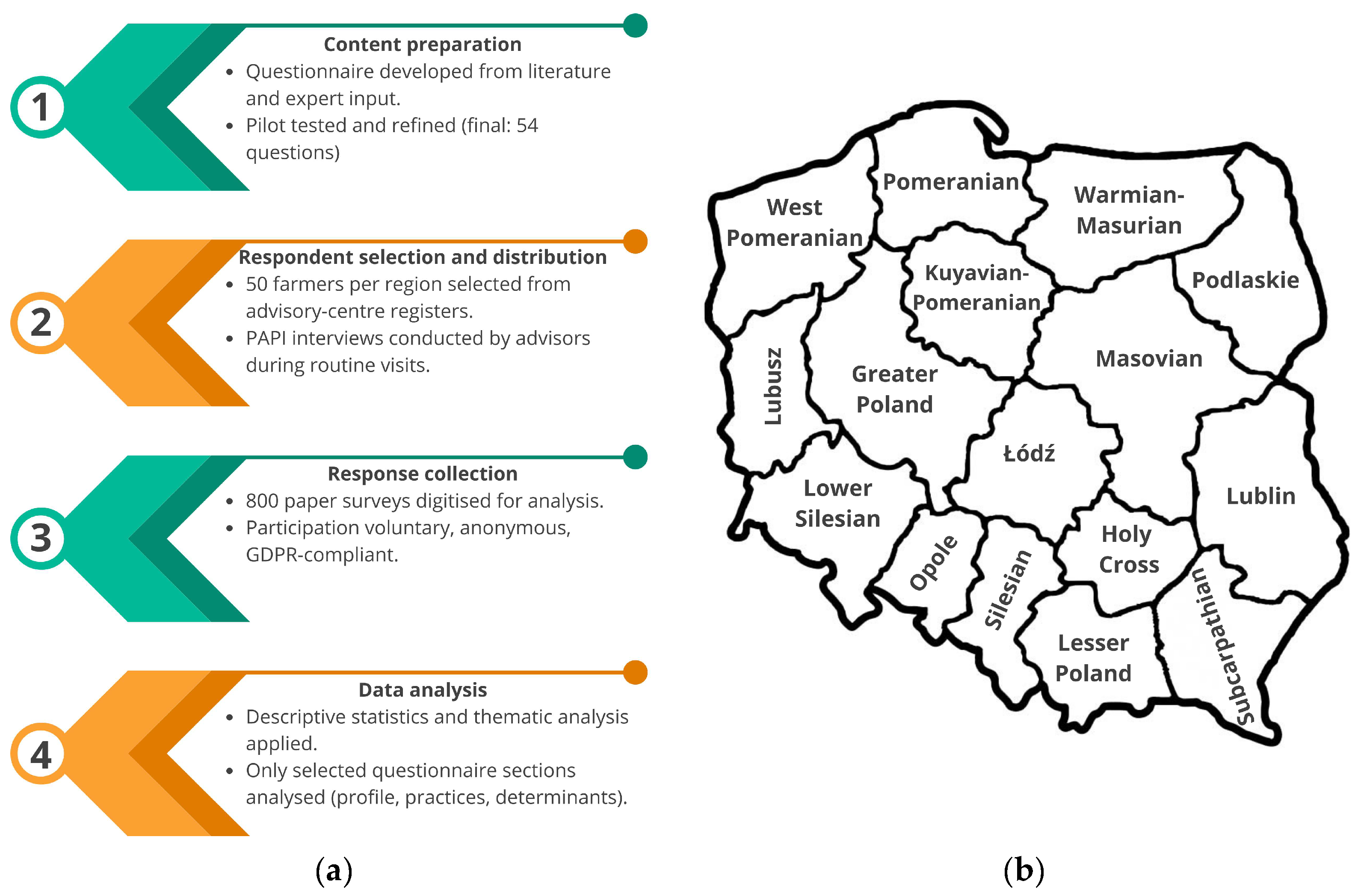
This section provides descriptions of the materials and methods used during this research. A schematic diagram of the methodology employed in this study is presented in Figure 1a.
Step 1: Content preparation and verification
This study used a survey-based approach to identify barriers and opportunities related to the use of bio-based and conventional fertilisers among Polish farmers. In the first stage, a trial questionnaire was developed based on a comprehensive review of the scientific literature focused on farmer perceptions in various countries, as well as insights from the National Dissemination Forum Meetings conducted within the Lex4Bio project.
Figure 1.
(a) A schematic diagram of the methodology. (b) A map of Polish voivodeships.
The questionnaire was structured around five thematic areas:
- General information about farmers (respondent profile).
- Current practices regarding fertiliser use.
- Future fertiliser use intentions.
- Determinants of fertiliser choice.
- Willingness to pay.
To ensure clarity and relevance, a pilot test was conducted. This allowed for the refinement of wording, removal of ambiguities, and alignment of questions with the research objectives. The final version contained 54 questions, including open-ended, single-choice, multiple-choice, and Likert scale questions. The questionnaire was designed to capture farmers’ knowledge and use of mineral, organic, and bio-based fertilisers, with the aim of identifying key product features that influence acceptance and uptake. In this article, we focus on selected parts of the questionnaire, specifically questions related to the following: (i) general information about farmers, (ii) current practices regarding fertiliser use, (iii) future fertiliser use intentions, and (iv) determinants of fertiliser choice.
Step 2: Defining respondents and questionnaire distribution
The survey targeted farmers from all 16 voivodeships (provinces) of Poland (Figure 1b). In collaboration with the Polish Agricultural Advisory Centres, each regional centre (one per voivodeship) was asked to collect data from a sample of 50 farmers, resulting in a total of 800 planned responses. To encourage open and honest feedback, the survey was conducted anonymously. The sampling frame consisted of farmers registered with each regional Agricultural Advisory Centre. Eligible participants were adult farmers (18 years or older) actively managing an agricultural holding and formally registered with their regional advisory centre. No additional restrictions were applied regarding farm size, production type, or specialisation, meaning that all active farmers within the advisory register could, in principle, be selected. Agricultural advisors were instructed to obtain approximately 50 completed questionnaires per region; however, respondent selection followed advisor-led recruitment rather than probability-based sampling. Advisors approached farmers during routine field visits, advisory meetings, and local events, using their own professional judgement to identify potential participants based on availability and willingness to take part. When a farmer declined to participate or was unavailable, advisors contacted another farmer with a broadly similar farm size or production type to preserve diversity within the regional sample; no formal replacement rules were applied. Consequently, the resulting sample should be considered a non-probability sample, which may over-represent farmers who are more engaged with advisory services and under-represent smaller or less formally connected holdings. Given the limited digital access among many Polish farmers, the Paper and Pen Personal Interview (PAPI) method was employed. Agricultural advisors were responsible for administering the survey using printed questionnaires. Each advisor received the electronic version of the questionnaire along with clear instructions, including the definitions of key terms and clarification of any potentially complex concepts. This preparation was intended to ensure consistency in how the questionnaire was delivered and to support advisors in addressing farmers’ questions. The definitions of the terms used in the survey, as well as the exact wording of the analysed questions, are provided in the Supplementary Materials. For the purpose of this study, the survey was translated into English. Data collection was conducted between October and December 2021. The selected results are presented in the following sections of this paper.
Step 3. Collection of responses
All completed paper questionnaires were digitised and entered into Excel spreadsheets for further analysis. In total, 800 responses were collected. This study adhered to the principles of the General Data Protection Regulation (GDPR). Participation was voluntary, and respondents were informed about the purpose of this study, the confidentiality of their responses, and their right to withdraw at any point. No personally identifiable information was gathered. As this study focused on professional practices within the agricultural sector and did not collect sensitive data, formal ethical approval was not required. Nevertheless, this research was conducted in accordance with recognised ethical standards for social research.
Step 4. Data analysis
Data analysis was conducted using Excel software, with responses organised according to the five thematic areas of the questionnaire. A qualitative thematic analysis was applied to explore patterns in the responses, supported by descriptive statistics (e.g., percentage shares) to summarise the results across demographic variables such as age, education, and farm size. All results are based on raw, unweighted percentages; post-stratification weights (e.g., by region, farm size, or production type) were not applied. In addition to descriptive statistics, inferential analyses were conducted to examine associations between willingness to replace mineral fertilisers and key respondent characteristics. Cross-tabulations were prepared for willingness to replace questions, with age, education, farm size, years of experience, and farm activity profile as predictors. For each comparison, the chi-square test of independence was conducted, and corresponding p-values, degrees of freedom, and Cramer’s V effect size were calculated. Moreover, 95% confidence intervals (CIs) were computed for the main proportions reported in the Results Section. To assess whether willingness to replace mineral fertilisers with organic fertilisers differed significantly from willingness to replace them with bio-based fertilisers, McNemar’s test for paired responses was applied, and the odds ratio with a 95 per cent confidence interval was reported. Only responses from three sections of the questionnaire were included in the current analysis: general farmer information, current fertiliser practices, and determinants of fertiliser choice. Other sections of the questionnaire, while valuable, were excluded from the current scope and may be explored in future publications.
3. Results
This section provides an overview of the results of the questionnaire analysis conducted among Polish farmers. The respondents were evenly distributed across Polish voivodeships (Figure S1). The research sample primarily consists of middle-aged and older farmers (Table 1). The largest age group was 35–49 years (45.38%), followed by 50–64 years (28.38%) and 25–34 years (21.25%). Respondents aged 18–24 accounted for only 1.75%, while those over 65 comprised a small fraction (3.13%). No respondents were aged over 75. Regarding gender, the majority of participants were male (88.13%), with women representing 11.00% of the sample. A small proportion (0.63%) did not disclose their gender, and 0.25% identified as both male and female, likely due to joint farm management (e.g., married couples filling out the survey together). The educational background of respondents varied, with the highest proportion having completed middle school (45.63%), followed by vocational school (23.38%) and university degrees (28.63%). A small percentage had only elementary education (1.63%), and 0.13% either did not answer or provided dual responses, likely reflecting differences in educational levels within farm partnerships.
Table 1.
The demographic distribution of respondents.
In terms of farming activities, almost all respondents (98.00%) engage in field crop production. Livestock farming was also significant, with 40.75% involved in this sector. Fewer respondents are engaged in horticultural (7.50%) or greenhouse crop production (1.50%). A small percentage (2.88%) indicated involvement in other activities such as permanent grassland management and beekeeping. Farm sizes varied, with the most common farm size being 20–49.99 hectares (34.50%), followed by those with 50 hectares or more (22.25%). Farms with 15–19.99 hectares (13.25%) and 10–14.99 hectares (12.75%) were also well-represented. Smaller farms of 2–4.99 hectares made up only 4.88%, and 1.00% managed 1.01–1.99 hectares. No respondents reported farms of 1 hectare or less. In terms of farming experience, most respondents had extensive agricultural backgrounds. The largest group (32.25%) had 11–20 years of experience, followed by 21–30 years (22.00%) and over 30 years (19.63%). Smaller groups had 6–10 years (20.13%) or 2–5 years (5.50%) of experience, with only 0.50% being newcomers with less than a year of experience. Overall, the sample is primarily composed of experienced male farmers involved in field crop production, with a substantial proportion also engaged in livestock farming. Most respondents manage medium to large farms and have an educational background based on middle school, vocational training, or higher education.
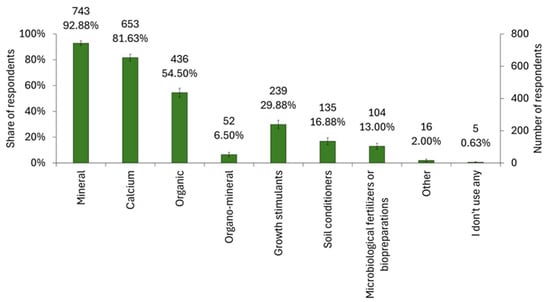
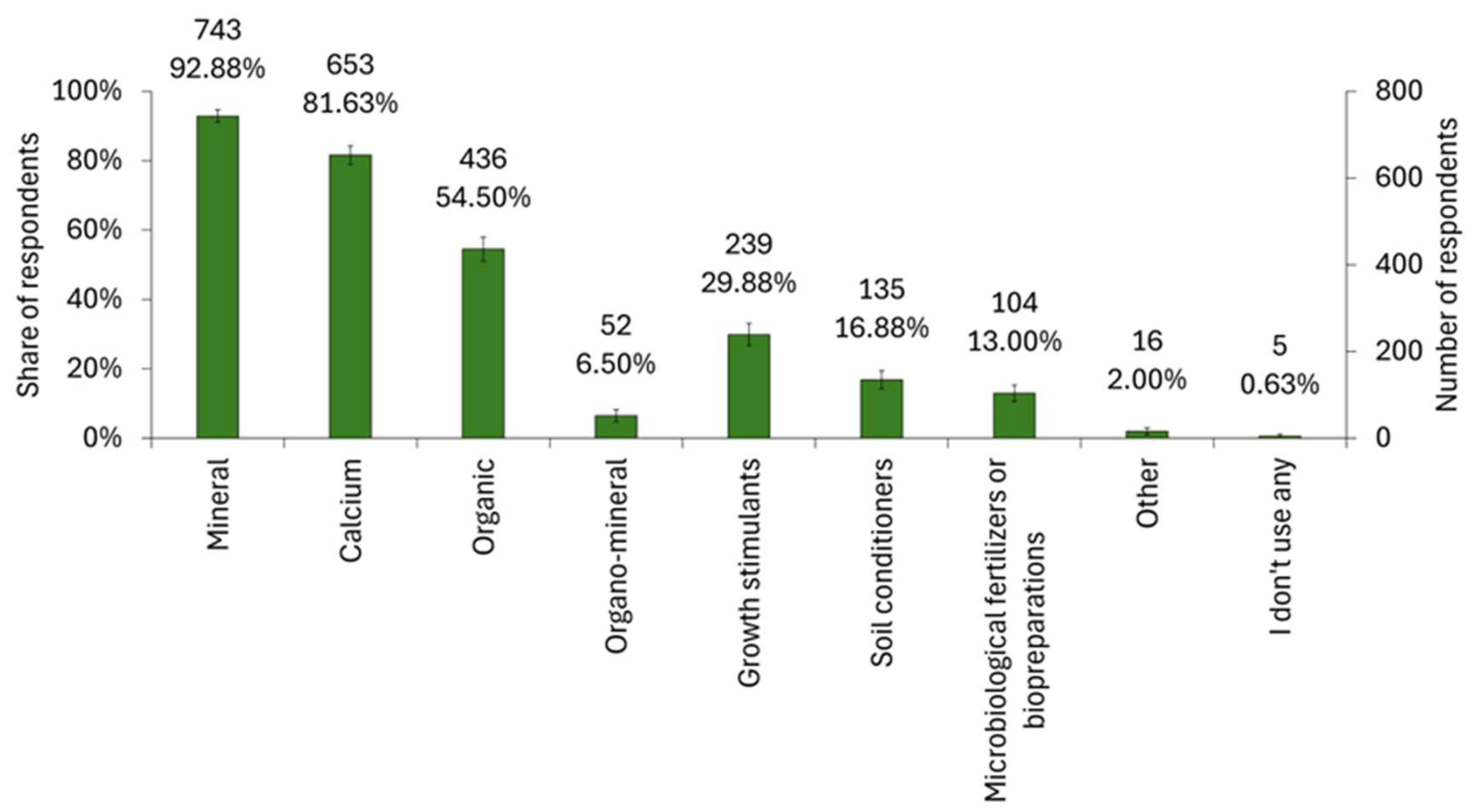
Regarding fertiliser use in the farming practices, the majority of respondents (92.88%) use mineral fertilisers, making them the most widely adopted type (Figure 2). Calcium-based fertilisers are also commonly used (81.63%), while organic fertilisers are utilised by over half of the farmers (54.50%). Other fertilising products are less commonly used, with growth stimulants applied by 29.88% of respondents, soil conditioners by 16.88%, and microbiological fertilisers or biopreparations by 13.00%. Organo-mineral fertilisers are used by only 6.50% of farmers, and 2.00% of respondents indicated that they do not use any fertilisers at all.
Figure 2.
Types of fertilisers used on respondents’ farms.
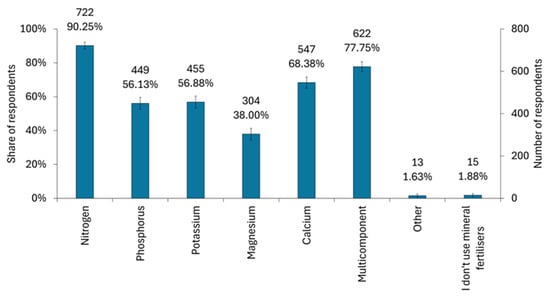
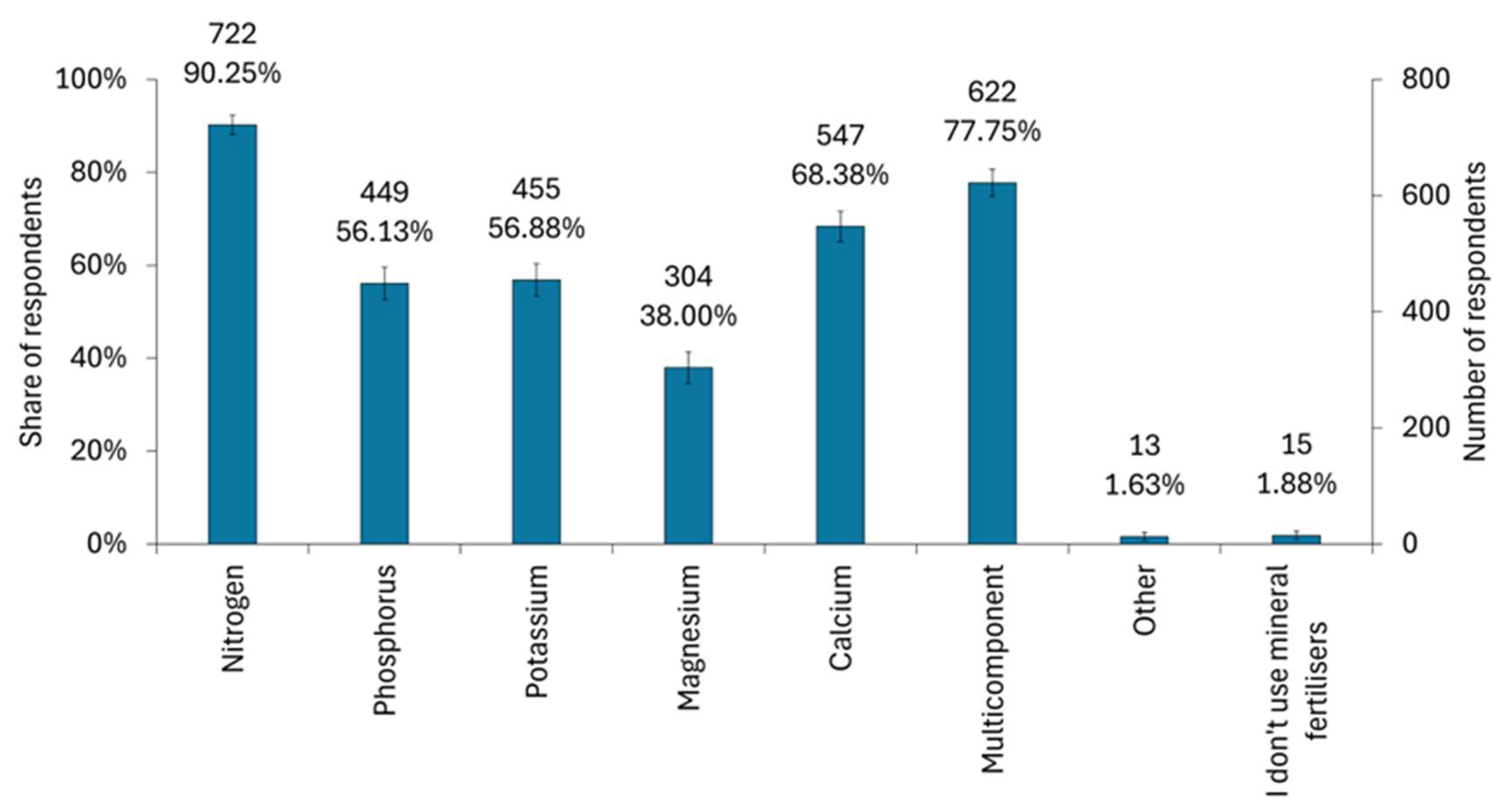
The types of mineral fertilisers most commonly applied are nitrogen-based, with 90.25% of respondents utilising them, followed by multicomponent fertilisers (77.75%). Calcium fertilisers are used by 68.38%, while phosphorus (56.13%) and potassium (56.88%) fertilisers are used by over half of the respondents. Magnesium fertilisers are less commonly applied (38.00%). A small percentage (1.63%) of farmers use other mineral fertilisers, while 1.88% reported not using mineral fertilisers at all (Figure 3).
Figure 3.
Mineral fertilisers used on respondents’ farms.
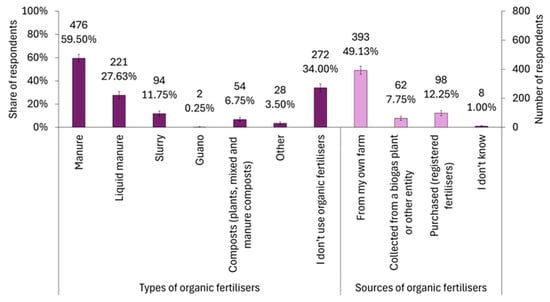
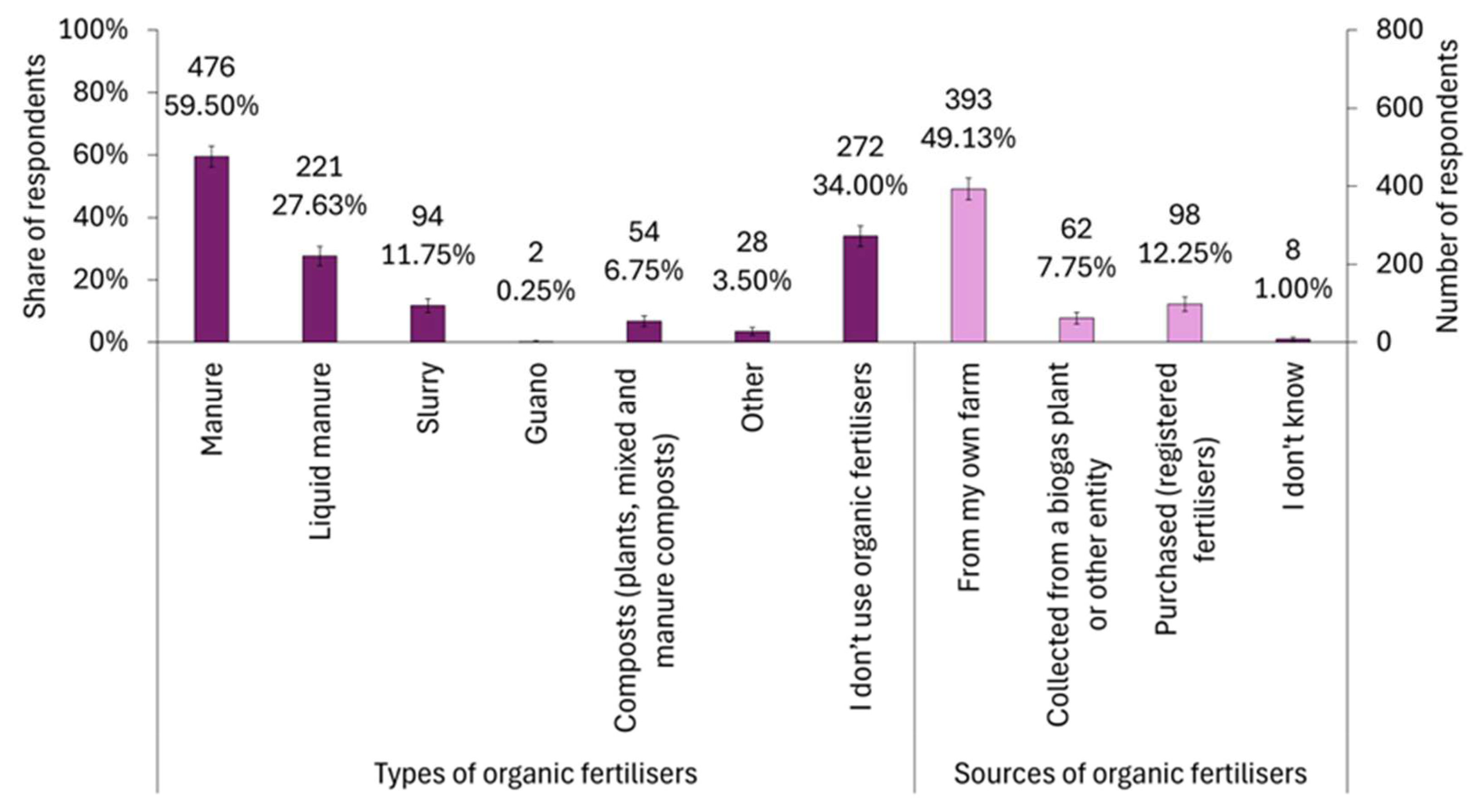
Among organic fertilisers, manure is the most commonly applied (59.5%), followed by liquid manure (27.63%) and slurry (11.75%) (Figure 4). Composts, including plant-based, mixed, and manure composts, are used by 6.75%, while guano is used by only 0.25%. A small proportion (3.5%) reported using other types of organic fertilisers not listed in the survey, such as digestate, catch crops, straw, green manures, and decaying plants and grasses. The majority of those using organic fertilisers source them from their own farms (49.13%), with a smaller proportion purchasing registered organic fertilisers (12.25%) or collecting them from external sources such as biogas plants (7.75%). Only 1.00% were unsure of the origin of their organic fertilisers. Notably, 34% of respondents indicated that they do not use organic fertilisers (Figure 4).
Figure 4.
Types and sources of organic fertilisers used on respondents’ farms.
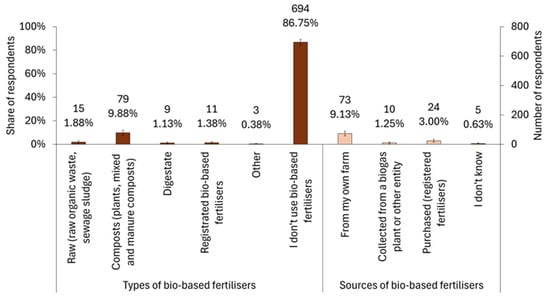
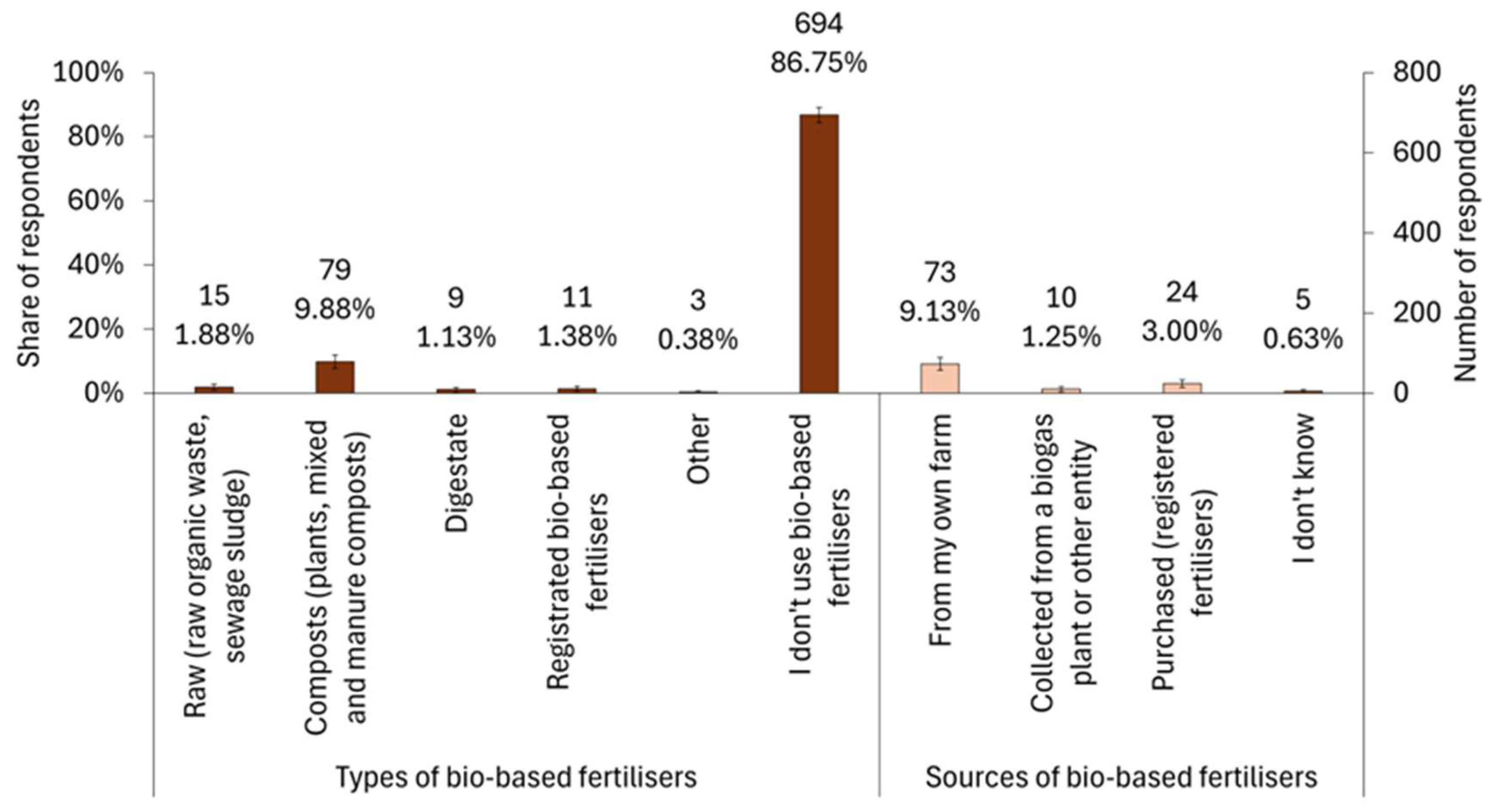
Bio-based fertilisers are used by a minority of respondents, with 86.75% not using them at all (Figure 5). Among the 13.25% who do use bio-based fertilisers, composts (plant-based, mixed, and manure) are the most common (9.88%). Other bio-based fertilisers, such as raw organic waste and sewage sludge, are applied by 1.88%, while digestate from biogas production is used by just 1.13%. Registered bio-based fertilisers are used by 1.38%, and 0.38% use other types. The primary source of these bio-based fertilisers is from their own farms (9.13%), with smaller proportions purchasing (3.00%) or collecting them from external sources (1.25%).
Figure 5.
Types and sources of bio-based fertilisers used on respondents’ farms.
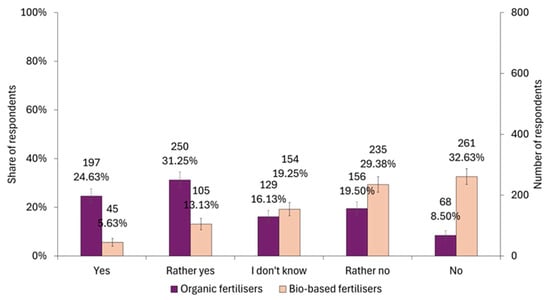
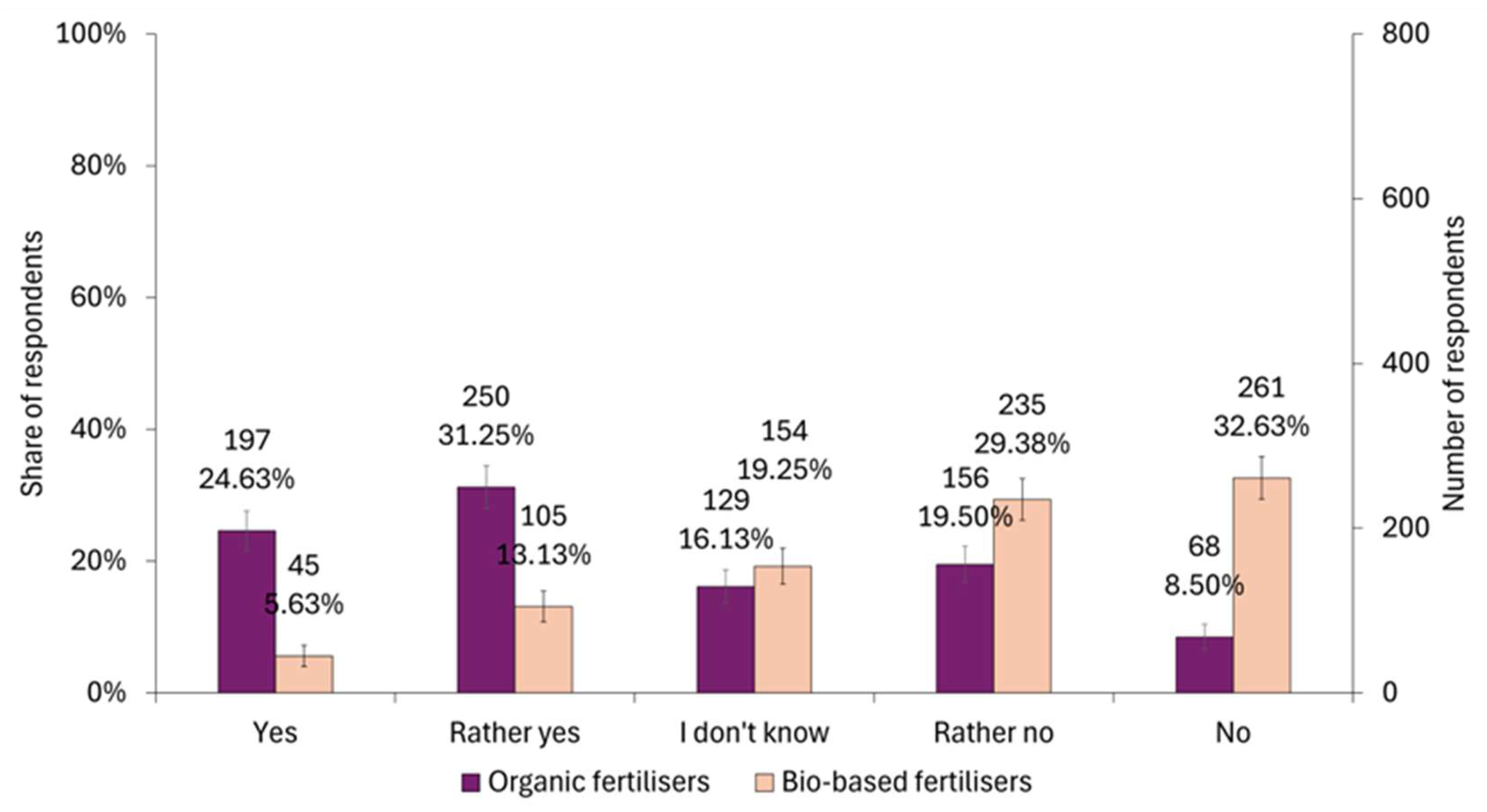
A substantial proportion of respondents (55.88%) showed interest in partially replacing NPK mineral fertilisers with organic options (Figure 6), with 24.63% answering “Yes” and 31.25% saying “Rather yes”. However, 28.00% expressed reluctance, and 16.13% were uncertain, indicating some hesitancy towards fully embracing organic fertilisers. While a limited number of farmers (18.76%) showed interest in replacing NPK fertilisers with bio-derived alternatives, most (62.01%) were reluctant to make such a change. This compares to the higher willingness to replace NPK with organic fertilisers, highlighting farmers’ greater openness to organic solutions (55.88%) over bio-based alternatives (18.76%). To identify demographic and farm-related factors associated with willingness to partially replace NPK mineral fertilisers, cross-tabulations were performed using age, education, farm size, agricultural experience, and farm activity as predictors. The chi-square tests of independence showed no statistically significant associations between these predictors and willingness to replace NPK with organic fertilisers (all p-values > 0.05; Cramer’s V ≤ 0.10), indicating that willingness was broadly similar across demographic and farm categories (Table S1). In contrast, willingness to replace NPK with bio-based fertilisers showed a weak but statistically significant association with age (χ2 = 29.65; p = 0.0199; Cramer’s V = 0.096), with younger farmers showing slightly higher acceptance (Table S2). For all other predictors, no significant associations were detected (p > 0.05). Moreover, McNemar’s test was applied to compare willingness to replace NPK with organic fertilisers versus bio-based fertilisers (Table S3). The difference was highly statistically significant (χ2 = 279.96, p < 0.0001), confirming that farmers were far more willing to replace NPK with organic fertilisers (55.88%) than with bio-based fertilisers (18.76%). The corresponding odds ratio (OR = 38.1; 95% CI: 18.9–77.0) indicates that respondents were approximately 38 times more likely to favour organic substitution than a bio-based alternative.
Figure 6.
Willingness to partially replace NPK mineral fertilisers with organic and bio-based fertilisers.
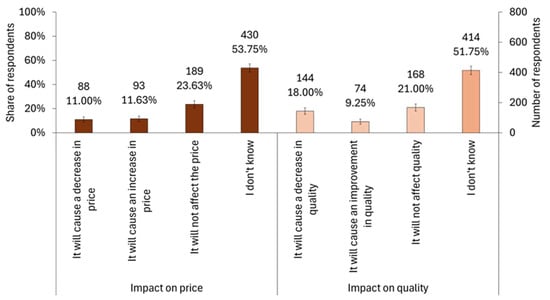
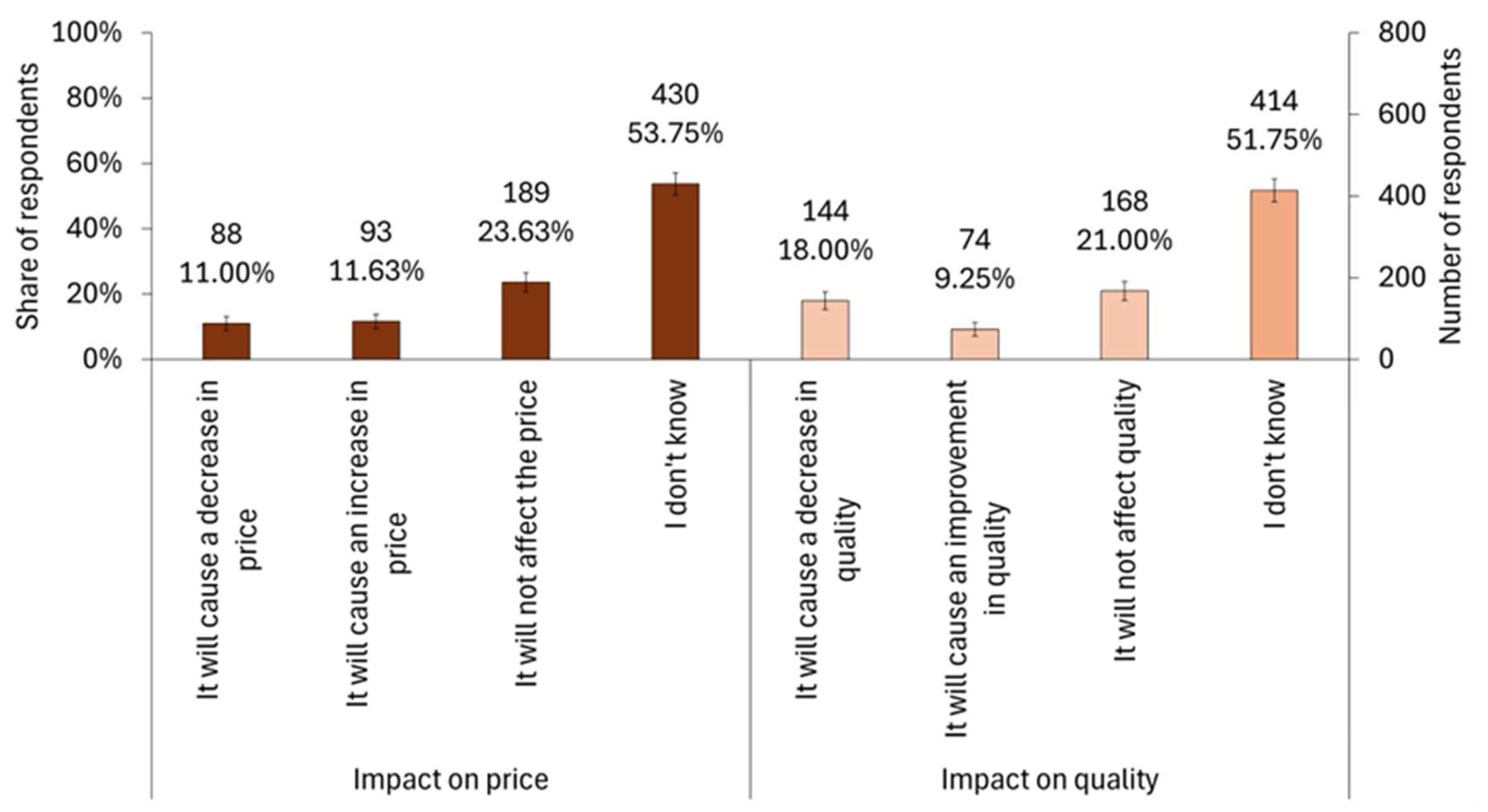
Regarding economic perceptions, the majority of respondents (53.75%) were uncertain about the impact of bio-based fertilisers on agricultural product prices, with 23.63% believing it would have no effect (Figure 7). Among those with an opinion, 11.00% expected a price decrease, while 11.63% anticipated a price increase. When asked about the potential impact on product quality, 51.75% were unsure. Among those who expressed an opinion, 21.00% believed bio-based fertilisers would not affect quality, while concerns about quality deterioration were more prevalent (18.00%) than expectations of improvement (9.25%).
Figure 7.
The perception of respondents on the impact of using fertilisers from waste on the price and quality of agricultural products.
The majority of respondents (66.63%) considered livestock waste (manure) the most suitable raw material for fertiliser production, followed by agricultural plant waste (57.75%). Other waste sources, such as food sector waste (12.50%) and sewage sludge (4.00%), were viewed with less favour, and 2.13% of respondents rejected the idea of using waste materials for fertiliser production (Figure S2). When asked about their willingness to increase the use of bio-based fertilisers, the majority (67.88%) were not interested. Of those who were open to the idea, only 13.38% expressed some level of interest (3.00% “Yes” and 10.38% “Rather yes”) (Figure S3). Transparency in the labelling of bio-based fertilisers is important to farmers, with 61.38% preferring clear labelling indicating that a fertiliser is derived from waste (Figure S4). Other preferred labelling options included a note to the name (20.50%), a specific symbol (17.63%), and packaging colour (16.25%). Only 9.38% of respondents stated that labelling does not matter, emphasising the importance of clear identification.
The assessment of incentives influencing farmers’ choices regarding mineral fertilisers reveals that price (88.35%), NPK content (89.58%), and high efficiency (85.68%) are the most critical factors (Figure S5). Farmers also highly value easy fertiliser application (85.50%), no complicated dosing procedures (81.38%), and fast nutrient release (81.80%), indicating a preference for products that are both effective and convenient to use. Similarly, the absence of contaminants (81.00%), beneficial effects on soil structure (82.93%), and fertiliser form (84.23%) are seen as important aspects, reflecting concerns about soil health and agronomic performance. Other notable factors include availability in local stores (71.63%), the possibility of obtaining subsidies (69.35%), and a beneficial impact on the environment (74.05%), suggesting that while economic and agronomic factors dominate, accessibility and environmental considerations also play a role in decision-making. Additionally, hygienisation (77.35%) and sealed packaging (86.05%) are seen as important, likely due to concerns about product quality and storage stability. Farmers also consider branding elements such as the producer (54.35%), registration number (55.78%), and the quality mark or certification logo (56.98%) on the packaging, though these factors are less decisive compared to technical and economic attributes. The “eco-friendly fertiliser” certificate (31.28%) was among the least influential factors, indicating that while environmental aspects are considered, they are not a primary driver in fertiliser selection.
The assessment of incentives influencing farmers’ choices regarding organic fertilisers highlights that NPK content (63.88%), high efficiency (61.98%), and beneficial effects on soil structure (69.60%) are among the most critical factors (Figure S6). Farmers also value organic matter content (68.43%) and beneficial effects on soil biodiversity (68.70%), reflecting a strong interest in soil health and long-term agronomic benefits. Ease of use is another important consideration, with easy fertiliser application (58.63%), no complicated dosing procedures (56.25%), and fast nutrient release (59.68%) being recognised as significant. Similarly, the absence of contaminants (58.85%), hygienisation (62.88%), and sealed packaging (47.13%) suggest that product safety and quality control play an important role in farmers’ decision-making. Economic and accessibility factors also influence preferences, with price (55.80%), availability in local stores (42.78%), and the possibility of obtaining subsidies (51.90%) being notable considerations. While not as dominant as agronomic and efficiency-related attributes, these factors indicate that cost and market availability are still relevant in fertiliser selection. Environmental benefits are another important driver, with a beneficial effect on the environment (66.50%) and the presence of an “eco-friendly fertiliser” certificate (35.90%) influencing choices. However, certification plays a less decisive role compared to direct agronomic advantages. Branding and regulatory aspects, including the producer (33.38%), product name (28.18%), registration number (32.03%), and quality mark or certification logo (32.45%), were among the least influential factors, suggesting that while they provide assurance, farmers prioritise technical performance over branding elements.
The assessment of incentives influencing farmers’ choices regarding bio-based fertilisers shows that beneficial effects on soil structure (43.50%), organic matter content (41.15%), and biodiversity benefits (42.05%) are among the most critical factors (Figure S7). Farmers also consider the absence of contaminants (40.75%), hygienisation (42.25%), and form (40.20%) important, reflecting concerns about product quality and soil health. Ease of use plays a role, with easy fertiliser application (39.08%), no complicated dosing procedures (38.30%), and fast nutrient release (37.63%) being relevant factors, though slightly less influential compared to other fertiliser types. No restrictions on fertiliser use (39.08%) also suggests a preference for flexibility in application. Economic factors such as price (38.18%), the possibility of obtaining subsidies (36.88%), and availability in local stores (31.73%) appear to be less decisive compared to mineral or organic fertilisers, indicating that financial incentives may not be the primary motivator for adopting bio-based fertilisers. Environmental benefits are recognised, with a beneficial effect on the environment (41.10%) influencing choices, though the “eco-friendly fertiliser” certificate (26.23%) has relatively low importance. This suggests that while farmers acknowledge sustainability aspects, certification alone may not be enough to drive adoption. Branding and regulatory aspects, including the producer (23.93%), product name (19.33%), registration number (27.08%), and quality mark or certification logo (28.48%), are among the least influential factors, reinforcing the idea that practical benefits outweigh brand recognition in decision-making.
The assessment of disincentives influencing farmers’ choices regarding mineral fertilisers highlights price (90.43%) as the most significant barrier, indicating that cost concerns are a primary consideration (Figure S8). Other major drawbacks include high fertiliser transportation costs (75.58%), high application costs (74.28%), and limited availability (67.35%), reflecting logistical and financial challenges. Environmental and agronomic concerns also play a crucial role. Farmers recognise the high risk of leaching (76.68%), risk to the environment (76.13%), and adverse effects on soil structure (74.23%) as key issues, suggesting their awareness of potential long-term soil degradation and pollution risks. Additionally, health risks (81.30%) and the possible presence of contaminants and weed seeds (71.08%) contribute to concerns about safety and product purity. Regulatory constraints, such as restrictive application times (69.40%) and the necessity to provide a grace period (66.48%), further limit flexibility in fertiliser use. Farmers also highlight heterogeneity in composition or form (72.88%) as a drawback, indicating a preference for more standardised and predictable products. Less influential, but still notable, are aesthetic and sensory factors, such as unpleasant smell (53.63%) and unpleasant appearance (46.68%), which may affect user experience but are less decisive compared to economic and environmental concerns.
The assessment of disincentives influencing farmers’ choices regarding organic fertilisers indicates that price (57.45%) and high fertiliser transportation costs (60.40%) are among the most significant barriers, highlighting economic concerns (Figure S9). Similarly, high application costs (60.03%) contribute to financial constraints that may discourage adoption. Farmers also express concerns about NPK content (56.43%), suggesting uncertainty about nutrient consistency and efficiency compared to conventional fertilisers. Additionally, heterogeneity in composition or form (55.30%) and the possible presence of contaminants and weed seeds (62.85%) raise issues related to product quality and reliability. Environmental and agronomic drawbacks include the high risk of leaching (57.38%), risk to the environment (57.65%), and adverse effects on soil structure (53.55%), reflecting worries about nutrient loss and potential negative impacts on soil health. Health and safety concerns are also relevant, with health risk (60.70%) being one of the most cited drawbacks. Regulatory and practical limitations, such as restrictive application time (56.10%), the necessity to provide a grace period (50.95%), and limited fertiliser availability (51.03%), add further constraints on the ease of use. Sensory factors like unpleasant smell (45.95%) and unpleasant appearance (39.25%) are less critical but still noted as potential drawbacks.
The assessment of disincentives influencing farmers’ choices regarding bio-based fertilisers indicates that health risk (51.00%) and risk to the environment (48.28%) are among the most critical concerns, reflecting uncertainties about the safety and ecological impact of these fertilisers (Figure S10). Economic factors such as price (44.18%), high fertiliser transportation costs (45.23%), and high application costs (45.43%) also play a significant role, highlighting cost-related barriers that may hinder widespread adoption. Additionally, limited fertiliser availability (39.83%) suggests that accessibility remains a challenge for many farmers. Concerns regarding NPK content (40.90%), heterogeneity in composition or form (41.38%), and the possible presence of contaminants and weed seeds (44.25%) indicate that product quality and consistency are key issues affecting farmers’ confidence in bio-based fertilisers. Agronomic and environmental drawbacks include adverse effects on soil structure (40.83%), high risk of leaching (42.50%), and restrictive application time (40.23%), which could limit the flexibility and efficiency of fertiliser use. Additionally, the necessity to provide a grace period (39.15%) may add further regulatory and operational constraints. Sensory factors, such as unpleasant smell (36.43%) and unpleasant appearance (31.13%), are noted as minor concerns but could still influence acceptance, particularly in certain farming contexts.
4. Discussion
The demographic structure of respondents is crucial for understanding their perspectives on fertiliser use, as factors such as age, education, and farm size can significantly influence attitudes and decision-making processes. The survey sample primarily consists of middle-aged and older farmers, which is consistent with broader national statistics, which indicate that the majority of Polish farm owners are middle-aged or older, reflecting a generational gap in agricultural engagement. According to data from Statistics Poland (GUS), the average age of Polish farm owners is over 50 years, with a decreasing proportion of younger individuals entering the sector [30]. Regarding gender distribution, the overwhelming majority of respondents were male, with only 11.00% female participants (Table 1). This male dominance aligns with national trends, as Polish agriculture remains a conservative and traditionally male-dominated sector, with women often engaged in supportive or administrative roles rather than farm ownership or management. The survey respondents managed farms of various sizes, with the most common farm size being 20–49.99 hectares, followed by those with 50 hectares or more (Table 1). These figures align with national agricultural trends, where medium-sized farms (10–50 hectares) are the most prevalent, particularly in central and western Poland [30,31]. According to GUS data, the average Polish farm size has been increasing due to structural changes and land consolidation efforts [30]. Additionally, most respondents had extensive experience in agriculture with the largest group farming for 11–20 years, followed by those with 21–30 years and over 30 years (Table 1). This indicates a well-established farming population with significant practical knowledge, which may influence their openness to adopting new fertilisation practices, including the use of bio-derived fertilisers. Moreover, the relatively high percentage of university-educated farmers in the sample suggests a segment of the farming population that may be more receptive to innovative agricultural practices, including sustainable fertilisation methods (Table 1). These demographic characteristics are important in the context of introducing bio-based fertilisers. Older farmers with long-standing agricultural practices tend to be more resistant to change, whereas younger and better-educated farmers may be more open to adopting new fertilisation methods [32,33]. Understanding these dynamics is crucial for designing effective policies and outreach strategies to encourage the adoption of circular economy principles in Polish agriculture.
Several limitations should be considered when interpreting the findings of this study. First, the sampling approach relied on advisor-led recruitment through regional Agricultural Advisory Centres rather than probability-based procedures. As a result, the sample is more reflective of farmers who are engaged with advisory services and may therefore be more commercially active or better informed than the wider farming population, while smaller or less formally connected farms may be under-represented. Second, the survey was conducted between October and December 2021, preceding the substantial fertiliser price volatility, supply chain disturbances, and regulatory changes that occurred from 2022 onwards. While it is not possible to determine whether or to what extent farmer attitudes have changed since 2021, subsequent economic and policy developments may have influenced current perceptions. Third, the results are based on raw, unweighted percentages, and no post-stratification weights (e.g., by region, farm size, or production type) were applied. Given that farm structures vary across voivodeships, this may lead to a slight over- or under-representation of certain farmer groups within the sample. This may introduce bias in aggregated estimates, particularly where the sample composition differs from the actual distribution of farms at the national level. Finally, some broader market patterns, such as continued EU-level dependence on Russian fertiliser imports in 2025, reflect macroeconomic developments outside the timeframe of the survey. These factors provide useful context for understanding the evolving policy landscape but do not directly inform the micro-level decisions captured in the 2021 dataset. For these reasons, the findings should be viewed as representative of the situation at the time of data collection and interpreted as providing a baseline perspective rather than a direct reflection of present-day conditions.
The survey results provide valuable insights into the fertilisation practices of Polish farmers, reflecting their reliance on conventional mineral fertilisers and their limited engagement with alternative or bio-based fertilisation methods. Polish farmers primarily rely on mineral fertilisers, with the most common being nitrogen-based, multicomponent, phosphorus, and potassium fertilisers. This strong reliance on synthetic fertilisers is a common agricultural trend, where productivity-driven farming dominates, and fertiliser application plays a crucial role in sustaining high crop yields [30,34]. The reliance on synthetic fertilisers has been driven by cost-effectiveness, ease of application, and well-established distribution networks. However, the increasing cost of fertilisers, exacerbated by recent market disruptions and geopolitical factors, has made Polish farmers vulnerable to price fluctuations [34,35,36]. The use of organic fertilisers is significantly lower, with only half of farmers incorporating them into their fertilisation strategies. Among organic fertilisers, manure is the most commonly used, followed by liquid manure and slurry. The preference for manure-based fertilisation methods aligns with livestock production systems, where farmers often utilise on-farm organic waste to maintain soil fertility [10,11,12]. Although EU subsidies promote the use of organic inputs, their adoption remains limited, despite their well-documented benefits for soil health and long-term sustainability [16,17]. Farmers identify economic constraints, logistical challenges, and concerns over nutrient variability as key barriers to their wider adoption [26,27]. Bio-based fertilisers remain the least adopted, with more than 80% of respondents indicating that they do not use them at all (Figure 5). The slow uptake of these alternatives may be due to concerns about nutrient variability, contamination risks, and regulatory uncertainties [28,37,38,39]. Farmers’ hesitancy to use bio-based fertilisers reflects broader issues in Poland’s agricultural sector, where trust in alternative fertilisation methods remains low despite increasing discussions around sustainability and circular economy principles [25,40]. These findings suggest that while there is some interest in alternative fertilisation methods, conventional mineral fertilisers continue to dominate due to their proven effectiveness, accessibility, and ease of use. A shift towards more sustainable fertilisation practices may depend on targeted policy measures, financial incentives, and education campaigns to address farmers’ concerns and build confidence in alternative products [28,41].
Survey responses indicate a growing interest among Polish farmers in shifting towards more sustainable fertilisation practices, though adoption remains gradual. More than half of respondents expressed willingness to partially replace NPK mineral fertilisers with organic alternatives; however, only about one-fifth of respondents showed interest in substituting NPK fertilisers with bio-based alternatives, reflecting persistent concerns about product quality, regulatory constraints, and market acceptance [28,41]. The extent to which farmers are ready to adopt more environmentally friendly options varies based on economic and practical considerations. Farmers’ reluctance is influenced by several factors, including regulatory uncertainties, doubts about nutrient efficiency, and concerns about potential contaminants. Additionally, the lack of clear market demand for crops grown using bio-based fertilisers discourages farmers from experimenting with these alternatives. Many respondents indicated that they would only consider switching to organic or bio-based fertilisers if financial incentives or subsidies were provided. Given the high costs of conventional fertilisers and fluctuating prices in the market, farmers remain cautious about making changes that could impact their profitability. Farmers’ decisions regarding fertiliser use are influenced by a complex interplay of economic, agronomic, environmental, and regulatory factors [27,42]. The survey results provide insight into the key determinants that drive Polish farmers’ preferences for mineral, organic, and bio-based fertilisers, reflecting both practical considerations and broader agricultural trends.
Beyond the descriptive findings, the statistical analyses conducted in this study provide additional insights into the factors shaping farmers’ willingness to replace NPK mineral fertilisers with organic and bio-based alternatives. The cross-tabulations revealed that socio-demographic variables such as age, education, farm size, and farming experience do not significantly influence willingness to adopt organic or bio-based fertilisers, as indicated by small and non-significant χ2 values and low Cramer’s V coefficients (Tables S1 and S2). This suggests that the overall patterns of acceptance or reluctance are broadly consistent across different demographic and farm structural groups. McNemar’s test, comparing paired responses about willingness to partially replace mineral fertilisers with organic fertilisers vs. bio-based fertilisers, demonstrates a highly significant difference, confirming that farmers are substantially more willing to partially replace NPK fertilisers with organic alternatives than with bio-based fertilisers. The odds ratio (Table S3) indicates that a respondent is over thirty-eight times more likely to express willingness to replace NPK with organic fertilisers than with bio-based fertilisers. Importantly, the significance and magnitude of these differences suggest that farmers perceive these two categories not as variants of the same concept but as fundamentally different fertilisation strategies, with bio-based fertilisers viewed as carrying greater uncertainty and risk. These findings suggest that farmers more readily accept fertilisation practices perceived as “traditional” or well-established, while innovations derived from waste streams provoke stronger concerns regarding contaminants, nutrient variability, and regulatory compliance. The absence of meaningful demographic predictors in the cross-tabulations further indicates that these concerns are widely shared and not confined to particular farming groups. Therefore, targeted interventions may need to focus less on specific farmer segments and more on systemic issues such as quality assurance, clear regulatory frameworks, and evidence demonstrating the agronomic reliability of bio-based fertilisers.
4.1. Economic Factors: Cost and Availability
Cost is the most decisive factor in fertiliser selection. The survey revealed that more than 88% of respondents prioritise price when choosing mineral fertilisers, highlighting the economic pressure on farmers to optimise input costs. Similarly, more than a half of farmers consider price when selecting organic fertilisers and almost 40% for bio-based fertilisers, though financial concerns appear to be less pronounced for alternative fertilisers (Figures S5–S7). Despite the rising awareness of sustainability issues, farmers prioritise immediate agronomic benefits, reflecting a pattern also observed by Łuczka and Kalinowski [27], who found that cost-effectiveness remains the dominant factor in Polish farmers’ decision-making. In addition to price, availability in local stores is another crucial determinant, cited by 72% of farmers for mineral fertilisers, 43% for organic fertilisers, and 32% for bio-based fertilisers (Figures S5–S7). This indicates that conventional fertilisers remain more accessible, while organic and bio-based alternatives suffer from limited distribution networks. Without a well-established supply chain, farmers are less inclined to experiment with new fertiliser types [27,37,43].
4.2. Agronomic Performance and Ease of Use
Farmers prioritise fertilisers that deliver high efficiency and consistent nutrient content. A total of 90% of respondents highlighted NPK content as a key factor for mineral fertilisers, reinforcing their reliance on well-balanced, predictable nutrient formulations (Figure S5). Similarly, fast nutrient release is an important criterion for most mineral fertiliser users, as quick uptake is essential for optimising crop yields. For organic and bio-based fertilisers, agronomic benefits such as improved soil structure and organic matter content are significant determinants. A total of 70% of respondents valued soil structure improvement in organic fertilisers, while almost half recognised this benefit in bio-based fertilisers (Figures S6 and S7). However, the lower percentage for bio-based fertilisers suggests lingering doubts about their long-term effectiveness. Ease of application is another key determinant, with 86% of farmers preferring easy-to-apply mineral fertilisers, 59% preferring organic fertilisers, and 39% preferring bio-based fertilisers (Figures S5–S7). The relatively lower importance for alternative fertilisers suggests that practical constraints, such as storage and spreading methods, may pose challenges. Farmers are more likely to adopt a fertiliser that fits seamlessly into their existing agricultural practices [42,43].
4.3. Environmental and Health Considerations
While economic and agronomic factors dominate fertiliser choices, environmental sustainability is becoming an increasingly relevant determinant [35,42,44]. A total of 76% of farmers consider the environmental impact a disincentive to using mineral fertilisers, while 58% mention this factor for organic fertilisers and 48% for bio-based fertilisers. When it comes to the possible health risk, 81% consider this aspect for mineral fertilisers, 61% for organic, and 51% for bio-based (Figures S8–S10). The lower percentage for bio-based fertilisers suggests that many farmers may see their ecological benefits or may associate them less with health or pollution risks. Studies by Chojnacka et al. [37] suggest that farmers are particularly cautious about heavy metals and pathogens. Nationally, in 2024, Poland’s Minister of Agriculture and Rural Development introduced a new fertiliser and fertilisation implementation regulation, setting the maximum allowable contamination concentrations for pollutants, including heavy metals like chromium, cadmium, and lead, to improve soil and food safety [45]. This regulation, along with EU directives, may help reduce the prevailing scepticism regarding the safety of fertilisers derived from waste streams.
4.4. Regulatory and Certification Requirements
Farmers value transparent regulatory compliance and certification when choosing fertilisers. A total of 86% of mineral fertiliser users consider sealed packaging important, compared to 47% for organic fertilisers and 37% for bio-based fertilisers (Figures S5–S7). Conventional fertilisers benefit from well-established quality assurance mechanisms, whereas alternative fertilisers still need clearer regulatory frameworks to gain farmer confidence. Polish farmers perceive bio-based fertiliser regulations as complex and unclear, particularly regarding compliance with EU safety standards [25,36,46]. The presence of an “eco-friendly fertiliser” certificate was considered by about one-third of mineral and organic fertiliser users and only about one-fourth of bio-based fertiliser users. The lower interest in certification for bio-based fertilisers suggests that formal sustainability credentials alone may not be enough to increase interest—farmers need tangible proof of agronomic and economic benefits.
4.5. Policy and Market Support
Government incentives and subsidies may play a role in shifting fertiliser preferences. A total of 70% of farmers indicated that access to subsidies influences their choice of mineral fertilisers, while 52% considered this factor for organic fertilisers and 37% for bio-based fertilisers. Without strong financial incentives, bio-based fertilisers struggle to compete with synthetic alternatives, especially given their higher transportation and application costs [13,47]. Policies aiming to support alternative fertilisers may benefit from including financial incentives, considering the strong position of synthetic fertilisers. Market dynamics also shape fertiliser choices. Farmers are sensitive to public perception and market demand, and attitudes towards bio-based fertilisers play a crucial role in shaping adoption rates. Research by Grzywińska-Rąpca et al. [40] suggests that Polish consumers still hesitate in choosing food grown with alternative fertilisers, despite scientific evidence indicating their safety and environmental benefits, and highlights the need to differentiate marketing strategies according to the demographic and social profile of consumers. Our survey results support this observation, as farmers cited concerns about market acceptance as a barrier to adopting bio-based fertilisers. However, some studies suggest that younger, better-educated farmers may be more open to alternative fertilisers, a trend also reflected in our survey, where respondents with higher education levels showed greater interest in organic and bio-based fertilisation practices [32,33]. This suggests that targeted education programmes and awareness campaigns could help shift perceptions and increase the acceptance of sustainable fertilisation methods.
The transition to sustainable fertilisation in Poland must align with EU and national regulations that set safety, quality, and environmental standards. The EU Fertilising Products Regulation (2019/1009) [15], in force since 2022, expands market access for organic and bio-derived fertilisers by establishing strict contaminant limits and hygiene standards. It allows fertilisers from sewage sludge, manure, and bio-waste to be CE-marked if they meet these criteria, supporting circular economy principles, as an alternative to synthetic fertilisers. Several EU policies promote sustainable fertilisation. The EU Circular Economy Action Plan [9] encourages nutrient recycling, while the Farm to Fork Strategy [7], a core pillar of the European Green Deal [8], aims to cut nutrient losses by 50% by 2030, leading to a 20% reduction in synthetic fertiliser use. Despite financial support from the Common Agricultural Policy (CAP) (2023–2027) [48] and environmental directives like the Nitrates Directive (91/676/EEC) [49], bio-based fertiliser adoption remains low due to regulatory uncertainties and agronomic concerns.
At the national level, Poland’s Act on Fertilisers and Fertilisation [50] regulates fertiliser production and use, while the Regulation of the Minister of Agriculture and Rural Development [45] imposes heavy metal limits on bio-derived fertilisers to prevent soil contamination. However, farmers remain hesitant due to concerns over contaminants and regulatory complexity, as confirmed by the survey results. While 56% of respondents are open to partially replacing mineral fertilisers (Figure 6), actual adoption is low, reflecting a gap between policy goals and farm-level implementation [25,36,46]. However, note that the survey was conducted between October and December 2021, before the subsequent market and policy disruptions that affected fertiliser prices and supply in 2022–2024. Upcoming policies like the EU Soil Strategy for 2030 (COM/2021/699) [14] aim to enhance soil fertility and biodiversity, which may, in the longer term, contribute to increased interest in bio-based fertilisers. However, bridging the gap between policy ambitions and practical challenges requires stronger quality control, better farmer education, and increased financial incentives. Ensuring alignment between EU regulations, national policies, and farm practices may be important for supporting Poland’s long-term agricultural sustainability.
The survey results highlight that economic factors, agronomic performance, environmental considerations, and regulatory clarity all play significant roles in shaping fertiliser use. Mineral fertilisers remain dominant due to their availability, affordability, and ease of use, while organic fertilisers are gaining traction due to their perceived soil health benefits. Bio-based fertilisers face the greatest barriers, primarily due to concerns over contaminants, inconsistent nutrient content, and limited market presence. The results point to several areas that could potentially support a transition towards more sustainable fertilisation practices, should policymakers or market actors wish to pursue them. Enhancing the economic attractiveness of bio-based fertilisers through subsidies, tax incentives, and lower production costs may help encourage adoption. Strengthening quality control measures and certification standards can help build trust in alternative fertilisers by ensuring their safety and effectiveness. Expanding research and field trials will provide tangible evidence of the long-term agronomic benefits of bio-based fertilisers, addressing farmers’ concerns about their reliability. Additionally, improving logistics and supply chains is crucial to ensuring that farmers have easy access to high-quality alternative fertilisers. Finally, raising consumer awareness about the sustainability benefits of crops grown with circular economy-based fertilisers may increase market demand, which in turn could encourage more farmers to integrate these solutions into their agricultural practices. Overall, while mineral fertilisers remain the dominant choice, this study suggests that a well-structured approach, including financial support, quality assurances, and improved market access, may contribute to progress toward a more circular and environmentally sustainable fertiliser system in Poland.
5. Conclusions
This study examined farmers’ awareness, attitudes, and current practices regarding mineral, organic, and bio-based fertilisers in Poland, with the aim of identifying the main factors shaping fertiliser choices and potential pathways for supporting more sustainable nutrient management. The results indicate that mineral fertilisers remain the predominant option due to their reliability, availability, and ease of use, while organic fertilisers are moderately accepted, particularly where farmers have access to livestock-based resources. In contrast, bio-based fertilisers are used by only a small minority of respondents, reflecting limited familiarity, concerns about product quality and contaminants, and uncertainty about market acceptance.
Although more than half of farmers declared some willingness to partially replace NPK fertilisers with organic alternatives, interest in bio-based fertilisers was substantially lower. The inferential analyses confirmed that respondents were significantly more inclined to consider organic fertilisers than bio-based products, and no strong demographic predictors of willingness were identified. This suggests that reluctance towards bio-based fertilisers is widespread rather than confined to specific groups. Farmers’ stated preferences also mirror the incentives and disincentives identified in the survey: across all fertiliser types, economic factors, agronomic performance, environmental considerations, and regulatory clarity were consistently noted as influential.
The findings highlight several areas that may merit attention from policymakers, advisory bodies, and market actors. For example, clearer regulatory guidance, transparent product information, and consistent quality standards may help address concerns about safety and heterogeneity in bio-based fertilisers. Similarly, awareness-raising and advisory support could contribute to improving farmers’ confidence in newer fertiliser categories, particularly where the benefits are less familiar or harder to observe directly. As farmers frequently indicated cost-related barriers, financial instruments or incentives could also play a role in reducing perceived risks associated with trying alternative products. However, the effectiveness of such measures would depend on broader developments in supply chains, product availability, and market conditions.
It is important to interpret these results in light of this study’s limitations. The data reflect farmers’ perceptions in late 2021, prior to the fertiliser price shocks and regulatory changes that occurred from 2022 onwards, which may have influenced attitudes since that time. The sampling approach relied on advisor-led recruitment rather than probabilistic sampling, and the results are based on unweighted shares. Therefore, the findings should be considered indicative of patterns observed within the surveyed group rather than statistically representative of the entire Polish farming population.
Future research could build on this work by examining regional and sector-specific differences in more detail, exploring how evolving market and policy conditions shape fertiliser choices, and assessing the long-term agronomic outcomes of bio-based fertiliser use through field trials. A better understanding of consumer perceptions and value chain dynamics may also help clarify the broader economic context influencing farmers’ decisions. Overall, this study provides a baseline perspective on the behavioural and structural factors that influence fertiliser practices in Poland and offers insights that may be useful for designing context-appropriate measures supporting sustainable nutrient management.
Supplementary Materials
The following supporting information can be downloaded at https://www.mdpi.com/article/10.3390/su18010138/s1, Figure S1. Share of respondents in individual voivodeships. Figure S2. Preferred type of waste as raw material for production of fertilisers. Figure S3. Interest in increasing the use of bio-based fertilisers on respondents’ farms. Figure S4. Preferred form of labelling for bio-based fertilisers. Figure S5. Assessment of incentives in context of using mineral fertilisers. Figure S6. Assessment of incentives in context of using organic fertilisers. Figure S7. Assessment of incentives in context of using bio-based fertilisers. Figure S8. Assessment of disincentives in context of using mineral fertilisers. Figure S9. Assessment of disincentives in context of using organic fertilisers. Figure S10. Assessment of disincentives in context of using bio-based fertilisers. Table S1. Associations between willingness to adopt organic fertilisers and farmer characteristics (χ2 tests and Cramer’s V). Table S2. Associations between willingness to adopt bio-based fertilisers and farmer characteristics (χ2 tests and Cramer’s V). Table S3. McNemar’s test comparing willingness to replace NPK with organic fertilisers versus bio-based fertilisers. Selected questions from the survey “Optimising organic fertilisers in agriculture” analysed in this study.
Author Contributions
Conceptualisation, M.S. Methodology, M.S. Validation, M.S. Formal analysis, M.A. and P.M. Investigation, M.S., M.A. and P.M. Data curation, M.A. Writing—original draft, M.A. and M.S. Writing—review and editing, M.A. and M.S. Visualisation, M.A. Supervision, M.S. Project administration, M.S. Funding acquisition, M.S. All authors have read and agreed to the published version of the manuscript.
Funding
This research was funded by the European Union’s Horizon 2020 research and innovation programme under grant agreement No. 818309 (LEX4BIO) and Subvention of the Division of Biogenic Raw Materials in MEERI PAS.
Institutional Review Board Statement
Ethical review and approval were waived for this study due to the nature of the study, which involved an anonymous survey addressing professional practices within the agricultural sector and was conducted in line with institutional ethical guidelines applicable to non-interventional social research.
Informed Consent Statement
Informed consent was obtained from all subjects involved in the study.
Data Availability Statement
The data presented in this study are available on request from the corresponding author.
Conflicts of Interest
The authors declare no conflicts of interest.
References
- Barman, A.; Das, R.; De, P.K. Impact of COVID-19 in Food Supply Chain: Disruptions and Recovery Strategy. Curr. Res. Behav. Sci. 2021, 2, 100017. [Google Scholar] [CrossRef] [Scilit] [PubMed]
- Jia, N.; Xia, Z.; Li, Y.; Yu, X.; Wu, X.; Li, Y.; Su, R.; Wang, M.; Chen, R.; Liu, J. The Russia-Ukraine War Reduced Food Production and Exports with a Disparate Geographical Impact Worldwide. Commun. Earth Environ. 2024, 5, 765. [Google Scholar] [CrossRef] [Scilit]
- Jagtap, S.; Trollman, H.; Trollman, F.; Garcia-Garcia, G.; Parra-López, C.; Duong, L.; Martindale, W.; Munekata, P.E.S.; Lorenzo, J.M.; Hdaifeh, A.; et al. The Russia-Ukraine Conflict: Its Implications for the Global Food Supply Chains. Foods 2022, 11, 2098. [Google Scholar] [CrossRef] [Scilit] [PubMed]
- Ardra, S.; Barua, M.K. Halving Food Waste Generation by 2030: The Challenges and Strategies of Monitoring UN Sustainable Development Goal Target 12.3. J. Clean. Prod. 2022, 380, 135042. [Google Scholar] [CrossRef] [Scilit]
- High Level Panel of Experts. Food Security and Nutrition: Building a Global Narrative Towards 2030; Food and Agriculture Organization: Rome, Italy, 2020. [Google Scholar]
- United Nations. World Population Prospects 2019; United Nations: New York, NY, USA, 2019. [Google Scholar]
- The European Commission. A Farm to Fork Strategy: For a Fair, Healthy and Environmentally-Friendly Food System (COM No. 381 2020 Final); European Commission: Brussels, Belgium, 2020; Volume 381. [Google Scholar]
- The European Commission. The European Green Deal. Communication from the European Commission. COM(2019) 640 Final; European Commission: Brussels, Belgium, 2019. [Google Scholar]
- The European Commission. Communication from the Commission. Circular Economy Action Plan for a Cleaner and More Competitive Europe (COM No. 98, 2020); European Commission: Brussels, Belgium, 2020; Volume 98. [Google Scholar]
- Dróżdż, D.; Wystalska, K.; Malińska, K.; Grosser, A.; Grobelak, A.; Kacprzak, M. Management of Poultry Manure in Poland—Current State and Future Perspectives. J. Environ. Manag. 2020, 264, 110327. [Google Scholar] [CrossRef] [Scilit]
- Dadrasnia, A.; de Bona Muñoz, I.; Yáñez, E.H.; Lamkaddam, I.U.; Mora, M.; Ponsá, S.; Ahmed, M.; Argelaguet, L.L.; Williams, P.M.; Oatley-Radcliffe, D.L. Sustainable Nutrient Recovery from Animal Manure: A Review of Current Best Practice Technology and the Potential for Freeze Concentration. J. Clean. Prod. 2021, 315, 128106. [Google Scholar] [CrossRef] [Scilit]
- Kopiński, J.; Wrzaszcz, W. Management of Natural Fertilization in Poland. Ann. Polish Assoc. Agric. Agribus. Econ. 2020, 22, 80–87. [Google Scholar] [CrossRef] [Scilit]
- De Rosa, D.; Biala, J.; Nguyen, T.H.; Mitchell, E.; Friedl, J.; Scheer, C.; Grace, P.R.; Rowlings, D.W. Environmental and Economic Trade-offs of Using Composted or Stockpiled Manure as Partial Substitute for Synthetic Fertilizer. J. Environ. Qual. 2022, 51, 589–601. [Google Scholar] [CrossRef] [Scilit]
- The European Commission. Communication from the Commission to the European Parliament the Council the European Economic and Social Committee and the Committee of the Regions on EUSoil Strategy for 2030—Reaping the Benefits of Healthy Soils for People, Food, Nature and Climate (COM/2021/699 Final). 2021. Available online: https://environment.ec.europa.eu/topics/soil-health/soil-strategy-2030_en (accessed on 23 November 2025).
- The European Commission. Regulation (EU) 2019/1009 of the European Parliament and of the Council of 5 June 2019 Laying Down Rules on the Making Available on the Market of EU Fertilising Products and Amending Regulations (EC) No 1069/2009 and (EC) No 1107/2009 and Repealing Regulation (EC) No 2003/2003. 2019. Available online: https://eur-lex.europa.eu/eli/reg/2019/1009/oj/eng (accessed on 23 November 2025).
- Kremmydas, D.; Beber, C.; Baldoni, E.; Ciaian, P.; Fellmann, T.; Gocht, A.; Hristov, J.; Pignotti, D.; Vicario, D.R.; Stepanyan, D.; et al. The EU Target for Organic Farming: Potential Economic and Environmental Impacts of Two Alternative Pathways. Appl. Econ. Perspect. Policy 2024, 2, 602–623. [Google Scholar] [CrossRef] [Scilit]
- Kociszewski, K. Perspectives of Polish Organic Farming Development in the Aspect of the European Green Deal. Ekon. Environ. 2022, 81, 154–167. [Google Scholar] [CrossRef] [Scilit]
- Eurostat. EU Trade with Russia—Latest Developments. Available online: https://ec.europa.eu/eurostat/statistics-explained/index.php?title=EU_trade_with_Russia_-_latest_developments (accessed on 23 November 2025).
- Garmendia-Lemus, S.; Moshkin, E.; Hung, Y.; Tack, J.; Buysse, J. European Farmers’ Perceptions and Intentions to Use Bio-Based Fertilisers: Insights from the Theory of Planned Behaviour and Perceived Utility. J. Clean. Prod. 2024, 434, 139755. [Google Scholar] [CrossRef] [Scilit]
- Case, S.D.C.; Oelofse, M.; Hou, Y.; Oenema, O.; Jensen, L.S. Farmer Perceptions and Use of Organic Waste Products as Fertilisers—A Survey Study of Potential Benefits and Barriers. Agric. Syst. 2017, 151, 84–95. [Google Scholar] [CrossRef] [Scilit]
- Chen, X.; Zeng, D.; Xu, Y.; Fan, X. Perceptions, Risk Attitude and Organic Fertilizer Investment: Evidence from Rice and Banana Farmers in Guangxi, China. Sustainability 2018, 10, 3715. [Google Scholar] [CrossRef] [Scilit]
- Pampuro, N.; Caffaro, F.; Cavallo, E. Reuse of Animal Manure: A Case Study on Stakeholders’ Perceptions about Pelletized Compost in Northwestern Italy. Sustainability 2018, 10, 2028. [Google Scholar] [CrossRef] [Scilit]
- Dahlin, J.; Nelles, M.; Herbes, C. Biogas Digestate Management: Evaluating the Attitudes and Perceptions of German Gardeners towards Digestate-Based Soil Amendments. Resour. Conserv. Recycl. 2017, 118, 27–38. [Google Scholar] [CrossRef] [Scilit]
- Rashid, M.M.; Kattou’a, M.G.; Al-Khatib, I.A.; Sato, C. Farmers’ Attitude toward Treated Sludge Use in the Villages of West Bank, Palestine. Environ. Monit. Assess. 2017, 189, 353. [Google Scholar] [CrossRef] [Scilit]
- Smol, M. Transition to Circular Economy in the Fertilizer Sector—Analysis of Recommended Directions and End-Users’ Perception of Waste-Based Products in Poland. Energies 2021, 14, 4312. [Google Scholar] [CrossRef] [Scilit]
- Eti, H.S. The Effects of Perceptions of Economic Sustainability and Barriers on Organic Farming Implementation. Sustainability 2025, 17, 786. [Google Scholar] [CrossRef] [Scilit]
- Łuczka, W.; Kalinowski, S. Barriers to the Development of Organic Farming: A Polish Case Study. Agriculture 2020, 10, 536. [Google Scholar] [CrossRef] [Scilit]
- Aghabeygi, M.; Strauss, V.; Paul, C.; Helming, K. Barriers of Adopting Sustainable Soil Management Practices for Organic and Conventional Farming Systems. Discov. Soil 2024, 1, 11. [Google Scholar] [CrossRef] [Scilit]
- Clerino, P.; Fargue-Lelièvre, A.; Meynard, J.-M. Stakeholder’s Practices for the Sustainability Assessment of Professional Urban Agriculture Reveal Numerous Original Criteria and Indicators. Agron. Sustain. Dev. 2023, 43, 3. [Google Scholar] [CrossRef] [Scilit]
- Statistics Poland. Statistical Yearbook of Agriculture; Statistics Poland: Warsaw, Poland, 2024.
- Statistical Office in Białystok. Green Economy Indicators in Poland 2024; Statistical Office in Białystok: Warsaw, Poland; Białystok, Poland, 2024.
- Conway, S.F.; McDonagh, J.; Farrell, M.; Kinsella, A. Going against the Grain: Unravelling the Habitus of Older Farmers to Help Facilitate Generational Renewal in Agriculture. Sociol. Ruralis 2021, 61, 602–622. [Google Scholar] [CrossRef] [Scilit]
- Ofosu-Ampong, K.; Abera, W.; Müller, A.; Adjei-Nsiah, S.; Boateng, R.; Acheampong, B. Framing Behaviour Change for Sustainable Agriculture: Themes, Approaches, and Future Directions. Farming Syst. 2025, 3, 100123. [Google Scholar] [CrossRef] [Scilit]
- Piwowar, A. Consumption of Mineral Fertilizers in the Polish Agriculture—Trends and Directions of Changes. Agric. Res. 2022, 11, 477–487. [Google Scholar] [CrossRef] [Scilit]
- Kowalska, A.; Hałka, M.; Budzyńska, A.; Kicia, M.; Terpiłowski, K. Fertilizer Price Surge in Poland and Beyond: Seeking the Way Forward towards Sustainable Development. Sustainability 2024, 16, 6943. [Google Scholar] [CrossRef] [Scilit]
- Pawłowski, K.P.; Sołtysiak, G. The Potential Impact of the European Green Deal on Farm Production in Poland. Sustainability 2024, 16, 11080. [Google Scholar] [CrossRef] [Scilit]
- Chojnacka, K.; Moustakas, K.; Witek-Krowiak, A. Bio-Based Fertilizers: A Practical Approach towards Circular Economy. Bioresour. Technol. 2020, 295, 122223. [Google Scholar] [CrossRef] [Scilit]
- Kacprzak, M.; Kupich, I.; Jasinska, A.; Fijalkowski, K. Bio-Based Waste’ Substrates for Degraded Soil Improvement—Advantages and Challenges in European Context. Energies 2022, 15, 385. [Google Scholar] [CrossRef] [Scilit]
- Kurniawati, A.; Stankovics, P.; Hilmi, Y.S.; Toth, G.; Smol, M.; Toth, Z. Understanding the Future of Bio-Based Fertilisers: The EU’s Policy and Implementation. Sustain. Chem. Clim. Action 2023, 3, 100033. [Google Scholar] [CrossRef] [Scilit]
- Grzywińska-Rąpca, M.; Grzybowska-Brzezińska, M.; Jakubowska, D.; Banach, J.K. The Perception of Organic Food Characteristics and the Demographic and Social Profile of Consumers: A Study of the Polish Market. Foods 2025, 14, 308. [Google Scholar] [CrossRef] [Scilit]
- Wieliczko, B.; Floriańczyk, Z. Priorities for Research on Sustainable Agriculture: The Case of Poland. Energies 2021, 15, 257. [Google Scholar] [CrossRef] [Scilit]
- Wąs, A.; Malak-Rawlikowska, A.; Zavalloni, M.; Viaggi, D.; Kobus, P.; Sulewski, P. In Search of Factors Determining the Participation of Farmers in Agri-Environmental Schemes—Does Only Money Matter in Poland? Land Use Policy 2021, 101, 105190. [Google Scholar] [CrossRef] [Scilit]
- Gebska, M.; Grontkowska, A.; Swiderek, W.; Golebiewska, B. Farmer Awareness and Implementation of Sustainable Agriculture Practices in Different Types of Farms in Poland. Sustainability 2020, 12, 8022. [Google Scholar] [CrossRef] [Scilit]
- Barquet, K.; Järnberg, L.; Rosemarin, A.; Macura, B. Identifying Barriers and Opportunities for a Circular Phosphorus Economy in the Baltic Sea Region. Water Res. 2020, 171, 115433. [Google Scholar] [CrossRef] [Scilit]
- Ministry of Agriculture and Rural Development. Regulation of the Minister of Agriculture and Rural Development of 18 June 2024 Regarding the Implementation of Certain Provisions of the Act on Fertilizers and Fertilization; Department of the Official Journals and Consolidated Texts: Warsaw, Poland, 2024.
- Płonka, A.R. Knowledge of Basic Production Safety Standards and Rules of Good Agricultural Practice in Opinions of Agricultural Owners. Acta Sci. Pol. Oeconomia 2019, 18, 65–72. [Google Scholar] [CrossRef] [Scilit]
- Kurniawati, A.; Toth, G.; Ylivainio, K.; Toth, Z. Opportunities and Challenges of Bio-Based Fertilizers Utilization for Improving Soil Health. Org. Agric. 2023, 13, 335–350. [Google Scholar] [CrossRef] [Scilit]
- The European Parliament and of the Council. Commission Implementing Regulation (EU) 2022/1173 of 31 May 2022 Laying Down Rules for the Application of Regulation (EU) 2021/2116 of the European Parliament and of the Council with Regard to the Integrated Administration and Control System in the Common Agricultural Policy; Official Journal of the European Communities: Luxembourg, 2022. [Google Scholar]
- The European Council. Council Directive 91/676/EEC of 12 December 1991 Concerning the Protection of Waters Against Pollution Caused by Nitrates from Agricultural Sources. 1991. Available online: https://eur-lex.europa.eu/eli/dir/1991/676/oj/eng (accessed on 23 November 2025).
- Ministry of Agriculture and Rural Development. Act of 10 July 2007 on Fertilizers and Fertilization; Department of the Official Journals and Consolidated Texts: Warsaw, Poland, 2007.

Disclaimer/Publisher’s Note: The statements, opinions and data contained in all publications are solely those of the individual author(s) and contributor(s) and not of MDPI and/or the editor(s). MDPI and/or the editor(s) disclaim responsibility for any injury to people or property resulting from any ideas, methods, instructions or products referred to in the content. |
© 2025 by the authors. Licensee MDPI, Basel, Switzerland. This article is an open access article distributed under the terms and conditions of the Creative Commons Attribution (CC BY) license.