Article

Disability-Friendly Hospitality Services as a Catalyst for Empowering Inclusive Tourism in Indonesia


by
Dian Yulie Reindrawati
1,*,
Upik Dyah Eka Noviyanti
1,
Azila Azmi
2 and
Dyah Ayu Wiranti
3
1
Faculty of Vocational Studies, Universitas Airlangga, Surabaya 60115, Indonesia
2
Faculty of Hotel and Tourism Management, Universiti Teknologi MARA Cawangan Pulau Pinang, Permatang Pauh 13500, Malaysia
3
Faculty of Social and Political Sciences, Universitas Airlangga, Surabaya 60115, Indonesia
*
Author to whom correspondence should be addressed.
Sustainability 2025, 17(9), 3785; https://doi.org/10.3390/su17093785
Submission received: 9 March 2025 / Revised: 14 April 2025 / Accepted: 17 April 2025 / Published: 23 April 2025

Abstract

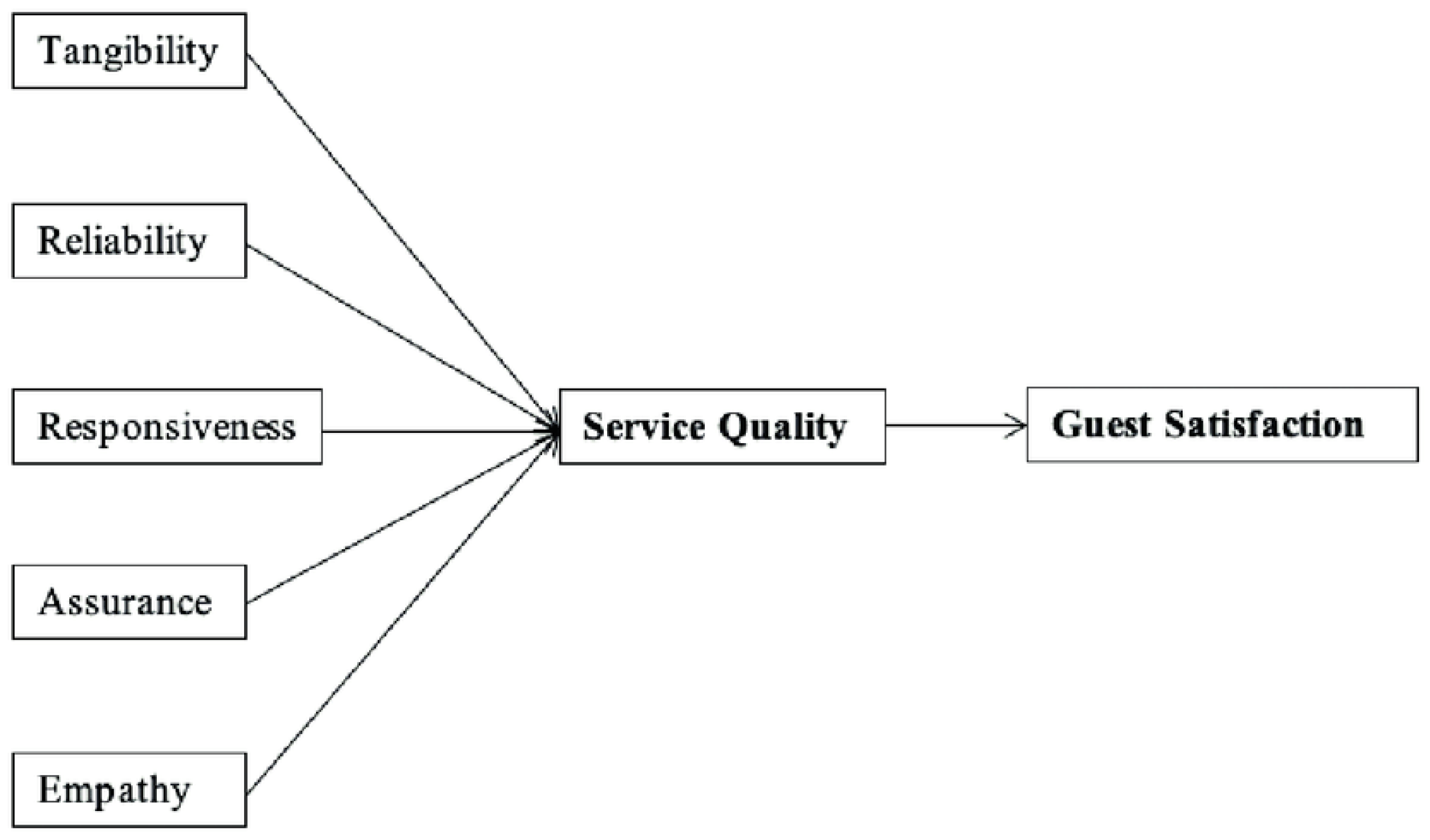
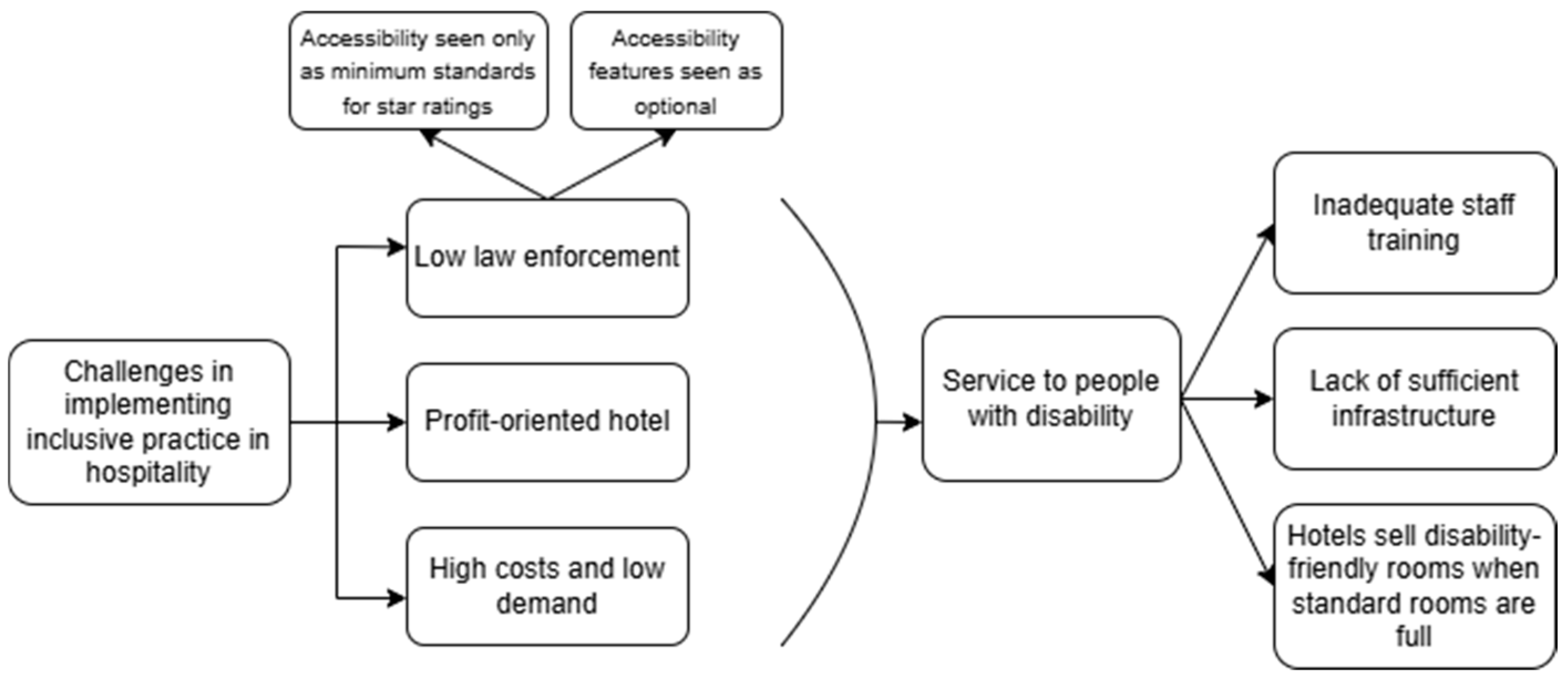
Inclusive tourism is designed to ensure accessibility for all travelers, including individuals with disabilities, and the concept has been garnering increasing attention recently. Previous scholars have explored the experiences of disabled tourists, but this study shifts the focus to hospitality providers by examining their role in delivering inclusive services. Significant implementation gaps persist despite the existence of policies promoting inclusivity, and the situation shows the need to understand how the hospitality sector perceives and addresses accessibility challenges. Therefore, this study aimed to investigate accessibility within the Indonesian hospitality sector by analyzing key challenges related to infrastructure, service quality, and industry commitment. The service quality model developed by Parasuraman et al. was applied to assess gaps in tangibility, responsiveness, and empathy through qualitative methods, including stakeholder interviews and observational analyses. Moreover, a specialized framework developed by Stonesifer and Kim was incorporated to enhance hotel experiences for guests with disabilities. The results showed that accessibility remained a secondary concern, often overshadowed by cost considerations, infrastructure limitations, and the weak enforcement of relevant standards. Several hospitality providers prioritize minimal legal compliance over proactive accessibility improvements. It was also observed that limited awareness, inadequate staff training, and financial constraints further widened the gap between policy and practice. Furthermore, weak enforcement mechanisms hindered the establishment of consistent accessibility standards. This study contributes to the discourse on inclusive tourism by identifying critical gaps and emphasizing the need for stronger collaboration, policy reinforcement, and industry engagement. Addressing these challenges can foster a more inclusive hospitality sector that benefits all tourists. The identification of areas for improvement also provides valuable insights for policymakers and industry stakeholders aiming to enhance accessibility standards in the Indonesian tourism sector.
Keywords: inclusive tourism; disability-friendly hospitality services; accessibility; sustainable tourism; tourism inclusive tourism; disability-friendly hospitality services; accessibility; sustainable tourism; tourism