Article

Elevator Selection Methodology for Existing Residential Buildings Oriented Toward Living Quality Improvement


School of Architecture and Urban Planning, Beijing University of Civil Engineering and Architecture, Beijing 100044, China
*
Author to whom correspondence should be addressed.
Sustainability 2025, 17(7), 3225; https://doi.org/10.3390/su17073225
Submission received: 25 February 2025 / Revised: 28 March 2025 / Accepted: 2 April 2025 / Published: 4 April 2025
(This article belongs to the Special Issue Healthy Aging and Sustainable Development Goals)

Abstract

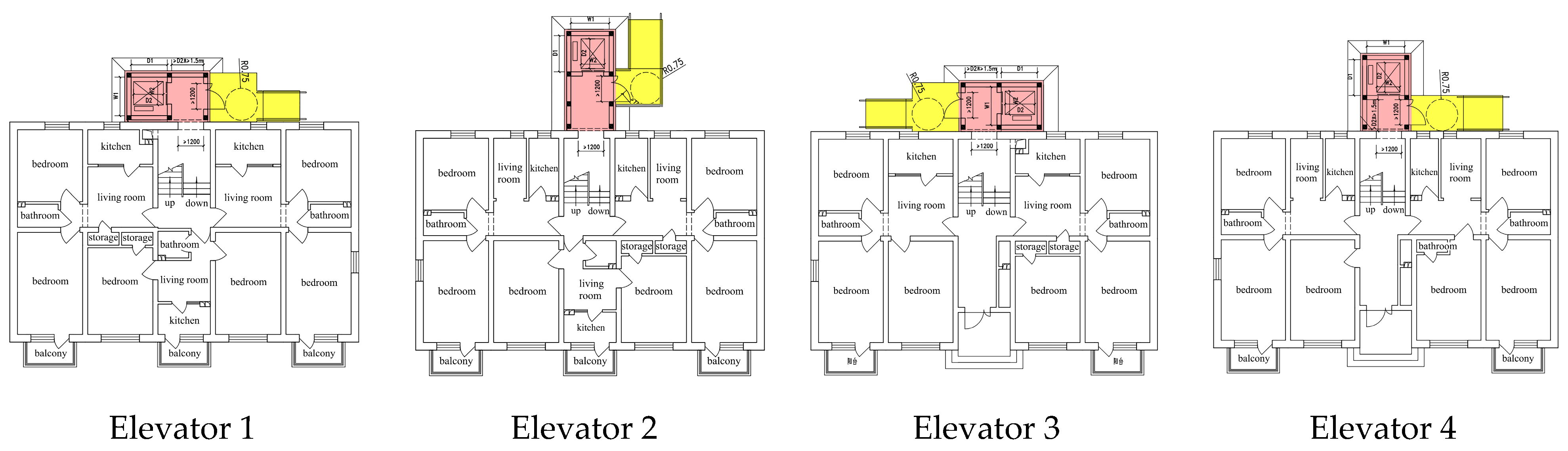
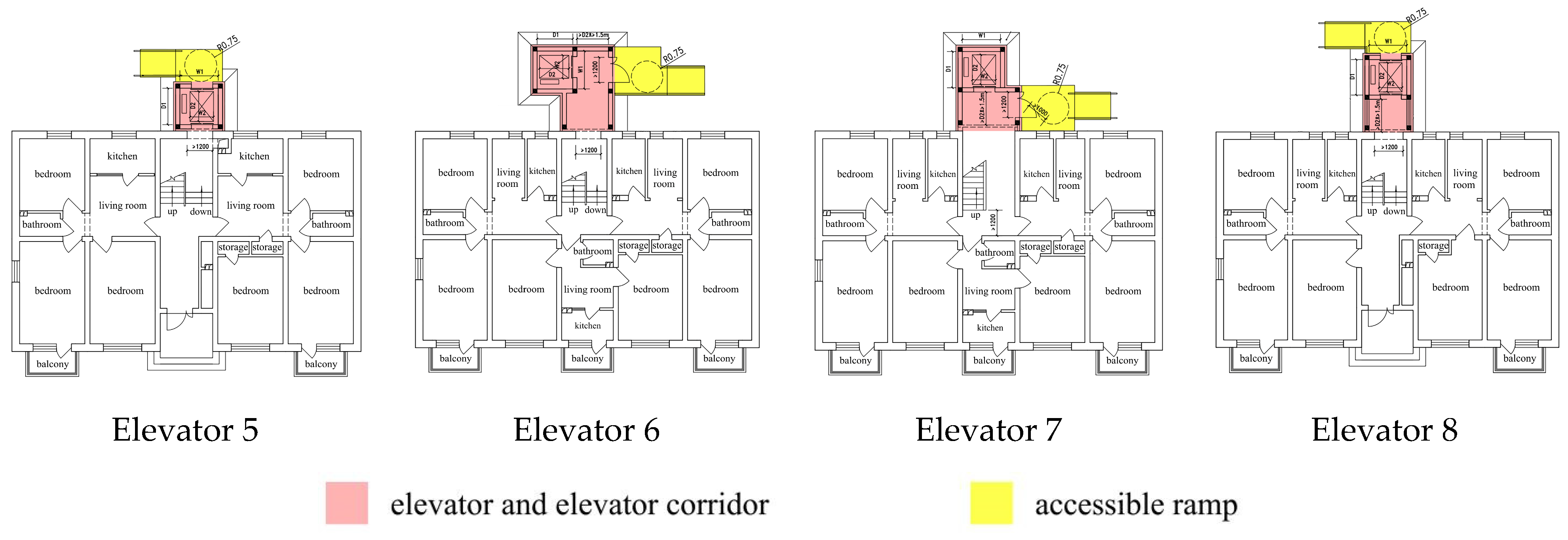
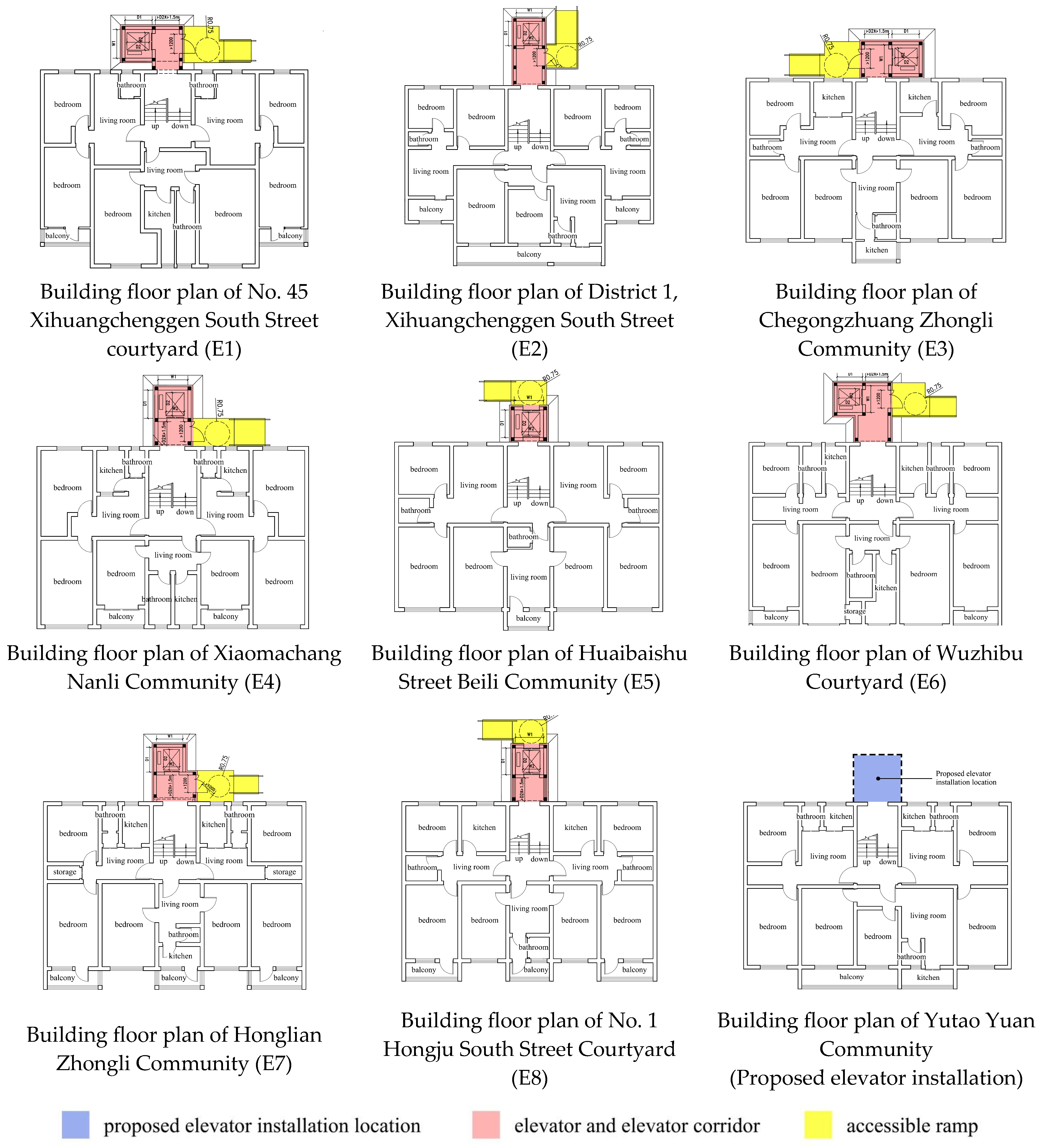
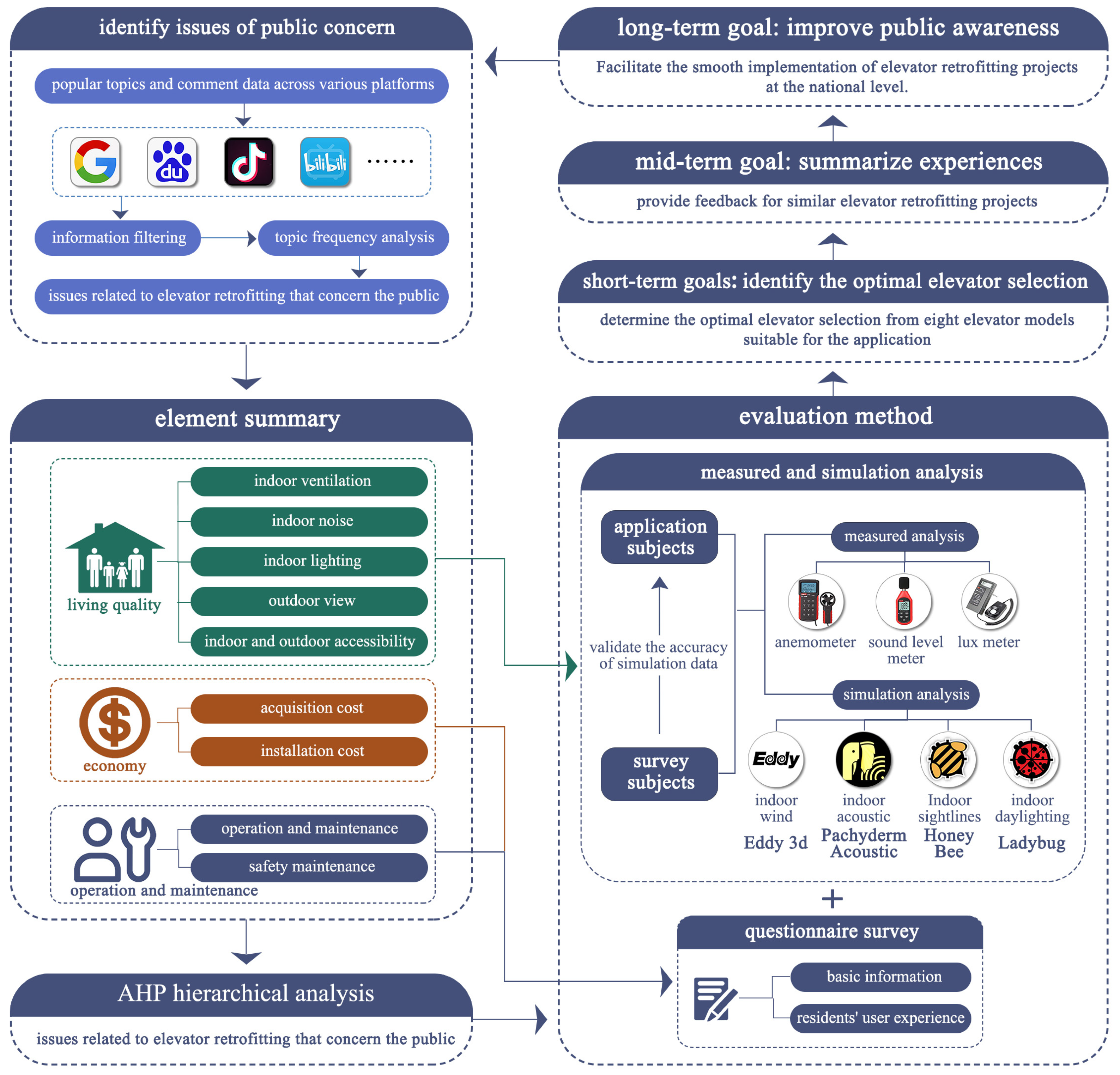
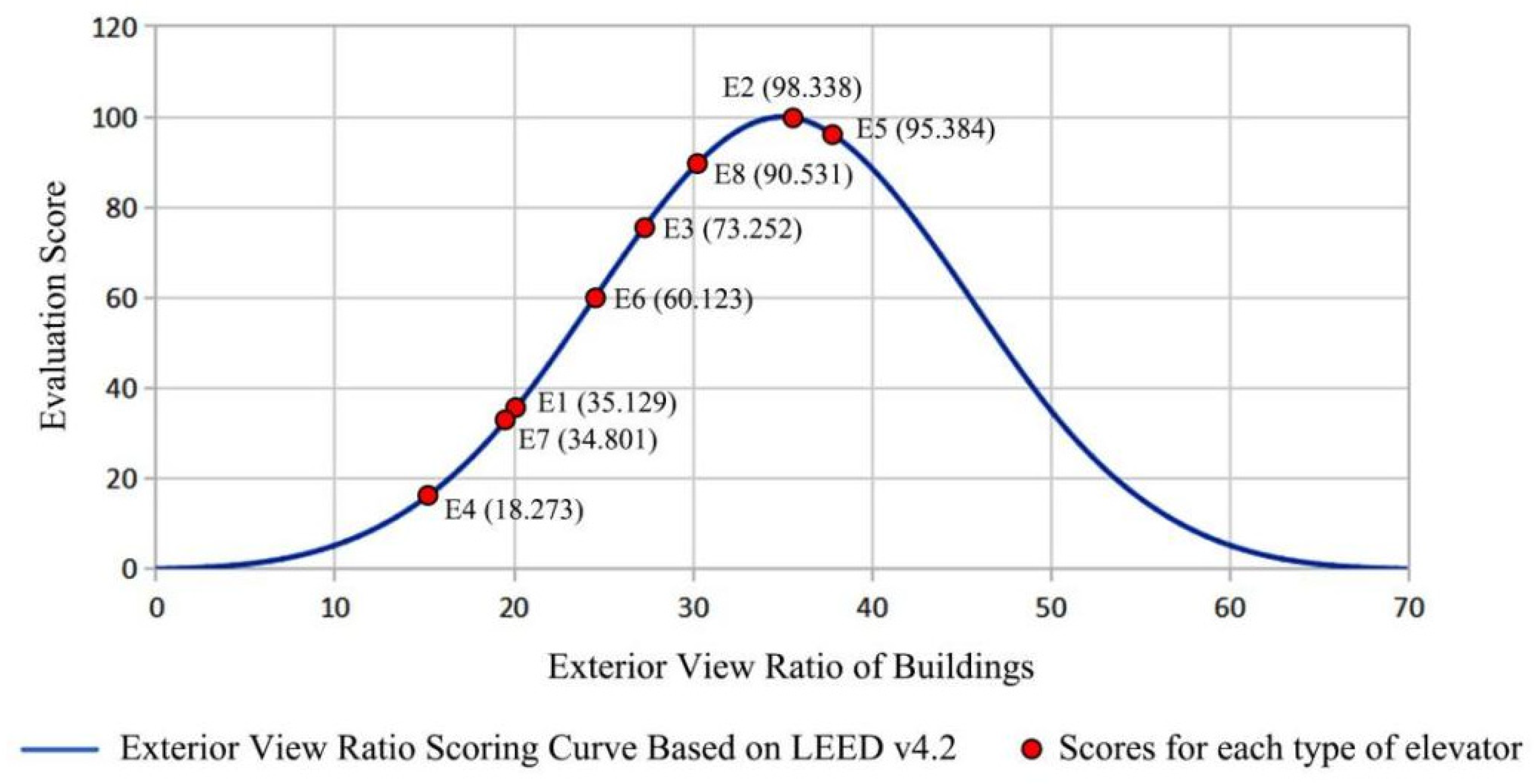
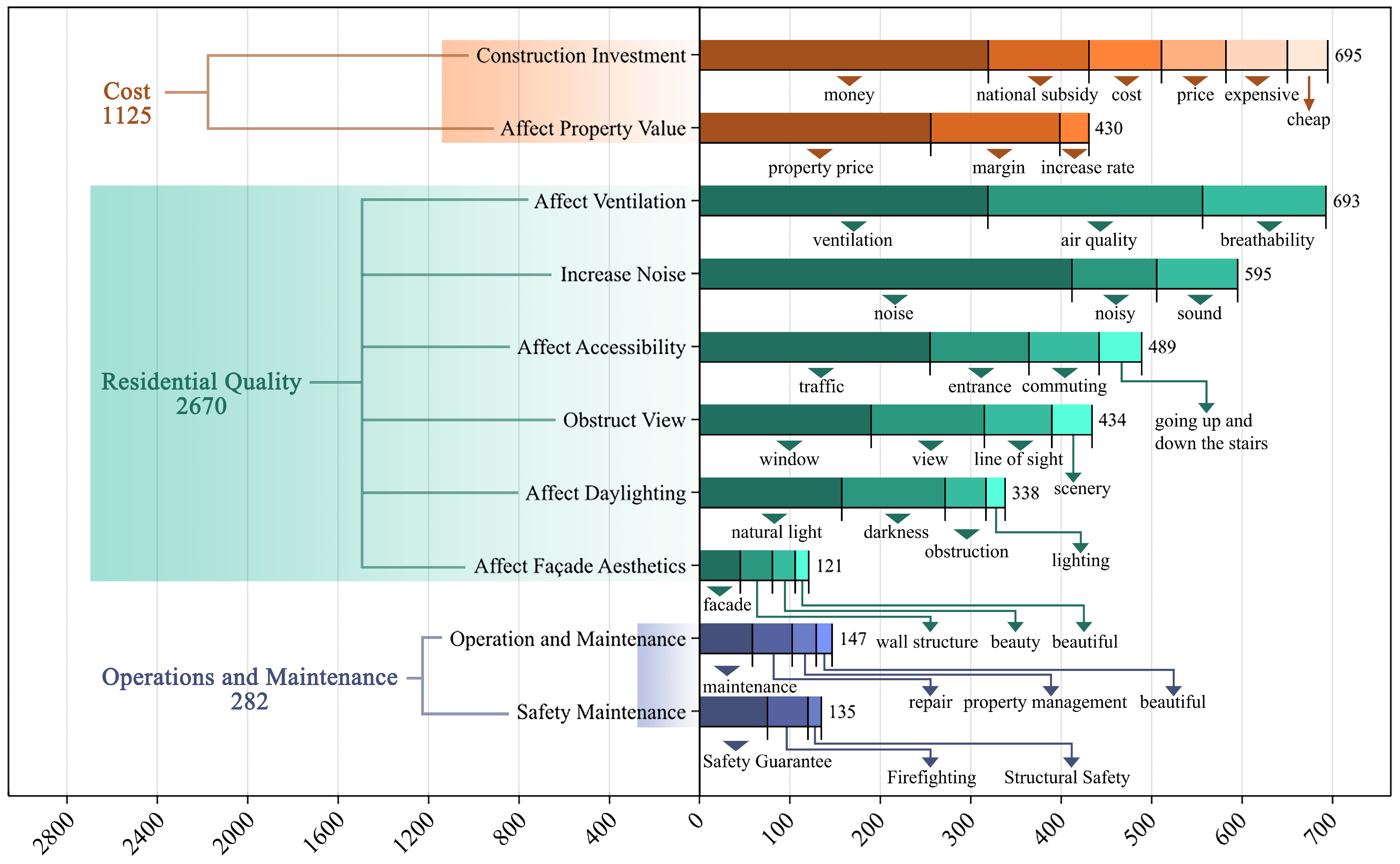
With the intensification of aging populations and economic development, installing elevators in existing residential buildings has become crucial for achieving SDG 11 (Sustainable Cities and Communities). While elevator retrofits improve accessibility, they may also compromise living quality through obstructed ventilation, reduced daylighting, visual interference, and noise pollution. Despite provincial guidelines in China specifying elevator types for retrofitting, the lack of clear selection criteria complicates implementation. This study addresses the challenge of scientifically selecting elevator types that balance accessibility improvements with minimal impact on residential environments. Focusing on 50 operational elevator retrofits in eight Beijing communities employing eight half-landing elevator models from the Beijing Multi-story Residential Elevator Retrofit Guidelines, we establish a comprehensive evaluation framework integrating objective measurements (indoor ventilation, noise, daylighting, and external visibility) and subjective resident assessments. Taking Xicheng District’s Yutaoyuan Community as a case study, this research identifies the optimal elevator configuration through a multi-criteria analysis. The proposed methodology offers two key contributions: (1) a practical elevator selection system providing technical and theoretical support for nationwide retrofitting projects, and (2) a quantifiable assessment tool aligning with the 2030 Sustainable Development Agenda for urban renewal objectives.
Keywords: sustainable urban renewal; aging community renovation; elevator retrofit selection; comprehensive evaluation method; residential quality enhancement sustainable urban renewal; aging community renovation; elevator retrofit selection; comprehensive evaluation method; residential quality enhancement