Assessment of Coupling Synergy Level Between Regional Development and Ecological Environment: A Case Study of Chengdu-Chongqing Dual-City Economic Circle, China

Abstract
1. Introduction
2. Materials and Methods
2.1. Data Sources
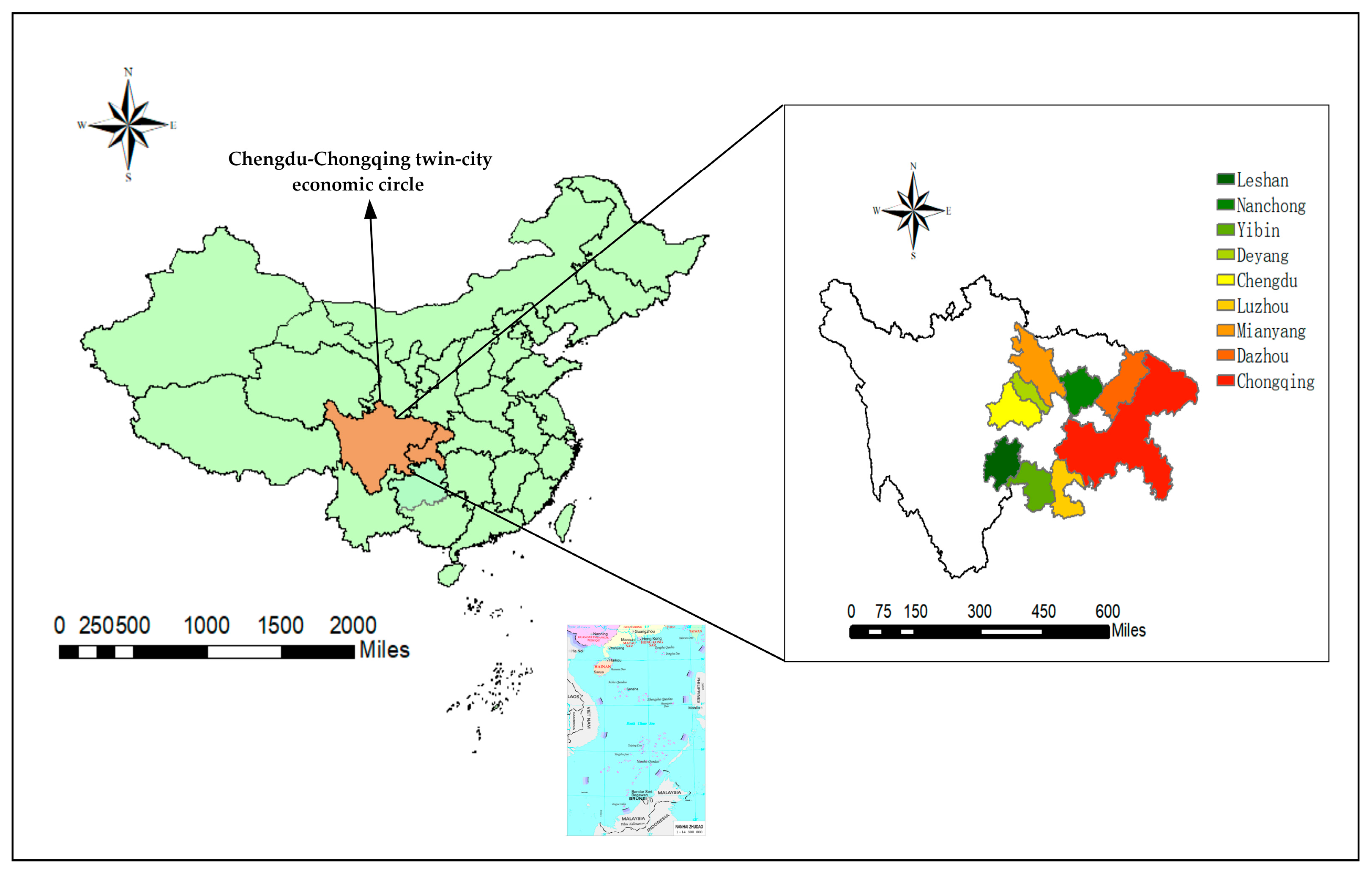
2.2. Study Area
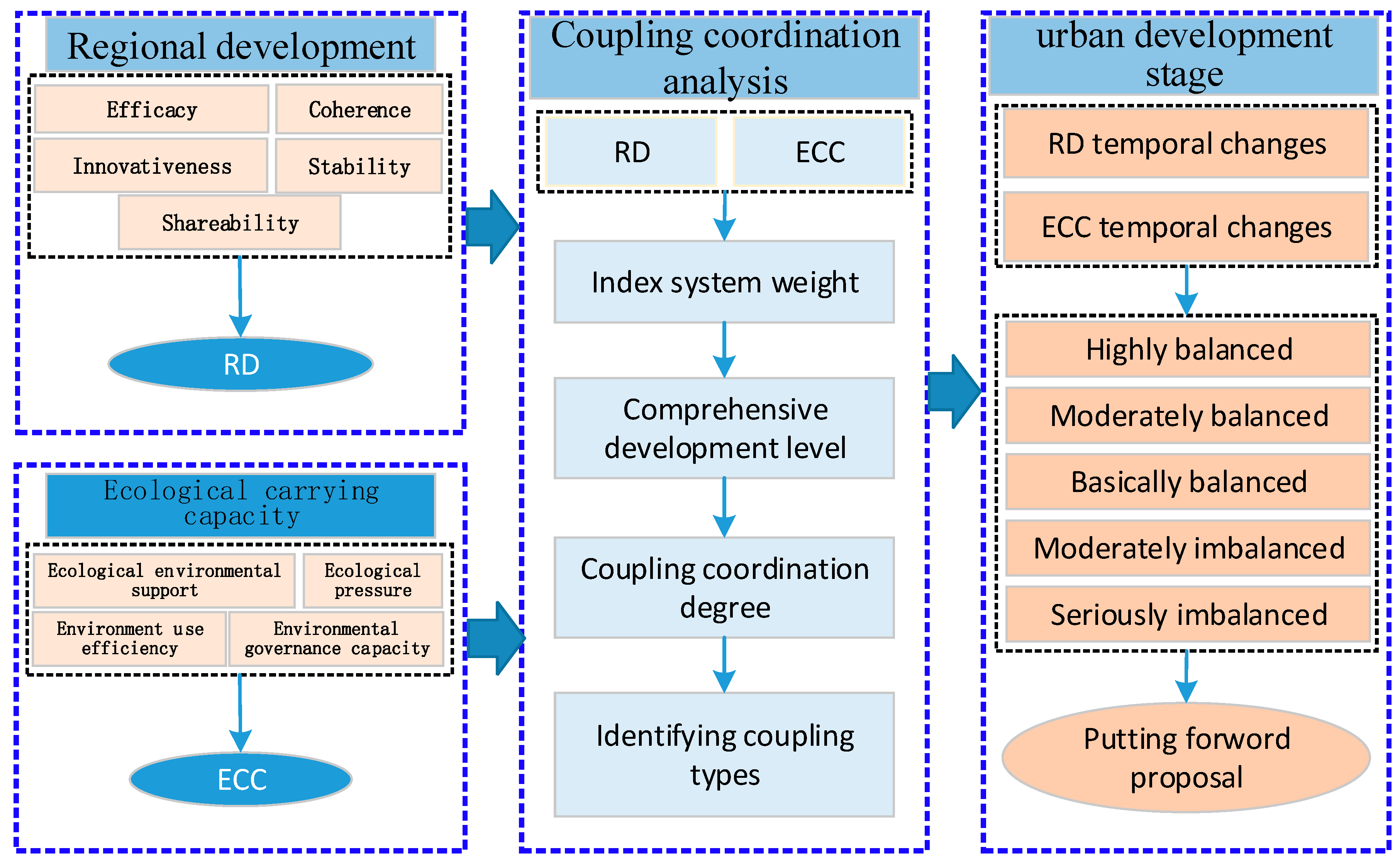
2.3. Research Framework
2.4. Method
2.4.1. Construction of the Indicator System
- (1)
- Data availability and consistency: firstly, all variables were selected to be available within the Chengdu-Chongqing Twin Cities Economic Circle with consistent statistical quality. It was ensured that the statistical methods of these indicators were consistent across provinces and cities, especially in the yearbooks of different years, to ensure the comparability and consistency of the data. The process of operationalising the variables relies mainly on the provincial and municipal statistical yearbooks and relevant government reports.
- (2)
- Consistency with the connotations of regional development and ecological carrying capacity: when selecting variables, it is essential to ensure that they are consistent with the connotations of the two systems of regional development (RD) and ecological carrying capacity (ECC). According to the theoretical framework, it is necessary to ensure that each indicator can reasonably reflect the regional economic, social, environmental, and resource conditions and can quantify its contribution or impact on regional development.
- (3)
- Widely recognised and comparable: the selected indicators have not only received wide attention in the academic community but also have strong comparability. In particular, indicators that have been verified as valid in previous studies ensure the wide applicability and internationality of the indicator system.
- (4)
- The indicator system has been developed in close integration with the actual development situation, with particular attention paid to the reality of the Chengdu-Chongqing Twin Cities Economic Circle in order to ensure its alignment with actual development needs. In the selection of variables, the local economic, social and environmental characteristics have been combined as much as possible, with the objective of ensuring that the indicators not only reflect the abstract concepts in the theory but also the specific development status of the region.
2.4.2. Entropy Method
2.4.3. Coupled Coordination Degree Model
2.4.4. Geographically and Temporally Weighted Regression Model
2.4.5. Classification of Coupled Coordination Degree
3. Results
3.1. Comprehensive Development Level of RD
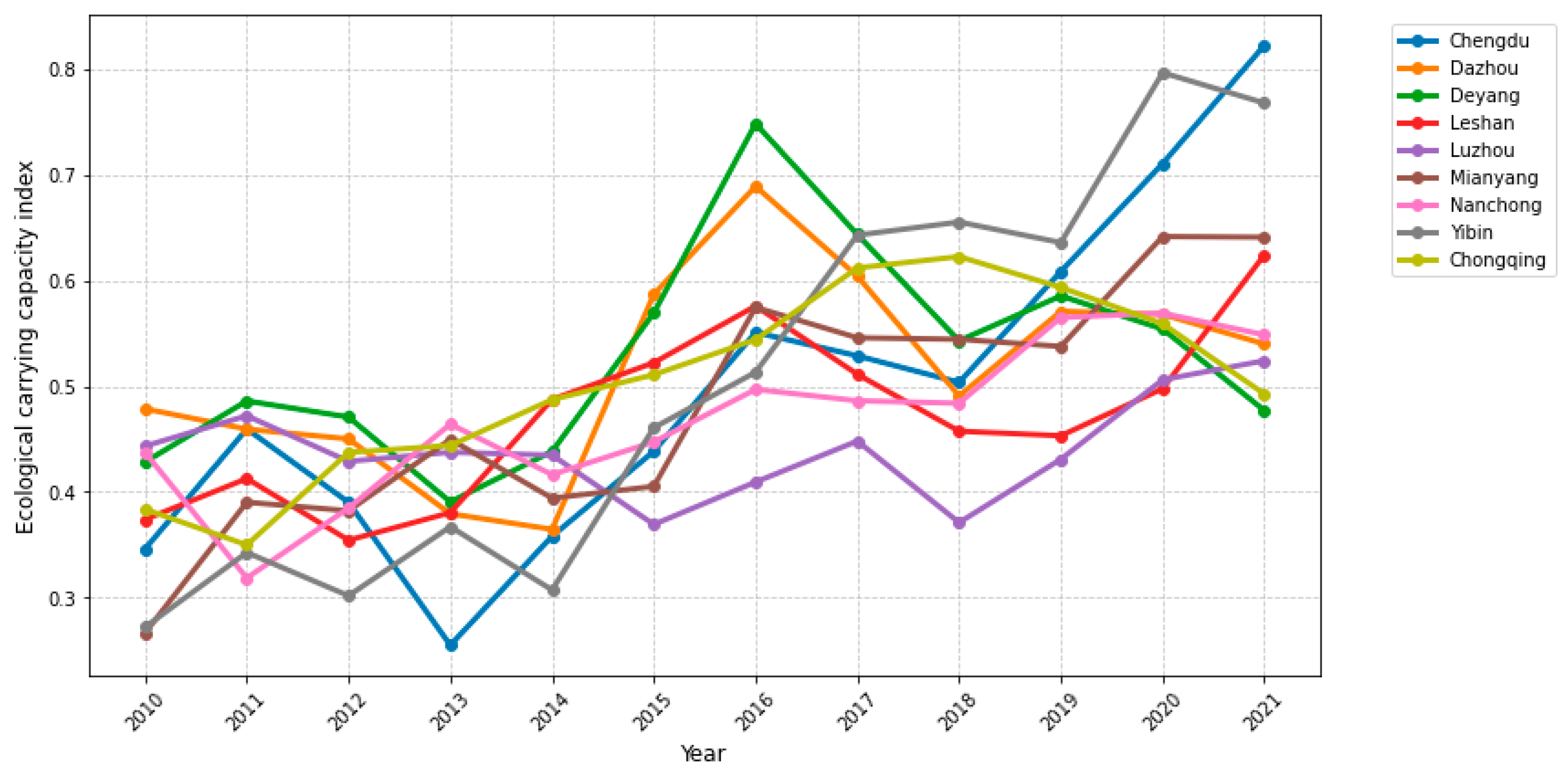
3.2. Comprehensive Development Level of ECC
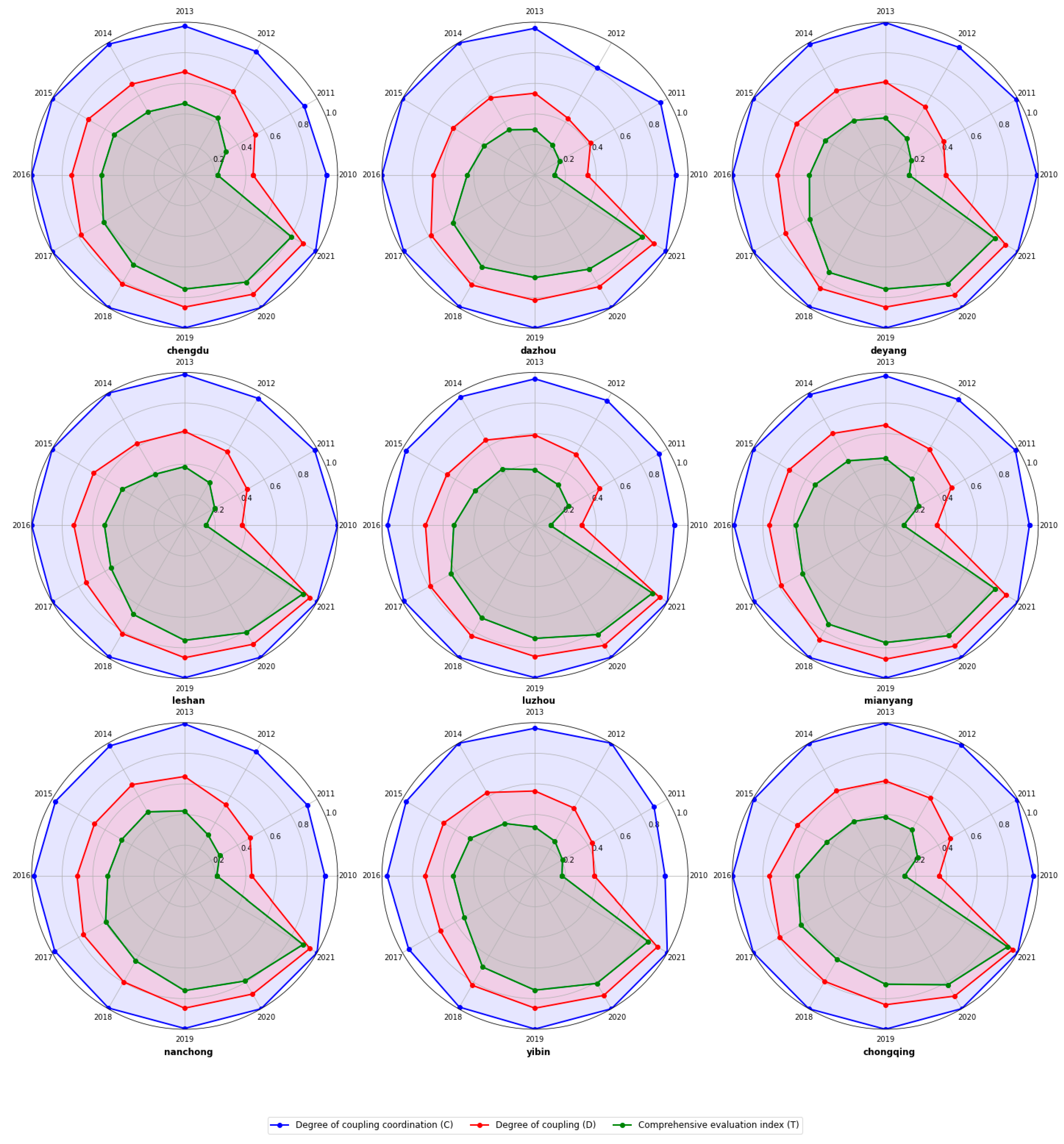
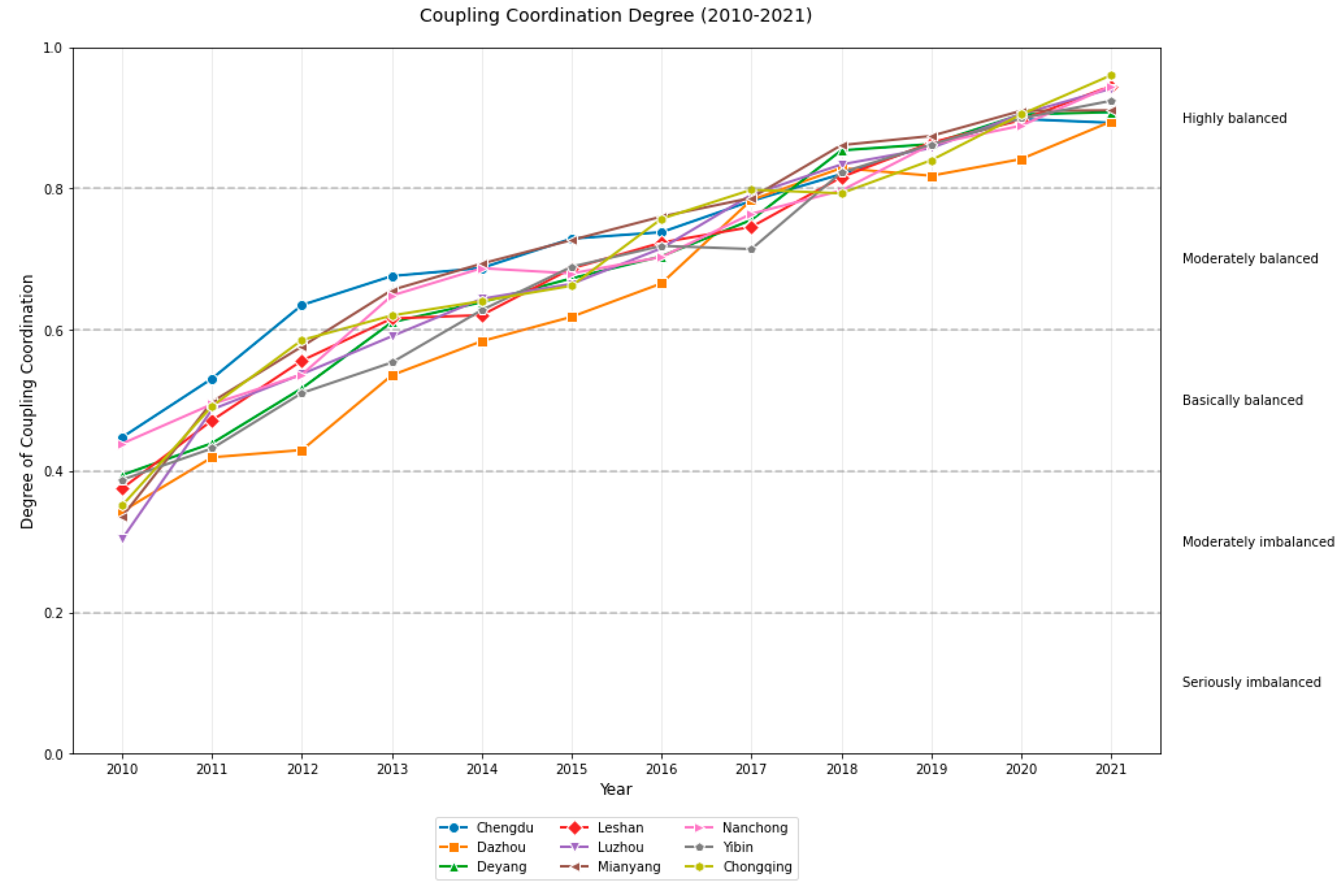
3.3. Spatiotemporal Characteristics of the CCD Between the RD and ECC
3.4. Analysis of RD and ECC Coupling Coordination Types
3.5. Factors Affecting CCD
3.5.1. The Spatiotemporal Characteristics of the Interaction Between RD and ECC
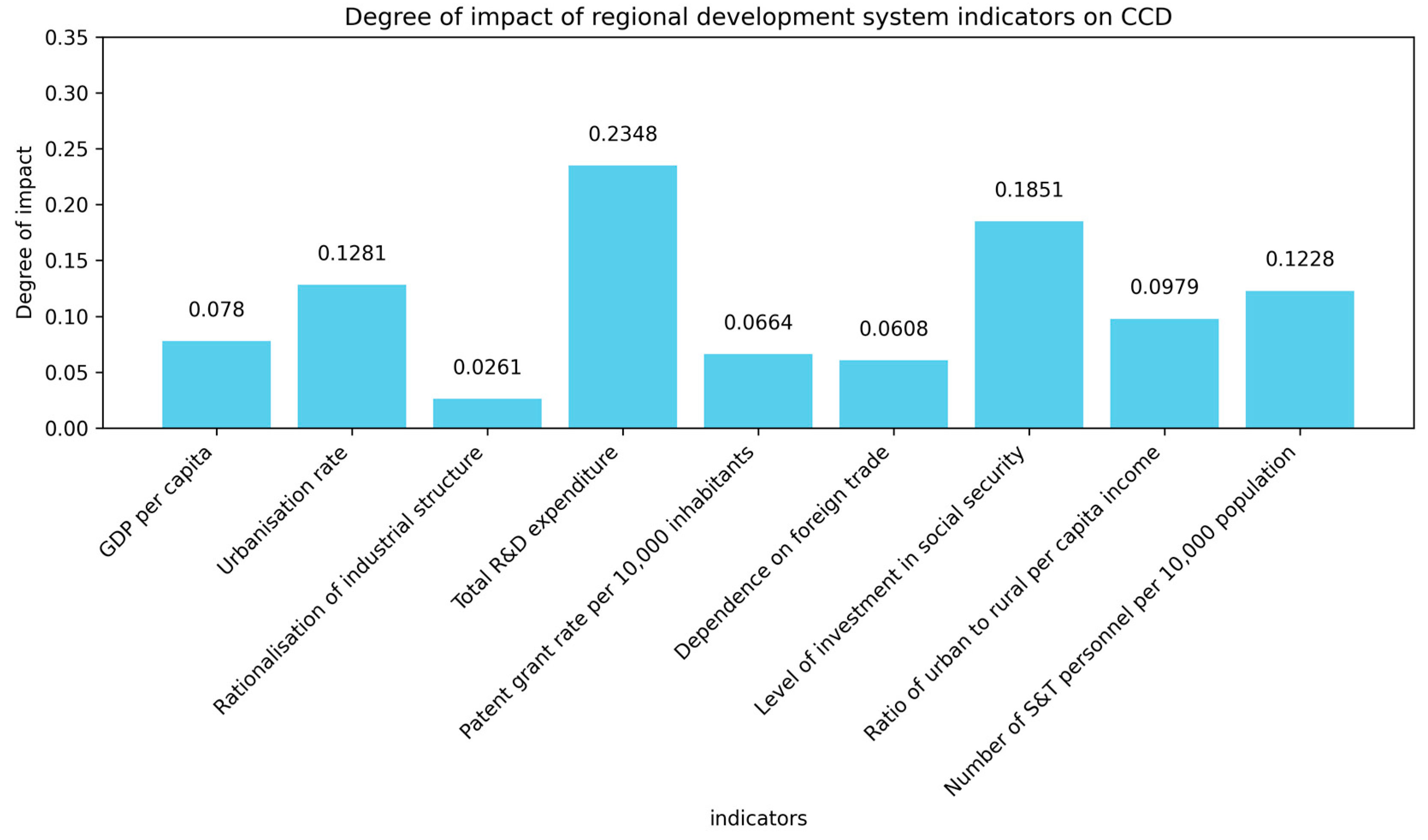
3.5.2. Impact of RDS Indicators on the Coupling Co-Ordination Degree (CCD)
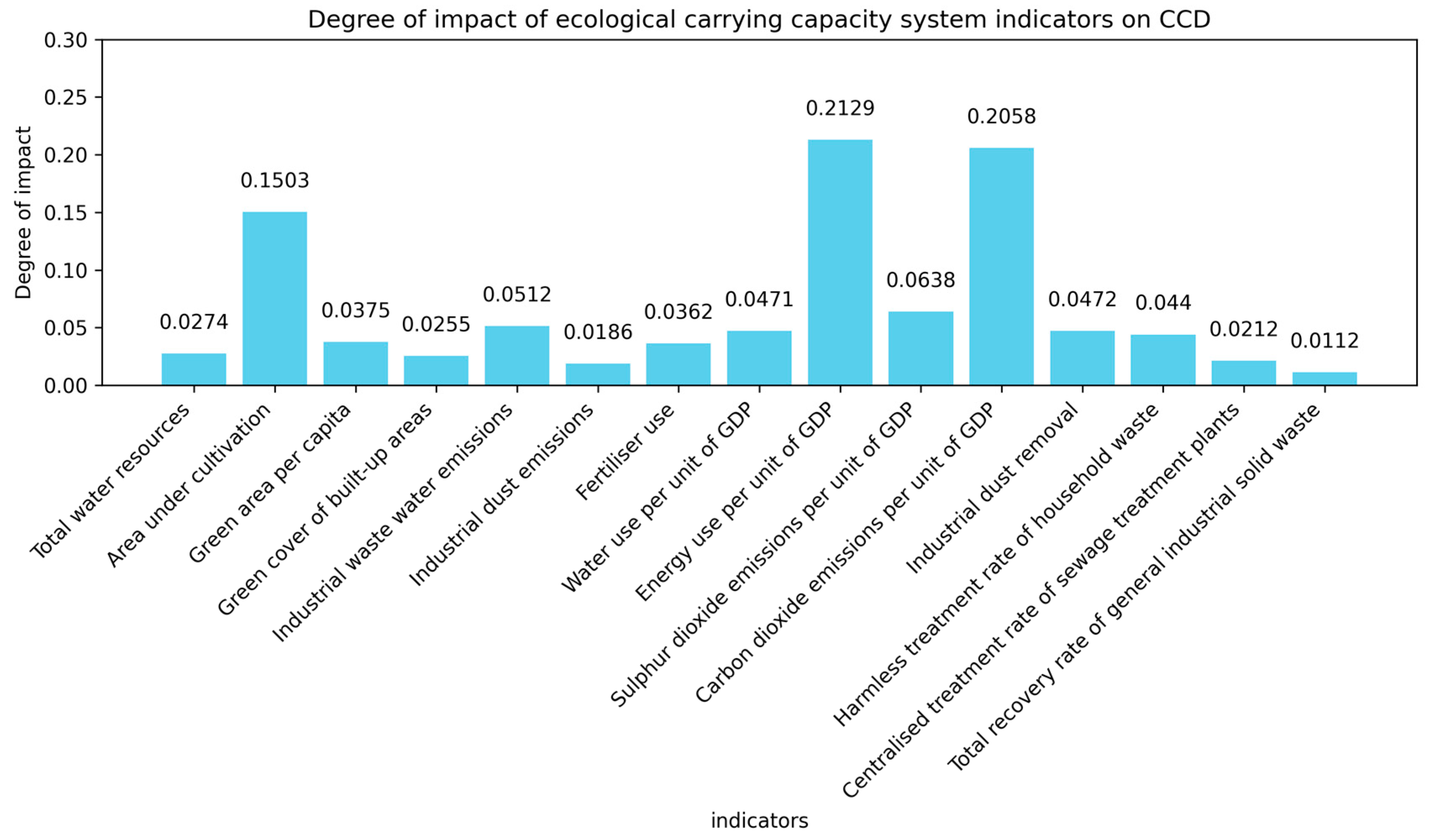
3.5.3. Impacts of Ecological Carrying Capacity System Indicators on Coupling Coordination Degree (CCD)
3.5.4. Analysis of GTWR Coefficient of Regional Development and CCD
3.5.5. Analysis of GTWR Coefficients of Ecological Carrying Capacity and CCD
4. Discussion
4.1. Characteristics of Synergistic Development Between RD and ECC
4.2. Implications Based on Spatiotemporal Characteristics of Coupled Coordinated Development
5. Conclusions and Policy Recommendations
- (1)
- Regional Development Evolution: The RD of urban agglomerations during the study period exhibits evolutionary characteristics of “low level—steady improvement—convergence development”. This development pattern supports the hypothesis of “β-convergence” in regional development theory, signifying the effectiveness of coordinated regional development strategies in narrowing the development gap between cities. This reinforces the idea that regional development strategies have achieved significant success in promoting convergence and reducing disparities.
- (2)
- Coupling and Coordination of RD and ECC: The coupling and coordination between RD and ECC demonstrate distinct stage characteristics, transitioning from “slightly dysfunctional” to “primary coordination”. This shift reflects the success of the “ecological priority and green development” strategy within the new development concept, highlighting its role in fostering the harmonious relationship between regional development and ecological civilisation. This transition provides further empirical evidence for the positive impact of high-quality development strategies in achieving a balance between development and environmental sustainability.
- (3)
- Spatial Structure and Coordination: The study reveals a spatial structure of “decreasing circles” centred around the core city. This spatial heterogeneity highlights the interdependence between regional development and environmental protection, with the core city playing a pivotal role in the coordinated development of surrounding areas. This spatial pattern underscores the radiating effect of central cities, thereby establishing a theoretical basis for the integrated development of urban agglomerations and emphasising the importance of coordinated spatial planning to achieve sustainable urban growth.
- (1)
- Fostering Innovation-Driven, High-Quality Development: It is imperative to augment investment in scientific and technological innovation, nurture green and low-carbon industries, optimise land resource allocation, and enhance urban ecological resilience. These measures will facilitate a novel paradigm of innovation-driven, high-quality development, thereby contributing to the sustainability of regional growth and ecological protection.
- (2)
- Optimising Urban Spatial Layout: It is paramount to fortify the pole-core function of central cities whilst concurrently cultivating small and medium-sized cities with distinctive characteristics. The establishment of a networked urban development system is imperative to promote balanced growth and foster regional integration.
- (3)
- Improving Factor Market Allocation: Optimising resource allocation efficiency, adjusting the industrial structure, and guiding the orderly flow of factors is recommended. By leveraging comparative advantages, this approach can help maximise the potential for high-quality, coordinated regional development.
Author Contributions
Funding
Institutional Review Board Statement
Informed Consent Statement
Data Availability Statement
Conflicts of Interest
References
- Zhang, X.; Luo, H.; Zeng, X.; Zhou, C.; Shu, Z.; Li, H.; Fei, Z.; Liu, G. Research on regional economic development and natural disaster risk assessment under the goal of carbon peak and carbon neutrality: A case study in Chengdu-Chongqing economic circle. Land Use Policy 2024, 143, 107206. [Google Scholar] [CrossRef] [Scilit]
- Wang, Z.; Yu, Y.; Zhou, R. A Longitudinal Exploration of the Spatiotemporal Coupling Relationship and Driving Factors between Regional Urban Development and Ecological Quality of Green Space. Ecol. Indic. 2024, 164, 112134. [Google Scholar] [CrossRef] [Scilit]
- Liang, N.; Zhao, L. An Efficiency and Coupling Analysis of Chinese Regional Economic and Environmental Sustainability Based on a Super-SBM Model and Coupling Coordination Model. Sustainability 2024, 16, 3818. [Google Scholar] [CrossRef] [Scilit]
- Wu, H.; Jiang, Z.; Zhu, L.; Lin, A.; Zhou, H.; Cen, L. Analyzing Multiscale Associations and Couplings between Integrated Development and Eco-Environmental Systems: A Case Study of the Central Plains Urban Agglomeration, China. Appl. Geogr. 2024, 171, 103387. [Google Scholar] [CrossRef] [Scilit]
- Fan, Y.; Fang, C.; Zhang, Q. Coupling Coordinated Development between Social Economy and Ecological Environment in Chinese Provincial Capital Cities-Assessment and Policy Implications. J. Clean. Prod. 2019, 229, 289–298. [Google Scholar] [CrossRef] [Scilit]
- Sui, G.; Wang, H.; Cai, S.; Cui, W. Coupling Coordination Analysis of Resources, Economy, and Ecology in the Yellow River Basin. Ecol. Indic. 2023, 156, 111133. [Google Scholar] [CrossRef] [Scilit]
- Lei, X.; Liu, H.; Li, S.; Luo, Q.; Cheng, S.; Hu, G.; Wang, X.; Bai, W. Coupling Coordination Analysis of Urbanization and Ecological Environment in Chengdu-Chongqing Urban Agglomeration. Ecol. Indic. 2024, 161, 111969. [Google Scholar] [CrossRef] [Scilit]
- Zou, C.; Zhu, J.; Lou, K.; Yang, L. Coupling Coordination and Spatiotemporal Heterogeneity between Urbanization and Ecological Environment in Shaanxi Province, China. Ecol. Indic. 2022, 141, 109152. [Google Scholar] [CrossRef] [Scilit]
- Zhai, Y.; Zhai, G.; Yu, Z.; Lu, Z.; Chen, Y.; Liu, J. Coupling Coordination between Urbanization and Ecosystem Services Value in the Beijing-Tianjin-Hebei Urban Agglomeration. Sustain. Cities Soc. 2024, 113, 105715. [Google Scholar] [CrossRef] [Scilit]
- Yang, C.; Zeng, W.; Yang, X. Coupling Coordination Evaluation and Sustainable Development Pattern of Geo-Ecological Environment and Urbanization in Chongqing Municipality, China. Sustain. Cities Soc. 2020, 61, 102271. [Google Scholar] [CrossRef] [Scilit]
- Zhang, F.; Sarker, M.N.I.; Lv, Y. Coupling Coordination of the Regional Economy, Tourism Industry, and the Ecological Environment: Evidence from Western China. Sustainability 2022, 14, 1654. [Google Scholar] [CrossRef] [Scilit]
- Wang, L.; Yuan, M.; Li, H.; Chen, X. Exploring the Coupling Coordination of Urban Ecological Resilience and New-Type Urbanization: The Case of China’s Chengdu–Chongqing Economic Circle. Environ. Technol. Innov. 2023, 32, 103372. [Google Scholar] [CrossRef] [Scilit]
- He, L.; Du, X.; Zhao, J.; Chen, H. Exploring the Coupling Coordination Relationship of Water Resources, Socio-Economy, and Eco-Environment in China. Sci. Total Environ. 2024, 918, 170705. [Google Scholar] [CrossRef] [Scilit] [PubMed]
- Wang, S.; Ma, H.; Zhao, Y. Exploring the Relationship between Urbanization and the Eco-Environment—A Case Study of Beijing–Tianjin–Hebei Region. Ecol. Indic. 2014, 45, 171–183. [Google Scholar] [CrossRef] [Scilit]
- Zhang, Q.; Shen, J.; Sun, F. Spatiotemporal Differentiation of Coupling Coordination Degree between Economic Development and Water Environment and Its Influencing Factors Using GWR in China’s Province. Ecol. Model. 2021, 462, 109794. [Google Scholar] [CrossRef] [Scilit]
- Zhang, K.; Jin, Y.; Li, D.; Wang, S.; Liu, W. Spatiotemporal variation and evolutionary analysis of the coupling coordination between urban social-economic development and ecological environments in the Yangtze River Delta cities. Sustain. Cities Soc. 2024, 111, 105561. [Google Scholar] [CrossRef] [Scilit]
- Rahman, M.M.; Alam, K. Impact of industrialization and non-renewable energy on environmental pollution in Australia: Do renewable energy and financial development play a mitigating role? Renew. Energy 2022, 195, 203–213. [Google Scholar] [CrossRef] [Scilit]
- Pata, U.K.; Mücahit, A.; Haouas, I. Are natural resources abundance and human development a solution for environmental pressure? Evidence from top ten countries with the largest ecological footprint. Resour. Policy 2020, 70, 101923. [Google Scholar] [CrossRef] [Scilit]
- Ahmad, M.; Muslija, A.; Satrovic, E. Does economic prosperity lead to environmental sustainability in developing economies? Environmental Kuznets curve theory. Environ. Sci. Pollut. Res. 2021, 28, 22588–22601. [Google Scholar] [CrossRef] [Scilit] [PubMed]
- Khan SA, R.; Razzaq, A.; Yu, Z.; Miller, S. Industry 4.0 and circular economy practices: A new era business strategies for environmental sustainability. Bus. Strategy Environ. 2021, 30, 4001–4014. [Google Scholar] [CrossRef] [Scilit]
- Grossman, G.M.; Krueger, A.B. Environmental impacts of a north American trade agreement. In The U.S.-Mexico Free Trade Agreement; MIT Press: Cambridge, MA, USA, 1993; Volume 56. [Google Scholar]
- Ma, W.; Tian, W.; Zhou, Q.; Miao, Q.; Zhang, W. Analysis on the temporal and spatial heterogeneity of factors affecting urbanization development based on the GTWR model: Evidence from the Yangtze river economic belt. Complexity 2021, 7557346. [Google Scholar] [CrossRef] [Scilit]
- Cao, B.; Cao, H.; Liu, Y. Research on construction and application of an evaluation system for regional road traffic safety. Grey Syst. Theory Appl. 2018, 8, 527–538. [Google Scholar] [CrossRef] [Scilit]
- Liu, J.; Tian, Y.; Huang, K.; Yi, T. Spatial-temporal differentiation of the coupling coordinated development of regional energy-economy-ecology system: A case study of the Yangtze river economic belt. Ecol. Indic. 2021, 124, 107394. [Google Scholar] [CrossRef] [Scilit]
- Zhao, J.; Wu, X.; Guo, J.; Zhao, H.; Wang, Z. Study on the allocation of so2 emission rights in the Yangtze river delta city agglomeration region of China based on efficiency and feasibility. Sust. Cities Soc. 2022, 87, 104237. [Google Scholar] [CrossRef] [Scilit]
- He, Y.; Liu, G. Coupling coordination analysis of low-carbon development, technology innovation, and new urbanization: Data from 30 provinces and cities in China. Front. Public Health 2022, 10, 1047691. [Google Scholar] [CrossRef] [Scilit]







| Objective Level | Criterion Layer | Index | Unit | Characteristic | Weight |
|---|---|---|---|---|---|
| Regional development | Efficacy | GDP per capita | Chinese yuan renminbi (CNY) | positive | 0.130666 |
| Coherence | Urbanisation rate | % | positive | 0.129252 | |
| Rationalisation of industrial structure | — | positive | 0.1184 | ||
| Innovativeness | Total R&D expenditure | 10,000 CNY | positive | 0.13003 | |
| Patent grant rate per 10,000 inhabitants | Number of cases/10,000 persons | positive | 0.098406 | ||
| Stability | Dependence on foreign trade | % | positive | 0.042095 | |
| Level of investment in social security | 10,000 CNY | positive | 0.125356 | ||
| Shareability | Ratio of urban to rural per capita income | — | negative | 0.113673 | |
| Number of S&T personnel per 10,000 population | Persons per 10,000 persons | positive | 0.112122 | ||
| Ecological carrying capacity | Ecological and environmental support | Total water resources | positive | 0.038375 | |
| Area under cultivation | positive | 0.083122 | |||
| Green area per capita | positive | 0.017417 | |||
| Green cover of built-up areas | % | positive | 0.040858 | ||
| Ecological pressure | Industrial waste water emissions | negative | 0.096634 | ||
| Industrial dust emissions | negative | 0.098977 | |||
| Fertiliser use | negative | 0.059751 | |||
| Ecological environment use efficiency | Water use per unit of GDP | negative | 0.054507 | ||
| Energy use per unit of GDP | negative | 0.090085 | |||
| Sulphur dioxide emissions per unit of GDP | Tonnes/billions | negative | 0.096764 | ||
| Carbon dioxide emissions per unit of GDP | Tonnes/billions | negative | 0.090085 | ||
| Environmental governance capacity | Industrial dust removal | Tonnes | negative | 0.023067 | |
| Harmless treatment rate of household waste | % | negative | 0.077183 | ||
| Centralised treatment rate of sewage treatment plants | % | negative | 0.03804 | ||
| Total recovery rate of general industrial solid waste | % | negative | 0.095137 |
| Coupling Coordinated Development Types | D * | Degree of Coupling Coordination |
|---|---|---|
| Coordinated development | (0.80, 1.00] | Highly balanced |
| Transition coordinated development | (0.60, 0.80] | Moderately balanced |
| (0.40, 0.60] | Basically balanced | |
| Uncoordinated development | (0.20, 0.40] | Moderately imbalanced |
| (0.00, 0.20] | Seriously imbalanced |
| B | Std Error | Beta | t | p | VIF | R2 | Adjusted R2 | F | |
|---|---|---|---|---|---|---|---|---|---|
| Constant | 0.725 | - | - | - | - | - | 0.9715 | 0.9551 | p = 0.000 *** F = 59.5527 |
| Ecological and environmental support | 0.011 | 0.009 | 0.011 | 1.158 | 0.000 *** | 1.372 | |||
| Ecological pressure | −0.104 | 0.014 | −0.104 | −7.226 | 0.000 *** | 3.252 | |||
| Ecological environment use efficiency | −0.027 | 0.015 | −0.027 | −1.791 | 0.000 *** | 3.572 | |||
| Environmental governance capacity | −0.003 | 0.009 | −0.003 | −0.297 | 0.001 | 1.169 | |||
| Efficacy | 0.208 | 0.030 | 0.208 | 6.924 | 0.000 *** | 13.033 | 0.9731 | 0.9507 | p = 0.0001 F = 43.4075 |
| Coherence | −0.022 | 0.013 | −0.022 | −1.758 | 0.000 *** | 2.276 | |||
| Innovativeness | −0.003 | 0.024 | −0.003 | −0.124 | 0.001 | 8.149 | |||
| Stability | −0.079 | 0.029 | −0.079 | −2.705 | 0.000 *** | 12.297 | |||
| Shareability | 0.006 | 0.009 | 0.006 | 0.623 | 0.001 | 1.199 |
| Dependent Variable | R2 | Bandwidth | Sigma | AICc | Spatiotemporal Distance Ratio | Adjusted R2 | Residual Squares |
|---|---|---|---|---|---|---|---|
| Ecological carrying capacity system | 0.9837 | 0.1 | 0.5 | −62.3487 | 0.4785 | 0.9810 | 0.0497 |
| Regional development system | 0.9822 | 0.1 | 0.5 | −76.7986 | 0.6625 | 0.9806 | 0.0542 |
Disclaimer/Publisher’s Note: The statements, opinions and data contained in all publications are solely those of the individual author(s) and contributor(s) and not of MDPI and/or the editor(s). MDPI and/or the editor(s) disclaim responsibility for any injury to people or property resulting from any ideas, methods, instructions or products referred to in the content. |
© 2025 by the authors. Licensee MDPI, Basel, Switzerland. This article is an open access article distributed under the terms and conditions of the Creative Commons Attribution (CC BY) license (https://creativecommons.org/licenses/by/4.0/).
Share and Cite
Duan, Y.; Liang, Y.; Wang, Z.; Ji, Q. Assessment of Coupling Synergy Level Between Regional Development and Ecological Environment: A Case Study of Chengdu-Chongqing Dual-City Economic Circle, China. Sustainability 2025, 17, 1998. https://doi.org/10.3390/su17051998
Duan Y, Liang Y, Wang Z, Ji Q. Assessment of Coupling Synergy Level Between Regional Development and Ecological Environment: A Case Study of Chengdu-Chongqing Dual-City Economic Circle, China. Sustainability. 2025; 17(5):1998. https://doi.org/10.3390/su17051998
Chicago/Turabian StyleDuan, Yujing, Yuan Liang, Zhong Wang, and Qingyun Ji. 2025. "Assessment of Coupling Synergy Level Between Regional Development and Ecological Environment: A Case Study of Chengdu-Chongqing Dual-City Economic Circle, China" Sustainability 17, no. 5: 1998. https://doi.org/10.3390/su17051998
APA StyleDuan, Y., Liang, Y., Wang, Z., & Ji, Q. (2025). Assessment of Coupling Synergy Level Between Regional Development and Ecological Environment: A Case Study of Chengdu-Chongqing Dual-City Economic Circle, China. Sustainability, 17(5), 1998. https://doi.org/10.3390/su17051998