Urban Landscape Development of Kendari Old Town in Southeast Sulawesi, Indonesia: The Conzen School Urban Morphology Approach

Abstract
1. Introduction
2. Materials and Methods
2.1. Materials
- Morphological approach—the Conzen school of thought focuses on the city morphology, perceiving it as a structure comprising street networks, edifices, land parceling, and building typology. This method facilitates the identification of patterns and trends in urban structure development.
- Temporal depth—the investigation by Conzen adopted a historical viewpoint while examining urban development as a process that has evolved over time. This requires analyzing alterations in the roadway network, land use, and architectural style over several historical epochs.
- Land distribution—examining the historical development of land distribution is fundamental to the Conzen technique, as it represents the organization and use of urban space by different social categories. This entails analyzing the boundaries of plots, respective owners, and variations in ownership.
- Street system—a comprehensive examination of the street system depicts the organization of traffic and accessibility across several historical periods. This enables the evaluation of the degree to which the street network has impacted urban planning and development.
- Land usage—an analysis of land use offers insight into the alterations in functionality across various sectors. This includes the examination of commercial, residential, and industrial sectors, as well as respective evolution.
- Data integration—Conzen approach comprises a combination of diverse data sources, including historical maps, archival documents, archeological data, and contemporary geographic information systems for the thorough examination of urban growth.
2.2. Methods
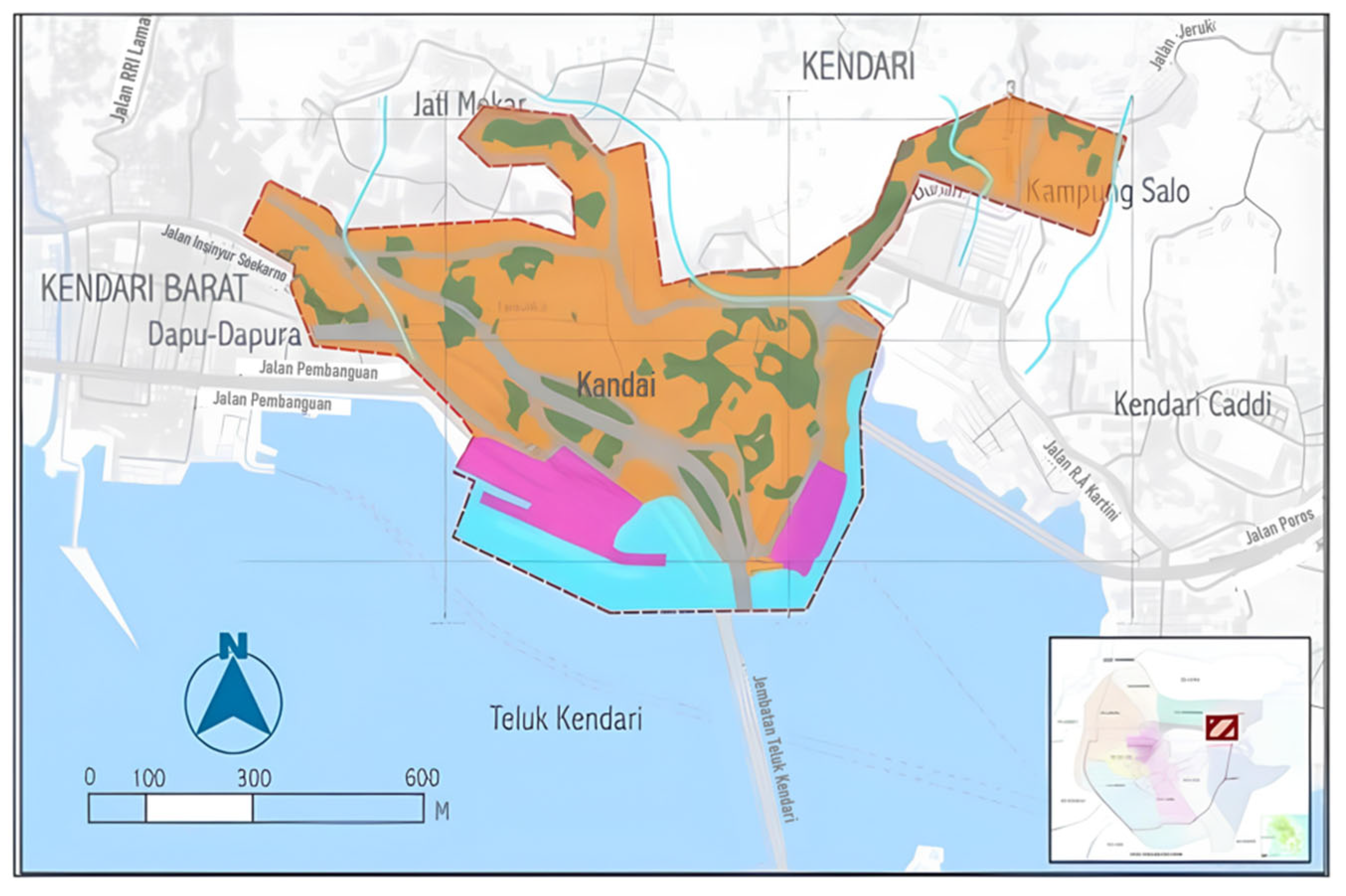
2.3. The Overview of Research Area
3. Results
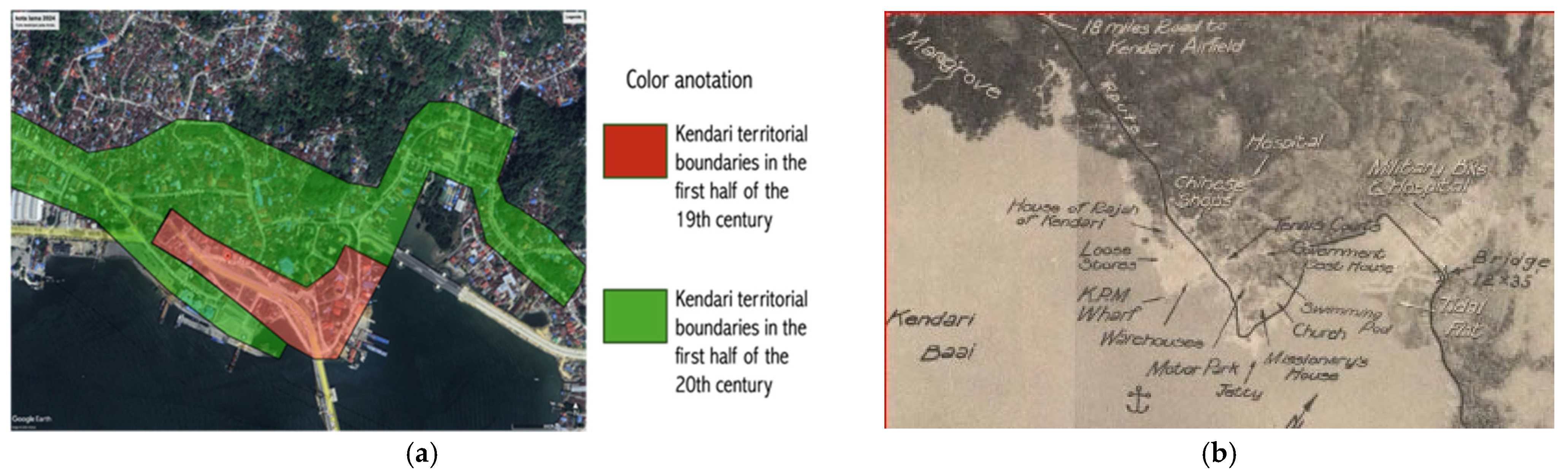
3.1. Historical Period of Kendari
- a.
- Pre-colonial (>1831)
- b.
- Dutch East Indies Occupancy (1831 to 1905)
- c.
- Dutch East Indies Occupancy/Laiwoei Sub-division (1906 to 1942)
- d.
- Japanese Occupancy (1942 to 1945)
- e.
- Post-Independence (1945 to 1998)
- f.
- Modern Era (2000 to present)
3.2. Conzen Urban Morphology Approach
- a.
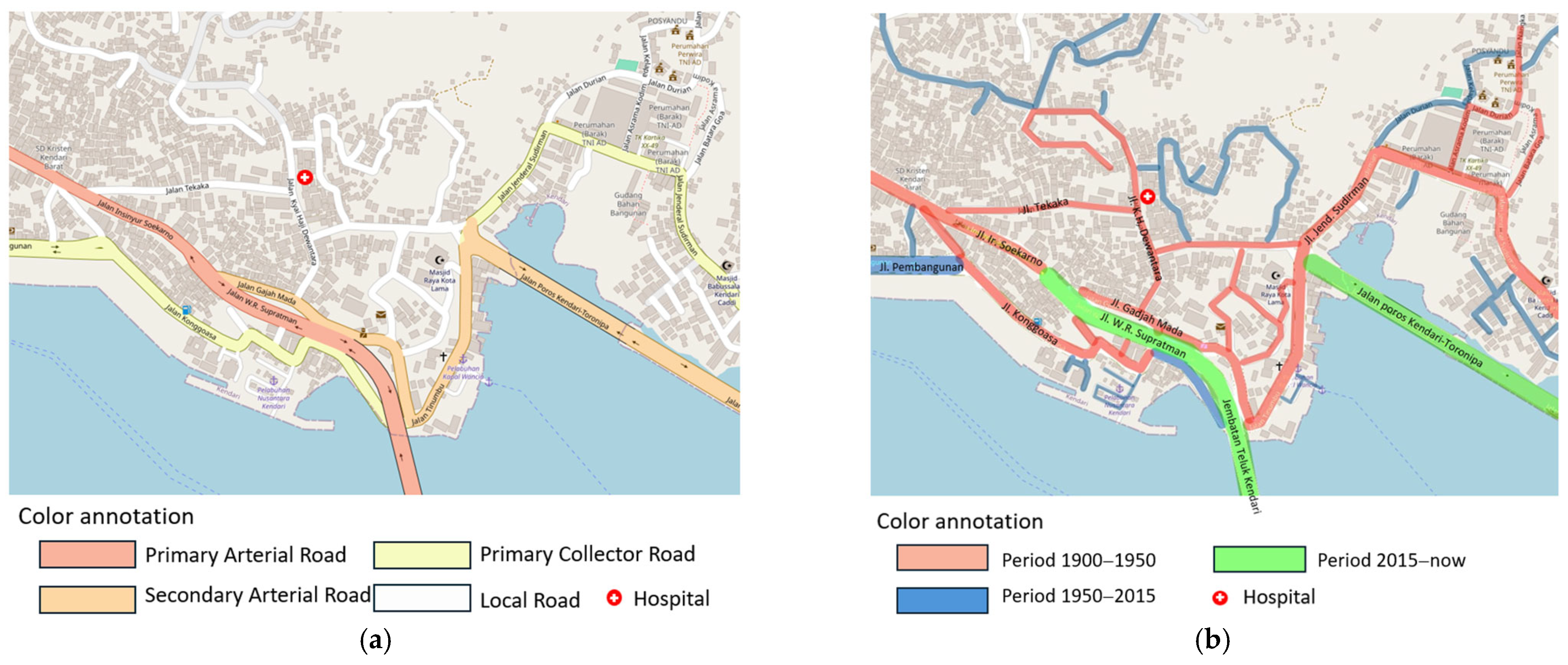
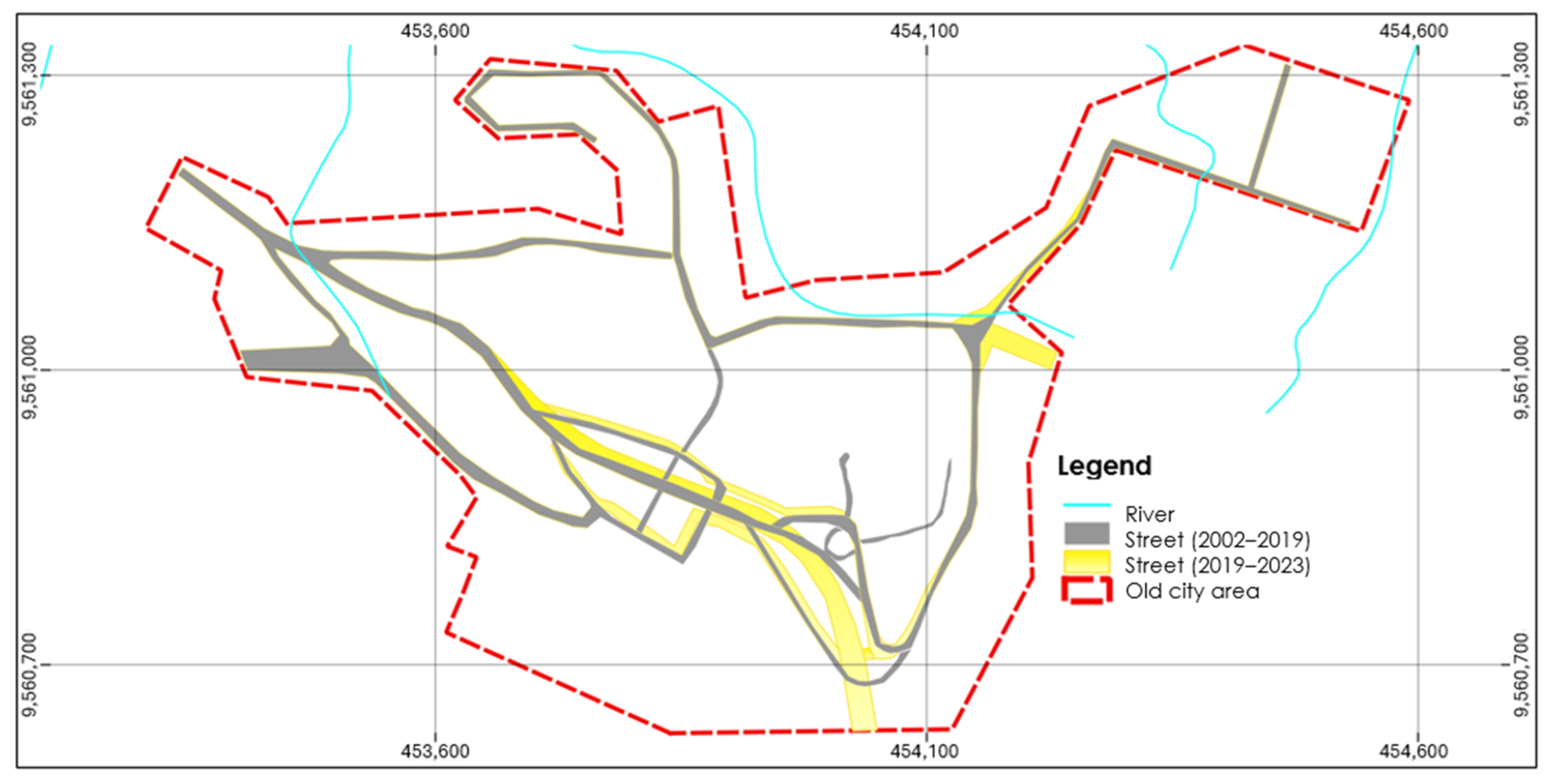
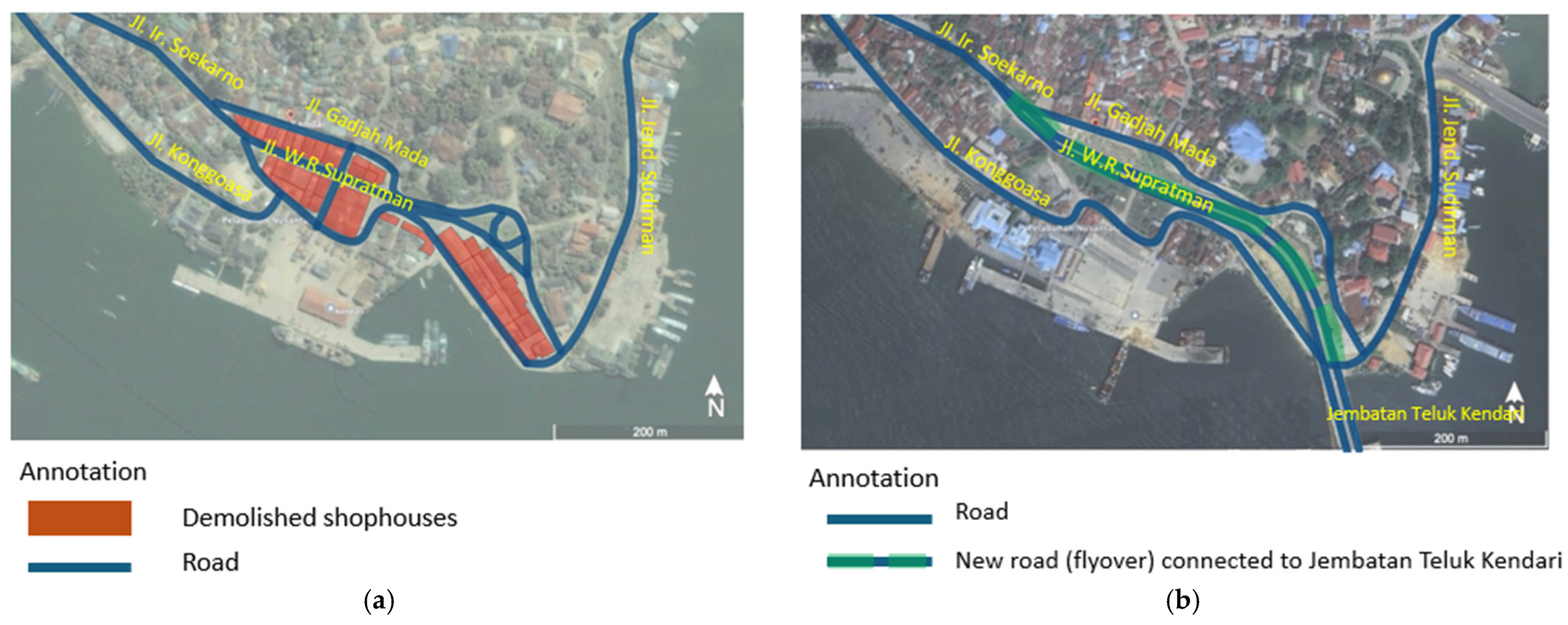
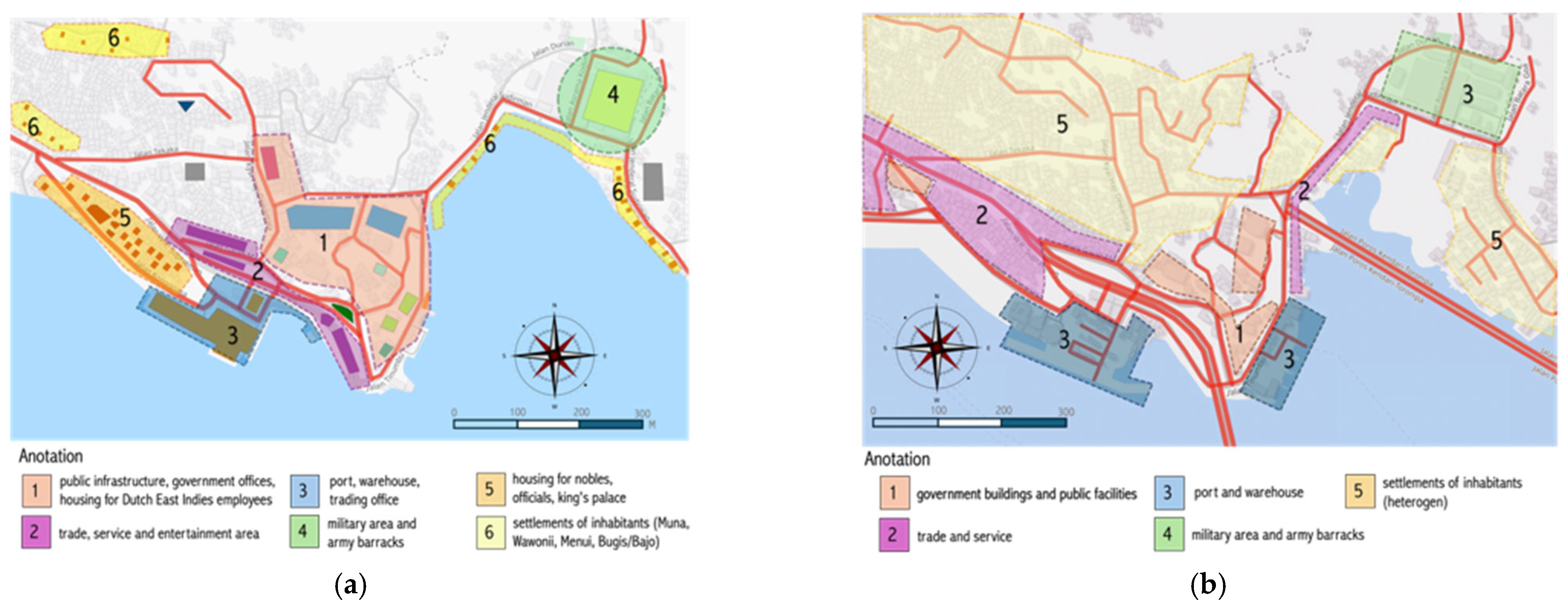
- Street Structure
- b.
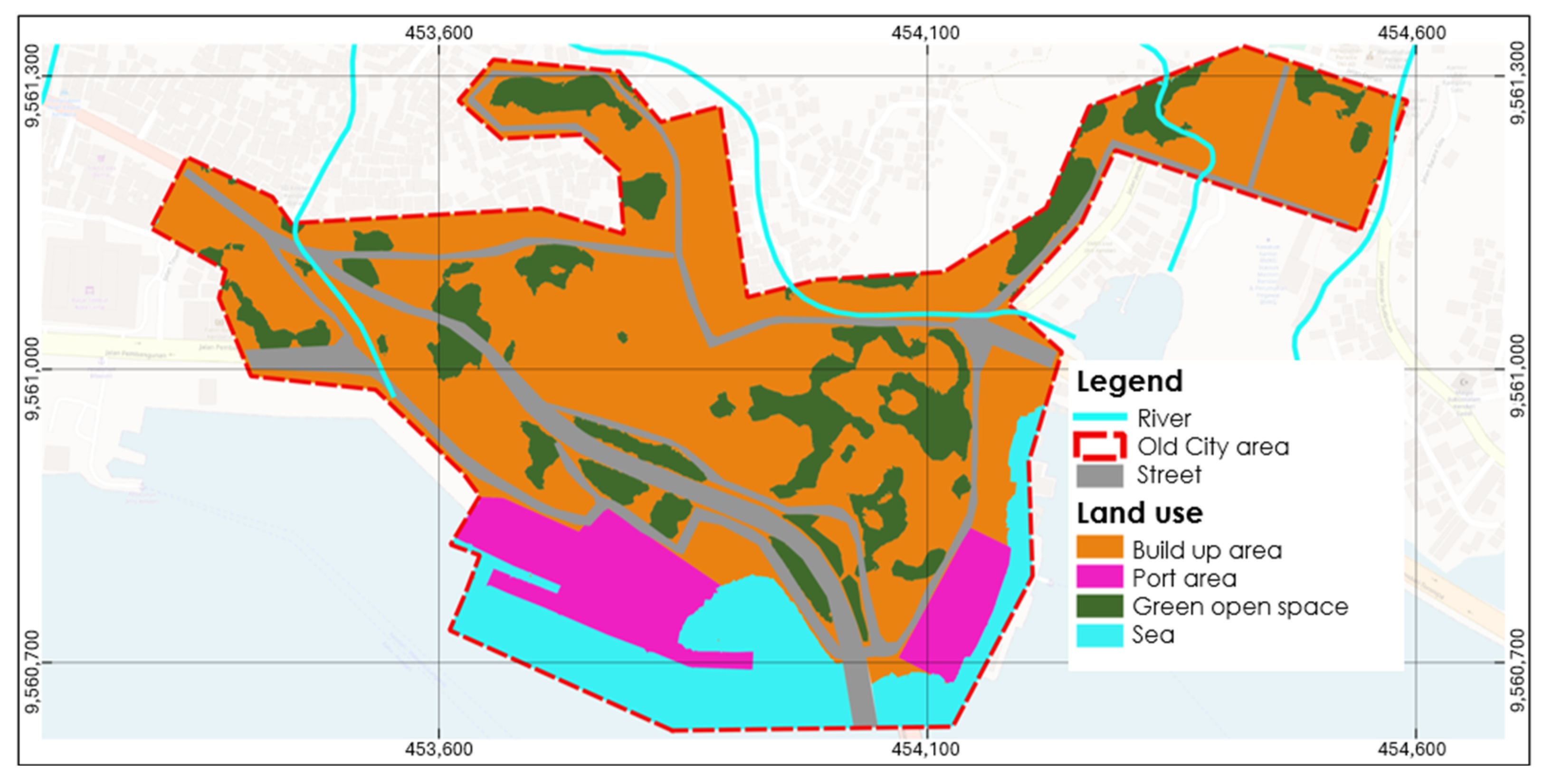
- Land Distribution
- c.
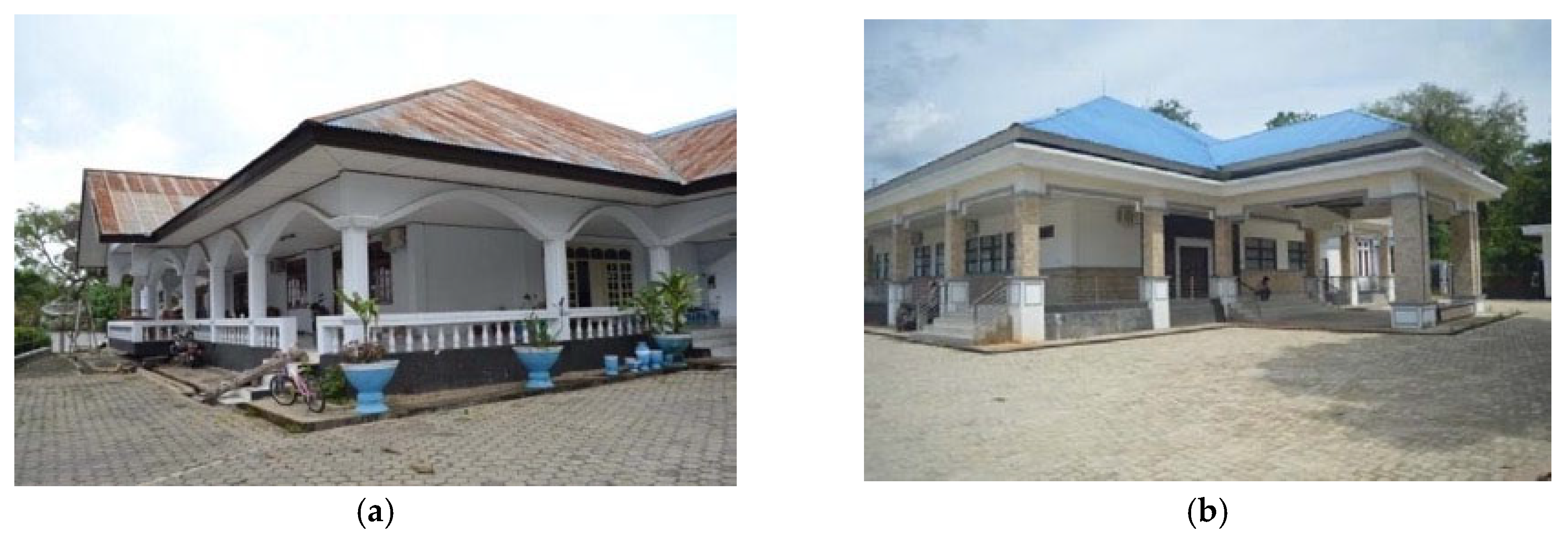
- Architectural Layout
3.3. Preservation of Old Kendari by the Local Government
4. Discussion
5. Conclusions
Author Contributions
Funding
Institutional Review Board Statement
Informed Consent Statement
Data Availability Statement
Acknowledgments
Conflicts of Interest
References
- Dreyfuss, G.; Mifsud, M.; Malderen, T. The Architectural Practice of Regeneration. Sustainability 2013, 5, 3895–3905. [Google Scholar] [CrossRef] [Scilit]
- Muhammad, A.K.; Azhim, K. Urban Morphology of Taiping: The British Influences and Changes in Today’s Urban Structure. Int. J. Acad. Res. Bus. Soc. Sci. 2022, 12, 104–112. [Google Scholar] [CrossRef] [Scilit] [PubMed]
- Zhao, L.; Wong, W.; Hanafi, Z. The Evolution of George Town’s Urban Morphology in the Straits of Malacca, Late 18th Century-Early 21st Century. Front. Archit. Res. 2019, 8, 513–534. [Google Scholar] [CrossRef] [Scilit]
- Choi, E. Colonial Legacies in Indonesia’s Urbanization and Urban Housing: Past, Present, and Future. Mahabbah J. Relig. Educ. 2022, 3, 101. [Google Scholar] [CrossRef] [Scilit]
- Dwisusilo, S.M.; Yuniar, L.A. Mobility and Ideological Perspective of Asano Akira in Java During Period of Japan Occupation. Mozaik 2020, 20, 108–119. [Google Scholar] [CrossRef] [Scilit]
- Colombijin, F.; Cote, J. Cars, Conduits, and Kampongs: The Modernization of the Indonesian City, 1920–1960; Brill: Leiden, The Netherlands, 2015. [Google Scholar]
- Perkasa, M.I.; Sumardiono, B.; Sentosa, H.R. Morphological Development of the Darmo Cultural Heritage Area in Surabaya 1905–1943. J. Arsit. Arcade 2022, 3, 403–409. [Google Scholar] [CrossRef] [Scilit]
- Mandaka, M.; Yulitriani, E. Typology and Morphology of the Old City Area of Semarang. Alur 2023, 6, 13–20. [Google Scholar] [CrossRef] [Scilit]
- Litiloly, M.K. Morphological Study of Kotagede Area in Yogyakarta: Development of Kotagede Area Pattern and Influencing Factors. J. Arsit. Komposisi 2019, 3, 211–224. [Google Scholar] [CrossRef] [Scilit]
- Syahid, M.A.A.; Ridwan, K.K. No Fort in Fort City’: Lost Heritage and The Shift of Urban Conservation in Tangerang, Indonesia. IOP Conf. Ser. Earth Environ. Sci. 2018, 213, 012046. [Google Scholar] [CrossRef] [Scilit]
- Ignasia, H. Transformations and Conservation of the Ex-Colonial Dwelling Settlements in North Bandung—Indonesia: A Historical and Urban Architectural Review for the Search of City Identity and Conservation Strategy Approaches; Suedwestdeutscher Verlag fuer Hochschulschriften: Stuttgart, Germany, 2010. [Google Scholar]
- Drianda, R.P. Innovation in Cultural Heritage Preservation in Taiwan: Lessons for Indonesia. IAFOR J. Cult. Stud. 2021, 6, 73–89. [Google Scholar] [CrossRef] [Scilit]
- Utami, D.P.; Anza, M.R. Analysis of Urban Heritage Management in the Heritage Area of Jakarta Old-City. In International Conference on Administrative Science, Policy and Governance Studies (ICAS-PGS) and the International Conference on Business Administration and Policy (ICBAP); Atlantis Press: Dordrecht, The Netherlands, 2017. [Google Scholar]
- Akihary, H. Architectuur & Stedebouw in Indonesie, 1870–1970; De Walburg Pers: Zutphen, The Netherlands, 1990. [Google Scholar]
- Whitehand, J. Conzenian Research in Practice. In Morphological Research in Planning, Urban Design and Architecture; Springer: Cham, Switzerland, 2021; pp. 19–42. [Google Scholar]
- Li, X.; Zhang, Y. Urban Morphology and Historical Urban Landscape Conservation and Management. In Conserving and Managing Historical Urban Landscape; The Urban Book Series; Springer: Singapore, 2023. [Google Scholar]
- Li, H. Urban Spatial Evolution of Guangzhou’s Xiguan Historic Old Town: An Analysis Under the Semantics of the Conzen School. Archit. Stud. Int. J. Archit. 2024, 10, 136–150. [Google Scholar] [CrossRef] [Scilit]
- Dai, D.; Dai, W. Effects of Urban Expansion on Environment by Morphological Study. IOP Conf. Ser. Earth Environ. Sci. 2019, 227, 052004. [Google Scholar] [CrossRef] [Scilit]
- Kropf, K. The Handbook of Urban Morphology; John Wiley & Sons: Hoboken, NJ, USA, 2018. [Google Scholar]
- Moudon, A. Urban Morphology as an Emerging Interdisciplinary Field. Urban Morphol. 1997, 1, 3–10. [Google Scholar] [CrossRef] [Scilit]
- Lai, P.C.; Chen, S.; Low, C.T.; Cerin, E.; Stimson, R.; Wong, P.Y.P. Neighborhood Variation of Sustainable Urban Morphological Characteristics. Int. J. Environ. Res. Public Health 2018, 15, 465. [Google Scholar] [CrossRef] [Scilit]
- Caniggia, G.; Maffei, G.L. Architectural Composition and Building Typology: Interpreting Basic Building; Alinea Editrice: Firenze, Italy, 2001. [Google Scholar]
- Kulesza, M. Conzenian Tradition in Polish Urban Historical Morphology. Eur. Spat. Res. Policy 2015, 21, 133–153. [Google Scholar] [CrossRef] [Scilit]
- Arat, M.A. Morphological Regionalization: Strengthening the Conzenian Method; Springer: Berlin/Heidelberg, Germany, 2023. [Google Scholar]
- Suryawinata, B.; Mariana, Y.; Wijaksono, S. Sustainability and Urban Morphology. IOP Conf. Ser. Earth Environ. Sci. 2018, 195, 012099. [Google Scholar] [CrossRef] [Scilit]
- Chen, X.; Xie, W.; Li, H. The spatial evolution process, characteristics and driving factors of traditional villages from the perspective of the cultural ecosystem: A case study of Chengkan Village. Habitat Int. 2020, 104, 102250. [Google Scholar] [CrossRef] [Scilit]
- Gaur, S.; Singh, R. A Comprehensive Review on Land Use/Land Cover (LULC) Change Modeling for Urban Development: Current Status and Future Prospects. Sustainability 2023, 15, 903. [Google Scholar] [CrossRef] [Scilit]
- Wang, M.; Liu, J.; Zhang, S.; Zhu, H.; Zhang, X. Spatial Pattern and Micro-location Rules of Tourism Businesses in Historic Towns: A Case Study of Pingyao, China. J. Destin. Mark. Manag. 2022, 25, 100721. [Google Scholar] [CrossRef] [Scilit]
- Tim BPCB. Survei Penyelamatan dan Pemetaan Tinggalan Budaya Kota Lama Kendari (Survey on the Rescue and Mapping of Cultural Remains of the Old City of Kendari); Balai Pelestarian Cagar Budaya Provinsi Sulawesi Selatan: Makassar, Indonesia, 2021. [Google Scholar]
- Chalik, H. A Regional Social History of Southeast Sulawesi; Depdikbud: Jakarta, Indonesia, 1985. [Google Scholar]
- Noor, M. Kendari Port Development: The Meeting Point of Shipping and Trade Route in East Coast of Sulawesi, 1831–1945. J. Marit. Stud. Natl. Integr. 2018, 2, 75–85. [Google Scholar] [CrossRef] [Scilit]
- Said, M. From Colonial City to Commercial City: History of Kendari City XIX–XX Century. In Proceedings of the Konferensi Sejarah Nasional VIII d, Jakarta, Indonesia, 14–17 November 2006. [Google Scholar]
- Roosmalen, P.K.V. Designing Colonial Cities: The Making of Modern Town Planning in the Dutch East Indies and Indonesia 1905–1950. Newsletter 2011, 57, 7–9. [Google Scholar]
- Asnur, W. The Entry of Dutch Imperialism and Its Influence on the Social and Economic Life of the Kendari Community (1906–1942). Bachelor’s Thesis, Universitas Halu Oleo, Kendari, Indonesia, 2010. [Google Scholar]
- Hafid, H.; Safar, M. Sejarah Kota Kendari; Humaniora: Bandung, Indonesia, 2007. [Google Scholar]
- Wijayanti, D. Kehidupan Sosial Masyarakat di Bunken Kendari pada Masa Pendudukan Jepang (1942–1945). Bachelor’s Thesis, Universitas Halu Oleo, Kendari, Indonesia, 2014. [Google Scholar]
- Mills, G. Urban Climatology: History, Status and Prospects. Urban Clim. 2014, 10, 479–489. [Google Scholar] [CrossRef] [Scilit]
- Tarore, L.T.; Sangkertadi; Kaunang, I. R. Karakteristik Tipologi Arsitektur Kolonial Belanda pada Rumah Tinggal di Kawasan Tikala (Typological Characteristics of Dutch Colonial Architecture in Residential Houses in the Tikala Area). J. Arsit. Daseng 2016, 5, 1–9. [Google Scholar]
- Kartamihardja, A.I. Kajian Bentuk Arsitektur Shophouse sebagai Hasil Adaptasi Budaya Imigran Tionghoa di Kota Bandung (Study of the architectural form of shophouses as a result of the adaptation of Chinese immigrant culture in the city of Bandung). Koridor 2018, 9, 182–188. [Google Scholar] [CrossRef] [Scilit]
- Nikovic, A.; Dokic, V.; Maric, I. Revising the Position of a City Block within the Morphological Frame of a Traditional City: Contemporary Perspectives. Spatium 2014, 1, 1–6. [Google Scholar] [CrossRef] [Scilit]
- Arat, M.A.; Oliveira, V. Applying a Morphological Approach into Istanbul’s Urban Landscape. In Formal Methods in Architecture; Springer: Singapore, 2023. [Google Scholar]
- Cai, W.; Yanweng, W.; Jiong, W.; Kraak, M.J.; Wang, M. Mapping Street Patterns with Network Science and Supervised Machine Learning. Int. J. Geo-Inf. 2024, 13, 114. [Google Scholar]
- Othman, F.; Yusoff, Z.M. Transforming Urban Space for Smart Utilization Through the Street Morphology Analysis. In Earth and Environmental Sciences Library; Springer: Cham, Switzerland, 2024. [Google Scholar]
- Mushayt, N.S.A.; Cin, F.D.; Proenca, S.B. New Lens to Reveal the Street Interface. A Morphological-Visual Perception Methodological Contribution for Decoding the Public/Private Edge of Arterial Streets. Sustainability 2021, 13, 11442. [Google Scholar] [CrossRef] [Scilit]
- Fezzai, S. Assessment of Patterns of Spatial Transformations. Int. Rev. Spat. Plan. Sustain. Dev. 2024, 12, 173–195. [Google Scholar] [CrossRef] [Scilit] [PubMed]
- Kaya, M.E.; Aykol, M. Through the Historical Landscape to an Urban Green Infrastructure: Themes and Context. Nord. J. Archit. Res. 2013, 2, 231–254. [Google Scholar]
- Xia, S.; Liu, B.; Wang, H. Construction of a Sustainability-Based Building Attribute Conservation Assessment Model in Historic Areas. Buildings 2022, 12, 1346. [Google Scholar] [CrossRef] [Scilit]
- Takva, Y.; Takva, C.; Ilerisoy, Z.Y. Sustainable Adaptive Reuse Strategy Evaluation for Cultural Heritage Buildings. J. Alam Bina 2023, 10, 25–37. [Google Scholar] [CrossRef] [Scilit]





| Building | Early 20th Century (Colonial Era) | Current (2024) |
|---|---|---|
| Local residents’ houses, changed from traditional stilt buildings to permanent 2-storey houses. | 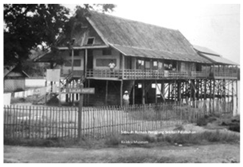 | 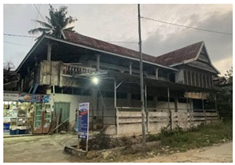 |
| The hospital was turned into a local community health center, but in recent years, it has been vacated. | 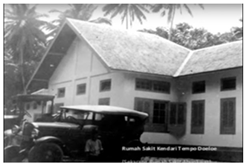 |  |
| Shophouse building, from a 2-story non-permanent building to a permanent building. | 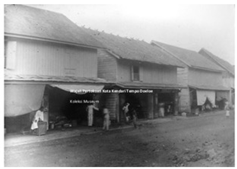 |  |
| Period and Year | Street Structure | Land Distribution | Architectural Style |
|---|---|---|---|
| Pre-colonial (>1831) | The establishment of pathways incited trade between settlers and villages. | The establishment of village structures; both settlements on land and at sea. | Houses with vernacular architecture, generally stilt houses located on land and seacoasts. |
| Dutch East Indies Occupancy (1831 to 1905) | The Dutch East Indies facilitated the construction of roads and ports to provide accessibility for the people and exportation of goods. | Setting of military bases and trade zone, after which came the growth of markets, ports, and communities. People’s migration helped the settlements to be varied. | Several colonial trade facilities were built. The residential types were more diverse, with stilt houses remaining the common architectural style. |
| Dutch East Indies Occupancy/Laiwoei Sub-division (1906 to 1942) | The new street to mainland was built to increase the flow of goods and people, as well as commercial activities. | The city structure was formed like other colonial cities on the coast, in accordance with the geographical conditions of Kendari bay. | The city grew swiftly with numerous Dutch East Indies structures in the form of European designs and ethnic Chinese shophouses with two stories dominating the commercial district. |
| Japanese Occupancy (1942 to 1945) | There was no significant road improvement due to the short period of Japanese occupation. | There were no significant changes. Japan still adopted Dutch urban planning. | There was no development or changes to buildings in the city because, at that time, Japan was focused on building several bunkers in Kendari. |
| Post-Independence (1945 to 1998) | Large-scale development of street. The land and maritime transportation modes were quickly developing. | City structures were based on the previous colonial city. The development was increasingly rapid and dense, especially in port, commercial, and residential areas. | Cities were growing and structured, but only government and public facilities were permanent, while Chinese shophouses and local people were non-permanent. |
| Modern Era (2000 to present) | The connecting roads from the Old City to other regions in Kendari, causing the Old City to be slowly abandoned. Therefore, the government implemented a revitalization plan, which included the construction of bridges and major roads connecting the old and new areas. | City development started moving westward, resulting in structural changes. There was a decline in the quality of urban environment and several commercial areas were starting to be abandoned by the owners; however, the number of residential areas is increasing slowly. | Many colonial structures were renovated. The appearance of all kinds of buildings turned into permanent, identical structures, such as shophouses adopting a contemporary architectural style. |
| Strategic Components | Characteristics | Implementation Approach |
|---|---|---|
| Understanding Urban Morphology | Regional mapping and historical research to explore urban morphology and evolution. | Comprehensive assessment to define borders and regional development program priorities. |
| Preserving History through City Planning | Heritage protection zones and adaptive reuse of old buildings preserved the architecture and current function of the city. | City historic land zoning, cultural heritage building designation, historic structures used for cultural heritage sites, and constructions strengthening local identity and municipal image. |
| Legal and regulatory framework | Space permission criteria and references. Developing new rebuilding rules considering old urban structures to safeguard, maintain, and restore cultural and historical heritage assets. | Legalize building intensity, Floor Area Ratio, Building Coverage Ratio, maximum height, facade design, and environmental harmony. In addition, offering subsidies to historic property owners for renovation and maintenance. |
| Community Engagement and Education | Local communities, stakeholders, academics, and cultural organizations should be included in the preservation process as well as educated about the benefits. | Increasing public education and awareness, ownership, and pride, thereby fostering a sense of responsibility and solidarity among citizens, in terms of maintaining cultural heritage. |
| Infrastructure and environmental aspects | Integrating practices to improve environmental quality and balance, and implementing advanced infrastructure solutions to protect against environmental risks. | Green space, public transportation, and space. Integrating maritime transportation service nodes with other locations. Protecting historic districts with advanced flood control and drainage systems. Environmentally sensitive cultural heritage residential zones and seaside tourism arrangements. |
| Sustainability Monitoring and Evaluation | Designing a structure for periodic information technology application reviews to guarantee strategy efficacy and adaptation to new problems or results. | Establishing a periodic review system to assess strategic effectiveness and suggested improvements, using GIS and 3D modeling to track urban change and plan effectively. |
Disclaimer/Publisher’s Note: The statements, opinions and data contained in all publications are solely those of the individual author(s) and contributor(s) and not of MDPI and/or the editor(s). MDPI and/or the editor(s) disclaim responsibility for any injury to people or property resulting from any ideas, methods, instructions or products referred to in the content. |
© 2025 by the authors. Licensee MDPI, Basel, Switzerland. This article is an open access article distributed under the terms and conditions of the Creative Commons Attribution (CC BY) license (https://creativecommons.org/licenses/by/4.0/).
Share and Cite
Nurjannah, I.; Iswandi, R.M.; Kadir, I.; Sukoco, E. Urban Landscape Development of Kendari Old Town in Southeast Sulawesi, Indonesia: The Conzen School Urban Morphology Approach. Sustainability 2025, 17, 1398. https://doi.org/10.3390/su17041398
Nurjannah I, Iswandi RM, Kadir I, Sukoco E. Urban Landscape Development of Kendari Old Town in Southeast Sulawesi, Indonesia: The Conzen School Urban Morphology Approach. Sustainability. 2025; 17(4):1398. https://doi.org/10.3390/su17041398
Chicago/Turabian StyleNurjannah, Irma, Raden Marsuki Iswandi, Ishak Kadir, and Endro Sukoco. 2025. "Urban Landscape Development of Kendari Old Town in Southeast Sulawesi, Indonesia: The Conzen School Urban Morphology Approach" Sustainability 17, no. 4: 1398. https://doi.org/10.3390/su17041398
APA StyleNurjannah, I., Iswandi, R. M., Kadir, I., & Sukoco, E. (2025). Urban Landscape Development of Kendari Old Town in Southeast Sulawesi, Indonesia: The Conzen School Urban Morphology Approach. Sustainability, 17(4), 1398. https://doi.org/10.3390/su17041398