1. Introduction
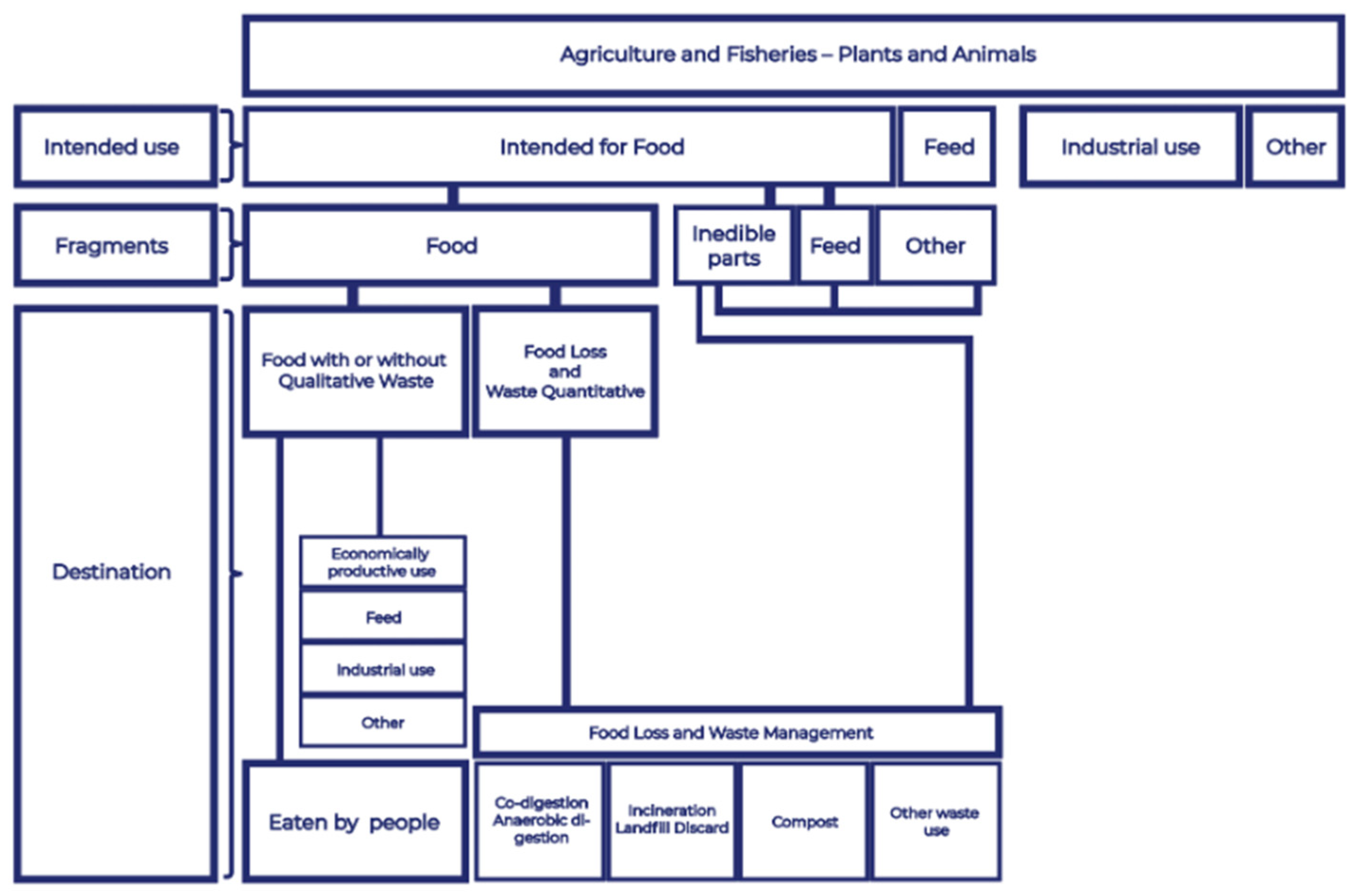
Many international organizations and Western policies are actively seeking solutions to the worldwide issue of food waste and loss. Food loss is characterized by FAO as a reduction in the quantity or quality of food [
1]. This term encompasses agricultural or fisheries products meant for human consumption that are either not consumed or experience a decline in quality, impacting their nutritional, economic, or safety value. A significant component of food loss is ‘food waste,’ which pertains to the disposal or alternative use of food that is suitable for human consumption. This can happen either by choice or due to neglect, resulting in spoilage or expiration [
1]. The disposal of lost or wasted food can occur in multiple ways, each with varying degrees of environmental impact. Composting and anaerobic digestion are less harmful to the environment compared to landfilling or incinerating food waste.
Figure 1 provides a detailed conceptual framework of food loss and waste, adapted from the FAO 2019 report [
2].
Food waste has significant environmental impacts, leading to the wastage of resources like water, energy, and land, while contributing to climate change and economic losses globally. Reducing food waste is crucial to mitigating these effects, as it accounts for substantial CO
2 emissions and environmental degradation, making it imperative for sustainability and resource efficiency [
3]. Food waste is present at every stage of the food supply chain, with nearly one-third of the food produced globally being wasted annually [
4]. The amount of food wastage in restaurants can vary significantly based on factors such as the type of restaurant, operational practices, menu offerings, and customer behavior. The study mentions that edible waste values ranged around 15.5% to 17.0% in the catering sector [
5]. Additionally, another research discusses that around one-third of food waste in the hospitality sector occurs on customer plates, indicating a significant proportion of wastage at this stage [
6].
Armenia and Greece were selected for comparison because they share cultural similarities in food consumption patterns, hospitality traditions, and perceptions of food value, which influence food waste generation [
7,
8]. Both Greece and Armenia have economies that are heavily dependent on the service sector. In Greece, approximately 70% of GDP is generated by services [
9], whereas in Armenia, the service sector accounts for around 56% of GDP [
10].
According to a 2021 Eurostat report, the average share of household expenditure on food and non-alcoholic beverages across the EU is 14.3% [
11]. Both Armenia and Greece exceed this average, with households spending 42% and 16%, respectively [
11,
12].
Regarding household expenditure on services, in Greece, approximately 12.4% of total household consumption is allocated to outdoor dining options, whereas in Armenia, households spent 27.9% of their total consumption on services in 2021 [
12,
13].
However, despite these similarities, their approaches to managing food waste might differ significantly. Greece, as a member of the European Union, has been actively addressing the issue through policy frameworks and continuous monitoring, while Armenia, as a post-Soviet developing country, still lacks comprehensive regulations and systematic management strategies. This contrast provides a valuable foundation for research, allowing for the identification of differences in food waste management practices and the extraction of lessons that Armenia can adopt from the Greek experience. More research attention is needed on restaurant food waste in both Greece and Armenia. Both countries lack sufficient research in this sector, resulting in the topic being less discussed at both societal and governmental levels. Our research seeks to identify the necessary and sufficient conditions in Armenian and Greek restaurants for minimizing food waste. Additionally, we aim to explore mechanisms that could be hypothetically transferred from Greek practice to the Armenian context to reduce food waste in restaurants. Our central hypothesis is that Greek practices are more sustainable, offering valuable lessons that can be adapted and applied within the Armenian food service sector.
2. Literature Review
2.1. Situation of Greece and Armenia
In Greece, food waste is a significant issue, with the country wasting approximately 142 kg of food per person annually, which is almost double the global average of 74 kg [
14]. This places Greece at the top of the list for food waste in Europe. Factors contributing to this high level of food waste include large portion sizes, confusion over expiration dates, and inadequate packaging and storage methods [
15]. According to European statistical reports, Greece does not have enough information about food wastage in the restaurant and food service industries. Conversely, other European nations have provided data: Ireland leads with 38 kg per person annually, while Lithuania, Hungary, and Slovenia have the lowest rates at just 2 kg per person each year. Data for Czechia, Germany, Spain, and Greece is not accessible [
16]. Additionally, Greece has faced challenges with food waste due to economic conditions. The financial crisis led to increased food insecurity, causing many households to buy less food, which paradoxically reduced waste in some cases. However, food waste remains a pressing problem due to inadequate information provided to consumers and inefficient food purchasing habits [
15]. Furthermore, there is no specific data available in the restaurant and Food service sector. Efforts to combat food waste in Greece include initiatives like BOROUME NGO, which connects food donors with organizations that distribute food to those in need, helping to reduce waste while addressing food insecurity [
15]. There are limited specific statistics available for food waste in Armenia, particularly in detailed sectors of restaurants and food services. Generally, data coverage for food waste in Armenia is sparse, making it difficult to provide a comprehensive overview. The UNEP Food Waste Index Report 2024, which offers extensive global and national estimates on food waste, does not provide detailed statistics for Armenia [
17]. The cultural, economic, and managerial factors driving food waste should be subjects of public discourse. However, this topic is not extensively discussed in Armenia or Greece, neither at the societal nor governmental levels. Although the Armenian government has outlined sustainable waste management goals for 2021–2026, there have been no significant visible outcomes by mid-2024 [
11]. To optimize and coordinate waste management, the Republic of Armenia has committed to obligations outlined in its Deep and Comprehensive Cooperation Agreements with the European Union [
18,
19].
2.2. Restaurant Food Waste as a Global Challenge
Efforts to reduce food waste in the restaurant industry are essential not only for improving business sustainability but also for advancing environmental stewardship and social responsibility. The ethical considerations of food waste management in the retail sector highlight the need to balance economic interests with social and environmental responsibilities. Retailers face challenges like maintaining customer loyalty and managing high costs of surplus food redistribution, but financial incentives and regulations can encourage more sustainable practices [
20]. Better waste management in the hospitality industry can lead to significant savings for businesses. The extent of these savings depends on the location of the business and the waste management policies in that region [
21]. While these figures provide some insight into food wastage in restaurants, it is essential to consider that food wastage levels can vary based on numerous factors and may require more specific research or data to determine precise quantities of food waste generated in restaurants globally. According to research [
22], the key factors influencing food waste in the hospitality industry are 1. Guest Show-up Ratio which plays a significant role in food waste generation in hospitality establishments. Properties with lower guest show-up rates often have higher percentages of unconsumed food, leading to increased waste. 2. Seasonal Variation: which can impact food waste generation. These factors highlight the importance of understanding customer behaviors, seasonal influences, and operational aspects in managing and reducing food waste within the hospitality industry. Another study shows that the German food service sector generates about 1.9 million tons of food waste annually, accounting for 17% of the total food waste across the entire food chain. It is believed that there is significant potential to reduce this waste, and the author suggests that nearly half (48.5%) of this wasted food is “avoidable,” meaning it could have been completely or partially consumed if managed properly [
23].
2.3. Key Factors Contributing to Food Waste in the Restaurant Industry
Numerous factors contribute to food waste by both customers and restaurant employees, and various studies aim to identify the primary reasons behind this phenomenon [
24,
25,
26,
27]. Research conducted in Türkiye indicates that perceived behavioral control and food taste significantly positively influence the intention to reduce food waste, while also negatively impacting actual food waste behavior [
26]. Additionally, another study highlights that interpersonal factors contribute to driving customers toward food-wasting behavior [
24]. Bulgarian chefs and other restaurant employees reported a lack of governmental regulations on this important issue. They mentioned that even if they separate food waste for recycling or reuse, it ultimately gets mixed with other residual waste, rendering their efforts ineffective [
25]. The government significantly influences policies, regulations, and initiatives that affect how restaurants handle their food waste. For instance, the UK government played a key role in optimizing national regulatory frameworks to promote the widespread adoption of food waste management practices, including the redistribution of surplus food through donations. These actions support the objective of reducing food waste in the hospitality industry [
19]. The lack of governmental regulations on food waste is an issue not only in Eastern Europe but also internationally. Indonesia lacks specific laws for managing food waste in restaurants, hotels, and households, with efforts mainly limited to separating organic and inorganic waste, which is not consistently practiced. The study also highlighted that the greatest amount of food waste originates from consumer plate waste, and there are no current management procedures to address this [
28]. Additionally, government support can help hospitality businesses by creating connections with charities and food banks to collect and distribute surplus food to those in need. Financial incentives, tax breaks, and regulatory frameworks also play a crucial role in shaping how restaurants manage their food waste. Study demonstrates, the presence or absence of incentives is a key factor in the effectiveness of food waste management in the UK hospitality industry [
29].
3. Materials and Methods
Qualitative Comparative analysis has gained widespread recognition in the social sciences over the past few decades [
30]. This method has proved to be an appropriate method to respond to important scientific inquiries. QCA is a methodology designed for analyzing multiple cases in complex situations. This was developed by Charles Ragin in the 1970s [
31], was originally introduced as a research methodology aimed at understanding complex causal relationships across multiple cases. It helps identify the reasons behind why change occurs in some cases but not in others, offering insights into the conditions that lead to different outcomes. QCA is a comparative, case-based approach that helps identify the minimal conditions required to achieve a specific outcome [
32]. QCA is designed to handle complexity and account for the influence of context. It operates on two key assumptions: first, that change typically results from various combinations of factors rather than any single factor; and second, that different combinations of factors can lead to similar outcomes [
33].
QCA is designed for use with an intermediate number of cases—usually between 10 and 50. It is ideal for situations where the number of cases is too small for conventional statistical analysis, which requires larger, statistically significant sample sizes, yet too large for a purely qualitative, case-study-based approach. In our research, we interviewed 8 restaurants from each capital city during the summer of 2024, resulting in a total of 16 interview responses. These were then applied to the QCA formula, 4ⁿ, where 4 represents the number of conditions and n the number of units being compared—in our case, Yerevan and Athens, so “n” equals 2. This makes it a versatile method for analyzing complex phenomena with limited cases.
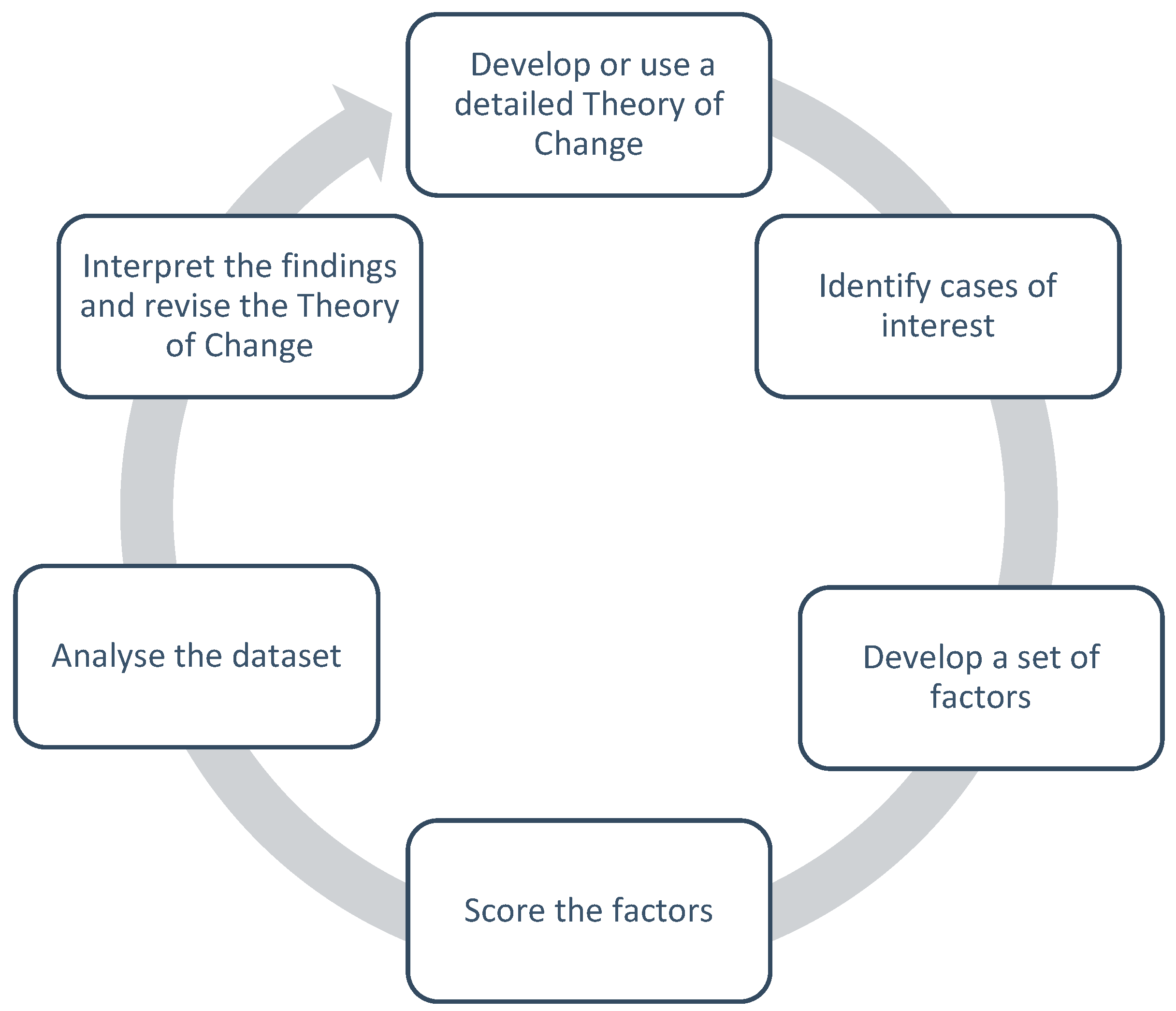
In this research, we have employed Fuzzy-set Qualitative Comparative Analysis (FsQCA), a graded approach to assessing cases by using a fuzzy scale, rather than a simple binary (crisp) distinction. FsQCA to investigate the conditions that lead to high or low levels of food waste in restaurants across Greece and Armenia, particularly in the capital cities of the chosen countries. The case selection (
Figure 2) involved a random sample of medium and large restaurants, chosen to ensure diversity in the types of food served and operational practices. Several important factors have been considered to accurately assess the conditions leading to varying levels of food waste: The software of fsQCA version 4.1 for Mac has been used during the analyzing the results.
Selection of The Cases
- i.
Restaurant Size and Capacity—Differences in food waste between medium and large restaurants could stem from variations in seating capacity, daily customer volume, and kitchen operations. Larger establishments may face more significant challenges in waste management due to increased food production and inventory turnover.
- ii.
Type of Cuisine—The diversity of food offerings plays a critical role, as different cuisines involve varying ingredients, preparation methods, and waste patterns.
- iii.
Food Preparation and Inventory Practices—The level of food waste may be influenced by kitchen practices such as portion control, batch cooking, and storage methods. Efficient inventory management and food rotation techniques can minimize spoilage and overproduction.
- iv.
Menu Complexity—Restaurants with more complex menus may struggle with managing ingredient waste due to the need for a wider variety of perishable items, which can contribute to overstocking and waste if customer demand fluctuates.
- v.
Customer Behavior and Preferences—Customer preferences, portion sizes, and ordering habits also play a significant role in food waste. For example, restaurants that frequently cater to customers with dietary restrictions or special requests may experience higher levels of waste due to customized orders.
- vi.
Sustainability Practices—Some restaurants may have implemented sustainability initiatives, such as composting, food donation, or waste reduction programs. These practices could significantly affect the amount of waste produced and are vital for distinguishing between high- and low-waste establishments.
After choosing the case, the interview guide was formed, which consisted of seven demographic questions with the employees of the restaurants, such as the general managers, operational managers, and chefs. Thirteen other questions were context-specific. Interviews both in Athens and Yerevan were conducted face to face and took approximately 45 min to 1 h. Interview recordings were made with the interviewees who gave their explicit consent for that.
Conditions and the outcome of the analysis have been selected due to the comprehensive literature review:
- 1.
Education and Awareness of the Staff Members—EA (Condition 1)
In the restaurant industry, education and awareness among both consumers and staff play a crucial role in reducing and managing avoidable food waste. Staff members often justify high production levels by citing the uncertainty of demand, aiming to avoid shortages and ensure preparedness. However, inadequate knowledge and a lack of technological support often led to excess food production, which then becomes waste. Restaurant managers frequently view this waste as a lesser issue compared to the potential risk of customer dissatisfaction [
34]. This problem is even more pronounced in countries with lower levels of general education, making professional training programs essential for advancing sustainable practices and raising environmental awareness. Sakaguchi et al. [
22] further noted that, despite growing awareness of food waste, there is still a lack of standard practices proven to effectively reduce it. In our study, we evaluated restaurant employees’ awareness on a scale from 0 to 10, where “0” indicated total unawareness and “10” the highest degree of awareness. We also inquired whether any specialized training programs had been organized for restaurant staff in the past year to promote food waste reduction and sustainable practices.
- 2.
Customer Choice Enhancement—CCE (Condition 2)
There are a few benefits of portion differentiation. Offering various portion sizes, restaurants can cater to different appetites, which helps minimize leftovers and waste. Diners can choose a portion that matches their hunger level, reducing the likelihood of food being discarded. On the other hand, the study of Zuraikat et al. [
35] suggests that how much food people eat (the portion size effect) is influenced more by how they perceive the value of the food itself rather than just its price. Specifically, when diners are given the option to take home leftover food, it reduces the tendency to overeat or be influenced by larger portion sizes. This means that the idea of wasting food feels more significant to them than simply considering the cost of the food. To address this in our research, we asked the restaurant employees whether they have three portion sizes: small, medium and large.
- 3.
Flexible Dining Options and Take-Home Practices—FDO (Condition 3)
According to the study of Gunders [
36], about 17% of the meals remain uneaten in the restaurants, with over half of these leftovers being discarded rather than taken home. This situation translates to an estimated
$100,000 in waste for every
$1 million spent on consumer food purchases at restaurants showing not only economic but also huge environmental problems [
37,
38]. However, asking for leftovers in the restaurant can be a complex decision. Factors such as convenience, social stigma, feelings of shame, and the desire to save face can discourage people from requesting leftovers [
39]. Conversely, concerns for the environment may encourage diners to ask for take-home containers, motivating them to reduce food waste [
24]. In this research, we tried to empirically show whether flexible dining options can contribute to food waste reduction. Therefore, we asked the interviewees whether they offer top-ups for taking leftovers with the consumers.
- 4.
Digital Technologies for Inventory Management—DTIM (Condition 4)
Digital technologies have a vital role in the food waste and loss management, especially in the downstream stages of the supply chain—such as consumption, food service, and food sharing. For instance, digital platforms are employed to redistribute surplus food, either offering it at reduced prices to consumers or donating it for free to charities that assist those in need. In general, tracking food waste offers a comprehensive understanding of where and how waste occurs within a restaurant’s operations, which is crucial for several reasons. First, it enables restaurant owners and managers to identify specific problem areas, such as inventories, over-preparation, spoilage, or uneaten portions returned by customers. Without precise data, waste reduction efforts can be misdirected and ultimately ineffective. Second, monitoring food waste facilitates the establishment of realistic and measurable waste reduction goals. To address this in our research, we have asked the interviewees to mention whether they have an inventory tracking system implemented in the restaurant.
4. Results
Since the interviews were conducted in eight restaurants located in Athens and eight in Yerevan, it became necessary to understand the specific characteristics of each group. It is noteworthy that most of the restaurants surveyed in Athens were independently owned establishments, which was also the case for Armenia’s capital city. For clarity, it should be noted that in both Athens and Yerevan, well-known fast-food outlets were not included in the study.
An interesting statistical pattern emerged among restaurants offering Flexible Dining Options, where 62.5% of Athens-based restaurants stated that they provide customers with the option to take their food with them, offering special containers and bags to carry or store leftover food for later consumption. Some even mentioned this as a mandatory part of their service, where staff are required to ask customers whether they wish to take their leftovers home. In contrast, this practice appeared to be far less common among restaurant employees in Yerevan. Only 25% of the surveyed Yerevan restaurants confirmed that they provide special containers for customers to take food with them. The remaining majority noted that such requests are uncommon among their customers, and therefore, they have not seen the need to adopt this practice. Interestingly, in Yerevan, taking one’s leftovers home is still often perceived as either embarrassing or undesirable behavior. Among the surveyed Athens restaurants, 50% reported having participated in educational or training programs where they were introduced to the topic of food waste and became aware of the importance of addressing it. In contrast, the situation in Yerevan was rather concerning, as none of the surveyed restaurants had participated in any training program that emphasized the significance or urgency of tackling food waste. Nevertheless, in both Athens and Yerevan, the overall level of employee awareness regarding food waste remains low. However, Yerevan still lags behind Athens, with average awareness levels of 33% and 49%, respectively. It is also noteworthy that none of the respondents from either Athens or Yerevan reported having issues related to improper food storage conditions. This fact suggests that, from a technical standpoint, restaurants in both capitals are adequately equipped, and that food waste is not primarily caused by poor technical infrastructure, but rather by management inefficiencies and behavioral factors.
In this research, we employed the truth table technique to analyze the various conditions influencing food waste volume in various restaurants in Greece and Armenia. We constructed the truth table by listing all logical combinations of selected variables, calculating the membership score for each row using fuzzy mathematics. This approach allowed us to examine how different configurations of external factors impacted restaurants’ food waste volume.
To assess these configurations, we focused on two critical criteria: coverage and consistency. Achieving a balance between these two aspects is vital for effective analysis. Coverage refers to the proportion of results explained by each solution term compared to the overall results explained by the solution as a whole. In the context of fuzzy sets, consistency measures the relationships among subsets; specifically, it indicates whether the membership score of a particular set of causal attributes is always less than or equal to that of the results set. While coverage measures correlation, it also reflects the proportion of consistent members relative to the total number of members in the results set.
Ensemble consistency is evaluated based on fuzzy membership scores, as expressed in the following formula [
33]:
Here, i represents the combination of conditions, denotes the membership score of the condition combination, signifies the membership score of the outcomes, and min indicates the lower value between X and Y. Consistency assesses the membership scores of the condition combinations against the outcome set; higher scores indicate a stronger level of consistency.
As a result of the FsQCA analysis, we have identified four major paths that lead to less food waste in the restaurants in Greece and Armenia.
| Condition/Path | DTIM | FD | EP | CCE | Outcome (Less Food Waste) | Raw Coverage | Unique Coverage | Consistency |
| Path 1 (DTIM * EA~CCE) | ● | ⊗ | ● | ○ | Yes (1) | 0.1675 | 0.08375 | 0.67 |
| Path 2 (DIE * FD~CCE) | ● | ● | ⊗ | ○ | Yes (1) | 0.41875 | 0.335 | 0.67 |
| Path 3 (EP * FD~CCE) | ⊗ | ● | ● | ○ | Yes (1) | 0.1675 | 0.08375 | 0.67 |
| Path 4 (DIE * EP * FD) | ● | ● | ● | ⊗ | Yes (1) | 0.1675 | 0.08375 | 0.67 |
| Note. ● = presence; ⊗ = absence; ○ = irrelevant; * = logical AND; ~ = negation (absence of condition). |
Suggests digital tracking and educational programs are effective when customer customization is limited.
Observed mainly in Athens, indicates that technology combined with flexible service helps reduce waste when customer options are streamlined.
Suggests that education and flexible dining together reduce waste, again better when customer choice is limited.
Raw Coverage: 25.51%
Consistency: 0.67
Observed in Greece
All positive conditions present; CCE not excluded. Suggests a comprehensive strategy is effective.
| Condition/Path | DTIM | FD | EP | CCE | Outcome (More Food Waste) | Raw Coverage | Unique Coverage | Consistency |
| Path 1 (~EP * ~FD * ~CCE) | ◯ | ⊗ | ⊗ | ⊗ | Yes (1) | 0.58625 | 0.335 | 0.67 |
| Path 2 (~DIE * ~EP * ~FD) | ⊗ | ⊗ | ⊗ | ◯ | Yes (1) | 0.335 | 0.08375 | 0.67 |
| Note. ⊗ = absence; ○ = irrelevant; * = logical AND; ~ = negation (absence of condition). |
Suggests that lack of education and flexibility combined with excessive customization leads to high waste.
Raw Coverage: 33%
Consistency: 0.67
Observed in Armenia
5. Discussion
The fsQCA results reveal a pattern of causally significant conditions that are consistent with existing food waste management theories and highlight notable regional differences between Greece and Armenia.
The implementation of digital inventory systems (DTIM) and targeted staff and customer education programs (EP) consistently emerged as key configurations associated with lower food waste. These results are consistent with existing literature emphasizing the role of technological tools and awareness-raising initiatives in reducing food waste. For instance, a recent research conducted within the American context demonstrates that restaurants and cafés adopting AI-based food waste management solutions achieve significant reductions in food waste, generating notable economic benefits [
40]. Technologies provided by companies such as Leanpath, Winnow, and Kitro employ real-time monitoring and predictive analytics to track, categorize, and minimize food waste [
41]. Such solutions offer practical opportunities for Horeca sector stakeholders to implement systematic monitoring and actively manage food waste levels. Another study highlights the effectiveness of mobile applications designed to connect restaurants and cafés with end consumers to sell surplus food at the end of the business day, thereby reducing food waste [
42]. In the context of Armenia, mobile applications designed to connect restaurants and cafés with end consumers for the sale of surplus food have not yet been implemented by local Horeca sector representatives. The development of such platforms could play a pivotal role in promoting a zero-waste approach by facilitating direct interactions between food providers and consumers [
43]. This absence also highlights a promising avenue for further research, particularly in exploring the technological, cultural, and regulatory barriers that may hinder the adoption of these solutions in the Armenian context. In contrast, Greece has already seen the introduction of similar applications, comparable in concept to the widely known European platform “Too Good To Go.” However, in Athens, the platform available to consumers is called “Mystery Pot,” which serves a similar function in connecting establishments with surplus food to potential buyers. Comparing these contexts underscores the potential for cross-country learning and adaptation of successful digital solutions to support food waste reduction strategies in emerging markets such as Armenia.
Respondents in both Athens and Yerevan were asked to reflect on the question: “What role does customer education play in reducing food waste, and how can it be improved?” The majority emphasized the importance of integrating food waste awareness and sustainability modules into public school and university curricula as a long-term strategy to foster behavioral change. Several participants highlighted that education should begin early to shape responsible consumption patterns among future generations. Interestingly, one representative from an Athenian restaurant noted that, in practice, some businesses prioritize profitability over sustainability, expressing satisfaction when customers over-purchase meals, as revenue rather than food efficiency remains their primary concern. This insight reveals the persistent tension between economic incentives and environmental responsibility within the hospitality sector. Another respondent emphasized the importance of employee education, noting that raising staff awareness can play a crucial role in reducing food waste. When restaurant personnel are trained to actively promote sustainable practices, such as offering customers takeaway or “top-up” bags for unfinished meals, the communication between staff and customers becomes clearer and more normalized. There are also other research studies supporting the belief of our respondent and research results overall [
34,
44]. As the respondent explained, this practice helps eliminate the social stigma often associated with taking leftovers home, framing it instead as a standard and environmentally responsible behavior encouraged by the establishment. According to the participant, the consistent implementation of this approach in their restaurant has proven to be highly effective in minimizing avoidable food waste. In contrast, a respondent from Yerevan noted that suggesting customers take leftover food home would be considered inappropriate, as it might be perceived as offensive. This observation underscores the stronger presence of social stigmas surrounding food consumption behaviors in Yerevan compared to Athens. Such findings highlight the importance of educational interventions targeting both restaurant employees and customers. By helping to increase the awareness of the social and economic implications of food waste, restaurants can gradually shift public perceptions and normalize sustainable consumption practices. Encouraging staff to communicate these values confidently, and customers to view food-saving actions as responsible rather than embarrassing, could help mitigate these culturally embedded barriers. Several studies have demonstrated the effectiveness of training programs for restaurant employees, showing that increased staff awareness and engagement are strongly associated with significant reductions in food waste [
45,
46,
47]. These findings underline that education and awareness are crucial not only at the consumer level but also among hospitality sector employees, where day-to-day practices directly influence waste generation
Extending this perspective beyond the restaurant industry, research further indicates that educational institutions often prioritize waste recycling initiatives over developing and implementing comprehensive waste prevention models [
48,
49]. Nevertheless, studies assessing the effectiveness of educational workshops, particularly at the high school level, have demonstrated positive outcomes in raising awareness and fostering behavioral change toward food waste reduction. However, these efforts are often fragmented, underscoring the need for more systematic and institutionalized educational strategies to ensure long-term and cross-sectoral impact [
50].
As of our results, we have been able to prove that all the waste pathways are connected with the limited Customer Choice Enhancements. This proves that many restaurants in both capitals are not providing at least three portion-sized meals. In Yerevan there was no Restaurant observed providing at least three portion types for their meals. Different studies are proving that limiting the Customer choice enhancement is actually reducing the food waste [
51,
52,
53]. Interventions that change dining practices, such as reducing portion amounts or altering plate shapes, have shown some success in minimizing waste, suggesting that limiting choices could be a viable strategy. Moreover, our study shows that no single factor was sufficient on its own. Only when combined—especially when including DTIM, EP, or FD—did strategies effectively reduce food waste. This reflects the systemic nature of the issue. Research shows that Armenia lags behind Greece in Food Waste Strategies as the configurations associated with high waste (~EP * ~FD * CCE and ~DTIM * ~EP * ~FD) were exclusively observed in Armenian restaurants. This suggests a need for policy intervention, investment in technology, and capacity-building programs in Armenia. This can also be connected with the fact that in Greece there are already several policies and national waste management reduction strategic visions applied and targets set, which, in comparison to Armenia, have not been performed yet [
8,
54].
6. Conclusions
The aim of this study was to compare restaurant food waste management practices in Greece and Armenia, with the objective of identifying key lessons and transferable practices that could be implemented within the Armenian Restaurant sector. This comparison is particularly relevant given the shared historical and cultural backgrounds of the two countries, especially in terms of food consumption habits and culinary traditions. The comparative analysis of restaurants in Athens and Yerevan revealed distinct structural and behavioral differences influencing food waste generation, echoing findings from Parfitt, Barthel, and Macnaughton [
55], who emphasized the cultural and infrastructural variability of food waste drivers across contexts. This research made it possible to identify and analyze the managerial differences between restaurants in Yerevan and Athens, thereby highlighting the necessity of implementing managerial models in Yerevan that could help minimize food waste. In both Greece and Armenia, the issue of food waste in the restaurant sector remains underexplored in academic discourse, and this study thus contributes to filling that existing research gap. The fuzzy-set Qualitative Comparative Analysis (FsQCA) identified four main causal configurations associated with lower food waste levels. In Greek restaurants, the most effective pathways combined digital tracking of inventory, employee participation in educational programs, and flexible dining options, particularly when customer customization was limited. The configuration with the highest coverage (41.9%) emphasized the synergy between technology and service flexibility, reflecting the Resource Efficiency Framework outlined by Baldassarre [
56]. Conversely, high food waste in Armenian restaurants was primarily linked to the absence of employee education and flexible dining options, compounded by excessive customer customization, which complicates portion control and increases leftovers.
In both the Armenian and Greek contexts, the integration of educational awareness programs and sustainability-focused modules into formal education systems could serve as an effective long-term strategy for addressing restaurant food waste, echoing Stöckli, Niklaus, and Dorn [
57], who demonstrated that targeted behavioral interventions in hospitality reduce food waste significantly. However, country-specific data on the implementation or effectiveness of such initiatives remains scarce. Therefore, policymakers and educational institutions should prioritize the development of educational interventions that promote food waste prevention and circular economy principles, as advocated by Kicher and Hekkert [
58] in their conceptualization of the circular economy. Moreover, further research is needed to explore how such programs can be adapted to local contexts and institutional frameworks to ensure lasting behavioral and systemic change, in line with Geels’ Multi-Level Perspective on socio-technical transitions [
59]. A recent study suggests that individuals with higher levels of education tend to generate less food waste [
60]. However, it also highlights that other socio-economic and behavioral factors exhibit a stronger and more significant correlation with food waste generation than education alone. This finding reinforces the importance of conducting country-specific analyses, as contextual differences may significantly influence the effectiveness of educational and policy interventions aimed at reducing food waste—an argument reminiscent of Thøgersen’s work on contextual influences in pro-environmental behavior [
61].
It is important to note that this research focused exclusively on restaurants located in Athens and Yerevan. Consequently, the situation in regional areas of Greece and Armenia was not considered, which limits the generalizability of the results to the entire countries. However, the practices observed in the capitals, whether exemplary or lacking, can serve as a litmus test for national trends. The presence of best practices in the capitals may indicate their potential for expansion to the regions, while their absence may suggest that such practices are also missing in non-urban areas. Nevertheless, this research opens new perspectives for further investigation into regional contexts, aiming to understand local narratives and explore existing best practices and innovative solutions related to food waste management. It is also important to note that no official measurements of food waste exist in Armenia, and the lack of statistical data on household or restaurant food waste limits the scope of further research in this area.
Finally, the findings of this study remind us that reducing food waste is not only about improving restaurant efficiency, it is also about addressing one of the most urgent global challenges: hunger. Each portion saved, each improved management practice, and each act of awareness contribute to a larger vision where no edible food is wasted while people still go without. By fostering education, innovation, and responsible consumption, Yerevan and Athens alike can pave the way toward a more sustainable and humane food system, where waste prevention becomes an act of solidarity and a step toward eradicating hunger.



 ,
,