Article

The Impact of Digital Marketing on Sustainable Consumption and Environmental Product Management in China: A Business Model and Legal Perspective

1
Local Government Development Research Institute, Shantou University, No. 243, Daxue Road, Shantou 515063, China
2
School of Public Policy and Administration, Xi’an Jiaotong University, No. 28, Xianning West Road, Xi’an 710049, China
3
School of Law, Hainan University, No. 58 People’s Avenue, Haikou 570228, China
4
School of Economics, Shenzhen Polytechnic University, Shenzhen 518055, China
5
Financial, Taxation and Legal Research Center of Guangdong-Hong Kong-Macao Greater Bay Area, Shenzhen 518055, China
*
Author to whom correspondence should be addressed.
Sustainability 2025, 17(24), 11353; https://doi.org/10.3390/su172411353
Submission received: 2 November 2025 / Revised: 9 December 2025 / Accepted: 13 December 2025 / Published: 18 December 2025

Abstract

This paper examines the role of digital marketing in promoting sustainable consumption within the Chinese economy, with a focus on economic and environmental product management, as well as business policies. In a world where digital platforms are increasingly playing a significant role in shaping consumption patterns, more organizations are relying on digital marketing to promote sustainable products and encourage sustainable consumption habits. This study examines the role of economic feedback, legal frameworks, and sustainability in environmental policy in shaping patterns of consumption and production. Through the lens of legal-constitutional and business approaches, in other words, the paper examines the extent to which sustainable activities in the digital marketing realm foster sustainable consumption patterns that align with corporate social responsibility and environmental management. The research methods are based on secondary data, the literature review, legal thought, and analysis, considering materials published between 2016 and 2024. Moreover, the paper discusses, with specific reference to the modern Chinese corporation, the extent to which legal limitations, in addition to other factors, influence sustainable consumption patterns in contemporary sustainability strategies of the economy. This study concludes that sustainable consumption patterns, with specific reference to economic and environmental product management, can be effectively achieved in the modern economy and supply chain management.

1. Introduction

Digital marketing is transforming the way consumers behave and businesses operate in China, offering immense potential for promoting sustainable consumption. Through the convergence of economic sustainability, sustainable marketing, and innovative business models, firms can leverage e-business and AI to enhance the management of their supply chains and develop sustainable products, and to explore the influence of law and business models in shaping sustainable activities, with specific reference to digital marketing models in sustaining the sustainable digital economy. China’s new digital marketing solutions offer crucial insights into how companies can balance growth with social and environmental sustainability as the world transitions towards sustainable development. This study examines the role of e-commerce, artificial intelligence, and legal systems in contributing to economic growth and sustainability, with a focus on the relationship between digital marketing and sustainable development from a Chinese business model perspective. Firms across the globe can become more sustainable and lead innovation in the digital economy by comprehending these dynamics. The digital economy has ushered in a revolutionary era in world trade and commerce, and this research examines the critical intersection of digital innovation, sustainable economics, and robust business growth. It contends that advancements in e-commerce and digital processes serve as both transactional engines and crucial drivers of a new, sustainable economic model, highlighting the role of digital transformation in promoting sustainable economic growth. It concludes by demonstrating the imperative of strategic integration of the digital economy for achieving long-term sustainability.
It also examines how digital marketing is influencing sustainable consumption and environmental product management in China, evaluating the impact of legal frameworks, emerging business models, and their combined effect, with the aim of identifying pathways to more effective, sustainability-aligned market practices. How does digital marketing influence sustainable consumption behaviors and environmentally oriented product management in China, and what are the legal and business model frameworks that shape this impact? Sustainable development in a hyper-connected marketplace of the labor market and social issue sustainability in the digital era, as well as integration into international trade, along with digital technologies, creates new opportunities for businesses to expand their operations and reach, enabling greater access to markets and more effective participation in global value chains [1]. The impact of digital technologies on sustainable business practices and organizational challenges is significant in the largest developing economy worldwide, due to its increasing integration into the digital dimension of the global economy. China uses several contemporary digital technologies in its international trade, including e-commerce, blockchain, artificial intelligence (AI), and big data analytics. Its use of international trade law and e-commerce-focused free trade agreements (FTAs) also plays a crucial role in promoting this integration. Digital technologies provide a more promising future for the country’s sustainable economic development by facilitating international trade and making trade activities easier and safer [2].
Business strategies that meet regulatory requirements and consumer demands are essential for sustainability, as trade is crucial to economic growth and development. Among the factors driving China’s economic growth are international trade, foreign direct investment, and infrastructure [3]. The pioneering era of technological innovation and economic development heavily relied on communication technologies, including the Internet, computers, and information technology. For China’s continued economic growth, its digital technologies will likely play a similar role. E-commerce platforms face several challenges, including issues of trust and the difficulty for parties to monitor their contracts through the platforms effectively. Blockchain applications provide a solution to these risks through decentralized and innovative technologies [4]. AI applications in international trade can address sustainable risk factors, support public policies promoting sustainable digital transformation, and enhance the efficiency and value of trade. Big data analytics, meanwhile, can increase the likelihood of a given trade relationship’s success. The country’s engagement with trading partners and multilateral organizations over these international trade and investment issues in the digital economy continuously produces a range of legal instruments and practices that can also promote economic development [5].
Emerging digital trade technologies are valuable tools that can create a more efficient trade environment by modernizing procedures and facilitating international commerce [6]. Thanks to their ability to foster trade liberalization and to decrease transaction costs, digital technologies already play a critical role in the economic development of developing countries, which primarily rely on international commerce [7]. Although the automation of import–export procedures is still evolving among developing countries, most of which have yet to establish an optimal regulatory framework to govern these new technologies, China remains one step ahead. The People’s Republic of China ranks among the world’s fastest-growing economies. At the same time, it is boosted by a cross-border e-commerce rule-making process, which also applies to the digital trade technologies discussed in the previous section [8]. This is the theoretical contribution of positioning digital marketing at the intersection of the sustainable consumption economy, environmental product management, and regulatory governance in China. While there have been previous studies focusing on digital trade or sustainability separately, this research adopts an integrated legal–business model perspective. Theories of technology-mediated market change and regulatory institutionalism suggest that this research highlights ways in which digital marketing reorganizes consumer routes of choice, firm strategies for sustainability, and compliance behaviors. Our contribution advances prior models of digital antecedents by demonstrating how joint impacts between legal constraints and digital business models influence sustainable market outcomes, thereby bridging a central theoretical gap within sustainability.
International trade is the exchange of goods and services across international borders, playing a vital role in the economies of all countries [9]. It supports the exchange of ideas and access to goods and services that may not be available in a domestic market, thereby providing avenues for economic growth. Exporting, or making goods and services available to foreign markets, helps increase revenue and allows for an expanded market, creating a viable business. International trade supports specialization and further nurtures innovation and the exchange of ideas [10]. Additionally, it offers opportunities for new companies in emerging markets that are not available in established industries. In addition, international trade facilitates the exchange of culture, musical influences, and art, enabling citizens of other countries to learn different languages and ways of life, as shown in Figure 1. Digital technologies have provided opportunities for access to international trade, leading to an economic revolution. Information technology has enabled the most excellent facilitation of internationalization of business and trade since the Industrial Revolution. International trade is governed by legal frameworks that exist at the global and national levels [11]. Cross-border international trade grew significantly with the reduction in tariffs in the nineteenth century, and the international trade of agricultural products continued to increase, expanding the relative magnitude during the post-war period. The degree of internationalization also rose markedly following post-war reconstruction and the establishment of the General Agreement on Tariffs and Trade [12].
This article is structured as follows: Section 2 presents the literature review and an overview of scholarly feedback. Section 3 presents the Materials and Methods section, which details the secondary data sources and the methodology for their collection. Section 3.2 outlines the identified categories of digital products and the spatial hierarchy of markets within the urban area. Section 4 presents the Discussion section, which reflects on the findings, examining the study’s implications, potential applications, and limitations for future research. Finally, Section 5 presents the Conclusion, which summarizes the key arguments and suggests directions for further research and digital development.

2. Literature Review

China is ranked as the world’s largest importer and the second-largest exporter. It is also the first country to adopt numerous active governmental policies to encourage economic activities related to international trade [13]. Following the implementation of the reform and opening-up policy, China’s global trade volume, particularly export trade, has continued to grow, accelerating the modernization of its industrial structure and significantly contributing to the enhancement in China’s overall economic development. Australia’s welfare and living standards have improved considerably over the last 30 years, primarily due to technological advancements. There are research gaps preventing in-depth insights into the effect of digital marketing on sustainable consumption and environmental product management within the context of China. The research employs a combination of business model frameworks and legal considerations to highlight the interplay between regulatory compliance, corporate strategies, and consumer behavior. Digital technologies have profoundly reshaped international trade. E-commerce platforms enable sellers to reach global markets without a physical presence, helping small- and medium-sized enterprises (SMEs) expand their channels. The literature review highlights the growing importance of digital provisions in trade agreements; however, a more in-depth analysis of China’s trade policies and FTAs would provide greater depth. Referring to works that have focused on international agreements and e-commerce regulations, such as the CPTPP, could offer a comparative perspective, as well as dig deeper into how China’s Belt and Road Initiative (BRI) supports cross-border e-commerce, and how laws are evolving in response to digital trade trends [14].
Contrary to prevalent associations with deficiency, the acronym SME evokes strength, motivation, and encouragement for growth worldwide. China’s expansive digital economy is a global exemplar, and its trade-related technological development is poised to sustain overall societal progress [15]. Reliable regulatory environments for these technologies are vital to openness and trust. International trade agreements explicitly govern e-commerce, setting national treatment standards for digital transactions more restrictively than for goods, services, or payments. Examples of agreements are the Trans-Pacific Partnership, the China-ASEAN Framework Agreement, and the WTO’s Digital Trade [16].

2.1. Legal Frameworks Governing Trade

International trade is regulated by China’s trade laws, foreign trade laws, and agreements with partners. Relevant legal frameworks encompass trade agreements, national laws, and regulations governing intellectual property rights, as well as dispute resolution. China enacts legislative and administrative measures to regulate international trade and tourist services. Companies involved in import and export must be Chinese-registered and may obtain a license, except when engaged in customs clearance, freight forwarding, or goods inspection. The state reserves control over the import and export of certain goods, with the foreign trade sector monopolized by qualified enterprises [17]. Special economic zones and free trade areas allow certain companies to engage in foreign trade without requiring an import and export license. Foreign trade companies operating in the country must comply with measures that require quotas or licenses before participating in import and export activities. Such companies may hold agency status to facilitate the export and import of certain commodities. The transfer, import, and export of technology remain primarily subject to the relevant laws regulating state science and technology policy [18]. China has a diverse range of trade agreements, including tariff trade agreements, trade in goods and services, and intellectual property rights, as well as comprehensive economic partnerships and bilateral investment treaties. Agreements on trade and economic cooperation, as well as other signed but non-ratified agreements, are also part of the system. The legal foundation for international trade has recently flourished, primarily through the ongoing development of the country’s FTAs, which address trade in services, investment, and dispute settlement mechanisms [19].

2.2. Sustainable International Trade Agreements

International trade encompasses the cross-border exchange of goods and services between nations, regulatory compliance, contract establishment, payments, and freight transportation. Within this context, international trade agreements play a pivotal role in shaping the terms and conditions of trade between countries. China, as the world’s second-largest economy, actively pursues such contracts, which are instrumental in deepening economic partnerships, expanding markets, and diversifying supply chains. In the wake of the 2008 global financial crisis, China’s strategy highlights the importance of international trade cooperation agreements in sustaining steady economic development [20]. Trade law binds trade transactions and serves as the fundamental legal foundation for international trade [21]. The economic repercussions have intensified constraints on large-scale trade and investment networks, potentially diminishing their economic impact. Against this backdrop, digital technologies are a new impetus for international trade and a decisive force in reinvigorating global economic development. Integrating digital technologies with trade frameworks establishes a securely regulated and efficiently operated system that facilitates commercial activities; the digital transformation of international trade thereby emerges as a critical avenue for economic development [22].

2.3. Sustainability of E-Commerce Platforms

E-commerce provides a platform on which international trade can be conducted, streamlining a variety of services, such as financing, supply chain management, online payments, e-marketing, and cross-border customer service. Overall, the relevant digitized channels enhance efficiency in logistics and customer relations, while also improving the capability to position and offer products that best suit a given market. It is therefore a very general concept that remains even more functional in conjunction with other technologies, such as artificial intelligence and big data. Cross-border e-commerce represents the segment of trade in which Alibaba.net is the leader and one of the most prevalent examples in China [23]. Given the vibrant entrepreneurial environment and the immediacy of the gains, foreign companies in both developing and developed countries are aiming to enter the local online retail market. The information and data gathered by e-commerce platforms serve as the foundation for the application of other technologies. Even more importantly, an extensive paperwork burden on enterprises seeking to trade internationally is beginning to wither with the development of e-commerce platforms. Electronic authentication replaces crucial work for determining the identity of firms and discharging liabilities, while issuing and confirming international guarantees is easier and quicker. The possibility of automating the flow of required information in international shipments significantly alleviates customs clearance and quality checks, while ensuring standardization across countries and jurisdictions [24].

2.4. National Trade Regulations and Intellectual Property Rights

Trade regulations in China consist of laws at the national level and international trade agreements. International trade agreements govern import and export relationships among participating countries, whereas the legislation of each country regulates exporting and importing activities within its territory [25]. Both levels affect import and export activities. National trade regulations function as extensions of international agreements. Consequently, a country that enacts international agreements effectively incorporates the content of the treaties into its national legislation. Intellectual property rights (IPRs) encompass the legal rights that shield the results of intellectual creativity, including inventions and industrial designs. The adoption of IPRs safeguards the efforts of inventors and creators by preventing third-party exploitation and supporting processes of technological diffusion, especially in developing countries [26]. Historically, Western countries have exploited the lack of IPR protection in developing nations by entering into these markets while imposing protectionist tariffs against their exports. IPRs became an integral component of the Uruguay Round of multilateral trade negotiations. They were incorporated into the World Trade Organization (WTO) framework in 1995 through the Agreement on Trade-Related Aspects of Intellectual Property Rights (TRIPS). The TRIPS Agreement sets minimum standards for IPR protection and enforcement [27].

2.5. Artificial Intelligence Applications of Sustainable

Artificial intelligence (AI) constitutes a broad discipline that integrates computer science with other domains. Its scope encompasses foundational theories, methodologies, technologies, and applications that aim to simulate, extend, and expand human intelligence. Artificial intelligence (AI) has a wide range of applications across various economic sectors. In the context of international economic and trade activities, AI supports knowledge acquisition, intelligent decision making, and process optimization [28]. The Chinese Government prioritizes the promotion of an AI-powered economy as a critical development pathway. Among the applications underpinning the development of international trade, three areas are particularly relevant. Trade robots collate and analyze data related to industrial supplies, market trends, and sales figures during production and circulation. This processing enables the identification of industry consumption trends, trading opportunities, and trade partners throughout a product’s life cycle [29]. The implementation of intelligent systems contributes to more efficient customs operations, reducing clearance times and preventing shipment delays. Intelligent translation services with advanced functions facilitate smoother communication for small- and medium-sized enterprises in international trade environments [30].

2.6. Big Data and Alibaba

Big data analytics has become one of the pivotal digital technologies enabling China to enhance its international trade and facilitate economic development. It transforms massive quantities of data into valuable information that supports efficient decision making in trade. The Government has utilized big data to guide export companies towards opportunities aligned with the nation’s outbound policy [31]. Alibaba is the dominant e-commerce platform in China, with a wide range of products and services to accelerate rural economic development and poverty alleviation. Taobao Villages represented rural e-business clusters leveraging entrepreneurial dynamics and local resources [32]. Beneficiaries include manufacturers, farmers, and service providers who utilize Taobao to reach their target customers more efficiently. Alibaba’s rapid growth and strategic development have made it one of the most prominent e-businesses of the decade. Initially, Alibaba lacked a clear strategic goal beyond its ethnic-based ecosystem strategy. After its launch, Alibaba adopted a diversification strategy uncommon for a virtual firm, leading to debate about whether its success reflected a specific strategy or broader Chinese economic growth [33]. The company built B2B/C2C platforms, such as Taobao and Tmall, and transformed its transaction system from Zhifubao to Yuerbao, securing Alipay’s leadership in digital finance. Founded in 1999 by Jack Ma, Alibaba has grown in tandem with China’s development, reaching transaction values exceeding USD 1 trillion in 2012. Due to the unique nature of e-commerce, traditional strategic theories offer a more effective explanation for Alibaba’s development [34].

2.7. China’s Blockchain Initiatives and AI in Customs and Border Control

China’s ambition to become the world’s dominant economic and trading power by 2050 has spurred initiatives to secure its role in the so-called Fourth Industrial Revolution (4IR). Central to this objective is the integration of digital technologies to foster sustainable trade and reinforce the nation’s global economic influence [35]. A flagship project, the China International Import Expo, held annually in Shanghai since 2018, exemplifies the country’s dedication to facilitating international trade through digital means [36]. In support of these goals, China has launched significant blockchain initiatives. A blockchain-based cross-border trade platform, first deployed in 2019, was developed in collaboration with Huatai United Securities to streamline financial transactions. China joined the International Work Alliance as a promoter of blockchain standards [37]. These developments are particularly significant in the context of China’s shift to digital technology for facilitating international trade. China Customs stipulates three core objectives for the use of AI in customs and logistics: seamless, intelligent, and controllable. Seamless operations encompass the interrelation and full automation of the logistics chain through smart AI devices, as shown in Table 1. Intelligent operations refer to responsive decisions in compliance with customs policies and regulations according to the goods involved. Controllable operations maintain security and enforceability, preserving well-organized order and control over customs procedures and logistics routes [38]. Supply chain information via various sensors embedded with AI and autonomous decision making leverage big data and machine learning to support automated choices in sea, air, and land transport [39]. To gain more in-depth insight into how blockchain big data is driving China’s e-commerce, we consider consulting studies on the increasing role of these technologies in facilitating trade, including supply chain optimization, fraud prevention, and customer personalization. The potential for blockchain to enhance transaction transparency and reduce fraud may be further explored through studies that investigate the application of blockchain in international trade. The influence of AI on predictive analytics and programmatic decision making in the trading process can be examined through articles on machine learning use cases and the use of AI to drive logistics.

3. Materials and Methods

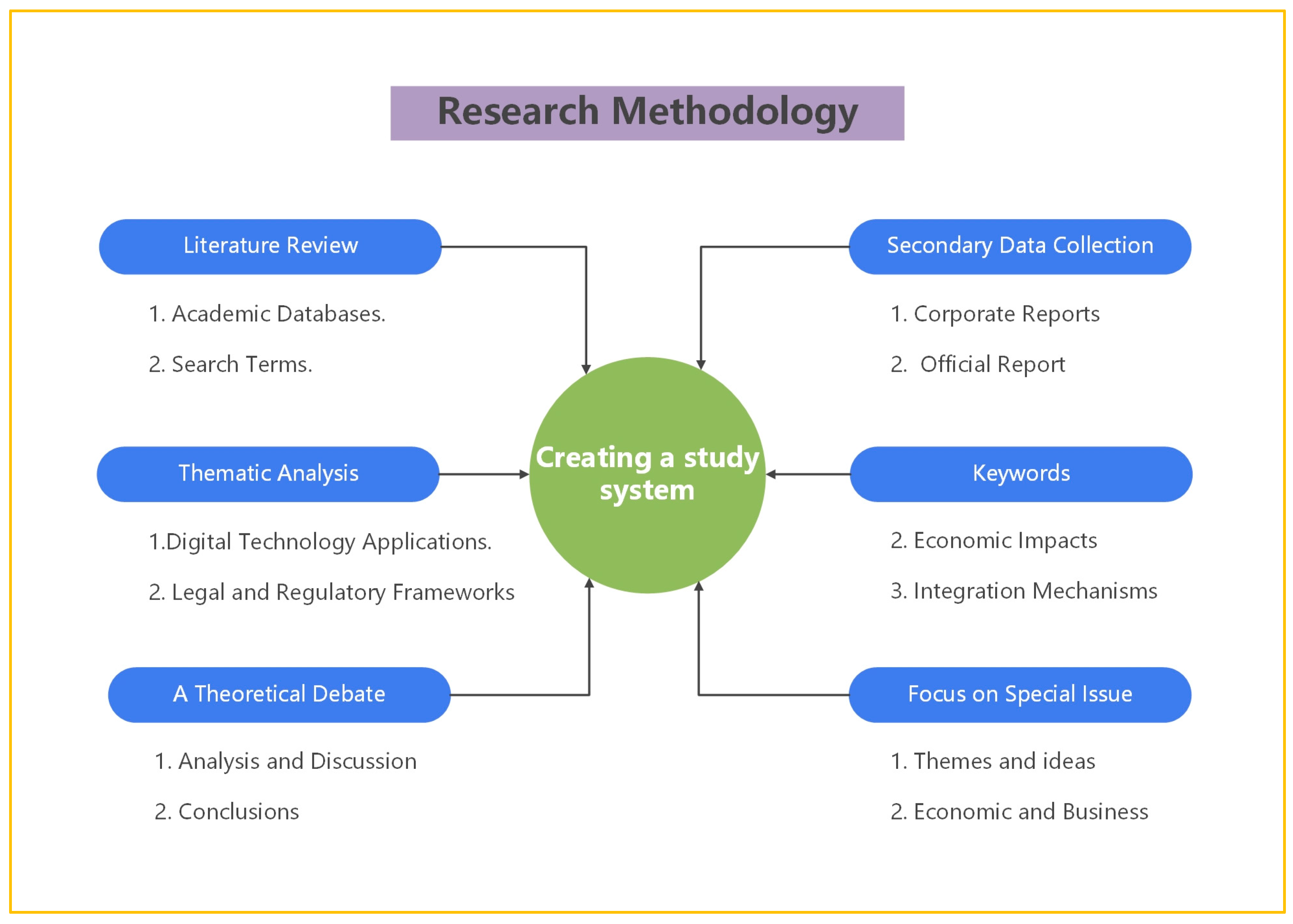
This study bases its methods and materials on a literature review and an analytical synthesis approach to examine the role of digital technologies and legal frameworks in facilitating China’s international trade and economic development. Search terms included combinations of digital trade, e-commerce, blockchain, artificial intelligence, China trade law, FTA, and economic growth, with seminal earlier works included for historical context [51]. The research methodology consists of three primary components. First, a comprehensive literature search was conducted using official databases, including Web of Science, Scopus, Google Scholar, and CNKI (China National Knowledge Infrastructure), to capture both international and Chinese perspectives [52].
This study utilizes secondary data from credible sources, including Alibaba, an international e-commerce platform, the World Trade Organization, and central Chinese databases such as the China National Bureau of Statistics and the China Internet Network Information Centre (CNNIC). Studies informed by a literature review; high-quality papers published in academic journals, such as the Journal of Business Research and Sustainability of Law on the topic of digital marketing, sustainable consumption, and product management for environmental protection; and some examples of practical analysis cases also conducted by the authors have been extensively explained within our Section 5, pointing to important implications related to both business model approaches and legal perspectives. Statistical data on trade volumes, digital infrastructure deployment, and economic indicators were analyzed to identify trends and patterns, as shown in Figure 2. An analysis framework was applied to synthesize findings across four critical dimensions. (1) Digital technology applications, (2) legal and regulatory frameworks, (3) integration mechanisms [53], and (4) economic impacts. Case studies of successful implementations, particularly Alibaba’s ecosystem and the digital components of the Belt and Road Initiative, were examined to illustrate practical applications. This multi-dimensional approach enables a comprehensive understanding of the complex interplay between technology, law, and trade in China’s development trajectory [54].

3.1. Case Studies of Successful Integration

China has undertaken several initiatives to facilitate the integration of digital technology and international trade. Alibaba exemplifies how digital technologies can facilitate trade by providing online commercial infrastructure and logistics services, in conjunction with a sufficient legal framework; the company generates more than 50 percent of the world’s e-commerce transactions [55]. Building on the services of an established Internet platform, the Chinese Government has integrated blockchain solutions within the Belt and Road Initiative framework to streamline asset administration. Freight companies and other participants along global supply chains can benefit from blockchain applications, which expedite the processing of letters of credit, bills of lading, and invoices; enable efficient inventory management; and provide services related to financing, trading, and auditing [56]. The Customs single window establishes a standardized data-processing syntax for information exchange, facilitates the integration of key systems such as the China E-Port community platform, and simplifies regimes related to the clearance of imports and exports. AI is often involved in anti-fraud procedures and risk assessment systems; when combined with big data analytics, it can be used efficiently to perform statistical identity checks against customs and warehouse employees. When digital technologies are complemented by FTAs that address regulatory coherence, an enabling enforcement mechanism, and robust intellectual property rights provisions, international trade can develop and strengthen over the long term [57].

Examination of Recent Legislative Trends

The foundation for specialization in early legislation, such as China’s cybersecurity law, was laid. We are now seeing sector-specific legislation, such as China’s autonomous driving regulations and the EU’s AI Act, for advanced technologies. The EU’s Brussels effect remains a global standard-shaper [58]. Its DSA and AI Act are rapidly becoming de facto standards for any company that aspires to be a player in the enormous EU market and to have a direct influence on global digital behavior. The Geopolitical Strategy of Laws is no longer simply domestic regulation. The USA CHIPS Act and China’s data security law clearly use legislation as a geostrategic instrument of competition to safeguard supply chains and digital sovereignty, as shown in Table 2. To address regional imbalances in China, the upcoming legislative action aims to enforce policies and legislation that proactively tackle these disparities, as evidenced by the 72.4% proportion of e-commerce in seashore provinces resulting from investment [59].

3.2. Results

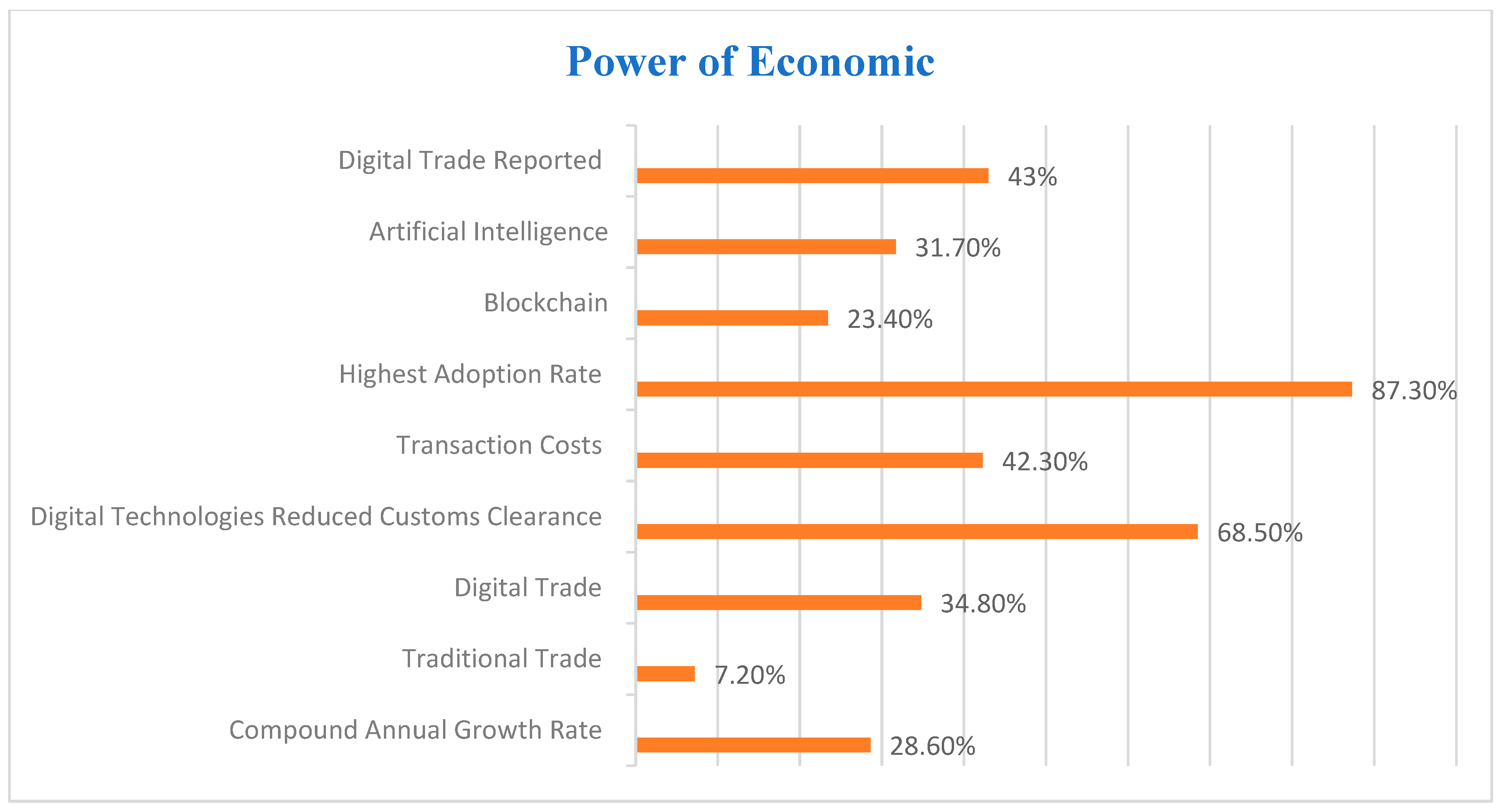
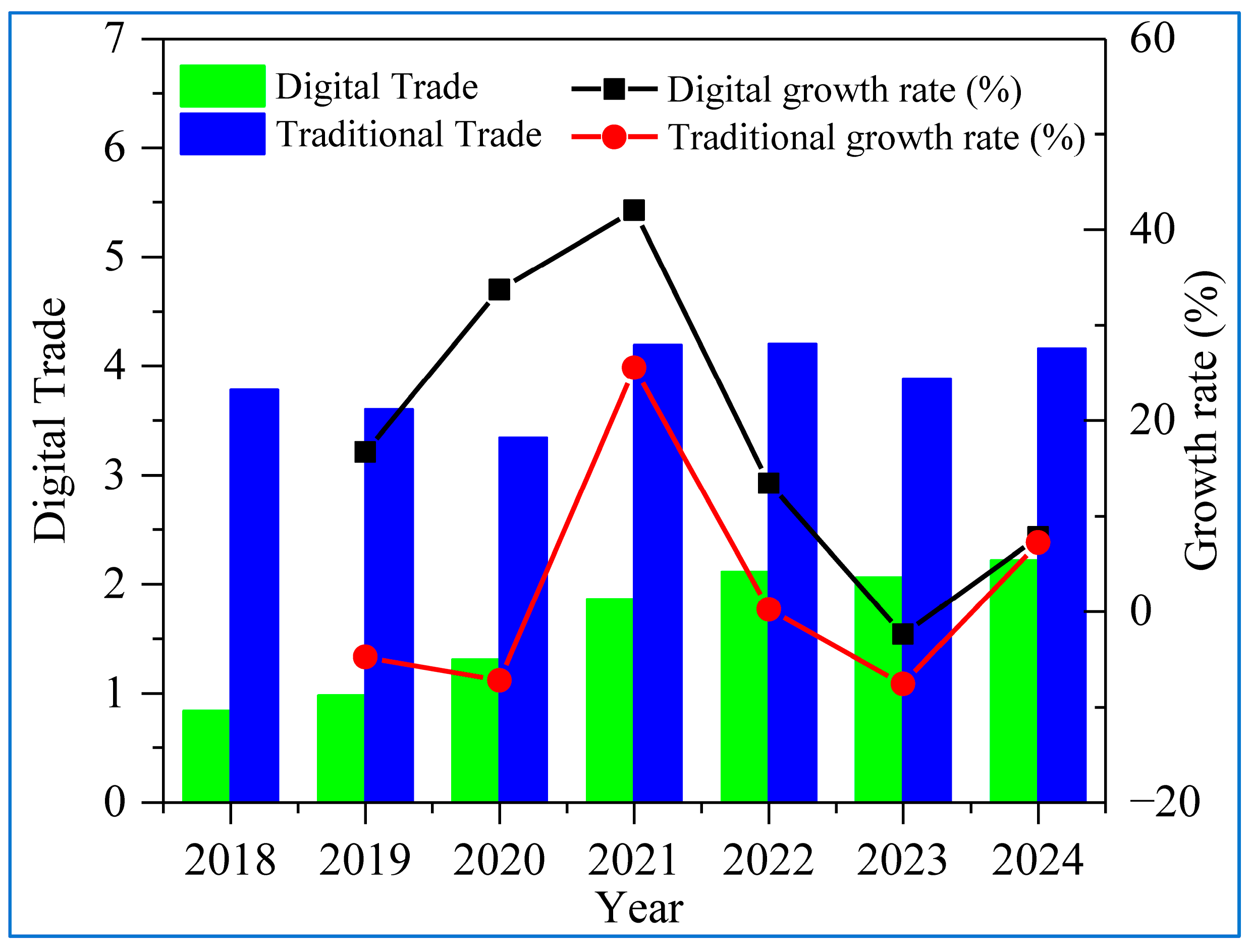
The analysis reveals a significant correlation between the adoption of digital technology and China’s expansion of international trade. From 2018 to 2024, cross-border e-commerce transactions grew at a compound annual growth rate (CAGR) of 28.6%, substantially outpacing the growth of traditional trade at 7.2%, as shown in Table 3. The integration of digital technologies has transformed China’s trade landscape, with digital trade accounting for 34.8% of total trade volume by 2024, up from 18.2% [68].

3.2.1. Technology Impact Assessment of Sustainable

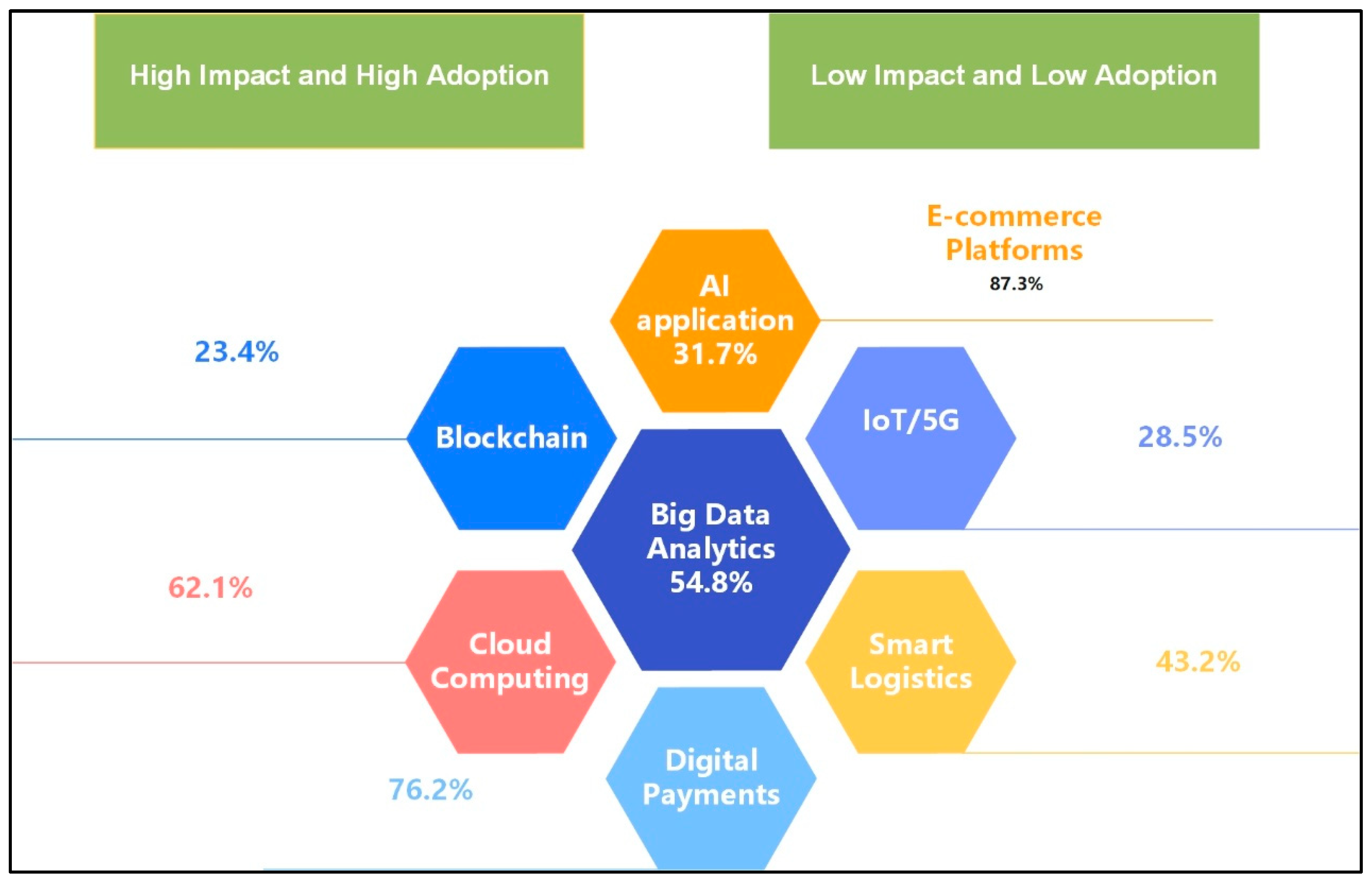
Analysis of different digital technologies reveals varying degrees of impact on trade facilitation. E-commerce platforms demonstrated the highest adoption rate (87.3%) among Chinese exporters [69], followed by digital payment systems (76.2%) and big data analytics (54.8%). Blockchain and AI applications, while showing strong growth potential, currently have lower adoption rates at 23.4% and 31.7%, respectively, as shown in Figure 3.

3.2.2. Sustainability of Trade Efficiency Improvements

The implementation of digital technologies has yielded measurable improvements in trade efficiency metrics. Customs clearance times decreased by 68.5% for digitally enabled transactions compared to traditional processes. Document processing time reduced from an average of 7.2 days to 1.8 days, while transaction costs declined by 42.3%, as shown in Table 4 [70].

3.2.3. Legal Framework Integration and Economic Impact Assessment

The analysis identified 47 bilateral and multilateral trade agreements incorporating digital trade provisions, with 31 agreements (66%) signed after 2018. China’s FTAs with dedicated e-commerce sections increased from 3 in 2015 to 19 in 2024. The Regional Comprehensive Economic Partnership (RCEP), effective as of 2022, has emerged as the most comprehensive framework, encompassing 15 countries and accounting for 30% of global GDP, as shown in Figure 4. The cumulative economic impact of digital trade facilitation is substantial. Digital technologies contributed an estimated 2.3 percentage points to China’s annual GDP growth rate between 2018 and 2024. SMEs engaged in digital trade reported 43% higher export revenues compared to traditional exporters. Employment in digital trade-related sectors increased by 8.7 million positions, accounting for 18.5% of new job creation during the study period [71].

3.2.4. Regional Distribution

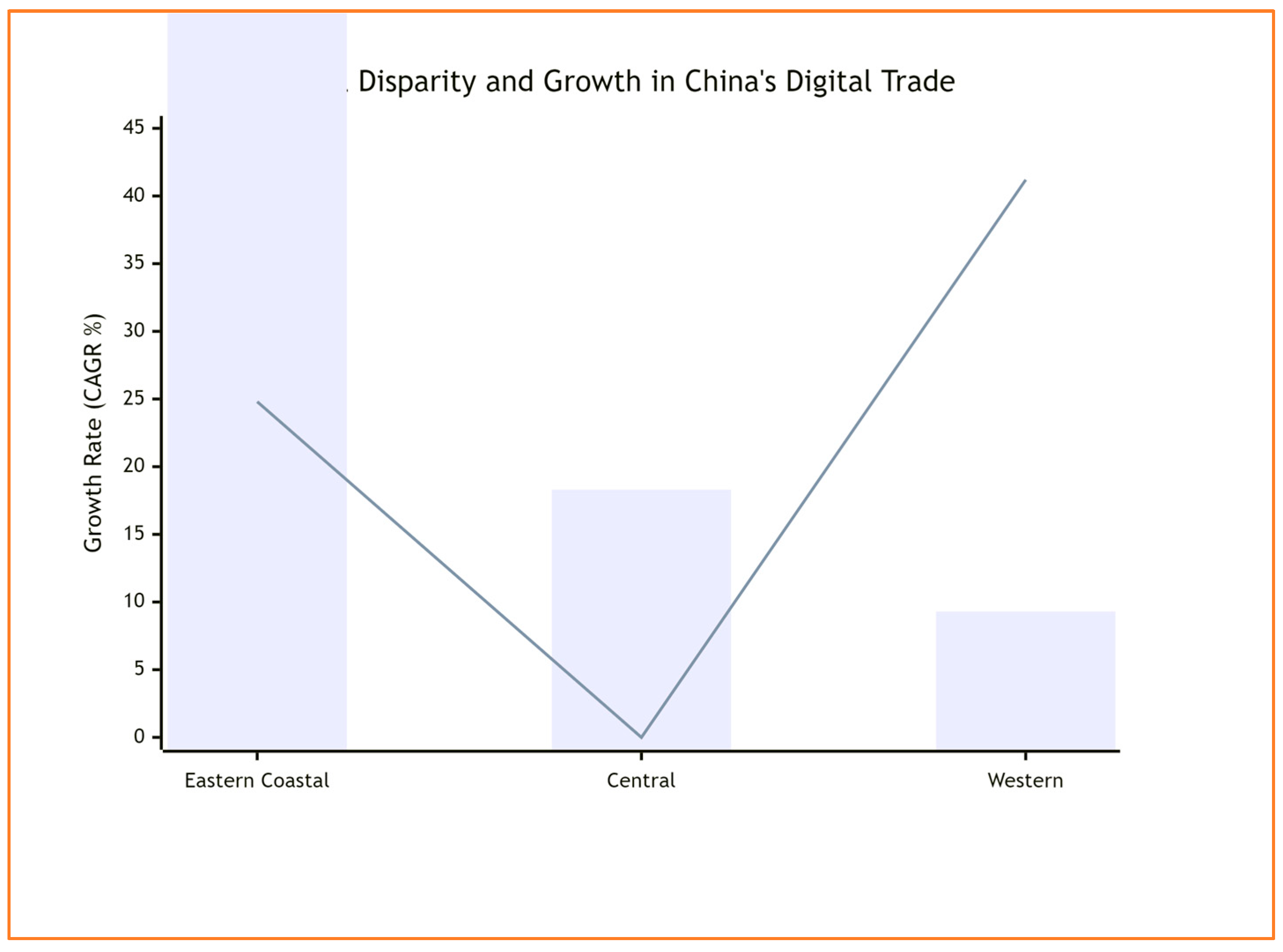
Geographic analysis reveals an uneven distribution of digital trade benefits. Eastern coastal provinces account for 72.4% of cross-border e-commerce transactions, while the central and western regions lag with 18.3% and 9.3%, respectively. However, growth rates in western provinces (41.2% CAGR) exceed those in coastal areas (24.8% CAGR), indicating a gradual convergence [72]. The Belt and Road Initiative’s Digital Silk Road component has facilitated infrastructure development in 68 participating countries, with cumulative investments reaching USD 79.4 billion, as shown in Figure 5. These results demonstrate that while digital technologies and supportive legal frameworks have significantly enhanced China’s international trade efficiency and economic development, challenges remain in ensuring equitable distribution of benefits and addressing implementation barriers across different regions and enterprise scales [73]. The improvement is evident in China’s e-commerce sector. (A) The Eastern Coastal provinces dominate E-commerce transactions. (B) Although beginning with a smaller base, the Western region is expanding at a substantially greater level, indicating an opportunity for future market convergence.

3.2.5. Analysis of Trade and Economic Impact

The research investigates how e-commerce platforms, blockchain, artificial intelligence, and big data analytics integrate with evolving legal frameworks to transform China’s trade landscape [74]. Analysis reveals that cross-border e-commerce grew at a compound annual growth rate (CAGR) of 28.6% from 2018 to 2024, substantially outpacing the growth of traditional trade at a 7.2% CAGR. Digital trade now accounts for 34.8% of China’s total trade business model and digital solutions. Implementation of digital technologies reduced customs clearance time by 68.5%, document processing time by 75%, and transaction costs by 42.3%. E-commerce platforms showed the highest adoption rate, 87.3%, among Chinese exporters, while emerging technologies, such as blockchain (23.4%) and AI (31.7%), demonstrate the growth potential of sustainable economies, as seen in Figure 6. Legal framework analysis identified 47 trade agreements incorporating digital provisions, with China’s FTAs containing dedicated e-commerce provisions increasing from 3 to 19 between 2015 and 2024. Digital technologies contributed 2.3 percentage points to annual GDP growth, while SMEs engaged in digital trade reported 43% higher export revenues. Regional disparities persist, with the eastern provinces accounting for 72.4% of emerging trends in cross-border e-commerce within the digital economy [75]. The emphasis is on the need for balanced infrastructure development, regulatory harmonization, and addressing implementation challenges, including cybersecurity risks, digital divide, and compliance.

4. Analysis and Discussion

Digital technologies have a direct impact on China’s economic growth, enhancing the efficiency of international trade, which remains a significant driver of growth in all regions. Supply chains benefit from considerable process integration, logistics coordination, and source diversification, in which technologies such as e-commerce platforms, blockchain, artificial intelligence, and big data provide powerful tools. E-commerce facilitates transactions between enterprises and the execution of marketing strategies, often through platforms such as Alibaba or JD.com. Blockchain supports the certification of digital assets and streamlines supply-chain processes [76]. AI techniques enhance supply chain management by optimizing forecasts, estimating demand, reducing delivery delays, and predicting customer interactions with sellers. Big data enables businesses to extract knowledge from large datasets, supporting informed decision making and transaction preparation. When combined with digital technologies, the existing legal framework has a positive impact on the development of digital trade, which in turn promotes economic growth [77]. Regional variations in the development of cross-border e-commerce in China, as well as the regional trade structure, can be further elaborated upon. Orientations to erudite (DSD) can provide insights into how innovation hubs in various regions, such as the Yangtze River delta or the Greater Bay Area, stimulate digital trade growth. Additionally, consider the deployment of digital infrastructure, especially in China’s western hinterlands, and its relationship to the rise in e-commerce penetration.
The rapid pace of growth intensifies the need for infrastructure investment, regulation, supervision, and reform to prevent potential bottlenecks. Digital infrastructure is the backbone of the data economy, encompassing communication networks, computing power, data centers, laboratories for emerging technologies, blockchain, artificial intelligence models deployed on servers, and talent training centers [78]. The scope of China’s 14th Five-Year Plan, covering the period from 2021 to 2025, includes critical measures for enhancing quantum communications, 5G, integrated circuits, cloud computing, and data centers. Legal and regulatory frameworks must evolve in tandem with the introduction of new technologies that entail potential risks [79]. Privacy and intellectual-property ordinances, although strengthened in recent years, require more benchmarking against international standards. Competition laws have yet to address emerging situations in digital marketplaces, such as the rise of platform monopolies and preferential treatment of self-owned products. A governance framework for digital societies is still largely lacking. Addressing potential security risks is essential to mitigate the chances of a chain reaction [80].
Complex global supply chains fragment production across multiple locations and ownerships. Maintaining intermediate product flows is crucial for completing the production of end products. Streamlining supply chains is paramount. Even a slight delay in transporting an intermediate product through customs can jeopardize the entire production process and force the final product off the market. Since all goods pass through customs on international routes, customs authorities play a pivotal role in supply-chain integrity [81]. To mitigate customs-related risks and facilitate high volumes of legitimate trade, China Customs has implemented an integrated supply chain framework. This approach harmonizes international standards and national regulations to secure trade lanes and facilitate the passage of legitimate goods. The framework integrates transaction data, declarations, logistics, and financial services, enabling effective risk management across the entire supply chain. As the e-commerce industry expands, China Customs faces additional challenges, including limited resources to regulate a growing number of small- and medium-sized enterprises (SMEs), many of which lack authorized economic operator status and comprehensive knowledge of customs regulations [82].
The integrated supply-chain approach underpins key technologies that further streamline trade processes. Big-data analytics enable customs authorities to profile large trader populations and assess transaction risks before official declarations, thereby enhancing operational efficiency and transparency [83]. Blockchain technologies provide decentralized and immutable records of trade transactions, fostering trust among participants and facilitating secure information sharing. Automated customs clearance systems, augmented with artificial intelligence (AI), optimize clearance procedures both pre-arrival and in-bond, substantially reducing waiting times. Moreover, e-commerce platforms empower an increasing number of Chinese SMEs to engage in international trade, contributing significantly to China’s economic development [84].
Trade facilitation is typically defined as the simplification and harmonization of international trade procedures and processes. Such procedures encompass activities, practices, and formalities involved in collecting, presenting, communicating, and processing data required for the movement of goods in international trade. Traditionally, these procedures fall into three categories, documentary requirements, border activities, and domestic procedures, encompassing both pre-shipment and post-shipment stages. To enhance the efficiency of international trade, it is paramount to properly manage those procedures at each stage of the trading chain [85]. Emerging digital trade technologies are valuable tools that can create a more efficient trade environment by modernizing procedures and facilitating international commerce. Fostering trade liberalization and decreasing transaction costs, digital technologies already play a critical role in the economic development of developing countries, which primarily rely on international commerce, and the People’s Republic of China ranks among the world’s fastest-growing economies [86]. It is facilitated by a cross-border e-commerce trade, which simplifies and harmonizes international trade procedures, including activities, practices, and formalities involved in collecting, presenting, communicating, and processing data required for the movement of goods in international trade [87].
National trade agencies and multinational e-commerce platforms have integrated digital technologies into the international trade cycle. Digital technologies involve the deployment of worldwide electronic networks to forge strategic partnerships and market coalitions with trade parties in disparate geographic regions [88]. International organizations emphasize that further diminution of trade-related transaction costs constitutes a vital means for ensuring the ongoing development of trade relationships among diverse economic and social entities, defined broadly as across borders [89]. The transaction costs associated with the operationalization of WTO policies include the following: information costs, negotiation costs, transportation costs, tariffs, and middleman costs. Digital divides, such as unequal access to technology and inadequate digital skills, limit the benefits of digitalization for some businesses and regions. Regulatory compliance issues, including incompatibilities with existing laws, further impede digital trade development [90].
Cyber-attacks, such as data breaches and denial-of-service incidents, pose significant threats to business operations by exposing sensitive information or interrupting digital platforms [91]. Because much digital trade transmission occurs through online platforms, robust data security and privacy protection remain central concerns. Internet and digital trade security also encompass legal challenges linked to cross-border E-commerce, online censorship, and Internet governance [92]. China’s Internet legislation reflects these concerns by regulating online activities, while E-commerce and digital trade continue to confront issues associated with censorship laws, international trade agreements, and ongoing debates over trade liberalization. The involvement of national governments in Internet governance and cybersecurity is evolving, and many countries express protectionist views regarding digital trade. Additional concerns include online censorship, control of dissidents, cyberattacks against foreign countries, and the suspension of Internet services used for cross-border digital trade [93]. The mention that SMEs gain from digital trade is crucial, but this could be further developed with instances of how Chinese SMEs utilize digital trade for export, particularly in the manufacturing and agricultural sectors. Moreover, further research into the obstacles confronting SMEs’ cybersecurity concerns and infrastructure shortcomings could provide a more comprehensive understanding of the barriers that smaller firms face in digital trade.
Critical analysis of this research presents a comprehensive review of how digital marketing has influenced sustainable consumption and environmental product management in China. Integrating business model frameworks with legal considerations highlights the interrelationship between regulatory compliance, corporate strategy, and consumer behavior. Although insightful, the study could further elaborate on industry-specific differences and the changing role of emergent digital platforms in shaping sustainable behavior. Unequal access to digital technologies constitutes a fundamental obstacle in leveraging them for the enhancement of China’s international trade and the subsequent advancement of economic development [94]. The Digital Silk Road, which in theory should facilitate development through digital trade, has so far failed to address the potential of information and communication technologies (ICTs) to exacerbate inequality by marginalizing vulnerable populations and small enterprises. Small- and medium-sized enterprises (SMEs) receive less online attention and fewer internet orders than larger counterparts, with noticeable disparities between urban and rural regions; this pattern appears to have persisted rather than diminished [95]. The link between digital connectivity and economic well-being is evident. Millions of inhabitants in China and across the European Union remain excluded from the so-called new economy due to the underdevelopment of digital infrastructure and services in neglected localities, a situation attributable primarily to insufficient investment and a lack of decisive commitment. Whereas investments have recently increased in certain emerging areas, including some locales in the People’s Republic, the restricted affordability of networks, devices, and applications, compounded by an estimated global population of nearly two billion without mobile phones and an inability to gain internet access via any technology, offers a formidable constraint [96].
Innovation clusters are expected to form around the convergence of digital technologies and trade policies, as Chinese firms explore local digital solutions to global trade problems. Future trade agreements extend beyond connectivity, data flow, protection, and regulation, focusing on the comprehensive integration of digital technologies to enhance economic development [97]. The rapid proliferation of digital technologies, notably E-commerce, blockchain, artificial intelligence (AI), and big-data-driven supply chain management, engenders substantial transformation in international trade. Concurrently, the World Trade Organization (WTO), China, and the United States are deeply invested in regulating these emerging systems within the context of trade. E-commerce is defined broadly as the use of the Internet and related communication technologies to undertake commercial transactions [98]. China’s turnover in the sector is expected to reach USD 4 trillion this year, accounting for one-third of the global total. Although development seems straightforward, simply moving commodities from physical to digital platforms, the process is complex and multifaceted.
The role of digital technologies in China’s economic development highlights a close, intimate, thriving relationship. International trade is a sine qua non to a country’s economic development; it influences a country’s economic growth trajectory and innovation. More importantly, trade links a country to the rest of the world in a reciprocal relationship. Hence, a country needs to integrate the best digital technologies and legal frameworks to ensure sustainable international trade. The following sections highlight the dynamics of international trade and the emerging global trade pattern [99]. The existing literature suggests the corollaries of the reciprocal relationship between trade and economic development. The generalized trading system incorporates a grain of truth, which contradicts the theory’s accuracy, through a comparative advantage model. The emerging global trade pattern underscores the centrality of the newly industrialized world in driving world economic growth, international trade, and production, highlighting the importance of consistent standards in trade and communication to ensure the continuity of these interdependencies [100].
The emergence of sustainable strategies predicts the creation of a globalized trading system within the world economy. The relative, matched functions of China and India, disruptive technologies within a localized supply value chain, and the expanding motivation for permanent offshore activities provide a clear indication of the final form of the globalized trading system [101]. China has actively pursued a more sustainable and balanced energy supply by focusing on energy conservation, enhanced energy efficiency, and increasing its dependency on renewable energy. China acknowledges and addresses supply chain vulnerabilities that were highlighted during the pandemic as part of this initiative [102]. The United Nations Conference on Trade and Development (UNCTAD) has contributed a comprehensive review of the state of sustainable trade in a recent report. The Trade Sustainable Impact Card provides a general overview of the main requirements associated with sustainable trade. In contrast, the WTO offers the Ministerial Declaration on Trade and Environment as the guiding text for a current initiative [103].

5. Conclusions

Digital marketing has been a significant factor influencing sustainable consumption and environmental product management in China, shaping business models and driving legal compliance. It calls for an integrated strategy to promote sustainability and responsible corporate practices. Digital technologies and legal frameworks are crucial factors in the further development of international trade, and consequently, in China’s overall economic growth. The integrated use of e-commerce platforms, blockchain systems, artificial intelligence, and big data analytics directly supports supply chain efficiency, transparency, and informed decision making. The effectiveness of digital trade, however, depends on the presence of appropriate institutional conditions. Obsolete financial regulations stand in the way, for instance, and China is the dominant global manufacturing player, not the leading global service provider. Moreover, there is an absence of comprehensive data on (a) Chinese firms’ digital adoption, (b) international trade in digital services, and (c) supply chain specifications and network. Digital innovations relevant to competitiveness must be accompanied by supportive policies and regulations that facilitate trade liberalization and economic growth. A variety of legal norms govern the digital economic activities that form the basis of global trade, particularly those related to the role of e-commerce. In developing its e-commerce regulations, China drew upon models from abroad, primarily those developed within the FTAs established by the United States and the Trans-Pacific Partnership. However, China’s concern for national sovereignty limits the degree of policy learning and instrument transfer. Nonetheless, FTAs represent an effective forum for policy learning within China, and likely other developing countries as well. China has increasingly used FTAs to regulate e-commerce, with the e-commerce sections in the 2015 China-Australia and China-South Korea agreements. Pursuing transitions from a trade in goods to a trade in services and a more active contribution to the development of international norms on e-commerce would enhance the capacity of Chinese firms to comply with global standards for products, as well as the Government’s regulatory role.

5.1. Future Research Direction

Upcoming research on digital economy innovation must examine its intersection with legal frameworks to ensure sustainable and balanced growth. Among the most critical areas is to investigate how future legislation, such as the EU Digital Services Act and the Carbon Border Adjustment Mechanism, influences global e-commerce, shaping data governance, platform responsibility, and green supply chains. Additionally, research should investigate the legal implications and challenges of utilizing blockchain for transparent ESG reporting and verifying sustainable practices. Research will also be necessary to establish international legal norms that align cross-border data flows with environmental protection, thereby preventing a race to the bottom. Ultimately, assessing the effectiveness of legal incentives for circular e-commerce behaviors and the responsibility of digital platforms in promoting sustainable consumption will be crucial. Developing an integrated legal system will be essential in guiding digital innovation toward a resilient and inclusive global economy.

5.2. Limitations

The study is further limited by its reliance on secondary data, which may not provide complete insight into the latest trends in digital marketing and sustainable consumption in China. The analysis will primarily focus on general business models and legal frameworks, with potential limitations regarding industry-specific variations and regional differences. The study also cannot include primary empirical data from consumers or firms, because real-world behavioral responses and the challenges involved in practical implementation cannot be assessed. Technological change often outpaces the capacity to conduct longitudinal research, resulting in results that rapidly become outdated. There is a widespread lack of standardized and high-grade data, especially regarding the environmental impact of online activities per jurisdiction. To facilitate comparison, it remains challenging to isolate the effects of digital practices from other economic variables on sustainability performance. Moreover, profound differences in digital infrastructure and regulatory sophistication between advanced and less developed economies limit the applicability of most of the studies’ models. Interdisciplinary research is hindered by terminological and methodological obstacles between technology, economics, and environmental science, which impede a shared research practice.

5.3. Policy Recommendations

Given the ongoing development of its digital economy and the leveraging of digital trade for domestic economic growth, China can pursue the following policy recommendations. First, the Government should accelerate the construction of a digital infrastructure system, develop digital technology applications, and establish a digital trade ecosystem that promotes digital industrialization and industrial digitization in both trade and foreign investment. Second, firm commitments are necessary to support the implementation of multilateral e-commerce rules and the establishment of a multilateral e-commerce dispute settlement mechanism under the WTO framework, as these protocols will enhance the utilization of data for trade purposes. Third, policies designed to encourage the safe flow of cross-border data, ensure a digital trade ecosystem that respects intellectual property rights, and stimulate the development of cross-border e-commerce pilots will be crucial in fostering a conducive environment for the growth of digital trade.
In the context of China’s economic development, the Government should enhance digital infrastructure, with a focus on Internet infrastructure and cross-border commerce technology. Establishing a hardware environment conducive to digital trade is essential. Governments ought to promote the Internet Plus strategy, encourage the digital transformation of traditional companies, and develop digital platforms. Enhancing digital management abilities and increasing investments in digital technologies, such as the Internet, big data, and artificial intelligence, can create a business environment that favors digital trade. Accompanying this commitment to infrastructure development, a government should strengthen the framework of digital trade laws and regulations. International cooperation is vital for the development of law and enabling international exchange in the context of trade. An effective cooperation mechanism can significantly enhance the ability to meet trade needs and facilitate the smooth flow of trade.

Author Contributions

Conceptualization, methodology, writing—original draft preparation and validation, formal analysis, writing—original draft preparation, resources, Z.L.; data curation, investigation, legal analysis, writing—original draft preparation, S. and M.B.K.; formal analysis, conceptualization, supervision, project administration, and funding acquisition, Y.W. All authors have read and agreed to the published version of the manuscript.

Funding

Funded by the Ministry of Education of the People’s Republic of China on Humanity and Social Science Youth Foundation, Research on the Refinement of Local Legislation on Social Credit: A Study of 15 Local Regulations (21YJC820023).

Institutional Review Board Statement

Not applicable.

Informed Consent Statement

Not applicable.

Data Availability Statement

The data supporting the findings of this study are available on request from the corresponding author.

Conflicts of Interest

The authors declare that they have no conflicts of interest.

Abbreviations

The following abbreviations are used in this manuscript:
AIArtificial Intelligence
FTAsFree Trade Agreements
GATTGeneral Agreement on Tariffs and Trade
SMEsMedium-Sized Enterprises
TPPTrans-Pacific Partnership
ASEANAssociation of Southeast Asian Nations
IPRsIntellectual Property Rights
WTOWorld Trade Organization
TRIPSTrade-Related Aspects of Intellectual Property Rights
TDCCTrusted Digital Trade Chain
BRIBelt and Road Initiative
MOFCOMMinistry of Foreign Trade and Economic Cooperation
GDPGross Domestic Product
CAGRCompound Annual Growth Rate
JDJīngdōng
ICTsInformation And Communication Technologies
UNCTADUnited Nations Conference on Trade and Development
MTSTrade and Environmental Sustainability
MDMinisterial Declaration
Note: These abbreviations are provided with definition to make their meaning clear and accessible to the reader.

References

  1. Song, L.; Zhou, Y. The COVID-19 Pandemic and Its Impact on the Global Economy: What Does It Take to Turn Crisis into Opportunity? China World Econ. 2020, 28, 1–25. [Google Scholar] [CrossRef]
  2. Zhang, W.-L.; Song, L.-Y.; Ilyas, M. Can the Digital Economy Promote Fiscal Effort?: Empirical Evidence from Chinese Cities. Econ. Change Restruct. 2023, 56, 3501–3525. [Google Scholar] [CrossRef]
  3. Wang, G. China’s Practice in International Investment Law: From Participation to Leadership in the World Economy. In Looking to the Future; Brill: Leiden, The Netherlands, 2011. [Google Scholar]
  4. Boateng, A.; Qian, W.; Tianle, Y. Cross-Border M&As by Chinese Firms: An Analysis of Strategic Motives and Performance. Thunderbird Int. Bus. Rev. 2008, 50, 259–270. [Google Scholar] [CrossRef]
  5. Pang, J.; Jiao, F.; Zhang, Y. An Analysis of the Impact of the Digital Economy on High-Quality Economic Development in China—A Study Based on the Effects of Supply and Demand. Sustainability 2022, 14, 16991. [Google Scholar] [CrossRef]
  6. Jiang, Y.; Wang, H.; He, X.; Fu, R.; Jin, Z.; Fu, Q.; Yu, X.; Li, W.; Zhu, X.; Zhang, S.; et al. The Evolving Global Burden of Young-Onset Parkinson’s Disease (1990–2021): Regional, Gender, and Age Disparities in the Context of Rising Incidence and Declining Mortality. Brain Behav. 2025, 15, e70659. [Google Scholar] [CrossRef]
  7. D’Adamo, I.; Fratocchi, L.; Grosso, C.; Tavana, M. An Integrated Business Strategy for the Twin Transition: Leveraging Digital Product Passports and Circular Economy Models. Bus. Strategy Environ. 2025, 34, 9008–9022. [Google Scholar] [CrossRef]
  8. Liu, M.; Yang, F.; Wang, C.; Vujičić, M.D.; Kennell, J. Markets, Leadership and Growth: Establishing an Applied Exhibition Brand Value Index for the Chinese Market. J. Qual. Assur. Hosp. Tour. 2025, 1–19. [Google Scholar] [CrossRef]
  9. Chen, Z.; Xing, R. Digital Economy, Green Innovation and High-Quality Economic Development. Int. Rev. Econ. Finance 2025, 99, 104029. [Google Scholar] [CrossRef]
  10. Wang, H.; Yang, L.; Feng, Y. How Does Digital Economy Affect the Industry Chain Resilience in China? Humanit. Soc. Sci. Commun. 2024, 11, 1529. [Google Scholar] [CrossRef]
  11. Chen, Y.-R.R. Perceived Values of Branded Mobile Media, Consumer Engagement, Business-Consumer Relationship Quality and Purchase Intention: A Study of WeChat in China. Public Relat. Rev. 2017, 43, 945–954. [Google Scholar] [CrossRef]
  12. Yawar, M.E.; Amani, A. Review of the World Trade Organization General Agreement on Trade in Services and International Trade in Legal Services. Acta Glob. Humanit. Linguarum 2025, 2, 297–307. [Google Scholar] [CrossRef]
  13. Ahammed, S.; Rana, M.M.; Uddin, H.; Majumder, S.C.; Shaha, S. Impact of Blue Economy Factors on the Sustainable Economic Growth of China. Environ. Dev. Sustain. 2025, 27, 12625–12652. [Google Scholar] [CrossRef]
  14. Papakonstantinou, G.I.; Voulgarakis, N.; Terzidou, G.; Fotos, L.; Giamouri, E.; Papatsiros, V.G. Precision Livestock Farming Technology: Applications and Challenges of Animal Welfare and Climate Change. Agriculture 2024, 14, 620. [Google Scholar] [CrossRef]
  15. Farinloye, T.; Omotoye, O.; Oginni, A.; Moharrak, M.; Mogaji, E. Bridging the Digital Divide: Consumer Engagement with Transportation Payment Apps in Emerging Economies. J. Consum. Behav. 2024, 23, 3011–3029. [Google Scholar] [CrossRef]
  16. Liang, X.; Li, G.; Ma, J.; Jiang, G. How Do Signaling and Reputation Function as Critical Clues to E-Commerce Platform Governance? Evidence from Chinese Rice Transaction Data. Electron. Commer. Res. 2024, 25, 3637–3661. [Google Scholar] [CrossRef]
  17. Yun, H. China’s Data Sovereignty and Security: Implications for Global Digital Borders and Governance. Chin. Polit. Sci. Rev. 2025, 10, 178–203. [Google Scholar] [CrossRef]
  18. Khaskheli, M.B.; Zhao, Y.; Lai, Z. Sustainable Maritime Governance of Digital Technologies for Marine Economic Development and for Managing Challenges in Shipping Risk: Legal Policy and Marine Environmental Management. Sustainability 2025, 17, 9526. [Google Scholar] [CrossRef]
  19. Li, J.; Xie, Z.; Fu, Y. The Path of Corporate Low-Carbon Behavioral Change: The Impact of Digital Transformation on Corporate Green Sports Brand Loyalty. J. Environ. Manag. 2025, 374, 124057. [Google Scholar] [CrossRef] [PubMed]
  20. Song, C.; Liu, Q.; Song, J.; Ma, W. Impact Path of Digital Economy on Carbon Emission Efficiency: Mediating Effect Based on Technological Innovation. J. Environ. Manag. 2024, 358, 120940. [Google Scholar] [CrossRef]
  21. Zhuang, J.; Khaskheli, M.B.; Shen, C.; Jafri, M.A.H.; Shamsi, I.H. A Comparative Study of Economic Activity and Sustainable Development in China and Three South Asian Countries. Discov. Sustain. 2025, 6, 170. [Google Scholar] [CrossRef]
  22. Khan, A. The Emergence of the Fourth Industrial Revolution and Its Impact on International Trade. ASR CMU J. Soc. Sci. Humanit. 2024, 11, 1–13. [Google Scholar] [CrossRef]
  23. Segate, R.V. Drafting a Cybersecurity Standard for Outer Space Missions: On Critical Infrastructure, China, and the Indispensability of a Global Inclusive Approach. J. Asian Secur. Int. Aff. 2024, 11, 345–375. [Google Scholar] [CrossRef]
  24. Wang, S.; Jiang, X.; Khaskheli, M.B. The Role of Technology in the Digital Economy’s Sustainable Development of Hainan Free Trade Port and Genetic Testing: Cloud Computing and Digital Law. Sustainability 2024, 16, 6025. [Google Scholar] [CrossRef]
  25. Burri, M.; Callo-Müller, M.V.; Kugler, K. The Evolution of Digital Trade Law: Insights from TAPED. World Trade Rev. 2024, 23, 190–207. [Google Scholar] [CrossRef]
  26. Li, W.; Chen, J. From Brussels Effect to Gravity Assists: Understanding the Evolution of the GDPR-Inspired Personal Information Protection Law in China. Comput. Law Secur. Rev. 2024, 54, 105994. [Google Scholar] [CrossRef]
  27. Qianyi, S. Impact of China’s Accession Protocol on Its Participation in the WTO Dispute Settlement Mechanism: An Analysis of Eleven Cases Involving China’s Accession Protocol. Heliyon 2025, 11, e39886. [Google Scholar] [CrossRef]
  28. Rufai, S.Z.; Haq, I.U.; Shah, H.A.; Fayaz, M.A. Neural Network Approaches for Intelligent Decision-Making in Automation. In Handbook of Intelligent Automation Systems Using Computer Vision and Artificial Intelligence; John Wiley & Sons, Ltd.: Hoboken, NJ, USA, 2025; pp. 247–275. ISBN 978-1-394-30273-4. [Google Scholar]
  29. Wan, G.; Zhang, W.; Li, C. How Does Low-Carbon City Pilot Policy Catalyze Companies toward ESG Practices? Evidence from China. Econ. Anal. Policy 2024, 81, 1593–1607. [Google Scholar] [CrossRef]
  30. Hsueh, R. Researching China’s Development and Globalization in an Era of US-China Tensions. PS Political Sci. Politics 2024, 57, 142–145. [Google Scholar] [CrossRef]
  31. Khaskheli, M.B.; Wang, S.; Yan, X.; He, Y. Innovation of the Social Security, Legal Risks, Sustainable Management Practices and Employee Environmental Awareness in The China–Pakistan Economic Corridor. Sustainability 2023, 15, 1021. [Google Scholar] [CrossRef]
  32. Wang, Z. A Return of Dominant Paradigm in China: Making Alibaba a Development Solution for Rural China and the Globe. Inf. Commun. Soc. 2025, 28, 396–416. [Google Scholar] [CrossRef]
  33. Zhang, Y.; Bilawal Khaskheli, M. The Role of Digital Technologies in Advancing Sustainable Economic Development into Intersections of Policy, Law, Environmental Economics, and a Comparative Study of China, the EU, and the USA. Sustainability 2025, 17, 8666. [Google Scholar] [CrossRef]
  34. Li, M. Development and Future Analysis of E-Commerce: A Case Study of Alibaba and Wish. SHS Web Conf. 2024, 207, 03001. [Google Scholar] [CrossRef]
  35. Hung, A.H.-C. How AI-Enabled Blockchain Technology Facilitates U.S. Sanctions on Foreign Businesses: An Analysis Based on International Regulatory Harmonization. Int. J. Law Ethics Technol. IJLET 2024, 2024, 151. [Google Scholar]
  36. Khan, A.; Congmei, S.; Ali, F. Assessing Xi Jinping’s Vision of Modernization and Its Implications for Global Trade Dynamics: A Case Study of the Belt and Road Initiative. Pak. J. Humanit. Soc. Sci. 2024, 12, 106–126. [Google Scholar] [CrossRef]
  37. Zhang, L. Chinese Art Going out and Coming Back: Cultural Journeys of Chinese Art in Exhibitions in 1935 and 2019. Available online: https://eprints.nottingham.ac.uk/81188/ (accessed on 17 September 2025).
  38. Sun, Q. Integration of Blockchain in AI-Driven Trade Facilitation: Challenges and Opportunities. J. AI-Driven Trade Facil. Eng. Single Window Syst. 2024, 2, 35–61. [Google Scholar] [CrossRef]
  39. Sachdeva, C.; Kaur, P.; Gangwar, V.P.; Jasrai, L. Cross-Border Collaboration in New Digital Era with Blockchain Integration. In Blockchain in the Tourism Industry: A New Era of Secure and Transparent Travel Solutions; Kumar, A., Abreu, A., Batta, P., Ahuja, S., Rathore, P.S., Eds.; Springer Nature: Cham, Switzerland, 2025; pp. 235–266. ISBN 978-3-031-95341-5. [Google Scholar]
  40. Chen, L. Optimizing Inventory Management in Chinese E-Commerce; Atlantis Press: Dordrecht, The Netherlands, 2025; pp. 787–793. [Google Scholar]
  41. Li, J.; Wang, R.; Cai, X.; Chen, Y.; Cao, C. The Game Theory Issues of Blockchain Digital Ecosystem in Cross-Border Trade. Int. J. Syst. Assur. Eng. Manag. 2025, 16, 3881–3919. [Google Scholar] [CrossRef]
  42. Zhang, R.; Tang, S.; Liu, Y.; Niyato, D.; Xiong, Z.; Sun, S.; Mao, S.; Han, Z. Toward Agentic AI: Generative Information Retrieval Inspired Intelligent Communications and Networking. arXiv 2025, arXiv:2502.16866. [Google Scholar] [CrossRef]
  43. Novicka, J.; Volkova, T. Bridging Big Data Analytics Capability with Sustainability Business Performance: A Literature Review. Sustainability 2025, 17, 2362. [Google Scholar] [CrossRef]
  44. Mirzaye, S.; Mohiuddin, M. Digital Transformation in International Trade: Opportunities, Challenges, and Policy Implications. J. Risk Financ. Manag. 2025, 18, 421. [Google Scholar] [CrossRef]
  45. Zhang, Z.; Li, Q. Assessing the Impact of Free Trade Agreement (FTA) Signing on China’s Outbound Labor Services. J. Int. Trade Econ. Dev. 2025, 34, 1534–1558. [Google Scholar] [CrossRef]
  46. Ma, L.; Wang, H.; Chen, S. Local Protectionism and National Oversight: Political Connection and the Enforcement of Environmental Regulation in China. J. Chin. Gov. 2025, 10, 106–127. [Google Scholar] [CrossRef]
  47. Chu, X. Review of National Laws and Regulations in China in Relation to the Precautionary Approach to Fisheries Management. Fish. Manag. Ecol. 2025. [Google Scholar] [CrossRef]
  48. Chang, T.; Zhu, W.; Chen, Y. Spillover Effects of the China-ASEAN Free Trade Agreement on Agricultural Trade: A Structural Gravity Model Approach. Agribusiness 2025. [Google Scholar] [CrossRef]
  49. Sun, L.; Li, X.; Wang, Y. Digital Trade Growth and Mineral Resources in Developing Countries: Implications for Green Recovery. Resour. Policy 2024, 88, 104338. [Google Scholar] [CrossRef]
  50. Xu, Y.; Zhao, F.; Zhang, Q. How Does the Cybersecurity Law Affect Corporate Investment. Int. Rev. Financ. Anal. 2025, 103, 104185. [Google Scholar] [CrossRef]
  51. Miftah, M.; Desrianti, D.I.; Septiani, N.; Fauzi, A.Y.; Williams, C. Big Data Analytics for Smart Cities: Optimizing Urban Traffic Management Using Real-Time Data Processing. J. Comput. Sci. Technol. Appl. 2025, 2, 14–23. [Google Scholar] [CrossRef]
  52. Yi, C.; Ma, H.C.; Zhao, K. Impacts of Digital Economic Transformation and Green Growth on Trade Flows of Mineral Resources. Resour. Policy 2024, 90, 104664. [Google Scholar] [CrossRef]
  53. Tse, T.; Pun, N. Infrastructural Capitalism in China: Alibaba, Its Corporate Culture and Three Infrastructural Mechanisms. Glob. Media China 2024, 9, 11–30. [Google Scholar] [CrossRef]
  54. Esty, D.C.; Remy, J.Y.; Sutton, T.; Trachtman, J.P. 4: Remaking International Trade to Fulfill Its Sustainable Development Mandate. In Research Handbook on Trade Law and Development; Edward Elgar Publishing: Cheltenham, UK, 2025; ISBN 978-1-0353-2596-2. [Google Scholar]
  55. Zhang, A. Research on Enterprise Digital Transformation: A Case Study of Alibaba. SHS Web Conf. 2024, 208, 01014. [Google Scholar] [CrossRef]
  56. Kim, H. Industrial Digital Transformation and A Proposal to Rebuild Digital Trade Agenda. J. World Trade 2024, 58, 87–114. [Google Scholar] [CrossRef]
  57. Zhou, Y.; Xin, T. An Innovative Region in China: Interaction Between Multinational Corporations and Local Firms in a High-Tech Cluster in Beijing. Econ. Geogr. 2003, 79, 129–152. [Google Scholar] [CrossRef]
  58. What Is the CHIPS Act?|Council on Foreign Relations. Available online: https://www.cfr.org/in-brief/what-chips-act (accessed on 6 October 2025).
  59. Data Protection Laws and Regulations Report 2025 China. Available online: https://iclg.com/practice-areas/data-protection-laws-and-regulations/china (accessed on 6 October 2025).
  60. China Issues New Regulations on Network Data Security Management. Available online: https://www.china-briefing.com/news/china-issues-new-regulations-on-network-data-security-management-effective-january-1-2025/ (accessed on 6 October 2025).
  61. Data Security Law of the People’s Republic of China. Available online: https://en.spp.gov.cn/2021-06/10/c_948426_2.htm (accessed on 6 October 2025).
  62. Ziyan, C.; Shiguo, L. China’s Self-Driving Car Legislation Study. Comput. Law Secur. Rev. 2021, 41, 105555. [Google Scholar] [CrossRef]
  63. The EU’s Digital Services Act. Available online: https://commission.europa.eu/strategy-and-policy/priorities-2019-2024/europe-fit-digital-age/digital-services-act_en (accessed on 6 October 2025).
  64. Irion, K. AI Regulation in the European Union and Trade Law: How Can Accountability of AI and a High Level of Consumer Protection Prevail over a Trade Discipline on Source Code? SSRN Electron. J. 2021, 1–81. [Google Scholar] [CrossRef]
  65. Luo, Y.; Van Assche, A. The Rise of Techno-Geopolitical Uncertainty: Implications of the United States CHIPS and Science Act. J. Int. Bus. Stud. 2023, 54, 1423–1440. [Google Scholar] [CrossRef]
  66. Bisht, A.K.; Sreenivasulu, N.S.; Bisht, A.K.; Sreenivasulu, N.S. Information Privacy Rights in India: A Study of the Digital Personal Data Protection Act, 2023. In Data Privacy—Techniques, Applications, and Standards; IntechOpen: London, UK, 2024; ISBN 978-1-83769-675-8. [Google Scholar]
  67. Saudi Arabia|Jurisdictions. Available online: https://www.dataguidance.com/jurisdictions/saudi-arabia (accessed on 6 October 2025).
  68. Jiang, W.; Bэнь, Ц.; Andronova, I.V.; Bитaльeвнa, A.И. External and internal factors of international reserve management in China. RUDN J. Econ. 2025, 33, 213–226. [Google Scholar] [CrossRef]
  69. Yang, L.; Dong, J.; Yang, W. Analysis of Regional Competitiveness of China’s Cross-Border E-Commerce. Sustainability 2024, 16, 1007. [Google Scholar] [CrossRef]
  70. Zhao, Y.; Kim, T.; Hwang, B.-S. Improving Customs Clearance Bottleneck in the Chinese B2C Import Cross-Border e-Commerce: Extending Sampling Methods by Two Stages. Humanit. Soc. Sci. Commun. 2025, 12, 1001. [Google Scholar] [CrossRef]
  71. Zheng, X.; Cao, Q.; Zhou, X. Research on Optimization of Emergency Supplies Customs Clearance Strategy from the Perspective of Public Health Security Based on Chinese Trade Data. Front. Public Health 2025, 13, 1520705. [Google Scholar] [CrossRef] [PubMed]
  72. Feng, Y.-X.; Hwang, B.-G. Toward a Sustainable Paradigm: Navigating Digital Transformation in the Construction Industry. Sustain. Dev. 2025, 33, 9335–9351. [Google Scholar] [CrossRef]
  73. Tian, Y. Measurement of the Development Level of Cross-Border E-Commerce in China’s Provinces. J. Soc. Sci. Econ. 2023, 2, 82–90. [Google Scholar] [CrossRef]
  74. Monkelbaan, J. Addressing the Trade-Climate Change-Energy Nexus: China’s Explorations in a Global Governance Landscape. Adv. Clim. Change Res. 2014, 5, 206–218. [Google Scholar] [CrossRef]
  75. Sun, K.; Zhong, X.; Xiong, D. Does Institutional Opening-Up Enhance Corporate Green Innovation? Evidence From China’s Pilot Free Trade Zones. Am. J. Econ. Sociol. 2025, 84, 823–840. [Google Scholar] [CrossRef]
  76. Ostic, D.; Obrenovic, B. JD Strategic Cross-Border Expansion–Offering Retail as Strategy Solutions Abroad. In Casebook of Chinese Business Management; Fan, M., Wang, L., Ostic, D., Eds.; Springer Nature: Singapore, 2022; pp. 139–148. ISBN 978-981-16-8074-8. [Google Scholar]
  77. Rahman, M.S. E-Commerce Evolution: A Strategic Analysis of Alibaba’s Business Ecosystem. SSRN 2024, 1–38. [Google Scholar]
  78. Falcone, E.; Kent, J.; Fugate, B. Supply Chain Technologies, Interorganizational Network and Firm performanceA Case Study of Alibaba Group and Cainiao. Int. J. Phys. Distrib. Logist. Manag. 2020, 50, 333–354. [Google Scholar] [CrossRef]
  79. Yuan, E.J.; Zhang, L. 7: The Political Economic Process of ‘Platformization’: The Historical Trajectory of Alibaba. In The Economic Lives of Platforms: Rethinking the Political Economy of Digital Markets; Bristol University Press: Bristol, UK, 2024; ISBN 978-1-5292-3751-1. [Google Scholar]
  80. Janjeva, A.; Baek, S.; Sellars, A. China’s Quest for Semiconductor Self-Sufficiency; Centre for Emerging Technology and Security: Washington, DC, USA, 2024. [Google Scholar]
  81. Mutibwa, D.H. Digital Economy Industries, the Logic of Globalisation and the Engineered and Entangled Cultures of Production and Consumption Behind the China–Africa Nexus. In Entanglements and Ambivalences; Routledge: New Delhi, India, 2025. [Google Scholar]
  82. Chen, L.; Ma, Y. A Study of the Role of Customs in Global Supply Chain Management and Trade Security Based on the Authorized Economic Operator System. J. Risk Anal. Crisis Response 2015, 5, 87–92. [Google Scholar] [CrossRef]
  83. Su, F.; Khan, Z.; Lew, Y.K.; Park, B.I.; Choksy, U.S. Internationalization of Chinese SMEs: The Role of Networks and Global Value Chains. BRQ Bus. Res. Q. 2020, 23, 141–158. [Google Scholar] [CrossRef]
  84. Cunningham, L.X. SMEs as Motor of Growth: A Review of China’s SMEs Development in Thirty Years (1978–2008). Hum. Syst. Manag. 2011, 30, 39–54. [Google Scholar] [CrossRef]
  85. Zhang, L.; Xia, W. Integrating Small and Medium-Sized Enterprises into Global Trade Flows: The Case of China. In Connecting to Global Markets; WTO iLibrary: Geneva, Switzerland, 2014; pp. 41–53. [Google Scholar]
  86. Lin, F.; Ansell, J.; Siu, W. Chinese SME Development and Industrial Upgrading. Int. J. Emerg. Mark. 2020, 16, 977–997. [Google Scholar] [CrossRef]
  87. Xu, S.B.; Hu, G. Ranking-Based Sanctions for Retraction-Afflicted Elite Researchers. Account. Res. 2025, 1–25. [Google Scholar] [CrossRef]
  88. Deng, N.; Shi, Y.; Wang, J.; Gaur, J. Testing the Adoption of Blockchain Technology in Supply Chain Management among MSMEs in China. Ann. Oper. Res. 2025, 350, 629–648. [Google Scholar] [CrossRef]
  89. Kirsanov, A.; Pervykh, S.; Zdonis, A. Assessment of the Research and Production Bridgehead of the Rare Earth Industry of the People’s Republic of China. New Countrys. 2025, 4, 54–71. [Google Scholar] [CrossRef]
  90. Xi, B.; Jia, W. Research on the Impact of Carbon Trading on Enterprises’ Green Technology Innovation. Energy Policy 2025, 197, 114436. [Google Scholar] [CrossRef]
  91. Zheng, G.; Shu, J.; Li, K. Regulating Deepfakes between Lex Lata and Lex Ferenda—A Comparative Analysis of Regulatory Approaches in the U.S., the EU and China. Crime Law Soc. Change 2025, 83, 1. [Google Scholar] [CrossRef]
  92. Zou, M.; Zhang, L. Navigating China’s Regulatory Approach to Generative Artificial Intelligence and Large Language Models. Camb. Forum AI Law Gov. 2025, 1, e8. [Google Scholar] [CrossRef]
  93. Dachs, B.; Stehrer, R.; Wolfmayr, A. Global Value Chains, Technology Sovereignty and the Role of China in International Knowledge Diffusion. J. Ind. Bus. Econ. 2025, 52, 753–773. [Google Scholar] [CrossRef]
  94. Shanmugam, S.; Findlay, M. Empowering Young Digital Citizens: The Call for Co-Creation Between Youth and Policymakers in Regulating for Online Safety and Privacy. In Mobile Media Use Among Children and Youth in Asia; Yee, A.Z.H., Ed.; Springer: Dordrecht, The Netherlands, 2024; pp. 159–184. ISBN 978-94-024-2282-5. [Google Scholar]
  95. Zhu, Y.; Li, Q. Impact of the Three Digital Divides on Residents’ Commercial Insurance Purchase Behavior: An Empirical Study Based in China. Res. Int. Bus. Finance 2025, 76, 102853. [Google Scholar] [CrossRef]
  96. Yang, T.; Zhang, H.; Wang, H. Addressing Territorial Digital Divide through Digital Policy: Lessons from China’s National Comprehensive Big Data Pilot Zones. Inf. Technol. Dev. 2025, 31, 577–603. [Google Scholar] [CrossRef]
  97. Huang, J. Comparison of E-Commerce Regulations in Chinese and American FTAs: Converging Approaches, Diverging Contents, and Polycentric Directions? Neth. Int. Law Rev. 2017, 64, 309–337. [Google Scholar] [CrossRef]
  98. Abendin, S.; Duan, P. Global E-Commerce Talks at the WTO: Positions on Selected Issues of the United States, European Union, China, and Japan. World Trade Rev. 2021, 20, 707–724. [Google Scholar] [CrossRef]
  99. Agarwal, J.; Wu, T. Factors Influencing Growth Potential of E-Commerce in Emerging Economies: An Institution-Based N-OLI Framework and Research Propositions. Thunderbird Int. Bus. Rev. 2015, 57, 197–215. [Google Scholar] [CrossRef]
  100. Wang, F.F. Law of Electronic Commercial Transactions: Contemporary Issues in the EU, US and China, 2nd ed.; Routledge: London, UK, 2014; ISBN 978-0-203-62881-2. [Google Scholar]
  101. Gereffi, G.; Bamber, P.; Fernandez-Stark, K. China’s Evolving Role in Global Value Chains: Upgrading Strategies in an Era of Disruptions and Resilience. In China’s New Development Strategies: Upgrading from Above and from Below in Global Value Chains; Gereffi, G., Bamber, P., Fernandez-Stark, K., Eds.; Springer Nature: Singapore, 2022; pp. 1–29. ISBN 978-981-19-3008-9. [Google Scholar]
  102. Xing, Y. China and Global Value Chain Restructuring. China Econ. J. 2022, 15, 310–329. [Google Scholar] [CrossRef]
  103. Sengupta, T.; Narayanamurthy, G.; Moser, R.; Pereira, V.; Bhattacharjee, D. Disruptive Technologies for Achieving Supply Chain Resilience in COVID-19 Era: An Implementation Case Study of Satellite Imagery and Blockchain Technologies in Fish Supply Chain. Inf. Syst. Front. 2022, 24, 1107–1123. [Google Scholar] [CrossRef] [PubMed]
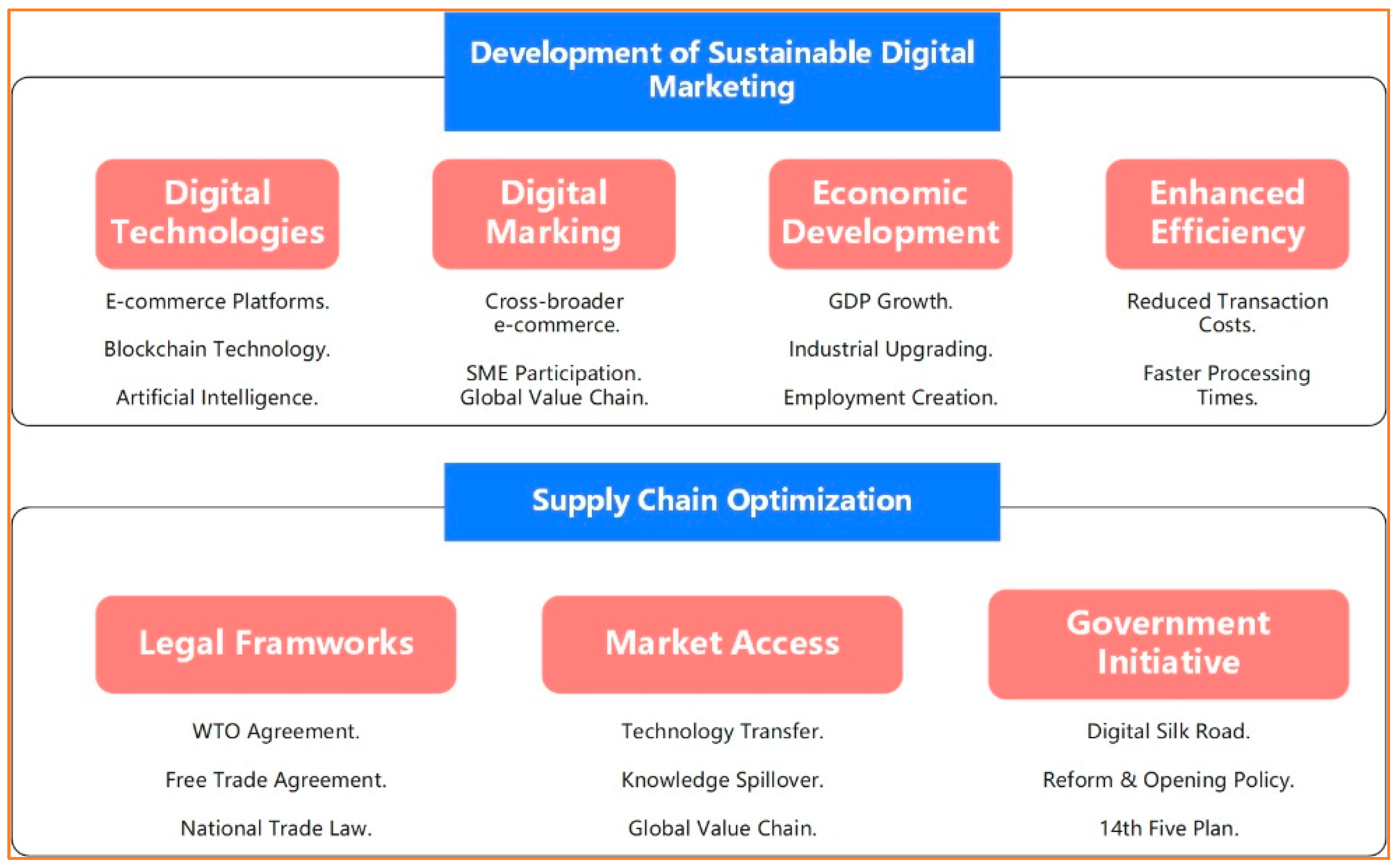
Figure 1. Integration of digital technologies and legal frameworks in China’s international trade development.
Sustainability 17 11353 g001
Figure 2. This model shows the research organization created by the authors.
Sustainability 17 11353 g002
Figure 3. Digital technology adoption and trade impact matrix (2024).
Sustainability 17 11353 g003
Figure 4. China’s digital trade growth and technology adoption (2018–2024).
Sustainability 17 11353 g004
Figure 5. Growth in China’s digital trade.
Sustainability 17 11353 g005
Figure 6. Growth trends in cross-border E-commerce.
Sustainability 17 11353 g006
Table 1. Summary of digital technologies and legal frameworks in China’s international trade.
Research ThemeMain ComponentsMain FindingsCitation
Digital Technologies in Trade
E-commerce Platforms
Online marketplaces;
Cross-border platforms;
B2B/B2C/C2C models;
Digital payment systems.
Alibaba generates > 50% of global e-commerce transactions;
Platforms enable SMEs to access global markets without physical presence;
Taobao Villages leverage local resources for rural development;
China’s e-commerce turnover is expected to reach USD 4 trillion.
[40]
Blockchain Technology
Distributed ledgers;
Smart contracts;
Supply chain tracking;
Transaction verification.
Enhances transaction security through decentralized databases;
Solutions for e-commerce trust issues;
National blockchain traceability initiatives;
Integration with the Belt and Road Initiative.
[41]
Artificial Intelligence
Trade robots;
Customs automation;
Language services;
Risk assessment.
AI streamlines customs clearance and improves accuracy;
Supports knowledge acquisition and decision making;
Facilitates cross-border communication;
China Customs’ three objectives: seamless, intelligent, and controllable.
[42]
Big Data Analytics
Market analysis;
Consumer trends;
Risk profiling;
Trade forecasting.
Transforms data into valuable trade insights;
Guides companies in “Going Out” policy;
Enables selection of lower-risk partners;
Improves data-driven decision making.
[43]
Legal and Regulatory Frameworks
International Trade Law
WTO agreements;
GATT provisions;
TRIPS agreement;
Digital trade mandates.
China joined the WTO in December 2001;
TRIPS sets minimum IPR standards;
International trade grew with tariff reductions;
Legal frameworks are essential for trade development.
[44]
Free Trade Agreements
Bilateral agreements;
Regional partnerships;
E-commerce sections;
Investment treaties.
China-ASEAN Framework Agreement;
Trans-Pacific Partnership provisions;
2015 China–Australia and China–Korea agreements with e-commerce sections;
FTAs provide a forum for policy learning.
[45]
National Regulations
Foreign trade laws;
Import/export licensing;
Special economic zones;
Technology transfer rules.
Companies must be Chinese-registered for import/export;
State reserves control over certain goods;
Special zones allow trade without licenses;
Legislation on digital signatures is in development.
[46]
Economic Development Impacts
Trade Facilitation
Transaction efficiency;
Cost reduction;
Market access;
Supply chain integration.
Digital tech expansion exceeds the economic effects of technologies alone;
Reduces paperwork burden on enterprises;
Automates information flow in shipments;
China ranked as the largest importer, the 2nd largest exporter.
[47]
SME Development
Global market access;
Reduced barriers;
Platform services;
Financial inclusion.
SMEs evoke “strength, motivation, encouragement” globally;
E-commerce enables expansion without physical presence;
Intelligent translation facilitates SME communication;
Rural e-business clusters support local development.
[48]
Implementation Challenges
Digital Divide
Infrastructure gaps;
Digital literacy;
Urban–rural disparities;
Access inequality.
SMEs receive less online attention than larger firms;
Noticeable disparities between urban and rural regions;
Affordability barriers for devices and connectivity;
Digital skills constraints limit value generation.
[49]
Cybersecurity and Compliance
Data breaches;
Privacy protection;
Cross-border regulations;
Internet governance.
Cyber-attacks threaten business operations;
Internet legislation reflects security concerns;
Regulatory compliance challenges across jurisdictions;
Debates over trade liberalization vs. protectionism.
[50]
Noted: All information of China’s international trade leverages digital platforms, governed by unique legal frameworks like data security and e-commerce laws.
Table 2. Relation to the theme of laws.
NoYearRegionLawCore Strategic Purpose Citations
12021ChinaData Security Law Classifies data based on its economic and security value, creating a governed data ecosystem to fuel national digital economy goals.[60]
22021ChinaPersonal Information Protection LawEstablishes a GDPR-like privacy framework to build citizen trust in digital services and ensure Chinese companies comply with global data transfer standards.[61]
32022ChinaMeasures for Standard Administration in Self-Driving CarsProvides a regulatory sandbox for autonomous vehicles, showcasing how China is creating tailored legal frameworks for specific high-tech industries.[62]
42023European UnionDigital Services ActMandates major online platforms to conduct risk assessments, mitigate systemic risks associated with disinformation and illicit products, and promote a safer and more sustainable digital space.[63]
52023European UnionAI Act (World’s 1st Comprehensive AI Law)Prohibits unacceptable AI uses, employs social scoring, and establishes strict regulations for high-risk AI, setting a global benchmark that will impact international trade in AI services.[64]
62022United StatesCHIPS and Science ActProvides substantial funding for domestic semiconductor research and development, thereby securing the physical foundation of the digital economy and reducing foreign dependency.[65]
72023IndiaDigital Personal Data Protection ActIndia’s first comprehensive data protection law, designed to protect citizens while enabling cross-border data flows, is crucial for its IT and e-commerce sectors.[66]
82022Saudi ArabiaPersonal Data Protection LawA cornerstone of Saudi Arabia’s effort to build a trusted legal environment for digital investment and business as part of its post-oil economic plan.[67]
Noted: The new benchmarks are a distinct global trend in digital lawmaking.
Table 3. The rapid growth of China’s foreign trade.
YearTrade Volume (Trillion USD)Growth Rate (%)
2025Total TradeDigital TradeTraditional TradeDigitalTraditionalDigital Trade Share (%)
20184.620.843.78--18.2
20194.580.983.6016.7−4.821.4
20204.651.313.3433.7−7.228.2
20216.051.864.1942.025.530.7
20226.312.114.2013.40.233.4
20235.942.063.88−2.4−7.634.7
20246.382.224.167.87.234.8
Noted: China’s overseas trade has been on a meteoric rise, driving its economic miracle. Its ascendancy has deeply integrated it into the international economy, lifting millions out of poverty and making it an irreplaceable trading partner and manufacturing center of the world.
Table 4. Digital technologies.
Efficiency MetricTraditional ProcessDigital-Enabled ProcessImprovement (%)p-Value
Time-Based Metrics
Customs Clearance Time (hours)48.615.3−68.5%<0.001
Document Processing (days)7.21.8−75.0%<0.001
Payment Settlement (days)5.40.5−90.7%<0.001
Total Trade Cycle Time (days)21.38.7−59.2%<0.001
Cost-Based Metrics
Transaction Costs (% of trade value)8.7%5.0%−42.3%<0.001
Documentation Costs (USD/shipment)385120−68.8%<0.001
Logistics Costs (USD/TEU)1245892−28.4%<0.001
Compliance Costs (USD/transaction)27595−65.5%<0.001
Quality Metrics
Error Rate (%)4.8%0.7%−85.4%<0.001
Transparency Score (0–100)4288+109.5%<0.001
Customer Satisfaction (0–10)6.28.7+40.3%<0.001
Supply Chain Visibility (%)35%92%+162.9%<0.001
Noted: Trade efficiency improvement to streamlining procedures like customs clearance, logistics, and electronic documentation to reduce expenses, enhance delivery speeds, and reduce paperwork.
Disclaimer/Publisher’s Note: The statements, opinions and data contained in all publications are solely those of the individual author(s) and contributor(s) and not of MDPI and/or the editor(s). MDPI and/or the editor(s) disclaim responsibility for any injury to people or property resulting from any ideas, methods, instructions or products referred to in the content.