Current Status of the Climate Change Impact Assessment System in Korea and Its Linkage with Urban Greenhouse Gas Observation for Sustainability: A Systematic Review and Case

Abstract
1. Introduction
2. Research Methods
2.1. Literature Review Protocol
2.1.1. Search Database and Data Type
2.1.2. Search Keywords and Search Period
2.1.3. Inclusion and Exclusion Criteria
2.1.4. Literature Selection Process
2.2. CCIA Case Analysis
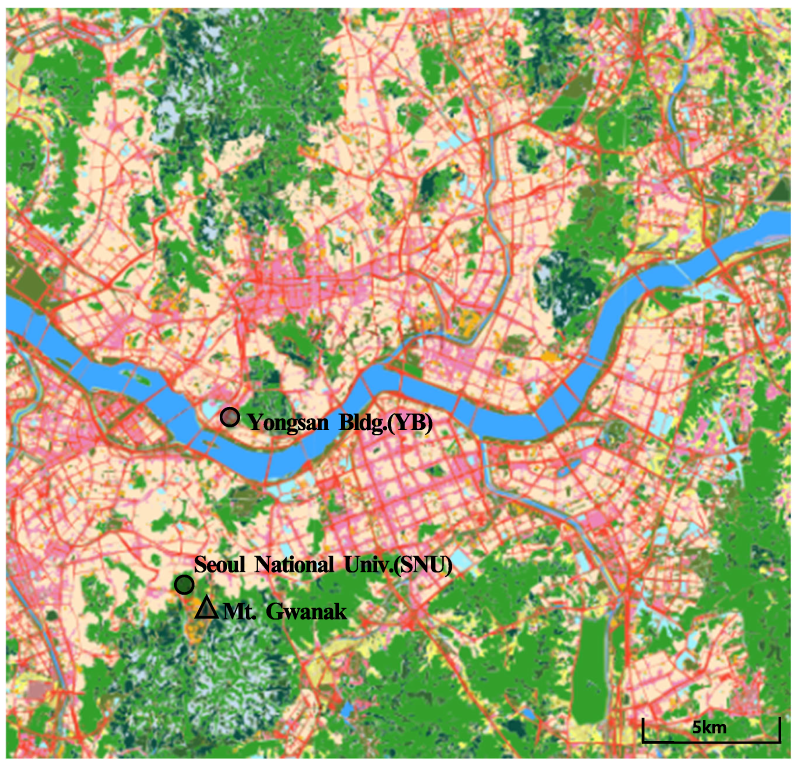
2.3. Urban GHG Observation
3. Results and Discussion
3.1. Current Status of CCIA System
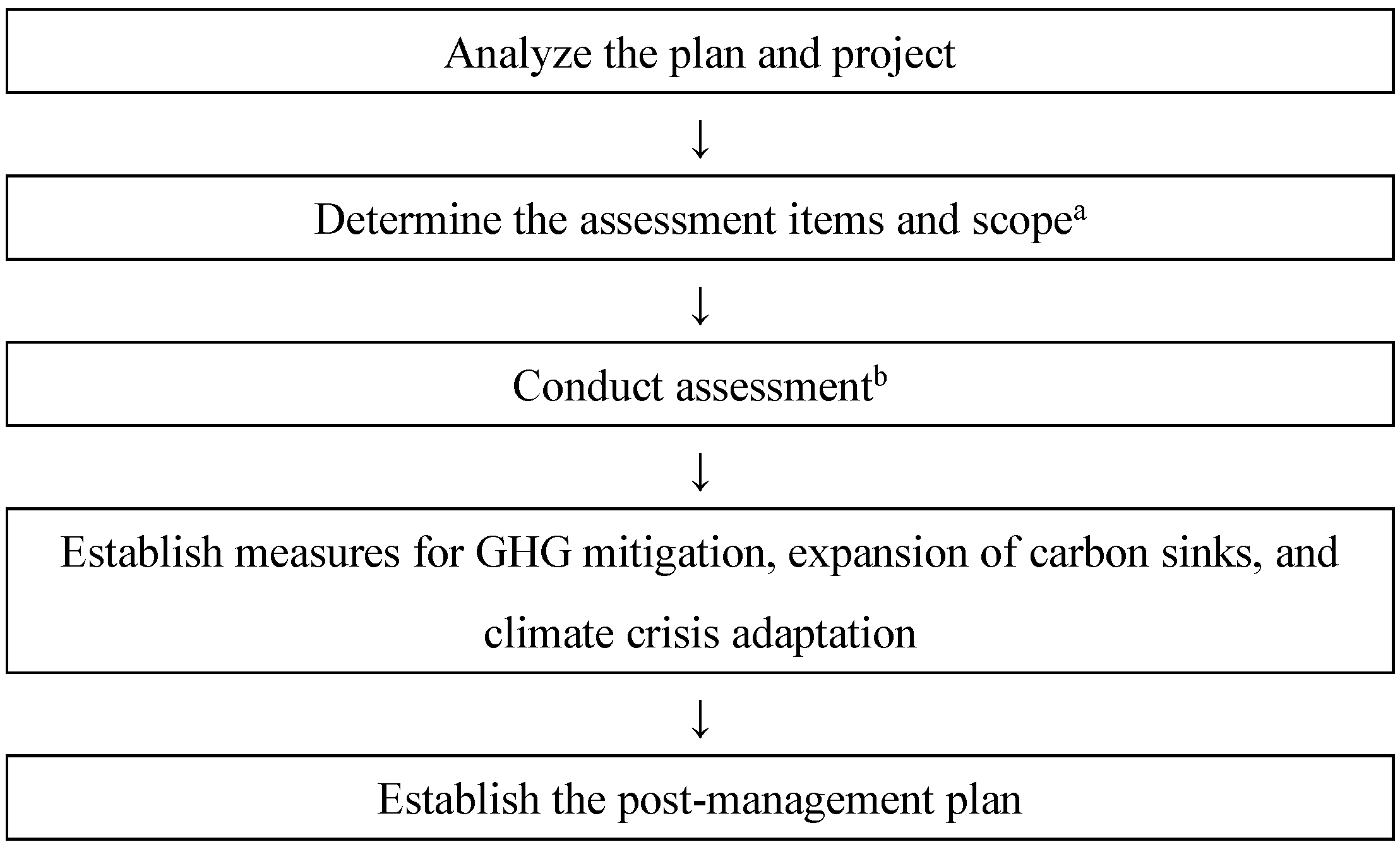
3.2. Preparing the CCIA
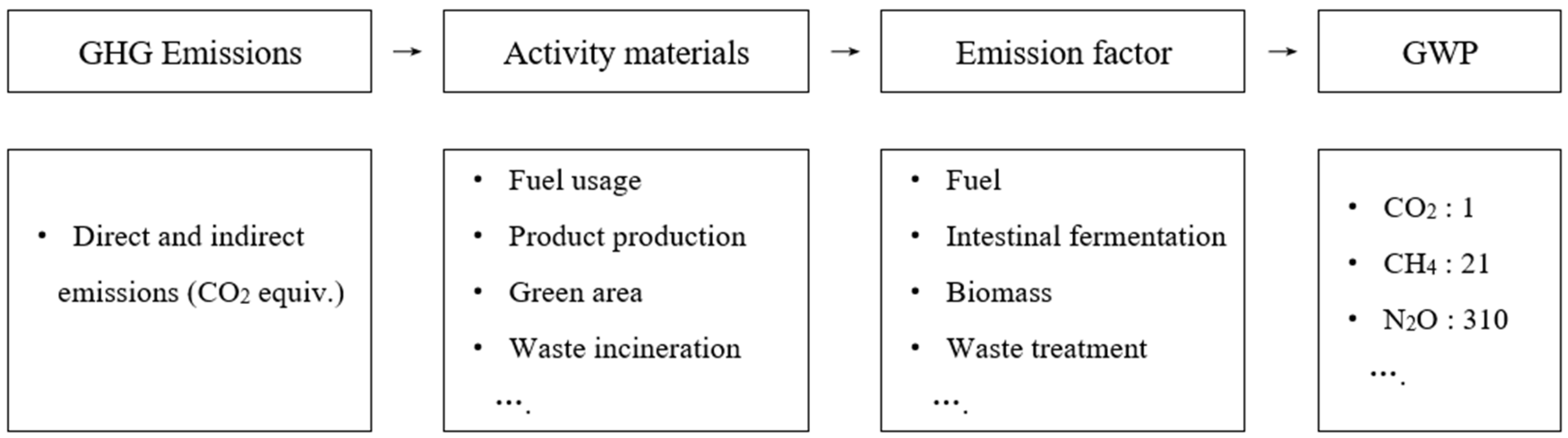
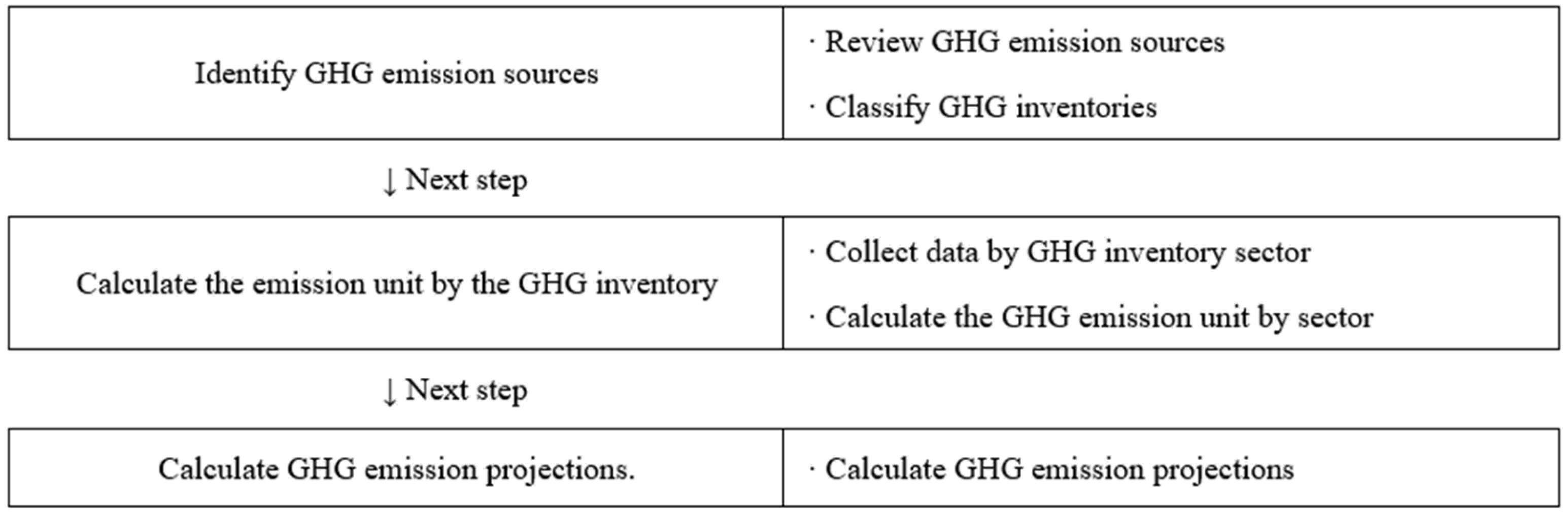
3.2.1. GHG Mitigation Field
3.2.2. Climate Crisis Adaptation Field
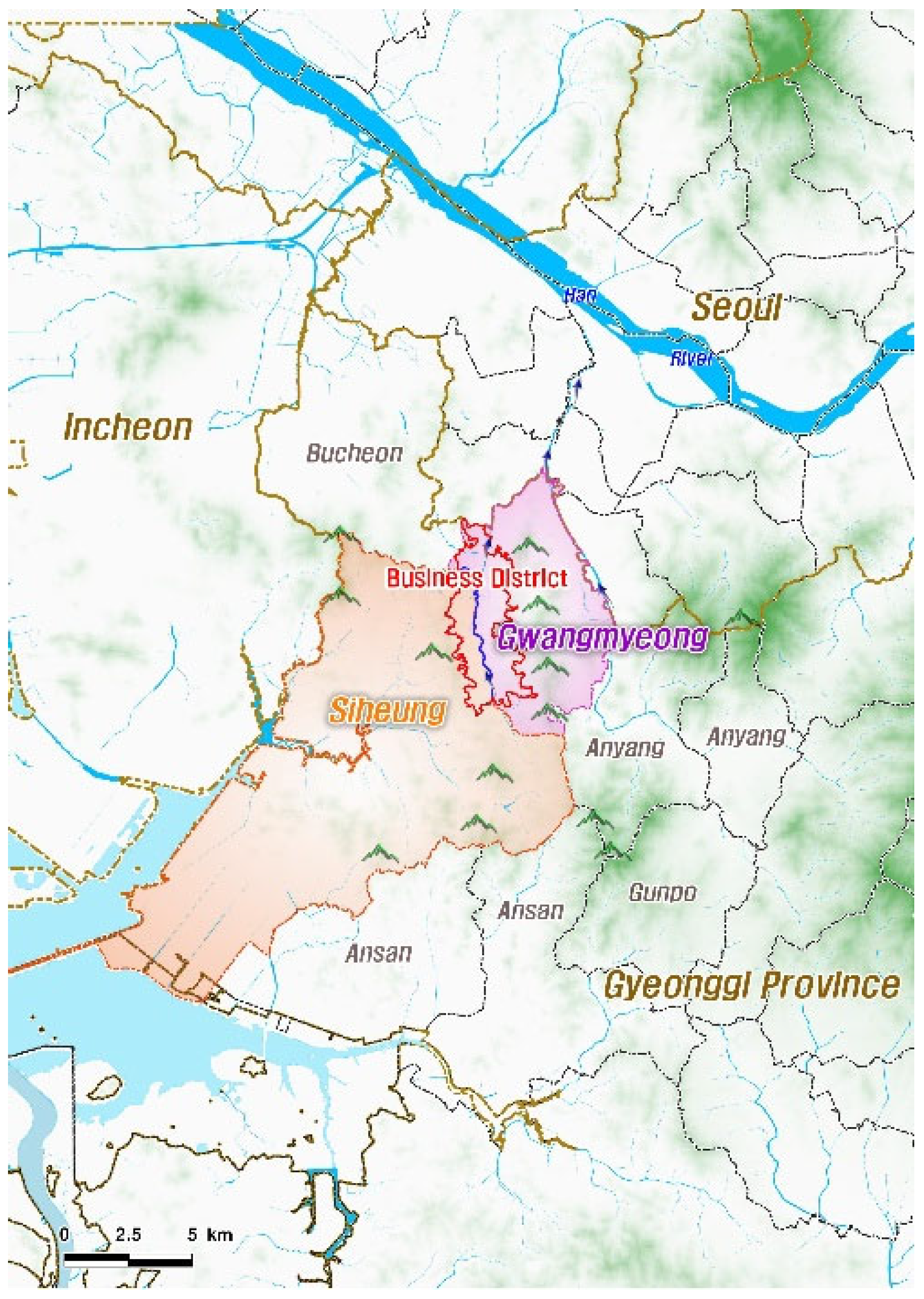
3.3. Analysis of CCIAment Review Cases
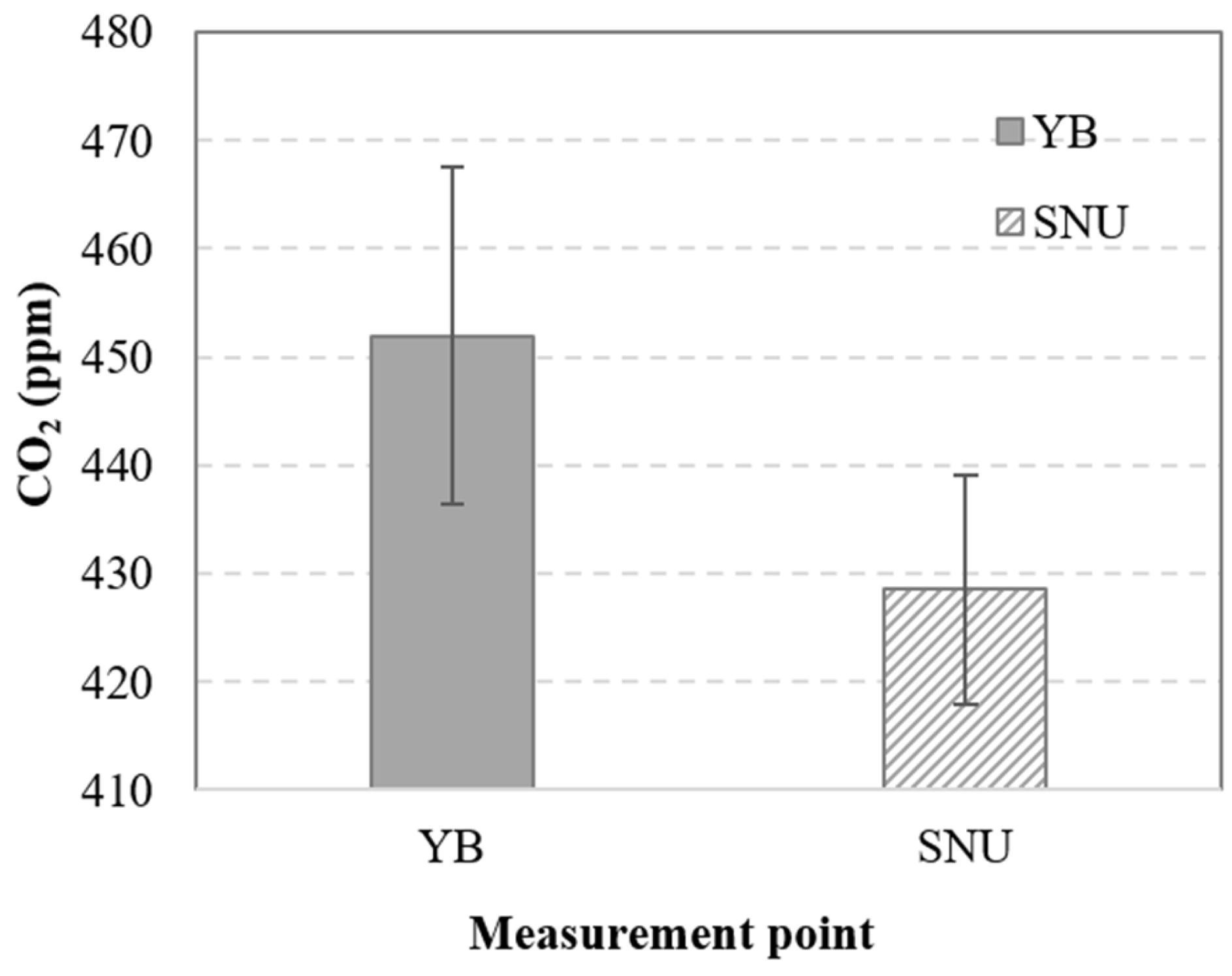
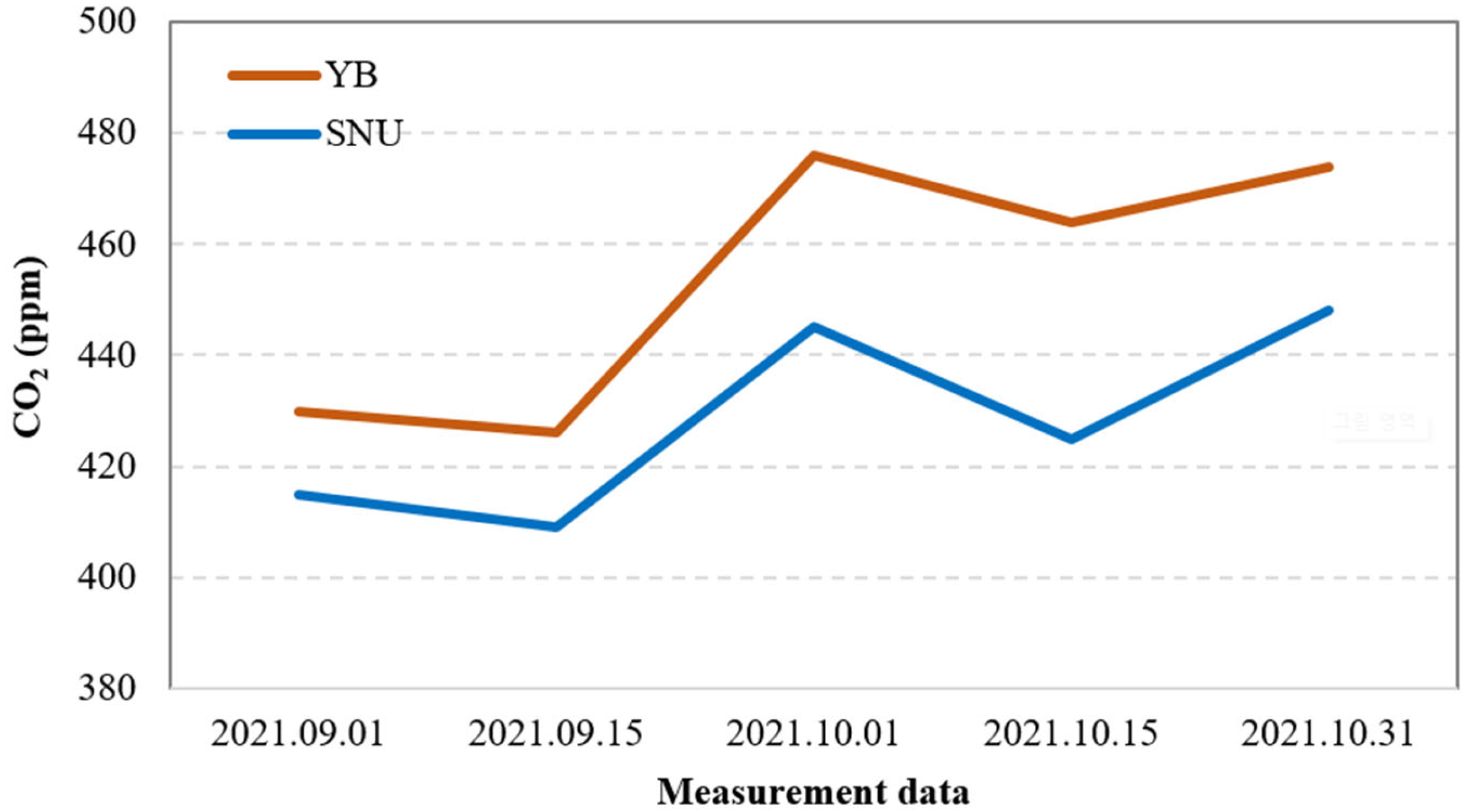
3.4. Analysis of GHG Observation Data and Their Linkage with CCIA
4. Conclusions
Author Contributions
Funding
Data Availability Statement
Acknowledgments
Conflicts of Interest
References
- International Energy Agency (IEA). CO2 Emissions in 2023—A New Record High, but Is There Light at the End of the Tunnel? International Energy Agency: Paris, France, 2024. [Google Scholar]
- Intergovernmental Panel on Climate Change (IPCC). Global Warming of 1.5 °C—An IPCC Special Report; Cambridge University Press: Cambridge, UK; New York, NY, USA, 2019. [Google Scholar]
- Intergovernmental Science-Policy Platform on Biodiversity and Ecosystem Services (IPBES). The Global Assessment Report on Biodiversity and Ecosystem Services; IPBES: Bonn, Germany, 2019.
- Ministry of Foreign Affairs (MOFA). Overview of the Adoption of the Paris Agreement; Ministry of Foreign Affairs: Seoul, Republic of Korea, 2025. Available online: https://www.mofa.go.kr/www/wpge/m_20150/contents.do (accessed on 22 November 2025).
- Ministry of Environment (MOE). See Also the Paris Agreement; Ministry of Environment: Sejong, Republic of Korea, 2022. [Google Scholar]
- Ministry of Environment (MOE). Framework Act on Carbon Neutrality and Green Growth to Respond to the Climate Crisis; Ministry of Environment: Sejong, Republic of Korea, 2021. [Google Scholar]
- Ministry of Foreign Affairs (MFA); Ministry of Environment (MOE). Submission of the Increased 2030 Nationally Determined Contribution (NDC) to the UN Framework Convention on Climate Change Secretariat; MFA and MOE Joint Press Release: Seoul, Republic of Korea, 2021. Available online: https://www.mofa.go.kr/www/brd/4080/view.do?seq=371966 (accessed on 28 August 2025).
- Logan, E.M.; John, C.L.; David, R.B.; Diane, E.P.; Courtenay, S.; Andrew, J.S.; Ryan, B.; Susan, E.B.; Britton, B.S.; Daniel, M.; et al. Long-term urban carbon dioxide observations reveal spatial and temporal dynamics related to urban characteristics and growth. Proc. Natl. Acad. Sci. USA 2018, 115, 2912–2917. [Google Scholar]
- Irene, X.-R.; Elsa, D.; Cyrille, V.; Morgan, L.; Christine, L.; Martina, S.; Marc, D.; Frederic, C.; Francois, R.; Olivier, P.; et al. Diurnal, synoptic and seasonal variability of atmospheric CO2 in the Paris megacity area. Atmos. Chem. Phys. 2018, 18, 3335–3362. [Google Scholar]
- Gao, Y.; Lee, X.; Shoudong, L.; Ning, H.; Xiao, W.; Cheng, H.; Cheng, L.; Zhen, Z.; Yichen, Y. Spatiotemporal variability of the near-surface CO2 concentration across an industrial-urban-rural transect, Nanjing, China. Sci. Total Environ. 2018, 631–632, 1192–1200. [Google Scholar] [CrossRef] [PubMed]
- World Meteorological Organization (WMO). GAW Report No. 229: The Global Atmosphere Watch Programme—Guidelines for Greenhouse Gas Measurement Techniques; World Meteorological Organization: Geneva, Switzerland, 2016. [Google Scholar]
- National Institute of Environmental Research (NIER). A Study on Establishment of a Monitoring System for Greenhouse Gases in Urban Area; National Institute of Environmental Research: Incheon, Republic of Korea, 2021. [Google Scholar]
- Park, C.; Jeong, S.; Jeong, S.; Lee, J.; Kim, I.; Lim, C. Assessment of Atmospheric Greenhouse Gas Concentration Equipment Performance. Atmos. Korean Meteorol. Soc. 2023, 33, 549–560. [Google Scholar]
- Ministry of Environment (MOE). Guideline for Climate Change Impact Assessment Methods; Ministry of Environment: Sejong, Republic of Korea, 2023. [Google Scholar]
- IPCC. 2006 IPCC Guidelines for National Greenhouse Gas Inventories; IPCC: Geneva, Switzerland, 2006. [Google Scholar]
- Korea Environment Corporation (KEC). Guidelines for Local Government Greenhouse Gas Inventories (Ver.4.1); Korea Environment Corporation: Incheon, Republic of Korea, 2017. [Google Scholar]
- Ministry of Environment (MOE). Evaluation Guidelines for Greenhouse Gas Items of Environmental Impact Assessment, etc.; Ministry of Environment: Sejong: Republic of Korea, 2015. [Google Scholar]
- Korea Environment Institute (KEI). Climate Change Impact Assessment Guideline Series C. Ver.1.0; Korea Environment Institute: Sejong, Republic of Korea, 2023. [Google Scholar]
- IPCC. Fifth Assessment Report of the IPCC; IPCC: Geneva, Switzerland, 2014. [Google Scholar]
- Oh, K.-Y.; Lee, M.-J.; Jeon, S.-W. Development of the Korean climate change vulnerability assessment tool (VESTAP)—Centered on health vulnerability to heat waves. Sustainability 2017, 9, 1103. [Google Scholar] [CrossRef]
- Korea Environment Institute (KEI); Korea Adaptation Center for Climate Change (KACC). Model of Integrated Impact and Vulnerability Evaluation of Climate Change (MOTIVE); KEI/KACC: Sejong, Korea, 2021. [Google Scholar]
- National Institute of Environment Research (NIER). Environmental Impact Assessment Support System (EIASS). Available online: https://www.eiass.go.kr (accessed on 28 August 2025).
- Alexis, A.S.; Virginia, E.T.; Alexander, J.T.; Catherine, N.; Jinsol, K.; Ronald, C.C. The BErkeley Atmospheric CO2 Observation Network: Initial evaluation. Atmos. Chem. Phys. 2016, 16, 13449–13463. [Google Scholar]
- Alex, B.; Gregoire, B.; Deborah, J.C.; Frederic, C.; David, M.B.; Isabelle, P.; Michel, R.; Jean-Daniel, P.; Philippe, C. Analysis of the potential of near-ground measurements of CO2 and CH4 in London, UK, for the monitoring of city-scale emissions using an atmospheric transport model. Atmos. Chem. Phys. 2016, 16, 6735–6756. [Google Scholar]



| Measurement Site | Site Characteristics | Measurement Period | Measurement Item | Instrument Model | Range /Accuracy | Measurement Technique |
|---|---|---|---|---|---|---|
| Yongsan Building | Central Seoul | 2021.9.1~10.31 | CO2 | LI-COR LI-850 | 0~2000 ppm /±1 ppm | NDIR a |
| Seoul National University | Southern Seoul | 2021.9.1~10.31 | CO2 | Picarro G2301 | 0~10,000 ppm /±0.1 ppm | CRDS b |
| Classification | Strategic EIA (Policy Plan) | Strategic EIA (Basic Development Plan) | EIA (Target Project) | Remarks |
|---|---|---|---|---|
| Road construction | ○ (Length: 12 km or more) | ○ (Length: 12 km or more) | ○ (Length: 12 km or more) | After September 2023 |
| Water resource development | ○ | - | - | |
| Development of mountainous areas | ○ | - | - | |
| Waste, sewage, and livestock manure treatment facilities | ○ | ○ | ○ | After September 2023 |
| Energy development | ○ | ○ | ○ | |
| Urban development | - | ○ (Area: 1,000,000 km2 or more) | ○ (Area: 1,000,000 km2 or more) | |
| Industrial Site and Industrial Park Development | - | ○ (Area: 500,000 km2 or more) | ○ (Area: 500,000 km2 or more) | |
| Construction of the port | - | ○ | - | |
| Utilization and development of rivers | - | ○ (Length: 20 km or more) | - | |
| Construction of airports or airfields | - | - | ○ | After September 2023 |
| Classification | EIA | CCIA |
|---|---|---|
| Supporting law | Environmental Impact Assessment Act | Framework Act on Carbon Neutrality and Green Growth for Coping with Climate Crisis |
| Starting year | 1977 | 25 September 2022 |
| Evaluation type | Strategic Environmental Impact Assessment, Environmental Impact Assessment, Mini Environmental Impact Assessment | Climate Change Impact Assessment |
| Evaluation target plan/project | 35 items across 10 policy planning areas 16 areas and 81 items in the basic development plan 17 fields, 127 projects | 16 items across 5 policy planning areas 7 areas and 37 items in the basic development plan 6 fields, 41 projects |
| Evaluation items | 6 fields, 21 items | GHG mitigation, climate crisis adaptation |
| Consultation agency | Ministry of Environment (including regional environmental offices) | Ministry of Environment (excluding regional environmental offices) |
| Purpose | Environmentally friendly development and minimization of environmental and health damage | Achieving carbon neutrality goals and minimizing the impact of climate change. |
| Characteristics | Assessment of compliance with environmental standards a, etc. Conduct a comprehensive assessment of natural ecosystems, air, water, land, living, social, and economic environments. | Assessment of appropriateness and linkage with national and regional GHG reduction targets b, etc. Conduct a focused evaluation on GHG mitigation and climate crisis adaptation. |
| Sector | Emission Category | Emission Factor | Target GHGs | |
|---|---|---|---|---|
| Transport | Mobile emission sources | GHG emissions from energy (fuel) use in mobile combustion facilities | CO2, CH4, N2O | |
| Public, commercial, industrial, and residential | Direct emissions | GHG emissions from energy (fuel) use in stationary combustion installations | CO2, CH4, N2O | |
| Indirect emissions | Electricity | GHG emissions from the use of externally supplied electricity, heat, and water | CO2, CH4, N2O | |
| Heat | ||||
| Water | ||||
| Waste | Landfill | GHG emissions from landfilling, incineration, biological treatment, and wastewater treatment of waste generated in the business area | CH4 | |
| Incineration | CO2, CH4, N2O | |||
| Sewage treatment | CH4, N2O | |||
| Biological treatment | CH4, N2O | |||
| Agriculture | Intestinal fermentation | Methane emissions from livestock enteric fermentation | CH4 | |
| Livestock manure treatment | Methane emissions from livestock manure treatment | CH4 | ||
| Fertilizer | GHG emissions from fertilizer use | CH4, N2O | ||
| Burning crop residues | GHG emissions from biomass combustion | CO2, CH4, N2O | ||
| Sector | Carbon Sinks | Carbon Sink Factor | Target GHGs |
|---|---|---|---|
| LULUCF | Forest land | Forest land remaining forest land | CO2 |
| Land converted to forest land | |||
| Cropland | Cropland remaining cropland | CO2 | |
| Land converted to cropland | |||
| Grassland | Grassland remaining grassland | CO2 | |
| Land converted to grassland | |||
| Wetlands | Wetlands remaining wetlands | CO2 | |
| Land converted to wetlands |
| Fuel Type | Korean Energy Standard | CO2 | CH4 | NO2 | |||||
|---|---|---|---|---|---|---|---|---|---|
| 1. Liquid fuels | |||||||||
| Crude | Crude oil | 73,300 | 3 | 3 | 10 | 10 | 0.6 | 0.6 | |
| Gasoline | Automotive gasoline | Gasoline | 69,300 | 3 | 3 | 10 | 10 | 0.6 | 0.6 |
| Aviation gasoline | - | 70,000 | 3 | 3 | 10 | 10 | 0.6 | 0.6 | |
| Jet fuel | JP-8 | 70,000 | 3 | 3 | 10 | 10 | 0.6 | 0.6 | |
| Kerosene | Jet fuel | JET A-1 | 71,500 | 3 | 3 | 10 | 10 | 0.6 | 0.6 |
| Others | Indoor/Heating Kerosene | 71,900 | 3 | 3 | 10 | 10 | 0.6 | 0.6 | |
| Gas/Diesel oil | Diesel | 74,100 | 3 | 3 | 10 | 10 | 0.6 | 0.6 | |
| B-A | 74,100 | 3 | 3 | 10 | 10 | 0.6 | 0.6 | ||
| Residual fuel oil | B-B | B-B | 74,400 | 3 | 3 | 10 | 10 | 0.6 | 0.6 |
| B-C | B-C | 74,400 | 3 | 3 | 10 | 10 | 0.6 | 0.6 | |
| LPG | Propane | 63,100 | 1 | 1 | 5 | 5 | 0.1 | 0.1 | |
| Butane | 63,100 | 1 | 1 | 5 | 5 | 0.1 | 0.1 | ||
| Ethane | - | 61,600 | 1 | 1 | 5 | 5 | 0.1 | 0.1 | |
| Naphtha | Naphtha | 73,300 | 3 | 3 | 10 | 10 | 0.6 | 0.6 | |
| Bitumen (Asphalt) | Asphalt | 80,700 | 3 | 3 | 10 | 10 | 0.6 | 0.6 | |
| Petroleum coke | Petcoke | 97,500 | 3 | 3 | 10 | 10 | 0.6 | 0.6 | |
| Refinery feedstock | Intermediate products | 73,300 | 3 | 3 | 10 | 10 | 0.6 | 0.6 | |
| 2. Solid fuels | |||||||||
| Anthracite | Domestic/Imported anthracite | 98,300 | 1 | 10 | 10 | 300 | 1.5 | 1.5 | |
| Coking coal | Metallurgical coal | 94,600 | 1 | 10 | 10 | 300 | 1.5 | 1.5 | |
| Other bituminous coal | Fuel coal | 94,600 | 1 | 10 | 10 | 300 | 1.5 | 1.5 | |
| Sub-bituminous coal | Sub-bituminous | 94,100 | 1 | 10 | 10 | 300 | 1.5 | 1.5 | |
| Lignite | Lignite | 101,000 | 1 | 10 | 10 | 300 | 1.5 | 1.5 | |
| Oil shale/Bituminous shale | - | 107,000 | 1 | 10 | 10 | 300 | 1.5 | 1.5 | |
| Lignite briquettes | - | 97,500 | 1 | 10 | 10 | 300 | 1.5 | 1.5 | |
| Patent fuel | - | 97,500 | 1 | 10 | 10 | 300 | 1.5 | 1.5 | |
| Coke | Coke oven | Coke | 107,000 | 1 | 10 | 10 | 300 | 1.5 | 1.5 |
| Gas | - | 107,000 | 1 | 1 | 5 | 5 | 0.1 | 0.1 | |
| 3. Gaseous fuels | |||||||||
| By-product gas | Gas plant gas | - | 44,400 | 1 | 1 | 5 | 5 | 0.1 | 0.1 |
| Coke oven gas | Coke gas | 44,400 | 1 | 1 | 5 | 5 | 0.1 | 0.1 | |
| Blast furnace gas | Blast furnace gas | 260,000 | 1 | 1 | 5 | 5 | 0.1 | 0.1 | |
| Basic oxygen furnace gas | Basic oxygen furnace gas | 182,000 | 1 | 1 | 5 | 5 | 0.1 | 0.1 | |
| Natural gas | LNG | 56,100 | 1 | 1 | 5 | 5 | 0.1 | 0.1 | |
| Heatwave | Drought | Heavy Rain /Flood | Windstorm /Storm | Landslide | Sea Level Rise | Cold Wave /Heavy Snow /Freeze | Other |
|---|---|---|---|---|---|---|---|
| H | D | F | W | L | S | C | O |
| Risk Factor | Impact Prediction | Risk of Occurrence | Relevance to the Projects | Probability of Occurrence | Degree of Damage Upon Occurrence | |||
|---|---|---|---|---|---|---|---|---|
| Heavy rain/Flood | Method: Runoff estimation model Spatial scope: City00, District00 Scenario: SSP2-4.5, SSP5-8.5 Method: Literature review | Flood damage of rivers/lakes during heavy rainfall | High | Land-use changes and increased impervious surfaces may increase flood risk | High | Scenario results: Expected runoff increase of 00% | High | Impact: Expected inundation of residential area A (00% inundation) |
| Potential inflow of pollutants into rivers/lakes during heavy rainfall | Ave. | Possibility of pollutant inflow exists | High | Low | ||||
| Ecosystem changes due to climate change | High | Climate-induced ecosystem disturbance and reduced | Low | High | ||||
| Class. | Risk List | Relevance | Probability of Occurrence | Degree of Damage Upon Occurrence | |||||
|---|---|---|---|---|---|---|---|---|---|
| High | Medium | Low | High | Low | High | Low | |||
| Floods | 1 | Increase in flood damage to rivers and watersheds due to heavy rain | ○ (High relevance) | ○ (High likelihood of occurrence) | ○ (High damage) | ||||
| 2 | Decreased stability of dam and river infrastructure due to heavy rain | ○ (Moderate relevance) | ○ (High likelihood of occurrence) | ○ (Low damage) | |||||
| Classification | Total | Residential Construction Land | Alternative Green Space | Flood Reservoir | Public Facility Land | |||
|---|---|---|---|---|---|---|---|---|
| Subtotal | Urban Support Facilities, Commercial Facilities, etc. | Park Green Space | Other Facilities | |||||
| Area (m2) | 12,714,465 | 2,714,655 | 856,063 | 494,715 | 8,649,032 | 1,744,216 | 3,094,238 | 3,810,578 |
| Ratio (%) | 100 | 21.4 | 6.7 | 3.9 | 68.0 | 13.7 | 24.4 | 29.9 |
Disclaimer/Publisher’s Note: The statements, opinions and data contained in all publications are solely those of the individual author(s) and contributor(s) and not of MDPI and/or the editor(s). MDPI and/or the editor(s) disclaim responsibility for any injury to people or property resulting from any ideas, methods, instructions or products referred to in the content. |
© 2025 by the authors. Licensee MDPI, Basel, Switzerland. This article is an open access article distributed under the terms and conditions of the Creative Commons Attribution (CC BY) license (https://creativecommons.org/licenses/by/4.0/).
Share and Cite
Jung, S.; Lee, J. Current Status of the Climate Change Impact Assessment System in Korea and Its Linkage with Urban Greenhouse Gas Observation for Sustainability: A Systematic Review and Case. Sustainability 2025, 17, 11339. https://doi.org/10.3390/su172411339
Jung S, Lee J. Current Status of the Climate Change Impact Assessment System in Korea and Its Linkage with Urban Greenhouse Gas Observation for Sustainability: A Systematic Review and Case. Sustainability. 2025; 17(24):11339. https://doi.org/10.3390/su172411339
Chicago/Turabian StyleJung, Sungwoon, and Jaewon Lee. 2025. "Current Status of the Climate Change Impact Assessment System in Korea and Its Linkage with Urban Greenhouse Gas Observation for Sustainability: A Systematic Review and Case" Sustainability 17, no. 24: 11339. https://doi.org/10.3390/su172411339
APA StyleJung, S., & Lee, J. (2025). Current Status of the Climate Change Impact Assessment System in Korea and Its Linkage with Urban Greenhouse Gas Observation for Sustainability: A Systematic Review and Case. Sustainability, 17(24), 11339. https://doi.org/10.3390/su172411339