Article

Behavioral Channels Linking Firm Characteristics and Environmental, Social, and Governance Performance: Evidence from Chinese Listed Firms

1
Faculty of Finance and Economics, Jiangsu University, Zhenjiang 212013, China
2
Faculty of Finance, City University of Macau, Macau, China
*
Authors to whom correspondence should be addressed.
Sustainability 2025, 17(24), 11337; https://doi.org/10.3390/su172411337
Submission received: 11 November 2025 / Revised: 15 December 2025 / Accepted: 15 December 2025 / Published: 17 December 2025

Abstract

This study examines the effects of firm characteristics on environmental, social, and governance (ESG) performance among A-share firms listed in Shanghai and Shenzhen. Drawing on the resource-based view, legitimacy theory, and agency theory, this study examines both direct and indirect mechanisms connecting corporate profitability, firm size, and ownership concentration to enhance ESG performance. This research employs secondary panel data from the CSMAR, DIB, and WIND databases (13,911 observations) and estimates two-way fixed effects models with firm-clustered standard errors. The outcomes show that profitability, firm size, and ESG performance have positive relationships, but ownership concentration is a negative factor in ESG performance. Market share and managers’ risk preferences mediate the relationship between firm characteristics and ESG performance; however, these effects are interpreted as exploratory due to panel data constraints. Internal control enhances these relationships, which emphasize the importance of the process of sustainability itself. The study provides practical insights that managers, policymakers, or investment firms can apply to improve ESG integration accountability in the emerging markets context.

1. Introduction

Environmental, social, and governance (ESG) performance has become a central benchmark for measuring firm sustainability and long-term value creation [1]. Over the past decade, profit-only evaluations by global investors and regulators have shifted towards more comprehensive approaches that incorporate social responsibility and sustainable practices into ESG evaluations of companies [2,3]. However, despite this shift, research on the role of firm-specific factors influencing ESG performance remains fragmented and has received limited empirical evidence, especially in emerging markets with varying enforcement and reporting practices distinct from those of Western nations [4,5]. China, being the world’s second-largest economy and a major player in global environmental pollution [6] and the carbon neutrality initiative, is an optimal setting, as its ESG disclosure reporting system is growing rapidly and shows divergence among firms listed on Chinese stock exchanges [7].
Although existing ESG research has provided some insights, it has some flaws and is not comprehensive enough [4,5]. Firstly, the available literature on ESG is mostly Western- or globally centered, with few studies on the determinants of ESG in the specific Chinese context [8,9]. Secondly, the available literature mainly focuses on the direct impact aspects. It neglects the importance of behavior- and strategy-related mechanisms, such as market structuring or the manager’s risk aversion within firms, in linking firm attributes to ESG outcomes [10,11]. Lovatte et al. [12] highlight the mediating role of corporate social responsibility in the relationship between CO2 emissions and the Environmental Kuznets Curve in Brazil and call for further empirical research. Thirdly, the effect of ownership concentration in the literature on ESG research is not clear from the perspective of theoretical aspects [13,14].
Based on stakeholder theory [15], previous research has underscored that larger and transparent companies have been more susceptible to ESG pressures, as small firms lack corresponding motivations and resources [16,17]. Alternatively, some studies based on the resource-based view theory proposed that financially strong organizations have used their slack resources for sustainable projects and, as such, met two goals at once—profit maximization and establishment of legitimacy [18,19]. However, these arguments ignore the dynamic nature of firm characteristics’ effects on ESG performances [20]. There is empirical evidence suggesting lagged effects of corporate governance and financial performance on improved ESG ratings [21,22], but these have rarely been examined in China’s A-share market [23].
Moreover, there has been a lack of exploration on the behavioral and structural links between corporate features and ESG outcomes [24,25]. Financial metrics, such as return on equity (ROE), measure corporate profit but not necessarily risk preference or market intention as managerial behavior underlying ESG engagement [26]. Additionally, ownership concentration can be supportive or limiting of sustainability efforts based on whether large shareholders aim for short-term or long-term legitimacy gains [27]. To acknowledge such complex links, it is necessary to integrate agency theory [28], which emphasizes the tensions between large and small shareholders, and legitimacy theory [29], which treats ESG engagement as a behavior through which companies demonstrate congruence between corporate actions and societal expectations [30,31].
The proposed work differs by integrating the resource-based view [32], the theory of legitimacy [29], and agency theory [28] in a structured manner, explicitly connecting each corporate attribute with a theory. Company size and profitability capture resource-based competitiveness, driving ESG investment, market share captures the pressures of legitimacy related to visibility, and ownership concentration and internal control capture governance structures related to agencies influencing managerial discretion. In this manner, our work enables the investigation of direct relationships and, importantly, the mediating and moderating roles of factors related to behavior (risk preference) and governance architecture (internal control) in influencing ESG in the Chinese setting, thereby integrating theories missing in earlier research.
Based on these research gaps, this research aims to answer the following research questions (RQs):
RQ1: Do company-based characteristics, such as ROE, size of firm, and its ownership concentration, impact ESG performance in the Chinese Listed companies?
RQ2: By what means or through what behavioral and strategic channels, specifically risk preference and market share, do these links operate?
RQ3: Do internal control and effective internal control systems act as a moderator of these effects?
By addressing the above RQs, this research adds to the literature in three ways. First, it enhances theoretical explanations on ESG performance issues because it employs all three theories of resource-based view [33], agency [28], and legitimacy theory [29] together in explaining ESG performances, not only as they are directly influenced but through other variables like managerial actions and strategic orientation [34,35]. Second, it contributes methodologically by using panel data on Chinese A-share companies, testing contemporaneous and lagged hypotheses, and emphasizing the diffusion of ESG effects over time [36,37]. Lastly, this work also has practical contributions for policymakers and managers who would like to create sustainable value and link profit and governance structures through emerging markets.
The following research is organized as follows: Section 2 covers the theoretical foundation and develops hypotheses, and Section 3 describes the empirical methods, including the variables. The section covers results and tests of robustness, while covering a discussion of findings, implications, and future directions.

2. Theoretical Support and Hypotheses Formulation

2.1. Theoretical Support

Sustainability at a corporate or organizational level has moved beyond compliance and has become a strategic concern requiring organizations to balance governance, profitability, and stakeholder legitimacy [6,38]. There are three complementary theories (the resource-based view, legitimacy, and agency) that provide the analytical foundation for this study.
The resource-based view traces its origins to Penrose’s conceptualization of firms as bundles of heterogeneous resources [39], formalized by Wernerfelt [33] and extended by Barney [32], identifying four criteria for strategic resources (valuable, rare, inimitable, non-substitutable). Peteraf [40] further extended the RBV by emphasizing the role of organizational and human capital resources. The RBV theory is especially relevant for ESG studies, given that organizations, possessing superior financial and managerial resources, can allocate slack resources toward sustainability efforts [41]. Considering this, the company size and profitability (ROE) provide the capacity to facilitate investment in ESG practices, thereby improving reputation and performance [16].
According to legitimacy theory [29], organizations aim to ensure that their actions are viewed as consistent and compatible with societal values and expectations regarding the environment [42]. Through ESG practices, firms attain legitimacy, which enhances survival prospects and resource accessibility, as ESG reporting helps firms uphold a “social contract.” [43]. In China’s institutional environment, characterized by heightened public scrutiny and regulatory attention, firms with greater visibility face stronger pressures. In this context, market share acts as an essential mechanism through which organizations respond to these pressures, as highly visible organizations face greater stakeholder expectations.
The agency theory [28] focuses on conflicts of interest between managers, controllers, and minority shareholders. Ownership structures and internal control mechanisms shape whether managerial actions are consistent with shareholder preferences. Ownership concentration can either support or constrain ESG investment, depending on whether dominant shareholders prioritize long-term legitimacy or short-term private gains [27]. Internal control affects these dynamics by protecting against agency problems, improving transparency, and ensuring oversight during decision-making for ESG investments [44]. As a result, well-designed internal controls play a critical role in governance, particularly in contexts where corporations’ ESG disclosures and practices undergo intensive scrutiny.
These three theories together offer complementary insights into the role of a firm’s characteristics in determining ESG outcomes. More significantly, these theories together offer insights into the two behavioral channels identified in the research, providing a framework for analyzing the influence of a firm’s resources and governance mechanisms on ESG performance. A resource-based view of the firm helps establish the extent to which a firm can make ESG investments; legitimacy theory helps establish the pressure from the outside to make these ESG investments, while agency theory helps establish the internal governance mechanisms for ESG spending.
This theory-driven model shows that among Chinese listed companies, ESG performance is influenced not only through governance structure and availability of resource but also via behavior-driven channels such as managerial risk orientation and market visibility. These channels shape how financial capacity of an organization is translated into sustainability-oriented engagement under internal control and legitimacy pressure.

2.2. Hypotheses Formulation

2.2.1. Firm Profitability and ESG Performance

Based on the resource-based view, organizations with superior financial performance have greater slack resources, enabling them to allocate organizational and managerial attention towards sustainability-driven activities [45,46]. Higher profitability increases an organization’s ability to absorb the costs and risks related to ESG efforts while enhancing its reputation and competitiveness [47]. Financially healthy firms can allocate more funds toward green technology R&D, environmental facility upgrades, employee welfare programs, and social contributions, thereby enhancing all dimensions of ESG performance [48]. Research indicates that profitable firms engage in proactive environmental practices and provide clear social disclosures [49]. Indrawan et al. [50] observed that ROE strengthens the effects on ESG performance. Most recently, D’Amato et al. [49] and Aydoğmuş et al. [51] also reported the significant link between these constructs. Therefore, it is hypothesized that
H1: 
Corporate profitability (e.g., ROE) positively influences ESG performance.

2.2.2. Firm Size and ESG Performance

Firm size reflects market position and capacity for resource integration. Larger organizations have more resources, diversified stakeholders, and greater visibility to the public and regular attention [52]. Legitimacy theory argues that greater visibility increases the need to adopt sustainability practices to gain social acceptance [53]. Furthermore, larger organizations enjoy economies of scale advantages in developing their governance structures and sustainability reporting practices [54]. While the same cannot be said about small businesses, which may neither have the capabilities nor the motives to embrace ESG strategies holistically [55]. Large corporations receive more scrutiny from stakeholders due to their greater visibility, thereby increasing legitimacy pressures to implement ESG measures [56]. At the same time, the resource-based view argues that larger corporations have more abundant resources (tangible and intangible) to facilitate the implementation of ESG measures [41]. Consistent with these arguments, most recently, Martínez et al. [57] and Shen [58] observed a significant link between these factors. We therefore hypothesize:
H2: 
Firm size (lnSize) positively influences ESG performance.

2.2.3. Ownership Concentration and ESG Performance

The ownership structure identifies the degree to which controlling stakeholders influence strategic decisions [59]. Agency theory suggests that different ownership structures influence the behavior of management and the extent to which the decisions made balance the needs of shareholders and stakeholders [29]. Ownership concentration can lead controlling shareholders to prioritize short-term gains over long-term sustainability, potentially impeding ESG investment [60,61]. Prior studies emphasize that the concentration of ownership limits a firm’s attention to ESG concerns. For instance, Srairi [62] observed a negative correlation between ownership concentration and ESG performance in the banking sector. Likewise, Yavuz et al. [63] reported the negative association in the six financial and 16 non-financial Istanbul companies. We therefore hypothesize:
H3: 
Ownership Concentration Negatively Influence ESG Performance.

2.2.4. The Mediating Role of Market Share (Industry Competitive Position)

Market share refers to the competitive position or visibility of the enterprise in the industry [64]. Legitimacy theory emphasizes that organizations with high visibility face greater expectations and scrutiny regarding environmental and social responsibility [65,66]. Even though small organizations sometimes rely on ESG to some extent for distinction, the nature of the Chinese A-share market tends to involve highly dominant scales and significant public focus on larger corporations. In this context, the net impact of market share is expected to follow a linear pattern: as market share rises, legitimacy pressure intensifies, leading to greater ESG engagement. Firm financial characteristics (ROE and firm size) and governance factors (ownership concentration) shape market position [10,67], which in turn form ESG engagement. Recently, Nimusima et al. [68] used competitive advantage as a mediator between interactive practices and market performance, while Muis et al. [69] used it as a mediator between market orientation, transformational leadership, partnership strategy, and firm performance. However, the exact role of the industry’s competitive position (market share) as a mediator is missing in the existing literature. We therefore hypothesize:
H4: 
Market share (industry competitive position) mediates the relationship between firm characteristics (ROE, lnSize, and ownership concentration) and ESG performance.

2.2.5. The Mediating Role of Managerial Risk Preferences

Managerial risk preference reflects the willingness of decision-makers to participate in long-run, uncertain investments like ESG efforts [70]. Organizations with higher risk tolerance are more likely to pursue sustainability-oriented projects with delayed returns [71]. Risk-averse managers, on the other hand, might shun sustainability because of uncertain benefits [72]. These behavioral channels link firm characteristics to ESG outcomes. In this research, managerial risk preference is proxied by the ratio of R&D investment and fixed investment to total assets [73]. Whereas fixed and R&D assets differ in their risk profiles, this ratio fosters a general orientation towards long-run investment, a theme that has often been emphasized in Chinese literature [74].
To reconcile with the agency problem without conflicting concepts within the agency-theory framework, we trace the behavioral mechanisms: risk-focused executives support long-term ESG actions, while internal governance offsets short-term opportunism to improve ESG engagement [75,76]. Company profitability, size, and ownership structure determine risk preferences [77,78], which subsequently impact ESG investment choices [79,80]. Recently, Cui et al. [81] used management risk executive as a mediator between their experience and firm sustainable innovation. Carina et al. [82] and Ahmed et al. [83] used risk perception as a mediator between constructs such as financial literacy, entrepreneurial orientation, behavioral biases, and investor investment. Accordingly, this paper proposes:
H5: 
Risk preferences mediate the relationship between firm characteristics (ROE, lnSize, and ownership concentration) and ESG performance.

2.2.6. The Moderating Role of Internal Control Level

Internal control systems play an essential role in managing agency problems by promoting compliance, transparency, and alignment between management decisions and the organization’s overall goals [84]. It is argued that improved internal control practices complement the positive impact of profitability and size on ESG disclosures and may reduce asymmetry and align resource allocation with sustainability goals [70,85]. Additionally, proper management of internal controls may offset the negative impact of ownership structure. Further, the importance of effective internal control is that it enhances the procedural integrity of ESG commitments, making ESG practices more credible [85].
As a moderating variable, the level of internal control may function as a “control valve” in the relationship between firm characteristics and ESG performance [86]. High-quality internal controls can strengthen the positive effects of profitability, firm size, and ownership structure on ESG performance [70], while simultaneously mitigating the influence of adverse factors [87]. Recently, Feng and Saleh [70] observed that internal control moderated the effect of managerial ability on ESG risks. Quan and Zhou [88] reported that internal control moderates the relationship between corporate governance and ESG performance in China. In addition, Boulhaga et al. [86] noted that internal controls negatively moderated the relationship between ESG ratings and firm performance among French companies.
This study distinguishes between two indicators: internal control (continuous index), which focuses on improvements in internal governance, and effective internal control (binary indicator), which indicates a threshold level of effectiveness for internal controls. Both indicators describe and represent two forms of governance (gradual and categorical).
Accordingly, this paper proposes:
H6: 
Internal control (EIC and IC) moderates the relationship between firm characteristics and ESG performance such that organizations with stronger internal control reflect more substantial impacts.
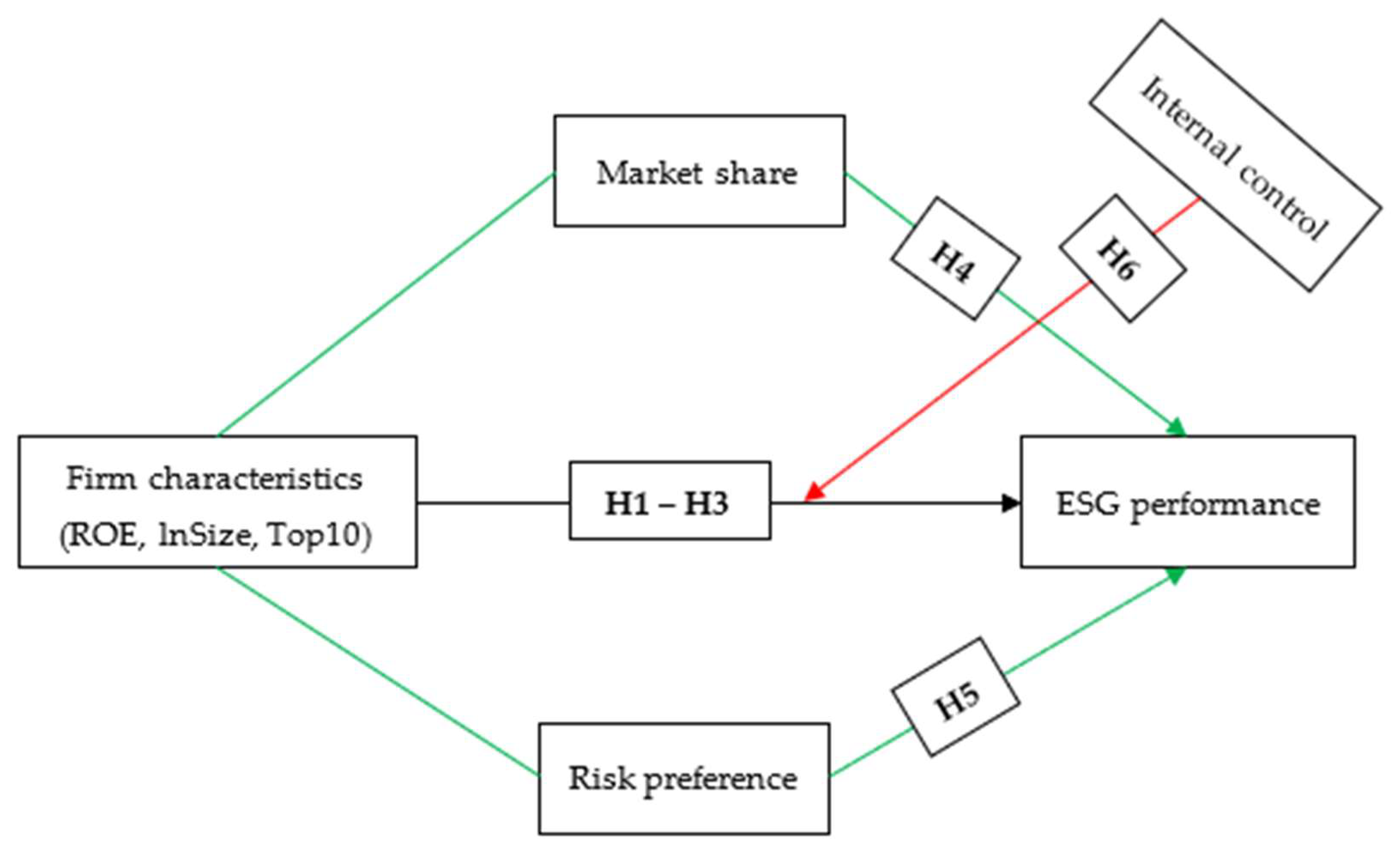
Figure 1 illustrates the proposed links among the constructs. Black arrows show direct, green arrows indirect, and red arrows show moderation effects.

3. Materials and Methods

3.1. Sampling and Data Collection

The sample consists of Chinese A-listed firms listed on Shanghai and Shenzhen from 2021 to 2023. Firm-specific information, such as ownership concentration and financial indicators, was collected from the CSMAR database, and ESG information was collected from the Wind ESG rating system. WIND offers ESG_SCORE with a scale from 0 to 100 for each pillar (E = 30%, S = 30%, G = 40%) and also offers a normalized composite index from 0 to 10 [89]. Consistent with previous literature and for easy comparison across regressions, ESG_SCORE is taken as the normalized score from 0 to 10 [90,91]. Every mention of ESG_SCORE is made with reference to this normalized score between 0 and 10.
In building the final balanced panel, the study used the following filters:
(a)
Excluded ST and ST companies (special treatment companies flagged for abnormal financial conditions).
(b)
Excluded companies in the financial industry, because of their different regulatory environment.
(c)
Excluded companies having missing ESG ratings across any years.
(d)
Excluded companies that delisted or listed between 2021 and 2023, to ensure a balanced panel.
(e)
Used listwise deletion for missing control-construct data [92].
This method resulted in 13,911 final observations, reflecting a wide cross-section of A-listed Chinese firms. A concise flow summary of the sample selection is included in Appendix A, Table A1.
Other variables like risk preference, market share, and internal control are taken from the China internal control index database, firm disclosures, or inferred from company information on risk preferences [93,94]. The sample was clarified by excluding firms categorized under special treatment, finance sector companies, and those whose ESG_SCORE were missing. Missing data were handled by listwise deletion, just the same as the ESG studies on panels conducted before [92].
In addition, ROE, growth, and risk preference constructs were winsorized at the 1st and 99th percentiles to reduce the influence of extreme values [95]. However, owing to the denominator effect observed for emerging market revenue and investment observations, some outliers still exist after winsorization. A manual investigation was carried out for the top-10 observations for growth and risk preference to confirm that the observations were not entry errors and were actual observations for firms that yielded unusual outcomes for small denominators. Further analysis is included for observers at the 99.5th and 99.9th percentiles in Appendix B, Table A2 and Table A3.

3.2. Variable Selection and Definitions

3.2.1. Dependent Variable

The measurement of ESG performance lacks a universal standard, though professional rating systems have gained prominence for their objectivity and cross-industry comparability [96]. This study utilizes Wind ESG ratings (2018-present) to formulate the ESG index (dependent variable) due to their extensive coverage of Chinese firms and detailed scoring methodology [97]. The system consists of three weighted pillars, with environmental E = 30%, social S = 30%, and governance G = 40%, respectively, ranging from 0 to 100 points, with higher scores indicating better ESG practices. WIND provides a normalized 0–10 rating used in this research [89]. The index is often used in current ESG literature, for instance, the study in Rajesh and Rajendran [98].

3.2.2. Independent Variables

This study used firm profitability (ROE), firm size (lnSize), and ownership concentration (TOP10) as independent constructs. Specifically, ROE is calculated as net income divided by shareholders’ equity. ROE measures a company’s financial efficiency and allocates resources for ESG investing [99]. lnSize is calculated by taking the natural logarithm of total assets [100]. The larger the firm, the greater its visibility and resources, leading to greater ESG dedication. TOP10 (ownership concentration) is calculated as the percentage of outstanding shares owned by the ten largest shareholders, obtained from the CSMAR ownership structure module [101,102]. The greater the TOP10, the greater the agency problem.
The Herfindahl-Hirschman index (HHI) is subsequently introduced in the robustness test as an alternative indicator of ownership concentration.
HHI = i = 1 N s i 2
where si is the shareholding proportion of each major stakeholder.
Considering the literature on governance, this research used the TOP10 shareholders in its computations to identify pertinent concentration patterns.

3.2.3. Mediating Variables

This study used two key mediators (market share and managerial risk preference) to capture behavioral channels. Market share, calculated as a firm’s main business revenue divided by total industry revenue [103], reflects a firm’s competitive visibility and legitimacy pressure [104].
Managerial risk preference is proxied by the ratio of R&D and fixed asset investments to total assets [105]. However, this proxy aggregates different investment forms; consistent with earlier studies on the Chinese market, and enables managerial orientation towards long-run risk-oriented investment behavior [106].

3.2.4. Moderating Variable

For moderating effects, we measure internal control quality using two complementary indicators: the normalized internal control index from the Dibo database (divided by 100) and a binary effectiveness measure from CSMAR (1 = effective, 0 = ineffective) [107]. Internal control captures continuous improvement in governance quality, whereas effective internal control provides a cutoff-based certification of internal control effectiveness, enabling us to capture discontinuous and linear moderating impacts.

3.2.5. Control Variables

Drawing on previous research, this study includes firm age (AGE), financial leverage (Lev), growth (Growth), board size (BoardSize), proportion of independent directors (IndepRatio), and cash flow level (CF) as control variables. The names and definitions of all variables used in this study are shown in Table 1.

3.3. Assessment of Common Method Variance

Since all the constructs were extracted from the secondary datasets (e.g., CSMAR, DIB, or WIND), the potential of common method variance is already minimal in these constructs [108]. Since the data collection methods are different and variable content, e.g., ESG ratings, financial constructs, or governance, further removes single-source bias. In addition, the variance inflation factor (VIF) for all variables was below 5, reflecting no multicollinearity issues [109].
To mitigate the potential of simultaneity bias, we also used one-period-lagged regressors (see Equation (5)) and replaced ROE with ROA, as a substitution method, and the HHI was used [110]. The findings of robustness analysis are qualitatively in line with the baseline results. Given the complexity of mediation and moderation processes in panels, we interpreted the results as exploratory rather than causal, and we suggest that future studies use structural equation modeling for mediation and bootstrapped panel models.

3.4. Model Design

All analyses were conducted using Stata 17.0, employing a two-way fixed-effects (firm and year) model with standard errors clustered within firms. This model controls for unobserved economy-wide temporal shocks and heterogeneity. Various control variables, such as firm age, financial leverage, growth, board size, and the proportion of independent directors, are incorporated to ensure a comprehensive examination.
First, to examine the effects of firm profitability, firm size, and ownership concentration on ESG performance (i.e., H1, H2, and H3), the following baseline regression model is constructed with reference to relevant literature:
E S G i , t = β 0 + β 1 R O E i , t + β 2 ln ( S i z e ) i , t + β 3 T O P 10 i , t + β 4 C o n t r o l i , t + μ i + λ t + ϵ i
where μi captures unobserved, time-invariant firm-specific heterogeneity, including managerial philosophy, organizational culture, industry positioning, and other characteristics that do not change during the sample period.
λ t denotes year fixed effects, controlling for macroeconomic conditions, regulatory changes, ESG disclosure reforms, and market-wide shocks that affect all firms in a given year.
ϵ i t is the idiosyncratic error term, capturing random shocks and unobserved factors specific to each firm-year observation.
To further examine how firm characteristics indirectly affect ESG performance through mediating variables (industry competitive position and managerial risk preference), the following mediation effect models are constructed:
M e d i a t o r i , t = α 0 + α 1 R O E i , t + α 2 ln ( S i z e ) i , t + α 3 T O P 10 i , t + α 4 C o n t r o l i , t + μ i + λ t + ϵ i , t
To test the joint impact of core independent variables and mediating variables on ESG performance, the following regression model is constructed:
E S G i , t = β 0 + β 1 R O E i , t + β 2 ln ( S i z e ) i , t + β 3 T O P 10 i , t + β 4 M e d i a t o r i , t + C o n t r o l i , t + μ i + λ t + ϵ i , t
Finally, to examine the moderating role of internal control level in the relationship between ESG ratings and firm characteristics, the following moderating effect model is constructed:
E S G i , t = β 0 + β 1 X i , t + β 2 I C / E I C i , t + β 3 X i , t × I C E I C i , t + β 4 C o n t r o l s i , t + μ i + λ t + ϵ i , t
where Xi,t represents each independent variable (ROE, lnSize, TOP10).
To examine short-term dynamic effects and deal with potential simultaneity, this study re-estimates the baseline specification using one-period lagged independent variables. The lagged model is specified as
E S G i , t = β 0 + β 1 R O E i , t 1 + β 2 l n S i z e i , t 1 + β 3 T O P 10 i , t 1 + β 4 C o n t r o l s i , t 1 + μ i + λ t + ϵ i , t
Because fixed effect estimation does not facilitate bootstrapped mediation impact for the panel models, this study used a stepwise method.

4. Empirical Analysis

4.1. Descriptive Statistical Analysis

4.1.1. Descriptive Statistics

Table 2 presents the descriptive statistics, revealing several notable patterns. The sample shows substantial variation in firm growth (Growth), ranging from −0.9991 to 944.0996, indicating extreme disparities in revenue development across Chinese listed companies. Such extreme values are common in emerging datasets, where very small denominators in revenue calculations yield a large proportion, even after winsorization. Risk_preference averages 0.0766522, suggesting generally conservative investment strategies among sampled firms. Both firm size (lnSize) and return on equity (ROE) exhibit wide dispersion, with ROE’s negative mean (−0.1184138) reflecting widespread profitability challenges. Governance measures show average internal control levels (IC) of 6.090051 and independent director ratios (IndepRatio) of 0.3792896, though some firms demonstrate weaker governance structures. HHI indicates varying industry concentration levels, while firm age (AGE) spans up to 64 years, capturing diverse lifecycle stages.

4.1.2. Correlation Analysis

Table 3 presents the Pearson correlation analysis results, revealing several significant relationships. The ESG_SCORE shows a positive correlation with firm size (ln) (r = 0.2577, p < 0.01), indicating larger firms tend to have better ESG performance. Conversely, ESG_SCORE demonstrates a negative association with ownership concentration (TOP10) (r = −0.5667, p < 0.01), suggesting that more dispersed ownership correlates with higher ESG_SCORE. The analysis also reveals that risk preference negatively relates to firm age (p < 0.01), implying that younger firms exhibit greater risk appetite. Additionally, financial leverage (lev) positively correlates with market share (MS) (r = 0.1410, p < 0.01), potentially indicating that leveraged firms maintain stronger market positions. These findings provide preliminary support for our hypothesized relationships while revealing additional patterns in the data.

4.1.3. Multicollinearity Test

The VIF test was conducted to assess potential multicollinearity among the explanatory variables. As a rule of thumb, VIF values exceeding 10 indicate severe multicollinearity, where explanatory variables collectively explain over 90% of a variable’s variance, potentially requiring remedial measures like stepwise regression [111]. However, as presented in Table 4, all VIF values remain well below 5 [109], with the maximum value of 1.73 observed for firm size (ln). These results confirm that multicollinearity poses no substantial threat to the reliability of our regression estimates.

4.2. Regression Analysis

4.2.1. Baseline Regression Analysis

To ensure methodological rigor, we conducted preliminary model specification tests before performing regression analysis. As shown in Table 5, both the F-test and Hausman test yielded statistically significant results, justifying our selection of a fixed effects model.
We first employed Model (1) to examine how key firm characteristics-profitability, firm size, and ownership concentration-influence ESG performance, thereby testing hypotheses H1–H3. The fixed effects regression results for these relationships are presented in Table 6.
The regression results provide strong empirical support for our hypotheses regarding firm characteristics and ESG performance. For H1, ROE shows significantly positive coefficients of 0.0204 (Model 1) and 0.0290 (Model 2) (p < 0.01), confirming that higher profitability enhances ESG performance. Similarly, firm size (lnSize) demonstrates positive coefficients of 0.141 (Model 1) and 0.175 (Model 2) (p < 0.01), supporting H2’s prediction that larger firms achieve better ESG outcomes. Conversely, ownership concentration (TOP10) exhibits significantly negative coefficients (−1.828 in Model 1 and −2.028 in Model 2, p < 0.01), validating H3’s proposition that concentrated ownership undermines ESG performance.
Control variables reveal additional insights: board size (Boardsize) shows positive effects in some specifications, suggesting diverse governance perspectives favor ESG investments. Financial leverage (lev) negatively impacts ESG in Model 2, indicating that financially constrained firms deprioritize sustainability. Firm age (AGE) presents mixed results, with Model 2’s negative coefficient implying older firms may face ESG implementation barriers due to institutional inertia. These findings collectively demonstrate that financial capacity (profitability, size) and governance structure (ownership concentration) systematically shape corporate ESG performance, while accounting for relevant organizational contingencies.

4.2.2. Regression Results Considering Lagged Effects

The lagged effects analysis builds upon our baseline findings by examining temporal dynamics in the firm characteristics-ESG performance relationship. Using one-period lagged variables (ln, ROE, TOP10), Table 7 reveals that both contemporaneous and lagged measures significantly influence ESG_SCORE at the 1% level. Notably, the lagged effects prove stronger than contemporaneous ones-firm size’s impact increases from 0.171 to 0.198, while profitability’s influence grows from 0.0504 to 0.0539. This pattern suggests that ESG performance improvements require time for firms to operationalize resource allocations and strategic changes, with the full effects becoming more pronounced in subsequent periods. The amplified coefficients may reflect cumulative impacts of sustained investments, though diminishing returns could eventually emerge as firms approach performance ceilings. These temporal dynamics underscore the importance of longitudinal perspectives in ESG research, as cross-sectional analyses may underestimate the complete effects of firm characteristics.

4.2.3. Robustness Checks for Simultaneity Bias

As a robustness check for simultaneity bias, we re-estimated the baseline fixed-effects models using one-period-lagged values of ROE, lnSize, TOP10, and all control variables (see Table 8). Model (1) re-estimates the baseline specification using one-period-lagged values of ROE, lnSize, TOP10, and control variables to reduce simultaneity concerns. Model (2) replaces ROE with ROA to verify that profitability-ESG relationships are not driven by leverage effects.
To mitigate potential concerns about information lost with the median split in our examination of heterogeneity, we re-estimated our base model with interactions for ROE, lnSize, TOP10, and a continuous variable for firm age measured as a number of listing years (see Appendix B, Table A4).

4.2.4. Mediation Analysis

Our mediation analysis examines whether industry competitive position (MS) and managerial Risk_preference transmit the effects of firm characteristics to ESG performance (ESG_SCORE). As shown in Table 9, MS, which is industry competitiveness, partially mediates the relationship. Model (2) reveals that firm size (lnSize) and ownership concentration (TOP10) significantly influence MS, while Model (4) demonstrates MS’s significant effect on ESG_SCORE. The attenuated coefficients of ROE and TOP10 in Model (4) versus Model (1) further support this partial mediation. Similarly, Risk_preference serves as another partial mediator, evidenced by: (1) ln, ROE, and TOP10’s significant impacts on Risk_preference in Model (3); (2) Risk_preference’s significant effect on ESG_SCORE in Model (4); and (3) reduced coefficients for ROE and TOP10 in Model (4), supporting the H4 and H5. These findings collectively indicate that both industry position and risk appetite represent important pathways through which profitability and ownership structure ultimately affect ESG performance.

4.2.5. Moderation Analysis

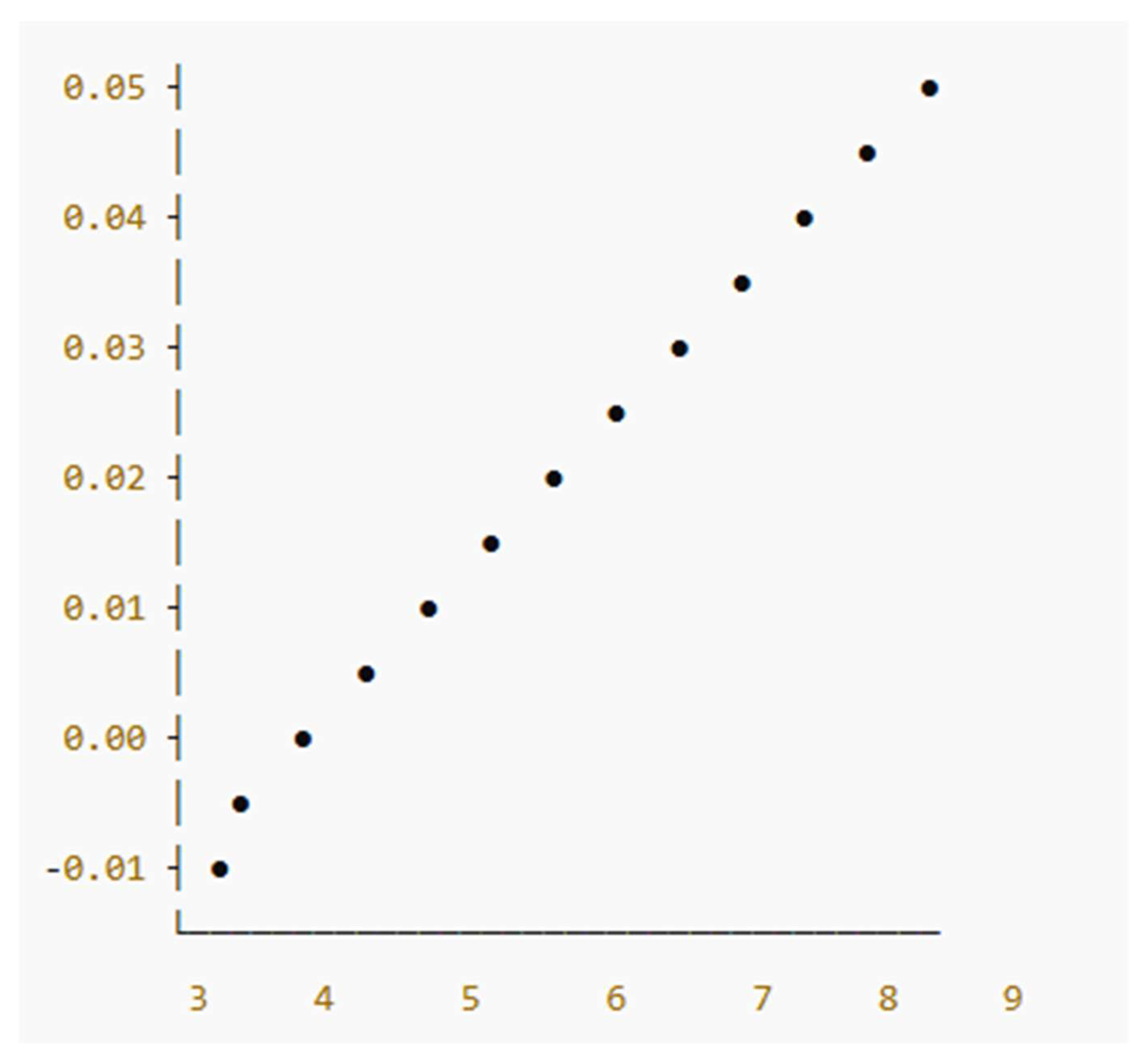
Table 10 results reveal distinct moderating patterns: the continuous IC measure consistently strengthens all independent variable-ESG_SCORE relationships through significantly positive interaction terms. For the binary EIC measure, effective internal controls (EIC = 1) significantly enhance the positive effects of firm size (lnSize) and weaken the negative impact of ownership concentration (TOP-10) on ESG_SCORE, while ineffective controls (EIC = 0) show no moderating influence. Control variables demonstrate expected patterns, with AGE and LEV showing significant negative effects on ESG_SCORE across specifications, while other controls exhibit model-dependent effects. Model fit statistics indicate strong explanatory power, with Model 1’s adjusted R2 of 0.906 outperforming Model 2’s 0.679, suggesting the continuous IC specification better captures internal control’s moderating role in ESG performance. Figure 2 describes how ROE marginally influences ESG_SCORE based on the range of internal control (IC) observed, as indicated by the interaction effect in Table 9. At a low level of IC, profitability has a marginally negative effect on ESG. As IC levels increase, this effect turns positive and continues to escalate until a stage when IC boosts a company’s ability to leverage profitability for ESG engagement.

4.3. Robustness Test

Substitution of Core Variables

  • Substituting the dependent variable
To ensure the robustness of our findings, we conducted two key sensitivity tests. First, we replaced the Wind ESG ratings with Huazheng ESG data as an alternative dependent variable, given their distinct methodologies, coverage, and evaluation frameworks. As Table 11 shows, the core relationships between firm characteristics and ESG performance remain consistent despite this substitution, though some control variables exhibit minor variations. This consistency across different ESG measurement systems strengthens the reliability and generalizability of our conclusions.
2.
Using ROA instead of ROE as an explanatory variable
Second, we substituted ROA for ROE as our profitability measure to address potential leverage distortions in ROE. Since ROE can be artificially inflated through debt financing without genuine operational improvement, ROA provides a more direct assessment of asset utilization efficiency by excluding capital structure effects. This alternative specification maintains our core findings while offering a more stable basis for evaluating firms’ long-term operational capabilities, further confirming the robustness of our results against different profitability measures.
Table 12 presents the comparative results of both baseline and robustness models, demonstrating consistent effect directions and significance levels across specifications. The control variables show stable patterns, with AGE and LEV exhibiting significant negative correlations (p < 0.01), while BoardSize, IndepRatio, and CF maintain significant positive relationships (p < 0.01) with the dependent variable in both models. Growth remains statistically insignificant, and the constant term shows consistent significance (p < 0.01) across specifications. These parallel results confirm the model’s robustness, as the core relationships persist despite methodological variations, while most control variables demonstrate reliable effects.
3.
Using the logarithm of main business revenue instead of the logarithm of total assets (Ln) as an explanatory variable
This study employs the logarithm of main business revenue rather than total assets as the explanatory variable because it better captures market-driven scale, especially for asset-light industries and operating efficiency studies. Main business revenue directly measures core sales capability and market position, unaffected by non-operating assets in total assets or variations in depreciation methods and industry asset structures. Table 13 confirms the stability of control variables, with AGE, LEV, BoardSize, IndepRatio, and CF showing consistent significant effects (p < 0.01) across both baseline and robustness models.
4.
Using HHI instead of the sum of the shareholding ratios of the top ten shareholders as an explanatory variable
This study employs the HHI to measure ownership concentration, offering advantages over the conventional top ten shareholders’ ratio (TOP-10). The HHI, calculated as the sum of squared ownership proportions, better captures the distributional nuances and power balances among shareholders while minimizing multicollinearity concerns. As Table 14 shows, both HHI (−0.989 *) and TOP-10 (−2.194 *) demonstrate significant negative correlations with ESG_SCORE at the 1% level, confirming that higher ownership concentration reduces ESG performance regardless of measurement approach. The models maintain stable coefficients for key variables (lnSize, ROE, AGE, LEV, BoardSize, IndepRatio, CF) across specifications, with adjusted R2 values of 0.422 and 0.138, respectively. With 13,911 observations, these consistent results across alternative measures strengthen the findings’ robustness and facilitate international comparability given HHI’s widespread theoretical use.

4.4. Further Research

4.4.1. Sub-Dimension Analysis of ESG

To examine the multidimensional impacts of firm characteristics on ESG performance, we conducted separate regressions using Wind’s environmental (E), social (S), and governance (G) sub-scores as dependent variables.
E = β 0 + β 1 R O E + β 2 ln + β 3 T O P 10 + ϵ E
S = γ 0 + γ 1 R O E + γ 2 ln + γ 3 T O P 10 + ϵ S
G = δ 0 + δ 1 R O E + δ 2 ln + δ 3 T O P 10 + ϵ G
As Table 15 shows, firm size (lnSize) consistently demonstrates strong positive effects across all three dimensions (coefficients: 0.516 for E, 0.496 for S, 0.503 for G; p < 0.01), while ownership concentration (TOP-10) shows uniformly negative impacts (coefficients ranging from −9.105 to −8.771). Profitability (ROE) exhibits modest but significant positive effects (β ≈ 0.127, p < 0.10), and control variables maintain their directional consistency-AGE and LEV show negative associations. In contrast, BoardSize, IndepRatio, and CF show positive relationships. These parallel results across E, S, and G components demonstrate that firm characteristics influence all ESG dimensions similarly, suggesting their effects operate through fundamental organizational mechanisms rather than dimension-specific pathways.

4.4.2. The Impact of Listing Duration on Regression Results

This study examines how listing duration moderates the ESG-performance relationship through grouped regression analysis (median split: Group-1 = long-listed, Group-0 = short-listed). The results (Table 16) reveal systematic differences (χ2 = 63.60, p = 0.000): long-listed firms show stronger size effects (β = 0.184 * vs. 0.153 *) and ownership concentration impacts (β = −2.241 * vs. −2.162 *), with cash flow being uniquely significant (β = 0.478 *). Short-listed firms exhibit greater sensitivity to profitability (ROE β jumps from 0.0286 to 0.207 * across models) and independent directors (β = 0.355 *), while suffering more from age-related ESG declines (β = −0.0174 *). These patterns reflect distinct strategic priorities-mature firms leverage scale advantages while managing ownership conflicts, whereas younger firms prioritize short-term financial performance and governance structures. The findings underscore how the corporate lifecycle stage fundamentally shapes ESG implementation pathways and challenges.

4.4.3. Analysis of Industry Heterogeneity

The grouped regression analysis (Table 17) reveals systematic differences: while firm size (lnSize) and profitability (ROE) positively influence ESG_SCORE in both sectors, their effects are stronger for heavy polluters (e.g., ROE β = 0.35 vs. 0.22), likely reflecting greater environmental compliance pressures and image-conscious investments. Conversely, ownership concentration (TOP-10) shows a more detrimental impact in non-polluting firms (β = −2.45 vs. −1.89), possibly due to weaker institutional oversight in these sectors. Control variables exhibit varying significance across groups, with the Chow test confirming statistically significant coefficient differences. These findings suggest that regulatory scrutiny in polluting industries amplifies the ESG benefits of firm resources while mitigating governance-related drawbacks, whereas non-polluting firms face different optimization pathways due to their distinct stakeholder pressures and operational contexts.

5. Discussion

5.1. Result Discussions

In this research, the impact of corporate profitability, size, and ownership structure on ESG performance was tested for listed companies in China. Based on the RBV, legitimacy, and agency theories, the hypotheses posit that market share and risk preference serve as mediating mechanisms and that the impact of firms’ characteristics on ESG is tempered by corporate internal control. Our hypotheses were supported with important differences for the specific context of the Chinese capital market.
Regarding the H1, the study observed a positive impact of ROE on ESG performance, consistent with the RBV assumption that financially stronger companies have the slack resources needed to invest in the sustainability efforts [1,112]. This is consistent with the notion advanced by other researchers, who argue that financial success enables firms to exhibit green innovation, thereby achieving legitimacy [113,114]. This finding validates the legitimacy theory assumption, given that profitable companies are often involved in ESG activities to maintain their societal acceptance and improve firm responsibility images.
Concerning H2, the size of the firm is observed to improve ESG outcomes because large firms have greater visibility in the public eye and are therefore more likely to engage in sustainability reporting practices, supporting the legitimacy theory [57,67]. This indicates that firms engage in ESG practices for self-interest rather than for virtuous motives to be morally good or good humanitarians [115]. Hence, the result is in line with legitimacy theory by showing how reputable companies act to maintain their social image and stakeholder support.
Regarding H3, the study observed a significantly negative impact of ownership concentration on ESG performance, consistent with the agency theory assumption [28] that large stockholders often place greater emphasis on financially oriented short-term objectives than on long-run stakeholder interests [34,60]. The negative impact is stable under various specifications, including alternative ownership measures (HHI), suggesting that governance frictions continue to shape sustainability behavior in the Chinese context.
Furthermore, the mediation results supported H4 and H5, indicating that market share and managerial risk preferences play the role of behavioral channels between firm attributes and ESG performance outcomes. More profitable and larger firms tend to enjoy stronger market power, which may make them more vulnerable to stakeholder monitoring and pressures for legitimacy [64]. There is clear support for the notion of “competitive legitimacy,” according to which firms maintain their leading positions in the marketplace by behaving in socially virtuous ways [30]. While smaller firms may find ways to distinguish themselves on ESG performance at specific instances, the overall environment for the Chinese A-share market is one that focuses on larger and more visible firms. Therefore, empirical findings of a positive connection between market share and ESG performance align with institutional expectations. Most importantly, in line with the study methodology, these mediation effects are recommended to be interpreted in a suggestive, rather than a definitive, causal manner. Further, consistent with the well-known limitations of mediation tests in fixed-effects panel analysis, the finding above is considered tentative evidence.
Where managerial risk preference is concerned, the mediation effect between firm characteristics and ESG performance is affirmatively supported. The proxy for this variable is intensity for fixed assets and R&D investment, which captures a strategic orientation to a longer-run investment compared to behavioral risk preferences. The study result that risk-oriented organizations invest more in ESG efforts is consistent with growing literature connecting long-run strategic horizons with firm sustainability-driven engagement [36,116]. Notably, this outcome does not contradict agency theory. However, it suggests that risk-preference leaders could support long-run sustainability efforts, whereas strong governance within a firm protects against opportunistic short-termism. These distinguish behavioral paths that converge to support the ESG outcome.
Regarding H6, the moderating outcomes indicate that internal control plays a critical role in shaping the relationships among profitability, size, and ESG performance [87]. For companies with stronger internal controls, the positive impact of profitability ratios and size on ESG disclosures is more substantial. This result is more consistent with agency theory prescriptions for governance that focus on monitoring and supporting an environment- and stakeholder-focused management decision-making process [107,117]. The result supports the role of good governance structures as institutions that turn ESG commitment into performance [118]. Furthermore, good governance also provides evidence and assurance related to the ESG efforts, ensuring transparency and legitimacy [119]. Additionally, an effective control system offers insight into the critical threshold levels for governance credibility, with distinct between-company variations from the more general internal control-index trends. However, the strength and direction of such interaction terms could be driven by overall institutional reporting trends; therefore, careful attention is recommended when interpreting.
The study reveals consistent patterns across ESG sub-dimensions (environmental, social, governance). Analysis shows that the effect of firm characteristics is similar across environment, social, and governance factors. This is consistent with the integrated structure of WIND’s ESG rating system and emphasizes that resource capacity and pressures for legitimacy and ownership structures play relatively equal roles across the separate ESG factors. Further research suggested examining ESG factors across specific sectors to determine whether they tend to be more sensitive to resource factors and governance structures.
Finally, lagged models place strong emphasis on the significance of time. Although profits and size lead ESG performance in the following time period, the short time horizon (2021 to 2023) may represent a combination of actual adjustment behaviors and ESG reporting delays. ESG rating reporting is carried out on an annual basis, with known time gaps for observations on ESG ratings within the context of the Chinese economy; therefore, part of the time effect is driven by actual measurements and behaviors. This does not undermine the directionality of the results but introduces caution in interpreting dynamic patterns.

5.2. Implications

5.2.1. Theoretical Implications

First, while the literature has extensively examined the direct impact of corporate features such as size, ownership structure, and profitability on ESG performance [50,57,62], relatively few works explain the underlying channels through which these corporate features affect ESG performance [83]. This research extends and complements the ESG literature, which broadly focuses on ownership types and board traits [80,102], by introducing managerial risk preferences and market share as behavioral channels and by emphasizing the mediating mechanisms linking organizational resources, managerial decision-making, and stakeholder visibility to ESG performance.
Second, this study also extends the literature by developing a framework that integrates the RBV, agency theory, and legitimacy theory. Contrary to much prior research that uses multiple theories simultaneously and separately [31,40,120]. This framework spells out how internal resources (RBV) [33], control dynamics and ownership (agency theory) [28], and external legitimacy (legitimacy theory) [67] combine to form organization ESG performance. This theoretical integration of the study clarifies the theoretical pathways underlying observed ESG heterogeneity in China and shows how distinct theoretical logics converge through behavioral channels.
Third, this study is also significant to the growing literature on the behavioral underpinnings of firm sustainability investing, as it shows that managerial risk-taking behavior partially mediates the relationship between corporate characteristics and ESG performance. The research suggests that risk-taking behavior can serve as a potential underpinning for investing in firm sustainability, and that this can be supported by strong corporate internal governance. Further, this extends the current research by reflecting how managerial behavioral patterns and governance constraints interact, offering a more nuanced understanding of sustainability decision-making in emerging markets [34,121].
Third, the study draws attention to the role of the internal control system itself, emphasizing its significance in the sustainability context, where it plays a crucial role in enabling the sustainability process [86,118]. The study clearly indicates that internal control serves as a moderator between the firm’s attributes and ESG outcomes [87,118]. The concept of distinguishable governance quality (internal control) and categorical governance certification (effective internal control) offers ESG studies a more complex framework for understanding governance processes.

5.2.2. Practical Implications

The study results have important implications for investors, managers, and policymakers. First, the study’s implications for corporate managers highlight the importance of profitability and size, used not only for financial gain but also for sustainability advantages. Managers are advised to adopt a risk-seeking stance, focusing on financial resources directed to innovation linked to ESG rather than other financial investments.
Second, the implication for board members or controlling shareholders is the importance of maintaining control while balancing accountability, as overly concentrated ownership hinders ESG efforts. Diversifying ownership structures is one way to align stakeholders’ interests with sustainability considerations.
Third, regarding policy regulators, improvements in the standard of disclosure of internal controls, coupled with tighter ESG reporting guidelines, are beneficial for firms in terms of transparency and performance. Regulators promote the reporting of “effective internal control” to encourage firms to integrate ESG considerations into their operations.
Lastly, from the investor perspective, the implication is that ownership concentration remains an essential risk indicator in assessing ESG performance. Organizations with dispersed ownership and a strong, effective governance structure are more likely to deliver credible, stable ESG outcomes. In addition, managerial investment and market share behavior also serve as essential indicators of organizations’ sustainability trajectories, providing additional dimensions for screening ESG and portfolio formation.

5.3. Limitations and Future Directions

Although the work has many strengths, there are also some limitations for future studies to explore. Firstly, although the use of secondary data from panels contributes to greater objectivity, there may be unseen managerial or cultural variables shaping ESG practices. In addition, the sample period (2021–2023) is relatively short, limiting the extent to which true adjustment can be measured. A future study is suggested to use archival research methods in partnership with survey or interview methods to more thoroughly tap into managerial cognition. Additionally, a longer time window assists in distinguishing reporting-related lags from strategic ESG transitions.
Secondly, since this work is based on Chinese A-share firms, it makes it difficult to generalize the results to other institutions, possibly creating room for future studies in other Asian or Belt and Road countries. Thirdly, although the model used the variables’ lagged values and instruments, the problem of endogeneity cannot be completely discounted. The study is suggested to be expanded in the future by employing dynamic panels, specifically the Generalized Method of Moments.
Fourthly, the mediation model uses step-wise regression, an approach that is less stringent than the bootstrapped panel model or SEM. Since the bootstrapped panel model and the SEM could not be conducted in this study, the indirect effects and confidence intervals could not be estimated. The results obtained from the model regarding the mediation effect may therefore be considered preliminary.
Fifth, although this study follows a traditional methodological approach to managerial risk preference by quantifying risk preference as the proportion of investments in R&D and fixed assets relative to overall assets, this proxy aggregates investment categories that differ in risk properties. Future studies are suggested to consider the use of surveys and other indicators, such as earnings volatility and innovation intensity. Not only is this true when outliers are dealt with via winsorization and manual checks, but there is also volatility inherent in emerging market data owing to the denominator effect. Future research is suggested to explore the application of strong regression methods and Bayesian estimators.
Finally, this research focuses on the characteristics and channels at the corporate and behavioral levels. Future research is suggested to add board network properties and outside pressures, as well as executive characteristics, to obtain a more complete picture on ESG diversity for emerging markets such as China. Also suggested examining industry-specific ESG factors, as the environmental and social forces acting on high-emission industries differ significantly from those on low-emission sectors, including finance and technology.

6. Conclusions

The current study examined the relationships between the firms’ characteristics (e.g., profitability, size, and ownership concentration) and their ESG performance. Additionally, specific emphasis is placed on the mediating impacts of market share and risk preference, as well as the moderative roles played by the internal control system, utilizing the three theories, namely the agency, legitimacy, and resource-based. The result indicates that profitable firms, large firms, and those with strong risk preferences perform well on ESG, but ownership concentration hinders sustainability engagement.
Market share and managerial risk preference are the behavioral channels transmitting firm attributes to ESG performance, and strong internal controls are also beneficial. The findings support the proposition that financial resources, strategic behaviors, and ESG performance are all crucial in deciding firm sustainability. This work contributes to integrated theoretical and practical insights, prompting managers to connect the profitability of the firm with long-term ESG strategies, while also encouraging regulators to improve the framework of internal control/ESG reporting.


Author Contributions

Conceptualization, Z.X.; Data curation, Y.X. (Yuzhe Xie); Funding acquisition, Z.X.; Investigation, Y.X. (Yuan Xu); Methodology, Y.X. (Yuan Xu) and Y.X. (Yuzhe Xie); Project administration, Z.X.; Software, Y.X. (Yuan Xu) and Y.X. (Yuzhe Xie); Supervision, Z.X.; Validation, Z.X.; Writing—original draft, Y.X. (Yuzhe Xie). All authors have read and agreed to the published version of the manuscript.

Funding

This study is supported by the National Social Science Fund of China, entitled Research on the Mechanism of Information Ecosystem Enablement for Boosting Disclosure Dynamic in China’s Capital Market, having [Grant Number JB2025066].

Institutional Review Board Statement

Not applicable.

Informed Consent Statement

Not applicable.

Data Availability Statement

The datasets generated during and/or analyzed during the current study are available from the corresponding author upon reasonable request.

Conflicts of Interest

The authors declare no conflicts of interest.

Appendix A

Table A1 below outlines the process used to compile the final panel with 13,911 observations for the companies listed on the A-share market that were analyzed from 2021 to 2023.
Table A1. Sample selection procedure.
StepDescriptionObservation
1Initial sample of all A-shared listed companies on Shanghai and Shenzhen 15,291
2Financial companies were excluded due to their different reporting and regulatory systems−913
3Companies excluded due to having ST and *ST (special treatment companies flagged for abnormal financial performance) −412
4Companies excluded due to missing ESG ratings−257
5Companies excluded due to missing financial, governance, and ownership information−198
6Companies excluded due to being delisted or listed between 2021 and 2023−200
Final panelCompanies having complete information across 2021–2023 13,911

Appendix B

Table A2 below highlights important variables before and after applying the Winsorisation process at the 1st and 99th percentiles.
Table A2. Descriptive statistics prior to and post Windsorisation.
VariableMean (Raw)Mean (Wins.)Min (Raw)Min (Wins.)Max (Rax)Max (Wins.)
ROE−0.135−0.118−12.34−2.1115.213.78
Growth5.4122.983−1242.05−0.9991308.33944.10
Risk-preference0.0830.076−0.112−0.0851.4310.673
Table A3 demonstrates whether the key findings were driven by observations within the tail of the distribution; all baseline, mediation, and moderation analyses were re-run after excluding observations with values above:
observations above the 99.5th percentile, and
Above the 99.9th percentile observations
For the variable’s growth and Risk_Preference.
Table A3. Robustness to outlier exclusion.
ModelMain Findings99.5th Percentile Excluded99.9th Percentile Excluded
Baseline fixed effect (H1 to H3)Outcomes unchanged in sign and level of significanceConsistent Consistent
Mediation (H4 and H5)Direction of mediator unchanged (partial mediation)Consistent Consistent
Moderations (H6)Internal control and effective internal control remain positive and significant Consistent Consistent
Table A4 displays a two-way fixed-effects regression framework with company and year fixed effects, employing robust standard errors clustered by firm. The variable ‘Age’ refers to the number of years a firm has remained listed, treated as a continuous variable.
Table A4. Robustness check of the interaction between firm characteristics and listing age.
ModelTwo-Way FE Model
ROE0.032 ***
(3.45)
lnSize0.139 ***
(6.02)
Age (listing years)−0.061 **
(−2.41)
ROE × Age0.0003
(0.88)
lnSize × Age0.0011 *
(1.92)
TOP10 × Age−0.0004
(−0.97)
LEV−0.10
(−1.12)
Growth0.003 **
(2.09)
CF0.020 *
(1.71)
BoardSize0.005
(1.03)
IndepRatio0.013
(1.51)
Firm FEYes
Year FEYes
Clustered FEYes
R0.138
Observations13,911
* p < 0.1, ** p < 0.05, *** p < 0.01.

References

  1. Abdelbaky, A.; Liu, T.; Mingyang, X.; Shahzad, M.F.; Hassanein, A. Real Earnings Management and ESG Performance in China: The Mediating Role of Corporate Innovations. Int. J. Financ. Econ. 2025, 30, 3476–3499. [Google Scholar] [CrossRef]
  2. Ng, A.C.; Rezaee, Z. Does the market value corporate impact investing and socially responsible investing? Rev. Financ. Econ. 2024, 42, 399–441. [Google Scholar] [CrossRef]
  3. Khan, M.I.; Iqbal, A. Integrating ESG with Corporate Investment Decision-Making. In The Emerald Handbook of Ethical Finance and Corporate Social Responsibility: A Framework for Sustainable Development; Emerald Publishing Limited: Leeds, UK, 2024. [Google Scholar] [CrossRef]
  4. Seow, R.Y.C. Determinants of environmental, social, and governance disclosure: A systematic literature review. Bus. Strategy Environ. 2024, 33, 2314–2330. [Google Scholar] [CrossRef]
  5. Martiny, A.; Taglialatela, J.; Testa, F.; Iraldo, F. Determinants of environmental social and governance (ESG) performance: A systematic literature review. J. Clean. Prod. 2024, 456, 142213. [Google Scholar] [CrossRef]
  6. Qalati, S.A.; Siddiqui, F.; Kumari, S.; Badwy, H.E.; Wu, Q.; Lu, M. Linking carbon footprint methodologies and environmental protection via sustainable product development with a moderating role of regulatory compliance. Sci. Rep. 2025, 15, 28594. [Google Scholar] [CrossRef]
  7. Liang, L.; Ding, T.; Tan, R.; Song, M. ESG Policies and Regulatory Environment in China. In The ESG Systems in Chinese Enterprises: Theory and Practice; Liang, L., Ding, T., Tan, R., Song, M., Eds.; Springer Nature: Singapore, 2025; pp. 63–95. [Google Scholar]
  8. Tian, Y. Will Informal Institutions Affect ESG Rating Divergence? Evidence from Chinese Confucian Culture. Sustainability 2024, 16, 9951. [Google Scholar] [CrossRef]
  9. Shen, H.; Lin, H.; Han, W.; Wu, H. ESG in China: A review of practice and research, and future research avenues. China J. Account. Res. 2023, 16, 100325. [Google Scholar] [CrossRef]
  10. Balasubramanian, S.; Shukla, V.; Mangla, S.; Chanchaichujit, J. Do firm characteristics affect environmental sustainability? A literature review-based assessment. Bus. Strategy Environ. 2021, 30, 1389–1416. [Google Scholar] [CrossRef]
  11. Hoskisson, R.E.; Chirico, F.; Zyung, J.; Gambeta, E. Managerial Risk Taking: A Multitheoretical Review and Future Research Agenda. J. Manag. 2016, 43, 137–169. [Google Scholar] [CrossRef]
  12. Lovatte, J.; Everton, S.d.S.; Imoniana, J.O.; Alakija, F. CSR-Mediating CO2 Policy Effects on Environmental Kuznets Curve in Brazil: Case Study of an Airline Company. Adm. Sci. 2025, 15, 207. [Google Scholar] [CrossRef]
  13. Bhaumik, S.K.; Selarka, E. Does ownership concentration improve M&A outcomes in emerging markets?: Evidence from India. J. Corp. Financ. 2012, 18, 717–726. [Google Scholar] [CrossRef]
  14. Wang, K.; Shailer, G. Ownership Concentration and Firm Performance in Emerging Markets: A Meta-Analysis. J. Econ. Surv. 2015, 29, 199–229. [Google Scholar] [CrossRef]
  15. Parmar, B.L.; Freeman, R.E.; Harrison, J.S.; Wicks, A.C.; Purnell, L.; de Colle, S. Stakeholder Theory: The State of the Art. Acad. Manag. Ann. 2010, 4, 403–445. [Google Scholar] [CrossRef]
  16. Drempetic, S.; Klein, C.; Zwergel, B. The Influence of Firm Size on the ESG Score: Corporate Sustainability Ratings Under Review. J. Bus. Ethics 2020, 167, 333–360. [Google Scholar] [CrossRef]
  17. Narula, R.; Rao, P.; Kumar, S.; Paltrinieri, A. ESG investing & firm performance: Retrospections of past & reflections of future. Corp. Soc. Responsib. Environ. Manag. 2025, 32, 1096–1121. [Google Scholar] [CrossRef]
  18. Sekimoto, T.; Amran, A. Influence of Proactive ESG Strategies, Slack Resources, and Collective Brain on ESG Disclosure and Firm Value in Japanese Companies. Corp. Soc. Responsib. Environ. Manag. 2025, 32, 4254–4269. [Google Scholar] [CrossRef]
  19. Singh, A.; Verma, S.; Shome, S. ESG-CFP relationship: Exploring the moderating role of financial slack. Int. J. Emerg. Mark. 2023, 20, 469–498. [Google Scholar] [CrossRef]
  20. Ding, H.; Wang, Z.; Xu, H.; Lin, Z. A Study on the Impact of Board Characteristics on the Environmental, Social, and Governance (ESG) Responsibilities of Listed Companies—Evidence from Chinese Listings. Sustainability 2024, 16, 10490. [Google Scholar] [CrossRef]
  21. Chininga, E.; Alhassan, A.L.; Zeka, B. ESG ratings and corporate financial performance in South Africa. J. Account. Emerg. Econ. 2023, 14, 692–713. [Google Scholar] [CrossRef]
  22. Bui, H.; Krajcsák, Z. The impacts of corporate governance on firms’ performance: From theories and approaches to empirical findings. J. Financ. Regul. Compliance 2023, 32, 18–46. [Google Scholar] [CrossRef]
  23. Wang, J.; Yu, J.; Zhong, R. Country environmental, social and governance performance and economic growth: The international evidence. Account. Financ. 2023, 63, 3911–3941. [Google Scholar] [CrossRef]
  24. Tan, L. Improving Corporate Performance through Stakeholder-Based ESG Practices. J. Educ. Humanit. Soc. Sci. 2024, 30, 6–12. [Google Scholar] [CrossRef]
  25. Zhang, M.; Guo, X.; Lu, X.; Jiang, Y. Credit guarantee, financing structure, and firm ESG performance. Financ. Res. Lett. 2024, 63, 105315. [Google Scholar] [CrossRef]
  26. Naseem, T.; Shahzad, F.; Asim, G.A.; Rehman, I.U.; Nawaz, F. Corporate social responsibility engagement and firm performance in Asia Pacific: The role of enterprise risk management. Corp. Soc. Responsib. Environ. Manag. 2020, 27, 501–513. [Google Scholar] [CrossRef]
  27. Kavadis, N.; Thomsen, S. Sustainable corporate governance: A review of research on long-term corporate ownership and sustainability. Corp. Gov. Int. Rev. 2023, 31, 198–226. [Google Scholar] [CrossRef]
  28. Eisenhardt, K.M. Agency Theory: An Assessment and Review. Acad. Manag. Rev. 1989, 14, 57–74. [Google Scholar] [CrossRef]
  29. Suchman, M.C. Managing Legitimacy: Strategic and Institutional Approaches. Acad. Manag. Rev. 1995, 20, 571–610. [Google Scholar] [CrossRef]
  30. Del Gesso, C.; Lodhi, R.N. Theories underlying environmental, social and governance (ESG) disclosure: A systematic review of accounting studies. J. Account. Lit. 2024, 47, 433–461. [Google Scholar] [CrossRef]
  31. Huang, D.Z.-X. An integrated theory of the firm approach to environmental, social and governance performance. Account. Financ. 2022, 62, 1567–1598. [Google Scholar] [CrossRef]
  32. Barney, J. Firm Resources and Sustained Competitive Advantage. J. Manag. 1991, 17, 99–120. [Google Scholar] [CrossRef]
  33. Wernerfelt, B. A resource-based view of the firm. Strateg. Manag. J. 1984, 5, 171–180. [Google Scholar] [CrossRef]
  34. Gega, M.; Höhler, J.; Bijman, J.; Oude Lansink, A. Firm ownership and ESG performance in European agri-food companies: The mediating effect of risk-taking and time horizon. Corp. Soc. Responsib. Environ. Manag. 2025, 32, 1161–1181. [Google Scholar] [CrossRef]
  35. Gao, X.; Latif, B.; Ong, T.-S.; Zhang, Q.; Yusri, Y. ESG performance and corporate competitiveness: The roles of green innovation, industry competition and media attention. Stud. Econ. Financ. 2025; ahead-of-print. [Google Scholar] [CrossRef]
  36. Zhou, X.; Yang, Y.; Zhang, H. The curvilinear effect of environmental, social, and governance performance on stock price crash risk in China. Bus. Ethics Environ. Responsib. 2025, 34, 1742–1767. [Google Scholar] [CrossRef]
  37. Yu, Z.; Tkal, Y. Profits with purpose: Linking ESG, Sustainability, and Financial Performance in Chinese Public Firms. J. Int. Humanit. Univ. 2024, 59, 129–140. [Google Scholar] [CrossRef]
  38. Qalati, S.A.; Siddiqui, F. Organizational sustainable artificial intelligence capabilities scale development, validation, and implications. J. Innov. Knowl. 2026, 11, 100863. [Google Scholar] [CrossRef]
  39. Penrose, E.T. The Theory of the Growth of the Firm; Oxford University Press: Oxford, UK, 2009. [Google Scholar]
  40. Peteraf, M.A. The cornerstones of competitive advantage: A resource-based view. Strateg. Manag. J. 1993, 14, 179–191. [Google Scholar] [CrossRef]
  41. Bals, L.; Rosca, E. Chapter 8: Resource-based view. In Handbook of Theories for Purchasing, Supply Chain and Management Research; Edward Elgar Publishing: Cheltenham, UK, 2022; pp. 106–117. [Google Scholar]
  42. Koparan, E.; Çıtak, F. The Impact of Environmental Sustainability on Financial Performance in Airline Companies Based on Legitimacy Theory. J. Aviat. 2025, 9, 445–453. [Google Scholar] [CrossRef]
  43. Ogunode, O.A. Legitimacy Theory and Environmental Accounting Reporting and Practice: A Review. South Asian J. Soc. Stud. Econ. 2022, 13, 17–28. [Google Scholar] [CrossRef]
  44. Alshareef, M.N. Ownership Structure and Financial Sustainability of Saudi Listed Firms. Sustainability 2024, 16, 3773. [Google Scholar] [CrossRef]
  45. Wuryan, A.; Adel Hikam, A.; Maharani, W. The Influence of Corporate Social Responsibility and Stakeholder Commitment to Company Performance with Slack Resources as Moderation. In Proceedings of the Brawijaya International Conference on Economics, Business and Finance 2021 (BICEBF 2021), Malang, Indonesia, 28 January 2022; pp. 181–189. [Google Scholar]
  46. Battisti, E.; Nirino, N.; Leonidou, E.; Thrassou, A. Corporate venture capital and CSR performance: An extended resource based view’s perspective. J. Bus. Res. 2022, 139, 1058–1066. [Google Scholar] [CrossRef]
  47. Carreira, F.; Silva, A.; Cepêda, C. Does Profitability Support Sustainability? Examining the Influence of Financial Performance and ESG Controversies on ESG Ratings. Preprints 2025, 2025061265. [Google Scholar] [CrossRef]
  48. Zhang, K.; Li, W. Understanding the puzzle of polluting companies’ social responsibility. China Econ. Rev. 2024, 84, 102128. [Google Scholar] [CrossRef]
  49. D’Amato, V.; D’Ecclesia, R.; Levantesi, S. Firms’ profitability and ESG score: A machine learning approach. Appl. Stoch. Models Bus. Ind. 2024, 40, 243–261. [Google Scholar] [CrossRef]
  50. Indrawan, A.; Himawan, I.S.; Eriswanto, E.; Rahmadini, S.A. ROE as A Moderating Influence of ESG, Green Innovation and Carbon Emission Disclosure on Firm Value. Balance Econ. Bus. Manag. Account. J. 2025, 22, 205–222. [Google Scholar] [CrossRef]
  51. Aydoğmuş, M.; Gülay, G.; Ergun, K. Impact of ESG performance on firm value and profitability. Borsa Istanb. Rev. 2022, 22, S119–S127. [Google Scholar] [CrossRef]
  52. Udayasankar, K. Corporate Social Responsibility and Firm Size. J. Bus. Ethics 2008, 83, 167–175. [Google Scholar] [CrossRef]
  53. Crossley, R.M.; Elmagrhi, M.H.; Ntim, C.G. Sustainability and legitimacy theory: The case of sustainable social and environmental practices of small and medium-sized enterprises. Bus. Strategy Environ. 2021, 30, 3740–3762. [Google Scholar] [CrossRef]
  54. Amran, A.; Lee, S.P.; Devi, S.S. The Influence of Governance Structure and Strategic Corporate Social Responsibility Toward Sustainability Reporting Quality. Bus. Strategy Environ. 2014, 23, 217–235. [Google Scholar] [CrossRef]
  55. Yip, A.W.H.; Yu, W.Y.P.; Ip, Q.W.T. Motivating small and medium-sized listed companies for better Environmental, Social and Governance (ESG) reporting in Hong Kong. Public Adm. Policy 2024, 27, 220–234. [Google Scholar] [CrossRef]
  56. Zhang, F.; Qin, X.; Liu, L. The Interaction Effect between ESG and Green Innovation and Its Impact on Firm Value from the Perspective of Information Disclosure. Sustainability 2020, 12, 1866. [Google Scholar] [CrossRef]
  57. Gómez Martínez, R.; Medrano-Garcia, M.L.; Amo Navas, D. Evaluating ESG performance: The influence of firm size and gender diversity. Small Bus. Int. Rev. 2024, 8, e693. [Google Scholar] [CrossRef]
  58. Shen, T. Does ESG Matter? A Study on A-share Listed Companies’ ESG Score. Adv. Econ. Manag. Political Sci. 2025, 217, 103–110. [Google Scholar] [CrossRef]
  59. Short, H. Ownership, Control, Financial Structure and the Performance of Firms. J. Econ. Surv. 1994, 8, 203–249. [Google Scholar] [CrossRef]
  60. Forte, H.C.; Crisóstomo, V.L.; López-Iturriaga, F.J. Corporate social responsibility, ownership structure, and corporate governance—An analysis of the Brazilian firm. Corp. Soc. Responsib. Environ. Manag. 2025, 32, 866–880. [Google Scholar] [CrossRef]
  61. Choi, A.H. Concentrated ownership and long-term shareholder value. Harv. Bus. Law Rev. 2018, 8, 53–99. [Google Scholar]
  62. Srairi, S. ESG performance in GCC banks: The influence of ownership structure, risk attitude and board characteristics in Islamic vs conventional contexts. Sustain. Account. Manag. Policy J. 2025; ahead-of-print. [Google Scholar] [CrossRef]
  63. Erben Yavuz, A.; Kocaman, B.E.; Doğan, M.; Hazar, A.; Babuşcu, Ş.; Sutbayeva, R. The Impact of Corporate Governance on Sustainability Disclosures: A Comparison from the Perspective of Financial and Non-Financial Firms. Sustainability 2024, 16, 8400. [Google Scholar] [CrossRef]
  64. Bhattacharya, A.; Morgan, N.A.; Rego, L.L. Examining Why and When Market Share Drives Firm Profit. J. Mark. 2021, 86, 73–94. [Google Scholar] [CrossRef]
  65. Augustin-Behravesh, S.-A.; Gomez-Trujillo, A.M.; Perdomo-Charry, G.; Djunaedi, M.K.D.; Ong, A.K.S. Sustainability Strategies and Corporate Legitimacy: Analyzing Firm Performance Through Green Innovation and Technological Turbulence. Bus. Strategy Environ. 2025, 34, 8500–8515. [Google Scholar] [CrossRef]
  66. Liu, C.; Wu, S.S. Green finance, sustainability disclosure and economic implications. Fulbright Rev. Econ. Policy 2023, 3, 1–24. [Google Scholar] [CrossRef]
  67. Fahmi, F.M.; Azmi, N.F.R.; Tuan Mat, T.Z. Corporate Characteristics and Sustainability Reporting: From the Lens of the Legitimacy Theory. Asia-Pac. Manag. Account. J. 2022, 17, 102–130. [Google Scholar]
  68. Nimusima, P.; Aryatwijuka, W.; Emmanuel, E.; Charles, K.; Rwakihembo, O.M.D.J. Interactive Marketing Practices and Market Performance in Soft Drinks Industry: An Empirical Study on Competitive Advantage As a Mediator. Interact. Mark. 2023, 8, 1–18. [Google Scholar] [CrossRef]
  69. Muis, I.; Isyanto, P. Market Orientation, Transformational Leadership, Partnership Effects on Organizational Performance: A Competitive Advantage as a Mediator. Binus Bus. Rev. 2021, 12, 263–277. [Google Scholar] [CrossRef]
  70. Feng, X.; Mohd Saleh, N. Managerial Ability and ESG Risks: The Moderating Effect of Internal Control Quality. Sustainability 2024, 16, 9838. [Google Scholar] [CrossRef]
  71. Naseer, M.M.; Guo, Y.; Zhu, X. Short-term costs and long-term gains of ESG initiatives in high-risk environments: Evidence from UK firms. Dev. Sustain. Econ. Financ. 2025, 7, 100075. [Google Scholar] [CrossRef]
  72. Li, H.; Tan, Y. Timing and green decisions for competitive manufacturers under demand uncertainty and risk aversion. Manag. Decis. Econ. 2024, 45, 2501–2515. [Google Scholar] [CrossRef]
  73. Rashad Abdel-Khalik, A. CEO Risk Preference and Investing in R&D. Abacus 2014, 50, 245–278. [Google Scholar] [CrossRef]
  74. Liu, G.; Zhang, J.; Wu, H.; Peng, Y. Financial Asset Allocations and R&D Activities: Evidence from China’s Listed Companies. Emerg. Mark. Financ. Trade 2019, 55, 531–544. [Google Scholar] [CrossRef]
  75. Ed-Dafali, S.; Adardour, Z.; Derj, A.; Bami, A.; Hussainey, K. A PRISMA-Based Systematic Review on Economic, Social, and Governance Practices: Insights and Research Agenda. Bus. Strategy Environ. 2025, 34, 1896–1916. [Google Scholar] [CrossRef]
  76. Wang, Y.; Han, Y.; Du, Q.; Hou, D. Executive Overconfidence and Corporate Environmental, Social, and Governance Performance. Sustainability 2023, 15, 15570. [Google Scholar] [CrossRef]
  77. Srairi, S. Ownership structure and risk-taking behaviour in conventional and Islamic banks: Evidence for MENA countries. Borsa Istanb. Rev. 2013, 13, 115–127. [Google Scholar] [CrossRef]
  78. Shah, A.A.; Kouser, R.; Aamir, M.; Hussain, C.M. The impact of the corporate governance and the ownership structure on the firm’s financial performance and its risk taking behavior. Int. Res. J. Financ. Econ. 2012, 93, 44–55. [Google Scholar] [CrossRef]
  79. Chen, S.; Song, Y.; Gao, P. Environmental, social, and governance (ESG) performance and financial outcomes: Analyzing the impact of ESG on financial performance. J. Environ. Manag. 2023, 345, 118829. [Google Scholar] [CrossRef]
  80. Zhang, J. The dual impact of ownership concentration and financial performance on ESG activities: Evidence from Chinese listed companies. Electron. Commer. Res. 2025. [Google Scholar] [CrossRef]
  81. Cui, L.; Zhao, J.; Zhao, L.; Hu, P. Top Executives’ Overseas Background on Corporate Green Innovation Output: The Mediating Role of Risk Preference. Economics 2024, 18, 20220105. [Google Scholar] [CrossRef]
  82. Carina, T.; Mentari, N.M.I.; Permana Putra, I.D.M.A.; Sari, M.G.; Purnama Dewi, N.P.T. Risk Perception as Mediator in the Effect of Financial Literacy to Entrepreneurial Orientation among MSMEs. Matrik J. Manaj. Strateg. Bisnis Kewirausahaan 2023, 17, 34–47. [Google Scholar] [CrossRef]
  83. Ahmed, Z.; Rasool, S.; Saleem, Q.; Khan, M.A.; Kanwal, S. Mediating Role of Risk Perception Between Behavioral Biases and Investor’s Investment Decisions. Sage Open 2022, 12, 21582440221097394. [Google Scholar] [CrossRef]
  84. Bužinskienė, R.; Padgureckienė, A. The Role of Internal Control Integration in Enhancing Organizational Performance. Manag. Theory Stud. Rural Bus. Infrastruct. Dev. 2025, 47, 25–48. [Google Scholar] [CrossRef]
  85. Harasheh, M.; Provasi, R. A need for assurance: Do internal control systems integrate environmental, social, and governance factors? Corp. Soc. Responsib. Environ. Manag. 2023, 30, 384–401. [Google Scholar] [CrossRef]
  86. Boulhaga, M.; Bouri, A.; Elamer, A.A.; Ibrahim, B.A. Environmental, social and governance ratings and firm performance: The moderating role of internal control quality. Corp. Soc. Responsib. Environ. Manag. 2023, 30, 134–145. [Google Scholar] [CrossRef]
  87. Li, X.; Liu, Y.; Saat, M.M. ESG and Firm Value: Unlocking the Power of Internal Control. J. Contemp. Manag. Stud. 2025, 1, 34–45. [Google Scholar]
  88. Quan, J.; Zhou, Z. Research on the Relationship between ESG Performance and Performance of Listed Companies under the Dual Carbon Target-the Mediating Effect Model Based on Internal Control. Int. J. Glob. Econ. Manag. 2024, 2, 405–410. [Google Scholar] [CrossRef]
  89. Huang, J.; Wang, D.D.; Wang, Y. Textual Attributes of Corporate Sustainability Reports and ESG Ratings. Sustainability 2024, 16, 9270. [Google Scholar] [CrossRef]
  90. Meng, M.; Fan, S.; Li, X.; Lei, J. Digital transformation and strategic risk taking dataset for China’s public-listed companies. Data Brief 2024, 54, 110511. [Google Scholar] [CrossRef]
  91. Li, S.; Wang, D.; Wen, J. Value Effect of Public Data Access—A Perspective Based on Manufacturing Firms’ Markup. Manag. Decis. Econ. 2025, 46, 3486–3503. [Google Scholar] [CrossRef]
  92. Khalil, M.A.; Khalil, R.; Khalil, M.K. Environmental, social and governance (ESG)—Augmented investments in innovation and firms’ value: A fixed-effects panel regression of Asian economies. China Financ. Rev. Int. 2022, 14, 76–102. [Google Scholar] [CrossRef]
  93. Chen, J.; Chan, K.C.; Dong, W.; Zhang, F. Internal Control and Stock Price Crash Risk: Evidence from China. Eur. Account. Rev. 2017, 26, 125–152. [Google Scholar] [CrossRef]
  94. Elshandidy, T.; Neri, L.; Guo, Y. Determinants and impacts of risk disclosure quality: Evidence from China. J. Appl. Account. Res. 2018, 19, 518–536. [Google Scholar] [CrossRef]
  95. Brenner, S. The Risk Preferences of U.S. Executives. Manag. Sci. 2014, 61, 1344–1361. [Google Scholar] [CrossRef]
  96. Shi, Y.; Yao, T. ESG Rating Divergence: Existence, Driving Factors, and Impact Effects. Sustainability 2025, 17, 4717. [Google Scholar] [CrossRef]
  97. Lu, J.; Li, H. The impact of ESG ratings on low carbon investment: Evidence from renewable energy companies. Renew. Energy 2024, 223, 119984. [Google Scholar] [CrossRef]
  98. Rajesh, R.; Rajendran, C. Relating Environmental, Social, and Governance scores and sustainability performances of firms: An empirical analysis. Bus. Strategy Environ. 2020, 29, 1247–1267. [Google Scholar] [CrossRef]
  99. De Lucia, C.; Pazienza, P.; Bartlett, M. Does Good ESG Lead to Better Financial Performances by Firms? Machine Learning and Logistic Regression Models of Public Enterprises in Europe. Sustainability 2020, 12, 5317. [Google Scholar] [CrossRef]
  100. Isik, O.; Aydin Unal, E.; Unal, Y. The Effect of Firm Size on Profitability: Evidence from the Turkish Manufacturing Sector. J. Bus. Econ. Financ. 2017, 6, 301–308. [Google Scholar] [CrossRef]
  101. Ma, A.K.F.; Chen, Y. Board attributes, ownership structure, and corporate social responsibility: Evidence from A-share listed technological companies in China. Soc. Bus. Rev. 2023, 19, 181–206. [Google Scholar] [CrossRef]
  102. Xiao, H.; Yuan, J. Ownership structure, board composition and corporate voluntary disclosure: Evidence from listed companies in China. Manag. Audit. J. 2007, 22, 604–619. [Google Scholar] [CrossRef]
  103. Chang, Y.-J.; Lee, B.-H. The Impact of ESG Activities on Firm Value: Multi-Level Analysis of Industrial Characteristics. Sustainability 2022, 14, 14444. [Google Scholar] [CrossRef]
  104. Hassay, D.N. Market Share. In Wiley International Encyclopedia of Marketing; Wiley Online Library: Hoboken, NJ, USA, 2010. [Google Scholar]
  105. Jiang, F.; Zhang, M.; Lu, Z. Managerial Overconfidence, Corporate Expansion and Financial Distress. Econ. Res. 2009, 44, 131–143. [Google Scholar]
  106. Zhou, T.; Huang, J. Managerial Risk Taking, Idiosyncratic Risk and Long-term Performance. J. Chin. Econ. 2016, 4. [Google Scholar]
  107. Wang, C.; Lin, F. An Empirical Study of Internal Control and Corporate Debt Financing Costs—An Empirical Study Based on A-Share Listed Companies. In Proceedings of the Applications of Decision Science in Management, Singapore, 8 September 2022; pp. 521–528. [Google Scholar]
  108. Woszczynski, A.B.; Whitman, M.E. The Problem of Common Method Variance in IS Research. In The Handbook of Information Systems Research; Whitman, M., Woszczynski, A., Eds.; IGI Global Scientific Publishing: Hershey, PA, USA, 2004; pp. 66–78. [Google Scholar]
  109. Marcoulides, K.M.; Raykov, T. Evaluation of Variance Inflation Factors in Regression Models Using Latent Variable Modeling Methods. Educ. Psychol. Meas. 2018, 79, 874–882. [Google Scholar] [CrossRef]
  110. Khémiri, W.; Alsulami, F. Corporate social responsibility disclosure and Islamic bank stability in GCC countries: Do governance practices matter? Cogent Bus. Manag. 2023, 10, 2260559. [Google Scholar] [CrossRef]
  111. Bayman, E.O.; Dexter, F. Multicollinearity in logistic regression models. Anesth. Analg. 2021, 133, 362–365. [Google Scholar] [CrossRef]
  112. Chipimo, M.L.; Bwalya, J.; Kanyanga, J.K. The Role of ESG in Driving Firm Profitability: Implications for Stakeholder, Resource-Based View, and Triple Bottom Line Theories in Emerging Markets. Seisense J. Manag. 2025, 8, 119–131. [Google Scholar] [CrossRef]
  113. Fain, M. Evaluating the relationship between corporate profitability and ESG performance with GMM-IV method: Short-term financial effects of ESG factors. Econ. Financ. Engl.-Lang. Ed. Gazdaság És Pénzügy 2020, 7, 454–473. [Google Scholar]
  114. Riehl, K.; Kiesel, F.; Schiereck, D. Political and Socioeconomic Factors That Determine the Financial Outcome of Successful Green Innovation. Sustainability 2022, 14, 3651. [Google Scholar] [CrossRef]
  115. Shawat, R.S.; Zamel, A.; Otake, T.; Sabry, S.; Badawy, H. How Firm Size Shapes the ESG and Financial Performance Nexus: Insights from The MENA Region. J. Account. Audit. Res. Pract. 2024, 15, 145355. [Google Scholar] [CrossRef]
  116. Storrud-Barnes, S.F.; Reed, R.; Jessup, L.M. Uncertainty, risk preference, and new-venture strategies. J. Strategy Manag. 2010, 3, 273–284. [Google Scholar] [CrossRef]
  117. Wang, H.; Yu, X. The Background Characteristics of Signing Auditors, the Level of Internal Control and the Quality of Auditing. Friend Account 2022, 2022, 105–112. [Google Scholar]
  118. Li, S.; Liu, Y.; Xu, Y. Does ESG Performance Improve the Quantity and Quality of Innovation? The Mediating Role of Internal Control Effectiveness and Analyst Coverage. Sustainability 2023, 15, 104. [Google Scholar] [CrossRef]
  119. Liang, L.; Ding, T.; Tan, R.; Song, M. ESG Performance Evaluation and Reporting. In The ESG Systems in Chinese Enterprises: Theory and Practice; Liang, L., Ding, T., Tan, R., Song, M., Eds.; Springer Nature: Singapore, 2025; pp. 213–242. [Google Scholar]
  120. Li, C.; Li, Y. Market competition, resource allocation and corporate ESG performance. Eurasian Bus. Rev. 2025. [Google Scholar] [CrossRef]
  121. Wu, F.; Zhu, B.; Tao, S. Can good ESG performance of listed companies reduce abnormal stock price volatility? Mediation effects based on investor attention. PLoS ONE 2024, 19, e0307535. [Google Scholar] [CrossRef]
Figure 1. Proposed model.
Sustainability 17 11337 g001
Figure 2. The moderating effect of internal control on the link between ROE and ESG performance. Note: Each dot represents the marginal effect of ROE on ESG performance at different observed levels of internal control, based on the interaction estimates reported in Table 9. Other variables are held constant at their mean values.
Sustainability 17 11337 g002
Table 1. Variable definitions.
Variable TypeVariable NameSymbolMeasurement Method
DependentESG performanceESG_SCOREComprehensive ESG_SCORE from WIND (0–10), integrating management practice and controversy event scores
IndependentReturn on equityROENet profit/shareholders’ equity
Log of total assetsLnSizeNatural logarithm of total assets (A): Ln(A)
Ownership concentrationTOP10Sum of shareholding ratios of the top ten shareholders
MediatorIndustry competitivenessMSProportion of a firm’s main business revenue to total industry revenue
Managerial risk preferenceRisk_Preference(R&D investment + fixed asset investment)/total assets
ModeraorInternal control levelICDibo internal control index divided by 100
Effective internal controlErIC1 if internal control is effective, 0 otherwise
Control variableFirm ageAGENumber of years since establishment (up to research year)
Financial leverageLevAsset-liability ratio (total liabilities/total assets)
GrowthGrowthRevenue growth rate (current revenue–previous revenue)/previous revenue)
BoardBoardSizeTotal number of board members
Ratio of independent directorsIndepRatioRatio of independent directors to total board members
Cash flow levelCFNet cash flow from operating activities/total assets
Note: ESG_SCORE shows the normalized index developed from WIND ESG ratings; Risk_Preference shows managerial risk preference; and TOP10 reveals ownership concentration.
Table 2. Results of descriptive statistics.
VariableMeanSDMinMax
ESG_SCORE6.0920.8132.929.62
lnSize22.4091.52118.31631.4309
ROE0.1180.97377.7711.697
TOP100.6740.2020.09730.999
MS0.01690.06201
Risk_preference0.0760.05900.6747
IC6.0900.8553.19.2
EIC0.5060.49901
AGE23.0456.478569
lev0.4160.2130.01771.6036
Growth0.29269.945−0.9991944.099
Boardsize8.2911.670419
IndepRatio0.3790.05500.818
CF0.04690.076−0.99651.170
Table 3. Correlation analysis results.
VariablesESG_SCORElnROETOP10MSRisk_PreferenceAGELevGrowthBoardsizeIndepRatioCF
ESG_SCORE10.257 ***0.127 ***−0.567 ***0.113 ***0.192 ***−0.052 ***−0.056 ***−0.0030.105 ***0.028 **0.092 ***
lnSize0.258 ***10.076 ***−0.042 ***0.312 ***−0.181 ***0.214 ***0.511 ***−0.0070.393 ***0.020 **0.084 ***
ROE0.127 ***0.076 ***1−0.0140.029 **0.0248 **−0.031 **−0.142 ***−0.0140.039 ***−0.022 **0.173 ***
TOP10−0.567 ***−0.042 ***−0.01410.033 **−0.132 ***−0.026 **0.046 ***0.001−0.024 **−0.018 **0.006
MS0.113 ***0.312 ***0.029 **0.033 **1−0.059 ***0.051 ***0.141 ***−0.0030.096 ***0.033 ***0.079 ***
Risk_Preference0.193 ***−0.181 ***0.0248 **−0.132 ***−0.060 ***1−0.242 ***−0.180 ***0.047 ***−0.121 ***0.0100.048 ***
AGE−0.052 ***0.214 ***−0.039 **−0.026 **0.050 ***−0.242 ***10.208 ***−0.019 **0.145 ***−0.024 **0.020 **
Lev−0.056 ***0.511 ***−0.141 ***0.047 ***0.141 ***−0.179 ***0.208 ***1−0.0070.208 ***−0.001−0.144 ***
Growth−0.003−0.007−0.0140.0013−0.0030.047 ***−0.020 **−0.00610.016 **−0.009−0.038 ***
Boar-sz0.105 ***0.3932 ***0.040 ***−0.025 **0.095 ***−0.121 ***0.145 ***0.208 ***0.017 **1−0.480 ***0.016
IndepRatio0.028 **0.020 **−0.022 **−0.018 **0.033 ***0.010−0.024 **−0.001−0.001−0.480 ***10.007
CF0.092 ***0.084 ***0.173 ***0.0060.079 ***0.048 ***0.020 **−0.144 ***−0.038 ***0.0160.0071
** p < 0.05, *** p < 0.01.
Table 4. VIF (variance inflation factor) test results.
VariableVIF1/VIF
lnSize1.730.579663
Boardsize1.660.603768
lev1.50.667068
IndepRatio1.40.716582
CF1.080.926916
ROE1.070.932877
AGE1.070.933952
TOP101.010.989875
Growth10.997504
Mean VIF1.28
Table 5. Model tests.
Test Methodt-Valuep-ValueConclusion
F-test5.440.0000The fixed effects model is superior to pooled OLS.
Hausman test10.870.0000The fixed effects model is superior to the random effects
Table 6. Baseline regression results.
VariableESG_SCOREESG_SCORE
lnSize0.141 ***0.175 ***
(0.0290)(0.00601)
ROE0.0204 ***0.0290 ***
(0.00515)(0.00472)
TOP10−1.828 ***−2.028 ***
(0.0328)(0.0262)
AGE0.0352−0.0126 ***
(0.0738)(0.00116)
lev−0.0883−0.575 ***
(0.0770)(0.0376)
Growth−0.000327−0.000233
(0.000447)(0.000422)
Boardsize0.0211 **0.00991 **
(0.00914)(0.00491)
IndepRatio−0.1740.116
(0.200)(0.130)
CF−0.1020.122 *
(0.0755)(0.0654)
Constant3.353 **3.947 ***
(1.651)(0.128)
* p < 0.1, ** p < 0.05, *** p < 0.01.
Table 7. Regression results with explanatory variables lagged by one period.
Construct(1)(2)
ESG_SCOREESG_SCORE
lnSize0.171 ***
(0.00461)
ROE0.0504 ***
(0.00548)
(1)(2)
ESG_SCOREESG_SCORE
TOP-10−2.126 ***
(0.0259)
MS0.747 ***0.637 ***
(0.0876)(0.120)
Risk_Preference1.916 ***2.502 ***
(1)(2)
ESG_SCOREESG_SCORE
(0.0923)(0.130)
AGE−0.00917 ***−0.00981 ***
(0.000840)(0.00118)
LEV−0.600 ***−0.608 ***
(0.0297)(0.0404)
Growth−0.000571−0.000572
(0.000519)(0.00128)
BoardSize0.0139 ***0.0137 **
(0.00391)(0.00545)
IndepRatio0.333 ***0.331 **
(0.111)(0.153)
CF0.263 ***0.108
(0.0705)(0.0981)
ln_lag1 0.198 ***
(0.00627)
ROE_lag1 0.0539 ***
(0.00684)
TOP10_lag1 −1.284 ***
(0.0364)
Constant3.743 ***2.579 ***
(0.102)(0.138)
0.4420.283
** p < 0.05, *** p < 0.01.
Table 8. Robustness checks for simultaneity.
ConstructModel (1) Lagged FE (ESG_SCORE)Model (2) ROA FE (ESG_SCORE)
Lagged ROE0.042 ***
(3.71)
ROA 0.036 ***
(3.54)
Lagged lnSize0.128 ***
(5.92)
lnSize 0.143 ***
(6.15)
Lagged TOP10−0.057 ***
(−2.28)
TOP10 −0.064 ***
(−2.46)
LEV−0.011−0.009
(−1.14)(−1.02)
Growth0.003 **0.003 **
(2.14)(2.08)
CF0.019 *0.21 *
(1.66)(1.72)
BoardSize0.0040.005
(0.98)(1.02)
IndepRatio0.0120.014
(1.48)(1.53)
Firm FEYesYes
Year FEYesYes
Clustered FEFirm levelFirm level
Adj. R-squared0.3120.326
Observations13,91113,911
* p < 0.1, ** p < 0.05, *** p < 0.01.
Table 9. Results of mediation effect analysis.
VariableESG_SCOREMSRisk_PreferenceESG_SCORE
lnSize0.121 *** (0.004)0.013 *** (0.000)−0.007 *** (0.000)0.128 *** (0.004)
ROE0.085 *** (0.006)0.000 (0.001)0.002 *** (0.001)0.079 *** (0.005)
TOP10−2.231 *** (0.027)0.014 *** (0.002)−0.041 *** (0.002)−2.150 *** (0.026)
MS---0.825 *** (0.089)
Risk_Preference---2.294 *** (0.092)
Constant4.891 *** (0.083)−0.279 *** (0.008)0.270 *** (0.007)4.503 *** (0.088)
*** p < 0.01.
Table 10. Results of moderation effect test.
Variable(IC Moderation)(EIC Moderation)
IC0.323 ***
(0.036)
Ln−0.101 ***0.033 ***
(0.009)(0.005)
ROE−0.054 ***0.032 ***
(0.018)(0.006)
TOP-10−0.782 ***−1.367 ***
(0.093)(0.032)
IC # Ln0.021 ***
(0.001)
IC # ROE0.010 ***
(0.003)
IC # TOP-100.066 ***
(0.015)
AGE−0.002 ***−0.004 ***
(0.000)(0.001)
LEV−0.113 ***−0.283 ***
(0.012)(0.023)
Growth−0.000−0.000
(0.000)(0.000)
BoardSize0.000−0.000
(0.002)(0.003)
IndepRatio−0.080 *−0.026
(0.045)(0.084)
CF0.0450.246 ***
(0.029)(0.053)
eIC = 0 0.000
eIC = 1 −2.551 ***
(0.124)
eIC = 0 # lnSize 0.000
eIC = 1 # lnSize 0.116 ***
(0.005)
eIC = 0 # ROE 0.000
eIC = 1 # ROE 0.001
(0.008)
(IC Moderation)(EIC Moderation)
eIC = 0 # TOP-10 0.000
eIC = 1 # TOP-10 1.469 ***
(0.050)
Constant3.952 ***6.057 ***
(0.234)(0.109)
Adjusted R20.9060.679
Samples13,91113,911
* p < 0.1, *** p < 0.01, # = interaction
Table 11. Regression results with substituted dependent variable.
Variable(1)(2)
ESG_SCOREHZESG
lnSize0.174 ***1.699 ***
(0.00587)(0.0816)
ROE0.0510 ***0.476 ***
(0.00283)(0.00320)
TOP10−2.194 ***−21.15 ***
(0.0254)(0.415)
AGE−0.0128 ***−0.120 ***
(0.000863)(0.0137)
lev−0.636 ***−6.212 ***
(0.0351)(0.522)
Growth−0.00004950.000388
(0.000556)(0.00748)
Boardsize0.00942 *0.0644
(0.00438)(0.0675)
IndepRatio0.300 *3.328
(0.122)(1.913)
(1)(2)
ESG_SCOREHZESG
CF0.373 ***2.006
(0.0876)(1.250)
Costant4.023 ***4.68 ***
(0.124)(0.1756)
* p < 0.1, *** p < 0.01.
Table 12. Regression results using ROA instead of ROE.
Variable(1)(2)
Baseline modelRobustness model
ROE0.085 ***
(0.0049)
AGE−0.008 ***−0.008 ***
(0.001)(0.001)
LEV−0.215 ***−0.214 ***
(0.040)(0.039)
Growth−0.000−0.000
(0.001)(0.001)
BoardSize0.084 ***0.082 ***
(0.005)(0.005)
IndepRatio1.670 ***1.673 ***
(0.149)(0.150)
CF0.683 ***0.685 ***
(0.136)(0.133)
ROA 0.083 ***
(0.0046)
(1)(2)
Baseline modelRobustness model
Constant5.007 ***5.020 ***
(0.088)(0.089)
Observations13,91113,911
*** p < 0.01.
Table 13. Regression results using the logarithm of the main business revenue.
Variable(1)(2)
Baseline modelRobustness model
lnSize0.204 ***
(0.006)
AGE−0.011 ***−0.011 ***
(0.001)(0.001)
LEV−0.899 ***−0.875 ***
(0.036)(0.036)
Growth−0.0000.000
(0.000)(0.001)
BoardSize0.016 ***0.044 ***
(0.005)(0.005)
(1)(2)
Baseline modelRobustness model
IndepRatio0.509 ***0.965 ***
(0.144)(0.143)
CF0.291 ***−0.030
(0.092)(0.096)
income 0.180 ***
(0.006)
Constant1.823 ***2.079 ***
(0.125)(0.124)
Observations13,91113,911
*** p < 0.01.
Table 14. Regression results using HHI.
Construct(1)(2)
Baseline modelRobustness model
lnSize0.174 ***0.201 ***
(38.51)(36.42)
ROE0.0510 ***0.0501 ***
(9.15)(7.35)
TOP-10−2.194 ***
(−84.33)
AGE−0.0128 ***−0.0106 ***
(1)(2)
Baseline modelRobustness model
(−15.35)(−10.42)
LEV−0.636 ***−0.815 ***
(−21.08)(−22.15)
Growth−0.0000495−0.000183
(−0.09)(−0.28)
BoardSize0.00942 **0.0180 ***
(2.37)(3.72)
IndepRatio0.300 ***0.611 ***
(2.66)(4.44)
CF0.373 ***0.274 ***
(5.22)(3.13)
HHI −0.989 ***
(−13.92)
Constant4.023 ***1.854 ***
(41.34)(16.12)
Adj. R-squared0.4220.138
Observations13,91113,911
** p < 0.05, *** p < 0.01.
Table 15. Regression results of sub-dimension analysis.
Variable(1)(2)(3)
ESG
lnSize0.516 ***0.496 ***0.503 ***
(0.017)(0.016)(0.017)
TOP-10−9.105 ***−8.771 ***−8.911 ***
(0.086)(0.082)(0.083)
ROE0.128 *0.127 *0.127 *
(0.073)(0.070)(0.070)
AGE−0.047 ***−0.045 ***−0.047 ***
(0.003)(0.003)(0.003)
LEV−2.266 ***−2.115 ***−2.149 ***
(0.109)(0.104)(0.105)
Growth0.0000.000−0.000
(0.002)(0.002)(0.002)
BoardSize0.040 ***0.036 ***0.039 ***
(0.014)(0.013)(0.014)
IndepRatio1.101 ***1.096 ***0.975 **
(0.397)(0.373)(0.383)
CF1.073 ***1.073 ***1.022 ***
(0.266)(0.254)(0.256)
Constant0.835 **0.780 **0.819 **
(0.370)(0.354)(0.360)
Observations13,91113,91213,912
(1)(2)(3)
ESG
R20.5000.5060.504
Adjusted R20.5000.5060.504
* p < 0.1, ** p < 0.05, *** p < 0.01.
Table 16. Regression results grouped by listing duration.
Variable(1)(2)(3)(4)(5)
Model1_Group1Model1_Group0Model2_Group1Model2_Group0
ESG_SCOREESG_SCOREESG_SCOREESG_SCOREESG_SCORE
lnSize 0.184 ***0.153 ***0.184 ***0.153 ***
(0.00630)(0.00661)(0.00630)(0.00661)
ROE0.0270 ***0.0286 ***0.207 ***0.0286 ***0.207 ***
(0.0103)(0.00607)(0.0155)(0.00607)(0.0155)
TOP10 −2.241 ***−2.162 ***−2.241 ***−2.162 ***
(0.0375)(0.0360)(0.0375)(0.0360)
AGE −0.00135−0.0174 ***−0.00135−0.0174 ***
(0.00178)(0.00188)(0.00178)(0.00188)
lev −0.626 ***−0.548 ***−0.626 ***−0.548 ***
(1)(2)(3)(4)(5)
Model1_Group1Model1_Group0Model2_Group1Model2_Group0
(0.0439)(0.0418)(0.0439)(0.0418)
Growth −0.006300.000117−0.006300.000117
(0.00729)(0.000516)(0.00729)(0.000516)
Boardsize 0.0129 **0.005950.0129 **0.00595
(0.00558)(0.00562)(0.00558)(0.00562)
IndepRatio 0.294 *0.355 **0.294 *0.355 **
(0.161)(0.157)(0.161)(0.157)
CF 0.478 ***0.07140.478 ***0.0714
(0.109)(0.0969)(0.109)(0.0969)
Constant5.827 ***3.463 ***4.577 ***3.463 ***4.577 ***
(0.0122)(0.144)(0.146)(0.144)(0.146)
Observations14,5426442746964427469
R-squared0.0000.4560.3990.4560.399
* p < 0.1, ** p < 0.05, *** p < 0.01
Table 17. Regression results for industry characteristics.
Variable(1)(2)
Heavily polluting GroupNon-heavily polluting Group
lnSize0.188 ***0.169 ***
(0.010)(0.005)
ROE0.201 ***0.045 ***
(0.026)(0.006)
TOP-10−1.978 ***−2.259 ***
(0.055)(0.030)
AGE−0.015 ***−0.012 ***
(0.002)(0.001)
LEV−0.548 ***−0.644 ***
(0.066)(0.034)
Growth−0.0000.002
(0.001)(0.007)
BoardSize0.0100.009 *
(0.008)(0.005)
IndepRatio0.783 ***0.165
(0.232)(0.129)
CF−0.383 **0.517 ***
(0.157)(0.082)
Observations312310789
R20.3900.432
Adjusted R20.3890.432
* p < 0.1, ** p < 0.05, *** p < 0.01.
Disclaimer/Publisher’s Note: The statements, opinions and data contained in all publications are solely those of the individual author(s) and contributor(s) and not of MDPI and/or the editor(s). MDPI and/or the editor(s) disclaim responsibility for any injury to people or property resulting from any ideas, methods, instructions or products referred to in the content.