Article

Is the Mediterranean Diet Affordable in Türkiye? A Household-Level Cost Analysis

by
Gonca Yıldırım
1,
Esra Tansu Sarıyer
2 and
Elvan Yılmaz Akyüz
2,*
1
Department of Nutrition and Dietetics, Faculty of Health Science, Toros University, 33140 Mersin, Türkiye
2
Department of Nutrition and Dietetics, Hamidiye Faculty of Health Science, University of Health Sciences, 34668 Istanbul, Türkiye
*
Author to whom correspondence should be addressed.
Sustainability 2025, 17(24), 11254; https://doi.org/10.3390/su172411254
Submission received: 20 November 2025 / Revised: 5 December 2025 / Accepted: 12 December 2025 / Published: 16 December 2025

Abstract

Background/Objectives: Adherence to the Mediterranean Diet (MD) is shaped by its multidimensional nature, encompassing nutritional, cultural, and environmental dimensions. However, systematic reviews indicate a notable decline in MD adherence across Mediterranean countries over the past decade. This study aimed to objectively assess the affordability of the MD under Turkish conditions using nationally representative data for a typical four-person household. Methods: A Turkish Mediterranean Diet Food Basket (MDFB) was developed for a reference household and its affordability evaluated through a four-step analytical framework: (i) construction of the MD food basket, (ii) collection of price data and estimation of average monthly cost, (iii) verification of nutritional adequacy, and (iv) assessment of affordability by comparing the basket cost with household income indicators Results: Based on the regional equivalised median income in the TR62 region (21,331 TRY/month), the monthly cost of the MDFB (TRY 20,930) represented 98% of household income. Using the national median income for couples with children (27,918 TRY/month), this share decreased to 75%. Both estimates substantially exceed the national average share of food expenditure (18.1%). Among the lowest-income households, the MDFB cost corresponded to 214% of income, indicating economic inaccessibility. For middle- and high-income groups, the ratios were 91.9% and 37.3%, respectively. Conclusions: Despite its recognized health benefits, the MD remains economically unattainable for most households in Türkiye, underscoring persistent socioeconomic disparities in diet quality and accessibility.

1. Introduction

The term “Mediterranean Diet” (MD) was first introduced in the early 1960s, following epidemiological evidence that associated dietary patterns in Mediterranean populations with lower rates of chronic diseases [1,2]. Originally reflecting the traditional eating practices of coastal communities around the Mediterranean Basin, the concept has since evolved into an evidence-based model of healthy eating [2,3]. In 2010, the MD was included in the UNESCO Intangible Cultural Heritage of Humanity, recognizing it as a cultural system that integrates nutrition, agriculture, environment, and social values. It represents not only a nutritionally balanced diet but also a framework grounded in local food production, culinary traditions, biodiversity, and seasonality. These combined elements position the MD as a model for dietary patterns that are simultaneously health-promoting, culturally embedded, and environmentally sustainable [4].
UNESCO Mediterranean Diet model is built upon a balanced, plant-forward and socially embedded eating pattern, characterized by the following principles:
High consumption of plant-based foods: abundant intake of fruits, vegetables, whole grains, legumes, nuts, and seeds, providing fibre, antioxidants, and phytochemicals.
Olive oil as the main source of added fat: a key symbol of the diet, providing monounsaturated fatty acids and bioactive phenolic compounds.
o Moderate consumption of animal products: including fish and seafood several times per week, moderate amounts of dairy (preferably fermented forms such as yoghurt and cheese), and limited red and processed meats.
Preference for seasonal, local, and minimally processed foods, respecting traditional culinary methods and sustainability principles.
Moderate wine consumption (in adults, during meals, and within cultural norms), though not essential for health benefits.
Social and cultural dimensions: meals are shared, reflecting hospitality, community ties, and intergenerational knowledge transfer, all of which contribute to overall well-being [4].
Adherence to the MD is inherently influenced by its multidimensional character, encompassing nutritional, cultural, and environmental aspects [5,6]. Nevertheless, systematic reviews indicate that adherence to the MD has declined notably across the Mediterranean region over the past decade. In traditional Mediterranean countries such as Italy, Spain, and Greece, reductions in MEDAS and KIDMED scores—particularly among urban populations—reflect this trend [7,8]. Contributing factors include urbanization, increased consumption of fast and processed foods, generational lifestyle differences, and regional inequalities. Among these, socioeconomic status (SES) has been consistently identified as a major determinant [9]. Studies suggest that the post-2008 economic stagnation and the rising cost of staple foods have further contributed to the decline in adherence to the MD within these countries [10].
Food cost is a well-established determinant of both food purchasing and consumption patterns [11]. The first evidence from nutrition economics emerged in the late 1990s, and subsequent research has consistently shown that healthy diets are generally more expensive than unhealthy ones [12,13,14]. Recent global analyses continue to demonstrate that diets higher in fruits, vegetables, and other nutrient-dense foods remain significantly more expensive than refined or processed alternatives [15]. Cost analyses conducted in Spain also indicate that the cost of high adherence to the MD is 18–28% higher than that of low adherence [16,17]. In addition, the prices of key MD components such as olive oil, fish, and nuts have increased faster than household incomes, further constraining affordability [18]. Increasing evidence suggests that the traditional Mediterranean dietary pattern is being progressively replaced by a Western-style diet characterized by higher energy density and lower nutritional quality, particularly among populations with lower socioeconomic status or food insecurity in both European and Middle Eastern Mediterranean countries [7]. This pattern reflects the widening “affordability gap,” defined as the imbalance between the cost of healthy foods and household purchasing power [19].
One of the countries where this gap is most pronounced is Türkiye [20]. In 2023, while households in the European Union spent approximately 13.0% of their total expenditure on food and non-alcoholic beverages, this proportion was reported as 20.6% in Türkiye [21,22]. This disparity can be considered a key structural factor limiting adherence to a healthy dietary pattern—namely, the Mediterranean Diet—despite Türkiye’s geographical location within the Mediterranean basin. Despite Türkiye’s strong agricultural profile—ranking first globally in hazelnut production, being among the top three producers of lentils and chickpeas, serving as a major supplier of fruits and vegetables to the European Union, and emerging as one of the fastest-growing olive-oil producers—its domestic food environment presents a paradoxical picture [23,24]. In 2025, the consumer price index for food and non-alcoholic beverages rose by 36.06%, a rate dramatically higher than that observed in other Mediterranean countries, where food inflation remained at only 1.4% in Greece, 3.7% in Italy, and 2.4% in Spain [25,26]. This pattern shows that Türkiye’s substantial agricultural capacity does not translate into improved economic access to healthy foods, set the country apart from other Mediterranean settings. This discrepancy highlights the need for a context-specific assessment of the cost and accessibility of the MD in Türkiye.
In parallel, according to the International Diabetes Federation (IDF) 2024 data, Türkiye ranks first in Europe both in terms of diabetes prevalence and the absolute number of individuals living with diabetes [27]. Similarly, the European Obesity Report 2022 identified Türkiye as having the highest prevalence of overweight (including obesity) among adults in Europe, at 66.8%. The corresponding rates among adolescents and children were 27.9% and 32.7%, respectively [28]. Therefore, Türkiye appears to be one of the countries that most urgently needs the health benefits of the MD yet faces the greatest economic barriers to achieving it.
Supporting this perspective, a multicentre study published in 2025 evaluated data from 812 adults and 500 children across Italy, Spain, Lebanon, and Türkiye. Using the Mediterranean Diet Adherence Screener (MEDAS), Mediterranean Lifestyle Index (MEDLIFE), and Mediterranean Diet Quality Index for Children and Adolescents (KIDMED) indices, the study examined adherence to the MD as well as the motivations and obstacles influencing it. In the Turkish subsample (n = 201), despite 92.4% of participants belonging to the middle- or high-income groups, “high cost” emerged as the most reported obstacle to adherence. Similarly, this barrier was also the most frequently cited in the Lebanese and Spanish samples [29].
Therefore, the main objective of the present research is to validate this internationally observed pattern and to objectively assess the affordability of the MD under Turkish conditions using national data. To this end, a food basket aligned with the MD was developed for a standard four-person household in Türkiye. The current cost of this diet was then calculated and its affordability assessed by comparing it with the average share of household income allocated to food. This analysis will allow the study to test the national validity of this micro-level observation and assess the economic sustainability of the MD in Türkiye.

2. Materials and Methods

This cross-sectional study was designed to develop a food basket aligned with the MD for a reference household of four in Türkiye and to evaluate its affordability. The analytical process comprised four main stages: (i) construction of the MD food basket, (ii) collection of price data and estimation of the average monthly cost, (iii) verification of the nutritional adequacy of the basket contents, and (iv) assessment of affordability by comparing the basket cost with household income indicators.

2.1. Reference Household Definition

The reference household was defined to represent a typical family structure in Türkiye and comprised two adults (a woman and a man aged 30–59 years) and two children (a 16-year-old boy and a 5-year-old girl). This composition aligns with the standard household structure commonly used in national poverty and hunger threshold estimations as well as in comparable food basket studies [30,31].
Assumptions specified in the European Commission’s “Pilot Project: Developing a Common Methodology on Reference Budgets in Europe” were adopted, namely that the household members are healthy, active, and capable of maintaining a varied and balanced diet, and reside in an urban setting [32].

2.2. Determining the Representative Region

To account for regional socioeconomic variation, the “P80/P20 ratio based on equivalized household disposable income” from the 2024 Income Distribution Statistics bulletin of the Turkish Statistical Institute (TurkStat) was used [33]. All NUTS Level-2 regions were ranked in ascending order according to this ratio, excluding the national total, and the region occupying the median position (TR 62 Adana-Mersin) was designated as the representative region. For operational feasibility, Mersin was selected as the sampling site, with price data collected in the urban administrative–commercial core, located around the municipal and governorate centre.

2.3. Development of the Mediterranean Diet Food Basket

Individual MD models were first developed for each household member. The adult models were based on UNESCO’s Mediterranean Diet Pyramid [4]. Since this dietary pattern is primarily defined for healthy adults and requires adaptation for younger populations, the New Mediterranean Lifestyle Pyramid for Children and Youth proposed by Casas et al. (2025) [34] was used to guide the model for children and adolescents.
For each food group represented in the pyramids (whole grains, vegetables, fruits, legumes, fish, olive oil, etc.), seasonal products commonly available in Türkiye were selected. The basket was designed as a single reference model strictly aligned with the core principles of the MD, and alternative lower-cost substitutions (e.g., different nut varieties or lower-grade olive oil) were intentionally not modelled, as these would alter the integrity of the MD pattern rather than represent true within-pattern variation.
Because portion sizes are recommended to be country-specific, gram equivalents were adapted according to the Turkey Nutrition Guide (TÜBER) [35]. The individual MD models were combined to create a one-week household Mediterranean Diet Food Basket (MDFB) that ensured seven days of dietary variety and cultural acceptability for a four-person household, consistent with national dietary survey data (TNSH).

2.4. Assessment of Nutritional Adequacy

The energy and nutrient values of the individual MD models were calculated using the BEBIS Nutrition Analysis Software (version 9.0, Germany). Energy adequacy was then assessed by comparing the calculated energy content with the daily requirements defined for each household member. These requirements were determined according to the physical activity levels (PALs) specified in national (TNSH, 2017) [36] and international (FAO/WHO/UNU, 2004) guidelines [37]. In the TNSH, adult males were assigned an “active” profile and adult females a “moderately active” profile, whereas children and adolescents were evaluated using the “average/moderate” PAL defined by FAO/WHO/UNU. Macronutrient and micronutrient adequacy was assessed using the reference intake values defined in TÜBER [35].

2.5. Price Data Collection

Price data were collected in person between 10 and 22 December 2024 to minimize daily and weekly price variability. Data were obtained from the three national supermarket chains with the largest market share and nationwide branch coverage in Türkiye, ensuring broad representation of mainstream retail food environments [38]. In line with international affordability frameworks, the basket was constructed using the lowest-cost commercially available options [39]. For each food item in the Mediterranean Diet Food Basket, the lowest regular (non-promotional) price of commercially available products was recorded based on shelf labels. Promotional, bulk-buy, loyalty-card, or short-term campaign discounts were excluded. When a specific product was unavailable in a given store, the closest nutritional and compositional equivalent was selected. For fresh fruits and vegetables, prices were additionally obtained from a local open-air market, and for bread varieties, from municipal bread outlets (Halk Ekmek, i.e., publicly operated bread markets run by municipalities), resulting in four price sources for these items and three for all other food groups. After standardizing all products to a cost per kilogram or litre, the final unit price for each item was calculated as the arithmetic mean of the available observations across its respective sources.

2.6. Basket Cost Estimation

The daily cost of the MDFB was calculated by multiplying the required quantity (in grams or millilitres) of each food item by its corresponding unit price and summing across all items. The daily cost was then converted to a monthly value using a multiplication factor of 30.4, representing the average number of days per month. All prices were expressed in the national currency and euros (Turkish Lira, TRY; €).

2.7. Affordability Scenarios and Sensitivity Analysis

Price data were collected from TR62 (Adana–Mersin) region. Therefore, the primary affordability scenario was based on the regional median equivalised household disposable income for TR62, ensuring consistency between the price and income datasets [33]. Since TurkStat reports this income on a per-person equivalised basis, it was converted to household-level income using the OECD-modified equivalence scale, which adjusts for household composition as follows [40]:
S = 1 + (0.5 × number of additional persons aged ≥ 14)+ (0.3 × number of children aged < 14)
For the studied household (two adults, one 16-year-old adolescent, and one child under 14 years),
S = 1 + (0.5 + 0.5 + 0.3) = 2.3
The equivalised monthly household income was calculated as:
Household income = Equivalised income × S
This adjustment allowed the conversion of the TR62 median equivalised income into an estimated monthly household income.
In the secondary (sensitivity) scenario, the national median household disposable income for couples with children (TurkStat, 2024) was used to test the robustness of the results [41]. This median value represents the typical income level of four-person nuclear families (parents and dependent children) in Türkiye. According to the 2024 TurkStat Income and Living Conditions Survey, “couples with children” households account for approximately 46% of all households nationwide. Therefore, this scenario reflects not only the national median income but also the most common household structure in Türkiye, providing a demographically representative benchmark for the affordability assessment. This comparison allowed further evaluation of whether the monthly cost of MDFB exceeds or remains within the minimum monthly food expenditure required for a four-person household.
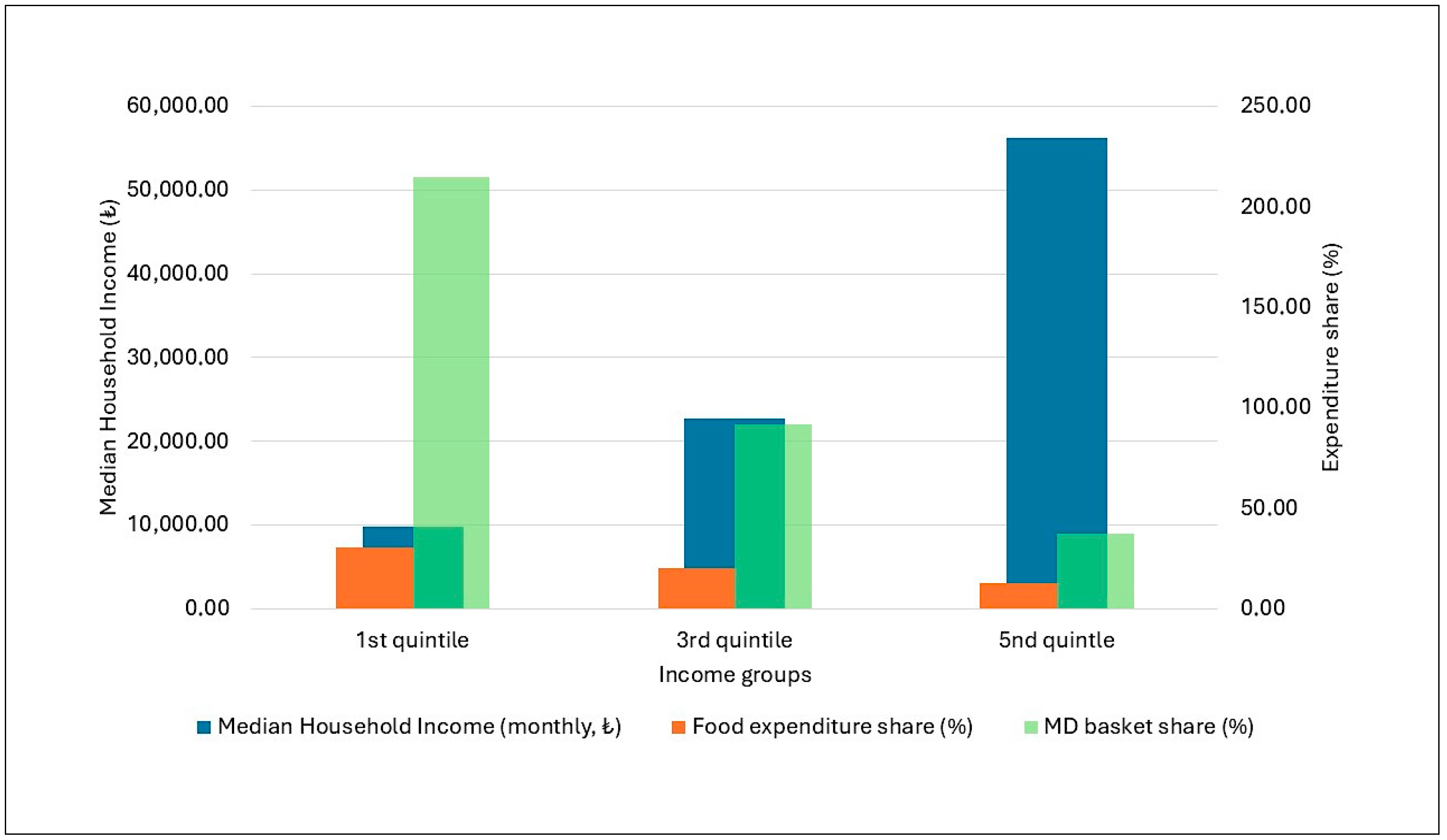
In addition, median household incomes and food and non-alcoholic beverage expenditure shares of the 1st, 3rd, and 5th income quintiles were used, and the share of income required to afford the MDFB was compared across these groups to assess its affordability across different income levels.
For both scenarios and income groups affordability was calculated as:
Affordability (%) = Monthly basket cost ÷ Monthly household disposable income × 100
and rounded to the nearest whole percent.
In line with the conceptual definition by World Bank, affordability was evaluated by comparing the monthly cost of the MDFB to the share of household income available for food [42].

3. Results

Table 1 presents the MDFB, structured according to the UNESCO Mediterranean Diet Pyramid for adults and the New Mediterranean Lifestyle Pyramid for Children and Youth developed by Casas et al. (2025) for boy and girl [4,34]. The basket outlines the recommended daily or weekly servings for each food group and household member. To evaluate energy adequacy, all servings were first converted into gram or millilitre equivalents and then expressed as daily intake values. The calculated daily energy provided by the MDFB was 1394.7 kcal for girl, 2982.2 kcal for boy, 1894.9 kcal for adult woman, and 2678.6 kcal for adult man, corresponding to 97%, 96%, 108%, and 99.8% of their respective daily energy requirements. These calculated values formed the basis for assessing the overall nutritional adequacy of the basket and were subsequently used in the cost and affordability analyses (see Appendix A Table A2 for details on the energy and key nutrients adequacy).

3.1. Estimated Cost of the Mediterranean Diet Food Basket and Price Distribution of Food Groups

The total monthly cost of the MDFB was TRY 20,930.2 (€422.69) (see Appendix A Table A1 for details on the cost calculation). Figure 1 presents the percentage contribution of each MD food group to the total monthly cost. The vegetable group had the highest contribution, accounting for TRY 3854.7 (€77.85) (18.4%) of the total cost, followed by olives, nuts, and seeds (TRY 3139.3; €63.40); 15.0%) and fish and seafood (TRY 3007.7; 14.4%). The lowest contributors were desserts and sweets (TRY 127.6; €2.58; 0.5%), eggs (TRY 222.7; €4.50; 1.1%), and herbs and spices (TRY 614.2; €12.40; 2.1%).

3.2. Affordability of the Mediterranean Diet Food Basket

Table 2 presents the monthly household income, the cost of the MDFB, and the corresponding affordability ratios under two income scenarios. In Scenario 1, based on the regional equivalised median income for the TR62 region (TRY 21,331; 430.78 € per month), the monthly cost of the reference basket (TRY 20,930; €422.68) accounted for 98% of household income. In Scenario 2, which used the national median income for couples with children (TRY 27,918; 563.80 € per month), the same basket represented 75% of income. Both scenarios substantially exceed the national average share of food and non-alcoholic beverages in household expenditures (18.1%) and the share among middle-income households (20.6%).
In the lowest-income group (1st quintile), the affordability ratio of the MDFB accounted for 214% of the average disposable household income, exceeding total income and indicating economic inaccessibility. Among middle-income households (3rd quintile), the affordability ratio was 91.9%, suggesting that almost the entire monthly income would need to be allocated to the MDFB, which remains economically unfeasible. For the highest-income group (5th quintile), the ratio was 37.3%, implying that while the MDFB could be considered marginally affordable, it still represents nearly three times the proportion typically devoted to food expenditures (Figure 2).

4. Discussion

4.1. Portion Adaptation and Cost Implications

The total number of fruit and vegetable servings included in the MDFB aligns with the MD pattern, which promotes the consumption of at least one to two servings of fruit and two or more servings of vegetables at each main meal. For children, however, a daily intake of approximately two servings of vegetables and three servings of fruit—one or two of which may be provided by 100% fruit juice without added sugars—is considered more practical in everyday settings [34]. The serving distribution in the MDFB for girl reflects this pattern, whereas the number of servings was increased for boy (as for adult man) to account for higher energy requirements. For boy and adult man, the model assumes the consumption of two servings of vegetables at breakfast (e.g., one cup each of chopped tomatoes and cucumbers), two servings of cooked vegetables at lunch (~10 tbsp of a vegetable dish), one large bowl of salad at dinner (e.g., one cup each of grated carrot and red cabbage), and one to two servings of fruit as snacks three times a day. This distribution represents a culturally acceptable, practical, and nutritionally adequate dietary pattern [44]. In addition, the relatively low unit prices and high availability of fruits and vegetables made it possible to design a cost-effective basket while maintaining realistic serving sizes, emphasizing local food availability and cultural consumption habits. Consequently, the relatively high share of fruits and vegetables in the total cost likely reflects their larger contribution. However, the greater inclusion of fresh products increases the overall perishability of the basket, requiring households to shop more frequently than for a typical diet. This requirement may present a practical barrier to adopting the Mediterranean Diet, particularly for time-constrained families, those living far from food retail outlets, or individuals relying on public transportation [31].
For adults, olives were included in the daily recommendations within the olive, nuts, and seeds group, as suggested in the MD. However, for children, olives were not part of the nuts and oily seeds group, it was included in the price calculations. This choice reflects the fact that olives are the most consumed food within this group in Türkiye and are a traditional component of the Turkish dietary pattern, particularly as a staple of daily breakfasts [36]. The regular consumption of nuts and oily seeds in Türkiye remains quite low; only 16.7% of individuals report consuming them 6–7 days per week. The main reason for this low consumption level is their high unit price and limited economic accessibility [36]. Therefore, considering olives as the primary representative of this group can be regarded as an appropriate choice that reflects both local dietary habits and cost realities.
For both children and adults, the recommendation of at least two servings of fish and seafood per week was energy-adjusted in our model to 3 servings per week for girl, 2.5 for adult woman 5 for boy and adult man. Both red meat and poultry were included in limited weekly serving, consistent with MD principles. However, the prevailing Turkish dietary pattern reflects the opposite trend: average daily consumption of red meat is 39.1 ± 51.14 g, poultry 28.2 ± 55.63 g, whereas fish consumption is only 13.2 ± 50.89 g. National data further indicate that only 8% of adults consume fish two to three times per week, while 35.8% consume it once a month and 19% less than once a month [36]. Despite being surrounded by seas on three sides, Türkiye continues to exhibit a clear “coastal paradox,” highlighting the need for new strategies to increase fish and seafood intake. Since red meat is generally more expensive than fish, limiting its consumption helped limit the overall basket cost. In addition, another group included in the MD but deliberately excluded from this model consists of processed meat products (e.g., pastrami, salami, sausage, sucuk, etc.). As these products are relatively expensive and linked to adverse health outcomes [34], they were not included in the present model, which aimed to achieve the lowest possible basket cost.
In Türkiye, it remains common for households to purchase milk directly from open-air markets or local milkmen, boil it, and prepare homemade yoghurt or ayran [45,46]. Consequently, in the MDFB, the milk and dairy products group—although recommended for daily consumption—likely makes a relatively modest contribution to the total basket cost under real-life conditions. This reflects the widespread reliance on home-prepared dairy foods, which are typically more affordable than commercially packaged alternatives. The only divergence from the MD guideline is that these products are not necessarily low-fat, as traditional practices prioritize taste and texture over fat content.
The cereal servings included in the MDFB are feasible within the Turkish context, as cereals and bread provide approximately 39.5% of total daily energy intake in Türkiye [36]. However, the key point of divergence from the MD principles is that these products are not predominantly whole grain. Data indicate that 72.1% of individuals consume white bread daily, while 57.4% report never consuming whole-grain, rye, or bran bread. This pattern highlights a critical opportunity for public policy: subsidizing or promoting whole-grain products through state-supported producers such as Halk Ekmek, which already offer low-cost bread, could substantially improve population-level adherence to healthy cereal consumption.
Extra virgin olive oil (EVOO) is a defining component of the Mediterranean Diet. In our adapted model, the recommendation of 1–2 servings per main meal was operationalized as 10 g/day for girl, 35 g/day for boy, 25 g/day for adult woman, and 30 g/day for adult man, corresponding to the amounts typically added to vegetables or salads. While these values are lower than the ≥50 g/day consumption reported in the PREDIMED trial [47], they maintain the qualitative essence of the Mediterranean Diet—prioritizing EVOO as the main source of added fat—while ensuring practical feasibility under real-life conditions. National data indicate that average daily olive oil intake is 5.2 ± 9.05 mL, whereas non-olive vegetable oils reach 16.6 ± 15.09 mL [36]. Given that olive oil costs approximately 2.5–3 times more per unit than sunflower or corn oil, this price difference is likely one of the main factors limiting its consumption.
In the MDFB, weekly legume servings were set at 7 for boy, 6 for adult man, 3 for girl, and 3.5 for adult woman, consistent with dietary guidance emphasizing plant-based protein sources [34,36]. Despite these relatively high allocations, legumes contributed minimally to the total basket cost, reflecting their low unit prices and wide local availability across Türkiye. Legumes are among the most economically accessible and environmentally sustainable foods, characterized by low food miles due to domestic production in nearly all regions of the country [48]. From a nutritional standpoint, legumes are a rich source of plant protein, complex carbohydrates, dietary fibre, vitamins, and minerals, and their regular consumption supports cardiometabolic health by reducing risk factors such as hypercholesterolemia, hypertension, and insulin resistance [34,49]. However, national data indicate that only 0.9% of the Turkish population consumes legumes 6–7 times per week, while 45.2% consume them only once a week [36]. This finding reveals that, despite legumes being culturally familiar and economically accessible, their current consumption levels remain well below the recommended optimal intake. Promoting their inclusion in main meals—particularly as a substitute for animal protein sources—could contribute to both improved diet quality and reduced household food costs. However, the underconsumption of legumes in Türkiye cannot be explained by economic factors alone. Evidence from culinary and public health literature suggests that several non-economic barriers shape legume intake. Traditional Turkish cuisine includes a wide range of legume-based dishes, yet many of these meals require long preparation and cooking times, soaking steps, and higher cooking skills, which may reduce their convenience for modern households with limited time [50]. In addition, taste preferences, perceived digestive discomfort, and limited familiarity with diverse legume preparations have been reported as important deterrents in different populations. Finally, low nutritional awareness regarding the health benefits of legumes—despite their long-standing culinary and cultural significance in Türkiye—may further contribute to insufficient consumption. Addressing these non-economic barriers through culinary education, recipe-based interventions, and promotion of convenient legume products may be essential to increase legume intake and improve the affordability and nutritional adequacy of the MD [51,52].
Herbs and spices are used in small quantities in the diet and, consequently, make only a minor contribution to the total basket cost. In the MD pyramid, their inclusion is recommended for adults and children alike, emphasizing the limited use of salt and the use of herbs and spices to enhance the colour and flavour of dishes. In the context of traditional Turkish cuisine, homemade tomato and red pepper pastes could also be considered part of this group, as they serve both as flavour enhancers and sources of antioxidants [53]. These products are commonly prepared domestically and culturally integrated into everyday meals. However, some versions may be high in salt; therefore, low-salt or homemade varieties can be viewed as compatible with MD principles.
In Mediterranean Lifestyle Pyramid for Children and Youth, eggs are recommended in amounts of up to one unit per day, given that consumption of ≤1 egg per day has been associated with a 6% reduction in cardiovascular disease incidence [34,54,55]. Therefore, the general recommendation in remains three servings per week. In MDFB, egg servings were therefore set at three per week for children, whereas for adults, we adopted the upper limit of the recommended range (2–4 servings per week). Based on basket cost analysis, eggs emerged as one of the most affordable protein sources, representing an important opportunity for improving food accessibility. Consequently, for children and low-income households in particular, eggs should be regarded as a nutritionally valuable and economically sustainable staple food given their ability to provide high-quality protein and essential nutrients at a low cost.
The inclusion of desserts and sweets in the basket was carefully limited to ensure that their contribution did not exceed 5% of total daily energy intake [56]. This approach guaranteed that the diet remained balanced and within safe limits regarding free sugar consumption. Molasses (pekmez), a traditional component of the Turkish breakfast and a source of antioxidant compounds [57], was used in a controlled manner to help meet the additional energy requirements of males while serving as a nutritious alternative sweetener. The amount of sweetened products could be moderately increased—without exceeding 10% of total energy intake—provided that fruit and vegetable consumptions do not fall below the recommended servings.

4.2. Cross-Country Comparison of Findings

The primary analysis of this research is to examine the affordability of the MD using price and income data from the TR62 region in Türkiye. Price data were collected based on regional median values and then compared to the median household income of the same region. The resulting ratio was 98%, indicating that the diet is not affordable within this region. When recalculated using the national median household income as a reference in a secondary scenario, the ratio decreased to 75%, yet it remained above the affordability threshold, suggesting that the MD is not financially accessible under current conditions.
Accounting for income distribution, the MD cost represented 92% of household income in the third income quintile and approximately twice the income in the lowest-income group (first quintile). Therefore, it is crucial that future community-based research specifically examines the dietary patterns and consumption behaviours of this socio-economically disadvantaged group. It was estimated that only 20% of Türkiye’s population could afford to follow the MD (with a 37% affordability rate). This finding indicates that the feasibility of adopting the MD model in Türkiye is highly limited, and that socioeconomic inequalities play a decisive role in shaping dietary quality.
Several other studies have shown that higher adherence to the MD is associated with greater dietary costs compared to Western dietary patterns. Tong et al. [58], in a study conducted in the United Kingdom, reported that higher adherence to the MD significantly increased the daily diet cost. On average, high adherence to the MD (£4.47; 95% CI: 4.44–4.49) was associated with a £0.20 higher daily cost (95% CI: 0.16–0.24) compared with low adherence (£4.26; 95% CI: 4.23–4.29), corresponding to an approximate 5.4% increase (95% CI: 4.4–6.4). Similarly, Pastor et al. [59], in a study involving 130 children, found a direct association between diet cost and MD adherence, showing that higher adherence levels were significantly linked to increased costs [OR (€/1000 kcal/day) = 3.012; 95% CI: 1.291–7.026; p = 0.011].
A similar trend was observed in population-based studies in Portugal and Spain. In Portugal, high adherence to MD was associated with a 21.2% (€0.59) increase in total diet costs. The 21.2% difference in diet cost was estimated to correspond to an additional €1.12 per day or €34 per month under real-life conditions. This difference represented approximately 4% of the median individual income, indicating a notably higher financial burden, particularly for households with children. Considering the equivalence scale used for food expenditure, it was estimated that a household of two adults and two children would need to spend, on average, an additional 7% of its monthly income (around €102) to move from low to high adherence to the MD [60]. The observed differences in total dietary cost between high and low adherence participants were similar to those found in population-based studies from Spain (17.5 and 28.0%) [16,17] and higher than those in a cohort study from the UK (5.4%)—a non-Mediterranean country [58].
Another study from Spain by Rubini et al. [61] reported that the median monthly diet cost corresponded to 15% of the average disposable income. This proportion increased from 11% in the low-adherence group to 17% in the high-adherence group. In addition, a positive association was identified between the monthly cost of the MD and the level of adherence to this dietary pattern. These studies show that improving diet quality increases the share of food expenditures and creates an economic barrier, especially for low-income households.
In contrast, in some countries, environmentally sustainable dietary models—such as the Planetary Health Diet (PHD)—have been reported to be achievable at a relatively lower cost. In a study conducted in Australia, the average weekly cost of a diet aligned with the PHD was AUD 189.2 (≈USD 120), compared with AUD 224.66 (≈USD 145) for the typical Australian diet. For a household of two adults and two children, this difference represented an annual saving of AUD 1843.9 (≈USD 1200). According to the study, households from the lowest socioeconomic group in Australia spent 17% of their weekly income on the PHD basket, while those from the highest-income group spent 11%, demonstrating that a healthy and sustainable diet was more affordable than the typical Australian diet (21%) [34].
When compared with findings from Western countries, the cost differential observed in Türkiye appears to be substantially greater. This discrepancy may be attributed to several interrelated factors, including inequities in income distribution, persistently high food inflation, regional variation in agricultural production, and the volatility of fresh produce prices. Furthermore, the seasonal price fluctuations of core MD components—such as olive oil, fish, and fresh fruits and vegetables—further intensify the economic barriers to access among low-income households. Additionally, cross-country differences in agricultural policy frameworks, food supply chain efficiency, and market structure may further explain the affordability gap between Türkiye and high-income countries. Many Western countries benefit from large-scale, vertically integrated supply chains, stronger regulatory oversight on intermediary margins, and long-standing subsidy mechanisms that stabilize the prices of key food groups. In contrast, Türkiye’s food system is characterized by fragmented distribution channels, higher logistics and fuel-related costs, and greater exposure to import-dependent inputs, all of which amplify consumer prices even for domestically produced foods. These structural features likely contribute to the substantially lower affordability of healthy dietary models in Türkiye compared with these settings [62].

4.3. Limitations and Future Directions

In this study, price data were collected from the representative region that occupied the median position among all NUTS-2 regions of Türkiye, excluding the national average. The regions were ranked in ascending order according to the P80/P20 ratio of equivalised household disposable income reported in the TurkStat 2024 Income Distribution Statistics Bulletin [33]. While Türkiye exhibits substantial inter-regional variation in food prices, TR62 represents neither an extreme high-cost nor low-cost region and therefore provides a reasonable benchmark for estimating affordability. However, because TR62 was selected based on its median income level—rather than its food-price profile—the resulting affordability estimates reflect conditions specific to this median-income region and may differ from those in higher- or lower-cost regions. The Scientific and Technological Research Council of Türkiye (TÜBİTAK) chain market price database [63], developed subsequently, provides access to standardized national price data. However, this system was not available when the current research was conducted. Moreover, the TÜBİTAK database only includes chain market prices and lacks data for certain fruits and vegetables. In contrast, our dataset also includes prices from local open-air markets, where the prices of fresh fruits and vegetables are primarily determined. Since a significant amount of fruit and vegetable shopping in Türkiye takes place in these markets, our dataset offers a more comprehensive representation—particularly for fresh produce. Indeed, the prices of fresh items are known to vary across retail channels [64]. In Türkiye, alternative points of sale such as open-air markets, fishmongers, and butcher shops may lead to price variability. Future research that includes data from both chain market and traditional markets at the national level could provide a more accurate picture of the accessibility of the MD across the country. As price data were only collected in December 2024, the dataset does not capture seasonal price fluctuations in key MD components such as olive oil, fresh fruits and vegetables, and fish. This single-month snapshot may introduce seasonal bias and limit the generalizability of the cost estimates. Establishing time-series data through regular collection intervals would allow for a more robust examination of price variability and seasonal effects. Also, because the price data in this study were collected exclusively from urban retail settings—namely national supermarket chains, the central open-air market, and municipal bread outlets—the resulting cost estimates predominantly represent urban food environments. Evidence from international assessments indicates that rural households often face different food access conditions, including smaller retail networks, reduced product variety, higher prices for perishable items due to transportation and storage constraints, and less frequent access to large open-air markets. At the same time, some rural households partially rely on home production for staples such as legumes and vegetables, which may alter the balance between market purchases and self-produced foods [65,66]. Given these structural differences, the affordability estimates presented here are most applicable to urban contexts and should be interpreted with this distinction in mind. In addition, even within urban settings, food access is not uniform. Evidence from international studies on urban food deserts shows that neighbourhoods with limited supermarket density or restricted access to affordable fresh produce may experience higher effective food costs despite being in urban areas [67,68]. Therefore, the urban prices used in this study reflect central urban food environments and may not capture within-city disparities in access and affordability. Finally, although euro equivalents were included to enhance international interpretability, they should be viewed with caution due to exchange-rate volatility in Türkiye; more broadly, all cost estimates reflect the specific temporal and macroeconomic conditions of the data collection period, which may limit their comparability across different time frames.

5. Conclusions

The findings of this research indicate that, despite its well-established health benefits, the MD remains economically inaccessible for the majority of households in Türkiye. Only the highest-income quintile—representing the wealthiest 20% of the population—could feasibly afford the diet, while it remains beyond reach for low- and middle-income groups. The fact that the diet cost accounts for a large proportion of median household income highlights and potentially exacerbates socioeconomic inequalities in diet quality. Therefore, targeted policy interventions—such as food subsidies, income support measures, and price stabilization policies for fresh produce—are essential, particularly in disadvantaged regions, to mitigate this disparity between diet quality and economic inequality. Moreover, adapting the MD culturally and structurally to align with local food systems and consumption habits, and developing accessible, locally produced dietary models, could enhance its feasibility and affordability, thereby contributing to both public health and sustainability objectives. The State of Food Security and Nutrition in the World and The Cost and Affordability of a Healthy Diet reports highlight that the main cost drivers of a healthy diet are nutrient-dense foods such as fruits and vegetables, legumes, nuts, and fish, and that policy interventions failing to target these groups tend to exacerbate nutritional inequalities among low-income households. Based on the cost composition of MDFB, more targeted measures—beyond general food subsidies or income support—appear necessary for Türkiye. These may include: (i) production and input subsidies for vegetables, legumes, olive oil, fish, and nuts—core components of the MD; (ii) measures to stabilize fresh-produce prices through short supply chains, strengthened local markets, and reduced intermediary costs; (iii) VAT reductions or exemptions for high-cost, nutrient-dense foods; (iv) public procurement strategies that prioritize healthy foods in schools, hospitals, and social programmes, thereby lowering prices through large-scale purchasing; (v) investments in cold-chain and storage infrastructure to reduce losses and limit price inflation; and (vi) targeted nutrition vouchers or digital food assistance cards for low-income households, specifically redeemable for fresh, nutrient-rich items [66,69]. Such diet-specific and multi-layered policies can improve affordability while offering a more actionable, equitable, and sustainable framework for advancing healthy diets in Türkiye.

Author Contributions

Conceptualization, G.Y., E.T.S. and E.Y.A.; methodology, G.Y., E.T.S. and E.Y.A.; software, G.Y., E.T.S. and E.Y.A.; formal analysis, G.Y.; investigation, G.Y., E.T.S. and E.Y.A.; resources, G.Y., E.T.S. and E.Y.A.; data curation, G.Y. and E.T.S.; writing—original draft preparation, G.Y., E.T.S. and E.Y.A.; writing—review and editing, G.Y., E.T.S. and E.Y.A.; visualization, G.Y. and E.T.S. supervision, E.Y.A. All authors have read and agreed to the published version of the manuscript.

Funding

This research received no external funding.

Institutional Review Board Statement

Not applicable.

Informed Consent Statement

Not applicable.

Data Availability Statement

Data is contained within the article or Appendix A.

Conflicts of Interest

The authors declare no conflicts of interest.

Appendix A

Table A1. Cost calculation data.
FoodUnitM1M2M3Open-Air MarketHalk EkmekAverage CostQuantity/DayDaily CostMonthly CostGroup Cost
Black Peppertl/kg600600600 600106.00182.40614.2
Cinnamontl/kg276.5276.67887.78 480.317104.80146.02
Cumintl/kg300366.67366.67 344.447103.44104.71
Minttl/kg288350350 329.333103.29100.12
Thymetl/kg266266.66266.67 266.443102.6681.00
Appletl/kg29.542.544.9520 34.237487.516.69507.402484.2
Quincetl/kg44.549.549.9550 48.487151.257.33222.95
Kiwitl/kg72.58984.9540 71.612232.516.65506.16
Tangerinetl/kg343239.9525 32.73732510.64323.45
Orangetl/kg34.7529.549.9530 36.052609.37284.94
Pomegranatetl/kg 89.9589.9550 46.65227.510.61322.63
Bananatl/kg6769.569.9550 64.113162.510.42316.72
Scallionstl/kg 39139.8150 109.615016.44499.783854.7
Spinachtl/kg 141.4239.9525 68.7918012.38376.42
Lettucetl/kg 79.869.8750 66.5571479.78297.43
Cabbagetl/kg 29.519.9520 23.151804.17126.68
Leektl/kg 9548.9530 57.98318010.44317.28
Parsleytl/kg 99.866.350 72.033906.48197.08
Carrottl/kg29.542.1455.9520 36.89733012.18370.16
Red radishtl/kg 38.535.9530 34.8171806.27190.52
Red cabbagetl/kg 59.919.9540 39.9529011.59352.20
Mushroomstl/kg122.5148.33174.850 123.90718022.30678.02
Oniontl/kg18.7518.7523.9517 19.612473.3339.28282.21
Garlictl/kg199223.75249.95250 230.675184.15126.23
Potatotl/kg11.7510.7510.7515 12.0621111.3440.70
Olive oiltl/L174.5174.5289.95 212.9830.1123.43712.22712.2
Whole grain breadtl/kg82.582.14122.11 5084.18740033.681023.721428.5
Whole pastatl/kg25.527.574.37 42.457552.3470.99
Brown ricetl/kg353525.75 31.917551.7653.36
Couscoustl/kg48.548.549.9 48.967552.6981.87
Bulgurtl/kg232322.78 22.9271403.2197.58
Oatstl/kg71.478.94109.5 86.61338.3333.32100.93
Almondstl/kg563563.33563.33 563.223016.90513.663139.3
Walnutstl/kg563563.33777.5 634.613019.04578.76
Hazelnutstl/kg563463.33463.33 496.553014.90452.86
Pistachiostl/kg663663.33663.33 663.223019.90604.86
Peanutstl/kg139167.6186.5 164.367355.75174.89
Sunflower seedstl/kg93.759099.5 94.4167807.55229.62
Black olivestl/kg94.75102.5175 124.08315519.23584.68
Cow’s milk (semi-skimmed)tl/L313131.25 31.0832006.22188.992828.3
Yoghurt (semi-skimmed)tl/L31.83637.5 35.155019.31586.87
Cheese (white)tl/kg176.5162.5239 192.66719537.571142.13
Cheese (curd)tl/kg878747.9 73.96715011.10337.29
Kefirtl/L43.543.559.5 48.8332009.77296.91
Ayrantl/L22.527.6727.67 25.9473509.08276.07
Chickentl/kg6592.599 85.516514.11428.87716.9
Turkeytl/kg379379379 379259.48288.04
Fishtl/kg170138199.95 169.31754391.942794.943007.7
Tunatl/kg279279.69281.09 279.927257.00212.74
Red meattl/kg320487.5497.5 435102.85744.741360.181360.2
Chicken eggstl/adet 5.7599.134.83 36.57200.2867.32222.66222.7
Lentils tl/kg404039.8 39.933361.4443.70433.8
Chickpeastl/kg5151.7551.75 51.5673.45104.90
Dried beanstl/kg59.756559.75 61.5623.81115.92
Kidney beanstl/kg8081.25151.9 104.383363.76114.24
Black-eyed peastl/kg74.26536 58.4311.8155.04
Turkish delighttl/kg180.55180.55319.9 22761.3641.40127.6
Halvatl/kg90109109 102.6675.30.5416.54
Molassestl/kg98.88384.38 88.727721.4461.9057.85
Granulated sugartl/kg3334.934.9 34.26711.30.3911.77
Table A2. Nutrient adequacy data.
NutrientsGirlRequirementAdequacyAdolescent BoyRequirementAdequacyManRequirementAdequacyWomanRequirementAdequacy
Energy (kcal)1394.701398100%2982.202755108%2678.60275897%1894.90197796%
Protein (%)315–20248%2410–20192%2310–20184%2314–20184%
Fat (%)3220–35116%2920–35105%3120–35113%33.0020–35120%
Carbohydrates (%)3845–6072%4645–6088%4645–6088%43.0045–6082%
Dietary fibre (g)2914207%74.7021356%69.6025278%48.8025195%
Vitamin A (µg)1164.10300388%3452.10750460%3353.80750447%2017.50750269%
Vitamin B1/
Thiamin (mg)
1.400.40350%2.800.40700%2.700.40675%2.000.40500%
Vitamin B2/
Riboflavin (mg)
2.400.70343%4.001.60250%3.401.60213%2.301.60144%
Vitamin B6/
Pyridoxine (mg)
2.100.70300%4.301.70253%3.901.70229%2.701.60169%
Folate, total (µg)422.20140302%945330286%805.50330244%581.90330176%
Vitamin C (mg)154.4030515%386.20100386%385.60110351%264.5095278%
Sodium (mg)1756.601300135%4228.102000211%2559.502000128%1940.80200097%
Potassium (mg)3662.301100333%7728.103500221%7126.103500204%4843.903500138%
Calcium (mg)1163.50800145%2083.101150181%1527.801000153%1094.401000109%
Iron (mg)16.407.00234%37.9011345%35.2011.00320%23.6011–16175%
Zinc (mg)10.205.50185%21.3014.20150%17.909.4–16.3139%13.109.4–16.3102%

References

  1. Willett, W.C.; Sacks, F.; Trichopoulou, A.; Drescher, G.; Ferro-Luzzi, A.; Helsing, E.; Trichopoulos, D. Mediterranean Diet Pyramid: A Cultural Model for Healthy Eating. Am. J. Clin. Nutr. 1995, 61, 1402S–1406S. [Google Scholar] [CrossRef]
  2. Guasch-Ferré, M.; Willett, W.C. The Mediterranean Diet and Health: A Comprehensive Overview. J. Intern. Med. 2021, 290, 549–566. [Google Scholar] [CrossRef] [PubMed]
  3. International Centre for Advanced Mediterranean Agronomic Studies; Food and Agriculture Organization of the United Nations. Mediterranean Food Consumption Patterns: Diet, Environment, Society, Economy and Health; FAO: Rome, Italy, 2015. [Google Scholar]
  4. UNESCO Chair for the Mediterranean Diet. Resources on Nutrition. Available online: https://mediterraneandietunesco.org/resources/nutrition/ (accessed on 1 September 2025).
  5. Mattavelli, E.; Olmastroni, E.; Casula, M.; Grigore, L.; Pellegatta, F.; Baragetti, A.; Magni, P.; Catapano, A.L. Adherence to Mediterranean Diet: A Population-Based Longitudinal Cohort Study. Nutrients 2023, 15, 1844. [Google Scholar] [CrossRef] [PubMed]
  6. Serra-Majem, L.; Tomaino, L.; Dernini, S.; Berry, E.M.; Lairon, D.; Ngo de la Cruz, J.; Trichopoulou, A. Updating the Mediterranean Diet Pyramid towards Sustainability: Focus on Environmental Concerns. Int. J. Environ. Res. Public Health 2020, 17, 8758. [Google Scholar] [CrossRef] [PubMed]
  7. Obeid, C.A.; Gubbels, J.S.; Jaalouk, D.; Kremers, S.P.; Oenema, A. Adherence to the Mediterranean Diet among Adults in Mediterranean Countries: A Systematic Literature Review. Eur. J. Nutr. 2022, 61, 3327–3344. [Google Scholar] [CrossRef]
  8. Raptou, E.; Tsiami, A.; Negro, G.; Ghuriani, V.; Baweja, P.; Smaoui, S.; Varzakas, T. Gen Z’s Willingness to Adopt Plant-Based Diets: Evidence from Greece, India, and the UK. Foods 2024, 13, 2076. [Google Scholar] [CrossRef]
  9. Fernández-Escobar, C.; Díez, J.; Martínez-García, A.; Bilal, U.; O’Flaherty, M.; Franco, M. Food Availability and Affordability in a Mediterranean Urban Context. Public Health Nutr. 2023, 26, 446–454. [Google Scholar] [CrossRef]
  10. Bonaccio, M.; Bes-Rastrollo, M.; De Gaetano, G.; Iacoviello, L. Challenges to the Mediterranean Diet during Economic Crisis. Nutr. Metab. Cardiovasc. Dis. 2016, 26, 1057–1063. [Google Scholar] [CrossRef]
  11. Turrell, G.; Kavanagh, A.M. Socio-Economic Pathways to Diet: Modelling Socio-Economic Position and Food Purchasing Behaviour. Public Health Nutr. 2006, 9, 375–383. [Google Scholar] [CrossRef]
  12. Cade, J.; Upmeier, H.; Calvert, C.; Greenwood, D. Costs of a Healthy Diet: UK Women’s Cohort Study. Public Health Nutr. 1999, 2, 505–512. [Google Scholar] [CrossRef]
  13. Russell, C.; Whelan, J.; Love, P. Assessing Costs of Healthy vs. Unhealthy Diets: Systematic Review. Curr. Nutr. Rep. 2022, 11, 600–617. [Google Scholar]
  14. Hoenink, J.C.; Garrott, K.; Jones, N.R.; Conklin, A.I.; Monsivais, P.; Adams, J. Price Disparities between Healthy and Less Healthy Foods in the UK. Appetite 2024, 197, 107290. [Google Scholar] [CrossRef]
  15. Headey, D.; Hirvonen, K.; Alderman, H. Estimating Cost and Affordability of Healthy Diets. Food Policy 2024, 126, 102654. [Google Scholar] [CrossRef]
  16. López, C.N.; Martínez-González, M.A.; Sánchez-Villegas, A.; Alonso, A.; Pimenta, A.M.; Bes-Rastrollo, M. Costs of Mediterranean and western dietary patterns in a Spanish cohort and their relationship with prospective weight change. J. Epidemiol. Community Health 2009, 63, 920–927. [Google Scholar] [CrossRef] [PubMed]
  17. Schröder, H.; Marrugat, J.; Covas, M.I. High Monetary Costs of Dietary Patterns Associated with Lower BMI. Int. J. Obes. 2006, 30, 1574–1579. [Google Scholar] [CrossRef] [PubMed]
  18. Bai, Y.; Alemu, R.; Block, S.A.; Headey, D.; Masters, W.A. Cost and Affordability of Nutritious Diets. Food Policy 2021, 99, 101983. [Google Scholar] [CrossRef] [PubMed]
  19. Balagamwala, M.; Kuri, S.; Mejia, J.G.J.; de Pee, S. The Affordability Gap for Nutritious Diets. Glob. Food Secur. 2024, 41, 100757. [Google Scholar] [CrossRef]
  20. FAO; IFAD; UNICEF; WFP; WHO. The State of Food Security and Nutrition in the World; FAO: Rome, Italy, 2025. [Google Scholar] [CrossRef]
  21. Eurostat. Household Expenditure on Food and Non-Alcoholic Beverages. Available online: https://ec.europa.eu/eurostat/web/products-eurostat-news/w/ddn-20230201-1 (accessed on 1 November 2025).
  22. TURKSTAT. Household Consumption Expenditures 2023. Available online: https://data.tuik.gov.tr/Bulten/Index?p=Household-Consumption-Expenditures-2023-53801&dil=2 (accessed on 1 November 2025).
  23. Food and Agriculture Organization of the United Nations (FAO). FAOSTAT. 2024. Available online: https://faostat.fao.org (accessed on 1 November 2025).
  24. International Olive Council (IOC). World Market of Olive Oil and Table Olives: Data from December 2024. Available online: https://www.internationaloliveoil.org/world-market-of-olive-oil-and-table-olives-data-from-december-2024/ (accessed on 1 November 2025).
  25. TURKSTAT. Consumer Price Index September 2025. Available online: https://data.tuik.gov.tr/Bulten/Index?p=Consumer-Price-Index-September-2025-54184&dil=2 (accessed on 1 November 2025).
  26. Organisation for Economic Co-Operation and Development (OECD). Consumer Prices: OECD Statistical Release. Available online: https://www.oecd.org/content/dam/oecd/en/data/insights/statistical-releases/2025/11/consumer-prices-oecd-11-2025.pdf (accessed on 1 November 2025).
  27. International Diabetes Federation. IDF Diabetes Atlas—Türkiye Data. Available online: https://diabetesatlas.org/resources/idf-diabetes-atlas-2025/ (accessed on 2 November 2025).
  28. WHO Regional Office for Europe. European Regional Obesity Report 2022; WHO Regional Office for Europe: Copenhagen, Denmark, 2022; Available online: https://www.who.int/europe/publications/i/item/9789289057738 (accessed on 2 November 2025).
  29. Yeşildemir, Ö.; Güldaş, M.; Boqué, N.; Calderón-Pérez, L.; Degli Innocenti, P.; Scazzina, F.; Nehme, N.; Abbass, F.A.; de la Feld, M.; Salvio, G.; et al. Adherence to the mediterranean diet among families from four countries in the mediterranean basin. Nutrients 2025, 17, 1157. [Google Scholar] [CrossRef]
  30. TÜRK-İŞ Confederation. Hunger and Poverty Line Report, July 2025. Available online: https://www.turkis.org.tr (accessed on 30 August 2025).
  31. Goulding, T.; Lindberg, R.; Russell, C.G. Affordability of Healthy/Sustainable Diets: Australian Case. Nutr. J. 2020, 19, 109. [Google Scholar] [CrossRef]
  32. Storms, B.; Goedemé, T.; Van den Bosch, K.; Penne, T.; Schuerman, N.; Stockman, S. Reference Budgets in Europe. Eur. Comm. Rep. 2014, 10, 400190. [Google Scholar]
  33. TURKSTAT. Income Distribution Statistics 2024. Available online: https://data.tuik.gov.tr/Bulten/Index?p=Income-Distribution-Statistics-2024-53712&dil=2#:~:text=The%20mean%20annual%20household%20disposable,to%20previous%20year%20in%20T%C3%BCrkiye.&text=In%20T%C3%BCrkiye%2C%20the%20mean%20annual,to%20187%20thousand%20728%20TL (accessed on 25 August 2025).
  34. Casas, R.; Ruiz-León, A.M.; Argente, J.; Alasalvar, C.; Bajoub, A.; Bertomeu, I.; Caroli, M.; Castro-Barquero, S.; Crispi, F.; Delarue, J.; et al. A New Mediterranean Lifestyle Pyramid for Children and Youth: A Critical Lifestyle Tool for Preventing Obesity and Associated Cardiometabolic Diseases in a Sustainable Context. Adv. Nutr. 2025, 16, 100381. [Google Scholar] [CrossRef]
  35. TUBER. Türkiye Beslenme Rehberi 2022; Ministry of Health: Ankara, Türkiye, 2022. Available online: https://hsgm.saglik.gov.tr/tr/web-uygulamalarimiz/357.html (accessed on 25 August 2025).
  36. Republic of Turkey Ministry of Health. Turkey Nutrition and Health Survey 2017; Republic of Turkey Ministry of Health: Ankara, Türkiye, 2019.
  37. Food and Agriculture Organization of the United Nations (FAO). Human Energy Requirements; FAO: Rome, Italy, 2004. [Google Scholar]
  38. Independent Industrialists and Businessmen’s Association (MÜSİAD). Food Retail Sector Report. 2023. Available online: https://dernek.musiad.org.tr/en/new/gida-perakendeciligi-sektor-arastirma-raporu-yayimlandi (accessed on 3 November 2025).
  39. Food and Agriculture Organization of the United Nations (FAO). FAOSTAT: Cost and Affordability of a Healthy Diet (CoAHD) Database; FAO: Rome, Italy, 2023; Available online: https://www.fao.org/faostat/en/#data/CAHD (accessed on 3 November 2025).
  40. OECD. Framework for Statistics on Income, Consumption and Wealth; OECD Publishing: Paris, France, 2013. [Google Scholar]
  41. TURKSTAT. Poverty and Living Conditions Statistics 2024. Available online: https://data.tuik.gov.tr/Bulten/Index?p=Poverty-and-Living-Conditions-Statistics-2024-53714&dil=2#:~:text=According%20to%20the%202024%20result,individuals%20aged%2065%20and%20over (accessed on 20 August 2025).
  42. World Bank. Food Prices for Nutrition DataHub. 2024. Available online: https://databank.worldbank.org/source/food-prices-for-nutrition (accessed on 20 August 2025).
  43. TURKSTAT. Statistics on Family, 2024. Available online: https://data.tuik.gov.tr/Bulten/Index?p=Statistics-on-Family-2024-53898&dil=2#:~:text=According%20to%20the%20ABPRS%20results,17%20age%20group%20was%2042.8%25 (accessed on 4 December 2025).
  44. Pekcan, A.G. Dietary Intake Pattern in Turkey. In Voluntary Guidelines for Mediterranean Diet; FAO: Rome, Italy, 2018; p. 49. [Google Scholar]
  45. Yılmaz, H.; Öztürk, Ş.N.; Dağ, M.M. Socio-Economic Characteristics of Consumers Buying Unpacked Dairy. MKU. Tar. Bil. Derg. 2022, 27, 502–511. [Google Scholar] [CrossRef]
  46. Engindeniz, S.; Taşkin, T.; Gbadamonsi, A.A.; Ahmed, A.S.; Cisse, A.S.; Seioudy, A.; Kandemir, Ç.; Koşum, N. Preferences for Milk and Milk Products. JOTAF 2021, 18, 470–481. [Google Scholar]
  47. Zazpe, I.; Sanchez-Tainta, A.; Estruch, R.; Lamuela-Raventos, R.M.; Schröder, H.; Salas-Salvado, J.; Salas-Salvado, J.; Corella, D.; Fiol, M.; Gomez-Gracia, E.; et al. A large randomized individual and group intervention conducted by registered dietitians increased adherence to Mediterranean-type diets: The PREDIMED study. J. Am. Diet. Assoc. 2008, 108, 1134–1144. [Google Scholar] [CrossRef]
  48. Lisciani, S.; Marconi, S.; Le Donne, C.; Camilli, E.; Aguzzi, A.; Gabrielli, P.; Gambelli, L.; Kunert, K.; Marais, D.; Vorster, B.J.; et al. Legumes and common beans in sustainable diets: Nutritional quality, environmental benefits, spread and use in food preparations. Front. Nutr. 2024, 11, 1385232. [Google Scholar] [CrossRef] [PubMed]
  49. Mullins, A.P.; Arjmandi, B.H. Health Benefits of Plant-Based Nutrition. Nutrients 2021, 13, 519. [Google Scholar] [CrossRef] [PubMed]
  50. Sezgin, A.C.; Onur, M. Traditional Turkish cuisine prepared with legumes. J. Gastron. Hosp. Travel 2022, 5, 170–181. [Google Scholar]
  51. Henn, K.; Goddyn, H.; Olsen, S.B.; Bredie, W.L. Identifying behavioral and attitudinal barriers and drivers to promote consumption of pulses: A quantitative survey across five European countries. Food Qual. Prefer. 2022, 98, 104455. [Google Scholar]
  52. Amoah, I.; Ascione, A.; Muthanna, F.M.; Feraco, A.; Camajani, E.; Gorini, S.; Armani, A.; Caprio, M.; Lombardo, M. Sustainable strategies for increasing legume consumption: Culinary and educational approaches. Foods 2023, 12, 2265. [Google Scholar] [CrossRef]
  53. Sayın, K.; Arslan, D. Antioxidant Properties of Red Pepper Paste. Int. J. Nutr. Food Eng. 2015, 9, 834–837. [Google Scholar]
  54. Carter, S.; Connole, E.S.; Hill, A.M.; Buckley, J.D.; Coates, A.M. Eggs and Cardiovascular Disease. Curr. Atheroscler. Rep. 2023, 25, 373–380. [Google Scholar] [CrossRef] [PubMed]
  55. Godos, J.; Micek, A.; Brzostek, T.; Toledo, E.; Iacoviello, L.; Astrup, A.; Franco, O.H.; Galvano, F.; Martinez-Gonzalez, M.A.; Grosso, G. Egg consumption and cardiovascular risk: A dose–response meta-analysis of prospective cohort studies. Eur. J. Nutr. 2021, 60, 1833–1862. [Google Scholar] [CrossRef]
  56. WHO eLENA. Reducing Free Sugars in Children. Available online: https://www.who.int/tools/elena/interventions/free-sugars-children-ncds (accessed on 10 April 2024).
  57. Şimşek, A.; Artık, N.; Baspınar, E. Detection of Raisin Concentrate (Pekmez) Adulteration by Regression Analysis Method. J. Food Compos. Anal. 2004, 17, 155–163. [Google Scholar] [CrossRef]
  58. Tong, T.Y.; Imamura, F.; Monsivais, P.; Brage, S.; Griffin, S.J.; Wareham, N.J.; Forouhi, N.G. Dietary cost associated with adherence to the Mediterranean diet, and its variation by socio-economic factors in the UK Fenland Study. Br. J. Nutr. 2018, 119, 685–694. [Google Scholar] [CrossRef]
  59. Pastor, R.; Pinilla, N.; Tur, J.A. Economic Cost of Diet and Mediterranean Adherence in Children. Int. J. Environ. Res. Public Health 2021, 18, 1282. [Google Scholar] [CrossRef]
  60. Alves, R.M.; Lopes, C.M.M.; Rodrigues, S.S.P.; Perelman, J. Excess Cost of Mediterranean Diet in a Mediterranean Country. Br. J. Nutr. 2022, 128, 1393–1400. [Google Scholar] [CrossRef] [PubMed]
  61. Rubini, A.; Vilaplana-Prieto, C.; Flor-Alemany, M.; Yeguas-Rosa, L.; Hernández-González, M.; Félix-García, F.J.; Félix-Redondo, F.J.; Fernández-Bergés, D. Assessment of the cost of the Mediterranean diet in a low-income region: Adherence and relationship with available incomes. BMC Public Health 2022, 22, 58. [Google Scholar] [PubMed]
  62. Organization for Economic Co-Operation and Development (OECD). Agricultural Policy Monitoring and Evaluation 2025: Making the Most of the Trade and Environment Nexus in Agriculture; OECD Publishing: Paris, France, 2025. [Google Scholar] [CrossRef]
  63. Republic of Türkiye; TÜBİTAK.; Ministry of Trade; Central Bank. Market Fiyatı Platformu. Available online: https://marketfiyati.org.tr/ (accessed on 30 August 2025).
  64. Dong, X.; Astill, G. Uniform Prices of Fresh Produce in US Retail Chains. J. Agric. Appl. Econ. Assoc. 2024, 3, 410–423. [Google Scholar] [CrossRef]
  65. Citaristi, I. International Fund for Agricultural Development—IFAD. In The Europa Directory of International Organizations 2022; Routledge: London, UK, 2022; pp. 340–343. [Google Scholar]
  66. Food and Agriculture Organization (FAO); International Fund for Agricultural Development (IFAD); United Nations Children’s Fund (UNICEF); World Food Programme (WFP); World Health Organization (WHO). The State of Food Security and Nutrition in the World 2023: Urbanization, Agrifood Systems Transformation and Healthy Diets Across the Rural–Urban Continuum; FAO: Rome, Italy, 2023. [Google Scholar] [CrossRef]
  67. Fernández-Casal, L.; Karakaya Ayalp, E.; Öztürk, S.P.; Navas-Gracia, L.M.; Geçer Sargın, F.; Pinedo-Gil, J. The quality turn of food deserts into food oases in European cities: Market opportunities for local producers. Agriculture 2025, 15, 229. [Google Scholar] [CrossRef]
  68. Odoms-Young, A.; Brown, A.G.M.; Agurs-Collins, T.; Glanz, K. Food insecurity, neighborhood food environment, and health disparities: State of the science, research gaps and opportunities. Am. J. Clin. Nutr. 2024, 119, 850–861. [Google Scholar] [CrossRef]
  69. Food and Agriculture Organization of the United Nations; International Fund for Agricultural Development; United Nations Children’s Fund; World Food Programme; World Health Organization. The Cost and Affordability of a Healthy Diet FAO. 2023. Available online: https://openknowledge.fao.org/server/api/core/bitstreams/f1ee0c49-04e7-43df-9b83-6820f4f37ca9/content/state-food-security-and-nutrition-2023/cost-affordability-healthy-diet.html (accessed on 5 November 2025).
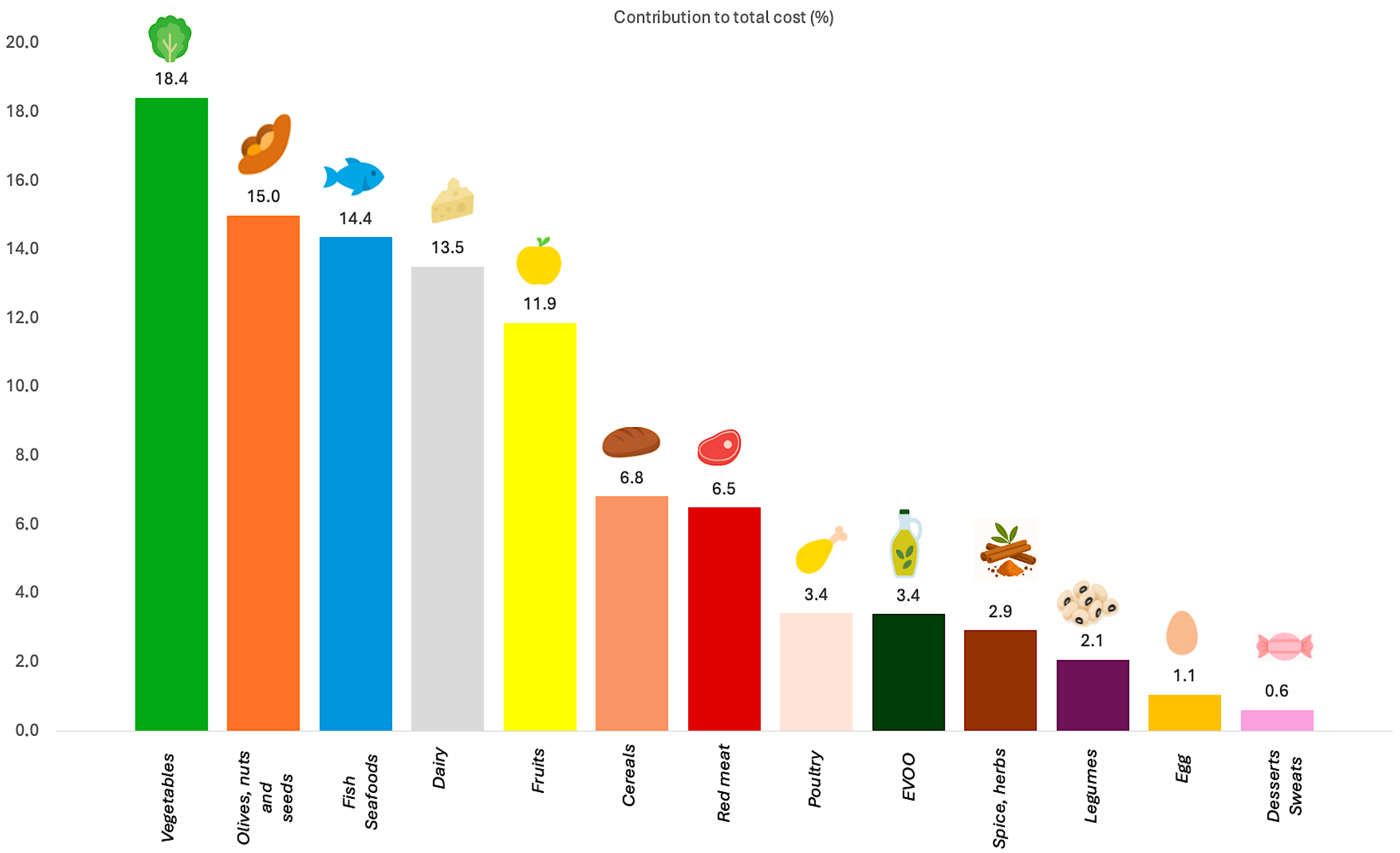
Figure 1. Percentage contribution of Mediterranean Diet food groups to the total monthly cost.
Sustainability 17 11254 g001
Figure 2. Comparison of household food expenditure shares and the proportion of income required to afford the Mediterranean Diet food basket by income quintiles (Türkiye, 2024). Given that Türkiye has approximately 26.6 million households, each income quintile represents roughly one-fifth of all households (≈5.3 million) [43].
Sustainability 17 11254 g002
Table 1. Daily or weekly food group servings of the MDFB by household member.
Food GroupGirlBoyAdult WomanAdult Man
Vegetables (servings/day)2646
Fruits (servings/day)2434
EVOO 1 (servings/day)2745
Cereals (servings/day)2746
Nuts and Olives (servings/day)1122
Dairy products (servings/day)3422
Legumes (servings/week)373.56
Fish and Seafood (servings/week)352.55
White meat/Poultry (servings/week)3422
Eggs (servings/week)3344
Red meat (servings/week)1212
Potatoes (servings/week)0.5323
Desserts and sweets 2 (servings/week for females; servings/day for males)0.5111
Spices (g/day)2244
1: Extra virgin olive oil; 2: Desserts and sweets are reported as servings per day for adult man and boy and servings per week for adult woman and girl, in accordance with energy requirements. Spice amounts were derived from standard meal recipes for Türkiye.
Table 2. The monthly household income, the cost of the MDFB, and the corresponding affordability ratios under two income scenarios.
ScenarioIncome SourceMonthly Household Income (TRY/Euro)MD Basket Cost (TRY/Euro)-Month)Affordability (%)
PrimaryTR62 equivalent adult (S = 2.3)21,331/430.78 20,930.2/422.6898
SensitivityTürkiye, national median for a nuclear family27,918/563.8020,930.2/422.6875
Disclaimer/Publisher’s Note: The statements, opinions and data contained in all publications are solely those of the individual author(s) and contributor(s) and not of MDPI and/or the editor(s). MDPI and/or the editor(s) disclaim responsibility for any injury to people or property resulting from any ideas, methods, instructions or products referred to in the content.