_Li.png)
Marketing and Innovation in Tourism: An Analysis of Scientific Production in Scopus and WoS

 ,
,  and
and 
Abstract
1. Introduction
2. Literature Reviews
2.1. Marketing and Innovation in Tourism
2.2. Bibliometric Studies on Marketing and Innovation in Tourism
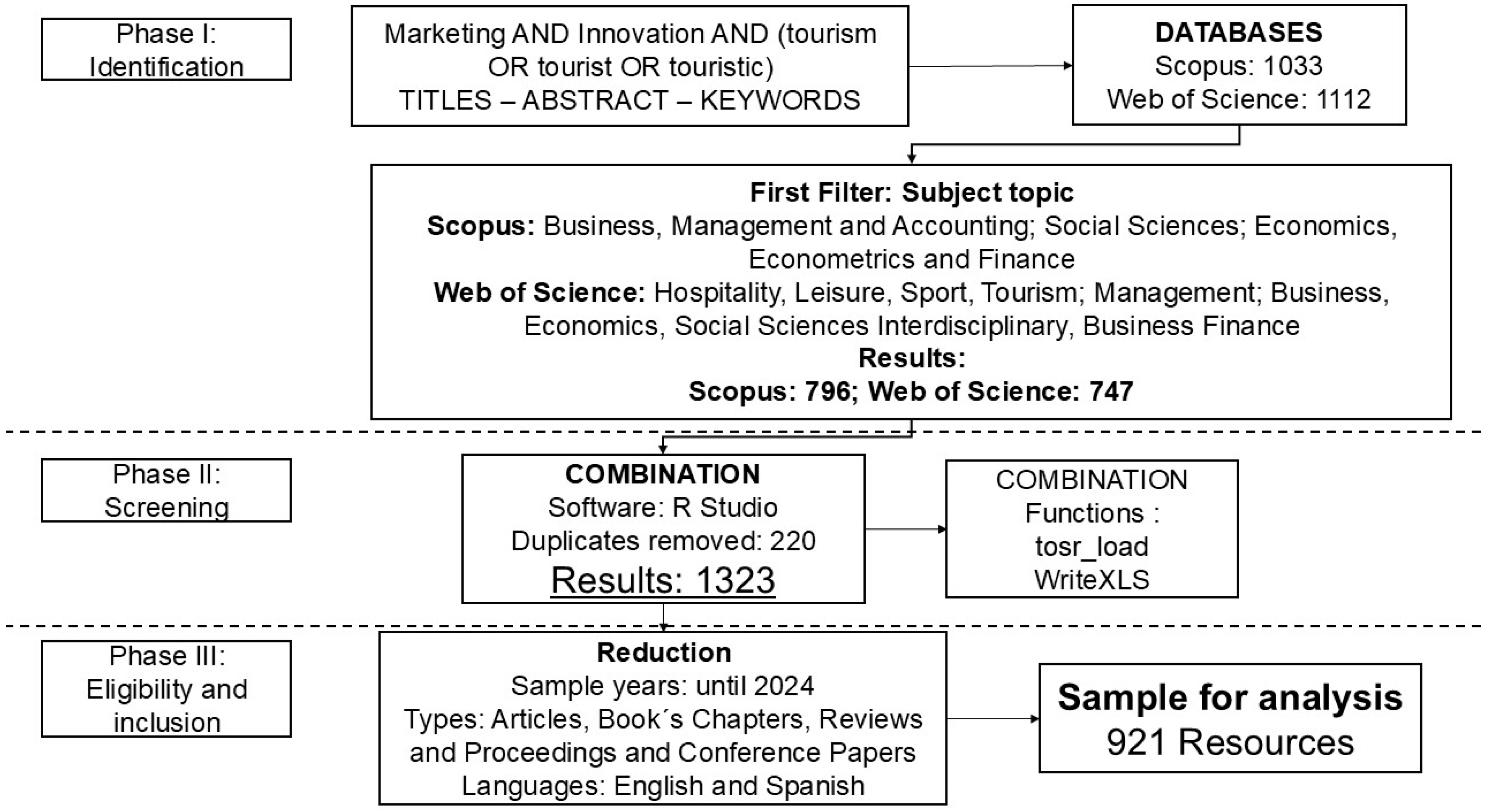
3. Materials and Methods
4. Results
4.1. Analysis of Scientific Production by Years, Authors, Journals and Countries
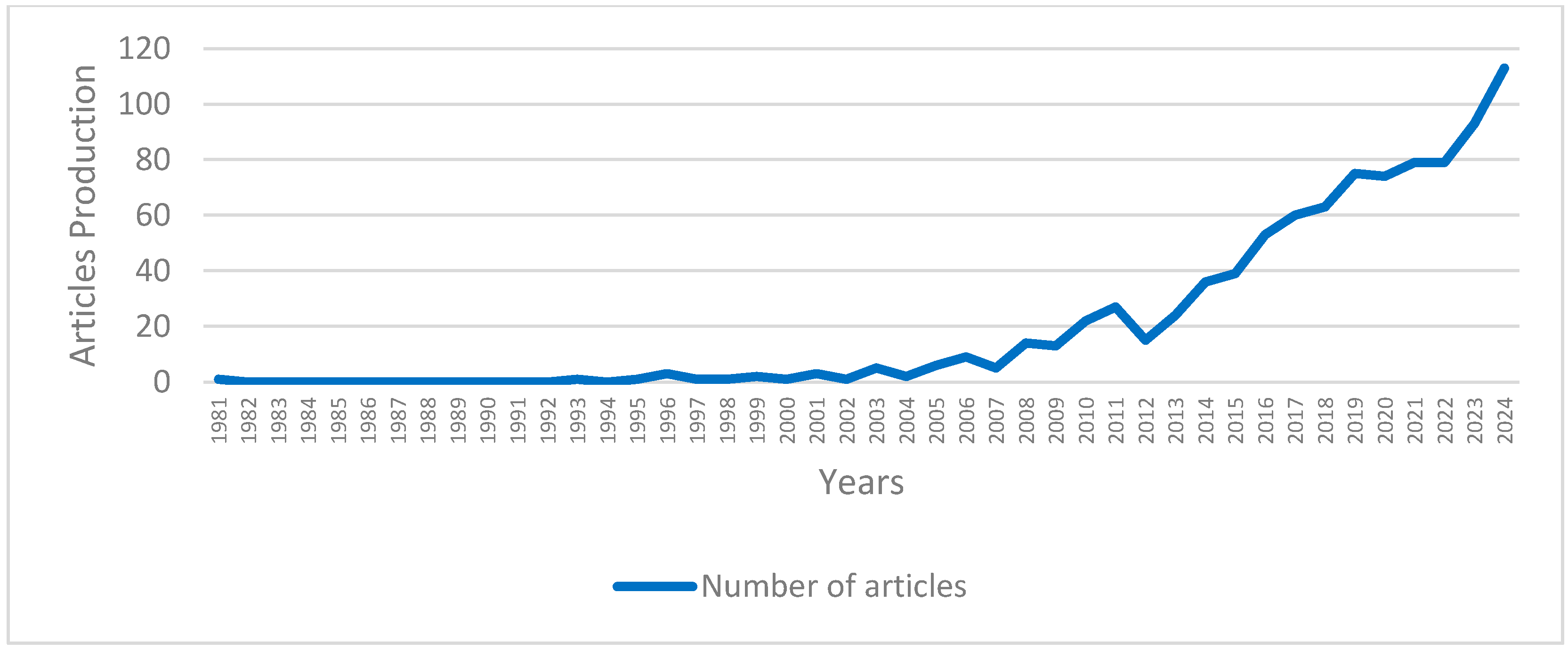
4.1.1. Scientific Production by Years
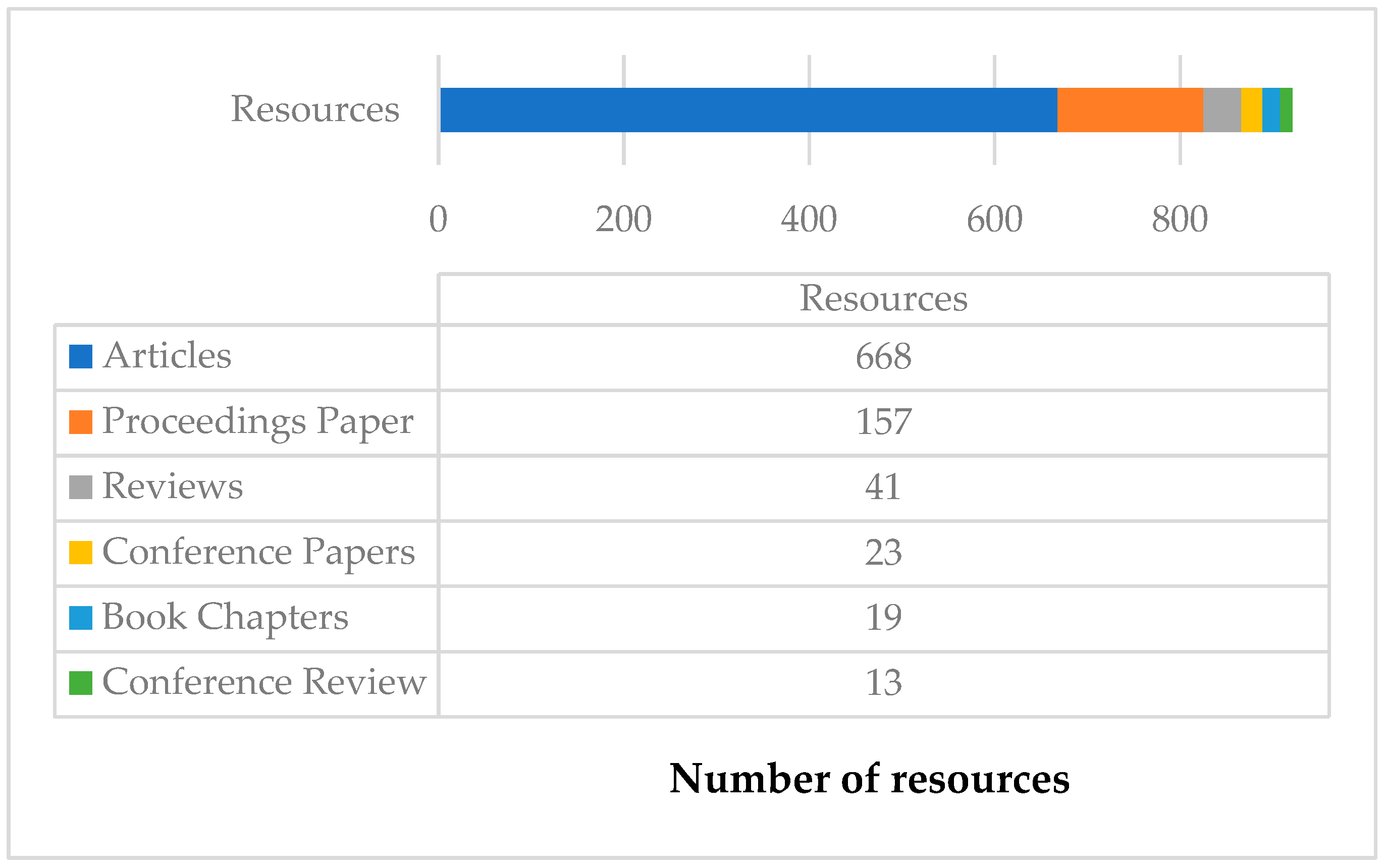
4.1.2. Scientific Production by Document Type
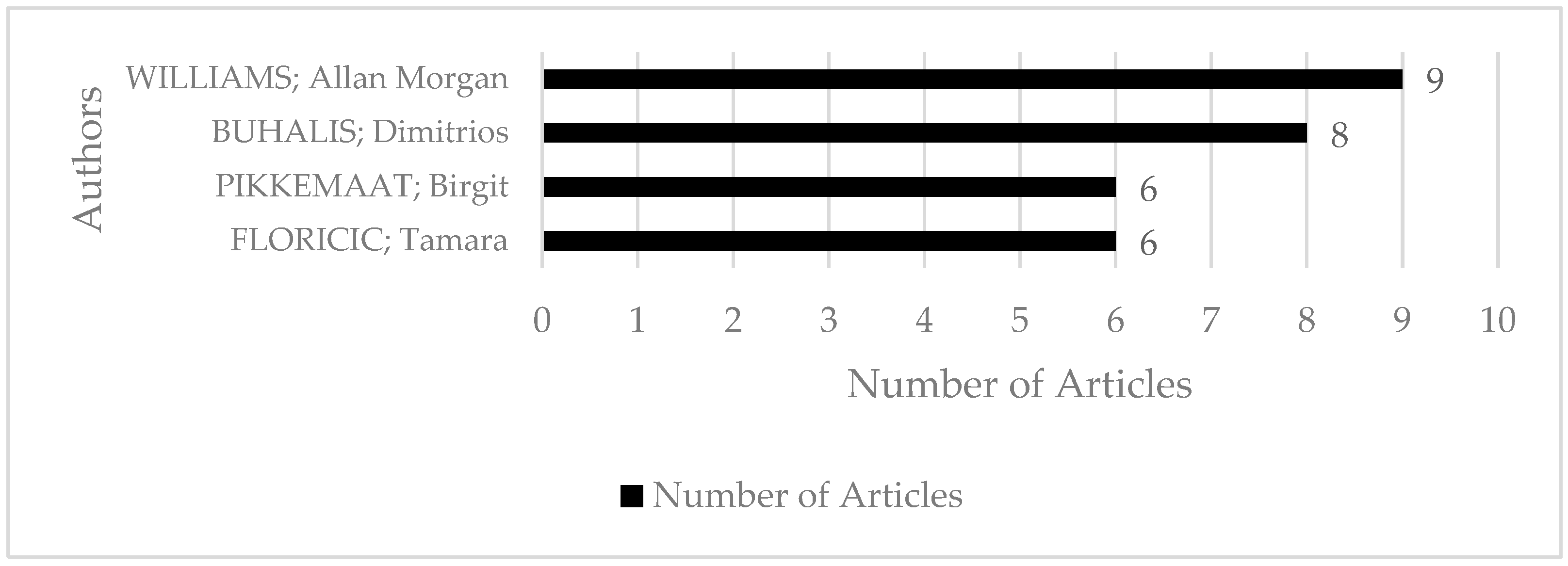
4.1.3. Scientific Production by Authors
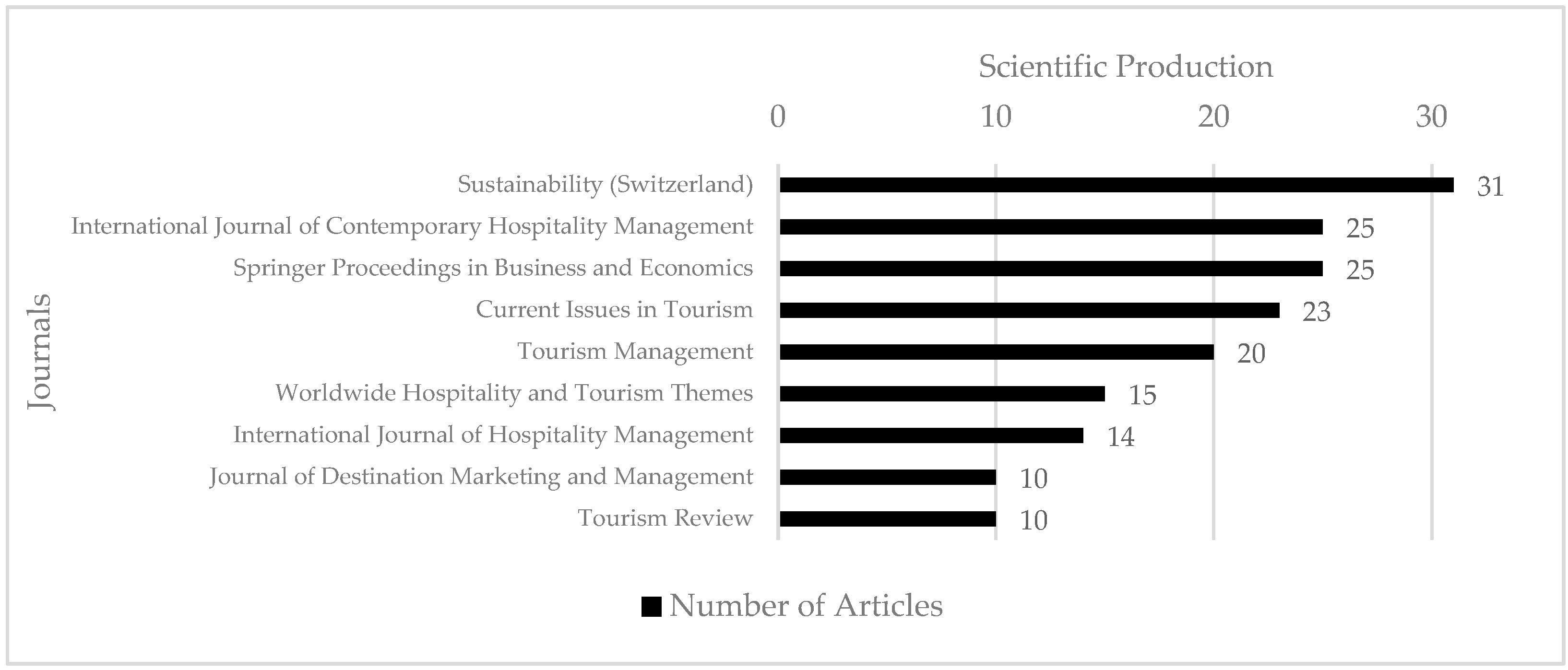
4.1.4. Scientific Production by Journals
4.1.5. Scientific Production by Country
4.2. Thematic Trends in the Academic Literature on Marketing and Innovation in Tourism
4.2.1. Social Structure. Global Collaboration Network
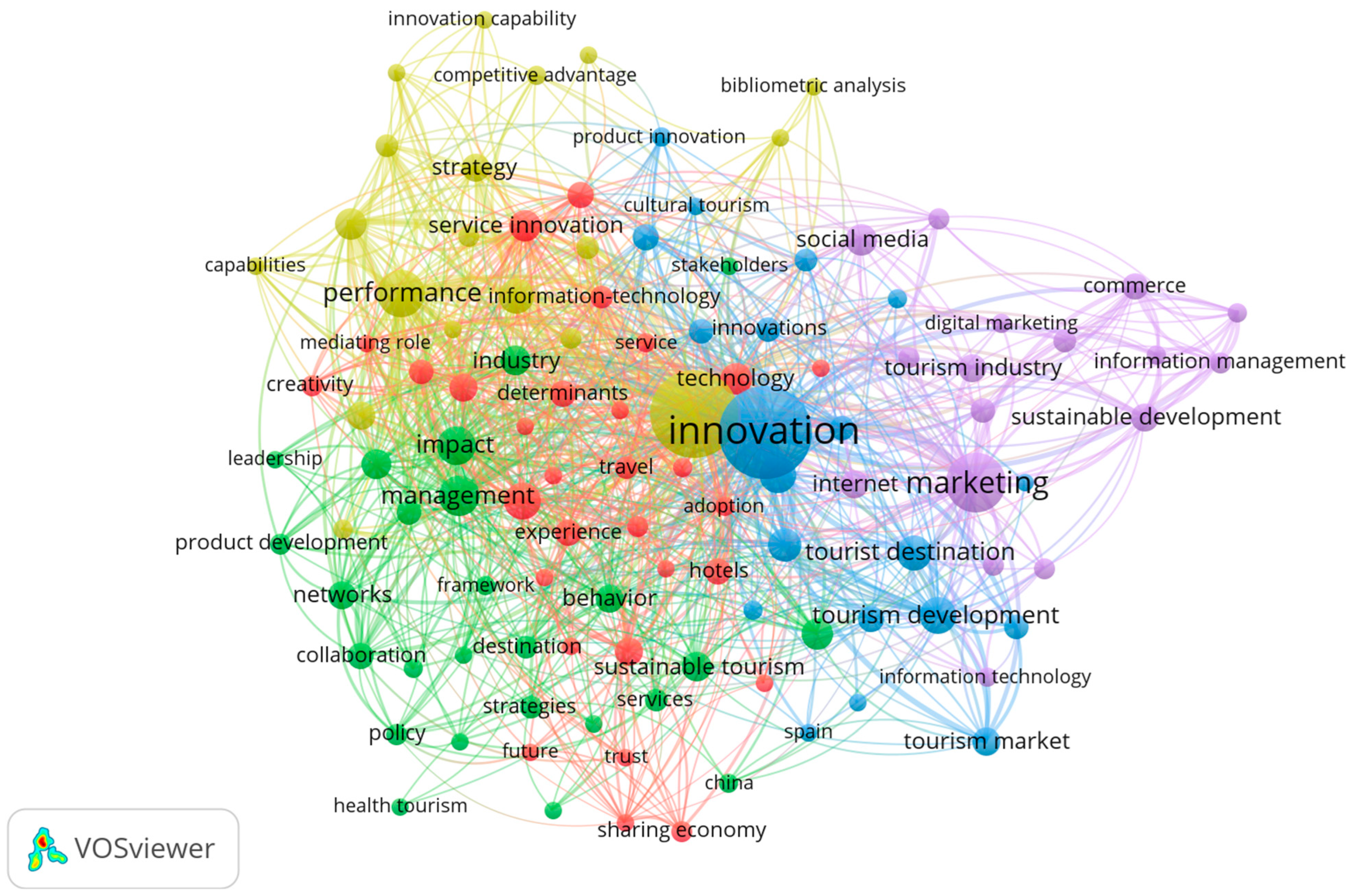
4.2.2. Conceptual Structure. Co-Occurrence Network of Terms
- Cluster 1 (red): organisational innovation. The red cluster groups terms associated with organisational and technological innovation, such as technology, experience, hotels, adoption, and industry. This group reflects the focus on the application of innovation in the tourism and hospitality sector, including technology adoption and digital transformation.
- Group 2 (blue): sustainable tourism. The blue group refers to sustainable tourism and destination development, highlighting terms such as tourism development, tourism market, sustainable tourism, tourist destination, and information technology. This group highlights the link between innovation, sustainability, and tourism development planning.
- Group 3 (green): organisational management. The green group focuses on organisational management and performance, integrating terms such as management, performance, entrepreneurship, impact, behaviour and policy. This group reflects the business approach to the study of innovation, linked to strategic management and organisational results.
- Group 4 (yellow): market orientation. The yellow group is associated with strategy and market orientation and includes terms such as strategy, service innovation, market orientation, competitive advantage, and co-creation. It represents the strategic dimension of marketing and innovation, oriented towards competitive advantage and value creation.
- Group 5 (purple): digital marketing. The purple group articulates the dimension of digital marketing and sustainability, with terms such as marketing, social media, digital marketing, tourism industry, sustainable development, and information management. This group reflects the convergence of marketing, information technology, and sustainability as axes of transformation in contemporary tourism.
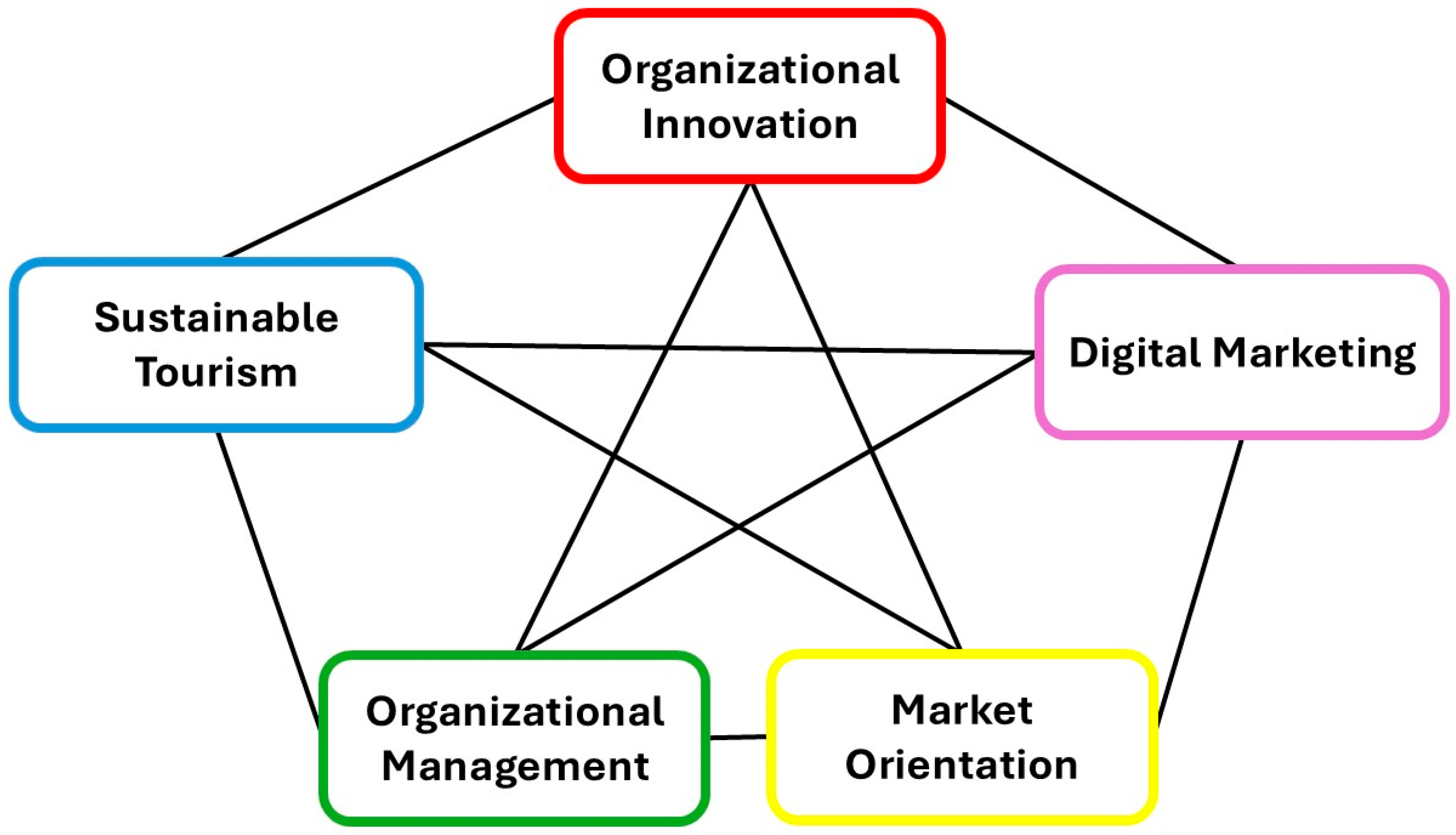
- Following the identification of the five thematic clusters, Figure 7 visually summarises the conceptual interrelationship between them using a star-shaped diagram. This representation clearly shows how each cluster maintains functional links with the others through bridging concepts. Organisational innovation (Cluster 1) is connected to sustainable tourism (Cluster 2) using technologies aimed at developing the destination and improving the tourist experience. Organisational management (Cluster 3) acts as a cross-cutting axis that transforms innovative capabilities into operational results, articulating performance processes, organisational behaviour and entrepreneurial spirit. Market orientation (Cluster 4) provides the strategic direction of the system, linking value creation and competitive advantage with dynamics of co-creation, strategy and differentiation. Finally, digital marketing (Cluster 5) functions as an articulating node that integrates technology, social networks and information management, operating as an interface between organisations, markets and audiences.
- The relationship established in Figure 7 shows that the clusters do not represent independent compartments but rather complementary dimensions that make up an integrated system. The links between innovation, sustainability, management, strategy and digitalisation indicate that the field has evolved towards a systemic logic, in which the transformation of tourism depends on the convergence of technological capabilities, strategic orientations and sustainability principles. This interdependence reveals the growing maturity of research, characterised by the overcoming of fragmented approaches and the consolidation of hybrid and interdisciplinary perspectives.
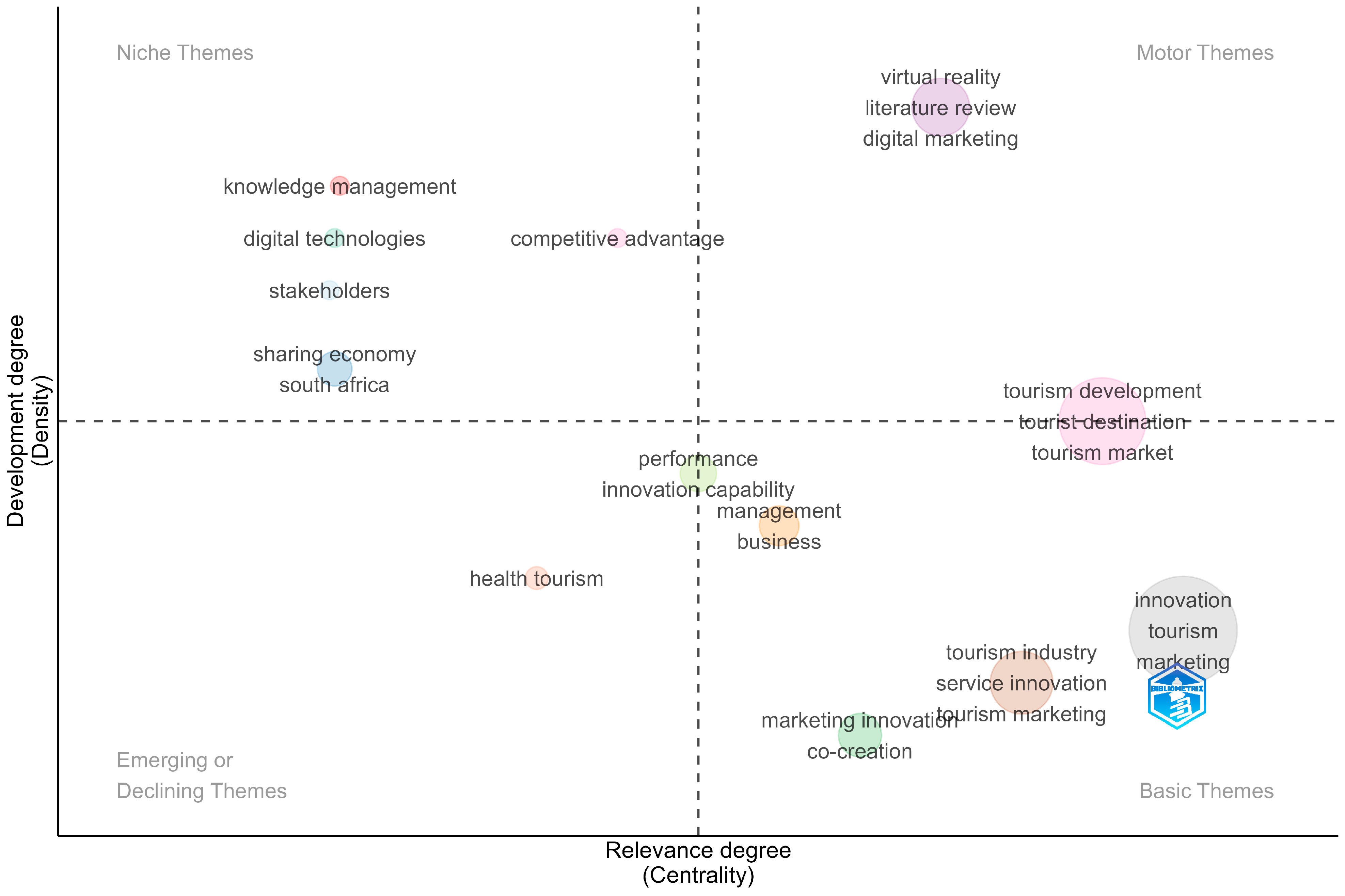
4.2.3. Conceptual Structure. Thematic Map
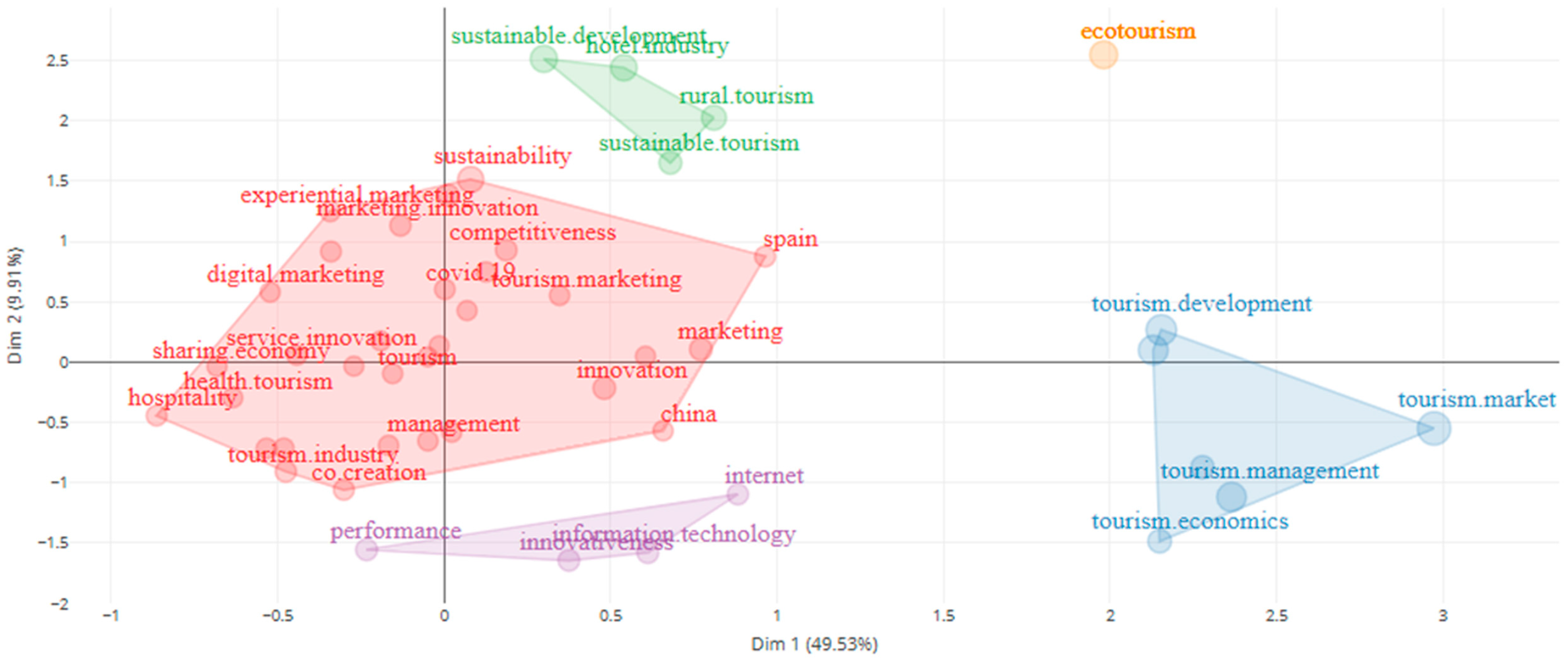
4.2.4. Conceptual Structure Factorial Analysis
5. Conclusions
Author Contributions
Funding
Institutional Review Board Statement
Informed Consent Statement
Data Availability Statement
Conflicts of Interest
References
- Nadda, V.; Arnott, I. Marketing Innovation in Tourism. In Handbook of Research on Innovations in Technology and Marketing for the Connected Consumer; Dadwal, S.S., Ed.; IGI Global: Hershey, PA, USA, 2019; pp. 401–415. [Google Scholar]
- Chatzigeorgiou, C.; Christou, E. Adoption of social media as distribution channels in tourism marketing: A qualitative analysis of consumers’ experiences. J. Tour. Herit. Serv. Mark. 2020, 6, 25–32. [Google Scholar] [CrossRef]
- Fernandes, S.; Ferreira, D.; Alves, T.; de Sousa, B.M.B. Glamping and the Development of Sustainable Tourism: A Portuguese Case Study. In World Sustainability Series; Springer Science and Business Media Deutschland GmbH: New York, NY, USA, 2021; pp. 201–222. [Google Scholar]
- Lu, J.Y.; Mao, Z.X.; Wang, M.B.; Hu, L. Goodbye maps, hello apps? Exploring the influential determinants of travel app adoption. Curr. Issues Tour. 2015, 18, 1059–1079. [Google Scholar] [CrossRef]
- Valedinskaya, E.N.; Astafeva, O.A. Innovative methods for demand stimulation in tourism industry. Astra Salvensis 2018, 6, 613–626. [Google Scholar]
- Boscán, W.; Boscán, G. The marketing as a key factor to achieve the satisfaction of socially responsible consumers. Cicag 2013, 10, 17–28. Available online: https://dialnet.unirioja.es/servlet/articulo?codigo=5028133 (accessed on 11 December 2025). (In Spanish).
- Bondarenko, V.A.; Efremenko, I.N.; Larionov, V.A. Marketing strategy for hotel and tourist complex companies. Int. J. Econ. Bus. Adm. 2019, 7, 388–394. [Google Scholar] [CrossRef] [PubMed]
- Saremi, M.; Darabi, H.; Amiri, M.J.; Bidhendi, G.N.; Behbahani, H.I. Marketing strategies in historical tourism based on tourist motivation and needs. In Emerging Patterns and Behaviors in a Green Resilient Economy; Emerald Group Publishing Ltd.: Bingley, UK, 2024; pp. 187–204. [Google Scholar]
- Kornova, G.R.; Loginova, E.V. Service Opportunities in the Development of the Hospitality Services Market in terms of the New Industrialization. In Proceedings of the 2nd International Scientific Conference on New Industrialization: Global, National, Regional Dimension (SICNI 2018), Ekaterinburg, Russia, 4–5 December 2018; pp. 496–499. [Google Scholar]
- Idris, D.S.R.P.H.; Gadong, M.S.; Morni, M.I.R.; Wahab, A.M.F.S.P. Sumbiling Eco Village: Promoting Ecotourism in the Temburong District. In Green Behavior and Corporate Social Responsibility in Asia; Emerald Group Publishing Ltd.: Bingley, UK, 2019; pp. 57–63. [Google Scholar]
- Nedelea, A.; Balan, A. E—Tourism And Tourism Services Consumer Protection. Amfiteatru Econ. J. 2010, 12, 492–503. [Google Scholar]
- Paramastri, D. Transformation of Traditional Marketing to E-Marketing: A Theoretical Review of Digital Technology Utilization Impact Against Business Marketing Competitiveness. Riwayat Educ. J. Hist. Humanit. 2024, 7, 616–630. [Google Scholar] [CrossRef]
- Trifonova, B. Integrating traditional and digital marketing in present-day economic conditions. Annu. Univ. Min. Geol. “St. Ivan Rilski” 2023, 6, 343–346. [Google Scholar] [CrossRef]
- Çalışkan, G.; Yayla, İ.; Pamukçu, H. The use of augmented reality technologies in tourism businesses from the perspective of UTAUT2. Eur. J. Innov. Manag. 2023, 28, 1498–1526. [Google Scholar] [CrossRef]
- Hassan, A.; Jung, T. Augmented reality as an emerging application in tourism marketing education. In Digital Marketing and Consumer Engagement: Concepts, Methodologies, Tools, and Applications; IGI Global: Hershey, PA, USA, 2018; pp. 425–443. [Google Scholar]
- Labibatussolihah; Novalita, D.P.; Fathiraini, N.; Fitriyani, E. Virtual tour: Tourism opportunities in the new normal era. In Promoting Creative Tourism: Current Issues in Tourism Research; Routledge: London, UK, 2021; pp. 763–770. [Google Scholar]
- Pestek, A.; Sarvan, M. Virtual reality and modern tourism. J. Tour. Futures 2021, 7, 245–250. [Google Scholar] [CrossRef]
- Cech, P. Management of Innovation in Tourism Organizations. In Proceedings of the Innovation Management and Education Excellence Through Vision 2020, Milan, Italy, 25–26 April 2018; Volume I–XI, pp. 2525–2533. [Google Scholar]
- Ramart, P.; Sawangrat, N.; Silpcharu, T. Guidelines for Development of Accommodations Business for Foreign Tourists to Support the Thai Tourism Industry in the Digital Age. WSEAS Trans. Busi. Econ. 2023, 20, 1745–1754. [Google Scholar] [CrossRef]
- Sari, Y.; Mahrinasari, M.; Ahadiat, A.; Marselina, M. Model of improving tourism industry performance through innovation capability. J. Environ. Manag. Tour. 2019, 10, 853–864. [Google Scholar] [CrossRef]
- Kljucnikov, A.; Civelek, M.; Krajcik, V.; Kmeco, L. Innovations in Tourism Marketing: Sharing Economy Platform. Mark. Manag. Innov. 2020, 1, 11–25. [Google Scholar] [CrossRef]
- Sun, Y.P.; Zheng, Y.L. From environment to finance: A multifactor synergy analysis to unlock the code of tourism revenue growth. Int. Rev. Econ. Financ. 2025, 103, 104394. [Google Scholar] [CrossRef]
- Nematpour, M.; Khodadadi, M.; Azimi, A.; Mohammadkazemi, R. IoT-driven smart solutions: Transforming urban tourism destinations. J. Hosp. Tour. Insights 2025, 8, 2649–2670. [Google Scholar] [CrossRef]
- Seraj, A.H.A.; Hasanein, A.M.; Al-Romeedy, B.S.; Elziny, M.N. Redefining the Digital Frontier: Digital Leadership, AI, and Innovation Driving Next-Generation Tourism and Hospitality. Adm. Sci. 2025, 15, 369. [Google Scholar] [CrossRef]
- Tan, Y.N.; Jiang, G.L.; Merajuddin, S.S.; Zhao, F. Analyzing the impact of digital technology on consumers’ travel intentions. J. Innov. Knowl. 2025, 10, 100685. [Google Scholar] [CrossRef]
- Sainaghi, R.; Baggio, R. Substitution threat between Airbnb and hotels: Myth or reality? Ann. Tour. Res. 2020, 83, 102959. [Google Scholar] [CrossRef]
- Mbinza, Z.E. Beyond the world-class façade: Place branding, neoliberalism, and the politics of urban development in Johannesburg. Place Brand. Public Dipl. 2025, 21, 441–458. [Google Scholar] [CrossRef]
- Holovchuk, Y.; Dybchuk, L.; Tsilnyk, O. The concept of regional tourism systems in the context of sustainable development. Balt. J. Econ. Stud. 2025, 11, 231–238. [Google Scholar] [CrossRef]
- Aires, J.; Costa, C.; Brandao, F.; Flores, L.C.S. Conceived vs. Operationalised Innovation: A Study of Tourism Entrepreneurs. Tour. Manag. Stud. 2025, 21, 57–74. [Google Scholar] [CrossRef]
- Senbeto, D.L.; Hon, A.H.Y.; Law, R. Organizational Cultures Determine Employee Innovation in Response to Seasonality: Regulatory Processes of Openness and Resistance. J. Hosp. Tour. Res. 2022, 46, 1122–1146. [Google Scholar] [CrossRef]
- Teixeira, S.J. Quality management in tourism services-a literature review and case study. J. Tour. Dev. 2019, 32, 9–24. [Google Scholar]
- Acosta, O.B. Sustainable management of tourism in rural, parishes based on service innovation. Rev. Univ. Y Soc. 2024, 16, 232–239. [Google Scholar]
- Cavallo, A.; Olivieri, F.M. Sustainable local development and agri-food system in the post Covid crisis: The case of Rome. Cities 2022, 131, 103994. [Google Scholar] [CrossRef] [PubMed]
- Pavia, N.; Stipanovic, C.; Floricic, T. Sustainable Development in Increasing the Competitiveness of Hotel Offer—Case Study Istra County. In Proceedings of the 2nd International Scientific Conference Tourism in South East Europe, Opatija, Croatia, 15–18 May 2013; pp. 279–293. [Google Scholar]
- Jafari, J. Innovations in tourism research and marketing. Ann. Tour. Res. 1981, 8, 599–603. [Google Scholar] [CrossRef]
- Aguilar-Becerra, C.D.; Frausto-Martínez, O.; Avilés-Pineda, H.; Pineda-Pineda, J.J.; Soares, J.C.; Umaña, M.R. Path Dependence and Social Network Analysis on Evolutionary Dynamics of Tourism in Coastal Rural Communities. Sustainability 2019, 11, 4854. [Google Scholar] [CrossRef]
- Chen, J.; Chen, W.Q.; Wang, F.; Deng, M.Q. Adaptation of Tourism Transformation in Rural Areas under the Background of Regime Shift: A Social-Ecological Systems Framework. Systems 2024, 12, 289. [Google Scholar] [CrossRef]
- Janjua, Z.U.; Krishnapillai, G.; Rehman, M. Importance of the sustainability tourism marketing practices: An insight from rural community-based homestays in Malaysia. J. Hosp. Tour. Insights 2023, 6, 575–594. [Google Scholar] [CrossRef]
- Ramos, R.; Rita, P.; Vong, C. Mapping research in marketing: Trends, influential papers and agenda for future research. Span. J. Mark.-ESIC 2024, 28, 187–206. [Google Scholar] [CrossRef]
- Adeel, H.B.; Sabir, R.I.; Shahnawaz, M.; Zafran, M. Adoption of environmental technologies in the hotel industry: Development of sustainable intelligence and pro-environmental behavior. Discov. Sustain. 2024, 5, 79. [Google Scholar] [CrossRef]
- dos Santos, V.S.; Porte, M.d.S.; Medeiros, J.J.d.S.B.; Andrade Filho, J.A. Virtual Reality Software: Empowering tourism marketing through technology. Curr. Issues Tour. 2024, 28, 3408–3430. [Google Scholar] [CrossRef]
- Safonov, Y.; Korotun, O.; Konarivska, O. Digitalisation as a marketing management tool in the tourism industry. Balt. J. Econ. Stud. 2024, 10, 295–303. [Google Scholar] [CrossRef]
- Aria, M.; Cuccurullo, C. bibliometrix: An R-tool for comprehensive science mapping analysis. J. Informetr. 2017, 11, 959–975. [Google Scholar] [CrossRef]
- Ramos, C. Blockchain Technology in Tourism Management: Potentialities, Challenges, and Implications. In Blockchain Technology and Applications for Digital Marketing; Bansal, R., Ed.; IGI Global: Hershey, PA, USA, 2021; pp. 84–109. [Google Scholar]
- Kumar Kar, S.; Harichandan, S. Green marketing innovation and sustainable consumption: A bibliometric analysis. J. Clean. Prod. 2022, 361, 132290. [Google Scholar] [CrossRef]
- El Archi, Y.; Benbba, B.; Kabil, M.; Dávid, L.D. Digital Technologies for Sustainable Tourism Destinations: State of the Art and Research Agenda. Adm. Sci. 2023, 13, 184. [Google Scholar] [CrossRef]
- Montenegro, Z.; Marques, J.; Sousa, C. Industrial Tourism as a Factor of Sustainability and Competitiveness in Operating Industrial Companies. Sustainability 2023, 15, 14243. [Google Scholar] [CrossRef]
- Moher, D.; Liberati, A.; Tetzlaff, J.; Altman, D.G. Preferred Reporting Items for Systematic Reviews and Meta-Analyses: The PRISMA Statement. Ann. Intern. Med. 2009, 151, 264–269. [Google Scholar] [CrossRef] [PubMed]
- Page, M.J.; McKenzie, J.E.; Bossuyt, P.M.; Boutron, I.; Hoffmann, T.C.; Mulrow, C.D.; Shamseer, L.; Tetzlaff, J.M.; Akl, E.A.; Brennan, S.E.; et al. Declaración PRISMA 2020: Una guía actualizada para la publicación de revisiones sistemáticas. Rev. Española Cardiol. 2021, 74, 790–799. [Google Scholar] [CrossRef]
- Robledo, S.; Valencia, L.; Zuluaga, M.; Echeverri, O.A.; Valencia, J.W.A. tosr: Create the Tree of Science from WoS and Scopus. J. Scientometr. Res. 2024, 13, 459–465. [Google Scholar] [CrossRef]
- Schwartz, M. WriteXLS: Cross-Platform Perl Based R Function to Create Excel 2003 (XLS) and Excel 2007 (XLSX) Files, 6.7.0. 2024. Available online: https://www.rdocumentation.org/packages/WriteXLS/versions/6.7.0 (accessed on 11 December 2025).
- van Eck, N.J.; Waltman, L. Software survey: VOSviewer, a computer program for bibliometric mapping. Scientometrics 2010, 84, 523–538. [Google Scholar] [CrossRef]
- Taillon, J.; Jamal, T. Understanding tourism as an academic community, study, and/or discipline. In Philosophy; Papineau, D., Ed.; Oxford University Press: Oxford, UK, 2009; pp. 4–20. [Google Scholar]
- Butler, R. The evolution of tourism and tourism research. Tour. Recreat. Res. 2015, 40, 16–27. [Google Scholar] [CrossRef]
- Kirilenko, A.P.; Stepchenkova, S. Tourism research from its inception to present day: Subject area, geography, and gender distributions. PLoS ONE 2018, 13, e0206820. [Google Scholar] [CrossRef]
- Cobo, M.J.; López-Herrera, A.G.; Herrera-Viedma, E.; Herrera, F. An approach for detecting, quantifying, and visualizing the evolution of a research field: A practical application to the Fuzzy Sets Theory field. J. Informetr. 2011, 5, 146–166. [Google Scholar] [CrossRef]
- Callon, M.; Courtial, J.P.; Laville, F. Co-word analysis as a tool for describing the network of interactions between basic and technological research: The case of polymer chemsitry. Scientometrics 1991, 22, 155–205. [Google Scholar] [CrossRef]
- Zeggelink, E.P.H.; Stokman, F.N.; Van De Bunt, G.G. The emergence of groups in the evolution of friendship networks. J. Math. Sociol. 1996, 21, 29–55. [Google Scholar] [CrossRef][Green Version]
- El Archi, Y.; Benbba, B. Role of virtual reality in tourism destination marketing: Evidence from Morocco. In ISCONTOUR 2023 Tourism Research Perspectives: Proceedings of the International Student Conference in Tourism Research 2023; Books on Demand: Norderstedt, Germany, 2003; p. 28. [Google Scholar]
- Cheng, Y.; Zhu, K.; Zhou, Q.; El Archi, Y.; Kabil, M.; Remenyik, B.; Dávid, L.D. Tourism Ecological Efficiency and Sustainable Development in the Hanjiang River Basin: A Super-Efficiency Slacks-Based Measure Model Study. Sustainability 2023, 15, 7. [Google Scholar] [CrossRef]
- Valderrama, P.; Jiménez-Contreras, E.; Escabias, M.; Valderrama, M.J. Introducing a bibliometric index based on factor analysis. Scientometrics 2022, 127, 509–522. [Google Scholar] [CrossRef]
- Abusharieh, I.; Mafe, C.R.; Küster, I. A Decade of Innovation: A Bibliometric Analysis of Advergames and Gamification in Tourist Destinations. J. Theor. Appl. Electron. Commer. Res. 2025, 20, 34. [Google Scholar] [CrossRef]
- Liu, R.R.; Jiang, J.B. The Driving Factors and Improvement Paths of CTI Integration: Based on the Spatial Dubin Model and fsQCA Method. Sage Open 2025, 15, 21582440241305163. [Google Scholar] [CrossRef]
- Palanichamy, Y.; Kargar, M.; Lin, Z.B.; Yang, X.W. 30 Years of Research in Tourism: Insights from a Probabilistic Topic-Modeling Literature Analysis. Sage Open 2025, 15, 21582440251379154. [Google Scholar] [CrossRef]



| Description | Results |
|---|---|
| Timespan | 1981–2024 |
| Sources (Journals, Books, etc.) | 489 |
| Documents | 921 |
| Annual Growth Rate% | 11.62 |
| Document Average Age | 7 |
| Average citations per doc | 22.91 |
| Keywords Plus (ID) | 1063 |
| Author’s Keywords (DE) | 3085 |
| Authors | 2087 |
| Country | Production |
|---|---|
| China | 165 |
| Spain | 106 |
| Portugal | 64 |
| United Kingdom | 64 |
| United States | 63 |
| Italy | 51 |
| Croatia | 48 |
| Indonesia | 45 |
| Australia | 39 |
| Ukraine | 36 |
| Country | TNCC * | Number of Articles | TTNC * | Number of Articles | TNAC ** |
|---|---|---|---|---|---|
| Principal Author | Co-Author | ||||
| Spain | 16 | 27 | 0 | 0 | 27 |
| United Kingdom | 13 | 17 | 1 | 4 | 21 |
| United States | 9 | 9 | 3 | 10 | 19 |
| Italy | 10 | 15 | 2 | 3 | 18 |
| China | 9 | 17 | 0 | 0 | 17 |
| Australia | 7 | 7 | 6 | 10 | 17 |
| Portugal | 4 | 6 | 1 | 6 | 12 |
| Germany | 3 | 4 | 5 | 8 | 12 |
| Austria | 5 | 3 | 5 | 7 | 10 |
| Malaysia | 6 | 6 | 1 | 1 | 7 |
| Denmark | 4 | 4 | 2 | 2 | 6 |
| Norway | 4 | 4 | 2 | 2 | 6 |
Disclaimer/Publisher’s Note: The statements, opinions and data contained in all publications are solely those of the individual author(s) and contributor(s) and not of MDPI and/or the editor(s). MDPI and/or the editor(s) disclaim responsibility for any injury to people or property resulting from any ideas, methods, instructions or products referred to in the content. |
© 2025 by the authors. Licensee MDPI, Basel, Switzerland. This article is an open access article distributed under the terms and conditions of the Creative Commons Attribution (CC BY) license (https://creativecommons.org/licenses/by/4.0/).
Share and Cite
Ramos-Giral, G.V.; Constantin, C.P.; Pérez Lavandera, R. Marketing and Innovation in Tourism: An Analysis of Scientific Production in Scopus and WoS. Sustainability 2025, 17, 11244. https://doi.org/10.3390/su172411244
Ramos-Giral GV, Constantin CP, Pérez Lavandera R. Marketing and Innovation in Tourism: An Analysis of Scientific Production in Scopus and WoS. Sustainability. 2025; 17(24):11244. https://doi.org/10.3390/su172411244
Chicago/Turabian StyleRamos-Giral, Glessler Vladimir, Cristinel Petrișor Constantin, and Rodolfo Pérez Lavandera. 2025. "Marketing and Innovation in Tourism: An Analysis of Scientific Production in Scopus and WoS" Sustainability 17, no. 24: 11244. https://doi.org/10.3390/su172411244
APA StyleRamos-Giral, G. V., Constantin, C. P., & Pérez Lavandera, R. (2025). Marketing and Innovation in Tourism: An Analysis of Scientific Production in Scopus and WoS. Sustainability, 17(24), 11244. https://doi.org/10.3390/su172411244