Article

Exploring Industrial Perception and Attitudes Toward Solar Energy: The Case of Albania

1
Department of Economics, Epoka University, 1039 Tirana, Albania
2
Department of Economic Sciences and Finance, Western Balkan University, 1001 Tirana, Albania
3
Department of Research, Romanian American University, 012101 Bucharest, Romania
*
Author to whom correspondence should be addressed.
Sustainability 2025, 17(24), 11179; https://doi.org/10.3390/su172411179 (registering DOI)
Submission received: 12 October 2025 / Revised: 6 December 2025 / Accepted: 10 December 2025 / Published: 13 December 2025
(This article belongs to the Section Sustainable Management)

Abstract

Energy plays a crucial role in the development of societies, yet increasing demand and pressure for production pose significant environmental challenges. This study addresses the critical need for renewable energy, particularly solar power, in light of the projected 50% increase in global energy consumption by 2050 and the European Union’s goals for reducing greenhouse gas emissions. While Albania predominantly relies on hydropower for electricity generation, which constitutes 95% of its capacity, the variability in hydropower underscores the necessity for diversifying energy sources, especially to harness the country’s solar potential. This research aims to assess industrial awareness and the influence of government subsidies and financial incentives on investment intentions through data gathered from questionnaires conducted in 2023. The findings reveal a substantial interest in solar energy, reflecting a gap in the existing literature which primarily focuses on developed economies. By contributing insights into renewable energy awareness in Albania, this paper addresses a significant gap in research concerning transition countries in the Western Balkans. The study ultimately emphasizes the importance of industrial awareness and environmental protection in adopting sustainable energy practices in a region characterized by abundant solar resources. The findings of the study highlight that there is a significant awareness–action gap regarding solar panels. Therefore, financial support and technical assistance are necessary for businesses to adopt solar energy technologies.

1. Introduction

Energy is one of the most essential factors contributing to the development of our societies in every aspect. Recently, the increasing demand for energy together with the pressure to increase production is placing a growing burden on the environment. According to World Energy Outlook 2021, published by the International Energy Agency (2021) [1], global energy consumption will increase by 50% between 2020 and 2050. Moreover, according to the European Green Deal, the EU aims to reduce net greenhouse gas emissions by at least 50% compared to 1990 levels, and 32% of the energy will be produced by renewable energy by 2030.
The degradation of the environment has increased attention on renewable energy as a potential alternative source. Academia and industry professionals stress that the linear model of the economy is no longer sustainable and is causing harm to the environment [2]. Therefore, the attention has shifted towards renewable energy produced by wind and solar power. The production and use of renewable energy from these sources reduces environmental pollution significantly. Therefore, there is increasing attention from governments around the world towards finding ways to diversify energy sources and help in energy transition in their economies. Rezaei & Ghofranfarid (2018) [3] argue that the development of renewable energy resources is not only a question of economic and technical capacities of the economies but also a matter of awareness.
The primary objective of this study is to explore industrial awareness and perceptions of solar energy use in Albania, as well as to identify the influence of government subsidies and financial incentives on investment intentions. The term industrial awareness in this study is used to emphasize the level of knowledge and understanding that businesses or industrial actors possess regarding solar energy [4,5]. In Albania, hydropower is the dominant source of electricity generation, with 95% of all generating capacity, followed by crude oil (4%) and solar (1%) [6]. However, the production of hydropower highly depends on rainfall, highlighting the critical need to diversify the country’s renewable energy sources. According to Liobikienė et al. (2017) [7], public awareness and acceptance are very important for the development of renewable energy. The results of their study indicate that citizens mostly prefer to use solar energy. Therefore, the main research objective of this work is to assess industrial awareness and identify the influence of government subsidies and financial incentives on investment intentions. This study uses data collected through questionnaires conducted during 2023 in Albania and evaluates industrial awareness regarding solar energy.
This paper contributes to the existing body of knowledge by providing insights into renewable energy awareness and perception in a transition country, Albania. Albania is a country located in the Mediterranean region, which experiences a lot of sunny days during the year and has a large potential for producing renewable energy from solar power. In addition, the tourism sector is growing as the country becomes more well-known. To protect its natural resources and beauty, the country must adopt clean and sustainable energy production methods, thereby protecting the environment. Recently, there has been a growing body of research in the field of renewable energy. However, most of this research focuses on developed economies, such as the older EU member states, while the transition countries of the Western Balkan region are often overlooked. This results in a significant literature gap that needs to be addressed by the research community.
The rest of the paper is structured as follows: Section 2 provides the literature review and ends with the hypothesis. Section 3 sketches the methodology, first giving insight into the data source and then the methodology used. Section 4 gives the results and draws attention to the most important findings, and Section 5 concludes the paper.

2. Literature Review

2.1. Climate Change and Global Warming

The demand for clean renewable energy has increased and will continue to increase, due to a variety of factors such as advancement in the technology used for producing renewable energy, financial benefits associated with the decreasing cost of it, energy security as many countries that depend on fossil fuel energy are trying to diversify their energy sources, and environmental concerns. Also, according to the UN’s Sustainable Development Goals, more specifically SDG7 (Affordable and Clean Energy) and SDG13 (Climate Action), renewable energy is seen as the only way to reach these goals.
The adoption of fossil fuel as a source of energy has resulted in increasing carbon emissions into the environment according to the literature [8,9,10,11]. Literature in this regard finds a positive causality and concludes that consumption of fossil fuels leads to an increase in carbon dioxide emissions [9]. In other words, the consumption of non-renewable energy sources, which include oil, natural gas, and coal, increases CO2 emissions. A similar study conducted by Mensah et al. (2019) [12] on 22 African countries between 1990 and 2015 found a bilateral relationship between fossil fuel energy consumption and carbon emissions, as well as fossil fuel energy consumption and economic growth. The study concludes that policies that promote renewable energy consumption are very important to balance economic growth with environmental protection. Dogan & Aslan (2017) [13] also found similar results in their study about tourism, CO2 emissions, real GDP, and energy consumption in a panel dataset of EU countries. Energy consumption contributes to carbon emissions, but real GDP increases, and tourism mitigates CO2 emissions. Recent research has also analysed the contributions of developing countries to carbon emission reduction. Mohsin (2021) [14] found that in a group of developing Asian countries, a 1% increase in renewable energy results in a 0.193% decrease in carbon emissions. Consequently, various countries are developing diverse strategies to facilitate the transition to renewable energy and enhance environmental protection.
Awareness is an important factor that contributes to the transition from non-renewable energy to renewable energy. Citizens and industry need to be aware and adjust their consumption patterns for renewable energy policies to be effective [15]. They play an important role in designing and implementation of renewable energy policies [16]. Relevant policy outcomes also require understanding and transparency from industry and the public. Awareness, according to different studies [17,18], appears to assign important value to the environmental impact of energy consumption and the type of renewable energy used. The acceptance and utilization of renewable energy can also act as a basis for transitioning to a circular economy and moving towards a sustainable future.

2.2. Solar Energy

Solar energy is the most popular type among the renewable energy sources. The public, but also business owners, are more aware of it. This type of energy stands out due to its widespread adoption, advancement in technological processes, and ease of implementation by households and business owners. Some countries also have an advantage in the usage of solar energy due to their geographical location and the number of sunny days within a year [16]. Evidence from a word network model in social network services conducted by Kim et al. (2020) [19], looking from a public perspective regarding renewable energy technologies, reveals that the words “solar” and “panel” appear among the most used words, which indicates its popularity.
The price drop of solar panels over the years, the advancement in technology, the creation of new jobs, together with government funding, has improved perception towards this source of energy, which is found to be very beneficial for households and businesses as it reduces energy consumption costs. Solar energy emerges as the most promising source of renewable energy that offers significant potential for countries to reduce carbon emissions [20,21]. The International Energy Agency (2021) [1] highlights that solar and wind energy are becoming the cheapest forms of electricity in most countries. They predict that by 2030, solar energy will satisfy nearly one-third of the global energy demand. Additionally, the IEA forecasts that 60% of the increase in solar and wind energy could be achieved at no additional cost to consumers by 2030. While the energy transition is essential for humanity, its costs and benefits must be shared equitably to prevent exacerbating societal inequalities.
The two main technologies used are solar photovoltaic (PV) and solar thermal (ST), with the former being more widely used. The solar photovoltaic system consists of solar panels that directly convert solar light into electricity. This type of system is one of the most widely used due to its unique characteristics such as quick installation, high reliability, and low maintenance [22]. International Renewable Energy Agency (2024) [23] reports that solar energy is becoming increasingly popular and used worldwide due to its capacity for generating electricity, and heating or desalinating water. Moreover, solar photovoltaic technology is the fastest-growing renewable technology and is playing an important role in energy transformation. Alternatively, solar thermal technology uses mirrors or lenses to direct sunlight toward heating a fluid and then transforms the thermal energy into electricity [24].
Over the years, technological advancements have led to a significant reduction in the costs of solar and wind energy, which in turn has spurred increased investment in these renewable energy sources [25]. Between 2013 and 2021, solar PV and onshore wind plants have attracted 46% and 32% of global renewable energy investments. The cost of generating electricity using solar PV technology has decreased by 85% from the period 2010 to 2020, and the electricity capacity between 2012 and 2023 has increased from 100,469 MW to 1,411,139 MW [23].
Albania is a country that is a net importer of energy, as it cannot meet its own demand. This creates a need to increase the share of renewable energy and diversify the country’s energy sector. There is a large opportunity in Albania for solar energy development, as solar insolation is more than 1500 kWh/m2 annually, with peaks of 1753 kWh/m2 annually. Albania also has one of Europe’s highest number of sunshine hours per year, and this creates opportunities for the development of solar power that can be used for electricity generation or heating purposes [6]. The Albanian government has taken initiatives to promote non-hydro renewable energy, such as Albania’s National Renewable Energy Action Plan (NREAP) developed in 2016 and revised in 2018 with a target of 38% share of renewable energy in final energy consumption in 2020, which will be replaced by the National Energy and Climate Plan (NECP) with targets for 2030. Compared to other European countries, particularly its neighbors, Albania remains in an early development phase regarding solar energy investment and expansion. Although the country has significant potential for solar energy development, its electricity generation capacity in megawatts from solar for 2022 remains low (29 MW) compared to neighboring countries such as Bosnia and Herzegovina (107 MW), North Macedonia (94 MW), and Serbia (137 MW) [26]. When comparing Albania to two nearby EU member states, Greece and Croatia, the contrast becomes even more evident. Greece has undertaken large-scale solar deployment supported by long-term renewable energy strategies, resulting in a significantly higher installed capacity and a far more advanced photovoltaic market. Croatia has also progressed steadily and increased its electric generation capacity from solar energy [27]. These differences illustrate the importance of strengthening incentive schemes, policy continuity, and investor confidence if Albania is to accelerate its solar energy transition and align with regional development trajectories.
However, a lot needs to be done by the government to stimulate the increase in renewable energy share. Raising awareness of the benefits of renewable energy is among the most important steps to be taken by the government, as industry and the public are not always aware of the existing incentives, the new developments in renewable energy technologies, or the cost of investment and the payback period. In addition, government subsidies and financial incentives play a crucial role in shaping business decisions to invest in solar energy. Recent studies provide strong evidence that policy-driven financial support mechanisms substantially enhance the willingness of firms to adopt renewable energy technologies. For instance, Rydehell et al. (2024) [28] demonstrate a significant positive relationship between the level of government subsidies and businesses’ willingness to invest in renewable energy. Similarly, Kishore et al. (2025) [29] and Deng et al. (2024) [30] reveal that targeted policy measures such as subsidies, tax incentives, feed-in tariffs, and research investments encourage greater participation of firms in solar energy production across different states. These findings collectively suggest that financial incentives not only reduce the initial investment burden but also foster a more favorable environment for businesses to engage in sustainable energy transitions.
Hypothesis 1.
Awareness about solar energy systems is positively associated with a business’s intention to implement solar solutions.
Hypothesis 2.
The availability of government subsidies and financial incentives are positively associated with businesses’ intention to invest in solar panel installations.

3. Methodology

This study aims to assess industrial awareness of solar energy in Albania and examine how government subsidies and financial incentives influence businesses’ investment intentions in solar energy generation systems. The research’s primary goals were as follows: (1) to assess companies’ knowledge and awareness of solar energy; (2) to identify how financial incentives influence businesses’ investment intentions, and (3) to identify drivers, perceived advantages, and challenges related to investing in solar energy systems.
The research employed a quantitative methodology by implementing face-to-face interviews with a structured questionnaire. Interviews were conducted by trained field researchers from Data Centrum Research Institute during March 2023. The survey instrument included both closed and open-ended questions addressing energy consumption forms, crisis-related cost influences, attitudes toward renewable energy, prior experience or feedback with solar panels, and specific investment intentions over the next five years.
The questionnaire underwent validation via expert review and a pilot test with three organisations, excluded from the final sample, resulting in enhancements that increased clarity, relevance, and contextual suitability.
Each questionnaire administered as part of this survey includes an informed consent statement, ensuring that all participants are fully aware of the purpose of the research, the voluntary nature of their participation, and the strict confidentiality of their responses.
The target group for this study comprised decision-makers within businesses operating in Albania, specifically individuals with direct responsibility or influence over investment decisions, including energy and infrastructure planning. These included business owners, CEOs, CFOs, project managers, and heads of financial or legal departments.
This study employed a non-probability judgement sampling method, guided by predetermined eligibility criteria. Five regions with significant economic activity (Tirana, Durrës, Korçë, Elbasan, and Fier) were deliberately chosen for their importance in energy-related investments. In March 2023, trained field researchers from the Data Centrum Research Institute performed site inspections and employed a methodical selection method (1-in-3 rule), choosing every third firm encountered along designated routes. All interviewers received training on research aim and objectives, ensuring there were no conflicts of interest or interviewer or researcher biases.
Businesses were included solely if they satisfied specific criteria: (1) classification as medium or large enterprises, (2) substantial energy consumption, (3) adequate financial resources, with a minimum annual turnover of over 8 million ALL and (4) availability of appropriate space for solar panel installation, such as a rooftop exceeding 500 m2 or a functional courtyard. Companies failing to meet these criteria were promptly substituted by the next qualifying enterprise identified. The sample also reflected variation in company size (based on number of employees), sector (e.g., construction, manufacturing, tourism, wholesale, and energy), and location (urban, suburban, industrial zones, and city centres across Albania). Businesses that were unable to meet the criteria regarding financial size or decision-making authority were excluded from participation. Fifty businesses engaged in structured interviews from a total of 188 contacted, yielding a 26.2% response rate. The geographic emphasis was deliberate to capture perceptions and attitudes from the most economically vibrant locations, where the probability of solar investment is greatest.
Despite the non-probabilistic nature of the sample, it was structured to encompass enterprises with substantial energy requirements and investment potential, thus offering a reliable foundation for examining perceptions, attitudes, and intentions toward the adoption of renewable energy. Furthermore, quality assurance protocols, including back-checks with 20% of respondents, and standard deviation tests for questions with scales, were conducted to ensure data integrity. All responses were anonymized and analysed strictly for research and policy development purposes.
The demographic data of the survey, as presented in Table 1, reveals key insights regarding the composition of the sample. Out of 50 individuals, 32 are male and 18 are female. The respondents hold various positions in the company as owners, executive directors, directors of finance, project managers, and financial officers. Regarding their role as decision makers in the investment process of the company, 32% of the respondents report that they are the main or final decision makers and 68% report that they are responsible or co-decision makers. The collected data indicates that the survey gathered opinions from individuals in key company positions, providing valuable insights into the market’s attitude toward investing in renewable energy.
General information about the companies is available in Table 2. The distribution of the data indicates that most of the companies are considered large, with an annual turnover of over 14 million Lek. The table also provides information regarding the energy sources. The primary source of energy for these companies is electricity (96%), followed by a small percentage using propane and solar energy. The data also reveals that the majority of the companies operate in wholesale and manufacturing sectors, followed by transport, business services, construction, and entertainment/culture/sports sectors.

4. Empirical Findings

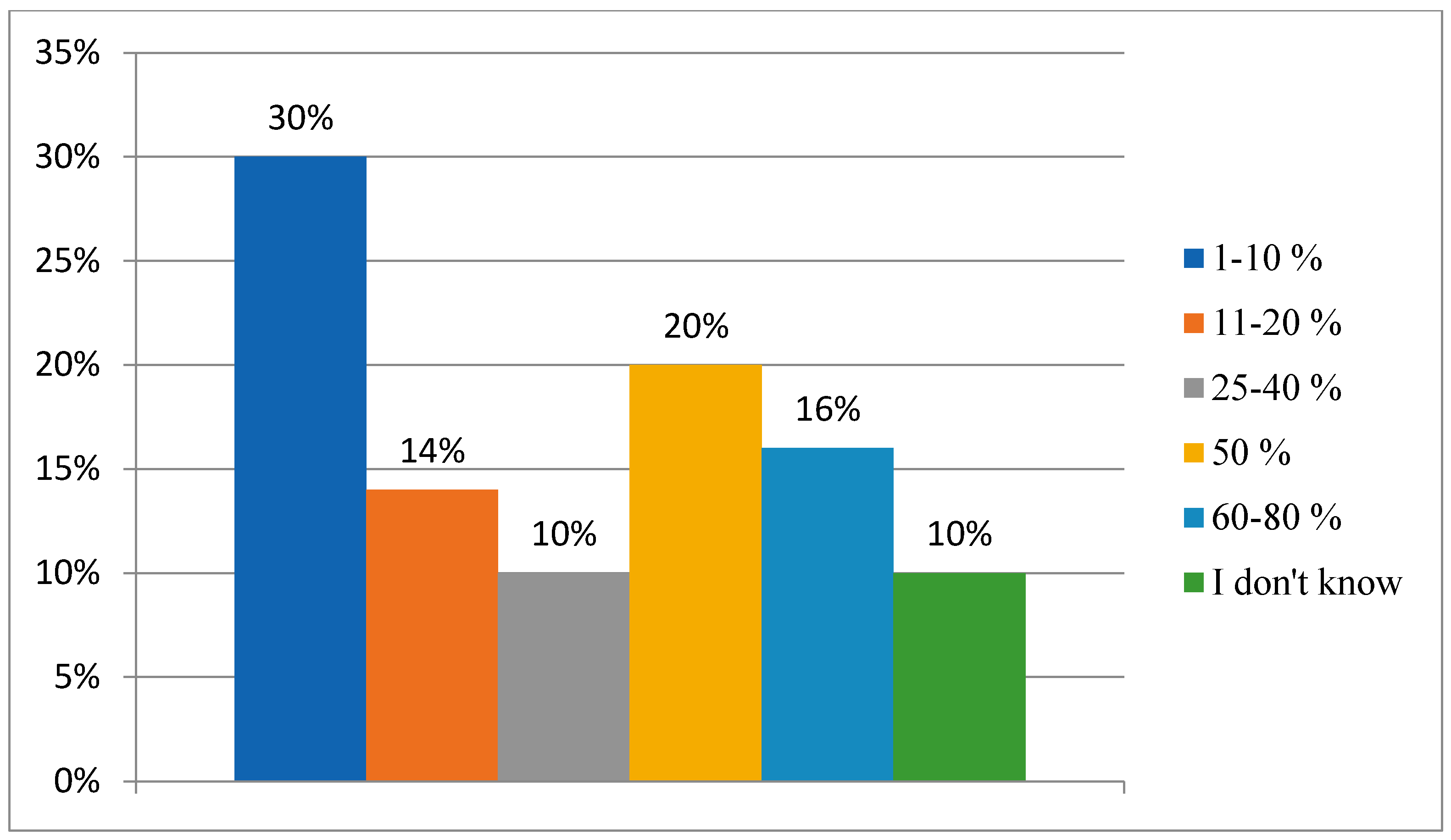
Energy is one of the most important inputs and costs of a business. The analysis of monthly energy expenditures by sector, presented in Figure 1, reveals considerable discrepancies in consumption and possible incentives for investing in renewable energy. The Manufacturing/Production sector registers the greatest monthly energy expenditure at 8611 €, significantly surpassing the general average of 3505 €. The high energy expenses render the industry the most probable beneficiary of solar panel system installations, given the substantial potential for cost reductions. Likewise, the Tourism and Distribution and Transportation sectors, with expenditures of 2828 € and 1801 €, respectively, exhibit mid- to high-level energy requirements, rendering them suitable candidates for renewable energy solutions. Conversely, industries such as Entertainment, Sports, and Culture (272 €) and Retail (691 €) exhibit comparatively low energy expenses, indicating that economic motivations for solar implementation may be diminished. In these areas, the choice to invest in solar technology may be motivated by environmental considerations or pledges to cooperate in sustainability. This difference highlights the necessity of customizing renewable energy regulations and incentives according to sector-specific energy characteristics and motivations. In addition, the share of monthly energy expenditure to total expenditure presented in Figure 2 shows that 30% of the respondents reported 1–10%, and 20% reported their monthly energy expenditure as over 50% of total expenditure.
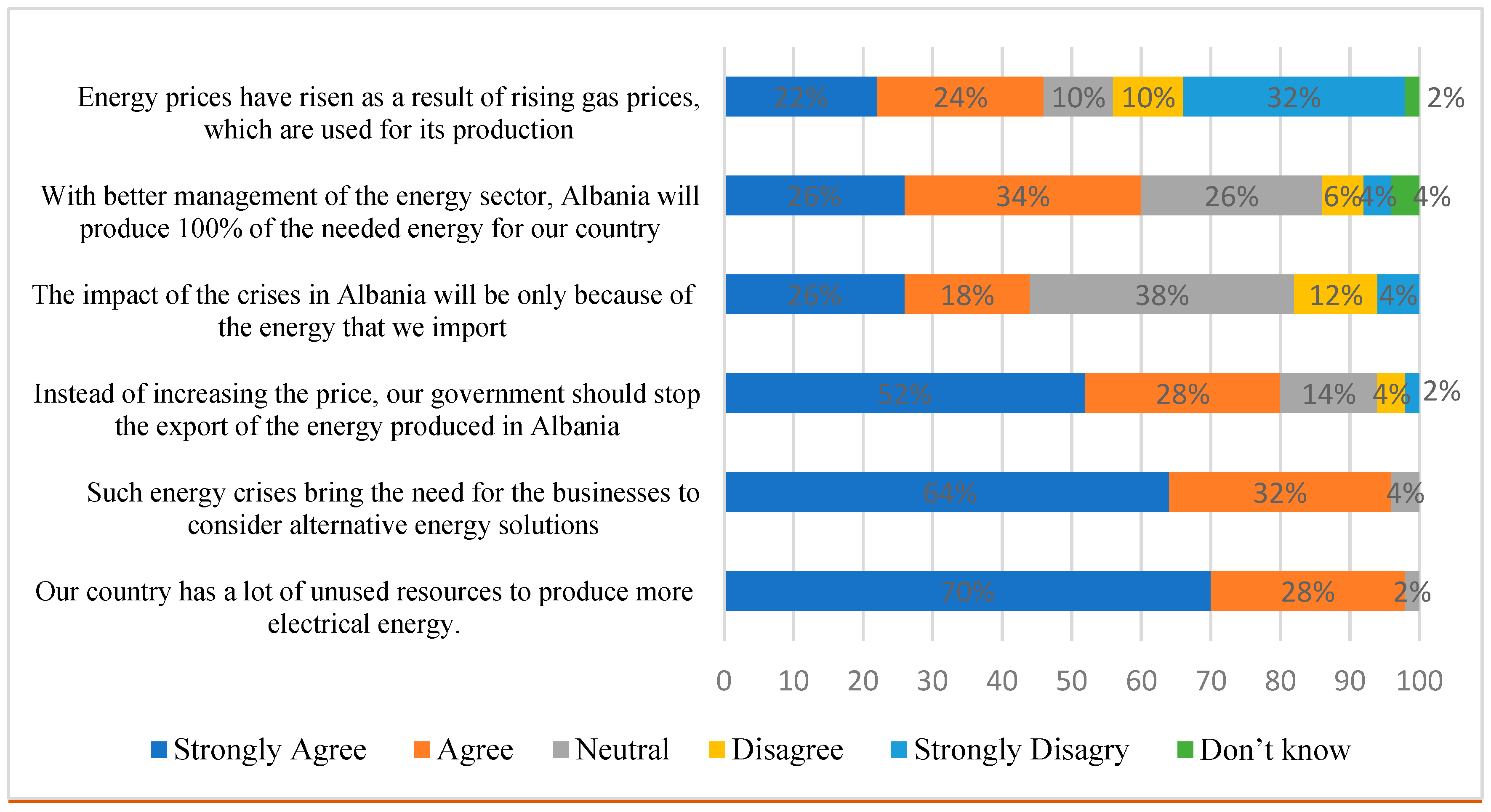
The survey results in Figure 3 indicate a high agreement level among participants regarding Albania’s capacity to improve its energy independence and the pressing necessity for alternative energy sources under the ongoing energy crisis. An impressive 98% (70% strongly agree, 28% agree) declare that Albania possesses underused resources capable of generating additional electrical energy, indicating significant public awareness of the nation’s dormant renewable potential. Likewise, 96% (64% strongly agree, 32% agree) concur that the ongoing energy crisis drives firms to explore alternative energy options, hence justifying private-sector investment in solar power.
A significant majority of respondents (80%) endorsed the notion that the government should prioritize domestic energy consumption over exports, rather than merely increasing prices, indicating support for protectionist energy policies during crises. Opinions were polarised on certain issues: for example, only 44% concurred that the crisis in Albania would be exclusively influenced by imported energy, while 38% maintained a neutral posture, reflecting ambiguity or a lack of comprehension regarding the energy mix and supply vulnerabilities.
Participants exhibited modest confidence in Albania’s ability to fulfil 100% of its energy requirements through improved management; 60% agreed, 26% maintained neutrality, and 14% expressed disagreement or strong disagreement, reflecting a sensible attitude toward complete energy independence. The most divided replies pertained to the factors driving increasing energy prices, with 46% attributing them to global petrol prices, while 32% strongly disagreed, indicating confusion or politicisation surrounding energy pricing discourse.
These findings highlight the public’s demand for more robust domestic energy policies and the necessity for transparent information concerning Albania’s energy policy, resource management, and investment avenues. Moreover, they support earlier research [31,32], highlighting that energy crises can serve as accelerators for the adoption of renewable energy, particularly when individuals and enterprises recognize local capabilities and leadership potential within the energy sector.

4.1. Industrial Awareness and Investment Intentions of Solar Energy in Albania

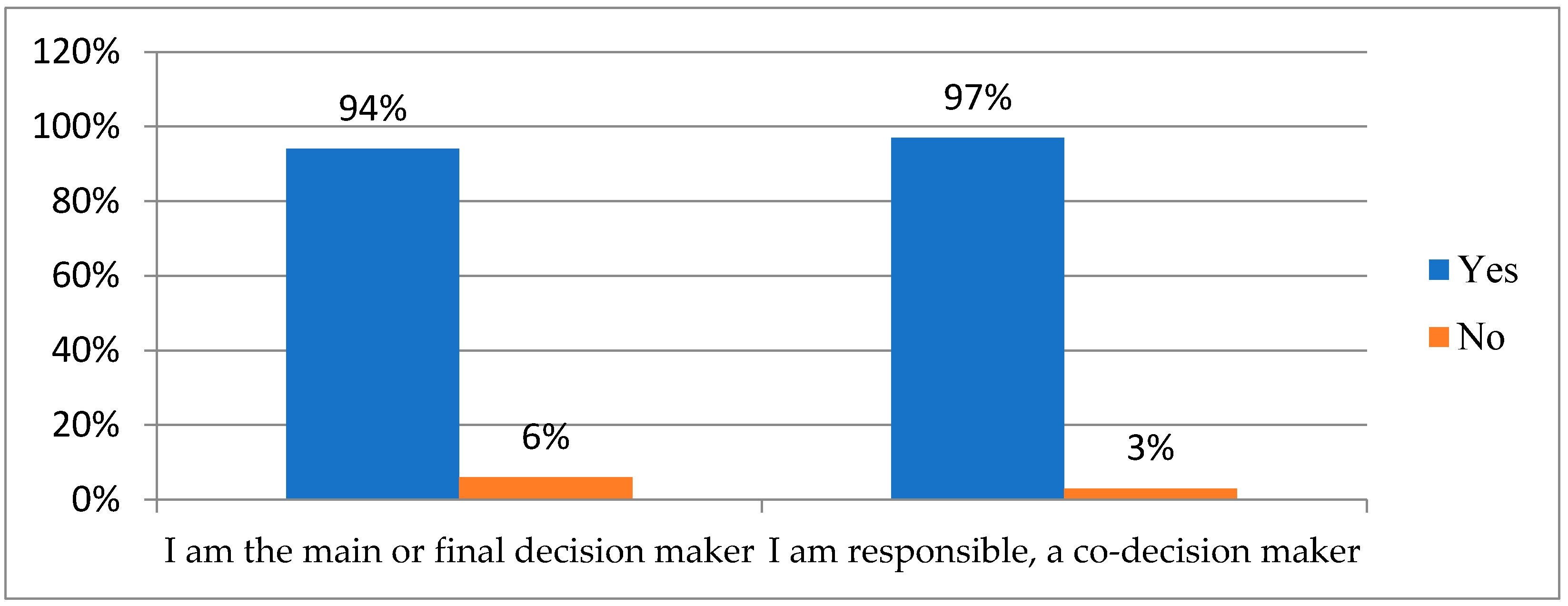
Figure 4 presents data on the information decision-makers within a business have about solar energy. The question posed to them was: “Have you heard about solar panels that produce renewable solar energy?” Among respondents asked in the survey, regardless of their decision-making role, almost all are aware of solar panels as a source of energy. Therefore, a high level of awareness about solar panels exists among both main and co-decision makers: 94% of primary decision-makers and 97% of co-decision makers are knowledgeable about this renewable energy source. The awareness among decision-makers in Albanian businesses indicates a strong foundation for potential future investments in renewable energy.
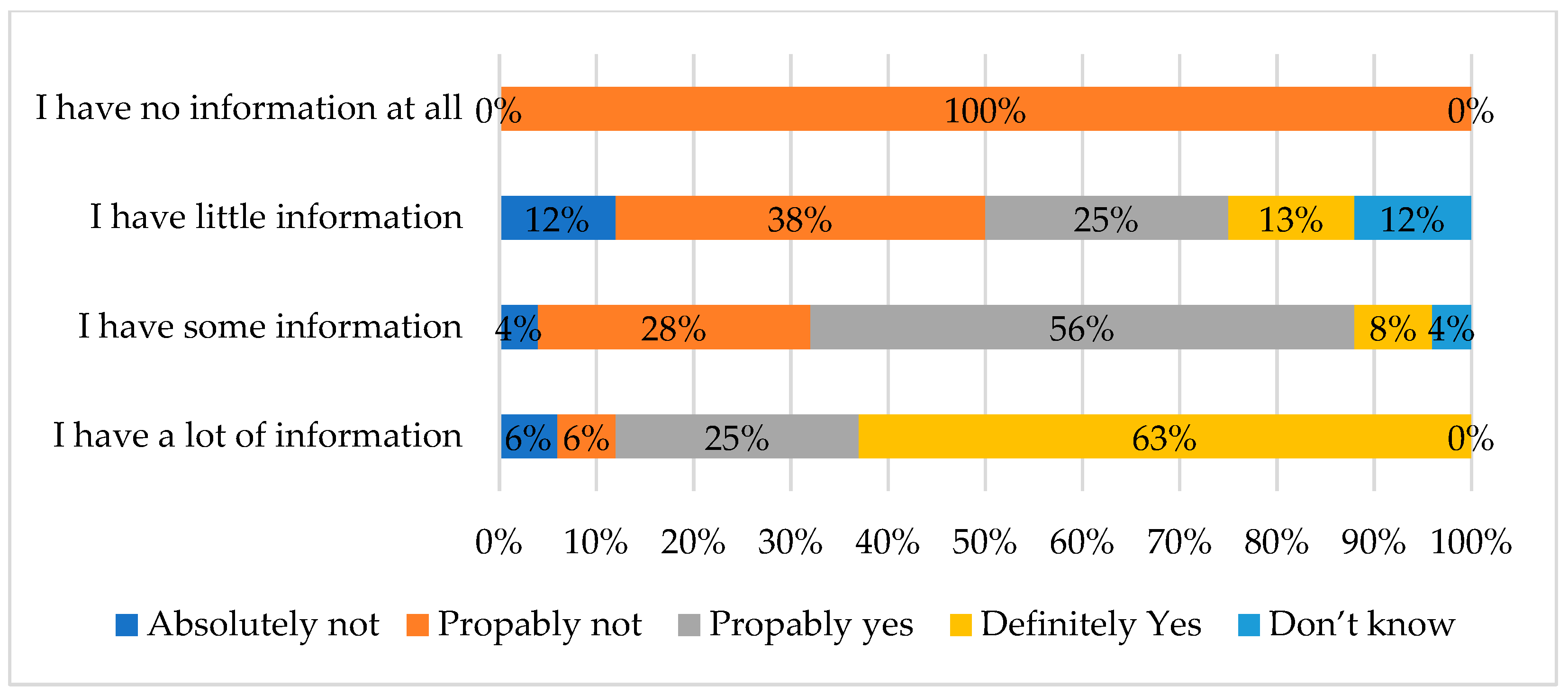
Figure 5 illustrates a strong positive relationship between the level of information possessed by respondents and their intention to invest in solar energy. Among those who reported having “a lot of information,” 63% selected “Definitely yes” and 25% chose “Probably yes,” indicating the highest level of commitment. Conversely, respondents with little information showed significantly more hesitation, with 38% selecting “Probably not” and only 13% choosing “Definitely yes.” Notably, respondents who reported having no information at all unanimously selected “Probably no” (100%), but this may reflect uncertainty or a default choice due to limited understanding. In contrast, individuals possessing some information exhibited moderate intent, with 56% selecting “Probably yes” and 8% “Definitely yes,” while 28% indicated “Probably not.” The findings support the hypothesis that higher awareness and access to information correlate with a greater willingness to adopt solar energy solutions.
Table 3 presents various sources of information from which respondents receive information regarding solar energy. The data is organized in three columns: the first column provides the sources of information, the second column provides the number of respondents who replied, and the third column provides the percentage of respondents. Information regarding renewable energy comes from a variety of sources, and this is exactly what Table 3 indicates. TV commercials, online information, and direct marketing are among the most important sources according to the survey results. In this question, respondents were allowed to select more than one alternative when answering.
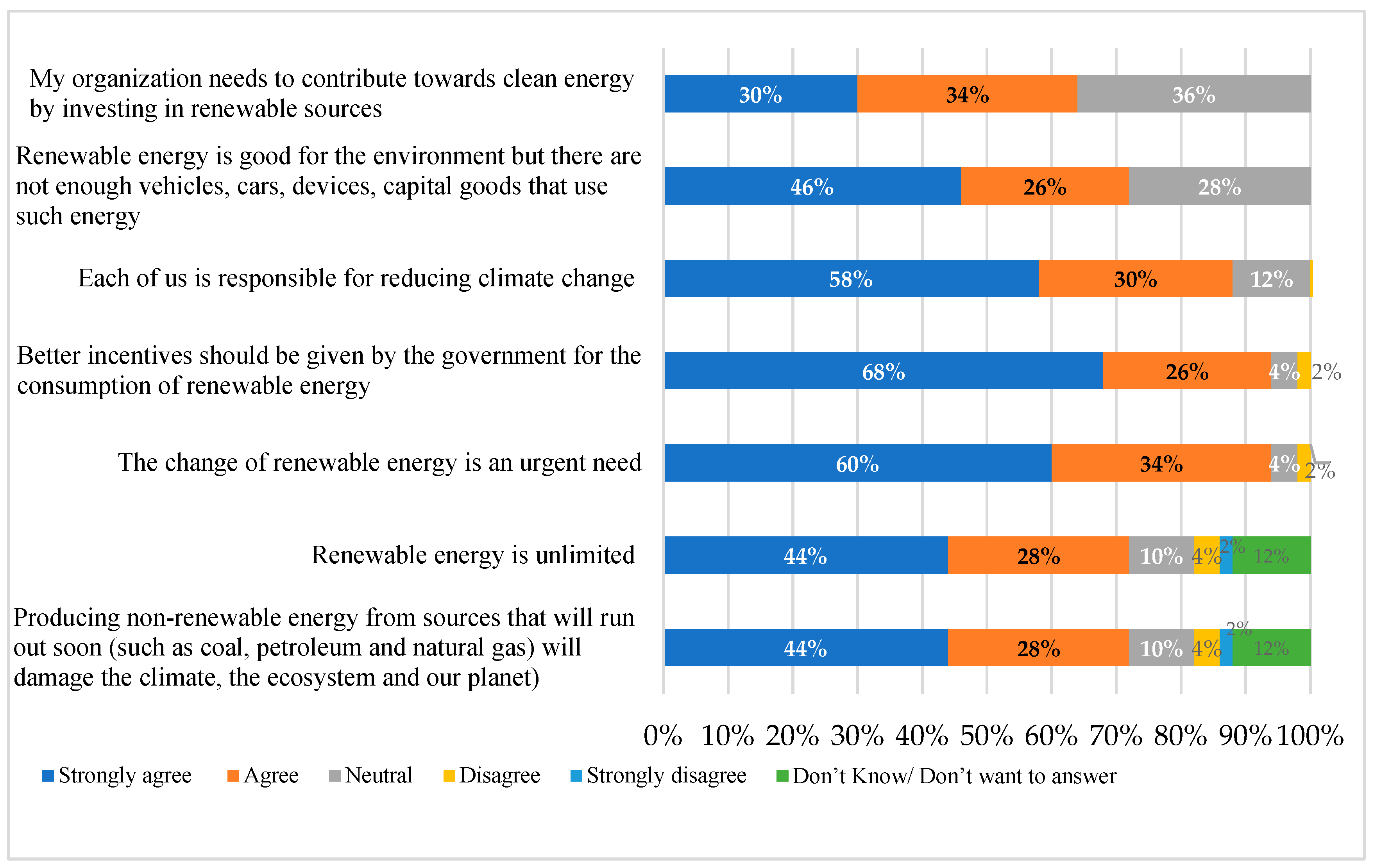
To provide a broader perspective on industrial awareness of renewable energy, several additional questions were asked, and the responses are summarized in Figure 6. The results indicate that there is awareness among the respondents regarding concepts of renewable energy and its environmental impact. A significant majority (72%) either “strongly agreed” or “agreed” that producing energy from non-renewable sources such as coal, petroleum, and natural gas contributes to climate change and environmental degradation. Similarly, 72% of respondents “strongly agreed” or “agreed” that renewable energy is an unlimited resource, reflecting the sustainability aspects of renewable energy.
When asked whether transitioning to renewable energy is an urgent need, 94% of respondents expressed agreement (60% “strongly agree”, 34% “agree”), reflecting awareness of the importance of transitioning to renewable energy. An even higher percentage (94%) agreed that better government incentives are necessary to promote renewable energy consumption, highlighting the importance of government initiatives. Moreover, 88% of respondents agreed that every individual has a personal responsibility in reducing climate change, indicating the level of awareness at the individual level.
However, 28% responded neutrally when asked if there are enough vehicles, devices, or capital goods compatible with such energy, and 36% responded “neutral” to the statement “My organization needs to contribute towards clean energy by investing in renewable sources.” This indicates that while there is awareness, there is a concern about infrastructure readiness and a lack of willingness to invest.
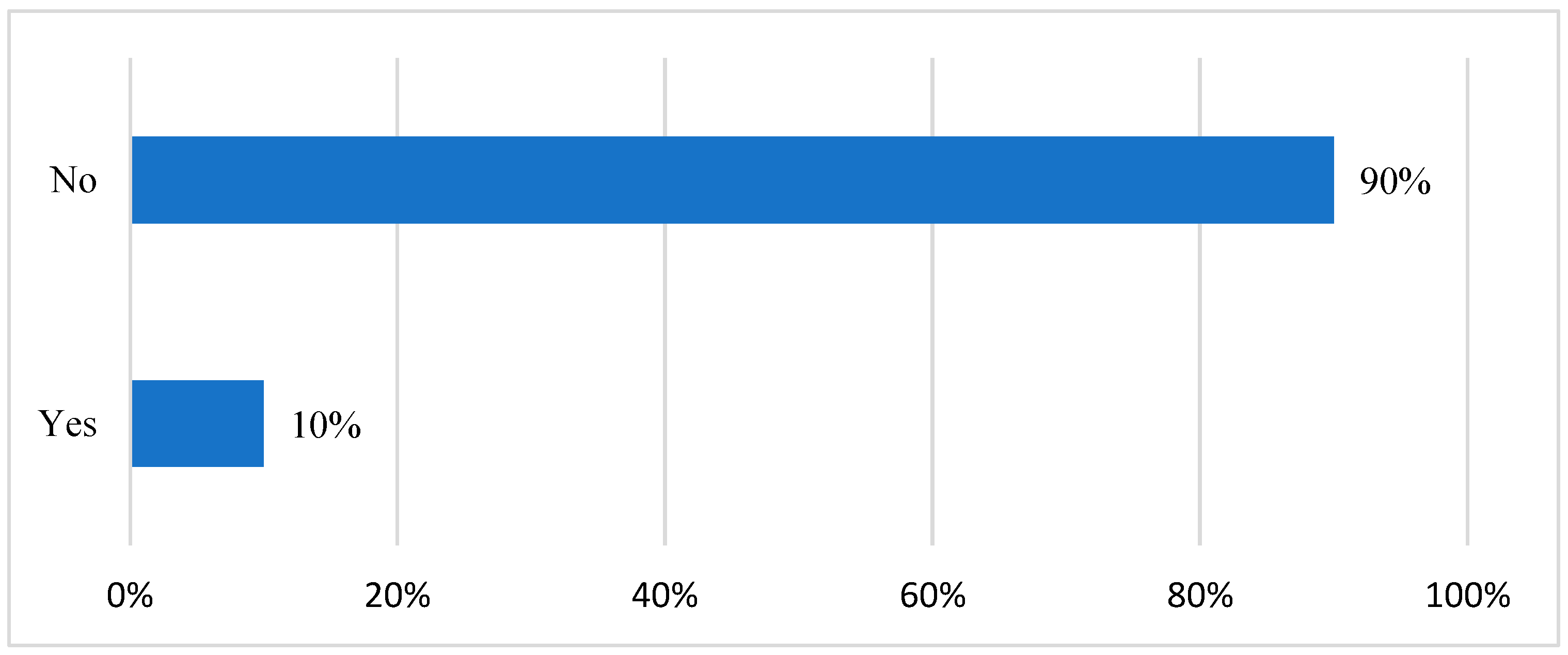
The survey data provide a clear understanding that respondents have information regarding solar panels and solar energy, and they are very much concerned with environmental protection and see solar energy as an important source of clean energy. However, when asked whether they own or use solar panels in their business (Figure 7), the majority (90%) responded “no” and 10% responded “yes.” This indicates that there must be certain reasons why these businesses, despite approaching solar energy and solar panels positively, are not taking the steps to own or use them.
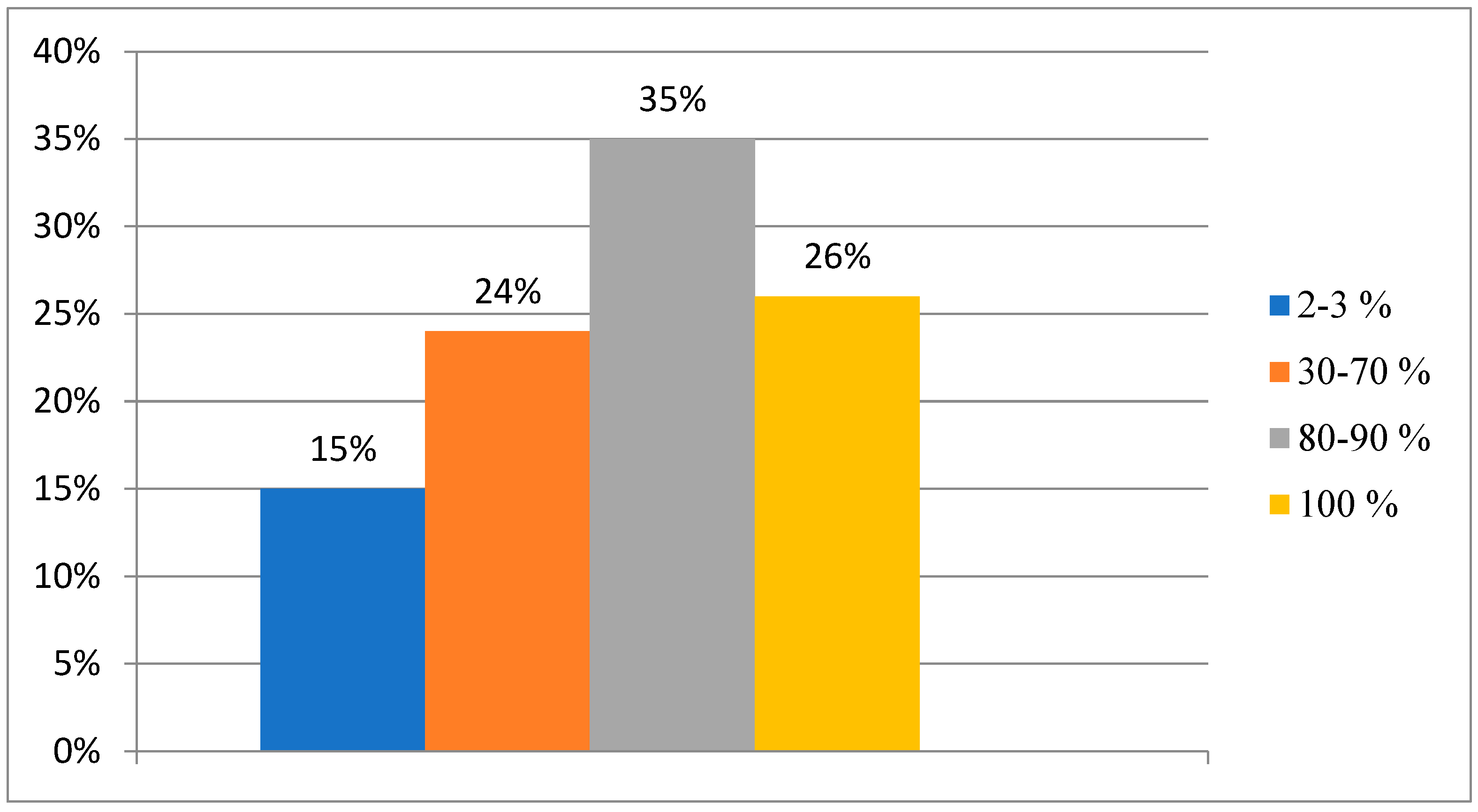
Therefore, to investigate further, the respondents were asked about the percentage of investment needed for the solar panel that they would take as a loan from a bank. The results of this question are provided in Figure 8. They show that 24% of the respondents said they would take around 30–70% of the investment needed as a loan from a bank, 35% answered 80–90%, and 26% answered 100% of the investment. The results clearly indicate that there is a lack of sufficient financial capacity or willingness to self-finance the investment in solar panels among the respondents.
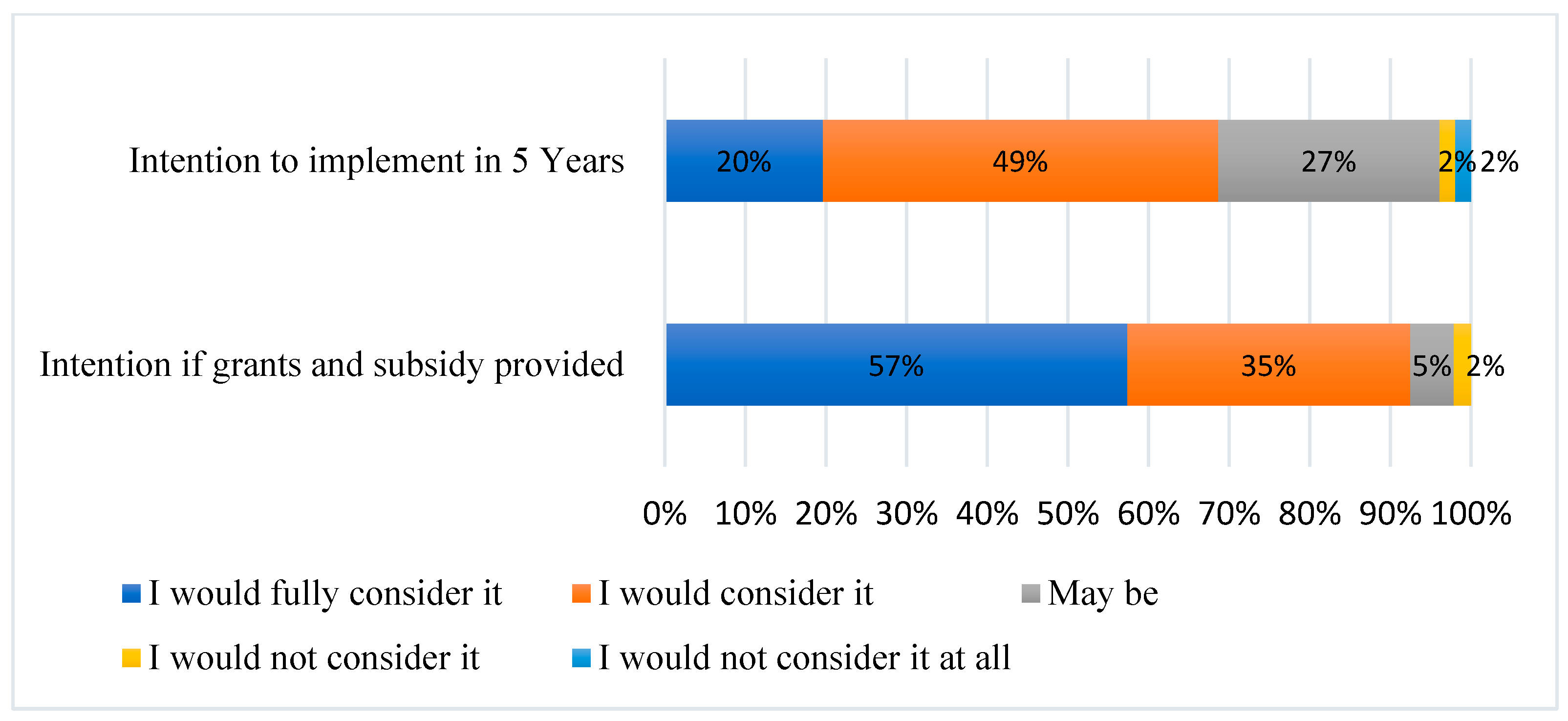
The high percentage of businesses indicating a need to borrow 80–100% of the required funds to invest in solar panels suggests that access to financing is a major burden for adoption. In addition, Figure 9, where respondents were asked: “In the next 5 years how much would you say you would consider producing the energy for your own business via solar panels?”, shows that 50% of the respondents answered “I would consider,” 28% said “Maybe,” 20% said “I would fully consider,” and 2% reported “I wouldn’t consider.” This information indicates that there is a willingness from decision makers to consider solar energy as an investment in the next five years.
The data indicate a very positive outlook for solar energy adoption in the medium term. These results strengthen the idea that the primary barriers do not lie in awareness or environmental values, but in financial capabilities. The analysis continues by exploring respondents’ views on government financial support in Figure 9. The question asked was: “If solar energy were supported by government grants and subsidies, would you consider investing in it within the next five years?” The results provide a clearer picture, as 57% answered “I would fully consider” and 35% said “I would consider,” followed by 9% “maybe.”
Therefore, these results demonstrate that if financial support mechanisms are in place, the business decision makers have a strong willingness to invest in solar energy. Data suggests that government grants and subsidies could serve as an accelerator for the adoption of solar energy technologies by businesses in Albania. Therefore, in overall, data from this question highlight the importance of public policy intervention in helping businesses cover initial investment costs.
Table 4 provides a summary of the responses to two open-ended questions: (a) What are the reasons you would consider investing in solar panel energy in the next five years? (b) What are the reasons you would not consider investing in solar panel energy in the next five years? The summary indicates that there are four main reasons for investing in solar energy: (a) energy savings, (b) reduction in production and final product costs, (c) environmental protection, and (d) continuation of operations without power interruption.
In contrast, reasons for not considering investing in solar panels are primarily related to financial constraints such as high installation costs, uncertainty about return on investment, and lack of guaranteed results. These findings highlight the idea that while most respondents believe in the benefits of solar energy such as cost savings and environmental protection, investment decisions are highly dependent on financial support. Therefore, the right public policies that act as a support mechanism, providing financial assistance and mitigating risk, could significantly improve adoption rates and facilitate the transition to clean energy.
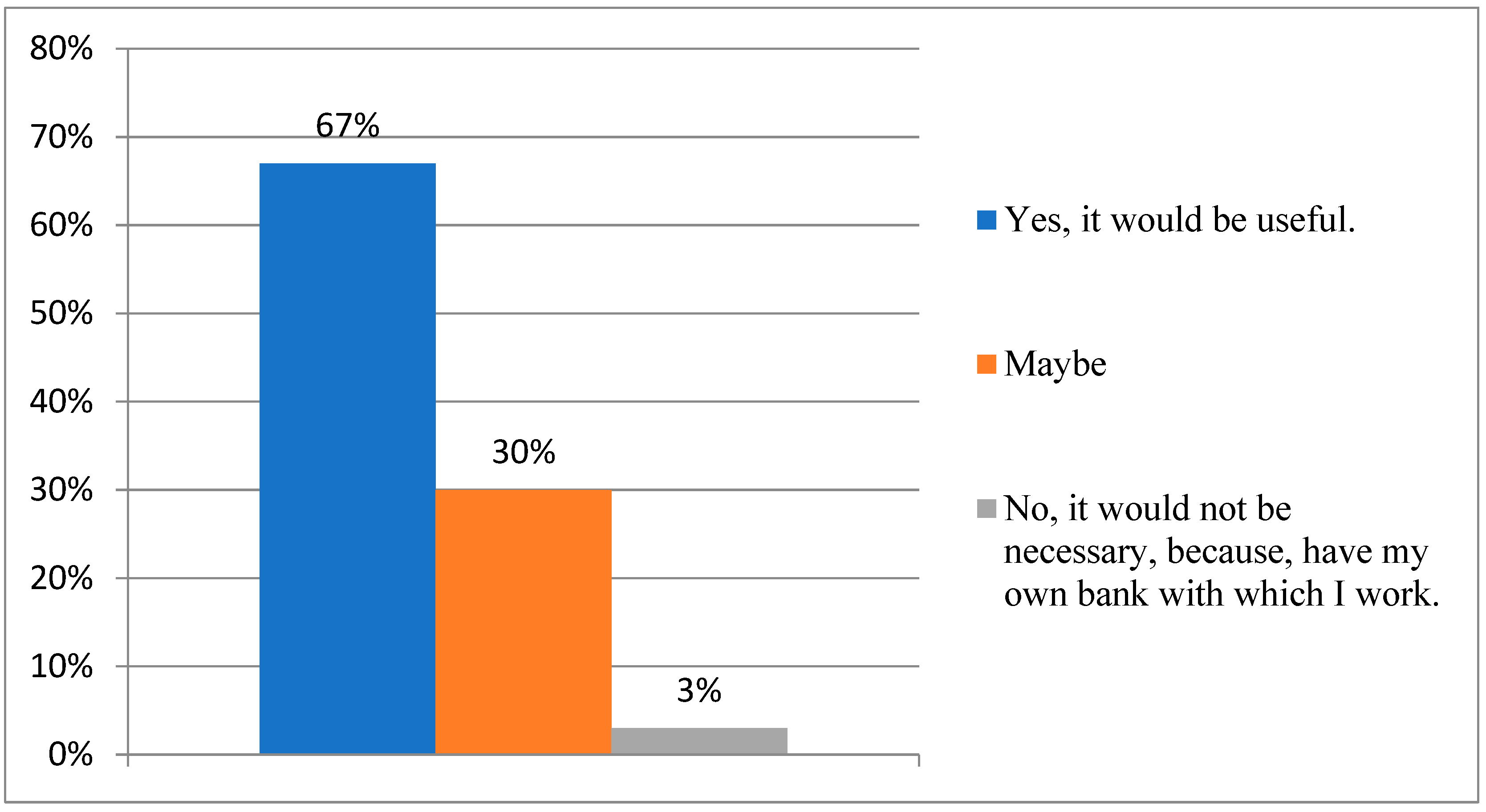
In addition, in the question presented in Figure 10, respondents were asked: “Would you be willing to receive further support from the solar panel provider in terms of financing and expertise?” 67% of the respondents answered “Yes, it will be useful,” 30% “Maybe,” and 2% “No, it wouldn’t be necessary, because I have my own bank that I work with.” The results strengthen the analysis above and indicate that there is a need for support in terms of expertise that would benefit these businesses.
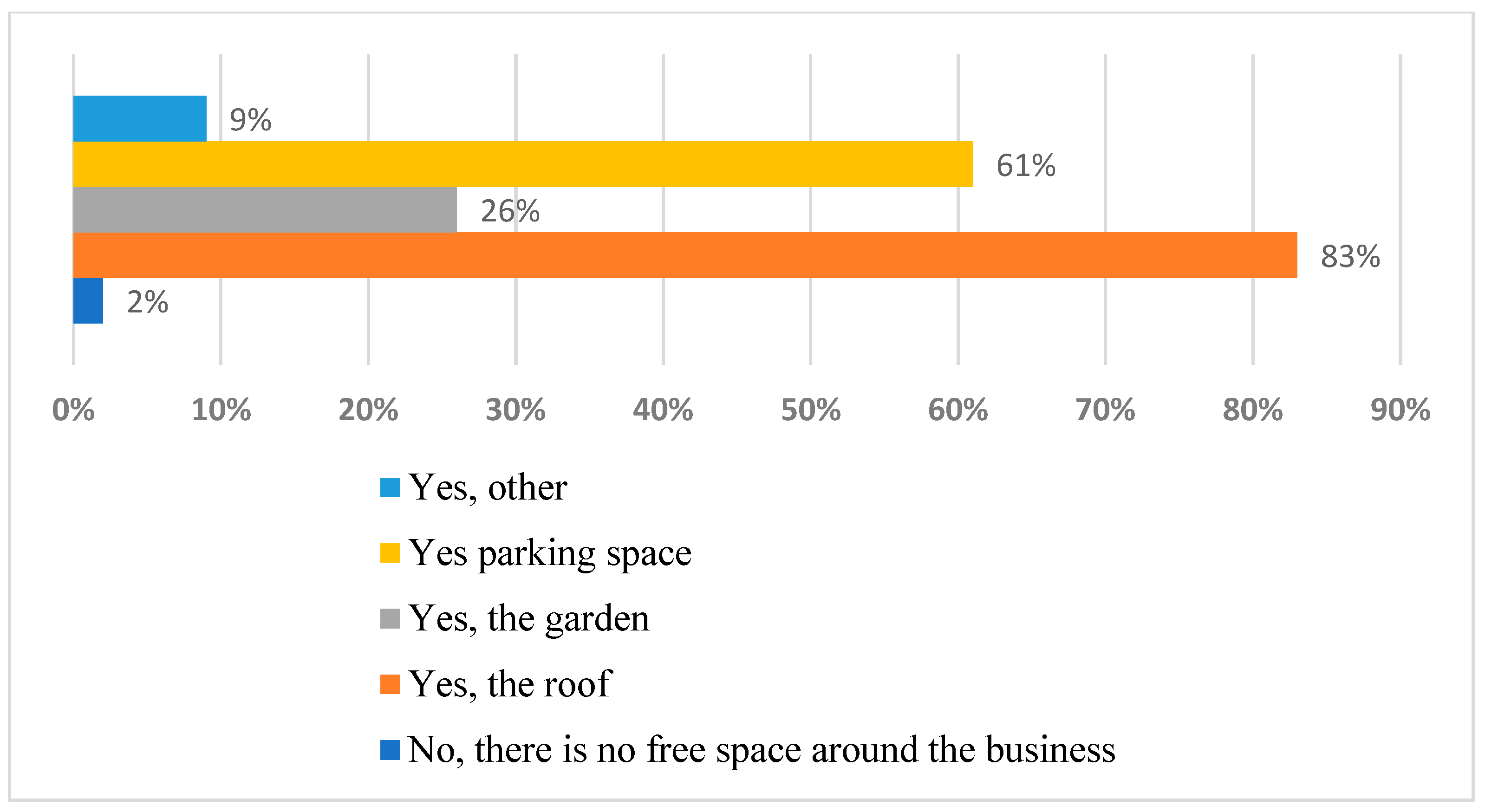
As we see in Figure 11, space for installation of panels does not appear to be a concern, as the majority of the answers were yes. More specifically, when asked “Do you have a space around your business that you can use for such panels?”, 83% said “Yes, the roof,” 61% said “Yes, the parking space,” 26% said “Yes, the garden,” 9% responded “Yes, others,” and 2% “No, there is no free space around the business.”
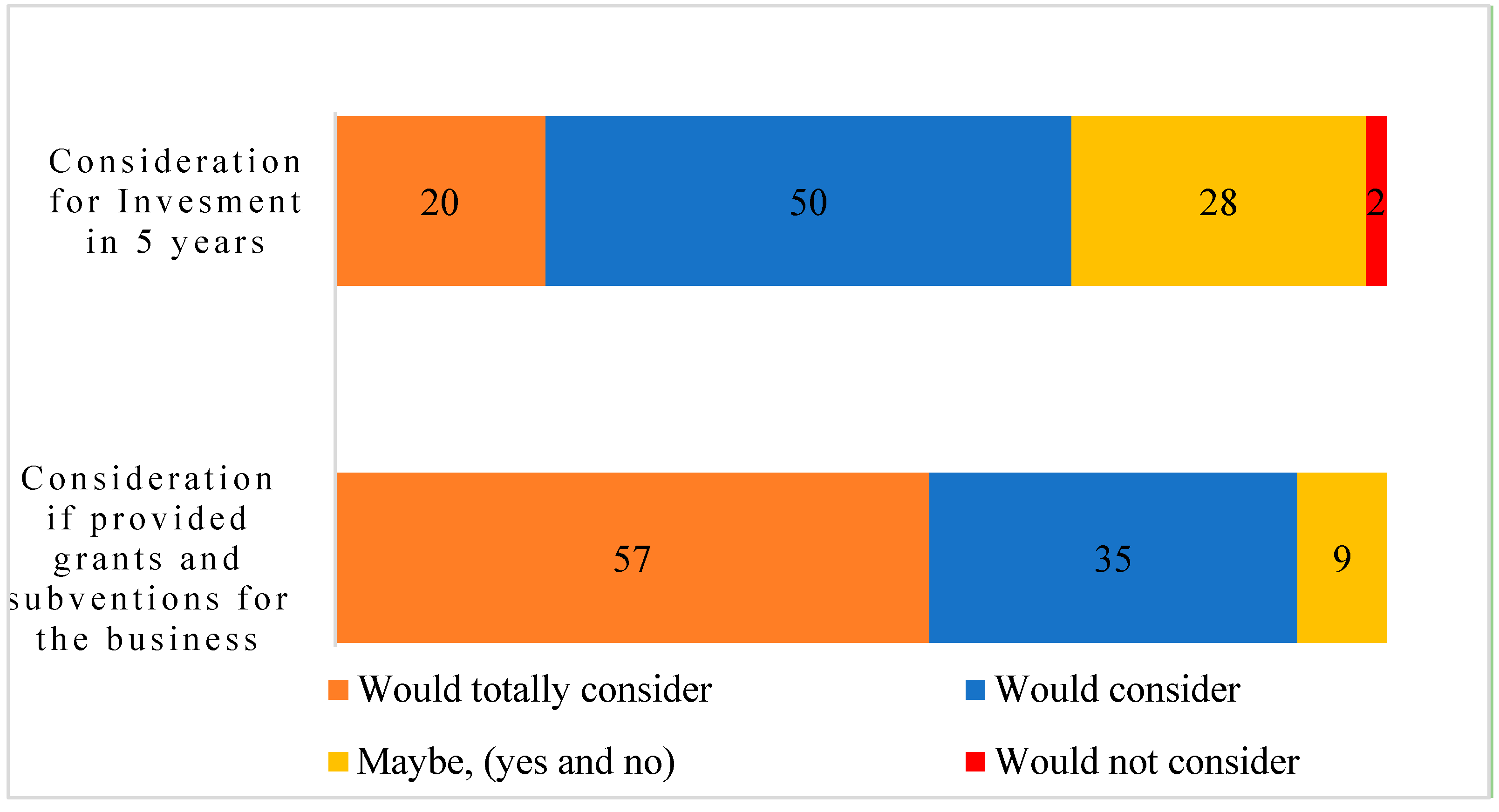
The data in Figure 12 delineates the contrast between the effects of potential government support mechanisms and the overall interest in investing in solar energy. Seventy percent of respondents (20% would certainly consider and 50% would consider) indicated a favourable disposition towards investing in solar energy during the next five years. Meanwhile, 28% expressed uncertainty, indicating “maybe,” while only 2% reported disinterest, and none of the respondents indicated they would “not consider at all.”
The willingness to invest, however, is positively associated with government grants and subventions. This significant change highlights the crucial impact of financial incentives and legal support in accelerating the adoption of solar energy by enterprises. This suggests that, regardless of existing desire, reducing financial barriers through grants and subsidies might greatly enhance investment readiness and facilitate a broader transition to renewable energy.

4.2. Correlation of Key Research Variables

Table 5 presents the Spearman’s correlation coefficients among the key research variables: awareness, investment intention, and government incentives such as grants and subventions for businesses. The Spearman rank correlation coefficient is a non-parametric statistic that uses ranked data to determine whether a relationship exists between two variables. This test is appropriate when variables are measured at an ordinal level (ranked categories). The results in Table 5 provide evidence of a positive correlation between the awareness variable, which reflects the level of information respondents have regarding solar panels and solar energy, and their intention to invest (r = 0.507 *). This provides supportive evidence for the first hypothesis which states that there is positive association between awareness about solar energy systems and business’s intention to implement solar solutions. In addition, a positive and statistically significant correlation is observed between government incentives and investment intention (r = 0.350 *), providing further support for research hypothesis two, which states that government incentives are positively associated with businesses’ intention to invest in solar panel installations. Both correlation coefficients are relatively small, suggesting that the relationship between the variables is not very strong; however, the size of the sample may have influenced the strength of these correlations, and a larger sample could potentially yield stronger relationships between the variables.

5. Conclusions

The aim of this paper is to evaluate industrial awareness regarding solar energy and solar panels in Albania, identify government subsidies and financial incentives influence on investment intentions, as well as recognize perceived barriers and advantages. This study uses data collected by implementing face-to-face interviews with a structured questionnaire. The data were collected from businesses operating in Tirana, Durrës, Korçë, Elbasan, and Pogradec. This survey underscores a notable understanding among Albanian enterprises regarding the advantages of renewable energy, especially solar energy. This knowledge, however, has not yet resulted in broad acceptance.
Despite the favourable perception of solar energy across various industries, including industrial, tourism, retail, and transportation, actual investment is constrained. This discovery aligns with other research that recognises the “awareness–action gap” in the uptake of renewable energy [33,34]. These findings align with those of the Ministry of Infrastructure and Energy (2024) [35] in their National Energy and Climate Plan (NECP) where solar energy is identified as a priority for diversifying the energy mix beyond hydropower in order to minimize environmental impact and enhance energy security. Furthermore, the report highlights the need for increased investment and acknowledges public and industrial awareness as critical enablers of energy transition.
Despite being aware of the benefits, research findings indicate that businesses face significant barriers to solar energy implementation. The biggest obstacle identified is the considerable initial installation expenses, which aligns with findings from similar emerging-market scenarios [32,36,37]. Moreover, uncertainty concerning return on investment (ROI) and the lack of performance assurances intensify lack of enthusiasm, especially among companies with tighter profit margins. Lüthi and Wüstenhagen (2012) [38] similarly discovered that perceived financial risks substantially influence renewable energy investment choices.
Notwithstanding these challenges, the analysis indicates a solid underlying interest in renewable energy investments, dependent upon supportive mechanisms. A majority of firms expressed that they would regard solar energy as a viable alternative if government incentives, clearer ROI predictions, or supplier-based financing approaches were accessible [39]. The study indicates that physical infrastructure is not a limitation for the majority of respondents, suggesting that adoption is logistically feasible if financial and legal conditions enhance.
The Albanian scenario illustrates both universal and context-specific dynamics of renewable energy adoption. Financial and informational obstacles align with those found in other developing economies, while institutional deficiencies, regulatory uncertainty, and restricted access to financing mechanisms are unique characteristics of Albania’s transitional energy sector [6,40]. This integration improves comprehension of the interaction between structural, financial, and perceptual factors that influence investment behaviour, not only in transition economies like Albania but also across developing nations, where analogous constraints and decision-making patterns have been extensively recorded [28,30].

6. Recommendations

To bridge the gap between awareness and action, and to promote the adoption of solar energy among businesses in Albania, the following evidence-based policy and practice recommendations are proposed:
The European Commission recommends providing targeted financial incentives, such as subventions, tax reductions, or low-interest green loans. Evidence indicates that direct funding significantly accelerates the adoption of renewable energy, particularly in developing markets [41].
Promote successful examples of solar investments in Albania and the rest of the Western Balkans [26]: Changing people’s behaviour toward new investments in solar energy, particularly when the return on investment is uncertain, is challenging. Therefore, it is essential to facilitate knowledge sharing, establish pertinent indicators, and investigate creative financing methods that integrate economic, policy, and practical competencies [42].
Provide tailored technical assistance programs for each business type: Training and consultation can enhance installation quality and instil greater confidence in the technology, aligning with findings from training-focused studies on renewable transitions [6].
Employ-public-private collaboration strategies to facilitate cooperation among energy providers: In economies such as these, leasing and pay-as-you-save initiatives have been effective [43,44]. These approaches enable enterprises to utilise solar technology without incurring the entire upfront cost.
Integrate solar energy as a fundamental component of Albania’s national energy resiliency policy: This is particularly significant as the country depends on hydropower, which may lead to supply issues during droughts. Solar energy aligns with global resilience frameworks by facilitating diversity and localized energy security.
Establish and implement explicit regulations that promote net metering, grid access, and enduring power purchase agreements (PPAs): These instruments enhance the bankability of solar projects and mitigate financial risk, as evidenced by regulatory frameworks that favour renewable energy [45].
In conclusion, Albania’s business sector is ready to transition to solar energy; nevertheless, strategic measures are required to overcome existing market and psychological barriers. With the appropriate combination of policy, funding, and technical assistance, solar energy could play a pivotal role in fostering sustainable economic growth and safeguarding the environment in the nation.

7. Limitations

This study has several limitations that should be acknowledged. First, it is based on a sample of 50 businesses, which mainly includes medium and large enterprises. While this reflects the limited number of such businesses operating in Albania, it also impacts the generalizability of the findings. As Albania’s economic landscape continues to expand, future studies will have the opportunity to include a larger number of businesses.
Secondly, the data were collected through self-reported questionnaires, which can be influenced by response bias or socially desirable answers, especially when it comes to the topic of environmental awareness or renewable energy.
Third, due to the nature of the data, this study employs descriptive statistics for data analysis. Future studies should consider incorporating inferential statistical methods, such as regression or factor analysis, to identify and test relationships between variables more robustly.

Author Contributions

Conceptualization, A.Ç., S.Ç. and O.M.; methodology, A.Ç. and S.Ç.; formal analysis, A.Ç.; investigation, A.Ç., S.Ç. and O.M.; resources, S.Ç.; data curation, A.Ç.; writing—original draft preparation, A.Ç., S.Ç. and O.M.; writing—review and editing, S.Ç. and O.M.; visualization, A.Ç.; supervision, S.Ç.; project administration, A.Ç. and S.Ç. and O.M.; funding acquisition, S.Ç. All authors have read and agreed to the published version of the manuscript.

Funding

This research received no external funding.

Institutional Review Board Statement

The study was carried out on a voluntary and anonymous basis, with confidentiality guaranteed throughout the research process. Participants were informed in advance about the purpose of the study and were provided with consent and withdrawal forms, allowing them to participate freely and withdraw at any point without any negative consequences. The research posed minimal risk to participants. Ethical aspects of the study were discussed and agreed upon by all authors and data collection was approved through the ethical oversight framework of Data Centrum Research Institute.

Informed Consent Statement

Informed consent was obtained from all subjects involved in the study.

Data Availability Statement

The original contributions presented in this study are included in the article. Further inquiries can be directed to the corresponding author.

Conflicts of Interest

The authors declare no conflicts of interest.

References

  1. International Energy Agency (IEA). World Energy Outlook 2021; IEA: Paris, France, 2021; ISBN 978-92-64-46824-6. Available online: https://www.iea.org/reports/world-energy-outlook-2021 (accessed on 1 November 2025).
  2. Alvarez–Herranz, A.; Balsalobre–Lorente, D.; Shahbaz, M.; Cantos, J.M. Energy innovation and renewable energy consumption in the correction of air pollution levels. Energy Policy 2017, 105, 386–397. [Google Scholar] [CrossRef]
  3. Rezaei, R.; Ghofranfarid, M. Rural households’ renewable energy usage intention in Iran: Extending the unified theory of acceptance and use of technology. Renew. Energy 2018, 122, 382–391. [Google Scholar] [CrossRef]
  4. Al–Daini, A.; Al–Samarraie, R. Industrial awareness of the role and potential of solar energy use in the UK. Renew. Energy 1994, 5, 1416–1418. [Google Scholar] [CrossRef]
  5. Beithou, N.; Mansour, M.A.; Abdellatif, N.; Alsaqoor, S.; Tarawneh, S.; Jaber, A.H.; Andruszkiewicz, A.; Alsqour, M.; Borowski, G.; Alahmer, A.; et al. Effect of the Residential Photovoltaic Systems Evolution on Electricity and Thermal Energy Usage in Jordan. Adv. Sci. Technol. Res. J. 2023, 17, 79–87. [Google Scholar] [CrossRef] [PubMed]
  6. IRENA. Renewables Readiness Assessment: Albania; International Renewable Energy Agency: Abu Dhabi, United Arab Emirates, 2021; ISBN 978-92-9260-338-0. [Google Scholar]
  7. Liobikienė, G.; Dagiliūtė, R.; Juknys, R. The determinants of renewable energy usage intentions using theory of planned behaviour approach. Renew. Energy 2021, 170, 587–594. [Google Scholar] [CrossRef]
  8. Abumunshar, M.; Aga, M.; Samour, A. Oil price, energy consumption, and CO2emissions in Turkey. New evidence from a bootstrap ARDL test. Energies 2020, 13, 5588. [Google Scholar] [CrossRef]
  9. Martins, T.; Barreto, A.C.; Souza, F.M.; Souza, A.M. Fossil fuels consumption and carbon dioxide emissions in G7 countries: Empirical evidence from ARDL bounds testing approach. Environ. Pollut. 2021, 291, 118093. [Google Scholar] [CrossRef]
  10. Rahman, F.A.; Aziz, M.M.A.; Saidur, R.; Abu Bakar, W.A.W.; Hainin, M.R.; Putrajaya, R.; Hassan, N.A. Pollution to solution: Capture and sequestration of carbon dioxide (CO2) and its utilization as a renewable energy source for a sustainable future. Renew. Sustain. Energy Rev. 2017, 71, 112–126. [Google Scholar] [CrossRef]
  11. Xia, Z.; Abbas, Q.; Mohsin, M.; Song, G. Trilemma among energy, economic and environmental efficiency: Can dilemma of EEE address simultaneously in era of COP 21? J. Environ. Manag. 2020, 276, 111322. [Google Scholar] [CrossRef]
  12. Mensah, I.A.; Sun, M.; Gao, C.; Omari–Sasu, A.Y.; Zhu, D.; Ampimah, B.C.; Quarcoo, A. Analysis on the nexus of economic growth, fossil fuel energy consumption, CO2 emissions and oil price in Africa based on a PMG panel ARDL approach. J. Clean. Prod. 2019, 228, 161–174. [Google Scholar] [CrossRef]
  13. Dogan, E.; Aslan, A. Exploring the relationship among CO2 emissions, real GDP, energy consumption and tourism in the EU and candidate countries: Evidence from panel models robust to heterogeneity and cross–sectional dependence. Renew. Sustain. Energy Rev. 2017, 77, 239–245. [Google Scholar] [CrossRef]
  14. Mohsin, M.; Kamran, H.W.; Nawaz, M.A.; Hussain, M.S.; Dahri, A.S. Assessing the impact of transition from nonrenewable to renewable energy consumption on economic growth–environmental nexus from developing Asian economies. J. Environ. Manag. 2021, 284, 111999. [Google Scholar] [CrossRef] [PubMed]
  15. Marzouk, M.A.; Fischer, L.K.; Salheen, M.A. Factors affecting the social acceptance of agricultural and solar energy systems: The case of new cities in Egypt. Ain Shams Eng. J. 2024, 15, 102741. [Google Scholar] [CrossRef]
  16. Almulhim, A.I. Understanding public awareness and attitudes toward renewable energy resources in Saudi Arabia. Renew. Energy 2022, 192, 572–582. [Google Scholar] [CrossRef]
  17. Ioannidis, F.; Kosmidou, K.; Papanastasiou, D. Public awareness of renewable energy sources and Circular Economy in Greece. Renew. Energy 2023, 206, 1086–1096. [Google Scholar] [CrossRef]
  18. Oluoch, S.; Lal, P.; Susaeta, A.; Wolde, B. Public preferences for renewable energy options: A choice experiment in Kenya. Energy Econ. 2021, 98, 105256. [Google Scholar] [CrossRef]
  19. Kim, J.; Jeong, D.; Choi, D.; Park, E. Exploring public perceptions of renewable energy: Evidence from a word network model in social network services. Energy Strat. Rev. 2020, 32, 100552. [Google Scholar] [CrossRef]
  20. Gholami, H. Technical potential of solar energy in buildings across Norway: Capacity and demand. Sol. Energy 2024, 278, 112758. [Google Scholar] [CrossRef]
  21. Maka, A.O.; Ghalut, T.; Elsaye, E. The pathway towards decarbonisation and net–zero emissions by 2050: The role of solar energy technology. Green Technol. Sustain. 2024, 2, 100107. [Google Scholar] [CrossRef]
  22. Priharti, W.; Rosmawati, A.F.K.; Wibawa, I.P.D. IoT based photovoltaic monitoring system application. J. Phys. Conf. Ser. 2019, 1367, 012069. [Google Scholar] [CrossRef]
  23. IRENA. Solar Energy; International Renewable Energy Agency: Bonn, Germany, 2024; Available online: https://www.irena.org/Energy-Transition/Technology/Solar-energy (accessed on 14 November 2025).
  24. Răboacă, M.S.; Badea, G.; Enache, A.; Filote, C.; Răsoi, G.; Rata, M.; Lavric, A.; Felseghi, R. Concentrating Solar Power Technologies. Energies 2019, 12, 1048. [Google Scholar] [CrossRef]
  25. Timilsina, G.R.; Kurdgelashvili, L.; Narbel, P.A. Solar energy: Markets, economics and policies. Renew. Sustain. Energy Rev. 2012, 16, 449–465. [Google Scholar] [CrossRef]
  26. Frey, B. The Energy Transition in the Western Balkans: The Status Quo, Major Challenges and How to Overcome Them (No. 76); Policy Notes and Reports; The Vienna Institute for International Economic Studies (wiiw): Vienna, Austria, 2024. [Google Scholar]
  27. IRENA. Renewable Capacity Statistics 2023; International Renewable Energy Agency: Abu Dhabi, United Arab Emirates, 2023; Available online: https://www.irena.org/Publications/2023/Mar/Renewable-capacity-statistics-2023 (accessed on 14 November 2025).
  28. Rydehell, H.; Lantz, B.; Mignon, I.; Lindahl, J. The impact of solar PV subsidies on investment over time—The case of Sweden. Energy Econ. 2024, 133, 107552. [Google Scholar] [CrossRef]
  29. Kishore, T.S.; Kumar, P.U.; Ippili, V. Review of global sustainable solar energy policies: Significance and impact. Innov. Green Dev. 2025, 4, 100224. [Google Scholar] [CrossRef]
  30. Deng, X.; Poletti, S.; Hazledine, T.; Tao, M.; Sbai, E. Deploying solar photovoltaic through subsidies: An Australian case. J. Environ. Manag. 2024, 372, 123293. [Google Scholar] [CrossRef]
  31. Del Río, P.; Burguillo, M. Assessing the impact of renewable energy deployment on local sustainability: Towards a theoretical framework. Renewable and sustainable energy reviews 2008, 12(5), 1325–1344. [Google Scholar] [CrossRef]
  32. International Energy Agency (IEA). World Energy Outlook 2022; IEA: Paris, France, 2022; ISBN 978-92-64-46826–0. Available online: https://www.iea.org/reports/world-energy-outlook-2022 (accessed on 11 October 2025).
  33. Carter, C.R.; Rogers, D.S. A framework of sustainable supply chain management: Moving toward new theory. Int. J. Phys. Distrib. Logist. Manag. 2008, 38, 360–387. [Google Scholar] [CrossRef]
  34. Painuly, J.P. Barriers to renewable energy penetration; a framework for analysis. Renew. Energy 2001, 24, 73–89. [Google Scholar] [CrossRef]
  35. National Energy and Climate Plan (NECP); Ministry of Infrastructure and Energy of Albania: Tirana, Albania, 2024.
  36. Sovacool, B.K.; Griffiths, S. The cultural barriers to a low–carbon future: A review of six mobility and energy transitions across 28 countries. Renew. Sustain. Energy Rev. 2020, 119, 109569. [Google Scholar] [CrossRef]
  37. Luthra, S.; Kumar, S.; Garg, D.; Haleem, A. Barriers to renewable/sustainable energy technologies adoption: Indian perspective. Renew. Sustain. Energy Rev. 2015, 41, 762–776. [Google Scholar] [CrossRef]
  38. Lüthi, S.; Wüstenhagen, R. The price of policy risk—Empirical insights from choice experiments with European photovoltaic project developers. Energy Econ. 2012, 34, 1001–1011. [Google Scholar] [CrossRef]
  39. Abolhosseini, S.; Heshmati, A. The main support mechanisms to finance renewable energy development. Renew. Sustain. Energy Rev. 2014, 40, 876–885. [Google Scholar] [CrossRef]
  40. Rahman, M.M.; Alam, K. Impact of industrialization and non–renewable energy on environmental pollution in Australia: Do renewable energy and financial development play a mitigating role? Renew. Energy 2022, 195, 203–213. [Google Scholar] [CrossRef]
  41. Ren21. Renewables 2023 Global Status Report a Comprehensive Annual Overview of The State of Renewable Energy; UN Environment Programme: Paris, France, 2023. [Google Scholar]
  42. Frantzeskaki, N.; McPhearson, T.; Collier, M.J.; Kendal, D.; Bulkeley, H.; Dumitru, A.; Walsh, C.; Noble, K.; van Wyk, E.; Ordóñez, C.; et al. Nature–Based Solutions for Urban Climate Change Adaptation: Linking Science, Policy, and Practice Communities for Evidence–Based Decision–Making. BioScience 2019, 69, 455–466. [Google Scholar] [CrossRef]
  43. Rezessy, S.; Bertoldi, P. Financing Energy Efficiency: Forging The Link Between Financing and Project Implementation; European Commission: Brussels, Belgium, 2010. [Google Scholar]
  44. Zhu, X. Financing energy efficiency Project Bundles for municipalities. In Sourcebook on Project Bundling; UNEP DTU Partnership: Copenhagen, Denmark, 2020; pp. 47–59. [Google Scholar]
  45. Rolf, W.; Menichetti, E. Strategic choices for renewable energy investment: Conceptual framework and opportunities for further research. Energy Policy 2012, 40, 1–10. [Google Scholar] [CrossRef]
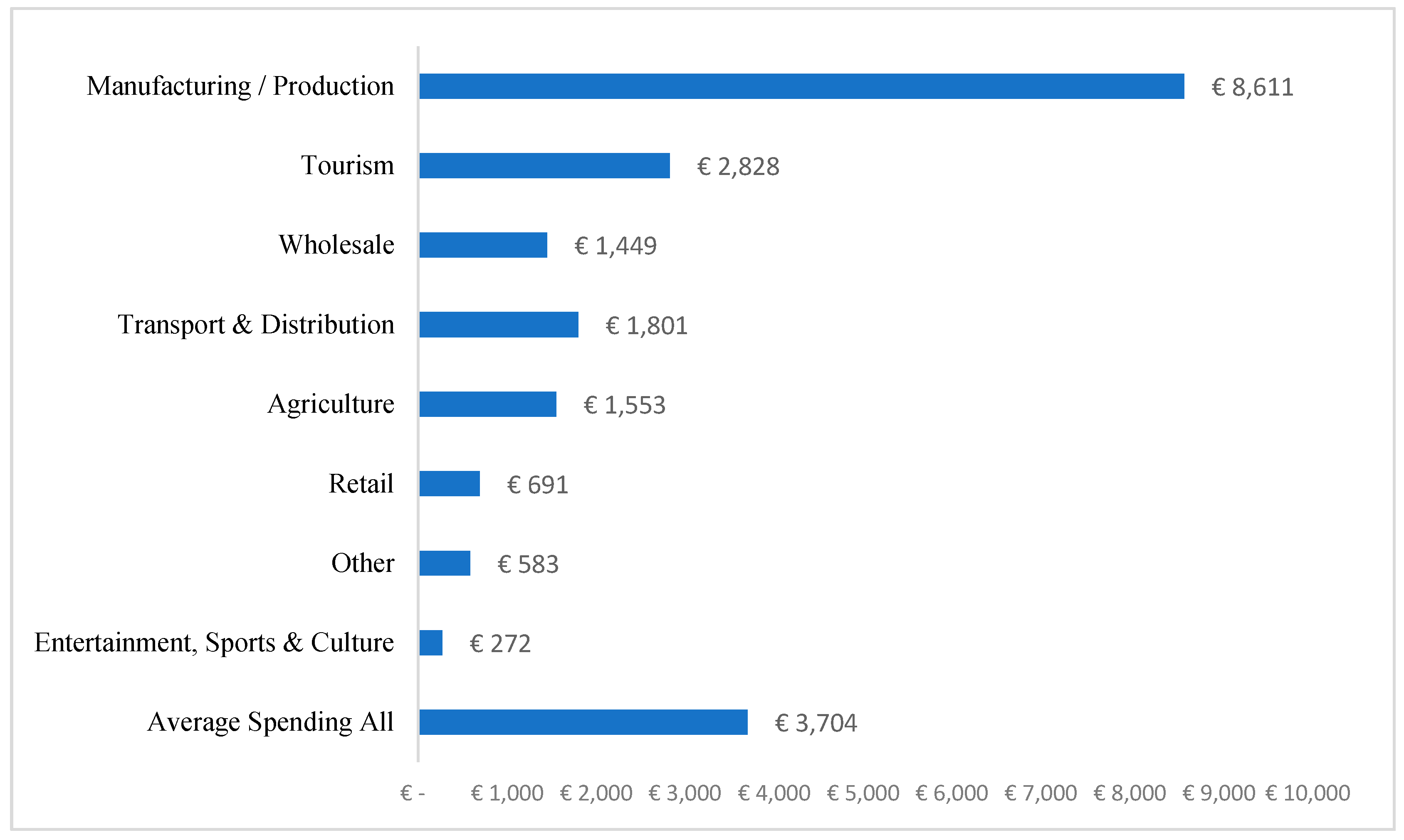
Figure 1. Monthly Energy Spending.
Sustainability 17 11179 g001
Figure 2. Percentage of total costs spent on electric energy.
Sustainability 17 11179 g002
Figure 3. Perception of Energy crisis and new opportunities.
Sustainability 17 11179 g003
Figure 4. Percentage of awareness among decision makers.
Sustainability 17 11179 g004
Figure 5. Level of information and intention to invest.
Sustainability 17 11179 g005
Figure 6. Attitude of business toward renewable energy and climate changes.
Sustainability 17 11179 g006
Figure 7. Ownership or use of solar panels in respondents’ businesses.
Sustainability 17 11179 g007
Figure 8. Percentage of investment respondents would take as a loan.
Sustainability 17 11179 g008
Figure 9. Intention to invest in solar energy.
Sustainability 17 11179 g009
Figure 10. Further support needed from solar panel providers in terms of financing and expertise.
Sustainability 17 11179 g010
Figure 11. Space availability for panel installation.
Sustainability 17 11179 g011
Figure 12. Willingness to invest.
Sustainability 17 11179 g012
Table 1. Demographic data of the survey.
Sex CountPercentage
Male 3264%
Female1836%
Total 50100%
Position in the company
Owner/Co-owner2346%
Executive Director24%
Director of Finance office918%
Project Manager612%
Financial services48%
Others612%
Decision making for investment
I am the main, final decision maker1632%
I am responsible, a co-decision maker3468%
Table 2. General information about the company.
Size of the CompanyCountPercentage
8–14 million Lek annual turnover1326%
Over 14 million Lek annual turnover3774%
Sector the company operates
Wholesale2142%
Manufacturing2040%
Transport/Distribution510%
Business Services36%
Construction12%
Entertainment/Culture/Sports12%
Primary source of energy for the company
Electricity 4896%
Natural gas
Propane12%
Oil
Solar12%
Wind
Other
Table 3. Source of information regarding solar energy.
CategoryCountPercentage
TV Commercials3060.0%
Various Programs1530.0%
Online Ads612.0%
Online Information3060.0%
Direct Marketing1530.0%
Various Websites1122.0%
Influencers1020.0%
Sponsorships12.0%
Flyers/Brochures1020.0%
Informative Meetings714.0%
Printed Newspapers/Magazines24.0%
Other24.0%
Table 4. Drives and challenges of investing in solar energy; open question summary.
Reasons for Investing in Solar Panel Energy
  • Energy savings
  • Reduction in production and final product costs
  • Environmental protection
  • Continuation of operations without power interruptions
Reasons for not considering investment in solar panel energy
  • High installation cost
  • Uncertainty about return on investment
  • Lack of guaranteed results
Table 5. Spearman’s correlation coefficients among key research variables.
VariablesAwarenessInvestment
Intention
Government
Incentives
Awareness1.000.507 **0.350 *
Investment intention0.507 **1.000.320 *
Government Incentives0.350 *0.320 *1.00
p < 0.01 **, p < 0.05 *.
Disclaimer/Publisher’s Note: The statements, opinions and data contained in all publications are solely those of the individual author(s) and contributor(s) and not of MDPI and/or the editor(s). MDPI and/or the editor(s) disclaim responsibility for any injury to people or property resulting from any ideas, methods, instructions or products referred to in the content.