Article

Spatial Analysis Model for Sustainable Soil Management in Livestock Systems: Case Study at Hacienda Pacaguan, Chimborazo, Ecuador


by
Jorge Córdova-Lliquín
1,
Adriana Guzmán-Guaraca
2,
Vanessa Morales-León
2,
Tannia Vargas-Tierras
3 and
Wilson Vásquez-Castillo
4,*
1
Independent Researcher, Riobamba 060155, Ecuador
2
Facultad de Recursos Naturales, Escuela Superior Politécnica de Chimborazo (ESPOCH), Panamericana Sur Km 1.5, Riobamba 060155, Ecuador
3
Research Group YASUNI-SDC, Escuela Superior Politécnica de Chimborazo (ESPOCH), Sede Orellana, Coca 220001, Ecuador
4
Grupo de Investigación en Alimentos y Agroindustria (GIA2), Ingeniería Agroindustrial, Universidad de Las Américas (UDLA), Redondel del Ciclista, Vía a Nayón, Quito 170124, Ecuador
*
Author to whom correspondence should be addressed.
Sustainability 2025, 17(24), 11131; https://doi.org/10.3390/su172411131 (registering DOI)
Submission received: 22 October 2025 / Revised: 4 December 2025 / Accepted: 8 December 2025 / Published: 12 December 2025

Abstract

Soil degradation in high-altitude livestock systems—driven by acidification, compaction, low water retention and nutrient loss—reduces forage productivity and limits the sustainability of grazing-based production. These constraints highlight the need for spatial tools capable of prioritising soil interventions and guiding more efficient land management. The objective of this study was to develop a spatial analysis model to identify and rank soil management priorities in a high-altitude livestock farm. A total of 441 georeferenced observations were collected using portable sensors to measure pH, electrical conductivity, water retention capacity and soil compaction. The data were processed through GIS interpolation, cartographic overlay and reclassification techniques to assign intervention levels across the landscape. The results indicated that 70% of the area presented moderately acidic soils, 32% required improvements in water retention, and 67% exhibited moderate compaction. The proposed model is replicable, operationally simple and suitable for site-specific decision-making. Overall, this study provides a technical tool that supports extension programmes, territorial planning and sustainable livestock management.

1. Introduction

Globally, livestock production provides approximately one-third of the protein consumed by a person on a daily basis, making it an essential component of food security [1]. Consumption of animal products is projected to increase by 4% by 2030 [2]. Given this situation, livestock farming is one of the main economic activities in the agricultural sector in Latin America, contributing 46% of the regional agricultural gross domestic product (GDP) and generating employment for more than 70 million people [3,4]. Moreover, Latin America produces nearly 10% of the world’s crops, while approximately 44.5 million people rely on agriculture for their livelihoods, reflecting the region’s high dependence on both livestock and crop production systems [5].
In Ecuador, agricultural activities contribute 7.92% of the GDP, generate 35% of foreign exchange and produce 94.84% of the food consumed by the population [6]. With regard to land-use, more than 2.93 million hectares of natural and cultivated pastures are used for livestock, representing 40% of the national territory [7]. In this agricultural and livestock context, the Sierra region has the highest concentration of cattle production, accounting for nearly 54.8% of the total number of heads of cattle, followed by the Coast with 36.6% and finally the Amazon with 8.6%, demonstrating a territorial distribution focused on highland and semi-coastal areas [8].
It comes as no surprise that extensive and intensive land-use for livestock activities has caused environmental problems, with soil degradation being one of the most worrying. This is because around 45% of soils are used for grazing in Latin America and show some degree of physical or chemical degradation, compaction, loss of organic matter, acidification and salinisation [9]. Soil microbiomes are the core drivers of nutrient cycling, organic matter turnover and soil structural stability. Therefore, both chemical and physical degradation directly impair microbial survival, enzymatic activity and ecological functioning, ultimately reducing soil health and productivity [10,11]. In Ecuador, more than 50% of soils show signs of deterioration due to poor management of agricultural activities, mainly overgrazing and inadequate tillage or fertilisation practices [12]. Ref. [13] reports that soils in Ecuador are in a state of continuous erosion: soil degradation has reached 26% in the Sierra, 30% on the coast and 44% in the Amazon. These patterns are consistent with findings from other regions, where the introduction of vegetation cover or land-use modifications often triggers short-term declines followed by gradual recovery processes, as demonstrated in recent assessments of Caragana korshinskii establishment in arid landscapes [14].
Soil sustainability for livestock uses, therefore, requires tools that allow for the objective assessment of its condition, differentiated planning of its use and establishment of regenerative management strategies. In this regard, spatial analysis models based on Geographic Information Systems (GIS) have proven to be effective tools for integrating certain biophysical variables, identifying critical areas and making decisions regarding soil management [15,16]. Variables such as the compaction, water retention capacity, pH and electrical conductivity of the soil are important indicators that allow us to understand the soil’s conditions, and a spatial analysis of these variables facilitates the generation of thematic maps of vulnerability or productive potential [17]. The relevance of these edaphic properties has also been highlighted in studies that link soil characteristics to the distribution of chemical constituents in crops. For instance, recent predictive models have shown that soil attributes strongly influence the concentrations of Cr, Pb and Zn in tobacco leaves, underscoring the importance of soil diagnostics for both environmental monitoring and agricultural decision-making [18].
In Ecuador’s inter-Andean region, since 2012, producers have been engaged in cattle milk production, establishing pastures with grass species such as Lolium multiflorum, Dactylis glomerata and Pennisetum clandestinum, prioritising forage yield and adaptation to altitudes above 2500 metres above sea level [19]. This system has evolved into semi-stabled cattle management, with rotational grazing and periodic fertilisation of pastures [20]. However, constant pressure on the soil has altered its structure and decreased its organic matter content and capacity to retain moisture and nutrients, leading to a gradual decline in biomass productivity [21]. Given this problem, there is a need to expand the agricultural frontier (which would involve deforesting areas with native vegetation and ecological value) or implement sustainable soil management practices, such as the incorporation of organic fertilisers, crop rotation, the establishment of living cover and the restoration of soil properties as viable and environmentally responsible alternatives [21,22]. In this context of progressive soil deterioration—driven by compaction, fertility loss, and surface erosion resulting from increasingly intensive agricultural activities [23]—there is a growing need for diagnostic tools capable of assessing soil condition and guiding targeted and effective interventions.
GIS and spatial interpolation techniques have become essential tools in agriculture and livestock systems because they allow the integration of georeferenced field data to generate continuous surfaces that support soil diagnosis and management. Spatial interpolation, in particular, is widely used to estimate values in unsampled areas from known observations, providing detailed maps that reveal the spatial variability of key soil properties [24]. Classical methods, such as inverse distance weighting (IDW), which assigns greater influence to nearby points, and Kriging, which incorporates spatial dependence through semivariograms [25], have proven effective in various agricultural applications. More advanced approaches, such as Empirical Bayesian Kriging (EBK), automate semivariogram modelling and reduce estimation uncertainty, improving surface reliability [26]. These techniques—whether exact or non-exact, global or local—have been successfully used to develop differentiated fertilisation plans and support decision-making in crop and pasture management [27]. To ensure accurate results, interpolation outputs must be validated through cross-validation or field contrasts [28]. Furthermore, map algebra enables the integration of multiple interpolated layers, strengthening the identification of critical zones and supporting sustainable soil resource management [29].
Unlike previous GIS-based soil assessments in the Ecuadorian Andes, this study integrates four field-measured edaphic variables into a validated EBK-based spatial model and a weighted prioritisation index specifically calibrated for high-altitude livestock systems. This framework provides a methodological advancement by operationalising a reproducible workflow for decision-making in forage-based landscapes [17].
Considering the need for practical tools to guide sustainable soil management in livestock production systems, this study implemented a spatial analysis model based on four key soil variables: two physical (soil compaction and water retention capacity) and two chemical (pH and electrical conductivity). Measurements obtained in forage production plots allowed the generation of continuous map layers categorised into management-relevant ranges. This enabled the establishment of intervention scales and the development of specific management maps, as well as an overall prioritisation map for decision-making. The model was applied to approximately 40 hectares of pastureland at Hacienda Pacaguan, where soil quality is fundamental to supporting a biomass-based feeding system.
Although initially validated at this site, the structure of the model is adaptable to other forage-based production units. By integrating field measurements with GIS processing, the model offers a technical tool that identifies degrees of soil degradation and guides targeted management practices for recovery or conservation. Its application promotes sustainable pasture productivity, prevents unnecessary expansion of grazing areas and fosters rational and balanced land-use within livestock systems.

2. Materials and Methods

2.1. Study Area

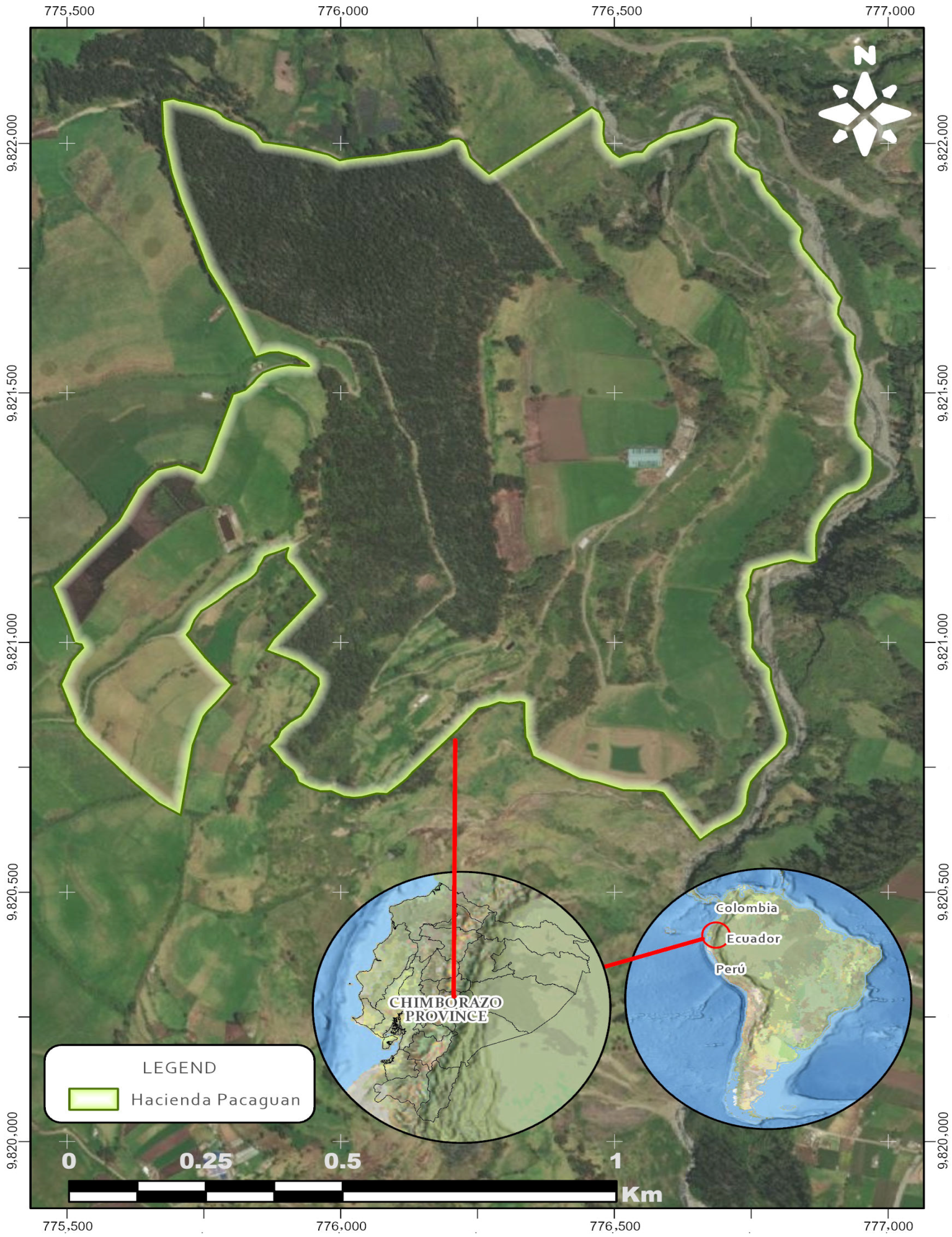
The research was conducted at Hacienda Pacaguan, which has an average altitude of 2840 m. It is located in the north of the Riobamba canton (near the border with Penipe canton), Chimborazo province, Ecuador (Figure 1). Chimborazo has a population of approximately 472,000 inhabitants; Riobamba is its main urban centre and the heart of most of the province’s economic and service activities [30]. The province combines rural communities dedicated to agriculture and livestock production with urban areas that depend heavily on these sectors for employment and food supply. The UTM coordinates are: 776,622 m East and 9,821,403 m North (WGS84). The climate corresponds to a temperate-cold highland regime, with an average annual temperature of around 12–13 °C and a marked seasonality in precipitation. The wet season extends from January to May, with peaks exceeding 200 mm per month in March and April, while the dry season occurs between June and August, with records below 100 mm. This combination of moderate temperatures and seasonal rainfall defines a Cfb-type climate according to the Köppen–Geiger classification, characterised by its spatial variability and the direct influence of Andean topography in the generation of microclimates [31].
This study was conducted at Hacienda Pacaguan, located in the Riobamba canton, Chimborazo province, in the Andean region of Ecuador. The area is characterised by moderately deep volcanic soils with a sandy loam to silty loam texture and limitations in structure and organic matter content [32,33]. The model proposed in this study enables the physical and chemical characterisation of soil units, the establishment of intervention scales based on the degree of deterioration and the application of a systematic and georeferenced sampling methodology complemented by GIS-based cartographic processing, facilitating its adaptation to other productive units with similar characteristics [28].
The property covers 146 ha, of which about 40 ha are pastureland, and the topography is irregular. The farm is dedicated to dairy production under a semi-stabled system, with approximately 100 Holstein, Jersey, Brown Swiss and crossbred cows in production. The average production is 1200 litres per day, with feed based on fresh alfalfa and corn silage.

2.2. Data Collection

The methodology used to develop the spatial analysis model comprised four successive phases: the preparatory phase, diagnostic phase, analysis phase, and management proposal phase.

2.2.1. Preparatory Phase

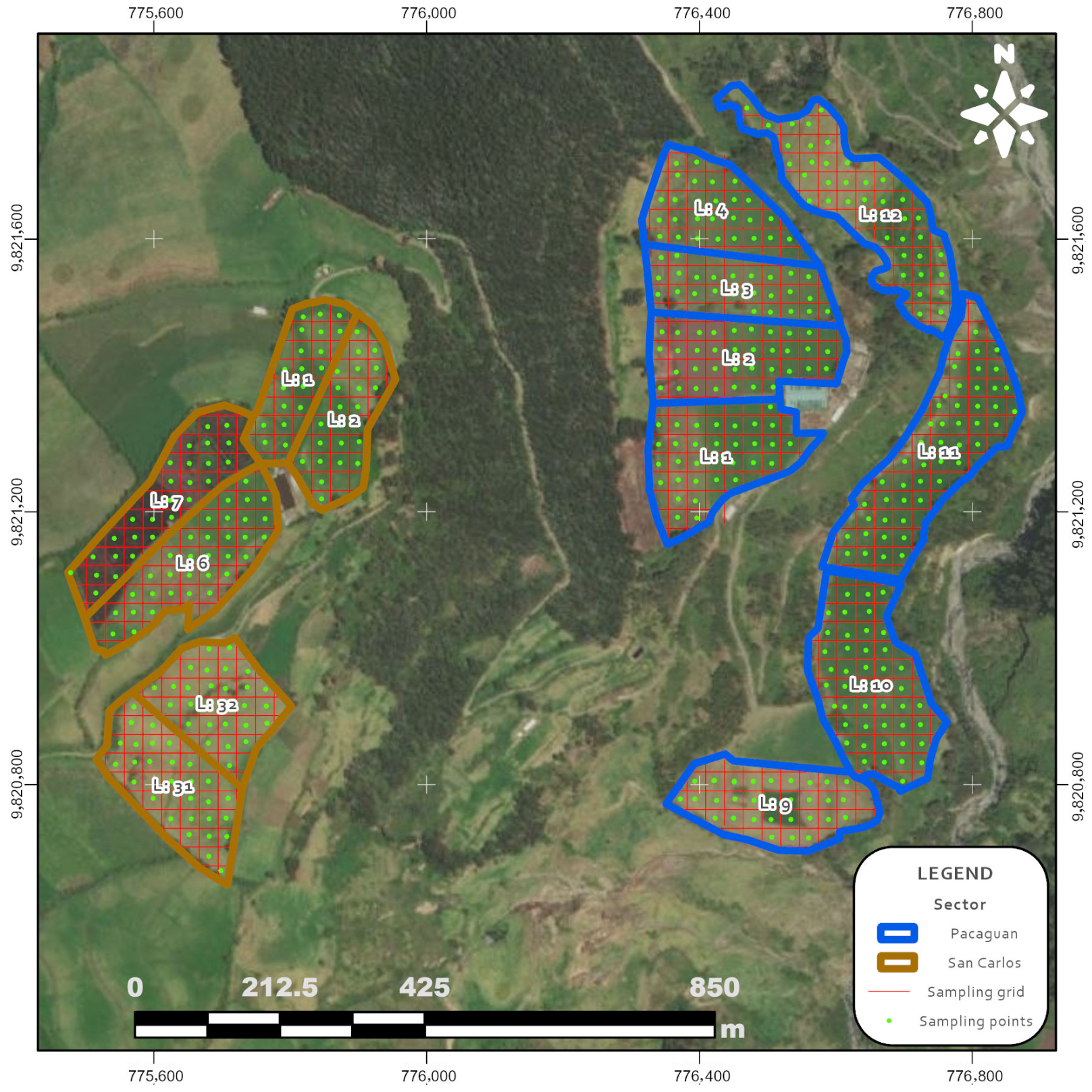
This consisted of an initial approach to the current reality of livestock farming, allowing the study area to be defined and field data collection to be planned. To do this, the “Create Fishnet” tool from the GIS analysis environment was used [34]. Quadrangular grids with sides measuring 27.5 m were marked out, and a sampling point was located at the centre of each cell. This arrangement allowed for a horizontal separation of 25 metres between points, in both north–south and east–west directions, facilitating the location of those points via GPS during fieldwork.
The study was conducted at Hacienda Pacaguan (Riobamba canton, Chimborazo, Ecuador). The farm covers 146 ha, with 40 ha dedicated to forage production. This production unit implements a semi-intensive production system for dairy farming, with a herd of 210 heads of cattle, consisting of Holstein, Jersey, Brown Swiss and crossbreeds. Of these 210 heads, 100 cows are in production and are kept in stables, yielding an average of 16 litres of milk per cow per day and are fed mainly on fresh chopped alfalfa and corn silage, supplemented with an average of 4 kg of feed per day and mineral salts at their disposal. The rest of the herd grazes on pastures consisting of species such as Lolium multiflorum (ryegrass), Trifolium repens (white clover), Cichorium intybus (chicory), and Plantago major (broadleaf plantain).
As part of the review of secondary information, the data available on the farm regarding soil analysis, specifically from 2015 and 2017, was systematised. Table 1 summarises the historical results of these analyses, which provide a general reference of the physicochemical parameters relevant to soil management. However, because only two sampling years are available, the differences observed between 2015 and 2017 should be interpreted with caution and cannot be considered a temporal trend. Instead, these values serve as contextual information on the soil condition prior to the implementation of the spatial analysis model.
As for irrigation water quality in the sprinkler systems, there are no updated records or recent analyses available, so it was not possible to systematise this information in the present study.
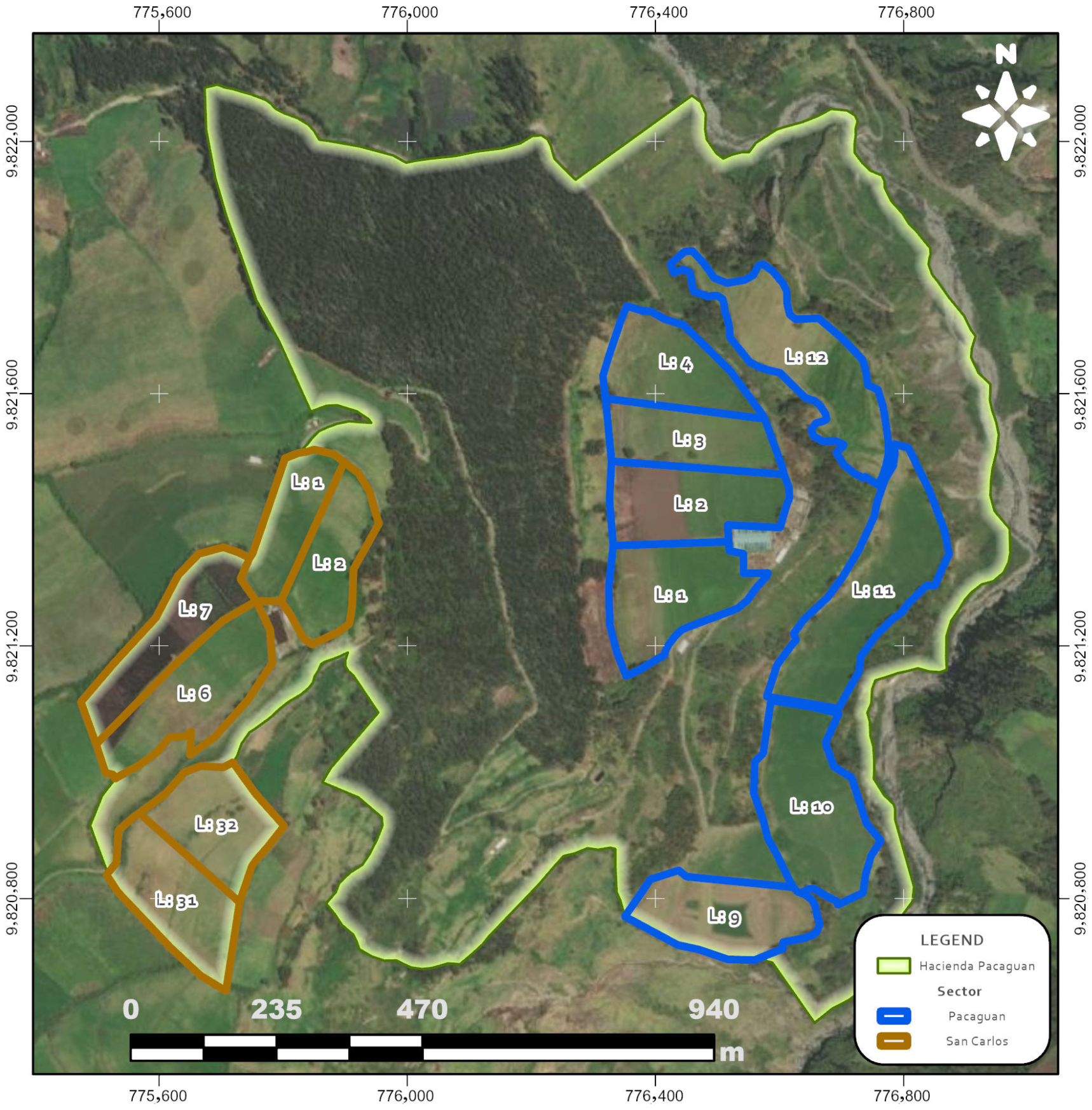
As part of the initial characterisation, a georeferenced survey of the pasturelands was carried out using a handheld GPS receiver. This information made it possible to delimit the pasture plots or lots, which were organised by sector and coded according to the numbering system previously established by the ranch. The spatial distribution of these production units is shown in Figure 2.
Georeferencing made it possible to quantify the individual areas of the plots used for forage production. This spatial delimitation is essential for proper grazing planning, crop rotation and the differentiated application of management practices. Table 2 presents a summary of the identified plots, grouped by sector (Pacaguan and San Carlos), with their corresponding numbering and area in hectares.
The total area devoted to forage amounts to 43.43 hectares, distributed across 14 productive plots. This information was essential for the design of the spatial assessment model, as it allowed for the establishment of homogeneous units of analysis in terms of use and management.
Based on the spatial boundaries of the pasture plots, a regular grid was generated to serve as the basis for field sampling. This strategy ensured an approximate density of 10 points per hectare, which represented an adequate level of detail for analysing the spatial variability of the soil. This sampling intensity is consistent with digital soil mapping recommendations, where systematic grids of 8–12 samples per hectare are considered adequate for capturing fine-scale spatial variability in pasture systems. Similar densities have been used in Andean and temperate grazing studies to support high-resolution geostatistical interpolation [35,36]. Considering the 43.43 georeferenced hectares, a total of 441 sampling points were established. The spatial distribution of the grid and the defined points is shown in Figure 3.

2.2.2. Diagnostic Phase

Data was collected on site using sensors and portable instruments that allowed for quick and reliable readings of four soil variables: soil compaction, water retention capacity, pH and electrical conductivity. Compaction was measured using a dynamic cone penetrometer, which was a custom-built device specifically designed and adapted for this study. The compaction, measured in megapascals (MPa), is an indicator of soil density and its resistance to root penetration [37]. Water retention capacity was evaluated using the KS-D1 sensor (Delmhorst Instrument Co., Ltd., Towaco, NJ, USA). For this, soil moisture tension (the soil’s capacity to retain water available to plants) was taken into account and was measured in centibars [38]. pH was measured on a decimal scale, ranging from 0 to 14, using the Kelway Soil Tester (Kel Instruments Co., Inc., Wyckoff, NJ, USA) and indicates the degree of acidity or alkalinity of the soil; an unsuitable pH affects the availability of nutrients and microbial activity [39]. Lastly, electrical conductivity was recorded using the EC-350 Aquaterr meter (Aquaterr Instruments, Bogotá D.C., Colombia), measured in deciSiemens per metre (dS/m), an indirect indicator of the concentration of soluble salts in the soil, attributed to water absorption by plants [39,40].
To minimise the influence of surface residues such as litter, roots and small stones, each measurement point was cleared manually before inserting the sensor or penetrometer. Given that the study relied on portable instruments specifically designed for direct in-field measurements, soil sieving was not required to ensure accuracy. These instruments are calibrated to operate under natural field heterogeneity, which allows reliable and representative readings of near-surface soil conditions without laboratory preparation.
Information was collected at 441 georeferenced points distributed across the forage areas of the Pacaguan and San Carlos sectors to characterise soil health. At each point, four key soil variables were measured due to their importance for forage productivity and ecosystem functioning: pH (0–14 scale, acidity/alkalinity), electrical conductivity (EC) (dS/m, indicator of soluble salt concentration), water retention capacity (centibars, soil moisture tension) and compaction (MPa, soil density and resistance to root penetration). Data collection followed standardised protocols and was georeferenced to enable spatial analysis, interpolation and the generation of thematic maps for identifying critical areas and supporting sustainable management strategies.

2.2.3. Cartographic Analysis Phase

The cartographic analysis phase was divided into five stages: exploratory analysis of spatial data, interpolation, validation, reclassification and overlay.
Exploratory Analysis
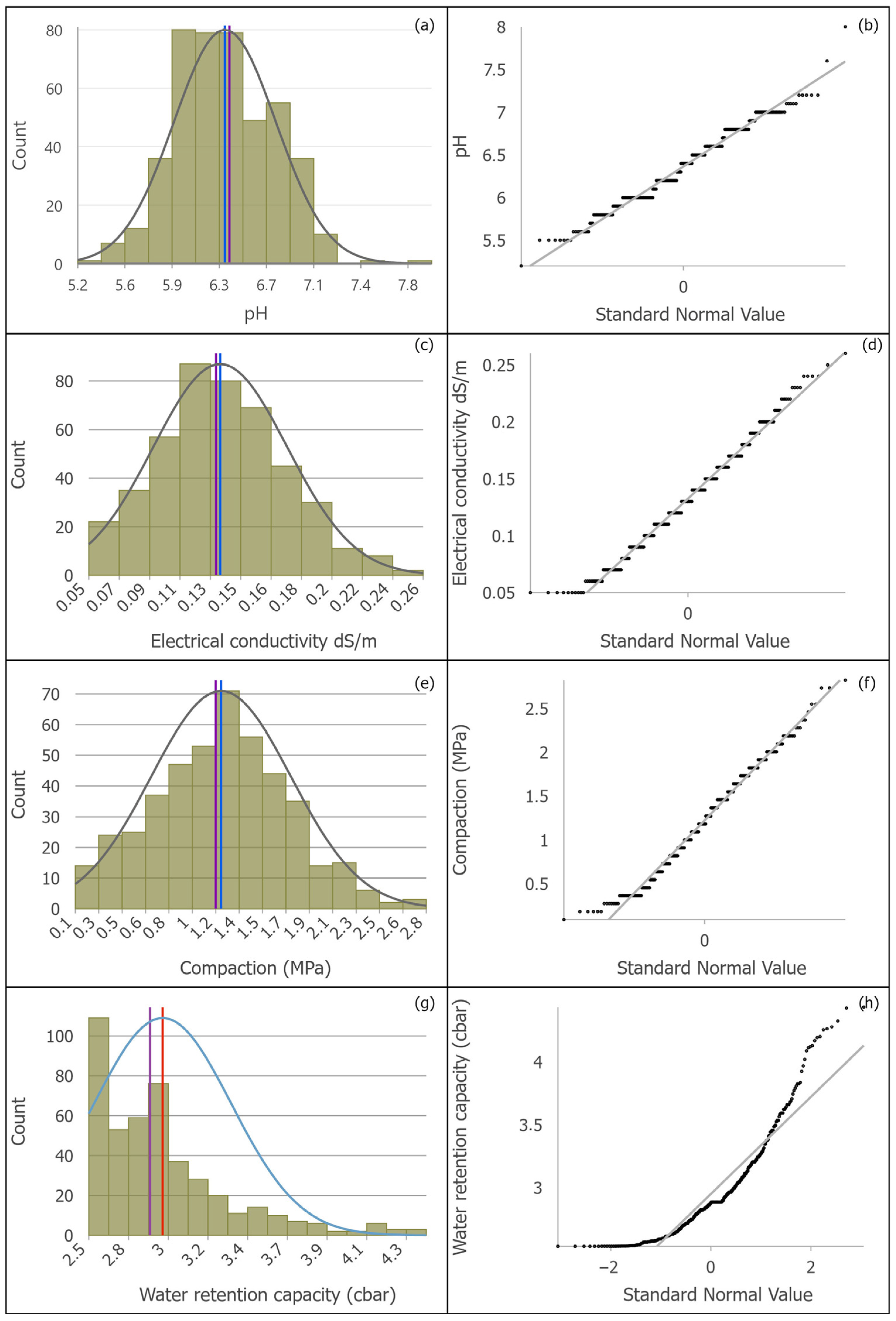
Graphical and cartographic tools were applied to examine the distribution of data and identify outliers and possible spatial patterns [41]. The graphs were created specifically for the analysis of this cartographic phase. Using histograms and quantile-quantile plots, the normality of each variable was assessed, considering the proximity between the mean and median, a kurtosis close to 3 and asymmetry close to zero. At the same time, thematic maps allowed for the visualisation of trends and preliminary spatial autocorrelation [42].
The normality of the four soil variables (pH, electrical conductivity, water retention capacity and compaction) was evaluated using the Shapiro–Wilk test. The W-statistic and p-value were obtained for each variable to determine compliance with the assumption of normality. pH and electrical conductivity showed distributions consistent with normal behaviour (p > 0.05), whereas water retention capacity and compaction exhibited significant deviations from normality (p < 0.05). Accordingly, a logarithmic transformation was applied only to the variables that did not meet the normality criteria prior to the interpolation procedure. Histograms and quantile-quantile plots were included to support visual assessment of distributional patterns and to guide subsequent geostatistical analysis.
Spatial Interpolation
Continuous surfaces were generated using the EBK method [43], selected for its ability to automatically adjust the most appropriate semivariogram model. The following parameters were used for each variable: subset size (100), overlap factor (1), number of simulations (300), semivariogram type (power) and standard circular neighbourhood (10 to 15 neighbours, one sector and radius of 80 m). Logarithmic transformation was applied only to variables with non-normal distribution [44]. Advanced modelling approaches, such as electrokinetic optimisation of spatially heterogeneous soils [45], also highlight the importance of capturing fine-scale variability, supporting our use of EBK for Andean conditions.
Recent studies have demonstrated the robustness of EBK for modelling spatial chemical variability in soils, particularly in heterogeneous agricultural landscapes. EBK has been shown to outperform deterministic and classical geostatistical methods for predicting soil chemical and physical attributes at multiple depths and spatial scales [46,47]. These studies confirm that EBK automatically optimises semivariogram parameters and provides stable predictions in complex environments, supporting its suitability for the geostatistical modelling of Andean high-altitude livestock soils.
Surface Validation
Each interpolated surface was subjected to cross-validation, comparing the measured values Z(xi) with the predicted values Z^(xi). It was verified that the mean and standardised mean error (ME) were close to zero (ei = Z(xi) − Z^(xi)), that the errors followed a normal distribution and that the relationship between observed and estimated values was consistent. If these criteria were not met, parameters were adjusted, and the interpolation process was repeated until satisfactory results were achieved [35,36].
EBK cross-validation confirmed adequate predictive performance across all variables, with ME values approaching zero, standardised root mean square error (SRMSE) values close to 1 and root mean square error (RMSE) and average standard error (ASE) within acceptable geostatistical ranges [44]
Reclassification of Variables
Once validated, the areas were reclassified according to previously defined ranges in order to spatially categorise the behaviour of each variable [48].
Overlap Analysis and Prioritisation
Based on the reclassified areas, weighted values were assigned to each category according to level of criticality, establishing a proportional scale for intervention (Table 1). Finally, a spatial overlap analysis was performed that integrated the variables studied, generating a composite area that enables the identification of priority areas for sustainable soil management interventions for forage purposes [49,50].

2.2.4. Proposed Management Phase

Differentiated intervention measures were established based on the results of the spatial analysis in ArcGIS Pro 3.5, which can be adapted to other production units with similar conditions. The approach adopted facilitates not only a quick and practical assessment of soil conditions but also its direct application by farm technical staff, even without specialised training in soil management. This methodology is particularly useful for promoting regenerative practices in intensive and extensive livestock systems (Table 3).
It is important to clarify that the management practices described in this section correspond to technical recommendations derived from the spatial model and are not necessarily practices currently implemented in the farm. Therefore, these strategies should be interpreted as evidence-based proposals with potential for future adoption by the technical staff, rather than descriptions of existing interventions in the production system.
Table 3. Prioritisation of sustainable soil management strategies at Hacienda Pacaguan.
ParameterRangeClassificationPrioritisation of InterventionsValueManagement Strategy
pH<5AcidicHigh3Amendment: pH of 4.8 applied to 25.1 tn·ha−1 [51].
5–6.5Moderately acidicMedium2Incorporate organic matter and fertilisers without acid reactions [52].
6.5–7.5NeutralNone0Do not intervene.
7.5–9Moderately alkalineMedium2Add organic matter and fertilisers without alkaline reaction [52].
>9AlkalineHigh3Incorporate fertilisers that do not produce alkalinity [53].
Electrical conductivity (dS/m)0–2.0Non-salineNone0Do not intervene.
2.1–4.0Slightly salineLow1Agro-hydrotechnical measures (control of saline water table and application of drainage systems—localised irrigation with channels or pipes—and salt leaching). Biological control (use of resistant grafts, salt-tolerant varieties, diversity of microbiota and use of arbuscular mycorrhizal fungi). Bio/ecoengineering (use of nanomaterials/nanofertilisers, use of physical or hydraulic barriers, bio-priming with abscisic acid, desalination by evaporation-condensation, filtration, crystallisation and application of organic/mineral fertilisers). Chemical control (application of Ca/Mg-enriched conditioners and application of phytohormones such as jasmonic and salicylic acids, ethylene and auxins) [54,55]. Salt leaching and use of tolerant varieties [56]. It is important to note that the intensive use of mineral amendments may increase soil electrical conductivity and, in some cases, mobilize trace metals. Therefore, organic amendments such as compost, straw and manure are recommended as long-term strategies to improve soil structure and biological functioning while avoiding salinity or contamination risks [55,57]
4.1–8.0Moderately salineMedium2
8.1–16.0Highly salineHigh3
16.1+Very salineVery high4
Water retention capacity (kPa)<10Saturated soilHigh3Incorporate organic matter (2 tn ha−1 year−1) [57,58].
10–20Soil at field capacityNone0Do not intervene.
20–60Soil within the usable moisture rangeLow1Incorporate organic matter (0.6 to 1 tn ha−1 year−1) [57,58]
>30Soil in the critical moisture rangeHigh3Incorporate organic matter (2 tn ha−1 year−1) [57,58].
Soil compaction (penetration resistance in MPa)<1LowNone0No intervention
1–2ModerateLow1Aerate the soil with a scarifier (25 to 250 mm deep) and then incorporate sandy soil and organic fertiliser [37].
2–4HighMedium2Aerate the soil with a scarifier (50 to 150 mm deep) appropriate for permanent pasture systems where most root activity occurs in the upper soil layers, then incorporate sandy soil and organic fertiliser [37].
>4Very highHigh3Aerate the soil with a subsoiler (100 to 240 mm deep) and then incorporate sandy soil and organic fertiliser [59].
The aeration depths recommended in Table 1 (25–250 mm) correspond to the functional rooting zone of permanent pastures. In temperate and tropical grass-based livestock systems, more than 80–90% of root biomass is concentrated in the upper 20–30 cm of soil, where compaction most strongly restricts forage growth. Therefore, deeper subsoiling is unnecessary under pasture-based production and was not considered in this study [37,60].

3. Results

3.1. Cartographic Analysis Phase

Statistical Distribution of pH, Electrical Conductivity, Water Retention Capacity, and Soil Compaction

The descriptive statistics show that pH values ranged from 5.2 to 8.0, with a mean of 6.36, median of 6.4 and low variability (CV = 0.06), indicating a symmetrical distribution (skewness = 0.15) and mesokurtic behaviour (kurtosis = 2.91). Electrical conductivity presented minimum and maximum values of 0.05 and 0.26 dS/m, respectively, with a mean of 0.13, median of 0.13 and moderate variability (CV = 0.32), showing slight positive skewness (0.27). Water retention capacity ranged widely (12.6–84.5 cbar), with a mean of 20.92, median of 17.79 and high dispersion (CV = 0.54), reflecting a right-skewed distribution (skewness = 2.89) associated with localised zones of high tension. Soil compaction varied between 0.09 and 2.82 MPa, with a mean of 1.22, median of 1.18 and moderate variability (CV = 0.44), showing slight positive skewness (0.13), indicating the presence of some more compacted areas within the landscape.
The descriptive analysis for pH shows values close to the mean (6.36) and median (6.40), suggesting a symmetrical distribution (Figure 4a). In addition, the quantile-quantile plot (Figure 4b) shows that the data closely align with the theoretical reference line, indicating a good fit to a normal distribution.
The evaluation of the distribution of the electrical conductivity variable showed behaviour close to normal. The histogram (Figure 4c) depicts a superimposed normal distribution curve that fits the data adequately, with a mean of 0.13254 dS/m and a median of 0.13 dS/m, indicating a symmetric distribution. The quantile-quantile plot for electrical conductivity (Figure 4d) supports this observation, as most points align on the reference line, with slight deviations at the extremes, suggesting a slightly positive asymmetry without significantly compromising the normality of the data.
For the water retention capacity variable, a logarithmic transformation was applied in order to approximate the data to a normal distribution. Although the mean (2.94) and median (2.87) values were close (Figure 4g), the quantile-quantile plot showed deviations at the beginning and end of the reference line, indicating a slight lack of normality at the extremes of the distribution (Figure 4h).
Furthermore, the exploratory analysis indicates that the soil compaction variable tends toward a normal distribution, given that the mean (1.22) and median (1.18) values are close (Figure 4e). Likewise, the quantile-quantile plot shows that the data consistently follow the theoretical reference line (Figure 4f), which supports the assumption of normality in the distribution.
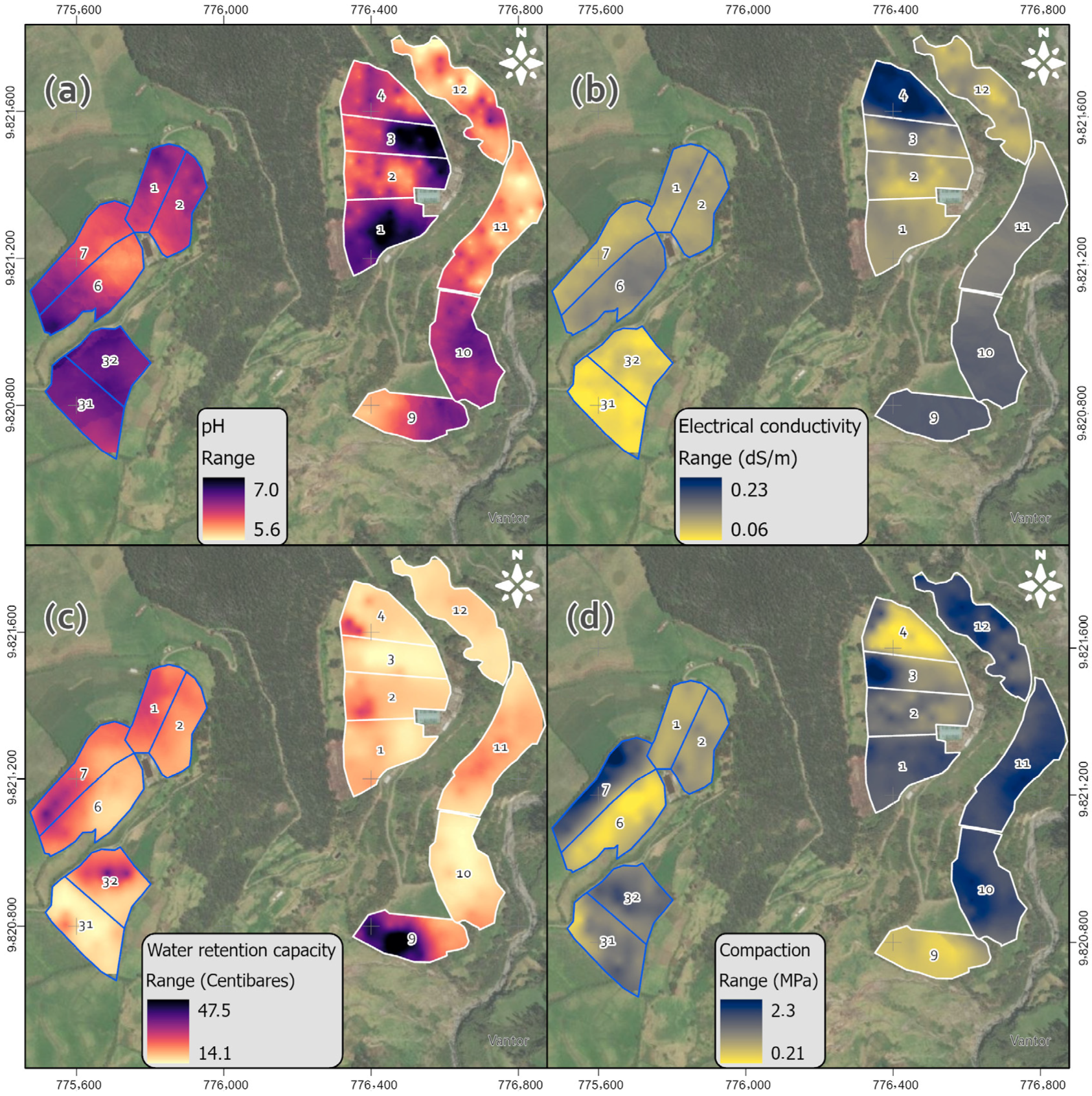
Figure 5 shows the spatial interpolation maps for pH, electrical conductivity, water retention capacity and soil compaction of the pastures at Hacienda Pacaguan. This analysis was made based on data collected at 441 sampling points and reflects the spatial distribution of these variables.
The interpolated pH values range between 6.6 and 7.0, which indicates slightly acidic to neutral conditions. In the Pacaguan sector, plots 2, 3 and 4 have soils with a pH closer to neutral, which is favourable for nutrient availability and soil biological activity. In contrast, plots 9, 10, 11 and 12 show low values within the range, indicating higher acidity. Greater homogeneity was found in the San Carlos plots, although several areas were slightly more acidic, such as plots 6 and 7. Plots 31 and 32 showed a tendency towards neutral values, which may be due to lower animal load or different agronomic management in those plots.
The interpolated electrical conductivity values range from 0.06 to 0.23 dS/m, indicating low salinity levels compatible with soils suitable for livestock production. However, significant differences were observed between sectors and between plots. In the San Carlos sector, plots 31 and 32 have the highest salinity values, showing surface salt accumulations that could be associated with poor drainage, compaction or a history of intensive fertilisation. In the rest of the San Carlos sector (plots 1, 2, 6 and 7), as well as in most of the Pacaguan sector, electrical conductivity values are low to moderate. Plots 9, 10, and 11 show areas with lower concentrations, suggesting a good leaching capacity and low risk of salinisation.
The spatial interpolation map of soil water retention capacity (Figure 5), expressed in centibars, is an important indicator that allows us to evaluate water availability for plants and the efficiency of the soil in storing usable water. The interpolated values range from 14.1 to 47.5 centibars, with lower values indicating greater water availability (lower retention tension), a favourable condition for root development and nutrient absorption. In this regard, plot 9 in the Pacaguan sector shows more optimal conditions, with green areas indicating lower capillary retention and greater ease of water extraction by plants. On the other hand, plots 2, 3, 4, 10 and 12 in the Pacaguan sector and plots 31 and 32 in San Carlos have high values (orange to reddish colours), which shows greater water retention, possibly associated with soil compaction or fine textures with low permeability, causing poor root development, especially in conditions of low precipitation or poor irrigation.
The spatial distribution of soil compaction shows different levels of compaction according to the classes defined in the methodology. The classification showed that the areas with the lowest compaction (low category) were plots 1 and 2, located in the western part of the study area, indicating an apparently loose soil structure with lower resistance to penetration. In contrast, plots 3 and 4, located in central areas and in the northernmost part, showed moderate levels of compaction. These areas show an increase in soil resistance, possibly associated with human activities or particular soil and climate conditions (Figure 5). On the other hand, plots 9, 10, 11 and 12, located in the south and near the coast, showed good compaction levels, evidencing a more consolidated and resistant soil structure. Finally, plots 6, 31 and 32, located in areas far from the direct influence of intensive agricultural and urban activities, showed higher levels of compaction, falling into the “very good” category (Figure 5). This suggests less anthropogenic intervention in these areas and a more stable soil structure.

3.2. Analysis of Overlap and Prioritisation of Interventions

To integrate the spatial information of the variables considered in the study, the areas of each variable were reclassified and assigned values between 0 and 4 according to the degree of priority for intervention in sustainable soil management. Subsequently, applying the principle of map algebra, these values were added together, generating a composite area that synthesises the areas with the greatest or least urgency for intervention.
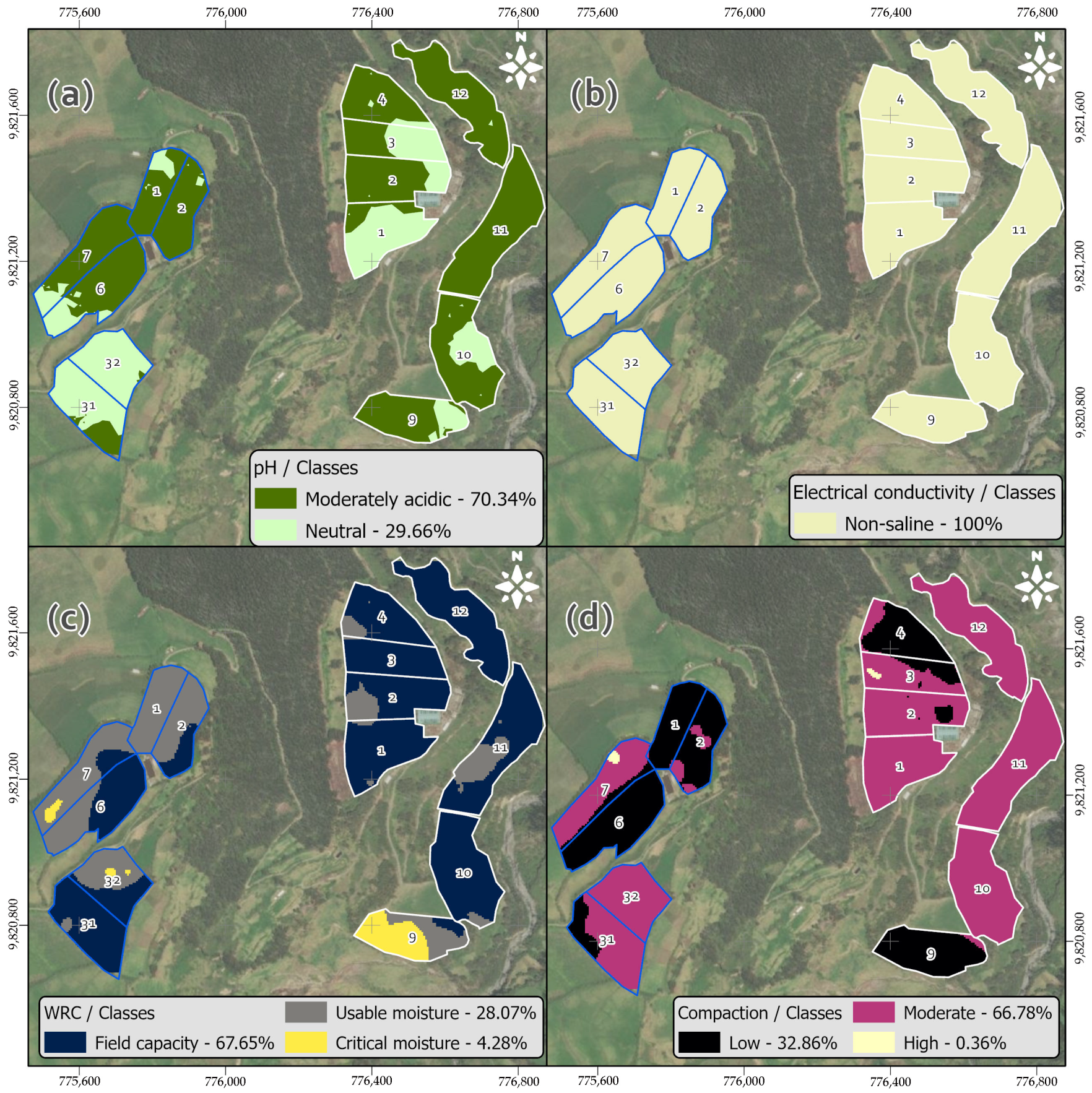
The result of this analysis is represented in the Sustainable Soil Management Intervention Prioritisation Map (Figure 6), which has two categories of intervention: low (green) and moderate (orange). The low-priority areas cover most of the study area and correspond to sectors where intervention recommendations can be applied in the long term, provided that periodic monitoring is carried out, depending on the sensitivity of each variable. Areas with moderate priority are distributed in specific sectors of the plots in the Pacaguan and San Carlos sectors, where it is advisable to implement management measures in the medium term, with annual monitoring to detect and correct possible deterioration in the most critical soil variables in a timely manner.

3.3. Proposal Phase of the Spatial Analysis Model

Based on the results obtained from the interpolation, reclassification and spatial overlay analyses, a proposal was developed for differentiated soil management strategies aimed at mitigating or correcting the conditions identified. For each variable, a table was created detailing the classes identified, surface area, percentage of coverage and respective intervention strategies.

3.3.1. Soil pH

Table 4 shows the pH classification into two categories: neutral (6.5 to 7.5) and moderately acidic (5 to 6.5). It was determined that 70% of the area evaluated had moderately acidic pH values. In these plots, the use of liming is recommended as the primary strategy to correct soil acidity, a practice widely implemented in temperate and tropical regions. Although the incorporation of organic matter contributes to improving soil structure and nutrient availability, humic and fulvic acids may further increase acidity if applied without pH correction, as these acids—intermediates generated during microbial degradation of soil organic matter—may temporarily increase proton availability and thus intensify acidity if incorporated without prior liming [39]. Therefore, liming should be complemented with balanced applications of organic amendments and mineral fertilisers, preferably using nitrate-based sources. For the remaining 30% of the plots with neutral pH, no specific corrective interventions are required.

3.3.2. Electrical Conductivity

The analysis of this variable shows that the 43.43 ha are non-saline, indicating that soluble salt levels are adequate and do not pose a threat to pasture development (Table 5). Given this situation, no intervention is recommended, but periodic monitoring of the variable is advised to detect possible changes.

3.3.3. Water Retention Capacity

68% of the area analysed has optimal conditions in terms of water retention capacity, corresponding to the field capacity range. Meanwhile, 28% of the soil is in a usable moisture range, and only 4% of the soil is in critical condition. So, organic matter in the form of compost should be incorporated in different doses depending on the degree of impact (Table 6).

3.3.4. Soil Compaction

Soil compaction is one of the most important variables in the degradation of soils used for pasture. Table 7 shows that 67% of the area has moderate compaction, and 0.1% has a high level of compaction. In both cases, it is advisable to use solid tine scarifiers or punch aerators, followed by light topdressing or sanding, using a 3:1 mixture of sandy soil and compost, in order to improve soil aeration and structure.

4. Discussion

The spatial diagnosis of the current state of the soil at Hacienda Pacaguan revealed marked heterogeneity in pH, electrical conductivity, water retention capacity and soil compaction—key edaphic properties that regulate forage productivity and overall sustainability in high-altitude livestock systems. Rather than interpreting each variable in isolation, this study developed an integrated spatial model in which the four indicators were combined through a weighted overlay, enabling the identification of multi-factor soil constraints at the landscape scale. This integrative approach addresses the knowledge gaps identified in the introduction by providing a holistic and spatially explicit understanding of soil condition, thereby reducing result dispersion and improving the applicability of the model for practical decision-making.
Spatial patterns of acidity, compaction and moisture are strongly influenced by pedogenic and topographic processes characteristic of Andean volcanic soils. The dominance of allophanic minerals and the intense rainfall typical of high-altitude paramo and montane ecosystems promote base cation leaching and acidification across the landscape [61,62]. Likewise, microtopographic variation affects soil moisture distribution and infiltration dynamics, contributing to the heterogeneity observed in water retention patterns in volcanic ash soils [63]. In addition, the cumulative effect of livestock trampling has been widely documented as a major driver of soil compaction in grazing systems, reinforcing the spatial differences detected in this study [60]. These underlying mechanisms help explain the distribution of soil constraints and strengthen the rationale for spatially informed, site-specific management strategies in Andean livestock systems.
The predominance of moderately acidic soils (pH 5.0–6.5), affecting 70% of the evaluated area, is consistent with patterns documented in cold Andean regions, where soil acidity results from the interaction of several natural and management-driven processes. The use of ammonium-based fertilisers and livestock trampling accelerates proton release and base cation displacement. Beyond these factors, acidification in highland volcanic soils is also intensified by high rainfall and leaching of Ca2+, Mg2+ and K+ [61], advanced weathering of Andisols dominated by allophanic minerals [62] and organic matter accumulation under low temperatures, a mechanism widely documented in paramo and montane pastures [64]. Similar acidity ranges have been reported for Ecuadorian high-elevation grazing systems, where reduced base saturation directly limits forage productivity [65]. In agreement with these studies, our integrated model highlights the need for corrective practices, including moderate liming with calcium carbonate (CaCO3) or dolomitic limestone (CaMg(CO3)2) [66], complemented by organic amendments and neutral-reaction fertilisers such as calcium nitrate (Ca(NO3)2) and potassium nitrate (KNO3), which prevent further acidification [67].
Electrical conductivity remained within the non-saline range across the study area, which is favourable for forage systems [23]. Local hotspots with slightly elevated EC in the San Carlos sector were identified by the integrated analysis. This is likely associated with drainage limitations or localised fertiliser accumulation, patterns also observed in Andean livestock landscapes subjected to intensive fertilisation [68]. Although current levels do not pose a risk, the model reveals where monitoring should be prioritised, as progressive salt accumulation may reduce microbial activity and hydraulic conductivity [69].
Water retention assessment revealed considerable spatial variability, with most of the area remaining close to field capacity, while some sectors showed usable moisture conditions and a smaller portion presented critical moisture. These patterns are consistent with previous studies in Andean soils, where variations in water retention are strongly influenced by fine textures, compaction and low organic matter content [63]. Soils that retain large amounts of water at high tensions exhibit limited availability for plant uptake, particularly in heavy clay horizons where moisture is held above 1500 kPa (1500 cbar), thereby restricting nutrient absorption and root development [70,71]. Similar limitations affecting forage root development have been identified in temperate and tropical Andisols [61]. To improve these conditions, the literature recommends the incorporation of organic amendments, typically 5 to 20 t ha−1, to enhance soil structure, reduce bulk density and increase macroporosity, effects documented in pastoral systems under comparable conditions [72].
Soil compaction has emerged as one of the most widespread constraints, with 67% of the area presenting moderate compaction. This pattern is frequently observed in livestock-dominated systems where trampling, mechanised operations and limited pasture rotation reduce macroporosity and hinder root penetration [73]. The integrated model allowed compaction patterns to be evaluated jointly with acidity and moisture constraints, identifying zones where mechanical loosening (e.g., tine or chisel scarifiers and core aerators) followed by the incorporation of compost and coarse-textured amendments would be most effective [60]. Regarding fertility management, the use of neutral-reaction fertilisers such as calcium nitrate (Ca(NO3)2) and potassium nitrate (KNO3) is advised, as these sources avoid soil acidification and contribute to replenishing exchangeable bases [74]. In acidic soils, nitrates do not reduce acidity directly; instead, they prevent further acidification by avoiding ammonium nitrification [75]. In acidic soils, nitrate fertilisers do not directly reduce acidity but prevent additional proton release associated with ammonium nitrification [76]. Complementary liming is widely supported in Andean agronomic literature as an effective strategy to restore nutrient availability [77,78]. Similar spatial patterns have been reported in grazing systems worldwide. In New Zealand and Australia, for example, high livestock pressure on Andisols and silt loams produces patchy compaction, reduced infiltration and localised waterlogging—conditions comparable to those found in the present study [60,73]. Likewise, European pasturelands subjected to intensive stocking exhibit acidity-compaction interactions that reduce root elongation and nutrient uptake, reinforcing the need for spatially explicit diagnosis and site-specific management [71]. These parallels confirm that the processes observed at Hacienda Pacaguan align with well-documented global patterns in pastoral landscapes.
The final integrated map synthesises the four datasets and prioritises intervention zones with low to moderate urgency. These spatial patterns reflect dynamics identified in territorial management studies conducted in the Ecuadorian Andes, where heterogeneity, land-use history and terrain shape soil rehabilitation priorities [79]. Comparable spatial approaches have been used to guide soil conservation and targeted interventions in mountainous agricultural landscapes of Ecuador [80]. Moreover, rural extension experiences in the Andes emphasise the importance of spatially explicit information to generate site-specific recommendations and strengthen participatory planning with producers [81], aligning with precision agriculture principles that recognise spatial variability as an opportunity for cost-effective management [82].
A limitation of this study is that only surface soil measurements were analysed, which may not fully capture deeper processes influencing pasture productivity. Future research should incorporate multi-depth sampling and temporal monitoring to evaluate the stability of the spatial patterns identified. In addition, integrating the four variables into a single soil multifunctionality or fertility index may enhance the model’s analytical power, as demonstrated by recent advances in multifunctionality assessment [83] and soil fertility index development [84].

5. Conclusions

The spatial analysis carried out using four key soil variables—pH, electrical conductivity, water retention capacity and compaction—allowed for a detailed and spatially explicit diagnosis of soil heterogeneity at Hacienda Pacaguan. The model revealed that although most areas present conditions compatible with forage production, 70% of the pastures exhibit moderately acidic pH, 32% show suboptimal water retention and 67% present moderate compaction. These constraints highlight the need to implement differentiated strategies, including liming to correct acidity, the incorporation of organic matter to improve structure and moisture dynamics, and mechanical aeration to alleviate compaction and enhance root development.
The spatial prioritisation approach—based on EBK interpolation, reclassification and weighted overlay—proved to be an operationally simple and replicable framework for supporting land-use planning in livestock systems. By identifying areas with low and moderate intervention priority, the model enables more efficient allocation of economic and technical resources according to the severity of each limitation, thereby promoting adaptive and sustainable soil management at the farm scale.
Beyond its application at Hacienda Pacaguan, the methodological workflow developed in this study can be adopted by agricultural extension programmes and land management agencies seeking to strengthen decision-making in forage-based systems. While the model does not constitute a new soil assessment technique, it integrates existing geospatial tools into a practical and reproducible workflow suitable for livestock landscapes in mountainous regions of Ecuador.
Future research should incorporate multi-depth soil sampling, seasonal and interannual monitoring to evaluate temporal stability and the inclusion of additional variables (e.g., soil organic carbon, bulk density and infiltration rate). Integrating these indicators into multifunctionality or soil fertility indices would further enhance the analytical power of the model and improve its usefulness for regional planning and sustainable livestock intensification efforts.

Author Contributions

Conceptualisation, J.C.-L., A.G.-G., T.V.-T. and V.M.-L.; methodology, J.C.-L.; statistical analysis, J.C.-L., writing—original draft preparation, J.C.-L., A.G.-G., T.V.-T., V.M.-L. and W.V.-C.; writing—review and editing, J.C.-L., T.V.-T., V.M.-L. and W.V.-C. All authors have read and agreed to the published version of the manuscript.

Funding

This research received no external funding.

Institutional Review Board Statement

Not applicable.

Informed Consent Statement

Not applicable.

Data Availability Statement

Data is contained within the article.

Acknowledgments

The research was made possible thanks to funding from Vicente Eduardo Oviedo, owner of Hacienda Pacaguan, as well as the support of the farm’s staff, who provided the necessary facilities for the fieldwork to be carried out.

Conflicts of Interest

The authors declare no conflicts of interest.

References

  1. Samad, H.A.; Kumar Eshwaran, V.; Muquit, S.P.; Sharma, L.; Arumugam, H.; Kant, L.; Fatima, Z.; Sharun, K.; Aradotlu Parameshwarappa, M.; Latheef, S.K.; et al. Sustainable Livestock Solutions: Addressing Carbon Footprint Challenges from Indian and Global Perspectives. Sustainability 2025, 17, 2105. [Google Scholar] [CrossRef]
  2. Winder, M.G. La ganadería en América Latina y el Caribe: Una reflexión sobre sus perspectivas y desafíos. In La Ganadería en América Latina y El Caribe: Alternativas para la Producción Competitiva, Sutentable e Incluyente de Alimentos de Origen Animal; Printing arts México, S. de R.L. de C.V.: Guadalajara, Mexico, 2015; pp. 27–49. ISBN 978-607-715-305-4. [Google Scholar]
  3. Núnez, R.; Ramírez, R.; Fernández, S.; Araujo, O.; García, M.; Díaz, T. La Ganadería en América Latina y el Caribe: Alternativas para la Producción Competitiva, Sutentable e Incluyente de Alimentos de Origen Animal, 1st ed.; Printing arts México, S. de R.L. de C.V.: Guadalajara, Mexico, 2015; ISBN 978-607-715-305-4. [Google Scholar]
  4. Organización de las Naciones Unidas para la Agricultura y Alimentación. Estadísticas Sobre la Alimentación y Agricultura. FAOSTAT. Available online: https://www.fao.org/faostat/en/#data/QCL (accessed on 23 October 2023).
  5. Williams, G.W.; Anderson, D.P. Growth of the Latin American Livestock Industry: Situation and Challenges. Choices 2019, 34, 1–12. [Google Scholar]
  6. Pino Peralta, S.; Ortega Álvarez, K. Análisis de los Principales Indicadores Socioeconómicos del Sector Agropecuario Ecuatoriano (2000–2022). Perspect. Rural. 2024, 22, 1–32. [Google Scholar] [CrossRef]
  7. Instituto Nacional de Estadística y Censos. Encuesta de Superficie y Producción Agropecuaria Continua. 2021. Available online: https://www.ecuadorencifras.gob.ec/encuesta-superficie-produccion-agropecuaria-continua-2021/ (accessed on 24 June 2025).
  8. Instituto Nacional de Estadística y Censos. Encuesta de Superficie y Producción—Agropecuaria. Available online: https://www.ecuadorencifras.gob.ec/encuesta-de-superficie-y-produccion-agropecuaria-continua-bbd/ (accessed on 1 July 2025).
  9. United Nations Convention to Combat Desertification. La Desaparición Silenciosa de los Pastizales Amenaza el Clima, la Alimentación y el Bienestar de Miles de Millones de Personas. Available online: https://www.unccd.int/es/news-stories/press-releases/silent-demise-vast-rangelands-threatens-climate-food-wellbeing-billions (accessed on 1 July 2025).
  10. Lal, R. Restoring Soil Quality to Mitigate Soil Degradation. Sustainability 2015, 7, 5875–5895. [Google Scholar] [CrossRef]
  11. Gregory, A.S.; Ritz, K.; McGrath, S.P.; Quinton, J.N.; Goulding, K.W.T.; Jones, R.J.A.; Harris, J.A.; Bol, R.; Wallace, P.; Pilgrim, E.S.; et al. A Review of the Impacts of Degradation Threats on Soil Properties in the UK. Soil Use Manag. 2015, 31, 1–15. [Google Scholar] [CrossRef]
  12. Sánchez, C.I.M.; Enriquez, M.D.E. Degradación del suelo y desarrollo económico en la agricultura familiar de la parroquia Emilio María Terán, Píllaro. Siembra 2021, 8, e1735. [Google Scholar] [CrossRef]
  13. Mateo, S. Evaluación de la Degradación de Suelos en dos Agroecosistema; Universidad Técnica de Machala: Machala, Ecuador, 2017. [Google Scholar]
  14. Zhang, E.; Meng, C.; Qu, J.; Zhu, Z.; Niu, J.; Wang, L.; Song, N.; Yin, Z. Dual Effects of Caragana Korshinskii Introduction on Herbaceous Vegetation in Chinese Desert Areas: Short-Term Degradation and Long-Term Recovery. Plant Soil 2025. [Google Scholar] [CrossRef]
  15. Dao, T.H.; Daidone, S.; Kangasniemi, M. Evaluating the Impacts of the FAO’s Cash+ Programme in Mali, 1st ed.; FAO: Rome, Italy, 2021; ISBN 978-92-5-134310-4. [Google Scholar]
  16. Eswaran, H.; Lal, R.; Reich, P. Land degradation: An overview. In ResearchGate; CRC Press: Boca Raton, FL, USA, 2019; pp. 20–35. [Google Scholar]
  17. Hualpa, G.; Carrión-Paladines, V.; Jiménez, W.; Capa-Mora, D.; Quichimbo, P.; Fierro, N.; Jiménez, L. Farmers’ Indigenous Knowledge of Soil Management in an Altitudinal Gradient in Southern Ecuador. Sustainability 2025, 17, 4983. [Google Scholar] [CrossRef]
  18. Ping, Y.; Xi, W.; Cai, H.; Tan, Q. Influence of Soil Characteristics on the Concentrations of Cr, Pb, and Zn in Tobacco Leaves from Longyan, China, and the Associated Predictive Models. Environ. Res. Commun. 2024, 6, 035022. [Google Scholar] [CrossRef]
  19. Grijalva, O.J.; Espinosa, F.; Hidalgo, M. Producción y Utilización de Pastizales en la Región Interandina del Ecuador; INIAP: Quito, Ecuador, 1995. [Google Scholar]
  20. Salazar, M.; Cedeño, P. Cambio del sistema de manejo y alimentación extensivo por semi intensivo en ganado bovino de carne en el Ecuador. Investig. Tecnol. Innov. 2015, 7, 106–118. [Google Scholar] [CrossRef]
  21. Lal, R. Soil health and carbon management. Food Energy Secur. 2016, 5, 212–222. [Google Scholar] [CrossRef]
  22. Cobo, J.G.; Dercon, G.; Cadisch, G. Nutrient Balances in African Land Use Systems across Different Spatial Scales: A Review of Approaches, Challenges and Progress. Agric. Ecosyst. Environ. 2010, 136, 1–15. [Google Scholar] [CrossRef]
  23. Food and Agriculture Organization of the United Nations. Status of the World’s Soil Resources. Available online: https://reliefweb.int/report/world/status-worlds-soil-resources (accessed on 2 July 2025).
  24. Vargas, A.; Santos, A.; Cárdenas, E.; Obregón, N. Analisis de la distribución e interpolación espacial de lluvias en Bogotá, Colombia. Dyna 2011, 78, 151–159. [Google Scholar]
  25. ESRI. Cómo Funciona La Interpolación de Distancia Inversa Ponderada. Available online: https://pro.arcgis.com/es/pro-app/latest/help/analysis/geostatistical-analyst/how-inverse-distance-weighted-interpolation-works.htm (accessed on 2 July 2025).
  26. ESRI. ¿Qué Es Un Kriging Bayesiano Empírico? Available online: https://desktop.arcgis.com/es/arcmap/10.4/extensions/geostatistical-analyst/what-is-empirical-bayesian-kriging-.htm (accessed on 2 July 2025).
  27. Guth, P.L.; Van Niekerk, A.; Grohmann, C.H.; Muller, J.-P.; Hawker, L.; Florinsky, I.V.; Gesch, D.; Reuter, H.I.; Herrera-Cruz, V.; Riazanoff, S.; et al. Digital Elevation Models: Terminology and Definitions. Remote Sens. 2021, 13, 3581. [Google Scholar] [CrossRef]
  28. Henríquez, C.; Méndez, J.C.; Masís, R. Interpolación de variables de fertilidad de suelo mediante el Análisis kriging y su validación. Agron. Costarric. 2013, 37, 71–82. [Google Scholar] [CrossRef]
  29. Moreira, T.V.M. Diretrizes e Procedimentos Metodológicos Para a Cartografia de Síntese Com Atributos Quantitativos via Álgebra de Mapas e Análise Multicritério. Bol. Geogr. 2012, 30, 121–131. [Google Scholar] [CrossRef]
  30. Instituto Nacional de Estadística y Censos. Personas Viven en Chimborazo. Available online: https://www.ecuadorencifras.gob.ec/471-933-personas-viven-en-chimborazo/ (accessed on 17 November 2025).
  31. Beck, H.E.; Zimmermann, N.E.; McVicar, T.R.; Vergopolan, N.; Berg, A.; Wood, E.F. Present and Future Köppen-Geiger Climate Classification Maps at 1 km Resolution. Sci. Data 2018, 5, 180214. [Google Scholar] [CrossRef]
  32. Ati, G.M.; Vasco, M.; Cushquicullma, D.F.; Barba, M.B. Análisis del estado del suelo de los ríos Cebadas—Yasipan de la microcuenca del río Cebadas, provincia de Chimborazo. Polo Conoc. 2023, 8, 112–125. [Google Scholar]
  33. Jiménez, W.; Loayza, V.; Metzler, E. Mapeo de cangahuas mediante teledetección en el Ecuador. Siembra 2018, 5, 38–50. [Google Scholar] [CrossRef]
  34. ESRI. Cómo Funciona Create Fishnet—ArcGIS Pro. Available online: https://pro.arcgis.com/en/pro-app/3.4/tool-reference/data-management/how-create-fishnet-works.htm (accessed on 17 July 2025).
  35. Li, J.; Heap, A.D. Spatial Interpolation Methods Applied in the Environmental Sciences: A Review. Environ. Model. Softw. 2014, 53, 173–189. [Google Scholar] [CrossRef]
  36. Piikki, K.; Wetterlind, J.; Söderström, M.; Stenberg, B. Perspectives on Validation in Digital Soil Mapping of Continuous Attributes—A Review. Soil Use Manag. 2021, 37, 7–21. [Google Scholar] [CrossRef]
  37. Hamza, M.A.; Anderson, W.K. Soil Compaction in Cropping Systems: A Review of the Nature, Causes and Possible Solutions. Soil Tillage Res. 2005, 82, 121–145. [Google Scholar] [CrossRef]
  38. Hillel, D. Introduction to Environmental Soil Physics, 1st ed.; Academic Press: Cambridge, MA, USA, 2003; ISBN 978-0-12-348655-4. [Google Scholar]
  39. Weil, R.; Brady, N.C. Nature and Properties of Soils, The, Global Edition; Pearson Education: Columbus, OH, USA, 2016; ISBN 978-1-292-16224-9. [Google Scholar]
  40. Bañón, S.; Álvarez, S.; Bañón, D.; Ortuño, M.F.; Sánchez-Blanco, M.J. Assessment of Soil Salinity Indexes Using Electrical Conductivity Sensors. Sci. Hortic. 2021, 285, 110171. [Google Scholar] [CrossRef]
  41. Anselin, L. Local Indicators of Spatial Association—LISA. Geogr. Anal. 1995, 27, 93–115. [Google Scholar] [CrossRef]
  42. Percival, J.E.H.; Tsutsumida, N.; Murakami, D.; Yoshida, T.; Nakaya, T. Exploratory Spatial Data Analysis with gwpcorMapper: An Interactive Mapping Tool for Geographically Weighted Correlation and Partial Correlation. J. Geovisualization Spat. Anal. 2022, 6, 17. [Google Scholar] [CrossRef]
  43. Pilz, J.; Spöck, G. Why Do We Need and How Should We Implement Bayesian Kriging Methods. Stoch. Environ. Res. Risk Assess. 2008, 22, 621–632. [Google Scholar] [CrossRef]
  44. Krivoruchko, K.; Gribov, A. Evaluation of Empirical Bayesian Kriging. Spat. Stat. 2019, 32, 100368. [Google Scholar] [CrossRef]
  45. Landivar, A.; Rotta Loria, A.F. Electrokinetic Treatments of Soils: Potential for Geoenergy Applications. E3S Web Conf. 2020, 205, 09002. [Google Scholar] [CrossRef]
  46. Li, Z.; Tao, H.; Zhao, D.; Li, H. Three-Dimensional Empirical Bayesian Kriging for Soil PAHs Interpolation Considering the Vertical Soil Lithology. CATENA 2022, 212, 106098. [Google Scholar] [CrossRef]
  47. Barrena-González, J.; Lavado Contador, J.F.; Pulido Fernández, M. Mapping Soil Properties at a Regional Scale: Assessing Deterministic vs. Geostatistical Interpolation Methods at Different Soil Depths. Sustainability 2022, 14, 10049. [Google Scholar] [CrossRef]
  48. Malczewski, J. GIS-based Multicriteria Decision Analysis: A Survey of the Literature. Int. J. Geogr. Inf. Sci. 2006, 20, 703–726. [Google Scholar] [CrossRef]
  49. Chen, Y.; Yu, J.; Khan, S. Spatial sensitivity analysis of multi-criteria weights in GIS-based land suitability evaluation. Environ. Model. Softw. 2010, 25, 1582–1591. [Google Scholar] [CrossRef]
  50. Feizizadeh, B.; Blaschke, T. An Uncertainty and Sensitivity Analysis Approach for GIS-Based Multicriteria Landslide Susceptibility Mapping. Int. J. Geogr. Inf. Sci. 2014, 28, 610–638. [Google Scholar] [CrossRef]
  51. Castellanos, J.Z. Manejo y Corrección de la Acidez de los Suelos. Available online: https://www.intagri.com/articulos/suelos/manejo-y-correccion-de-acidez-de-suelo (accessed on 11 September 2025).
  52. Howells, G.; Dalziel, T. Controle la acidez y alcalinidad y aumente la fertilidad de los suelos. Profertil 1992. Available online: https://www.profertil.com.ar/wp-content/uploads/2020/08/controle-la-acidez-y-alcalinidad-y-aumente-la-fertilidad-de-los-suelos.pdf (accessed on 7 December 2025).
  53. Colacelli, N. Corrección de Suelos Alcalinos (Enyesado). Available online: https://www.produccion.com.ar/1997/97jul_14.htm (accessed on 11 August 2025).
  54. Eswar, D.; Karuppusamy, R.; Chellamuthu, S. Drivers of Soil Salinity and Their Correlation with Climate Change. Curr. Opin. Environ. Sustain. 2021, 50, 310–318. [Google Scholar] [CrossRef]
  55. Shrivastava, P.; Kumar, R. Soil Salinity: A Serious Environmental Issue and Plant Growth Promoting Bacteria as One of the Tools for Its Alleviation. Saudi J. Biol. Sci. 2015, 22, 123–131. [Google Scholar] [CrossRef] [PubMed]
  56. Ghulam, M.; Mohd, A. Crops and Methods to Control Soil Salinity. In Salt Stress, Microbes, and Plant Interactions: Mechanisms and Molecular Approaches; Springer: Singapore; Shahjahanpur, India, 2019; Volume 2, pp. 237–251. [Google Scholar]
  57. Gould, C.; Hensel, E. Compost Can Increase the Water Holding Capacity in Droughty Soils. Available online: https://www.canr.msu.edu/news/compost_increases_the_water_holding_capacity_of_droughty_soils (accessed on 18 November 2025).
  58. Programa SIRSD-S. Pauta Técnica Para La Aplicacion de Compost. Available online: http://www.sag.cl/sites/default/files/pauta-tecnica-aplicacion-de-compost-conc.1-2-3_region_atacama.pdf (accessed on 5 April 2021).
  59. McGarry, D. Tillage and Soil Compaction. In Conservation Agriculture: Environment, Farmers Experiences, Innovations, Socio-Economy, Policy; García-Torres, L., Benites, J., Martínez-Vilela, A., Holgado-Cabrera, A., Eds.; Springer: Dordrecht, The Netherlands, 2003; pp. 307–316. ISBN 978-94-017-1143-2. [Google Scholar]
  60. Greenwood, K.L.; McKenzie, B.M. Grazing Effects on Soil Physical Properties and the Consequences for Pastures: A Review. Aust. J. Exp. Agric. 2001, 41, 1231–1250. [Google Scholar] [CrossRef]
  61. Buytaert, W.; Célleri, R.; De Bièvre, B.; Cisneros, F.; Wyseure, G.; Deckers, J.; Hofstede, R. Human Impact on the Hydrology of the Andean Páramos. Earth-Sci. Rev. 2006, 79, 53–72. [Google Scholar] [CrossRef]
  62. Shoji, S.; Nanzyo, M.; Dahlgren, R.A. Volcanic Ash Soils, 1st ed.; Elsevier: Amsterdan, The Netherlands, 1994; Volume 21, ISBN 978-0-444-89799-2. [Google Scholar]
  63. Dahlgren, R.A.; Saigusa, M.; Ugolini, F.C. The Nature, Properties and Management of Volcanic Soils. Adv. Agron. 2004, 82, 113–182. [Google Scholar] [CrossRef]
  64. Célleri, R.; Feyen, J. The Hydrology of Tropical Andean Ecosystems: Importance, Knowledge Status, and Perspectives. Mt. Res. Dev. 2009, 29, 350–355. [Google Scholar] [CrossRef]
  65. Harden, C.; Hartsig, J.; Farley Wolf, K.; Lee, J.; Bremer, L. Effects of Land-Use Change on Water in Andean Páramo Grassland Soils. Ann. Assoc. Am. Geogr. 2013, 103, 375–384. [Google Scholar] [CrossRef]
  66. Fageria, N.K.; Baligar, V.C. Chapter 7 Ameliorating Soil Acidity of Tropical Oxisols by Liming For Sustainable Crop Production. In Advances in Agronomy; Academic Press: Cambridge, MA, USA, 2008; Volume 99, pp. 345–399. ISBN 9780123743602. [Google Scholar]
  67. Sumner, M.E. Nutrient Interactions in Soil and Plant Nutrition. Eur. J. Soil Sci. 2001, 52, 167–168. [Google Scholar] [CrossRef]
  68. Rengasamy, P. Transient Salinity and Subsoil Constraints to Dryland Farming in Australian Sodic Soils: An Overview. Aust. J. Exp. Agric. 2002, 42, 351–361. [Google Scholar] [CrossRef]
  69. Killham, K. Soil Ecology; Cambridge University Press: Cambridge, MA, USA, 1994; ISBN 978-0-521-43521-5. [Google Scholar]
  70. Ho, T.T.K.; Tra, V.T.; Le, T.H.; Nguyen, N.-K.-Q.; Tran, C.-S.; Nguyen, P.-T.; Vo, T.-D.-H.; Thai, V.-N.; Bui, X.-T. Compost to Improve Sustainable Soil Cultivation and Crop Productivity. Case Stud. Chem. Environ. Eng. 2022, 6, 100211. [Google Scholar] [CrossRef]
  71. Hillel, D. Environmental Soil Physics, 1st ed.; Academic Press: Cambridge, MA, USA, 1998; ISBN 978-0-12-348525-0. [Google Scholar]
  72. Roa, C.; Brown, S.; Krzic, M.; Lavkulich, L.; Roa-García, M.C. Relationship of Soil Water Retention Characteristics and Soil Properties: A Case Study from the Colombian Andes. Can. J. Soil Sci. 2021, 101, 147–156. [Google Scholar] [CrossRef]
  73. Hamza, M.A.; Anderson, W.K. Improving Soil Physical Fertility and Crop Yield on a Clay Soil in Western Australia. Aust. J. Agric. Res. 2002, 53, 615–620. [Google Scholar] [CrossRef]
  74. Spoor, G. Alleviation of Soil Compaction: Requirements, Equipment and Techniques. Soil Use Manag. 2006, 22, 113–122. [Google Scholar] [CrossRef]
  75. Marschner, P. Marschner’s Mineral Nutrition of Higher Plants, 3rd ed.; Academic Press: Cambridge, MA, USA, 2012; ISBN 978-0-12-384905-2. [Google Scholar]
  76. Weil, R.R.; Nyle, C. The Nature and Properties of Soils, 15th ed.; Pearson Education: Columbus, OH, USA, 2016; ISBN 978-0-13-325455-6. [Google Scholar]
  77. Li, G.D.; Conyers, M.K.; Refshauge, G.; Ataollahi, F.; Hayes, R.C. Long-Term Liming Changes Pasture Mineral Profile. Sci. Rep. 2024, 14, 3539. [Google Scholar] [CrossRef]
  78. Grijalva-Olmedo, J.E.; Palate Moreta, P.M.; Vera-Vélez, R.R.; Ramos Veintimilla, R.A.; Tourrand, J.-F.; Portilla-Narváez, A. Assessment of Scenarios for Intensifying Pasture Management and Grazing in Fragile Micro-Watersheds of High Andean Mountains. Siembra 2025, 12, e7017. [Google Scholar] [CrossRef]
  79. Sarmiento, F. Breaking Mountain Paradigms: Ecological Effects on Human Impacts in Managed Tropandean Landscapes. Ambio 2000, 29, 423–431. [Google Scholar] [CrossRef]
  80. Tapia-Armijos, M.F.; Homeier, J.; Espinosa, C.I.; Leuschner, C.; de la Cruz, M. Deforestation and Forest Fragmentation in South Ecuador since the 1970s—Losing a Hotspot of Biodiversity. PLoS ONE 2015, 10, e0133701. [Google Scholar] [CrossRef]
  81. Instituto Interamericano de Cooperación para la Agricultura; Inter-American Board of Agriculture (IABA). Agriculture and Rurality in a Future of Permanent Change. In Proceedings of the Conference of Ministers of Agriculture of the Americas 2019, San Jose, Costa Rica, 29–31 October 2019. [Google Scholar]
  82. McBratney, A.; Whelan, B.; Ancev, T.; Bouma, J. Future Directions of Precision Agriculture. Precis. Agric. 2005, 6, 7–23. [Google Scholar] [CrossRef]
  83. Tunçay, T.; Kılıç, Ş.; Dedeoğlu, M.; Dengiz, O.; Başkan, O.; Bayramin, İ. Assessing Soil Fertility Index Based on Remote Sensing and Gis Techniques with Field Validation in a Semiarid Agricultural Ecosystem. J. Arid. Environ. 2021, 190, 104525. [Google Scholar] [CrossRef]
  84. Delgado-Baquerizo, M.; Maestre, F.T.; Reich, P.B.; Jeffries, T.C.; Gaitan, J.J.; Encinar, D.; Berdugo, M.; Campbell, C.D.; Singh, B.K. Microbial Diversity Drives Multifunctionality in Terrestrial Ecosystems. Nat. Commun. 2016, 7, 10541. [Google Scholar] [CrossRef]
Figure 1. Map of the location of Hacienda Pacaguan, Riobamba canton, Chimborazo province, Ecuador, UTM Datum WGS 1984 Z17s.
Sustainability 17 11131 g001
Figure 2. Location of grass plots in the two study sectors at Hacienda Pacaguan, Chimborazo province, UTM Datum WGS 1984 Z17s.
Sustainability 17 11131 g002
Figure 3. Location of sampling points, showing quadrangular grids, at Hacienda Pacaguan, Chimborazo province, UTM Datum WGS 1984 Z17s.
Sustainability 17 11131 g003
Figure 4. Distribution of pH, electrical conductivity, water retention capacity and compaction in soils at Hacienda Pacaguan. The histograms (left) show: (a) the frequency of pH values, (c) electrical conductivity, (e) soil compaction and (g) water retention capacity. These were recorded at 441 sampling points, including the adjusted normal distribution curve. Different colours are used for the different graphs, including purple at times. The dot plots (right) evaluate the fit of the data to a theoretical normal distribution (b,d,f,h).
Sustainability 17 11131 g004
Figure 5. Spatial interpolation maps of (a) pH, (b) electrical conductivity, (c) water retention capacity and (d) soil compaction at Hacienda Pacaguan. Surfaces were generated using Empirical Bayesian Kriging (EBK) with standardised parameters (100-point subsets, 300 simulations, power semivariogram and 80 m search radius). Colour gradients represent low-to-high values for each variable along management-relevant ranges. These maps illustrate the spatial heterogeneity of soil constraints influencing forage productivity and serve as base layers for the prioritisation model. Coordinate system: UTM WGS84 Zone 17S.
Sustainability 17 11131 g005
Figure 6. Prioritisation map for sustainable soil management interventions derived from the weighted overlay of reclassified layers of (a) pH; (b) electrical conductivity; (c) water retention capacity and (d) soil compaction. Each variable was assigned a priority score (0–4) based on criticality for forage productivity. The composite map identifies areas of low and moderate intervention priority, guiding site-specific management decisions. This integrated spatial product supports regenerative practices and targeted resource allocation. Coordinate system: UTM WGS84 Zone 17S.
Sustainability 17 11131 g006
Table 1. Historical compilation of soil studies at Hacienda Pacaguan.
Parameter AnalysedUnit20152017Trend
pH at 25 °C-6.96.5Decreasing
Organic Matter *%4.106.5Increasing
Nitrogen *Ppm70.0049.1Decreasing
Phosphorus *Ppm7.8026.0Increasing
Potassium *meq/100 mL0.581.00Increasing
Calcium *meq/100 mL24.8021.0Decreasing
SulfurPpm3.602.8Decreasing
Magnesium *meq/100 mL4.505.0Increasing
Iron *Ppm151.0140.0Decreasing
Manganese *Ppm4.6013.0Increasing
Copper *Ppm9.9025.0Increasing
BoronPpm0.400.35Decreasing
Zinc *Ppm26.003.0Decreasing
Electrical Conductivity *dS/m0.280.30Stable
* Values marked with an asterisk correspond to priority parameters for soil fertility management analysis. The column “Trend” does not represent a temporal trend in the statistical sense. Since only two years of sampling (2015 and 2017) are available, these values should be interpreted merely as observed differences, not as long-term directional change.
Table 2. Details of georeferenced quarters used for fodder production.
NumberSectorArea (Ha)
1Pacaguan3.30
2Pacaguan3.13
3Pacaguan2.43
4Pacaguan2.60
9Pacaguan2.96
10Pacaguan4.11
11Pacaguan4.70
12Pacaguan4.10
1San Carlos1.92
2San Carlos2.33
6San Carlos3.40
7San Carlos2.83
31San Carlos3.00
32San Carlos2.62
Total43.43
Table 4. Summary of strategies for managing the pH variable.
ClassArea (ha)%Management Strategy
Neutral12.8930%No intervention is required.
Moderately
Acidic
30.5470%Frequent incorporation of organic matter, together with the application of agricultural lime to correct acidity, and the use of non-acidifying mineral fertilisers.
Total43.43100%
Table 5. Summary of strategies for managing the electrical conductivity variable.
ClassArea (ha)%Management Strategy
Non-saline43.43100No intervention is required
Total43.43100
Table 6. Summary of strategies for managing the variable water retention capacity.
ClassArea (ha)%Management
Strategy
Retention
Capacity (kPa)
Soil field capacity29.3868No intervention is required.10 to 20
Soil within the usable moisture range12.1928Incorporate compost at a rate of 0.6 to 1 t ha−1 year−120 to 30
Soil in critical moisture conditions1.864Add compost at a rate of 2 t ha−1 year−1>30
Total43.43100
Table 7. Summary of strategies for managing soil compaction.
ClassArea (ha)%Management
Strategy
Compaction
(MPa)
Low14.2732.9No intervention is required.<1
Moderate29.0167Solid tine scarifier; subsequent reseeding with a 3:1 mixture of sandy soil and compost1
High0.150.1Scarifier (9–18 mm, depth 50–150 mm), then reseed with a 3:1 mixture of sandy soil and compost2 to 4
Total43.43100
Disclaimer/Publisher’s Note: The statements, opinions and data contained in all publications are solely those of the individual author(s) and contributor(s) and not of MDPI and/or the editor(s). MDPI and/or the editor(s) disclaim responsibility for any injury to people or property resulting from any ideas, methods, instructions or products referred to in the content.