1. Introduction
The digital transformation of the higher education system is a major change worldwide, and it is becoming an essential trend very fast. It is a big change that goes beyond just new technologies and affects the educational content, management, and the organizational structure of universities. The ultimate goal of digital transformation is to raise the quality of education, make universities meet the new digital age challenges, and give more power to efficient management of the educational process. Hence, this alteration demands a thorough reconsideration of the education system and its adjustment to the direction of progressive development. The outcome of such changes, to a great extent, depends on the strategic choices of the university leaders [
1], their perspective and leadership skills in the deployment of digital technologies.
The rapid development of digital technologies in the field of higher education has radically changed traditional teaching approaches. Learning management systems, data analysis tools, online platforms, and solutions based on artificial intelligence are taking the learning process to a new qualitative level. However, technological modernization alone is not enough to improve the quality of education. The main thing is to comply with the principle of fairness and organize the educational process in a personal direction, taking into account the specific educational needs of students [
2]. Research shows that the digitalization of training, evaluation, and management processes contributes to improving the efficiency of universities. In addition, a number of scientific papers also describe in detail the impact of digitalization on the activity, motivation, and level of participation of students in the educational process [
3].
Digital transformation is not limited to technical changes but also forms new pedagogical requirements. This process will allow for the development of digital competencies of students and teachers and the widespread introduction of flexible formats such as distance and blended learning. In the framework of the development of the digital economy, educational programs should be adapted to the modern demands of the labor market and aimed at training competitive specialists [
4]. In this framework, the main goal is to ensure high-quality education, effectively organize the teaching process, and move from a traditional teacher-oriented approach to a student-oriented learning model. Although online learning gives students freedom and flexibility, new challenges also arise, such as a sense of isolation and the need for active participation of teachers. The COVID-19 pandemic has clearly demonstrated the importance of combining traditional and distance learning [
5].
Recent studies show that the demand for mixed and distance learning formats is growing, but at the same time, there are some doubts about the quality of education and the level of professional training. Although teachers have different views on new technologies, many studies show that digital transformation has a significant impact on improving academic skills and increasing the level of training of students [
6]. This trend requires not only the introduction of technologies but also a revision of the entire educational process as a whole. The effective use of digital tools makes it possible to improve educational strategies, update pedagogical methods, and form new learning models [
7]. However, if the main goal of digital changes is to really improve the quality of education, then mutual cooperation between educational institutions and the production sector is of particular importance in this process.
Digital transformation is a comprehensive and strategic change aimed not only at the introduction of new technologies but also at the radical modernization of the education system. It includes digital strategies that allow for updating the university’s learning environment, improving teaching methods, and improving students’ learning experience [
8]. As a result of such changes, the ability to effectively manage data, improve the quality of academic counseling, and form an individual learning trajectory for each student is expanded. The development of the digital ecosystem has created the conditions for technologies such as blended learning, online video conferencing, augmented and virtual reality, and adaptive learning to become an integral part of the learning process. These tools allow the student to choose their own learning rhythm and the teacher to present educational material in different formats. Therefore, research emphasizes the need for universities to actively use such technologies in order to improve the quality of education and adapt to changing requirements.
At the same time, the impact of digital transformation is not limited to technical modernization. It plays an important role in improving pedagogical experience, improving the quality of teaching, and updating professional educational programs. The introduction of digital tools in the content of training allows you to adapt educational programs to modern requirements, strengthen their practical orientation, and clearly evaluate the results of training [
9]. In addition, the researchers emphasize the impact of digitalization on the psychological comfort of students and teachers and the safety and motivation of the educational environment.
From this point of view, the effective management of modern digital infrastructure and educational resources opens the way to making the learning process as flexible and productive as possible [
10]. Such a system improves interaction between teachers and students, develops a culture of information exchange, and contributes to a sustainable improvement in the quality of education. However, there are also a number of issues that need to be addressed in this direction. Among them, issues of ensuring information security, increasing the level of digital literacy, and effective coordination of management systems are of particular importance. Therefore, universities must adopt a clear strategy and take the quality of education to a new level through the effective use of the opportunities provided by digital transformation.
The experience of international universities shows that the digital transformation in each educational institution has its own characteristics and is adapted to its specific needs [
11]. Such a transformation is an integral part of the University 4.0 strategy and corresponds to modern trends in internationalization and export of knowledge. At the same time, [
12] reveals that universities implement digital transformation in six key areas: research, education, culture, processes, technology, and community services. This process includes infrastructure development, the introduction of online educational programs, the use of digital resources, the improvement in intelligent systems, and the improvement in corporate communications. In these areas, universities strive to achieve more efficient and productive processes in the digital environment, using digital tools not only for technical purposes but also to improve the areas of education, research, management, and cooperation. In addition, the integration of innovative technologies and smart campus applications will speed up these changes.
Digital transformation in education is not limited to improving infrastructure but is also aimed at supporting the professional development of teaching staff, the formation of digital educational platforms, and the development of mechanisms for scientific cooperation. Such a transformation is especially important for stimulating innovation and improving the quality of development of talented individuals [
13]. In addition, by facilitating interaction and collaboration between teachers and students, digital transformation increases the quality of teaching and research, resulting in the training of professionals with innovative and practical abilities that meet the needs of society.
Digital transformation in higher education offers institutions a wide range of new opportunities. These opportunities can generally be grouped into two main directions. On the one hand, digitalization enables the renewal of curriculum content and the modernization of teaching methods in line with contemporary requirements. On the other hand, it helps universities and colleges organize their operations more efficiently and streamline management processes. However, refs. [
3,
6,
8,
10,
12] the authors’ studies, although they considered this issue comprehensively, did not reveal it in full. Therefore, the main goal of our research is an in-depth analysis of the conceptual foundations and practices of digital transformation in universities and the provision of an adapted conceptual model taking into account national trends.
The scientific novelty of this study is closely related to this goal. It includes, first of all, the systematization of the theoretical foundations of digital transformation in the field of higher education and a comparative analysis of international and national practices. It develops the first nationally adapted digital university model for Kazakhstan, synthesizing international best practices with country-specific conditions and educational priorities. In addition, at the university level, a conceptual model will be developed that can be used in accordance with strategic management, pedagogical practice, and institutional structures. To implement these tasks, the research structure consists of three main stages:
Analysis of the theoretical foundations of the concept of digital transformation;
Comparative consideration of international and domestic practices;
Development of a conceptual model of universities and the proposal of practical mechanisms for its implementation.
All these stages are interconnected and clearly systematized through the questions presented in
Table 1. These questions are aimed at forming a model comparing the theoretical foundations and international and national practices of digital transformation.
The research questions presented in
Table 1 help to understand the current state of the work carried out on this topic and assess the extent to which scientific works on digital transformation have developed. These questions make it possible to clarify the direction of research and bring the results obtained earlier in this area into a single system. Through it, researchers will be able to analyze the main models and directions of digital transformation used in the field of education and identify their advantages and weaknesses. This approach not only summarizes past experience but also clearly shows points that need to be studied in the future. In this regard, the discovery of digital transformation models or their adaptation will be the basis for new research in the field of education. Such steps will later make it possible to form specific scientific and practical solutions in this direction.
This research work is aimed at organizing the theoretical aspects of digital transformation in higher education. In this regard, the “conceptual model of a digital university in higher education” is introduced, which is based on the comparison of international practices. This study was grounded in theory and qualitative analysis methods and systematically reviewed 167 scientific articles from 2020 to 2025. In addition, the Atlas program was used for coding and constructing a semantic network, and an efficient model for qualitative analysis in the education field was developed.
The decision to carry out this research was mainly based on a few significant reasons. Most importantly, although the process of digitalization is very active in the higher education system in Kazakhstan, its theoretical foundations and nationally adapted models have hardly been explored. In recent years, the digital transformation has been depicted not only as a technological revival but also as a cultural and structural change. Therefore, we find it necessary to define the concept of a digital university in the higher education system on a scientific basis. Furthermore, the common practice of online learning during the COVID-19 pandemic and the implementation of the Digital Kazakhstan program have also indicated the need for this study.
By comparing international experience, we considered both the level of digital infrastructure of each country and the features of the governmental policy and the directions of pedagogy innovations. This kind of approach allowed us to systematize the strategies of digital transformation and to establish their interrelation. The comparative table that was developed as a result of this research became the basis for the formation of the management and pedagogical model adapted to the conditions of Kazakhstan. In this case, the model presented perceives the digital university not only as an environment for learning but also as a vehicle for national and global development. The scientific novelty of this research comprises a few significant points. Firstly, it treats digital transformation in the higher education system as an integrative and multilevel phenomenon. Secondly, this paper proposes an adapted conceptual model that takes into account both international and local practices. Thirdly, this study presents a new structured approach that socializes and culturalizes the facets of digital transformation.
The scientific value of this article is due to its multi-faceted character. The authors depict digital transformation as a system that merges the structural, strategic, and cultural levels of higher education. The strength of the suggested model is that it thoroughly encompasses digital transformation in higher education at the institutional, technological, pedagogical, and social levels. It is compatible with national strategies to create an innovative ecosystem and ensure global integration. Ultimately, it means that we will be able to arrive at the goals of human capital development and sustainable development.
This study, in the introductory part, points out the core and the necessity of digital transformation in higher education. Digitalization is not simply the introduction of technology, and it is described as a cultural change that lifts the educational process, the management system, and the competence of students to the new level. In addition, this paper reflects worldwide trends in digital transformation, renewing pedagogical methods, and ways of enhancing digital literacy of students. Also, in the methodology and literature review part, this study presents the theoretical bases and a range of definitions for the concept of digital transformation. This research depicts Kazakhstan’s journey to digital transformation compared to China, Singapore, Japan, South Korea, Malaysia, Indonesia, Vietnam, Switzerland, Germany, and Russia models of higher education. In these countries, various levels can be observed in the speed of the digital ecosystem development, the steadiness of public policy, and the introduction of innovative technologies in the field of education. Moreover, in the discussion part, the authors, from both theoretical and practical perspectives, differentiate the obtained results and indicate the similarities and differences in international practice. On the basis of this comparison, a digital university model suitable for the conditions of Kazakhstan was created. This model is described as a conceptual framework for the integrated implementation of digital transformation in the higher education system.
In the final part, the main results of this study are summarized, and the scientific and practical significance of the proposed model is determined. We believe that the proposed model will allow us to systematically manage the digital transformation of the higher education system, increase the innovative potential of universities, and raise the quality of education to a new level. At the same time, the results of this study can be used to improve national strategies and direct future scientific research.
2. Methodology
2.1. Data Collection and Selection Criteria
This section discusses methodological approaches that serve as the basis for the study of digital transformation in higher education institutions. It defines the main concepts, directions, and categories that allow us to form a theoretical model of this process. Scientific articles, international strategic documents, and a systematic analysis of the accumulated experience related to the digital transformation of higher education in Kazakhstan were taken as the methodological basis of this study. Such an approach makes it possible to more deeply understand the scientific and theoretical basis of digitalization of the educational environment, comparing foreign and domestic approaches [
14].
To achieve the goal, qualitative methodology was used in this study, and a conceptual model was developed based on the analysis of empirical data through a well founded theory approach [
15]. Finally, keywords are given in
Table 2 to determine the main directions and content of the research topic.
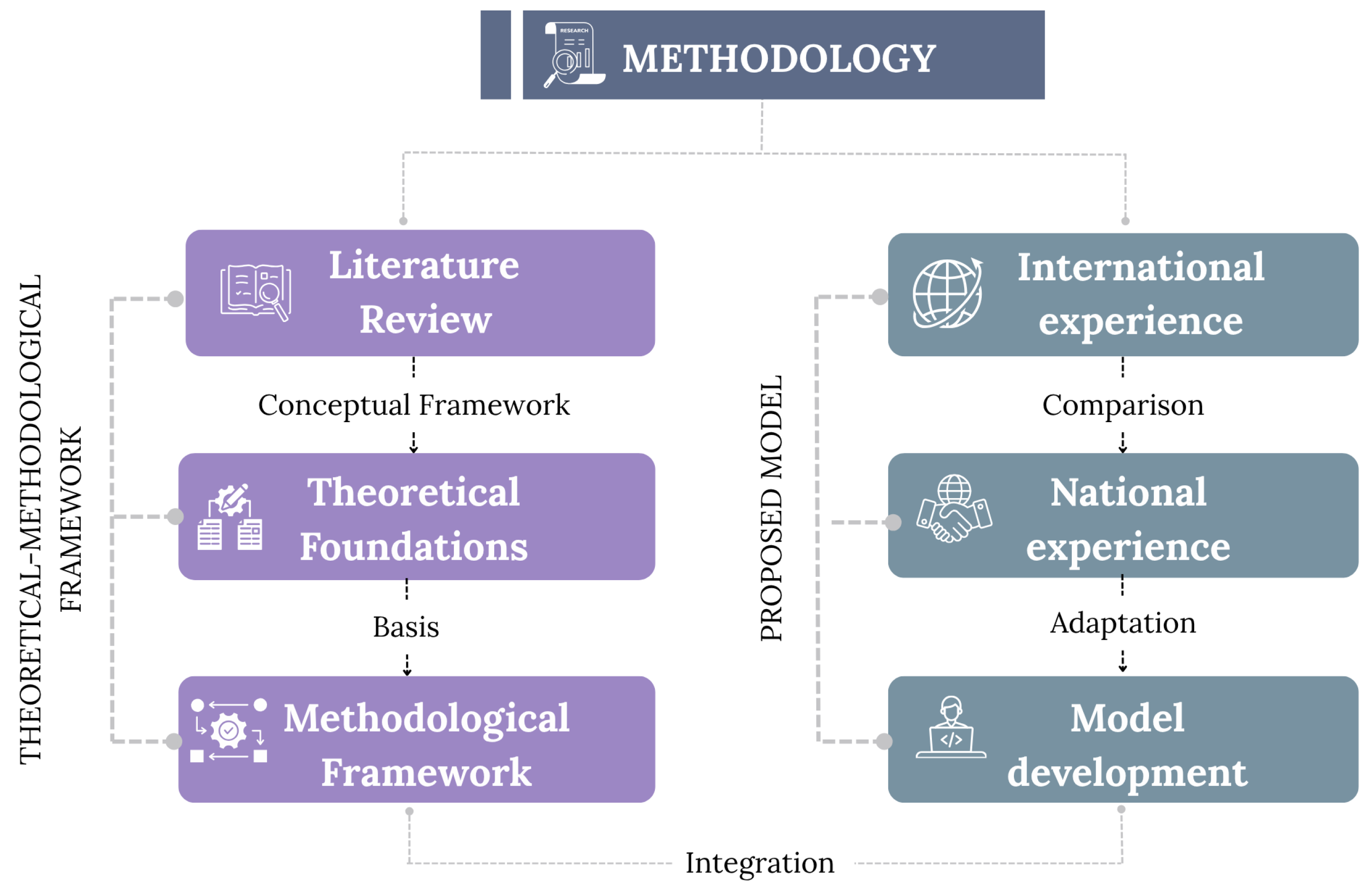
The proposed methodology is aimed at developing a theoretical model of digital transformation in the higher education system. It allows us to identify and analyze the conceptual foundations of this phenomenon, as well as its experience at the international and national levels. The methodology consists of six interrelated stages, each of which ensures the consistency of the research logic. These stages are reflected in
Figure 1 and are presented as a practical example.
The literature review was conducted systematically and included several stages. In the first stage, articles were searched using pre-defined keywords and phrases. In the second stage, the content of the retrieved papers was pre-screened based on their relevance to the research topic and scientific significance. In the third stage, the relevance, accessibility, and quality of the articles were assessed. The systematic literature review was conducted in accordance with PRISMA guidelines [
16]. The search covered articles and conference proceedings published in 2020–2025 in the Web of Science, Scopus, and Google Scholar databases.
The collected sources were filtered according to the inclusion and exclusion criteria (
Table 3). An additional reliability check was performed, after which the most relevant studies were selected for the final analysis. As a result of the filtering, 93 publications were deemed relevant to the research questions and selection criteria (
Table 1 and
Table 2).
During the identification stage, 167 sources were initially identified. In the next step, duplicates (n = 58) were removed, and studies that did not meet the selection criteria were excluded. This left 109 publications for content analysis. During the content analysis, 10 additional studies were excluded, and 99 publications underwent detailed assessment. In the final step, an additional six sources were rejected. As a result (
Figure 2), the final sample for analysis consisted of 93 publications (open access articles, books, and research reports) that fully met the research questions and selection criteria.
This systematic procedure enabled a structured mapping of the existing literature and the identification of key scientific directions and research trends in digital transformation.
This methodological analysis systematizes the main concepts and their interrelationships. As a result,
Table 4 was compiled, which presents the meaning and interpretation of digital transformation in higher education.
In addition,
Table 5 has been compiled, which describes the features of the concept of digital transformation in various areas of application. The data presented in this table are systematized and allow for a deeper understanding of the essence of the concept, since it includes a comprehensive analysis of the definitions, main components, scope, and technological foundations of digital transformation. Thus,
Table 5 summarizes the content of digital transformation and the features of its application in various fields.
The main goal of our study is a comprehensive analysis of the content of digital transformation in the field of higher education. In the course of implementing this goal, in the following sections, attention is paid to key processes in the higher education system. Particular attention is paid to the practices of digital transformation carried out at the university level, and their impact on the educational process is considered in detail.
2.2. Coding Procedure and Development of the Analytical Framework
To enhance methodological clarity, the coding process was conducted in Atlas.ti 25 following the principles of grounded theory [
15,
39]. The analysis consisted of three stages: open coding, axial coding, and selective coding. The initial list of codes was developed inductively through multiple readings of 93 full-text articles. Two independent coders participated in the development of the coding manual, and the initial coding structure was refined through discussions and continuous comparison. During the initial coding, 93 codes were identified. In the subsequent axial coding stage, these codes were grouped into nine main categories. Two of these were designated as primary target categories: “digital transformation” and “technological innovations,” which represent the main outcomes and strategic directions of this study. The remaining seven categories are instrumental categories: “digital university”, “higher education”, “educational technologies”, “trends”, “international situations”, “transformation models”, and “governance”, and “innovation factors” reflecting the conditions, mechanisms, and institutional settings necessary to achieve transformation. To assess intercoder reliability, 20% of the data (n = 18 articles) were reviewed by two coders. Cohen’s Kappa
= 0.937 was calculated, indicating very high intercoder reliability. Of the 18 articles, 17 articles had the same category selected by both coders, and 1 article had different codes. Therefore, the actual percentage agreement (
) was:
To calculate the random agreement (
), we need to consider the coders’ choices for each category:
Then the Cohen’s Kappa formula is used:
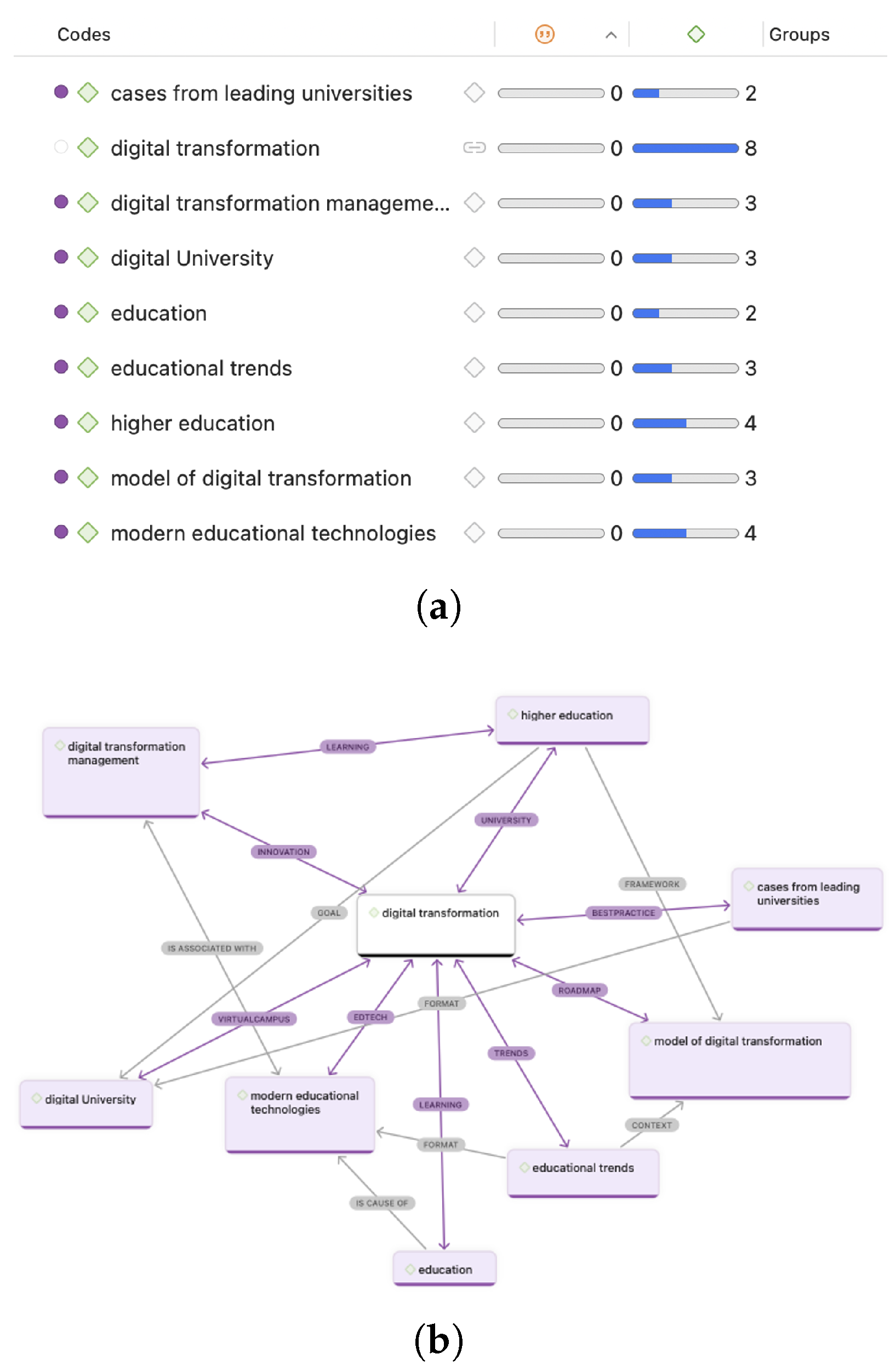
That is, the level of agreement among the coders was high, the coding process was reliable, and the research results were considered objective. During the selective coding phase, the relationships between the categories were analyzed and integrated into a conceptual semantic model (
Figure 3). During this phase, methods such as memo writing, case comparison, and grouping categories into strategic, technological, and pedagogical dimensions were used. As a result, nine categories presented a systematic structure that describes the mechanisms and outcomes of digital transformation.
Thus, the architecture shown in
Figure 3 directly visualizes how the individual elements of the coding scheme, through their interaction, form an integrated and empirically based model of digital transformation in higher education.
3. Results
3.1. International Experience of Digital Transformation in Higher Education (Reorganized by Emergent Coding Themes)
This section examines the international experience of digital transformation in higher education from a thematic perspective. The main objective is to identify the key directions, conceptual models, and practical approaches to the digital transformation of universities in various countries and to analyze the extent to which they can be effectively applied to Kazakhstan’s higher education system. For this purpose, textual excerpts from the countries of China, Singapore, Japan, South Korea, Germany, Switzerland, Malaysia, Indonesia, Vietnam and Russia were combined into a single thematic Matrix and a comparative analysis between countries was carried out. Such a methodological solution made it possible to identify patterns and patterns common to digital transformation, rather than national features.
In order to ensure the reliability of the analysis, 20% of the data, i.e., 18 articles, were encoded by two independent researchers. These articles were selected by random sampling stratified by year and country regions, thus ensuring that the data used by the two encoders represented the entire database truthfully. According to the proportion of 10–25% recommended in the qualitative analysis methodology, a proportion of 20% is considered sufficient. As a result of the evaluation of the intercooler agreement, a multi-level high correspondence was determined and an indicator = 0.937 was obtained, which proves the reliability of coding at a high level. The codes applied in this study cover a wide range of aspects, from individual examples of leading universities to general educational trends and the implementation of modern technologies. This approach allows for a comprehensive examination of both institutional changes and pedagogical innovations that are shaping the new profile of the digital university. By analyzing international cases, it becomes possible to identify successful strategies for management, technological integration, and the adaptation of educational processes to contemporary societal and economic demands.
3.1.1. Global Digital Transformation: Core Directions and Systemic Shifts
Research on international experiences has shown that, although the pace of development and institutional capacities for digital transformation in higher education vary across countries, it generally follows several common directions. Global experience indicates that universities and colleges place particular emphasis on integrating technologies such as artificial intelligence, cloud computing, big data, blockchain, and the Internet of Things (IoT) into both administrative and teaching processes [
40]. These technologies create conditions for automating administrative processes, personalizing the educational process, expanding analytical management capabilities and increasing access to education. According to the analysis codes, several universal trends were identified: the strengthening of personalized learning trajectories, data-based decision-making, the transformation of the hybrid education model into the main format, the expansion of the concept of continuing education (lifelong learning), the penetration of artificial intelligence into all areas, the formation of digital competencies as a national priority, and the increase in international academic cooperation through digital platforms.
In China, large scale initiatives emphasize the development of online learning ecosystems, modernization of digital platforms, and expansion of lifelong learning through Digital Open Universities [
41]. South Korean universities demonstrate rapid implementation of intelligent learning systems and VR/AR-based smart campuses aligned with national innovation strategies [
42]. Singapore, through its Smart Nation initiative, demonstrates a model of a fully integrated national digital ecosystem encompassing education, public services, and the economic sector [
43,
44]. In contrast, European countries such as Germany and Switzerland primarily implement digital transformation through institutional changes based on stable governance systems and well-developed infrastructure [
45,
46]. Overall, international practice indicates that digital transformation represents not merely technological modernization but a systemic reconfiguration of educational, managerial, and organizational processes in universities.
3.1.2. Conceptual Models of Digital Transformation: Cross-National Approaches
After analyzing global trends, attention was paid to management models and conceptual structures. Regardless of the experience of different countries, all models rely on four main components: strategic management and national/institutional policy, modernization of technological infrastructure, optimization of organizational changes and processes, and digitalization of pedagogical models and curricula. For example, Chinese universities apply centralized, platform-oriented models that combine digital learning resources, updated curricula, smart management systems, and continuous learning pathways [
47]. Japan, following its national Society 5.0 concept, has developed models emphasizing curriculum updates, hybrid learning formats, and preparing students for future socio-economic challenges [
48,
49]. Indonesia, under the Merdeka Belajar initiative, prioritizes flexibility, the use of digital learning tools, and student-centered pedagogical approaches [
50].
Vietnam proposes a three-tier model national, institutional, and individual that considers strategic coordination to ensure effective digital transformation in both management and teaching processes [
51,
52]. In Germany, the “Digital University” model integrates digital campus structures, research infrastructures, administrative services, and pedagogical tools into a unified institutional system [
53]. These examples indicate that countries achieving the most sustainable outcomes employ integrated digital systems combining institutional governance, infrastructure development, pedagogical innovation, and human resource development.
3.1.3. Digital Transformation Management: Governance Structures and Strategic Leadership
The development and direction of digital transformation depend heavily on effective management. International experience shows that successful digital change requires leadership capacity, organizational agility, and sustainable institutional capabilities. For example, in Singapore, public governance and public-private partnerships enabled the rapid deployment of digital healthcare, mobility services, and education platforms during COVID-19, demonstrating a well-coordinated management model [
54]. In Switzerland, leaders who consider their schools digitally advanced frequently adopt innovative management practices, facilitating the successful implementation of digital projects [
55].
In Russian universities, digital strategies focus on optimizing quality control, implementing personalization tools, and aligning administrative processes with digital management principles [
56]. In Germany, although the federal governance structure creates regional differences, it allows for the development of diverse approaches across institutions, thereby strengthening overall national capacity [
57]. Thus, effective digital transformation requires strategic planning, reliable leadership, robust coordination mechanisms, and the continuous professional development of university staff.
3.1.4. Digital University: Evolving Institutional Structures
Thematic coding data showed the characteristics that a digital university has in common at the international level. The model usually consists of four main elements: digital campus and management systems, unified learning platforms (LMS, CMS, data systems), data-based research infrastructures, and the development of digital competencies of teachers and students. For example, in Germany, the “Digital University” model combines campus management systems, information and communication infrastructure, online learning platforms, and research tools to establish a unified institutional ecosystem [
53]. In Russia, this model is based on four interconnected components: digital management systems, online education services, digital skills development, and personalized learning trajectories [
58].
In Switzerland, the digital university is developed using a holistic, system-wide approach, combining technological innovations with the redesign of organizational processes and professional faculty training [
55]. Leading institutions in China, such as Nottingham Ningbo University, implement systems that fully integrate academic administration, digital teaching, and student experience management, providing a structured model of digital transformation [
59]. These examples demonstrate that successful digital universities are not limited to the adoption of technology alone but are formed through comprehensive institutional restructuring.
3.1.5. Higher Education Reform: Institutional and Pedagogical Adaptation
Digital transformation has required extensive changes in higher education systems across many countries. These changes include updating curricula, implementing hybrid teaching methods, developing STEM and ICT programs, and teaching industry-oriented skills. For example, in Japan, the introduction of hybrid and active learning methods using digital tools and interactive learning environments clearly illustrates the pedagogical aspect of digital reform [
60]. Chinese universities have updated their curricula in line with Industry 4.0 standards, prioritizing artificial intelligence, robotics, and advanced engineering fields [
61]. In Malaysia, digital transformation is regarded as a key foundation for renewing national human capital and the economy [
62]. In this way, universities worldwide are increasingly recognizing digital skills and flexible pedagogical approaches as essential components of modern higher education.
3.1.6. Modern Educational Technologies: Innovations Transforming Learning
The implementation of new educational technologies is one of the fastest-growing areas of digital transformation. Although priority areas vary across countries, several technologies are widely used in global practice.
Table 6 compares the main directions of digital technology implementation in higher education and the experience of using them across countries.
Table 6 shows four technology categories that play a significant role in shaping the digital education ecosystem. The sources cited by the authors confirm the scientific basis of these trends.
These technologies collectively transform collaborative learning methods and expand the possibilities of digital pedagogy.
3.1.7. Educational Trends: Global Shifts in Digital Pedagogy and University Development
Recent changes in higher education reflect profound transformations driven by technological innovations and the evolving needs of students. Universities worldwide are actively using digital tools and new pedagogical approaches to enhance the quality of teaching, learning, and research. These changes compel institutions to reconsider their priorities, curricula, and student engagement strategies, paving the way for global shifts in educational practices. International experience highlights several key trends:
Personalized, data-driven learning pathways;
Widespread adoption of hybrid learning as a primary instructional model;
Continuous and flexible learning formats;
Integration of artificial intelligence into academic processes;
Emphasis on digital literacy and advanced digital skills;
Expansion of international academic collaboration through digital platforms.
In Association of Southeast Asian Nations countries, increased investment in digital governance, infrastructure, and digital skills aligns with these global trends and addresses regional challenges such as equitable access to education and disparities in digital preparedness [
78].
3.1.8. Cases from Leading Universities: Institutional Innovations
Leading universities worldwide advance digital transformation through diverse yet complementary approaches. Their strategies include creating integrated digital ecosystems, implementing data-driven management practices, and fostering pedagogical innovation within institutions. These experiences demonstrate that systematic organizational changes are essential for achieving sustainable digital development in universities.
Table 7 compares the experiences of implementing digital transformation in higher education systems in different countries and the features of institutional models.
Table 7 systematizes the areas of introducing digital platforms, modernizing educational processes, and adapting management architecture to digital formats, based on the examples of China, Japan, South Korea, Germany, Russia, and Switzerland.
These examples clearly demonstrate how leading universities are implementing digital transformation. They pave the way for digital transformation through the creation of a strategic infrastructure, the introduction of pedagogical innovation in the educational process, and the improvement in management systems.
International experience shows that most countries have in common such basic principles as the introduction of digital technologies, data-based management, training adapted to individual needs, and the development of skills. However, management models, infrastructure training, and socio-economic conditions vary widely. For example, in countries such as Singapore, South Korea, and Switzerland, digital transformation is fully realized due to the high institutional potential. And countries such as Indonesia, Vietnam, and Russia may develop unevenly due to infrastructure or financial restrictions.
These examples show that digital transformation in higher education is developing in a number of common areas, regardless of countries. Management models, institutional changes, pedagogical reforms and technological innovations are closely intertwined and can become important guidelines for developing strategies for digitalization of the higher education system in Kazakhstan. This experience is very important for Kazakhstan. We need to modernize the infrastructure, improve the digital management system, introduce pedagogical innovation, and create an integrated digital university model aimed at developing advanced digital skills. At the same time, reducing differences between regions, increasing the capacity of university leaders, and combining strategies with national digital priorities are important steps to make our higher education system more sustainable and competitive.
3.2. Comparison of International Practices: Structural Mechanisms Behind Divergent Models
Digital transformation in higher education develops differently in each country, and these differences are determined not only by the pace of introduction of technologies but also by the peculiarities of institutional, cultural, and economic structures.
Table 8 presents clusters of countries such as “innovation leaders,” “internal inertia systems,” and “systems with external constraints.” However, in order to fully understand these classifications, it is necessary to analyze the structural, cultural, and economic mechanisms that determine the paths and pace of digital transformation.
The country clusters in the table are differentiated based on their institutional and cultural readiness for digital transformation, as well as the availability of economic and infrastructural resources. For example, Singapore, South Korea, and Switzerland belong to the class of “innovation leaders”. In these countries, the effectiveness of a centralized management system, high institutional readiness, and cultural openness to innovation allow the development of digital transformation. Also, the support of government policies and the availability of the necessary infrastructure and financial resources will create conditions for the rapid introduction of advanced digital technologies, such as artificial intelligence and virtual reality, into the educational process.
In contrast, Japan and Germany are among the “internal inertia systems,” despite having higher technological capabilities. In these countries, institutional culture and management structures hinder the rapid implementation of innovations. In Japan, decisions made through hierarchical academic culture and consensus slow down digital transformation, while in Germany, a decentralized education system leads to a lack of a unified strategy and delays in the integration of digital solutions in universities. These factors, despite access to advanced technologies, create inertia in adapting to digital learning and management methods.
Finally, countries with limited economic resources, such as Indonesia, Vietnam, and Russia, are classified as “systems with external constraints”. In these countries digitalization is affected by limited financial resources, uneven access to technology, and regional disparities in infrastructure. These factors make it difficult to implement digital solutions, especially in remote areas. For example, in Russia and Indonesia, a small number of qualified specialists and infrastructure restrictions create additional barriers to comprehensive digital transformation.
Therefore, the different models of digital transformation in countries are explained not only by technological capabilities but also by deeper factors such as the management system, cultural characteristics, and economic potential. This situation makes it possible to introduce innovations quickly in some countries, while in others, it leads to the fact that changes are carried out slowly or sometimes there is resistance to it.
3.3. Digital Transformation in Kazakhstan
The Address to the Nation by the President of the Republic of Kazakhstan, Kassym-Jomart Tokayev, on 8 September 2025, identified digitalization as a key priority in the country’s development strategy. This step underscores the importance of implementing comprehensive reforms aimed at digitalizing all sectors, from higher education and the economy to other areas. The document provides for the transfer of the paradigm of development of Kazakhstan in the direction of creating a “Digital State” [
83]. In this field, the adoption of the digital code, the creation of the Ministry of Artificial Intelligence, digital development, and the introduction of artificial intelligence in all sectors of the economy have become the institutional core of transformation. Such steps were seen as a structural reform aimed at adapting public administration to the interests of citizens and increasing transparency and efficiency. However, while these initiatives set the general direction of digital transformation, they do not themselves provide specific indicators to assess the level of their implementation. The main feature of the address is that artificial intelligence is not only a technological tool but also lies at the heart of fundamental changes in the economy, education, agriculture, infrastructure, and public administration systems. Its scientific essence is expressed in its focus on the integrated modernization of public administration and economic structure based on artificial intelligence, big data, platform economy, and smart technologies. This process is not only within the framework of technical modernization but also includes the restructuring of institutional, social, and legal systems.
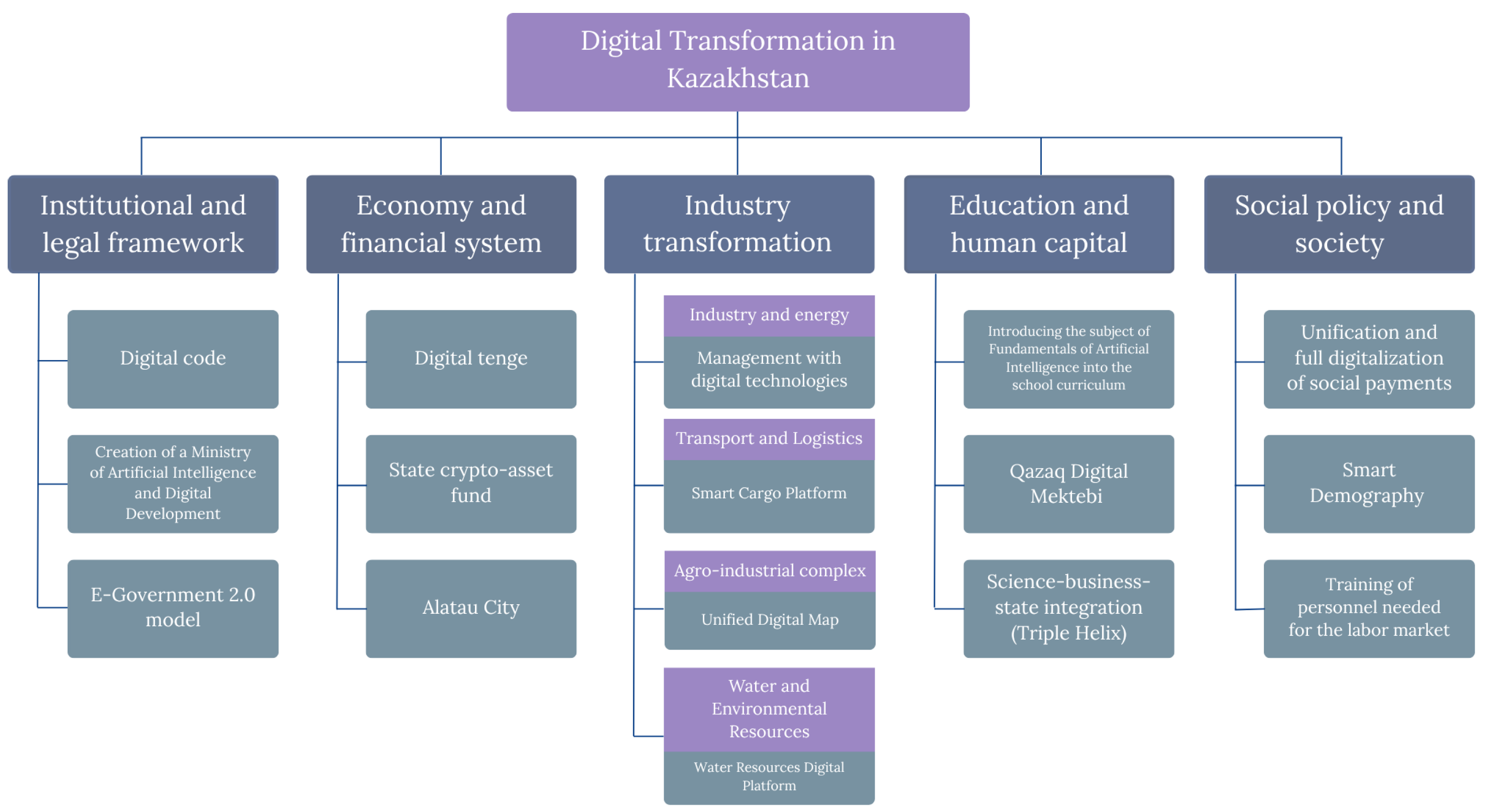
The digital transformation mentioned in the address is presented as a large-scale and comprehensive program covering the systems of public administration, economy, social sphere, ecology, and education. It clearly defines the system of changes, from the modernization of the legal code to the development of domain platforms covering such areas as logistics, water, land, and construction, as well as the directions for improving human capital. For the effective implementation of this direction, the tasks of implementing interoperability standards, data quality management, the formation of a personnel ecosystem, and strengthening cybersecurity should be solved simultaneously. In the address of the president, social and educational policies were also considered as a key component of digital transformation. The strategic goal was the use of digital tools to ensure social stability and the introduction of an education system based on artificial intelligence for the development of human capital. The need to create conditions for the widespread use of artificial intelligence technologies in higher education institutions, expand academic independence, and integrate science, education and innovation was noted. In accordance with this, this process is aimed at strengthening the relationship between innovation policy and the education system, based on the principle of the triple helix model (state-science-production). On this conceptual basis,
Figure 4 shows the main directions of digital transformation in Kazakhstan. This direction is based on the transition of the country to the AI, data, and platform model.
Also, in addition to political statements, regulatory acts, strategic objectives, and institutional changes have been adopted in Kazakhstan that will enable the implementation of digital transformation. Within the framework of this process, the following strategic tasks have been identified:
Implementation of platform solutions and development of digital business models and the economy;
Formation of a service model and efficiency of Public Administration;
Implementation of the principle of open government;
Development of the concept “Smart City”;
Improvement in infrastructure and formation of a national innovation system.
These tasks create the institutional prerequisites for transformation, but its effectiveness depends on departmental coordination and sustainable funding.
In addition, the implementation of digital transformation in Kazakhstan is carried out in accordance with these principles [
84]. In line with this,
Table 9 systematizes the principles of the national strategy (accessibility, equality, quality, and innovation).
These principles ensure the effectiveness, reliability, and community-oriented nature of digital transformation. They are aimed at increasing the transparency of public administration and strengthening citizens’ confidence in the digital ecosystem, as well as improving the availability, security, and quality of services.
At the same time, although the development of digital infrastructure at the national level is being steadily implemented through regulatory legal acts and other strategic documents, a number of shortcomings remain. In particular, funding in the field of higher education is not distributed equally. Although infrastructure upgrades (fast internet, server power, cybersecurity) are seen as top priorities, the disparity in funding allocated to universities is evident: with more support for leading and national universities, regional universities face significant restrictions. At the same time, a single system for long-term financing (licensing, maintenance, training) of digital platforms has not yet been formed. This situation reflects the gap between political goals and the real practical capabilities of the higher education system.
3.4. Digital Transformation in Higher Education in Kazakhstan
In recent years, there has been significant progress in the direction of digital transformation of universities in Kazakhstan. A striking example is the digital education program, launched on 30 June 2020. This initiative is aimed at developing digital skills, training IT professionals, and updating educational programs to meet new professional standards. Public policies based on the informatization of education have played an important role in strengthening the National Education Model. As a result, 509 educational programs in the field of information and communication technologies have been created, which clearly demonstrates the systematic desire to modernize higher education [
85].
The experience of digital transformation of universities in Kazakhstan is based on the transition to the “smart university” model, defined in the concept for the development of higher education and science until 2029. This process involves the integration of artificial intelligence, interactive platforms, and other modern digital tools in order to improve the quality of education management and improve the effectiveness of training. The main priority is the revision of traditional management approaches and the use of best world practices to increase the competitiveness of universities in the international educational space [
86]. Within the scope of this study, the proposed study is aimed at analyzing the experience of digital transformation of universities in Kazakhstan. It examines the process of transition from traditional university models to digital formats and highlights the importance of effective use of project and change management principles. [
87] research was conducted at the International University of Information Technologies in Almaty. This study was designed to identify effective strategies for digitizing higher education, to transform a traditional university into a digital university. It also aimed to identify the main directions and specific recommendations for university transformation, based on the experience of international and domestic universities. Kazakh universities are actively implementing digital transformation in order to improve the quality of education and adapt to the requirements of the digital era. During this work, the key digital competencies required for university leaders, teachers, and staff were identified, and their strengths and weaknesses were assessed in areas such as professional participation, use of digital resources, teaching and learning, assessment, empowering students, and promoting digital competence [
88]. These results provide a basis for identifying the skills necessary for effective management of digital transformation and developing targeted training programs.
The experience of digital transformation of universities in Kazakhstan includes increasing computer resources and introducing new specialties in information and communication technologies. The state policy pays special attention to improving the computer literacy of the population and aims to improve the quality of education through the effective use of ICT. However, the development of this process is hampered by insufficient funding, low level of training of teaching staff, and limited internet speed in some regions. In general, the ongoing initiatives reflect a systematic desire to form a “digital society” in the field of education in Kazakhstan [
89].
Based on the factors considered in this study, it is clear that the digital transformation in higher education is not being implemented evenly. Although LMS, e-campus, and online services have been expanded in a number of universities, their level of integration is not complete. Artificial intelligence-based solutions are often piloted, and their widespread use at the institutional level is still in progress. At the same time, regional differences in the digital competence of teachers persist, and in some regions the quality of the Internet and technical equipment are insufficient. These factors indicate that the practical implementation of digital transformation is not fully consistent with political objectives. Considering the above data, it is necessary to consider the digital transformation in Kazakhstan as a multi-level process. This process includes political, regulatory, financial-resource, and university levels. Such a level of classification allows us to avoid excessive generalizations when analyzing international experience and to scientifically substantiate a digital university model adapted to the conditions of Kazakhstan.
4. Discussion
The digital transformation of the university is a multifaceted process that will comprehensively introduce digital technologies in all areas, radically change the way of working, and bring real benefits to stakeholders. It involves not only the use of new technologies but also the strategic restructuring of infrastructure, internal processes, and culture. Given the complexity of this transformation, the process consists of several stages, each covering different aspects of the university’s activities and goals. In this framework,
Figure 5 presents the main components of a digital university.
Thus, the Digital University model defines five consecutive stages of transformation: from the formation of an infrastructure base to the creation of an ecosystem of interaction and development that provides a single digital environment, covering the areas of education, science, administration, and partnership.
Digital transformation in universities is a multifaceted process that involves the integrated implementation of digital technologies in all key areas, such as teaching, management, and student services. It arises from the need to improve the quality of education, strengthen operational efficiency, and adapt to the changing requirements of the digital economy. These models involve the reorganization of business processes for the development of digital competencies, the introduction of e-learning technologies, and the formation of a flexible educational environment. The transformation includes automation of administrative processes, increasing the IT competencies of graduates, synchronous distance learning via video conferencing, and blended learning that combines online courses with traditional classes. Such changes contribute to improving the quality of education, meeting the needs of students, and strengthening the competitiveness of universities in the modern educational space [
90]. From the perspective of this study, it provides an integrated model for assessing the level of excellence of universities in digital transformation [
91]. According to the authors, ineffective leadership, opposition of organizational culture, lack of innovation, and lack of financial support lead to a lag in educational institutions in other areas. And the proposed model will allow universities to offer a structured approach to assessing and developing their digital potential. It also provides for the formation of an adaptive and innovative educational environment within the framework of the concepts of Industry 4.0 and Society 5.0.
The introduction of digital transformation models in universities is currently a key condition for improving the quality of education and competitiveness. Such models form innovative forms of education that can adapt to external changes, support continuing education, and are aimed at developing competencies that meet the needs of the labor market. The transition to a digital development model will increase the transparency of business processes, reduce shortcomings, and significantly improve the quality and efficiency of services provided to students and stakeholders [
92].
From the perspective of the Industrial Revolution 4.0, the need to revise university management models is also highlighted. In this framework, the development of smart universities based on the widespread use of information technologies in the processes of education, training, and scientific research is becoming an urgent direction. This study differentiates the basic theories of digital university management and offers innovative management approaches that meet the requirements of the digital age [
93]. In addition, the proposed maturity level model describes the path of development of universities in stages: from the initial stage to the formation of a sustainable digital ecosystem.
Table 10 shows the three main levels of digital transformation in higher education: initial, transitional, and continuous improvement stages. These levels allow us to systematize the process of university development in Kazakhstan and show it in close connection with the priority areas of the national strategy.
Digital transformation in universities can be considered not only as a technical process but also as a strategic development direction. This approach defines the main priorities in the higher education system of Kazakhstan: from the formation of infrastructure to the development of digital competencies of teachers and students, as well as the formation of competitive universities at the global level.
Based on the empirical data obtained during this study, a digital university model in Kazakhstan was developed (
Figure 6). The five main pillars of the model were identified as a result of a comparative analysis conducted across countries and qualitative coding in the Atlas.ti program. International experience has shown that institutional governance, technological infrastructure, academic and pedagogical transformation, research and innovation ecosystems, and socio-international dimensions are structural categories that are consistently found in all countries. For this reason, these five components were taken as the conceptual foundation of the model. The model is considered a hybrid environment aimed at combining international experience with local specifics. This approach creates a holistic framework that combines institutional reforms, artificial intelligence technologies, digital pedagogy, a scientific and innovative environment, and social inclusion.
The “Kazakhstan model of a Digital University” shown in
Figure 6 includes the synthesis of five main components formed as a result of thematic comparative analysis conducted in China, Singapore, Japan, South Korea, Malaysia, Indonesia, Vietnam, Germany, Switzerland, and Russia. All pillars of the model are based on structural patterns that are consistently visible in international practice and are fully consistent with the subject codes specified in
Section 3.
The Institutional and Governance component follows three sustainable trends that are clearly seen in the Swiss, German and Singapore models:
systematic integration with national digital strategies;
management autonomy of universities;
data-driven management models.
These elements are considered in international studies as the main institutional prerequisites for digital transformation.
The technological Infrastructure component is based on advanced solutions from the ecosystems of China, Singapore, and South Korea: LMS systems, artificial intelligence and Big Data Integration, virtualization and simulation tools, cybersecurity infrastructure. These areas define the main technical platform for the digital maturity of universities.
Academic and pedagogical component of the practice of Japan, Germany, Korea, and Vietnam, three relevant areas were identified: the expansion of digital curricula, flexible learning formats (blended, hybrid), and the development of digital competencies of teachers. These factors ensure the revival of the academic process.
The research and innovation component combines the trends inherent in the research systems of South Korea, Malaysia, and Germany: university–industry–state cooperation, digital research platforms, startup incubation, and the development of innovative ecosystems. These areas are recognized as the main drivers of scientific productivity.
The social and international component, based on the Swiss and Singapore models, includes the principles of equal access, global academic integration and lifelong learning. These elements ensure the sustainability of the digital ecosystem.
At the same time, although the model is borrowed from international practice, it is adapted to the conditions of Kazakhstan. This adaptation is based on the following national characteristics:
Digital code and state reforms;
Regional infrastructure differences;
Management structure of universities;
The level of Personnel potential and digital competencies;
Characteristics of the industry and the economic environment.
In conclusion, the proposed model combines five sustainable structural components of digital transformation based on a systematic analysis of the experience of ten countries: governance, technological infrastructure, academic innovation, research ecosystem and socio-international integration. These components are based on empirical models that are aligned with the institutional and political framework of Kazakhstan. The main results of the model are aimed at strengthening human capital, developing an innovative ecosystem, deepening global integration and ensuring long-term sustainability.
In addition, the need for coordination with the address of the President of the Republic of Kazakhstan to 2025, the national strategy “Digital Kazakhstan,” digital inequality between regions, fragmentation of LMS systems in universities, insufficient digital competencies of teachers and weak “state-university-industry” connections served as the basis for identifying special elements of the model. As a result, the National Digital Strategy Integration, Equal Access, LMS, Teacher Development and State–University–Industry components were introduced into the model. At the same time, cybersecurity requirements related to digital risks in Kazakhstan were strengthened. Thus, the proposed model is the result of empirically proven research, formed on the basis of the coordination of international and national models. In order to fully reflect the content of the model,
Table 11 systematizes the main levels of digital transformation in the higher education system. It identifies the content, practical examples and areas of impact of each level.
That is, digital transformation in the higher education system is a sequential, multi-level and interconnected process that modernizes the structural, academic, scientific, and social mission of universities. The proposed model is based on principles that allow for practical verification, since each of its components is associated with measurable indicators: institutional compliance, compatibility of LMS systems, DigCompEdu levels of teachers, scientific and innovative activity and digital inequality index. These features characterize the model as a scientifically sound contribution, with clear mechanisms, open to practical verification and taking into account the specifics of Kazakhstan.
5. Conclusions
This study showed that digital transformation in higher education is a complex and multifaceted process that combines technological, pedagogical, managerial and social aspects, affecting all levels of the system. The experience of China, Singapore, Japan, South Korea, Malaysia, Indonesia, Vietnam, Switzerland, Germany, and Russia has shown that different transformation models have emerged in accordance with the infrastructural capabilities and socio-cultural situation of each country. While developed countries prioritize the development of integrated digital infrastructure and human capital, developing countries primarily focus on infrastructure modernization and improving digital literacy. The analysis showed that digital transformation in higher education is globally systemic and forms common strategic trends aimed at modernizing the digital ecosystem of universities.
First, international experience characterizes digital transformation as a broad institutional reform aimed at changing not just technological upgrades but also governance systems, infrastructure, human capital, and learning processes. Approaches in China, Singapore, South Korea, and Switzerland demonstrate that the success of transformation is closely linked to long-term policies aimed at political coordination, platform governance systems, and the development of digital competencies.
Second, digital university models in different countries rely on one common foundation: digital governance, integrated learning platforms, individual learning trajectories, pedagogical innovations, and data-driven decision-making. The “Digital University” initiatives of Germany and Russia, the Society 5.0 concept of Japan and the three-level model of Vietnam indicate that this structure can be professionally adapted to the conditions of a particular country.
Third, technologies such as artificial intelligence, VR/AR, hybrid learning, digital assessment, and generative AI are taking university academic and management activities to a new level. These innovations are developing rapidly, especially in South Korea, China, Japan, and Malaysia, and are contributing to improving the quality, efficiency, and accessibility of education.
Fourth, the effectiveness of transformation directly depends on the quality of management, strategic leadership, and organizational flexibility. The experience of Singapore and Switzerland clearly demonstrates the crucial role of personnel development, change management, and continuous professional learning.
In general, the success of digital transformation is based on a combination of infrastructural preparation, the formation of digital management systems, pedagogical modernization, the introduction of innovative technologies and the systematic development of human capital. The main relevant strategic directions for Kazakhstan are:
Formation of a national model of a digital university;
Reduction in regional infrastructure disparities;
Acceleration of digitalization of management processes;
Strengthening of digital competencies of personnel;
Adaptation of curricula to the requirements of Industry 5.0 and artificial intelligence;
Making data-driven management an institutional standard.
The latest initiatives of Kazakhstan—the introduction of a digital code, the creation of new state structures and the expansion of digital projects—indicate that the country is systematically moving towards technological modernization. The concept for the development of higher education and science until 2029 outlined the transition to the “Smart University” model, the introduction of artificial intelligence and the expansion of digital pedagogical tools as strategic key areas. The results obtained are not limited to practical recommendations, but also expand the theoretical discourse regarding digital transformation.
First, this study revised the understanding of linear progress in traditional digital maturity models and proved that transformation is a multidimensional and contextual process that depends on national policy, management coordination, and institutional leadership. Such a conclusion allows us to consider digital development as a dynamic evolution that adapts to the internal potential of each system, and not as a phenomenon that follows universal stages.
Secondly, from the point of view of the theory of organizational change, this study showed that the success of digital transformation is determined not by the technologies themselves, but by the strategic orientation of the organization, managerial leadership, flexibility and continuous development of human resources. Thus, the theoretical approach that characterizes universities as a “learning organization” has been supplemented with new evidence.
Thirdly, from the point of view of the theory of comparative public policy, it was found that transformational processes include, on the one hand, international convergence (unification), and on the other hand, divergence (differences) due to national regulatory systems and infrastructure capabilities, which proves that digital policy is not copied directly, but only through localized adaptation.
The proposed digital university model has clear boundaries both in terms of theoretical and practical application. For the effective implementation of the model, it is necessary to have a basic digital infrastructure, institutional autonomy, high-quality human resources and a long-term digital policy at the national level. The lack of these conditions complicates the full operation of the model or allows you to introduce only isolated elements. At the same time, the model is also adapted to falsifiability: key assumptions such as the impact of management coordination on results, the impact of digital competencies on transformation efficiency, and the relationship between integrated platforms and learning quality can be verified by empirical research. Such checks allow you to confirm the authenticity of the model or further refine it.
In conclusion, this study systematizes the theoretical foundations of digital transformation in higher education, combines international experience with national strategic directions, and proposes a digital university model adapted to Kazakhstan. In the future, we plan to analyze the experience of digital transformation in universities in Kazakhstan using the methods of empirical research, scenario modeling and case analysis.



 ,
,