Article

Forecasting Industrial Carbon Peaking and Exploring Emission Reduction Pathways at the Metropolitan Scale: A Multi-Scenario STIRPAT Analysis of the Hangzhou Metropolitan Area

1
Zhejiang-Singapore Joint Laboratory for Urban Renewal and Future City, School of Civil Engineering and Architecture, Zhejiang University of Science and Technology, Hangzhou 310023, China
2
Municipal Planning and Design Research Institute, Hangzhou City Planning and Design Academy, Hangzhou 310012, China
3
Department of Chemical and Biochemical Engineering, Center for Energy Resources Engineering, Technical University of Denmark, 2800 Kongens Lyngby, Denmark
*
Authors to whom correspondence should be addressed.
Sustainability 2025, 17(24), 11089; https://doi.org/10.3390/su172411089
Submission received: 6 November 2025 / Revised: 24 November 2025 / Accepted: 8 December 2025 / Published: 11 December 2025
(This article belongs to the Special Issue Toward Carbon Neutrality: The Low Carbon Transition Pathways)

Abstract

The rapid development of industry has led to intensive energy and resource consumption, increasing carbon emissions. As key areas for carbon control, metropolitan regions play an essential role in China’s urbanization and regional development, yet research on predicting industrial carbon emissions remains insufficient. This study takes the Hangzhou Metropolitan Area in China as a case study and employs an extended STIRPAT model to predict industrial carbon emissions from 2024 to 2050 across different scenarios. The results show that industrial carbon emission intensity has the most significant impact on carbon emissions, followed by urbanization, population, economy, industrial structure, technology, energy intensity, and openness. The peak time of industrial carbon emissions varies significantly under different scenarios. The peak appears in 2026 under the deep emission reduction scenario, in 2028 under the green economy scenario, in 2030 under the baseline scenario, and does not occur by 2050 under the extensive development scenario. The green economy scenario achieves effective emission reductions with the least economic impact and is superior to the single-emission-reduction-oriented deep-emission-reduction scenario. This study responds to China’s “dual-carbon” strategy and provides a replicable and transferable regional pathway for industrial decarbonization and policy-making in other metropolitan areas.

1. Introduction

Since the Industrial Revolution, industrialization has been a key driver of global socioeconomic development [1]. In China, the industrial sector is the largest energy-consuming sector, accounting for about 70% of total carbon emissions [2]. Metropolitan areas, which are mainly composed of central cities, have become crucial platforms for China’s new urbanization and regional coordination. Due to the concentration of industrial activities and energy use, these sectors account for more than 60% of China’s carbon emissions [3]. As both engines of economic growth and key areas for carbon emission control, metropolitan areas play a central role in China’s decarbonization efforts [4]. Among them, the Hangzhou Metropolitan Area is one of the most dynamic metropolitan regions in eastern China, with a relatively high level of industrialization. Its total energy consumption and carbon emissions are among the highest in China’s metropolitan areas [5]. This reflects the typical feature of developed regions, where rapid economic growth is accompanied by high carbon emission pressure. Therefore, selecting the Hangzhou Metropolitan Area as a typical example to investigate industrial carbon emissions at the metropolitan scale is of substantial importance for developing practical carbon mitigation strategies and advancing sustainable regional growth.
The problem of carbon emissions has increasingly exhibited spatial features that extend beyond and even surpass the limits of individual cities. Recently, systematic studies on carbon emission prediction at different spatial scales, including national, provincial, and urban agglomeration levels. For example, Cao et al. [6] used a genetic-algorithm-optimized back-propagation neural network (GA-BP) to predict that fossil-fuel CO2 (FFCO2) emissions in China would continue to fluctuate and rise from 2020 to 2030. Li et al. [7] applied an extended STIRPAT model to assess the timing of the peak and the post-peak trends in CO2 emissions in Hebei Province under different scenarios from 2020 to 2060. Lu et al. [8] focused on provinces along the Yangtze River. They developed models to predict CO2 emissions from 2010 to 2060 under various scenarios, using an extended STIRPAT model and OLS regression. However, studies focusing on the “metropolitan area” as a specific and critical regional collaborative development unit, especially on typical cases such as the Hangzhou metropolitan area, remain limited. Overall, existing prediction studies mainly focus on the national, urban agglomeration, and provincial levels, while research at the metro-area scale is relatively scarce.
At the methodological level of carbon emission prediction, scholars have developed various modeling techniques. The primary methods include the extended STIRPAT model, neural network models, system dynamics models, grey prediction, and prediction models combining multidimensional indicator systems. For example, Jiang et al. [9] studied the carbon peaking path of buildings in Guangzhou using the STIRPAT model. Zhao et al. [10] applied the ARIMA and BP neural network models to estimate and predict total carbon emissions for 30 provinces in China from 2022 to 2035. Wei et al. [11] used system dynamics (SD) to model the carbon dioxide emissions from urban district heating in Heilongjiang Province over the next 40 years (2020–2060). Hu et al. [12] developed a comprehensive multidimensional Carbon Emission Prediction (CEP) index system and then used Grey Relational Analysis (GRA) to predict China’s carbon emissions. These methods have made significant progress in predicting overall carbon emission trends at different spatial scales. However, existing prediction models have certain limitations: neural network models have poor interpretability and cannot accurately explain the specific impact of each variable on carbon emissions [13]; SD models have difficulty capturing micro-level differences between regions or industries [14]; and the applicability of grey prediction methods is limited [15]. Compared with these models, the extended STIRPAT model offers greater interpretability, scalability, and scenario simulation capabilities, making it superior for regional carbon emission prediction and policy evaluation, especially in incorporating industry-specific factors and regional differences [16].
In constructing carbon emission prediction models, identifying and selecting key influencing factors is crucial. Existing studies across different industry sectors have closely examined the drivers of carbon emissions and used them as input indicators for prediction models. These factors usually involve population, economy, energy structure, technological progress, and urbanization level. For example, Zhang et al. [17] estimated carbon emissions from the construction industry in China based on provincial-level data (2004–2018) from a life cycle perspective, using SBM-Malmquist Total Factor Productivity (TFP) as an indicator of technological progress and employing a spatial econometric model to identify the driving factors. He et al. [18] analyzed the decoupling effect and driving factors of tourism carbon emissions in the Yangtze River Economic Belt and predicted future tourism carbon emissions. Huan et al. [19] used the Dagum Gini coefficient, a convergence model, and an ARIMA model to analyze the characteristics and influencing factors of agricultural carbon emissions across China’s three major grain-producing regions. Tao et al. [20] conducted an empirical analysis of transportation CO2 emissions (TCE) in 18 countries, using the STIRPAT model to identify the main driving factors, and further explored the temporal variations in these factors. However, current construction of prediction indicator systems primarily focuses on revealing the relationship between carbon emissions and macro-level socioeconomic activities, while paying insufficient attention to the specific, deeper influencing factors of the “industrial” sector. For example, core variables directly related to industrial activities, such as industrial carbon emission intensity and energy consumption intensity, as well as variables indirectly associated with industrial activities, such as technological level and degree of openness, have not been systematically incorporated into the indicator systems for industrial carbon emission prediction at the metropolitan area scale [21]. This indicates that most existing indicator systems are centered on factors affecting the relationship between carbon emissions and the economy, without adequately accounting for key variables closely associated with industrial-sector characteristics. This may lead to insufficient explanatory power of prediction models for the dynamic changes in industrial carbon emissions within specific regions.
In summary, this research aims to examine the determinants of industrial carbon emissions within the Hangzhou metropolitan region through an expanded STIRPAT model and to forecast future trends in industrial carbon output. To achieve this goal, the study will take the following steps: (1) Select key indicators such as industrial carbon emission intensity, energy consumption intensity, and technological level as the main factors influencing industrial carbon emissions, and establish an extended STIRPAT model. (2) Apply multiple regression analysis to examine multicollinearity among the influencing variables to guarantee the model’s stability and reliability, determine the elasticity coefficients of each parameter through the ridge regression technique, and validate their effectiveness within the model framework. (3) Combine different development scenarios, including extensive development, baseline, green economy, and deep emission reduction, to predict future industrial carbon emissions in the Hangzhou metropolitan area, and analyze the impact of influencing factors on emission trends under different scenarios.

2. Research Methodology and Data Sources

2.1. Study Area

The Hangzhou Metropolitan Area, located in northern Zhejiang Province, China, and forming part of the southern Yangtze River Delta urban agglomeration, comprises the core cities of Hangzhou, Jiaxing, Huzhou, and Shaoxing. Given their strong integration in population movement, economic activities, and regional coordination, this study covers the entire administrative territories of these four cities (Figure 1).

2.2. Research Methodology

2.2.1. Industrial Carbon Emission Measurement

Following the approach of Ma et al. [22], this study estimates industrial carbon emissions in the Hangzhou Metropolitan Area using the carbon emission inventory method provided by the Intergovernmental Panel on Climate Change (IPCC). The calculation formula is expressed as:
C = i E i × C V i × C C F i × C O F i × 44 / 12
where C denotes the total industrial carbon emissions; Ei represents the consumption of the i-th energy type; CVi is the average net calorific value of the i-th energy type; CCFi denotes the carbon content of the i-th energy type; COFi is the carbon oxidation factor (typically 1, indicating complete oxidation); and 44/12 signifies the molecular weight ratio of carbon dioxide (CO2 to carbon (C). Equation (1) can be simplified by converting energy consumption into standard coal equivalent (SCE) using energy-specific SCE conversion coefficients (ei), yielding:
C = i E i × e i × p i × 44 / 12
In Equation (2), Ei denotes the consumption of the i-th energy type; ei represents the standard coal equivalent (SCE) conversion coefficient for the i-th energy type; and pi signifies the carbon emission coefficient of the i-th energy type. Carbon emission calculation parameters of seven energy types (Table 1).

2.2.2. Extended STIRPAT Model

The IPAT Equation (Environmental Impact = Population × Affluence × Technology) was first proposed by Ehrlich to reflect the impact of social and population factors on environmental pressure [23]. The STIRPAT (Stochastic Impacts by Regression on Population, Affluence, and Technology) model was developed as an advancement of the IPAT model, enhancing and expanding it to address the IPAT model’s constraint of assuming uniform impacts across different driving factors [24]. Logarithmic transformation is typically applied to both sides of the equation for analytical convenience. The calculation formula is expressed as:
ln I = ln a + b ln P + c ln A + d ln T + ln e
Here, a denotes the model coefficient; b, c, and d are elasticity exponents; and e represents the error term; P, A, and T denote Population size, Affluence, and Technology level, respectively.
Situated in China’s eastern coastal region and the Yangtze River Delta urban agglomeration, the Hangzhou Metropolitan Area features rapid economic growth driven by advanced industrialization. This development manifests as high urbanization, ongoing industrial restructuring, robust innovation, and extensive global integration, all of which contribute to significant carbon emissions. Building on prior studies of emission drivers [25,26] and aligning with the region’s socioeconomic realities, we expanded the STIRPAT model by incorporating eight predictors (Table 2): urbanization level (X1), industrial carbon emission intensity (X2), population size (X3), economic development level (X4), scientific and technological level (X5), energy consumption intensity (X6), industrial structure (X7), and degree of openness (X8).
To further clarify the indicator system, we note that X2 reflects the carbon emission outcomes shaped by the energy mix and emission control efforts, whereas X6 captures the ongoing process of improving energy use efficiency. Although some degree of correlation between these two variables is theoretically expected, they represent complementary mechanisms rather than redundant information. The use of ridge regression effectively mitigates multicollinearity and ensures the stability of the parameter estimates. In addition, X8 is a commonly used macro-level indicator of regional economic openness, but it cannot fully encompass the transmission channels through which openness affects industrial carbon emissions, such as technology spillovers and industrial relocation. Therefore, in this study, X8 is treated as a general proxy for external economic engagement, with explicit recognition of its limitations. Future research may incorporate more detailed measures to better capture these mechanisms.
Additionally, drawing on York et al. [27] and existing research, we recognize that the relationship between the logarithm of carbon emissions and economic output is nonlinear. To maintain robustness, the squared term of GDP per capita is introduced into the model to test the Environmental Kuznets Curve (EKC) hypothesis, which posits that economic expansion and industrial carbon emissions follow an inverted U-shaped trajectory. Industrial carbon emissions exhibit an inverted U-shaped relationship with per capita GDP when f > 0 and g < 0, whereas a U-shaped relationship occurs when f < 0 and g > 0. The final extended model is expressed as follows:
ln I = ln a + b ln X 1 + c ln X 2 + d ln X 3 + f ln X 4 + g ( ln X 4 ) 2 + h ln X 5 + i ln X 6 + j ln X 7 + k ln X 8 + ln e
In the model, a denotes the constant term; b, c, d, e, f, g, h, i, j, and k represent elasticity exponents; while e signifies the error term.

2.3. Data Sources

The empirical analysis targets the Hangzhou Metropolitan Region and draws on primary data collected from 2003 to 2023 in the respective statistical yearbooks of Hangzhou, Jiaxing, Huzhou, and Shaoxing. Industrial carbon emissions were calculated using 2003–2023 energy consumption data from industrial enterprises above a designated size within the metropolitan area, covering seven energy types: raw coal, washed coal, coke, gasoline, kerosene, diesel, and fuel oil. Emissions were computed according to the emission factor methodology outlined in the IPCC Guidelines for National Greenhouse Gas Inventories [28].

3. Results and Discussion

3.1. Analysis of Industrial Carbon Emissions and Influencing Factors in the Hangzhou Metropolitan Area

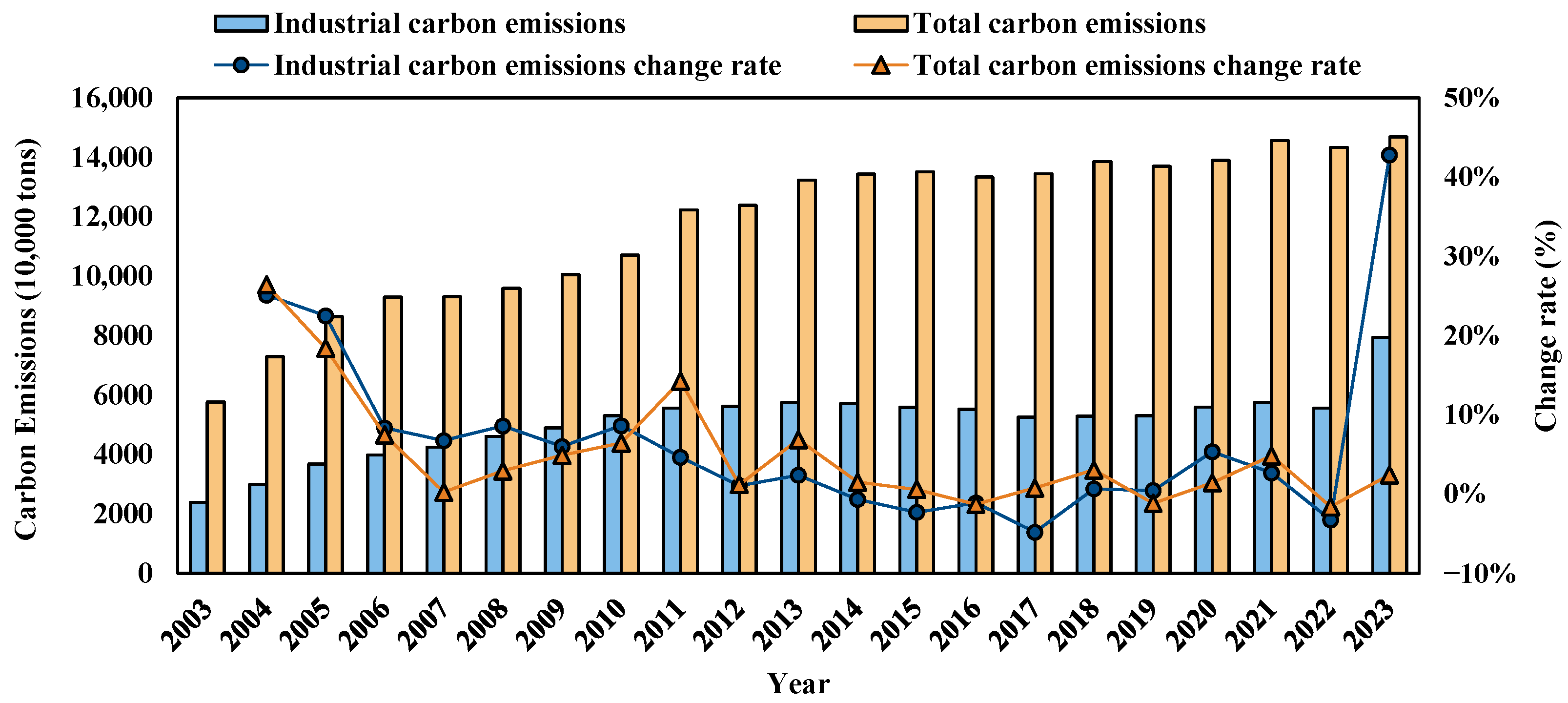
From 2003 to 2023, industrial and total carbon emissions in the Hangzhou metropolitan area showed an upward, fluctuating trend (Figure 2). The trends of industrial and total carbon emissions were generally consistent and can be divided into three stages. From 2003 to 2011, the expansion of energy-intensive industries, such as steel, cement, and chemicals, led to a steady increase in both industrial and total carbon emissions. However, the annual growth rate gradually declined, averaging about 8–10%. During 2012–2022, the “Twelfth Five-Year Plan for Energy Conservation and Emission Reduction (2011–2015)” strengthened binding targets on energy consumption. In 2014, the growth rate of industrial carbon emissions turned negative for the first time, possibly due to the State Council’s 2013 release of the “Action Plan for Air Pollution Prevention and Control,” which set the first PM2.5 reduction target. Since then, industrial and total carbon emissions have entered a period of stable fluctuations, and the regulatory effects of policy interventions have gradually become evident. In 2023, industrial carbon emissions in the Hangzhou metropolitan area increased sharply, with an annual growth rate of 42.80%, a drastic change from the −3.27% in 2022. To verify the reliability of this observation, Grubbs’ test was employed for rigorous outlier detection on the time series from 2003 to 2023. The analysis result showed that the G statistic was 2.12, which is below the critical value of 2.580 (α = 0.05, n = 21), confirming that this value is not a statistical outlier at the 95% confidence level. Although this value is significantly higher than the historical average, the growth was suppressed during the COVID-19 pandemic from 2020 to 2022. The national government ended COVID-19 control measures at the end of 2022 and adopted an open policy to promote economic recovery and development. Therefore, the growth in 2023 exhibits a reasonable compensatory characteristic. Therefore, industrial carbon emissions in the Hangzhou metropolitan area exhibited a clear, fluctuating growth pattern, particularly the sharp increase in 2023, highlighting the severity of the situation in this region. Although according to the National Development and Reform Commission, Hangzhou is among the first batch of pilot cities seeking to peak carbon dioxide emissions and has achieved phased results during the “14th Five-Year Plan” period (2021–2025), the problem of industrial carbon emissions remains prominent and requires stronger governance measures.
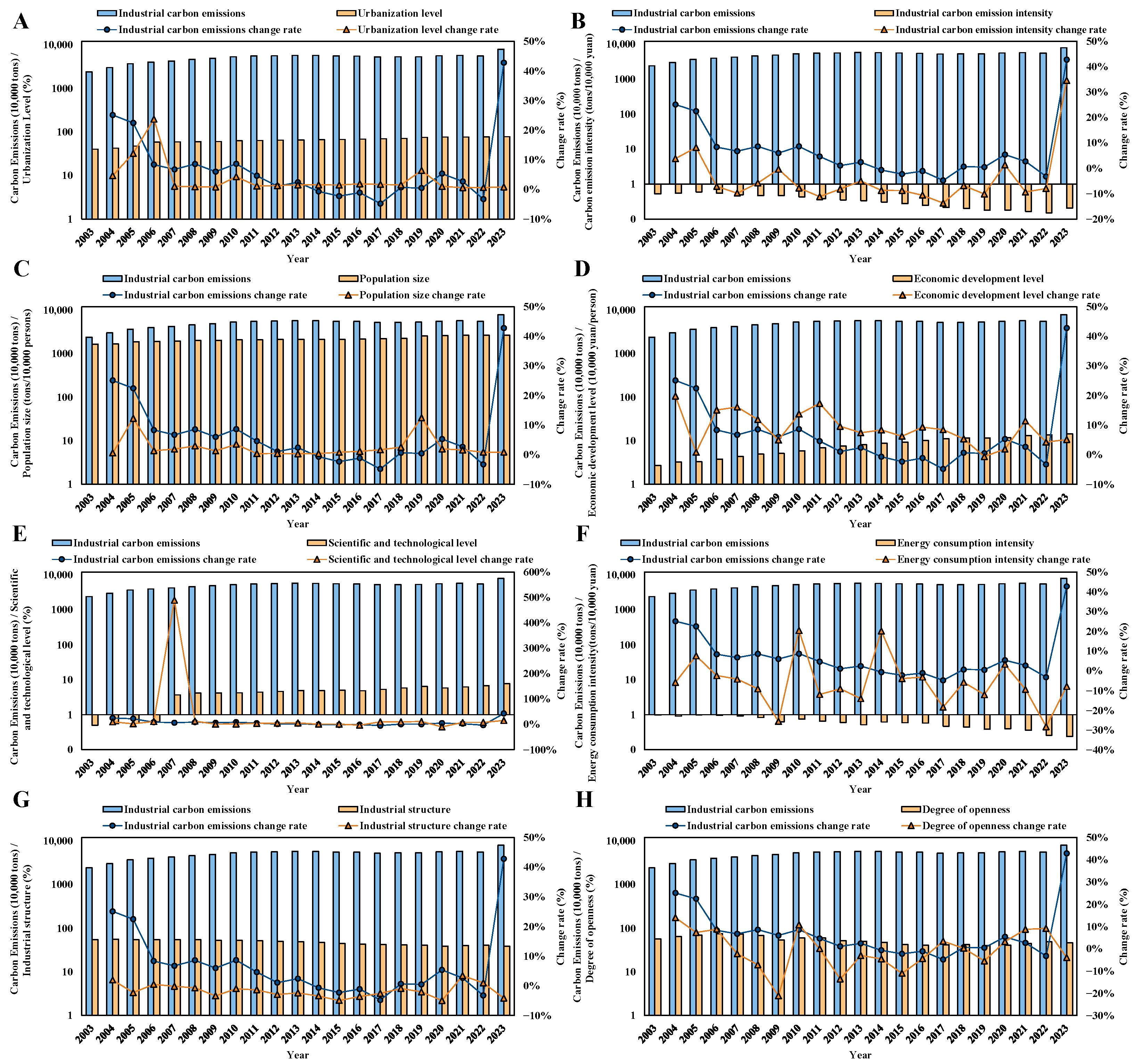
From a temporal perspective, industrial carbon emissions from 2003 to 2023 were comprehensively influenced by multiple factors, including the level of urbanization, carbon emission intensity, population size, economic development, technological level, energy consumption intensity, degree of openness, and industrial structure (Figure 3). During this period, the urbanization rate increased from 40.32% to 77.56%, showing a stage-based nonlinear relationship with industrial carbon emissions. From 2003 to 2010, the two were positively correlated, as urbanization promoted infrastructure and industrial expansion, thereby increasing emissions. From 2011 to 2022, although urbanization continued to increase, the growth rate of carbon emissions slowed, indicating a “decoupling” phenomenon. This suggests that industrial structure optimization and energy efficiency improvements weakened the driving effect of urbanization on emissions [29]. During the same period, industrial carbon emission intensity declined from 0.528 to 0.151, a 71.4% decrease. The decline was particularly significant after 2010, driven by energy conservation and emission-reduction policies, demonstrating the remarkable effects of technological progress and cleaner production measures [30]. The population increased from 16.66 million to 26.93 million and showed a linear positive correlation with carbon emissions in the early stage. However, this relationship weakened after 2017, indicating that population growth driven by the expansion of the service economy and high-value-added industries has reduced dependence on carbon-intensive activities. During the same period, GDP per capita rose from 27,200 yuan to 144,500 yuan, reflecting an average annual increase of approximately 8.7%. The association between economic growth and carbon output followed the typical Environmental Kuznets Curve (EKC) pattern, in which emissions rose during the early development stage but subsequently declined as green industries emerged and environmental awareness increased [31]. The level of science and technology increased by 14.4 times, demonstrating an inverted U-shaped correlation with carbon emissions. At the initial stage, technological development led to higher energy consumption, whereas in the later phase, the adoption and diffusion of green innovations contributed to emission reductions [32]. Energy consumption intensity decreased by 75.4%, but total emissions still increased, indicating that the “scale effect” dominated and economic expansion offset the energy-saving effect. The share of the secondary industry fell from 55.19% to 38.92%. Although the industrial structure was optimized, industrial expansion continued to raise emissions. The degree of openness showed a fluctuating trend, rising from 2003 to 2006 and then gradually declining. High openness transparency in the early stage led to the transfer of high-carbon export-oriented industries, while in the later stage, despite the decline in openness, domestic demand became the main driver of emission growth, suggesting that the impact mechanism of an open economy on carbon emissions shifted from “external demand-driven” to “domestic demand-driven” [33]. Overall, changes in industrial carbon emissions resulted from the combined effects of multiple factors. Although technological progress and structural optimization played a restraining role, economic expansion and short-term stimulus policies remained major challenges.

3.2. Extended STIRPAT Model Construction and Validation

This study applies the extended STIRPAT model to perform multiple linear fitting of industrial carbon emissions and their driving factors in the Hangzhou metropolitan area. This method has been widely used in carbon emission prediction because it can incorporate various socioeconomic drivers [34]. The regression coefficients (P) of industrial carbon emission intensity, population size, and economic development level are all less than 1%, indicating that these factors have a significant impact on industrial carbon emissions in the Hangzhou metropolitan area at the 1% significance level (Table 3). However, among the eight independent variables, the VIF values of all variables except technological level exceed 10, and the VIF values of economic development level and industrial structure even exceed 1000, showing strong multicollinearity. This reflects the strong coupling between financial development and industrial structure adjustment in the Hangzhou metropolitan area, consistent with the strong correlations among these factors in the context of rapid industrialization and urbanization [35].
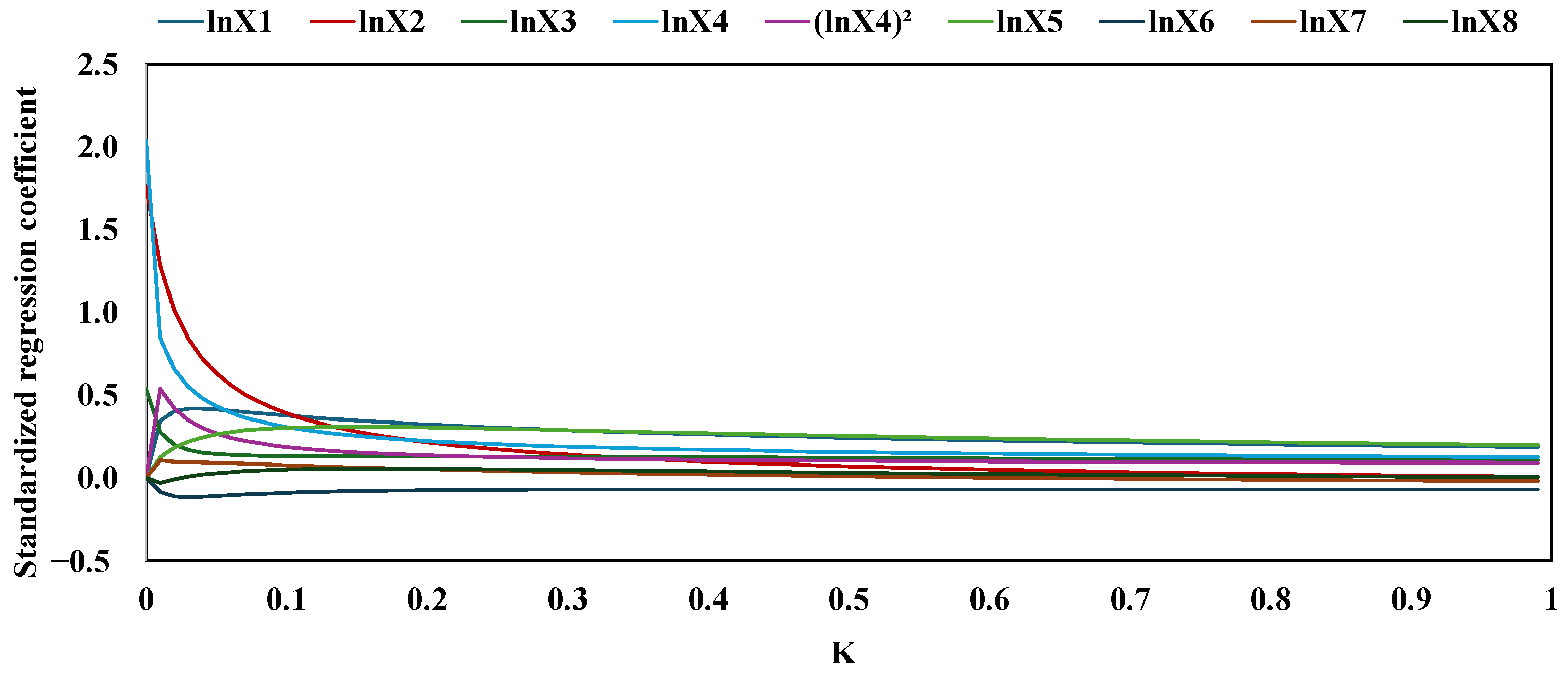
To address this issue, this study applies the ridge regression method to modify the model. This method has been shown to effectively reduce multicollinearity-induced interference in regression results while maintaining the interpretability of key variables [36]. In addition, the VIF method is used to determine the optimal regularization level [9]. As the K value changes, the closer the maximum VIF value is to 10, the more stable the ridge trace of each variable becomes. This method reduces the impact of subjective judgment on model parameter estimation. The optimal regularization parameter (K = 0.02) was determined through a systematic selection process. The ridge trace plot (Figure 4) illustrates the evolution of regression coefficients as K increases from 0 to 1. When K = 0, variables such as lnX4 and lnX7 exhibit highly unstable coefficient estimates due to severe multicollinearity (VIF > 1000). As K increases, the coefficients gradually converge, and at K = 0.02, an optimal balance is achieved—where the maximum VIF decreases to approximately 10, and all coefficients become stable without significant fluctuations. This indicates that ridge regression can stably and accurately reflect the influence of various factors on carbon emissions under conditions of high correlation among driving factors. It enhances the model’s applicability and predictive reliability. It provides an essential reference for metropolitan areas like Hangzhou, where the economy is highly developed and the coupling among variables is strong.
The ridge regression analysis yielded an R2 value of 0.973, suggesting a strong overall model fit. Variables X3, X5, X6, X7, and X8 did not reach conventional statistical significance (p > 0.05). However, since ridge regression aims to reduce the impact of multicollinearity rather than test variable significance, and all selected variables are based on existing research on carbon emission drivers, they were retained in the model. Meanwhile, The F-statistic was significant at the 0.1% level, indicating that the chosen explanatory variables effectively account for variation in industrial carbon emissions (Table 4). Sensitivity analysis indicates that the parameter is at an optimal equilibrium point. The current value of K = 0.02 satisfies the VIF threshold (<10) while maintaining a high model fit (R2 = 0.973). Furthermore, the coefficients of significant variables (lnX1, lnX2, lnX4) remain stable within the K range of [0.02, 0.05] (coefficient of variation < 15%), demonstrating the robustness and reliability of the model results. Therefore, the extended STIRPAT model after ridge regression processing can relatively well describe the relationship between industrial carbon emissions and various influencing factors in the Hangzhou metropolitan area, as shown in Equation (5).
ln I = 2.337 + 0.565 ln X 1 + 0.574 ln X 2 + 0.37 ln X 3 + 0.321 ln X 4 + 0.054 ( ln X 4 ) 2 + 0.052 ln X 5 0.07 ln X 6 + 0.187 ln X 7 0.01 ln X 8
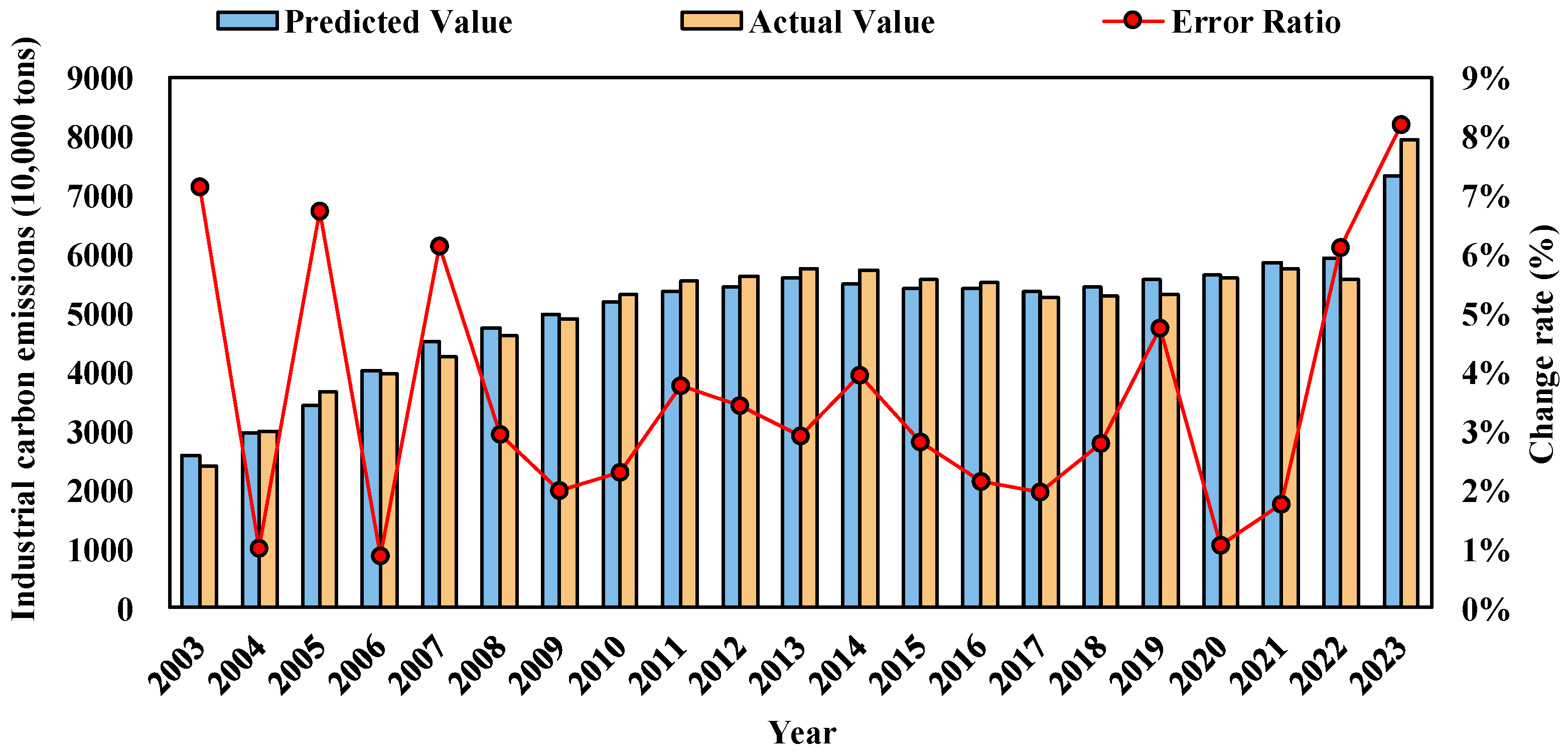
According to Equation (5), the contribution order of each influencing factor to industrial carbon emissions in the Hangzhou metropolitan area is as follows: industrial carbon emission intensity, urbanization level, population size, economic development level, industrial structure, scientific and technological level, energy intensity, and degree of openness. Furthermore, the coefficient for the squared term of the logarithm of GDP per capita is positive, suggesting that, throughout the study period, an inverted U-shaped relationship between per capita GDP and industrial carbon emissions did not emerge in the Hangzhou metropolitan area. Finally, to ensure the model accurately predicts industrial carbon emissions in the Hangzhou metropolitan area, its validity must be verified. The values of each variable from 2003 to 2023 were substituted into Equation (5) to conduct an error test, and the comparison between the predicted and actual values of the STIRPAT model was obtained (Figure 5). The results show that the average error of the simulated data is 7.63% compared with the actual values. According to related studies [37], the error is small and the data fit is good, falling within an acceptable range. Therefore, the model can be used to predict industrial carbon emissions in the Hangzhou metropolitan area.

3.3. Scenario Variable Parameterization

According to recent scenario studies on carbon emission peaking, parameter settings are established for the eight influencing factors. Consistent with existing research [38], the scenario design adopts three levels: low-speed, medium-speed, and high-speed. Each development stage spans five years and aligns with the national economic and social development plans, facilitating the transformation of policy objectives into scenario parameters. The prediction period is divided into six stages: Stage 1 (2024–2025), Stage 2 (2026–2030), Stage 3 (2031–2035), Stage 4 (2036–2040), Stage 5 (2041–2045), and Stage 6 (2046–2050). The medium-speed scenario is based on government planning targets and recent academic forecasts. The low-speed scenario represents weak policy implementation or a macroeconomic downturn. In contrast, the high-speed scenario represents an accelerated transition path driven by technological breakthroughs, institutional support, and strong external demand (Table 5).
(1)
Urbanization level
According to historical statistical data, the urbanization rate in the Hangzhou metropolitan area shows a phased pattern of “rapid growth, significant slowdown, stable moderation, and recovery”. During 2006–2010, the urbanization growth rate reached 5.81%, reflecting the rapid advancement of industrialization and population agglomeration. From 2011 to 2015, the rate declined to 1.38%, indicating a turning point toward slower urbanization. From 2016 to 2020, it slightly rebounded to 2.49%, reflecting the structural momentum driven by regional coordinated development and new urbanization policies [39]. According to the regional “14th Five-Year Plan,” the urbanization rate of the Hangzhou metropolitan area is expected to increase by an average of 0.4% per year from 2020 to 2025, suggesting that urbanization growth will gradually slow and transition toward a stage of high-quality development. Therefore, 0.4% is set as the medium-speed scenario, representing a stable growth situation during the planning period. Based on the actual annual average change of 0.67% in the urbanization rate from 2021 to 2023, this value is set as the high-speed scenario, reflecting an accelerated trajectory driven by the digital economy, regional integration, and population re-agglomeration [40]. Compared with the high-speed scenario, the low-speed scenario yields a 0.13% slowdown, indicating a trend toward slower growth under the influence of population aging, spatial constraints, and the diminishing marginal effect of land use [41].
(2)
Industrial carbon emission intensity
In general, the industrial carbon emission intensity of the Hangzhou metropolitan area has shown a continuous downward trend over the past two decades, reflecting the combined effects of industrial structure optimization, improved energy efficiency, and the promotion of green technologies. According to China’s “14th Five-Year Plan” (2021–2025), the country has committed to reducing CO2 emissions per unit of GDP by more than 65% by 2030 compared with 2005. Based on this target, the average reduction in CO2 emissions per unit of GDP during 2021–2025 and 2026–2030 needs to be about 17.6%. Therefore, a rate of −3.8% is set as the medium-speed scenario for the industrial carbon-emission intensity of the Hangzhou metropolitan area, representing a reasonable emission-reduction path consistent with the national “14th Five-Year Plan” targets. Given the average annual change rate of −4.65% in industrial carbon emission intensity from 2003 to 2023, this value serves as the high-speed scenario, representing an accelerated transition driven by faster green transformation, higher clean energy penetration, and the widespread adoption of energy-saving and emission-reduction technologies. Based on the difference between the medium-speed and high-speed scenarios, −2.95% is calculated for the low-speed scenario, representing a moderate reduction path under conditions of weakened external environmental pressure or slower industrial structure adjustment [42].
(3)
Population size
In general, the inertia of population growth in China is significantly weakening. Affected by the continuous decline in fertility rates, the intensification of population aging, and the slowdown of urbanization, the national population is expected to peak around 2030 and then enter a stage of negative growth [43]. Based on statistical yearbook data of Hangzhou, Huzhou, Shaoxing, and Jiaxing, the annual population growth rate in the region ranged from 0.48% to 3.88% during 2006–2023, with an average of 1.13% during 2021–2023. This growth rate reflects the combined effects of post-pandemic population mobility recovery and the economic attractiveness of the metropolitan area, while also suggesting a weakening potential for future growth. Considering the overall trend and policy orientation, 1.13% is set as the annual average change rate for the low-speed, medium-speed, and high-speed scenarios, which then decline at different rates. The medium-speed scenario corresponds to the current actual growth level and short-term stability trend. The low-speed scenario accounts for the ongoing impacts of population aging and labor migration [44]. The high-speed scenario assumes deeper regional integration, the return migration of young people, and the enhanced attractiveness of high-quality employment [45].
(4)
Economic development level
From 2006 to 2020, the Hangzhou metropolitan area experienced a decline in the annual growth rate of GDP per capita, decreasing from 12.29% to 4.83%. The slowdown in economic growth indicates that the regional economy has transitioned from rapid expansion to high-quality development, aligning with China’s shift toward a “new normal” economy [46]. According to the Zhejiang Province 14th Five-Year Plan (2021–2025), the target per capita GDP will exceed 130,000 yuan by 2025, requiring an average annual growth rate of about 5.2% compared with 2020. Therefore, the medium-speed scenario is set at 5.2%, aligning with policy development trends. Given the region’s average growth rate of 8.7% from 2003 to 2023, the high-speed scenario is set to reflect a growth path driven by continuous industrial optimization and technological efficiency improvements. The low-speed scenario is set at an average annual growth rate of 4.83%, reflecting a growth trend under conditions such as tighter macroeconomic regulation, external economic fluctuations, and slower-than-expected progress in high-quality transformation [47].
(5)
Scientific and technological level
The scientific and technological level of the Hangzhou metropolitan area has shown a continuous and accelerated upward trend in recent years. This reflects improvements in the regional innovation system, increased R&D investment, and the upgrading of the industrial structure from manufacturing to intelligent manufacturing [48]. During the 13th Five-Year Plan period (2016–2020), the average annual growth rate of the scientific and technological level was 3.12%. From 2021 to 2023, the rates reached 6.25%, 6.74%, and 7.78%, respectively, with R&D investment increasing each year. The average annual growth rate from 2020 to 2023 was 10.22%, far exceeding the previous planning period’s level. This is closely related to Zhejiang Province’s policy orientation in the 14th Five-Year Plan (2021–2025), which emphasizes “technological innovation as the driving force for a new round of scientific and industrial transformation”. Based on this, 10.22% is set as the high-speed scenario, reflecting a development trend driven by increased R&D investment, optimized innovation ecosystems, and accelerated industrial technology iteration. The average annual growth rate of 3.12% from 2016 to 2020 is set as the low-speed scenario, reflecting a moderate situation in which technological investment slows or innovation efficiency is constrained [49]. Referring to the midpoint between the two, 6.67% is set as the medium-speed scenario, representing a balanced growth path under steady policy implementation and rational allocation of scientific and technological resources.
(6)
Energy consumption intensity
According to historical data trends and the Zhejiang Province Plan for 2021–2025, which emphasizes continued reductions in carbon emission intensity and low-carbon development through a rational industrial layout, Zhejiang Province’s overall energy intensity is expected to continue to decline. The combined effects of energy structure optimization, industrial upgrading, and advances in energy-saving technologies drive this trend. The “Comprehensive Energy Conservation and Emission Reduction Work Plan of Zhejiang Province (2021–2025)” sets a target to reduce energy use per unit of GDP by 14.5% from 2020 to 2025, translating into an average annual decrease of around 2.9%. This reflects a medium-term policy target for improving energy efficiency, as guided by policy. Therefore, −2.9% is set as the medium-speed scenario, representing a reasonable path combining steady policy implementation, structural adjustment, and technological improvement. From 2003 to 2023, the Hangzhou metropolitan area recorded an average annual decline of 6.77% in energy intensity, indicating significant potential for energy efficiency improvements and industrial transformation. Thus, it is set as the high-speed scenario to simulate transformation under conditions of technological innovation, increased penetration of clean energy, and strengthened energy-saving policies [50]. The low-speed scenario is estimated at −0.57% relative to the medium- and high-speed scenarios, indicating insufficient policy enforcement, slow industrial restructuring, or limited improvements in energy efficiency [51].
(7)
Industrial structure
According to historical data, the proportion of the secondary industry in the Hangzhou metropolitan area has shown a continuous downward trend, while the tertiary industry’s share has steadily increased. The industrial structure has gradually shifted toward high-tech and high-value-added sectors. This trend reflects the structural transformation of the regional economy from traditional manufacturing to modern services and high-tech industries, consistent with the general pattern of industrial upgrading [52]. Overall, the industrial structure optimization in the Hangzhou metropolitan area has entered a stage of continuous deepening, and it is expected to continue declining, albeit at a slower pace, in the future. Based on this, the medium-speed development scenario is characterized by an average annual decline in the secondary industry’s share of 2.84% during the 13th Five-Year Plan period (2016–2020), reflecting a typical pace driven by policy and structural adjustment. The low-speed development scenario assumes an average annual change rate of −1.73% from 2003 to 2023, reflecting the trend of evolution under weaker policy intervention. The high-speed development scenario is set at −3.95% relative to the medium-speed and low-speed scenarios, reflecting an accelerated transformation path driven by strengthened innovation and green technologies.
(8)
Degree of openness
Based on historical data from 2003 to 2023, the proportion of foreign trade in the Hangzhou metropolitan area shows a fluctuating pattern of “initial growth, subsequent decline, and renewed growth”. This reflects the dynamic adjustment under the combined effects of global economic cycles, external demand, and regional openness policies [53]. The average change rate from 2003 to 2023 was −0.94%, while the average annual change rate during the 13th Five-Year Plan period (2016–2020) was −0.66%, indicating that although openness declined during this period, the decline was relatively small. Based on this, −0.66% is set as the medium-speed development scenario, representing a neutral path under policy and external conditions similar to the planning period. The −0.94% rate from 2003 to 2023 is used as the low-speed development scenario, representing a conservative trend under long-term average conditions. Referring to the difference between the medium-speed and low-speed scenarios, −0.38% is set as the high-speed development scenario, representing a situation in which the degree of openness stabilizes or rises under a more favorable international environment, active openness policies, and accelerated industrial digitalization [54].
It should be noted that the parameter settings for the high-speed, medium-speed, and low-speed scenarios in Table 5 are based on historical statistical data (2003–2023) and government planning targets (such as the 14th Five-Year Plans of China and Zhejiang Province). While these values reflect reasonable trends of change under different development pathways, some uncertainty remains. Due to fluctuations in future economic conditions, policy environments, and market conditions, the actual rate of change for each factor may deviate from the set values by ±10–20%. This study uses deterministic parameters to ensure model operability but does not quantify the uncertainty range. Additionally, this study does not include extreme scenarios such as technological breakthroughs, major energy system restructuring, or changes in international conditions. The results primarily reflect trend forecasts under conventional scenarios. Future research could enhance the robustness of the scenario analysis by developing “technology leapfrog scenarios” or “policy shock scenarios”.

3.4. Scenario Configuration

Scenario analysis is one of the most widely used methods for predicting carbon emissions. It is a qualitative forecasting method that predicts future development directions based on assumed trends [55]. Carbon emissions are affected by multiple factors and may show different development trends. Considering socioeconomic conditions, national policies, and the actual development situation of the Hangzhou metropolitan area, four scenario combinations are established for each influencing factor based on different strategic development plans, using “low-speed, medium-speed, and high-speed” development modes. These are the extensive development scenario (S1), the baseline development scenario (S2), the green economic development scenario (S3), and the deep emission reduction development scenario (S4) (Table 6).
Extensive development scenario (S1): The urbanization level, population size, economic development level, and industrial structure are set to high speed, while the other factors are set to low speed. This scenario prioritizes rapid economic and urban development, without control over other indicators. It does not align with the green and low-carbon development goals proposed in the “14th Five-Year Plan (2021–2025)”. Energy-saving and emission-reduction policies are not implemented, and environmental investment is insufficient. This scenario represents a “high growth and high energy consumption” path driven by traditional growth models [56].
Baseline scenario (S2): All influencing factors are set to medium speed. This scenario follows historical development trends and, based on past policy planning and the current development situation, does not interfere with the existing influencing factors or their rates of change. It reflects the future development trend of industrial carbon emissions in the Hangzhou metropolitan area under natural conditions. This scenario represents a “steady evolution” path under the continuation of existing policies, economic structures, and technological progress, serving as a reference and evaluation baseline.
Green economic scenario (S3): Based on the baseline scenario, the industrial carbon emission intensity and scientific and technological level are adjusted to medium- and high-speed levels. This scenario emphasizes green transformation while maintaining steady economic growth, focusing on industrial upgrading, clean energy substitution, and the application of energy-saving and emission-reduction technologies. It reflects an orientation of “innovation-driven and efficiency improvement” and represents a sustainable development model led by technological innovation. Such a “green growth” model has been shown in many regions to have synergies between emission reductions and economic growth [57].
Deep emission reduction scenario (S4): The urbanization level, population size, economic development level, and industrial structure are set to low speed, while all other influencing factors are set to high speed. This scenario emphasizes ecological priorities and achieves significant reductions in carbon emissions through strengthened energy consumption controls, the promotion of low-carbon technologies, and increased green investment [58]. However, this path weakens development momentum and makes it challenging to sustain the vitality and scale expected of a metropolitan area. It is more suitable as a boundary reference for an extreme-emission-reduction pathway than as a practical, sustainable, optimal option.

3.5. Scenario Outcome Analysis

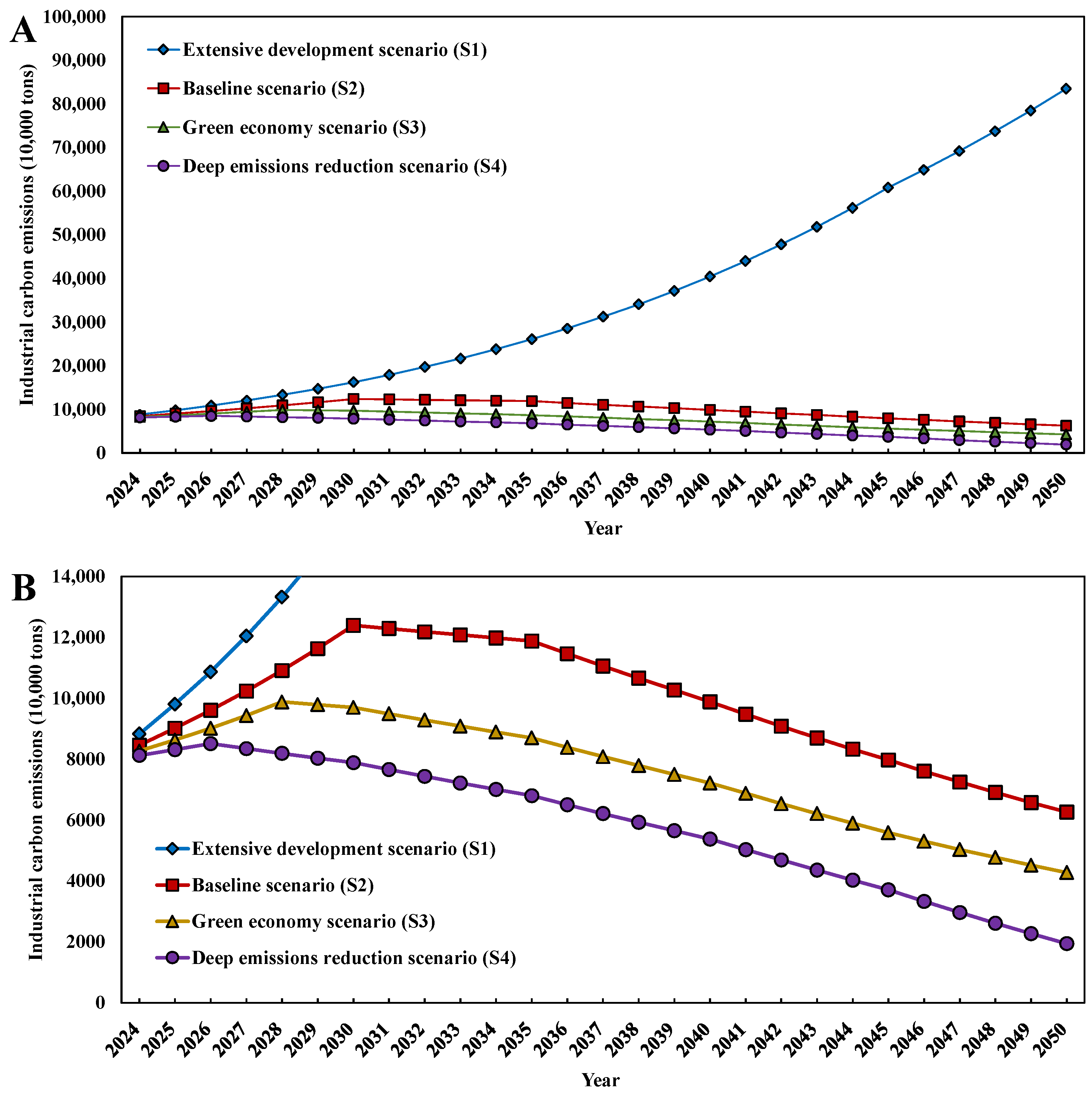
By substituting the variation rates of each influencing factor under different scenario combinations into the extended STIRPAT model, the industrial carbon emission trends of the Hangzhou metropolitan area from 2024 to 2050 were predicted (Figure 6). In S1, the peak was not reached before 2030, and emissions continued to rise until 2050 without peaking, indicating that under the absence of green regulation, the emission trend lags behind the timeline required by the national “dual carbon” targets. This is consistent with findings from some studies that industrial emissions exhibit a continuous upward trend in the absence of policy interventions [59]. S2 reaches its peak in 2030, at 102 million tons, indicating that the current policy framework can generally meet the timeline for the national “dual carbon” goals, although the potential for further reductions is limited. Similar research also indicates that, under the maintenance of current policy strength, urban regions generally can peak around 2030, although emission reduction potential remains limited [60]. S4 reaches its peak earliest in 2026, at 83 million tons, followed by S3, which peaks in 2028 at 91 million tons. S3 and S4 achieve early peaking through enhanced emission-reduction technologies.
These results indicate that when the optimization rates of industrial carbon emission intensity and energy consumption intensity exceed the growth rates of population size, economic development level, and urbanization rate, real carbon reduction can be achieved without hindering economic development. Regional economic growth does not necessarily lead to a sharp increase in carbon emissions. In the short term, population growth, economic development, and urbanization do promote emission growth. Still, in the long term, factors such as technological progress and the optimization of the industrial structure play a decisive role. This pattern aligns with the prevailing view in existing studies that technological progress and industrial structure optimization play a more dominant role in long-term carbon reduction compared to economic and demographic factors [61]. The green development path can achieve results close to those of the extreme-emission-reduction path without significantly reducing economic potential. This finding is consistent with previous studies, which have shown that green technological progress and improved energy efficiency are key supports for achieving a low-carbon transition [62]. Furthermore, some scholars have noted that moderately intense green transition strategies often achieve a better balance between environmental benefits and economic growth, consistent with the performance of the S3 scenario in this study [63].
From the comparative analysis of the four scenarios, the S1 path promotes rapid economic and urban development but lacks mechanisms for energy conservation, emission reduction, and industrial structure adjustment. As a result, carbon emissions continue to grow rapidly, which is unsustainable in the long term. S2 represents the natural evolution path under the continuation of current policies. Although it meets the timeline requirements, its emission reduction range is limited and cannot achieve higher-quality low-carbon development goals. S4 achieves the smallest and earliest peak through strong policy intervention. However, it requires a significant slowdown in urbanization, economic growth, and population expansion, which brings evident socioeconomic costs. Therefore, it is more suitable as a boundary reference for exploring extremely low-carbon pathways. Comparable perspectives also appear in related research, where extreme emission reduction pathways can achieve rapid peaking but are often accompanied by significant socio-economic costs, making them more suitable as scenario boundaries [64]. In contrast, S3 enhances green investment, promotes technological innovation, and optimizes the energy structure. It achieves significant emission reduction while maintaining moderate growth, realizing a positive balance between environmental performance and economic vitality. Therefore, considering sustainability, feasibility, and policy compatibility, S3 can be regarded as the optimal pathway for the medium- and long-term low-carbon transition of the Hangzhou metropolitan area. This “technology-driven and structure-optimized” pathway, regarded as the most feasible low-carbon transition approach, has been validated by multiple regional low-carbon studies [65], further underscoring the empirical contribution of this research.
The results show that among the four scenarios, S3 offers the most balanced development pathway, achieving significant emission reductions while maintaining moderate economic growth and urbanization. In contrast, S1 and S2 are less capable of supporting high-quality, low-carbon development, while S4, although effective, requires socio-economic sacrifices, limiting its feasibility. Overall, the results indicate that S3 can achieve near-optimal emission reductions while minimizing economic costs, providing a practical pathway for medium- to long-term transformation.
At the same time, it should be noted that certain assumptions underlie the model construction and scenario settings of this study, including the linear extrapolation of the variation rates of influencing factors and the idealization of scenario combinations. These assumptions may affect the accuracy of predictions, especially in long-term forecasts, as technological breakthroughs, policy changes, and shifts in the international situation may cause actual trends to deviate from the model’s expectations. Future research can introduce sensitivity analysis and uncertainty assessment methods to systematically evaluate the impact of key parameter fluctuations on prediction results, identify the most sensitive driving factors, and further enhance the robustness and policy relevance of the predictions [66].

3.6. Emission Reduction Strategies Under Different Scenarios

Based on multi-scenario simulations, particularly the excellent emission-reduction performance observed under the green economic scenario (S3), this study proposes a control pathway for industrial carbon emissions in the Hangzhou metropolitan area. The goal is to achieve effective emission reduction in the industrial sector while ensuring stable regional socioeconomic development. These recommendations can be advanced from the following three aspects:
(1)
Establish a regional low-carbon development coordination mechanism. This should promote cross-regional cooperation and technological exchange and accelerate the formation of a low-carbon development pattern with a clear division of labor and shared resources. Government departments should enhance policy direction for green industrial transformation, promote a shift in the energy structure from coal-based to diversified, low-carbon, and accelerate technological upgrading in energy-intensive sectors. It is widely recognized that regional collaborative governance and the establishment of a green innovation system are key enablers of achieving carbon peaking in the industrial sector [65].
(2)
Formulate phased and differentiated carbon emission control targets. The peak time and emission reduction pathway should be clarified for different regions. For key industries such as steel, petrochemicals, and coal power, measures such as green digital transformation, industrial structure optimization, and energy-saving retrofitting should be adopted to improve energy efficiency. At the same time, the development of green finance and green fiscal policies should be promoted, including policy tools such as carbon tax incentives and green credit, to guide enterprises toward low-carbon transformation [67].
(3)
Systematically promote urban ecological space optimization and forest carbon sink construction. By establishing ecological corridors, urban green spaces, and ecological buffer zones, the regional carbon sink capacity can be enhanced. A carbon sink trading and ecological compensation mechanism should be established to monetize ecosystem service values, gradually transforming the metropolitan area from a traditional carbon-emitting source into a carbon sink with regulatory functions. This ecological-oriented approach has been proven effective in achieving a “win–win” outcome between economic development and environmental protection in several countries, including the United States [68] and China [69].

4. Conclusions

This study employs the extended STIRPAT model and constructs multiple scenario combinations to systematically explore pathways for reducing industrial carbon emissions in the Hangzhou metropolitan area. The main conclusions are as follows:
(1)
The extended STIRPAT model developed in this study incorporates industry-related factors, which significantly enhance its explanatory power and reliability in predicting industrial carbon emissions.
(2)
Industrial carbon emission intensity has the most significant impact on carbon emissions, followed by urbanization level, population size, economic development level, industrial structure, scientific and technological level, energy intensity, and degree of openness.
(3)
The deep emission reduction scenario (S4) reaches its peak earliest, in 2026. The green economy scenario (S3) peaks in 2028. The baseline scenario (S2) peaks in 2030, in line with the national targets. The extensive development scenario (S1) continues to grow until 2050 without reaching a peak.
(4)
Both scenario S3 and S4 reach their peaks before 2030. Scenario S3 achieves a balance between environmental benefits and economic growth, and therefore can be regarded as the optimal pathway for realizing medium- to long-term low-carbon transition.
This study provides valuable insights for the management of industrial carbon emissions in the Hangzhou metropolitan area. In future planning, the development path of the green economy can be integrated into the coordinated development strategy of the urban agglomeration. By enhancing regional collaborative governance, improving green finance mechanisms, and promoting the green transformation of industrial chains, a long-term and systematic policy support framework can be established to achieve the “dual carbon” goals. This approach holds significant importance for regional sustainable development and the realization of China’s carbon peaking and carbon neutrality objectives.

Author Contributions

Conceptualization, F.C. and Z.C.; Methodology, X.L.; Software, X.X.; Validation, X.L. and X.X.; Formal analysis, X.L.; Data curation, F.C., X.J. and J.L.; Writing—original draft, F.C.; Writing—review & editing, Z.C., Y.C., M.S., Y.H. and J.Y.; Visualization, X.L., X.J. and J.L.; Supervision, Y.H. and J.Y.; Funding acquisition, Y.C. All authors have read and agreed to the published version of the manuscript.

Funding

This work was supported by the National Natural Science Foundation of China (42507517) and the Fundamental Research Funds of Zhejiang University of Science and Technology (2025QN026).

Institutional Review Board Statement

Not applicable.

Informed Consent Statement

Not applicable.

Data Availability Statement

The data presented in this study are available on request from the corresponding author. The data are not publicly available due to privacy restrictions and institutional data sharing policies.

Conflicts of Interest

The authors declare no conflicts of interest.

References

  1. Zhang, M.; Wang, C.; Wang, S.; Wang, K.; Zhang, R. Assessment of greenhouse gas emissions reduction potential in an industrial park in China. Clean Technol. Environ. Policy 2020, 22, 1435–1448. [Google Scholar] [CrossRef]
  2. Yu, X.; Hu, W.; Wang, M. The Impact of Green Development of Industrial Parks on the Reduction of Carbon Emissions in Urban Areas—Empirical Research on Green Industrial Parks in China. Earth’s Future 2024, 12, e2024EF005161. [Google Scholar] [CrossRef]
  3. Li, S.; Chen, W. Regional carbon inequality and its impact in China: A new perspective from urban agglomerations. J. Clean. Prod. 2024, 480, 144059. [Google Scholar] [CrossRef]
  4. Yue, H.; Wu, B.; Duan, J.; Yue, Y.; Guan, H.; Zhang, J. Impact Factors and Structural Pathways of Carbon Emissions in the Power Sector of the Beijing–Tianjin–Hebei Region Using MRIO Analysis. Atmosphere 2025, 16, 177. [Google Scholar] [CrossRef]
  5. Zhou, D.; Pan, S.; Li, S.; Li, H.; Ding, Q.; Wang, L. “Significant implications of diversity and stability for ecosystem sustainability necessitate differentiated management strategies: A case study of the urban agglomeration around Hangzhou Bay, China” (JEMA-D-24-12476R1). J. Environ. Manag. 2024, 370, 122704. [Google Scholar] [CrossRef]
  6. Cao, J.; Zhang, J.; Chen, Y.; Fan, R.; Xu, L.; Wu, E.; Xue, Y.; Yang, J.; Chen, Y.; Yang, B.; et al. Current status, future prediction and offset potential of fossil fuel CO2 emissions in China. J. Clean. Prod. 2023, 426, 139207. [Google Scholar] [CrossRef]
  7. Li, W.; Liu, S.; Lu, C. An evaluation concentrated on post-peak carbon trend scenarios designing and carbon neutral pathways in Hebei Province, China. J. Clean. Prod. 2024, 441, 140952. [Google Scholar] [CrossRef]
  8. Lu, Y.; Chen, S. Exploring the realization pathway of carbon peak and carbon neutrality in the provinces around the Yangtze river of China. J. Clean. Prod. 2024, 466, 142904. [Google Scholar] [CrossRef]
  9. Jiang, X.; Lu, S. Prediction of Peak Path of Building Carbon Emissions Based on the STIRPAT Model: A Case Study of Guangzhou City. Energies 2025, 18, 1633. [Google Scholar] [CrossRef]
  10. Zhao, S.; Li, Z.; Deng, H.; You, X.; Tong, J.; Yuan, B.; Zeng, Z. Corrigendum: Spatial-temporal evolution characteristics and driving factors of carbon emission prediction in China-research on ARIMA-BP neural network algorithm. Front. Environ. Sci. 2025, 13, 1592508. [Google Scholar] [CrossRef]
  11. Wei, C.; Jiang, Y.; Zhou, Z.; Zheng, J.; Wang, R.; Cong, M.; Wu, Y.; Yang, D.; Liu, J. Modelling carbon emissions from the urban district heating sector based on system dynamics. Environ. Dev. Sustain. 2024, 27, 30513–30541. [Google Scholar] [CrossRef]
  12. Hu, S.; Li, S.; Gong, L.; Liu, D.; Wang, Z.; Xu, G. Carbon emissions prediction based on ensemble models: An empirical analysis from China. Environ. Model. Softw. 2025, 188, 106437. [Google Scholar] [CrossRef]
  13. Lei, H.; Xue, M.; Liu, H.; Ye, J. Unveiling the driving patterns of carbon prices through an explainable machine learning framework: Evidence from Chinese emission trading schemes. J. Clean. Prod. 2024, 438, 140697. [Google Scholar] [CrossRef]
  14. Kotir, J.H.; Jagustovic, R.; Papachristos, G.; Zougmore, R.B.; Kessler, A.; Reynolds, M.; Ouedraogo, M.; Ritsema, C.J.; Aziz, A.A.; Johnstone, R. Field experiences and lessons learned from applying participatory system dynamics modelling to sustainable water and agri-food systems. J. Clean. Prod. 2024, 434, 140042. [Google Scholar] [CrossRef]
  15. Duan, H.; He, C.; Pu, S. A new circular neural grey model and its application to CO2 emissions in China. J. Clean. Prod. 2024, 445, 141318. [Google Scholar] [CrossRef]
  16. Quan, Z.; Xu, X.; Jiang, J.; Wang, W.; Gao, S. Uncovering the drivers of ecological footprints: A STIRPAT analysis of urbanization, economic growth, and energy sustainability in OECD countries. J. Clean. Prod. 2024, 475, 143686. [Google Scholar] [CrossRef]
  17. Zhang, Z.; Wu, Z.; Yang, X.; Cai, B.; Lin, Z. The driving factors of spatial differences on the whole life cycle carbon emissions of the construction industry: From the analysis perspective of total factor productivity. Front. Energy Res. 2024, 12, 1330614. [Google Scholar] [CrossRef]
  18. He, Y.; Wang, L.; Zhu, H.; Song, W.; Zhan, X. Tourism Carbon Emission Forecasting, the Decoupling Effect and Its Driving Factors in the Yangtze River Economic Belt under the “Double Carbon” Target. J. Resour. Ecol. 2023, 14, 1329–1343. [Google Scholar] [CrossRef]
  19. Huan, H.; Wang, L.; Zhang, Y. Regional differences, convergence characteristics, and carbon peaking prediction of agricultural carbon emissions in China. Environ. Pollut. 2025, 366, 125477. [Google Scholar] [CrossRef]
  20. Tao, X.; Zhu, L. Drivers of transportation CO2 emissions and their changing patterns: Empirical results from 18 countries. J. Transp. Geogr. 2024, 119, 103957. [Google Scholar] [CrossRef]
  21. Zhang, Y.; Luo, F. Carbon emissions in China’s urban agglomerations: Spatio-temporal patterns, regional inequalities, and driving forces. Environ. Sci. Pollut. Res. Int. 2024, 31, 22528–22546. [Google Scholar] [CrossRef]
  22. Ma, P.; Liu, H.; Zhang, X. A Study on the Decoupling Effect and Driving Factors of Industrial Carbon Emissions in the Beibu Gulf City Cluster of China. Sustainability 2025, 17, 3993. [Google Scholar] [CrossRef]
  23. Ehrlich, P.R.; Holdren, J.P. Impact of Population Growth. Science 1971, 171, 1212–1217. [Google Scholar] [CrossRef]
  24. Zhu, Y.; Feng, C.; Liu, X.; Zhang, T.; Wang, X. An Analysis of the Factors Influencing Energy Consumption Based on the STIRPAT Model: A Case Study of the Western Regions of China. Energies 2025, 18, 2379. [Google Scholar] [CrossRef]
  25. Guo, Y.; Tong, Z.; Chen, H.; Wang, Z.; Yao, Y. Heterogeneity study on mechanisms influencing carbon emission intensity at the county level in the Yangtze River Delta urban Agglomeration: A perspective on main functional areas. Ecol. Indic. 2024, 159, 111597. [Google Scholar] [CrossRef]
  26. Li, Y.; Dai, J.; Zhang, S.; Cui, H. Dynamic Prediction and Driving Factors of Carbon Emission in Beijing, China, under Carbon Neutrality Targets. Atmosphere 2023, 14, 798. [Google Scholar] [CrossRef]
  27. York, R.; Rosa, E.A.; Dietz, T. STIRPAT, IPAT and ImPACT: Analytic tools for unpacking the driving forces of environmental impacts. Ecol. Econ. 2003, 46, 351–365. [Google Scholar] [CrossRef]
  28. Intergovernmental Panel on Climate Change. Climate Change 2023: Synthesis Report. Contribution of Working Groups I, II and III to the Sixth Assessment Report of the Intergovernmental Panel on Climate Change; IPCC: Geneva, Switzerland, 2023; pp. 35–115. [Google Scholar]
  29. Yang, J.; Yu, S.; Sun, Y.-F. Restructuring effects of industrial and energy structures on sectoral CO2 emission peak trajectories in China. iScience 2024, 27, 110541. [Google Scholar] [CrossRef]
  30. Chen, H.; Cui, X.; Shi, Y.; Li, Z.; Liu, Y. Impact of Policy Intensity on Carbon Emission Reductions: Based on the Perspective of China’s Low-Carbon Policy. Sustainability 2024, 16, 8265. [Google Scholar] [CrossRef]
  31. Freire-González, J.; Padilla Rosa, E.; Raymond, J.L. World economies’ progress in decoupling from CO2 emissions. Sci. Rep. 2024, 14, 20480. [Google Scholar] [CrossRef]
  32. Zhu, X.; Che, J.; Niu, X.; Cao, N.; Liu, M. Study on the effect of technological innovation on carbon emission intensity in 278 prefecture-level cities in China. Sci. Rep. 2025, 15, 14917. [Google Scholar] [CrossRef] [PubMed]
  33. Zhou, R.; Guan, S.; He, B. The Impact of Trade Openness on Carbon Emissions: Empirical Evidence from Emerging Countries. Energies 2025, 18, 697. [Google Scholar] [CrossRef]
  34. Liu, Y.; Yang, L.; Wu, M.; He, J.; Wang, W.; Li, Y.; Huang, R.; Liu, D.; Tan, H. Model Construction and Scenario Analysis for Carbon Dioxide Emissions from Energy Consumption in Jiangsu Province: Based on the STIRPAT Extended Model. Sustainability 2025, 17, 8961. [Google Scholar] [CrossRef]
  35. Jin, M.; Jiang, X. Research on Coupling Coordination Level Between New-Quality Productivity and Industrial Structure Upgrading in the Yangtze River Economic Belt Urban Area. Sustainability 2025, 17, 5201. [Google Scholar] [CrossRef]
  36. Zhang, P.; Luo, Y.; Yu, Q.; Zhou, Z. Air transportation carbon dioxide emission forecasting: An improved back propagation neural network. PLoS ONE 2025, 20, e0333226. [Google Scholar] [CrossRef]
  37. Wu, Z.; Wang, Z.; Yang, Q.; Li, C. Prediction Model of Electric Power Carbon Emissions Based on Extended System Dynamics. Energies 2024, 17, 472. [Google Scholar] [CrossRef]
  38. Wei, N.; Dong, D. Research on Carbon-Peak Prediction in Zhejiang’s Manufacturing Sector from a Multi-Scenario Perspective Based on STIRPAT. Pol. J. Environ. Stud. 2024, 34, 3343–3356. [Google Scholar] [CrossRef]
  39. Chen, S.; Du, Y.; Liu, Y. Regional Integration and Urban Green and Low-Carbon Development: A Quasi-Natural Experiment Based on the Expansion of the Yangtze River Delta Urban Agglomeration. Sustainability 2025, 17, 3621. [Google Scholar] [CrossRef]
  40. Liu, B.; Fang, X. Analysis of the impact of digital economy on carbon emissions and its mediation effect. Front. Environ. Sci. 2025, 13, 1635153. [Google Scholar] [CrossRef]
  41. Luo, H.; Zhang, Y.; Li, Y.; Liu, Z.; Gao, X.; Luo, X.; Shang, W.-L.; Yang, X.; Meng, X. Deciphering Land Use-Carbon Emissions-Economy Nexus: Decoupling dynamics and sustainable planning pathways. Nexus 2025, 2, 100088. [Google Scholar] [CrossRef]
  42. Li, S.; Ao, X.; Zhang, M.; Pu, M. ESG performance and carbon emission intensity: Examining the role of climate policy uncertainty and the digital economy in China’s dual-carbon era. Front. Environ. Sci. 2025, 12, 1526681. [Google Scholar] [CrossRef]
  43. Gu, J.; Jiang, S.; Zhang, J.; Jiang, J. An analysis of the decomposition and driving force of carbon emissions in transport sector in China. Sci. Rep. 2024, 14, 30177. [Google Scholar] [CrossRef] [PubMed]
  44. Li, Z.; Li, H.; Ji, X.; Zhang, Y. Shaping a low-carbon future: Uncovering the spatial-temporal effect of population aging on carbon emissions in China. PLoS ONE 2025, 20, e0309100. [Google Scholar] [CrossRef]
  45. Wang, H.; Sun, X.; Lu, X. Regional Integration, Technological Innovation, and Digital Economy: Evolution and Evidence of the Decarbonization Driving Forces in the Yangtze River Delta. Sustainability 2025, 17, 5463. [Google Scholar] [CrossRef]
  46. Han, P.; Zheng, C. Spatial spillover effects of the digital economy on high-quality development and carbon emissions: Evidence from prefecture-level cities in Guangdong, China. Front. Clim. 2025, 7, 1670360. [Google Scholar] [CrossRef]
  47. Zhou, J.; Hu, T.-f.; Wei, Z.; Ji, D. Evaluation of High-Quality Development Level of Regional Economy and Exploration of Index Obstacle Degree: A Case Study of Henan Province. J. Knowl. Econ. 2025, 16, 10566–10598. [Google Scholar] [CrossRef]
  48. Liu, Y.; Shen, L.; Ullah, F. Linking Manufacturing Smart Transformation to Regional Economic Development in China: The Crucial Mediation of Regional Innovation Capacity. Systems 2025, 13, 389. [Google Scholar] [CrossRef]
  49. Wei, C.; Yuan, L. A study on the technological innovation efficiency of China’s high-tech industries based on three-stage DEA and Malmquist index. Oper. Res. 2025, 25, 14. [Google Scholar] [CrossRef]
  50. Wu, Q.; Li, Z.; Zhang, X.; Nie, C.; Li, D.; Zhang, M.; Gao, M.; Yan, J.; Jia, H.; Wang, C. Accelerating carbon neutral power systems through innovation-driven cost reduction and regional collaboration. Cell Rep. Sustain. 2024, 1, 100176. [Google Scholar] [CrossRef]
  51. Li, S.; Wang, Y.; Xu, X. Can low-carbon city pilot policy improve urban energy-environmental efficiency? Evidence from China. Energy Rep. 2025, 13, 2933–2945. [Google Scholar] [CrossRef]
  52. Zheng, Y.; Wang, M.; Ma, X.; Zhu, C.; Gao, Q. The Dynamic Relationship Between Industrial Structure Upgrading and Carbon Emissions: New Evidence from Chinese Provincial Data. Sustainability 2024, 16, 10118. [Google Scholar] [CrossRef]
  53. Xia, C.; Wang, C.; Fan, Y.; An, K.; Wang, Y.; Song, J.; Zhang, H.; Du, P.; Meng, J.; Shan, Y.; et al. Heterogeneity in carbon footprint trends and trade-induced emissions in China’s urban agglomerations. Commun. Earth Environ. 2025, 6, 723. [Google Scholar] [CrossRef]
  54. Zhu, H.; Bao, W.; Qin, M. Impact analysis of digital trade on carbon emissions from the perspectives of supply and demand. Sci. Rep. 2024, 14, 14540. [Google Scholar] [CrossRef]
  55. Rokhmawati, A.; Sarasi, V.; Berampu, L.T. Scenario analysis of the Indonesia carbon tax impact on carbon emissions using system dynamics modeling and STIRPAT model. Geogr. Sustain. 2024, 5, 577–587. [Google Scholar] [CrossRef]
  56. Zhang, K.; Liu, K.; Huang, C. Cooperative Innovation Under the “Belt and Road Initiative” for Reducing Carbon Emissions: An Estimation Based on the Spatial Difference-in-Differences Model. Sustainability 2024, 16, 10504. [Google Scholar] [CrossRef]
  57. Aliani, K.; Borgi, H.; Alessa, N.; Hamza, F.; Albitar, K. The impact of green innovation and renewable energy on CO2 emissions in G7 nations. Heliyon 2024, 10, e31142. [Google Scholar] [CrossRef] [PubMed]
  58. Hao, X.; Wang, H. Has China achieved carbon emission reduction through pilot free trade zones? Front. Environ. Sci. 2025, 13, 1625187. [Google Scholar] [CrossRef]
  59. Zhang, Y.; Zhang, Y.; Chen, W.; Zhang, Y.; Quan, J. Decomposition of driving factors and peak prediction of carbon emissions in key cities in China. Carbon Balance Manag. 2025, 20, 20. [Google Scholar] [CrossRef]
  60. Zhang, F.; Gallagher, K.S.; Deng, M.; Liu, H.; Orvis, R.; Xuan, X. Assessing the Policy Gaps for Achieving China’s Carbon Neutrality Target. Environ. Sci. Technol. 2025, 59, 18124–18133. [Google Scholar] [CrossRef]
  61. Yin, J.; Ibrahim, S.; Mohd, N.N.A.; Zhong, C.; Mao, X. Unpacking multidimensional effects of economic restructuring and technological progress on carbon emission performance: The moderating role of environmental regulation. Sci. Rep. 2025, 15, 1267. [Google Scholar] [CrossRef]
  62. Wang, Z.; Sun, Y.; Kong, H.; Xia-Bauer, C. An in-depth review of key technologies and pathways to carbon neutrality: Classification and assessment of decarbonization technologies. Carbon Neutrality 2025, 4, 15. [Google Scholar] [CrossRef]
  63. Behera, P.; Sethi, L.; Pradhan, P.; Sucharita, S.; Sethi, N. Charting green growth and environmental sustainability in emerging economies: Do sectoral energy intensity, green finance, and green technology innovation matter? Gondwana Res. 2025, 146, 130–145. [Google Scholar] [CrossRef]
  64. Adun, H.; Ampah, J.D.; Bamisile, O.; Hu, Y.; Staffell, I.; Gilani, H.R. Near-term carbon dioxide removal deployment can minimize disruptive pace of decarbonization and economic risks towards United States’ net-zero goal. Commun. Earth Environ. 2024, 5, 770. [Google Scholar] [CrossRef]
  65. Ding, Y.; Bi, C.; Sun, P. Low carbon constraints, innovation driven and carbon neutral technological innovation: Empirical evidence based on multiple policy combinations. Sci. Rep. 2025, 15, 22912. [Google Scholar] [CrossRef] [PubMed]
  66. Bindl, M.; Edwards, M.R.; Cui, R.Y. Risks of relying on uncertain carbon dioxide removal in climate policy. Nat. Commun. 2025, 16, 5958. [Google Scholar] [CrossRef]
  67. Zhang, X.; Xie, X.; Xiao, J.; Wang, Y. Green credit and enterprises’ carbon emission intensity: Empirical data from Chinese microenterprises. Sci. Rep. 2025, 15, 13338. [Google Scholar] [CrossRef]
  68. Pokhrel, S.; Parajuli, R.; Christensen, B.; Wiseman, P.E.; Chizmar, S. Carbon-Related Opportunities in Urban and Community Forestry: Perspectives of Non-Profit Organizations and Public Agencies in California, USA. J. For. 2025, 123, 445–465. [Google Scholar] [CrossRef]
  69. Yao, W.; Wang, X.; Jia, Z.; Wang, X.; Zhang, X.; Feng, X.; Zhou, J.; Ma, J.; Tu, Y.; Liu, X.; et al. Reconciling ecosystem service supply-demand mismatches through ecological compensation in the Tibetan plateau. Carbon Balance Manag. 2025, 20, 30. [Google Scholar] [CrossRef]
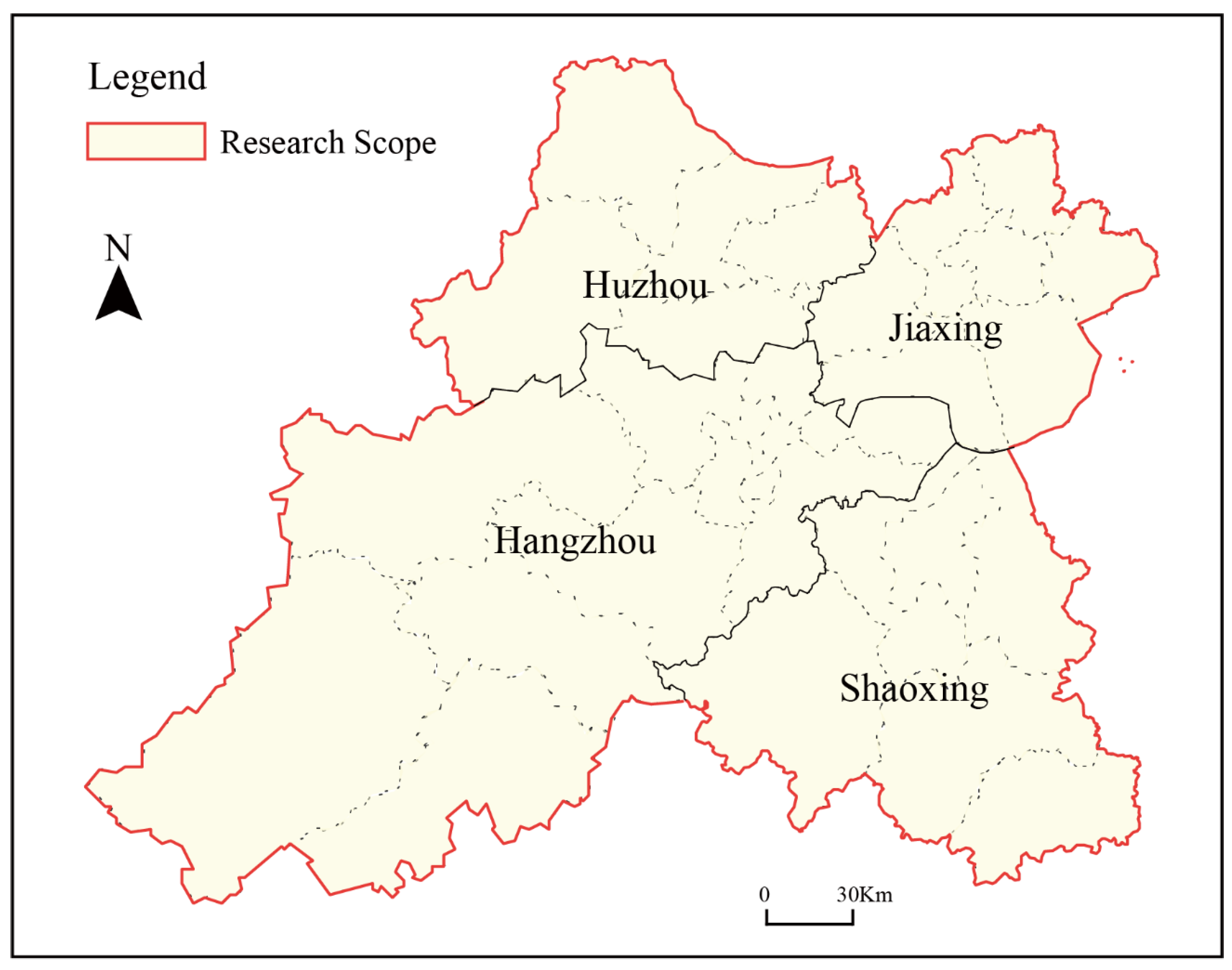
Figure 1. Research scope in this study: the Hangzhou Metropolitan Area, located in northern Zhejiang Province, China. Source: Data collected from Stats CN.
Sustainability 17 11089 g001
Figure 2. Industrial carbon emissions and their change rate in the Hangzhou Metropolitan Area. Source: Author’s Calculation.
Sustainability 17 11089 g002
Figure 3. Temporal trends of industrial carbon emissions and key drivers in the Hangzhou Metropolitan Area: (A) Urbanization level, (B) Industrial carbon emission intensity, (C) Population size, (D) Economic development level, (E) Scientific and technological level, (F) Energy consumption intensity, (G) Industrial structure, and (H) Degree of openness. Note: Industrial carbon emissions and all drivers are plotted on logarithmic scales. Source: Author’s Calculation.
Sustainability 17 11089 g003
Figure 4. Ridge trace plot of regression coefficients for influencing factors of industrial carbon emissions in the Hangzhou Metropolitan Area. Source: Author’s Calculation.
Sustainability 17 11089 g004
Figure 5. Predicted values, actual values, and error rates of industrial carbon emissions in the Hangzhou Metropolitan Area. Source: Author’s Calculation.
Sustainability 17 11089 g005
Figure 6. Forecast trends of industrial carbon emissions (A) and time of industrial carbon peaking (B) in the Hangzhou Metropolitan Area under four scenarios. Source: Author’s Calculation.
Sustainability 17 11089 g006
Table 1. Carbon Emission Calculation Parameters.
ParameterRaw CoalWashed CoalCokeGasolineKeroseneDieselFuel Oil
SCE Conversion Coefficient0.71430.90.97141.47141.47171.45711.4286
Carbon Emission Coefficient1.90032.662.86042.92513.01793.09593.1705
Note: SCE Conversion Coefficient Unit: kgce/kg (kilogram of standard coal equivalent per kilogram of energy); Carbon Emission Coefficient Unit: kgCO2/kgce (kilogram of carbon dioxide per kilogram of standard coal equivalent); Source: IPCC carbon emission inventory methodology.
Table 2. Variable Definitions and Measurements.
VariableDefinition/MeasurementUnit
Industrial Carbon Emissions (I)Total industrial carbon emissions104 t
Urbanization Level (X1)Urban population/Total population%
Industrial carbon emission intensity (X2)Carbon emissions/Gross regional producttCO2/104 CNY
Population Size (X3)Total resident population104 persons
Economic Development Level (X4)Gross regional product/Total population (Per capita GDP)104 CNY/person
Scientific and technological level (X5)Science expenditure/Local fiscal general budget%
Energy consumption intensity (X6)Total energy consumption/Gross regional producttce/104 CNY
Industrial Structure (X7)Secondary industry output/Gross regional product%
Degree of openness (X8)Total import-export value/Gross regional product%
Notes: tce = ton of standard coal equivalent; CNY = Chinese Yuan (RMB). Source: Data collected from Stats CN.
Table 3. Linear Regression Multicollinearity Diagnostics.
Regression Coefficient95% CICollinearity Statistics
VIFTolerance
Constant0.000 (0.034)−0.000~0.000--
lnX1−0.000 (−0.017)−0.000~0.00043.7610.023
lnX21.000 ** (641,035,423.824)1.000~1.00038.6440.026
lnX31.000 ** (205,567,523.413)1.000~1.00035.20.028
lnX41.000 ** (130,858,446.875)1.000~1.0001240.0270.001
(lnX4)20.000 (0.027)−0.000~0.0001640.8920.001
lnX50.000 (0.048)−0.000~0.00010.8830.092
lnX6−0.000 (−0.006)−0.000~0.00026.7850.037
lnX7−0.000 (−0.012)−0.000~0.000125.1020.008
lnX80.000 (0.001)−0.000~0.00019.9950.05
Sample Size21
R21
Adjusted R21
FF (9, 11) = 566,344,611,881,943,808.000, p = 0.000 < 0.01
Notes: Dependent variable = lnI; Durbin–Watson Statistic = 0.001; ** p < 0.01 (t-values in parentheses). Source: Author’s Calculation.
Table 4. Ridge Regression Fitting Results.
Unstandardized CoefficientsStandardized CoefficientstpVIF
BStd. ErrorBeta
Constant2.3372.156-1.0840.301-
lnX10.5650.1850.4043.0490.011 *7.182
lnX20.5740.0871.0136.6060.000 **9.612
lnX30.370.260.21.4240.1828.044
lnX40.3210.0560.6565.6970.000 **5.427
(lnX4)20.0540.0130.4194.2140.001 **4.042
lnX50.0520.0290.1821.7490.1084.415
lnX6−0.070.077−0.113−0.910.3836.353
lnX70.1870.2810.0980.6670.5188.87
lnX8−0.010.126−0.008−0.0820.9364.258
R20.973
Adjusted R20.951
FF (9, 11) = 44.234, p = 0.000 < 0.01
Note: Dependent variable = ln I; * p < 0.05, ** p < 0.01. Source: Author’s Calculation.
Table 5. Change Rates Settings for Influencing Factors of Industrial Carbon Emissions in Hangzhou Metropolitan Area.
Influencing FactorsScenario Mode2024–20252026–20302031–20352035–20402041–20452046–2050
Urbanization level (X1)High0.67%0.45%0.35%0.25%0.15%0.10%
Medium0.40%0.30%0.25%0.20%0.15%0.10%
Low0.13%0.10%0.12%0.15%0.10%0.05%
Industrial carbon emission intensity (X2)High−4.65%−8.00%−9.00%−8.50%−8.00%−7.50%
Medium−3.80%−5.50%−6.50%−6.00%−5.50%−5.00%
Low−2.95%−2.00%−2.50%−3.00%−3.50%−4.00%
Population size (X3)High1.13%0.90%0.60%0.30%0.00%−0.20%
Medium1.13%0.80%0.50%0.20%−0.10%−0.30%
Low1.13%0.70%0.40%0.10%−0.20%−0.40%
Economic development level (X4)High8.70%7.50%6.80%6.20%5.80%5.50%
Medium5.20%5.50%5.80%6.00%5.80%5.50%
Low4.83%4.50%4.20%4.00%3.80%3.60%
Scientific and technological level (X5)High10.22%8.00%9.00%10.00%9.50%9.00%
Medium6.67%6.50%7.00%7.50%7.00%6.50%
Low3.12%3.50%4.00%4.50%5.00%5.50%
Energy consumption intensity (X6)High−6.77%−10.00%−11.00%−10.50%−10.00%−9.50%
Medium−2.90%−6.00%−7.00%−6.50%−6.00%−5.50%
Low0.57%−1.00%−2.00%−3.00%−3.50%−4.00%
Industrial structure (X7)High−3.95%−4.20%−4.50%−4.80%−4.50%−4.20%
Medium−2.84%−3.20%−3.50%−3.80%−3.50%−3.20%
Low−1.73%−2.20%−2.80%−3.20%−3.50%−3.80%
Degree of openness (X8)High−0.38%0.20%0.50%0.80%1.00%1.20%
Medium−0.66%−0.20%0.10%0.30%0.50%0.70%
Low−0.94%−0.60%−0.30%0.00%0.20%0.40%
Note: source: Author’s Calculation.
Table 6. Multidimensional scenario combinations for industrial carbon peak in Hangzhou Metropolitan Area.
Scenario CombinationX1X2X3X4X5X6X7X8
Extensive development scenario (S1)HighLowHighHighLowLowHighLow
Baseline scenario (S2)MediumMediumMediumMediumMediumMediumMediumMedium
Green economy scenario (S3)MediumHighMediumMediumHighMediumMediumMedium
Deep emissions reduction scenario (S4)LowHighLowLowHighHighLowHigh
Note: source: Author’s Calculation.
Disclaimer/Publisher’s Note: The statements, opinions and data contained in all publications are solely those of the individual author(s) and contributor(s) and not of MDPI and/or the editor(s). MDPI and/or the editor(s) disclaim responsibility for any injury to people or property resulting from any ideas, methods, instructions or products referred to in the content.