You are currently viewing a new version of our website. To view the old version click .
Sustainability
  • Article
  • Open Access

8 December 2025

A Resilience Assessment Framework for Cross-Regional Gas Transmission Networks with Application to Case Study

and
1
Research Institute of Emergency Science, Chinese Institute of Coal Science (CICS), China Coal Technology & Engineering Group (CCTEG), Beijing 100013, China
2
School of Safety Science, Tsinghua University, Beijing 100084, China
*
Author to whom correspondence should be addressed.
This article belongs to the Special Issue Sustainable Management of Multi-Hazard Natural Disasters and Industrial Accidents

Abstract

As critical national energy arteries, long-distance large-scale cross-regional gas transmission networks are characterized by high operating pressures, extensive spatial coverage, and complex topological structures. Thus, the multi-hazard profiles threatening its safety and reliability operation differ significantly from those of local urban gas distribution networks. This research develops a resilience assessment framework capable of quantifying resistance, adaptation, and recovery capacities of such energy systems. The framework establishes performance indicator systems based on design parameters, installation environments, and construction methods for long-distance trunk pipelines and key facilities such as storage facilities. Furthermore, based on complex network theory, the size of the largest connected component and global efficiency of the transmission network are selected as core topological metrics to characterize functional scale retention and transmission efficiency under disturbances, respectively, with corresponding quantification methods proposed. A cross-regional pipeline transmission network within a representative municipal-level administrative region in China is used as a case for empirical analysis. The quantitative assessment results of pipeline and network resilience are analyzed. The research indicates that trunk pipeline resilience is significantly affected by characteristic parameters, the laying environment, and installation methods. It is notably observed that installation methods like jacking and directional drilling, used for road or river crossings, offer greater resistance than direct burial but considerably lower restoration capacity due to the complexity of both the environment and the repair processes, which increases time and cost. Moreover, simulation-based comparison of recovery strategies demonstrates that, in this case, a repair-time-prioritized strategy more effectively enhances overall adaptive capacity and restoration efficiency than a node-degree-prioritized strategy. The findings provide quantitative analytical tools and decision-support references for resilience assessment and optimization of cross-regional energy transmission networks.

1. Introduction

Cross-regional natural gas transmission networks are critical infrastructure developed to address the uneven distribution between resource-rich areas and major consumption markets [1]. Their primary importance lies in enabling the large-scale, optimized allocation of energy resources across vast distances, thereby enhancing energy security and economic efficiency on a regional or national scale. However, the extensive geographical footprint of these pipeline networks also presents a significant challenge. Their large scale inherently increases vulnerability, given that localized disruptions ranging from third-party activities and geological hazards to other threats can cascade into system-wide failures, potentially compromising the stability of the energy supply for entire regions. Thus, cross-regional energy transmission is vital to national energy security, with pipeline networks serving as one of the primary means for large-scale, long-distance transport. These transmission networks span extensive geographical areas and exhibit structural complexity, exposing them to uncertainties and extreme risks characterized by low-probability, high-consequence disruptions. Such events often trigger cascading failures, posing severe threats to the stable and reliable energy supply [2,3,4]. In this context, effectively assessing the operational state of cross-regional gas transmission networks has become a pressing issue. The concept of resilience has thus gained increasing attention as a holistic framework for assessing system performance under disruptions [5]. Unlike traditional risk-based or reliability-oriented approaches, resilience focuses on the system’s inherent ability to resist, adapt to, and recover from disruptions [6,7,8]. This shift in perspective aligns with the need to address not only the prevention of failures but also the enhancement of adaptive and recovery capacities in the face of unforeseen threats [9]. Reviews of relevant studies have been developed in three aspects of the conceptualization of resilience, the development of evaluation frameworks, and the advancement of assessment methodologies for infrastructure engineering systems [10,11,12].
The concept of resilience has been widely used in engineering, ecology, psychology, and other research fields. In infrastructure engineering, resilience represents a multidimensional dynamic process usually comprising three core concepts: reliability, defined as the probability of maintaining designed functionality under normal or disturbance conditions [13,14]; adaptability, referring to the capacity to sustain critical service levels during disruptions through resource scheduling, operational adjustments, or redundant design [15,16,17]; and recovery capacity, characterized by the efficiency of recovering acceptable performance through restoration mechanisms following disruptions [18]. The capability approach offers a suitable evaluation framework for conventionalizing the concept of system resilience, enabling its concrete application and conclusive assessment [19,20]. To enable practical implementation of the resilience concept, the conceptual framework should be further developed by incorporating contextual and application-specific factors [8]. The core attributes of system resilience encompass several critical dimensions that require systematic elaboration. These include the system’s inherent performance characteristics, its structural configuration, and its functional capacity [21,22,23]. Furthermore, the system’s identity, which reflects specific operational requirements, constitutes another essential aspect of comprehensive resilience assessment. Such refinements ensure the framework remains adaptable to diverse infrastructure configurations and risk environments, thereby improving its utility in practical decision-making processes.
Resilience assessment methods of gas supply infrastructure is primarily approached through three key dimensions. The first centers on assessment dimensions and indicators, which are usually categorized into technical, economic, and social types [24,25,26,27]. Technical indicators primarily focus on the intrinsic design parameters and operational performance of the systems, with key metrics encompassing pipeline seismic design class, wall thickness margin, design working pressure and flow rate [8,28]. These parameters directly reflect the structural integrity and functional reliability of pipeline infrastructure under both normal and disruptive conditions. Collectively, these technical indicators form a fundamental basis for assessing the physical resilience of pipelines. Economic indicators encompass life-cycle costs, annual maintenance expenditure, unit interruption loss, and recovery cost, while social indicators address factors such as affected spatial scope, resource allocation equity during restoration, recovery prioritization, and public acceptance of risk mitigation measures. Research confirms that both gas transportation capacity and user satisfaction are essential dual considerations in the evaluation and strategic analysis of natural gas pipeline system resilience [29]. These social dimensions reflect how system disruptions and recovery processes impact communities and regions, with particular emphasis on the geographical extent of service interruptions, the efficiency of resource distribution in emergency response, and societal tolerance toward infrastructure risks [30]. Such considerations are increasingly recognized as critical components in comprehensive resilience assessment frameworks. The second perspective focuses on structural characteristics and employs complex network theory, where analysis is conducted at node, edge, and network levels [31,32]. Node-level metrics examine facilities such as key distribution stations using measures like node degree and flow centrality. Edge-level analysis of pipeline sections utilizes metrics such as edge betweenness centrality, redundancy coefficient, and design pressure margin, whereas network-level evaluation involves system-wide metrics including average path length, network diameter, modularity and connectivity redundancy [33,34,35]. The third perspective addresses dynamic performance under disruptions, evaluating functional degradation and recovery processes through performance curves, recovery time, and recovery strategy efficiency under different disruptive scenarios. These multidimensional approaches that integrate system structure and function collectively enable a comprehensive understanding of gas transmission and distribution system resilience [36].
Research on enhancing system resilience has evolved from assessment to active improvement and optimization. The process typically begins with a comprehensive resilience assessment, which identifies the most vulnerable components within the system [35,37]. Natural gas pipeline system resilience is enhanced through optimized network topology, prewarning systems that incorporate backup gas sources, and strategic pipeline maintenance [38]. Subsequent enhancement efforts are strategically targeted at these weak points, with a growing emphasis on integrating economic constraints. Furthermore, the development of optimization models has become crucial to justify and prioritize resilience measures under multiple conflicting objectives, balancing safety protocols, emergency strategies, and external factors. The coupling effects between different infrastructure systems are increasingly becoming a key research focus. Natural gas systems, as providers of flexible and distributed energy resources, significantly contribute to power distribution system resilience [39,40]. Resilience assessment of lifeline infrastructure must explicitly account for the inter-dependencies among critical systems [41].
In summary, existing research on gas transmission network resilience has evolved along three key dimensions. The connotation of resilience has been refined from initial conceptual definitions to rationalization characteristics encompassing resistance, absorption, adaptation, and recovery. The evaluation frameworks have been developed to integrate multiple spatial and temporal scales, though few have simultaneously addressed component-level physical attributes and network-level functional topology. Effective resilience quantification must be contextualized within specific application scenarios [42]. Additionally, in terms of assessment methods, approaches range from quantitative physical models to simulation-based techniques, yet a unified methodology that links system characteristics, environmental factors, and restoration strategies remains underdeveloped.
This research aims to propose an integrated resilience assessment framework tailored to the distinctive features of cross-regional gas transmission networks. The framework incorporates pipeline and station-level performance indicators with network-level topological metrics to enable a comprehensive evaluation of system resilience under varying recovery strategies. The remaining parts of this article are organized as follows. Section 2 proposes the resilience assessment framework as well as methods for cross-regional gas transmission networks. Section 3 takes a transmission network within a representative municipal-level administrative region in China as a case for empirical analysis. Section 4 concludes this article with a discussion and suggests future directions of research.

2. Materials and Methods

Owing to the features of long-distance transportation and wide geographical coverage in cross-regional gas transmission systems, the procedure for formulating a resilience assessment framework and proposing assessment methods is adopted as follows:
  • The first phase is to define the assessment scope. This research focuses on the cross-regional gas transmission system as the object of resilience assessment, which involves defining the system boundaries and identifying key constituent elements alongside their intended functions [8]. Given that a transmission system is characterized by distinct nodes and edges, the spatial relationships between these critical components are appropriately represented to delineate the system’s overall characteristics based on structure and function.
  • The second phase is to construct the resilience assessment framework. This is achieved by defining the resilience concept and specific assessment dimensions, clarifying measurement criteria based on the system’s practical operational scenarios, and proposing assessment metrics from both the component and overall system performance perspectives. Furthermore, quantitative analysis methods for these metrics are developed.
  • The third phase is to conduct a case study. Guided by the defined assessment scope, data from a gas transmission system within a municipal-level region in China is collected and processed. Based on the constructed resilience assessment framework, an empirical analysis of the system’s resilience is performed using the quantitative evaluation methods.
This research hypothesizes that the midstream section of cross-regional natural gas transmission networks, which contains critical infrastructure like gate and distribution stations and storage facilities, serves as the most critical domain for assessing system resilience. Its central role as a transmission-distribution hybrid and its structural complexity make it both highly vulnerable to disruptions and representative of overall network behavior. This research is guided by three primary questions:
  • How do disruptions impact the structural integrity and gas transmission capacity of the midstream network?
  • How does the network topology of the midstream network influence its adaptive capacity and overall resilience?
  • How does the recovery efficiency of the midstream network vary under vary pipeline restoration strategies?

2.1. Scope of the Assessment

The primary objective of a cross-regional gas transmission and distribution system is to ensure the safe, efficient, and reliable long-distance transportation of gas from production areas to multiple energy demand centers, such as different provinces or countries. Its core functions encompass the large-volume, long-distance transmission of high-pressure gas, storage for peak shaving and emergency backup, and distribution to end-users. The system’s design must balance guaranteeing stable gas supply to municipal regions along the gas trunk pipeline with achieving long-distance, high-capacity gas transmission across regions.
A cross-regional gas transmission and distribution system can be conceptualized as a network. The nodes in this network typically comprise head stations, gate stations, distribution stations, and storage facilities. The edges, which connect these nodes, consist of long-distance trunk pipelines and gathering pipelines. The functional descriptions and role definitions of these key components are detailed as follows:
  • Head stations: serving as the initiation point of the trunk pipeline. Its primary function is to receive incoming gas from gas fields or natural gas processing plants, and then subject it to filtration, metering, and pressurization before inject it into the trunk pipeline.
  • Gate stations: serving as the source point for municipal gas supply along the trunk pipeline, the gate station receives gas from the cross-regional system, processes it as required, and delivers it into the local urban gas distribution network or directly to major consumers.
  • Distribution stations: serving as the node for supplying gas to specific regional systems or large-scale users along the trunk pipeline. Its primary function is to divert scheduled volumes of gas from the trunk pipeline, delivering it to downstream branch lines or directly to major consumers.
  • Storage facilities: serving as the gas gathering and delivering node to balance supply and demand within the cross-regional gas system. Its primary function is to inject and store surplus gas from the trunk pipeline into underground gas storage well during off-peak demand periods, and to rapidly withdraw and re-inject gas back into the trunk pipeline during peak demand periods or emergency periods, thereby ensuring supply continuity and system stability.
  • Trunk pipelines: serving to transport gas over long distances across regions, operating at high pressure and featuring a large diameter.
  • Gathering pipelines: serving as the links among gas fields, wells and storage facilities to gather and distribute gas, frequently forming branched or ring-shaped networks.
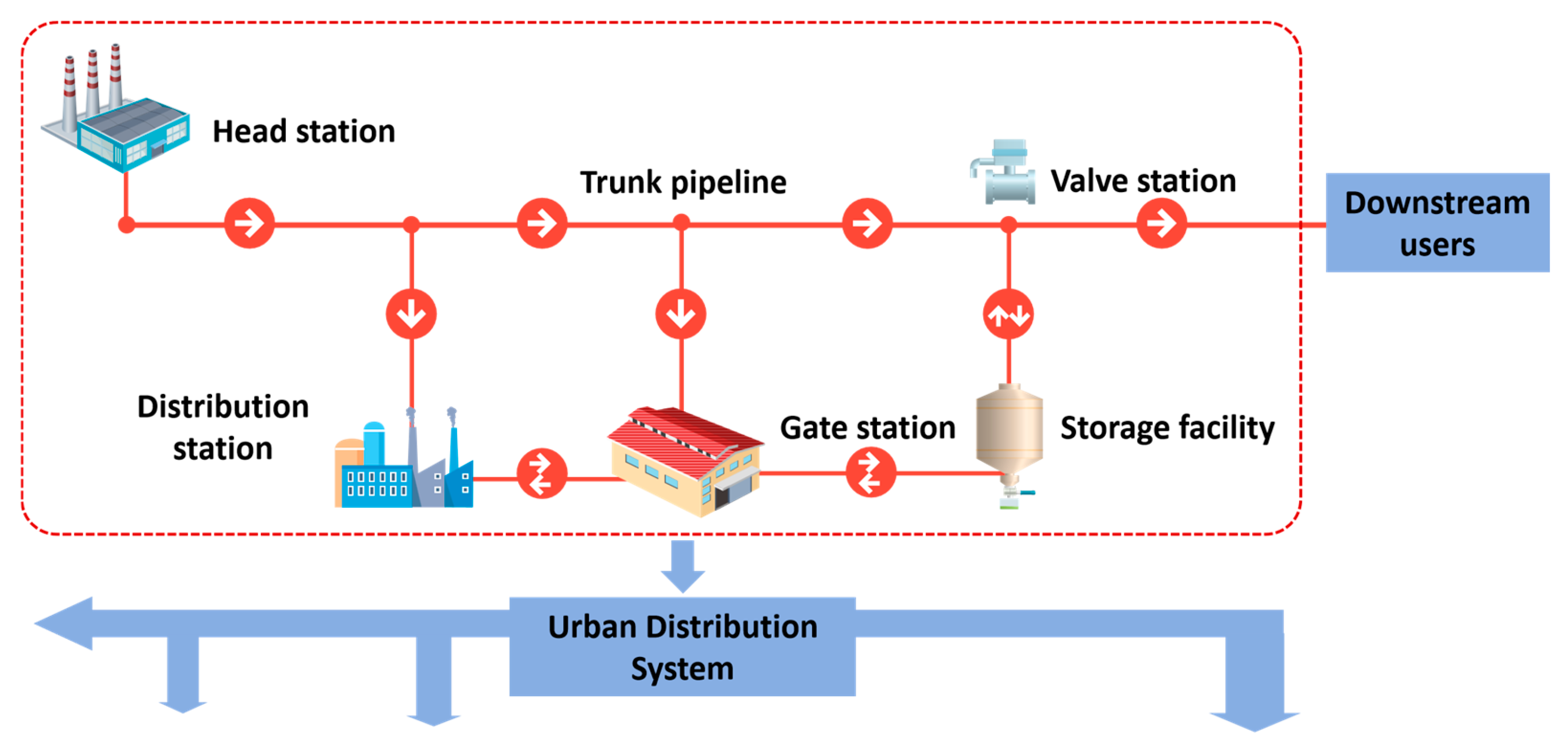
This research focuses on the resilience assessment of the midstream section of a cross-regional gas system. The research scope encompasses gate stations, distribution stations, storage facilities, and long-distance pipelines, while explicitly excluding downstream components such as urban gas distribution networks. There is a fundamental distinction in functional orientation and systemic characteristics between long-distance gas transmission networks and urban gas distribution networks. The former is designed for cross-regional energy optimization, whereas the latter solely addresses local supply needs. Consequently, distinct resilience assessment frameworks are required. This research focuses on the cross-regional gas transmission network, within which urban distribution systems can be regarded as nodal consumers. Therefore, the assessment scope does not include urban gas distribution networks. The midstream sector, located between main trunk pipelines and integrating key infrastructures such as gate stations and storage facilities, is chosen as the assessment scope. This selection is justified because this sector acts as a pivotal hub that embodies the network’s dual transmission and distribution roles. Its inherent structural complexity, with numerous input and output nodes, also renders it a critical zone for potential system disruptions. Spatially, the typical structure of the assessed cross-regional system is delineated in Figure 1, which serves to illustrate the system’s configuration and spatial boundaries under assessment. The arrow directions in Figure 1 indicate the direction of gas transport.
Figure 1. The configuration and spatial boundaries of the system under assessment.

2.2. Framework of the Assessment

In this research, the resilience of cross-regional gas systems is defined as the capacity of the system to resist, adapt to and recover from the disruptions such that the whole system to be less susceptible to the disruptive effects on structure and function, and can return to the initial state effectively. Specifically, the system resilience is quantified by evaluating the performance loss in its key structural and functional indicators following disruptive events such as third-party interference and geological hazards. These performance indicators include the structural integrity of long-distance trunk pipelines, the completeness of the network topology, and the maximum gas transmission capacity. Furthermore, resilience measurement also incorporates the recovery efficiency of system performance achieved through the implementation of different pipeline repair strategies.
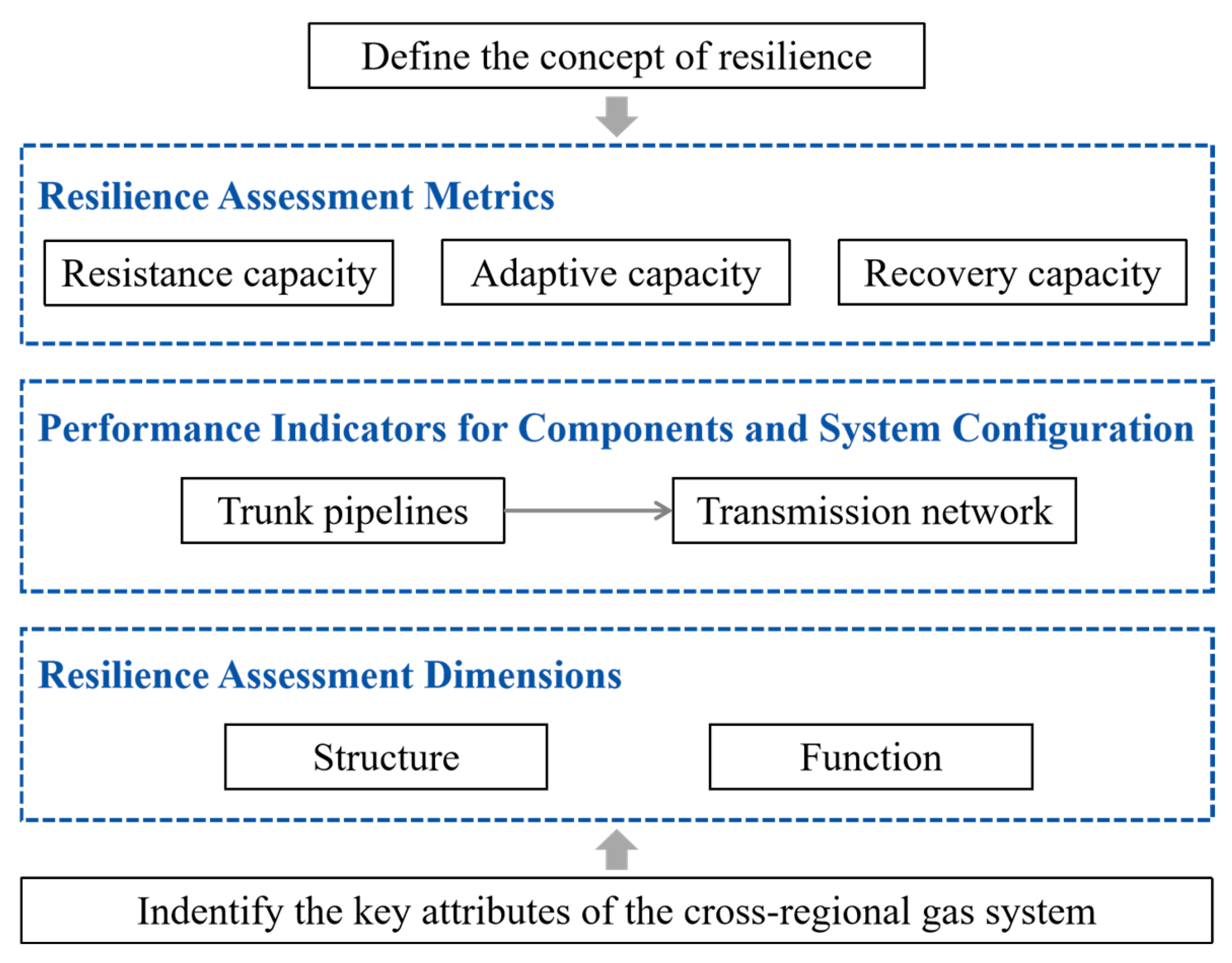
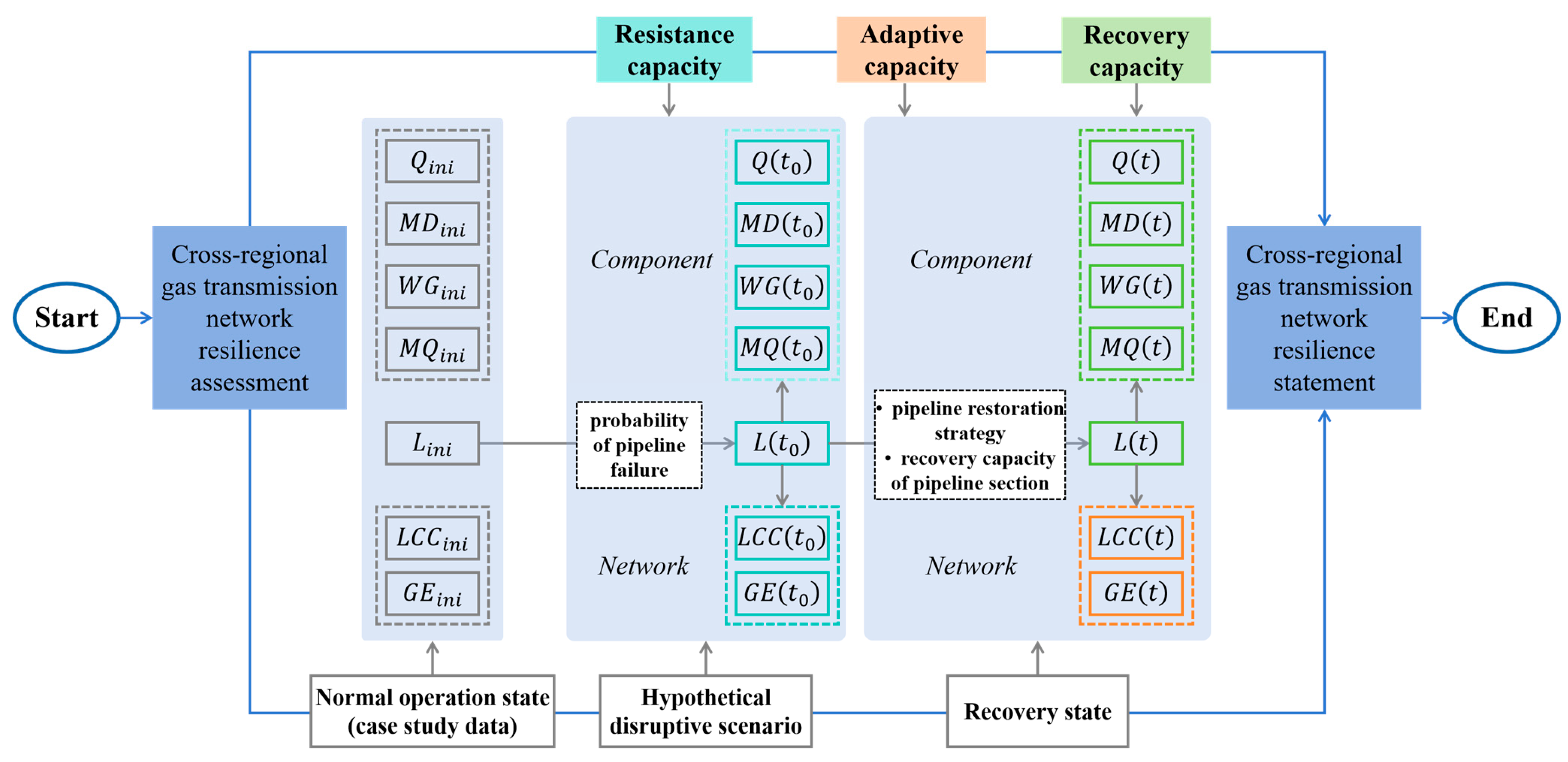
As critical components of cross-regional gas systems, long-distance trunk pipelines are characterized by extensive coverage, high operating pressure, large diameter, and substantial throughput. Therefore, it is imperative to conduct a targeted resilience assessment of trunk pipelines, given their pivotal role in the system. Moreover, the gas system is conceptualized as a network of nodes that represent critical facilities such as gate stations, distribution stations, and storage facilities, and edges that represent trunk pipelines. The resilience of the gas system is measured by assessing the performance deviations of the system based on the two dimensions of network structure and functional characteristics. To conduct a quantitative assessment, there is a critical need to propose a set of applicable metrics that measure the impact of disruptive events to the midstream section of a cross-regional gas system on the vital performance measures. The resilience assessment framework proposed in this research is detailed in Figure 2.
Figure 2. The resilience assessment framework proposed in this research.

2.3. Qualitative Assessment Method for Gas Trunk Pipeline Resilience

2.3.1. Indicator Systems of Trunk Pipeline Resilience

Due to its inherent attribute of connecting gas source production areas with distant consumer markets, long-distance trunk pipelines inevitably span vast geographical distances. Consequently, trunk pipelines frequently traverse diverse engineering geological and geomorphological units, including active fault zones, water systems, and permafrost regions, resulting in significantly varying installation conditions along the route. Physically, the entire trunk pipeline is constructed from numerous individual pipe sections joined to form a continuous conduit. Based on factors such as geographical environment, geological activity risk, and socio-demographic distribution, the trunk pipeline is usually segmented into sections with distinct risk levels and management requirements. This is concretely reflected in the differentiated design of pipe material, wall thickness, and laying methods for each pipe section, tailored to specific environmental corrosivity, geological hazard exposure, and intensity of third-party activities. In summary, the characteristic parameters, installation environment, and potential risk factors of long-distance trunk pipelines are critical factors influencing their safe and stable operation. A key performance indicator system for resilience assessment should, therefore, be established based on these three dimensions.
The pipeline characteristic indicator system systematically encompasses three primary dimensions: design parameters, laying parameters, and operational parameters. Based on practical engineering conditions, design parameters define the inherent capacity limits of the pipeline and include specific indicators such as material, diameter, wall thickness and so on. Laying parameters characterize the various methods adopted for pipeline laying. Operational parameters describe the actual working state of the pipeline. This indicator system is presented in Table 1.
Table 1. Pipeline characteristic indicator system.
Based on pipeline engineering construction standards, specific management requirements are established for pipeline engineering that involve crossing or traversing special environments. Consequently, the indicators for the laying environment primarily include local road, arterial highways, trunk railways, and water bodies as mentioned in the construction standards, along with general laying environments that do not require specific measures. The construction of the pipeline installation environment parameter indicator system aims to systematically identify and quantify external environmental factors that significantly impact pipeline structural safety, operational reliability, and post-disruption recovery capacity. This system primarily encompasses two core dimensions: in terms of natural condition, it focuses on elements such as water body distribution, given its significant influence on pipeline installation methods; regarding social condition, it concentrates on the distribution of key transportation networks such as local roads, trunk railways and arterial highways. This indicator system is presented in Table 2.
Table 2. Pipeline laying environment indicator system.
According to historical statistics [8], the potential risk factors for pipeline safety and resilience are multi-source, primarily encompassing key categories such as pipeline corrosion, external interference, geological activities, technical and material defects, and human operational errors, as shown in Table 3. Among these, geological hazards pose a particularly prominent high risk for long-distance trunk pipeline that traverse extensive geographical areas with complex geological conditions. Unlike localized and predictable issues like corrosion, geological hazards, such as landslides, debris flows, ground subsidence, and earthquakes, are characterized by sudden onset, large scale, and cascading effects. The extensive impact scope and tremendous energy induced by geological hazards can not only instantaneously cause significant deformation or even fracture of the pipeline, triggering catastrophic leakage incidents, but also, as they often occur in remote mountainous areas, significantly complicate pipeline network recovery efforts.
Table 3. Pipeline risk indicator system.

2.3.2. Resilience Assessment of Trunk Pipelines

Based on the framework of system resilience assessment, the trunk pipeline is regarded as a single component of the system. The resilience assessment of the pipeline primarily focuses on two aspects: measuring its resist capacity to disruptions according to pipeline reliability; and measuring its recovery capacity according to pipeline recovery time and cost. It is noteworthy that this assessment does not include an assessment of the pipeline’s adaptive capacity. Since the capacity of a system to adapt to disruptions is usually based on structural and functional design strategies, it is considered a system-level attribute. It relies on the interconnection, information exchange, and coordinated decision-making among various components within the system. A single trunk pipeline element, being a passive physical infrastructure, lacks the capacity for autonomous reconfiguration and thus cannot exhibit adaptive behavior.
The resilience of the trunk pipeline is calculated by Equation (1).
R e s T P = f ( R e T P ,   R e c T P ) = t 0 t 1 1 L t L i n i d t
R e T P = L t L i n i
where R e s T P represent the resilience of the trunk pipeline; R e T P represents the resistance capacity of the trunk pipeline; R e c T P represents the recovery capacity; t 0 is the time of occurrence of disruption; t 1 is the time at which the system attains the recovered state; L ( t ) represents the length of functional pipelines in the network at a specific time t during the recovery phase; L i n i represents the total length of pipelines in the network. A lower computed value of R e s T P corresponds to higher trunk pipeline resilience.
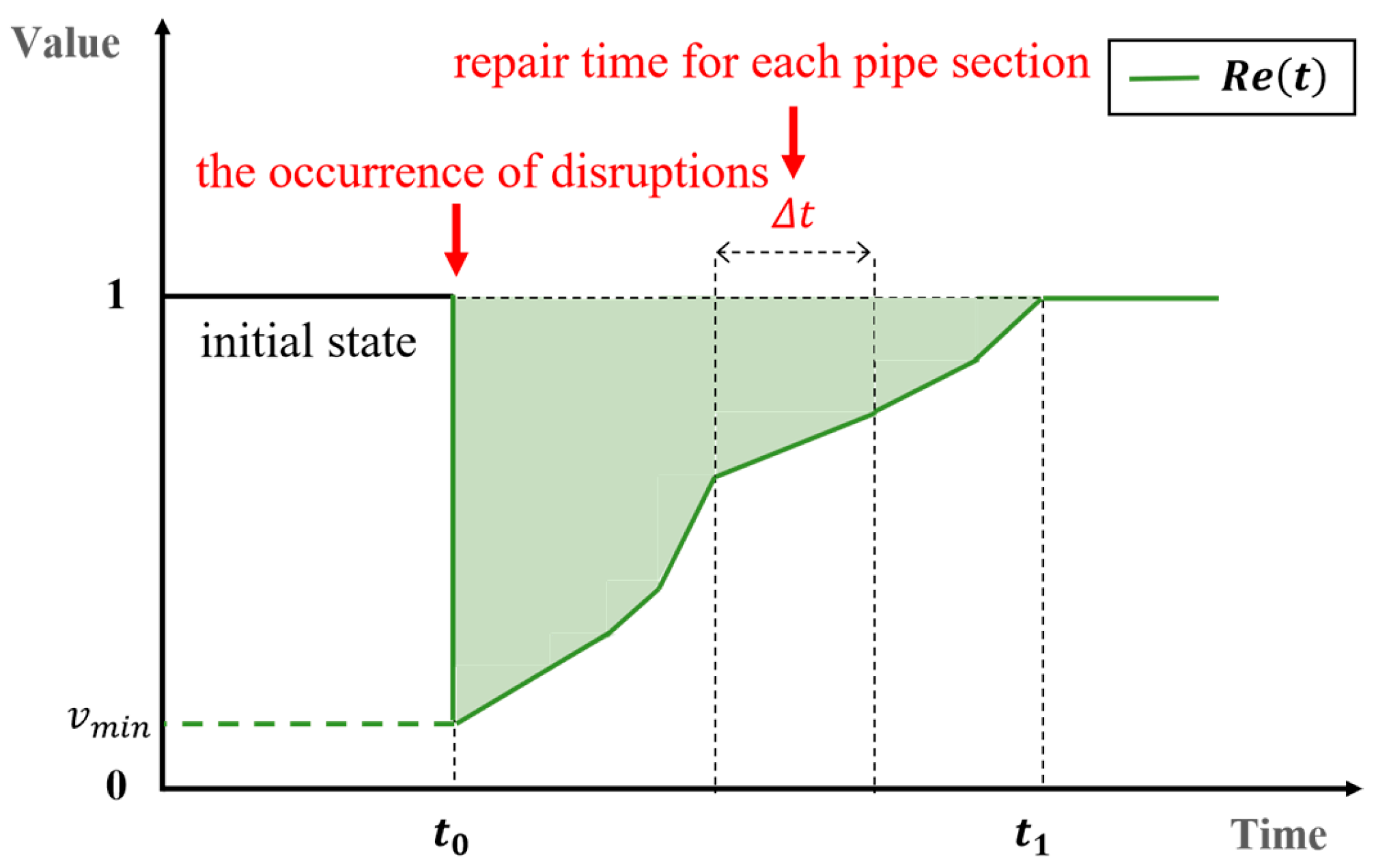
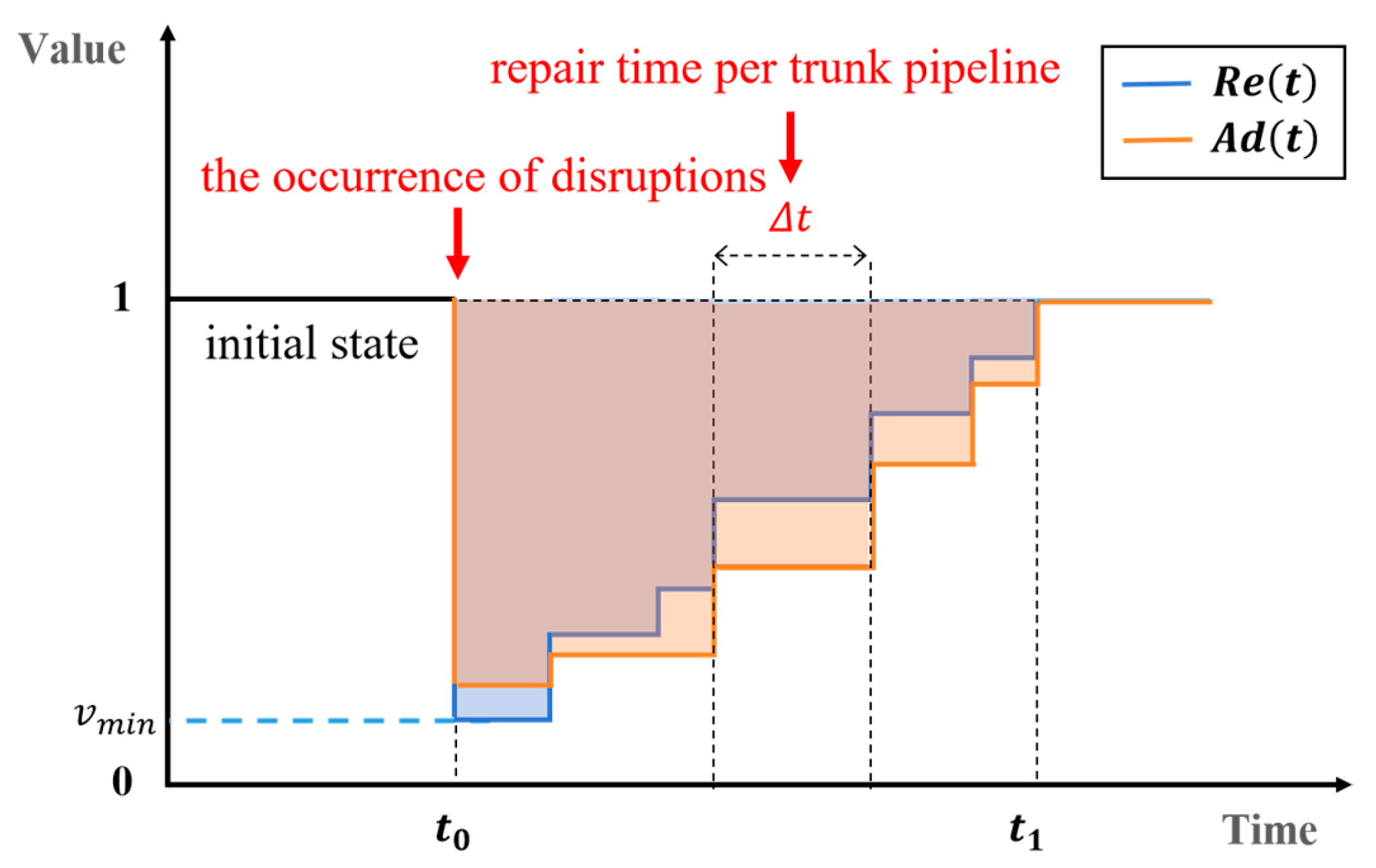
Considering that long-distance trunk pipelines are generally composed of multiple pipe sections with varying characteristic parameters and laying environments, the performance curve following disruptions is shown in Figure 3. It is assumed that the damage propagation from disruptions to the pipeline occurs instantaneously, and the repair rate for any given pipe section is linear by default. The green shadow area within the time span of the assessment ( t 0 t t 1 ) are calculated to measure the resilience performance.
Figure 3. The performance curve of trunk pipelines following disruptions.
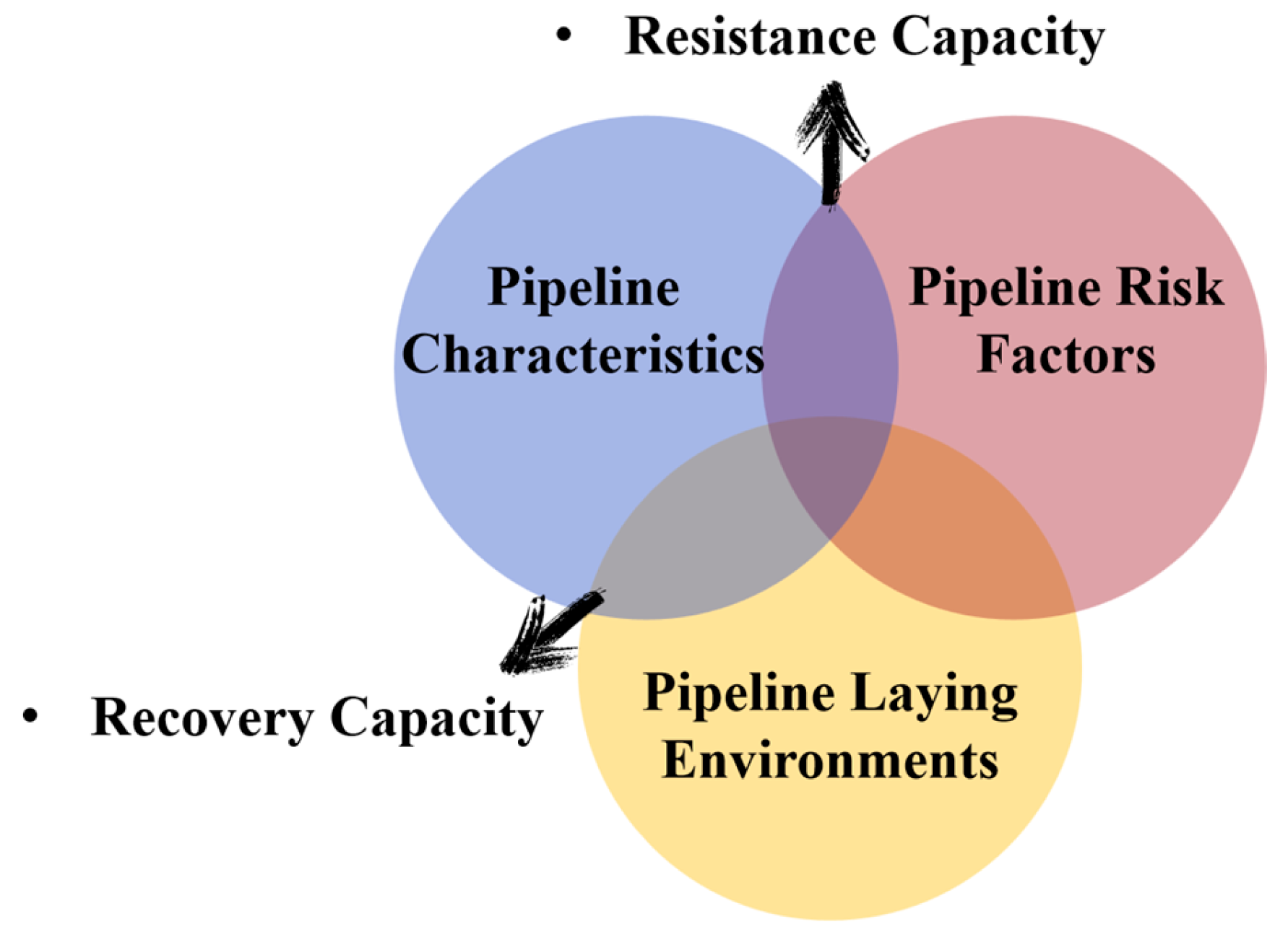
Resistance and recovery capacities, as the core metrics of pipeline resilience, are both influenced by pipeline characteristic parameters, the installation environment, and primary risk factors, with significant coupling among these influencing elements. Specifically, the resistance capacity of the trunk pipeline is primarily determined by its inherent characteristic parameters, such as diameter, wall thickness, material grade, and anti-corrosion type, as well as the installation method, including burial depth and crossing type. These factors collectively affect the pipeline’s structural reliability and probability of failure when facing disruptions such as geological hazards or third-party interference. In contrast, the recovery capacity reflects the efficiency of post-disruption restoration. Recovery time and cost are constrained not only by pipeline characteristics but are also closely tied to the installation environment. For instance, crossings of water bodies, ecological reserves, or major transportation corridors can significantly increase operational complexity and economic cost of pipeline repair. It is important to emphasize that these influencing factors do not exist in isolation but form an interconnected system. The selection of pipeline parameters must fully consider the geological conditions, ecological sensitivity, and intensity of social activities in the proposed installation environment. Examples include the use of high-toughness steel in active fault zones and increased wall thickness in high-consequence areas. Therefore, a scientifically sound assessment of pipeline resilience must adopt a systems thinking approach, integrating the interactive mechanisms among characteristic parameters, installation environment, and risk factors, shown in Figure 4.
Figure 4. The interactive mechanisms among the factors.
Although the indicator system for long-distance pipelines is not directly reflected in the system-level resilience metrics, the quantitative assessment of system resilience must be based on these pipeline-specific indicators. Taking pipeline installation methods as an example, the choice of installation method is one of key trade-offs in pipeline system resilience. A comparison of the resist and recover abilities for different installation methods is shown in Table 4. In comparison, the buried installation method exhibits superior recovery capacity due to its accessible repair and controllable cost; however, as the direct buried pipeline is more susceptible to soil corrosion and threats of third-party damage, its resistance capacity to disruptions is relatively weak. Directional drilling, typically used for crossing water bodies or areas unsuitable for excavation, provides significant resistance to geological hazards due to its deep burial depth. Nevertheless, the high difficulty and long duration of repair work reveal an inherent weakness in its recovery capability after disruptions. Therefore, it is necessary to seek an optimal balance between resistance and recovery capacity, considering the specific application scenario and risk tolerance.
Table 4. Resilience assessment of pipeline resistance and recovery level based on characteristics.

2.4. Quantitative Assessment Method for Gas Transmission Network Resilience

2.4.1. Metrics for Gas Transmission Network Resilience

In this research, the resistance of the cross-regional gas transmission network is assessed by quantifying the characteristics of its trunk pipelines and stations, taking into account their physical structure and functional attributes.
For pipelines, which form the structural backbone of the transmission network, resistance is represented by the ratio of the total length of serviceable pipeline sections after disruptions to the initial total length of the trunk pipeline. This metric directly reflects the preserved scale of the network’s topological structure.
For stations, such as gate stations, distribution stations, and storage facilities, their integrity is assessed from a functional output perspective, considering their role as critical nodes for gas source allocation and supply regulation. Specifically, it is assessed by the retention level of core functional performances, including the maximum daily supply capacity of gate and distribution stations, as well as the working gas volume and maximum daily gas withdrawal capacity of storage facilities, with respect to their values before and after disruptions. This set of metrics systematically characterizes the overall resistance performance of the pipeline network when subjected to disruptions.
Moreover, the adaptability of the cross-regional gas transmission network is assessed by considering its topological structure, defined as the connectivity network composed of stations functioning as nodes and pipelines serving as edges. Based on topological network theory, quantitative metrics should be selected that effectively demonstrate the system’s capacity to dynamically reconfigure and maintain functionality after disruptions. These indicators should measure the functional state of whole network, defined as its capacity to maintain residual functionality through reconfiguration after the loss of some components. This approach enables a scientific characterization of the intrinsic adaptive capacity of the pipeline network in the face of uncertain disruptions. In this research, the size of the Largest Connected Component (LCC) and the Global Efficiency (GE) of the topology network are employed to demonstrate the adaptive capacity of the transmission network.
  • LCC of a network is defined as the connected sub-graph containing the greatest number of nodes. It can be used to demonstrate the largest remaining connected sub-graph that maintains connectivity between gas sources and consumers following disruptions, thereby serving as a metric to quantify the functional integrity of the network from the perspective of connected scale. Certainly, for a cross-regional gas transmission network, the size of the LCC is functionally critical as it reflects the network’s capacity to keep its backbone network between sources and major markets intact after disruptions. A large LCC ensures that vital connections between core suppliers and key demand centers persist, preventing widespread failure and thus measuring the system’s survival threshold or functional baseline under extreme events.
  • GE of a network is defined as the average transmission efficiency between all node pairs in the entire network, measuring the overall efficiency of gas transport within the network. In the context of a gas network, it is formally expressed as the reciprocal of the mean of the shortest-path efficiencies between all node pairs. Here, the efficiency between a node pair is defined as the reciprocal of the shortest topological path length between them. This metric serves to quantify the functional quality of the network from the perspective of transportation performance. The level of global efficiency reflects the delivery efficiency of energy from gas sources to end-users. Certainly, for a cross-regional gas transmission network, the connectivity paths between nodes change due to the topological reconfiguration following disruptions, which may lead to a series of issues such as increased transport energy consumption, reduced delivery capacity, and operational pressure fluctuations. The GE of the transmission network is calculated by Equation (3).
G E = 1 N ( N 1 ) i j V 1 d i j
where N represents the total number of nodes in the network, that is, the total number of stations; d i j represents the shortest path length between node i and node j , which is the number of connected pipelines between station i and station j . Note: a directly connected pipeline between two nodes is counted as one pipeline; V represents the set of nodes in the network, that is, the set of stations.

2.4.2. Resilience Assessment of Gas Transmission Network

Based on the metrics proposed, this research proposes a multidimensional quantitative methodology that integrates the performance of micro-level components with the characteristics of the macro-level network. The capacity of the key components within the gas transmission network to resist and recover from disruptions are quantified as follows: resistance is characterized by metrics such as the ratio of serviceable pipeline length after disruptions and the retention rate of stations’ core functional parameters (e.g., maximum daily supply capacity and working gas volume), reflecting the extent of residual functionality; recovery is measured by the time and economic costs required to restore damaged pipelines to normal operation state, indicating the efficiency of the system’s return to functionality. Furthermore, the assessment of the gas transmission network’s adaptive capacity is conducted at the topological level through the quantification of structural metrics, including the size of the largest connected component and global efficiency. The resilience of trunk pipelines is calculated by Equations (4)–(6). The performance curve following disruptions is shown in Figure 5. The shaded area in the figure represents the performance loss caused by disruptions.
R e s G T N = f ( R e G T N ,   A d G T N ,   R e c G T N ) = t 0 t 1 1 R e G T N t + 1 A d G T N t d t
R e G T N = L t L i n i + Q t Q i n i + M D ( t ) M D i n i + W G t W G i n i + M Q t M Q i n i / 5
A d G T N = L C C t L C C i n i + G E ( t ) G E i n i / 2
where R e s G T N represent the resilience of the transmission network; R e G T N represents the resistance capacity of the transmission network; A d G T N represents the adaptive capacity; R e c G T N represents the recovery capacity; t 0 is the time of occurrence of disruption; t 1 is the time at which the system attains the recovered state; L ( t ) represents the length of functional pipelines in the network at a specific time t during the recovery phase; L i n i represents the total length of pipelines in the network; Q ( t ) represents the gas flow rate within the network at a specific time t during the recovery phase; Q i n i represents the gas flow rate within the network under normal operating state; M D ( t ) represents the maximum daily supply capacity of gate stations or distribution stations at a specific time t during the recovery phase; M D i n i represents the aggregate maximum daily supply capacity of all gate stations and distribution stations within the network under normal operating state; W G t represents the working gas volume of gas storage facilities at a specific time t during the recovery phase; W G i n i the aggregate working gas volume of all gas storage facilities within the network under normal operating state; M Q t represents the maximum daily gas withdrawal capacity of gas storage facilities at a specific time t during the recovery phase; M Q i n i represents the aggregate maximum daily gas withdrawal capacity of all gas storage facilities within the network under normal operating state; L C C t represents the largest connected component of the topology network at a specific time t during the recovery phase; L C C i n i represents the largest connected component of the topology network under normal operating state; G E ( t ) represents the average transmission efficiency of the topology network at a specific time t during the recovery phase; G E i n i represents the average transmission efficiency of the topology network under normal operating state. A lower computed value of R e s G T N corresponds to higher gas transmission network resilience.
Figure 5. The performance curve of gas transmission networks following disruptions.

2.5. Resilience Assessment Procedure

Based on the proposed resilience assessment framework, the specific evaluation procedure has been further delineated. The process begins by establishing the baseline performance of both components and the network under normal operating conditions, using empirical case data. Component performance is characterized by pipeline length and gas supply capacity of stations and storage facilities, while network performance is quantified through the size of the Largest Connected Component (LCC) and the Global Efficiency (GE) of the topology network.
Subsequently, disruption scenarios are postulated. To streamline the analysis, this research assigns failure probabilities exclusively to pipelines, with distinct probabilities determined by various installation methods. This enables the determination of the available length of fully operational pipelines and the corresponding maintainable gas transmission capacity within the impaired network. Concurrently, the functional network topology is identified, and its performance metrics are computed. The system’s resistance capacity is then evaluated based on a quantitative analysis of the maintained performance of both components and the network.
Finally, during the recovery phase, the adaptive and recovery capacities of the system are assessed by quantifying the performance recovery of components and the network under various pipeline restoration strategies. Based on the assessment results of resistance, adaptive, and recovery capacities, a comprehensive assessment of the pipeline network’s resilience is conducted. The entire resilience assessment procedure is illustrated in Figure 6.
Figure 6. The entire resilience assessment procedure.

3. Results

3.1. Case Study

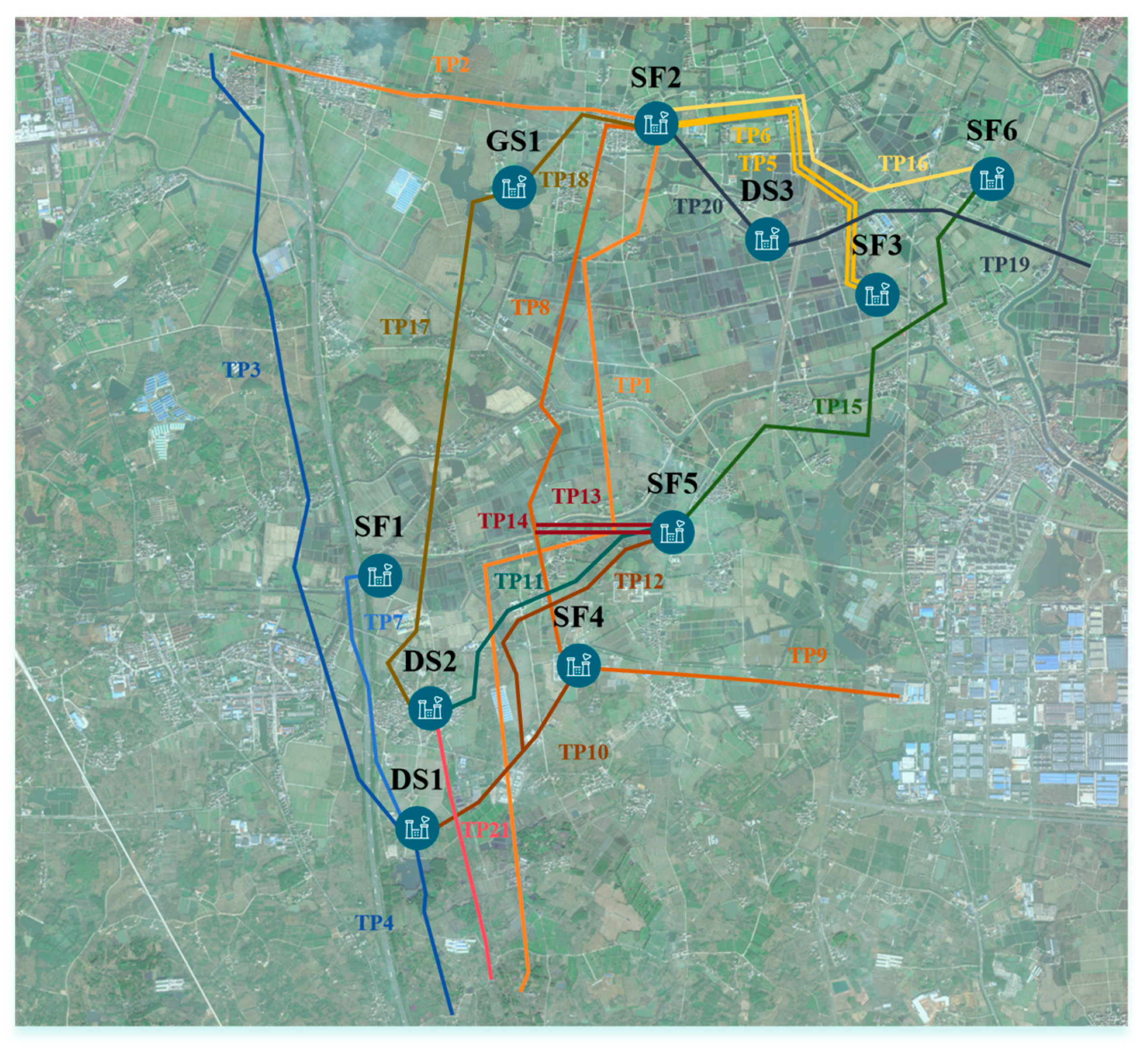
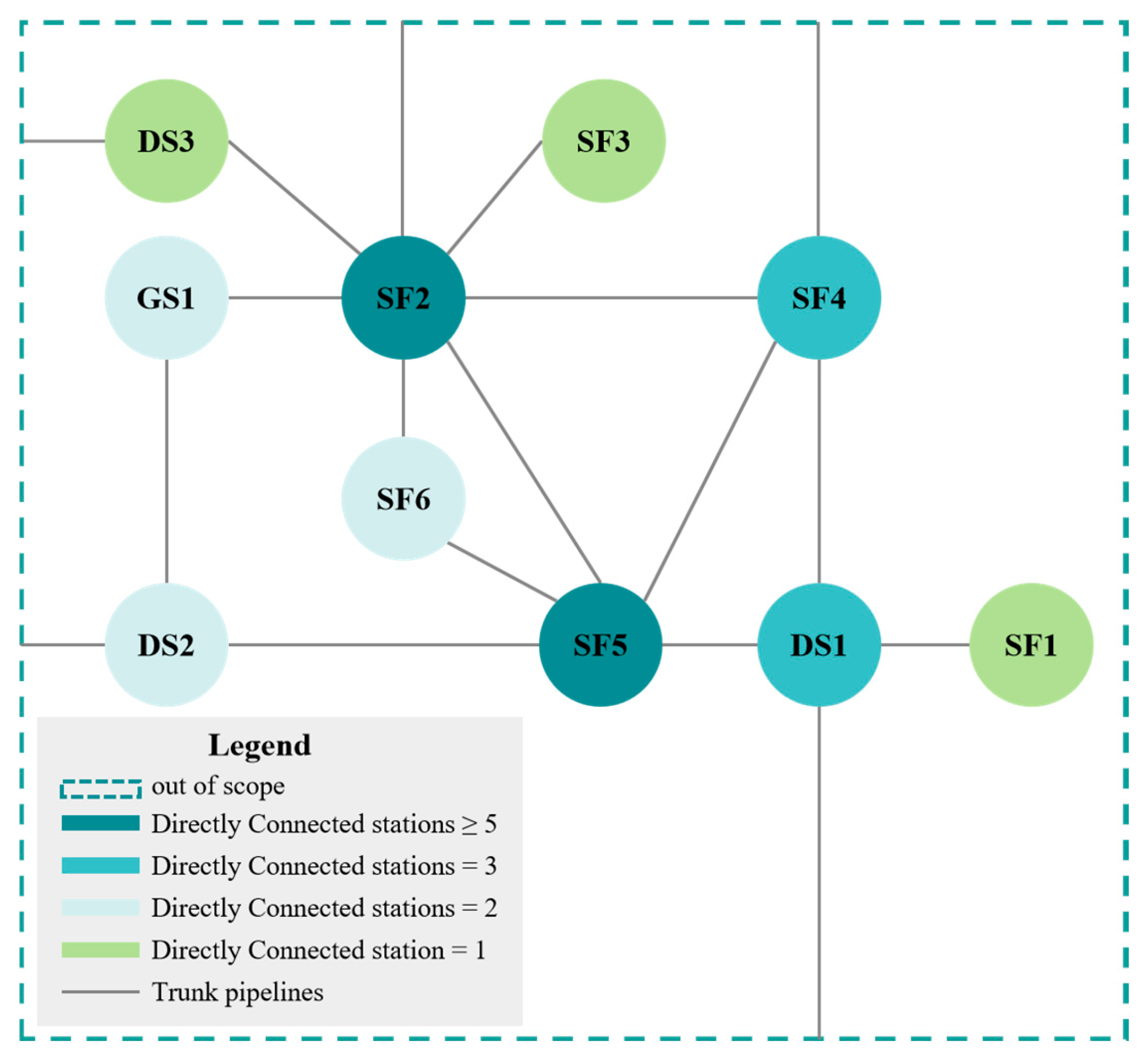
A cross-regional long-distance pipeline transmission network within a representative municipal-level administrative region in China is selected as a case for empirical analysis. The selected midstream section of the network manifests typical hub characteristics and a sophisticated topological structure, comprising 21 long-distance trunk pipelines with a total length of 61 km and 10 critical stations along with associated storage facilities, collectively forming a multi-source, multi-path transmission and distribution network system. It is noteworthy that major arteries of the national trunk natural gas pipelines, notably including the West–East Gas Pipeline and the Sichuan-East Gas Transmission Project, traverse this region. This configuration positions the case system not only as a local transmission and distribution network but also as a critical node within the national strategic energy corridor. These characteristics render it an ideal case for investigating the resilience performance of a regional-level pipeline network. The basic information of the stations and storage facilities included in this case is provided in Table 5. The data for the long-distance trunk pipelines included in this case is provided in Table 6. The spatial distribution of the trunk pipelines, stations, and storage facilities included in this case analysis is illustrated in Figure 7. The topological relationships among the stations, storage facilities, and long-distance trunk pipelines within the assessment boundary are depicted in Figure 8.
Table 5. The basic information of the stations and storage facilities included in this case.
Table 6. The data for the long-distance trunk pipelines included in this case.
Figure 7. The spatial distribution of stations, storage facilities, and trunk pipelines.
Figure 8. The topological relationships among stations, storage facilities, and trunk pipelines.

3.2. Trunk Pipeline Resilience Assessment

In this research, the gas storage facility SF2 and its directly connected trunk pipelines are defined as the assumed failure zone. SF2 is the most highly connected critical node in the network, and the local network centered around it significantly influences overall functionality from a topological perspective. It therefore serves as a representative case for resilience assessment. The assumed failure zone includes one gas storage facility and eight associated long-distance trunk pipelines with a total length of 2.5 km. To quantitatively evaluate pipeline restoration time and cost, a model that integrates laying environment and installation method is proposed. Based on the engineering practice of trunk pipelines, the time and cost required for repair operations are primarily governed by the complexity of the laying environment and the pipeline’s installation method. For instance, the laying environment defines the external constraints for repair work, while the installation method directly influences the restoration techniques applied. Based on practical engineering experience, the recovery level considering repair time and cost under different common installation environments and methods is presented in Table 7. These trunk pipelines encompass a variety of typical laying environments and installation methods, with detailed basic information provided in Table 8.
Table 7. The recovery level of different pipeline laying environments and installation methods.
Table 8. The basic information of the trunk pipeline TP8.
To enable quantitative analysis of resistance capacity, it is necessary to convert the resistance levels of pipelines (Levels I to V) into corresponding pipeline failure probabilities. Considering that the effects of disruption on pipelines generally exhibit a nonlinear relationship with the strength ratio, a decrease in resistance capacity level usually implies an accelerated increase in failure risk. Therefore, the Logistic Function model is adopted to assign failure probability values to different grades, mapping Levels I to V to failure probabilities of 0.01, 0.05, 0.15, 0.35, and 0.65, respectively. The expected total length of a failed pipeline is calculated using the following equation:
L f a i l = i = 1 n P f a i l ,   i × L i
where L f a i l represents the total failure length of the trunk pipeline; n represents the total number of pipe sections constituting the trunk pipeline; P f a i l ,   i is the failure probability of pipe section i ; L i is the length of pipe section i .
To enable quantitative analysis of recovery capacity, the capacity grades are converted into numerical values by mapping the qualitatively described Grades I through V to numerical values of 1 to 5, respectively. Since the influences of the laying environment and installation method on repair difficulty are not independent but exhibit coupling and amplification effects, a multiplicative model more accurately represents this nonlinear interaction. Therefore, to comprehensively consider the combined impact of the laying environment and installation method on pipeline recovery capacity, a multiplicative model is adopted to compute the overall restoration grade, as shown in the following equation.
R e c L = R e c L E × R e c L M
where R e c L represents the numerical value corresponding to the recovery capacity level for the pipeline that consider the laying environment and installation method; R e c L E represents the numerical value corresponding to the recovery capacity level for the pipeline that accounts for the laying environment (with integer values from 1 to 5); R e c L M represents the numerical value corresponding to the recovery capacity level for the pipeline that accounts for the installation method (with integer values from 1 to 5).
Furthermore, to translate the recovery capacity index into recovery time, a baseline scenario is defined as “buried installation under general condition,” with a recovery capacity index of 1 according to Equation (8), corresponding to a baseline recovery duration of 1 unit of time. The estimated recovery for any given scenario can be calculated using the following equation:
T = ( R e c L / R e c L ,   b a s e ) × R e c T ,   b a s e
where T represents the recovery duration of the pipeline; R e c L represents the numerical value corresponding to the recovery capacity level for the pipeline that consider the laying environment and installation method; R e c L ,   b a s e = 1 (as defined for the baseline scenario); R e c T ,   b a s e = 1 (as defined for the baseline scenario).
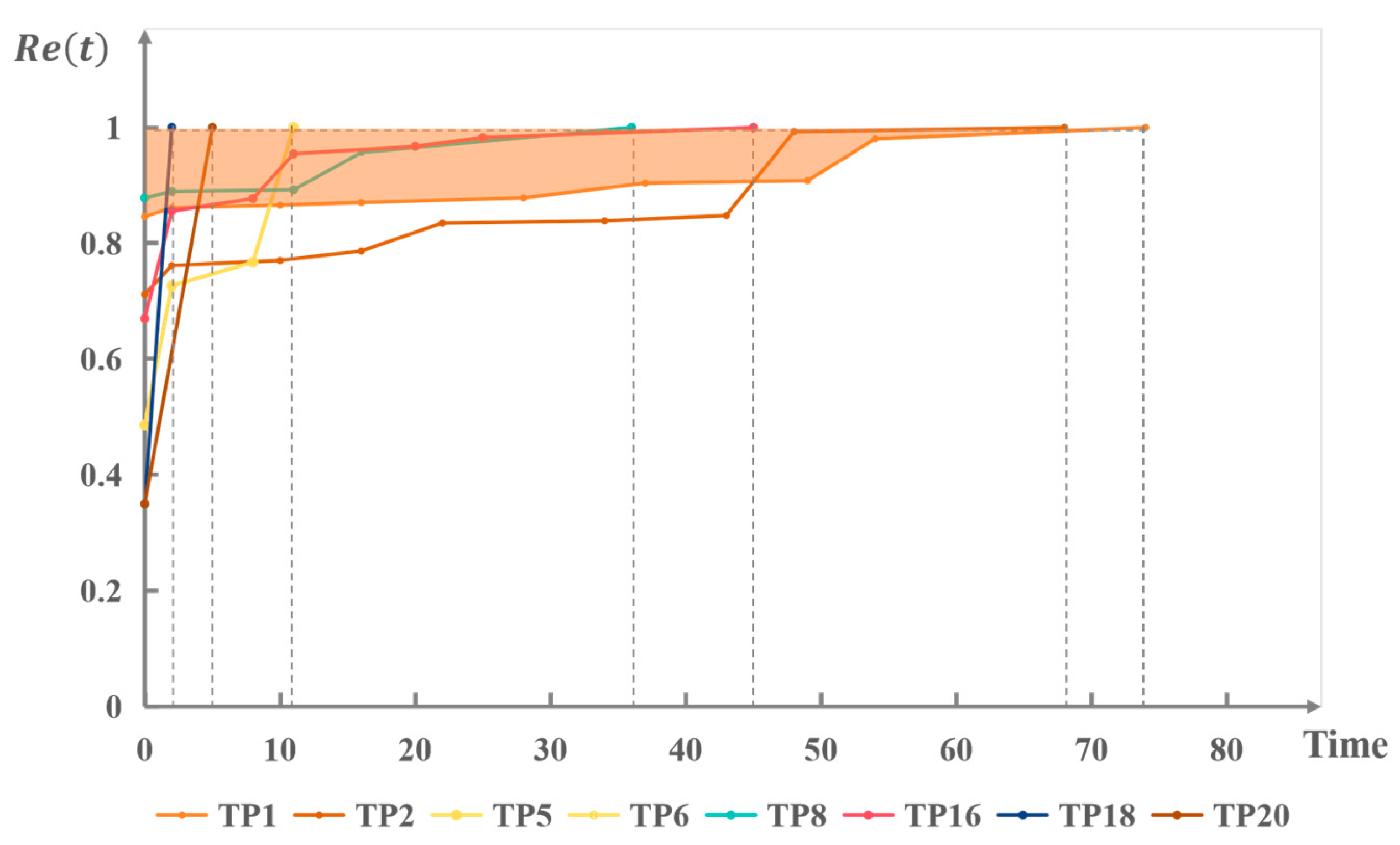
For the comparative analysis of pipeline resilience under different installation environments and methods, the assumed affected scope is defined as pipeline segments with non-general laying environments, indicated by the dark gray areas in Table 8. Based on this, a quantitative assessment of the resilience of each long-distance trunk pipelines based on length is conducted, with the performance curves shown in Figure 9. The performance loss of trunk pipeline TP8 is represented by the shaded area in the figure.
Figure 9. The quantitative assessment result of trunk pipeline resilience based on length.

3.3. Gas Transmission Network Resilience Assessment

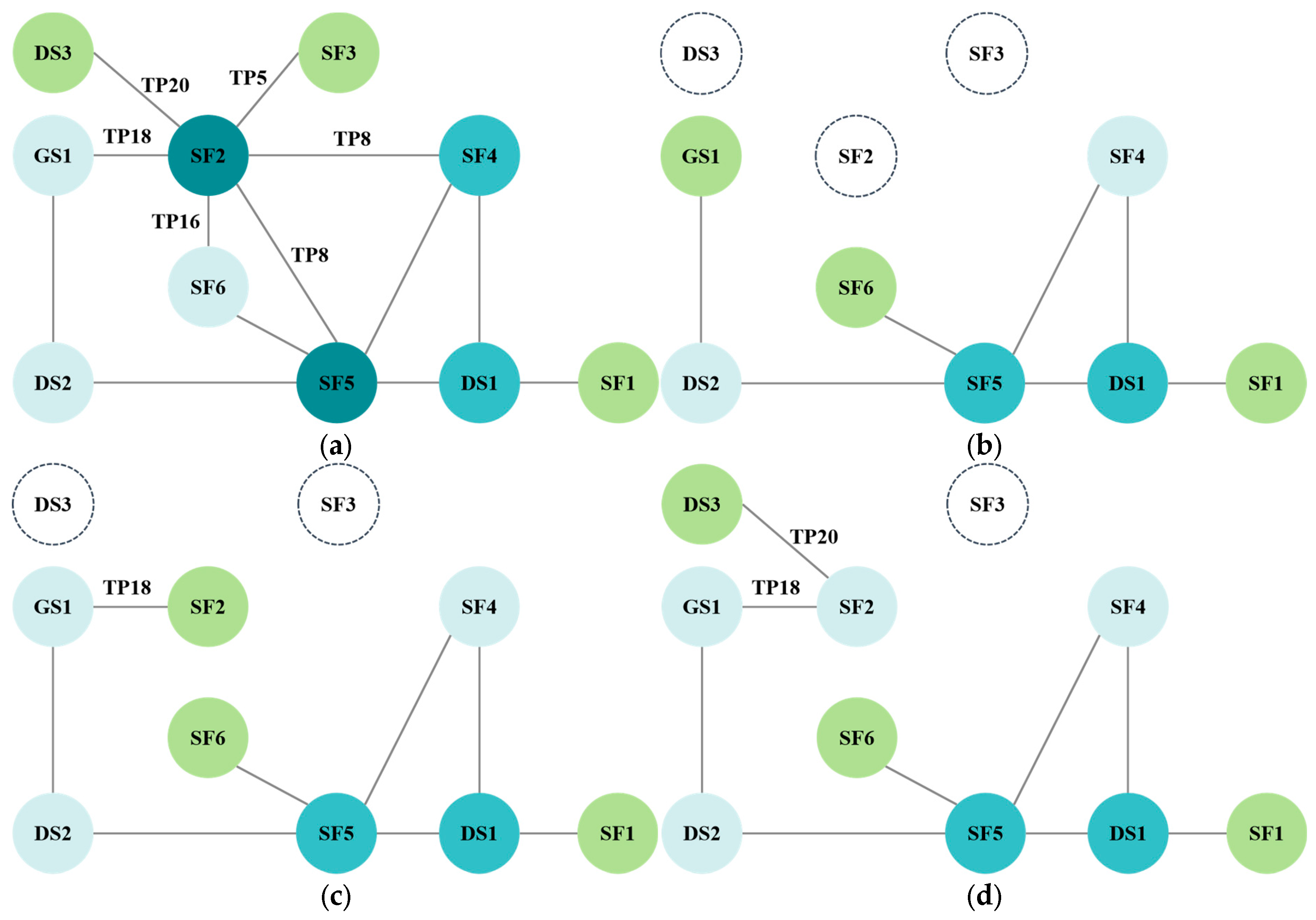
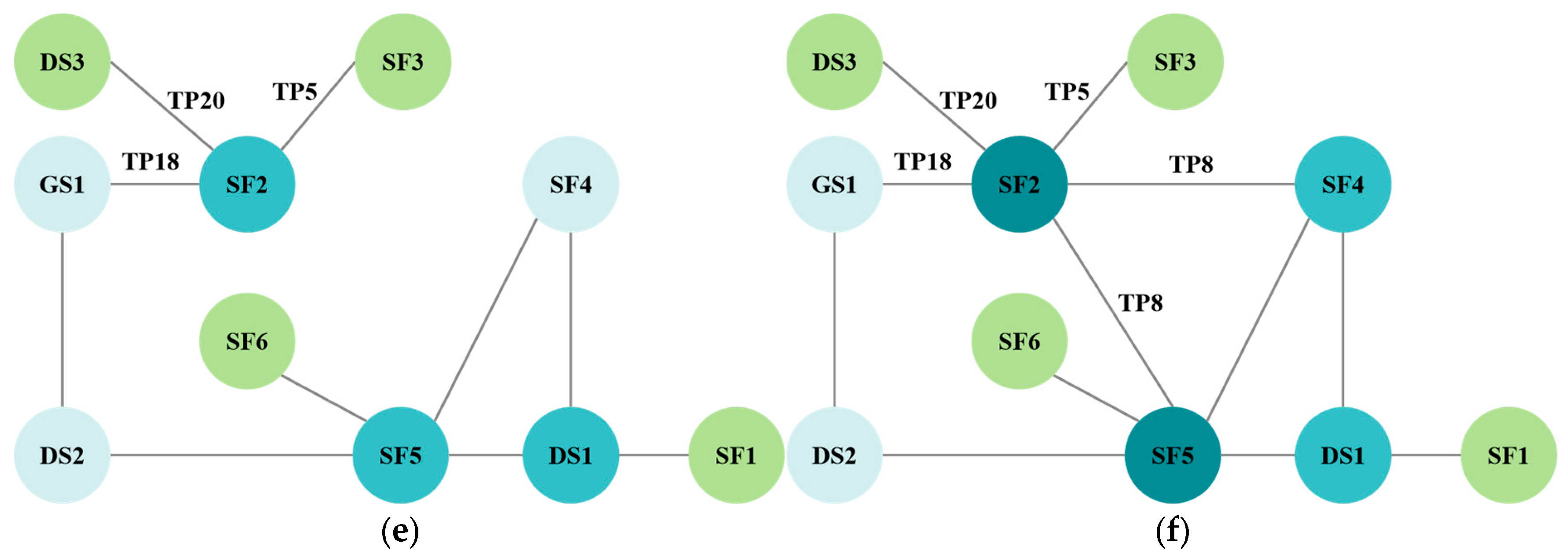
Unlike pipeline resilience assessment, which focuses on the integrity retention rate of physical components under disruptions, the network resilience assessment conducted in this research primarily quantifies and analyzes the system’s adaptive capacity and recovery capability under different restoration strategies from the perspectives of network topology and functionality. As described in Section 3.2, the affected area in this case study focuses on the local transmission network formed by storage facility SF2 and its eight directly connected trunk pipelines. To accurately represent the topological structure and functional logic of this system, the redundant pipelines TP5 and TP6, which are laid in the same trench, were reasonably simplified and merged into a single pipeline TP5 in the model. Additionally, pipelines whose other connected node falls outside the local network are not included (TP1 and TP2). Furthermore, the case analysis clearly defines the system boundary (SF2, TP5, TP8, TP16, TP18 and TP20), focusing only on the structure and internal functionality of this local network, while excluding interactions with external systems. The topological connections of this study network under normal operating conditions are illustrated in Figure 10a. To evaluate the impact of different restoration strategies on system recovery capacity, two distinct restoration strategies are formulated based on the quantified pipeline failure length and recovery indices analyzed in Section 3.2.
Figure 10. The evolution of network topology during recovery phase using Strategy 1 under hypothetical disruption scenario: (a) T = 495 (network topology restored to initial state); (b) T = 0; (c) T = 10; (d) T = 35; (e) T = 90; (f) T = 270.
  • Strategy 1 (Time-Priority Strategy): Aimed at enhancing recovery efficiency during the early restoration phase, this strategy prioritizes trunk pipeline sections with the shortest overall repair times, following an ascending order of repair duration.
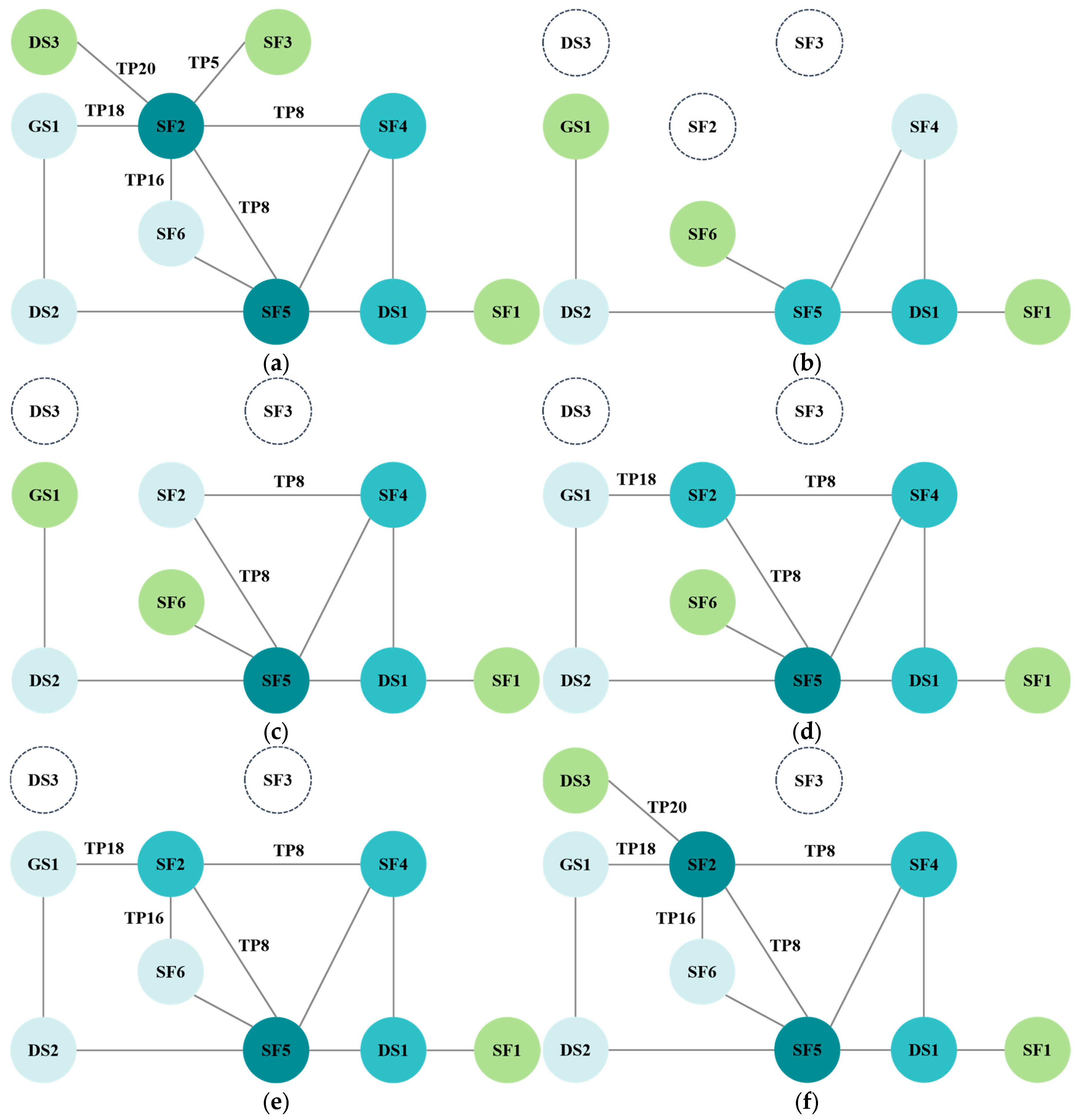
  • Strategy 2 (Critical-Node-Priority Strategy): Designed to maximize phased recovery benefits, this strategy prioritizes the repair of pipeline segments that most rapidly restore the network connectivity. This strategy prioritizes pipelines connected to high-connectivity nodes. For pipelines with the same node degree, the secondary criterion is ascending repair time to ensure efficiency among equally critical connections.
The failure length, repair time, and node degree of the trunk pipelines are presented in Table 9. The detailed pipeline repair sequences and corresponding time schedules under the two strategies are provided in Table 10. It should be noted that the recovery process is defined as a sequential repair operation, where concurrent restoration activities under resource redundancy are excluded from consideration. Meanwhile, the network topology at different time points during the recovery phase under the two strategies is illustrate in Figure 10 and Figure 11.
Table 9. The failure length, repair time, and node degree of the trunk pipelines.
Table 10. The pipeline restoration sequences and time schedules under the two strategies.
Figure 11. The evolution of network topology during recovery phase using Strategy 2 under hypothetical disruption scenario: (a) T = 495 (network topology restored to initial state); (b) T = 0; (c) T = 180; (d) T = 190; (e) T = 415; (f) T = 440.
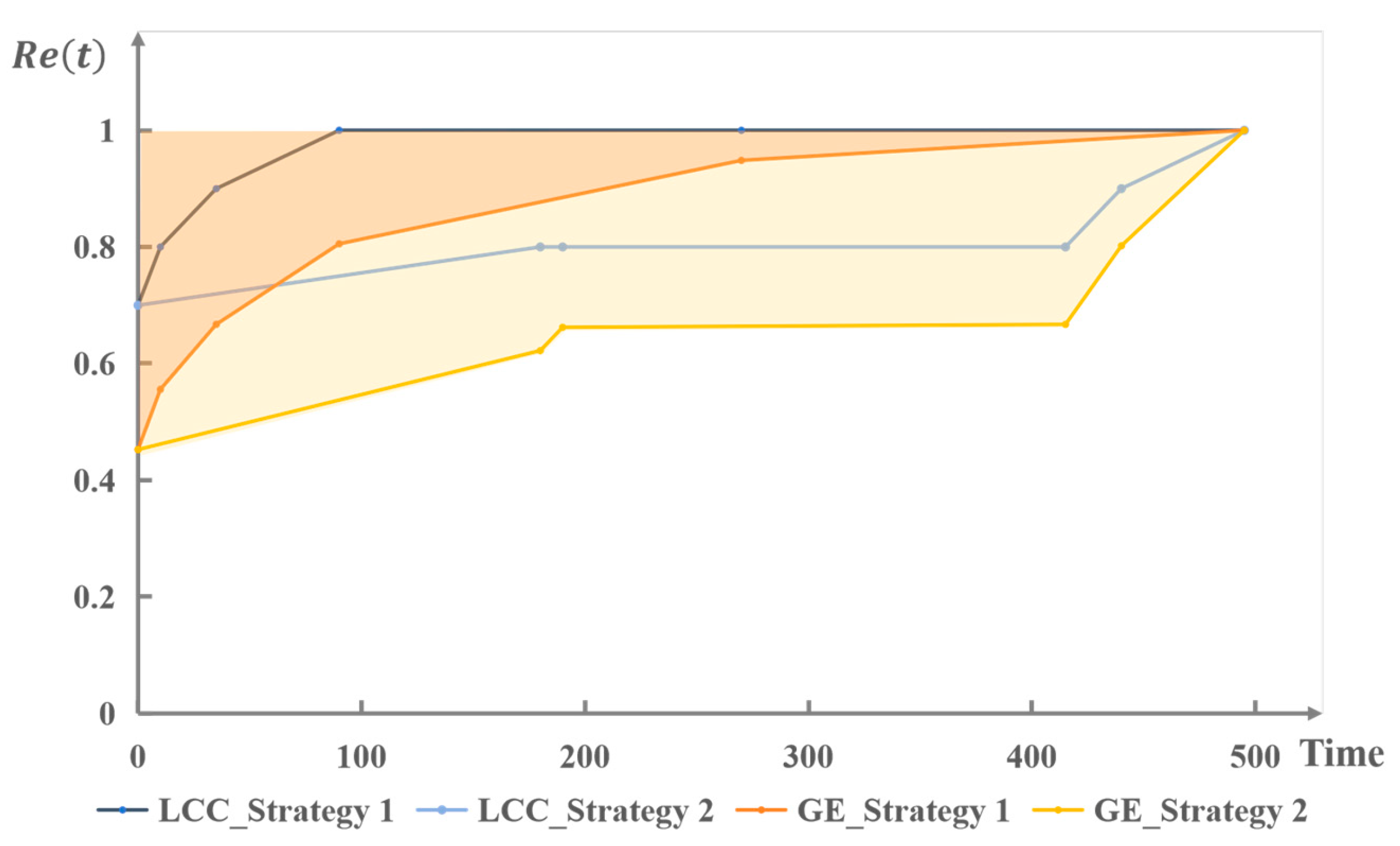
Through calculating the temporal evolution of LCC and GE under the two restoration strategies, the dynamic performance and adaptive capacity of the system during the post-disruption recovery phase is quantitatively evaluated. The performance evolution curves are shown in Figure 12. The orange and yellow shaded areas illustrate the performance loss and recovery of the global efficiency of the topology network under the two respective restoration strategies. Simulation results demonstrate that, under the assumed disruption scenario and resource constraints, the time-priority strategy guides the system toward performance recovery more effectively. Compared to the node-degree-priority strategy, the time-first approach maintains a larger connected sub-network and higher transmission efficiency at most time points, indicating its superior adaptive capacity and recovery effectiveness in this specific context.
Figure 12. The quantitative assessment result of network adaptive and recovery capacity.

4. Discussion

In this research, a resilience assessment framework that effectively quantifies the resistance, adaptation, and recovery capacities of cross-regional gas transmission networks is proposed, establishing a coherent logical foundations, systemic positioning, and quantitative implementation. The core conception of resilience is defined as an integrated attribute encompassing three core capacities: resistance to disruptions while maintaining critical functionality, adaptive reorganization and operational optimization following disruptions, and effectively recovery from failures. The framework accurately reflects the functional role of cross-regional gas transmission networks as critical national energy infrastructure by integrating two complementary assessment dimensions: physical structure and network functionality. The structural dimension focuses on the integrity of key physical components (trunk pipelines, stations and storage facilities), while the functional dimension addresses topological connectivity and global transmission efficiency. This integrated approach enables comprehensive analysis from local component failures to global functional impacts. By coupling resilience concepts with key system dimensions, the framework establishes hierarchical quantitative indicator systems. At the pipeline level, pipeline characteristics, laying environments, and risk factors are integrated to develop performance indicators measuring component reliability and resistance. At the network level, topological metrics including the size of the largest connected component and global efficiency are employed to dynamically quantify functional resilience. Thus, the framework bridges theoretical concepts and engineering practice while combining critical component performance with system functionality. It provides methodological support for scientifically assessing and strategically enhancing the resilience of cross-regional gas transmission network, addressing a critical need in energy security planning.
Furthermore, a cross-regional long-distance pipeline transmission network within a representative municipal-level administrative region in China is selected as a case for empirical analysis. Key findings confirm that pipeline resilience is influenced by the interplay of design parameters, laying environments, and installation methods, while recovery efficiency depends on the alignment between strategy selection and system context. Notably, there often exists a trade-off between a pipeline’s resistance and recovery capacities. Specific construction methods, while enhancing resistance to disruptions, frequently result in increased restoration time and cost following disruptions due to more complex repair processes. This inherent tension underscores the importance of context-aware decision-making in pipeline resilience planning. For the overall resilience of transmission network, the empirical analysis is conducted focusing on the adaptability and recovery capacity of network topology structure and function performance under different recovery strategies. The results indicate that the superior performance of the time-priority restoration strategy over the node-degree-priority strategy in this specific case. This suggests that the effectiveness of recovery strategies may be highly context-dependent, influenced by factors such as resource availability, failure distribution, and system redundancy. These findings contribute to the broader discourse on critical infrastructure resilience by highlighting the tension between topological importance and operational practicality in recovery planning. In summary, the framework proposed in this research adequately incorporates practical engineering conditions of cross-regional pipeline networks. It explicitly characterizes system features with significant impacts on resilience, such as variations in pipeline installation methods and laying environments, and offers valuable insights for planning and designing cross-regional gas transmission infrastructure. The proposed framework and integrated approach offer utility for policymakers and infrastructure operators seeking to balance system reliability, adaptation capacity, and recovery resources in complex networked systems. It is noted that some aspects need to be further improved. Although pipeline failure and recovery grades are defined based on engineering practice, the numerical values assigned for quantitative analysis involve inherent subjective assumptions. The whole cross-regional gas transmission network is composed of vast and complex facilities. The resilience of gate stations, distribution stations, and storage facilities contained in the network are not considered in the methods proposed. Furthermore, this assessment does not encompass the propagation of disturbances from local failures to external upstream and downstream systems.
Future studies could expand the methodology to national-scale energy supply networks, incorporating interdependent infrastructures such as power grids and district heating systems to assess cross-sectoral vulnerability and resilience. Moreover, real-time monitoring data and machine learning techniques could be integrated to develop dynamic resilience assessment methods. Additionally, exploring the socioeconomic dimensions of gas supply disruptions would enrich the current engineering-centric perspective, enabling more holistic resilience planning that considers both physical infrastructure performance and community impacts. Such extensions would significantly enhance the practical utility of resilience assessment in guiding the development of robust and adaptable cross-regional energy supply systems for increasingly uncertain future threats.

Author Contributions

Conceptualization, Y.Z.; methodology, Y.Z.; case study, Y.Z. and K.S.; writing—original draft preparation, Y.Z.; writing—review and editing, K.S. All authors have read and agreed to the published version of the manuscript.

Funding

This research was funded by the National Natural Science Foundation of China (Grant No. 72204105). The support is gratefully acknowledged.

Institutional Review Board Statement

Not applicable.

Data Availability Statement

The data that support the findings of this research are available from the corresponding author upon reasonable request.

Acknowledgments

The author would like to acknowledge the anonymous editors and colleagues for their valuable guidance and helpful comments.

Conflicts of Interest

The author declares no conflicts of interest.

References

  1. Qian, J.R.; Han, X.Z.; Ye, M. Environmental Benefits of the West-East Natural Gas Transmission Project: Cross-Regional Energy Optimization and Transformation for Sustainable Development. Energies 2024, 17, 3820. [Google Scholar] [CrossRef]
  2. Silva, A.; Evangelista, L.; Ferreira, C. Towards resilient pipeline infrastructure: Lessons learned from failure analysis. Discov. Appl. Sci. 2024, 6, 6273. [Google Scholar] [CrossRef]
  3. Yang, Z.M.; Xiang, Q.; He, Y.X. Resilience of Natural Gas Pipeline System: A Review and Outlook. Energies 2023, 16, 6237. [Google Scholar] [CrossRef]
  4. Kumar, S.A.; Tasnim, M.; Basnyat, Z.S. Resilience Analysis of Australian Electricity and Gas Transmission Networks. Sustainability 2022, 14, 3272. [Google Scholar] [CrossRef]
  5. Ahmadi, S.; Saboohi, Y.; Vakili, A. Frameworks, quantitative indicators, characters, and modeling approaches to analysis of energy system resilience: A review. Renew. Sustain. Energy Rev. 2021, 144, 110988. [Google Scholar] [CrossRef]
  6. Mottahedi, A.; Sereshki, F.; Ataei, M. The Resilience of critical infrastructure systems: A systematic literature review. Energies 2021, 14, 1571. [Google Scholar] [CrossRef]
  7. Aven, T.; Zio, E. Globalization and global risk: How risk analysis needs to be enhanced. Reliab. Eng. Syst. Saf. 2021, 205, 107270. [Google Scholar] [CrossRef]
  8. Zhang, Y.; Weng, W.; Qi, Q. Resilience assessment and enhancement methods of large-scale gas distribution networks against disruptions due to earthquakes. Reliab. Eng. Syst. Saf. 2023, 240, 109583. [Google Scholar] [CrossRef]
  9. Liu, W.; Song, Z. Review of Studies on the Resilience of Urban Critical Infrastructure Networks. Reliab. Eng. Syst. Saf. 2020, 193, 106617. [Google Scholar] [CrossRef]
  10. Bento, F.; Garotti, L.; Mercado, M.P. Organizational resilience in the oil and gas industry: A scoping review. Saf. Sci. 2021, 133, 105036. [Google Scholar] [CrossRef]
  11. Wied, M.; Oehmen, J.; Welo, T. Conceptualizing resilience in engineering systems: An analysis of the literature. Syst. Eng. 2020, 23, 3–13. [Google Scholar] [CrossRef]
  12. Raoufi, H.; Vahidinasab, V.; Mehran, K. Power Systems Resilience Metrics: A Comprehensive Review of Challenges and Outlook. Sustainability 2020, 12, 9698. [Google Scholar] [CrossRef]
  13. Mahmood, Y.; Afrin, T.; Huang, Y. Sustainable Development for Oil and Gas Infrastructure from Risk, Reliability, and Resilience Perspectives. Sustainability 2023, 15, 4953. [Google Scholar] [CrossRef]
  14. Dey, A.K.; Gel, Y.R.; Poor, H.V. What network motifs tell us about resilience and reliability of complex networks. Proc. Natl. Acad. Sci. USA 2019, 116, 19368–19373. [Google Scholar] [CrossRef]
  15. Goldbeck, N.; Angeloudis, P.; Ochieng, W.Y. Resilience assessment for interdependent urban infrastructure systems using dynamic network flow models. Reliab. Eng. Syst. Saf. 2019, 188, 62–79. [Google Scholar] [CrossRef]
  16. Rehak, D.; Senovsky, P.; Hromada, M.; Lovecek, T. Complex approach to assessing resilience of critical infrastructure elements. Int. J. Crit. Infrastruct. Prot. 2019, 25, 125–138. [Google Scholar] [CrossRef]
  17. Ouyang, M.; Dueñas-Osorio, L.; Min, X. A three-stage resilience analysis framework for urban infrastructure systems. Struct. Saf. 2012, 36, 23–31. [Google Scholar] [CrossRef]
  18. Ongkowijoyo, C.S.; Doloi, H. Risk-based resilience assessment model focusing on urban infrastructure system restoration. Procedia Eng. 2018, 212, 1115–1122. [Google Scholar] [CrossRef]
  19. Liu, X.; Fang, Y.; Zio, E. A hierarchical resilience enhancement framework for interdependent critical infrastructures. Reliab. Eng. Syst. Saf. 2021, 215, 107868. [Google Scholar] [CrossRef]
  20. Argyroudis, S.A.; Mitoulis, S.A.; Hofer, L. Resilience assessment framework for critical infrastructure in a multi-hazard environment: Case study on transport assets. Sci. Total Environ. 2020, 714, 136854. [Google Scholar] [CrossRef]
  21. Wang, J.; Deng, Y.; Kumari, S.; Song, Z. Research on the Spatial Spillover Effect of Transportation Infrastructure on Urban Resilience in Three Major Urban Agglomerations in China. Sustainability 2023, 15, 5543. [Google Scholar] [CrossRef]
  22. Wang, X.; Mazumder, R.K.; Salarieh, B. Machine learning for risk and resilience assessment in structural engineering: Progress and future trends. J. Struct. Eng. 2022, 148, 03122003. [Google Scholar] [CrossRef]
  23. Guha, S. Quantification of inherent energy resilience of process systems for optimization of energy usage. Environ. Prog. Sustain. Energy 2020, 39, e13308. [Google Scholar] [CrossRef]
  24. Kermani, M.A.M.A.; Mohammadi, N.; Ghasemi, H. Enhancing Gas Distribution Network Resilience Utilizing a Mixed Social Network Analysis-Simulation Approach: Application of Artificial Intelligence. IEEE Access 2025, 13, 6924–6944. [Google Scholar] [CrossRef]
  25. Mahjoob, A.; Noorollahi, Y.; Naghavi, M.S. Spatial Analysis for Natural Gas Pipeline Routing, Monitoring, and High-Risk Areas Identification. J. Pipeline Syst. Eng. Pract. 2024, 15, 04024013. [Google Scholar] [CrossRef]
  26. Qian, L.P.; Bai, Y.; Wang, W.Y. Natural gas crisis, system resilience and emergency responses: A China case. Energy 2023, 276, 127500. [Google Scholar] [CrossRef]
  27. Ding, Y.T.; Chen, S.; Zheng, Y.L. Resilience assessment of China’s natural gas system under supply shortages: A system dynamics approach. Energy 2022, 247, 123518. [Google Scholar] [CrossRef]
  28. Bai, Y.P.; Wu, J.S.; Yuan, S.Q. Dynamic resilience assessment and emergency strategy optimization of natural gas compartments in utility tunnels. Process Saf. Environ. Prot. 2022, 165, 114–125. [Google Scholar] [CrossRef]
  29. Yang, Z.M.; Li, X.Y.; Xiang, Q. A resilience evaluation method of natural gas pipeline system based on uncertainty analysis. Process Saf. Environ. Prot. 2023, 177, 891–908. [Google Scholar] [CrossRef]
  30. Xie, H.P.; Sun, X.T.; Chen, C. Resilience Metrics for Integrated Power and Natural Gas Systems. IEEE Trans. Smart Grid 2022, 13, 2483–2486. [Google Scholar] [CrossRef]
  31. Jiang, Q.Q.; Cai, B.P.; Zhang, Y.P. Resilience assessment methodology of natural gas network system under random leakage. Reliab. Eng. Syst. Saf. 2023, 234, 109134. [Google Scholar] [CrossRef]
  32. Dell’Isola, M.; Ficco, G.; Lavalle, L. A resilience assessment simulation tool for distribution gas networks. J. Nat. Gas Sci. Eng. 2020, 84, 103680. [Google Scholar] [CrossRef]
  33. Yang, X.; Chen, K.; Liu, M. Research on the connectivity reliability analysis and optimization of natural gas pipeline network based on topology. Sci. Rep. 2025, 15, 98749. [Google Scholar] [CrossRef] [PubMed]
  34. Martisauskas, L.; Augutis, J.; Krikstolaitis, R. A framework to assess the resilience of energy systems based on quantitative indicators. Energies 2022, 15, 4040. [Google Scholar] [CrossRef]
  35. Ahmadian, N.; Lim, G.J.; Cho, J. A quantitative approach for assessment and improvement of network resilience. Reliab. Eng. Syst. Saf. 2020, 200, 106977. [Google Scholar] [CrossRef]
  36. Cai, B.; Zhang, Y.; Wang, H. Resilience evaluation methodology of engineering systems with dynamic-Bayesian-network-based degradation and maintenance. Reliab. Eng. Syst. Saf. 2021, 209, 107464. [Google Scholar] [CrossRef]
  37. Wang, H.; Hou, K.; Zhao, J.B. Planning-Oriented resilience assessment and enhancement of integrated electricity-gas system considering multi-type natural disasters. Appl. Energy 2022, 315, 118824. [Google Scholar] [CrossRef]
  38. Yang, Z.M.; Su, H.; Du, X.K. Supply resilience assessment of natural gas pipeline network systems. J. Clean. Prod. 2023, 385, 135654. [Google Scholar] [CrossRef]
  39. Li, Y.; Li, Z.Y.; Wen, F.S. Minimax-Regret Robust Co-Optimization for Enhancing the Resilience of Integrated Power Distribution and Natural Gas Systems. IEEE Trans. Sustain. Energy 2020, 11, 61–71. [Google Scholar] [CrossRef]
  40. Nikoobakht, A.; Aghaei, J.; Afrasiabi, M. Collaborative Resilience to Extreme Weather in Decentralized Co-operation of Electricity and Natural Gas Distribution Systems. Electr. Power Syst. Res. 2022, 212, 108658. [Google Scholar] [CrossRef]
  41. Krishnamurthy, V.; Kwasinski, A. Modeling of Distributed Generators Resilience Considering Lifeline Dependencies During Extreme Events. Risk Anal. 2019, 39, 1997–2011. [Google Scholar] [CrossRef]
  42. Specking, E.; Cottam, B.; Parnell, G. Assessing Engineering Resilience for Systems with Multiple Performance Measures. Risk Anal. 2019, 39, 1899–1912. [Google Scholar] [CrossRef]
Disclaimer/Publisher’s Note: The statements, opinions and data contained in all publications are solely those of the individual author(s) and contributor(s) and not of MDPI and/or the editor(s). MDPI and/or the editor(s) disclaim responsibility for any injury to people or property resulting from any ideas, methods, instructions or products referred to in the content.

Article Metrics

Citations

Article Access Statistics

Multiple requests from the same IP address are counted as one view.