1. Introduction
Transportation systems worldwide are undergoing rapid transformation as countries seek to reduce reliance on fossil fuels and accelerate the transition toward clean energy sources [
1,
2,
3]. The transportation sector currently contributes nearly one-quarter of global CO
2 emissions [
4], making it a key focus for climate change mitigation policies. Among the available strategies, electrification has become one of the most effective approaches for reducing emissions, improving air quality, and diversifying national energy sources [
5,
6]. Global EV sales increased from fewer than one million units in 2017 to over 14 million in 2023, with electric vehicles now accounting for approximately 18% of global light-duty vehicle sales [
7]. Countries such as Norway, China, the United States, Germany, and the United Kingdom are leading this transition through coordinated regulatory frameworks, consumer incentives, local manufacturing initiatives, and expanded charging infrastructure deployment.
This global transition reflects not only environmental needs but also evolving industrial and geopolitical interests. The move toward e-mobility is increasingly connected to national priorities related to economic diversification, energy security, and technological competitiveness [
8]. As countries invest in battery production, electric drivetrain technologies, and renewable energy integration, the e-mobility sector has become a major source of innovation and economic growth [
9]. At the same time, the rapid growth in EV adoption brings attention to challenges related to grid capacity, material supply chains, charging access, and social equity [
10,
11]. Addressing these issues requires long-term strategies, evidence-based policy design, and sustained institutional coordination.
Globally, transportation has become a major focus of climate action, with decarbonization viewed as a fundamental component of climate-change mitigation efforts. Scholars argue that sustainable transportation requires a combination of technological, behavioral, and infrastructure-based interventions, including shifts toward public transportation, active mobility, and low-carbon vehicle technologies [
12,
13]. Among these innovations, EVs have emerged as a cornerstone of sustainable transportation transitions, providing both environmental benefits and opportunities for industrial and technological development [
14].
In the Saudi Arabian context, transportation has traditionally been influenced by the availability of cheap, heavily subsidized fuel and decades of road-centric planning. This has led scholars to describe the Kingdom’s mobility system as an oil-rentier mobility paradigm [
15], characterized by extensive automobile dependency, rapid urban sprawl, and limited incentives for energy efficiency or alternative modes of transportation [
16]. Throughout much of the twentieth and early twenty-first centuries, national transportation strategies prioritized road expansion and boosting car ownership. Saudi cities such as Riyadh, Jeddah, and Dammam developed around sprawling urban layouts, low-density development, and limited public transportation options, resulting in traffic congestion, deteriorating air quality, and increasing greenhouse gas emissions [
16]. Until the mid-2010s, electric vehicles were not included in Saudi policy discussions, with mobility planning heavily focused on petroleum economics [
17].
The launch of Saudi Arabia’s Vision 2030 in 2016 marked a shift in national transportation and energy strategies. Vision 2030 frames sustainability, quality of life, and economic diversification as central priorities, linking mobility reform with energy transition and climate action [
18]. Several landmark initiatives highlight this shift, including the National Transport and Logistics Strategy (NTLS), launched in 2021, sets targets for multimodal systems, emissions reduction, and the integration of EVs into passenger and logistics transportation [
19]. The Saudi Green Initiative (SGI), also launched in 2021, establishes climate and sustainability goals, including electrifying 30% of Riyadh’s vehicle fleet by 2030 [
20]. The Public Investment Fund (PIF) has invested heavily in this sector, including acquiring a majority stake in Lucid Motors in 2018 and launching CEER Motors in 2022—Saudi Arabia’s first domestic EV brand developed in partnership with Foxconn and BMW [
21]. Additionally, megaprojects such as NEOM and The Line envision zero-carbon, car-free environments with electrification as a key element [
22]. Together, these initiatives represent the institutionalization of e-mobility into Saudi national policy and a shift from rhetorical sustainability to practical projects and industrial capacity development.
Despite these ambitious commitments, the adoption of e-mobility in Saudi Arabia still faces some challenges. The study highlights four ongoing obstacles: (1) affordability: EVs remain beyond the reach of most middle-income residents [
23], and there are few subsidies, tax exemptions, or consumer incentives to offset the high upfront costs. (2) Infrastructure gaps: Public charging stations are concentrated in metropolitan areas like Riyadh, Jeddah, and Dammam, while smaller cities and rural areas remain underserved [
24]. (3) Cultural inertia: Long-standing reliance on cheap fuel and cultural preferences for large, gasoline-powered vehicles create skepticism about EV practicality and performance [
25]. (4) Equity concerns: Current e-mobility strategies mainly favor elites who can afford EVs or reside in cities with early infrastructure deployment. Middle and lower-income groups, and residents of peripheral cities, are mostly excluded from early adoption [
26]. This situation creates a broader structural paradox. On one side, Saudi Arabia aims to reinvent itself as a global leader in clean energy and sustainability. On the other, its local transportation system still demonstrates heavy oil dependence, raising doubts about whether electrification is truly a genuine change or just a symbol.
Beyond its academic contribution, this study provides practical insights for policymakers, transportation planners, and institutional stakeholders responsible for Saudi Arabia’s mobility shift. By tracing the evolution of e-mobility policies, the analysis highlights which strategies have become formalized, which policy areas still need development, and where implementation gaps remain. These insights are particularly useful for decision-makers involved in planning charging infrastructure, industrial localization, incentive creation, and national decarbonization initiatives. The comparison with Norway, China, and the UAE provides actionable policy lessons that can support future regulatory reforms and investment decisions. This practical focus emphasizes the importance of studying policy evolution as a foundation for effective and equitable e-mobility adoption.
This study addresses two key research questions: How has the policy discourse on electrification and e-mobility evolved in Saudi Arabia since the launch of Vision 2030? And to what extent have institutional strategies and flagship projects transformed rhetorical commitments into practical reforms for sustainable mobility? In pursuing these questions, the study sets the following objectives: conduct a longitudinal analysis of Saudi e-mobility policy discourse (2010–2025); build a content analysis dataset tracking references to electrification in national strategies, institutional reports, and megaproject documentation; develop a comparative policy dataset comparing Saudi Arabia’s approach with other countries; compile a timeline dataset of many milestones in Saudi e-mobility policy; and identify barriers related to affordability, infrastructure, and equity that hinder policy implementation.
The study contributes to both academic and policy discussions. Existing research on Saudi Arabia’s transportation system has primarily concentrated on public transportation and active mobility. However, few studies have systematically explored the development of e-mobility policies. By creating original datasets and performing a longitudinal policy analysis, this paper offers empirical evidence of how Saudi discourse shifted from oil dependence to electrification, enhancing debates on sustainable transportation in oil-dependent economies. Regarding policy contributions, the analysis reveals gaps in affordability, infrastructure distribution, and equity. By comparing Saudi Arabia’s policies with others, the study provides recommendations for inclusive and equitable adoption strategies aligned with Vision 2030, the Saudi Green Initiative, and international frameworks like the Paris Agreement and the Sustainable Development Goals.
2. Methodology for Literature Selection and Document Retrieval
This review used a clear and systematic document analysis method inspired by PRISMA guidelines, adapted for qualitative policy research [
27]. The objective was not to do a systematic review of empirical results, but to identify, screen, and analyze policy and institutional documents that show the development of e-mobility governance in Saudi Arabia from 2010 to 2025.
2.1. Search Strategy, Transparency, and Reproducibility
Document retrieval was carried out from March to August 2025 (with access dates recorded to ensure reproducibility) across official digital portals. Academic literature was searched using academic databases such as Google Scholar, Scopus, and Web of Science, while policy and institutional documents were obtained directly from official portals and institutional databases. Searches were conducted using predefined keywords related to electric vehicles, sustainable transportation, etc. Terms were combined using Boolean operators (AND, OR) according to each database’s requirements. Search results were cross-checked to remove duplicates and to ensure comprehensive coverage across institutional domains.
To promote transparency and full reproducibility, the document identification process adhered to standardized procedures for recording search locations, search terms, access dates, and document metadata [
28]. Additionally, for each document, the following metadata were recorded: document type (policy brief, strategy, annual report, peer-reviewed article); publishing institution; publication year; URL/source repository; version number or update date (if applicable); and language (Arabic or English). This systematic logging ensured consistency across the collection and reduced the risk of selection bias. It also provides enough detail for other researchers to replicate the search process and verify document inclusion. In addition, to enhance methodological transparency, this document retrieval process followed a step-by-step search protocol commonly used in policy analysis research. Following Zhou et al. [
29], searches were carried out repeatedly in multiple rounds, starting with broad keyword queries and then refining results as new terms appeared during screening. Each retrieval round was logged, and no new document types or themes emerged after the fourth iteration, indicating search saturation. This structured approach ensured that the final corpus was comprehensive, reproducible, and aligned with established standards for policy data collection.
2.2. Inclusion and Exclusion Criteria
Documents are included in the analysis if they meet specific criteria: authored or endorsed by government entities or official programs; related to a particular topic; published within a designated time frame; and containing meaningful policy-relevant content. Excluded documents are unverifiable sources, duplicate summaries, and publications unrelated to the topic [
30].
2.3. Screening Procedures (PRISMA-Adapted)
An adapted PRISMA workflow can be used to organize the steps for document selection: (1) Identification: all documents are initially identified through various sources (2) Screening: titles and abstracts are screened for relevance (3) Eligibility: full-text assessment is conducted; documents are evaluated for credibility, completeness, and policy relevance (4) Inclusion: the final studies are included in the systematic review or meta-analysis [
31].
2.4. Overall Methodological Workflow
In addition to the PRISMA-adapted screening procedure, this study followed a multi-stage methodological workflow that integrates literature screening, policy document analysis, coding procedures, and synthesis across three datasets [
28].
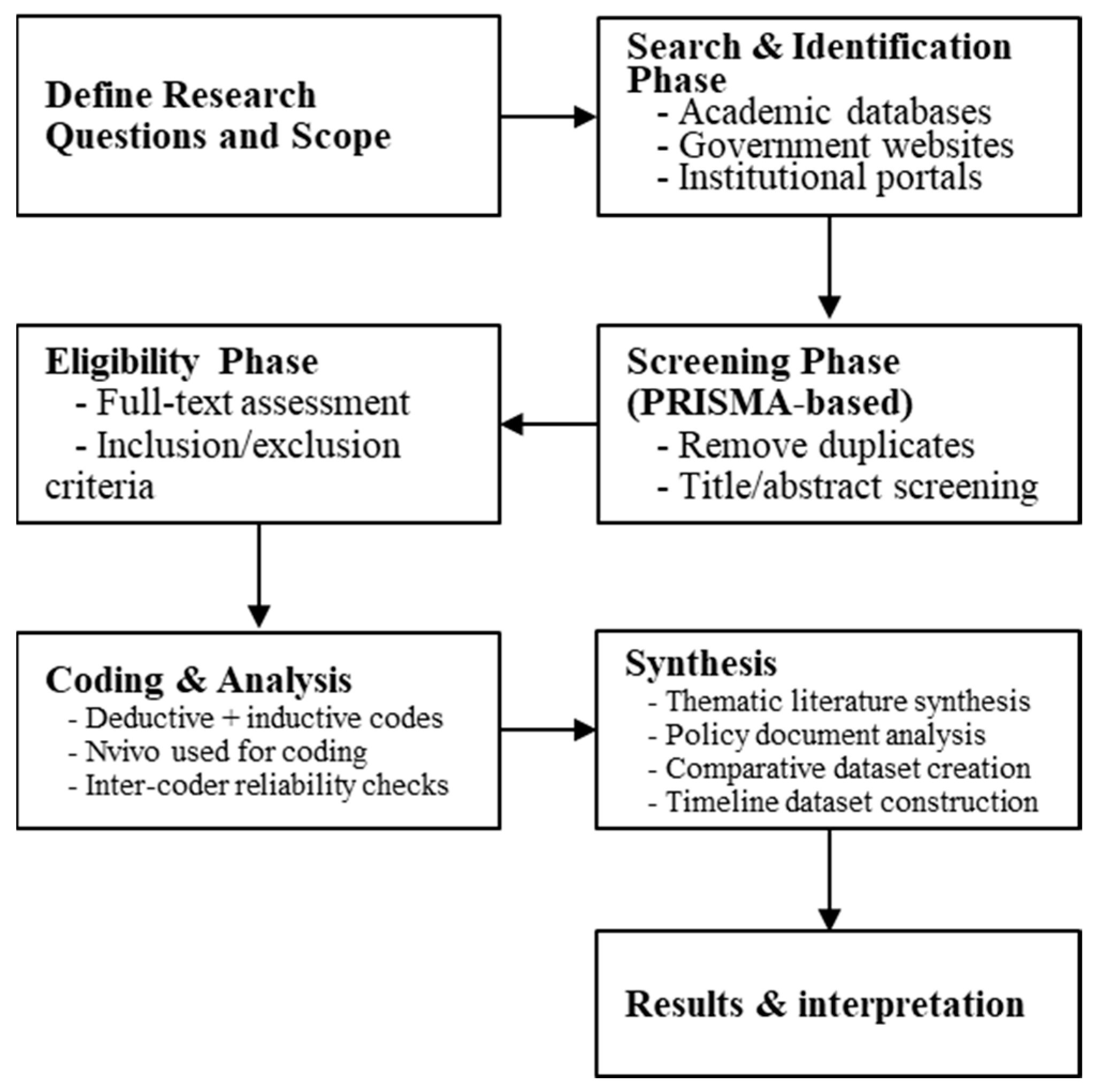
Figure 1 offers a visual overview of the methodological steps, including (1) defining the research scope, (2) identifying documents, (3) PRISMA-based screening, (4) qualitative content analysis using deductive and inductive codes, (5) coding with NVivo, and (6) synthesizing academic themes, policy findings, comparative insights, and timeline development. This figure complements the PRISMA diagram by showing the full process used to produce the study’s results.
2.5. Content Analysis Software and Analytical Approach
The qualitative analysis of the documents was conducted using NVivo 14, a computer-assisted qualitative data analysis software (CAQDAS) widely employed for systematic coding and thematic analysis [
32]. NVivo was used to manage the entire set of documents (52 Saudi policy documents and 16 comparative documents), facilitating coding, reference counting, memoing, and tracking relationships between themes.
The study adopted a directed qualitative content analysis approach. Deductive codes were developed from established literature. These were supplemented by inductive, emergent codes discovered during multiple readings of the documents. NVivo was utilized to ensure traceability through: (1) code frequency counts; (2) co-occurrence queries to examine thematic relationships; (3) within-case and cross-case comparisons; (4) automated coding reports; and (5) audit trails documenting coding decisions. This software-supported workflow guaranteed transparency, improved replicability, and reduced coder subjectivity throughout the analysis [
33,
34].
2.6. Coding Framework, Traceability, and Reliability Procedures
To ensure traceability, all documents were coded using NVivo 14, which enabled reference counting, co-occurrence analysis, thematic queries, and extraction of coded text segments. The software environment also maintained an automatic log of coding decisions, memos, and revisions, ensuring a transparent audit trail suitable for replication.
Inter-coder reliability was addressed using a two-step process. First, a sample of documents was independently re-coded later to verify internal consistency. Second, cross-audit procedures were implemented by reviewing coding clusters and resolving discrepancies through iterative refinement. Although formal kappa statistics are usually not required for qualitative policy analysis, these steps helped ensure coding stability, reduce subjective bias, and strengthen methodological rigor.
2.7. Analytical Procedures and Statistical Techniques Considered
Although this study is qualitative and based on document analysis, we maintained analytical rigor by following structured procedures typical in qualitative content analysis. No inferential statistical tests (e.g., t-tests, regression models, ANOVA) were employed because the dataset consists of textual policy documents rather than numerical data. Instead, the analysis relied on descriptive and frequency-based methods appropriate for qualitative policy research. First, reference counting determined the frequency of thematic codes across the 52 Saudi policy documents and 16 comparative documents. Second, co-occurrence analysis evaluated how often themes appeared together. Third, temporal mapping traced policy development over the 2010–2025 timeline. Fourth, saturation checks verified that no new codes emerged after multiple rounds of coding. These steps ensure transparency and demonstrate that the analysis complies with established qualitative standards, even though formal statistical hypothesis testing was not suitable for the data’s nature.
4. Policy Document Analysis Methodology
4.1. Research Design
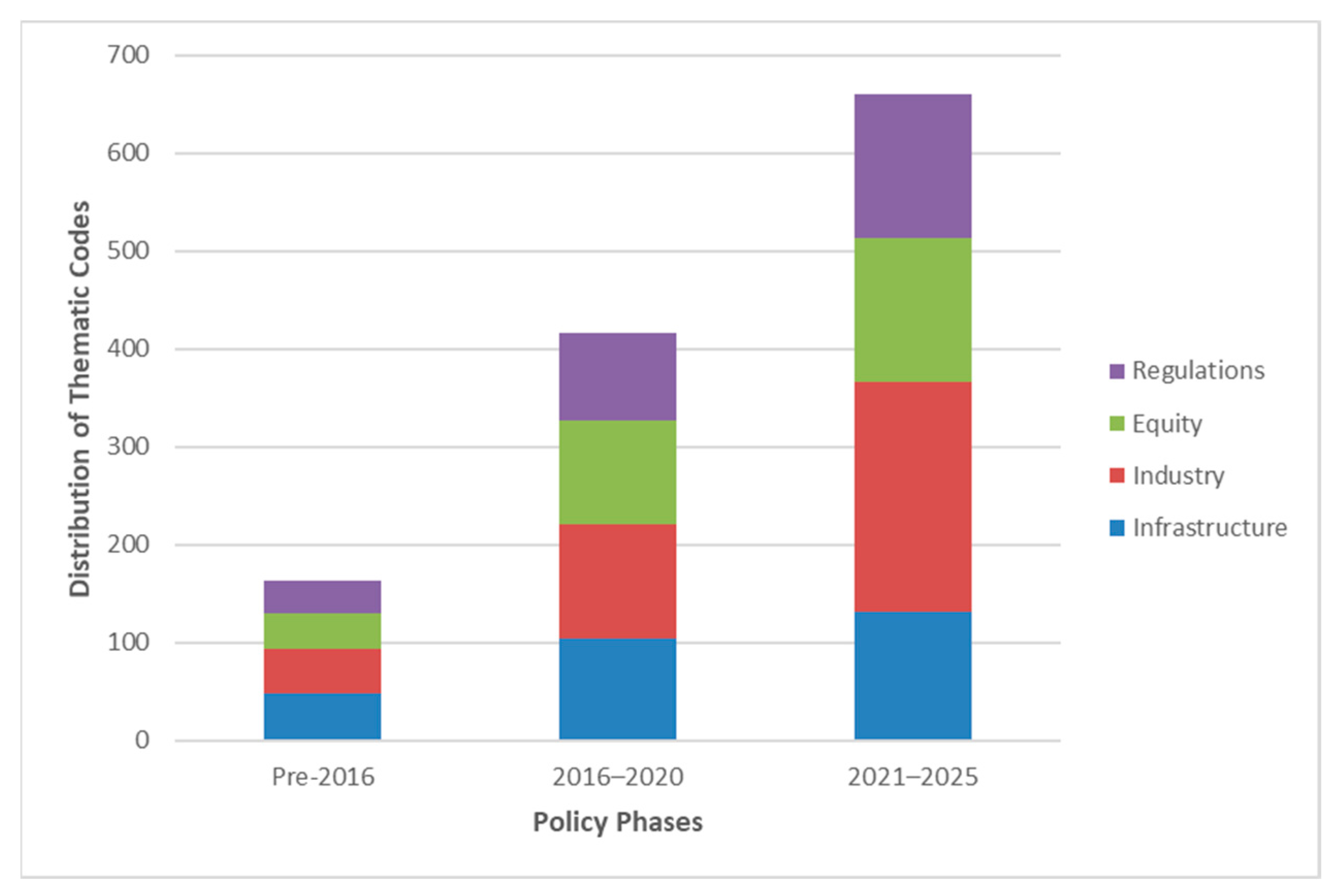
This study adopts a qualitative, document-based policy analysis to explore the development of e-mobility discourse in Saudi Arabia from 2010 to 2025. Document-based analysis is suitable for countries where official strategies, institutional reports, and policy announcements serve as primary sources for mobility reform narratives. The research is structured as a longitudinal policy review in three phases: (1) oil-centric continuity (pre-2016)—a period dominated by subsidized fuel, road expansion, and a lack of electrification discourse. (2) vision transition (2016–2020)—marked by the adoption of sustainability language and early mentions of electrification following the launch of Vision 2030. (3) electrification drive (2021–2025)—characterized by the institutionalization of EV policies within the NTLS, the SGI, and the launch of CEER Motors (2022). By analyzing continuity and change across these phases, the study provides a timeline of how electrification became part of Saudi policy and how it was institutionalized.
The research design focuses on three original datasets: a content analysis dataset with a large number of coded references to e-mobility across 52 Saudi documents, a comparative policy dataset contrasting Saudi Arabia’s strategies with those of the United Arab Emirates (UAE), Norway, and China, and a timeline dataset tracking 25 milestones in Saudi e-mobility policy from 2010 to 2025. These datasets enable both within-case analysis (Saudi Arabia over time) and cross-case comparison (Saudi Arabia compared to other contexts).
4.2. Data Sources
A purposive sampling strategy was employed to capture the scope of Saudi e-mobility discourse at the national, institutional, and project levels. The final dataset includes 52 Saudi documents and 16 comparative documents, along with supplementary reports. The Saudi documents cover: national strategies (e.g., Vision 2030 reports, NTLS, SGI); institutional reports (e.g., MTLS reports and publications, Ministry of Energy reports); economic policies (e.g., PIF reports and news related to Lucid Motors and CEER Motors); urban megaproject documentation (e.g., NEOM and The Line, Green Riyadh reports); legislative and regulatory news. Comparative documents include the UAE EV strategy, Norway EV incentives, and China’s New Energy Vehicle (NEV) policies. Additionally, some supplementary sources related to IEA, UN-Habitat, news, and media releases were used to triangulate institutional claims.
4.2.1. Source Websites and Institutional Repositories
As stated, documents utilized in this study were obtained from publicly accessible, official Saudi government and institutional websites. The list of repositories used for collecting documents is as follows:
These websites were accessed using predefined keywords: “electric vehicle,” “EV manufacturing,” “e-mobility,” “transport electrification,” “sustainable transport,” “sustainable mobility,” “charging infrastructure,” “mobility transition,” “industrial localization,” and “transport policy.” Only official documents such as policy strategies, regulatory guidelines, annual reports, project briefs, and institutional publications were included.
4.2.2. Document Selection and Inclusion Criteria
Documents were included if they met the following inclusion criteria: (1) authored or endorsed by a governmental agency, national institution, or official program; (2) contained explicit references to transportation, energy transition, mobility planning, or sustainability; (3) published between 2010 and 2025; (4) relevant to the evolution of e-mobility policy. Documents were excluded if they: (1) lacked verifiable institutional authorship; (2) consisted solely of opinion pieces, media commentary, or editorial content; (3) focused exclusively on unrelated sectors (e.g., agriculture, tourism); (4) duplicated information across institutional summaries.
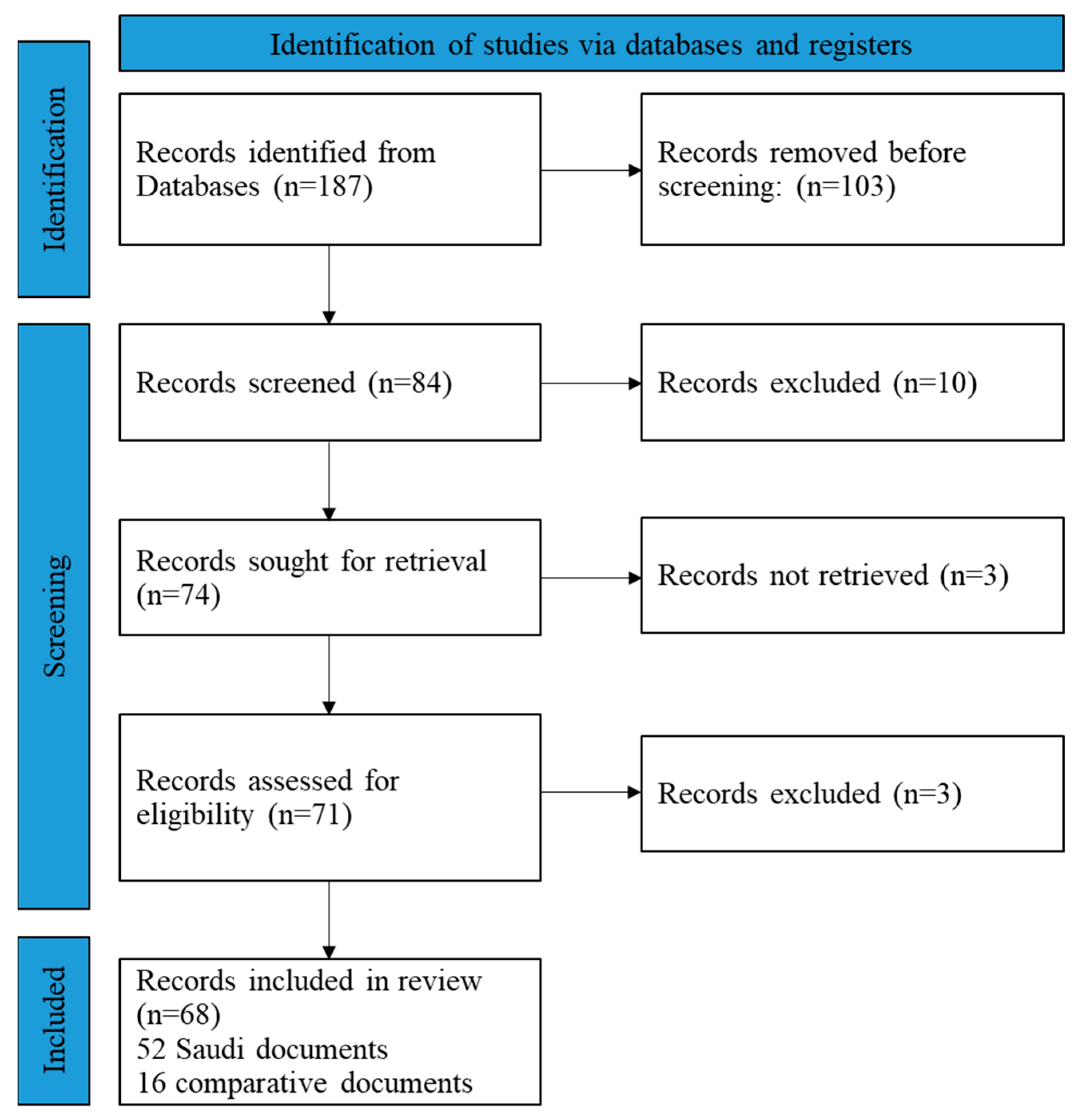
An adapted PRISMA-style workflow (
Figure 2) organized the process of identifying and selecting documents for analysis. The procedure involved steps: (1) Identification, where an initial pool of 187 documents was collected from official portals and institutional databases; (2) Screening, during which titles and abstracts were reviewed for topical relevance, reducing the set to 84 documents; (3) Eligibility, involving full-text review to evaluate credibility, comprehensiveness, and alignment with the study’s policy focus; and (4) Inclusion, resulting in a final set of 52 Saudi policy documents and 16 international comparative documents from Norway, China, and the UAE.
4.2.3. Quality Assessment
To ensure data source reliability, all documents were evaluated using a standardized quality assessment protocol adapted from qualitative policy analysis frameworks. Each document was assessed in three dimensions:
- (a)
Source credibility: Priority was given to official government strategies, institutional reports, regulatory guidelines, and project documentation. Documents from ministries, Vision 2030 programs, and megaproject authorities (e.g., NEOM, The Line) were categorized as highly credible sources.
- (b)
Content completeness and specificity: Documents were assessed based on the presence of clear policy statements, implementation details, mobility-related targets, infrastructure descriptions, or industrial commitments. Documents lacking substantial information or containing only general statements were downgraded.
- (c)
Relevance to e-mobility: Documents were screened for explicit references to electric vehicles, charging infrastructure, industrial investments (e.g., Lucid, CEER), sustainable transportation, carbon reduction, or energy transition themes.
4.3. Transparency in Document Selection and Processing
To ensure reproducibility and transparency in methodology, detailed records were maintained throughout the document selection and analysis process. All documents were obtained from publicly accessible sources such as government portals, ministerial websites, Vision 2030 program platforms, and institutional repositories, including the Ministry of Energy, Ministry of Transport and Logistics Services, Ministry of Industry and Mineral Resources, Saudi Green Initiative, National Transport and Logistics Strategy repository, NEOM project portal, and official PIF announcements. Search engines (Google) and internal site searches were used with key terms mentioned earlier. Access dates and document versions were recorded, and only the most recent publicly available documents were included. Documents were screened based on predefined criteria such as policy relevance, explicit mention of mobility, energy, or transport issues, publication dates from 2010 to 2025, and official governmental or institutional origin. A detailed log of the selection, retrieval, and screening process was maintained to prevent bias and ensure full reproducibility.
4.4. Coding Framework and Reliability Procedures
The document analysis followed a structured coding process that combined deductive and inductive strategies. Deductive codes were based on established EV policy frameworks, including policy objectives, economic incentives, industrial localization, infrastructure readiness, regulatory tools, equity considerations, and environmental goals. Inductive codes developed during multiple readings, allowing new themes to emerge. A codebook was created with clear definitions and examples for each code, and the coding was carried out using NVivo. To ensure reliability, a second researcher independently reviewed a subset of documents, and any discrepancies were discussed to improve the coding scheme. Cross-audits were performed to reduce interpretive bias, and all coding decisions were recorded to ensure transparency and traceability.
4.5. Analytical Framework
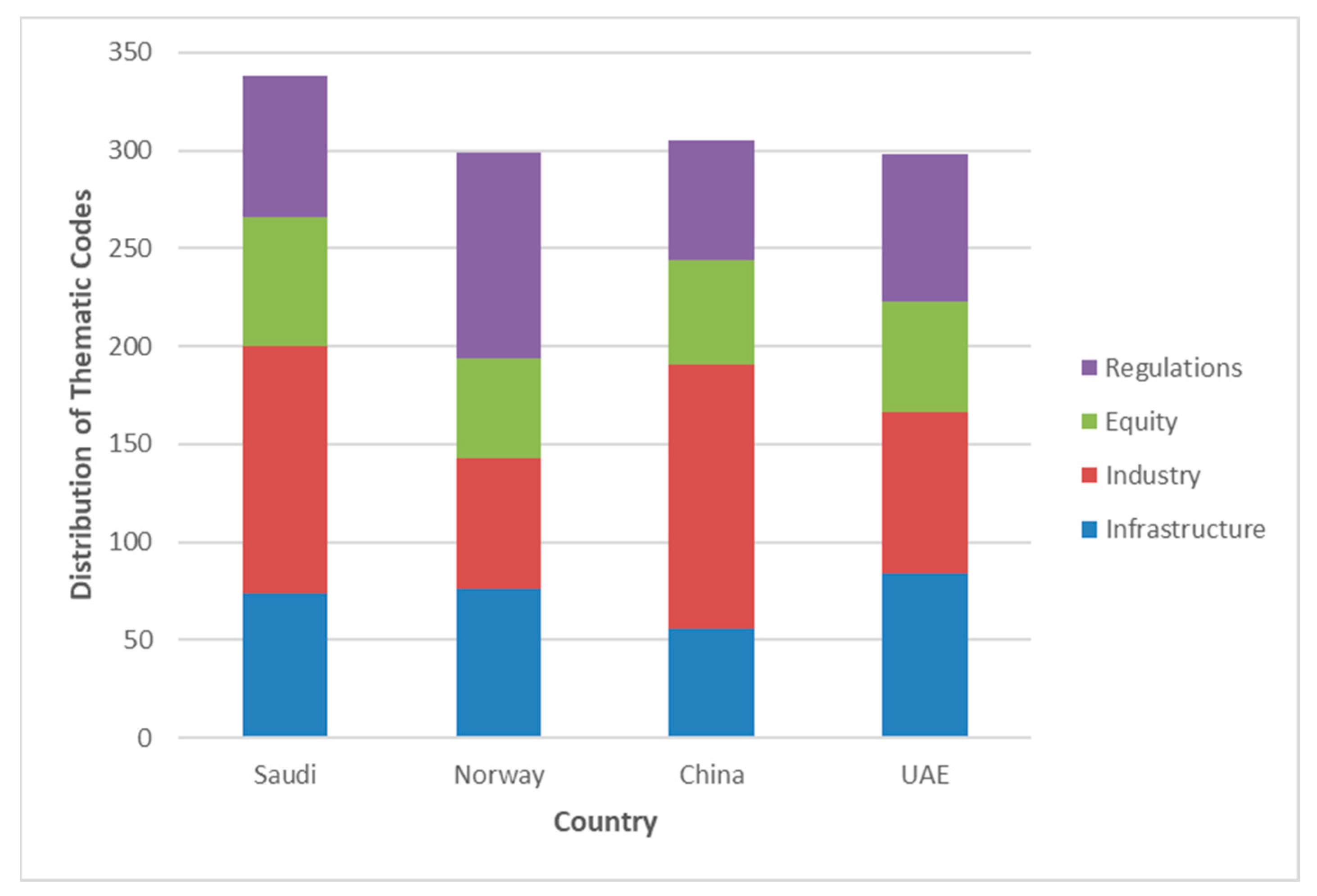
The analysis was guided by a thematic coding framework based on both sustainability theories and e-mobility literature. Four thematic dimensions were used: (1) institutional commitment—explicit references to electrification in national strategies, creation of EV brands, and government investments. (2) infrastructure development—charging networks, grid integration, and urban planning for EV adoption. (3) industry partnerships—collaboration with global firms (Lucid, CEER, BMW, Foxconn), and local manufacturing initiatives. (4) social equity and accessibility—affordability, inclusive policies, and the geographic spread of EV adoption across cities and income groups. These dimensions enable both quantitative coding (reference frequency) and qualitative analysis (framing, discourse shifts).
4.6. Dataset Construction and Coding
4.6.1. Content Analysis Dataset
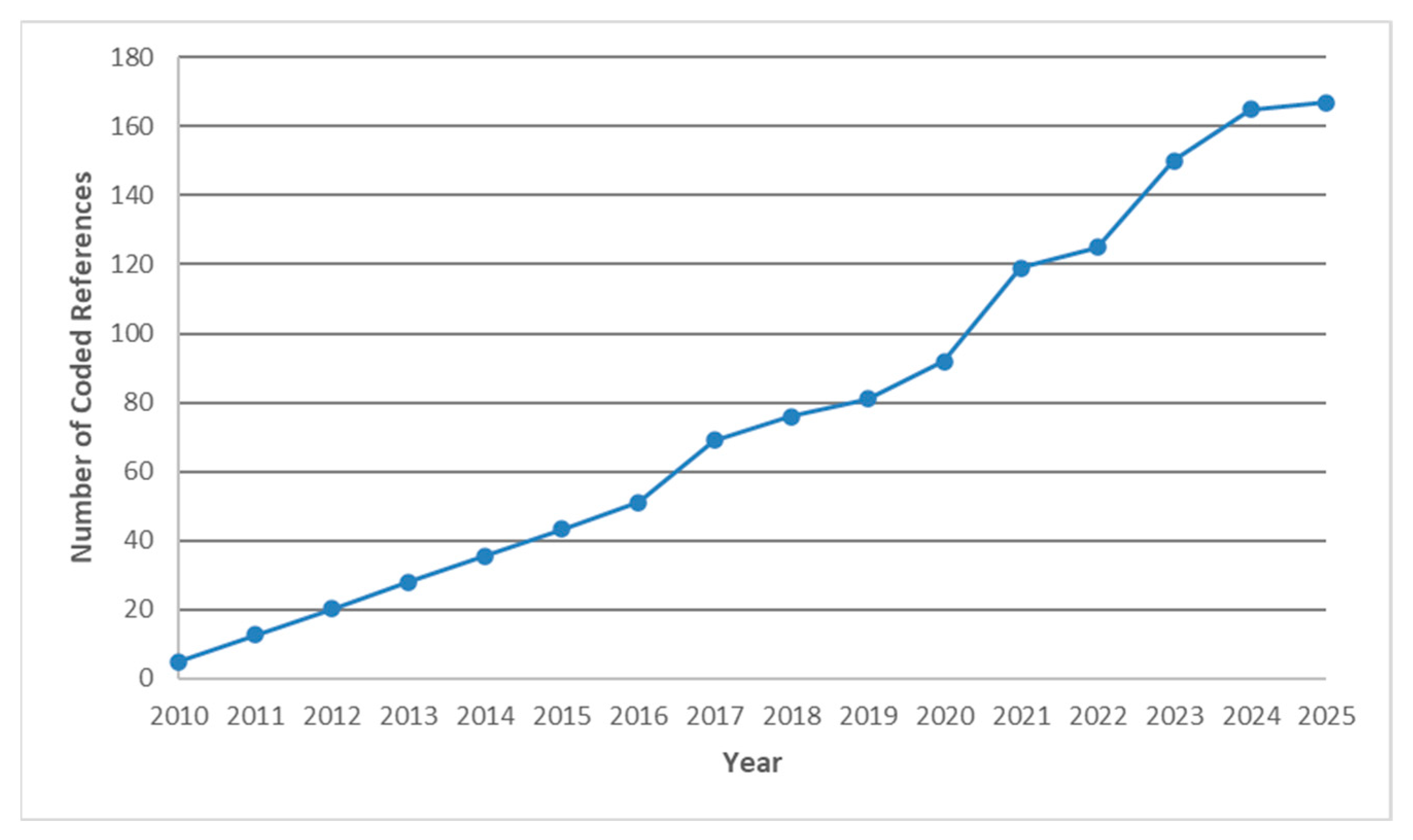
All documents were imported into NVivo 14 for systematic coding. A keyword list was created, including terms such as “electric vehicle,” “electrification,” “charging,” “sustainability,” “green transport,” and “carbon emissions.” The coding process followed these steps: (a) initial coding: identifying all references to EVs and related terms. (b) categorization: assigning references to one of the four thematic dimensions. (c) quantification: counting and tabulating reference frequencies per document and per year. (d) validation: a second coder reviewed 20% of the dataset to ensure intercoder reliability (>85% agreement). The result is a dataset of 1240 coded references, providing empirical evidence of how e-mobility discourse expanded over time.
4.6.2. Comparative Policy Dataset
To contextualize Saudi Arabia’s approach, a set of 16 documents from the UAE, Norway, and China were analyzed. Coding focused on: Policy type (consumer-first, industry-first, or mixed), incentive structure (subsidies, exemptions, industrial investment), infrastructure rollout (charging density, urban vs. rural), and adoption outcomes (EV penetration rates).
4.6.3. Timeline Dataset
A chronological dataset of 25 milestones was constructed, tracing Saudi e-mobility events from 2010 to 2025. Each record includes: year, event (such as policy launch, investment announcement, megaproject milestone), source document, and significance (rhetorical, institutional, or implementation). This dataset offers a timeline narrative, illustrating the shift from no EV discussion to its institutionalization.
4.6.4. Coding Procedures and Category Development
The coding process adhered to a structured and reproducible qualitative content analysis protocol. All documents were imported into NVivo 14, which was used for creating nodes, running text queries, counting references, and retrieval. A mixed deductive–inductive approach was employed.
Deductive codes were developed based on established conceptual frameworks in sustainable transport, socio-technical transitions, and e-mobility governance. These included: institutional commitment, regulatory development, charging infrastructure, industrial partnerships, domestic manufacturing, environmental targets, equity considerations, financial instruments, and policy coherence. Code definitions were created before coding and linked to supporting literature to ensure conceptual clarity.
Inductive codes emerged during repeated readings of the documents. These captured context-specific themes, such as megaproject-driven mobility narratives, branding discourse, rentier-state policy path dependence, symbolic policy framing, and infrastructure-readiness constraints. New codes were added only when a concept appeared across multiple documents. Each new inductive code was defined, documented, and incorporated into the evolving codebook.
NVivo’s reference-counting features were used to quantify the frequency of coded segments across the 52 Saudi documents and 16 comparative documents, enabling trend identification over time. To reduce coder bias, a secondary coder independently reviewed 20% of the dataset, focusing on alignment with the codebook and consistency in applying definitions. The intercoder reliability score was 85% (Cohen’s kappa = 0.82), which meets accepted thresholds for qualitative content analysis. Discrepancies were discussed and resolved through consensus, and the final coding applied these harmonized rules. This coding framework ensures methodological rigor, enhances reproducibility, and aligns with best practices recommended in qualitative policy-analysis literature.
6. Discussion
Before presenting the thematic discussion, five cross-cutting patterns emerging from the coded dataset help contextualize the results. First, industrial localization consistently appears as the strongest theme because national strategies and PIF-led investments prioritize domestic manufacturing and economic diversification. Second, equity remains comparatively underdeveloped, as few documents address affordability, geographic access to charging, or inclusion of middle- and low-income groups. Third, Saudi Arabia’s transition follows an accelerated but compressed trajectory—moving from no EV discourse to institutionalized strategies within a decade—reflecting high state capacity but limited consumer-side measures. Fourth, mobility narratives are strongly shaped by megaprojects (NEOM, The Line, CEER, Lucid), which influence policy language more than adoption data or everyday mobility needs. Fifth, early rollout is heavily concentrated in Riyadh, creating spatial imbalance in infrastructure deployment. These overarching patterns frame the following sections, which discuss global, regional, and national implications.
6.1. Alignment with Global Spatiotemporal Trends
The global analysis (
Table 1) shows a growing scholarly focus on policy pathways, charging infrastructure, and industrial localization after 2015. Over the past decade, research has shifted from initial technological feasibility to overall system transitions and industrial competitiveness. These global trends align with the rise of national EV strategies in the EU, China, and the U.S., which gained momentum after the Paris Agreement. By placing Saudi Arabia within this global movement, the discussion emphasizes that the Kingdom’s policy acceleration after 2021 reflects international patterns but occurs over a shorter timescale.
Recent global analyses (2023–2025) reinforce these observations. The IEA and UNEP show that national EV transitions now succeed when industrial policy, charging networks, and grid modernization progress together. Geels et al. [
40] describe these trajectories as sociotechnical transitions that require coordinated planning among ministries and private actors. Comparative evidence from the EU, China, and Korea published recently indicates that countries combining local manufacturing with rapid infrastructure rollout achieve much higher EV adoption rates than those relying solely on environmental messaging.
6.2. Interpreting Global Barriers in a Saudi Context
The global barriers outlined in
Table 2—high upfront costs, infrastructure limitations, and policy inconsistency—are all evident in the Saudi context. However, the spatiotemporal aspect varies: while cost barriers are decreasing worldwide due to falling battery prices, affordability issues remain significant in Saudi Arabia, where EVs are still priced above international averages. Similarly, infrastructure challenges persist in the Kingdom, even as global markets are rapidly expanding fast-charging networks. This comparison highlights the gaps Saudi Arabia needs to address to align with international adoption patterns.
Recent evidence highlights the ongoing gaps in implementation. Studies from China and the EU show that affordability incentives, standardized charger deployment, and consumer financing programs are crucial for speeding up adoption. Gulf-focused research from 2020–2025 similarly finds that without tariff reform, clear permitting guidelines, and investment in public charging, early EV markets struggle to grow beyond pilot stages. These findings emphasize the need for coordinated regulatory and infrastructural measures in the Saudi context.
6.3. Gulf Region Trajectories and Saudi Arabia’s Position
Table 3 shows that GCC research is increasingly focusing on vision-driven policy coordination and infrastructure readiness. The UAE leads regionally with early charger deployment, while Saudi Arabia’s progress accelerates after 2021. Over time, Saudi Arabia is shifting from a lagging adopter to a regional leader, fueled by industrial investments (CEER, Lucid) and strategic initiatives (EVIQ, NTLS). This indicates a spatiotemporal shift where Gulf electrification is becoming more coordinated and industry-driven.
However, recent studies (2020–2025) demonstrate that equity considerations remain a key barrier for EV transitions in both global and Gulf contexts. Research from the UAE, Qatar, and Oman documents unequal access to charging, limited financing options for middle- and low-income households, and concentration of benefits among higher-income early adopters. These findings mirror international evidence showing that EV policy without equity mechanisms tends to reinforce existing mobility inequalities. This suggests that Saudi Arabia’s emerging EV strategy would benefit from explicit affordability and accessibility measures.
6.4. Saudi Arabia’s Policy Evolution Across Phases
The three phases outlined in the Results section are also key to understanding the national EV transition: Phase 1 (pre-2016): No significant EV policy; Phase 2 (2016–2020): Vision-driven exploration and initial industrial commitments; Phase 3 (2021–2025): Rapid institutionalization, large-scale industrial localization, and structured infrastructure initiatives. This timeline shows a shift from fragmented to coordinated policy and from exploration to implementation. The discussion should clearly emphasize this as a contribution to understanding energy transitions in oil-dependent economies.
6.5. Interpreting Saudi Policy Themes
Table 6 highlights the emphasis on industrial localization (32%), institutional commitment (23%), infrastructure (23%), and equity (22%). The discussion should explain why these themes are important: Industrial localization remains dominant because Saudi Arabia aims to become a manufacturer rather than just a consumer. Institutional commitment has grown because of NTLS, SGI, and alignment with Vision 2030. Infrastructure stays moderate because implementation started late, after 2021. Equity remains the least developed dimension of the transition—representing a critical weakness and a key contribution highlighted by this study.
6.6. Contribution to the Literature
This study offers the first long-term spatiotemporal mapping (2010–2025) of Saudi Arabia’s e-mobility transition, placing national developments within global and Gulf-region trends. By quantifying 1240 coded references, identifying policy changes specific to each phase, and comparing Saudi Arabia with leading EV countries, the study goes beyond previous Gulf research that is mostly descriptive or focused on institutions. The analysis highlights the ongoing neglect of equity as a policy gap and offers a repeatable framework for studying electric mobility transitions in oil-dependent economies.
6.7. Policy Implications and Recommendations
The findings of this study point to several policy directions that can support Saudi Arabia’s transition toward electrified mobility. These recommendations are organized around four domains—governance, infrastructure, economic incentives, and social equity—each of which is essential for strengthening institutional capacity and achieving the goals of Vision 2030.
6.7.1. Governance and Institutional Coordination
Enhancing governance structures is central to accelerating the e-mobility transition. A dedicated national EV transition authority could coordinate efforts among the Ministry of Energy, the MTLS, municipalities, and the PIF. This organization would ensure regulatory consistency, oversee infrastructure deployment, and monitor progress toward national targets. Additionally, developing a national EV master plan for 2025–2040 would create a unified roadmap with phased adoption goals, infrastructure milestones, and fleet electrification strategies. International experiences—such as Norway’s phased EV roadmap and China’s New Energy Vehicle (NEV) industrial plan—demonstrate the importance of long-term planning tools that align government initiatives with market development. Regular monitoring should also become a core governance function, with annual reports on adoption rates, charging infrastructure density, and the distribution of benefits across cities and income groups.
6.7.2. Infrastructure Development
A second priority is expanding and integrating charging infrastructure across the country. Although initial deployment has mainly focused on Riyadh, Jeddah, and Dammam, expanding the network to smaller cities and intercity highways is crucial for encouraging widespread adoption. Public–private partnerships can play a central role in increasing coverage and lowering the financial burden on the government [
46].
Additionally, aligning charging infrastructure with renewable energy efforts would boost sustainability, especially as Saudi Arabia grows its solar capacity under Vision 2030. Incorporating EV-ready parking and charging standards into municipal planning and new housing projects would also promote long-term adoption. These actions follow international best practices in urban planning and strengthen the connection between transportation and energy [
14].
6.7.3. Economic and Consumer Incentives
Improving affordability remains essential for expanding access beyond high-income early adopters. Targeted financial incentives—such as reduced import tariffs, temporary VAT adjustments, or direct purchase subsidies—could help middle-income households overcome initial cost barriers. International evidence, particularly from Norway, shows that such incentives are among the most effective ways to encourage early adoption [
42]. Complementary financial products, including leasing and low-interest financing schemes offered through partnerships with commercial banks, could further reduce cost barriers, similar to mechanisms used in China [
43]. Electrifying public and commercial fleets—including taxis, buses, logistics vehicles, and government vehicles—would help normalize EV use and boost demand for charging infrastructure. Supporting domestic manufacturers, including CEER Motors and Lucid, through localization incentives and supply chain development, would strengthen the long-term economic benefits of transport electrification.
6.7.4. Social Equity and Inclusion
Ensuring equity in the e-mobility transition is essential for avoiding uneven access and reinforcing existing mobility disparities. Policies should focus on expanding charging infrastructure in underserved neighborhoods and secondary cities to promote geographic inclusivity. Electrification of public transportation—such as buses and shared mobility services—would particularly benefit low-income populations who depend more heavily on these services. Public awareness campaigns can also help address social and cultural concerns about EV performance, range, and safety, especially in hot climates. Connecting these campaigns to Vision 2030’s Quality of Life Program can foster cultural acceptance and align public perception with national sustainability goals.
Together, these recommendations draw from emerging transition governance literature, which highlights that successful EV transitions require strong institutional coordination, policy capacity, and transparent data systems [
29,
40].
By incorporating governance reforms, infrastructure investments, economic tools, and equity-centered approaches, Saudi Arabia can more effectively advance its national electrification efforts and align with global best practices in sustainable mobility.
6.8. Technical Evaluation of Saudi Arabia’s Policy Instruments
The results of this study show that Saudi Arabia’s shift to e-mobility depends on a mix of policy tools that are diverse but uneven. When assessed technically, several strengths and gaps become clear. First, the Kingdom has not yet implemented direct purchase incentives or tax breaks, which are key to early EV adoption in leading markets such as Norway, China, and the United States. Instead, Saudi Arabia’s strategy focuses heavily on industrial localization and incentives based on investment, including capital investments through the Public Investment Fund (PIF), the Lucid manufacturing facility, and the creation of CEER Motors. Although these measures support long-term economic diversification, they do not solve immediate affordability issues for consumers.
Second, the country has not yet adopted fuel economy standards or emissions regulations that match EU or U.S. frameworks. The lack of such regulatory tools limits policymakers’ ability to encourage private-sector fleets to adopt electrification. However, public fleet mandates are beginning to appear, especially through municipal electric bus programs and government fleet targets, although these are still in early development.
Third, Saudi Arabia’s progress in charger interconnection regulations, safety standards, and billing protocols is ongoing but incomplete. The establishment of the Electric Vehicle Infrastructure Company (EVIQ) represents an important step in institutional consolidation, yet the regulatory framework, especially grid interconnection rules, tariff structures for fast charging, and operator certification, still needs further development to ensure interoperability, reliability, and safety on a larger scale.
From a financial perspective, the Saudi model favors public-sector investment in early infrastructure (capex) while expecting private operators to come in at later stages. However, the lack of clear operational expenditure (opex) recovery mechanisms, especially for highway fast charging, creates uncertainties for future investors. Global experience shows that cost recovery models—such as differentiated tariffs, demand charges reforms, and blended finance—are essential during early adoption phases. For freight and logistics operators, financial viability remains uncertain due to the high upfront costs of electric trucks and the need for megawatt charging infrastructure. Without targeted incentives or infrastructure subsidies, adoption in this sector may lag behind that of light-duty vehicles.
Overall, the technical evaluation shows that Saudi Arabia has strong industrial and institutional capabilities but lacks some regulatory and financial tools that are typical in advanced e-mobility transitions. Aligning the policy mix with international best practices—especially in incentives, standards, and cost recovery frameworks—would greatly speed up adoption and enhance consistency between national goals and implementation approaches.
6.9. Recommended Indicators and Metrics for Monitoring E-Mobility Progress
Effective monitoring frameworks are essential for assessing national EV transitions, especially in fast-changing policy environments. International experiences—such as those documented by the International Energy Agency (IEA) [
5,
7,
37,
45], the European Union’s Alternative Fuels Infrastructure Regulation (AFIR) [
63], and recent transition governance research [
29,
40]—highlight that strong indicator systems should include measures of adoption, infrastructure, energy, industrial growth, and equity measures. Building on these suggestions and the gaps identified in this study,
Table 10 presents a comprehensive set of indicators to support future monitoring of Saudi Arabia’s e-mobility transition. These indicators incorporate global best practices while addressing local priorities related to affordability, geographic inclusion, and institutional coordination.
6.10. Empirical Triangulation with Infrastructure, Market, and Energy Data
To validate the qualitative findings, policy themes were triangulated with empirical indicators whenever available. Saudi Arabia has started expanding its charging network through the Electric Vehicle Infrastructure Company (EVIQ), with public announcements indicating a rapid increase in fast-charging stations across Riyadh, Jeddah, and Dammam [
64]. Market reports estimate that EV sales in the Kingdom are increasing annually from nearly 1% in 2025 to 30% by 2050 [
17]. These adoption trends support the study’s conclusion that infrastructure and affordability barriers remain significant constraints. From an energy-system perspective, Saudi Arabia continues to expand its renewable energy capacity—aiming for 50% renewables by 2030—which is essential for achieving low-carbon charging. Although detailed grid-impact modeling is beyond this study’s scope, preliminary estimates from international cases suggest that widespread EV adoption would require additional distribution-level upgrades and time-of-use pricing strategies. Incorporating these empirical indicators strengthens the validity of the qualitative patterns identified and highlights the alignment between policy discourse and emerging implementation dynamics.