Systematic Review

Empowering Sustainable Tourism Through Simulation: Evidence and Trends in the Tourism 5.0 Era

1
Governance, Competitiveness and Public Policies (GOVCOPP) Research Unit, Department of Economics, Management, Industrial Engineering and Tourism (DEGEIT), University of Aveiro, 3810-193 Aveiro, Portugal
2
REMIT Research Centre, Portucalense University, 4200-072 Porto, Portugal
*
Author to whom correspondence should be addressed.
Sustainability 2025, 17(23), 10850; https://doi.org/10.3390/su172310850
Submission received: 5 November 2025 / Revised: 28 November 2025 / Accepted: 2 December 2025 / Published: 3 December 2025

Abstract

Digitalization and sustainability are fundamentally transforming the way tourism destinations are planned, managed, and experienced. Among the digital tools supporting this transition, simulation emerges as a key enabler for developing smarter, more adaptive, and sustainable tourism systems. By reproducing complex scenarios, simulation allows for the anticipation of environmental, social, and economic impacts and the testing of strategies aligned with sustainable development goals (SDGs), without exposing destinations to high costs or irreversible consequences. Despite its potential, studies on simulation applied to sustainable tourism remain scattered and lack a consolidated vision. This article therefore aims to systematically review and analyze the existing literature on the use of simulation and hybrid simulation in tourism, identifying the main approaches, application contexts, and scientific contributions developed between 1999 and 2025. Following the Preferred Reporting Items for Systematic Reviews and Meta-Analyses (PRISMA) methodology, the review covered publications indexed in databases such as Scopus, Web of Science, IEEE Xplore Digital Library (Institute of Electrical and Electronics Engineers), ScienceDirect, and Multidisciplinary Digital Publishing Institute (MDPI). A total of 34 articles were analyzed, focusing on the role of simulation models in enhancing sustainable destination management and the digital tourist experience. The results show that, although the potential of simulation is widely recognized, challenges persist regarding data quality, methodological fragmentation, and real-world validation. Nevertheless, the review highlights simulation as a catalyst for Tourism 5.0, enabling smarter decision-making and contributing to the sustainability and resilience of tourism destinations in the digital era.

1. Introduction

In recent years, tourism has undergone a rapid transformation. This shift is not only driven by digitalization itself, but also by the way it is reshaping the traveler’s experience. Today, visiting a destination goes far beyond booking flights or hotels—it involves smart platforms and mobile applications that personalize itineraries [1]. The concept of Tourism 5.0, linked to the Experience 5.0 paradigm, embodies the idea of combining technology with more human, immersive, and sustainable experiences [2]. At the same time, the sector faces growing uncertainty: global phenomena such as the pandemic [3] and the impact of climate change [4], along with increasingly visible environmental pressures [5]. All these challenges call for solutions capable of forecasting scenarios and supporting risk management in a more informed and adaptive way [6].
It is within this context that simulation gains relevance. By recreating complex environments, it becomes possible to understand how tourists, operators, transport systems, and natural resources interact with each other [7]. Methodologies such as Agent-Based Modeling, System Dynamics, and Digital Twins act as digital laboratories, allowing researchers and decision-makers to test hypotheses and support safer, data-informed decisions [8]. In tourism, these approaches have been applied to a variety of challenges—from managing visitor flows in protected areas [9] to predicting mobility patterns in tourist cities [10]. Simulation has also contributed to assessing environmental impacts [11] and reflecting on the sustainability of tourist destinations [12].
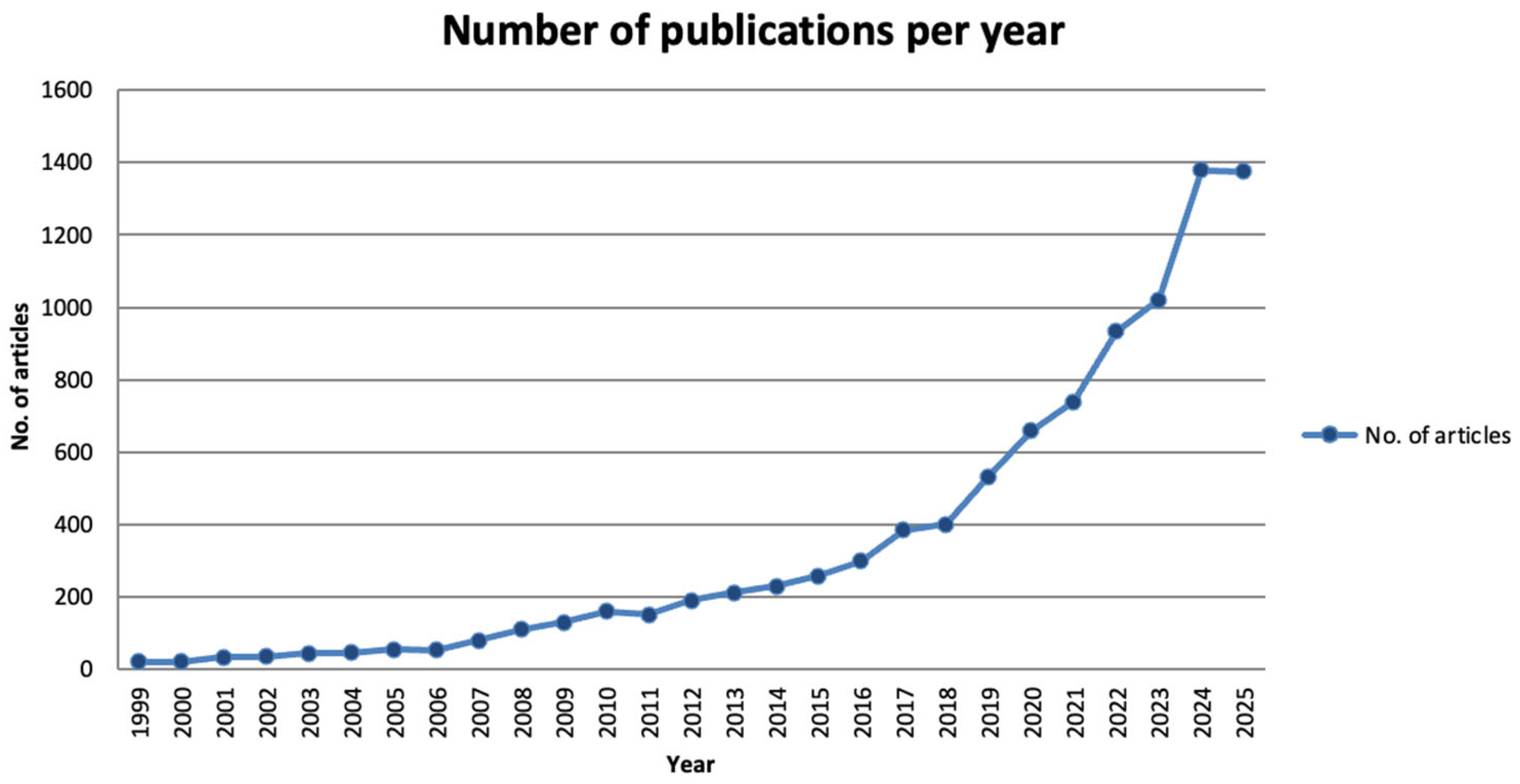
In recent years, there has been a significant increase in the number of publications addressing the application of simulation to tourism, reflecting the growing academic interest in this topic. Figure 1 illustrates this trend, highlighting the expansion of research in areas such as agent-based modeling, digital twins, and smart destination management. The figure was created in Microsoft Excel using the CSV file exported from Scopus, which resulted from a bibliometric search based on a specific combination of keywords.
Despite this progress, research in the field remains fragmented. Some studies focus on mobility and visitor behavior [13], others on sustainability [14], and several on strategic planning [15]. What is still missing, however, is an integrated perspective that connects these approaches to the broader challenge of digitalizing the tourist experience [16].
This is precisely the purpose of the present systematic review: to collect, analyze, and synthesize the literature published between 1999 and 2025, following the PRISMA protocol, in order to understand how simulation has been applied within the tourism sector. Specifically, the review aims to:
  • Identify the main methodologies employed, such as Agent-Based Modeling (ABM), System Dynamics (SD), and Digital Twin (DT), among others;
  • Map application areas and trends related to the Experience 5.0 paradigm;
  • Discuss barriers and opportunities in adopting these tools;
  • Suggest directions for future research.
Ultimately, this study seeks to provide a clear, up-to-date, and practical synthesis for both researchers and professionals, contributing to the development of innovative solutions that strengthen the competitiveness and sustainability of tourism in the digital era [17].
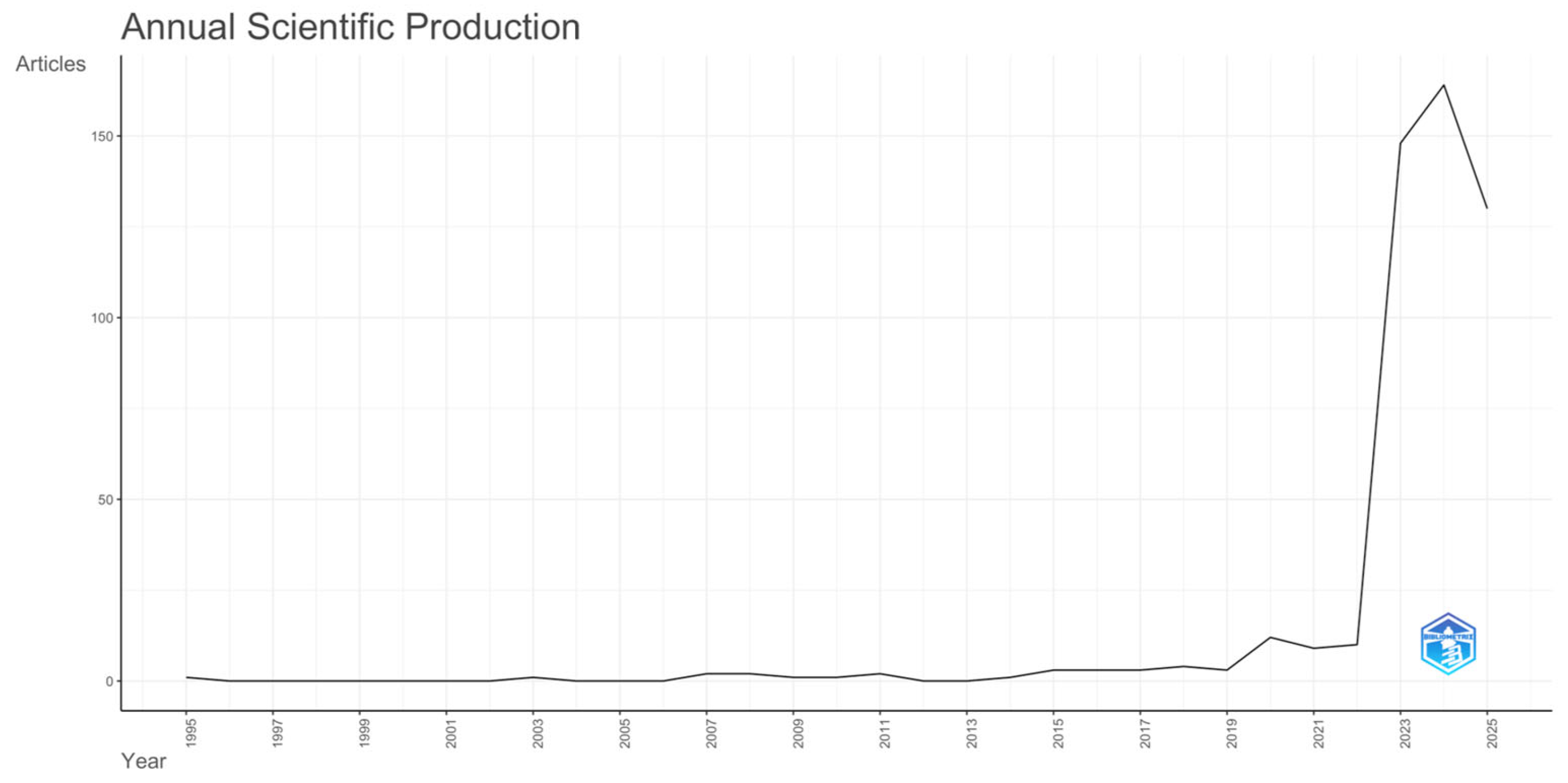
To complement this trend analysis, an additional bibliometric overview was conducted using the Bibliometrix package (via Biblioshiny) based on data exported from the Dimensions database. While Figure 1 was created from Scopus data associated with the final sample of publications, the following visualization (Figure 2) represents a broader search universe that includes all records matching the main keywords of this study (“simulation” AND “tourism”).
This extended perspective provides a more comprehensive picture of the scientific evolution of the field, illustrating the global growth of research related to simulation in tourism and confirming the increasing interdisciplinary attention that the topic has received in recent years.
It is worth noting that, unlike the Scopus-based dataset used in Figure 1 (covering 1999–2025), the Dimensions database retrieved earlier records dating back to 1995. Despite this, both analyses reveal a convergent pattern of accelerated growth after 2020, confirming the consolidation of simulation as an emerging field of research in tourism.

2. Literature Review

2.1. Core Concepts of Simulation

Simulation is an essential tool for analyzing and managing complex systems, allowing the exploration of future scenarios without exposing the real world to risk. In tourism, this complexity arises from the interaction between tourists, operators, environmental resources, infrastructures, and external economic, social, and environmental factors.
Within this context, agent-based modeling stands out as an approach capable of representing individuals—such as tourists, residents, or operators—as autonomous entities that interact with each other and with their environment, generating collective behavioral patterns. This method has been applied to study vulnerabilities in coastal destinations affected by climate change [5] and to evaluate recovery strategies following crises such as the COVID-19 pandemic [3], by incorporating behavioral diversity, feedback loops, and non-linear dynamics.
The concept of the digital twin refers to a virtual replica of a destination, infrastructure, or system, powered by data—ideally in real time—to simulate and assess dynamic scenarios. In smart cities, digital twins are used to monitor tourist flows, forecast congestion, and evaluate the impact of management measures [8]; in cultural tourism, they enable immersive experiences and the digital recreation of heritage sites [18].
These approaches are complementary: agent-based modeling deepens the understanding of individual and collective behavior, while digital twins facilitate real-time monitoring and operational management. The combination of both gives rise to digital laboratories capable of testing hypotheses, anticipating failures, and supporting strategic decision-making in the planning and management of tourism destinations [19].

2.2. The Tourism Experience 5.0

The concept of Tourism Experience 5.0, inspired by the philosophy of Industry 5.0, places technology at the service of more human, immersive, and sustainable experiences. It involves the integration of technologies such as virtual reality, augmented reality, artificial intelligence, and personalized recommendation systems, capable of adapting experiences to the visitor’s profile and preferences.
These technologies enhance tourist engagement and satisfaction—for instance, through virtual visits to museums and monuments that positively influence travel intention [20]. In addition to personalization, they add a sustainability dimension, promoting more conscious choices and contributing to the Sustainable Development Goals (SDGs) through digital platforms that encourage shared mobility and efficient management of local resources [2].
The Experience 5.0 paradigm therefore represents the convergence of innovation and responsibility, reinforcing the competitiveness, intelligence, and resilience of tourism destinations [1].
Beyond its descriptive use, Tourism 5.0 should be interpreted as a strategic and human-centered paradigm that redefines the relationship between technology, sustainability, and the tourist experience. Rather than representing a mere technological evolution of smart tourism, it embodies a holistic approach in which digital systems support anticipation, resilience, and responsible governance of destinations. However, the literature reveals that Tourism 5.0 remains inconsistently conceptualized and often lacks clear operationalization within simulation frameworks, limiting its capacity to guide concrete decision-making processes.

2.3. Previous Reviews and Identified Research Gaps

Despite the growing number of studies on simulation in tourism, existing reviews remain limited and fragmented. Some focus on demand forecasting and statistical modeling [21], others on climate resilience [4] or smart tourism systems [22], but few integrate different methodological approaches or reflect the recent transformations driven by digitalization and the pandemic.
There is, therefore, a lack of an integrated perspective that combines simulation, digitalization, and sustainability. This systematic review aims to address that gap by gathering and analyzing the literature published between 1999 and 2025, following the PRISMA protocol, to understand how simulation has been applied in the tourism sector and how it can contribute to the development of Tourism Experience 5.0 and to a more efficient and sustainable management of destinations.

3. Materials and Methods

This section describes the methodological procedures adopted for the systematic review, conducted in accordance with the PRISMA 2020 guidelines to ensure transparency, rigor, and reproducibility. The methodological process comprised four main stages: (i) definition of the search strategy, (ii) establishment of eligibility criteria, (iii) screening and selection of studies, and (iv) bibliometric and qualitative analysis of the results.

3.1. Search Strategy

The bibliographic search was conducted between June and August 2025 and focused on six highly relevant scientific databases: Scopus, Web of Science, IEEE Xplore, ScienceDirect, and MDPI. These databases were selected to ensure multidisciplinary coverage, encompassing not only literature from management and tourism but also studies from engineering, computer science, and related fields.
The time range (1999–2025) was defined to capture both the historical and conceptual evolution of simulation applied to tourism. This range allowed for the inclusion of early foundational studies prior to 2015—which established the methodological basis of the field—as well as recent literature marked by digital transformation, smart tourism, and the impacts of the COVID-19 pandemic.
The search expressions were developed iteratively, based on recurring terms in the simulation and tourism literature, complemented by emerging concepts such as smart tourism and digital experiences. To maximize coverage and precision, Boolean operators were applied in multiple combinations and adapted to the syntax of each database.
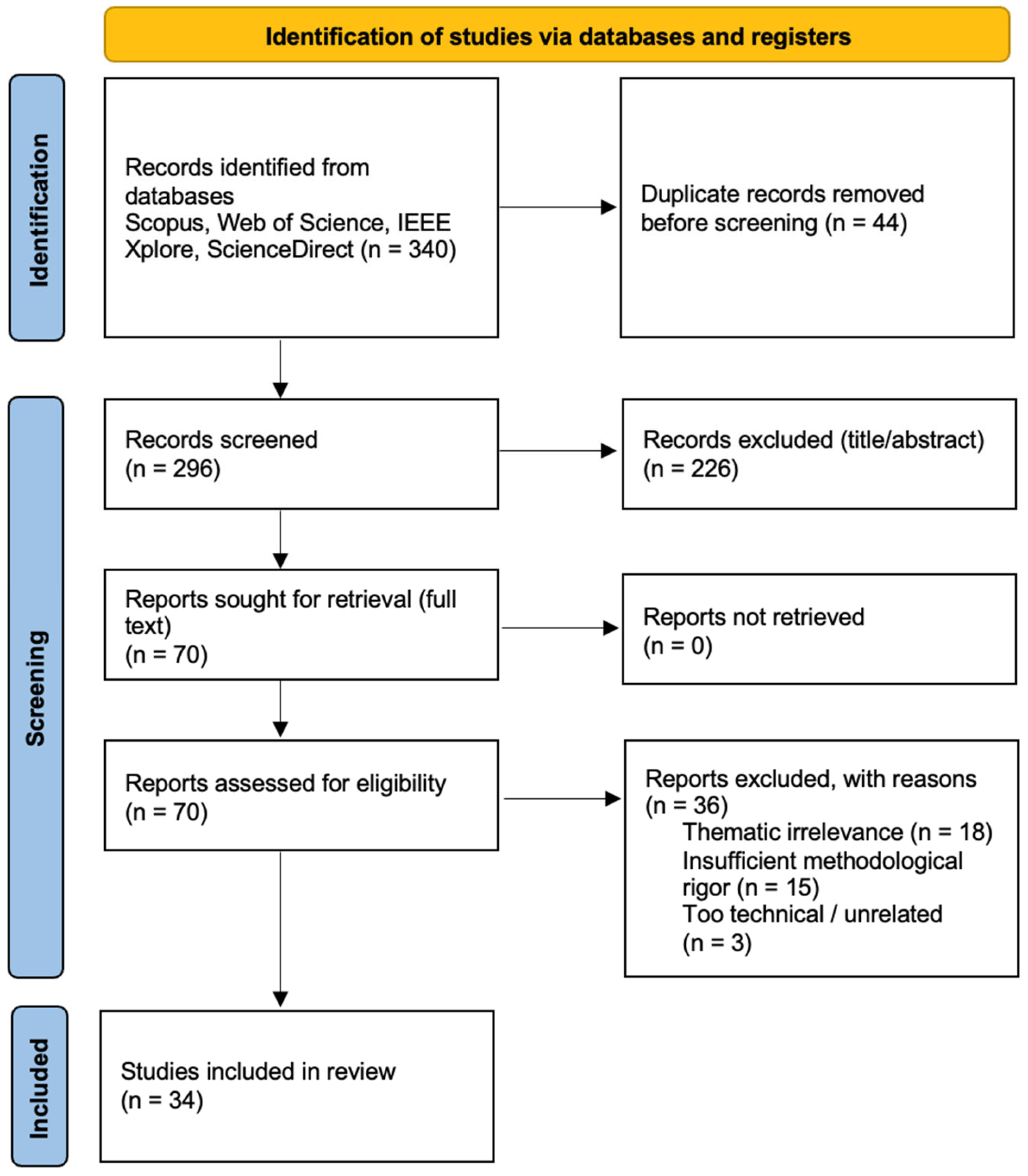
This systematic review was conducted and reported in accordance with the PRISMA 2020 statement (Preferred Reporting Items for Systematic Reviews and Meta-Analyses). A completed PRISMA 2020 checklist is provided in the Supplementary Materials (Table S1), and the PRISMA 2020 flow diagram is included as Figure 3. No formal protocol for this review was registered (e.g., in PROSPERO). The methodological steps—search strategy, eligibility criteria, screening, and synthesis procedures—were defined a priori and are fully described in the Methods section.
Full search strings, field tags, and filters for each database are provided in Table S2 (Supplementary Materials). The search was last updated on 31 August 2025. Only studies published in English or Portuguese were considered; no restrictions were applied regarding study design, document type, or publication status.
The main search combination was:
o
(“Simulation” OR “Modeling”) AND “Tourism”
o
(“Digital twin”) AND “Tourism”
o
(“Agent-based modeling”) AND “Tourism”
o
“Virtual reality” AND “Tourism”
o
“Tourism 5.0”
o
“Tourism experience” AND “Simulation”

3.2. Eligibility Criteria

The inclusion and exclusion criteria were defined a priori to ensure consistency and minimize bias in study selection. The eligibility criteria and the corresponding future research opportunities are summarized in Table 1.

3.3. Selection and Data Processing

The selection process followed the four stages of the PRISMA 2020 protocol:
Identification—340 articles initially retrieved.
Screening—duplicates removed (n = 44), resulting in 296 unique records.
Eligibility—title and abstract screening led to the exclusion of 226 studies. Of the 70 remaining, 36 were rejected for thematic irrelevance (n = 18), insufficient methodological rigor (n = 15), or excessive technical focus (n = 3).
Inclusion—34 articles met all criteria and were included in the final analysis.
The screening and selection were conducted independently by two reviewers using Microsoft Excel to ensure consistency. Titles and abstracts were first evaluated to remove irrelevant papers. Full texts of the remaining records were then assessed according to the predefined eligibility criteria. Any disagreements between reviewers were discussed and resolved by consensus, with a third reviewer consulted when necessary.
The process is summarized in the PRISMA flow diagram (Figure 3), which illustrates the steps from initial identification to the final sample.
The included studies were organized in a synthesis matrix (Excel) containing variables such as author, year, geographical context, simulation methodology, benefits, limitations, and main conclusions, allowing data consolidation and supporting subsequent interpretive analysis.
Data extraction was performed in duplicate using a standardized Excel spreadsheet to ensure accuracy and reproducibility. For each study, we collected information on bibliographic details (authors, year, journal), geographical context, simulation methodology (e.g., agent-based, system dynamics, discrete-event, digital twin), application domain, objectives, benefits, limitations, and main conclusions. The extracted data were cross-checked by both reviewers, and discrepancies were resolved through discussion and consensus.
A formal risk-of-bias assessment (e.g., RoB 2 or other standardized tools) was not applicable due to the methodological heterogeneity of the included studies, which mainly focus on modeling and simulation approaches rather than empirical or clinical designs. Instead, a qualitative appraisal was conducted, considering the transparency of modeling assumptions, data sources, and validation or calibration procedures reported by the authors.
Given the heterogeneity of study designs and outcomes, a quantitative meta-analysis was not feasible. Therefore, the results were synthesized using a mixed approach that combined narrative analysis with bibliometric techniques (VOSviewer version 1.6.20 and Bibliometrix version 4.2.1). Studies were grouped into four thematic axes—smart tourism and decision support, digital experiences, strategic planning and management, and sustainability and environmental impacts—to facilitate interpretation of trends and evidence.

3.4. Analytical Tools

The bibliometric and qualitative analyses were conducted using the following tools:
  • VOSviewer—used to construct two maps:
    i. 
    a keyword co-occurrence network revealing thematic clusters and the conceptual structure of the field;
    ii.
    a keyword density map highlighting the most frequent and interconnected terms within the analyzed literature.
  • Synthesis Matrix—used to consolidate variables such as author, year, geographical context, simulation methodology, benefits, limitations, and main conclusions.
  • Thematic Analysis—categorization of the 34 articles into four conceptual axes:
    • Sustainability and Environmental Impacts,
    • Planning and Strategic Management,
    • Digital Experiences and Tourist Interaction, and
    • Smart Tourism and Decision Support Models.
This combined approach made it possible to articulate quantitative analysis (bibliometrics) with qualitative interpretation (thematic synthesis), ensuring a comprehensive and coherent reading of the literature.
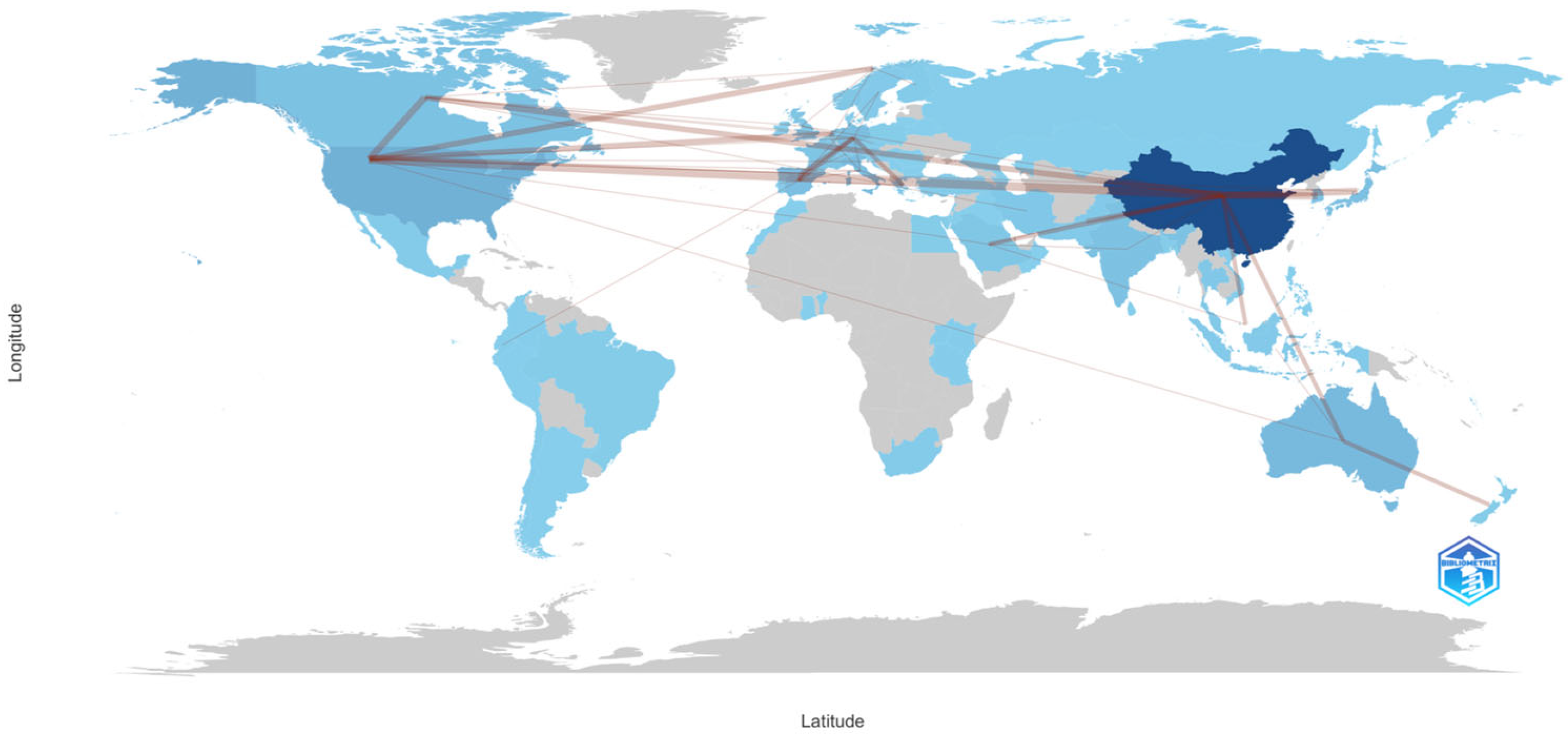
To provide an extended bibliometric overview of the global research landscape, two additional visual analyses were generated using the Bibliometrix package (via Biblioshiny) from the dataset exported from the Dimensions database. This complementary step aimed to contextualize the worldwide scientific production and international collaboration related to simulation and tourism.
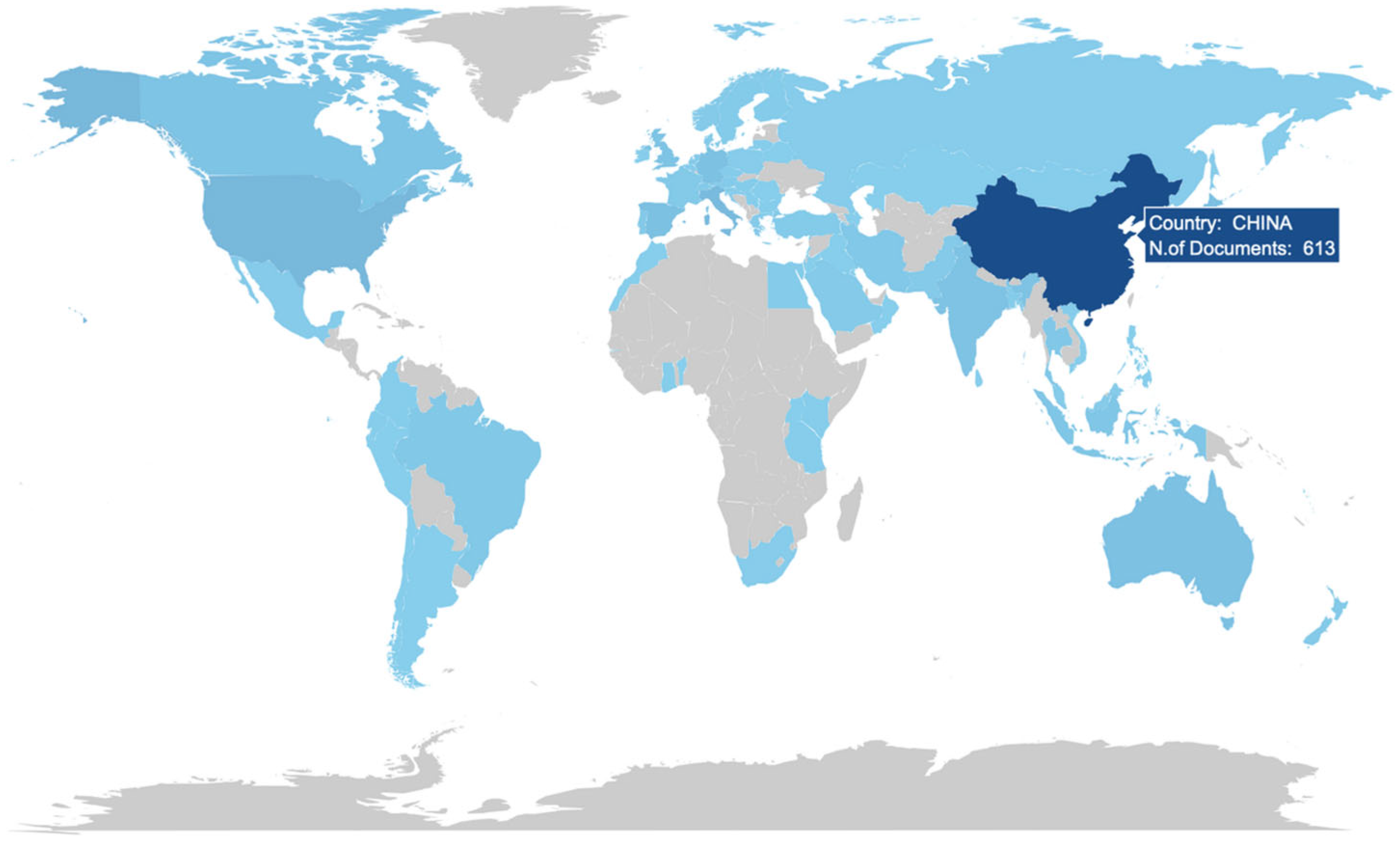
The first map (Figure 4) illustrates the global scientific production by country, showing a clear concentration of publications in Asia, particularly in China, followed by strong contributions from European countries and North America. This geographical distribution highlights the growing academic interest in applying simulation and data-driven modeling to tourism research, especially in rapidly developing economies. The darker shades of blue correspond to countries with the highest number of publications, providing a clear visual representation of global research intensity and helping to contextualize the geographical distribution shown on the map.
The second visualization (Figure 5) represents the collaboration network among countries, where the thickness of the links indicates the strength of co-authorship connections. The map reveals an increasingly internationalized research environment, with active collaboration between Asian and European institutions, emphasizing the global and interdisciplinary character of simulation-related studies in tourism.

4. Results

To synthesize the contributions of the 34 selected articles, a multidimensional classification structure was adopted, inspired by recent systematic reviews in the fields of tourism, engineering, and management. This framework made it possible to organize the studies according to the simulation methodologies employed, contexts of application, and their theoretical and empirical contributions, thereby providing a cross-sectional and comparative overview of the existing literature.
The analysis considered a set of interrelated dimensions—namely, the simulation methodology, geographical context, area of application, reported benefits and limitations, and main conclusions—allowing a comprehensive understanding of how different approaches have been used to address the specific challenges of contemporary tourism.
Table 2 shows that recent research on tourism simulation is structured around four conceptual axes—(A) Smart Tourism and Decision Support Models, (B) Digital Experiences and Tourist Interaction, (C) Strategic Planning and Management, and (D) Sustainability and Environmental Impacts. These dimensions are interrelated, reflecting the multidisciplinary nature of the field.
Within these axes, distinct methodological approaches can be observed, with particular emphasis on Agent-Based Modeling (ABM), System Dynamics (SD), Digital Twins (DT), and hybrid models combining machine learning and predictive analytics.
ABM models are widely applied to the analysis of tourist behavior and mobility, simulating interactions between tourists and residents to understand phenomena such as overtourism and flow distribution in urban and natural destinations, as illustrated by [9,10].
System Dynamics, on the other hand, appears in studies on planning and sustainability, enabling the modeling of tourism demand, energy consumption, and carbon emissions. Representative examples include [11,32].
Digital Twins (DT) and hybrid models represent a more recent evolution associated with smart tourism, combining IoT data, artificial intelligence, and 3D visualization to support real-time decision-making and predict visitation patterns. Relevant studies include [7,8,18,25].
These methodologies have been applied across diverse domains such as strategic planning and destination management (e.g., [3,34]), environmental sustainability (e.g., [4,5,34]), tourist behavior and mobility (e.g., [21]), and immersive digital experiences (e.g., [2,19,29]).
This diversity demonstrates that simulation, once primarily used as an exploratory tool, has evolved into a core instrument for decision support and digital innovation in tourism.
Overall, the 34 studies analyzed reveal a clear trend toward integrating technological, social, and environmental dimensions, with hybrid models that combine real data, forecasting systems, and behavioral simulations. This evolution reflects the growing maturity of the field and reinforces the importance of simulation as a methodological foundation for developing smarter, more sustainable, and resilient tourism destinations.

4.1. Bibliometric Analysis

The bibliometric analysis of the 34 articles included in this systematic review made it possible to identify publication patterns, thematic trends, and the distribution of the most relevant scientific journals in the field of simulation applied to tourism.
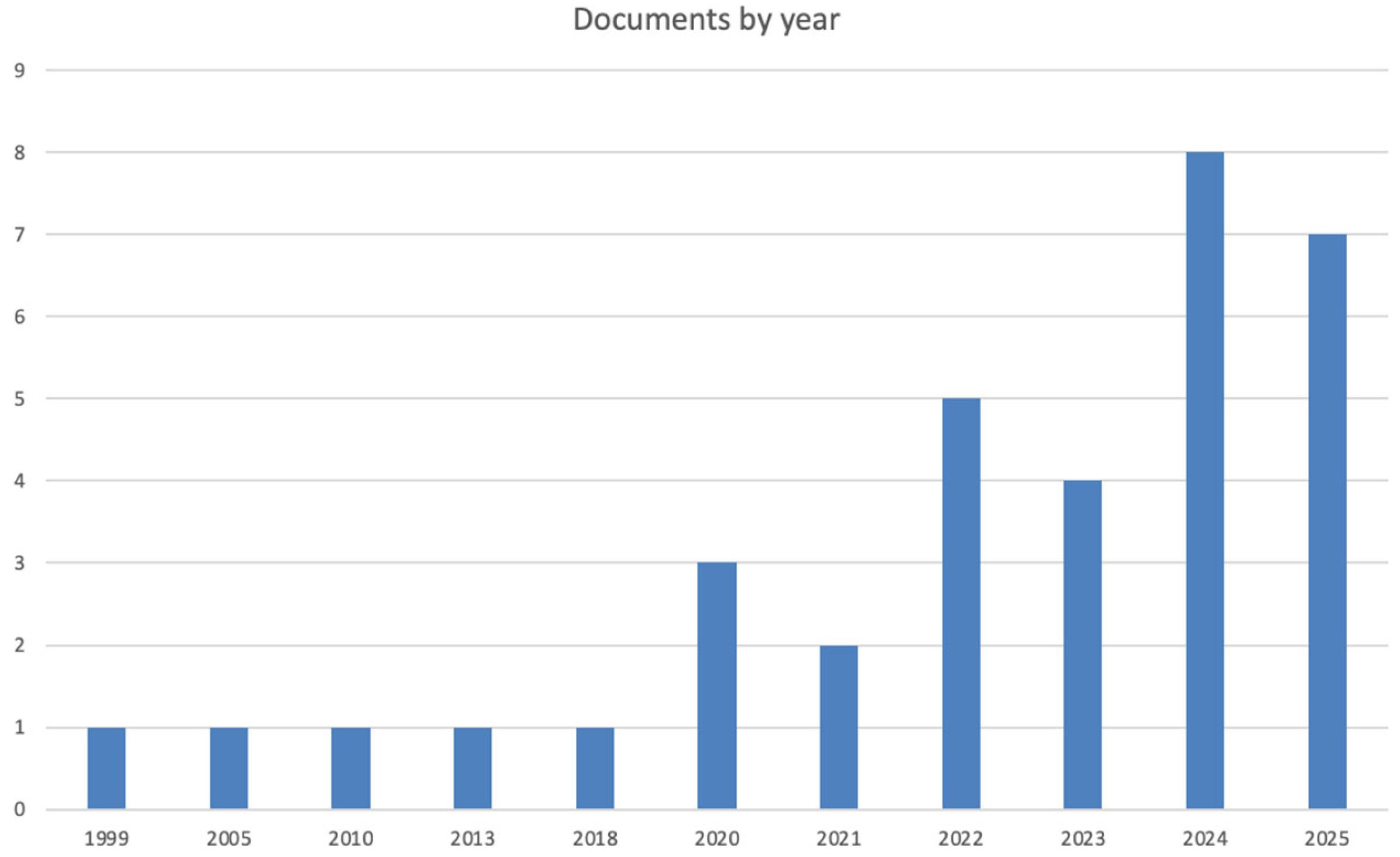
Figure 6 presents the number of articles published per year, between 1999 and 2025. A clear acceleration in scientific production can be observed from 2020 onwards, coinciding with the consolidation of digital technologies and the growing interest in applying simulation models to tourist mobility and sustainable destination management.
In the early years (1999–2013), publications appeared sporadically and had an exploratory nature, focusing mainly on territorial planning, carrying capacity, and sustainability policies. From 2020 onwards, studies became more sophisticated, integrating Agent-Based Modeling (ABM), Digital Twins (DT), and Artificial Intelligence (AI). The peak occurred in 2024 (8 articles) and 2025 (7 articles), confirming the emerging and interdisciplinary character of this research area.
To enhance the understanding of the bibliometric profile of the selected studies, two complementary visualizations were developed using Flourish Studio version 38.6.3, based exclusively on the 34 articles included in this systematic review. These charts provide additional insights into the temporal evolution and the geographical distribution of research on simulation applied to tourism.
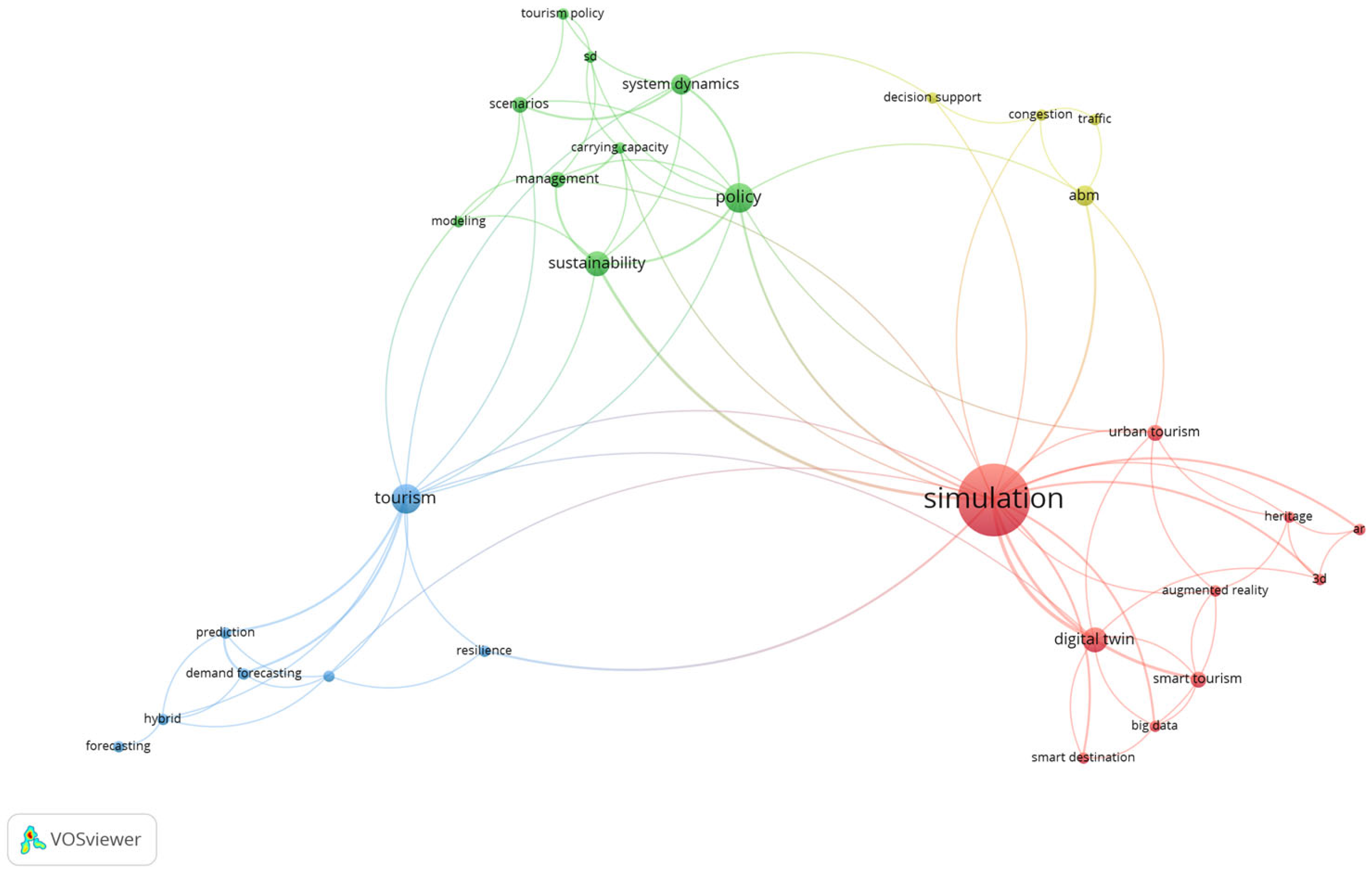
The keyword co-occurrence network (Figure 7), generated using VOSviewer 1.6.20, reveals four main clusters representing the dominant dimensions of the field:
  • Sustainability and planning policies (green)—includes terms such as system dynamics, policy, carrying capacity, and sustainability, referring to policy modeling and sustainable destination management.
  • Tourism and demand forecasting (blue)—includes keywords such as tourism, demand forecasting, prediction, and resilience, focusing on mobility patterns and tourist behavior.
  • Simulation and mobility (yellow)—includes simulation, ABM, traffic, and decision support, emphasizing tourist flows, congestion, and decision-making processes.
  • Digitalization and smart destinations (red)—includes digital twin, smart tourism, big data, augmented reality, and smart destination, representing technological evolution and the integration of real-time data.
The clusters are strongly interconnected, highlighting the convergence between sustainability, digital innovation, and intelligent planning in contemporary tourism.
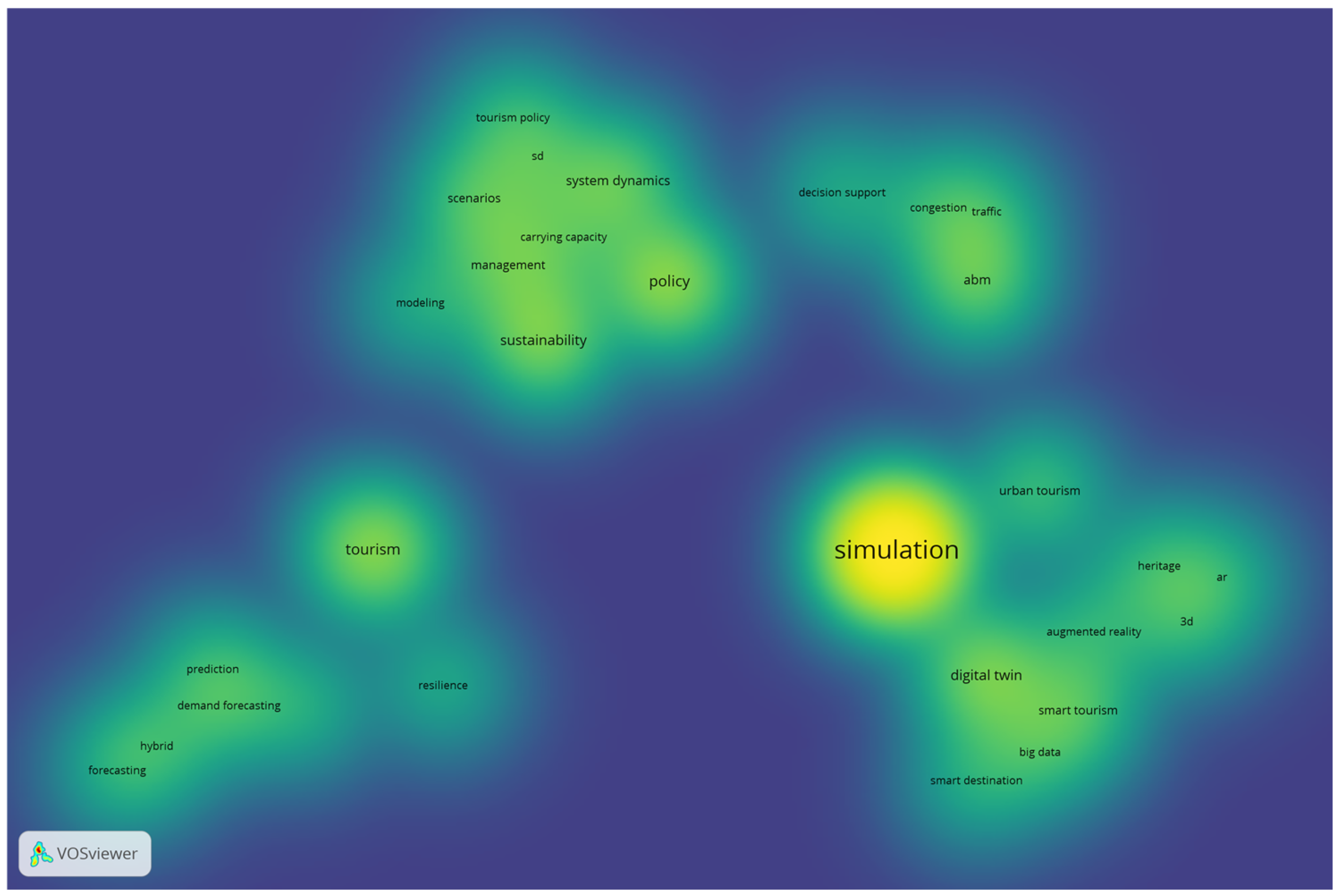
The density map (Figure 8) reinforces the centrality of the concepts simulation, tourism, sustainability, and digital twin. The most intense zones (in yellow) indicate the most frequent and interrelated terms.
A clear transition can be observed from the initial focus on system dynamics and policy (until 2015) to digital twin, AI, and smart tourism (from 2020 onwards), reflecting the field’s migration toward a digital and predictive paradigm.
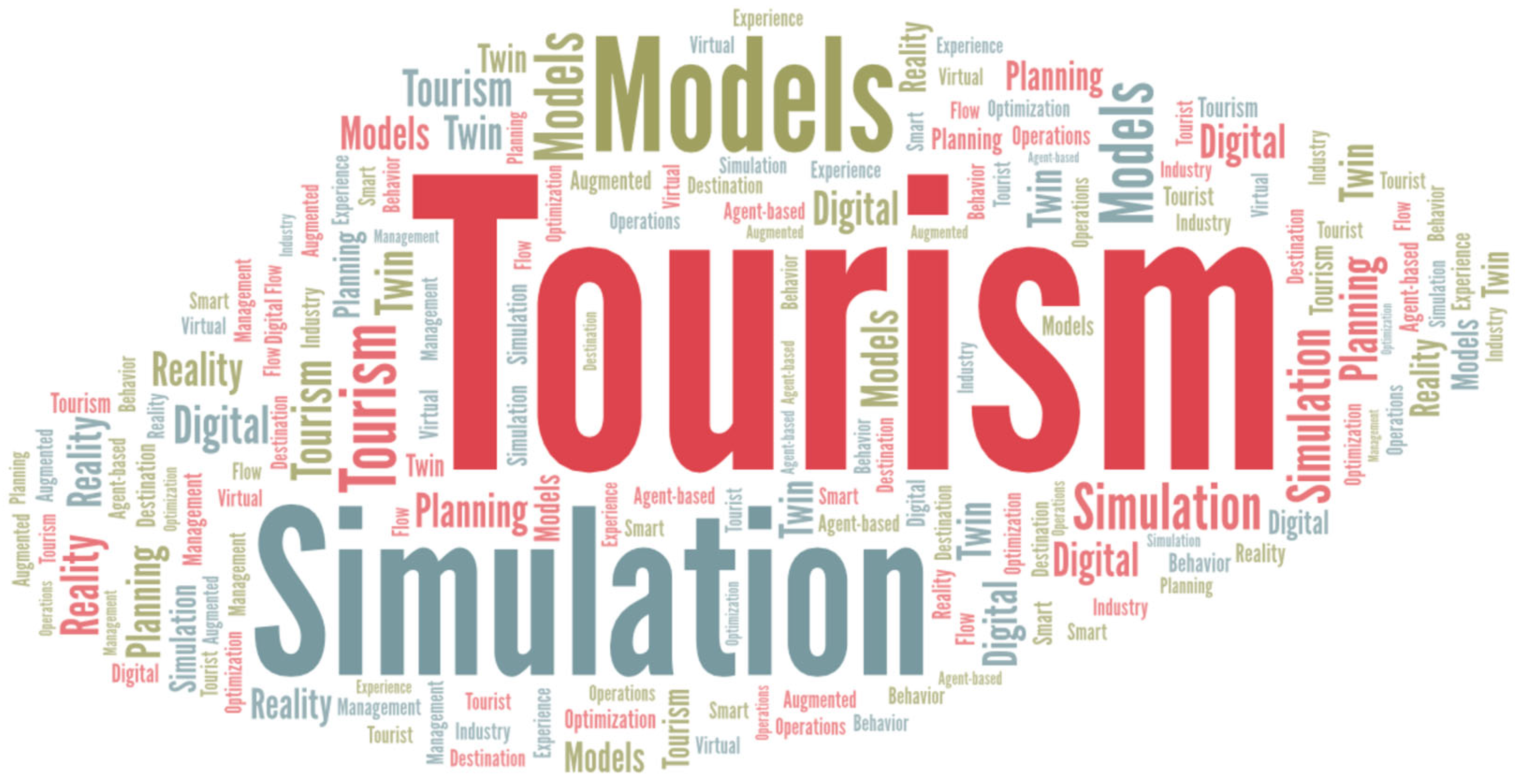
Figure 9 presents the word cloud generated using the WordArt platform, illustrating the frequency and relative weight of the most recurrent keywords across the 34 analyzed articles.
The largest terms—tourism, simulation, models, planning, digital twin, and reality—correspond to the most central and transversal concepts in the literature. This visual representation enables the immediate identification of the most conceptually relevant terms, serving as a lexical synthesis of the research field.
Although it does not represent temporal evolution, the word cloud highlights the thematic predominance of studies linking simulation, planning, and digital transformation in tourism.
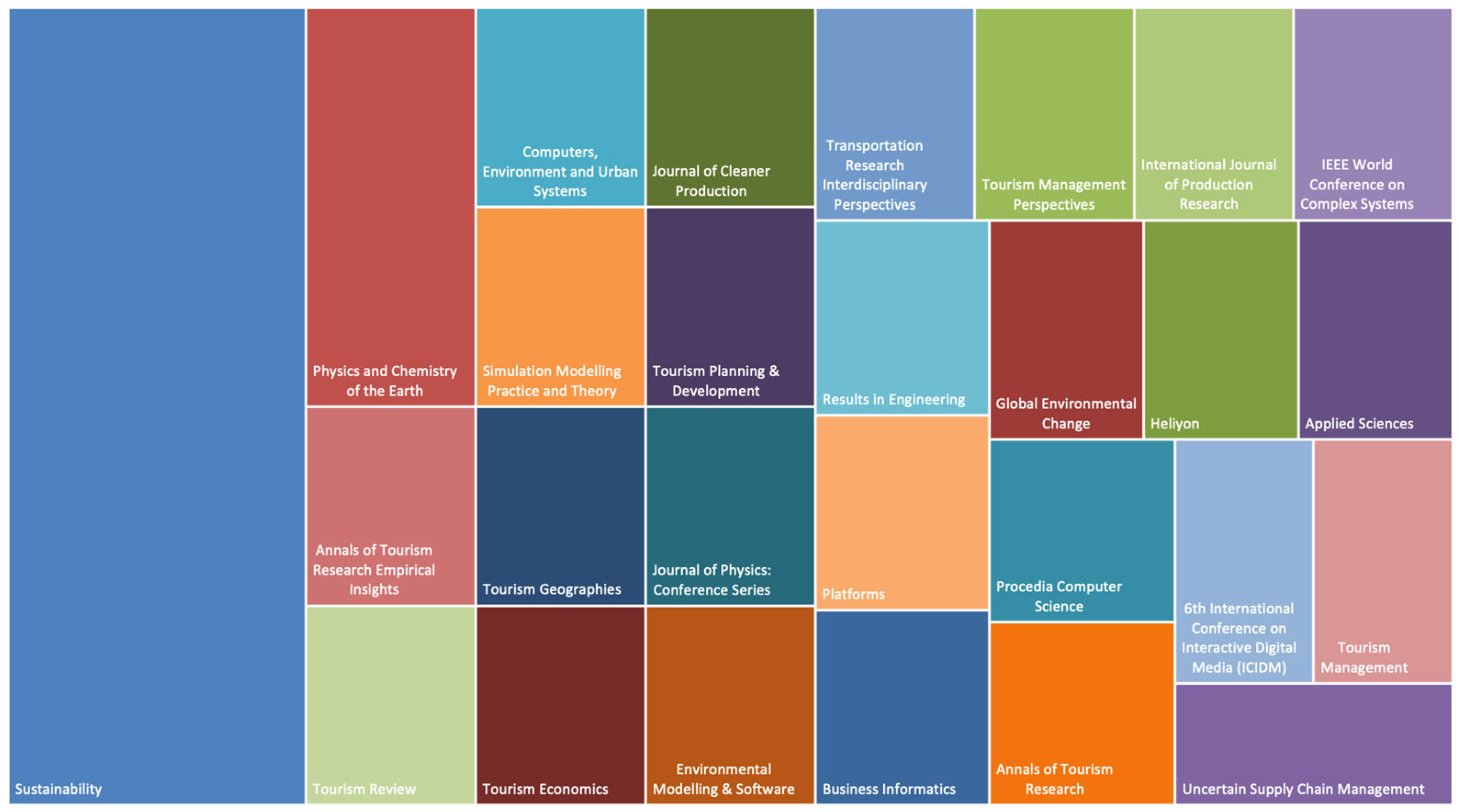
Figure 10 presents the treemap of scientific journals in which the 34 analyzed articles were published. The chart shows the disciplinary diversity and transversality of research in this domain, covering areas such as tourism, sustainability, engineering, urban systems, and digital technologies. The journal Sustainability (MDPI) emerges as the most representative, followed by Tourism Management, Journal of Cleaner Production, and Simulation Modeling Practice and Theory.
This dispersion demonstrates that the topic of simulation in tourism is not confined to a single disciplinary field but is distributed across multiple scientific communities, reflecting its integrative role between tourism, data science, and sustainable management.
Taken together, these results confirm that simulation has become a fundamental tool for the strategic and sustainable planning of tourism destinations, enabling the integration of policies, mobility, and technological innovation within a unified analytical ecosystem.

4.2. Geographical and Sectoral Differences in the Application of Simulation

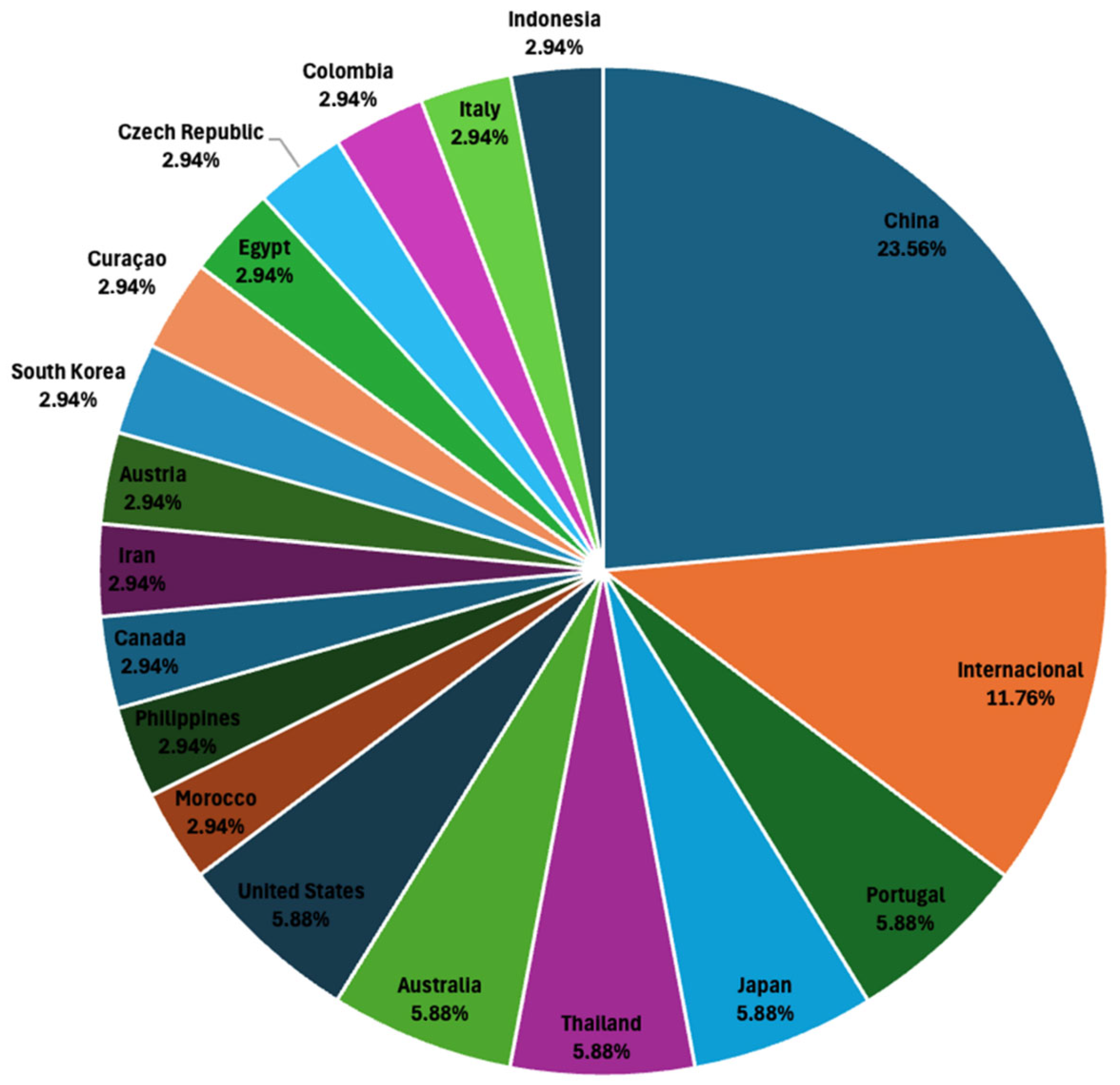
The geographical distribution of the 34 analyzed studies reveals a clear predominance of research conducted in Asia, particularly in China, which accounts for 24% of all publications (Figure 11). This concentration reflects the country’s strong investment in digital technologies and smart cities, resulting in studies that employ various simulation approaches. Among the most representative examples are [18], which develops an integrated digital twin for analyzing urban tourist flows; [33], focused on predicting resilience in rural villages; and [11], which applies System Dynamics to estimate carbon emissions in the tourism sector. These studies illustrate the technological maturity and thematic diversity of simulation research in the Chinese context, covering areas ranging from urban and energy planning to environmental sustainability.
International studies (12%) and those conducted in countries such as Portugal, Japan, Thailand, Australia, and the United States (6% each) show more balanced approaches, alternating between technological innovation and strategic planning. In the European context, several works emphasize sustainability and decision support in tourism destinations. Article [16] demonstrates how Agent-Based Modeling, combined with Wi-Fi sensors and 3D visualization, can support crowd management and reduce the impacts of overtourism. Article [34] applies an innovative mathematical approach to define sustainable visitor limits, proposing management scenarios that balance economic performance and local quality of life.
In the United States, Article [24] highlights the potential of artificial neural networks to predict tourist flows and optimize mobility during peak periods, while in Australia, Article [6] represents one of the first applications of System Dynamics in tourism, integrating economic, social, and environmental variables to support sustainable destination planning.
In Latin America and the Caribbean, studies of a socioecological and experimental nature have emerged, such as Articles [5,10]. These examples demonstrate the use of simulation as a diagnostic and adaptive planning tool, contributing to reduced vulnerabilities and improved territorial management in contexts of high tourism pressure.
From a sectoral perspective, significant differences can be observed in how simulation is applied. In Asia, a predominantly technological and operational approach prevails, strongly associated with digitalization, artificial intelligence, digital twins, and big data, as evidenced in Articles [18,22,25]. In European contexts, the focus is more strategic and sustainability-oriented, emphasizing carrying capacity, urban planning, and public policy, as seen in Articles [6,32,34]. In Latin American and island regions, simulation is mainly used to support resilience and mitigate environmental impacts, with Articles [5,10] as notable examples.
This geographical and sectoral heterogeneity demonstrates that technological maturity, data availability, and public policy priorities strongly influence the adoption of simulation tools in tourism. While countries such as China and South Korea invest in models with high computational complexity, Europe and Latin America continue to prioritize integrated approaches to sustainable planning and collaborative destination management.

4.3. Emerging Technologies and Integration with Smart Tourism

Recent literature shows that simulation is evolving from a purely analytical tool into an intelligent digital system increasingly integrated within Smart Tourism ecosystems. This transformation is driven by the convergence of advanced simulation models and emerging technologies—such as Digital Twins (DTs), Artificial Intelligence (AI), Big Data, Augmented Reality (AR), and the Internet of Things (IoT)—which are reshaping how tourism is planned, monitored, and experienced [18].
Among these technologies, Digital Twins (DTs) play a central role in the transition toward smart tourism destinations. A digital twin consists of a virtual replica of a destination or infrastructure, continuously fed by real-time data and synchronized with its physical counterpart [17]. These models enable the evaluation of mobility scenarios, simulation of tourist flows, optimization of resources, and testing of policies before their real-world implementation [14].
In smart tourism, digital twins are applied to represent complex urban systems, allowing for predictive and adaptive planning guided by real-time data [13]. In Aveiro, for example, recent studies demonstrated how the integration of sensors and digital models improves congestion forecasting and energy efficiency in coastal destinations [30].
Artificial Intelligence (AI) emerges as one of the most transformative technologies in decision support. Machine learning and deep learning models are widely used to predict visitor flows, detect mobility patterns, and adjust tourism supply in real time [7]. By integrating data from urban sensors, booking platforms, and social media, AI enables a dynamic response to fluctuations in demand [26]. Recent studies show that combining AI with Agent-Based Modeling (ABM) enhances the predictive capacity of simulations, allowing for the anticipation of seasonal peaks, urban congestion, and health crises [15].
Big Data forms the informational backbone of the new generation of tourism models. Massive data collection platforms—fed by sensors, transport networks, social media, and accommodation services—nurture cyber-physical systems capable of replicating real tourist behavior in near real time [22]. These systems enable the integration of historical and real-time variables, producing indicators of sustainability, energy consumption, and environmental impact [29]. The integration of big data and simulation transforms destinations into dynamic platforms for continuous planning and monitoring [24].
Augmented Reality (AR) and immersive technologies are transforming how visitors interact with destinations. Recent studies highlight AR’s role in creating personalized, educational, and sustainable experiences that reduce pressure on sensitive heritage sites [23]. The combination of 3D modeling, visual simulation, and georeferenced data has enabled the development of interactive routes and digital twins of cultural heritage [11]. These applications illustrate the convergence between predictive analytics and sensory experience, marking the emergence of Tourism 5.0, where simulation serves both as a planning and communication tool [6].
The reviewed studies indicate that the integration of these technologies occurs through interoperable and collaborative platforms capable of aggregating data from transport, energy, environment, and tourism behavior systems [5]. This model constitutes the core of the Smart Tourism Ecosystem, in which AI, big data, digital twins, and agent-based simulation work in synergy to support data-driven public policies [27].
However, this technological convergence introduces new challenges, particularly concerning data privacy, platform interoperability, and algorithmic transparency [1]. The literature emphasizes that the adoption of interoperability standards and ethical data management practices is essential for consolidating smart and resilient tourism destinations [12].
In summary, the emerging technologies analyzed reveal a clear evolution in the role of simulation—from a static analytical tool to a dynamic, intelligent, and integrated system. The combination of digital twins, artificial intelligence, and big data now represents the core axis of digital transformation in tourism, enabling more sustainable, participatory, and evidence-based planning [12]. This integration reflects the growing maturity of the field and paves the way for smart tourism destinations capable of learning, predicting, and adapting in real time.

4.4. Barriers and Limitations to the Adoption of Simulation in Tourism

Despite the conceptual and technological progress observed over the past decade, the effective adoption of simulation in tourism still faces several barriers of a technical, organizational, economic, and cultural nature.
The literature shows that although modeling tools—such as Agent-Based Modeling (ABM), System Dynamics (SD), and Digital Twins (DT)—have demonstrated high potential, their practical application remains limited due to structural, economic, and human factors [33].
The barriers identified in the reviewed studies extend beyond generic technological constraints and reveal structural and operational challenges that hinder the effective implementation of simulation in tourism contexts. Key limitations include restricted access to high-resolution and real-time data, limited interoperability between simulation platforms and existing Destination Management Systems (DMS), and the absence of standardized protocols for model validation and calibration. Additionally, several studies highlight institutional barriers, such as insufficient technical expertise within destination management organizations and resistance from stakeholders to integrate simulation outputs into strategic planning processes. These challenges are particularly evident in small and medium-sized destinations, where financial constraints and limited digital maturity further reduce the practical adoption of simulation-based decision support tools.
One of the main barriers identified is the lack of reliable, up-to-date, and interoperable data to feed simulation models [4]. Many tourist destinations, especially in regional or emerging contexts, lack adequate data collection and management infrastructures, compromising model validation and calibration [22]. In addition, the absence of standardized interoperability protocols between transport, environmental, and tourism platforms makes it difficult to use real-time predictive models [8].
The computational complexity of some models—especially those based on agents and digital twins—is also frequently mentioned as an obstacle, requiring advanced computing resources and technical expertise [16]. Another significant limitation refers to the shortage of technical and analytical skills among destination management teams [32]. Implementing simulation requires specialized knowledge in modeling, programming, and statistical analysis, which is often absent from tourism governance structures [5].
Resistance to change and the perception that simulation technologies are “research tools” rather than operational management instruments further hinder adoption [28]. The literature suggests that successful integration depends on participatory models, where managers, researchers, and policymakers collaborate in the design and validation of models [20].
The adoption of technologies such as Digital Twins and AI-driven simulation implies high development, licensing, and maintenance costs [7]. Small and medium-sized destinations rarely have budgets dedicated to digital transformation, which limits investment in technological infrastructure [18]. Even when tools are implemented, long-term economic sustainability is not always guaranteed, leading to the abandonment of pilot projects after initial public funding [29]. The absence of clear business models to justify return on investment is another frequently mentioned obstacle [31].
Barriers are not only technical or financial. Many studies highlight cultural and institutional resistance to the use of simulations as decision support tools [3]. In destinations with fragmented governance structures, adoption is hindered by a lack of trust in digital model results, which are often perceived as too complex or abstract [1]. This perception is frequently associated with low digital literacy and the lack of translation of technical results into operational metrics understandable to policymakers and local stakeholders [14].
The growing integration of data-driven technologies—such as AI and IoT—raises ethical and privacy concerns that hinder public acceptance [15]. Many projects face legal restrictions on the collection and sharing of personal data, especially in urban contexts [11]. The absence of clear data governance structures and the lack of transparency in forecasting algorithms reduce trust among users and stakeholders [17]. According to [23], implementing data protection policies, algorithmic audits, and informed consent mechanisms are essential conditions for legitimizing these technologies.
The literature reviewed converges on four main dimensions of barriers to simulation adoption in tourism, as summarized in Table 3.
These barriers demonstrate that the digital transformation of tourism, although accelerating, still lacks robust technical infrastructure, human capacity building, and a solid ethical framework. The success of simulation applied to tourism will therefore depend on cooperation between academia, the public sector, and industry, ensuring technological interoperability, transparent data governance, and continuous professional training [12].

5. Discussion

5.1. Theoretical and Practical Implications

This systematic review contributes to the literature on simulation applied to tourism by consolidating a theoretical–methodological framework that reflects the growing maturity of the field. The findings made it possible to propose an integrated taxonomy of simulation methodologies encompassing four main approaches—Agent-Based Modeling (ABM), System Dynamics (SD), Digital Twins (DT), and hybrid models—which have been used complementarily to analyze complex tourism systems [16].
This taxonomy reveals an epistemological evolution: from exploratory models focused on spatial planning and carrying capacity [4,34], to predictive and interactive models based on real-time data and emerging digital technologies [8,24].
From a theoretical perspective, the study contributes to integrating interdisciplinary perspectives from tourism, systems engineering, and data science, providing a transversal understanding of how simulation is conceptualized, validated, and applied. The analysis of the 34 articles made it possible to identify a digital maturity model in tourism, in which destinations evolve from analytical practices based on historical data to intelligent approaches (smart tourism systems) supported by adaptive simulation, AI, and digital twins [6,26].
Thus, simulation ceases to be merely an academic tool and establishes itself as a structural pillar of digital and sustainable transformation in tourism [5,24].
From a practical standpoint, this review shows that simulation has become a virtual decision support laboratory, with direct implications for policymakers, destination managers, and urban planners. Several studies demonstrate how simulation models enable testing public policies before implementation, reducing associated risks and costs [10,33].
Digital twin–based applications have proven particularly promising for urban planning and tourism flow management, allowing congestion monitoring, visitation forecasting, and optimization of infrastructure use [8,18].
Moreover, the integration of big data and simulation has enabled the assessment of sustainability indicators and environmental impacts based on real data, strengthening the adaptive and participatory planning capacity of tourism destinations [29,34].
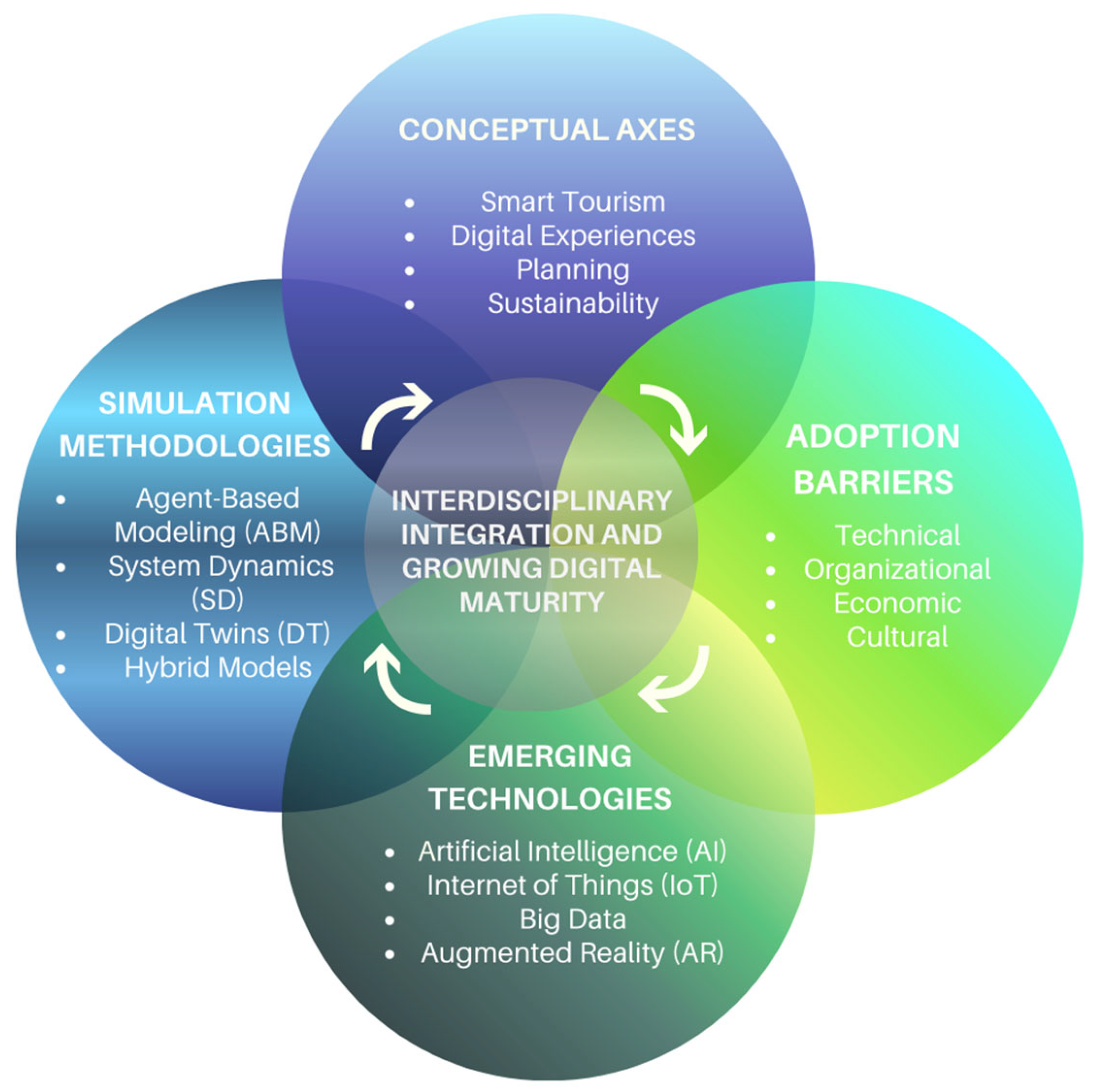
In summary, the theoretical and practical implications converge into an interpretative model of simulation maturity in tourism, which articulates four key dimensions:
  i.
conceptual axes (smart tourism, digital experiences, planning, and sustainability);
 ii.
simulation methodologies (ABM, SD, DT, and hybrids);
iii.
emerging technologies (AI, IoT, big data, augmented reality); and
iv.
adoption barriers (technical, organizational, economic, and cultural).
This integration is represented in Figure 12, created in Canva (2025), which synthesizes the relationship between technological maturity, sectoral application, and impact on tourism destination management.
Beyond these contributions, this review offers valuable lessons for both academics and industry professionals. For academia, it highlights the importance of hybrid and interdisciplinary approaches capable of bridging theory and digital experimentation. For practitioners, it provides operational guidelines for applying simulation models in urban planning, tourism mobility, and sustainability, encouraging the use of digital twins and AI as strategic management and decision support tools.
While the reviewed studies demonstrate a growing interest in the application of simulation to support sustainable tourism planning, the analysis reveals a fragmented research landscape characterized by methodological heterogeneity and limited cross-comparability between models. Most simulation approaches remain developed in isolation, tailored to specific case studies, and rarely subjected to standardized validation procedures. This lack of convergence restricts the scalability and transferability of simulation-based solutions, limiting their evolution into robust decision support systems capable of informing long-term destination governance. Consequently, there is a clear need for an integrated conceptual and operational framework that aligns simulation methodologies with the principles of Tourism 5.0, reinforcing the transition from experimental modeling to strategic, evidence-based destination management.

5.2. Limitations and Future Research Directions

Although this review offers a comprehensive and up-to-date analysis, several methodological and structural limitations should be acknowledged. First, the temporal scope (1999–2025), while appropriate for capturing the historical and digital evolution of simulation, may have excluded earlier foundational studies and very recent publications not yet indexed [13,27].
Second, the selection of databases—Scopus, Web of Science, IEEE Xplore, ScienceDirect, and MDPI—ensured disciplinary breadth but may have overlooked regional or gray literature relevant to the field [7].
The total number of analyzed articles (n = 34) enabled a deep qualitative assessment but limits the statistical generalization of the findings, especially considering the heterogeneity of contexts and methodologies [16,32].
Furthermore, this review primarily focused on conceptual and modeling studies, without including empirical or experimental validations in real-world contexts [12,15].
Finally, a significant terminological variation among authors was identified—“simulation”, “modeling”, “digital twin”, and “smart system”—which may affect semantic consistency and hinder future meta-analyses [14,20].
Looking ahead, the analyzed literature highlights several future research avenues that can consolidate and expand the role of simulation in tourism:
  • Development of interpretable hybrid models that combine ABM, SD, and AI, enhancing transparency and predictive capacity [24,25];
  • Creation of participatory simulation frameworks, engaging local stakeholders in the design and validation of models [22,33];
  • Exploration of the nexus between simulation, sustainability, and digital experience, assessing how technology can balance visitor experience and environmental conservation [5,19];
  • Comparative studies across geographical regions (Asia, Europe, Latin America) to understand differences in digital maturity and public policy adoption [28,30];
  • Implementation of real-time digital twins for urban planning and continuous monitoring of tourism destinations [8,26];
  • Promotion of interdisciplinary syntheses between tourism, engineering, and data science to create a common ontology for applied simulation [1,2].
In summary, the consolidation of simulation in tourism will depend on transparent data governance, continuous technical capacity building, and collaboration between academia, industry, and public administration. Future research should focus on predictive and participatory models capable of transforming tourism destinations into intelligent, sustainable, and socially inclusive systems.

6. Conclusions

This systematic review was undertaken in response to a pressing global challenge in contemporary tourism: the growing mismatch between accelerated digital transformation and the capacity of destinations to manage sustainability, resilience, and visitor experience in an integrated manner. The rapid evolution of Tourism 5.0 has created an urgent need for structured, decision support mechanisms capable of anticipating complex dynamics such as overtourism, environmental degradation, and fluctuating visitor behavior. This study therefore aimed to critically examine how simulation has been applied as a strategic tool to support more informed, adaptive, and human-centered governance of tourism destinations.
The results demonstrate that simulation has evolved from an exploratory analytical technique into a strategic instrument capable of supporting sustainable destination planning, visitor flow optimization, and intelligent policy testing. Agent-Based modeling, System Dynamics, and Digital Twins emerged as the most influential approaches, revealing a clear shift toward predictive, adaptive, and technology-integrated models. However, the analysis also exposed persistent fragmentation in validation practices and a limited translation of simulation outputs into operational decision-making within real tourism environments.
Despite its contributions, this review is constrained by the still limited number of peer-reviewed studies explicitly focused on simulation within the Tourism 5.0 paradigm, as well as by methodological heterogeneity and uneven levels of empirical validation across the analyzed works. Additionally, the exclusion of non-indexed sources and real-time operational data restricted the ability to fully capture the breadth of emerging practices in rapidly evolving destination contexts.
Future research should prioritize the development of integrated simulation frameworks that combine behavioral, environmental, and economic dimensions, supported by real-time data and participatory governance models. Greater emphasis should be placed on empirical validation in living tourism environments and on the creation of standardized evaluation protocols capable of strengthening the transferability and scalability of simulation-based solutions. Such advances will be critical for transforming simulation into a core pillar of sustainable, resilient, and ethically grounded Tourism 5.0 ecosystems.

Supplementary Materials

The following supporting information can be downloaded at: https://www.mdpi.com/article/10.3390/su172310850/s1, Table S1—PRISMA 2020 Checklist [35]; Table S2—Full database search strategies (Scopus, Web of Science, IEEE Xplore, ScienceDirect, and MDPI), including fields/tags, filters, and last search dates.

Author Contributions

Conceptualization, S.M., M.B. and A.L.R.; methodology, S.M., M.B. and A.L.R.; software, S.M.; validation, S.M., M.B. and A.L.R.; formal analysis, S.M.; investigation, S.M.; data curation, S.M.; writing—original draft preparation, S.M.; writing—review and editing, S.M., M.B. and A.L.R.; visualization, S.M.; supervision, A.L.R. and M.B.; project administration, A.L.R. All authors have read and agreed to the published version of the manuscript.

Funding

This work was supported by the Plano de Recuperação e Resiliência (PRR), funded by the European Union—NextGenerationEU, through the project ATT—Acelerar e Transformar o Turismo [project code 2022-C05-i0102-02].

Institutional Review Board Statement

Not applicable.

Informed Consent Statement

Not applicable.

Data Availability Statement

No new data were created in this study. All data analyzed were extracted from the published studies included in the review. The full database search strategies (queries, fields/tags, filters, and last-search dates) are provided in Table S2 (Supplementary Materials).

Acknowledgments

I would like to acknowledge the University of Aveiro (UA) and the ATT—Acelerar e Transformar o Turismo project, funded by Turismo de Portugal, for supporting this research. I am also deeply grateful to Ana Luísa Ramos for her valuable guidance and insightful feedback throughout the development of this article.

Conflicts of Interest

The authors declare no conflicts of interest.

References

  1. Rubino, G.; Gattuso, D.; Longo, F. Exploring Industry 4.0 Technologies in Tourism. A Literature Review. In Procedia Computer Science; Elsevier B.V.: Amsterdam, The Netherlands, 2025; pp. 3182–3195. [Google Scholar] [CrossRef]
  2. Zeqiri, A.; Ben Youssef, A.; Maherzi Zahar, T. The Role of Digital Tourism Platforms in Advancing Sustainable Development Goals in the Industry 4.0 Era. Sustainability 2025, 17, 3482. [Google Scholar] [CrossRef]
  3. Luo, Y.; Li, Y.; Wang, G.; Ye, Q. Agent-based modeling and simulation of tourism market recovery strategy after COVID-19 in Yunnan, China. Sustainability 2021, 13, 11750. [Google Scholar] [CrossRef]
  4. Hamilton, J.M.; Maddison, D.J.; Tol, R.S.J. Climate change and international tourism: A simulation study. Glob. Environ. Change 2005, 15, 253–266. [Google Scholar] [CrossRef]
  5. Student, J.; Kramer, M.R.; Steinmann, P. Simulating emerging coastal tourism vulnerabilities: An agent-based modelling approach. Ann. Tour. Res. 2020, 85, 103034. [Google Scholar] [CrossRef]
  6. Walker, P.A.; Greiner, R.; Mcdonald, D.; Lyne, V. The Tourism Futures Simulator: A systems thinking approach. Environ. Model. Softw. 1998, 14, 59–67. [Google Scholar] [CrossRef]
  7. Baggio, R. Computational modelling and simulations in tourism: A primer. Ann. Tour. Res. Empir. Insights 2020, 1, 100005. [Google Scholar] [CrossRef]
  8. Florido-Benítez, L. The Use of Digital Twins to Address Smart Tourist Destinations’ Future Challenges. Platforms 2024, 2, 234–254. [Google Scholar] [CrossRef]
  9. Štekerová, K.; Zelenka, J.; Kořínek, M. Agent-Based Modelling in Visitor Management of Protected Areas. Sustainability 2022, 14, 12490. [Google Scholar] [CrossRef]
  10. Moreno, J.; Parada, J.; Peña-Miranda, D.D. Agent-Based Model Applied for the Study of Overtourism in an Urban Context. Sustainability 2025, 17, 3248. [Google Scholar] [CrossRef]
  11. Luo, Z. Simulation of tourism carbon emissions based on system dynamics model. Phys. Chem. Earth 2023, 129, 103346. [Google Scholar] [CrossRef]
  12. Choi, E.Y.; Jang, W.Y.; Park, T.H. Key Attributes Driving Yacht Tourism: Exploring Tourist Preferences Through Conjoint Analysis. Sustainability 2025, 17, 3336. [Google Scholar] [CrossRef]
  13. Santoso, T.A.P.; Yusuf, R.; Irawan, K.; Juhana, A.; Elindriyani, R.V.; Dermawan, K.F. Agent-Based Modeling on Traveler Behavior and Travel Destination Development with Case Study of Indonesian Tourism. In Proceedings of the 6th International Conference on Interactive Digital Media, ICIDM 2020, Bandung, Indonesia, 14–15 December 2020; Institute of Electrical and Electronics Engineers Inc.: Piscataway, NJ, USA, 2020. [Google Scholar] [CrossRef]
  14. Zhao, L.; Huang, M. Application of computer virtual simulation technology in tourism industry. In Proceedings of the 2022 3rd International Conference on Big Data, Artificial Intelligence and Internet of Things Engineering, ICBAIE 2022, Xi’an, China, 15–17 July 2022; Institute of Electrical and Electronics Engineers Inc.: Piscataway, NJ, USA, 2022; pp. 371–376. [Google Scholar] [CrossRef]
  15. Mariani, M.; Platanakis, E.; Stafylas, D.; Sutcliffe, C. Identifying a destination’s optimal tourist market mix: Does a superior portfolio model exist? Tour. Manag. 2023, 96, 104722. [Google Scholar] [CrossRef]
  16. e Abreu, F.B.; Marinheiro, R.N.; Boavida-Portugal, I.; Lopes, A.; Santos, T.M.; De Almeida, D.S.; Simões, R. A digital transformation approach to scaffold tourism crowding management: Pre-factum, on-factum, and post-factum. In Proceedings of the 2024 Joint International Conference on Digital Arts, Media and Technology with ECTI Northern Section Conference on Electrical, Electronics, Computer and Telecommunications Engineering, ECTI DAMT and NCON 2024, Chiang-mai, Thailand, 31 January–3 February 2024; Institute of Electrical and Electronics Engineers Inc.: Piscataway, NJ, USA, 2024; pp. 586–591. [Google Scholar] [CrossRef]
  17. Abdelhady, S.; Shaban, A. A Simulation Modeling Approach for the Techno-Economic Analysis of the Integration of Electric Vehicle Charging Stations and Hybrid Renewable Energy Systems in Tourism Districts. Appl. Sci. 2024, 14, 4525. [Google Scholar] [CrossRef]
  18. Li, S.; Feng, Y.; Chu, Q.; Chen, G. Design of Smart Tourism Visual Analysis Platform Based on Digital Twin. In Proceedings of the 2024 IEEE 3rd International Conference on Electrical Engineering, Big Data and Algorithms, EEBDA 2024, Changchun, China, 27–29 February 2024; Institute of Electrical and Electronics Engineers Inc.: Piscataway, NJ, USA, 2024; pp. 1300–1303. [Google Scholar] [CrossRef]
  19. Kieanwatana, K.; Vongvit, R. Virtual reality in tourism: The impact of virtual experiences and destination image on the travel intention. Results Eng. 2024, 24, 103650. [Google Scholar] [CrossRef]
  20. Guan, B.; Silva, E.S.; Hassani, H.; Heravi, S. Forecasting tourism growth with State-Dependent Models. Ann. Tour. Res. 2022, 94, 103385. [Google Scholar] [CrossRef]
  21. Ishikawa, K.; Hachiya, N.; Aikoh, T.; Shoji, Y.; Nishinari, K.; Satake, A. A decision support model for traffic congestion in protected areas: A case study of Shiretoko National Park. Tour. Manag. Perspect. 2013, 8, 18–27. [Google Scholar] [CrossRef]
  22. Li, L.; Wang, H. Simulation of Big Data AR Intelligent Tourism System Based on Improved Apriori Algorithm. In Proceedings of the 2024 3rd International Conference on Artificial Intelligence and Autonomous Robot Systems, AIARS 2024, Bristol, UK, 29–31 July 2024; Institute of Electrical and Electronics Engineers Inc.: Piscataway, NJ, USA, 2024; pp. 881–884. [Google Scholar] [CrossRef]
  23. Cheng, J.; Wu, L.; Gao, Y.; Tian, X. A multi-agent model of traffic simulation around urban scenic spots: From the perspective of tourist behaviors. Heliyon 2023, 9, e20929. [Google Scholar] [CrossRef]
  24. Tuncsiper, C. Modeling the number of tourist arrivals in the United States employing deep learning networks. Transp. Res. Interdiscip. Perspect. 2025, 31, 101407. [Google Scholar] [CrossRef]
  25. Zhang, Y.; Tan, W.H.; Zeng, Z. Tourism Demand Forecasting Based on a Hybrid Temporal Neural Network Model for Sustainable Tourism. Sustainability 2025, 17, 2210. [Google Scholar] [CrossRef]
  26. Sang, F.; Wu, H.; Liu, Z.; Fang, S. Digital Twin Platform Design for Zhejiang Rural Cultural Tourism Based on Unreal Engine. In Proceedings of the 2022 International Conference on Culture-Oriented Science and Technology, CoST 2022, Lanzhou, China, 18–21 August 2022; Institute of Electrical and Electronics Engineers Inc.: Piscataway, NJ, USA, 2022; pp. 274–278. [Google Scholar] [CrossRef]
  27. Jebraoui, S.; Nemiche, M. Agent-Based Model for Moroccan Inbound Tourism: Social Influence and Destination Choice. In Proceedings of the 2024 World Conference on Complex Systems, WCCS 2024, Mohammedia, Morocco, 11–14 November 2024; Institute of Electrical and Electronics Engineers Inc.: Piscataway, NJ, USA, 2024. [Google Scholar] [CrossRef]
  28. Altar, J.R.B.; Dellova, C.A.P.; Resco, A.M.; Bartiquin, A.M.; Dinaga, M.R.D.; Costales, J.A. An Integrated Intranet-Based Simulation System for College of Hospitality and Tourism Management of EARIST Manila. In Proceedings of the 2024 3rd International Conference on Computer Applications Technology, CCAT 2024, Wenzhou, China, 15–17 November 2024; Institute of Electrical and Electronics Engineers Inc.: Piscataway, NJ, USA, 2024; pp. 55–60. [Google Scholar] [CrossRef]
  29. Guttentag, D.A. Virtual reality: Applications and implications for tourism. Tour. Manag. 2010, 31, 637–651. [Google Scholar] [CrossRef]
  30. Wu, W.; Xu, C.; Zhao, M.; Li, X.; Law, R. Digital Tourism and Smart Development: State-of-the-Art Review. Sustainability 2024, 16, 10382. [Google Scholar] [CrossRef]
  31. Hou, T. Virtual Tourism Simulation System Based on VR Technology. In Journal of Physics: Conference Series; IOP Publishing Ltd.: Bristol, UK, 2021. [Google Scholar] [CrossRef]
  32. Gintciak, A.M.; Bolsunovskaya, M.V.; Burlutskaya, Z.V.; Petryaeva, A.A. High-level simulation model of tourism industry dynamics. Bus. Inform. 2022, 16, 53–67. [Google Scholar] [CrossRef]
  33. Mou, J.; Chen, X.; Du, W.; Han, J. Simulation Research on the Optimization of Rural Tourism System Resilience Based on a Long Short-Term Memory Neural Network—Taking Well-Known Tourist Villages in Heilongjiang Province as Examples. Sustainability 2025, 17, 1305. [Google Scholar] [CrossRef]
  34. Bertocchi, D.; Camatti, N.; Giove, S.; van der Borg, J. Venice and overtourism: Simulating sustainable development scenarios through a tourism carrying capacity model. Sustainability 2020, 12, 512. [Google Scholar] [CrossRef]
  35. Page, M.J.; McKenzie, J.E.; Bossuyt, P.M.; Boutron, I.; Hoffmann, T.C.; Mulrow, C.D.; Shamseer, L.; Tetzlaff, J.M.; Akl, E.A.; Brennan, S.E.; et al. The PRISMA 2020 statement: An updated guideline for reporting systematic reviews. BMJ 2021, 372, n71. [Google Scholar] [CrossRef]
Figure 1. Annual growth of publications on simulation applied to tourism (1999–2025).
Sustainability 17 10850 g001
Figure 2. Annual scientific production on simulation and tourism (Bibliometrix, version 4.2.1; analysis based on Dimensions data, 1995–2025).
Sustainability 17 10850 g002
Figure 3. PRISMA 2020 flow diagram.
Sustainability 17 10850 g003
Figure 4. Global scientific production by country in the field of simulation and tourism (Bibliometrix analysis based on Dimensions data).
Sustainability 17 10850 g004
Figure 5. International research collaboration network in simulation and tourism (Bibliometrix analysis based on Dimensions data).
Sustainability 17 10850 g005
Figure 6. Number of articles published by year (1999–2025).
Sustainability 17 10850 g006
Figure 7. Keyword co-occurrence network (VOSviewer).
Sustainability 17 10850 g007
Figure 8. Density map of keyword co-occurrence (VOSviewer).
Sustainability 17 10850 g008
Figure 9. Word cloud representing the frequency of keywords in the 34 analyzed articles, generated with the WordArt tool (2025).
Sustainability 17 10850 g009
Figure 10. Treemap of scientific journals where the 34 analyzed articles were published.
Sustainability 17 10850 g010
Figure 11. Percentage distribution of articles by country (1999–2025).
Sustainability 17 10850 g011
Figure 12. Conceptual model of simulation maturity in tourism, integrating thematic axes, methodologies, emerging technologies, and adoption barriers (author’s own elaboration using Canva online platform, accessed in 2025).
Sustainability 17 10850 g012
Table 1. Eligibility criteria and future research opportunities.
Inclusion Criteria (I)Exclusion Criteria (E)Potential Future Research Question
Studies that explicitly apply simulation methodologies (ABM, SD, DT, VR, etc.) in tourism contexts.Studies without a substantive link between tourism and simulation.How can different simulation approaches be integrated to represent the dynamic behavior of tourists in smart destinations?
Publications in peer-reviewed journals or conference proceedings.Documents not subject to peer review (white papers, technical reports, dissertations).How do scientific credibility and methodological rigor influence the adoption of simulation in tourism planning?
Studies that explore empirical applications or case studies with validated simulation models.Purely theoretical or technical studies without empirical demonstration.How can simulation models support real-time decision-making in tourism destinations?
Works addressing themes such as mobility, sustainability, planning, digital experiences, or smart tourism.Redundant or duplicate publications across databases.Which thematic areas emerge as priorities for developing digital twins in sustainable tourism?
Articles published between 1999 and 2025, in English or Portuguese.Studies of poor methodological quality or outside the defined time range.How has simulation research in tourism evolved from early foundational models to digital and post-pandemic applications?
Table 2. (A) Smart Tourism and Decision Support Models. (B) Digital Experiences and Tourist Interaction. (C) Strategic Planning and Management. (D) Sustainability and Environmental Impacts.
(A)
No.Geographical Context Simulation Method BenefitsLimitationsMain Conclusions
[1]Global (Europe and China)Bibliometric Review (ABM, SD, Internet of Things (IoT), Big Data, VR)Maps technological trends and research gapsBased only on Scopus data; lacks empirical validationIntegration of Artificial Intelligence (AI), IoT, and Big Data optimizes tourism planning
[2]Global (Europe and Tunisia)Theoretical Framework—Industry 4.0Links digital platforms to SDGs and sustainabilityNo empirical validationDigital platforms promote sustainable tourism
[7]Global/TheoreticalConceptual framework integrating Agent-Based Modeling (ABM), System Dynamics (SD), and Network SimulationProvides a comprehensive methodological foundation for applying computational modeling in tourism; supports decision-making and policy designTheoretical focus; lacks empirical validation or real-world applicationSimulation models, when properly designed and validated, are powerful tools for understanding complex tourism systems and supporting evidence-based decision-making
[8]Global (Europe, Asia, Middle East)Systematic Review on Digital TwinsReal-time simulations and personalized tourist experiencesCost and cybersecurity issuesDigital Twins optimize tourism operations and visitor experience
[16]Lisbon, Portugal (RESETTING Project)ABM (GAMA) + Wi-Fi sensors + 3D visualizationPlans, monitors, and predicts tourist overcrowdingComplex calibration and setup requiredIntegration between simulation and real data improves crowd management
[18]Xining, ChinaDigital Twin + Monte Carlo + Particle SimulationReal-time simulation of tourist and safety flowsSingle-case study; requires continuous data inputSmart Xining improves tourism management and urban planning
[20]JapanSDM Models + Monte Carlo SimulationAccurate forecasting of tourism demandRequires long data series and high computational powerSDM models outperform ARIMA and Neural Networks in the medium term
[21]Shiretoko National Park, JapanCellular Automata Model (CAM)Forecasts congestion and supports sustainable managementSimplified and seasonal modelDecentralizing entrances and limiting cars reduces congestion
[22]Jilin, ChinaBig Data + AR + Apriori and FP-Growth algorithmsProvides intelligent recommendations and immersive experiencesHigh infrastructure and computational costStable and personalized system for real-time tourism management
[23]Xiamen, ChinaABM (tourists and vehicles)Identifies traffic flow thresholds and supports congestion managementModel restricted to one urban areaPolicies for tourist flow reduction alleviate urban congestion
[24]USADeep Learning (MLP Neural Network)High accuracy in flow predictionData requirements and computational costReliable forecasts optimize tourism planning and mobility
[25]ThailandBiLSTM–Transformer (Hybrid Neural Network)Robust forecasting and sustainable planningHigh computational cost and data requirementsHybrid model reduces errors and supports strategic decision-making
(B)
No.Geographical ContextSimulation MethodBenefitsLimitationsMain Conclusions
[14]ChinaVirtual Reality (VR)/Augmented Reality (AR) Simulation (Unity3D + HTC Vive)Creates immersive experiences and smart destination managementCosts and 5G network dependencyIntegrates VR/AR, Big Data, and 5G, boosting hybrid and sustainable tourism
[26]Zhejiang, China (Xitang village)Digital Twin (UE + GIS + 3D)Preserves cultural heritage and promotes smart rural tourismHigh cost and technological dependencyImproves management and revitalization of cultural tourism through technological integration
[19]ThailandPLS-SEM (VR)Demonstrates the positive impact of VR on destination image and travel intentionLimited sample and absence of negative factorsVR experiences strengthen destination image and increase real visit intention
[27]Moroccan tourism network (11 destinations)ABM with Barabási–Albert social networkAnalyzes social influence and digital marketing on tourist behaviorTheoretical model; no empirical validationSocial influence concentrates tourists in popular destinations; balanced promotion reduces congestion
[28]Manila, Philippines (EARIST)Intranet simulation (Agile-SDLC)Practical, risk-free training in an educational environmentAcademic application; lacks real dataThe system meets ISO standards, enhances competencies, and can expand to other sectors
[29]Global (University of Waterloo, Canada)Conceptual VR modelingPlanning, marketing, and tourism educationCosts and lack of full realismVR revolutionizes tourism experiences and education, but authenticity remains a barrier
[30]GlobalSystematic Literature Review + Bibliometric Analysis (CiteSpace)Identifies main digital tourism trends, technologies (AI, VR/AR, Big Data, Blockchain) and integration paths for smart tourismLimited to English-language studies; theoretical synthesis without experimental validationDigital technologies and smart development redefine the tourism industry through innovation, co-creation, and integration of the digital and real economy
[31]Liaoning, ChinaVR System (Unity3D + 3ds Max)Enables immersive virtual visits and reduces pressure on real sitesVR hardware dependency and vertigo issuesEffective system with 90% satisfaction rate, showing strong potential for the future of digital tourism
(C)
No.Geographical ContextSimulation MethodBenefitsLimitationsMain Conclusions
[3]Yunnan Province, ChinaABM (NetLogo)—post-COVID recovery simulationForecasts the impact of pricing and information strategiesApplied to only five destinations; dependent on simulated parametersEffective pricing strategies; information varies by destination; combination may yield inconsistent results
[12]South Korea (10 marinas)Conjoint AnalysisIdentifies optimal combinations and preferences in nautical tourismLimited context; does not include external variablesProgram and safety are the most valued attributes; ideal combination includes accessibility within <1 h
[13]IndonesiaABM (NetLogo)—tourist behavior and types of attractionsOptimizes tourist–attraction relationships and maximizes satisfactionTheoretical simulation; lacks empirical validationOptimal ratio 2:1:2 between attractions and 2:1 between tourists; balance between satisfaction and boredom
[15]Australia, Greece, Japan, and USATourist portfolio models (Markowitz)Maximizes revenue and reduces demand instabilityBased on static historical dataMarket diversification reduces risk and increases revenues; Levels 1 model proves most reliable
[32]AustriaSystem Dynamics (SD) + CGEAssesses the impact of tourism on GDP and well-beingLacks seasonality and detailed regional dataDomestic tourism strengthens GDP and economic resilience
(D)
No.Geographical ContextSimulation MethodBenefitsLimitationsMain Conclusions
[4]Global (207 countries)Econometric and global simulation modelForecasts effects of climate change on tourismAggregated and static dataClimate has less impact than economic factors; colder regions will benefit
[5]Curaçao, CaribbeanABM—Coasting ModelUnderstands socioecological vulnerability and supports sustainable adaptationExploratory and simplified modelPollution and low returns increase vulnerability; reducing pollution improves resilience
[6]Douglas Shire and Great Barrier Reef, AustraliaTourism Futures Simulator (System Dynamics)Assesses scenarios and environmental and economic impactsComplex model dependent on local dataTFS supports sustainable planning and prevention of environmental overload
[9]Czech RepublicABM—visitor behavior in natural areasAnalyzes environmental and social impacts and visitor flowsSimplified model dependent on calibrationABM helps define carrying capacity limits and support sustainable management
[10]Santa Marta, ColombiaABM (GAMA)—spatial and temporal distributionAssesses overtourism risk and tests management strategiesLimited data and simplified behavior modelingVisitor dispersion and digital monitoring reduce overcrowding
[11]Hunan, ChinaSystem Dynamics (SD)Quantifies emissions and supports low-carbon policiesSimplifies external factors and uses aggregated dataEffective model for predicting emissions and supporting sustainable tourism
[17]Fayoum, EgyptHOMER Grid Simulation (PV/wind + EV)Reduces emissions and energy costs; promotes sustainable mobilityLimited study area and high initial investmentHybrid system viable and efficient; reduces CO2 emissions and grid dependence
[33]Heilongjiang, ChinaLSTM Neural Network + GeoDetectorIdentifies resilience factors and predicts rural tourism evolutionLimited to one province; depends on questionnairesEnvironmental and institutional factors determine resilience; LSTM more accurate than BP model
[34]Venice, ItalyFuzzy Linear Programming (TCC)Simulates sustainable scenarios and defines visitor limitsParameter uncertainty and local dependencyVenice exceeds sustainable capacity; fuzzy model supports decision-making and urban policies
Table 3. Main barriers to the adoption of simulation in tourism.
DimensionDescriptionExamples of Articles
TechnicalLack of interoperable data, scalability, and computational resources.[4,8,16,22]
OrganizationalLack of technical skills, resistance to innovation, and limited institutional integration.[5,20,28,32]
EconomicHigh implementation costs and lack of tangible economic returns.[7,18,29,31]
Cultural and EthicalResistance to digitalization, lack of trust, and privacy concerns.[1,3,11,15,17,23]
Disclaimer/Publisher’s Note: The statements, opinions and data contained in all publications are solely those of the individual author(s) and contributor(s) and not of MDPI and/or the editor(s). MDPI and/or the editor(s) disclaim responsibility for any injury to people or property resulting from any ideas, methods, instructions or products referred to in the content.