Article

Enhancing Sustainability Through Regional Integration: A Quasi-Natural Experiment on Green Innovation of Listed Firms in the Yangtze River Delta

1
School of Marxism, Central South University, Changsha 410083, China
2
School of Management, Guangzhou University, Guangzhou 510006, China
3
School of Software and Microelectronics, Peking University, Beijing 100871, China
4
School of Mathematics and Statistics, Central South University, Changsha 410083, China
5
School of Computer Science and Engineering, Central South University, Changsha 410083, China
*
Authors to whom correspondence should be addressed.
Sustainability 2025, 17(23), 10841; https://doi.org/10.3390/su172310841
Submission received: 9 October 2025 / Revised: 28 November 2025 / Accepted: 1 December 2025 / Published: 3 December 2025
(This article belongs to the Special Issue Sustainable Entrepreneurship, Innovation, and Management)

Abstract

Enhancing corporate green innovation has become a critical question in the context of sustainable development. Prior studies have predominantly examined the macro-level effects of regional integration while largely overlooking its micro-level impacts on enterprises. This study aims to examine the institutional effect of regional integration on corporate green innovation. Taking the Yangtze River Delta integration as a quasi-natural experiment, we utilize panel data from A-share listed companies between 2003 and 2022 and apply a multi-period difference-in-differences method. The empirical results reveal that regional integration significantly enhances corporate green innovation, with a more pronounced effect for non-state-owned firms, large firms, and those located in non-corridor cities. Mechanism analyses further reveal that regional integration promotes corporate green innovation by alleviating financing constraints and attracting foreign direct investment. By identifying regional integration as a critical driver of corporate green innovation, this study broadens the research perspective on corporate green innovation and provides policy implications for promoting sustainability through coordinated regional development strategies.

1. Introduction

Corporate green innovation has become increasingly important amid severe global challenges such as climate change, environmental pollution, and resource scarcity. Enterprises are not only key drivers of green innovation but also major sources of pollution emissions. Their ability to innovate in green technologies, therefore, influences both their own competitiveness and the broader progress toward global sustainable development and environmental governance goals [1,2,3]. In recent years, regional integration has emerged as a key strategy for industrial upgrading, driving more efficient resource allocation and fostering sustainable regional development. It refers to the gradual removal of administrative and market barriers within a given geographical area through institutional arrangements, policy coordination, and economic cooperation, thereby facilitating the free flow of factors such as capital, labor, technology, and goods, and enabling more optimal resource allocation [4]. Traditional patterns of administrative fragmentation have often hindered efficient factor mobility and the integration of innovation resources. By contrast, recent studies show that regional integration can simultaneously advance economic growth and sustainable green development [5]. By breaking down barriers to factor flows, accelerating the diffusion of green technology, and promoting institutional coordination, regional integration creates new opportunities for enterprises to pursue sustainable green innovation capabilities. At the same time, green innovation is increasingly influenced not only by firms’ internal capabilities but also by broader institutional forces. This highlights the importance of examining institutional drivers such as regional integration. Yet important questions remain: Does regional integration effectively promote corporate green innovation, and if so, through what mechanisms? Addressing these questions is of great practical relevance for countries seeking to design regional development strategies and to accelerate their sustainable transition.
In recent years, the impact of regional integration on economic and social development has become an important research focus. At the macro level, the existing literature has produced a wealth of findings [6,7]. Scholars generally contend that regional integration significantly fosters regional economic growth, improves employment levels, and enhances environmental quality and sustainability [7,8,9]. For example, Murphy [10] found that EU integration, driven by trade creation effects, has led to wage growth and employment optimization among member states. In the Chinese context, the expansion of the Yangtze River Delta urban agglomeration has effectively reduced regional market segmentation, stimulated the development vitality of newly incorporated cities, and, to some extent, lowered pollution emission intensity while promoting regional sustainable development [11]. At the micro level, research has increasingly focused on the implications of regional integration for corporate innovation behavior. Some studies suggest that regional integration improves external conditions for green innovation by optimizing the sustainable business environment and lowering institutional costs [11]. At the same time, the market expansion effect increases the potential demand for green products [12], thereby raising firms’ expected returns from engaging in green innovation. Moreover, regional integration strengthens competitive pressures within the region. Under the combined influence of “innovator profits” and “escape competition effects,” enterprises are more inclined to seek differentiated advantages through green innovation [13]. Further studies underscore that regional integration also facilitates institutional coordination by improving intellectual property protection and innovation intermediation services, thereby reducing information asymmetries and enhancing the efficiency of green innovation outcomes, thereby strengthening enterprises’ sustainable competitive advantages [14]. However, these studies often focus on isolated effects and fail to construct a coherent conceptual framework. In particular, there is a lack of integrated theorization that links regional institutional changes to firm-level green innovation behavior. This gap prevents the development of a cumulative body of theory on how macro-institutional arrangements reshape micro-level innovation incentives and capabilities. This theoretical gap is what the present study aims to address.
However, the mechanisms by which regional integration influences corporate green innovation remain underexplored. Existing research on the determinants of corporate green innovation mainly concentrates on two levels. From the internal perspective, studies examine the role of ownership structure, managerial characteristics, and R&D investment in shaping firms’ green innovation activities [15,16,17]. From an external perspective, attention has been devoted to the driving effects of environmental regulation [18], tax policies [19], market competition [20], and green finance [21], among others. While these studies provide valuable insights into the determinants of corporate green innovation, they largely overlook the role of macro-institutional environments as structural enablers or constraints on green innovation. In particular, the potential of regional integration as a systemic institutional arrangement to influence innovation dynamics has not been systematically theorized. As an important institutional arrangement, regional integration is theoretically expected to foster a more favorable environment for green innovation by breaking down administrative barriers, promoting factor mobility, and strengthening institutional coordination. In doing so, it can optimize the allocation of sustainable innovation resources and accelerate the diffusion of green technologies [22,23,24]. Yet, some scholars caution that regional integration may also give rise to a “siphon effect,” whereby green innovation resources become excessively concentrated in core cities, thereby weakening the green innovation capabilities of enterprises located in peripheral regions [25]. To further clarify the positioning of this study within the existing literature, a summary table of representative studies is provided in Appendix A.
Given the limited understanding of how regional integration affects firm-level green innovation, this paper investigates the impact of regional integration on corporate green innovation, framing the analysis around three core questions: whether it is effective, why it is effective, and for whom it is more effective. Specifically, we employ data on Chinese listed companies from 2003 to 2022, treat the expansion of the Yangtze River Delta integration as a quasi-natural experiment, and adopt a multi-period difference-in-differences (DID) model. This empirical strategy allows us to control for regional heterogeneity and time trends, mitigate potential endogeneity bias, and thereby improve the robustness of the results. Regarding the underlying mechanisms, prior studies have primarily highlighted cost reduction and market expansion as the dominant explanatory pathways [26,27]. By contrast, this paper emphasizes the perspective of capital allocation, examining how regional integration supports corporate green innovation through two key channels: alleviating financing constraints and attracting foreign direct investment (FDI). In addition, we conduct multidimensional heterogeneity analyses to capture the differentiated impacts across firm ownership types, firm size, and location characteristics, which provide insights for targeted sustainability policies.
Taken together, this study contributes to the literature in three ways. First, it examines regional integration as a macro-level institutional arrangement that reshapes regional factor flows and institutional environments, rather than merely an economic cooperation framework. Regional integration reduces market fragmentation and coordinates regional policies. Through these mechanisms, it systematically improves the external conditions for innovation, a dimension that prior green innovation research has overlooked. Second, the study identifies capital allocation mechanisms as the key pathway linking institutional integration to firm-level innovation. Specifically, we show that regional integration alleviates financing constraints and attracts FDI, thereby facilitating corporate green innovation. This explanation draws on insights from institutional theory and international business research, highlighting capital allocation as a distinct institutional mechanism beyond conventional market or cost-based interpretations. Third, we employ a quasi-natural experiment combined with a multi-period difference-in-differences approach to establish robust causal relationships. This methodological rigor provides stronger theoretical support for understanding how institutional reforms influence firms’ green transition behaviors. Overall, our findings offer both theoretical insights and practical guidance for policymakers designing regionally coordinated sustainability initiatives.
The remainder of this paper is organized as follows. Section 2 provides the policy background and theoretical analysis. Section 3 outlines the model specification, variable definitions, and data sources. Section 4 presents the benchmark regression analysis, robustness tests, and heterogeneity analysis. Section 5 presents the mechanism analysis. Finally, Section 6 draws conclusions and offers policy implications.

2. Policy Background

2.1. Policy Background and Research Hypotheses

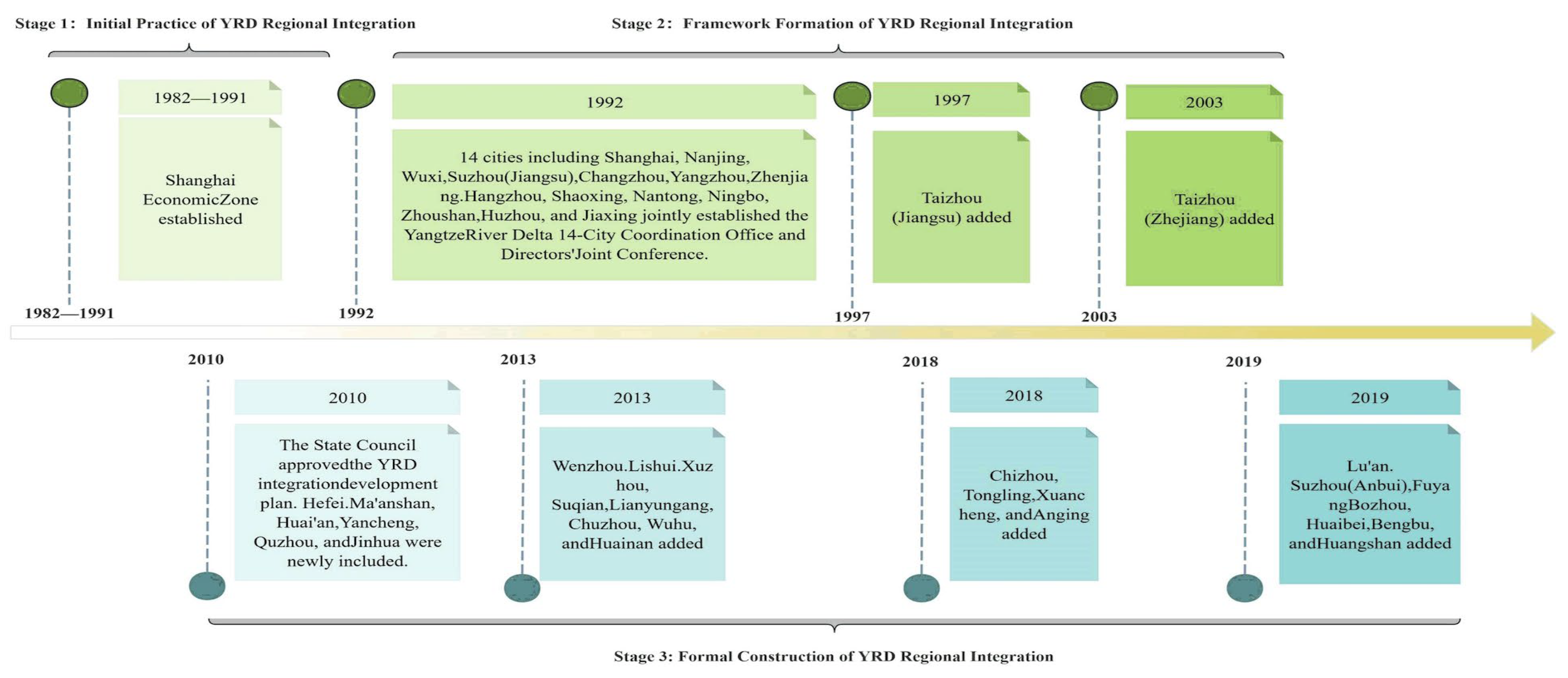
The 14th Five-Year Plan clearly proposes to deepen the integration of the YRD and develop it into a key growth pole driving China’s sustainable development. In recent years, the state has advanced the regional integration process through a three-tier operational mechanism of “Leading Group—Office—Specialized Task Forces.” Efforts have focused on advancing cross-regional infrastructure connectivity, establishing a unified market, and sharing innovation resources. These measures have enabled the free flow and efficient allocation of capital, technology, and talent within the region and accelerated the formation of an integrated development pattern in which central cities lead, urban clusters coordinate, and regions interact. With the successive issuance of the Outline of the YRD Regional Integration Development Plan and the 14th Five-Year Plan Implementation Scheme, the institutional foundation and policy framework for coordinated regional development have been continuously strengthened, providing a solid practical basis for empirical studies on the effects of regional integration policies. These initiatives advance China’s sustainable development goals while contributing to global sustainability efforts by demonstrating how regional integration can catalyze green transformation in emerging economies. This paper selects the YRD as the research area for three main reasons. First, the integration process in the YRD is highly representative. Covering less than 4% of China’s land area, it generates nearly one-quarter of the national GDP, and its integration progress leads the country. The development experience of this region can provide policy references for other urban agglomerations such as the Beijing–Tianjin–Hebei region and the Guangdong–Hong Kong–Macao Greater Bay Area. Second, the policy implementation spans a long period, evolving gradually from partial cooperation to full integration (as shown in Figure 1). The differences in timing and scope of policy implementation create an ideal quasi-natural experimental environment for identifying the causal effect of regional integration on corporate green innovation. Third, the YRD offers strong data availability. The region has a large number of enterprises, relatively complete statistical data, and a long policy implementation period, which together provide rich data support and a sufficient observation window for micro-level empirical research.

2.2. Regional Integration and Corporate Green Innovation

Regional integration, as an important strategy for optimizing resource allocation and promoting sustainable development, enhances the level of corporate green innovation through three dimensions: scale effects, spillover effects, and competitive effects. From a scale effects perspective, regional integration removes administrative barriers between cities and promotes the free cross-regional flow of resources and factors, thereby making market boundaries more unified and continuously expanding demand scale [7]. The expansion of market size not only helps enterprises share the costs of green technology R&D and reduce unit innovation expenditure but also disperses R&D risks and increases expected returns, thus strengthening enterprises’ willingness to undertake green innovation [28,29,30]. Regarding spillover effects, regional integration breaks administrative barriers and promotes cross-regional cooperation and exchange among enterprises. In a unified market environment, the circulation efficiency of green technology information is improved, and the green technologies and management experience of leading enterprises spread to surrounding enterprises through demonstration effects. This knowledge spillover effect reduces the cost for other enterprises to acquire green technologies and improves their green innovation capability. From the perspective of competitive effects, regional integration eliminates local protectionism and significantly increases the degree of market competition in the region. This intensified market competition puts enterprises under greater pressure to survive, forcing them to continuously invest in green technology R&D activities [31].
Based on the above analysis, this paper proposes:
Hypothesis 1:
Regional integration promotes corporate green innovation.

2.3. Financing Constraints

Regional integration can effectively alleviate corporate financing constraints by eliminating administrative barriers, promoting the cross-regional mobility of production factors, and supporting the sharing of information. This ultimately strengthens corporate green innovation capabilities. From the perspective of institutional theory, regional integration reshapes the external financing environment by reducing transaction costs and information asymmetry. According to information asymmetry theory, enterprises typically face challenges in internal information transmission during the financing process. This makes it difficult for external investors to accurately assess the operational status of enterprises, thereby reducing the willingness of capital institutions to invest [32,33]. Existing research indicates that green technology R&D exhibits the typical characteristics of high investment, high risk, and strong uncertainty, making financing support a key factor in restricting corporate green innovation [34,35,36]. Regional integration, by promoting the harmonization of institutional rules and market openness, significantly reduces inter-regional information barriers and improves enterprises’ information environments. Specifically, the integration process enables external capital to obtain corporate financial and operational information more conveniently [32], thereby effectively easing financing constraints caused by information asymmetry. From the perspective of signaling theory, corporate behavior itself serves an information-transmission function. In the context of regional integration, enterprises actively engaged in green innovation can send positive signals to the capital market about their governance capabilities and development potential. This not only helps improve financing accessibility but also boosts corporate credit ratings. In addition, the process of regional integration is often accompanied by the integration of green financial systems, the coordination of fiscal subsidies, and the optimization of public resource allocation. These institutional innovations significantly enhance the efficiency of inter-regional capital allocation, expand diversified financing channels for enterprises, and provide stronger financial support for green innovation.
Based on the above analysis, this paper proposes:
Hypothesis 2:
Regional integration promotes corporate green innovation by alleviating financing constraints.

2.4. Foreign Direct Investment

According to the eclectic theory of international production, foreign direct investment (FDI) decisions depend on three dimensions: ownership advantages, location advantages, and internalization advantages [37]. Among these, location advantages include market size, resource endowments, and the institutional environment. Regional integration can significantly improve a region’s location advantages by expanding market size, improving infrastructure connectivity, and fostering institutional and policy coordination, thereby boosting its attractiveness to FDI. According to Dunning’s Ownership, Location, and Internalization (OLI) paradigm, regional integration enhances location advantages such as market access, institutional transparency, and connectivity. These improvements help attract FDI and accelerate the diffusion of green technologies. Existing research indicates that FDI, as a form of factor flow that combines capital, technology, and management expertise [38], serves as an important channel for disseminating green technologies and diffusing innovation. Specifically, the unified market and institutional coordination resulting from regional integration help reduce the entry costs for foreign enterprises to access local markets. The mobility of high-quality talent from foreign enterprises brings advanced green technologies and management experience to local enterprises, thus enhancing their green innovation capabilities. In addition, FDI enterprises often have technological advantages and higher standards for green production and management, compelling local enterprises to improve product quality through green innovation under competitive pressure, thereby elevating overall innovation levels. Ultimately, the green transformation practices of FDI enterprises can generate demonstration effects, thereby reducing the learning costs of local enterprises and encouraging their imitation and adoption of advanced technologies.
Based on the above analysis, this paper proposes:
Hypothesis 3:
Regional integration enhances the green innovation capabilities of local enterprises by attracting FDI.

3. Research Design

3.1. Sample Selection and Data Sources

This study examines how regional integration affects corporate green innovation, using a sample of Chinese A-share listed companies from 2003 to 2022. Firm-level patent data are obtained from the China National Intellectual Property Administration. The dataset includes application years, patent types, applicant names, and International Patent Classification (IPC) codes. Green patents are identified using the IPC Green Inventory developed by the World Intellectual Property Organization. After standardizing and cleaning applicant names, we match the IPC codes with the Green Inventory to extract green invention patents and green utility model patents.
Corporate financial information, including key indicators, ownership structure, and industry classification, is collected from the CSMAR and WIND databases. City-level variables such as GDP, population size, and industrial composition are sourced from the National Bureau of Statistics and the China City Statistical Yearbook. Each firm is linked to its registered city using the corresponding field in CSMAR, and this city affiliation remains fixed throughout the sample period to ensure consistency in geographic assignment. Based on this classification, we identify whether each city is part of the Yangtze River Delta Urban Economic Coordination Council to determine its exposure to regional integration.
The data processing involves four main steps. First, we exclude firms that are marked as ST or *ST or ones that have been delisted. Second, we remove companies operating in the financial and real estate sectors due to their unique characteristics. Third, we drop observations with missing values in key variables. Fourth, we winsorize continuous firm-level variables at the first and ninety-ninth percentiles to reduce the impact of extreme values. After these steps, the final dataset contains 7801 firm-year observations.

3.2. Variable Definitions

3.2.1. Corporate Green Innovation

This study uses corporate green innovation as the dependent variable. Following established literature [39,40,41], we measure it by taking the natural logarithm of one plus the number of green patent applications filed by each firm annually. This measure includes both green invention patents and green utility model patents, providing a comprehensive reflection of firms’ green technological innovation activities.
Green patents are identified using the IPC Green Inventory framework published by the World Intellectual Property Organization (WIPO). This framework maps specific International Patent Classification (IPC) codes to environmentally beneficial technologies, including energy-saving technologies, waste treatment, and alternative energy sources. To accurately assign green patents at the firm level, we construct a three-step matching procedure. First, we standardize and clean applicant names to eliminate spelling inconsistencies and consolidate affiliated entities. Second, we match patents to firms based on the cleaned applicant names. Third, we retain only patents whose IPC codes fall within the scope of the IPC Green Inventory. This systematic process ensures accurate and consistent green patent identification.
Green patent applications offer advantages over granted patents for measuring innovation activity. Applications reflect firms’ current R&D efforts and avoid the one-to-two-year delay typically associated with the granting process. Patent information becomes publicly available upon application, influencing both internal decision-making and external stakeholder perceptions. Therefore, green patent applications serve as a more timely indicator of a firm’s innovation investment and strategic orientation.

3.2.2. Regional Integration

This study designates 2010 as the benchmark year for the implementation of the YRD regional integration policy. The State Council officially approved the YRD Regional Plan in that year. The plan incorporated several cities from Anhui Province into the regional cooperation framework for the first time. These cities joined existing jurisdictions in Jiangsu, Zhejiang, and Shanghai. This marked a shift from informal collaboration to institutionalized integration. We construct the core policy variable by identifying whether a listed firm’s registered city had joined the Yangtze River Delta Urban Economic Coordination Council in or before year t. The dummy variable R I i t equals 1 if the firm’s city had joined the Council by year t, and 0 otherwise. We code this variable at the city-year level based on official government documents, local policy announcements, and historical records (see Figure 1).

3.2.3. Control Variables

Considering that both firm- and city-level characteristics may influence corporate green innovation, we include a set of control variables in the analysis. At the firm level, the controls are as follows. Firm size (lnsize) is measured as the natural logarithm of total assets at year-end, since larger firms tend to have stronger intentions and capabilities for innovation [42]. Firm age (lnage) is calculated as the natural logarithm of the number of years since the firm’s establishment, as mature firms are generally more inclined to undertake innovation activities [43]. Largest shareholder ownership (Top1) is measured by the proportion of shares held by the largest shareholder relative to total equity. Return on assets (ROA) is the ratio of net profit to total assets, measuring a firm’s profitability. Leverage (Lev) refers to the debt-to-asset ratio, where moderate leverage can potentially help firms finance R&D. R&D expenditure (R&Dexp) is measured as the natural logarithm of total R&D spending. Cash flow level (Cfo) is the ratio of net operating cash flow to current liabilities at the end of the period. Asset structure (Fixed) is the ratio of net fixed assets to total assets. Ownership type (Soe) is a dummy variable equal to 1 for state-owned enterprises and 0 otherwise. At the city level, we control for economic development level (lngdp), measured as the natural logarithm of per capita regional GDP; industrial structure (industry), measured as the ratio of secondary and tertiary sector value added to regional GDP; and population size (lnpop), measured as the natural logarithm of the annual average population. Descriptive statistics for all variables are presented in Table 1.

3.3. Model Specification

This paper primarily investigates the impact of YRD regional integration on corporate green innovation. The timing of cities’ inclusion in regional integration is uniformly planned by the government, exhibiting certain exogenous characteristics. Therefore, this policy can be regarded as a “quasi-natural experiment,” making it suitable for causal identification using the DID method. However, regional integration implementation occurs in phases. Traditional DID models are more suitable for two-period panel data, and direct application may result in estimation biases. To address this limitation, this paper adopts the research approach proposed by Pan et al. [44] to construct a multi-period DID model. This approach resolves the issue of varying timepoints when YRD cities join the regional integration initiative. The specific model specification is as follows:
G r e e n i t = α 0 + α 1 R I i t + α 2 X i t + λ i + δ t + ε i t ,
where G r e e n i t represents the level of corporate green innovation for firm i in year t, measured by the natural logarithm of one plus the number of green patent applications; R I i t is a dummy variable that equals 1 if firm i is located in a city participating in YRD regional cooperation in year t, and 0 otherwise; X i t denotes a series of control variables; λ i represents individual fixed effects; δ t represents time fixed effects; ε i t is the random error term. In Equation (1), α 1 is the core coefficient of interest, representing the net effect of the policy. If α 1 is significantly positive, it indicates that regional integration indeed enhances corporate green innovation levels. We employ robust standard errors clustered at the city level to ensure the validity of statistical inference. All empirical analyses were conducted using Stata 18.

4. Empirical Test Results Analysis

4.1. Baseline Regression

Table 2 reports the effects of regional integration policy on the green innovation of listed companies. Column (1) includes only firm-level controls, while Column (2) includes both firm-level and city-level controls. Both specifications include firm fixed effects and year fixed effects. The regression results show that the regional integration policy coefficient is significantly positive at the 5% level, confirming that regional integration fosters corporate green innovation. The coefficient of 0.152 indicates a meaningful economic effect: firms in integrated regions file approximately 15.2% more green patent applications than those in non-integrated areas, all else equal. This substantial impact demonstrates that regional integration functions as an effective policy tool for strengthening firm-level sustainability through innovation. The findings align with prior research [7,45] and validate Hypothesis 1. Specifically, regional integration provides a practical platform for advancing corporate sustainability via green innovation.
Regarding control variables, corporate size, return on assets, R&D expenditure, and population size are significantly positively correlated with corporate green innovation. The possible reasons are that larger corporations have more resources such as funds, technology, and human resources, which can provide more support for corporate green innovation; high return on assets means that corporations have good financial conditions and can provide more internal funds for green technology R&D; R&D expenditure helps corporations explore and develop new technologies, improve production processes, and reduce negative impacts on the environment; cities with large population sizes often have higher consumer demands and stricter environmental standards, and corporations must engage in technological innovation and reform to meet customer needs and regulatory requirements. The coefficients of other control variables are not significant, indicating that they are not core factors affecting corporate green innovation.

4.2. Robustness Test

4.2.1. Parallel Trends Assumption Test and Dynamic Effects

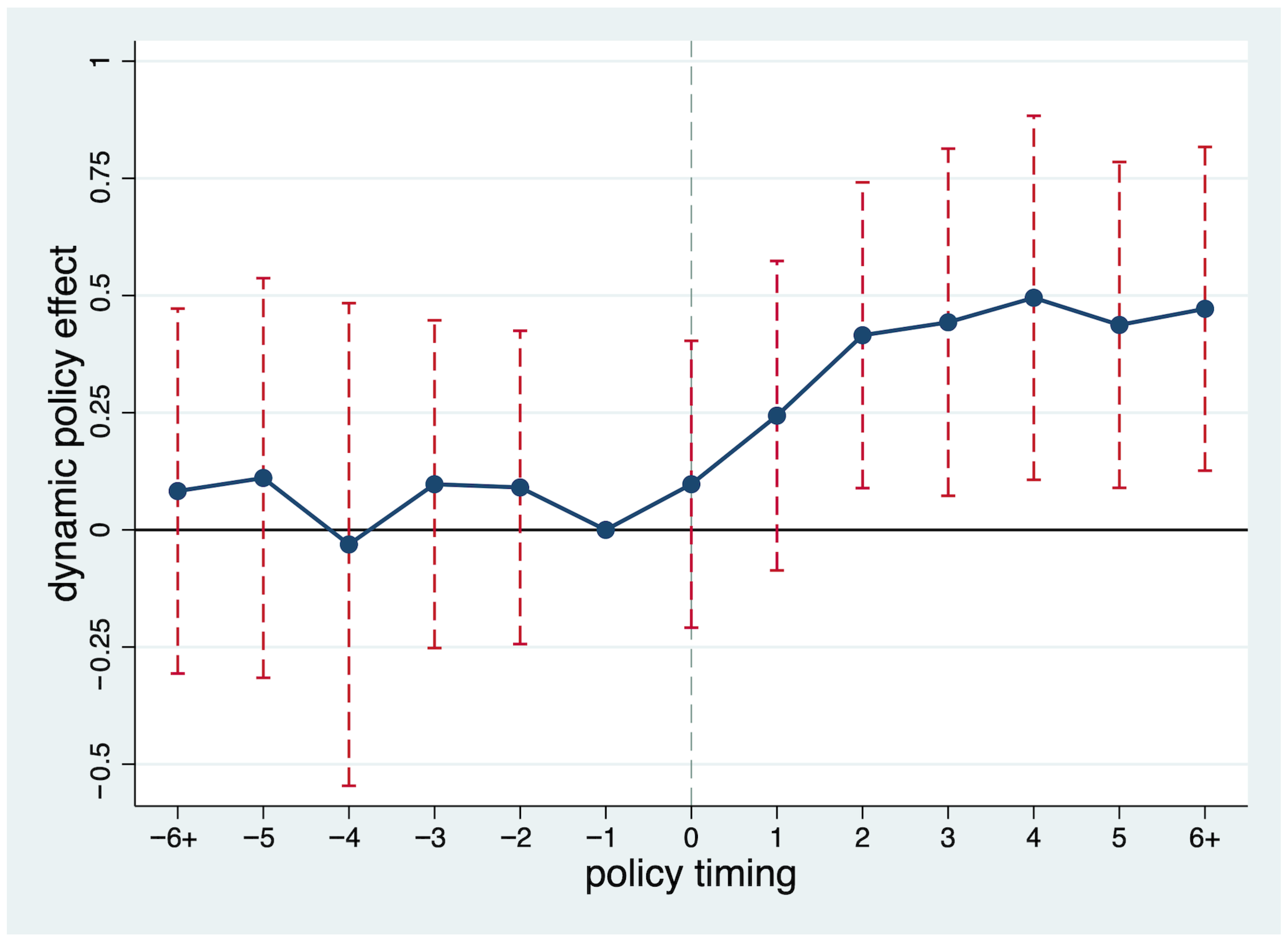
The validity of the DID model relies on the parallel trends assumption. This assumption requires that the treatment and control groups exhibit identical time trends prior to policy implementation. Specifically, before the implementation of the YRD regional cooperation policy, enterprises in participating cities and those in non-participating cities should demonstrate consistent development trends in green innovation. This assumption constitutes a key prerequisite for ensuring unbiased estimation results. To test this assumption and examine the policy’s dynamic effects, this paper follows the methodology proposed by Feng [46] and constructs the following econometric model:
G r e e n i t = β 0 + k = 5 7 β 1 R I i t + β 2 X i t + λ i + δ t + ε i t
In this study, we designate the final period before the implementation of the regional integration policy (denoted as “−1”) as the baseline period. The subscript k indicates the time offset relative to this baseline. Figure 2 reports the results of the parallel trends and dynamic effects tests. The horizontal axis represents time periods, and the vertical axis plots the estimated coefficients capturing differences between the treatment and control groups before and after policy implementation. These coefficients reflect the dynamic impact of regional integration policy on corporate green innovation. The results show that, prior to policy implementation, there was no statistically significant difference in corporate green innovation levels between the treatment and control groups, thereby supporting the parallel trends assumption. Furthermore, after policy implementation, corporate green innovation in the treatment group exhibited a gradual upward trajectory. In the 0th, 1st, and 2nd periods following policy implementation, corporate green innovation levels increased significantly. This dynamic pattern suggests that the policy effectively stimulated corporate green innovation in the initial stage. The observed improvement in corporate green innovation can be attributed to multiple drivers arising from regional cooperation, including policy support, factor mobility, and knowledge spillovers. However, over time, the growth rate of corporate green innovation slowed, indicating a shift from a stage of quantitative expansion to one of quality enhancement. Once the initial green transformation is achieved, enterprises face higher-level technological challenges, requiring greater R&D intensity and higher technical complexity. As a result, corporate green innovation enters a phase characterized by diminishing returns and increasing technical difficulty.

4.2.2. Placebo Test

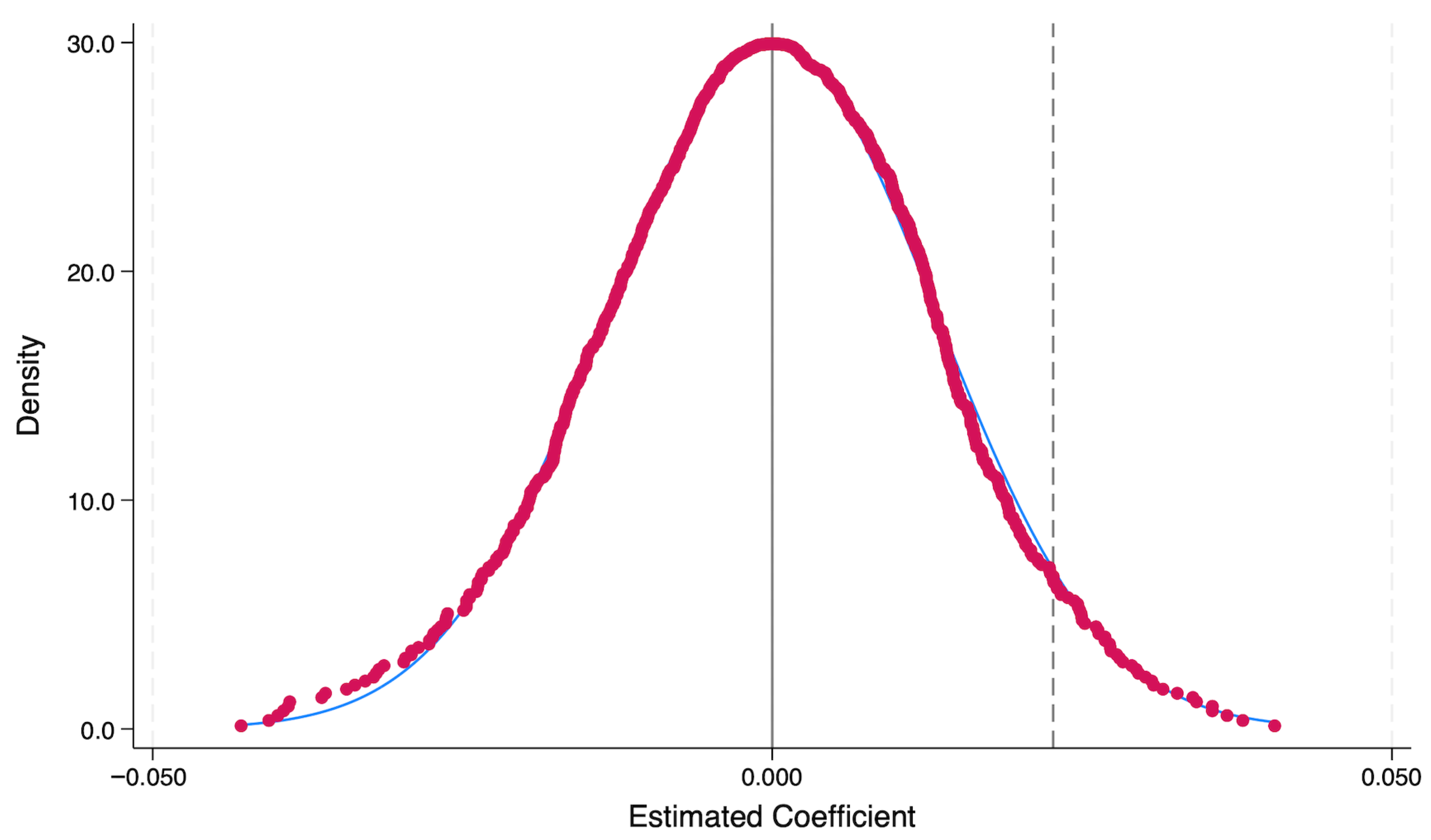
To ensure that the estimated effect of the regional integration policy on corporate green innovation is not driven by random chance, we conduct a placebo test. Specifically, we randomly select a set of firms equal in size to the actual treatment group and designate them as the pseudo-treatment group, with the remaining firms serving as the control group. We then introduce a policy dummy for the pseudo-treatment group and interact it with a time dummy to construct the pseudo-policy variable. This procedure is repeated 1000 times, and in each iteration, we record the estimated coefficient and corresponding p-value of the pseudo-policy variable. Figure 3 reports the results. The kernel density of the pseudo-policy coefficients is centered around zero, whereas the actual coefficient from the benchmark regression (0.2646) lies far outside the distribution of random coefficients. In addition, the p-values of the pseudo-policy variables are all greater than 0.05, indicating that these placebo effects are not statistically significant. Overall, these results suggest that the positive impact of regional integration policy on corporate green innovation is unlikely to be spurious. The findings are robust and not easily attributable to unobserved factors.

4.2.3. Dependent Variable Replacement

Following Akcigit et al. [47], we use the breadth of corporate green patent knowledge (Green2) as an alternative measure for robustness testing. This measure highlights the diversity and technical barriers of corporate green innovation, which is difficult to replicate and has clear market value. It reflects the uniqueness and competitive advantage of corporate green innovation, providing a more comprehensive view of green innovation capabilities. Table 3 shows the regression results when green patent knowledge breadth is used as the dependent variable. The coefficient on YRD integration is significantly positive at the 1% level, and the significance level is higher than in Table 2. This means that regional cooperation often provides technical, R&D, and talent support, as well as incentives, helping corporates acquire knowledge from diverse subjects and fields and, in turn, increase their breadth of patent knowledge. These results further confirm the robustness of the benchmark regression findings.

4.2.4. Excluding the Influence of Other Policies

Considering that other policies may have influenced corporate green innovation during the sample period, this paper conducts robustness tests by adding three concurrent policies to the baseline model in turn: the Broadband China Pilot Policy (BCPP), the National Intellectual Property Model City Policy (NIPMC), and the Low-Carbon City Pilot Policy (LCC). This helps to avoid possible interference from these contemporaneous policies. The regression results in Table 4 show that, even after controlling for these policies, the coefficient on the core explanatory variable, regional integration, remains significantly positive at the 5% level. This confirms that the positive effect of regional integration on corporate green innovation is robust.

4.2.5. Propensity Score Matching

When assessing the impact of regional integration policies on corporate green innovation, this study assumes that the treatment and control groups had similar characteristics prior to the implementation of the policy. However, the implementation process was not entirely random. The timing of cities joining regional cooperation was often influenced by factors such as economic development level, geographic location, and industrial structure. This non-randomness may introduce selection bias. If not properly addressed, such bias could distort the estimated policy effects and hinder an accurate assessment of the true impact of regional integration on corporate green innovation. To mitigate potential endogeneity from sample selection bias, we apply a propensity score matching difference-in-differences (PSM-DID) approach to match treatment and control firms. Table 5 presents the estimation results after matching, using two matching ratios: 1:1 and 1:3. The results indicate that, under both ratios, the positive effect of regional integration on corporate green innovation remains statistically significant. In the 1:1 matched sample, the coefficient is 0.3504 and significant at the 1% level; in the 1:3 matched sample, the coefficient is 0.2542 and significant at the 5% level. These results are consistent with the benchmark regression and further confirm the robustness of our findings.

4.3. Heterogeneity Analysis

4.3.1. Heterogeneity Analysis of Ownership Structure

Differences in corporate ownership structure may generate heterogeneous effects of regional integration on corporate green innovation [48]. In China, state-owned enterprises generally possess more stable funding sources and stronger policy support. Moreover, stricter government regulation also contributes to their relatively high overall level of corporate green innovation [49]. Nevertheless, state-owned enterprises’ R&D activities are often oriented toward long-term strategic goals and are subject to greater government intervention. This results in a relatively delayed response to individual policy shocks. In contrast, non-state-owned enterprises typically face more intense market competition and financing constraints. They are more likely to strengthen their green innovation capabilities to boost competitiveness, thereby demonstrating greater responsiveness to regional integration policies. This paper analyzes the heterogeneous impacts of regional integration on corporate green innovation across different ownership types. Table 6 presents the results. The expansion of the YRD significantly enhances the green innovation levels of private enterprises, with results robust at the 1% significance level. However, the effect on state-owned enterprises lacks statistical significance.

4.3.2. Heterogeneity Analysis of Cities in the G60 Science and Technology Innovation Corridor

The G60 Science and Technology Innovation Corridor covers nine cities. As of early 2024, these cities accounted for one-eighth of China’s high-tech enterprises and more than one-fifth of STAR Market-listed firms, highlighting their strong economic strength, solid innovation infrastructure, and robust intrinsic green innovation momentum. This paper conducts a heterogeneity analysis between corridor and non-corridor cities, with the results reported in Table 6. For corridor cities, the estimated coefficient of the regional integration policy is 0.1329, which is not statistically significant, indicating a relatively limited marginal effect. This may be because firms in the G60 corridor already possess strong green innovation foundations and well-developed industrial support systems, leaving limited room for short-term policy-induced gains in green innovation. By contrast, non-corridor cities show more pronounced policy effects. The regression coefficient is 0.6493 and significant at the 1% level, suggesting that cities with weaker green innovation foundations are more responsive to external effects such as resource aggregation, technology diffusion, and institutional coordination driven by the policy. As a result, these cities achieve significant improvements in corporate green innovation capabilities. Regional integration has thus played a key role in advancing the mobility of innovation factors and the efficiency of resource allocation, effectively releasing policy dividends.

4.3.3. Heterogeneity Analysis of Corporation Size

Differences in corporate size also influence the positive effect of regional integration policies on green innovation. According to Liu et al. [50], large corporations, leveraging economies of scale and stronger market positions, typically possess more abundant financial support and technological accumulation, enabling them to assume higher R&D risks and thus maintain advantages in green innovation. In contrast, small corporations, constrained by limited financial and technological resources, often face restrictions on their green innovation activities. Such divergence in green innovation due to corporate size differences is particularly pronounced in the YRD regional integration process. This study employs the median of total assets as the classification criterion, dividing sample corporations into large-scale and small-scale groups for heterogeneity analysis. Table 7 presents the results. The empirical results demonstrate that regional integration significantly strengthens the green innovation levels of large-scale corporations, with a regression coefficient of 0.3737 significant at the 5% level. This suggests that large corporations can more effectively exploit the institutional synergy, resource integration, and market expansion effects generated by regional integration to further improve their green innovation capabilities. In contrast, while the coefficient for small-scale corporations is positive, it lacks statistical significance. This finding may be attributed to the limited financial and technological resources available to small-scale corporations, which constrain their capacity to engage in green innovation activities.

4.3.4. Heterogeneity Analysis of City Size

City size may influence corporate responsiveness to green innovation [51]. Large cities typically possess more advanced infrastructure, richer innovation resources, and larger talent pools. These conditions enable them to leverage policy benefits more effectively and strengthen corporate green innovation capabilities. In contrast, smaller cities often have weaker industrial foundations and limited access to technology and capital. Consequently, innovation activities may be constrained by resource scarcity and market size limitations. This study categorizes sample cities into large and small cities based on median population size. Table 7 presents the regression results, which indicate that the YRD regional integration policy facilitates green innovation in both city types. Specifically, the regression coefficient for large cities is 0.3785, slightly higher than that for small cities (0.2152). This suggests that large cities derive greater benefits from regional integration policies. This pattern may arise because large cities exhibit stronger absorptive and transformative capabilities, enabling them to convert technology and human resources into green innovation outcomes more rapidly. Meanwhile, small cities face resource and environmental constraints, resulting in slower policy implementation.

5. Further Analysis: Mechanism Testing

The benchmark regression results demonstrate that regional integration significantly improves corporate green innovation levels. To examine how regional integration influences capital allocation and to identify the mechanisms through which institutional integration shapes corporate innovation, we introduce two mediating variables: financing constraints and foreign direct investment intensity. These two variables reflect distinct transmission pathways. The first captures improvements in firms’ access to capital, while the second reflects increased inflows of foreign investment. Regional integration supports financial liberalization and expands market access, both of which help reduce financing barriers and attract external capital. These two effects are direct and measurable, making them important channels through which institutional reforms influence firm-level green innovation. Building on this framework, the study adopts the two-step approach to mechanism analysis proposed by Jiang [52] and constructs the following model:
M i t = α 0 + α 1 R I i t + α 2 X i t + λ i + δ t + ε i t .
In the model, M denotes the mediating variable, covering two transmission channels: financing constraints and foreign investment. We measure financing constraints using the KZ index proposed by Kaplan [53], and measure FDI following Dong et al. [54] by employing the number of foreign-invested enterprises as a proxy indicator. Table 8 presents the detailed test results for the mechanism corresponding to these variables.
Column (1) of Table 8 presents the regression for the financing constraint mechanism. The YRD integration policy significantly reduces enterprise financing constraints, with the coefficient significant at the 1% level. This finding supports Hypothesis 2, indicating that the policy effectively alleviates financing difficulties. Specifically, the coefficient of –0.047 suggests that firms in integrated regions have, on average, 4.7% lower SA index values compared to those outside the policy area. This finding indicates a meaningful reduction in financing constraints and highlights the economic relevance of the policy effect. This effect may operate through several channels. Regional integration expands market scale and strengthens regional synergies, thereby improving capital allocation efficiency and attracting multiple funding sources, including bank loans, government subsidies, and private investment. Moreover, policy implementation facilitates technological cooperation and knowledge sharing among enterprises, optimizing information environments and creditworthiness, which boosts financing accessibility. The reduction in financing barriers enables firms to access vital capital, which supports continuous investment in the development and implementation of green technologies.
Column (2) presents the regression for the FDI mechanism. As shown in Table 8, the coefficient of the YRD expansion policy on foreign investment is 0.7892 and is significant at the 1% level. This finding supports Hypothesis 3, indicating that regional integration policies significantly increase the presence of foreign-invested enterprises in the region. Specifically, the coefficient suggests that the proportion of foreign firms in integrated cities is, on average, 78.9% higher than in non-integrated cities, holding other factors constant. This effect may operate through two channels. First, advanced green technologies, managerial practices, and operational models introduced by foreign-invested enterprises enhance the green innovation capabilities of local firms through demonstration effects and knowledge spillovers. Second, competitive pressure from foreign-invested enterprises compels local firms to accelerate green technology R&D to maintain or improve their market competitiveness. Together, these channels contribute to overall improvements in the region’s green innovation capacity.

6. Conclusions and Limitations

6.1. Conclusions

Against the backdrop of China’s “dual carbon” goals, corporate green innovation has emerged as a crucial driver for achieving a green and low-carbon transformation and fostering sustainable development. To shed light on the role of regional integration in advancing green innovation, this study takes the expansion of the YRD region as the empirical context. Using panel data on Shanghai and Shenzhen A-share listed companies from 2003 to 2022, we apply a multi-period DID method to examine the policy effects and underlying mechanisms. These insights contribute to the broader discourse on how regional policy coordination can advance corporate sustainability and support global environmental goals. The main findings are as follows. First, regional integration significantly facilitates corporate green innovation, and this result remains robust across multiple robustness checks. Second, regional integration reinforces corporate green innovation through two channels: easing financing constraints and attracting foreign investment. Third, heterogeneity analysis shows that the positive effect varies by firm and city characteristics, with stronger impacts observed in non-state-owned enterprises, large enterprises, non-corridor cities, and large cities. These findings provide valuable insights for designing sustainable regional development strategies and supporting corporate green transformation. Moreover, by emphasizing the institutional nature of regional integration and revealing its capital allocation mechanisms, this study enriches the theoretical understanding of how macro-level reforms shape firm-level green innovation.
The findings of this study provide several policy recommendations for advancing sustainable regional integration and fostering corporate green innovation. Specifically, our evidence identifies three critical pathways through which regional integration can guide policy design and corporate strategy. For Regional Sustainability Policies: Governments should establish cross-regional technology markets to support the transfer and diffusion of green technologies, advanced equipment, and management models from core cities to surrounding areas. Large-scale scientific research infrastructure, major green research facilities, environmental monitoring instruments, and carbon emissions data should become openly accessible through shared platforms. This approach reduces the fixed costs and technical risks of corporate green innovation. It also improves overall regional innovation efficiency and supports sustainable development goals. These findings emphasize that institutional coordination across cities is essential, not supplementary, for achieving environmental and innovation synergies. Policymakers must make cross-city mechanisms a core pillar of regional sustainability strategies. For Corporate Strategic Responses: Foreign investment should be integrated into regional technology circulation systems. Local firms can collaborate with foreign-invested enterprises to acquire advanced green production equipment and adopt improved management practices. They should also leverage technological spillover effects to accelerate green technology adoption and strengthen their local green innovation capacity. Our results show that enterprises, particularly large firms and non-state-owned companies, should actively engage with integration opportunities. They can do this by forming partnerships with leading firms, accessing shared infrastructure, and joining cross-regional talent networks. Such actions serve to enhance both green innovation performance and long-term strategic positioning. Given that regional integration generates pronounced benefits for non-state-owned and large enterprises, establishing an institutional framework for cross-regional mobility of high-level green technology talent is essential. This framework could include unified talent qualification systems, cross-regional talent databases, and industry-academia-research collaboration platforms. Such measures remove administrative barriers, optimize talent allocation, and bolster human capital investment in green innovation. The G60 Science and Technology Innovation Corridor demonstrates how regional coordination translates policy goals into concrete green innovation outcomes. The corridor serves as a strategic platform for deepening cooperation in green technology R&D and ecological industrial chain development. Through innovation diffusion and technology spillovers, it can raise the sustainable green development level of non-corridor cities, reduce innovation gaps, and boost the Yangtze River Delta’s overall competitiveness in green innovation. Core cities, including Shanghai, Hangzhou, and Hefei, can leverage their research resources, industrial capacity, and talent concentration to extend innovative resources to surrounding cities. A coordinated approach to technology transfer, industrial linkages, and policy alignment can foster a green innovation architecture characterized by core-city leadership, peripheral city synergy, and collective regional progress. Collectively, these policy measures advance China’s sustainable development agenda. They also provide a replicable model for emerging economies seeking to balance regional integration with environmental sustainability.

6.2. Limitations and Future Research

Despite its contributions, this study has several limitations. First, it measures green innovation using patent applications. While this metric ensures comparability, it does not fully capture innovation quality or practical outcomes. Second, the mechanism analysis mainly examines capital-related channels, such as easing financing constraints and increasing foreign direct investment. It does not consider other potential pathways, such as labor mobility of green-skilled professionals or cross-regional knowledge networks that reduce search and coordination costs. Third, the sample focuses on listed companies, which may limit representativeness. The findings may not readily apply to small and medium-sized enterprises or non-listed firms. Future research could incorporate more comprehensive indicators, such as patent citations or commercialization rates, explore alternative mechanisms, and include a wider range of firms to improve explanatory depth and external validity.


Author Contributions

Conceptualization, H.Z., Y.X., X.L., T.X., F.G. and Y.C.; methodology, H.Z., Y.X., X.L., F.G. and Y.C.; data curation, H.Z., X.L., Y.X., F.G. and Y.C.; writing—original draft preparation, H.Z., X.L., Y.X. and Y.C.; investigation, H.Z., X.L., Y.X. and T.X.; writing—review and editing, H.Z., X.L., Y.X., F.G. and Y.C.; visualization, X.L. and F.G.; resources, X.L. and Y.X.; supervision, X.L. and Y.C.; validation, H.Z., X.L., Y.X. and Y.C.; project administration, H.Z., X.L. and F.G.; funding acquisition, X.L. All authors have read and agreed to the published version of the manuscript.

Funding

This research is supported by the Social Science Review Committee Project of Hunan Province (XSP24YBZ011).

Institutional Review Board Statement

Not applicable.

Informed Consent Statement

Not applicable.

Data Availability Statement

The data presented in this study are available on request from the corresponding author.

Conflicts of Interest

The authors declare no conflicts of interest.

Appendix A

Table A1. Summary of Representative Literature and Identified Research Gaps.
Authors and YearResearch ContentResearch FocusResearch Gap
Yin et al. (2024) [9]Examines the impact of regional integration policies on ecological resilience (ER) using a multidimensional ER index in the Yangtze River Delta (YRD).Finds that regional integration improves ecological resilience through industrial upgrading and green innovation.Focuses on macro-level ecological outcomes, without exploring micro-level firm innovation mechanisms.
Ma et al. (2024) [24]Uses the expansion of the YRD urban agglomeration as a quasi-natural experiment to evaluate its effect on urban green innovation.Shows that regional integration promotes green innovation, especially exploitative innovation.Lacks analysis of firm-level capital allocation mechanisms such as financing constraints and FDI.
Wang et al. (2025) [8]Assesses the effect of regional integration on urban energy efficiency using a multi-period DID model and mechanism analysis.Finds that green innovation and industrial agglomeration are key mediating mechanisms.Focuses on city-level energy efficiency, without firm-level capital flow or resource allocation analysis.
Xu et al. (2023) [55]Investigates the spatial efficiency and spatial clustering of the tourism sector under regional integration.Identifies spatial agglomeration in green production efficiency driven by integration.Lacks micro-level evidence on firm capital allocation and innovation behavior.
Pan et al. (2025) [6]Explores how same-origin FDI enhances intercity linkages and promotes regional integration in the YRD.Finds that strong interconnections among foreign-invested firms facilitate economic integration.Does not examine how local firms’ capital allocation and innovation respond to regional integration.
Liu et al. (2023) [7]Constructs a peer effect model to analyze how regional integration influences corporate innovation in the YRD.Finds that integration strengthens intra-industry innovation spillovers through peer effects.Ignores the role of capital input in shaping green innovation outcomes.
Wu et al. (2023) [26]Uses geographic regression to test the effect of YRD integration on firm innovation quality.Confirms that regional integration significantly enhances firm innovation quality.Lacks a focus on green innovation and does not analyze capital allocation mechanisms.
Xu et al. (2024) [27]Employs a DID approach using listed firms to examine how regional integration affects corporate green innovation and its mechanisms.Shows that regional integration enhances green innovation through FDI inflows and stronger environmental regulation.Does not clarify specific mechanisms of capital allocation optimization.
This studyUses the YRD expansion as a quasi-natural experiment to examine how regional integration affects firm-level green innovation through capital allocation mechanisms.Finds that regional integration promotes green innovation by alleviating financing constraints and attracting foreign direct investment.Bridges the gap by linking institutional integration and capital allocation mechanisms to firm-level green innovation outcomes.

References

  1. Chen, Y.-S. The Driver of Green Innovation and Green Image—Green Core Competence. J. Bus. Ethics 2008, 81, 531–543. [Google Scholar] [CrossRef]
  2. Zhang, J.; Liang, G.; Feng, T.; Yuan, C.; Jiang, W. Green Innovation to Respond to Environmental Regulation: How External Knowledge Adoption and Green Absorptive Capacity Matter? Bus. Strategy Environ. 2020, 29, 39–53. [Google Scholar] [CrossRef]
  3. Chang, C.; Chen, Y. Green Organizational Identity and Green Innovation. Manag. Decis. 2013, 51, 1056–1070. [Google Scholar] [CrossRef]
  4. Li, Y.; Pan, Z.; Shen, Y. Regional Integration Policies and Ecological Resilience: A Case Study of Urban Agglomeration Planning Policies in China. Front. Environ. Sci. 2025, 13, 1636479. [Google Scholar] [CrossRef]
  5. Feng, Y.; Sun, M.; Pan, Y.; Zhang, C. Fostering Inclusive Green Growth in China: Identifying the Impact of the Regional Integration Strategy of Yangtze River Economic Belt. J. Environ. Manag. 2024, 358, 120952. [Google Scholar] [CrossRef] [PubMed]
  6. Pan, Z.; Song, Y.; Li, X. Foreign Direct Investment and Regional Integration: The Connectivity Role of Same-Origin Greenfield Investment in the Yangtze River Delta. Habitat Int. 2025, 163, 103484. [Google Scholar] [CrossRef]
  7. Liu, H.; Cui, C.; Chen, X.; Xiu, P. How Can Regional Integration Promote Corporate Innovation? A Peer Effect Study of R&D Expenditure. J. Innov. Knowl. 2023, 8, 100444. [Google Scholar] [CrossRef]
  8. Wang, L.; Shao, J. How Does Regional Integration Policy Affect Urban Energy Efficiency? A Quasi-Natural Experiment Based on Policy of National Urban Agglomeration. Energy 2025, 319, 135003. [Google Scholar] [CrossRef]
  9. Yin, S.; Zhou, Y.; Zhang, C.; Wu, N. Impact of Regional Integration Policy on Urban Ecological Resilience: A Case Study of the Yangtze River Delta Region, China. J. Clean. Prod. 2024, 485, 144375. [Google Scholar] [CrossRef]
  10. Murphy, A.B. The May 2004 Enlargement of the European Union: View from Two Years Out. Eurasian Geogr. Econ. 2006, 47, 635–646. [Google Scholar] [CrossRef][Green Version]
  11. Yu, Z.; Zhao, Z.; Zang, S.; Qu, A. Catalyzing Co-Benefits: How Cross-Regional Coordination Accelerates Pollution and Carbon Reduction in China’s Yangtze River Economic Belt. Front. Environ. Sci. 2025, 13, 1601165. [Google Scholar] [CrossRef]
  12. Lin, T.; Chen, Z. Does Market Integration Promote Green Technology Innovation? Evidence from China. Front. Environ. Sci. 2022, 10, 1097616. [Google Scholar] [CrossRef]
  13. Bonnet, P.; Olper, A. Foreign Import Competition and Green Innovation: The Impact of Chinese Trade Exposure on Technical Change in Europe. World Econ. 2025, 48, 1418–1441. [Google Scholar] [CrossRef]
  14. Lee, M.-J.; Choi, H.; Roh, T. Is Institutional Pressure the Driver for Green Business Model Innovation of SMEs? Mediating and Moderating Roles of Regional Innovation Intermediaries. Technol. Forecast. Soc. Chang. 2024, 209, 123814. [Google Scholar] [CrossRef]
  15. Wang, L.; Cao, L. Analyst Attention and Corporate Green Innovation. Financ. Res. Lett. 2024, 60, 104924. [Google Scholar] [CrossRef]
  16. Liu, B.; Li, Y.; Liu, J.; Hou, Y. Does Urban Innovation Policy Accelerate the Digital Transformation of Enterprises? Evidence Based on the Innovative City Pilot Policy. China Econ. Rev. 2024, 85, 102167. [Google Scholar] [CrossRef]
  17. Li, S.; Li, X.; Zhao, Q.; Zhang, J.; Xue, H. An Analysis of the Dimensional Constructs of Green Innovation in Manufacturing Enterprises: Scale Development and Empirical Testing. Sustainability 2022, 14, 16919. [Google Scholar] [CrossRef]
  18. Xu, Y.; Liang, J.; Dong, Z.; Shi, M. Can Environmental Regulation Promote Green Innovation and Productivity? The Moderating Role of Government Interventions in Urban China. Int. J. Environ. Res. Public Health 2022, 19, 13974. [Google Scholar] [CrossRef]
  19. Shao, Y.; Xiao, C. Corporate Tax Policy and Heterogeneous Firm Innovation: Evidence from a Developing Country. J. Comp. Econ. 2019, 47, 470–486. [Google Scholar] [CrossRef]
  20. Fan, Z.; Bai, L.; Chen, J. Research on Product Market Competition and Corporate Innovation. Adv. Econ. Manag. Res. 2023, 6, 415. [Google Scholar] [CrossRef]
  21. He, L.; Gan, S.; Zhong, T. The Impact of Green Credit Policy on Firms’ Green Strategy Choices: Green Innovation or Green-Washing? Environ. Sci. Pollut. Res. 2022, 29, 73307–73325. [Google Scholar] [CrossRef]
  22. Zeng, J.; Škare, M.; Lafont, J. The Co-Integration Identification of Green Innovation Efficiency in Yangtze River Delta Region. J. Bus. Res. 2021, 134, 252–262. [Google Scholar] [CrossRef]
  23. Shen, C.; Zhang, X.; Li, X. Revisiting the Regional Sustainable Development from the Perspective of Multi-System Factor Flows–Evidence in the Yangtze River Delta of China. Heliyon 2023, 9, e18893. [Google Scholar] [CrossRef]
  24. Ma, S.; Li, L.; Zuo, J.; Gao, F.; Ma, X.; Shen, X.; Zheng, Y. Regional Integration Policies and Urban Green Innovation: Fresh Evidence from Urban Agglomeration Expansion. J. Environ. Manag. 2024, 354, 120485. [Google Scholar] [CrossRef]
  25. Cao, K.; Yang, R.; Zhu, P.; Zhang, X.; Zhai, K.; Gao, X. Understanding the Sustainable Mechanisms of Poverty Alleviation Resettlement in China’s Developed Regions under the Background of Land Relocation: Drivers, Paths and Outcomes. Land 2024, 13, 380. [Google Scholar] [CrossRef]
  26. Wu, Q.; Wu, Y.; Cai, H. Regional Integration and Innovation Quality of Enterprises: Evidence from the Enlargement of the Yangtze River Delta Urban Agglomeration. Sci. Technol. Prog. Policy 2023, 40, 90–99. [Google Scholar] [CrossRef]
  27. Xu, G.; Ji, L. Regional Integration and Corporate Green Innovation: A Quasi-Natural Experiment Based on the Expansion of the Yangtze River Delta Urban Economic Coordination Council. Ecol. Econ. 2024, 40, 56–63, 90. [Google Scholar]
  28. Acemoglu, D.; Linn, J. Market Size in Innovation: Theory and Evidence from the Pharmaceutical Industry. Q. J. Econ. 2004, 119, 1049–1090. [Google Scholar] [CrossRef]
  29. Liu, J.; Meng, X.; Xia, Q. Information Infrastructure and Corporate Green Innovation Quality Incentive. Heliyon 2024, 10, e30784. [Google Scholar] [CrossRef]
  30. Yuan, S.; Pan, X. Inherent Mechanism of Digital Technology Application Empowered Corporate Green Innovation: Based on Resource Allocation Perspective. J. Environ. Manag. 2023, 345, 118841. [Google Scholar] [CrossRef] [PubMed]
  31. Chasiotis, I.; Georgakopoulos, G.; Toudas, K. Does Market Competition Affect Environmental Innovation? Some International Evidence. Theor. Econ. Lett. 2023, 13, 1121–1130. [Google Scholar] [CrossRef]
  32. Myers, S.C.; Majluf, N.S. Corporate Financing and Investment Decisions When Firms Have Information That Investors Do Not Have. J. Financ. Econ. 1984, 13, 187–221. [Google Scholar] [CrossRef]
  33. Morellec, E.; Schürhoff, N. Corporate Investment and Financing under Asymmetric Information. J. Financ. Econ. 2011, 99, 262–288. [Google Scholar] [CrossRef]
  34. Li, D.; Zheng, M.; Cao, C.; Chen, X.; Ren, S.; Huang, M. The Impact of Legitimacy Pressure and Corporate Profitability on Green Innovation: Evidence from China Top 100. J. Clean. Prod. 2017, 141, 41–49. [Google Scholar] [CrossRef]
  35. Costa, H.; Demmou, L.; Franco, G.; Lamp, S. The Role of Financing Constraints and Environmental Policy on Green Investment. Econom. Lett. 2024, 239, 111741. [Google Scholar] [CrossRef]
  36. Alkebsee, R.; Habib, A.; Li, J. Green Innovation and the Cost of Equity: Evidence from China. China Account. Financ. Rev. 2023, 25, 368–395. [Google Scholar] [CrossRef]
  37. Dunning, J.H. Trade, Location of Economic Activity and the MNE: A Search for an Eclectic Approach. In The International Allocation of Economic Activity; Ohlin, B., Hesselborn, P.-O., Wijkman, P.M., Eds.; Palgrave Macmilla: London, UK, 1977; pp. 395–418. ISBN 978-1-349-03198-6. [Google Scholar]
  38. Liu, Z. Foreign Direct Investment and Technology Spillovers: Theory and Evidence. J. Dev. Econ. 2008, 85, 176–193. [Google Scholar] [CrossRef]
  39. An, J.; He, G.; Ge, S.; Wu, S. The Impact of Government Green Subsidies on Corporate Green Innovation. Financ. Res. Lett. 2025, 71, 106378. [Google Scholar] [CrossRef]
  40. Han, F.; Mao, X.; Yu, X.; Yang, L. Government Environmental Protection Subsidies and Corporate Green Innovation: Evidence from Chinese Microenterprises. J. Innov. Knowl. 2024, 9, 100458. [Google Scholar] [CrossRef]
  41. Wang, S.; Yong, Y.; Liu, X.; Wang, Y. How Fintech Mitigates Credit Mismatches to Promote Green Innovation: Evidence from Chinese Listed Enterprises. Int. Rev. Financ. Anal. 2024, 96, 103740. [Google Scholar] [CrossRef]
  42. Bu, M.; Qiao, Z.; Liu, B. Voluntary Environmental Regulation and Firm Innovation in China. Econ. Model. 2020, 89, 10–18. [Google Scholar] [CrossRef]
  43. Coad, A.; Segarra, A.; Teruel, M. Innovation and Firm Growth: Does Firm Age Play a Role? Res. Policy 2016, 45, 387–400. [Google Scholar] [CrossRef]
  44. Pan, X.; Wang, M.; Pu, C. Effect of Marine Ecological Compensation Policy on Coastal Water Pollution: Evidence from China Based on a Multiple Period Difference-in-Differences Approach. Sci. Total Environ. 2024, 923, 171469. [Google Scholar] [CrossRef] [PubMed]
  45. Li, L.; Ma, S.; Zheng, Y.; Ma, X.; Duan, K. Do Regional Integration Policies Matter? Evidence from a Quasi-Natural Experiment on Heterogeneous Green Innovation. Energy Econ. 2022, 116, 106426. [Google Scholar] [CrossRef]
  46. Feng, Y.; Wang, L.; Nie, C. Can Place-Based Policy Reduce Carbon Emissions? Evidence from Industrial Transformation and Upgrading Exemplary Zone in China. Humanit. Soc. Sci. Commun. 2024, 11, 877. [Google Scholar] [CrossRef]
  47. Akcigit, U.; Baslandze, S.; Stantcheva, S. Taxation and the International Mobility of Inventors. Am. Econ. Rev. 2016, 106, 2930–2981. [Google Scholar] [CrossRef]
  48. Liao, Z.; Xiao, L. Government Environmental Regulation, Media Attention, and Corporate Green Innovation. Int. Rev. Econ. Financ. 2025, 97, 103751. [Google Scholar] [CrossRef]
  49. Dong, X.; Zhou, N.; Zhao, X.; Yang, S. The Impact of Artificial Intelligence on Corporate Green Innovation: Can “Increasing Quantity” and “Improving Quality” Go Hand in Hand? J. Environ. Manag. 2025, 376, 124439. [Google Scholar] [CrossRef]
  50. Liu, X.; Huang, N.; Su, W.; Zhou, H. Green Innovation and Corporate ESG Performance: Evidence from Chinese Listed Companies. Int. Rev. Econ. Financ. 2024, 95, 103461. [Google Scholar] [CrossRef]
  51. Song, Y.; Pang, X.; Zhang, Z.; Sahut, J.-M. Can the New Energy Demonstration City Policy Promote Corporate Green Innovation Capability? Energy Econ. 2024, 136, 107714. [Google Scholar] [CrossRef]
  52. Jiang, T. Mediating and Moderating Effects in Empirical Causal Inference Studies. China Ind. Econ. 2022, 5, 100–120. [Google Scholar] [CrossRef]
  53. Kaplan, S.N.; Zingales, L. Do Investment-Cash Flow Sensitivities Provide Useful Measures of Financing Constraints? Q. J. Econ. 1997, 112, 169–215. [Google Scholar] [CrossRef]
  54. Dong, Z.; Li, D.; Yuan, B. Does the Judicial Independence Affect Foreign Investment? Evidence from China. Financ. Res. Lett. 2024, 68, 106043. [Google Scholar] [CrossRef]
  55. Xu, D.; Shi, P.; Wu, C.; Diao, Y. Does Regional Integration Promote the Improvement of the Green Production Efficiency of Tourism Industry? Econ. Anal. Policy 2025, 85, 94–110. [Google Scholar] [CrossRef]
Figure 1. Evolution of YRD Regional Integration Policy.
Sustainability 17 10841 g001
Figure 2. Parallel Trend Hypothesis Test and Dynamic Effects.
Sustainability 17 10841 g002
Figure 3. Placebo Test Results. The blue solid line represents the kernel density estimation of the placebo coefficients.
Sustainability 17 10841 g003
Table 1. Descriptive Statistics.
VariableObs.MeanS.D.Min.Max.
Green78011.3210.8420.0002.996
RI78010.2800.4490.0001.000
lnsize780122.3981.35319.53928.502
lnage78011.9130.8950.0003.466
Top1780134.35015.0473.00088.550
ROA78010.0202.214−186.5570.955
Lev78010.4330.1960.0150.998
R&Dexp780118.4631.4499.52525.025
Cfo78010.0470.068−0.3540.664
Fixed78010.1990.1510.0010.876
lngdp780111.4110.5548.70413.056
industry78010.9590.0460.6521.000
lnpop78016.4330.6543.0548.138
Table 2. Baseline Regression Results.
VariableGreen
(1)(2)
RI0.2760 **0.2646 **
(0.1118)(0.1113)
lnsize0.1290 ***0.1300 ***
(0.0281)(0.0281)
lnage−0.0250−0.0258
(0.0305)(0.0304)
Top10.00020.0004
(0.0015)(0.0015)
ROA0.0042 ***0.0043 ***
(0.0015)(0.0016)
Lev−0.0566−0.0713
(0.1011)(0.1013)
R&Dexp0.0637 ***0.0629 ***
(0.0157)(0.0157)
Cfo−0.1104−0.1015
(0.1542)(0.1543)
Fixed0.18320.1849
(0.1301)(0.1302)
Soe−0.0024−0.0041
(0.0642)(0.0641)
lngdp-−0.0027
-(0.0613)
industry-−0.5247
-(0.9563)
lnpop-0.1725 **
-(0.0764)
Constant−2.7882 ***−3.3638 ***
(0.5600)(1.1159)
Year FEYESYES
Code FEYESYES
N78017801
A d j . R 2 0.61340.6139
Notes: Robust standard errors are reported in parentheses. *** p < 0.01, ** p < 0.05.
Table 3. Robustness Test: Alternative Dependent Variables.
VariableGreen2
RI0.1719 ***
(0.0410)
controlsYES
Year FEYES
Code FEYES
N7801
A d j . R 2 0.5798
Notes: Robust standard errors are reported in parentheses. *** p < 0.01.
Table 4. Robustness Test: Excluding the Influence of Other Policies.
VariableGreen
(1)(2)(3)
RI0.2548 **0.2691 **0.2688 **
(0.1119)(0.1112)(0.1111)
BCPP−0.0558--
(0.0434)--
NIPMC-0.0236-
-(0.0354)-
LCC--0.0307
--(0.0410)
controlsYESYESYES
Year FEYESYESYES
Code FEYESYESYES
N780178017801
A d j . R 2 0.61400.61390.6139
Notes: Robust standard errors are reported in parentheses. ** p < 0.05.
Table 5. Robustness Test: PSM-DID Results.
Green
(1)(2)
1:1 Matching1:3 Matching
RI0.3504 ***0.2542 **
(0.1248)(0.1133)
ControlsYESYES
Year FEYESYES
Code FEYESYES
N29895731
A d j . R 2 0.65840.6302
Notes: Robust standard errors are reported in parentheses. *** p < 0.01, ** p < 0.05.
Table 6. Heterogeneity by Ownership and G60 Corridor Location.
VariableGreen
(1)(2)(3)(4)
SOEsNon-SOEsG60Non-G60
RI0.14820.3753 ***0.13290.6493 ***
(0.1973)(0.1191)(0.1245)(0.2013)
controlsYESYESYESYES
Year FEYESYESYESYES
Code FEYESYESYESYES
N2737501065136804
A d j . R 2 0.63390.60920.60730.6102
Notes: Robust standard errors are reported in parentheses. *** p < 0.01.
Table 7. Heterogeneity by Firm and City Size.
VariableGreen
(1)(2)(3)(4)
Firm SizeCity Size
SmallLargeLargeSmall
RI0.20050.3737 **0.3785 *0.2152 *
(0.1426)(0.1701)(0.2086)(0.1142)
controlsYESYESYESYES
Year FEYESYESYESYES
Code FEYESYESYESYES
N3454410038583869
A d j . R 2 0.60260.64680.62530.6192
Notes: Robust standard errors are reported in parentheses. ** p < 0.05, * p < 0.1.
Table 8. Mechanism Testing: Financing Constraints and Foreign Direct Investment.
VariableKZFDI
(1)(2)
RI−0.6916 **0.7892 ***
(0.3064)(0.1870)
controlsYESYES
Year FEYESYES
Code FEYESYES
N78017801
A d j . R 2 0.68580.9735
Notes: Robust standard errors are reported in parentheses. *** p < 0.01, ** p < 0.05.
Disclaimer/Publisher’s Note: The statements, opinions and data contained in all publications are solely those of the individual author(s) and contributor(s) and not of MDPI and/or the editor(s). MDPI and/or the editor(s) disclaim responsibility for any injury to people or property resulting from any ideas, methods, instructions or products referred to in the content.